Skip to content

Posts tagged ‘Art’

Rembrandt’s Late Works: Better seen, and never forgotten

While the works of Rembrandt, Dutch master and one of the most applauded artists in the history of art, are instantly recognisable for their energetic brush strokes, moody lighting, undeniable intensity and rich umber colour palate, there is nothing like seeing his paintings in reality to truly appreciate the virtuosity of his work.

The National Gallery London’s new blockbuster on Rembrandt, The Late Works, provides just the opportunity to do that. In the dark bowels of the Sainsbury Wing of galleries, in rooms purpose-designed with dark walls and sharp focused lighting perfectly offsetting the brilliance of Rembrandt’s mastery over light, one enters the exhibition to come face to face with not one, but a whole room of Rembrandt self-portraits. Each demonstrates a startling honesty in self-examination, as the artist becomes visibly older and more saggy. But in as much as this room shows that a Rembrandt self-portrait is far from a rareity  (he made some 80 painted, drawn or etched self portraits in the course of his career), it immediately demonstrated that there is nothing like seeing these famous works in reality: for only then can you appreciate the brilliant layering of the paint, and the masterful use of brushwork to build an aging texture of skin which appears so realistic as it catches the light against a dark mocha background, that it almost feels as though Rembrandt has cast himself in three dimensions, ready to climb out of the frame when the many visitors to the exhibition have gone home.

Self-Portrait (1669)

Self-Portrait (1669)

Self-Portrait (1669)

Self-Portrait (1669)

Self Portrait with Two Circles (1665-9)

Self Portrait with Two Circles (1665-9)

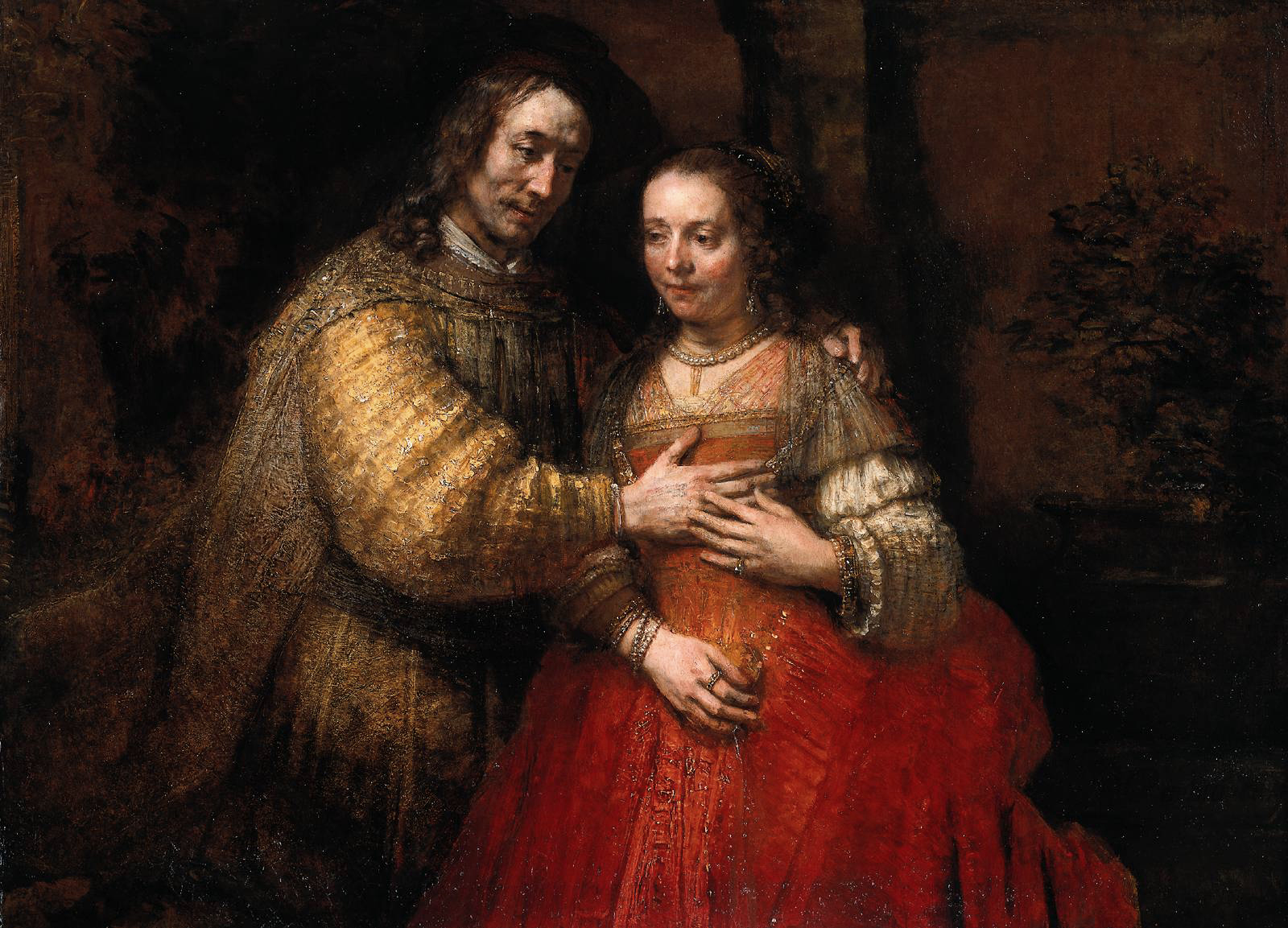
Such was the main impression that this excellent new exhibition left on me as I departed. I felt thrilled to have had the opportunity to see so many brilliant works executed at the tail end of Rembrandt’s career, when his personal fortunes were in decline, but when the product of his paintbrush was more fantastic than ever. But so too was I struck by the breadth and significance of the collection on show, testament no doubt to the National Gallery’s partnership in organising the exhibition with the Rijksmuseum in Amsterdam, who either own or have access to much of the works on show. The result is the chance to come face to face with famous works such as the Jewish Bride – a subtly romantic painting which held Van Gogh so spellbound that he declared he would give up 10 years of his life for a few moments before the painting – and the masterful group portrait, The Syndics, a superb work on a huge scale, surely surpassable only by The Night Watchmen, perhaps Rembrandt’s most famous work.

The Syndics (1662)
The Syndics (1662)

The Jewish Bride (1665)
The Jewish Bride (1665)

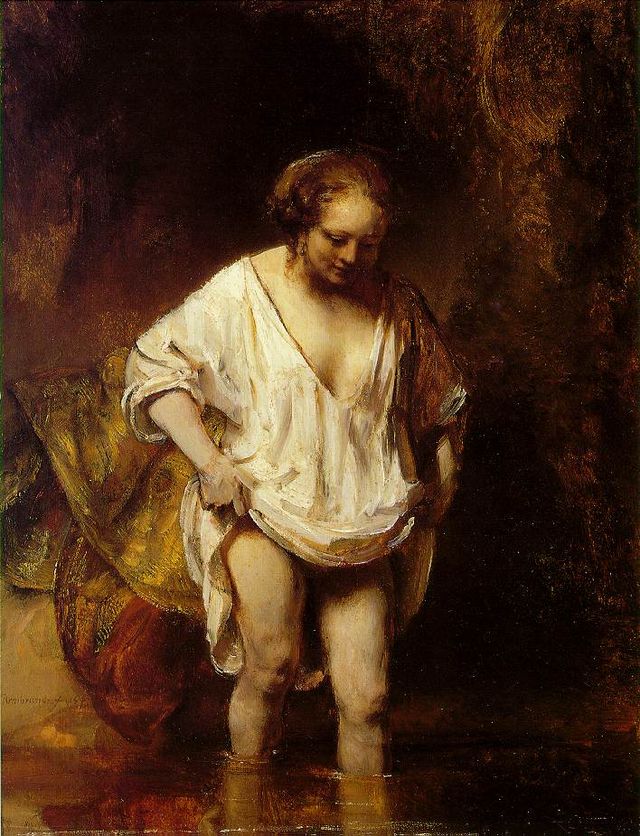
A Woman Bathing in a Stream (1654)

A Woman Bathing in a Stream (1654)

The Consipiracy of the Batavians under Claudius Civilis (1661)

The Consipiracy of the Batavians under Claudius Civilis (1661)

The other thing that struck me was how bloody popular this exhibition is. Even when you have a timed ticket, you need to queue. Admittedly I went along at the weekend, but that does not mean to say that this show will be any quieter during the week, such is the appetite no doubt for a sensational London art show after a year consisting largely of flops and unknowns (I do not include Tate Modern’s brilliant Matisse or Malevich shows in this otherwise scathing review). What this then means is something of a struggle throughout the show, something which is felt less when gazing upon huge works such as the rather questionable Conspiracy of the Batavians under Claudius Civilis, a portion of Rembrandt’s less than successful painting for Amsterdam’s new Town Hall. It is however annoying when trying to study the stunning intricacies of Rembrandt’s print works. I never knew that he was such a skilled printmaker, and his drypoint etchings were, in particular, worth elbowing the odd visitor out of the way.

The Three Crosses (1653)

The Three Crosses (1653)

Christ Presented to the People (1655)

Christ Presented to the People (1655)

Christ Presented to the People

Christ Presented to the People

Christ Preaching (1652)

Christ Preaching (1652)

But what these crowds all go to show is how superb this show is – a final hurrah for 2014, and the first great show to come out of The National Gallery, in my view, since the Da Vinci sensation in 2011/2012. Whether it be the intense forlorn gaze of Lucretia at the point of her honour suicide, the sensationally melancholic Man in Armour thought to be Alexander the Great, or the knowledgeable calm grace of Margaretha de Geer depicted wearing her ginormous lace ruff, there are masterpieces aplenty to keep you hooked to this show, and resilient to the many crowds around you.

Rembrandt_lucretia

Portrait of Margaretha de Geer (1661)

Portrait of Margaretha de Geer (1661)

A Man in Armour (Alexander the Great?) 1655

A Man in Armour (Alexander the Great?) 1655

Rembrandt, the Late Works is on at  the National Gallery until 18th January 2015.

Two Weekends: Thinking about Cappuccino

It only takes a mere moment for your life to change forever. December 2012 taught me that much – a life obliterated – or May 2008 – when another’s mistake had irreversible consequences for the rest of my days. Yet if those moments of change taught me anything, it was that life is too short to stay where you are comfortable but unhappy, where monotony sets in and where you feel as though your train is trundling steadily up the wrong path. 
Earlier this autumn the chance to change paths and find happiness in change occurred to me very suddenly. It only took an email to set the new track in motion, and only two weekends for a decision to be made. For it was in those two weekends that I both attended an interview that would take me on a new path, and in which I made the ultimate decision, standing at the crossroads, that this new path was right for me. 

Two weekends: Thinking of Cappuccino is my newest oil painting, and it tells the story of how my life is all about to change: how I have accepted the offer to become Artistic Director of a global company bearing the name of Cappuccino and stationed within the sunny shores of Mallorca in Spain, and how in taking that offer it will mean moving from London, to Palma. 

Two Weekends: Thinking about Cappuccino (2014 © Nicholas de Lacy-Brown, oil on canvas)

Two Weekends: Thinking about Cappuccino (2014 © Nicholas de Lacy-Brown, oil on canvas)

But the painting came to me in Italy, sitting by the seaside in Donoratico in Tuscany, home of my partner’s family. Sitting at a cafe by a sea so still it might have been a photo, with our own breakfast of cappuccino and crostata (jam tart) on the table, all we could think about was a move to Mallorca, despite breathing the pine tree perfumed air of Tuscany, and drinking in the beauty of that Tuscan beach before us. 

The obvious symbols came to mind: the lifeguard’s hut was the new sanctuary that a home within the medieval streets of Palma de Mallorca would offer us; through the window we looked onto the famous skyline of Palma seen behind the green shutters that are famous in both Tuscany and Mallorca. The lifeguard’s ring has given salvation to the artist within me, represented by the manakin sitting on the sand: it is not so comfortable a position as the crostata tart sitting securely on a blanket, but this tart is the law, and within the confines of its pastry lattice, the blood of my life and career development is congealed and imprisoned, like a soul left out of the fridge too long. 

And of course at the heart of it all is the Cappuccino. No longer just froth and espresso

I think it was in that moment, and in that second weekend of two, that we finally made up our minds to go, to take the leap of faith, to have an adventure and to change our lives. Now the move is in full swing, and by the end of this month we should be reinstalled in Mallorca. Which just goes to show that life can change in a moment. 

© Nicholas de Lacy-Brown and The Daily Norm, 2001-2014. Unauthorized use and/or duplication of the material, whether written work, photography or artwork, included within The Daily Norm without express and written permission from The Daily Norm’s author and/or owner is strictly prohibited. Excerpts and links may be used, provided that full and clear credit is given to Nicholas de Lacy-Brown and The Daily Norm with appropriate and specific direction to the original content. For more information on the work of Nicholas de Lacy-Brown, head to his art website at www.delacy-brown.com

Radical and a little racy… Schiele’s nudes at the Courtauld

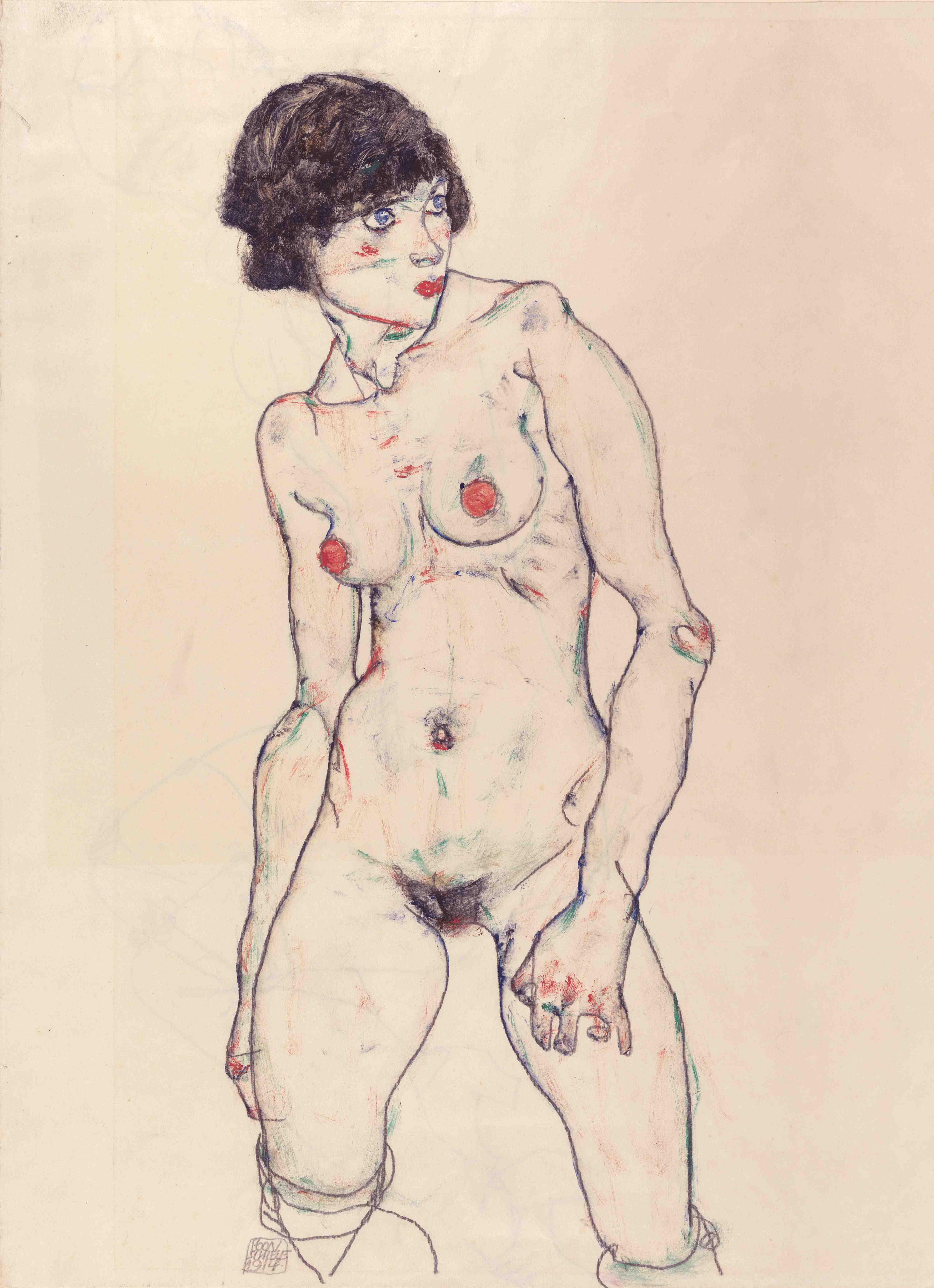
They’ve done it again! Short, sweet, brilliantly focused, the Courtauld Gallery in London has once again mounted a brilliant temporary exhibition with a sharp focus on a particular artist and theme. And following on from the gallery’s scintillating study of the single most important year in the development of Picasso’s career, this time the Courtauld is looking at the prolific work of an Austrian artist who sadly never lived out the full career his talent so obviously deserved: Egon Schiele. Instead, almost as though he had a premeditation of the Spanish flu that would kill him at the end of the First World War at the age of only 28, Schiele worked frantically, producing in the few short years of his career such a virtuosity of artwork that even after that short time he has been declared a pillar of Austria’s Expressionist art movement. 

Such was Schiele’s prolific output that the Courtauld had the luxury of being able to chose to focus in on one distinct element of his work: his depiction of the nude. And in doing so they have surely touched on perhaps the most memorable and striking chapter of his oeuvre. For in his depictions of the nude, Schiele was indeed very much the radical, just as the show suggests. Depicting his models with an angular and uncomfortable frame, and raw and visceral colouring, Schiele’s nudes are at once uncompromising and vulgar, while being completely fascinating and electric to the eye. 

Standing Nude with Stockings, 1914

Standing Nude with Stockings, 1914

Egon Schiele, Male Lower Torso, 1910

Egon Schiele, Male Lower Torso, 1910

Nude Self-Portrait in Gray with Open Mouth, 1910

Nude Self-Portrait in Gray with Open Mouth, 1910

Squatting Female Nude, 1910

Squatting Female Nude, 1910

Schiele wasn’t exactly one to keep with the confines of classical approaches to depicting the nude. Far from it. As well as colouring in his heavily lined nudes with a raw almost skinless muscular palate of dark bloody pinks and bruised purples and ambers, he also strayed very close to the pornographic frontier, depicting women in an unflinchingly abrupt and exposed fashion. I don’t think I ever saw so many views of what lies between a woman’s thighs on a gallery wall! And yet these paintings are not porn. They do not depict a promise of pleasure, but a deeply exposed portrait of the sitter. Yes these women look seductive and often slutty, but it’s as though Schiele is inviting us to read that as part of their story rather than to have an aroused response at what they are offering. 

And of course this exhibition is far from being about the naughty bits. For what these 30 or so paintings demonstrate is the brilliance and apparent confidence of Schiele’s line work as well as the originality of his depiction. These are bodies like we have never seen them before. Distorted, and occasionally out of proportion, bulging and contorting where they shouldn’t and often with sharp edges where supple skin should be, these are nudes taken up a level to an almost abstract exploration; poses which are almost impossible to hold; limbs seemingly amputated from the torso in order to focus the audience on a particular present part of the body; and expressions which are both exposing and intensely emotional: this is uncompromising portraiture. 

Seated Female Nude with Raised Arm (Gertrude Schiele), 1910

Seated Female Nude with Raised Arm (Gertrude Schiele), 1910

Crouching Woman with Green Kerchief, 1914

Crouching Woman with Green Kerchief, 1914

Two Girls Embracing (Friends), 1915

Two Girls Embracing (Friends), 1915

Erwin Dominik Osen, Nude with Crossed Arms,1910

Erwin Dominik Osen, Nude with Crossed Arms,1910

So is this small but perfectly formed show worth braving the growing queues for? It undoubtedly is. For this is an unprecedented chance to focus in on the bold feverish creative output of a quickly lost genius and almost certainly one of the most important shows of London’s artistic year. The only complaint you may have is that this sharp focus doesn’t go on longer. 

Egon Schiele: the Radical Nude runs until 18 January. But beware – the show contains some explicit images and may not be deemed suitable for all. 

Late Turner at Tate: Repetitious repertoire with moments of genius

I think I may be almost alone amongst my British compatriots when I declare that I am not a huge fan of J M W Turner. In fact I’m fully expecting to receive a raft of hate mail when this review goes live on my blog and I conclude that Tate Britian’s latest exploit of this undoubtedly revolutionary British Artist is all a bit insipidly, uninterestingly “pastel”. Now don’t get me wrong, I am well aware that Turner was a master of his times, and likewise that he was crucial in the development of the impressionist, and then expressionist art movements that changed the world of art history. I do not doubt that without him, the whole revolution of modern art may never have seeded in quite the way it did, if at all. And I recognise that in so far as great British artists go (of which there are few), he is almost certainly one of the best. Yet when I am faced with a painting by Turner, I cannot help but feel depressed, and a little uninterested, my attention somewhat wondering away from the smudged colour palette, the greys and the pastels.

Tate Britain’s new Turner exhibition has opened with considerable fanfare. This is insuperably the case when any Turner show is opened in the UK, but the problem is, we’ve seen so much of the work before. Such is the result of an exhibition of Turner being shown at Tate, the very same museum which was bequeathed hundreds of Turner works a short time after his death. Since the exhibition focuses on “Late Turner” (works produced between 1835 and his death in 1851), it almost certainly features the lion’s share of the Turner Bequest, meaning that there is very little new to be seen by we London regulars. Still, one cannot doubt the scale and ambition of the show, which ably demonstrates that Turner was perhaps at his innovative best in this final period of his life. While the artwork is still trenched in the rigid tradition of the prescribed artistic and aesthetic tastes of the time (antiquity, pastoral landscape, naval scenes and the like), Turner was presenting canvases which aimed to capture more of an effect than a historical narrative. Even his history and antiquity paintings (of which there are many) focus more on the breathtaking light of a sunrise or sun set, or the moody effect resulting from a foggy encounter, than the story itself.

Regulus (1828)

Regulus (1828)

Peace - Burial at Sea (1842)

Peace – Burial at Sea (1842)

Ancient Rome; Agrippina Landing with the Ashes of Germanicus (1839)

Ancient Rome; Agrippina Landing with the Ashes of Germanicus (1839)

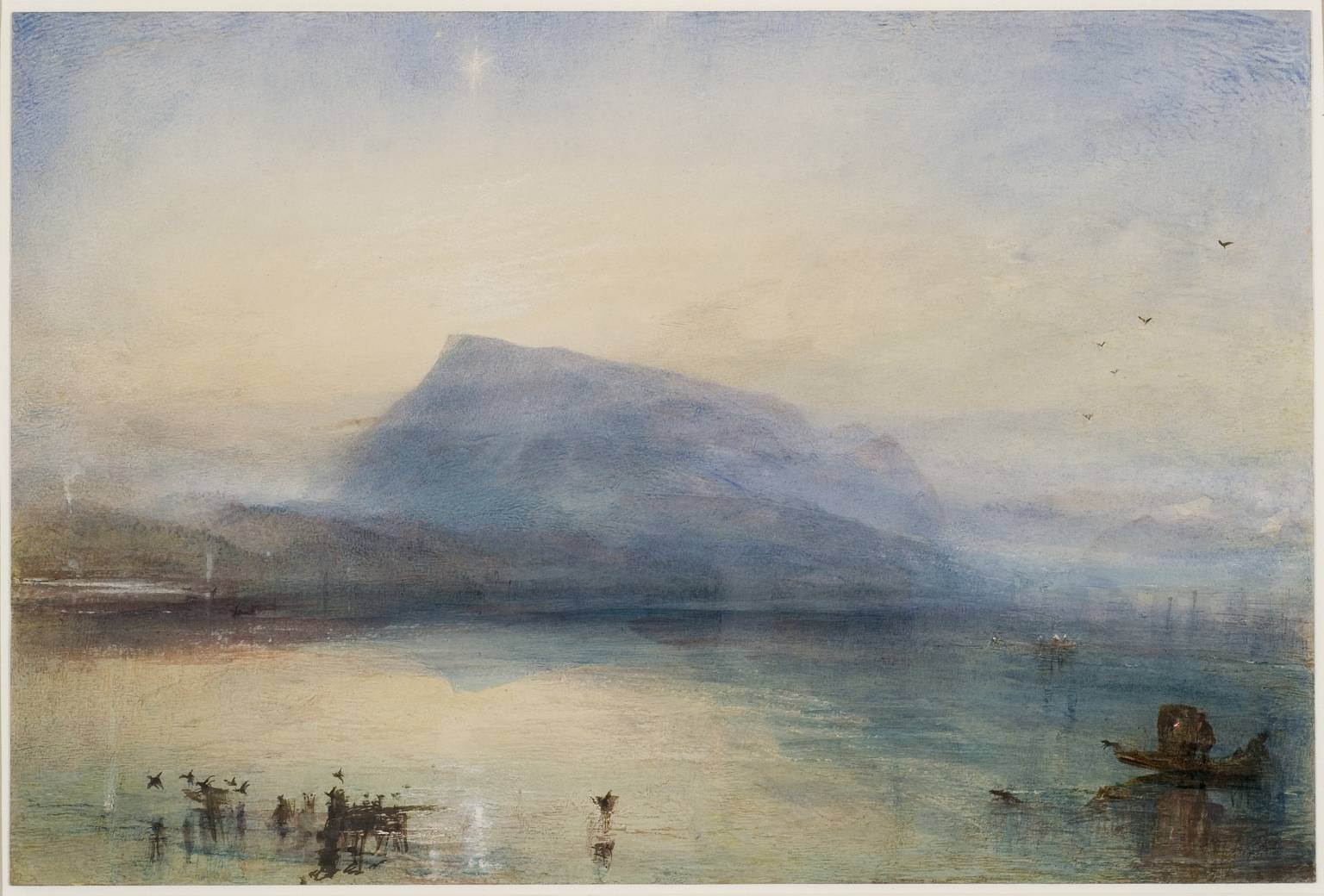
So to give the show its dues and focus in on the “good”, one cannot help but be stirred at times by some of Turner’s more atmospheric works, such as his paintings of stormy seas in Snowstorm (1842), so cyclical like a washing machine drum that you feel as though you are swept out at sea yourself – an effect which just can’t be captured from a postcard reproduction of the work. Mention also has to go to the stunning effects of light achieved by Turner – for example the burning glow of the Fire at the Houses of Parliament, and the incredible blinding light captured in his painting Regulus (1828) – an effect so well captured that I felt compelled to look away from the painting, as though I was staring into the sun itself.

Snowstorm (1842)

Snowstorm (1842)

The Blue Rigi Sunrise (1842)

The Blue Rigi Sunrise (1842)

Burning of the Houses of Lords and Commons (1834)

Burning of the Houses of Lords and Commons (1834)

For me though, the success of the show – its scale – was also its downfall, as with so many Turners from the same period exhibited all together, one couldn’t help conclude that it was all a bit samey, and repetitive – a feeling also engendered by the RA’s Monet show a few years back, when one water lily after another began to look like a single mesh of watery wobbly lines so that you could no longer distinguish between them. This feeling is proliferated at Tate’s show by the unfortunate decision to paint the walls in the same predominant colour as the paintings, so that in one room, a gallery full of dull yellow paintings feels even duller and more dated thanks to the same colour having been painted on the wall. If only the whole show had been curated like the middle room, where Turner’s square and round paintings were hung on dark walls and spot-lit to magnificent effect. Under those conditions, the works really came alive.

So coming out of this exhibition, my conclusions were as follows: Turner left me flat, not so much because of his work, but because of the way the show had been put together. Too much, too samey, and horrible decisions regarding wall colours. What Turner was brilliant at was capturing light, and it is this, set against dark backgrounds, that Tate should have concentrated on, to give Turner’s final years the kind of exhibition they perhaps deserve.

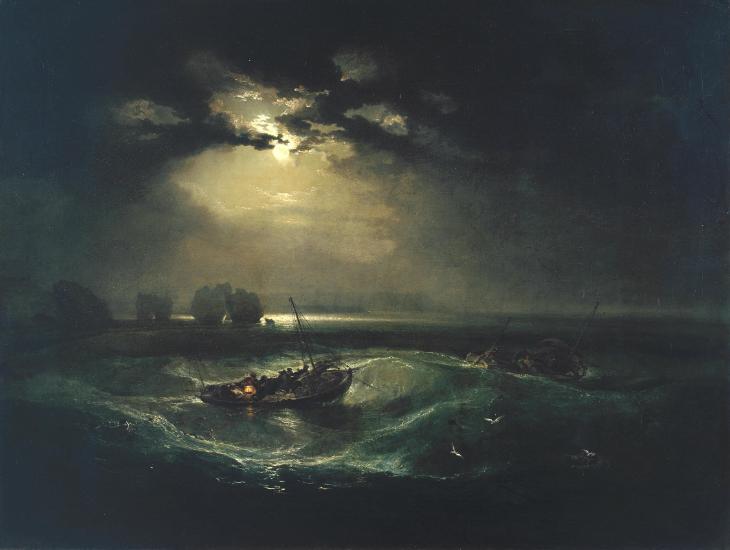
Fishermen at Sea (1796)

Fishermen at Sea (1796)

Late Turner: Painting Set Free is showing at Tate Britian until 25 January 2015

My début at the Dulwich Picture Gallery

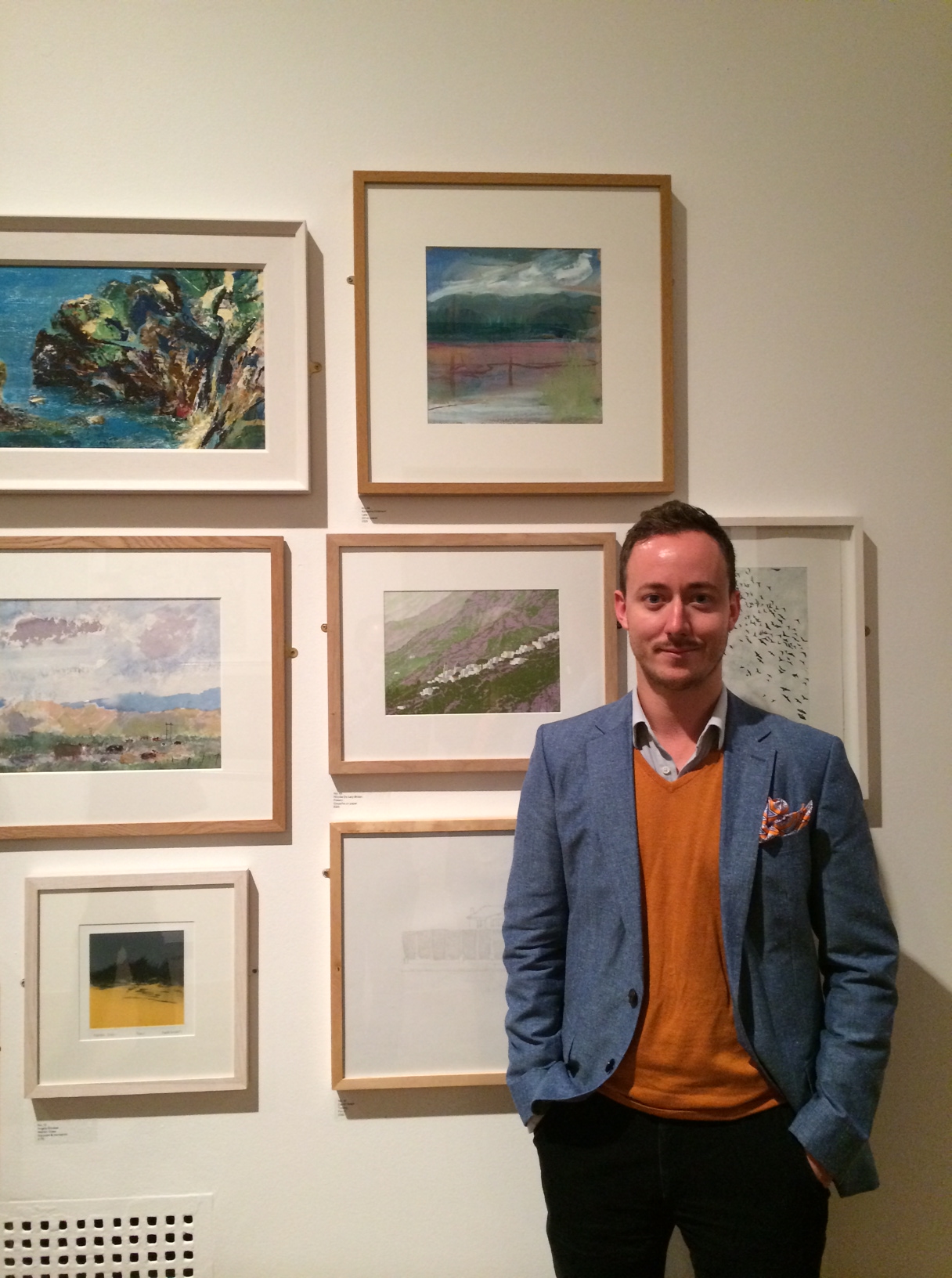
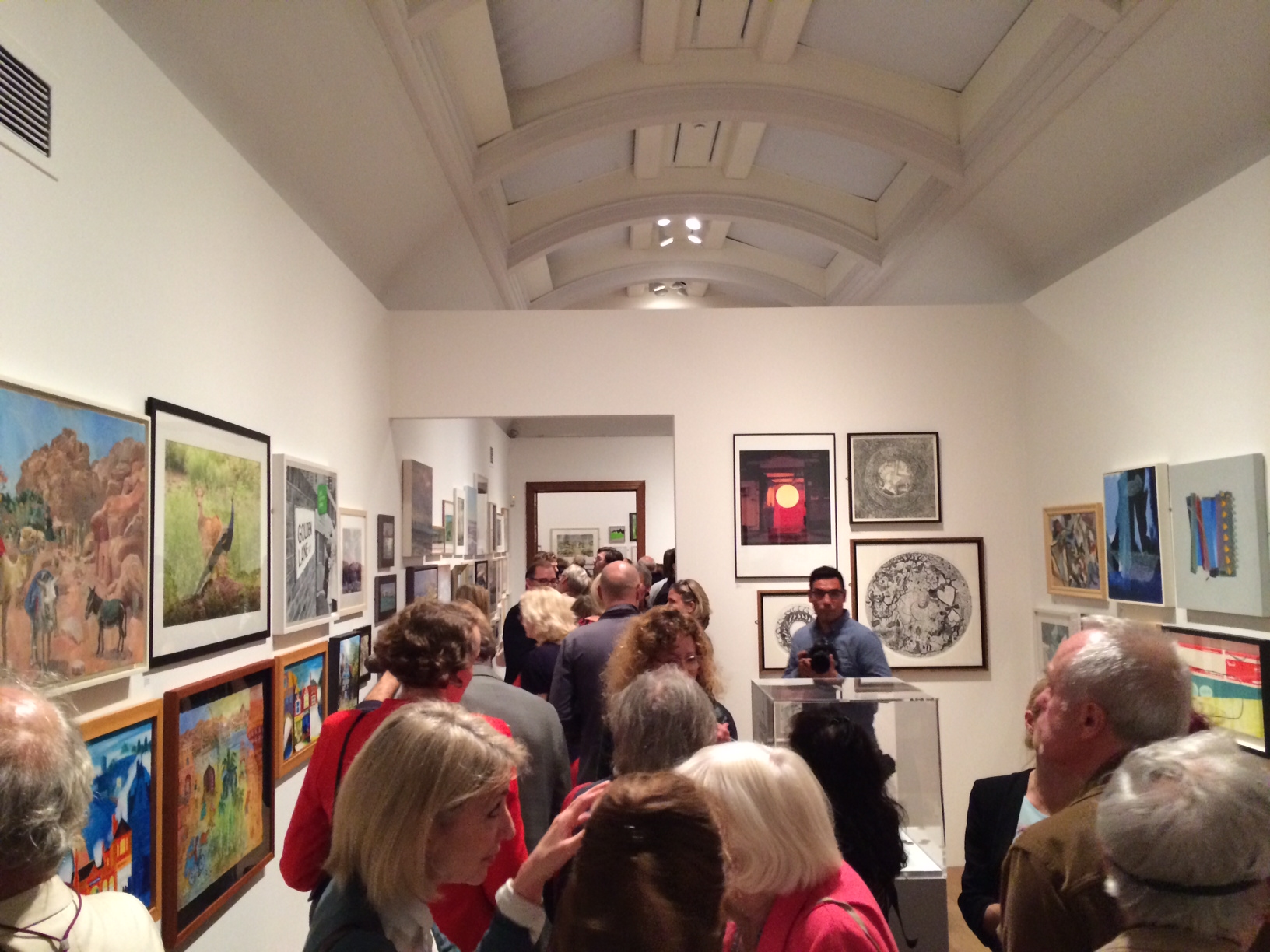
2014 has been a great year for me artistically. In May, I held my most commercially successful exhibition to date, with plenty of exciting commissions and opportunities flowing straight out of it. In July I exhibited with a new generation of freshly graduated art students at London Bridge’s Art Academy, and in September I exhibited my prints in a sensational show of printmaking talent amongst the works of the East London Printmakers at the Embassy Tea Gallery in London Bridge. But as far as 2014 goes, I have certainly left the best until last. For this October, one of my paintings will hang in an art gallery so prestigious, and so imbued with history, that it feels like a dream to see my work up on its walls.

I am of course talking about the Dulwich Picture Gallery, Britain’s oldest public art gallery, and home to some of the UK’s most illustrious artists and art collections, amongst them undisputed masters such as Gainborough, Watteau, Canaletto, Veronese and Reynolds. And for the next two and a half weeks, starting with a lavish opening gala last night, my very own artwork will be hanging amongst other works in a new Open Submission show a mere few metres from these incredible masterpieces of art history – a complete honour.

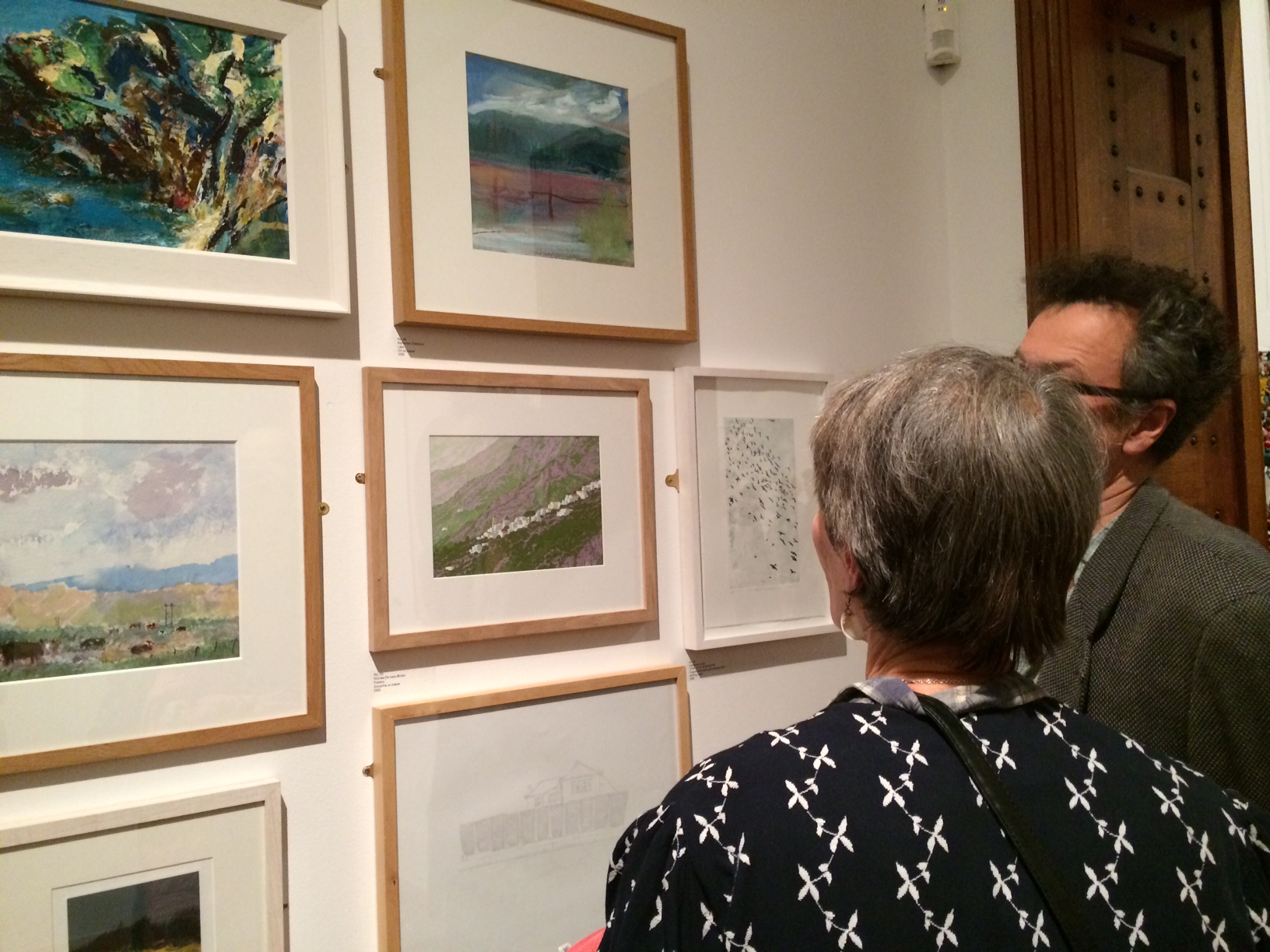
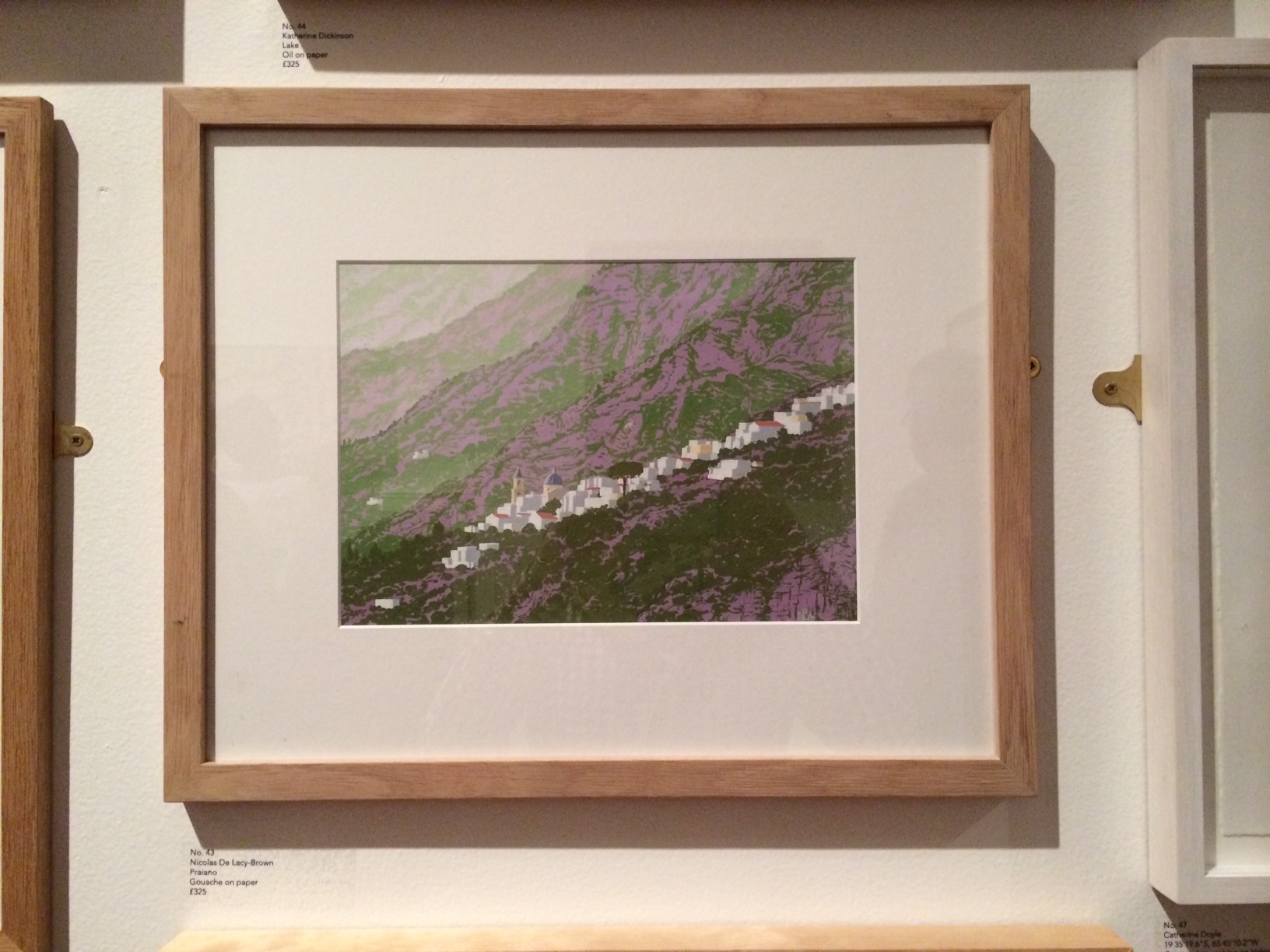
The painting selected for show was my simple landscape of Praiano, a glistening little town on the mountainous Amalfi Coast. Painted in gouache on paper in the immediate aftermath of my Amalfi Coast trip, the painting is one of currently 11 paintings comprising my “interpretations” collection, and is perhaps the most meditative and tranquil of them all. All framed up in a fancy oak frame, it looks splendid, and I have never been prouder of my artwork than last night, when I saw my little painting hung on these walls where only months before David Hockney’s world-class printworks had been admired by crowds of thousands.

2 1 image 3 imwsef

And of course my painting is not alone. Hanging amongst some 170 others, it is but one in a collection of wonderful works submitted by the Friends of the Dulwich Picture Gallery and chosen for exhibition by a panel of illustrious judges. So  don’t just go along to see my Praiano – make your way to Dulwich to see galleries full of creative gems – both those of new budding artists, and of art history’s greats.

The Dulwich Picture Gallery Friend’s Open Exhibition runs until 12 October 2014.

Interpretation No. 11 – Castagneto Carducci

Last week’s Daily Norm was a glorious panoply of Tuscan views, scenes and sensations and it’s not quite over yet. For hot on the heels of my Tuscan weekend comes my 11th interpretative landscape – part of my Interpretations collection which I began some three months ago after being inspired by the sumptuous landscapes and cubic shapes of Italy’s Amalfi Coast. 

Back in Italy this September, and one glimpse up through the vine-packed fields of Donoratico to the emerging landscape of Castagneto Carducci made me realise that this pretty hill top town was an obvious contender for an interpretative overhaul. For with its tightly packed cluster of pastel coloured houses all set up on a Tuscan hill, Castagneto offers a wonderful synthesis between petit-urban development set amidst a stunning landscape, which is exactly what the Interpretations series sets out to emulate. And I think this 11th Interpretation is probably one of my favourites of them all.   

Interpretation No. 11 - Castagneto Carducci (2014 © Nicholas de Lacy-Brown, gouache on paper)

Interpretation No. 11 – Castagneto Carducci (2014 © Nicholas de Lacy-Brown, gouache on paper)

© Nicholas de Lacy-Brown and The Daily Norm, 2001-2014. Unauthorized use and/or duplication of the material, whether written work, photography or artwork, included within The Daily Norm without express and written permission from The Daily Norm’s author and/or owner is strictly prohibited. Excerpts and links may be used, provided that full and clear credit is given to Nicholas de Lacy-Brown and The Daily Norm with appropriate and specific direction to the original content. For more information on the work of Nicholas de Lacy-Brown, head to his art website at www.delacy-brown.com

The East London Printmakers Annual Show: You’re Invited

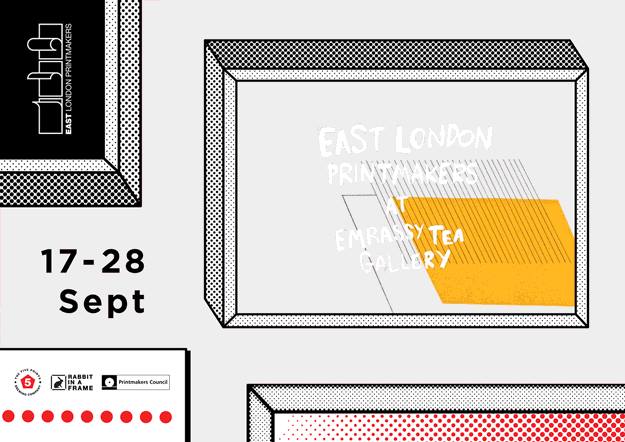
My summer has been so incredibly hectic, full of travels, work and multiple new artistic creations that I have barely had time to promote the fact that several of my print works are about to feature in the East London Printmakers (ELP) Annual group Exhibition at the Embassy Tea Gallery in London Bridge over the next two weeks! And in fact it’s very much a case of better late than never, because the show will open this very night, with an exclusive guest appearance and official opening by none other than British abstract expressionist, Albert Irvin RA.

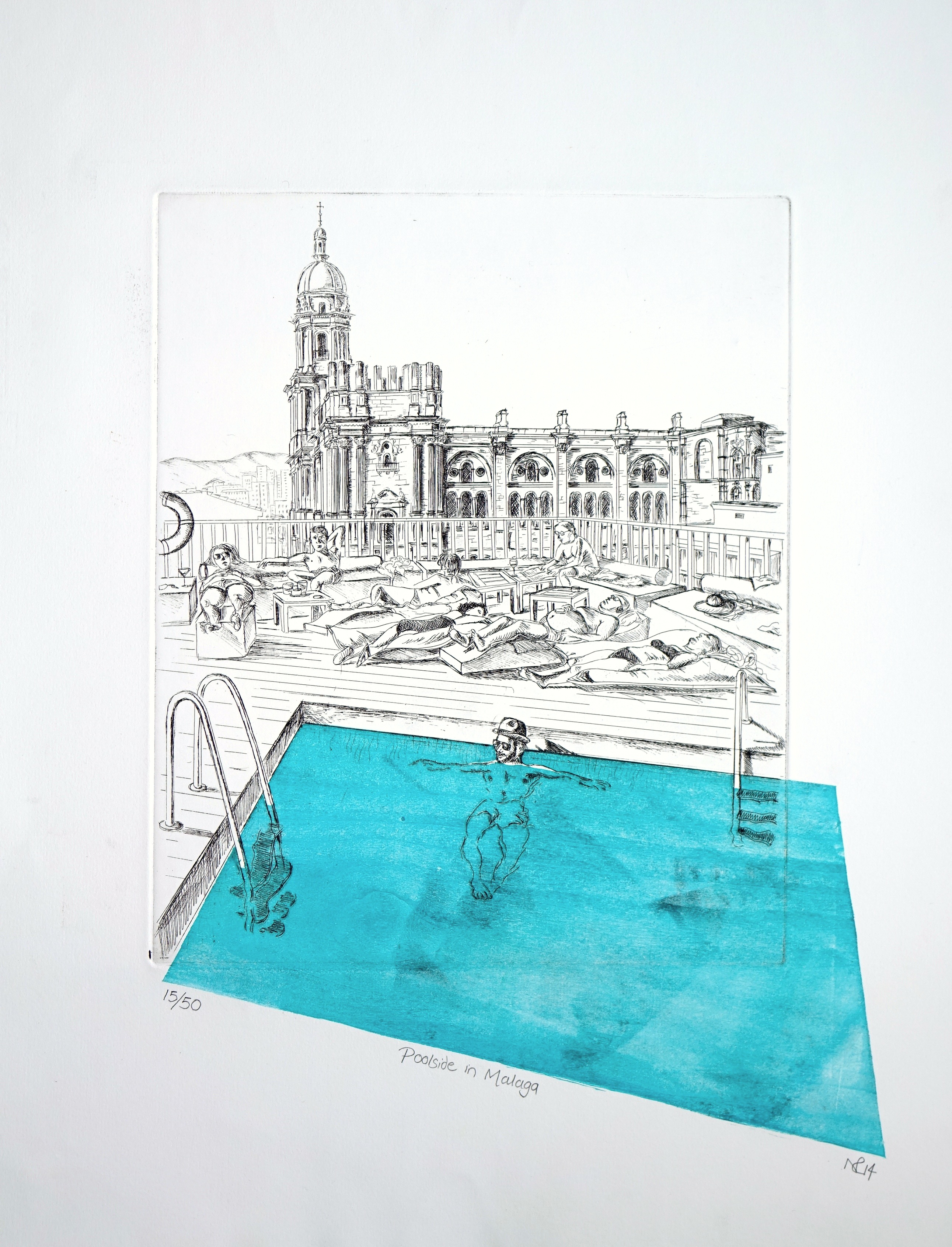
Amongst 70 artists exhibiting works created over the last year and aptly showcasing the versatility of printmaking as a medium will be none other than yours truly – me! Yes, this show will represent my first significant outing into the exhibiting circuit since my near sell-out show at the Strand Gallery in May, and I am particularly excited to be showing two brand new prints. The works, both of which were inspired by summer travels in Spain and Croatia respectively, mark something of an innovative departure for me. Having learned both the techniques of etching and woodcut, with these prints, I decided to combine the two things, thus taking the mediums in new directions, and printing on a totally different scale.

10644904_753873787981410_8613060105862232654_n

The first of the two prints, Malaga Poolside, shows a heady day when my partner and I sunbathed and swam on the incredible rooftop of the Molina Lario Hotel in Malaga. We couldn’t quite believe that up on that hotel terrace, we were able to swim with the stunning surroudings of Malaga’s one-armed cathedral just besides us, and this print attempts to capture that incredible view in a simple black and white etched line drawing, contrasting with the vivacity of the turquoise swimming pool which is almost Hockneyian in nature.

Malaga Poolside (2014 © Nicholas de Lacy-Brown, etching and woodblock on paper)

Malaga Poolside (2014 © Nicholas de Lacy-Brown, etching and woodblock on paper)

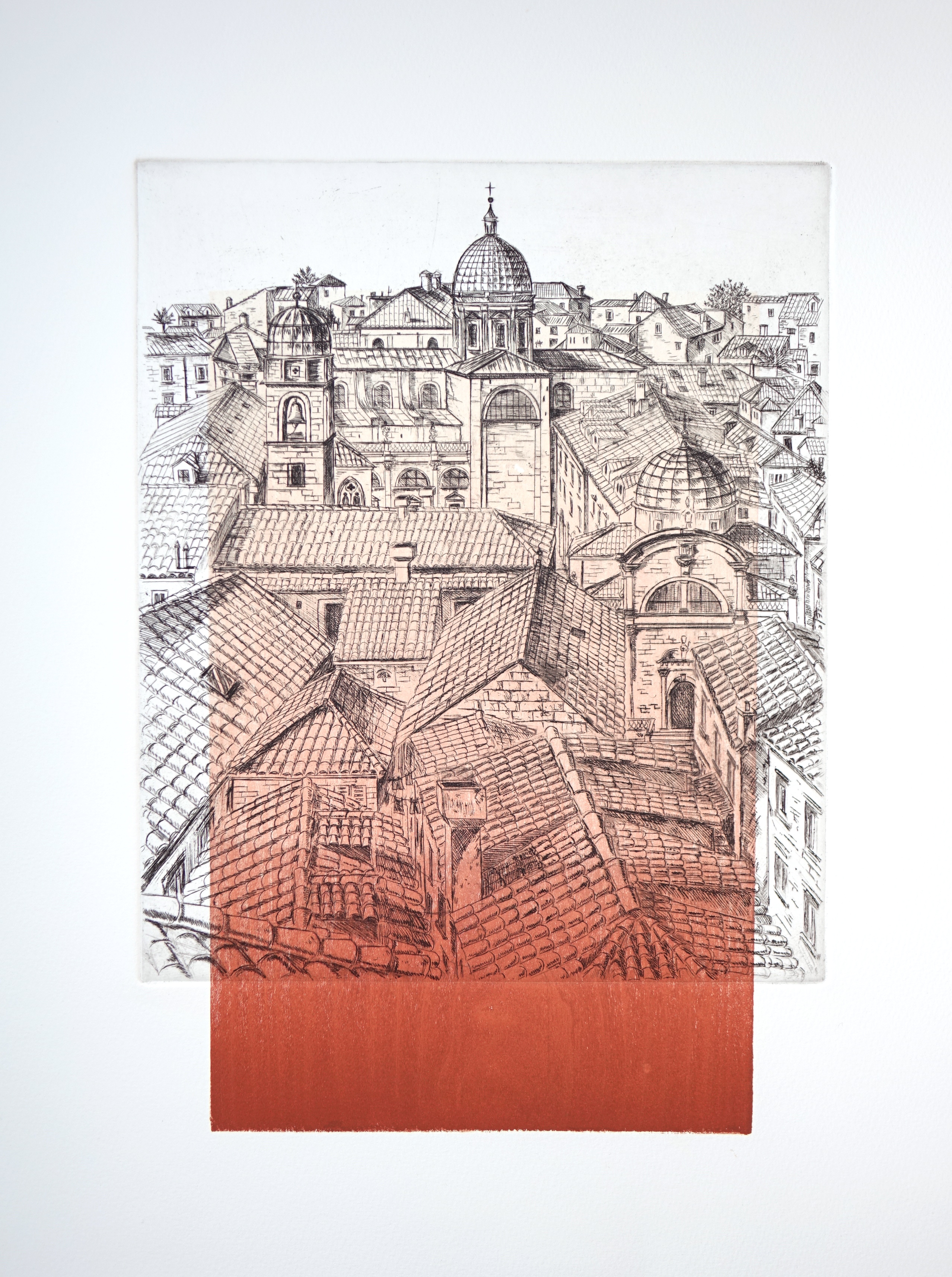
The second of my prints is entitled Terracotta Sunrise, and illustrates the swathe of terracotta rooftops which so captivated me when I visited Dubrovnik earlier this year. While I opted again for a simple line to illustrate the details of the compact houses and streets of this beautiful Croatian city, I wanted to use a graduating block of terracotta to subtly represent the overarching colour of the city when seen from afar, doing so with a graduating roll of colour which fades off almost like a sunrise.

Terracotta Sunrise (2014 © Nicholas de Lacy-Brown, etching and woodblock on paper)

Terracotta Sunrise (2014 © Nicholas de Lacy-Brown, etching and woodblock on paper)

But of course these are only photos (and not very good ones at that) and there is no substitute for seeing the real thing. So if you are able to get down to the Southawk/ London Bridge area of London tonight (for the opening) or any time over the next two weeks, do please come along – the gallery will be open until 6pm daily until 28th September. All the details can be found here. See you there.

10678733_753879087980880_4077473047340161283_n

Transforming the Gothic – colour sensation in the Cathedral of Palma de Mallorca

Some of architecture’s most stunning successes can be found in religious buildings. The eternal repetition of the forest of pink and white marble pillars in Cordoba’s La Mesquita is one of the most enthralling sights of the ancient Islamic world, while at the centre of the Catholic world, the sheer scale and magnificence of St Peter’s Basilica in the Vatican makes it clear to all who come close that this place is the all powerful centre of Christianity. In Roman times, religion was the instigator of some of the most brilliant of all architectural creations, such as the ground-breaking single expanse dome of the ancient Pantheon temple in Rome, while in more modern times, it has inspired some of the most jaw-dropping creations ever made by man, such as the stunning realisation of a creative genius: Gaudi’s Sagrada Familia in Barcelona.

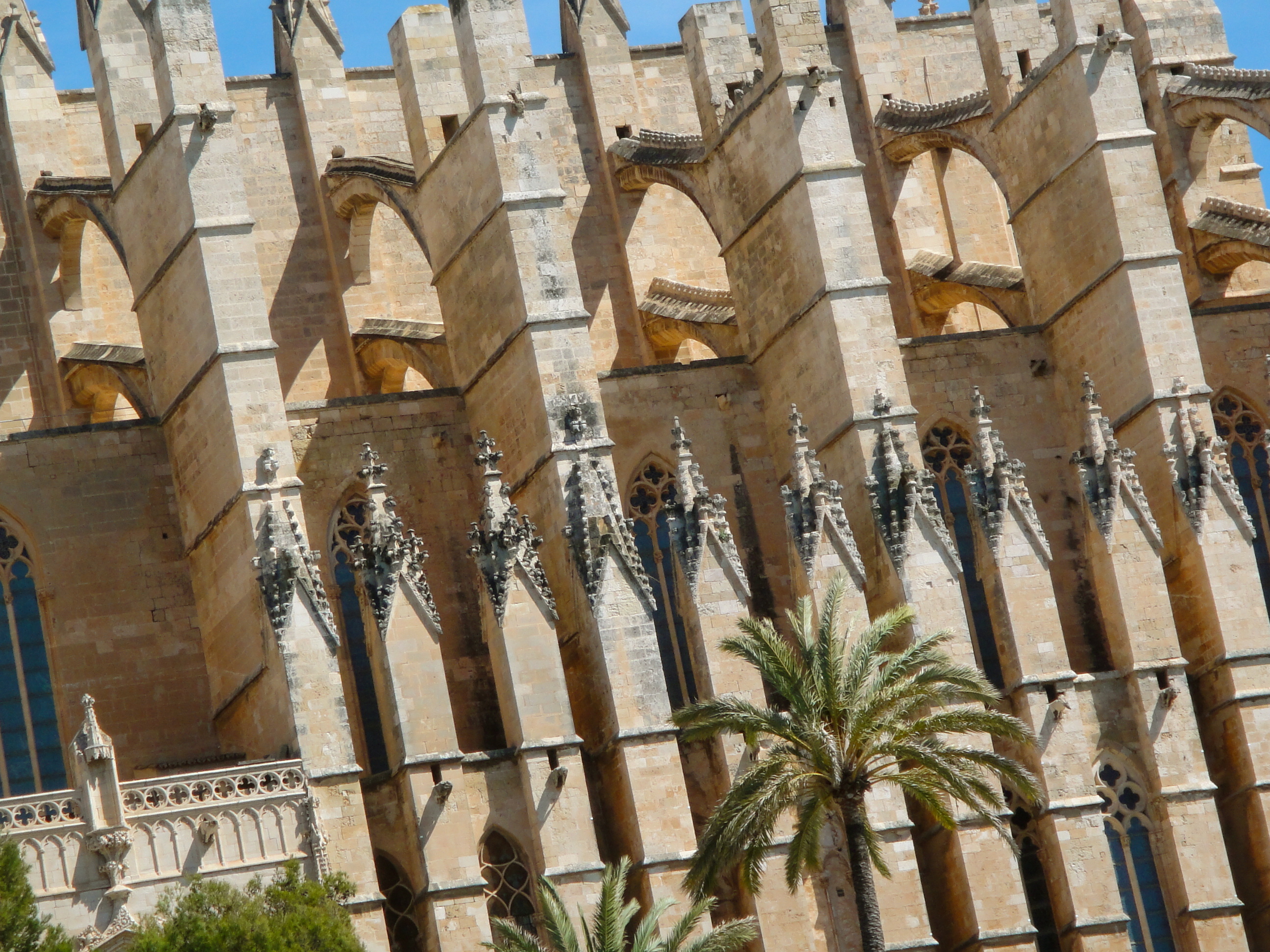
Nevertheless, when you think about the religious treasures of the world, you will find that proportionately few of them are gothic. The reason for this is  clear:  the gothic style is largely synonymous with austerity, with its soaring naves and high-winged buttresses leading to vast expanses of cold space; gothic churches are more often places of fear, with their grim faced gargoyles and sinister dark angels, and even Paris’s Notre Dame, surely one of the most famous examples of gothic architecture, is better associated with the haunting tale of a hunchback living within the cathedral’s inhospitable bell towers than with any illusion that the church is in any aesthetic sense a thing of beauty. Yet while this idea of the gothic has long lingered in my mind, all of my pre-held conceptions about gothic architecture were challenged last weekend when in Palma de Mallorca, capital of Spain’s Balearic Islands, I realised just how stunning the gothic can be.

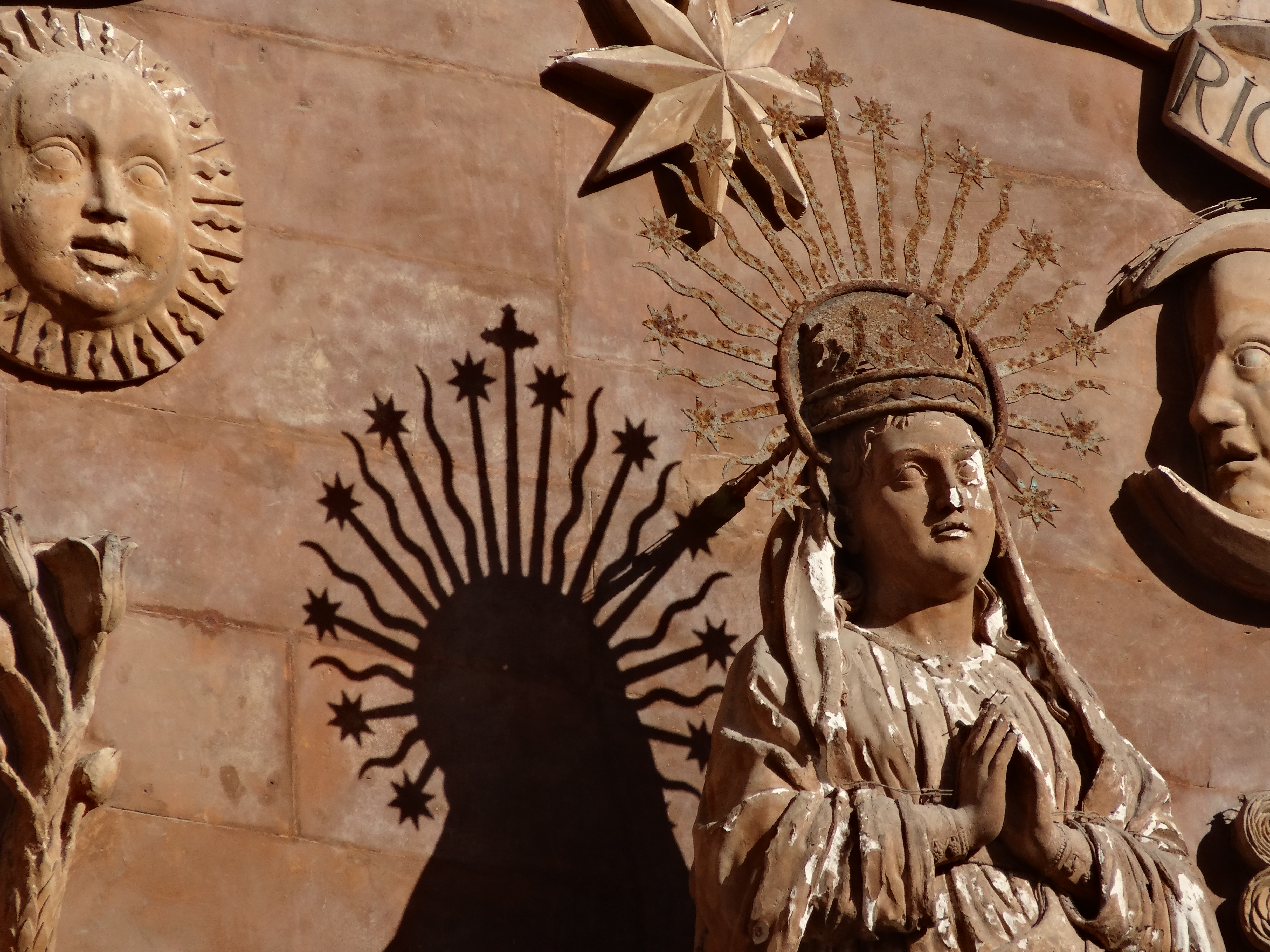
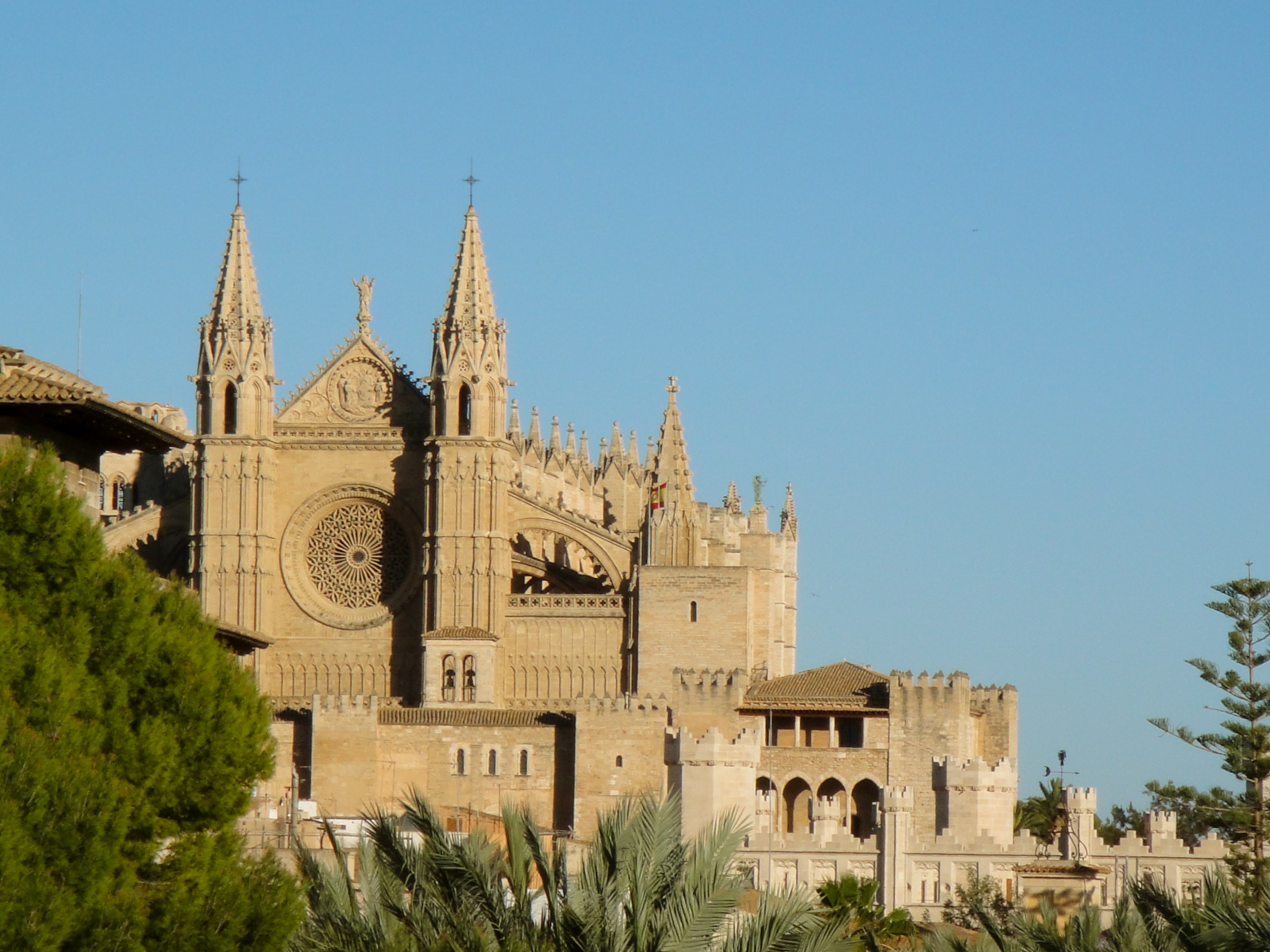
La Seu’s imposing gothic exterior

DSC06034 DSC05749 IMG_3708 DSC01109 DSC06190

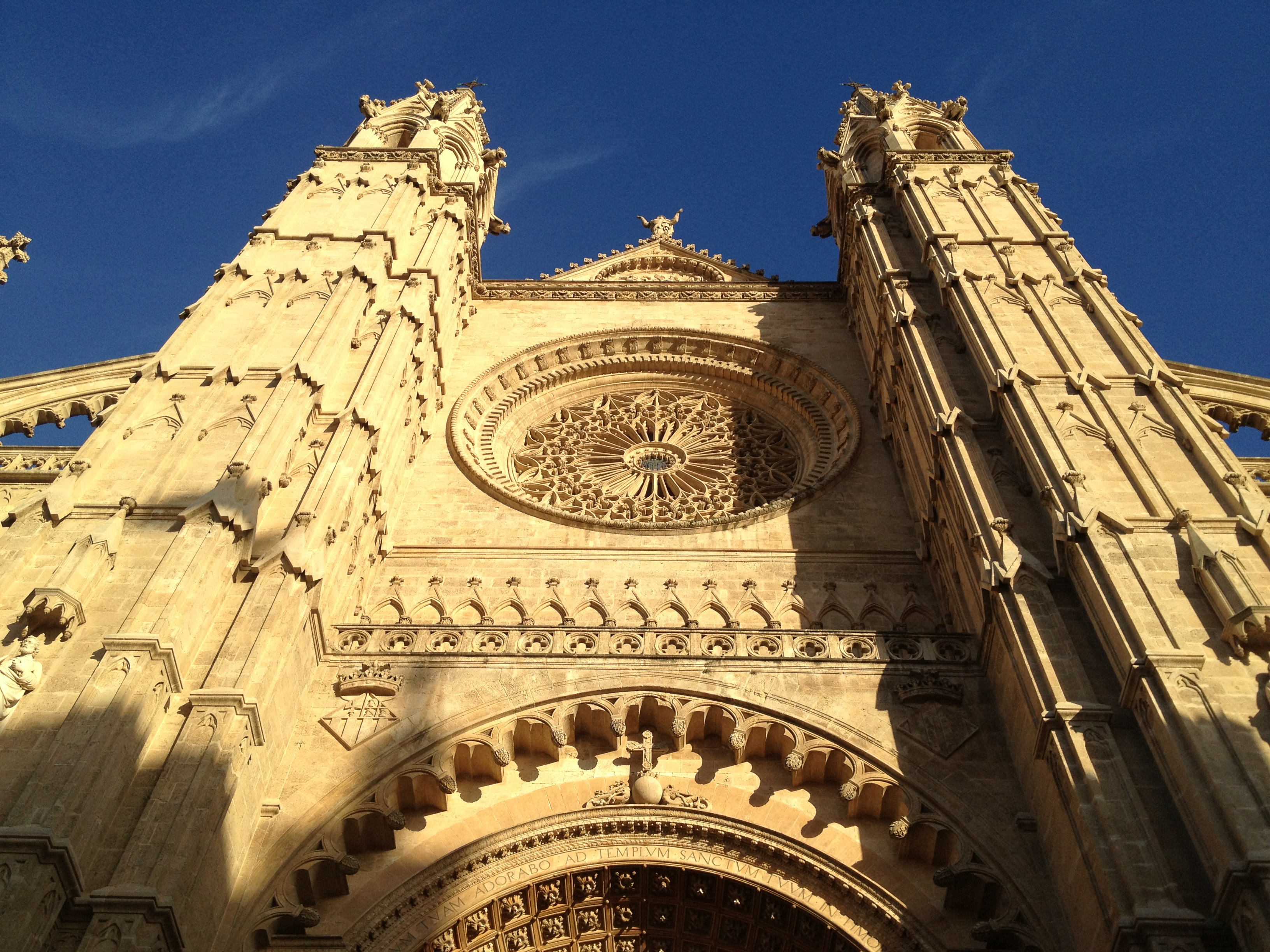
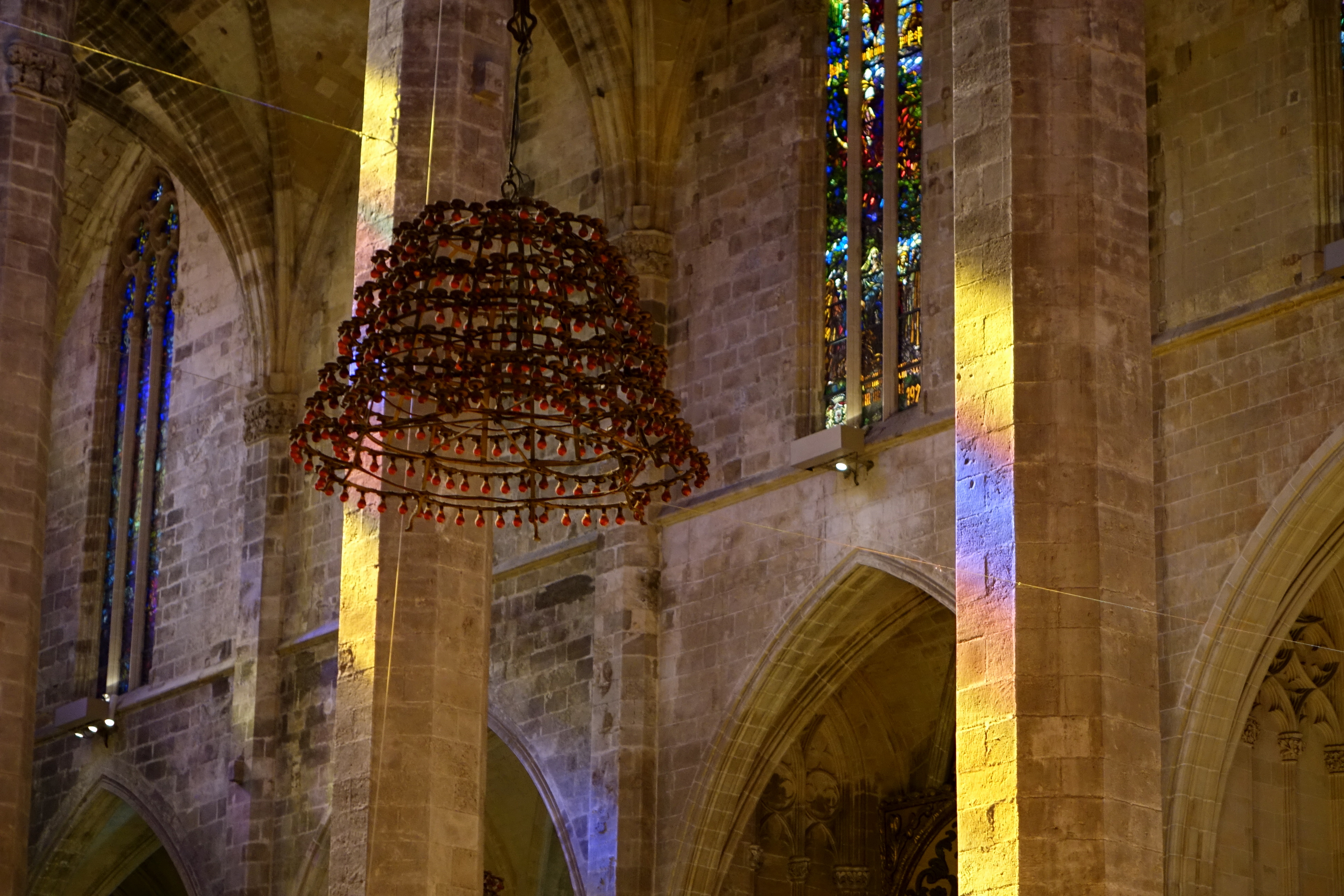
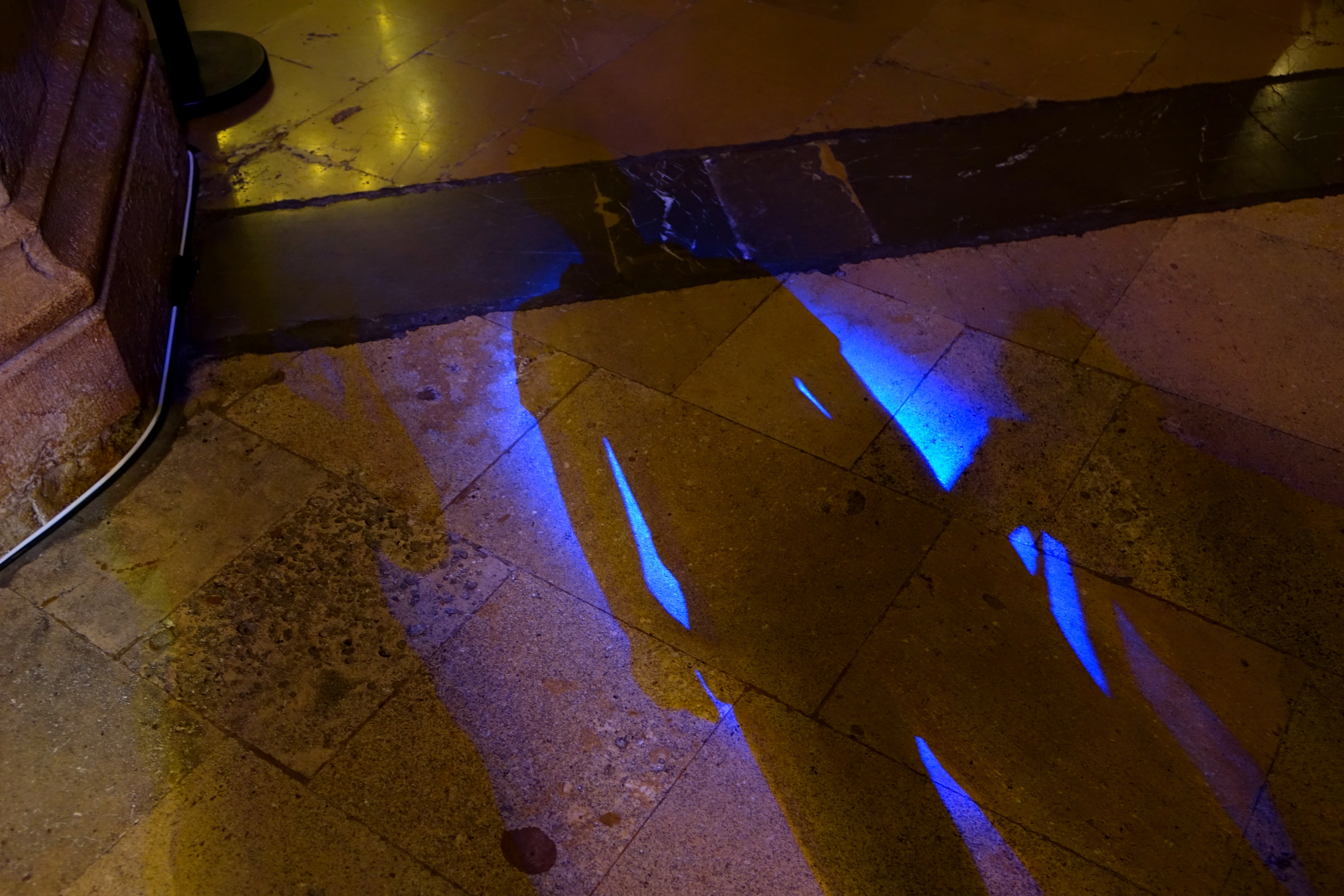
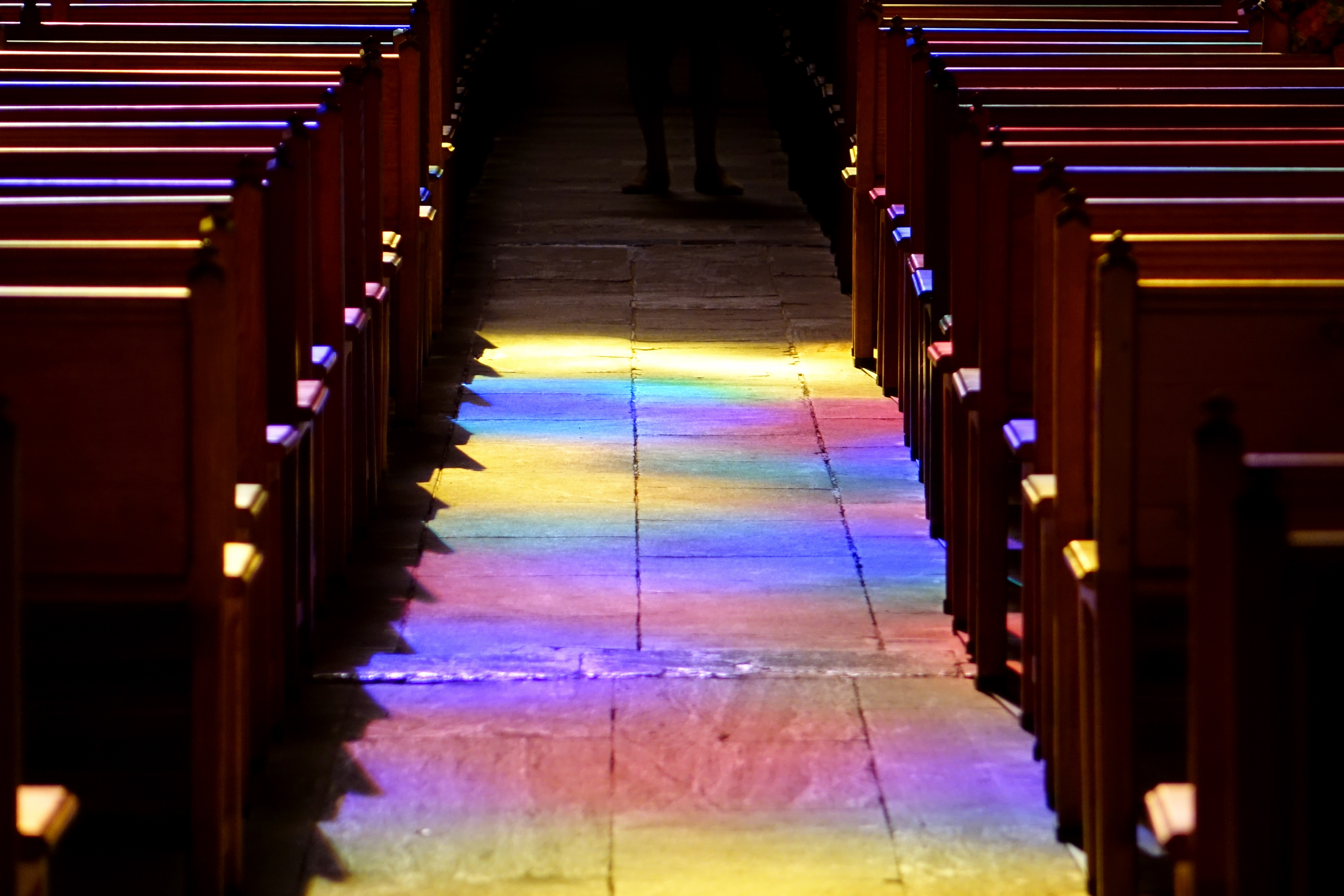
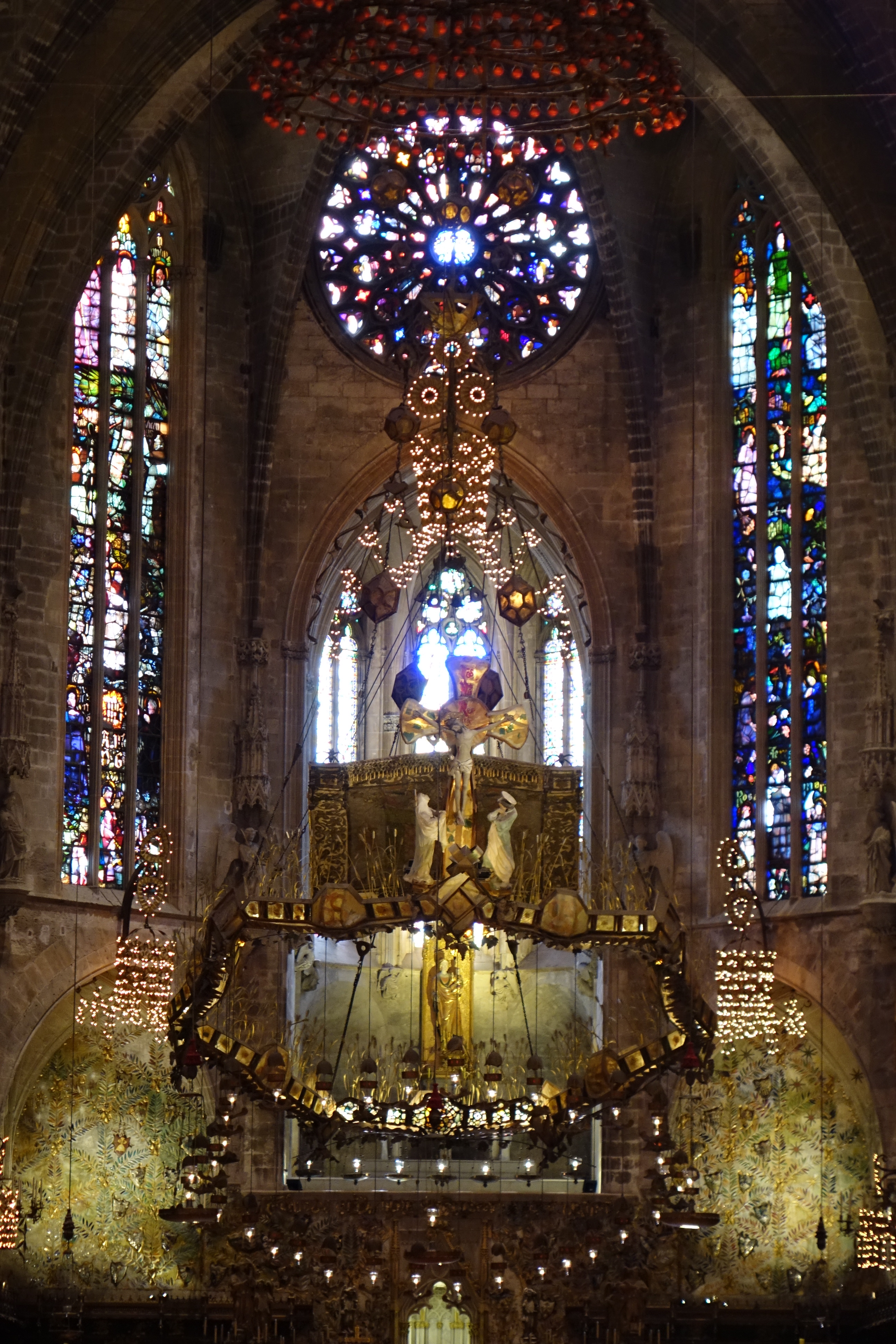
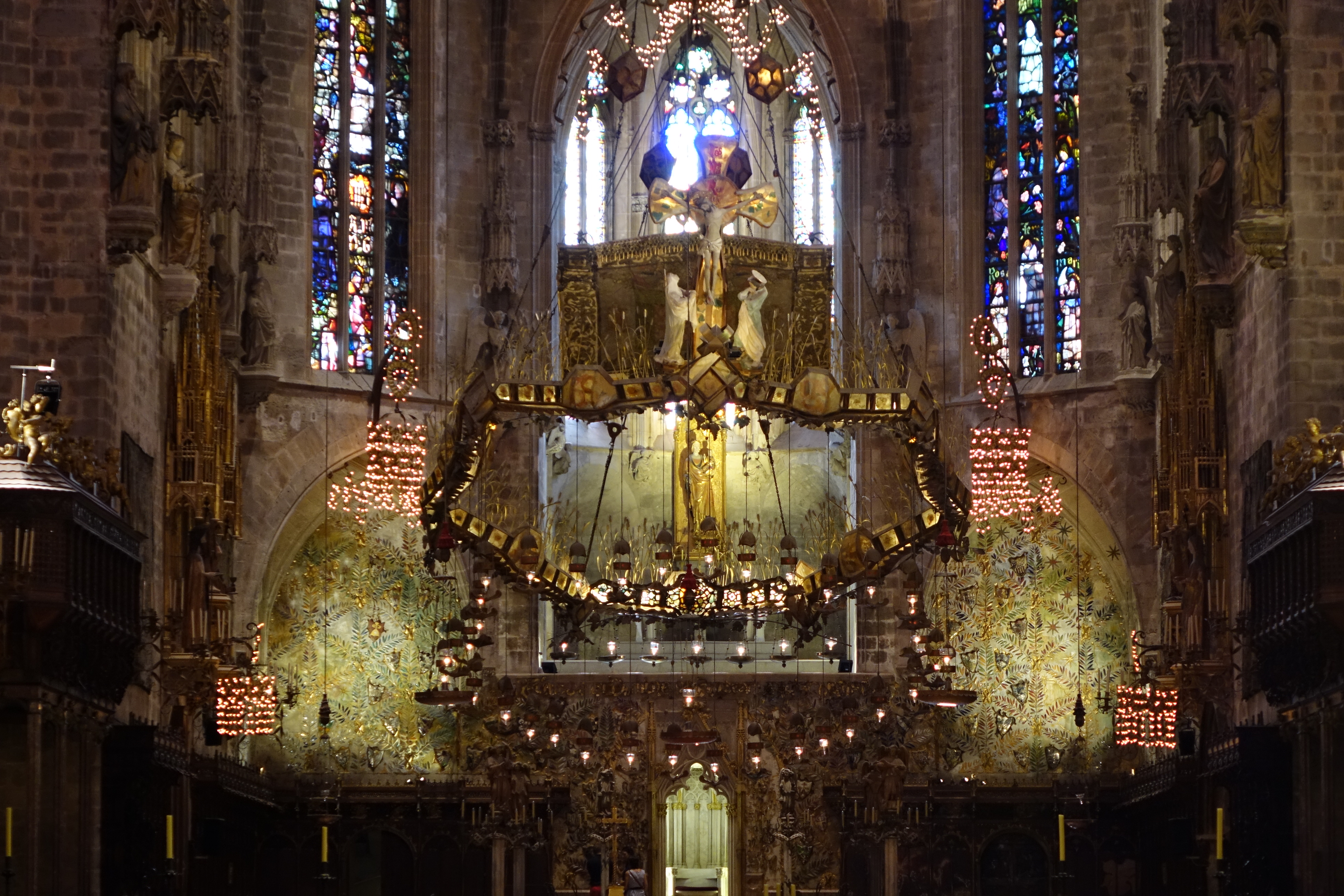
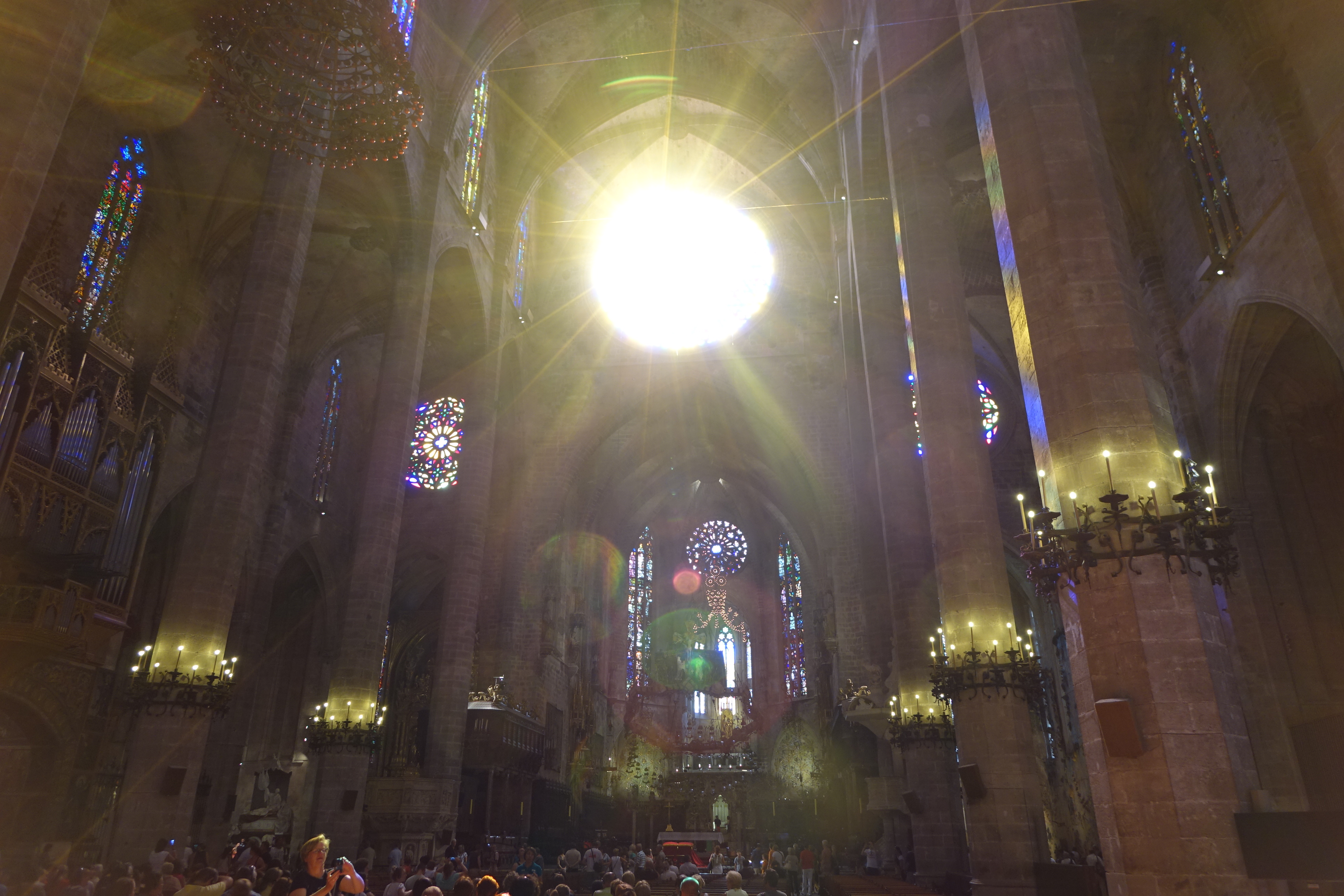
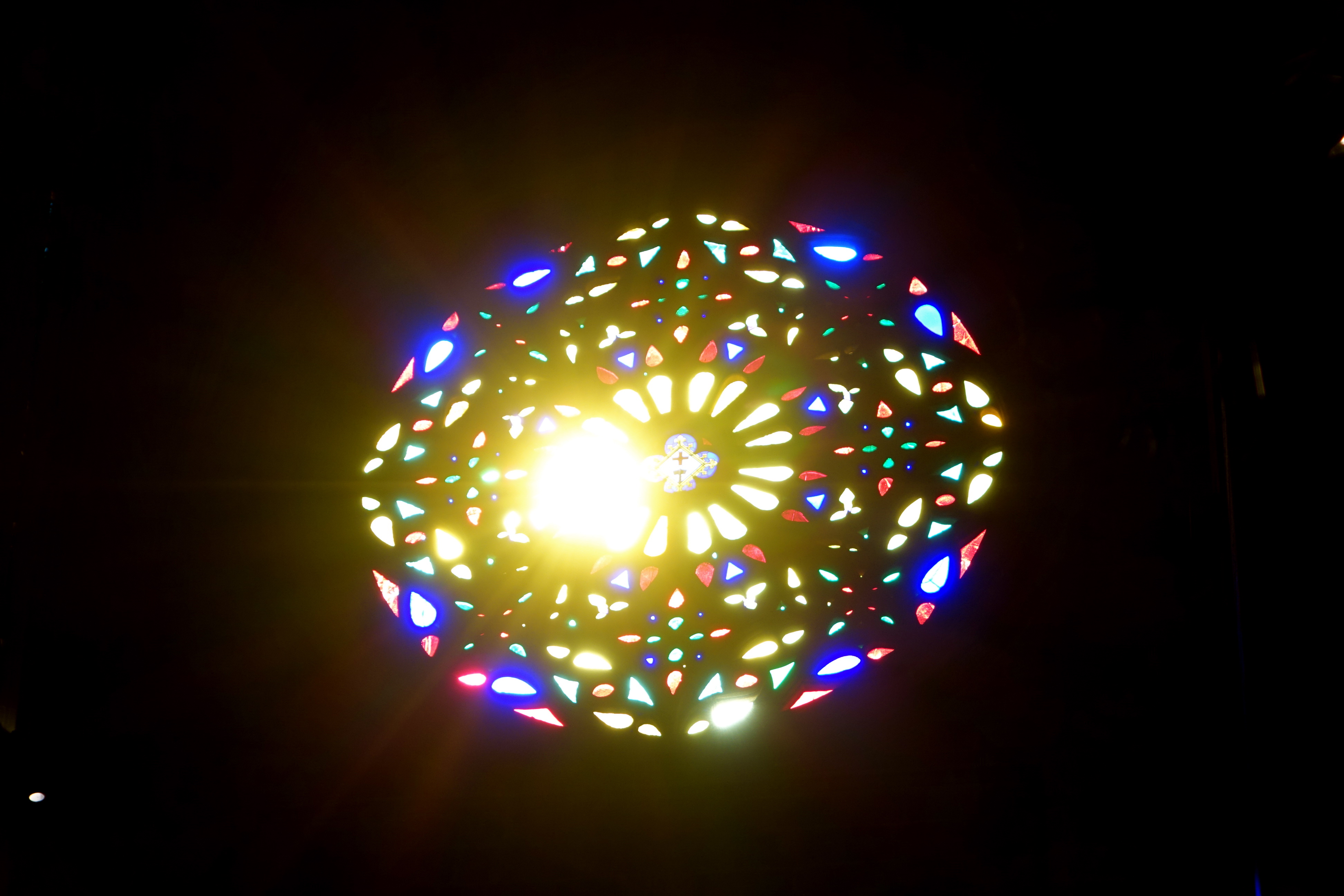
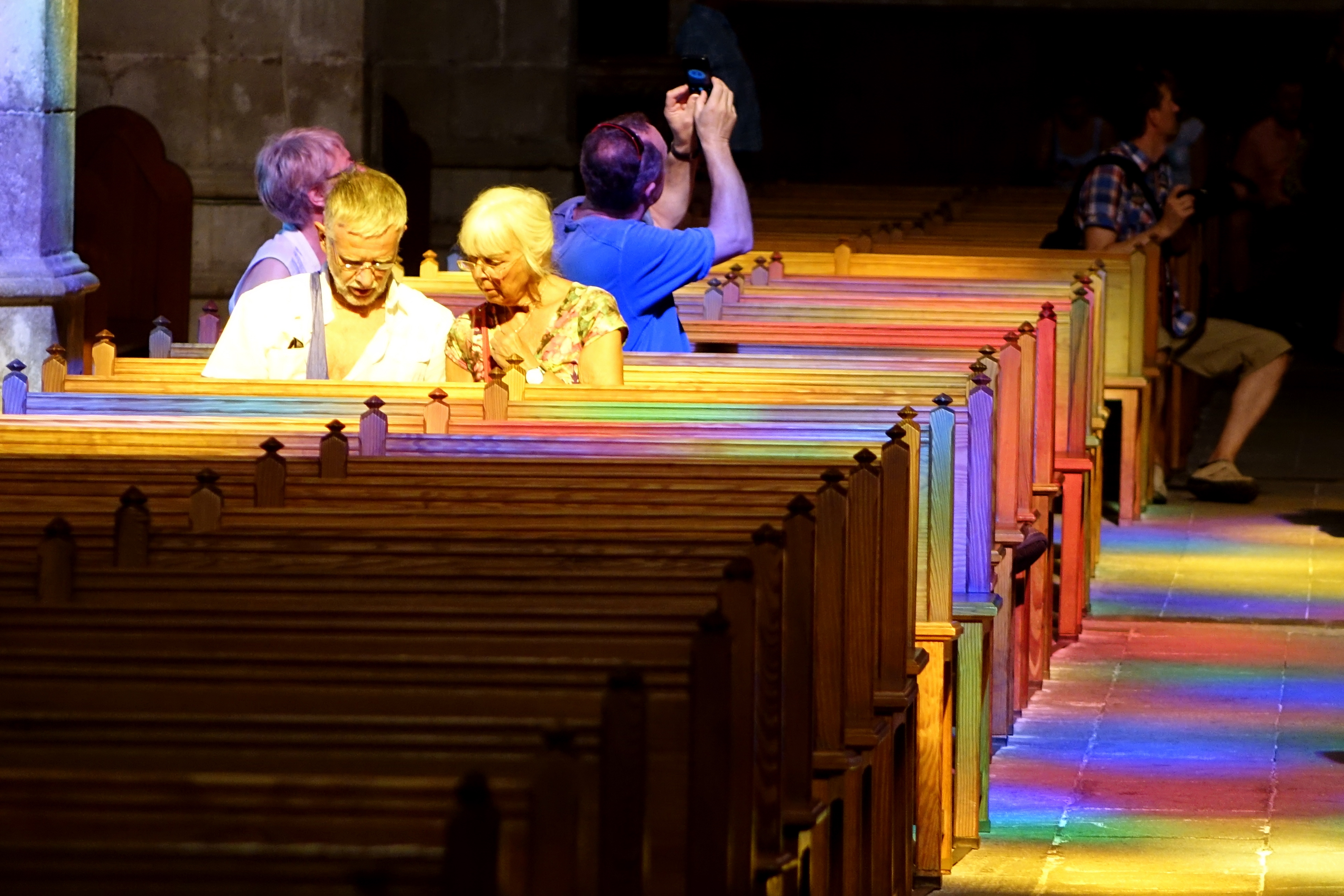
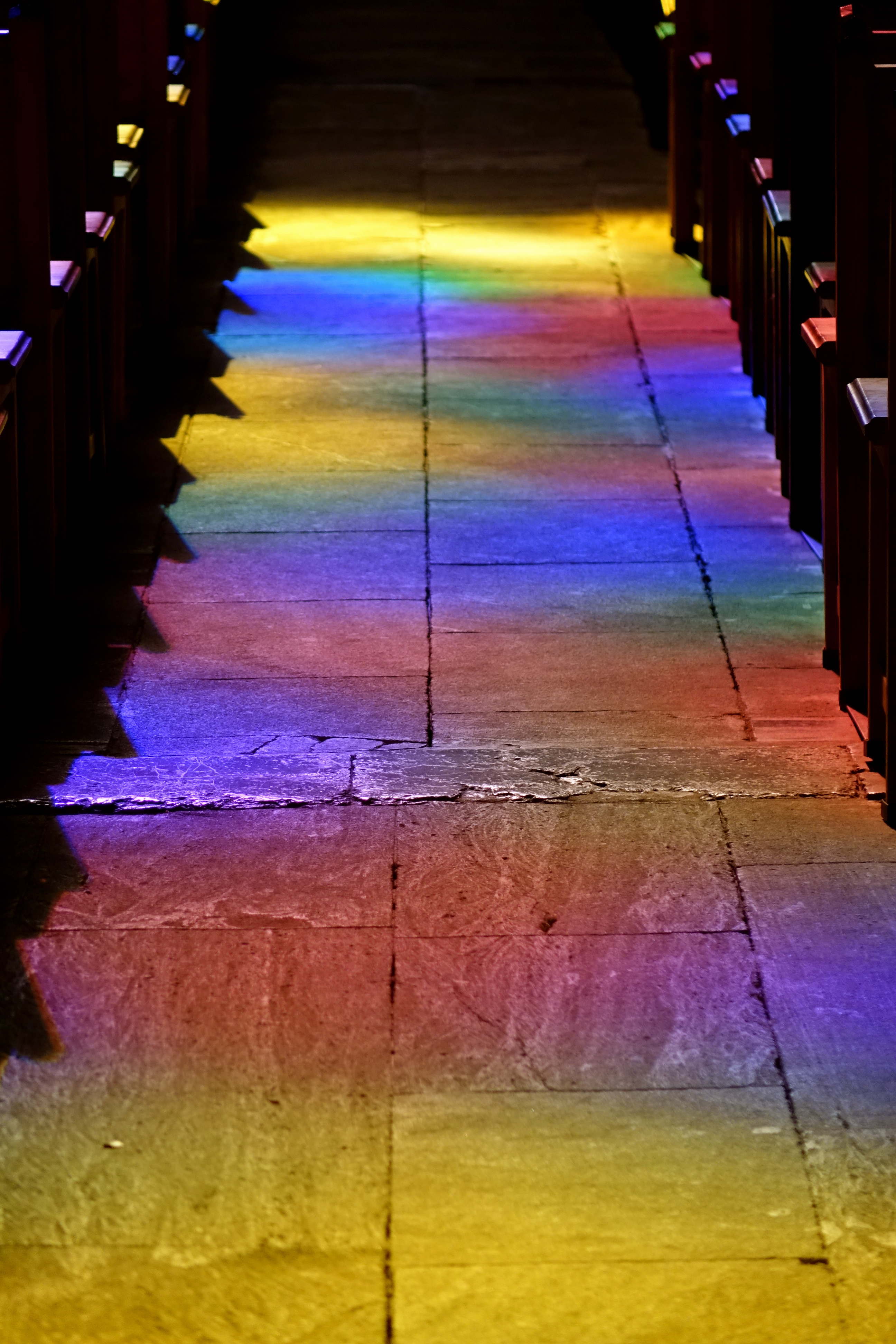
Palma’s Cathedral, known locally as La Seu, is indeed a masterpiece of the catholic gothic style. Completed in 1601, it is a soaring vast temple to christianity, with a dominant position over the waterfront of Palma, and comprising the 7th highest nave in the world. But what makes this palace of gothic architecture different from all of the other churches of the genre, enabling it to dispel the associations of dark, dank solemnity which is inherent in the gothic style, is colour. Pure, dazzling, multi-coloured samplings from every stretch of the rainbow. For in Palma’s Cathedral, there is not a single clear pane of glass. Rather, its many windows are fitted with coloured stained glass so rich in its vivacity and complexity, that when the sun shines on the outside of the cathedral (which it invariably does in Mallorca), the result on the inside is to fill every gothic stone and structure, ever eave and buttress, every flag stone and pew with the most dazzling multi-coloured light.

DSC07721 DSC07686 DSC07683 DSC07681 DSC07688 DSC07715 DSC07692 DSC07718 DSC07694 DSC07708 DSC07726 DSC07700 DSC07680 DSC07675 DSC07732

The effect is astounding, and dispels every known stereotype about gothic architecture, which is utterly transformed under the warming dazzle of a hundred shades of multi-coloured light. At times, when you are looking directly into the light as it shines through one of the cathedral’s impressive stained glass windows, a moment of epiphany overcomes you, as everywhere you look you see shards of colour bouncing across the vast space. If that was the intention of the architects, it is an objective universally achieved, so that you leave the cathedral if not religiously converted then certainly spiritually touched.

All photos and written content are strictly the copyright of Nicholas de Lacy-Brown © 2014 and The Daily Norm. All rights are reserved. Unauthorized use and/or duplication of the material, whether written work, photography or artwork, included within The Daily Norm without express and written permission from The Daily Norm’s author and/or owner is strictly prohibited.

Prague (Part 5): City of a Thousand Spires

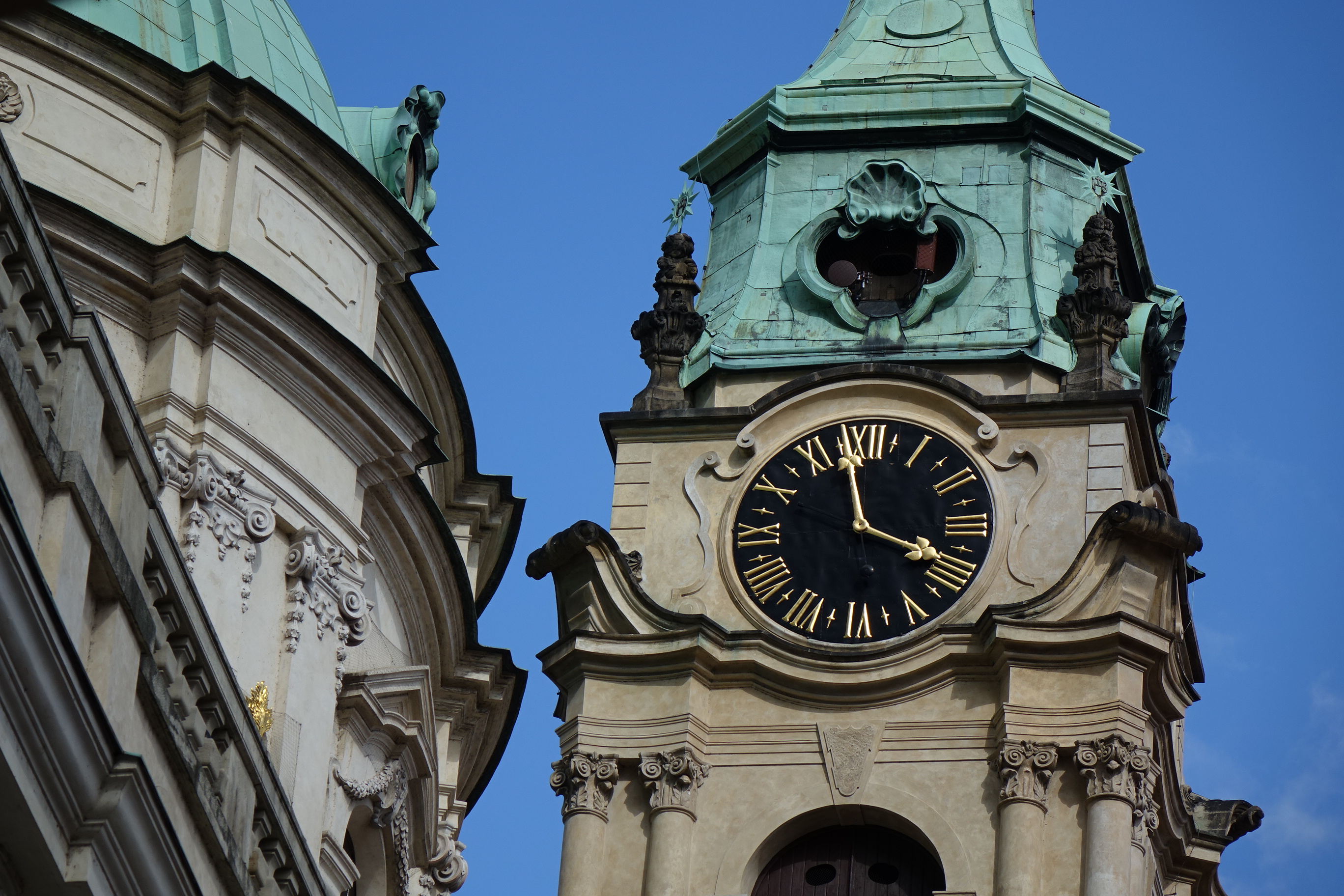
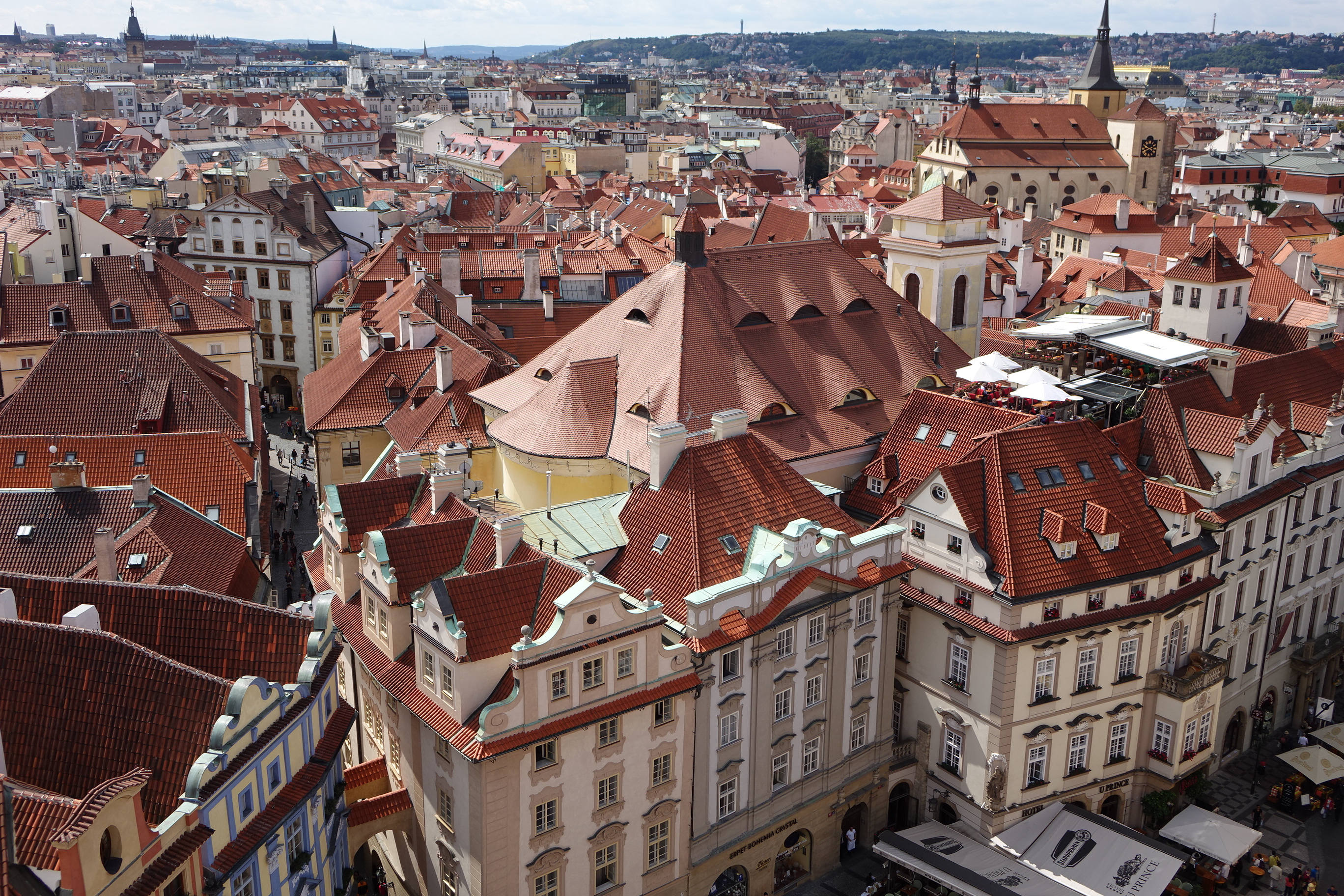
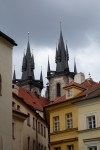
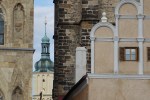
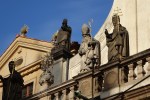
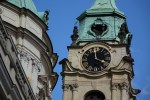
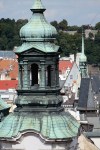
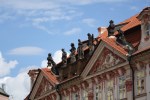
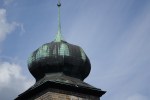
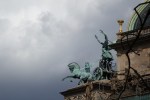
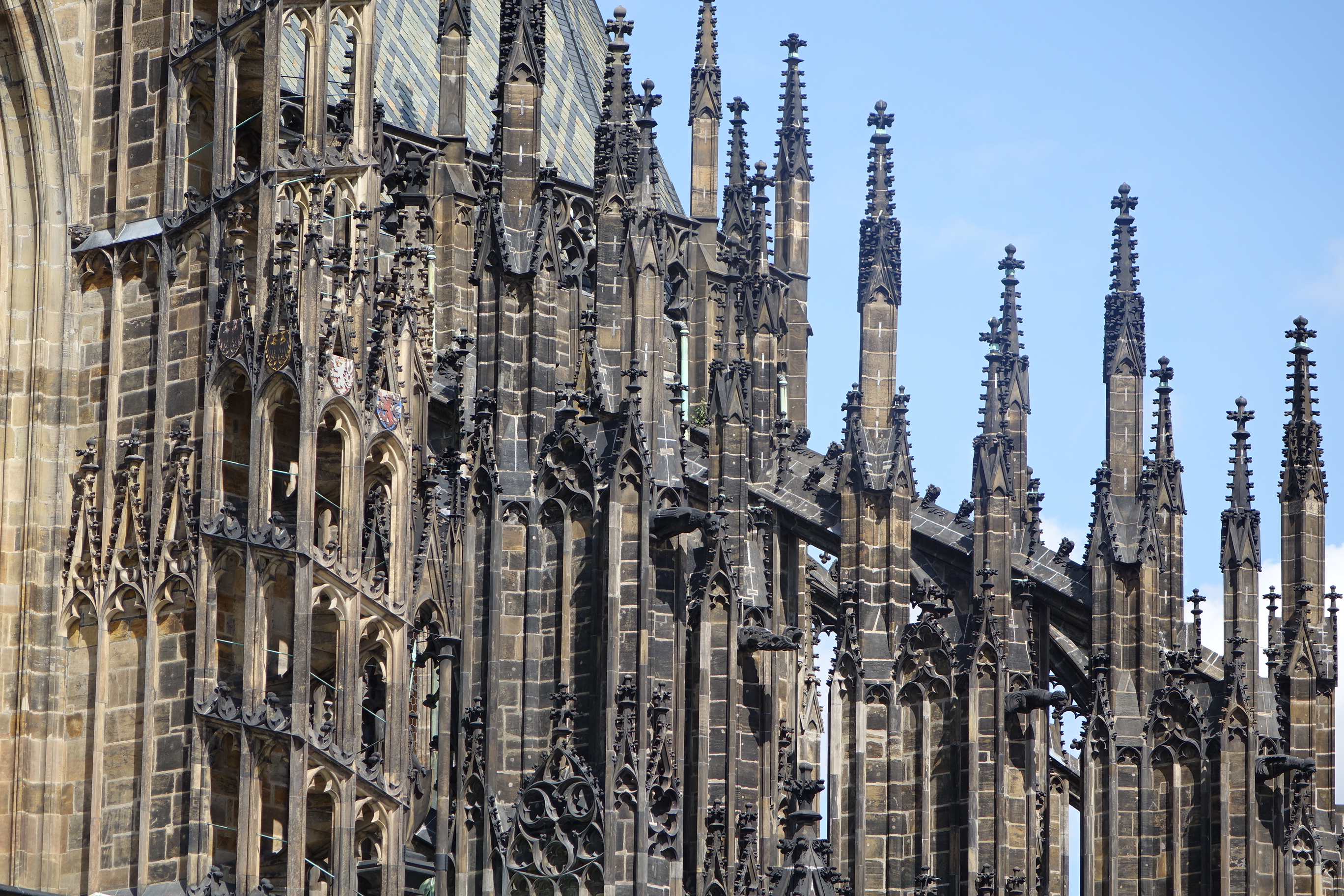
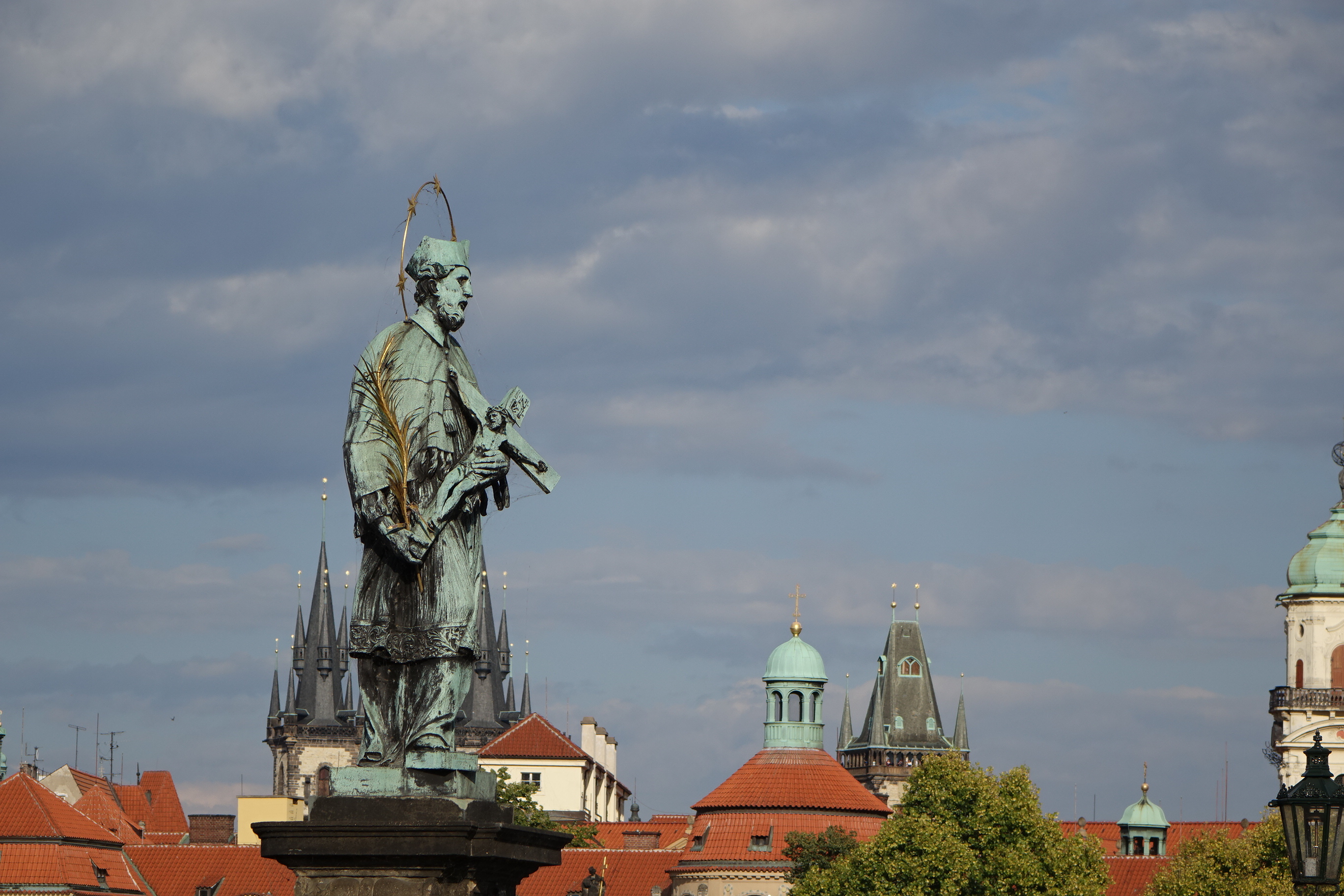
They call Prague the city of a thousand spires, and while I’m sure that a thousand may be a slight exaggeration, it’s probably not too far from the truth. For Prague’s skyline is like a venerable jewellery box of glinting treasures: tall spires, small spires, fat spires and ornate spires; cupolas embellished in gold, and turrets laced with ornate iron work. Some are grey and others the warm terracotta which populates most of Prague’s rooftops; but perhaps the most common are those copper spires, whose metal has turned a pleasing shade of aquamarine. Set amongst this sea of variously shaped ornaments are the baroque treasures which yesterday’s post explored; and so in any one square metre of the city, you may have a delicious overlap of a dome, several spires, gold details, copper coloured tiles, a blackened statue, and a slightly cleaner one – in other words a feast for the eyes.

DSC07064 DSC07441 DSC06948 DSC06464 DSC07223


It is in an attempt to serve that banquet of architectural delicacies up into manageable bite-size pieces that I devote a whole post on today’s Daily Norm to the seductive skyline ofPrague. For while the city at ground level, with its tourist hoards and stag parties may do your head in, keep on looking up and you may well find that Prague fairytale that all the guidebooks have promised you.

All photos and written content are strictly the copyright of Nicholas de Lacy-Brown © 2014 and The Daily Norm. All rights are reserved. Unauthorized use and/or duplication of the material, whether written work, photography or artwork, included within The Daily Norm without express and written permission from The Daily Norm’s author and/or owner is strictly prohibited.

Prague (Part 4): Baroque Brilliance and a Stained Glass Symphony

Having spent my first day in Prague thoroughly put out at the bad customer service, the horrendous gangs of British stag parties cluttering up the best squares and cafes, and the poor state into which the city has so often been left to decline, I started my second day afresh, determined to focus on the beauty for which the city is otherwise famed. For you don’t need to look far beyond the tourist hoards and the badly serviced cafés to find what everyone is making all the fuss about: a city filled with beautiful bubbling baroque sculptures, elegant architectural amplifications, pastel coloured building facades and a skyline littered with turrets and cupolas of every shape and size.

While last week’s photo post concentrated on the art nouveau which replaced vast swathes of the “new” town and Jewish Quarter at the turn of the 20th century, today’s turns more to the predominant feature of the city – the endlessly extravagant, unapologetically dramatic artistic showpiece that is the Baroque.

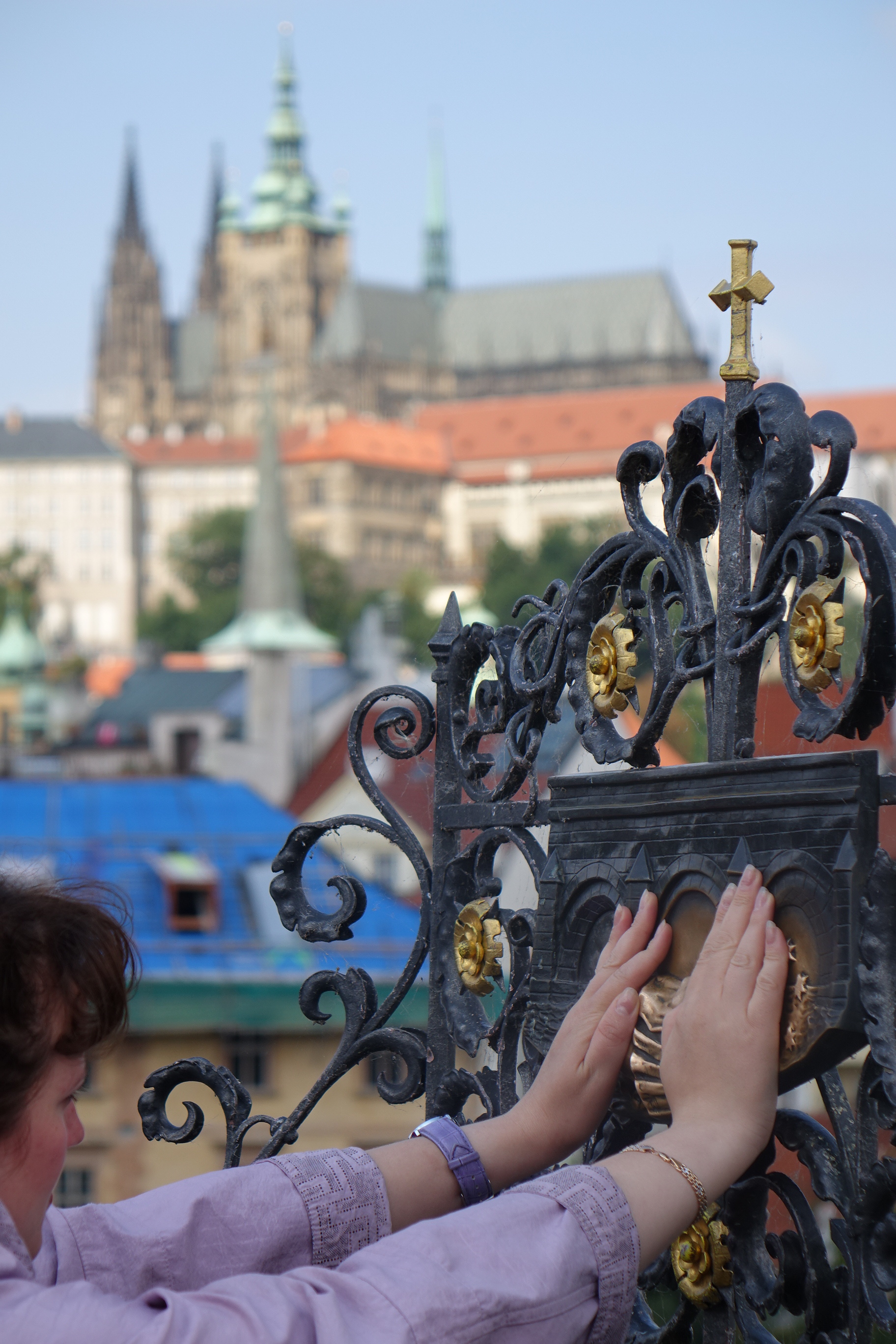
And it is everywhere. Perhaps the most famous sight of the city’s baroque virtuosity is the Charles Bridge. This pedestrianised bridge harks from the 14th century, and is a mecca for tourists and street musicians, artists and souvenir sellers; and there is little surprise why that may be. For on each of its 30 pillars stands a statue so superbly executed in the baroque fashion that it is more than rival for the Ponte Sant’Angelo in Rome, whose Bernini sculptures this collection was intended to emulate. With depictions ranging from the patron saint of the city, St Wenceslas, to a 17th century crucifixion adorned by hebrew words forcibly paid for by a Jew as punishment for blasphemy, the bridge is an art gallery to some of history’s best sculpture. It’s just a shame they are all too filthy to be properly appreciated. Yet two of the sculptures in particular are in need of less cleaning, so polished are they by the hands of tourists who touch them repeatedly in the hope of the luck they may bring.

The Charles Bridge

DSC07581 DSC06675 DSC07194 DSC06664 DSC07188 DSC07583 DSC06671 DSC06639 DSC06651

We resisted touching the sculptures – the queues to do so would have taken up half the day after all, and instead crossed over the bridge to the area of Prague they call “the Little Quarter”. The Little Quarter (Mala Strana) is indeed quite little in terms of scale compared with the grander “new town” across the Charles Bridge with its multi-storey classical faces and gilded theatres and boulevards. Here, the streets are all together more charming, with shorter pastel coloured buildings, cobbles and even little canals which separate the mainland from the little Kampa Island. There in turn are little relaxed gardens from which views of the city can be caught from shady benches, and beyond those, small cobbled squares are gently decaying as their paint flakes away and the whole place feels laid back and somniferous.

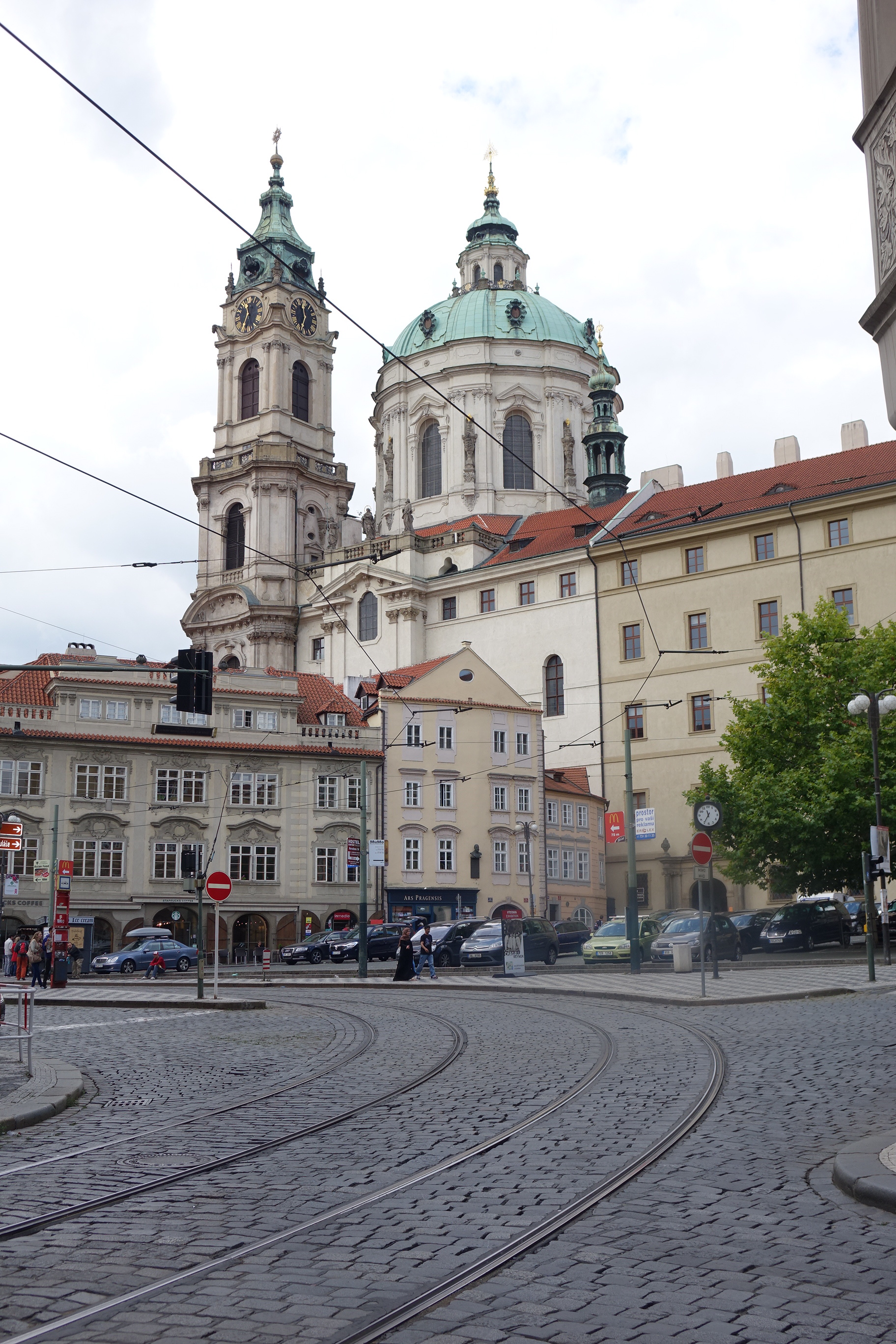
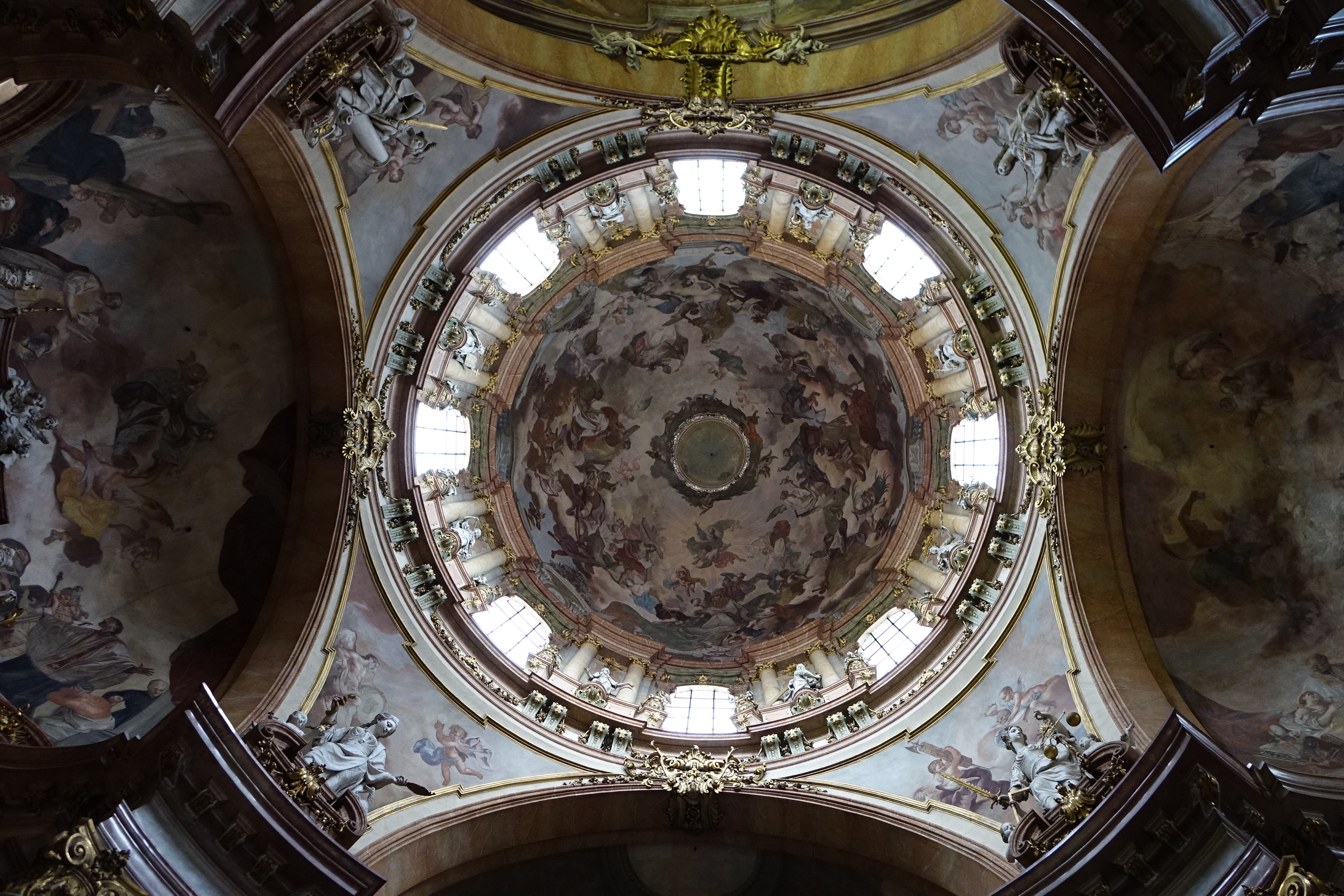
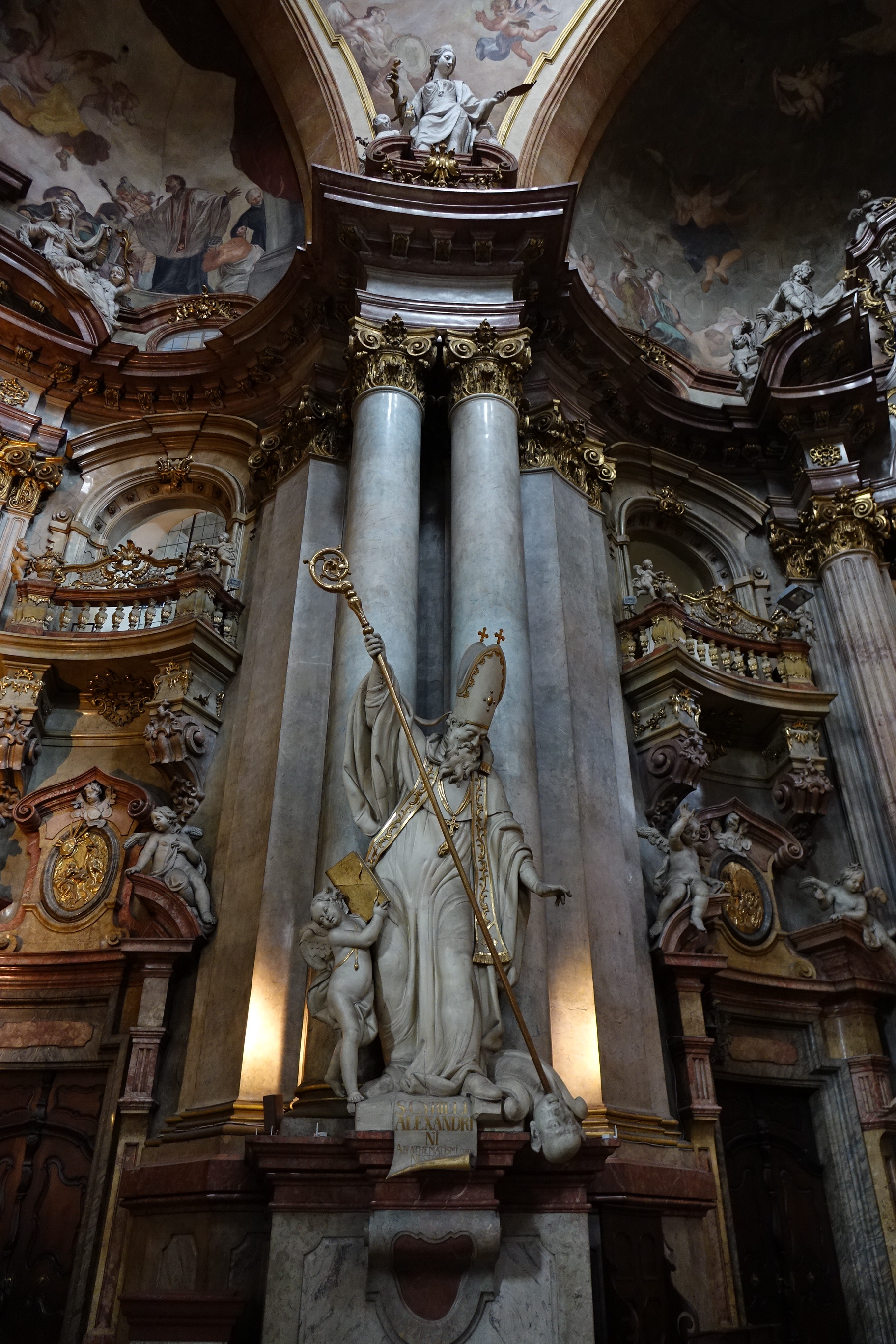
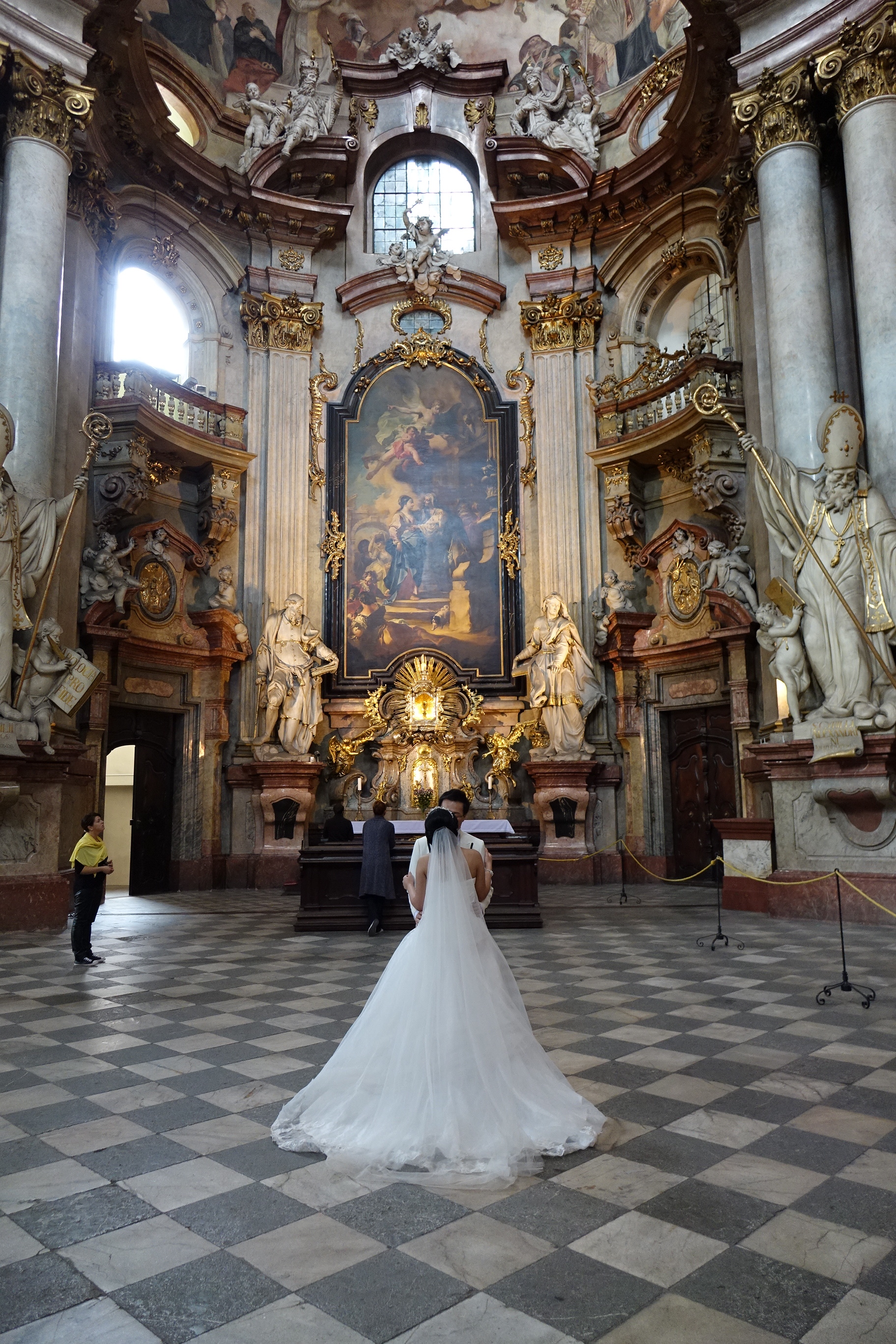
But amongst those small streets is one building which certainly does not match the title “Little”. For with its imposing great dome and matching campanile, the Church of St Nicholas is no shrinking violet. Rather, it is the next stop on the tour of baroque jems, for as the baroque goes, it doesn’t get much more extravagant that this church. Built by father and son architects Christoph and Kilian Ignaz Dientzenhofer, Prague’s greatest exponents of the High Baroque, the church is filled with an outlandishly extravagant array of excessive decoration, with gold capitals, marble pillars, great towering statues of popes and bishops, and cherubs everywhere you look filling the space. Although amusingly enough, scratch beneath the surface of all this opulence and you notice that much of it is mere theatre: the marble pillars are actually painted plaster; the gilded details simply painted gold. But then wasn’t the baroque all about the first stunning moment of theatre, when your breath is audibly taken away by the magnificence of the scene created?

The baroque spectacle of St Nicholas’ Church

DSC06730 DSC07086 DSC07101 DSC07080 DSC07066 DSC07110 DSC07106 DSC07099

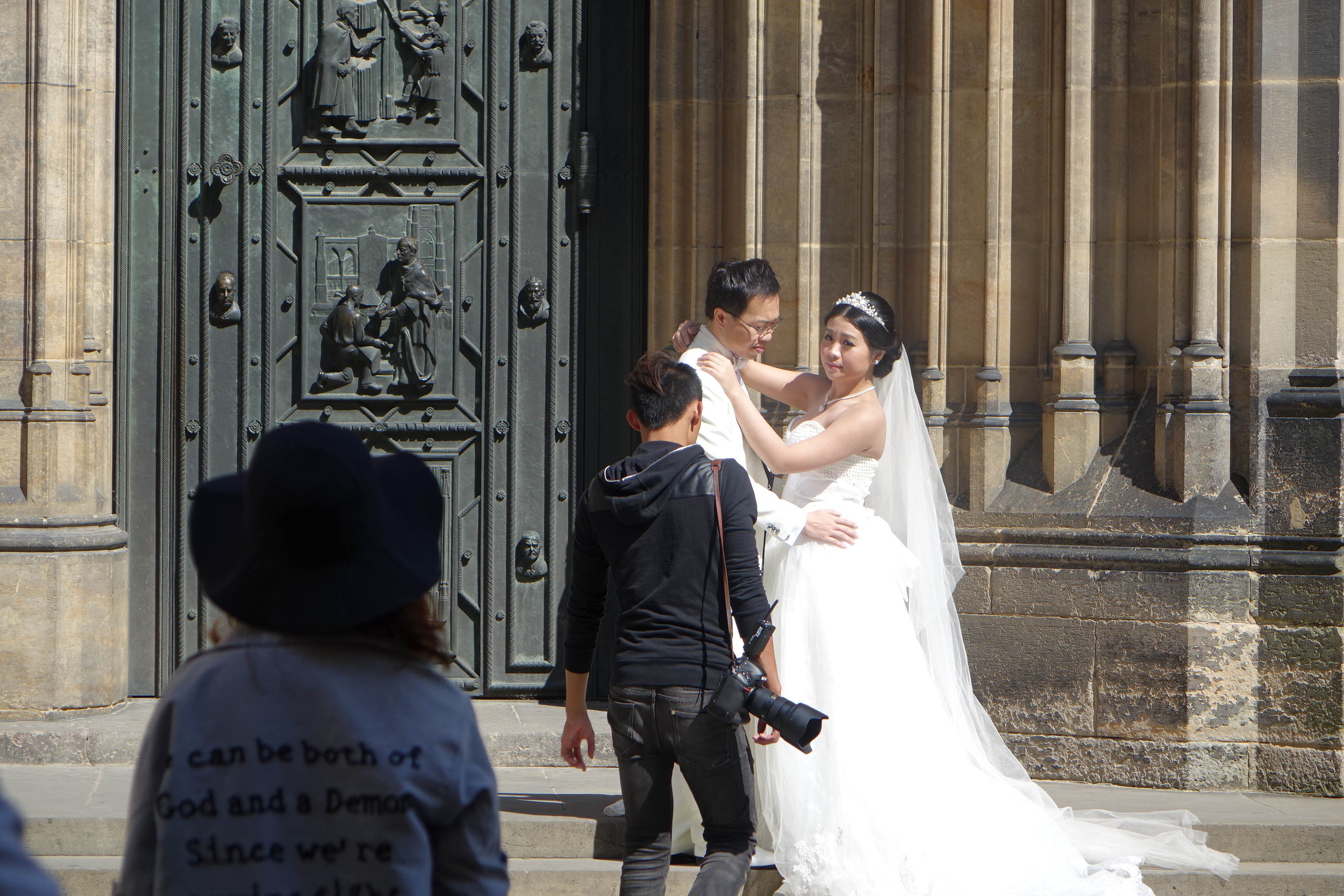
And talking of theatre, we couldn’t help noticing the latest Chinese craze of wedding couples getting married in China and then travelling to Europe to photograph themselves in full wedding regalia in front of some of Europe’s most famous monuments. We saw this couple all over prague – wherever we went, so did they, and their camera, their photographer and their make-up team…

DSC07097 DSC07051 DSC07052

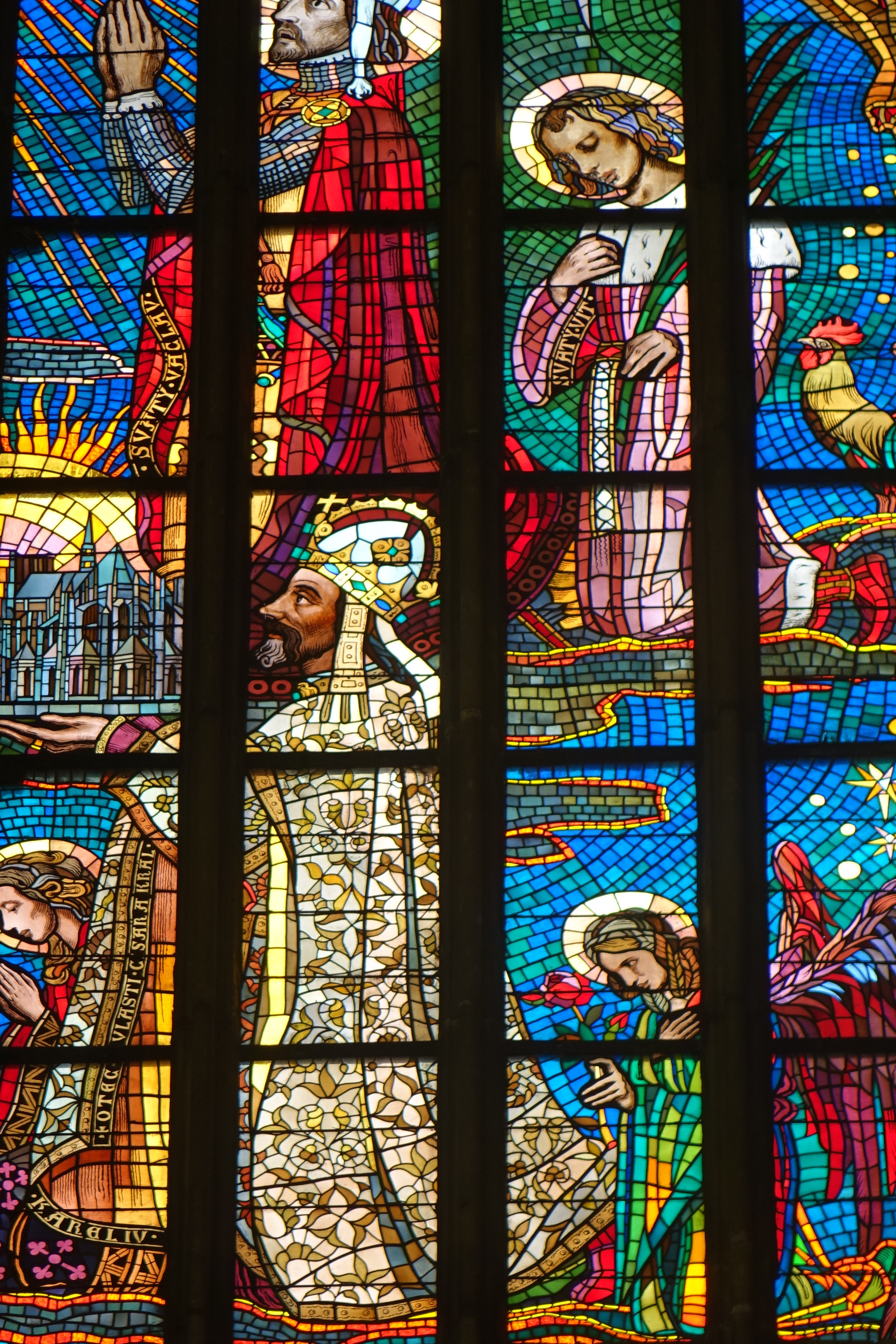
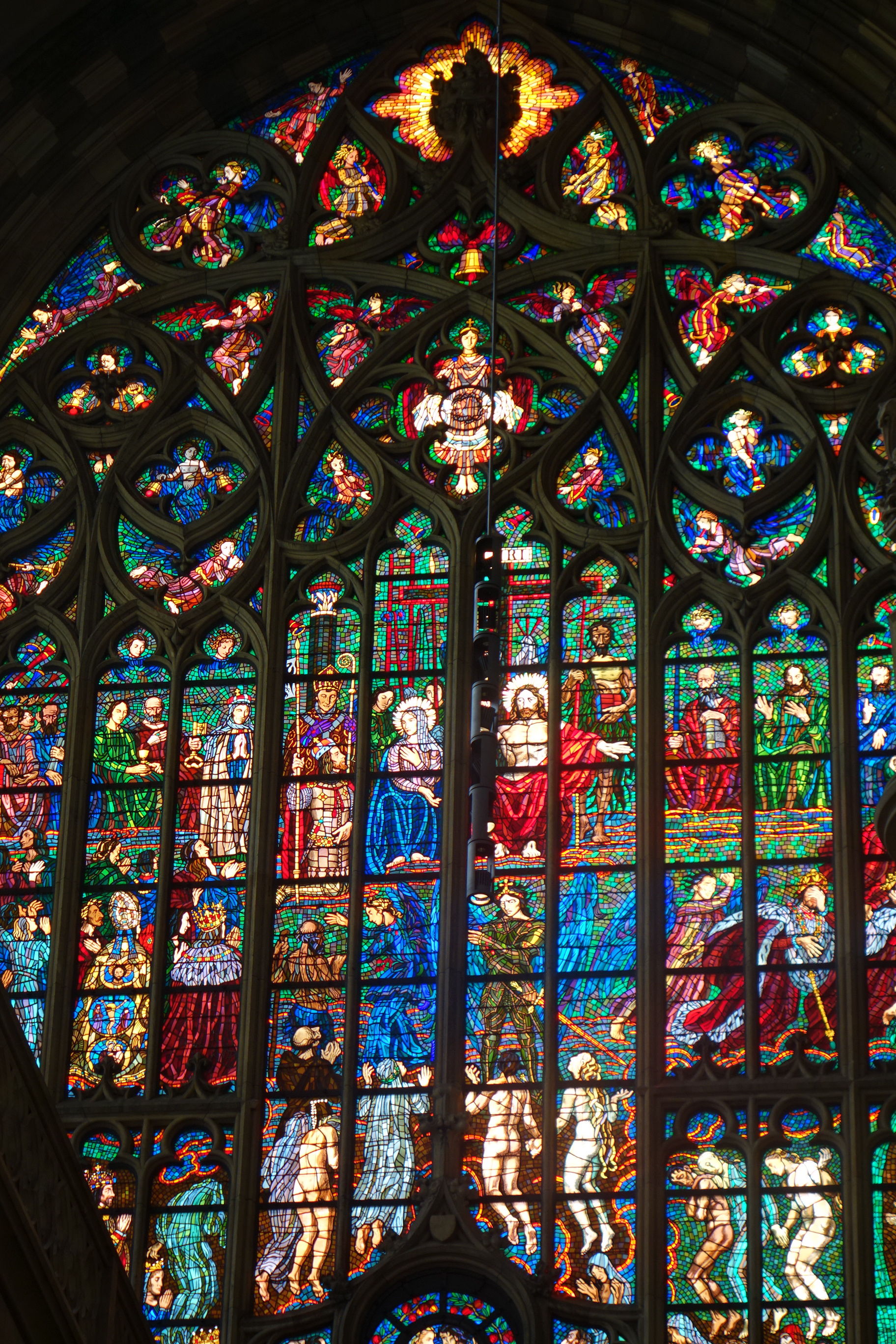
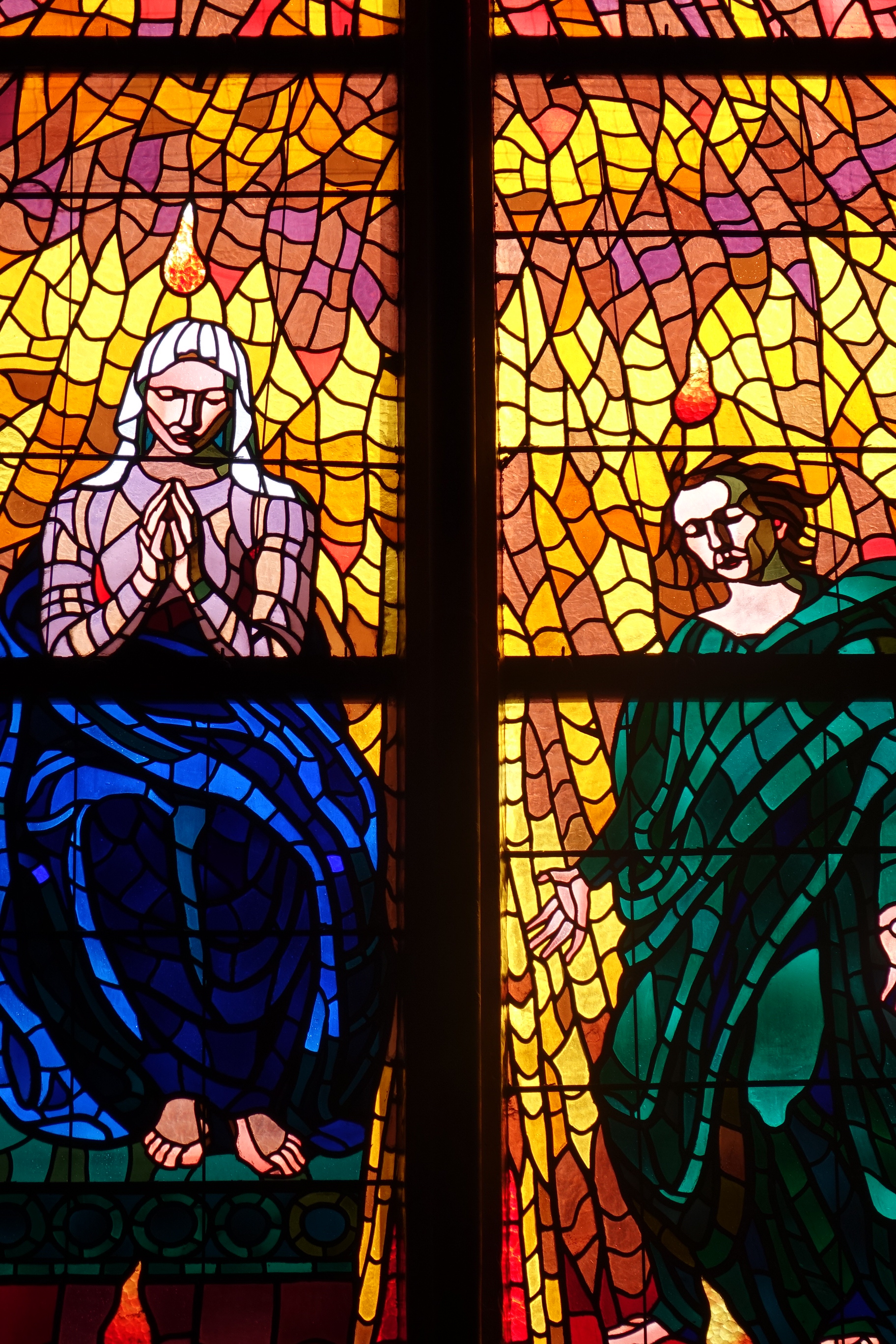
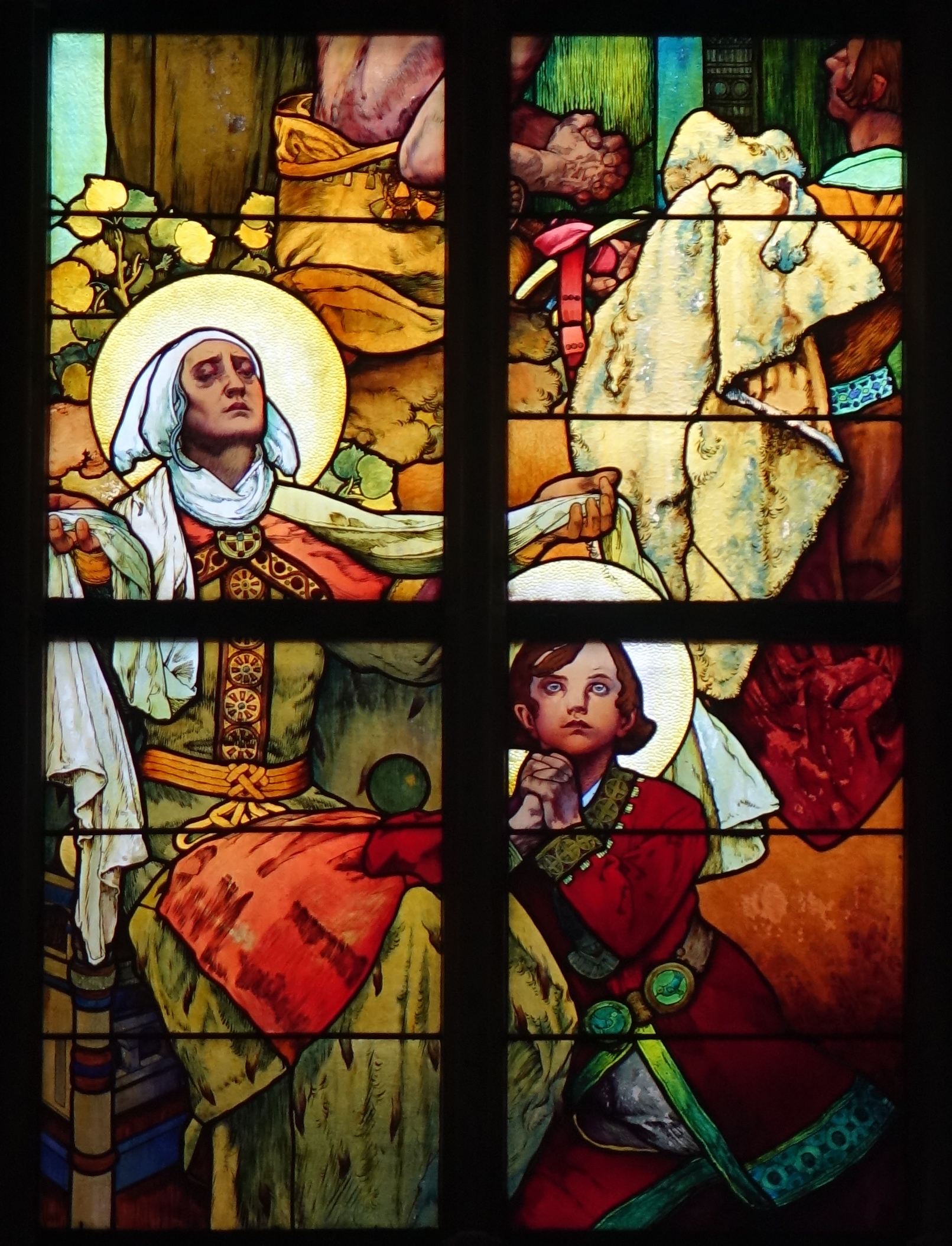
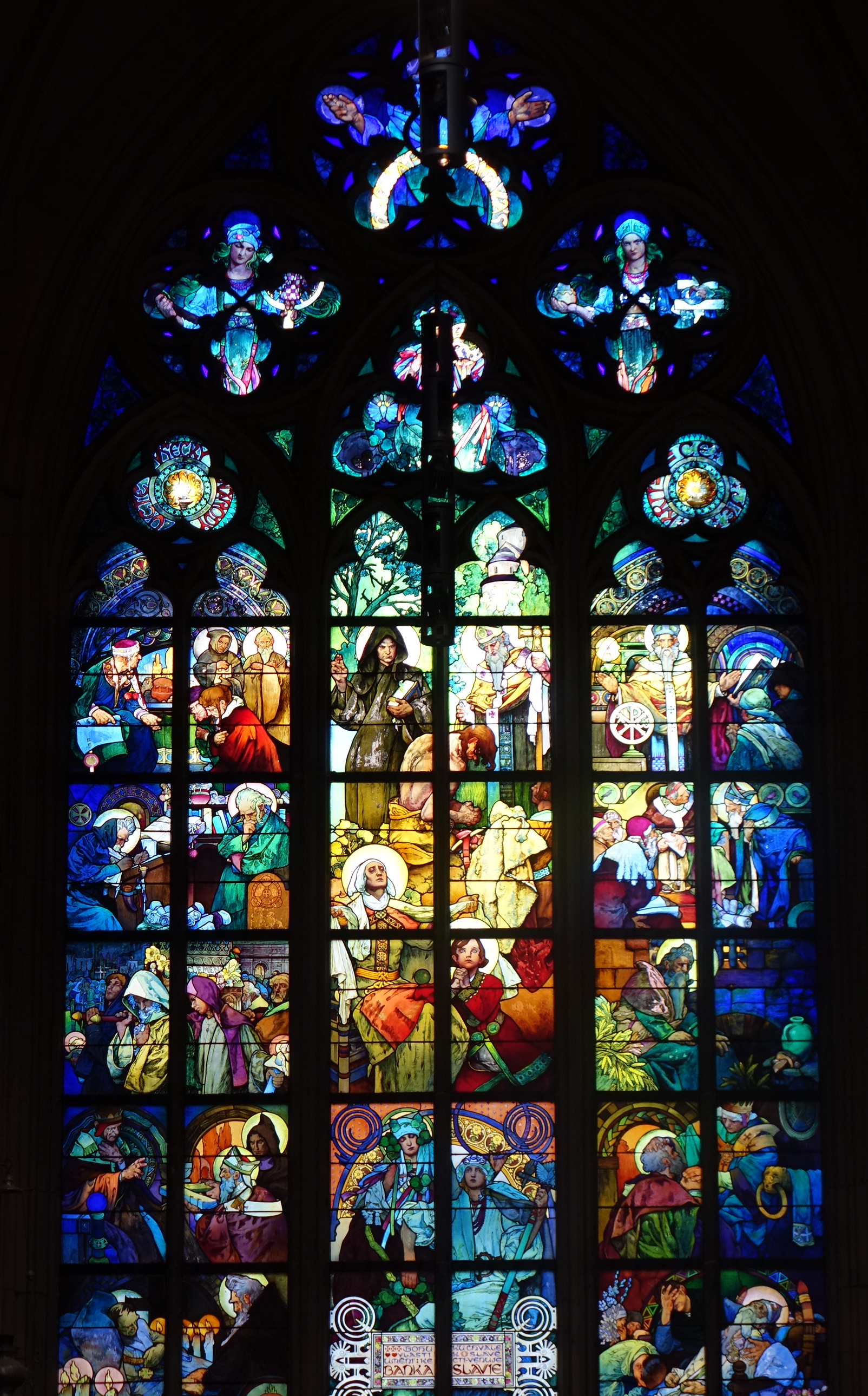
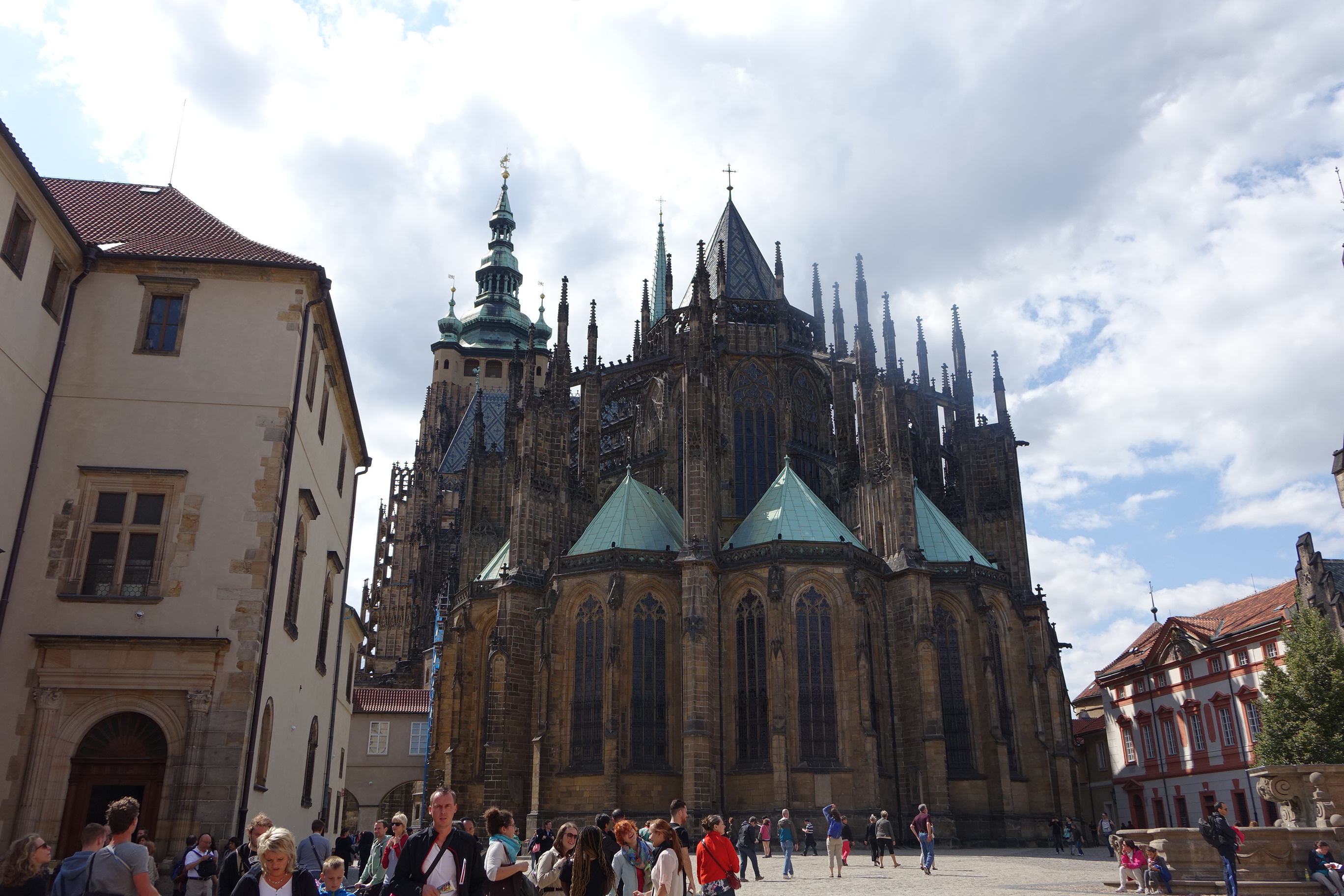
As the day went on, we felt ourselves becoming steadily baroque-saturated, and as the sun made its daily passage across the skies, it was to Prague Castle where we ascended, the great complex of royal palaces and the city’s main cathedral, St Vitus, and it was there where we laid witness to what must be one of the city’s greatest artistic treasures of all – its stained glass windows. When you walk into St Vitus (having queued like us for almost an hour to get tickets from the ridiculously inefficient ticket desk), you are almost overcome by the coloured light that fills the place. For in each of the cathedral’s large windows is stained glass in a panoply of colours, and depicting scenes of stunning detail which is just brought alive by the light shining through it, projecting the image like in a cinema across the imposing stone interior.

Stained glass symphony

DSC06794 DSC06826 DSC06910 DSC06897 DSC06823 DSC06820 DSC06836 DSC06788 DSC06898 DSC06818 DSC06908

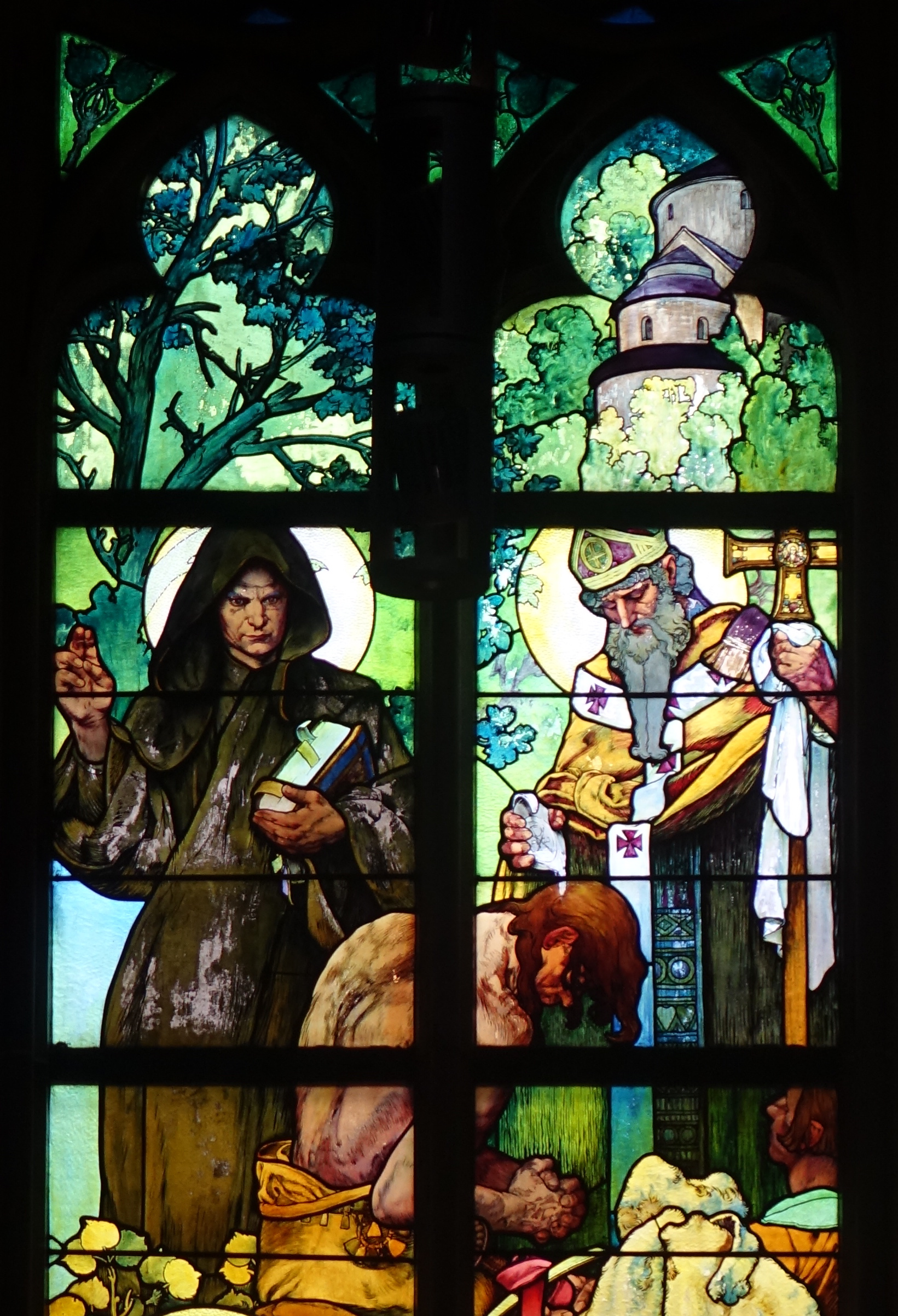
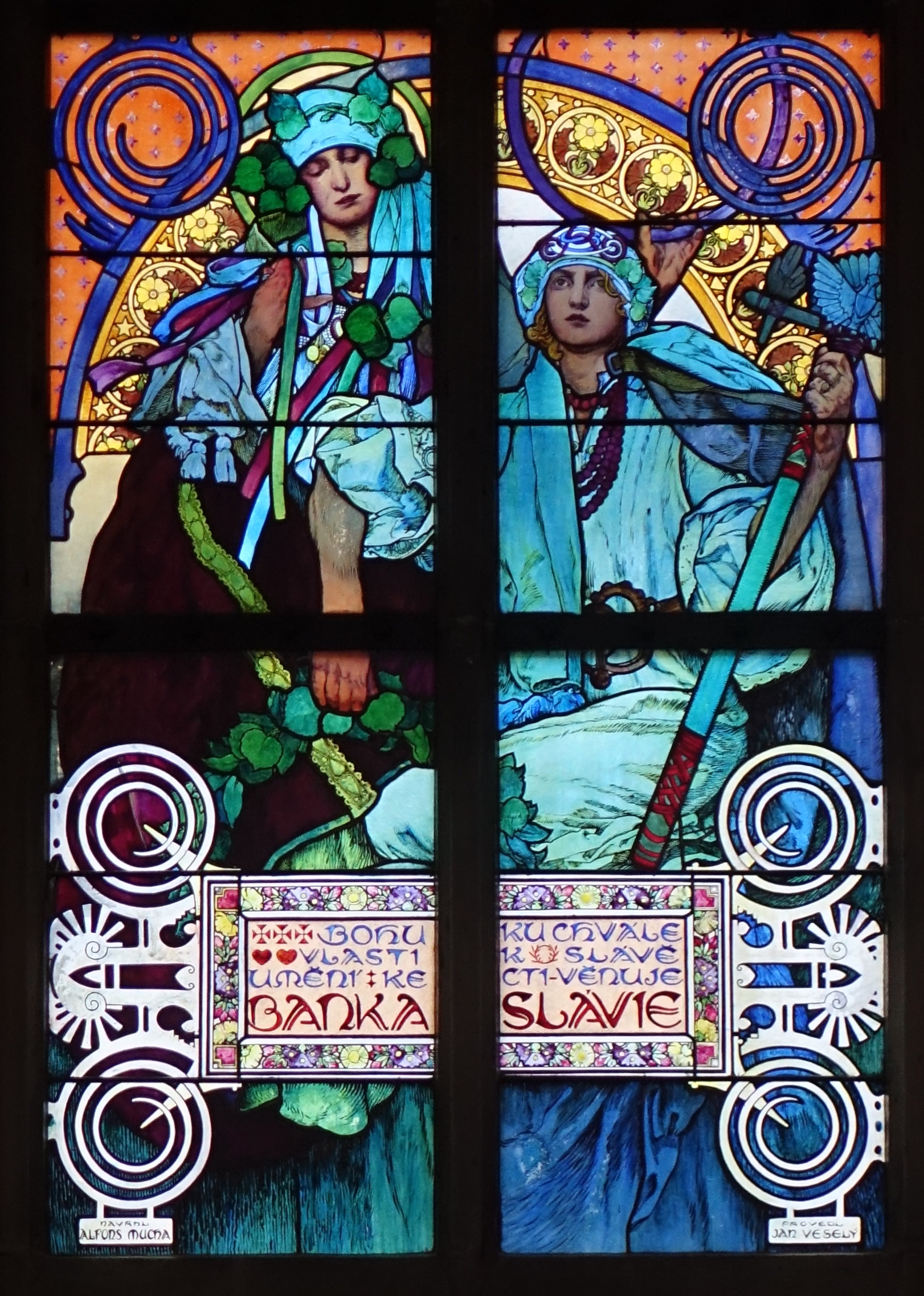
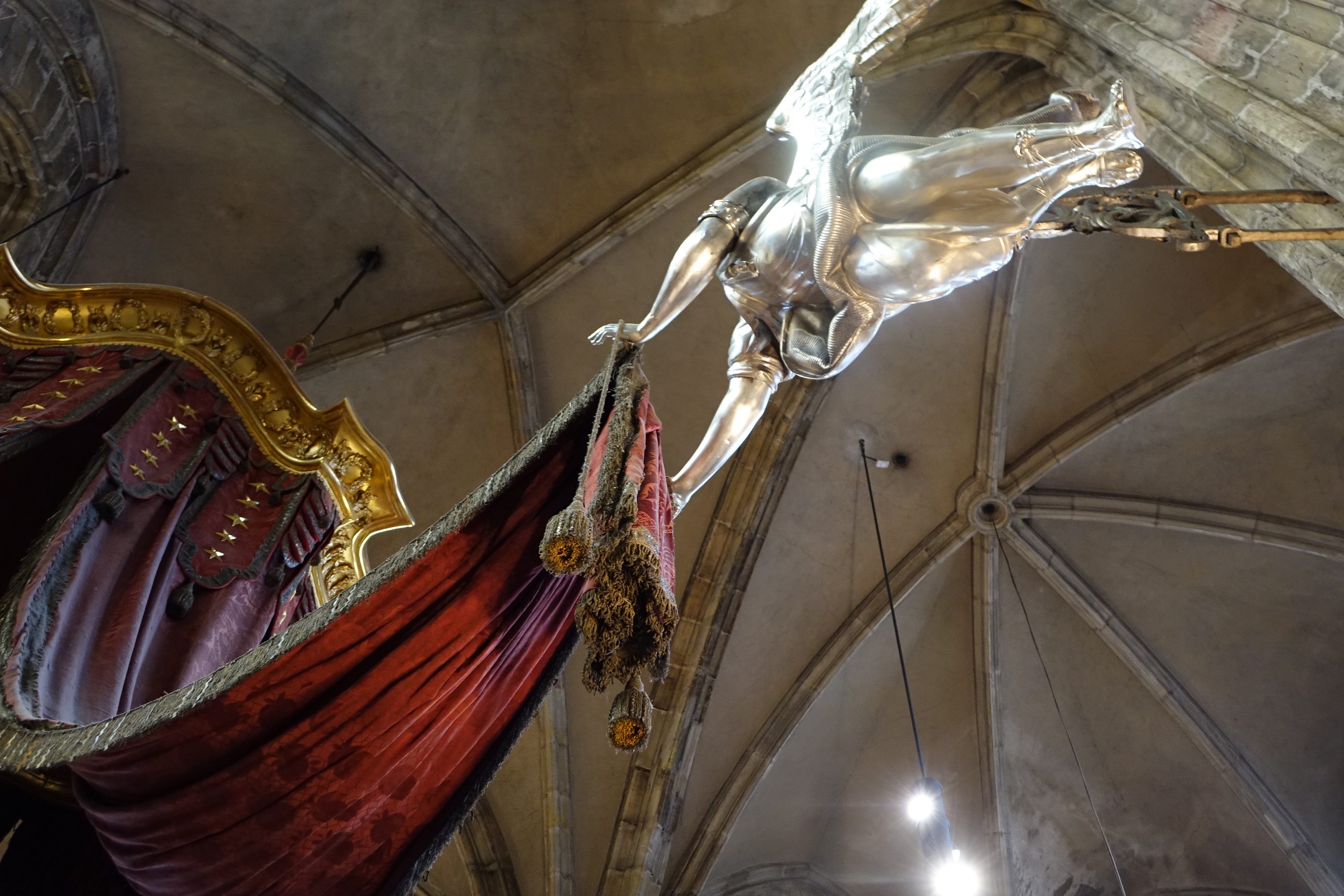
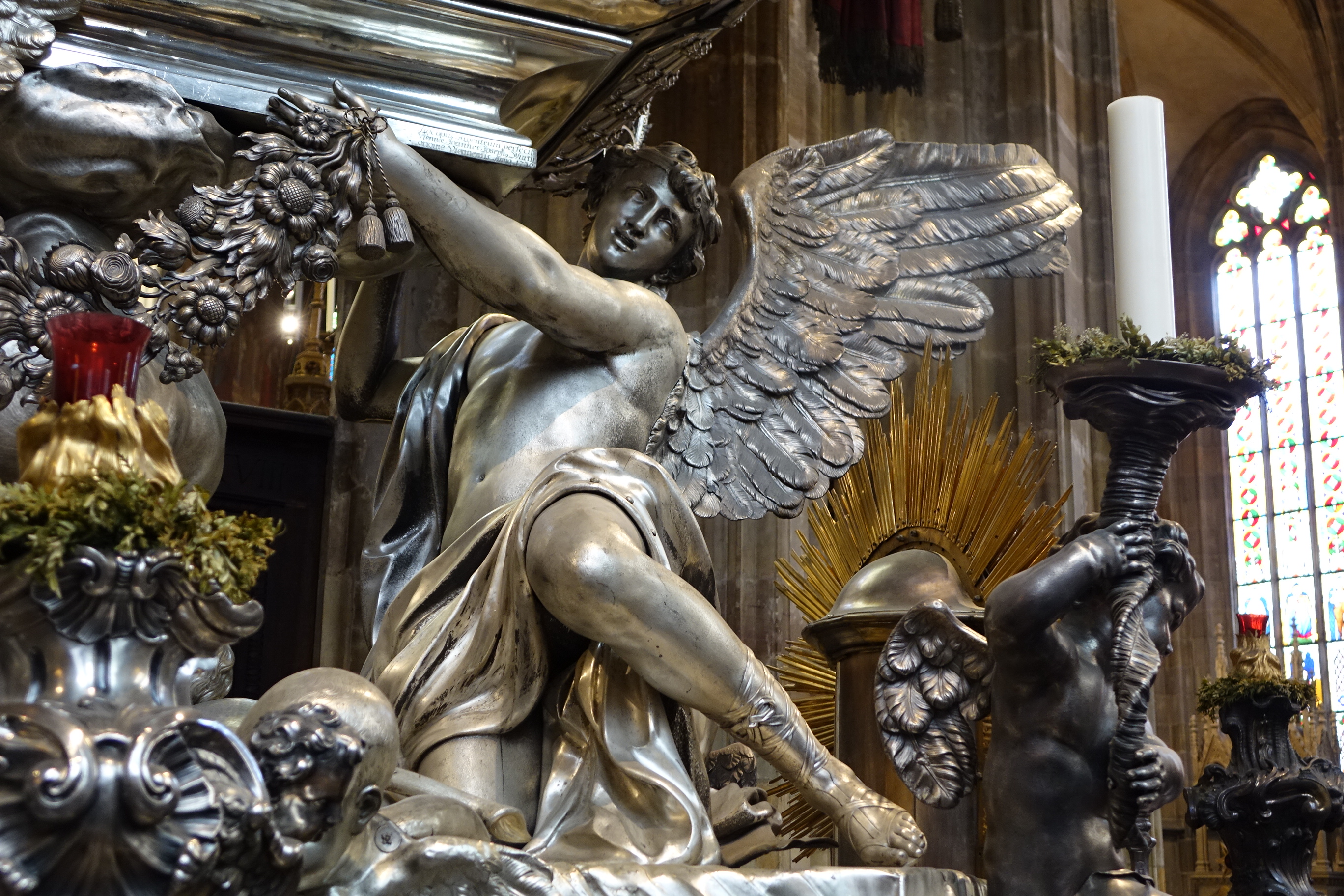
My favourite of all the windows has to be that designed by famous Czech art nouveau artist Mucha towards the end of his life, and many of the photos here feature that brilliant design. But here too are a selection of the other windows, both old and new, all exhibiting a kaleidoscope of colour which was incredible to behold. But just in case we had forgotten it, the trusty Baroque made sure that it had its day inside the cathedral as well, as these photos of the sensational royal mausoleum of Ferdinand I, and the opulent tomb of St John Nepomok aptly demonstrate.

Mucha’s window

DSC06877 DSC06868 DSC06875 DSC06865

St Vitus’ baroque

DSC06919 DSC06829 DSC06913 DSC06853 DSC06917 DSC06863 DSC07026 DSC06857

All photos and written content are strictly the copyright of Nicholas de Lacy-Brown © 2014 and The Daily Norm. All rights are reserved. Unauthorized use and/or duplication of the material, whether written work, photography or artwork, included within The Daily Norm without express and written permission from The Daily Norm’s author and/or owner is strictly prohibited.