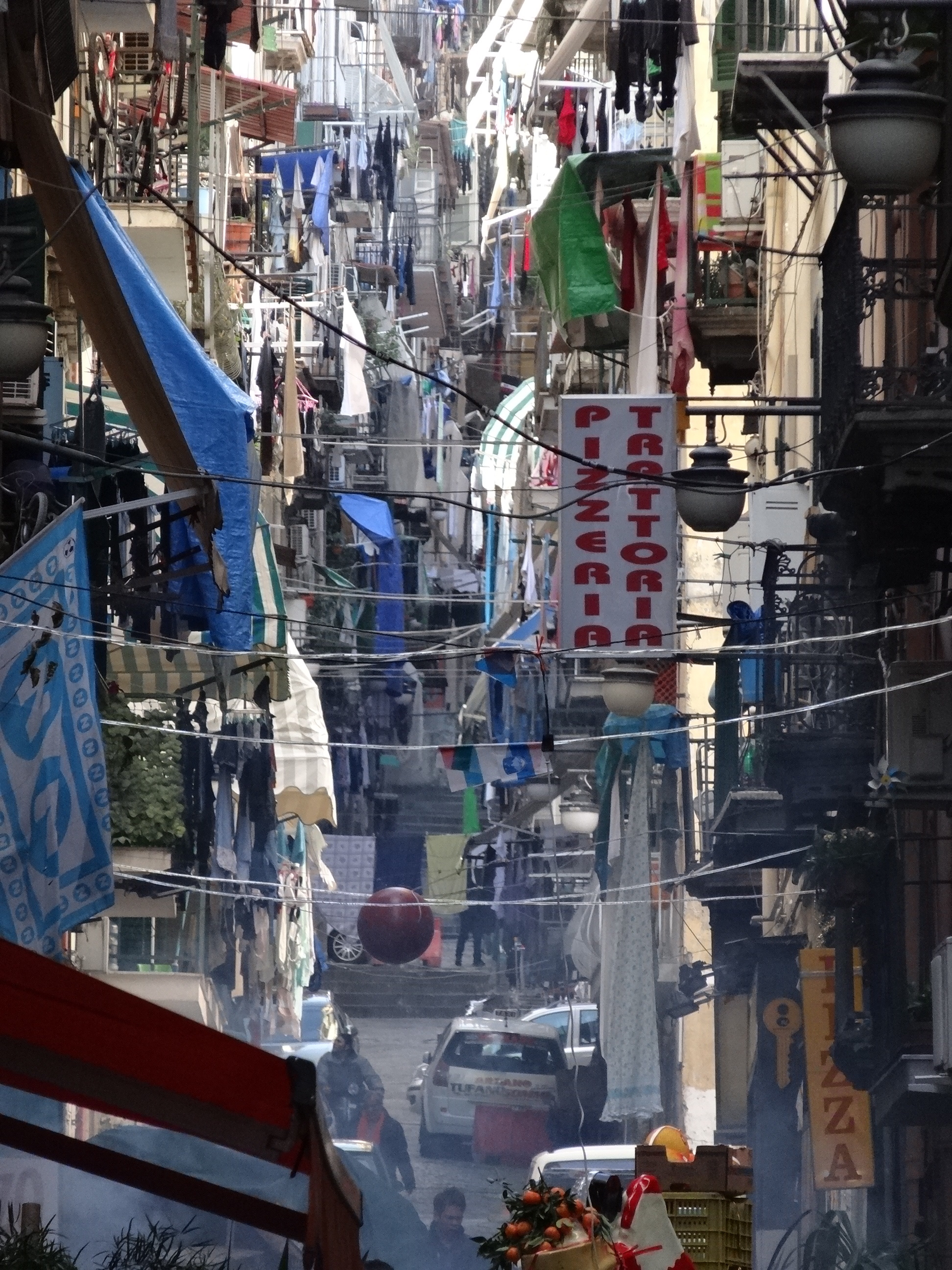
In nature as in life, some of the greatest contradictions can be found together. Inside a dull-looking pebble, the brightest of sparkling diamonds can be found; from a single block of hard marble cut out of the Carrara quarry, the magnificent muscular form of Michelangelo’s David emerged; and in the ugly hostile exterior of an oyster shell is born the beauty of the perfect pearl. In Naples, such contradictions are not hard to find. In the grim graffiti covered streets emerge beautiful palaces and stunning churches; in the foothills of the life-destroying Mount Vesuvius, agricultural production thrives in richly fertile soils; and in the dark and dirty alleyways of the Spaccanapoli, treasures of sublime artistic beauty wait in the shadows to be discovered.
It was to these treasures that we headed on our final day in both Naples, and Italy, unwilling to leave the city without our own experience of these infamous sights. The first was the Capella Sansevero, whose location down a tiny side street was made obvious by the queues of tourists forming round the corner and leading up to both its front door and, somewhat illogically, to the ticket office from where a ticket had to be purchased before you could then join the second queue into the main chapel. The queues were off-putting at first, and we almost gave up on this treasure, being as we were short of time before our flight home to London. But persevering in respect of both queues, we soon made our way, slowly but surely, into what has to be one of the most stunning baroque creations of Italian art history.
The Capella Sansevero


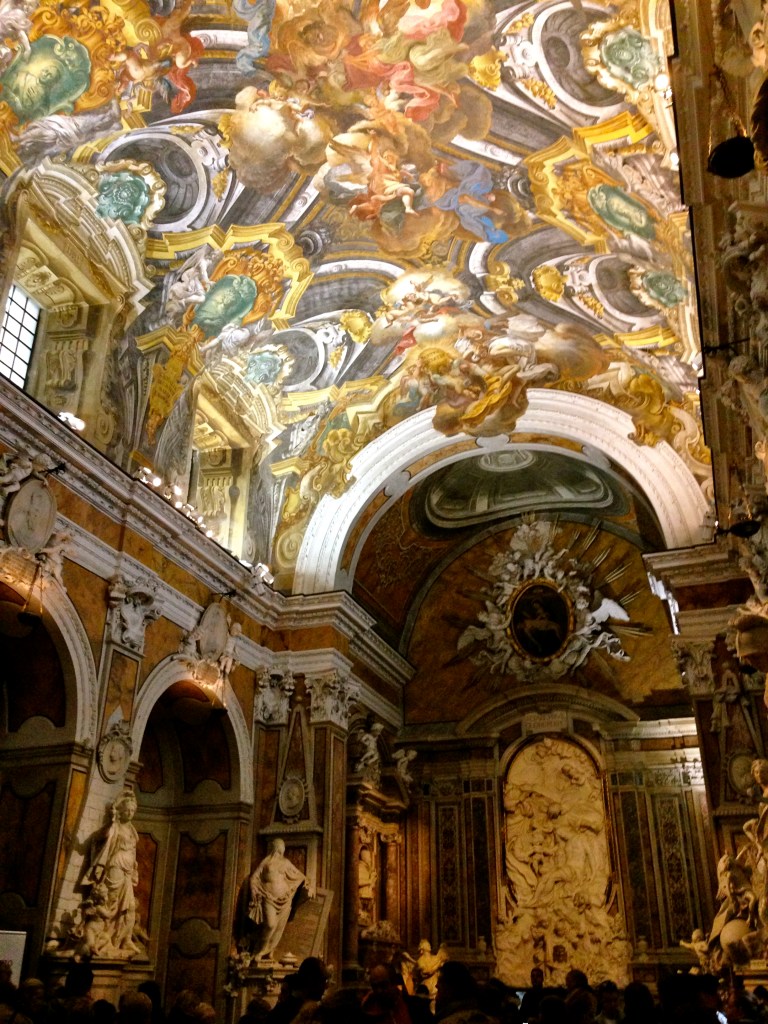

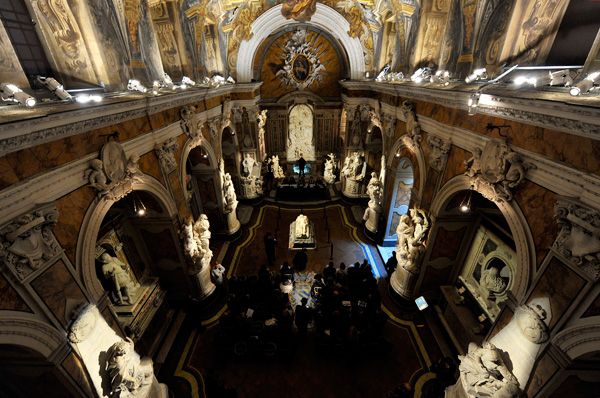
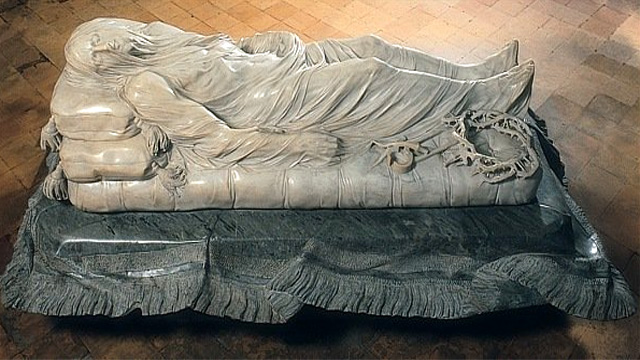
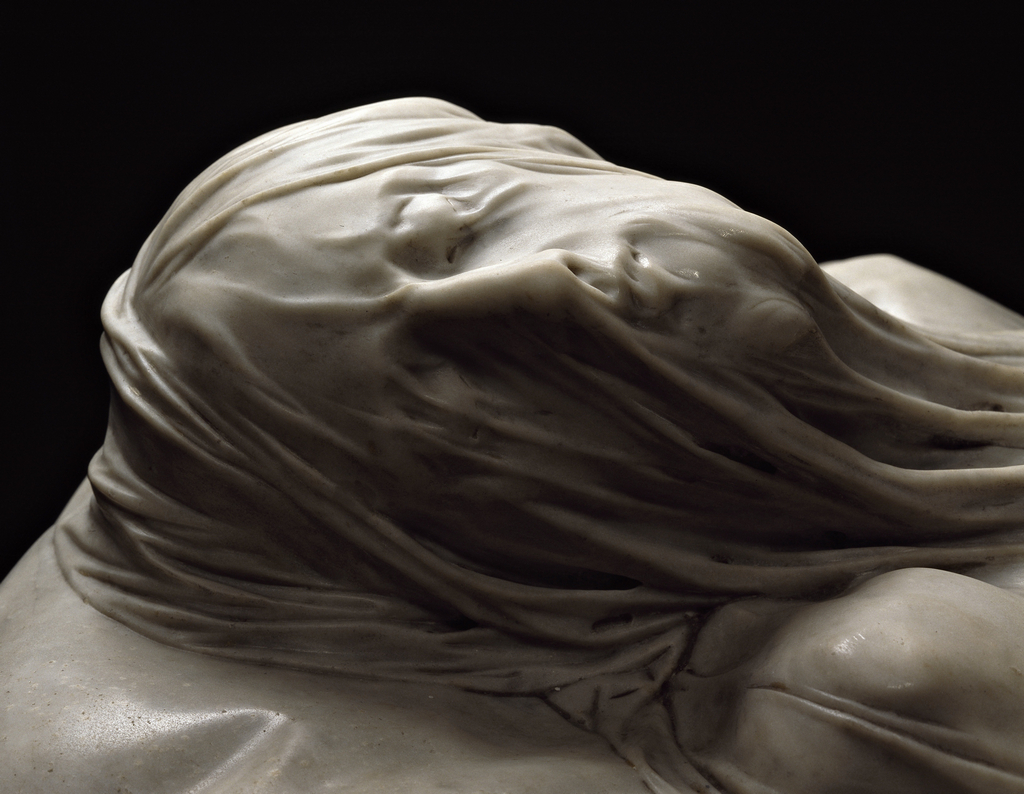
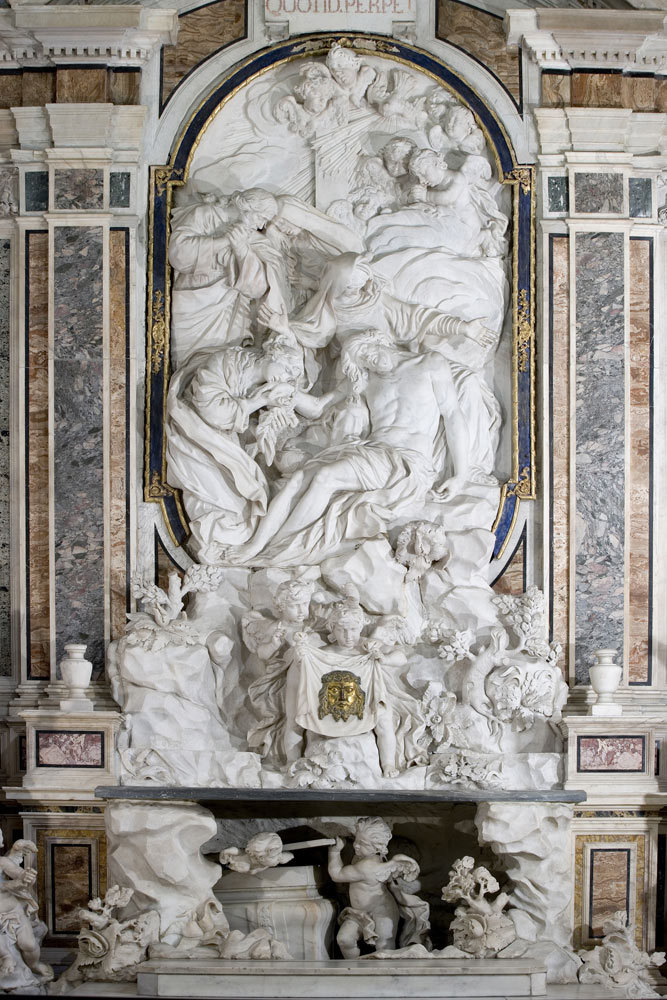
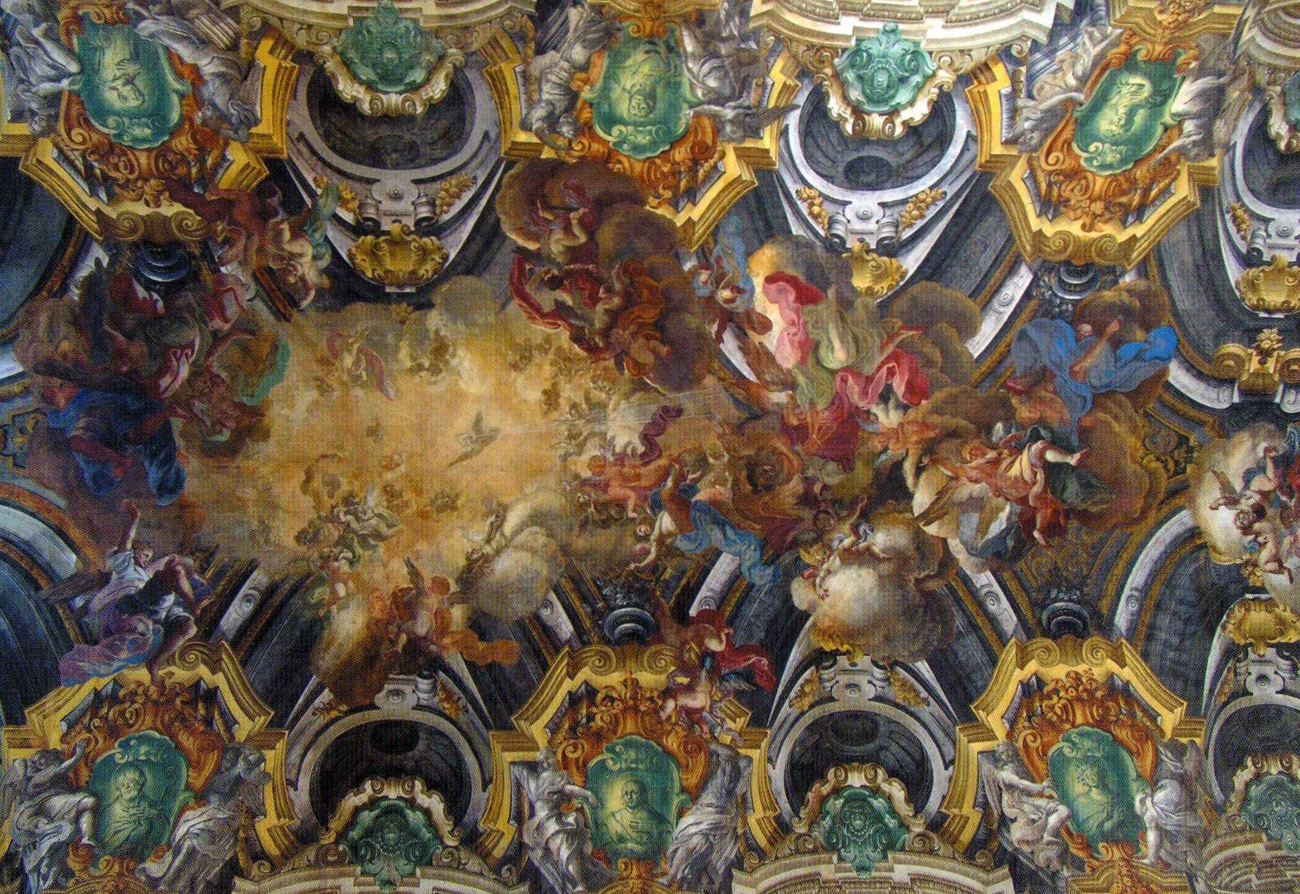
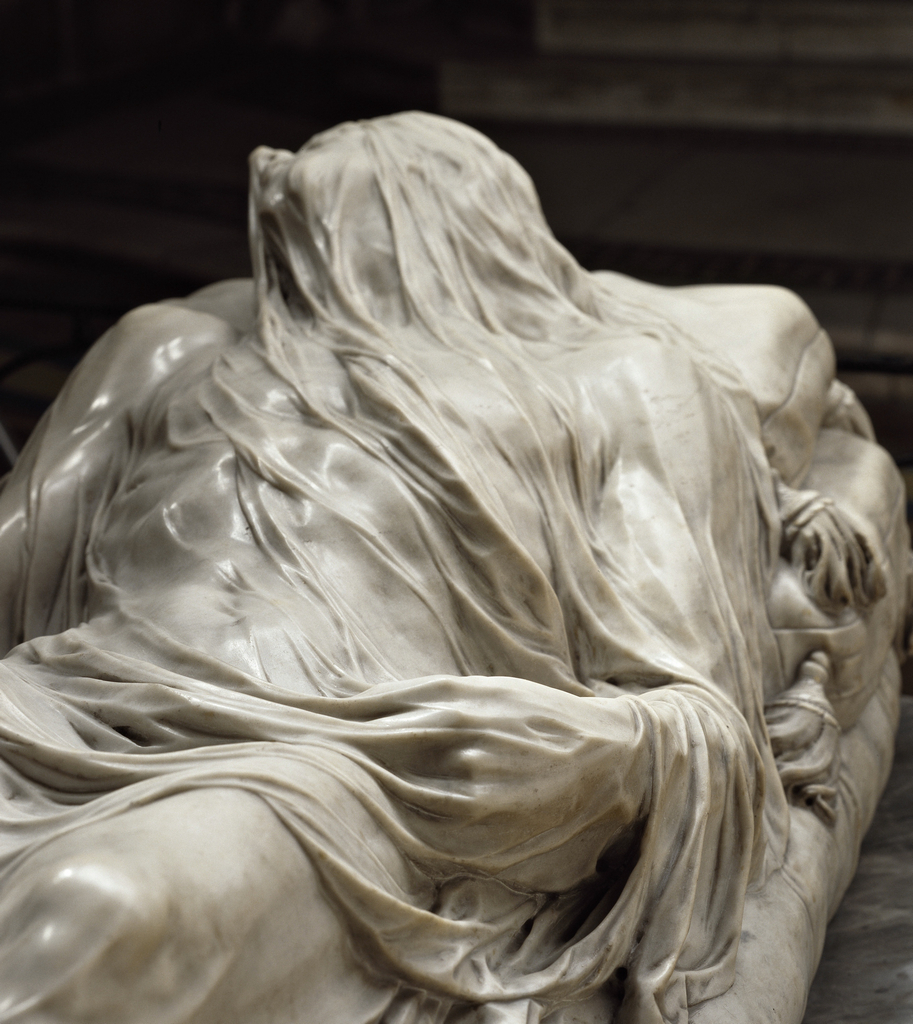
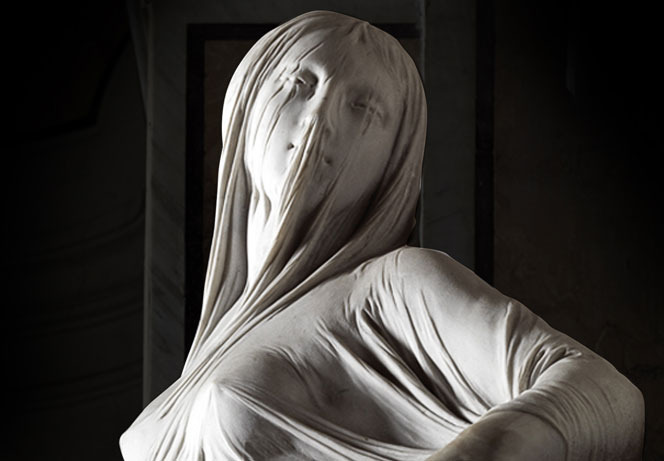
Originating from 1590 but substantially embellished by Raimondo di Sangro, the Prince of Sansevero, it contains some 30 incredible works of art created by some of the leading Italian artists of the 18th century. A masterfully elaborate frescoed ceiling almost gets lost amongst the crowds of marble sculptures which fill every alcove and appear to metamorphose out of the altar, but the sculpture that really pulls in the crowds is “The Veiled Christ” by Giuseppe Sanmartino. Looking at this stunning depiction of the dead Christ covered with a shroud you are almost in denial that this masterpiece of deception can be marble, so fine are the features of the shroud which even show the scars sustained by Christ during his crucifixion beneath its apparently fine drapery.
Sanmartino’s Veiled Christ

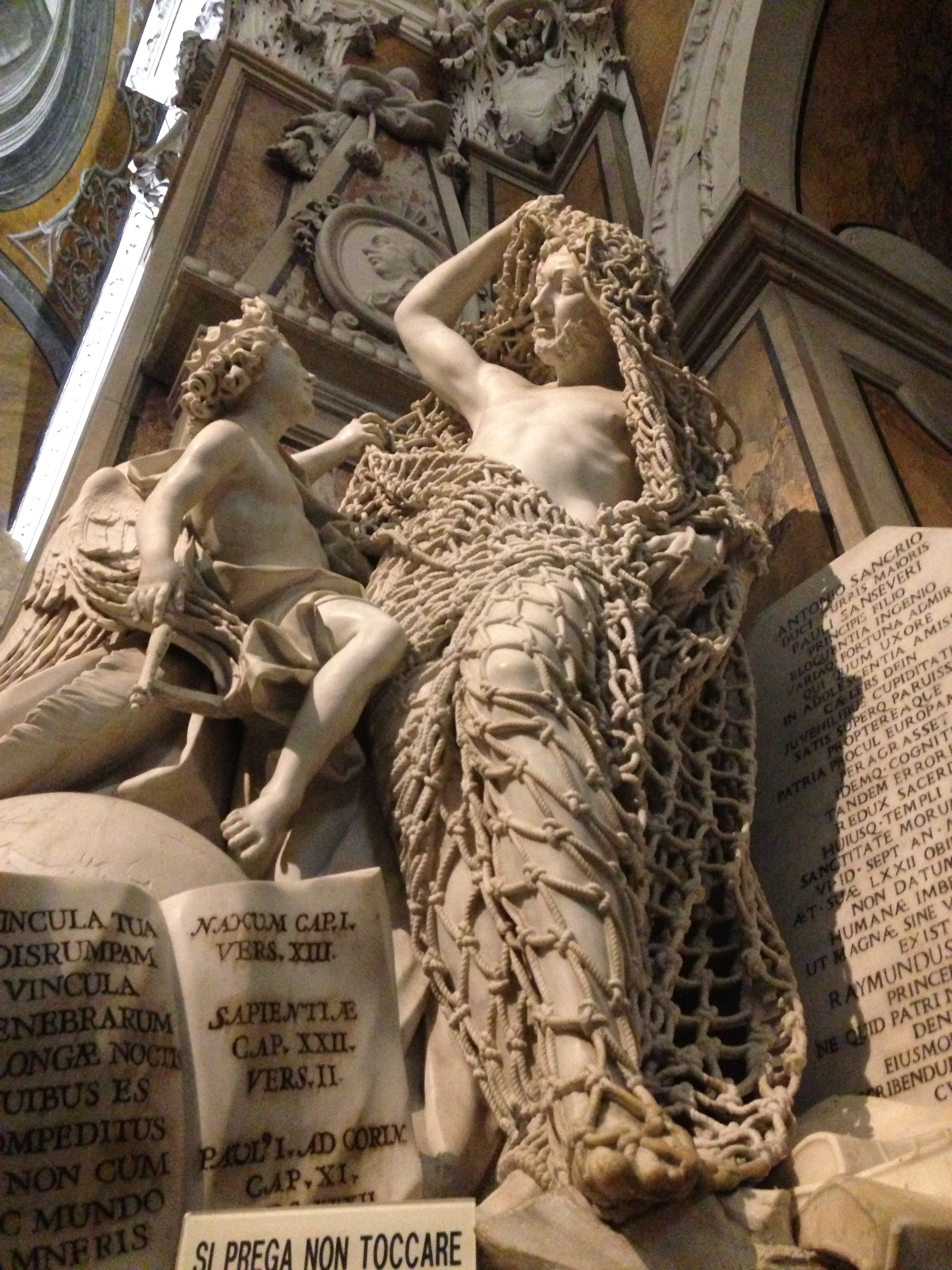
However for my money, the real star of the show, and too often overlooked in preference for the Veiled Christ, is Francesco Queirolo’s The Release from Deception (Disinganno) which shows a figure (some say it is Raimondo’s father) emerging from an intricate bundle of nets to look at a small angel who has appeared besides him. The netting is so incredibly intricate, with every knot and twist captured to perfection, that this sculpture has me entranced in absolute awe at its brilliance. How the sculptor managed to create this from a single block of marble, with all of those empty spaces cut out between the rungs of rope, I will never know. As far as I am concerned, this is the greatest masterpiece of sculpture ever to have been created in all the world. The visit to Naples was worth it for this alone.
Queirolo’s Disinganno
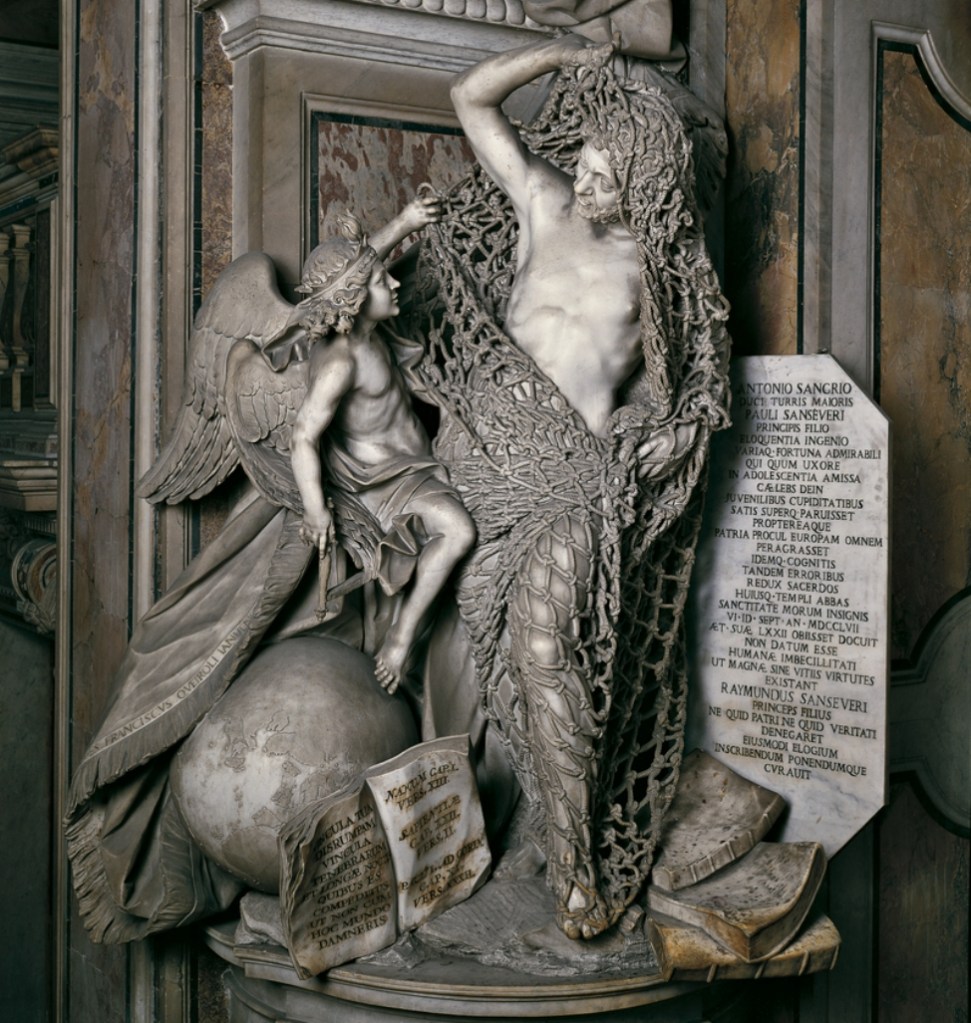

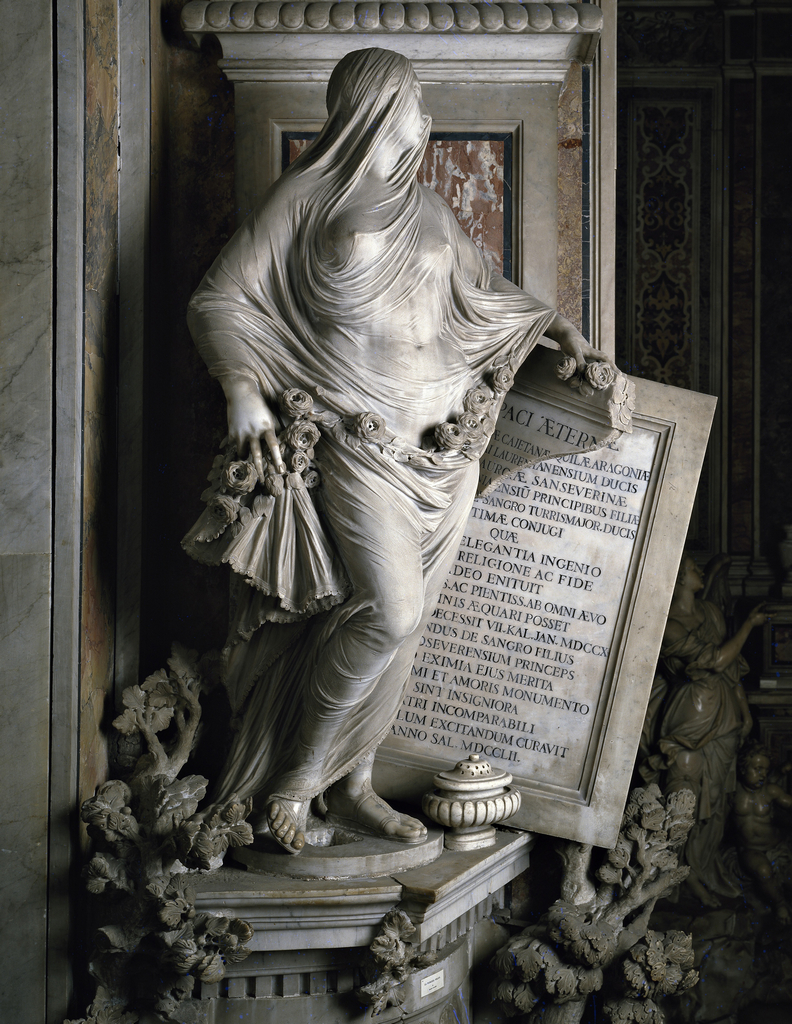
and another masterpiece of the Capella, Antonio Corradini’s Veiled Truth (Pudicizia)


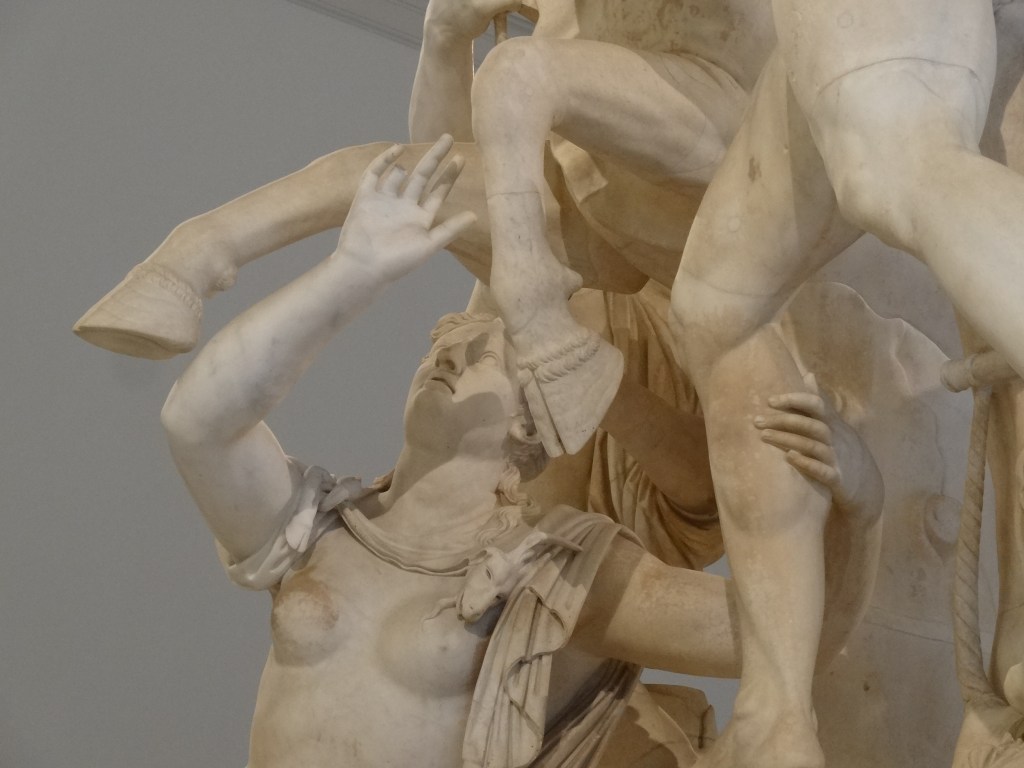
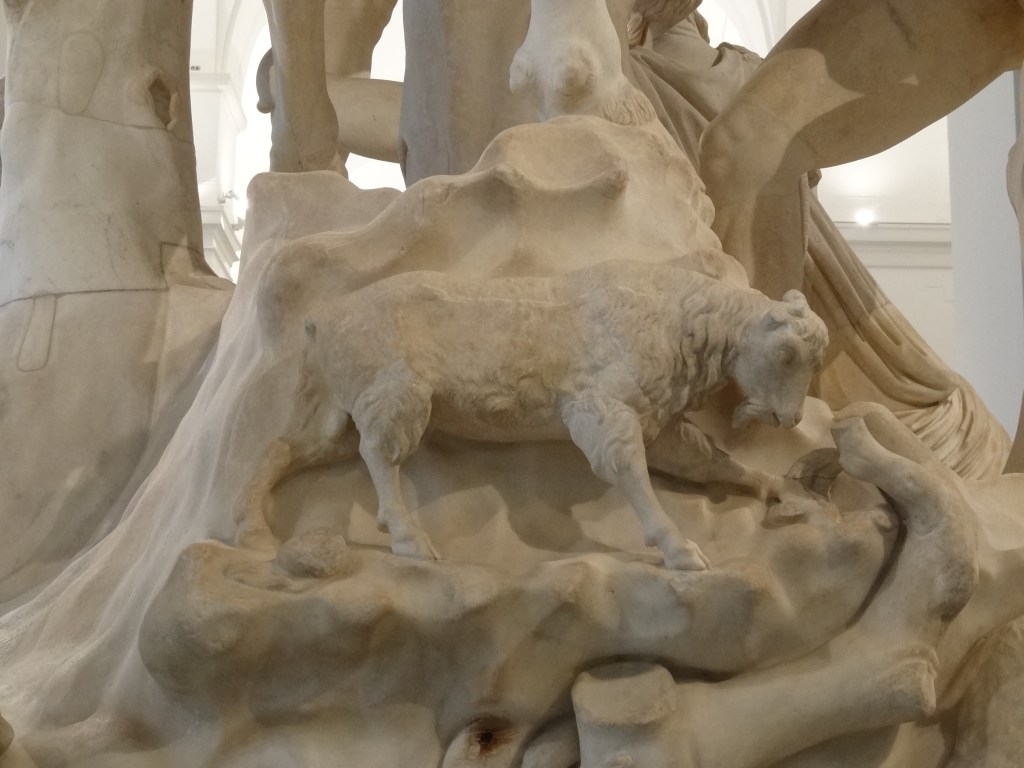
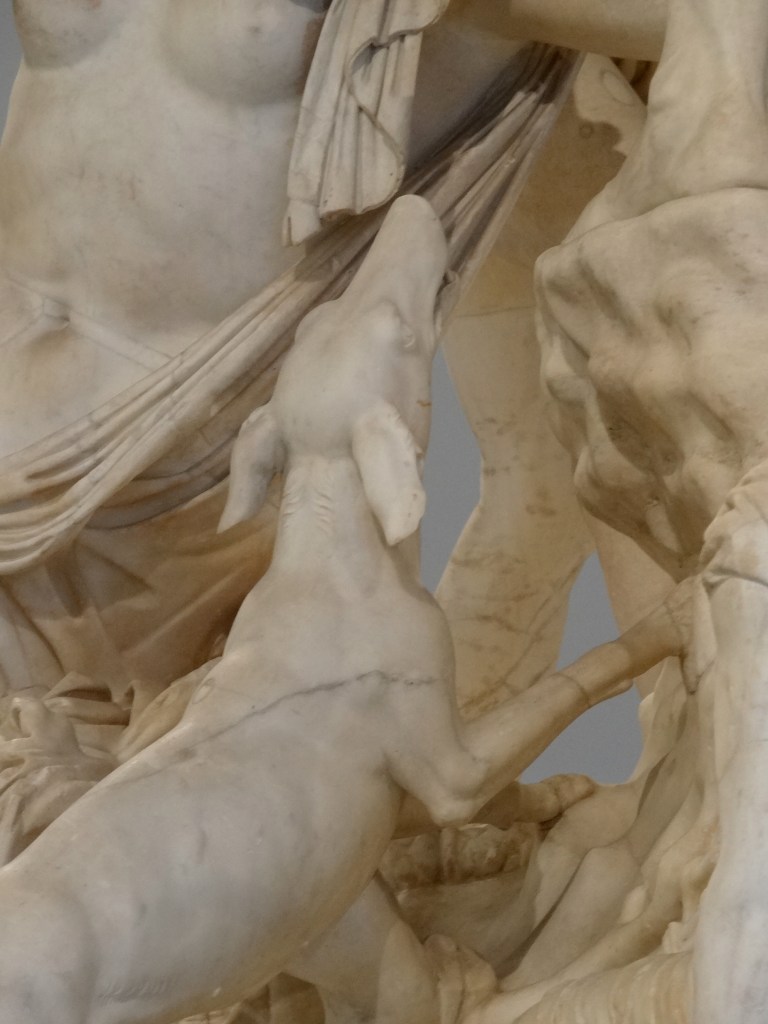
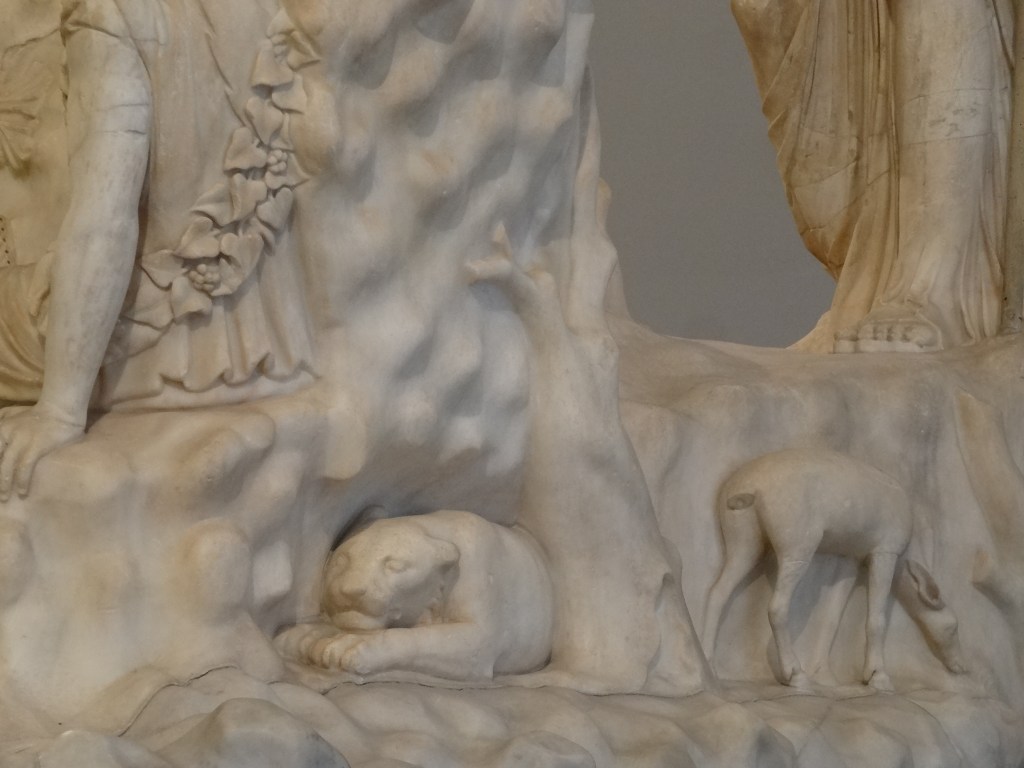
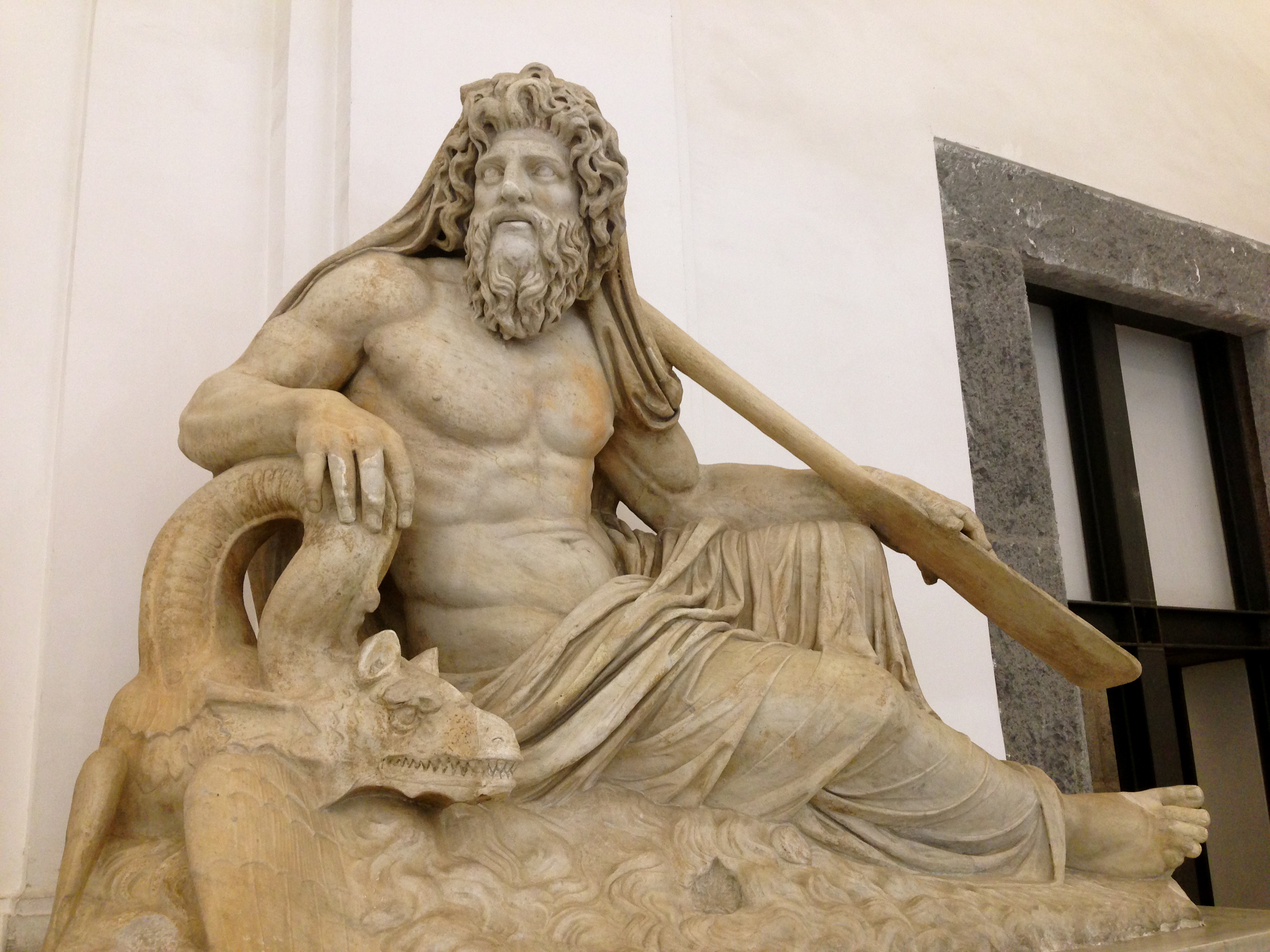
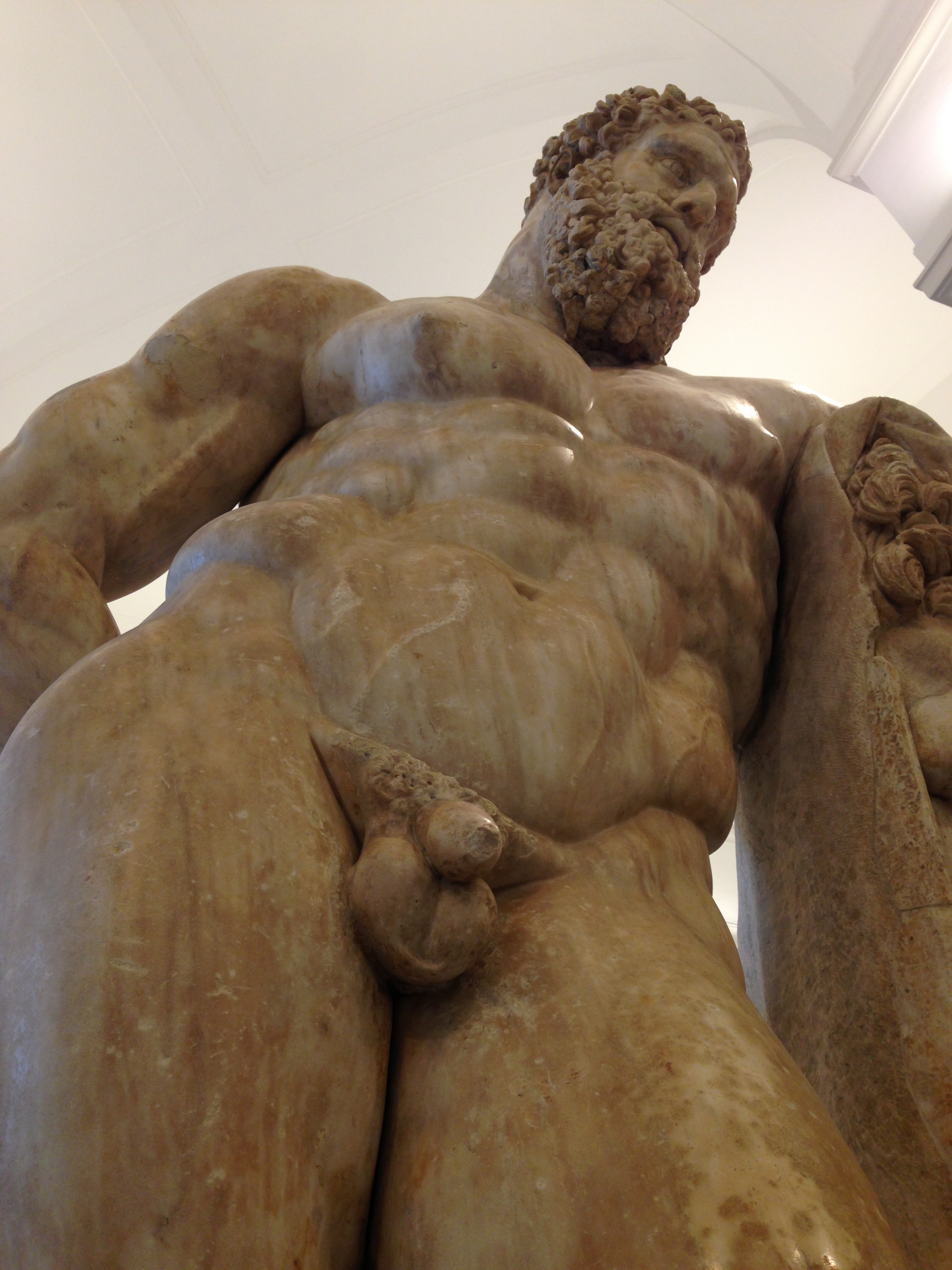
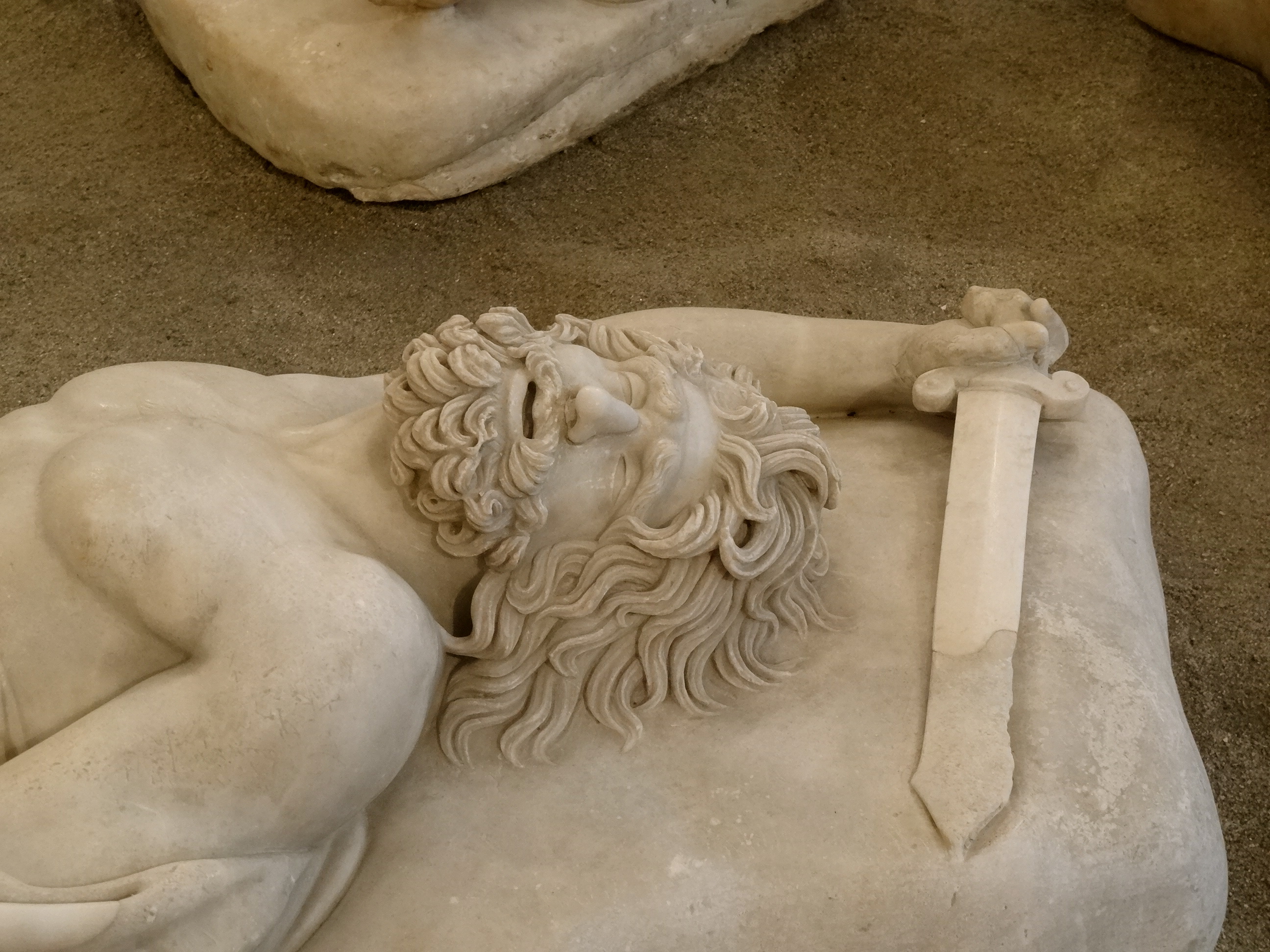
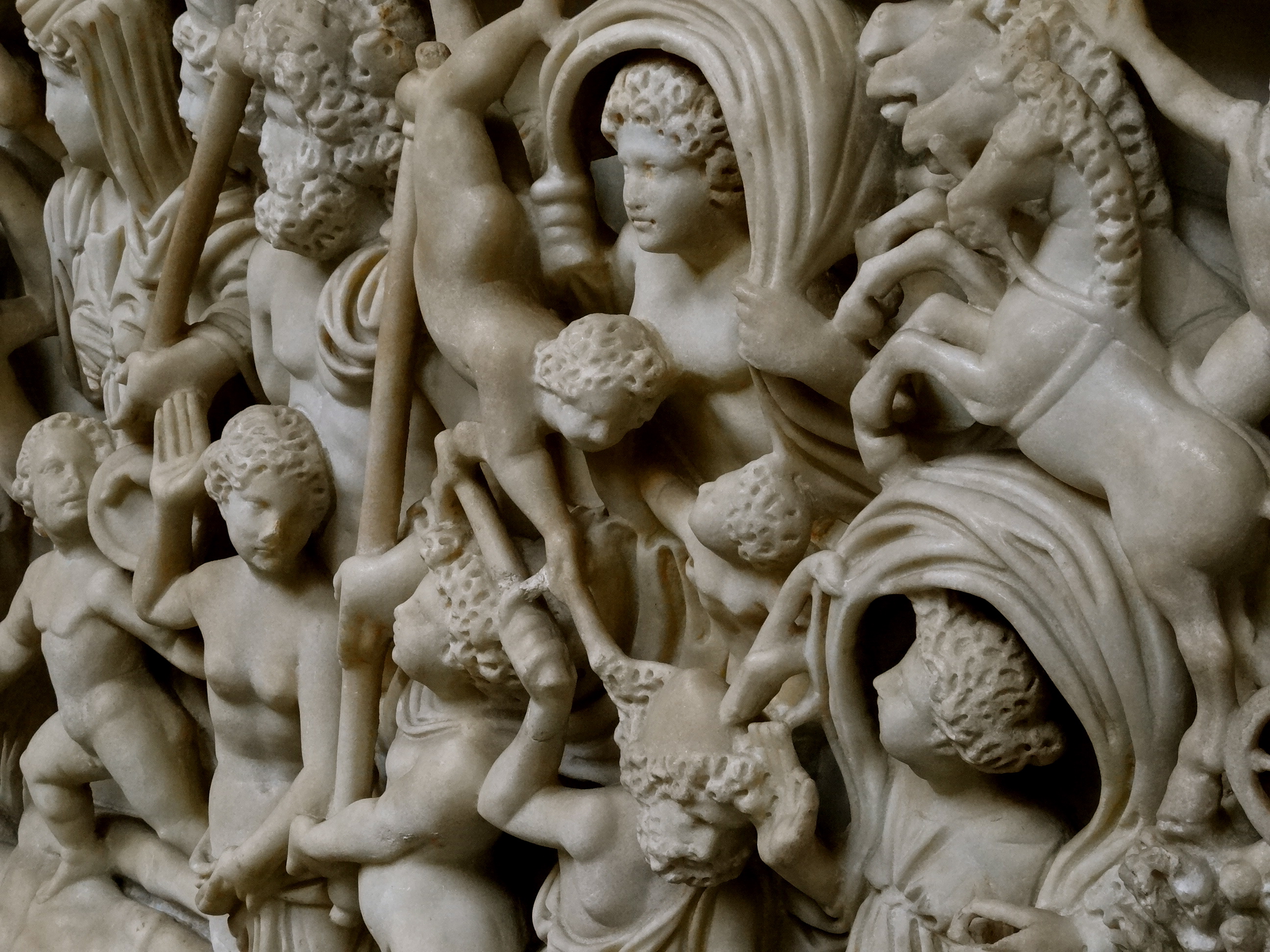
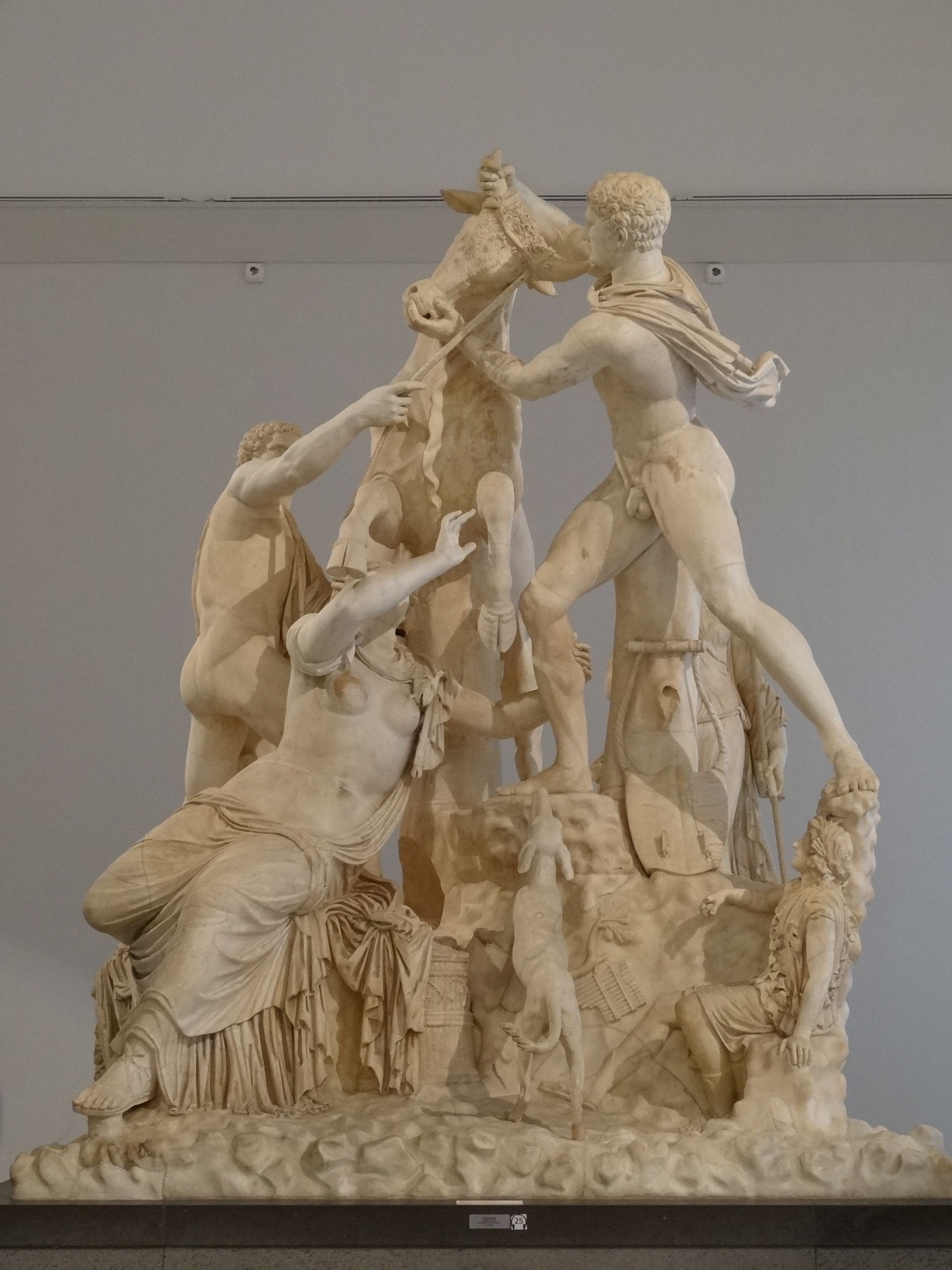
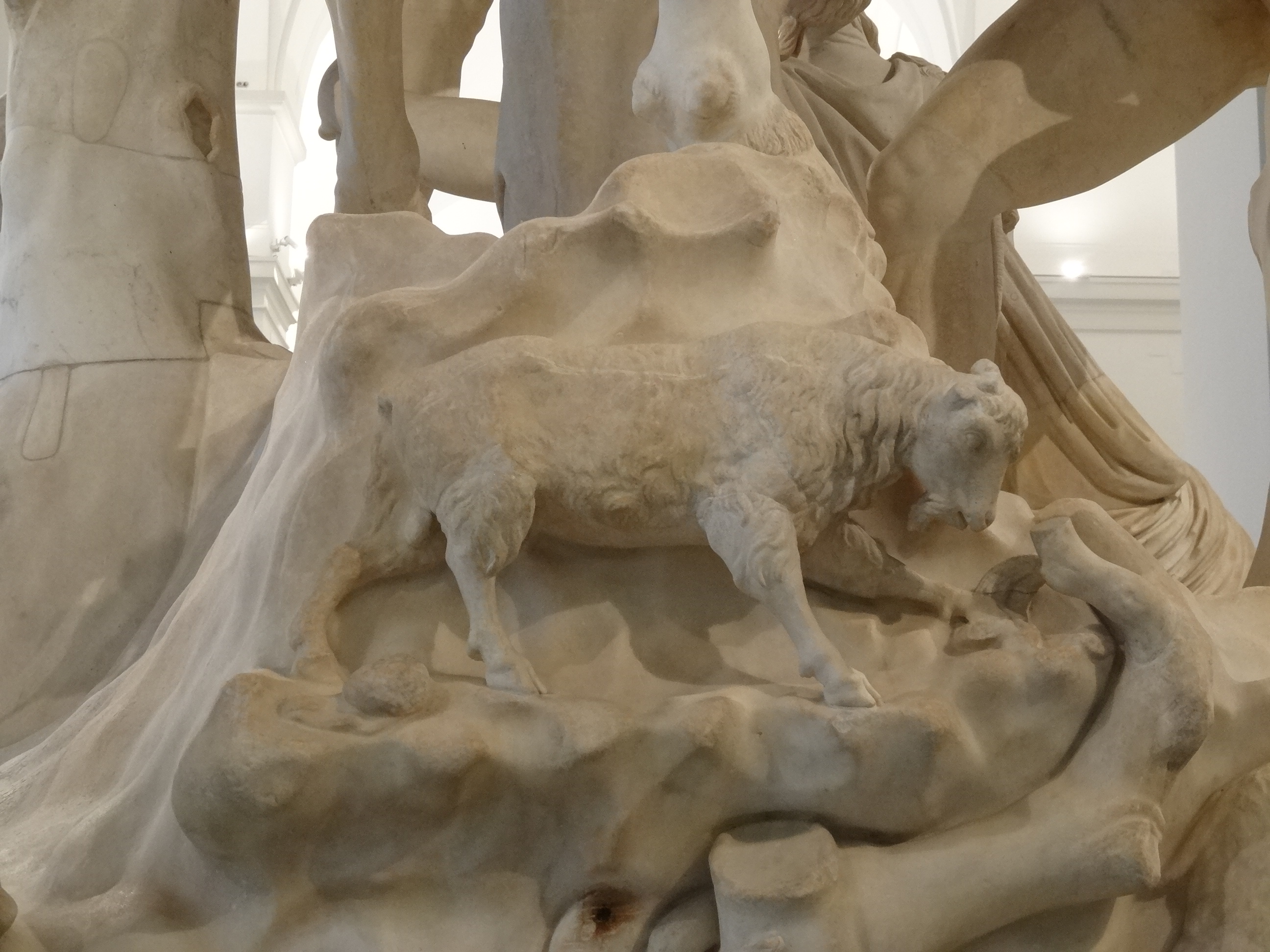
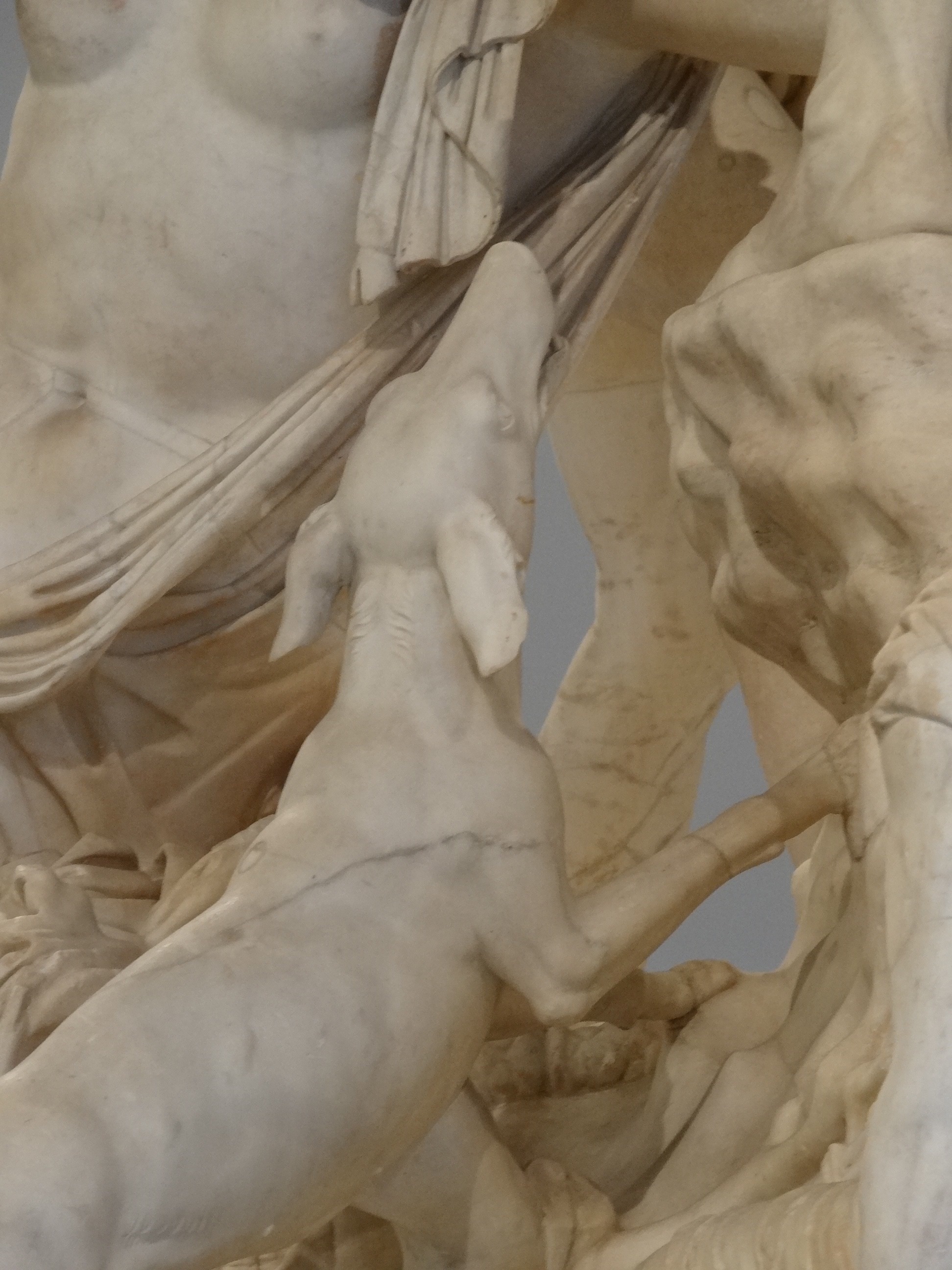
But despite being deeply satisfied by our acquaintance with these works, a second collection of masterpieces awaited us – masterful not just because of their brilliant execution, but because of the time in which they were made, and the miracle of their survival. I am of course talking about the stunning collection of art and sculptures collected together in another of Naples’ artistic gems – the Archaeological Museum. A must for anyone who does not make it to Pompeii or wonders, if they have gone, what happened to all of the fine art which was originally excavated on the site, this museum is the home not only of treasures found in the Roman towns crushed by Vesuvius in AD 79, but also in other Roman excavations elsewhere in Italy. Number one of these incredible discoveries has to be the Farnese Bull – a group sculpture which is the largest single sculpture ever recovered from antiquity to date and thought to have been commissioned at the end of the 2nd Century BC and carved from a single block of marble.
Masterpieces of the Archeological museum
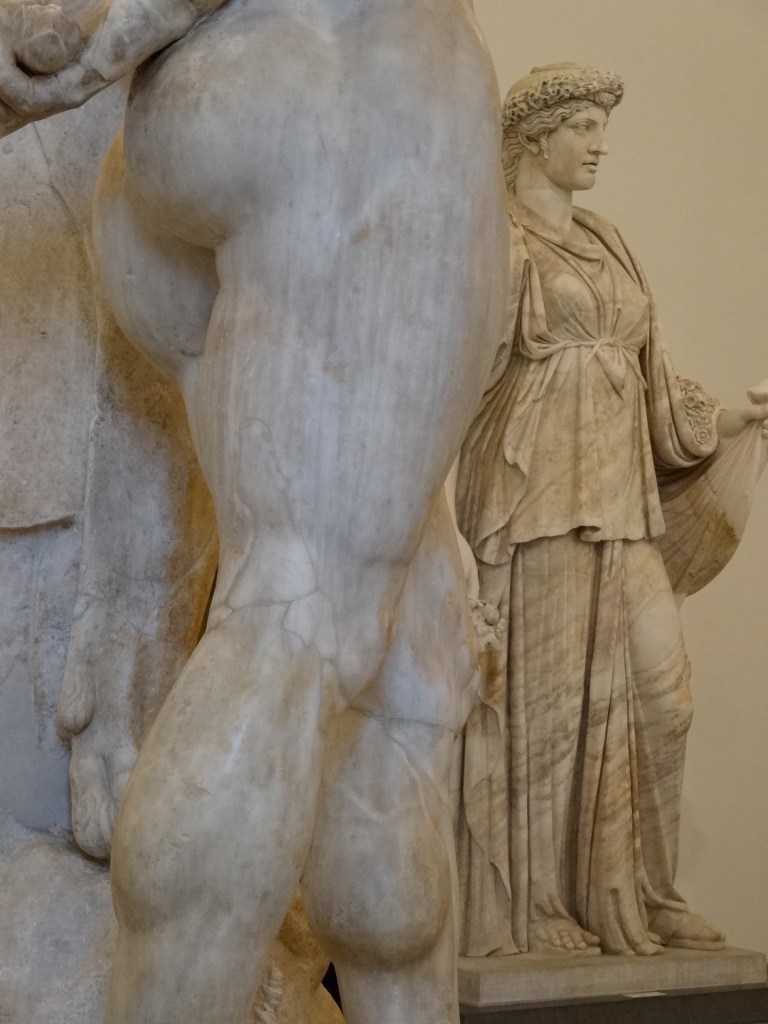
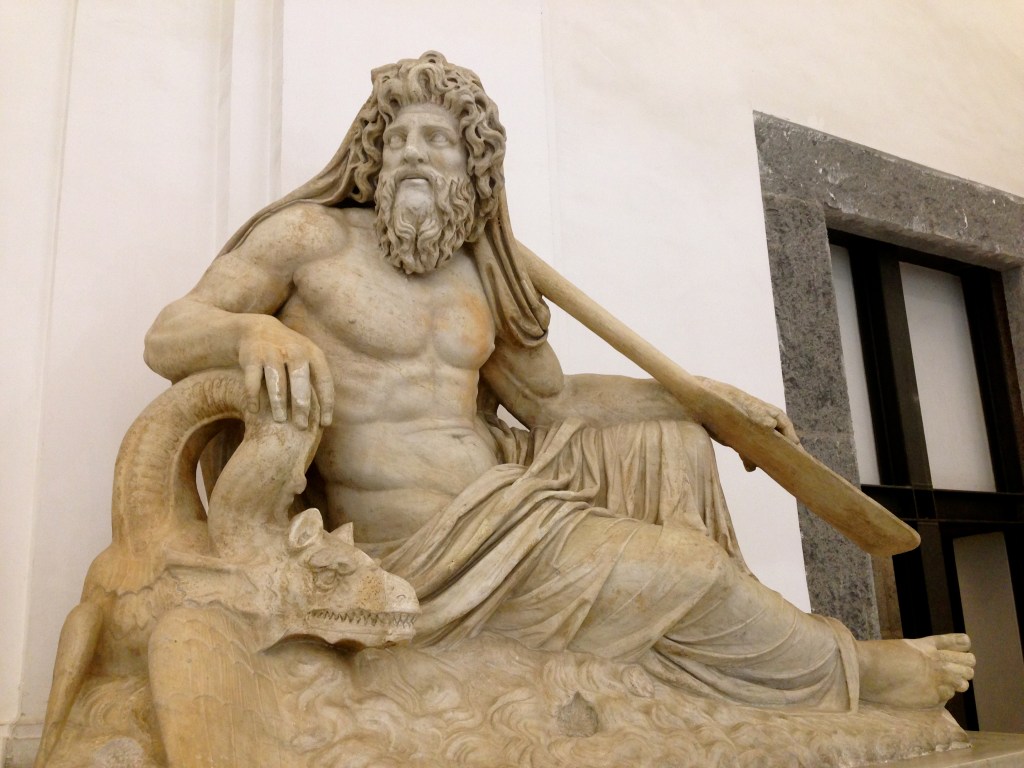
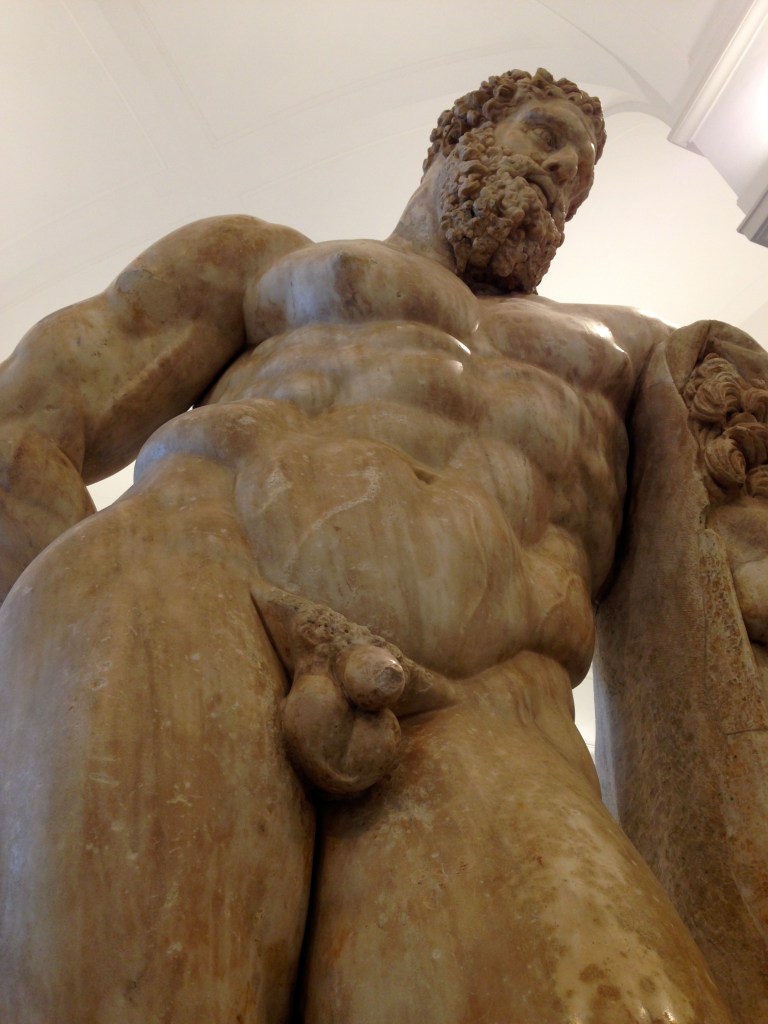


This colossal marble sculptural group represents the myth of Dirce, wife of the King of Thebes, who was tied to a wild bull by the sons of Antiope as punishment for the ill treatment inflicted on her. It was unearthed in 1546 during excavations at the gymnasium of the Roman Baths of Caracalla and thereafter adorned the Farnese Palace in Rome, hence the nickname it has acquired having been restored by Michelangelo himself. The size and scale of this piece is as breathtaking as the detail of Quierolo’s Disinganno, and an appropriate finish to an enchanting tour of the treasures of Napoli.
The Farnese Bull


Our trip to Naples ended, as all trips should, with a Neapolitan pizza and a bottle of Chianti. Thus it was, slightly tiddly, that we made our way back to the hotel, collected our baggage, and headed home to the UK; Home to London with bags stuffed full of Venetian masks, replicas of the Bucca della Verita, packets of Roman coffee and a couple of bottles Neapolitan limoncello – a manifestation in souvenirs of the most incredible Natale Italiano we could ever have hoped for.
Check out my final photo posts from the trip – coming later this week.
































 The Daily Norm