Skip to content

Archive for

Aix: City of a Thousand Fountains

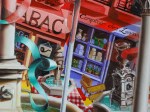
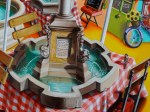
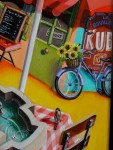
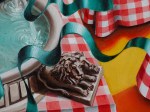
After a week of “sneak peeks” via my delacybrownart twitter feed, I am delighted to be able to share with you the final and complete image of my major new oil painting on canvas – Aix: City of a Thousand Fountains. Started shortly after I returned from my first visit to the stunning Provençal city last summer, I set out to capture something of the sun drenched joie de vivre which  Aix excuses by the bucket in a work which eventually took me 7 months to complete.

As the painting’s title suggests, the work plays on a well known descriptive adage which notes that the city is one of “a thousand fountains”. While that may be something of an exaggeration, the motivation behind the statement can be well understood – one of the most notable features of the city is indeed its plentiful and elaborate fountains, one situated in what seems to be every square and street, in the middle of junctions and on street corners. It really is a city where water flourishes; where splashing running currents sparkle playfully in the sun.

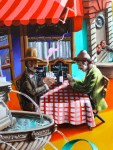
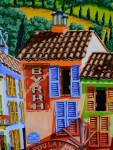
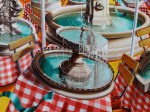
But in choosing to symbolise several of these many fountains, I decided to play with the themes somewhat, combining those fountains with the very predominant cafe culture which is an integral aspect of the city’s character, and which fills it’s many multi-coloured shuttered squares with life. It is in one such square that my work is set, a square which also plays host to a series of Provençal shops and peeling old vintage adverts upon the walls. And there, on the typically dressed chequered tablecloths of cafe tables, my fountains, rather than plates, are the dish of the day.

Aix: City of a Thousand Fountains (2014 © Nicholas de Lacy-Brown, oil on canvas)

Aix: City of a Thousand Fountains (2014 © Nicholas de Lacy-Brown, oil on canvas)

Meanwhile no painting of Aix-en-Provence could be complete without a reference to the magnificent Mont Sainte-Victoire, the mountain which so seduced and fascinated the artist Cézanne for years (resulting in a series of canvases which continue to be his most enduring works) and which features monumentally in my work, dominating the upper half of the canvas. I remember so well that moment when, last summer, my partner and I climbed up the steep hills north of the city to the exact place where Cézanne used to paint the view of the mountain which obsessed him the most – and turning to see that same breathtaking visage which had so captivated this master of modern painting. It was at that moment that I knew I had to make my own homage to that incredible view, and that brilliant artist – and it was at that time when this painting was born.

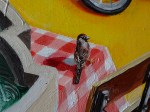
The keen-eyed amongst you may also notice that I have included a further homage to Cézanne, by featuring his famous card players sat at one of my café tables, as well as a whole host of other details which I now share with you in the gallery of details featured below. Hopefully you will enjoy looking at the individual aspects of this painting as much as I enjoyed painting them. It was, with every brush stroke, like revisiting my holiday to Aix afresh, and for that reason alone, it was surely worth the 7 months slog to complete it.
© Nicholas de Lacy-Brown and The Daily Norm, 2001-2014. Unauthorized use and/or duplication of the material, whether written work, photography or artwork, included within The Daily Norm without express and written permission from The Daily Norm’s author and/or owner is strictly prohibited. Excerpts and links may be used, provided that full and clear credit is given to Nicholas de Lacy-Brown and The Daily Norm with appropriate and specific direction to the original content. For more information on the work of Nicholas de Lacy-Brown, head to his art website at www.delacy-brown.com

Life lessons from a rose at its best

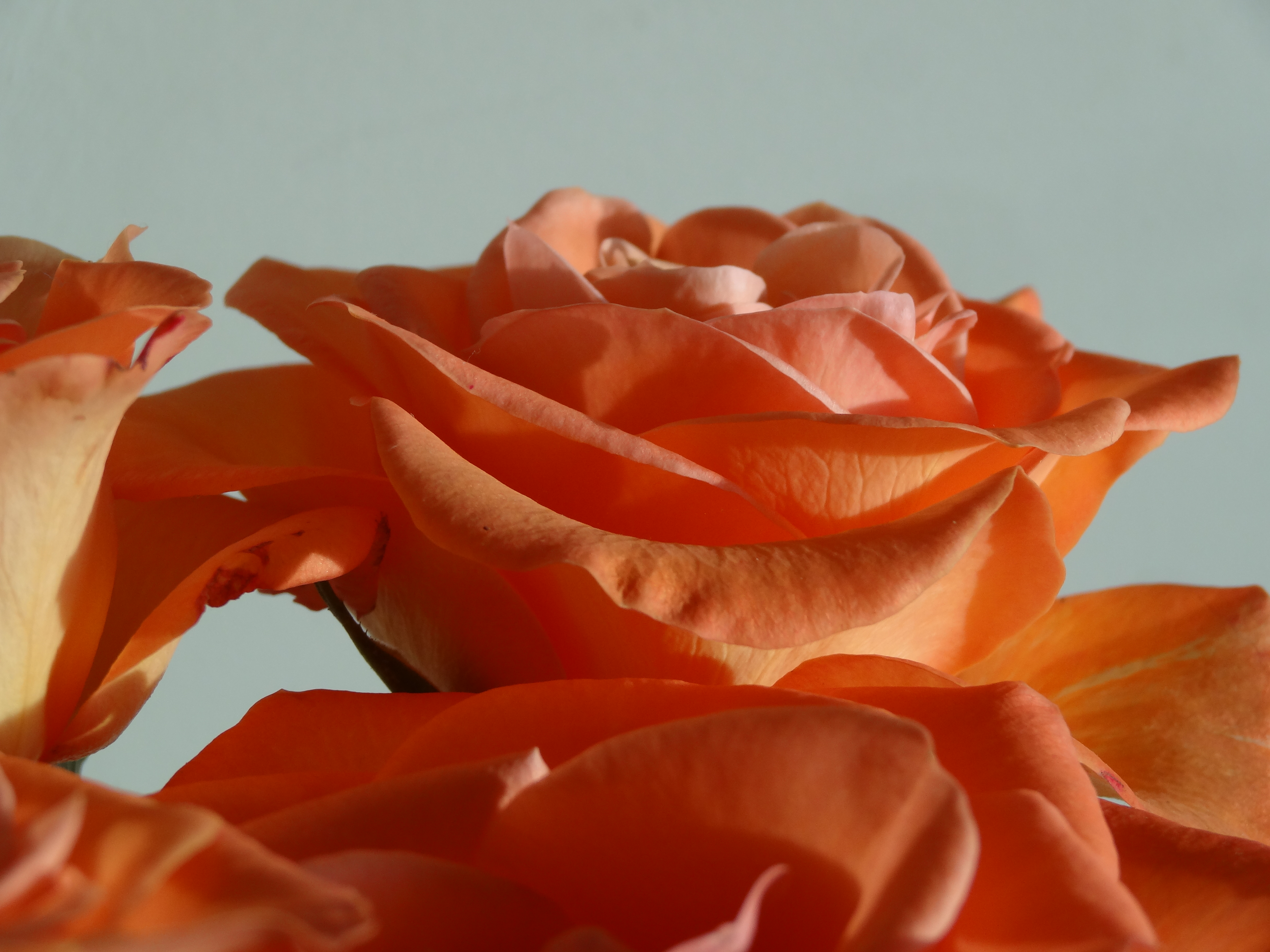
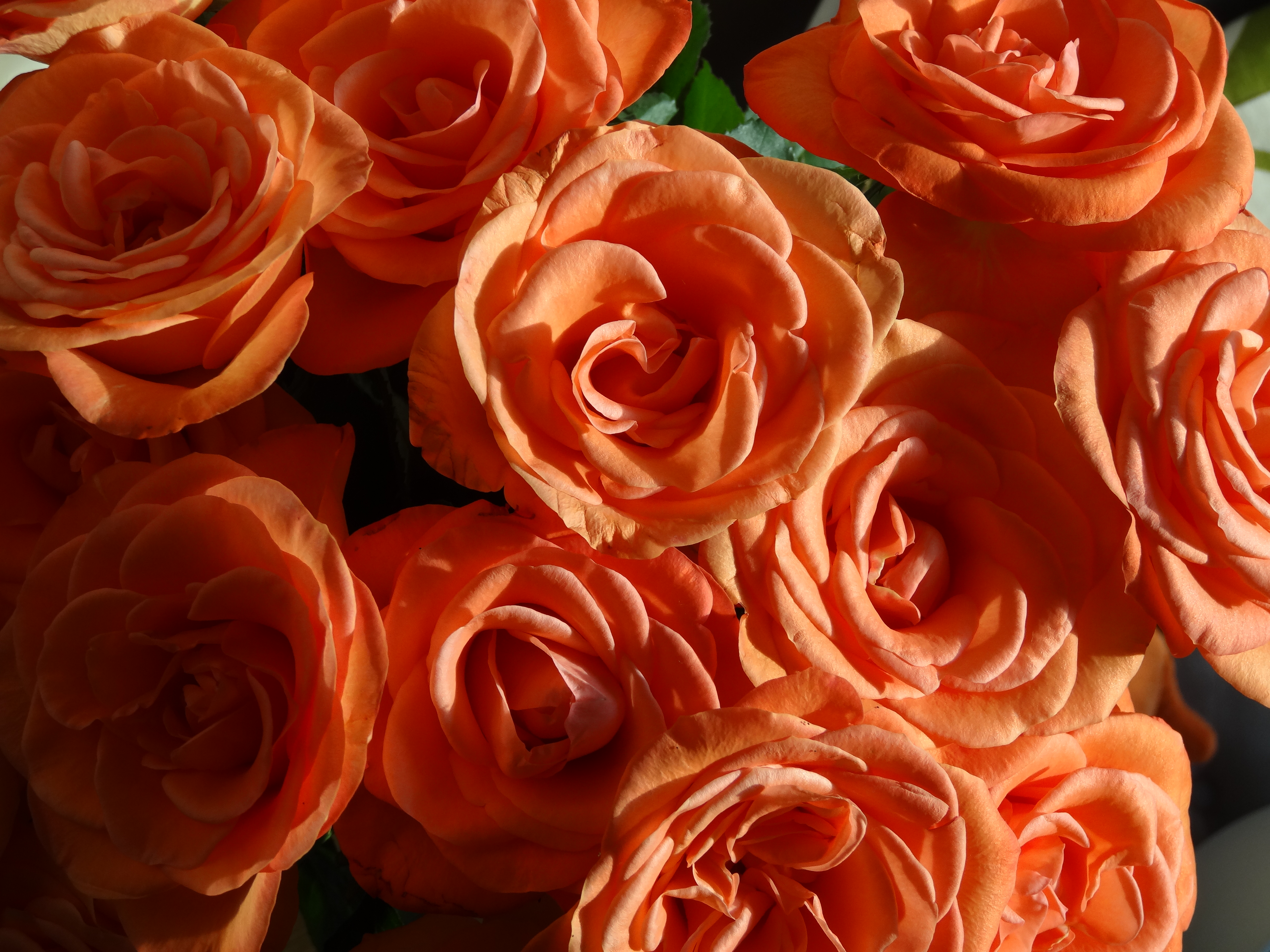
I’ve always thought that a rose is at its very best just before it dies. When in bud a rose is elegant; almost like a young girl ready to ripen into the fulness of her adult beauty. When it starts to open, the flower begins to form a pleasing curved shape, almost like a small teacup, delicately scooping up and inwards, before spreading outwards again opening into a multi layered, but still complex bundle of petals. But my favourite stage is the point just before a rose begins to die, when its petals have spread to their widest in an attempt to gather as much possible light and air. It is at this stage that the shape and the fullness of the rose is at its most sumptuous and generously bounteous. All of its multiple petals have curved outwards showing the rich layering of its structure, like a dense lacy undergarment from the Victorian age, and it’s cupcake shape has spread further resembling more of a regal crown with its abundant beauty spread wide to capture the widest admiring audience.

DSC02275 DSC02273 DSC02269 DSC02264 DSC02277

But as beautiful as the rose is at this stage, you know that it is but days away from death and decay; when the edges of those sumptuously soft petals begin to turn, go brown and shrivel, until the petals start falling one by one, unveiling beneath their elegant cluster the uglier stamen at the flower’s centre.

It was as I was staring, enchanted, by a beautiful bunch of orangey-peach roses in my lounge the other day that I contemplated this life cycle, admiring both the beauty of the roses as the whole bunch had expanded into a sea of mango-coloured wonder, but also reflecting, somewhat sadly, that this array of perfectly placed colour is but a transient creation, soon to shrivel up and diminish. But what it also made me realise is that while on the one hand it seems ironic that something can be at its most beautiful when it is at its closest to death, there is also a life lesson to be learnt here: that nothing lasts for ever, and happiness, joy, and beauty are all things which are transient. If that isn’t a reason to enjoy life to the full, and to reflect upon and appreciate the best of every moment, at every opportunity, I don’t know what is.

All photos and written content are strictly the copyright of Nicholas de Lacy-Brown © 2014 and The Daily Norm. All rights are reserved. Unauthorized use and/or duplication of the material, whether written work, photography or artwork, included within The Daily Norm without express and written permission from The Daily Norm’s author and/or owner is strictly prohibited. 

Ripples 2: Venice (Rio della Guerra)

With my solo exhibition fast approaching, I am going full steam ahead in an attempt to get my collection ready for its big unveiling this May. Not only am I working concurrently on three oil and acrylic canvases, but I also have several gouache works, a new woodcut edition, and old woodcut edition, a new etching and several Norm sketches on the go. It’s a daunting task trying to get all of those works completed in less than 3 months (with the fact that I work full time as a lawyer also being something of an issue…), but I am happy to say that the factory process is in full flow, churning out the works at a steady and pleasing pace (factory = me). As if by way of demonstration, this week I will be sharing not one, but two new paintings with you – one which sees the completion of an ambitious canvas which I started way back last summer, and the second, today’s, which I begun only a few weeks ago.

Yes, hot on the heels of my Natale Italiano posts, and my obsession with the abstract forms created by rippled water, as subsequently demonstrated in my posts on ripples photographs, paintings, my recent woodcut, and in the first of my new gouache ripples collection, I now present the second gouache painting of the series: Ripples 2: Venice (Rio della Guerra).

Ripples 2: Venice (Rio della Guerra) 2014 © Nicholas de Lacy-Brown, gouache on paper

Ripples 2: Venice (Rio della Guerra) 2014 © Nicholas de Lacy-Brown, gouache on paper

As with the first piece, this painting focuses on the rippled reflection, rather than showing both the reflection and the scenery it reflects. Focusing on the ripples rather than on the real world above them means that the viewer is left with the more abstract image which nature creates, causing one to question what is actually being shown in the image when seen at a first glance. Is it just an unplanned abstract image, or something more illustrative? It is only after some time that you then realise that what this painting shows is the underside of a bridge, an iron railing, and a building punctuated by windows behind it, albeit rippled into a charmingly haphazard abstract form.

I’m so excited by the prospect of a world in ripples that I could go on painting them forever. The only trouble is, I don’t think they’ll actually be on show at my solo show in May, which means I should really start concentrating on other works. As to which – come back a little later in the week, to see the work which will be central to my solo exhibition in May.

Until then, have a great week.

© Nicholas de Lacy-Brown and The Daily Norm, 2001-2014. Unauthorized use and/or duplication of the material, whether written work, photography or artwork, included within The Daily Norm without express and written permission from The Daily Norm’s author and/or owner is strictly prohibited. Excerpts and links may be used, provided that full and clear credit is given to Nicholas de Lacy-Brown and The Daily Norm with appropriate and specific direction to the original content. For more information on the work of Nicholas de Lacy-Brown, head to his art website at www.delacy-brown.com
Saatchi’s positive Body Language

Whenever I visit the Saatchi gallery in Chelsea, I always do so on the assumption that I am going to hate most of the art on show. This reactionary pattern begun some years back, when Saatchi was still on the south bank, and the works included Tracy Emin’s vile “unmade” tip of a filthy bed, and her even viler photographic self portrait surrounded by money shoved up and around her you-know-what. Then, when Saatchi moved to Chelsea, exhibitions included a show of Russian art, which turned out to be even more depressing in its lack of talent than one would have already guessed, and shows which decided that the car wrecks lifted straight out of a (probably tragic) accident scene would somehow make for an enticing art exhibit.

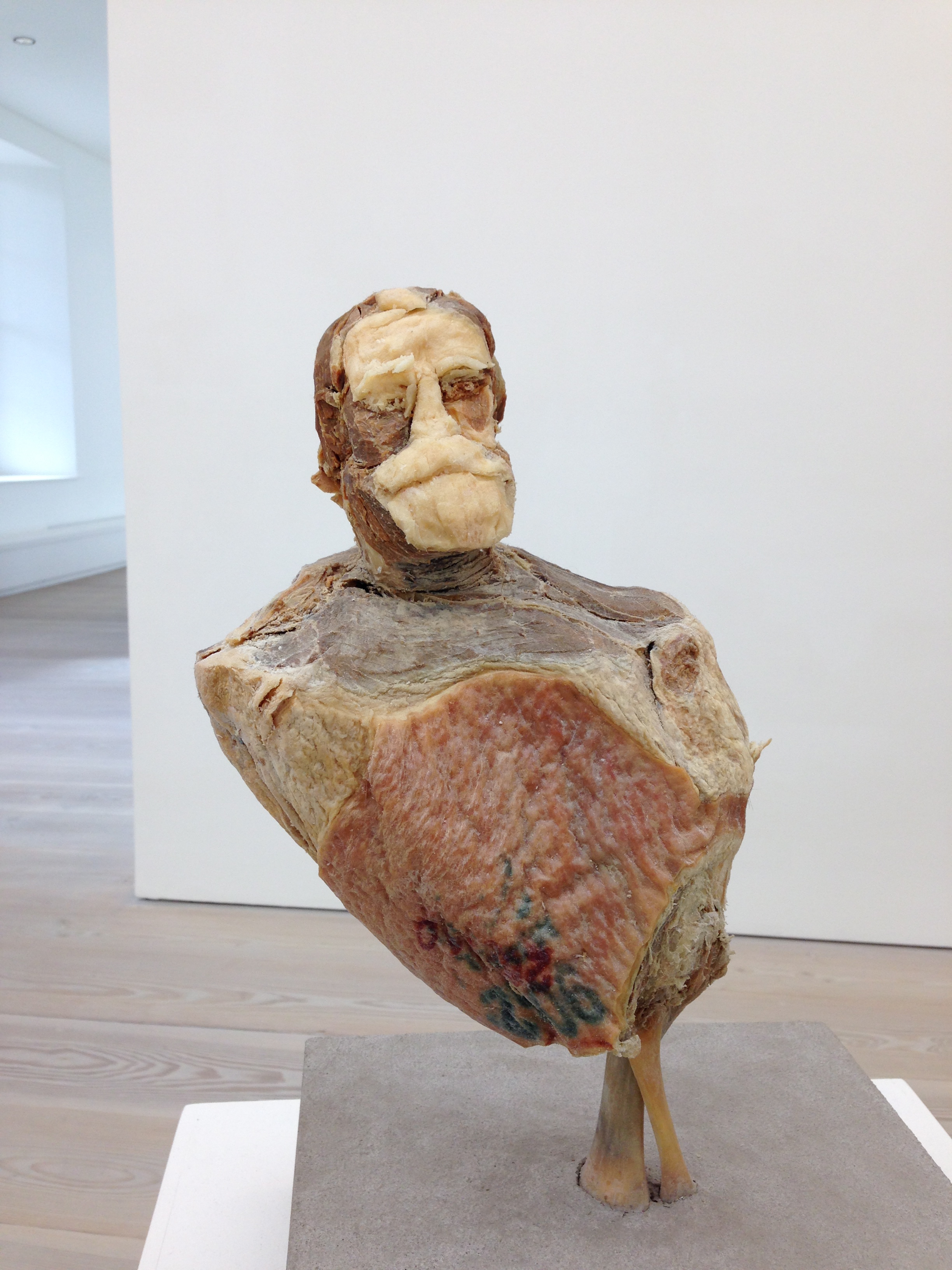
So, when I dropped into Saatchi’s gallery last weekend, I wasn’t expecting the latest offering, Body Language, to be much better than a convenient toilet stop in the midsts of some Chelsea shopping. But when you enter a gallery a see a sculpted portrait made out of Iberico ham, you pretty much know that you are going to be in for a treat. Oh yes, with his brilliantly innovative creation of Spain’s best leg of meat, Kasper Kovitz’ Carnalitos sculptures single handedly opened my eyes to the positives of Saatci’s ever revolving exhibitions of contemporary art works (eyes which had pretty much been sealed shut in opposition following the recent Nigella cafe strangle scandal…).

Carnalitos (Arana) © Kasper Kovitz, 2010

Carnalitos (Arana) © Kasper Kovitz, 2010

Carnalitos (Unamuno) © Kasper Kovitz, 2010

Carnalitos (Unamuno) © Kasper Kovitz, 2010

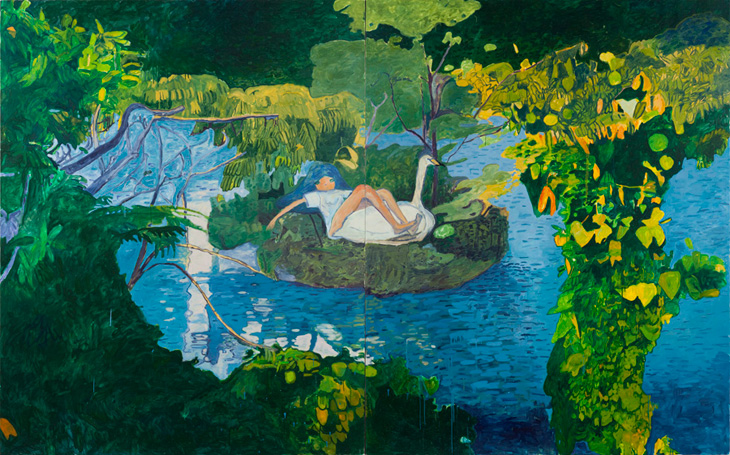
Other favourites from a varied show of contemporary artists include the paintings of Michael Cline, whose somewhat parodied figures reminded me of Stanley Spencer’s Sandham Memorial Chapel paintings which were recently on show at Somerset House. I also loved Nicole Eisenman’s energetic oil paintings such as the Beer Garden at Night (2007) which is full of whimsical figures and amusing social shenanigans which can keep an audience entranced for hours, and Makiko Kudo’s fantastical escapist visions which were in part like a Manga cartoon and at the same time like Monet’s pond bursting with lilies.

That's That © Michael Cline, 2008

That’s That © Michael Cline, 2008

Police Line, © Michael Cline, 2007

Police Line, © Michael Cline, 2007

Floating Island © Makiko Kudo, 2012

Floating Island © Makiko Kudo, 2012

Burning Red © Makiko Kudo, 2012

Burning Red © Makiko Kudo, 2012

Beasley Street, © Nicole Eisenman, 2007

Beasley Street, © Nicole Eisenman, 2007

Beasley Street, © Nicole Eisenman, 2007 (detail)

Beasley Street, © Nicole Eisenman, 2007 (detail)

Beer Garden at NIght, ©  Nicole Eisenman, 2007

Beer Garden at NIght, © Nicole Eisenman, 2007

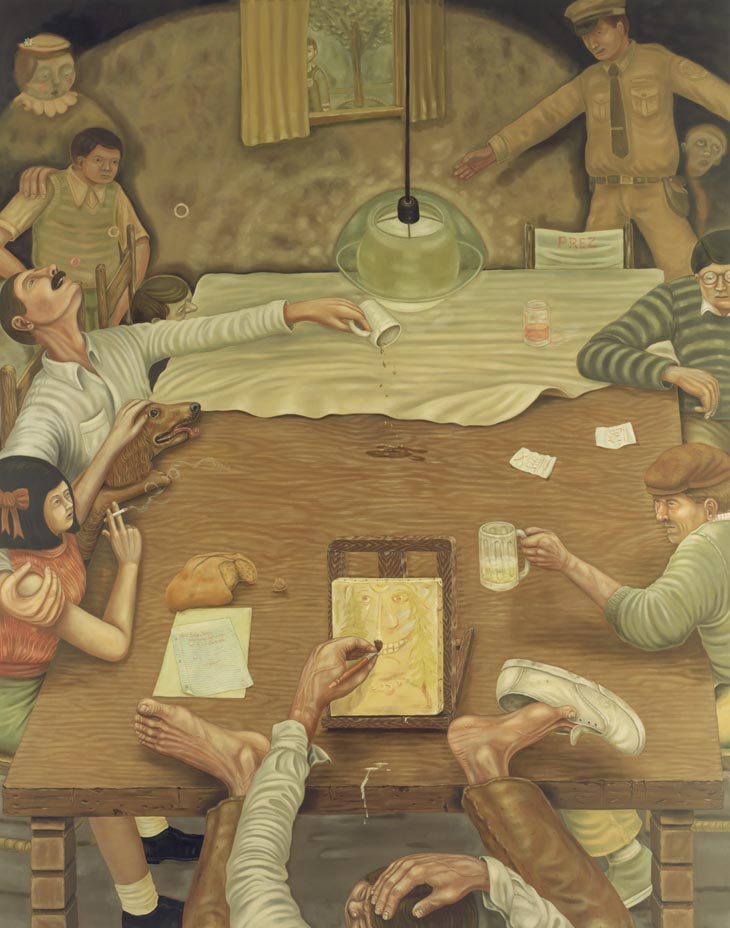
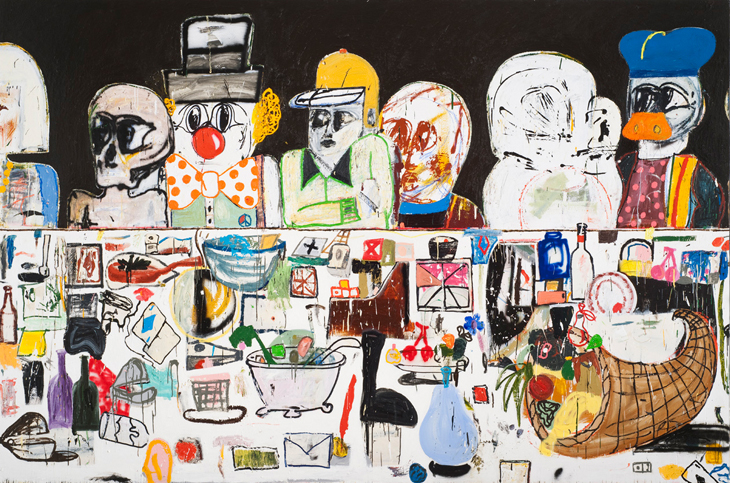
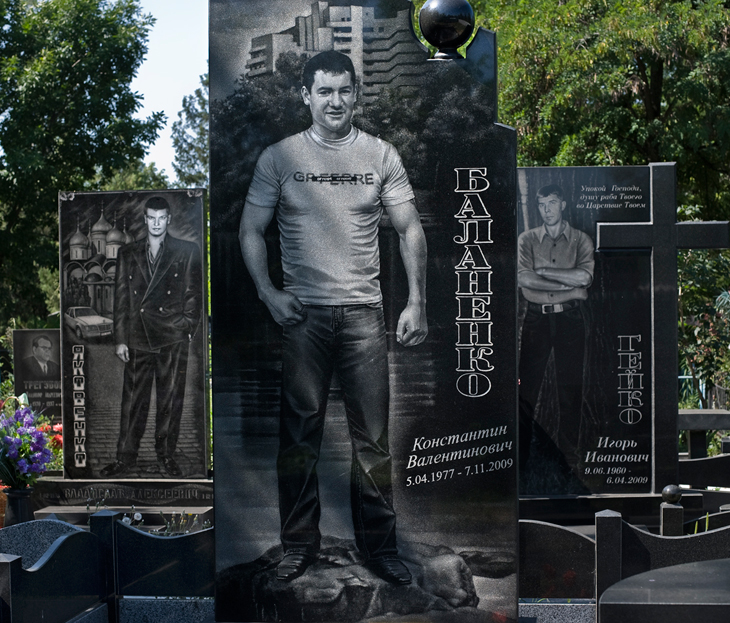
Less convincing were the paintings by Eddie Martinez which were so badly painted as to be derisable. His “Feast” is compared in the gallery brochure to Da Vinci’s historically celebrated Last Supper. I would compare it to the dirty dining table at the end of a meal when my toddler nephews have been to stay. I was equally dismayed by Denis Tarasov’s photographs of tombstones in graveyards in Russia and Ukraine, not because of the photography itself, but because of the hideously tacky gravestone pictures which they captured – huge granite tombs decorated with intricately carved photographic likenesses of the individuals buried beneath them, looking so vulgar that to even place such visions in a freshly painted white gallery in the centre of London’s chelsea felt like dumping a Lidl in the middle of Harrods. That’s not to say they weren’t interesting – one shouldn’t be surprised that this level of vulgarity would come out of a country which has backdated its laws in relation to homosexuality by at least a century of moralistic retardation.

The Feast (detail) © Eddie Martinez, 2010

The Feast (detail) © Eddie Martinez, 2010

Untitled (from the Essence Series)  © Denis Tarasov, 2013

Untitled (from the Essence Series) © Denis Tarasov, 2013

But I digress. From its low points to its very high, Body Language is well worth a visit for its sheer diversity of art – there really is something for everyone, and it’s free too, so what’s to lose? For me, the show demonstrates that painting is very much back in fashion and that the age of nonsense gimmicky installations is largely dead, which can only be good news if the 21st century is ever going to make any kind of decisive mark on art history. Not only that but the Saatchi gallery is, as ever, a brilliant cultural location whose highlights also include a show of emerging British talent, a gallery of limited edition prints which are for sale, a spangly new gift shop which is around 6 times the size of what it used to be (Iberico ham sculptures sadly not for sale – but there’s always Iberica restaurant in Marylebone as a very good consolation prize – and there you even get to eat it).

Body Language is on at the Saatchi Gallery, Chelsea, until the 23 March 2014

Finding the light in a gloomy wet winter

Gloomy short days which get dark before you make it home in the evening; a deluge of rain which has flooded areas of the UK whose residents didn’t even realise they had a river nearby; and a protracted season without leaves on the trees or flowers on the ground. The winter is a long, depressing period which I cannot stand. Days go by without any sense of hope or vitality of life; when you don’t even notice the scant daylight, and get used to a life without sunshine.

For me the only way to get through the winter is by taking a threefold approach: 1. To think, dream, paint and write about past holidays, and to book a load more for the year ahead; 2. To eat lots of delicious food whose flavours are imbued with the flavour palette of the Mediterranean and other sunny locations; and 3. Whenever the slightest glimpse of sunshine peeks through the clouds, to rush out of doors to soak in this rare glimpse of happiness.

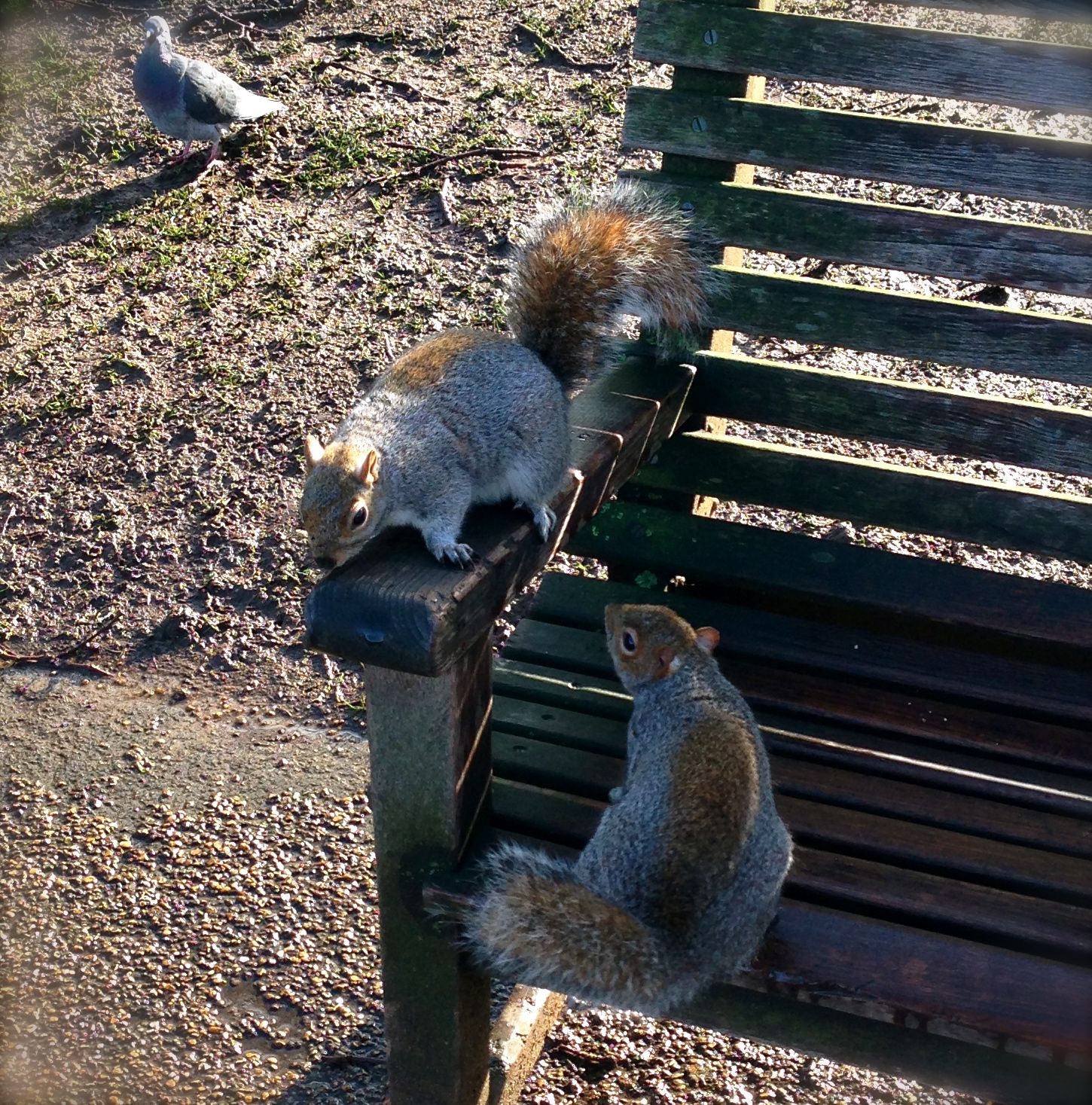
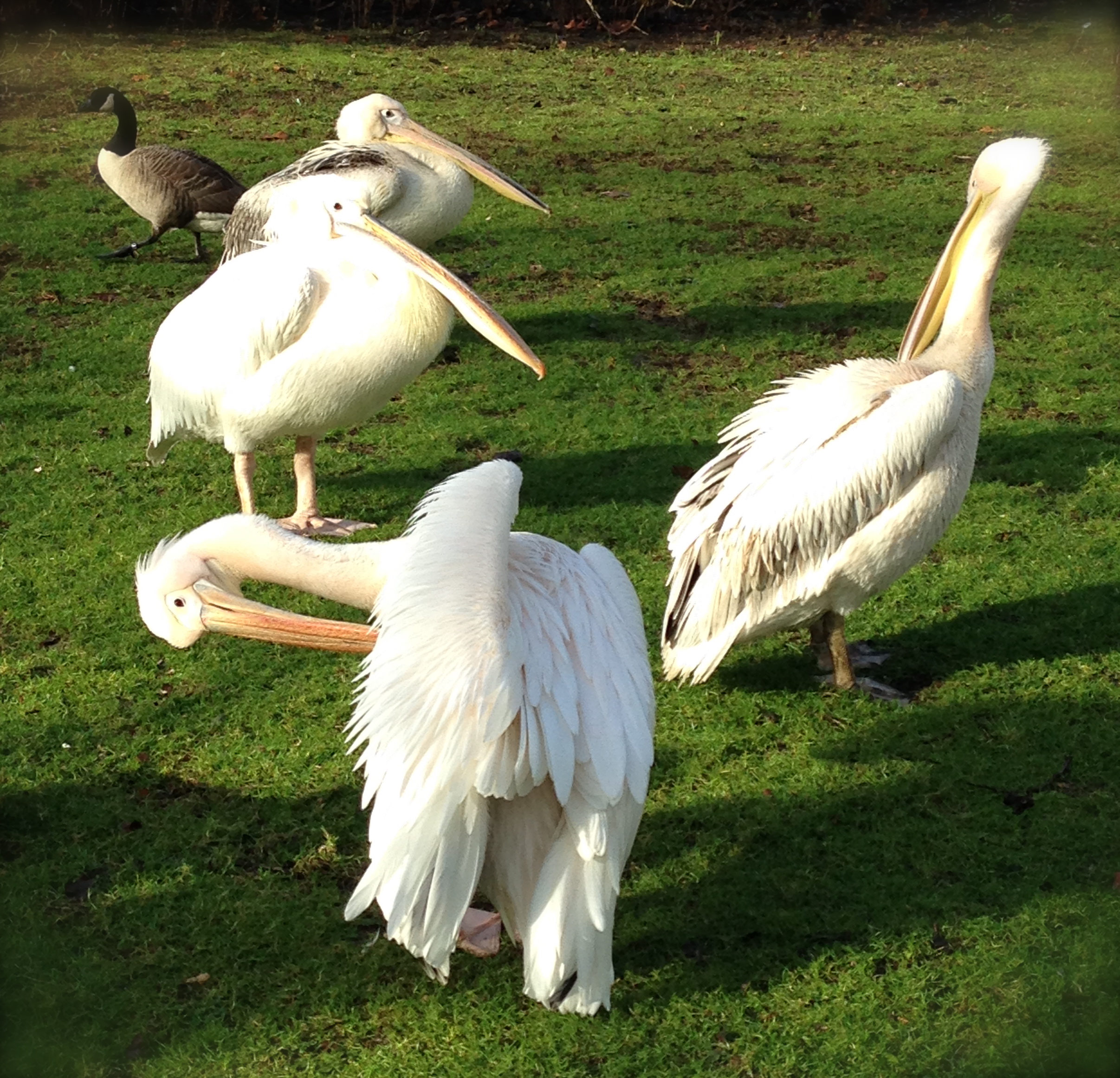
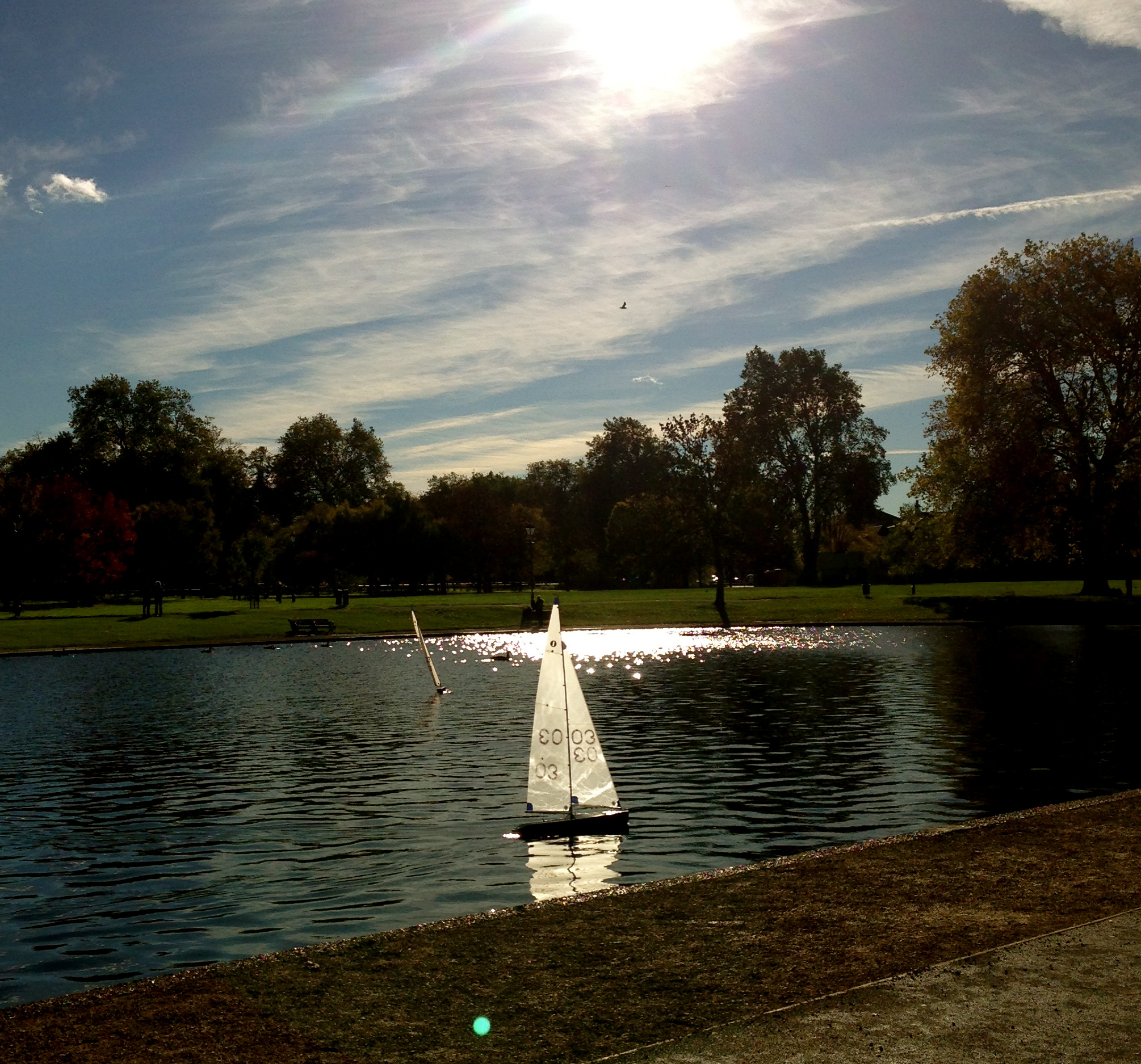
IMG_7523 IMG_7492 IMG_7484 IMG_5439

The small collection of photos on this post were taken during my Winter-survival tactic number 3, usually over my lunch hour when I occasionally take a stroll through St James’ Park in Westminster to blow away some of the winter cobwebs. It’s amazing to see, during those walks, that despite the protracted period of winter, nature is still very much in action (that may be in part due to the excess of rain which has kept London temperatures pretty mild). In St James’ park for example, there is no sign of hibernation for the cute little squirrels who scurry tamely around London tourists in search of their lunch; and the huge resident pelicans are still out and about, preening their snowy white feathers before crowds of camera-happy visitors.

So in sharing this small set of photos, which also includes a glimpse of a 4th way to get through the winter – cinema season! – as well as some of my Instagram shots taken out and about in the capital, I hope to spread some of the hope which these moments provided to all those of you who wonder when this gloomy season will ever end. Let’s hope it’s soon.

All photos and written content are strictly the copyright of Nicholas de Lacy-Brown © 2014 and The Daily Norm. All rights are reserved. Unauthorized use and/or duplication of the material, whether written work, photography or artwork, included within The Daily Norm without express and written permission from The Daily Norm’s author and/or owner is strictly prohibited. 

New painting alert! – A week of sneaky-peeks on twitter

I make no secret of the fact that I am a great creative, spending hours of every day and week creating, whether it be sketching, painting or printing, or further afield cooking up feasts in the kitchen or closely acquainting myself with my camera. However, since starting work full-time two years ago, the rate at which I complete the large scale oil paintings which I used to create on a regular basis, and many of which will be on display at my forthcoming solo exhibition, has really slowed. Last year’s Autorretrato took me around 9 months to complete, and the work which I turned to shortly after completing that one – my painted exploration of Aix-en-Provence in the South of France was commenced as long ago as last summer.

So it is with a great degree of excitement that I am but mere brushstrokes away from completing this homage to Aix which I have been working on tirelessly (on and off, admittedly) for the last 6 months. Fairly large in scale (1oocm x 75cm) and big on detail, it was always going to be a fairly ambitious project, containing as it does a landscape and cityscape all rolled into one together with illustrations of some 9 of the city’s famous fountains as well as a number of shops and cafes.

As I approach the completion of that work, I wanted to share the excitement with you, and what better way to do that than share some exclusive peeks of the details of the work? Starting from today, I will be sharing one glimpse a day of my new painting – it’ll be a bit like a jigsaw puzzle, with little pieces of the work being released day by day before the whole painting is unveiled next week. But while the first peek is contained here on this post, it’ll be the only one – for all of the rest, you’ll need to check out my twitter, @DeLacyBrownArt, from which I will be posting a new detail of the painting every day this week. And as if that weren’t incentive enough to follow me, my twitter will also tell you whenever a new Daily Norm post is published!

Aix: City of a Thousand Paintings (2013-4 © Nicholas de Lacy-Brown, oil on canvas) Detail - Ribbons!

Aix: City of a Thousand Paintings (2013-4 © Nicholas de Lacy-Brown, oil on canvas) Detail – Ribbons

So please do check out my twitter, and come back again to The Daily Norm soon to see the complete image of my brand new oil painting. Arghhh, the excitement!!

© Nicholas de Lacy-Brown and The Daily Norm, 2001-2014. Unauthorized use and/or duplication of the material, whether written work, photography or artwork, included within The Daily Norm without express and written permission from The Daily Norm’s author and/or owner is strictly prohibited. Excerpts and links may be used, provided that full and clear credit is given to Nicholas de Lacy-Brown and The Daily Norm with appropriate and specific direction to the original content. For more information on the work of Nicholas de Lacy-Brown, head to his art website at www.delacy-brown.com
Printmaking Progress V: Woodcut Ripples

Having  satisfied myself that I have learnt the basics of etching in both zinc and copper (and having quickly realised that I am probably not all that good at Linocut) my next challenge in my quest to learn the multifaceted skills of printmaking was to learn the art of woodcut. This sudden desire to print images from carvings made in wood was very much inspired by the work of Felix Vallotton, whose superb satirical woodcuts stood out for me way and beyond his paintings at the recent Paris Grand Palais retrospective.

So when I saw a multiplate woodcut course being offered up at my favourite art college, The Art Academy in London Bridge, I jumped at the chance to enrol.

The night before the course began, I wasn’t at all sure what image to portray with my wood. On the one hand I wanted to emulate the moody mysterious social scenarios created by Vallatton, but on the other, I wanted to continue relishing in the fond memories of my recent Italy trip. Nostalgia eventually took precedence and I decided to continue my new experiment in Venetian ripples.

The wooden plates and a first proof

woodcut 2 woodcut 1 woodcut proof

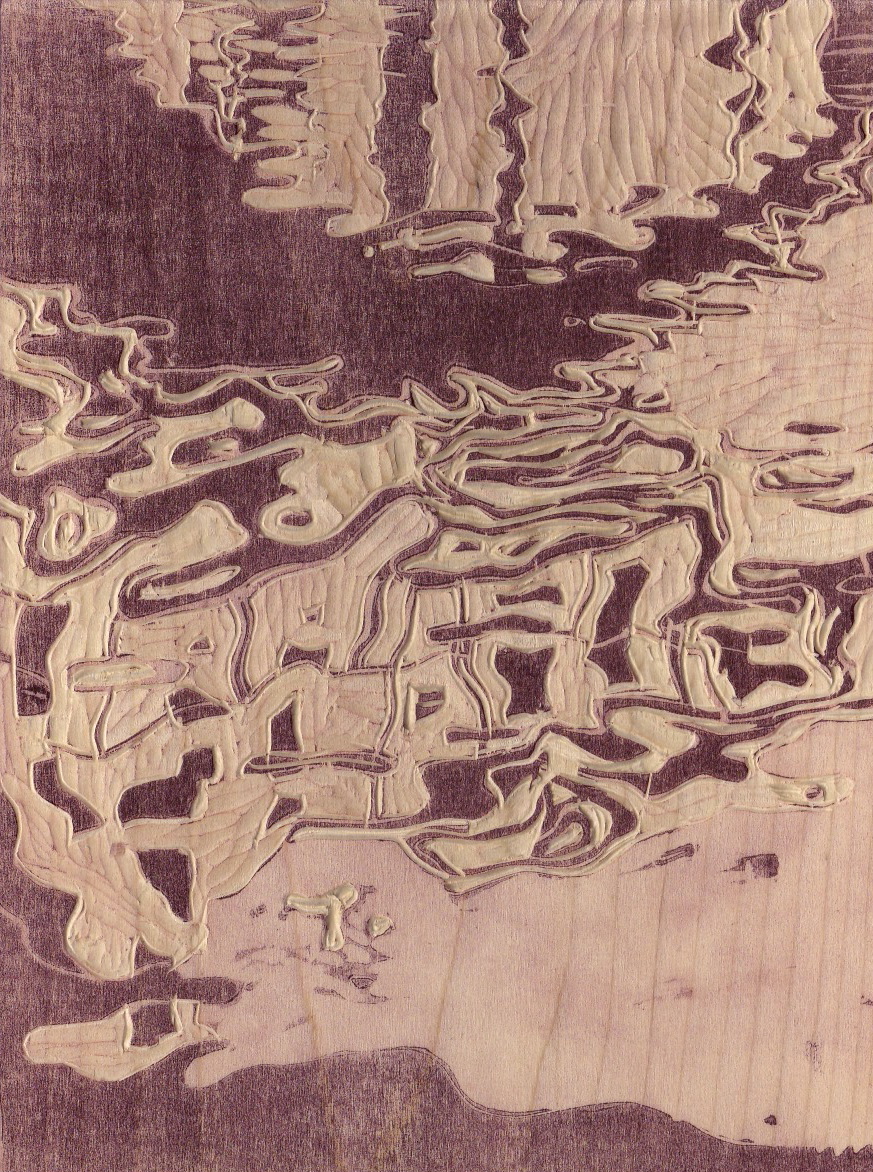
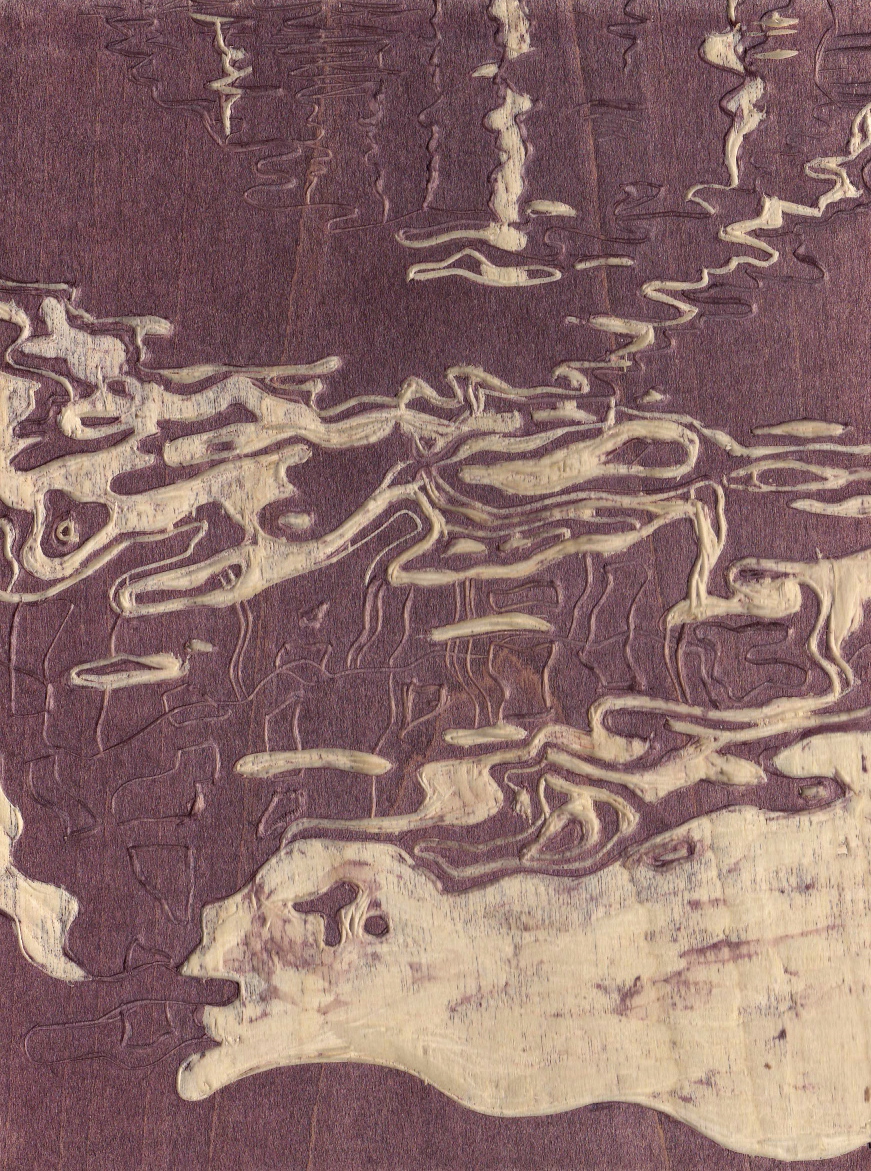
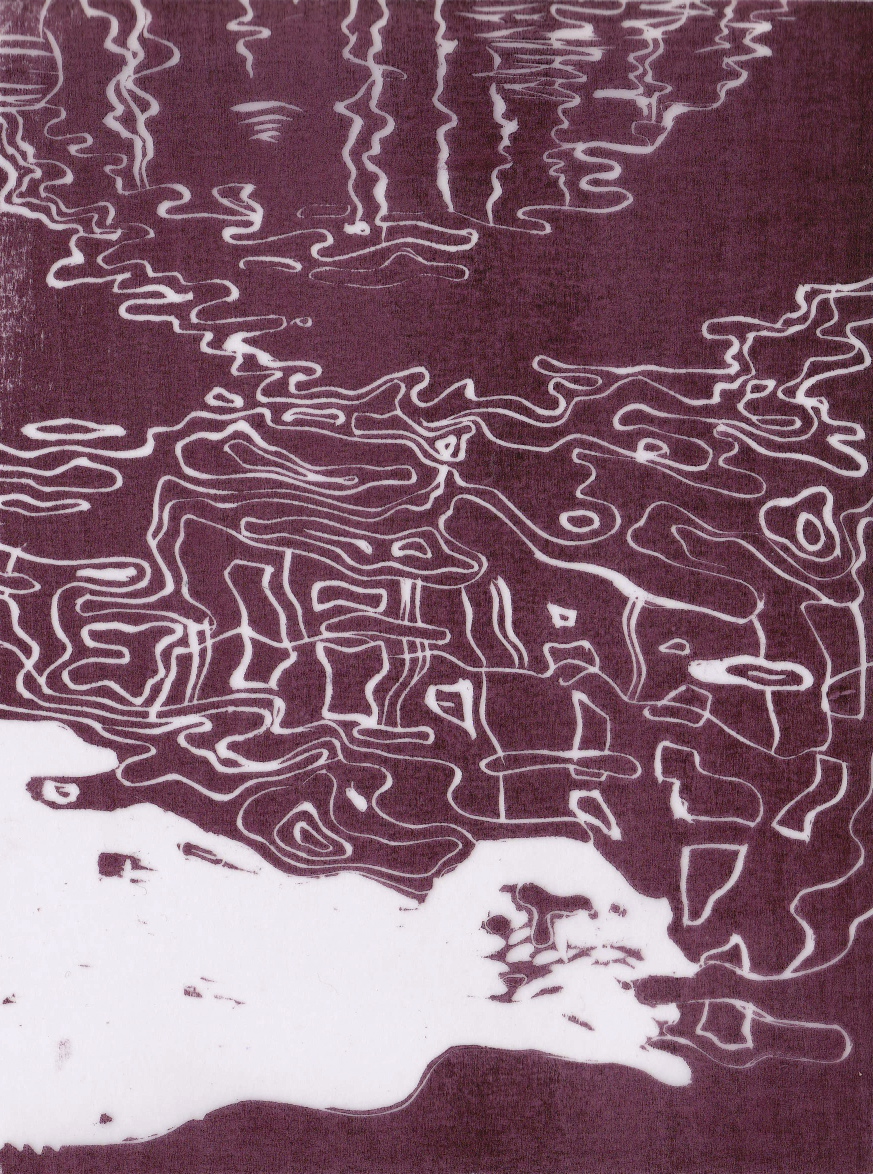
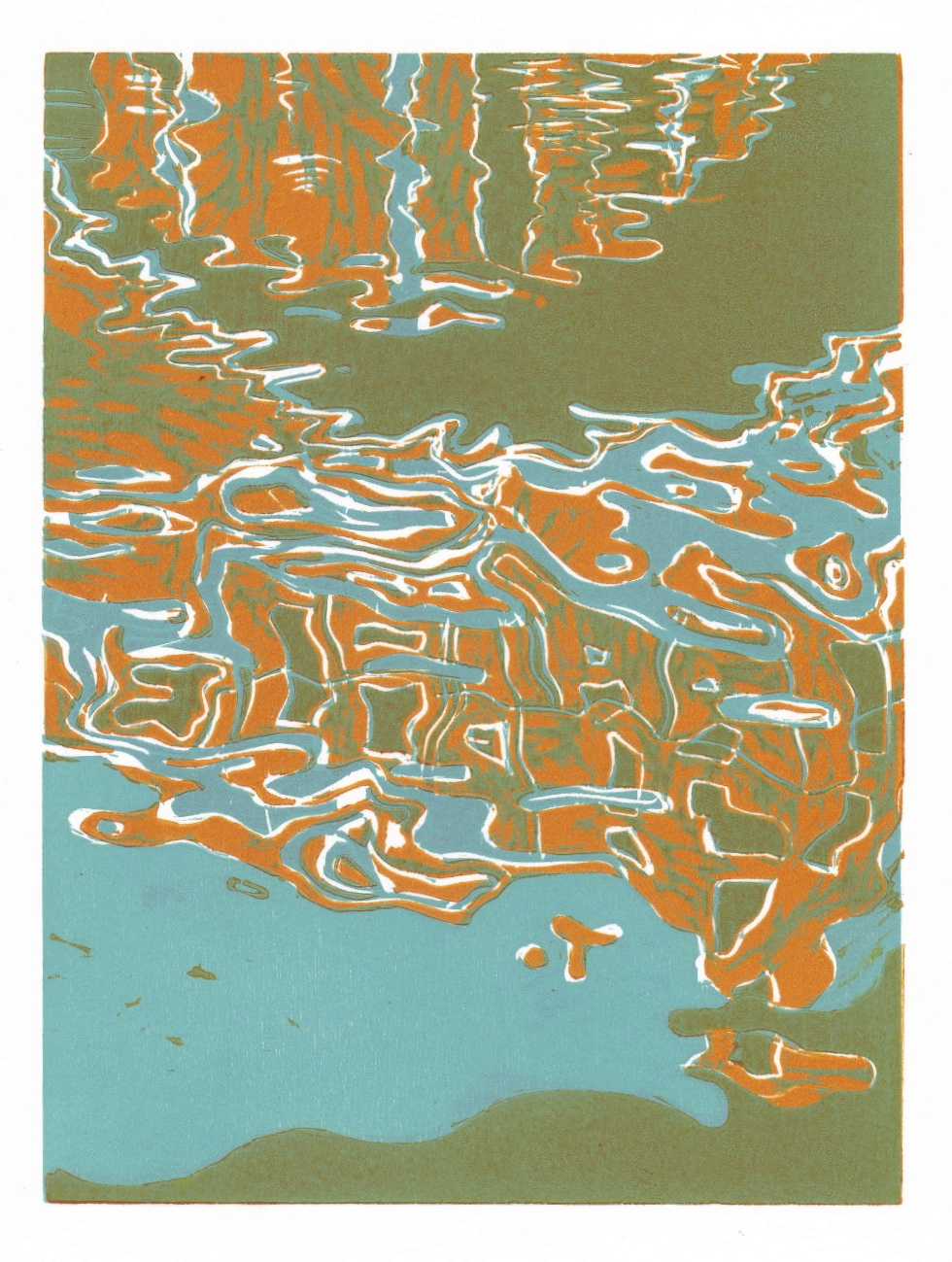
That’s all very well, except that as I was about to discover, woodcut is rather tricky for a newcomer to the medium, and having chosen a photo on which my image would be based, and drawn it onto my wood, I soon found trying to cut the fluid curving lines inherent to watery reflections nigh on impossible to cut. Yet despite a few scratches, a punctured thumb and a clear case of repetitive strain injury in my forefinger, I persevered, and the photos on this blog show both the finished woodcut print, as well as a range of prints taken along the way when I was using just two plates (and therefore two colours) before I added depth to my image with an additional third plate.

The finished print and a detail shot

Ripples on the Rio della Guerra (2014 © Nicholas de Lacy-Brown, woodcut print on paper)

Ripples on the Rio della Guerra (2014 © Nicholas de Lacy-Brown, woodcut print on paper)

Ripples DETAIL

Not bad for my first attempt – I love the fact that when you first look at the print, it looks almost like an abstract expression before your mind becomes acquainted with the various darker shapes which make up the underside of the bridge, and the windows of a nearby Venetian house – all seen rippled of course.

Much inspired I’m sure that more woodcuts will follow as I continue my merry journey into the world of printmaking.

Alternative colours and a print run of the final print

red ripple yellow ripple orange ripplephoto

© Nicholas de Lacy-Brown and The Daily Norm, 2001-2014. Unauthorized use and/or duplication of the material, whether written work, photography or artwork, included within The Daily Norm without express and written permission from The Daily Norm’s author and/or owner is strictly prohibited. Excerpts and links may be used, provided that full and clear credit is given to Nicholas de Lacy-Brown and The Daily Norm with appropriate and specific direction to the original content. For more information on the work of Nicholas de Lacy-Brown, head to his art website at www.delacy-brown.com

Three months and counting… My art exhibition is on its way!

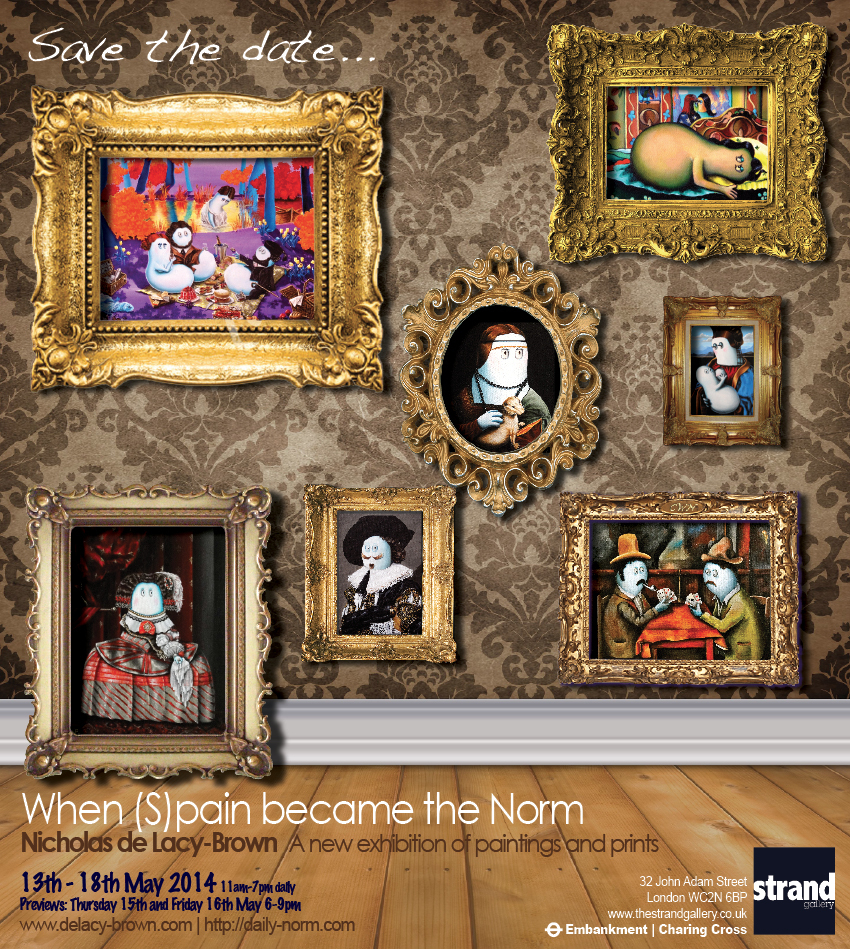
In exactly three months time, the Strand Gallery in the heart of London’s West End will throw open the doors to my brand new solo art exhibition, When (S)pain became the Norm. As my first solo show in 6 years, it will be one of the most comprehensive exhibitions I have ever staged with some 50 paintings and 50 sketches and prints covering the triple theme of my 2008 accident, works inspired by Spain, and the Norm after which this very blog is named.

On paper, three months looks like a while, but I know that it will fly by. So as much as the excitement is beginning to build, I face the next 3 months with some degree of trepidation as I look forward to the amount of work which is still before me. Working now daily to promote the event, finish paintings, order frames, sort out catering, buy bubbly and send out invites, the heat is really on, but the anticipation is starting to fill each preparatory activity with the kind of thrill that only an event of this scale can create (something which I’m sure any wedding couple to be can probably appreciate).

Save the date email frames FINAL

You’re bound to hear a lot more about the exhibition over the next few months, but in the meantime I leave you with the first of my official exhibition posters for the event whose launch marks the start of my marketing drive which commences this week. Just as that poster suggests, I ask that as many of my followers and readers alike consider marking the date in their diaries and heading over to London Town this May 13-18th, to share in this super special event with me.

More details of the exhibition and my art can be found at www.delacy-brown.com

Bianco Nero – Italy in a Vintage Light

As an artist who loves colour, who believes dulling down the vibrancy of paint straight from the tube is a kind of sacrilege, I am incredibly drawn to the power and atmosphere of black and white. It’s always surprised me that in the process of draining all of the colour out of an image leaving only tone and light and shadow behind, all of the emotional charge of the image is somehow more focused, almost as though the absence of colour leaves room for passion to breathe.

And it’s not just photos either. Black and white films hold an endless fascination for me, and once you’ve watched a few, you become so charmed by their subtle nuanced light that the next colour film you watch seems all too jarring and unauthentic. It’s like a calendar I recently saw in Rome of Audrey Hepburn’s famous debut Roman Holiday. On one page were beautiful black and white stills from the film we all know and love so well; on the next coloured up versions, which looked so Disney and brash by comparison. And then of course there’s Picasso’s Guernica – one of the most powerful paintings in all of the history of art – despite being painted exclusively in tones of grey.
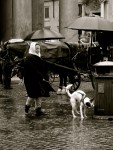
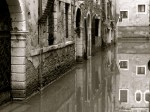
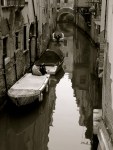
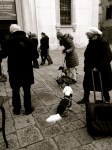
While it’s tempting to think that the appeal of black and white photography harps back to a vintage age, when life was elegant and free from the trappings of modern life, a theory easily justified by photography heroes such as Doisneau and Brassai who so perfectly captured Paris in black and white in the inter-war years, in fact, as this post attempts to show, black and white can be just as atmospheric even when adapted to the modern age.

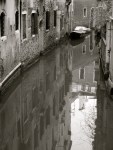
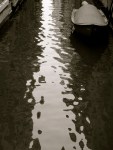
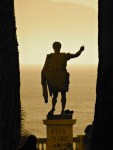
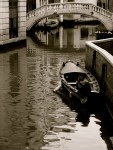
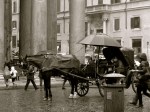
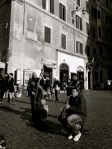
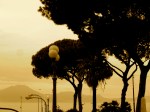
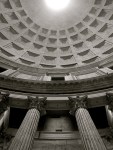
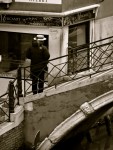
DSC00892 IMG_6910 DSC00073 DSC09967 DSC00876 DSC00682 DSC00339 DSC01432 DSC00841

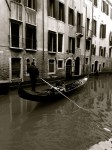
After weeks recollecting my recent trip to Italy, my final hurrah is a post which explores the medium of black and white photography (along with a few sepia examples thrown in to boot) with Italy and its people as a willing model. Of course it’s easy in the digital age to convert a standard colour photograph to black and white and back again, but as these shots hopefully demonstrate, the transformation is far from just the colour.

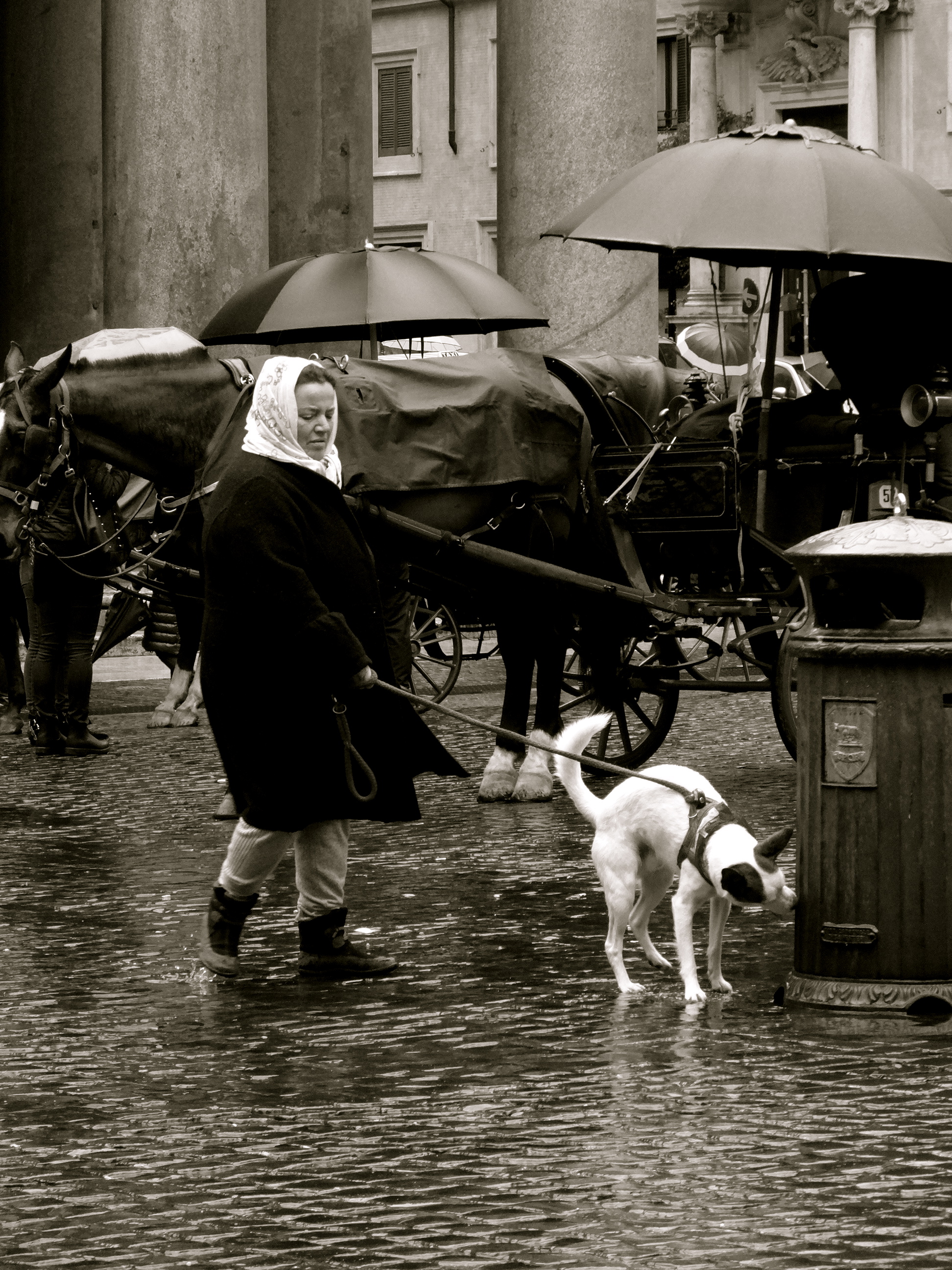
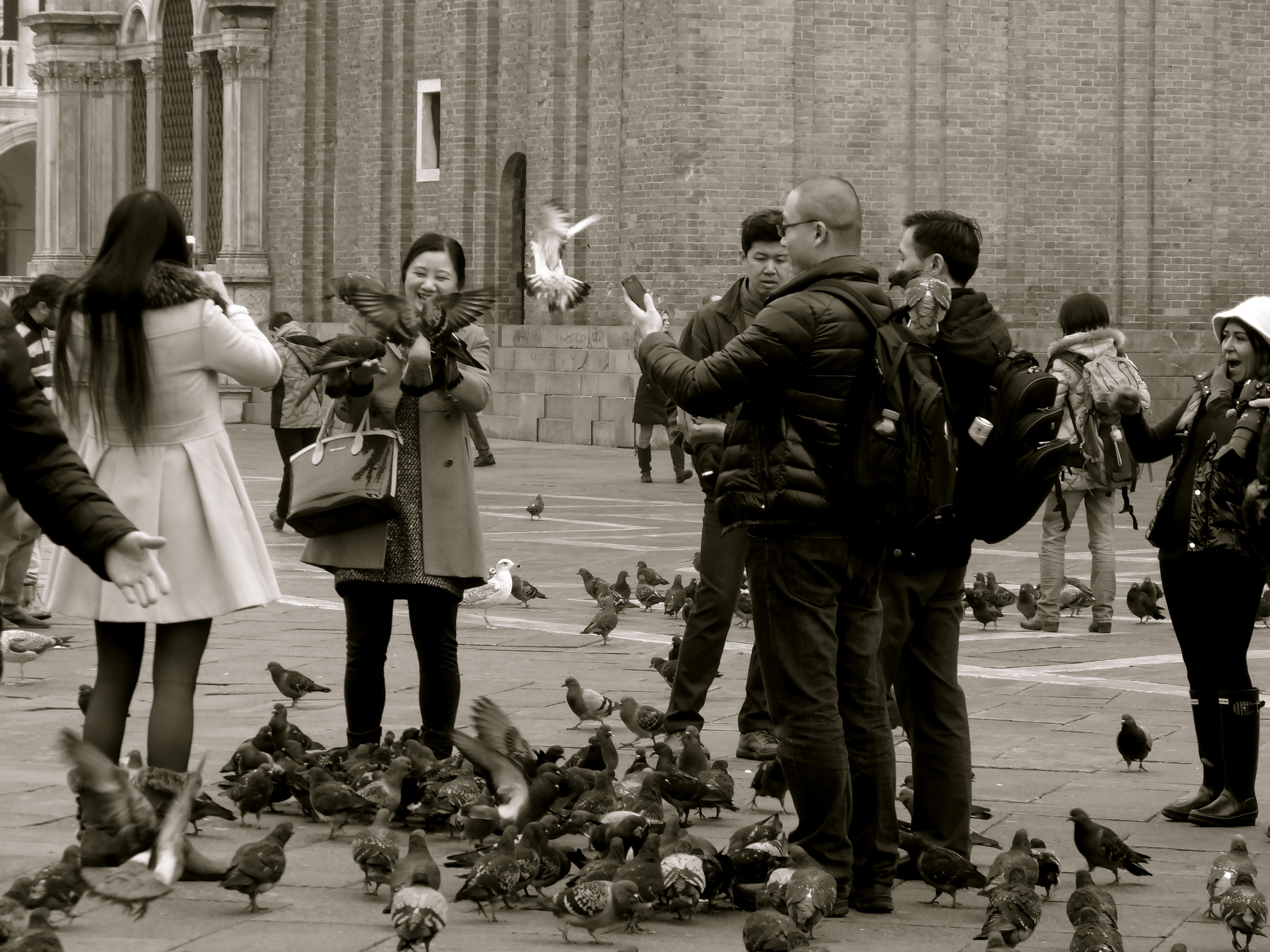
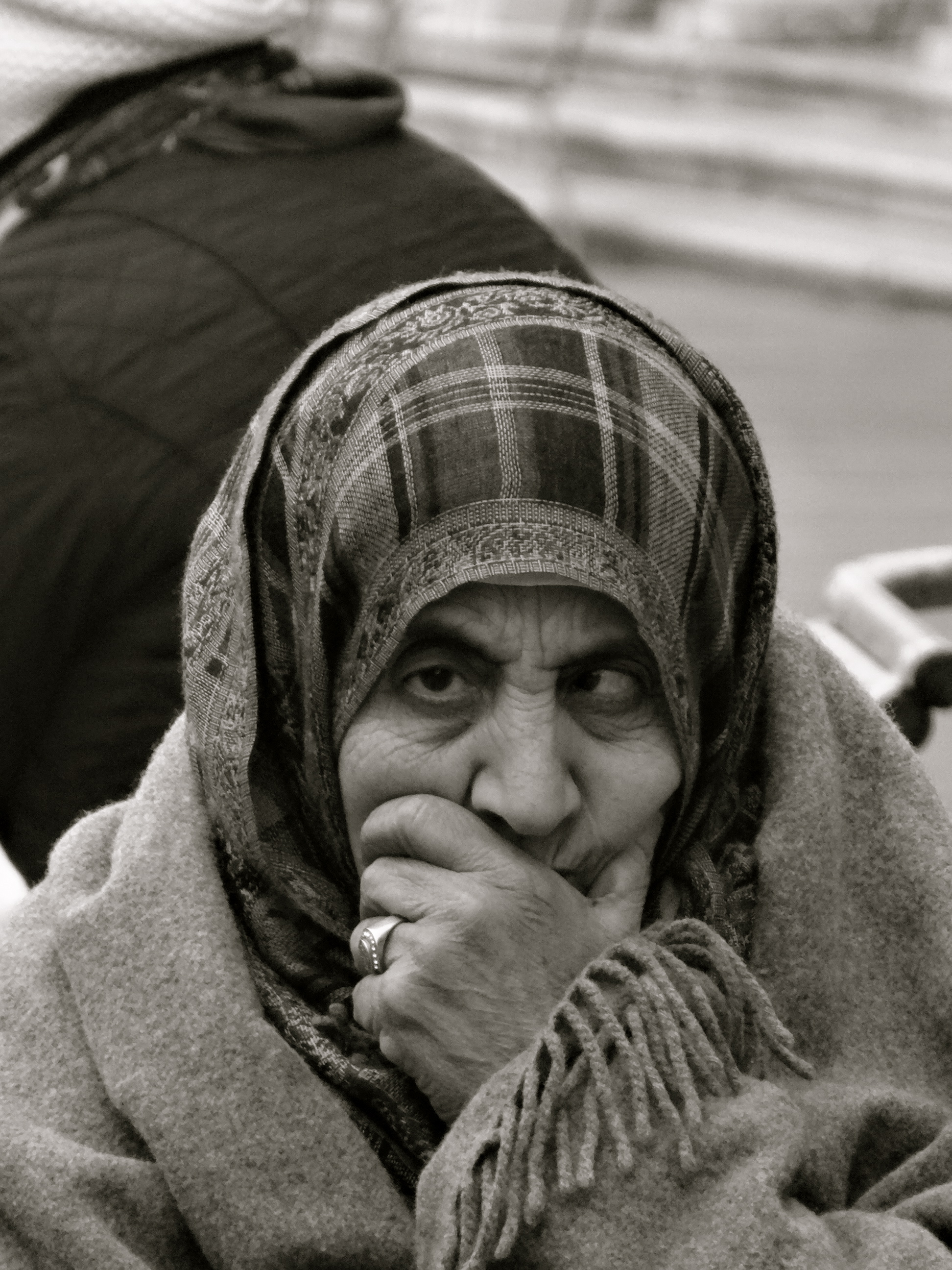
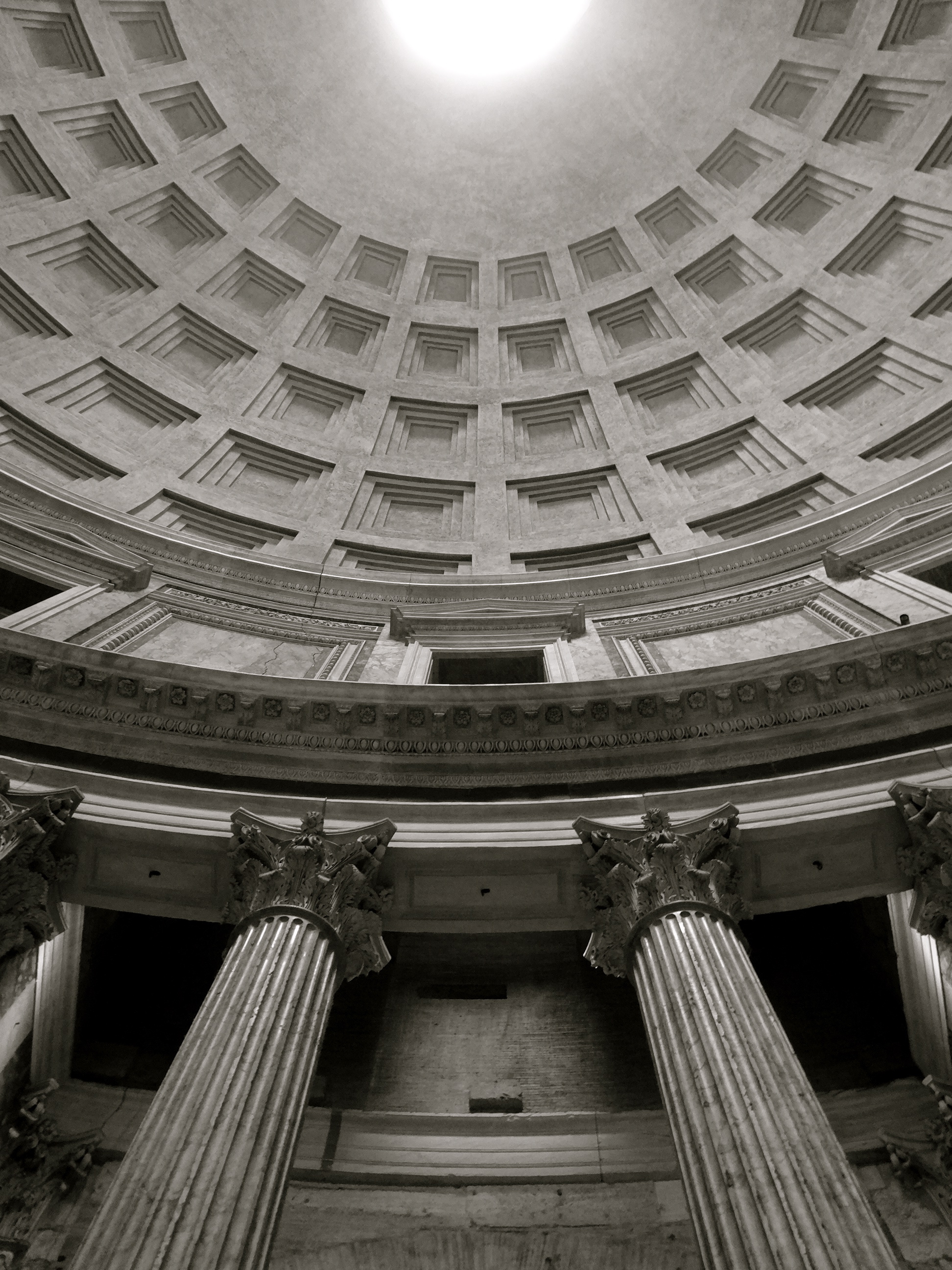
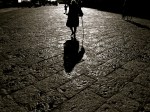
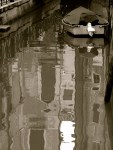
Moody, evocative, almost caught in a time vacuum, these shots have taken on a character all of their own just for being distilled in monochrome. Without the blue of the Venetian water, a ripple takes on an abstract, mysterious form; with the colour gone from their faces, random passers by in Roman squares look like actors from a golden age film; and in Naples, the shadow of an old woman in the sunlight is, in black and white, like a menacing character straight out of Victorian fiction. Now that truly is the power of black and white.

All photos and written content are strictly the copyright of Nicholas de Lacy-Brown © 2014 and The Daily Norm. All rights are reserved. Unauthorized use and/or duplication of the material, whether written work, photography or artwork, included within The Daily Norm without express and written permission from The Daily Norm’s author and/or owner is strictly prohibited. 

Vintage Italy – advertisements from a golden age

Many may have empathised with the characters Gil and Adriana in Woody Allen’s 2011 film, Midnight in Paris, who were accused of having suffering from “golden-age nostalgia” – the condition whereby a person believes that a previous era was better than the present. In a way, the purpose of the film was to disprove this way of thinking, since Gil’s obsession with the 1920s led him to meet Adriana who was from the 1920s but who herself thought the golden age was the Belle Epoque, who in turn met the likes of Degas and Manet in the Belle Epoque who in turn thought the golden age was the renaissance…and so it goes on. Which just goes to show that “the grass is always greener” applies to the past as well as a comparison of your own life with other possibilities.

italy


Despite this chord of warning which was espoused in Woody Allen’s film, I have to admit to suffering from a little golden-age nostalgia myself. Who could not pine after the elegance of evening dress in the 20s and before – the Downton Abbey style of dressing for dinner every evening and the top-hatted gentlemen in the Moulin Rouge? True, much of my nostalgia is probably founded in fiction – of course we all know that sanitary conditions and general quality of life was probably much lower then than we are used to now, especially for the poor. But nonetheless, the charm of past years cannot help but seep into my imagination, and fill my days with a warm sense of longing for a time of sophistication and innocence. And that charm is no more embodied than in the multi-coloured art work of vintage advertisements at the start of the great commercial age.

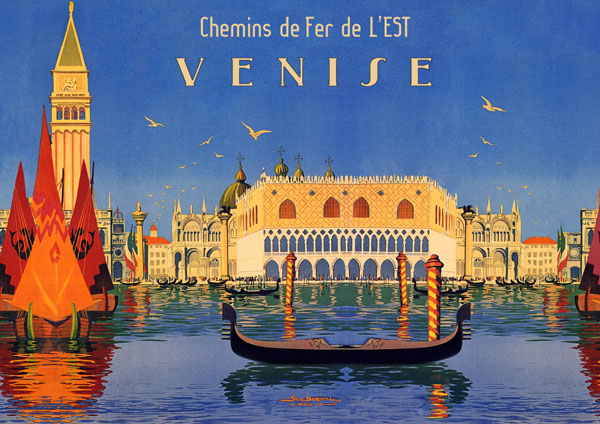
venice 2011087_1_l AP513H-vesuvius-gulf-of-naples-italy-1920s


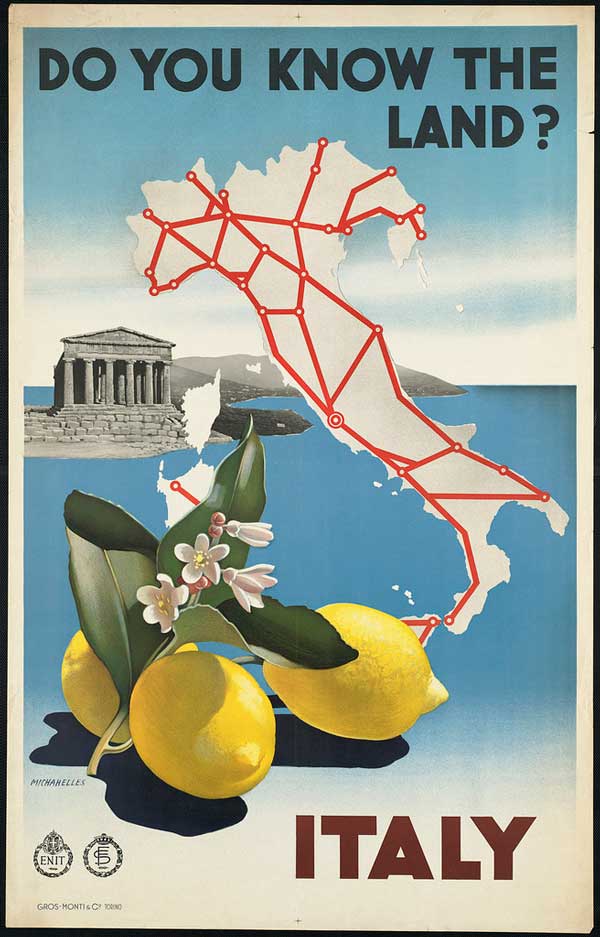
I love old adverts. This passion is directly inherited from my father who collects enamel advertisement signs and various advertising paraphernalia. Sadly I have to make do with reproduction postcards and posters, but the images are no less pleasurable for the reproduction. And following on from my recent series of Italy posts, I thought I would share with you a few classic examples of the vintage advertising age promoting the very cities which I have just visited: Venice, Rome and Naples.

photo 1 AP463-roma-rome-italian-travel-poster-1935 Napoli 1960

With their bold lettering, romanticised skies, bright colours and simple motifs, it is completely understandable how these posters would have been effective in luring the pre or post-war era of awakening travellers to the charms of Italia. If only adverts today could exude such innate charisma. Oh no… there I go with my golden-age nostalgia again. I think I’d better leave you with the posters. Till next time…

photo il_570xN.342658530