Skip to content

Archive for

Beyond the apples: Cézanne Portraits

I have never found an artist better able to reflect the earthy, softly glowing light of a landscape as well as Paul Cézanne captured his native Provence. Whether it be his landscapes of L’Estaque or his obsessive interpretations of the Mont St Victoire, Cézanne’s landscapes breathe and quiver with the the warmth and vivacity of Aix. With their strident, vibrating brushstrokes, Cézanne perfectly replicates the quavering undulations of heated air rising from the dusty ground. And in his palette of earthy tones, Cézanne immortalises the ochre glow which characterises the villages and Mediterranean habitat of his homeland. Even Cézanne’s famous still lives of oranges and apples are characterised by the same Provencal light, and his paintings of peasants playing cards are tinged with a sense of poverty but not without the hope which the light of the Mediterranean climate always provides.

However the one aspect of Cézanne’s oeuvre which often goes overlooked is his portraiture. It’s not a genre which is synonymous with the artist – the man charged with being the father of modern art – who is better known for his first dabbles into cubist forms and semi-abstract expressionism. Yet as the new exhibition just opened at London’s National Portrait Gallery shows to stunning effect, he was truly a master of the portrait.

Madame Cézanne (Hortense Fiquet, 1850–1922) in a Red Dress

Madame Cézanne in a Red Dress, 1888-90

portrait-of-gustave-geffroy

Gustave Geffroy, 1895-6

Self Portrait Rose Ground 1875

Self Portrait Rose Ground, 1875

Madame Cézanne in a Red Armchair 1877

Madame Cézanne in a Red Armchair, 1877

His virtuosity of the medium is manifold. First it is the intensity of character which he captures in often coarsely applied brush strokes and thickly layered paint – the brilliant portraits of his Uncle Dominique painted with only a palette knife being one such example. Through a mastery of light and shadow, and a multi-tonal handling of colour to represent the contours of skin and the movement of fabric, Cézanne’s sitters have a depth not just of tone but personality too, as his portraits emerge from the canvas as wholly realised individuals. Secondly, Cézanne’s skill resides in that same innate understanding of composition which make all of his works – even the most simple still life – such works of brilliance. For in constructing his portraits, Cézanne’s sitter is but one part of a perfectly balanced whole. Every daub of colour, every angle of sitter and background is fantastically conceived to create a harmonious balance. The result is a portrait which is deeply satisfying to behold, and which touches its audience for reasons which many will be quite unaware.

Self Portrait in a white bonnet 1881-2

Self Portrait in a white bonnet, 1881-2
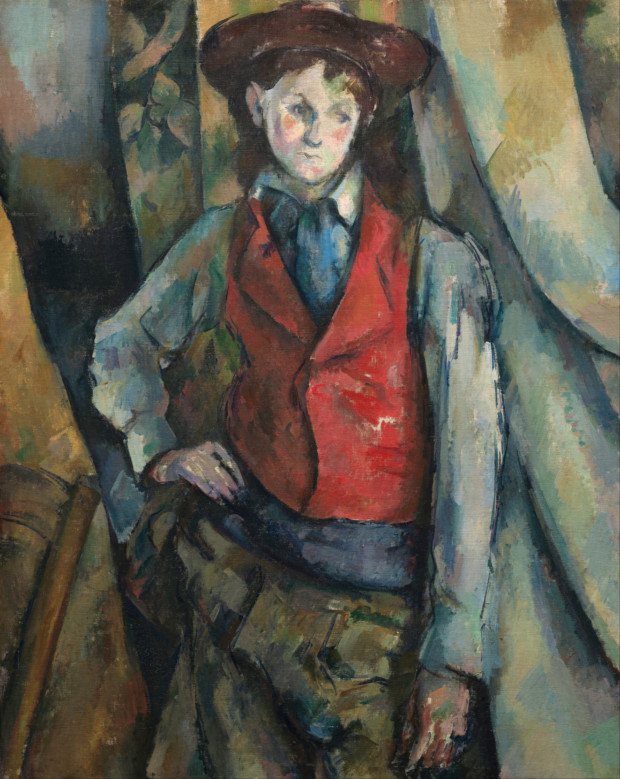
Boy in a Red Waistcoat 1888-9

Boy in a Red Waistcoat, 1888-9

Uncle Dominique in Smock and Blue Cap 1866-7

Uncle Dominique in Smock and Blue Cap,1866-7

Seated Woman in Blue 1904

Seated Woman in Blue, 1904

While my regular strolls into the wonderful Courtauld Gallery (happily located so close to my work) have introduced me to the world of Cézanne portraiture before, I had no idea of the scale and prolific mastery with which Cézanne meddled in the medium. With works spanning his entire career including some 26 portraits which demonstrate the same level of self-examinatory intensity as was previously mastered only by the likes of Rembrandt, the National Portrait Gallery’s exhibition offers fans of Cézanne a truly unique opportunity to understand a crucial aspect of the artist’s genius. His mastery over fruit and landscapes is undisputed and well documented. But now, happily, this impossibly important third genre sees the light of day, and marks a further reason for attributing Cézanne as the true father of all modern art.

Cézanne Portraits is on at the National Portrait Gallery, London until 11 February 2018

Casa Andaluz

My arrival in Marbella always coincides with a notable heightening in my artistic powers. Something in the air combines with the enveloping heat and the culturally visceral soul of Andalucia to arouse within my mind a flowering of creative inspiration. It’s why, over the years, I have painted some of my favourite artworks in my family’s little jasmine filled garden patio, an open air studio of which the Impressionists themselves would have been proud, and to which I swiftly returned this past summer.

Not even the marked increase of pesky tiger mosquitos could keep me from my canvases, especially since I had two paintings in mind and only 8 days in which to paint them. The first, based on our Marseille trip, I have already shared. But its completion was followed swiftly by a canvas of identical size, marking the Spanish limb of our trip.

Andalucia House FINAL

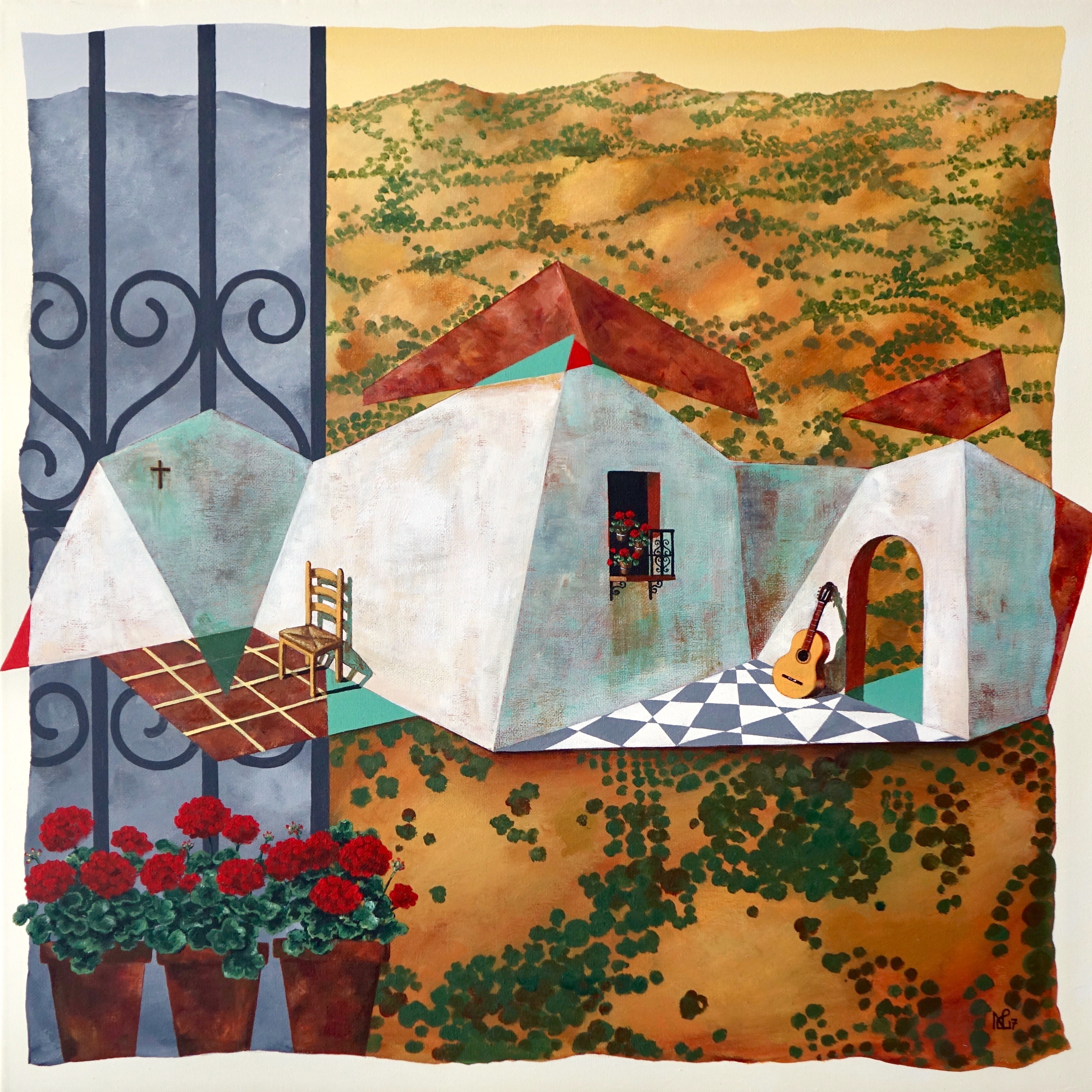
Casa Andaluz (©Nicholas de Lacy-Brown, 2017 – acrylic on canvas)

Characterised by the burnt, olive-peppered landscape of Southern Spain, and dominated something of an abstract Andalucian house at its centre, Casa Andaluz is a work which celebrates the essence of Andalucia: its sun-baked white washed walls, the spirit of Flamenco which fills the minds and souls of its people, the religious faith which remains strong in the region, and the deeply ochre, unforgiving but beautiful landscape which underpins the region. With its palette of golden brown and olive green, it is a painting which has the look and feel of Andalucia, with its rough textures and unplanned lines. It is therefore a clear homage to this imperfect region which is, in so many ways, the unbridled soul of Spain.

© Nicholas de Lacy-Brown and The Daily Norm, 2001-2017. Unauthorized use and/or duplication of the material, whether written work, photography or artwork, included within The Daily Norm without express and written permission from The Daily Norm’s author and/or owner is strictly prohibited. For more information on the artwork of Nicholas de Lacy-Brown, visit http://www.delacybrown.com 

Marseille to Marbella, Part VIII: Home Sweet Home

No matter how riveting the travel or how dazzling the sights, there is nothing quite like coming home, especially when that home happens to be combined with a holiday. For I am lucky to call Marbella, as well as London, my home, and every year I look forward to heading down to Andalucia, to the jasmine-perfumed, sun-baked land of my youth, and the ever present inspiration of my adult years. So, much perfumed, sun kissed, and infused with something of a je ne sais quoi spirit, we left Marseille and the lavender filled hills of Provence, and flew down to the earthy, olive-honeyed lands of Southern Spain. We had finally made it from Marseille to Marbella.

DSC05042DSC05139DSC05046DSC05132DSC05197

Marbella has featured countless times on The Daily Norm, as is only appropriate for my second home, and each time I feel the need to justify the town’s place as one of Andalucia’s true gem. The fault is the ravages of tourism and crass hedonism, although this species of club-land savagery is luckily limited to the outskirts of Marbella’s coastal sprawl and has left the charm of the casco antiguo – where our home is to be found – quite mercifully untouched. Marbella for me is no club land. It is, instead, a place of true calm. Where bird song fills the air, the smells of garlic and seafood, barbecued sardines and sweet evening jasmine waft in perfumed waves, and the sound of the sea resonates across the town.

DSC05092DSC05078DSC05023DSC05029DSC05012

Like the face of a favourite grandmother, Marbella is a town whose sun-baked walls are cracked with age, and its streets warped from the passage of time, but it is a place whose history has been preserved in every layer of its thickly white-washed walls, and which unites with its locals and countless bars, restaurants and little boutiques to make it one of the most welcoming and quaint towns on Andalucia’s magical Mediterranean coastline. And above all things it is my home. How lucky I am to say it.

© Nicholas de Lacy-Brown and The Daily Norm, 2001-2017. Unauthorised use and/or duplication of the material, whether written work, photography or artwork, included within The Daily Norm without express and written permission from The Daily Norm’s author and/or owner is strictly prohibited.

Marseille to Marbella, Part VII: Aix, Le Marché

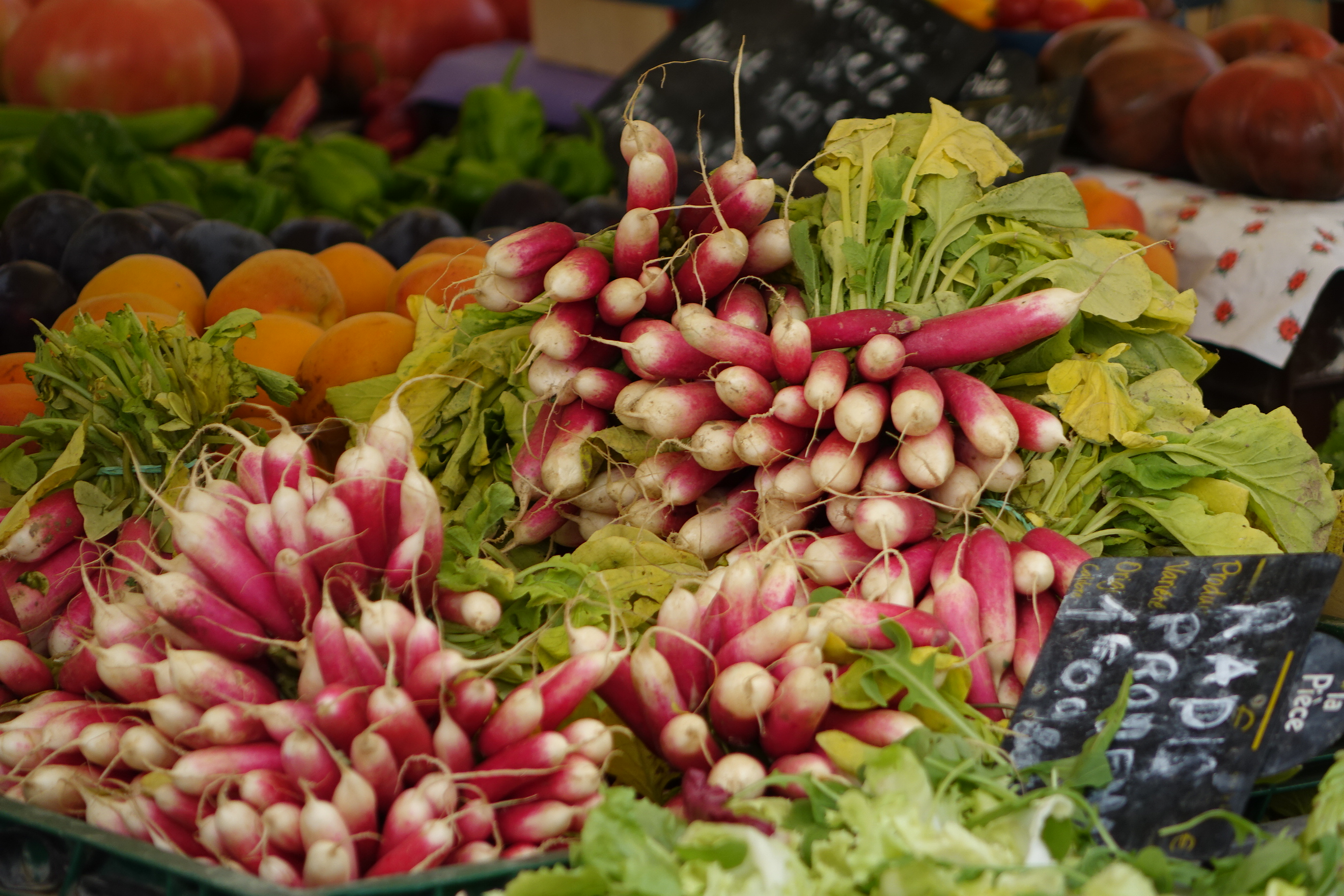
Colour, colour, colour! Shiny red apples, ruby like strawberries, resplendent silver fish and emerald green herbs. Courgettes in forest green, sage green, yellow green and white, blackboards written with curly french writing. And king of it all those sunflowers: a full, powerful sunshine punch of yellow with a deep fury chocolate brown at its centre, signalling the very epitome of this Provençal heartland. This is the market of Aix-en-Provence, the sensory spectacle to which I rushed on my birthday morning, and which is such a sight for the eyes that it deserves a post all of its own.

DSC04820DSC04832DSC04855DSC04813DSC04815DSC04835DSC04806DSC04822

I can only imagine how Paul Cezanne, famous son of the city, became inspired by the bustling, vivid life of Aix’s morning market. Who could not become an artist when basking in the glories of a sun filled square, filled with stripy umbrellas casting a warm glow over stalls full of just-picked produce and carefully nurtured harvests. Yet despite its beauty, this is no artwork to be admired on a gallery wall: The beauty of le marché in Aix is that it continues to be such a vital cog in the life of the city. It is a place for bargaining and butchering, for perusing and tasting. And in Aix’s market, watching the picky locals carefully choose the very best from an already magnificently presented selection was almost as captivating for me as the produce itself.

The market of Aix is a king amongst European street markets. Not big, not intimidating, but utterly authentic and wonderfully, completely charming.

© Nicholas de Lacy-Brown and The Daily Norm, 2001-2017. Unauthorised use and/or duplication of the material, whether written work, photography or artwork, included within The Daily Norm without express and written permission from The Daily Norm’s author and/or owner is strictly prohibited.

My Travel Sketchbook: A Fountain in Aix

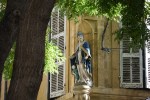
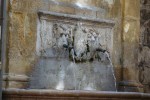
I dragged my trusty travel sketchbook all the way down to the South of France, and in my bag from Marseille to Cassis to L’Estaque. Yet it wasn’t until we got to Aix-en-Provence that I was inspired to take it out, and begin sketching the romantically quaint streets of this Provençal gem. Aix is a town of such interrupted charm that any part of the place could have been picked at random and replicated as a painting or sketch. Yet for me, Aix’s enduring appeal arises in the trickling of its fountains, be they wall-mounted masterpieces or the large round basins from which statues peruse the streets and spray water high into the air while around them diners sit and enjoy the somniferous trickle.

A study of Aix’s many fountains could easily occupy a day, at the very least, especially if you take time to sit back and enjoy a glass or two of rosé wine alongside their ripped waters. It was a study which inspired my painting of Aix’s many fountains shortly after my last trip to the city, yet the hours of work which that painting required did not render them commonplace in my eyes. Rather, it was one of my favourites of the lot – the fountain just off the Cours Mirabeau, with a three dimensional star crowning its apex- which finally encouraged me to reopen my sketchbook to the light of day. This is the result.

Aix Sketch

Aix, street detail (©Nicholas de Lacy-Brown, 2017, pen on paper)

© Nicholas de Lacy-Brown and The Daily Norm, 2001-2017. Unauthorized use and/or duplication of the material, whether written work, photography or artwork, included within The Daily Norm without express and written permission from The Daily Norm’s author and/or owner is strictly prohibited. For more information on the artwork of Nicholas de Lacy-Brown, visit http://www.delacybrown.com 

Marseille to Marbella, Part VI: Aix, Le Birthday Boy

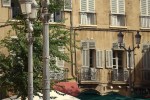
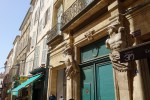
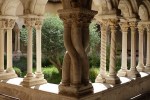
I adore Aix-en-Provence. Apart from the inimitable Paris, it is undoubtedly my favourite city in France. Elegant, leafy, filled with bustling squares and trickling fountains, it is a city which is inescapably gentrified, and which exudes a real sense of cultural enrichment and a proud artistic heritage which resonates at every corner. Ever since we first went back in 2013, a visit which led to my painting, Aix: City of a Thousand Fountains, Aix has held a prominent place in my heart. If you want true Provence, the kind of Provence which you’ve seen on postcards or dreamt about in visions framed by lavender-scented cobbled streets and rosé wine supped amongst stripey-shirted waiters and vichy table-clothes, this is really it. Aix is a veritable feast of pretty squares and idyllic leafy shopping streets. Dare I say that it is close to perfect?

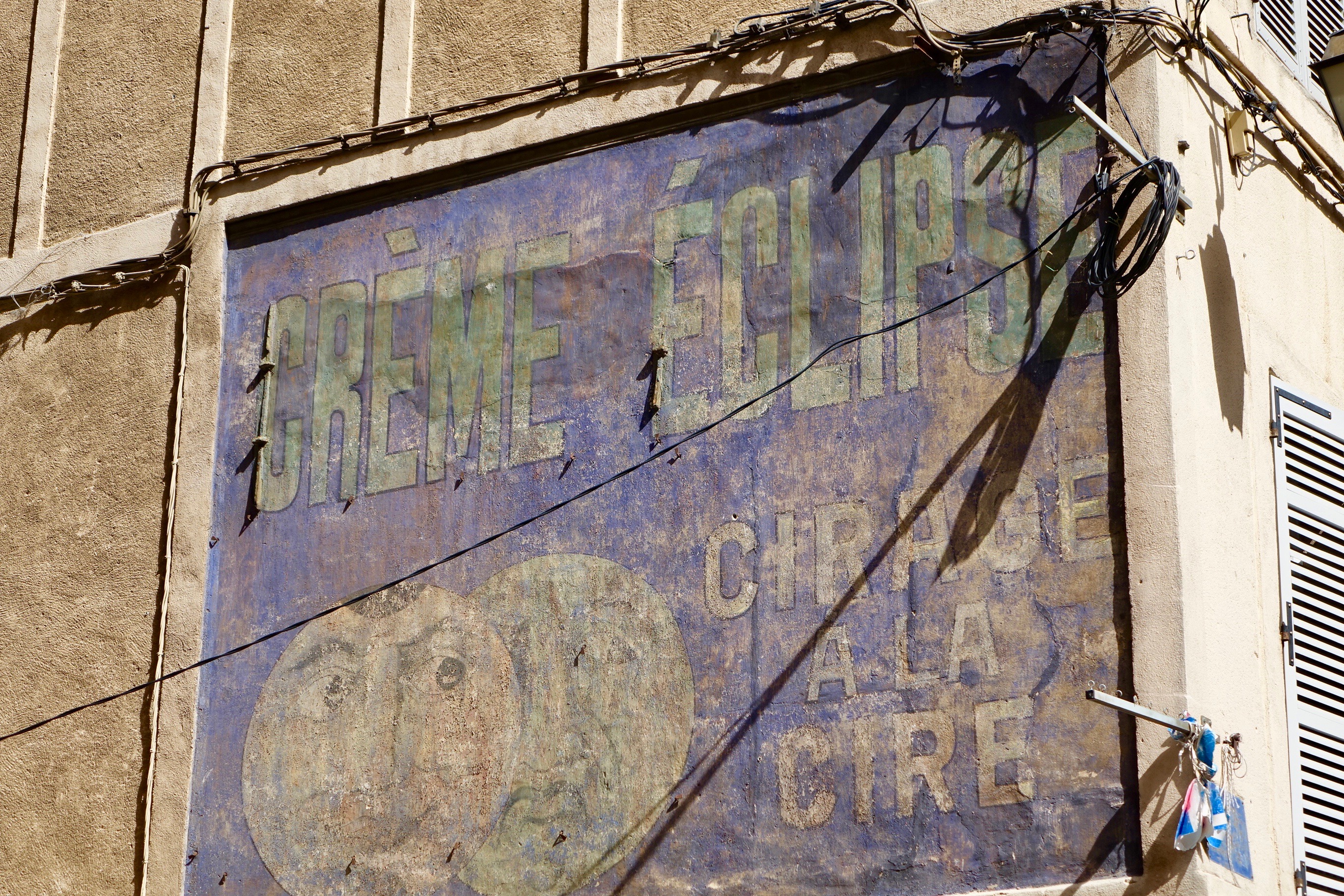
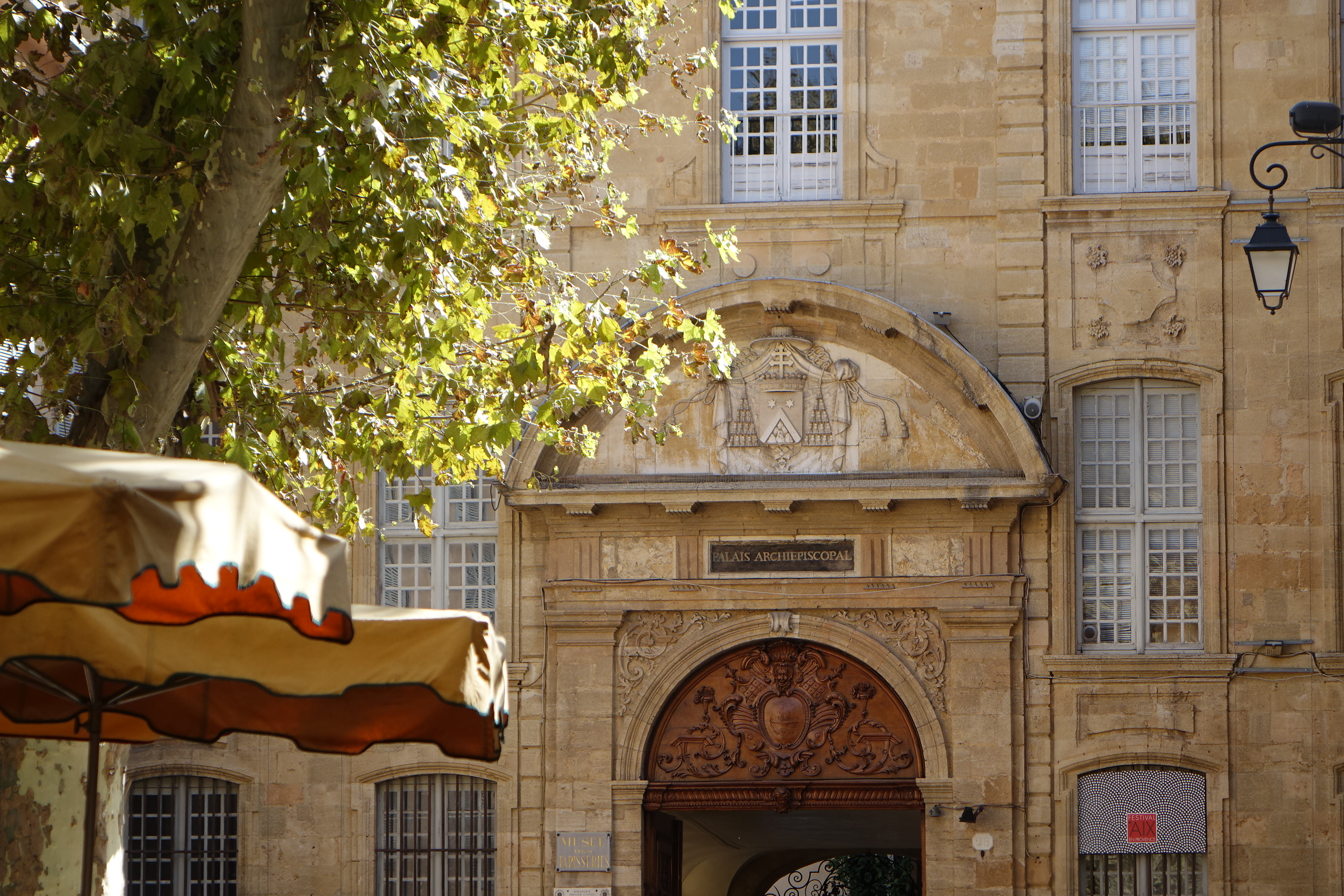
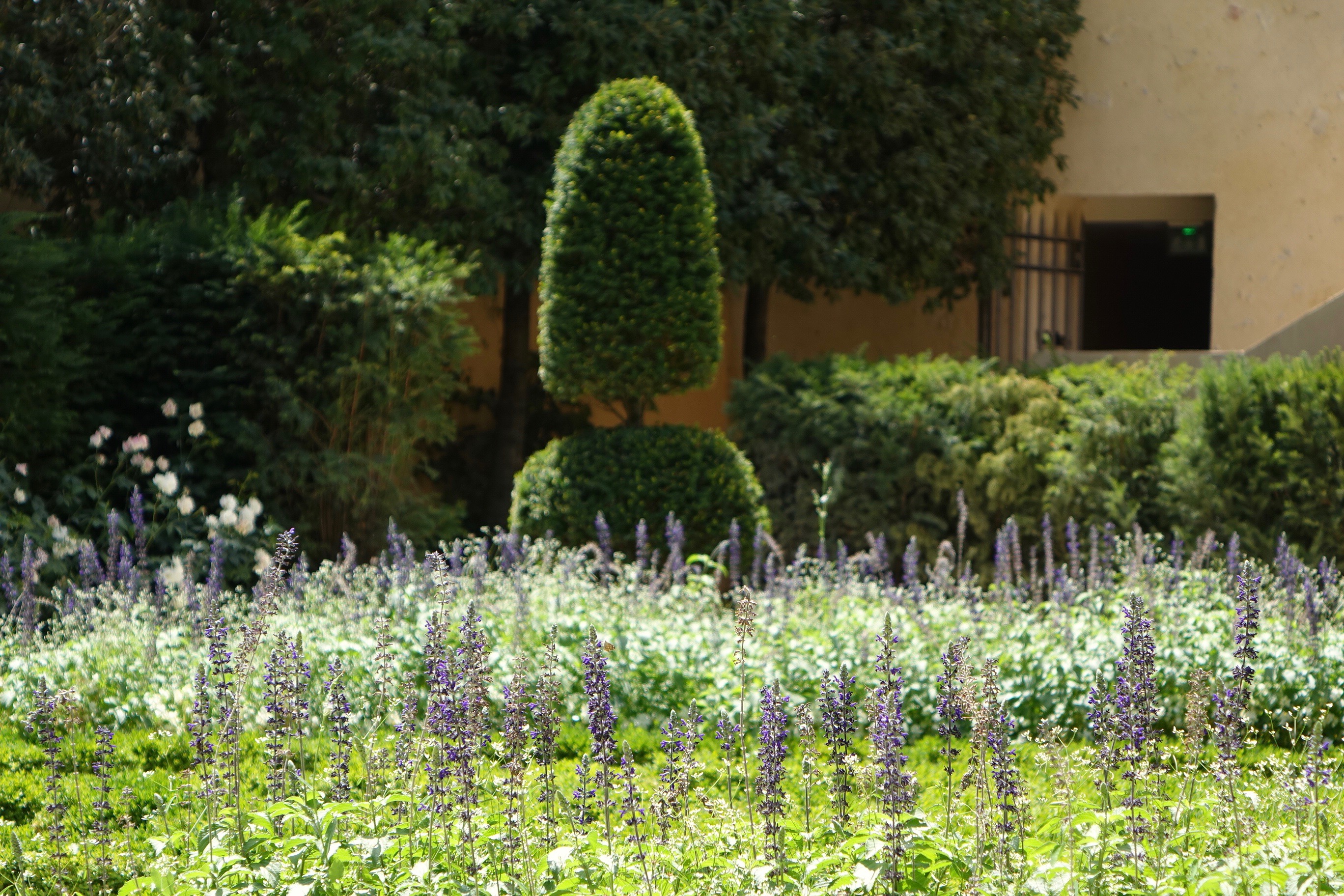
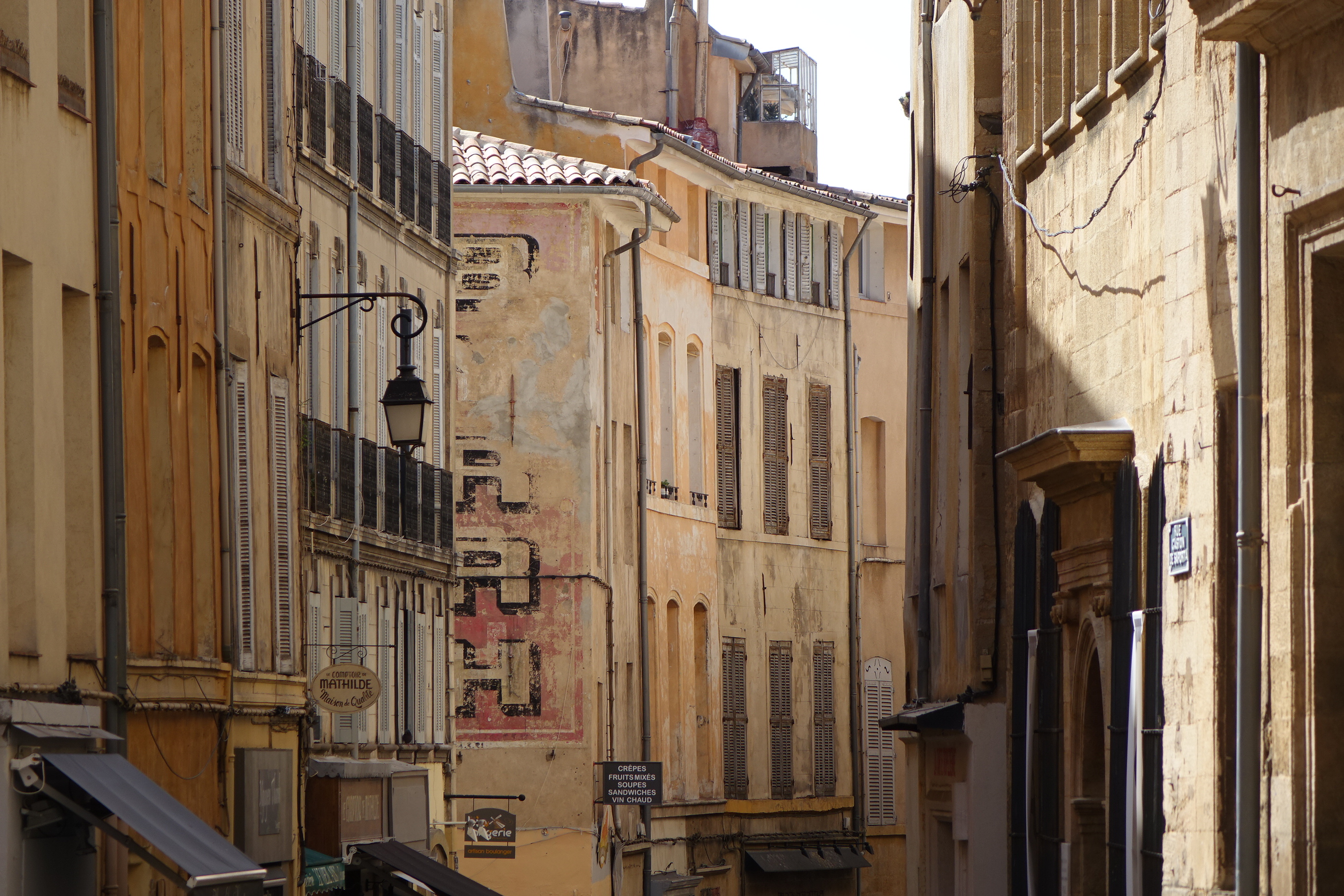
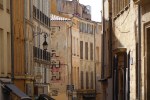
DSC04914DSC05000DSC04948DSC04875DSC04736DSC04796

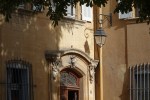
So when we decided to head down to Marseille around the time of my birthday, Aix had to feature, and given that it is truly my favourite place in the region, it felt like the perfectly appointed seat of celebration for my impending anniversaire.  Soon enough we were bedded into a lovely little attic room in the Hotel des Quatre Dauphins (very La Bohème) named after the four dolphin fountain of the same name which trickles away in this very ochre-coloured stately area of Aix. Within seconds we were on the main leafy thoroughfares of Aix, where Cezanne, Aix’s most famous son, used to sip on wine and consider how best to capture the nearby Mount St Victoire. And all around we were surrounded by cafes and galleries and boutiques aplenty. During 24 hours in Aix we must have seen over 200 paintings in exhibitions which ranged from the Jaeger collection to a retrospective of Sisley landscapes. We had breakfast opposite the multi-coloured food market (more about that later in the week), lunch in the imperial surroundings of the Hotel de Caumont and dinner in a tiny patio hung with decorative laundry and bourganvilla. Could there be a better way to spend a birthday?

DSC04879DSC04974DSC04732DSC04987DSC04921DSC04928
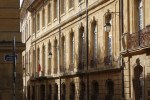
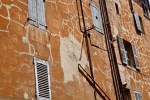
So once again Aix proved to be the perfect Provençal destination, and a flawless birthday gift. It’s one of those towns which seems to glow with a golden sheen, like Rome whose streets bask in the reflected light which bounces of its terracotta walls. Here the effect is created by walls painted in butterscotch and caramel, and reflected across the streets with the aid of sunlight magnified in trickling fountains. It really is an aesthete’s paradise. That’s why Aix can make a Cezanne of us all.

© Nicholas de Lacy-Brown and The Daily Norm, 2001-2017. Unauthorised use and/or duplication of the material, whether written work, photography or artwork, included within The Daily Norm without express and written permission from The Daily Norm’s author and/or owner is strictly prohibited.