Skip to content

Posts from the ‘Comment’ Category

Valentine’s kiss for equal marriage

Love is in the air as Valentine’s Day draws ever closer. The empty shelves of post-Christmas and post-sales shopping have been filled with rosy red pleasantries, boxes of indulgent truffles, delicate red roses and cards making declarations of ever lasting love. But there’s something about the commercialisation of love at Valentine’s which has always slightly unnerved me. Yes, it’s a chance to remind your loved one that your cherish them, but isn’t there something contrived about telling them this only when a card shop tells you to?

For these two Norms however, there is no need for a card, a box of chocolates or a bouquet of flowers to demonstrate their true bond of love and affection – a simple, heartfelt kiss will do, here shared in front of one of the most iconic buildings of Paris’ 4th arrondissement, the Hotel de Ville. On holiday from London and staying in the Marais (which also hosts Paris’ gay district), these Norms also have something else to celebrate this year asides from their own love – the British Parliament has just voted by overwhelming majority to give same-sex couples the right to marry.

Doisneau Norms share a valentine's kiss in celebration of equal marriage (2013 © Nicholas de Lacy-Brown)

Doisneau Norms share a valentine’s kiss in celebration of equal marriage (2013 © Nicholas de Lacy-Brown)

In doing so, Parliament have not made a statement about faith or religion, nor attempted to widen the extents of religious marriage beyond the bounds with which the church is comfortable. Rather, they have recognised, quite simply, that for both men and women who love those of their own sex, being gay is not a choice made or a lifestyle favoured, but who they are, and how they were born. Why then should gay men, women (and Norms)  not be afforded the equal opportunity to marry when they, like heterosexual couples, find themselves in a relationship so strong and so loving that they want to devote themselves to that person for the rest of their lives?

The Doisneau original

The Doisneau original

So this Valentine’s day, even if you do not have a loved one with whom to share a Valentine’s day kiss, take some time to consider the enhanced rights which have been afforded to gay men, women (and Norms) all over the UK. Finally, like their heterosexual counterparts, they have been given the opportunity to validate their love in marriage like everyone else.

And for those eagle-eyed art lovers amongst you, you may recognise the scene which these two Norms now recreate. It is, of course, based on the famous photograph, Le Baiser de l’Hotel de Ville, by celebrated French photographer Robert Doisneau. Last Valentine’s I recreated another of his famous kiss photographs from the 1950s on canvas, in Norm-style. Here is that painting, and the Doisneau’s originals.

Le bazier de l'opera (after Doisneau) (acrylic on canvas, 2012 © Nicholas de Lacy-Brown)

Le baiser de l’opera (after Doisneau) (acrylic on canvas, 2012 © Nicholas de Lacy-Brown)

The Doisneau original

and the Doisneau original

Happy Valentine’s day to all and everyone, especially those celebrating the manifestation of an equal right to love and marry, at last.

Big Ben at close Quarters – the Elizabeth Tower Tour

It’s almost certainly one of the perks of the job of working for the British Government that occasionally you get to peek behind the scenes of the nation’s famous landmarks, monuments and buildings – icons which have made Britain and in particular the city of London famous throughout the world. And without a doubt one such perk, in which I have most recently indulged, is getting a tour up London’s most famous landmark of all: Big Ben.

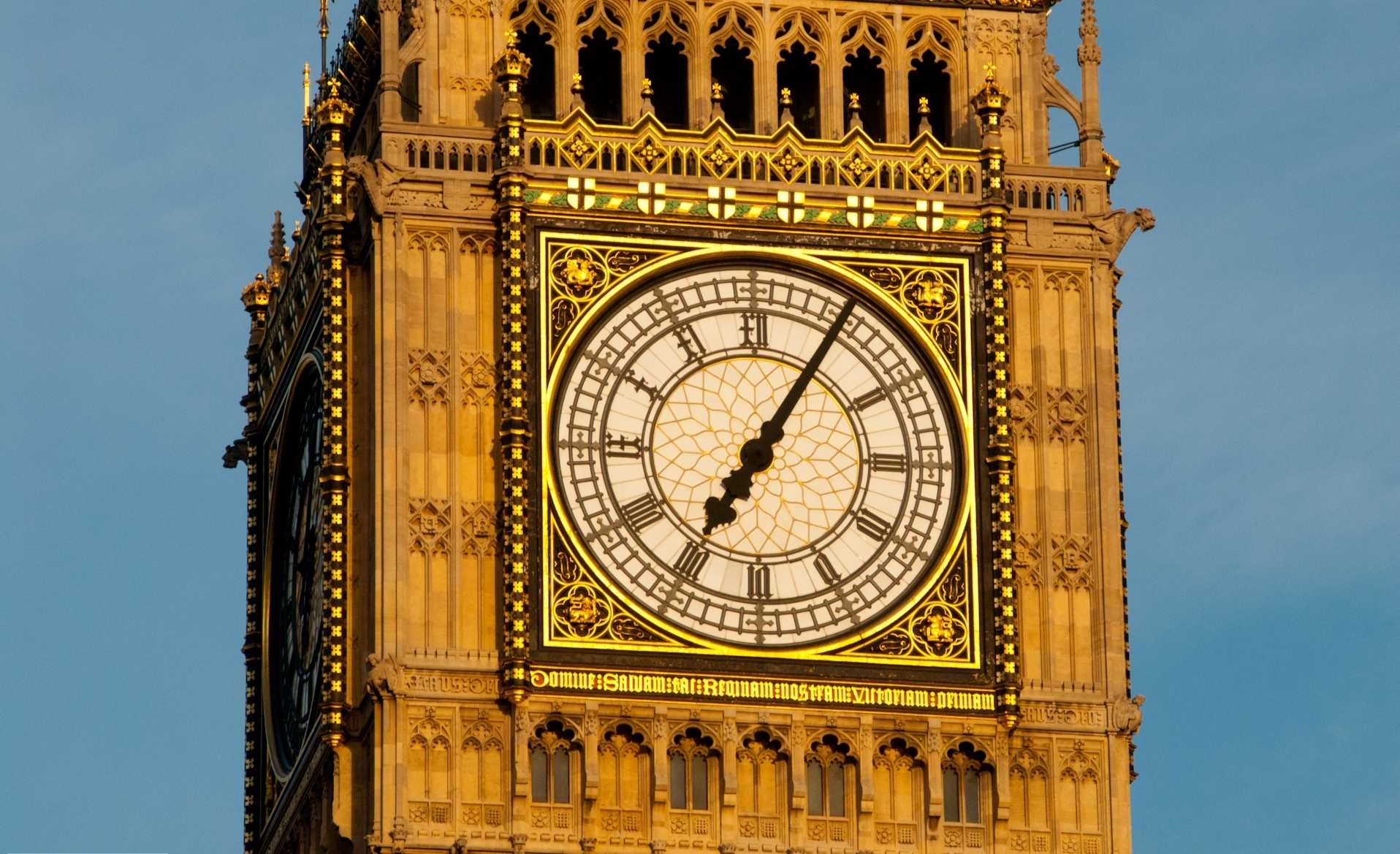
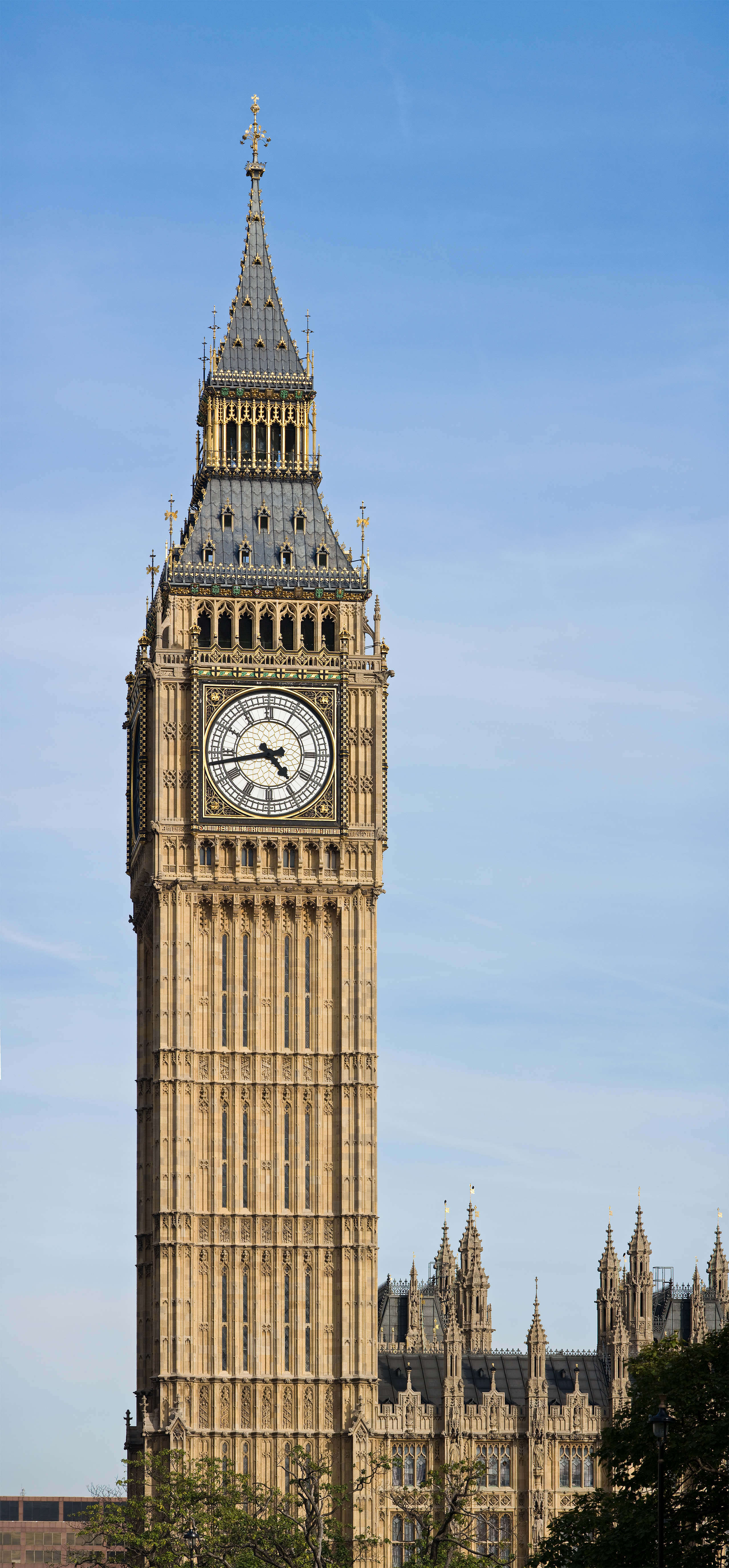
Of course I didn’t actually go up Big Ben. For as we Londoners are so fond of telling everyone who mentions the BB words, “Big Ben” is not actually the name of the bell tower at all – rather the tower is now officially titled “Elizabeth Tower”, a title bestowed upon it only last year in celebration of HRH Queen Elizabeth II’s Diamond Jubilee. “Big Ben”, meanwhile, is the name of the massive bell which sits atop the tower and rings out across Westminster at every quarter past, to, on and half past the hour. And having stood right next to it today as it bonged out the hour at midday, I can confirm that it is both very big and very, VERY loud!
big ben cropped

Clock_Tower_-_Palace_of_Westminster,_London_-_September_2006-2The Tower itself was an innovative new feature of the Palace of Westminster when it was redesigned by architect Charles Barry (who also designed Highclere Castle, none other than the real Downton Abbey for those Downton fans amongst you) following a great fire which destroyed the original Parliament building in 1834. For the tower itself, Barry looked to Augustus Pugin for assistance, an expert on the Gothic revival style of architecture, the likes of which has become characteristic of the Palace of Westminster and makes the finished complex look far older than it actually is. The tower went up slowly – it took some 16 years to build to its full 315 feet before finally being completed in 1859.

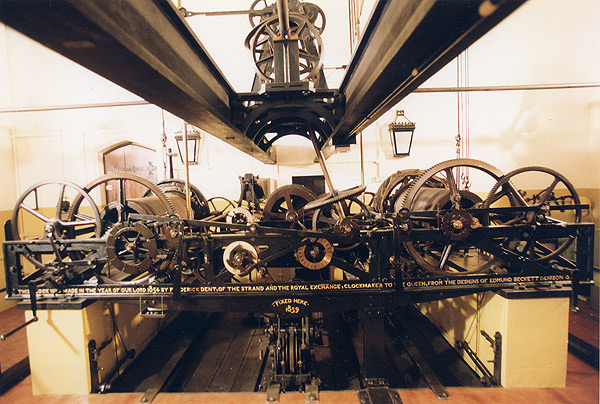
As for Big Ben and the clock itself, when this was designed it was fashioned to be the best of its kind and surpass all clocks like it around the world. And for a time, it did so (it’s still the 3rd tallest free-standing clock tower in the world, and probably the most famous). Designed by a barrister, no less, Edmund Beckett Denison, together with George Airy, Astronomer Royal, and constructed by Edward John Dent, the clock was a feat of engineering for the time, not least because it was designed to be within a second’s accuracy at all times, despite the fact that up in the tower, the clock faces are exposed to such a battering from the elements. Without getting too techy (largely because I don’t understand the technology all that well) the clock consists of various counterweights which move up and down the full height of the tower, which in turn power the clock faces and the various hammers which create the clock’s characteristic bong every 15 minutes. The clock needs to be wound up 3 times a week, and various clock winders are always on hand for the job, although electricity today does much of what it once took an army of men to achieve through brute strength alone.

The stairs looking up (a little daunting) (Parliamentary copyright images are reproduced with the permission of Parliament)
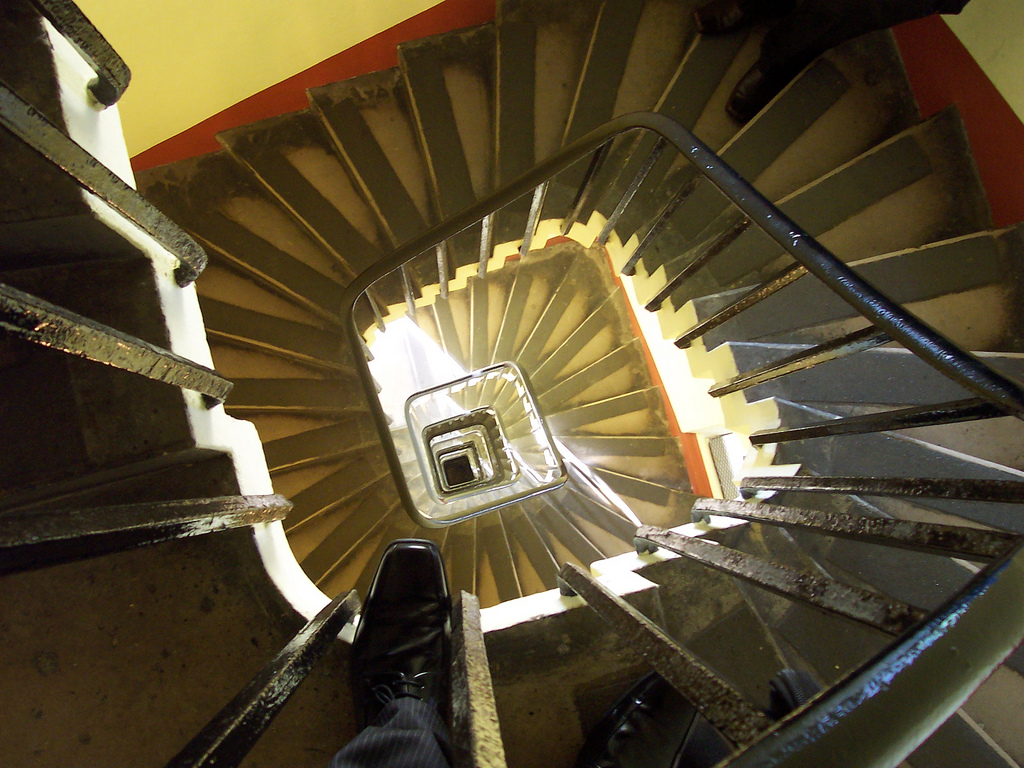
The stairs looking up (a little daunting) (Parliamentary copyright images are reproduced with the permission of Parliament)

Stairs looking down (not good for those with vertigo) (Parliamentary copyright images are reproduced with the permission of Parliament)
Stairs looking down (not good for those with vertigo) (Parliamentary copyright images are reproduced with the permission of Parliament)

The machinery of the clock (Parliamentary copyright images are reproduced with the permission of Parliament)

The machinery of the clock (Parliamentary copyright images are reproduced with the permission of Parliament)

The clock is an incredible marvel to bestow, and all the more so from up close. Getting there wasn’t exactly easy. Entering Portcullis House, the new modern entrance to Parliament, we had to go through airport style security before being taken down stylish escalators, descending into the earth which in turn led us to a passage taking us directly beneath Parliament Square and into the grounds of Parliament itself. From there, the starkly modern architecture of Portcullis house metamorphosed rapidly back in time to the iconic gothic decoration of the Palace of Westminster. Soon reaching the small door of the tower, our descent began up all 334 stone spiral steps to the top of the tower.

View from the Tower

View from the Tower

This wasn’t as bad as it sounded. Luckily we were allowed to stop roughly one third of the way up for a very informative talk about the tower’s history from tour guide Catherine Moss, before making the final trek, first up to watch the machinery of the clock itself before continuing to see the infamous bells. Well timed as ever, our visit to see the huge cogs and wires of the clock coincided with a quarter to midday, enabling us to see all of the still-original machinery in action, but missing none of the action on the hour itself. This great joy was reserved for the upper platform, above the clock-face, where we emerged just before 12 to stand by the incredibly large Big Ben bell as the clock struck 12.

A quarter bell (Parliamentary copyright images are reproduced with the permission of Parliament)

A quarter bell (Parliamentary copyright images are reproduced with the permission of Parliament)

Big Ben from above (Parliamentary copyright images are reproduced with the permission of Parliament)

Big Ben from above (Parliamentary copyright images are reproduced with the permission of Parliament)

Big Ben on the right (Parliamentary copyright images are reproduced with the permission of Parliament)

Big Ben on the right (Parliamentary copyright images are reproduced with the permission of Parliament)

The chime of the tower, with its melodic 20-chime sequence played by the four Quarter bells, followed by the deep bong of Big Ben itself, is a sound which is well known to us Londoners, and has particular significance every 31 December as it heralds in the new year to the accompaniment of a spectacular firework display. But being up close to the bells as they played out this celebrated tune was nothing short of incredible. The vibration which went through our bodies made for a totally immersive experience (we were given ear plugs I should note), and I must admit to being ever so slightly emotional as I saw, and felt, the familiar chime of Big Ben in action but centimetres away (luckily the wind was so strong that if I had been caused to shed a tear or two – and I’m not saying I did! – the wind disguised it). The chime, by the way, is apparently a variation on a phrase from Handel’s Messiah – the part shortly after the Alleluia chorus.
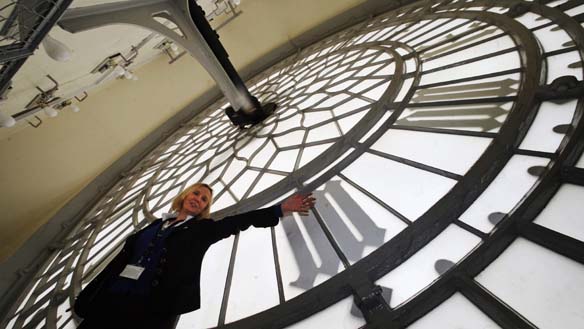
Our tour guide, Catherine Moss (AP Photo)
Our tour guide, Catherine Moss (AP Photo)

The famous clock face (Parliamentary copyright images are reproduced with the permission of Parliament)

The famous clock face (Parliamentary copyright images are reproduced with the permission of Parliament)

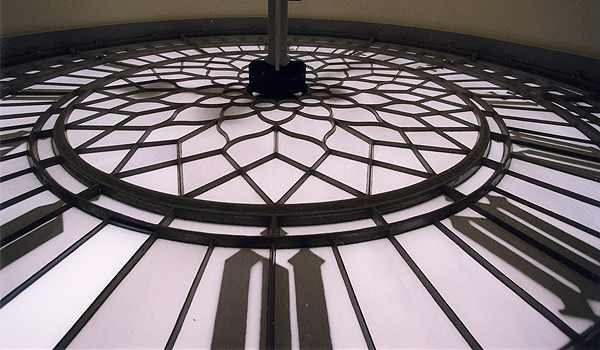
The clock face (Parliamentary copyright images are reproduced with the permission of Parliament)

The clock face (Parliamentary copyright images are reproduced with the permission of Parliament)

After embracing the great bong of Big Ben and the various Quarter bells in all their mighty fortitude, the final stop of the tour was to head down a level to the most prominent feature of the tower – the four sided clock face. We were able to stand just behind the world-famous clock faces, and see the now fantastically environmentally friendly long-life bulbs, especially designed to light up the huge clock faces with maximum efficiency by Philips, which are placed evenly behind the huge stained glass clock faces. Yet again, this was quite a marvel to behold, not least being able to appreciate just how huge these clock faces really are.

So heading back down the tower, perhaps a little more deaf than when we came up, I descended feeling extraordinarily lucky – access to Big Ben isn’t easy – you need to organise a tour through your local MP, although once organised, the trip is free. But that aside, I would have paid good money to enjoy this exposure to one of the country’s most loved national icons at close quarters, not least to learn the fascinating history of the tower, and gain an understanding of just how that all important national timekeeper keeps ticking onwards day after day.
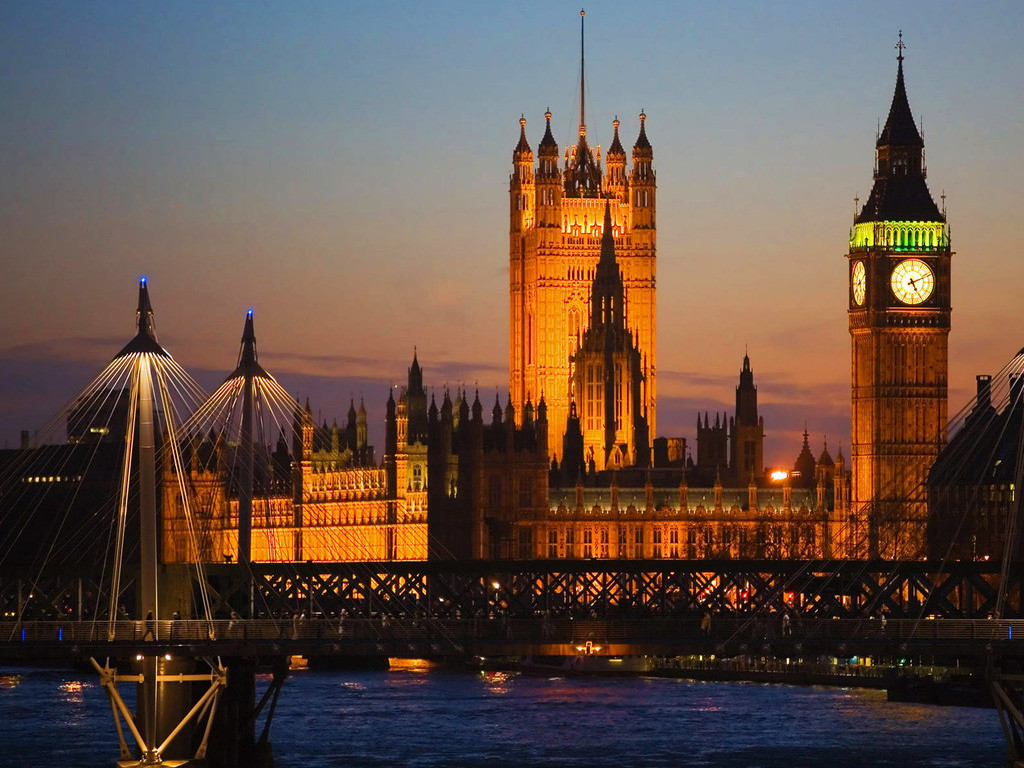
Big Ben and the House of Parliament

Details on how to visit Big Ben can be found on the Parliament website.

Happy Half Birthday to Me!

Call me indulgent if you will, but being a summer baby, a pursuer of all things Summertime, by the time I get to the beginning of February, I am usually pretty fed up. Months of gloom, of dark evenings, and even darker mornings, freezing temperatures and ages still to go until those much yearned for summer holidays. And it’s the same every year, which is precisely why, as a young boy, I decided to brighten up this time of gloom by inserting a celebration bang in the middle of the winter gloom – my half birthday! And today is that glorious day, the day when, despite it’s being still 6 months until the always much anticipated date of my birth, I have a little mid-winter celebration, and find another excuse to indulge.

My half birthday cake!

My half birthday cake!

It’s true that my friends and family have always considered my propensity to celebrate a half-birthday to be a little eccentric to say the least, but I was particularly interested to learn, from a quick search for images on google, that I am not the only one who likes to use this 6 months marker as an excuse to celebrate when our full birthdays seem so far away. And why not? Of 365 days of the year, is it not right that we can feel at least half as special on one extra day as we do on the one day which we can call our birthday?

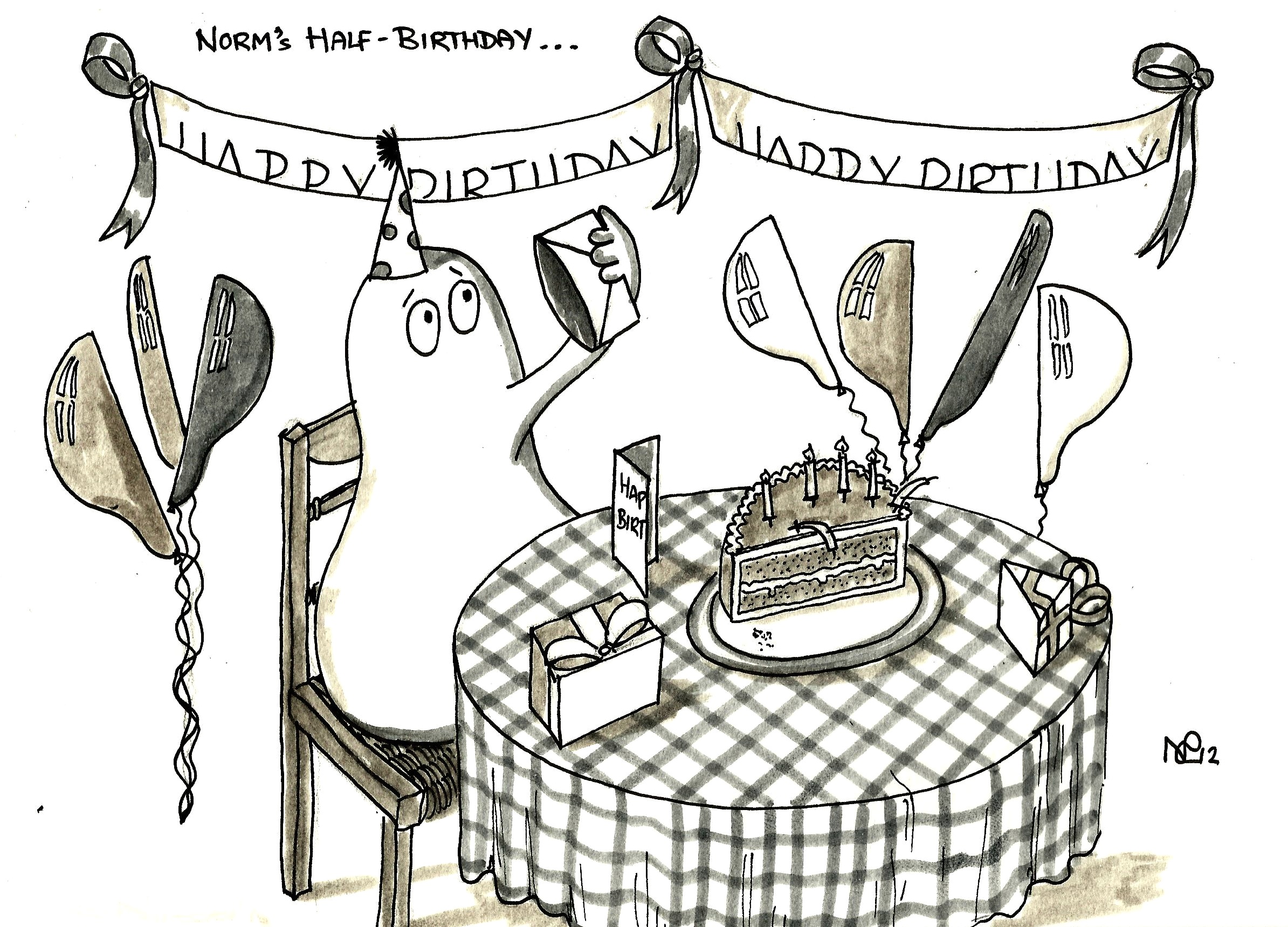
So in recognition of the auspicious day, I merrily headed out to Marks and Spencer to buy myself a cake which I then proceeded to cut in half (I’m not overly sure what I will do with the other half yet… something tells me it won’t keep until next year). In the meantime, I’m not the only one celebrating. Here is Norm celebrating his half birthday, with a half cake, half balloons and a half birthday card to boot. Just a shame that without the other half of that card, he has no idea who it was from!

Norm's Half Birthday - Norm looks for the other half of his card (2012 © Nicholas de Lacy-Brown)

Norm’s Half Birthday – Norm looks for the other half of his card (2012 © Nicholas de Lacy-Brown)

Wishing you all a fantastic weekend.

Magnificently Miserable: Les Misérables the Movie

You know a film has been good when you have to cower as the cinema lights come up at the end for fear the audience will catch sight of your puffy eyes and tear-stained cheeks, when the emotional exhaustion has left you depleted and dehydrated, and when you don’t want to leave until the music from the credits has stopped rolling. Tom Hooper’s new movie of Les Misérables must have been exceptionally good, because as the credits rolled, I suffered from all three symptoms unreservedly.

Almost from the moment Schonberg’s rapturous score began to play, the hairs on my arms stood erect, and my tear glands began to tingle. By Ann Hathaway’s incredibly performance of I dreamed a dream as Fantine, they were in full flow. But the question remains, was my intense emotional reaction and great enjoyment of this Les Misérables a reaction to the film, or just the score which has enchanted audiences for years?

Hugh Jackman is incredibly good as Jean Valjean

Hugh Jackman is incredibly good as Jean Valjean

The poster image - Isabelle Allen as the young Cosette

The poster image – Isabelle Allen as the young Cosette

Amanda Seyfried as older Cosette and Eddie Redmayne as Marius

Amanda Seyfried as older Cosette and Eddie Redmayne as Marius

Undoubtedly both factored hand in hand. Nothing quite beats the power of the full cast singing in harmony together on a theatre stage, such as the performance of One More Day at the end of Act I, as the revolutionaries prepare for battle, and Jean Valjean prepares to rescue Marius and protect Cosette. The intensity and intimacy of the theatrical production cannot in fact be beaten in many respects, and has arguably reduced me to greater effluvia of tears than the film. But what the movie brings us is what only a movie can – Les Mis on a grand scale, with an ambitious backdrop of early 19th century Paris which could never be attempted by even the most significant of theatre stages. The opening scene of the movie is, for example, a stunning opener, as Hugh Jackman as the much wronged Jean Valjean, applies every last bit of energy into hauling a great big warship into a French port, while, of course, singing about the hardship he has endured. The scale of this immense marine backdrop was awe-inspiring and in union with the dramatic score made for a spine-tingling start to the film.

The brilliant Anne Hathaway as Fantine

The brilliant Anne Hathaway as Fantine

However there are two reasons why this adaptation of Les Misérables is, in my opinion, a real winner, over and above the already much loved and highly emotive Schonberg and Boublil score. The first is the cast. So often, when a musical is Hollywood-ised, funding is secured only by the promise of a super-famous cast of actors who are nonetheless unskilled in their musical ability. This is (apart from perhaps one exception) not the case here. I would never have guessed that X-Men’s Hugh Jackman would be such a good singer, with a fine tenor voice and demonstrating great skill, particularly in songs such as God on High with its octave leaps and challenging high notes. He also demonstrated himself to be a fine and versatile actor, oozing the moral strength and fortitude which is central to the character of the wronged yet self-sacrificing Jean Valjean. Equally brilliant was Anne Hathaway, who I’ve only really known from the Princess Diaries, The Devil Wears Prada and other light-hearted fair. Who would have known that she could act and sing with such incredible intensity? Her performance of I dreamed a dream was so brilliant, so natural, that hopefully, thank the lord, the horrendous massacre inflicted upon it worldwide by Susan Boyle will no longer be the peoples’ primary association with this musical masterpiece.

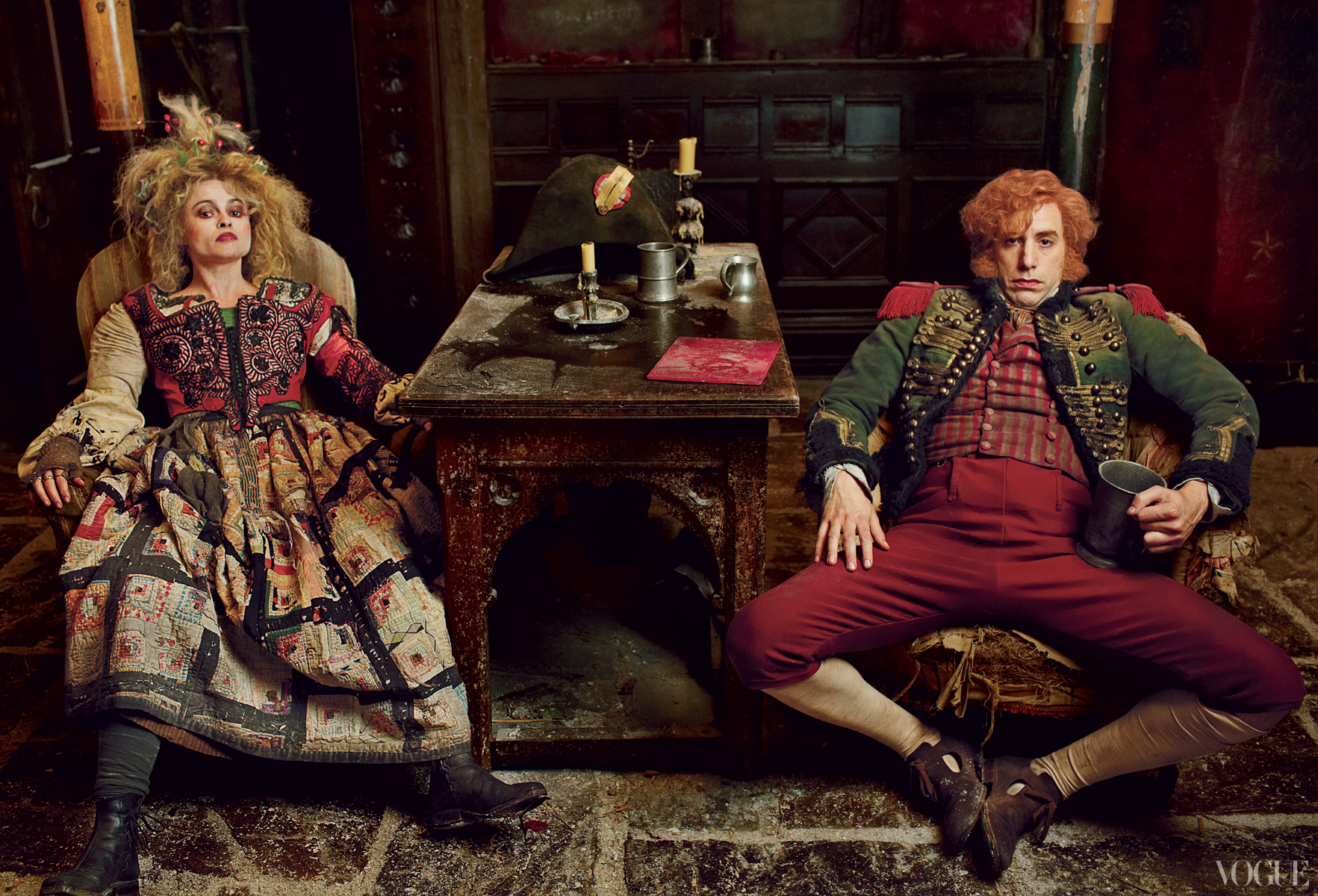
Thénardier and his wife (Helena Bonham Carter and Sacha Baron Cohen)

Thénardier and his wife (Helena Bonham Carter and Sacha Baron Cohen)

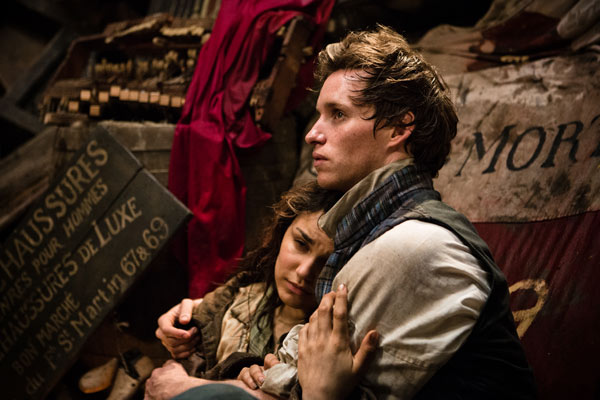
Eddie Redmayne and Samantha Barks as Marius and Éponine

Eddie Redmayne and Samantha Barks as Marius and Éponine

Samantha Barks as Éponine

Samantha Barks as Éponine

I also loved Eddie Redmayne as Marius, showing a greater warmth and depth of character than he did in last year’s BBC adaptation of Sebastian Faulkes’ Birdsong, and also sporting an excellent singing voice. Mention should also go to the lesser known but equally good Samantha Barks who reprised her stage role as Éponine, Aaron Tveit as a very intense Enjolras, spurring on the young thinkers to revolution, little Daniel Huttlestore as a brilliantly charismatic Gavroche, and of course the ever entertaining Sacha Baron Cohen and Helena Bonham Carter, the double-barrelled twosome, who made the perfect Monsieur and Madame Thenardier, the duplicitous inn-keepers who lend much needed light relief to an otherwise heavy emotional tale.

Helena Bonham Carter as the outrageous Madame Thénardier

Helena Bonham Carter as the outrageous Madame Thénardier

My one reservation, and the exception I allude to above, is for Russell Crowe as Inspector Javert. While he certainly looked the part as the stern, restless, duty-bound inspector who makes it his life’s work to chase Jean Valjean who missed his parole and eluded him ever since, this is a musical after all, and while Crowe can hold a tune, his voice was way too weak to install the character with the musical strength and baritone depth that is required. The consequence was a voice that was strained and tended to let the side down. But not so much as to take away from the otherwise remarkable work of this brilliantly constituted cast.

Russell Crowe as Javert

Russell Crowe as Javert

The second respect in which I think this film succeeded was in the very innovative camera work. Tom Hooper as director appears to favour close up shots of the characters, which made for a particularly intense audience to character engagement during the pivotal moments of the film, such as Fantine singing I dreamed a dream and Marius singing Empty Chairs at Empty Tables (another superb performance). The camera lens almost appeared to give the effect of a convex focus, giving a very sharp focus on the character which then tapered off into a blurrier backdrop. The effect was intense, engaging and innovatively arty. It gave both a sense of realism and theatre, through which the very musical tenor of this film did not feel out of place.

Marius joins the revolution

Marius joins the revolution

Musicals converted into movies are not always successful. Les Misérables is clearly an exception to the rule. It’s a must of the 2013 cinematic season and I urge you to rush along to the cinemas as soon as you can. But don’t forget your Kleenex…

Season’s Greetings from The Daily Norm!

This is a very small post with a big Christmas wish for all readers of The Daily Norm and everyone in the blogosphere. The Daily Norm has been far from “daily” in the last week – a personal tragedy in my family has meant that my attentions have, sadly, been turned to other things. However in writing this post, I am hoping that across the world, a merry Christmas has been spent by the great majority, while wishing that for all of us, the New Year will bring with it happier, successful and fulfilling times.

Also, for those Norm fans amongst you, Normy’s adventures through the 12 Days of Christmas will soon return, as well as a host of festive foodie posts and my selection of my favourite photos from 2012. See you then, and in the meantime, Season’s Greetings and very best wishes to all.

Santa Norm (2011, acrylic on canvas) © Nicholas de Lacy-Brown

Santa Norm (2011, acrylic on canvas) © Nicholas de Lacy-Brown

It’s beginning to feel a lot like Christmas – Part II

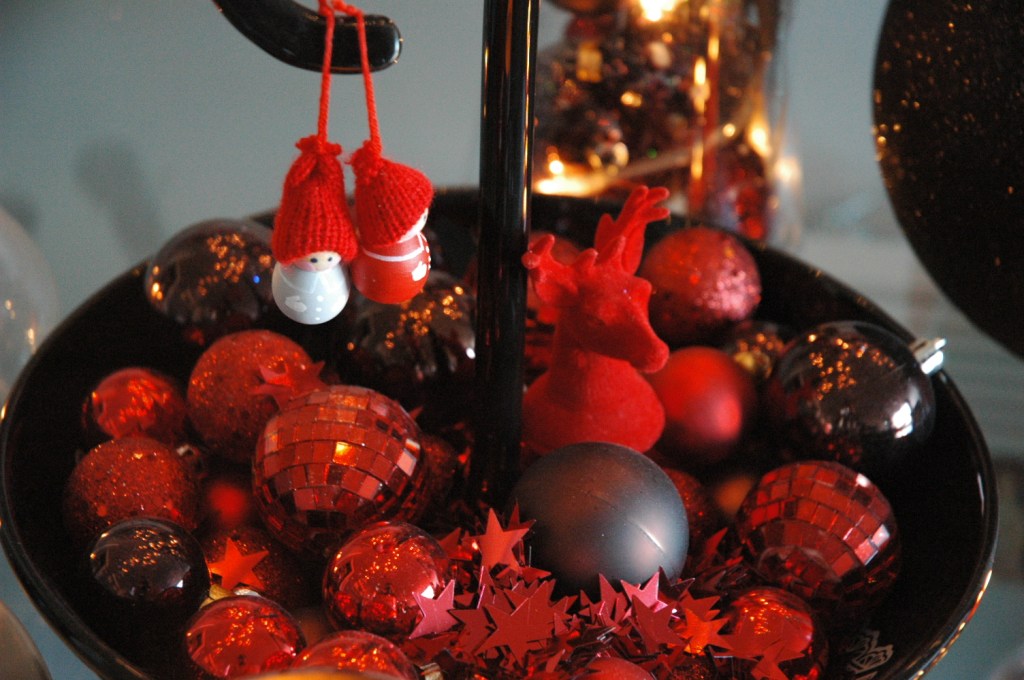
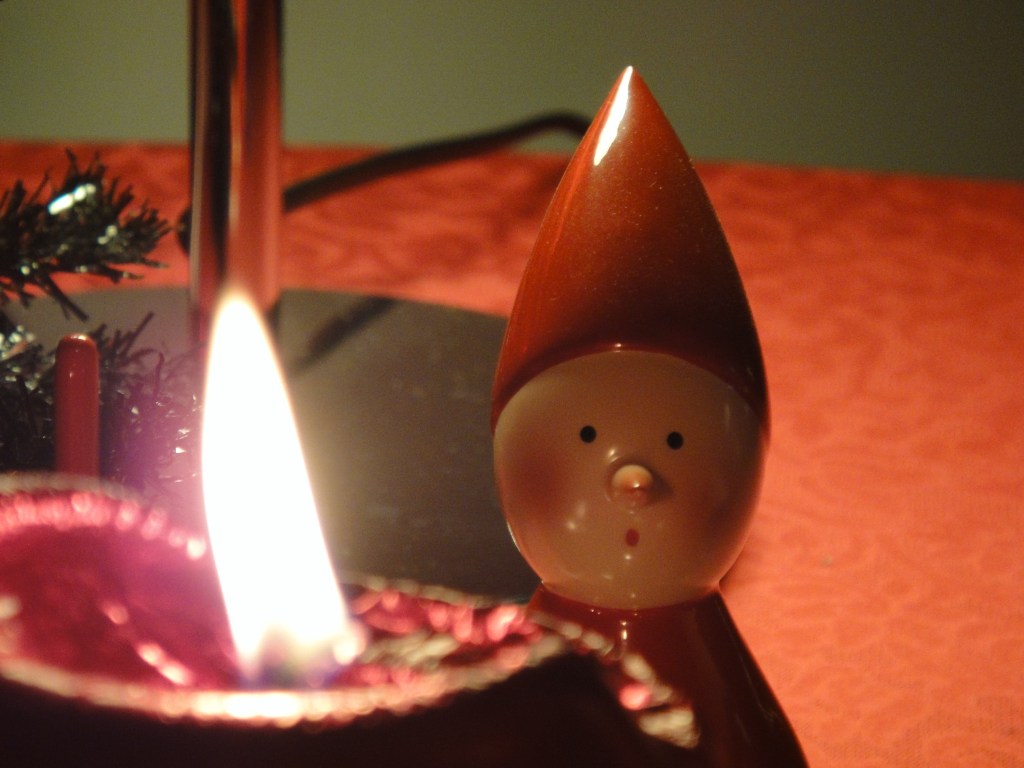
Christmas isn’t just about the festive spirit outside of doors, although as I demonstrated yesterday, in London, the tangible celebration of Christmas evident all around certainly helps to get one in the mood. But it’s indoors, in the home, that the real heart of Christmas beats a unified rhythm with the yuletide spirit, and personally, I cannot get enough of the constant reinvention of my home in its Christmas guise, from the comforting glow of my Christmas trees at the break of a still dark winter’s morning, and the spirited twinkling dance of fairy lights to the jig of Christmas pop playing on the radio, to the reflective flicker of candlelight as the day draws to a close, and my home is lit exclusively by the staccato movement of my tree lights and the red warming glow of my candles lit in almost every room.

DSC_0028DSC_0009

In fact so fervent is our love for the ambience given off within our Christmas-decked home that my partner and I have a moment, just before going to bed, when we play some choral carols or, even better, monastery chants, emulating a Christmas straight from medieval times, and with that soothing soundtrack, set about sitting, calmly in the subdued light of our Christmas trees, watching the lights and sparkle dance and flicker around the room. It’s almost epiphanaic to meditate amongst such warm Christmas tranquillity, and is almost certainly my favourite time of the day.

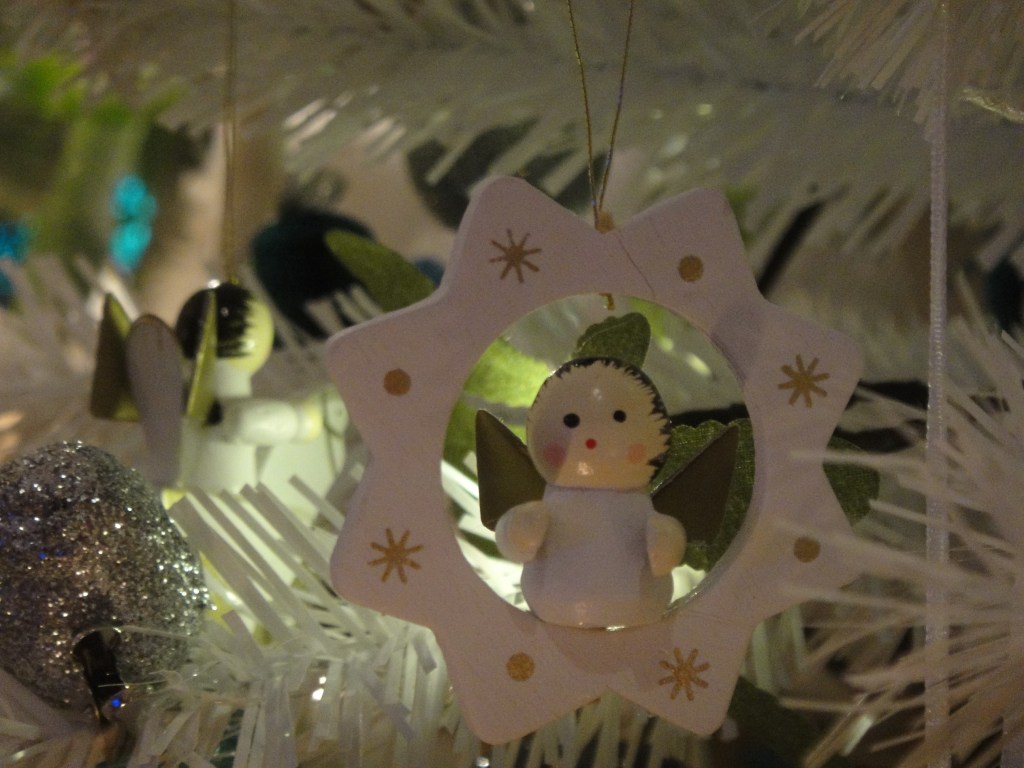
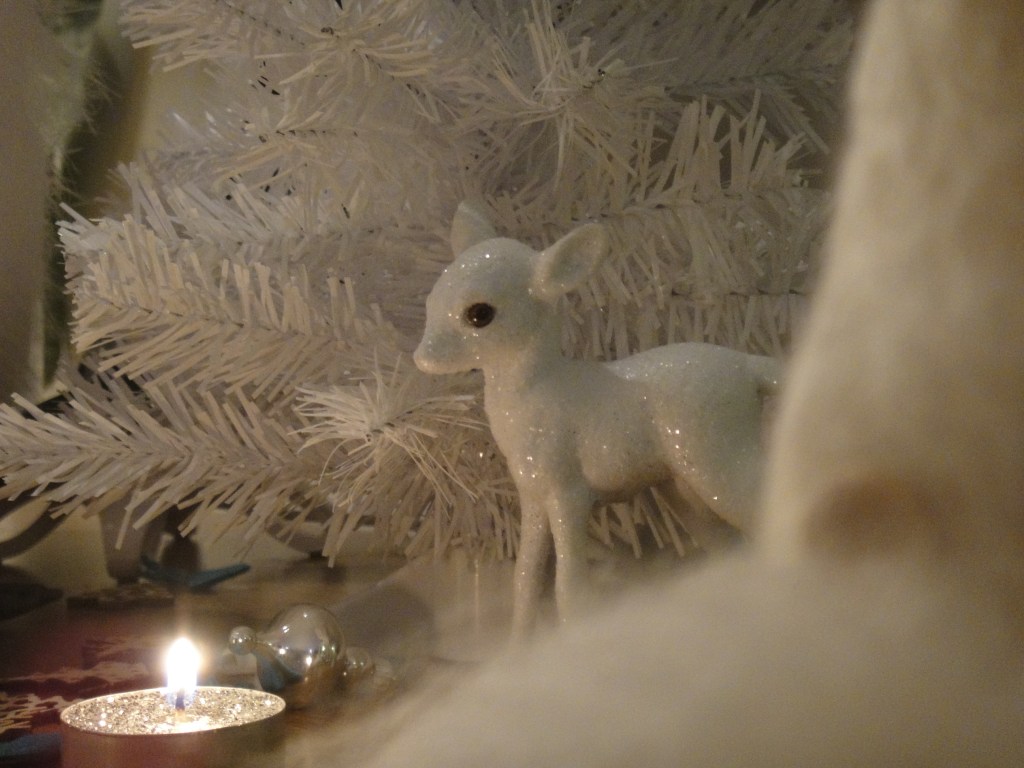
Now I’ve already shown you my Christmas decorations in two posts a few weeks back (links below), but this post is, I suppose, further reflections on a theme – my almost poetic interaction with the yuletide spirit manifesting all around me both in words and pictures. Moving to the latter, posted here are some further glimpses of my Christmas expression around my home. I start with my Scandinavian forest, an oasis of calm, an installation of little small Christmas trees intermingled with cute forest animals – I’ve noticed that this simple, white Scandinavian style has really hit it off in London this year with all its woods, and whites and an emphasis on nature. I love nothing more than lighting these beautiful sparkling silver tealights amidst my forest, creating in so doing something akin to a magical Narnia-like wonderland which comes alive under the candles’ gentle flickering.

DSC04468 DSC04471 DSC04460 DSC04465

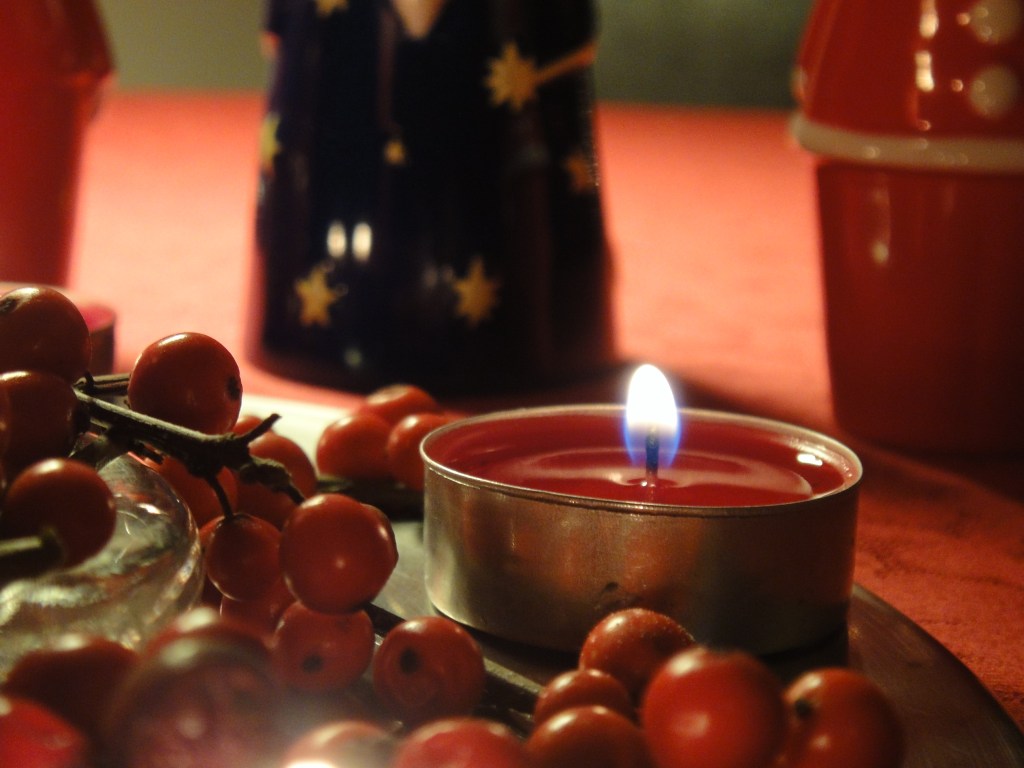
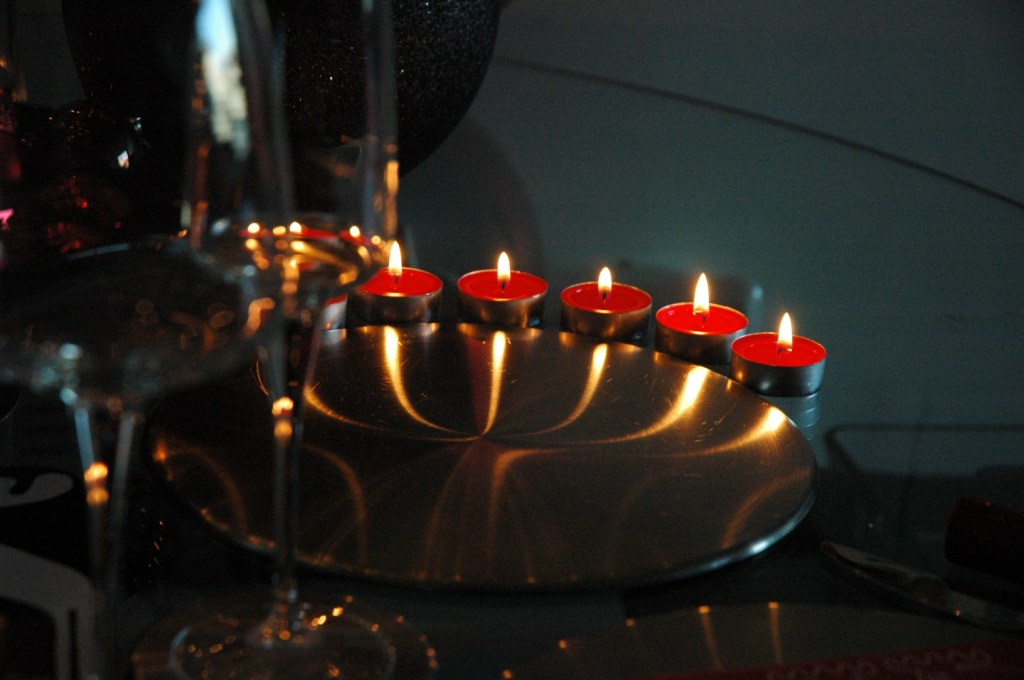
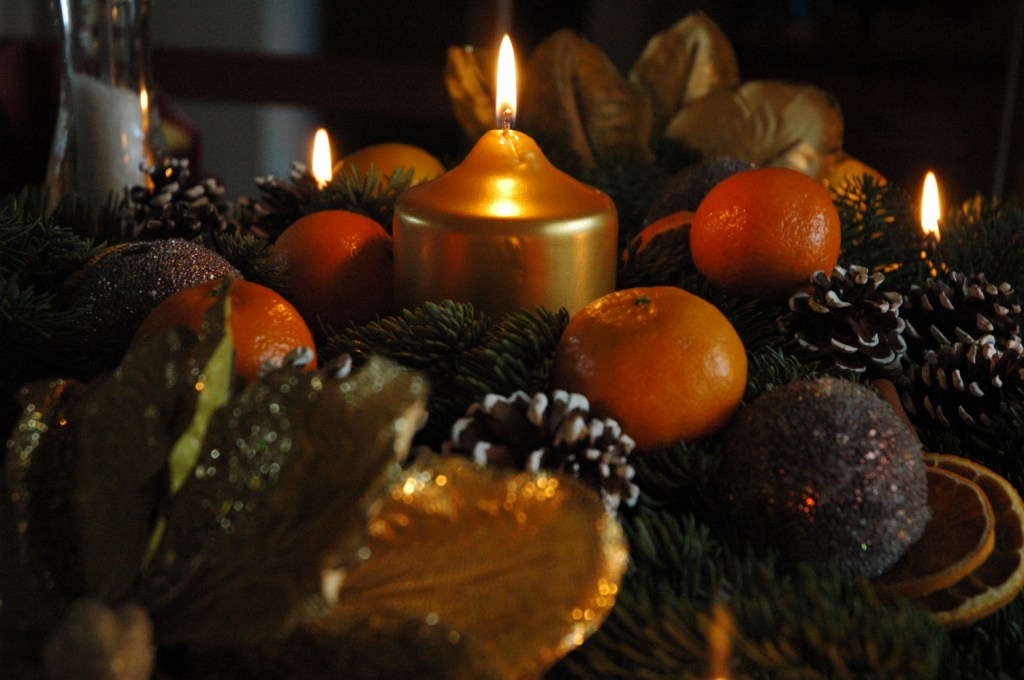
Talking of candles, one of my favourite parts of Christmas has to be decorating the table, whether it be for the big event on Christmas day, or for a small meal in the run up to the 25th. I usually incorporate as much foliage as I can, including oranges and pine trees, red berries and fir cones, and then set amongst the foliage many candles of different shapes and sizes. Then I like to leave the candles to burn gradually down, lighting up the foliage around them with a warming winter glow.

DSC05978 DSC_0003 DSC_0010 DSC_0038 DSC_0013 DSC05974

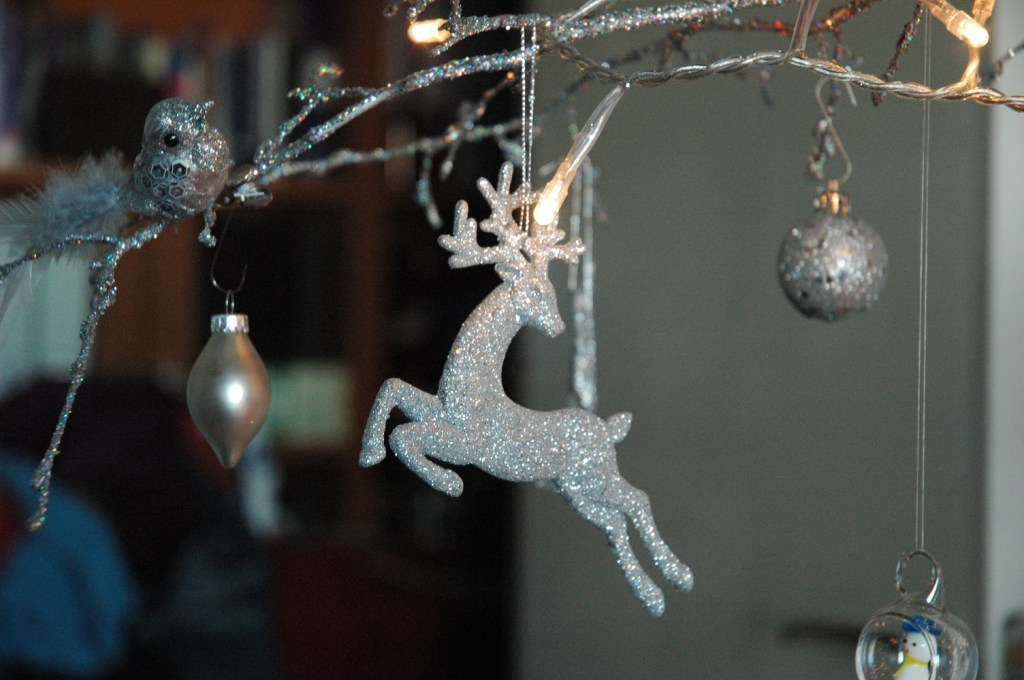
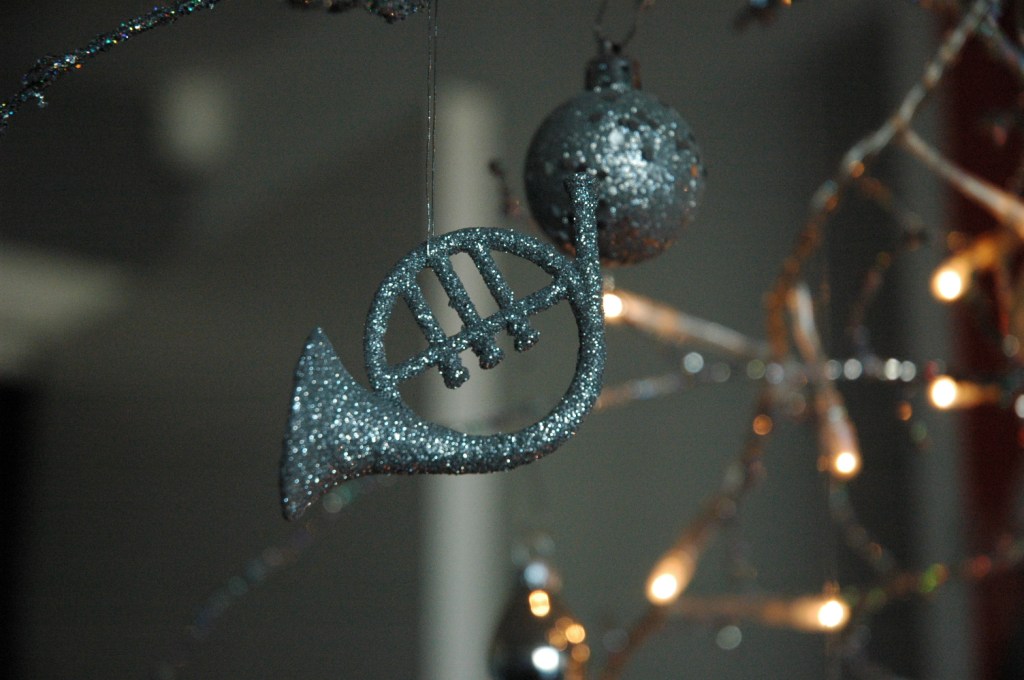
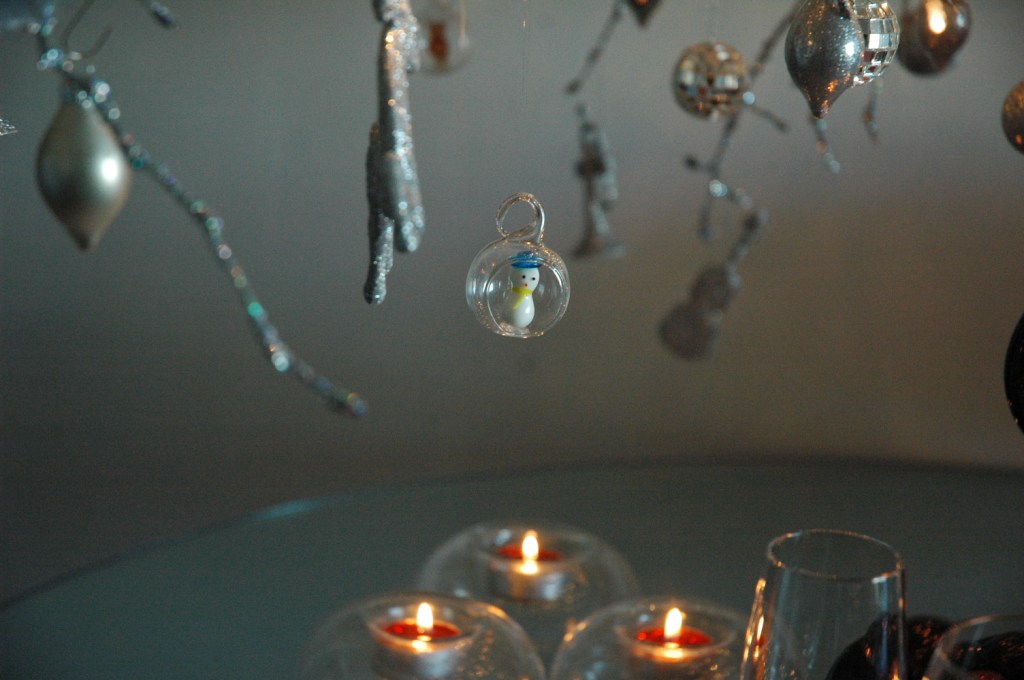
Moving on to more of my decorations, here is another homage to the Scandinavian Christmas, where the fusion of a glitter covered tree hung with delicate glass baubles appears to emulate droplets of ice hanging in a snow-covered forest.

DSC_0006 DSC_0007 DSC_0008 DSC_0004

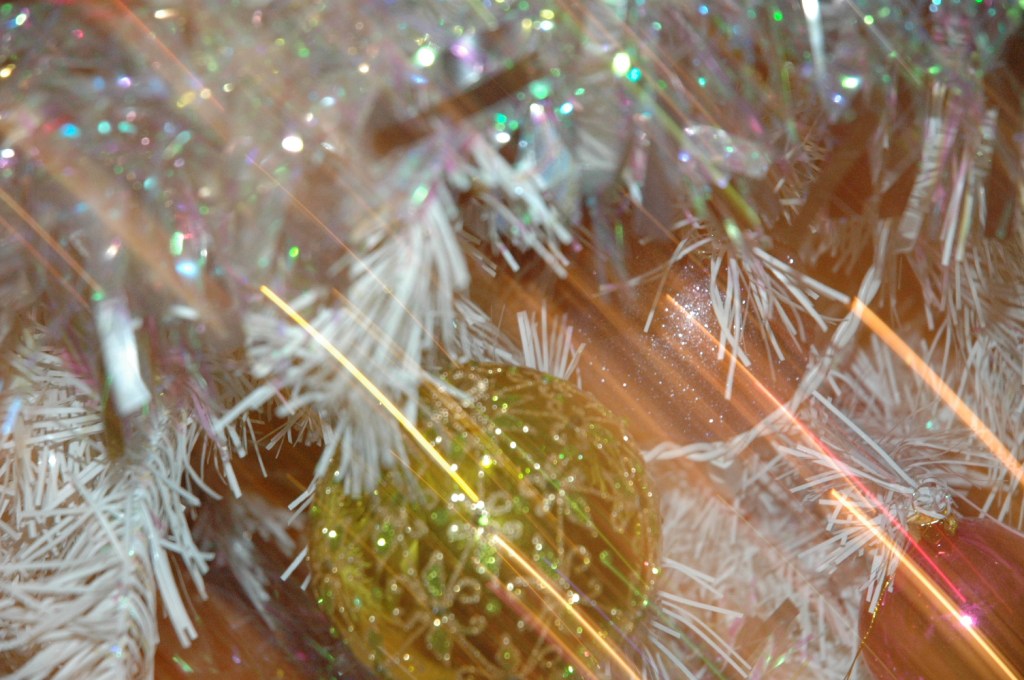
I also love these photos of my Christmas lights out of focus. One of the great advantages, to my mind, of being dreadfully short sighted (and there aren’t many) is that if you look at a tree having taken off your glasses, the lights blur and intermingle with the sparkle from the nearby tinsel and glittery baubles – it creates a blur of light which is sensational to the eyes, and these photos almost replicate the effect.

DSC_0005 Blur DSC_0011

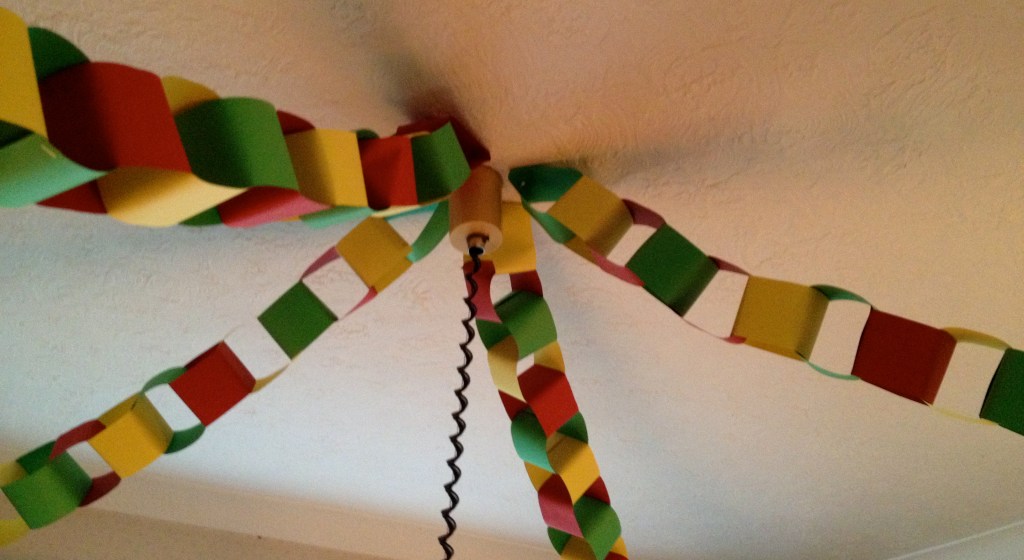
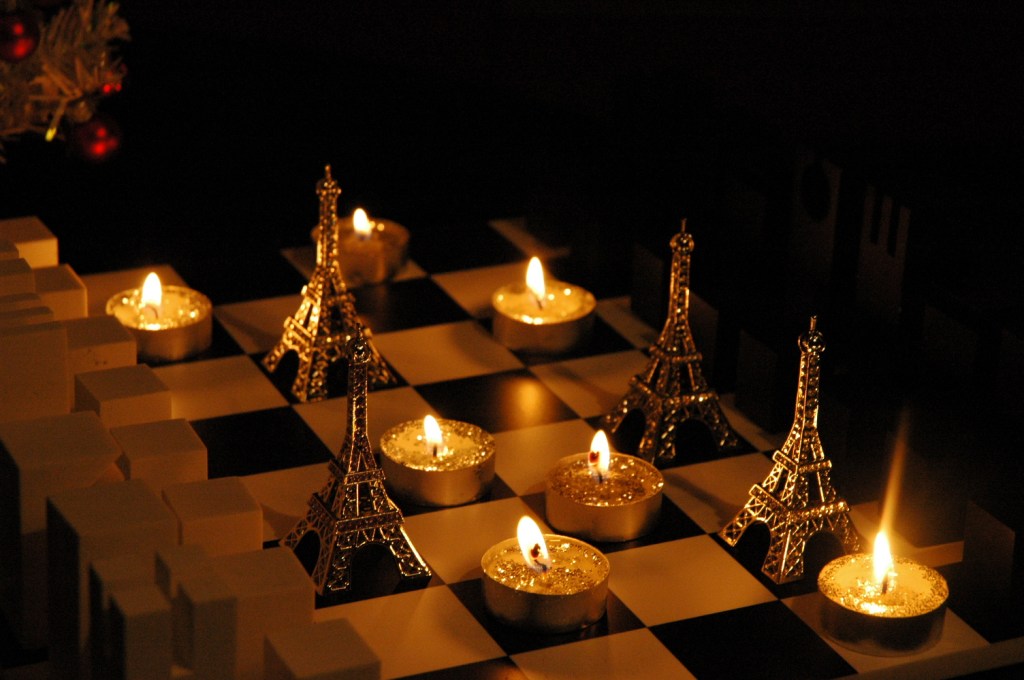
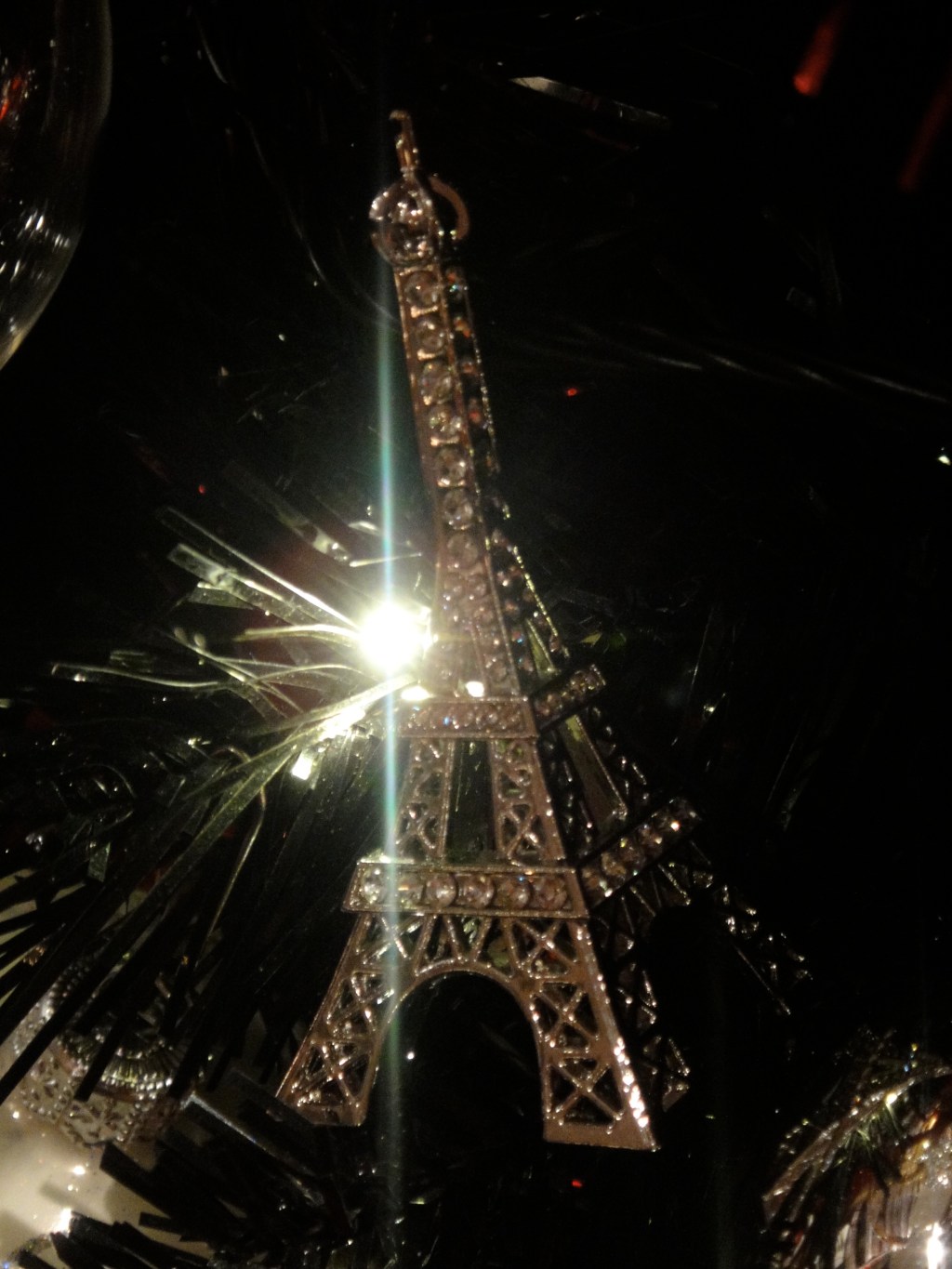
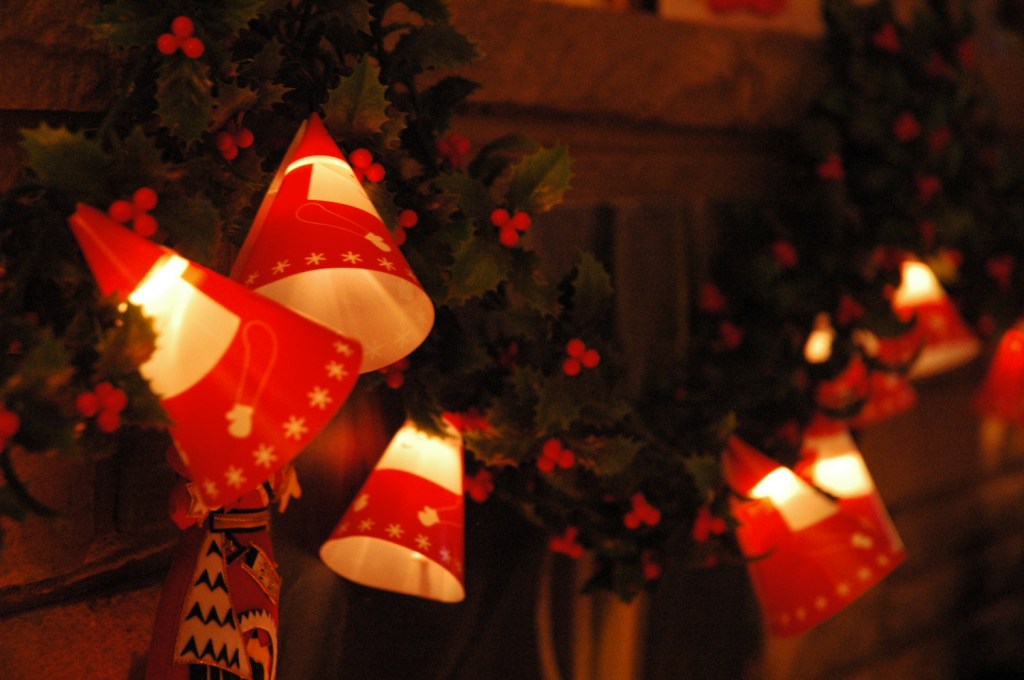
Finally, I close my post with a selection of miscellaneous shots, from the lights upon the fireplace of my family home where I will be spending Christmas this year, to the oversized paperchains which my partner, mother and I were making over the weekend (they’re uber fashionable this year, we hear). Check out too the understated extravagance of my little diamond-covered Eiffel towers (fake diamonds, sadly). London may arguably be the capital of Christmas, but there’s always room for a little Parisian glamour to compliment the excesses of the festive season.

IMG_2610 DSC_0037 DSC_0001 DSC_0101 DSC02399Righto, I’m off to share a moment with my Christmas trees now… until the next time, hope you’re enjoying the run up to Christmas!

It’s beginning to feel a lot like Christmas – Part I

It’s beginning to feel a lot like Christmas in London, which, as cities go, surely springs to mind as one of the most festive locations in which to spend the Christmas season. It is, after all, the city that brought us A Christmas Carol, and whose foggy streets, holly-trimmed Georgian town houses and fairy-light filled shopping streets fill Christmas cards across the globe, images which are synonymous with the festive season everywhere.

True, we don’t have many cinnamon-scented, mulled-wine quenched Christmas markets, gingerbread houses or ski slopes, and when we get snow, it does generally turn to grey mush within the hour, but what we do have is a series of super-festive ice rinks set amongst backdrops of picture-perfect architectural grandeur, huge trees filling our squares and besides our most important buildings, an almost guaranteed cold wintery climate, and shopping streets crammed full of shoppers from all over the world. It’s the very image of a contemporary Christmas. 

For we Londoners, 2012 has been an incredible year, for obvious reasons, but nothing quite tops the icing on the cake than a great festive season. I’m a working man, and my blog, as with my art, takes second place, sadly, in my day to day activities, and therefore I have been unable to go skating, to traipse around the shops for hours on end, nor to meander around the allegedly popular winter wonderland in Hyde Park. However, with what hours I have spared, I have noticed a tangible sparkle of festive feeling laying upon every facet of London like a sprinkle of freshly laid snow. And I’m loving it. So, I decided to share a few of my haphazardly shot photos and Christmassy experiences so that you too can share in the festive spirit which is cursing through the city.

The lights on Regent Street

The lights on Regent Street

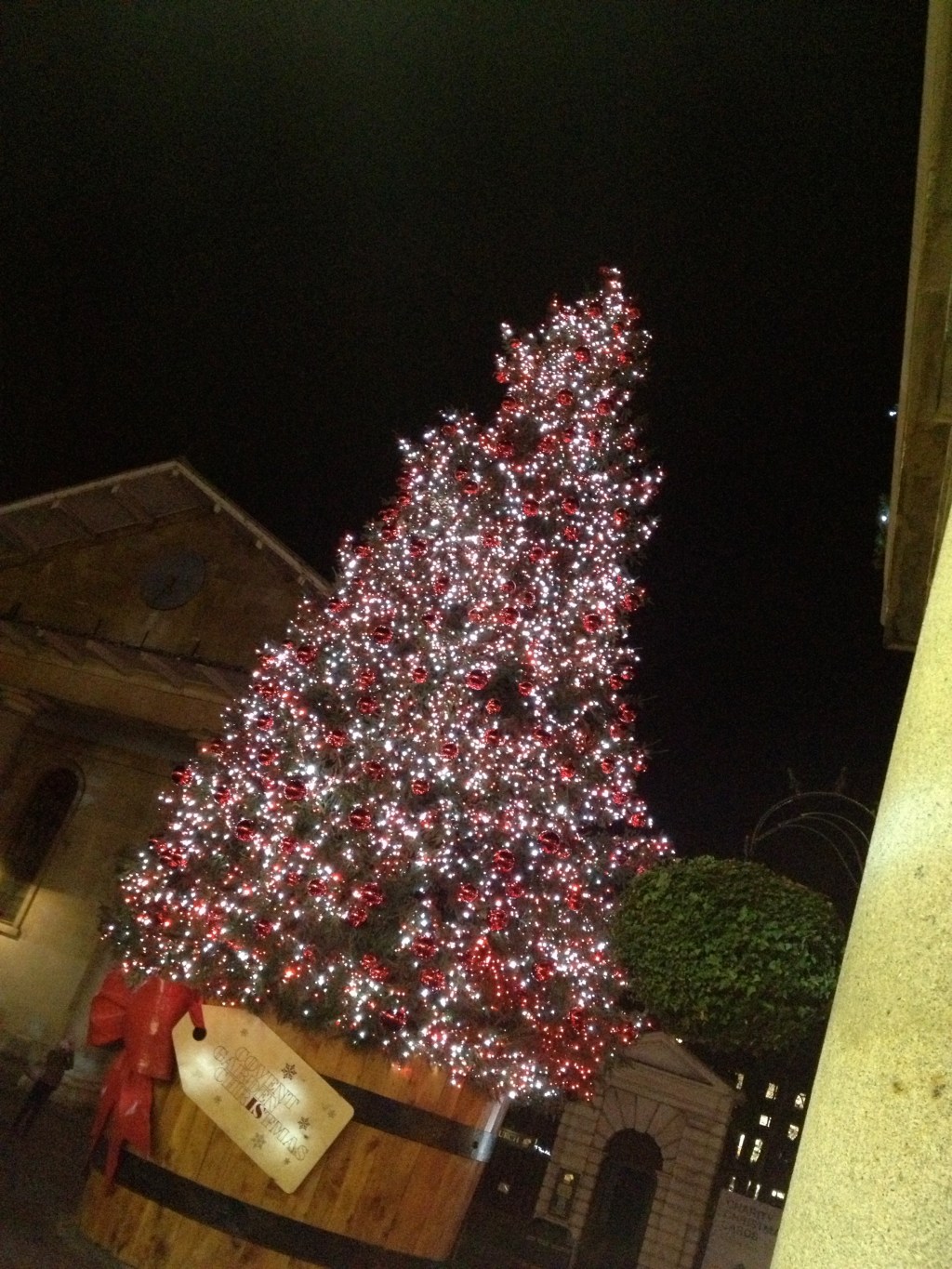
In its shopping, London is practically unrivalled, and for Christmas splendour, the shopping districts and large department stores know how to lay on a show. The other night I headed to Covent Garden market which, despite being almost paralysed by cold, sparkled like a finely polished diamond. Inside the giant market, huge oversized baubles hang intermittently between giant disco balls and the permanent elegant iron lighting. Meanwhile, in the market square is a huge tree in an even bigger pot, while besides it, mulled wine stalls and hoards of shoppers help to make this one of the most festive areas of London.

Covent Garden market

Covent Garden market

Covent Garden's tree

Covent Garden’s tree

IMG_2593

As for me, well I met my dear friend Celia for dinner not far from the market – we headed to the Green Man and French Horn in St Martins Lane – an intimate french affair in the setting of an old pub, with low cosy lighting and some pretty hearty food – I had a feather-blade beef which almost melted away on my tongue when washed down with its rich wine sauce and our accompanying bottle of vin.

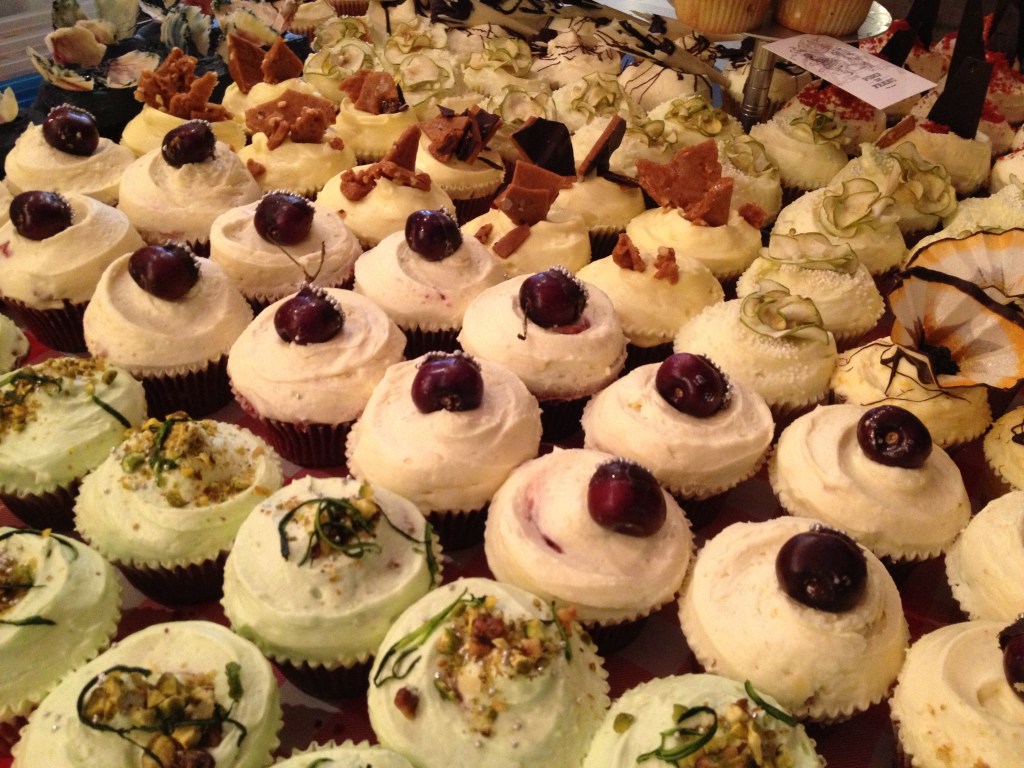
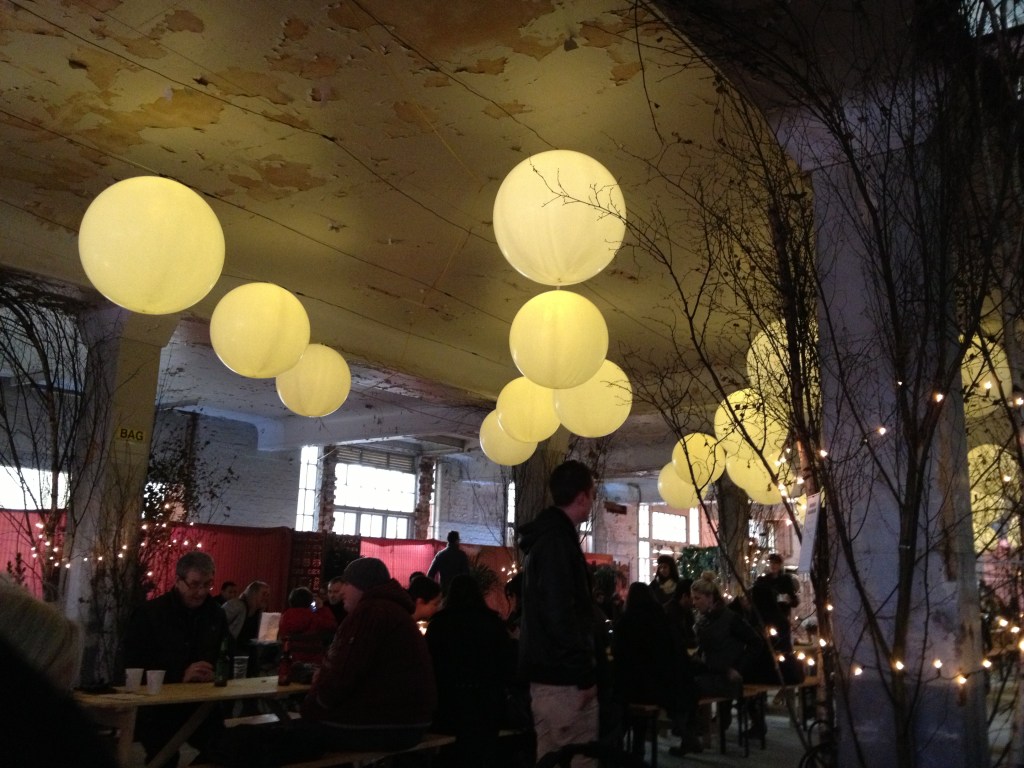
Talking of food, a few days before, my friends Cassandra, Jeremy and I headed off to trendy Islington in the North of the city, again an area of London giving boast to some excellent shopping, as well as the slightly more niche antiques and interiors market. However, it wasn’t our homes we went to indulge – rather, we were headed for Feast, a large undercover Christmas food festival, set within the very ramshackled surroundings of the old post office sorting offices, which made for quite the industrial contrast with the very popular festive spectacle below, as stalls from many a local restaurant offered a rich variety of culinary oblation, from glorious cupcakes (pictured), spicy asian cuisine, seared thai beef and mexican enchilladas, to gourmet burgers, Spanish chorizo sandwiches and fluffy pork buns. As for us, well, apart from and perhaps instead of the aforesaid, we managed to gorge more upon the liquid libations provided, from mulled wine, to mulled cider, to mulled wine again. Nothing makes one merry and festive quicker, particularly at 1 in the afternoon.

IMG_2582IMG_2569IMG_2567IMG_2571

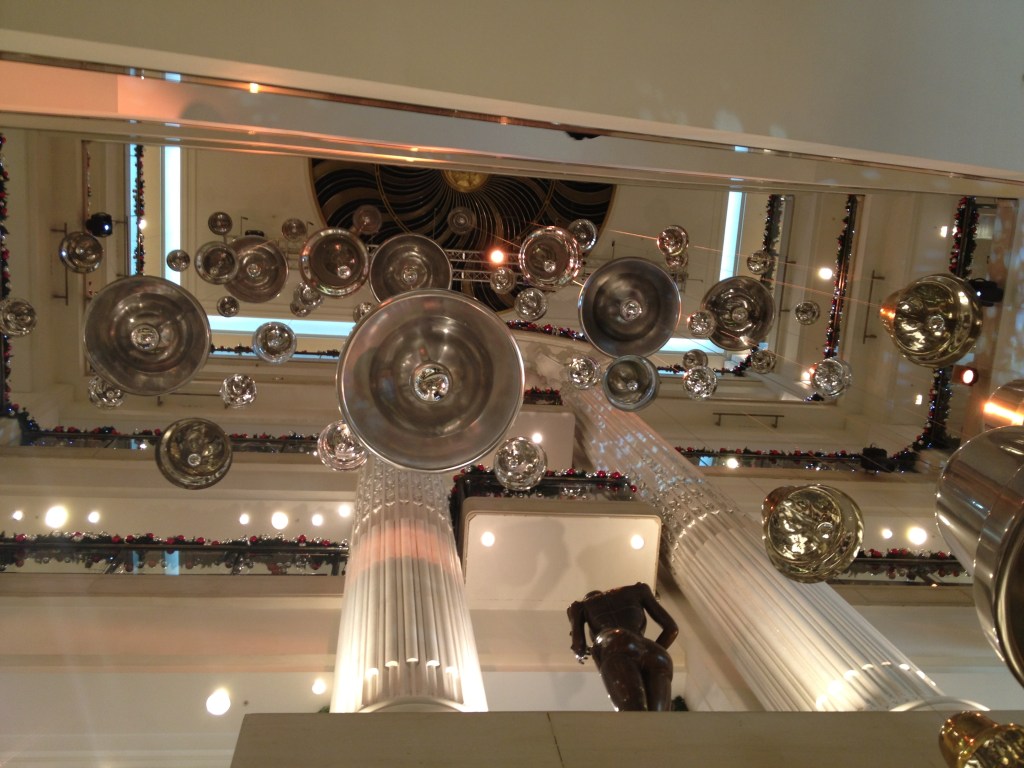
IMG_2317Back to the shops, and none can doubt the breadth and variety of Christmas shopping on offer in this great city, not to mention the decorative supremacy of the city’s most established shops. In Selfridges, one of my favourite department stores, the 5-floor high galleries are hung with huge dinging bells, which move up and down all day long, bonging a gentle, almost hallucinogenic Christmas tune. In both Harrods and Liberty, Christmas decorations fill a generous proportion of the shop floor space, and queues for the latest quirky bauble wind around the stores. However, for the best decorations, Fortnum and Mason, my favourite of all London shops, does simply the best in my view. Pictured are some of the white decorations they had this year, but just look at their lavish tree and old fashioned staircase. What I would give to import this entire set up into my sadly staircase-less flat! Meanwhile, with the decorations bought and wrapped, head around the corner to Regent street, where a lightshow worthy of the 3 Kings themselves awaits, strung across the busy shopping streets below.

Selfridges bells

Selfridges bells

and Fortnums decorations

and Fortnums decorations

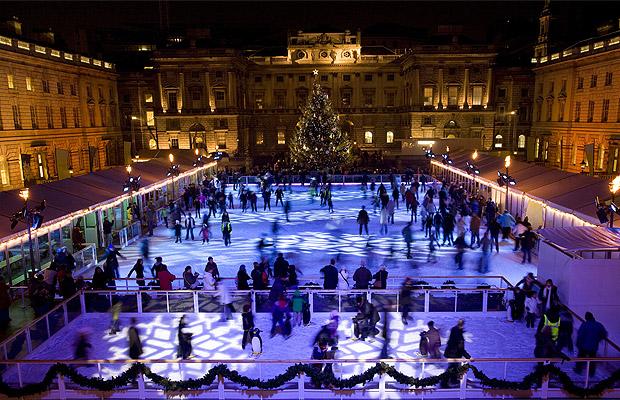
No overview of London’s Christmas would be complete without a quick mention of those wonderful ice rinks. My favourite has to be the rink set within the glorious confines of Somerset House on the banks of the Thames. With flame torches flickering around the blue glowing ice and the imposing facades of the Somerset House quadrant standing majestically all around, this has to be the picture perfect Christmas scene. It’s so good in fact that when studying at King’s College London next door some 10 years ago, I painted my very own homage to the ice rink (below). See also the rink outside the spectacular gothic palace that houses the Natural History Museum in South Kensington. This again creates a remarkable backdrop to an intrinsically festive scene.

somerset-house_1531292i

Natural_History_Museum_Ice_Rink_jpg_633x289_crop_q85

Ice Skating at Somerset House (acrylic on canvas, 2002 © Nicholas de Lacy-Brown)

Ice Skating at Somerset House (acrylic on canvas, 2002 © Nicholas de Lacy-Brown)

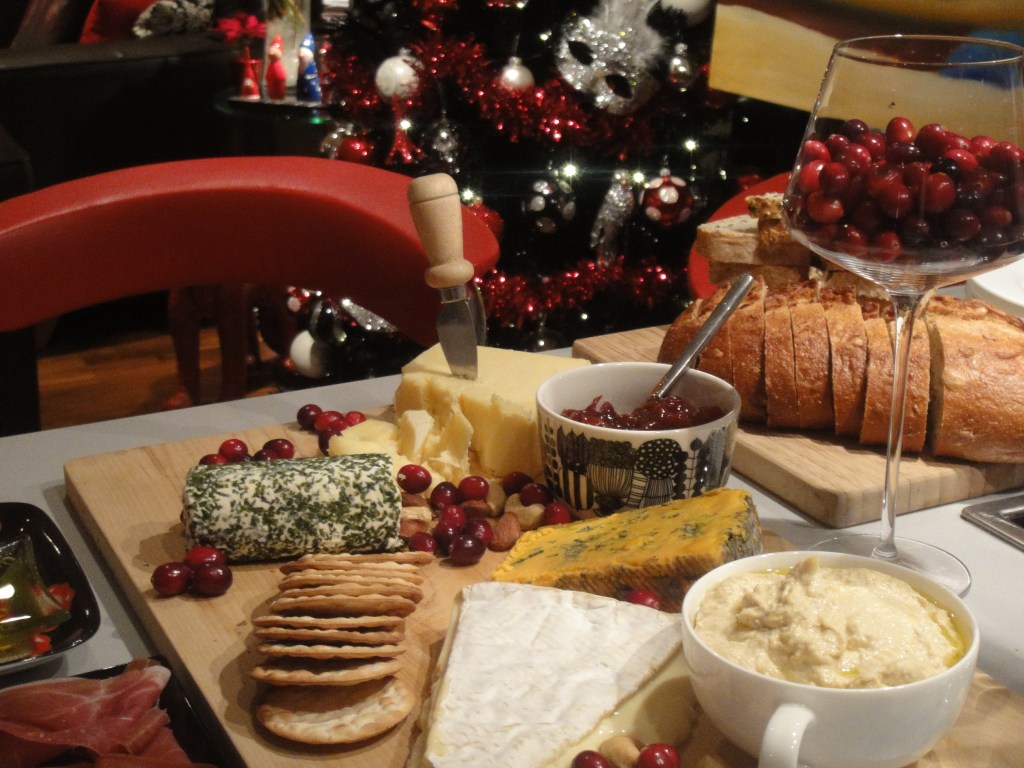
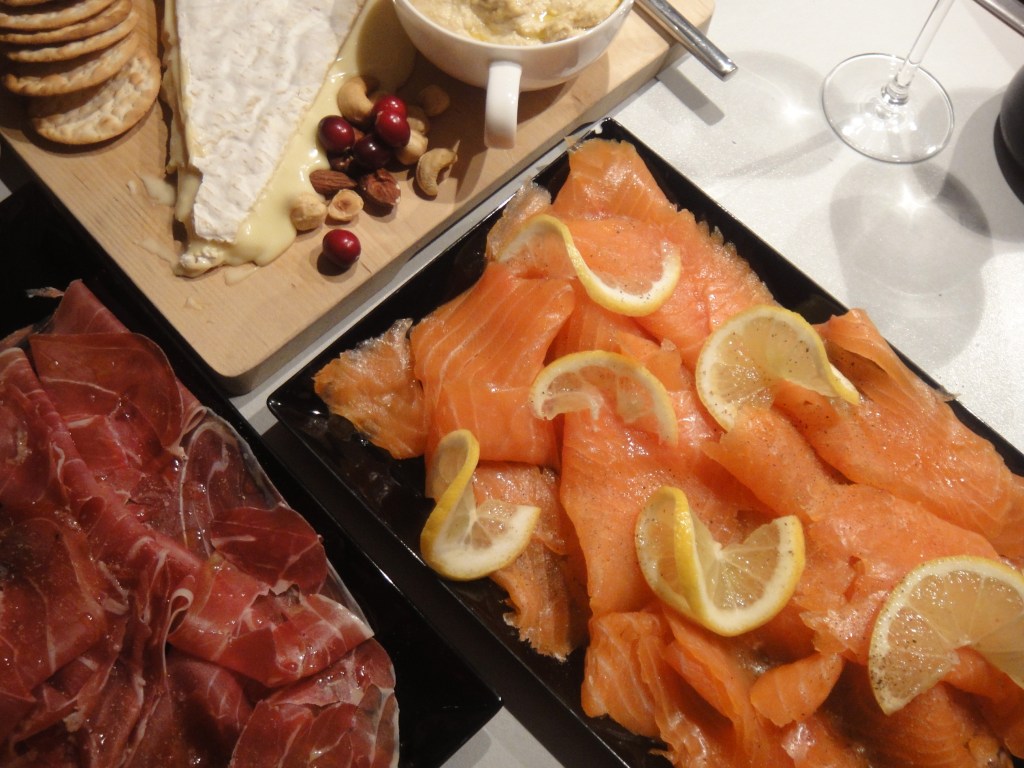
But while being out in the frosty busy streets of London is all very well, at the end of it all, there’s nothing quite like home. This very evening I have just finished gorging upon wooden platters loaded with fresh cheeses, festive chutneys, smoked salmon and ham, while with friends round for the evening, we toasted christmas with champagne in one hand and mulled wine in the other. For Christmas in the city is the jolliest place to be, but share it with friends and loved ones, and Christmas will truly have come home.

DSC04488DSC04493DSC04496

Tomorrow, as if you haven’t had enough already, I just have to share more photos of my Christmas decorations, candles, installations and more. See you then.

My Christmas Wonderland, Part II

It’s day two of my Christmas decoration posts, and today I’m sharing my two “glamour” trees, a stonking-great cornucopia of exquisitely sparkling, extravagantly baroque, exorbitantly lavish Christmas decoration, the crystal-encrusted gems of my yuletide collection, decked out with the kind of elaborate ornamentation which only this exorbitant festive season will allow.

Venetian-Parisian Glamour

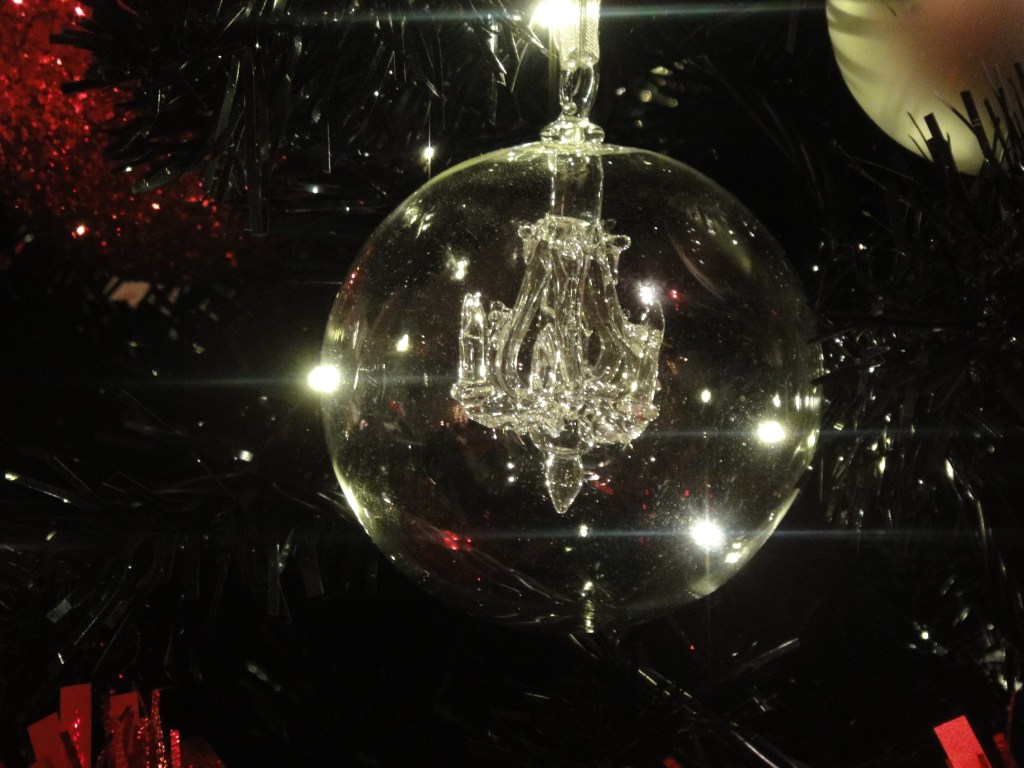
In my lounge, which is itself a homage to Parisian chic, decked out in black and white with splashes of vivid cadium red, my contemporary black tree exudes the spirit and sophistication of a European masquerade ball, with sparkling silver Venetian masks interspersed with glittering red Eiffel towers. My favourite baubles are those of transparent glass which have a small glass chandelier inside. They looks amazing when lit from behind by my steadily flashing pure white lights which enhance the sparkle throughout my tree.

DSC04418DSC04426DSC04424DSC05832DSC04422DSC04429

Traditional Splendour

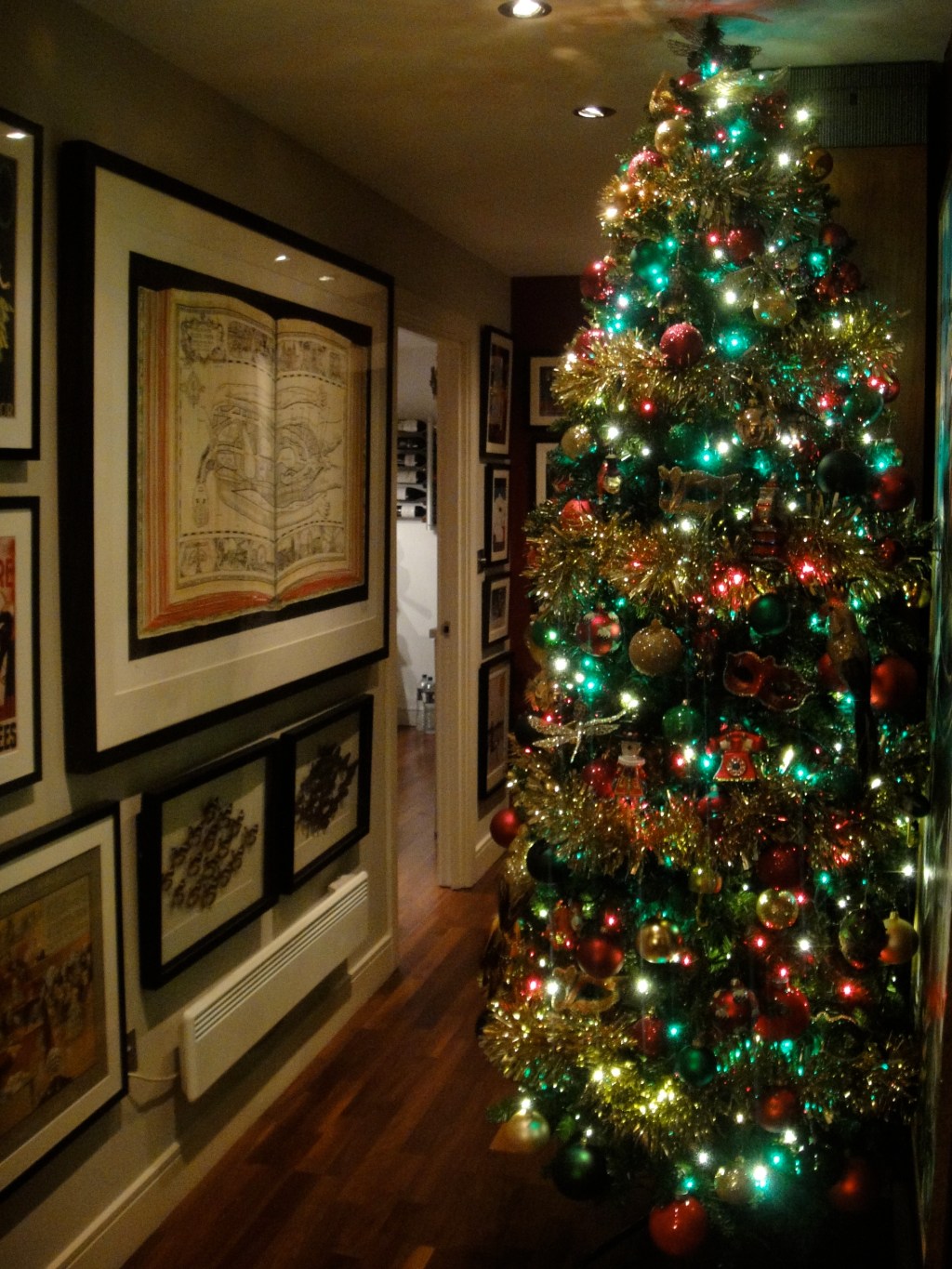
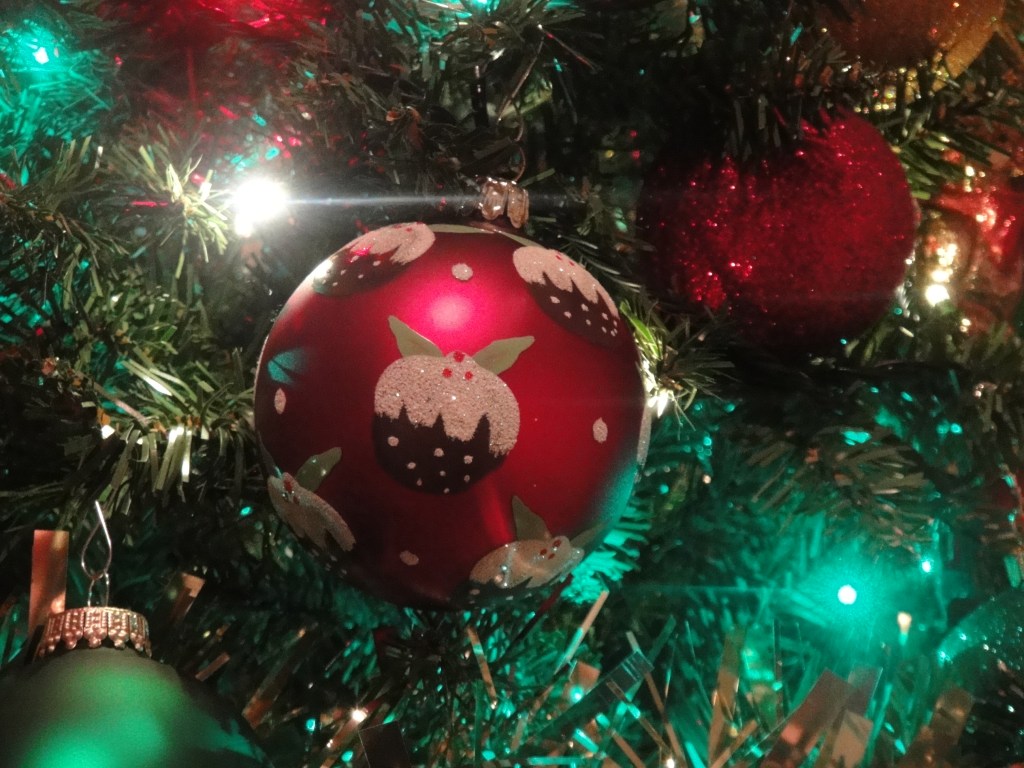
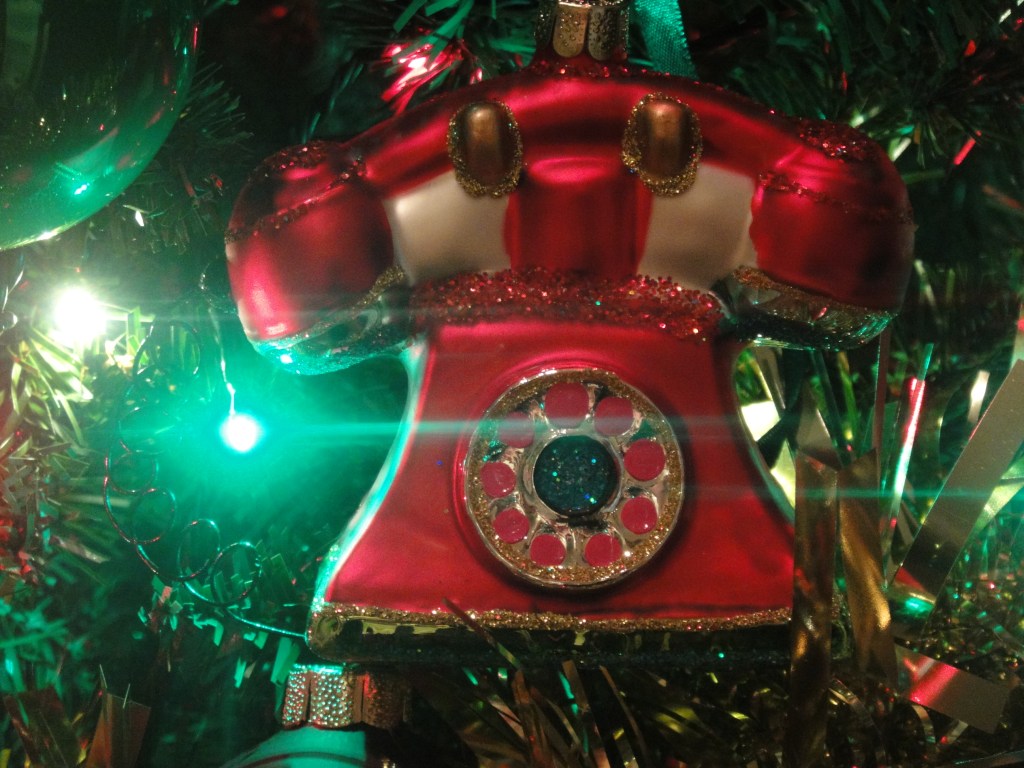
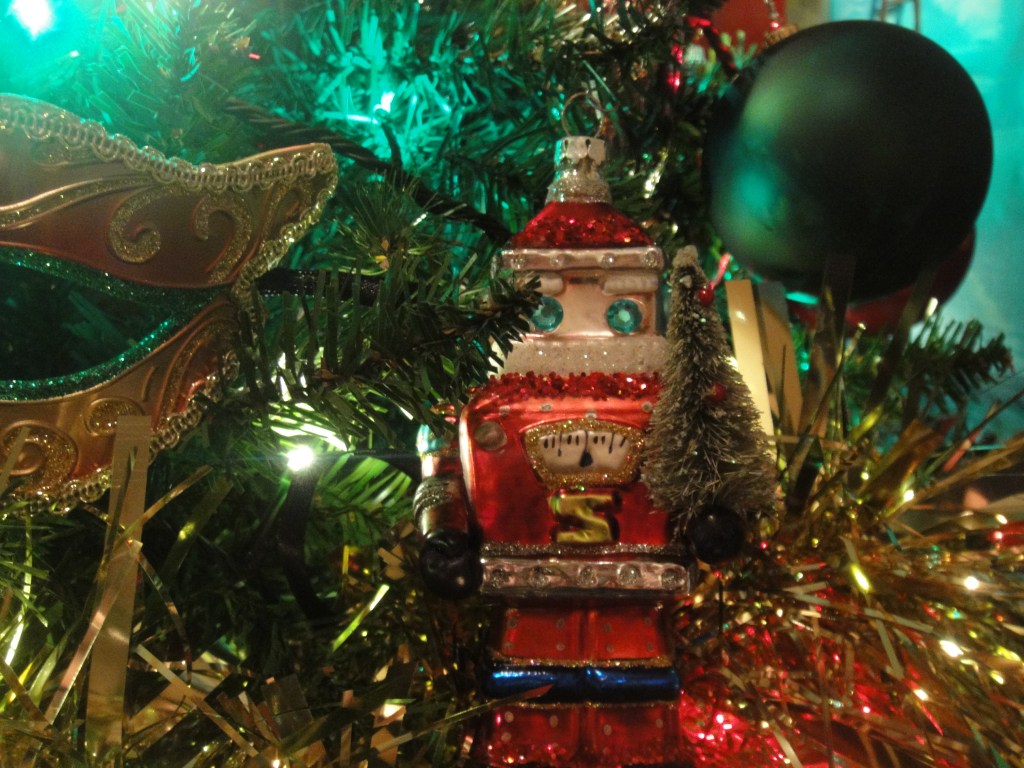
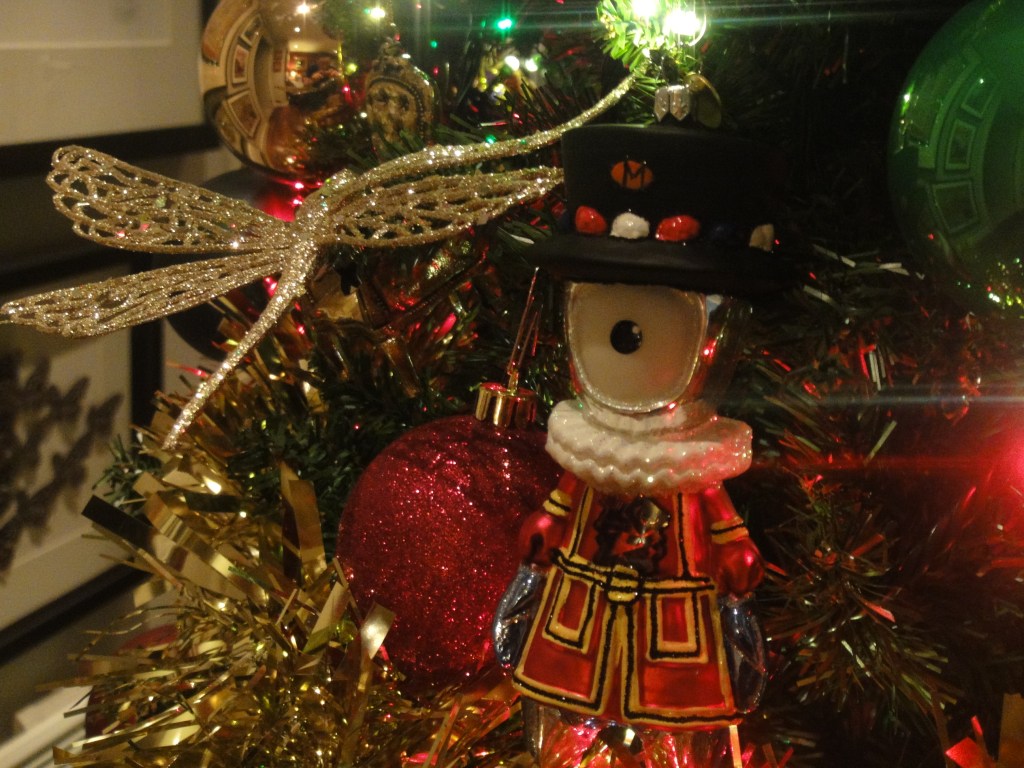
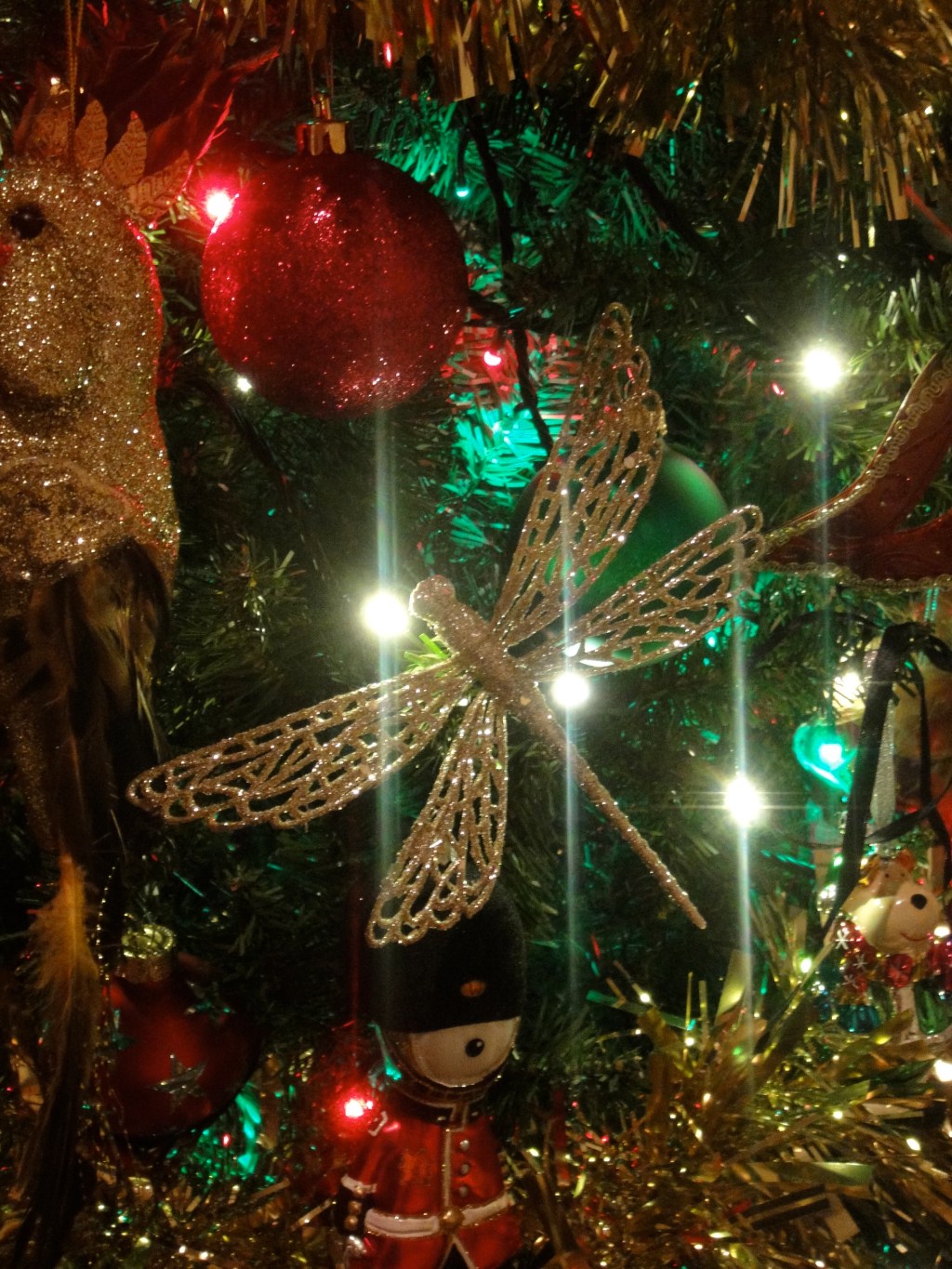
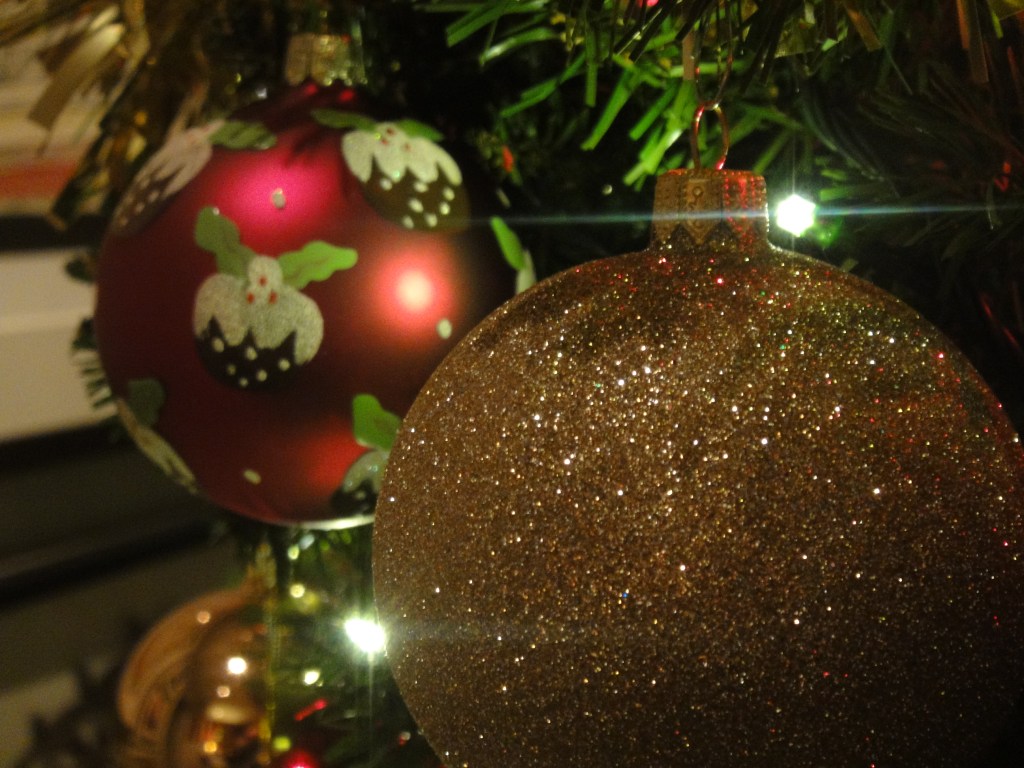
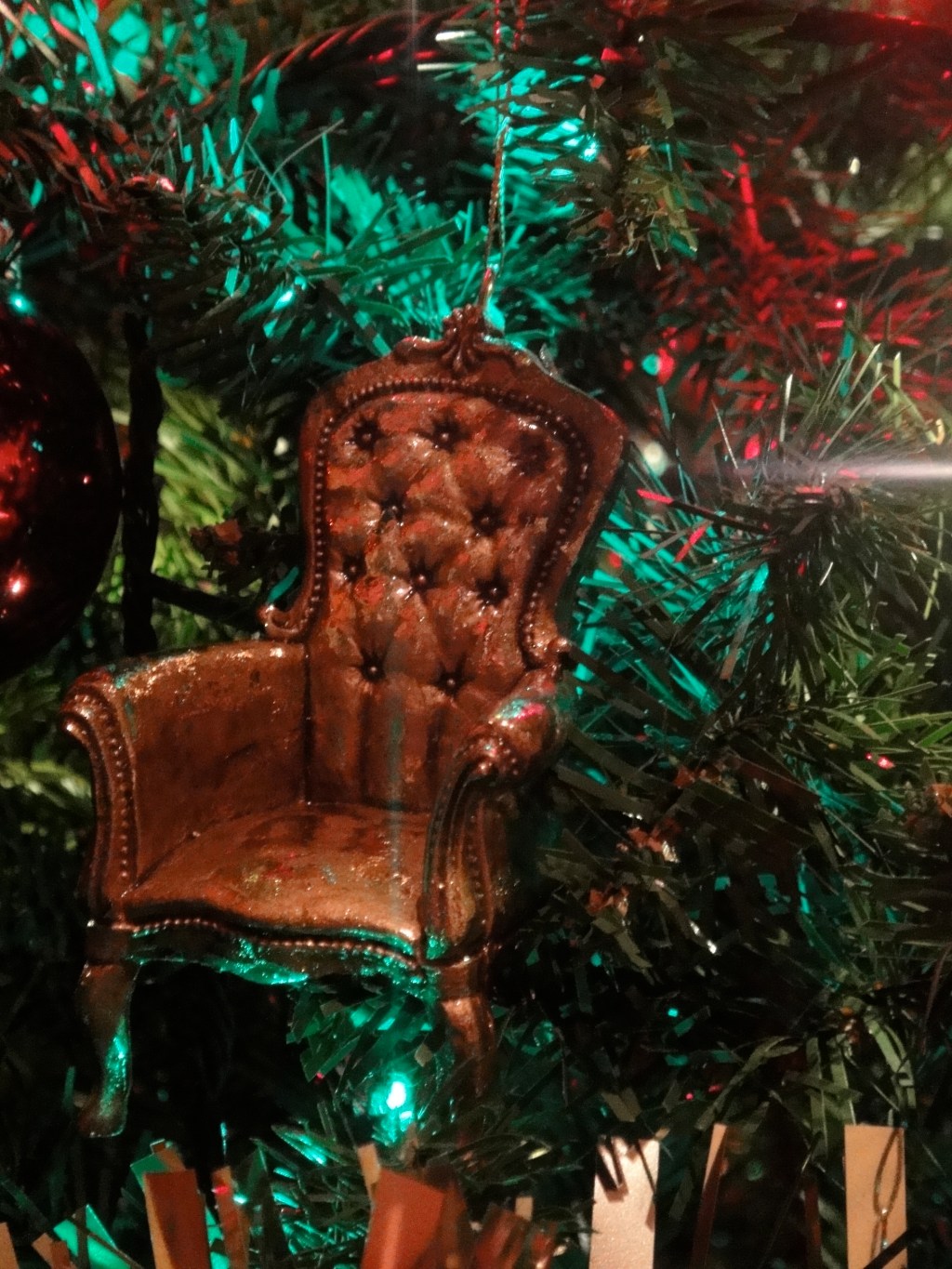
From continental glamour to traditional splendour, my new kid on the block this year is my lavish new hall-way tree, a suitable Christmas spectacle to greet guests to my home. This tree is bedecked with every kind of indulgent frippery, from gilded Louis XV arm chairs and glittering masks, to sparkling dragon flies and red old fashioned telephones. Amongst my favourite curiosities which have made their way onto this tree, I love my very appropriate festive London 2012 olympic mascots dressed in their beefeater and soldier uniforms, as well as my simple red baubles painted with Christmas puddings. The more unusual decorations on this tree are bound within a unifying theme of red, green and gold, reflected in both the lighting and the monochrome baubles, all of which combine to give great balance to this tree.

DSC04359DSC04436DSC04363DSC04390DSC04361DSC04432DSC04364DSC04354

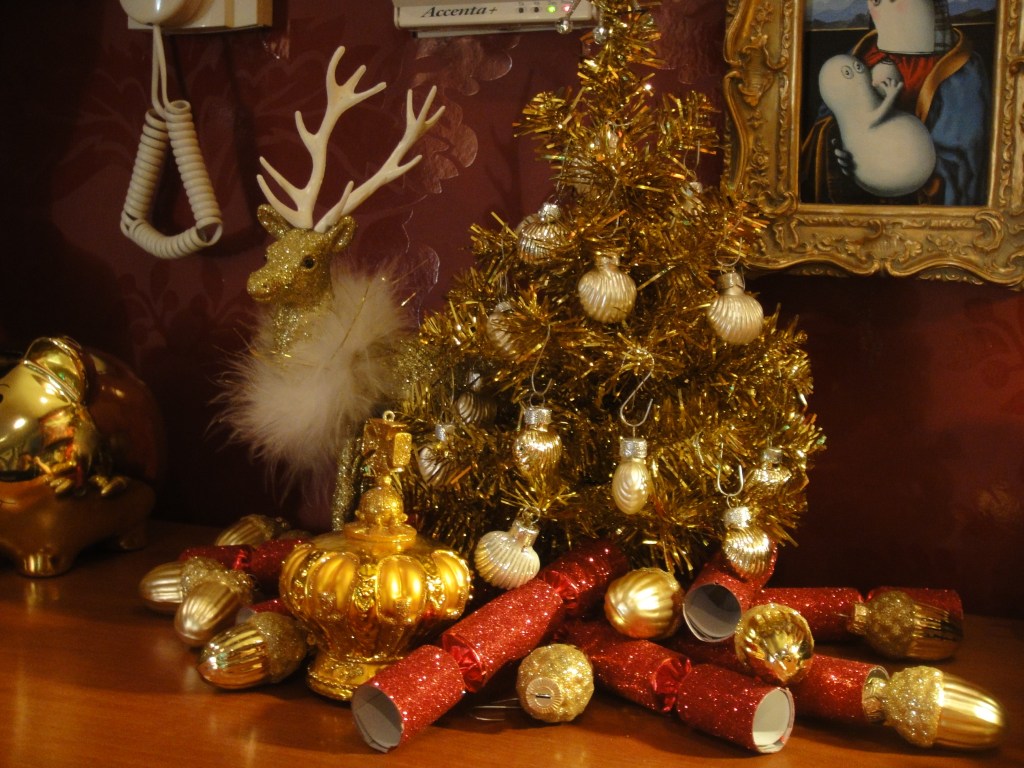
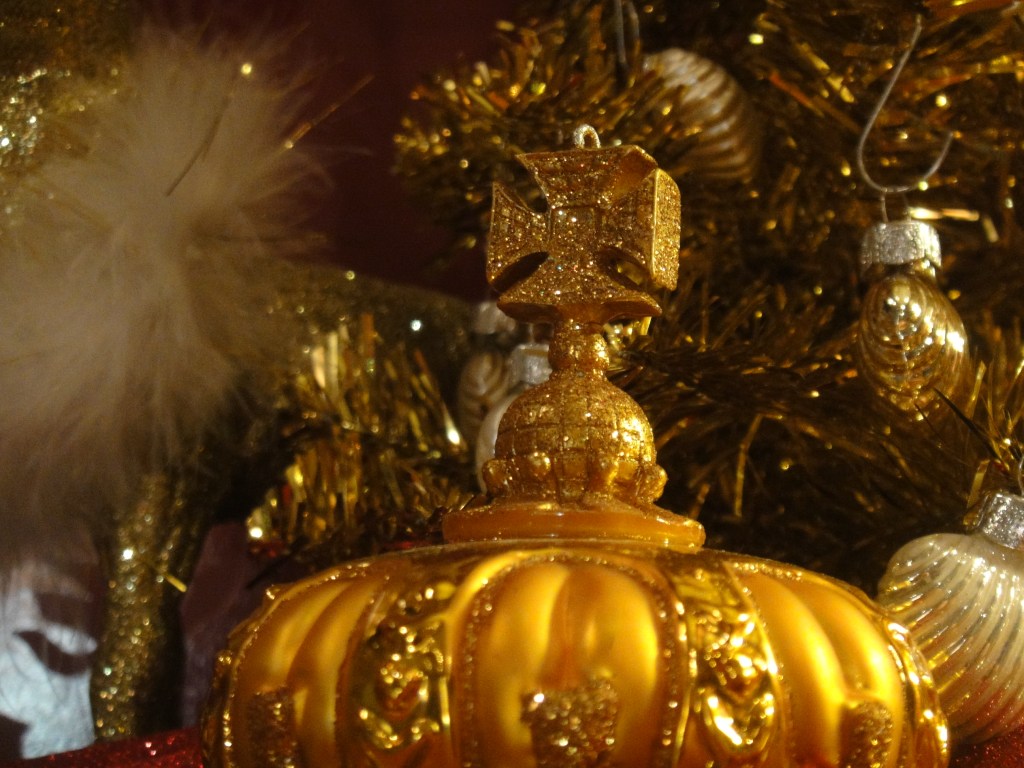
Finally, all the golden glamour of my hallway decorations is reflected in this little installation created on my sideboard – a panoply of gilded treasures with ruby red crackers, all culminating to create some festive fun which is deliciously exuberant. That’s my Christmas all over.

DSC04333DSC04336DSC04337

My Christmas Wonderland, Part I

As a young boy I was obsessed with Christmas. For me, the sadness of a summer’s ending was tempered by the onset of Christmas. As soon as October came along, I was always chafing at the bit to get into the Christmas shops and to feast my eyes upon every kind of sparkle and glimmer, gems and gold, ostentation and glamour. Since Childhood through to adulthood, Christmas has always provided an excuse to go completely over the top, to indulge in the kind of decadent baroque-style over-excess which may grate in a year-round interior design scheme, but which, for the month of December, is the perfect antidote for the long dark evenings and the onset of Winter, and the perfect excuse to indulge in every whim and fancy.

In a Christmas tree, with a hundred lights reflecting in tinsel and glitter, in foil and metallic shimmer, every possible dimension is a further excuse to sparkle. Decorating a tree for Christmas is like draping a Monarch ready for a coronation. It is a process of such glamour, of such inexorable elegance that I cannot resist giving myself over, body and soul, to the temptations which Christmas decorating provide.

So now the autonomous adult, free from restraint, my Christmas decorational indulgence increases as each year goes on. I embark upon each room and tree as I would an interior design project, sculpting the tree, balancing its colours, reflecting the scheme to its surroundings, and always ensuring that Christmas has shared its sparkle with every corner of my home.

After a weekend of decorating, it’s time to share my decorations with the world. As I’ve erected rather a few trees this year, as well as various accompanying installations, I thought it best that I split this post in two. Up first are my more playful trees, situated in my bedroom and study respectively. These trees reflect childhood fun, through metallic robots and vivid brightly coloured deer, as well as multi-coloured bohemian glamour. Photos can never really capture the sparkle of the lights and the glitter of the decorations as you move past a tree – half the beauty of Christmas decorations, in my view, is the tree’s shimmer in a darkened room – and this is almost impossible to capture well on camera. Nevertheless, hopefully these photos will give you an idea of some of the creative fun I have had with my trees this year.

Oh and don’t forget to check out Part II tomorrow.

Childlike Charm

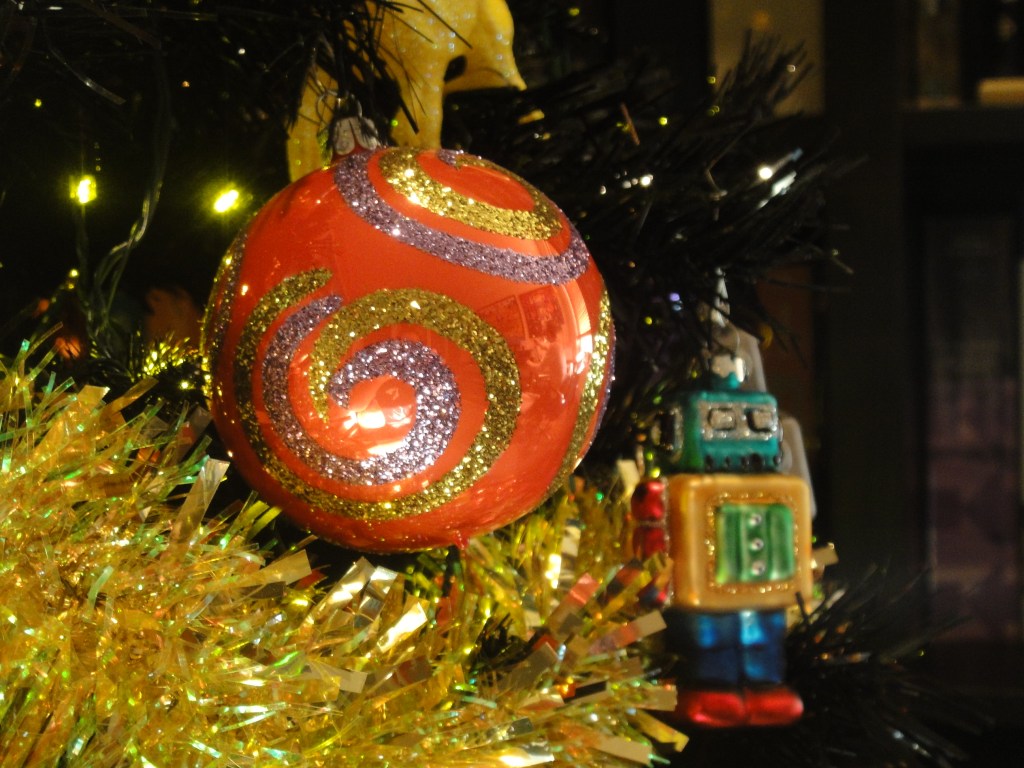
In the “Orange Office”, a tree bursting with citrus colours tempered with mediterranean sky blue and a deep royal purple. Upon the tree, vividly coloured deer and playful robots provide prominent focus in a scheme otherwise balanced with patterned and monochrome baubles of the four central colours.

DSC04345DSC04282DSC04292DSC04285

Bohemian vivacity

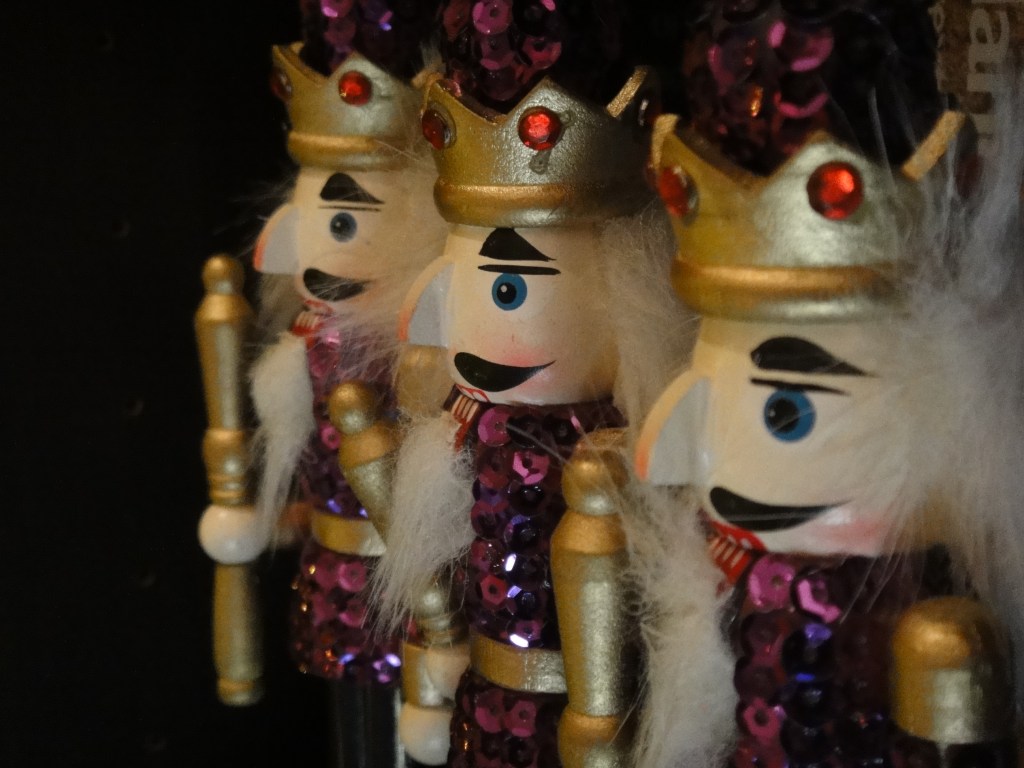
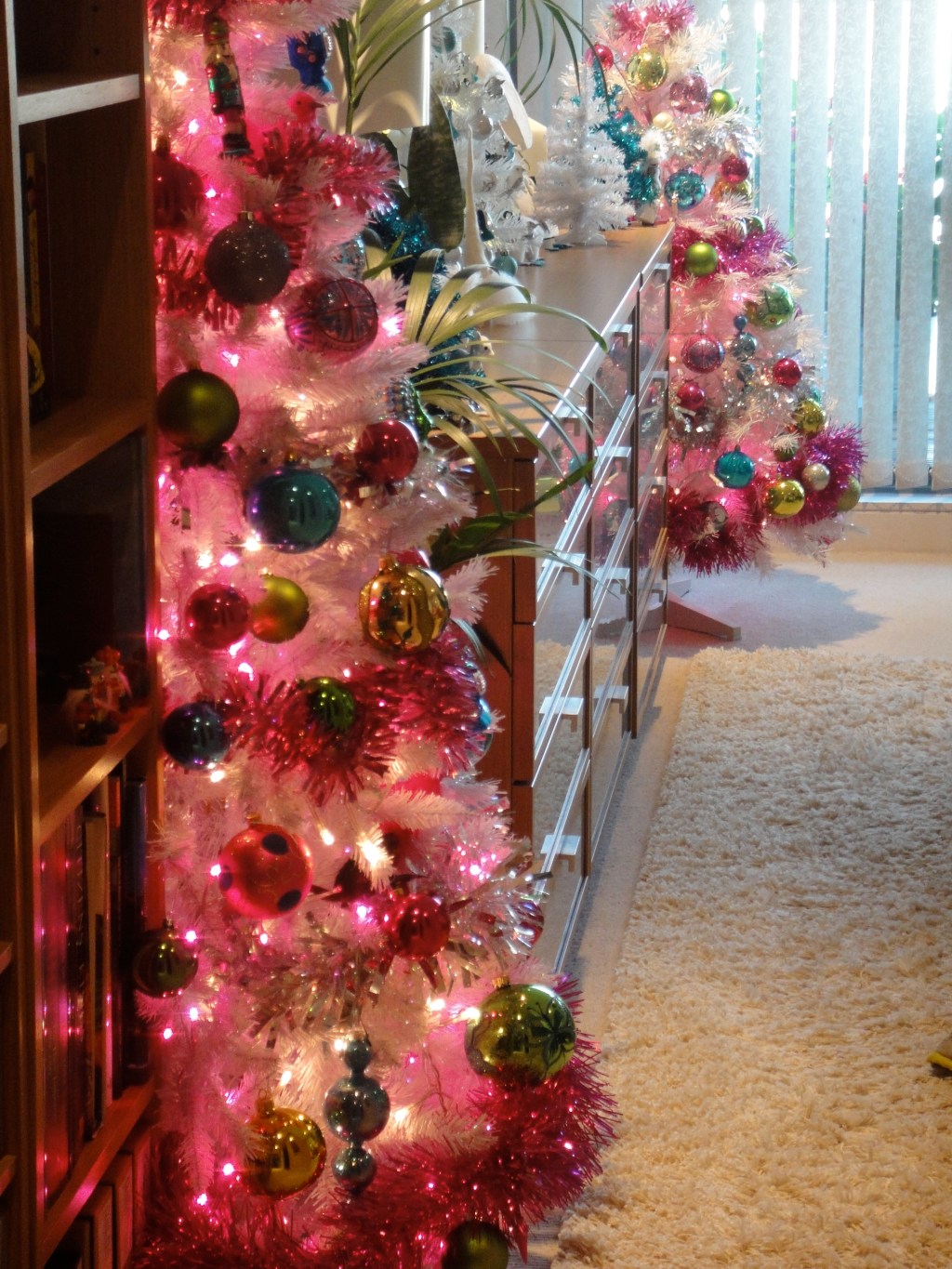
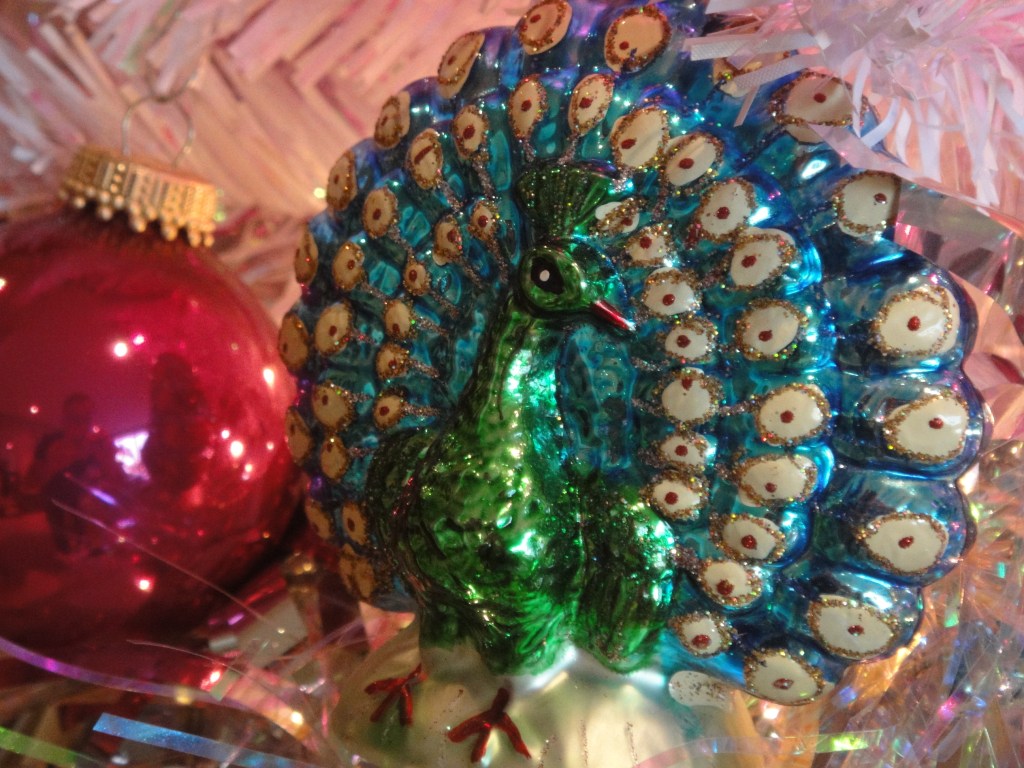
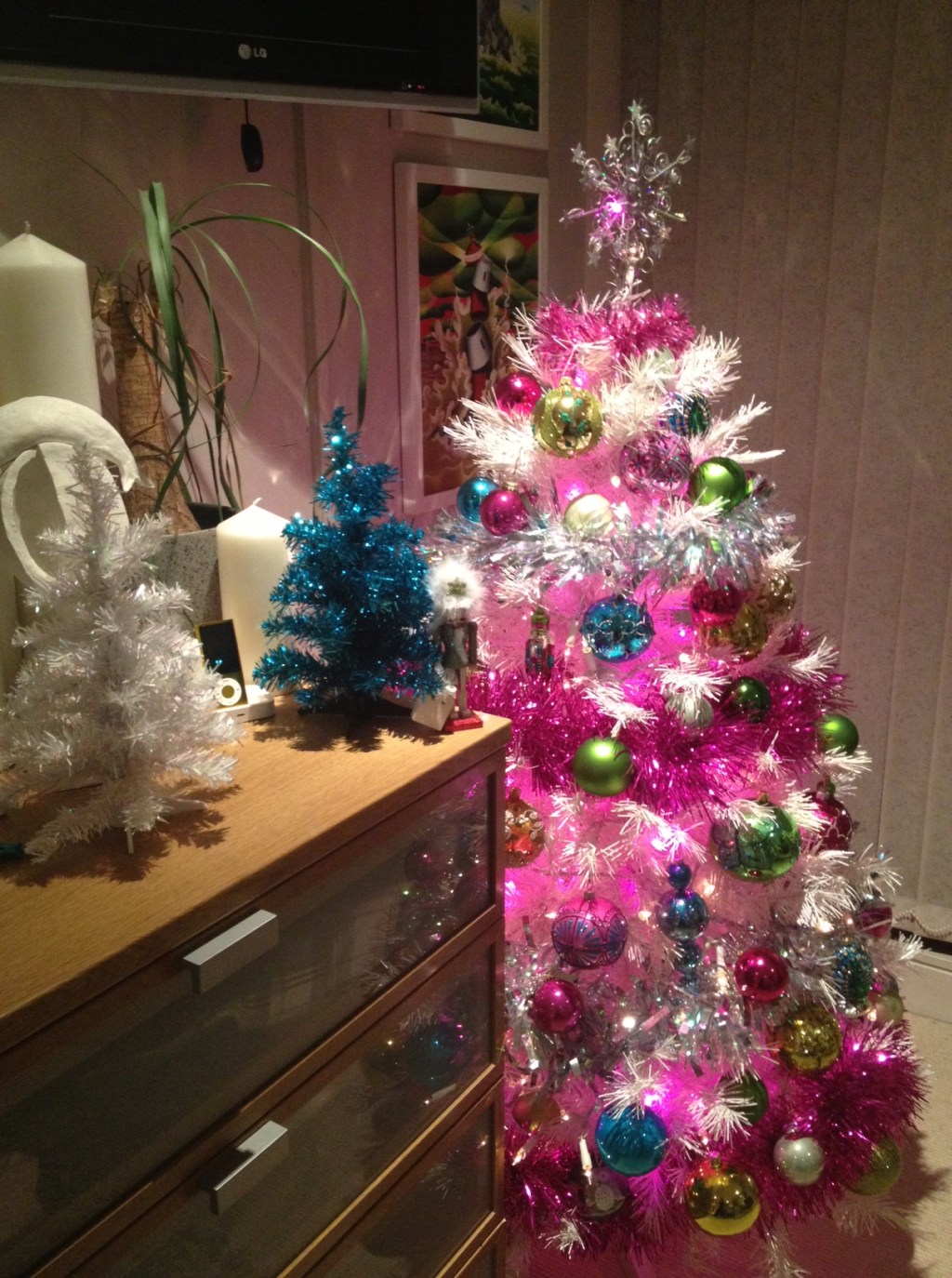
From the bohemian revolution to burlesque freedom insouciance, the two trees in my bedroom are a panoply of candy pinks, verdant soft mossy greens, and turquoise blue. From nutcrackers for the new millenium, pink feathered burds, shiny opulent peacocks and a great pink translucent butterfly atop the tree, this scheme is like a stroll in a sweet shop, ever sense tantalised by the array of indulgent treats on show.

DSC04301DSC04308DSC04305DSC04310DSC04303photo

A Scandinavian Forest

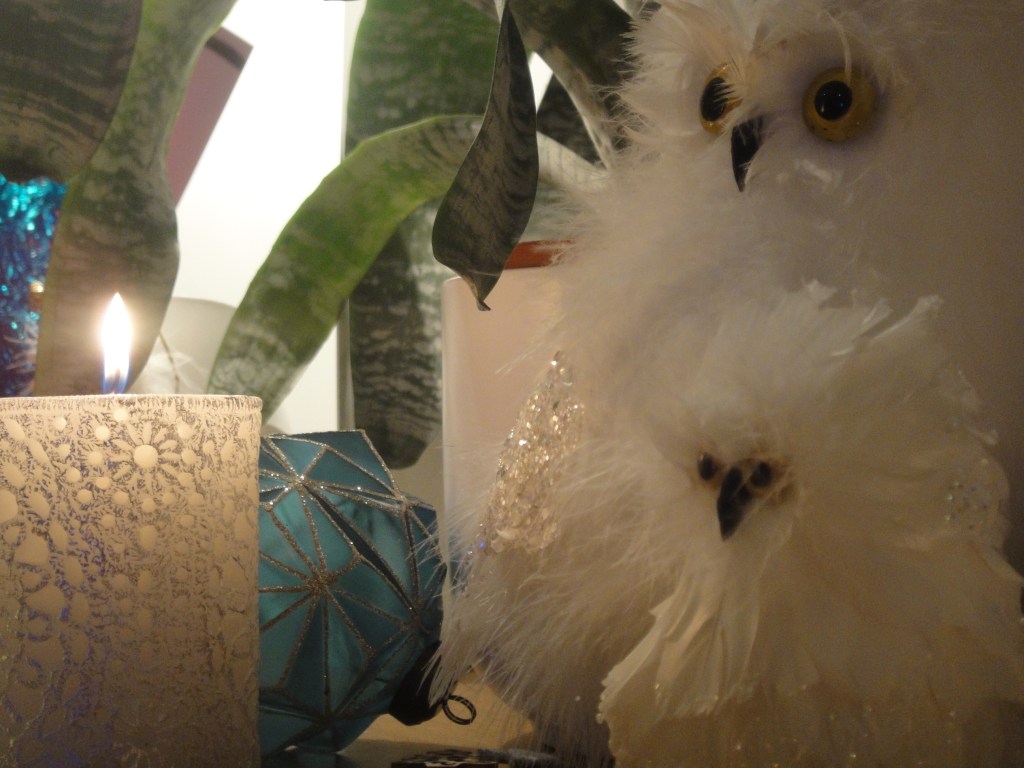
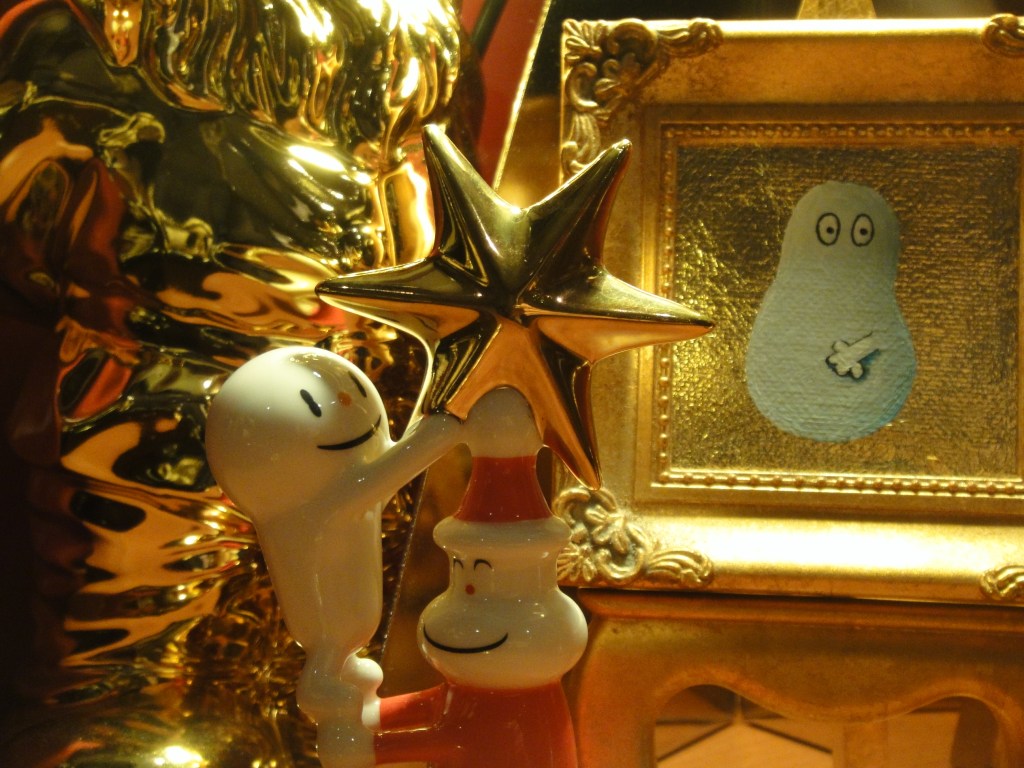
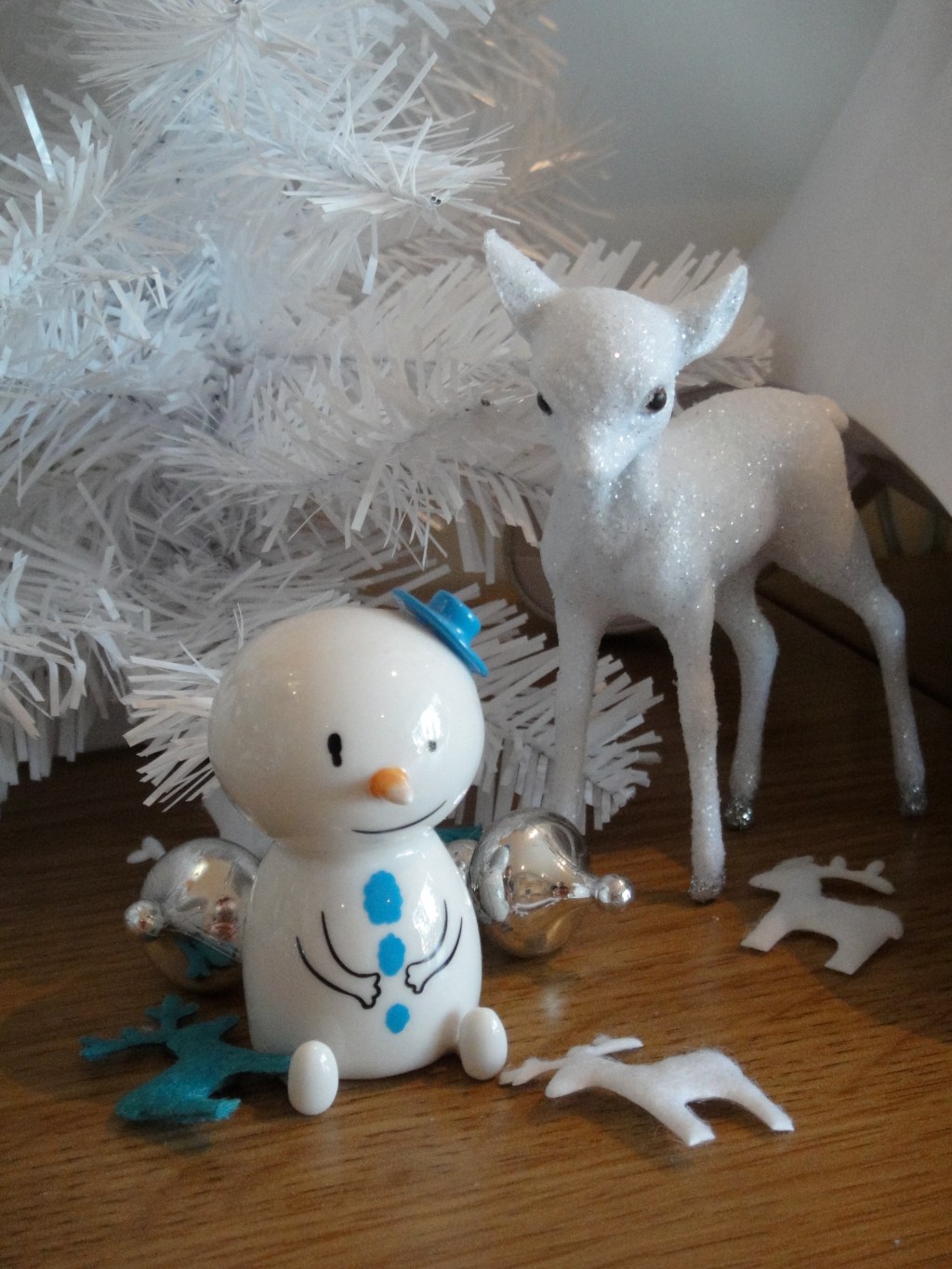
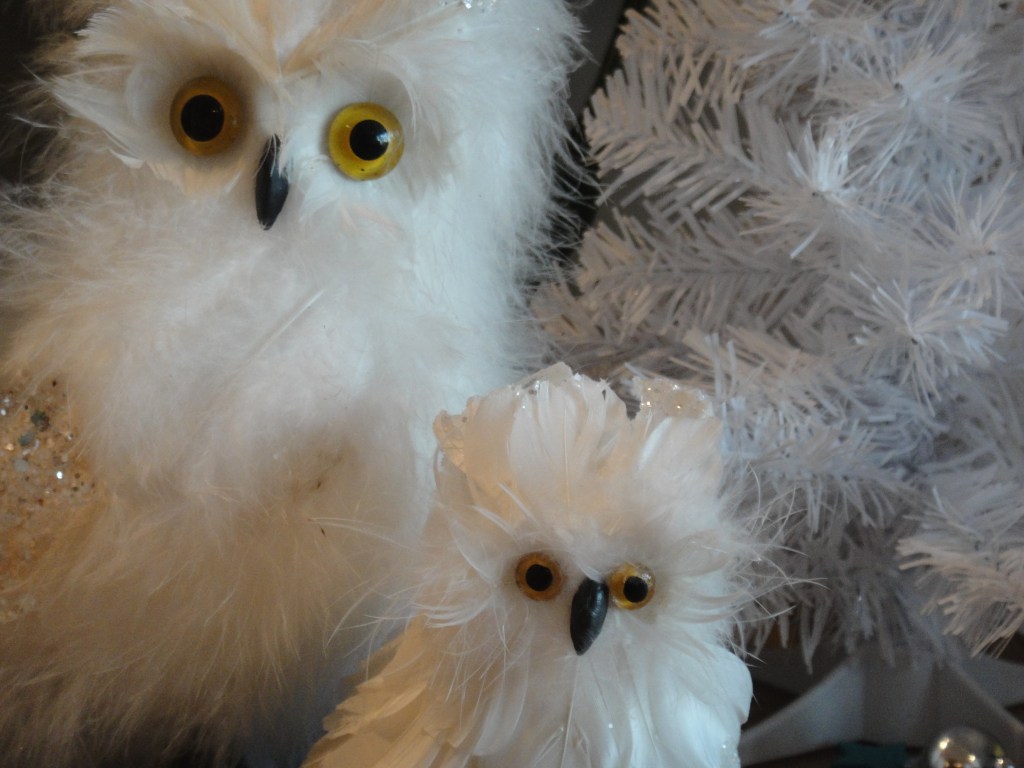
In amongst the electric pinks of my bo-ho Christmas comes a moment of calm serenity. Upon my chest of drawers, I have created a forest-inspired installation, a little bit of calming traditional white in amongst all the action. On this mini 2ft tree, I have hung traditional white-painted wooden figures, paper bells, little blue birds and, best of all, the miniature “Moomin” mugs made by Finish homeware company Arabia, crafted as special releases for the festive season. Complete with fluffy owls, snowmen and glittery deer, this really is kitsch at its classiest.

DSC04313DSC04331DSC04322DSC04316DSC04326DSC04319

So that’s it for today. Two more trees to share tomorrow. In the meantime, if you want to benefit from my “tips” on how to decorate the best Christmas tree every, see my post which I wrote on The Daily Norm a year ago.

Lisbon – Day Five: Bye Bye via the Baixa

Four full days in Lisbon was, it turned out, a convenient little break in which to comfortably and conveniently explore the best of the city’s four main regions: the hill of Bairro Alto, the hill of Alfama, out to Belém and back to the large avenidas of the Baixa, splaying upwards from the Tagus and outwards North of the city in a valley between the two hills. Although this was officially our fifth day in the city, the first, once we had arrived, was more of an evening of orientation. Today, with our suitcases packed, and the Lx Boutique Hotel left behind, the bulk of the day reminded available for discovery, with an evening flight giving us time for one last Lisbon hurrah. It was to the Baixa we headed, perhaps mercifully so, as after four previous days of trekking up what are, at times, the steep streets of Lisbon, the Baxia provided plenty of spacious, flat boulevards and squares for us to explore with comparative ease.

Chestnut seller

The Baixa region is far more typical of a southern European city. Built in the aftermath of Lisbon’s deadly 1755 earthquake in a grid-like layout which allowed for wide sweeping avenues and grand open squares, the Baixa really shows off Lisbon to the full. This is where you find the opulent fountains, the monuments, the old palaces and the new shopping districts which are to be expected of a capital city. Here the buildings are largely Neo-Classical, grander and better preserved. The streets bustle not just with tourists but with the working masses of the city. And although the sun was shining hard, the many shops lining the grand boulevards were packed with Christmas goodies, while on the roadsides, chestnuts were being roasted pouring plumes of smoke into the air and spreading a distinctive warming smell of Christmas all around.

We began the day in the Praça do Municipio, and more particularly the City Hall, where an incredibly interesting, and free of charge photography exhibition examined Lisbon’s significant role during WW2. As a neutral country and on the edge of Europe, Lisbon became a place of escape from the toils of Europe. It handled the exile of significant numbers of escaping Jewish refugees, but was also a place of espionage, spies and political deals, as both Germany and England fought to keep the favour of Salizar and in particular ensure supplies of the natural minerals which, once mined, could prove significant to the production of weaponry during the war. But despite all of this, Lisbon retained some element of normality during a time of European strife. For those lucky enough to have escaped the rest of warring Europe, Lisbon was a place of relative tranquility, albeit laced with suspicion, full of secret police and suffering more and more from food shortages as the war went on.

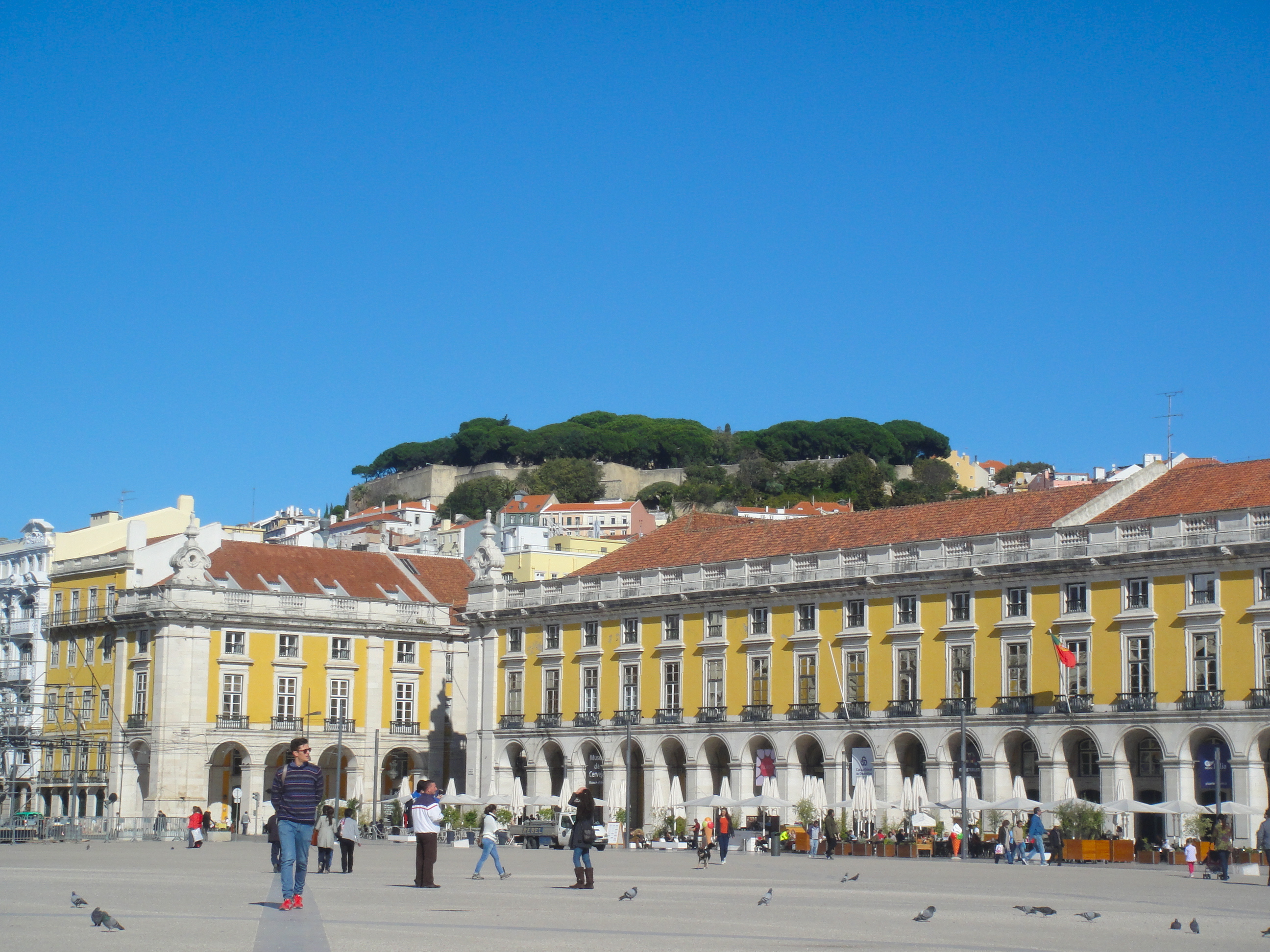
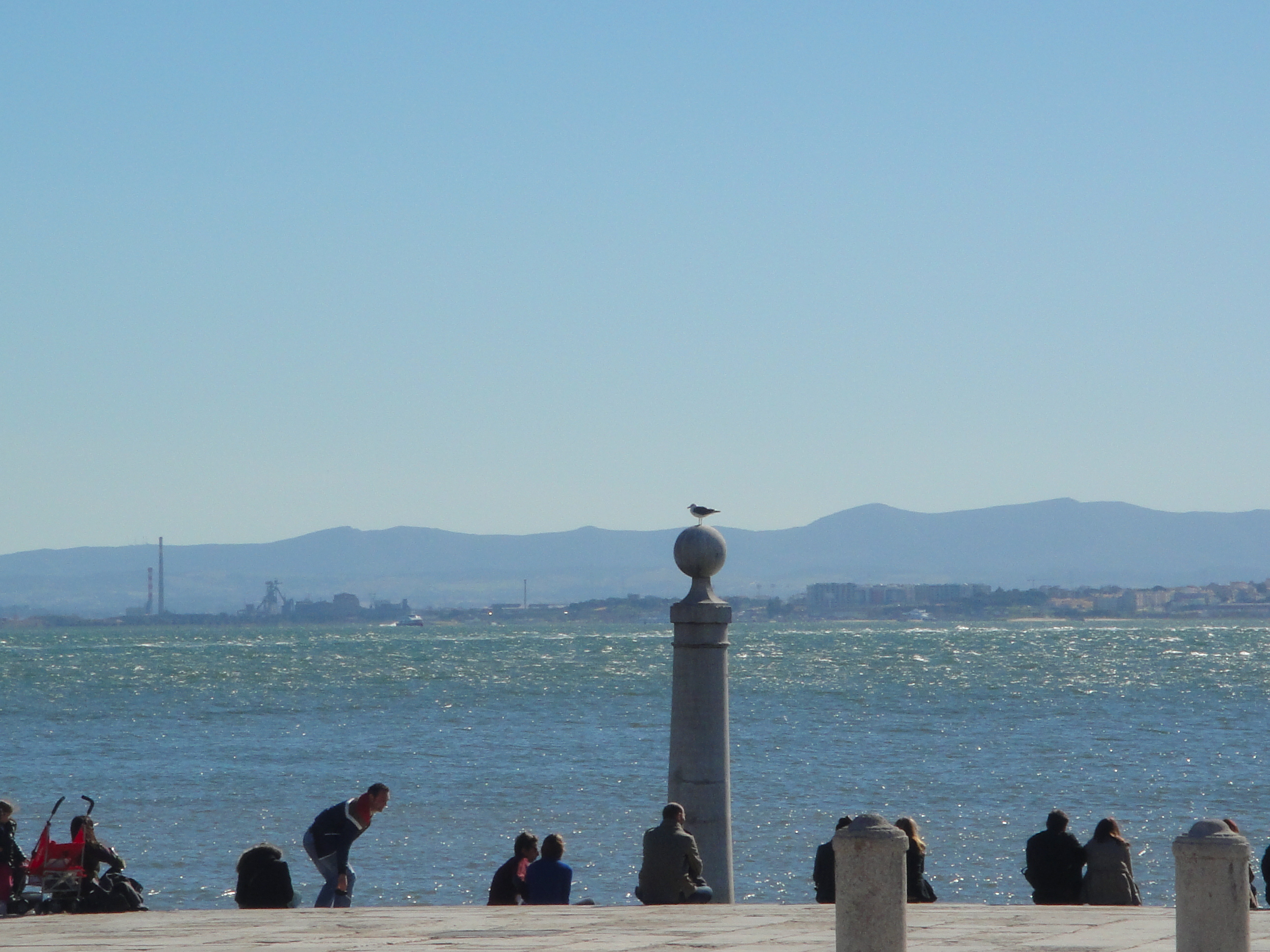
Back in the modern world, and turning from the photos of black and white to the vivid blues of a Portuguese sky, the deep “royal” yellow of the old palace surrounding the impressive Praça do Comércio, and the reds and yellows of the old trams passing through the square, we headed to this former site of the Portuguese royal palace before it became administrative offices of the Republican government following Portugal’s 1910 revolution. Open on one end of the square to the glittering River Tagus beyond, we determined the square to be a perfect location for a coffee, sitting down to do just that while basking in the sun for as long as possible before our later departure to colder climes.

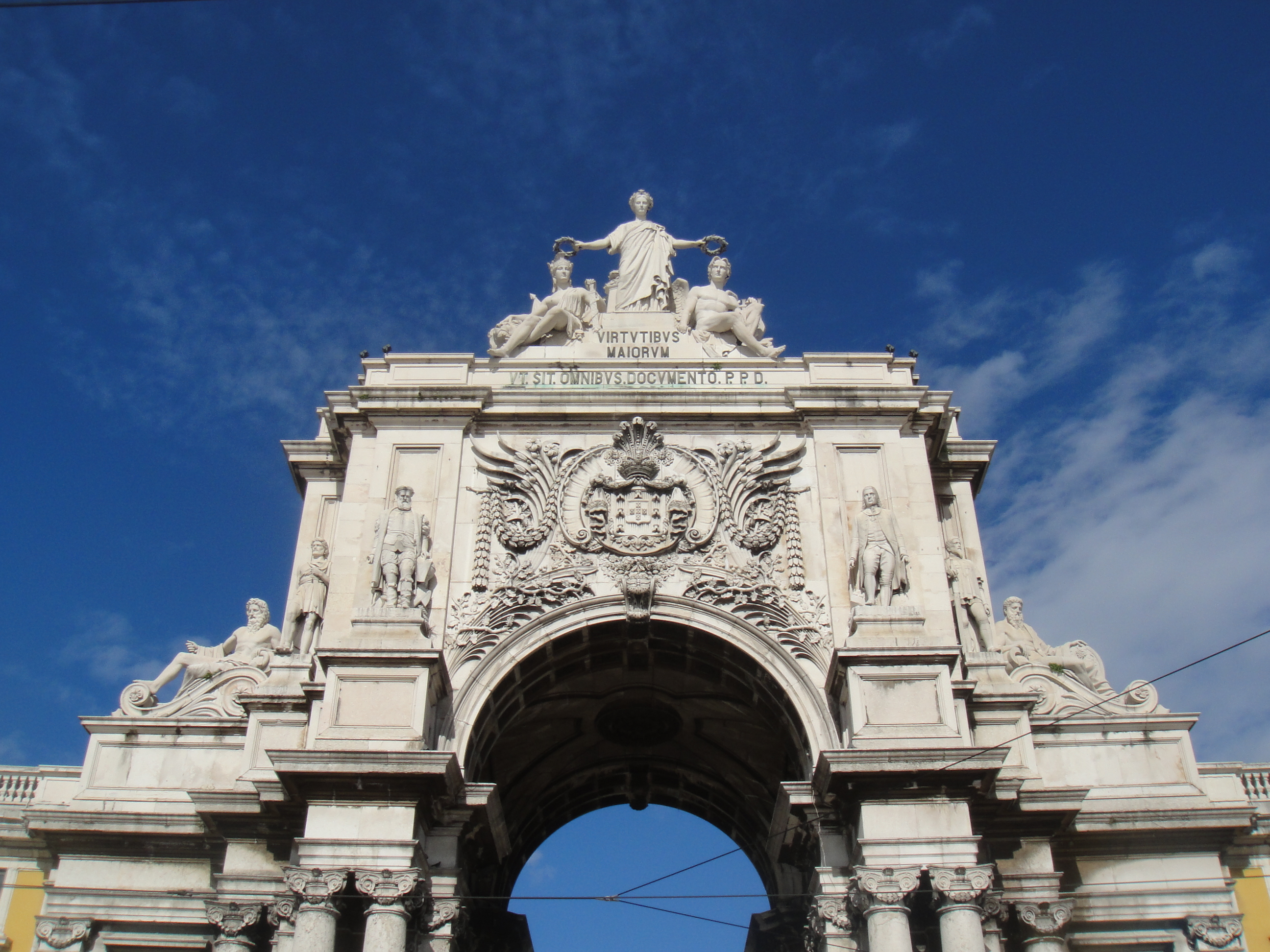
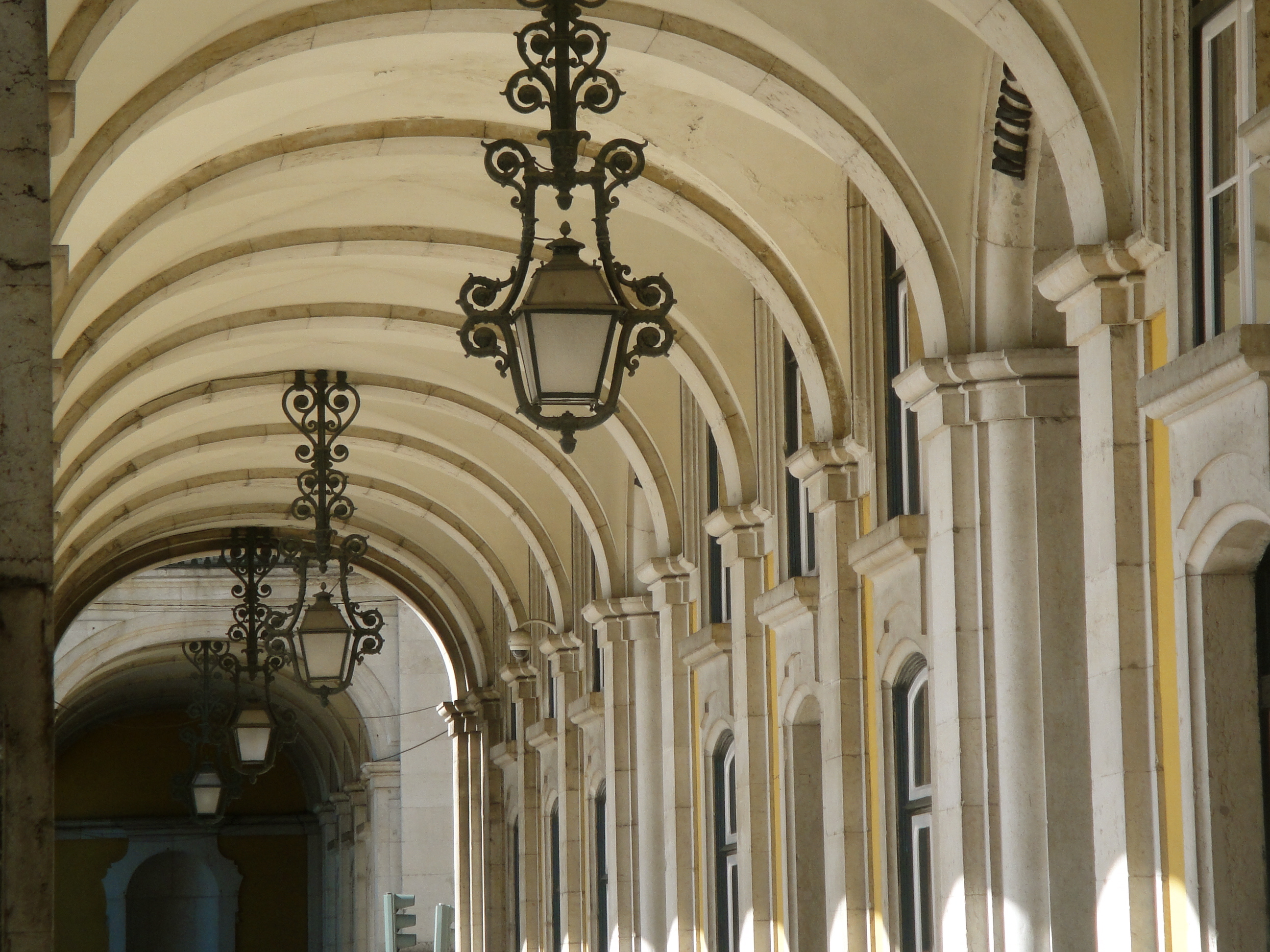
After coffee, we crossed under the impressive triumphal arch to the north of the square, up the Ruo Augusta and into the shopping streets and the great squares beyond. The decay and detrioration of much of Lisbon was not so obvious here, as grandeur dominated and scale took over.

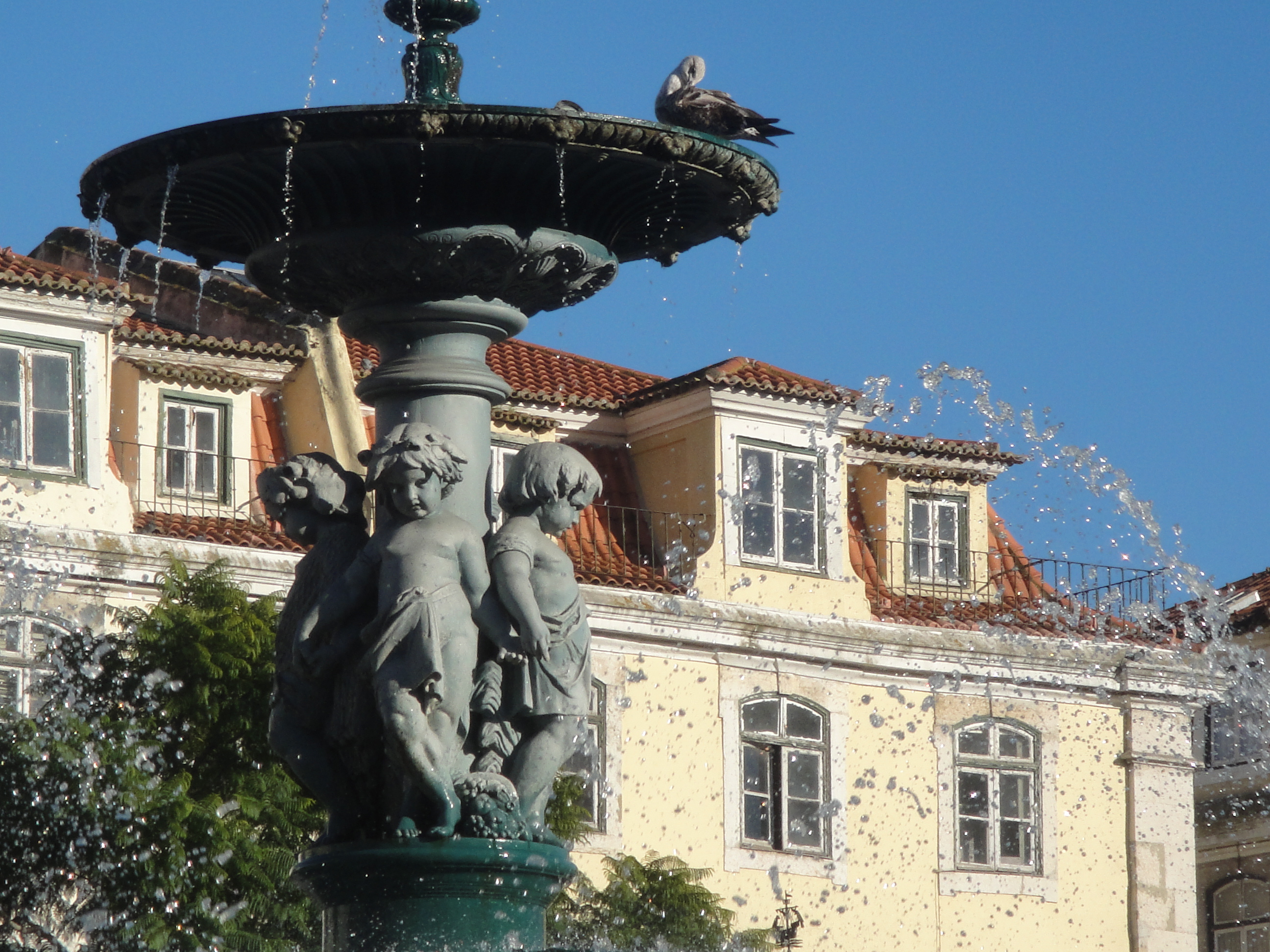
In the Praça Dom Pedro IV, two huge working fountains made a marked contrast to the fountains further North in the city, left to go green with disuse. The square is flanked on one side by the eye-catching Neo-Manueline face of the Rossio Station, complete with two Moorish-style horse-shoe arches and, sadly, a Starbucks. To the North, another grand square, the Praça dos Restauradores boasts a grand obelisk, adorned with sculptures paying homage to those who gave their life during the War of Restoration, while to the East, the Praça da Figuera is home to hundreds of pigeons and the imposing statue of King João I. Here you can quite clearly see Lisbon in its heyday, the grand European capital which was saviour to so many during WW2. You can sense the splendour of the past and see history and grandeur oozing from every building facade and lamp post. And unlike many other European capitals, the squares of Lisbon benefit from the rolling topography of its surroundings, so that in every grand boulevard and Praça, a backdrop of the Alfama and the Castelo de São Jorge, or a straight vista to the sparkling Tagus, provides the visitor with a multi-layered feast for the eyes. A landscape rich in its historical and architectural diversity.

Both history and architecture collided to stunning effect in one of the last surprises of the trip. En route to the Rua de Santo Antão, famed for its fish restaurants, we passed through the Largo São Domingos, a little square sandwiched inbetween its grander neighbours, and, passing the fairly innocuous facade of São Domingo thought we may as well drop in. What we saw upon our entrance made me gasp out loud.

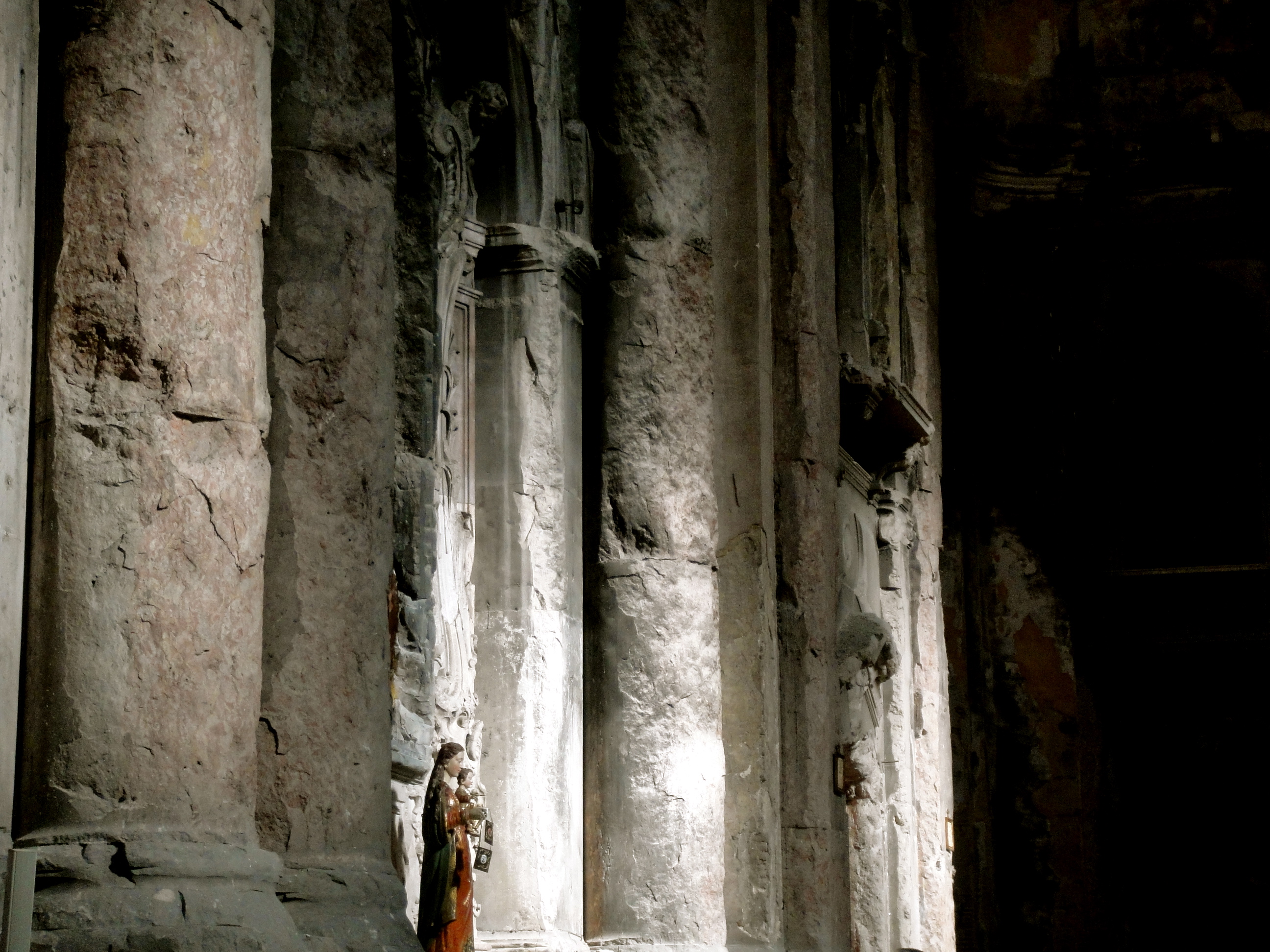
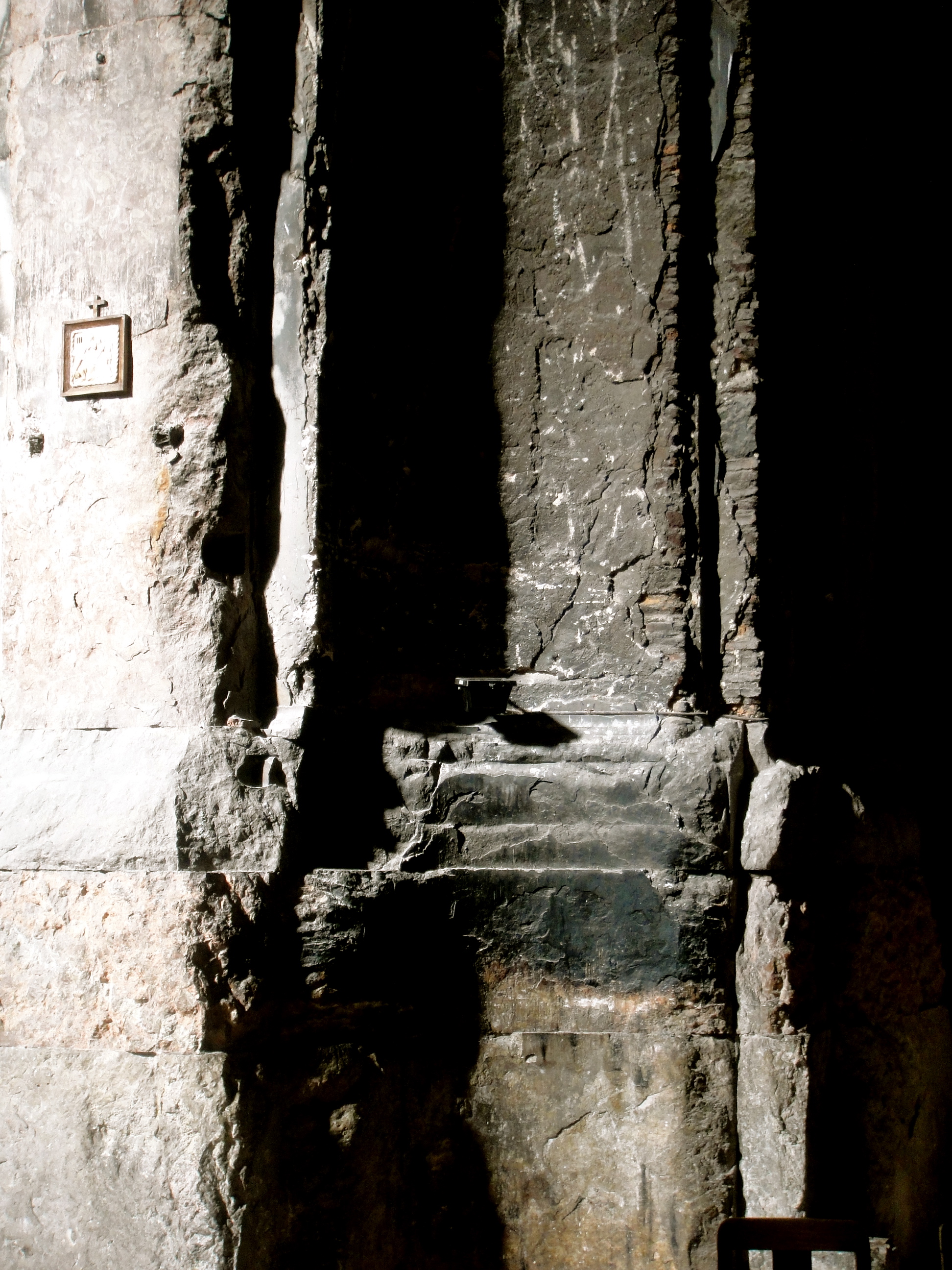
Unmentioned in my travel guide, and not at all obvious from the outside, the interior of this church made my heart miss a beat. Not because of the usual offerings of elaborate gilded beauty and over the top baroque decorations. Quite the opposite. Apparently (so I have learned subsequently), the church suffered a huge fire in 1954, with the result that its interior ornamentation, surface marbles, stone work – pretty much every embellishment was completely destroyed. Having never been renovated, but only the ceiling painted a terracotta orange, the church is utterly bare of all ornamentation, showing its raw and tender bruising and wounds with the dignity of a religious martyr; its statues now unrecognisable, its stone work covered in huge great cracks, holes and patches of damp and detritus. Where the sun streamed in through the southern windows and hit various aspects of the architectural damage, it looked like the church had been submerged for centuries under an ocean gloom, only recently recovered and showing the acid wounds of its salty submersion, or like the cobweb covered, partially decomposed wedding banquet of Dickens’ Miss Havisham. And this deeply inflicted damage was all the more obvious and painful because this church has not been left as ruins. Rather, as a fully used institution, the tidy pews and perfectly smooth ceiling mark a dramatic contrast to the wounds inflicted underneath. This was an unmissable experience, a moment of great epiphany and one which no visitor to Lisbon should miss.
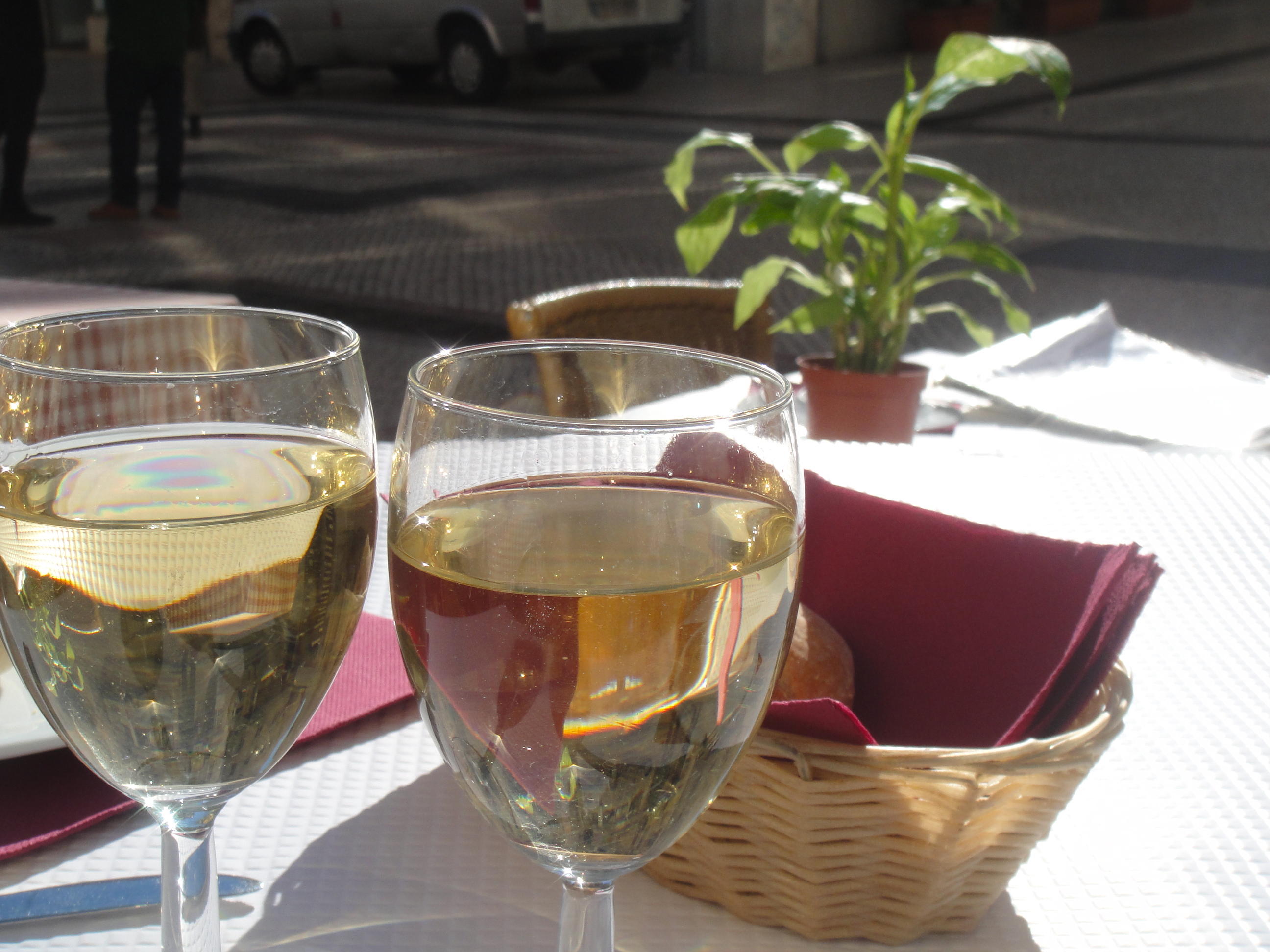
So the day was proceeding fast, and all that really remained for us to do was to sit back, in the glaring autumn sunshine, and enjoy a perfect plate of squid and octapus and a few glasses of ice cold white wine, whiling away the remaining hours before the inevitable return journey began. Time to reflect on a grand tour through a compact but multifaceted city, from castles to rivers, and art museums to stunning churches; time to appreciate the wonderful Lx Boutique Hotel, the great food consumed, and the fantastic restaurants found to recommend and maybe return to one day; time to enjoy the heat of summer once more, before the start of a long frosty winter back in London.

Like the fall of autumn leaves on a windy November day, the scenes from that sun-drenched lunchtime are now dissipating away, as I sit here, returned to London, back in the darkness of a winter’s evening. Distracted by the work I must return to, the practicalities of ironing, and washing, and making myself food, my connection with my holiday grows weaker by the minute, as the warmth of the sun is forever shrouded in the weak light of November, and our shiny red cockerel is the sole remaining proximity to the spirited Portugal of our holiday’s brief acquaintance. But with this blog, my separation is tempered, my ties with Lisbon reforming as I reconnect through cyberspace and share my experiences with you all. Day five is over, but my memories have only just begun.
Still to come: Lisbon – the food, and many more photos. See you then.

Photographs and content © Nicholas de Lacy-Brown and The Daily Norm, 2001-2012. Unauthorized use and/or duplication of the material, whether written work, photography or artwork, included within The Daily Norm without express and written permission from The Daily Norm’s author and/or owner is strictly prohibited. Excerpts and links may be used, provided that full and clear credit is given to Nicholas de Lacy-Brown and The Daily Norm with appropriate and specific direction to the original content.