Skip to content

Posts from the ‘Norms do…’ Category

The Daily Sketch London 2012 – Final voyage of the Olympic Torch

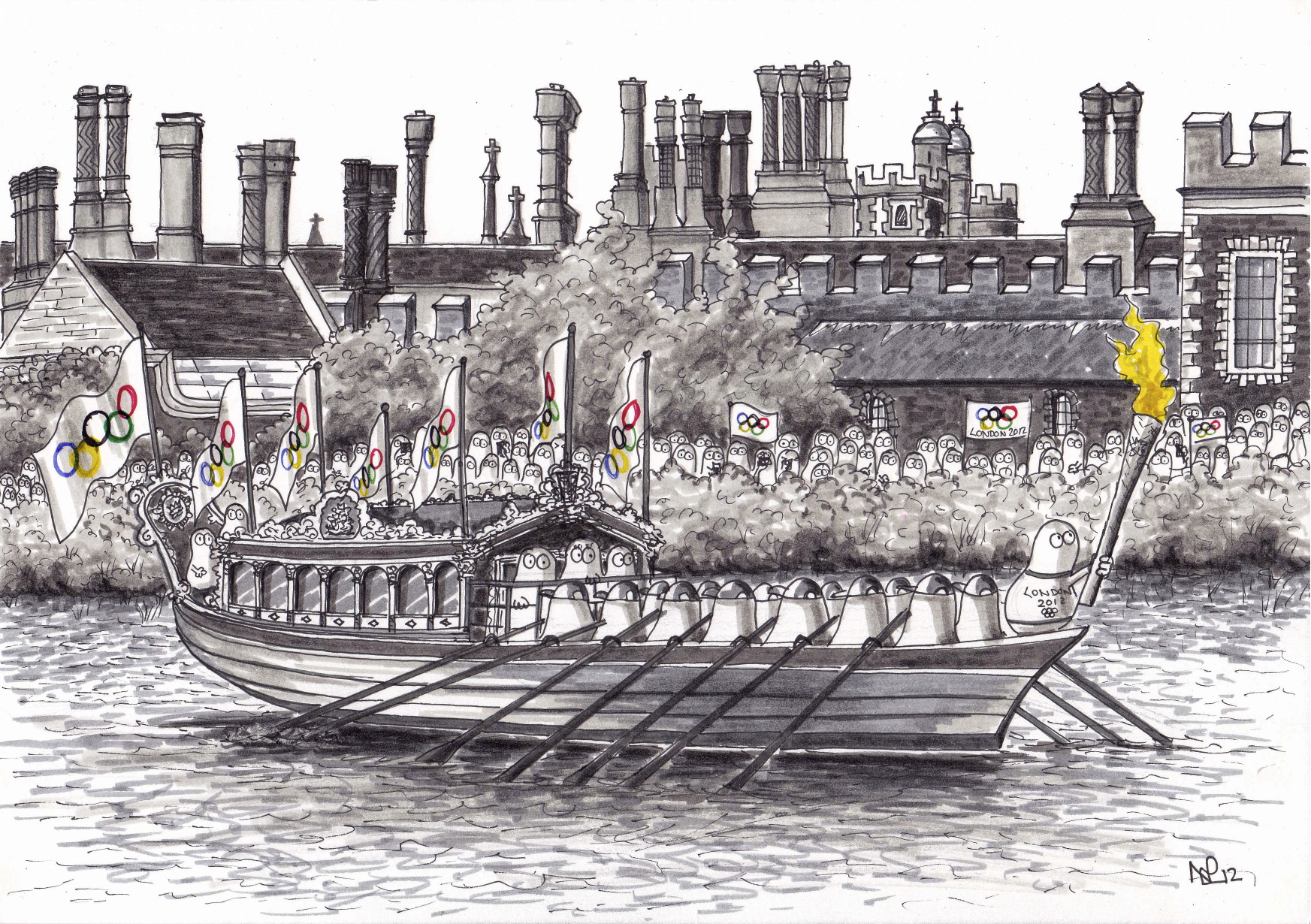
It’s been 7 long years in the waiting. Yet as every year passed, some new development heralded the coming of the world’s biggest sporting event to London, home of the Norms. The final step of the preparations for the games was the long and winding 8000 mile trip of the olympic flame, straight from the rays of the sun captured by priestesses on Mount Olympus, to a 70-day adventure all the way across the UK, come rain and shine, and finally, on it’s last day, up the Thames, casting off on the gilded rowbarge, Gloriana, originally made for the Diamond Jubilee, and now taking the flame on the final leg of its journey from the palace of Henry VIII at Hampton Court, all the way along to the iconic Tower Bridge and its final journey to the Olympic stadium.

No one is more excited about the arrival of the Olympics in London than the Norms. They may be legless (in the non-alcoholic sense), and blobby and gelatinous, but they can play sport as well as the next Norm. Here they are on the morning of the great opening ceremony, taking the flame aboard the Gloriana upon its penultimate voyage towards its final Olympic games destination. Horray for the Olympics!

Norms at London 2012: The Torch’s final journey (2012 © Nicholas de Lacy-Brown, pen on paper)

© Nicholas de Lacy-Brown and The Daily Norm, 2001-2012. Unauthorized use and/or duplication of the material, whether written work, photography or artwork, included within The Daily Norm without express and written permission from The Daily Norm’s author and/or owner is strictly prohibited. Excerpts and links may be used, provided that full and clear credit is given to Nicholas de Lacy-Brown and The Daily Norm with appropriate and specific direction to the original content.


Diamond Jubilee Weekend: Let the street parties begin!

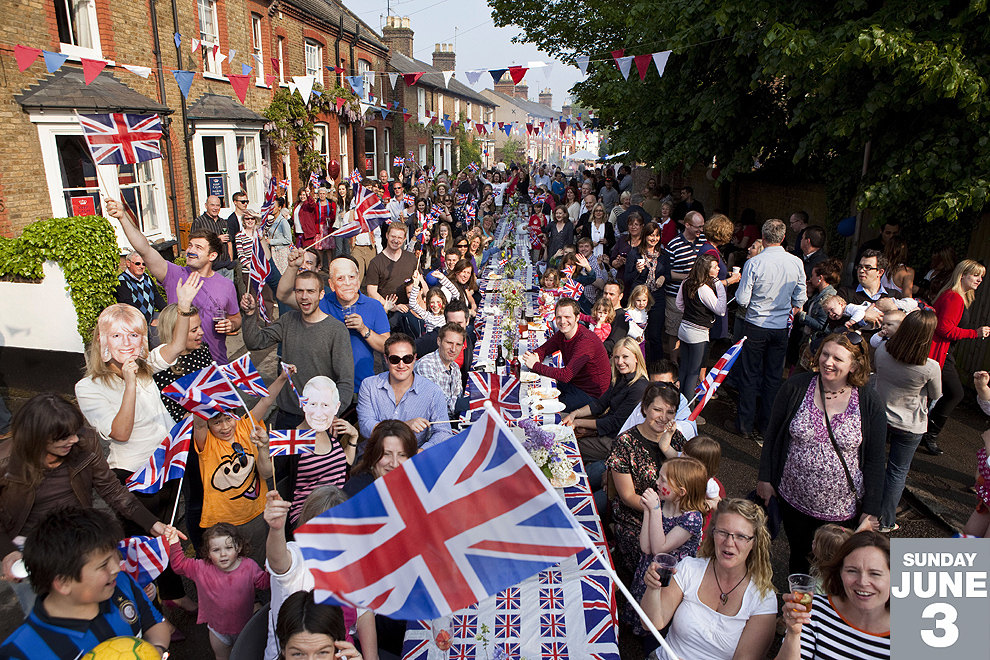
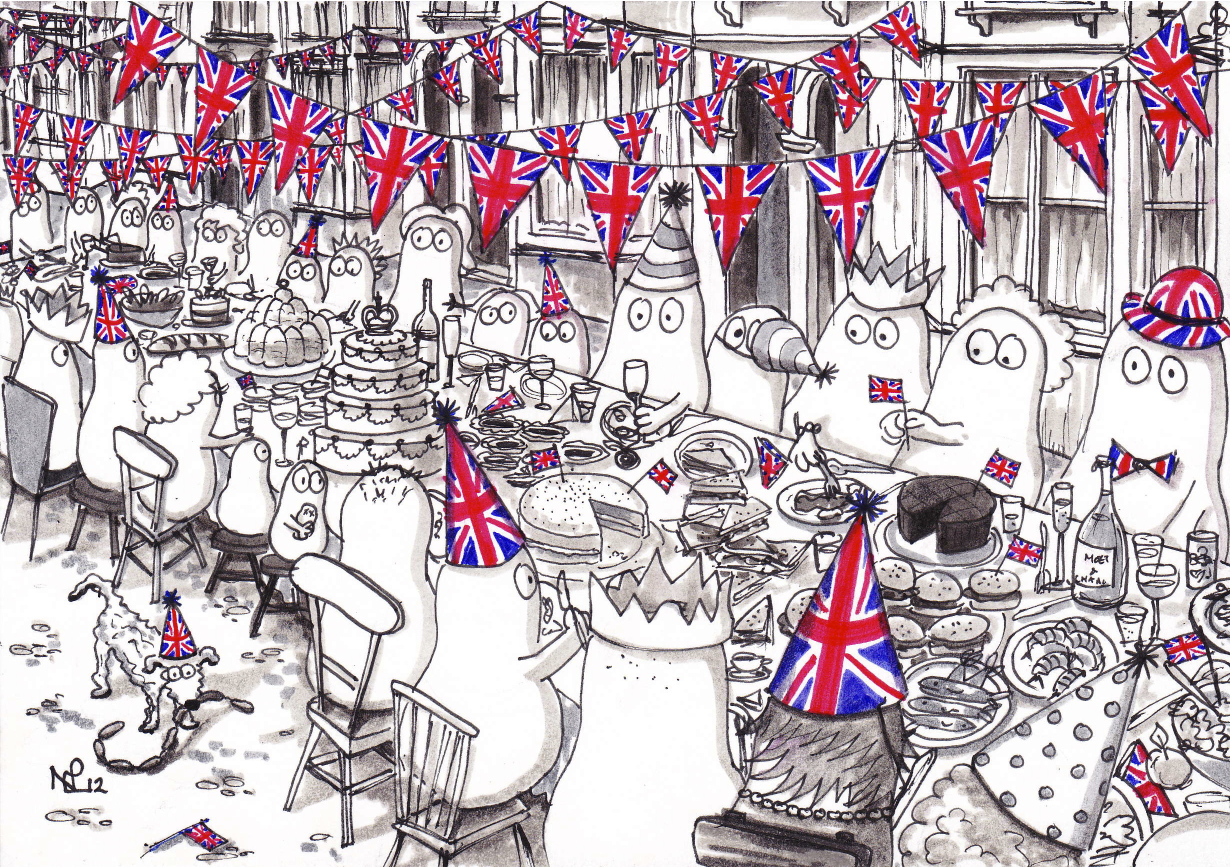
They’ve strung out the bunting and covered cup cakes and cookies and muffins in red, white and blue. The tables are being set up where cars normally dominate, huge, long white sheets become makeshift tablecloths on a street-long banqueting space, the dishes are assembled, each decorated with a token miniature union jack, and the cars are formally banished, as neighbours gather together for the event of the decade: the Diamond Jubilee Street party is here!

It’s a rather anachronistic tradition, but one which is all the more necessary now that neighbourhoods have become soulless and people who live side by side barely know each other’s names. Back in the middle of the 20th Century, when the street party was a more regular occurrence (notable street parties included celebrations at the close of the Second World War and the Queen’s Coronation itself, in 1953) street parties were probably more of a naturally organised occasion. Neighbours lived in one another’s front rooms, borrowing cups of sugar, nosing into each other’s gossip, and standing around on the street corners, having a chat. But as society has become gradually more transient, with people moving around for career changes, schooling changes, and moves abroad as part of the gradual trend towards globalisation, the idea of neighbourhood has been relegated to soap dramas on TV. In today’s age, with neighbourly relations at an all time low, and english reserve causing a general aptitude towards individual isolation, that the age of the street party is starting to catch on again, as people harp back to the old days, seeking a return to the days of neighbourhood values, when your street was a haven, a place where children played safely, and people felt the support not just of their closer relatives, but of the people living all around them.

The Norms’ Diamond Jubilee Street Party (2012 © Nicholas de Lacy-Brown) (Pen and pencil on paper)

What with the Golden Jubilee ten years ago, the Royal Wedding last year, and the Diamond Jubilee now upon us, the street party is on the up, and this weekend will see the union jack go into overdrive, not just in London, but all over the UK. Naturally, the Norms are not likely to miss out on the action, and here in Normville, the Norms have missed none of the Jubilee spirit, stringing out the bunting, decking the tables with cakes, and sandwiches, jellies and bottles of bubbly, as they fly the flag high in honour of a magnificent 60 year reign of our Queen, Elisabeth II. May the jubilee weekend begin!!

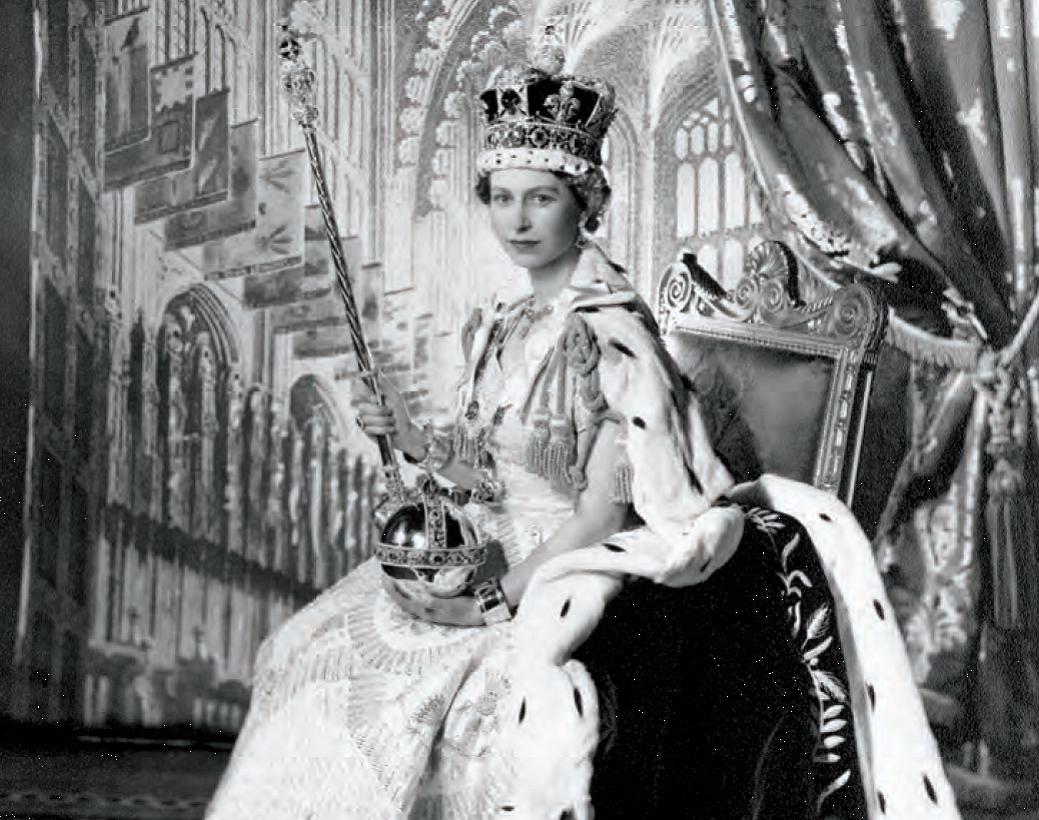
The coronation of HRH Queen Elizabeth II

A street party back in 1977 for the Silver Jubilee

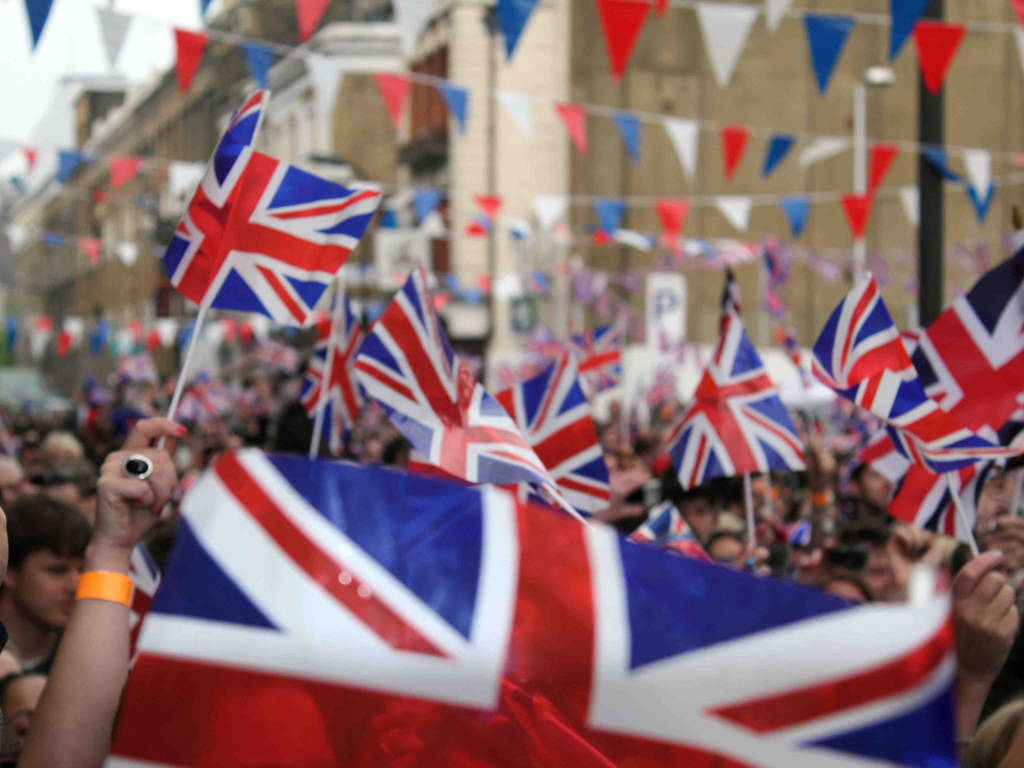
London is filled to bursting point with bunting and union jacks

PS For the best jubilee cake ever known to man, check out the award winning cake made by my dearest friend Celia on her blog, Lady Aga.

© Nicholas de Lacy-Brown and The Daily Norm, 2001-2012. Unauthorized use and/or duplication of the material, whether written work or artwork, included within The Daily Norm without express and written permission from The Daily Norm’s author and/or owner is strictly prohibited. Excerpts and links may be used, provided that full and clear credit is given to Nicholas de Lacy-Brown and The Daily Norm with appropriate and specific direction to the original content.

Deconstructed Norm Sculptures in a Setting (after Henry Moore)

Henry Moore, the British sculptor, is famous the world-over for his semi-abstract rounded bronze figures and organic wood-carved nudes. His indisputable popularity as one of the greatest sculptors of our age is demonstrated by the sheer proliferation of his works on public display in town centres and parks and the gardens of large country estates throughout the UK and around the globe. His organic, satisfying rounded forms do not offend polite society, but instead offer the right about of minimalist abstraction mixed with sentimental femininity and human characterisation. His sculptures often dominate the landscape, while inviting passers by to interact with the various holes and curves intrinsic to Moore’s work. They are like a Picasso abstract come to life, or a Michelangelo mother and child melted into a tender rounded form.

Henry Moore, Five Figures in a Setting (1937)

Yet it is not his sculptures which attract me. Don’t get me wrong – I love his works. They are satisfyingly curvaceous, with a mixed attraction of sharp edges and smooth polish, a recognisably humanised form with a metaphysical expressionless finish, open to interpretation, and perfectly executed from every angle. But for me, the real stars of any Henry Moore show are his sketches.

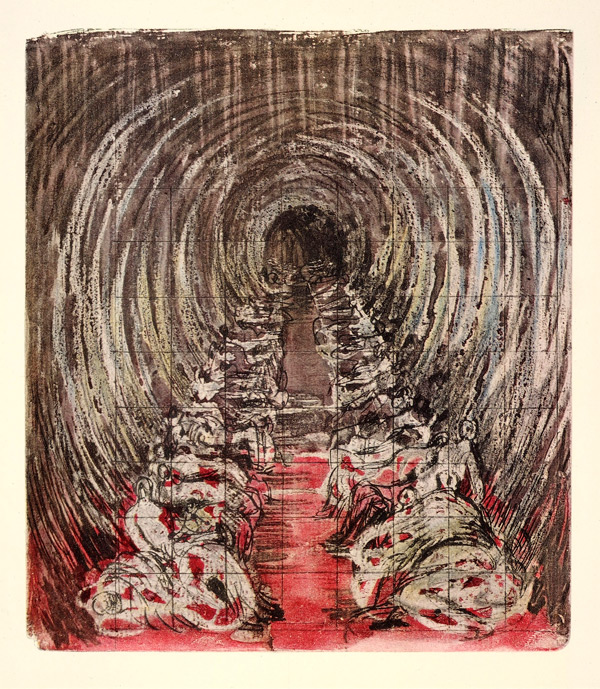
Henry Moore, Shelter Sketch Book (1967)

Often he sketched when ideas came into his head. Consequently Moore left us with a great variety of sketches in which we can see Moore exploring the various organic forms which are now famous sculptural manifestations, as well as plenty of rough drawings devoted to the mother and child image that so obsessed him, and paintings in which Moore appears almost to capture his three-dimensional forms, imprisoning them within an eternal two-dimensional abstract landscape. Come the second world war, and Henry Moore was made an official war-artist for Britain, but not as a sculptor. Instead Moore would head down to the packed tube stations, where thousands would huddle, every night, using the dark tunnels and airless platforms of the London underground as make-shift bomb shelters. There he captured moving scenes of humans at one in their vulnerability, trying to sleep through their anxiety, curled up together for moral support.

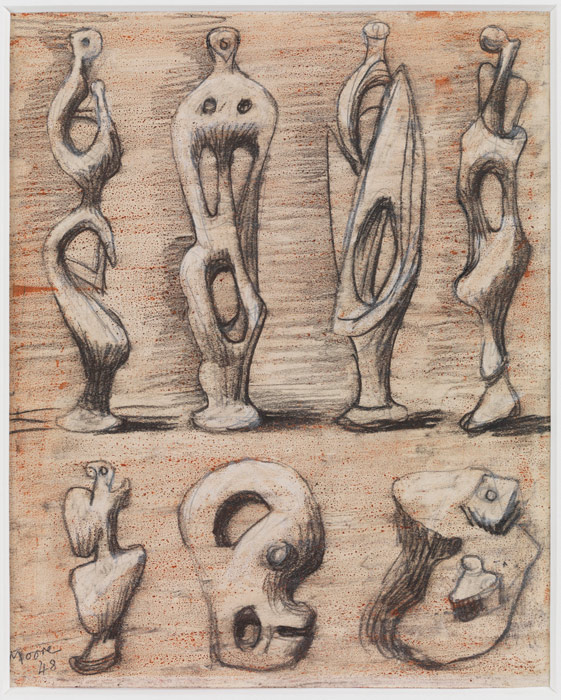
Henry Moore, Standing Figures and ideas for Sculpture (1948)

Moore’s sketches offer us an invaluable insight into the great sculptor’s mind at times when he would pour his sculptural imaginings straight onto paper, some of which eventually made it into three-dimensional form, but many of which never made it beyond the confines of pen on paper. But these sketches are far more than just studies or ideas. They are works of art in themselves, capturing moments of intense human emotion, with a dark intensity and an often surreal setting. They are artistic masterpieces worthy of as much attention as the finished sculptural articles which have become a staple of British art all over the world.

Ever inspired by the wonderful art around me, I sketched my own Moore-inspired sculptural forms. Taking the humble Norm as the basis for my drawing, I deconstructed my Norm, presenting the customary rounded figure as a body with strings and a hollow inside, a head, two large eyes, the Norm’s characteristic single hand, and a crescent-like structure which I like to think of as an expression of a Norm’s eye-lashes. The result is a sketch full of the abstract surrealism which Moore’s own works promote, but with that hint of Norm playfulness, some strings and a blood-red hollow, all set within a shady landscape leading to nowhere. If only Moore had seen it. The Deconstructed Norm would have been slowly rusting somewhere in a park by now. Unless it was made of metal, in which case it would have been nicked…

Deconstructed Norm Sculptures in a Setting (after Henry Moore) © 2012, Nicholas de Lacy-Brown, pen, pencil and watercolour on paper

I leave you with a mere handful of some of Moore’s incredible works on paper. Until next time…

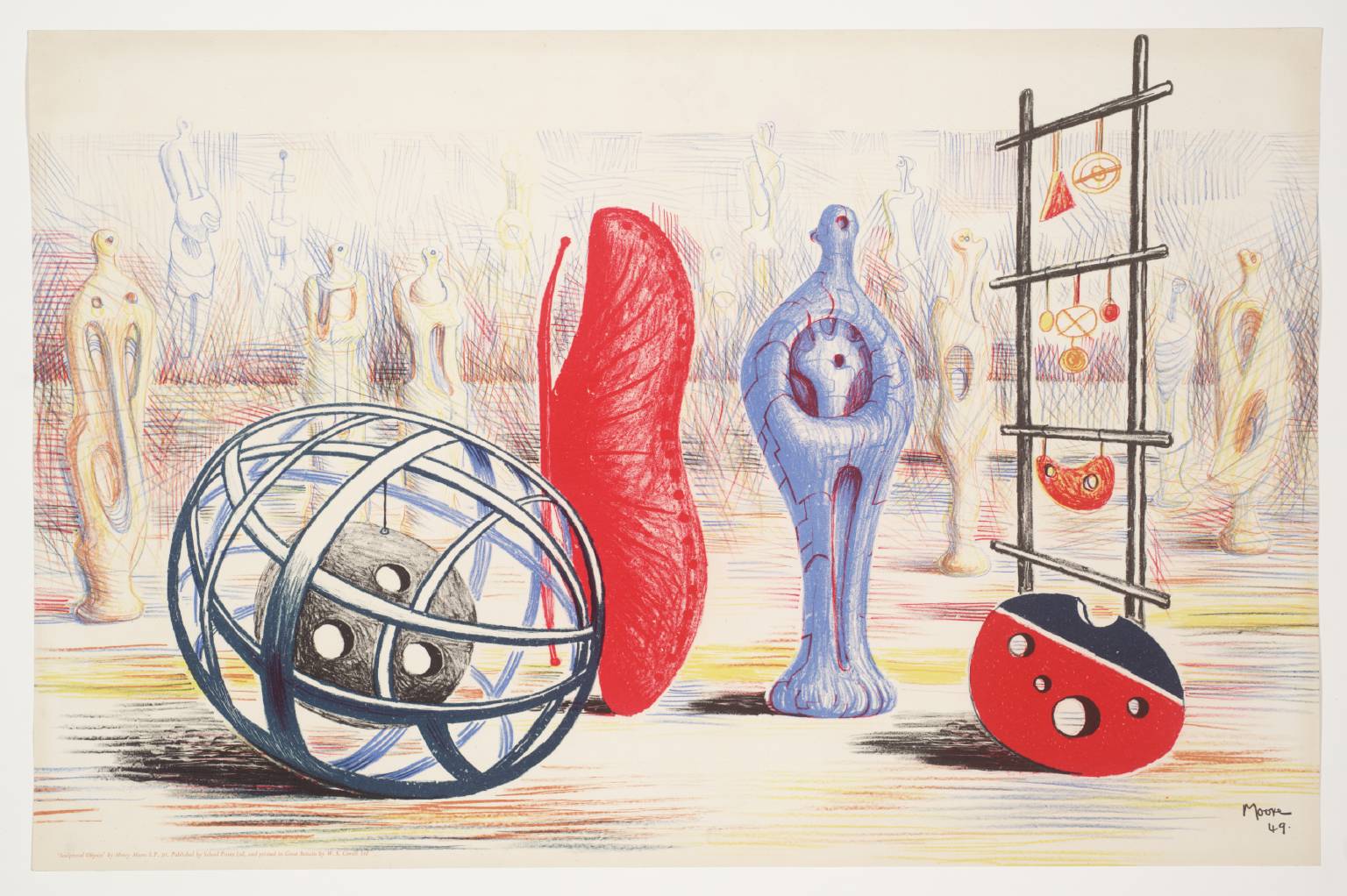
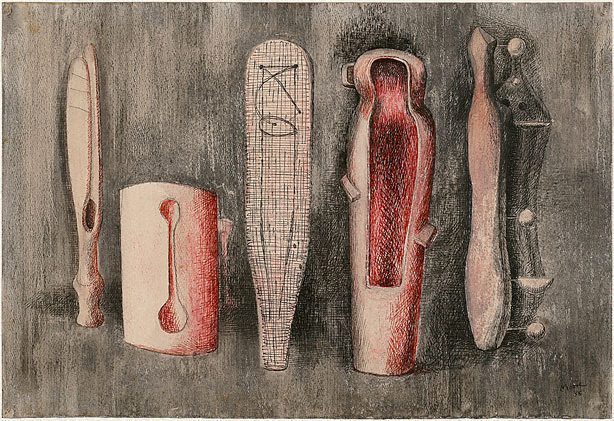
Henry Moore, Sculptural Objects (1949)

Henry Moore, Sculptural Ideas, hollow form (1938)

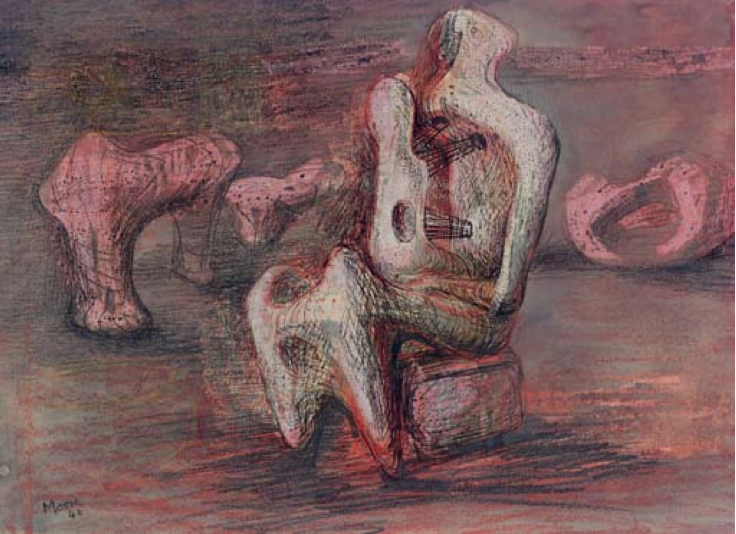
Henry Moore, Mother and Child; Drawing for a sculpture in wood and string (1949)

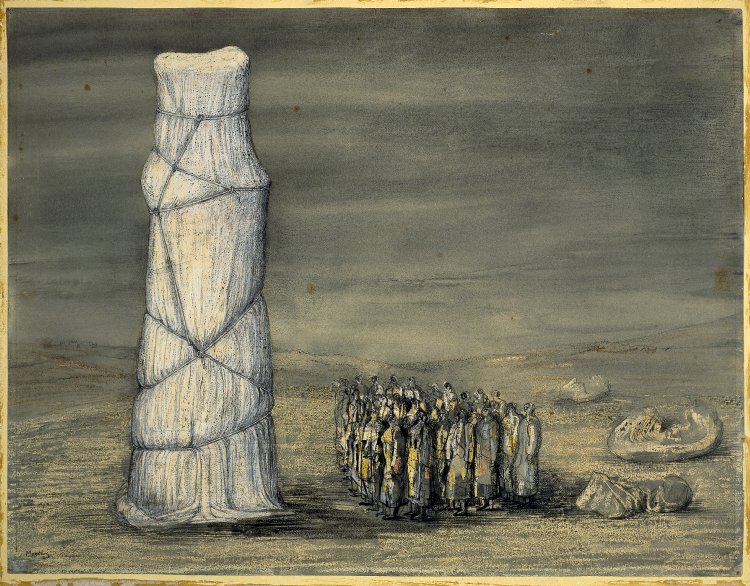
Henry Moore, Crowd Looking at a Tied-uo Object (1942)

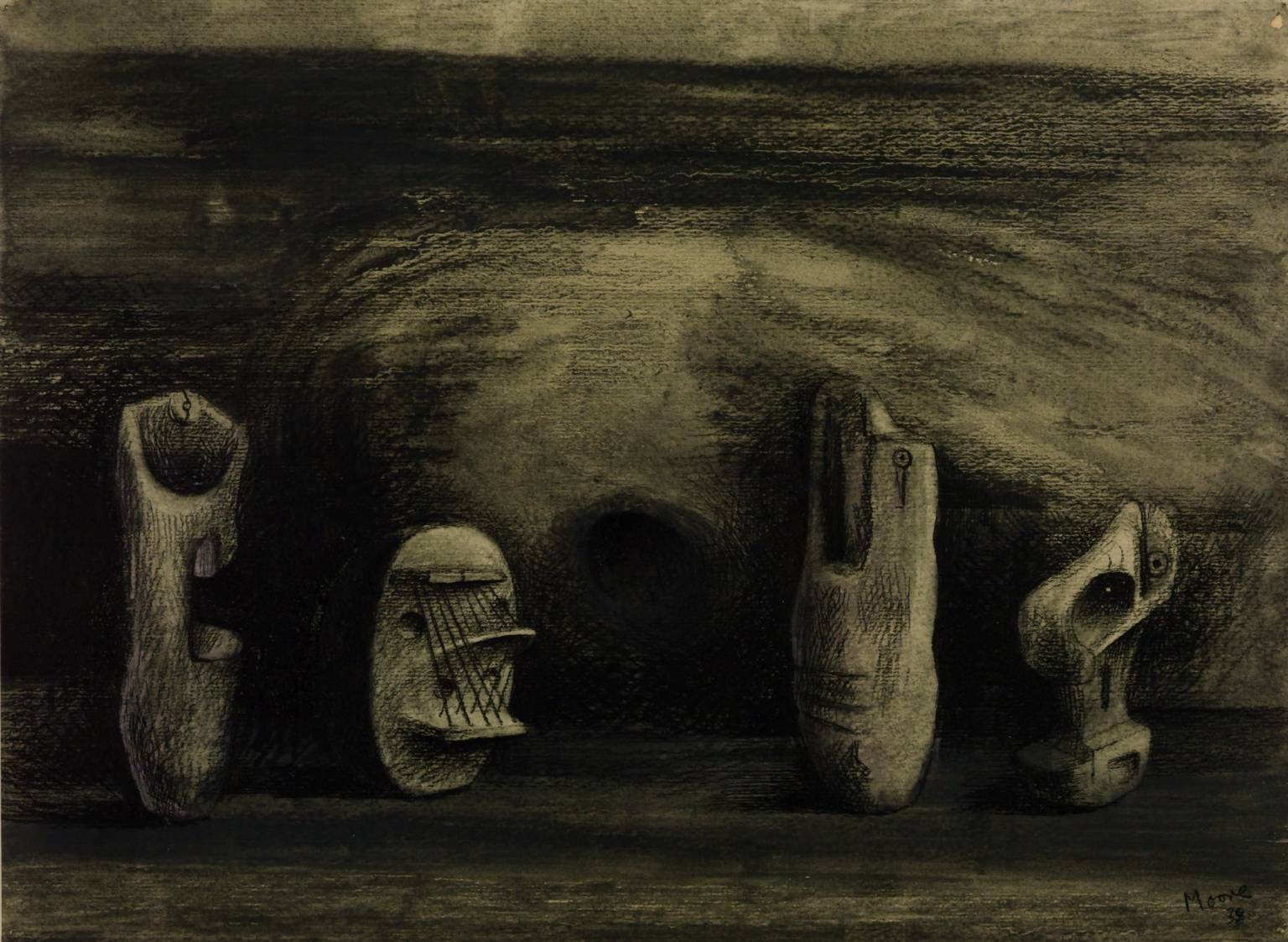
Henry Moore, Four Forms, drawing for a sculpture (1938)

Henry Moore, Ideas for Sculpture in a Setting (1938)

Manet Norms at the Cappuccino Grand Café – Part II: Decoding the Manet’s

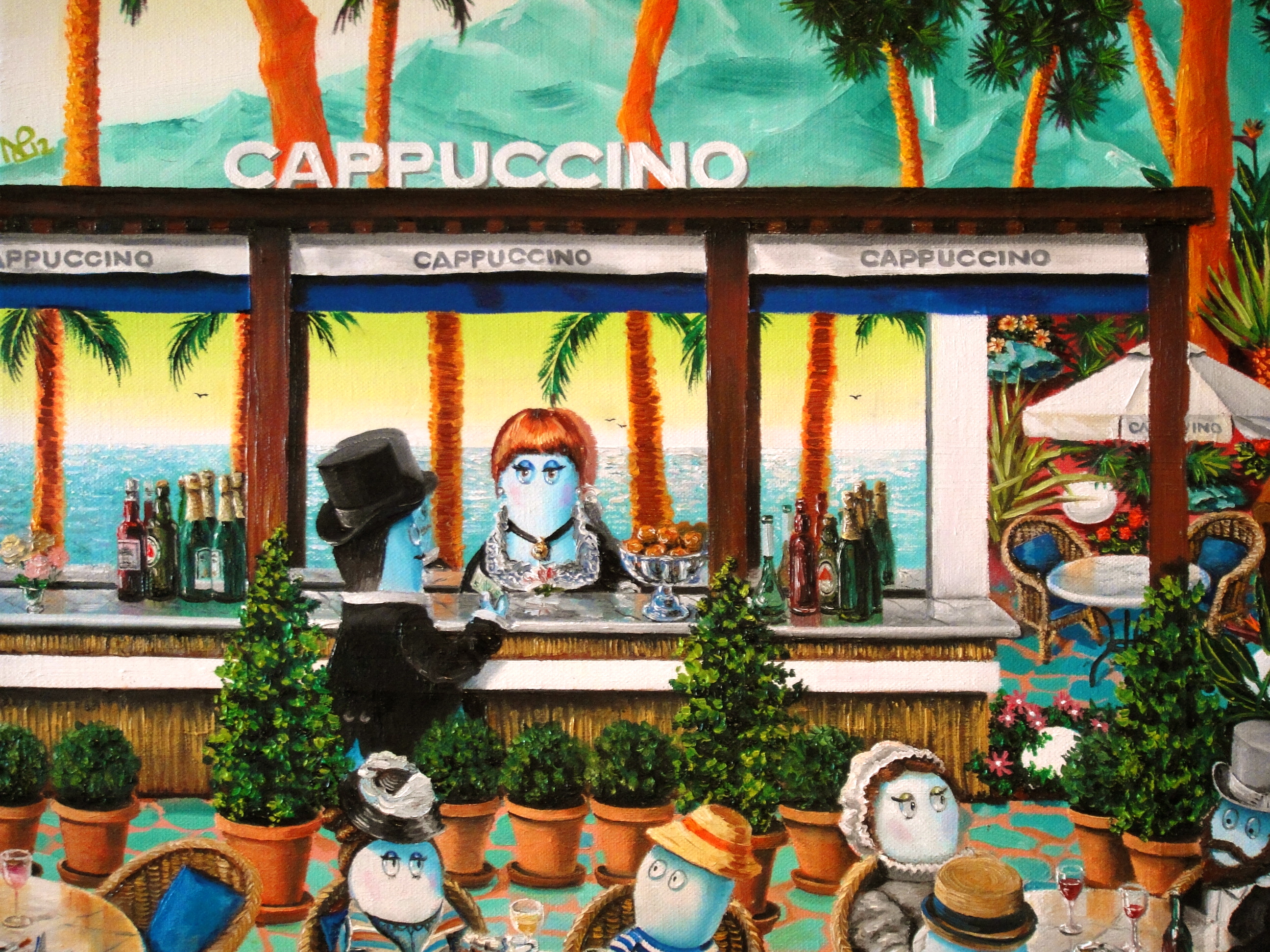
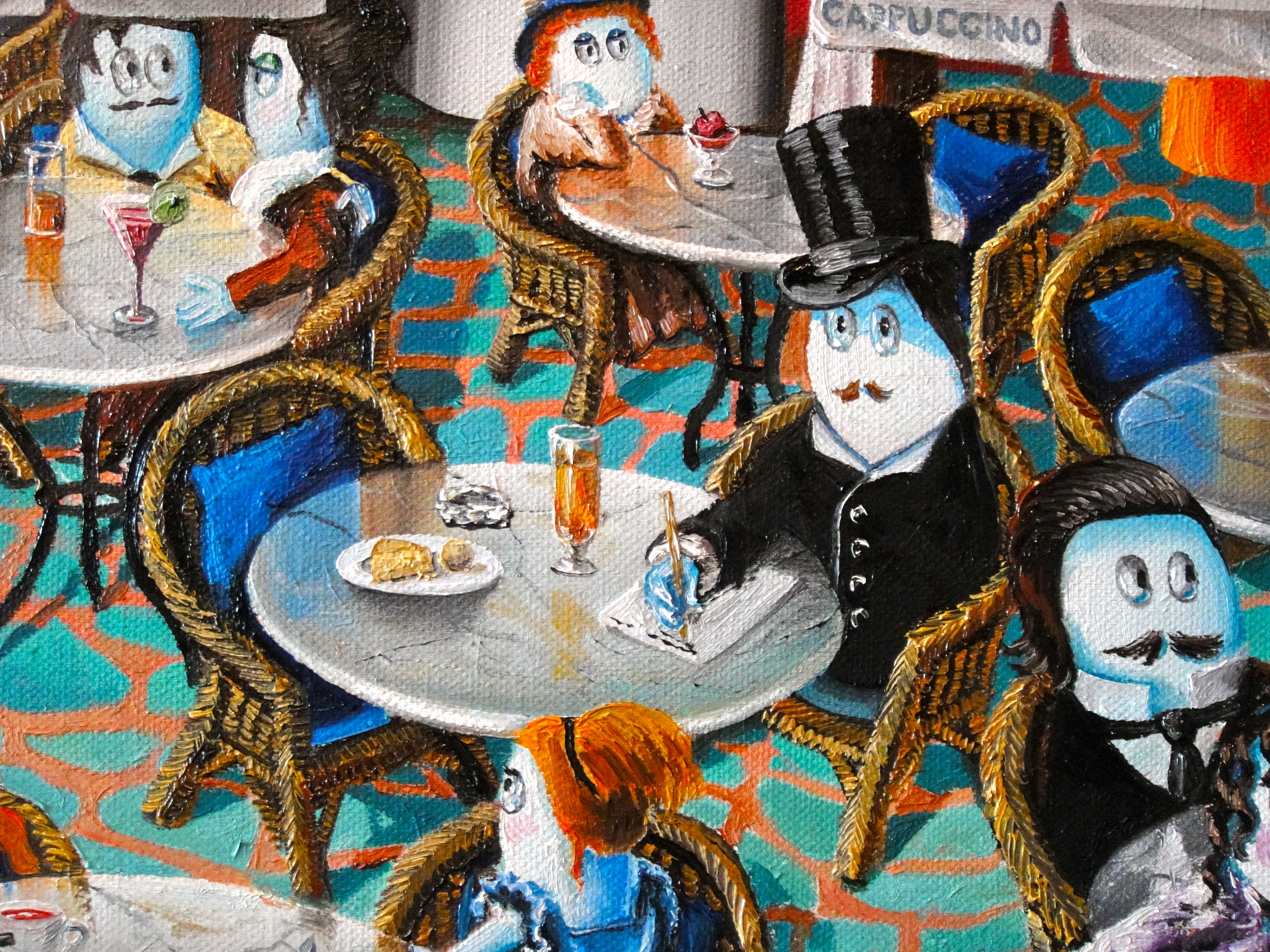
Yesterday I launched my new painting onto the public stage – Manet Norms at the Cappuccino Grand Café. Having stemmed from an idea to recreate Manet’s masterpiece, Bar at the Folies-Bergère, I felt that an insertion of the painting into my Cappuccino landscape would only work if the other Norms too were based on Manet paintings. One look at Manet’s oeuvre revealed a host of images which were ripe for reconstruction within my Normy café scene. Like many of his impressionist colleagues after him, Manet was a pioneer of painting real life, scenes capturing the French society all around him, from lonesome drinkers supping upon a plum brandy, to day trippers out on the coast and a child fascinated by the plumes and puffs of the steam railway. All this Manet captured to perfection, and feasting hungrily upon his works, I transformed a great many of them into Norm customers at my café when presenting the thriving, bustling atmosphere for which Cappuccino Grand Café is famous.

So without further ado, here are all of Manet’s original paintings followed by my own interpretation as featured in my new Cappuccino café scene. Despite being some 150 years apart, these characters slip effortlessly behind the elegant marble tables and botanical celebration of Cappuccino’s terrace in a café which exudes sophistication, and retains the feeling of glamour and recreational hedonism which was intrinsic to venues such as the Folies-Bergère back in Manet’s day. Parfait!

Bar at the Folies-Bergère

Edouard Manet – A Bar at the Folies Bergère (1882)

My reimagination of the Bar at the Folies Berger…

Those bottles…

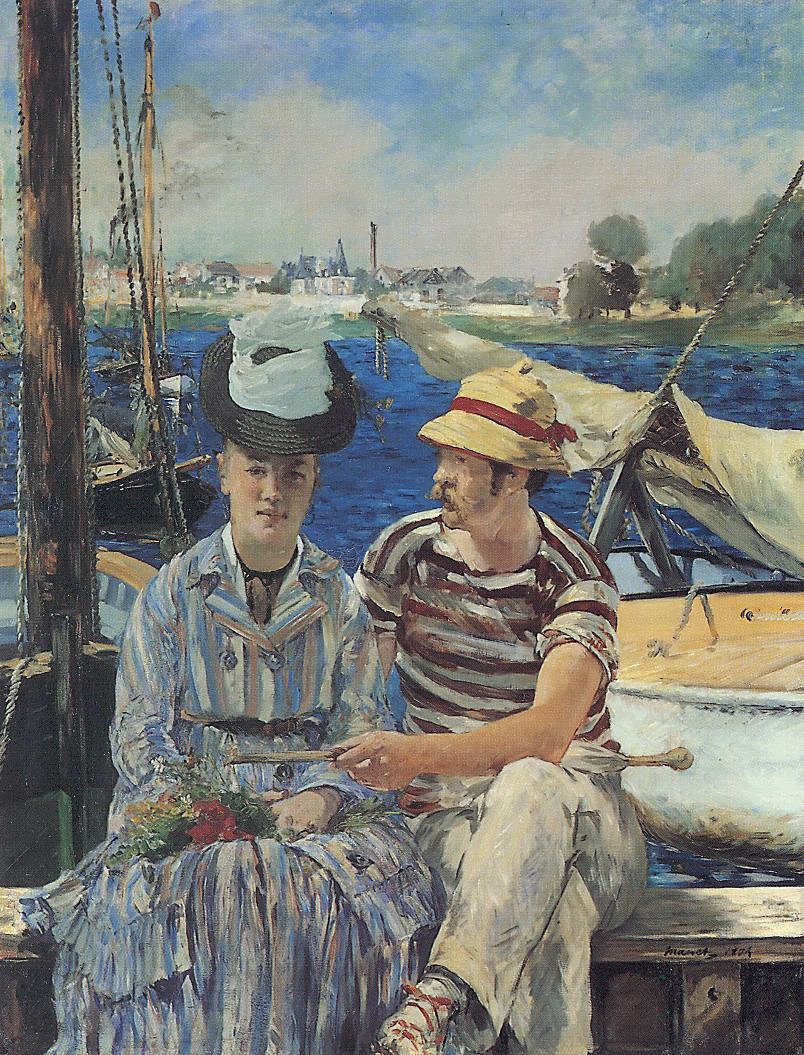
Argenteuil

Edouard Manet – Argenteuil (1874)

My Norms, loosely based on the figures in “Argenteuil”

The Luncheon

Edouard Manet – The Luncheon (1868-9)

The Luncheon-based trio of Norms

Le Chemin de Fer (The Railroad)

Edouard Manet – Le Chemin de Fer (The Railroad) (1873)

Norms, complete with the little sleeping puppy

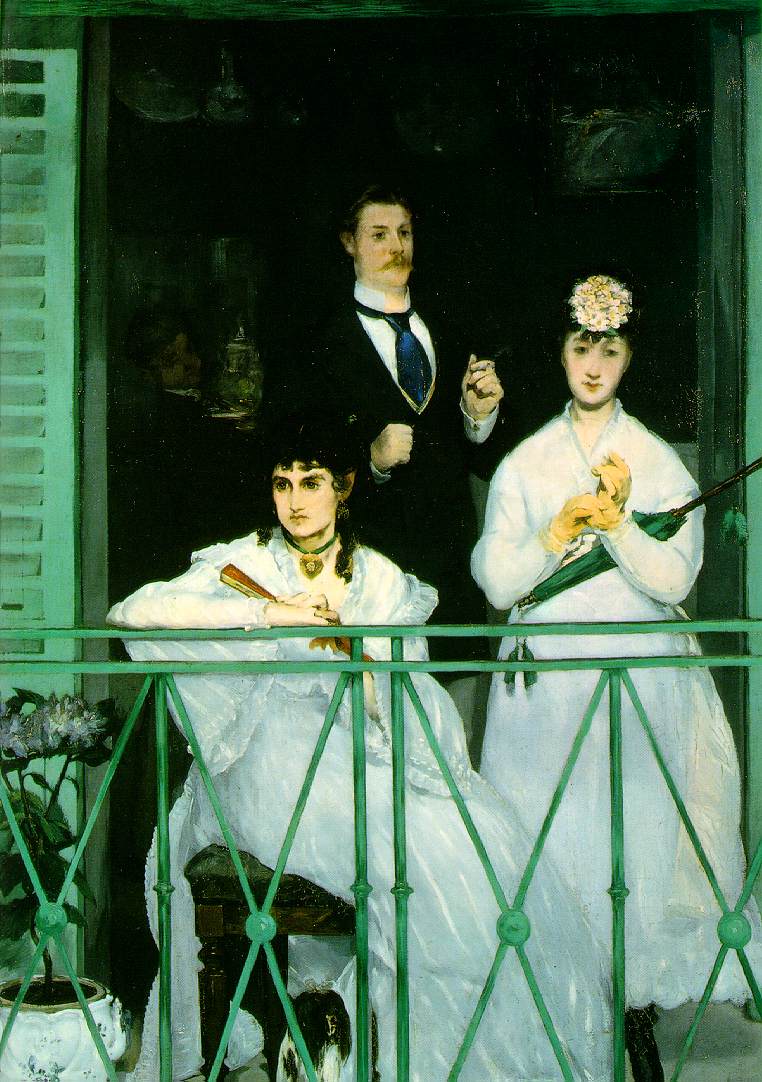
The Balcony

Edouard Manet – The Balcony (1868-9)

Not on a balcony, but the same trio as Norms

Man writing in a café / “Chez Tortoni”

Edouard Manet – Man Writing in a Café / ‘Chez Tortoni’ (1878)

Writing just the same “Chez Cappuccino”

Chez Le Pere Lathuille 

Edouard Manet – Chez Le Pere Lathuile (1879)

Love is in the air, at least for one of these Norms…

La Prune (The Plum Brandy)

Edouard Manet – La Prune (The Plum Brandy) (1876-8)

I hope the Norm writing will join this lone drinker for a date

© Nicholas de Lacy-Brown and The Daily Norm, 2005-2012. Unauthorized use and/or duplication of the material, whether written work or artwork, included within The Daily Norm without express and written permission from The Daily Norm’s author and/or owner is strictly prohibited. Excerpts and links may be used, provided that full and clear credit is given to Nicholas de Lacy-Brown and The Daily Norm with appropriate and specific direction to the original content.

Manet Norms at Cappuccino Grand Café – Part I

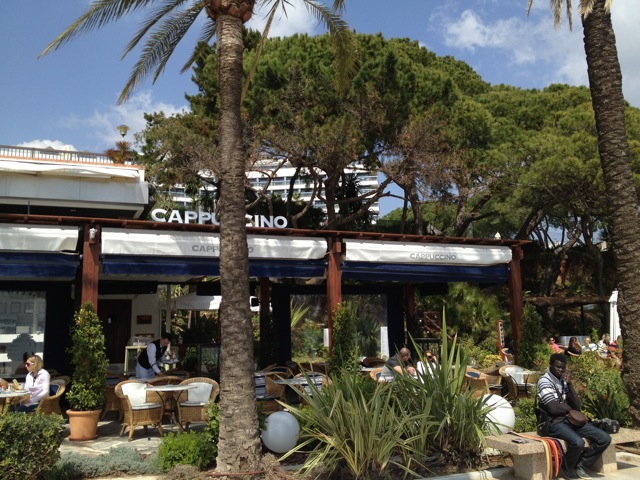
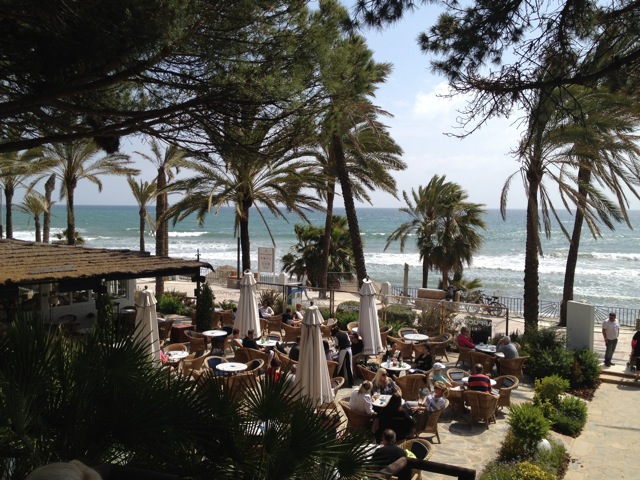
It came to me one sunny afternoon, when I was painting my last Norm work, Le Dejeuner sur l’herbe. My mind should have been on the painting, but as is often the case when painting the minutiae of a large detailed canvas, my mind was elsewhere, in Spain’s jet-set Marbella in fact, on a hazy summer’s day, sitting in the green and bounteous garden of the Cappuccino Grand Café, with the sea calmly lapping the sandy shore, and all the worries of the world wafting away in the sweet-smelling mediterranean air. Such is the effect of the Grupo Cappuccino’s free radio station, whose chilled jazz and nostalgic bossa-nova  transports one back to the Cappuccino experience so thoroughly enjoyed in the summer past, even when all around you southern England, land of the current “drought” is on high flood alert.

The real Marbella Cappuccino

So there I was thinking about Cappuccino, and I knew that following a recent trip there, I just had to recreate the café on canvas, so that, as well as listening to its soundtrack, I could also hang a large image of my favourite Spanish café in my home here in London. Trouble was, I already had a canvas reserved for another Norm parody based on a second masterpiece of impressionist favourite Eduoard Manet, A Bar at the FoliesBergère. 

Cappuccino’s gardens by the sea

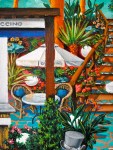
That’s when it occurred to me – I want to paint Manet, and I want to paint Cappuccino – why not combine the two? And so the idea was born. I set about creating this partner to my Norm version of Le Dejeuner sur l’herbe with Manet’s renowned Bar at the FoliesBergère installed right where Cappuccino’s own bar stands. And that was just the start. Having decided to paint one Manet masterpiece within the scene, it seemed consistent to bring several other Manet characters to life when I painted the customers of my café. So, in these gardens, you have an ultra chic, wonderfully contemporary Cappuccino Grand Café together with resident DJ Pepe Link, and a dashing Norm waiter while, conversely, the customers comprise a load of Norms in 1860s period dress. It’s a combination which I love and I am so proud of the result.

Without further ado, I give to you my latest Norm creation, Manet Norms at Cappuccino Grand Café.

Manet Norms at Cappuccino Grand Café (2012 © Nicholas de Lacy-Brown, Oil on canvas)

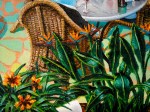
On tomorrow’s post I’ll guide you through all the Norms featured in Cappuccino’s lush tropical garden, and all the paintings by father of the Impressionists, Edouard Manet, which inspired them. In the meantime I leave you with a gallery of some details from this new Normic landscape. À tout à l’heure.

© Nicholas de Lacy-Brown and The Daily Norm, 2005-2012. Unauthorized use and/or duplication of the material, whether written work or artwork, included within The Daily Norm without express and written permission from The Daily Norm’s author and/or owner is strictly prohibited. Excerpts and links may be used, provided that full and clear credit is given to Nicholas de Lacy-Brown and The Daily Norm with appropriate and specific direction to the original content.

The Daily Sketch – Norms do Semana Santa

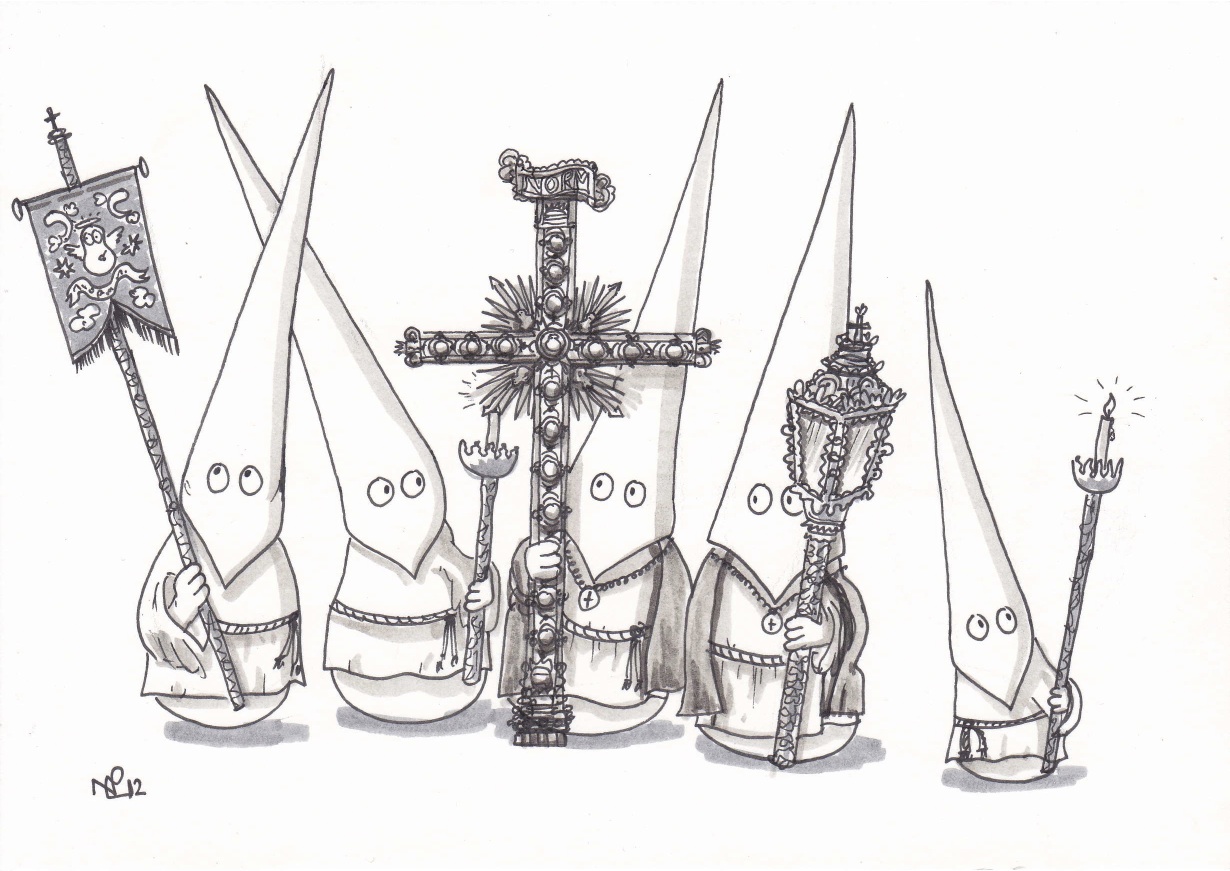
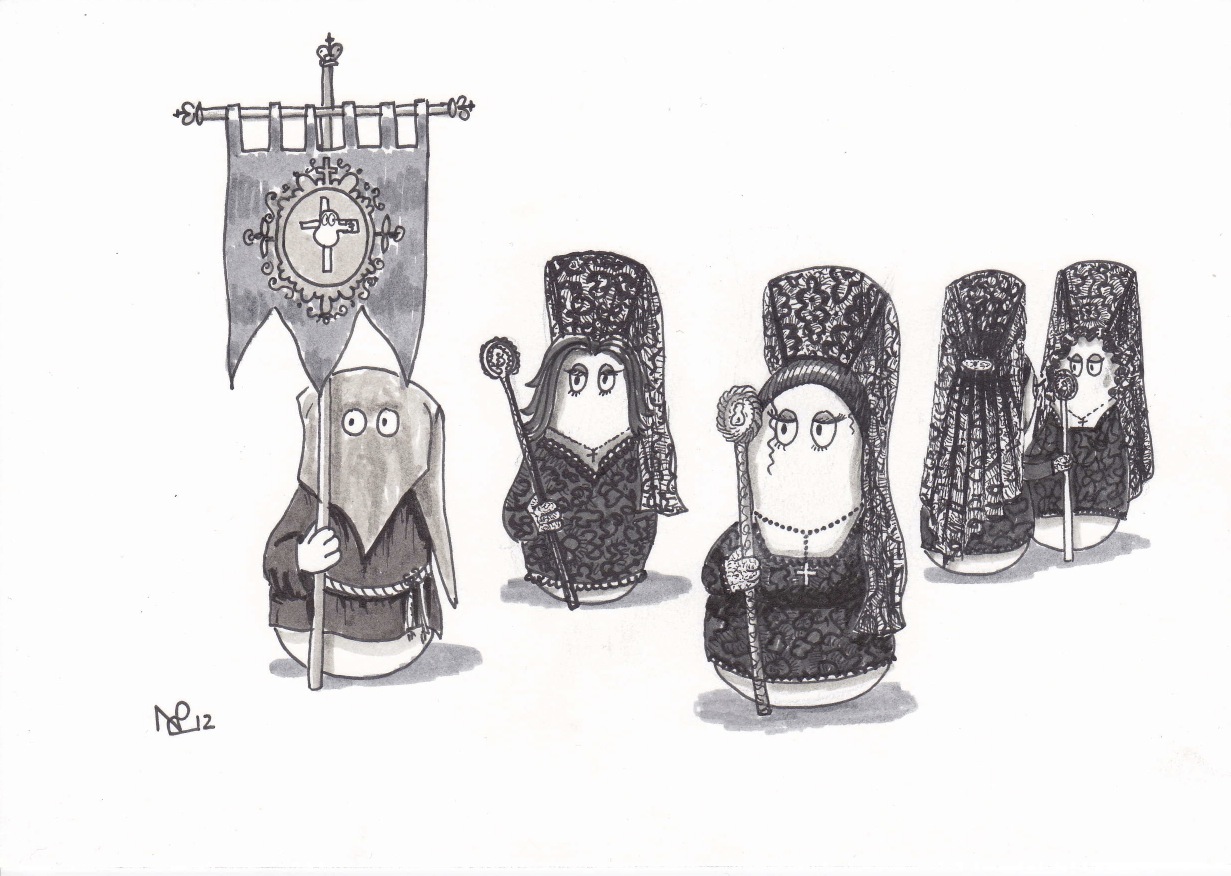
It’s Holy week around the world, and very much Semana Santa week here on The Daily Norm as myself and the Norms celebrate the lavish spectacle that are the Spanish Easter festivities. From photos and paintings, to sketches, today the Norms put in their two pennies worth indulging in their very own Semana Santa celebration. Thus a great body of costaleros share the burden of the vast tronos upon which a canopy contains a statue of a weeping Mary, surrounded by candles, lanterns and flowers. Here too, a group of Norms dress in the capriotes of the nazareños, carrying the typically opulent accessories of the procession – ornamental lamps, candles sticks and a magnificent crucifix. In the meantime, a group of female Norms adopt the black laced mantilla and accompanying black laced outfit worn by female participants of the parades.

Tronos Norms (2012 © Nicholas de Lacy-Brown, pen on paper)

Nazareños Norms (2012 © Nicholas de Lacy-Brown, pen on paper)

Norms wearing the mantilla (2012 © Nicholas de Lacy-Brown, pen on paper)

See you tomorrow for yet more Easter-themed ramblings and artwork.

© Nicholas de Lacy-Brown and The Daily Norm, 2005-2012. Unauthorized use and/or duplication of the material, whether written work or artwork, included within The Daily Norm without express and written permission from The Daily Norm’s author and/or owner is strictly prohibited. Excerpts and links may be used, provided that full and clear credit is given to Nicholas de Lacy-Brown and The Daily Norm with appropriate and specific direction to the original content.

Norms do… Amsterdam’s Red Light District

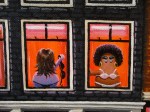
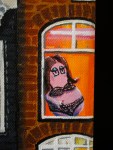
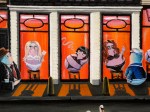
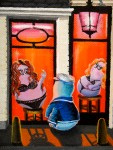
Before I had even booked my trip to Amsterdam, I couldn’t help but plan a Norm representation of what must be Amsterdam’s most renowned attraction: its red light district. Some people see Norms as being child-friendly. This painting may persuade them otherwise. Here Norms are dressed in sex head to…err…round base, with lacey bras, thongs and other revealing lingerie. On their hands, acrylic nails to tap against the glass windows help them to attract the attention of their shy customers, while heavy makeup and perfectly coiffed hair complete a carefully manicured look. As for the customers, they come from all walks of life. Here is a business man, skulking away from work, hoping for a “quickie” before he goes home to his affluent home, his wife and children. There too is a sailor, desperate after weeks away at sea for a lady’s touch. And finally we have the Norm chav, covered in tattoos and a dirty vest – he can’t afford these classy scarlet women of the night, but he can stare, and wish.

Norms in Amsterdam's Red Light District (2012 © Nicholas de Lacy-Brown, acrylic on canvas)

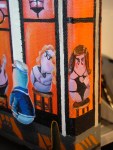
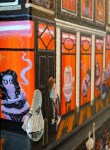
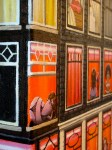
The canvas is a box canvas, so I have painted around the sides to feature more buildings, and a few more of those lovely ladies. You can see the sides, and some detailed shots of the canvas below. Enjoy!


© Nicholas de Lacy-Brown and The Daily Norm, 2005-2012. Unauthorized use and/or duplication of the material, whether written work or artwork, included within The Daily Norm without express and written permission from The Daily Norm’s author and/or owner is strictly prohibited. Excerpts and links may be used, provided that full and clear credit is given to Nicholas de Lacy-Brown and The Daily Norm with appropriate and specific direction to the original content.

Le Déjeuner sur l’herbe Part II – A Norm Re-imagining

Yesterday I explored how Manet’s enigmatic masterpiece, Le Déjeuner sur l’herbe, innovated an entirely new artistic mindset, setting a path towards impressionism, expressionism and beyond. In recognition of its important place in the history of art, countless artists have drawn inspiration from the work, and now I can add myself to the list. In today’s Daily Norm, I exclusively reveal to you my re imagining of Le Déjeuner sur l’herbe…Norm style.

At 40″ x 30″ it’s a large canvas and one that has taken me a lot of work since I begun painting shortly after Christmas. The detail of the picnic, the hampers and the clothes certainly took some doing, not least because I chose to work in oils, with multiple layers which needed to dry before adding the next. Nonetheless, the work was a joy to paint, because Manet’s original provided a template, but not a precise blueprint which meant that I could really explore my own imagination when interpreting the original.

Le Déjeuner sur l'herbe (after Manet) 2012 © Nicholas de Lacy-Brown, Oil on canvas

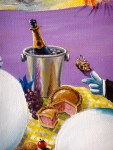
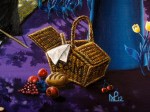
As a result, my luncheon is on the grass, but the Norms have a picnic blanket to give them more comfort. Meanwhile the picnic itself is a more civilised affair. Manet’s basket of food is replaced by two hampers from the premium Piccadilly department store, Fortnum and Masons, while the spread of food on offer ranges from traditional pork pies and scotch eggs to a seafood platter, sardines and a cheese board, as well as a number of sweet treats. To drink, the Norms enjoy a bottle of Veuve Clicquot while in the hamper behind them, a flask of earl grey tea lies ready and waiting.

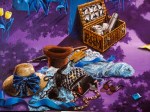
Because I made something of a feature of the picnic in the centre of the canvas, I decided to replace Manet’s spilling basket on the left of the canvas with a spilling Chanel handbag set amongst the nude female’s discarded clothing. Naturally, as well as a compact and nail varnish, the Norm’s handbag contents also include a much needed Oyster travel card, perfectly balancing the canvas with the real oysters within the seafood platter. A pair of Chanel sunglasses and a discarded bra add even more sex-chic to the scene (and yes, Norms do appear to have breasts!).

There are plenty of details in this painting, so below I include a gallery of detail shots for you to enjoy. And with this I leave you to feast your eyes upon this new Luncheon on the Grass, the latest interpretation of a painting which will continue to inspire throughout this next Millennium.

© Nicholas de Lacy-Brown and The Daily Norm, 2005-2012. Unauthorized use and/or duplication of the material, whether written work or artwork, included within The Daily Norm without express and written permission from The Daily Norm’s author and/or owner is strictly prohibited. Excerpts and links may be used, provided that full and clear credit is given to Nicholas de Lacy-Brown and The Daily Norm with appropriate and specific direction to the original content.

Dutch Masters Season Part 3: Johannes Vermeer

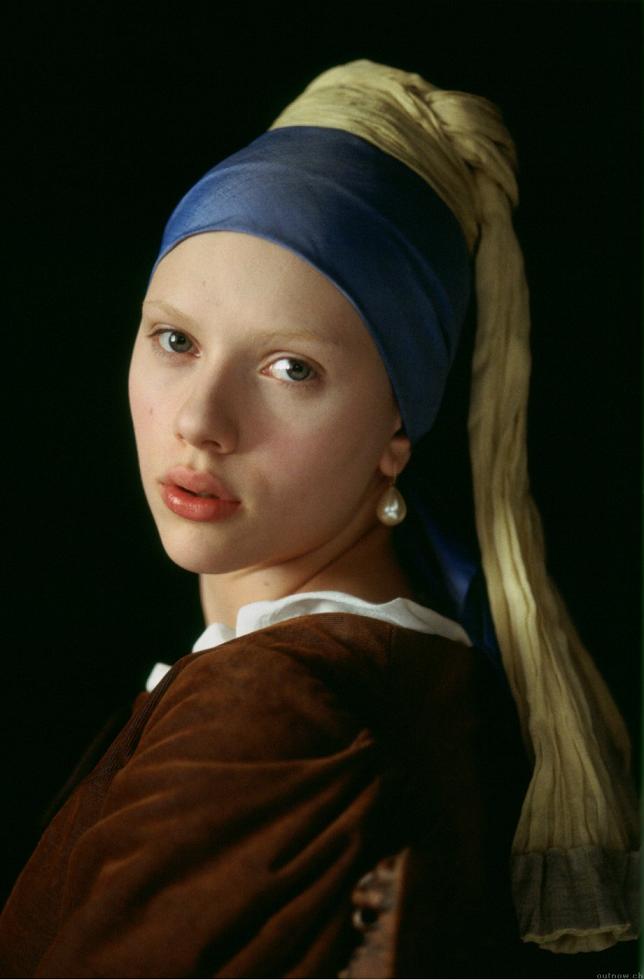
There can be no doubt about just how famous this Dutch masterpiece is. While very little is known about the woman featured, how the painting came about, or even about the life of the great Dutch artist, Johannes Vermeer, this portrait has so captivated audiences across the world that speculation surrounding the work has inspired novels, films and stage shows. It is of course, Girl with a Pearl Earring (Het Meisje met de Parel). And of course, for every masterpiece, a Norm must stand it its place. Here, as my final instalment of the Dutch Masters Season, is Norm with a Pearl Earring, painted on a little  7″ x 5″ canvas with acrylic.
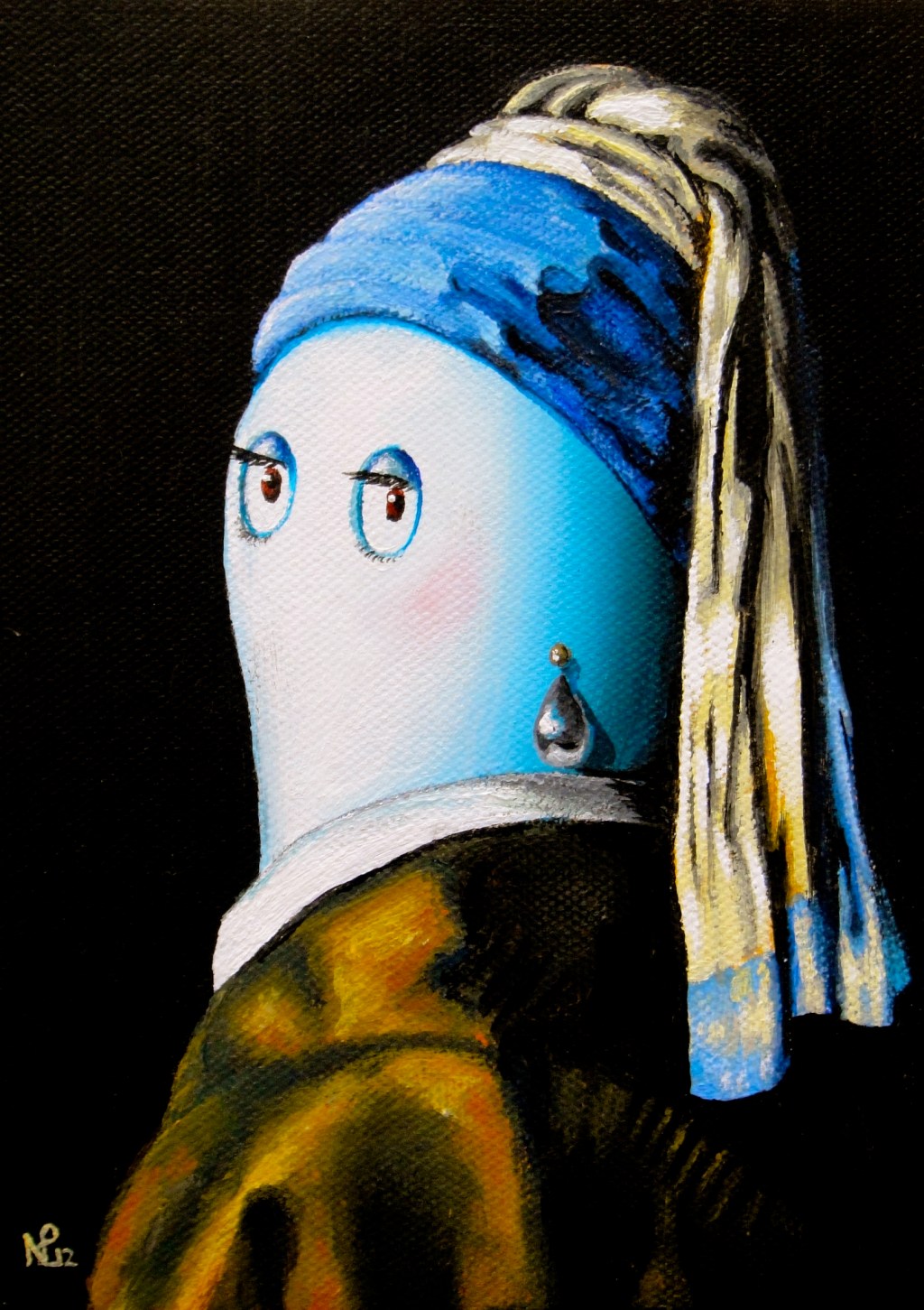
Norm with a Pearl Earring (acrylic on canvas, 2012 © Nicholas de Lacy-Brown)

And the original
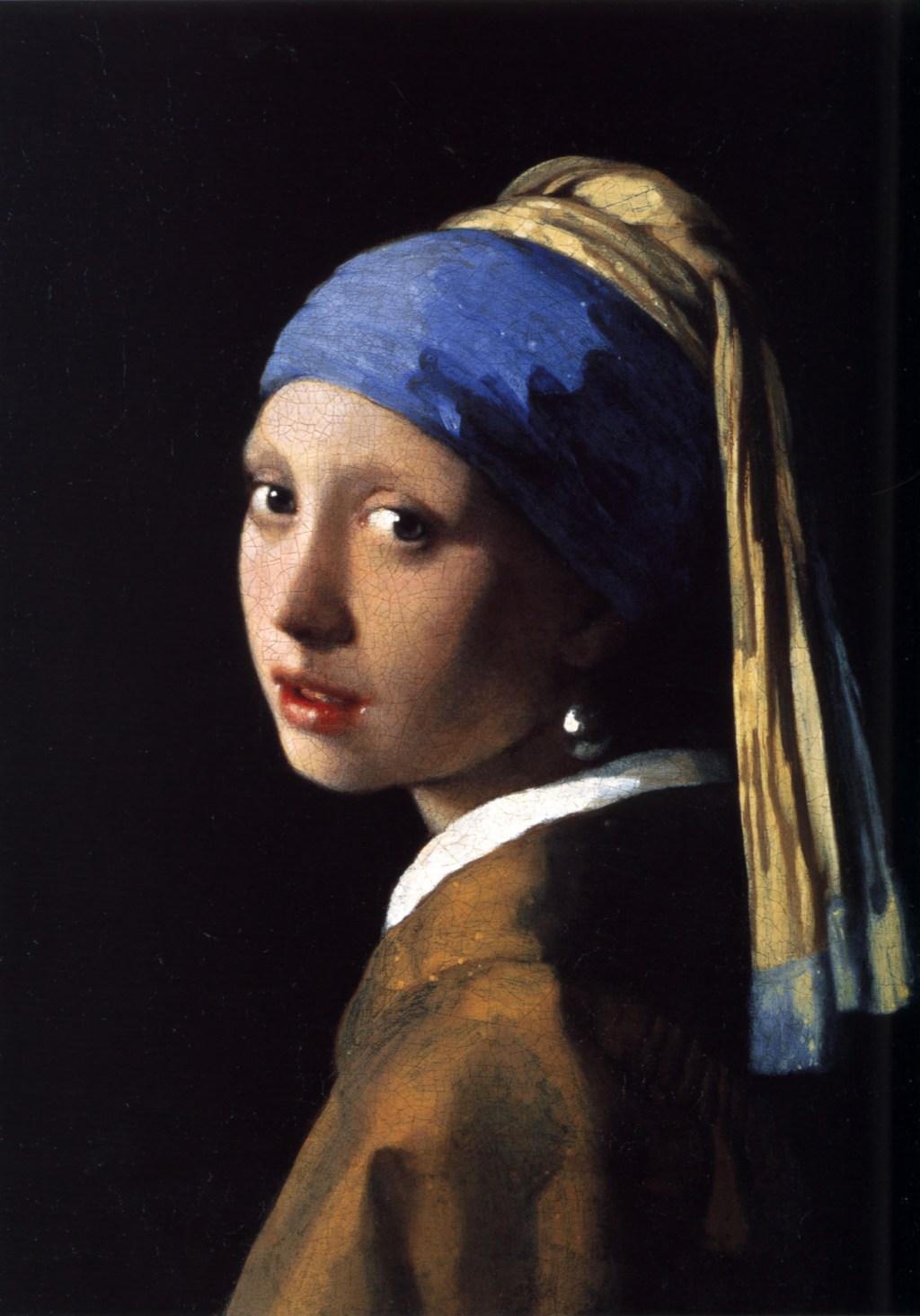
Vermeer, Girl with a Pearl Earring (Mauritshuis gallery, the Hague)

It’s a simple painting at it’s heart, but the intensity of the colour contrast against a black background with the glint of a pearl and the wide open welcoming eyes of the model have no doubt contributed to making this painting one of the best known portraits in the world. It is by no means the best of Vermeer’s work, an artist who is renowned for his mastery of sumptuous domestic scenes, including startling realistic windows, checkerboard floors and decorative furniture, and scenes of ordinary middle class life in the family home. In fact it was Vermeer who made the ordinary king in his work centuries before the impressionists swept aside grand classical themes for a focus on everyday life. As such, almost all of Vermeer’s paintings appear to be set in the same two rooms in his home in Delft where he worked, showing the same furniture in various arrangements. Nonetheless they show exquisite skill and attention to detail, and collectively have made Vermeer the darling of Dutch art.
Scarlett Johansson in the 2003 movie, Girl with a Pearl Earring

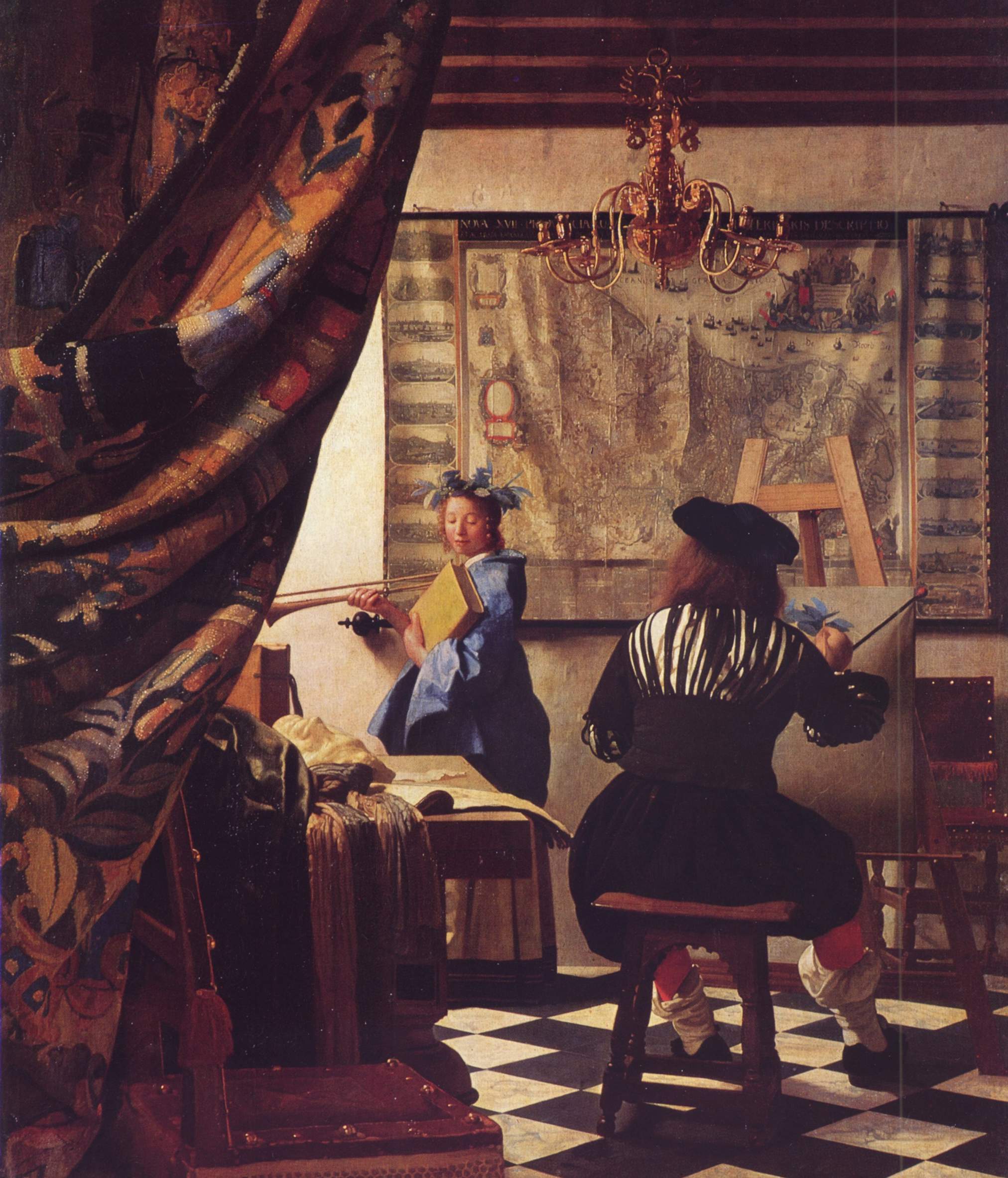
I leave you finally with an image of my favourite Vermeer painting, The Art of Painting, a work which has a truly chequered history which requires no fictionalisation. Set in the same room as most of Vermeer’s paintings, it is nonetheless unique because it appears to feature a self-portrait of the artist, and because it never left the artist’s side. It is thought to have been painted as a showpiece by the artist so that he could use the work to advertise his skill to visiting potential patrons. It is unsurprising therefore that the work is lavish in its detailing – just look at the map on the wall full of creases and the detail in the chandelier. But for being well painted, the items in the work also have their own significance. It is widely thought that Vermeer, a Catholic, painted the work as a allegorical stand against the new protestant rule in the Netherlands. As such, the map of the new Netherlands is creased and torn, suggesting divide and unrest in the nation, while the absence of candles in the chandelier, adorned as it is with the double headed eagle – symbolic of the former Catholic Habsburg rulers of Holland – represents the suppression of the Catholic faith and the darkness which had consequently settled over the land. The girl is the Muse of History, Clio, evidenced by her laurel wreath, holding a trumpet (depicting fame) and a book by Thucydides.

Of even greater significance is perhaps what happened after Vermeer’s death. First, the painting was party to an outrageous act of fraud, as the name of Vermeer’s great rival, Pieter de Hooch, was forged onto the work with the result that it was not recognised as a Vermeer work until 19860. Secondly, in the second world war, after the Nazi invasion of Austria, the work attracted the attention of top Nazi officials – Hermann Göring attempted to acquire the painting, but his efforts were blocked by Hitler himself who acquired the work for his own amassed collection of stolen European masterpieces. Shortly thereafter, during the war, the painting undertook numerous perilous journeys as the Nazis moved it from place to place in an attempt to keep it safe, finally ending up, and being discovered in, a salt mine near Munich. It was presented to the Austrian Government by the Allies in 1946, happily still in one piece, where it has remained ever since.
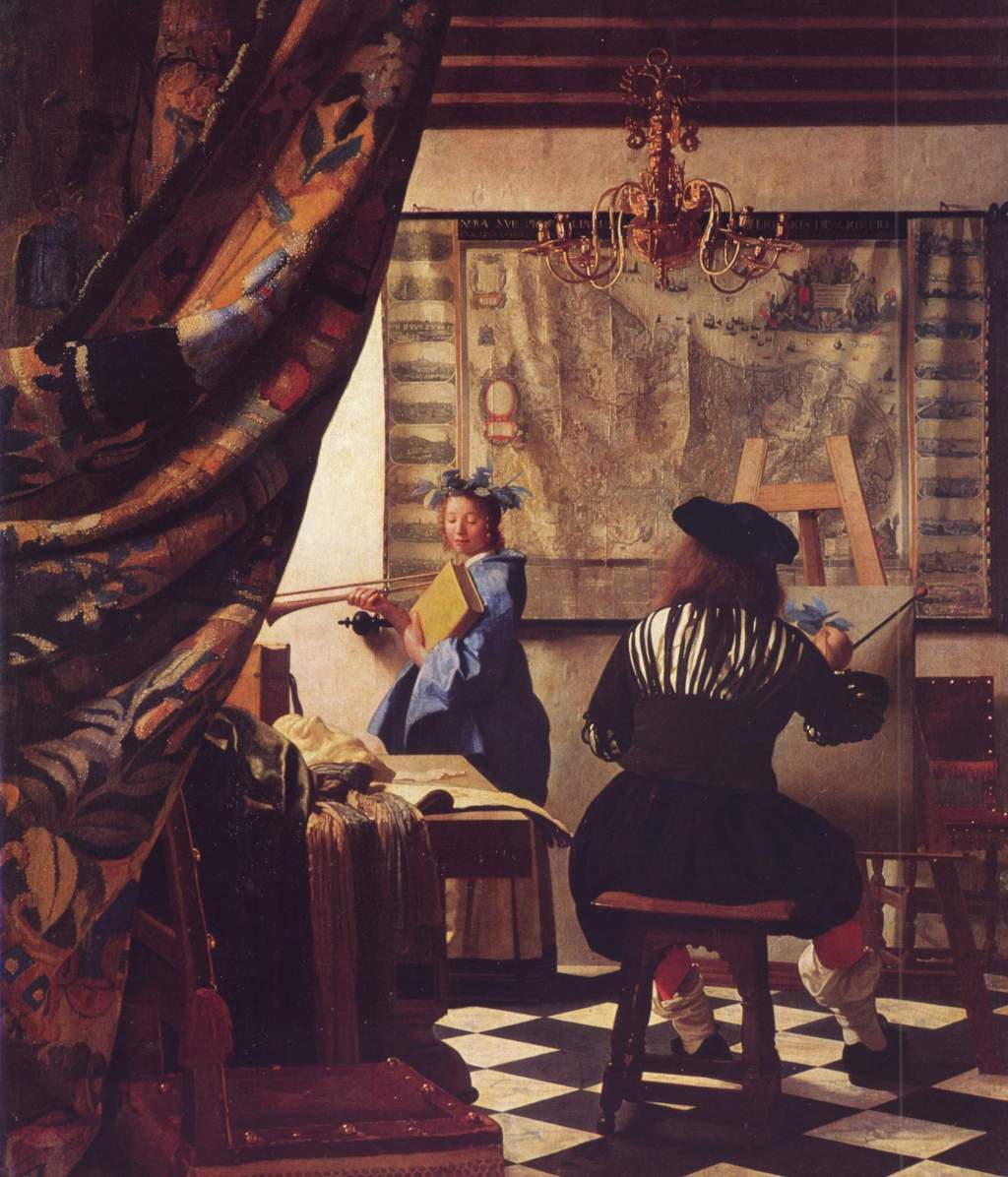
Vermeer, The Art of Painting (c.1666) (Kunsthistorisches Museum, Vienna)

See you in Amsterdam…

© Nicholas de Lacy-Brown and The Daily Norm, 2005-2012. Unauthorized use and/or duplication of the material, whether written work or artwork, included within The Daily Norm without express and written permission from The Daily Norm’s author and/or owner is strictly prohibited. Excerpts and links may be used, provided that full and clear credit is given to Nicholas de Lacy-Brown and The Daily Norm with appropriate and specific direction to the original content.

 

Dutch Masters Season Part 2: Frans Hals

When I told my mother that I was going to paint a series of Norms based on classical paintings, the first suggestion she made was The Laughing Cavalier by Dutch golden age artist, Frans Hals. I thought she was mad! Having seen the portrait on a trip to The Wallace Collection in London some years ago, my lasting memory is being overawed by the intricacy of the portrait, in particular the extravagant embroidery on the “Cavalier’s” sumptuous outfit, and the skill with which Frans Hals had captured the abundance of lace around his neck and cuff. No way could I paint this in small Norm reproduction I thought. But then, when I painted a Norm based on Velazquez with all its lavish silk clothing, followed by a Doisneau inspired Norm painting with the intricacy of that darned complex Opera Garnier, I realised that the Cavalier may not be such a feat after all.
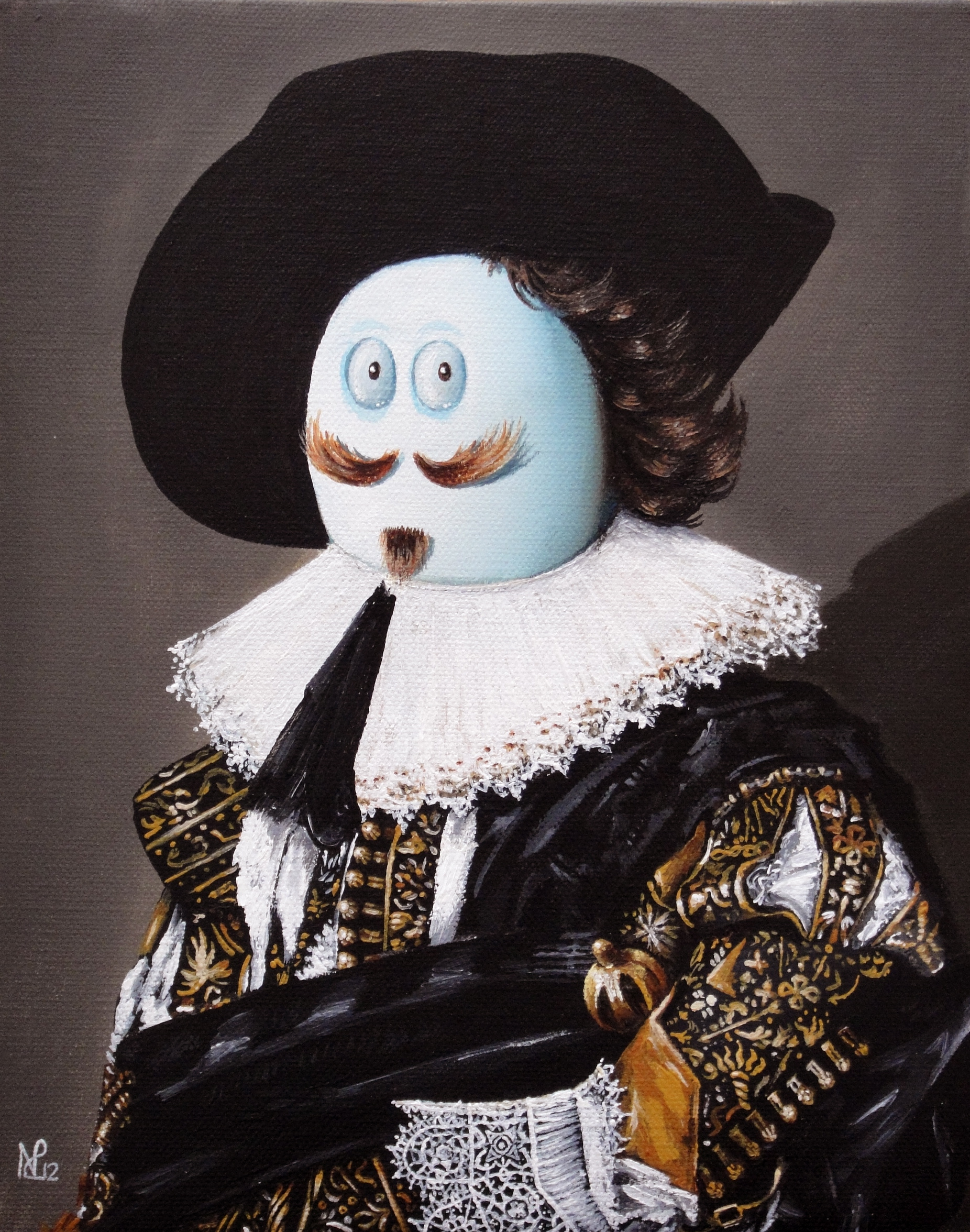
And so, excited by the challenge I had set myself, and all the more enthusiastic in the knowledge that a Laughing Cavalier Norm would make a suitably ravishing addition to my Dutch Masters collection, I attempted to recreate Frans Hals masterpiece on a mere 8″x10″ canvas. And here is the result.
Laughing Cavalier Norm (after Frans Hals) (acrylic on canvas, 2012 © Nicholas de Lacy-Brown)

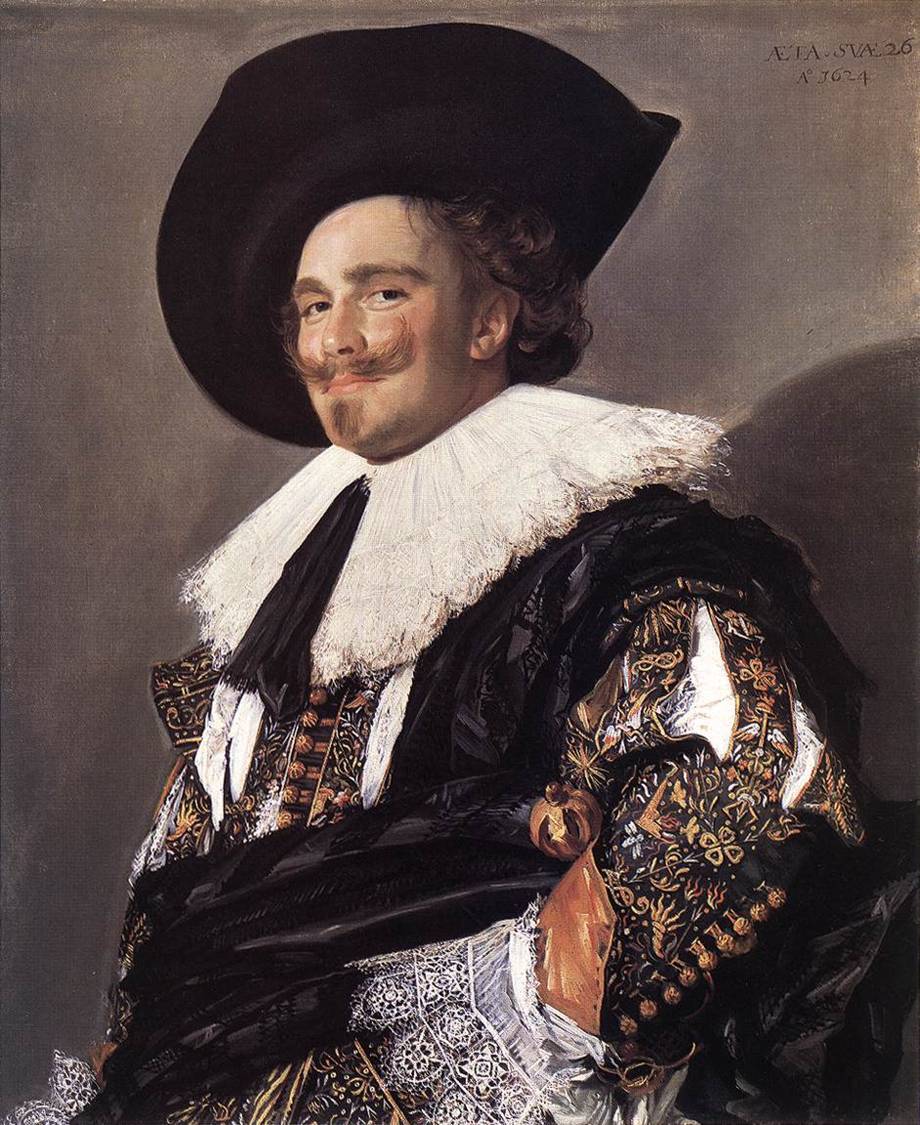
The title of the original work was undoubtedly not The Laughing Cavalier, but the portrait became known as such around the time it first arrived in Britain in the 19th Century. It was thought to be unusual for a portrait of its age (1624) to feature a smiling figure – usually formal portraits were more serious and austere. But this gentleman, while not actually laughing, is certainly jolly, if a little haughty, and his curled up moustache pronounces the smiling contours of his expression. Lucky then that the moustache aids in the creation of a smiley disposition, because with no mouth, my Norm would certainly be all the more somber without it.

Frans Halls, The Laughing Cavalier (1624, The Wallace Collection, London)

English: Frans Hals, "The Laughing Cavali...

Image via Wikipedia

It is also doubtful, incidentally, whether the Laughing Cavalier, asides from lacking in laughter, was even a cavalier. It is said he was most likely a wealthy civilian, perhaps also a military man as suggested by a glimpse of the hilt of his sword. His richly embroidered clothing is aptly demonstrative of his wealth. There are many emblems in the embroidery, allegedly signifying “the pleasures and pains of love” through bees, arrows, flaming cornucopiae, lover’s knots and tongues of fire, while an obelisk-like shape is meant to signify strength and Mercury’s cap and caduceus signifiers of fortune. Meanwhile the turning pose and low viewpoint are shared by a number of similar portraits by Frans Hals.

Whoever this jocular gentleman was doesn’t really matter. There is certainly a power in his expression, through the sparkle of his eyes and confidence of his smile which continues to captivate today. It was often said, when the portrait first rose to fame in Britain, that the Laughing Cavalier’s eyes followed you around the room. They certainly seem to do so – even a digital reproduction on my computer screen seems to come alive, almost bemused at it watches me fussing around the room and clicking away on my computer. No wonder then that this painting has taken its worthy place in the gallery of Dutch masterpieces. It’s a work which breaks the boundaries of formal portraiture, packed with personality, symbolism, and a smiling face which exudes personality to this day.  Tot morgen…Vaarwel.