Skip to content

Posts from the ‘Photography’ Category

Provence Odyssey | Arles: Les Photos

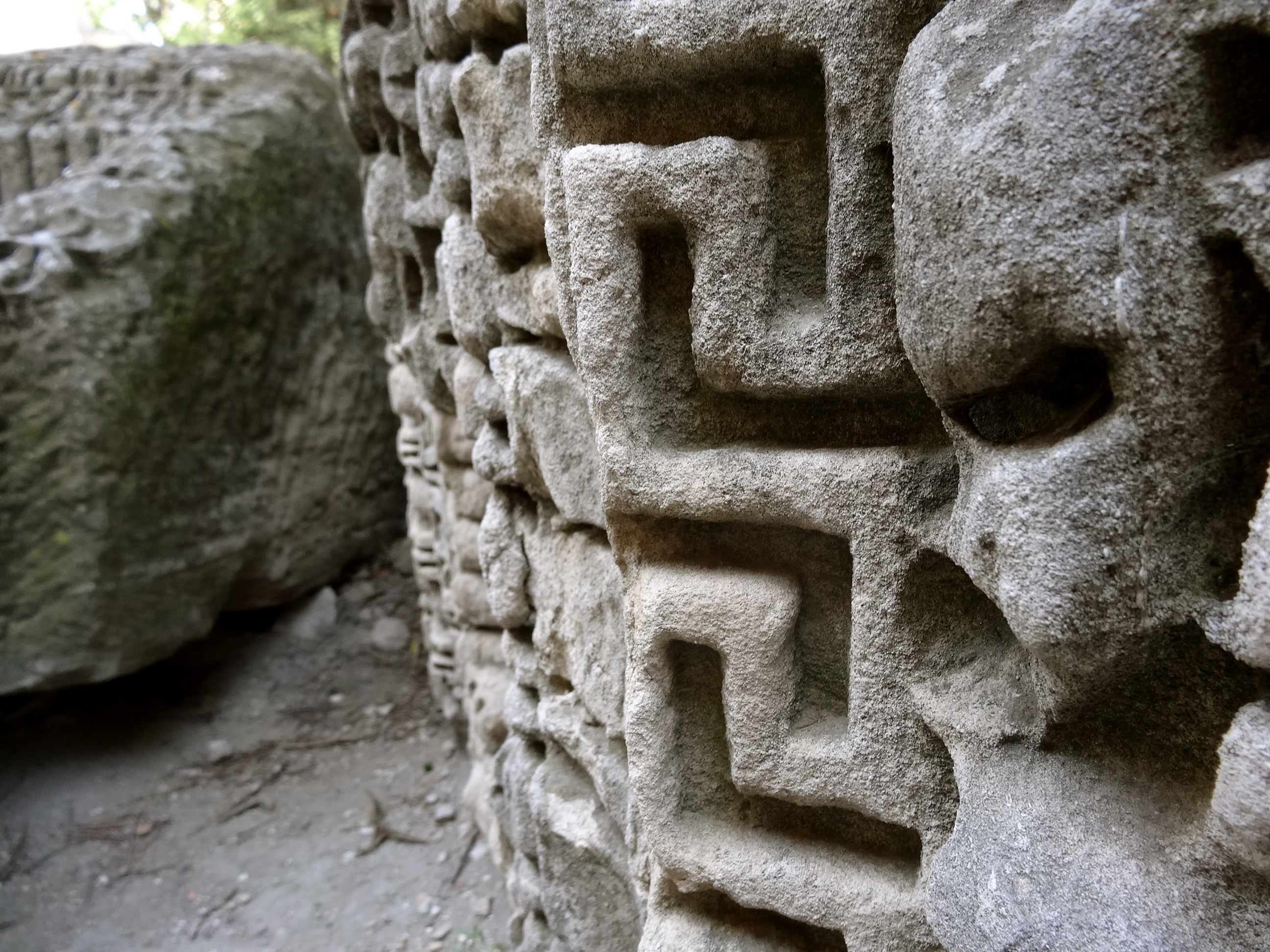
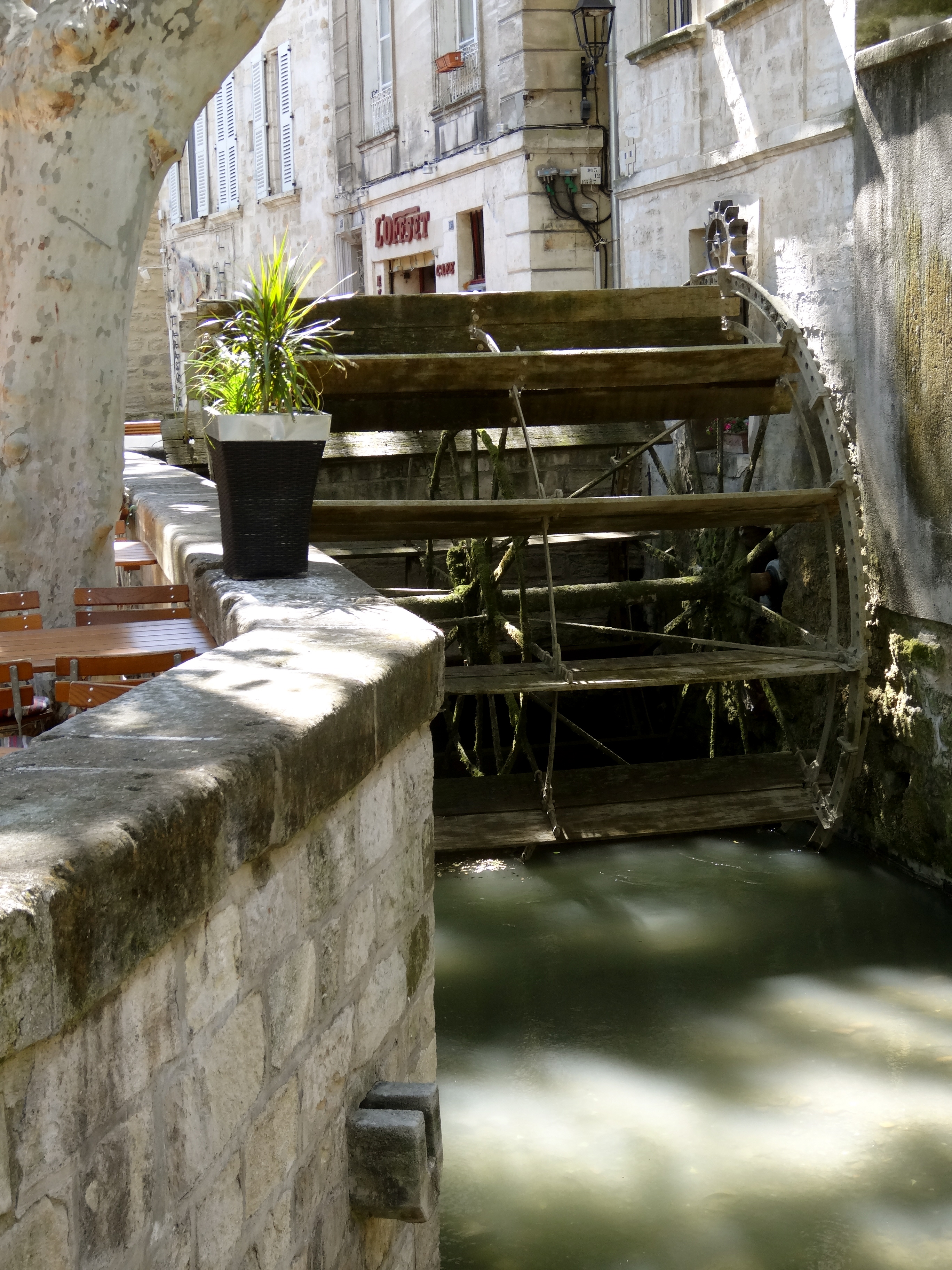
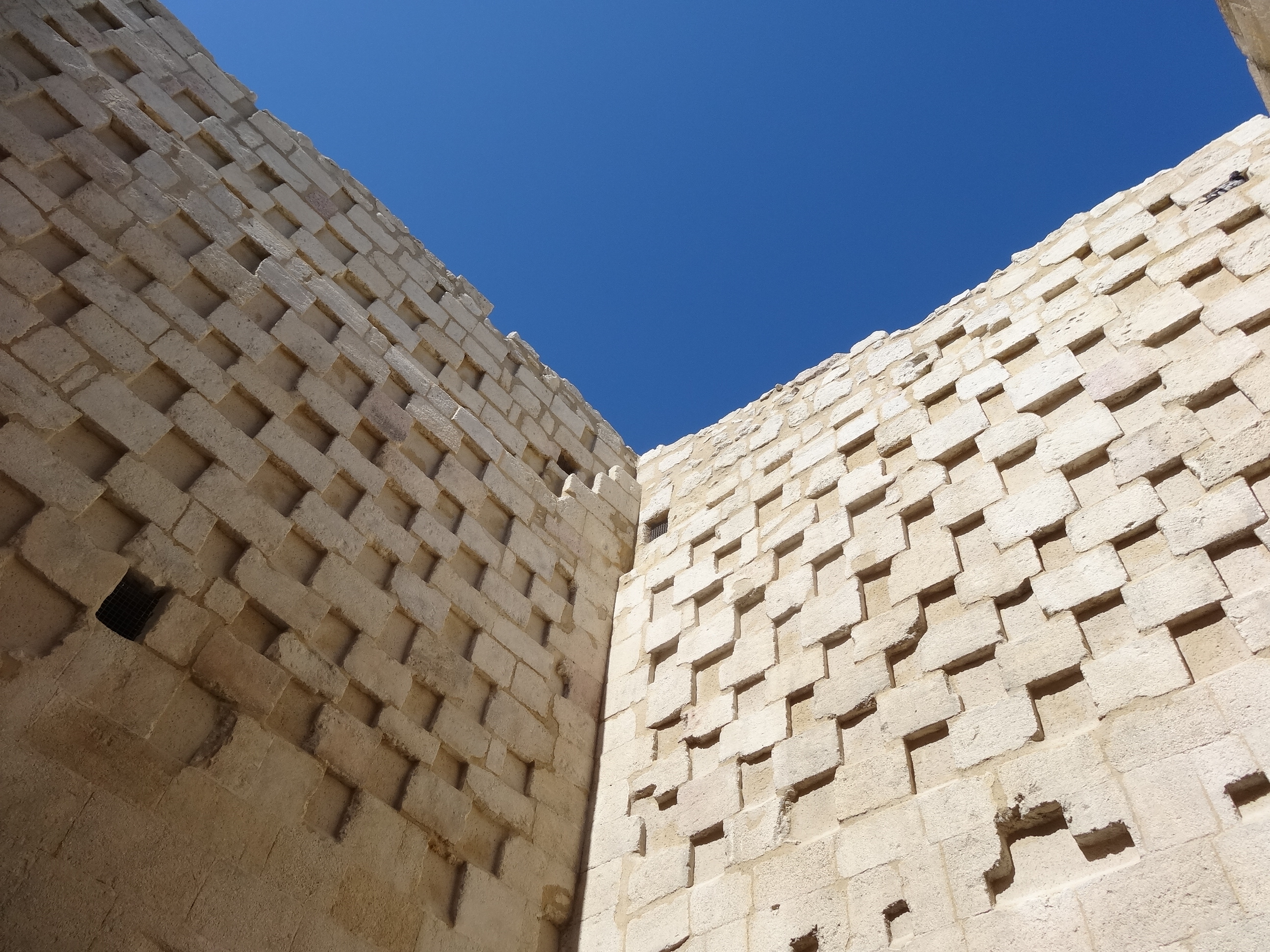
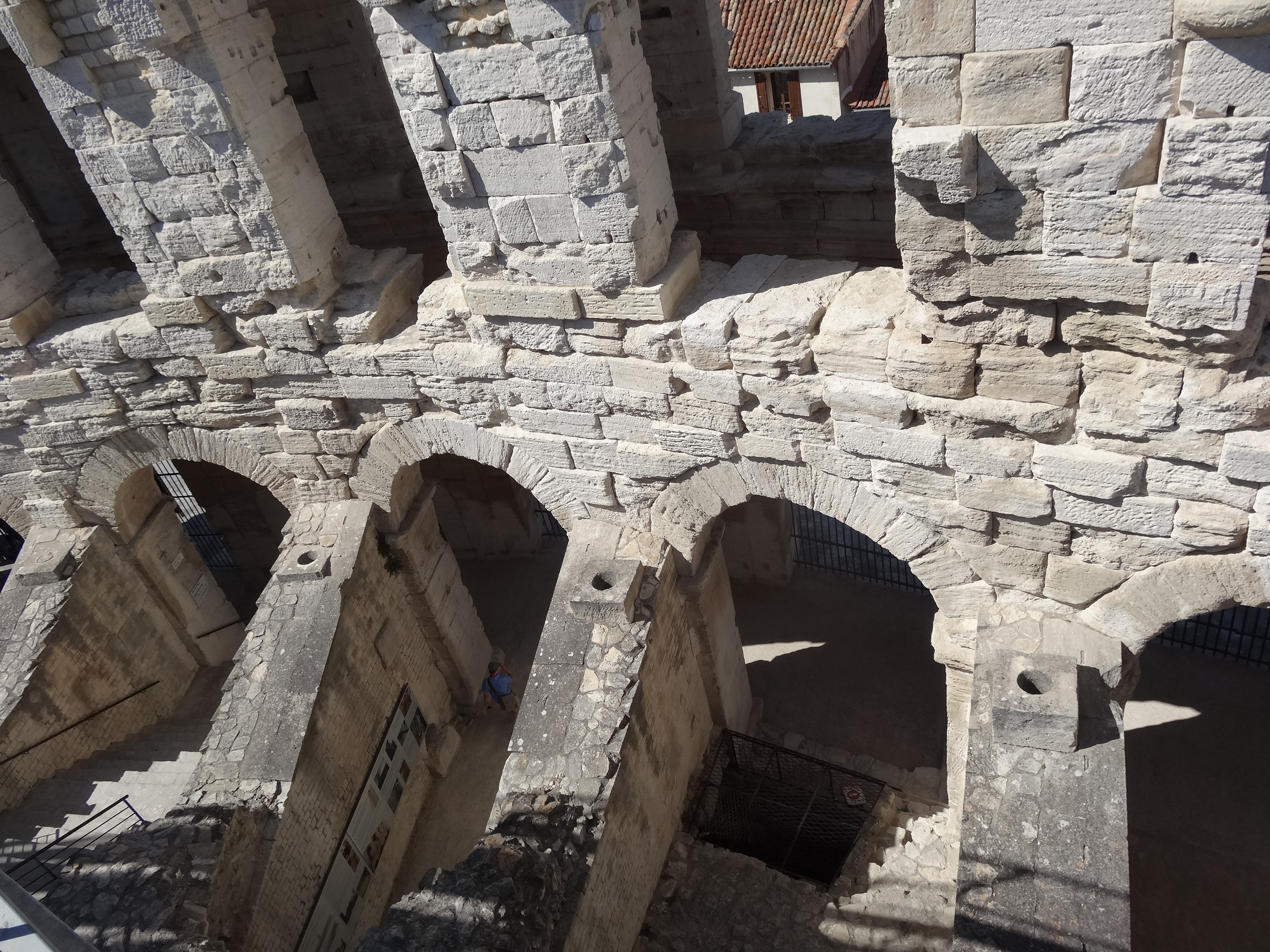
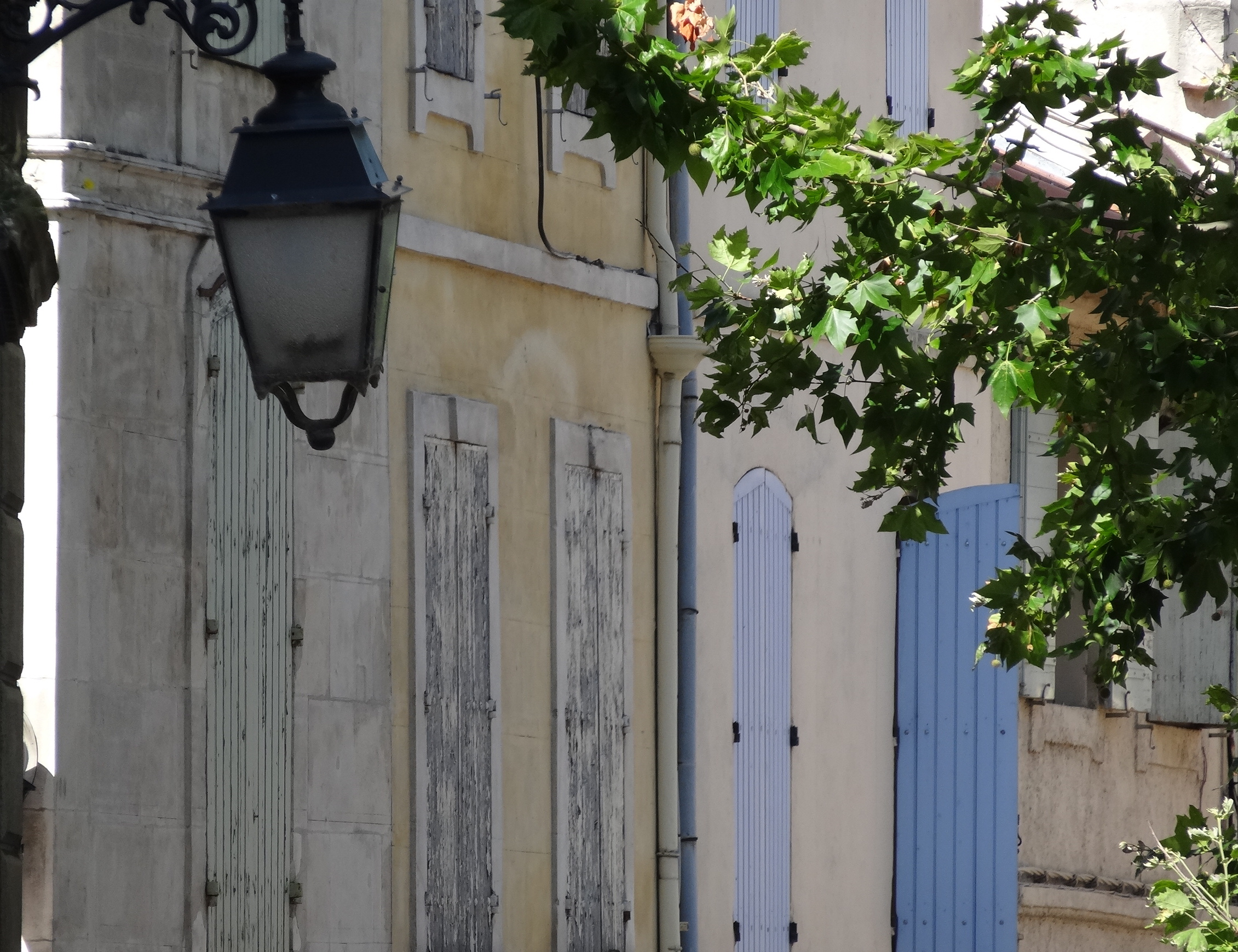
While Arles proved to be something of a disappointment: The dreaded Mistral wind hampered the majority of our experience in the city, such that we were usually dodging the wide expanse of squares of the riverside in order to shelter in the narrower more maze-like streets, it was, predictably perhaps, a city ripe in photographic treasures. The city has, after all, inspired artists aplenty, from Van Gogh, to Picasso, who was drawn to the city because of its amphitheatre bull fights, reminding him of the culture of his beloved Spain from where he was in forced exile during and after the Spanish Civil War.

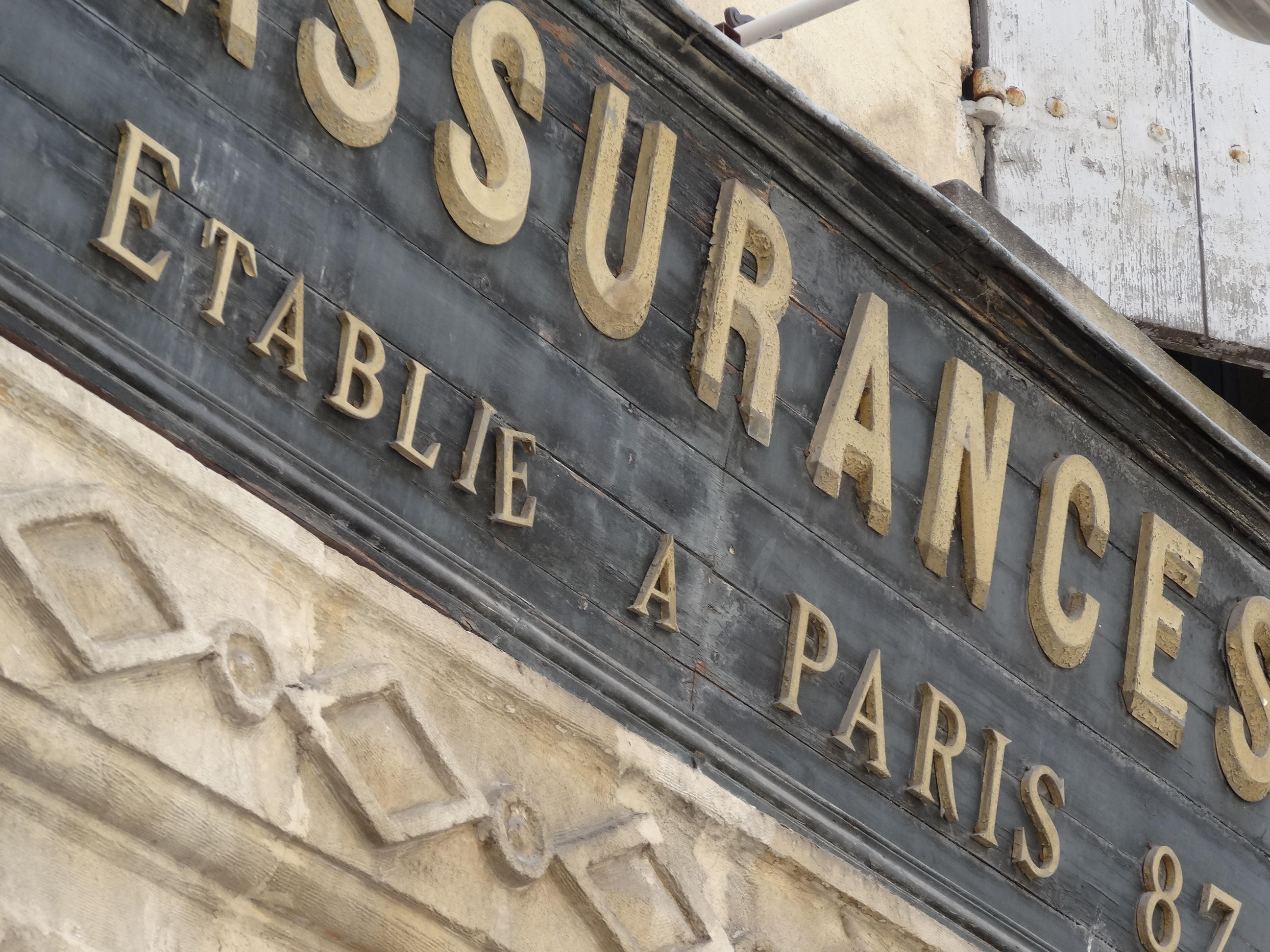
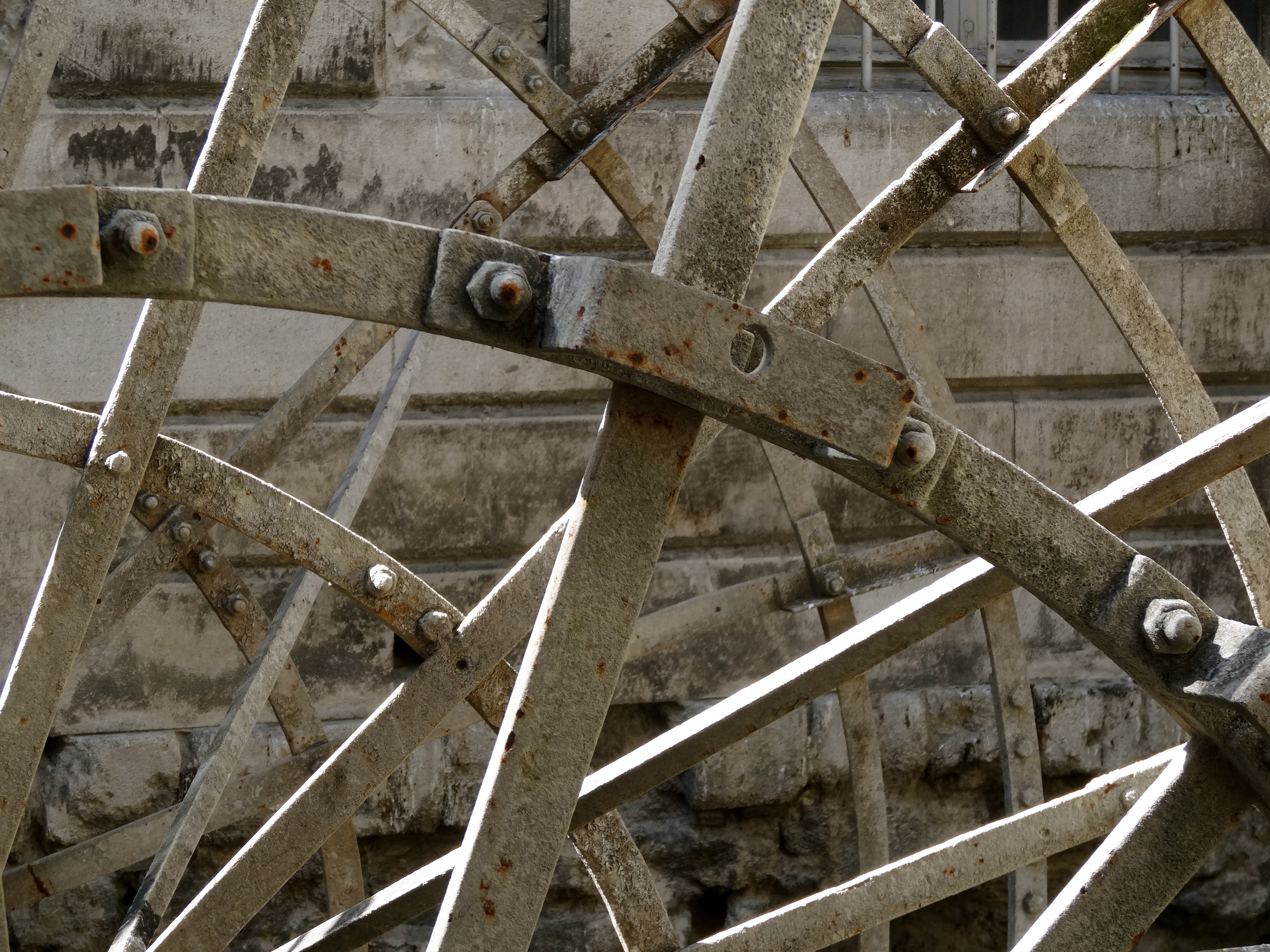
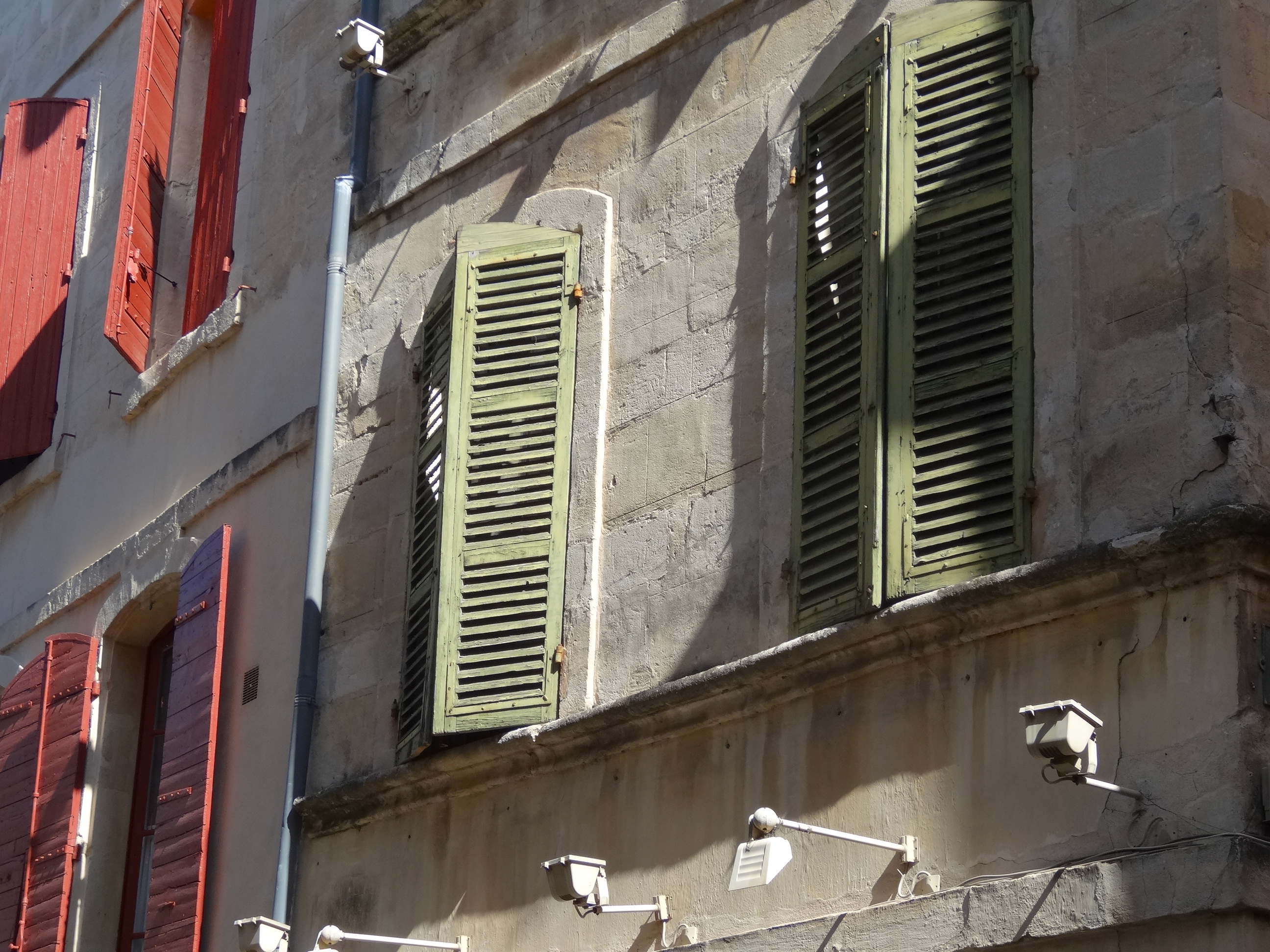
Now in turn, the city could not help but inspire me, as ever, to get snapping away with my camera. The photos which result are a panoply of shutters and shop signs, medieval stone masonry to ancient Roman ruins. They exhibit the kind of vivid colouration that so inspired Van Gogh, glinting with the fresh clear light which is a characteristic partner to the Mistral, and the force behind the rich artistic heritage which is as much a bedrock of the city’s history as the Roman architecture scattered all around.

DSC02523 DSC02702 DSC02933 DSC02611 DSC02758

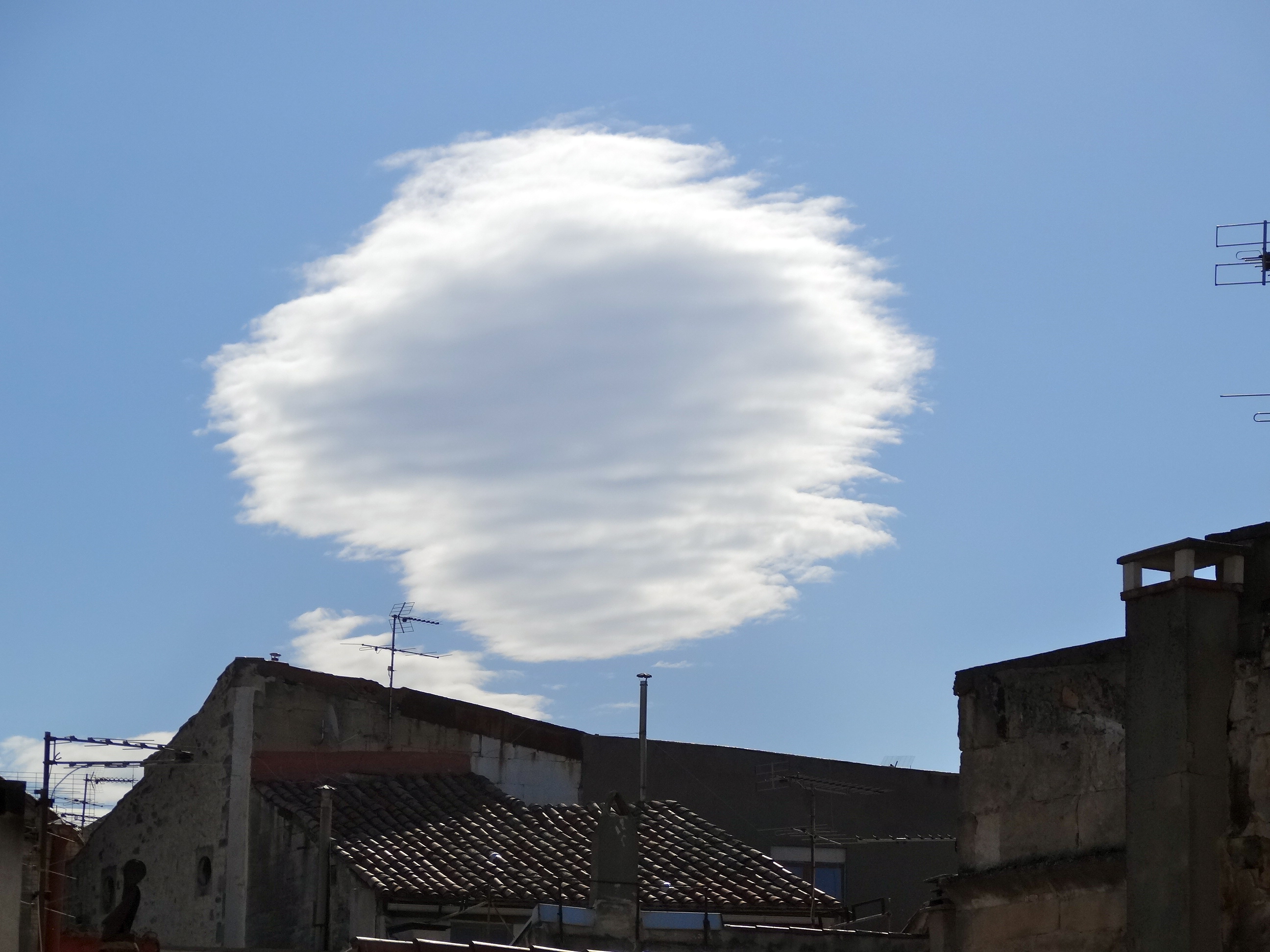
In these photos, you can see other features of the city which I have perhaps left unmentioned until now. The grand Lion-littered fountain at the centre of the Place de la République; the excellent “Clouds” exhibition at the Musée Réattu together with a fantastically whispy cloud  I saw in the cerulean blue sky one morning; a sunny side up glinting oily egg at breakfast, and the artistic graffiti which characterises some of the quieter streets on the outskirts.

This is Arles, in photos. Next up: Saint Remy.

All photos and written content are strictly the copyright of Nicholas de Lacy-Brown © 2013 and The Daily Norm. All rights are reserved. Unauthorized use and/or duplication of the material, whether written work, photography or artwork, included within The Daily Norm without express and written permission from The Daily Norm’s author and/or owner is strictly prohibited. 

Provence Odyssey | Arles: Day 5 – In search of Van Gogh (Part 1)

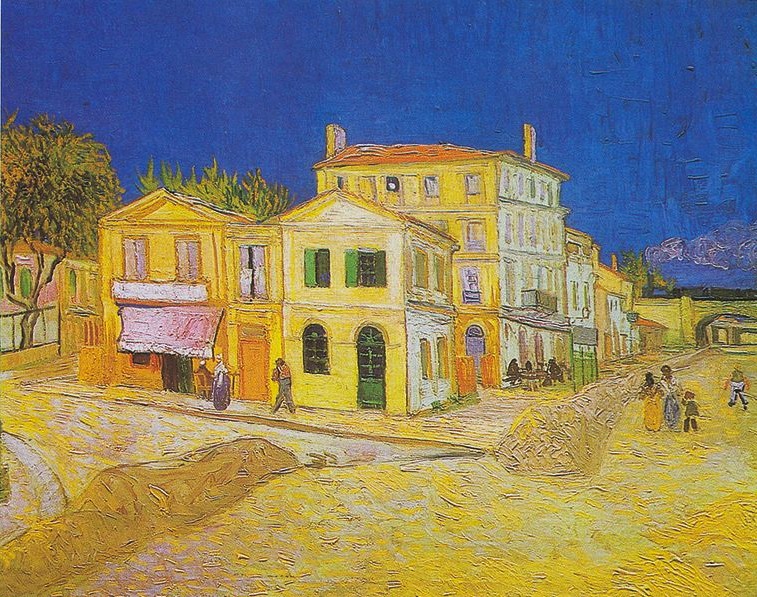
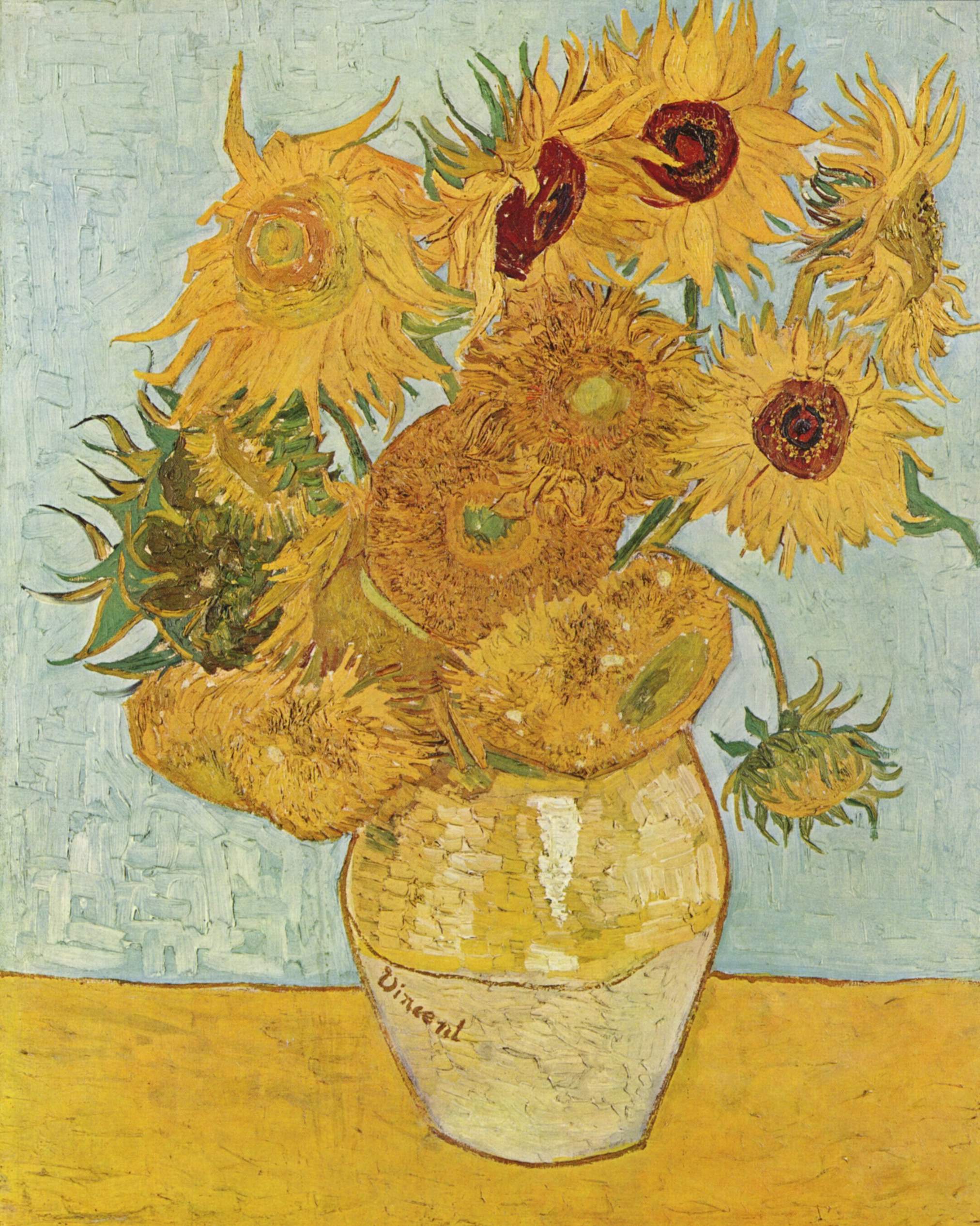
The vivid kaledoscopic colours of Van Gogh’s works are renowned throughout the world: the dazzling bright yellow sunflowers, his multi-shaded green and blue self portrait with a shock of orange hair and beard, the twin piece works depicting his and Gauguin’s chairs as well as his now famous bedroom in vivid multi-colour, and his Yellow House, set against a bright blue sky – all characterise Van Gogh’s great affinity with vivid colouration and the depiction of almost feverish energy and zeal. Yet it only takes a quick glimpse at Van Gogh’s earlier works painted in Holland – the Potato Eaters, the Brown peasant faces, the gloomy interiors and flat dull landscapes – to realise just how instrumental his move down to Provence in 1888 was. And one city in fact helped to shape the unique colour driven artist who we know and love today: Arles.

It was in Arles that Van Gogh lived in the Yellow House, where he painted his famous Sunflowers in preparation for a visit by fellow-artist (and colourist) Paul Gauguin, on whose river bend he depicted the famous Starry Night over the Rhone, and where the artist is credited with making his final breakthrough as an artist of sensational colour, of unmistakeable feverish expressionism and of an undiluted enthusiasm to depict the world around him with speed and a remarkable resulting oeuvre.

Van Gogh moved to Arles in 1888, after a spell in Paris where he had become influenced by the impressionists. Thus, he had already broken free of the sombre earth tones inspired by his homeland of Holland, and started dappling in lighter, fresher scenes, but nothing compared with the cornucopia of colourful and free expression on which he would embark when taking inspiration from the South. Having made the move, Van Gogh became dazzled by the brighter light and therefore clear unmuddied coloured which result. He began to see art in the curving shadow-filled feathery forms of cypress trees, in the undulating tapestry of fields beneath rising mountain landscapes, in the vivid blooms of cherry blossom and irises and sunflowers, and in Arles’s streets, its inviting cafes and its people. All of this made Van Gogh the artist we know today, and so many of his most famous paintings were undertaken here, in Arles, as decoration for his Yellow House.

The Yellow House (1888)

The Yellow House (1888)

Van Gogh's Chair (1888)

Van Gogh’s Chair (1888)

Bedroom in Arles (1888)

Bedroom in Arles (1888)

Still Life: Vase with 12 Sunflowers (1888)

Still Life: Vase with 12 Sunflowers (1888)

However Van Gogh’s appetite for decorating the Yellow House with such speed was largely because he was awaiting a visit from fellow-post-impressionist Paul Gauguin in the hope that he could set up something of an artists’ community in Arles. Yet it was that same visit that became the catalyst for Van Gogh’s infamous ear-chopping incident, and what followed was a stay in Arles’ general hospital, followed by an extended stay, in 1889, in the sanitarium at Saint Remy-de-Provence.

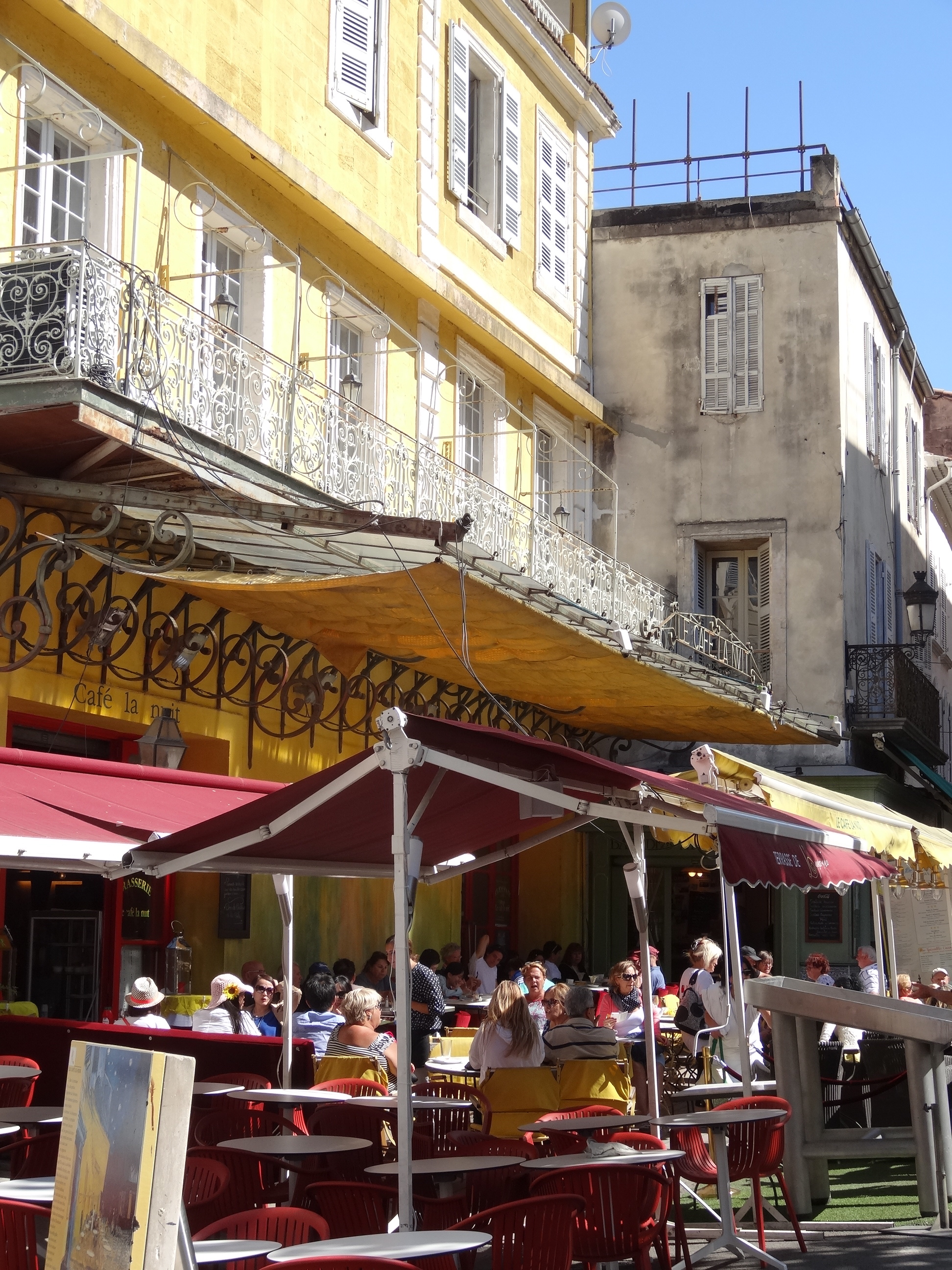
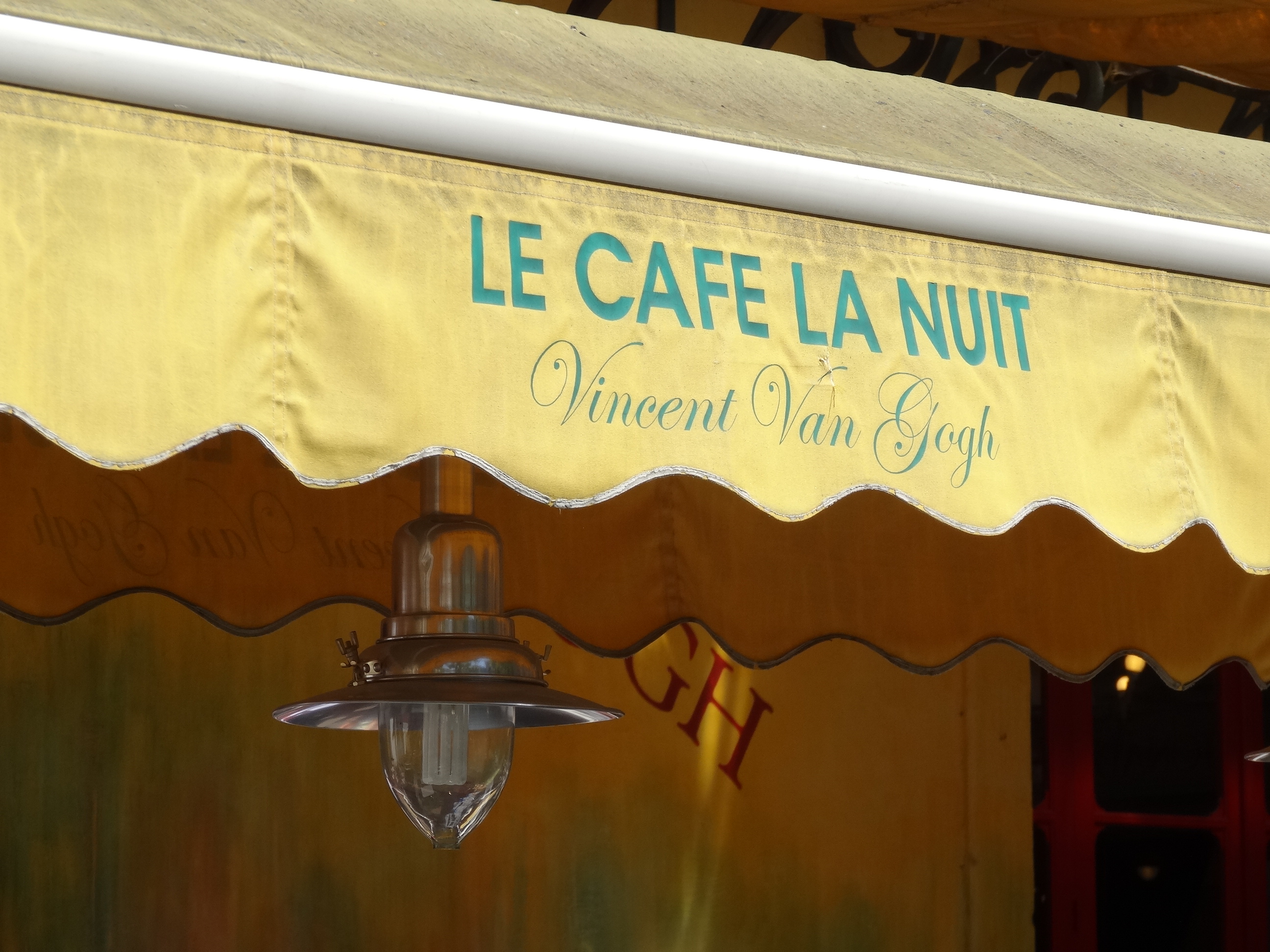
With this background in mind, it was in the footsteps of Van Gogh that we embarked on our last day in Arles, starting off at the Place du Forum, where his famous depiction of a cafe terrace is rather unfortunately replicated today for tourists, so that the real cafe is not the cafe as would have been visited by Van Gogh, but the cafe as painted by Van Gogh. For in their attempts to lure the tourists, the cafe has replicated Van Gogh’s painting to such an extent that they’ve painted the walls in a kind of colour was of yellow and a mouldy looking green. While those colours worked perfectly in the context of Van Gogh’s depiction, in reality they look try-hard and naff. Which is why, asides from taking photos, we avoided eating at the now eponymously named Van Gogh cafe like the plague.

Cafe Terrace on the Place Du Forum Arles, at Night (1888)

Cafe Terrace on the Place Du Forum Arles, at Night (1888)

The cafe as it stands today

The cafe as it stands today

And at night

And at night

DSC02647 DSC02521

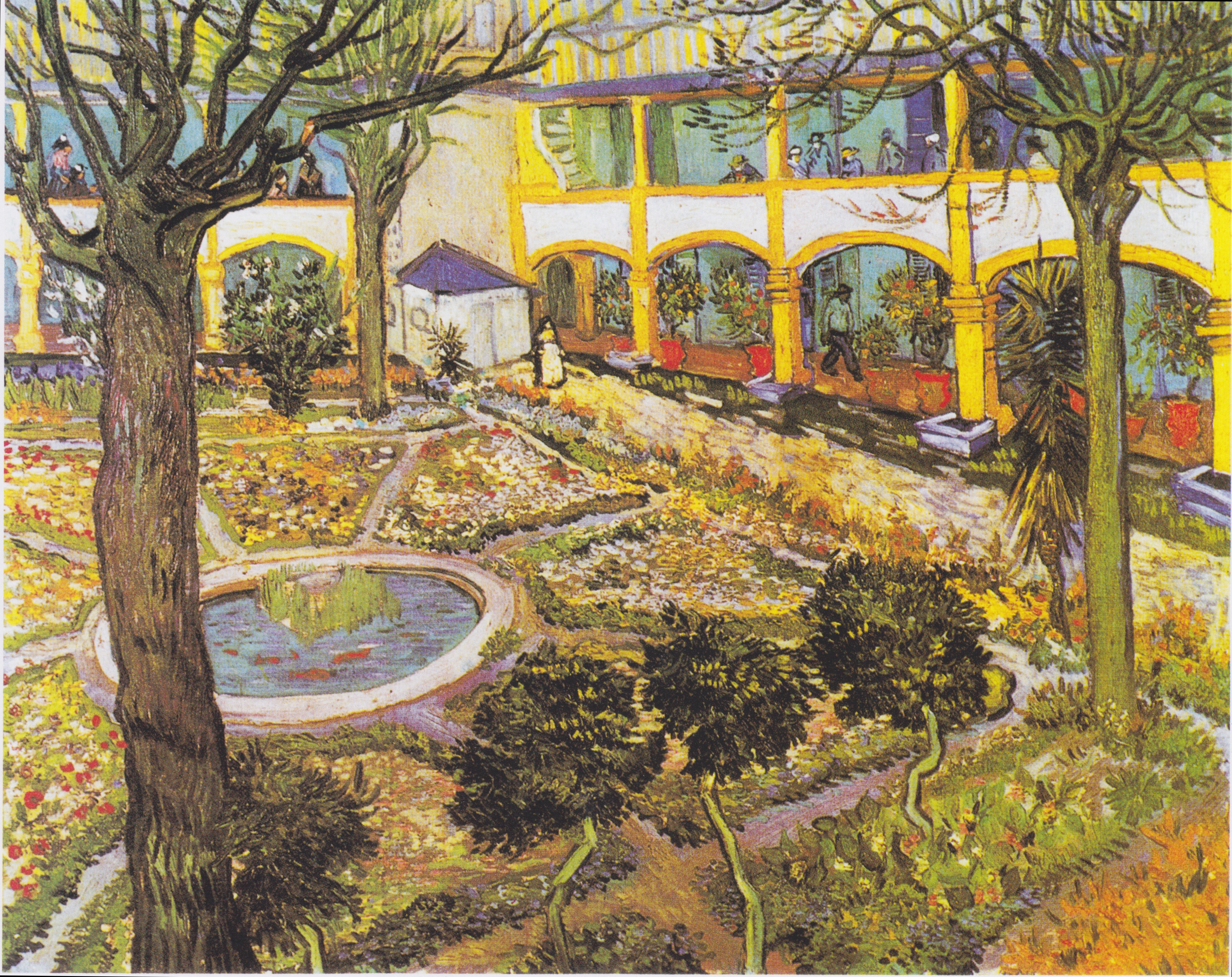
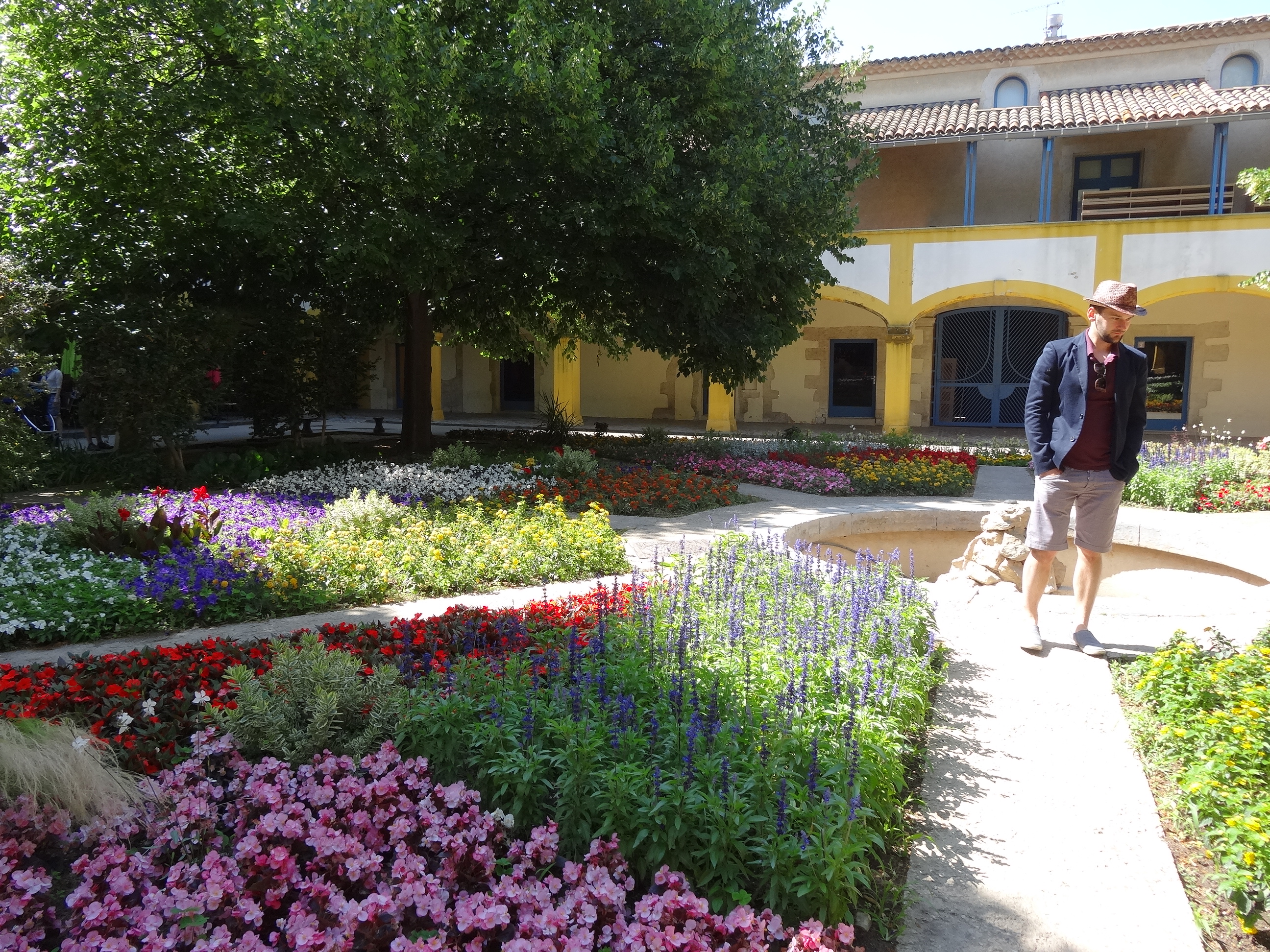
The next main Van Gogh spot is the Arles hospital, whose most iconic feature is the floral courtyard at its heart, again no doubt decked thus because of the reference made to it in Van Gogh’s painting, but nonetheless pleasing to wander into. Yet there was very little more to it, and in fact that much goes for all of Arles. While the Van Gogh references can be seen in postcards sold at every souvenir shop, there is not a single painting by Van Gogh in the tow – a crying shame considering how much the town inspired him. Meanwhile a cultural space opened in his name appeared not to exist when we searched for it, and we were told in a shop close to the hospital that a Van Gogh museum will open in a few years. But nothing for now. Meanwhile both the yellow house, and the famous bedroom in it are long gone – bombed in the war.

Garden of the Hospital at Arles (1888)

Garden of the Hospital at Arles (1888)

The hospital today

The hospital today

DSC03082 DSC03075 DSC03061

However, unperturbed by our lack of success, there was one more point on the Arles map that we had to look at, both when bringing our Arles Van Gogh search to an end, and also when leaving Arles for good. Yes, packed up and ready to move on to our next stop on this Provence Odyssey, and heading out towards the bus station, we passed by the River Rhône, now mercifully still, largely, of the winds which had dominated its path the previous day, and stopped at the point where Van Gogh had painted perhaps my favourite of all his works: Starry Night over the Rhône. Sadly, yesterday’s wind had prevented our viewing this scene by night, but in any event, the proliferation of large boats at the site undoubtedly mean that the view would be much changed now from Van Gogh’s day – a story which rings true of so much of this city.

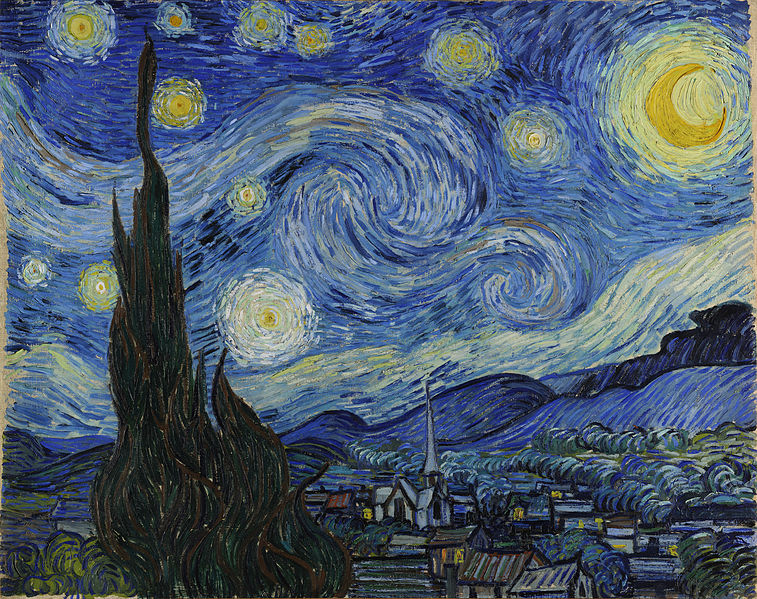
Starry Night over the Rhone (1888)

Starry Night over the Rhone (1888)

The view today

The view today

But just as Van Gogh left Arles to head for some respite in nearby Saint Remy, so too did we follow his path, leaving the city now to head into Provence’s lush countryside, to continue not just our search of Van Gogh, but also our Provence Odyssey.

Onto Saint Remy - where Van Gogh painted: The Starry Night (1888)

Onto Saint Remy – where Van Gogh painted: The Starry Night (1888)

See you in Saint Remy!

Provence Odyssey | Arles: Day 4 – Dodging the Mistral

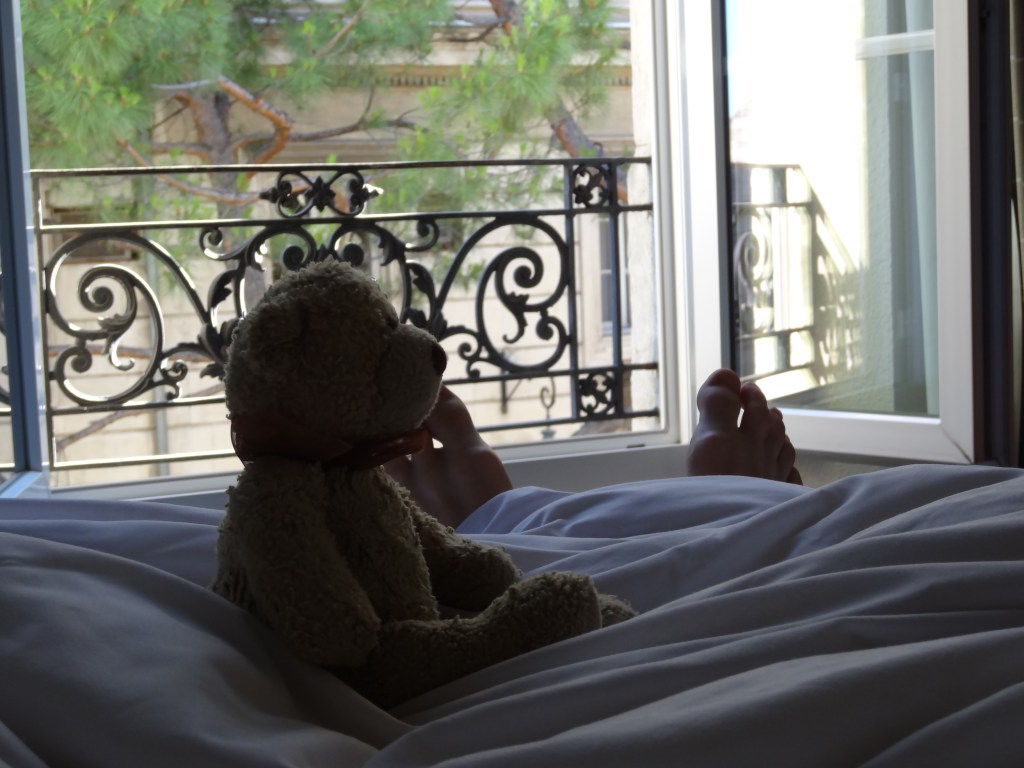
They say that you have not experienced Provence until you have experienced the Mistral, a ferocious wind unique to Southern France, which accelerates as weather forces push the wind down the Rhône Valley – that very same valley on which the city of Arles, our second destination, finds itself rather inconveniently placed. And so, when waking on our fourth day, the tell-tale crystalline blue skies which are a commonplace characteristic of the mistral wind may have shone brightly through our three-fold bedroom windows, but the very distinctive sound of multiple shutters banging in the breeze foretold a day whose weather conditions would be far from Mediterranean calm.

Indeed as we set out from our lavish hotel (more about that later) into the maze-like streets of this characterful little French city, the complex system of roads did very little to dispel the savage Mistral wind – in fact they had quite the opposite effect, forming funnels along which the wind forced its aggressive way through, such that at every new corner, we were almost knocked sideways by a freshly zealous gust.

DSC02713 DSC02716

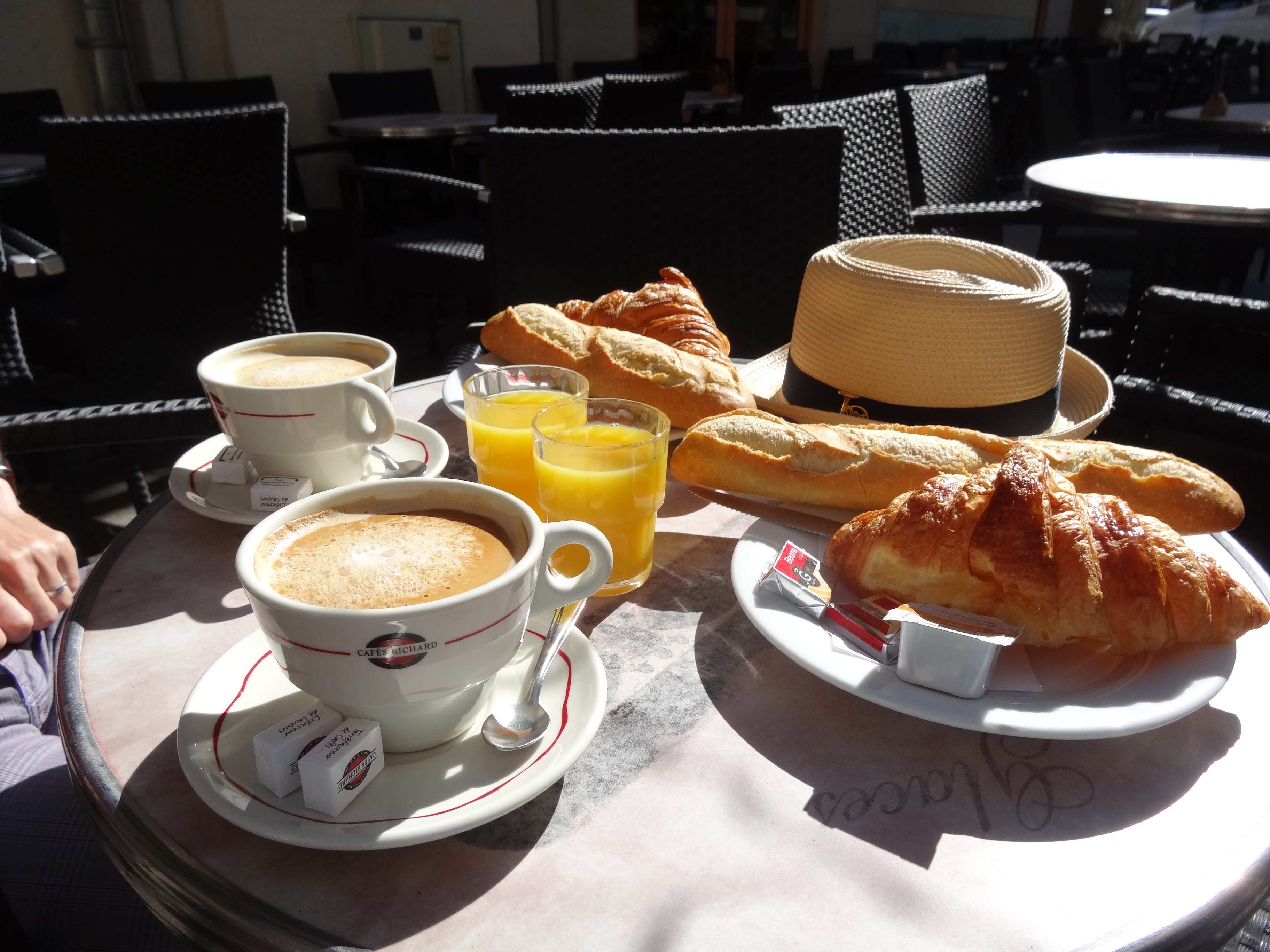
Mercifully, not all corners of Arles were battered by Provence’s fiercest of inhabitants, and taking shelter in the Place du Forum (on the site of the town’s old Roman forum), we were able to enjoy the full unhampered heat of the sun over a breakfast of pastries and café. And concluding therefore that these Romans must have chosen their sites strategically, we went off in search of the city’s further archeological heritage, hoping that in doing so we may dodge the Mistral leaving us to appreciate the history.

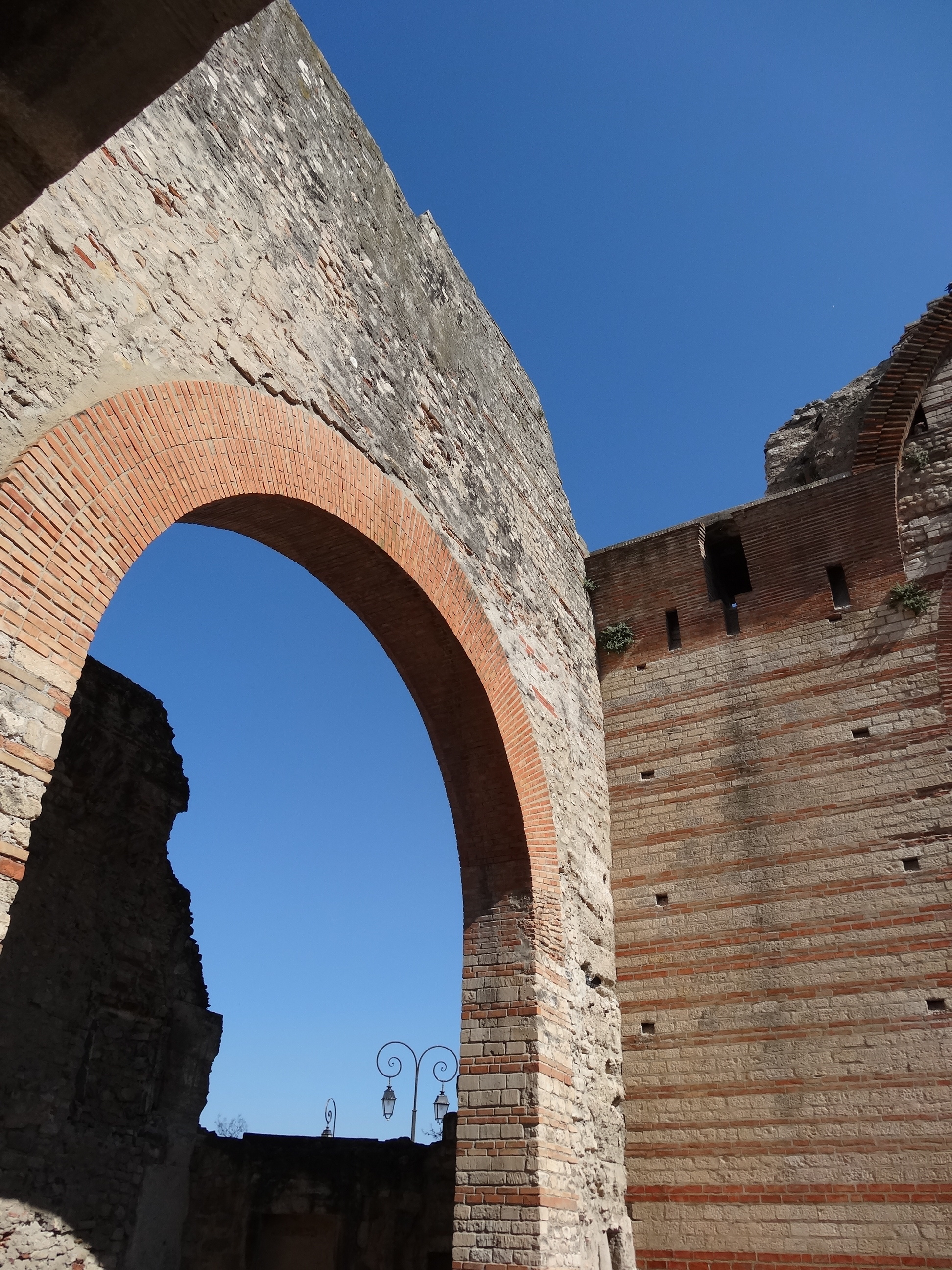
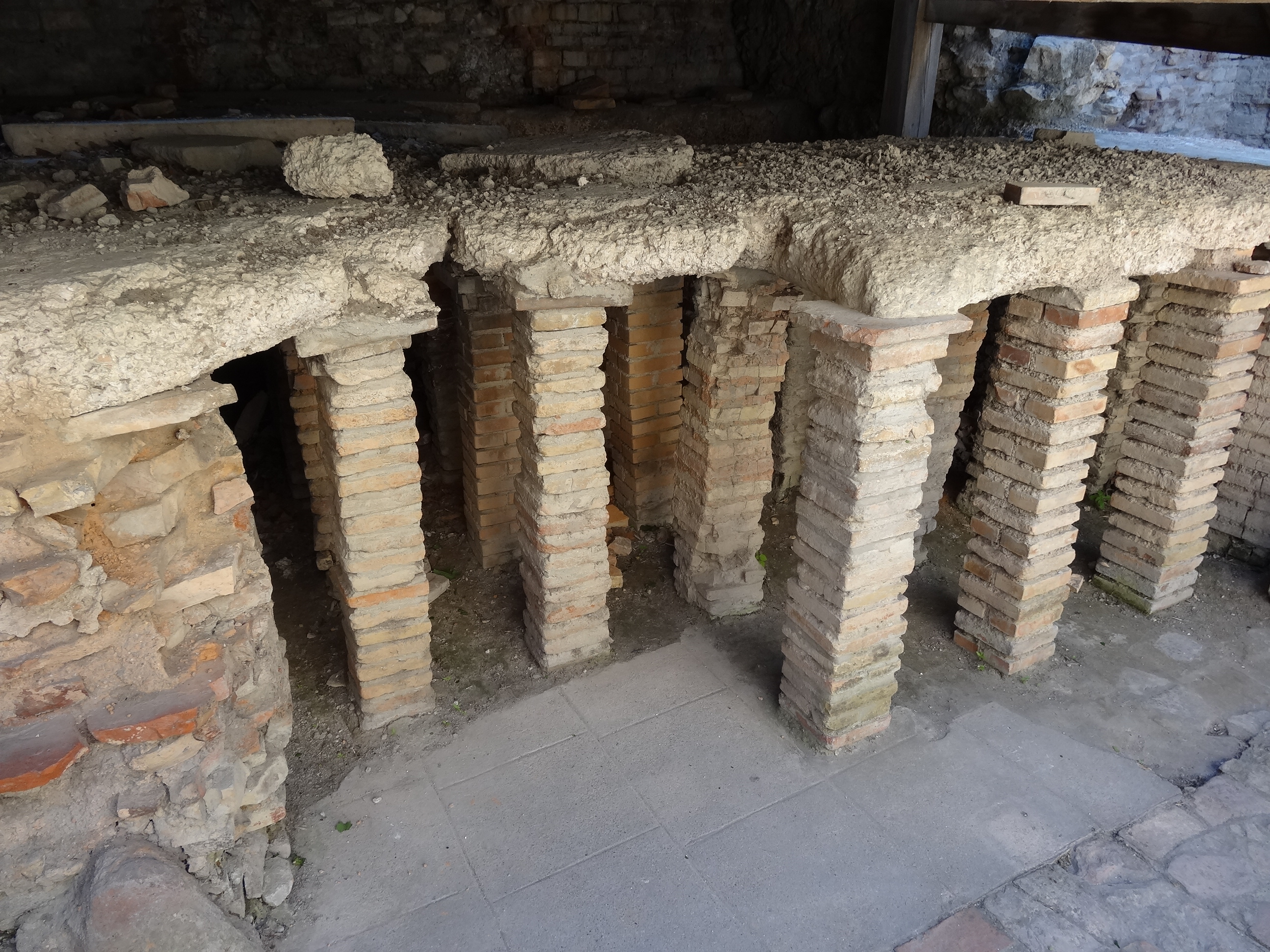
Our plan was met with little success at the first of our stops – the old Baths of Constantine – which were situated right next to the Rhône which of course was the apex of the storm. Despite this unwelcome tour partner, we were nevertheless wowed by yet another startling well-preserved example of Roman architecture, the ruins including an imposing semi-circular wall bearing the signs of the baths’ former magnificence, their size testament to their use as public baths for all of the town. It was, as ever, fascinating to see the remnants of how ingeniously the Romans had used underfloor heating to heat the water, and how masterfully they had constructed their buildings as evidenced so clearly by the strength of the leftovers still around today.

DSC02722 DSC02723 DSC02725 DSC02726

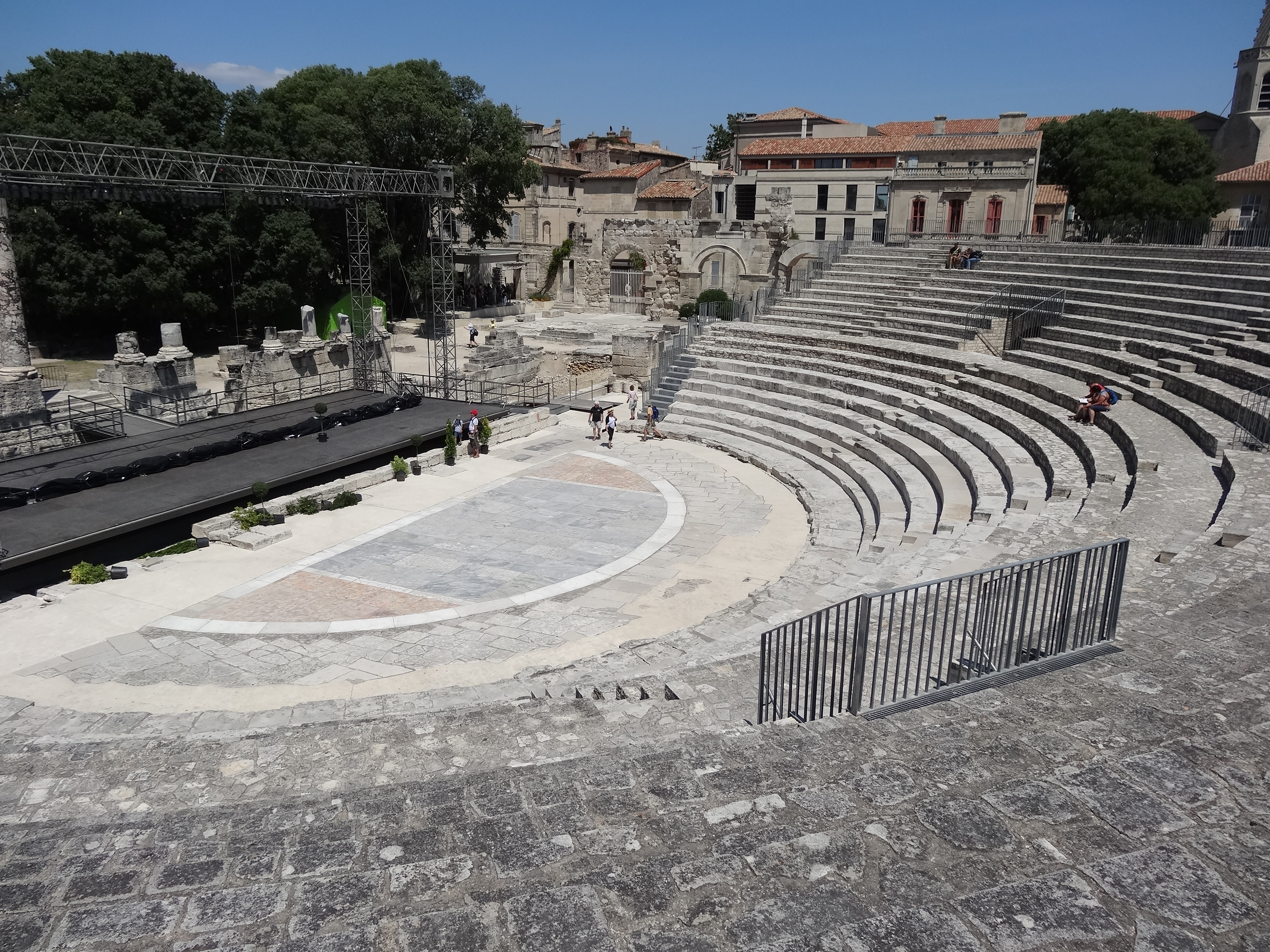
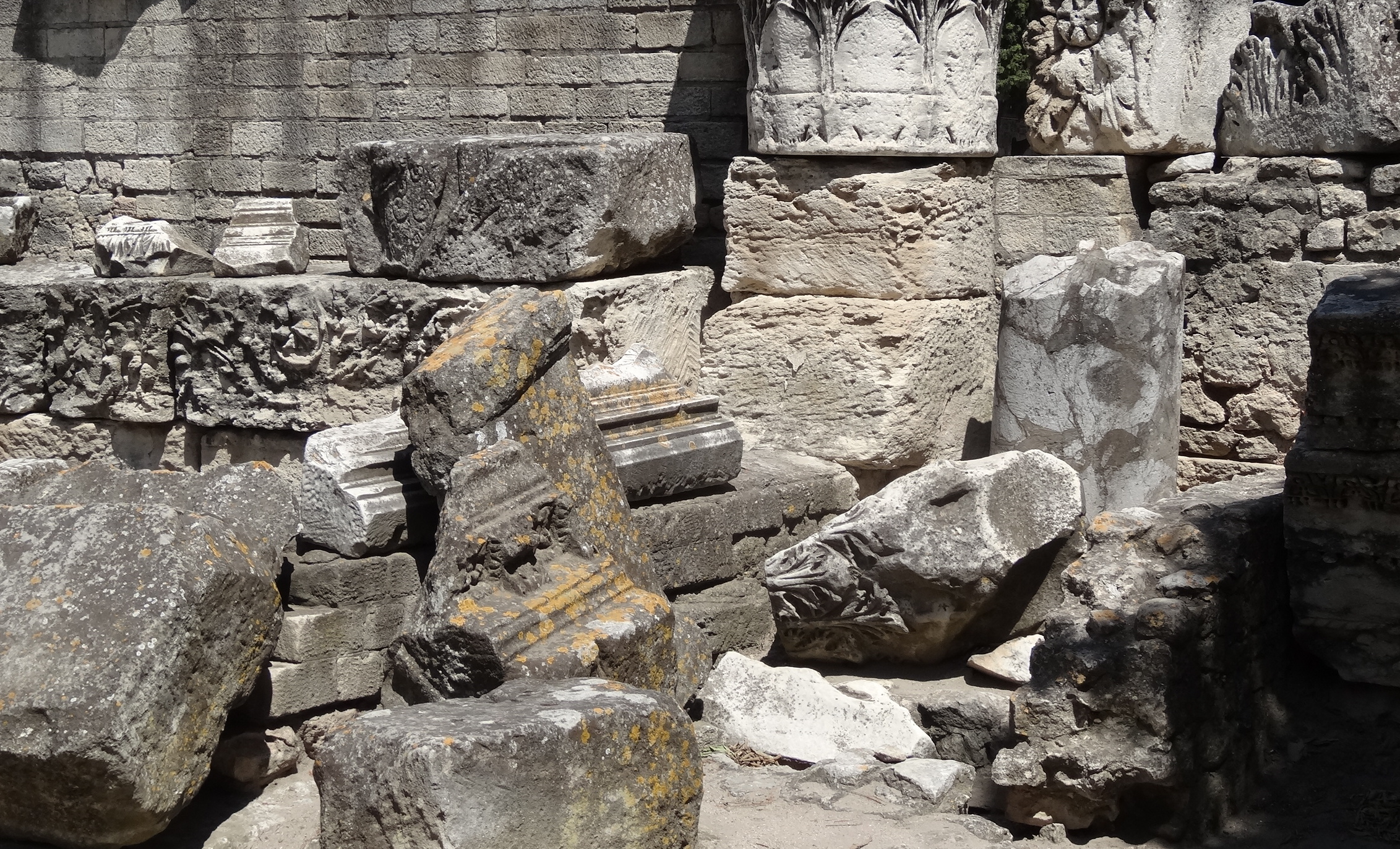
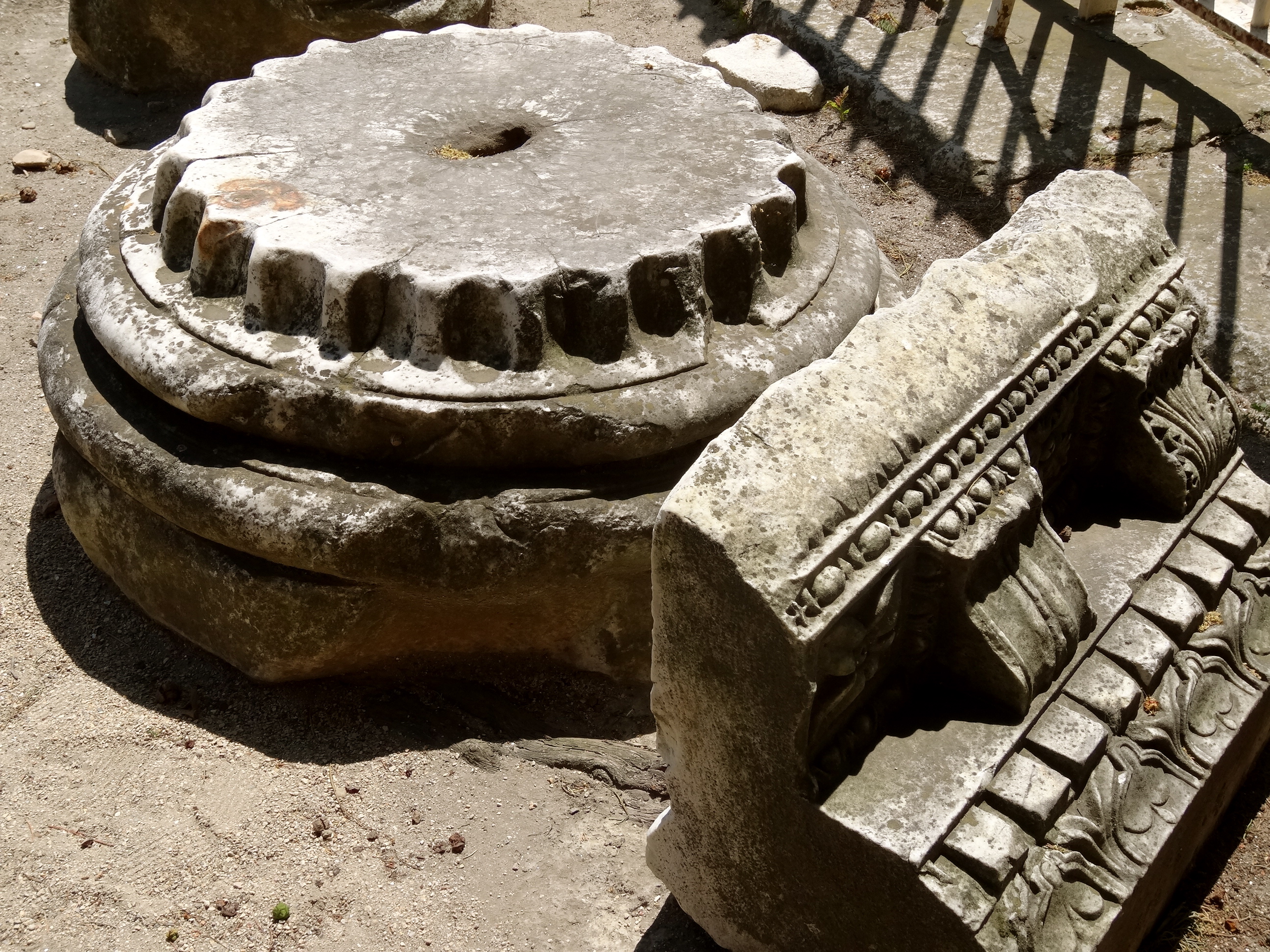
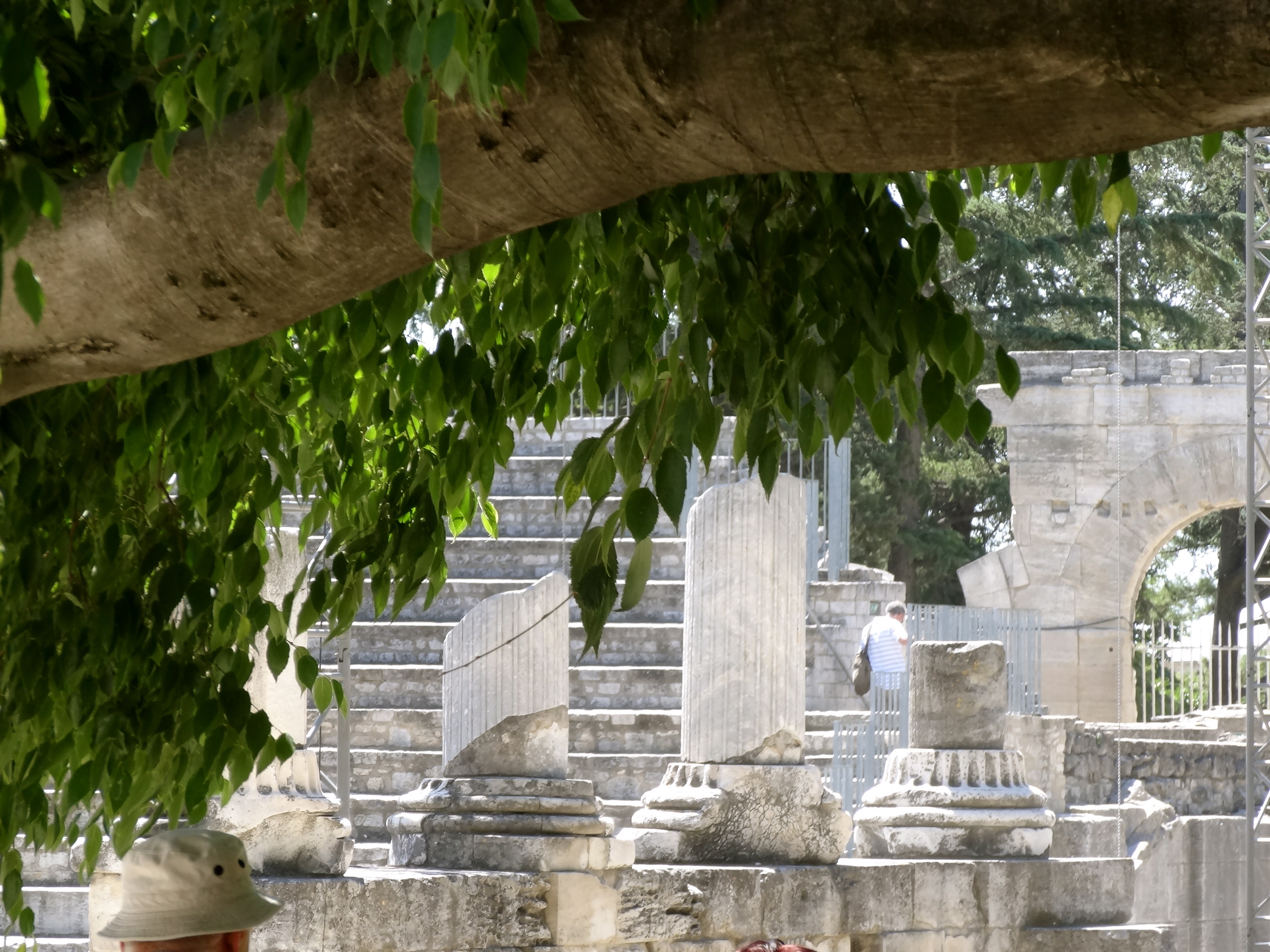
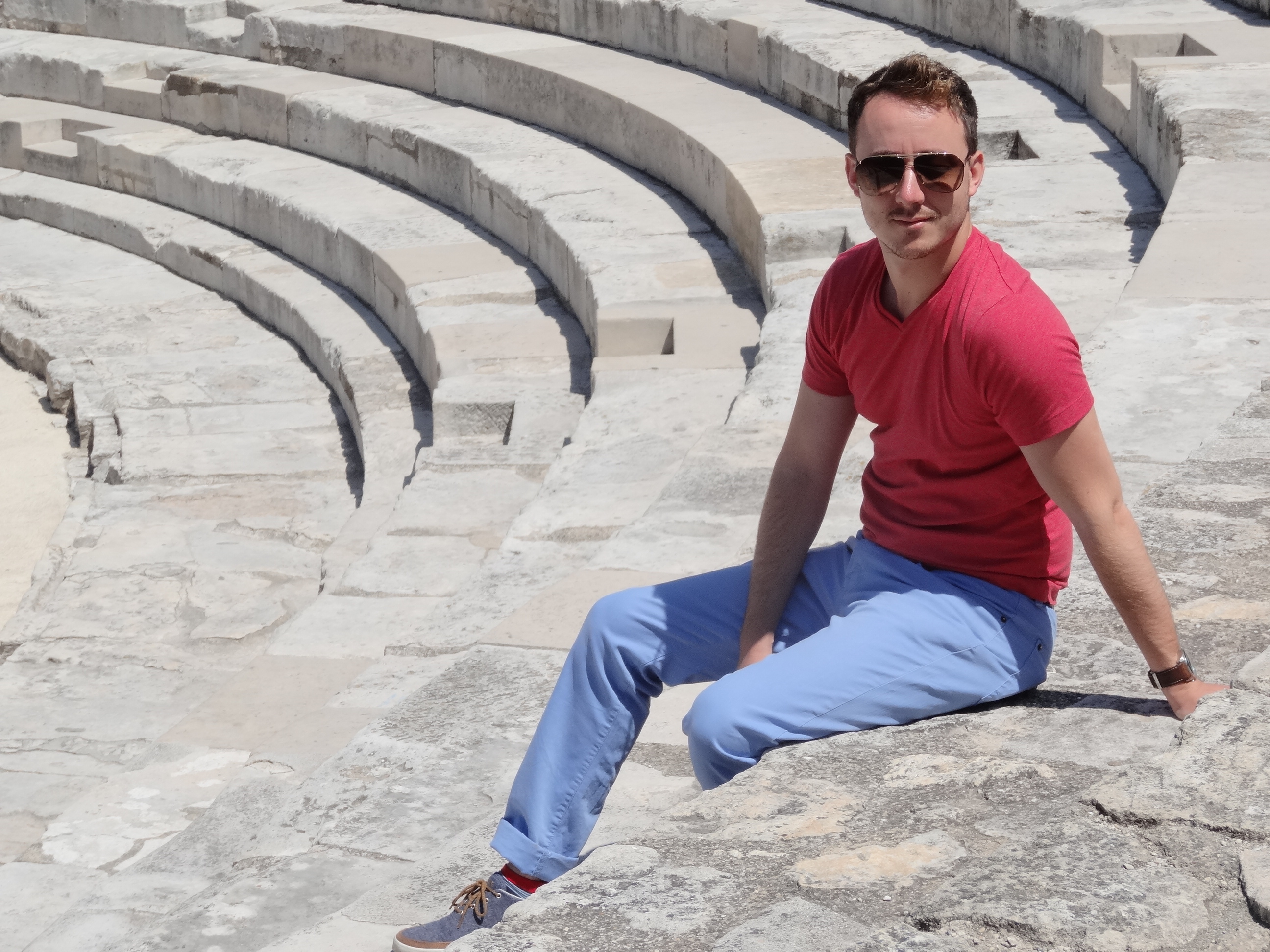
But the brilliance of Roman Arles did not end there, nor with the great amphitheatre which we had visited the previous day. Rather, just south of that great stadium, visitors to the city are literally spoilt for choice by the remains of a great Roman Theatre, whose semi-circular auditorium is still intact, and used for cultural performances to this day. For my Dominik and I, it was the less intact ruins, but the piles of rubble and stumps of columns that truly fascinated the most – like poetry in their decay, these seemingly scattered remains reminded me of the epic paintings of the Romantic age, when the adventurous young gentlemen of Britain’s most aristocratic families would set off on a grand tour of Europe to discover the very best of its classical heritage. Placing the “roman” in “romantic”, these odds and ends, still bearing the exquisite details of what once would have been stunning architectural centrepieces, made for one wondrous sight after another, and Dominik and I spent a good hour photographing obsessively, as well as reclining all over said rubble in suitably decadent poses – Tyra Banks would have been proud.

DSC02853 DSC02880 DSC02774 DSC02775 DSC02822 DSC02841 DSC02763 DSC02823 DSC02804 DSC02852

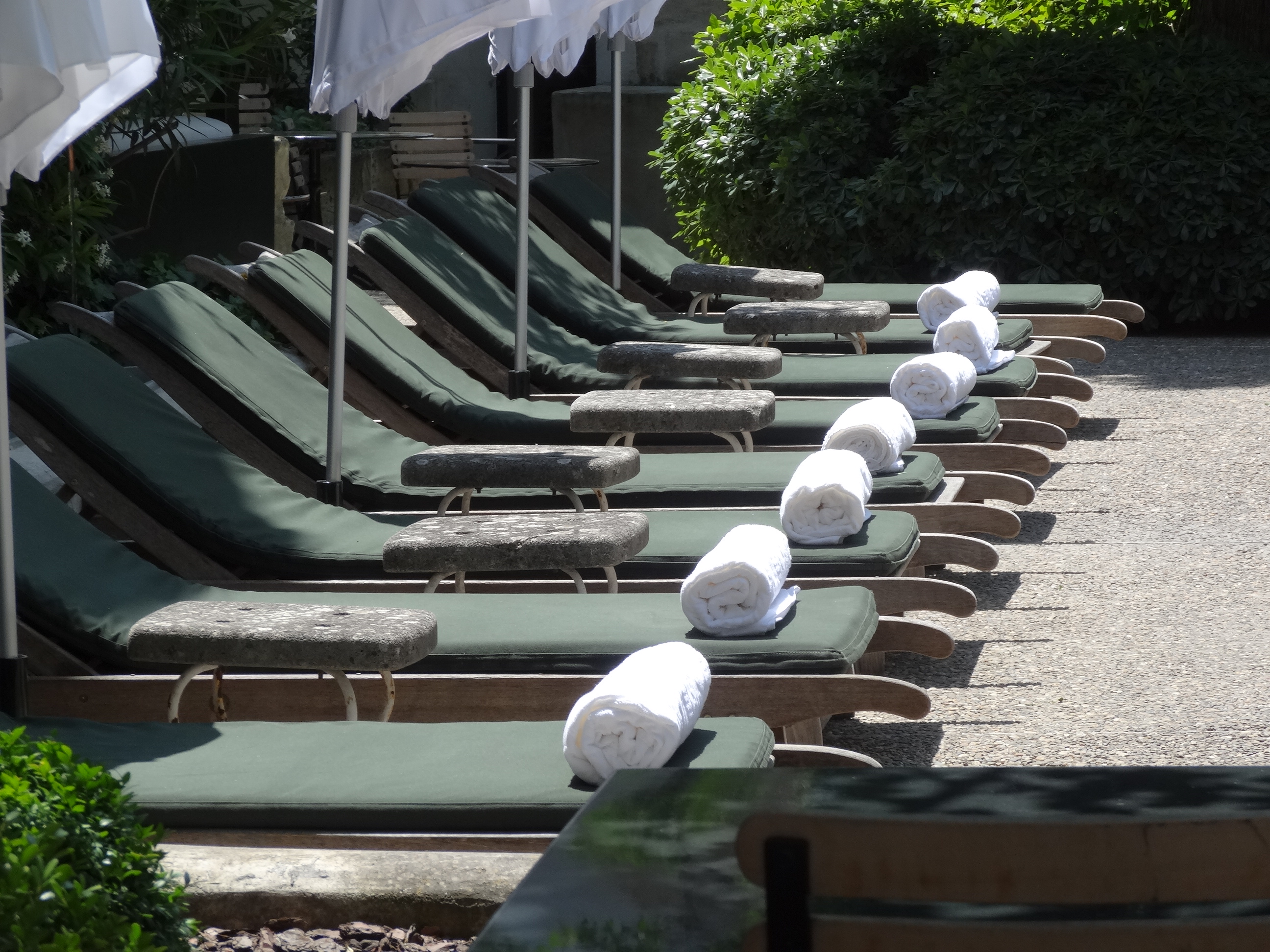
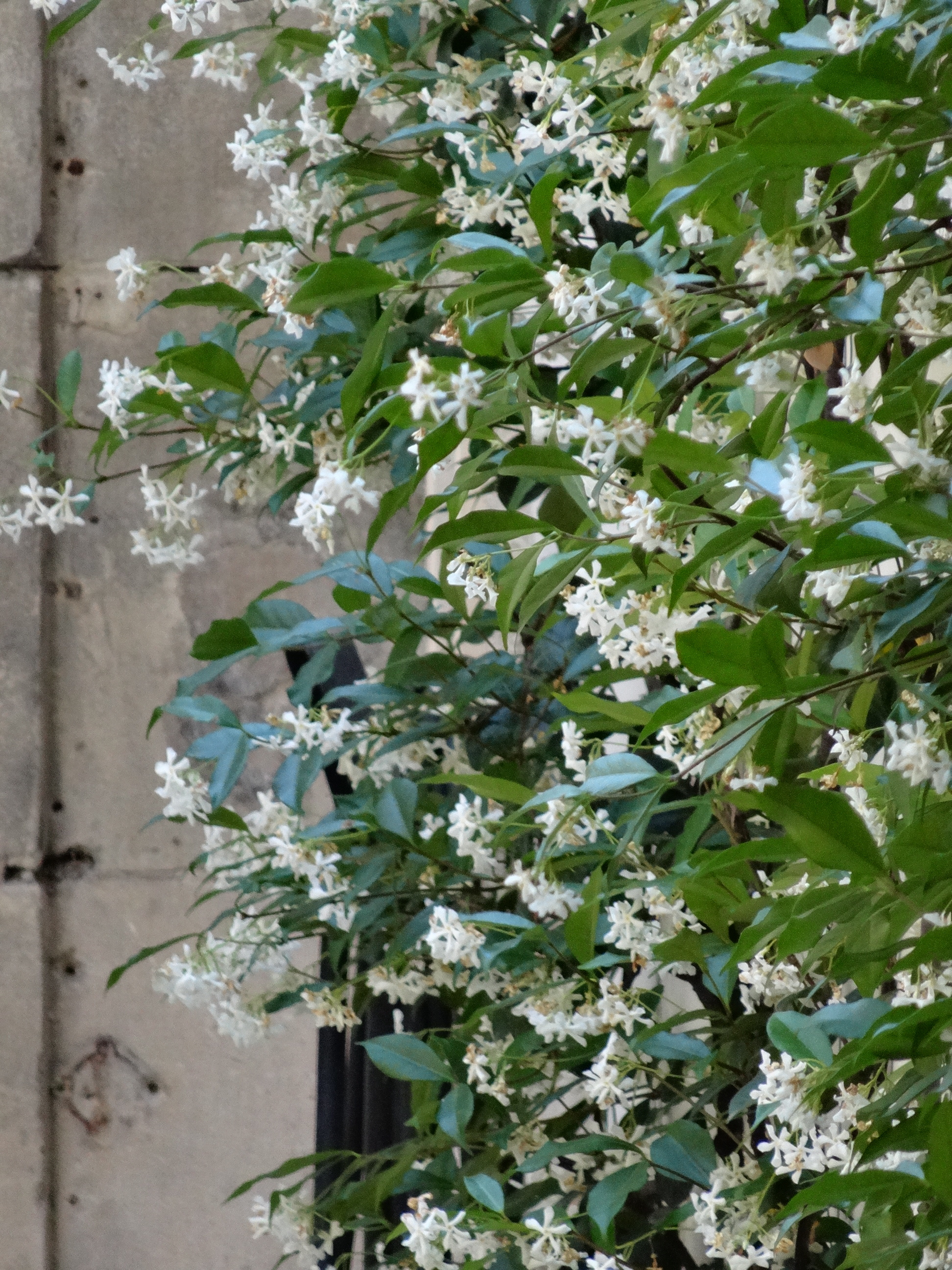
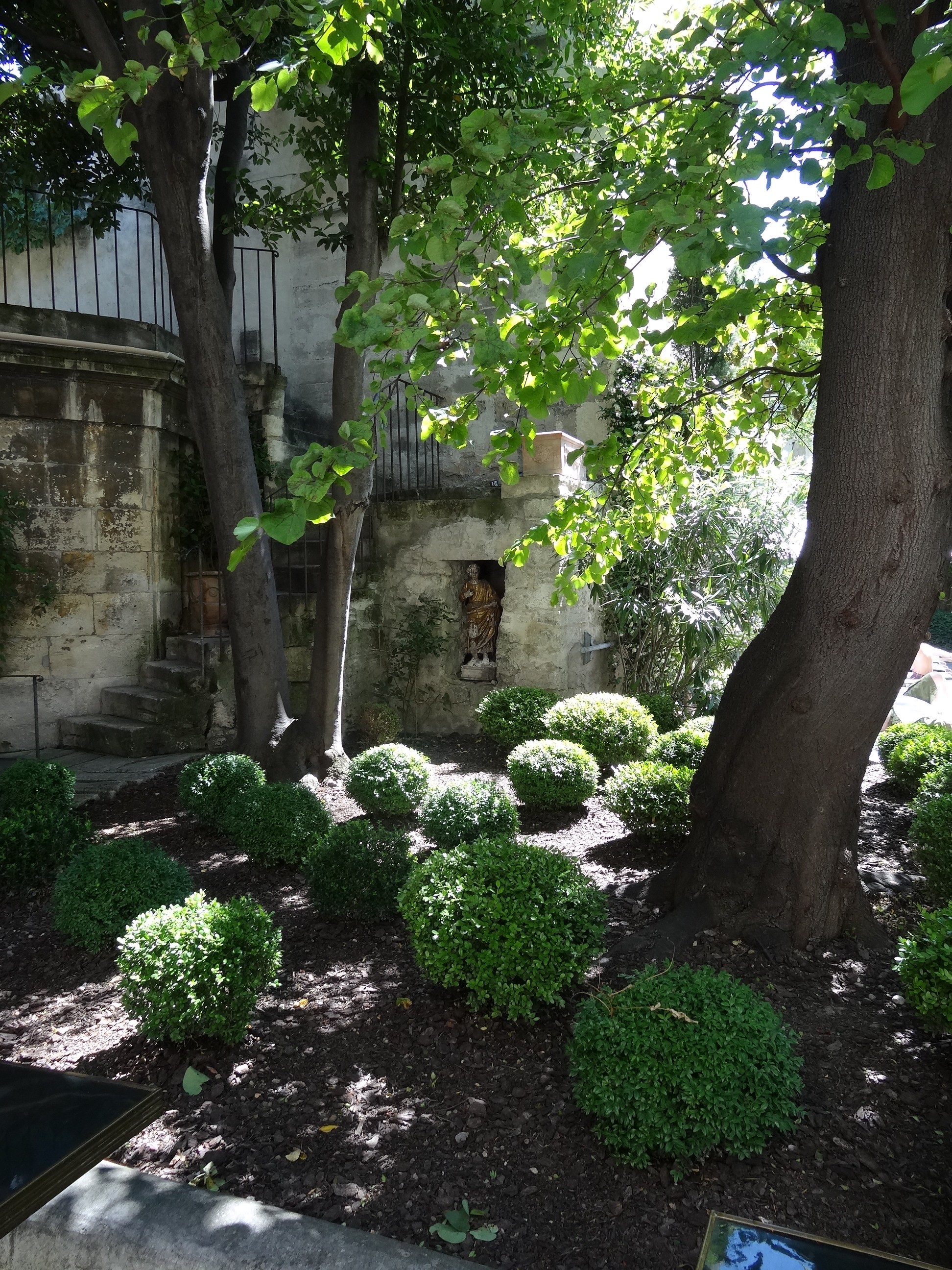
After a lunch of plump, fresh salads enjoyed in yet another safe haven from the wind (check out my foodie post tomorrow) we decided to cut our losses and fight the forces of nature no longer. Instead we couldn’t help but return to the ultimate in all-weather sancturies: our super indulgent, exquisitely chic hotel: the Hotel Particulier. Set in the sumptuous grounds of a 19th century mansion built by the Mayor of Arles on the outskirts of the city, this truly boutique of hotels (for most hotels calling themselves thus are far from it) provided the obvious shelter from the wind, and the perfect excuse for mid-trip afternoon of indulgence – for here, amongst the jasmine covered walls of the perfectly manicured courtyard garden, the wind felt reduced to a mere breeze which helped the sweet perfume of the garden’s flowers waft gently across the grounds.

DSC02939 DSC02952 DSC02972 DSC02596 DSC02960 DSC03109

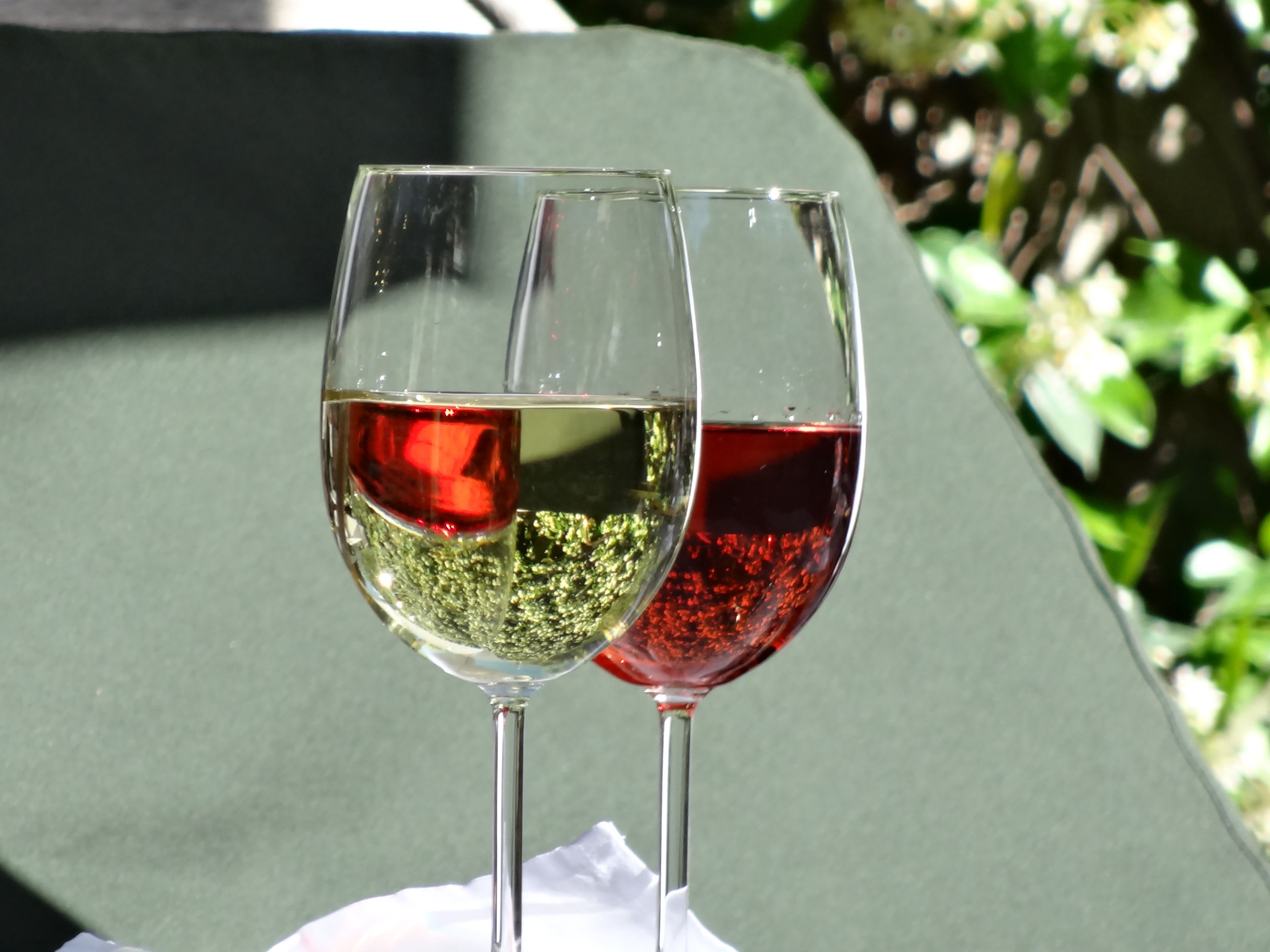
Just as design has been employed so elegantly to create an atmosphere redolent of the most superb of luxuriant utopias, so too had this little garden haven managed to tame the wild savagery of the Mistral. And so it was there, next to a long perfectly turquoise pool, served glasses of wine by the perfectly manicured waiters and accompanied by the gentle sounds of trickling water, that we enjoyed the remainder of our second day in Arles – a well deserved rest before our Provence Odyssey continued.

I leave you with more photos of the superb Hotel – a real piece of paradise in the midsts of Arles’ history-soaked streets.

DSC02485 DSC02468 DSC02686 DSC02623 DSC03102

All photos and written content are strictly the copyright of Nicholas de Lacy-Brown © 2013 and The Daily Norm. All rights are reserved. Unauthorized use and/or duplication of the material, whether written work, photography or artwork, included within The Daily Norm without express and written permission from The Daily Norm’s author and/or owner is strictly prohibited. 


Provence Odyssey | Avignon to Arles: Day 3 – From Popes to Emperors

When I was considering an itinerary for our Provence tour this summer, it felt a bit like closing my eyes and pinning a pin on the donkey. With so much beauty ripe for exploration, where on earth would we go? One of the first factors was transport – not wanting to incur the costs of hiring a car, nor least the fear factor of driving on the opposite side of the road, we had to be in places that were public transport accessible. And given that we were taking the Eurostar down from London, Avignon – the first Provence stop on the high-speed line – seemed like a very good place to start. But beyond that, the rolling purple hills of Provence were very much our oyster, so to speak. So following my great passion for art, I decided to plan our itinerary following something of an art historical theme, taking the trail from Arles, which today has become synonymous with both Van Gogh and Picasso (who loved the bullfighting there while in exile from his beloved Spain), and onto Saint Remy de Provence – where Van Gogh self-admitted into an asylum, and finally ending up at Aix-en-Provence, the city of Cezanne, and this year a key player in the Marseille-Provence European City of Culture festivities.

Starting off a new day

Starting off a new day

So today it was onto Arles, the city famous for being the location of so many of Van Gogh’s paintings, from his Yellow House and Night over Arles, to his iconic sunflowers, and for generally being the reason why his paintings metamorphosed so markedly from the dull browns of Holland to the bright vivid colours of Provence. But it’s a city famous too for its Roman heritage – the great Roman amphitheatre standing at its heart is one of the best preserved amphitheatres from Roman times, and has literally dictated the shape of the town, whose streets wind so perceptively around it. But before we wind back the clock from medieval Avignon to Roman Arles, let me take a moment to bid a farewell to Avignon, whose charming ancient streets bore further fruit on this morning of our departure – a few hours further to explore this surprising city before our 20 minute train journey south to Arles departed at 2pm.

DSC02331 DSC02374 DSC02371 DSC02341 DSC02362 DSC02349 DSC02346

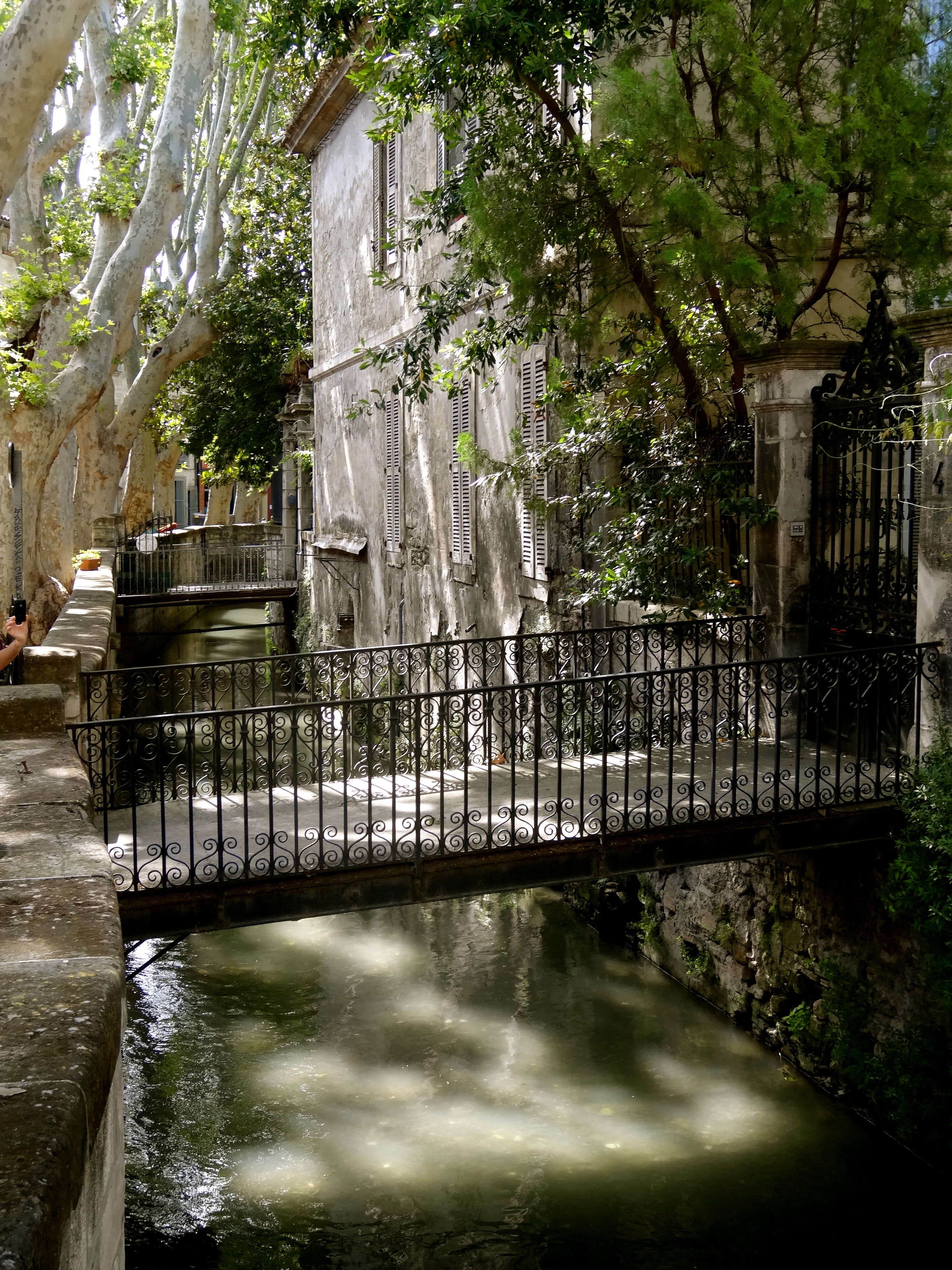
Indeed, before parting with Avignon, further treats were indeed in store. For a day which started off with a deliciously simple, vividly colourful and dangerously buttery breakfast at another typical local bar continued with similar sensual ravishment, as we walked out towards the city’s old dyers district, where the tiny River Sorgue emerges from underground and runs alongside the Rue des Teinturiers reminiscent of a dutch canal. In the glinting sunshine, this street was charm in urban form, providing the perfect platform for a laid back and tranquil walk along the very manifestation of the old historical city itself.

DSC02429 DSC02428

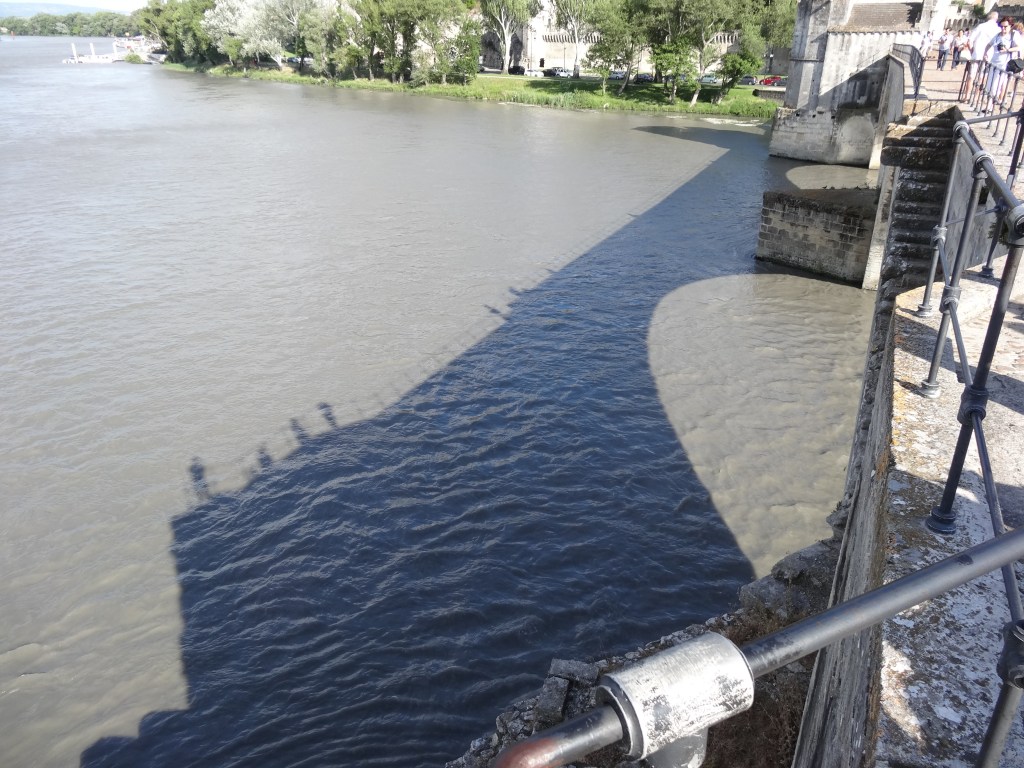
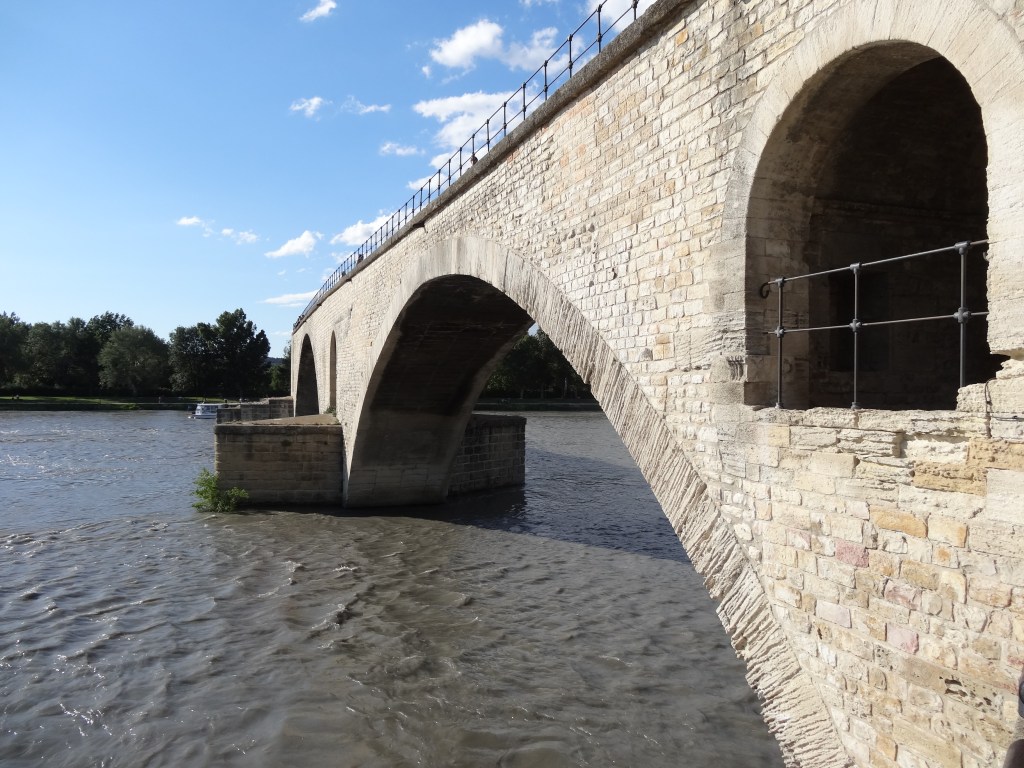
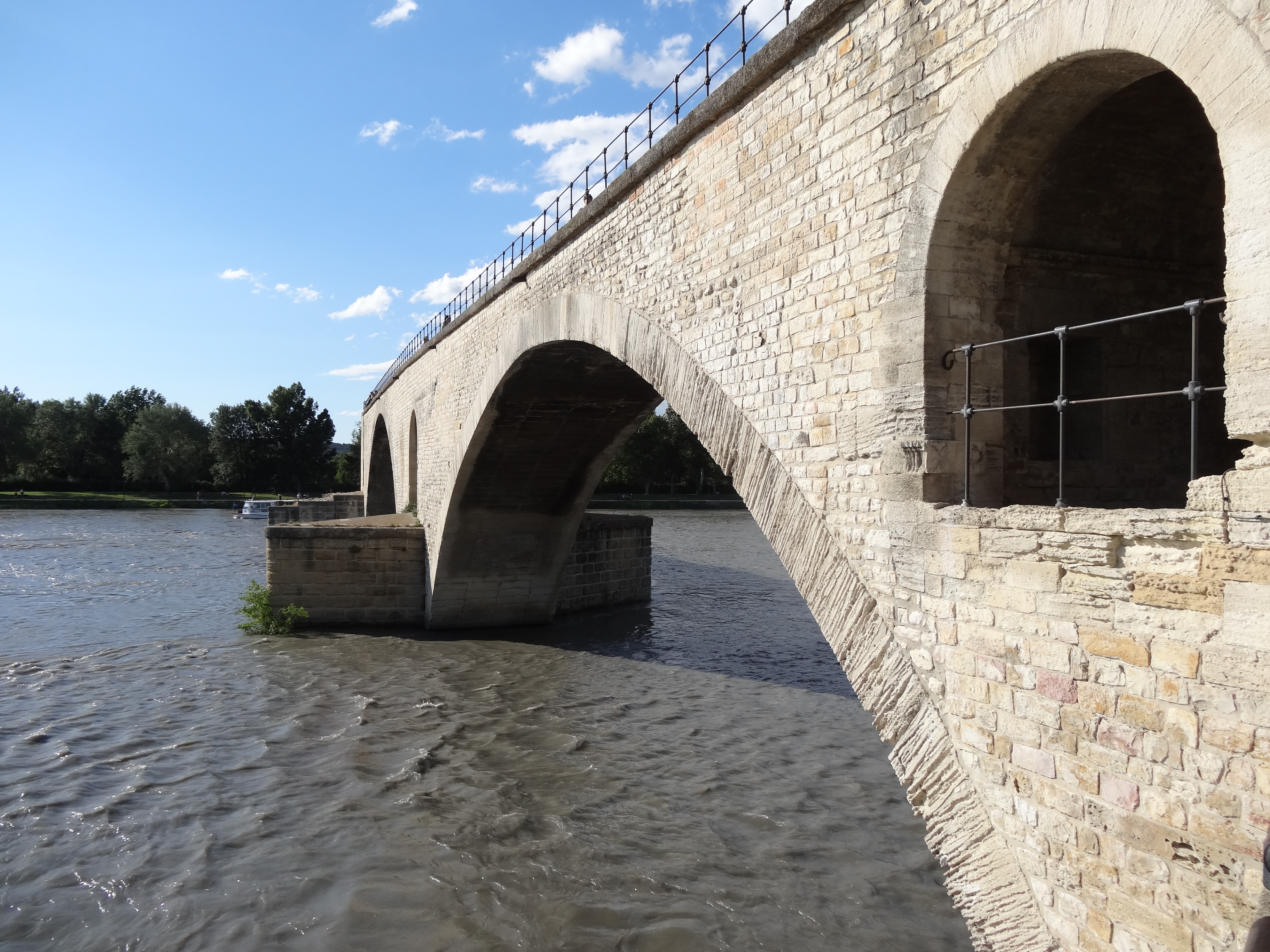
But just as the River Sorgue pours outwards into the wider dominant Rhône, so too did we head to that same main artery of the city, bidding adieu to this city by crossing the river on a bridge that is, mercifully, in one piece, in order to capture the best vantage point of Avignon, which of course had to include the Papal Palace and the famous broken Pont d’Avignon. Photographs collated, and luggage picked up, we headed to the city of Arles, back a few centuries to the time when the Roman Empire extended its special brand of classical civilisation to what was then savage Gaul, and developed towns such as Arles into little gems glinting on the far reaches of the empire.

IMG_2629 DSC02536 DSC02545 DSC02582 DSC02555 DSC02543 DSC03098

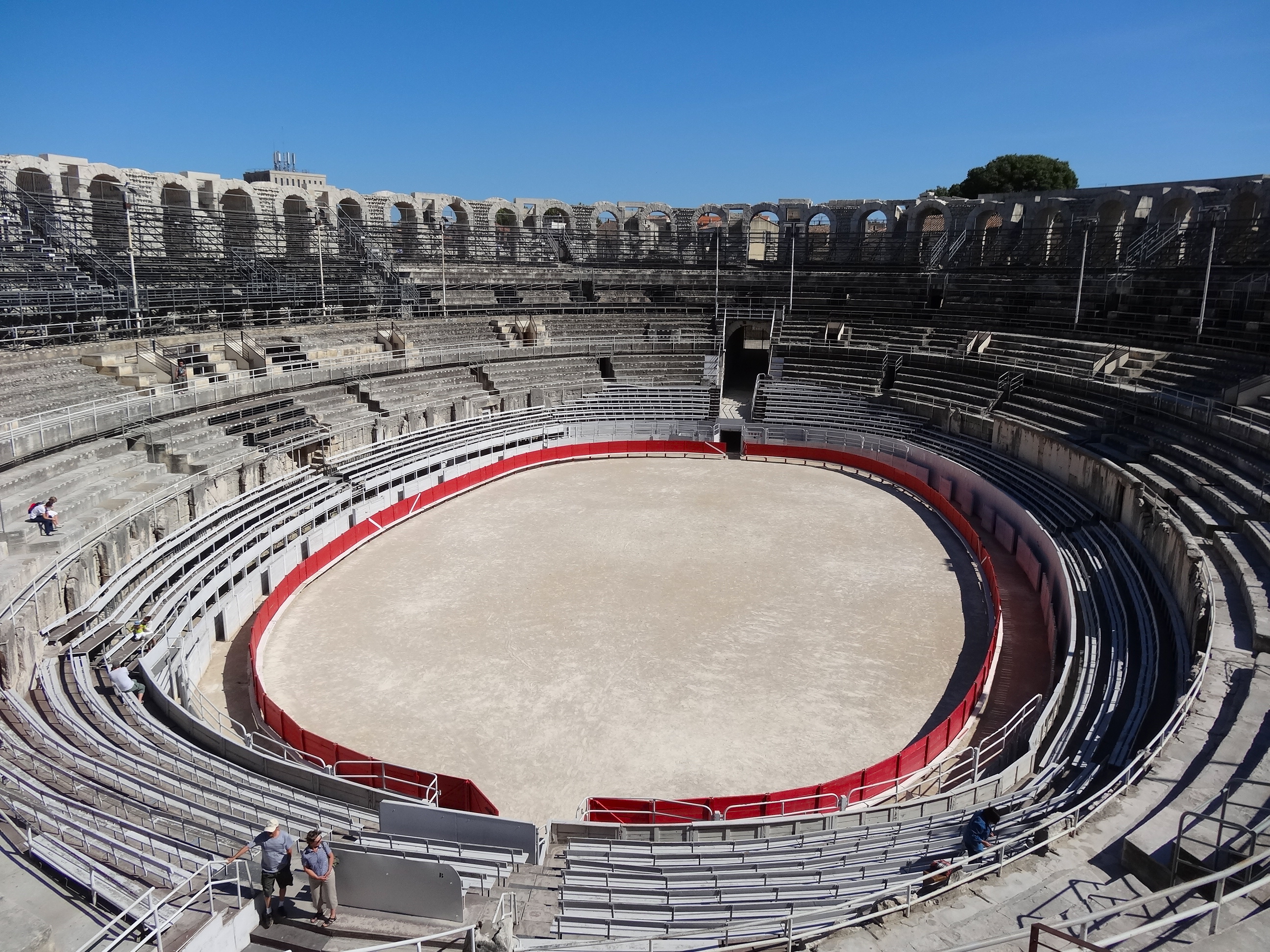
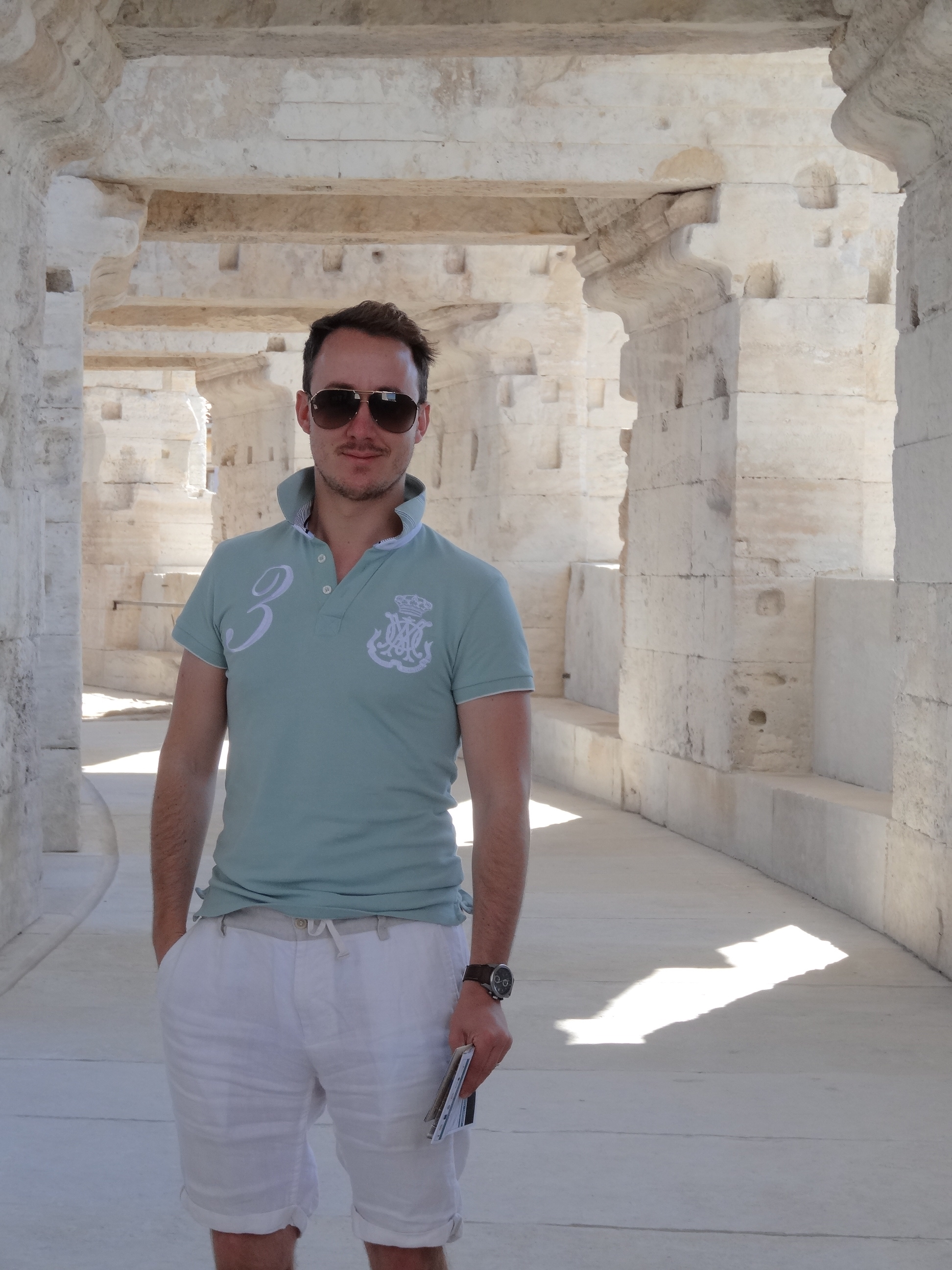
Just as all roads are supposed to lead to Rome, so too do the narrow maze-like streets of Arles descend upon the imposing form of this almost perfectly intact amphitheatre, and it was to this great monument that our paths inevitably led within hours of our arrival in the city. Into the great monument we went, which in stark contrast to Rome’s iconic amphitheatre, is very much in use for bull fights and other theatrical festivities, so consequently what we were viewing was an auditorium in the round, set up with a floating metal seating structure, away from the now ancient and only partially constituted former seating of the original stadium. Like any amphitheatre, the building doesn’t differentiate much from one arch way to another, but walking around the great 360 degree structure was attraction enough to enable us to appreciate the magnificence of this surviving structure, and revel in this modern day connection back to our ancient past.

C'est Moi - at the Amphitheatre

C’est Moi – at the Amphitheatre

Having had our fill of Arles’ beating heart, we could do little else but take in the inherent character and charm of this city, whose houses are similarly shuttered like those in Avignon, but somehow more colourful and often more decorative. Arles lacks the great impactful squares which Avignon boasts, but that is because here, a city has very clearly developed around history, rather than making history in its own construction as in Avignon. The result is a maze-like development, which is not always straightforward to explore, but getting lost in these charming narrow streets is half the fun of the adventure. And ripe for adventure this city surely is, a venture now begun in this second leg of our Provence Odyssey.

DSC03051 DSC02719 DSC02762 DSC02896 DSC02709

More from Arles, coming soon.

All photos and written content are strictly the copyright of Nicholas de Lacy-Brown © 2013 and The Daily Norm. All rights are reserved. Unauthorized use and/or duplication of the material, whether written work, photography or artwork, included within The Daily Norm without express and written permission from The Daily Norm’s author and/or owner is strictly prohibited. 

Provence Odyssey | Avignon: Les Photos

I am almost at an end of the first leg of my Provençal adventure, and tomorrow we will move on to Arles. So the time has almost certainly come to throw a whole load of my most treasured photographs at you.

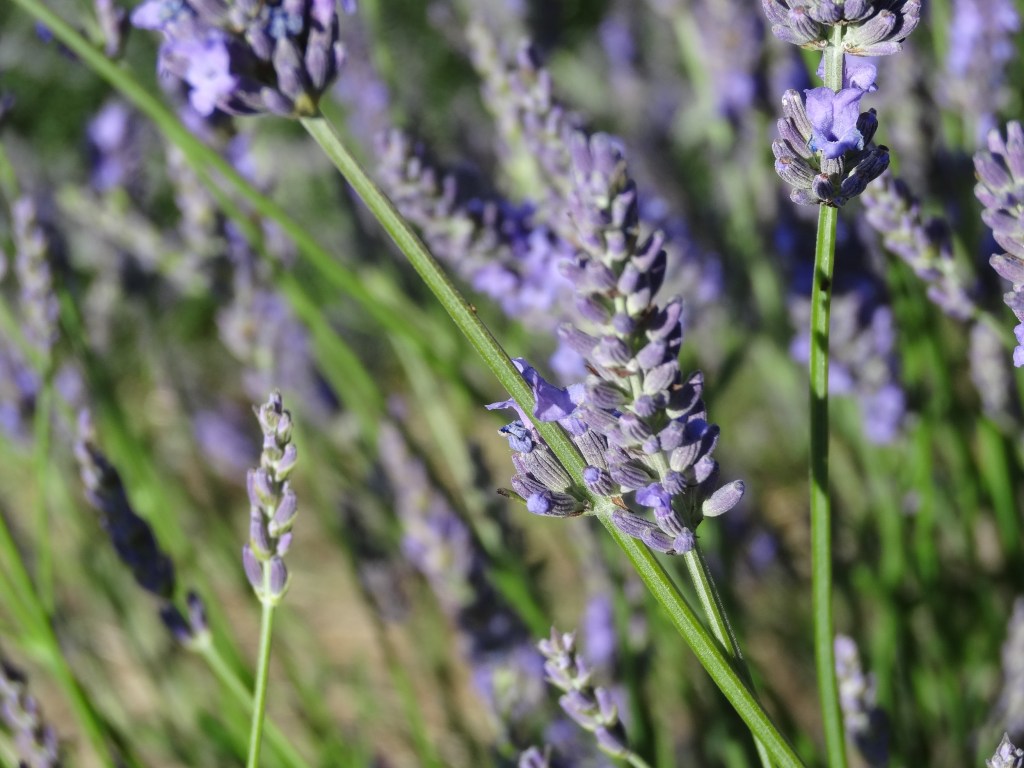
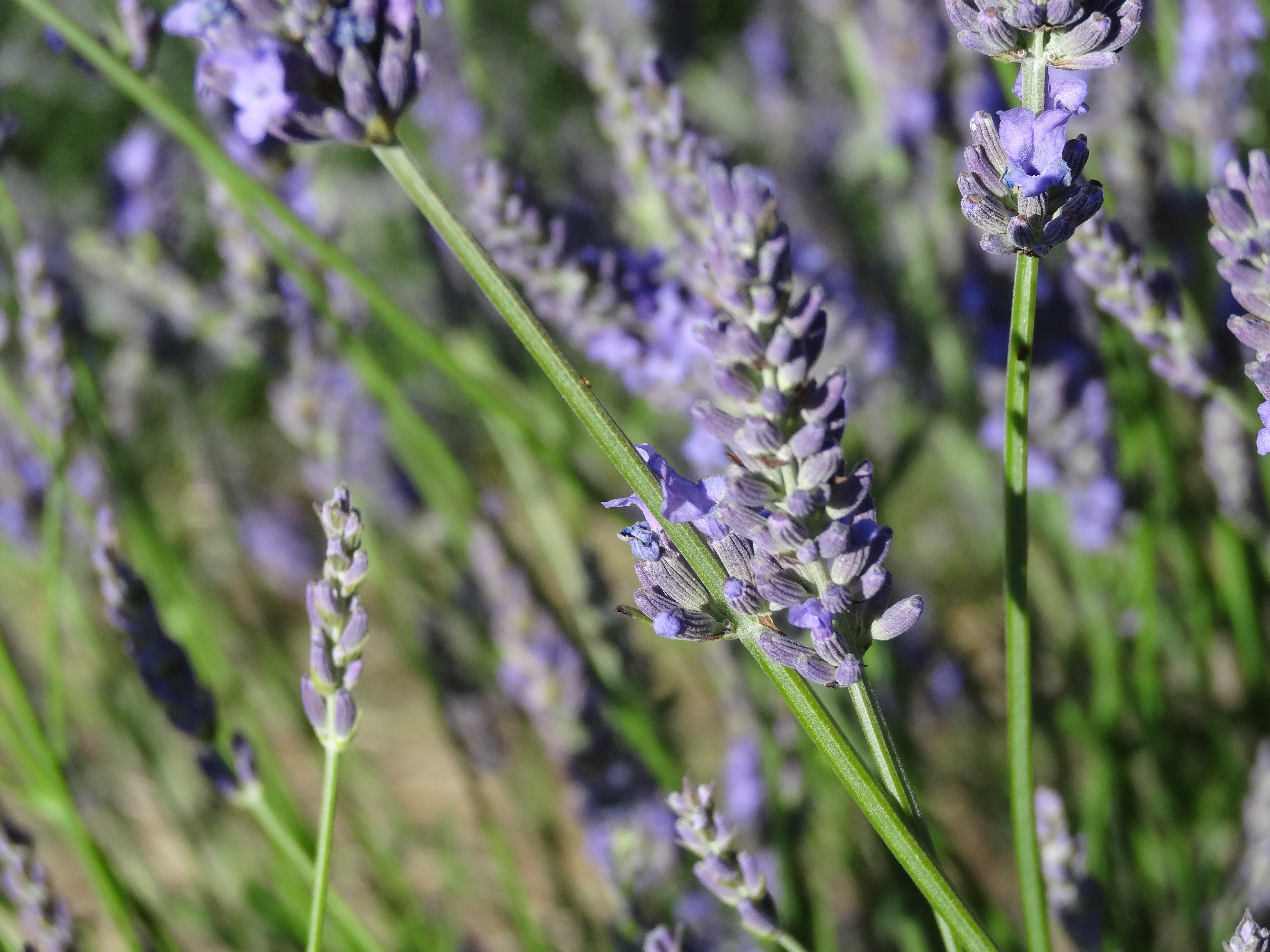
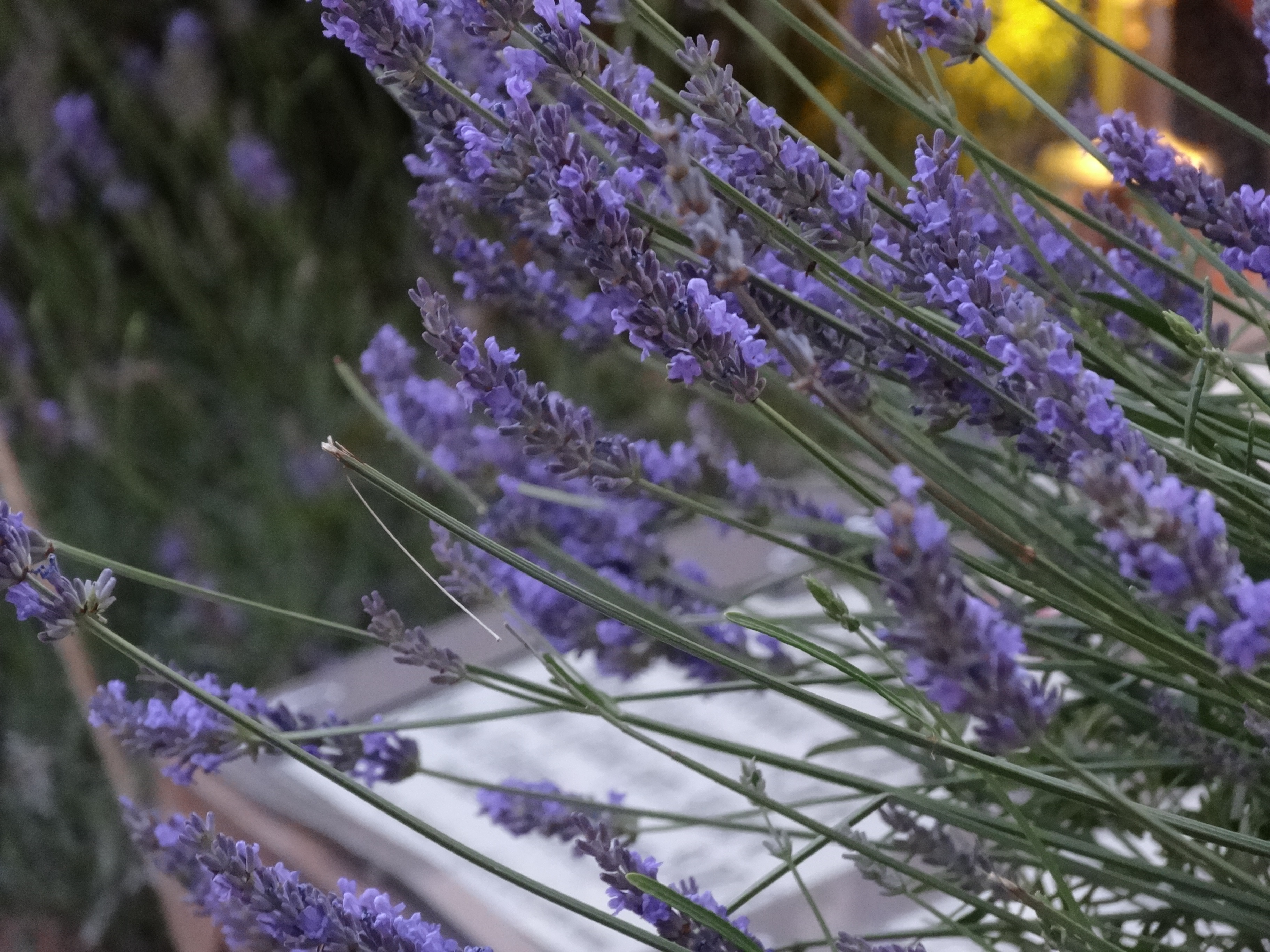
Provence, unexpectedly, provided a ceaseless flurry of inspiration from our first moments on French soil, from the perfumed lavender bushes swaying gently in the breeze of the Rhône, and the buildings beset by detailed grand facades and wooden painted shutters aplenty, to the vast Papal Palace and the robust medieval walls which give Avignon its historical character.

DSC01910 DSC02075 DSC01862 DSC02063DSC01904 DSC02069I hope you enjoy these shots, which focus on various details which caught by eye around the city, both features which are testament to Avignon’s iconic facade, but also concentrate on the daily life of a bustling city: the cafes, the children playing, the big wheel and the small hidden gargoyles.

See you in Arles!

All photos and written content are strictly the copyright of Nicholas de Lacy-Brown © 2013 and The Daily Norm. All rights are reserved. Unauthorized use and/or duplication of the material, whether written work, photography or artwork, included within The Daily Norm without express and written permission from The Daily Norm’s author and/or owner is strictly prohibited. Excerpts and links may be used, provided that full and clear credit is given to Nicholas de Lacy-Brown and The Daily Norm with appropriate and specific direction to the original content.

Provence Odyssey | Avignon: Day Two – Le Pont et Les Papes

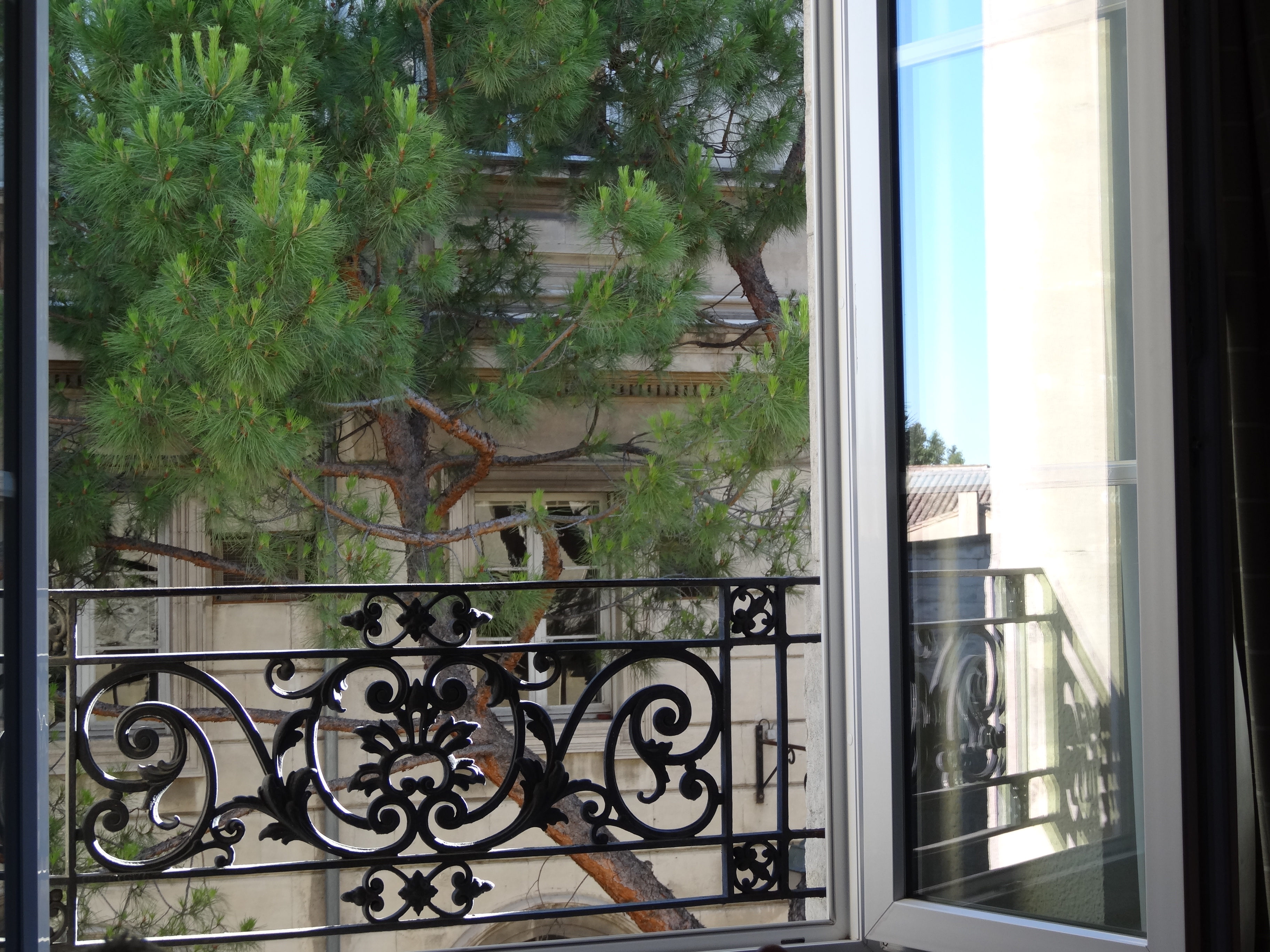
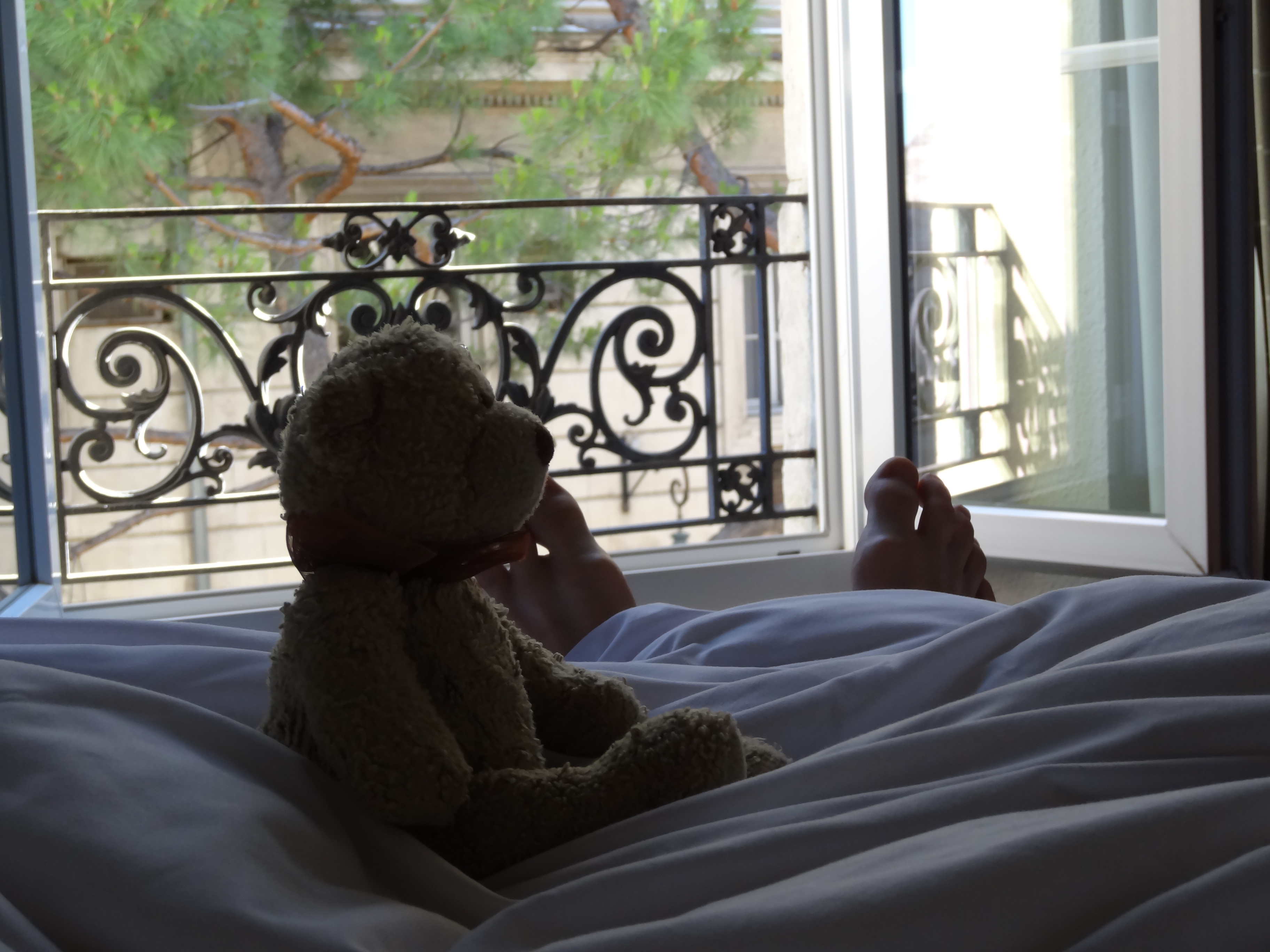
It was one of those mornings which you would like to lock up in an alarm clock to be projected outwards at the start of each day. Awakening to find not the dark groggy skies of an English summer, but the bright blue cerulean sparkle that can only be found in a Mediterranean sky, early sun streaming through the window, broken only by the shadow of a fresh-smelling pine tree standing quite still in the street outside, and the sound of birds and the awakening bustle of nearby cafes filling the air. To this slice of heaven we awoke on our first proper morning in the beautiful city of Avignon in Southern France, an optimism buoyed in the ultimately satisfying knowledge that this was our first full day of a holiday that would extend for another week and a day.
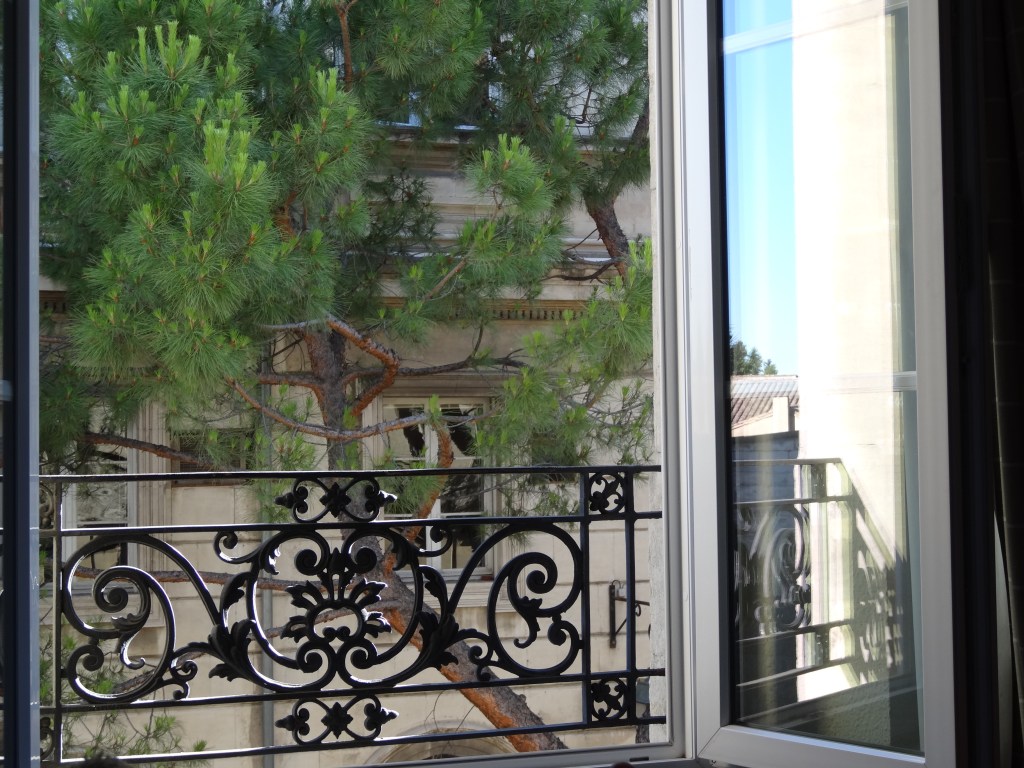
DSC02043 DSC02047 DSC02042 DSC02060

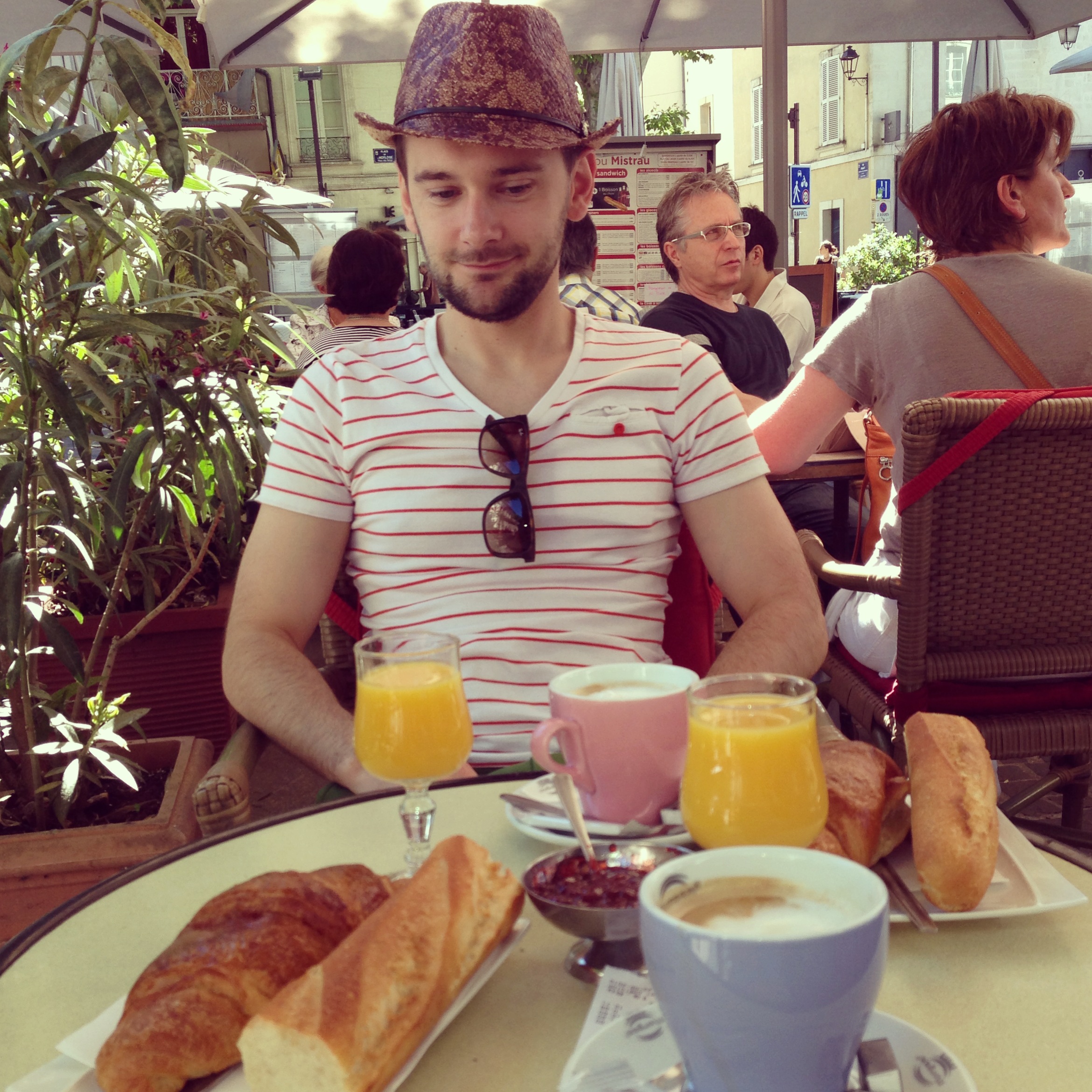
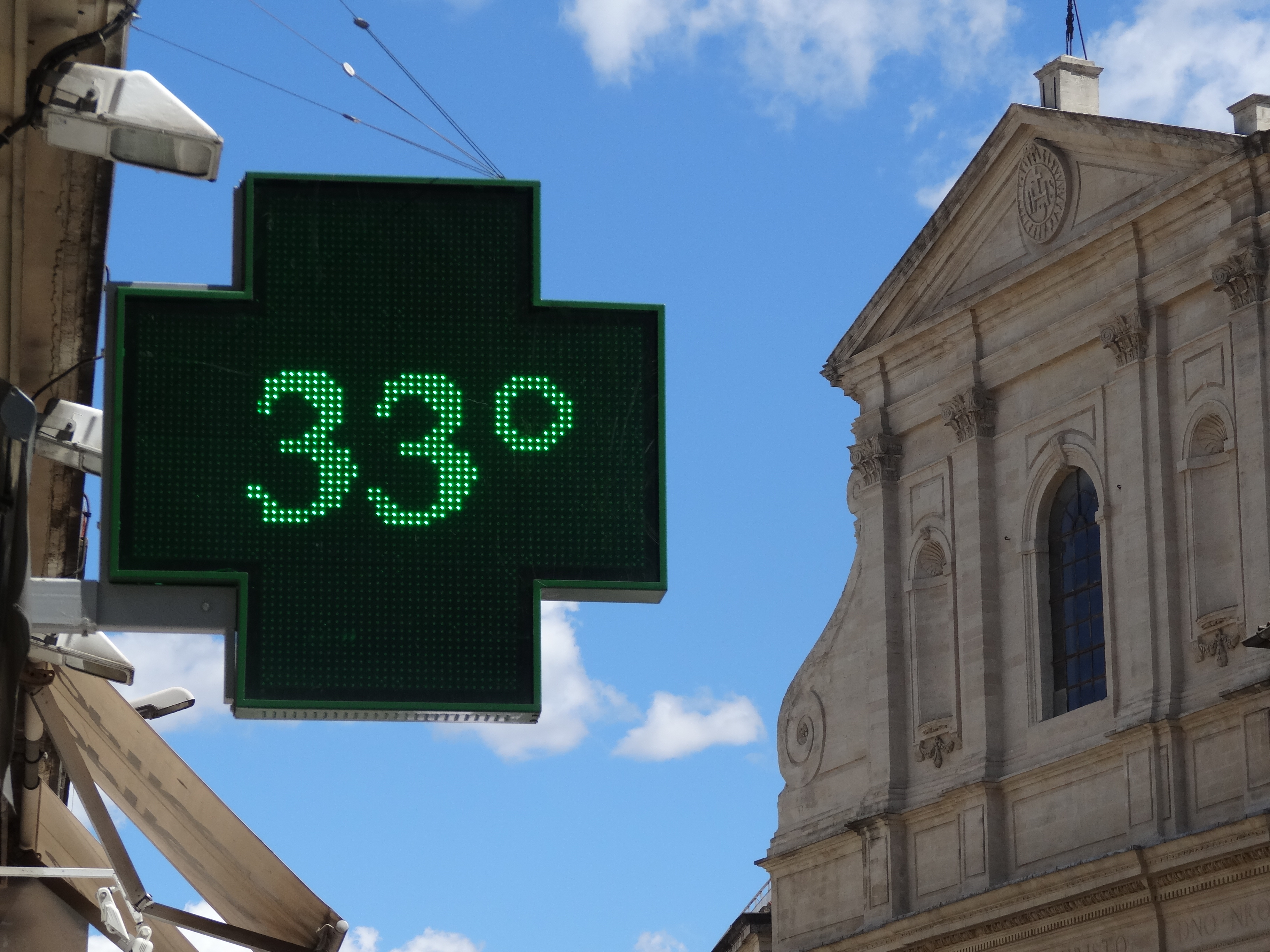
The brilliancy of the light made waking so easy, and I was soon up, capturing the view in watercolour in my newly purchased notebook. Yet before long, hunger came knocking, and strolling the brief 100 metres or so out to the Place de l’Horloge just outside the hotel, we picked one of many cafes in which to sit and order a petit dejeuner – breakfast which came handily in a pre-determined formular of fresh crunchy baguette, buttery croissants, sweet sticky confiture, jus d’orange and of course, a frothy thick coffee – and all a mere snip at 6 euros each. We very soon thought the better of our initial English naivety at making straight for the sun, skipping to a table in the shade away from the already intense morning heat (the nearby temperature gauge said it all), and there enjoying the simplicity of this very French breakfast, we watched this now sleepy great town wind slowly back into life.

Le Petit Dejeuner!

Le Petit Dejeuner!

Hotting up for the morning

Hotting up for the morning

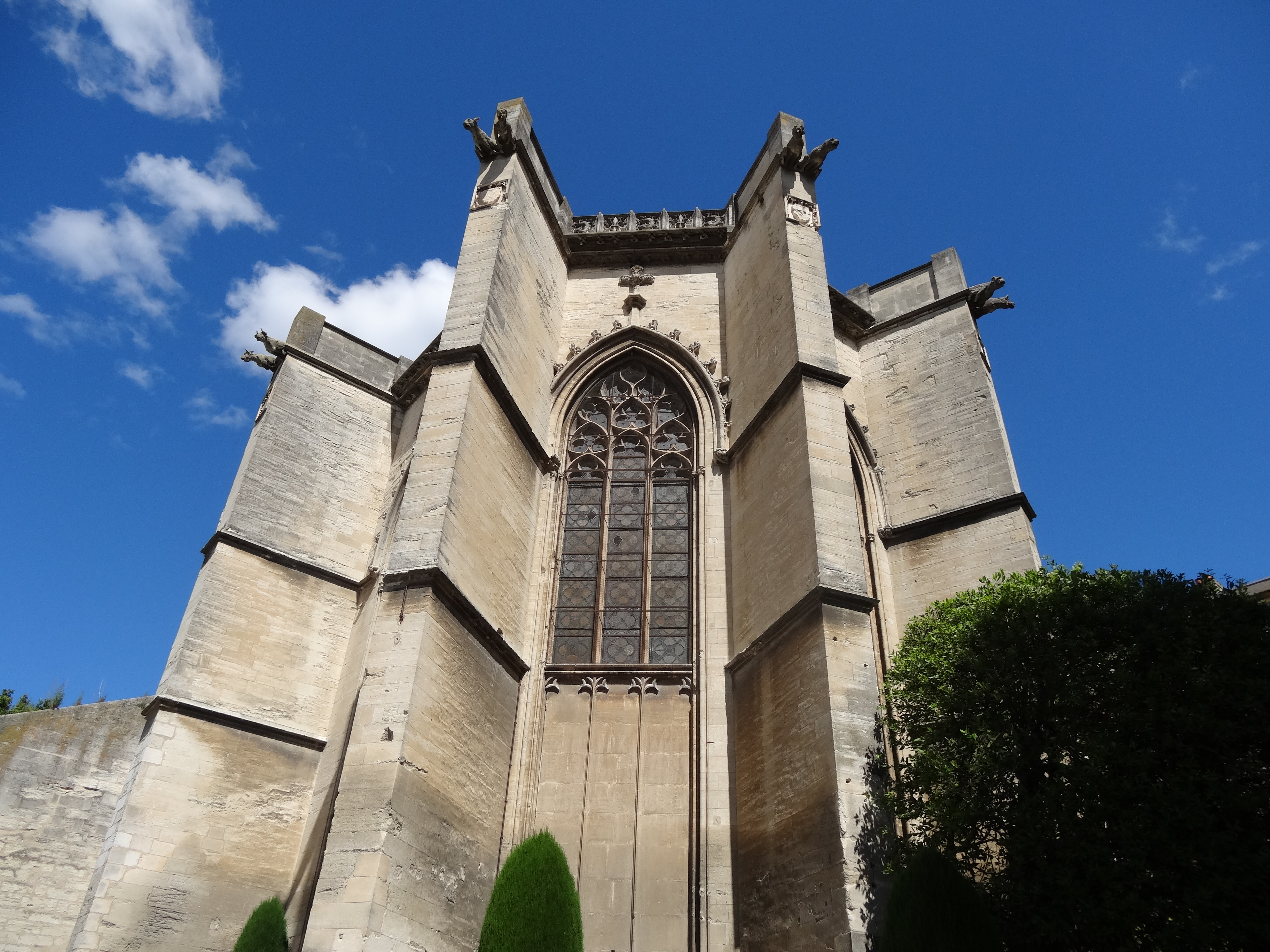
A whole day in Avignon meant that two inevitable bastions of the city needed to be covered: the Papal Palace and the world-renowned Pont d’Avignon itself, although our initial stroll en route took us past a small park set within the ruins of an old medieval church, its trees and fragrant flowers bursting with such piquant colour against the blue sky that you would swear that our eyes had been somehow tricked into seeing light through an almost fictionalised lens. Yet these photos do no injustice to the clarity of that colour, and the beauty of the floral path which led us steadily towards the vast Papal palace that dominates Avignon.

DSC02084 DSC02097 DSC02100 DSC02095DSC02089 DSC02092

I said something of the Papal palace in yesterday’s post – a vast complex built by some 9 successive Popes when they swapped a tumultuous Rome for the comparative tranquility of Avignon back in the 13th Century. But today we ventured inside, and only then could we properly appreciate the vast scale of this Papal compound, whose very rooms were so large that one barely noticed the multitude of tourists flooding through its gates, and its courtyards so voluminous that an entire temporary auditorium had been set up within its four walls.
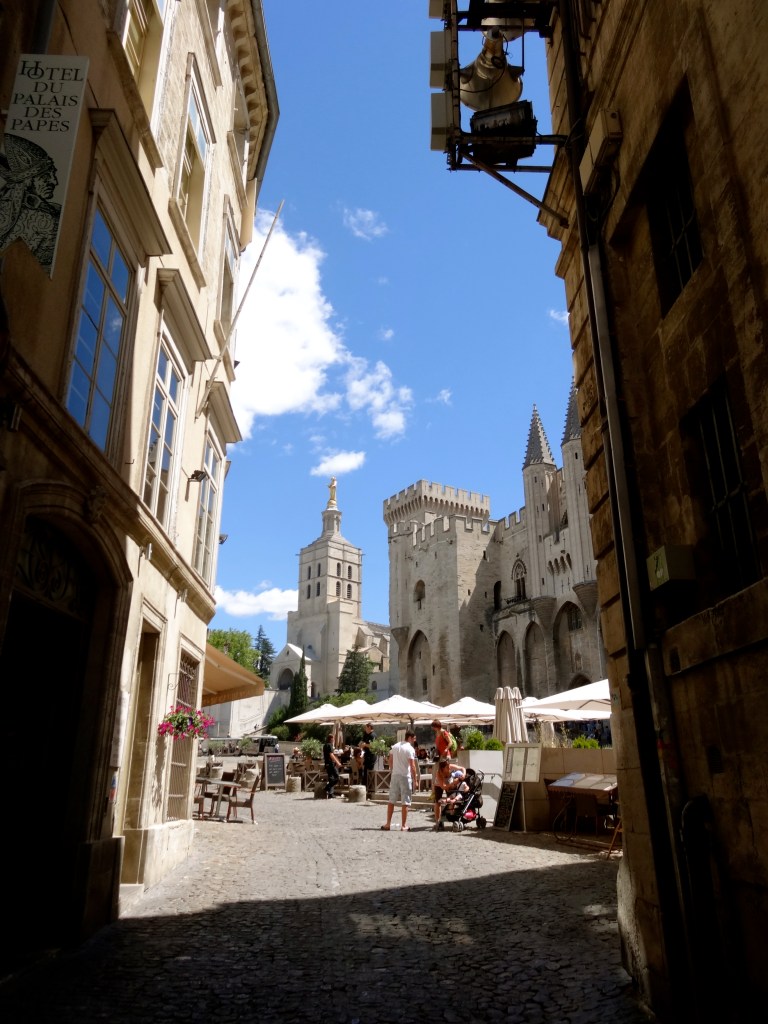
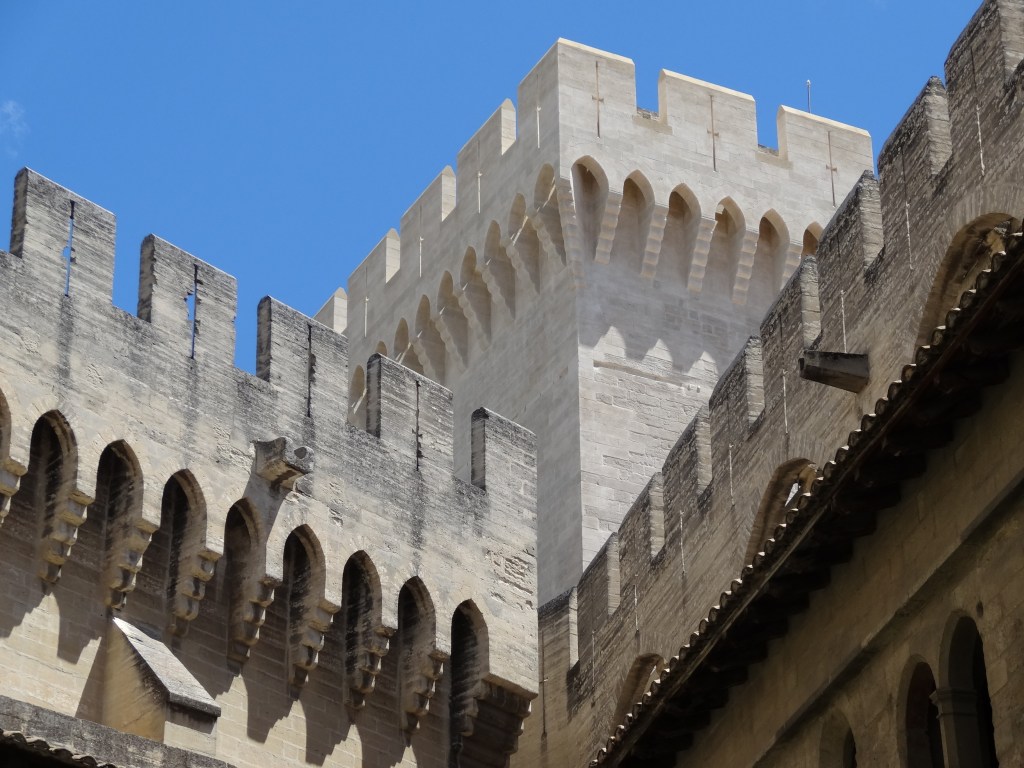
DSC02114 DSC02126 DSC02127 DSC02172DSC02133 DSC02200

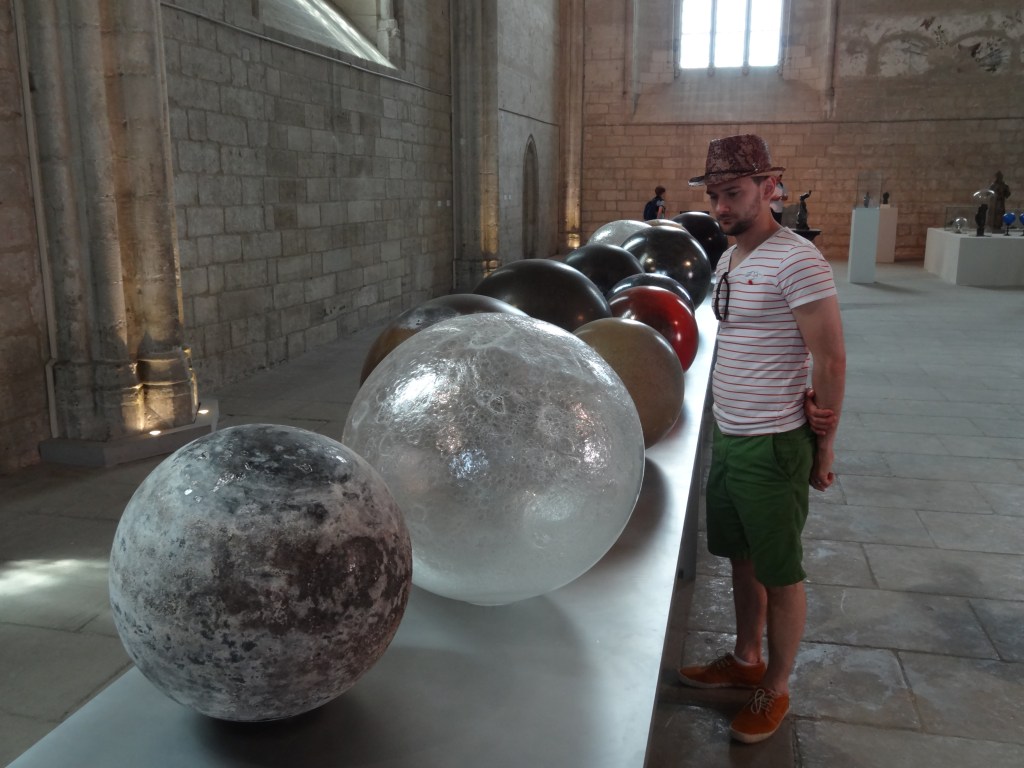
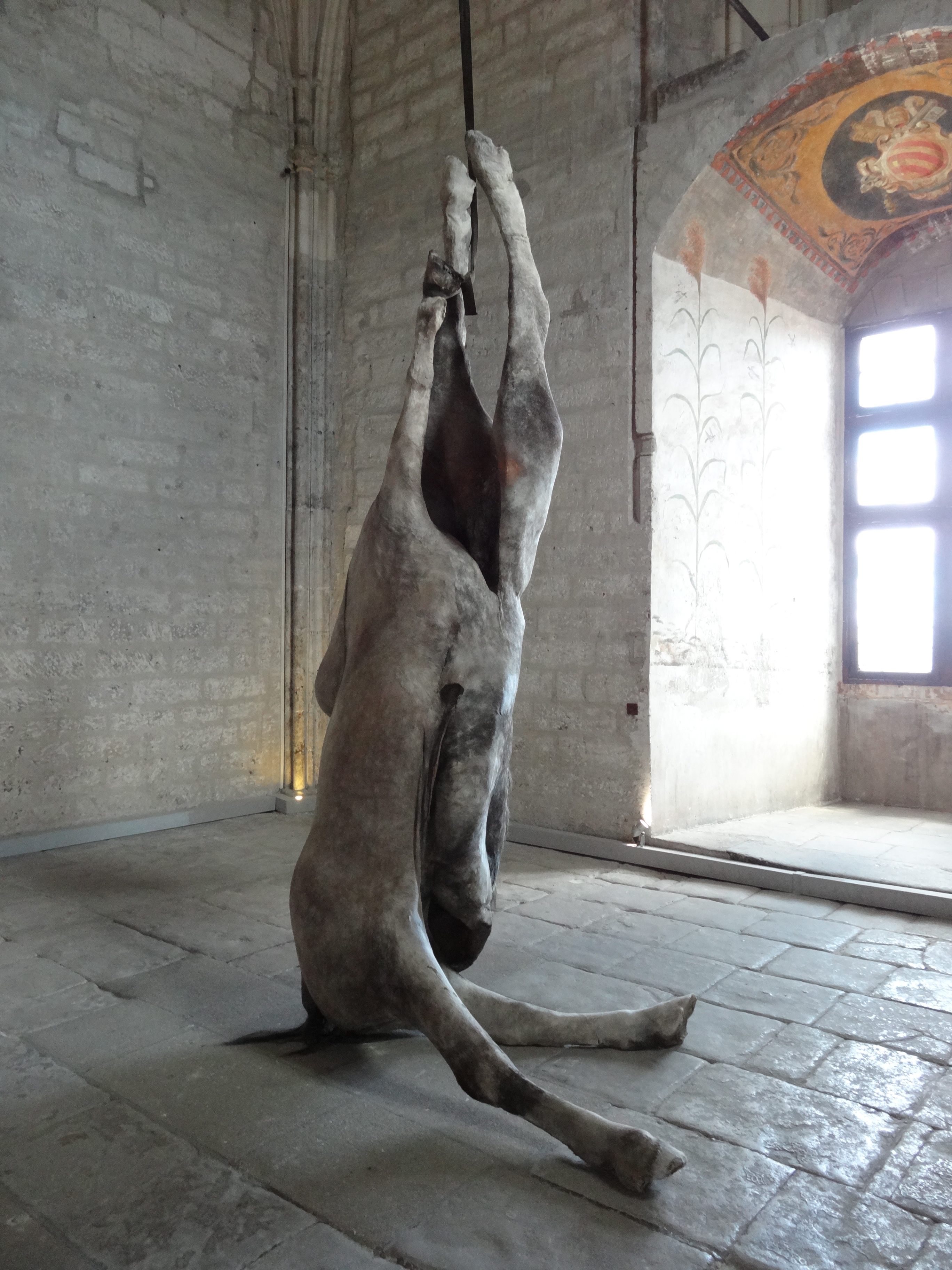
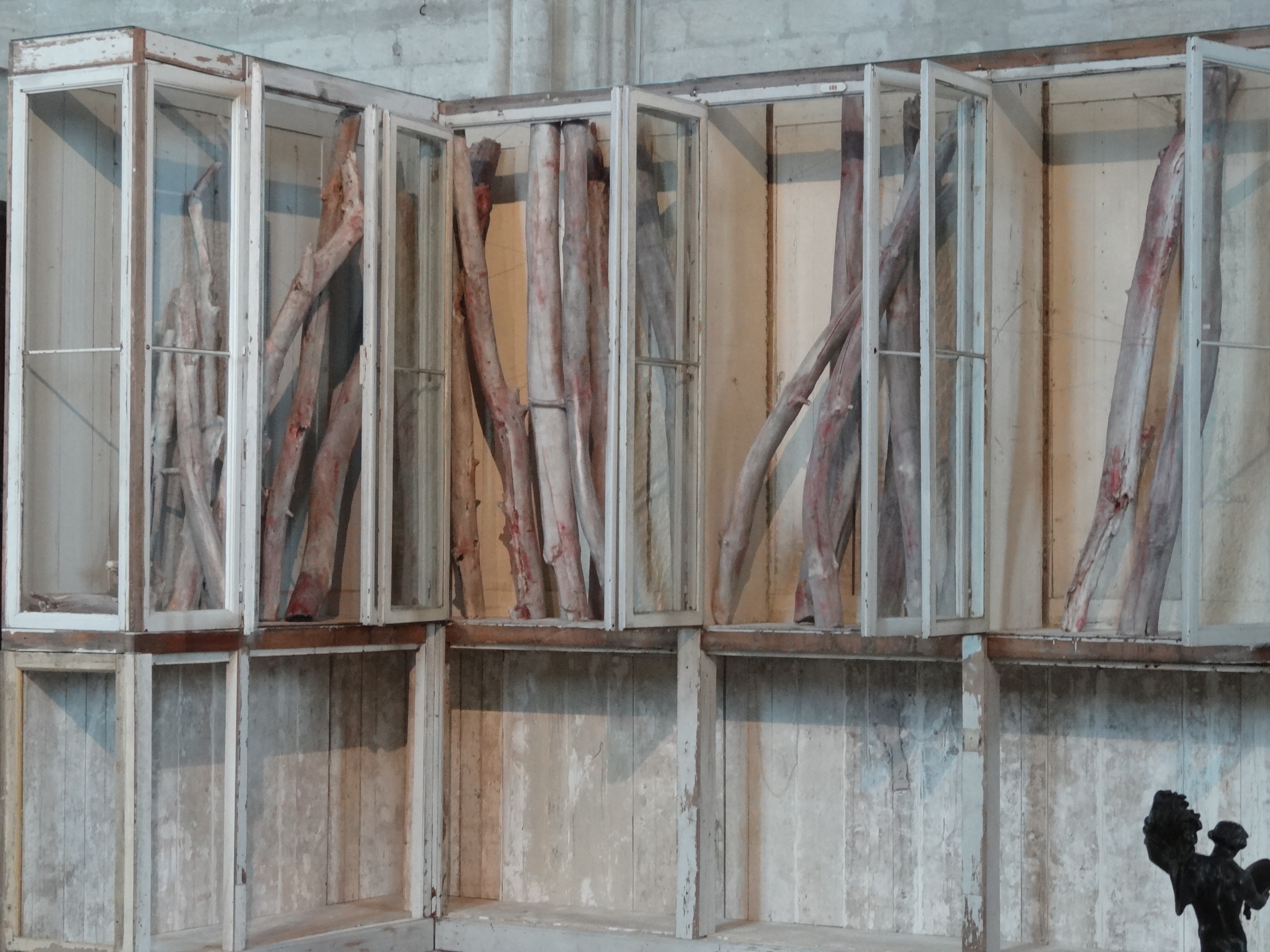
The inside of the Palace, while now empty, was a sight to behold, and the informative exhibits gave us a captivating history lesson both of the Papal heritage of Avignon, but also of how the palace slowly developed to become the mammoth structure which stands today. However, far from embracing the past, Avignon showed itself to be every bit the cultural leader for which the town has developed a worldwide renown (Avignon hosts a comprehensive cultural festival every July – sadly we just missed it), by daring to incorporate within these hallowed walls an exhibition (Les Papesses) of very modern sculpture, including the likes of Louise Bourgeois (famous for producing large spider sculptures), Camille Claudel, Kiki Smith, Jana Serbak and Berlinde de Bruyckere. Some of the sculptures were a little raw, somewhat gruesome for some tastes, particularly de Bruyckere’s rather ghastly corpse-like forms, but I loved the playfullness of the huge pile of duvets, the oversized glass marbles and of course the Bourgeois spider.
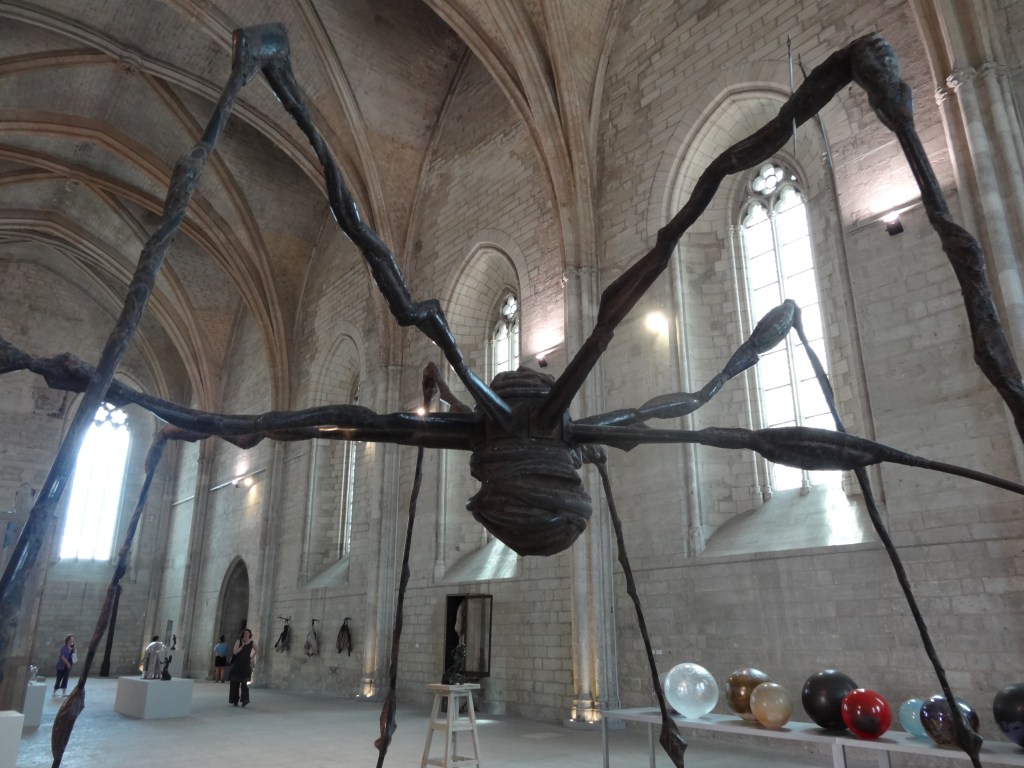
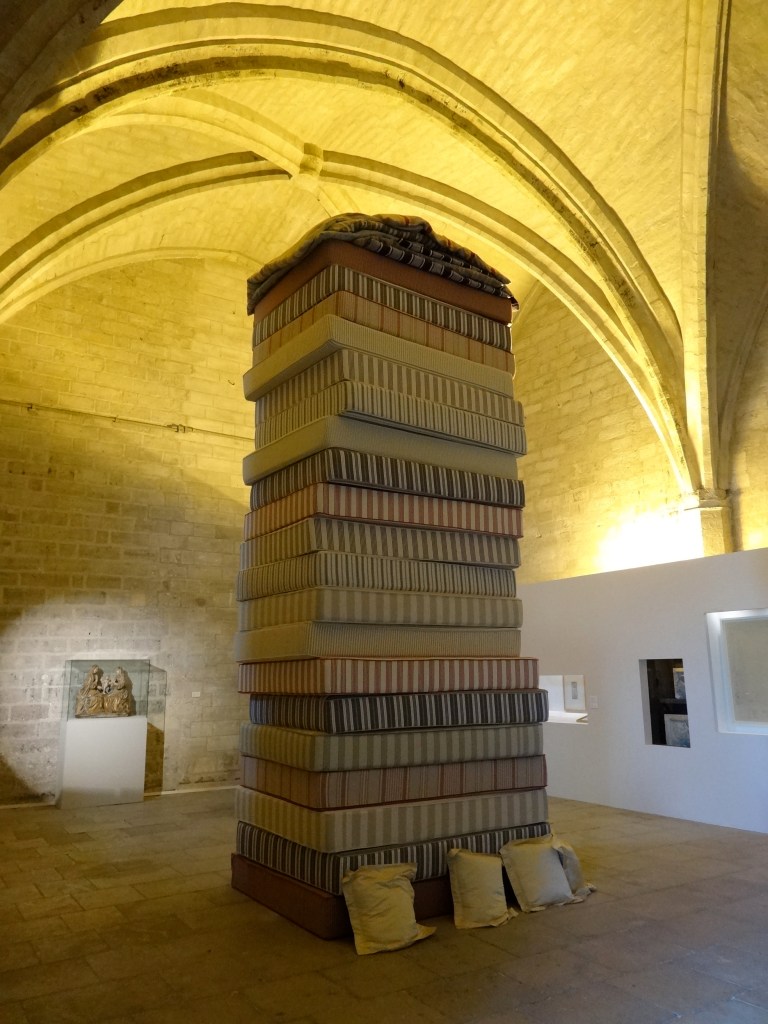
DSC02162 DSC02161 DSC02154 DSC02144 DSC02159 DSC02147

Having taken in a drink and the admirable views from the palace’s roof-top terrace, we headed back down to earth, retreating into the maze like streets that surround the Papal complex like a silk wrap, and into one such street settled down on the charming rather chic little terrace of Au Vent d’Agnes (4 rue Saboly – Tel 04 32 76 26 45) for a couple of super fresh salads: mine was a caprese salad with a modern twist of basil mousse – quite superb and washed down so satisfyingly with an ice cold glass of local white vin. As we were in the area, we skipped dessert, heading instead for the Musée Angladon which, thanks to the generosity of its founding family collectors contains the only Van Gogh to be found in all of Provence (despite his completing so many hundreds of canvases during his year or so here) as well as an impressive collection of Impressionist and post-Impressionist masters, with Manet, Degas, Sisley, Cezanne and Modigliani amongst their number.

DSC02215 DSC02216 DSC02217

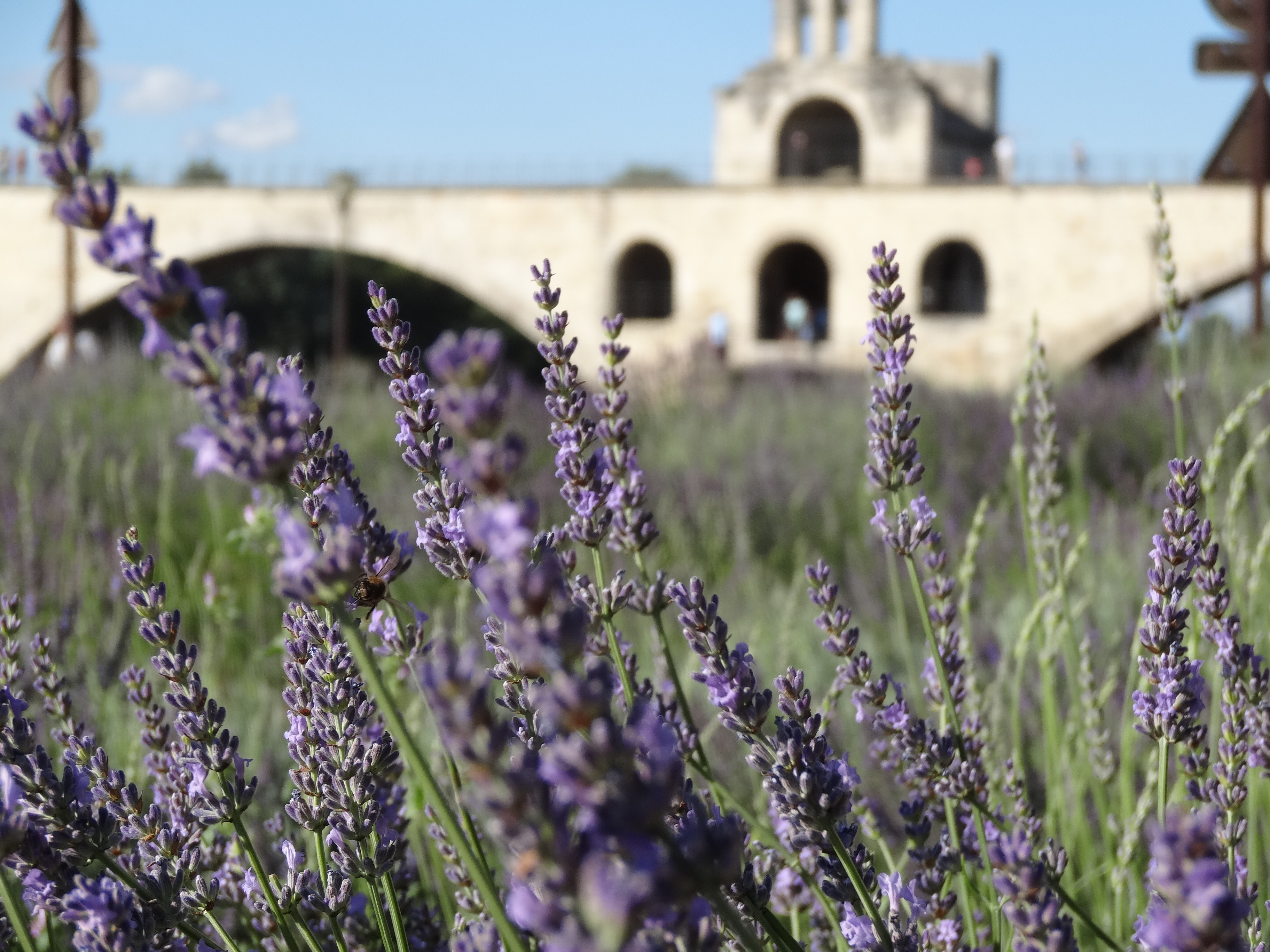
Imposing the Spanish siesta upon this sunny day, we rested (and I painted) until temperatures cooled slightly, and headed out finally to the second of the city’s most famous sites: the renowned bridge of Avignon, about which the eponymous song which goes something like this: Sur le Pont d’Avignon L’on y danse, l’on y danse, Sur le Pont d’Avignon L’on y danse tous en ron”…was written.

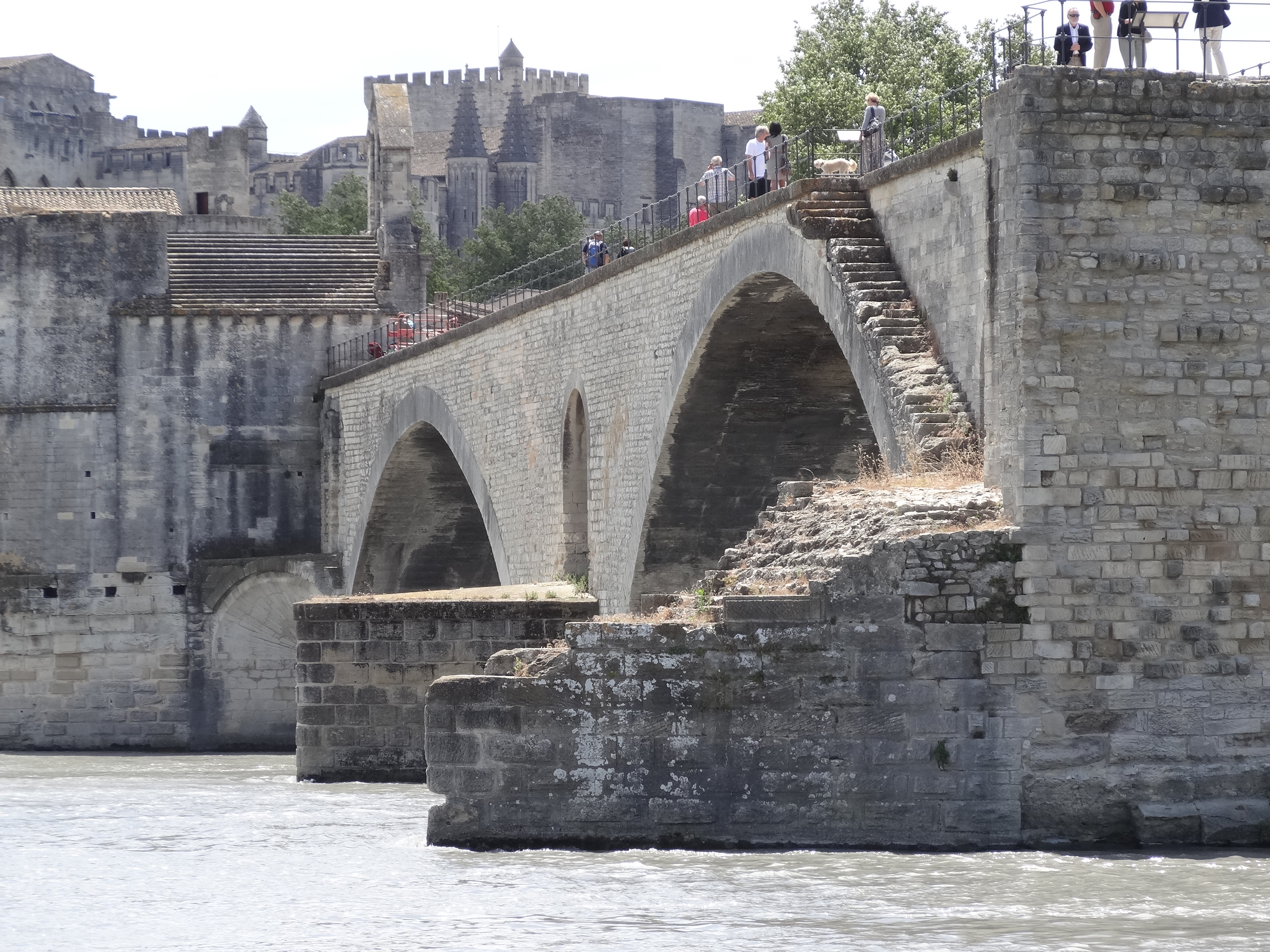
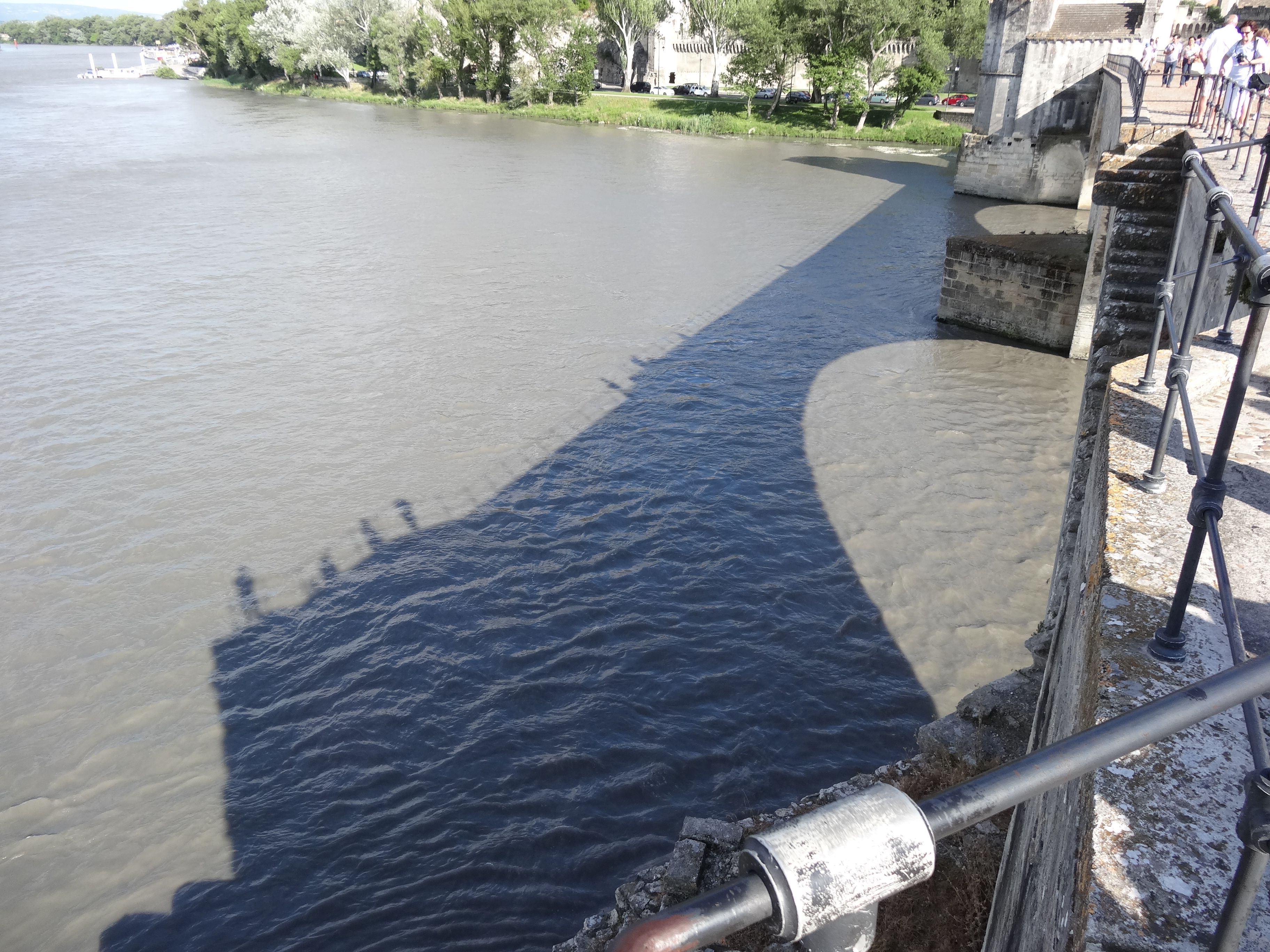
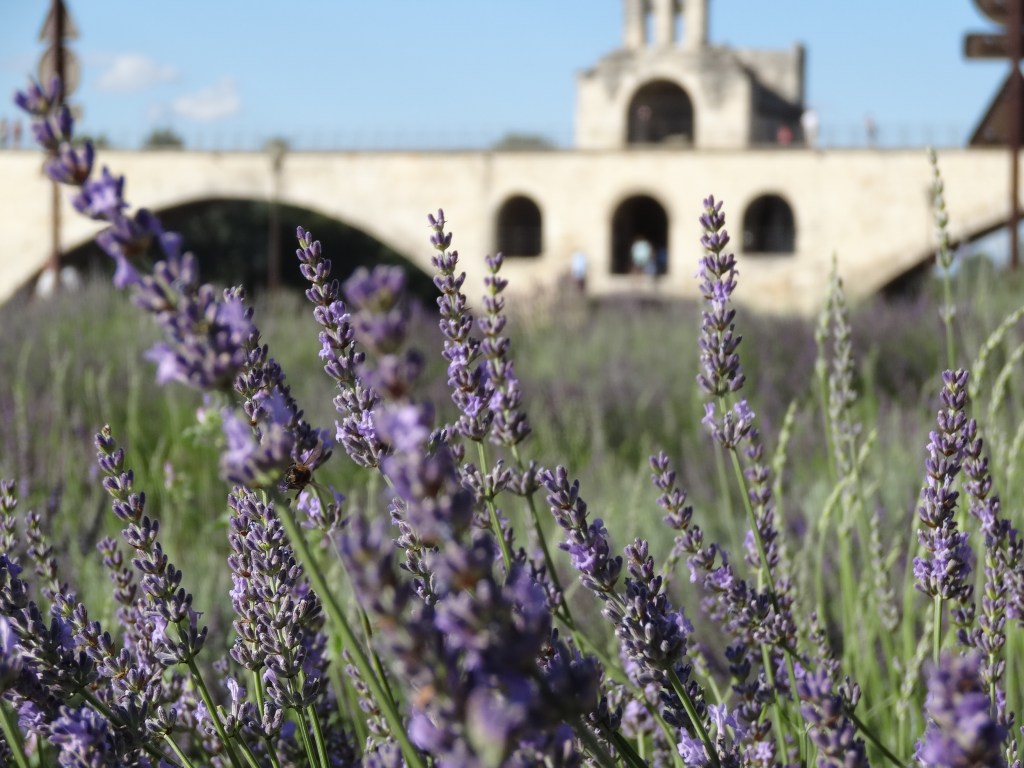
The Pont d’Avignon is actually called the Pont St Bénézet, named after the shepherd boy who supposedly commanded angels to build the original bridge on this site across the River Rhône. Yet today, it is not only the bridge’s name which has fallen out of use: The bridge itself was catastrophically damaged in the 17th century, as the majority of its arches were swept away in a flood in 1669, and the bridge fell into disrepair, leaving only the four arches which remain standing today. But of course, today, it is no doubt the city’s greatest pull: that is until you get here and realise that Avignon has so, so much more to offer in terms of charm and beauty than this old crumbled relic, but a visit to the city would not, of course, be complete without a stroll along its remaining length. Just be sure to buy a combined ticket for both the bridge and the Papal palace if you follow our lead and head to this wonderful city – for a visit to the bridge is worth very little of the full admission fare charged.
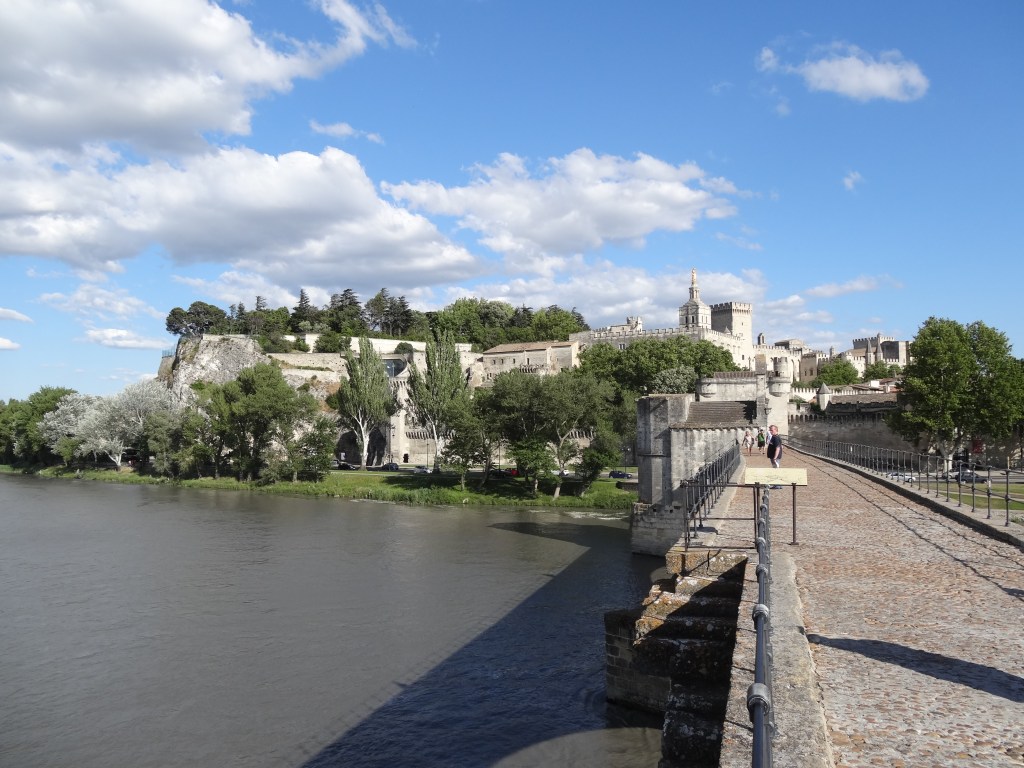
DSC02230 DSC02248 DSC02232 DSC02238DSC02250 DSC02239

What a day, what a city: Avignon was the huge surprise of our trip – because what was planned as merely a station stop on our train journey south had actually been the source of cultural and historical inspiration and an all round feast of visual and sensual delights. Of course that’s not where Avignon ended for us. We spent the remainder of the day strolling through the lavender planted before the famous bridge, to then smelling the lavender sachets and soaps aplenty which pack the ample selection of souvenir shops nearby. And then of course there was the wonderful dinner we ate that night… But more on that another time.

À bientôt!

All photos and written content are strictly the copyright of Nicholas de Lacy-Brown © 2013 and The Daily Norm. All rights are reserved. Unauthorized use and/or duplication of the material, whether written work, photography or artwork, included within The Daily Norm without express and written permission from The Daily Norm’s author and/or owner is strictly prohibited. 

Provence Odyssey | Avignon: Day One – Journey South

There is something inherently romantic about making a European journey by train. For what you may gain in time by way of flying (IF things are running on time) you surely lack in the kind of convenience promised by a railway journey, which, with very little check-in hassle, sweeps its passengers to the very heart of their destination in a single fast-moving trajectory. And it’s not as if trains even take that long these days, with a sophisticated network of high speed trains spreading over Europe and growing every year.

So when I considered a holiday destination for this summer, my decision was very much influenced by the ease with which, during the summer months, one can catch a Eurostar from London St Pancras direct into Avignon in the heart of French Provence in just under 6 hours. And as we were to find as we took said train early on the penultimate Saturday of June, the length of the journey literally flies by as one is immovably distracted by the slowly changing French landscape outside the window, and lured by the ripe promise of long hot sunny days and floral scents of the Provençal promised land. While a flight may whisk you above the clouds and deliver you from one mediocre out-of-town airport space to another, the Eurostar option affords you the unique opportunity to see a country literally change, at speed before your eyes.

The Provençal promised land

The Provençal promised land beckoned

DSC03960And so it was that as we began our Provençal Odyssey we watched with wonder as the grey flat lands of Northern France became progressively more undulating, and colours literally ripened before our eyes, with clearing skies, the reappearance of sunshine and finally the much promised shots of purple emanating from a tapestry of lavender fields which cultivate the region. As the purples and yellow and bright greens increased it became clear that we were nearing our destination, and when the train began to slow over the sparkling snaking form of the river Rhône in view of the nearby silhouette of a majestic medieval citadel, we knew that we had arrived: in Avignon.

First glimpses of Avignon

DSC01790 DSC02074 DSC01991 DSC01800 DSC02414 DSC02267

The guide books will tell you that Avignon is the gem of Provence and that much became very clear as soon as we entered the tightly walled old city centre. For Avignon’s unique beauty arises from its equally unique history, characterised by the period when, in the 14th century, the Papal enclave fled the turmoil of savagery in Rome and set up a new capital of Catholicism in Avignon. The result of a line of 9 Avignon popes (2 of which ruled in tandem with a duplicate pope back in Rome during the time of the Great Schism) is a city made great in medieval times: surrounded by dense barricaded walls in order to protect tv the Papal city, within which a quaint maze of winding narrow streets all leading to the central magnificent heart of the city: the super-imposing Papal palace itself.

IMG_2572 DSC01892 DSC01893


Of course the city has developed since then, and the city’s Hotel de Ville facing outwardly onto the bustling restaurant filled Place de l’Horloge is a grand testament to Neo-classicism. However there are very few modern scars on this UNESCO protected heritage site, and our hotel, the Hotel Horloge was situated right in the middle of it.

Delighted at our first glimpses of the city, by our location at its heart, and by the heat pervading its squares and streets, we rushed out into the city, pulled by the cafe bustle of the Place de l’Horloge and the promise of a chilled glass of wine after our railway trek from one end of France to the other.

Mary atop Avignon's Cathedral

Mary atop Avignon’s Cathedral

DSC01807

And the park affording views across the city

And the park affording views across the city

DSC01848 DSC01856

Ice cream in the park :)

Ice cream in the park 🙂

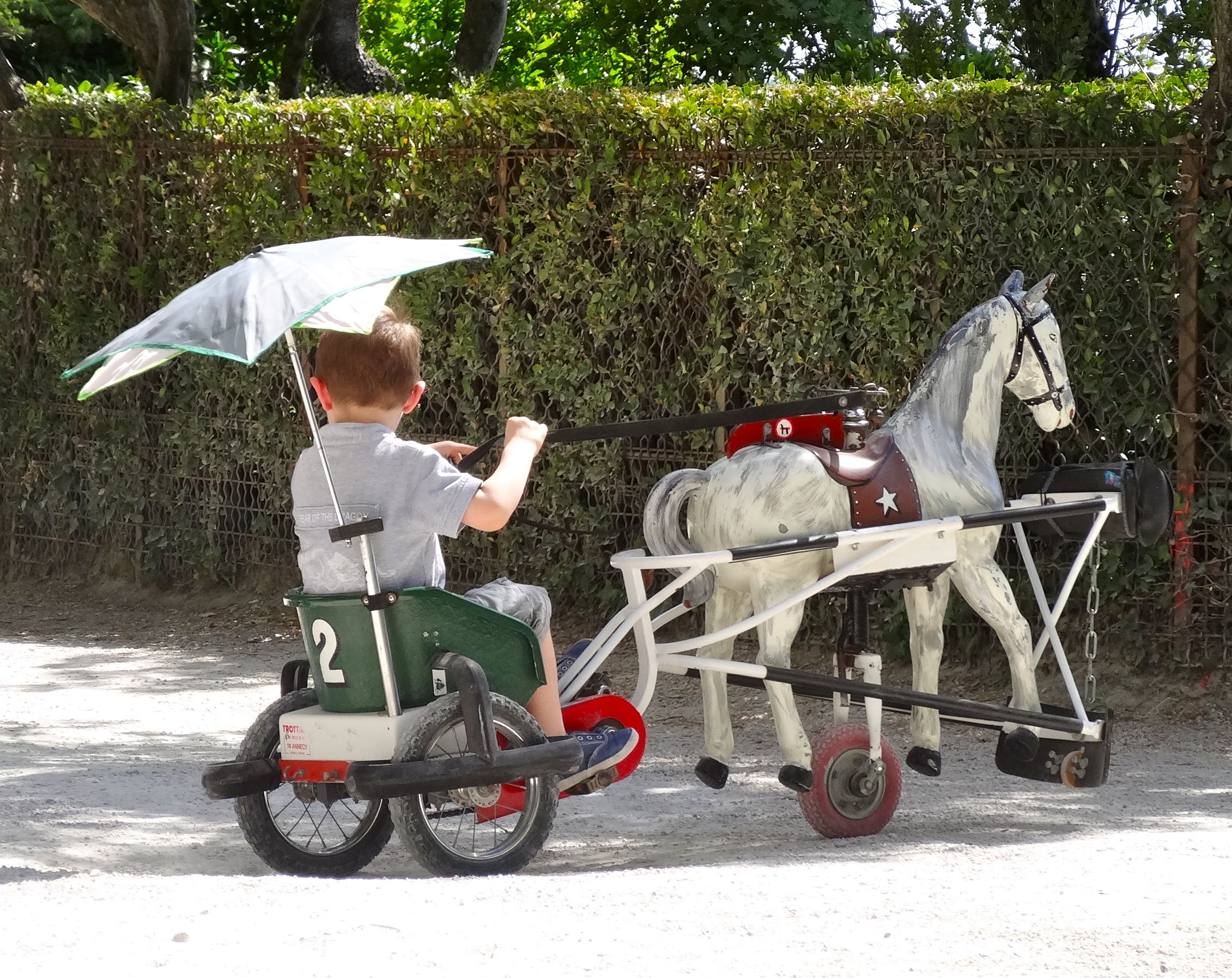
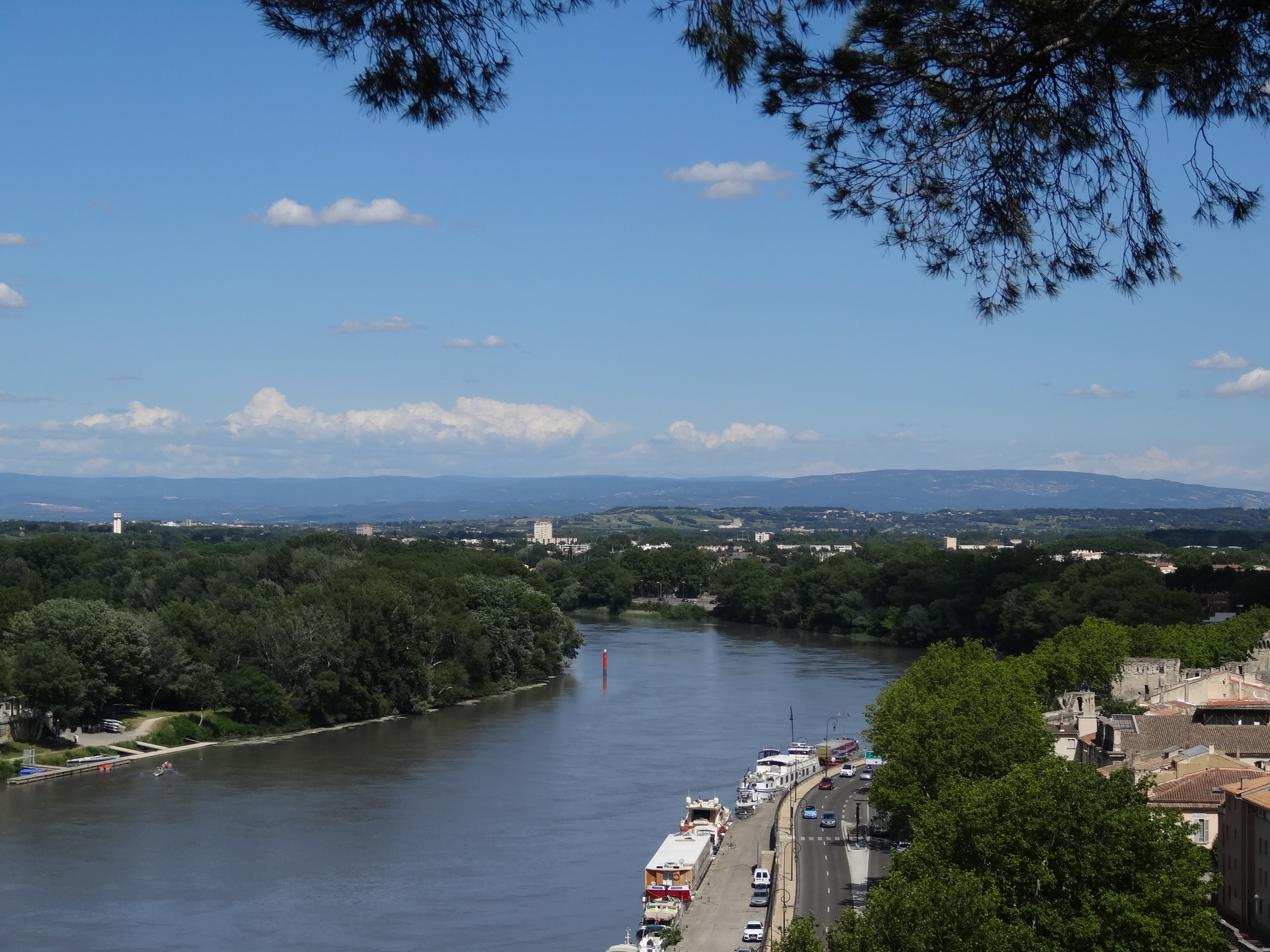
Already drunk on the sheer beauty of the city, and now Dizzy with the delights of a little afternoon wine, we were close to being hyper with the magnificence of the city we saw before us. From that first glimpse of the imposing and almost fairy tale like Papal palace, and the golden Mary looming over the city, to our discovery of a pretty shady little park, the Rocher des Doms gardens, set up on a hill next to the palace. From these gardens, full of families picnicking, playing, children peddling around on old fashioned horse carts and young couples sipping coffees and eating ice cream by a duck pond, our first views were afforded of the famous Pont d’Avignon (real name: Pont St Bénézet), renowned because of the eponymous rhyming song (sur Le pont d’Avignon etc) but today a mere relic of what it once was, reaching out into the Rhône but now, a ruin, resolved to never quite making it more than halfway across the wide expanse of water.

The Pont d'Avignon

The Pont d’Avignon

and the Rhone

and the Rhone

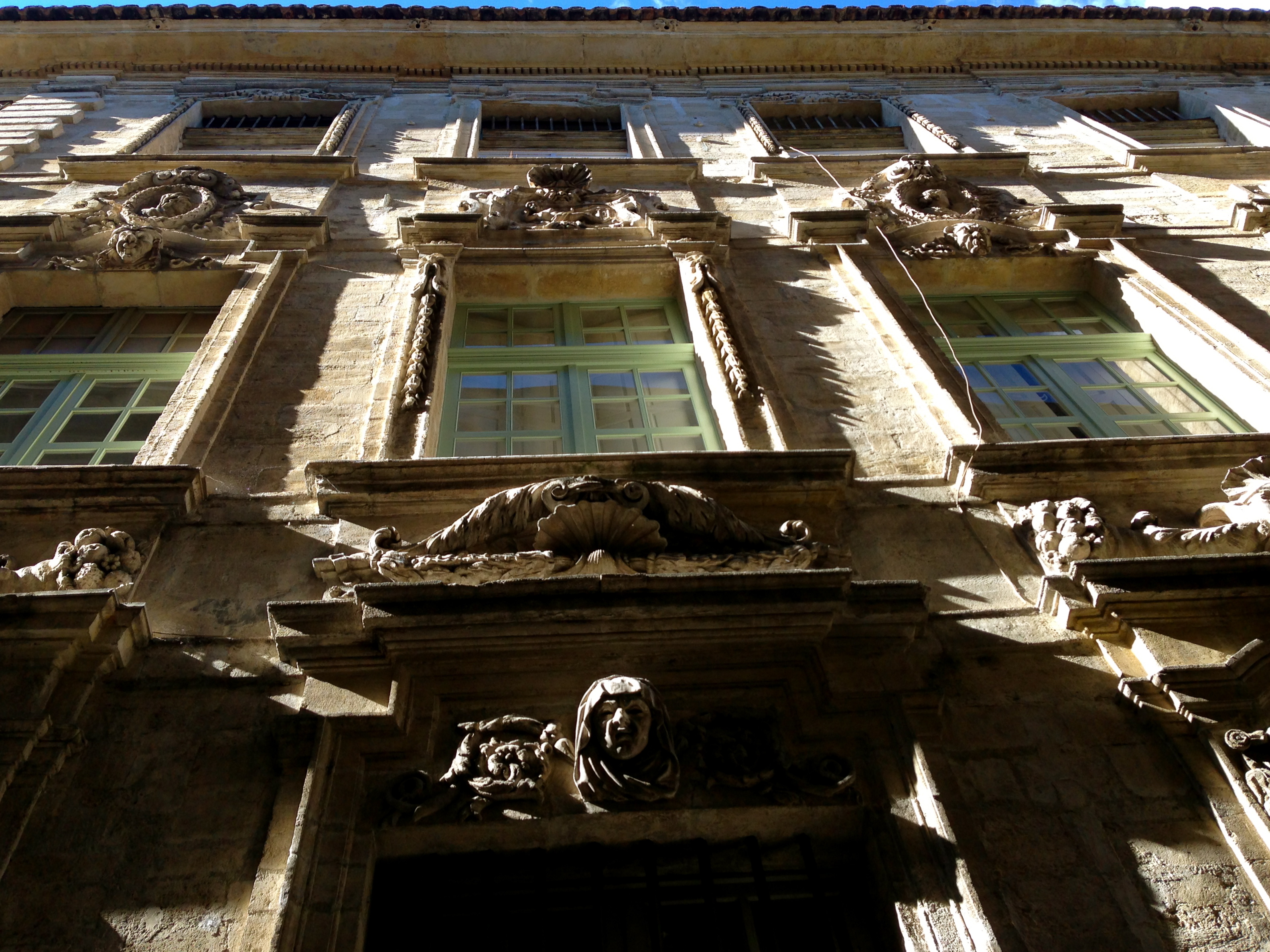
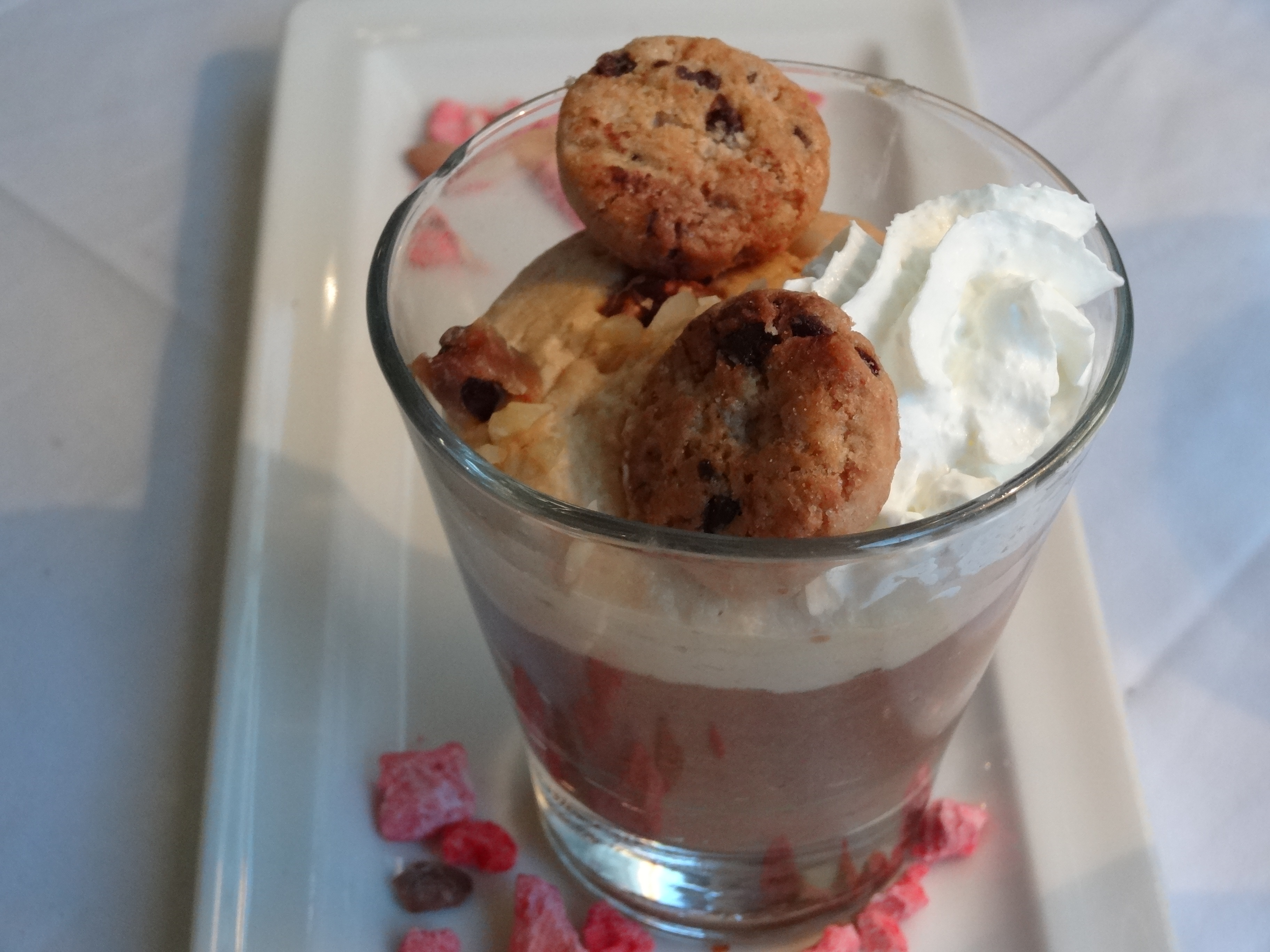
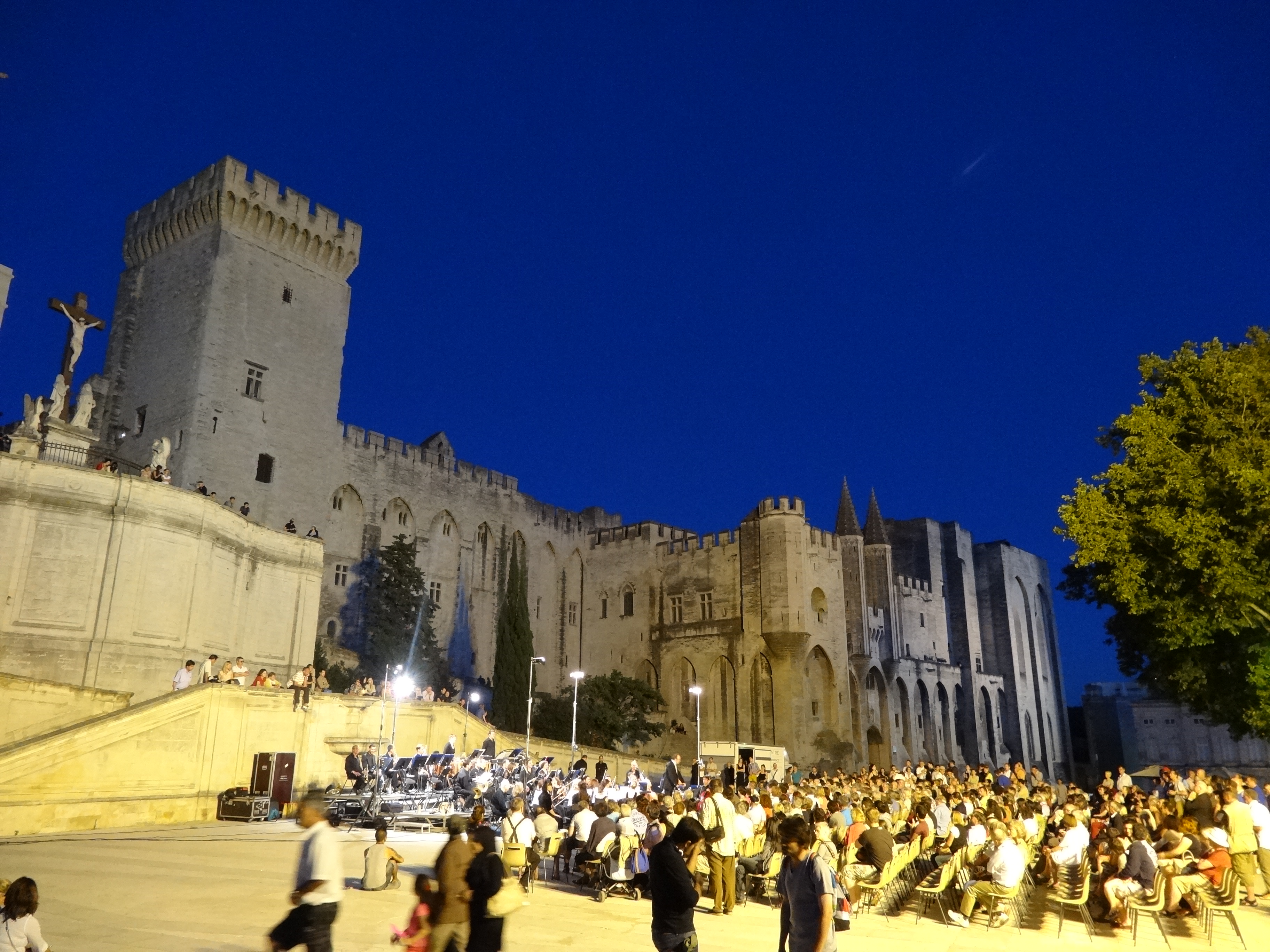
As if further validation of the magic of the city were needed, one event after another occurred as the day turned into night, confirming Avignon to be a true reflection of the good life: First a wedding party, dancing their way to middle eastern music through the town, the crowds of tourists joining them in their merry parade; second the long shadows cast upon a building’s magnificent decorative facade as the sun shone its day’s final rays across the exquisite architectural details; third: dinner – a rich French feast of aubergines in tomato sauce, delicate sea bream, and a cookie pannacotta for dessert enjoyed by candlelight before the pinkening facade of the Palais des Papes at sundown; fourth that same sunset over the Pont d’Avignon, the pink light reflecting off the calm waters of the Rhone; and finally, in the main Place du Palais, an open air concert from which the harmonious melodies of orchestra-accompanied opera filled the warm evening air and bounced off the vast medieval walls of the Palais des Papes behind it.

IMG_2577 DSC01963DSC01931 DSC01986DSC01980 DSC02011 DSC02024 DSC02016

What a city! So rich in its offerings, and providing us with such sights and sounds after only a few hours’ visit. From London to Avignon, our experience of life had undergone a perceptive change. We had found ourselves in the warm, spirited and culturally enriched city of Avignon, and as darkness fell, we could do little else but head to bed full of excitement for the days that were to come, and the opportunity that would be afforded to explore this Provençal gem to the full.

More about that, tomorrow. See you then!

All photos and written content are strictly the copyright of Nicholas de Lacy-Brown © 2013 and The Daily Norm. All rights are reserved. Unauthorized use and/or duplication of the material, whether written work, photography or artwork, included within The Daily Norm without express and written permission from The Daily Norm’s author and/or owner is strictly prohibited. 

The Daily Norm’s Photo of the Week – Sunflower Spectacle

When you read this post I should be somewhere around Arles or Saint Remy-de-Provence, breathing in the fresh balmy air of the South of France, and following in the footsteps of one Vincent Van Gogh, who painted some of his most famous canvases in these parts. I therefore thought it appropriate that The Daily Norm’s photo of the week, published in my “absentia”, should be a suitably summery shot, and what better way to bring you the warmth and vitality of the rolling fields of Provence than to feature one of my photos of the unblemished glory of the intricately patterned head of a sunshine-yellow sunflower.

I actually took the photo last summer in Tuscany, rather than Provence. My partner, who had gone out ahead of me had found a field bursting full of “girasoli”, and was anxious that we should go along to see them before the flowers began to wilt under the roasting Tuscan sun. And so, on my first day out there we headed along to the field, surrounded by pine trees and the rousing chorus of cicada cries, and ran straight into the centre of this incredible field full of flowers. It was such a moment of epiphany to be surrounded by these wonders of nature, stretching for as far as the eye could see.

DSC08874

But of course the rolling landscapes of Provence are equally renowned for their sunflowers, and proved to be such an inspiration to Van Gogh when he lived in Arles that he painted what are perhaps now his most famous series of works as decoration for his home, now known as “the Yellow House”, in preparation for the visit of his artist companion, Paul Gauguin. And little wonder. The flowers, with their complex faces, delicate bright yellow petals, and strong fleshy green stalks turning the flowers towards the sun, are the very epitome of a glorious summer’s day.

I have no doubt that once returned from Provence, I will be inspired in equal measure. See you then.

All photos and written content are strictly the copyright of Nicholas de Lacy-Brown © 2013 and The Daily Norm. All rights are reserved. 

The Daily Norm’s Photo of the Week – Trout Pout

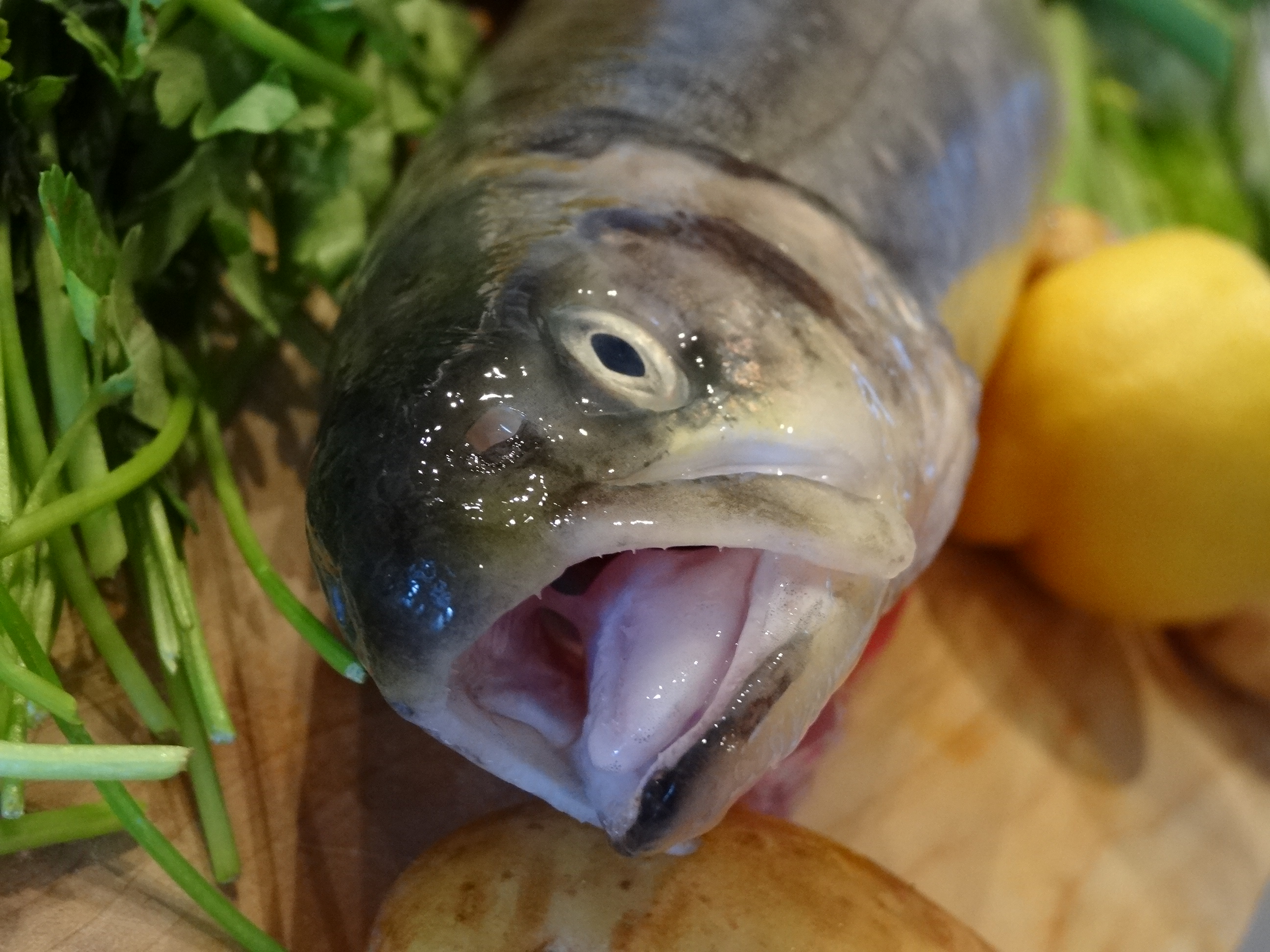
Sometimes I take such pleasure in savouring the beauty of individual, fresh ingredients, that I almost feel sorry to cook them, no matter how delicious the results. Such was the case this weekend when I bought myself a weighty fresh char fish from my local fishmongers. It’s so much nicer to buy fish straight from an authentic fishmongers rather than all wrapped in cellophane from the supermarket – and all the more so when you live in the city, as we do. As soon as I got home, I couldn’t wait to unwrap my fish and then, placing it amongst the fresh herbs and lemon and fennel and seasonal Jersey Royal potatoes with which I planned to cook her, I stared in wonder at the beauty of nature’s incredible creation.

Having the opportunity to look at a fish close up, to feel her snake like curving spine beneath her fine muscular flesh, examining her tight little silvery scales and her bewildering staring eye, with a black hole disappearing apparently into the beyond, I was completely captivated. Almost sadistically, I took great pleasure in opening up her mouth and checking out what looks like a meaty little tongue – who knew that fish even have tongues(!) – and revelled in the aesthetic glory of this new occupant of my kitchen. And of course, inevitably, not long behind came my camera, and the opportunity to capture this beautiful fish “on film”.

DSC01682So for this week’s photo of the week, I could not resist sharing one of these shots with you when, with Florence the Fish’s mouth wide open, she looks almost ready to pounce from amongst her new found ocean of earthy potatoes and fresh verdant parsley. Sadly this was not to be, as Florence was destined to end up en papilloteand cooked, quite simply to perfection. She will, I’m sure, be proud to know at least that in her sad demise, she made for one hell of a delicious meal.

(Apologies in advance go to all Vegetarians – but you can’t deny that I appreciated the fish to the full.)

See you next time.

All photos and written content are strictly the copyright of Nicholas de Lacy-Brown © 2013 and The Daily Norm. All rights are reserved. 
The Daily Norm’s Photo of the Week – London in June

There’s something about the perverse nature of England that the closer we get to the Summer Solstice, the hopeful time when three months of summertime await, the colder and wetter it suddenly seems to become. Except that this year, it couldn’t get much colder. Even at Easter we had snow, and two months later, some blossom trees are only now coming into bud. Ah yes, the weather of 2013 has been ripe fodder for that good old English tradition – talking about the weather.
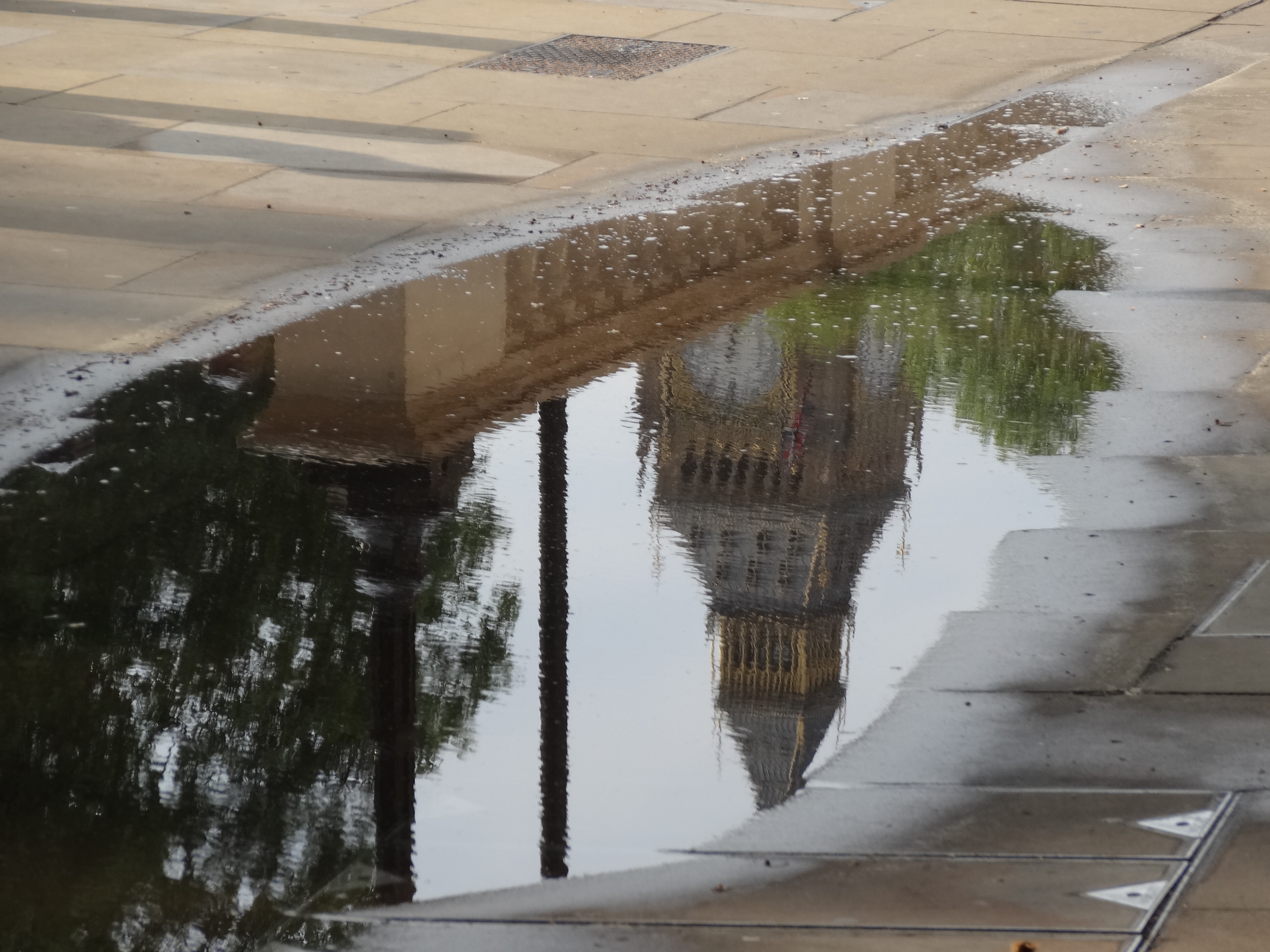
So for this week’s Daily Norm photo of the week, I thought it was only appropriate that I feature a photo I snapped the other day while walking to work in London’s Westminster. Having woken up to gloomy skies and wet pavements, I didn’t think I would be able to enjoy the short stroll I try to make time for each morning by getting off the tube one stop early – it’s a stroll which gives me time to recollect my thoughts before work, and enables me to recover a little composure after the morning’s crush on the tube. Yet just as I was leaving home the sun started to break over damp old London, and 20 minutes later, I took my stroll in the faint morning sunshine, dodging plenty of puddles along the way.

This photo was taken as I passed one such puddle and realised to my delight that London’s most famous landmark, Big Ben (or Elizabeth Tower as we should call it) was reflected perfectly upon the pavement. Grabbing my iphone camera quickly, I managed to capture this shot between commuters rushing moodily by. And for me it’s the perfect illustration of London in June – wet, green, but with a faint, hopeful brightness in the air. Here’s for better weather to come.

Big Ben

All photos and written content are strictly the copyright of Nicholas de Lacy-Brown © 2013 and The Daily Norm. All rights are reserved.