Skip to content

Posts from the ‘Review’ Category

Bored of the Pre-Raphaelites? Head straight to William Morris

The problem with the Pre-Raphaelites, the brotherhood of artists formed in England in 1984 by founding members John Everett Millais, Dante Gabriel Rossetti and William Holman Hunt, is that they have become a British institution. As much an institution in fact as the Queen’s corgis, the black cab and Big Ben. And like many a British institution, they get carted out, every so often, more often than not when times are down, when blockbuster exhibitions are expensive to organise, and its cheaper to take the best of British out of the closet. So seems to be the case with Tate Britain’s new “blockbuster” show, Pre-Raphaelites: Victorian Avant-Garde, which promises to be a re-examination of the PRB, but in actual fact presents us with the same old paintings, the same old themes, and the same old narrative that we have seen time and time again.

Lady in red – Dante Gabriel Rossetti, Lady Lilith (1866-8)

Usually in Liverpool – John Everett Millais, Isabella (1848)

Super twee: William Holman Hunt, Our English Coasts (1852)

Now don’t get me wrong. I’m not saying that these paintings aren’t good – they are in fact pretty incredible, packed with their flowing fantastical red locks, the precision of Millais’ plants and flowers, the scale of their pictorial ambition and the brilliance of their life-like representation within a mystical setting. It’s just that even the most incredible painting can lose its gleam when it’s seen time and time again. In the last 5 years alone, Tate gave us a Millais retrospective (Sept 2007-Jan 2008) and a Romanticism display (Aug 2010-April 2012), centred around Pre-Raph favourites. Meanwhile at the Royal Academy, we had a retrospective of that other PRB favourite, J W Waterhouse  (June-Sep 2009), and at the V&A the same old brotherhood was featured heavily in the exhibition on Aestheticism (April-July 2011). And so you see, with Tate’s new show, which promises to give us something new, and really doesn’t, it’s all a bit, well, underwhelming.

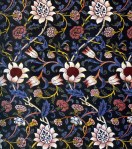
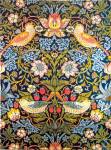
Skip through 6 rooms however, and in the room named “paradise” you really do get something worth visiting. For in showing the designs of William Morris, now famous for his Victorian fabrics which have become equally and intrinsically part of the “fabric” of British society (excuse the pun), you get to see these much loved designs in a new light – works which, when placed in a gallery setting, take on a new life force, as the viewer is encouraged to appreciate the intricacies of the designs and the decadent elegance of the period from which they arise. The Morris display did, admittedly, come as something of a surprise – Tate justifies its inclusion on the rather tenuous basis that Morris had been inspired by the PRB (as well as the medieval past, with which the PRB artists were also rather enamoured) in embarking upon his designs. Oh, and apparently Rossetti and a few other artists of the time were partners in Morris, Marshall, Faulkner & Co, the company which started producing the now widely-recognised fabrics on an almost industrial scale.
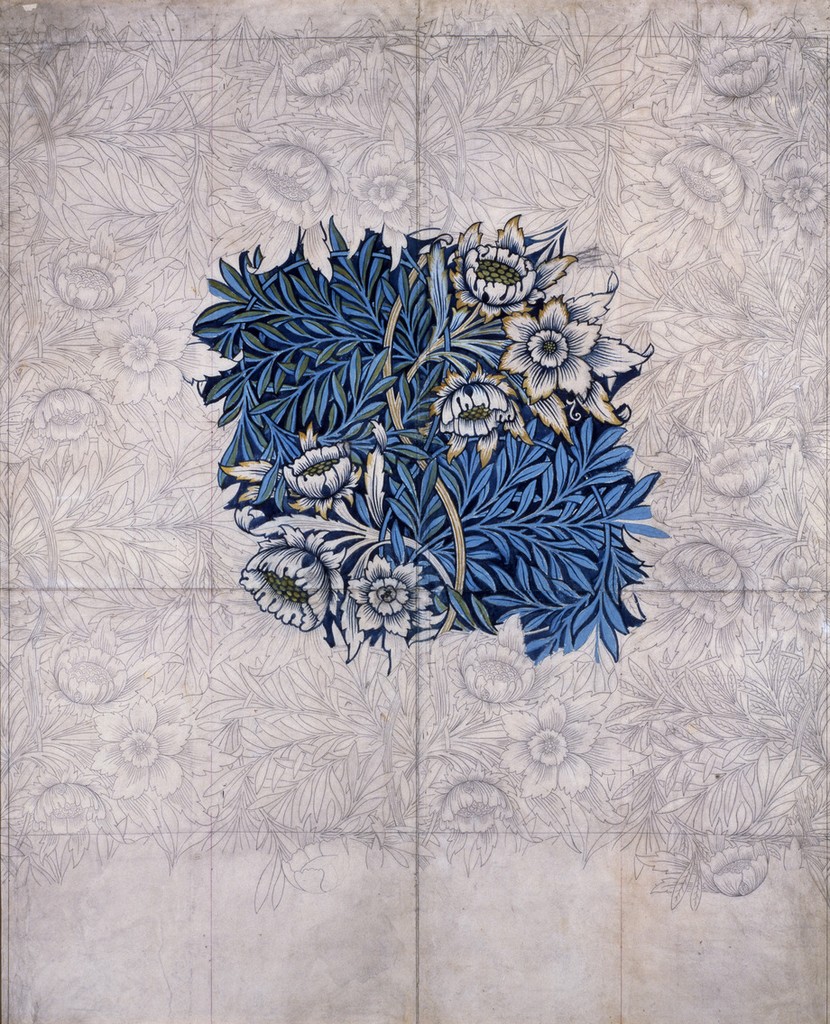
Whatever the connection, I was glad for it – Morris’ designs were my favourite part of the show and, although sparse in number, made me realise how often undervalued Morris is in art history. Too often overlooked as a designer, or at best an illustrator, are not these beautifully hand-crafted designs every bit as valid as artistic masterpieces as a Millais painting? Of course the art or illustration debate has gone on for years, and god knows, I have often been “accused” of being more an illustrator than an artist myself. But call it what you like – I’d far rather admire these “designs” in an art gallery than a filthy Tracey Emin bed any day.

I leave you with some of Morris’ best.

In the meantime, if you can stand the repetition, Pre-Raphaelites: Victorian Avant Garde is on at Tate Britain, London, until 13 January 2013.

Switching the artistic spotlight onto Liverpool: The John Moores Painting Prize 2012

In 1957, Sir John Moores, one time head of the clothing catalogue giant, Littlewoods, established his painting prize. His aim was to draw the attention of the artistic world from the bright lights of London, and instead to illuminate the talent and creativity of the North. Of course, inevitably, being that the prize, like the Royal Academy’s Summer Exhibition, is open to submissions from artists all over the country, it doesn’t necessarily steer that spotlight any brighter over Northern artists than those from the South. Nevertheless, every two years, when the prize, and the exhibition that goes with it, is held at the Walker Gallery in Liverpool, it certainly does its bit to place Liverpool on the cultural map. In fact, some go so far as to call the painting prize the Oscars of the British painting world. It is certainly renowned for spotting rising talent, with previous winners reading like a roll call of the most influencial artists of the last 50 years of British painting, from David Hockney and Richard Hamilton, to Peter Doig.

Paul Collinson’s Temple of Ancient Virtue (2010)

This year, the exhibition is shown as part of the Liverpool Biennial, which also includes other forerunners of the Liverpudlian art scene, such as Tate Liverpool on the Albert Docks. It contains some 62 paintings, whittled down from some 3000 hopefuls (which included my painting which was disgracefully turned down) by a panel of judges which included creative director of the BBC, Alan Yentob, and Iwona Blazwick, director of the Whitechapel gallery as well as previous exhibitors.

Ian Law, M is Many (2011)

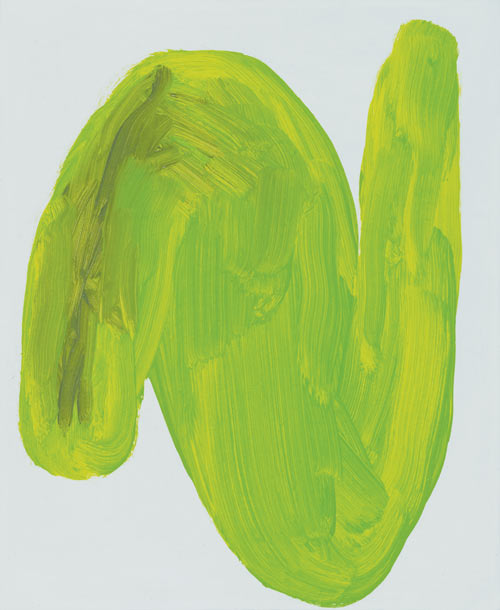
This year’s prize was as varied as ever, but perhaps more manageable than the larger Summer Exhibition – it only fills a few galleries, and in those, the paintings are mercifully spread out so as not to bamboozle the viewer with a “salon style” hang. Of course, as is inevitable in any contemporary art prize, this show had its fair share of “works” whose artistic merit remained highly questionable, like M is many by Ian Law, which basically depicts a black line on a white canvas which, because of its purely geometric form manages to resemble an “M” without doing anything else (oh, and it won a prize, by the way), or Oscar Godfrey’s Mineral 9, a badly painted green curve on a white background, which, if painted with his phlegm may have had more merit, although the colour resembles little else.

Oscar Godfrey, Mineral 9 (2011)

Luckily for those of us who had traipsed several hundred miles from London to visit the exhibition, many of the other paintings showed much more promise. I really loved Emma Talbot’s, The Good Terrorists, which showed a cross-section of a large Victorian looking townhouse, with a number of faceless characters getting up to all sorts in the various rooms of the house. Somehow it seemed quite spooky to me, whether it was because of the faceless individuals who were yet full of expression, or because the roof of the house, with its shattered window, resembled the creepy hotel in Hitchcock’s acclaimed thriller, Psycho. The attention to detail made for great viewing, and I like the way that both the interior and exterior of the house could be seen in tandem.

Emma Talbot, The Good Terrorists

Damien Meade’s Talcum (2011)

Also on my watch list were Virginia Phongathorn’s Comma (Test Piece for an Eye Break) which to my mind looked more like a figure wearing headphones rather than a grammatical symbol, and also reminded me of the work of Philip Guston; I also liked Damien Meade’s Talcum, which looked much like a figure from Cluedo with a super-realistic painted sculptural mess upon its head, and Paul Collinson’s Temple of Ancient Virtue (above) which, painted with blurred edges like an off-focus photograph cleverly combines two forms of abandonment – the relics of an abandoned past, and dilapidated graffiti-covered snack bar of the recently vandalised present. I must also include in my favourites list Elizabeth Magill’s Sighting – too fantastical for some tastes maybe, but this piece really excels in close up, where a mysterious forest atmosphere is filled with little bubbles, specs of glittering dust and nearly missed magical hummingbirds. A wonderfully figurative piece for so contemporary a show.
Virginia Phongsathorn’s Comma (2011)

Elizabeth Magill, Sighting

What is perhaps best of all about the John Moores prize is not that it promotes Liverpool, although there is much to be said for that, but that it promotes painting, a so often overlooked media in the modern age, but one which will, in my opinion, outlive the age of installation, and remain at the centre of art history and art present for centuries to come.

The John Moores Prize is showing at the Walker Gallery until 6 January 2013.

Licence to thrill 2: The Paralympic Closing Ceremony

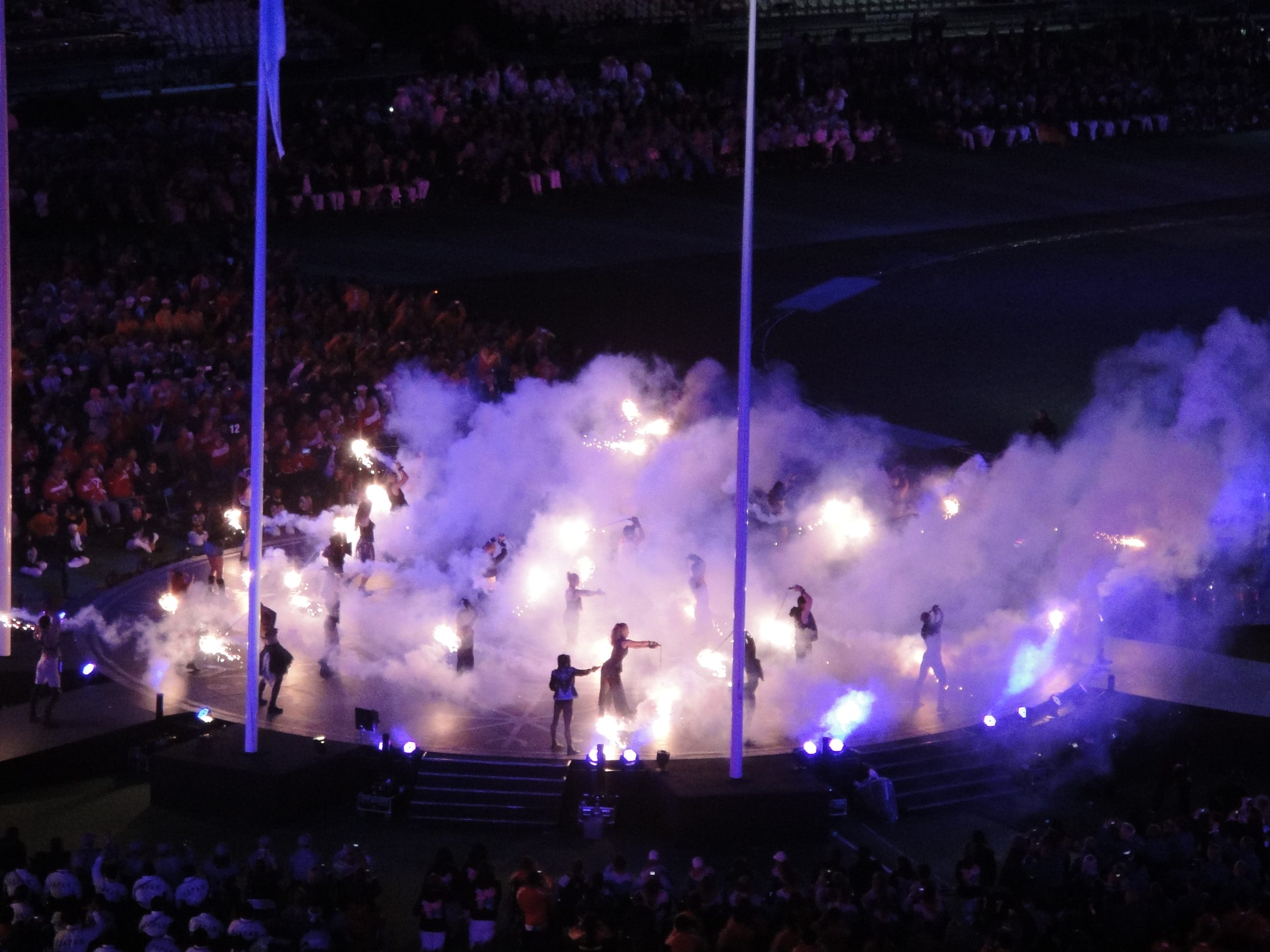
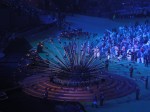
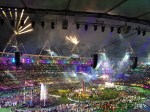
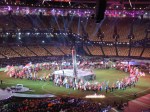
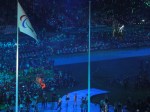
To say that the London 2012 Paralympic Games went out with a bang is something of an understatement. Headlined by Coldplay, and featuring Rihanna and Jay Z, the Closing Ceremony, entitled “Festival of the Flame” was a spectacular technological feat of such artistic genius that no single superlative will do. I’ve watched all three previous Olympic and Paralympic ceremonies on television, but nothing can ever prepare you for how different, how utterly awe-inspiring these ceremonies are when you’re sat in that magnificent stadium.

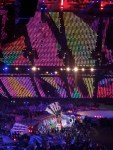
In front of me the incredibly well-designed LED lighting affixed to each seat glowed with such vibrant multi-pictorial technologically unfathomable brilliance when lit as a whole (all 800,000 odd lights are controlled by a single computer, which uses the lights like pixels to create huge moving images around the stadium) that my brain could barely keep up with the sensation offered up to it for interpretation by my wide incredulous eyes. Underneath, the music vibrated with such depth of base, and the crowd cheered with such a resounding harmony that I became utterly immersed in this spectacle, at one with its brilliance.

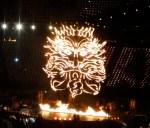
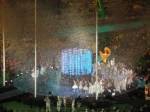
The innovation of the lighting, the use of the audience as part of an every changing theatre set, of eccentrically designed mechanical creatures, of fantastical costumes, of feathered characters falling from the air bringing with them candelabras dazzling above the stadium like the Hall of Mirrors in Versailles – everything tantalized the senses in its originality, wonder and vibrancy. I left utterly stunned, in awe of London, of spectacle, of theatre and again of the superiority of British culture and design which worked in perfect union with our heroic athletes to present to the world the best Olympics and Paralympics ever.

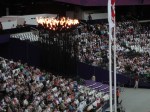
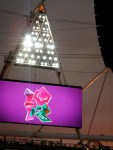
I can say no more. Take a look at my photos. Sadly I was not well equipped with a powerful zoom or a camera well suited to nighttime and plenty of activity in low light. But hopefully these photos will go some way in demonstrating just how dazzling a show this was.

Too twee for me: The Sterling-Clark Impressionism collection at the RA

The problem, in my view, with Impressionism is not the fact that its most renowned images are regularly plastered across every kind of tourist paraphernalia and household object you can possibly imagine – often the most iconic images are icons for a reason – because they broke boundaries, they inspired, they recalled an essence of something past, a nostalgic ambience, a time of great creative fluidity.

Rather, the problem with Impressionism is that having begun as an artistic revolution, breaking new boundaries, taking art from the confines of bourgeois society, the closed-class snobbery of  institutionalised selection committees and the drawing rooms of the aristocracy and using it to celebrate the lives of the ordinary, of the downtrodden, of the true foundations of society, and steering draftsmanship from perfectly executed depictions to looser, more energetic and living impressions, much of Impressionism became the victim of its own success.

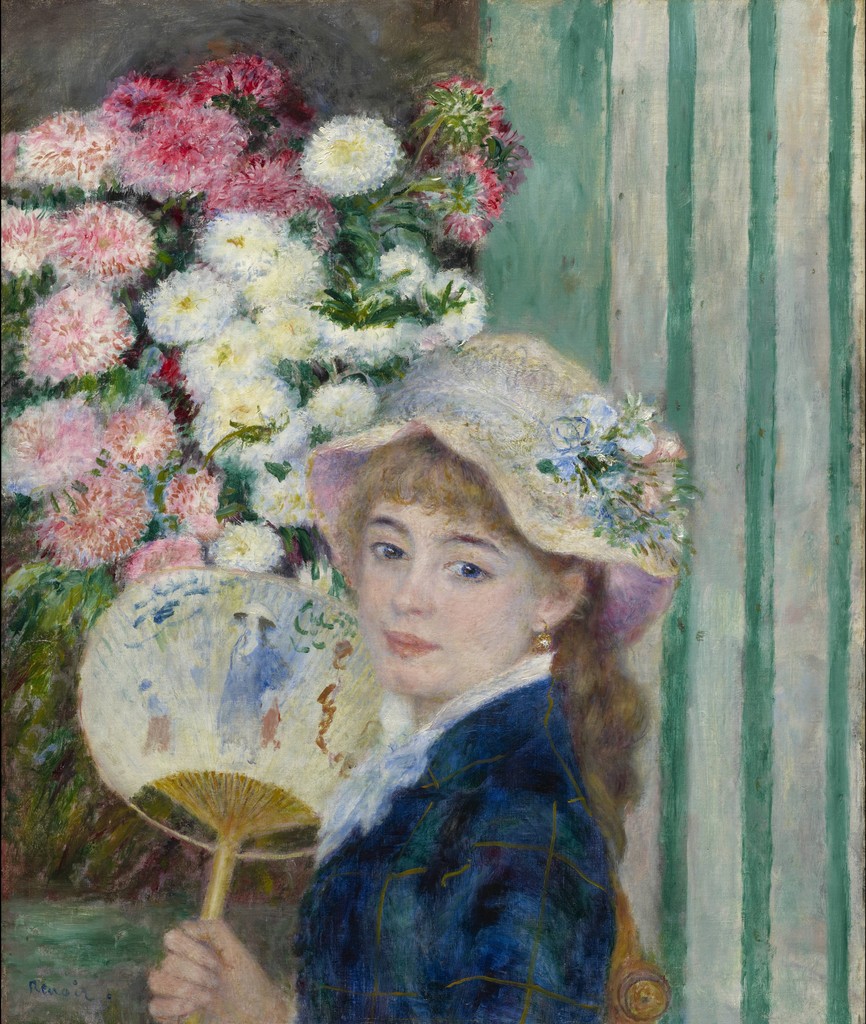
Renoir started painting ghastly portraits of rotund, rosy-cheeked women, twee, floral-sweet pictures which would fit nicely onto a chocolate box were they not so likely to induce the viewer to vomit. Monet, meanwhile, became overly obsessed with his damn lillies, to the extent that in trying to capture the subtle pinks and purples of mist over a pond, he ended up painting canvas after canvas which were reminiscent of the kind of floral fabric preferred by members of the WI and other polite conservative society. Van Gogh’s work became clumsier and clumpier, Cezanne’s became repetative, Degas started dabbling in pictures of nude women which were almost sadist, and Manet, poor thing, was confined to painting flowers, although to be fair, he was too ill to work on bigger canvases.

Pierre-August Renoir, Girl with a Fan (1879)

Pierre-August Renoir, A box at the Theatre (1880)

Anyway, the point I am making is that for the most part, having started off as revolutionaries, the Impressionists’ later work all too often conformed to a new form of the conservatism they were trying to escape in the first place – placating their former critics with twee works of flowers, pink-tinged landscapes, and pretty women, nude or in flowing dresses. And it is exactly these works which were the favourites of Sterling and Francine Clark and which, as a result, are the focus of the Royal Academy’s latest show in London, which showcases some major works from the Sterling and Francine Clark Art Institute in Williamstown, Massachusetts (I believe because the Sterling-Clark is undergoing some form of renovation).

Henri de Toulouse Lautrec, Waiting (1888)

Those who have raved about this exhibition tend to have been on the older, more conservative side. And it is easy to see why they are seduced – some of these works may even feel a bit racy for a few of them – just look at Toulouse Lautrec’s Waiting, with a woman leaning despondently over her glass of absinthe. Quite the scandal compared with Renoir’s pleasant smiley female offerings hanging close by. But not to worry, that’s about as lascivious as this show gets. Sadly.

Robert Sterling Clark (1877-1956) came from a wealthy New York Family whose fortune derived from the Singer sewing machine company. He began collecting art after he settled in Paris in 1910 and where he soon became the chum of famous art dealers Knoedler and Durand-Ruel who introduced him to the innovative work of the Impressionists which had finally broken into the mainstream at that time. In fact Renoir, whose works Clark adored (he eventually collected some 39, 21 of which are at the RA) was by that time so popular that looking around at the sales receipts interestingly exhibited by the RA, you can see that Clark was paying astounding sums such as 100,000 dollars for Renoirs, even then. As the collection, added to with the help of his French wife, Francine, grew, Clark had it in mind to open a museum. He did this in 1955, in Massachusetts, providing a permanent home for his many Impressionists works including Monets, Manets, Toulouse Lautrecs as well as various more classical pieces. Disappointingly, his collection is very experimental – he had one Gauguin on show, and even that was a traditional(ish) portrait of a woman.

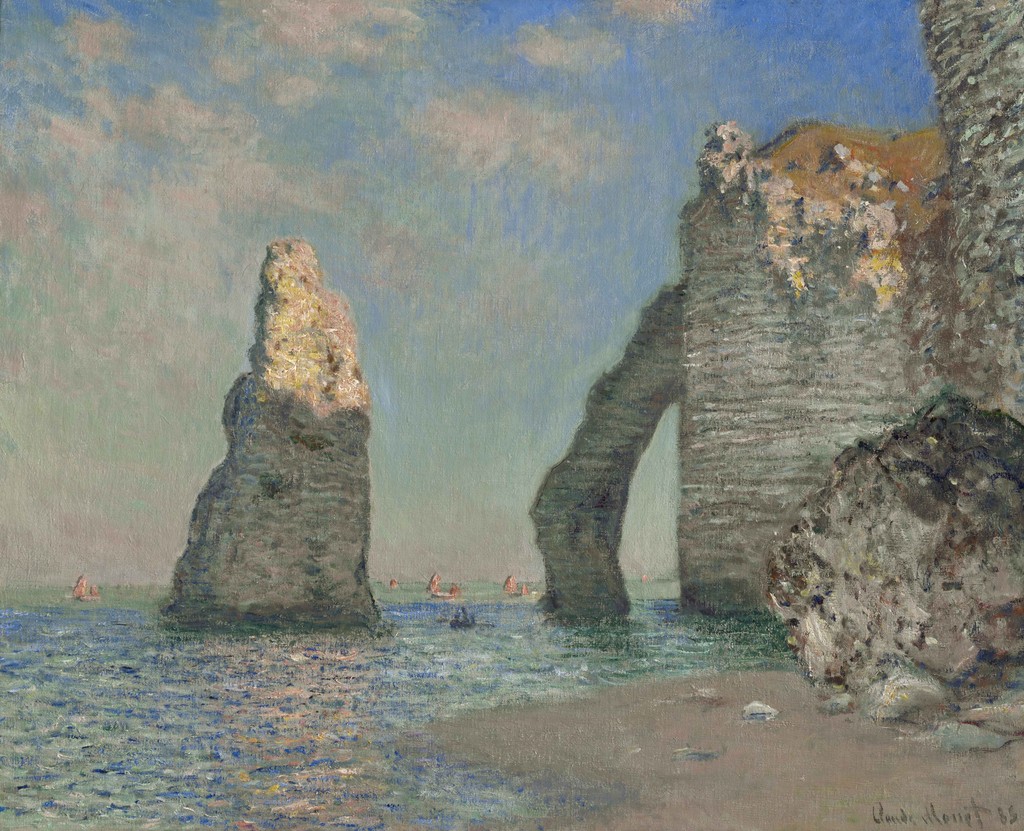
Claude Monet, The Cliffs at Etretat (1885)

Edouard Manet, Interior at Arcachon (1871)

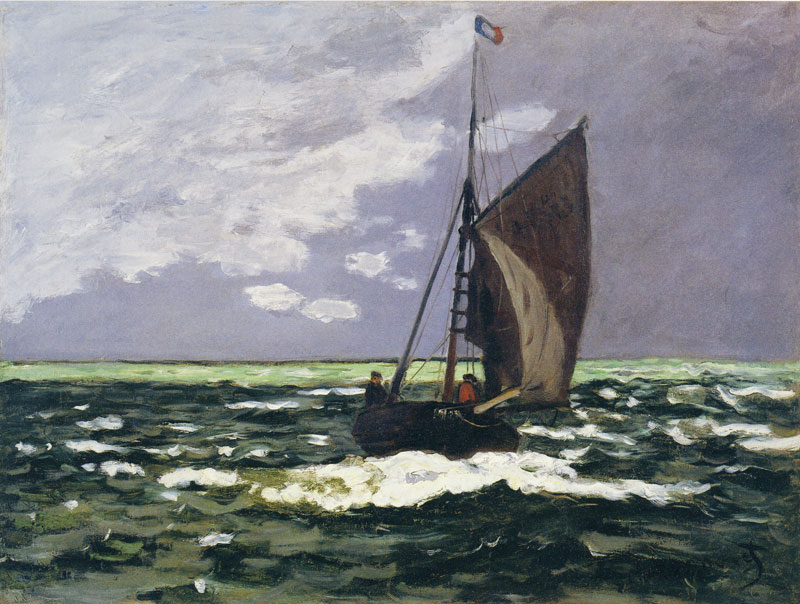
Claude Monet, Seascape: Storm (1860-67)

In fact Clark obviously had a penchant for paintings of women. After the initial gallery of flowers, onions and various fairly dull landscapes by Pissarro and Monet, the main bulk of the small exhibition are portraits of women. Asides from the insipid offerings of Renoir, there are, mercifully, some far more enticing works by other artists, both big-wig impressionists and less well-known painters. Two incredibly evocative Toulouse-Lautrec works are on show, both offering quite stark views of a woman in the shady quarters of Montmartre, one, Carmen, who confronts the viewer straight on, while the other, nameless, is just waiting – what for, we don’t know. From the hunched over pose and the glass of absinthe before her, are we to assume she is waiting for luck to come her way, or even death to end her suffering?

Of the other portraits of women, my favourite had to be Crossing the Street by Giovanni Boldini. Boldini, an Italian artist who settled in Paris, loved painting the sights and sounds of the salacious neighbourhood of Pigalle on his doorstep, and this beautiful portrait of a woman, raisng the hem of her petticoat as she crosses the cobbled street, is so wonderfully evocative, and brilliantly painted, exhibiting both an impressionistic, roughly painted background, and a precise and focused detailed and sympathetically painted portrait. I also adore the little details – the shop sign, the dog, the Dandy in the carriage – it’s a wonderful turn back in time to a Paris of bohemian romance and delightful decadence mixed with poverty and decay.

Giovanni Boldini, Crossing the Street (1873-75)

James Tissot, Chrysanthemums (1874-76)

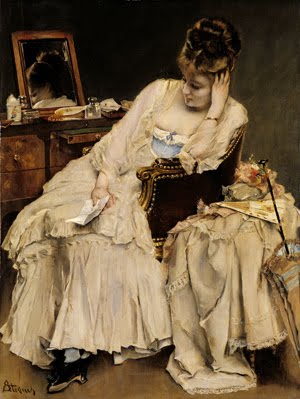
Likewise mention has to go to the lesser known artists who nevertheless created two portraits really worth visiting this show to see – James Tissot’s Chrysanthemums, a brilliant depiction of a woman, looking at the audience as though disturbed, surrounded by a great swathe of multicoloured hairy-headed flowers painted with great fantastic technical skill. Also check out Alfred Steven’s Memories and Regrets, in which a woman, as the name suggests, appears to have been sent into a daydream of remembering prompted by the letter in her hand, a personal and private moment interrupted only by the presence of we, the viewer, introduced to the scene thanks to the technical rendering of Steven’s portrayal.

Alfred Stevens, Memories and Regrets (1874)

Like any show, this one has its highlights, and whether it be that the paintings of the lesser known artists exhibit the most skill in their execution, or just because, since they are not tourist fodder like their more well known impressionist colleagues, they represent something of a breath of fresh air, those paintings by the likes of Boldini, Tissot and Steven are definitely, for me, the stars of the show.

As for the other impressionist works on show – well these paintings are all very safe, and for that reason I find them boring. But for lovers of the chocolate box impressionism which is so firmly engrained onto the consciousness of every tourist and gallery visitor around the world, this show gives you impressionist staple which you will undoubtedly enjoy. But don’t forget your Renoir souvenirs on the way out.

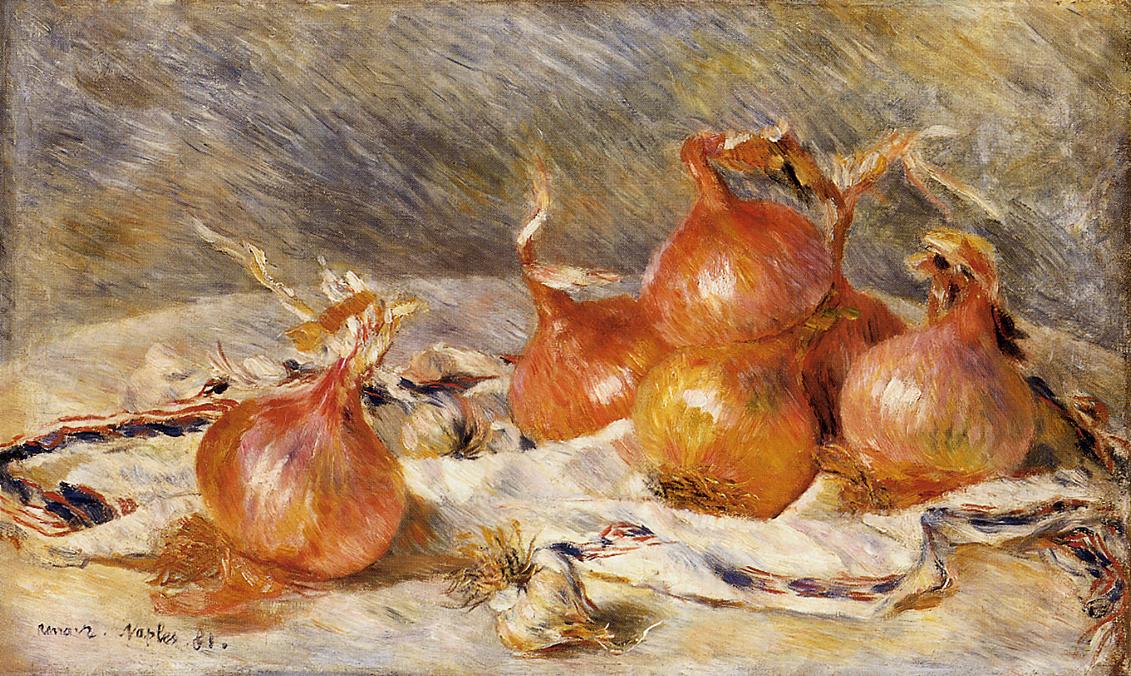
Pierre-August Renoir, Onions (1881)

From Paris: A Taste for Impressionism continues in the RA’s Sackler Wing Galleries until 23 September 2012.

Licence to thrill: The London 2012 Paralympic Experience

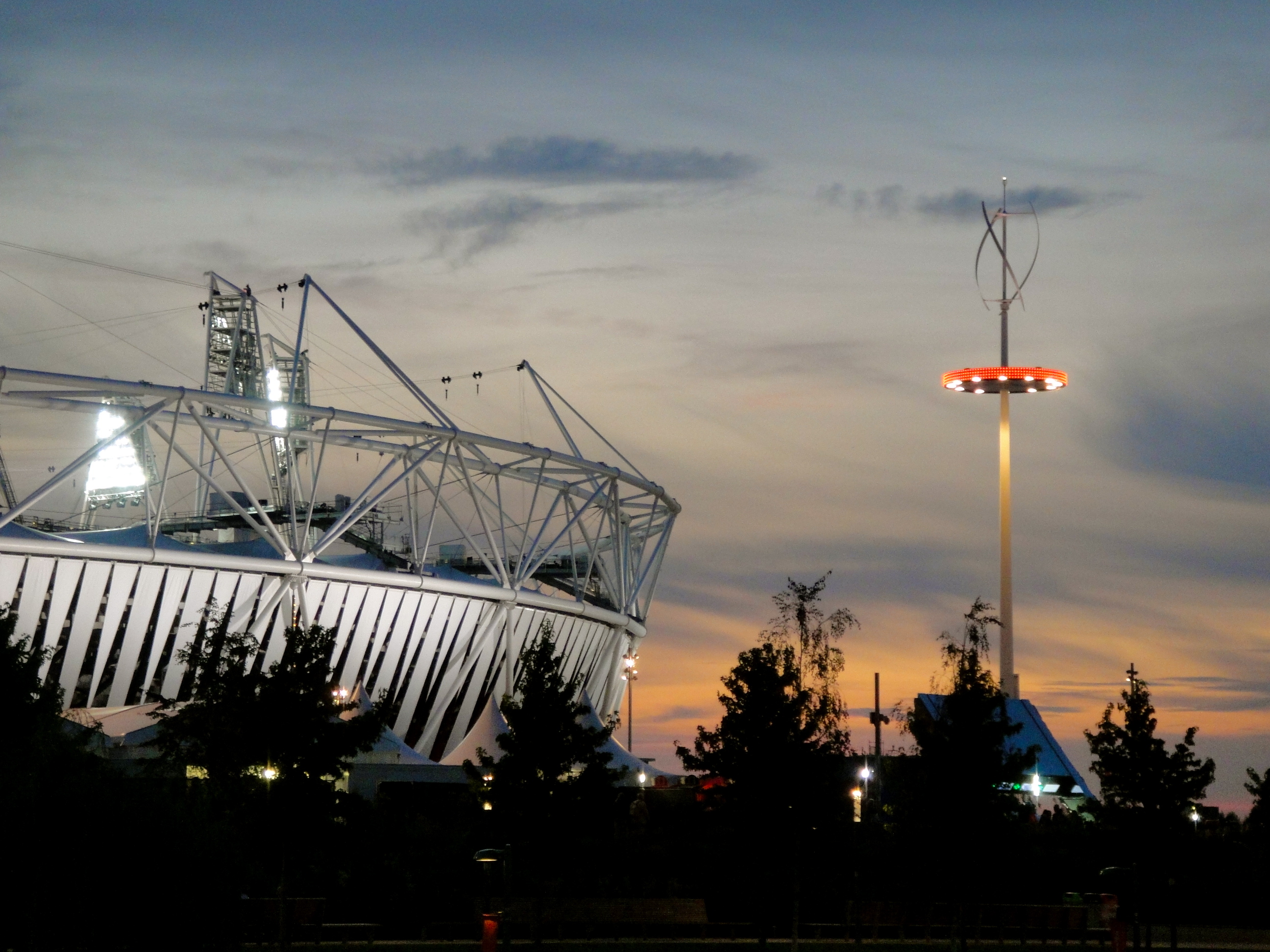
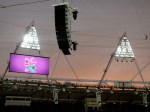
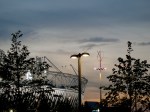
We are all now used to the sight of London’s Olympic stadium, blazing brightly in an otherwise subdued East London skyline, the diamond in the rough, with its triangular light stations looking like the pointed pinnacles of a medieval crown. When you see it on television, the stadium is both a giant-sized modern multi-coloured spectacle, but equally a giver of intimate human stories – the athletes crying, their families hugging, supporters bedecked in countless variations of red, white and blue. Through the aid of high-zoomed television cameras, you get to catch every detail of the various spectators, the royals who are sitting on the show and giving out medals, and the super-strong athletes pulling superhero poses at the start line to the track events.

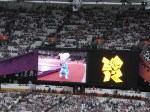
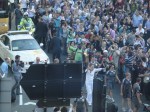
When you’re there in the stadium itself as one such spectator in a sea of thousands, it’s a whole different story. Everything is magnified, augmented, accelerated. The stadium loses all sense of the human story. It becomes superhuman, a thing of such magnificence, on such a brilliantly huge, exaggerated scale that you literally cannot believe you eyes. What is before you is not only a photogenic stadium worthy of star-studded superlatives and photographs in their thousands; it is history in the making, it is London’s definitive moment in the spotlight. It’s a magnificent mastery of social unity on an epic scale, as people come together in their tens of thousands to cheer, to wave flags, to take photos, to share in the glory. And so it was that the human became superhuman, where in a stadium so big, small people in a crowd of thousands became mere pixels in an ocean of humanity: when a mexican wave took hold amongst the crowd, it literally looked like a ripple pulsating around the stadium; when the crowd took photos, it was like the spectator area had become a diamond encrusted snake, sparkling to the movement of its slithing great body as the flash bulbs went off in their thousands around the racing track; and when a Brit was on course to win a medal, the joint roar of 80,000 spectators made a noise like nothing I have ever heard before – it was a noise enough to conquer nature – thunder itself could not have outdone it.

Yes, as the above probably makes clear, I have experienced the London 2012 Olympic park at last, as well as the Athletes stadium itself, doing so as part of the incredible Paralympics festival which is currently underway in London. Having not obtained tickets for the park itself during the Olympics, I was on the ball when the Paralympics tickets were released a few months later. This time I was lucky, receiving tickets for the Swimming, the Athletics, and, this coming Sunday, the Closing Ceremony. And needless to say, I am incredibly glad that I got to sample not just the Olympic park, but the wonder of the Paralympics as well – The Athletes involved are nothing short of incredible. Talking of superhuman, these guys take the word to a new level all on their own, overcoming debilitating injuries and conditions to excel in sports to levels which, if not equal, are a fine match to the standards set by the incredibly fit able bodied athletes of the Olympics two weeks before.

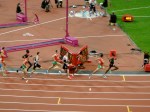
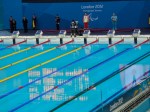
Last night I was lucky enough to see the UK’s David Weir win the T54 1500m race in super-strength style, pivoted to the finishing line by the sheer strength of his arms alone. And the night before, I was equally fortunate to see Brit favourite Ellie Simmonds win her second gold medal of the games and win in world record time for the second occasion too. Her victory was immense. She was in around 5th place when she turned to swim her final lap of the pool but then, again with superhuman almost mechanical genius, she managed to propel herself, not only ahead of her competitors, but leaving a huge margin trailing between her and the silver medallist. And who else was there? None other than the current Prime Minister (David Cameron), a past Prime Minister (Gordon Brown) and a potential future Prime Minister too boot (Boris Johnson) all getting in on the action (I think that’s known as jumping on the band wagon).

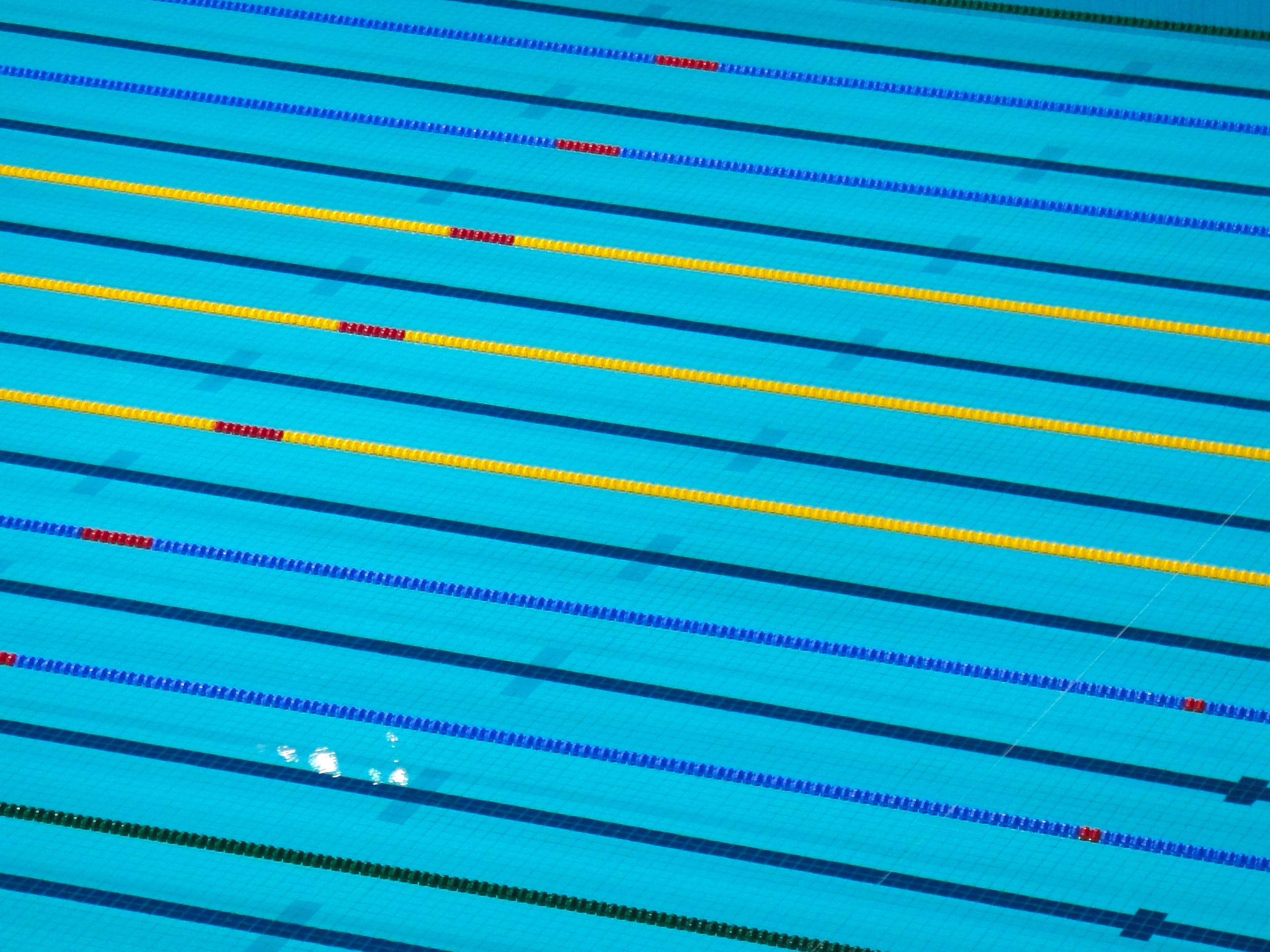
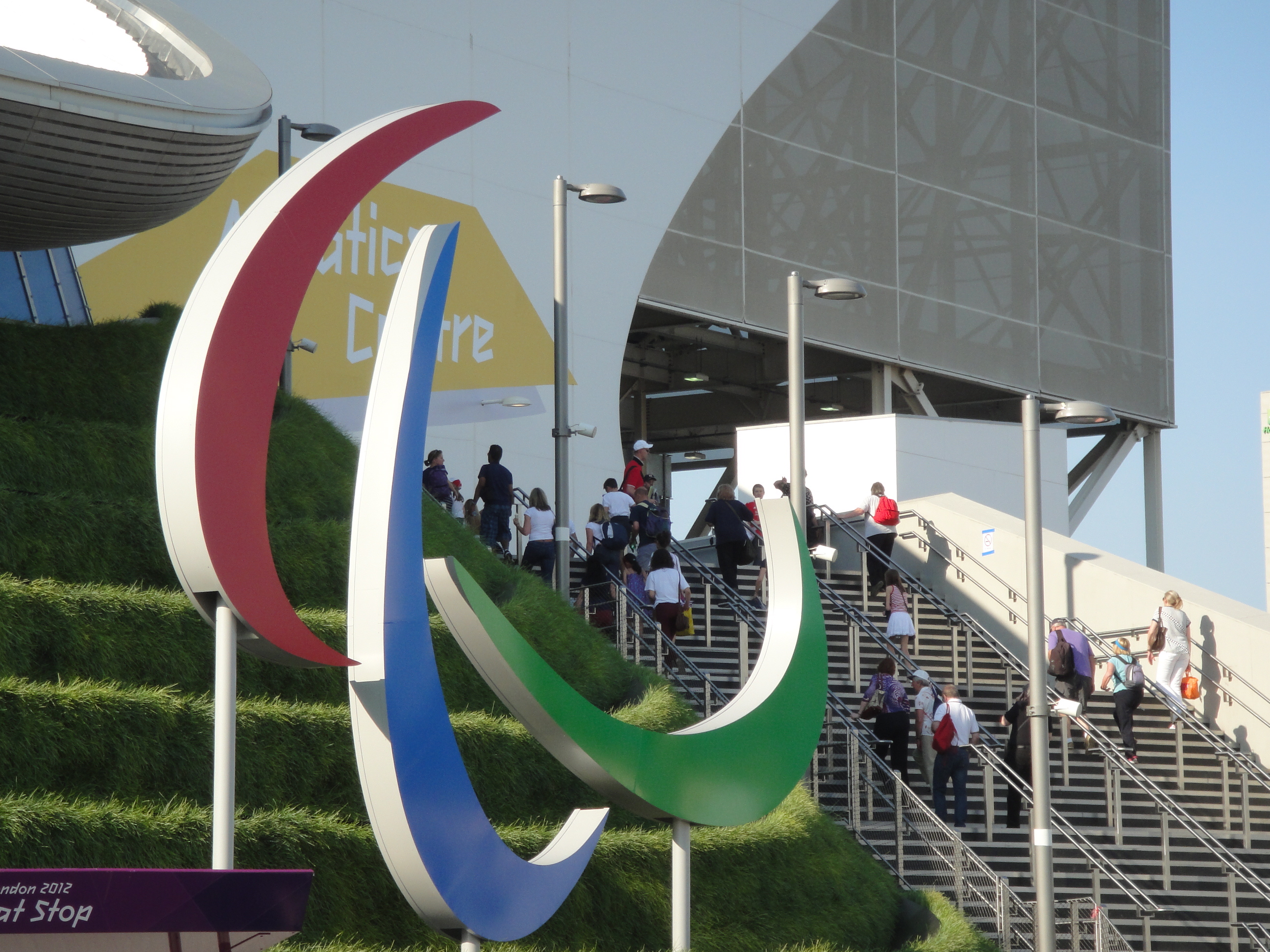
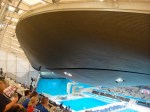
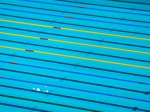
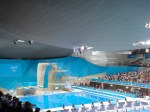
As for the Aquatics centre itself, designed by Zaha Hadid, what a feat of architectural genius, with its organic curvaceous wooden roof perfectly mirroring the muscular contours of a huge killer whale, and appearing to float, defying gravity, in mid air above a marine blue pool and some equally innovative diving boards. 

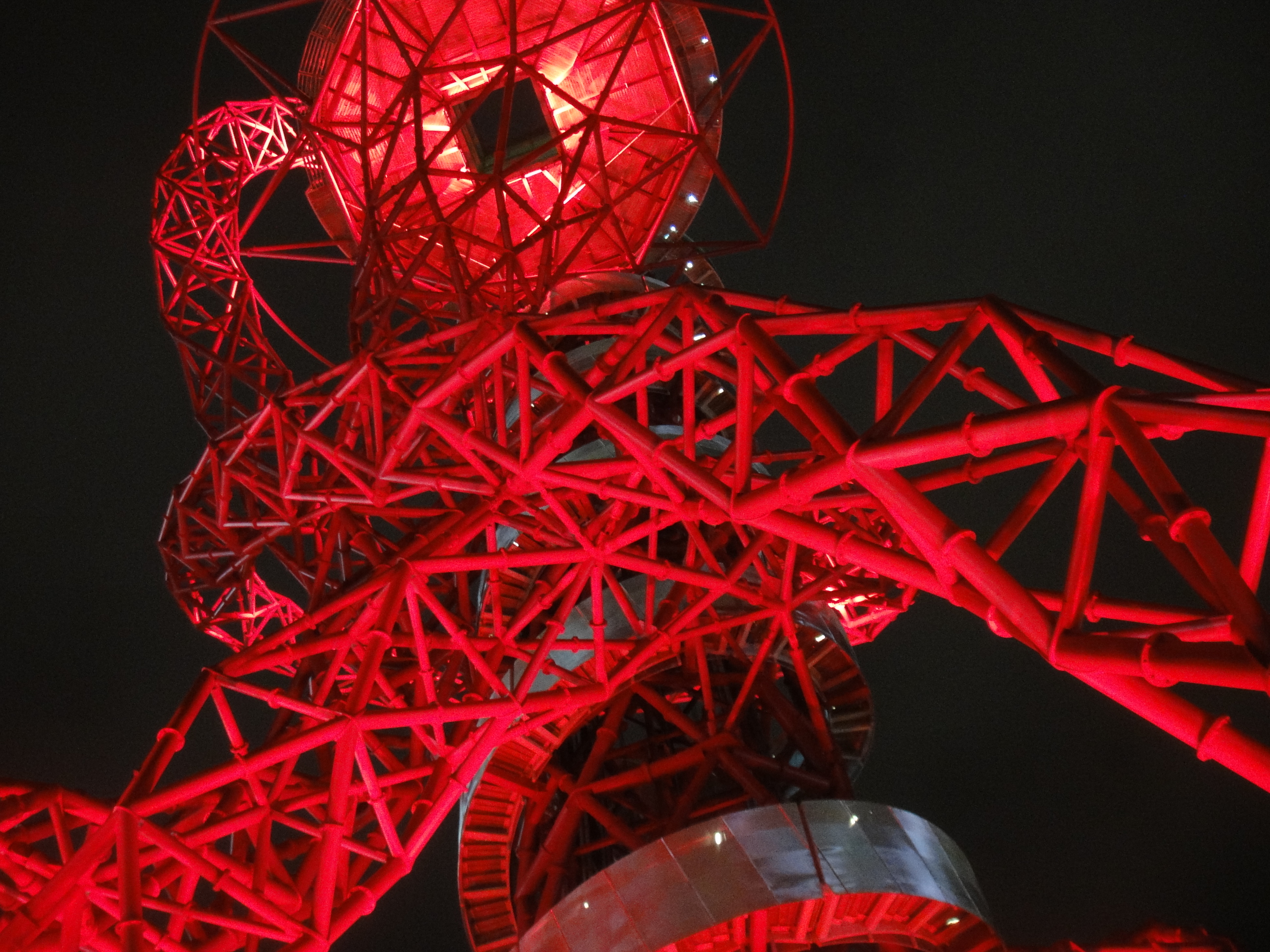
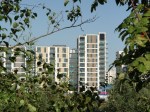
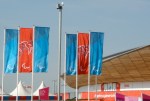
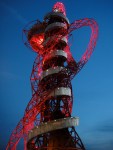
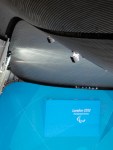
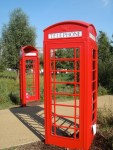
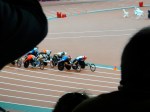
Well, after an Olympian effort to effectively describe the feeling and emotions of experiencing what is nothing short of a sensational Paralympics experience, I think it’s about time to show you some of my photos of the event – you’re not getting any athlete close-ups I’m afraid – these venues are huge and my seats were, as my budgetary constraints would predict, fairly high up in the gods, but for architectural appreciation, my photos are surely on form. Check out in addition Anish Kapoor’s wacky red Arcelormittal Orbit tower, now an insuperable icon of the Olympic park skyline, and, at the opposite end of the scale, the delicate beauty of the park’s many wildflowers and tranquil riverside walks. Amazing to think that only a few years ago, this was one great industrial wasteland. Oh and let us not forget that incredibly Olympic flame designed by Thomas Heatherwich.

The UK truly is at an all time creative and sporting high. Long may it continue.

© Nicholas de Lacy-Brown and The Daily Norm, 2001-2012. Unauthorized use and/or duplication of the material, whether written work, photography or artwork, included within The Daily Norm without express and written permission from The Daily Norm’s author and/or owner is strictly prohibited. Excerpts and links may be used, provided that full and clear credit is given to Nicholas de Lacy-Brown and The Daily Norm with appropriate and specific direction to the original content.

Daily Norm Book Club: The Skating Rink by Roberto Bolaño

In the murky world of Roberto Bolaño, the sadly deceased Mexican author, many of whose masterpieces are only now, posthumously, seeing the light of day, a new storm is brewing. In the noncommittally named Costa Brava seaside resort of “Z”, the catalogue of shady locals, from El Quemado to the elusive German hotelier, Frau Else introduced to us in Bolaño’s recently published The Third Reich, is expanded further, as a second “Z”-based novel, The Skating Rink, delves into the layers of denigration, frustration and prejudice subsisting, never far from reach, beneath the soft sands of this beachside society in post civil-war Spain.

The novel is a short, punchy exploration of a Spain pressing forwards but continuing to struggle against Catalan discrimination, a flagging economy post summer-season (sound familiar?) and the progressive rise of a bureaucratically managed insular society. These frustrations are played out by the few principal characters around whom the story circulates. There is Nuria Marti, the beautiful ice skater, previously an Olympian skater representing Spain, but recently thrown off the national team because of her Catalan heritage. Obsessed with her is Enric Rosquelles, a pompous civil servant, who, in a desperate attempt to capture the attention and then the affection of this starlet skater, abuses his power and embezzles pesetas by the thousand to build Nuria her very own skating rink in the grounds of a deserted seaside villa.

Nuria’s affections are elsewhere however, in part with a local entrepreneur, Remo Moran – the poor boy done good – who has become owner of the hotel which formed the backdrop of The Third Reach, and who is now sleeping with the skater. He would love there to be more than sex between them, but he cannot crack the icy glaze which so often falls over Nuria, protecting her from the prying attentions of those who get too close. Working for Remo is Gaspar Heredia, a solitary, beleaguered romantic and old friend of Remo from their native Mexico. He too is in love, with an equally elusive, silent and cold societal outcast, Caridad, who has found the ice rink and lives amongst the ruins of the villa beyond. That is until tragedy strikes and all concerned are forced to abandon the ice rink which has sealed their fate forever.

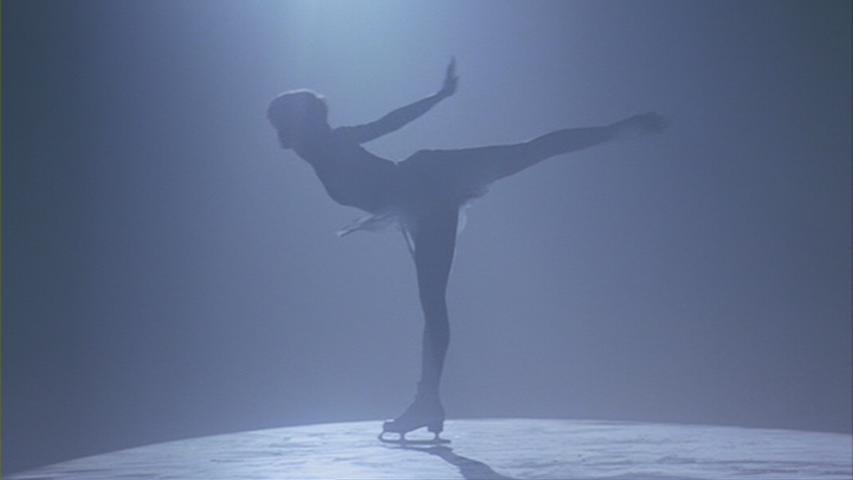
We know there will be a murder. We’re told at the start, and in short captivating chapters, the three narrators, Enric, Remo and Gaspar, successively take the story gradually closer and closer to the murder which was forewarned, circling progressively nearer to the tragic event, like a skater encircles an ice rink before arabesquing into a pirouetted climax at its bloody cold centre. In this way, Bolaño’s brilliant structure ensnares the audience and drags them into the tale, captivating like a dancing routine, enriching the reader with a tale told on ice.

Yet within a speedy narrative hoisting in the reader with its intrigue and drama, the sombre mood, typical of Bolaño’s work, prevails, as surreal and disquieting descriptions create a deeper profile of his often troubled characters: the toilet cleaners who agonise after the faeces sculptor whose daily offerings torment them, the old singer, who moves from bar to bar in a pitiful attempt to busk for drink-money, the poet, taken to insomnia and dizzily distracted by his love for a girl who won’t even speak to him. It is these characters who make the story, who create a mood which is as distant from the sunshine and sangria costa setting as a seagull from the Sahara. This is the same unsettling irony which characterised The Third Reach – holiday makers playing war games, away from the sun, in the darkness of a hotel bedroom, a paddleboat seller, who builds a home on dry land from boats, and whose skin is burnt by fire, yet exposed all day to the continuing damage of the sun, and the tourists who were drunk with joy, and then distressed when one disappeared forever. These dark undertones are what makes Bolaño’s summer time so enticing; a hot Spanish resort with an ice-cold undertone, a wintery chill traversed by the pointed blade of a skater’s boots, the razor sharp kitchen knife carried in the waistband of a silent night-walker, the inscrutable personality of the leading skating star. 

This is my third Bolaño read and I’m eager to read more. Bolaño gives us crime, but not crime fiction, he gives us Mediterranean sun, with none of its warmth. He gives us speechless characters, full of detail. In other words, his books are atypical, original and inescapably captivating. I’m off to buy the next one…

Ravel at Glyndebourne: the double-dip opera-session

Everyone knows that here in England, we’re wallowing in a double-dip recession. The longest for decades they say. But there was light on the horizon this week – apparently we’re not in the recession as deep as forecasters had thought. Well hey ho, that’s a positive surely? Things are looking up! And what better way to celebrate this sprightly news than to head along to where all the rich people go – to Glyndebourne Opera, home of the landed gentry, the well-coined and lovers of lavishness aplenty, for none other than a double-dip opera-session! (called such because 1. this is my second visit of the year – I know, lucky me – and 2. we got to see not one, but two operas by Ravel). I know, Ravel – hardly your Puccini or Mozart. But my, what a feast beheld us when we sat down to watch the melodic opus of this operatic genius.

L’heure espagnole

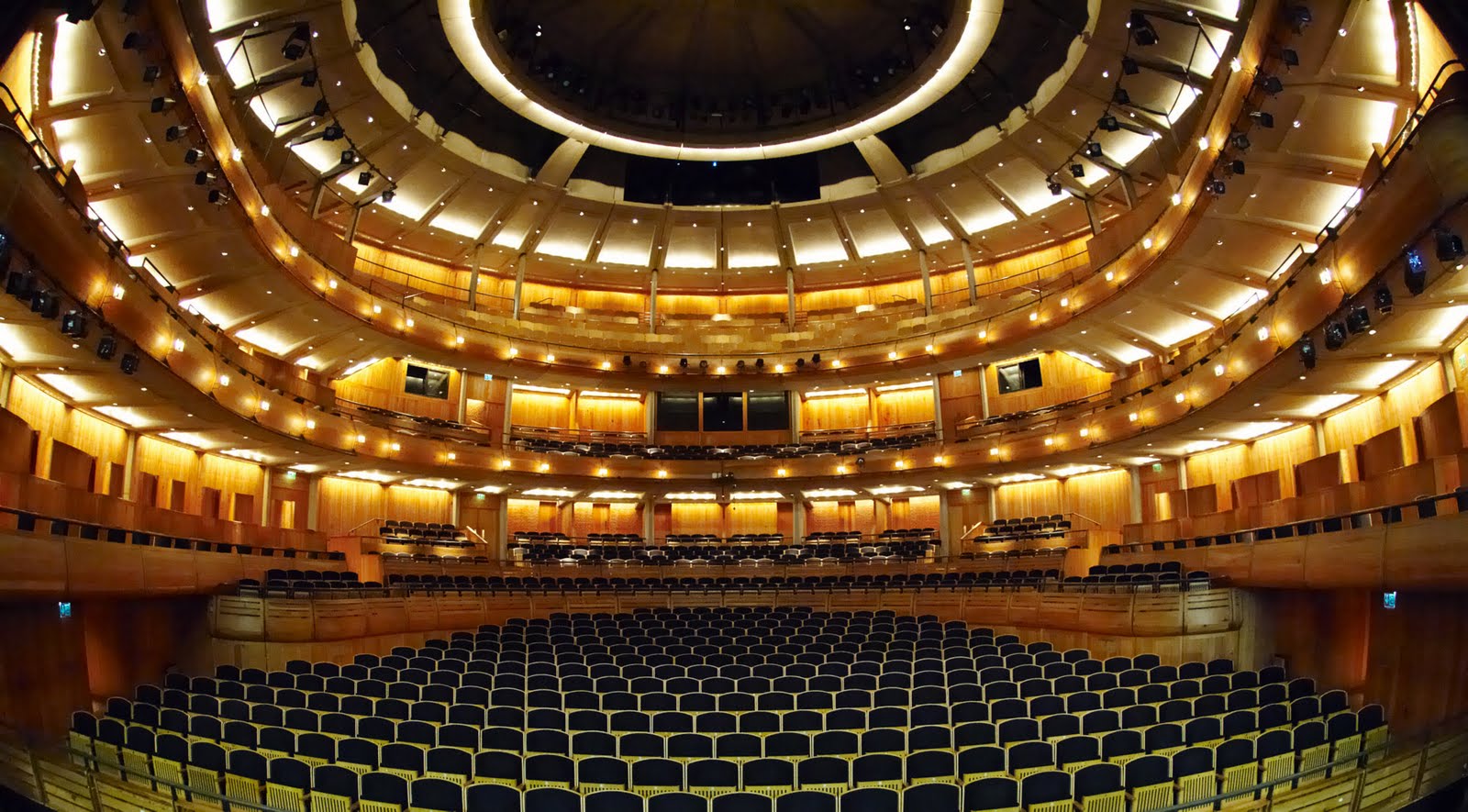
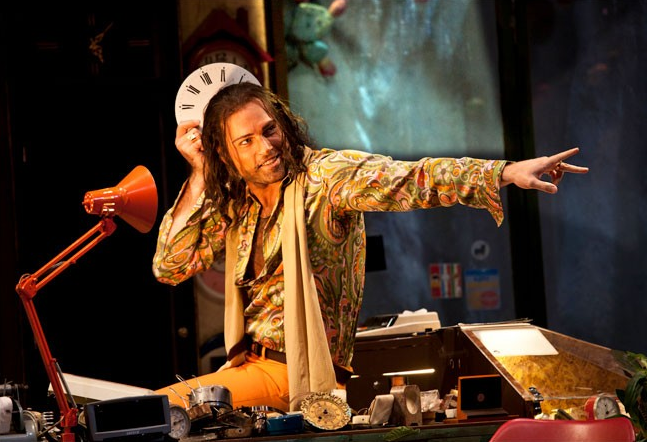
Once we had enjoyed our customary fill of afternoon tea and a stroll around the verdant grounds of Glyndebourne (disappointed however that for the price of half a small car, tea was presented as a Twinings tea bag. Where was my loose leaf? My high tea silver?) we entered the lavishly contemporary wood-clad opera auditorium to watch the first of the Ravel double-bill. L’heure espagnole thrilled from the moment the curtain unfurled horizontally across the stage, revealing behind it a clockworker’s shop with a wall filled to the brim of different sized clocks and other nicknacks, all wonderfully animated so that, as the curtain rolled back to reveal them, the clocks would begin spinning, the skeleton started dancing and dusters started revolving, all on their own, like some kind of enchanted wonderland.

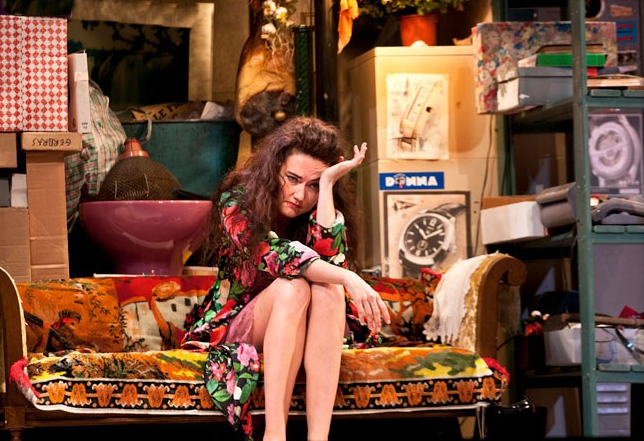
What followed was a perfectly choreographed commedia dell’arte, a typical sexual farce as a clockmaker’s wife attempted (almost) in vain, to make the most of her husband’s one hour’s absence to throughly flirt her way through the town’s male population. But as she found one man too poetically verbose and romantically flighty, she found the robust attentions of another too overbearing. Trying to escape one and have her way with the other, a hilarious scene unfurled as the licentious Concepcion, brilliantly played by Stéphanie d’Oustrac, tried to hide one lover from another, generally speaking in cuckoo clocks, while all the time courting the attention of yet another suitor who at the start of the opera bemoaned his lack of touch with women, but by the end had bedded Concepcion, just in time before her husband arrived back.

My favourite section was the final scene, when back on stage, all five singers threw themselves into a brilliantly mastered harmony, sung in tandem, but each one of them following a differently intricate melody. I also appreciated the devilish symbolism which ran throughout the opera, as the libretto alluded to the winding up of clocks as a symbol of sexual frustration, only for the cuckoo to pop out energetically as a symbol of – well, I’ll let your imagination finish that sentence off. A few dangling pendulums and several shrill cuckoos later, and the opera ended just after an hour of comical gold with some excellent singing and a beautifully played score which evoked the sensual atmosphere of middle-Spain (the opera is set in Toledo) and the ravishing rhythms and visceral textures of that region. What this opera lacked in memorable harmonies, it gained in actorly skill and superb staging – one forgets that opera singers have to act just as well as they sing, and in L’heure espagnole, they were pretty spot-on on both fronts.

 L’enfant et les sortilèges

If the evening had ended there, we would have walked away highly satisfied. But after the customary 90 minute interval break, we returned for the second of the Ravel operas and were frankly so stunned by the creative genius of the spectacle which started to play out on the stage before us that my mouth hung open, my partner’s eyes started blinking in disbelief, and for all of us, a suspicion ensued that either the wine during dinner had been sensationally strong or the director’s staging was fantastically good, such was the brilliance and utter incredulity of the surreal spectacular which was embodied by the second opera: L’enfant et les sortilèges. 

Read more

The Genius of Hitchcock Part One – The Lodger and Stage Fright

Although now best known for his blockbuster epics where birds attack the innocent in Bodega Bay, James Stewart struggles to cling on to a skyscraper’s edge in the dizzy heights of San Francisco, and Cary Grant and his suitably blonde counterpart risk life and limb to escape the group of villainous assassins pursuing them across the slippery carved facade of Mount Rushmore, Alfred Hitchcock, the master of suspense and one of Britain’s most famous cinematic exports, innovated his psychologically thrilling style of filmmaking in the smoke and fog of London long before he ever hit the sunny slopes of Hollywood. In celebrating the genius of Britain’s most influential and celebrated film makers as part of London’s 2012 cultural olympiad, the British Film Institute is concentrating, not just on the Hollywood blockbusters of Hitchcock, but on the London-based films where, for this budding film maker, it all began.

Hitchcock makes a characteristic brief cameo appearance in Stage Fright

I must admit, I have fallen head over heals in love with Hitchcock films. Ever since my partner and I stumbled upon the huge open-air showings of Hitchcock classics in Bologna’s film festival under the stars in July, whereupon the wonderfully clipped 1950s accents of the films’ stars resonated across the majestic medieval architecture of Bologna’s Piazza Maggiore, we have been hooked. From buying a box set of Hitchcock’s best, we have taken to watching one or two films per week. Almost besides ourselves with excitement were we then when we saw a poster on the tube advertising that the BFI too will hold a Hitchcock festival this summer. It may not be Bologna, but it was back to the big screen for us as we sampled yet more Hitchcock amongst an enthusiastic audience of London Hitch lovers.

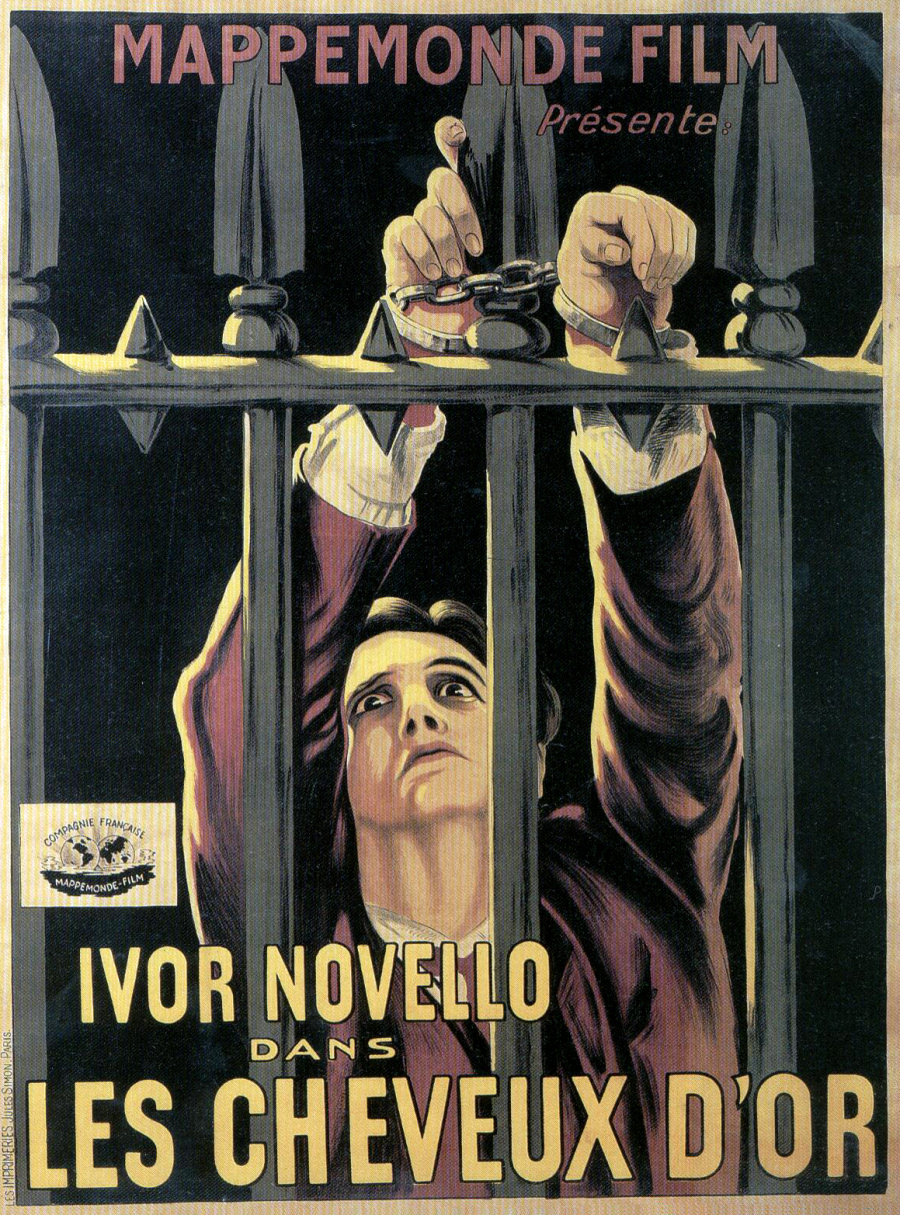
French poster for The Lodger

The first film we saw is not available in any box set, at least not in this form. For in presenting one of Hitchcock’s earliest films, The Lodger: A Story of the London Fog, the BFI give us a digitally remastered spectacle which, it’s being a silent movie made in 1926, comes complete with a new soundtrack by none other than the multi-award-winning composer (generally found to be mixing Indian and Spanish vibes), Nitin Sawhney. How was this going to work? A film so early that its black and white pictures moved and crackled with music by one of our most contemporary and ethnically vibrant composers? Well it worked a treat. It’s worth going to see The Lodger just to sample Sawhney’s score. Perfectly thrilling, almost traditionally 1920s in parts, but occasionally intermingled with strains of contemporaneity  which worked just perfectly to emphasise the emotional potency of the scenes.

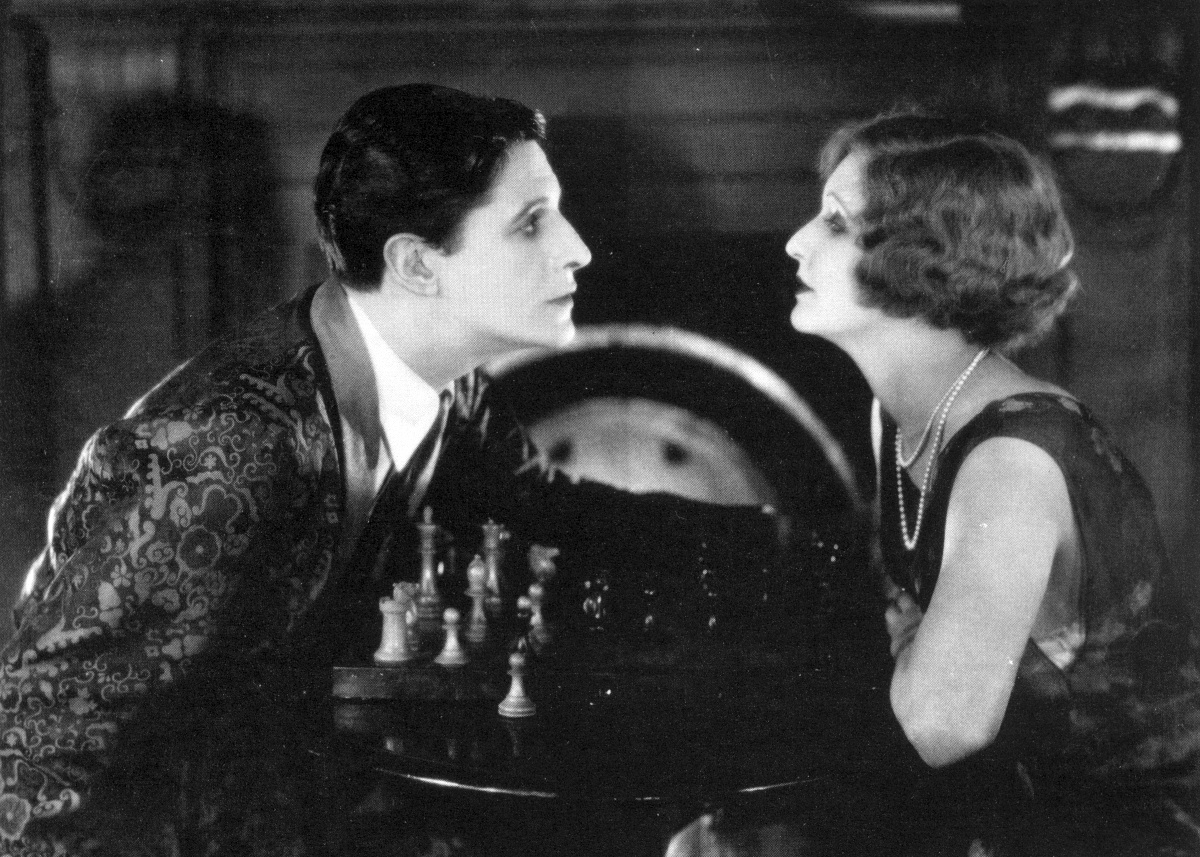
There is, for example, a scene when the stunningly stylish and devilishly debonaire Ivor Novello, playing the illusive Lodger, begins to fall for the golden-curled daughter of his landlord, Daisy (played by June Tripp) and vice versa. The love is forbidden, but unwittingly irresistable, and as the emotions begin to stir between them, the contemporary vibe of the lovers’ harmony introduced by Sawhney perfectly resonates, translating to the modern audience the depth of emotion experienced by these characters who, in every other way, are the very image of 1920s clipped and distant glamour.

Whether it be the music by Sawhney or the wonderfully expressive faces and actions of these silent movie actors, we fell in love with this movie which has since been called the first truly Hitchcockian film – full of suspense, twists, “MacGuffins” (decoys), mistakes, suspense (made all the more potent with scenes enveloped in a dense cloud of fog and mirk) and pyschological character examination. I shan’t give anything away though. As ever with Hitchcock, it’s important to come to the film ready to ride the wave of suspense which Hitchcock sets in action. All the more reason to get down to the BFI, on London’s South Bank to see it or, if you’re a little too far away, the Nitin Sawhney version is being released on amazon next month.
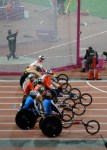
Next up was a second London-based Hitchcock, but filmed some quarter of a century later, long after Hitchcock had moved to America and yet yearned to return to the city of his birth to make another film amongst the naturally thrilling backdrop of London. Yet when he returned to make the next film we saw, Stage Fright, Hitchcock must have found London to be a very changed place. Shortly after the end of WW2 and with the scars of the Blitz evident for all to see, the landscape of London was visibly changed from the unharmed elegance of The Lodger’s Edwardian London. As though to emphasise the change, Stage Fright opens on a large vista of St Paul’s cathedral which, as miraculous survivor of the bombings, is shown almost unnaturally intact, stood amongst a landscape of flattened streets and desolated buildings.

Marlene Dietrich

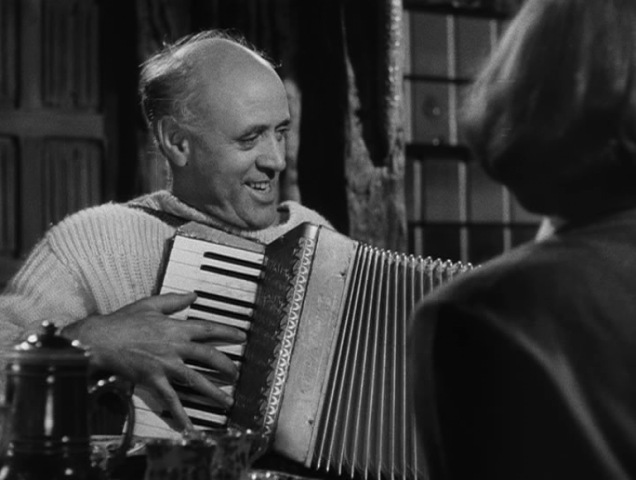
It is along one of these desolate streets that the film’s central characters, Eve (played by Jane Wyman) and Jonathan (Richard Todd) drive in the opening scene, escaping the police from what, as Jonathan then describes, is a grizzly murder which has put him in the frame. Also starring the wonderfully glamorous Marlene Dietrich as an equally chic theatre star, Michael Wilding (who bares an uncanny resemblance to Alan Cummings) as the piano-playing Detective Wilfred, and Alastair Sim as the lovable jolly Commodore Gill, the film is a catalogue of Britain’s best of that time (asides from Dietrich of course who is evidently not English, but every bit as marvellous all the same). Again, I cannot describe the film without giving away the plot except to say that for thrills and twists, the work is equally Hitchcockian, enthralling and decadently charming. Amazing really how a film older than my mother can suck younger generations into its plot and captivate us as though it were made only the other day.
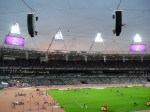
That, of course, is the beauty of, Hitchcock films, and the key to their success. They are as thrilling now as they were then, as brilliantly original, even in these days of computer graphics and 3D animation, and as completely captivating. The only difference between them and the films made today, is that in being older, when fewer tricks were possible, they include imperfections, and attempts at illusion which may, to the modern audience appear amateur, but which, in their crudeness exude charm and historical ingenuity, as they throw moving, living light on the world as it was then, an elegance now lost, a past which was naive, perhaps happier, and full of hope.

The BFI Hitchcock festival continues until October.

London 2012 – a city celebrates

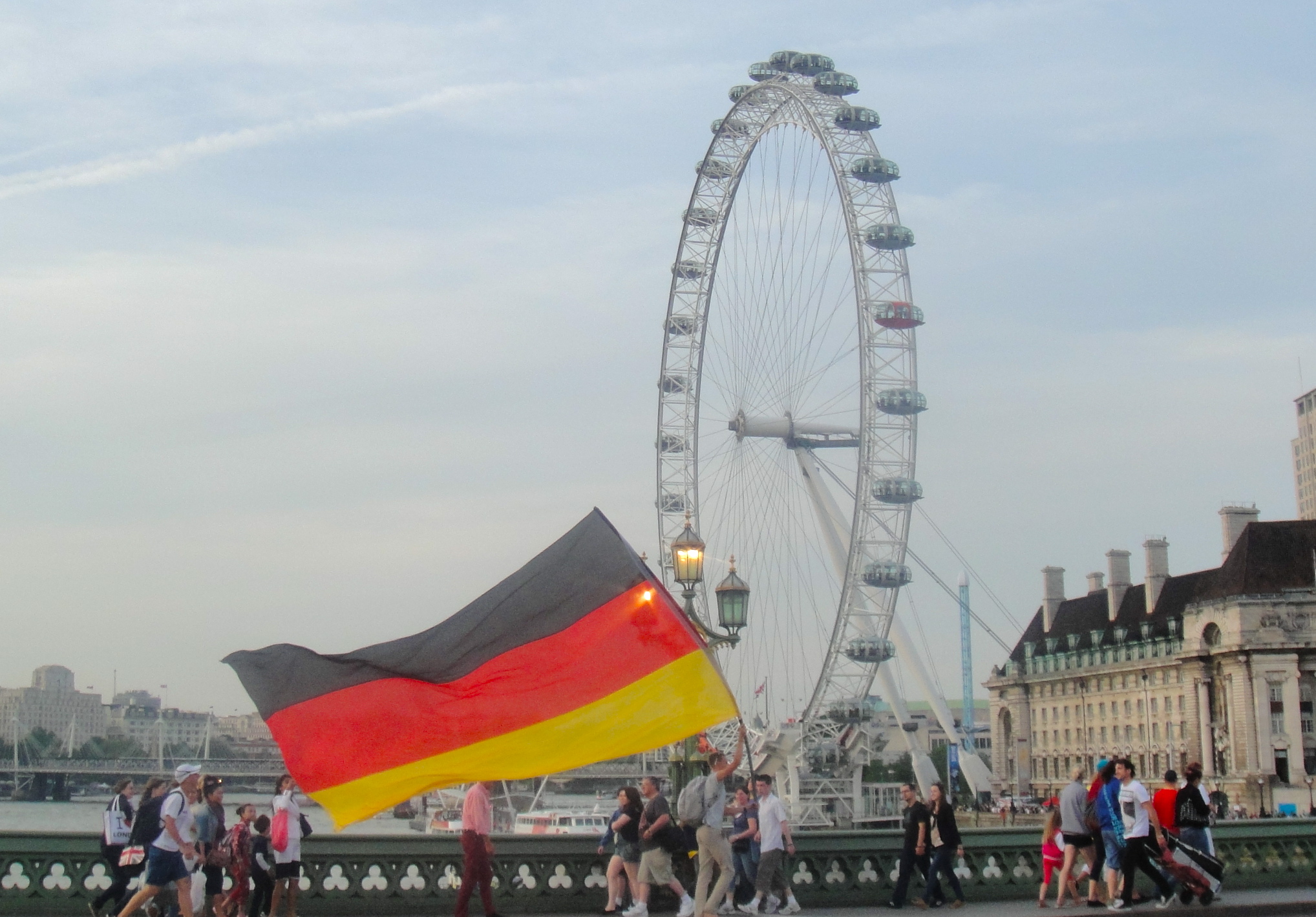
Being a Londoner, in London, when the Olympics rocked up on our doorstep and the focus of the world followed suit, has been an incredible experience which I wouldn’t have missed for the world. London has changed. Yes, Big Ben still chimes where it always did, and the London Eye still turns steadily next to the mighty River Thames. But during the two weeks of the olympics, the spirit of London underwent a tangible transformation. It was like being at school when a special holiday was being celebrated – the school was the same, but being their felt different, exciting. Similarly, being in London during the games has felt incredibly exciting, thrilling and the source of utmost pride.

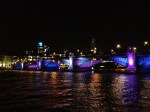
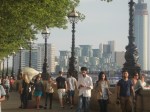
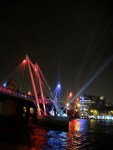
Of course if you were a “Games Maker” or attended the huge olympic park, the excitement would, undoubtedly, have been explosive, breathable, physically all-encompassing. But for those of us, like me, who had to work during the games, and who, like many others, were unable to get tickets to the grand olympic park over in Stratford, the changing mood of the city was still unmistakably discernible.  On the tube, people did not rush on with stern moody faces, pushing past each other, losing all semblance of civility. Rather, they would walk around with smiles, reading excitedly about the latest gold medal rush in the papers, and listening enthusiastically to the plethora of foreign languages which could be heard all around. On the streets, the feeling of British patriotism has reached an all time high, but mixes convivially with the respective national pride which is evident in those millions of foreign visitors who have descended upon our city from all over the world. Along the River Thames, the many bridges have been illuminated to spectacular effect, and all along the southbank, a brilliant cultural olympiad has celebrated the arts as well as sport. On TV and in the press, journalists have run out of superlatives to describe these games. Well organised, welcoming, record-breaking, fantastically attended. It’s been brilliant, amazing, a life-changing experience, a moment of insuperable national pride.

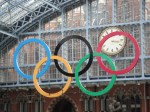
Huge rings welcome tourists from eurostar

A feeling of internationalism is everywhere

Like the end of any summer holiday, the climax of the Olympics tonight will be a sad moment for us all. Going back to work, as the olympic flags come down and the city returns to normal, will be tinged with an inexorable feeling of depression. But through it all, the memories live on, and London, as a city, will continue to thrive in the spirit of goodwill and international recognition. More than anything the olympics have made us Londoners proud of our city, which has so much to offer, so much going on, incredible sites and wonderful facilities. For these reasons, people will continue to visit us, long after the olympic spotlight has passed, and for those of us living here, a new inbuilt respect and admiration for our city has been created, an optimism for the future, and a celebration of the past.

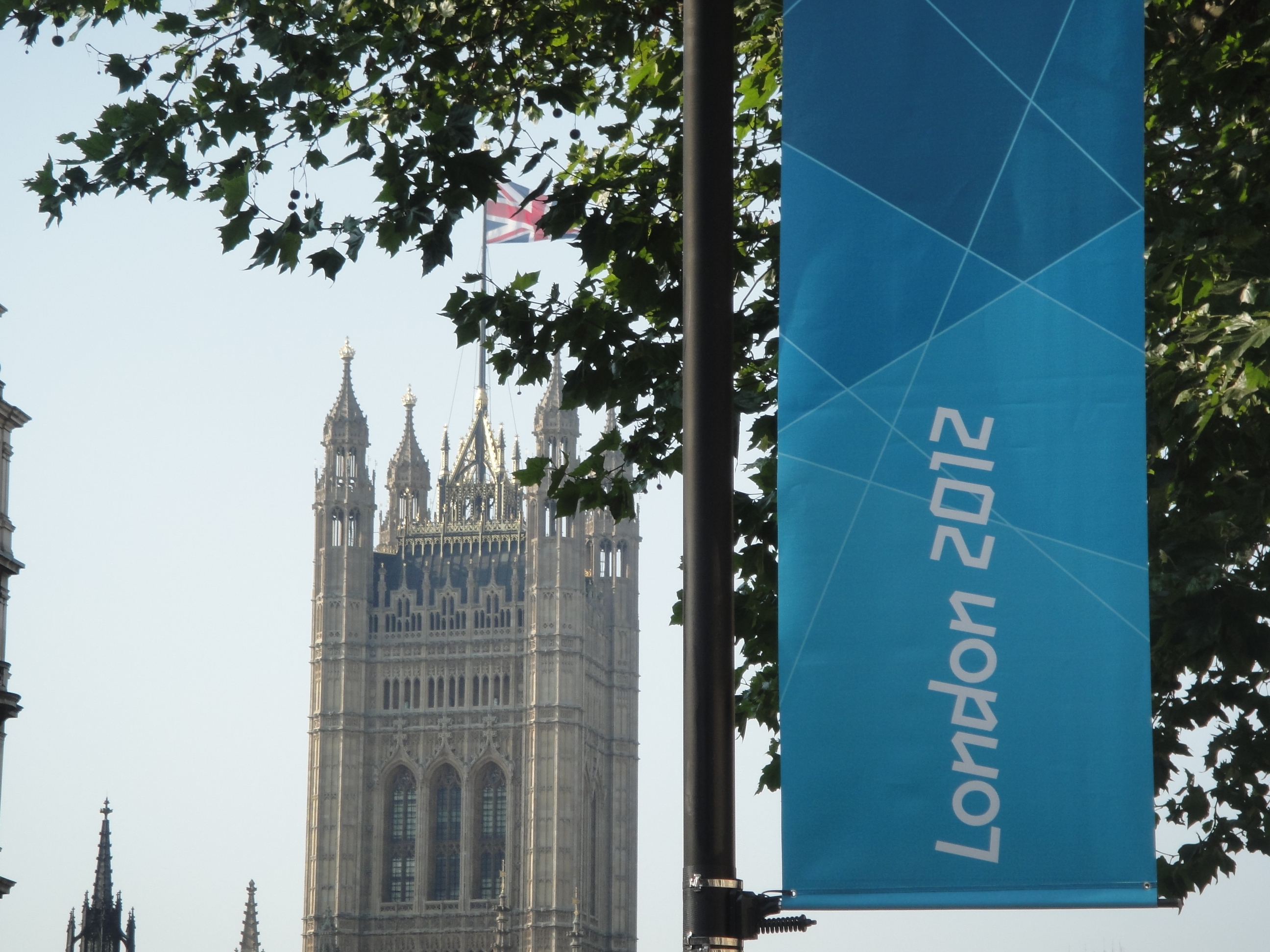
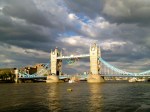
The photos I enclose with this post are not really sports-related. Trying to get hold of tickets was like a search for the holy grail. Consequently my photos are confined to the small changes I have witnessed while carrying on my normal London life – rings on Tower Bridge, banners on the lamp posts, and those cute little mascots springing up all over the city. Enjoy!

© Nicholas de Lacy-Brown and The Daily Norm, 2001-2012. Unauthorized use and/or duplication of the material, whether written work, photography or artwork, included within The Daily Norm without express and written permission from The Daily Norm’s author and/or owner is strictly prohibited. Excerpts and links may be used, provided that full and clear credit is given to Nicholas de Lacy-Brown and The Daily Norm with appropriate and specific direction to the original content.

24 hours in Paris: Part 1

24 hours is not a long time, but when you spend it in the city of light, of love, and of every other superlative you can throw at it, 24 hours is a ripe excuse to live life to the full – Paris style. A birthday is only one day of 365, and yet it is my belief that it should be appropriately marked. After all, don’t we all deserve to feel special for the day? But with London hosting the world’s greatest sporting event, there was no way I could drag myself away from the city for too long for this year’s birthday celebrations. So for a short burst of Birthday happiness, Paris (now so easy to get to via eurostar it feels like an extension of London) was the obvious choice. Here are my 24 hours in that magical city.

20:00 hrs

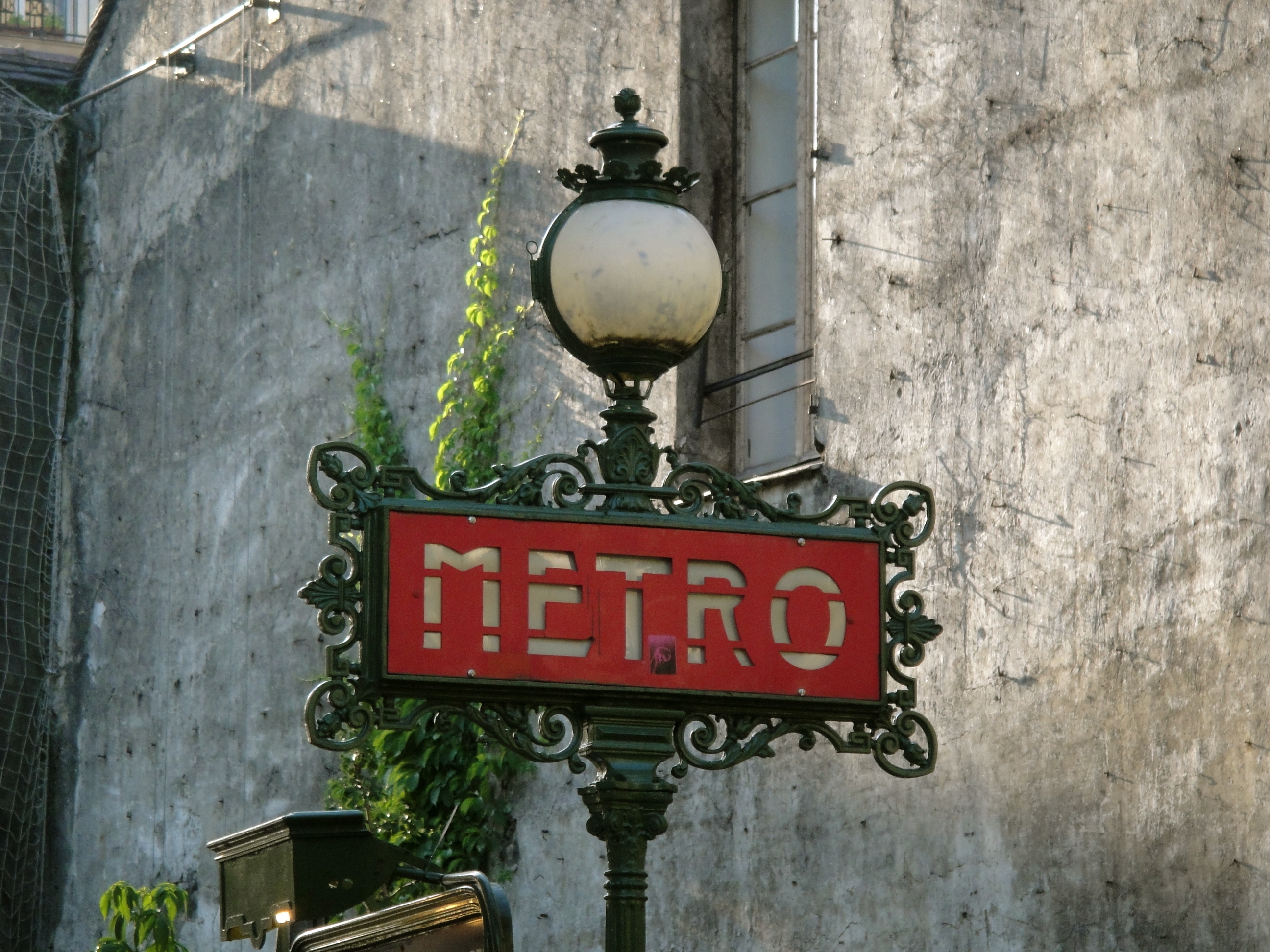
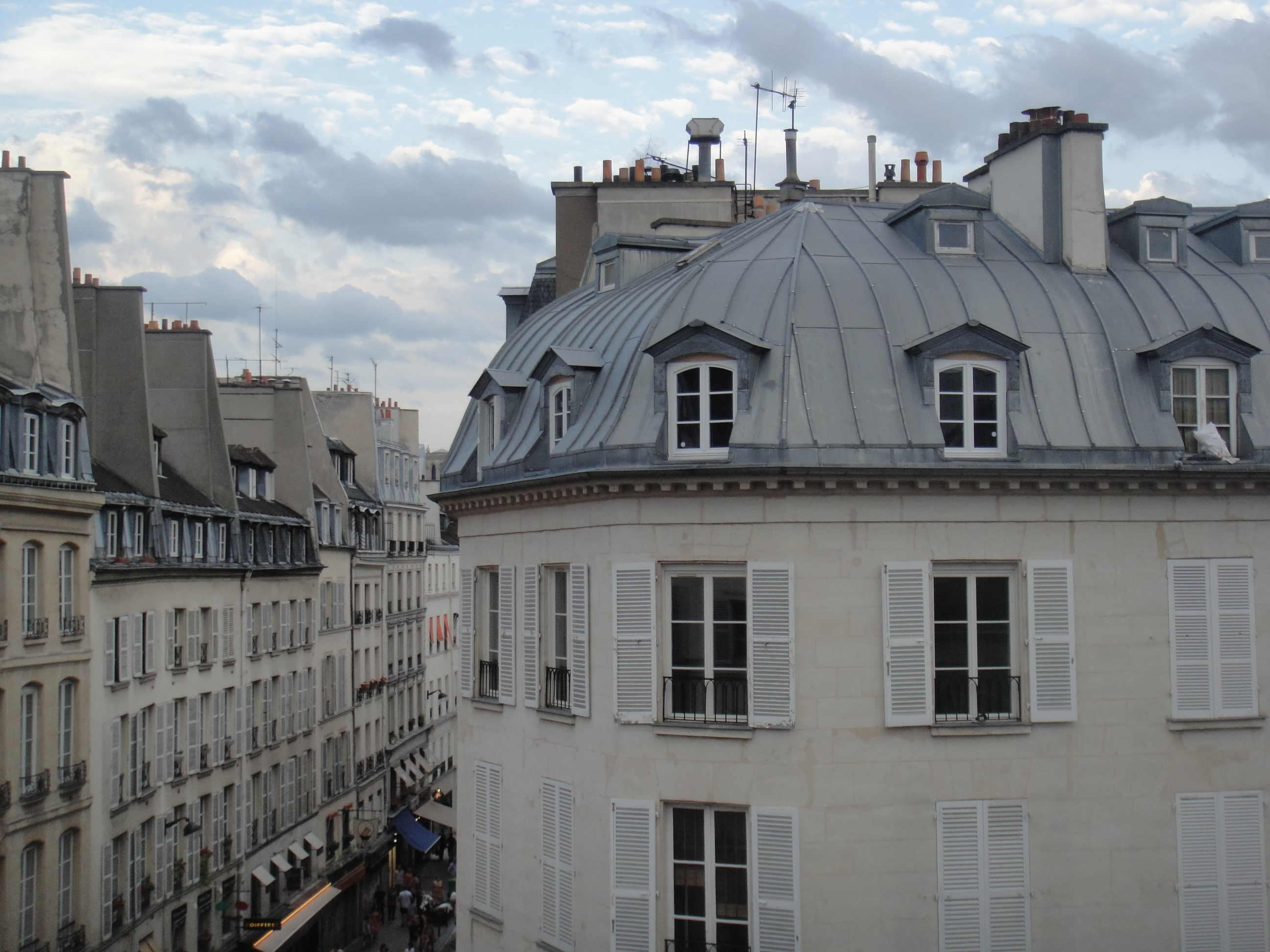
Walking up the steps of any Paris metro station, up onto the streets of the city centre for the first time is always a thrill. Nothing can surpass the architectural splendour of the city, where beauty is consistent from street to street, where Parisians mill from one red-canoped cafe to the next, art nouveau is the design of choice, and a contagion of chic spreads from shop to shopper to every passer by and even to the poodles. After a smooth journey commencing under the huge Olympic rings suspended proudly over the tracks of St Pancras International, to the rather less glamourous welcome of the Gare du Nord in Paris and straight onto the Metro, we arrived at our final destination: the Boulevard Saint Germain des Pres, where, on a small cafe-packed Rue de Buci just round the corner from Les Deux Magots, we checked into our hotel of the same name, where a small but perfectly boutique-chic boudoir awaited us, with perfect views of the street below.

The Hotel de Buci (on the right)

Our rooftop view

21:00 hrs

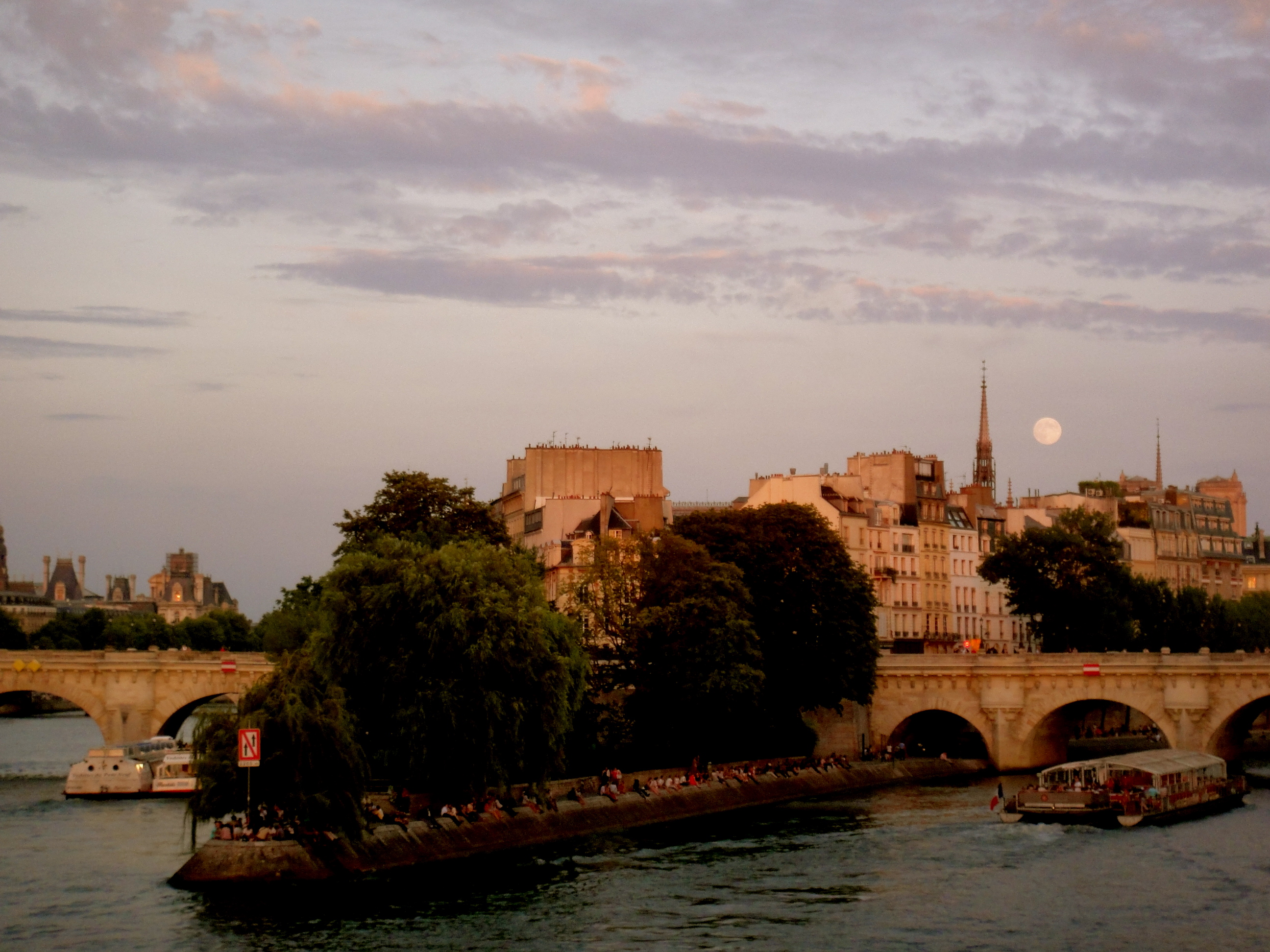
Having made full use of the Hotel de Buci’s elegant facilities, we headed out across Paris, across the Pont des Arts where we were treated to the most spectacular view of Paris at sunset. The sky was like a stracciatella of chocolate rippling clouds across rich layers of rich golden yellows and zesty oranges. When we proceeded through the Cour Carree in the Sully courtyard of the Louvre, the view of I.M.Pei’s glass pyramid with the same, now deepened sunset behind it together with the flashing lights of the Tullleries funfair and the momentous silhouette of the rooftops of the Louvre  was just mind-blowing. Did Paris ever look so good?

22:00 hrs

We rushed off towards our late reservation at a previously favourite eatery in Paris: Jean Georges’ Market  Restaurant (Avenue Matignon, 15), just off the Champs Élysées. Past experience of the restaurant had been excellent – a super chic atmosphere, beautifully presented food, largely asian fusion in origin, all served on a tranquil restaurant floor with subdued lighting, meticulous waiting staff and cool lounge-bar sound track. But what was potent chic of a winter’s evening appeared to have been heavily diluted come the summer. Such is perhaps a symptom of Paris in August, when the Parisians flee for the coast, and Paris is left to the tourists. Since trade is passing, the restaurants let their standards slip. And this was certainly the case at Market, where a menu entitled “taste of the summer” offered diners a choice of utterly random dishes for 38 euros per head. Quite asides from the high price tag (which notably hadn’t slipped along with the standards – and don’t even get me started on the wine list) the mix of food was such a hodge-bodge of world cuisines that it was a real struggle to choose two dishes which would actually work together as a meal. Thus you had ravioli on the one hand, and sushi on the other, chicken samosas for a starter, and american hamburgers for after. Controversially I went for the latter combination – and believe me I did not relish the idea of going American while in Paris, when really I should have been supping upon snails and oysters. Nor did I relish the company of the tourists all around me. I spent much of the meal listening to a couple next door talk about the benefit of Tesco clubcard points. Oh mon dieu. To be fair though, the food was good – it just wasn’t worth over 130 euros for the pleasure.

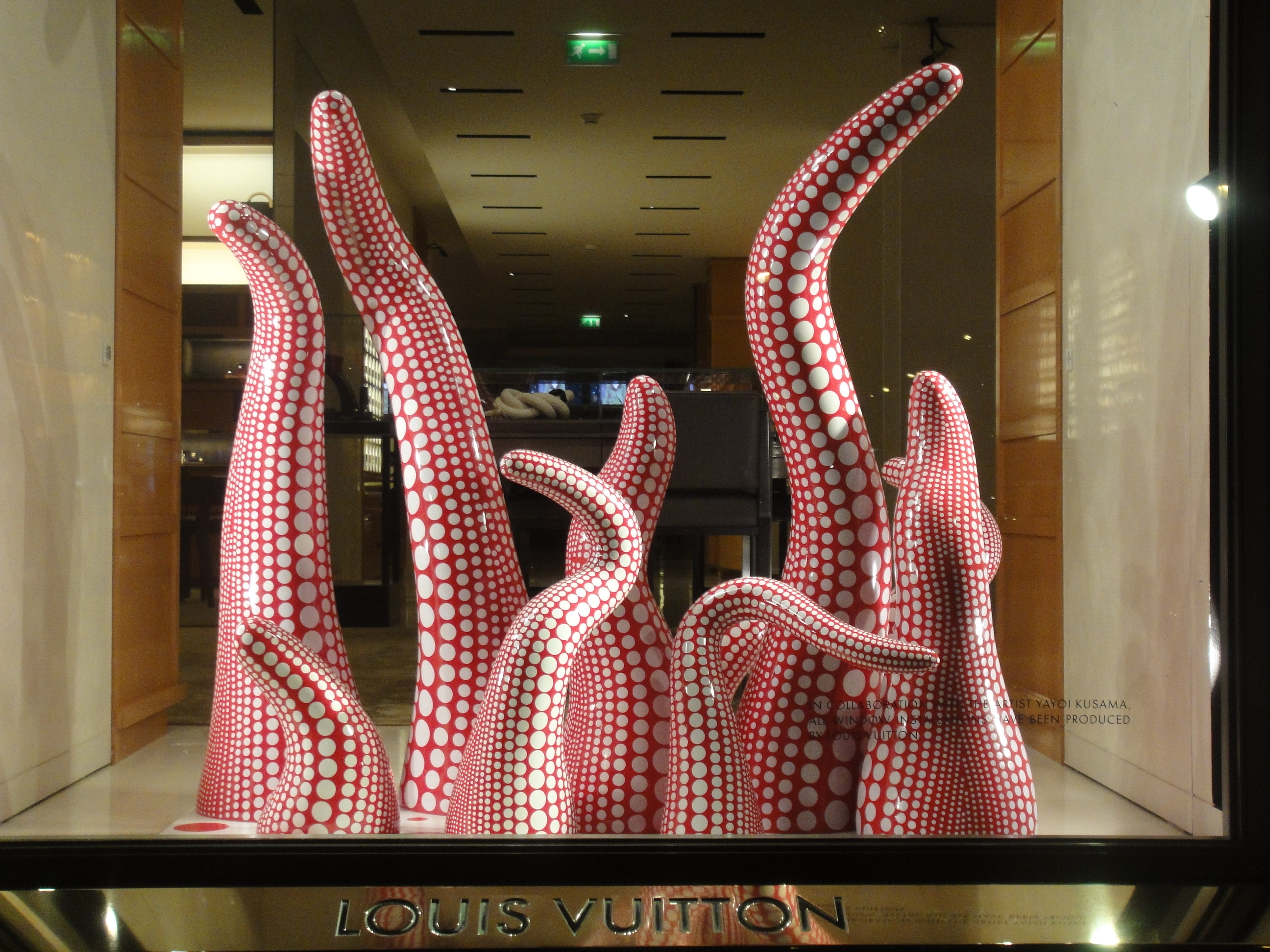
Vuitton’s collaboration with Yayoi Kosama

24:00 hrs

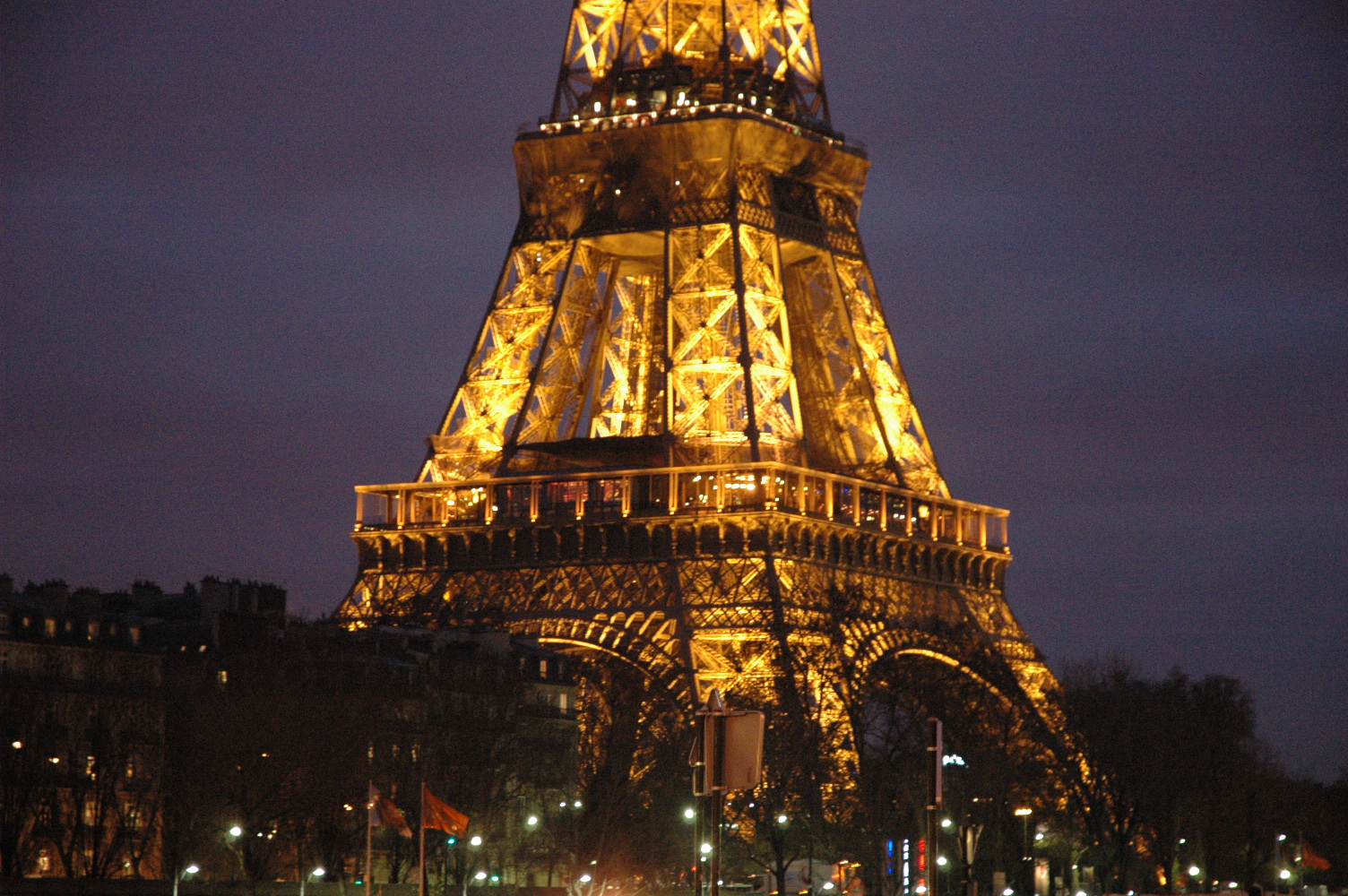
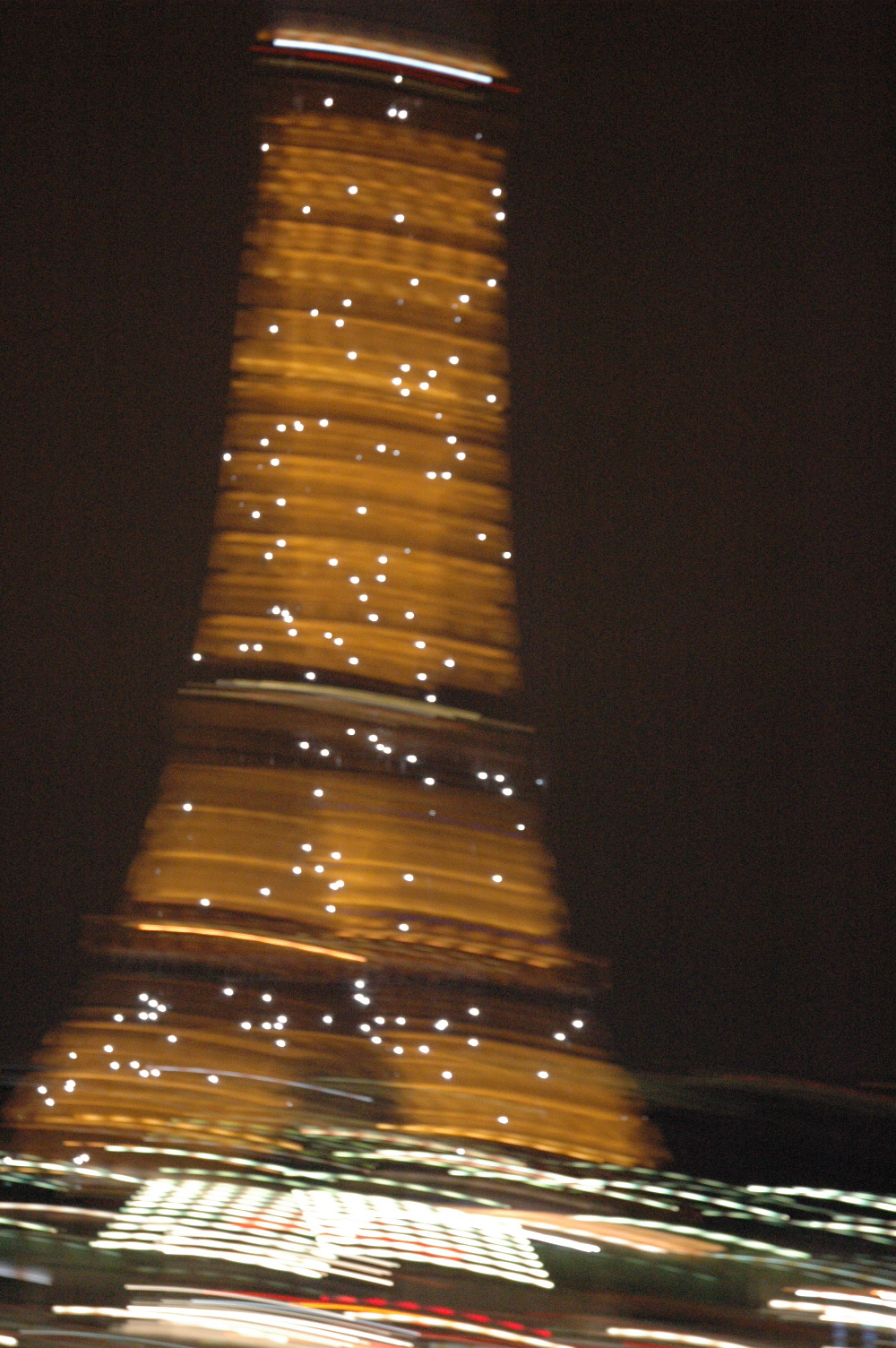
After two hours realising the hard way that Paris in August is a mecca for tourist-tat, we decided that if we couldn’t beat ’em, we would join ’em and headed straight for the Eiffel Tower (via the indubitably chic Avenue Montaigne, lined with the creme de la creme of Parisian high fashion, including, I noted, Yayoi Kusama’s spotty collaboration with Louis Vuitton). The Tour Eiffel is an undisputed tourist icon, favourite of the souvenir tacky-train, splashed across postcards, t-shirts and every other kind of tourist paraphernalia and yet it’s still one of my favourite sights in the city. There’s nothing more magnificent in my opinion that the first view of the vast bulk of the tower when you turn a corner and see the elegant structure rising almost super-human above the nearby overshadowed houses. The sheer audacity of the structure never fails to amaze – how could Gustav Eiffel have ever been so daring as to build something so huge and so utterly alien to the surrounding landscape? It was too late to ascend, but it was surely worth the visit to witness the tower sparkling with several thousand tiny white lights like the world’s biggest diamond at the strike of midnight – what a way to officially start my birthday. Notably however we were not so drunk on birthday spirit that we gave into the relentless approaches of pesky street-sellers trying to force bottles of warm champagne into our hand. Can you imagine anything more lacking in finesse?

Eiffel art…

01:00 hrs

Heading back to the Saint Germain des Pres, I decided it was a good idea to walk from the Eiffel Tower all the way back to the 6th arrondissement – after all, it looks close on the map. Well guess what, it wasn’t, and an hour or so later, with very, very painful feet, we finally made it back to our welcoming soft bed in the Hotel de Buci, where, with curtains open so that we could close our eyes with a moonlit view of the rooftops of Paris, we sunk into a soft sleep, ready and waiting for the daylight to tease our eyelids back open, announcing the start of a whole new day and another bout of birthday celebrations in Paris.

More on that, tomorrow.