Skip to content

Madrid-Salamanca Part II: Whose Plaza Mayor is mejor?

Built between 1729 and 1755, Salamanca’s exceptional Plaza Mayor is widely considered to be the most beautiful central town square in the whole of Spain. Except by the Madrilenians. In their opinion, Madrid’s equally opulent Plaza Mayor, built in 1619 and designed by Juan Gomez de Mora, is not only the beating heart at the centre of Madrid, but at the centre of the entire nation.

There is no doubting the magnificence of both squares. On the one hand, you have Madrid’s gargantuan Plaza, packed full of restaurants, street performers, tourists and revellers, its uniformly terracotta-tinted apartments with wrought-iron balconies offset by exquisite multi-coloured frescoes on the facade of the Real Casa de la Panaderia.

Madrid's Plaza Mayor and the Real Case de la Panaderia frescoes

On the other you have the stunning baroque manifestation of Salamanca’s Plaza, loaded with every architectural frill and embellishment, consistently golden in its sunny sandstone construct together with matching golden shutters and busts of every ruler of Spain (including, controversially, the much vandalised bust of Franco, a bust which has in fact been so vandalised that it has been replaced with a plastic, easily wipe-clean replica). How to choose between them?

Salamanca's Franco bust, fresh with the stains of recent vandalism

Well on this second day of my Madrid to Salamanca adventure, I was afforded the opportunity to compare the two Plazas directly, enjoying breakfast in one and an early evening tapa in the other, as my holiday moved from Madrid to Salamanca.

I had promised myself never again to eat in Madrid’s Plaza Mayor having experienced a disastrous meal there last year. Madrid’s Plaza may be packed full of restaurants, but, as is so often the case with the central tourist attractions, restaurant prices are hiked up to reflect their location but very rarely their quality. On my previous trip, our meal was no exception – excruciatingly expensive with food which was, by a long mile, the worst we had ever eaten – cremated, tasteless sole (at €24 each), baby lamb which consisted of NO meat whatsoever, only grizzle and bone (similar price), and a steak which met its promised weight in fat (if I could remember the name of the restaurant I’d let you know as a clear warning NEVER to dine there – sadly I can’t. I’m not sure we ever even knew, as we sat outside what looked like a respectable restaurant only to find that we were being served from some shed down the road).

Desayuno in Madrid's Plaza Mayor

However, realising that this time the square couldn’t go too far wrong with breakfast, we stole the opportunity to soak up some morning sun as it flooded the giant square, its rays warming the cobbles and inviting a fast-waking Madrillenian population to enter for their coffee and churros. At this time of the day, there is no doubting the significance of Madrid’s plaza as a beating artery in the city. It wasn’t just full of tourists, but locals too, discussing business, playing games and gossiping under the welcome warmth of the Spring sunshine.

Locals gather in Madrid's Plaza Mayor

Time is however the master of all of us, and we were soon required to leave the hustle and bustle of the Plaza Mayor, to check out of the Vincci Soho Hotel and forge our way through the labyrinth of the Madrid metropolitan network, all the way up to Madrid Charmatin from where we caught our super efficient 2.5 hour train to Salamanca. The train afforded us the opportunity to see some beautifully spartan landscapes, hostile hillsides which appeared sprinkled with sporadically scattered granite boulders as though Zeus himself had seasoned the landscape with a sprinkle of rock salt. We were also able to experience the phenomenon of Spanish weather extremes, from sunshine leaving Madrid, to a snow shower passing through the mountains, and then, upon our arrival in Salamanca, a sharp northern wind which almost knocked us backwards onto the train.

Luckily, by the time we reached our hotel, the wind had lost much of its chill, and the sun was bestowing its glorious warming glow upon a golden city which was already proving to be every bit as glittering as had been promised. But first the hotel – We stayed in the Hotel Palacio de San Esteban, a converted monastery which makes for a stunning Salamanca base. With views of the imperious Cathedral from many of its windows, and with close proximity to all of the central Salamanca sites, it was everything we needed. But this hotel gave us more – a huge bathroom with views of the cathedral – you could see it lying in the bath, a particular treat at sunset with nesting storks flying amidst the cathedral’s plethora of spires and towers, a super comfy bed, and the preservation of rustic architectural features left over from the old monastery.
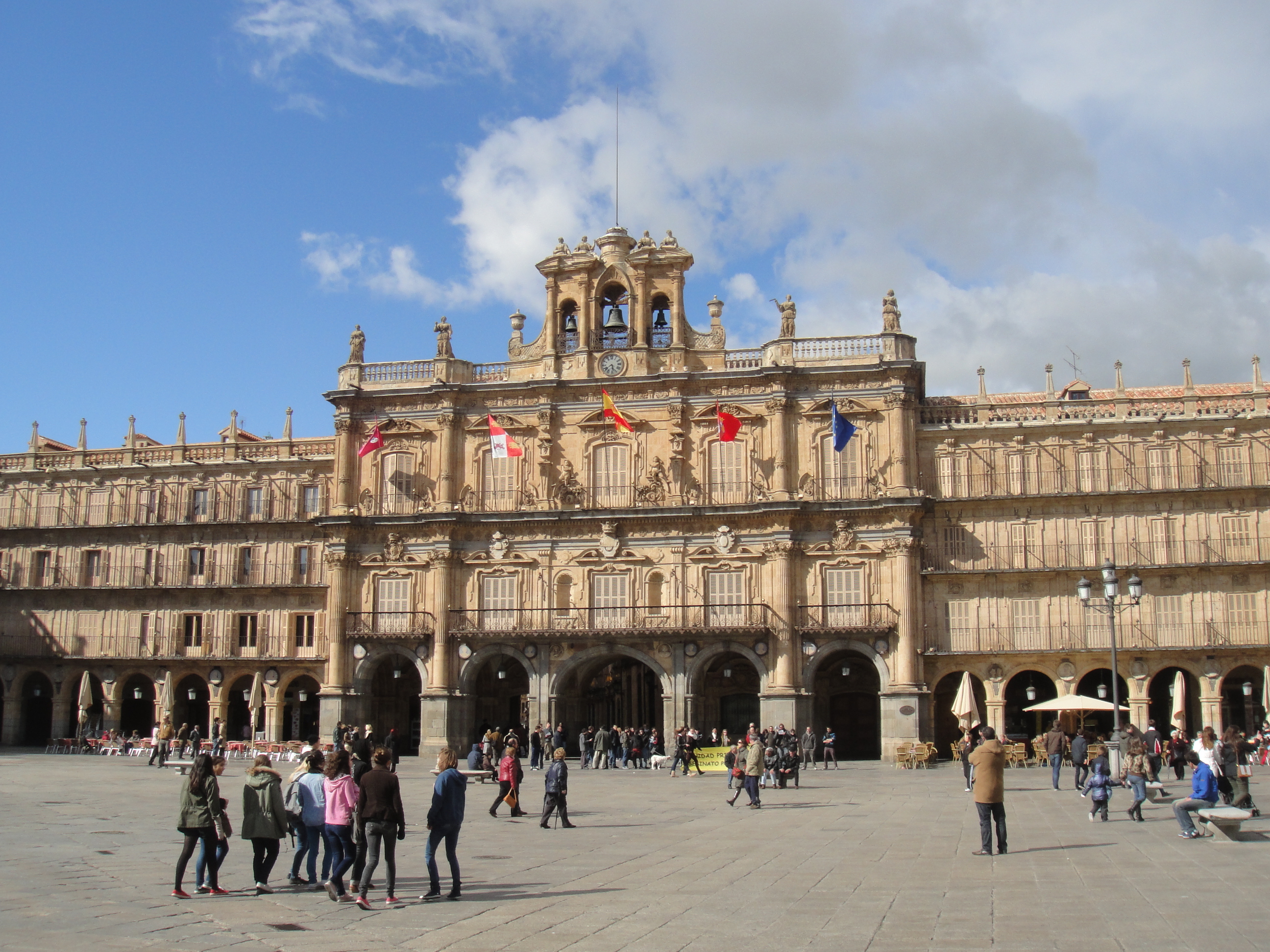
Salamanca's Plaza Mayor and the town hall
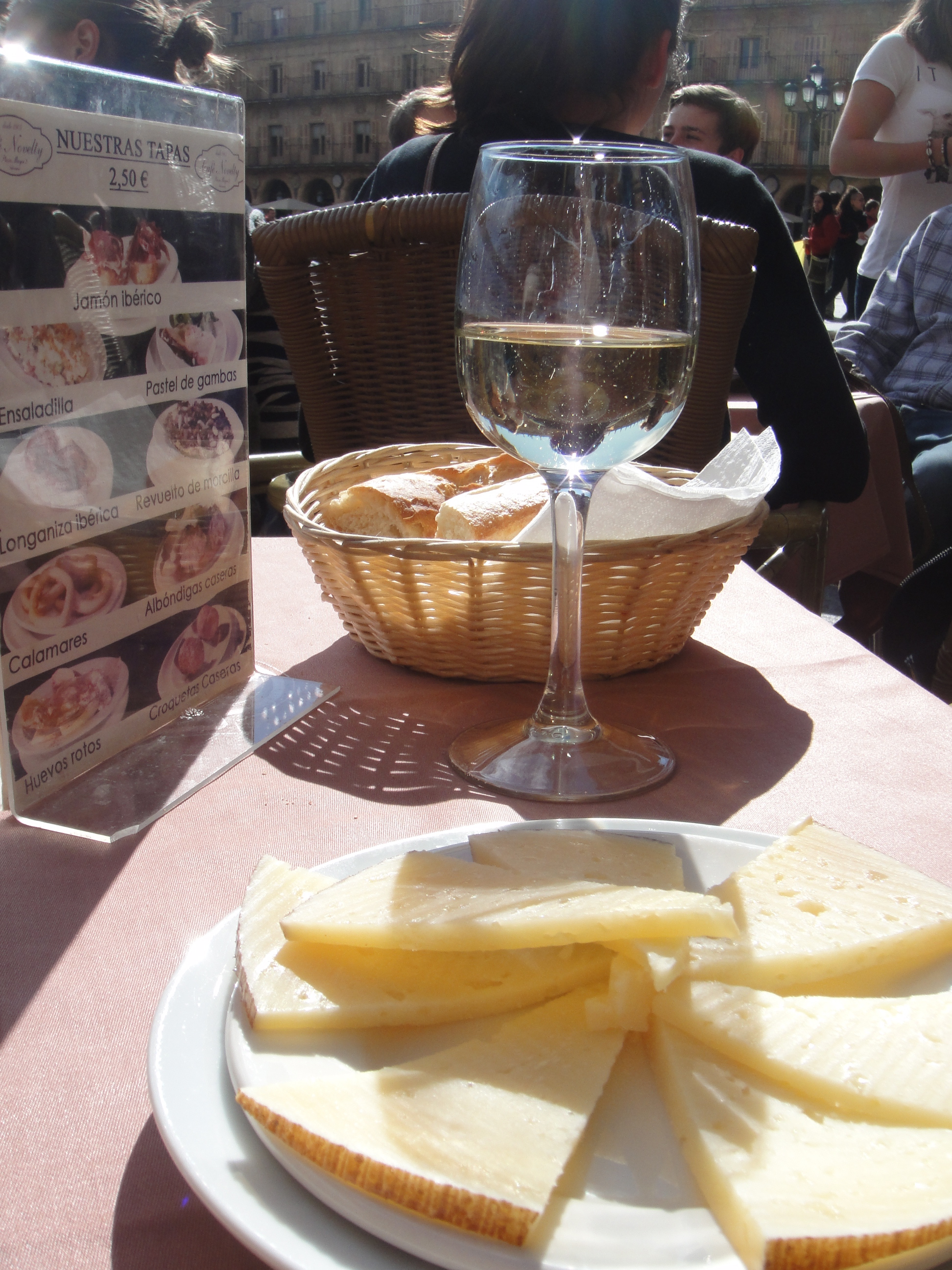
Tapas in Salamanca's Plaza Mayor

But I’m an impetuous young thing, always bursting with curiosity and an energetic thirst to discover new surroundings, and so I could not enjoy our new hotel without first seeing the beautiful city which was bursting with shades of peach, gold and orange all around us. And where to head for our first sampling of Salamanca – why to the Plaza Mayor of course, a square which proved to be every bit as stunning as the guidebooks, and its reputation suggest. The architecture is so elaborate that it’s the kind of place which takes your breath away, and the fact that the architectural splendour can be discovered in the continuous round, from every conceivable 360 degree angle, means that the awe is all-encompassing, magical. Here Madrid’s street performers are replaced by groups of students, intellectuals from the nearby university meeting to discuss their subjects and no doubt gossip about their friends, while Madrid’s frescoes are superseded by an equally glamourous town hall facade adorned with flags, bells and embellishments aplenty. But like Madrid, Salamanca’s Plaza Mayor is also the bustling centre of the city, host to cafes and restaurants squeezing into every available space, and it was to one of these that we headed directly, settling into the early evening sun with a caña, a glass of vino and a plate of manchego cheese.

Later on, we returned, to dine in a restaurant on the square, Plaza 23, a culinary offering with stylish white interior and elegant food, complete with a view of the plaza at night, illuminated to spectacular effect. Good food in a tourist hot spot, and as stunning by night as by day – for these two reasons, Salamanca’s Plaza Mayor gets my vote.

Salamanca's Plaza Mayor: lit to spectacular effect
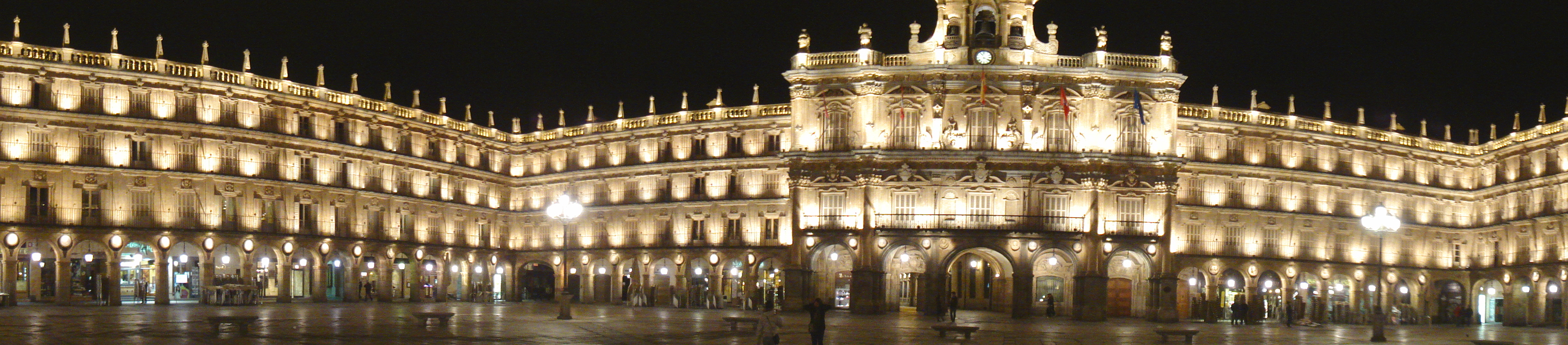
My attempts at capturing the square with a landscape shot
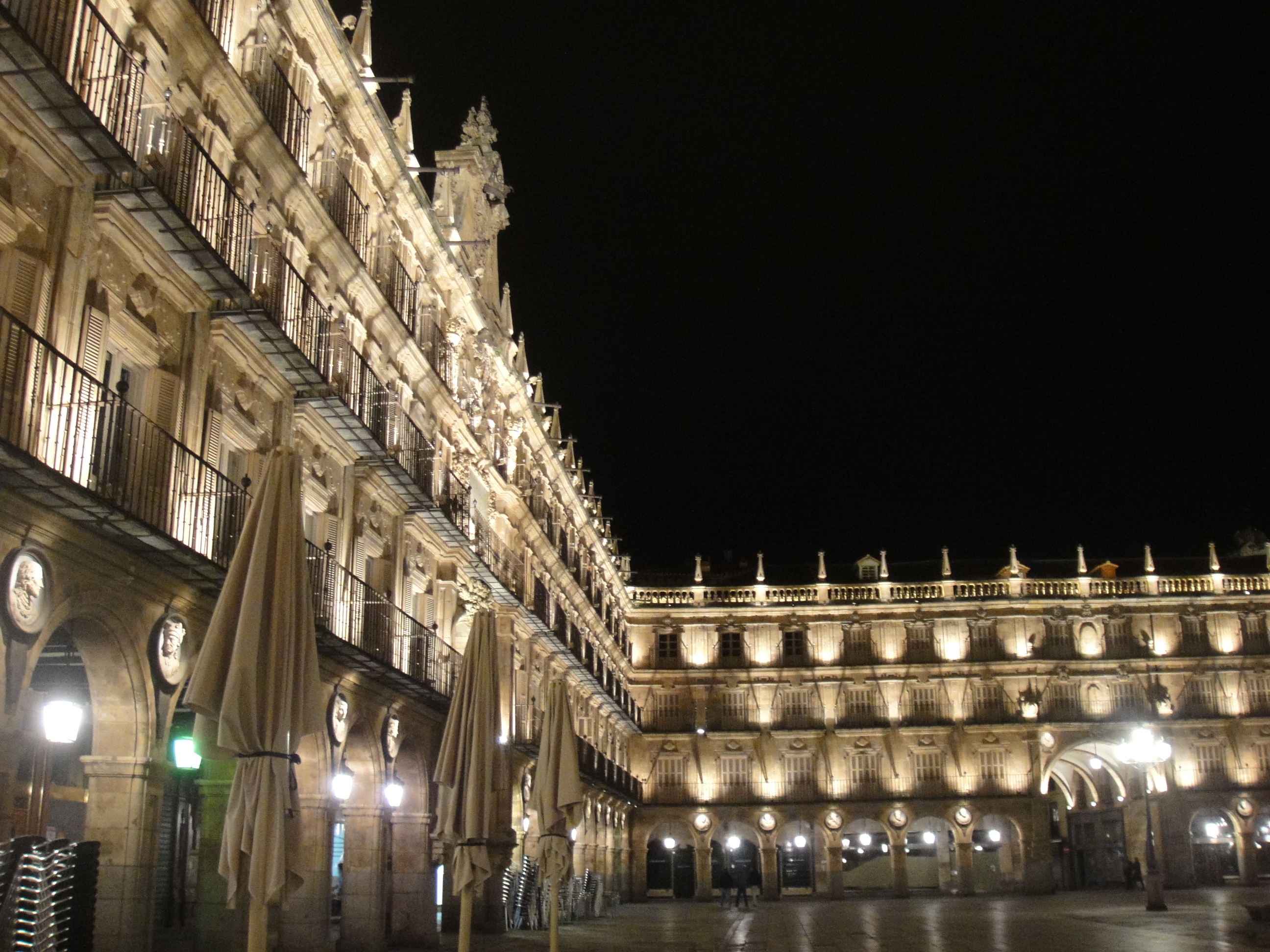
See you tomorrow!

Madrid-Salamanca Part I: Silk-scarf Chagall’s and perfect palmeras – Thyssen, Prado and a well-needed Retiro

I have got the travel bug again, a bug which generally manifests itself in an urgent need to revisit the country of my parallel existence, Spain. There are a great deal of cities which I have left as yet unexplored on the Iberian Peninsula, but following the recent recommendation of a good friend, whose excellent taste for all things art historical is like the unwavering role of Vogue as a navigator through the undulations of fashion, I settled my sights on a city renowned for its university, its unrivalled and elaborate baroque architecture, and an all-over golden glow emanating from its consistent use of the local “Villamayor” sun-dappled sandstone: the City of Salamanca.

The golden hues of Salamanca's sandstone cathedral

Salamanca, named European Capital of Culture in 2002 and a UNESCO world-heritage site in 1988, is an amber-coloured gem set deep within the rocky central plains of the Castilla y Leon region of Spain. Despite its renown, the city has no airport, and consequently a visit to Madrid was first deemed necessary (you can also fly to nearby Valladolid and take a train to Salamanca from there). We decided to take advantage of Madrid as a channel to Castilla, staying two nights in the Vincci Soho hotel on the Calle Prado within easy reach of the Madrid artistic tripartite: the Thyssen-Bornemisza; the Prado and the Reina Sofia. It’s my fifth time in Madrid, but who can turn down the opportunity to drop in on some of the greatest masterpieces in all the world?

Foyer of the Madrid Vincci Soho

Upon waking in our spacious room complete with two balconies, one looking down to the Thyssen and the other angled towards the lively Plaza Santa Ana (we arrived late the previous night after a delayed flight and an even longer wait for luggage at Madrid airport) we headed enthusiastically into gallery land, stopping only for a sinful coffee at Starbucks (I know, and this coming from me, opponent of cafe chains – but you try getting a humble coffee in a zone of parks, monuments and gallery cafes).

Marc Chagall, Golgotha (1912)

First stop was the Thyssen-Bornemisza, a vast gallery which houses the collections of two respective generations of the Thyssen-Bornemisza family, the largest of which was acquired by the Spanish state in 1993. A temporary show offered a retrospective look at the career of Marc Chagall. I was pleased about this, having only previously seen odd pieces by the Russian artist, and having gazed unknowingly at one of his designs throughout my youth when I admired the bloody red window which brightens up one facade of Chichester Cathedral in my home county of West Sussex.

View from the window in Zaolchie near Vitebsk, Marc Chagall (1915)

The show started fairly well. Chagall experimented with the cubist genre before moving into a more uniquely multi-coloured abstractive approach, all the while retaining figures who are often suspended randomly upon a two-dimensional backcloth. I liked some of his early works. His painting of a crucifixion (“Golgotha”) upon a background of tumultuous green showed originality and a powerful sense of drama (despite being Jewish, Chagall made recurrent references to the crucifixion in his work which he saw as a symbol of persecution of the Jews). I was also attracted by his works illustrating his home town of Vitebsk, with their subdued colour palette. Thereafter I wasn’t so impressed. His works became fairly repetitive and quite cartoony. His paintings featured the same symbols obsessively: badly painted livestock and horses playing the fiddle, embracing couples, and haphazardly executed flowers, all set against a vivid blue or red background. For me, his works resemble the kind of tacky silk scarves you find in arts and craft fairs. Try as I might, I really struggled to connect with his works. This connection was also made slightly harder by virtue of Thyssen’s bizarre decision to split the exhibition between two sites, so that for the second half we had to traipse halfway across central Madrid to the Caja Fundacion.

Marc Chagall, The Blue House (1920)

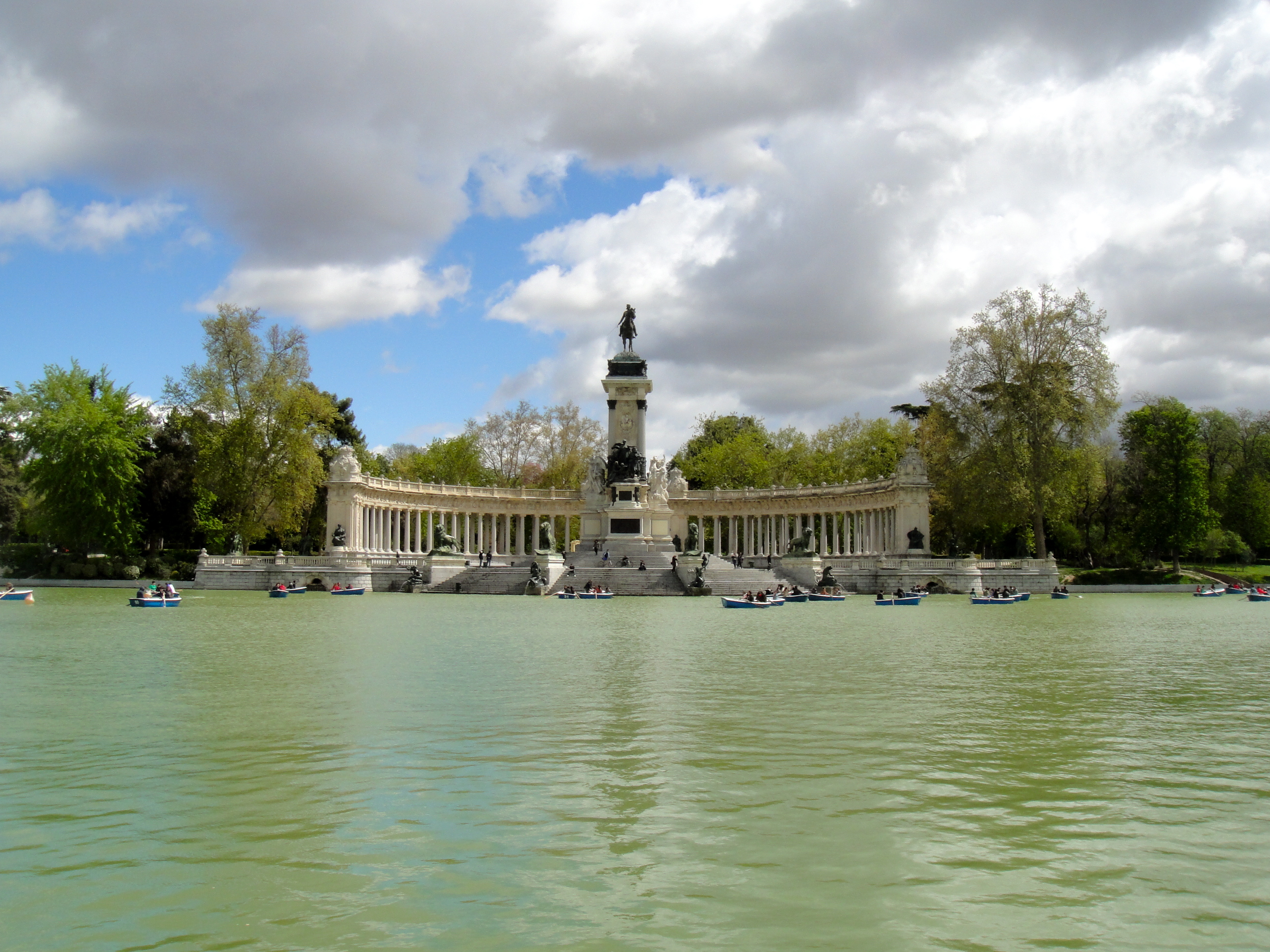
Having done the Chagall, and the rest of Thyssen’s collection, we emerged into a sunny Madrid and feeling full of the joys of Spring, headed to the Retiro park for lunch. Our admiration of these beautifully laid out public gardens including a massive pleasure lake framed by the arms of a vast colonnaded palace was however rudely interrupted by the passing of a rainstorm and accompanying Icelandic winds which swiftly turned Spring into mid-Winter in a heartbeat. Our shelter under a big pine tree proved rather fruitless, to which our damp visage later played testament, but luckily it really was a passing shower. With the sun out again, we and a number of other tourists emerged from our hiding places in the greenery like fairies called to the command of Titania in A Midsummer Night’s Dream, and we headed for the Prado.

The Buen Retiro Park

The Prado is a must for any art lover. The collection is so vast and the highlights so important and and wide-reaching that it frankly tramples the Louvre’s Mona Lisa-centred collection and blows the UK out of the water. Here you find Velazquez’s Las Meninas as well as a huge number of important highlights from his oeuvre: his royal portraits, “buffoons”, crucifixion and so on. Just a few galleries away are some stunning works by my favourite of the old masters: El Greco, a man whose works were so startlingly modern for his day that they wouldn’t look out of place down the road in the Reina Sofia with the Picasso’s. Then there are Goya’s chilling black paintings, and his 2nd and 3rd of May 1808 masterpieces, Bosch’s Garden of Earthly Delights, and vast canvases by Rubens and Van Dyke. But asides from the priceless masterpieces, there are also wonderful examples of 19th century art by lesser known artists, and huge historical masterpieces such as this one, The Execution of Torrijos and His Companions on the Beach at Malaga by Antonio Gisbert, a painting which is so big that it could easily eclipse the average family home.

Antonio Gisbert, The Execution of Torrijos and His Companions on the Beach at Malaga (1887-88) (390cm x 600cm) Prado Gallery, Madrid

Understandably exhausted by the breadth of works on show, we retreated to our hotel for a well-earned rest before heading out, into the evening sun, to explore the livelier side of Madrid. We particularly enjoyed a visit to the bustling Mercado San Miguel, where locals and tourists alike gather to sample seafood delicacies, wines, tapas and pastries. Being as ever the purveyors of all things sweet, we settled for a creamy coffee and two freshly baked palmeras (otherwise known as palmiers or “elephant ears”). Now that is what I call a rounded day of cultural appreciation.

Creamy coffees at the Mercado San MIguel (palmeras had been scoffed by this point)

¡Hasta mañana!

The Daily Sketch – Birth of Venus

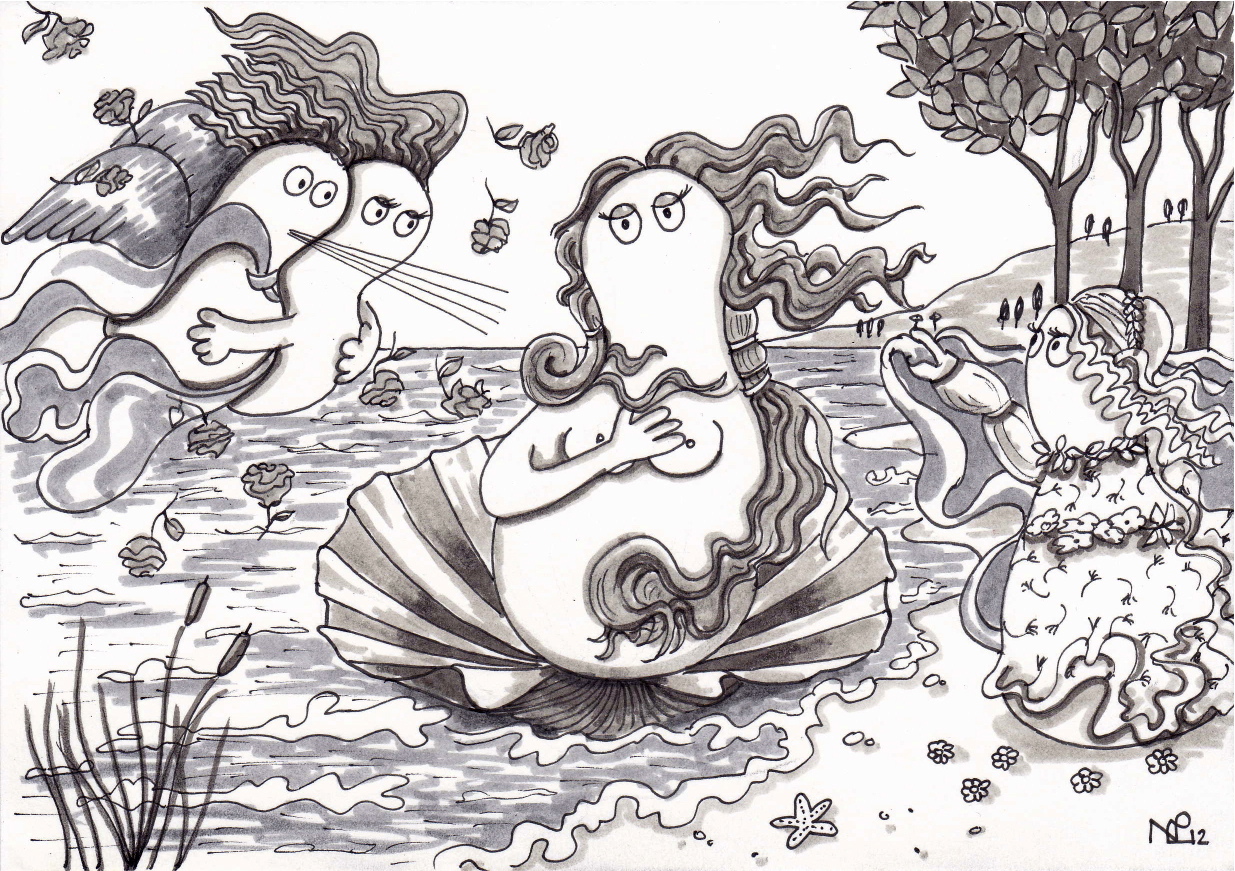
After the success of my wonderful Rachel Khoo inspired madeleines (and thank you so much Rachel for your kind compliment on twitter – the great chef herself has complimented the “perfect gold crisp crust” on my efforts, woo!!) I’ve been feeling all shell inspired. Not so inspired that I have redecked my city pad in shells and shabby-chic battered wood installations. No, my shell thoughts have been drifting further afield, to the long lofty corridors of Firenze’s ubiquitous Uffizi gallery, home to surely the most famous artistic depiction of a shell in all the world, not to mention the picture perfect Venus rising from it’s pearly-smooth contours. I am of course talking about Botticelli’s The Birth of Venus, a work full of allegory, beauty, flowing locks and scattered rose petals. What more could you want on a Spring afternoon as you sit down with a cup of tea and a madeleine. And just in case you can’t make it all the way to Florence to see the original, why not gaze upon this Norm take of Botticelli’s masterpiece, breasts, flowing locks and all.

The Birth of Norm Venus (after Botticelli) (2012 © Nicholas de Lacy-Brown, pen on paper)

© Nicholas de Lacy-Brown and The Daily Norm, 2005-2012. Unauthorized use and/or duplication of the material, whether written work or artwork, included within The Daily Norm without express and written permission from The Daily Norm’s author and/or owner is strictly prohibited. Excerpts and links may be used, provided that full and clear credit is given to Nicholas de Lacy-Brown and The Daily Norm with appropriate and specific direction to the original content.

Madeleine Melody

OK, so admittedly, the macaron attempt a few months back didn’t exactly go to plan, as my post “Macaron Madness” will testify. So I’ve turned to another Frenchie patisserie favourite which has turned out to be slightly easier to master. In fact, I’ve mastered quite a few French favourites of like, including Crème brûlée with a picture-perfect crackable burnt caramel top (courtesy of my new favourite kitchen toy – the mini blow torch) albeit that on my third attempt, the Crème brûlée somehow managed to revert into a kind of mousse brûlée (this being the one which was rather embarrassingly cooked for two French guests – I was full of bravado about English boy being able to cook French food to perfection and then that little mishap occurred… naturally I pretended it was a purposeful reinvention of the classic). And crossing over the Pyrenees to Catalonia, I’ve also recently mastered Crema Catalana, the lighter, citrus and subtly spiced version of the Crème brûlée, a dessert which previously had me stumped – it was either too runny or like jelly. Anyway, I digress, back to France…

I’ve been intending to cook madeleines for some time, ever since I picked up one of those shell-shaped baking moulds as an impulse purchase purely because it was made of silicone and is red (thus matching my kitchen colour scheme to perfection). Nonetheless, there my madeleine mould remained, creased up in my pots and pan cupboard in a way that only silicone could, until one day, a few weeks ago, when my ears customarily pricked up to the words “Paris” on my television screen and I found myself falling instantaneously in love with a new cookery programme: Rachel Khoo’s The Little Paris Kitchen. This programme is a must for any Paris lovers – it’s worth watching alone just for the stunning views of Montmartre roof tops, the Tour Eiffel by sunset, Paris viewed from the roof of the Grand Palais where they keep beehives (who would have known?!) as well as a quirky soundtrack featuring an ecclectic mix of old French classics from the likes of Charles Trenet as well as punchy tango chill from the Gotan Project. But by far the star of the show is the little teeny weeny kitchen which gives the show its title, as well as the equally tiny, affable and engaging proprietress of her little kitchen restaurant, Rachel Khoo. She aims to cook undaunting French classics, more often than not with a contemporary twist. She makes French cooking accessible and very unpretentious, which lets face it, makes a change, and she fills the hearts of us english with a certain pride – she is after all a London girl who has made it good in the closed culinary world of Paris.

Rachel Khoo

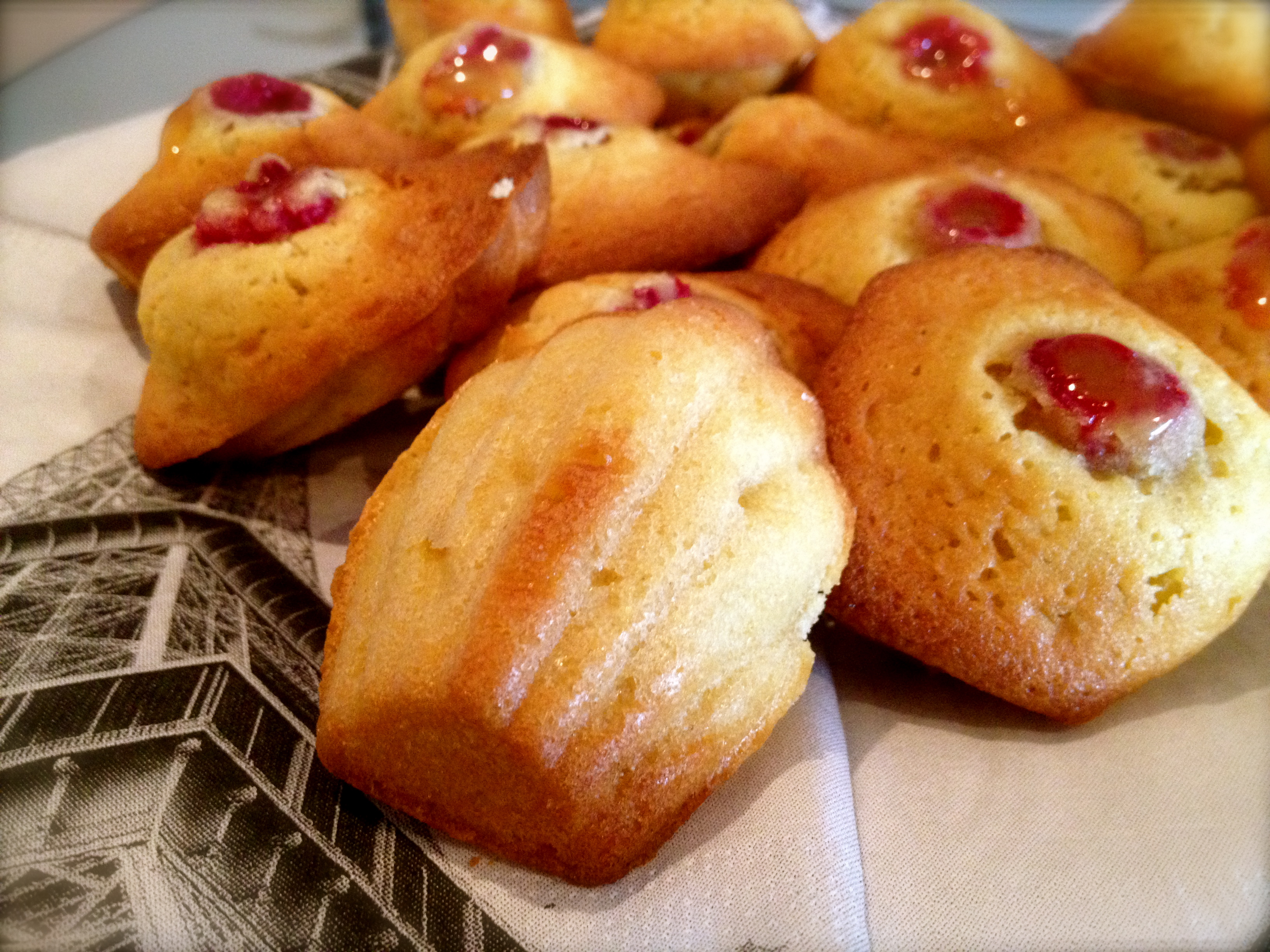
Anyway, it was Rachel Khoo who, in her first episode, made madeleines with a twist – she places a single raspberry in each madeleine before cooking and then, once hot out of the oven, pipes the raspberry’s little opening full of an oozy lemon curd. No wonder I was inspired to take out my funny red silicone tray and try this recipe out. The results were good (see photos below) – the madeleines, unlike those which you can buy cheap in Monoprix, are unctuous and moist, and this is no doubt helped by the the lemon curd and and raspberry, both of which combine to provide a delicious mid-Madeleine treat to break up an otherwise buttery flavour. Rachel Khoo, I salute you.

Pre-cooking - the madeleine mix in my silicone mould complete with raspberries, hole facing upwards

Et voilà, the finished madeleines

I told you I'm obsessed with Paris...

Rachel’s recipe for madeleines à la crème au citron can be found here.

Bon appetite!

Related articles

My Easter Day Spanish Feast Spectacular

Easter day is over, but the Spring has only just begun, and now is as good a time as any to think succulent chicken, sweet wine imbued ice cream and cute little marzipans, just in case your summer beach body needed to endure any further damage! On Easter Sunday I followed my pro-Spanish theme of the previous week by cooking a Spanish feast of which Goya himself would have been proud. And it was so tasty, I feel compelled to share all the ideas with my faithful Daily Norm readers so that you too can go all España this Spring.

First however I should express my gratitude to Claudia Roden who, in her fantastic new book, The Food of Spain, gave me much of the inspiration for the feast.

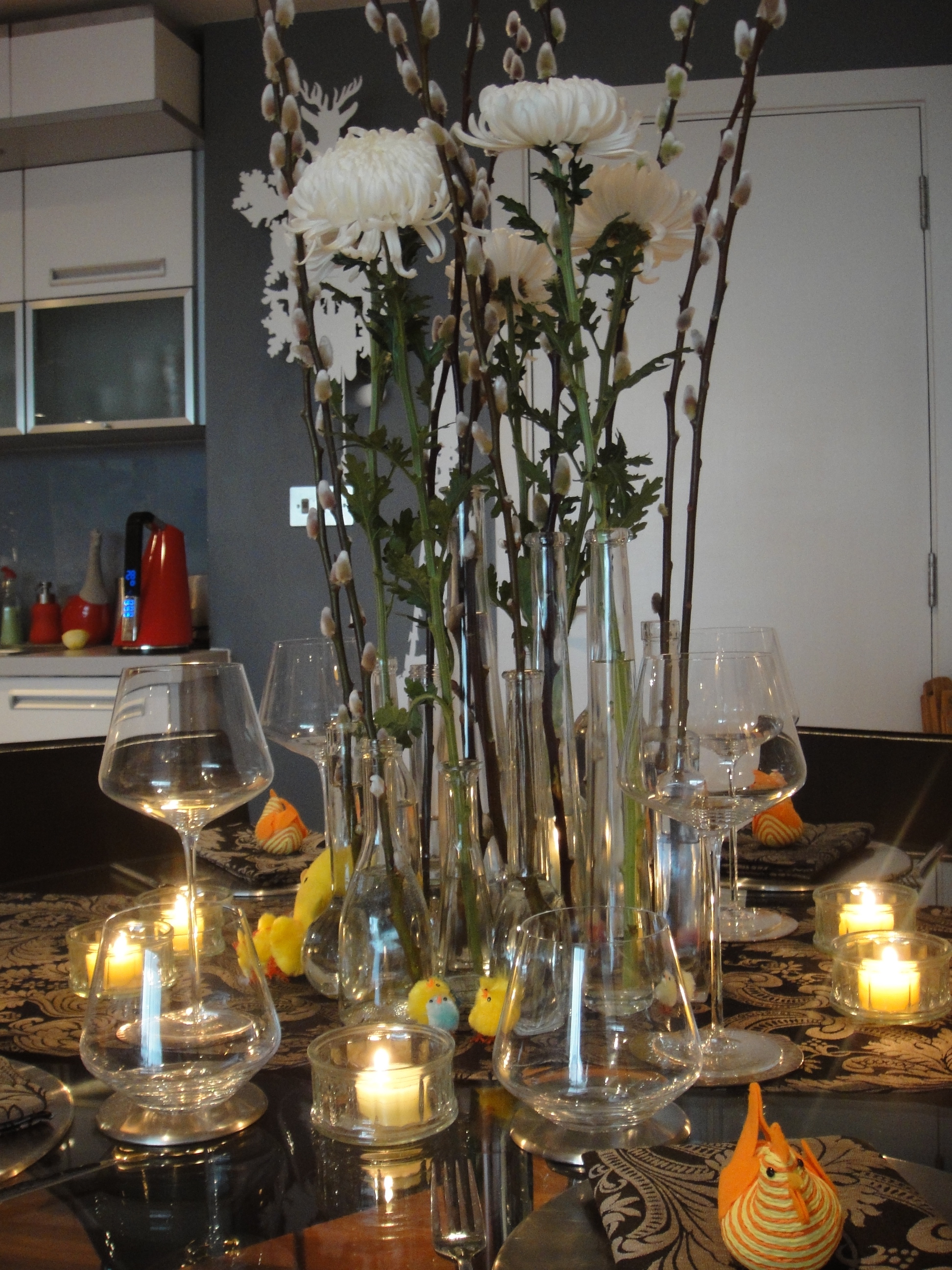
The table

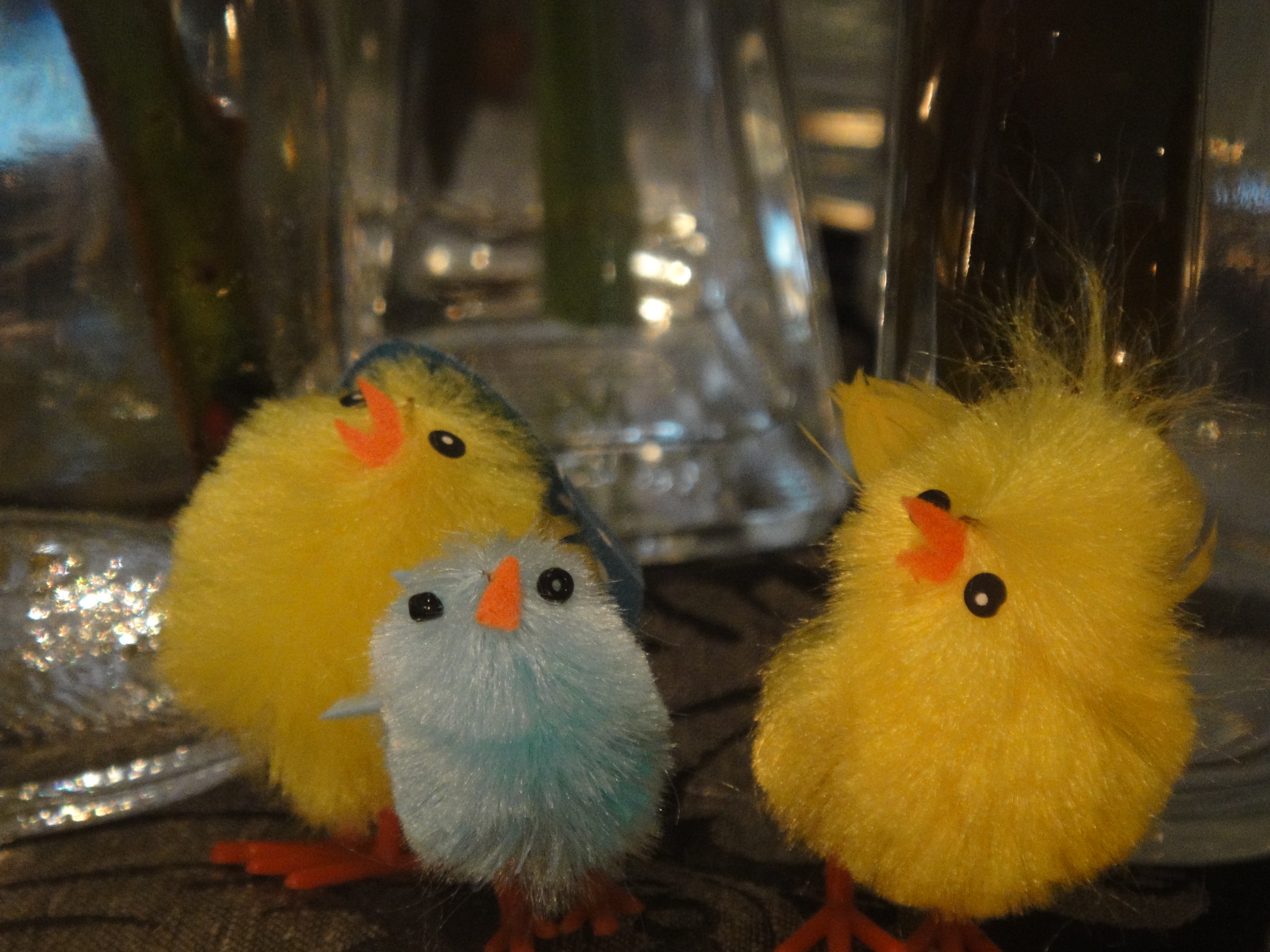
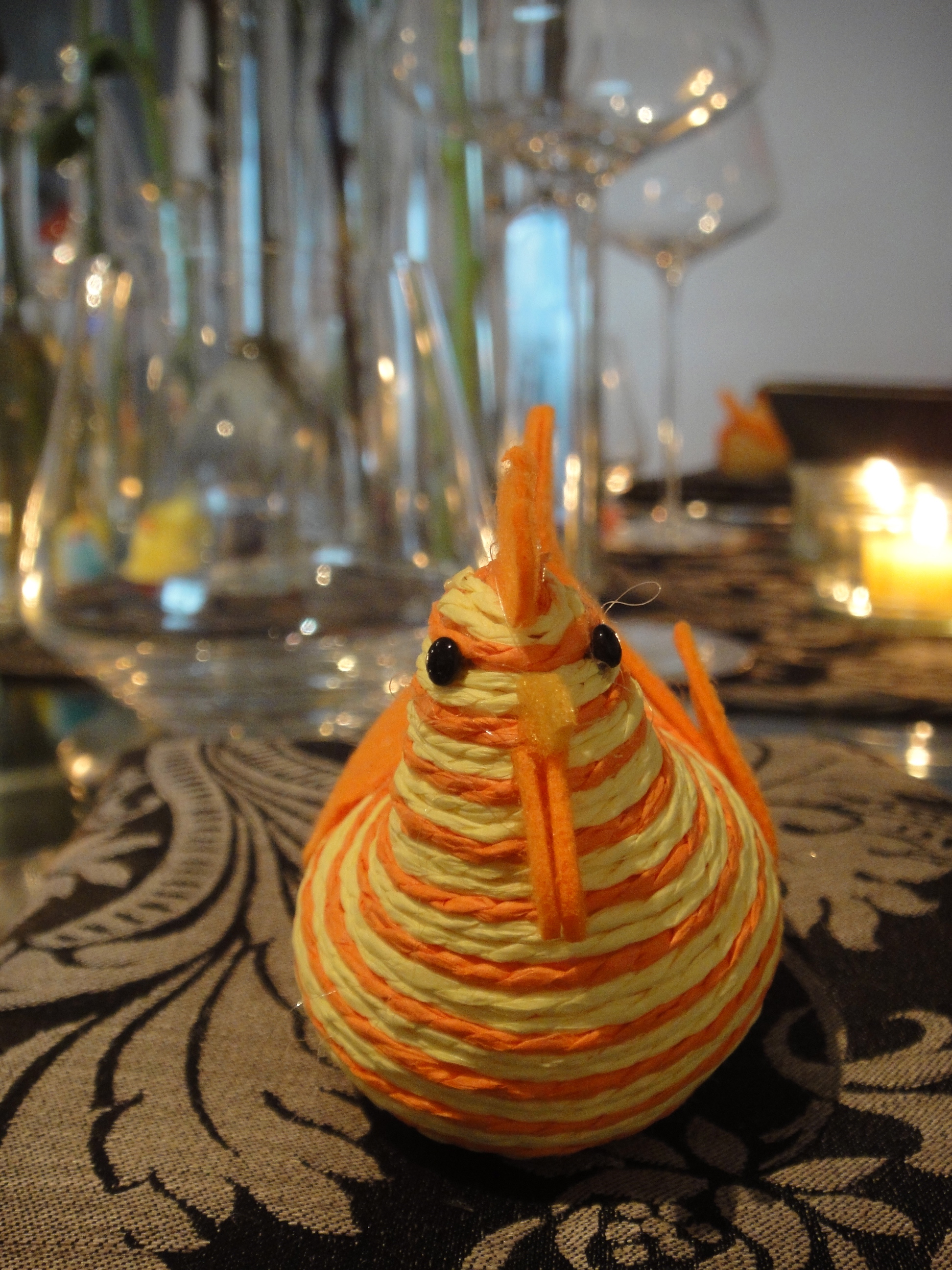
My table was all trussed up for Easter, with a spray of fresh chrysanthemums displayed alongside slender branches of pussy willow in a group of bottles, to contemporary effect. Amongst the flowers sat the must-have fluffy chicks of Easter, while at each person’s place, a damask-style napkin was topped with little paper hens.

To start…

I had to restrain myself from cooking a full-on starter because I knew that otherwise this Spring-like luncheon would become more akin to a Christmas day gorge-fest. Instead I provided some simple tapas, olives, nibbles and delicious mature manchego cheese from the land of Don Quixote, which I’ve discovered is best served sliced and drizzled with honey and sprinkled with thyme – a divine combination which would probably work well with similar hard sheep’s cheeses.

The chicken

The star of the dish was a roast chicken, but with added Spanish flavour. In a simple twist on the humble roast chicken, the chicken is at first basted in grape juice before being roasted, breasts down, for 45 minutes. Once flipped over, the breasts are again drizzled in grape juice. Meanwhile, the chicken cavity is stuffed with chunks of apple giving it a fruity aroma, while the dish is served with caramalised apples and grapes which can be either sautéd or oven cooked alongside the chicken. For the grape juice, you need to blend around 500g of grapes in a food processor and then press the pulp through a sieve to collect the juice. You should get around 250ml of juice. I was worried that the chicken, exposed as it was to the oven (I usually bake it partially wrapped in foil) would be dry, but with regular basting with the grape juices, the chicken was succulent and fruity, while the skin was ravishingly caramalised.

I served the chicken with some oven baked parsnips glazed in honey and wholegrain mustard and a generous portion of cute little Jersey Royal potatoes, straight from this year’s first harvest.

Dessert

Desserts don’t get much more Spanish than a brandy and walnut cake served with a raisin and sweet wine ice cream (helado de pasas y vino dulce). The cake on its own is fairly dry, so certainly benefits from the ice cream accompaniment. Following the Asturian recipe cited by Claudia Roden, I whisked 4 eggs and 200g caster sugar into a thick pale cream, adding 75g melted butter and 3 tablespoons of brandy into the mix. I then grinded up 500g of walnuts in the food processor which were folded into the cream mixture. It was poured into a greased spring-form cake tin and baked for around 45 minutes. The key to this recipe is the syrup which you then pour over the cake when it comes out of the oven. For this dissolve 100g sugar in 250ml water and simmer for around 5-10 minutes until syrupy. Then add a tablespoon of brandy for that alcoholic touch and pour it over the hot cake. Leave the cake for at least an hour to “drink” the syrup. The result is coarse but gooey, perfect with a raisin and wine ice cream – mine was made with a Spanish moscatel wine, but the syrupy sweet Malaga wine would be even better (let me know if you want the recipe – it’s a little to complex to set out here!)

Afternoon tea

What better way to end the day than with that Toledo favourite which I absolutely fell in love with in Spain than little marzipans. I couldn’t believe how easy they were to make! Simply take 200g ground almonds and 200g icing sugar and mix well. Then in a food processor add a few drops of almond extract (not too many or the flavour will overpower) and 2-3 tablespoons of water (you don’t need much as the almond oil makes the paste moist). And that’s it – once you have your paste, you can roll it into balls or make all sorts of imaginative shapes like I did. Once your creative side has been satiated, lay the creations on a baking tray and leave for around 12-24 hours. The marzipans will harden slightly on the outside and remain soft and moist on the inside. The best thing is that they will last for ages!

My Semana Santa nazareños

You can, by the way, glaze the marzipans for added luxor, but I tried this with Claudia Roden’s suggestion of whipped egg whites and icing sugar and it made my marzipans look as though they had been buried under a snow storm. Next time I’ll  stick to a simple egg-white glaze – and just 1-2 minutes under the grill.

¡Buen provecho!

Sunday Supplement: Road Traffic Control (The Semana Santa Code)

Happy Easter everyone! Yes it may be grey, and bleak, and ever so slightly damp here in London, but my flat is nonetheless filled with all the yellows of Spring, a chicken (cooked Spanish style with a grape juice glaze and caramalised apples) is about to go into the oven, and I am still putting up total resistance to the chocolate temptations all around.

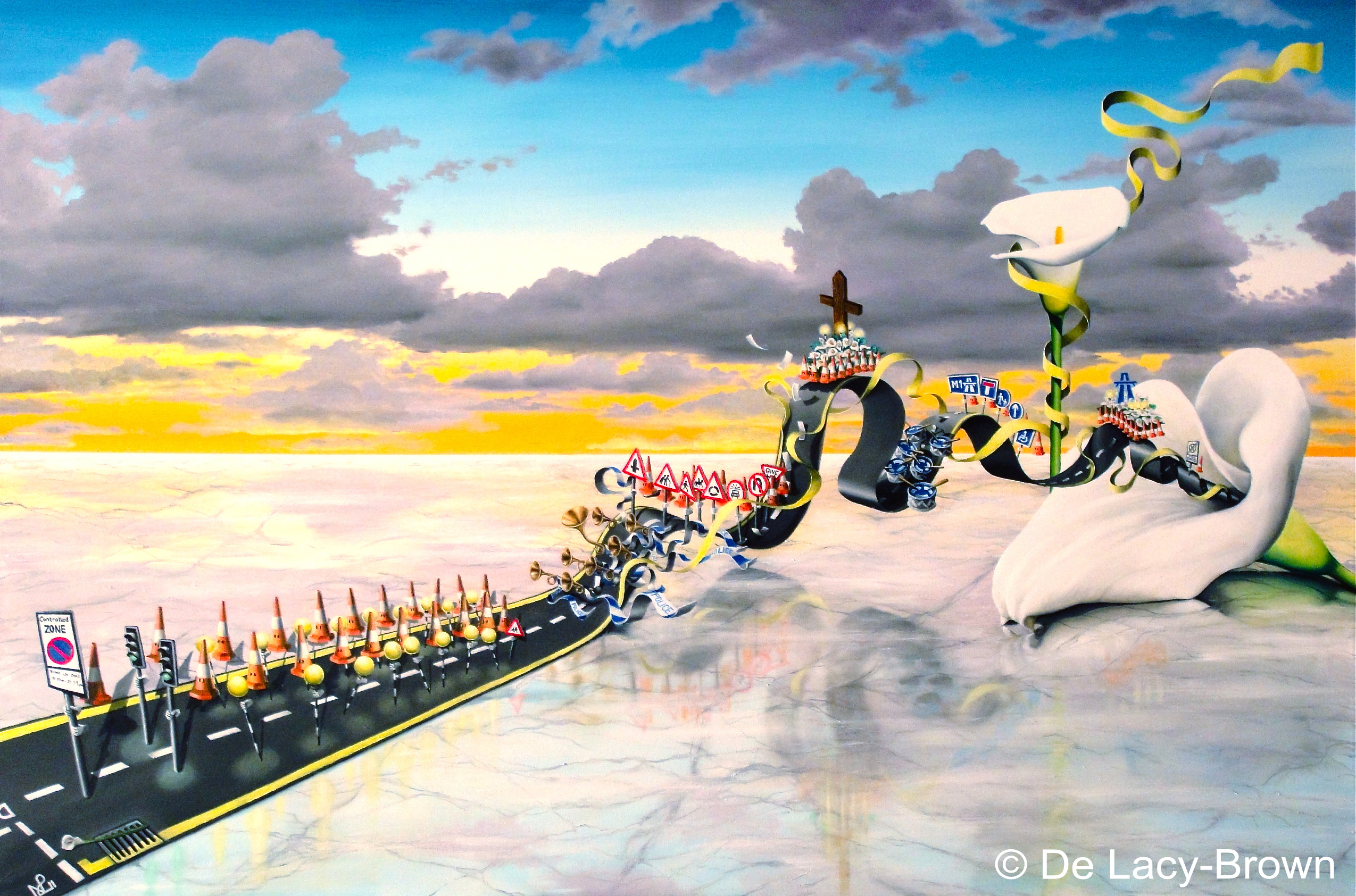
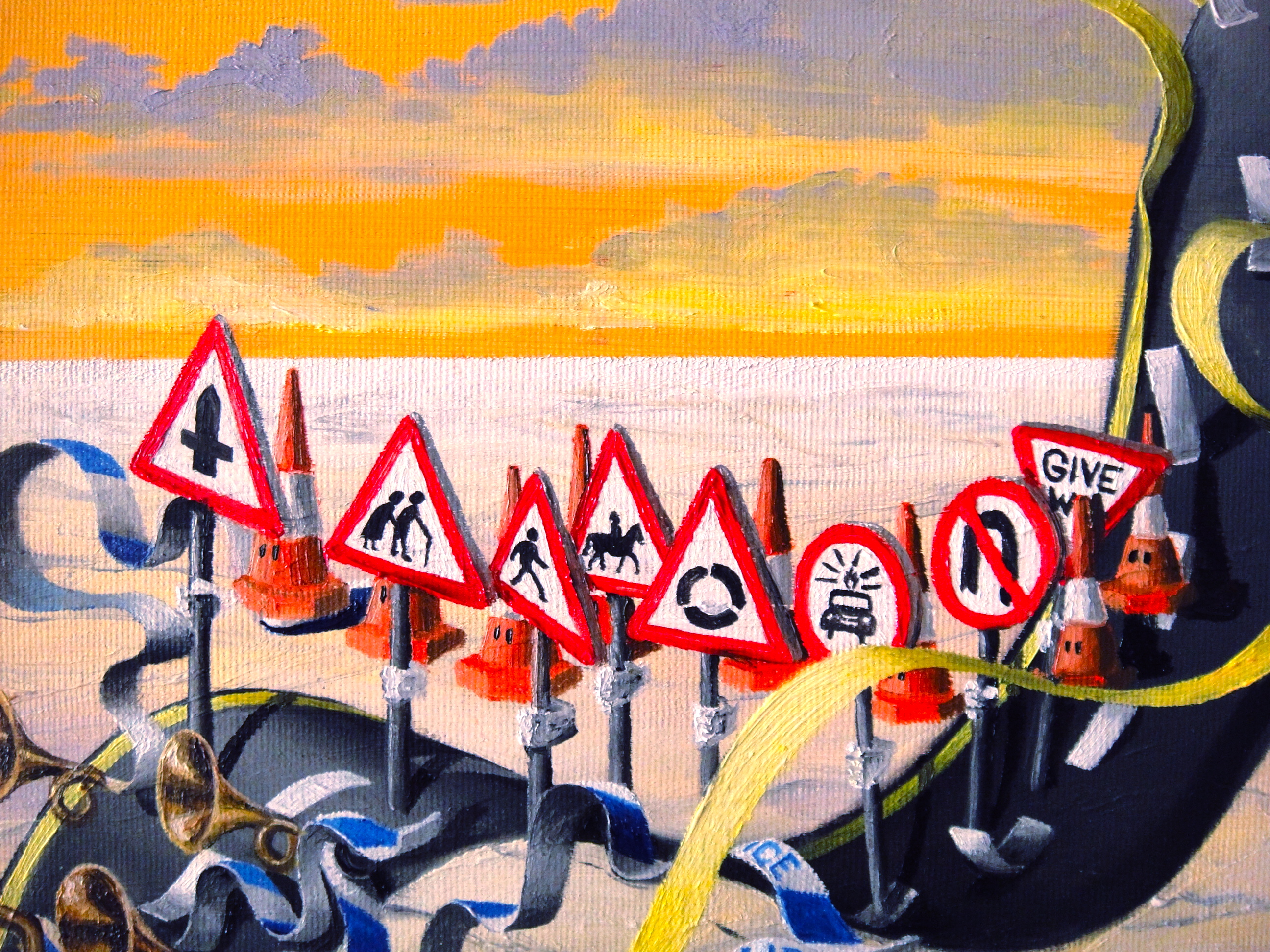
In this final post in a week which has been bursting full of Easter-themed homages, mainly to the sensational Semana Santa spectacles of my dear España, I introduce you to my ultimate canvas exploring the theme of Semana Santa. This vast painting, entitled Road Traffic Control (The Semana Santa Code) was painted by yours truly towards the end of last year and is consequently my most recent painted depiction of the Semana Santa parades. But this work, which measures some 150cm across, depicts Semana Santa processions in a slightly unusual way, using road traffic symbols from the highway code to illustrate the main characters in a typical Semana Santa procession. In fact, the symbolism is at times so detailed that I like to think of the painting as being something of a new Da Vinci Code, the likes of which I will decrypt in today’s Sunday Supplement.

Road Traffic Control (The Semana Santa Code) (2012 © Nicholas de Lacy-Brown, oil on canvas)

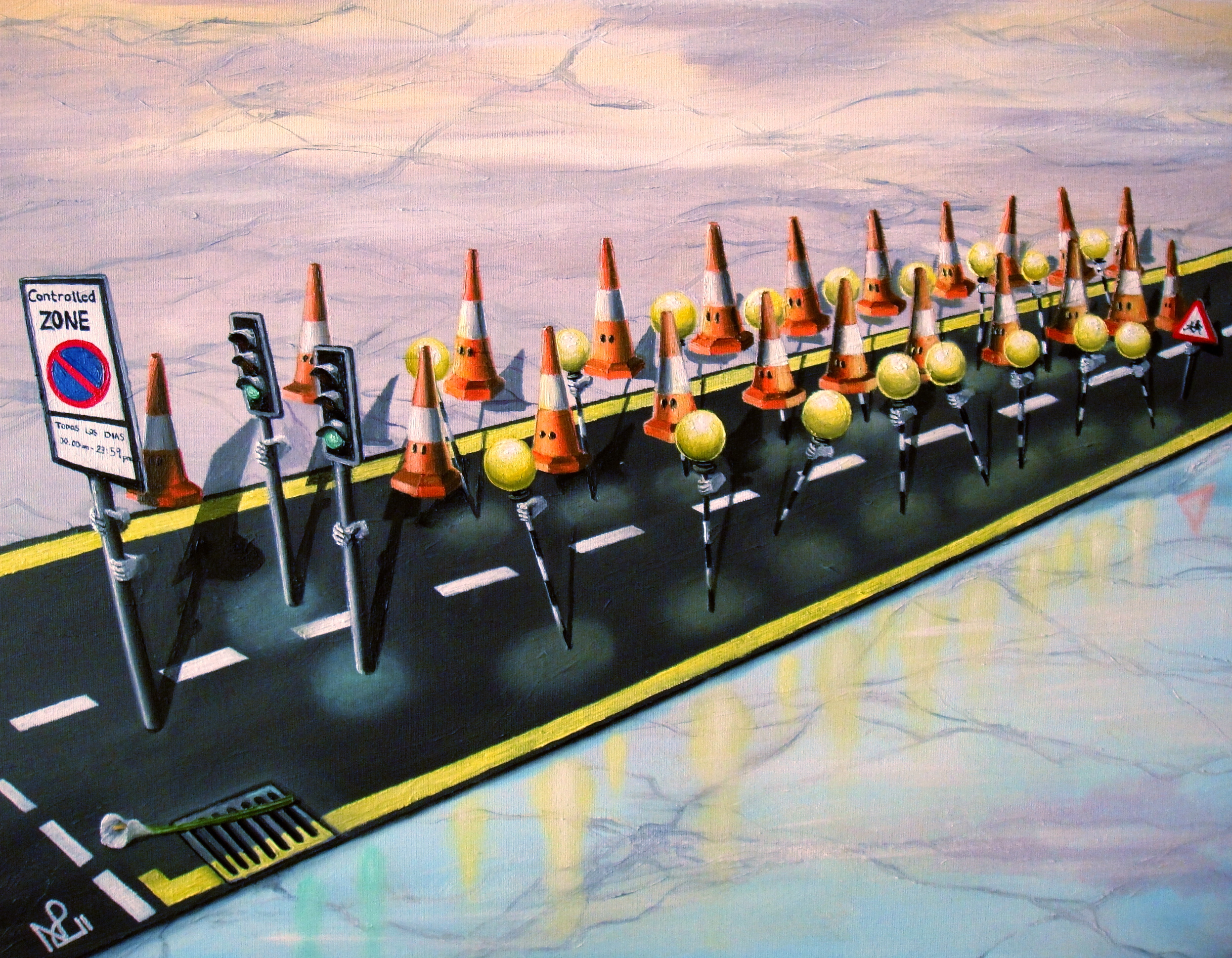
Traffic Cones and the Lily Cathedral

Road Traffic Control - Nazareños detail (2012 © Nicholas de Lacy-Brown)

The idea behind this interpretation of Semana Santa came to me when I was watching a procession last year and it occurred to me that the Nazareños with their pointed hats look a bit like walking traffic cones. From there the idea was born – their candles were swiftly replaced by zebra crossing lamps, the large lanterns carried at the front of the parade were replaced by traffic lights, and the banner held at the front of the procession was replaced by a “Controlled Zone” sign – after all, isn’t religion an attempt to control or at least orchestrate a way of life? The road is of course no different from the kind of road which a procession in Spain would walk along, except that here it spirals and wafts like a ribbon in full flight, from its point of emergence from a large lily, which represents a great Spanish Catedral, the smaller bell-like cala lily representing the cathedral’s campanile.

Brass Bands

Road Traffic Control - Brass band detail (2012 © Nicholas de Lacy-Brown)

Road Traffic Control - Drums detail (2012 © Nicholas de Lacy-Brown)

In every procession, there are at least two brass or military bands setting a rhythm and a melodic resonance for the procession. Generally speaking, a band will either lead or follow the Jesus tronos, and a second will either lead or follow Mary. Here the representation of the bands follows the road traffic theme, with old fashioned car hooters and police ribbon making up the first band, while roundabout drums with sides made up from a road’s diagonal warning lines (which warn of an approach to a junction or crossing) make up the second.

The depiction of Jesus

Road Traffic Control - Crucifix detail (2012 © Nicholas de Lacy-Brown)

Road Traffic Control - Jesus detail (2012 © Nicholas de Lacy-Brown)

For me, the depiction of Jesus came as easily to my mind as the traffic cones – I used the “crossroads” symbol to represent the crucifixion carried on a tronos, while before it, the signs carried by Nazareños represent, in order: the crucifxion (cross roads); pilgrims (elderly crossing); the disciples (pedestrians); Jesus on a donkey; the Holy Trinity (roundabout); the crusades (explosives); no U-Turn i.e. do not turn your back on Christ; and Give Way – to the Catholic faith as the one and only true religion.

The depiction of Mary

Road Traffic Control - Mary detail (2012 © Nicholas de Lacy-Brown)

Road Traffic Control - Mary detail (2012 © Nicholas de Lacy-Brown)

Mary is depicted using the “motorway” symbol which, with the addition of a small bridging line at the top, resembles a figure with a veil over her head. Meanwhile, the parade which precedes her includes signs with the following meaning: Mary, Mother of Christ (M1); the immaculate conception (no through way); Mother and Child; the ascension; pilgrims (disabled – such as those visiting Lourdes to visit the shrine of Mary).

Finally the painting ends with a sign signifying the end of the “controlled zone”. Hence the title of the painting, “Road Traffic Control”.

Road Traffic Control - Zone end detail (2012 © Nicholas de Lacy-Brown)

I hope you’ve enjoyed the painting and have a great Easter Day, wherever you are.

© Nicholas de Lacy-Brown and The Daily Norm, 2005-2012. Unauthorized use and/or duplication of the material, whether written work or artwork, included within The Daily Norm without express and written permission from The Daily Norm’s author and/or owner is strictly prohibited. Excerpts and links may be used, provided that full and clear credit is given to Nicholas de Lacy-Brown and The Daily Norm with appropriate and specific direction to the original content.

The Daily Sketch – Easter Egg Norms

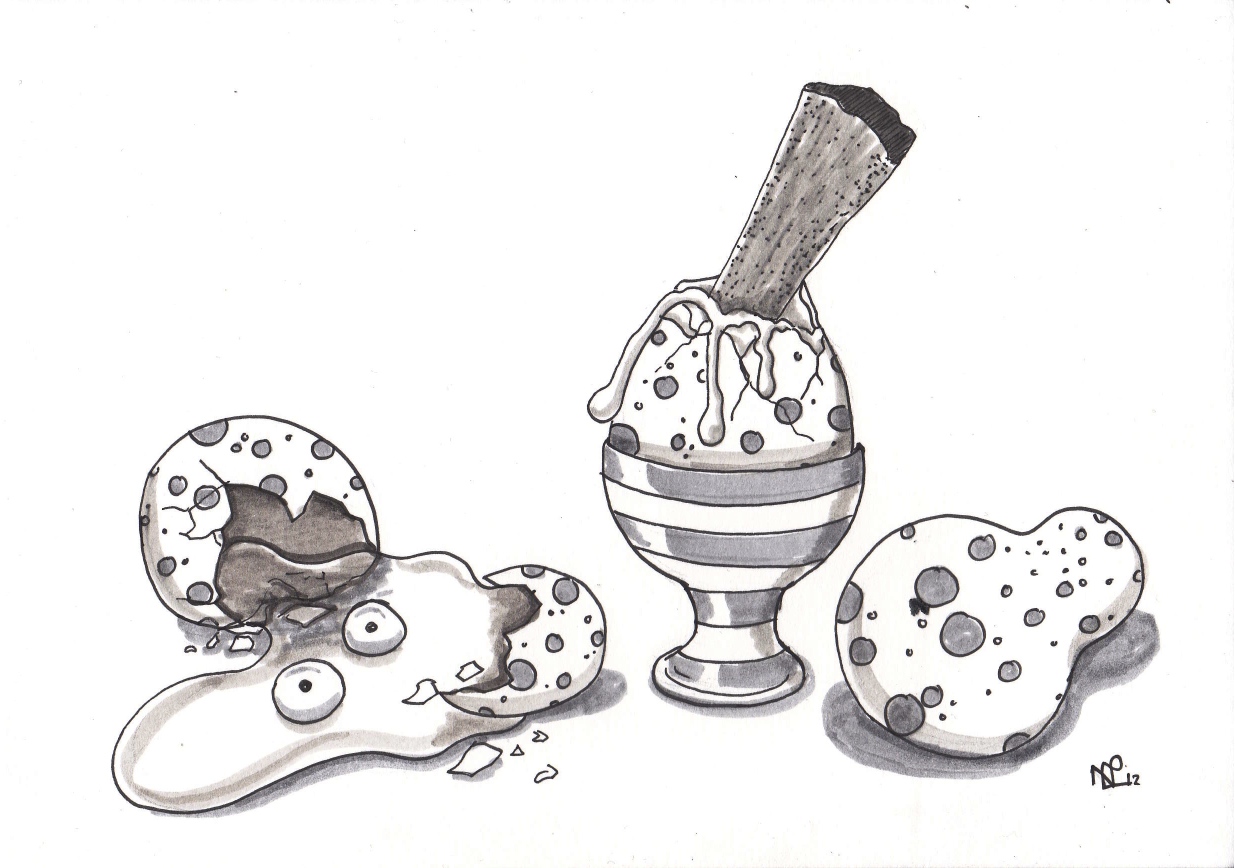
Who would have guessed – Norms are born from spotty eggs, just like birds. And so Easter is a special time for Norms – their distinctively Norm shaped eggs are celebrated in all their spotty magnificence, although for Norms, these multi-coloured polka dot creations are just a matter of biological Normativity, developing naturally as the egg matures towards the acme of its gestation, when the baby Norm, feeling the call of the world around him, quivers, shakes and cracks through the delicate shell of his prenatal home.

Easter Egg Norms (2012 © Nicholas de Lacy-Brown, pen on paper)

Sadly, for those Norms who don’t make it, this is what happens. Oh dear.

Norm Egg Soldiers (2012 © Nicholas de Lacy-Brown, pen on paper)

© Nicholas de Lacy-Brown and The Daily Norm, 2005-2012. Unauthorized use and/or duplication of the material, whether written work or artwork, included within The Daily Norm without express and written permission from The Daily Norm’s author and/or owner is strictly prohibited. Excerpts and links may be used, provided that full and clear credit is given to Nicholas de Lacy-Brown and The Daily Norm with appropriate and specific direction to the original content.

The Daily Sketch – Viernes Santo

It’s Good Friday, arguably the most important day in the Christian calendar, and, if you’re not into that kind of thing, an excuse for a day off to do some DIY! I always remember Good Friday with a degree of childlike fascination at an overwhelming morbidity and yet a profound sense of excitement at the scale and importance of the day. In the church where I used to be a chorister, they would hold a three hour service. Towards the end of that service they would strip the contents of the church bare leaving the place utterly bleak. This would mark a huge contrast to Easter Sunday morning, whereupon the church would be bursting at the seams with flowers and a sunny sense of celebration. For many, the role of the church on Good Friday has disappeared, and along with it, much of what made the day special for me in the past has filtered away. I couldn’t even find Ben Hur on the television, which could always previously be relied upon to instal a little Romanic pomp into the day!

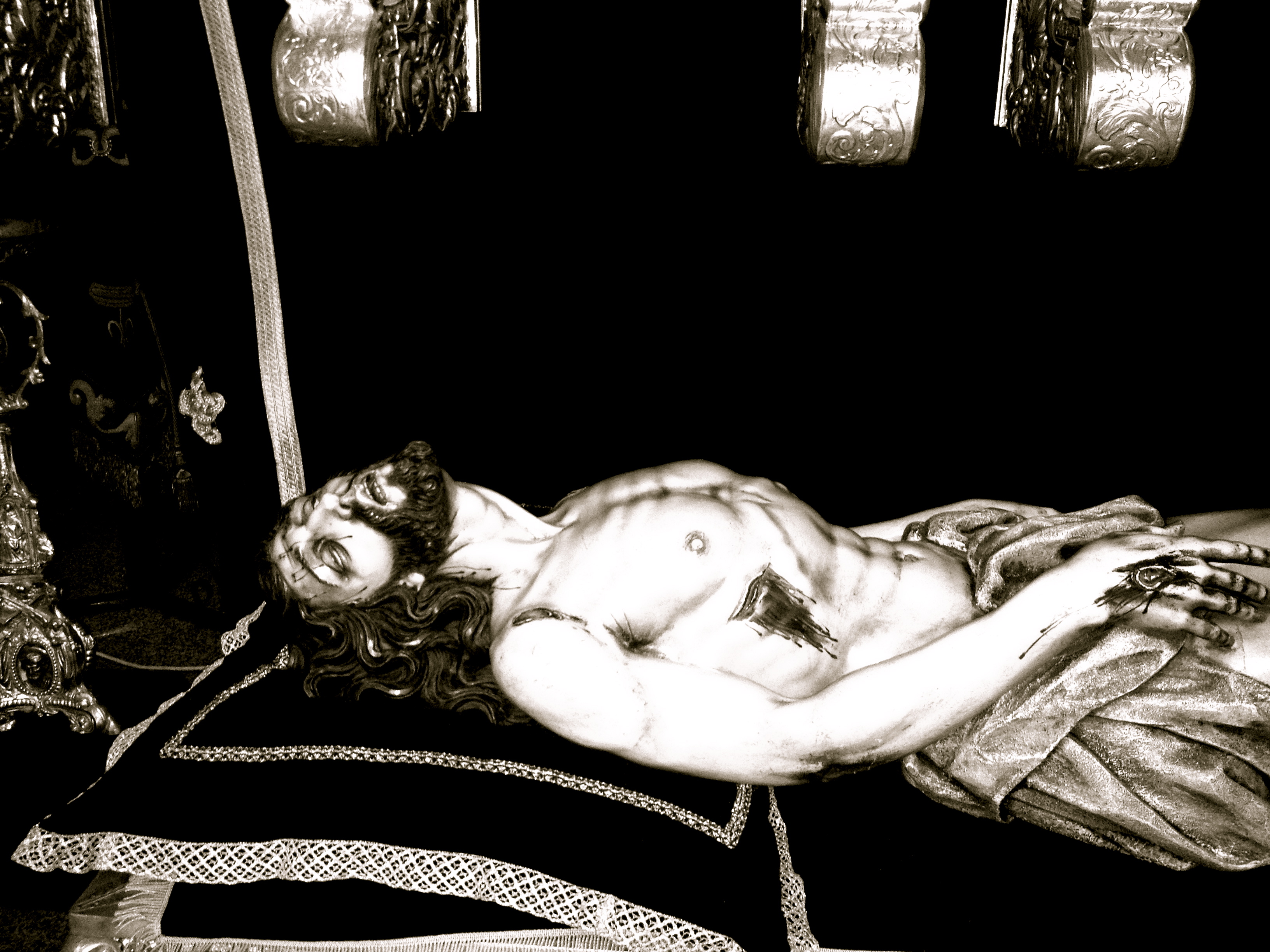
Once again I find my thoughts floating towards Spain where, on this “Viernes Santo” they hold the most solemn procession of them all – a wax effigy of a startlingly lifelike dead Christ, and a weeping Mary, while the participants in the parade are dressed in an eery black and, at least in Marbella, there is no band – only silence and a recurring, foreboding drum beat. It’s chilling.

Marbella's startlingly realistic wax effigy of the dead Christ, paraded on Viernes Santo

Since Spain has very much been the concentration of my approach to Holy Week on the Daily Norm, I thought I’d mark Good Friday/ Viernes Santo with the most substantial Norm Sketch I have yet completed – far bigger than the rest and packed full of detail, this is a full on Semana Santa parade, complete with crowds, a tronos, the nazareños, the women wearing mantillas, and the altar boys wafting incense through the air. And below, just so you don’t miss a thing, some detail shots.

Semana Santa (Miercoles Santo) (2012 © Nicholas de Lacy-Brown, pen on paper)

Enjoy Good Friday, however you choose to spend it, and see you back here over the weekend.

© Nicholas de Lacy-Brown and The Daily Norm, 2005-2012. Unauthorized use and/or duplication of the material, whether written work or artwork, included within The Daily Norm without express and written permission from The Daily Norm’s author and/or owner is strictly prohibited. Excerpts and links may be used, provided that full and clear credit is given to Nicholas de Lacy-Brown and The Daily Norm with appropriate and specific direction to the original content.

Easter Eggs – the Spanish do those better too.

I know I’m forever praising the efforts of my European neighbours rather than my own here in England, but there is something about continental Europe that just exudes a class and elegance which has been long since forgotten here in the UK. Take Easter Eggs – here the shelves are loaded full of Easter Eggs, but for the most part they are covered in branding, a boring shell in a huge box with plenty of space for adverts and promotion – of Mars, of Milky Way, Twix, Kit Kat and After Eight. Admittedly, there are some exceptions in the higher end market, but otherwise your typical UK egg is likely to be little more than smoke and mirrors, mass produced and devoured without as little thought as went into making it.

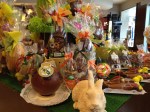
By comparison check out these eggs currently to be found gracing the well stocked shelves of local Marbella cafe favourite, Goyo. Yes, there is some branding, in the form of cartoon characters made into eggs, but there is also a wonderful hand made element, an intricacy in the skill shown by the chocolatiers, and a sense of fun and Easter-tide joy. And this runs pretty consistently across the board when it comes to Easter eggs in Spain – all handmade, all intricate, all worthy of this celebratory festival. Even the foil covered eggs are brightly wrapped and spill, as though from Pan’s cornucopia, in all their multicoloured vibrancy from Easter baskets and displays. Beautiful. Only problem is, the calories.

For me, it’s the little things in life that bring the difference between the UK and continental Europe into sharp focus. As I’ve said before, the UK is, and has always been economically driven. Here it’s about mass production, value for money, business efficacy. On the Continent however, precedence is given to the good things in life – taking time to achieve a better, more satisfying finish, prioritising aesthetics, and allowing time to enjoy the joie de vivre. It’s the same with art – take Damien Hirst, currently enjoying an even bigger spotlight than previously at his Tate retrospective. He’s all about lazy art – mass produced, and painted/ created by a factory of assistants. But he’s also about the brand, the business, the marketing. Did Van Gogh care that he hadn’t sold? Not nearly as much as he cared about creating beautiful paintings. And I can guarantee that fewer people will be queueing to see Damien Hirst’s rotting shark in 100 years than queue every day to see Van Gogh paintings around the world.

Happy Easter everyone!

The Daily Sketch – Norms do Semana Santa

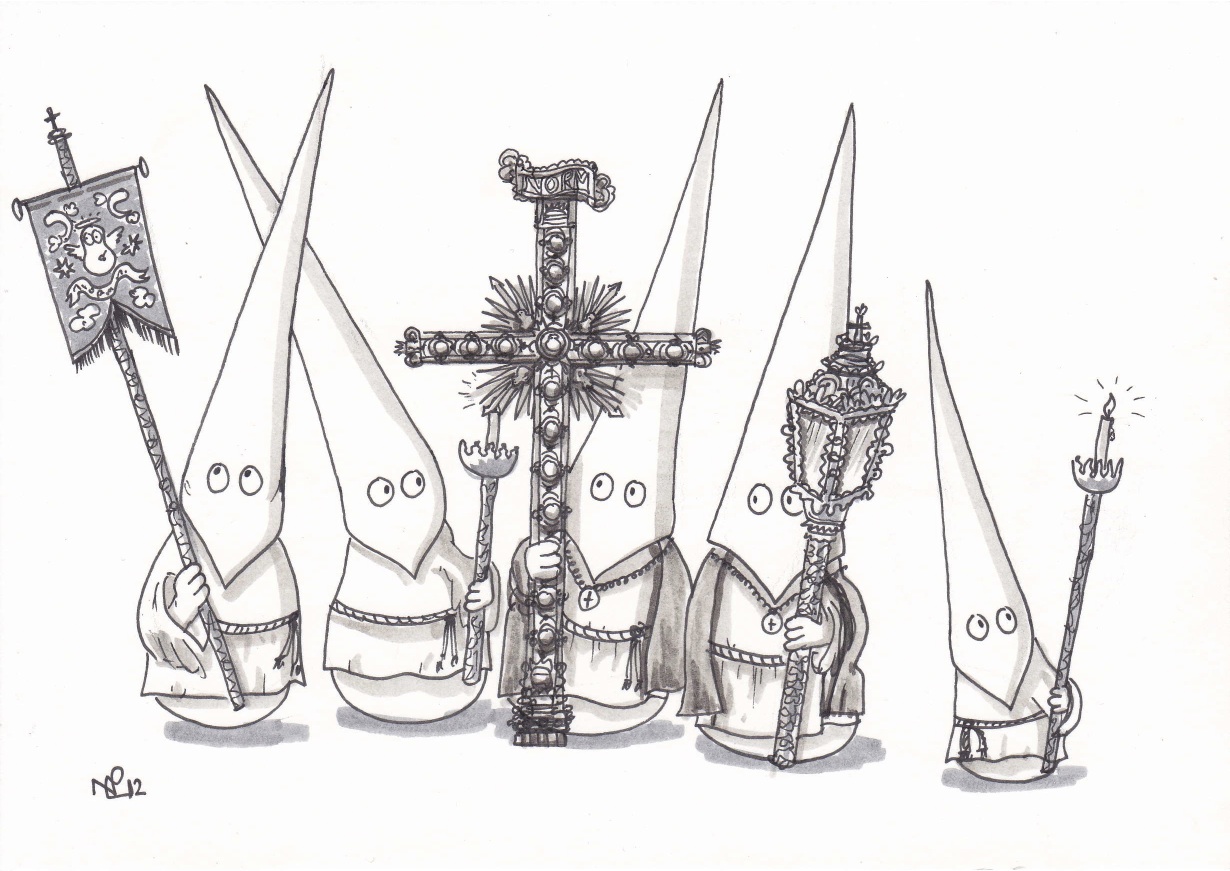
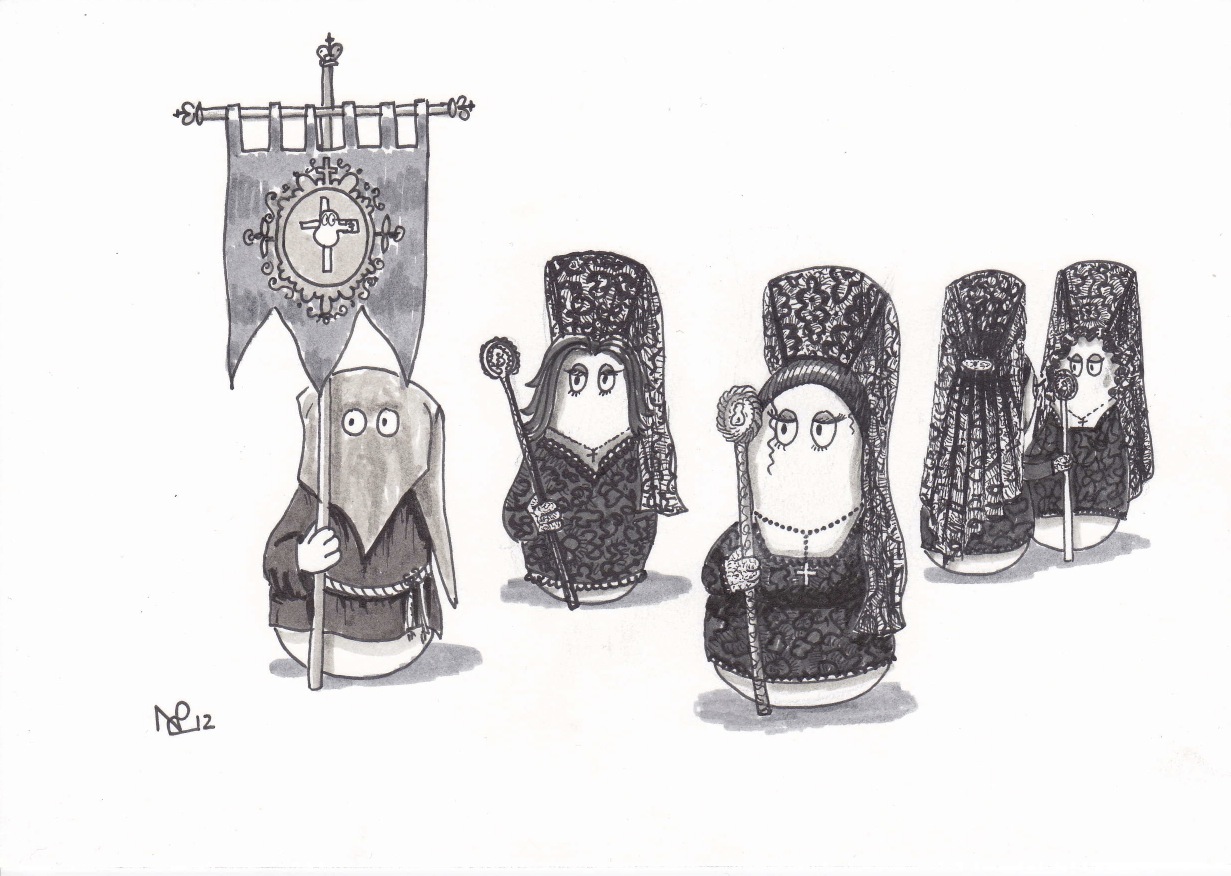
It’s Holy week around the world, and very much Semana Santa week here on The Daily Norm as myself and the Norms celebrate the lavish spectacle that are the Spanish Easter festivities. From photos and paintings, to sketches, today the Norms put in their two pennies worth indulging in their very own Semana Santa celebration. Thus a great body of costaleros share the burden of the vast tronos upon which a canopy contains a statue of a weeping Mary, surrounded by candles, lanterns and flowers. Here too, a group of Norms dress in the capriotes of the nazareños, carrying the typically opulent accessories of the procession – ornamental lamps, candles sticks and a magnificent crucifix. In the meantime, a group of female Norms adopt the black laced mantilla and accompanying black laced outfit worn by female participants of the parades.

Tronos Norms (2012 © Nicholas de Lacy-Brown, pen on paper)

Nazareños Norms (2012 © Nicholas de Lacy-Brown, pen on paper)

Norms wearing the mantilla (2012 © Nicholas de Lacy-Brown, pen on paper)

See you tomorrow for yet more Easter-themed ramblings and artwork.

© Nicholas de Lacy-Brown and The Daily Norm, 2005-2012. Unauthorized use and/or duplication of the material, whether written work or artwork, included within The Daily Norm without express and written permission from The Daily Norm’s author and/or owner is strictly prohibited. Excerpts and links may be used, provided that full and clear credit is given to Nicholas de Lacy-Brown and The Daily Norm with appropriate and specific direction to the original content.