Skip to content

Seville: The city which inspired the painting

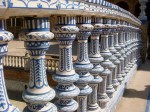
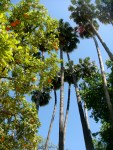
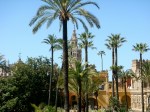
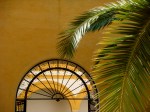
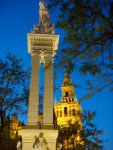
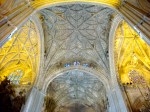
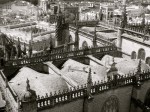
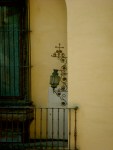
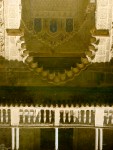
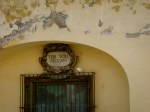
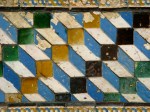
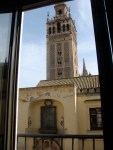
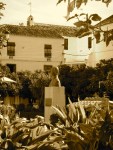
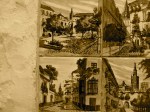
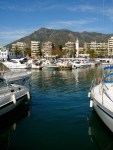
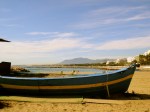
Key to understanding the Seville Triptych I painted, as featured on yesterday’s Sunday Supplement, is the city which inspired it. While I’m sat on a plane (and hopefully not stuck in an airport with snow-induced delays) I’m posting in advance the photos I took of Seville, the star of Spain’s south and one of the most sensational cities I have ever visited. Now all you need is a bottle of rioja, some chorizo tapas and flamenco on CD and winter will be dismissed for good! Enjoy.


© Nicholas de Lacy-Brown and The Daily Norm, 2005-2012. Unauthorized use and/or duplication of the material, whether written work or artwork, included within The Daily Norm without express and written permission from The Daily Norm’s author and/or owner is strictly prohibited. Excerpts and links may be used, provided that full and clear credit is given to Nicholas de Lacy-Brown and The Daily Norm with appropriate and specific direction to the original content.

Sunday Supplement: The Seville Triptych

It’s an early 2012 Spanish Season here at the Daily Norm, and what better thoughts to fill your head at this time of ferocious cold across much of the Northern Hemisphere. Here in Spain the snow hasn’t reached us, but the winds were almighty and angry. On emerging from home yesterday we found much of Marbella’s lush greenery had hit the ground. A crying shame, but such is the rapid growth of the plants out here, I’m sure many of the gaps will have filled come July.

In line with this short season of Spanish indulgence, today’s Sunday Supplement pays homage to one of Andalucía’s most famous and exquisite cities: Seville. Having travelled there in the Spring of 2010 my mind rapidly filled with numerous ideas with all the energy of a kindergarten playground. What resulted was not one, not two, but three canvases portraying the city, which, when placed together flow seamlessly into one complete panegyric to Spain’s southern gem.

Seville Triptych - Canvas I (Oil on canvas, 2010 © Nicholas de Lacy-Brown)

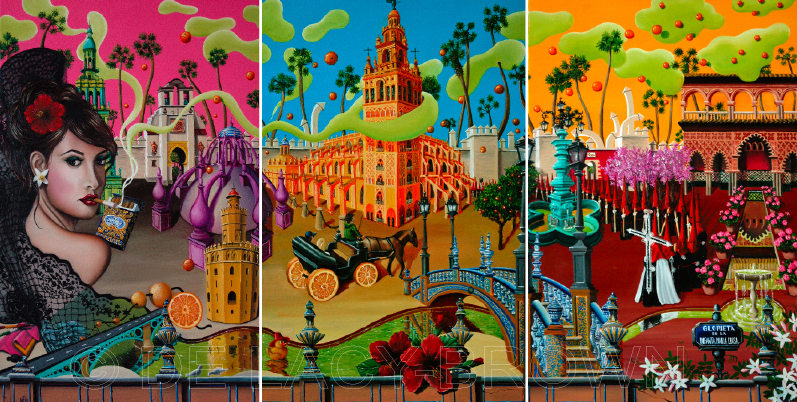
Prominent in the first canvas is a beautiful Spanish lady. Some asked if I had painted Amy Winehouse. Au contraire – this is the infamous Sevillian femme fatale, Carmen, immortalised in Bizet’s opera, seductive in her gaze, languidly smoking a cigarette from a packet which is decorated with the ceramic signage of the Tobacco factory where Carmen worked – a factory which today stands beautifully as ever in the centre of the city, now converted into a university. Beneath her traditional black lace mantilla which, in part, is used as a fisherman’s net, are the paraphernalia of the matador, Escamillo who, in Bizet’s operatic tale, prompted such jealousy in Carmen’s lover Don José that it led to her eventual downfall. Also in this canvas are the Moorish walls of Seville’s Real Alcazar palace, harping back to the city’s Moorish past, which is also embodied in the Torre del Oro which stands by Seville’s Guadalquivir river. Across the river, the bridge designed by Gustav Eiffel features, while from the fishing nets, floating buoys become the oranges for which Seville is renowned throughout the world. Meanwhile the flower from fragrant orange blossom adorns Carmen’s ear, while above her head, the architectural splendour of the ceramic-covered Plaza de España emerges. Finally, sat like a spider upon the ground, the elaborate gothic architecture of Seville’s great cathedral is featured in a vibrant purple.

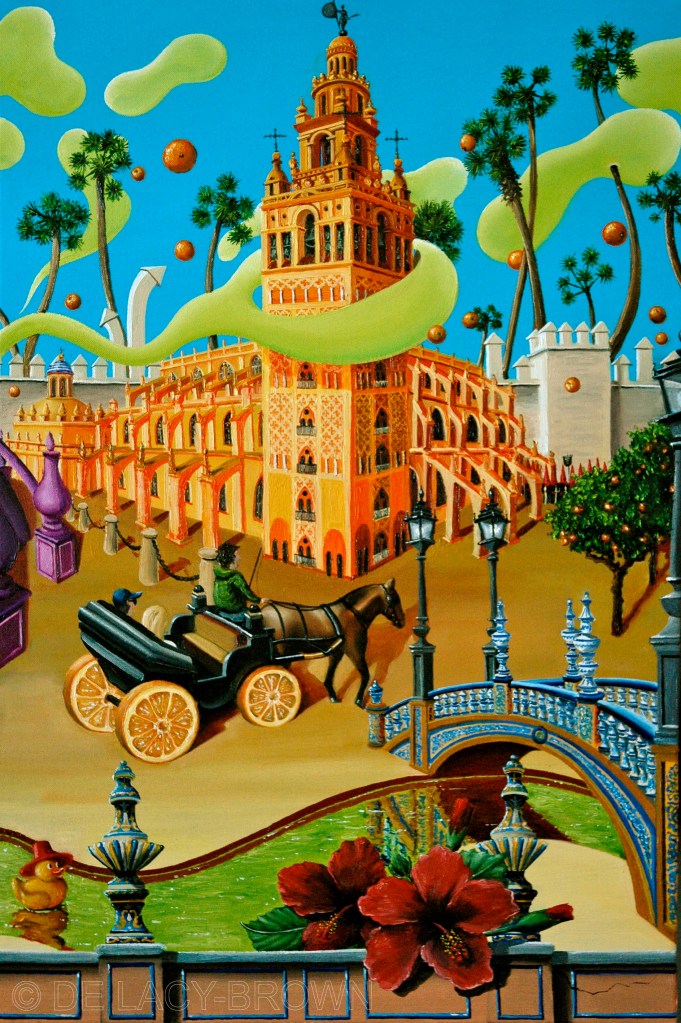
Seville Triptych - Canvas II (Oil on canvas, 2010 © Nicholas de Lacy-Brown)

In the second canvas, the Giralda bell tower and the adjoining magnificent cathedral take centre stage, enveloped by the smoke of Carmen’s cigarette smoke. The angle of the building shows off its magnificent gothic details as well as the Moorish features on the lower section of the Giralda tower which is retained from Seville’s Moorish past. In front of the cathedral, a common site of Seville is featured – the horse and cart – whose characteristic yellow wheels are replaced with orange slices. Meanwhile, the distinctive blue and white ceramic bridge of the Plaza de España signifies that here, the river has become the pleasure lake which is central to the Plaza de España complex.

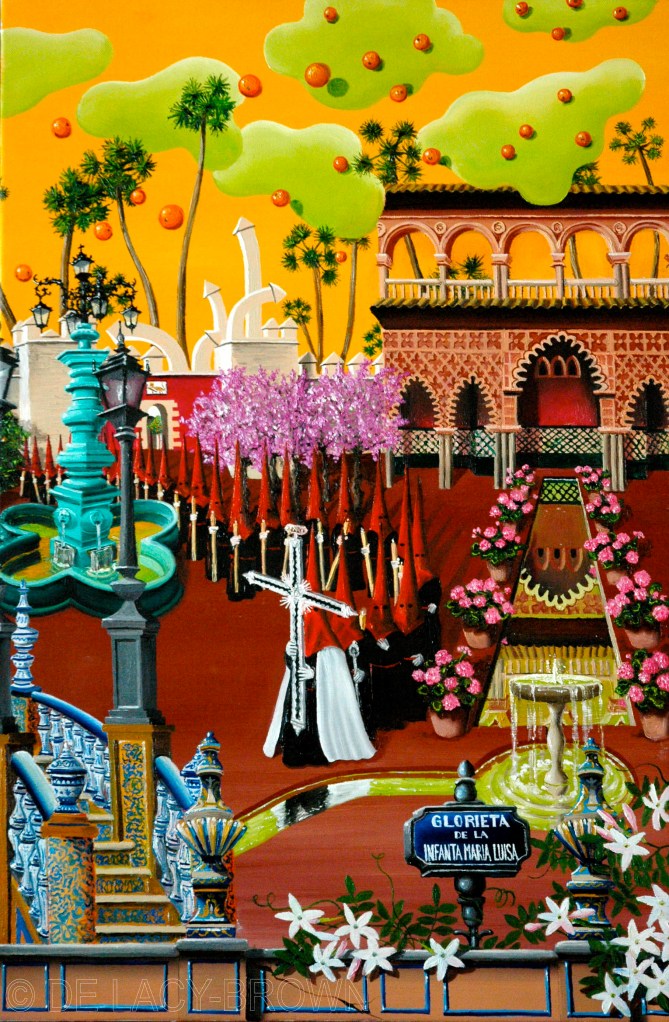
Seville Triptych - Canvas III (Oil on canvas, 2010 © Nicholas de Lacy-Brown)

The third canvas is testament to Andalucía’s complex religious history, from the Moorish architecture which features strongly in the Real Alcazar palace, to the staunchly catholic Semana Santa (Easter Week) parades which are famous throughout Andalucía but most especially in Seville. In the foreground there is a decorative sign from the Parque Maria Luisa, which appears to emanate from the modernist age of design, while in the background, the pointed battlements of the Moorish city walls appear freed from the uniform constraints of their design, playfully reaching for the skies.

Seville Triptych - the complete triptych (Oil on canvas, 2010 © Nicholas de Lacy-Brown)

Across the three paintings, several unifying features dominate: In the immediate foreground are the walls and ceramic decorations of the Plaza de España, and behind it the River Guadalquivir which, in the second canvas becomes the pleasure pools of the Plaza de España and, by the third canvas, has turned into the Moorish pools of the Alcazar palace. In the background, the distinctive slender palm trees which pepper the cityscape and a shower of Seville oranges scatter the painting, while along the horizon, the walls of the Real Alcazar unify the canvas.

© Nicholas de Lacy-Brown and The Daily Norm, 2005-2012. Unauthorized use and/or duplication of the material, whether written work or artwork, included within The Daily Norm without express and written permission from The Daily Norm’s author and/or owner is strictly prohibited. Excerpts and links may be used, provided that full and clear credit is given to Nicholas de Lacy-Brown and The Daily Norm with appropriate and specific direction to the original content.

Why you should celebrate your Half Birthday

I like to think/ convince myself/others that, on the occasions when I exhibit too many childish traits for a fully-grown adult, my behaviour can be justified by virtue of my needs as an artist. After all, it was in the realm of childhood that the majority of us escaped into a world of make-believe, when our heads were filled with original, uncorrupted ideas, and when we would fully accept a fantastical story which, when imported into the adult world, would be derided as fanciful or shelved as being surreal and not-in-the-real-world. Having said all of this, I am not so childlike in my demands that, like the Mad Hatter in Alice’s Wonderland, I require an indulgent daily celebration of an “unbirthday”. What I do, however, celebrate every year is… my Half Birthday!

It’s a peculiarity to which those who know me have become accustomed, patiently tolerating the slightly eccentric annual demand I make of them in insisting that my half birthday is marked. I think it stems from my childhood when my parents, ever the diplomats, would give my sister and me a small present when the other was celebrating their birthday. In this way it meant that the one of us who was not celebrating did not feel left out. By coincidence, my sister’s birthday falls almost 6 months from mine, and consequently, long after my parents gave up on catering for our whims, I took it upon myself to celebrate my half birthday on an annual basis.

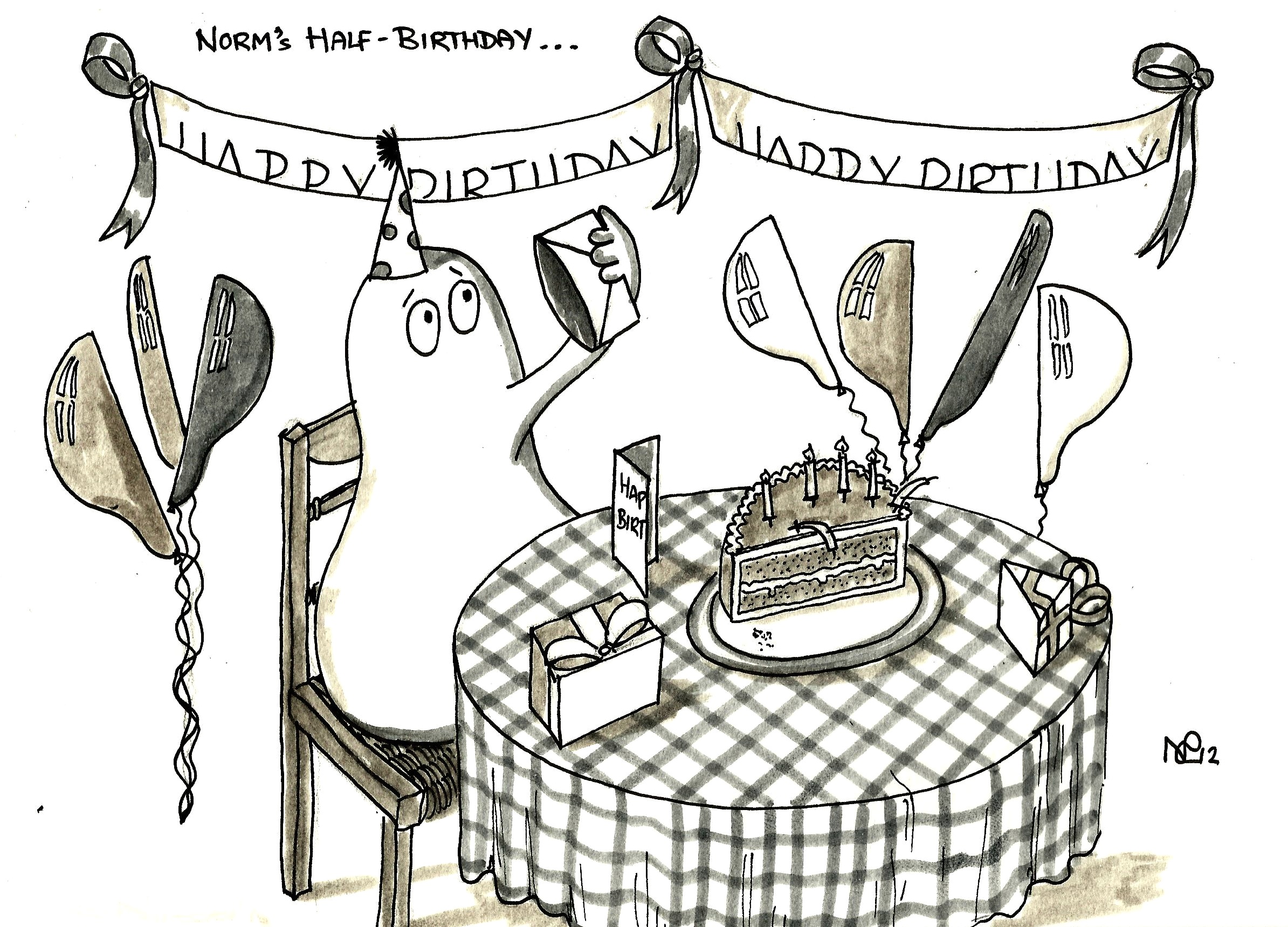
Norm's Half Birthday - Norm looks for the other half of his card (2012 © Nicholas de Lacy-Brown)

In practice no one actually gives me anything for my half birthday, and most people (including me) forget all about it. But on the occasion I do remember, I still use the date, unashamedly, as an excuse for out-of-the-blue celebrations, emotional blackmail and the like. I always remember my first year at university when my new friends, obliging my strange request, made me birthday cards which they then cut in half (I never did get the second half). This was followed by a massive half birthday party in my masters year, never, sadly to be repeated (spilt wine ruined my carpets so I quickly concluded celebrating my half birthday should be an altogether more sedate affair).

With the uni years well behind me, I really am now too old for all of this. Nevertheless, trying never hurt anyone, and since yesterday was my half birthday, I successfully persuaded my parents to join me in embarking on an impromptu celebration which included an extravagant afternoon tea out at Marbella’s very established Goyo tearooms, and dinner out at Zozoi – the darling of the Spanish expats – a fantastic French-Belgian brasserie in the heart of Marbella’s old town. And while I thought it may be a little demanding of me to insist on a cake (or half a cake) as well, judging by this amazing handbag cake I spotted in a shop window earlier, Marbella is clearly the place to pick up something special. I may try that one tomorrow…

Amazing Louis Vuitton inspired handbag cake in a shop window in Marbella

So why should you celebrate your half birthday? Well one birthday a year is pretty lousy when you consider there are 364 other days to get through. And after all, the Queen gets two birthdays doesn’t she. To me, it seems pretty reasonable to have a little celebration every six months – after all, being half a year older is just as much of a feat in my opinion. There is of course the slight issue that it will be yet a further reminder that you are getting older (I spotted a rather substantial grey hair the other day – nightmare) but all the more reasons to get yourself merry and insist your friends and family do the same. And if they complain, remind them that you could always start celebrating your quarter birthdays too. Or monthly. Now there’s a thought…

Cappuccino: No longer just froth and espresso

Cappuccino is no longer just a coffee. The café chain which brands itself after the popular italian coffee has rewritten the meaning of this favoured frothy drink. For in Cappuccino Grand Café, the cappuccinos are just the tip of the iceberg. The café group, which is now a predominant restaurant brand across the island of Mallorca, with branches also in Marbella and Valencia, as well as a handful in Jeddah and Beirut, is the ultimate in café chic. It’s exudes sophistication from every bubble of its creamy coffee froth. Its waiters are dressed to impress – with bow ties and black armbands, they are like butlers from a bygone era. Everyone is beautiful, from the staff to the customers who almost become more glamorous upon entering as they allow a wash of Cappuccino couture to penetrate and tantalise all over, as almond latte replaces a standard coffee, and cocktails and wine bubbles aplenty become the new still or sparkling. In the background, a carefully selected soundtrack resonates, wafting the space with Buddah-barish chill and soulfulness, while earlier coffee stops are accompanied by the timeless polyphony of jazz. And to top it off, Cappuccino has managed, almost across the board, to secure itself the very best of restaurant locations, so that in Marbella and Mallorca, you can savour a tranquil seaside view, while in Palma de Mallorca, locations in luxurious former palaces have been made the norm (as opposed to the Norm – let us not confuse the two).
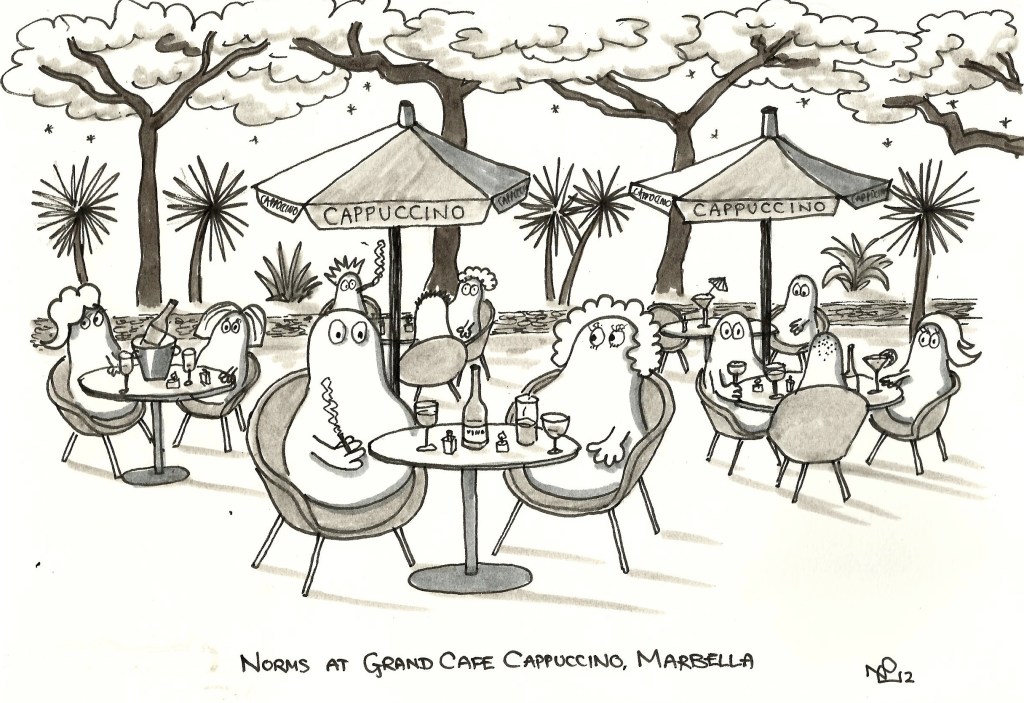
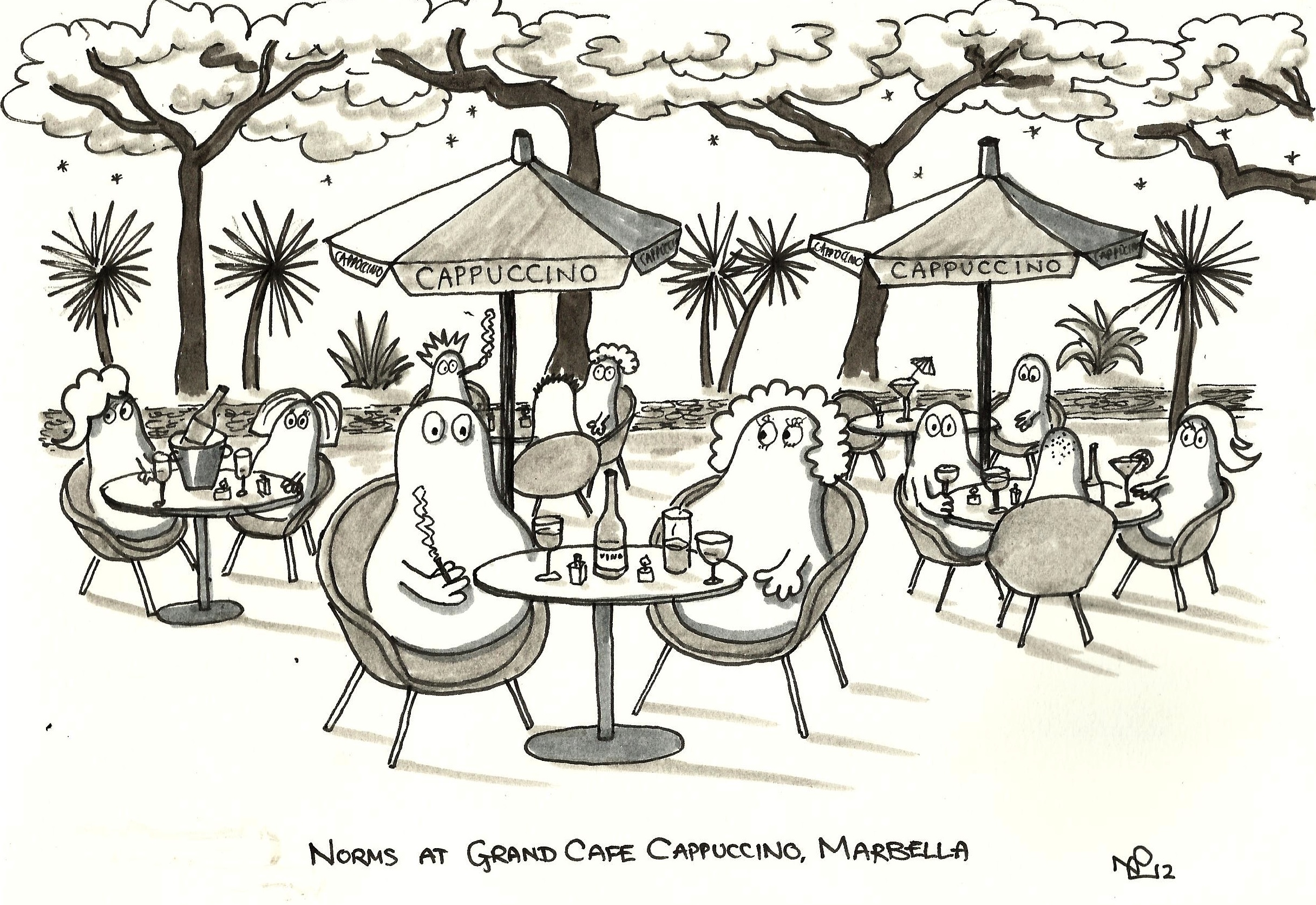
Norms at the Cappuccino Grand Cafe in Marbella (pen on paper 2012 © Nicholas de Lacy-Brown)

So why am I going on an all out campaign to promote this amazing café chain? Well it’s certainly not because they are paying me in free almond lattes (if only – although if the CEO of el Grupo Cappuccino happens to be reading this, please feel free to oblige). Rather, Cappuccino fully deserves its place in my search of all things indulgent and beautiful, because as a place to go for lunch, coffee, drinks or dinner, it is sophisticated, beautiful and ultimately satisfying.

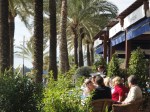
Cappuccino first came to my attention last summer when a new branch opened in Marbella. Situated bang on the paseo maritimo next to the Mediterranean, in a quiet and very exclusive spot (Lord Sugar lives close by, as do those lucky few frequenting the opulent Marbella Club Hotel and other establishments on the Golden Mile), it benefits from superb views and is sheltered from any adverse weather conditions by a canopy of mushroomed pine trees and lush garden surrounds which lead up to the nearest luxury hotel stood behind it. When I went there for the first time, having stumbled upon it during a long walk out of Marbella’s centre, I fell in love. The music, the sunset, the staff and the food which, compared to many Marbella restaurants is very reasonably priced, were spellbinding. There I felt like a pop star, indulged, relaxed, contented.
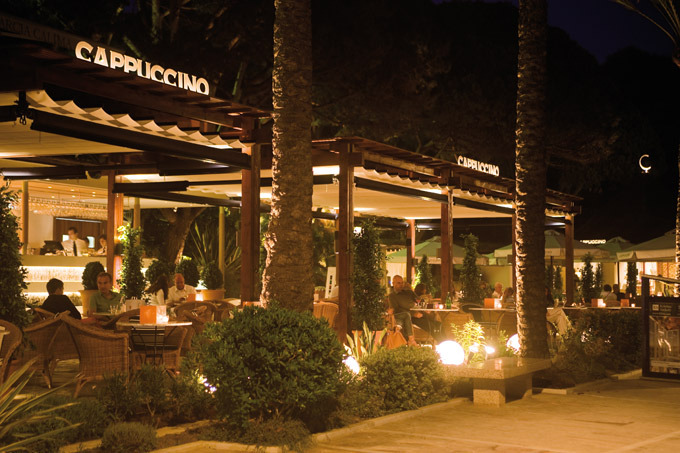
Cappuccino, Marbella

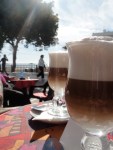
Cappuccino's smooth almond latte

By coincidence, I had a trip booked to Mallorca a few weeks later and there, since it is the island from where the chain originally springs, Cappuccino has marked its claim to various scenic spots all over the island. Such was the beauty of their location that we spent nearly every day indulging in at least one meal in a Cappuccino – for example on the port front of the stunning natural harbour of Port d’Andratx, or in a central square in the charming medieval town of Valldemossa, just round the corner from the Monastery which laid host to one Chopin and his lover. In Palma de Mallorca, there are four Cappuccinos and a number of take away branches and, mercifully, barely a Starbucks in sight (I say barely as there blatantly is a Starbucks somewhere but I have become conversant in the habit of shunning them in cultural locations). These are perhaps some of the most opulent Cappuccinos, set in former palaces with quaint patio gardens and candlelit tables set amongst vast baroque colonnades. On Palma’s vast paseo maritimo, you can sup on the luxurious almond latte in full view of the gothic cathedral, while on Palma’s answer to Bond Street – the Passeig Borne – you can people watch to your heart’s content.

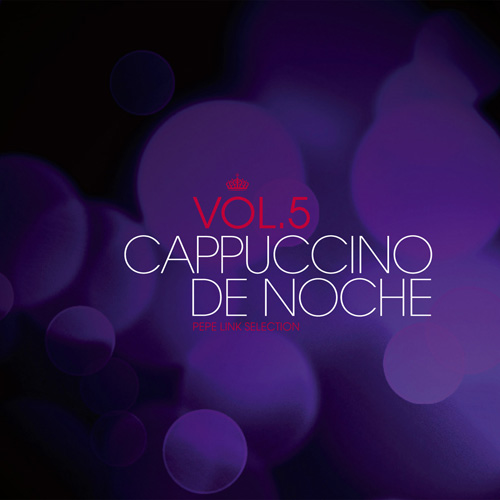
CD Volume 5 of Cappuccino's own sensational soundtrack

And what to do to savour Cappuccino’s magic once you get home? Well the atmospheric soundtrack playing in every café is happily available to purchase – I have all five volumes of the Cappuccino CDs and play them on an almost continuous repeat. The first four make for marvellous coffee music – tinkling jazz and re-imaginings of popular melodies – while the fifth volume is the ultimate in Mediterranean chill.

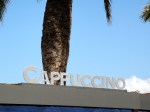
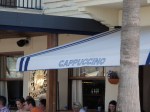
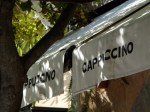
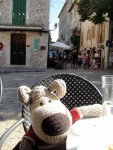
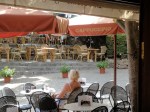
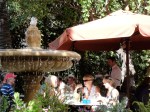
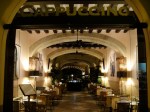
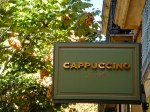
I shall rapture no further, but leave you instead with a selection of snaps I have taken at the various Cappuccinos in Marbella and Mallorca. In the meantime, Cappuccinos website can be found here, including details of all the CDs.

Vive le Cappuccino!

© Nicholas de Lacy-Brown and The Daily Norm, 2005-2012. Unauthorized use and/or duplication of the material, whether written work or artwork, included within The Daily Norm without express and written permission from The Daily Norm’s author and/or owner is strictly prohibited. Excerpts and links may be used, provided that full and clear credit is given to Nicholas de Lacy-Brown and The Daily Norm with appropriate and specific direction to the original content.

Spanish Season 2012: Out of the frost, into the fire.

As the great winter freeze finally began to set in, we at The Daily Norm swiftly decided that the time had come to withdraw from our London offices, and to retreat instead to our little Spanish outpost. And so it was that with a little luck and a lot of expense (Easyjet – once termed a “low cost airline” has almost bankrupted me with its “low cost” flight to Malaga) we have arrived on the Costa del Sol, travelling almost as far south as one can go, while remaining in the confines of our dear, albeit economically shaken, Europe.

Yesterday it was around 2 degrees and lightly snowing when I heaved my suitcase (full of Norms…who tend to be heavy) off the Gatwick Express and boarded a flight due south. When I alighted the flight the other end, things weren’t much better. There was a decided chill to the air in the deserted, white-washed streets of Andalucía, and as a result my winter overcoat remained firmly wrapped about my person. And inside it was even worse – My family and I have found ourselves needing to gather desperately around little electric heaters wrapped in the contents of our suitcases – we look like those motley crowds who gather round vertical heaters on the windy platforms in large echoey French train stations with the result that you feel like a piece of bread toasted on one side – warm and cold all at once. The problem with these old Spanish houses (our home is in Marbella’s casco antiguo – postcard perfect, but otherwise falling apart, damp and consistently calling out for repair and a lot of TLC) is that they are built for the summer. Tiled or stone floors repel the heat while small windows keep the interiors cool. It’s as though their makers presupposed that the Costa del Sol would always be sunny. But it often isn’t, and in the winter, a few hours of daily sun do not compensate for a long night of sleeping inside a refrigerator.

Between seasons: Norm on a Spanish beach in the winter (pen on paper, 2012 © Nicholas de Lacy-Brown)

What a wonderful surprise then when this morning we awoke to beautiful sunshine while not only lifted our spirits but the surrounding temperatures too. As a result we found our bodies quickly warmed from 2 degrees London, through to 10 degrees Spanish night-time to a positively summery 24 degrees basking in the sunshine this lunchtime. Like all things which are scarce in life, the sunshine is never more glorious, never greater appreciated than when, back at home, you know that your friends and compatriots are suffering in the cold. It’s as though you’ve made a lucky escape and are somehow cheating your pre-destined position in life. From London to Spain this has been like leaping from the freeze straight into the fire.

Needless to say, it’s now evening in Spain, and the cold has once again descended as the electric heaters have been boosted onto full power. The problem with these temperature extremes is that you really don’t know whether it’s winter or summer, because you fully experience both seasons in a single day. The key appears to be plenty of layers and a willingness to dress and undress depending on where the sun is, where the clouds are, and how much you can cheat the winter and steal the sun. Of course it also depends on plenty of heating during the evening, and as our electricity system is about as antiquated as our house, the whole lot will probably fuse any minute. With this in mind, I shall finish this post, leaving you with a selection of my photos from the day. Hasta mañana.

Norms do… Da Vinci (or Boltraffio??)

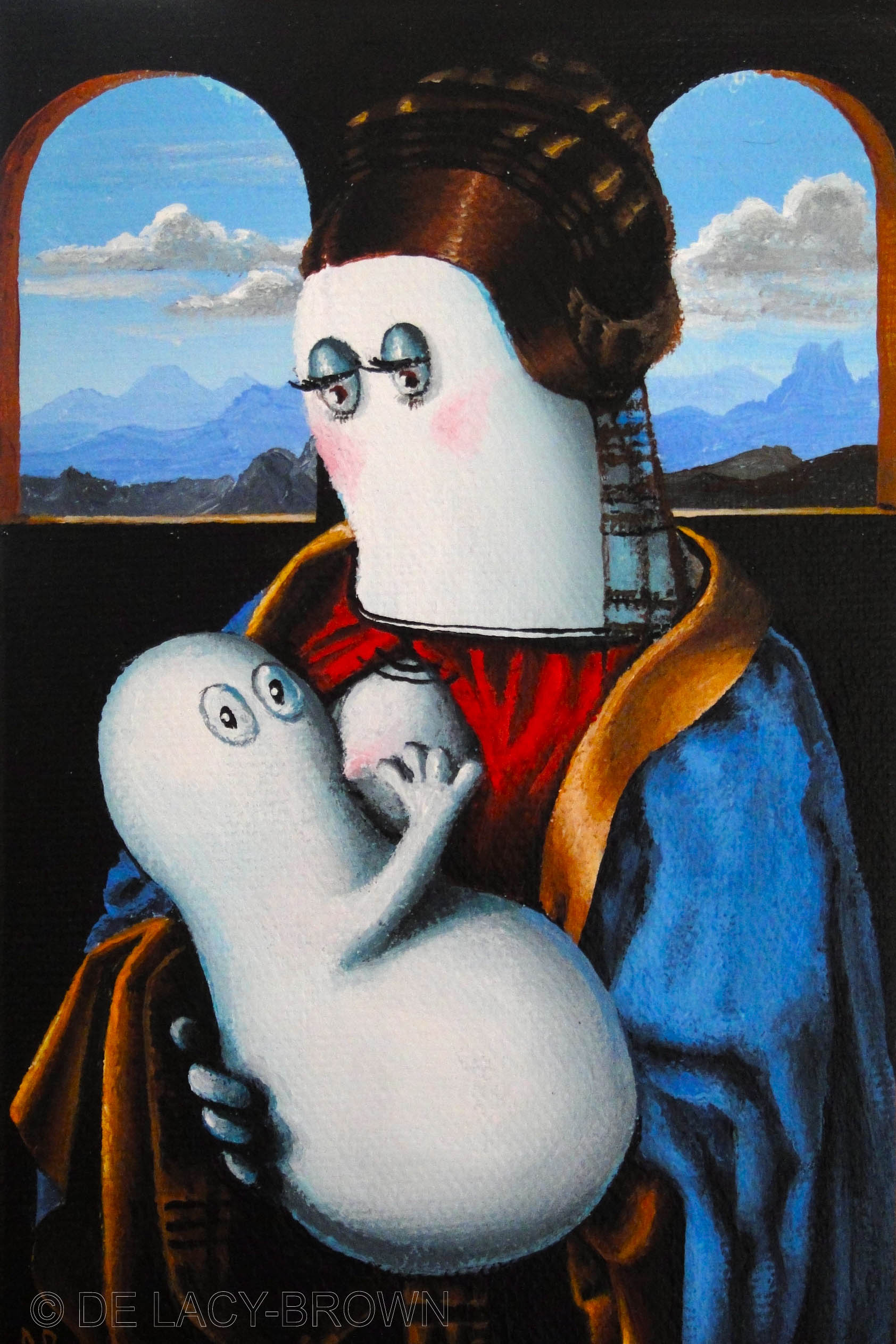
My little Norms have parodied quite a few artists and their masterpieces now. Degas’ L’Absinthe, Goya’s 3 May 1808, Velazquez’s royal portraits and Robert Doisneau’s Kiss at the Opera to name but a few. I also featured a Norm parody of Da Vinci’s great masterpiece Lady with an Ermine back in December. Well now the Norms have returned to this great classical favourite, appearing in a pastiche of that great Da Vinci work, the Madonna Litta. The only problem is, was this sumptuous Madonna and Child, usually to be found in St Petersburg’s Hermitage Museum and most recently featured in the huge sell-out spectacular Da Vinci show at London’s National Gallery, a Da Vinci painting at all?

The Madonna Litta (attributed to Leonardo Da Vinci) courtesy of the Hermitage museum, St Peteresburg

Rumour has it that the work, albeit based on ideas and primary sketches by Da Vinci, was actually completed by his pupil Giovanni Antonio Boltraffio. The Da Vinci-doubters attribute the Christ child’s apparently awkward posture to the lesser known artist, as well as a “formulaic” and “plain” landscape, and the “harsh” outlines of the characters. I’m no art history expert, and who am I to doubt these tell-tale signs. But for me the work is splendid in all its components, Da Vinci or otherwise. The landscape is fairly rudimentary, but this ensures focus is drawn to the protagonists of the tale, while providing colour balance to the piece. The sharp outlines of the characters are attributable to the dark interior background, but this is no different to the effective use of a black background in Da Vinci’s Lady with an Ermine as well as La belle Ferroniere. To my mind, the problem with the Christ child is not so much his “awkward” pose as his direct gaze towards the audience, which seems at odds with the serenity of the moment as he breastfeeds from a caring mother. All in all the painting, bursting with colour, full of familial intensity, is a superb example of the Da Vinci school whether or not painted by the great master himself.

Norm Madonna Litta (after Da Vinci) (acrylic on canvas, 2012 © Nicholas de Lacy-Brown)

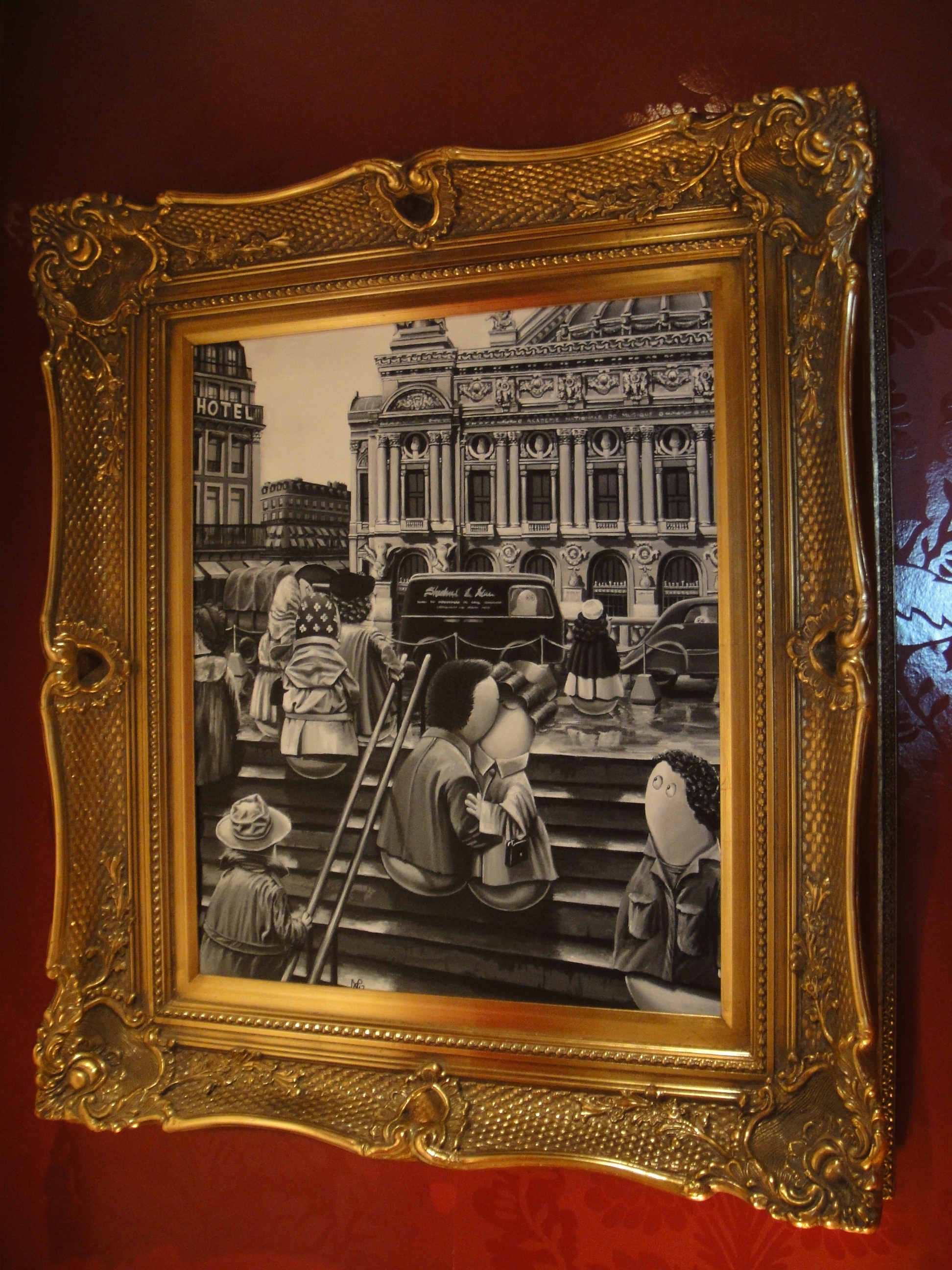
My Norm work is every bit a homage to the original Da Vinci inspiration. At 6″ x 4″, it is probably the smallest painting I have ever attempted which made the detail of the landscape and lavish fabrics difficult to paint. The reason for this size was principally to fit a very fine mock-vintage frame I found online. In fact I am completely obsessed with vintage frames at the moment, and now have a collection, filled with little Norm takes on classical paintings hanging upon dark scarlet flock wallpaper in my hallway. By far my favourite is a frame which is so grand, so utterly exuberant, that it needs to be shared on my blog. When seeking a frame for my Doisneau Norms, I wanted something as extravagant as I could find, to mark a satisfying contrast between the 1950s image and the Renaissance style framing. I love mixing up period design in this way, and in fact my flat here in London is a temple of mixed period design. The frame I eventually found fits the bill perfectly and is by far the most extravagant frame I now have in the house. Keep in mind, this is a fairly large painting – 20″ x 24″ so that gives you a sense of the overall frame size, a frame which is so utterly exquisite in its details that my partner and I have taken to staring at it for long periods of blissful admiration in the same way that the faithful may stare in awe at a beautiful baroque altarpiece. And the best bit – it was only £85 from ebay. But don’t tell anyone!

My lavishly framed Doisneau Norms

Ok, it’s officially snowing (a bit) in London so I’m off to seek warmer climes. See you there!

© Nicholas de Lacy-Brown and The Daily Norm, 2005-2012. Unauthorized use and/or duplication of the material, whether written work or artwork, included within The Daily Norm without express and written permission from The Daily Norm’s author and/or owner is strictly prohibited. Excerpts and links may be used, provided that full and clear credit is given to Nicholas de Lacy-Brown and The Daily Norm with appropriate and specific direction to the original content.
London Chills: White landscapes

It’s gone all cold at The Daily Norm. Yesterday, as icy winds entered London and shook the optimistic hopes for Spring out of all of us, I decided to pay homage to the cold by presenting my collection of Nordic-inspired paintings. Today the cold theme continues in parallel to the dropping dial of the thermometer, and with snow forecast in many places, I have decided to showcase my collection of snowy landscape photography. The photos are not contemporary – I took them last winter – but sadly (or positively for Londoners who actually want to get to work without hours of delays) we have had none of the vast snowfalls which befell us last year. Consequently, in the optimistic hope that temperatures will never drop quite low enough for a repeat performance of a white blanketed London landscape, I thought it an ideal time to present last year’s photos of snowy London for the pleasure of all Daily Norm readers.

The photos were taken on a brief morning walk across Clapham Common in South West London. One of the best things about London in the snow is how idyllic and Victorian it all becomes – suddenly London lampposts and street furniture appear positively Dickensian, as the muddled cityscapes of a frantic city become uniform, clean and bright as a result of an indiscriminate scattering of snowfall. In my photos I have explored how a spray of white snow can emphasise the beautiful, complex structure of trees, particularly their branches, how, against a white backdrop, leafless-trees glow more vividly with rich colours all of their own, and how Victorian street furniture gains renewed elegance when the clutter of modernity is suppressed beneath a tidy blanket of thick snow.

Best enjoyed, laptop in hand, wrapped in a blanket with a large mug of hot tea…

© Nicholas de Lacy-Brown and The Daily Norm, 2005-2012. Unauthorized use and/or duplication of the material, whether written work or artwork, included within The Daily Norm without express and written permission from The Daily Norm’s author and/or owner is strictly prohibited. Excerpts and links may be used, provided that full and clear credit is given to Nicholas de Lacy-Brown and The Daily Norm with appropriate and specific direction to the original content.
Sunday Supplement: Nordic Chills

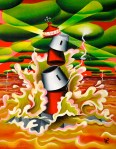
In the first Sunday Supplement of 2012 which, for those of you who have not seen one before, features one, or a few of my non-Norm paintings, I have decided to pay homage to all things chilly. This is roundly because it has turned awfully cold here in London – ok, it’s not snowing or anything, but having had an unusually mild winter so far, we were all hoping that the spring had come early, and I think most of the budding plants all about were pretty much anticipating the same thing. So in homage to the cold, and in reminding myself that there are always colder places, I have decided to feature my paintings which were inspired by a series of visits I made to Scandinavia in 2009/2010, starting with a snowy trip to the elegant city of Stockholm, followed by an equally frosted visit to the buzzing city of Copenhagen. Upon visiting Stockholm, I was particularly struck by how watery the city is, probably more so because the water wasn’t actually frozen when I visited unlike the city’s Danish counterpart. When I took a boat trip around the archipelago, I was particularly struck by the various lighthouses which could be seen dotted all about. They looked solemn and lonely, stood steadfastly resolute in their solitude, performing their lone task of perpetual warning against sea ships and sailors whose vision is clouded with an icy fog. The result was a series of 5 paintings of lighthouses which were later exhibited along the famous Nyhavn in Copenhagen.

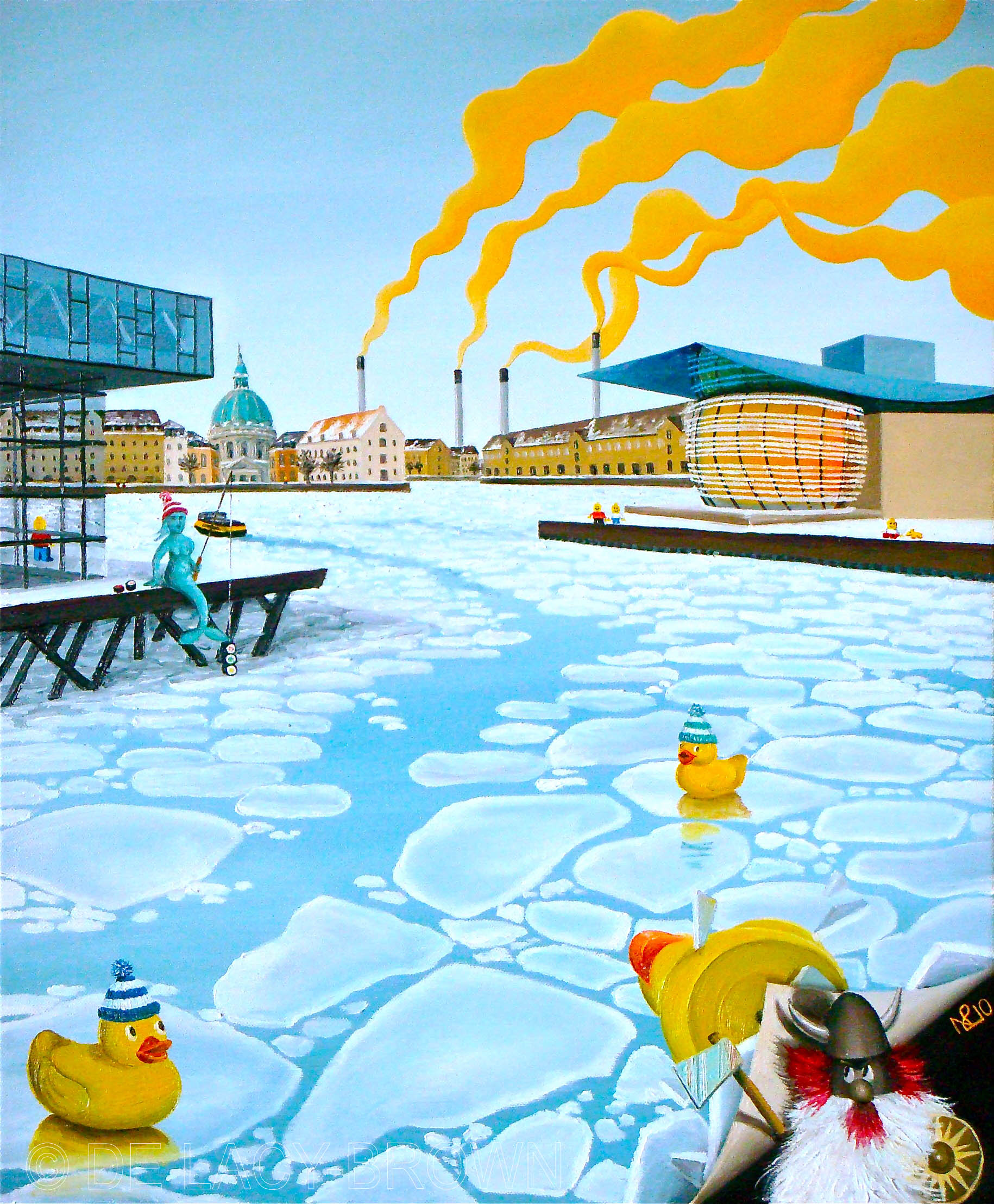
It was in fact on delivering my paintings to the Nyhavn Gallery in Copenhagen that I was inspired to paint my other Nordic work. Simply entitled Copenhagen, the work explores my fascination with the startling modern architecture, whose sharp angles and precise lines seemed to echo and suffuse with the cracking, floating ice which formed afresh each night over the city’s vast waterways. The fresh modernity of the city contrasts with Danish history represented by a furry Viking invading the scene at the foot of the painting, a wooden toy the likes of which you can buy (and I did – much to my partner’s disapproval) in souvenir shops all over Denmark. There too are signs of other Danish feats: Lego characters promenade outside the Opera House, and the city’s emblematic Little Mermaid statute, based on the story of that famous Dane, Hans Christian Andersen, who in my painting sits of the quayside, fishing fresh sushi, the likes of which I had enjoyed for the first time while in Copenhagen. The sushi, to this extent, also represents the city’s cosmopolitan feel, while the plumes of smoke flowing from the very prominent chimneys are testament to Denmark’s industrial prowess, while representing something of a conflict with their very “green” contemporary attitude.

Copenhagen (oil on canvas, 2010 © Nicholas de Lacy-Brown)

Wrap up warm, until next time…

© Nicholas de Lacy-Brown and The Daily Norm, 2005-2012. Unauthorized use and/or duplication of the material, whether written work or artwork, included within The Daily Norm without express and written permission from The Daily Norm’s author and/or owner is strictly prohibited. Excerpts and links may be used, provided that full and clear credit is given to Nicholas de Lacy-Brown and The Daily Norm with appropriate and specific direction to the original content.

Macaron Madness

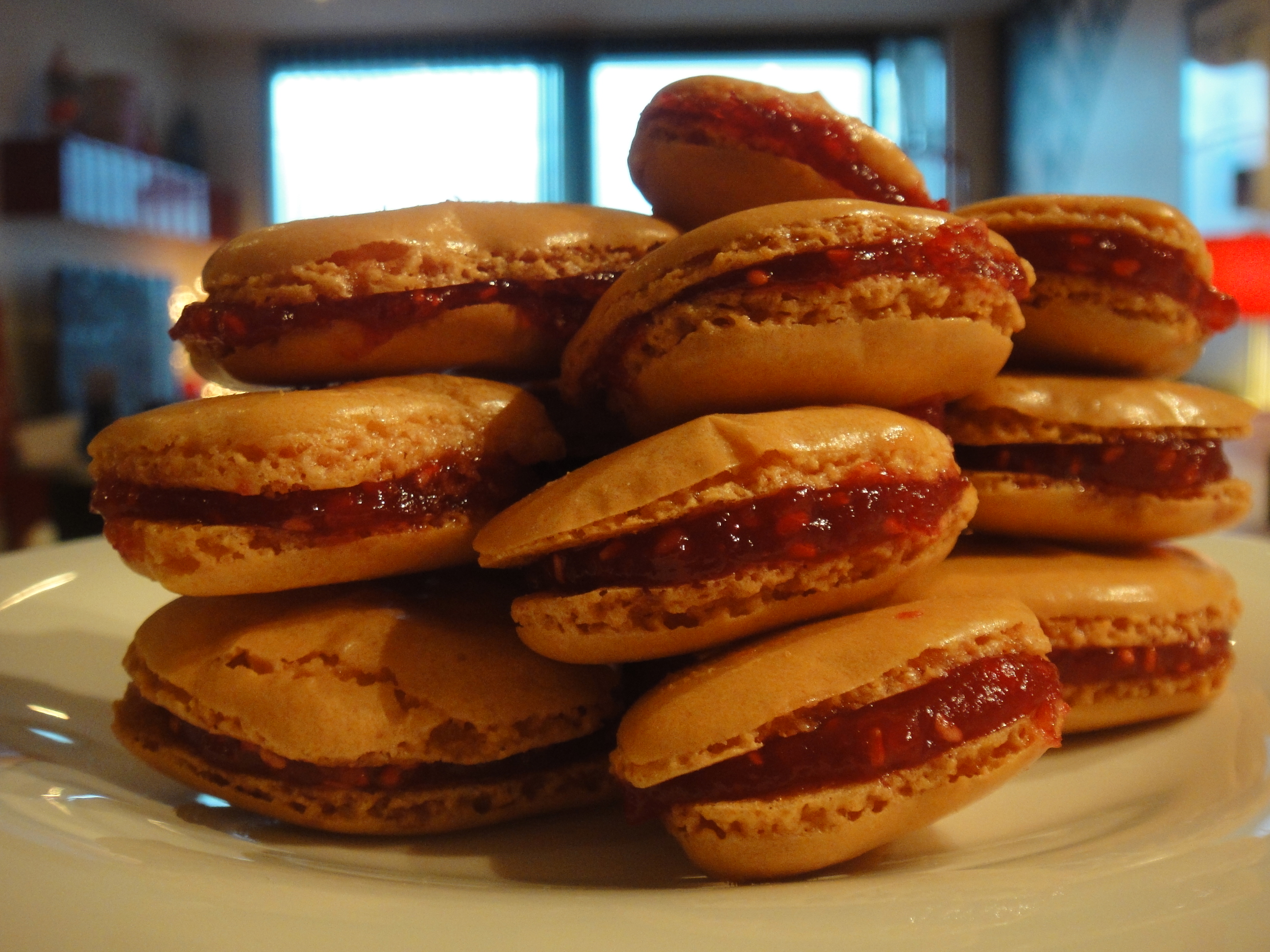
OK, so for those of you who read my post last week, you will know that I have joined the rank and file who have seen the Ladurée light, indulging in all things macaronic (I’m surprised to find this is an actual work, but sadly not generally relating to all things macaron, but hey, this is my blog, and that’s how I’m going to use it), the sweet, elegant pastry treats which add a sense of past sumptuous delight to our every day doldrum lives. Well, I decided to take things one step further and attempt to make macarons myself. How hard can it be, I thought, somewhat naively, embarking on the project with only half an hour spare, my Ladurée cook book placed a sufficient distance from the hob so as not to pollute its gold-lined pages with icing sugar or jam splatters, and my piping bags and food colouring to hand. Three hours later and I was still cleaning up my kitchen which looked like a trench warfare zone all of its own – huge splashes of pink macaron batter on every conceivable surface, three limping icing bags all leaking their contents, flung in frustration across various aspects of the kitchen, and the macarons… well, see for yourself…

Ok, so from the side they don’t look too bad. The jam is oozy and the two sides of the macaron have their “feet” (the little crunchy bit) and the smooth bit on top which miraculously didn’t crack too much (with the one blaring exception). But then look at a random sample from above…

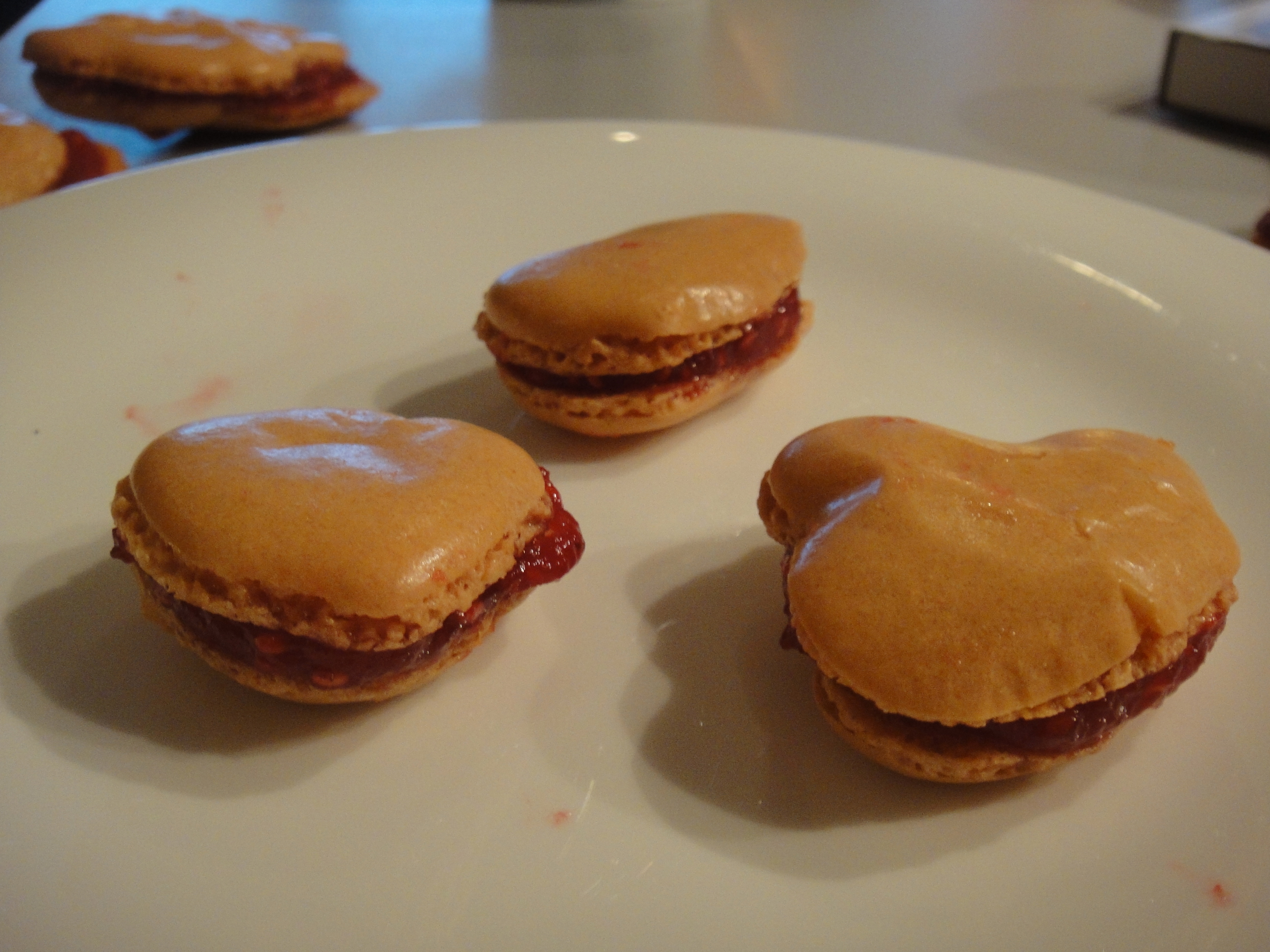
Indeed, not a round macaron in sight. I just could not get the bloody things to stay round! I literally piped them about five times, trying different sized nozzles, practically securing my wrist in a scaffolding-like contraption to ensure an unwavering hand, adding more icing sugar to make the mixture thicker but no no no, they just splurged all over the place into cloud-shaped disasters. On top of that, I couldn’t find any peptin for the jam, so basically had to add thickener, resulting in a jam which is more like gravy. Oh, and I should probably also admit that when these macarons went into the oven, they were pink. When they came out, they were decidedly orange.
So after all this, I have realised that £1.40 for a single macaron at Ladurée really isn’t that extravagant, when making these things requires the skill of Michelangelo painting the ceiling of the Sistine Chapel. But forever determined to succeed, these macarons won’t get the better of me. I will succeed! With this is mind, can anyone tell me how to make round macarons? I’ve realised subsequently that I used caster sugar instead of granulated, which perhaps had something to do with my mixture’s refusal to conform, or is the problem more scientific?

On top of all this, I have subsequently cottoned on to the fact, after a great number of previous misspelling disasters, that a macaron is spelt with only one ‘o’ and not two, the latter type denoting the coconut cake of which my father is rather fond. According to wikipedia, “since the English word macaroon can also refer to the coconut macaroon, many have adopted the French spelling of macaron to distinguish the two items in the English language”. I won’t be making that mistake again.

Macaron madness indeed.

PS Today I have been nominated for a HUG Award for which I am hugely grateful and honoured in my receipt. I will give the matter some thought and make my obligatory re-nomination in a post soon.

War in my Art: WW1 Norm

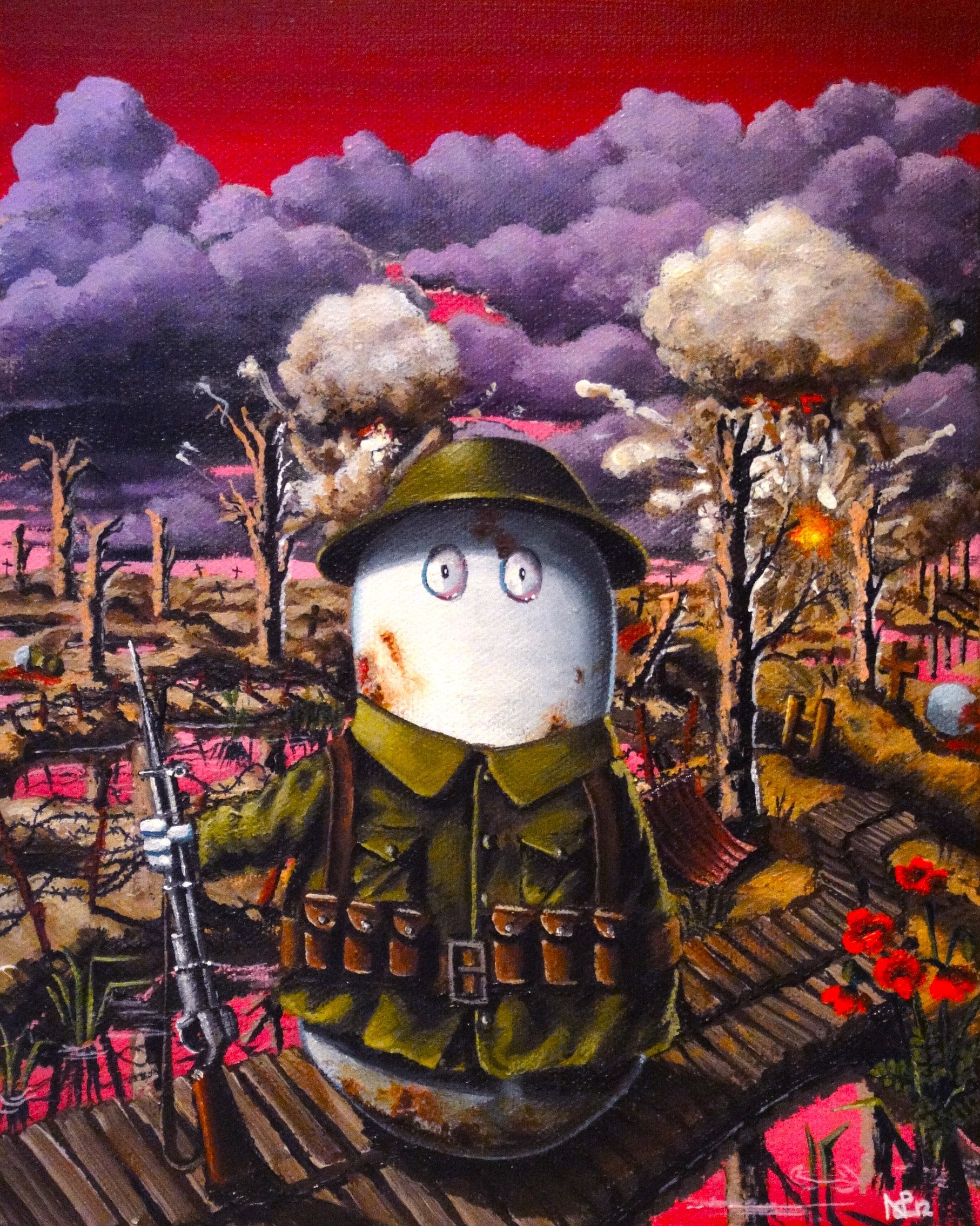
My final post on War brings a little lightheartedness back to the Daily Norm. Having been chewing over the subject of war for a few weeks and having been plentifully inspired by the war art I saw at the Imperial War Museum, I was prompted to once again pick up my paintbrush and devote a work to the ravaged landscape of WW1 France. But as I am all about Norms at the moment, obviously a WW1 Soldier Norm takes centre stage. He may be just a character, but I think that through this parody, the horrors of war are still there for all to see. Hence in his eyes, a look of shock, exasperation and despair at the state of the world around him, beautiful landscape turned into hellish quagmire, human lives used as fodder for the guns. In the background, clouds loom menacingly in the sky, while before them, manmade clouds burst up from explosions, as the putrid, corpse-ridden deserted ground all around the trenches is blown further into the air and scattered like a rain shower. In the foreground poppies: traditional symbol of hope, life growing instinctively from human wreckage. In this, unique and Normy way, I remember.

WW1 Norm (acrylic on canvas, 2012 © Nicholas de Lacy-Brown)