Skip to content

Sunday Supplement: Merry Christmas, Goodwill to all (Gingerbread) Men

Following on from my recent Christmas tree posts, it seems suitable that for this week’s Sunday Supplement, I introduce you to the work: “Merry Christmas, Goodwill to all (Gingerbread) Men” (2008, oil on canvas). On it’s face, it’s a typical Christmas scene. Christmas trees hung with decorations and gingerbread men, snow scattered widely on a crisp winter’s night, Santa’s sleigh riding through the sky. But this is not a typical Christmas. Look closer and the images represented betray a sense of suppressed panic and bitterness. Off-centre, but at it’s heart, a gingerbread man with a broken right leg is iced with tears of apparent despair, while around him, he is surrounded by gingerbread men staring in his direction, their chocolate smiles still adhered mockingly to their faces. Also on the tree, candy canes are replaced with candy crutches, and where baubles should hang, pink ibuprofen tablets share branches with blue and red antibiotics and blue amitriptylene. On the tree perches the archetypal red-breasted robin, but he too appears menacing, caught in the act of murder of the still-living worm clasped in his beak. Between the two trees a further unsettling scene emerges, as a snowman struggles against the lit match which lays at his side, apparently placed there by whomsoever has left the footprints in the snow, footprints which betray a limp in the right foot because only the ball of the foot appears to impact the ground. Meanwhile above a British post box is cracked open, Christmas cards and other correspondence flying through the air, while above, a supposedly magical scene of santa and his sleigh is interrupted by the fall of one of his reindeers mid-flight.

Merry Christmas, Goodwill to all (Gingerbread) Men (Oil on canvas, 2008 © Nicholas de Lacy-Brown)

This is not the stereotypical scene of Christmas. It is in fact one of ten paintings which I created in the direct aftermath of a very traumatic road traffic injury of which I was the unwitting victim in May 2008. Just as I was walking past a very large structural concrete wall, a lorry crashed into it, causing the wall to collapse on top of me. I sustained severe crush fractures to my right leg as well as various other, more superficial injuries. I was lucky to be alive. What got me through the months of severe post-traumatic recovery was, and continues to be, my art. When I painted 10 paintings based on my accident, I was able to pour out my personal grief and frustration onto canvas. Each of the 10 canvases I painted represent a particular stage of my recovery. In this festive-themed painting, I recollect my first Christmas experienced after the accident and in particular my insecurity at being surrounded by a busy city at Christmas time, when I was visually and physically impeded by a very large illizarov external fixator which I was required to wear on my leg for 9 months. As I began to return to London society, I became more and more aware that people would stare at my leg in horror. They would never speak to me about my accident, but just stare – it made me feel like a leper. And all this at at time when society encouraged “goodwill to all men”. I expressed my feelings in this image of a gingerbread man, his leg broken, and all the gingerbread men around him staring, unfeeling, making his suffering all the worse.

At the same time I was ever conscious that my social life had been destroyed by my disabilities, an image I expressed in the broken letter box, its lost letters a sign of my broken friendships and lost social ties. Meanwhile the snow, the baubles and the crutches are all representative of the multitude of medication and medical aids I was required to take and use at that time. The foot steps in the snow are mine. Am I then an agent of my own self-destruction? Or am I facing up to the inevitability of life’s often bleak, stark reality?

For me, the accident was a distinct and painful reminder that we all take things for granted. I took my healthy right leg for granted until it was too late. I also took my mobility for granted. After two years on crutches and a life of mobility difficulties ahead, I now recognise how difficult life is for those with limited mobility, particularly in big cities and on public transport. I also realised that for people with disabilities, the last thing they want is to be looked at differently by other people in society. The purpose of my blog is not to lecture, rather it is to share the art and culture and beauty of life. But what I would say is: enjoy your  Christmas, your new year, and your life. Never take anything for granted, and if you see someone hobbling along a street with crutches or a bad limp, don’t stare. If you’re interested, just ask… If they’re like me, victims of accidents and disabilities would much rather talk about their experience than be marginalised because of it.

© Nicholas de Lacy-Brown and The Daily Norm, 2005-2011. Unauthorized use and/or duplication of the material, whether written work or artwork, included within The Daily Norm without express and written permission from The Daily Norm’s author and/or owner is strictly prohibited. Excerpts and links may be used, provided that full and clear credit is given to Nicholas de Lacy-Brown and The Daily Norm with appropriate and specific direction to the original content.

Oh Christmas Tree, Oh Christmas Tree… (Part 2) My Top 10 Tips for decorating the perfect Tree

Ok, so following on from yesterday’s little exhibition of my Christmas decoration winter wonderland here at The Daily Norm offices, here, just in time for the weekend, are my top-10 fail-proof tips on decorating the perfect Christmas tree.

1. The Tree

Real tree or fake tree? That is the question? It’s a personal choice, but a lot will depend on the house you live in, the kind of theme you are going for with your decorations, and also the degree of control you want over your tree. I live in very modern house, with contemporary interiors. I want my christmas trees to bring festive sparkle into the space, but also to compliment my modern lines. I also want a very controlled, “designed” look. I therefore go for fake trees of varying colours. I love real trees, particularly the smell, but I think they look a lot better in a more traditional home environment. If you have a period property with a big open fireplace and high ceilings, your home is just made for a large bushy tree plucked straight out of the forest. Also keep in mind that real trees, with their floppy branches (which get floppier still as the days go on) are harder to control and are not really for the perfectionists amongst us. They also make a dreadful mess so think about disposal, floor surfaces and so on.

2. The Decorations

Colour co-ordination is the key to success. This is my mantra in life. I think that trees which do not follow some kind of dominant colour theme are difficult to control and can end up looking disorganised and consequently unglamorous. Not that I am adverse to this look. Some people, like my family or Kirsty Allsopp, like a tree to be sentimental, and consequently they bring out old decorations which have been in the family for generations, none of which match each other, but each of which has its own history, more and more being added every year. If you do want to go for a miscellany of decorations, my tip would be to try and pull the tree together with strong tinsel co-ordination (see below). Don’t try and place single-coloured lights on a tree which is going to be full of different decorations – multi-coloured will probably work best.
Read more

Oh Christmas Tree, Oh Christmas Tree, How Lavishly Decorated Are Your Branches… (Part 1)

It’s that time of the year again. Dusting off the baubles, fluffing up the squashed tinsel, and finding that the fairy lights have broken, fused, lost a bulb or have become completely tangled requiring three hours of painstaking work to redress the problem. Yep, it’s time to decorate again, to fill our homes with festive cheer, lights dazzling aplenty, glitter sparkling, and a sense of joy reignited after a year of economic depression, rubbish weather, riots, European crises and all that kind of thing…

Now being the artistic chap I am, it will not surprise you that I take great care in decorating the offices of the Daily Norm each year (i.e. my home). I do not restrict my attempt to one tree either. In fact, I have four principal trees, one in each room, each decorated in such colours and style as reflect their interior designed surroundings, along with a variety of smaller trees and Christmas installations to compliment, and ensure that festive joy is spread into every corner of my home. Now everyone knows that Christmas is a time for sharing, so I thought it only appropriate that I feature my very own trees in today’s edition of the Daily Norm. But, since I fancy myself to be something of a skilled tree decorator, I thought I’d also impart with you all my top fail-proof tips for decorating the perfect tree. Follow my guidance and you cannot fail to impress this year, thus helping to extend the Christmas spirit further by making your friends and family alike completely jealous (this being the unfortunate result of their not reading The Daily Norm…) However for all that guidance, you need to wait until tomorrow I’m afraid. For today, let’s take a look at my trees…

My first tree stands in my lounge which follows a strict red/black decorative scheme. Consequently, complimenting its surroundings is my sophisticated black tree, decorated in a tight scheme of silver, red and white baubles with white LED flashing lights, red tinsel and some very lavish Venetian masks and, even better, Parisian sparkly Tour Eiffels to boot. Et voila…

Black tree with venetian masks, Eiffel towers, red, silver and white decorations

Read more

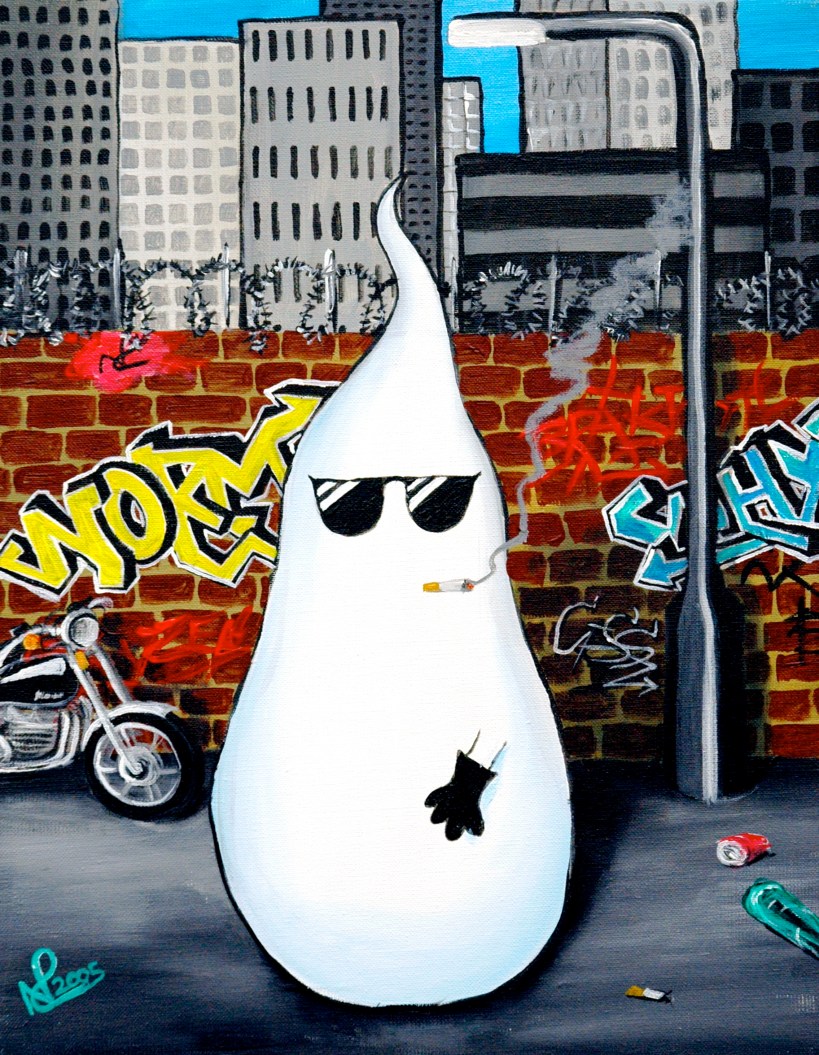
Norm Profile: Cool Norm (2005)

Following on from yesterday’s Turner Prize blog entry, in which I examined the melancholy but strangely beautiful and atmospheric works of both Martin Boyce and George Shaw, it follows naturally that in today’s Daily Norm, I introduce you to one of my first Norm paintings, painted back in 2005: “Cool Norm”.

Cool Norm (Acrylic on canvas, 2005 © Nicholas de Lacy-Brown)

Read more

Turner Prize winner recalls the quirky originality of the modernist revolution

I adore modernism in art. Just what the genre entails is debatable, but when I think of Modernism, I think of Gaudi’s masterpieces in Barcelona, and the art nouveau of Paris, the rethinking of everyday objects to create masterpieces out of functionality, obliterating corners and straight lines, and emboldening quirky, individual designs over and above the monotonous linear structures inherent of 19th century urban development. The free-thinking spirit of modernism barely visited the shores of England, which was too constrained by the censored expression and elaborate attention to detail embodied by the Victorian era. Then with the two world wars dampening the UK’s embrace of architectural innovation, and the second world war flattening half of the country, the architecture which followed needed to be quick and cheap. Hence the hideous 50s and 60s monsters which now litter the British horizon.

George Shaw

These depressing urban environments, many of which have now fallen into disrepair and face demolition, are the eery subject matter of one nominee of this year’s Turner Prize: George Shaw. His works, such as this one, are painted in enamel paints, akin to those used by model makers, and as a result they exhibit a strange, photorealistic finish which depresses as much as it entices. I’m glad to see that paintings have made it into the Turner prize, and skilfully painted works at that. It’s a far cry from the “readymades” of conceptual art’s previous dictatorship over the prize. But this does not alter the spirit-crushing reaction which this paintings conjure in their audience. I haven’t been to the Prize (it’s location in the far out sticks of Gateshead does not make a visit for a Londoner particularly easy) but from viewing the work online, I am most struck by the photorealistic skill which has been utilised in producing the images. So are they art? Well, there are aspects of artistic composition and balance in these canvases, from the stark tower block background, cut off menancingly mid tower, suggesting the interminable rise of these modern monsters way into the landscape, while in the foreground, light dapples almost elegantly on the stark road surface. This is artistic, and I must say, I like his works. Although I think they’re better suited to a gallery setting: Hang them in your lounge and you’ll be on prozac in no time.

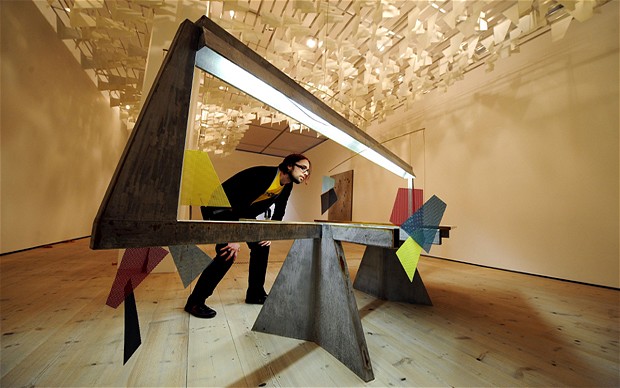
Martin Boyce installation

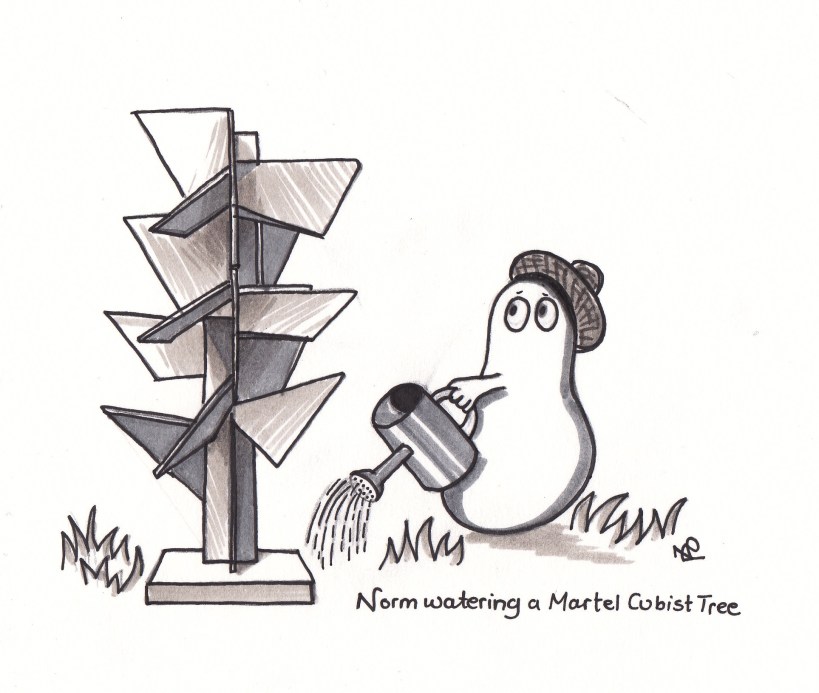
Martels' Cubist Trees

However it is the winner of this year’s Turner Prize, announced yesterday evening, which most inspires, and for me, Martin Boyce’s take on the urban environment recalls the quirky originality of the modernist revolution. His “installation” is a quietly atmospheric, almost poetic exploration of an autumnal park landscape, a bench like structure dappled with the light which flows through a metal leafy mesh on the ceiling. There are geometic paper leaves on the floor, and further leaves suggested by the mobile structures which appear to reference the whimsical mobiles of Calder. I especially love the slanted wonky litter bin, perfectly completing the urban park environment which has been created, but which also appears, nostalgically, to reflect the spirit of modernism. This reference is concreted (excuse the pun) by the explicit reference to the concrete Modernist garden of the artists Joel and Jan Martel, first shown in the 1925 Exposition des Art Décoratifs et Industriels Modernes in Paris, a picture of which hangs within Boyce’s installation. This Modernist garden included concrete, geometric trees, their angular motifs seemingly reflected in Boyce’s own structures within the installation.

Norm watering a Cubism "Martel" Tree (2011 © Nicholas de Lacy-Brown)

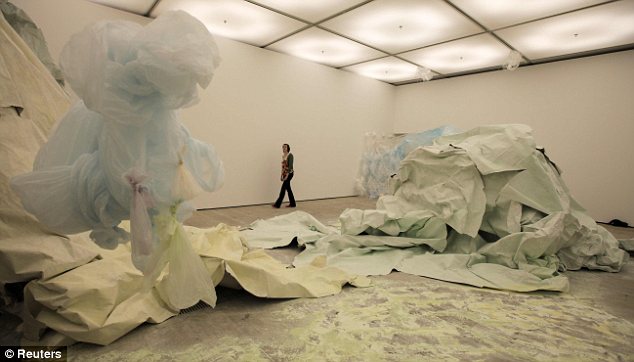
Boyce’s work is no readymade. This has taken skill, and with it he creates undeniable atmosphere and produces a work with all the potential to trigger an emotional response from his audience. How wonderful then that with this year’s Turner Prize, we appear to be moving forward away from conceptual art which, in yesterday’s blog entry, I so bemoaned. As for the other two Turner nominees, in particular Karla Black’s painted bin bags… well, the less said about that, the better…

Karla Black's bin bags

Here’s hoping: Horray for the death of Conceptual Art

I was reading an excellent article yesterday by Bryan Appleyard in the magazine Intelligent Life. There, he reports on Andy Warhol and the unsurpassed, astronomically high prices his works can achieve. The article was refreshingly honest, challenging the wider perception of Warhol as a genius of Art, questioning the integrity of the market for his work, and concluding, finally, that the world of conceptual art, which was prompted so sensationally by Warhol with his soulless soup cans and unchallenging, repetitive silk-screen printed celebrity faces, is now over. Conceptual art, that is art driven by ideas rather than sensuous, emotional engagement has, he says, had its time, its 20 year reign over the art world expired.

The article is like a fresh air in an art world which seems to me to be so inherently pretentious at the same time as being so stagnant in the putrefaction of its own closed-door confines that there is no room left for a rational spokesman standing up for the middle man, asking, challenging: is that art? Isn’t that an utter piece of rubbish? Too often we are presented with a heap of detritus/ moulding bed sheets, used condoms etc, and because it is in a gallery, we are suppose to treat it as art. It’s extremely cringeworthy when I see clearly educated people attending a gallery, speaking pretentiously between one another about the fall of the light, the emotional landscape and the artistic intention adhering to a black sack in the corner of a gallery. For all they know, it might have been abandoned there in error by the cleaners.

Read more

Sunday Supplement: Road Traffic Control

In the continued spirit of the Sunday Supplement’s exploration of some of my more detailed non-Norm work, this Sunday I am presenting a painting which I literally finished two days ago, having been working on it on and off since the first week of October: Road Traffic Control (Autumn in Richmond Park). The work was inspired by an early autumn day in Richmond Park – it was in fact the day of the mini heat wave in the UK with temperatures of 29 degrees on 1 October. This made for the rare sensation of feeling summer on the skin, but with the eyes seeing autumn hues bathed in glorious sunlight. It made for wonderful visual results in Richmond Park, which is in itself a unique and vast bucolic landscape in amongst the urban jungle that is London surrounding it. As soon as I got home, I started work on this canvas.

Road Traffic Control (Autumn in Richmond Park) (Oil on canvas, 2011 © Nicholas de Lacy-Brown)

Read more

Paris Part V: Restaurant Review

In my final instalment of The Daily Norm’s homage to Paris (I should add, this will probably be only the first Paris season of many… owing that I am unrepentantly obsessed with the place), I wanted to share my experience of three great restaurants encountered during my time in Paris. In this time of the vindictive TripAdvisor professional complainant, where countless businesses in the hospitality industry are closing down because of picky, negative reviews posted online like school yard insults, without a thought given to the livelihoods of the business men and women they effect, I think it is only appropriate that a good experience is also applauded online, and shared so that fellow Francophiles can also enjoy a great culinary experience to top off a day of Parisian indulgence in the City of Light.

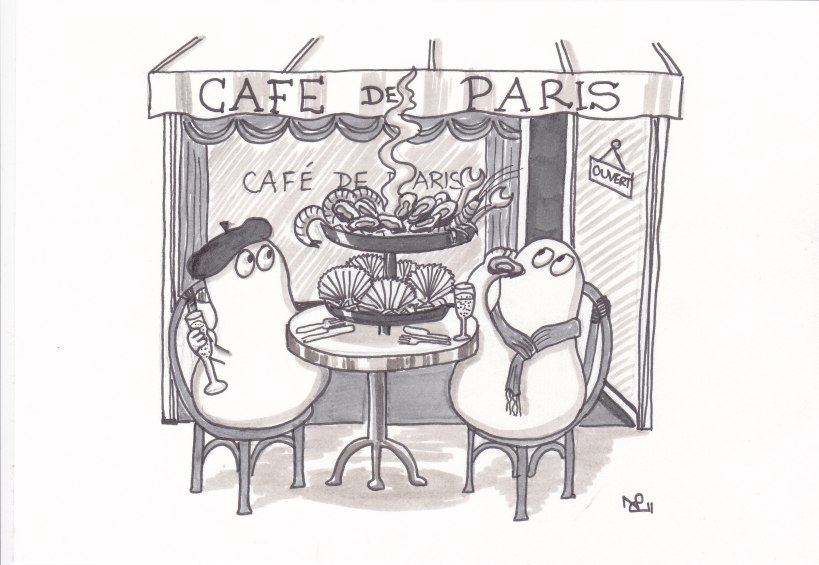
Norms at the Café de Paris (2011, pen on paper) © Nicholas de Lacy-Brown

Read more

Paris Part IV: Photographs

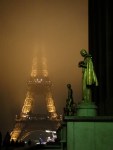
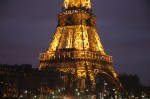
Well I may be back in gloomy old London, but our cousin over the Channel continues to inspire, and as part of The Daily Norm Paris Season, here are some of the photos I took on my recent trip. Ranging from architectural icons, to skyline spectaculars, there is a bit of everything for all the Paris fans amongst us. Enjoy!

Paris Part III: The Musée d’Orsay rehang and, finally, some macaroons
Our last day in Paris, our last breakfast in Le Pain Quotidien on the Rue des Archives, but not the end for our art tour of Paris. For today, we decided to try our luck on a week day where we had failed on Sunday… the Musée d’Orsay. So, like Sunday, there were queues to get tickets. You can buy tickets for the museum online, but they don’t give you the option of printing at home (like the Grand Palais tickets) and instead you have to go in search of a FNAC store to collect your pre-bought tickets, which in my opinion somewhat negates the queue jumping benefits of buying online. So in the event, we waited 40 minutes in a spiralling but steadily moving queue to get in, and those minutes went by fairly quickly, as the anticipation of getting inside and feasting on perhaps Paris’ greatest art collection grew closer. And once inside, we were not disappointed.

Read more