Skip to content

Valentine’s in Paris – Normy pops the ultimate question

It’s every Norm-girl’s dream. Whisked to Paris by her hunky Norm lover, taken to exhibitions, to restaurants, having his arm wrapped around her on evening strolls along the Seine, taking rides on carousels and sipping coffee outside packed bohemian cafes. All this Normette has experienced in the last few days of her Valentine’s trip to Paris, but she could never have imagined just how special this trip could get.

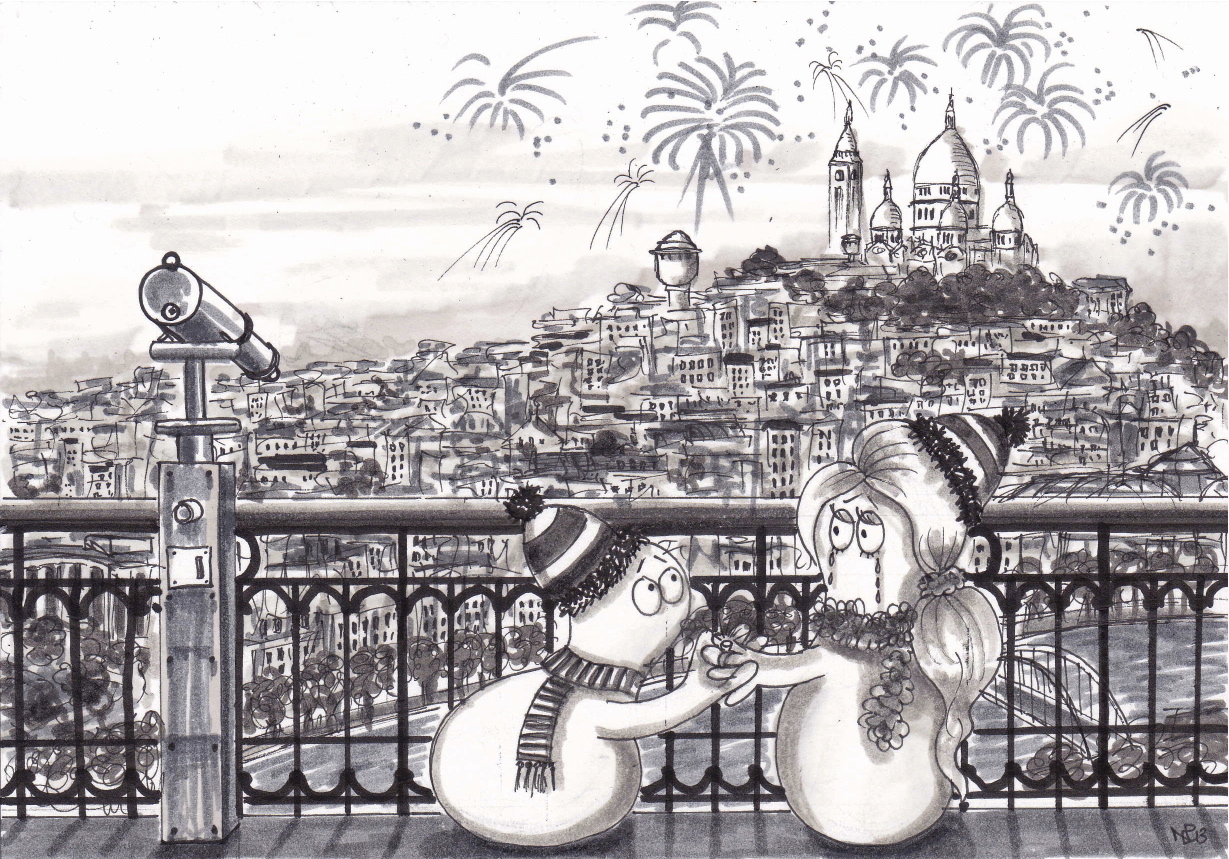
Normy had it all planned. The date was Valentine’s, festival of love, and the location was of course the Tour Eiffel. Wrapped up warm to face the February cold, Normy whisked Normette up the express lift to the third and highest floor of the tower, where spectacular views of Paris awaited. And then, just as the skies were beginning to dull and descend into a rosy pink, and the lights of Paris beneath began to sparkle like a carpet of diamonds, Normy genuflected forwards (Norms don’t have knees you see), took Normette’s single cold hand in his, and asked her to do him the greatest honour of all things, and agree to be his Norm-wife!

Normy and Normette: engaged on the Eiffel Tower (2013 © Nicholas de Lacy-Brown, pen on paper)

Normy and Normette: engaged on the Eiffel Tower (2013 © Nicholas de Lacy-Brown, pen on paper)

As if the cold hadn’t made her eyes water enough, Normette reacted with flowing tears of unabashed joy. Her heart beating asunder and her smooth gelatinous skin feeling suddenly goose-pimpled all over, Normette answered almost instantaneously: “Yes! Yes! Yes!!”. At that moment fireworks appeared to explode all around them (or perhaps that was just in their heads) as the significance of the moment manifested into a chorus of cheering exultation – Normy and Normette had got engaged!!

What happier story can there be for this Valentine’s day than the tale of two beloved Norms, united at last, despite turbulence and strife over Christmas, and facing the joys of a united life ahead. I leave you with a view of the moment of their engagement, and heartfelt Valentine’s wishes from all the Norms, and from me.

Happy Valentine’s Day!

© Nicholas de Lacy-Brown and The Daily Norm, 2001-2012. Unauthorized use and/or duplication of the material, whether written work, photography or artwork, included within The Daily Norm without express and written permission from The Daily Norm’s author and/or owner is strictly prohibited. Excerpts and links may be used, provided that full and clear credit is given to Nicholas de Lacy-Brown and The Daily Norm with appropriate and specific direction to the original content.

Valentine’s in Paris – Normy love upon Dali’s Mae West Lips

We last met with Normy and Normette on the 6th January. After a month of somewhat turbulent relations, when poor Normy did his level-best to present Normette with a series of 12 magnificent presents each representing one of the 12 days of Christmas (only to result in a catalogue of disasters from the demands of 3 pretentious french hens, a frozen-up swan lake, and an immoral dance show culminating in Normette running away to the Moulin Rouge for good), Normy and Normette finally patched things up. Having reunited and reaffirmed their love, they were invited to celebrate their union before cheering crowds of the Three Kings festival in Spain.

It’s now a little over a month later, and things have really moved on. Normy asked Normette to move in with him (this went smoothly on the whole, except for when Normette’s Louis XVI style dressing table got stuck in the narrow doorway of Normy’s bedroom, and when Normette’s little kitten, quite traumatised by the upheaval of the move, wet itself all over Normy’s prize Persian rug) and the two have been getting closer every day. So it didn’t come as a huge surprise when Normy made the ultimate in romantic gestures and whisked Normette off for a short break to Paris, the city of love, to celebrate Valentine’s.

Normy and Normette ponder the meaning of Dali's Mae West Lips (2013 © Nicholas de Lacy-Brown, pen on paper)

Normy and Normette ponder the meaning of Dali’s Mae West Lips (2013 © Nicholas de Lacy-Brown, pen on paper)

Here we see the loved-up twosome at one of their first Parisian stop-offs. Being of a cultured disposition, Normy and Normette couldn’t resist dropping into the Pompidou Centre to take a look at the work of renowned Norm artist, Dali-Norm. There, they were able to experience first hand his recreation of the famed Normy actress, Mae West. What after all could be more romantic than lounging in the recreated face of such a famously beautiful Normy actress? No wonder then that Normy chose this moment to give his Normette a Valentine’s rose.

There was only one slightly disconcerting feature about this room that Normy and Normette couldn’t quite understand. Just what was that red sofa they were sat on supposed to represent? Everyone knows that Dali Norm was a master of surrealism, but that strange rather voluptuous red shape the Norms had never seen before. Yes, they had seen Mae West’s luscious golden hair, and yes her two beautifully made up eyes? But those red things further down her face? According to Normy’s guide book, Dali Norm called them “lips”. Surreal indeed…

© Nicholas de Lacy-Brown and The Daily Norm, 2001-2012. Unauthorized use and/or duplication of the material, whether written work, photography or artwork, included within The Daily Norm without express and written permission from The Daily Norm’s author and/or owner is strictly prohibited. Excerpts and links may be used, provided that full and clear credit is given to Nicholas de Lacy-Brown and The Daily Norm with appropriate and specific direction to the original content.

Valentine’s kiss for equal marriage

Love is in the air as Valentine’s Day draws ever closer. The empty shelves of post-Christmas and post-sales shopping have been filled with rosy red pleasantries, boxes of indulgent truffles, delicate red roses and cards making declarations of ever lasting love. But there’s something about the commercialisation of love at Valentine’s which has always slightly unnerved me. Yes, it’s a chance to remind your loved one that your cherish them, but isn’t there something contrived about telling them this only when a card shop tells you to?

For these two Norms however, there is no need for a card, a box of chocolates or a bouquet of flowers to demonstrate their true bond of love and affection – a simple, heartfelt kiss will do, here shared in front of one of the most iconic buildings of Paris’ 4th arrondissement, the Hotel de Ville. On holiday from London and staying in the Marais (which also hosts Paris’ gay district), these Norms also have something else to celebrate this year asides from their own love – the British Parliament has just voted by overwhelming majority to give same-sex couples the right to marry.

Doisneau Norms share a valentine's kiss in celebration of equal marriage (2013 © Nicholas de Lacy-Brown)

Doisneau Norms share a valentine’s kiss in celebration of equal marriage (2013 © Nicholas de Lacy-Brown)

In doing so, Parliament have not made a statement about faith or religion, nor attempted to widen the extents of religious marriage beyond the bounds with which the church is comfortable. Rather, they have recognised, quite simply, that for both men and women who love those of their own sex, being gay is not a choice made or a lifestyle favoured, but who they are, and how they were born. Why then should gay men, women (and Norms)  not be afforded the equal opportunity to marry when they, like heterosexual couples, find themselves in a relationship so strong and so loving that they want to devote themselves to that person for the rest of their lives?

The Doisneau original

The Doisneau original

So this Valentine’s day, even if you do not have a loved one with whom to share a Valentine’s day kiss, take some time to consider the enhanced rights which have been afforded to gay men, women (and Norms) all over the UK. Finally, like their heterosexual counterparts, they have been given the opportunity to validate their love in marriage like everyone else.

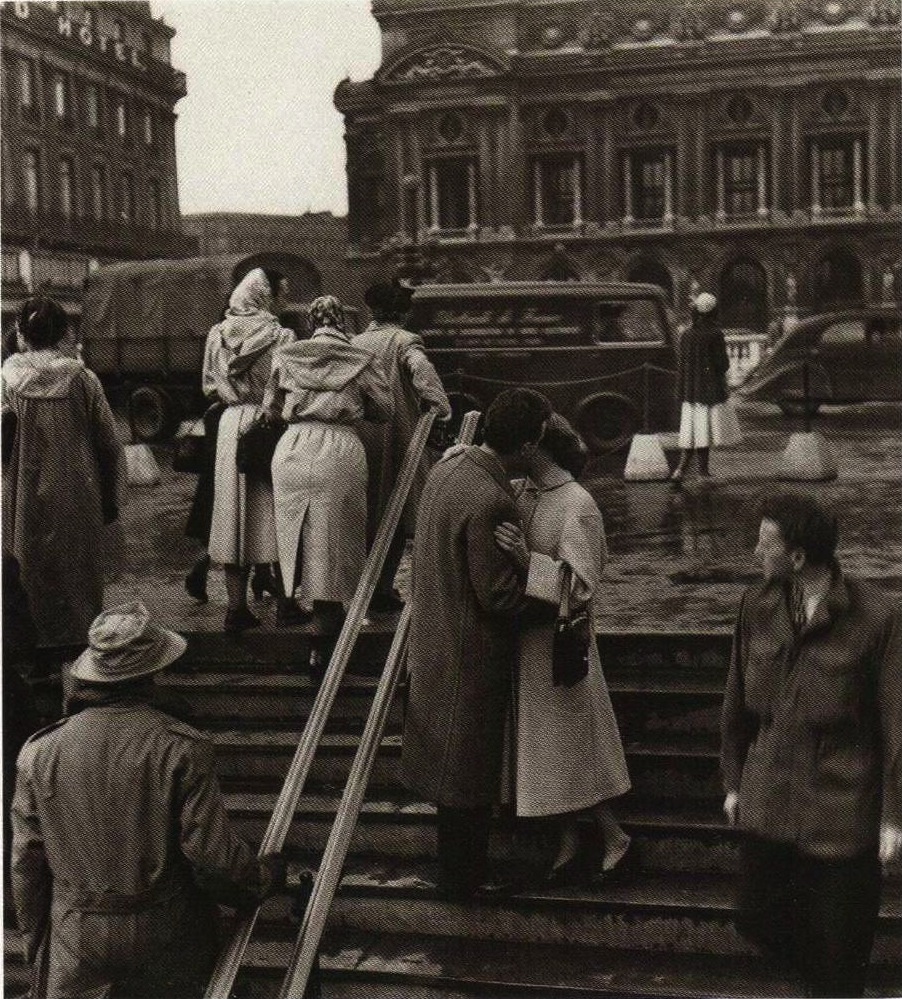
And for those eagle-eyed art lovers amongst you, you may recognise the scene which these two Norms now recreate. It is, of course, based on the famous photograph, Le Baiser de l’Hotel de Ville, by celebrated French photographer Robert Doisneau. Last Valentine’s I recreated another of his famous kiss photographs from the 1950s on canvas, in Norm-style. Here is that painting, and the Doisneau’s originals.

Le bazier de l'opera (after Doisneau) (acrylic on canvas, 2012 © Nicholas de Lacy-Brown)

Le baiser de l’opera (after Doisneau) (acrylic on canvas, 2012 © Nicholas de Lacy-Brown)

The Doisneau original

and the Doisneau original

Happy Valentine’s day to all and everyone, especially those celebrating the manifestation of an equal right to love and marry, at last.

Painting Parliament: Turner, Monet and Me

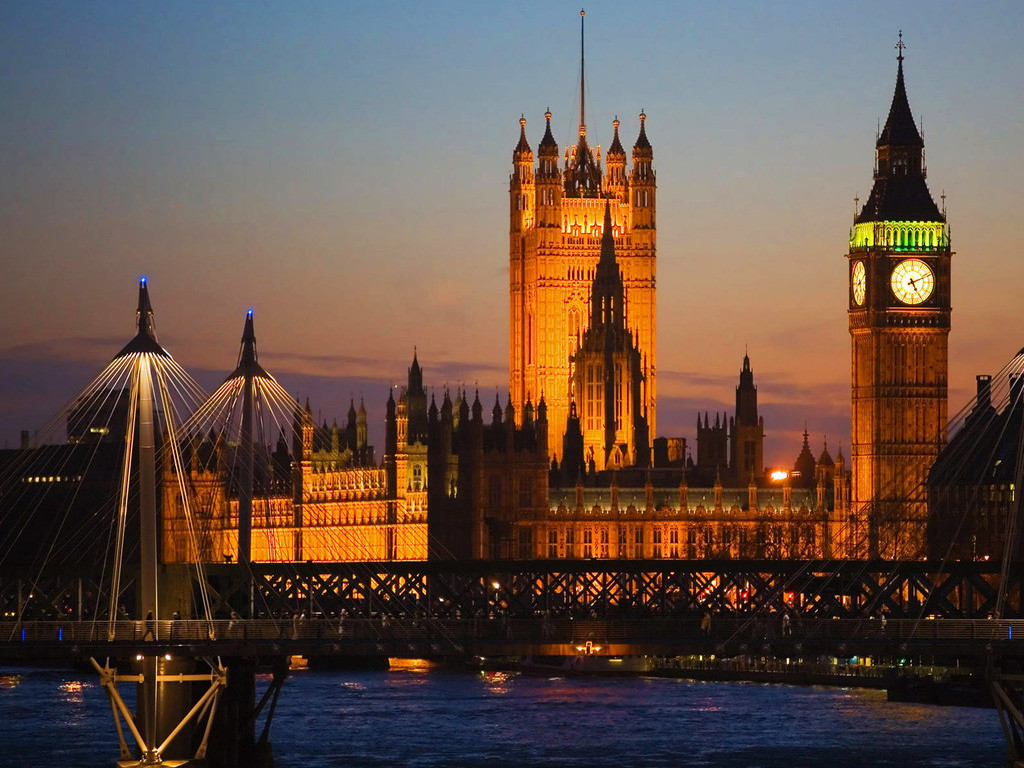
It’s not only an icon of London, recognisable around the world twice over, but it’s also one which I pass every working day. The Houses of Parliament in London is at the beating heart of the city. We set our clocks by the familiar chime of it’s big ben bell, we pass souvenir stalls packed full of paraphernalia containing the image of building, and we can see the soaring bell tower, now named Elizabeth Tower, from far across London. Yet we are all guilty of taking the Palace of Westminster, a.k.a. the Houses of Parliament for granted. When I emerge from the tube every morning, I do so directly opposite the great gothic palace, but never stop to take in its majesty, despite the hundreds of tourists who are always collecting before it with their cameras ready.
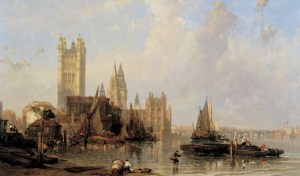
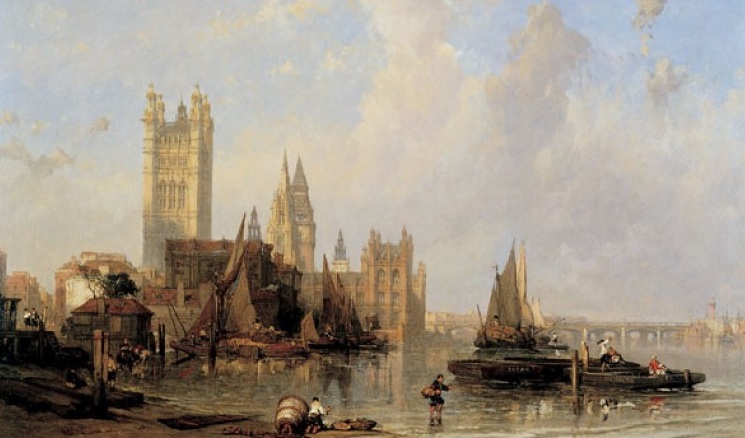
The Houses of Parliament from Millbank, David Roberts (1861) © Museum of London

The Houses of Parliament from Millbank, David Roberts (1861) © Museum of London

However all this changed when yesterday I headed up Elizabeth Tower to meet the great Big Ben first hand. Suddenly I have found myself looking at Parliament afresh. I even went into the Parliament bookshop and bought myself a souvenir or two (including a chocolate Big Ben – every visitor needs one). And all this had me thinking, the Palace of Westminster is such an impressive, iconic building, a masterpiece of architecture which is all the more perfect for its purposeful lack of symmetry, its miscellany of towers, spires and gothic ornamentation – no wonder then that the building has proved such an inspiration to artists over the years. And we’re not just talking any artists, but two of the greats. British favourite JMW Turner, and someone who, in a way, could be called Turner’s protege or disciple, father of the Impressionists, Claude Monet.

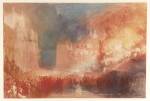
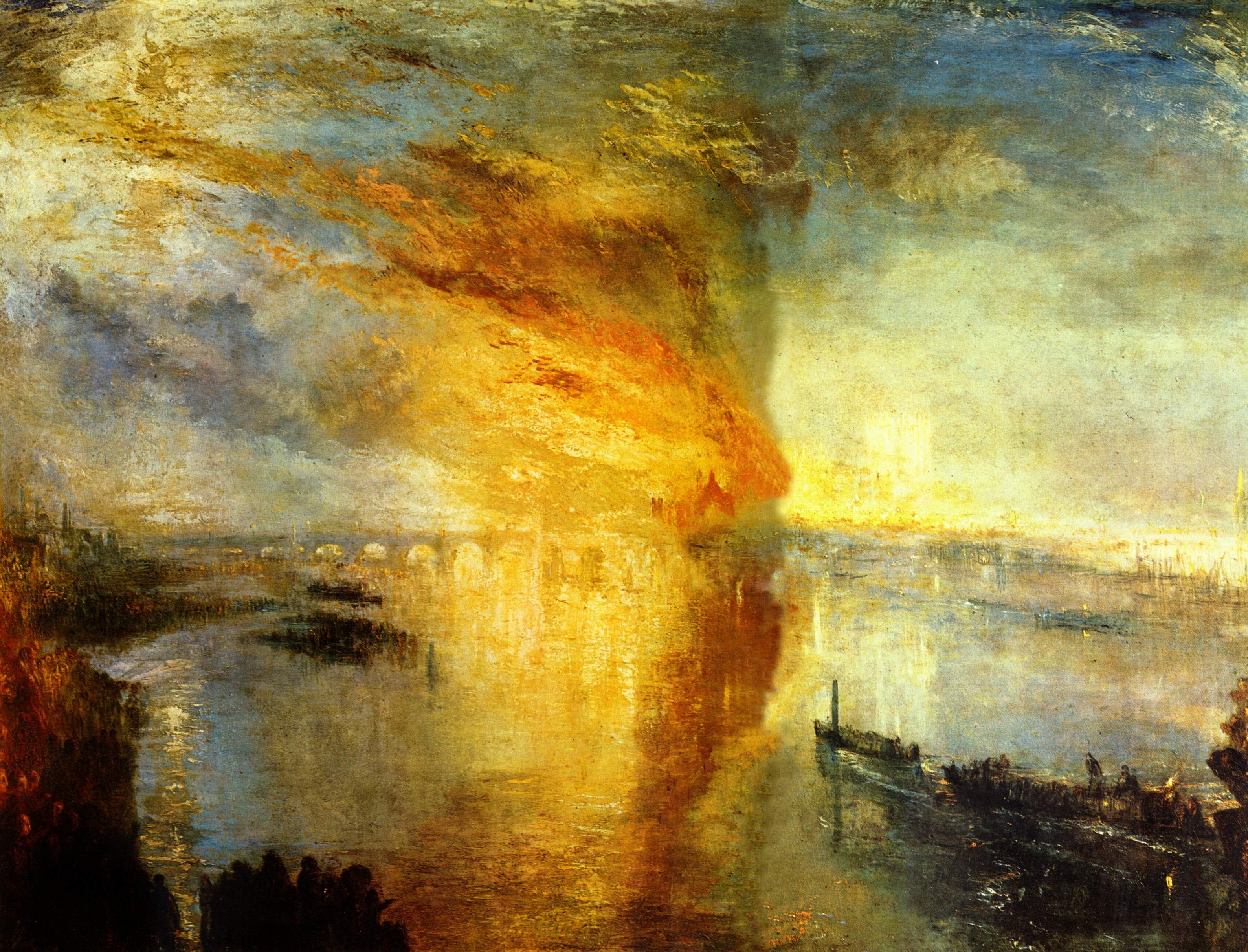
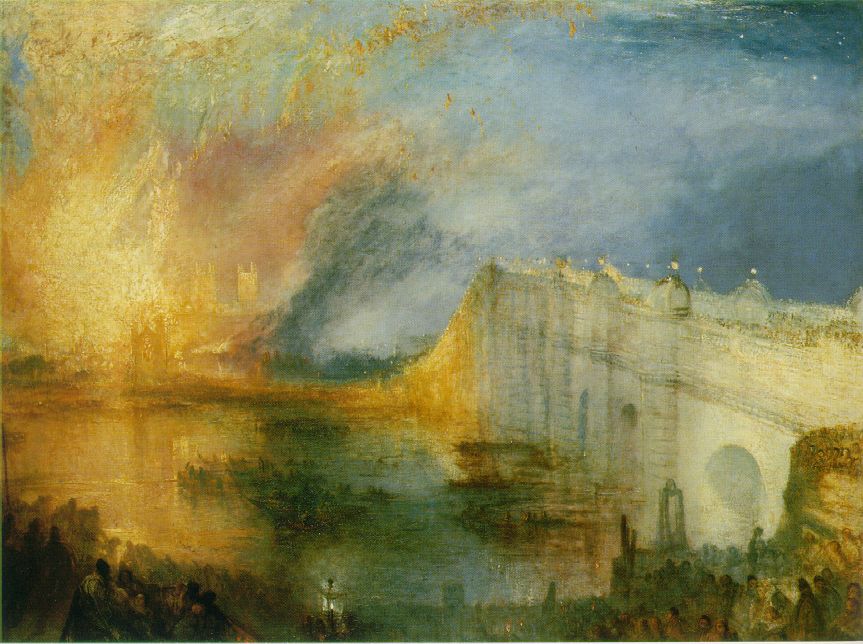
Both artist’s depictions of the Palace of Westminster have become iconic images of Parliament, but are also invaluable depictions of the building’s chequered history. For when Turner painted Parliament, he did so at a crucial point in its history – the day when Parliament was destroyed by fire: 16 October 1834. The fire, which ravaged the palace, gutting almost everything but Westminster Hall, proved inspirational to Turner. Already renowned for capturing the effect of light and smoke, almost impregnable foggy landscapes and turbulent great storms, Turner, who witnessed the great fire raging first hand, was evidently captivated by the gigantic inferno, pouring billowing smoke and red-hot flames high into the sky above the Thames.
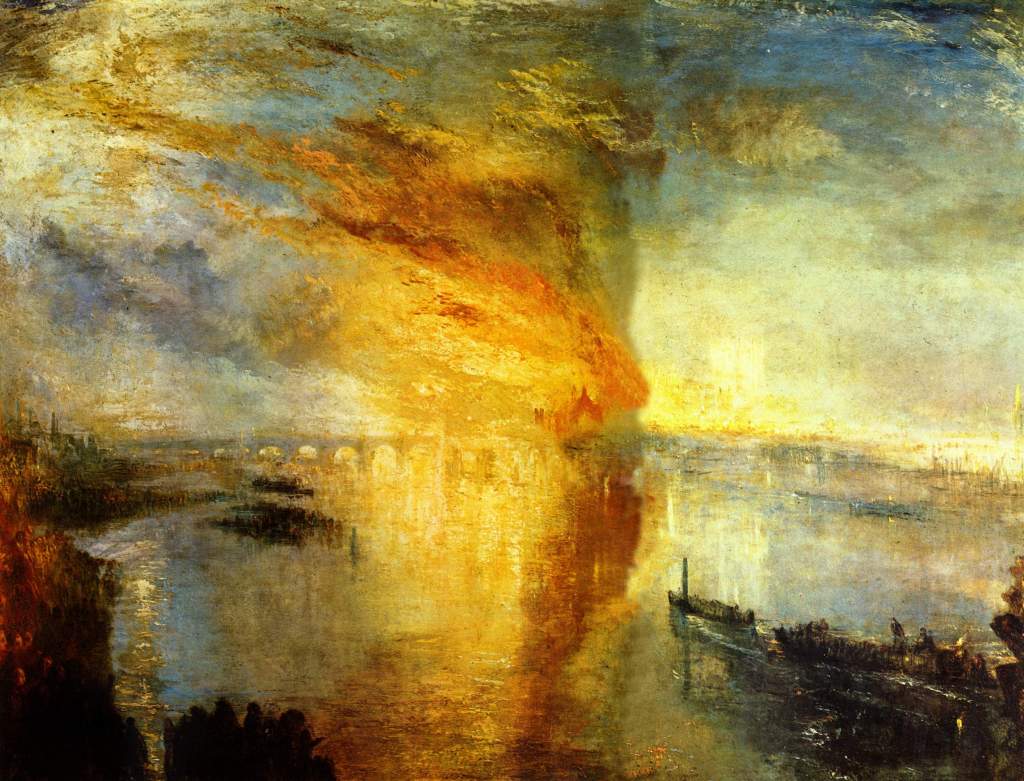
J M W Turner, The Burning of the Houses of Lords and Commons, 16th October, 1834 (1835)

J M W Turner, The Burning of the Houses of Lords and Commons, 16th October, 1834 (1835)

J M W Turner, The Burning of the Houses of Lords and Commons, 16th October, 1834 (1834-5)

J M W Turner, The Burning of the Houses of Lords and Commons, 16th October, 1834 (1834-5)

The canvases which result (the first held by the Cleveland Museum of Art, and the second by the Philadelphia Museum of Art) are brilliant, dramatic depictions of the fire, demonstrating the devastating extent of the inferno as it climbed high into the sky contrasted with the small shocked witnesses in the lower foreground. I love, in the second, the subtle silhouette of Westminster Cathedral glowing before the flames of its now burning neighbouring palace, and the huge column of fire rising dangerously high in the first.

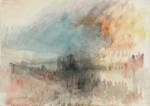
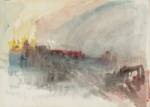
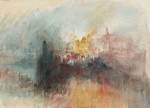
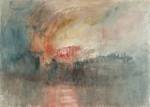
Turner was evidently more than inspired. A series of watercolour sketches (pictured below), which appear to have been sketched roughly at the scene or shortly afterwards, are a striking record of the almost undefinable power of the fire, as the light and heat of the inferno blurs and tempers the city surroundings. These watercolours, which were bequeathed to London’s National Gallery and are now held at Tate, are so instantaneous in their quick creation that they start to look almost abstract in their composition while retaining a powerful contrast between glowing super-hot heat and the foggy smokey surrounds. It’s an effect which is brilliantly executed for such a loose and uncontrollable painting medium as watercolour.

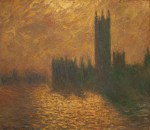
But perhaps the most famous paintings of the Houses of Parliament are those depictions by impressionist master, Claude Monet. Monet, too, was evidently inspired by the elegant gothic structure which, by the time he visited London twice, once seeking safe haven during the Franco-Prussian war in the early 1870s and again at the beginning of the 20th century, had been rebuilt into the structure we know and love today.
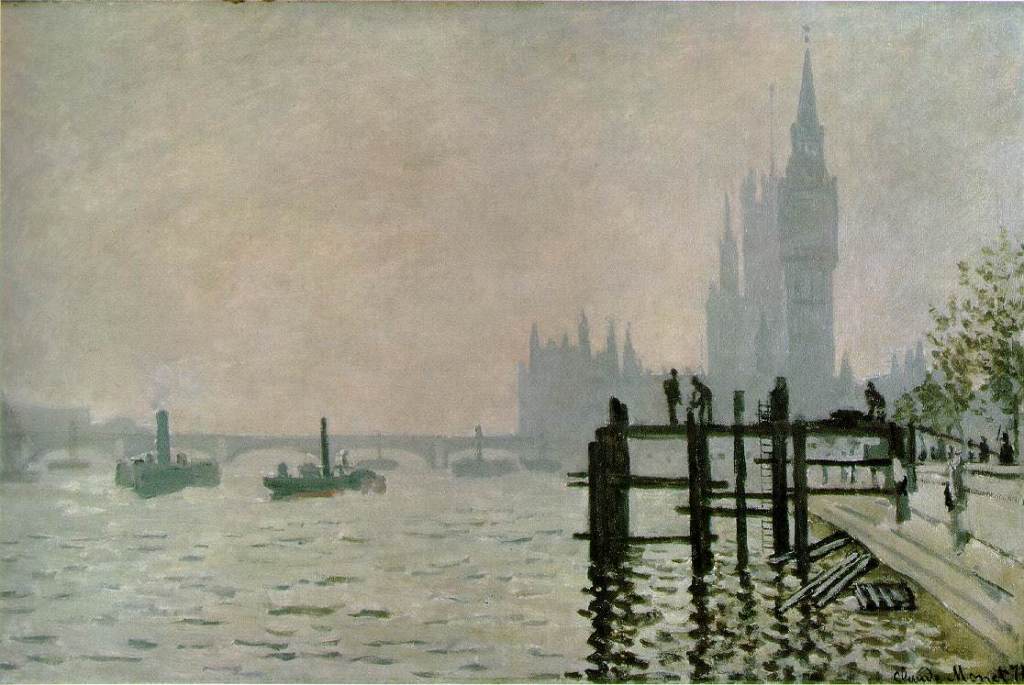
Claude Monet, The Thames at Westminster (1871)

Claude Monet, The Thames at Westminster (1871)

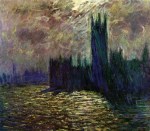
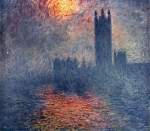
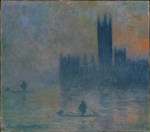
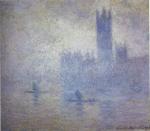
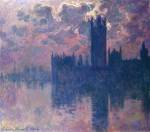
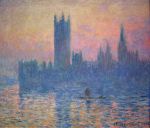
But for Monet, who was, by his own admission, greatly inspired by Turner’s expression of light and changing weather, the real inspiration appears to be not so much the Parliament building itself, but the varying effects of weather, light and city smog upon the building. While his first depiction of Parliament (above) is a fairly detailed depiction of the Thames at Westminster, showing the intricacy of the Palace of Westminster, albeit somewhat faded into a smoggy urban background, his later series of Parliament paintings concentrate far more on the changing light of London than on the landscape itself.

The results are a stunning series of works. The quick application of paint, no doubt painted in a great rush to capture the changing light as was Monet’s obsession, is so energetic and alive that the Palace appears to quiver before our very eyes, the effect of the smog and river mist undulating and turning over the surface of the canvas, capturing in turn the light as it filters through the layers of cloud and vapour. It’s hard to choose between these depictions, all of which are equally evocative of another stage in Parliament’s history, when London was almost chocked with poisonous noxious gases and a horrible river stench. But oh what a beautiful effect it had once captured by Monet’s hand.

Finally, we turn to the modern day. The Houses of Parliament continues to delight Londoners and tourists alike, stood proudly adjacent to the River Thames, and surrounded not by city smog, but by a thriving bustling capital city and, every 31 December, a firework display to rival all others across the world. Yet still, the character of the building changes, and its mood metamorphoses, as weather and light cast transformative moods upon this spectacular structure.

On one such day, when menacing clouds began to break apart, and blue sky and a winter sun peeked out from behind the cover of cloud directly above the great gothic structure, I, like Monet and Turner before me, was captivated by the stunning view before me, and all the more so for the doubling of the image thanks to the reflective image in the river below it. Some time later, I took out my brushes, oil paints and a canvas and painted that view I had seen – it was in fact one of the first oils I had ever attempted. And here it is. It’s no Turner or Monet admittedly, but it is my own painted homage to the power and glory of London’s Houses of Parliament.

Cityscape I: London (2012 © Nicholas de Lacy-Brown, oil on canvas)

Cityscape I: London (2012 © Nicholas de Lacy-Brown, oil on canvas)
Big Ben at close Quarters – the Elizabeth Tower Tour

It’s almost certainly one of the perks of the job of working for the British Government that occasionally you get to peek behind the scenes of the nation’s famous landmarks, monuments and buildings – icons which have made Britain and in particular the city of London famous throughout the world. And without a doubt one such perk, in which I have most recently indulged, is getting a tour up London’s most famous landmark of all: Big Ben.

Of course I didn’t actually go up Big Ben. For as we Londoners are so fond of telling everyone who mentions the BB words, “Big Ben” is not actually the name of the bell tower at all – rather the tower is now officially titled “Elizabeth Tower”, a title bestowed upon it only last year in celebration of HRH Queen Elizabeth II’s Diamond Jubilee. “Big Ben”, meanwhile, is the name of the massive bell which sits atop the tower and rings out across Westminster at every quarter past, to, on and half past the hour. And having stood right next to it today as it bonged out the hour at midday, I can confirm that it is both very big and very, VERY loud!

big ben cropped

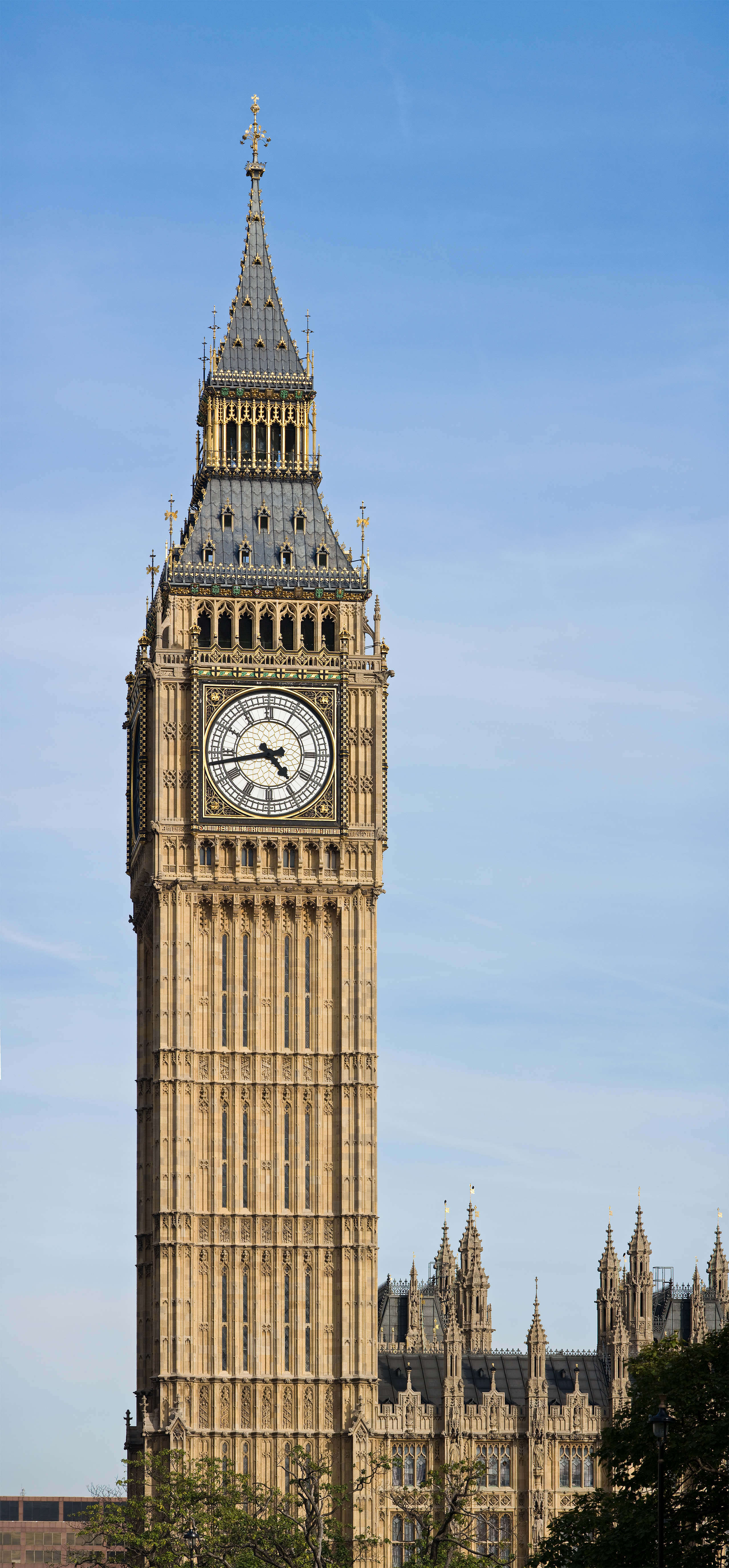
Clock_Tower_-_Palace_of_Westminster,_London_-_September_2006-2The Tower itself was an innovative new feature of the Palace of Westminster when it was redesigned by architect Charles Barry (who also designed Highclere Castle, none other than the real Downton Abbey for those Downton fans amongst you) following a great fire which destroyed the original Parliament building in 1834. For the tower itself, Barry looked to Augustus Pugin for assistance, an expert on the Gothic revival style of architecture, the likes of which has become characteristic of the Palace of Westminster and makes the finished complex look far older than it actually is. The tower went up slowly – it took some 16 years to build to its full 315 feet before finally being completed in 1859.

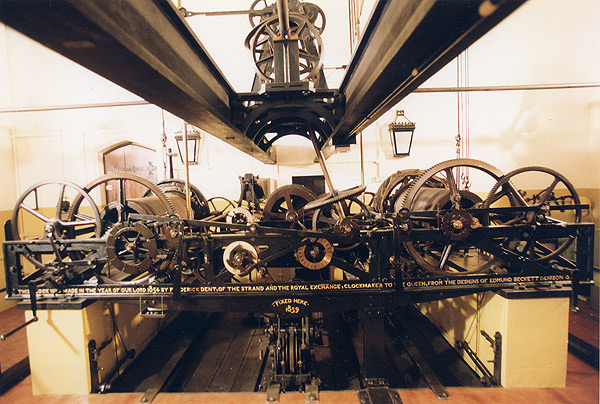
As for Big Ben and the clock itself, when this was designed it was fashioned to be the best of its kind and surpass all clocks like it around the world. And for a time, it did so (it’s still the 3rd tallest free-standing clock tower in the world, and probably the most famous). Designed by a barrister, no less, Edmund Beckett Denison, together with George Airy, Astronomer Royal, and constructed by Edward John Dent, the clock was a feat of engineering for the time, not least because it was designed to be within a second’s accuracy at all times, despite the fact that up in the tower, the clock faces are exposed to such a battering from the elements. Without getting too techy (largely because I don’t understand the technology all that well) the clock consists of various counterweights which move up and down the full height of the tower, which in turn power the clock faces and the various hammers which create the clock’s characteristic bong every 15 minutes. The clock needs to be wound up 3 times a week, and various clock winders are always on hand for the job, although electricity today does much of what it once took an army of men to achieve through brute strength alone.

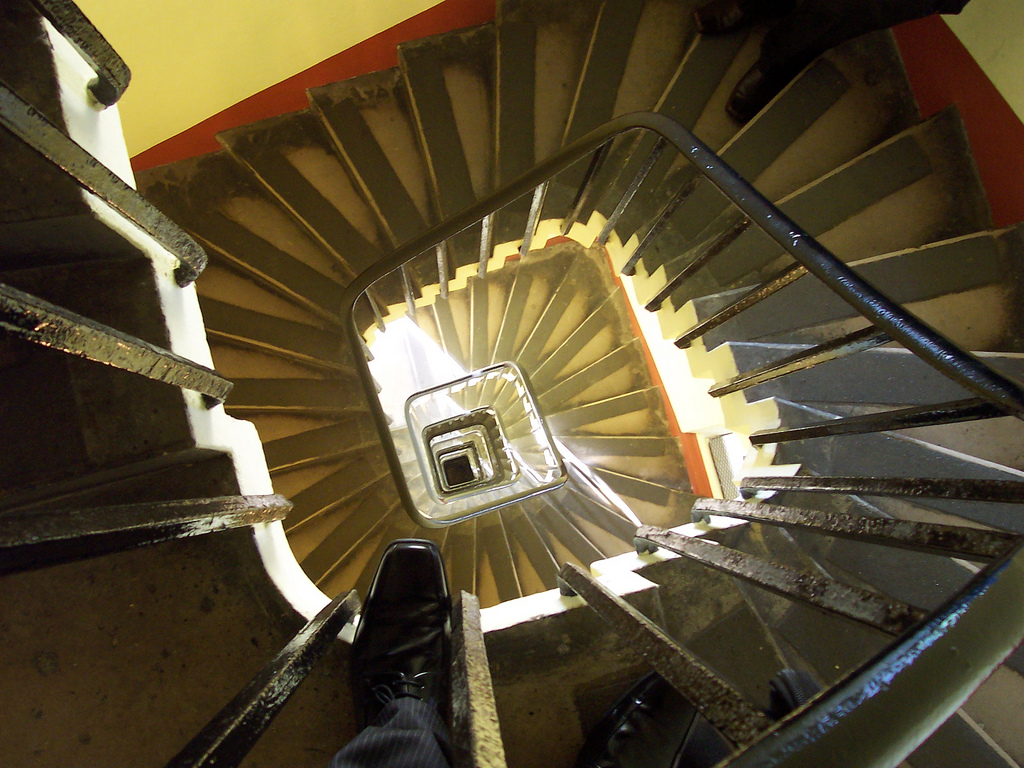
The stairs looking up (a little daunting) (Parliamentary copyright images are reproduced with the permission of Parliament)

The stairs looking up (a little daunting) (Parliamentary copyright images are reproduced with the permission of Parliament)

Stairs looking down (not good for those with vertigo) (Parliamentary copyright images are reproduced with the permission of Parliament)

Stairs looking down (not good for those with vertigo) (Parliamentary copyright images are reproduced with the permission of Parliament)

The machinery of the clock (Parliamentary copyright images are reproduced with the permission of Parliament)

The machinery of the clock (Parliamentary copyright images are reproduced with the permission of Parliament)

The clock is an incredible marvel to bestow, and all the more so from up close. Getting there wasn’t exactly easy. Entering Portcullis House, the new modern entrance to Parliament, we had to go through airport style security before being taken down stylish escalators, descending into the earth which in turn led us to a passage taking us directly beneath Parliament Square and into the grounds of Parliament itself. From there, the starkly modern architecture of Portcullis house metamorphosed rapidly back in time to the iconic gothic decoration of the Palace of Westminster. Soon reaching the small door of the tower, our descent began up all 334 stone spiral steps to the top of the tower.

View from the Tower

View from the Tower

This wasn’t as bad as it sounded. Luckily we were allowed to stop roughly one third of the way up for a very informative talk about the tower’s history from tour guide Catherine Moss, before making the final trek, first up to watch the machinery of the clock itself before continuing to see the infamous bells. Well timed as ever, our visit to see the huge cogs and wires of the clock coincided with a quarter to midday, enabling us to see all of the still-original machinery in action, but missing none of the action on the hour itself. This great joy was reserved for the upper platform, above the clock-face, where we emerged just before 12 to stand by the incredibly large Big Ben bell as the clock struck 12.

A quarter bell (Parliamentary copyright images are reproduced with the permission of Parliament)

A quarter bell (Parliamentary copyright images are reproduced with the permission of Parliament)

Big Ben from above (Parliamentary copyright images are reproduced with the permission of Parliament)

Big Ben from above (Parliamentary copyright images are reproduced with the permission of Parliament)

Big Ben on the right (Parliamentary copyright images are reproduced with the permission of Parliament)

Big Ben on the right (Parliamentary copyright images are reproduced with the permission of Parliament)

The chime of the tower, with its melodic 20-chime sequence played by the four Quarter bells, followed by the deep bong of Big Ben itself, is a sound which is well known to us Londoners, and has particular significance every 31 December as it heralds in the new year to the accompaniment of a spectacular firework display. But being up close to the bells as they played out this celebrated tune was nothing short of incredible. The vibration which went through our bodies made for a totally immersive experience (we were given ear plugs I should note), and I must admit to being ever so slightly emotional as I saw, and felt, the familiar chime of Big Ben in action but centimetres away (luckily the wind was so strong that if I had been caused to shed a tear or two – and I’m not saying I did! – the wind disguised it). The chime, by the way, is apparently a variation on a phrase from Handel’s Messiah – the part shortly after the Alleluia chorus.

Our tour guide, Catherine Moss (AP Photo)

Our tour guide, Catherine Moss (AP Photo)

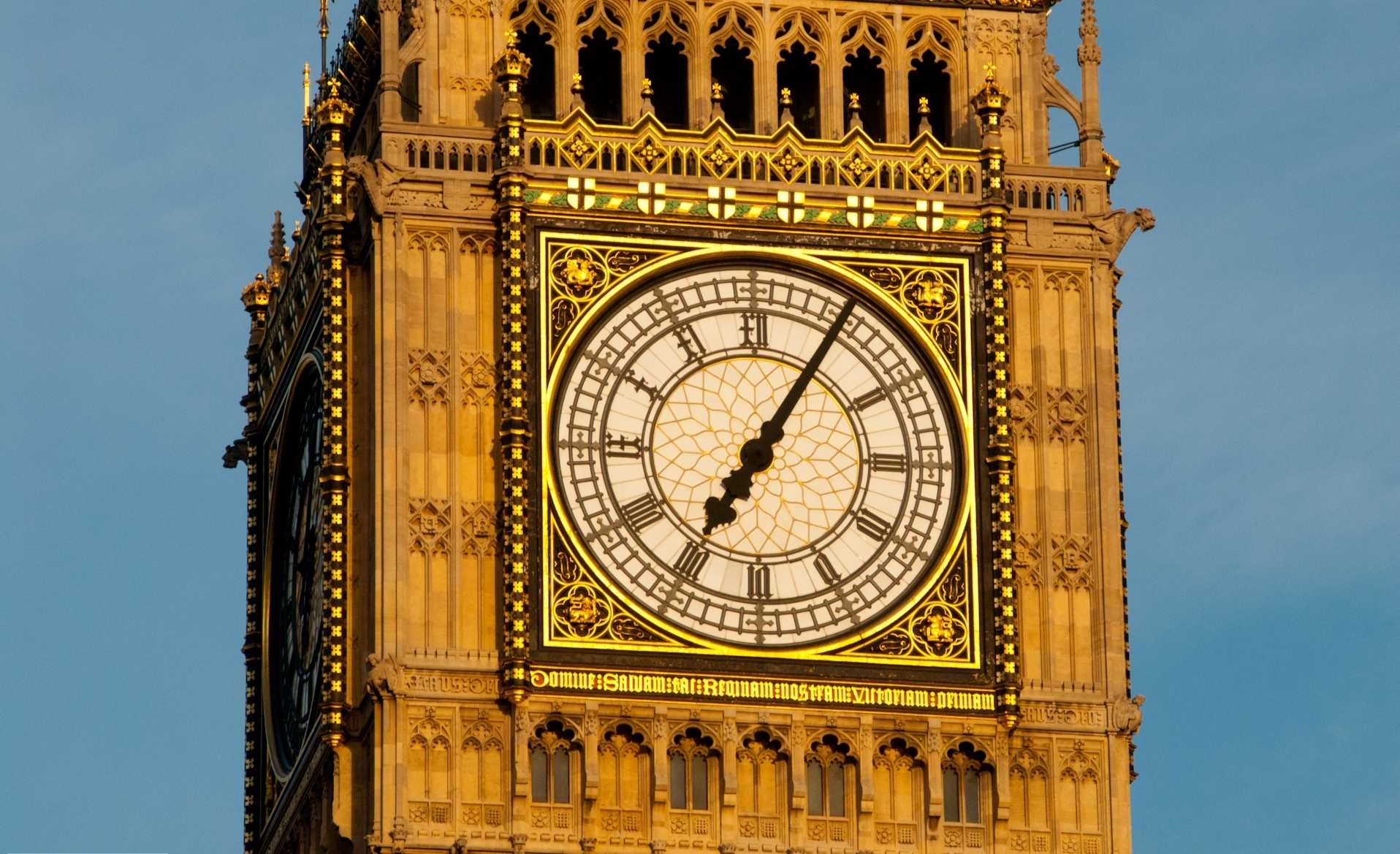
The famous clock face (Parliamentary copyright images are reproduced with the permission of Parliament)

The famous clock face (Parliamentary copyright images are reproduced with the permission of Parliament)

The clock face (Parliamentary copyright images are reproduced with the permission of Parliament)

The clock face (Parliamentary copyright images are reproduced with the permission of Parliament)

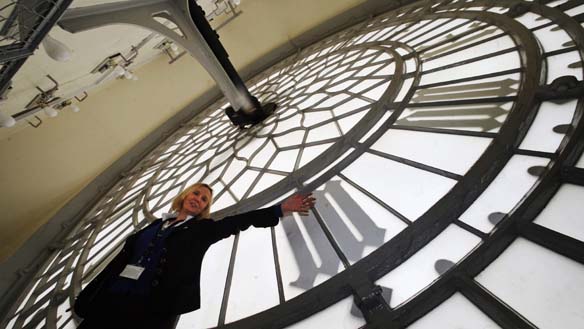
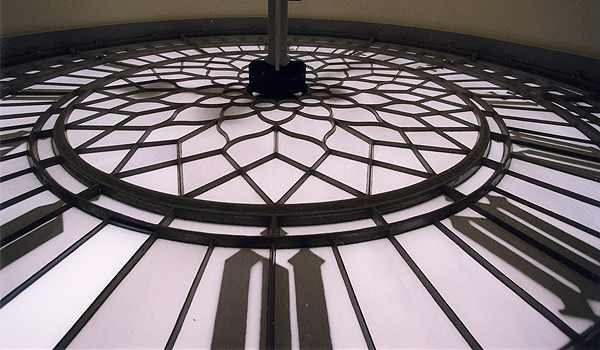
After embracing the great bong of Big Ben and the various Quarter bells in all their mighty fortitude, the final stop of the tour was to head down a level to the most prominent feature of the tower – the four sided clock face. We were able to stand just behind the world-famous clock faces, and see the now fantastically environmentally friendly long-life bulbs, especially designed to light up the huge clock faces with maximum efficiency by Philips, which are placed evenly behind the huge stained glass clock faces. Yet again, this was quite a marvel to behold, not least being able to appreciate just how huge these clock faces really are.

So heading back down the tower, perhaps a little more deaf than when we came up, I descended feeling extraordinarily lucky – access to Big Ben isn’t easy – you need to organise a tour through your local MP, although once organised, the trip is free. But that aside, I would have paid good money to enjoy this exposure to one of the country’s most loved national icons at close quarters, not least to learn the fascinating history of the tower, and gain an understanding of just how that all important national timekeeper keeps ticking onwards day after day.

Big Ben and the House of Parliament

Details on how to visit Big Ben can be found on the Parliament website.

Autobiographical Mobile: My painting diary – Day 16 and a half: The Caravan

Very occasionally, when I get home after work early enough, and when I am not totally exhausted from the daily grind of London living, I may take out my paintbrushes and indulge in a little evening painting. I find it difficult to dip in and out of my art work like this, not least because it always takes me a while to get back into the swing of painting after a break of even a few hours, but equally, taking the time out in a busy week for a little creativity can only be a good thing.

So my recent addition to my autobiographical mobile painting wasn’t really a day’s work as such, more of a half-day effort (or less). However what I painted was no less important for the quick few hours in which it was created. Following on from my weekend’s work on Enid the Golly, I went on to fill in that mysterious white box to the left of her: My family caravan.

IMG_3101

Not our caravan, but one just like it.

Not our caravan, but one just like it.

I think it’s fair to say that caravan holidays aren’t perhaps as trendy as they once were, back in the 70s and 80s when British families were only really starting to dip their toes into the great brave new world that is foreign travel. While the tourist boom was only starting to implode across the globe, for many of us, like my family, the comforts of familiar surroundings, driven on wheels from one holiday destination to the next was both a more economic and convenient holiday solution. The holidays taken by my parents, sister and I in our caravan, largely in the likes of the New Forest and the Isle of Wight, were some of the best of my childhood. Simpler holidays, but imbued with so many rich, sensuous memories, such as evening walks through the sun-warmed english countryside, returning to the slightly dewy damp caravan to cosy beds made by my mother from the easily converted sofas, setting aside bunches of freshly picked wild flowers, and settling down to the sultry sounds of country wildlife and the faint smell of now smoldering barbeques from neighbouring caravans; the family meals around the collapsible table, eating off our plastic caravan crockery emblazoned with a merry strawberry design; and those occasional days when, faced with grizzly British summer rain outside, we all gathered in the caravan to watch the likes of Wimbledon on the crackling old TV.

The caravan, painted.

The caravan, painted.

But beyond the holidays, the caravan was also hugely important to my academic progression. In term times, we used to park the caravan on our driveway, and in it I would sit, studying away for hours at a time, turning the caravan into my makeshift study, providing me with the perfect solitude in which to concentrate. I credit that caravan as being one of the reasons why I was able to do so well at school.

Sadly, the caravan is gone now, sold some years ago when we used it no longer, when a house in Spain took over our affections, and the physical strain intrinsic in camping became too much for my parents. But that caravan, its sights, its smells, is still so familiar to me, so inextricably a part of the fabric of my childhood that this biographical painting would not be complete without it.

The painting at its current stage

The painting at its current stage, complete with caravan

So I give you, our family caravan.

Until next time.

© Nicholas de Lacy-Brown and The Daily Norm, 2001-2012. Unauthorized use and/or duplication of the material, whether written work, photography or artwork, included within The Daily Norm without express and written permission from The Daily Norm’s author and/or owner is strictly prohibited. Excerpts and links may be used, provided that full and clear credit is given to Nicholas de Lacy-Brown and The Daily Norm with appropriate and specific direction to the original content.

Autobiographical Mobile: My painting diary – Day 16: Water reflection and Enid

The 2013 return to my latest large-scale painting is well and truly kick-started now. After last week’s update on the progress of my autobiographical mobile painting, I am now able to report on another day’s technical painting work on the canvas which has taken over my artistic output for the last 9 months.

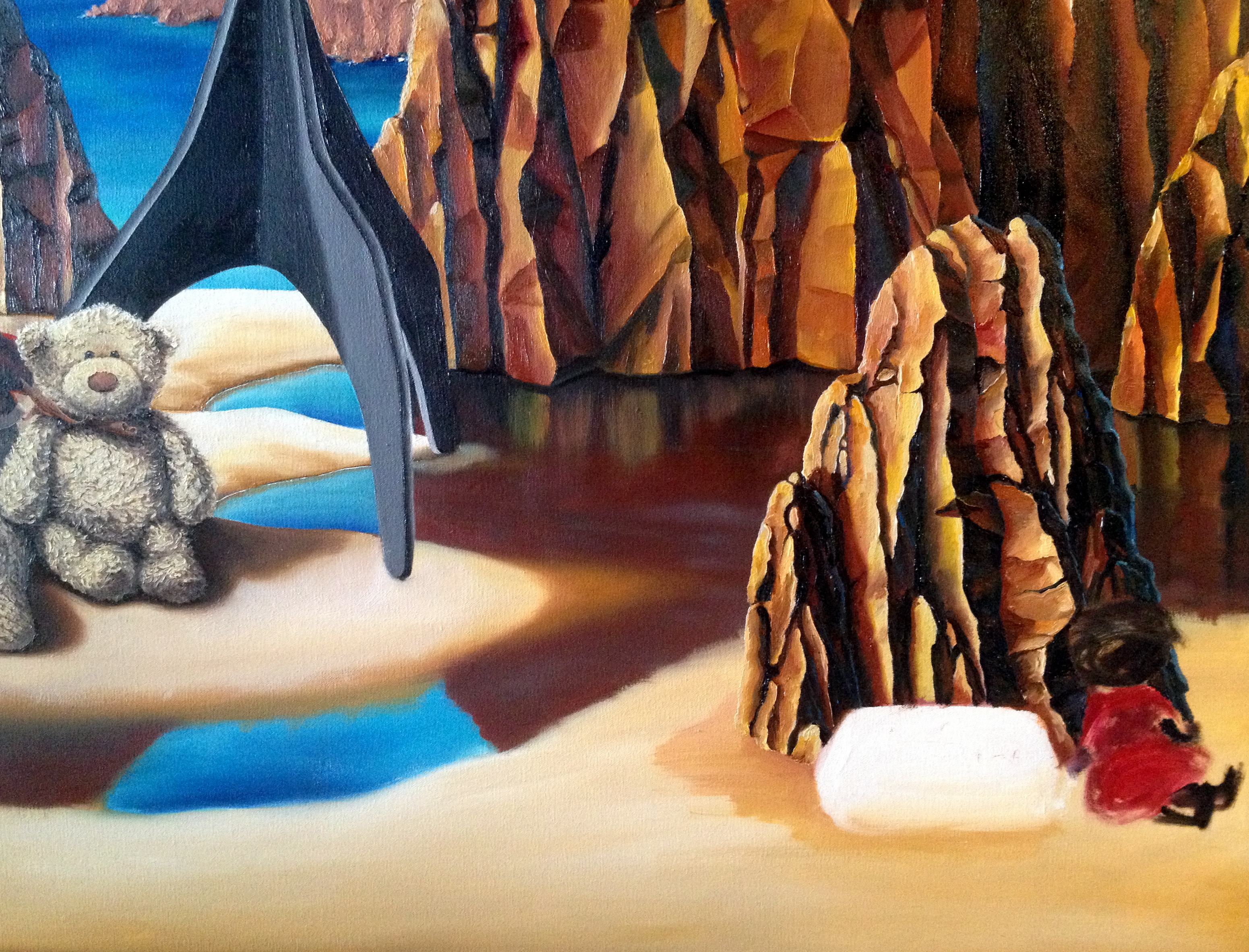
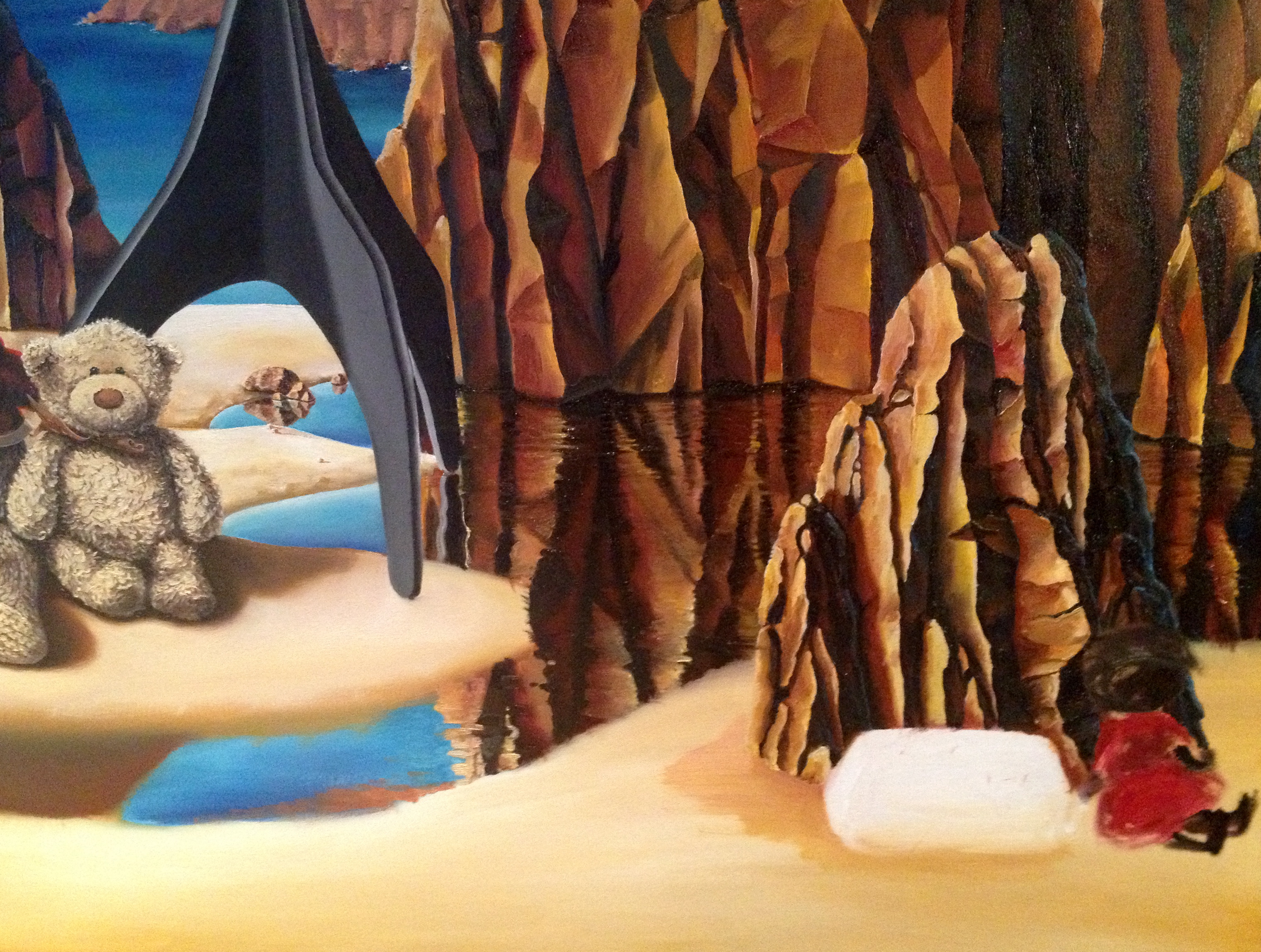
Day 16 of work saw me concentrate on the lower right-hand corner of the panel. There, having completed my large cliffs, it was now time to undertake the rather arduous chore of reflecting the cliffs into the pool of water below. I like this watery area… it has a sense of darkness and mystery for me, a bit like a large lake in a cave, a sense which is no doubt heighted because of the vast area of hostile rock face above.

IMG_3034In order to undertake the reflection, I started by practising a very small rock area in one of the little pools in the centre of the canvas (I anticipate that there will be a fair few rock pools by the time the canvas is finished). Having tested the art of reflection in that small area, I went on to the vast reflection of the right-hand cliff. It’s not easy to repeat what you have painted before, but all the more so to do so in reverse, as a reflection requires. It requires you to almost go back on yourself, to flip over every angle and to mirror every shade and colour, while ensuring that proportions are kept the same.

It took me most of the morning to repaint the cliffs in the pond. Once finished, I achieved what looked to me like a mirror reflection, but was not watery enough. The distinction between water and a mirror of course in the propensity of water to move, and therefore even on a still day, the reflection in water is bound to be distorted compared with a normal mirror reflection. Deciding that I’d give my scene a gentle sea breeze, I set about distorting my reflection with various ripples, many of which I created through dragging a dry brush over the surface of what I had just painted. This was a slightly scary moment, especially when I’d just spent the whole morning meticulously painting the reflected area. And of course if I got this bit wrong, the smudges of dark and light oil paint would dirty the canvas and it would be sometime before I could correct it.

At the beginning of the day

At the beginning of the day

First stage of reflection done

First stage of reflection done

Made into a watery reflection

Made into a watery reflection

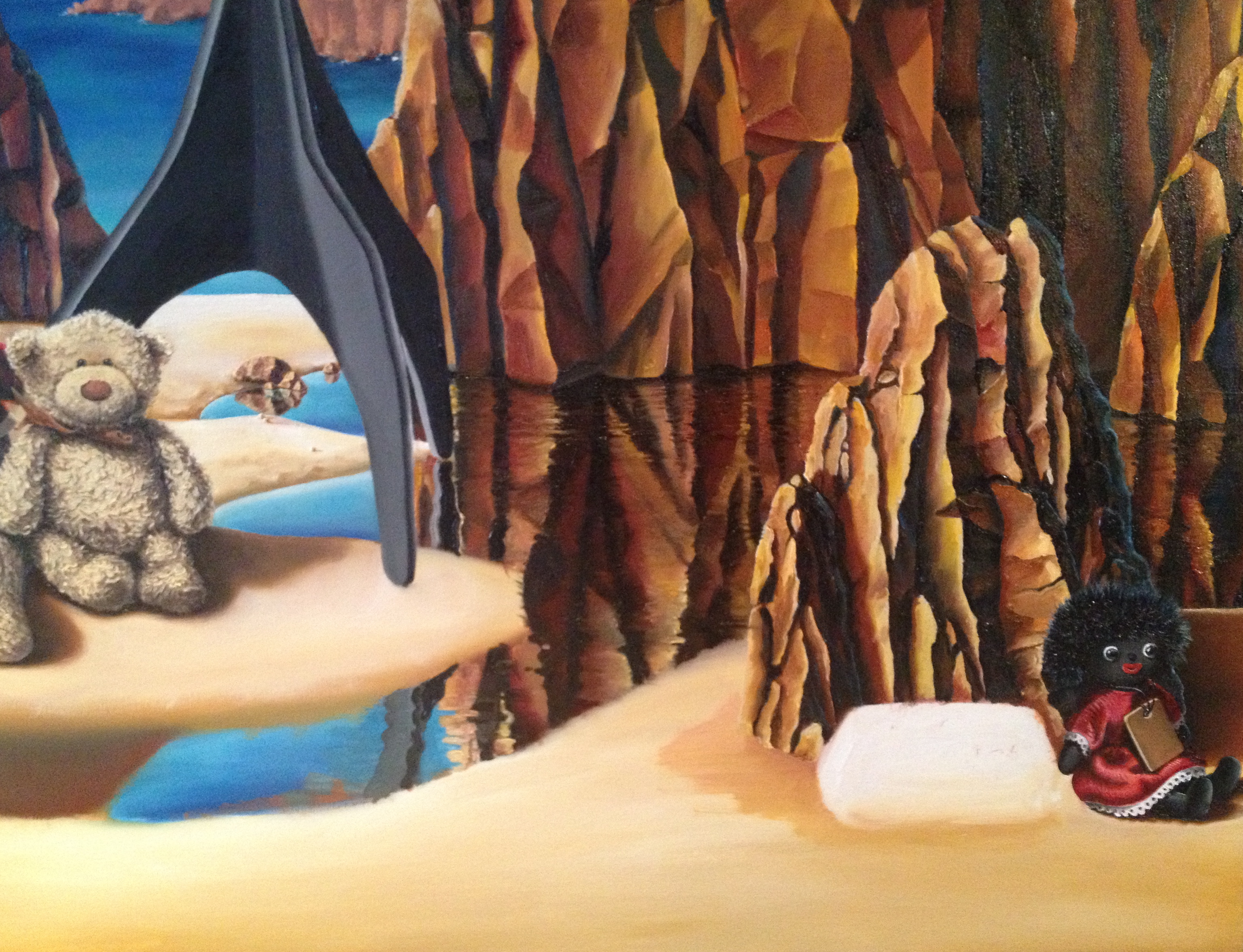
Sufficiently pleased with my watery reflection for now (it will undoubtedly change as other details of the image materialise and alter), I moved on to a detail at the foot of the canvas. While Bilbao and Fluffy, my teddies at the centre of the canvas, represent myself and my partner (they were our gifts to each other at the early stages of our relationship and now follow us around the world), Enid, the little “golly” down on the right, is a representation of my mother, and my childhood.

Enid in reality

Enid in reality

My mother, who herself has a large collection of gollies, some from her childhood, gave me Enid for a birthday present some 10 or so years ago. I was so pleased with her, I used to take her travelling with me. That was at least until travelling with a golly aroused too much anxiety on my part – This was in part because people displaying gollies in their windows have been arrested and accused of racial hatred… Is this the world gone “politically correct” mad? Perhaps so, and frankly it’s not a debate I want to entertain on my art blog, but all I know is that I grew up with gollies being to me, at most, as harmless as teddies and barbie dolls. My sister and I used to have golly picnics, where we would gather all the family’s gollies together and picnic with them, like your typical teddybears’ picnic. And I used to collect golly badges which one could only obtain having collected a sufficient number of vouchers from the jars of Robertson’s Jam. They are, needless to say, no longer available, but perhaps for that reason I alone, I prize my collection.

IMG_3057 IMG_3058

So in representing both my Mother, and my childhood, Enid is an integral feature of this autobiographical canvas. She’s all finished now, save for her label, to which I will add writing when the paint is dry.

Enid completed

Enid completed

And that was my day’s work. More to come, I hope, soon.

© Nicholas de Lacy-Brown and The Daily Norm, 2001-2012. Unauthorized use and/or duplication of the material, whether written work, photography or artwork, included within The Daily Norm without express and written permission from The Daily Norm’s author and/or owner is strictly prohibited. Excerpts and links may be used, provided that full and clear credit is given to Nicholas de Lacy-Brown and The Daily Norm with appropriate and specific direction to the original content.

Happy Half Birthday to Me!

Call me indulgent if you will, but being a summer baby, a pursuer of all things Summertime, by the time I get to the beginning of February, I am usually pretty fed up. Months of gloom, of dark evenings, and even darker mornings, freezing temperatures and ages still to go until those much yearned for summer holidays. And it’s the same every year, which is precisely why, as a young boy, I decided to brighten up this time of gloom by inserting a celebration bang in the middle of the winter gloom – my half birthday! And today is that glorious day, the day when, despite it’s being still 6 months until the always much anticipated date of my birth, I have a little mid-winter celebration, and find another excuse to indulge.

My half birthday cake!

My half birthday cake!

It’s true that my friends and family have always considered my propensity to celebrate a half-birthday to be a little eccentric to say the least, but I was particularly interested to learn, from a quick search for images on google, that I am not the only one who likes to use this 6 months marker as an excuse to celebrate when our full birthdays seem so far away. And why not? Of 365 days of the year, is it not right that we can feel at least half as special on one extra day as we do on the one day which we can call our birthday?

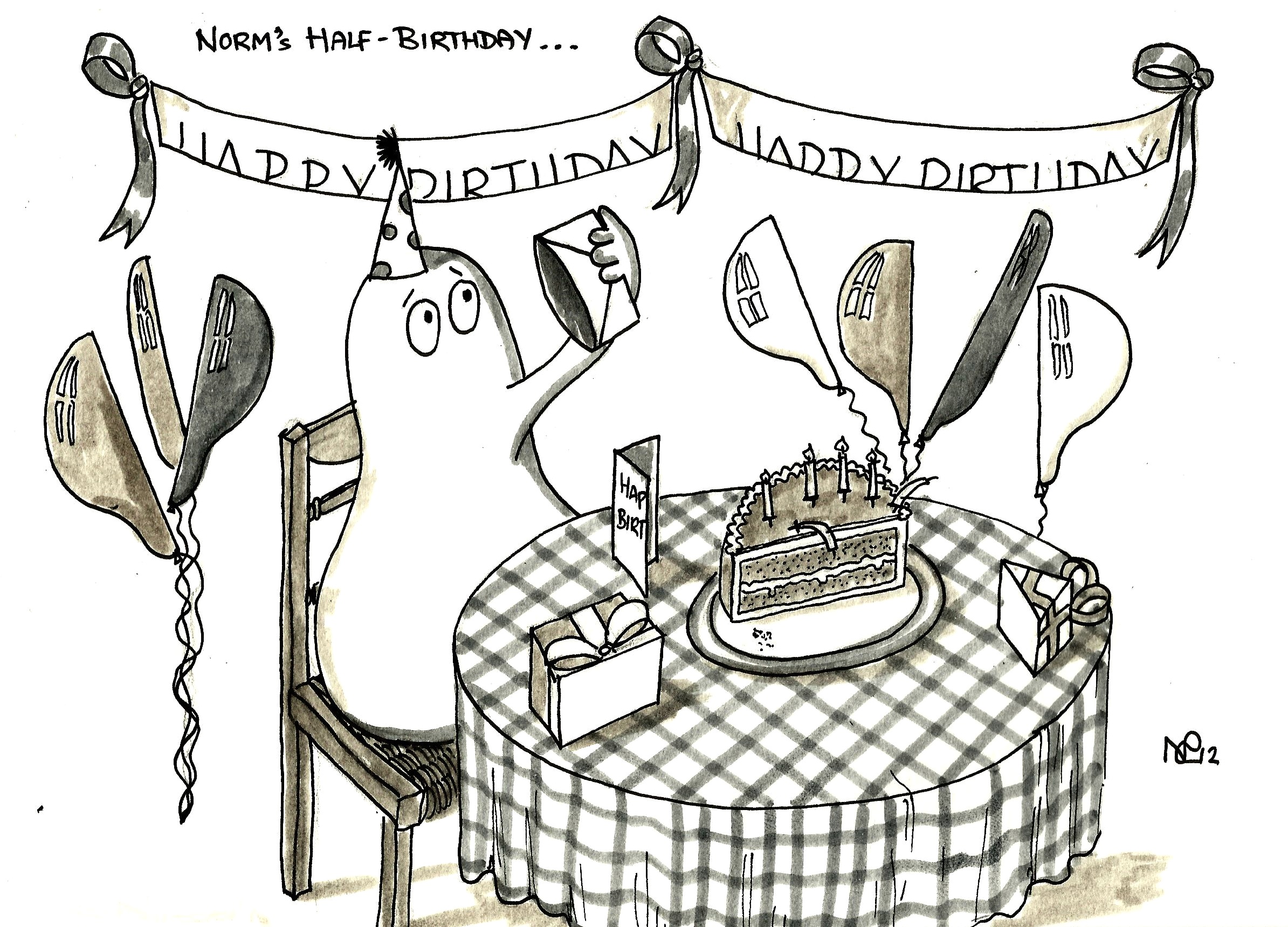
So in recognition of the auspicious day, I merrily headed out to Marks and Spencer to buy myself a cake which I then proceeded to cut in half (I’m not overly sure what I will do with the other half yet… something tells me it won’t keep until next year). In the meantime, I’m not the only one celebrating. Here is Norm celebrating his half birthday, with a half cake, half balloons and a half birthday card to boot. Just a shame that without the other half of that card, he has no idea who it was from!

Norm's Half Birthday - Norm looks for the other half of his card (2012 © Nicholas de Lacy-Brown)

Norm’s Half Birthday – Norm looks for the other half of his card (2012 © Nicholas de Lacy-Brown)

Wishing you all a fantastic weekend.

Autobiographical Mobile: My painting diary – Days 8-15: The sky and the cliffs

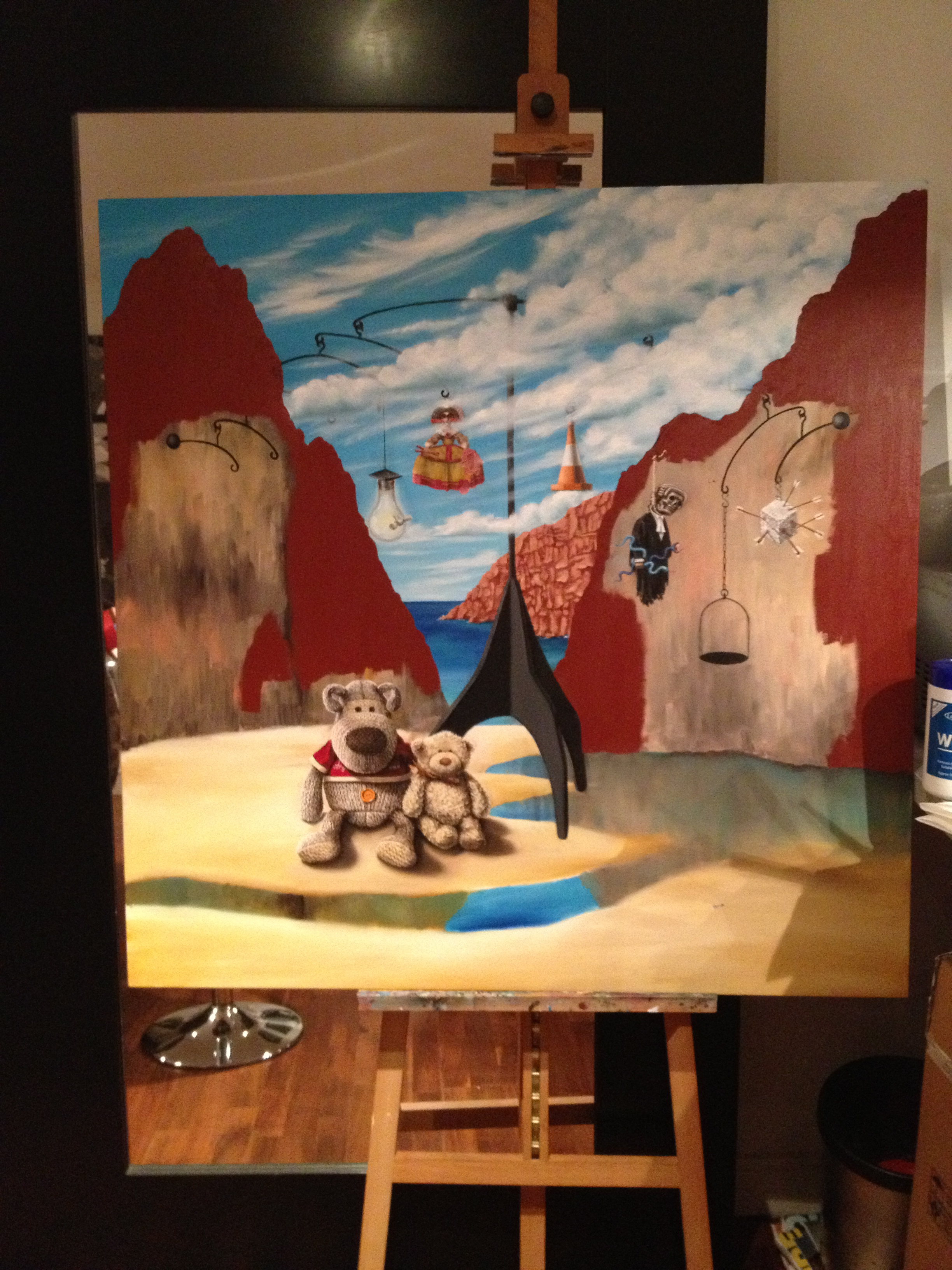
It’s been a long time since I last posted the progress of my Autobiographical Mobile painting – the large canvas on which I am painting something of a representational narrative of my life. The reason for this absence is not forgetfulness, more a lack of time to paint. Such is the continuous treadmill of modern life, that time to paint becomes slimmer and slimmer, and as daily work predominates the days of the week, its potential to sap at my creative energies extends further still, into the evenings and the weekends. I find it hard to paint on these dark winter’s evening, working in artificial light, when hunger pangs in my tummy and fatigue pulls at my eyelids. And at the weekends I find my time is filled with the many menial activities for which the week no longer allows time. And so my autobiographical mobile, itself a rather ambitious task, is taking its time to develop. Nevertheless, since I last featured the painting in October, some significant changes have manifested.

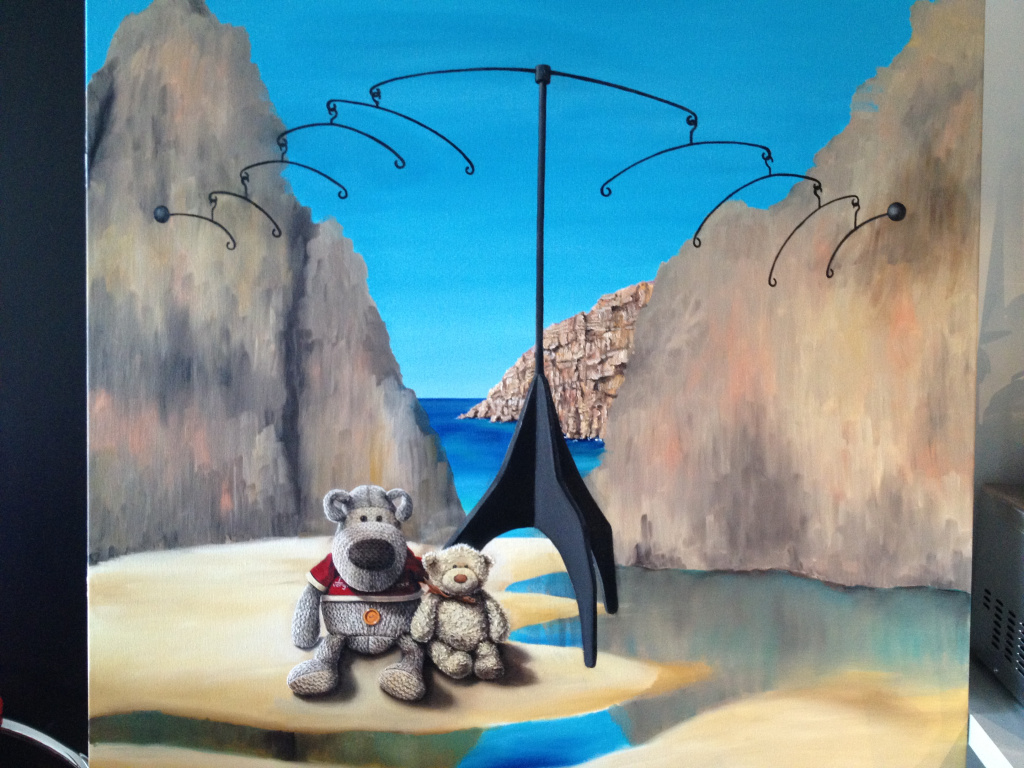
The painting after Day 1

The painting after Day 1

And with the "Calder" mobile, Fluffy and Bilbao

And with the “Calder” mobile, Fluffy and Bilbao

One benefit of having a painting slowly develop, hanging around my home from week to week, is that I have more time to contemplate its development. It was during the autumn that I developed a growing sense of unease about the work, finding gradually that the colours did not work. The pastel shade of the cliffs was too insipid, and the sky lacked depth. Both had to change.

So as I set to work on the painting after some weeks of rest, I first tackled the sky. Even though this meant largely undoing much of the work I had completed on the “Calder” mobile, I found the addition of clouds gave the flat blue sky more depth, more character and a greater balance.

The sky with the addition of clouds (and further work to the articles hanging from the mobile)

The sky with the addition of clouds (and further work to the articles hanging from the mobile)

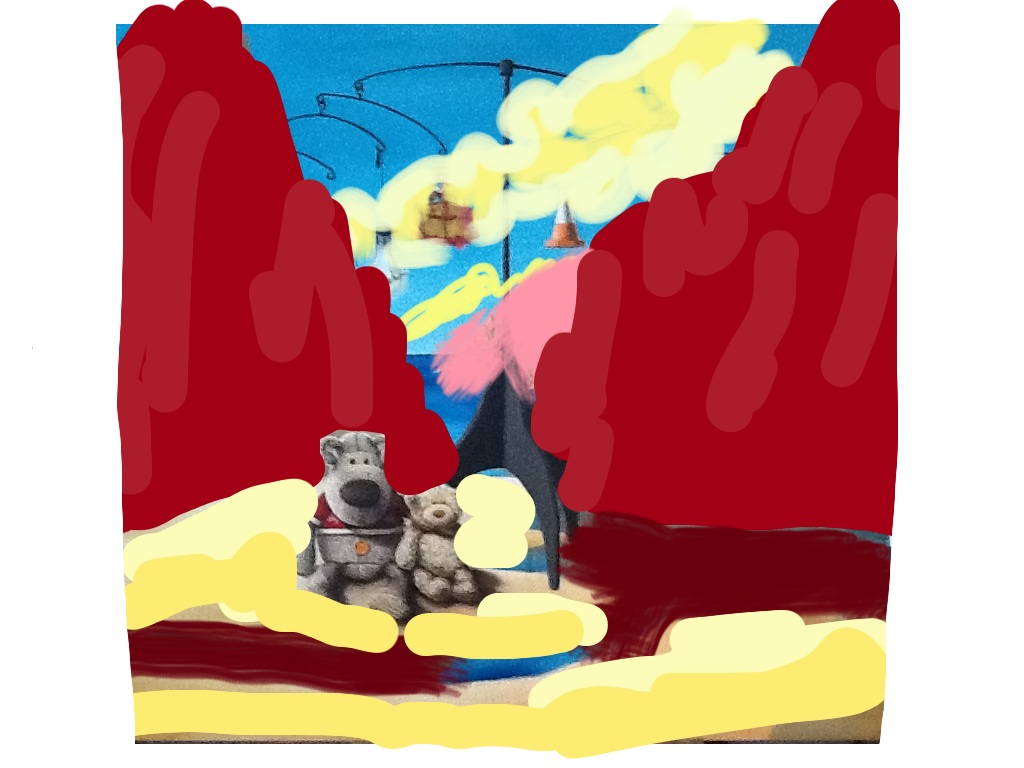
Satisfied now by my sky, I turned to the cliffs. It is one of the great benefits of modern technology that I can plan the direction of my painting midway through its progress, without even touching brush to canvas. With the aid of a paint application on my iPad and some very quick finger work, I was able to try out several new colour schemes with a view to assessing how the work would look with a bolder colour palate. I knew the insipid pastels of my background were no longer working with the bold modernist contrast of my central mobile, but I wasn’t sure which colour direction to take with the background. Here were a few iPad ideas…

photo image image1

In the end, opting for a richer brown-red cliff face, I set about covering the pinkier pastels of the pre-existing background. Just applying a plain coat of Indian Red required me to carefully paint around the already completed elements of my mobile and autobiographical symbols.

IMG_2511

With a new base coat applied, and much more satisfied with the richer colour balance upon my canvas, I set about working on the textural surface of my cliffs. Part inspired by the cubism of the early 20th Century, and wanting to create a more jarring, robust environment for my slightly surreal beach scene, I found myself drawn to create a multi-textured cracking, angular surface from a rich array of reds, browns, oranges and beiges. The total surface of the vast cliffs took me several days to complete, and even now I am forever changing and rebalancing sections.

IMG_2533

For the final touches of my cliffs, I added a number of large, self-standing almost obelisk-like boulders, increasing the detail and textural variance of these rocky surfaces the closer they got to the foreground.

The finished cliffs

The finished cliffs

At the end of all of this, I started to repaint my mobile structure, now much abused by the reinvention of the background all around it. Finally with the cliffs done, I can turn to the sand, the pools, and the all important mobile and the items which, hanging from its various tendons, will tell my story.

Until next time.

Patatas a lo Pobre

Sometimes the best things in life are the simplest. One of the greatest pleasures for me is going along to a classic family-run Spanish restaurant on the corner of the Paseo Maritimo in Marbella heading East towards Cable Beach. It’s off the tourist track, and far from the glitz and glamour of the Golden Mile and Puerto Banus, and that is why the restaurant, frequented as it is by the Spanish locals, serves some of the best food along the Marbellan coast, albeit cheaply and without pomp or ceremony.

Pretty much every Sunday when I am in Marbella (and how I wish I was right now) I head to that café on the corner, to eat a simple serving of squid with salad and, on the side, a large plate of oily, simple Patatas a lo Pobre. Literally translated as potatoes of the poor man, this typical Andalusian dish is awfully simple (it comprises mainly potatoes, onions and peppers), but completely delicious. And so, when a cold chill nipped at my spine this week, and when all I did was yearn for my beloved España basked in the summer heat, I set about recreating my favourite Sunday lunch.

My adored Marbella

My adored Marbella

Its calm winter beaches

Its calm winter beaches

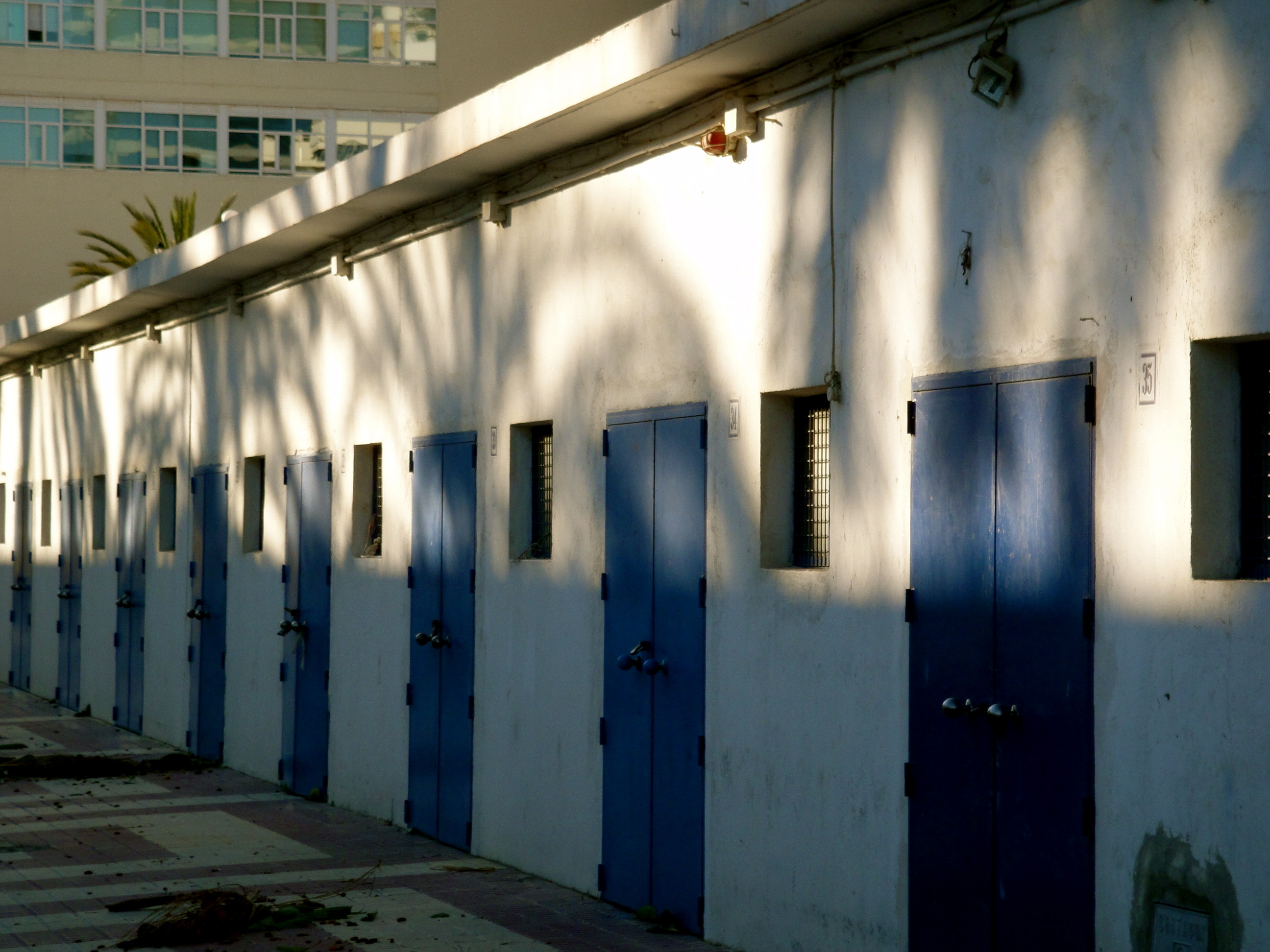
The fisherman's huts of Cable Beach

The fisherman’s huts of Cable Beach

The patatas are really simple to make. Take one large onion and slice. Sauté the onion gently in oil until it softens, and add to that two chopped red peppers (deseeded), 2-3 cloves of garlic, chopped finely, seasoning, a small teaspoon of pimenton and a few bay leaves. This should all be cooked, again,  until the pepper is softened. To that, add around 6-8 peeled potatoes chopped into bitesize pieces and a good glug more of olive oil, and cook the whole dish further until the potatoes are tender, but not falling apart (I find that peeled new potatoes work best for this as they can be sliced into neat round disks and keep their shape easily).

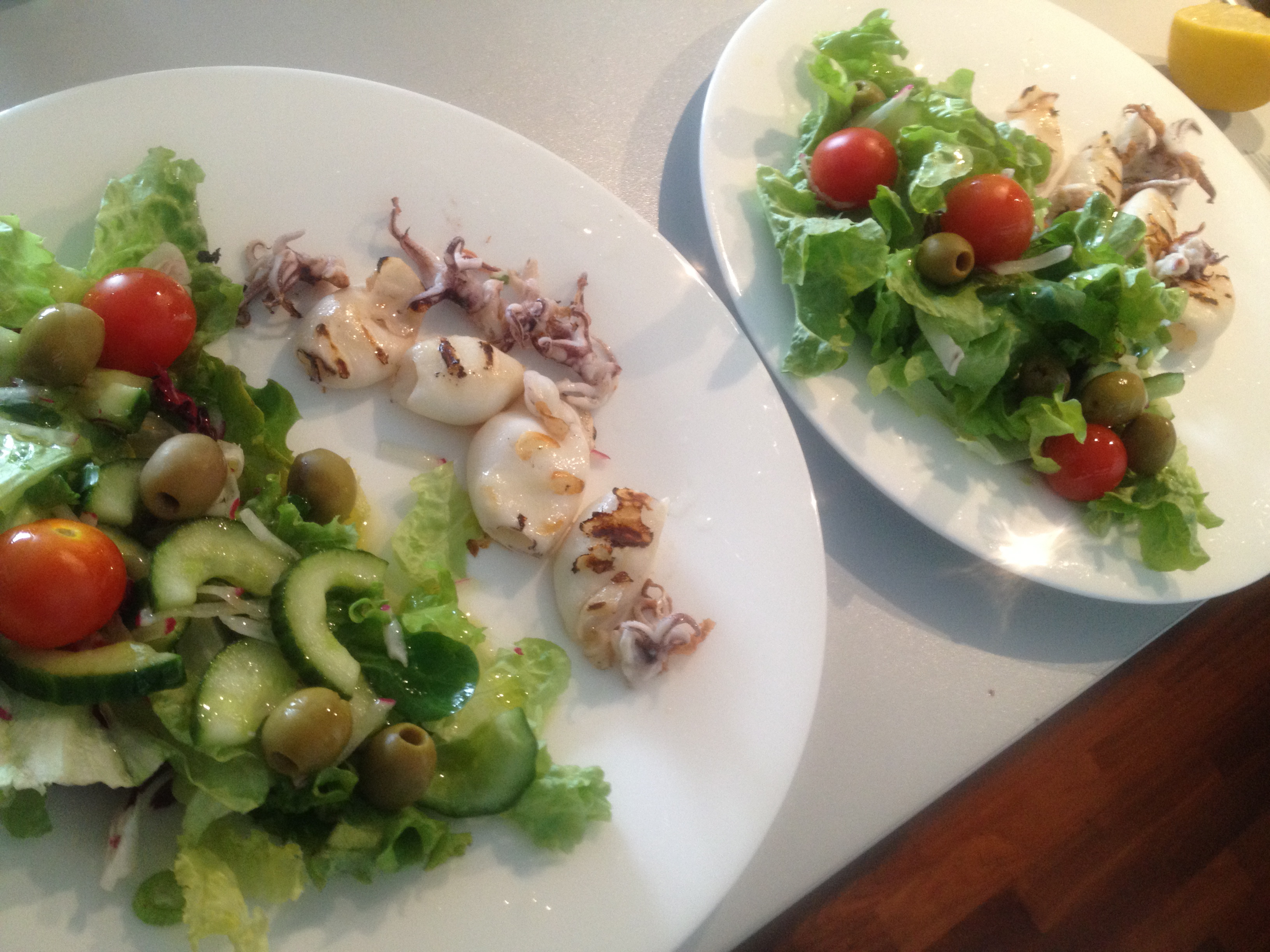
Serve your patatas drizzled in further good quality olive oil and, if you want to recreate the whole experience, some grilled squid and a hearty side salad (sadly I was unable to get my hands on any huge squids like those so frequently available on the Med, but when in London…well, we have to put up with seafood on the smaller side). This dish guarantees a burst of Spanish flavour with the added benefit that, as the name suggests, it’s really very cheap to make – highly suitable for that post-Christmas poor man’s January then.

My patatas

My patatas

And some very small squid!

And some very small squid!

¡Buen Provecho!