Skip to content

Birthday cupcakes – pistachio and raspberry with white chocolate frosting a little celebratory gold

It’s my birthday!! Woop woop! And while you read this post, I should be sat somewhere on the Rue St Honoré in Paris, sipping delicately upon a cup of strong French coffee with a couple of Ladurée macrons on the side. For a leo birthday can only sensibly be celebrated with a little class and plenty of extravagance, so while I soak in the sights of the city of love for one day only, why don’t you join me in my pursuit of birthday hedonism by making these amazing little cup cakes. Complete with edible gold leaf, these pistachio and raspberry beauties are more than appropriate for a summer birthday, where a ruling sun requires celebrations in all things golden, sparkling and extravagant. Or at least that’s my excuse. The sponge is fat free, which makes it a guilt-free, lighter pleasure for a summer’s afternoon, while the white chocolate frosting reminds that while healthy food is all very well, its the icing on the cake that feeds the eye and fuels the pleasure. Ah mais oui!

This recipe is something of a reinvention of a recipe on my good friend Celia’s super-cool foodie blog, Lady Aga. As soon as I saw her cake, I wanted to devour it there and then. The problem was, my cake was destined for work, to be shared amongst my colleagues who have been long-promised a birthday cup-cake treat. And as this distribution would inevitably entail a journey on the stuffy tube in rush hour (with added olympic pressures), the fresh cream of Celia’s oeuvre was never going to work, nor indeed the incredible constitution of her multi-layered sponge. I therefore opted to turn her recipe into cupcakes, replacing half the ground pistachios with self-raising flour to encourage the cakes to rise, and replacing the cream filling with a super-indulgent white chocolate frosting. I also baked a raspberry in the middle of the sponge for added moisture and a hidden treat in the cake’s centre.

So, how to make:

Grind up 110g pistachios to a fine powder. Grind up a further 50g or so to a mixture of fine and textured crumbs for use on the topping. Next take 6 large eggs and separate. Whisk up the egg white into soft peaks. In a separate bowl, whisk up the egg yolks with 180g of caster sugar until pale and fluffy. Into the egg yolk mix, fold in the ground pistachios and 110g of self-raising flour and a spoon-full of the egg white to loosen the mixture. Once mixed, fold in the egg whites. Divide the mixture between 12 large-ish cup-cake cases and place a single raspberry in the centre of each cake. Bake at around 200 degrees centigrade for around 20 minutes or until an inserted skewer comes out clean. Be careful not to over-bake or the sponge becomes dry. Remove from the oven and place on a wire rack to cool.
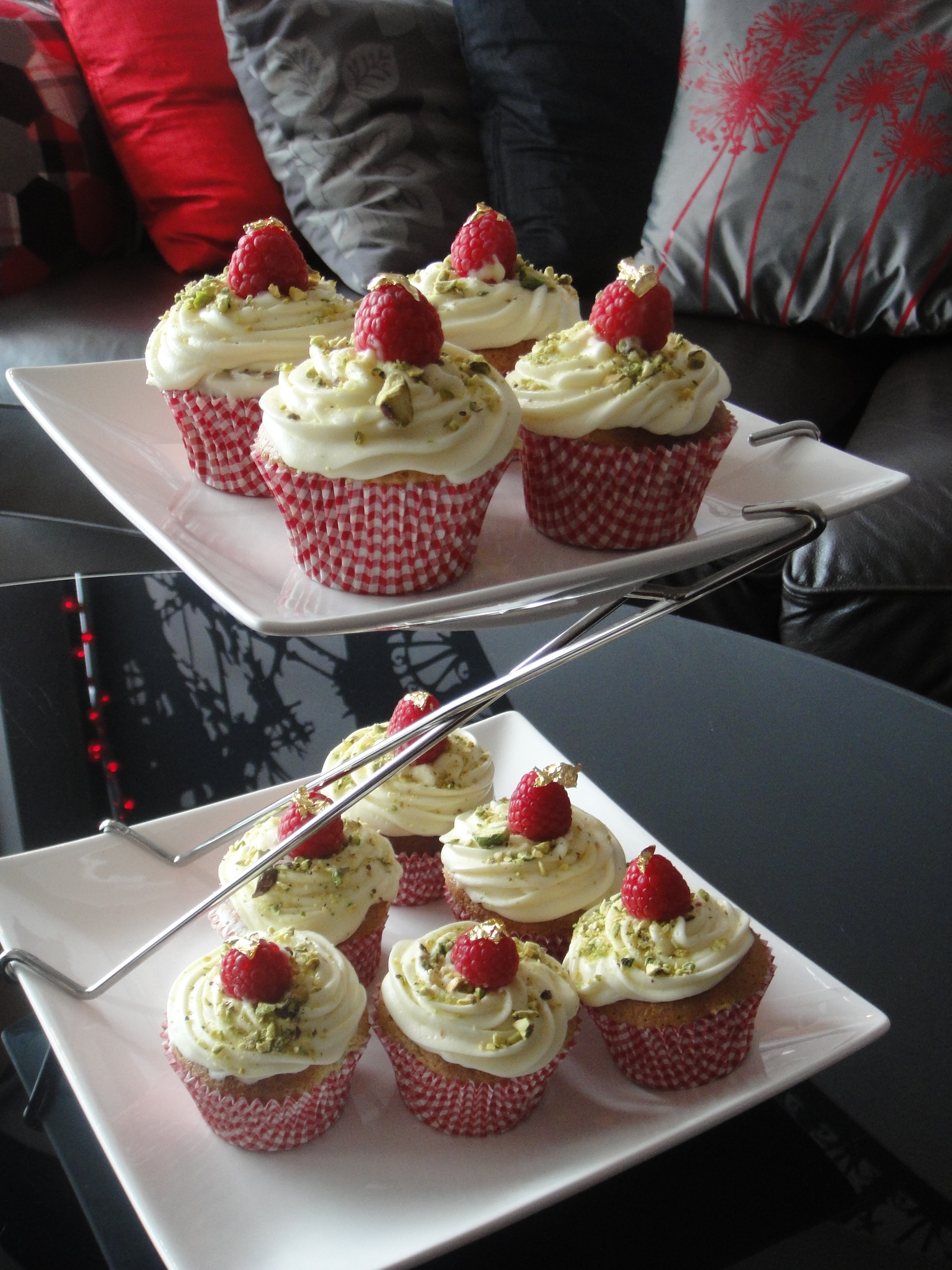
In the meantime, take as many raspberries as you have cakes, melt some white chocolate, and fill each raspberry with a drop or so of chocolate until filled. Prop the raspberries upright in a small container and place in the fridge so the chocolate solidifies.

Next, the icing: slowly melt a bar of white chocolate (around 100g I think, but I can’t really tell how much I was melting as I kept on eating it) over simmering water. As the chocolate starts to melt, add a splash or two of full fat milk to loosen up the mixture to a creamy liquidy chocolate. Meanwhile, take 120g unsalted butter and  mix with 375g icing sugar with around 25ml of full fat milk and a small dash of vanilla extract. This should be whisked for extra creamyness, probably for a good 5-10 minutes. Once light and fluffy, mix in the melted chocolate until thoroughly combined and my god you will have created pure nectar worthy of Mount Olympus itself. Pour your icing into a piping bag with a large star-shaped nozzle (I have no idea what this is called) and place the icing bag in the fridge for 20 mins or so to firm up the frosting a bit. Pipe onto the cooled cupcakes and top with a sprinkle of crumbled pistachios, a chocolate filled raspberry and a little fragment of edible gold leaf for extra extravagance. Or try edible glitter if you prefer.

(Obviously if you can’t be bothered with the piping bag – which I can easily understand – just smooth the icing onto the cake with a palette knife – this can look just as good.

And there you have it. Cakes fit for a King. Or a birthday boy.

All photos are strictly the copyright of Nicholas de Lacy-Brown © 2012 and The Daily Norm. All rights are reserved. 

The Daily Sketch London 2012 – Norms at the Olympic Park

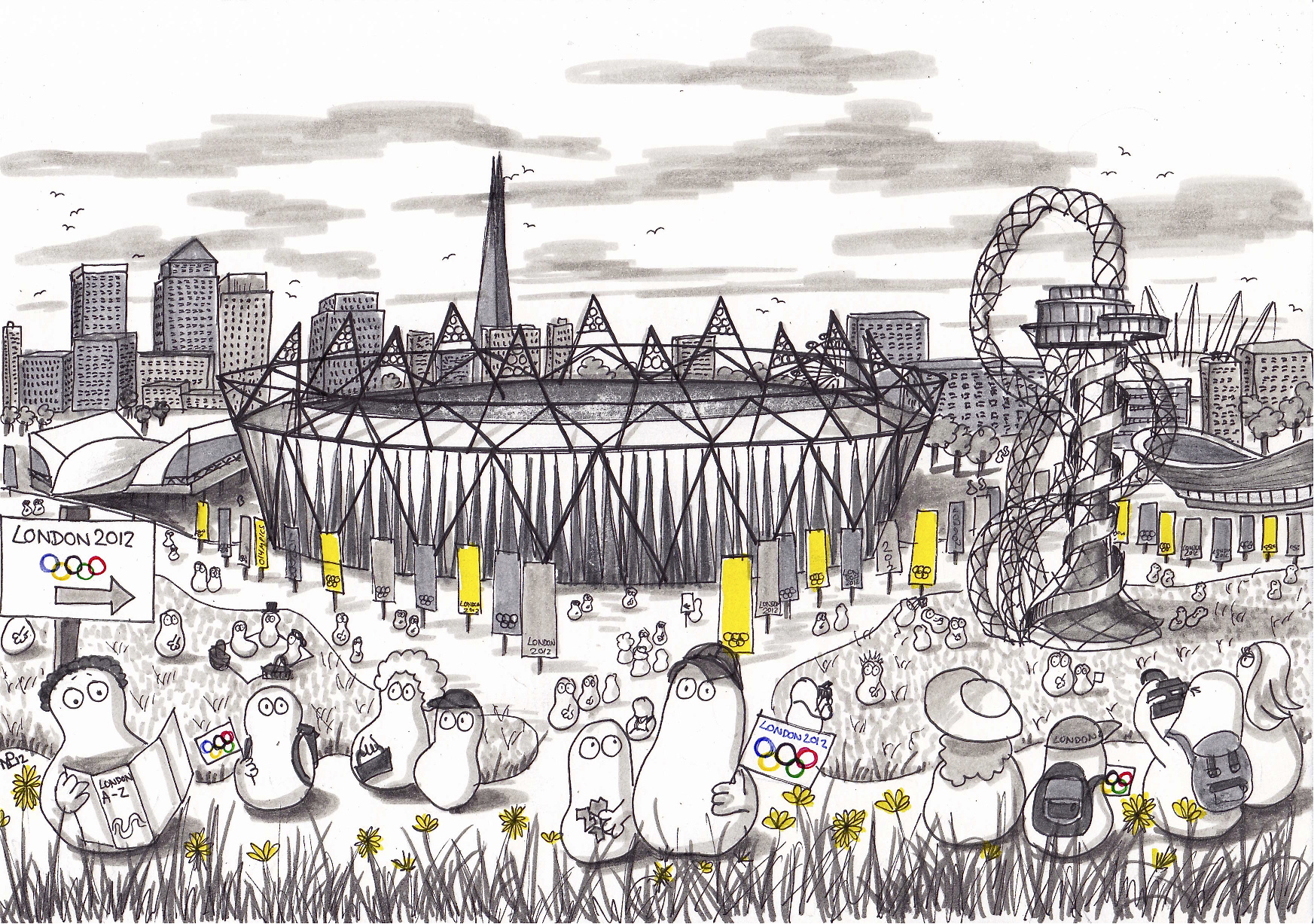
The London 2012 Olympic games are well under way, and seeing as the transport system seems comfortably empty (I actually managed to get a seat on the tube to work today – miracle) and the streets eerily clear, I’m assuming that the rest of the city must be hanging out in the stunning new Olympic park down at Stratford in the once dilapidated, now sparkling clean East London borough. The Olympic park is really a triumph. When you consider just how grotty that sight was a few years back, the park has surely reinvented this area for the future – let’s just hope it stays that way and, like the Athens park before it, doesn’t become a deserted shanty town, home to squatters and the homeless.

The Norms have no such worries. They are a highly civilised group of little blobs, who look forward to using their Olympic park for bouncing competitions, jelly wrestling, one armed swimming and all other manner of Normular sporting activities for the years to come. But for now it’s all about the excitement of the inauguration games ahead. Here are the Norms soaking up the park before them, complete with the huge athletics stadium, the aquatic centre, the pringle-shaped velodrome and the vast, spiralling Anish Kapoor Arcelor Mittal Orbit sculpture. And, perfectly offsetting the hard architectural edges, there’s even a bank of wild flowers for the Norms to enjoy. Who said the Olympics is all about the sport?

Norms at the Olympic Park (2012 © Nicholas de Lacy-Brown, pen on paper)

© Nicholas de Lacy-Brown and The Daily Norm, 2001-2012. Unauthorized use and/or duplication of the material, whether written work, photography or artwork, included within The Daily Norm without express and written permission from The Daily Norm’s author and/or owner is strictly prohibited. Excerpts and links may be used, provided that full and clear credit is given to Nicholas de Lacy-Brown and The Daily Norm with appropriate and specific direction to the original content.

Korean Eye at the Saatchi

It wasn’t easy returning to London from Italy. The first week back, and there was rain every day. Grey skies, autumnal temperatures, AND I was expected to be able to work 9-5 every day. Where’s the justice, the cappuccinos on the beach, the Bologna porticos and red-tinted palazzos? Eagerly I worked through the week, each day that passed taking me one day closer to the weekend, when an attempt to relive the Italy experience would commence.

Our efforts were fairly successful. As the grey clouds passed and London finally began to heat up again, we headed to an Italian restaurant, Getti, on Marylebone High Street on the Saturday, where the smells of fresh mozzarella on a crispy thin pizza base were now wonderfully familiar – it was like an Italian homecoming. We even managed to utilise a little of our now polished restaurant Italian.

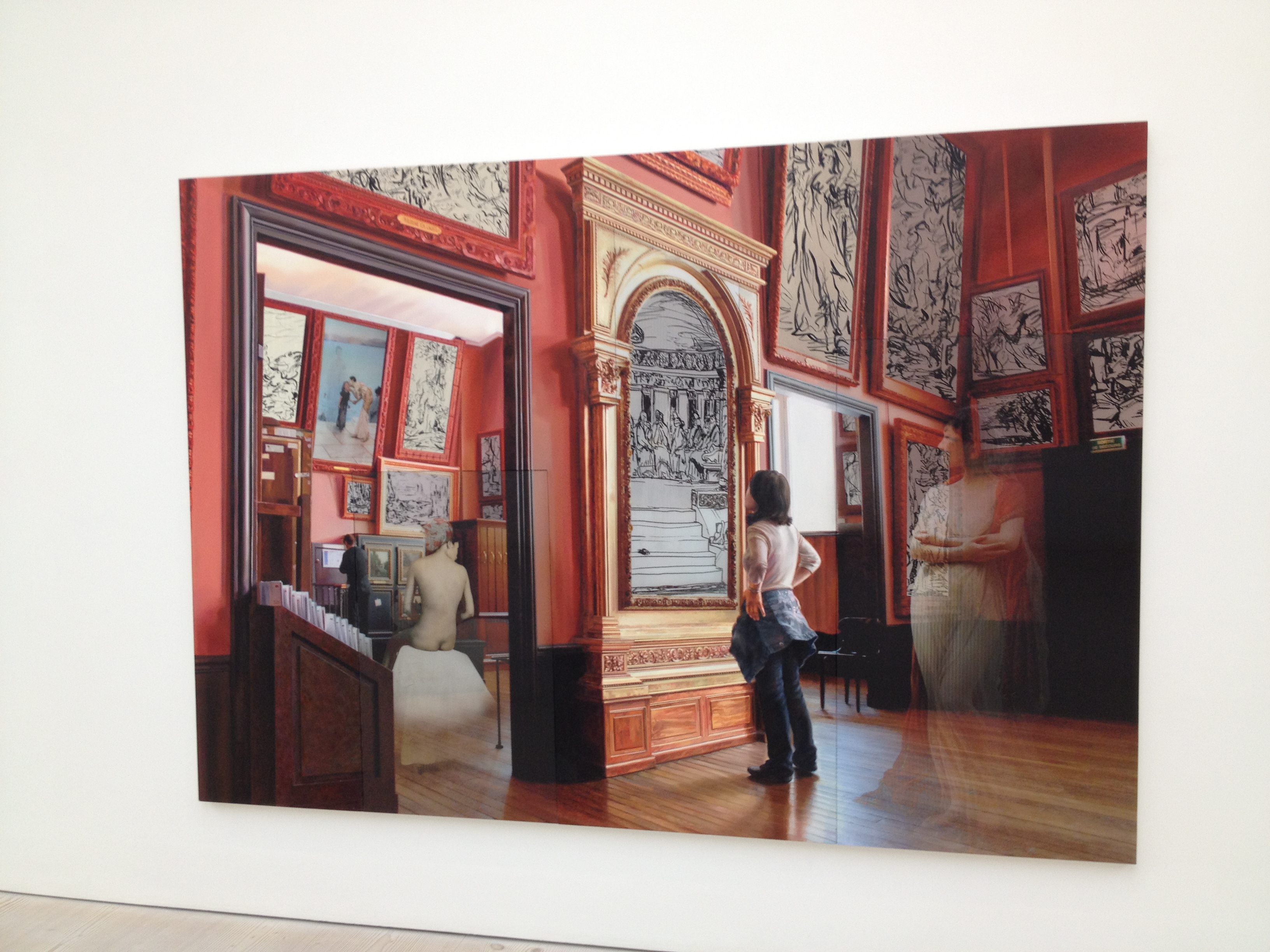
Kim Byoungho, Soft Crash (2011)

Meanwhile, on the Sunday morning, it was a trip to Chelsea that satisfied all of our holiday yearnings. Sat out having a creamy cappuccino (again, Italian made) in the fashionable Duke of York’s square, in the full uninterrupted summer sunshine, felt just like being back on the Mediterranean. And, as is so often the effect of sunlight and warmth, it got us in the mood to indulge. Sadly for our wallets, this meant for subsequent glasses of prosecco, a large plate of Italian cheese, the undoubtedly unnecessary but practically irresistible purchase of various Olympics merchandise and even a new printer. Whoops.

But with our minds opened by the light summer mood which befalls all of us when seduced by the sun’s rays, it was surely the perfect time to head to the Saatchi gallery, whose frequently changing works of contemporary art usually fail to impress me, if not make me despair. But whether it be the sun which had opened my mind, or just the sheer brilliance of the works on show, Saatchi’s new show, Korean Eye 2012which is the largest survey of contemporary Korean art in the UK to date, is fascinating throughout.

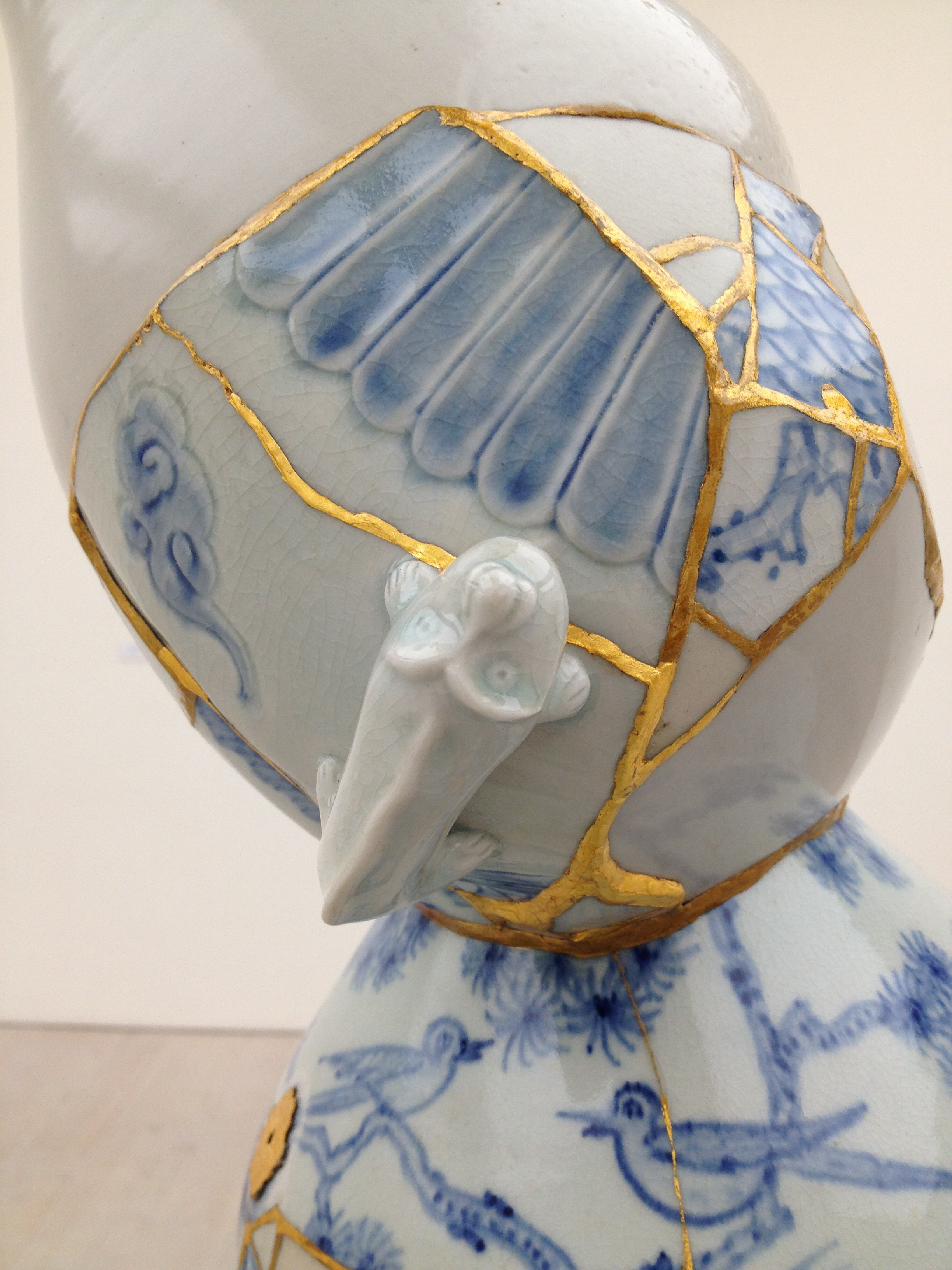
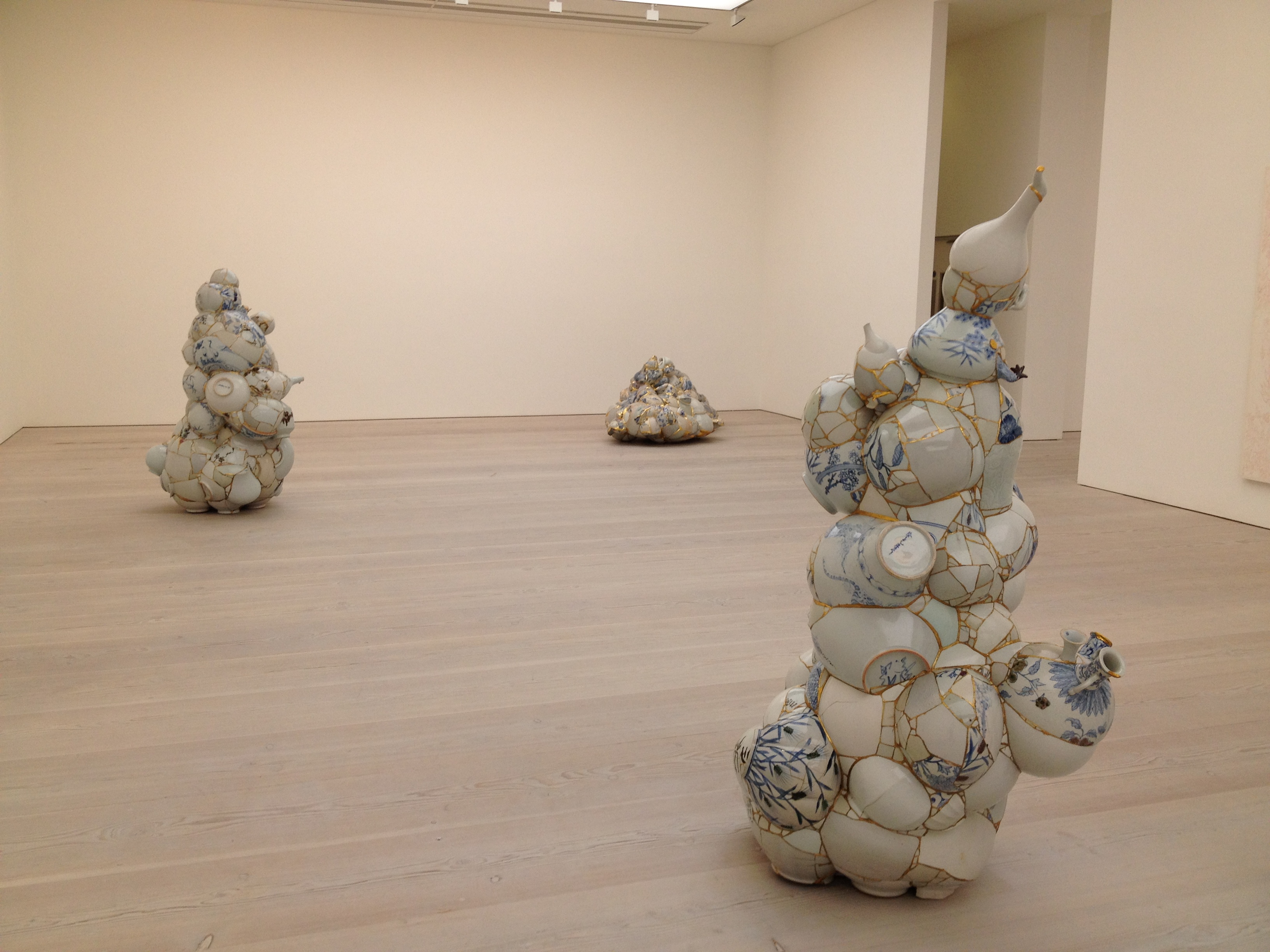
The show started with a trademark Saatchi huge white gallery full of very little. But that little there was on show was actually pretty cool. Yeesookyung’s Translated Vase (2007) aims to transform everyday objects into new contemporary forms. It’s a simple idea, but effective as a piece of contemporary sculpture – and I particularly liked the use of gold grouting which acts as a consistent element bringing the shards from various pots together as a single, newly innovated shape.

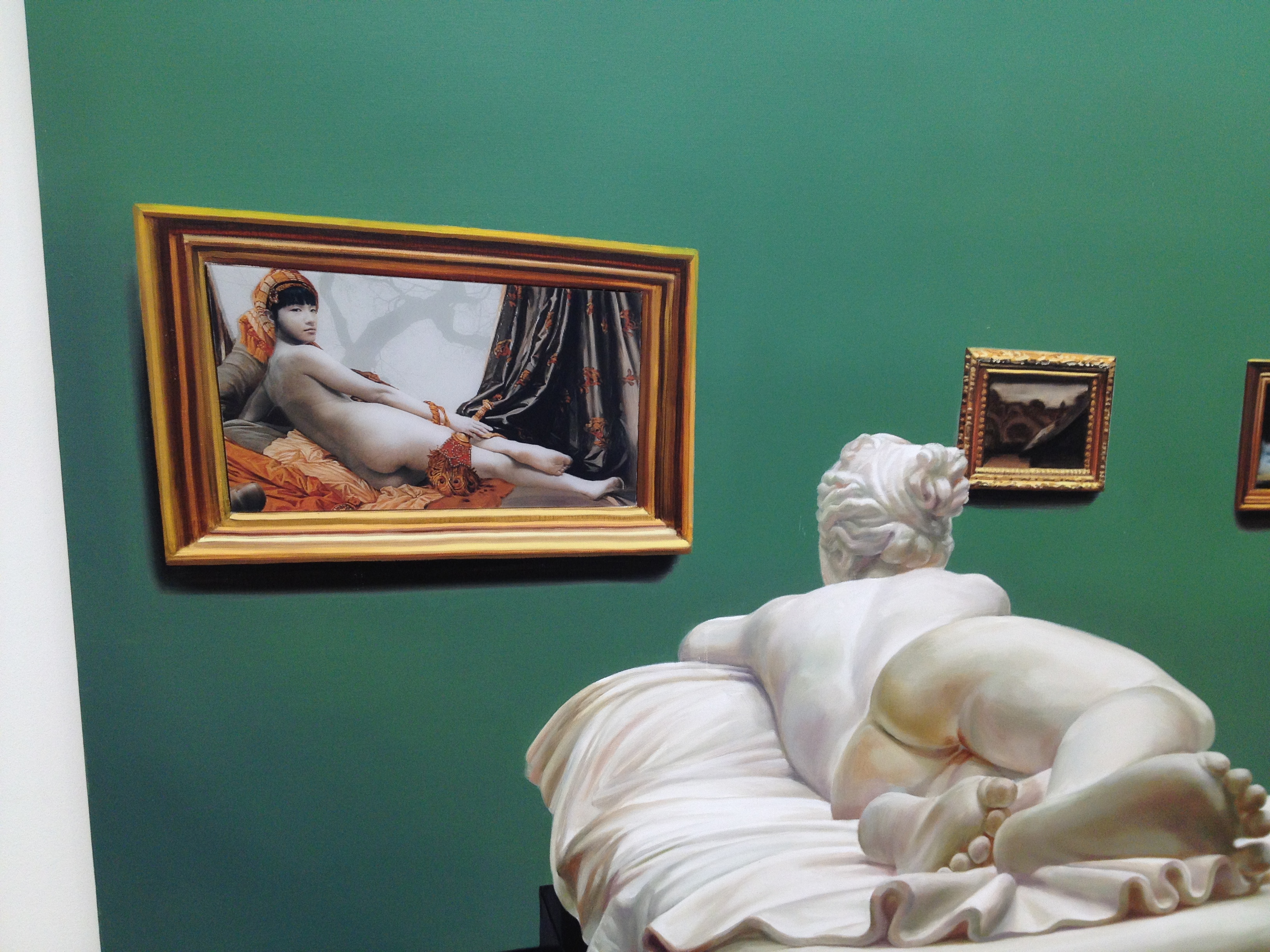
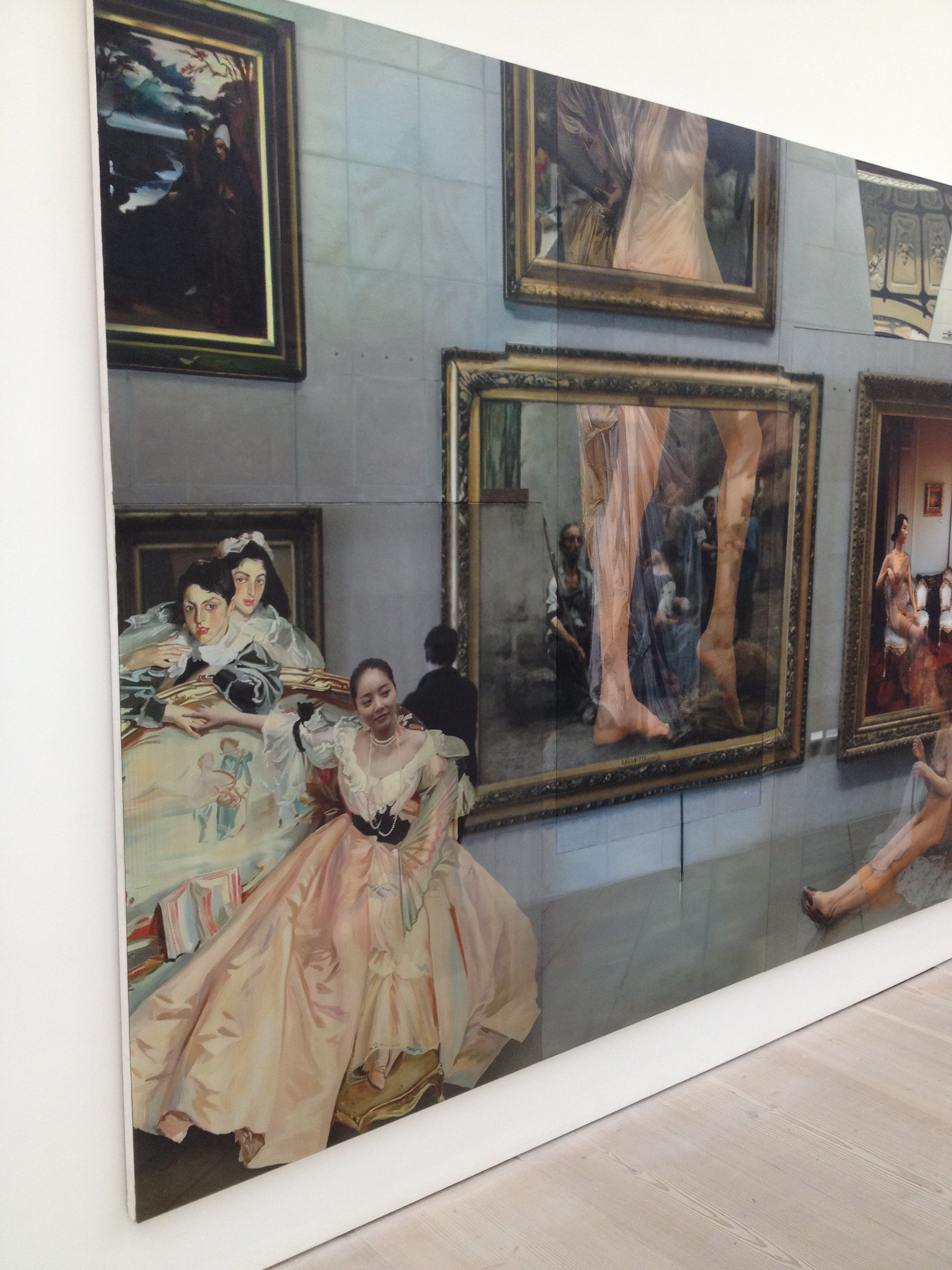
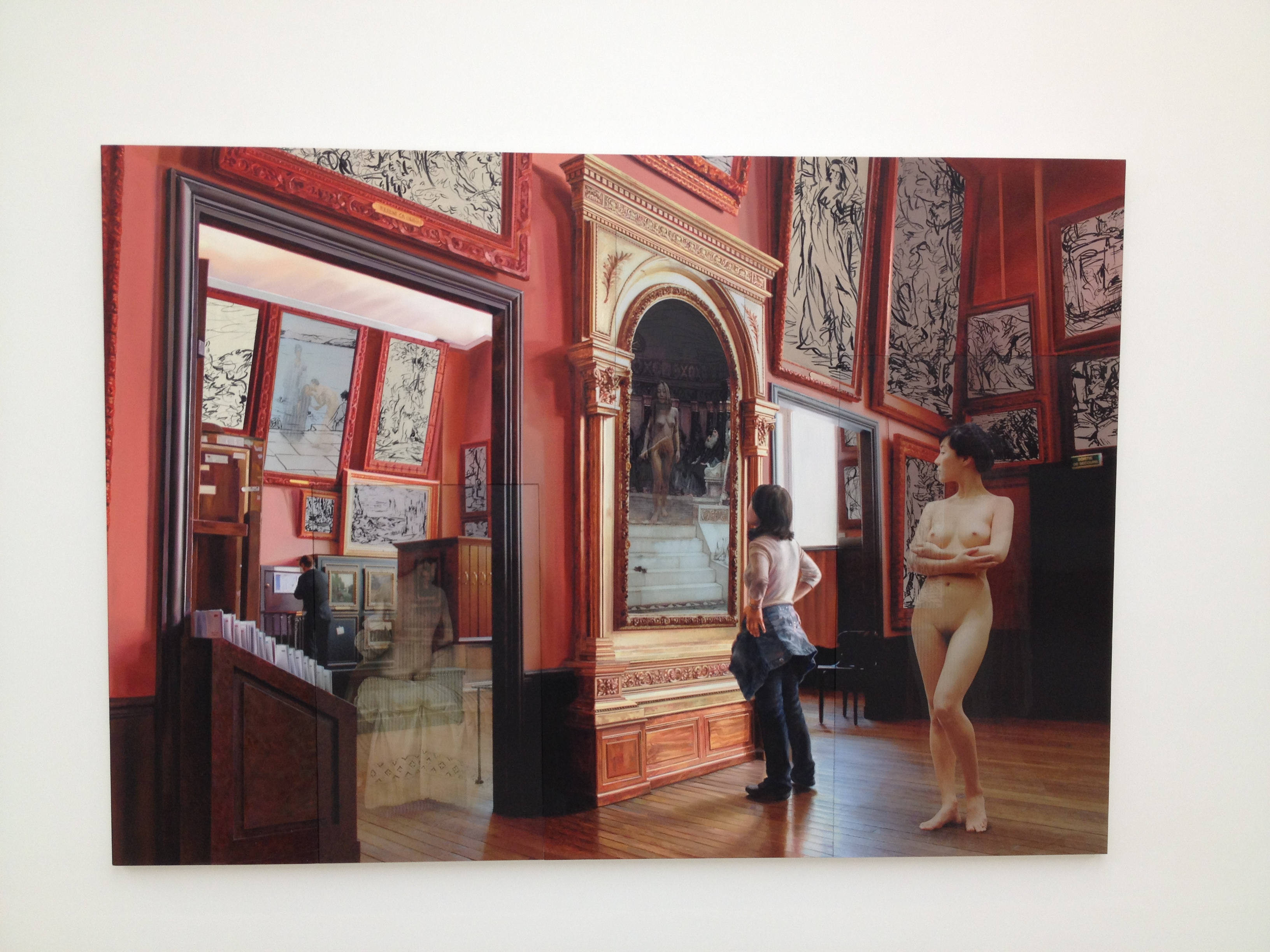
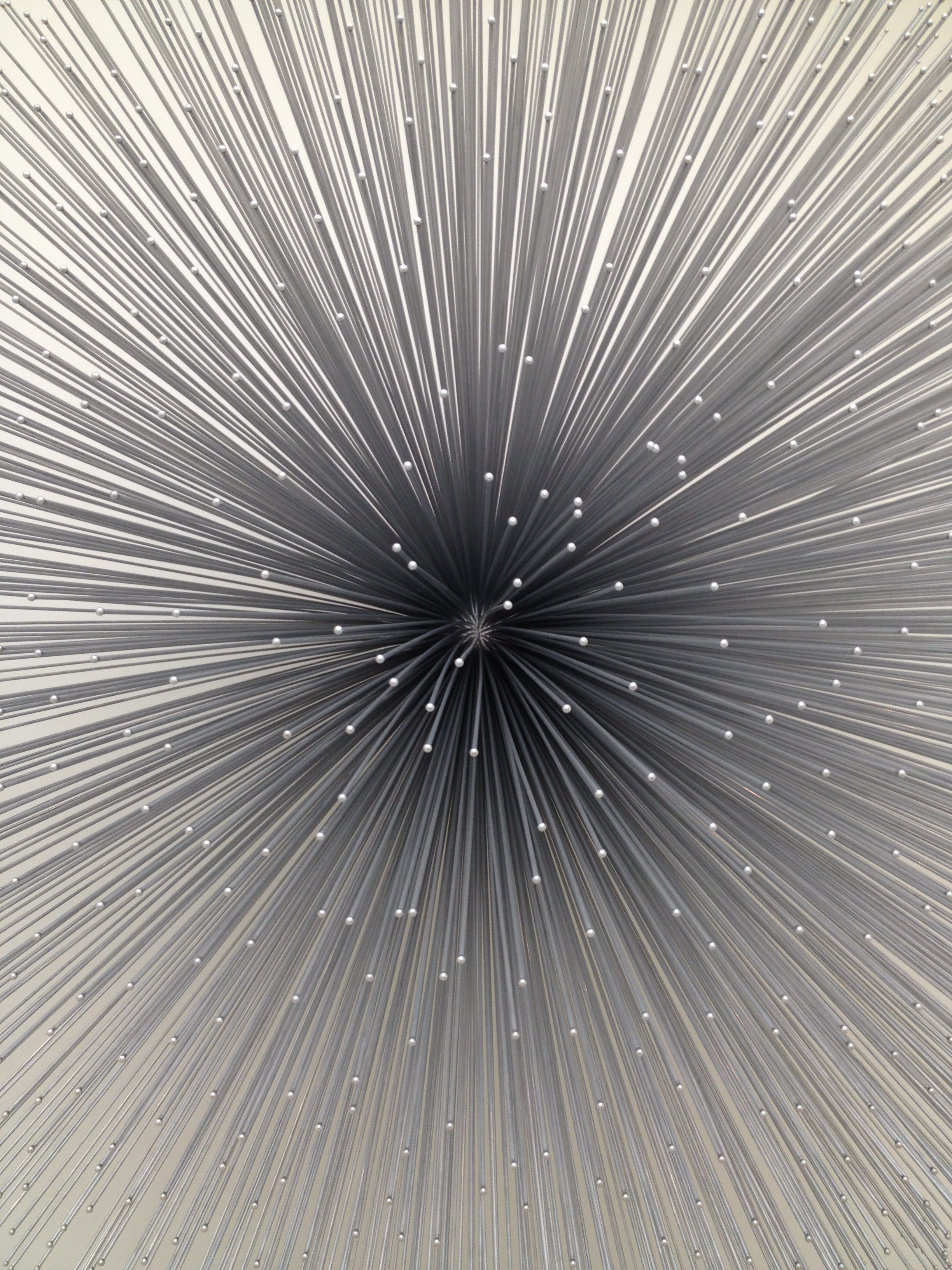
Next up, in gallery 2, were the works that got me completely hooked on this show. These were large mixed-media works by Bae Joonsung which looked pretty innocuous at first – until you moved past the canvas and realised that some aspects were moving, and other disappearing. Joonsung brilliantly incorporates painting and photography, executed upon different sheets of transparent acrylic which act almost like a hologram so that, when you view the painting from different angles, the work changes before your very eyes. I’ll let my photos demonstrate as best as they can…

Woman reclining…

…in the nude

Lavish dress one minute…

…and ooh la la the next

Now you see her…

…now you don’t

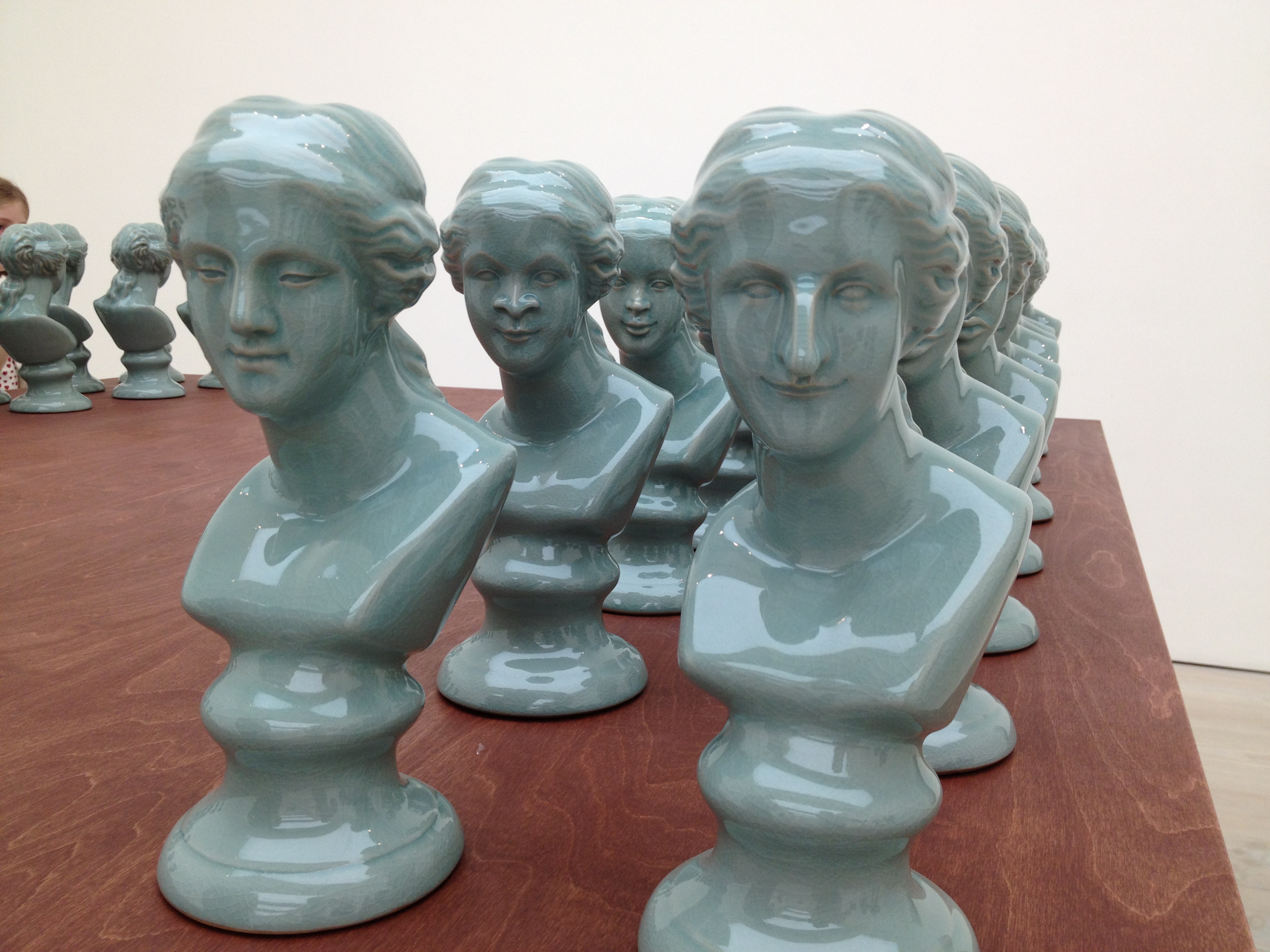
Also in gallery 2 were the 32 ceramic heads which comprise the work of Debbie Han, The Battle of Conception (2004-10). The heads look identical from a distance, but again, closer viewing betrays different facial features in each one, as the artist attempts to demonstrate with diverse facial features the different racial and ethnic characteristics that exist across the human race. In this respect, the work builds upon racial stereotypes, and explores the significance of human perception as the key to defining ourselves and others.

Read more

The Daily Sketch London 2012 – Final voyage of the Olympic Torch

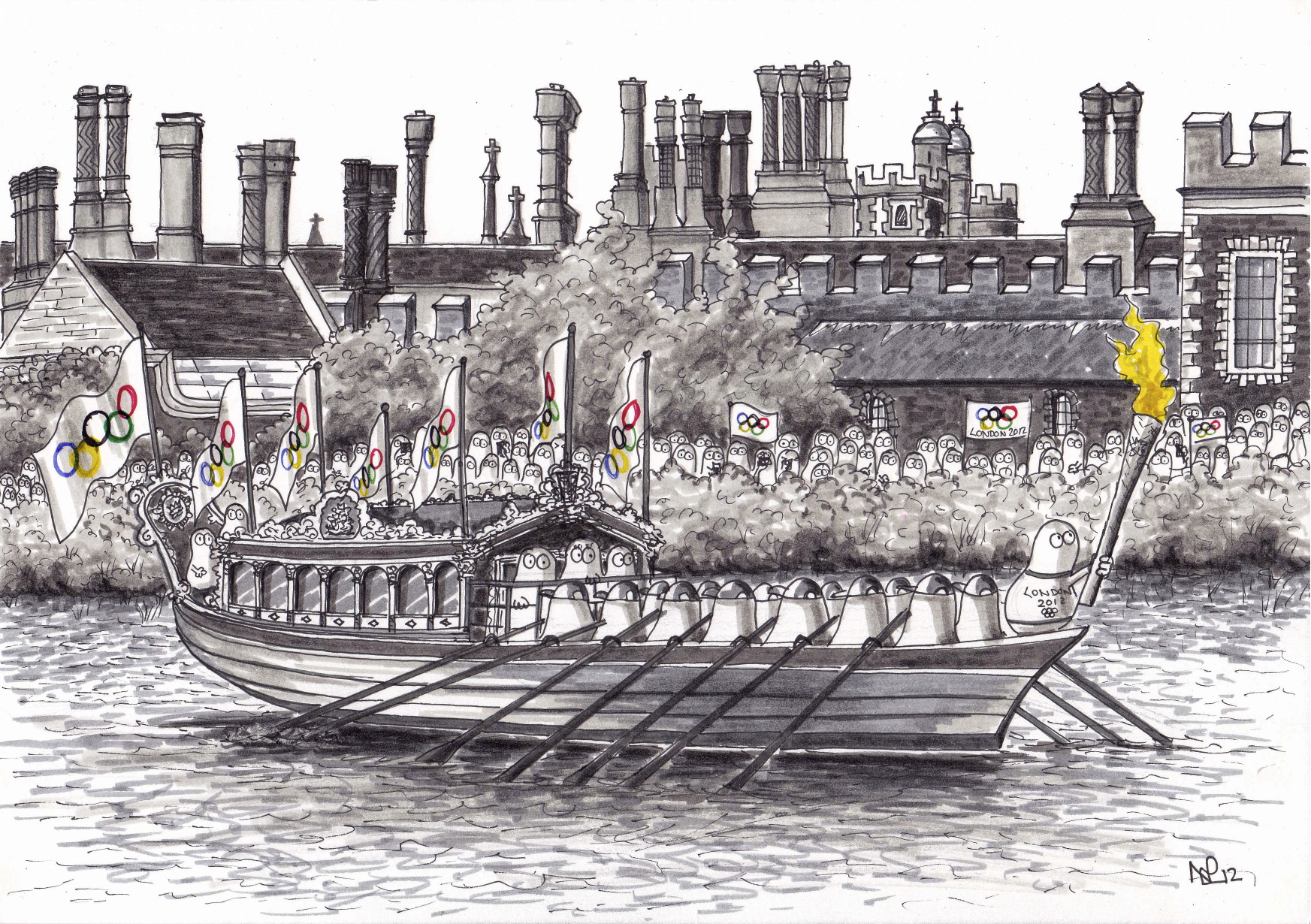
It’s been 7 long years in the waiting. Yet as every year passed, some new development heralded the coming of the world’s biggest sporting event to London, home of the Norms. The final step of the preparations for the games was the long and winding 8000 mile trip of the olympic flame, straight from the rays of the sun captured by priestesses on Mount Olympus, to a 70-day adventure all the way across the UK, come rain and shine, and finally, on it’s last day, up the Thames, casting off on the gilded rowbarge, Gloriana, originally made for the Diamond Jubilee, and now taking the flame on the final leg of its journey from the palace of Henry VIII at Hampton Court, all the way along to the iconic Tower Bridge and its final journey to the Olympic stadium.

No one is more excited about the arrival of the Olympics in London than the Norms. They may be legless (in the non-alcoholic sense), and blobby and gelatinous, but they can play sport as well as the next Norm. Here they are on the morning of the great opening ceremony, taking the flame aboard the Gloriana upon its penultimate voyage towards its final Olympic games destination. Horray for the Olympics!

Norms at London 2012: The Torch’s final journey (2012 © Nicholas de Lacy-Brown, pen on paper)

© Nicholas de Lacy-Brown and The Daily Norm, 2001-2012. Unauthorized use and/or duplication of the material, whether written work, photography or artwork, included within The Daily Norm without express and written permission from The Daily Norm’s author and/or owner is strictly prohibited. Excerpts and links may be used, provided that full and clear credit is given to Nicholas de Lacy-Brown and The Daily Norm with appropriate and specific direction to the original content.


Bologna: La Bella – My Photographs

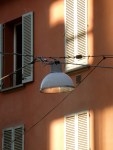
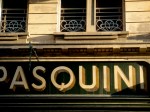
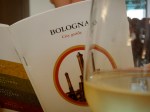
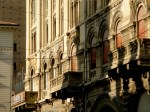
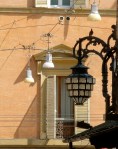
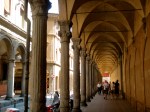
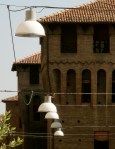
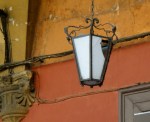
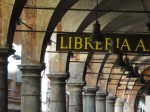
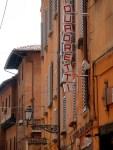
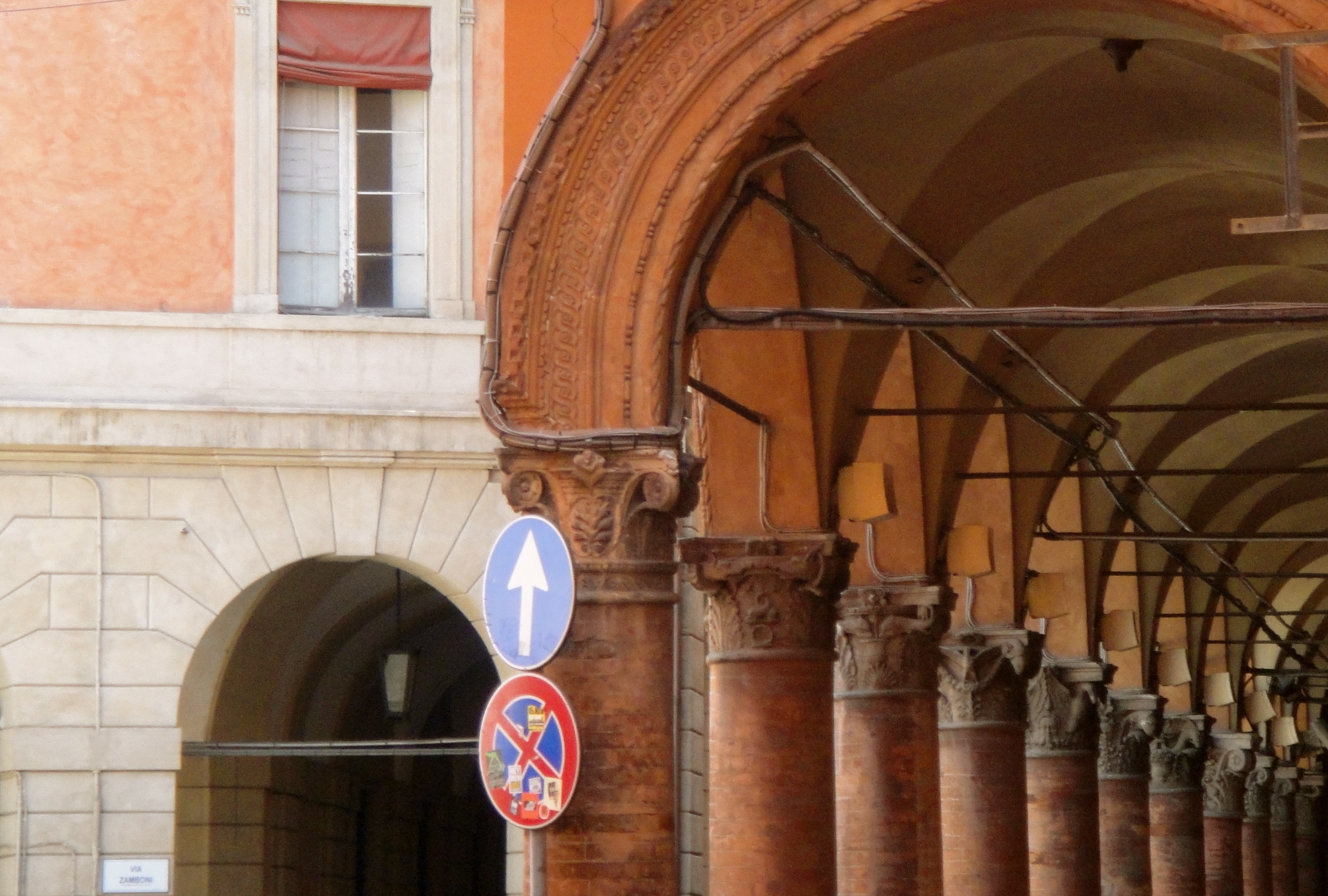
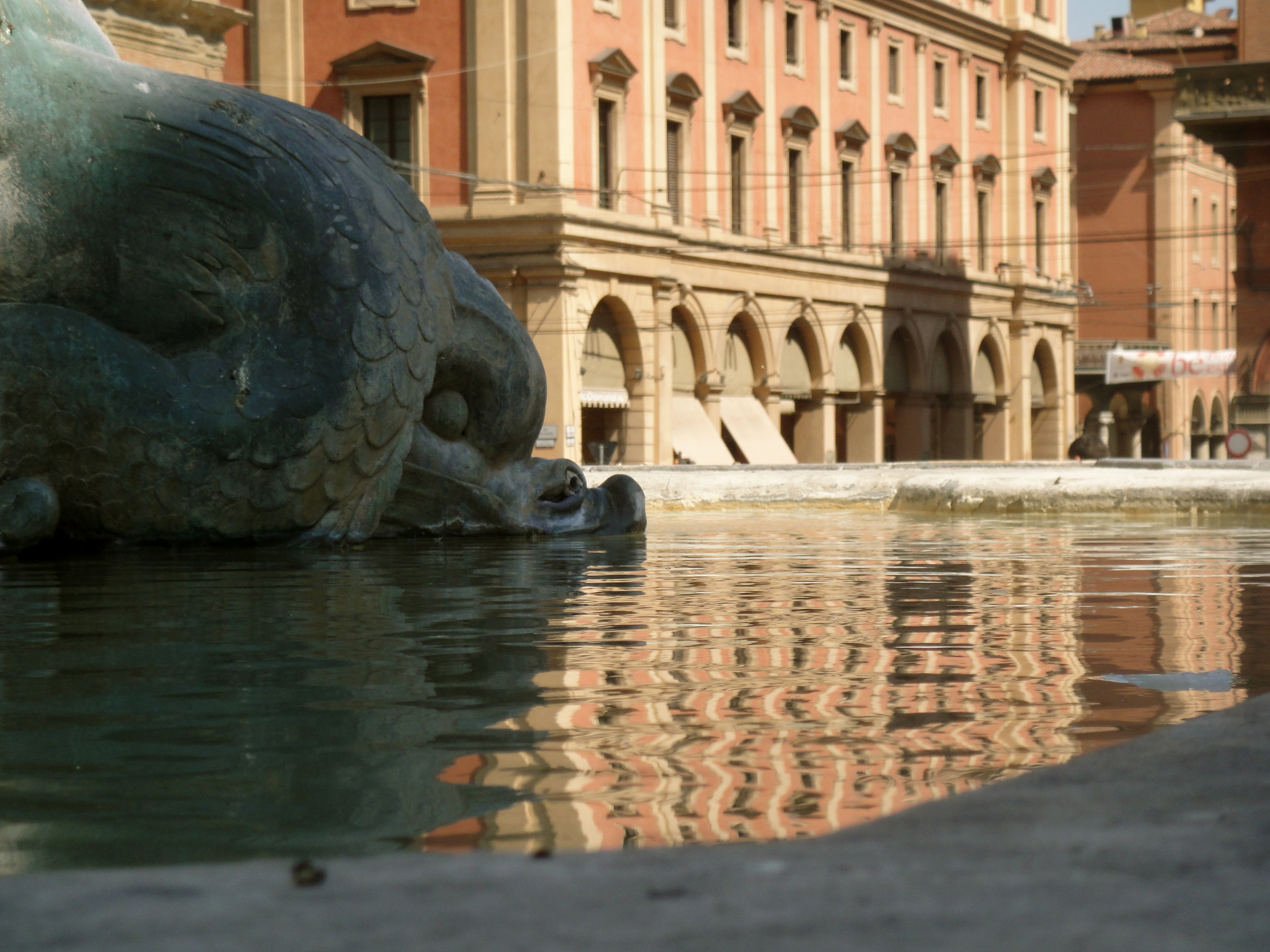
Bologna the beautiful – not one of the triptych of epithets for which Bologna is known, but truly deserved nonetheless. From the sheer volume of photos below, there can be no doubting how much of an inspiration this red-hued city provided me and my little pocket camera. Endless arcades and porticos delicately interspersed with rusting iron shop signs, discolouring marble madonnas and wrought iron balustrades. Bologna’s sky was like a complex network of fine-threaded black lace, as a grid of wires criss-crossed piazzas and porticos from which hung characteristic flat-bottomed lamps whose glossy base reflected the pink haze of the sunlit streets and red-suttererd palazzos. Contrasts are everywhere: Elaborate churches adjoin multicoloured graffitied university buildings,  ornamented baroque fountains balance coarser Roman relics, and chic polished shopfronts adjoin bustling market stalls and busy al fresco cafes.

Bologna is decadent in its fading elegance and retro, rather than modern. Progression in this city has thrived in the minds, while all around, a Unesco protected city centre has been perfectly preserved as a museum of multi-layered history, and as a testament to architectural, gastronomical and artistic sophistication. I could have photographed forever. And no doubt I will return to capture this city in changing seasons and altering light. But in the meantime, here is Bologna, La Bella – a city captured on my camera.

All photos are strictly the copyright of Nicholas de Lacy-Brown © 2012 and The Daily Norm. All rights are reserved. 

Bologna: La Grassa – Phenomenal food without a Spaghetti Bolognese in sight

I’m going to pardon myself inadvance of a post which will be an unapologetic engorgement upon food glorious food. Bologna is after all the city that brought us Spaghetti Bolognese, tagliatelle, tortellini and mortadella among other Italian favourites. In fact, without Bologna, half of your standard Italian restaurant menu would disappear. And true to form, the city whose third and perhaps most appropriate epithet is La Grassa – the fat – delivered, delivered and delivered again. We made no plans, instead opting to wander into restaurants randomly as they took our fancy. And yet on every occasion we were surprised, enthralled and deeply satisfied by one consistently high quality meal after another. No wonder then that Mr Artusi, great master of culinary arts once wrote, “When you hear about Bologna’s cuisine, make a bow, for it deserves it”. I could eat in Bologna for ever – it may make me grassa, but hell, it’s worth it.

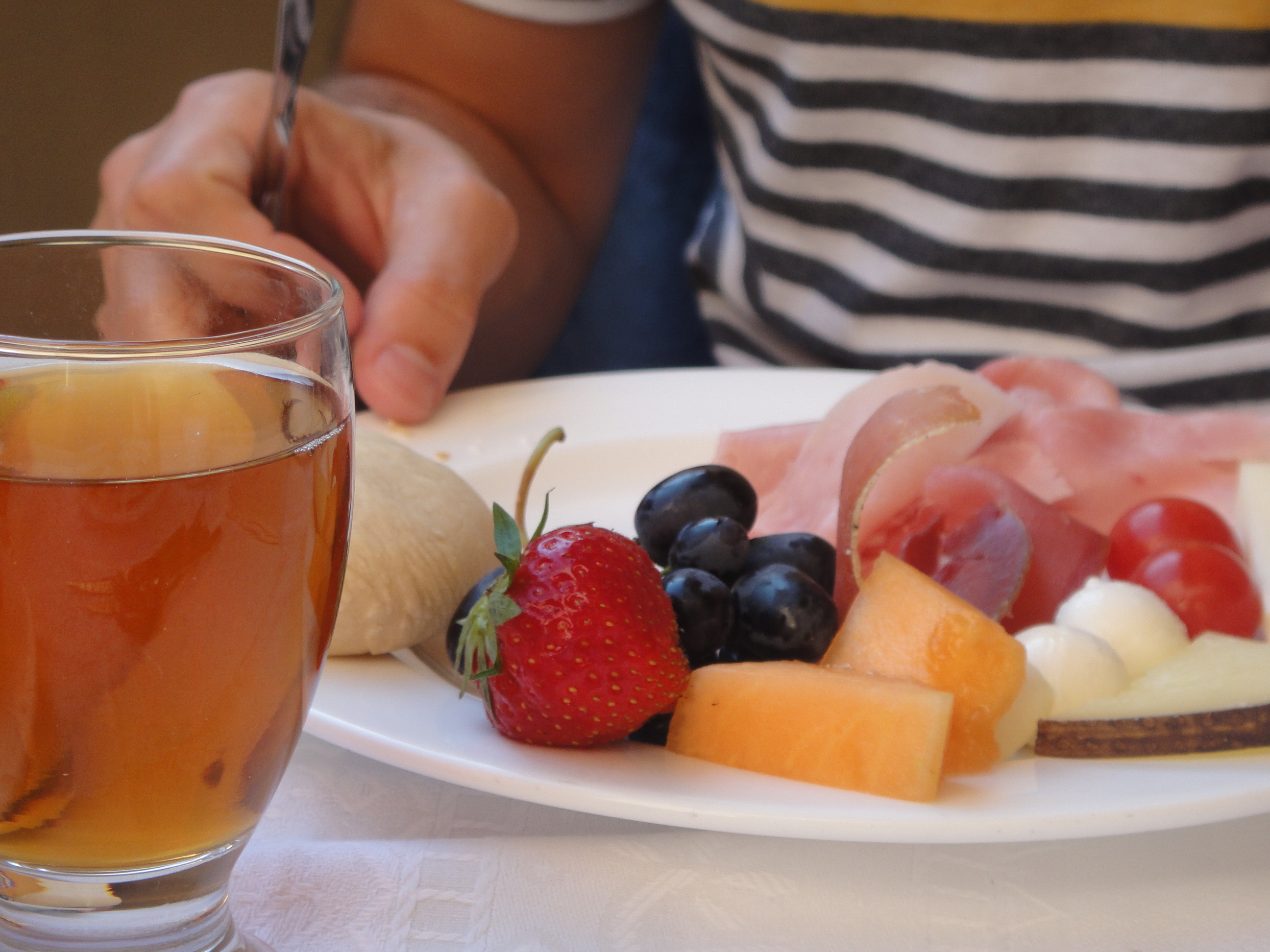
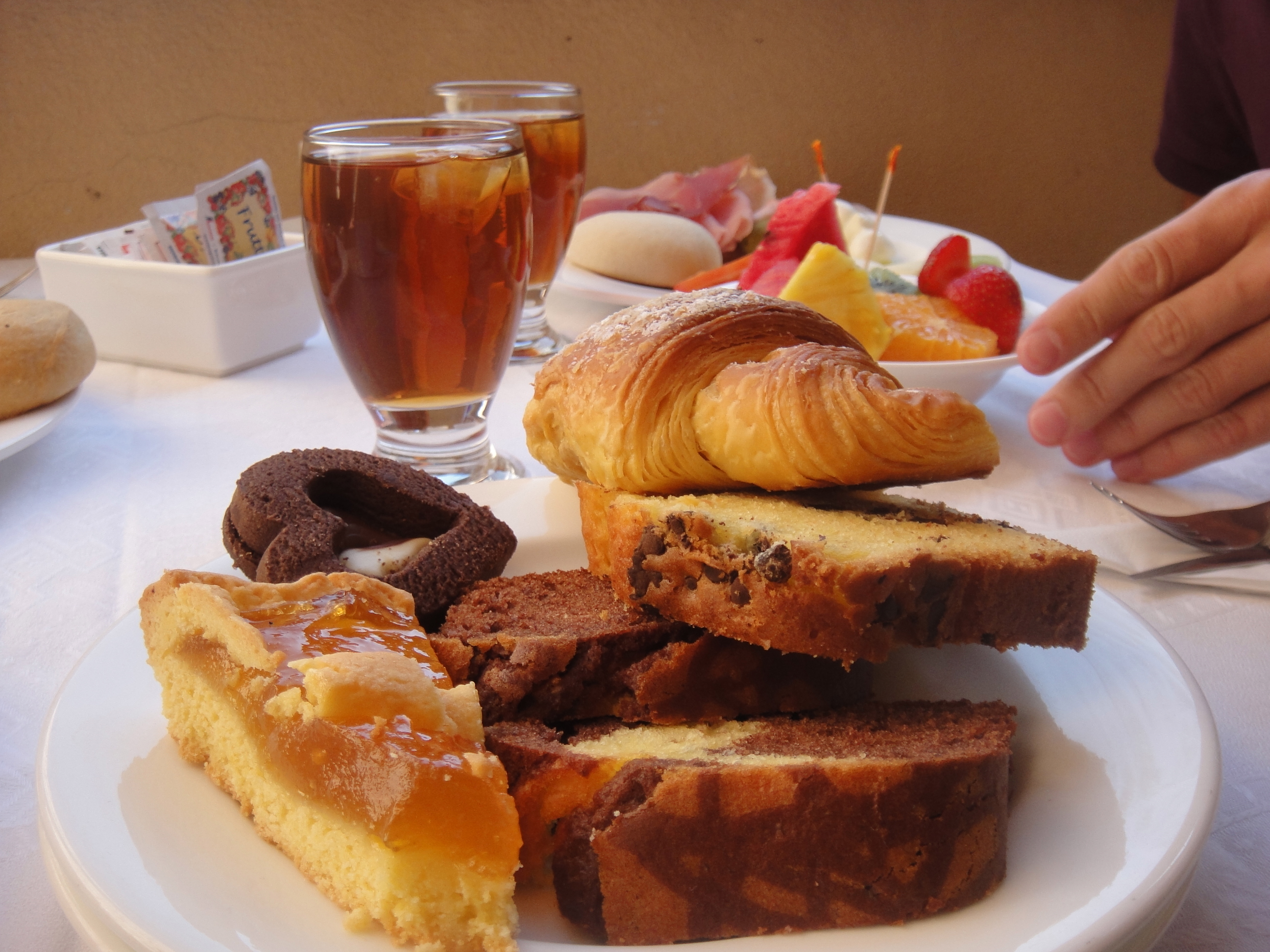
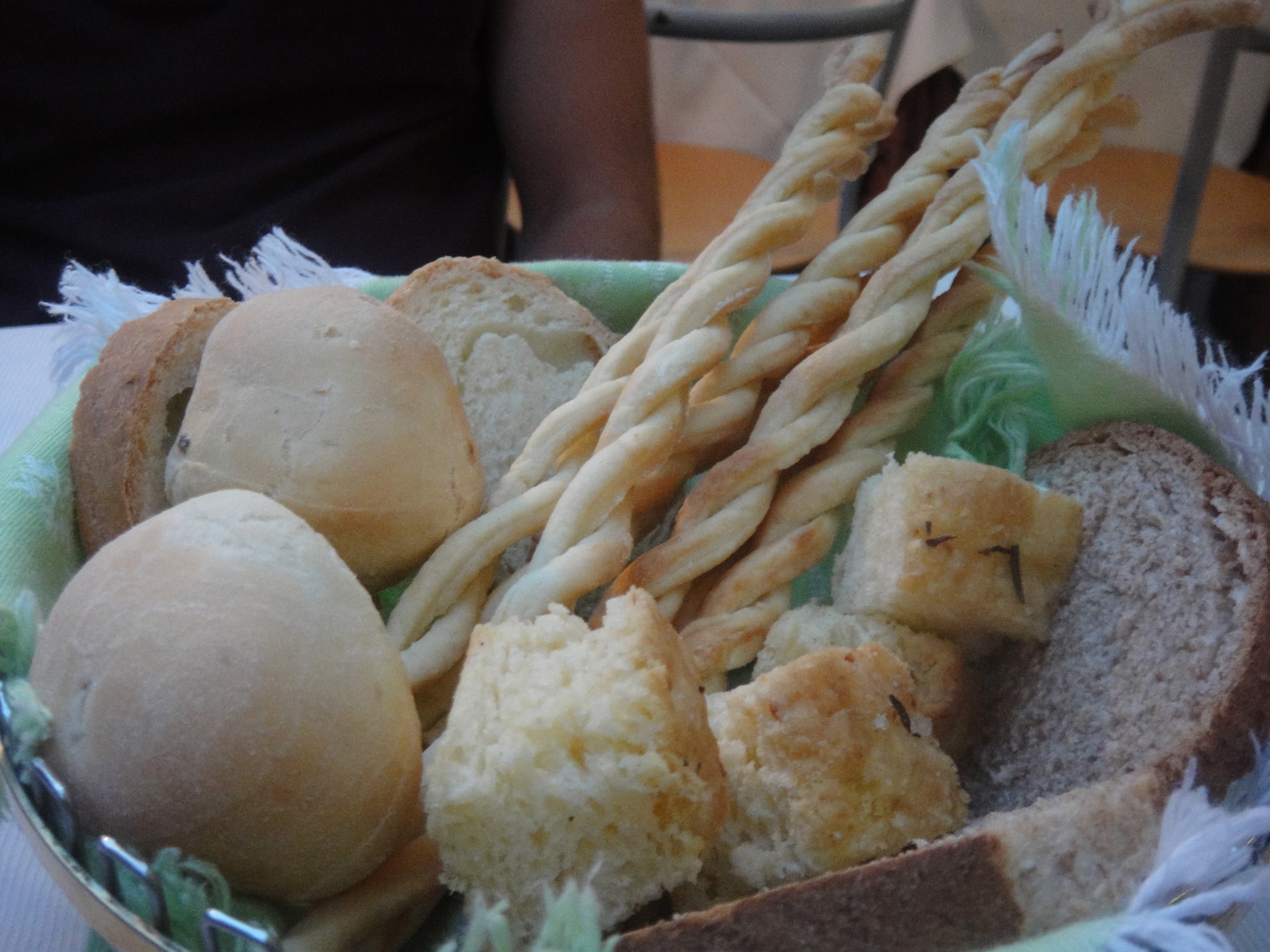
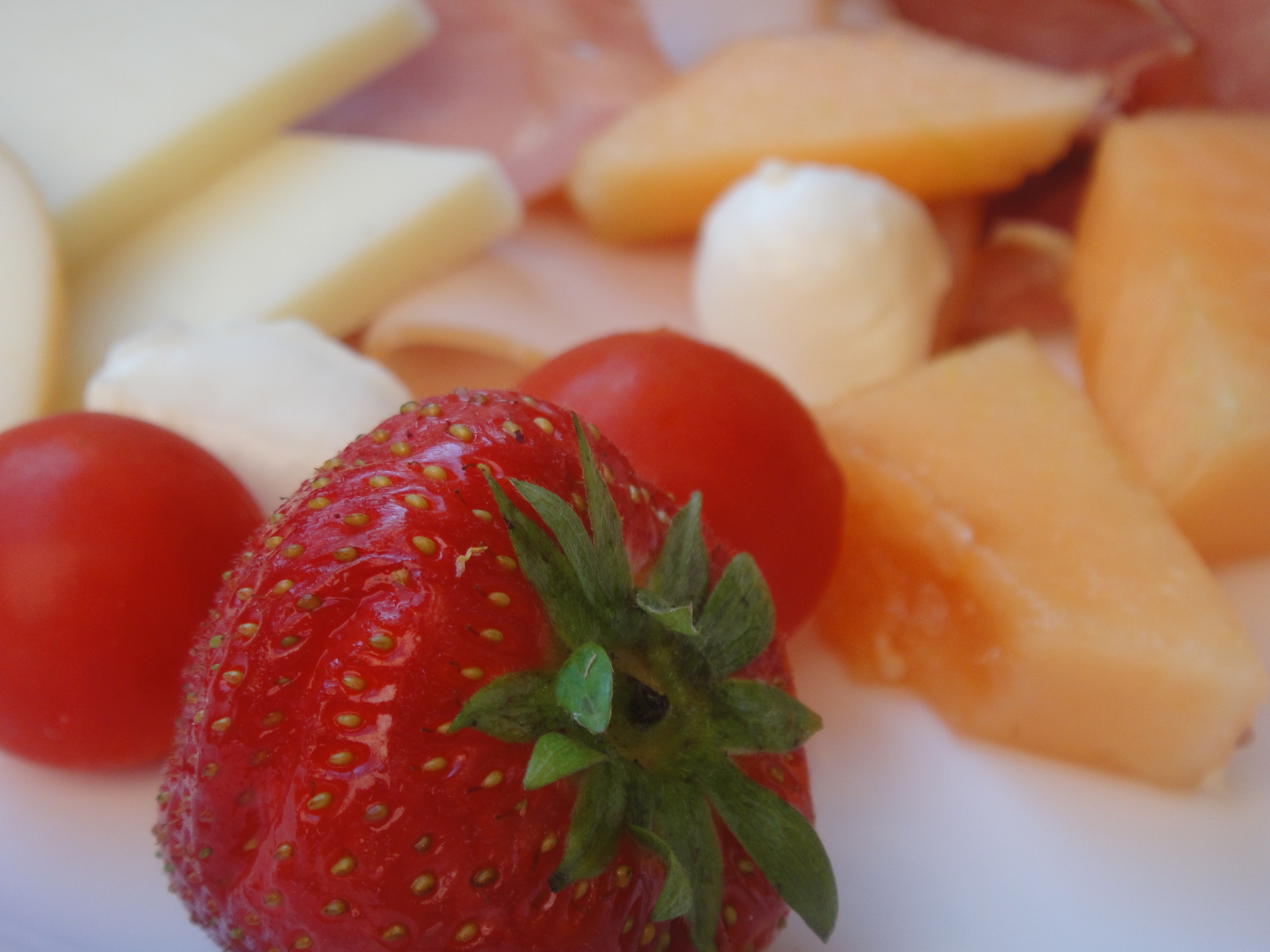
So where to begin. Well, breakfast I guess, a multi-coloured kaleidoscope of colour, as fresh ingredients collided into a cocktail of fruits and meats, soft greasy breads and sweet spongey cakes, all succulently fresh, strawberries as red as La Rossa herself, and mortadella, straight from the manufacturers, limply reclining across our plate. And we didn’t have to go far either. Breakfast was served upon our little terrace at the faultlessly stylish, centrally located  Art Hotel Novecento, a perfect start to each of our four days in Bologna.

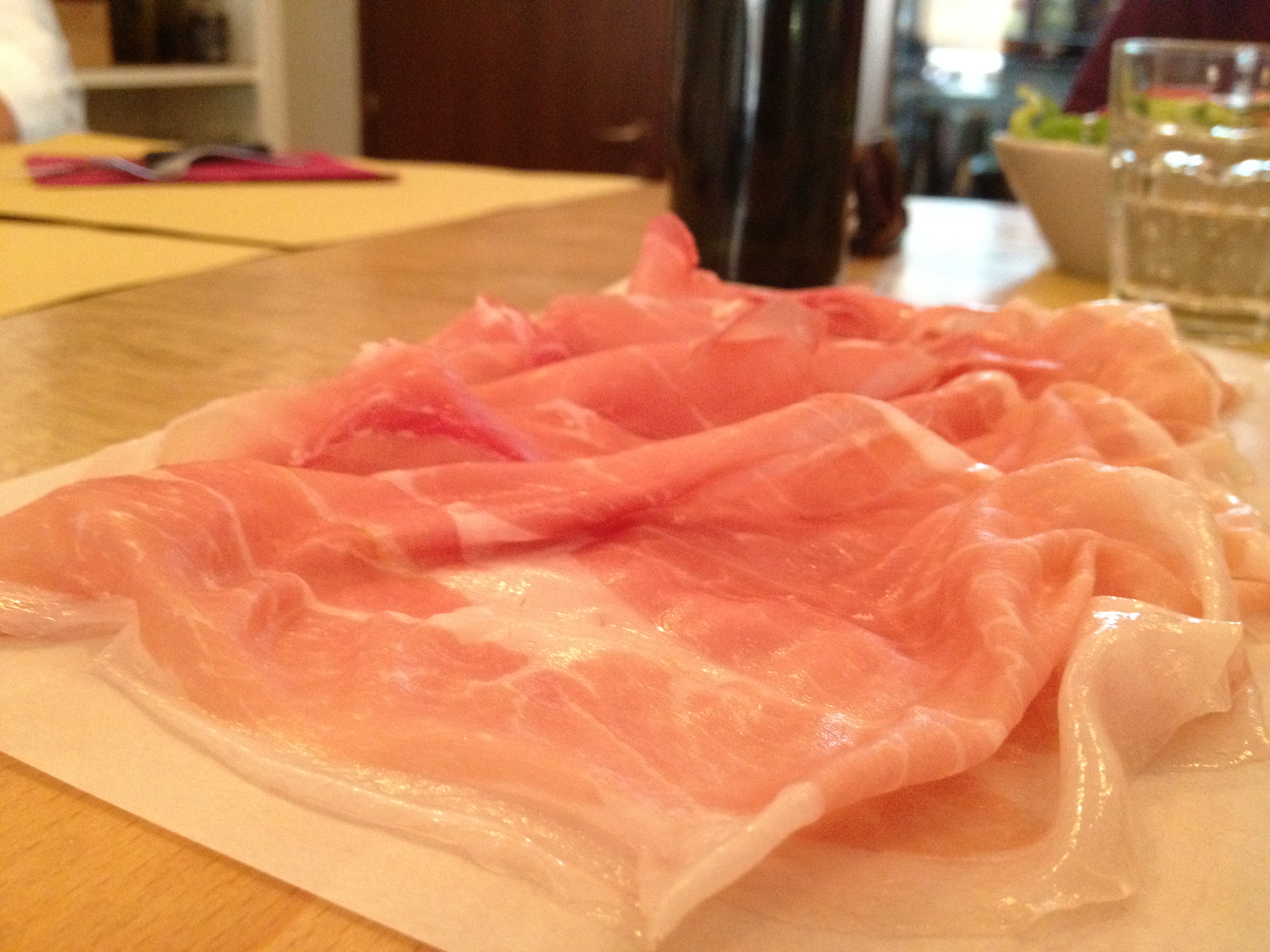
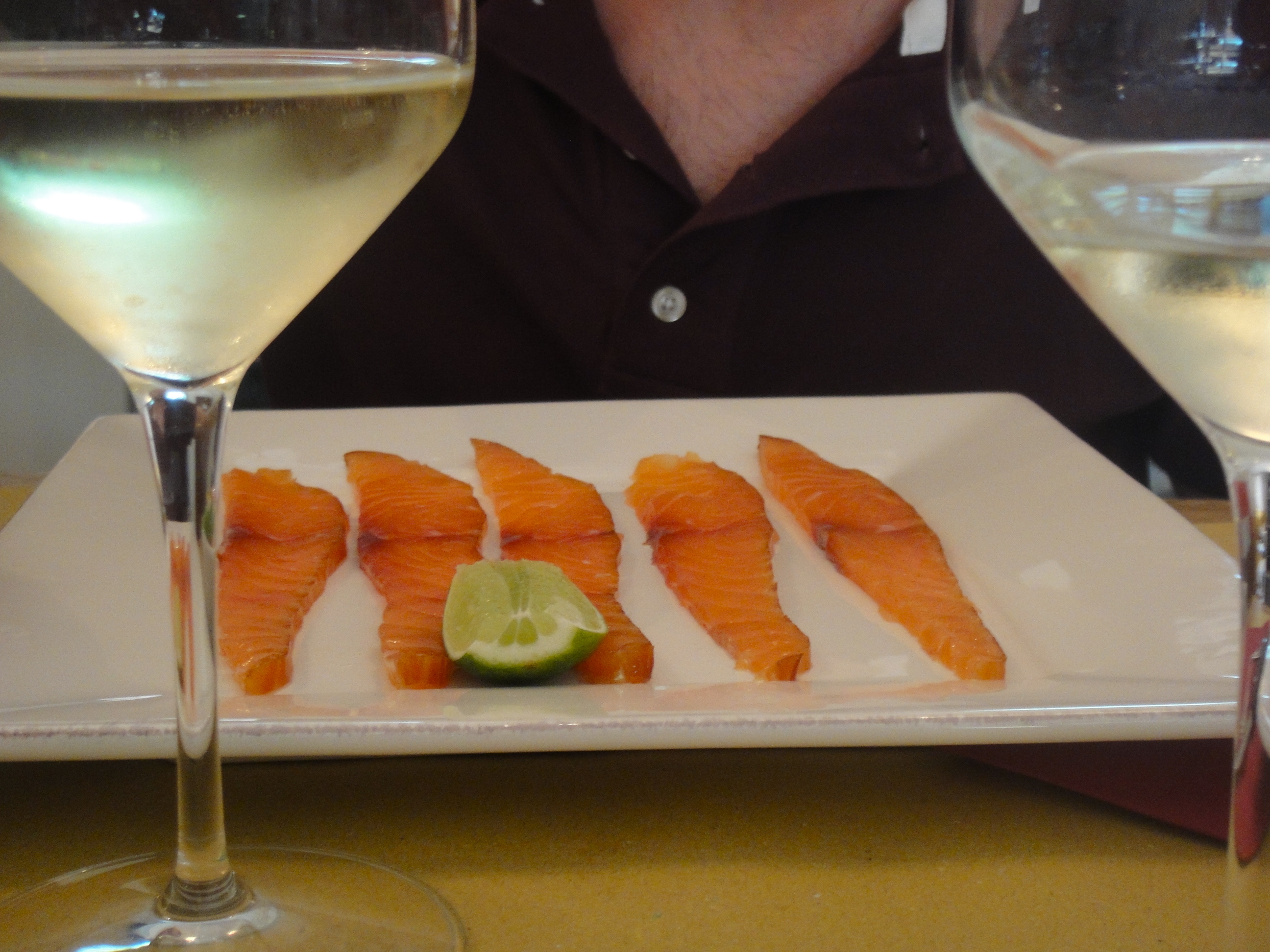
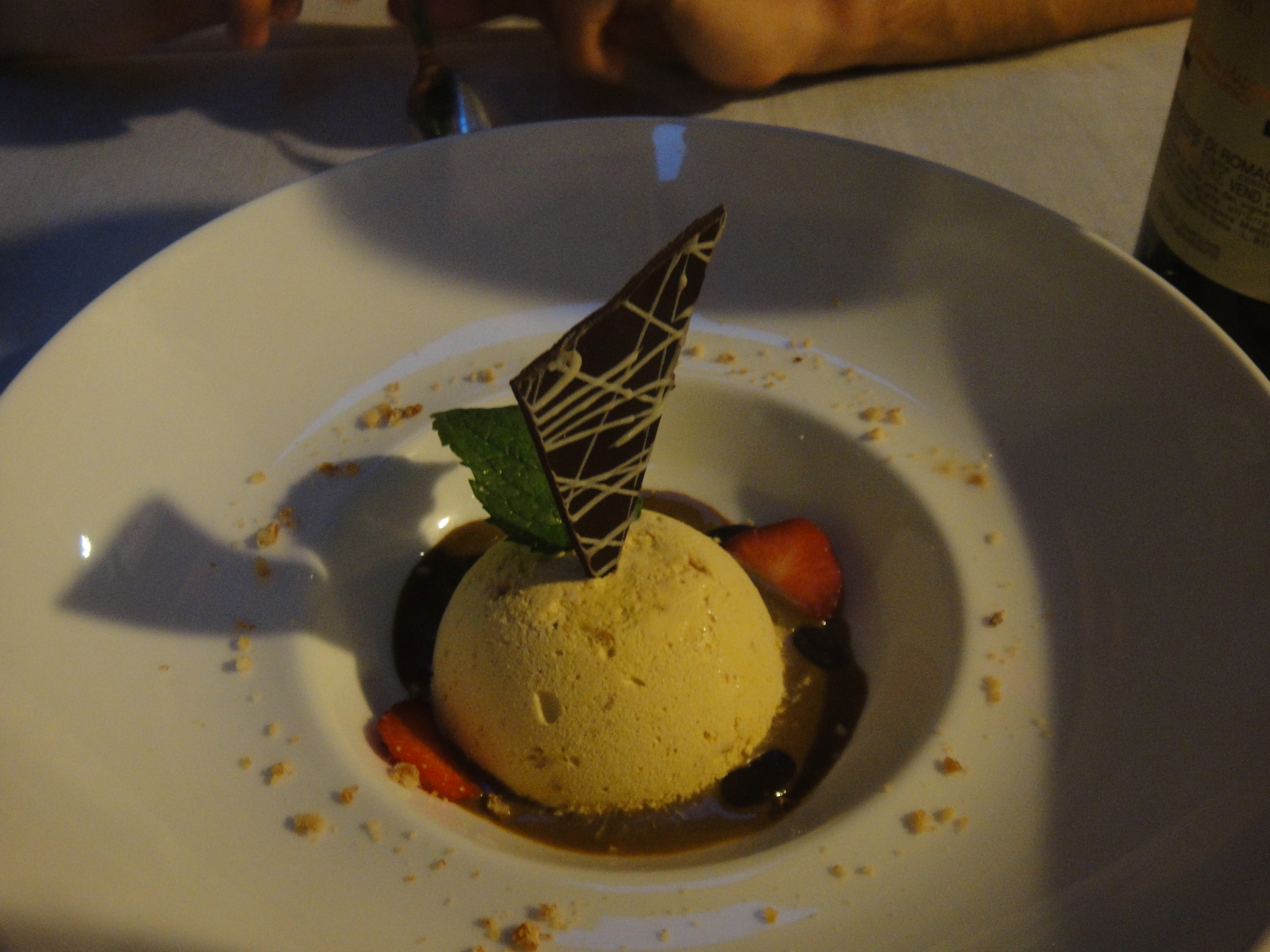
Next, lunch. We stumbled upon this place, Banca del Vino (Via Mantana), on the outskirts of the rough and tumble of Bologna’s ghetto. Here the pizza was amongst the best I have had in Italy. So fresh, so thin and crispy, with a plate of soft silky parma ham served on the side, so that it could be added to the richly endorsed buffalo mozzarella pizza at will. In the meantime, my partner sampled the delights of an equally fresh, thickly cut home-smoked salmon, with a palate-pleasing glass of local white wine on the side. This was rounded off with a rich chocolate parfait with accompanying white chocolate chunks.

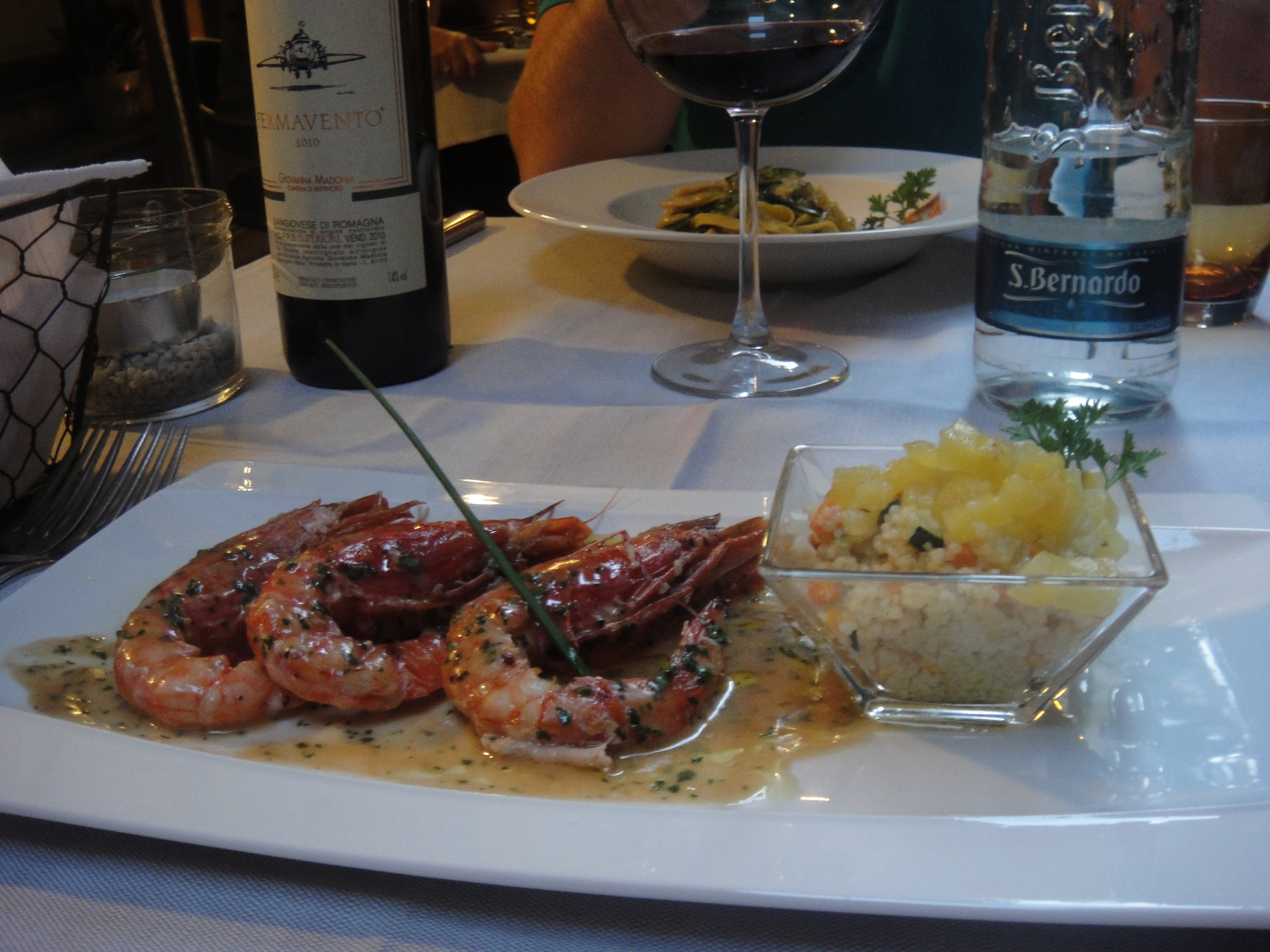
Our first dinner was at the stylish Trattoria Battibecco (Via Battibecco, 4), found down a tiny side street, just off the Piazza Galileo. The food was highly stylised and delicately balanced. I started with the Sformatino di ricotta con cuore di bacon e zucchine su crema di nocciole, a kind of ricotta-enrichend risotto cake, with courgette, bacon and the cream of nuts. Gamberoni rossi in padella leggermente piccanti con cous cous all’ananas was to follow for mains – lightly cooked prawns with pineapple couscous and a chilli hot sauce to balance, while for dessert, a semifreddo with cherry chocolate and a strawberry on the side foretold of the spectacular dinners which were to come.

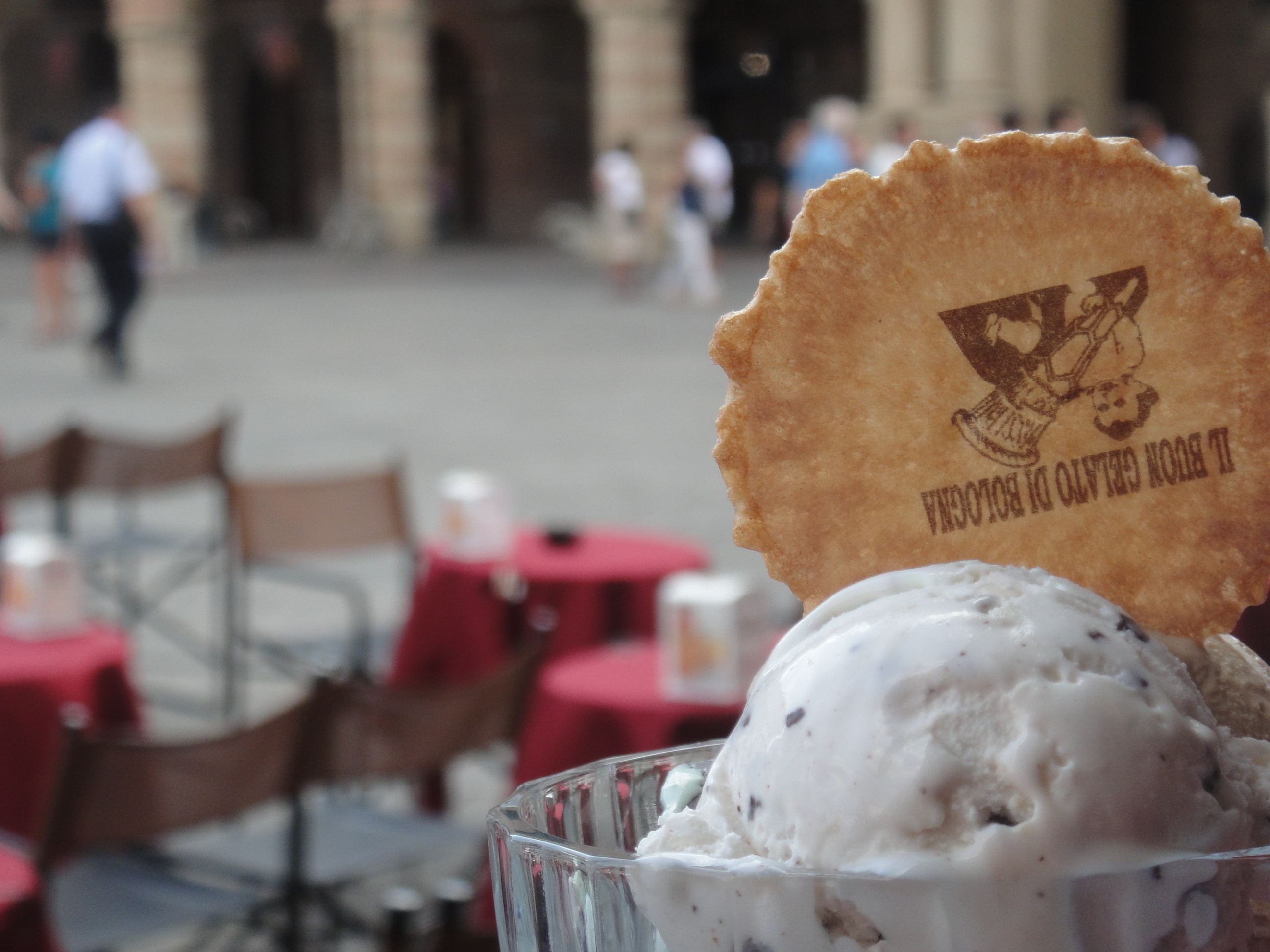
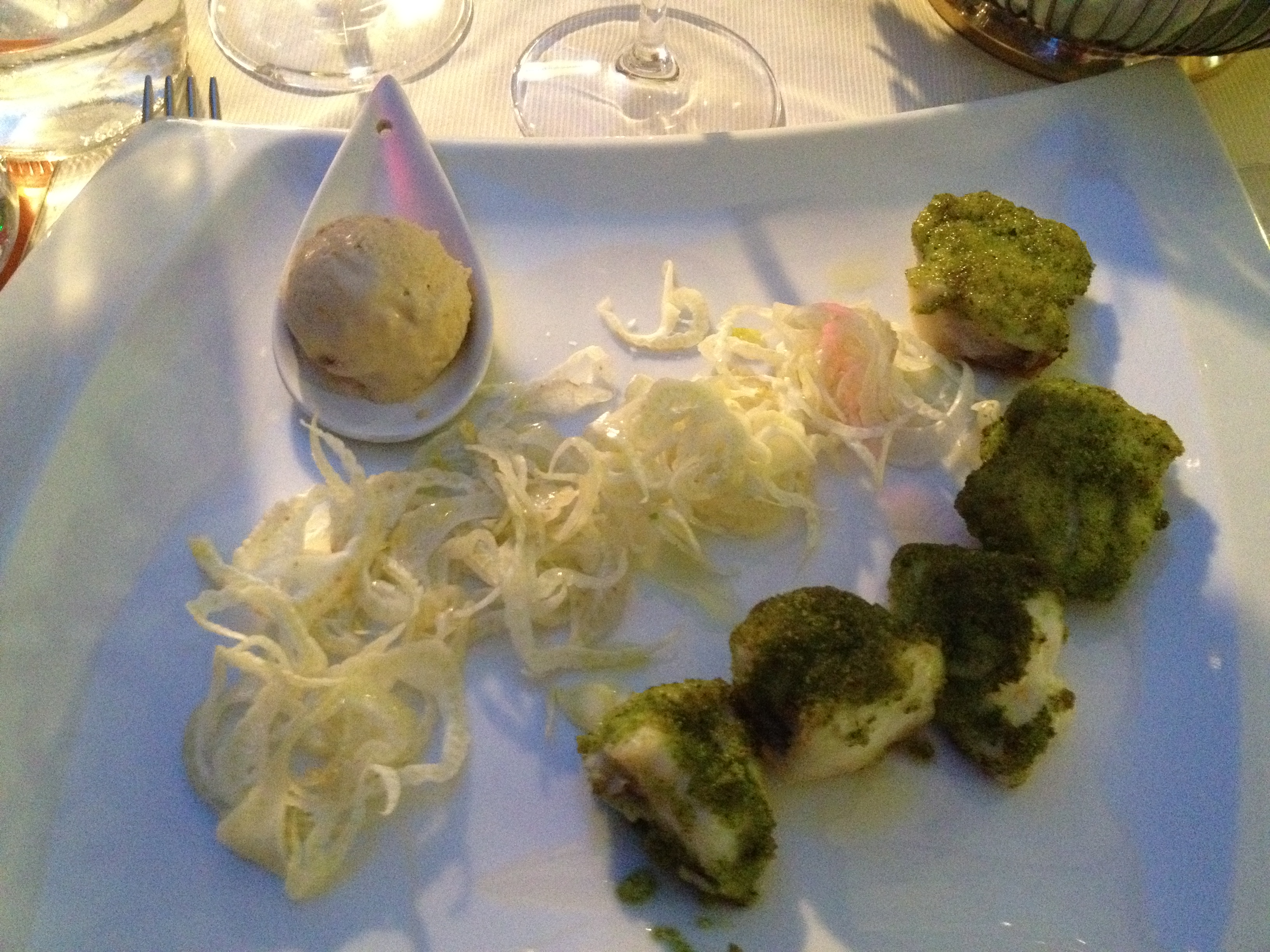
Our second dinner was at the Ristorante Ciacco (Via San Simone), another off-street secret which we stumbled upon having escaped the more tourist-focused affairs of the central Piazzas and cheaper offerings of the university quarter. Here we were treated to an innovation of ice cream, as almost every dish was served with some form of welcomingly-cool ice cream accompaniment. With my warm foie gras, an ice cream flavoured with orange and thyme provided both a sweet and sharp contrast to the rich meaty flavour of the foie, while my partner’s starter (a prawn and scallop club sandwich) was similarly accompanied with an ice cream of wholegrain mustard. For main course, I was treated to a dish of monkfish with liquorice flavoured ice cream – while the monkfish was, inevitably, a little lacking in flavour, the liquorice gave a punch to the dish, helped out in this objective by a light salad of finely sliced fennel. Unsurprisingly, there were innovative ice creams aplenty on the dessert menu, but we instead opted for a white chocolate parfait, accompanied by a vivid green fresh-mint coulis.

Our third dinner was at the super cute Ristorante Teresina di Fuggetta Sebastiano (Via Oberdan, 4), not so much on a side street as much as in a side alleyway – the tables were artfully squeezed in between one leaning old palazzo and another, and the affect was truly cosy and unique, and the later addition of a harp player added a further garnish of romance to the air. Sadly I neglected to take any photos capable of public consumption – the wine caused significant blurring on the old camera – damn that tempting Sangiovese! However the food was super-tempting too. We started with a pea and mint garnished prawn dish, followed by a succulent steak tagliata accompanied by rosemary potatoes. Dessert was a creme caramel of sorts, which my partner declared, with some audacity (clearly bolstered by the Sangiovese) to be better than mine! He was clearly drunk.

Our final instalment of Bolognese dining (as if there was any space left in our significantly lined stomachs by now) was the Ristorante Cesarina (Via Santa Stefano), a more traditional affair, set in the heart of one of Bologna’s most beautiful squares. What this place lacked in innovation, it excelled in traditional cuisine cooked with excellence. We’re talking stuffed Zucchini flowers, faultlessly grilled seafood and all washed down with a mega-strong bottle of Sangiovese. But never mind all of that. The starter I had was simply mind-blowing. I mean, we’re talking a world-stopped-turning moment of culinary ephiphany. And we’re only talking ravioli – and a pumpkin ravioli at that (and from the photo, it doesn’t look all that much either). But OMG, I can’t even begin to explain how good that pasta was – perfectly al dente, giving way to a salty-sweet pumpkin centre topped with a buttery sauce and – the crowning glory – a kind of marzipan/ caramalised/ honeycomb crumb which just set my mouth alight. If I could get the recipe for that dish and bring it back to the UK I could retire early.

It tasted so much better than it looks.

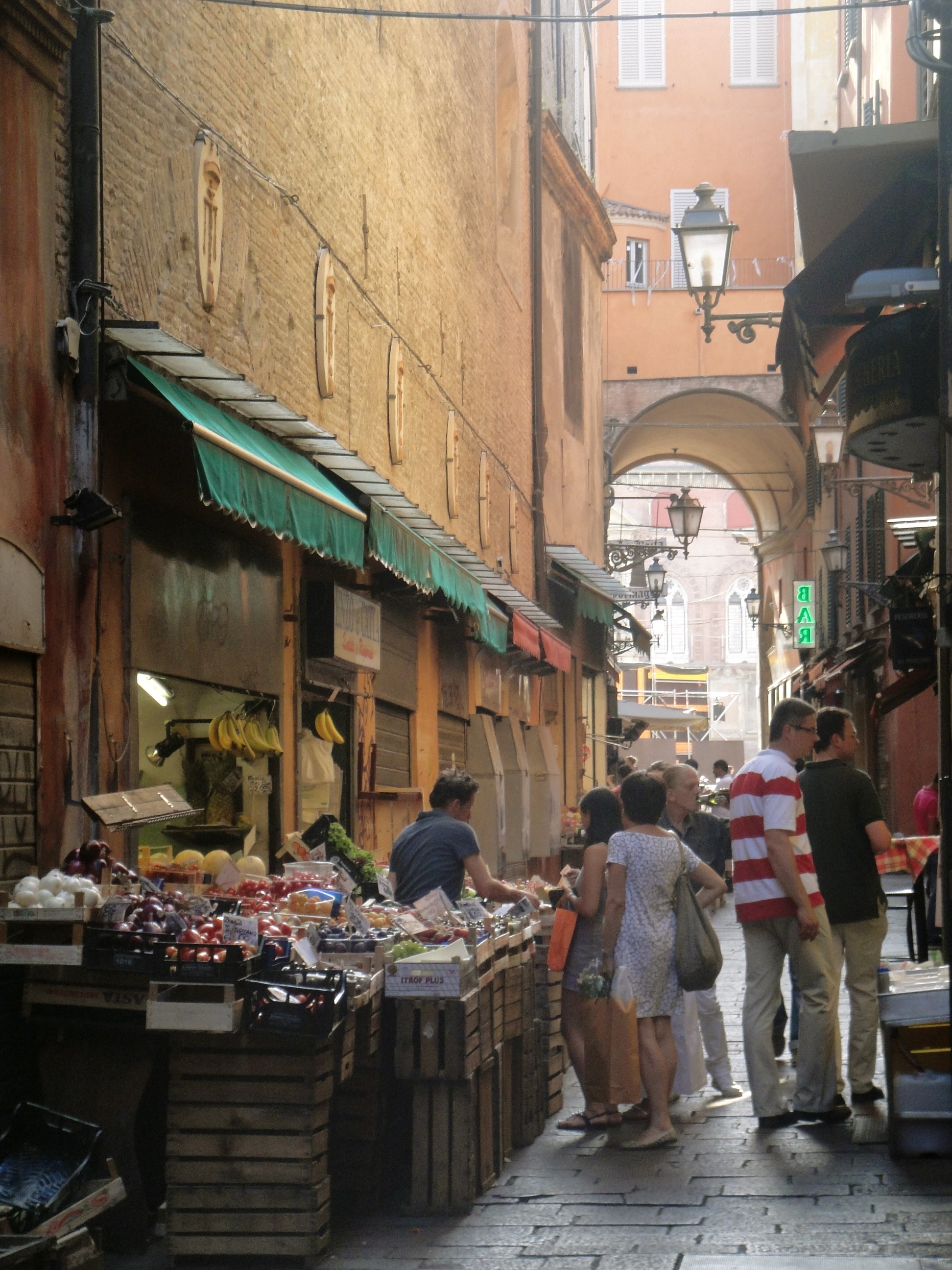
So there you go, a food explosion well worthy of all the fuss. There is no doubt in my mind that Bologna lives up to its reputation of food capital of Italy. And it’s not just the restaurants either. A short walk off the Piazza Maggiore, and you find yourself on the quaint Via Pescherie Vecchie, where a bustling food market continues to thrive and tempt passers by with the fragrant scent of ripe fruits, sea-fresh fish and sweet juicy cold meats. Meanwhile, head to any half-descent cafe, and we’re talking an affogato worth writing home about.

All this talk of food has made me hungry. I’m off to raid my nearest Italian deli. Hey, it’s not Bologna, but I will leave that crowning glory firmly where it belongs, carefully rested upon Bologna’s culinary pinnacle, amongst the perfect colonnades, the cinema under the stars and the perfectly leaning red-bricked towers. Bologna La Grassa, La Dotta, La Rossa: Te adoro.

All photos are strictly the copyright of Nicholas de Lacy-Brown © 2012 and The Daily Norm. All rights are reserved.

Bologna: La Dotta – Learned city where the profane is sacred, and the sacred is mundane.

As far as outward appearances go, Bologna holds its own amongst the crowd. For beautiful buildings, magnificent public monuments, fading Renaissance elegance and vast central piazzas, Bologna is undaunted by its more celebrated rival cities of Florence, Milan and Rome. But behind the facade, in mind, Bologna is quite different. In Rome, for example, the dominant influence of the church, and in particular of the Vatican looming close by, is evident all around. You only need to turn a corner to find another vast church, stuffed to saturation full of the most exquisite baroque sculpture, euphoric painted ceilings, depicting heaven and hell with startling realism and artistic virtuosity, gold-dripping altars, elaborate side chapels, and 100% fresco coverage throughout. In Florence, the green, pink and white marble covered Duomo and its baptistry dominates the city’s central piazza, while just around the corner, the equally stunning Santa Croce and Santa Maria Novella dominate their own respective squares.

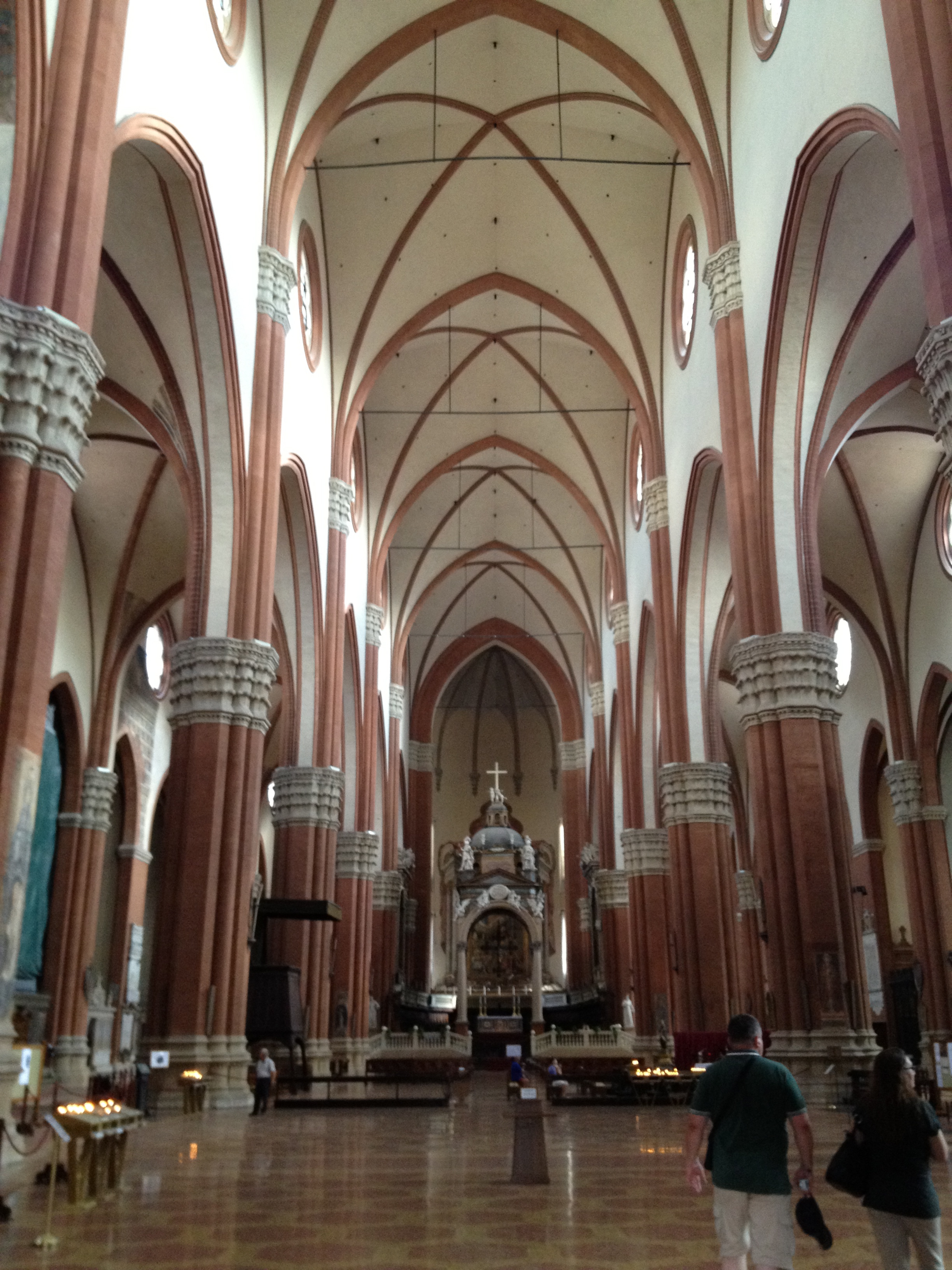
In Bologna, by contrast, there is a sense that the church plays second fiddle. True, the Piazza Maggiore is at least partially dominated by the looming presence of the Basilica San Petronio, but its vast marble facade has been left unfinished, as though the Bolognese started the expensive task of covering the brown bricks with marble, only to decide that the money could be better spent on other things. Meanwhile, on the inside, the church has a vast gothic interior, rising almost endlessly into the sky, yet compared with other Italian cathedrals, this interior is stark and austere, exhibiting the same lack of embellishment as is all too obvious on the exterior.

San Petronio’s unfinished exterior

And its impressive but austere gothic interior

In Bologna too is the iconic church of Santo Stefano, which is actually comprised of a hodge-bodge of some 8 older churches all linked together. However the rather plain brick-facade of this church is easily dominated by the stunning collonades of the neighbouring buildings, and all of the guide books of Bologna refer not to the beauty of the church, but of the square itself, with its fine Merchant mansions, shopping arcades and perfectly-proportioned palazzos.

Overshadowed: Santo Stefano

That’s not to say that the Bolognese are a population of heathens, rejecting the church and pursuing a life of hedonistic profanity and over-indulgence. The Basilica of San Petronio is, in fact, a mere shadow of its original design, which was intended to be a vast religious temple when designs were drawn up in the 16th century, but which were promptly interrupted by the Vatican who feared that the resulting cathedral would overshadow St Peter’s in Rome. As it is, the cathedral is the 15th biggest in the world. While the intention was there, you can’t help but notice that in spirit, Bologna’s priorities lie elsewhere. For the second of Bologna’s three renowned epithets is La Dotta: the Learned, and the great prevailing buttress of Bologna’s cultural foundation is intellect and learning – and you can see it all around.

A happy Bologna graduate on her graduation day

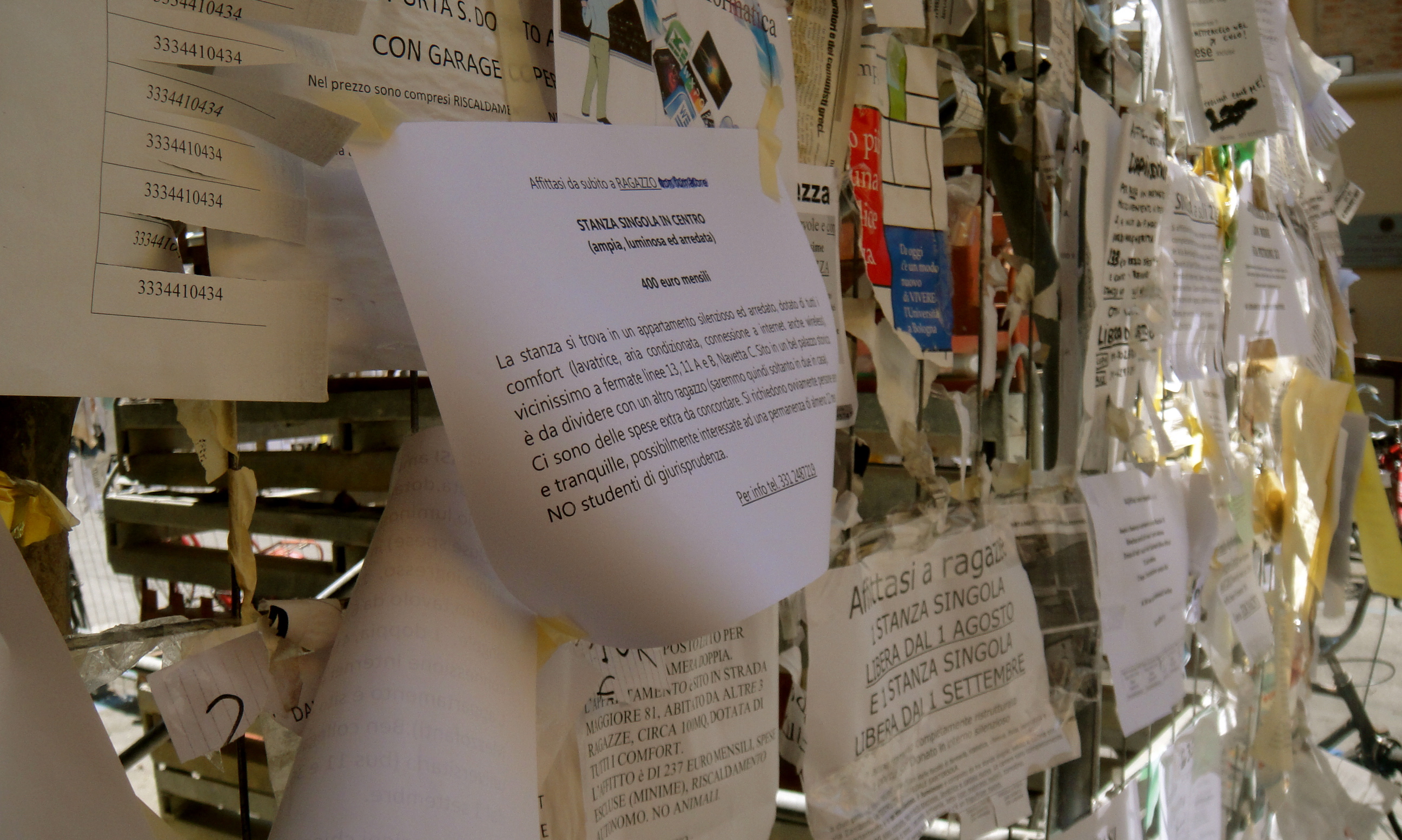
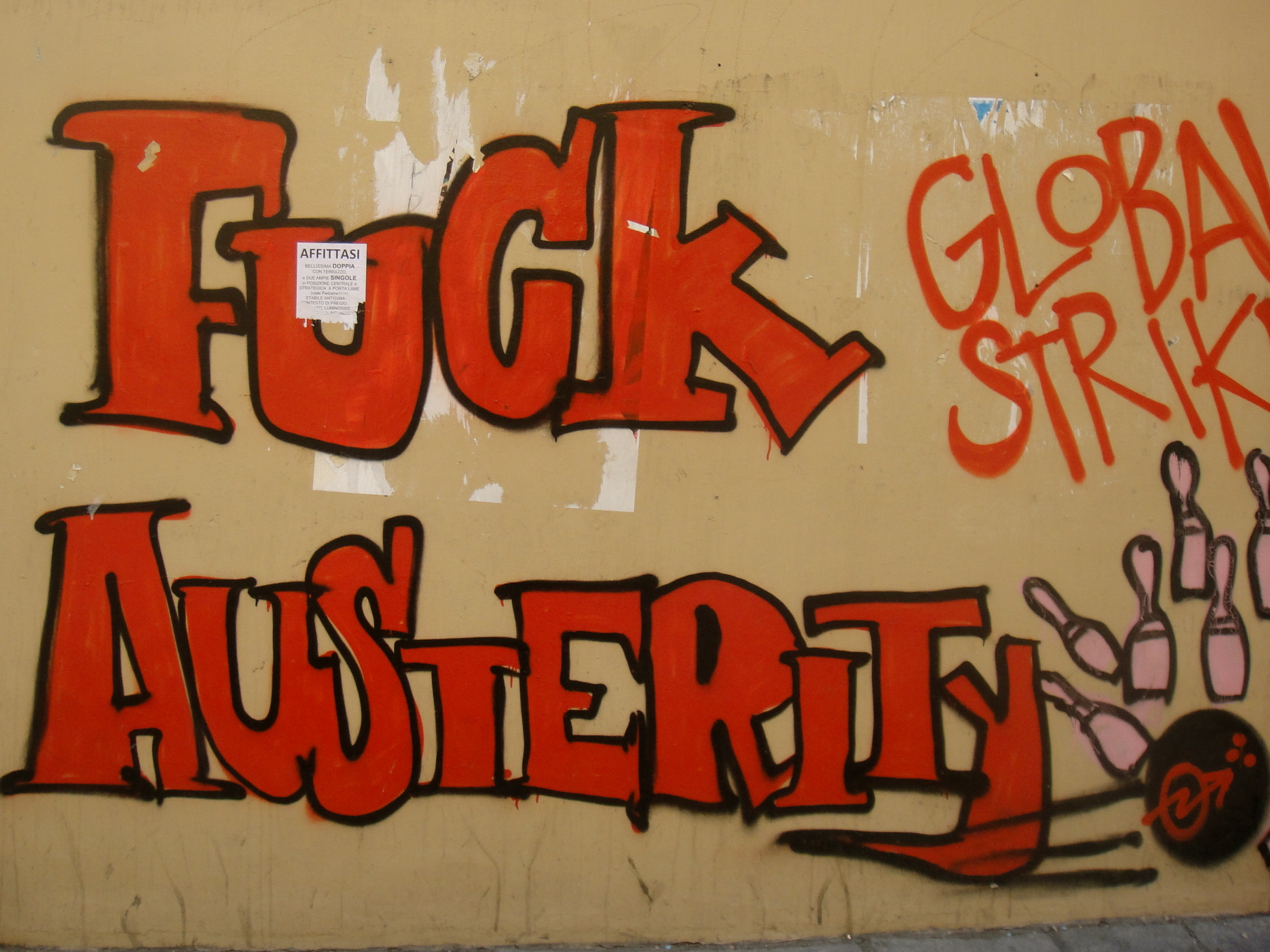
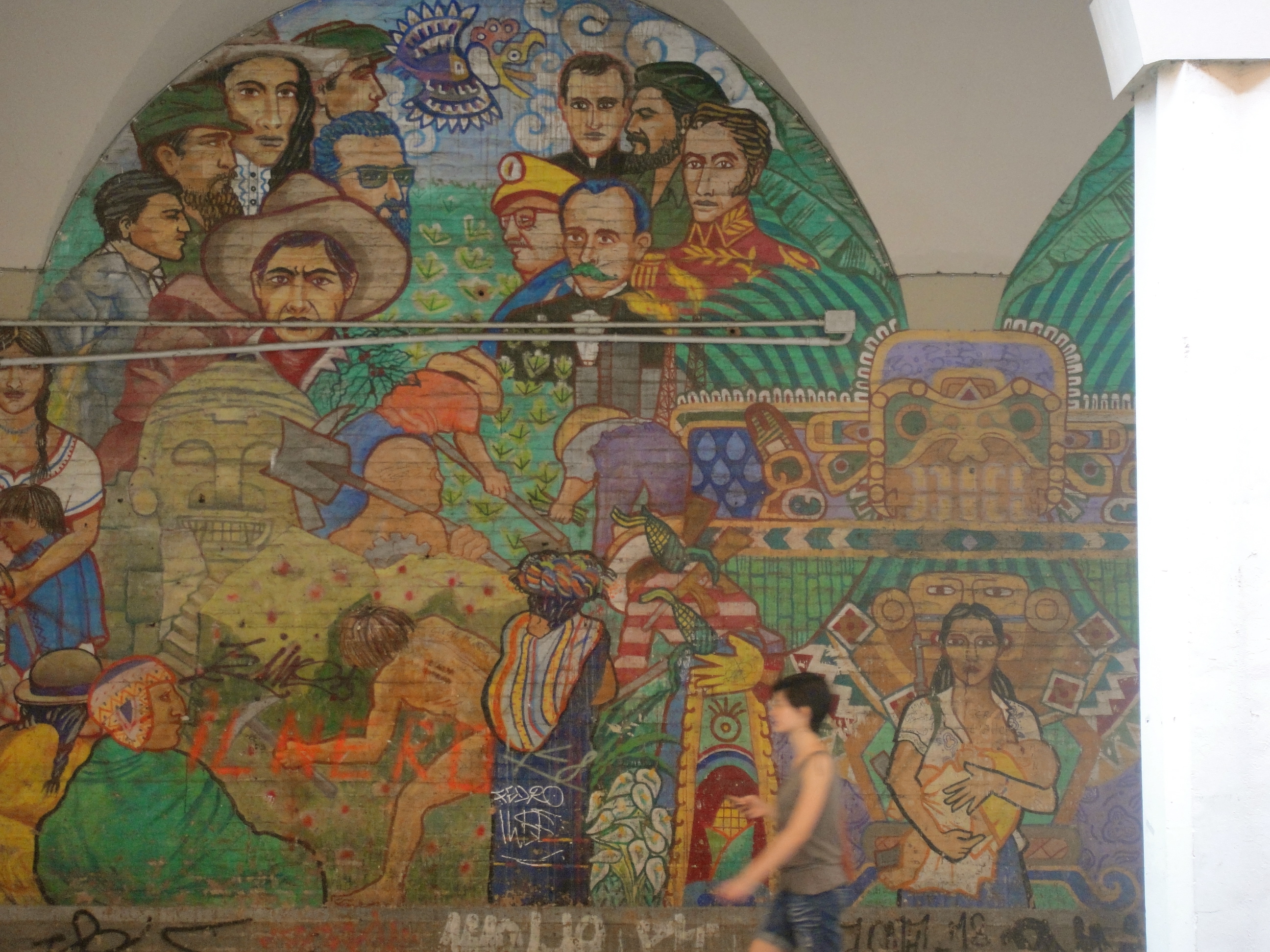
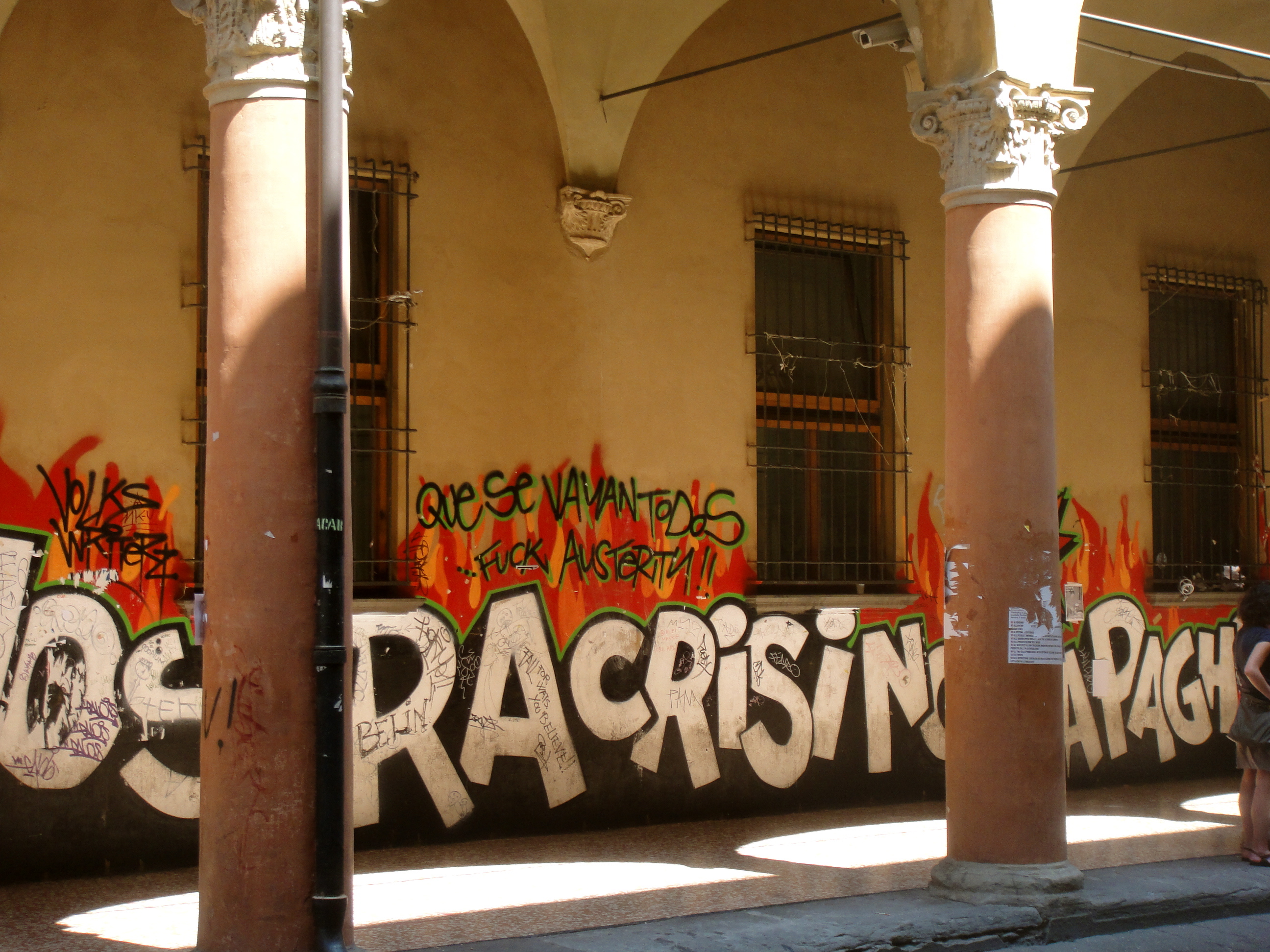
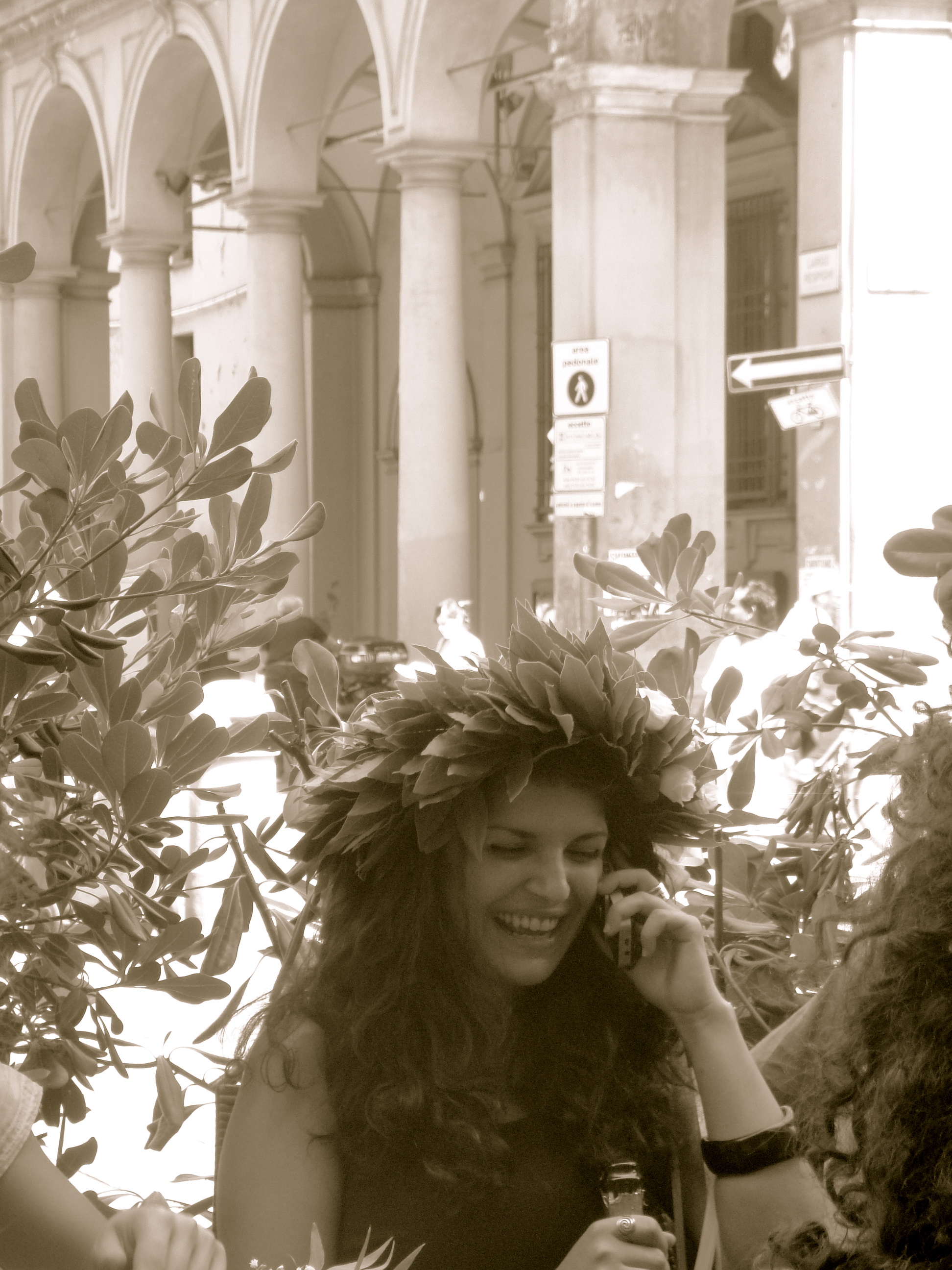
For starters, Bologna boasts what is said to be Europe’s oldest University, going back some 900 years, and the vivacious influence of the city’s still-thriving university population can be seen all around. On our first morning in the city, we wandered into the university district, just north of the central leaning towers, and there we found a district which was markedly alive with a thriving cafe culture, with campuses and libraries and a predominant feeling of youth and exploration. There, the elegant porticos of the southern city had been replaced by vast graffiti murals, protesting against austerity, opposed to Gaddafi and debating other modern polemics in technicoloured spray-paint. Instead of frescos, here the walls were covered with posters promulgating student presidential campaigns, advertising rooms to rent and promoting concerts and lectures. And instead of tourists, here the students dominated, and in fact on our visit were in the midst of a great summer graduation, for which the macabre mortar-board was replaced with a garland made from olive leaves and ribbon.

But the spirit of learning extended beyond the university. In the Piazza Maggiore we past a group of ordinary locals, energetically debating the state of the economy, some berating the influx of immigrants, others bemoaning the lack of jobs, and the rare few wishing Berlusconi was back in power. The debate went round and round, and views differed widely, but it was wonderful to see these people, vocalising their views, no matter how extreme, in a jocular environment, rather than building up resentment as is so often the case in reserved England. Meanwhile, around the Piazza, a wide range of impressive museums demonstrates Bologna’s thirst for global culture, art and history: We visited the beautiful archeological museum, where a courtyard stuffed full of Roman relics was an awesome sight, and the Pinacoteca Nazionale Bologna, where sadly the most famous works – a Giotto altarpiece and a Raphael had been hidden away owing to the double-bill of earthquakes which hit the Emilia-Romagna region in the last year.

The archeological museum

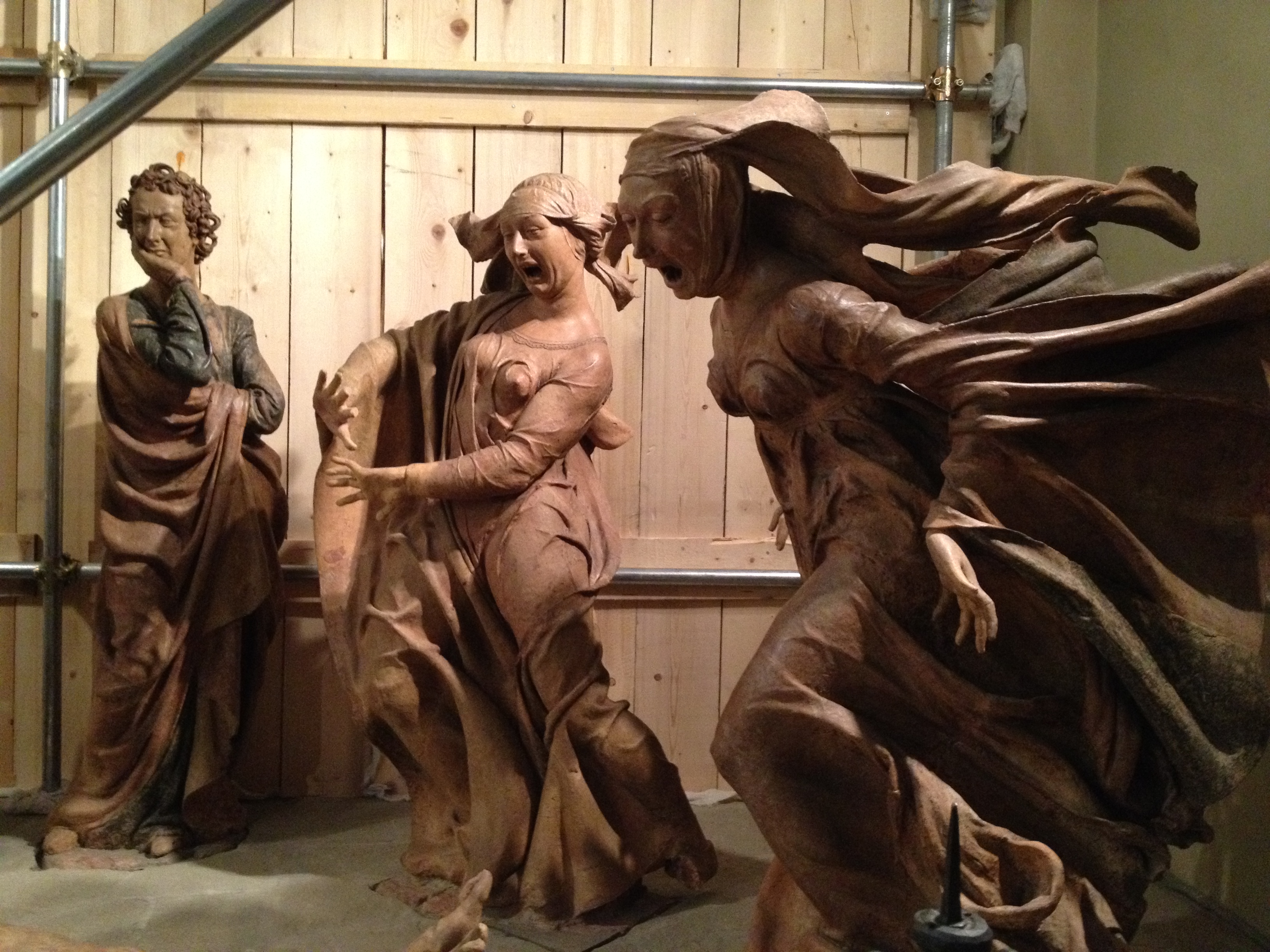
It would be unfair however to dismiss Bologna’s religious heritage all together. Seek and ye shall find, or so they say, and when you head away from the major Piazzas, there are some religious gems still to be found. The church of Santa Maria della Vita for example was quite a sight to behold. Tucked away in a side street off the Piazza Maggiore, a small door led to an interior which simply took my breath away. You can see from these photos why without further description. Also held in the church were the equally enthralling terracotta sculptures by Niccolo dell’Arca of the dead Christ and surrounding mourners. The sculptures exuded incredible dramatic pathos, the expressions of grief and torment of the figures intensified by the realism of their dramatic facial details.

Santa Maria della Vita

The Niccolo dell’Arca sculptures (protected from earthquakes, hence all the ugly wood)

Meanwhile, head out beyond the city, following the world’s longest continuous arcade (4km long, comprising an ominous 666 arches) from the centre of the city and at its end you will find the stunning sanctuary of the Madonna di San Luca, perched atop a hill, glowing orange, looking over the city for which it was appointed ultimate guardian.

San Luca

The uphill end of the world’s longest continuous arcade (we took the trenino rather than suffer those steps…)

So at the end of it all, Bologna, with its fiercely independent spirit and pursuit of intellectualisation and cultural superiority has captured a perfect balance. It has not sacrificed religious influence, nor morality, but it has cast the perfect equilibrium between moral precedent and intellectual and cultural freedom. In that respect Bologna has perfected a model which must surely be envied throughout the world.

All photos are strictly the copyright of Nicholas de Lacy-Brown © 2012 and The Daily Norm. All rights are reserved. 

Bologna: La Rossa – Red hue of a left-leaning towered city

Of the three epithets for which it is known: La Rossa (the red), La Dotta (the learned) and La Grassa (the fat), it was the first of the three which became immediately obvious upon our early evening arrival in Bologna, capital of the Emilia Romagna (after a stuffy long train journey along the Tuscan coast with a change in Firenze): Not only did the city exhibit a searing red-hot temperature of near 40 degrees centigrade, even at 7pm, but its buildings were tinged with hues of reds, terracottas, and russets for as far as the eye could see. And what a rich, red spectacle our eyes had in store as we unloaded our luggage at the hotel (by this time full to near-combustion with olive oils, pastries and wine from Toscana) and headed straight out into the town.

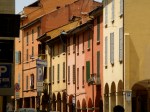
Red as far as the eye can see…

Bologna is stunning. It’s a living, breathing, pulsating city. It is not like Florence – a beautiful town whose heritage and architectural splendour cannot be doubted, but which is so full of tourists that the whole place feels a bit like a theme park. By contrast Bologna, often overlooked by Florence, just 30 minutes south by train, is a city equally rich in architectural heritage for which exhaustible superlatives are simply not sufficient, but which at the same time is alive with its university students, with a diverse population of engaging chic Italians rather than tourist throngs, with high-end restaurants and boutique shops, with cultural spectacle and a vibrant cafe culture.

For Bologna does not just celebrate its architectural wealth, but with an infamous liberal attitude, celebrates all aspects of life too. Here, none of the Catholic constraints traditionally centralised in the Vatican and strictly executed to control the moral values of nearby cities can be seen. In fact, the epithet La Rossa, traditionally used to describe Bologna’s multitude of red-shaded buildings, has, in more modern times, been used to describe the Communist-dominated local government which has been in power in the city ever since WW2. The city has never looked back, and having now morphed into a left-wing coalition, the Bologna administration has imposed an individualistic, modern vision on the city. In fact, so successful has this vision been that Sociologists from around the world have studied the so-called “Bologna model” of political and social governance, and Bologna now regularly tops the polls for where to enjoy the best quality of life in Italy. Moreover, with its liberal leanings, Bologna is the centre of civil rights and communal culture, a bastion of social democracy and the centre of Italy’s gay-rights movement. How terribly refreshing! No wonder then that as recently as the papacy of Pope John Paul II, the Vatican condemned the Bolognese as degenerates, and the city’s own archbishop lambasted his flock for loose morals and godlessness.

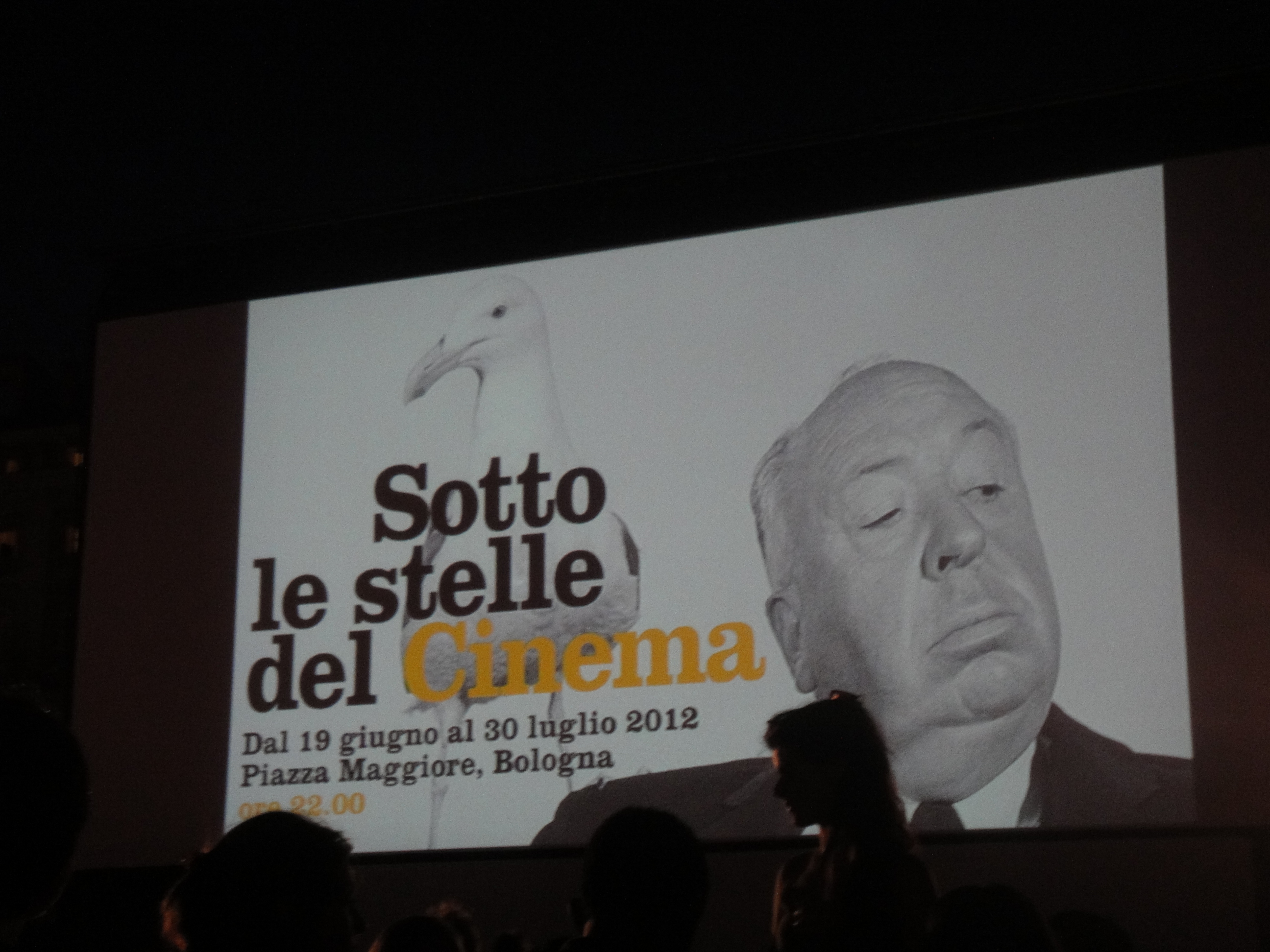
The film festival, for which Hitchcock films played a major part

If this is degeneration, I’m all in. The atmosphere of convivial city living could be seen by the bucket load as we entered the grand Piazza Maggiore on our first evening: There, under the stars, was set up a huge cinema projection screen, almost as big as the cathedral facade it neighboured, and before it, hundreds of seats, already filled with a bustling Bolognese crowd, a sense of excitement tangible in the air. As the square began to fill and people started sitting all over the warm pavements, the chairs already being full, we decided to join in with the crowd, and looked up at the huge screen in anticipation. Suddenly the screen came to life, and projected on this huge screen, for the whole square to see, as well as some surrounding Bologna streets, was the old crackling Hitchcock masterpiece: North by Northwest. We were entranced, and it was in fact only some hour and a half into the film, just before the characters relocate to Mount Rushmore, that we realised that our backsides and legs were becoming progressively paralysed from sitting on the hard stone of the pavement for so long.

Crowds gather for the start of the film

Opting to enjoy the rest of the film on foot, we witnessed a spectacle like I have never seen before. Practically the whole city must have been out in that square, faces tilted towards the screen, utterly engaged, the light of the projection reflected in their faces, and the rest of this city so dark around them that the stars sparkled in the sky as brightly as electric lighting. All around, the crowd had swelled. In cafes, people crammed around tables to watch the film, waiters had paused in the midst of their work and stood, entranced, yet still holding their tray full of empties, and at the back of the crowd, a load of Bolognese cyclists had rested to catch some of the film, still upon their bicycles. I’m not sure why, but there was something about this feeling of unification and togetherness, watching a film under the stars, that made me feel so emotional. It was so beautiful so see so many people from the town having come together on this warm summers evening, to watch Hitchcock under the night sky. And there was something about those old polished 1960s voices reverberating around the old facades of Renaissance and medieval architecture that sent a shiver down my spine. Incredible. And what was more, this showing was part of the Sotto le stelle del Cinema festival (‘cinema under the stars’) which runs from 2-30 July. We, therefore, were able to enjoy the spectacle every night of our stay. Bonus!

The Piazza Maggiore and the edge of the huge cinema screen

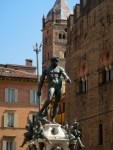
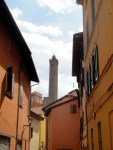
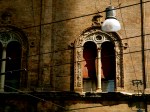
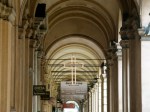
I could go on forever about this vivacious city, but it’s best not to overindulge all in one post. I shall leave you instead to gaze at the photos on this post, emblematic as they are of what makes this city truly La Rossa – endless rows of elegant colonnades and porticos, lining almost every street, providing shade and ease of walking for pedestrians across the city. Stunning old buildings, decadent in their decay, embellished with elaborate architectural details, with sculptures and with fine arcades, all demonstrating the wealth of previous occupants, who, through their architecture sought to compete with their nearest neighbour. And finally, who can forget the famous towers, which numbered some 200 in medieval Bologna – towers which got higher and higher as that same competitive spirit encouraged more splendid construction than the previous model. Only 60 are left now, with the two most famous, Asinelli and Garisenda leaning precariously at Bologna’s centre, emblematic perhaps of Bologna’s character, its non-conformist political leanings, and moreover its spirited refusal never to fall into line, but to stand out as a individualistic and creative city, running from the norm and chasing adventure. No wonder the population are so happy here – I’m ready to pack my bags and move to La Rossa myself.

The famous Bologna towers

More tomorrow. Ciao for now!

All photos are strictly the copyright of Nicholas de Lacy-Brown © 2012 and The Daily Norm. All rights are reserved. 
Tuscany Part IV: My Photographs

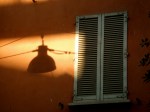
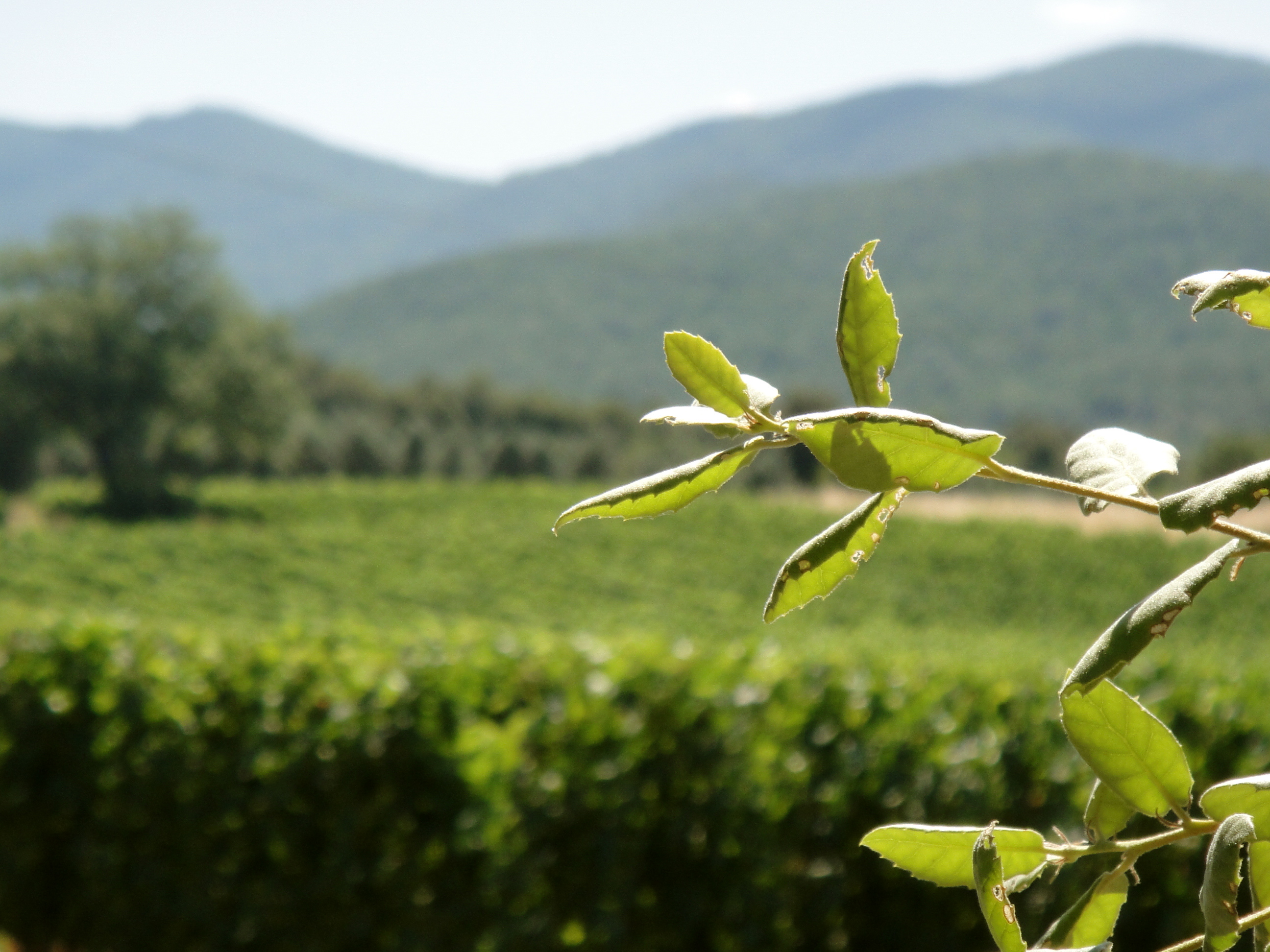
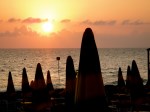
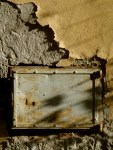
My blog’s adventures through the golden-rich lush-green lands of Tuscany are well under way, and after three days of tales, I think it’s about time I shared a few more of my photos with you. Tuscany is so ripe in photographic inspiration that I was worried my mega-sized memory stick would not be big enough. The views are so complex with multi-layered landscapes which beg for photographic capture from a multitude of angles and viewpoints, each shot capturing something new, some fresh insight into this rustic, sun-kissed land. From russet soils sprouting innumerable rows of verdant green vines and plump purple grapes, glorious golden sunflowers and shiny little olives, to the sun-dappled shady paths lined by pine trees, old derelict villages gracefully ageing with an insuperable elegance, with long shadows cast by the evening sun falling upon broken shutters and flaking paint work, and an expansive soft, sandy beach, edged by a calm lazy seashore, whose waters are silky warm, and its breeze heavily soporific.

Tuscany is poetry in sight, in sound, in smell. It tickles all of the senses as its natural bounty bares fruit across the undulating land. It’s a peaceful, restful, bucolic region, where the great pleasures of life are celebrated and manufactured, where long afternoons pass in a somniferous haze, where the evenings are bountiful in gastronomy and wine, and by morning a vivid yellow light makes every object, every plant, every building glow with a picture-perfect radiation.

These are my photos of Tuscany.

All photos are strictly the copyright of Nicholas de Lacy-Brown © 2012 and The Daily Norm. All rights are reserved. 
 

Tuscany Part III: Picture-perfect Populonia, and other hilltop idylls

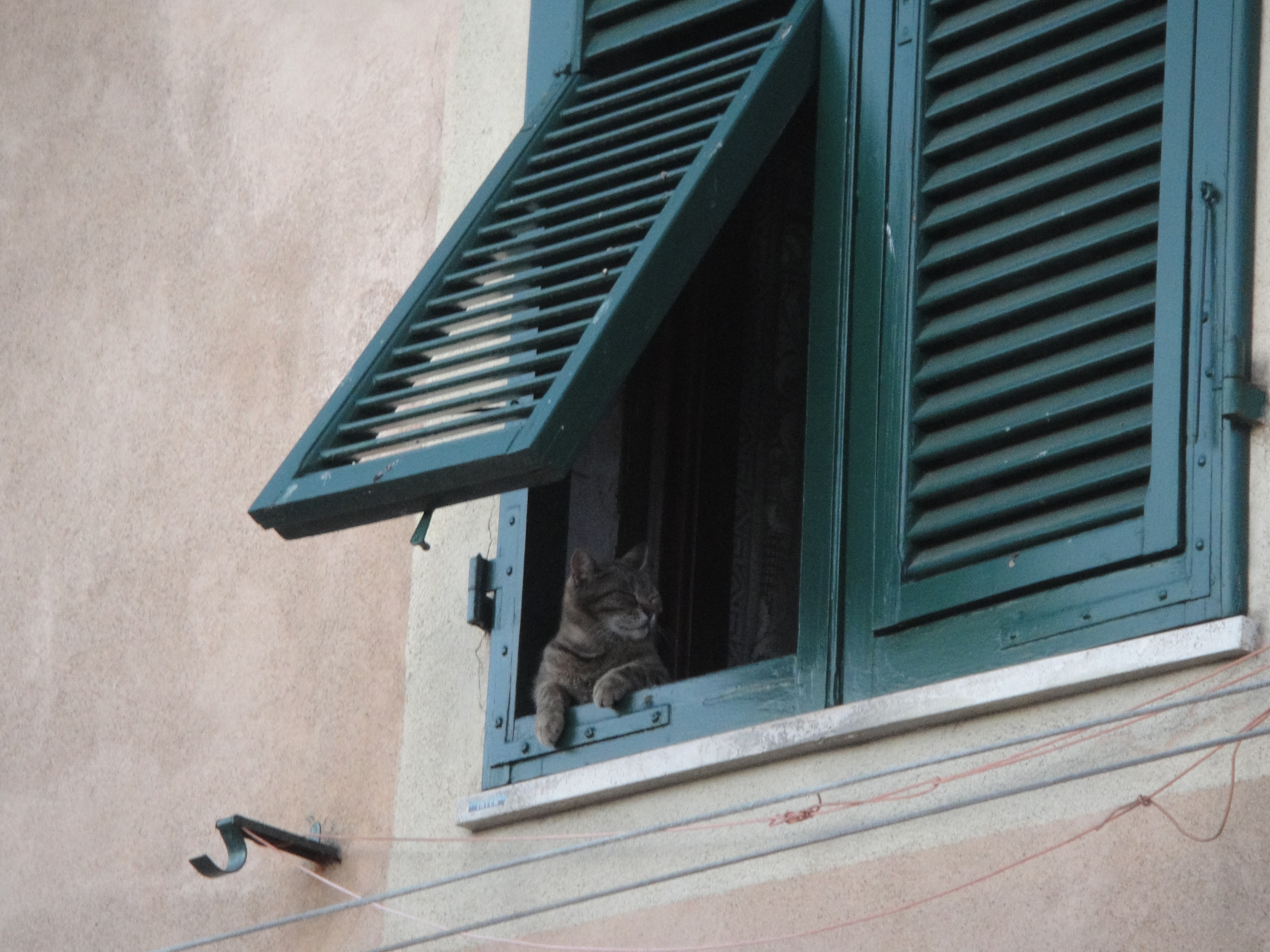
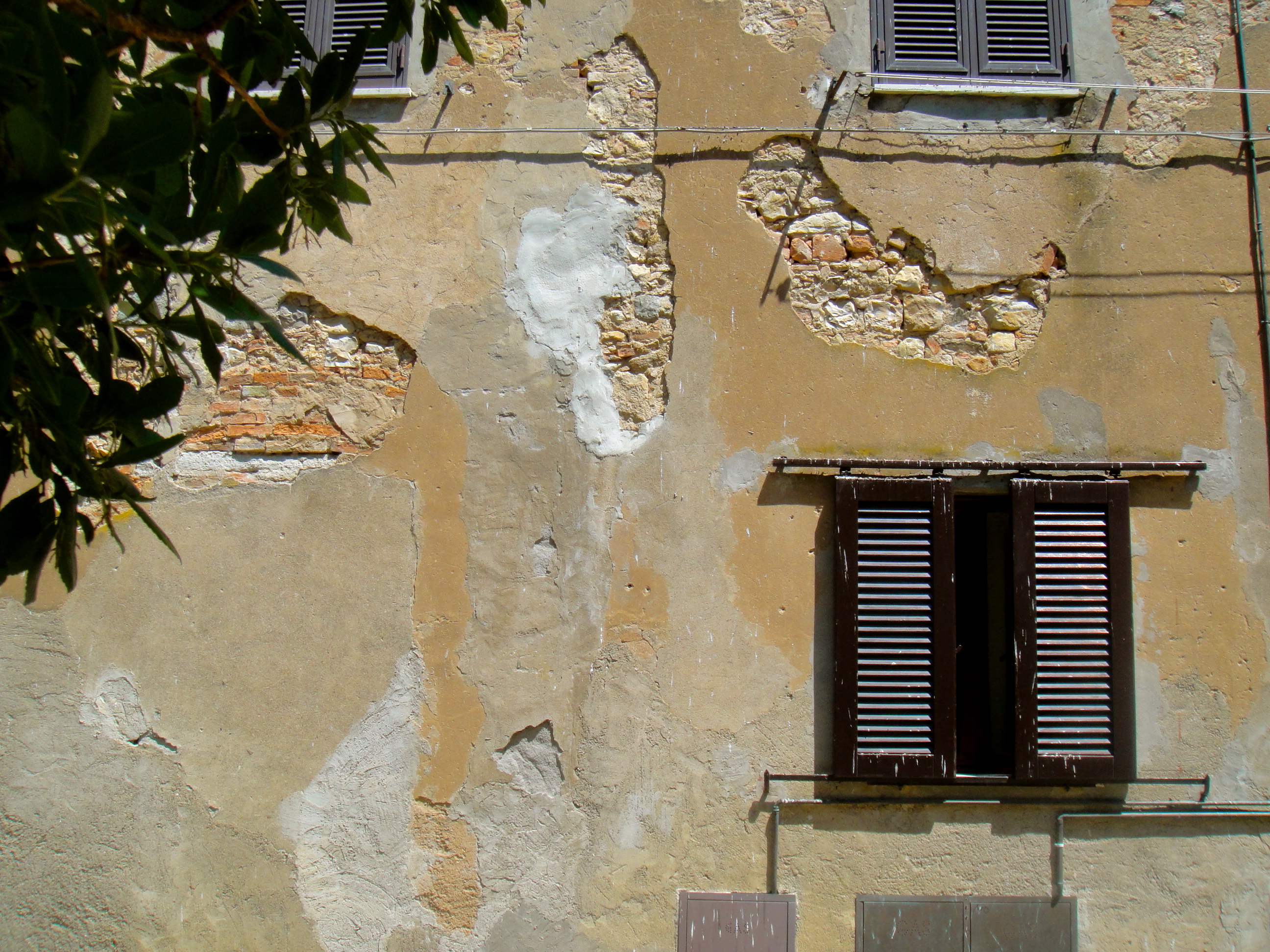
If there’s one thing that Tuscany does well, it’s idyllic little hilltop towns, framed by castle walls, boasting sensational views of surrounding rolling countryside, and offering picture-postcard views of medieval stonework, cute tavernas aplenty, slowly decaying buildings adorned with cracking window shutters, pots overflowing with geraniums and more often than not, a cat sleeping in the sunshine. You know the scene – it’s postcard land after all, for who could resist these honeypot utopias, to which every tourist, artist and hedonist will flock in their thousands every year.

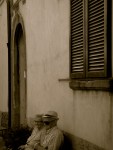
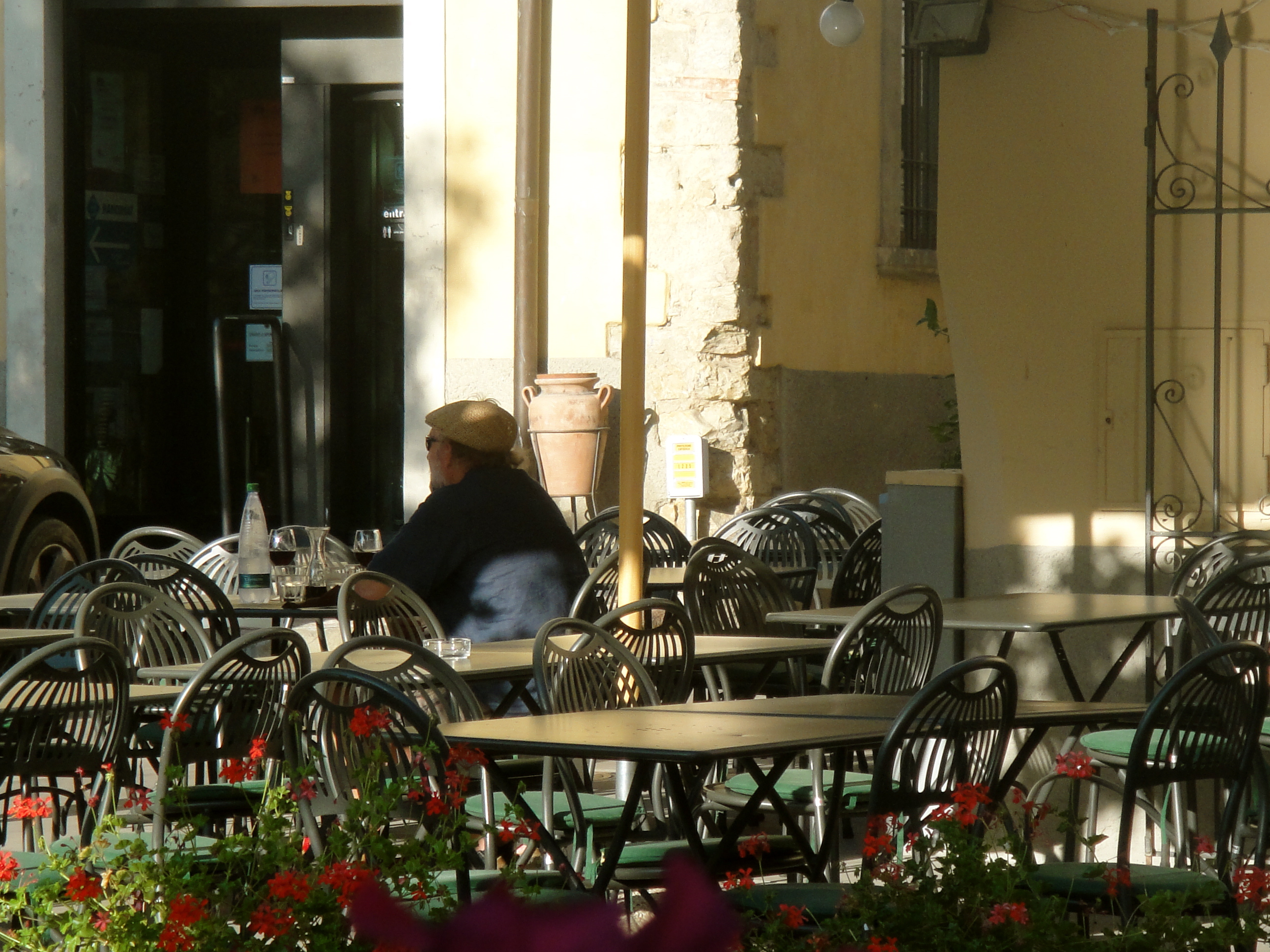
Yet what makes the towns so idyllic is the fact that far from pursuing a Disneyland level of commercial exposure, as is no doubt the temptation, life goes on in these little villages, just the same, irrespective of the camera-clicking tourists emerging at every corner. The best photos, for me, are the shots capturing locals gossiping in little piazzas, or old couples catching the evening breeze on stools out in the street. I adore the little grocery shops, which continue to sell fresh, vividly coloured produce to the locals, and whose offerings are yet to feel the effects of the supermarket spread. The haphazard park of a little bicycle or a retro-red scooter against an old cracking wall represents ordinary life to them – but to me it’s art dripping in decadence and charm in all its imperfect beauty.
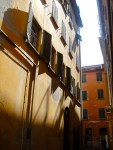
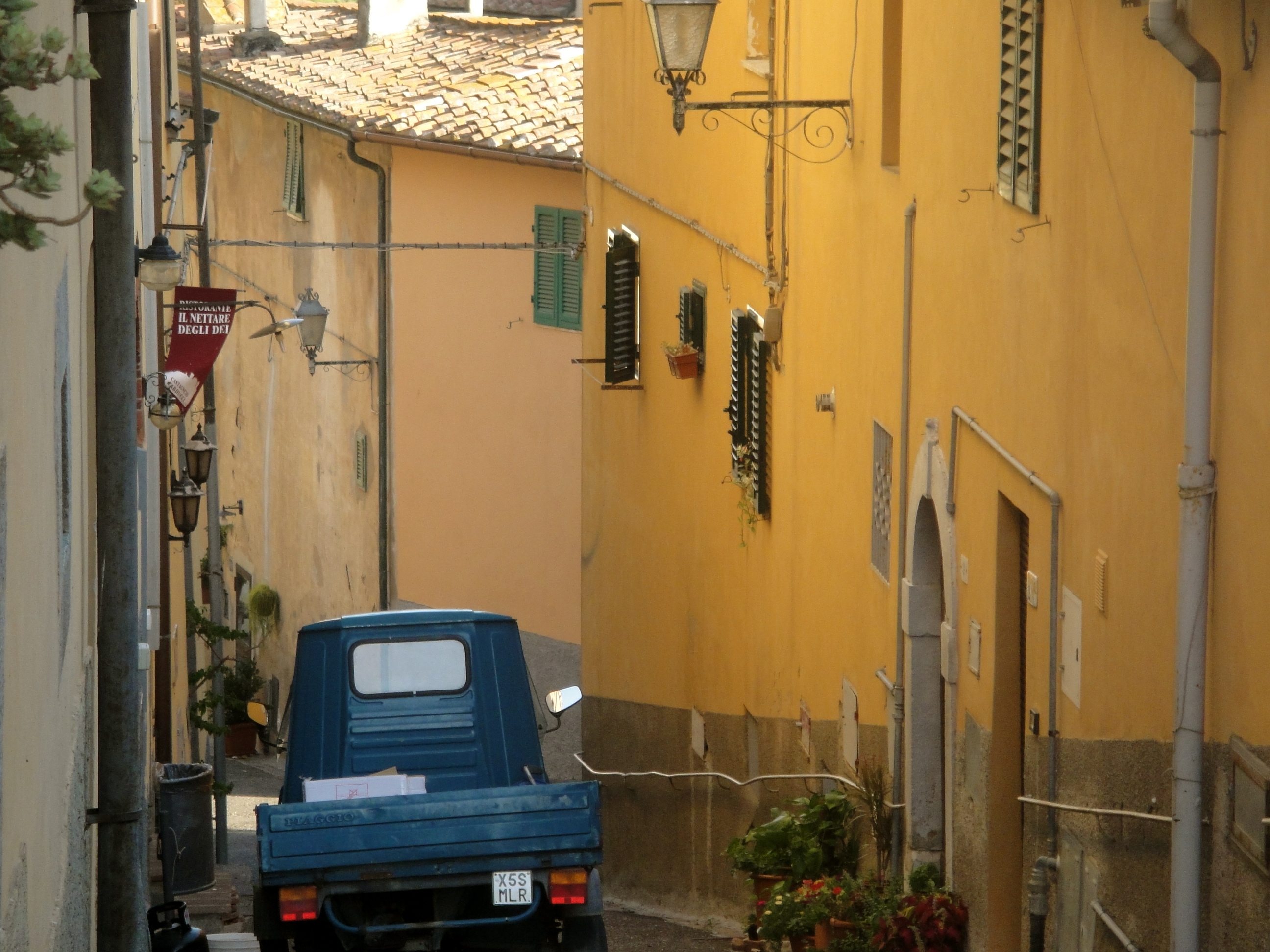
Not far from Donoratico, where I was staying by the sea, a cluster of small towns, each one atop a hill and each, stunningly, idyllically beautiful, can be found amongst the vineyards and the pine forests. My favoruite, Castagneto Carducci, is a Tuscan Elysium, perched upon the hills above Donoratico, with views over the coast and vineyard-covered rolling hills to die for, while within the town, pastel pink walls, green painted shutters, and elegantly deteriorating plaster work, old lamps and ageing locals exude charm and decadent beauty.
Castagneto Carducci

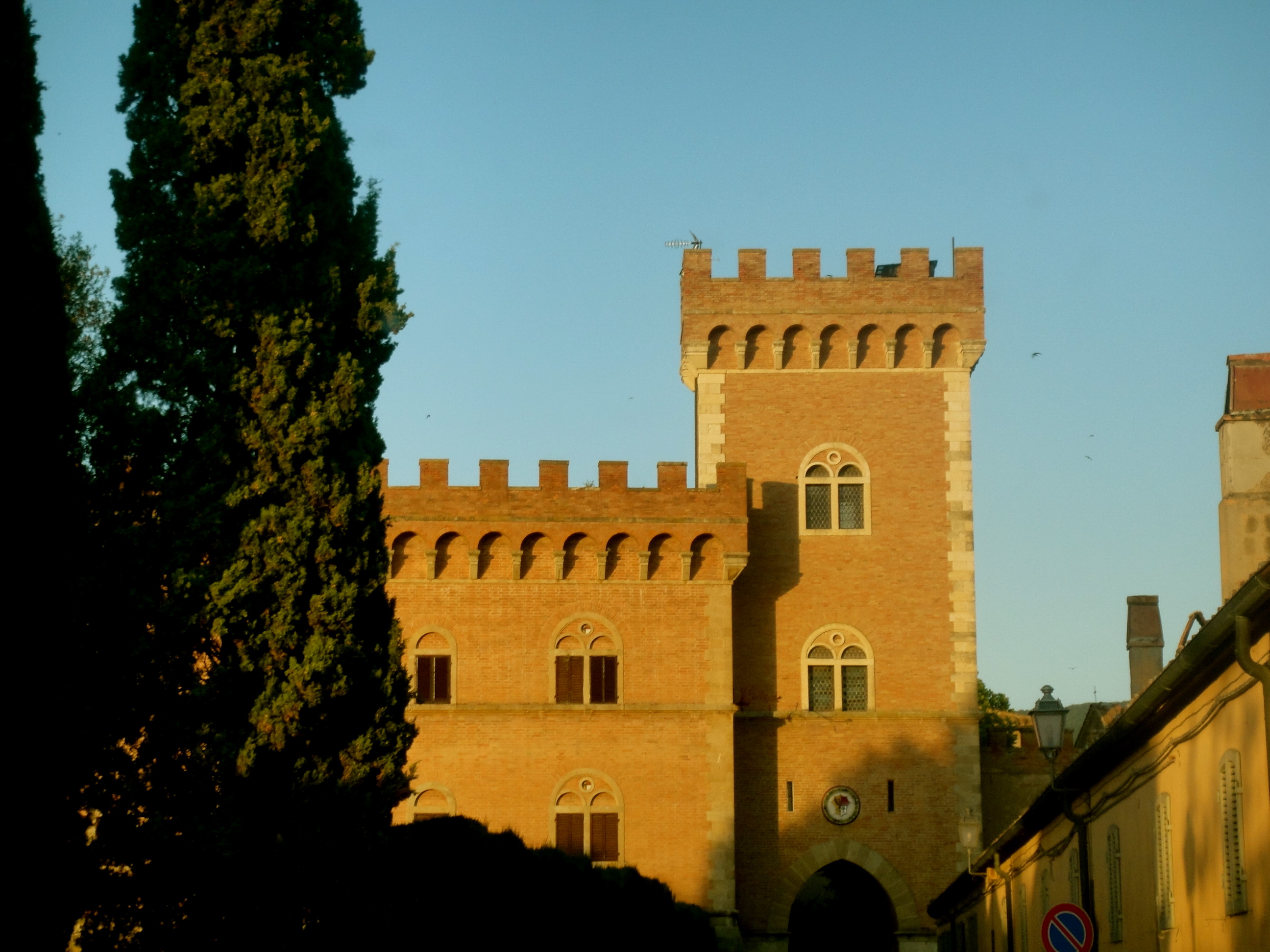
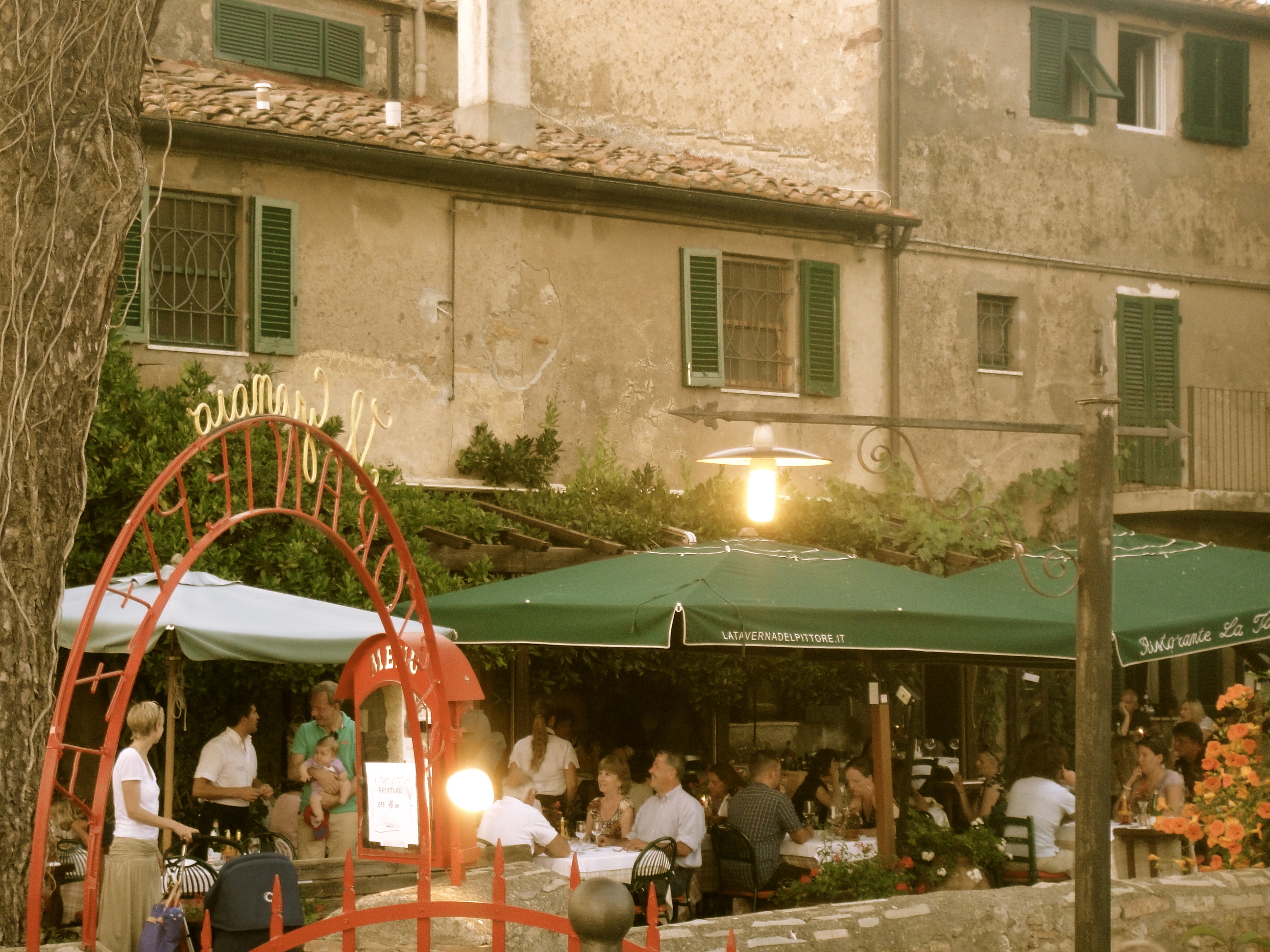
Meanwhile, just ten minutes along the coast towards Pisa, the tiny town (we’re talking two streets only) of Bulgheri can be found at the end of a perfectly straight Roman road, continuously bordered with cypress trees, the result of which is a scene of such wonderful symmetry that it appears on at least 2 out of every 5 postcards sold across Tuscany. Meanwhile the town is another chocolate-box paradise – little restaurants with red-checked tablecloths, lit by lanterns at night and benefiting from the dappled shadows of nearby pine trees during the day, a minuscule central piazza adorned with flowers aplenty, and cute little shops selling art and crafts and fresh local produce.

Bulgheri

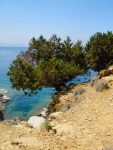
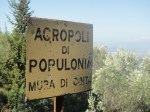
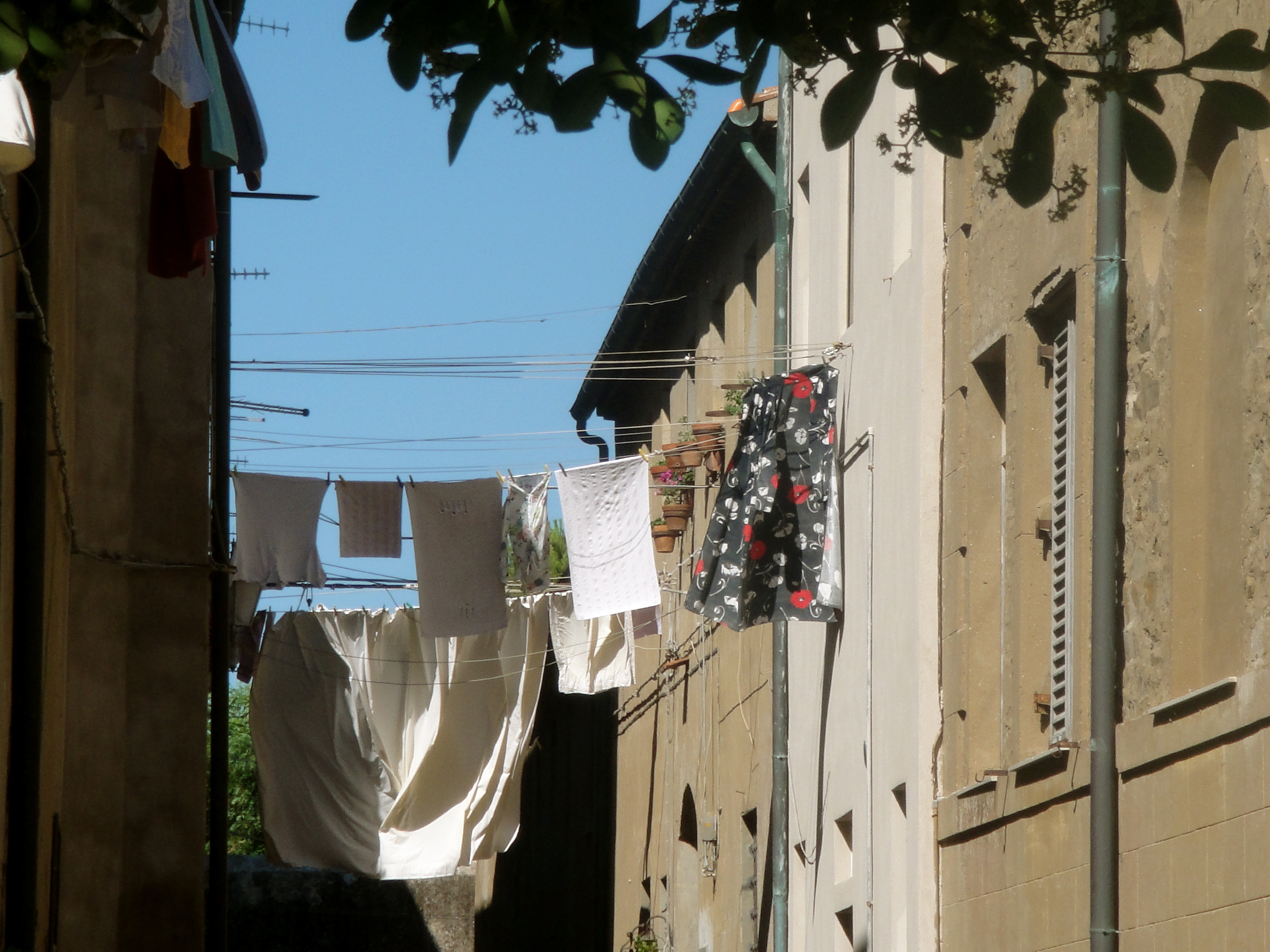
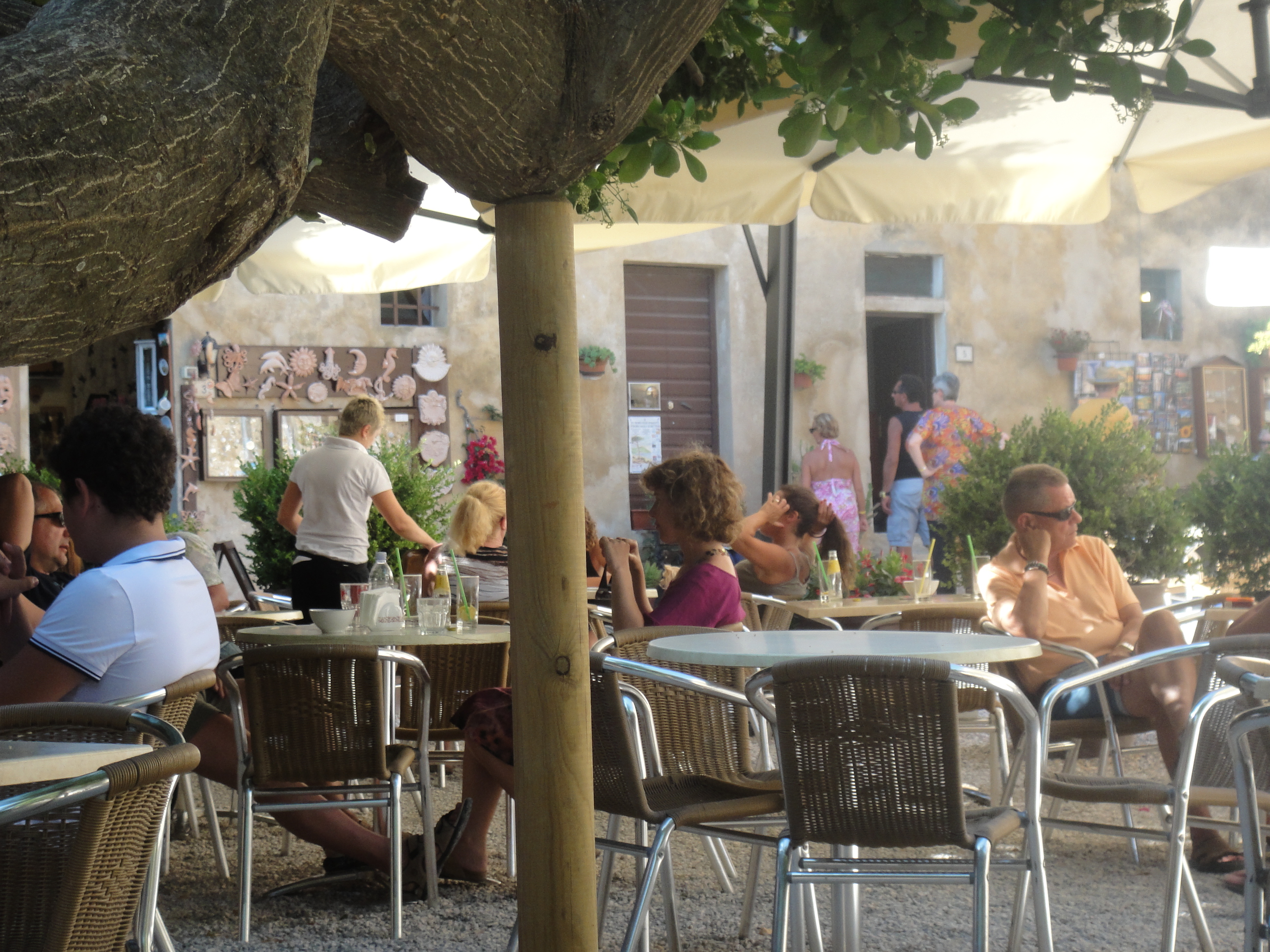
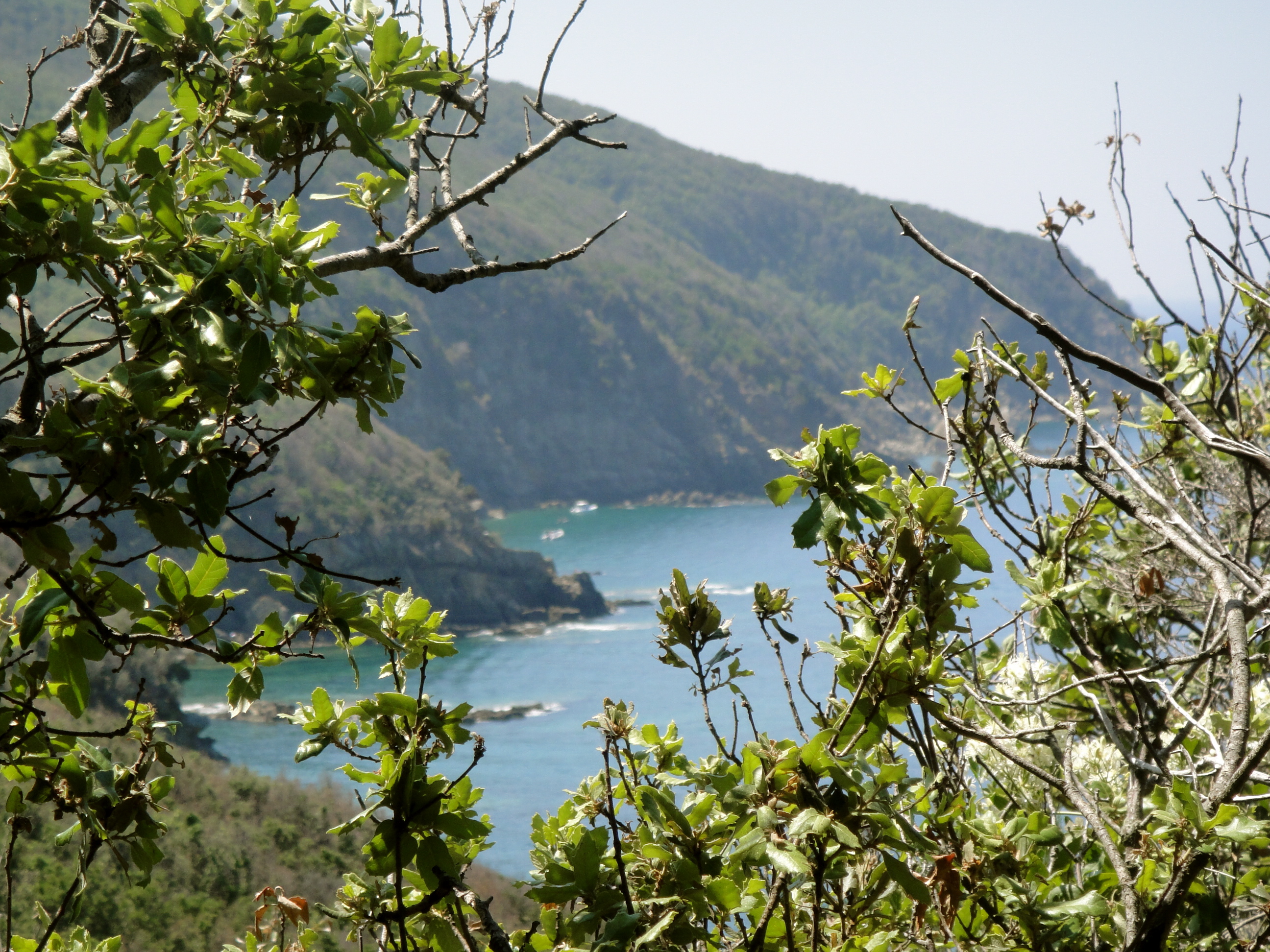
But by far my favourite discovery of this Tuscan adventure was to be found in the region of another hilltop idyll, the town of Populonia, not because of the beautiful town itself (which, with devastating views of the port below, laundry hanging across the streets, and a single cafe set out beneath lush trees atop ancient castle walls, is a true contender for postcard-fame) but because of the truly awe-inspiring natural beauty subsisting beyond its forest surroundings. Taking a sharp turn left off the winding road heading up to the hilltop town, my Partner had a surprise for me. Walking through metres of densely packed pine-tree forest, I wondered where on earth we were going, that is, until we reached an opening in the thick coating of pines, and the most incredible view of a cove beach below came into sight.

Populonia

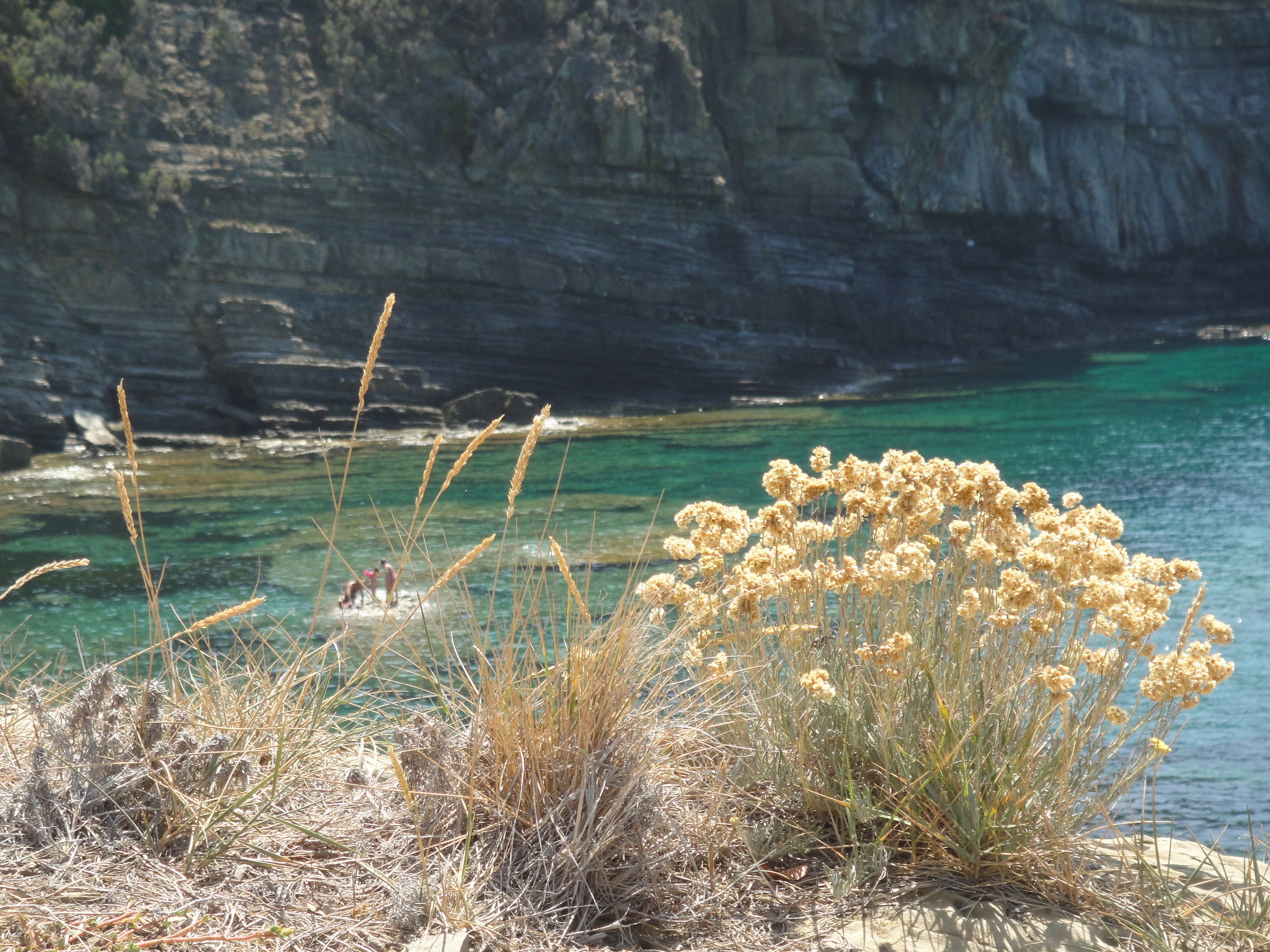
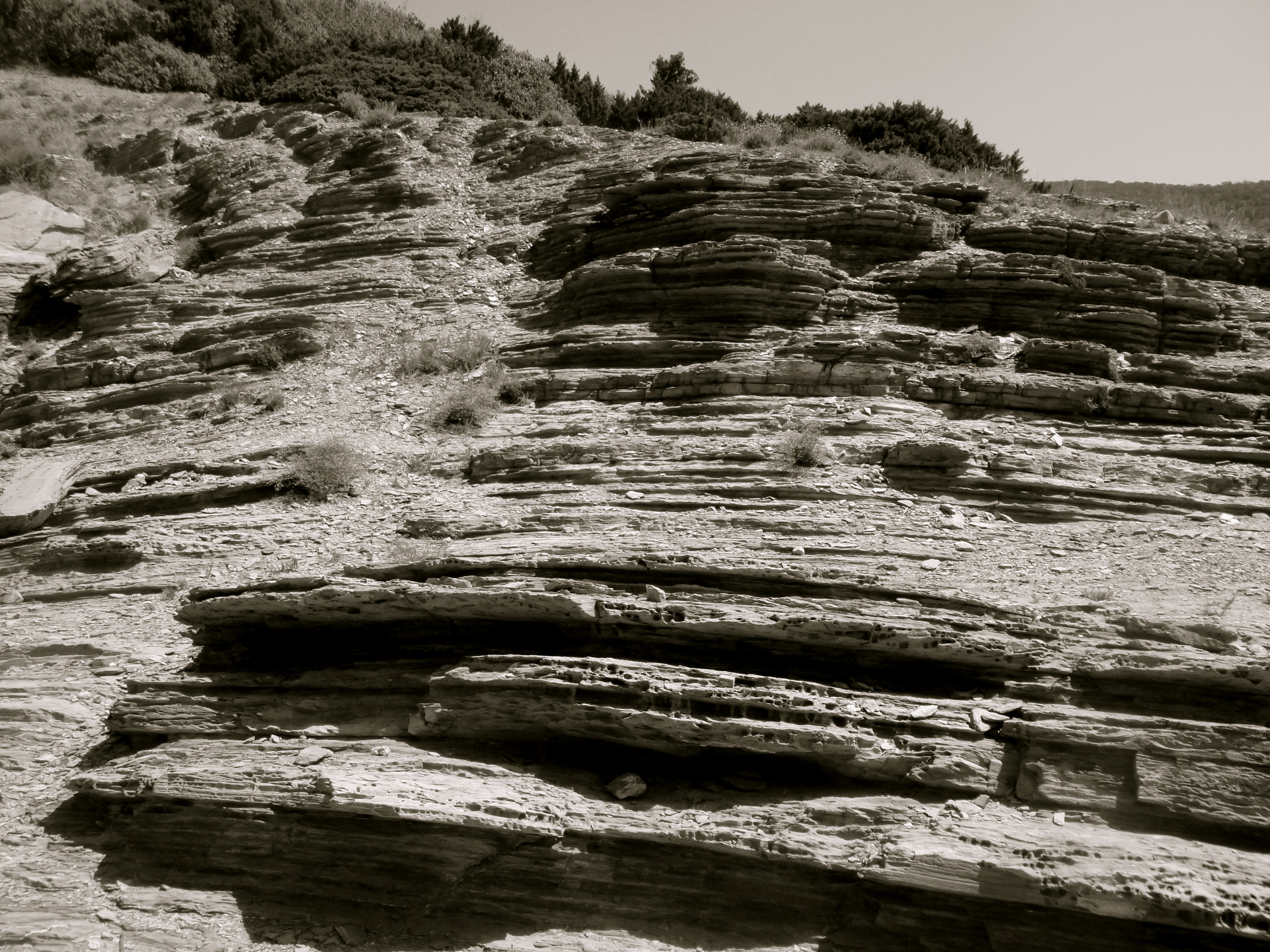
What followed was a sharp descent down magnificently formed geologically stunning rock forms, almost like spiderman upon the vertical facade of a Manhattan skyscraper, but with each and every perilous step taking us a few inches closer to the paradise below. This slightly dangerous adventure (not least for my partner, attempting to traverse the cliff face in flip-flops) was well worth the effort – the cove beach was truly awe-inspiring, nature at its very best, and our afternoon spent swimming around in those  sometimes hostile but vigorously exciting and stunningly beautiful waters, pursuing further coves and prickling our hands and feet on every kind of mussel and sea urchin imaginable, was among the happiest afternoon of my year so far.

First view of the cove emerges from the cliff-top forest

The stunning cove below

Those incredible cliffs

Which just goes to show, while historical towns provide steadfast charm and a consistent source of timeless beauty, it is the transient, often less-accessible beauty of nature that still has the edge, and whose discovery is all the more thrilling as a result.

(Disclaimer: if you too decide to head down to this very beautiful cove (and, looking at the photos, why wouldn’t you) you go at your own risk – don’t blame me if you prick your hands, feet or any other part of your body on a bed of mussels or some other vicious sea life, or if you trip, slip, get squashed by a falling rock or otherwise and unsuitably manage to kill yourself. It’s not my fault).

All photos are strictly the copyright of Nicholas de Lacy-Brown © 2012 and The Daily Norm. All rights are reserved.