Skip to content

Archive for

Le Déjeuner sur l’herbe Part II – A Norm Re-imagining

Yesterday I explored how Manet’s enigmatic masterpiece, Le Déjeuner sur l’herbe, innovated an entirely new artistic mindset, setting a path towards impressionism, expressionism and beyond. In recognition of its important place in the history of art, countless artists have drawn inspiration from the work, and now I can add myself to the list. In today’s Daily Norm, I exclusively reveal to you my re imagining of Le Déjeuner sur l’herbe…Norm style.

At 40″ x 30″ it’s a large canvas and one that has taken me a lot of work since I begun painting shortly after Christmas. The detail of the picnic, the hampers and the clothes certainly took some doing, not least because I chose to work in oils, with multiple layers which needed to dry before adding the next. Nonetheless, the work was a joy to paint, because Manet’s original provided a template, but not a precise blueprint which meant that I could really explore my own imagination when interpreting the original.

Le Déjeuner sur l'herbe (after Manet) 2012 © Nicholas de Lacy-Brown, Oil on canvas

As a result, my luncheon is on the grass, but the Norms have a picnic blanket to give them more comfort. Meanwhile the picnic itself is a more civilised affair. Manet’s basket of food is replaced by two hampers from the premium Piccadilly department store, Fortnum and Masons, while the spread of food on offer ranges from traditional pork pies and scotch eggs to a seafood platter, sardines and a cheese board, as well as a number of sweet treats. To drink, the Norms enjoy a bottle of Veuve Clicquot while in the hamper behind them, a flask of earl grey tea lies ready and waiting.

Because I made something of a feature of the picnic in the centre of the canvas, I decided to replace Manet’s spilling basket on the left of the canvas with a spilling Chanel handbag set amongst the nude female’s discarded clothing. Naturally, as well as a compact and nail varnish, the Norm’s handbag contents also include a much needed Oyster travel card, perfectly balancing the canvas with the real oysters within the seafood platter. A pair of Chanel sunglasses and a discarded bra add even more sex-chic to the scene (and yes, Norms do appear to have breasts!).

There are plenty of details in this painting, so below I include a gallery of detail shots for you to enjoy. And with this I leave you to feast your eyes upon this new Luncheon on the Grass, the latest interpretation of a painting which will continue to inspire throughout this next Millennium.

© Nicholas de Lacy-Brown and The Daily Norm, 2005-2012. Unauthorized use and/or duplication of the material, whether written work or artwork, included within The Daily Norm without express and written permission from The Daily Norm’s author and/or owner is strictly prohibited. Excerpts and links may be used, provided that full and clear credit is given to Nicholas de Lacy-Brown and The Daily Norm with appropriate and specific direction to the original content.

Persistently mysterious; indubitable genius: Manet’s Le Déjeuner sur l’herbe

It’s a mystery to us all. Just why would a naked woman be sitting with two clothed men in the middle of the forest? Are they not hot? Is she not cold? Why is there an uneaten picnic, and why does the background look so flat, almost like stage scenery? What is the woman in the background doing and why is the woman in the foreground looking at us with such fervour?

Ever since it’s sensational first appearance at the Salon des Refuses in 1863, Le Déjeuner sur l’herbe (luncheon on the grass) by Edouard Manet has given rise to a relentless stream of questions and comparatively few answers. While it’s meaning and narrative might have been profoundly unclear to contemporary audiences, what it did do was shock and inspire in equal measure from the first moment of its appearance. It disgraced the reserved Parisian audiences of the 1863 Salon des Refuses, spurred on by a sensational outcry in the press, outraged to see a shockingly unapologetic female nude staring out at the audience so audaciously and mixing with fully clothed civilised gentlemen. But in equal measure it inspired: It was art for art’s sake – not retelling a classical mythological tale as was common at the time – this was a large canvas reserved for every day life. It was a work which exposed the artist’s active hand through visible brush strokes and a hastily composed background. It was a nude woman whose every crease and curve was unflatteringly exposed, ending the previous hypocritical use of nudes as a representation of deity in all their smooth perfection – here was a real woman, with folds of flab and an unwavering gaze. Unsurprising then that this painting became the touchstone of a new impressionist movement, a movement of artists who would circle around Le Déjeuner’s maker, Manet, making him their leader, a movement which would change the course of art history forever.

Le Déjeuner sur l'herbe by Edouard Manet (1863)

No surprise then that despite the initial outcry caused by the image, Le Déjeuner sur l’herbe has gone on to inspire countless generations of artists, and has become an artistic icon of our times. The work has always been one of my favourites of the (pre-)impressionist era, and I too have been inspired to recreate the scene in my own individual way (and yes, it involves Norms!). I’ll be unveiling my finished work tomorrow, but before I do, it seems only appropriate that the original work and those works which have followed in its shadow should be separately analysed, not least because of the sheer number of artists who have been similarly inspired by the work.

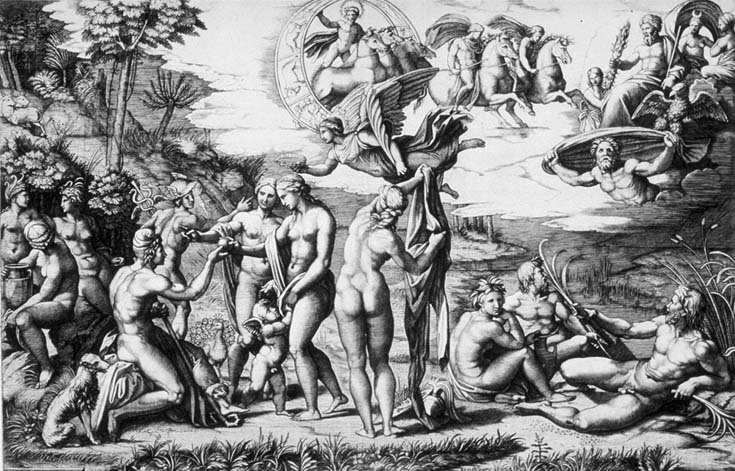
The Judgement of Paris by Marcantonio Raimondi (c.1510-20)

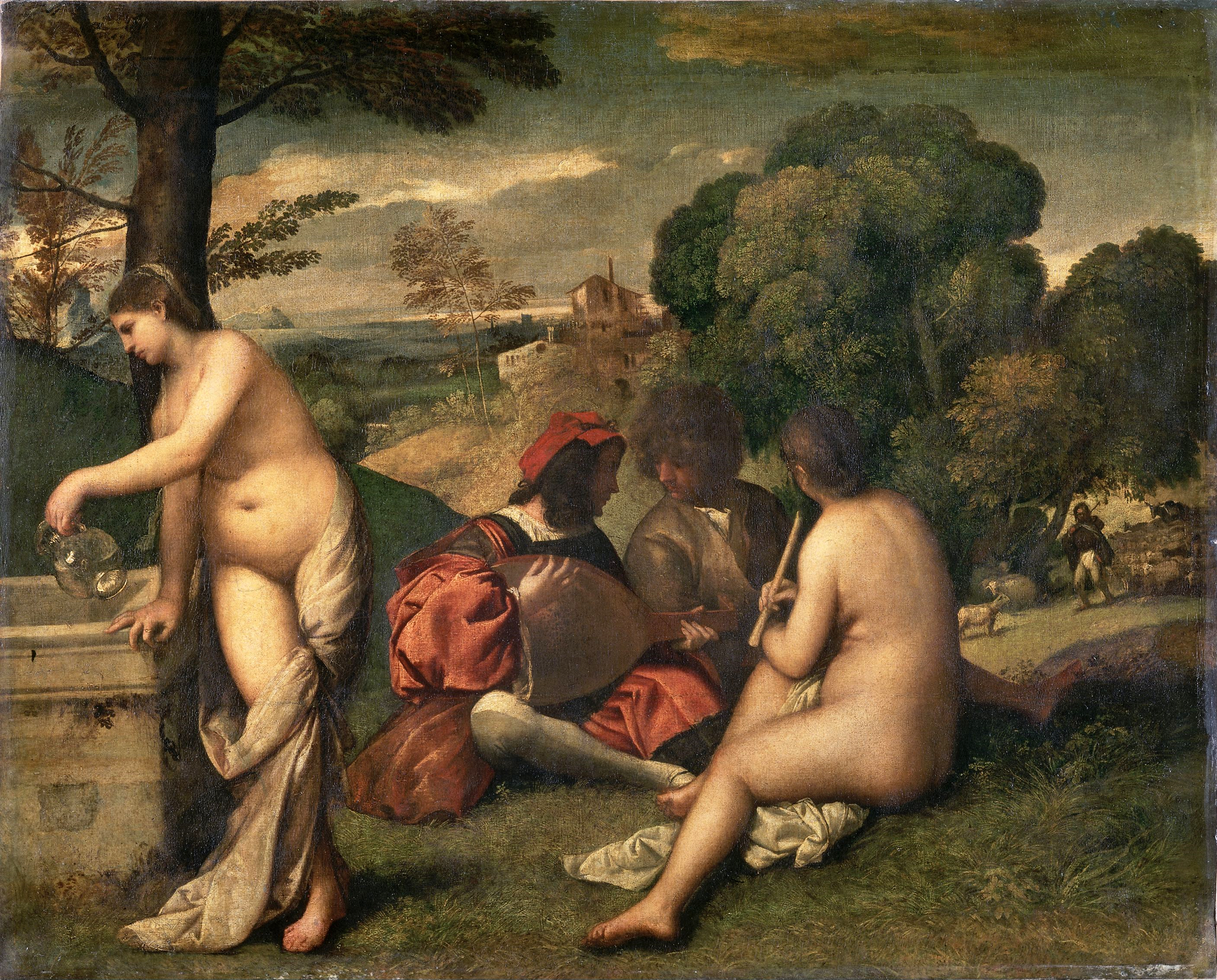
However, before looking at the subsequent reinventions of the work, it is interesting to note the possible sources of Manet’s inspiration as he set about painting this work. It is now thought that Manet was at least partly inspired by two works which would have been staple masterpieces of his time. The first is The Judgment of Paris by Marcantonio Raimondi (above). The engraving, which itself was based on a work by Raphael and copies of which would have been widely distributed at the time Manet set to work on Le Déjeuner includes a familiar composition in the bottom right hand corner. Here, a water nymph and two river gods are sat on the ground watching the judgment of Paris in poses which are exactly reminiscent of the poses adopted in Le Déjeuner sur l’herbe. It may well have been that when deciding to reference these poses, Manet was making a purposeful reference to the judgment of Paris as being like the judgment of paintings submitted to the Salon, the annual open art exhibition of Paris for which Manet’s work, as with every other artist’s work in Paris at that time, was intended. For Manet, it was important to be accepted by the unforgiving group of Salon judges, but only on his terms. Therein lay the difficulty. Nudes were very popular at the time, generally as mythological characters, and it is possible that in painting his very realistic confrontational nude, Manet was both aiming to please the Salon, while also sticking a finger up at their traditions – giving with one hand, and taking away with the other. As for Manet’s decision to mix his nude with clothed male characters, it is likely that Manet took inspiration from Pastoral Concert (c.1510) attributed to Titian and a gem of the Louvre collection. Here two contemporaneously clothed men are joined by two naked nymphs – but this was excusable being that the nymphs were inherently and permanently naked.

Pastoral Concert, attributed to Titan or Giorgione (Louvre Paris) c.1510

Here an interesting point arises. In subsequent xrays of Le Déjeuner sur l’herbe, it has been revealed that the pile of clothes on the left of the scene was actually a last minute addition by Manet. It is therefore highly possible that in first painting the scene, he wished to conform with Salon standards by painting two contemporaneously dressed men being visited by a classical nymph, or two (and thus representing an up-to-date reinvention of the Titian work). It was only towards the completion of his work, perhaps realising that despite his coarse brush stroked finish and striking pose of the nude, his work was not going far enough to be innovative and daring, that he decided to add the discarded clothes, thus transforming the nude from a nymph into an everyday woman (it is highly possible he would have added the light chiffon clothing to the woman in the background at the same time). In adding these clothes, Manet transforms the entire tenor of the piece, from mythological pleasantry into a scene of social scandal, as ladies of the time would have recognised the nude as a prostitute consorting with well-bred gentlemen, while the gentlemen in the audience would have undoubtedly felt judged and debased by the direct unwavering gaze of the nude as if to say: “remember me? I’m the one you had behind your wife’s back in Montmartre last night”.

Read more

The Daily Norm: Proud winner of three new blogging awards

It may be award season in the glitzy world of film, but here on WordPress, it appears that bloggers alike have become festooned with an abundantly generous spirit in not only reading The Daily Norm, but nominating it for three separate awards. In the last few weeks I have been humbled and overawed by the kindness and generosity of the following bloggers who each nominated me for a different blogging award:

Jackie Paulson for the Hope Unites Globally “HUG” Award

Anonparis for the Versatile Blogger Award 

Joy Returns for the Very Inspiring Blogger Award

And since on WordPress, nominations mean an instantaneous win of the award in question, I wanted to take this opportunity to thank those bloggers, and indeed all of my followers, for your amazing loyalty and interest in my blog. The Daily Norm takes a surprising amount of time to write and compile, quite asides from the time spent in painting new Norm works and making Norm sketches especially to share with you all. But your “likes”, comments and now totally unexpected awards make it all worth it. Since starting the blog back in November last year, I’ve had an incredible 38,000 hits and now have over 250 followers. It’s been an amazing start, and the blog provides me with an undeniably precious outlet for my creativity in a world, and indeed a city (London) where the creative spirit can become so easily subdued by the humdrum of ordinary life. Thank you all therefore for giving me a reason to blog. Long may it continue!

Now all of the three awards have slightly different approaches to what I am supposed to do upon receipt. All three require me to reveal certain hitherto unknown facts about myself, and to nominate other bloggers for these awards. Well, I admit, I am going to cheat somewhat in combining my response to the three awards, but since I have already undertaken the full process once already (when I received a Versatile Blogger Award last year) I don’t want to bore you all with what could become a rambling autobiography! I have therefore decided to compile a list of some of my “favourite things” a la Sound of Music, and then I will nominate a few of my favourite bloggers for each award respectively.

My Favourite Things

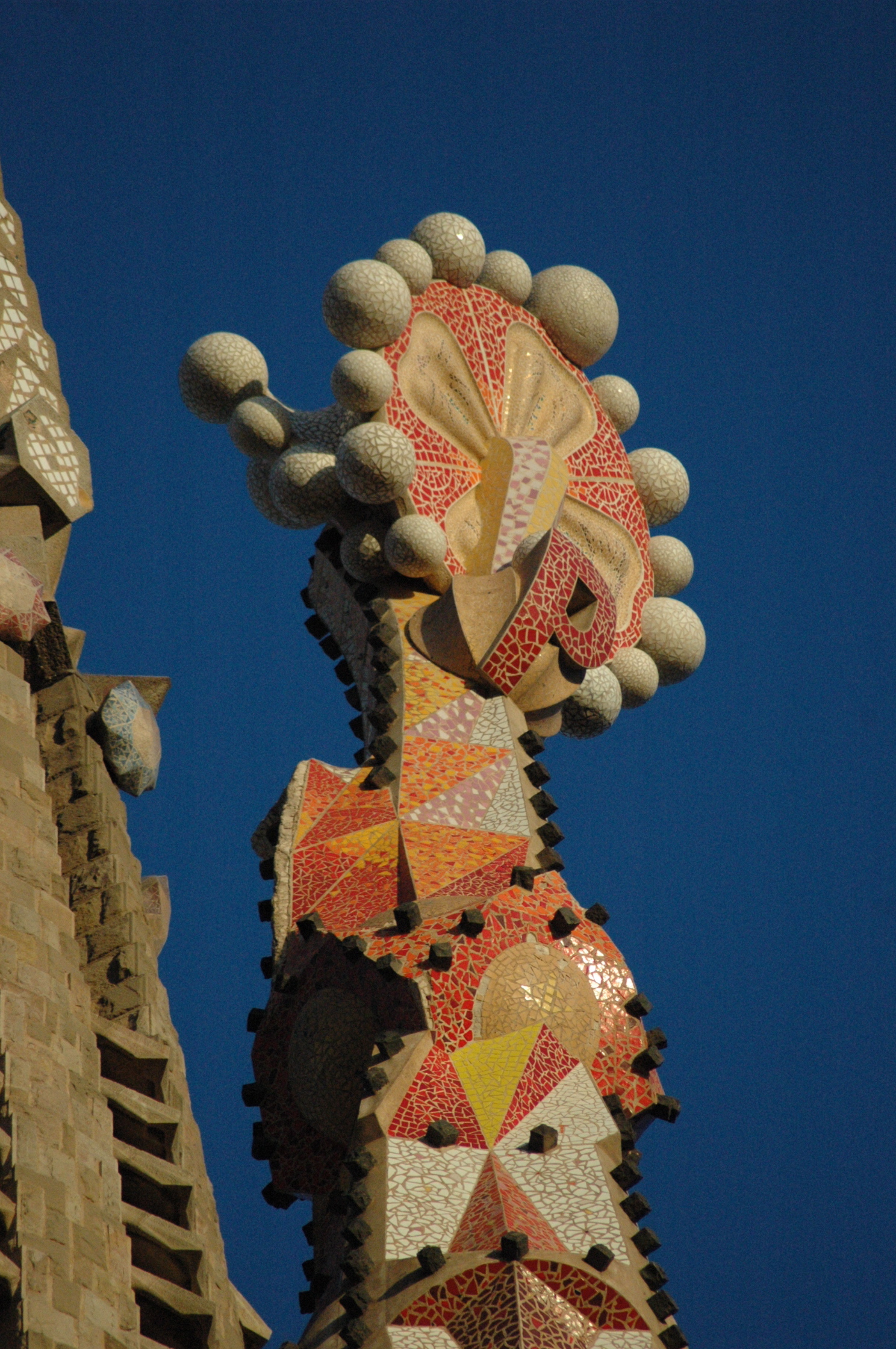
Detail of the Sagrada Familia, Barcelona

Favourite City – as regular followers of my blog will know, I am pretty much obsessed with Paris. But there is another city which fills my heart in equal measure – Barcelona. It’s a city which offers so much – a magnificent selection of modernist architecture from the likes of Antoni Gaudi, a picturesque gothic quarter, a vibrant fast-paced modern shopping district, a scenic port and a wide expansive beach – what more could you want, asides from great art, great restaurants and chic hotels, all of which Barcelona has in abundance.

Favourite Hotel – asides from the amazing Hotel Estheréa which was recently the highlight of my stay in Amsterdam, the other hotel which wowed was the EME Catedral Hotel in Seville. From it’s incredible situation bang opposite Seville’s gothic masterpiece cathedral, this hotel exudes moorish chic inside and out, with little pools of water covered with floating petals, contemporary bedroom decor and a pool-topped roof terrace to die for.

Favourite Café – It’s got to be Cappuccino Grand Café, either one of their picturesque Mallorca branches, or the stunningly situated branch in Marbella.

Favourite Restaurant – Again in Marbella – Restaurante Messina – a place exuding style – its degustacion menu presents an evening full of culinary delight but not at back-breaking prices.

Favourite Artist – This isn’t an easy question, and as an artist myself, it’s one I get asked fairly frequently. I think it has to be Salvador Dali, whose works are so technically brilliant, but whose incredibly comprehensive imagination pervades all of his works giving them a superb originality which hasn’t, in my opinion, been topped since. Generally speaking, my favourite artists tend to emanate from Spain (I also adore El Greco and Velazquez) although self-trained Henri Rousseau is also a huge favourite.

Favourite Painting – Again, this is a difficult one to pin down, but I think if I was forced to choose, it would have to be Las Meninas by Velazquez (housed in Madrid’s El Prado)- an iconic work for all the right reasons, but it is only when you see it in person that you can appreciate the startling use of light and shadow, as well as a brilliant composition and superb characterisation. Second place probably goes to another star of Madird, Guernica, by Picasso, while third place has to be Bar at the FoliesBergère by Manet, thankfully kept here in London.

Las Meninas, Velazquez (1656)

Favourite Icon – Frida Kahlo, self-trained Mexican artist, is a true inspiration to me, not least the way she used her art to channel her feelings of pain and despair throughout a lifetime of disability, always managing to look on the positives and create works out of pain which are still bursting with colour and vitality.

Favourite Food – White chocolate desserts

Favourite Drink – earl grey tea!

Favourite Music – lounge/jazz

Favourite Author – Carlos Ruiz Zafon – author of masterpieces such as Shadow of the Wind and Angels Game – I can’t wait for his next work to be published!

And the award goes to…

HUG Award

The HUG Award has very strict criteria as to what kind of blogs deserve this award. My nomination goes to Joy Returns – this is a very touching blog which seeks to change people’s perception of widows. It certainly seems to unite hope globally, and therefore seems highly suitable for this nomination.

Versatile Blogger Award

I would like to nominate the following excellent blogs which I follow regularly

MJ Springett – nature photohrapher

Photobotos – an amazing new photo, everyday

Conceptual art – frequently reblogging the work of other artists, this is a great blog to visit regularly to see what’s going on in the wordpress art scene

Very Inspiring Blogger Award

These blogs have inspired me in my day to day life, so who better to nominate:

Beautiful hello – a beautiful blog about art

All About Lemon – a brilliant blog about all things creative

Enjoy my adventure – Norwegian designer, living in Portugal

And, finally, a superb non-wordpress blog written by my dear friend Celia: Lady Aga  – a fantastic blog which places gastronomy where it ought to be – straight in our hearts. Check it out!

Ok this rambling thank you speech is now at an end. Heartfelt hanks again to all of my followers and nominators and congratulations to those I have nominated above – your blogs are fully deserving of recognition.

Night at the Opera: The Death of Klinghoffer

I had a good week last week, managing to squeeze in two exhibitions, a ballet and opera. Well, it’s all a bit like London buses really – you wait for ages and none come along; then when one comes, three follow immediately behind. So it was that last Friday night, I rounded off the week with a chance visit to go to the Opera – I say chance because I stumbled across a very generous online deal which enabled me to get prize seats at the London Coliseum at a fraction of the proper price. It was therefore in two minds that I went along on Friday – on one hand it’s always great to see an opera, whatever that opera may be, but on the other hand, this mega online deal coupled with a decided lack of sell out status made me a little concerned that the show I was going to see wouldn’t even be worth the £25 I had paid. But there was no need for concern.

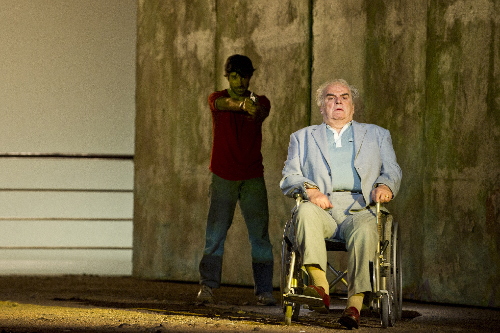
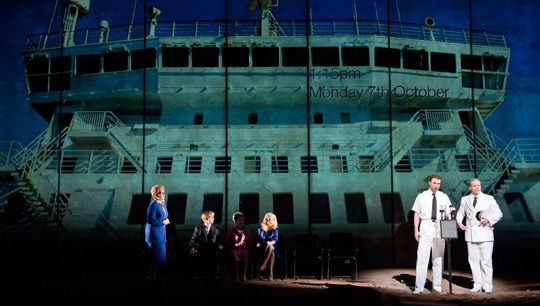
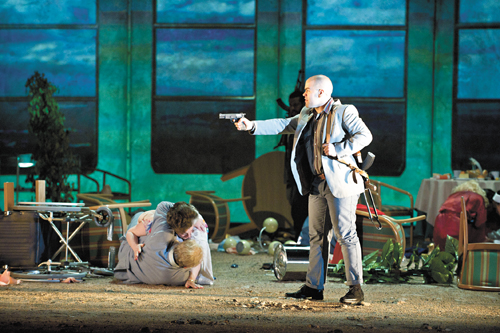
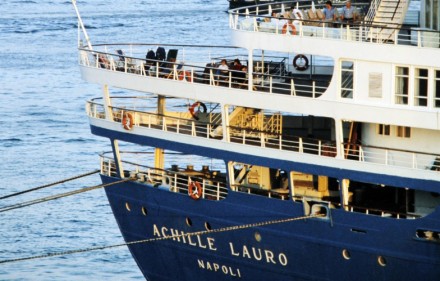
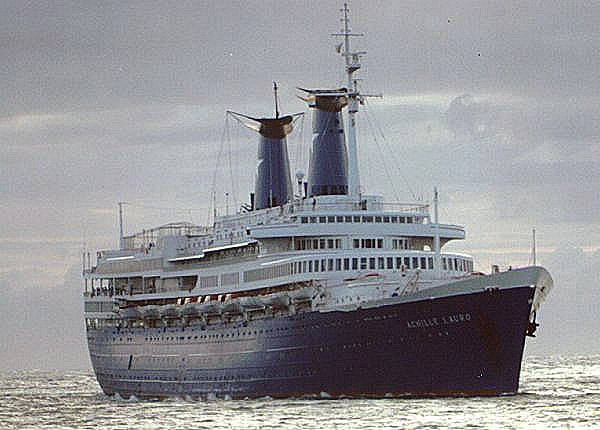
The opera was The Death of Klinghoffer, brought to us by the English National Opera, a performance which marks 21 years since the controversial opera was written by John Adams, but which has never before been performed in London, despite having originally received the backing of the likes of Glyndebourne opera. The reason for the reticence on the part of the UK’s opera companies to put on the opera is because of the controversy surrounding its depiction and narrative. The opera focuses on the fractious relationship between Israelites and Palestinians, with the 1985 hijacking of the Achille Lauro cruise liner by four members of the Palestinian Liberation Organisation as its linchpin. Such is the apparent controversy that protests were expected on opening night – and protests they had, albeit just one lone man with a small placard. The truth is, this opera, written by John Adams, isn’t really overly controversial. It’s more of a docu-opera, relaying the story of the cruise liner’s hijacking with its dramatic and fatal ending, and in doing this, it is like the most popular opera by Puccini or Wagner. In relaying the story of the hijacking, it attempts to explore, to some degree, the historical background behind the tensions in Israel. But both sides are given an opportunity to express their point of view, as a chorus of Palestinian exiles metamorphose seamlessly into a chorus of Jewish exiles, each singing about their respective grievances, the misery of being caught in a relentless religious and political territorial battle. To some extent, the Palestinian voice predominates, but then the hijackers were Palestinian, and therefore it is unsurprising that their story comes over stronger. Past criticism has been levelled at the opera’s humanising of the Palestinian terrorists. Nonetheless there is no reason why humanising the story of the terrorists should cause offence. Rather, it helps us, the onlooker, to better understand the motivations behind a terrorist in an age when terrorist atrocities are alive and kicking.

Rather than cause offence in its depiction of this contemporary struggle, the opera was informative as well as emotionally engaging. As a documentary, the opera was a real eye-opener into the Israeli crisis – while I have been constantly aware of the tensions throughout my life, I have never really sought to analyse, in any detail, the routes of the problem. While this opera undertook something of a superficial narrative of the background conflict (a scene from the original score which explored the history deeper had been cut out by the ENO’s production) it nevertheless focused the mind on the complexities of the historical fractions, the religious conflict and the political input which has incrementally shaped and augmented the tensions. As a tragic story, the opera was marvellously engaging. The most successful element was the score, masterfully composed with a continuous clash of emotional discordant chromatic melodies, whose pace and melodical form seemed to relentlessly crescendo rather than develop predictably towards a climax, leaving the audience sitting on the edge of their seats, perfectly resonating the feeling of interminable tension and terror which must have been felt by the passengers of the Achille Lauro when the liner was hijacked off the coast of Egypt.

Successful too was the use of the scenery to mirror the intensity of emotional pull, with versatile concrete panels being used at the backdrop to cruise-liner projections at one moment, and then, at the climax of the opera, closing in on one of the leads, Marilyn Klinghoffer (played by Michaela Martens) as she was told that her husband, Leon Klinghoffer (played by Alan Opie) had been killed by the terrorists, and his body (and wheelchair) dumped overboard. As the news of the murder begins to sink in, and the score reaches levels of of devastating chromatic intensity, the large concrete walls start to close in on Marilyn, decreasing the space around her as she desperately searches the barren concrete surfaces for an opening, a way out – a powerful metaphor for that moment of devastating tragedy, when you receive the worst possible news and seek any possible escape from this new, tragic reality.

But for me, the real star of the Opera was the chorus, playing both Palestinian and Jewish exiles. Countless singers harmonised together to deliver with spine tingling intensity, effectively projecting Palestinian discontent as the anguish of mourners develops into the blinded anger of militants, while amongst the Jewish exiles, a deep melancholy transforms gradually into hope as lost generations start to build a new future within Israel, as represented by the gradual addition of one olive tree after another across the stage. I was equally moved though by a scene in which the youngest of the terrorists, at merely 17, was recollecting an encounter with his mother, where, with chilling fervency, she told him that the only place for him was to enter Paradise through an act of jihad, thus prompting him to perform the murder after which the opera gains its name.

On the downside was the libretto, by Alice Goodman, often vague and very repetitive, and generally a little too slow. At one point, one of the terrorist was listing every bird he had ever seen – the melody he was singing suggested a dramatic speech which was central to his motivations as a hijacker. However the libretto seemed to belong to another story entirely. Goodman did however redeem herself through the dramatic declarations of the chorus, and through the highly resonant small-talk babble of the terrified passengers as they tried to take their mind off the terror all around them. While their words were practically meaningless, they added realism and tension to the scene, facilitating the narrative as a true reflection of this time of human terror.

There is no doubting the fact that this opera deals with sensitive issues which are perhaps even more alive today, post 9/11, 3/11 and 7/7, than they were when the work was first written. But it is refreshing to see a new opera which successfully utilises the perfectly versatile, inherently dramatic medium of opera to narrate a story of contemporary relevance. Seeing the same old Mozart or Puccini is all very well, but what lessons can really be learnt from these tales for the modern day?

Sunday Supplement: La Foret des Jeux / Q4- exploring the subconscious

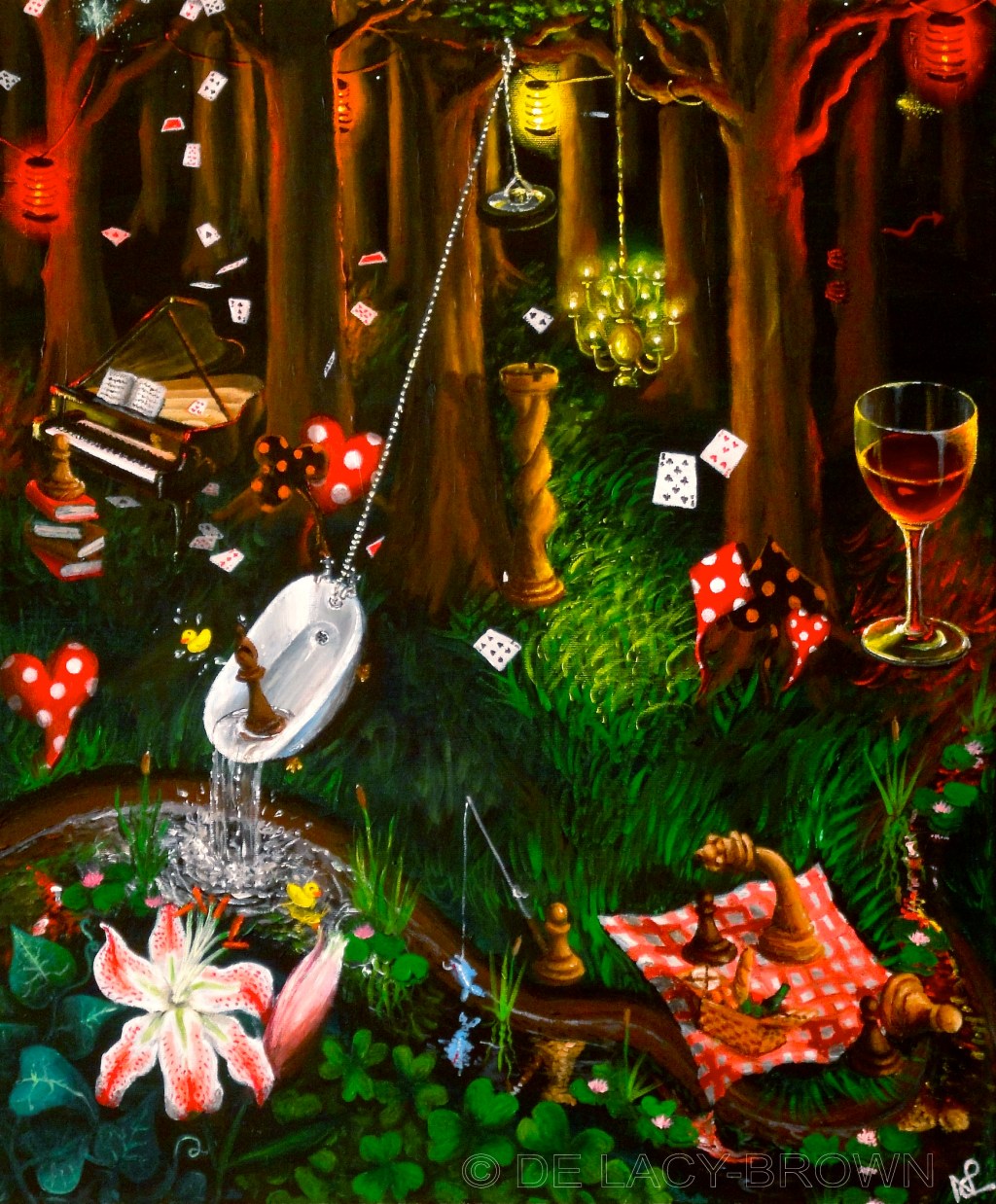
A sunday supplement focusing on my non-Norm paintings is well overdue I think, and for this weekend’s supplement, I have decided to go with a painting which I created in 2007/8 following something of a recurrent dream. It’s a work which is magical and jovial, surreal and fantastical, and therefore a perfect follow up to the Royal Ballet’s superb performance of The Dream which I saw last Monday.

The works featured today were painted within a short space of one another when I was exploring my subconscious. There are two “places” on which I constantly reflect in my subconscious and as an artist seeking inspiration. Both are imaginary. One is a kind of chic but dilapidated house, quite dark, with heavy damask wall coverings, low lighting, lavish furnishings and a general air of mysterious desertion about it. Out of the window is a city landscape – rooftops – almost certainly Paris, and the weather is bleak, probably autumn, dark. This place is triggered in my imagination by certain things – cool lounge music such as Hotel Costes often does the trick. Often there is no trigger at all – I just find myself transformed there in the middle of a working day. I tried to represent this place in my 2007 canvas, Q4. As with any attempt to drag the subconscious level into everyday language, the task was difficult, and while the painting comes close to creating that place to which my mind wanders, it cannot fully represent the feeling I have when I escape into the realms of my deepest imagination.

Q4 (2007 © Nicholas de Lacy-Brown, acrylic on canvas)

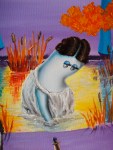
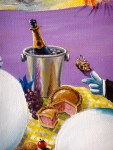
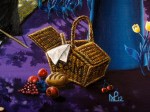
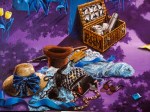
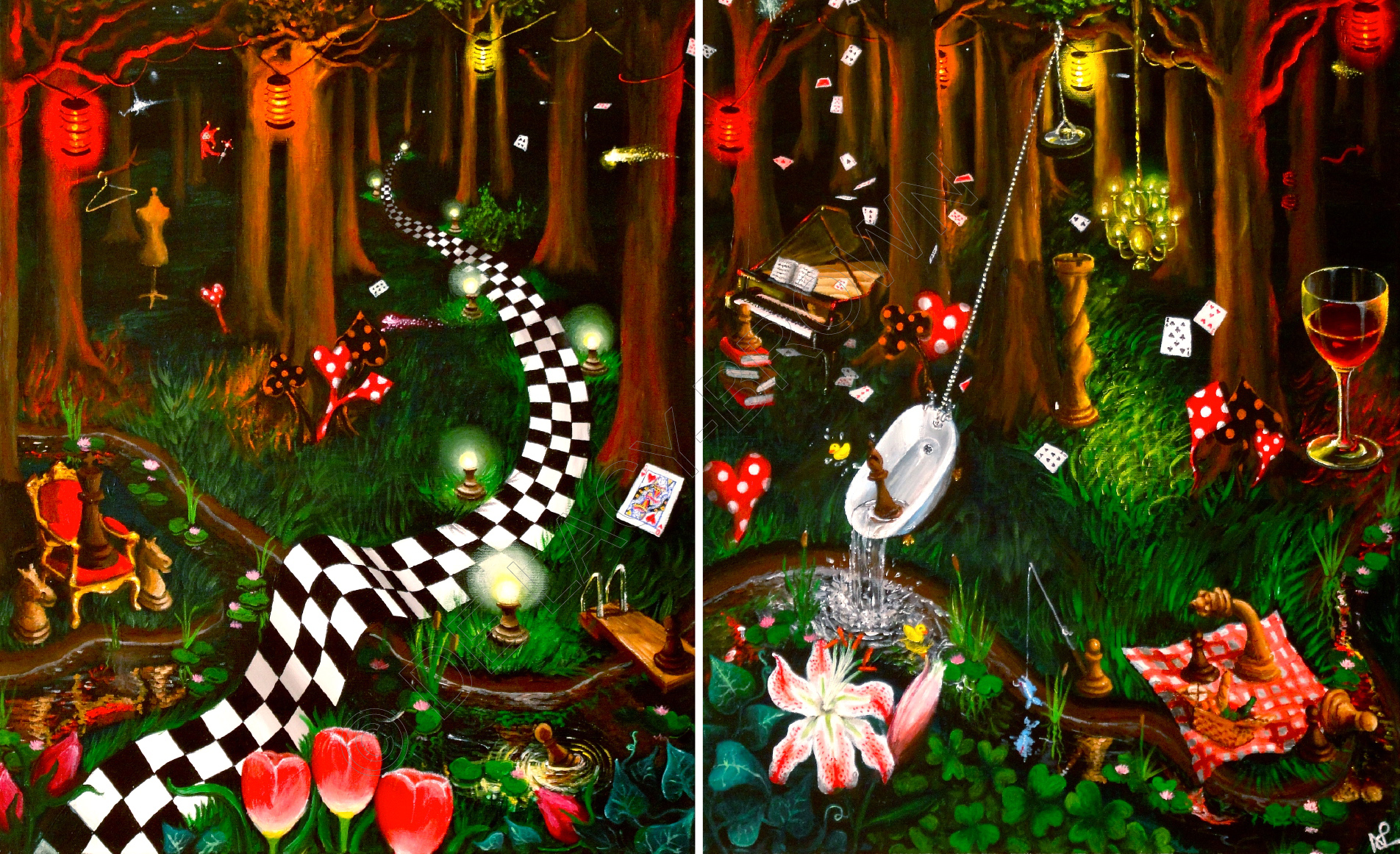
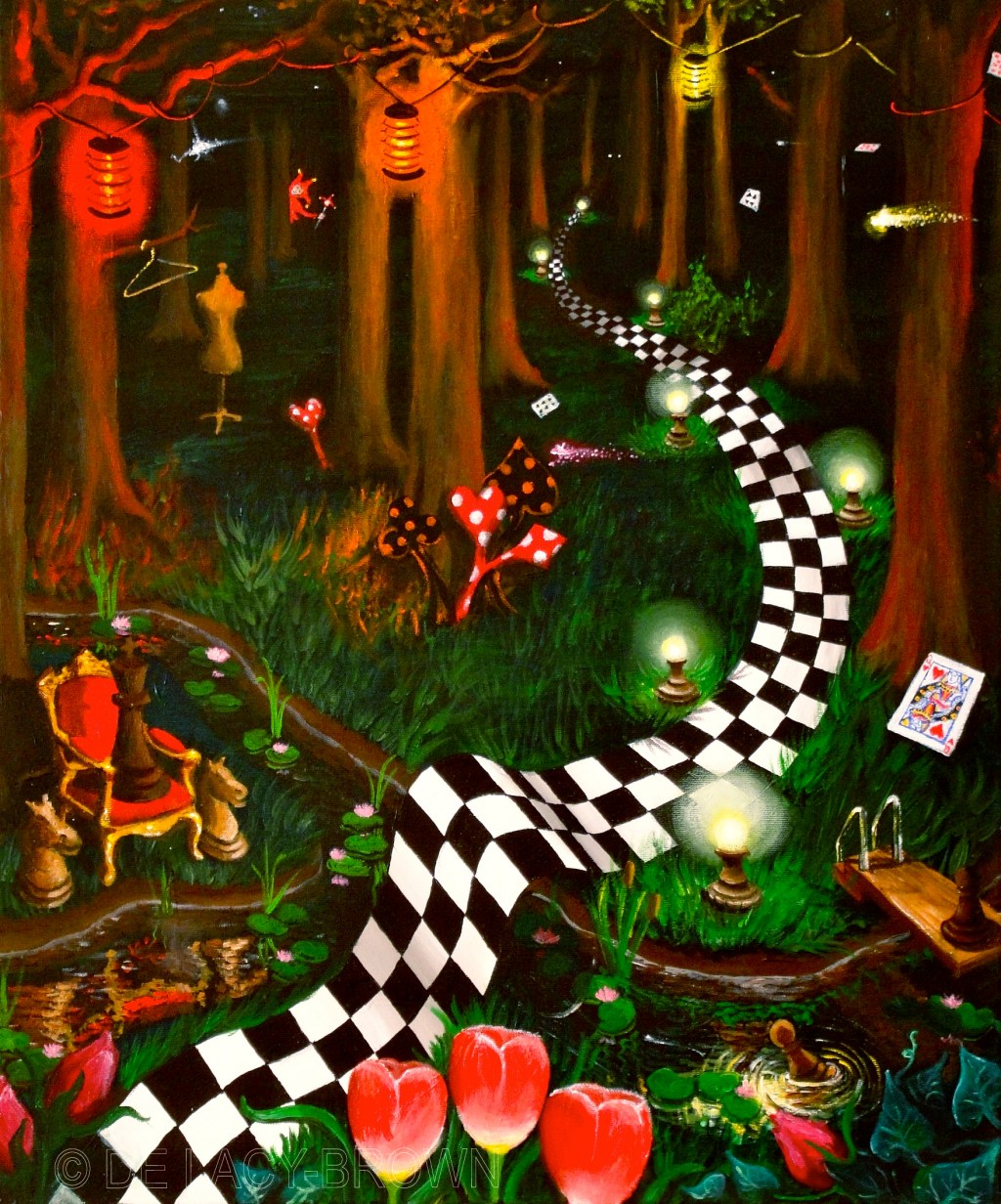
The second place I constantly return to in my subconscious is a dark forest on a summer’s night. The forest is full of surreal things, semi-hidden signs of life and a small source of water. It’s a little scary but not intimidating – the forest is hung with paper lanterns, and forest creatures provide a welcome atmosphere to me – the visitor. In seeking to paint this whimsical vision on canvas in La Foret des Jeux (the Forest of Games), I played on the surreal themes which I knew were weaved into my own imaginings. I imported the theme of games – as I had done in previous surreal paintings – and no doubt inspired by the likes of Lewis Carroll’s Alice in Wonderland. I anthropomorphised chess pieces bringing life to the scene – showing the King sitting upon a thrown, the Bishop falling from a tipped bath of water, and the Queen picnicking with her playing Pawn children. There onwards I let my imagination run wild, making for a rather surreal but playful image. It was painted at a time when my imagination was ripe for the picking – I’m not so sure I could paint something like this today.

La Foret des Jeux (2008 © Nicholas de Lacy-Brown, acrylic on canvas)

La Foret des Jeux, Canvas 1 (2008 © Nicholas de Lacy-Brown, acrylic on canvas)

La Foret des Jeux, Canvas 2 (2008 © Nicholas de Lacy-Brown, acrylic on canvas)

Wishing you a relaxed and enjoyable Sunday.

© Nicholas de Lacy-Brown and The Daily Norm, 2005-2012. Unauthorized use and/or duplication of the material, whether written work or artwork, included within The Daily Norm without express and written permission from The Daily Norm’s author and/or owner is strictly prohibited. Excerpts and links may be used, provided that full and clear credit is given to Nicholas de Lacy-Brown and The Daily Norm with appropriate and specific direction to the original content.

Next train stop: The National Gallery (aka waiting room/ hang out/ free for all)

I had a free hour between meetings the other day – no point in heading home only to turn around again (always best to avoid the Northern line, whatever time of the day) so I decided to head into London’s preeminent art space, The National Gallery. One of the pulls of the gallery is the fact that it’s free. It means that you can drop in and out as many times as you like and therefore digest the large collection more easily. Nevertheless, it seems that charging no entry has proved to be one pull too many for the many visitors to the Gallery.

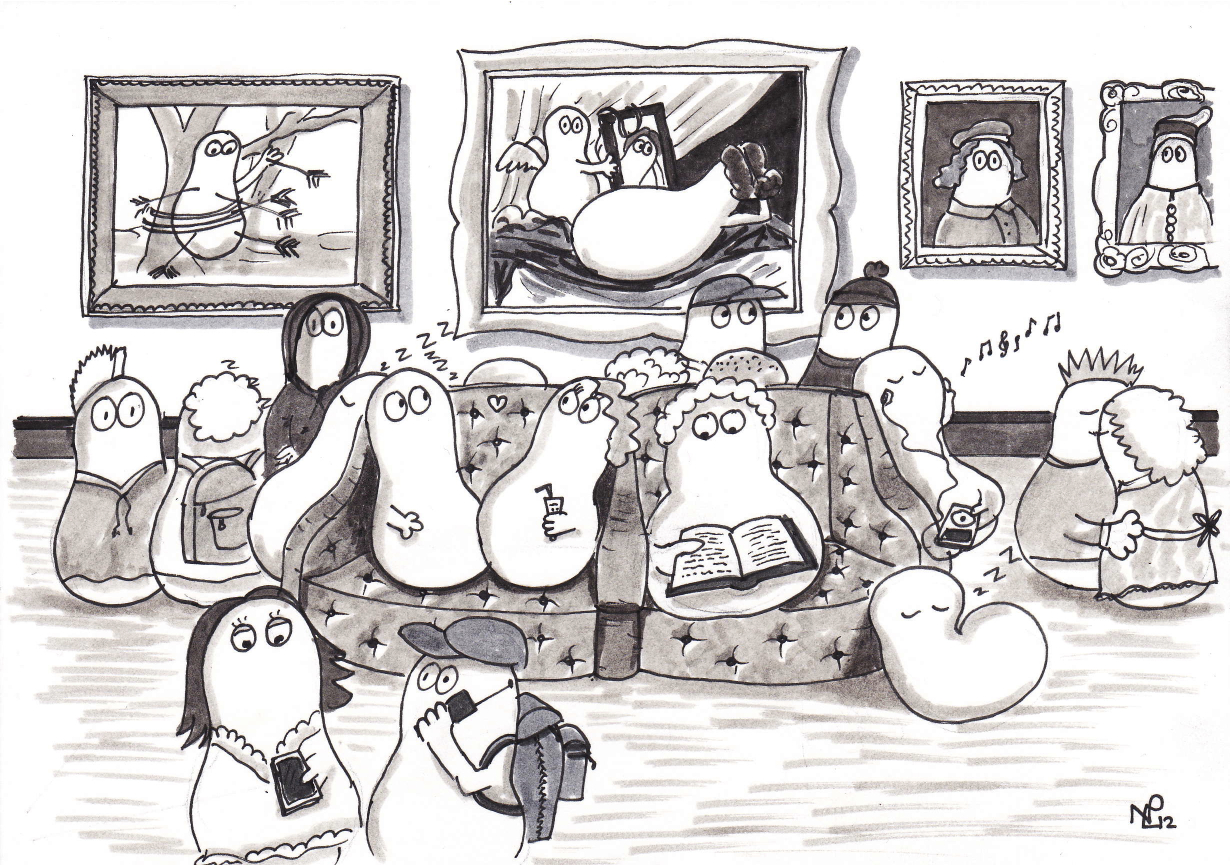
Walking into the National felt very much like walking into one of London’s busiest train terminuses. People were rushing about all over the place. Huge groups were gathered in the foyer, others were walking around, luggage in tow, some were on the phone, others having animated conversation. I put this down to its being a foyer – a meeting place for the masses who have toured the galleries or are about to. But to my consternation, once I began to walk around the galleries, I found the situation to be the same even in the farthest of rooms from the entrance. The galleries seemed to act as a thoroughfare for all and everyone in London. There was a constant feeling of unease and stress as the breeze of countless individuals and large groups rushing through the galleries pervaded the air. Meanwhile, all of the seats in the centre of the galleries would be loaded with people who appeared to have been getting cosy there for sometime. I saw people listening to ipods, half asleep. Others reading books, magazines, newspapers. People were chatting, catching up. Others were sat down, eyes to the floor or on their watch, looking bored to tears. Plenty were texting, others speaking on the phone. Most importantly, only 1 in every 25 people who were in the galleries seemed to take any interest in the art on show whatsoever!

Norms (ignoring Art) at the National Gallery (2012 © Nicholas de Lacy-Brown, pen on paper)

For those, like me, who are interested in the wonderful art on show, all this made for a distracting experience. Appreciating art requires a tranquil calm environment, free from distractions. How else can one enter the world which the artist has created, to consider the artist’s motives, his feelings, emotions and the story being narrated on canvas. Trying to appreciate art here was akin to analysing a Rubens hanging in the midst of a busy underground platform.

Busy impressionist gallery at the National Gallery - but at least here some people are looking at the paintings!

The press has recently applauded the increase in visitor numbers to London galleries. The increase, it is said, has been credited to the move of the Labour Government (i.e. the government whose policies ruined most things in the UK) to make the majority of London galleries and museums free back in 2001. It’s a move which has since been adopted by the coalition government, and money is put aside to subsidise the participating institutions who otherwise lose out on the admission fee.

Don’t get me wrong – open access to art is a wonderful thing. Art has a power like nothing else to enrich lives, to enable escapism to another world, to brighten a day, to enhance emotions. And the freer the access the better. The problem is, no one in the National Gallery seemed to even bother with the paintings. For them, the space was a place to hang out, to rest their feet, to chat with friends, to escape the winter weather. And for those of us who do appreciate art, that was a real distraction.

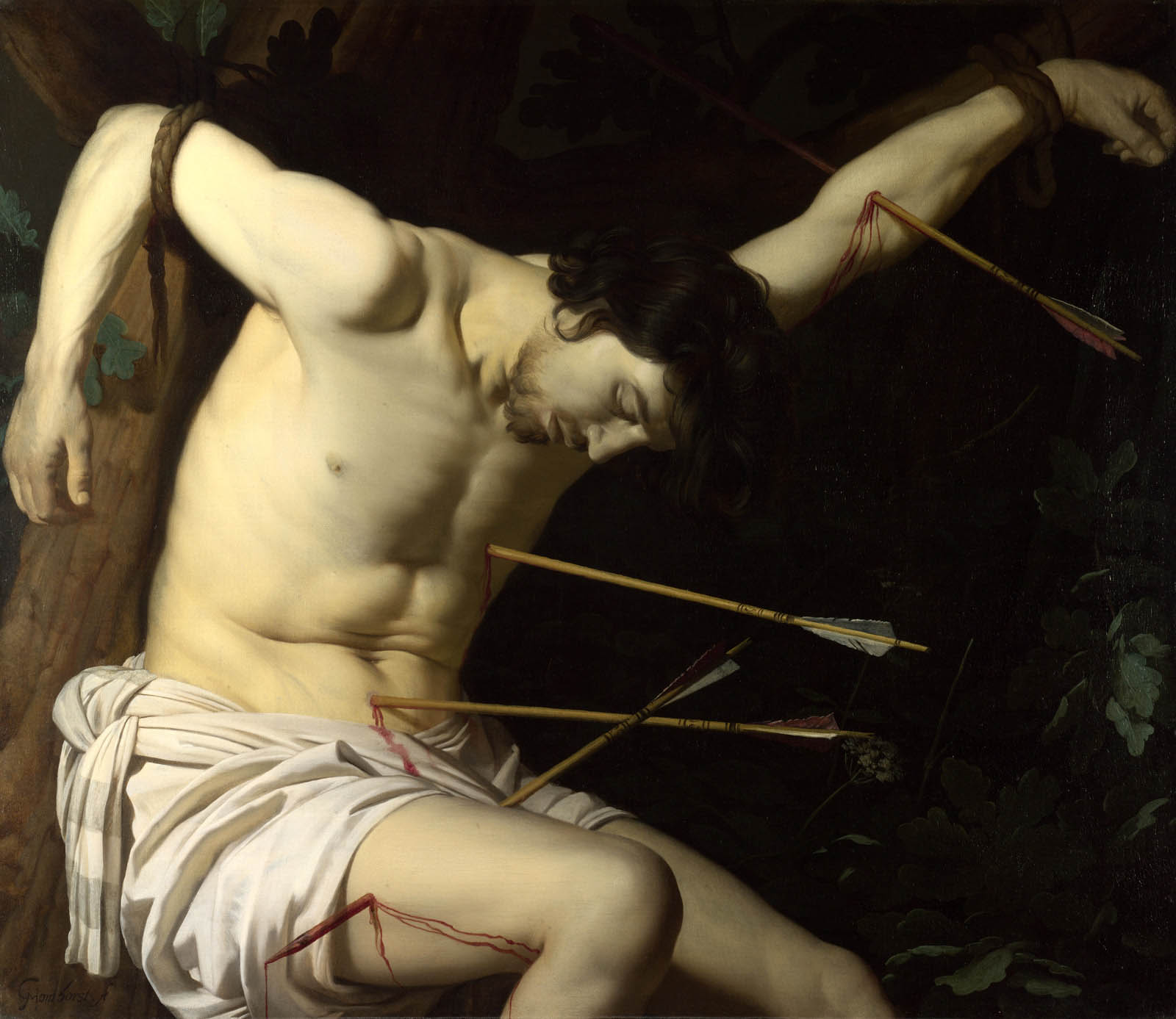
Saint Sebastian by Gerrit van Honthorst (c.1623)

The National Gallery’s collection is superb. I went along to see Velazquez’s Rokeby Venus having recently painted my own Norm piece devoted to the work. But asides from this, a look round just a few galleries introduced me to some wonderful new lesser known pieces of which I had no prior knowledge. Take Saint Sebastian by Gerrit van Honthorst – what a superb painting. St Sebastian is ever the romantic icon – a beautiful matyr who pulls at the heart strings of his viewer. This sensitive portrayal beautifully captures the moment of his ultimate torment. The soft supple depiction of his well toned flesh contrasts to devastating effect with the violence of the arrows piercing it, blood staining the peachy tones of his perfect skin. And what about Willem Kalf’s Still Life with Drinking Horn. Still lifes may be potentially a bit “past it” but the skill of this piece is astonishing, the lobster painted with startling precision, it’s ruby red shell tantalising all the senses, while the portrayal of horn, glass and drapery shows that the artist’s skills can be turned to any material or texture.

Still Life with Drinking Horn by Willen Kalf

Rokeby Venus, slashed by Mary Richardson in 1914

For me, when a gallery becomes a thorough fare, the magnificence of its art is somehow degraded – not given the respect it deserves. This feeling is increased by the lack of security at the gallery – no bag checks at the entrance, no security gates, and security guards who are present but wouldn’t realistically be able to prevent an attack on a painting – only catch the perpetrator. Has the National Gallery not learnt from past lessons then, such as the devastating attack on the Rokeby Venus at the hands of a suffragette, “Slasher Mary” in 1914? The scars are still visible on the great Venus for all to see. By contrast in Paris, at the Louvre, the d’Orsay, the Pompidou, you cannot enter those galleries without full scale security checks, and of course an admission fee. The result is that the paintings are given the respect they deserve – as masterpieces of the nation.

A difficult debate ensues. Should art be made free to the nation and if so, how can you stop abuse by those who take very little interest in the art on show, or whose interest is laced with violent intentions? I think a security check, at the very least, should be installed, and bags, phones, ipods should not be allowed. Free access should be encouraged, but these paintings must be given the respect they deserve, or the ghosts of all those unhappy artists, turning in their graves, will surely haunt us forever.

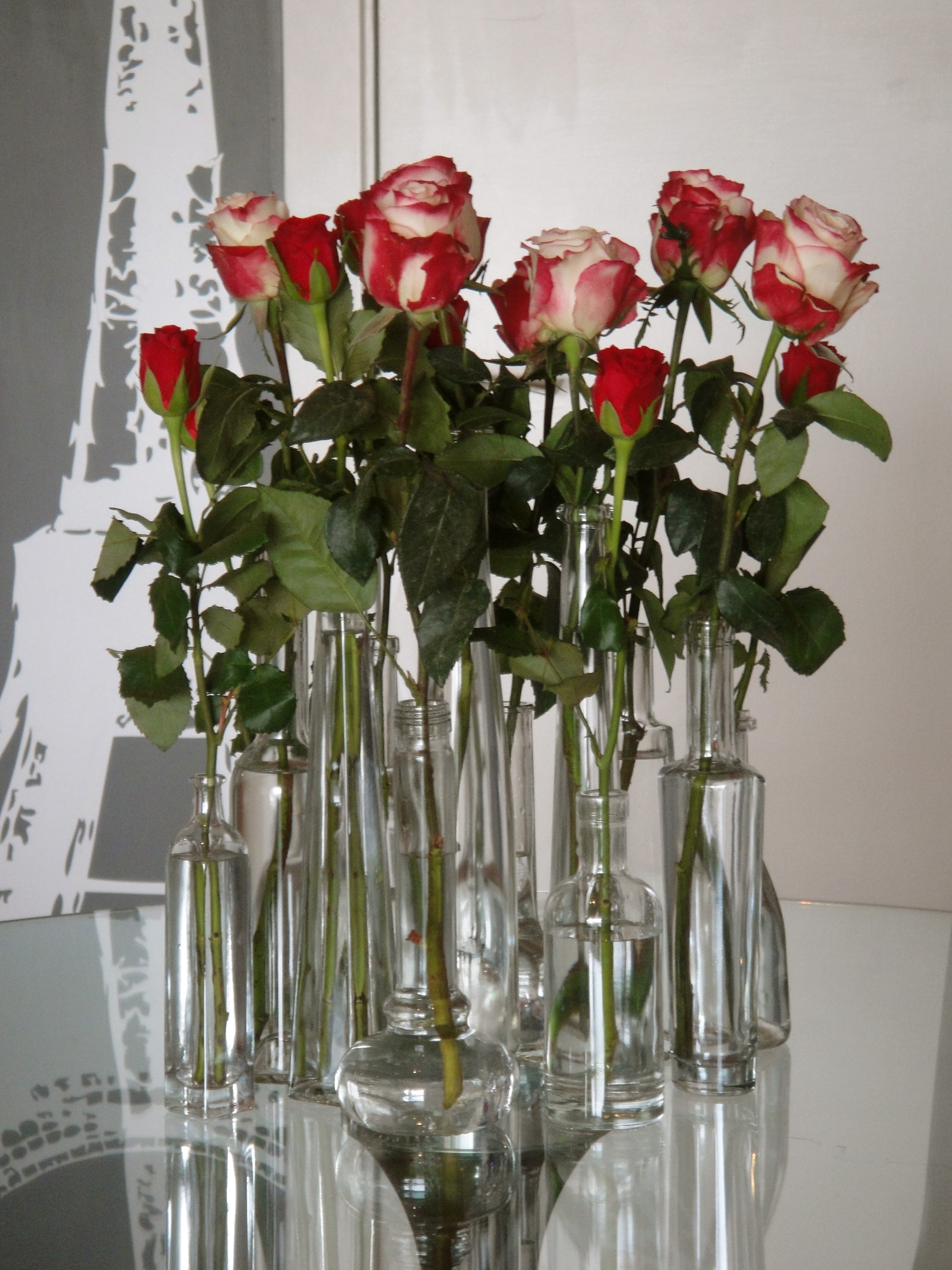
Simple floral display which makes a contemporary statement

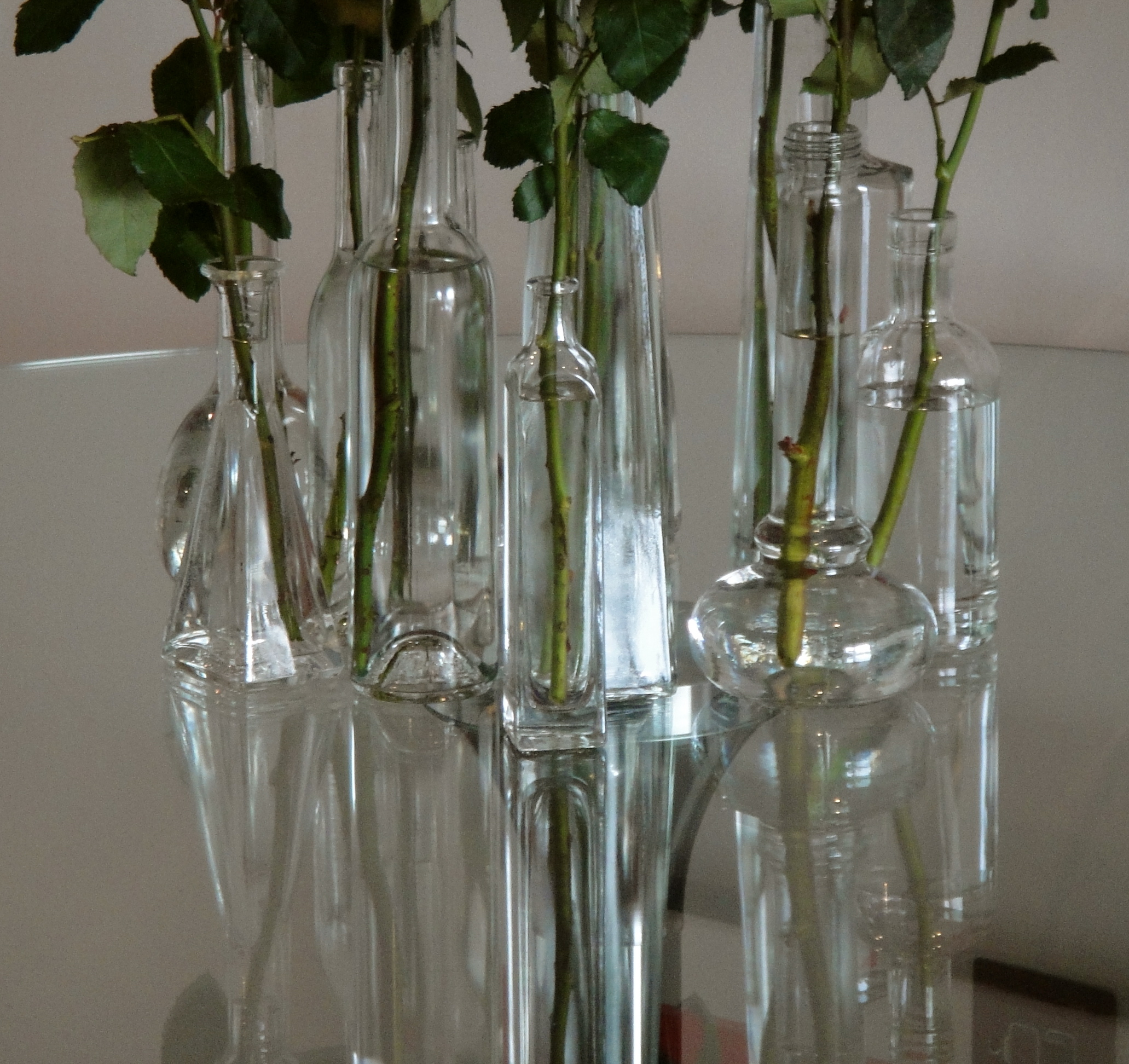
The good thing about a small city trip in a vibrant city is that with the relatively moderate expense of a short trip, so much can be loaded into a short expanse of time that the trip provides all of the ingredients for a sustained period of inspiration and multifaceted memories which live on indefinitely. My recent trip to Amsterdam is one such trip which was worth its weight in gold. Already I’ve been painting Dutch-inspired parody pieces, sketching Norms all over The Netherlands, regularly revisiting my substantial collection of photographs and I am about to embark on a suitably Amsterdam-inspired new Norm canvas. However, one of the greatest inspirations for me was the elegance and sumptuosity of our Amsterdam hotel –  the Hotel Estheréa. The interior design of the hotel was faultless both in the downstairs public spaces and in the bedrooms. Since my return, I have scanned the web seeking out the various grand design wallpapers used, the beautiful butterflies which adorned their walls, and am seriously considering whether I too should import an oversized pink chandelier into my home. All of this comes at a price I can currently only dream of, however one important aspect of their design, which I have found cheaper to replicate, is their stunning floral displays. The hotel paid attention to every tiny detail, and during our stay, a fresh import of new flowers were installed throughout the hotel (presumably they do this on a fairly regular basis). One of the most effective displays of flowers, installed variously on several large and small tables alike, was the grouping of numerous small and single-stem vases, each containing one or two stems only. The look which resulted was far more contemporary than a normal vase of flowers.

So, returning home to London, my head buzzing with ideas, I set about searching out a variety of single-stem vases. To collect a small group of 6 or 7 would, I soon discovered, cost well over £100 and involve as many separate orders and correlating shipping charges as I would find vases. So I decided to revert my search to glass bottles. I then found one website which sells a huge range of different shaped bottles, all costing only around €2-€3 each. And so I managed to purchase myself some 14 different shaped and sized bottles, all from the same site, for a total cost of €30 including shipping. They arrived a couple of days later. I bought two cheap(ish) bunches of roses from the local supermarket (which are in plentiful supply at the moment in the lead up to mother’s day). This is the result:

The look is contemporary and fresh. The differently shaped bottles add variety, but the use of a monochrome clear coloured glass ensures a contemporary feel is maintained. The display also feels modern because the flowers are controlled, all standing up straight rather than flopping around en masse in a vase. This control is even better achieved using bottles, since most have a fairly narrow opening.

It’s a great look for my dining table, and one that really wows as a contemporary floral display with a very boutique-chic look. But best of all, the price was definitely not boutique.

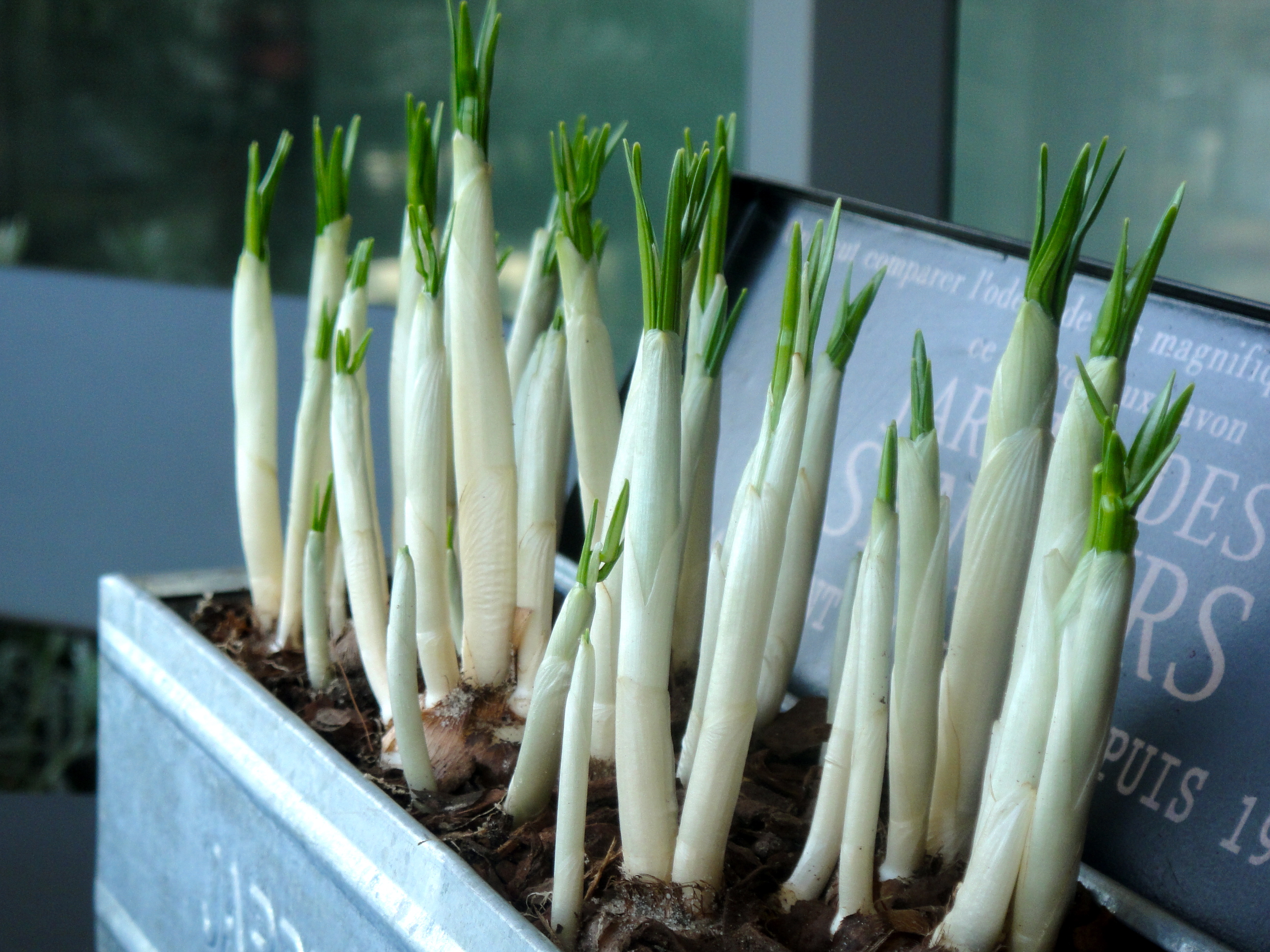
Talking of contemporary, check out my other recent acquisition – white crocuses set in an attractive metal box adorned with french writing. This brings gallic finesse to an otherwise industrial tin, while the yet unopened crocuses provide another modern sleek display piece which I kind of wish wouldn’t flower at all.

In conclusion, Spring is on its way, and in my opinion, there is no better way to breath a bit of life into your home that with fresh flowers, however displayed. Give flowers to your mother this sunday – and if you’re not a mother, remember to keep some back for yourself!

The Daily Sketch: Norms (attempting to) do ballet

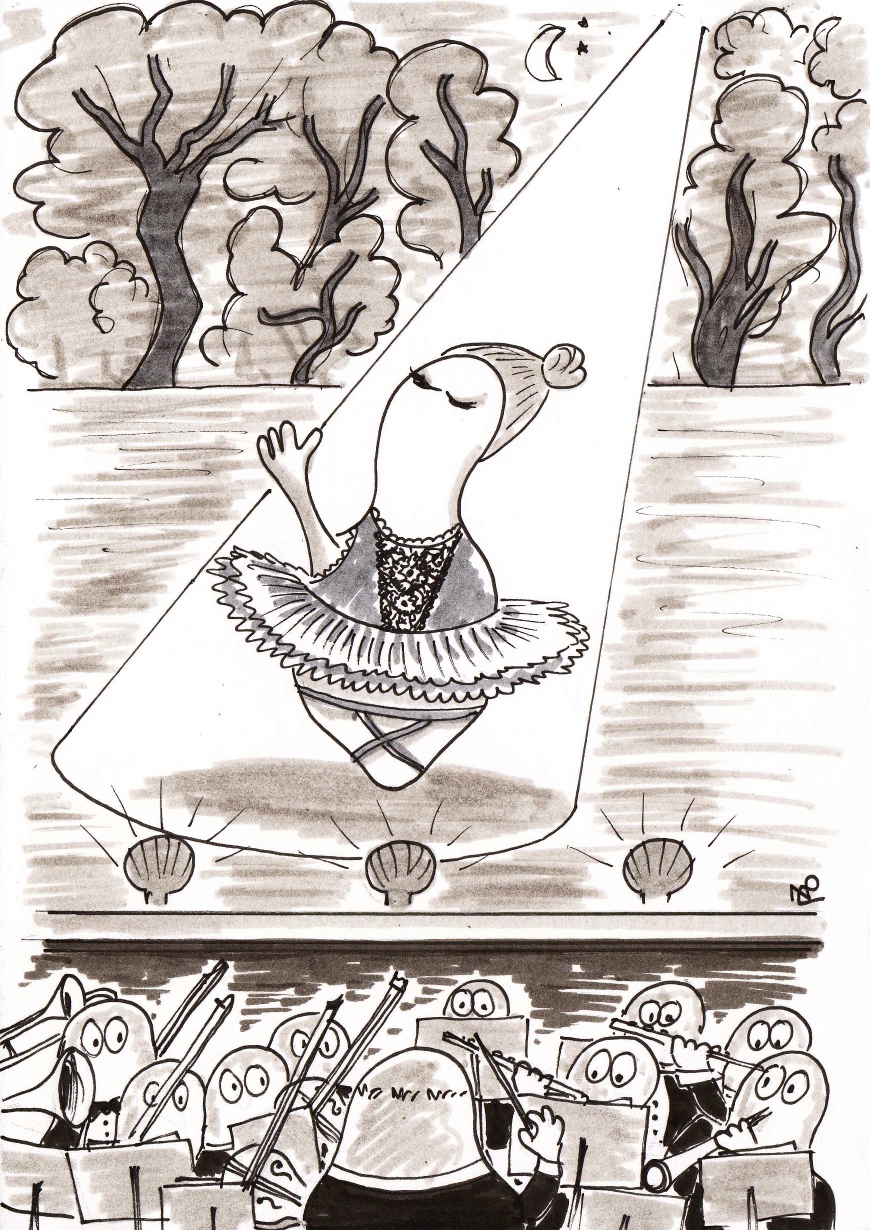
Ballet fever is in the air, well at least in my house, following Monday night’s Royal Ballet double bill spectacular The Dream/ Song of the Earth. Which got me thinking, what would happen if Norms danced the ballet? Well, the limitations are rather obvious. Unlike the sculpted muscular form of the human dancers, the use of which was applied to startling artistic effect in Song of the Earth, Norms are just blobby. This is fine for bouncing across the stage, and with one arm and wide eyes, they can even add a little dramatic expression into their dance. But as far as en pointe goes, the best a Norm can do is try to make themselves pointed… though the trouble then is they begin to resemble a spinning top rather than a ballerina, and we know what happens to the spinning top once it comes to the end of its revolutions. Oh well, you can’t say that the Norms don’t try. Here they are in the attempt, complete with a melodious Norm orchestra and a energetic Norm-ballet lift.

Ballerina Norm (2012 © Nicholas de Lacy-Brown, pen on paper)

The Norm-ballet lift (2012 © Nicholas de Lacy-Brown, pen on paper)

I’m off to live in the real world now. Until next time!

Night at the Royal Ballet: The Dream/ Song of the Earth

When I was invited to spend the evening at London’s Royal Opera House to see a double-bill Royal Ballet performance of The Dream and Song of the Earth, I was more excited by the prospect of enjoying the sumptuous surroundings of the Royal Opera House (which, owing to hefty prices, I rarely get to enjoy) rather than the ballet itself. I’ve always considered myself more of an opera man dismissing the love of ballet as being confined to those fanatics with a familiarity of and appreciation for the technical aspects of dance. Last night I found the Royal Opera House to be as stunning as anticipated. From the startlingly modern, elegantly dazzling Paul Hamlyn Hall, where champagne takes centre stage, and the glass and iron structure is like a diamond preserved from the Victorian era, to the sumptuous surroundings of the plush red and gold auditorium: this theatre is without a doubt the jewel in London’s crown. But for me, the real stunner of the evening was, to my surprise, but quite appropriately, the preserve of the performance on stage.

The stunning Paul Hamlyn ("floral") hall interior

The Dream

In their performance of The Dream, set to the well known music of Mendelssohn (the wedding march now being played out all over the world as a newly married couple descend magnificently down the church aisle) the Royal Ballet provided a whimsical, tight and aesthetically joyous production, a cornucopia of visual delights, and a perfectly danced narrative of Shakespeare’s renowned Midsummer Night’s Dream tale. But in Song of the Earth, the Royal Ballet did not just present a ballet performance, but an indubitable work of art, a stunning rendering of moving sculpture, a work of poetry told through the human form. It was mesmerising, haunting and moving all in one. I left the ballet a changed man.

Oberon and Puck - The Dream

So why was it so good? Well I am a quite the philistine when it comes to the technical adroitness of a ballet dancer, but it was immediately obvious from both performances that the Royal Ballet does not cut corners when it comes to quality. In their performance of The Dream, the ballerinas danced with such poise and light delicacy that the distinction between dream and reality blurred as a stage full of flitting fairies appeared to come to life. This was no doubt enhanced by the beautiful and complex scenery coupled with low misty lighting which perfectly epitomised the fairytale grotto of childhood imaginings. This performance was definitely the more traditional of the two, but it did not lack allure because of it. Rather, the charm of the corps de ballet, identically dressed in diaphanous luminescent little tutus, tinged with forest shades of greens and turquoise, was like the coming to life of a Degas pastel. The romance of the ballet was thereafter confirmed, as I imagined myself as something of a Degas, ready to leap up into the wings and paint the dancers at work.

Edgar Degas, Blue Dancers (1893)

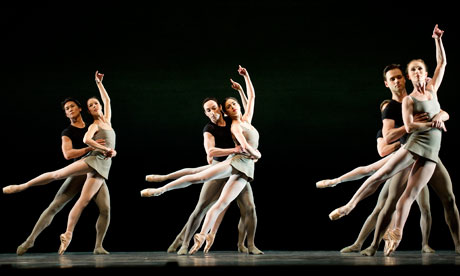
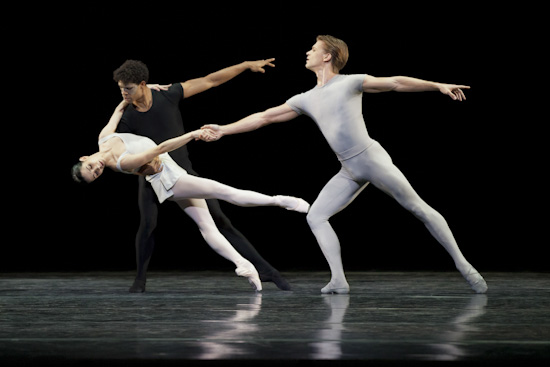
But in Song of the Earth, greater forces combined to conjure a startling production of mesmeric power. Here the music, the lighting, the stark scenery, the stripped down costumes and the athletic skill of the dancers all joined forces to create an awe-inspiring tour de force of emotional exploration. Song of the Earth is a ballet choreographed by the ballet supremo Kenneth Macmillan (1929-92). It is set to the haunting, often chromatic and deeply stirring score by Mahler. His 1908 composition (“Das Lied von der Erde”), was itself based upon six ancient chinese poems which had been translated into German the previous year by Hans Bethge. The poems, which dealt with themes of living, parting and salvation touched Mahler deeply at a time when he was embroiled in his own personal melancholy, having lost one of his children to scarlet fever and diphtheria and being himself close to death with a significant heart defect. The significant emotional journey along which Mahler was relentlessly embarking during this time bleeds through, in every tender and painful detail, into the score. In the Royal Ballet’s performance, the songs are intermittently sung by a tenor and contralto. When combined with dance, the result is magical.

Song of the Earth (© Tristram Kenton for the Guardian)

“The wine already beckons in the golden goblet
but do not drink yet – first I will sing you
a song.
With a burst of laughter the song of sorrow 
shall sound into your soul.
When sorrow draws near, the gardens of the
soul lie waste,
Joy and singing wither and die.
Life and death alike are dark.”

I: The Drinking Song of Earth’s Misery

Song of the Earth

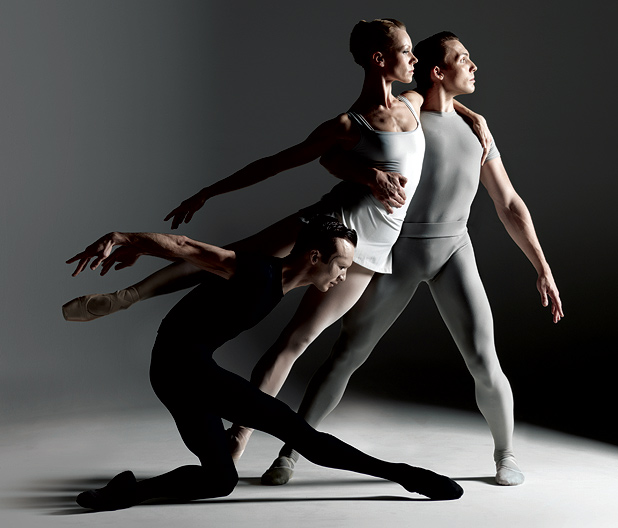
The dance perfectly reflected the themes of anguish, life, death and salvation intermittently explored by the singers and the score. The contemporary choreography was so artistically executed, it took my breath away, and words are not sufficient to describe the effect produced. Nonetheless, as I attempt to consider and put words to my emotional response, I am particularly struck by the staging – a stark bare stage, with the dancers lit from above and behind. This resulted in shadows forming on the front of the dancers’ bodies, so that every muscle and angle of their beautifully choreographed and moving forms could be appreciated with an enhanced focus. Also, the monochrome tones and use of identical costumes amongst male and female dancers respectively meant that the personality was taken out of the dancers, and the focus placed in the use of their bodies, and the shapes of their dance in narrating the emotions portrayed. Thus at times the dancers appeared to form the shape of temples, flowers, swinging pendulums and of twisting anguished souls, entangled in chains around each other as the dancers desperately sought to escape their inexorable link with death.

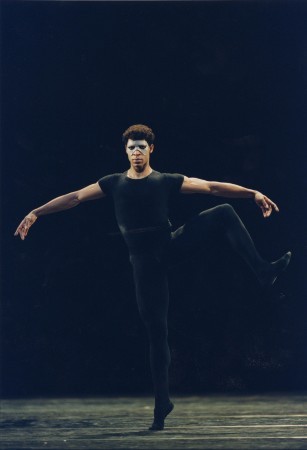
Carlos Acosta as the Messenger of Death (© ROH, Bill Cooper)

By contrast, the brooding masked persona of the characterised messenger of death, stunningly portrayed last night by Ballet favourite, Carlos Acosta, was omnipresent across the performance, a sinister undertone whose looming role in the tale was forebodingly clear. Particularly impressive also was the lead female ballerina Marianela Nuñes, exhibiting an almost superhuman control of her elegant form, specially when, during one movement, she danced en point backwards across the stage for what must have been almost a minute uninterrupted. The skill of dancing on show was staggering.

Ballet is one of those things you just have to see in action, alive and throbbing on the stage. Even Degas’ paintings can’t replicate the power and emotional draw of a real performance, and televised performances also lack the intensity of a live show. Now I have seen the real thing, I am a man converted.

Monochrome colours and simple costumes to stunning effect: Song of the Earth

Postscript: Thanks go to my friend Siobhan, who took asked me along to the ballet last night, and particular congratulations go to Francesca Hayward, dancer of the Royal Ballet and member of the corps de ballet in last night’s performance of The Dream – it’s incredible to see a young face from my childhood up on the Royal Ballet stage having achieved so much as such an accomplished young dancer. I envisage a great future ahead for you.

Daily Norm Book Club: The Third Reich by Roberto Bolaño

“The water rose up the stairs from the beach and spilled over the sidewalk. Consider your next play very carefully, warned El Quemado, and he began to splash away toward the Del Mar…The water was black and now it came up to my ankles. A kind of paralysis so thoroughly prevented me from moving my arms and legs that I couldn’t rearrange my counters on the map…The die, white as the moon, sat with the 1 faceup. I could move my neck and I could talk (or at least whisper) but that was all. Soon the water swept the board off the wall, and it began to float away from me, along with the force pool and the counters. Where would they go? Toward the hotel or the old town? Would someone find them someday? And if they did, would they be able to see that it was a map of the battles of Third Reich, and that the counters were Third Reich armoured corps and infantry corps, the air force, the navy?…

Calmly, and with no hope of saving myself, I waited for the instant when the water would cover me. Then, emerging from under the streetlights, came El Quemado’s pedal boats. Falling into a wedge-shaped formation (one pedal boat at the head, six two-by-two behind, and three bringing up the rear), they glided noiselessly along, synchronised and gallant in their way, as if the flood were the perfect moment for a military parade. They took turn after turn around what had once been the beach, with my dumbstruck gaze fixed on them; if anyone was pedaling and steering, it must have been ghosts, because I couldn’t see a soul. Finally they moved out to sea, though not far, and changed formation…From my position all I could see was the nose of the first one, so perfect was their new alighnment. Suspecting nothing, I watched the blades cleave the water and the boats begin to move again. They were coming straight for me! Not very fast, but as relentlessly and ponderously as the old dreadnoughts of Jutland. Just before the floater of the first one, surely followed by the remaining nine, was about to smash into my head, I woke up.”

The Third Reich, Roberto Balaño (Picador, 2011) © heirs of Roberto Bolaño

The lastest posthumous publication from author Roberto Bolaño is a profoundly disturbing novel. Not because the novel is full of back-to-back gruesome descriptions of serial murder (as in Bolaño’s most celebrated offering, 2666) but because there is something intrinsically unsettling about the narrative, told from the point of view of a young 25 year old German tourist, Udo Berger, who appears to descend into some form of intellectually advanced emotional breakdown as the book goes on: From a lucid beginning, Udo, as narrator, spends more and more time preoccupied by the realms of his nightmares, while in the real world, his descriptions of the places and people around him become gradually more sinister and surreal.

The story starts relatively normally. Udo Berger, an aspiring writer and part-time gamer from Stuttgart, and his girlfriend Ingeborg, are on holiday in a typical tourist-pot resort on Spain’s Costa Brava. It isn’t clear when the book is set, but a reference to a split-Germany and the reliance on landline telephone communication (rather than mobiles or email) suggests that the story is probably 1980s at the latest.

Udo Berger is a war-games champion back in Germany, and consequently spends much of his time immersed in the slightly niche world of war gaming, both playing, and writing related articles which he publishes around the world. The game with which he is primarily preoccupied, and the one which gives the name to the novel, is Third Reich. The game, which is a real game released in 1974 by gamers Avalon Hill under the full title, Rise and Decline of the Third Reich, is a grand strategy wargame covering the European theatre of World War II in Europe. It’s a long running game (not your average Monopoly) which requires the players to take on the roles of the various major national powers at play in the war. The players then simulate the entire war effort from 1939 until it’s end, but with the opportunity to re-strategise the course of history and investigate different courses of military manoeuvre which may not have been undertaken in reality (for example a German invasion of Spain).

It is against the rather fractious setting of war that the story of a holiday in peace-time Spain plays out. Udo spends much of his time cooped up inside his hotel room strategising war, while his girlfriend attempts to enjoy normal holiday past times. It is on one such occasion that she meets another holidaying couple, Charly and Hanna, and a group of shady locals who introduce both Ingeborg and Udo to the darker side of town life beyond the tourist sheen. The new-found friendship between the couples does not end well, when Charly, after various tumultuous encounters, disappears without a trace. As the holiday comes to an end and Ingeborg decides to return to Germany, Udo is intent on remaining behind in Spain to make sense of Charly’s disappearance.

It is at this point that the heart of the novel begins to play out, and various factors combine to affect a mood of disintegration and melancholy in the mind and surroundings of Udo. As the hotel gradually empties, the once bustling resort takes on a ghostly feel. Udo describes noises in the corridor and mirrors without reflection as his mind becomes more and more troubled with nightmares. In the meantime he strikes up a gaming relationship with El Quemado – a severely disfigured and enigmatic local who runs a boat pedalling business by day, and sleeps in a fortress built from his boats at night. Once introduced to the rules of Third Reich, El Quemado becomes progressively more zealous in his role of allied strategist, until it becomes clear that his enthusiasm to play against a German is laced with more sinister undertones. Despite becoming aware of this risk, and long after the mystery of Charly’s disappearance is clear up, Udo Berger feels compelled to remain in Spain and play on, despite the seriousness of the potential consequences once the game of war is ended.

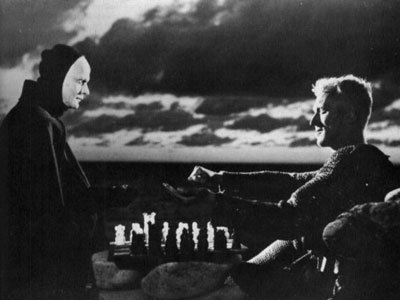
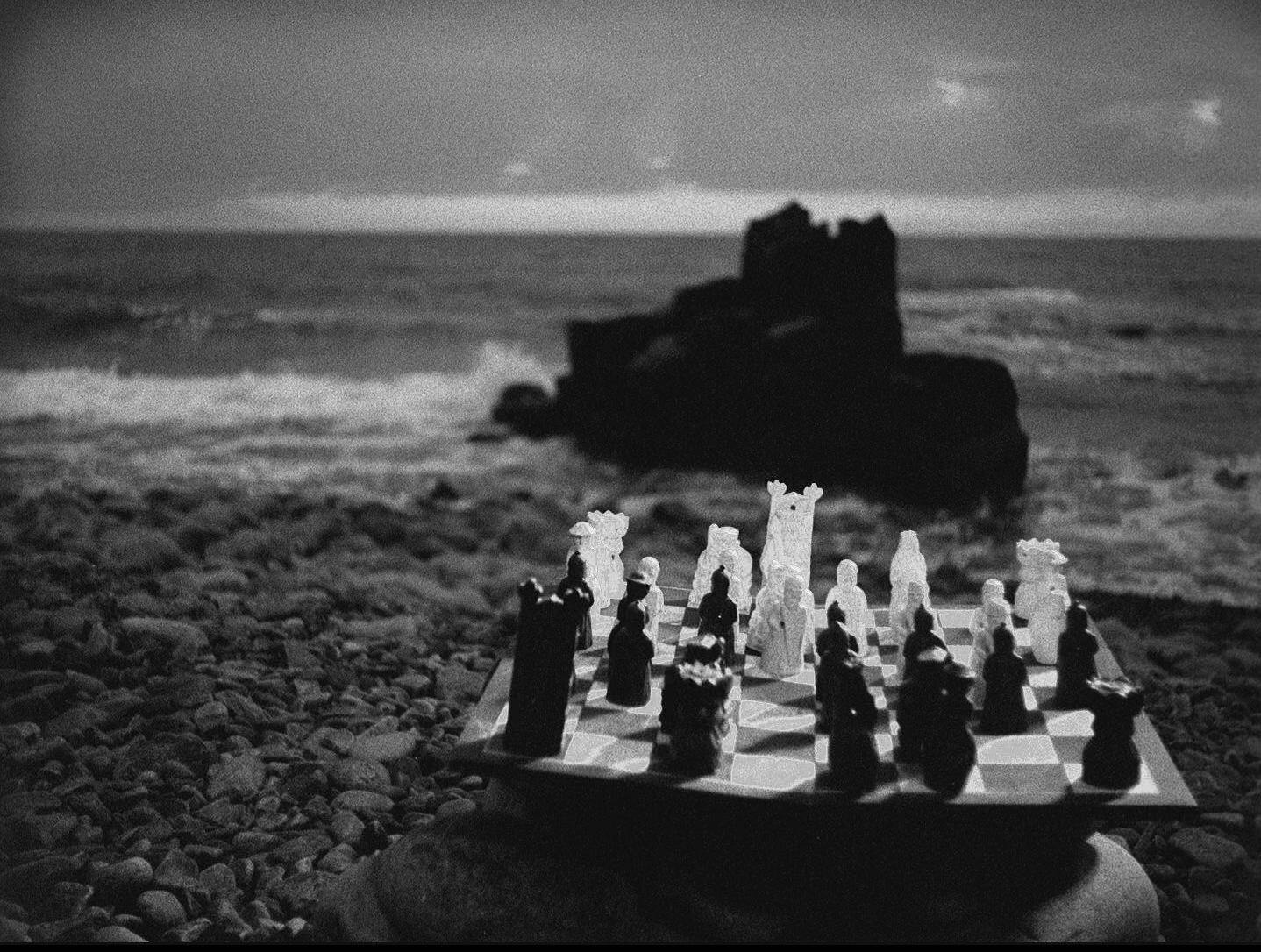
Scene from Ingmar Bergman’s The Seventh Seal

This is a story which is unsettling perhaps because of the many ironies it entails. Udo Berger is on holiday in peace-time Spain, but remains cooped up inside reliving the history which dogs his nation. He is adamant that he is no Nazi, yet he is obsessive in wanting to re-stage the second world war in order to improve its outcome. Meanwhile the core of the story plays out when the tourist season is over, when the hotel is tired, dilapidated and empty, ready to hibernate for the winter, when it’s owner is dying and its staff are rebelling, and when, instead of sun, the sandy beach is pitted with the patter of rainfall. The story is also unsettling because our access to it is through Udo Berger, a man who makes for an unreliable narrator, forever wavering between nightmare and reality, historical strategy and contemporary indecision. Yet this is what makes the book so edgy, electric and captivating.

This book reminds me of Ingmar Bergman’s 1957 cinematic masterpiece, The Seventh Seal, particularly the scene when the protagonist, Antonio Block, plays a game of chess on the beach against Death. Enigmatic, eery, sinister yet compelling. It also reminds me of the surreal and slightly unsettling works of Rene Magritte – on the surface, he presents recognisable everyday situations, yet at their core, they unbalance and disconcert. Bolaño’s newly published novel is another such gothially-surreal success, which presents a further opportunity to discover the comprehensive and multifaceted oeuvre of Roberto Bolaño, much of which remained unpublished on his death in 2003. I urge anyone with a taste for the unusual to read this novel.