Skip to content

Posts from the ‘Art’ Category

The Norm Nativity | Journey to Bethlehem

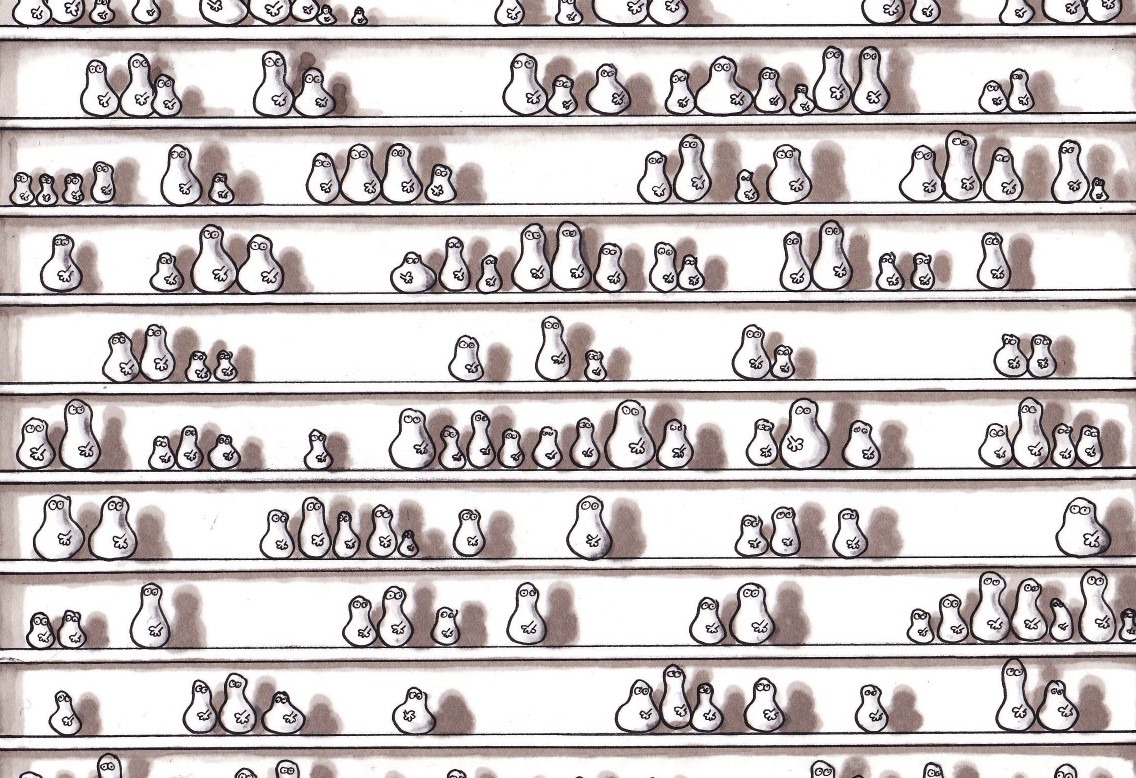
In the last instalment of The Norm Nativity, we left Mary Norm just as she had learnt the startling news, from her visitor Angel Gabriel Norm, that she was due to give birth to a son called Jesus Norm. The visit from a flying angel would have been startling enough, but the news that Mary was somehow inexplicably become pregnant despite being an untouched virgin was enough to make the hardest of souls go soft in the head. But not Mary Norm. Strengthened with the affirmation that the baby Norm she was carrying would one day be a saviour of the world, she was determined to do this properly. And so, having told her then boyfriend, now hubby Joseph Norm the rather stunning news (and having finally got over the months of arguments when he accused her of having an affair – it was inevitable I suppose), Mary Norm and Joseph Norm set out on their old little donkey, Nancy, and made their way to Bethlehem, the city of Joseph’s birth and thus where they were required to register the oncoming birth of their child.

As Luke more eloquently tells us…

In those days a decree went out from Caesar Augustus that all the world should be registered.  
This was the first registration when Quirinius was governor of Syria.
And all went to be registered, each to his own town.
And Joseph also went up from Galilee, from the town of Nazareth, to Judea, to the city of David, which is called Bethlehem, because he was of the house and lineage of David,
to be registered with Mary, his betrothed, who was with child.

Luke 2:1-5

Journey to Bethlehem (2013 © Nicholas de Lacy-Brown, pen and gold paint on paper)

Journey to Bethlehem (2013 © Nicholas de Lacy-Brown, pen and gold paint on paper)

So over hostile terrain they travelled for days, their worldly possessions, and the heavily pregnant Mary Norm pilled upon poor Nancy’s back, trekking across dessert and wide open plains until finally they could see the little town of Bethlehem glittering like a mirage in the distance. But their relief was short lived, for no sooner had they made out the outline of the city than they had caught sight of various road-side advertising posts advertising hotels and inns – yet all of these adverts bore the ominous news that all of the accommodation was booked up! (Well, it was Christmas I suppose…) What would Mary Norm and Joseph Norm do? Find out… next time!

Paris | Art tour 2013 – Vallotton

The incredible thing about Paris is not just the quality of the exhibitions it puts on, but how many of those quality shows it manages to host in a single season. The Grand Palais alone has some 4 or more exhibitions showing at any one time, and as Dominik and I took the long walk around the huge neo-classical structure that is the Grand Palais, we noticed that there were queues lining the building on almost all four sides – testament not just to the popularity of its exhibitions, but also to how many exhibitions were showing in the space of a single (admittedly huge) building.

The benefit of these multiple shows (and also the disadvantage if you fatigue easily) is that when you buy one ticket, you can combine your first exhibition with another – or in fact the lot. So having been wowed all morning by the cubist prowess of Georges Braque, and braked for lunch in an excruciatingly expensive brasserie nearby for snails and an ‘amburger (imagine said in a French accent) we returned to the great palace of art to see the second of their major autumn retrospectives: a show devoted to the work of Felix Vallotton.

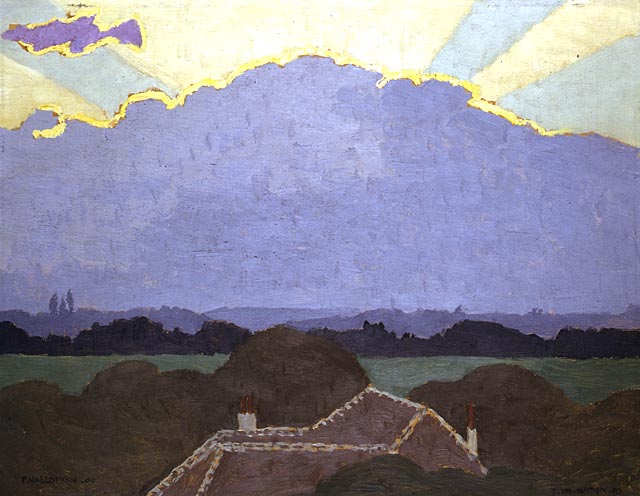
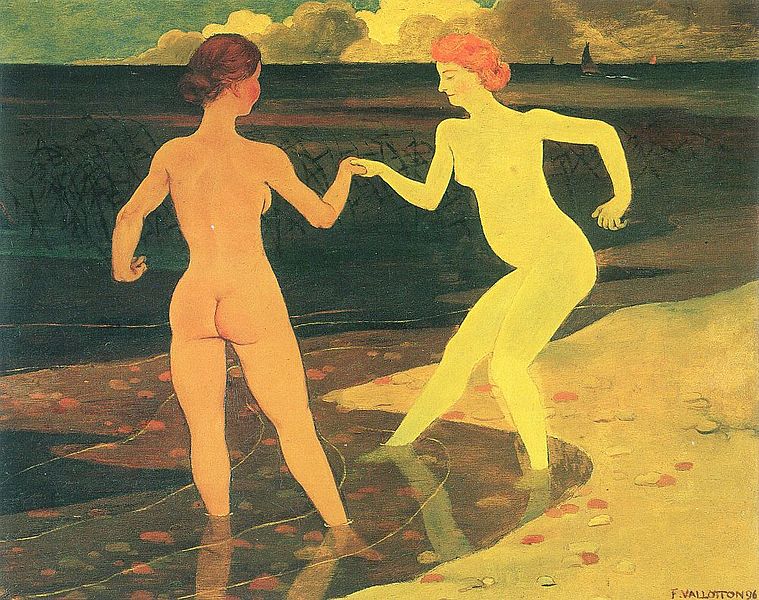
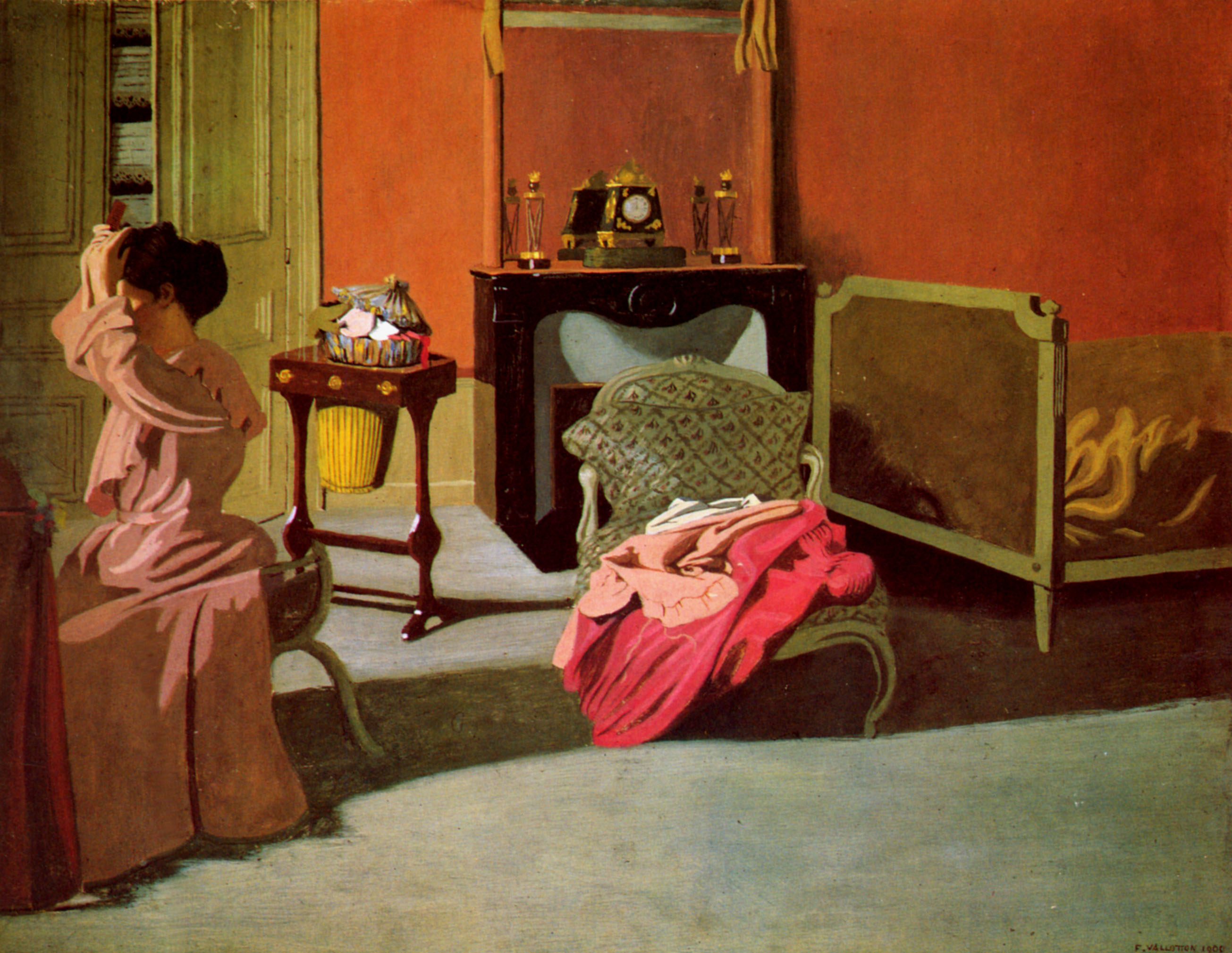
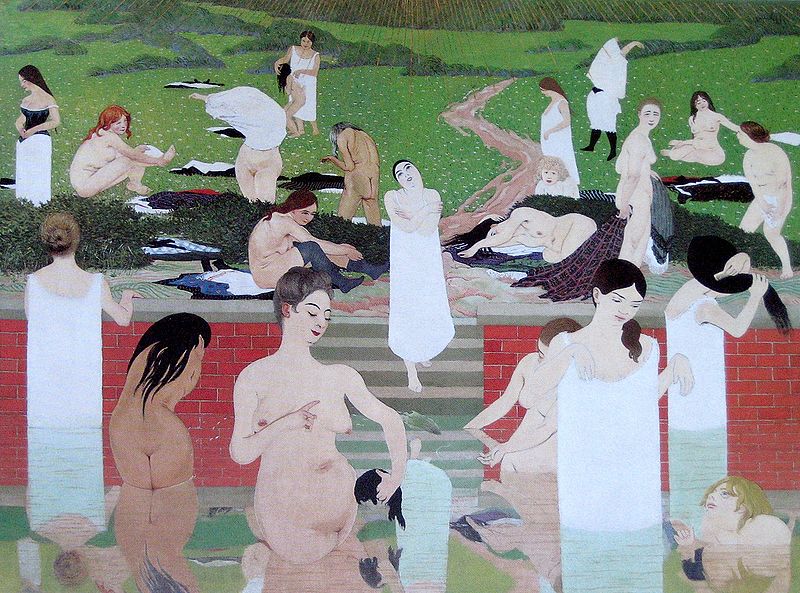
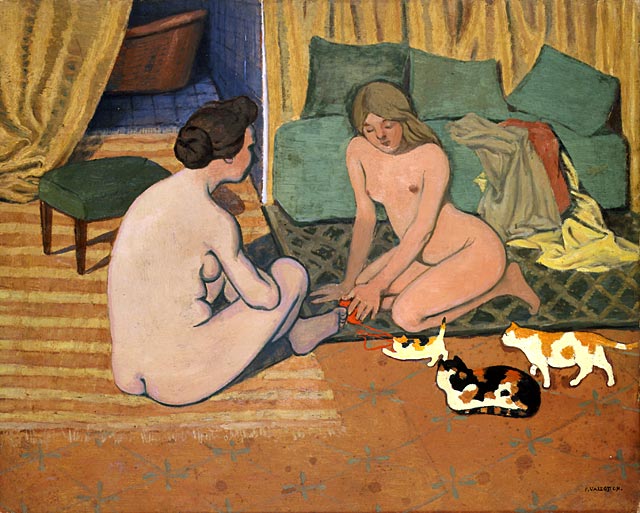
Vallotton paintings in the “aesthetic sythetism” style

Nuage_à_Romanel 759px-Valloton_Frau_mit_Dienstmagd_beim_Baden woman-being-capped-1900 800px-Vallotton_Das_Bad_Sommerabend_1892 Femmes_nues_aux_chats

I wasn’t familiar with either the name Vallotton or his work before I ventured to Paris this autumn. However, as a quasi-member of the French Nabis movement of art, I was already familiar with a number of Vallotton’s artistic allies – Maurice Denis, Pierre Bonnard and Edouard Vuillard being amongst their number. The Nabis were a group of post-impressionist avant-garde artists who took their name from the word Nabi which means a prophet in Hebrew and Arabic. They were so called because they believed that their art revitalised painting in the same way that the ancient prophets had rejuvenated Israel. At the heart of their movement was another term, or style of art, sythetism, which involved the flattening of colour panes and shadows, a heavier reliance on dark outlines, and a preoccupation with the canvas, as “essentially a flat surface covered with colours assembled in a certain order” (so said Maurice Denis). If I was to describe the style in my own words, it would be a painting without depth and perspective, so that the folds of a dress for example would be reduced to a single colour for the shadow and a single colour for the light, with no variation of tone demarking the shape or texture of the material. 

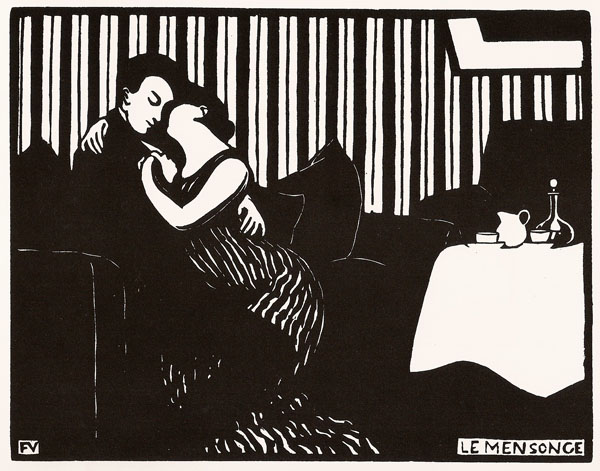
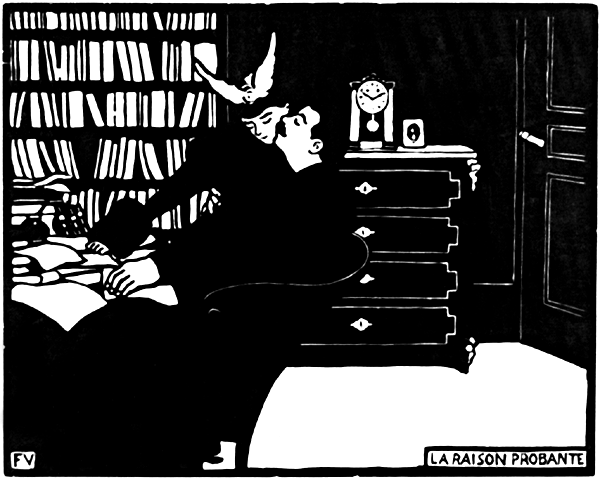
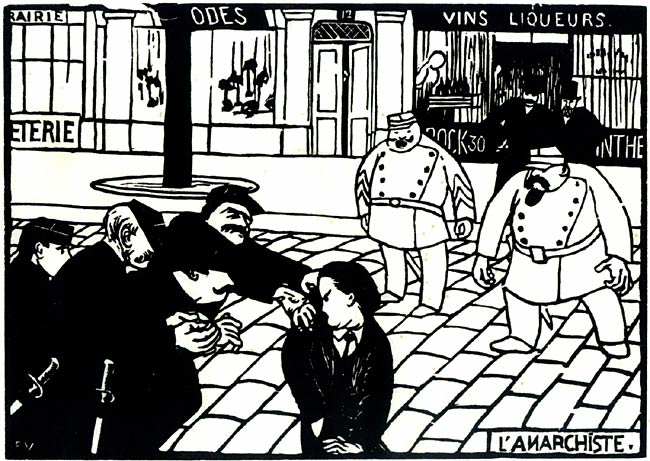
Whether or not Felix Callotton, born in Switzerland in 1865, came to adopt the style as a result of the influence of his fellow Nabis is less certain. From the exhibition, it would appear as though Vallotton’s distinctive flattened panes flowed naturally from his brilliant virtuosity with woodcut printmaking. After all, the finish of woodcut will invariably involve the flattening of light and shadow, as the synthesis of two colours or tones – generally black and white – combine together to illustrate all of the details of an image – black for shadow and features; white for light. And having spent a good decade or so of his early career woodcutting for the sake of making money, the suppression of depth and shadow made its way seamlessly into Vallotton’s paintings which followed.

Vallotton’s brilliant woodcuts

vallotton4 vallotton-trottoir-roulant-1901 5333808295_a0756d9ea8_b Vallotton-Raison va_anarchico title unknown 6

Being recently enamoured with all things printmaking, it will not surprise the reader of this post to learn that I was struck first and foremost by these brilliant woodcuts, which are so full of detail and humour for so intricate and painstaking a medium. In Vallotton’s Intimacies series, he depicts the mundane and mediocre interiors of intimate home settings, but always his images are full of drama, whether it be because of his captivating use of shadow, or the sense of scandal and emotional anxiety which is suggested. From these prints, Vallotton went on to depict brilliantly the everyday street scenes of his Paris surroundings, doing so with whimsical detailing and a surprising attention to detail, and while Vallotton later abandoned woodcutting when the trade had left him sufficiently well furnished with money, his return to the medium to depict the First World War in his This is War! series in 1916 saw him create prints which were equally brilliant, despite the more serious tone of the subject matter.

As to Vallotton’s paintings, I adored the colourful products of his sythetism era, where the influence of his printmaking and the Nabis resulted in works where the subject matter become secondary to the overall pictorial patterning which was being created across the canvas. Just look at his painting of a theatre box for example (“Box seats at the theatre), a canvas which could quite possibly be a Rothko with its simple horizonal colour planes, and which only becomes more figurative thanks to the simple shapes denoting the two occupants of the box and that masterly glove with its single-coloured mauve shadow, suggesting an emotional dimension to the story being depicted.

box-seats-at-the-theater-the-gentleman-and-the-lady-1909.jpg!HD

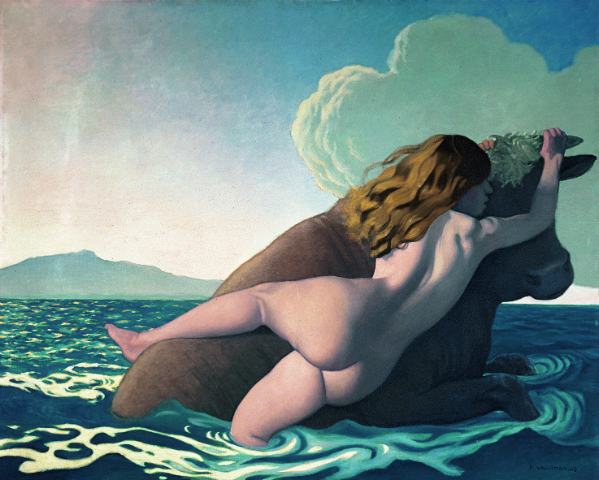
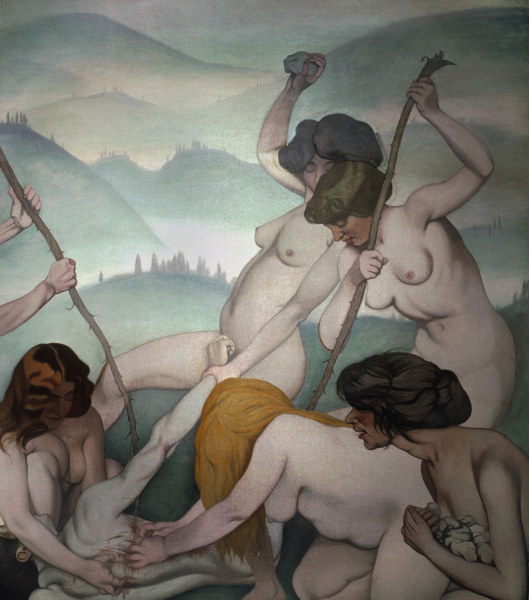
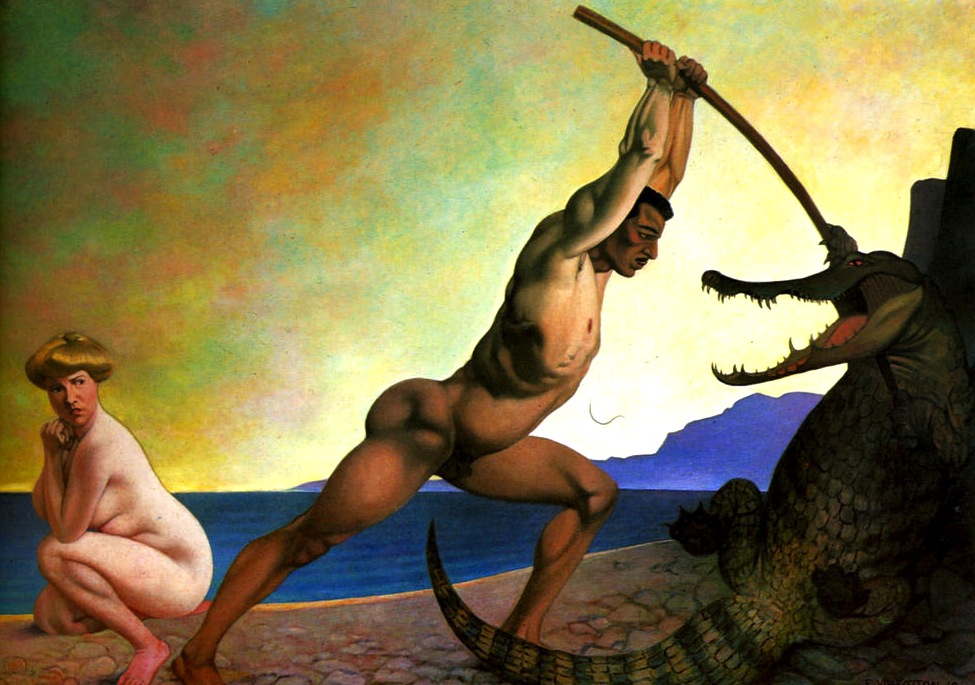
Less impressive, sadly, were the works which Vallotton went on to create in his later career, as he abandoned synthetism and the Nabis, and sought to concentrate on depicting primarily the nude, and latterly huge mythological parodies which were more Disney than anything else. Thank goodness that at the end of his career, and at the end of this show, Vallotton chose to return to the medium of woodcut which, despite their depleted tonal palette and reduction of depth and realism, are perhaps the most captivating and visceral works of all.

All a bit “Disney”- Vallotton’s mythological parodies

pic_143-20131024092755 Felix Vallotton, Orpheus und die Maenaden - Valloton / Orpheus and the Maenads - Vallotton, Felix , 1865-1925. Felix-Vallotton-Persee-killing-the-Dragon

Felix Vallotton: The Fire Under the Ice is on at the Grand Palais, Paris until 20th January 2014

The Annunciation in Art

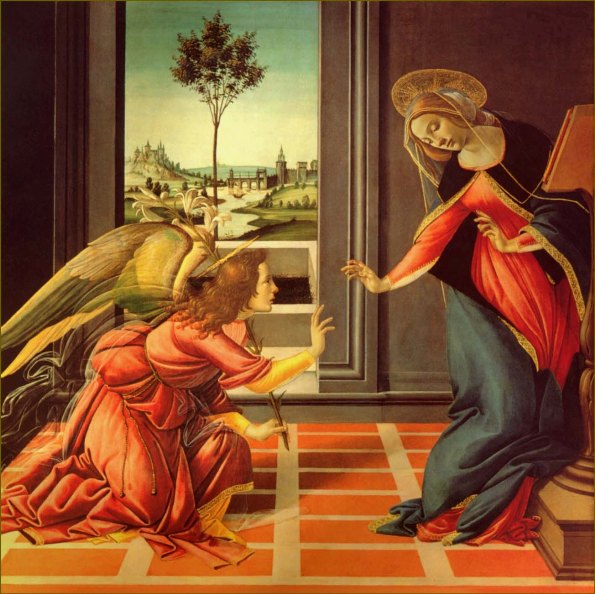
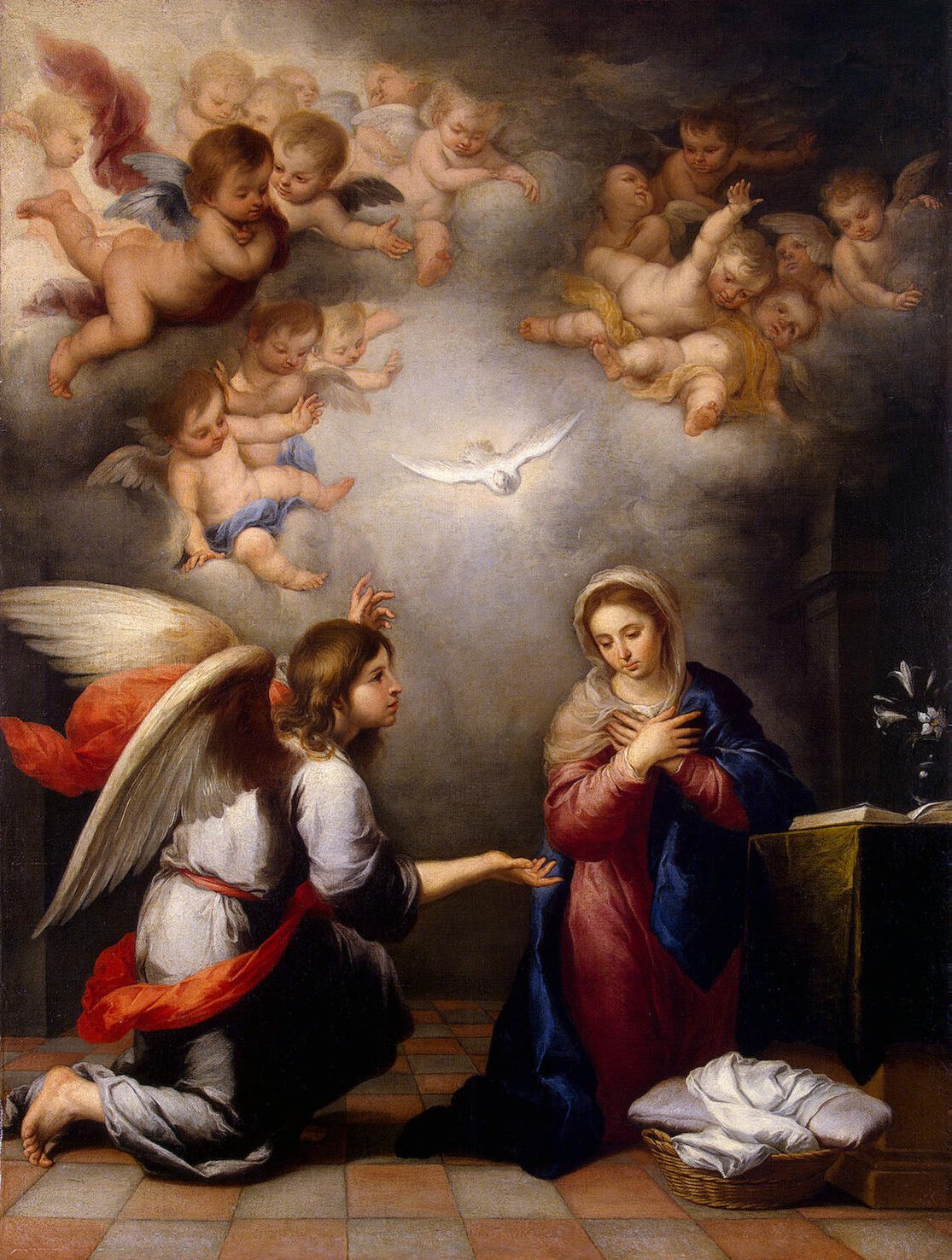
When I was recently looking through pictures of the annunciation in order to check that my own Norm depiction of the famous encounter between the angel Gabriel and Mary was correct, I noticed just how incredibly well represented the festival is in Christian art. From renaissance masters such as Fra Angelico and Botticelli to the interpretations of the Pre-Raphaelite Brotherhood, the image of Mary and the Angel Gabriel is as prominent a depiction in art history as the female nude. Such was the breadth of artistic output given over to the image, I felt compelled to share a few on The Daily Norm.

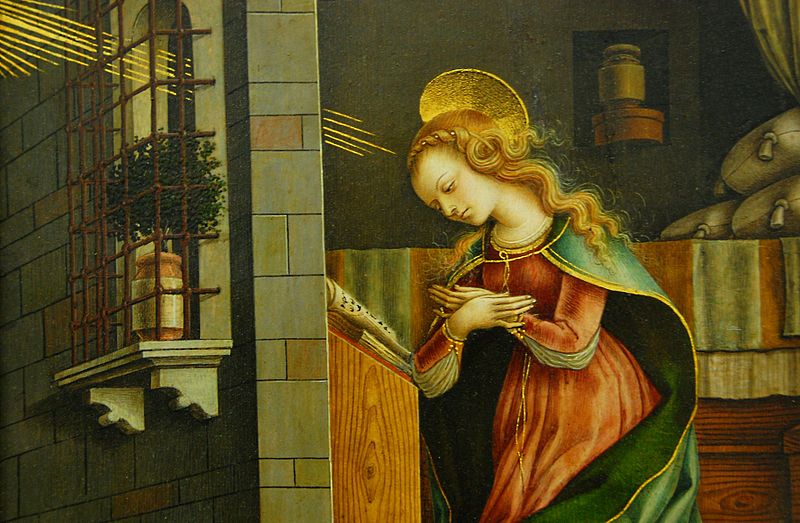
Despite the diversity of styles and compositional techniques used by the artists of these works, several strands remain common to them all. The Angel Gabriel is usually holding a white lily, said to represent Mary’s virginity, and a dove is very often present, representing the Holy Spirit and the conception which it at that moment engineers. The composition is also largely similar, with Mary on the right and Gabriel on the left, and in general the scene is played out on the outside of a house for example in a portico or garden.

For my Norm sketch, I tried to incorporate as many of these trends as possible, even playing on the trickery of perspective employed with such adeptness by Bottocelli and emulated in my old tiled floor. However I have placed my characters inside in a dusty Nazareth home. No grand renaissance porticos for me.

Fra Angelico (1438)

Fra Angelico (1438)

Fillippo Lippi (1443)

Fillippo Lippi (1443)

Attributed to Barthélemy d'Eyck (c.1443)

Attributed to Barthélemy d’Eyck (c.1443)

Carlo Crivelli (15th century)

Carlo Crivelli (15th century)

Botticelli (1490)

Botticelli (1490)

Phillippe de Champaigne (1644)

Phillippe de Champaigne (1644)

Esteban Perez Murillo (1655)

Esteban Perez Murillo (1655)

George Hitchcock (1887)

George Hitchcock (1887)

John William Waterhouse (1914)

John William Waterhouse (1914)

There’s something truly captivating about religious art, whatever your creed or belief, and despite not being a church goer myself, I find myself drawn to depictions of the Annunciation and the Nativity more than any other symbol of Christmas – just as for me old carols sung in monastery cloisters, and a visit to a candlelit carol concert of a cold winters evening are far more synonymous with Christmas than any tacky coca cola Christmas ad or the manic pre-Christmas shopping rush on Oxford street. I have therefore enjoyed the exercise of researching these paintings, transporting me as they do to the candlelit churches of Italy in December, where I was studying art history 12 years ago. I hope you enjoy them too.

Paris | Art tour 2013 – Braque

Lovers of 20th century art will all have heard of French-born artist Georges Braque. Of course I’ve heard of him too, renowned as he is for being co-founder of cubism along with the artist with whom he was thick and thieves in early 20th century Paris, Pablo Picasso. But my acquaintance with Braque has all too often occurred because, seeing a cubist masterpiece hanging in a modern art gallery, I have confused it with a Picasso, only to discover that the work was by Braque. It’s an easy mistake to make – the two artists were practically indecipherable from one another when they started out on the cubism road, a likeness of style which must be put down to the fact that they would discuss one another’s work endlessly day after day, night after night. And Braque was, purportedly, inspired into cubism by his glimpse of Picasso’s now world-famous Les Demoiselles d’Avignon, which few understood at the time, Braque being the exception.

So while Braque has, for me, existed solely in the shadows of the far glossier art historical existence of Picasso, I have never had the chance to discover how truly consistently brilliant he was as an artist. That is until this autumn, thanks to the latest blockbuster exhibition of Paris’ Grand Palais, which dedicates two floors of its palatial surrounds in retrospective homage to this French artistic great. I say consistently brilliant, because this show was one of those rare exhibitions where I literally loved almost every single piece, finding myself almost breathless with admiration as I strolled from painting to painting literally in love with what was on the walls before me.\

Early fauvism

The Port at La Ciotat (1907)

The Port at La Ciotat (1907)

Landscape in L'Estaque (1906)

Landscape in L’Estaque (1906)

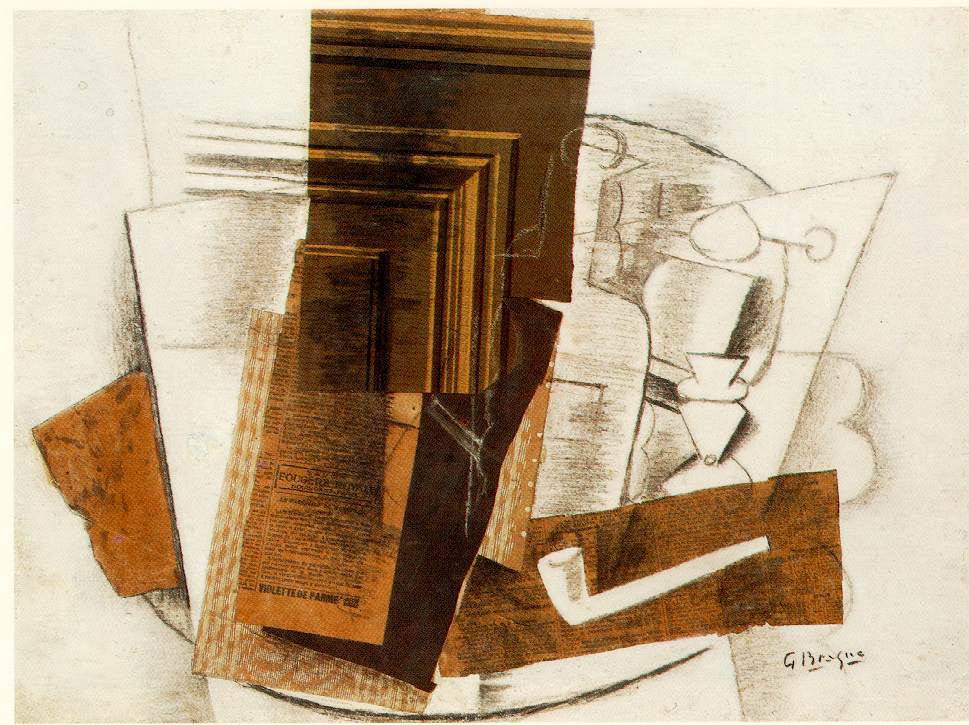
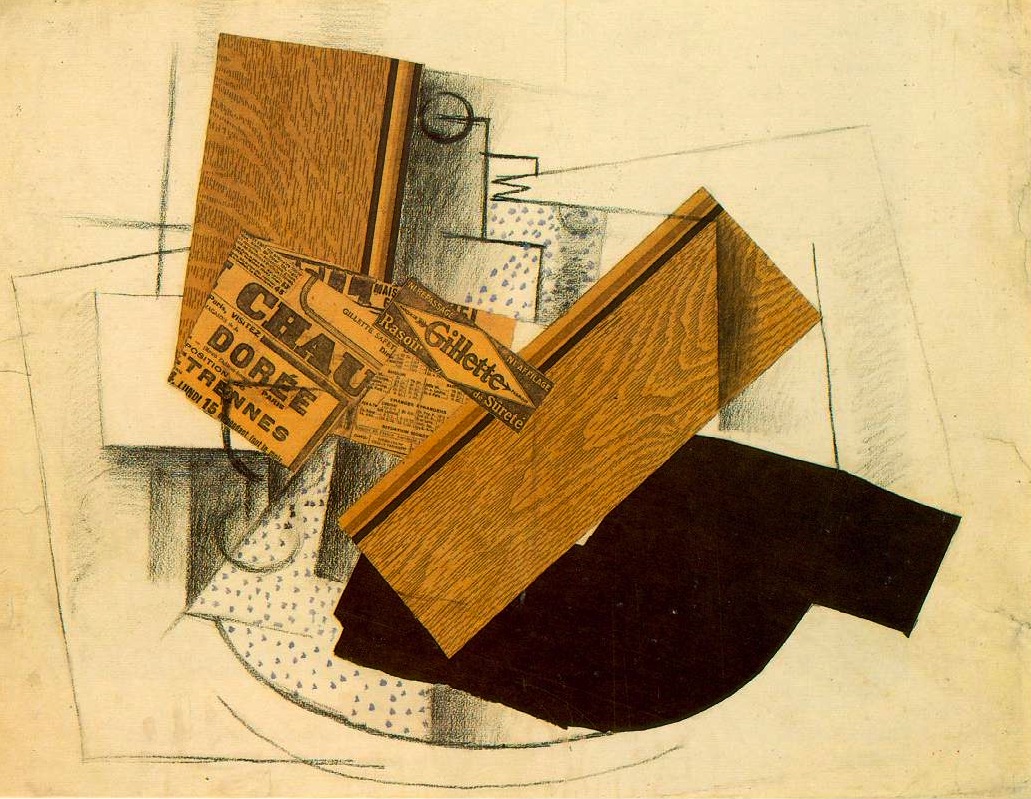
The show starts with early Braque, whereupon he dabbled largely in the fauvist epoque, with the result that his sunny landscapes of Southern France are imbued with scintillating bright colour which can not help but make the viewer yearn for the summer. But soon enough, after this initial embrace of colour, Braque discovers the more subdued shades of cubism, finding his own when fragmenting a scene into colourless, cubist dimensions. Seminal in cubism’s development was a chance visit to a wallpaper shop when Braque saw a reproduction wood-pattern paper in the window. Purchasing the wallpaper by impulse, it soon inspired Braque to set about creating a series of paper collages, which included, as well as the wallpaper, cardboard, newspaper cuttings – anything he could get his hands on. The effect of this geometric fragmentation was to create the cubist look, and soon enough Picasso was doing the same.

Into cubism, collage and then back to paint

Mandora (1909)

Mandora (1909)

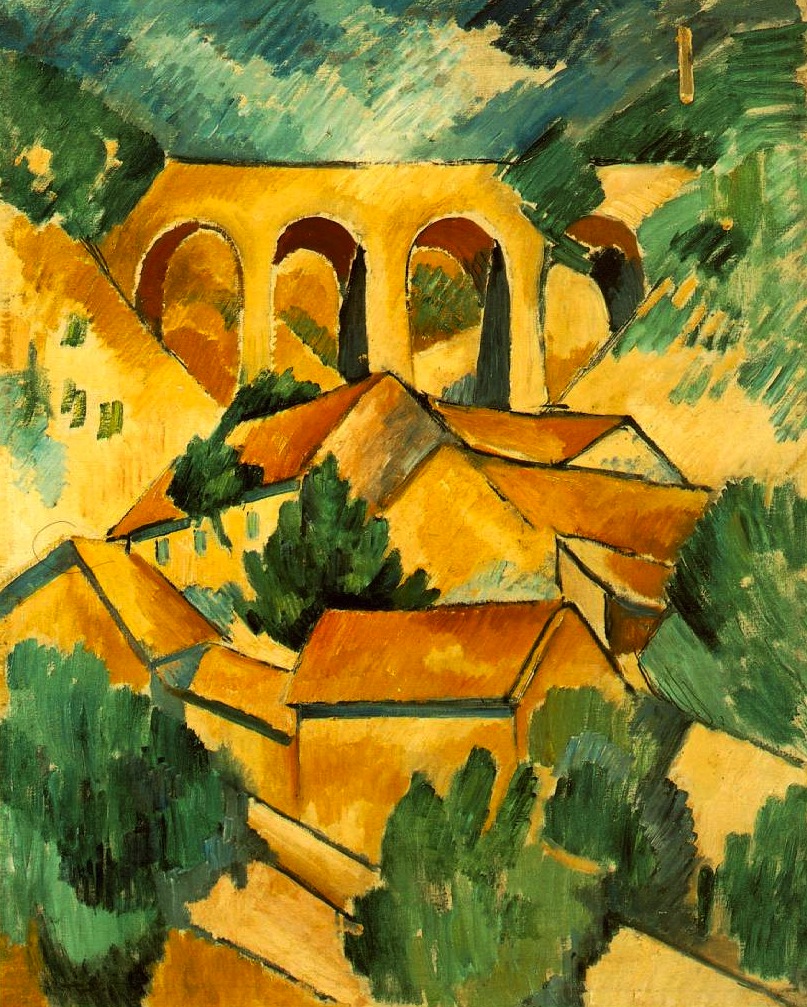
The Viaduct at L'Estaque (1908)

The Viaduct at L’Estaque (1908)

Little Harbour in Normandy (1909)

Little Harbour in Normandy (1909)

Still life with pipe (1913)

Still life with pipe (1913)

Still life on a table with Gillette (1914)

Still life on a table with Gillette (1914)

Violin and Pipe (Le Quotidien) (1913)

Violin and Pipe (Le Quotidien) (1913)

back to painting.... Still Life with Fruit and Ace of Clubs (1913)

back to painting…. Still Life with Fruit and Ace of Clubs (1913)

After several years of collage experimentation, Braque returned to paint, but using the medium to create what were almost pastiches of the collage look – still fragmented, full of geometric shapes, but differing in their progressive return to the bolder colours of his fauvist age, a return which was no doubt eased along by the weakening of his relationship with Picasso, and his strengthening bond with spirited Spanish artist, Juan Gris.

The Table (1928)

The Table (1928)

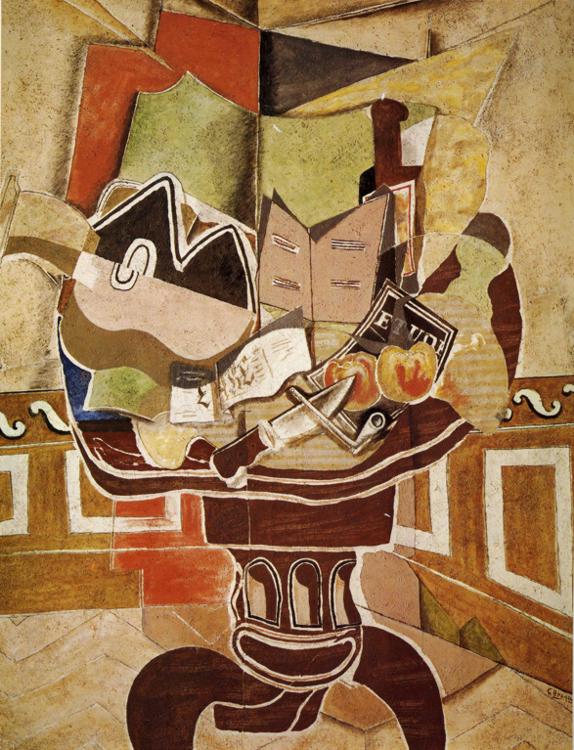
The Round Table (1929)

The Round Table (1929)

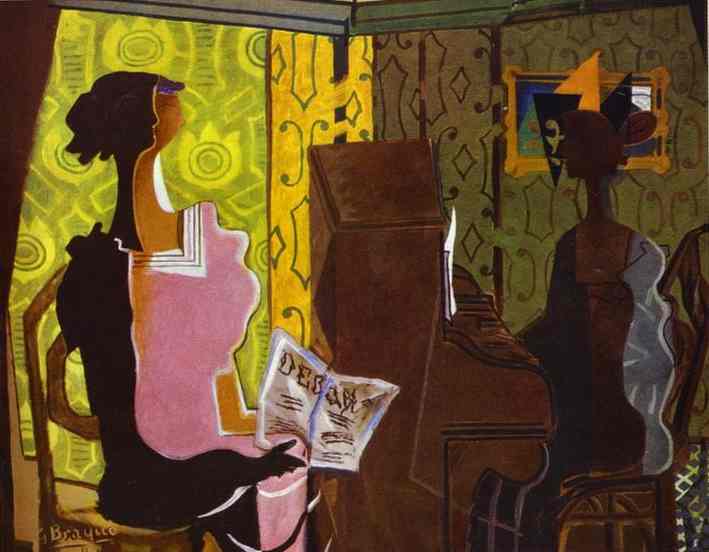
The Duet (1937)

The Duet (1937)

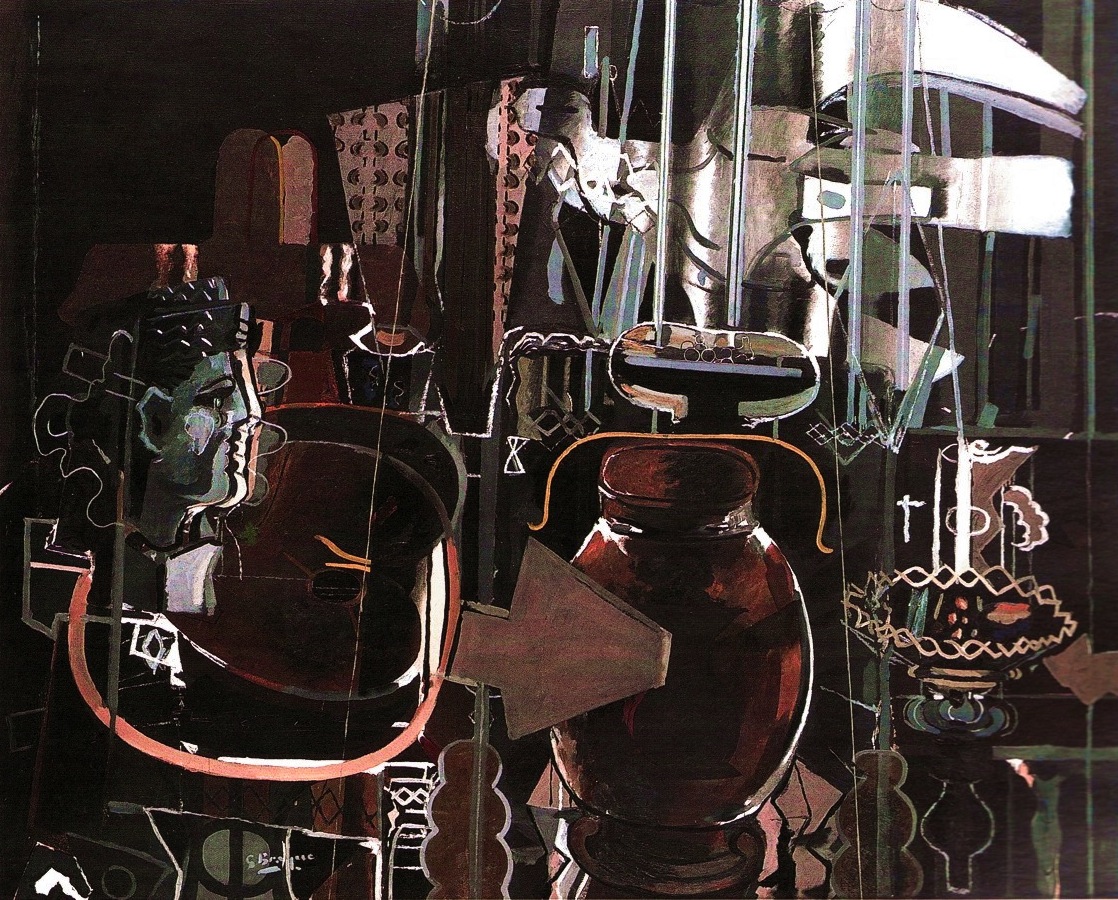
Studio II (1949)

Studio II (1949)

Studio with Skull (1938)

Studio with Skull (1938)

Thus it was that as the 20s and 30s ticked by, Braque’s work moved the cubist spirit further and further, as the artist pushed the boundaries of the movement he had helped to create, until such a time as his works become progressively more figurative, but all the while maintaining the multi-dimensional expression which was central to cubism. Take his billiard table series for example – seen from various angles, Braque’s bold green billiard table is shown from all kinds of impossible angles, and yet there is no mistaking what Braque was trying to depict.

The Billiard Table (1945)

The Billiard Table (1945)

I would be selling the show short to suggest that it all ended there. From colour-drenched fauvism to colour-collected cubism, Braque’s mastery extended to every avenue of life, as he used his pioneering imagery to depict portraits, artist’s studios, landscapes, still life and even greek mythology. From room to room we see an artist who never failed to be inspired, and to inspire his countless followers in response. Never again will Georges Braque be in Picasso’s shadow as far as I am concerned, but level pegging as a genius of 20th century art.

Georges Braque is showing at the Grand Palais, Paris until 6 January 2014.

Paris | Art tour 2013 – Kahlo and Rivera

I would like to start off my little Paris art series with a moan about London. For all the great events which take place in the city, its exhibitions tend to pale into insignificance when compared with Paris. Take the exhibitions that are on at the moment. At the Royal Academy, the grand galleries of the Burlington Palace are given over to an exhibition surveying the art history of Australia. Well we all know that Australia has no art history, and this exhibition demonstrates as much. Then there’s Tate Modern’s new retrospective on Paul Klee which presents room after room of samey small little Bauhaus explorations – and leaves the visitor as flat as the image so meticulously conceived by Klee on paper. And let us not forget the Royal Academy’s other homage to a nation’s art – its recent Mexico show, whose only inclusion of perhaps the greatest artist ever to come out of Mexico, Frida Kahlo, was a painting so small (and I mean ridiculously small) that you had to squint to see it.

Rivera's cubist period

Rivera’s cubist period

None of this in Paris, whose exhibitions present such a comprehensive survey of the particular artist at hand that you feel not only completely enriched at the end of the show, but also pretty exhausted too. And Paris doesn’t just have one blockbuster exhibition a year – no no, it holds a good three or four massive artistic events each season, hence why I feel the insuperable need to visit the city each year.

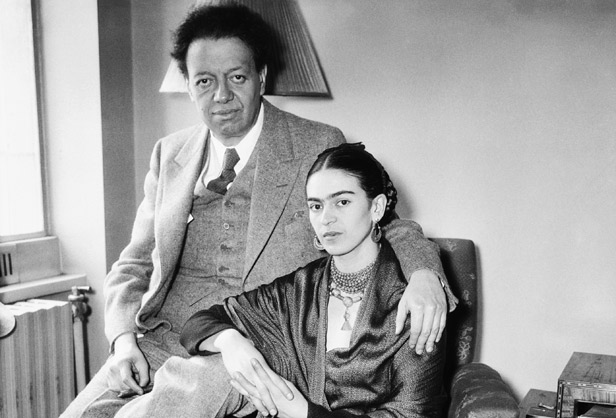
Really marking Paris out as the superior of its cross-channel neighbour this year is the Musée de l’Orangerie’s significant survey of the works of one Frida Kahlo, and her equally inspired artist husband, Diego Rivera. Entitled Art in Fusion, it explores what has to be one of the greatest married (and divorced, and then remarried) painterly partnerships of modern art history, with many of the most substantial of each artist’s oeuvres on exhibition, and not a tiny painting in sight.

The couple together

Diego Rivera with Wife Frida Kahlo tumblr_m965goUs9T1rw3fqbo1_1280 frida-kahlo-diego-rivera3

I have always adored the work of Frida Kahlo, resonating so easily with her emotionally raw artistic expression right from the time I first saw her work (ironically in London – those were the good days). For me, Kahlo’s paintings will always trump those of her hubbie’s, which are altogether more political for my taste. Either that or they are too superficial – such as paintings of children tying up lillies or portraits of Mexican natives. His works are altogether too easy to interpret at face value, while faced with a Kahlo masterpiece, you are kept guessing about all of the multi-layered complex meaning with which she imbues her works.

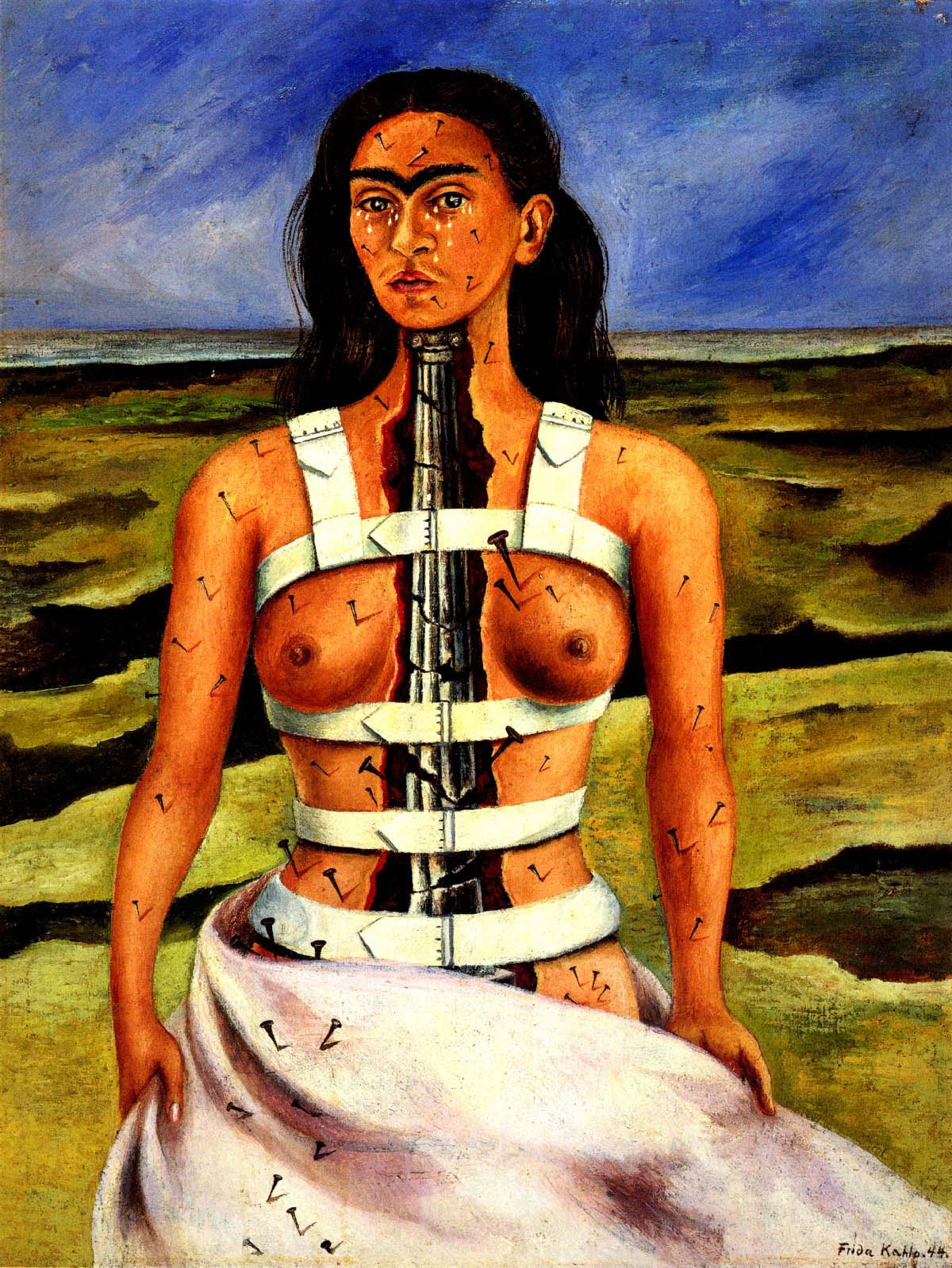
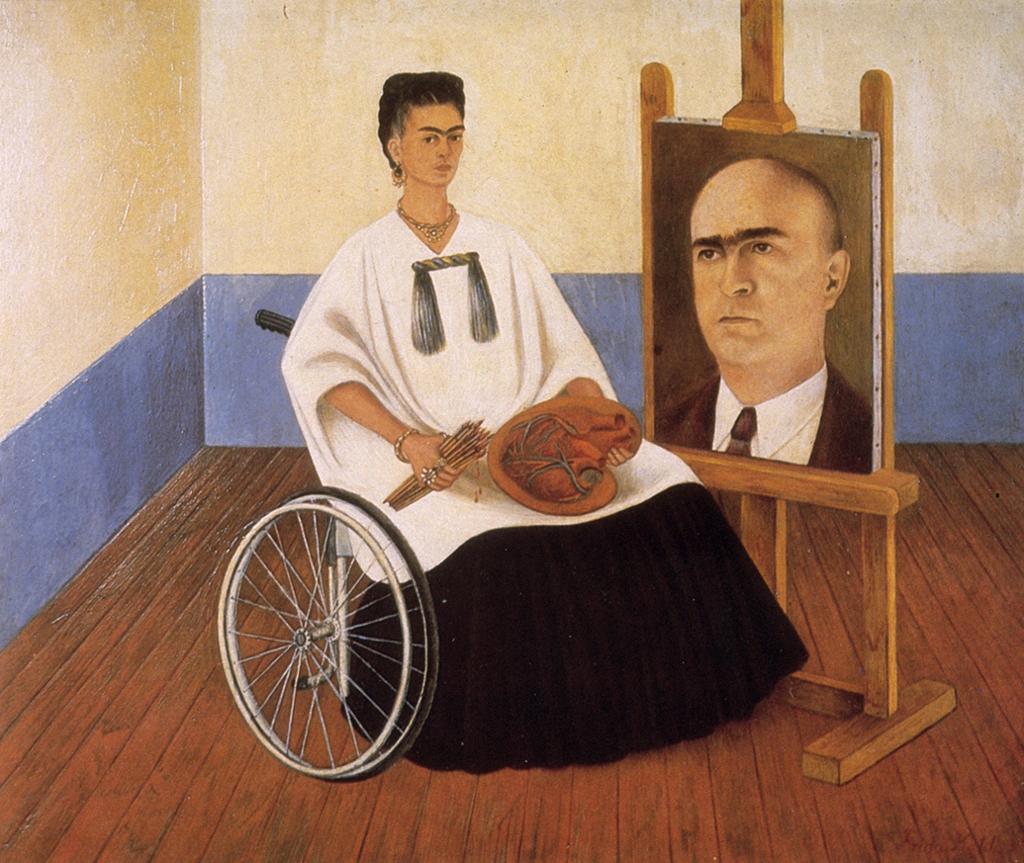
As ever, my favourite of her paintings are those which deal the most viscerally with her experiences of personal trauma – both the bus accident which crippled her for life, and the series of miscarriages which resulted, as well as her painful experience of Rivera’s relentless infidelity. This may make me morose, even morbid in my preferences, but then it was Frida’s works which first inspired me to commit my own life-changing accident to canvas.

Frida’s visceral pain-filled works

Frida-Kahlo-Henry-Ford-Hospital-1932 The-Broken-Column tumblr_lv2v44tlpg1qzse0lo1_1280 Frida-Kahlo_Self-Portrait-with-Dr-Farell kahlo-11

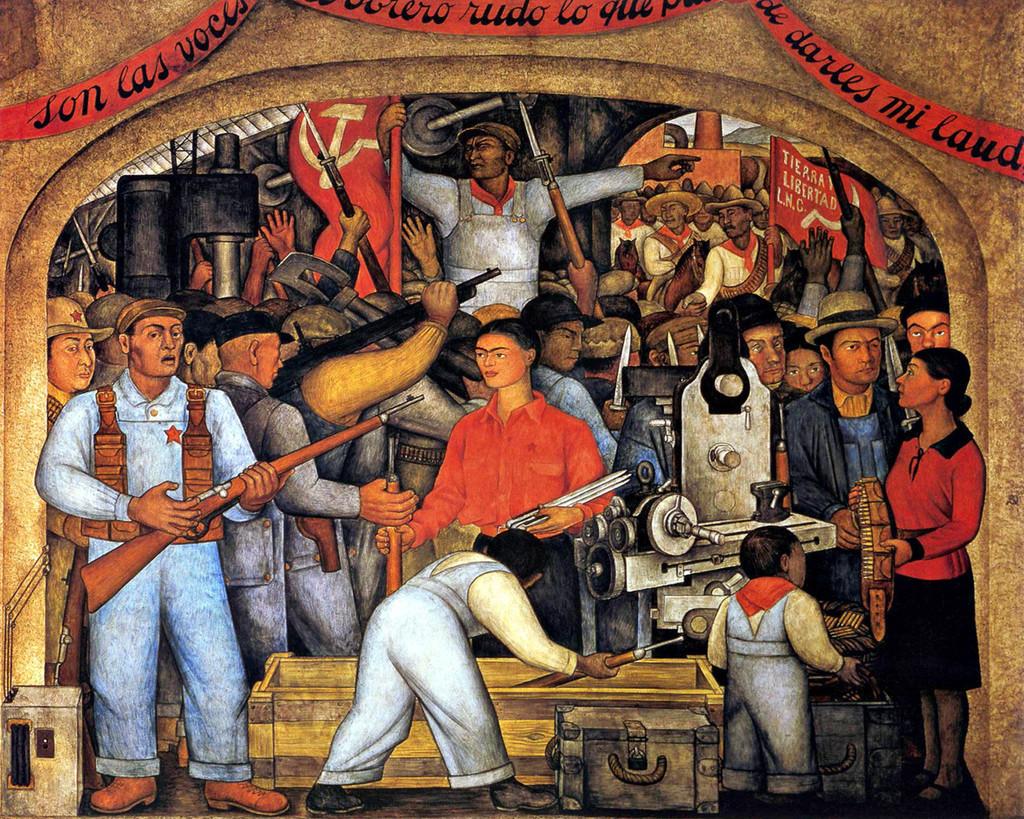
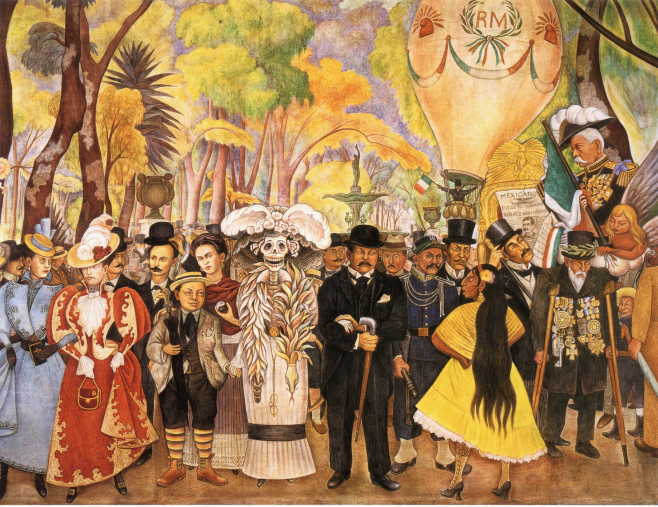
At the risk of being unfair to Rivera, of the canvases on show, a few stand out. I particularly enjoyed his cubist period when, as a young man, he found himself influenced by the early advent of this movement in 1900s Paris. However for the most part, it is Rivera’s murals which are his staggering life’s masterpieces, and sadly, despite some attempt at reproduction in the exhibition, these will require a trip to Mexico to be enjoyed to the full.

Rivera’s murals

diego_rivera_distribution_arms_canvas_print_9a Rivera_AlamedaPark mural(2)

That said, this show, which is a unique opportunity to see both the works of husband and wife displayed alongside each other, is an indisputably unmissable opportunity to see the artistic fusion which these two icons of Mexican art produced during their years together. And, being as it is in the Orangerie, if you find the vitality of colour and the depth of emotional expression a little too much to muster, there’s always Monet’s ultimately calming waterlillies to soothe you upstairs.

Frida Kahlo and Diego Rivera | Art in Fusion is on at the Orangerie until 13 January 2013. If you want to avoid the vast queues which characterise all of the Paris exhibitions, I recommend buying tickets in advance.

Announcing the details of my May 2014 solo art exhibition!

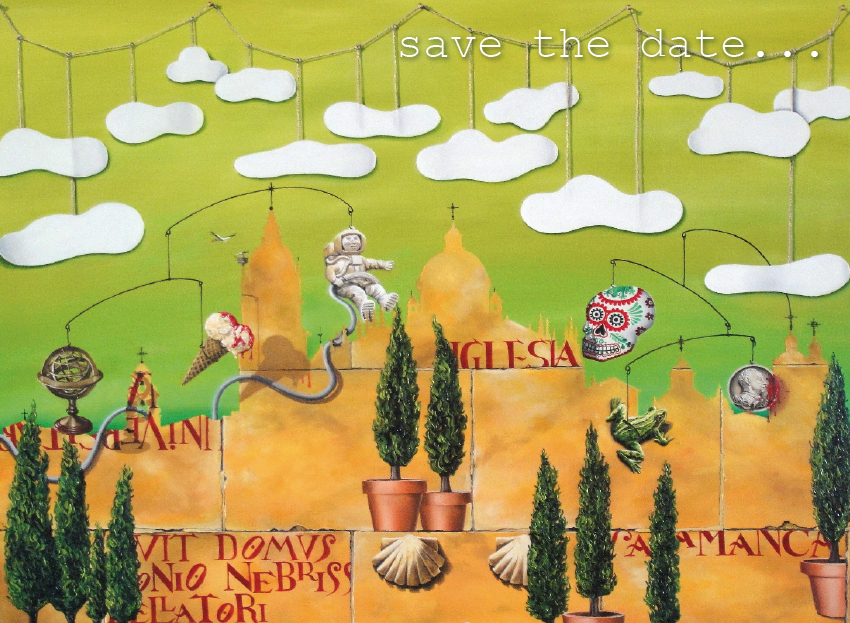
After some 6 years in the waiting since I last exhibited as a solo artist in London, I am delighted to announce that in May 2014, I will be holding the most comprehensive survey of my art ever. Concentrating on three distinct periods of my artistic output, all of which have been integral to my development as an artist since my last solo show, When (S)pain became the Norm will display paintings grouped to reflect those periods – Pain, Spain and Norms.

In Pain, I will exhibit the often traumatic but importantly cathartic set of paintings which I created during the protracted three years of recovery after the major road traffic accident in which I was involved in 2008. In Spain, I explore my works based on Spanish society, history and culture, themes which have been so significant in influencing the direction of my work over the last decade. And finally in becoming the Norm, I exhibit the works which I created upon the initiation of this very blog; the new paintings which saw me reintroduce the Norm as a prominent icon of my art.

savethedate FRONT large Savethedate BACK large STRAND LOGO

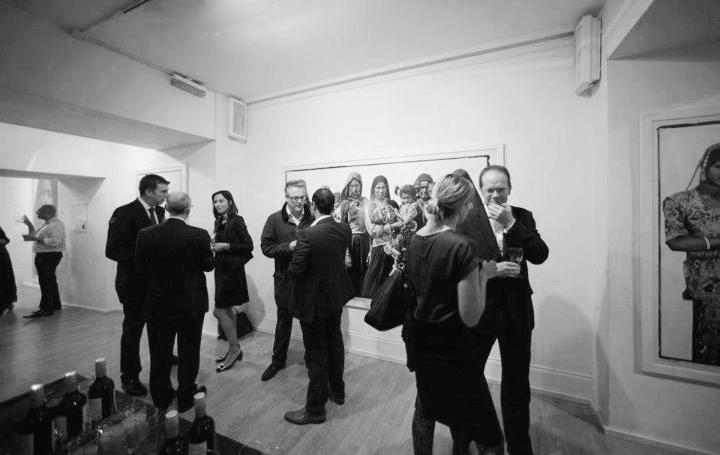
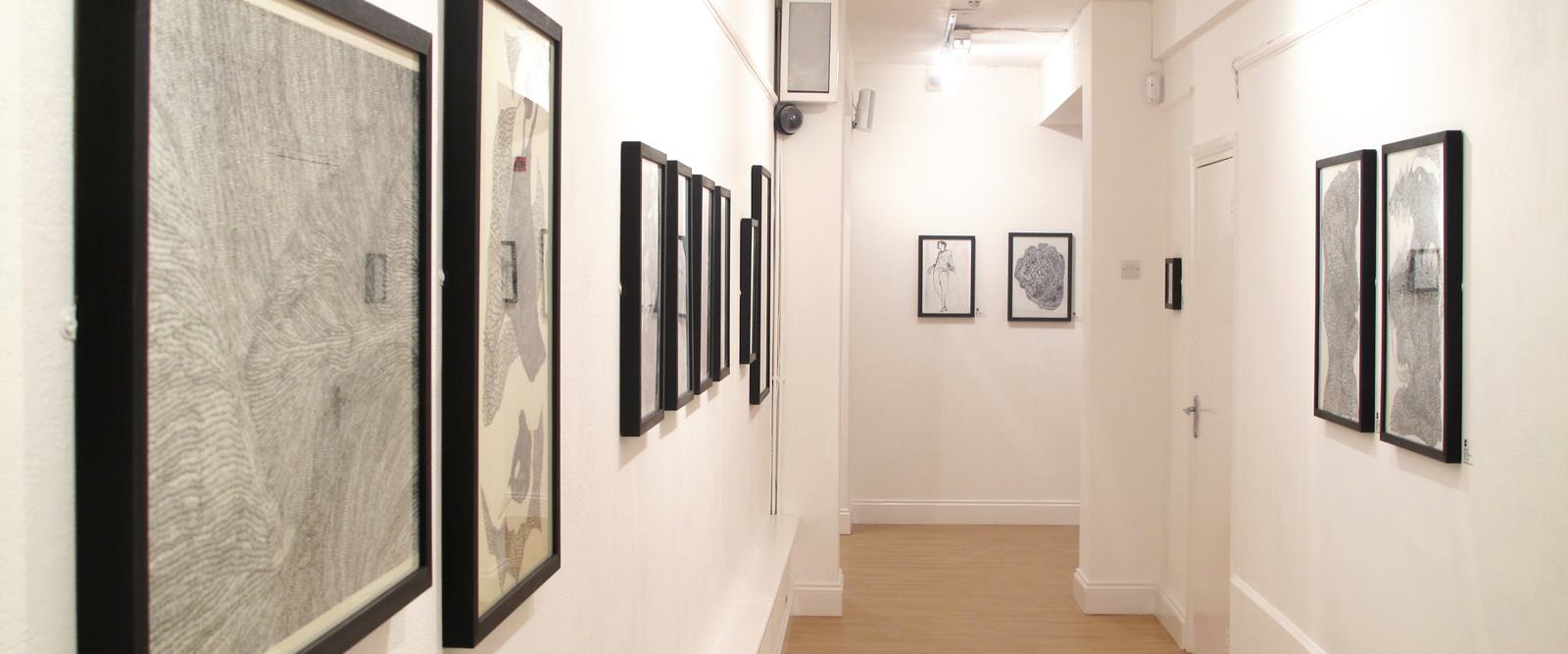
This exciting exhibition, which will show over a hundred works ranging from large canvases to small Norm sketches will be hosted by the Strand Gallery, centrally located in John Adam Street just off the Strand in London’s Covent Garden. Bang next door to Charing Cross Station and a few hundred metres from Embankment tube station opposite the London Eye, I could barely wish for a more central gallery. And spread as it is across two floors, there should be plenty of space for my art to be shown at its very best.

The show will include…

Bricks and Stones May Break My Bones (The Show Must Go On) 2008 © Nicholas de Lacy-Brown, oil on canvas (130cm x 110cm)

Bricks and Stones May Break My Bones (The Show Must Go On) 2008 © Nicholas de Lacy-Brown, oil on canvas (130cm x 110cm)

¡Guerra! The Spanish Civil War (2009 © Nicholas de Lacy-Brown)

¡Guerra! The Spanish Civil War (2009 © Nicholas de Lacy-Brown)

Le Déjeuner sur l'herbe (after Manet) 2012 © Nicholas de Lacy-Brown, Oil on canvas

Le Déjeuner sur l’herbe (after Manet) 2012 © Nicholas de Lacy-Brown, Oil on canvas

And so the details – well these initial save the date flyers (above) pretty much say it all, and whether you live in London, in England, or far across the globe, I would encourage you all to make London your priority destination from 12th – 18th May 2014 for what I hope will be the most significant exhibition of my life so far.

The inside of the gallery (albeit not with my works!) (Images © Strand Gallery)

The Strand Gallery Events Hire inside The Strand Gallery Events Hire (2)

So there it is – my show is announced, and readers of The Daily Norm can expect to hear a lot more about it over the next 6 months as the show week approaches. In the meantime, please put the dates in your diary, and get yourself ready for the show of my life.

All photos and written content are strictly the copyright of Nicholas de Lacy-Brown © 2013 and The Daily Norm. All rights are reserved. Unauthorized use and/or duplication of the material, whether written work, photography or artwork, included within The Daily Norm without express and written permission from The Daily Norm’s author and/or owner is strictly prohibited. Excerpts and links may be used, provided that full and clear credit is given to Nicholas de Lacy-Brown and The Daily Norm with appropriate and specific direction to the original content. For more information on the work of Nicholas de Lacy-Brown, head to his art website at www.delacy-brown.com

Daily Norm’s 2nd Anniversary/ 30th Birthday/ new website/ exhibition preview spectacular!

Christmas may be merely 5 weeks away, but its been all about a mighty great November for me. Not only have I been celebrating the relaunch of my official art website this month, but I have also been busy organising the first solo gallery showing of my artwork in 6 years, which will make its debut in London in the Spring of next year – more details will follow soon. Not only that, but I am still reeling from the shock of turning 30 earlier this year, but nevertheless still determined to celebrate it for as long as the year goes on. And finally, this month (and in fact the 14th November last week) marks the two year birthday of The Daily Norm!

From its very humble beginnings, this blog has now been freshly pressed 3 times, gained 2,332 followers, had 301,364 total views and even received 2,527 comments. And statistics aside, it has just been a joy from beginning to end – an outlet for my creativity; a mirror on my soul, and a magnificent far-reaching channel through which my thoughts and experiences can be shared with the world. So a huge thank you just has to go to everyone who has supported my blog all of this time. I feel incredibly honoured that you take the time to share just a little of my life with me.

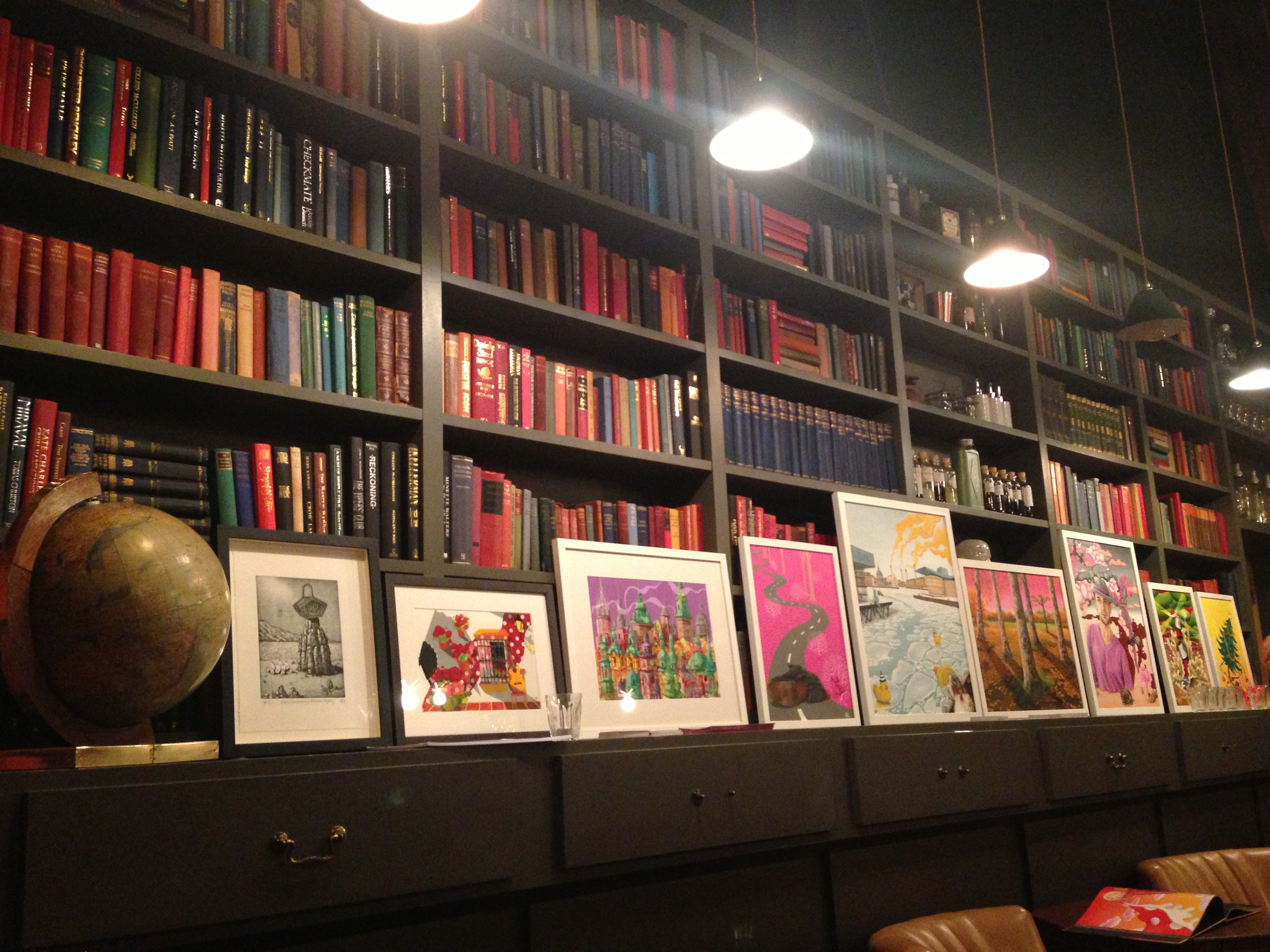
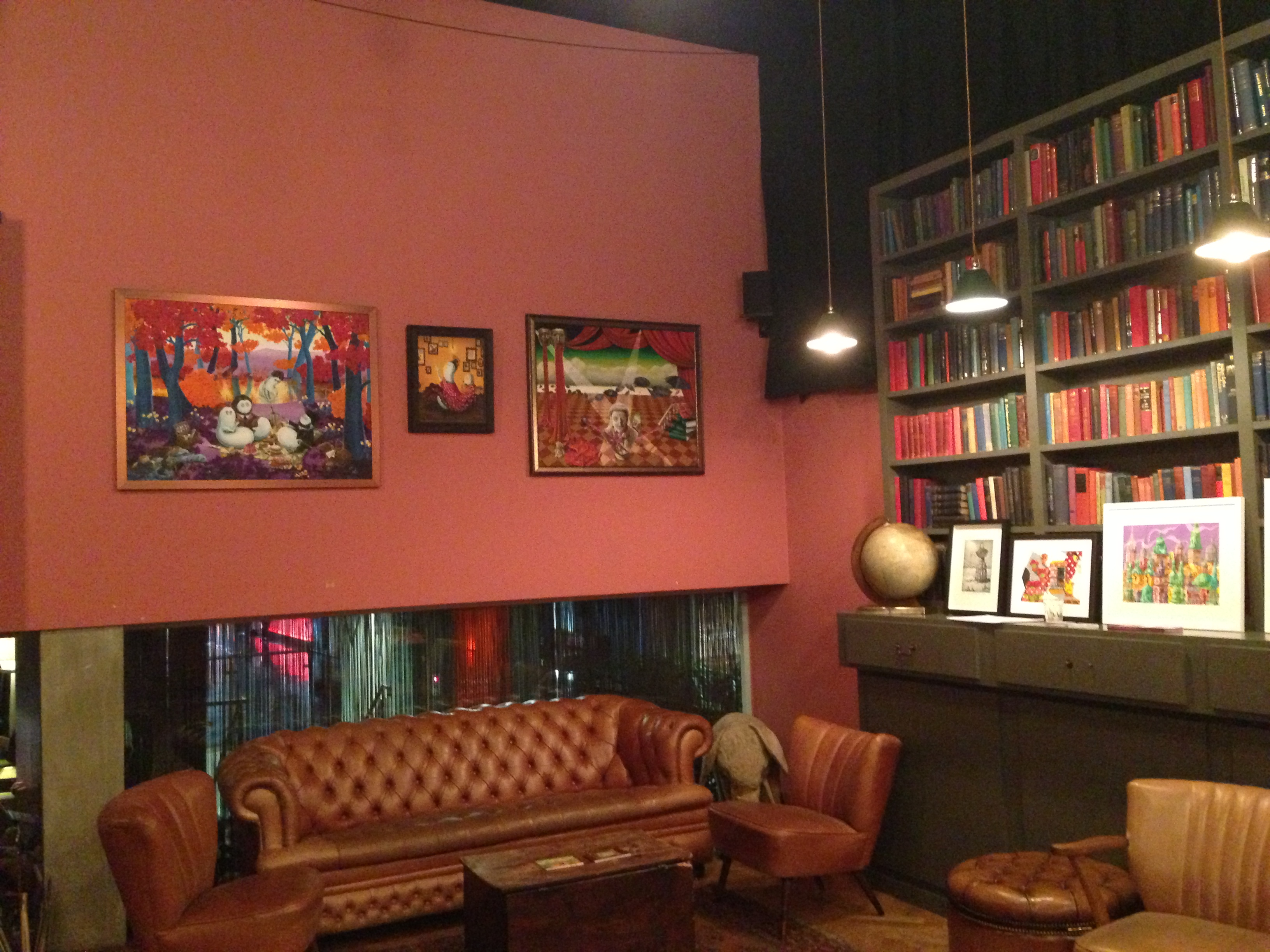
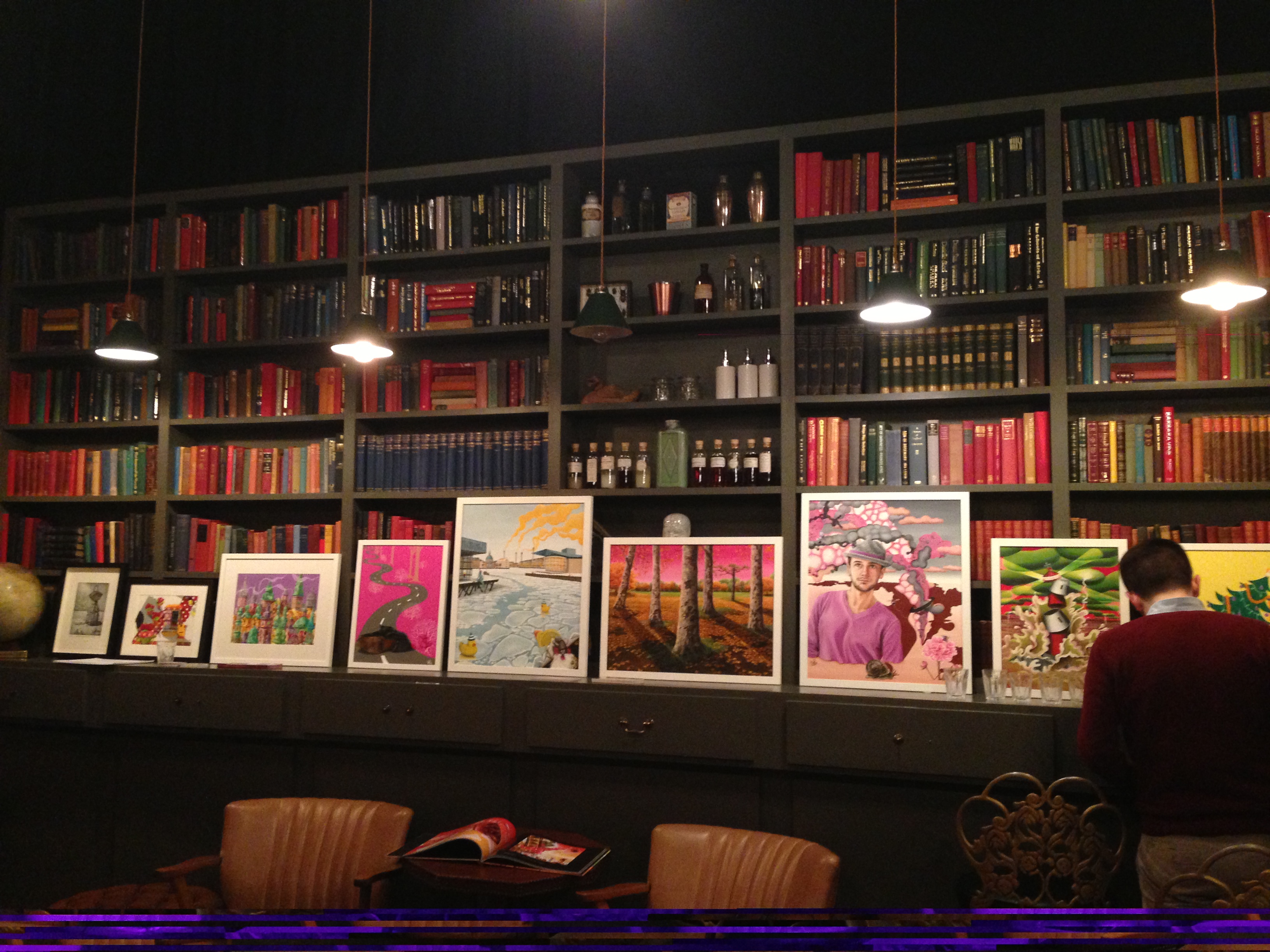
My paintings on show at the Benugo Drawing Room private cocktail bar, last Friday

IMG_5475 IMG_5452 IMG_5483

So how best to celebrate all of these marked feats of November jubilation? Why, to throw a private party of course! Yep, last Friday night, the best and beautiful of my inner circle – both friends and colleagues alike – gathered in their glad rags to belatedly celebrate my birthday, mark the relaunch of my website, reflect on the success of The Daily Norm, and look forward, in equal measure, to the prospect of my solo art exhibition next Spring. And in celebrating the latter aspect, what better way to anticipate what I hope will be the art show of the 2014 Spring season than to kick things off with a warm up preview of some of my latest works!

So for all those friends of mine rocking up at the British Film Institute’s secret cocktail bar within its main Benugo bar last friday evening, they were treated to an impromptu display of some 20 of my works, including a selection of my latest Compositions series, a few of my Norm originals including my Norm take on Manet’s Le Dejeuner sur l’herbe and Flamenco Norm, and also a few examples of my more contemplative works, such as Pink Bf, Return Journey and Pupillage.

The evening was a fantastic success, a wonderful opportunity for some of my latest colourful paintings and more subdued, delicate etchings to benefit from an outing to London’s cultural South Bank centre, and a fine way to touch base with my ever faithful friends, many of whom I have not seen for months, if not years. And I sold 3 more paintings to boot – which can’t be bad!

IMG_5453IMG_5468IMG_5480

Sadly, as far as recording this magnificent event goes, I can only show you photos taken as the paintings went out, but before the people came in. No sooner had the first friend arrived than I was occupied talking to my guests all evening – and my well intentioned desire to record the evening through photos got quite lost in the revelry. But that is surely a sign of a good party.

Stay tuned, as ever, into The Daily Norm for exclusive details of my May 2014 art exhibition – coming soon!

And in the meantime another huge thanks to all those who have supported me and my blog for the two years of its happy existence. Here’s to the next!


Printmaking Progress IV – La Flamenca (copper etching)

Regular readers of The Daily Norm will know that I have been dabbling in printmaking in recent months, and in particular etching, inspired by the superb results achieved in the medium by the likes of Goya, Picasso and Lucian Freud. Well having dappled a little in zinc plates (I hesitate to say “mastered” – as my recent disaster when aquatinting a zinc plate was to prove), I decided to move onto a copper plate, which, because of its durability, is the optimum plate to use for a bigger print edition.

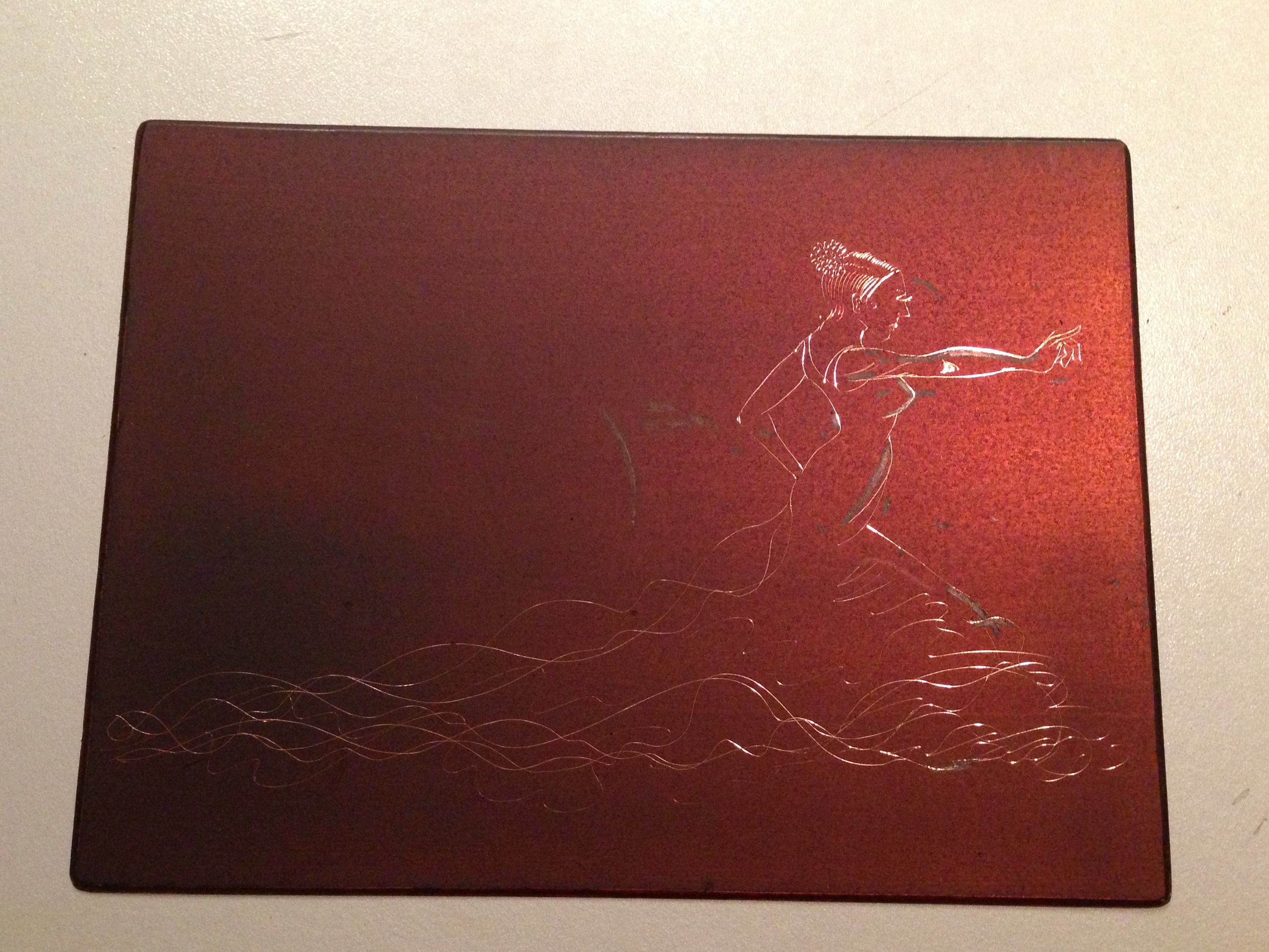
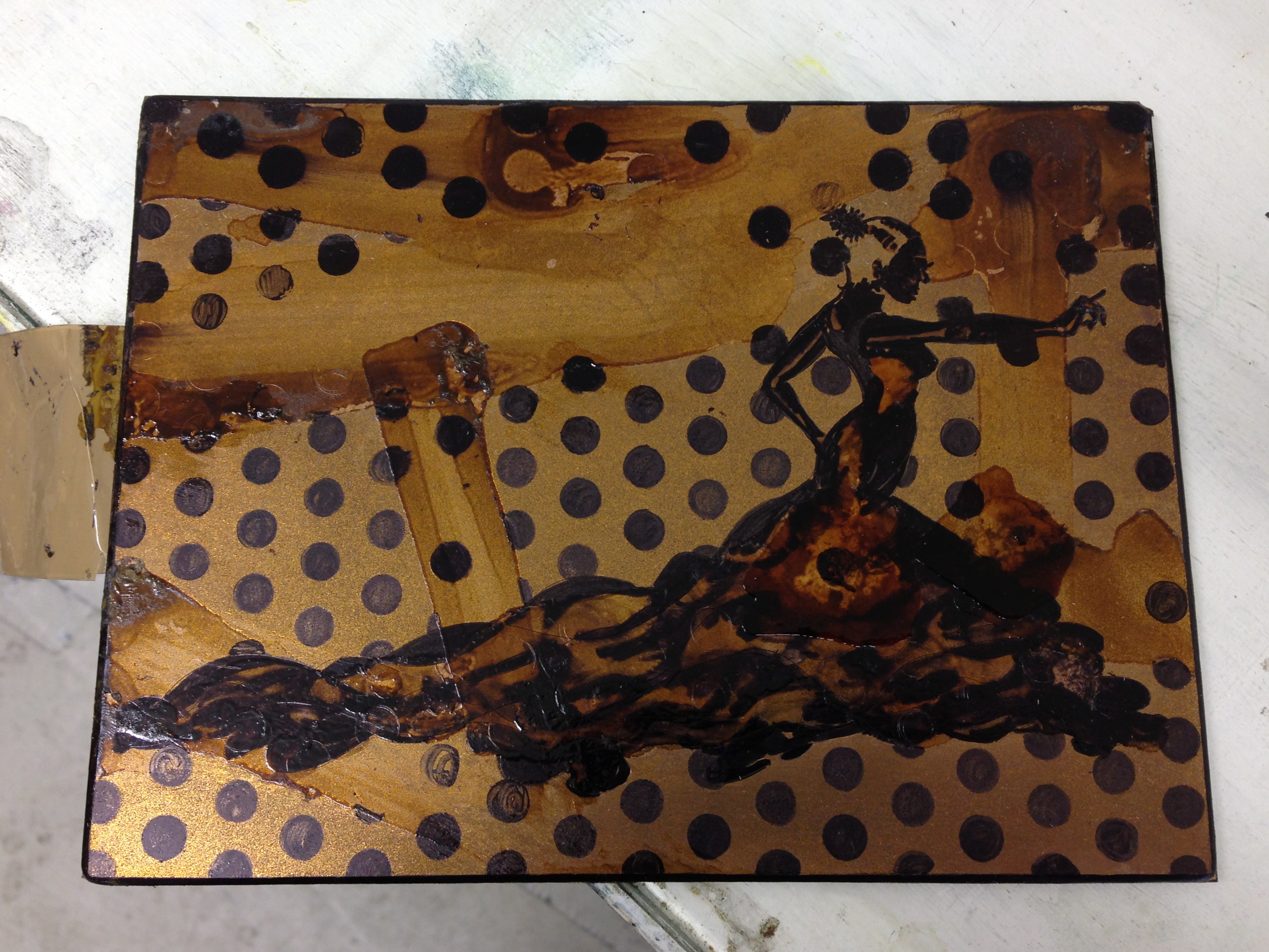
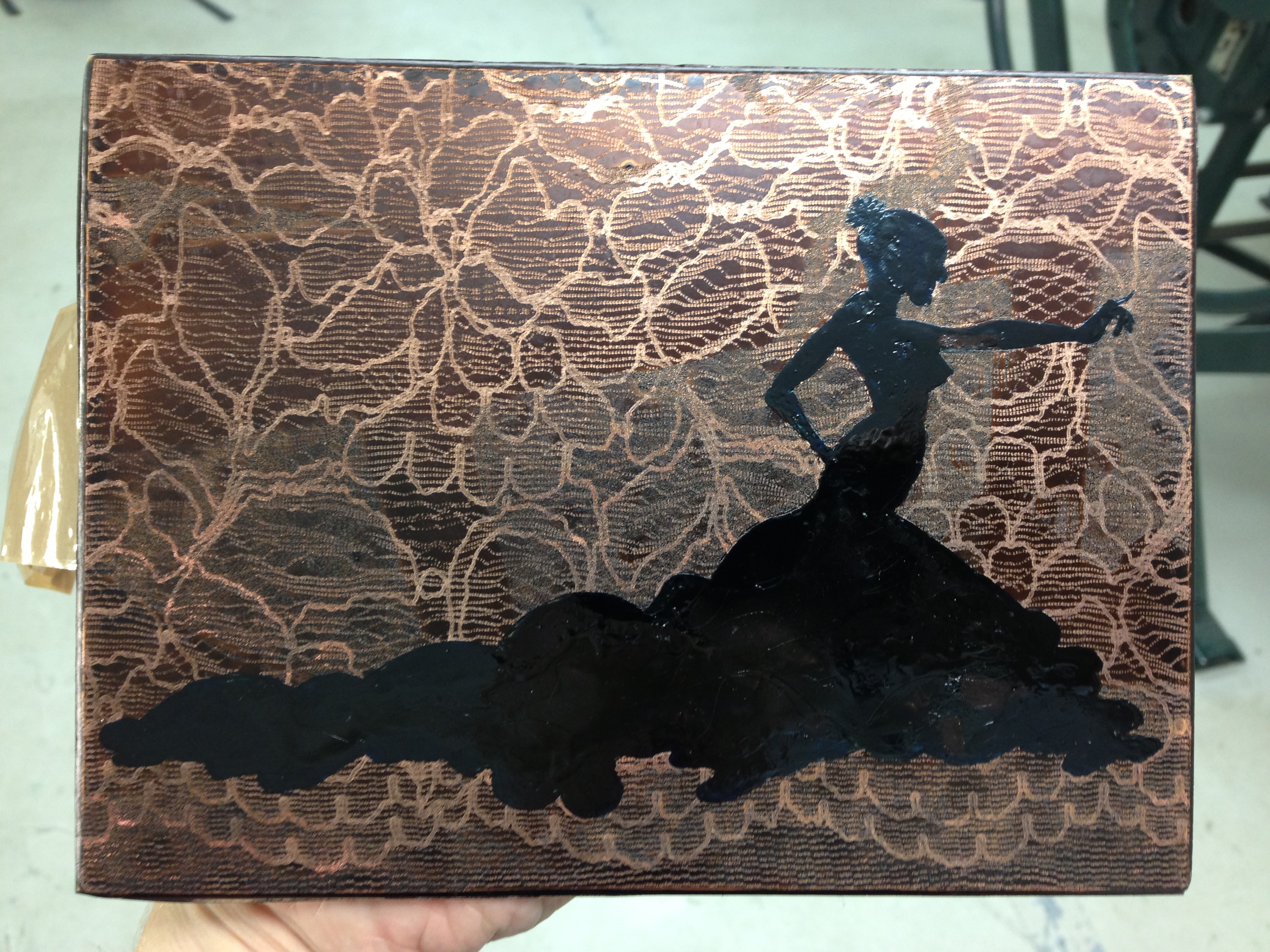
Departing from the Norms who feature on my previous etchings, I decided to follow my familiar passion for Spain, and flamenco, recycling the idea I had for a fragmented dancer in Composition No. 8, and this time etching a flamenco dancer with a free-flowing fluid dress making for the major attraction of the plate. In terms of process, the image itself did not involve a whole lot of etching. Rather, the detail came with the aquatinting and soft-ground applied thereafter. Once the initial dancer image was etched into the plate, I then took a benday dot stencil, the likes of which would have been used by Roy Lichtenstein, and applied a series of polka dots across the background of my plate, emulating the popular pattern of flamenco dresses, and adding variety of tone by dipping in acid for different lengths of time.

La Flamenca (copper etching on paper) © Nicholas de Lacy-Brown, 2013

La Flamenca (copper etching on paper) © Nicholas de Lacy-Brown, 2013

In the lighter areas of the background (kept light through giving them less exposure to acid) I applied an intricate lace pattern using the soft-ground technique. This basically involves painting the plate with a protective liquid ground which is left wet. A piece of lace is then applied on top and the plate sent through the print press. This presses the lace into the soft ground, lifting it off the plate and leaving an impression of the lace in the ground, which is then etched into the metal when exposed to acid. I adore the result, creating a background which now includes both the lace and polka dots so characteristic of flamenco.

The final step then was to print my plate – I did so with a black ink mixed with a warming red to give a real flamenco flavour. I’m really very pleased with the result, so much so that I have decided to make this print a larger edition of 50.

The initial line etching

The initial line etching

Applying the dots onto aquatint

Applying the dots onto aquatint

Applying a lace softground

Applying a lace softground

IMG_5175

Stopping out the figure before final acid dip

Stopping out the figure before final acid dip

The finished plate

The finished plate

The finished print

The finished print

If you would like to buy one of my limited edition prints, they’re available now – in my Etsy store. See you there!

© Nicholas de Lacy-Brown and The Daily Norm, 2001-2013. Unauthorized use and/or duplication of the material, whether written work, photography or artwork, included within The Daily Norm without express and written permission from The Daily Norm’s author and/or owner is strictly prohibited. Excerpts and links may be used, provided that full and clear credit is given to Nicholas de Lacy-Brown and The Daily Norm with appropriate and specific direction to the original content. For more information on the work of Nicholas de Lacy-Brown, head to his art website at www.delacy-brown.com

BreathNorm – Norms inspired by De Waal

For an artist like myself, whose almost complete inability to paint in anything but the brightest of colours (as followers of this blog, or indeed of my art website may have realised) has made colour something of a trademark of my creative output, I sometimes surprise even myself when I start to find myself drawn towards simple, monochrome, muted colourless creations. It happened for example earlier this year, when I shunned the great pasty-coloured nudes of Lucien Freud in order to give my full attention to the stunning works in black and white that are his etchings. Completely captivated by the simplicity of the medium, yet the extent of intricacy and emotion he was able to capture in simple black lines, I became obsessed by printmaking, and started etching myself – a pursuit which continues to occupy many of my weekends as I dabble further in this new medium.

Now it has happened again, with the pots of De Waal. As I described in my post yesterday, I was delighted when, by sheer coincidence as I am reading my way through the enthralling pages of The Hare with Amber Eyes, I caught a documentary on the BBC’s Imagine show last week, focusing on the book’s author. While I was fully expecting my attention to be held by all references in the programme to the book which has captivated me for the last few weeks of reading, what I wasn’t expecting was to become so completely enamoured by the artworks which this great novelist also creates. I say also – however art is in fact Edmund De Waal‘s primary calling in life, and he was turning his hands to the malleable craft of pottery long before he ever began to trace the heritage of his netsuke whose story formed the basis of the book which has now made him famous around the world.

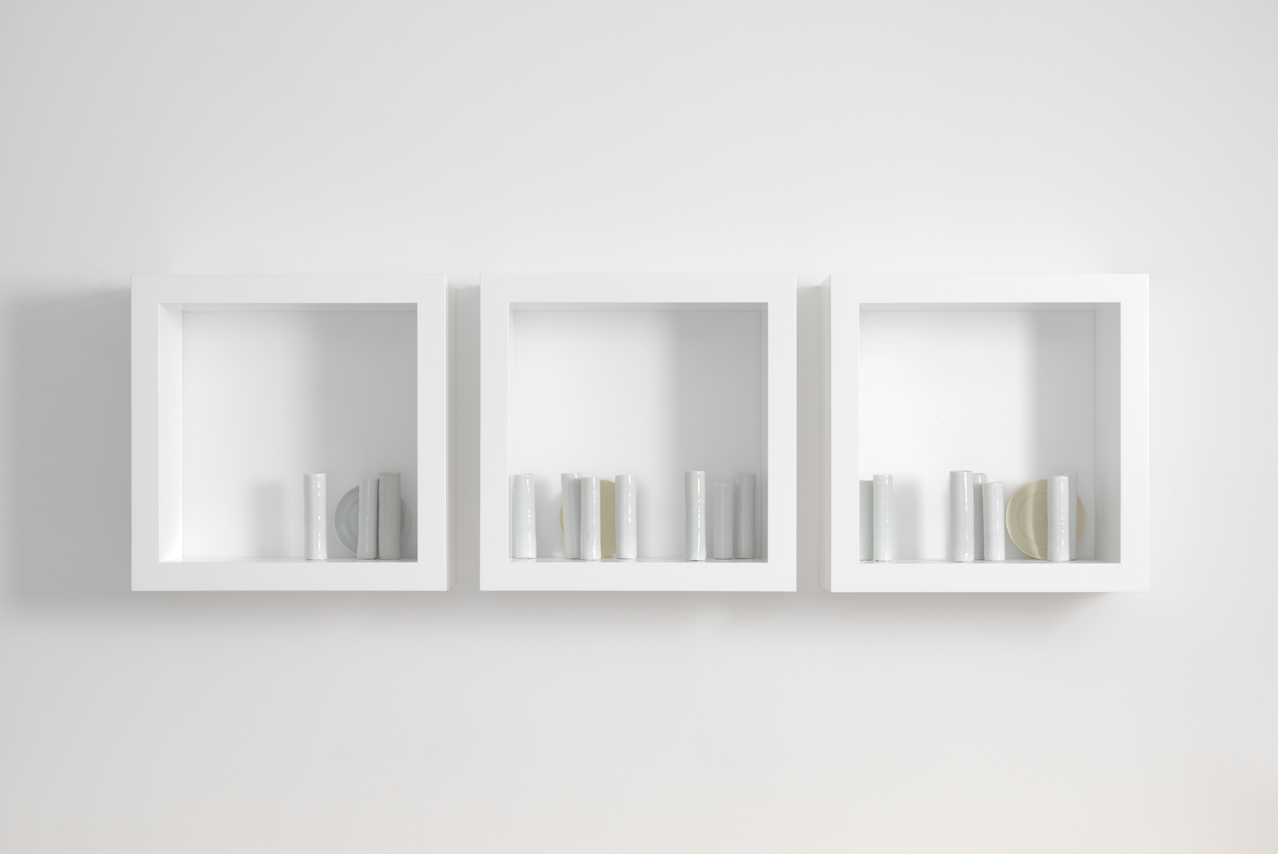
Breathturn II (2013 © Edmund De Waal)

Breathturn II (2013 © Edmund De Waal)

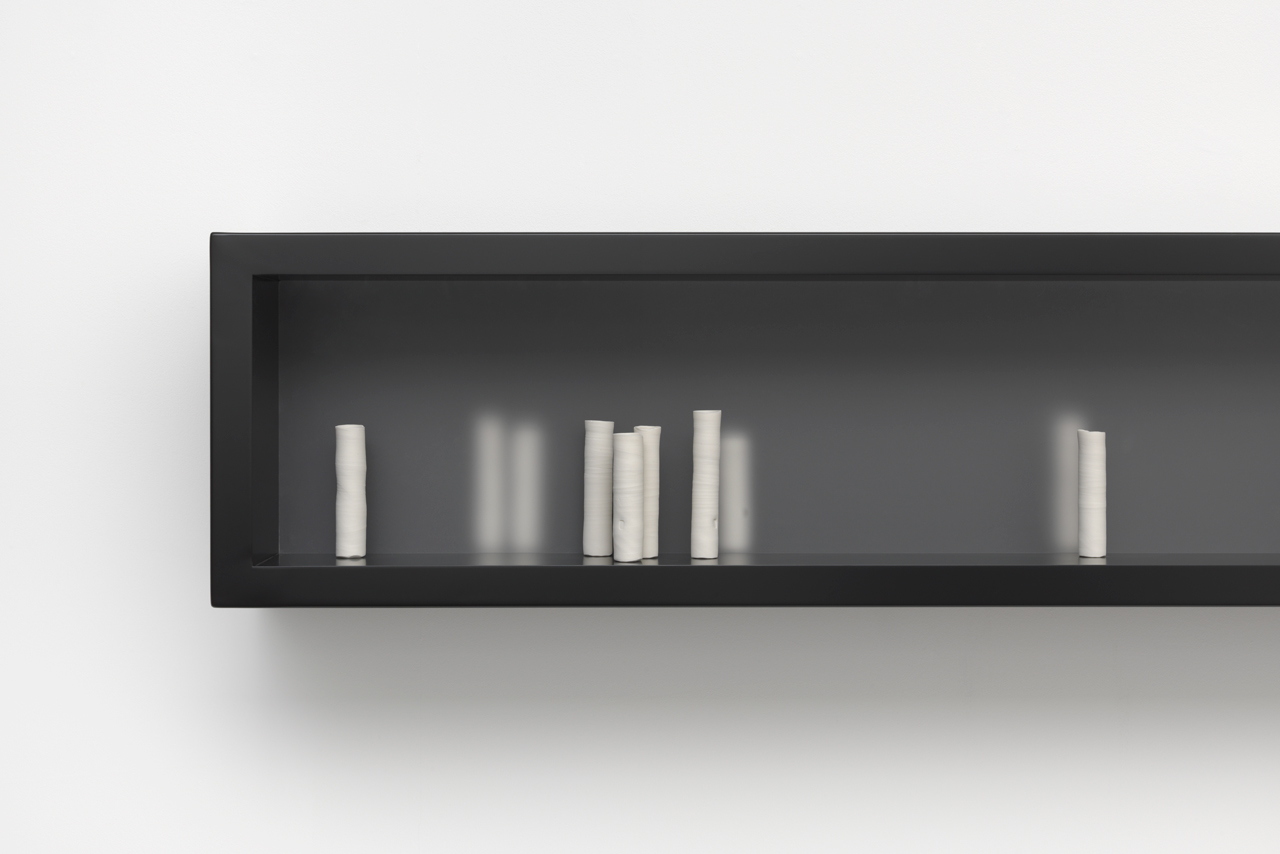
Breathturn IV (detail) (2013 © Edmund De Waal)

Breathturn IV (detail) (2013 © Edmund De Waal)

First Light (2013 © Edmund De Waal)

First Light (2013 © Edmund De Waal)

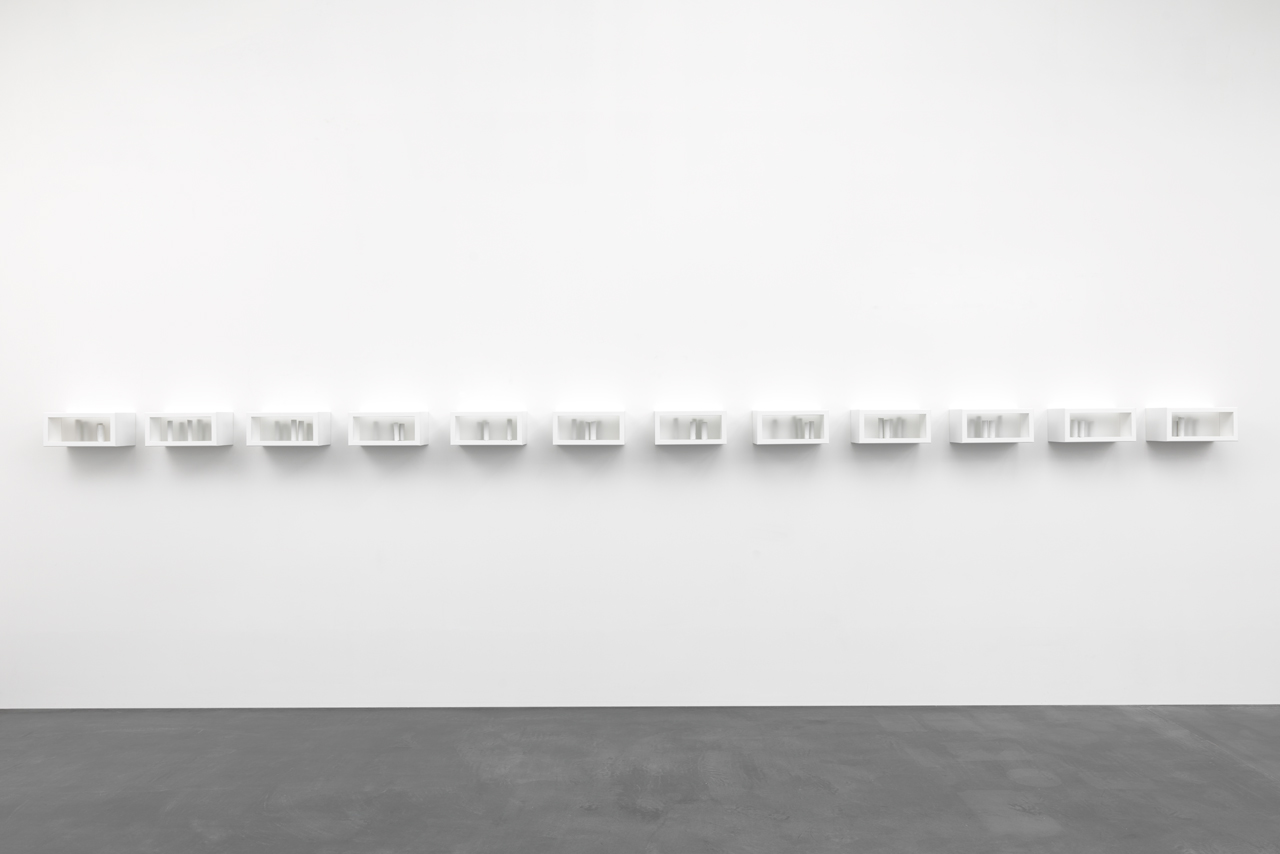
Edmund De Waal’s art is pottery. He makes pots. But pots whose assemblage is so brilliantly pictorial, so evocative of emotions deeply held within the craftsmanship of their creation, and yet so capable of rousing within the viewer deep, reflective emotions, that as installations, these simple pots create artistic masterpieces worthy of the great art collections of his family predecessors.

De Waal’s pots are simple – usually either in black or white – but their beauty tends to be about two things. First, the naive effortlessness of their shape; the mismatched almost drunkeness of one lean after another, which tends to give each pot a handmade personality all of its own, rather than the feeling of machine manufacture. Second, their grouping – it is the way in which De Waal groups his pots together which makes them so effective as works of art: Is it just that I am coloured by the contents of his book, or by his Jewish ancestry, or did he intend to create row after row of pots so uniquely human in their uneven appearance, that they seem to evoke to Holocaust itself? For me, when I see these works, such as the quartet of huge almost bookcase structures, Breathturn, displaying shelf after shelf of randomly placed pots, I think of the row after row of destitute Jews, stripped of their livelihood and of their dignity, waiting like cattle for train crates on bleak station platforms, ready to face the certain horrors of their final destination.

Your hands full of hours (2013 © Edmund De Waal) (detail)

Your hands full of hours (2013 © Edmund De Waal) (detail)

I heard it said (for Berg) (2013 © Edmund De Waal

I heard it said (for Berg) (2013 © Edmund De Waal

How did we live here (2013 © Edmund De Waal) (detail)

How did we live here (2013 © Edmund De Waal) (detail)

The White Road III (detail) (2013 © Edmund De Waal

The White Road III (detail) (2013 © Edmund De Waal

And then there are De Waal’s works which show groups of pots separated by a sheet of translucent perspex, so that you can see the pots behind it, but only in blurred outline. This produces the effect of a solemn group shot, perhaps a family, estranged – people taunted by the shadows or perhaps memories of loved ones; their presence there close at hand, and yet not there, untouchable, ungraspable; the frustrating feeling of irreparable separation, when a blasted great wall separates you from where, or with whom you should be.

These interpretations may well not be what De Waal intended when he made his works, but what does it matter? For in creating works that inspire these kinds of reactions in me, he has surely done the job of a great artist: he has moved his audience to an imagination all of their own.

And, as all the great artists have done before him, De Waal not only got my imagination churning when it came to his own works, but also inspired me to create a Norm re-invention of his pottery installations. And so I leave you with my own little Norm group shot; a homage to all those pots and the great variety of emotions their simple poses evoke.

BreathNorms (after De Waal) 2013 © Nicholas de Lacy-Brown, pen and ink on paper

BreathNorms (after De Waal) 2013 © Nicholas de Lacy-Brown, pen and ink on paper

BreathNorm (detail)

BreathNorm (detail)


The photos on this page are the copyright of  © Edmund De Waal, and show the works he prepared for his 2013 exhibition at the Gagosian, New York. Norms are the copyright of me © Nicholas de Lacy-Brown, 2013. The works of Edmund De Waal can be seen on his website, here.

Paris, Dreyfus, and Vienna – the coincidences which led me to De Waal

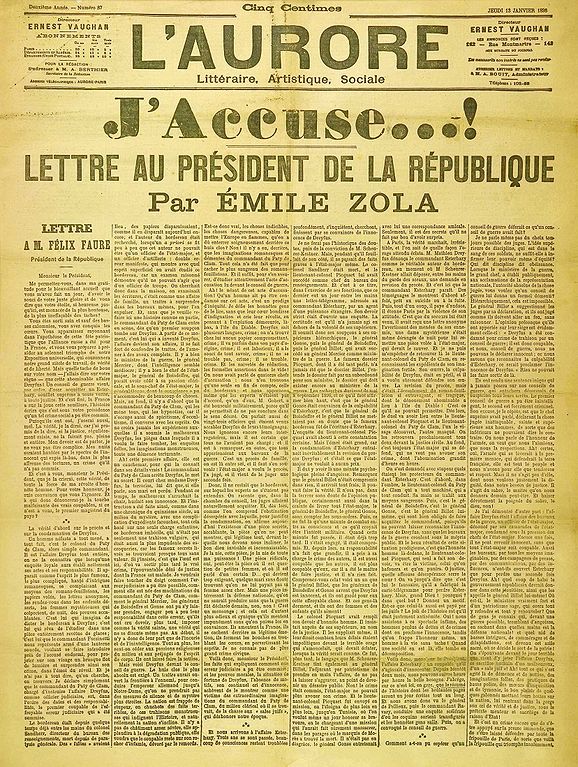
Life is full of coincidences, and for me, this has been no more proved than recently, when I have been beset by a series of overlapping coincidence. The series of greatest significance has been the one leading to this post. It started in the early Autumn, when the fading of summer led me to start feeling my familiar autumn yearnings for a trip to Paris. In part-alleviation of this desire, I started reading the aptly titled Paris Requiem, by Lisa Appignanesi, which is, on its face, a period murder mystery, but set against the historically significant Dreyfus affair. I was already aware of Dreyfus on my periphery, being as the involvement of one of my favourite authors, Emile Zola, had pretty much destroyed his career, forcing him into exile in the UK when he sought to uncover what was one of the greatest conspiracies in French history, and unveiled a disturbingly vehement level of anti-Semitism both at the heart of the French Government and within French society at the end of the 19th Century.
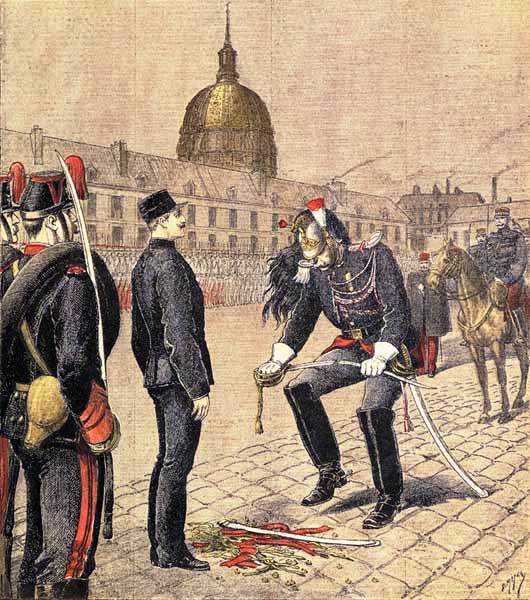
The degradation of Alfred Dreyfus
The degradation of Alfred Dreyfus

The article which incriminated Emile Zola

The article which incriminated Emile Zola

Then, just as I was finishing Paris Requiem, the long-awaited new novel of another favourite author, Robert Harris, was published, this book also dealing with the Dreyfus affair from the point of view of the Army Officer who uncovered the scandal and suffered his own career-breaking consequences in the process. Mid-way through the book, a new documentary series started on TV. Telling the story of the Jews, the narrator, Simon Schama,  also told of this disturbing period of French History.

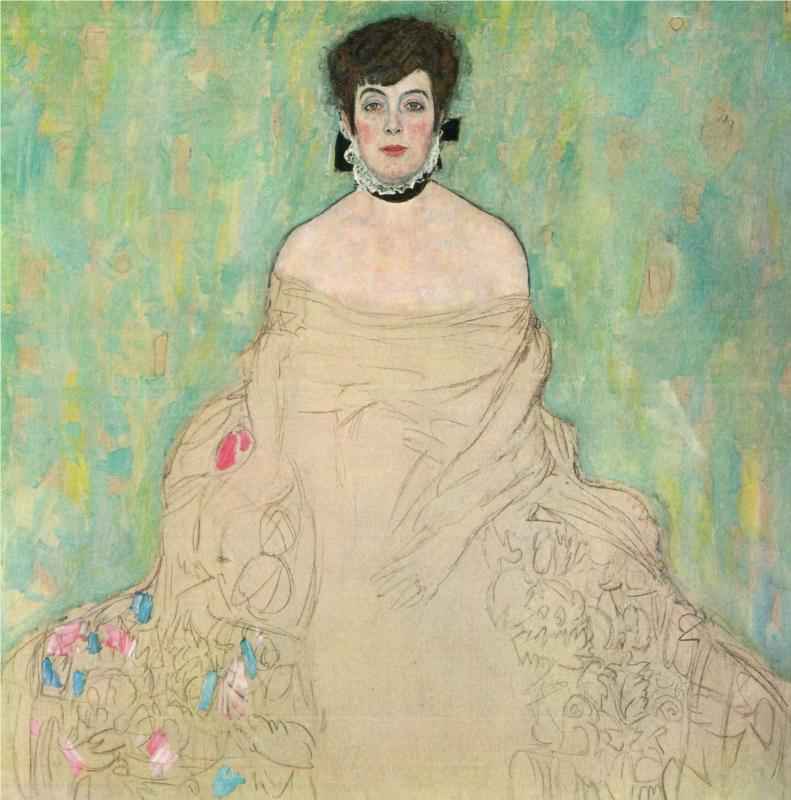
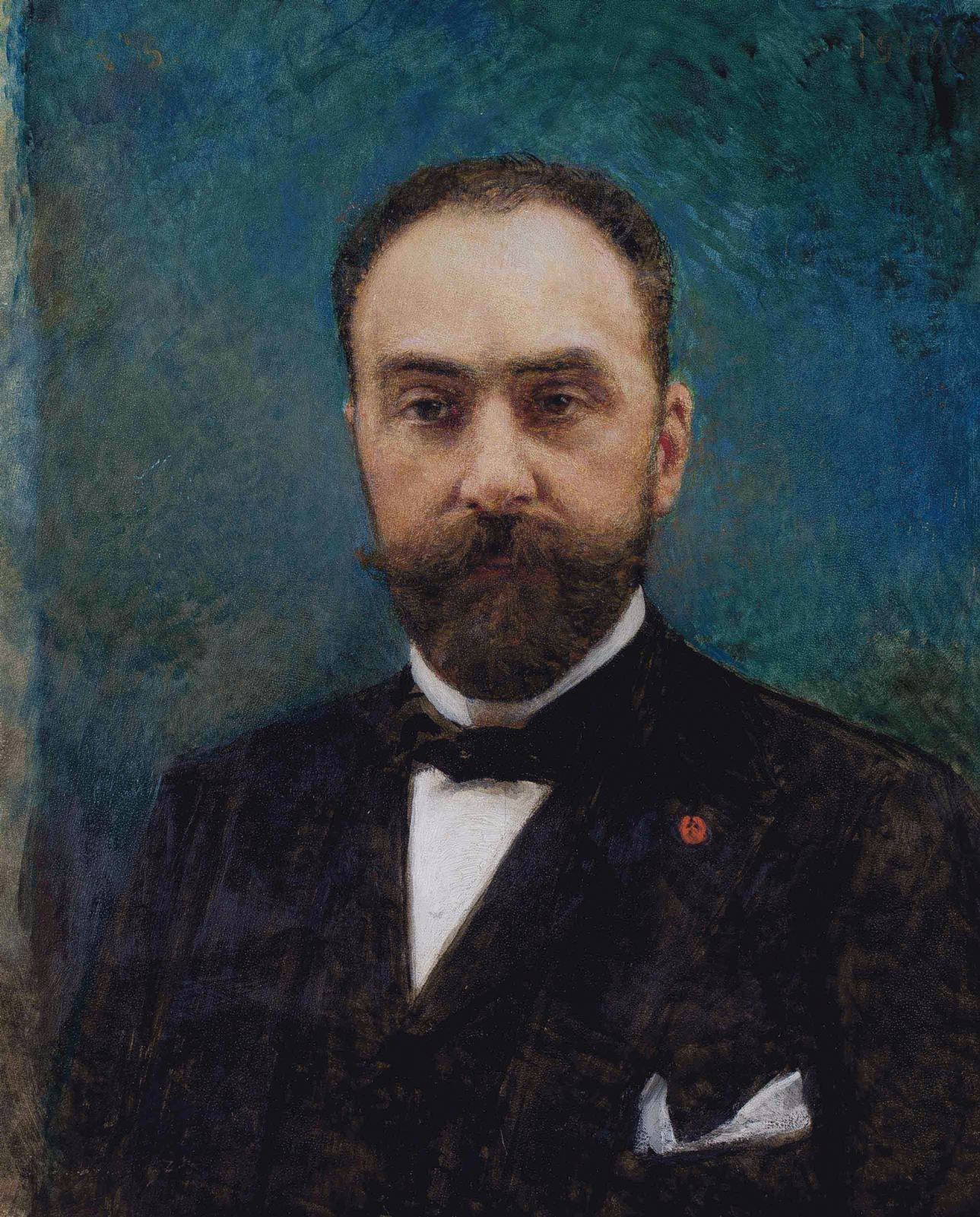
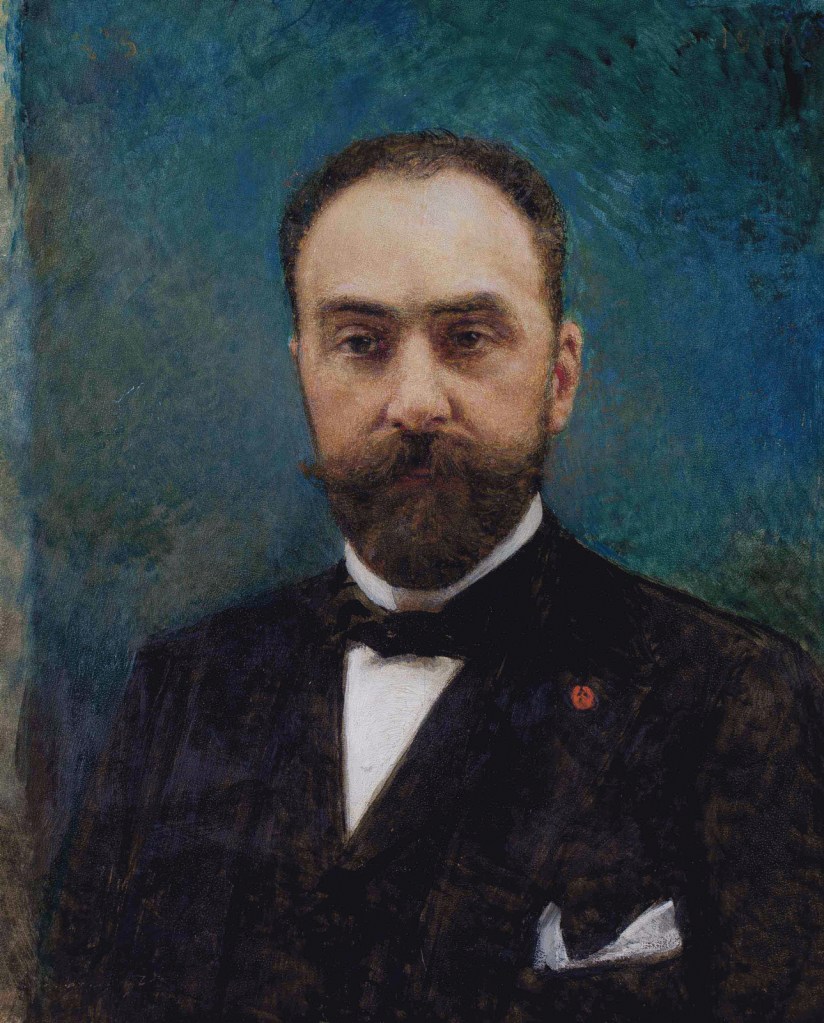
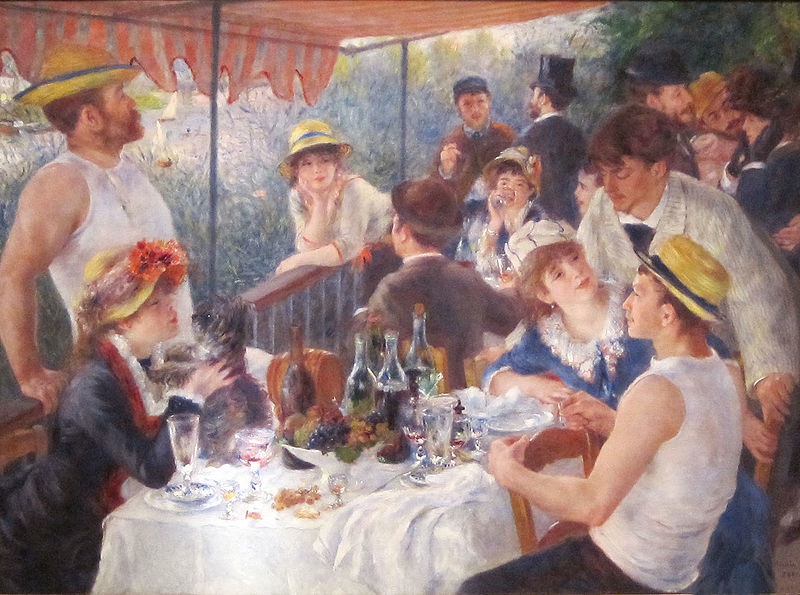
I thought the coincidences had ended there, but when I went to the National Gallery’s excellent new Viennese Portraiture exhibition, Vienna: Facing the ModernI picked up a copy of Edmund De Waal’s The Hare with Amber Eyes in the gift shop, and thought the time had come to read this much applauded novel. So, with Robert Harris’s sensational novel, An Officer and a Spy finished, I started De Waal’s captivating family history, originally narrated by tracing back the story of the Japanese netsuke which he had inherited from his Great Uncle Iggie. Starting off in 19th Century Paris with the story of the formidable art collector Charles Ephrussi (he can be seen in the top hat at the back of Renoir’s The Luncheon of the Boating Party) who was the family member who first bought the netsuke, it turned out that, guess what, Charles too had got himself involved in the Dreyfus affair – being Jewish, his support of the innocent Dreyfus could hardly be avoided, but, like Emile Zola, Ephrussi suffered social rebuffal as a result.

Amalie Zuckerkandl by Klimt - featuring in the National Gallery's new show on Vienna

Amalie Zuckerkandl by Klimt – featuring in the National Gallery’s new show on Vienna
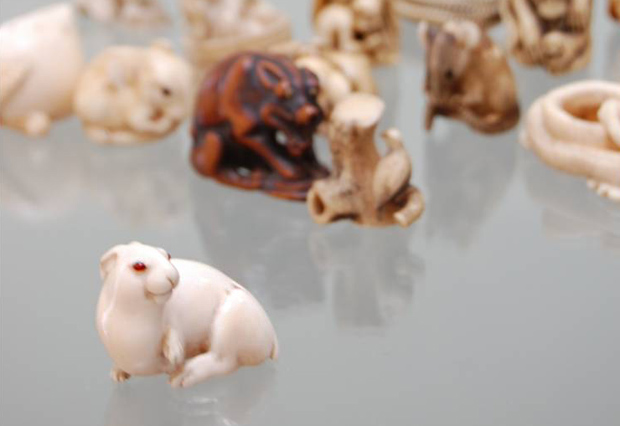
The Netsuke
The Netsuke

Portrait of Charles Ephrussi by Leon Bonnat
Portrait of Charles Ephrussi by Leon Bonnat

The Luncheon of the Boating Party by Renoir

The Luncheon of the Boating Party by Renoir (with Charles Ephrussi in a top hat at the back)
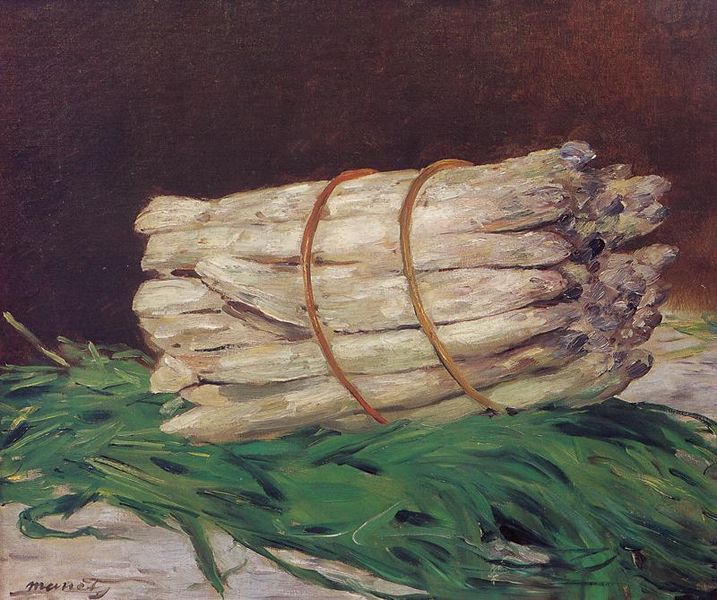
Manet's Bunch of Asparagus (1880) - part of the significant impressionist collection of Charles Ephrussi

Manet’s Bunch of Asparagus (1880) – part of the significant impressionist collection of Charles Ephrussi

So suddenly, this story of Dreyfus, a Jewish scapegoat and symbol of the underlying currents of European anti-Semitism, had become a major focus, appearing, quite by coincidence, in reference after reference of both television and literary entertainment. But of course the Dreyfus Affair was only the start of the tragic scale of anti-Semitism which was to escalate in Europe, and as De Waal’s stunning book goes on to demonstrate, the horror of Europe’s anti-Semitic manifestation as the 1930s took hold was on a scale that none could have imagined in the persecution of that single man back in 1890s France.

Of course we all know the history of the holocaust and of mass-murder and injustice so unprecedented that words alone are not sufficient to describe it. But where De Waal’s book is so powerful, is that through his captivating narration of his family history, by the time the great Palais Ephrussi is ransacked by the Nazis in 1938, its art collections, along with everything else, stolen in a barefaced lawless destruction of Jewish life and liberties, you feel as though you know the family so well, have lived their history to such a degree, that reading of the exorbitant outrage, the dumfounding horrors suffered during that time actually becomes physically painful. You want to turn back the clock  there and then and somehow destroy the Nazi regime singlehandedly; you want to save all of those who suffered, and put all that injustice right.
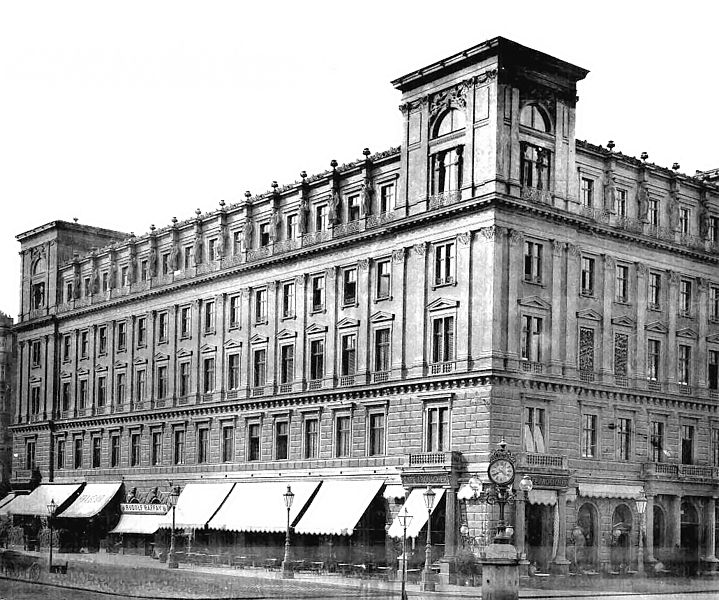
The Palais Ephrussi

The Palais Ephrussi – ransacked by the Nazis

But history is what history was, although books like De Waal’s do an incredible job in bringing those emotions back to light. And, it is not just books which bring history knocking at the door of the present day. The last set of coincidences in this string was that in the same week as I read about the Nazi ransacking of the family art collections of the Ephrussi palace, I read an article about the biggest discovery of Nazi looted art in Munich for centuries, much of which is believed to have been stolen from some of the biggest Jewish collectors of the time, and then, but hours later, I saw that to my amazement, a TV documentary on Edmund De Waal himself was being shown on TV, a documentary which also dealt with the subject of the restitution of stolen Jewish art.

As to that documentary – that has provided its own source of inspirations which I will discuss tomorrow. But for today, what is my message? Well, not only that coincidences can happen in life, but more so that all of this reminder of the great injustices of war have coincided with today, which also happens to be Remembrance Day, when, in wearing a red poppy and marking the end of World War One, we pay our respects to those who have fought in wars throughout history, and in the present day.

Well, in paying my respects to those people this year, I will also be thinking of those who have suffered in wars, not just as fighters, but as innocent victims, families, Jews and non-Jews – the people to whom injustice was so great that history can never erase it, and words can never truly describe it. At 11am today, I will be thinking of them.


img_1562