Skip to content

Posts from the ‘Art’ Category

Provence Odyssey | Arles: Day 5 – In search of Van Gogh (Part 1)

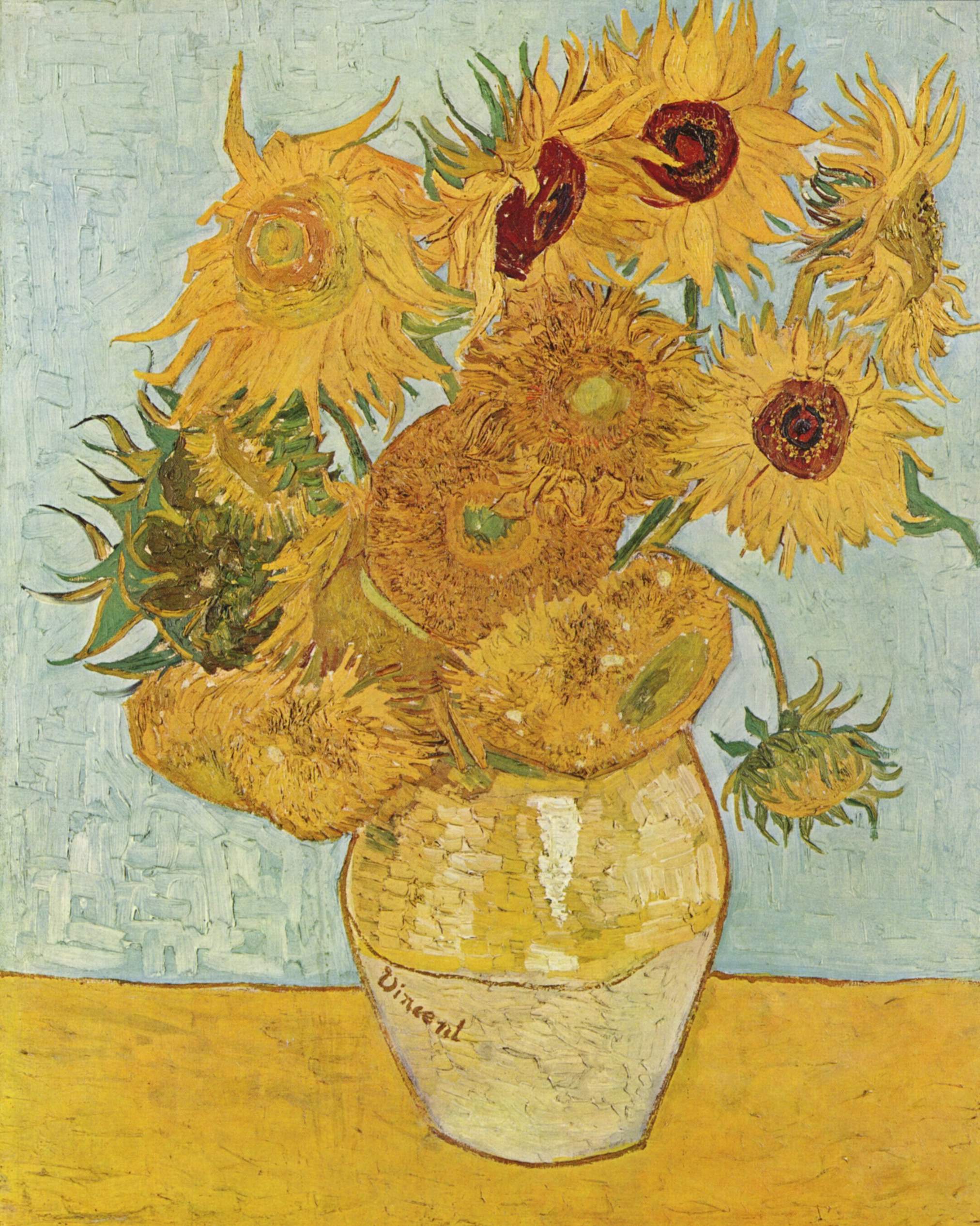
The vivid kaledoscopic colours of Van Gogh’s works are renowned throughout the world: the dazzling bright yellow sunflowers, his multi-shaded green and blue self portrait with a shock of orange hair and beard, the twin piece works depicting his and Gauguin’s chairs as well as his now famous bedroom in vivid multi-colour, and his Yellow House, set against a bright blue sky – all characterise Van Gogh’s great affinity with vivid colouration and the depiction of almost feverish energy and zeal. Yet it only takes a quick glimpse at Van Gogh’s earlier works painted in Holland – the Potato Eaters, the Brown peasant faces, the gloomy interiors and flat dull landscapes – to realise just how instrumental his move down to Provence in 1888 was. And one city in fact helped to shape the unique colour driven artist who we know and love today: Arles.

It was in Arles that Van Gogh lived in the Yellow House, where he painted his famous Sunflowers in preparation for a visit by fellow-artist (and colourist) Paul Gauguin, on whose river bend he depicted the famous Starry Night over the Rhone, and where the artist is credited with making his final breakthrough as an artist of sensational colour, of unmistakeable feverish expressionism and of an undiluted enthusiasm to depict the world around him with speed and a remarkable resulting oeuvre.

Van Gogh moved to Arles in 1888, after a spell in Paris where he had become influenced by the impressionists. Thus, he had already broken free of the sombre earth tones inspired by his homeland of Holland, and started dappling in lighter, fresher scenes, but nothing compared with the cornucopia of colourful and free expression on which he would embark when taking inspiration from the South. Having made the move, Van Gogh became dazzled by the brighter light and therefore clear unmuddied coloured which result. He began to see art in the curving shadow-filled feathery forms of cypress trees, in the undulating tapestry of fields beneath rising mountain landscapes, in the vivid blooms of cherry blossom and irises and sunflowers, and in Arles’s streets, its inviting cafes and its people. All of this made Van Gogh the artist we know today, and so many of his most famous paintings were undertaken here, in Arles, as decoration for his Yellow House.
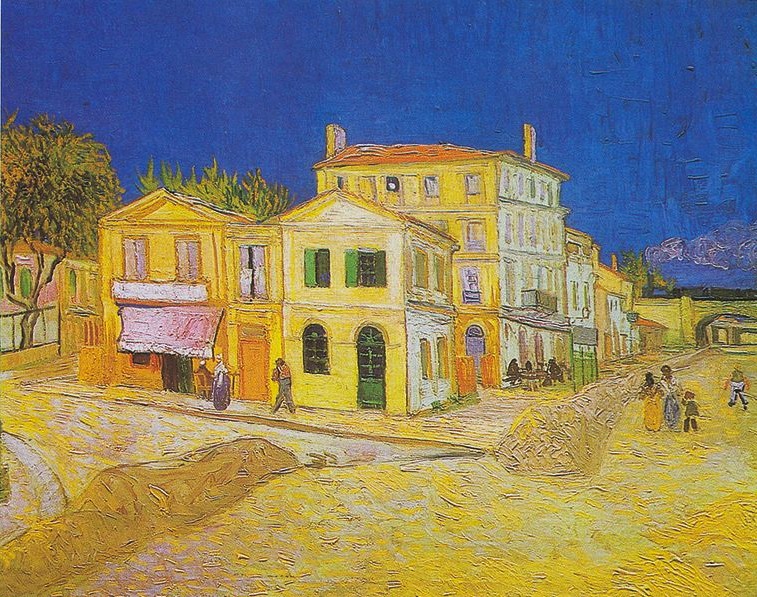
The Yellow House (1888)

The Yellow House (1888)

Van Gogh's Chair (1888)

Van Gogh’s Chair (1888)

Bedroom in Arles (1888)
Bedroom in Arles (1888)

Still Life: Vase with 12 Sunflowers (1888)

Still Life: Vase with 12 Sunflowers (1888)

However Van Gogh’s appetite for decorating the Yellow House with such speed was largely because he was awaiting a visit from fellow-post-impressionist Paul Gauguin in the hope that he could set up something of an artists’ community in Arles. Yet it was that same visit that became the catalyst for Van Gogh’s infamous ear-chopping incident, and what followed was a stay in Arles’ general hospital, followed by an extended stay, in 1889, in the sanitarium at Saint Remy-de-Provence.

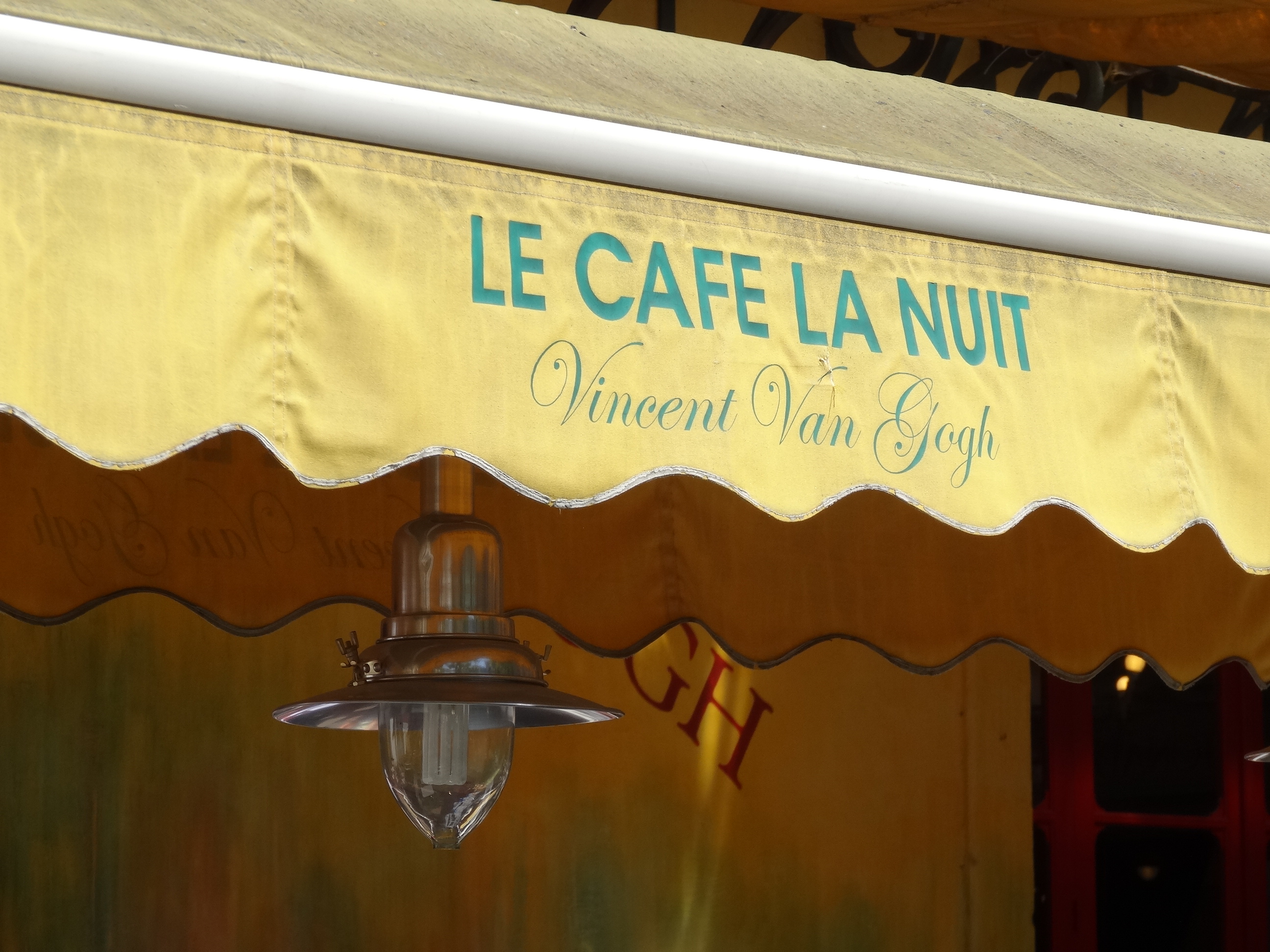
With this background in mind, it was in the footsteps of Van Gogh that we embarked on our last day in Arles, starting off at the Place du Forum, where his famous depiction of a cafe terrace is rather unfortunately replicated today for tourists, so that the real cafe is not the cafe as would have been visited by Van Gogh, but the cafe as painted by Van Gogh. For in their attempts to lure the tourists, the cafe has replicated Van Gogh’s painting to such an extent that they’ve painted the walls in a kind of colour was of yellow and a mouldy looking green. While those colours worked perfectly in the context of Van Gogh’s depiction, in reality they look try-hard and naff. Which is why, asides from taking photos, we avoided eating at the now eponymously named Van Gogh cafe like the plague.

Cafe Terrace on the Place Du Forum Arles, at Night (1888)
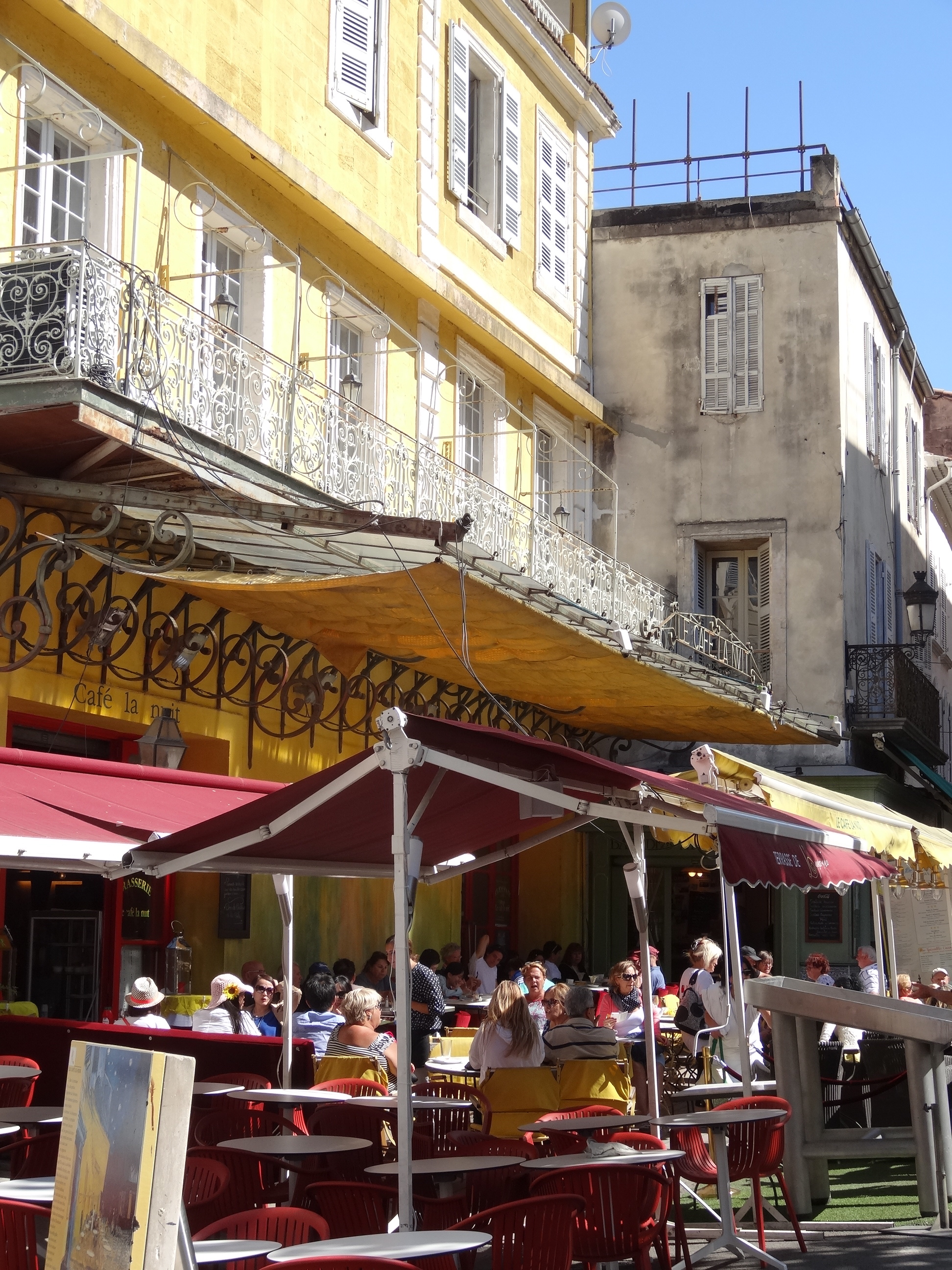
Cafe Terrace on the Place Du Forum Arles, at Night (1888)

The cafe as it stands today

The cafe as it stands today

And at night

And at night

DSC02647 DSC02521

The next main Van Gogh spot is the Arles hospital, whose most iconic feature is the floral courtyard at its heart, again no doubt decked thus because of the reference made to it in Van Gogh’s painting, but nonetheless pleasing to wander into. Yet there was very little more to it, and in fact that much goes for all of Arles. While the Van Gogh references can be seen in postcards sold at every souvenir shop, there is not a single painting by Van Gogh in the tow – a crying shame considering how much the town inspired him. Meanwhile a cultural space opened in his name appeared not to exist when we searched for it, and we were told in a shop close to the hospital that a Van Gogh museum will open in a few years. But nothing for now. Meanwhile both the yellow house, and the famous bedroom in it are long gone – bombed in the war.
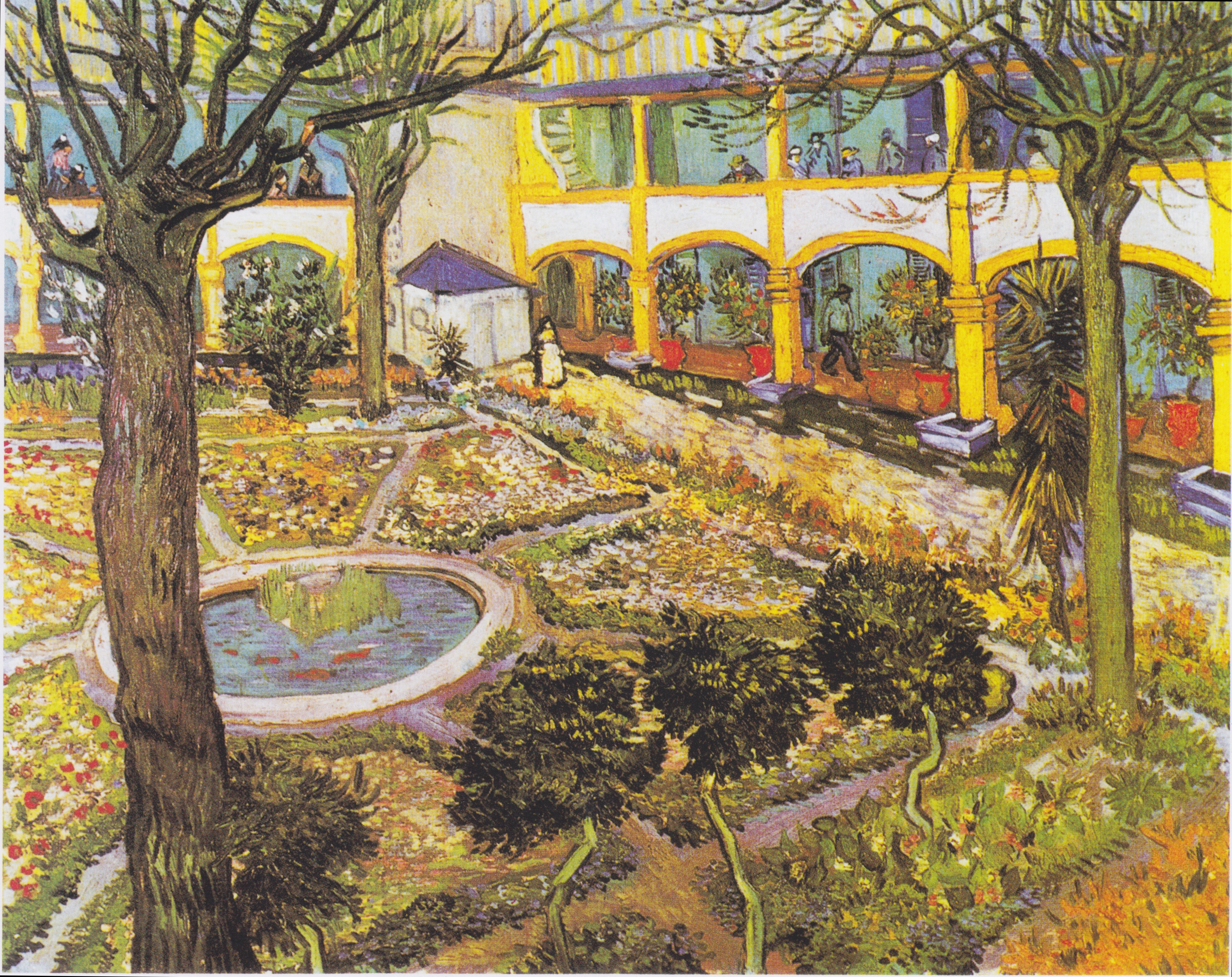
Garden of the Hospital at Arles (1888)
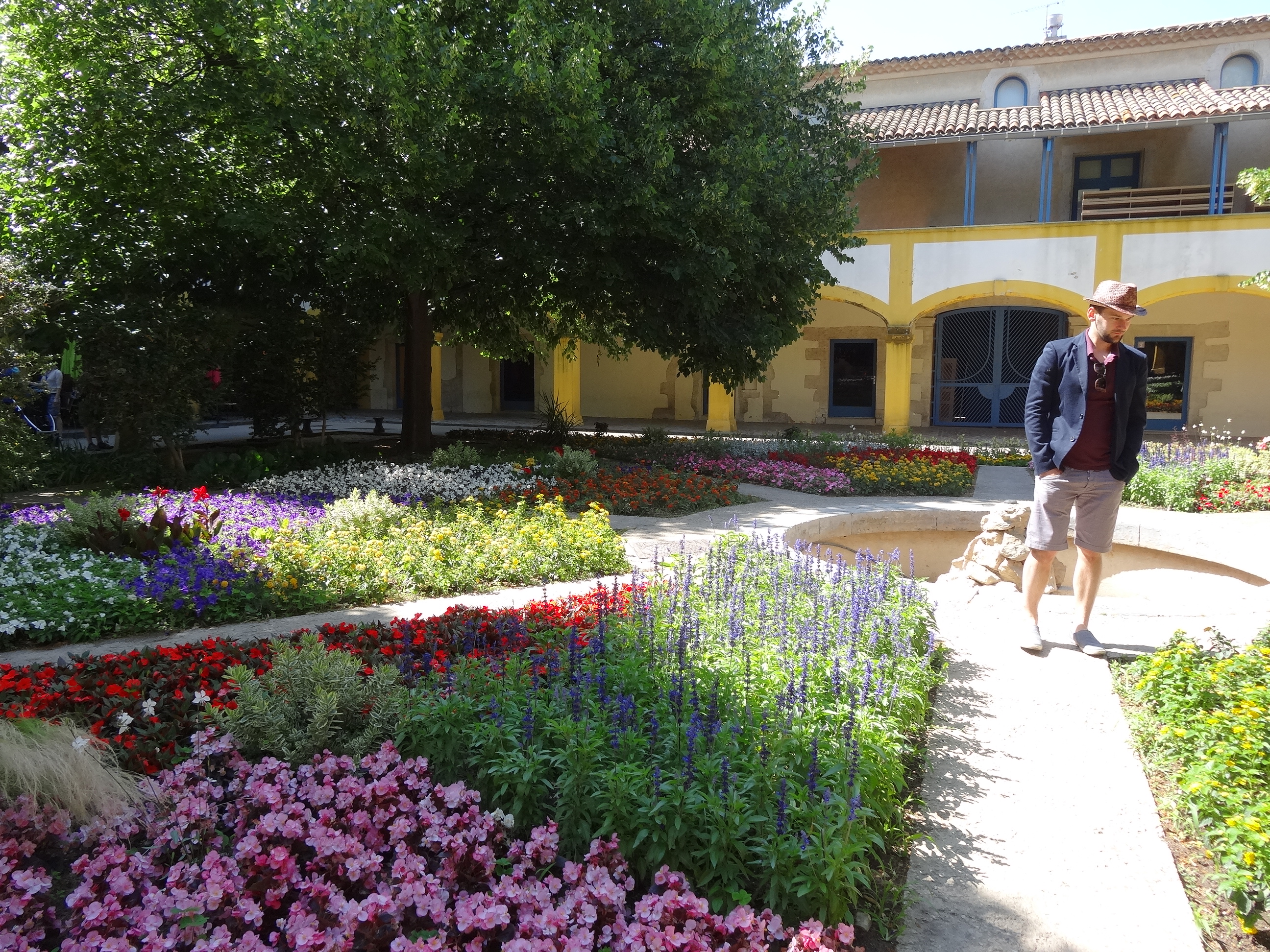
Garden of the Hospital at Arles (1888)

The hospital today

The hospital today

DSC03082 DSC03075 DSC03061

However, unperturbed by our lack of success, there was one more point on the Arles map that we had to look at, both when bringing our Arles Van Gogh search to an end, and also when leaving Arles for good. Yes, packed up and ready to move on to our next stop on this Provence Odyssey, and heading out towards the bus station, we passed by the River Rhône, now mercifully still, largely, of the winds which had dominated its path the previous day, and stopped at the point where Van Gogh had painted perhaps my favourite of all his works: Starry Night over the Rhône. Sadly, yesterday’s wind had prevented our viewing this scene by night, but in any event, the proliferation of large boats at the site undoubtedly mean that the view would be much changed now from Van Gogh’s day – a story which rings true of so much of this city.

Starry Night over the Rhone (1888)

Starry Night over the Rhone (1888)

The view today

The view today

But just as Van Gogh left Arles to head for some respite in nearby Saint Remy, so too did we follow his path, leaving the city now to head into Provence’s lush countryside, to continue not just our search of Van Gogh, but also our Provence Odyssey.
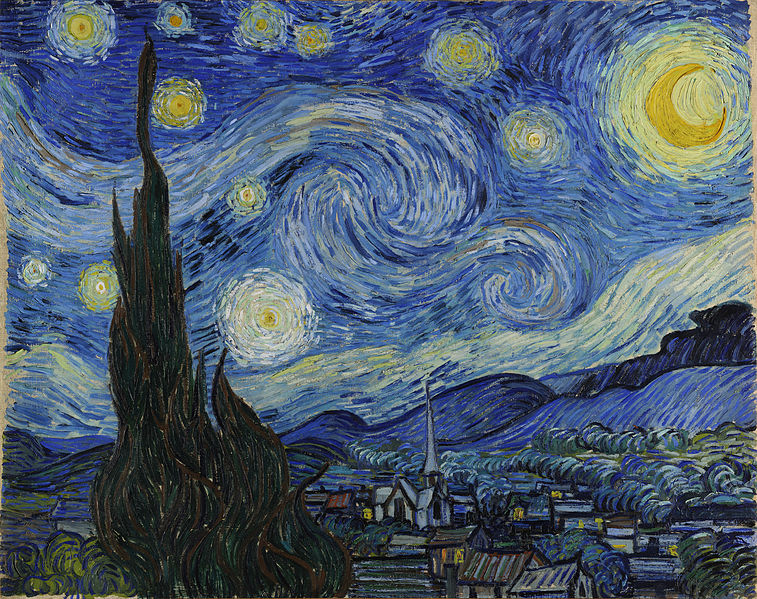
Onto Saint Remy - where Van Gogh painted: The Starry Night (1888)
Onto Saint Remy – where Van Gogh painted: The Starry Night (1888)

See you in Saint Remy!

Provence Odyssey | My Journey in Paintings: From Avignon to Arles (avec le petit dejeuner)

After three days in the Provence heartland, surrounded by verdant rolling landscapes of cypresses and pine trees, olives and lavender, and with one hotel view watercolour already under my belt, I moved onto Arles considerably inspired, artistic images floating through my head with each new adventure taken across this artist’s paradise. After two days in the midst of the medieval magic of Avignon, our journey south to Arles provided a refreshing glimpse of the rich pastoral landscape which surrounds Provence’s cities, but also of the little farmhouses which are dotted across the scenery, with their iconic terracotta tiled roofs and pastel-painted walls, their pale blue shutters and window-sill plant pots.

And so, shortly after arriving in Arles and in a moment of rest, so many of these images collected together with such strength that in mere minutes, I had opened up my travel sketch book and mapped out this image, depicting our journey from Avignon to Arles, and accompanied by the hearty breakfast which had so satisfyingly kicked off our day. Over the next few days, I filled in my sketch with vivid colour reflective of the seductive rainbow palette which the Mediterranean light so augments in Provence, using my new favourite medium, gauche, to do so.

Voyage to Arles from Avignon (avec le petit dejeuner) 2013 © Nicholas de Lacy-Brown - gauche on paper

Voyage to Arles from Avignon (avec le petit dejeuner) 2013 © Nicholas de Lacy-Brown – gauche on paper

The result is Voyage to Arles from Avignon (avec le petit dejeuner) – an artistic testament to this next leg in our journey. I hope you enjoy it.

© Nicholas de Lacy-Brown and The Daily Norm, 2001-2013. Unauthorized use and/or duplication of the material, whether written work, photography or artwork, included within The Daily Norm without express and written permission from The Daily Norm’s author and/or owner is strictly prohibited. Excerpts and links may be used, provided that full and clear credit is given to Nicholas de Lacy-Brown and The Daily Norm with appropriate and specific direction to the original content.

Provence Odyssey | Avignon to Arles: Day 3 – From Popes to Emperors

When I was considering an itinerary for our Provence tour this summer, it felt a bit like closing my eyes and pinning a pin on the donkey. With so much beauty ripe for exploration, where on earth would we go? One of the first factors was transport – not wanting to incur the costs of hiring a car, nor least the fear factor of driving on the opposite side of the road, we had to be in places that were public transport accessible. And given that we were taking the Eurostar down from London, Avignon – the first Provence stop on the high-speed line – seemed like a very good place to start. But beyond that, the rolling purple hills of Provence were very much our oyster, so to speak. So following my great passion for art, I decided to plan our itinerary following something of an art historical theme, taking the trail from Arles, which today has become synonymous with both Van Gogh and Picasso (who loved the bullfighting there while in exile from his beloved Spain), and onto Saint Remy de Provence – where Van Gogh self-admitted into an asylum, and finally ending up at Aix-en-Provence, the city of Cezanne, and this year a key player in the Marseille-Provence European City of Culture festivities.

Starting off a new day

Starting off a new day

So today it was onto Arles, the city famous for being the location of so many of Van Gogh’s paintings, from his Yellow House and Night over Arles, to his iconic sunflowers, and for generally being the reason why his paintings metamorphosed so markedly from the dull browns of Holland to the bright vivid colours of Provence. But it’s a city famous too for its Roman heritage – the great Roman amphitheatre standing at its heart is one of the best preserved amphitheatres from Roman times, and has literally dictated the shape of the town, whose streets wind so perceptively around it. But before we wind back the clock from medieval Avignon to Roman Arles, let me take a moment to bid a farewell to Avignon, whose charming ancient streets bore further fruit on this morning of our departure – a few hours further to explore this surprising city before our 20 minute train journey south to Arles departed at 2pm.

DSC02331 DSC02374 DSC02371 DSC02341 DSC02362 DSC02349 DSC02346

Indeed, before parting with Avignon, further treats were indeed in store. For a day which started off with a deliciously simple, vividly colourful and dangerously buttery breakfast at another typical local bar continued with similar sensual ravishment, as we walked out towards the city’s old dyers district, where the tiny River Sorgue emerges from underground and runs alongside the Rue des Teinturiers reminiscent of a dutch canal. In the glinting sunshine, this street was charm in urban form, providing the perfect platform for a laid back and tranquil walk along the very manifestation of the old historical city itself.

DSC02429 DSC02428

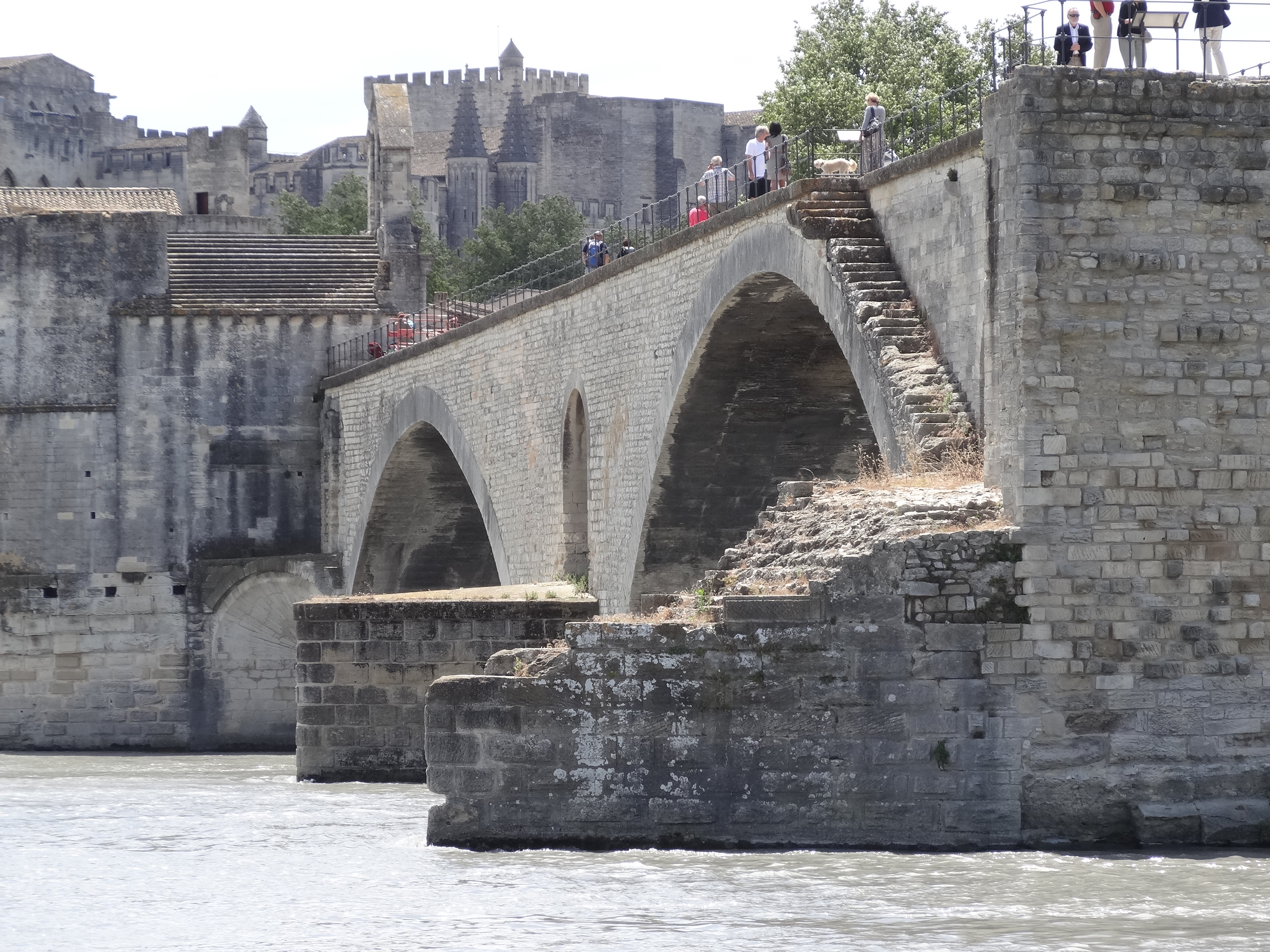
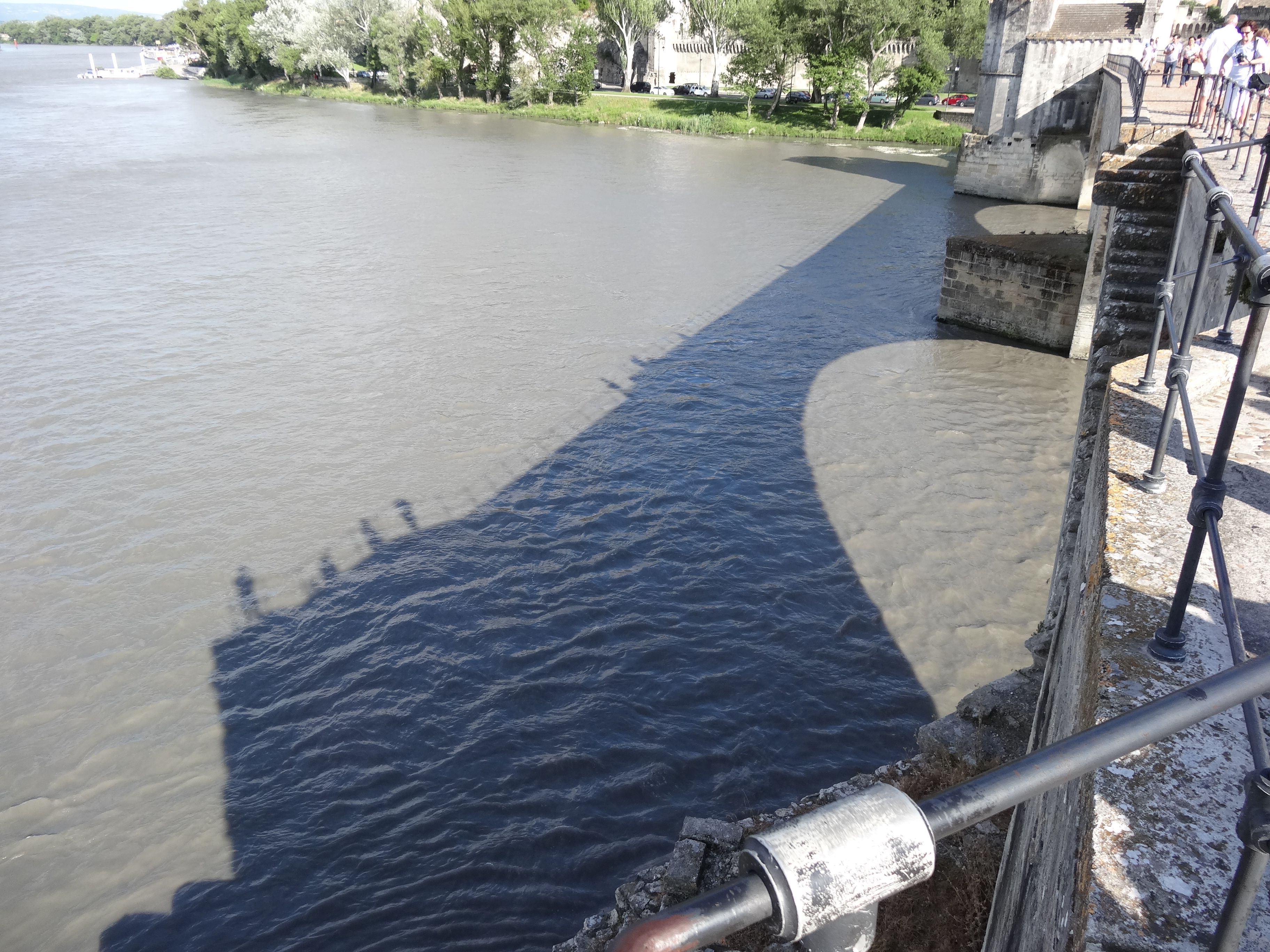
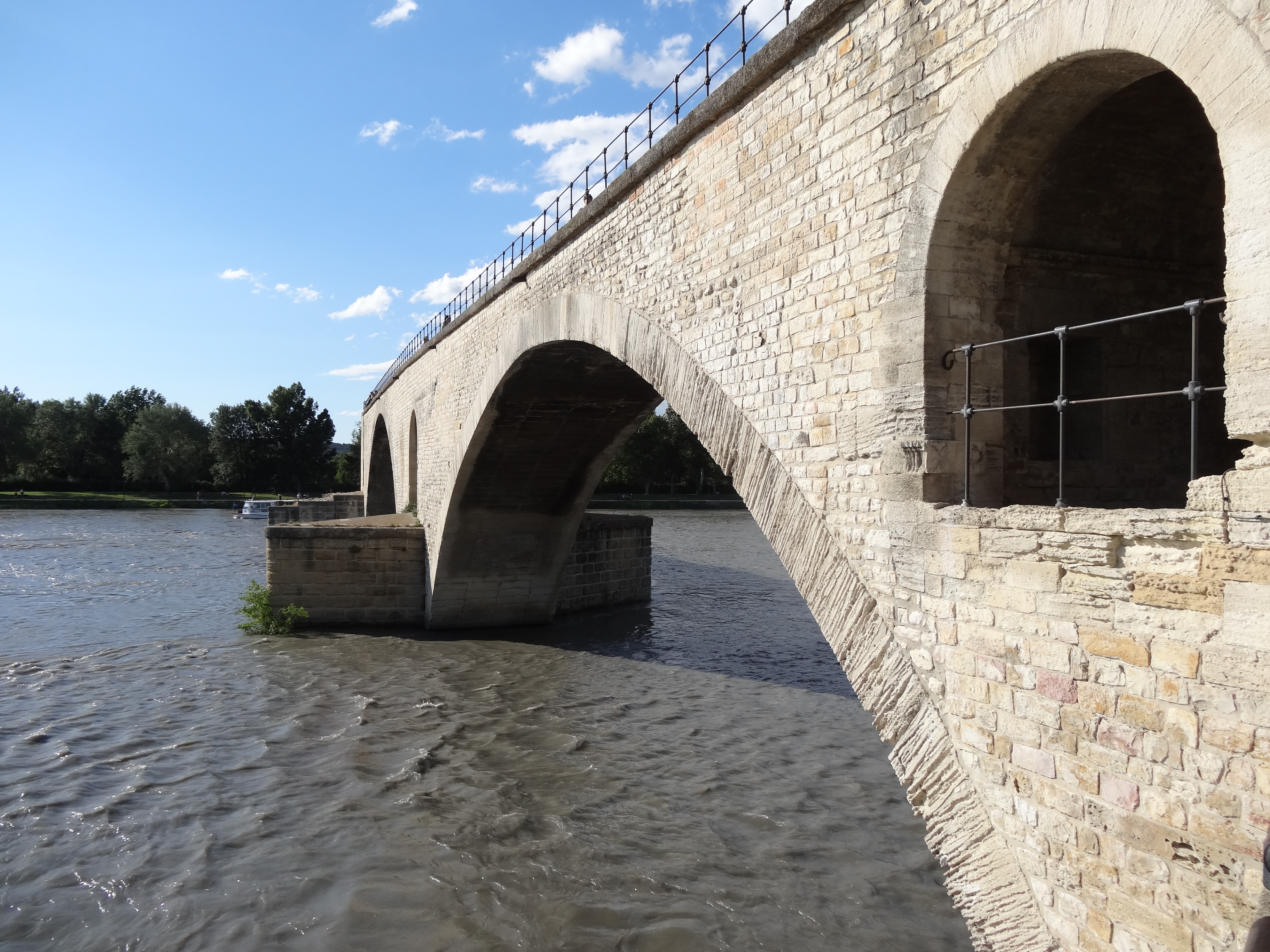
But just as the River Sorgue pours outwards into the wider dominant Rhône, so too did we head to that same main artery of the city, bidding adieu to this city by crossing the river on a bridge that is, mercifully, in one piece, in order to capture the best vantage point of Avignon, which of course had to include the Papal Palace and the famous broken Pont d’Avignon. Photographs collated, and luggage picked up, we headed to the city of Arles, back a few centuries to the time when the Roman Empire extended its special brand of classical civilisation to what was then savage Gaul, and developed towns such as Arles into little gems glinting on the far reaches of the empire.

IMG_2629 DSC02536 DSC02545 DSC02582 DSC02555 DSC02543 DSC03098

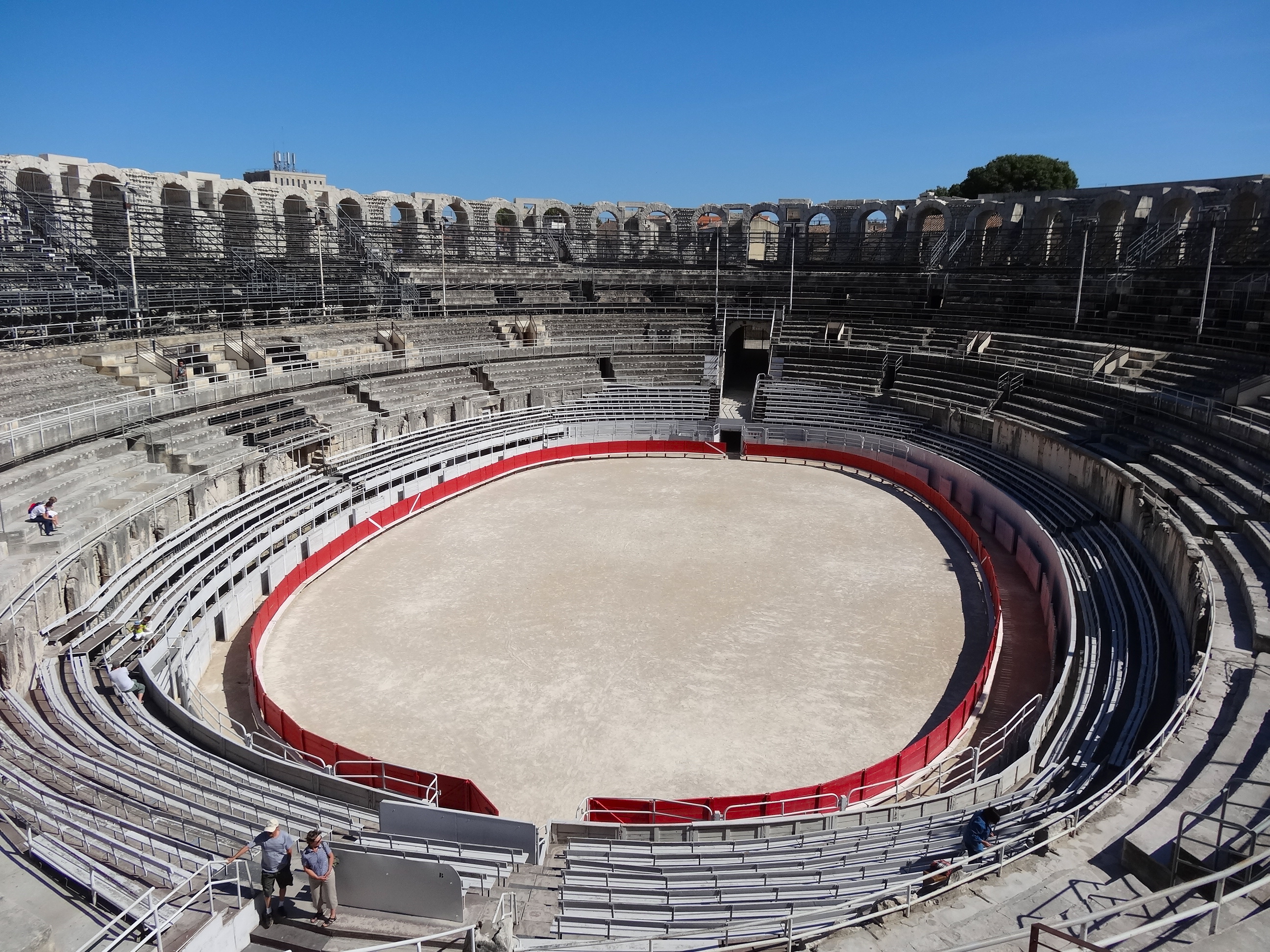
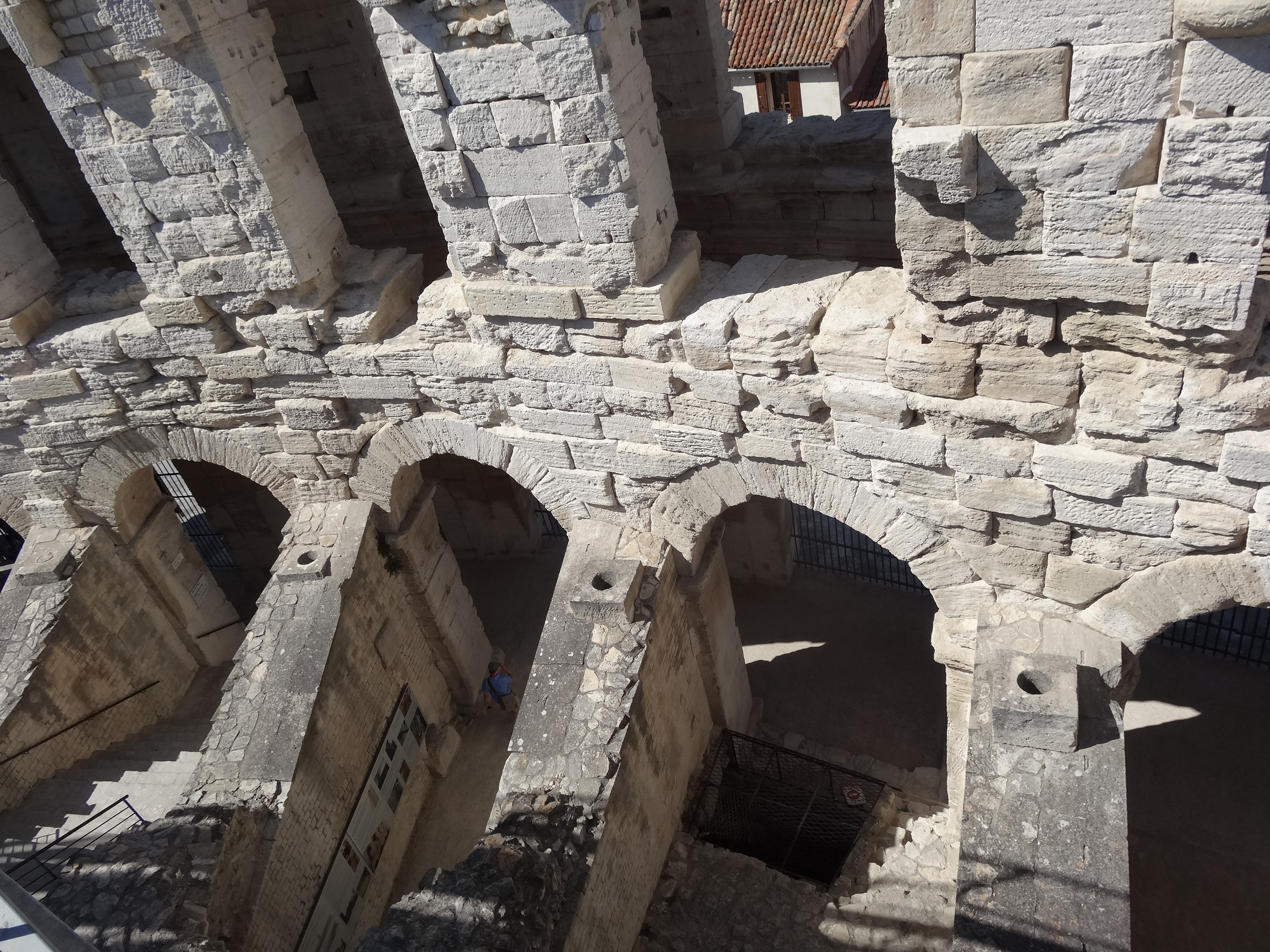
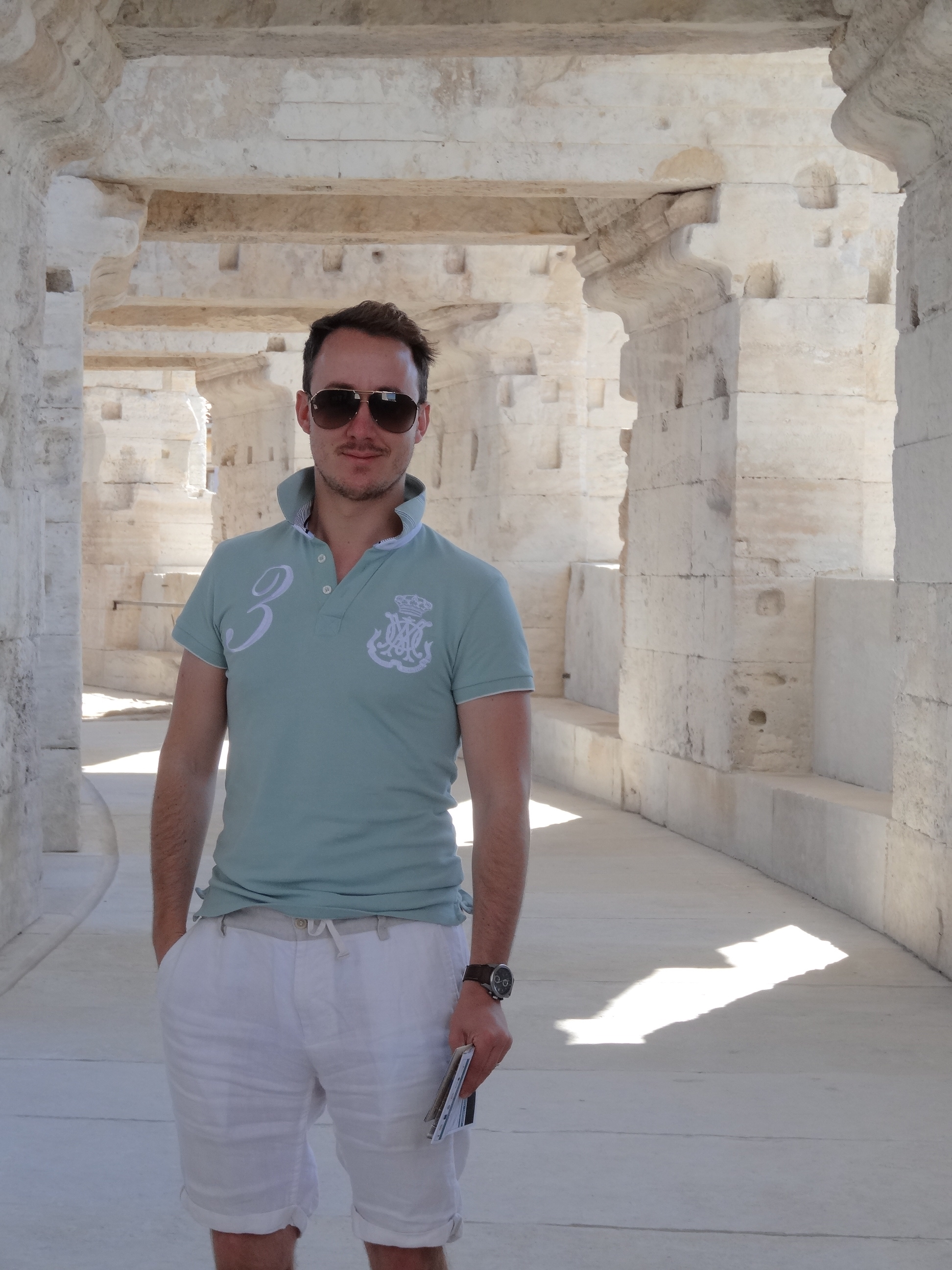
Just as all roads are supposed to lead to Rome, so too do the narrow maze-like streets of Arles descend upon the imposing form of this almost perfectly intact amphitheatre, and it was to this great monument that our paths inevitably led within hours of our arrival in the city. Into the great monument we went, which in stark contrast to Rome’s iconic amphitheatre, is very much in use for bull fights and other theatrical festivities, so consequently what we were viewing was an auditorium in the round, set up with a floating metal seating structure, away from the now ancient and only partially constituted former seating of the original stadium. Like any amphitheatre, the building doesn’t differentiate much from one arch way to another, but walking around the great 360 degree structure was attraction enough to enable us to appreciate the magnificence of this surviving structure, and revel in this modern day connection back to our ancient past.

C'est Moi - at the Amphitheatre

C’est Moi – at the Amphitheatre

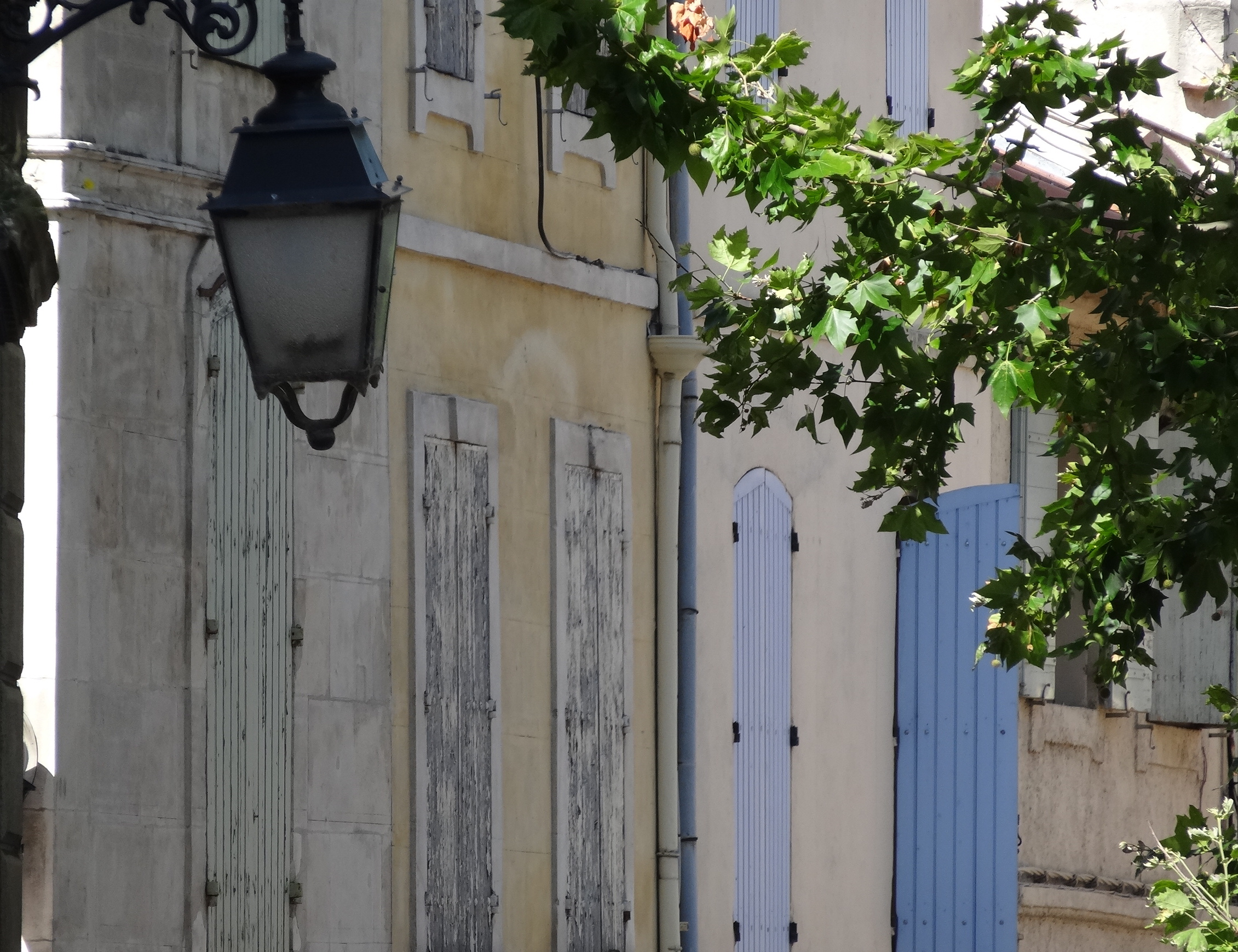
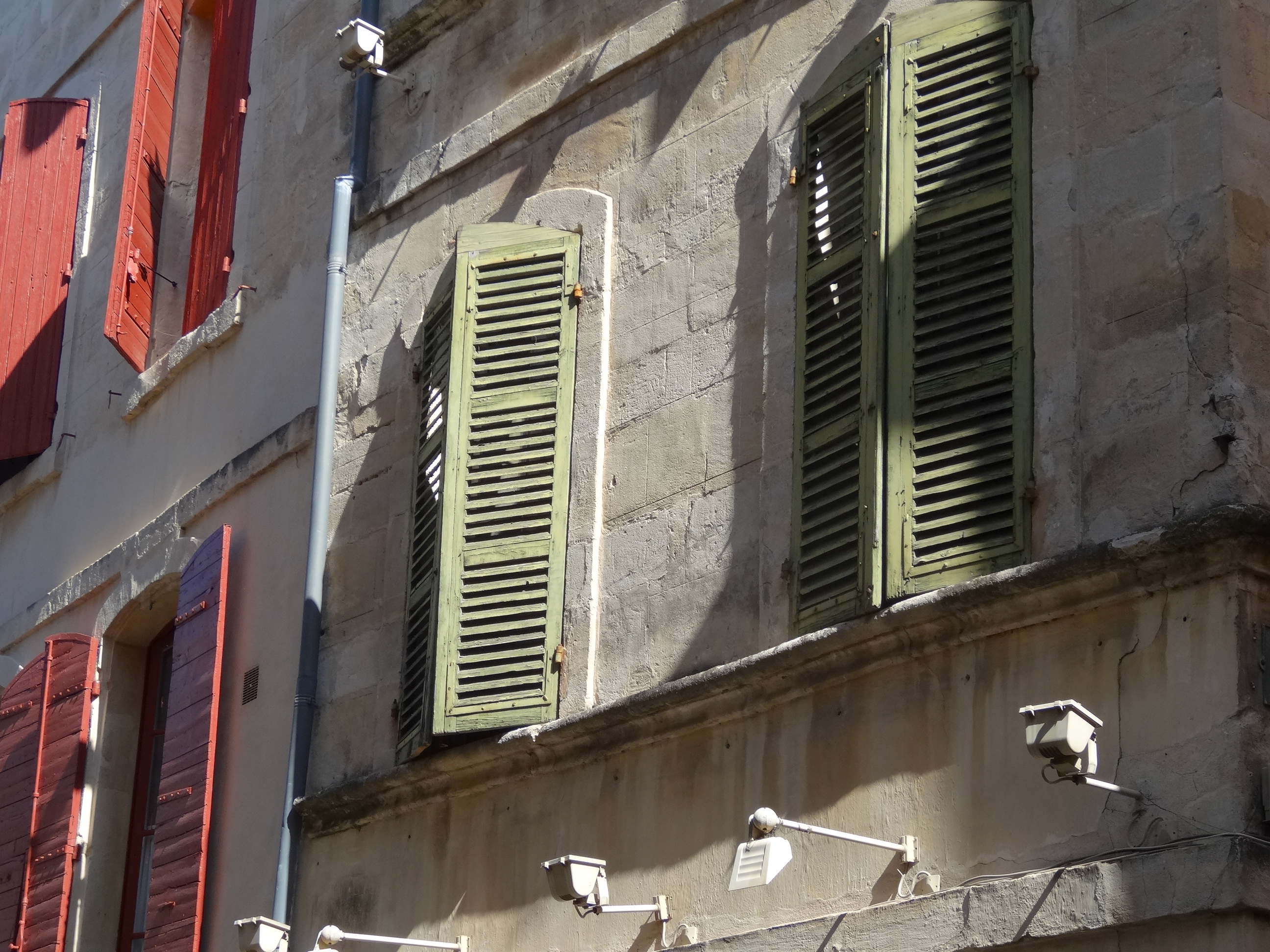
Having had our fill of Arles’ beating heart, we could do little else but take in the inherent character and charm of this city, whose houses are similarly shuttered like those in Avignon, but somehow more colourful and often more decorative. Arles lacks the great impactful squares which Avignon boasts, but that is because here, a city has very clearly developed around history, rather than making history in its own construction as in Avignon. The result is a maze-like development, which is not always straightforward to explore, but getting lost in these charming narrow streets is half the fun of the adventure. And ripe for adventure this city surely is, a venture now begun in this second leg of our Provence Odyssey.

DSC03051 DSC02719 DSC02762 DSC02896 DSC02709

More from Arles, coming soon.

All photos and written content are strictly the copyright of Nicholas de Lacy-Brown © 2013 and The Daily Norm. All rights are reserved. Unauthorized use and/or duplication of the material, whether written work, photography or artwork, included within The Daily Norm without express and written permission from The Daily Norm’s author and/or owner is strictly prohibited. 

Provence Odyssey | My Journey in Paintings: Avignon – A room with a view

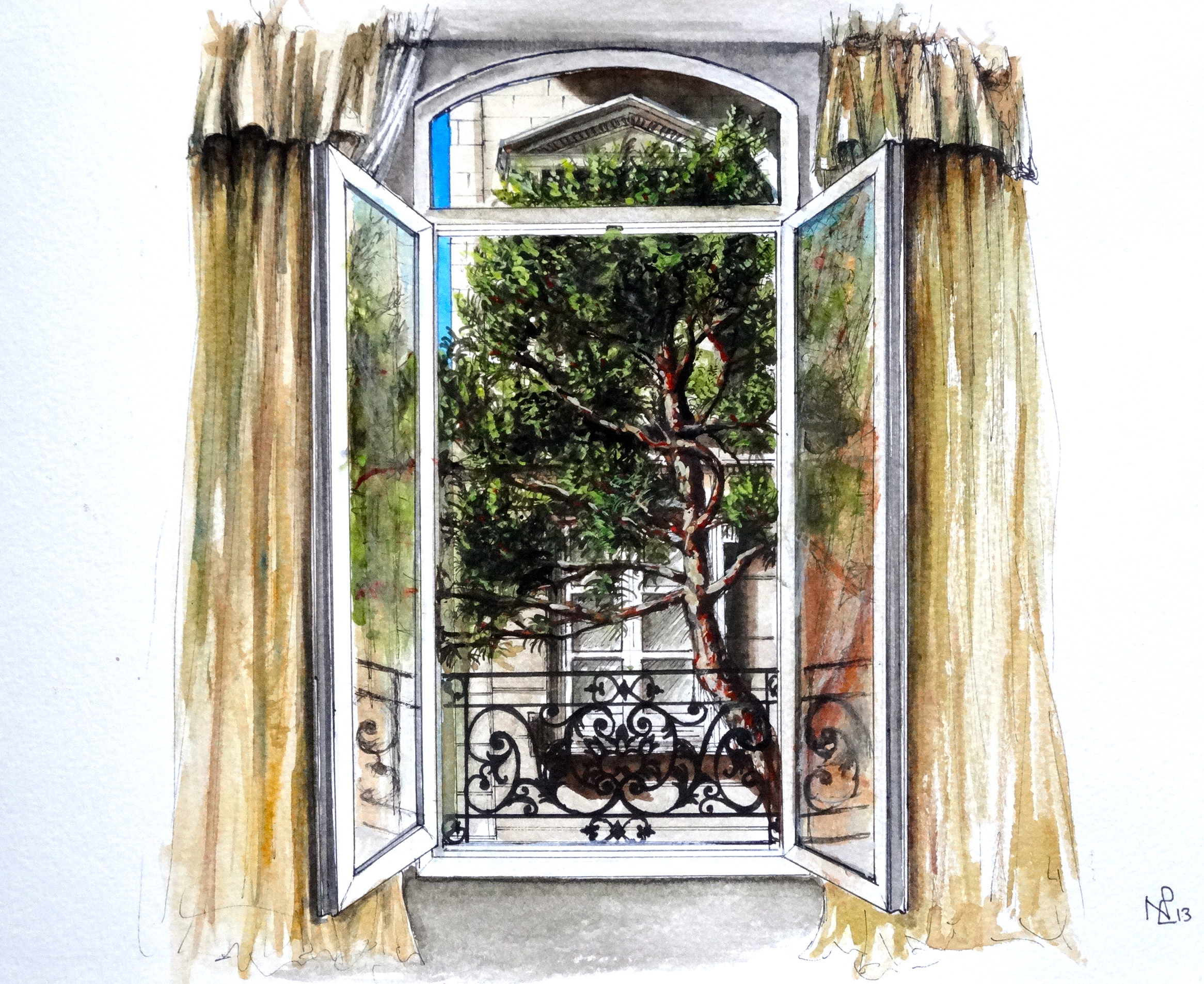
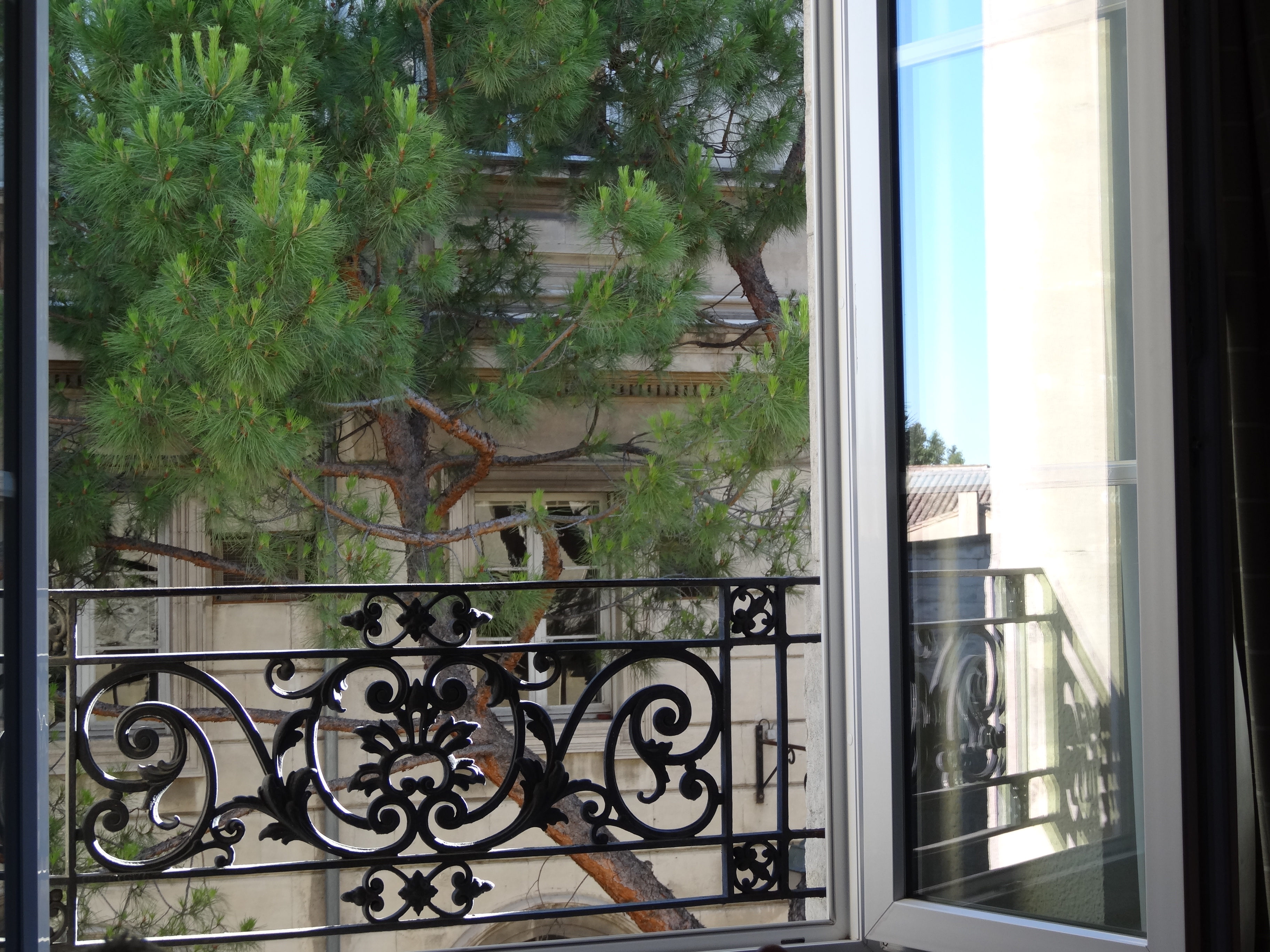
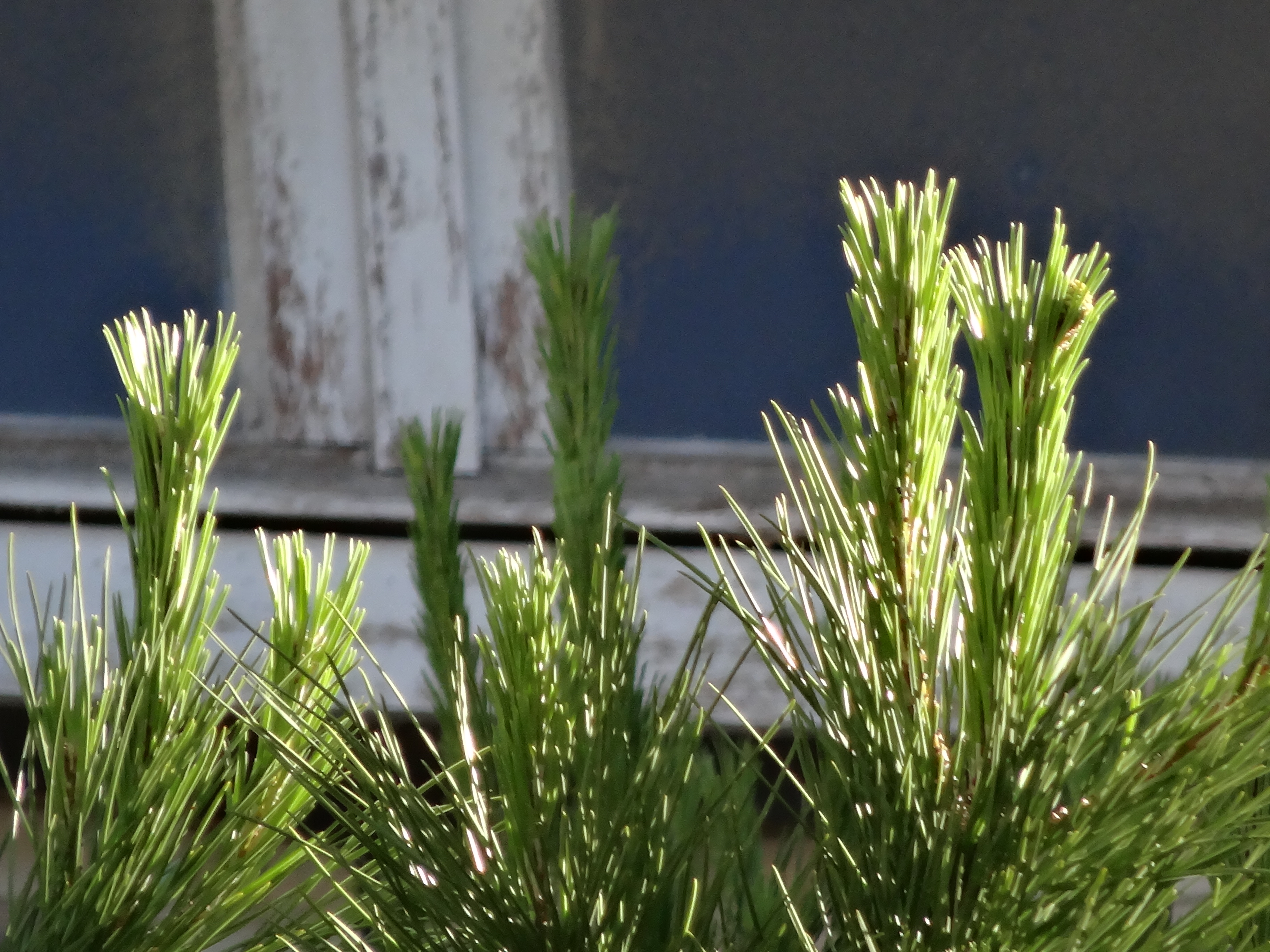
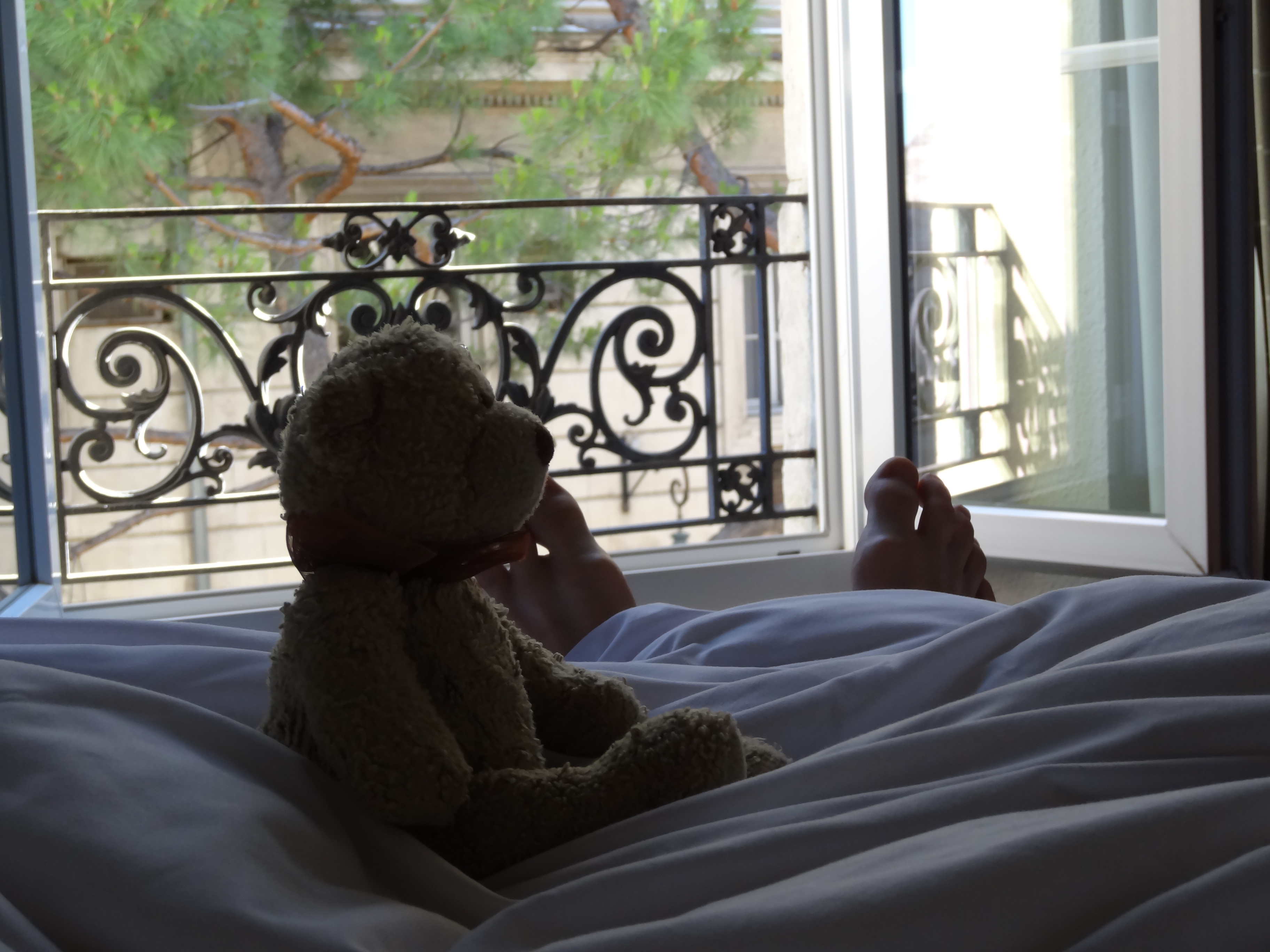
That morning. Waking to the waft of pine tree perfume filling the air, the sharp clear light of a Mediterranean blue sky, and warmth – oh the warmth of the clement Southern France climate. How could I not paint it? While some people may consider a room with a view to be a vast vista over coasts and mountains, over city roof tops or wide country landscapes, for me, our little room at the Hotel de L’Horloge overlooking a quite old street with a verdant puissant pine tree thrusting into view, could not be beaten. And as daytime dawned on our first Avignon day, I could not help myself but take out my little watercolour book and recreate the view and our wide open window in paint, capturing that moment as we welcomed, heartily, the exquisite outside in.

Now, far away from Avignon, when I look at my painting, it carries with it the very essence of that view, and the feelings which arose within me when I gazed upon it in a way which no photo ever could. For in the process of its creation, I captured not just the view, but a manifestation of my reaction – my joy at that moment of Provençal awakening.

Avignon: A Room with a View (2013 © Nicholas de Lacy-Brown, watercolour on paper)

Avignon: A Room with a View (2013 © Nicholas de Lacy-Brown, watercolour on paper)

It’s a simple painting, but loaded with our experience of those pure moments of unbridled joy, when a holiday begins, and days of carefree discovery lie in wait.

More on Provence, coming soon.

© Nicholas de Lacy-Brown and The Daily Norm, 2001-2013. Unauthorized use and/or duplication of the material, whether written work, photography or artwork, included within The Daily Norm without express and written permission from The Daily Norm’s author and/or owner is strictly prohibited. Excerpts and links may be used, provided that full and clear credit is given to Nicholas de Lacy-Brown and The Daily Norm with appropriate and specific direction to the original content.

Provence Odyssey | Avignon: Day Two – Le Pont et Les Papes

It was one of those mornings which you would like to lock up in an alarm clock to be projected outwards at the start of each day. Awakening to find not the dark groggy skies of an English summer, but the bright blue cerulean sparkle that can only be found in a Mediterranean sky, early sun streaming through the window, broken only by the shadow of a fresh-smelling pine tree standing quite still in the street outside, and the sound of birds and the awakening bustle of nearby cafes filling the air. To this slice of heaven we awoke on our first proper morning in the beautiful city of Avignon in Southern France, an optimism buoyed in the ultimately satisfying knowledge that this was our first full day of a holiday that would extend for another week and a day.

DSC02043 DSC02047 DSC02042 DSC02060

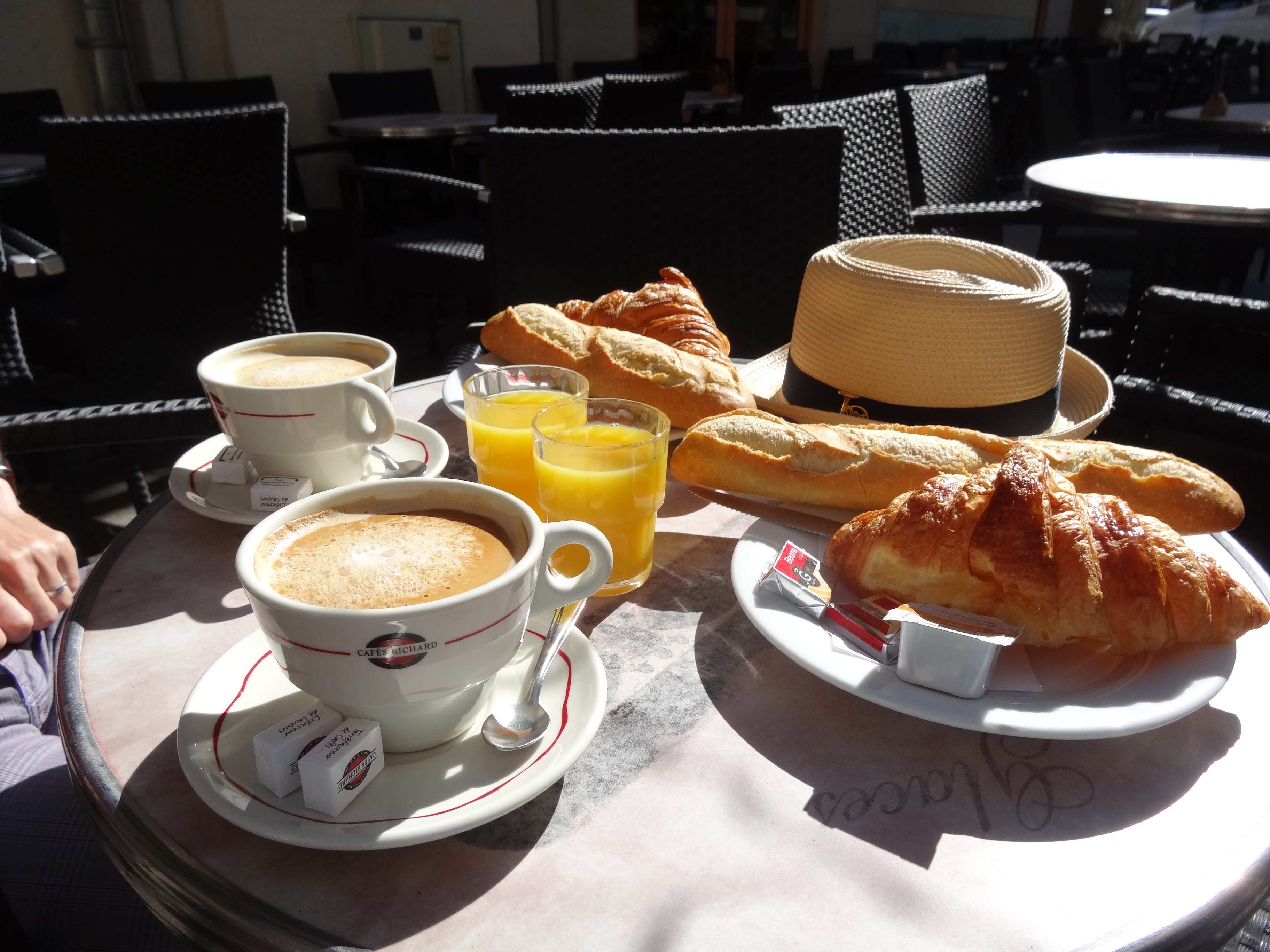
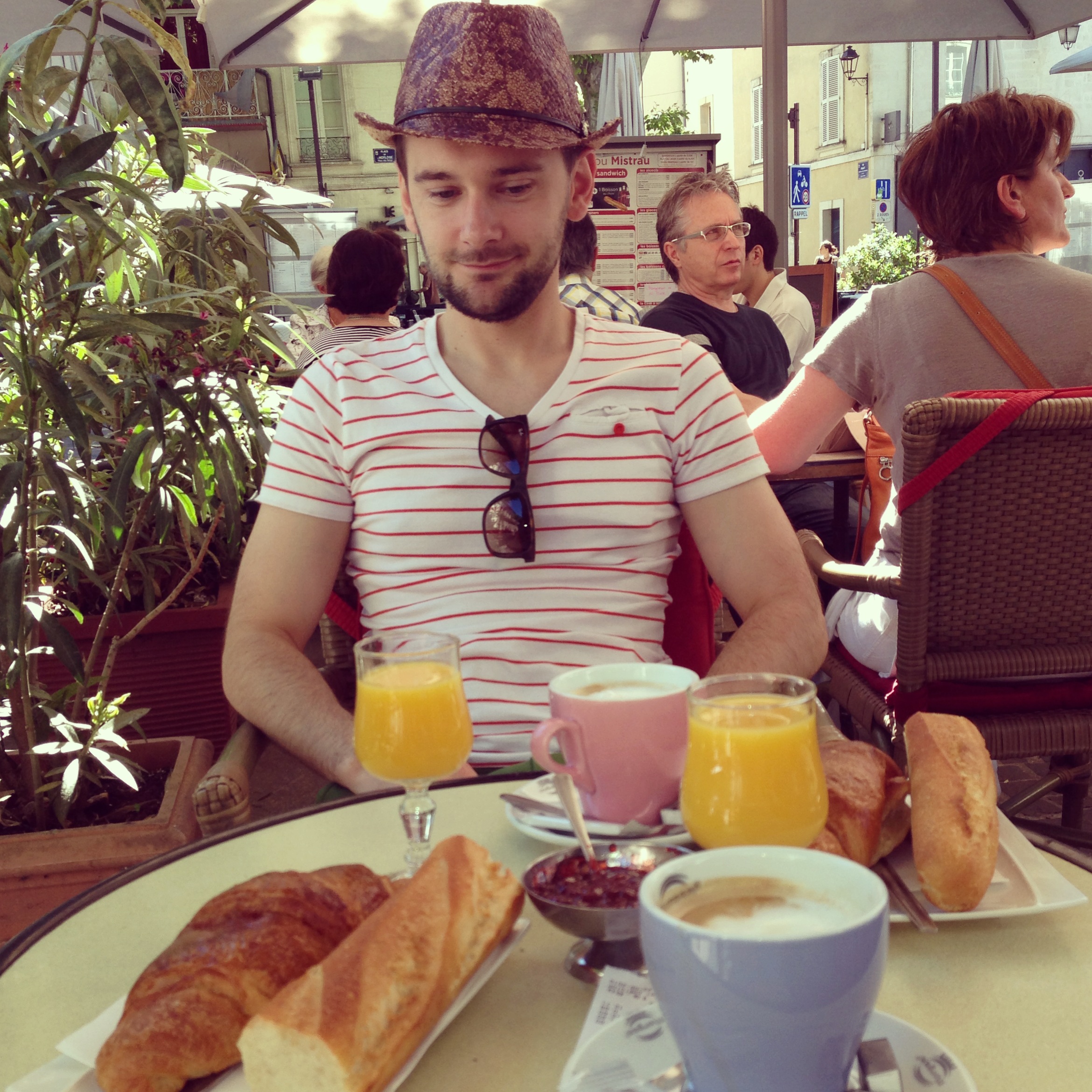
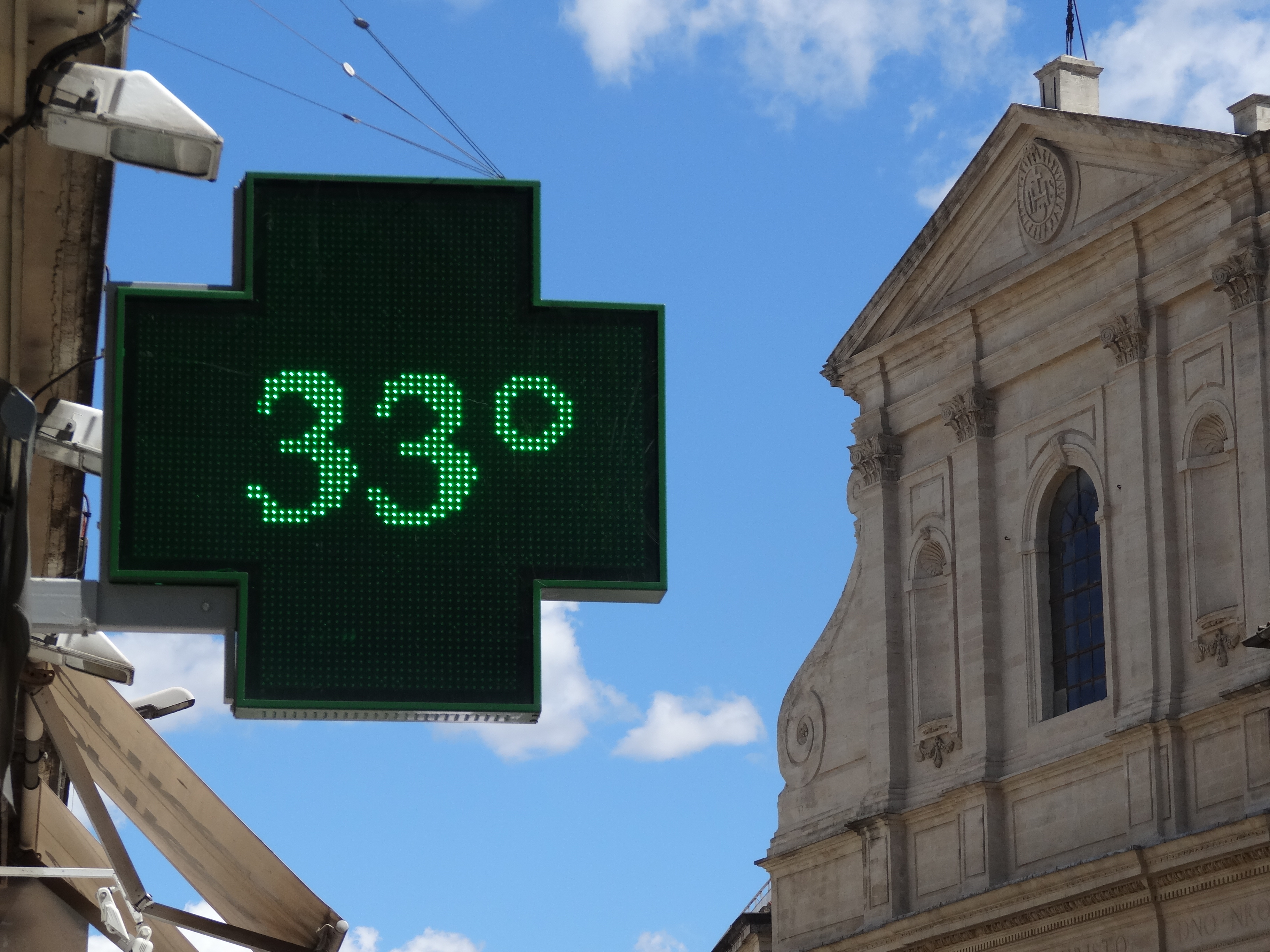
The brilliancy of the light made waking so easy, and I was soon up, capturing the view in watercolour in my newly purchased notebook. Yet before long, hunger came knocking, and strolling the brief 100 metres or so out to the Place de l’Horloge just outside the hotel, we picked one of many cafes in which to sit and order a petit dejeuner – breakfast which came handily in a pre-determined formular of fresh crunchy baguette, buttery croissants, sweet sticky confiture, jus d’orange and of course, a frothy thick coffee – and all a mere snip at 6 euros each. We very soon thought the better of our initial English naivety at making straight for the sun, skipping to a table in the shade away from the already intense morning heat (the nearby temperature gauge said it all), and there enjoying the simplicity of this very French breakfast, we watched this now sleepy great town wind slowly back into life.

Le Petit Dejeuner!

Le Petit Dejeuner!

Hotting up for the morning

Hotting up for the morning

A whole day in Avignon meant that two inevitable bastions of the city needed to be covered: the Papal Palace and the world-renowned Pont d’Avignon itself, although our initial stroll en route took us past a small park set within the ruins of an old medieval church, its trees and fragrant flowers bursting with such piquant colour against the blue sky that you would swear that our eyes had been somehow tricked into seeing light through an almost fictionalised lens. Yet these photos do no injustice to the clarity of that colour, and the beauty of the floral path which led us steadily towards the vast Papal palace that dominates Avignon.

DSC02084 DSC02097 DSC02100 DSC02095DSC02089 DSC02092

I said something of the Papal palace in yesterday’s post – a vast complex built by some 9 successive Popes when they swapped a tumultuous Rome for the comparative tranquility of Avignon back in the 13th Century. But today we ventured inside, and only then could we properly appreciate the vast scale of this Papal compound, whose very rooms were so large that one barely noticed the multitude of tourists flooding through its gates, and its courtyards so voluminous that an entire temporary auditorium had been set up within its four walls.

DSC02114 DSC02126 DSC02127 DSC02172DSC02133 DSC02200

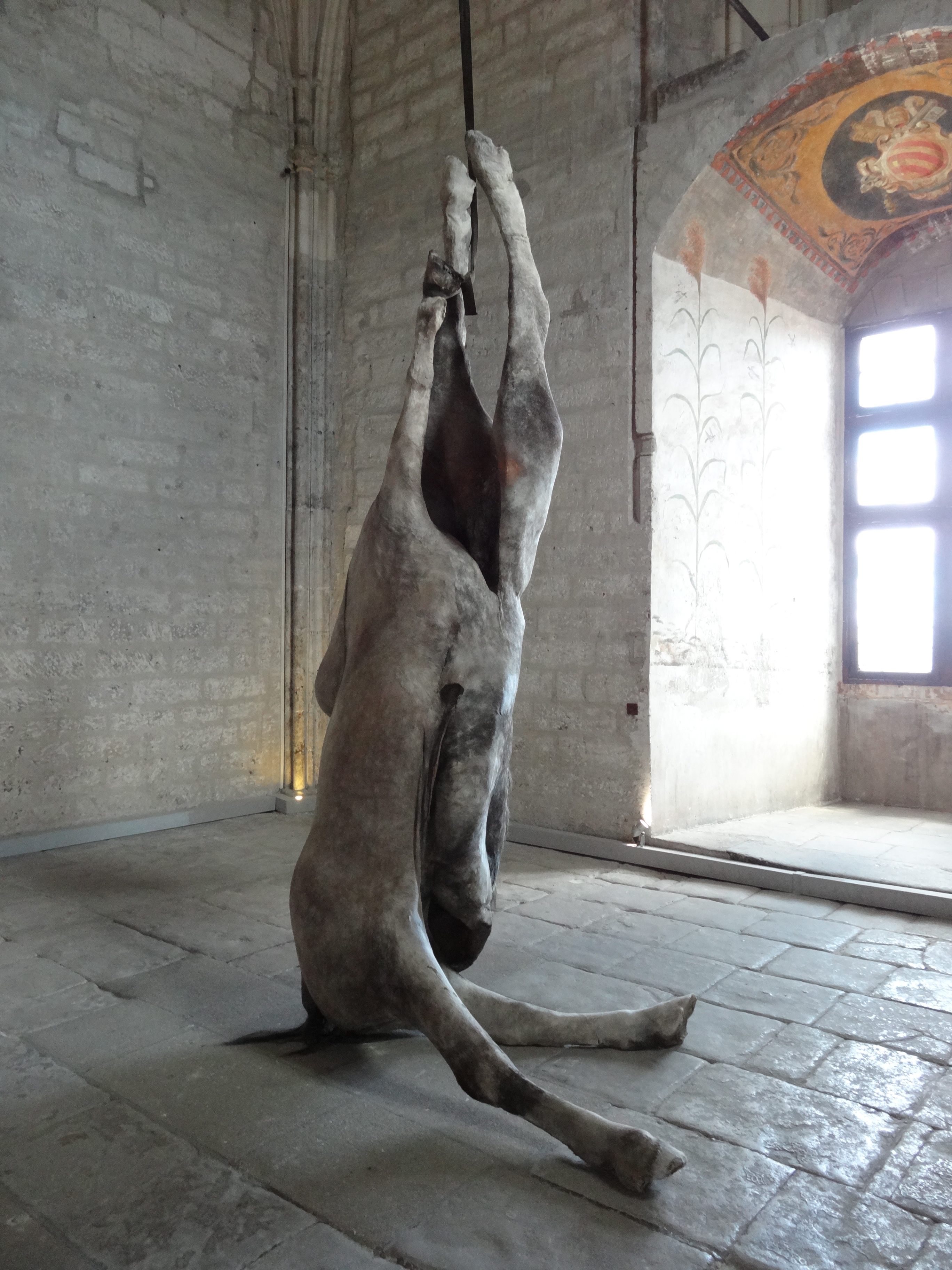
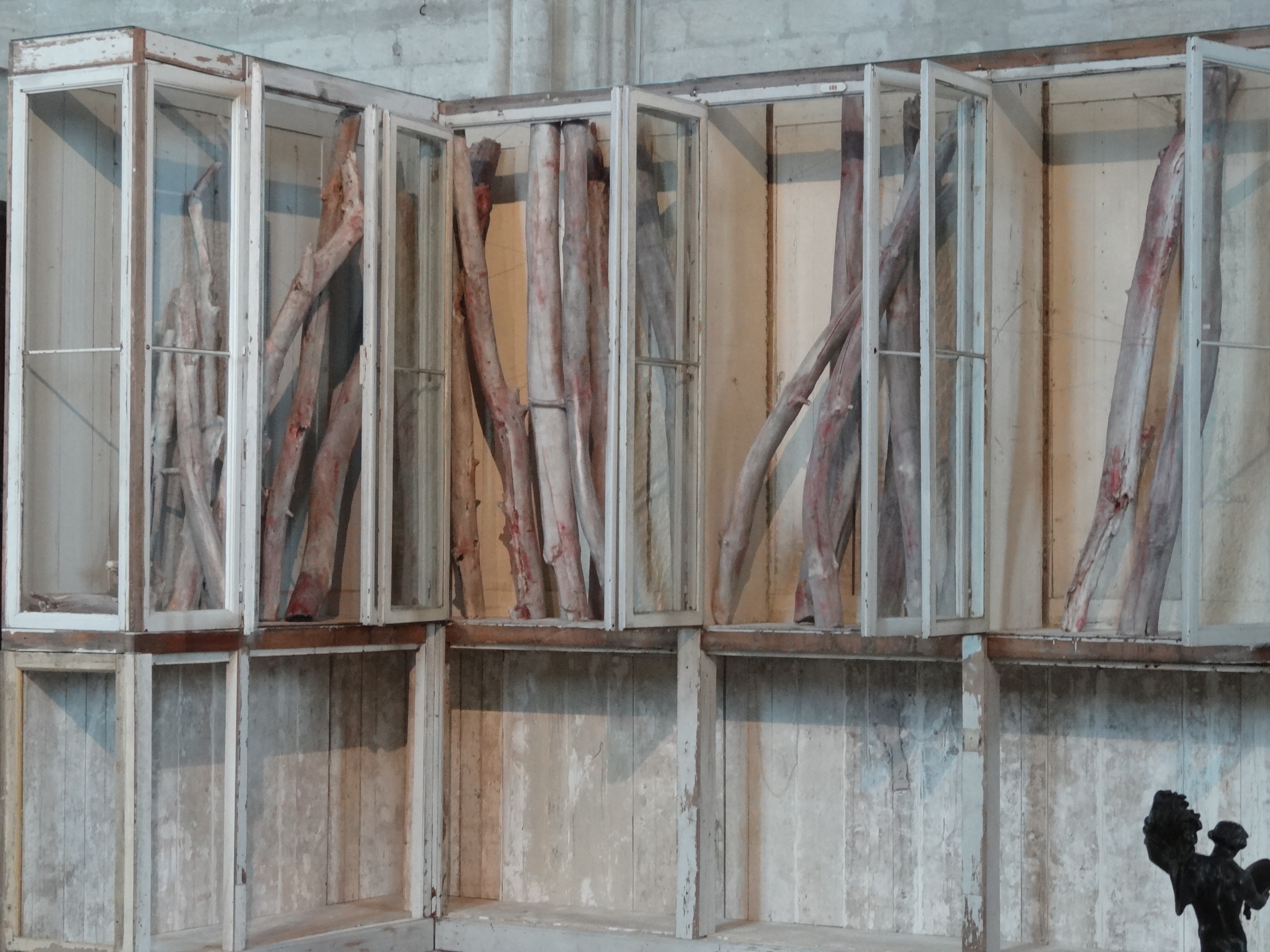
The inside of the Palace, while now empty, was a sight to behold, and the informative exhibits gave us a captivating history lesson both of the Papal heritage of Avignon, but also of how the palace slowly developed to become the mammoth structure which stands today. However, far from embracing the past, Avignon showed itself to be every bit the cultural leader for which the town has developed a worldwide renown (Avignon hosts a comprehensive cultural festival every July – sadly we just missed it), by daring to incorporate within these hallowed walls an exhibition (Les Papesses) of very modern sculpture, including the likes of Louise Bourgeois (famous for producing large spider sculptures), Camille Claudel, Kiki Smith, Jana Serbak and Berlinde de Bruyckere. Some of the sculptures were a little raw, somewhat gruesome for some tastes, particularly de Bruyckere’s rather ghastly corpse-like forms, but I loved the playfullness of the huge pile of duvets, the oversized glass marbles and of course the Bourgeois spider.

DSC02162 DSC02161 DSC02154 DSC02144 DSC02159 DSC02147

Having taken in a drink and the admirable views from the palace’s roof-top terrace, we headed back down to earth, retreating into the maze like streets that surround the Papal complex like a silk wrap, and into one such street settled down on the charming rather chic little terrace of Au Vent d’Agnes (4 rue Saboly – Tel 04 32 76 26 45) for a couple of super fresh salads: mine was a caprese salad with a modern twist of basil mousse – quite superb and washed down so satisfyingly with an ice cold glass of local white vin. As we were in the area, we skipped dessert, heading instead for the Musée Angladon which, thanks to the generosity of its founding family collectors contains the only Van Gogh to be found in all of Provence (despite his completing so many hundreds of canvases during his year or so here) as well as an impressive collection of Impressionist and post-Impressionist masters, with Manet, Degas, Sisley, Cezanne and Modigliani amongst their number.

DSC02215 DSC02216 DSC02217

Imposing the Spanish siesta upon this sunny day, we rested (and I painted) until temperatures cooled slightly, and headed out finally to the second of the city’s most famous sites: the renowned bridge of Avignon, about which the eponymous song which goes something like this: Sur le Pont d’Avignon L’on y danse, l’on y danse, Sur le Pont d’Avignon L’on y danse tous en ron”…was written.

The Pont d’Avignon is actually called the Pont St Bénézet, named after the shepherd boy who supposedly commanded angels to build the original bridge on this site across the River Rhône. Yet today, it is not only the bridge’s name which has fallen out of use: The bridge itself was catastrophically damaged in the 17th century, as the majority of its arches were swept away in a flood in 1669, and the bridge fell into disrepair, leaving only the four arches which remain standing today. But of course, today, it is no doubt the city’s greatest pull: that is until you get here and realise that Avignon has so, so much more to offer in terms of charm and beauty than this old crumbled relic, but a visit to the city would not, of course, be complete without a stroll along its remaining length. Just be sure to buy a combined ticket for both the bridge and the Papal palace if you follow our lead and head to this wonderful city – for a visit to the bridge is worth very little of the full admission fare charged.

DSC02230 DSC02248 DSC02232 DSC02238DSC02250 DSC02239

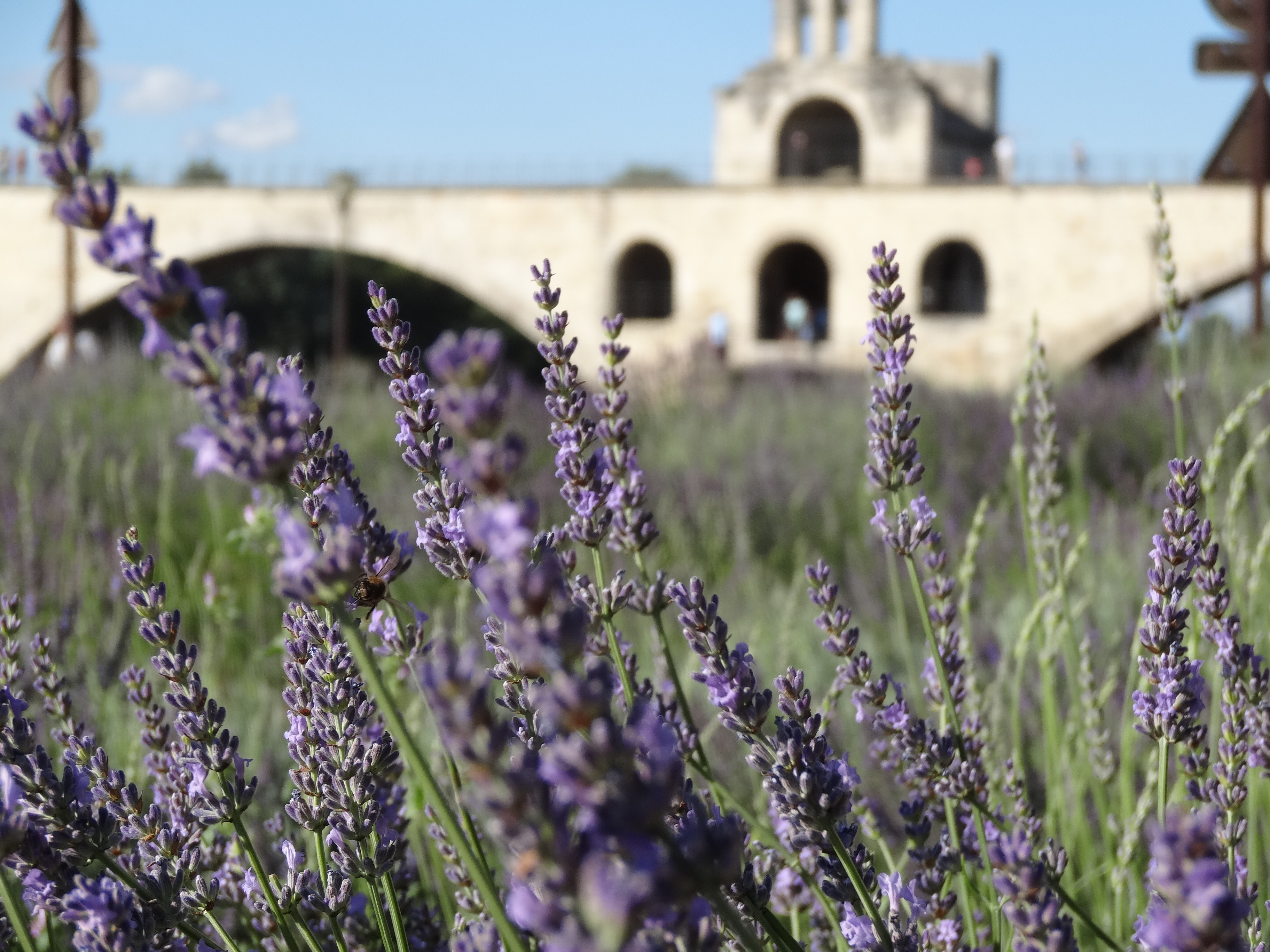
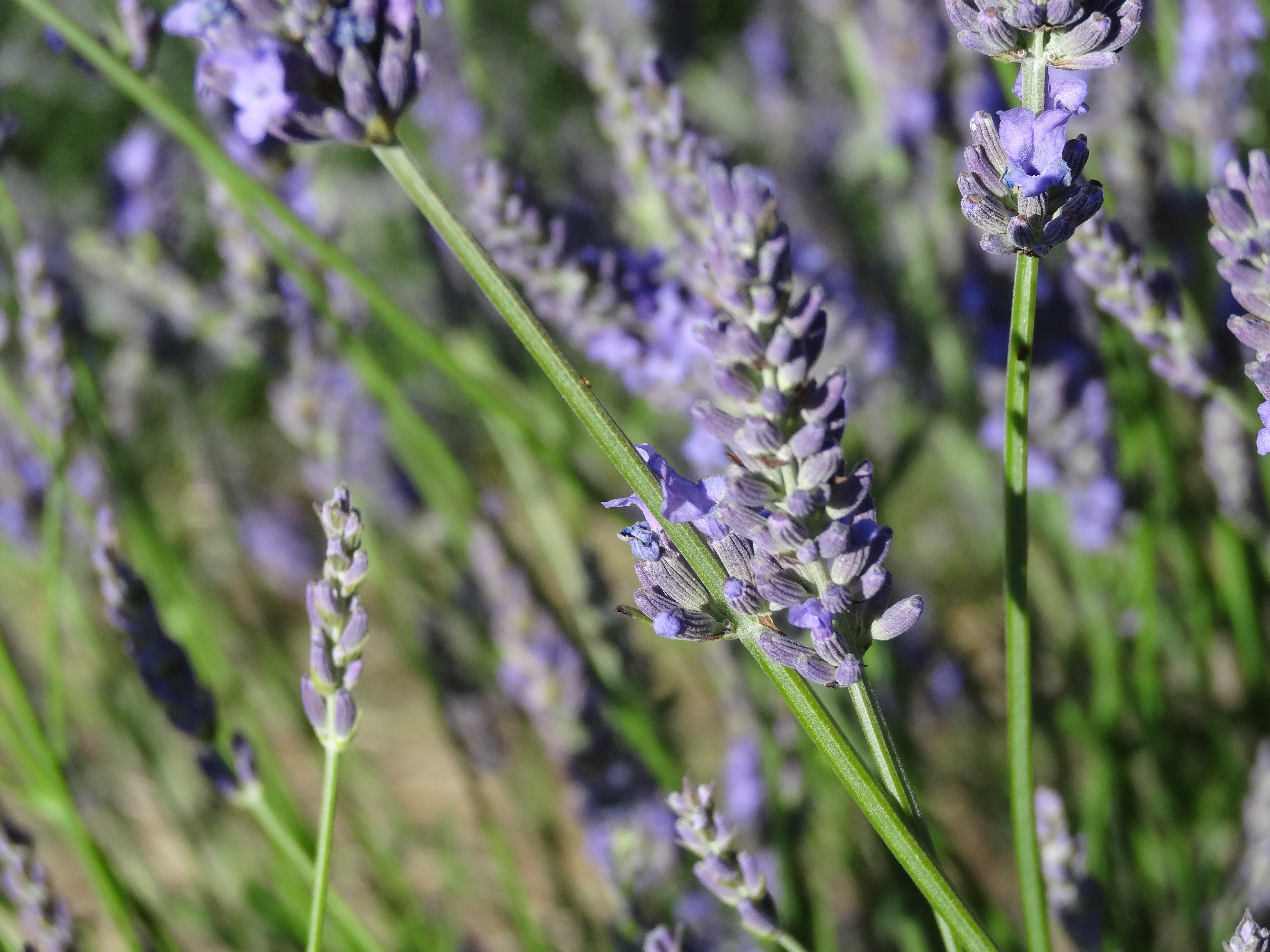
What a day, what a city: Avignon was the huge surprise of our trip – because what was planned as merely a station stop on our train journey south had actually been the source of cultural and historical inspiration and an all round feast of visual and sensual delights. Of course that’s not where Avignon ended for us. We spent the remainder of the day strolling through the lavender planted before the famous bridge, to then smelling the lavender sachets and soaps aplenty which pack the ample selection of souvenir shops nearby. And then of course there was the wonderful dinner we ate that night… But more on that another time.

À bientôt!

All photos and written content are strictly the copyright of Nicholas de Lacy-Brown © 2013 and The Daily Norm. All rights are reserved. Unauthorized use and/or duplication of the material, whether written work, photography or artwork, included within The Daily Norm without express and written permission from The Daily Norm’s author and/or owner is strictly prohibited. 

Norms do… Cézanne’s Card Players

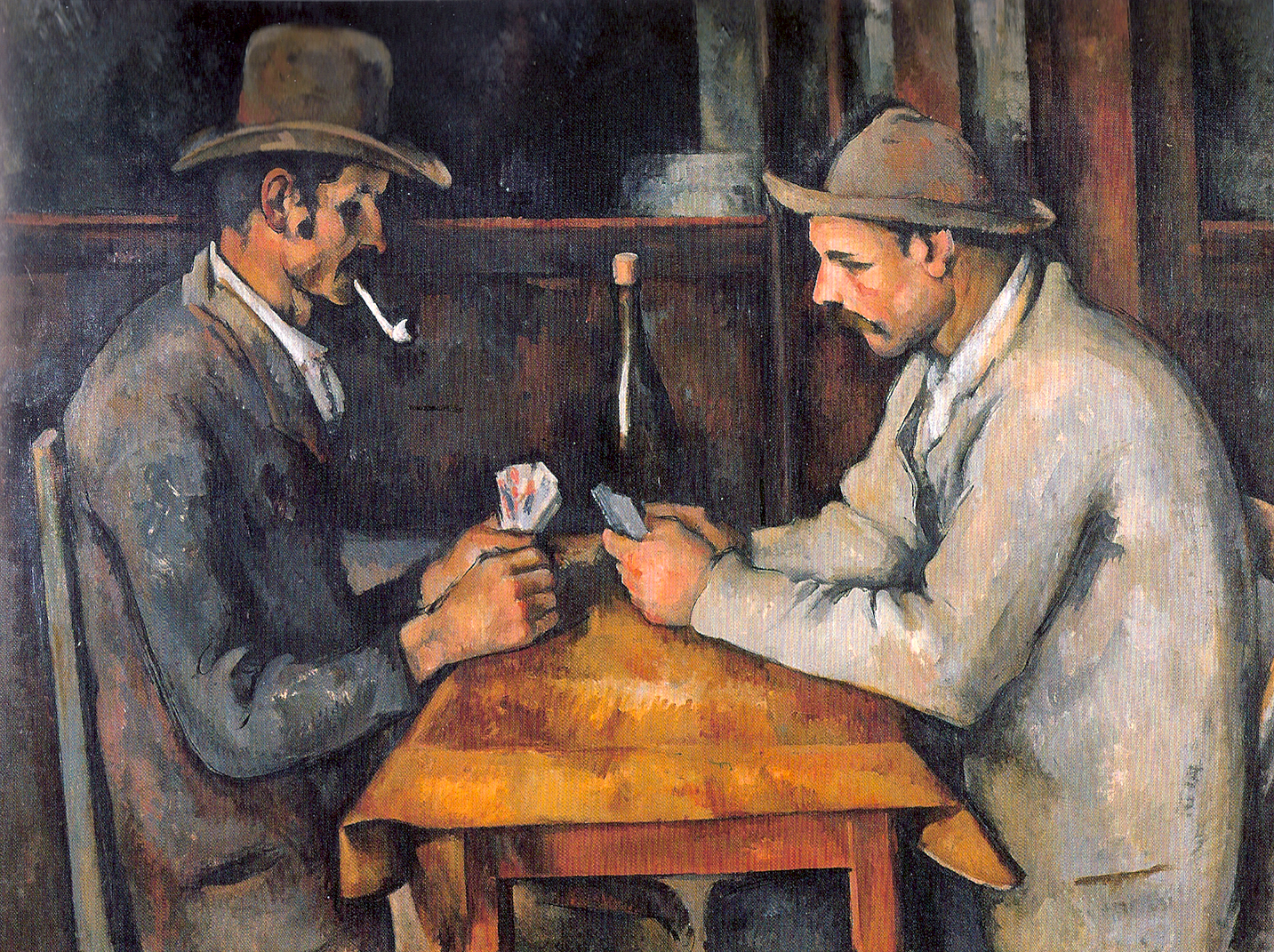
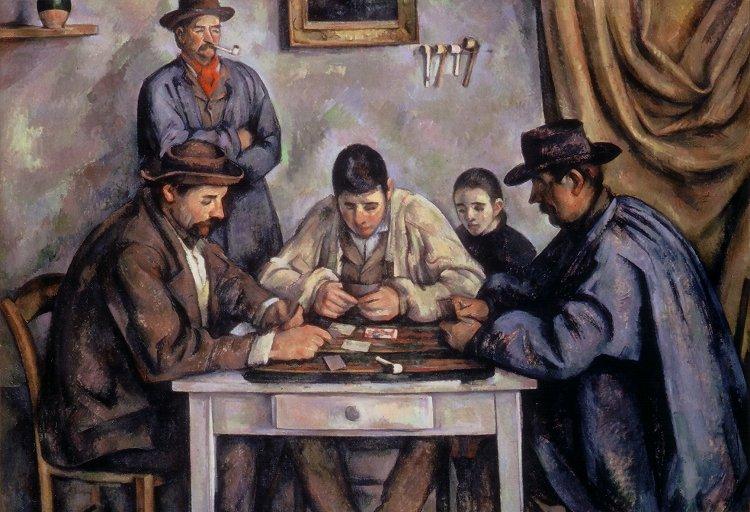
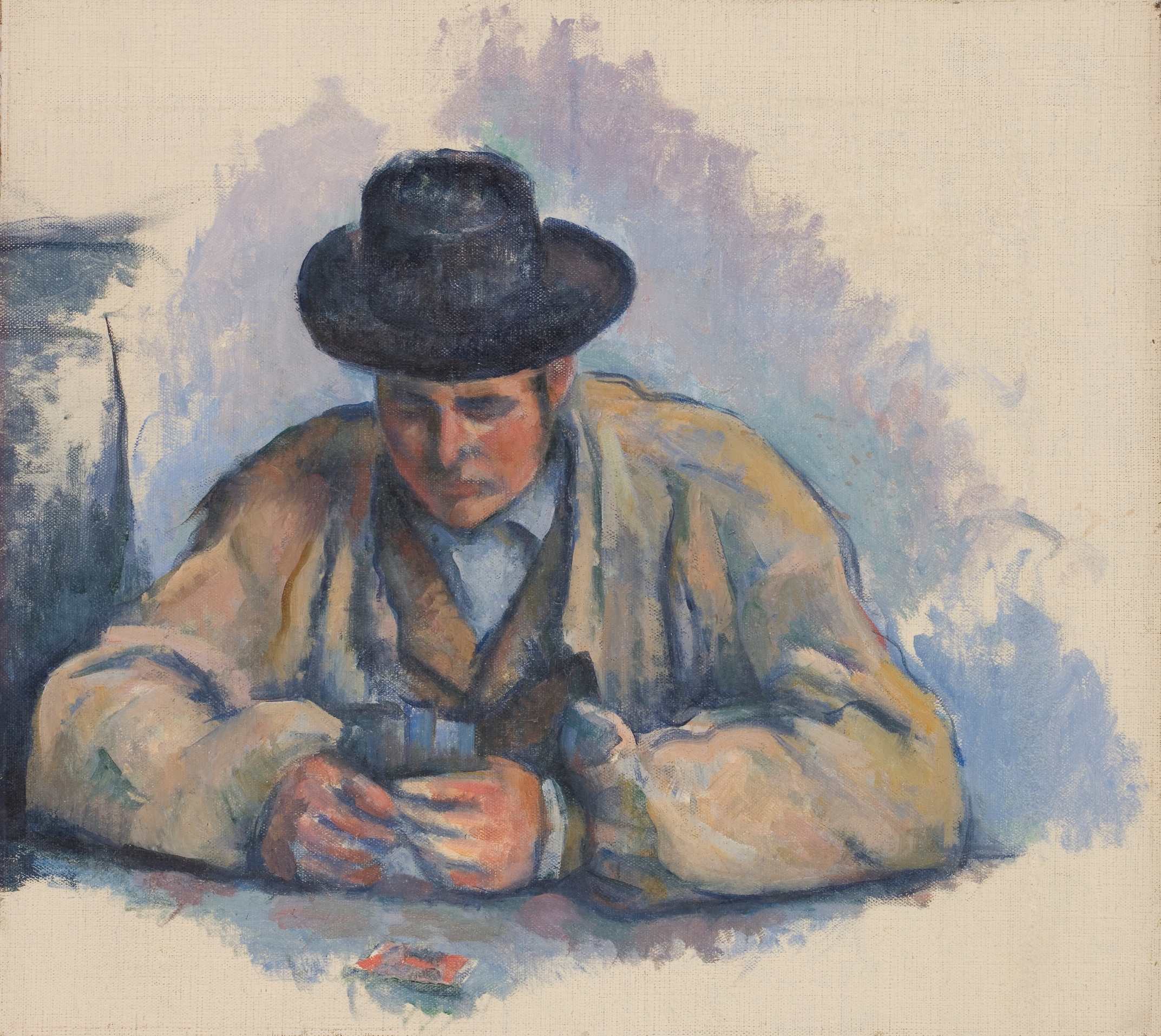
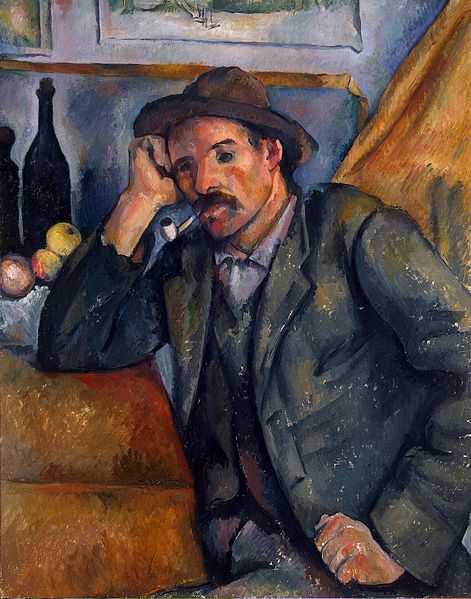
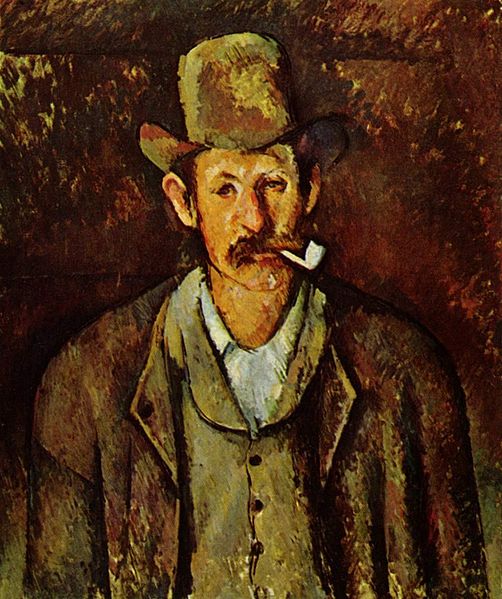
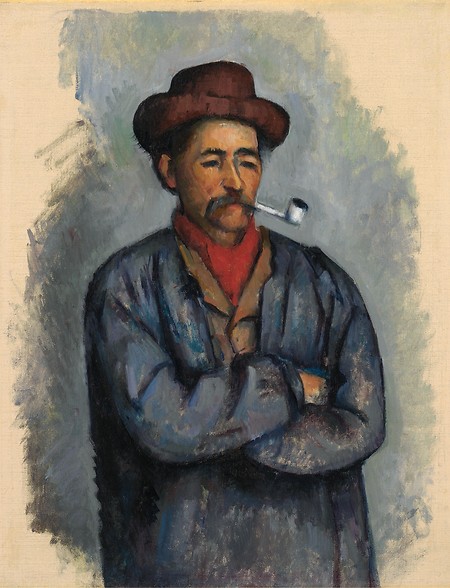
Although perhaps best known for his repetitive, almost obsessive landscapes of Le Mont Saint Victoire near his home town of Aix-en-Provence, and his groupings of apples and oranges painted as simplified geometric forms with zealously applied paint strokes, the so called father of cubism, post-impressionist master Paul Cézanne also painted another set of rather astonishing works which in my opinion easily qualify as some of his most captivating works. A gloomy tavern, a waxy dark tablecloth, a set of playing cards and the concentration of two card players, focus furrowed deep into their brows as we look upon them in the midst of a game – I am of course talking about Cézanne’s Card Player series, a series of some 5 paintings and numerous preparatory sketches, in which Cezanne took the tradition 17th century French and Dutch genre painting style of a rowdy tavern scene, and reduced it to a simple card game, full of intensity and, surprisingly for its tavern setting, sobriety.

The Courtauld's Card Players

The Courtauld’s Card Players

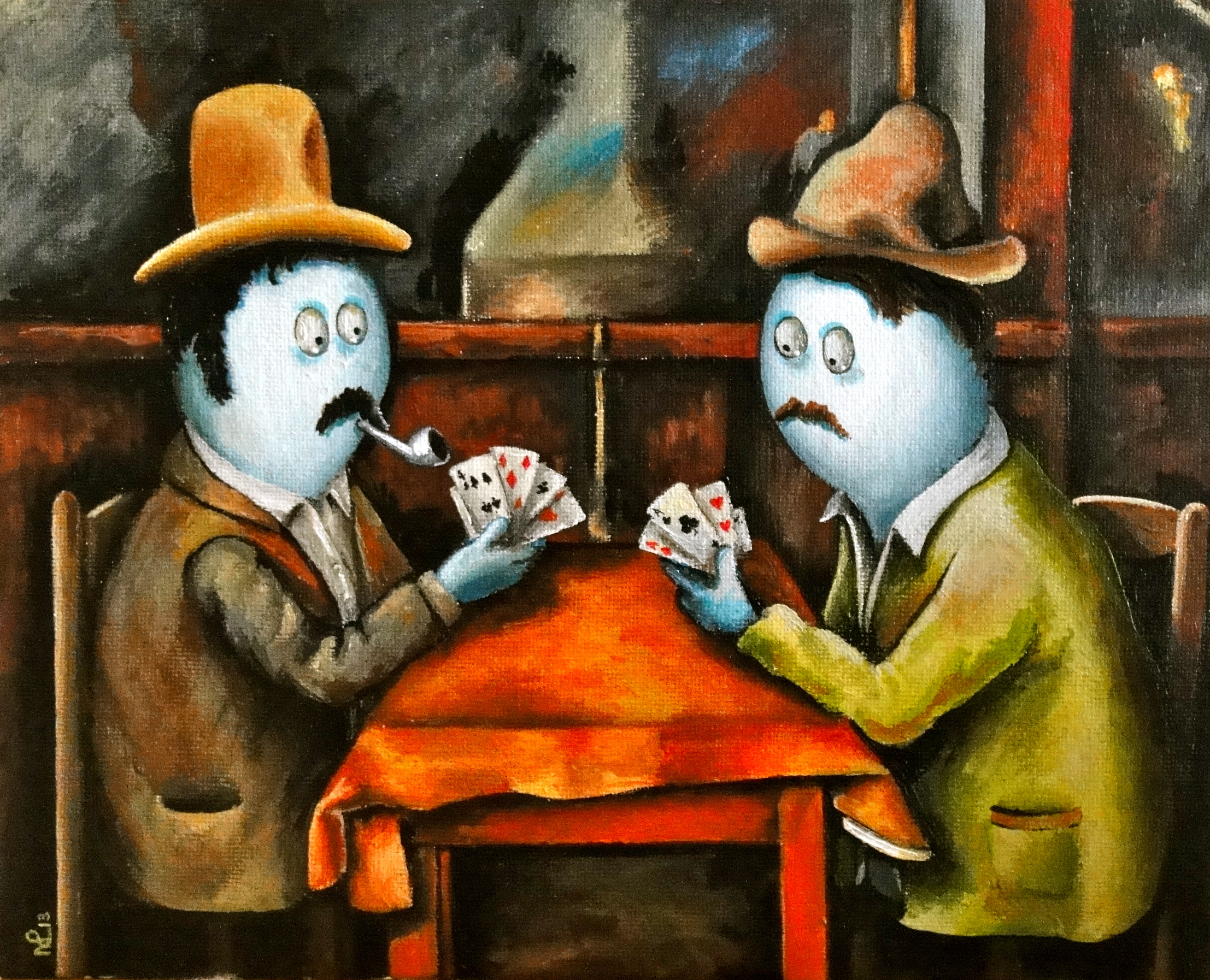
This now familiar composition by Cézanne, one of which hangs so happily close to me in London’s Courtauld gallery, made the headlines as recently as last year, when sold to the Qatari royal family for around $275 million, it became the most expensive piece of art work ever sold. While the price may be bonkers, and the painting’s final destination into a private collection lamentable, the art loving public can at least be reassured that four versions of the work remain on public view and as if that wasn’t enough, on top of that, the Norms have now staged their own version too!

Norm Card Players (after Cézanne) (2013 © Nicholas de Lacy-Brown, acrylic on canvas)

Norm Card Players (after Cézanne) (2013 © Nicholas de Lacy-Brown, acrylic on canvas)

Yes, being as, when you read this post, I should be somewhere in the Lavender-scented verdant rolling landscapes of Cézanne’s beloved Provence, and heading to his home town of Aix as my final destination, the Norms thought it only appropriate that before heading off on that trip with me, they would reimagine this renowned Cézanne scene, composed as it is with a rusty authentic depiction of a Provencal tavern complete with what are believed to be two of its local farmers playing cards. The Norm version is based upon the Courtauld’s canvas (above), and consequently the scene concentrates, as Cezanne latterly did, on the two solitary card players rather than two players with spectators such as populate some of the other works from the series. I’m not entirely sure how Norms manage to play cards so well with only one arm, but I suppose they have their ways, as Norms always do…

So without further ado, I leave you to enjoy the Norm Card Players, in this almost still-life, intense moment of concentrated card play. And some of Cezanne’s originals are included too.

Spot the difference…

The d"Orsay Card Players

The d”Orsay Card Players

The Qatari Card Players

The Qatari Card Players

Card Players at the Barnes Foundation, Philadelphia, Pennsylvania

Card Players at the Barnes Foundation, Philadelphia, Pennsylvania

and at the Met, NY

and at the Met, NY

And some studies…

8-Cezanne-Card-Player-Worcester 471px-Paul_Cézanne_102 502px-Paul_Cézanne_103 Cardplayers_study_bloch_collection

A bientot.

© Nicholas de Lacy-Brown and The Daily Norm, 2001-2013. Unauthorized use and/or duplication of the material, whether written work, photography or artwork, included within The Daily Norm without express and written permission from The Daily Norm’s author and/or owner is strictly prohibited. Excerpts and links may be used, provided that full and clear credit is given to Nicholas de Lacy-Brown and The Daily Norm with appropriate and specific direction to the original content.

Composition No. 2 (Los Naranjos)

Last week I introduced a new painting and a very new style: Composition No.1 (squid with patatas a lo pobre), and hot on its heels I am very pleased to present my second Composition, likewise painted with gauche whose introduction into my artistic repertoire was inspired by the colourful enriching abstract works of Saloua Raouda Choucair currently on show at Tate Modern.

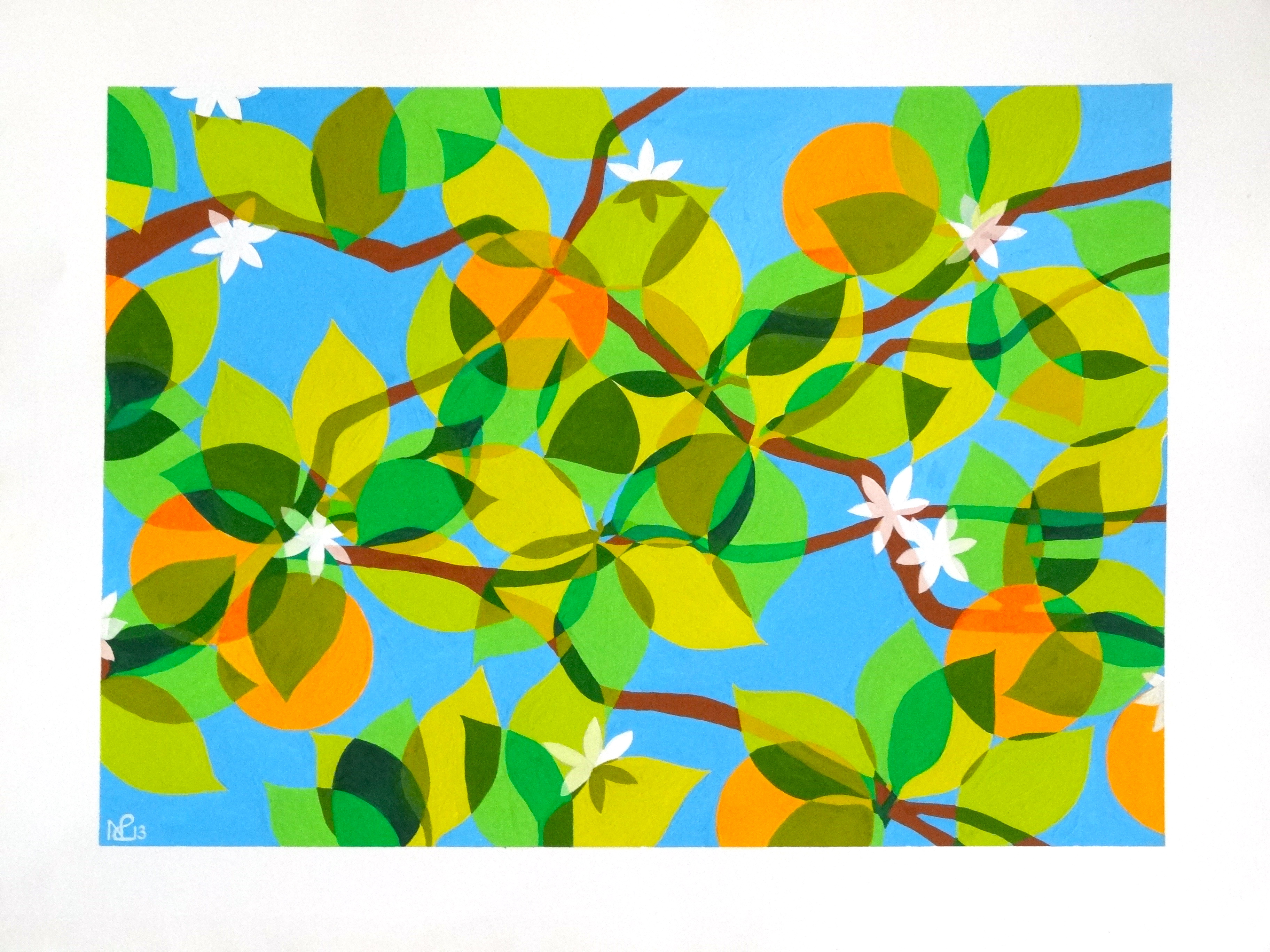
My second composition is inspired by those exquisite moments of summer time pleasure, when sat in the dappled Mediterranean light and shade of a ripe green orange-tree (Los Naranjos), you look up through the branches in whose semi transparent leaves the sun has scattered a panoply of greens, to see through those verdant lustres the unbroken clear blue sky beyond.

Composition No. 2 (Los Naranjos) © Nicholas de Lacy-Brown, gauche on paper

Composition No. 2 (Los Naranjos) © Nicholas de Lacy-Brown, gauche on paper

I adore mediterranean trees, basking under their natural canopy both protected from, and yet semi-dappled with the glorious midday sun. I love the unmistakable perfume of orange blossom, and the dry earthy aroma of sun warming the wrinkled bark of these well-weathered trees. And for me, the effect of light bleeding through a shelter of semi-translucent leaves lent itself so well to this abstract style, which has at its heart the idea of multi-layered shapes. The result is a painting which I hope you agree has the essence of a summer’s day, but in a decidedly abstracted mood.

Composition No.3 will surely follow suit. Until then amigos.

© Nicholas de Lacy-Brown and The Daily Norm, 2001-2013. Unauthorized use and/or duplication of the material, whether written work, photography or artwork, included within The Daily Norm without express and written permission from The Daily Norm’s author and/or owner is strictly prohibited. Excerpts and links may be used, provided that full and clear credit is given to Nicholas de Lacy-Brown and The Daily Norm with appropriate and specific direction to the original content.

RA Summer Exhibition – Grayson Perry steals the show

Now in its 245th season, the annual Summer Exhibition at London’s Royal Academy is reputed to be the largest open-submission exhibition in the world, and also one of the oldest. Yet while it is billed as being a show which offers all artists, no matter their qualification, notoriety, nationality or skill, the opportunity to submit work and be hung amongst a who’s who of some of Britain’s most prominent contemporary artists, it is more often the case that those prominent artists more than overshadow those lesser knowns who are lucky enough to have their work selected for the show. In previous years, the non ‘Royal Academician” artists have been crammed into the smallest possible spaces, while the larger galleries have been given over to the same old RA clique, whose submissions never appear to differ from one year to the next.

4576 gallery-1-rasi-13-23776

In that respect, this year’s show, just opened at Picadilly’s Burlington House, is very similar. The same old-same old is prominently hung, including works by the likes of Albert Irvine RA, whose florescent acrylic daubs continue to repel me despite my being consistently exposed to them at each annual Summer Exhibition, and Eileen Cooper RA, whose rather simplistic portraits look more craft fair than art show to my mind. Having said that, the RA appears to have learnt from past grumbles, and has not crammed the non-RA artists into a single small room, rather opting for a “Salon-style” floor to ceiling hang in many of the larger galleries, which, while rather bewildering to look at, at least makes for a more pleasant viewing experience when the large crowds of people, attracted no doubt by the smaller price tags, cluster around these works hoping to invest in the lesser known, affordable artists.

An El Anatsui "sculpture" hangs over the facade of the RA for this year's show

An El Anatsui “sculpture” hangs over the facade of the RA for this year’s show

While the Salon-style hang inevitably means that there are way more pictures on show than anyone can possibly take in on one visit, it does at least mean that there are huge rafts of works on show, and undoubtedly something to suit every taste. In keeping with my positive experience of last year (which resulted in my making two purchases), my favourite gallery of this year’s show was no doubt the print room – a gallery full of prints of all mediums, from etching to relief, screen printing to woodcuts, and I was very happy to see the artist Adam Dant on show at least twice, one of whose encyclopaedic works I had bought last year.

Adam Dant, The Mouth of Italy (Venice) hangs at this year's show © Adam Dant

Adam Dant, The Mouth of Italy (Venice) hangs at this year’s show © Adam Dant

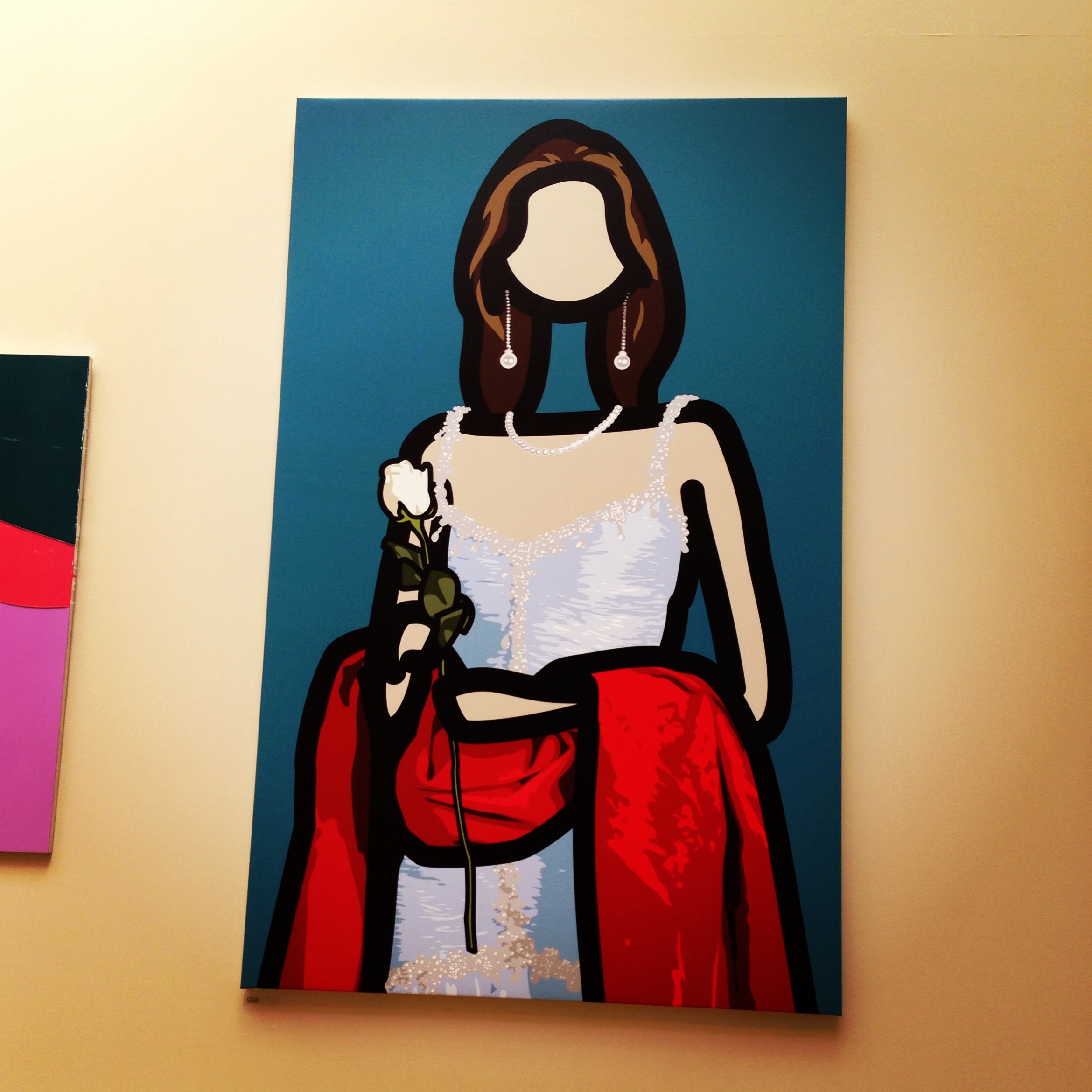
Many of the subsequent galleries flew by in a rush of sculptures, architectural models and so-so paintings. Only a few works really stood out enough for me to remember them subsequently, amongst them Julian Opie’s Maria Teresa I, which I adored, and reminded me of a pop-art Velazquez court-painting.

Julien Opie's Maria Teresa I © Julien Opie

Julien Opie’s Maria Teresa I © Julien Opie

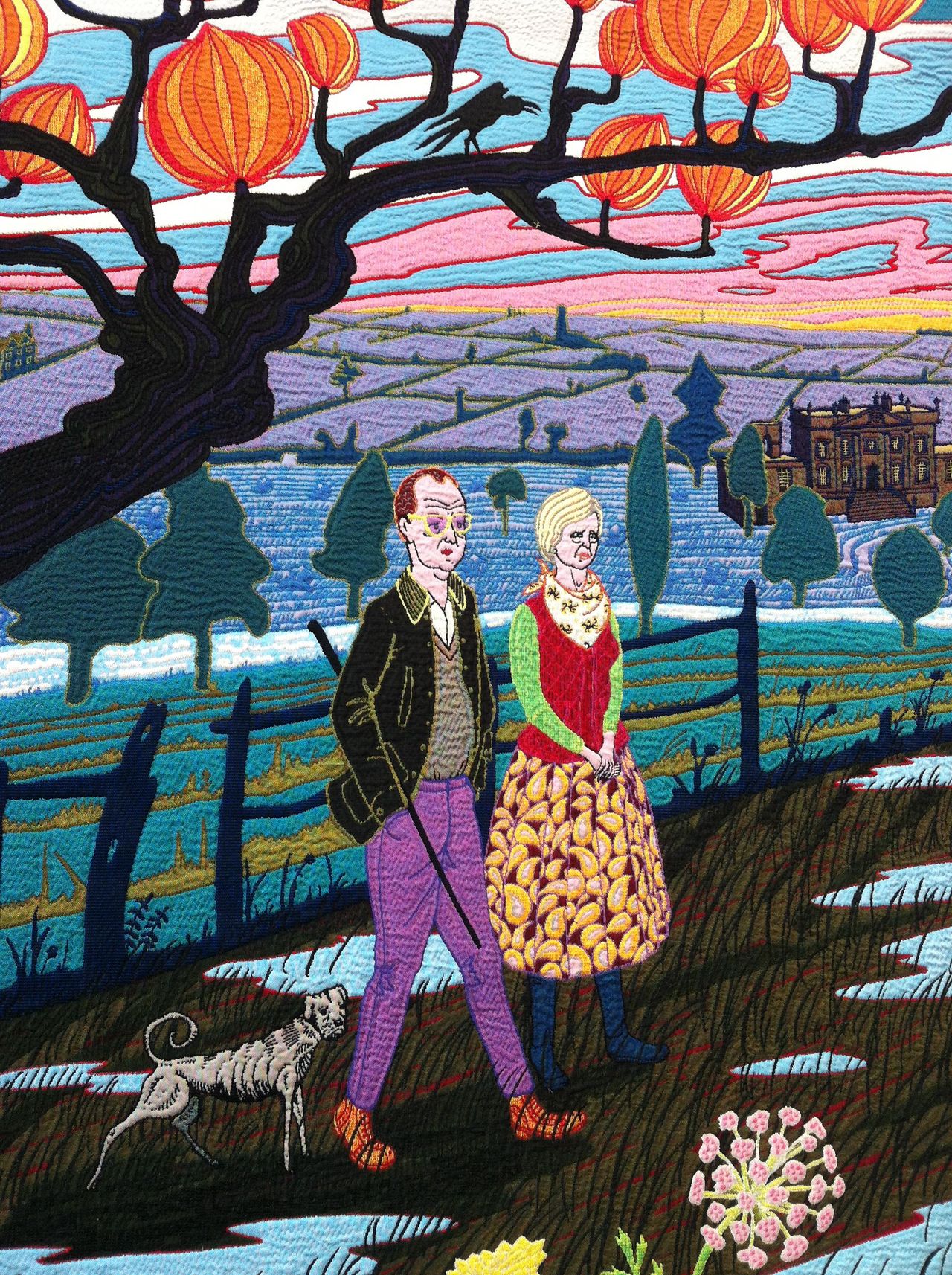
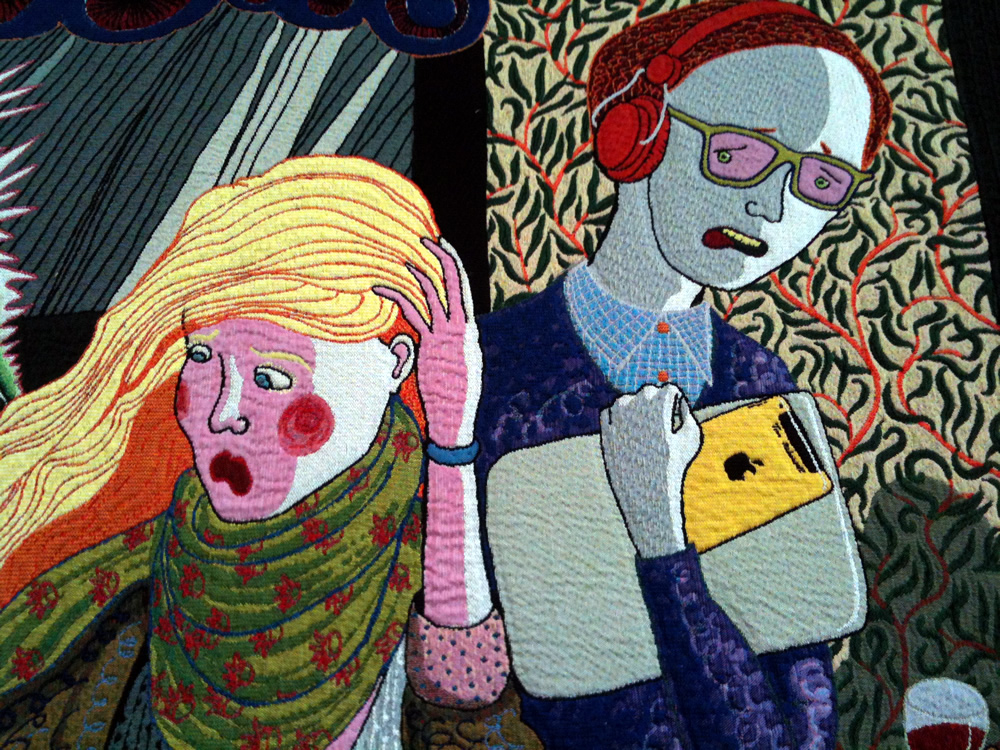
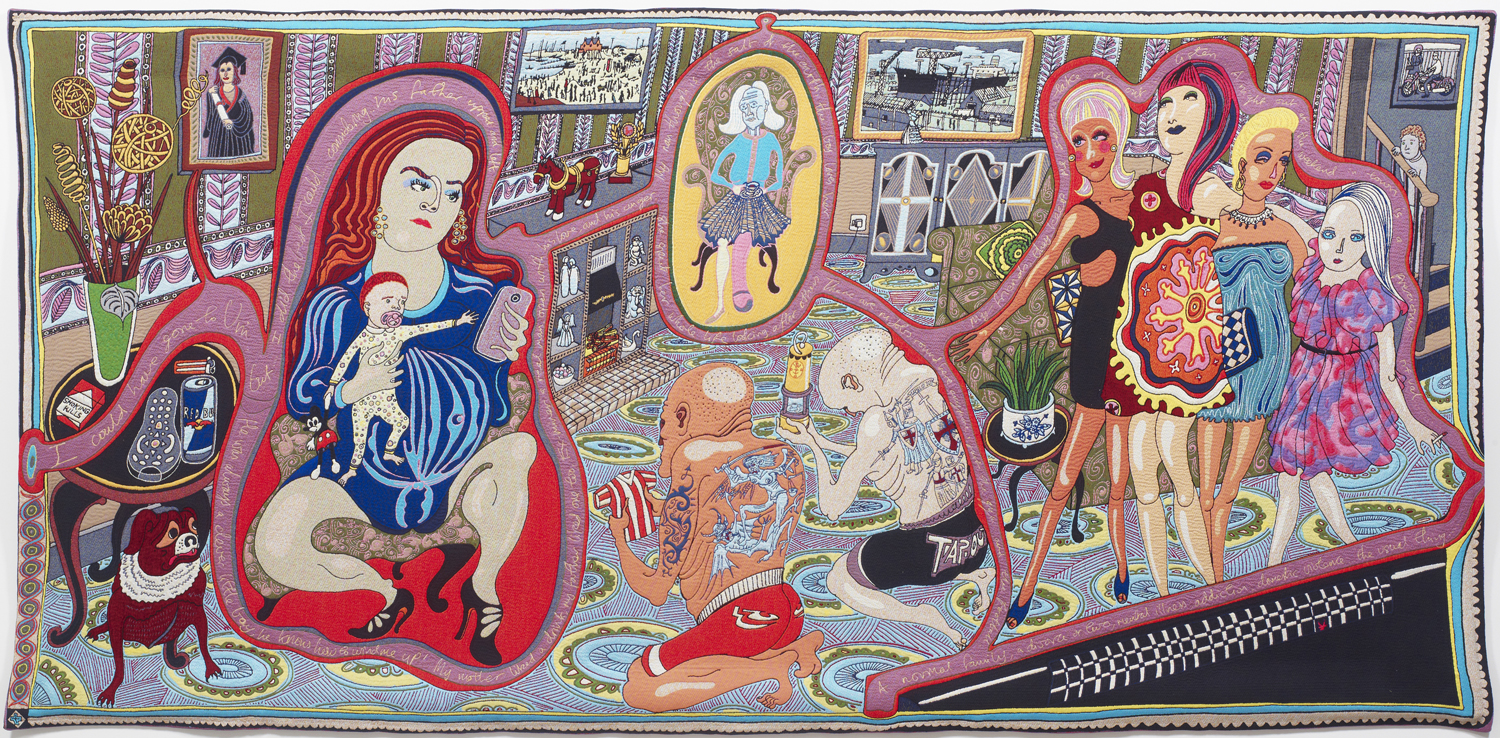
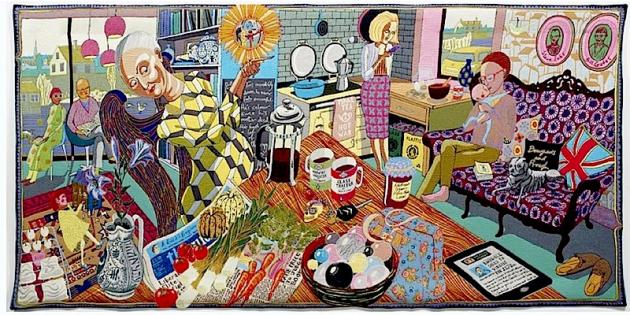
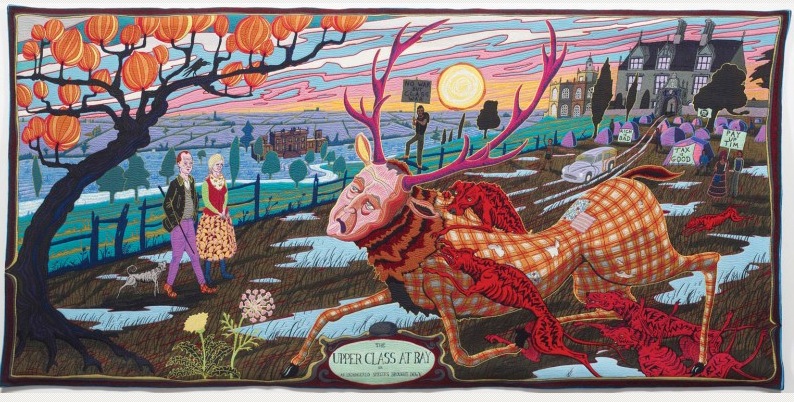
But undoubtedly the real star of this show and the work for which a visit to the exhibition is alone worth a visit, is one Grayson Perry, the witty, perceptive, social-commentating, cross-dressing craftsman and artist. I first estolled the virtues of Perry when I took a trip to his British Museum exhibition one year ago. Now, at the Summer Exhibition, a whole gallery (the last in fact) has been given over to a set of 6 tapestries by Perry which, under the combined title The Vanity of Small Differences, tell the story of one Tom Rakewell, whose rise and fall through life is captured insightfully and comically across these brilliantly detailed, multi-coloured and superbly designed Hogarth-inspired tapestries.

Details from The Vanity of Small Differences © Grayson Perry

tumblr_m7kigl2KaI1r2y5buo3_1280 grayson-perry-masaccio 7592829302_be24f23221_z GraysonPerryTheVanityofSmallDifferencesMugs _68000737_68000736

As is so typical of Perry’s work, these tapestries offer a spot-on insight into what some call Britain’s “tribes”, from stay at home frustrated mother and groups of rowdy clubbing slappers, to our aspiration for the “high life”, a tendency to attack those who the masses perceive as “upper class”, and our obsession with money, gadgets and celebrity culture. There’s so much to take in in these brilliantly conceived tapestries, and even as I write, I am itching to go and see the works again so that I can take in more of the feast of details which Perry offers up for our consumption. In the meantime I include images of all six tapestries to tempt your taste buds, as well as some shots of the wonderful details which are literally stitched into the richly weaved layers of this work.

The Adoration of the Cage Fighters © Grayson Perry

The Adoration of the Cage Fighters © Grayson Perry

The Agony in the Car Park  © Grayson Perry

The Agony in the Car Park © Grayson Perry

Expulsion from Number 8 Eden Close  © Grayson Perry

Expulsion from Number 8 Eden Close © Grayson Perry

The Annunciation of the Virgin Deal  © Grayson Perry

The Annunciation of the Virgin Deal © Grayson Perry

The Upper Class at Bay  © Grayson Perry

The Upper Class at Bay © Grayson Perry

Lamentation  © Grayson Perry

Lamentation © Grayson Perry

The Summer Exhibition is now open at the Royal Academy and runs until 18th August 2013.

Composition No. 1 (squid with patatas a lo pobre)

With Composition No.1 (squid with patatas a lo pobre), my painting has taken something of a new direction. Inspired by the simple abstract forms and “fractional modules” of Saloua Raouda Choucair, and intrigued by the medium of her choice, gauche, I have diverted from the more detailed figurative approach of my normal artwork to cleaner, simpler representational forms.

In this work, I am attempting to convey an atmosphere and an occasion: lunch by a Mediterranean beach – a dish of squid and patatas a lo pobre, the typical unctuous Spanish dish in which simple oil nourished potatoes are served with peppers and onion. I have attempted to convey the swirls of the sea, the curving delicate forms of a squid’s tentacles and the odd burst of red from the colour-rich peppers.

Composition No. 1 (Squid and patatas a lo pobre) 2013 © Nicholas de Lacy-Brown (Gauche on paper)

Composition No. 1 (Squid and patatas a lo pobre) 2013 © Nicholas de Lacy-Brown (Gauche on paper)

As for gouache paint – it’s been something of a revelation. Something of a cross between watercolour and acrylic but drying matt, flowing seamlessly across the paper and easily controllable both with and without water mixed in, I’ve found it an inherently pleasurable medium with which to work. I love the flat finish, the overlapping colours, and the explosion of blues bursting across the picture. I cannot wait to work in gauche again. In fact, composition No.2 is already taking shape.

© Nicholas de Lacy-Brown and The Daily Norm, 2001-2013. Unauthorized use and/or duplication of the material, whether written work, photography or artwork, included within The Daily Norm without express and written permission from The Daily Norm’s author and/or owner is strictly prohibited. Excerpts and links may be used, provided that full and clear credit is given to Nicholas de Lacy-Brown and The Daily Norm with appropriate and specific direction to the original content.

Weekend Review – Candy floss and tutus

Sometimes when a weekend is so bounteous in treats, both planned and unplanned, it becomes a chore to try and sift through the experiences and feature one or two on my blog. And since the alternative – which is to write about none of them – does not sit well with the spirit of blogging, nor indeed with what is, after all, meant to be an epnoymously daily blog (although admittedly I’m not currently doing all that well on that front…) I thought I’d just tell you about the whole darn lot!

So, on Friday afternoon, as the clock hand clicked past 5 and I started to feel the rush of weekend relief fill my worked-out body, I rushed home to start the weekend. For me this meant three things: First the completion of my new painting, “Composition I”, an entirely new direction of painted expression (which I’ll try to post up on the blog in a few days time) with which I have discovered gouache paint for the first time. It’s a work inspired partly by the Choucair exhibition I attended last weekend and partly by a typical luncheon by the sea in Marbella, with squid, and patatas – the perfect weekend on any view.

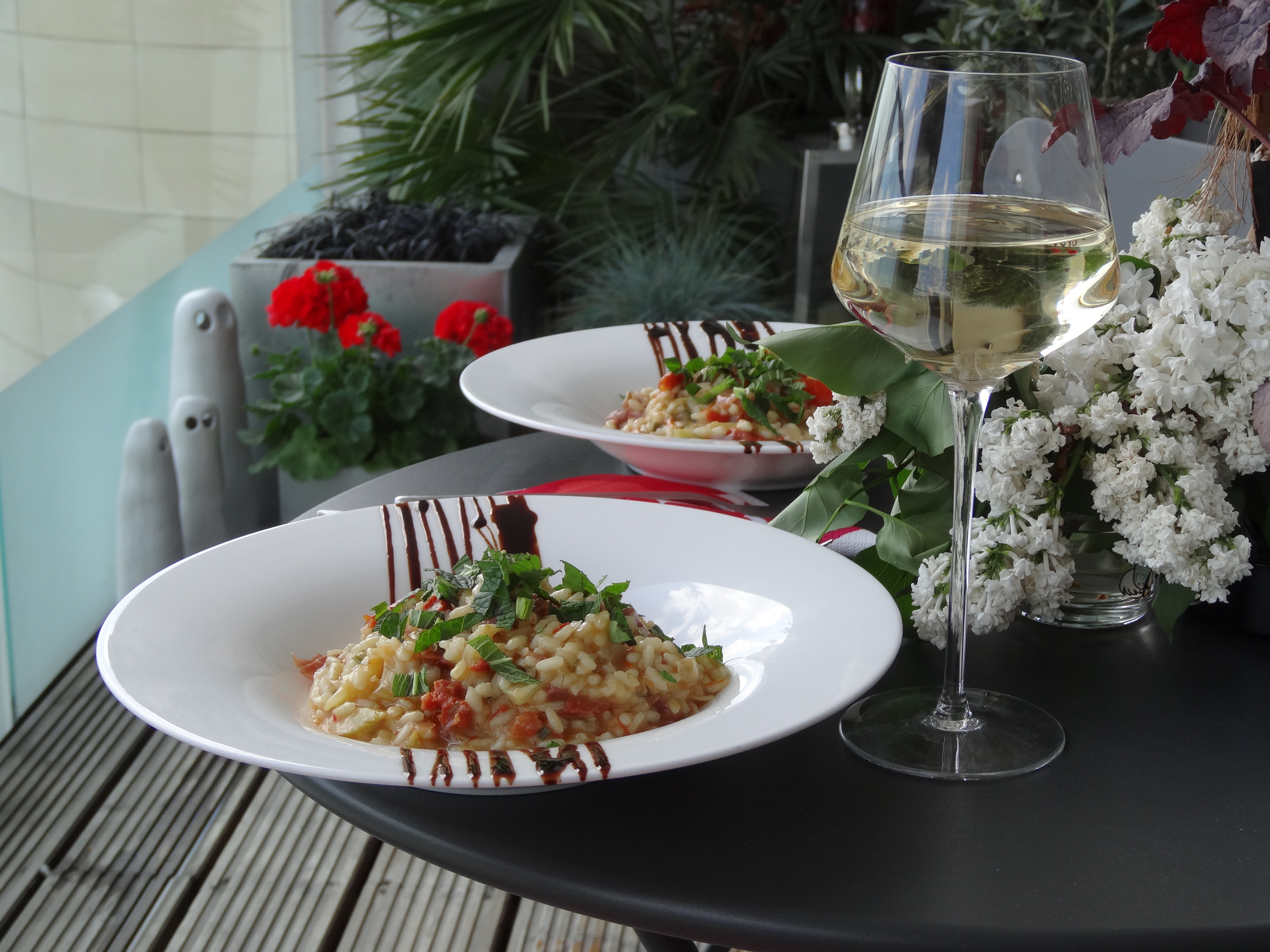
But back to Blighty, and with paint brushes put aside and a wooden spoon picked up in their place, I commenced cooking up a risotto feast – the perfect creamy end of week pleasure, and a good one for using up odds and ends of food after a week’s exhaustion of supplies. In this case it was half a packet of palma ham, some rather old chorizo, a few tomatoes, half a bulb of fennel and a little fresh mint which made it into my rather indulgent left-overs risotto. And what a treat to eat it al fresco too, on our warm London balcony, watching commuters aplenty passing by, the majority with a bounce in their step, overjoyed as we were that the weekend had come at last.

My "odds and ends" risotto

My “odds and ends” risotto

Dining al fresco...

Dining al fresco…

But as ever the al fresco air inspired us to go out into the open air in search of dessert, and a walk across the vast expanse of Clapham Common and back towards Northcote Road in the Clapham Junction area brought us to a new entrant on the restaurant-lined street. In place of what had once been a rather chic Austrian eatery is now a cute little Spanish restaurant AND sherry bar, Rosita. Unsurprisingly we headed straight for said sherry bar in search of our dessert. The fact that we then ended up with two glasses of wine and a few savoury tapas dishes was perhaps inevitable, but dessert did eventually follow, in the form of deep friend sweet potato cakes in a honey syrup. Delicious.

Rosita's sherry bar

Rosita’s sherry bar

Rosita-and-the-Sherry-Bar

Now too fat to move, we bemoaned our over indulgence and returned home, exhausted, to bed.

Read more