Skip to content

Posts from the ‘Comment’ Category

Too twee for me: The Sterling-Clark Impressionism collection at the RA

The problem, in my view, with Impressionism is not the fact that its most renowned images are regularly plastered across every kind of tourist paraphernalia and household object you can possibly imagine – often the most iconic images are icons for a reason – because they broke boundaries, they inspired, they recalled an essence of something past, a nostalgic ambience, a time of great creative fluidity.

Rather, the problem with Impressionism is that having begun as an artistic revolution, breaking new boundaries, taking art from the confines of bourgeois society, the closed-class snobbery of  institutionalised selection committees and the drawing rooms of the aristocracy and using it to celebrate the lives of the ordinary, of the downtrodden, of the true foundations of society, and steering draftsmanship from perfectly executed depictions to looser, more energetic and living impressions, much of Impressionism became the victim of its own success.

Renoir started painting ghastly portraits of rotund, rosy-cheeked women, twee, floral-sweet pictures which would fit nicely onto a chocolate box were they not so likely to induce the viewer to vomit. Monet, meanwhile, became overly obsessed with his damn lillies, to the extent that in trying to capture the subtle pinks and purples of mist over a pond, he ended up painting canvas after canvas which were reminiscent of the kind of floral fabric preferred by members of the WI and other polite conservative society. Van Gogh’s work became clumsier and clumpier, Cezanne’s became repetative, Degas started dabbling in pictures of nude women which were almost sadist, and Manet, poor thing, was confined to painting flowers, although to be fair, he was too ill to work on bigger canvases.

Pierre-August Renoir, Girl with a Fan (1879)

Pierre-August Renoir, A box at the Theatre (1880)

Anyway, the point I am making is that for the most part, having started off as revolutionaries, the Impressionists’ later work all too often conformed to a new form of the conservatism they were trying to escape in the first place – placating their former critics with twee works of flowers, pink-tinged landscapes, and pretty women, nude or in flowing dresses. And it is exactly these works which were the favourites of Sterling and Francine Clark and which, as a result, are the focus of the Royal Academy’s latest show in London, which showcases some major works from the Sterling and Francine Clark Art Institute in Williamstown, Massachusetts (I believe because the Sterling-Clark is undergoing some form of renovation).

Henri de Toulouse Lautrec, Waiting (1888)

Those who have raved about this exhibition tend to have been on the older, more conservative side. And it is easy to see why they are seduced – some of these works may even feel a bit racy for a few of them – just look at Toulouse Lautrec’s Waiting, with a woman leaning despondently over her glass of absinthe. Quite the scandal compared with Renoir’s pleasant smiley female offerings hanging close by. But not to worry, that’s about as lascivious as this show gets. Sadly.

Robert Sterling Clark (1877-1956) came from a wealthy New York Family whose fortune derived from the Singer sewing machine company. He began collecting art after he settled in Paris in 1910 and where he soon became the chum of famous art dealers Knoedler and Durand-Ruel who introduced him to the innovative work of the Impressionists which had finally broken into the mainstream at that time. In fact Renoir, whose works Clark adored (he eventually collected some 39, 21 of which are at the RA) was by that time so popular that looking around at the sales receipts interestingly exhibited by the RA, you can see that Clark was paying astounding sums such as 100,000 dollars for Renoirs, even then. As the collection, added to with the help of his French wife, Francine, grew, Clark had it in mind to open a museum. He did this in 1955, in Massachusetts, providing a permanent home for his many Impressionists works including Monets, Manets, Toulouse Lautrecs as well as various more classical pieces. Disappointingly, his collection is very experimental – he had one Gauguin on show, and even that was a traditional(ish) portrait of a woman.

Claude Monet, The Cliffs at Etretat (1885)

Edouard Manet, Interior at Arcachon (1871)

Claude Monet, Seascape: Storm (1860-67)

In fact Clark obviously had a penchant for paintings of women. After the initial gallery of flowers, onions and various fairly dull landscapes by Pissarro and Monet, the main bulk of the small exhibition are portraits of women. Asides from the insipid offerings of Renoir, there are, mercifully, some far more enticing works by other artists, both big-wig impressionists and less well-known painters. Two incredibly evocative Toulouse-Lautrec works are on show, both offering quite stark views of a woman in the shady quarters of Montmartre, one, Carmen, who confronts the viewer straight on, while the other, nameless, is just waiting – what for, we don’t know. From the hunched over pose and the glass of absinthe before her, are we to assume she is waiting for luck to come her way, or even death to end her suffering?

Of the other portraits of women, my favourite had to be Crossing the Street by Giovanni Boldini. Boldini, an Italian artist who settled in Paris, loved painting the sights and sounds of the salacious neighbourhood of Pigalle on his doorstep, and this beautiful portrait of a woman, raisng the hem of her petticoat as she crosses the cobbled street, is so wonderfully evocative, and brilliantly painted, exhibiting both an impressionistic, roughly painted background, and a precise and focused detailed and sympathetically painted portrait. I also adore the little details – the shop sign, the dog, the Dandy in the carriage – it’s a wonderful turn back in time to a Paris of bohemian romance and delightful decadence mixed with poverty and decay.

Giovanni Boldini, Crossing the Street (1873-75)

James Tissot, Chrysanthemums (1874-76)

Likewise mention has to go to the lesser known artists who nevertheless created two portraits really worth visiting this show to see – James Tissot’s Chrysanthemums, a brilliant depiction of a woman, looking at the audience as though disturbed, surrounded by a great swathe of multicoloured hairy-headed flowers painted with great fantastic technical skill. Also check out Alfred Steven’s Memories and Regrets, in which a woman, as the name suggests, appears to have been sent into a daydream of remembering prompted by the letter in her hand, a personal and private moment interrupted only by the presence of we, the viewer, introduced to the scene thanks to the technical rendering of Steven’s portrayal.

Alfred Stevens, Memories and Regrets (1874)

Like any show, this one has its highlights, and whether it be that the paintings of the lesser known artists exhibit the most skill in their execution, or just because, since they are not tourist fodder like their more well known impressionist colleagues, they represent something of a breath of fresh air, those paintings by the likes of Boldini, Tissot and Steven are definitely, for me, the stars of the show.

As for the other impressionist works on show – well these paintings are all very safe, and for that reason I find them boring. But for lovers of the chocolate box impressionism which is so firmly engrained onto the consciousness of every tourist and gallery visitor around the world, this show gives you impressionist staple which you will undoubtedly enjoy. But don’t forget your Renoir souvenirs on the way out.

Pierre-August Renoir, Onions (1881)

From Paris: A Taste for Impressionism continues in the RA’s Sackler Wing Galleries until 23 September 2012.

Ravel at Glyndebourne: the double-dip opera-session

Everyone knows that here in England, we’re wallowing in a double-dip recession. The longest for decades they say. But there was light on the horizon this week – apparently we’re not in the recession as deep as forecasters had thought. Well hey ho, that’s a positive surely? Things are looking up! And what better way to celebrate this sprightly news than to head along to where all the rich people go – to Glyndebourne Opera, home of the landed gentry, the well-coined and lovers of lavishness aplenty, for none other than a double-dip opera-session! (called such because 1. this is my second visit of the year – I know, lucky me – and 2. we got to see not one, but two operas by Ravel). I know, Ravel – hardly your Puccini or Mozart. But my, what a feast beheld us when we sat down to watch the melodic opus of this operatic genius.
L’heure espagnole

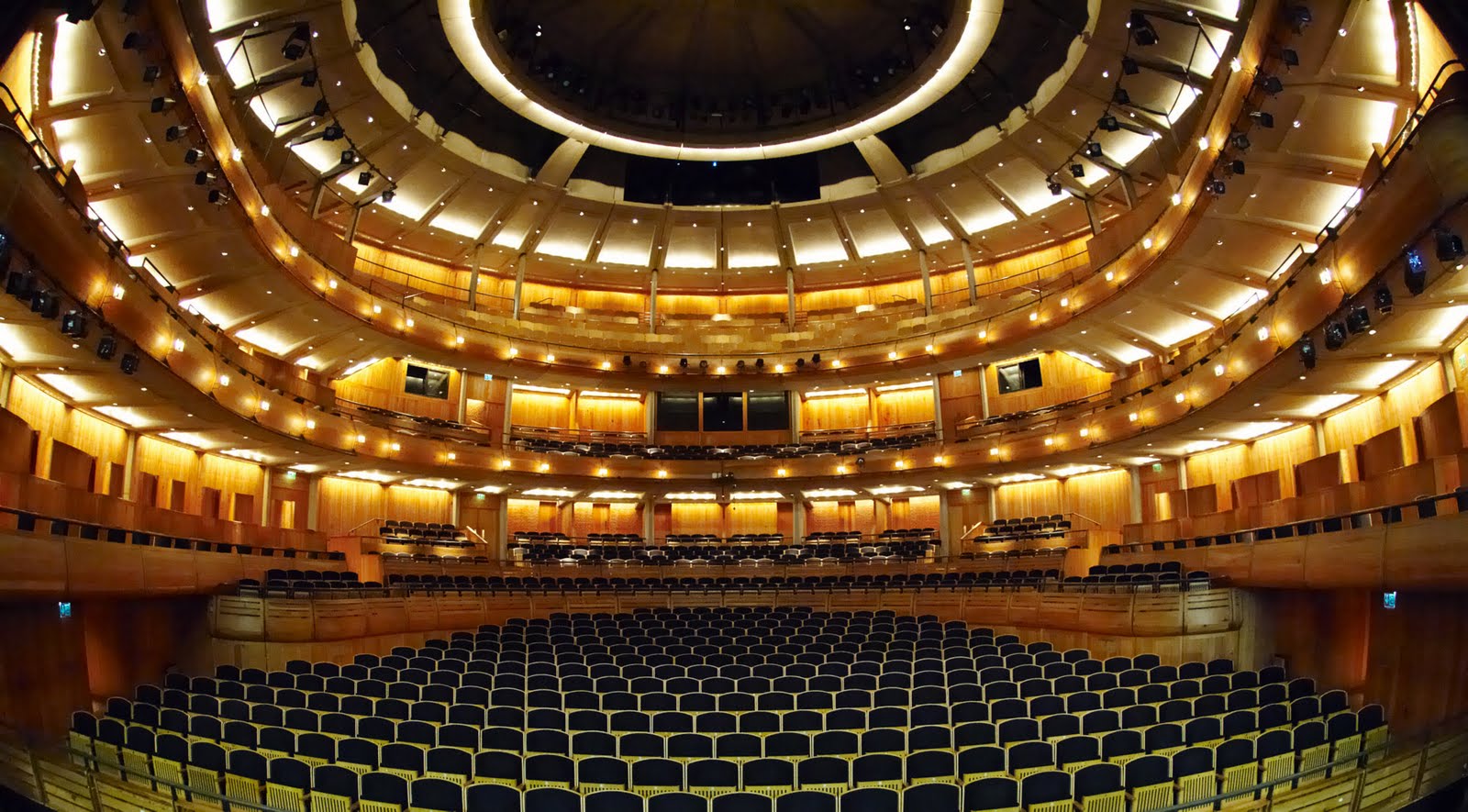
Once we had enjoyed our customary fill of afternoon tea and a stroll around the verdant grounds of Glyndebourne (disappointed however that for the price of half a small car, tea was presented as a Twinings tea bag. Where was my loose leaf? My high tea silver?) we entered the lavishly contemporary wood-clad opera auditorium to watch the first of the Ravel double-bill. L’heure espagnole thrilled from the moment the curtain unfurled horizontally across the stage, revealing behind it a clockworker’s shop with a wall filled to the brim of different sized clocks and other nicknacks, all wonderfully animated so that, as the curtain rolled back to reveal them, the clocks would begin spinning, the skeleton started dancing and dusters started revolving, all on their own, like some kind of enchanted wonderland.

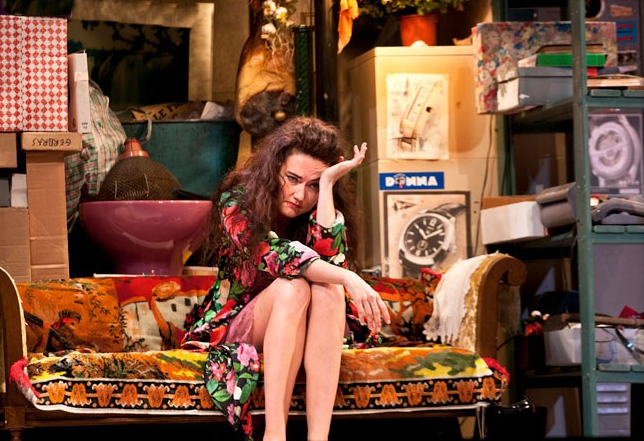
What followed was a perfectly choreographed commedia dell’arte, a typical sexual farce as a clockmaker’s wife attempted (almost) in vain, to make the most of her husband’s one hour’s absence to throughly flirt her way through the town’s male population. But as she found one man too poetically verbose and romantically flighty, she found the robust attentions of another too overbearing. Trying to escape one and have her way with the other, a hilarious scene unfurled as the licentious Concepcion, brilliantly played by Stéphanie d’Oustrac, tried to hide one lover from another, generally speaking in cuckoo clocks, while all the time courting the attention of yet another suitor who at the start of the opera bemoaned his lack of touch with women, but by the end had bedded Concepcion, just in time before her husband arrived back.
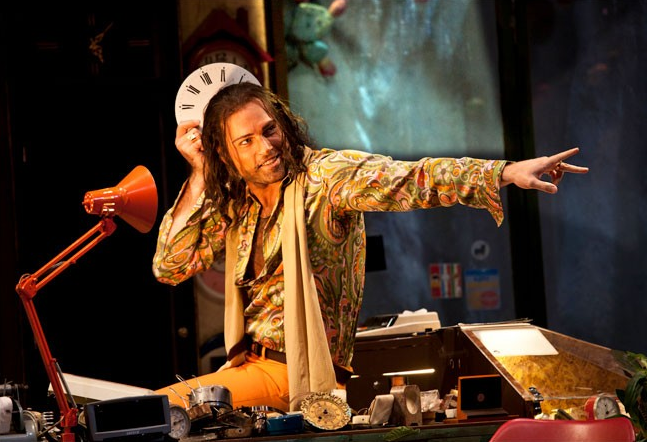
My favourite section was the final scene, when back on stage, all five singers threw themselves into a brilliantly mastered harmony, sung in tandem, but each one of them following a differently intricate melody. I also appreciated the devilish symbolism which ran throughout the opera, as the libretto alluded to the winding up of clocks as a symbol of sexual frustration, only for the cuckoo to pop out energetically as a symbol of – well, I’ll let your imagination finish that sentence off. A few dangling pendulums and several shrill cuckoos later, and the opera ended just after an hour of comical gold with some excellent singing and a beautifully played score which evoked the sensual atmosphere of middle-Spain (the opera is set in Toledo) and the ravishing rhythms and visceral textures of that region. What this opera lacked in memorable harmonies, it gained in actorly skill and superb staging – one forgets that opera singers have to act just as well as they sing, and in L’heure espagnole, they were pretty spot-on on both fronts.
 L’enfant et les sortilèges

If the evening had ended there, we would have walked away highly satisfied. But after the customary 90 minute interval break, we returned for the second of the Ravel operas and were frankly so stunned by the creative genius of the spectacle which started to play out on the stage before us that my mouth hung open, my partner’s eyes started blinking in disbelief, and for all of us, a suspicion ensued that either the wine during dinner had been sensationally strong or the director’s staging was fantastically good, such was the brilliance and utter incredulity of the surreal spectacular which was embodied by the second opera: L’enfant et les sortilèges. 

Read more

London 2012 – a city celebrates

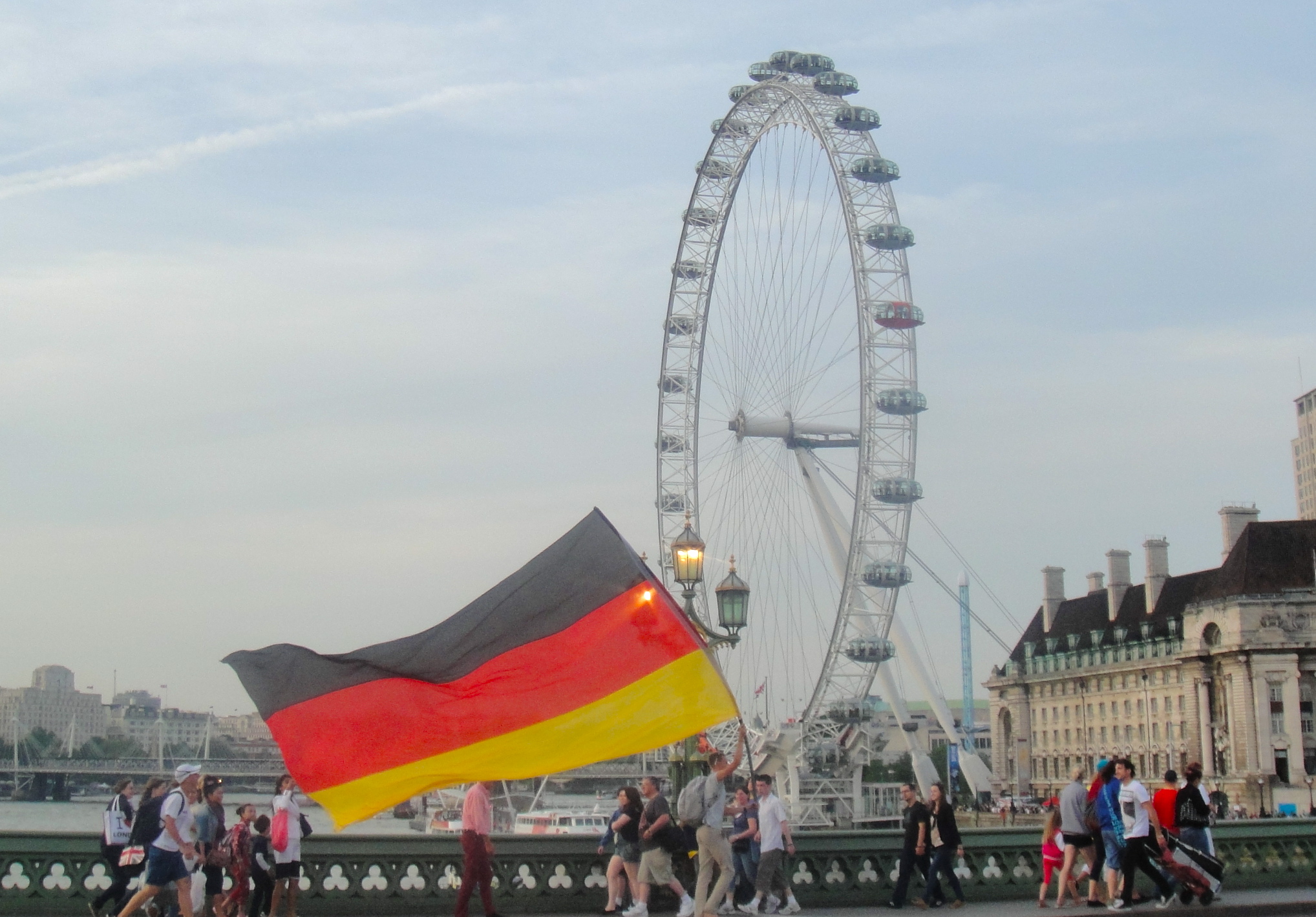
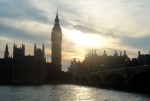
Being a Londoner, in London, when the Olympics rocked up on our doorstep and the focus of the world followed suit, has been an incredible experience which I wouldn’t have missed for the world. London has changed. Yes, Big Ben still chimes where it always did, and the London Eye still turns steadily next to the mighty River Thames. But during the two weeks of the olympics, the spirit of London underwent a tangible transformation. It was like being at school when a special holiday was being celebrated – the school was the same, but being their felt different, exciting. Similarly, being in London during the games has felt incredibly exciting, thrilling and the source of utmost pride.

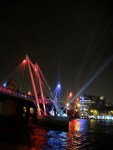
Of course if you were a “Games Maker” or attended the huge olympic park, the excitement would, undoubtedly, have been explosive, breathable, physically all-encompassing. But for those of us, like me, who had to work during the games, and who, like many others, were unable to get tickets to the grand olympic park over in Stratford, the changing mood of the city was still unmistakably discernible.  On the tube, people did not rush on with stern moody faces, pushing past each other, losing all semblance of civility. Rather, they would walk around with smiles, reading excitedly about the latest gold medal rush in the papers, and listening enthusiastically to the plethora of foreign languages which could be heard all around. On the streets, the feeling of British patriotism has reached an all time high, but mixes convivially with the respective national pride which is evident in those millions of foreign visitors who have descended upon our city from all over the world. Along the River Thames, the many bridges have been illuminated to spectacular effect, and all along the southbank, a brilliant cultural olympiad has celebrated the arts as well as sport. On TV and in the press, journalists have run out of superlatives to describe these games. Well organised, welcoming, record-breaking, fantastically attended. It’s been brilliant, amazing, a life-changing experience, a moment of insuperable national pride.

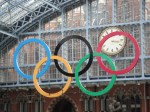
Huge rings welcome tourists from eurostar

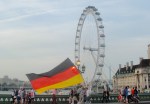
A feeling of internationalism is everywhere

Like the end of any summer holiday, the climax of the Olympics tonight will be a sad moment for us all. Going back to work, as the olympic flags come down and the city returns to normal, will be tinged with an inexorable feeling of depression. But through it all, the memories live on, and London, as a city, will continue to thrive in the spirit of goodwill and international recognition. More than anything the olympics have made us Londoners proud of our city, which has so much to offer, so much going on, incredible sites and wonderful facilities. For these reasons, people will continue to visit us, long after the olympic spotlight has passed, and for those of us living here, a new inbuilt respect and admiration for our city has been created, an optimism for the future, and a celebration of the past.

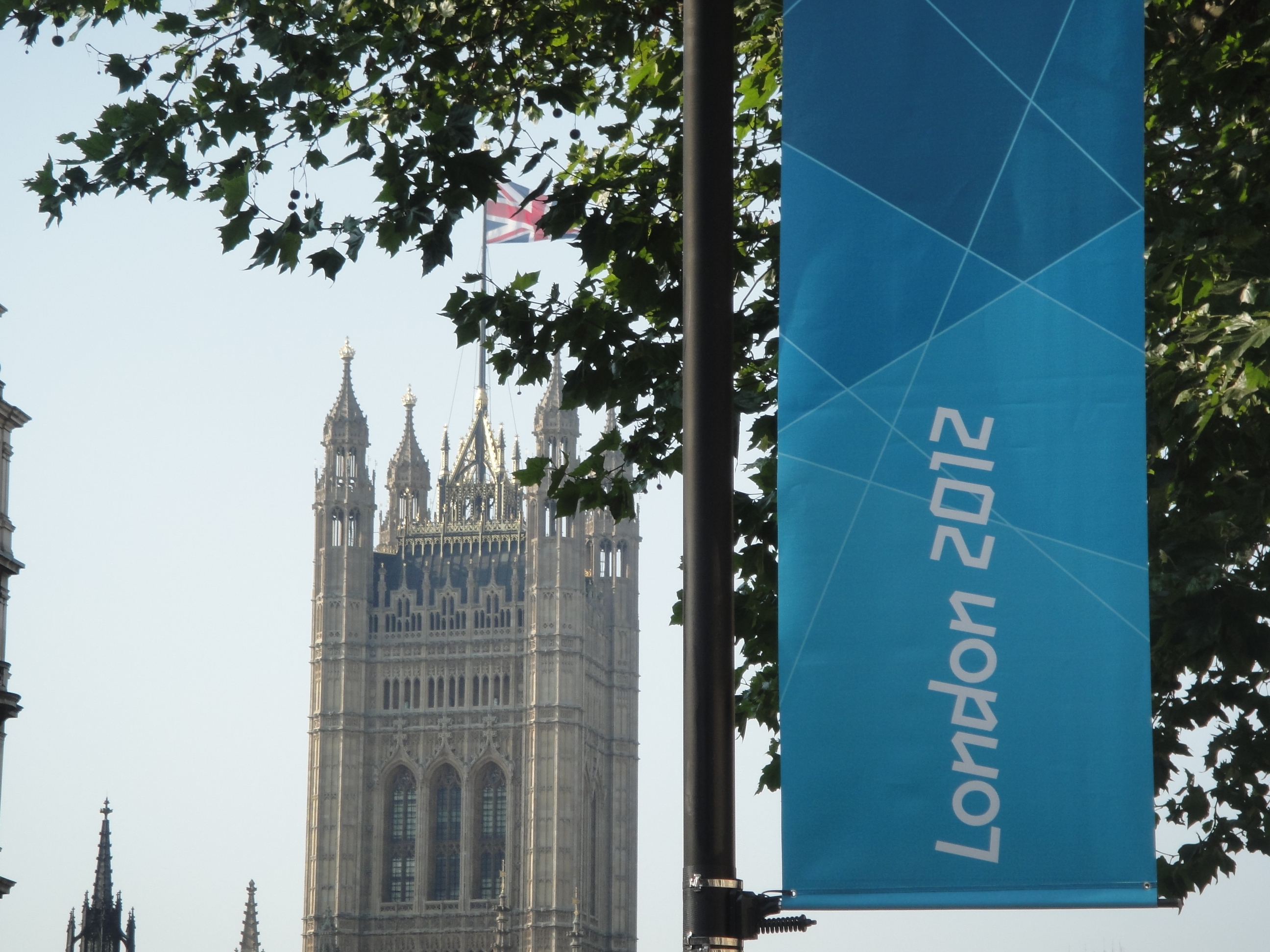
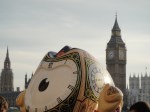
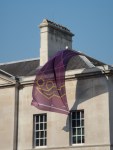
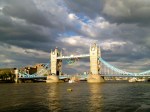
The photos I enclose with this post are not really sports-related. Trying to get hold of tickets was like a search for the holy grail. Consequently my photos are confined to the small changes I have witnessed while carrying on my normal London life – rings on Tower Bridge, banners on the lamp posts, and those cute little mascots springing up all over the city. Enjoy!

© Nicholas de Lacy-Brown and The Daily Norm, 2001-2012. Unauthorized use and/or duplication of the material, whether written work, photography or artwork, included within The Daily Norm without express and written permission from The Daily Norm’s author and/or owner is strictly prohibited. Excerpts and links may be used, provided that full and clear credit is given to Nicholas de Lacy-Brown and The Daily Norm with appropriate and specific direction to the original content.

24 hours in Paris: Part 2

08:00 hrs

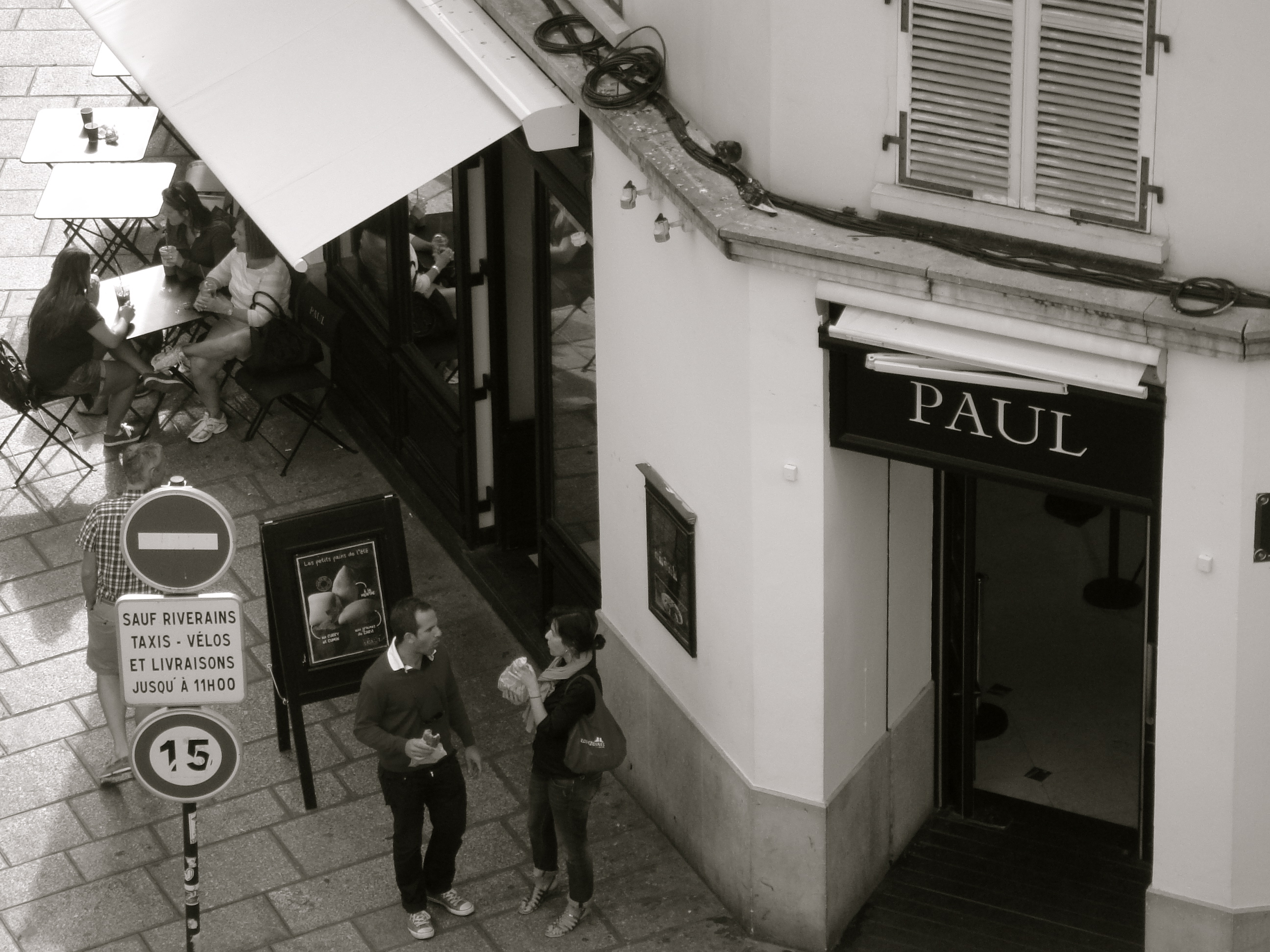
The bustle of Paul patisserie opening on the street below, Parisians arriving early to collect their daily share of baguettes placed in a cosy group of 5 or 6 in a brown paper bag, tourists catching a quick petit dejeuner in the first rays of morning sun and the local green grocer accepting deliveries of vibrant ripe fruits et légumes – these were the sounds that greeted us as the daylight of my birthday Parisian morning flooded into our little bijoux boudoir in the heart of the Rive Gauche. As is birthday tradition, I sat up in bed, stretched out a yawn and gathered together the modest stack of birthday cards I had brought with me on the trip – not that there was anywhere to display them here, but it was good to have the birthday wishes of loved ones and colleagues to kickstart my 29th birthday. Bon Anniversaire a Moi.

09:30 hrs

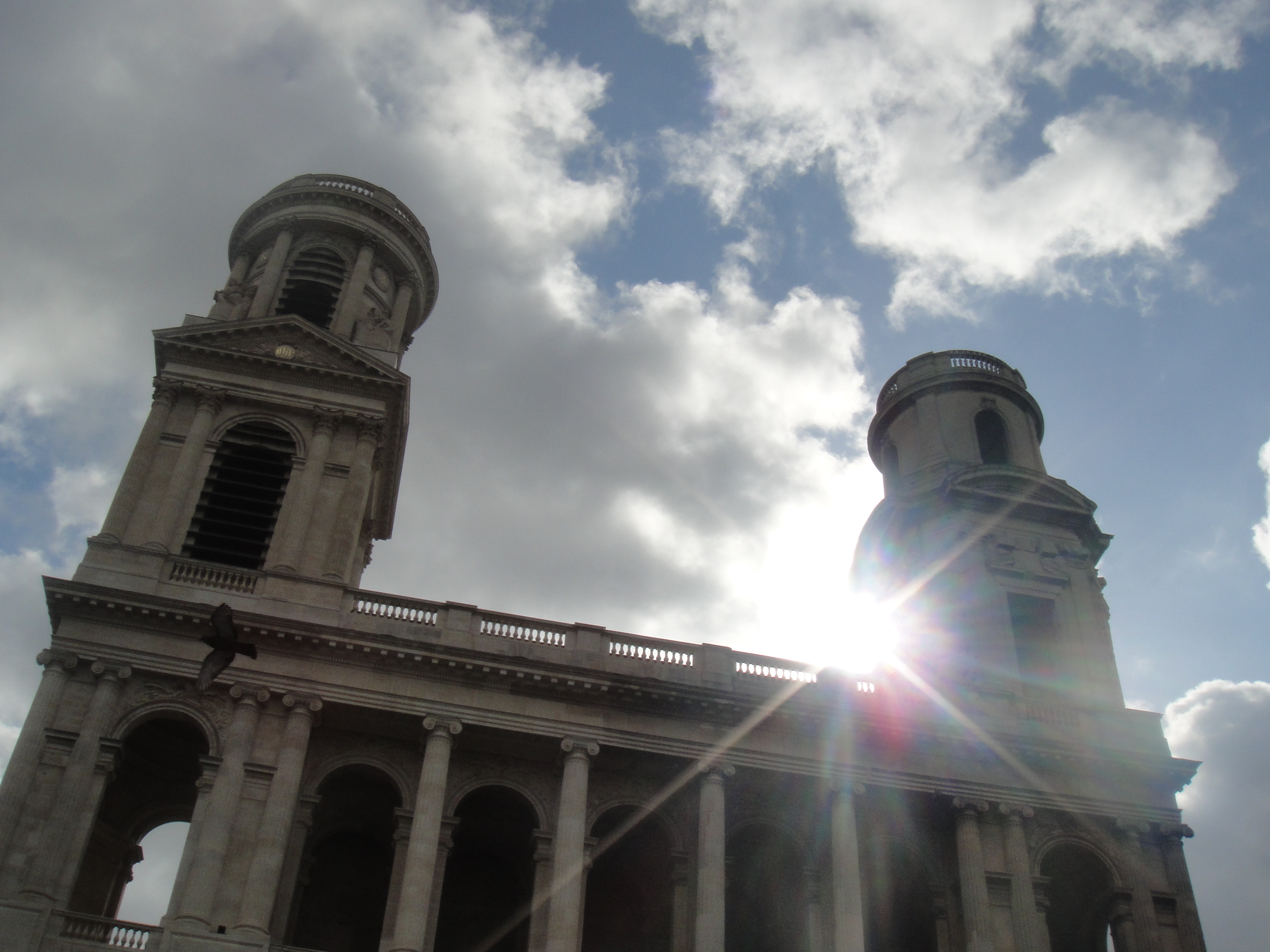
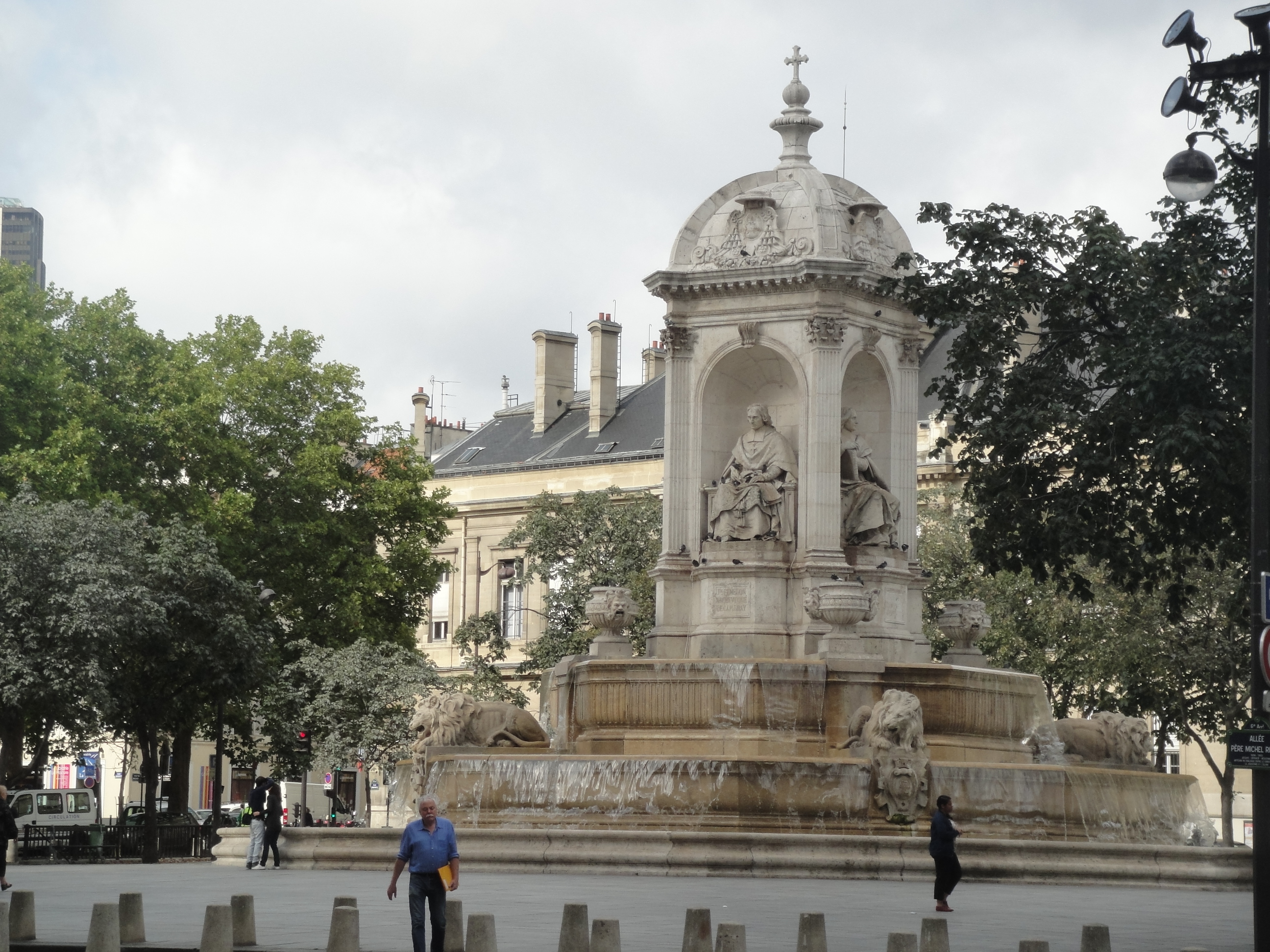
After a leisurely shower, the receipt of a few more birthday messages on my phone (birthday cards for the modern generation) and having packed up our bags, we checked out, all too soon, of the Hotel de Buci, leaving our bags and heading for the often over-looked wonders of Saint Sulpice church nearby. Finding none of the bustling cafes promised in my Paris guidebook, we headed back to the Rue de Buci where it turns into the Rue St Andre des Arts. I feel at home there. In the Rue des Grands Augustins round the corner, Picasso painted his masterpiece Guernica which has been such an important influence in my own work. There, for only 10 euros each, we had a gloriously French petit dejeuner – freshly squeezed jus d’orange, a buttery crispy croissant, a super crunchy French baguette and a large cappuccino. Yum.

Saint Sulpice

and the huge fountain opposite

Le Petit Dejeuner

11:00 hrs

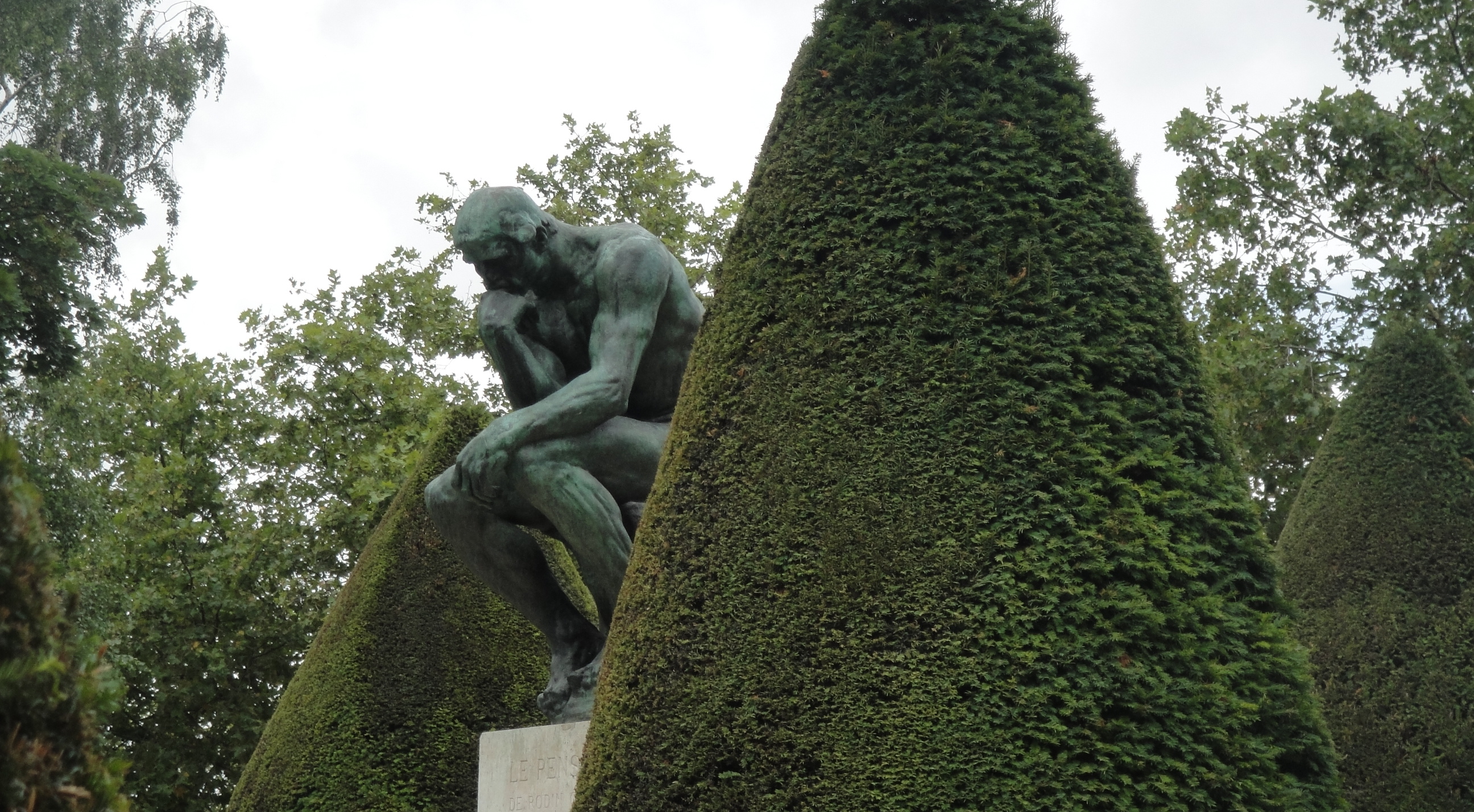
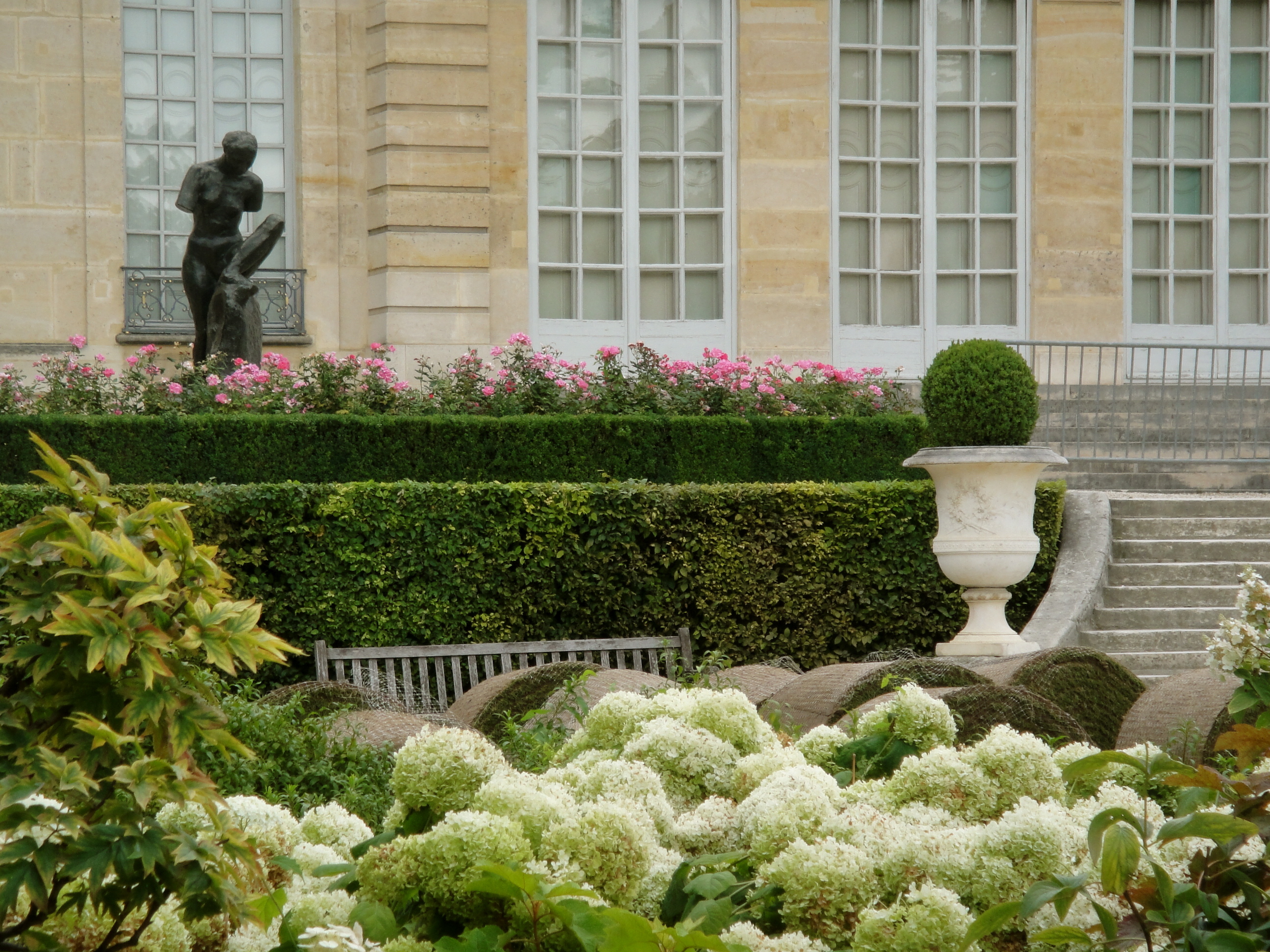
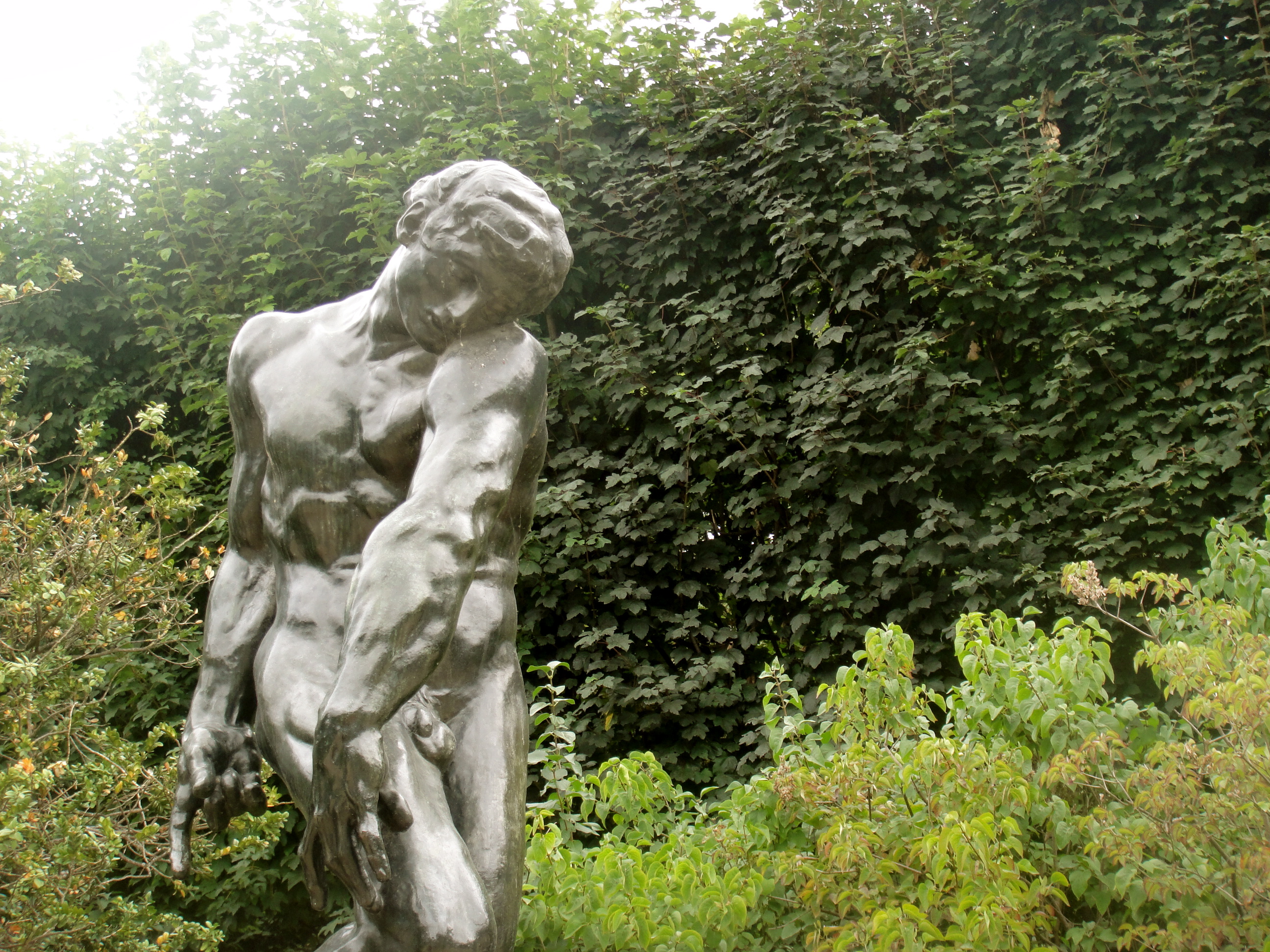
So used are we to visiting Paris in the winter that I was intent on doing some jardins. Where best to start off then than to mix art with gardens at the Musée Rodin. There, the works of Auguste Rodin are showed off to spectacular effect, including the most famous of them all – The Gates of Hell, The Thinker and The Kiss – set amongst countless perfectly trimmed conical shaped hedges which remind of Alice in Wonderland in the perfectly pruned court of the Queen of Hearts. The sculptures are displayed in and outside the gorgeous Hôtel Biron where the artist, along with several others, rented a flat towards the end of his life. He was obviously doing well. The museum does not captivate me in the same way that the d’Orsay does for example. Once I’ve seen a few figure sculptures, I stare blankly and the rest, seeking something more, looking for something to grab hold of my attention. This is unlike the challenging shapes of Henry Moore for example, which activate my imagination in the same way that an abstracted portrait by Picasso ignites my mind compared to a formal state portrait. For me Rodin was on the brink of doing something stunningly modern, but probably because of the time he worked in, he didn’t quite push the boundaries enough. Still, for morning tranquility despite the tourist throngs, the Musée Rodin was spot on.

13:00 hrs

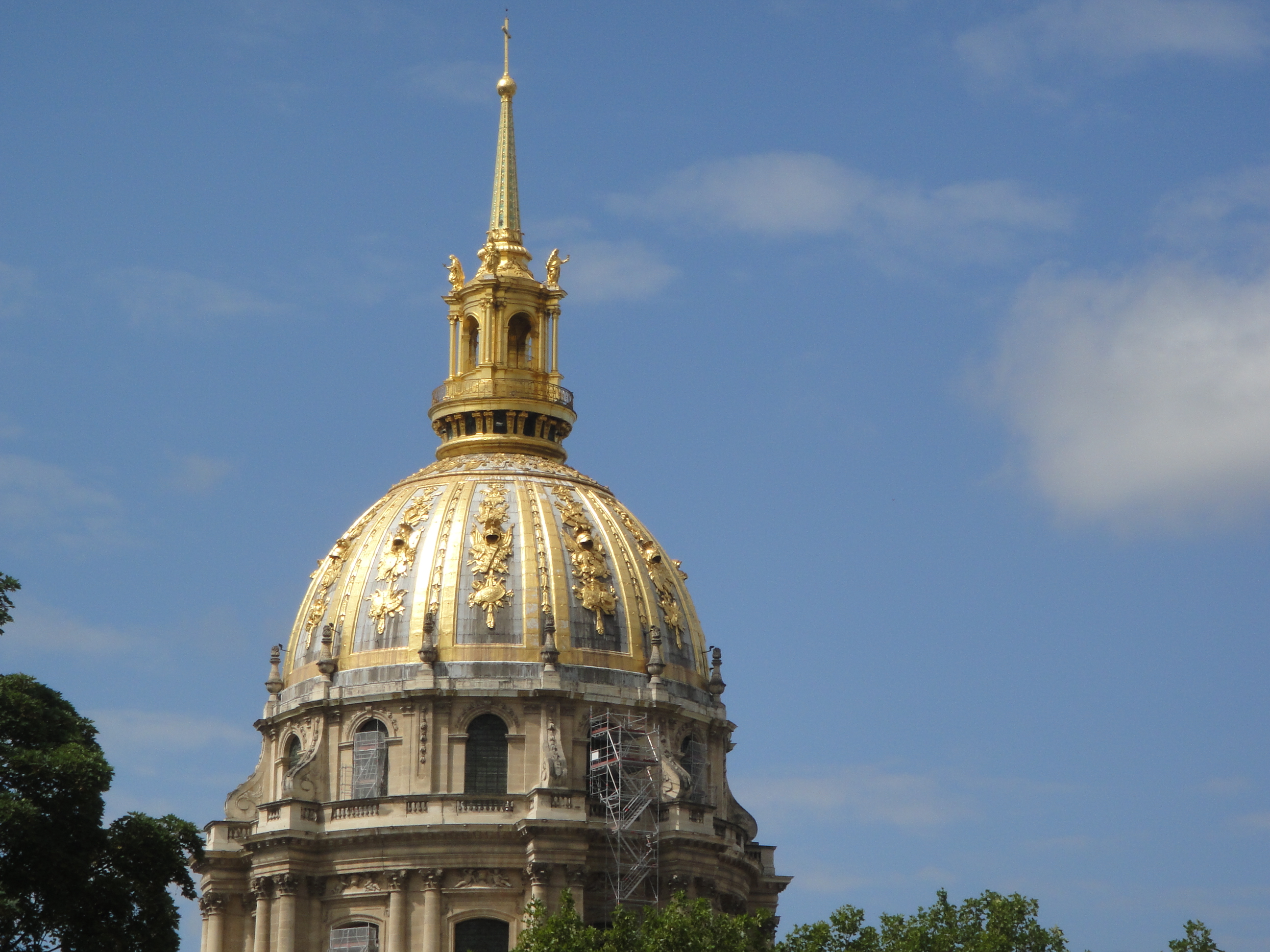
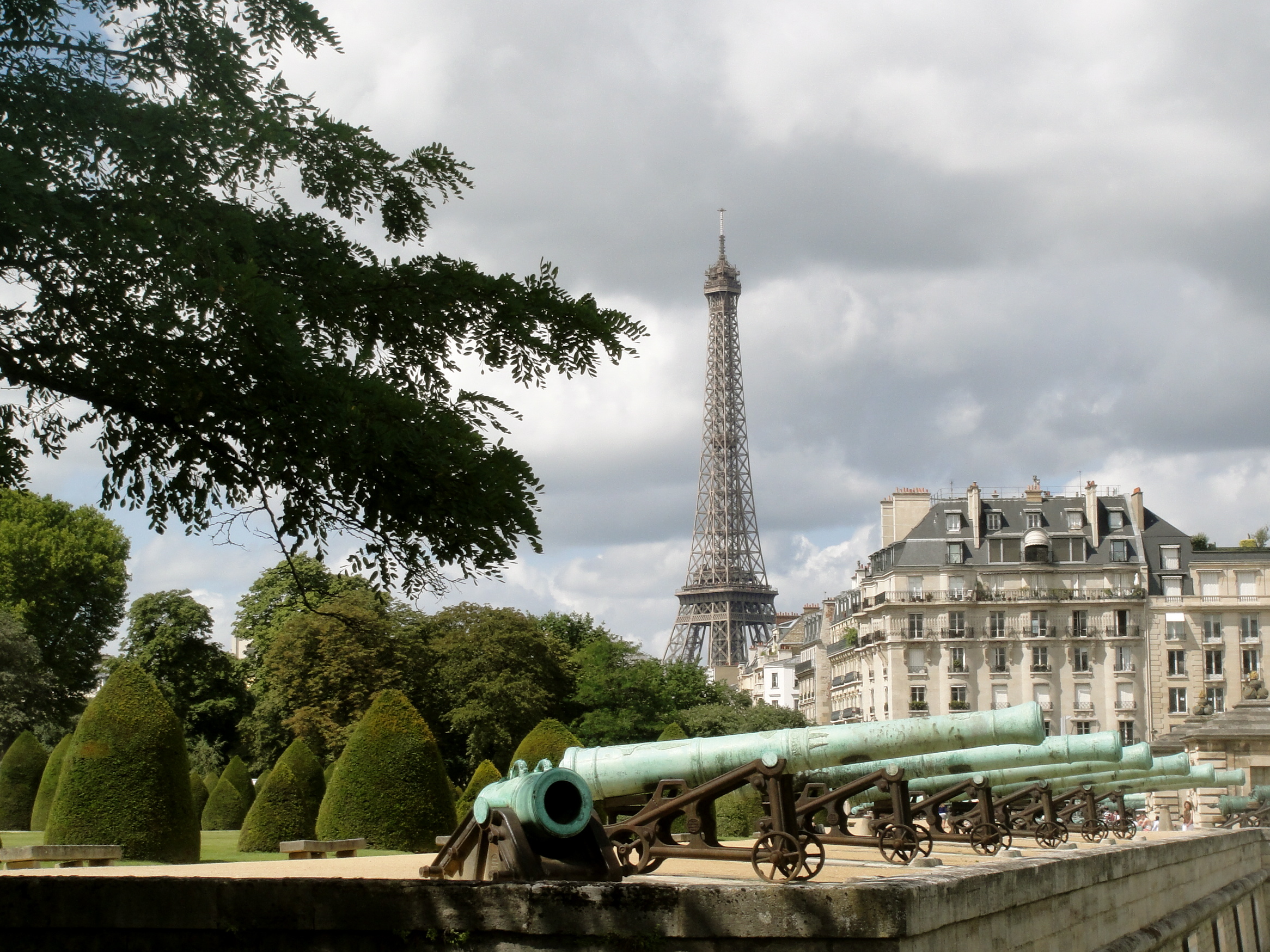
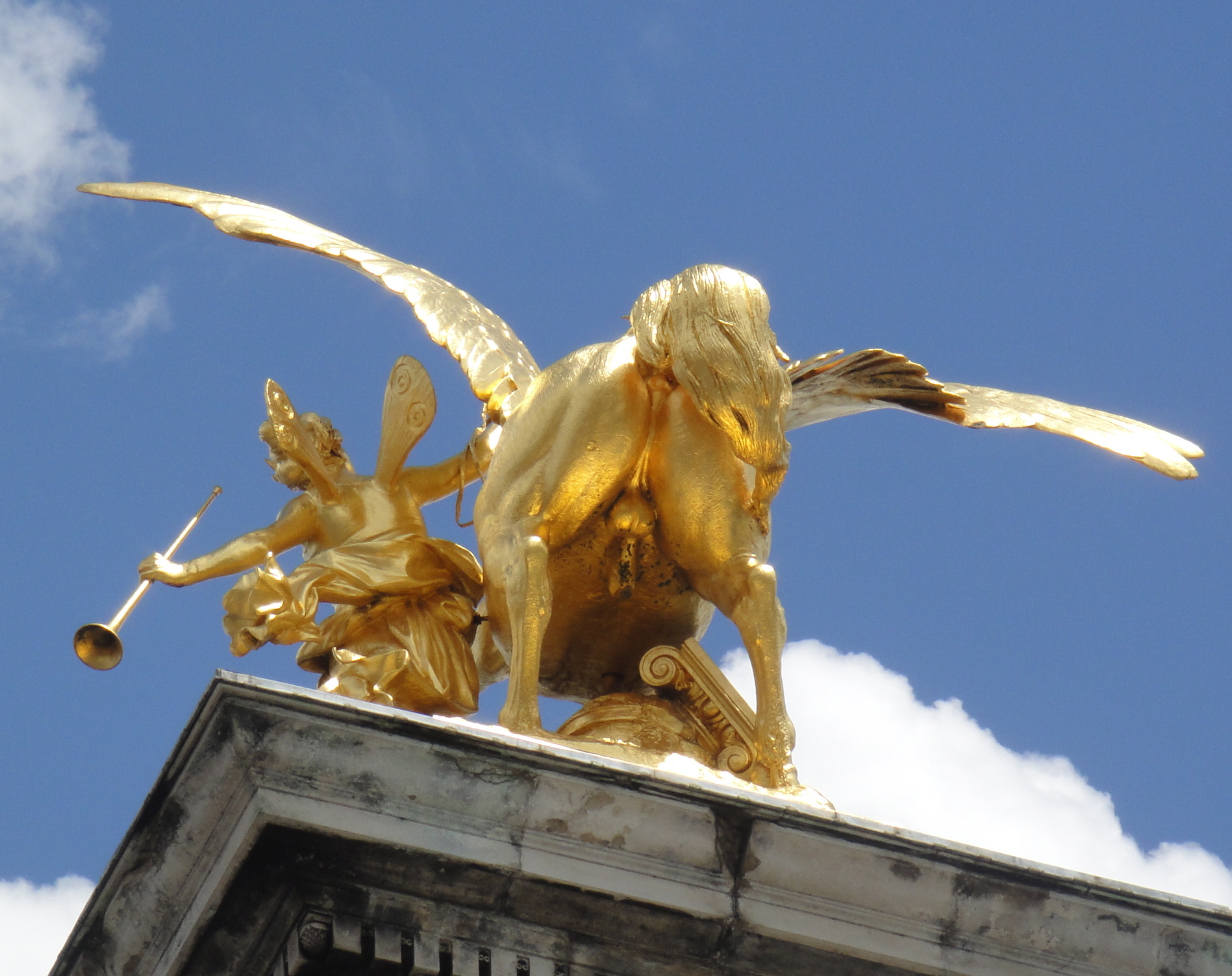
Heading over towards the spectacular gold-fringed Pont Alexandre III, we stopped off briefly to awe at Les Invalides with its similarly extravagant gilded domed roof, and the amazing view of the Tour Eiffel beyond it. Was a city ever so perfectly pretty as Paris?

13:30 hrs

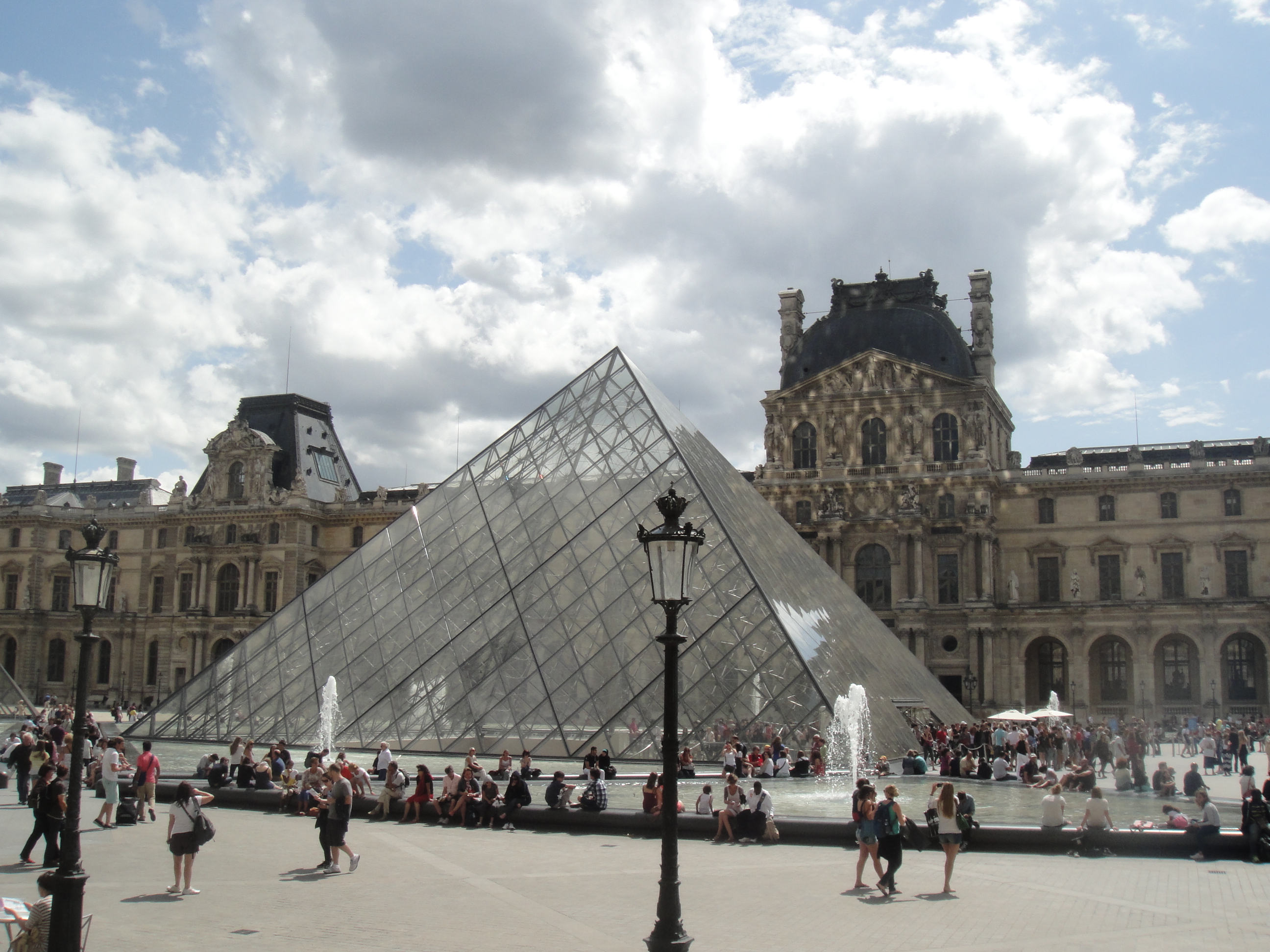
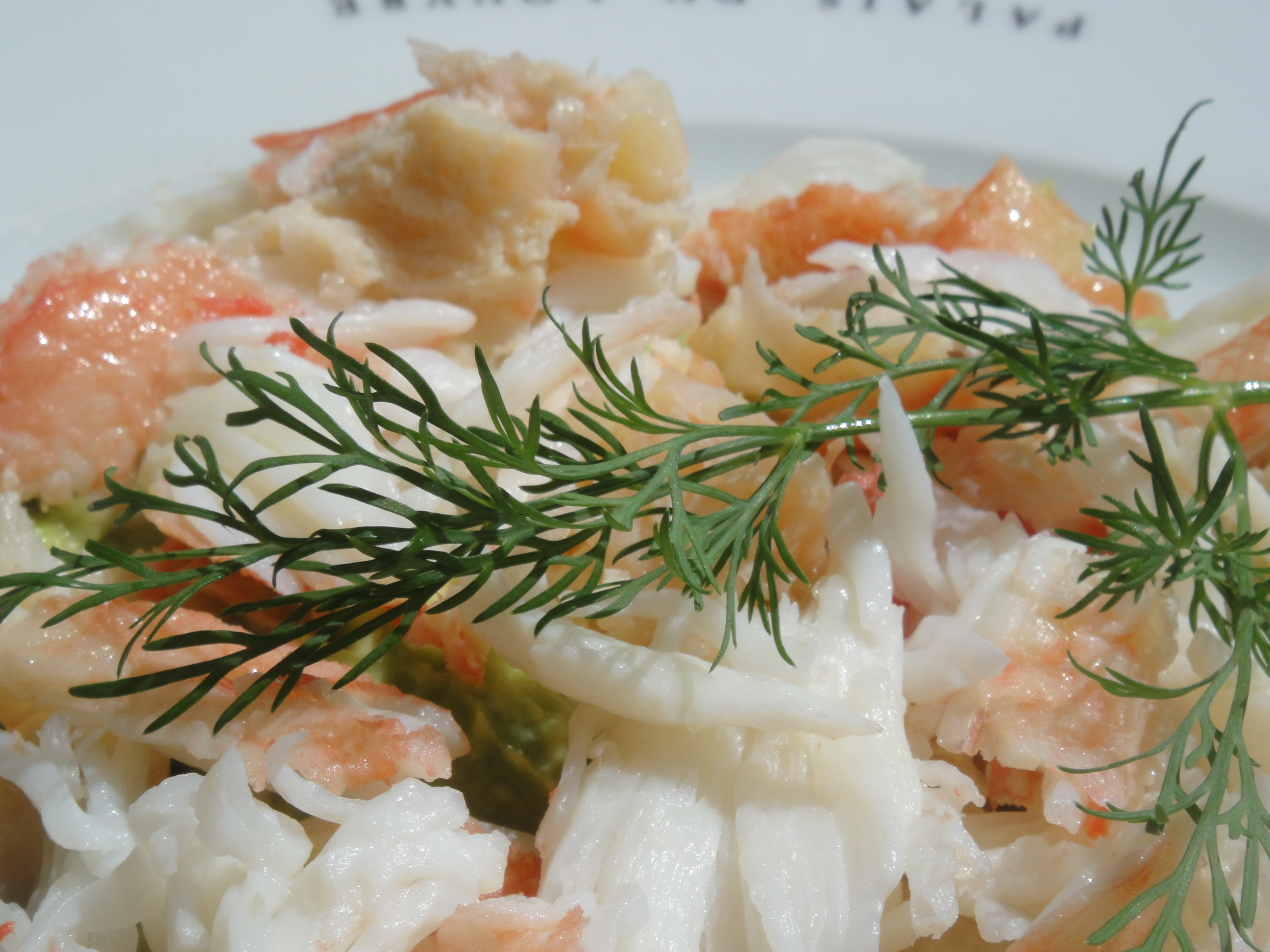
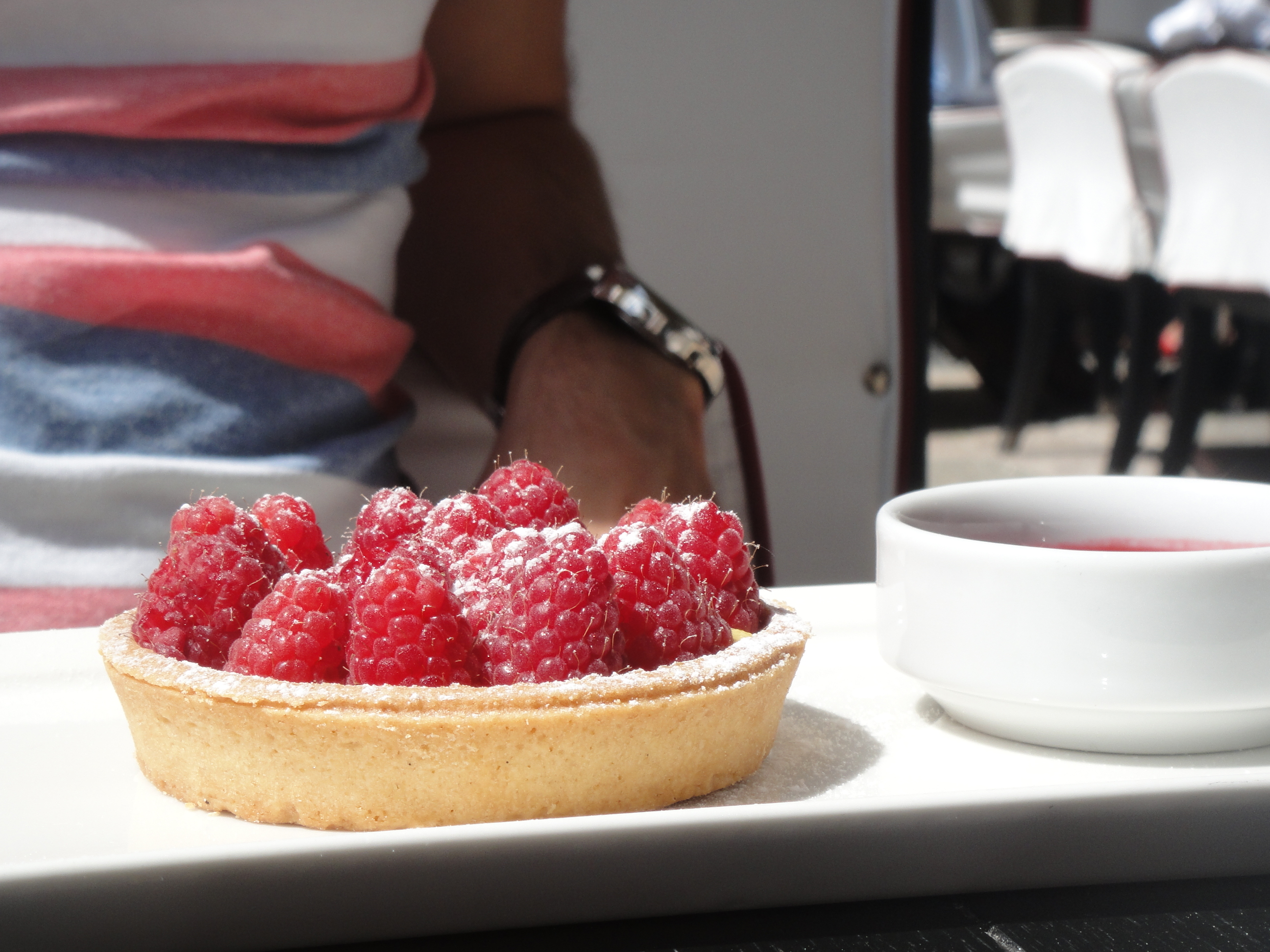
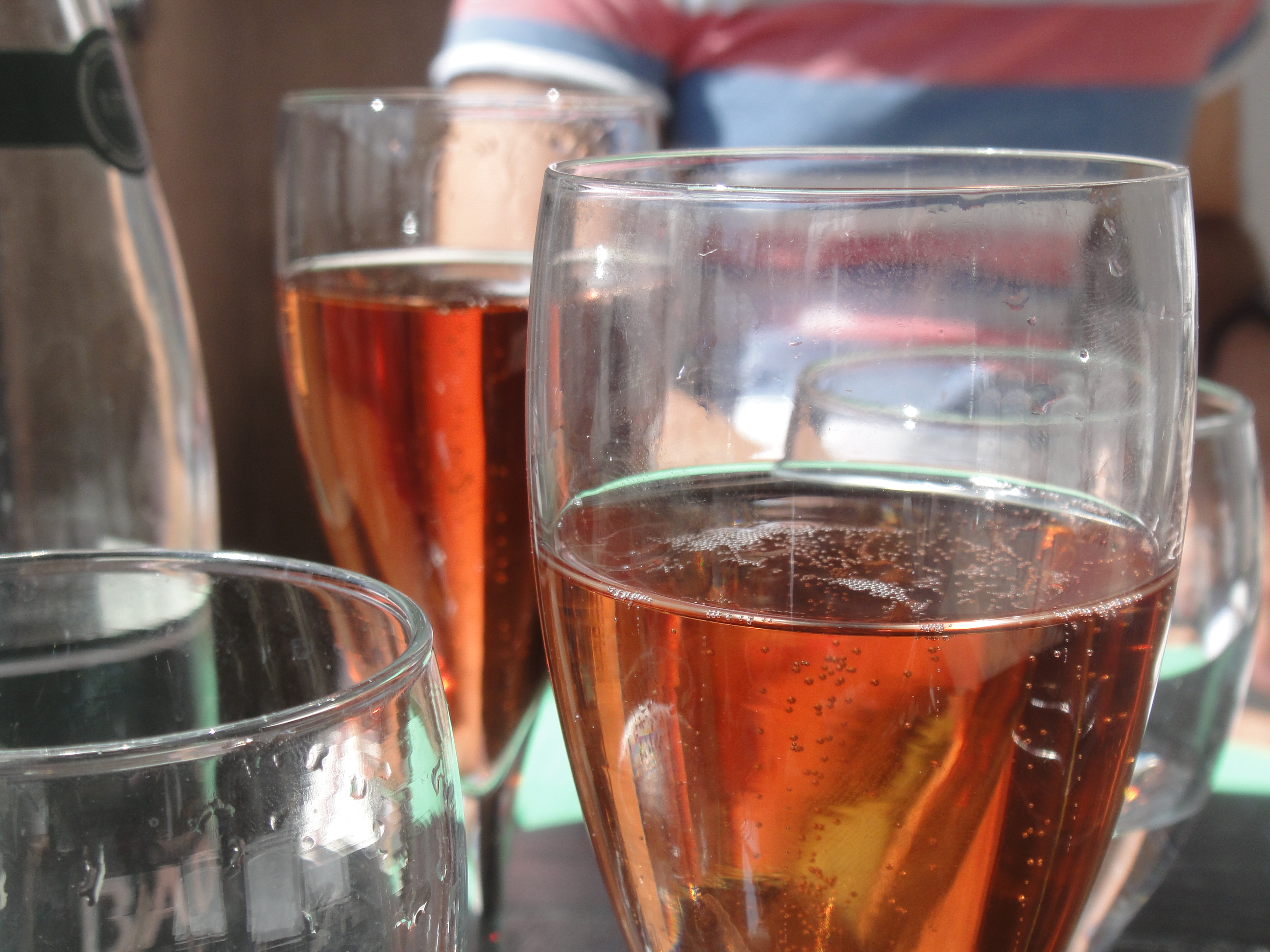
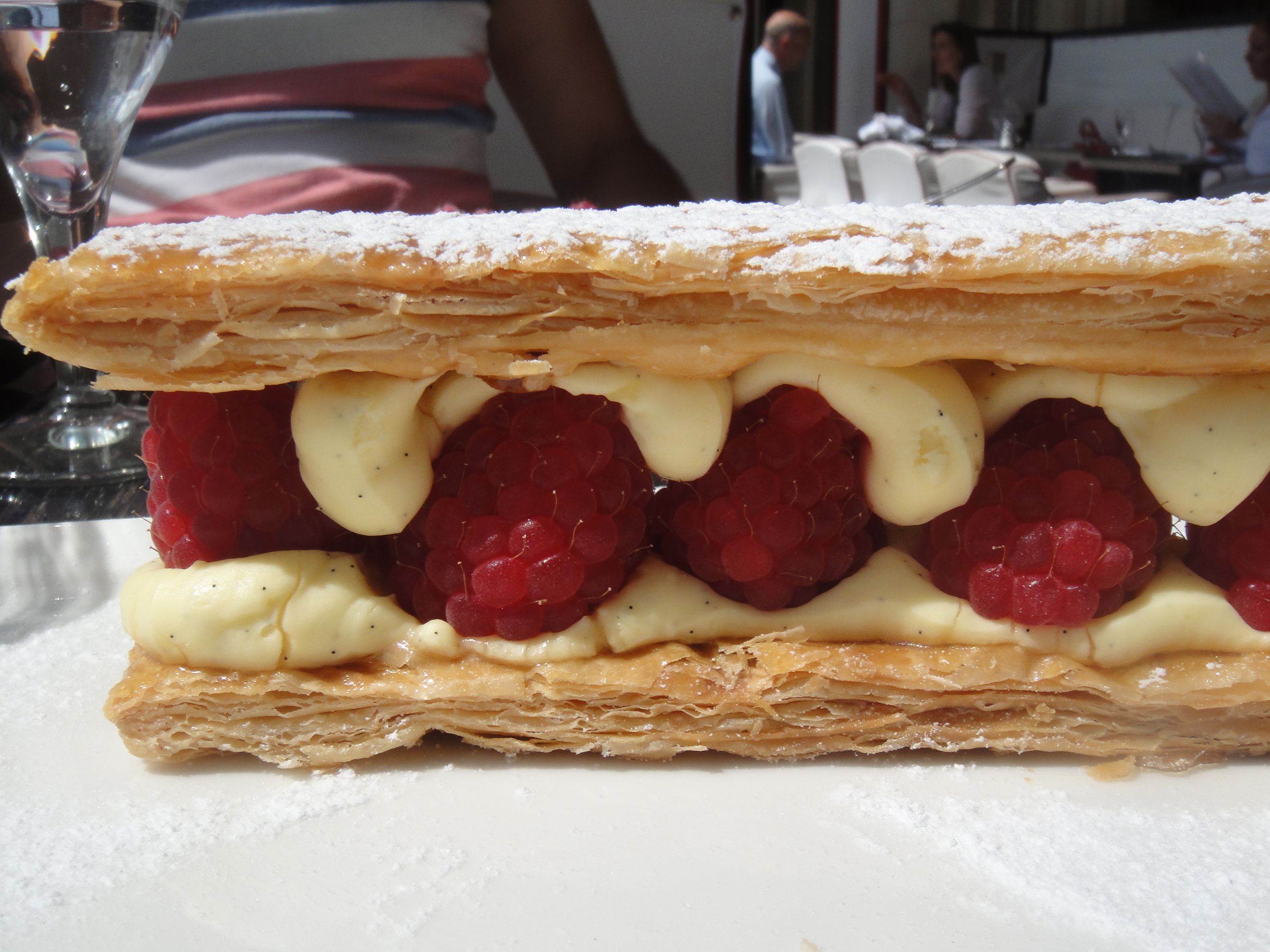
Despite the continuous temptation to stop and take photos of this beautiful city (although the I must have around 10,000 at home) we arrived on time for our reservation at the Café Marly under large portico terrace along the side of the Louvre courtyard. With views right over the spectacular Louvre pyramid, this café can’t be beaten for its incredible vista and its elegant surroundings. The prices aren’t cheap, but they are reflected in the quality of the food. We opted for two light dishes – a crab and avocado salad (the avocado was so creamy it was divine) dressed in a refreshing lime and chilli, and a melon with san daniele ham (the melon was incredibly sweet, juicy and unctuous, and the ham perfectly soft and salty). This was washed down with two glasses of chablis, followed by two more of pink Moët & Chandon (well it was my birthday after all). For dessert we had two combinations of raspberry deliciousness – a lemon tart with raspberries atop it, and a raspberry mille feuille. Café Marly comes well recommended – but ensure you make a reservation in advance.

15:30 hrs

We stumbled down the Rue de Rivoli next, towards our regular haunt of the Marais, cute boutique-lined district, favourite of the chic-set. Here we were on a search for some French vintage posters, but all of our leads came to nothing. If shops weren’t closed “pour les vacances” they failed to exist. We had better luck however when we passed over the river, traversing the cute little Ile St Louis (where we found another print shop – closed for the holidays) and Ile de la Cité and finding on the left bank opposite the Notre Dame a huge selection of old book and print sellers. Usually I pass these stalls, assuming they contain tourist tack – not so. True, the prints are all reproductions, but who cares. The quality looks great and you could buy 3 for 20 euros. I think we ended up with 9!

17:00 hrs

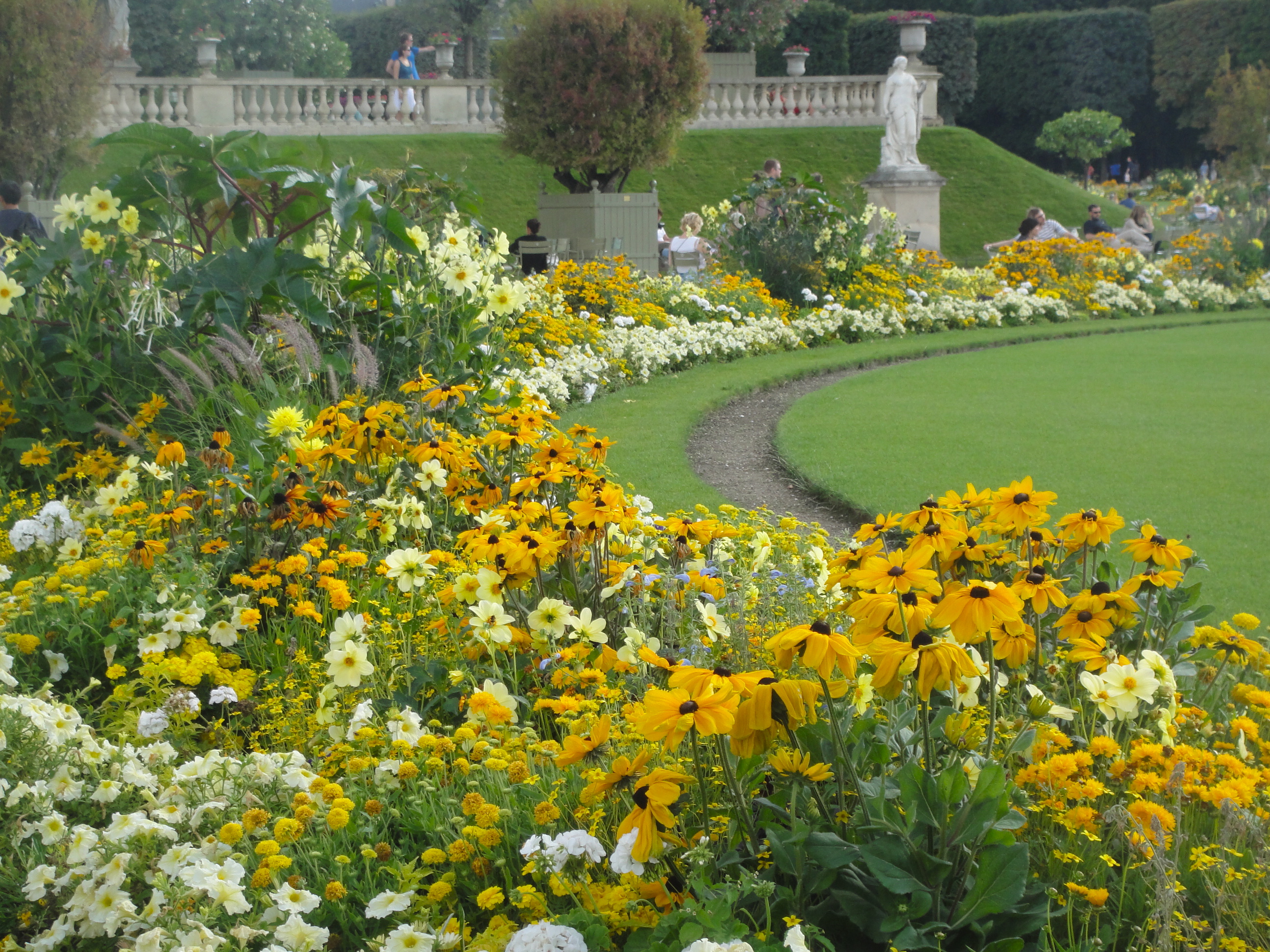
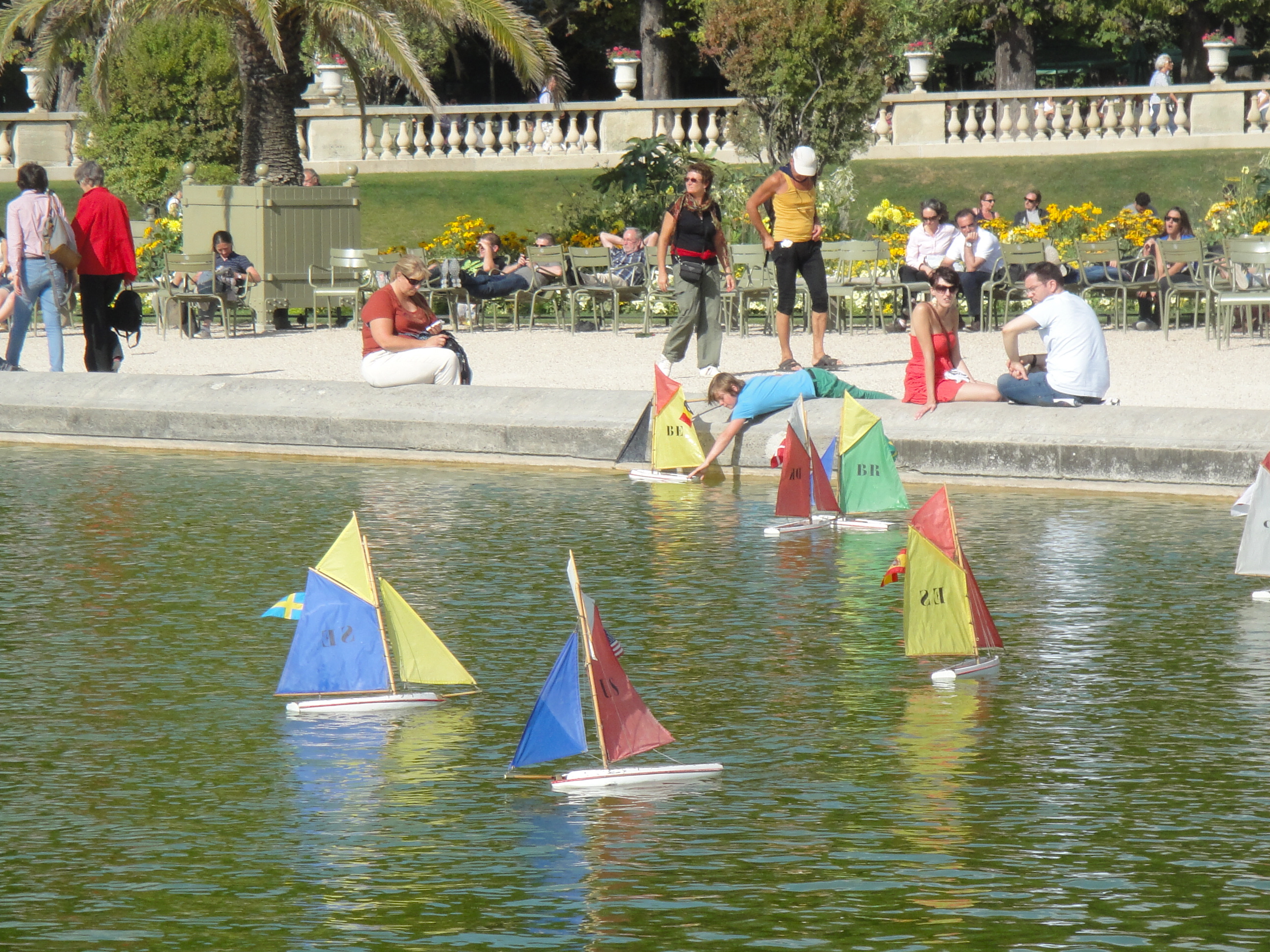
Back on that garden trail now, and we headed, almost full circle, back to the 6th and into the magnificent Jardins du Luxembourg. Never before have I seen these gardens look so good – the flower beds were beautiful coordinated in every conceivable shade of yellow, those few Parisians remaining in the city lounged in the shade provided by large leafed chestnut trees, creating as they did a beautiful impressionistic dapple of sunlight over the cafes and little loose benches placed haphazardly all over the park. There too, families were at play – little children ran enthusiastically around the large central pond, pushing miniature sailing boats from one side to the other while parents, basking in the August sunshine, looked on contentedly. Once we sat down in one of those little reclining metal chairs, there was almost no moving us until the clock struct 6 and our return journey began to claw us back to the train tracks.

18:30 hrs

Resiting the pull of the train in our final hour of freedom, we headed back to the Rue de Buci and indulged in a massive plate of charcuterie and fromage, with two little glasses of overly warm Bordeaux on the side and a basket full of holey French bread. There we reflected upon our 24 hours in Paris – how is it that in a time so short, we felt like we had been in the city for so many days? Is it because we know it so well, that we are easily re-embraced back into the fold? Or is it because our senses had been overloaded with the beauty all around? Whatever the reason, it all went to show how easy a little trip to this quasi-London suburb can be – 2.20 hrs on the train and another world awaits. Who could resist? I won’t be.

© Nicholas de Lacy-Brown and The Daily Norm, 2001-2012. Unauthorized use and/or duplication of the material, whether written work, photography or artwork, included within The Daily Norm without express and written permission from The Daily Norm’s author and/or owner is strictly prohibited. Excerpts and links may be used, provided that full and clear credit is given to Nicholas de Lacy-Brown and The Daily Norm with appropriate and specific direction to the original content.

24 hours in Paris: Part 1

24 hours is not a long time, but when you spend it in the city of light, of love, and of every other superlative you can throw at it, 24 hours is a ripe excuse to live life to the full – Paris style. A birthday is only one day of 365, and yet it is my belief that it should be appropriately marked. After all, don’t we all deserve to feel special for the day? But with London hosting the world’s greatest sporting event, there was no way I could drag myself away from the city for too long for this year’s birthday celebrations. So for a short burst of Birthday happiness, Paris (now so easy to get to via eurostar it feels like an extension of London) was the obvious choice. Here are my 24 hours in that magical city.

20:00 hrs

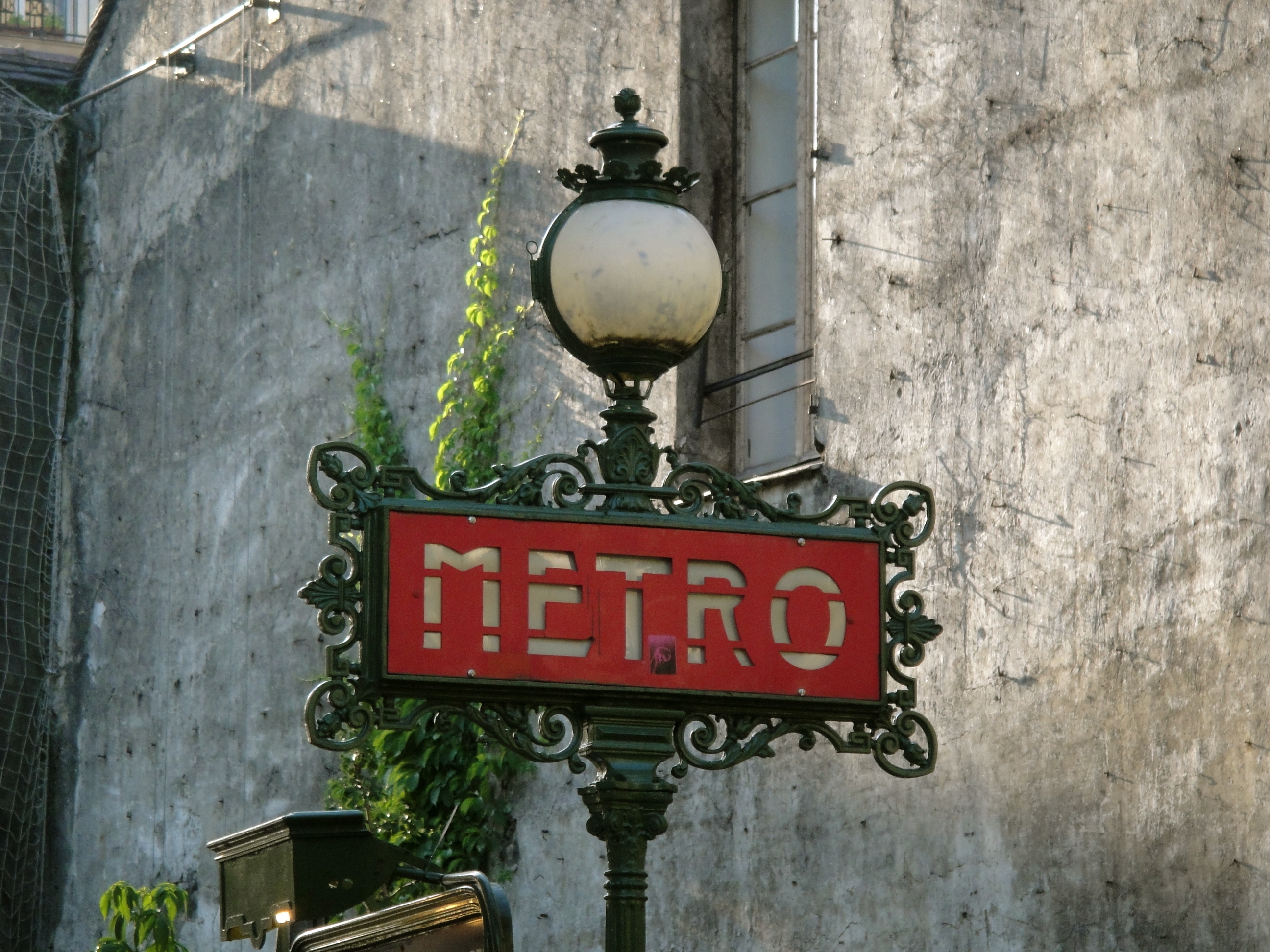
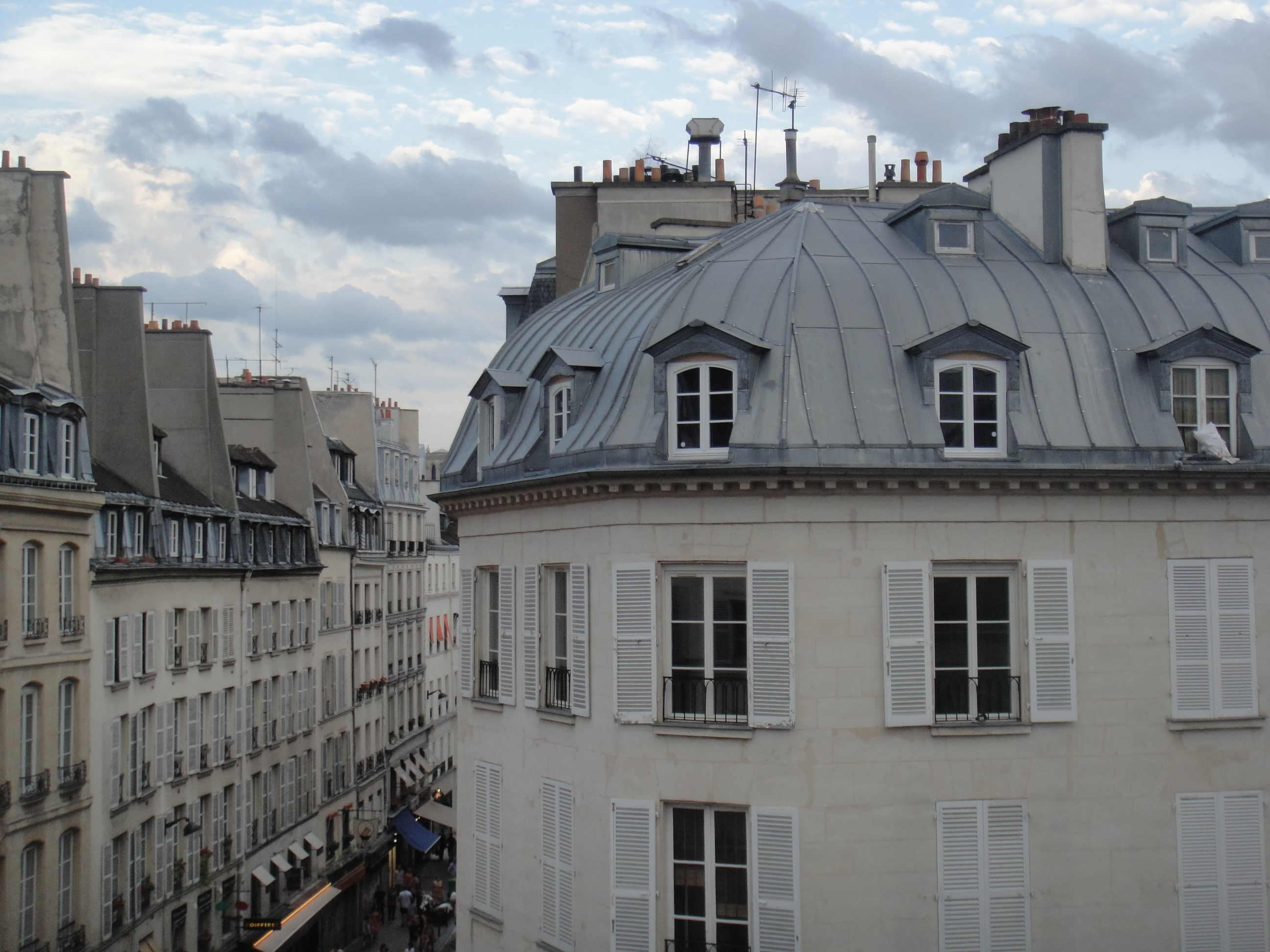
Walking up the steps of any Paris metro station, up onto the streets of the city centre for the first time is always a thrill. Nothing can surpass the architectural splendour of the city, where beauty is consistent from street to street, where Parisians mill from one red-canoped cafe to the next, art nouveau is the design of choice, and a contagion of chic spreads from shop to shopper to every passer by and even to the poodles. After a smooth journey commencing under the huge Olympic rings suspended proudly over the tracks of St Pancras International, to the rather less glamourous welcome of the Gare du Nord in Paris and straight onto the Metro, we arrived at our final destination: the Boulevard Saint Germain des Pres, where, on a small cafe-packed Rue de Buci just round the corner from Les Deux Magots, we checked into our hotel of the same name, where a small but perfectly boutique-chic boudoir awaited us, with perfect views of the street below.

The Hotel de Buci (on the right)

Our rooftop view

21:00 hrs

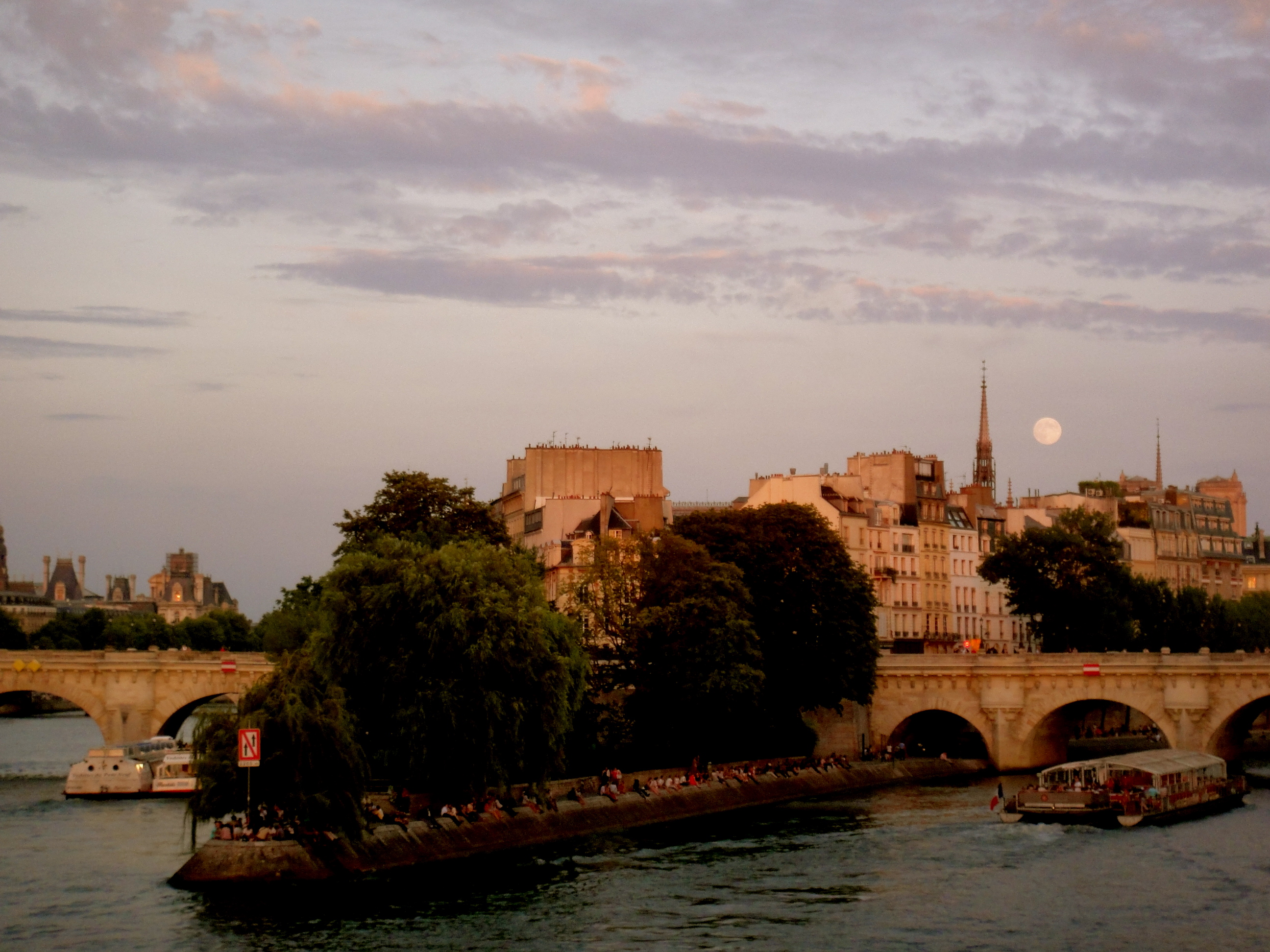
Having made full use of the Hotel de Buci’s elegant facilities, we headed out across Paris, across the Pont des Arts where we were treated to the most spectacular view of Paris at sunset. The sky was like a stracciatella of chocolate rippling clouds across rich layers of rich golden yellows and zesty oranges. When we proceeded through the Cour Carree in the Sully courtyard of the Louvre, the view of I.M.Pei’s glass pyramid with the same, now deepened sunset behind it together with the flashing lights of the Tullleries funfair and the momentous silhouette of the rooftops of the Louvre  was just mind-blowing. Did Paris ever look so good?
22:00 hrs

We rushed off towards our late reservation at a previously favourite eatery in Paris: Jean Georges’ Market  Restaurant (Avenue Matignon, 15), just off the Champs Élysées. Past experience of the restaurant had been excellent – a super chic atmosphere, beautifully presented food, largely asian fusion in origin, all served on a tranquil restaurant floor with subdued lighting, meticulous waiting staff and cool lounge-bar sound track. But what was potent chic of a winter’s evening appeared to have been heavily diluted come the summer. Such is perhaps a symptom of Paris in August, when the Parisians flee for the coast, and Paris is left to the tourists. Since trade is passing, the restaurants let their standards slip. And this was certainly the case at Market, where a menu entitled “taste of the summer” offered diners a choice of utterly random dishes for 38 euros per head. Quite asides from the high price tag (which notably hadn’t slipped along with the standards – and don’t even get me started on the wine list) the mix of food was such a hodge-bodge of world cuisines that it was a real struggle to choose two dishes which would actually work together as a meal. Thus you had ravioli on the one hand, and sushi on the other, chicken samosas for a starter, and american hamburgers for after. Controversially I went for the latter combination – and believe me I did not relish the idea of going American while in Paris, when really I should have been supping upon snails and oysters. Nor did I relish the company of the tourists all around me. I spent much of the meal listening to a couple next door talk about the benefit of Tesco clubcard points. Oh mon dieu. To be fair though, the food was good – it just wasn’t worth over 130 euros for the pleasure.

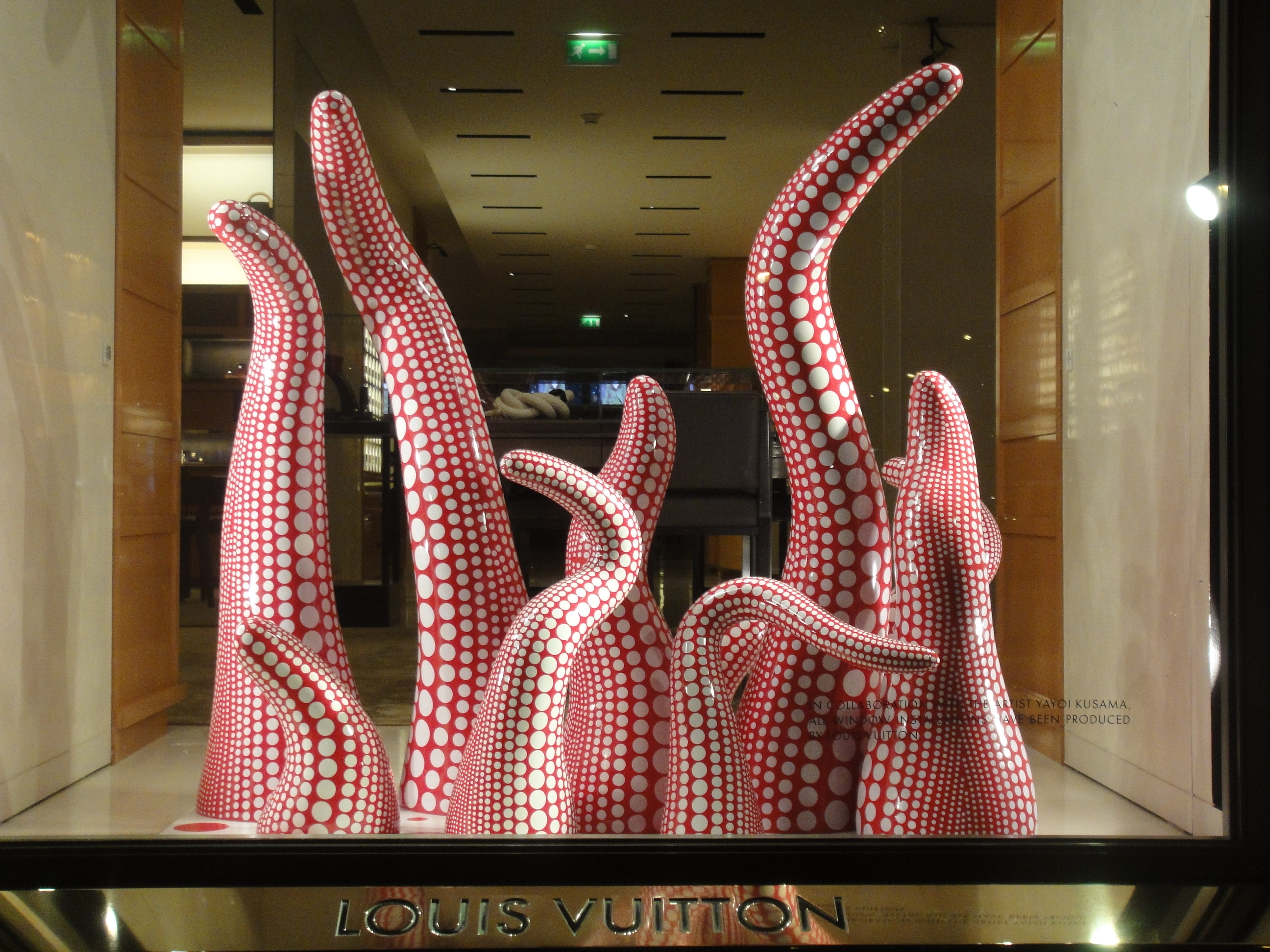
Vuitton’s collaboration with Yayoi Kosama

24:00 hrs

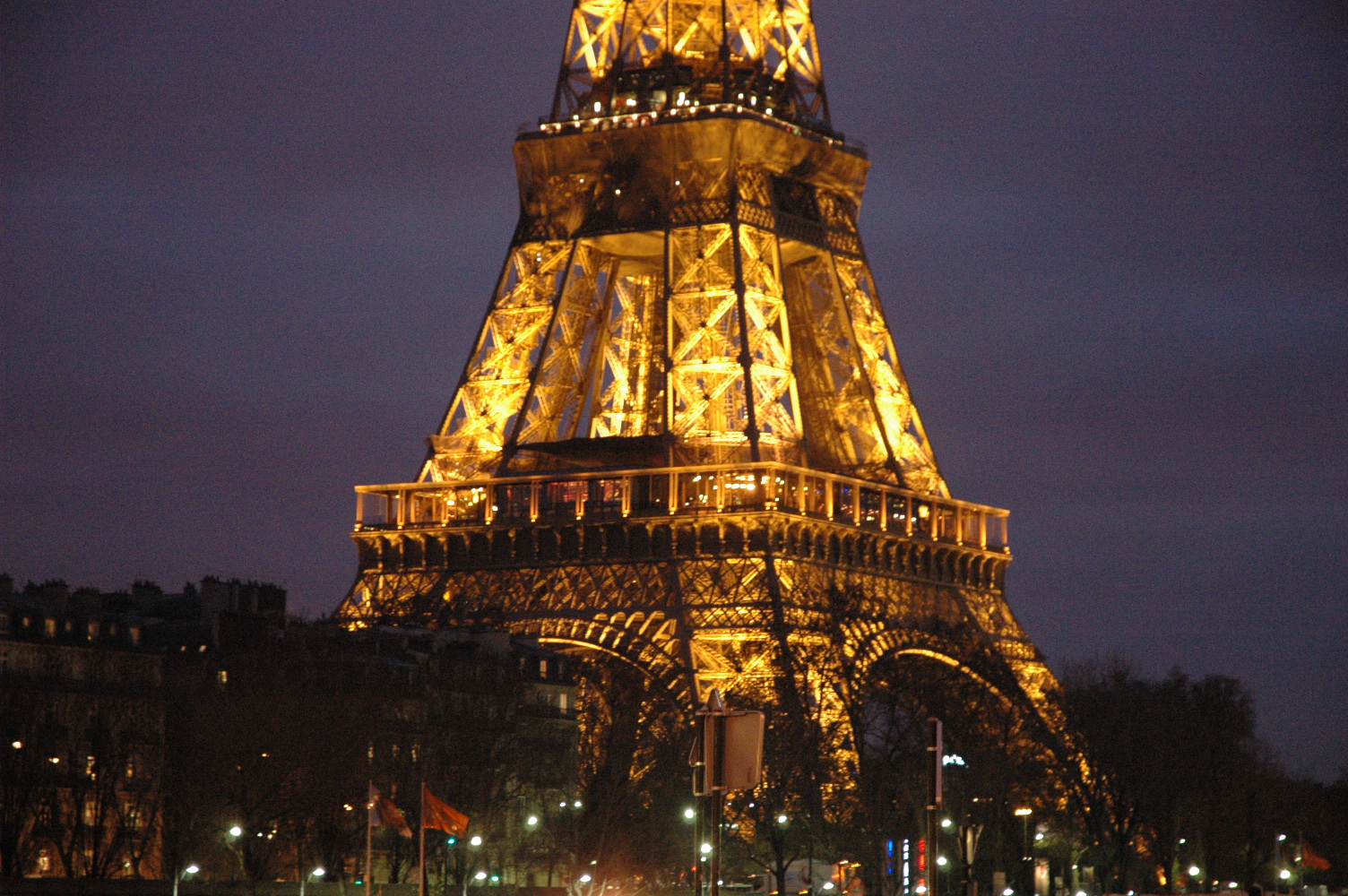
After two hours realising the hard way that Paris in August is a mecca for tourist-tat, we decided that if we couldn’t beat ’em, we would join ’em and headed straight for the Eiffel Tower (via the indubitably chic Avenue Montaigne, lined with the creme de la creme of Parisian high fashion, including, I noted, Yayoi Kusama’s spotty collaboration with Louis Vuitton). The Tour Eiffel is an undisputed tourist icon, favourite of the souvenir tacky-train, splashed across postcards, t-shirts and every other kind of tourist paraphernalia and yet it’s still one of my favourite sights in the city. There’s nothing more magnificent in my opinion that the first view of the vast bulk of the tower when you turn a corner and see the elegant structure rising almost super-human above the nearby overshadowed houses. The sheer audacity of the structure never fails to amaze – how could Gustav Eiffel have ever been so daring as to build something so huge and so utterly alien to the surrounding landscape? It was too late to ascend, but it was surely worth the visit to witness the tower sparkling with several thousand tiny white lights like the world’s biggest diamond at the strike of midnight – what a way to officially start my birthday. Notably however we were not so drunk on birthday spirit that we gave into the relentless approaches of pesky street-sellers trying to force bottles of warm champagne into our hand. Can you imagine anything more lacking in finesse?

Eiffel art…

01:00 hrs

Heading back to the Saint Germain des Pres, I decided it was a good idea to walk from the Eiffel Tower all the way back to the 6th arrondissement – after all, it looks close on the map. Well guess what, it wasn’t, and an hour or so later, with very, very painful feet, we finally made it back to our welcoming soft bed in the Hotel de Buci, where, with curtains open so that we could close our eyes with a moonlit view of the rooftops of Paris, we sunk into a soft sleep, ready and waiting for the daylight to tease our eyelids back open, announcing the start of a whole new day and another bout of birthday celebrations in Paris.

More on that, tomorrow.
London 2012: Infected by Olympic Fever – Tennis at Wimbledon

I’m not a big sports fan. I don’t really know the terminology, and my familiarity with the various sports stars extends as far as those faces who regularly hit the headlines and are splashed across perfume promotions and London buses. However there is something utterly contagious about the Olympic spirit which has swept throughout London and up and down the British isles which just cannot be resisted. The aim of London’s bid was to bring all Britons and people from throughout the world together under the olympic flag, to create a huge party of spectators enjoying the adrenaline rush engendered by sporting achievement and to inspire future generations to enjoy sport and aim for sporting brilliance. They’re all cliches, the stuff of marketing machines, but what the last week has proved to me, is that those objectives have really manifested – I feel inspired by sport, part of the global sporting party and loving every minute of London 2012.

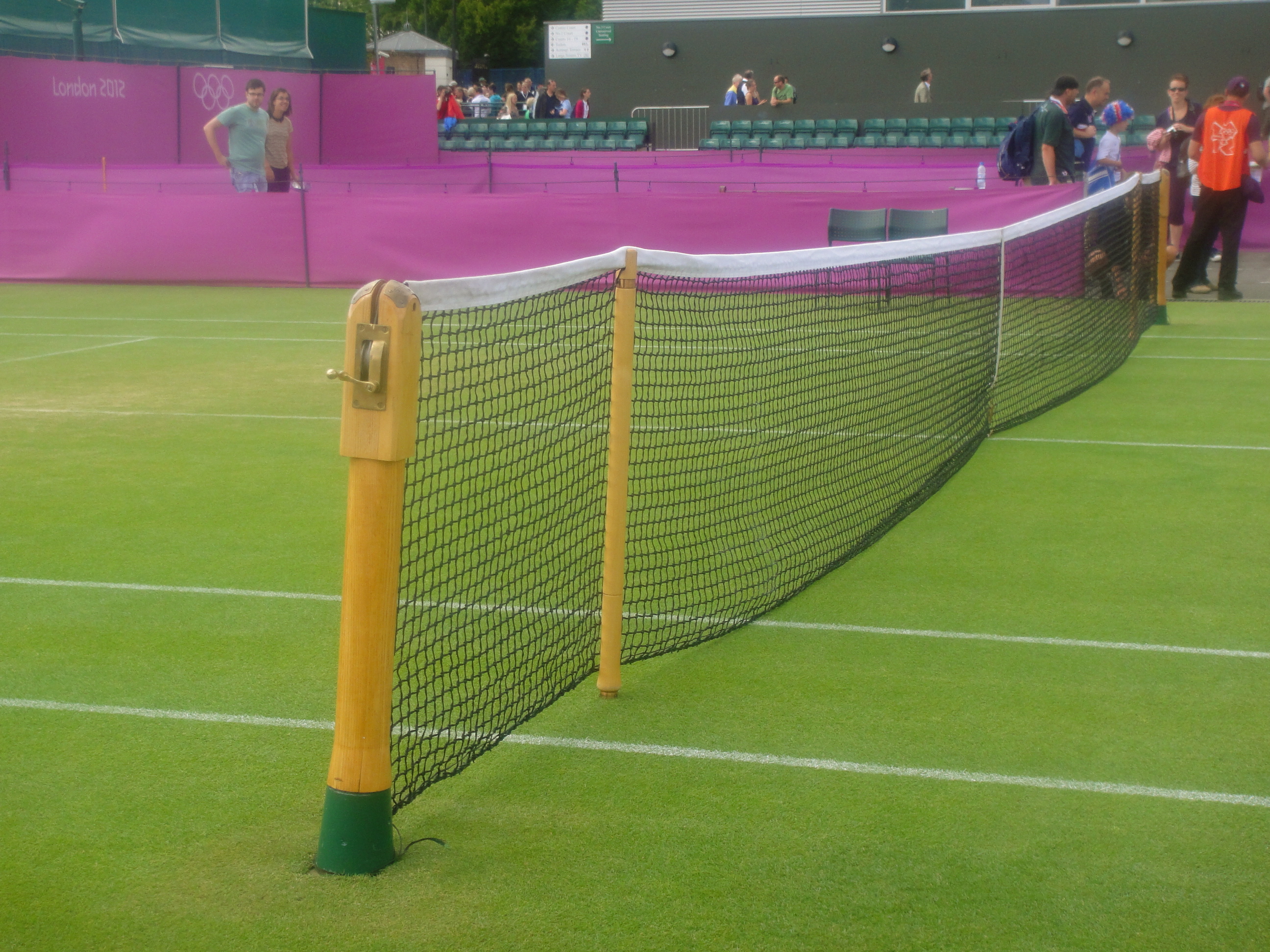
Wimbledon green with the distinctive Olympics purple

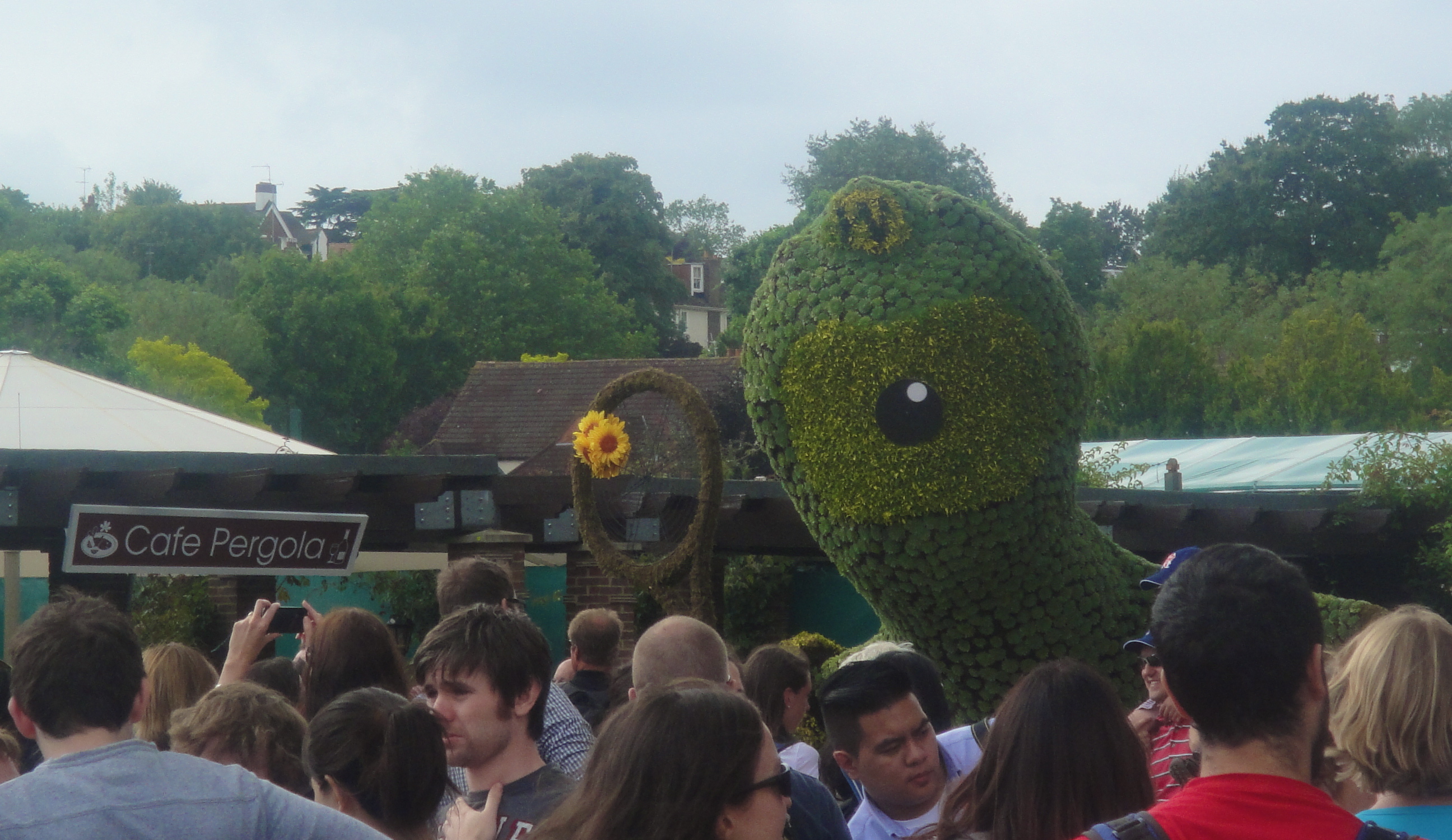
The Wimbledon Wenlock

As with many Britons, I found it difficult to get any olympic tickets, despite applying for a good few (and yes, like everyone else, I am secretly seething inside at seeing so many empty seats at the events – a byproduct of the Olympics’ necessary reliance upon corporate sponsorship and IOC executives who then don’t bother to turn up, depriving so many future generations of the opportunity to be inspired). However the one set of tickets I did get was to see men’s semi-finals tennis at Wimbledon. This was a double whammy for me. Not only did it mean I would get to visit the British home of Tennis (tickets for the main Wimbledon tournament are as easy to get your hands on as the holy grail) but it also meant that I would be treated to not one, not two, but three matches played by undisputed tennis royalty.

Read more

My urban balcony garden

When you live in a city, like I do, here in the big smoke of London, every inch of greenery becomes important. When I travelled down to Glyndebourne the other day, surrounded by all of those lush green hills, and the conspicuous silence interrupted only by the occasional sheep cry, it made me realise just how lucky rural dwellers are to be surrounded by that constant beauty and tranquility. Yet it is only human nature not to appreciate what we have when we’ve got it. For all I know, the residents of those sussex country manners probably envy we Londoners who have the whole cultural world right on our doorstep.

I do like to count my blessings however, and I actually think writing a blog, which encourages one to reflect more on one’s life, making the most of occasions, events and opportunities for the sake of sharing and recollecting interesting and unique snapshots of life, makes us bloggers appreciate life with a renewed vitality and a very sharp focus. And one thing that I have always appreciated, albeit perhaps more so as my time living in London grows longer and my hours of work increase, is the green space around me.

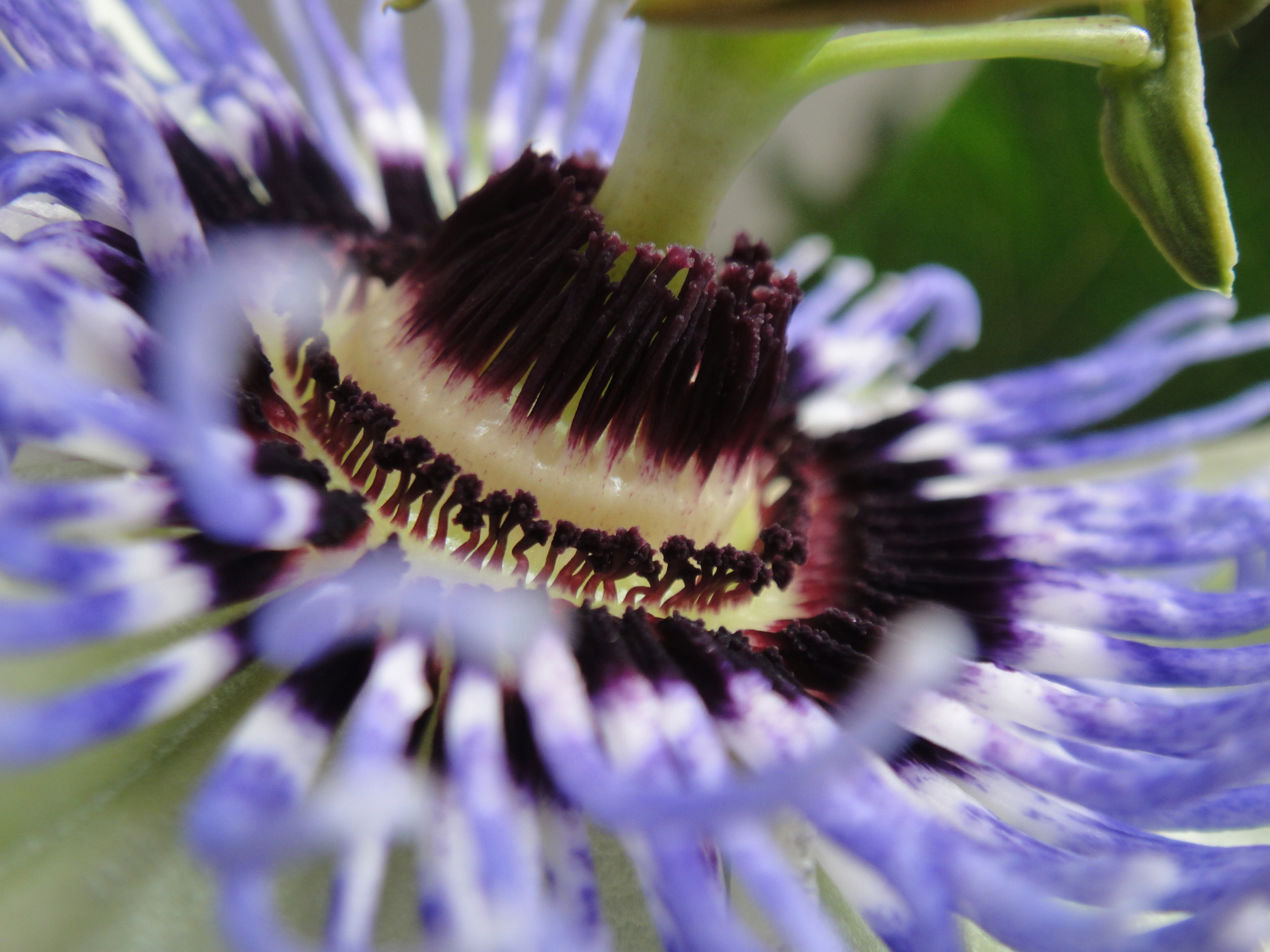
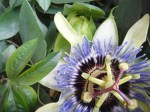
The centre of this flower looks like little dancing aliens

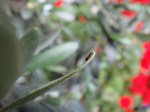
My favourite photo – looks like the ant has cottoned on to my presence

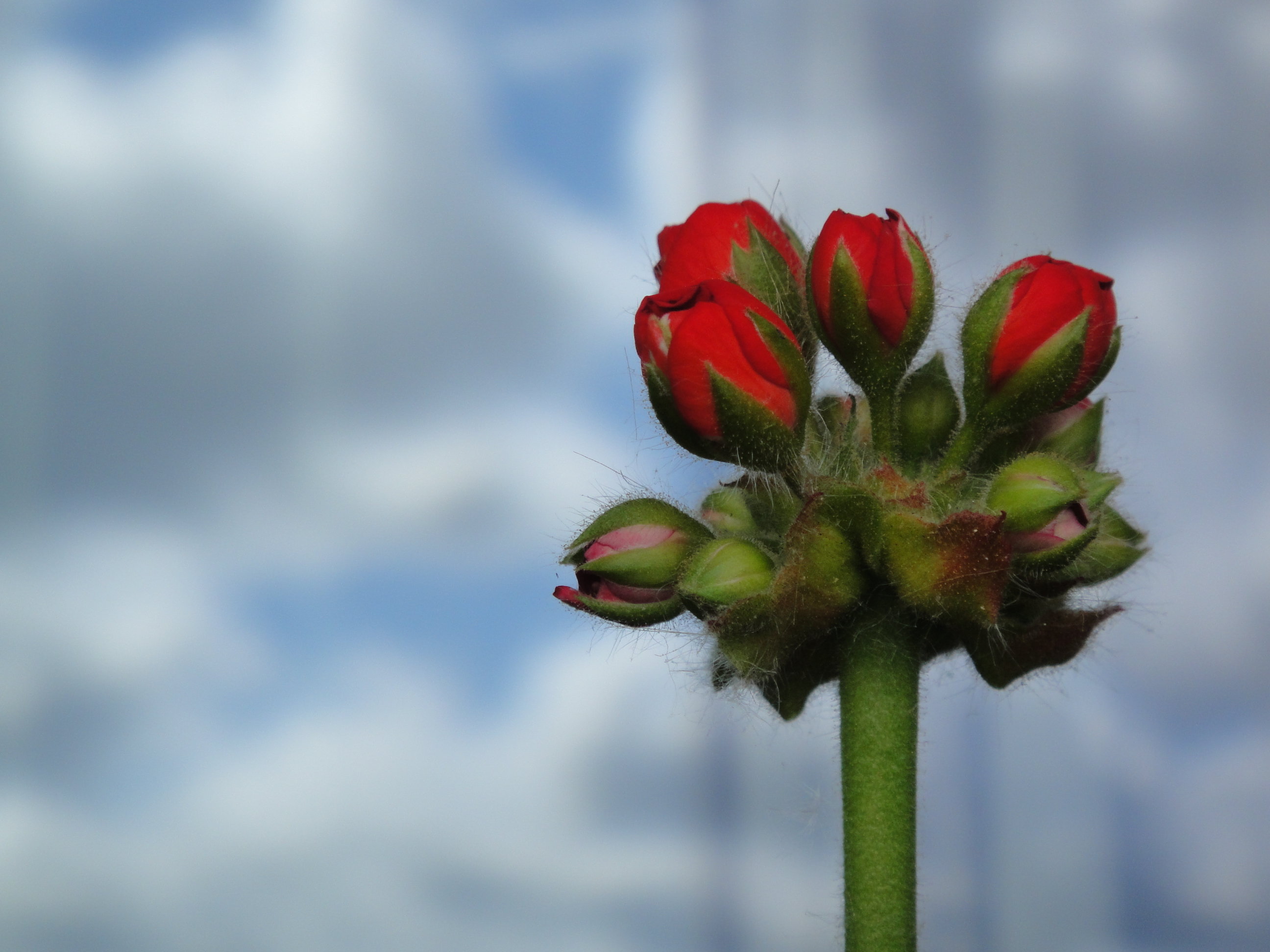
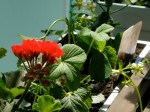
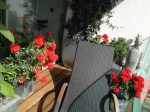
I may only have a balcony to exhaust my green fingers, but that balcony, which runs along the front of my entire flat, is my pride and joy. There is much to be said for the urban balcony. Not only does it help to make urban life more bearable, more colourful, and more sensorily enriched, but also helps to give nature a bit of a kickstart – there have, for example, been reports of huge rises in the numbers of urban dwellers keeping beehives, so many in fact that there are now a surplus of bees for the numbers of suitably pollinating flowers available across the city. I don’t have bees, but what I have created on my balcony is my own piece of tropical paradise. I’ve surrounded my small table and chairs and my all important sun lounger with my own little slice of Spain. There I have a large brugmansia (whose flowers are spectacular bell-shaped blooms which smell glorious at night – they’re not out yet but rest assured, I will share on The Daily Norm once they are), a passion flower, an olive tree, grasses and plenty of geraniums. I’ve also encouraged honeysuckle to grow up the wall, and this year, for the first time, introduced some strawberries into the mix.

Because my urban balcony garden is a natural extension of my lounge which has a very contemporary red, black and white colour scheme, I have attempted to continue that out onto the balcony, with modern galvanised steel planters, and plenty of vivid red geraniums, which mark a wonderful contrast against the building’s crisp white washed walls and the black and grey grasses I have planted intermittently amidst blood-red cala lillies and those red-burst strawberries.

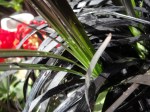
So without further ado, here are some focused shots of the plants which are currently thriving on my urban balcony garden.

Whether you’re a city-dweller or otherwise, I strongly recommend you import some plants into your life – even if it’s only a window box hanging out of the window. The introduction of plants always creates a new geometric mix into any design scheme, bringing curves and floral bursts into often boring square buildings, which are enhanced further as day turns into night, and interesting plant-shaped shadows dance across the surfaces of your home. Whats more, as a plant grows and changes with the seasons, your home too will adapt to the altering cycle of the year, and as the plants rise and fall, you will find a great sense of achievement in tracking their story and progress in your home (just remember to water them, occasionally!)

© Nicholas de Lacy-Brown and The Daily Norm, 2001-2012. Unauthorized use and/or duplication of the material, whether written work, photography or artwork, included within The Daily Norm without express and written permission from The Daily Norm’s author and/or owner is strictly prohibited. Excerpts and links may be used, provided that full and clear credit is given to Nicholas de Lacy-Brown and The Daily Norm with appropriate and specific direction to the original content.

Summer Exhibition at the RA: How a private view can make the mediocre marvellous

I’ve said it before, and I’ll say it again: When the viewing conditions are right, even the most mediocre of art can appear wonderful. When your mood is carefully massaged by fortuitous circumstances, your mind will be opened, and you’ll look for the positives in everything. Look what happened a few months back with the huge David Hockney exhibition at London’s Royal Academy: On my first visit, the gallery was so packed I came out spitting blood (almost literally as the hustle in the giftshop between usually restrained “Friends” of the RA to grab as much Hockney merchandise as possible almost ended up in fisticuffs). What was all the fuss about Hockney? He can’t even paint, I thought, bitterly. However, when I went back a few weeks later at the behest of my partner, first thing in the morning, tactically skipping the first couple of rooms and emerging, victoriously from the crowds into an empty exhibition beyond, I began to see what all the fuss was about. The paintings were so atmospheric, airy, colourful, pleasing. It was all about the viewing conditions.

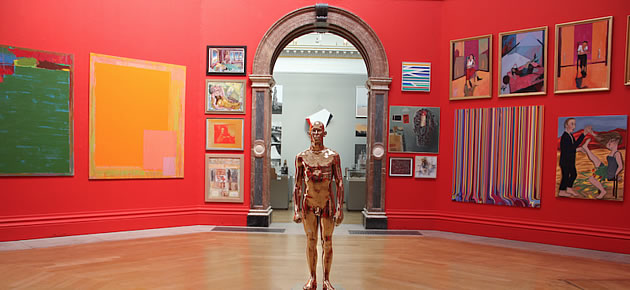
The central Matisse-red gallery complete with sculpture by Leonard McComb RA

The same, now, can be said for my experience of the Royal Academy’s most famous annual offering, the Summer Exhibition, which I attended, with my mother, last night. So used to the unseemly crush of packed-in spectators, all vying for space in the Small Weston Room to see the small paintings squeezed unapologetically onto the wall from floor to ceiling, I would always leave the Summer Exhibition feeling resentful. Why had I just spent good money to go along and see a load of same-old mediocre paintings, small canvases of flowers and ovens and animals, not to mention Tracey Emin’s hideous, crass doodles and the repetitive works of the closed-club Royal Academicians? But not this year. Yes, the same old Royal Academicians still dominate, and yes, the ridiculously crap works of Tracey Emin, now named “Prof. Tracey Emin RA” after her recent ascendancy to the role of RA Professor of Drawing (what a joke) are still conspicuous by their unashamed lack of skill (and because of the hundreds of “sold” dots stuck to the frame because people seem to think scrawled depictions of half-vaginas are valuable), but the difference this year was that I attended on a private view. There were literally 80 of us in the entire venue, and those rooms are big. Once the small gathering had dispersed around the place, we frequently found ourselves quite alone in the huge Royal Academy galleries.

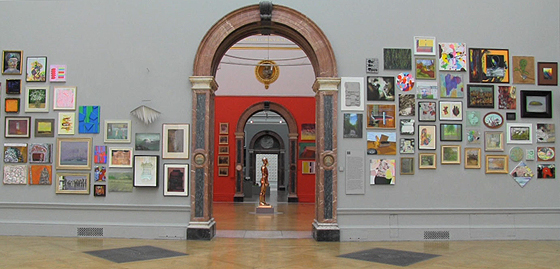
The “wave” hanging of small paintings

It was wonderful! Feeling so airy, ephemeral, and almost important, we glided around the galleries in such a good mood that we actually started to point out details of all the paintings, noticing the colours and the skill involved, complementing, and sometimes even tempted to buy and generally loving the whole affair. We were also treated to a talk by the charming Harry Baxter (an “artist educator” at the RA) whose insight into the exhibition made the whole thing instantly accessible and immediately unpretentious. This year’s show, the 244th in the RA’s history was, he explained, a homage to the small and the beautiful, an intentional contrast to the Hockney “Bigger Picture” exhibition where crowds had crammed into the galleries to see vast paintings made up from multiple small canvases. The focus on “small” can only be a good thing – it meant that rather than squeeze into the tiny rooms with hundreds of others to see all the small works, this year the huge central galleries were given over to countless small paintings (some 1,500 in all) which were hung around the walls like a wave of moving art. It wasn’t quite a Salon floor-to-ceiling hang, but it was an all-embracing journey from one artist’s expression to another’s.

So amidst all this good feeling, what were my favourite works? Top of the list has to be Buffalo Grill by Scottish artist Jock McFadyen, not least because I used to eat in one such of the French chain restaurant bang opposite the Moulin Rouge in Paris. This huge green canvas, with an off-centre, almost hazy image of the American-looking chain restaurant made for quite an impact in a gallery in which it easily dominated. It’s almost like the blur of the restaurant viewed from a fast-moving car, and yet the top of the restaurant is crisp and clear, like an after-image of the place stamped onto your retina.

Buffalo Grill (2004) © Jock McFadyen

Top of my list of sculptures, meanwhile, was the super-shiny bronze creation by Leonard McComb RA, Portrait of a Young Man Standing. Only a shame that it has the very modest price tag of £600,000. Against a red painted central gallery (apparently painted as such in homage to Matisse) and reflecting in its polished surface the paintings hung all around it, the sculpture looked truly remarkable. Second place for sculpture had to be given to Professor David Mach RA, whose cheetah made from coathangers, Spike, is an incredible feat of innovation (as was the brilliant recreation of the head of Michelangelo’s David built from the heads of matches, also by David Mach).

Top half of Leonard McComb’s Portrait of a Young Man Standing

David Mach RA, Spike

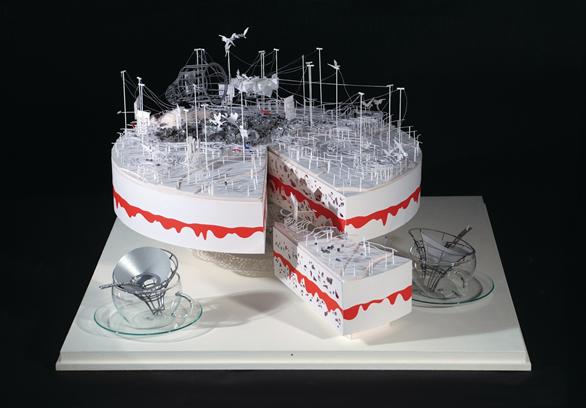
The architecture gallery was pretty interesting this year, bordering more on the surreal, not least with CJ Lim’s Dream Isle: London, the Victorian Sponge Cake which was a model imagining just that – a city shaped like a sponge cake! Also amongst the architecture were the predictable inclusions of Olympic stadiums and other Olympic buildings, as well as the new King’s Cross station concourse.

C J Lim, Dream Isle: London, the Victorian Sponge Cake

I also loved this by Graham Crowley…

Red Drift No. 3, © Graham Crowley

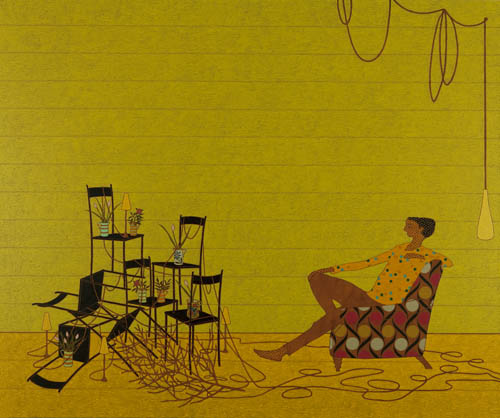
And this by one of my favourite Royal Academicians, Stephen Chambers RA

Stephen Chambers RA, I Know Trouble (And She’s My Friend)

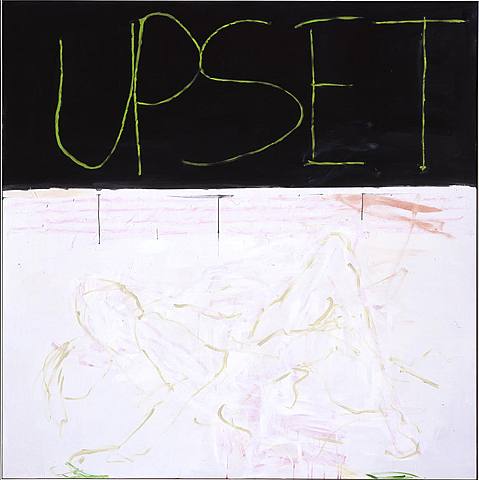
While this, by Tracey Emin, appalled me…

Upset, by “Prof” Tracey Emin RA

I could go on, and there is of course plenty to look at, and to mention, but hopefully the photos I have included in this post will provide a hint of the wonders on show (except of course for Tracey Emin’s “Upset” which is included purely for the purposes of demonstrating how a totally talentless media novelty can rob some poor talented unknown of a huge amount of wall-space and all the opportunities that go with it).

The Royal Academy don’t always get it right, but with this year’s Summer Exhibition, they really seem to be progressing. Perhaps it’s because of the new president, Christopher Le Brun, or maybe it’s just because of the space all around me, the exclusivity and of course the complementary wine… It’s a question which remains as yet untested, but if you want to have a punt, go and visit the show – as the name suggests, it’s on all summer, and you can find out all of the details here.

Eating España, again – Part I: One starter and two mains

Ever the diplomat, and clearly qualified for a high powered job in the Foreign Office, whenever a country get’s a bit of bad press, I try to do my bit to remind all the cynics out there that despite financial plight, banking crises, and the incessant need for multi-billion euro bailouts from reticent cash-strapped neighbours, the culture which made these economically shaky countries great survives through the monetary meltdown. This is no more so than in my beloved Spain, where the great flavours and platos ricos were born from poverty, using basic and cheap ingredients which, when combined, produce a flavour sensation which captures in its aroma, colour and savour the very essence of that culturally diverse country. Consequently, just like I did for poor old Greece a few weeks ago, I’ve returned to my London kitchen, and cooked up a feast in honour of Spain’s great gastronomic heritage.

Here are just a few dishes I tried out over the weekend. In this post I’m going to share three great savoury dishes from apple-lush Asturia, seafood-filled Catalonia and the once-moorish highly spiced lands of Andalucia. Later in the week, I’m moving on to the sweet stuff, when I’ll share a traditional Santiago almond cake, and some divinely Sevillan orange-burst creme-caramels.

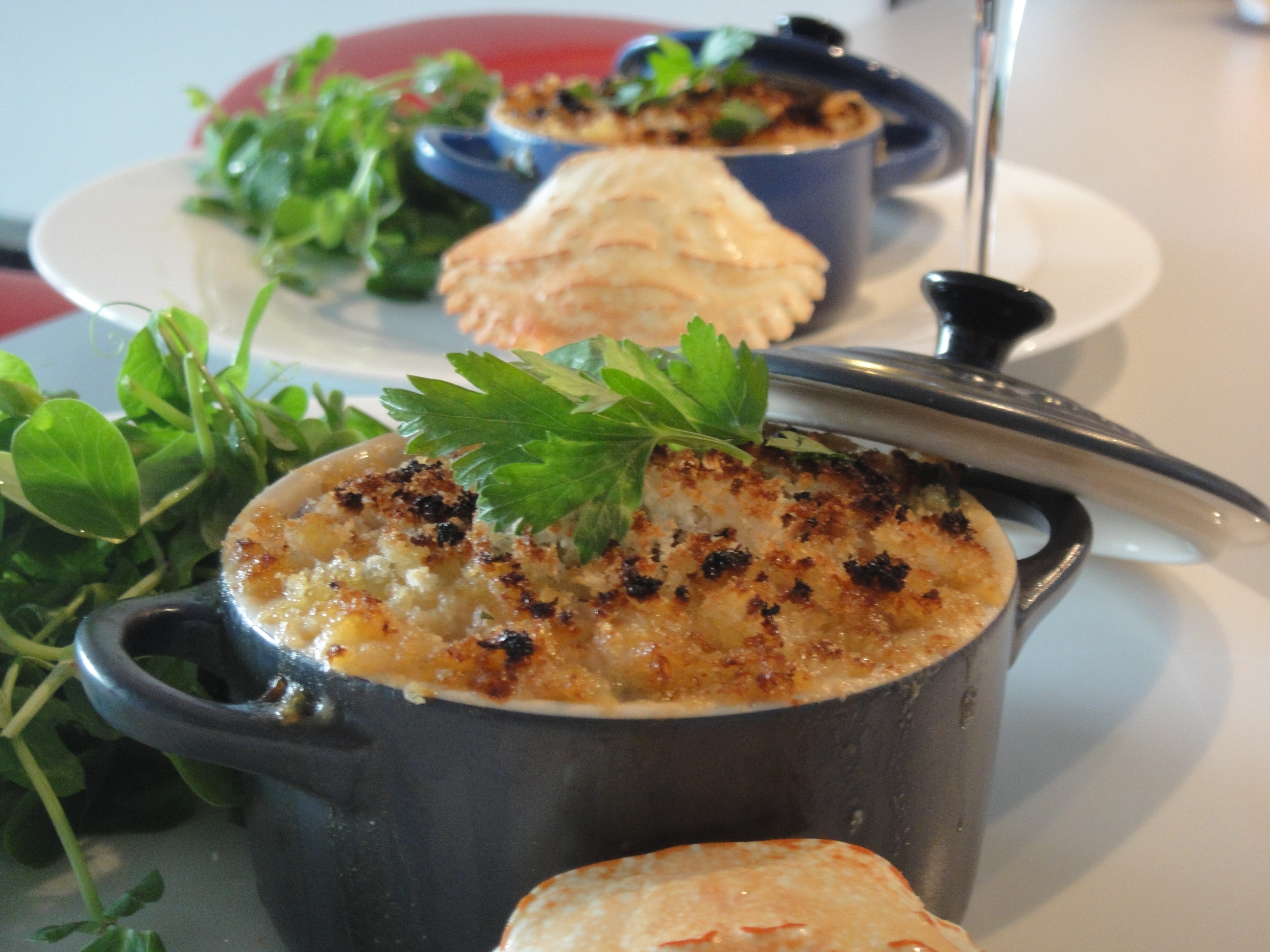
Centollo a la sidra (Baked crab with cider)

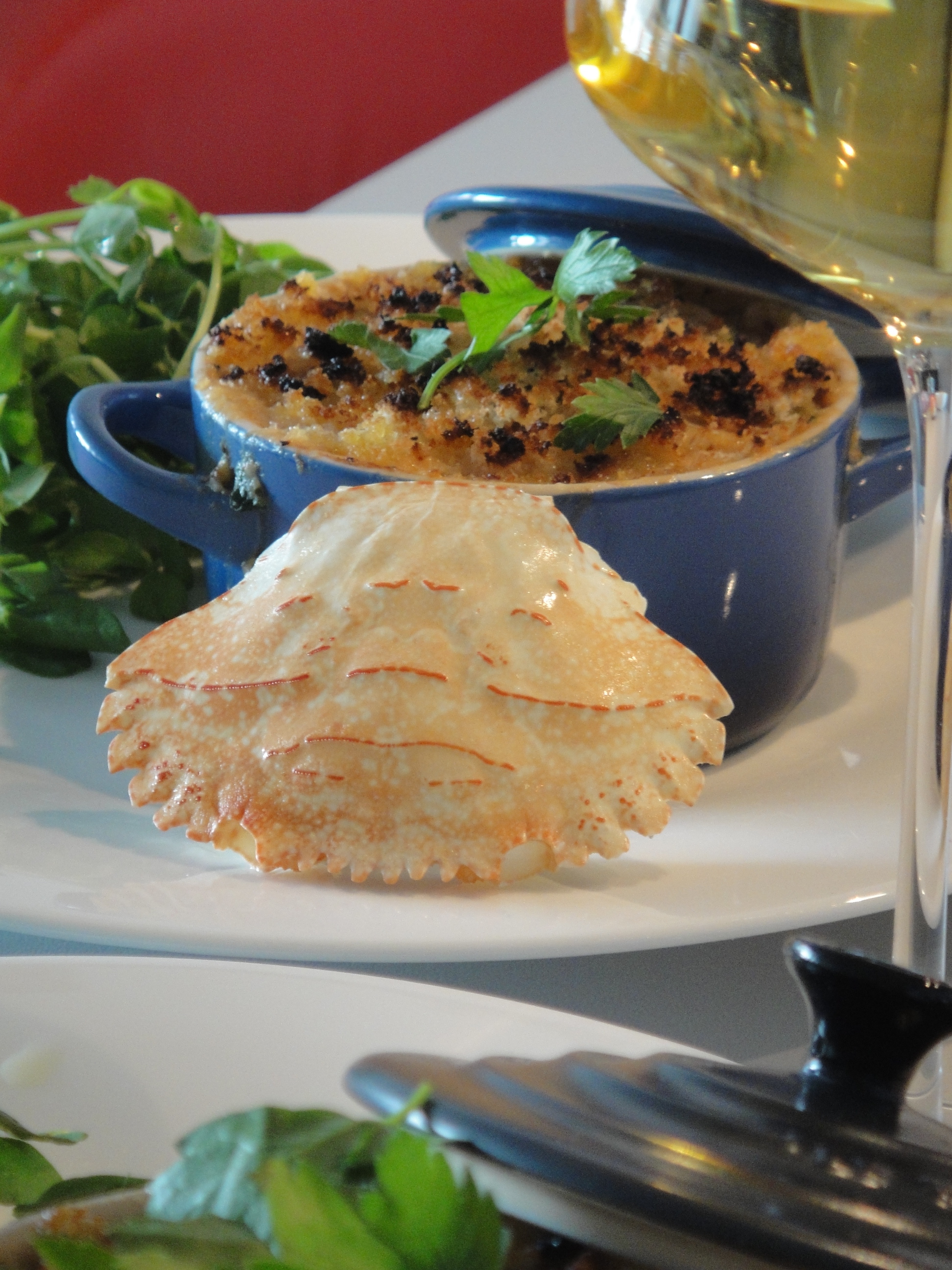
This recipe takes its inspiration from the Asturias region of Spain, where Cider is the drink of choice and sidrerias can be found in every town and village. My take is in turn based on the recipe by Claudia Roden in her fantastic book, The Food of Spain: A Celebration (Penguin, 2012) so all credit must go to her. These little ramekin filled dishes make a perfect starter or, as I did, served as a light lunch with a little side salad. In Asturias, they make this filling and stuff it back inside the shell of their txangurro spider crabs. While not attempting any such culinary craftsmanship, I paid homage to their skills by serving my dish in a mini le creuset pot with a little crab shell on the side, just for decoration (you eat with your eyes before your mouth etc etc).

To make your own crab dish (whatsoever you may chose to stuff it in) take a chopped medium onion which should be sauteed over a low heat until soft. Add to it one peeled and chopped tomato, a pinch of chilli powder (or cayenne pepper) and another pinch of salt and cook over a medium heat for around 8 minutes. Next take a fillet of cod (around 150-250 g depending on how many ramekins you want to fill) and cook for about 5 minutes or until it begins to flake, turning it once. Flake the cooked fish and add 250g of cooked white and dark crab meat, 175ml of dry cider and 2 tablespoons of chopped flat-leaf parsley. Cook for around a minute. Oil 4 small ramekins or two big mini casseroles (like mine) and spoon the mixture in. Sprinkle with fresh breadcrumbs, a few blobs of butter and place under the grill until the breadcrumbs are browned. It’s probably best you leave the ramekins to cool for a couple of minutes once they come out of the grill before you serve them!

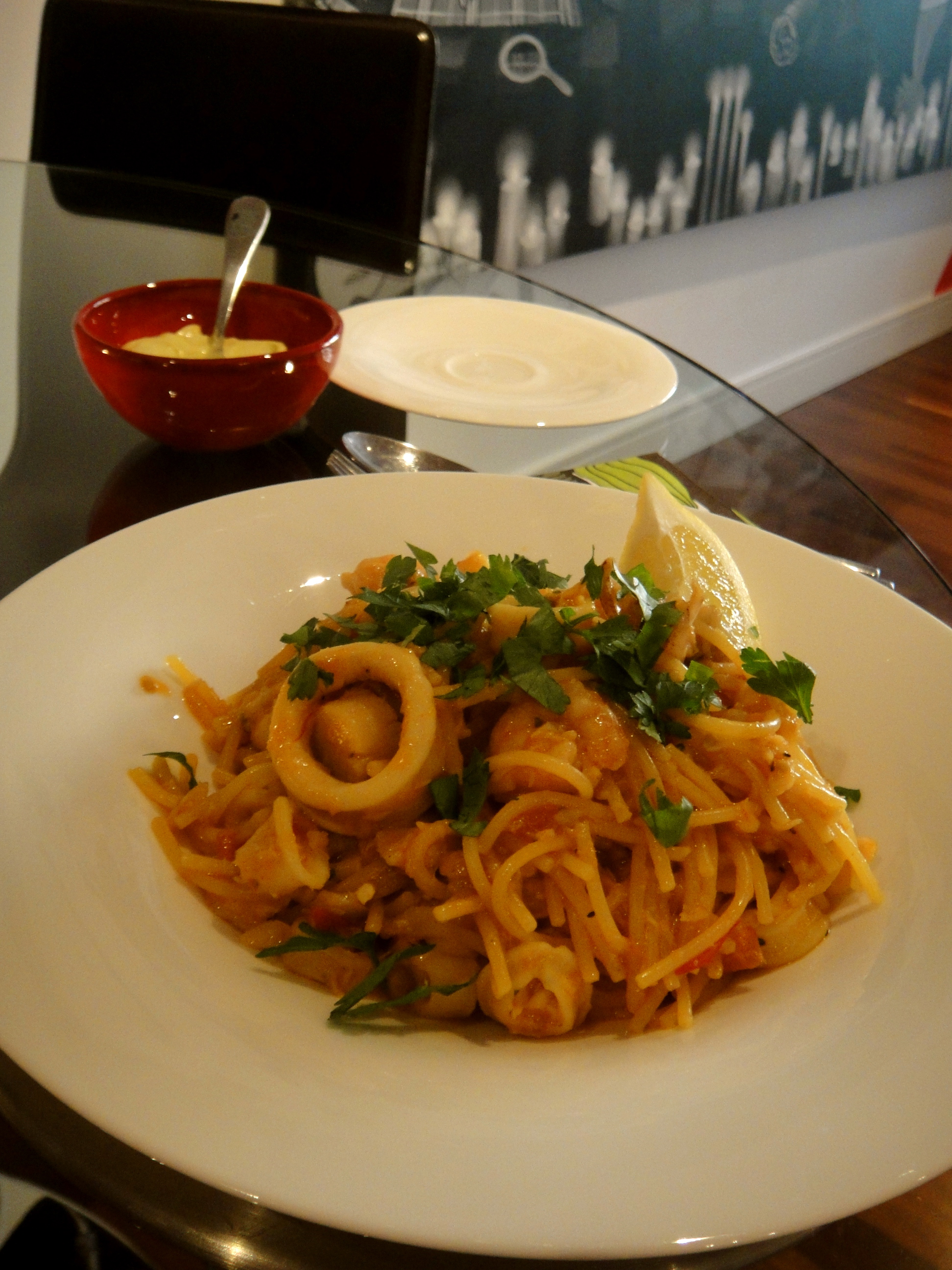
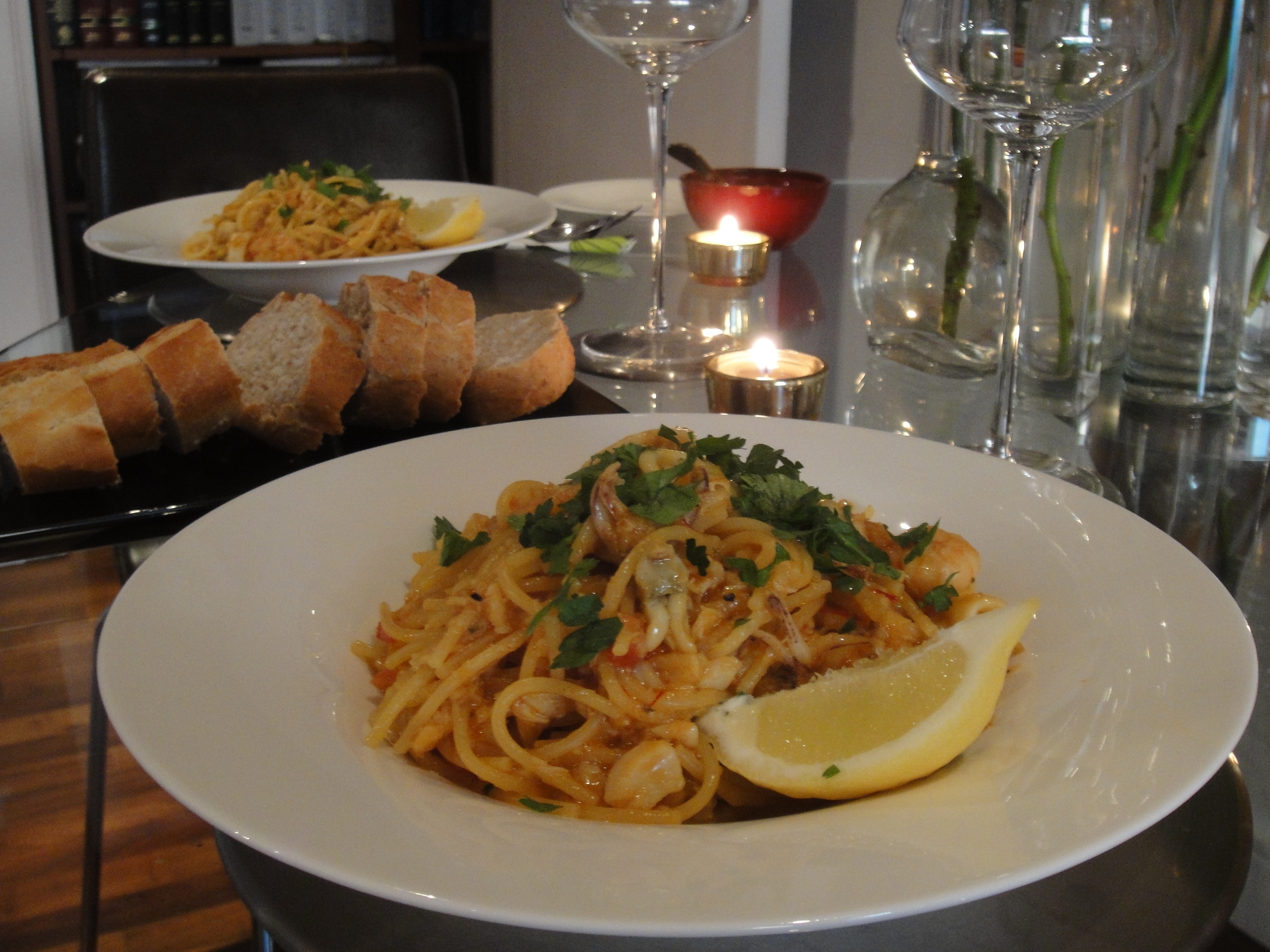
Fideuada del señorito – (smoked) seafood pasta

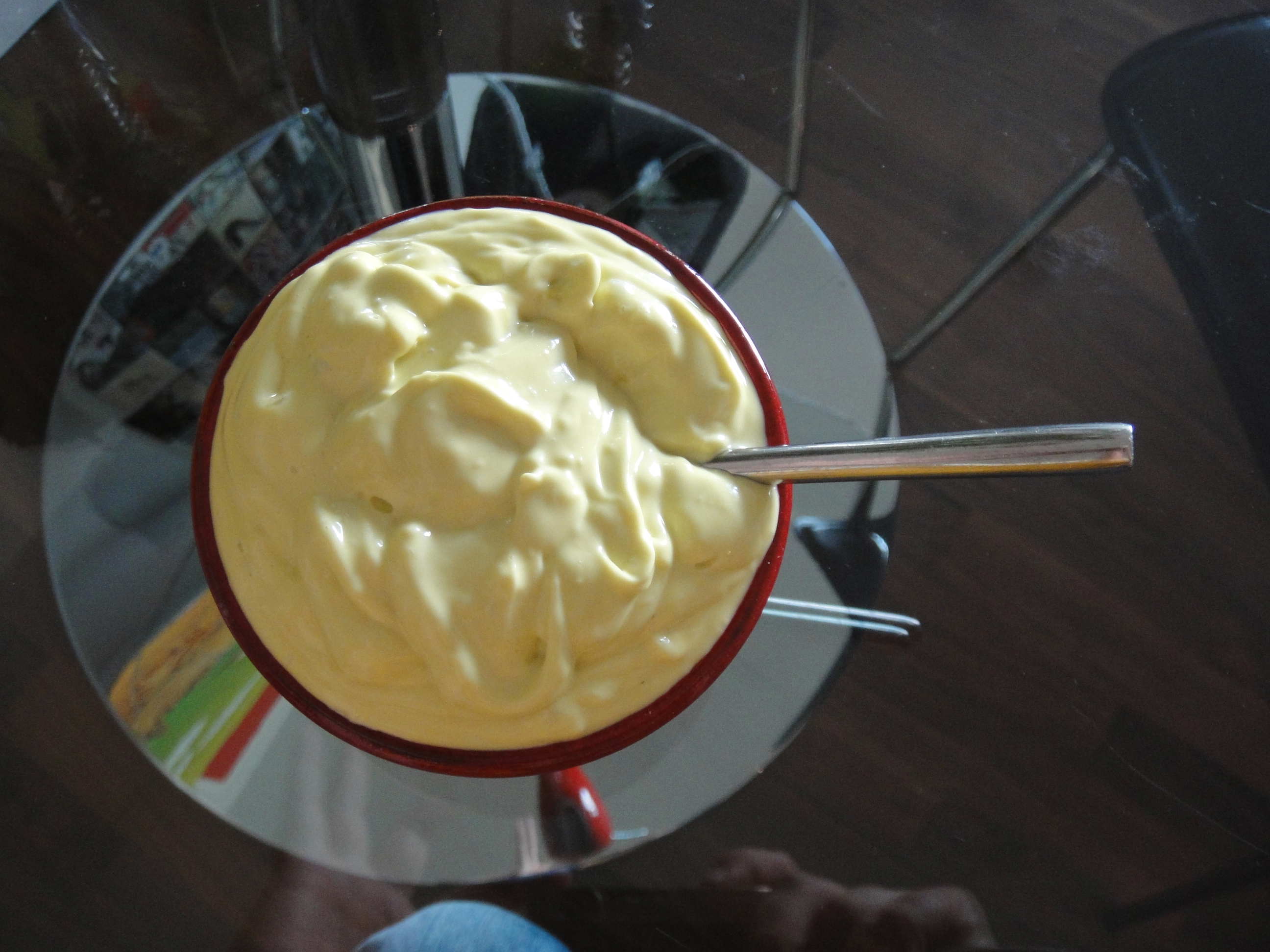
This is a pasta dish straight from the gutsy seafood-filled region of Catalonia, and brought to my attention, once again, by Claudia Roden although once again, I’ve gone my own way with it and shaken it up a bit (sorry Claudia). The dish, for no apparent reason, translates as “of the young gentleman”, perhaps because the short pieces of pasta and shelled prawns make the dish particularly easy for young senoritos and senoritas to eat. Either way its truly delicious for us adults too. You should service it with a good blob of alioli (garlic mayonnaise). If you can’t be bothered to make you own mayo, just add crushed garlic to shop bought mayonnaise. Mine is thick and yellow because I made it with extra virgin olive oil straight from a vineyard next to my Partner’s family home in Tuscany (yes yes, I know, it’s not Spain) so well worth the rather tedious effort of making it from scratch.

My alioli

To make the pasta, heat 4 tablespoons of oil in a large frying pan (or paella pan if you have one). Cook around 400g of cubed smoked haddock (Claudia Roden uses monkfish, but I didn’t have any to hand – I adore smoked haddock and loved the results in this dish – it gives a subtle smokey flavour which works amazingly well with the alioli on the side) and cook on a medium heat for around 3-5 minutes. Next add 4-6 baby squids, sliced into rings, cooking for a further couple of minutes before adding a dozen or so peeled king prawns and an equal number of scallops. Cook until the prawns are nice and pink (1-2 mins). Place all the cooked seafood to one side in a separate dish, keeping it warm. Preserve any liquid. Using the same pan, heat 2 tablespoons of oil and stir in 1-2 crushed cloves of garlic. Just before the garlic colours, add 3 chopped tomatoes, 1 heaped teaspoon of pimenton dulce (or sweet paprika), a little salt and a good pinch of saffron threads (and at this point pause and indulge in the aroma of Spain, a warm mediterranean evening wafting past your nose, a magical culinary noche brought to life in your kitchen, wherever it may be). Sorry, where was I… ah yes, The tomato will quickly thicken so at this point I added 120ml of oloroso dry sherry (although dry white wine will work too). Wait for that to reduce down, cooking for around 10 minutes.

Add around 300g (for 2-3 people) of spaghetti, broken into 3-4cm pieces to the tomato mixture, making sure it is well coated. Then add around a pint of boiling chicken stock and add back the cooked seafood, stirring it into the pasta/ tomato mix. Cook until the pasta is al dente. This should use up all the stock, but add a little more if the liquid dries up before the pasta is cooked. The dish should be moist when its finished.

And that’s it! Serve with some sprinkled parsley and a good dollop of alioli – the mixture of smoked fish and pimenton with delicate seafood and a pungent winey tomato sauce is to die for, I promise. Oh and don’t forget to give the whole thing a good squeeze of lemon juice – the acid cuts across the strong salty smokeyness perfectly.

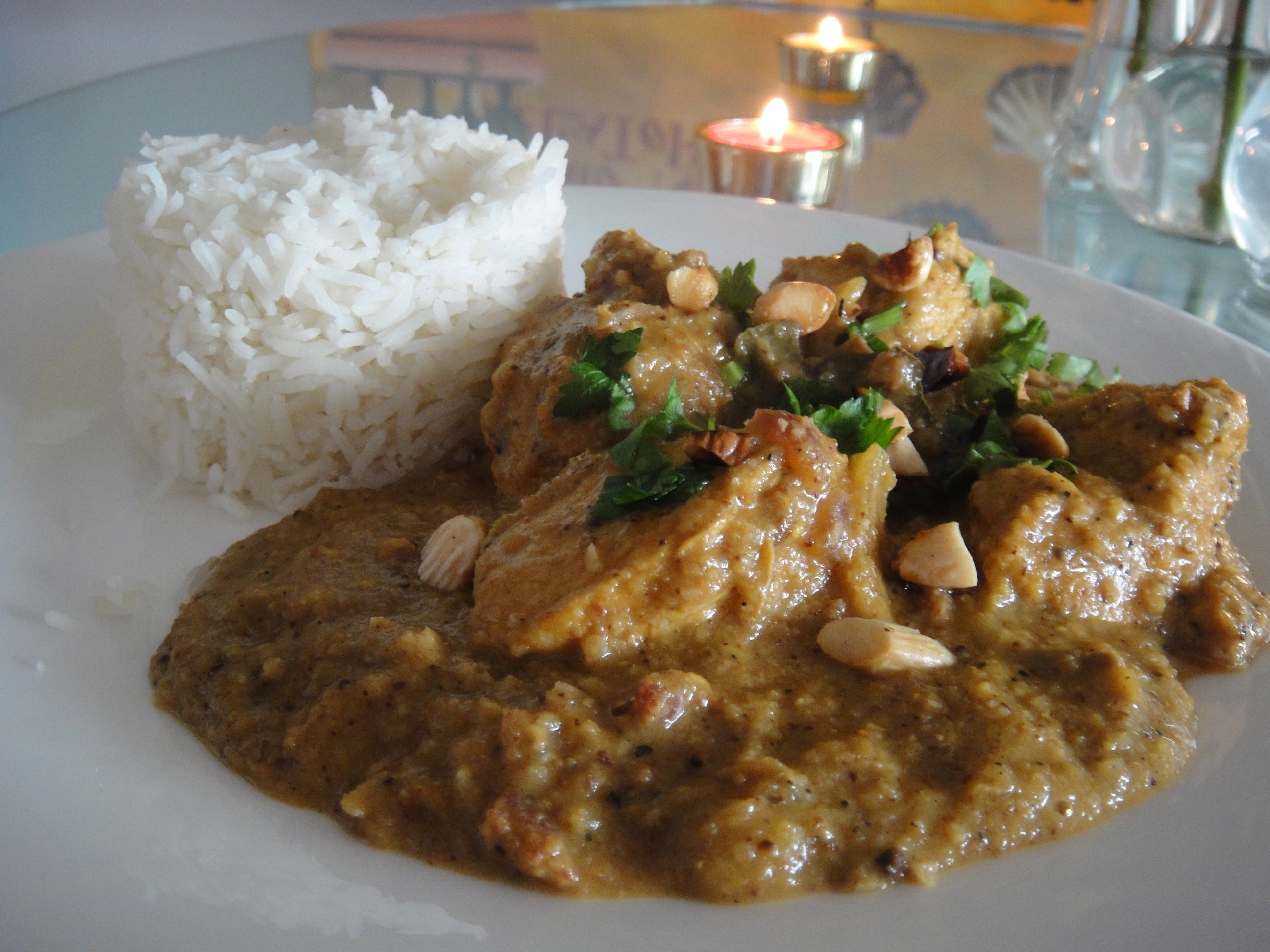
Pollo en pepitoria (Chicken in a mildly spiced saffron, pine nut and almond sauce)

Last up it’s down to the Med and the region of Andalucia where the influence of 700 years of Islamic rule can still be felt from the rafting voices and spasmodic dancing of gypsy culture emanating from Seville, to the use of mild moroccan spices in their food. This dish is no exception. It was first cooked for me by my mother, who in turn got it from chef Rick Stein, who in turn nicked it from Australian chef Luke Mangan who opened a restaurant specialising in a mixture of Spanish and Moorish cuisine. Despite this chinese-whisper-like chain of chefs, all of whom have no doubt made changes here and there, the dish is nonetheless emblematic of Southern spanish cooking, with its warm aromatic spices and plentiful use of almonds. Moreover, the use of a “picada”, that is a nutty paste stirred into the chicken, is popular across the whole of the Iberian peninsula.

Start off by hard boiling two large eggs for 10 minutes. You’ll need these later. Allow them to cool and then peel off the shell.

Next deal with your chicken. Some people will use a whole chicken, in which case they’ll chop up and use the legs, wings, breasts etc. I only really like chicken breasts and am not therefore much help on how to use these other bits of the bird – but you can. I use four chicken breasts. Cut these into fairly large pieces (probably three from each breast) so they remain moist.

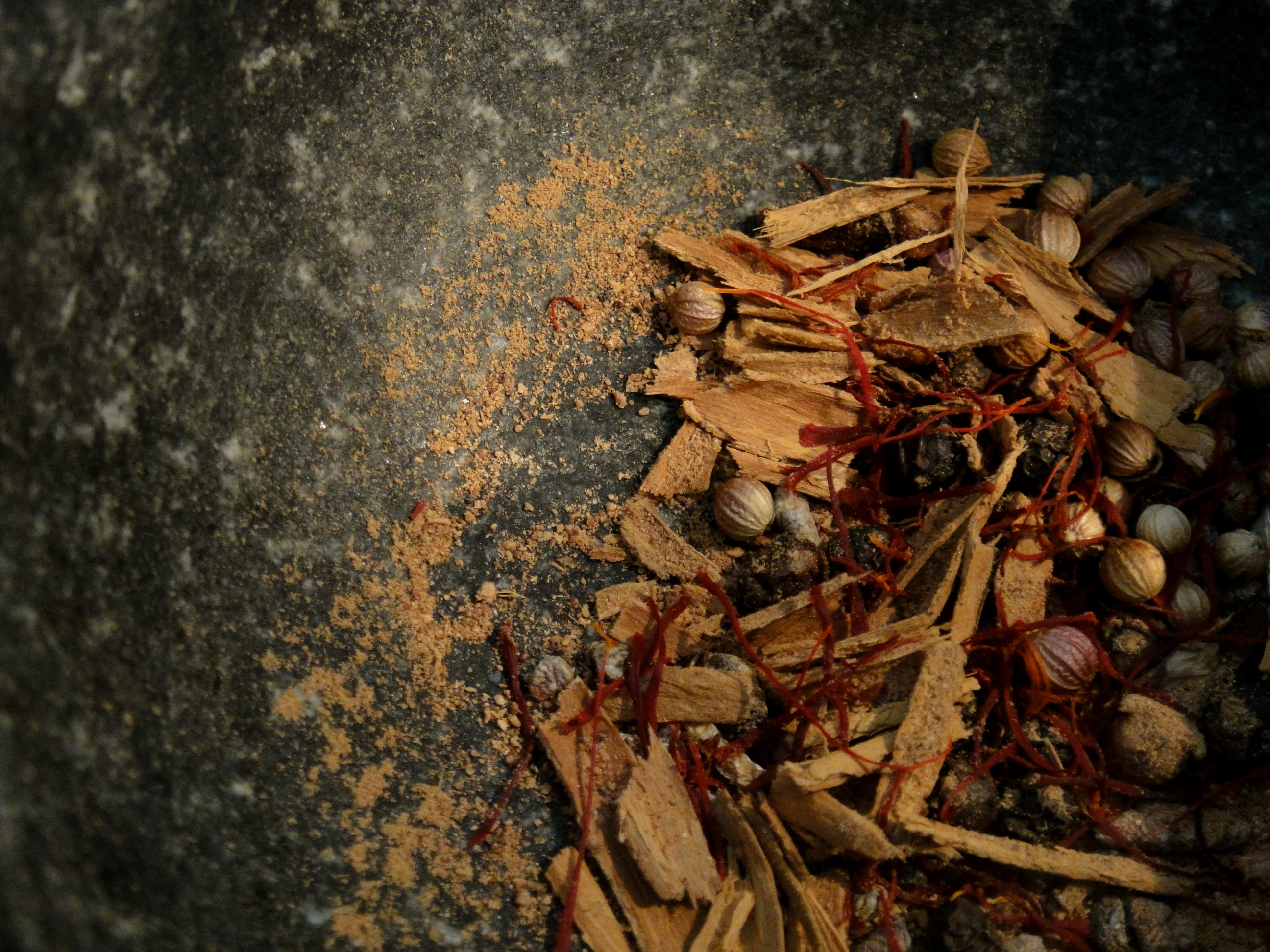
My spices: they smell as good as they look

Onto spices. Lightly crush approximately 10 cardamom pods and remove the seeds from inside (this is fairly tedious but worth it, I promise). Discard the shells and add the seeds to a pestle and mortar into which should also go 1/2 teaspoon of coriander seeds, 1/2 teaspoon saffron strands, 2 cloves, 1 cm piece of cinnamon stick, 1/4 teaspoon of nutmeg and around 10 peppercorns. Grind to a fine powder and enjoy the aromas while you’re doing so.

Now heat around 4 tablespoons of oil in a casserole. Add two peeled whole garlic cloves and a slice of white bread. Fry on both sides until golden. Transfer to a food processor. Now season the chicken lightly and fry until golden on the sides. Remove and set aside. Now in another tablespoon of oil, add 1 large onion, finely chopped and fry lightly until soft and sweetened but not brown. Stir in the spices, cooking for 1 minute and then stir in 200ml of dry oloroso (or other) sherry or white wine and 200ml of chicken stock. Return the chicken to the pan with 2 bay leaves, a handful of raisins or dates (these are my addition, but are optional) and a pinch of salt. Bring to a simmer and cook gently for around 20 minutes (40 minutes is probably necessary for chicken legs etc).

In the meantime heat a frying pan and dry roast 40g pine nuts for 1 minute and 40g blanched almonds for 2 minutes. Leave to cool. Add the nuts and the yolks from the hardboiled eggs to the bread in the food processor along with 10-12 tablespoons of cooking liquid from the chicken. Grind to a paste (this is the “picada”). Chop 20g more of blanched almonds to sprinkle over the dish at the end.

Once the chicken is cooked, stir in the picada paste and simmer for a couple of minutes longer until thickened. Stir in 1 tablespoon of lemon juice approx and make sure your seasoning is on course. Finally, in a separate pan, stir fry those remaining chopped almonds for a couple of minutes in a little oil until golden. Serve your chicken with the sauce and sprinkle the almonds on the top with some parsley.

OK, we’re done. Three dishes bringing the flavours and character of Spain directly into your house. On second thoughts maybe this post isn’t so helpful to the Spanish economy after all – once these amazing cooking aromas fill your home, you’ll have no need to go on holiday again!

National pride in a Diamond Jubilee Spectacular

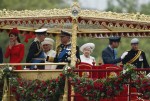
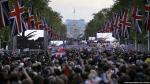
As the Diamond Jubilee weekend draws to an end, there is a unanimous consensus that London has never looked so good, nor love for the Royal Family reached such an all-time high. Today’s climax of the Diamond Jubilee celebrations brought with it all the spectacular pomp and ceremony for which Britain is famed around the globe, awe-inspiring parades of gold and red, plush uniforms, glittering livery, grandly dressed horses and the stunning uniformity of hundreds of cavalry riding with precision along union jack flapping and crowd-lined streets. At its centre, the Queen and the Royals were a delight to watch, humbled and stunned by the incredible show of public support, as they made their way back to Buckingham Palace which last night played host to an unbeatably brilliant star-stunned concert and fireworks spectacle, and which today brought the celebrations to a glorious climax with the Queen’s balcony appearance and Royal Air Force fly past.

Words alone cannot properly express the full glorious extent of the past weekend, when spirits have run so high, and all the British and millions from Commonwealth countries around the world have joined together in giving shared thanks to the Queen for 60 years in which she has sacrificed herself for the good, the stability and the strengthening of all her peoples. The party which has resulted shows that London knows how to celebrate, even when times are down, and as the Diamond Jubilee has awed across three days of brilliant spectacle, we can only now sit back and look forward in feverish anticipation towards the Olympic festivities which are still to come.

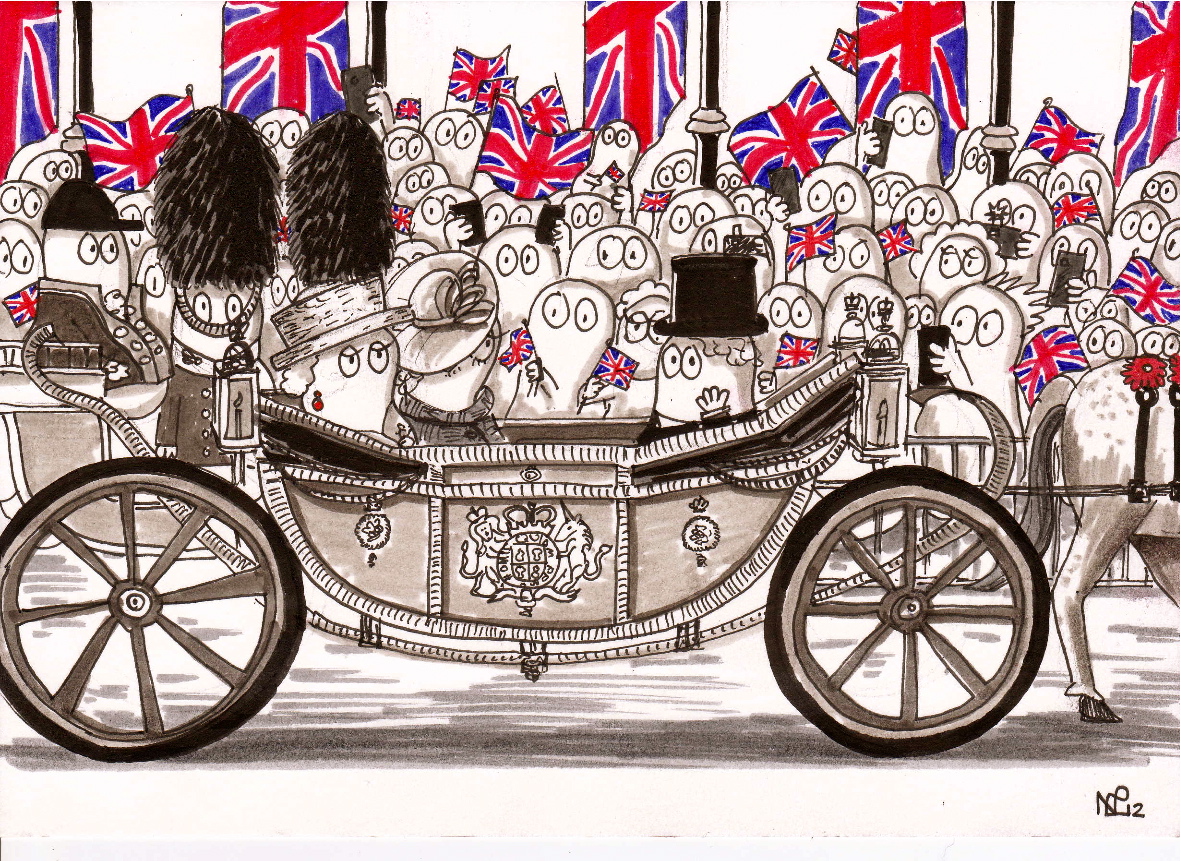
Norms fly the flag for the Diamond Jubilee procession (2012 © Nicholas de Lacy-Brown, pen on paper)

Since words are insufficient to express the brilliance with which London erupted into Jubilee carnival this weekend, I have scanned the internet, collecting together a series of photos which show just how incredible London looked as millions celebrated this weekend. But before you take a look at those, cast your eye over this little sketch which I made as the celebrations progressed. For in Norm world, they too have celebrated the Diamond Jubilee, lining the streets, waving the flag, and celebrating 60 fantastic years of their Queen. Long may it continue!

Note: these photos (apart from my sketch above) are from the internet. Appropriate copyright for the images is shown where the source was indicated on the bottom of the photos. Where a source is not indicated, the copyright belongs to either the BBC or the Daily Mail websites.