Skip to content

Posts from the ‘Food’ Category

Lisbon – Day Four: Alfama the Survivor

On 1 November 1755, the shape of Lisbon was changed forever. 20 churches collapsed, fires ravaged the city, a gigantic tsunami washed up on the shore causing widescale flooding, an estimated 15,000 Lisbon residents lost their lives and over half of the urban landscape was reduced to rubble. The cause was an earthquake so large that it is now recorded as one of the deadliest in history, an earthquake which was felt as far away as Italy but for poor Lisbon, the fabric of the city was literally raised to the ground.

The Alfama and the Castelo seen from below

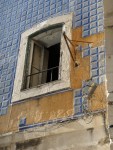
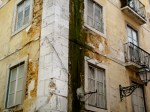
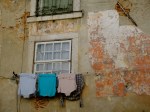
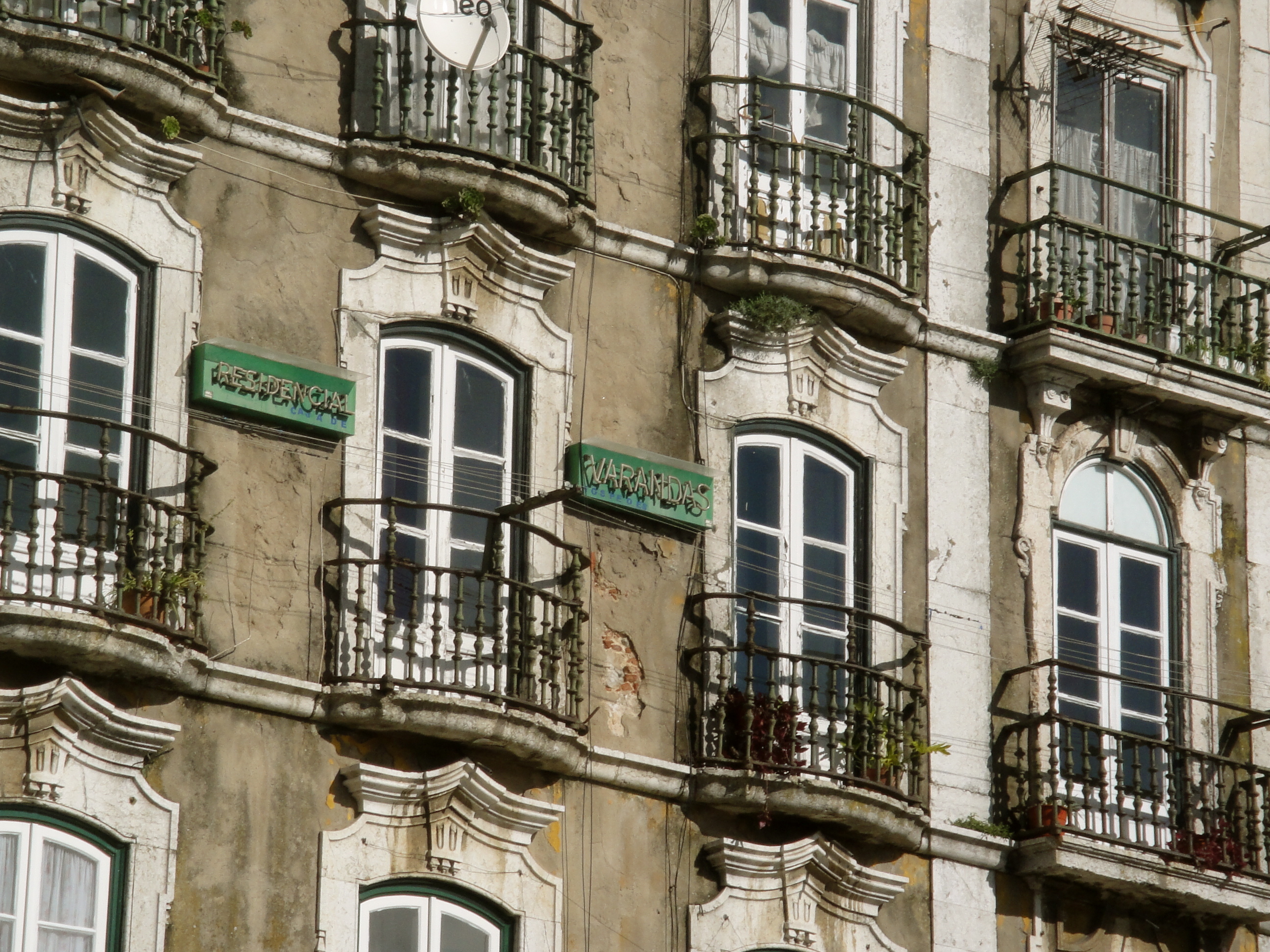
Recovering from that destruction, the city was rebuilt, and the large swathes of grid-patterned streets which fill the centre of the city today are the work of the Marquez de Pombal and the major reconstruction of the capital. However to the East of the city is one noticeable exception. Up on its hill, above the low lying centre, the area of Alfama missed much of the destruction. Many of the buildings survived and the flooding never got this far. What results is a true slice of Lisbon history, an area which, as the name suggests has Moorish origins from the city’s early beginnings, and whose twisty compact streets and steep stairways retain the Moorish layout and the medieval construction of what was once the whole of Lisbon up on its commanding hill. The Alfama is less grand, for sure, than the wide boulevards and piazzas below, but utterly idyllic in its picturesque imperfection, its windy wobbly streets, its cracking facades and cobbled paving, its coloured houses and chipped ceramics, its flower pots, laundry hung streets and plant-packed balconies. In the Alfama one felt the true heart of Lisbon, a little dilapidated treasure trove of pictorial and historical delight. And that was exactly where we headed today.

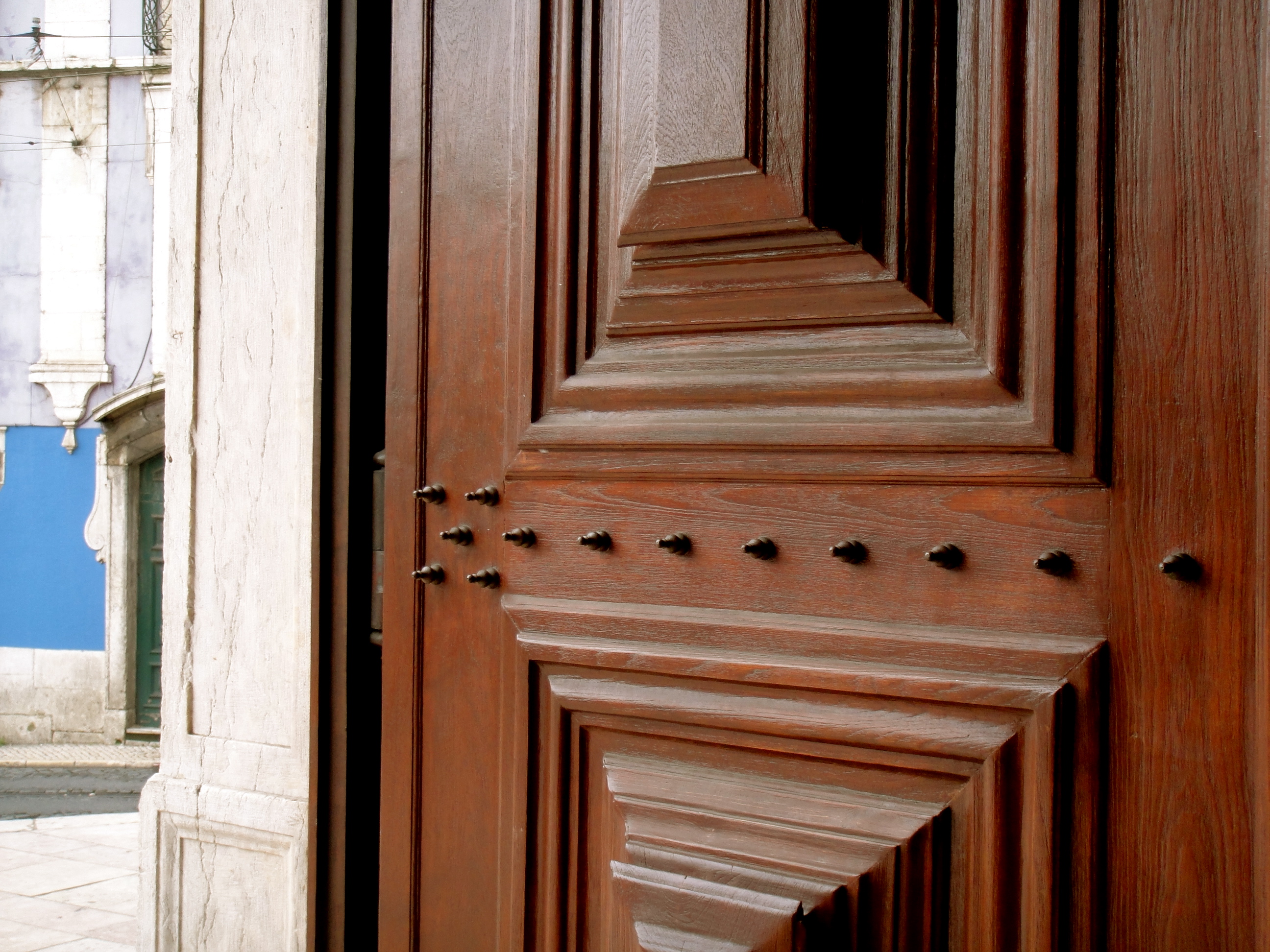
The Alfama was a joy to walk around. We had no itinerary, no predetermined destination, other than to gradually climb the winding streets upwards until reaching the Castelo de São Jorge, the castle which crowns the top of the hill. On our way we passed Sé, Lisbon’s principal Cathedral – an impressive castle-like structure from the outside, although rather gloomy on the inside; we saw the Casa dos Bicos, the conspicuous property with diamond-shaped stones adorning its facade; we marveled at the stunning views over the Eastern Tagus from the Miradouro da Graça; and we dropped into little antique shops, tiny stores crammed with ceramic cockerels, port and postcards and little chapels branded with ancient blue and white painted tiles.

Diamond-shaped stone facade of the Casa dos Bicos

The Cathedral Sé

The blue and white tiled facade of Santa Luzia

View from the Miradouro da Graça

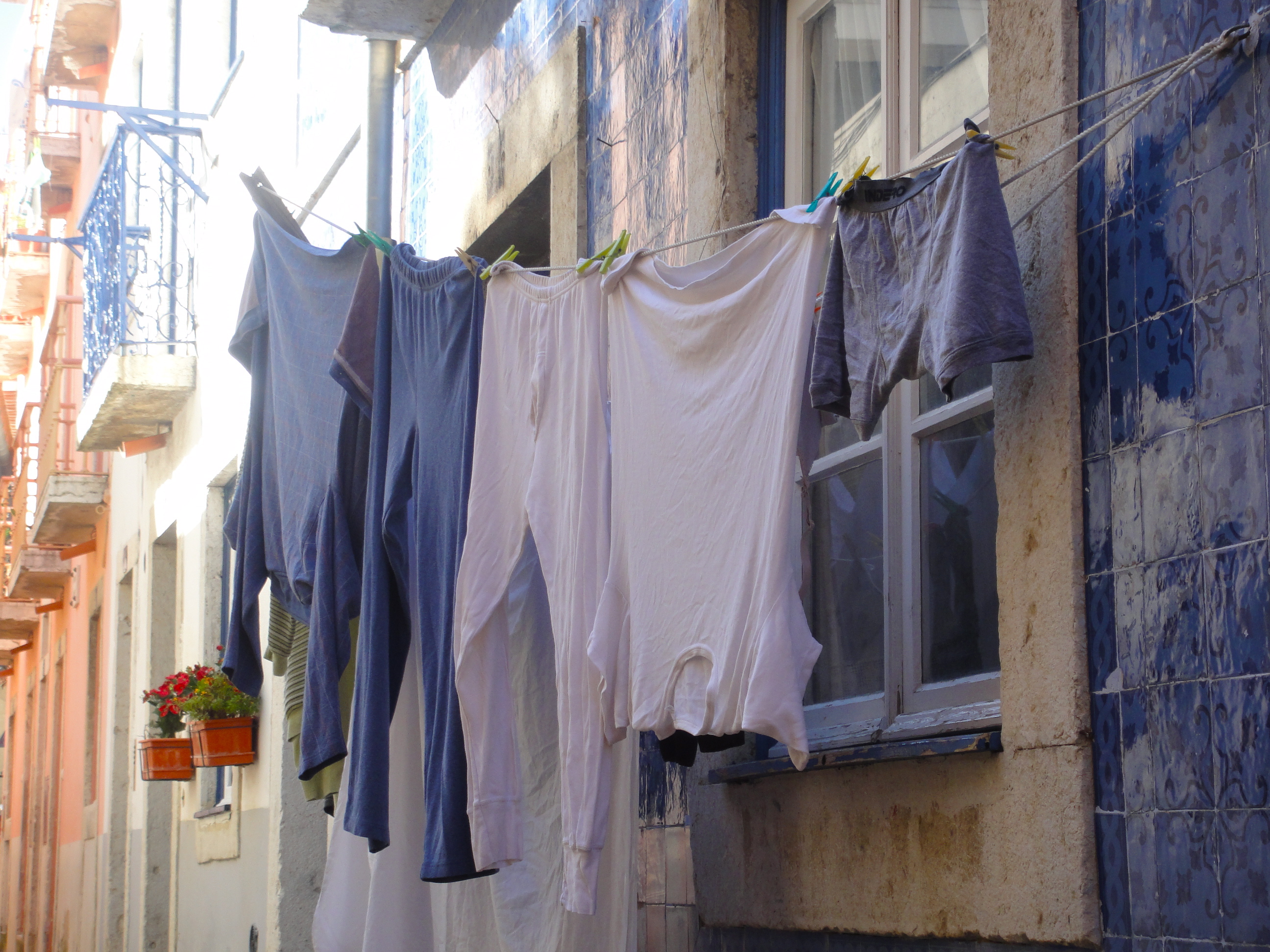
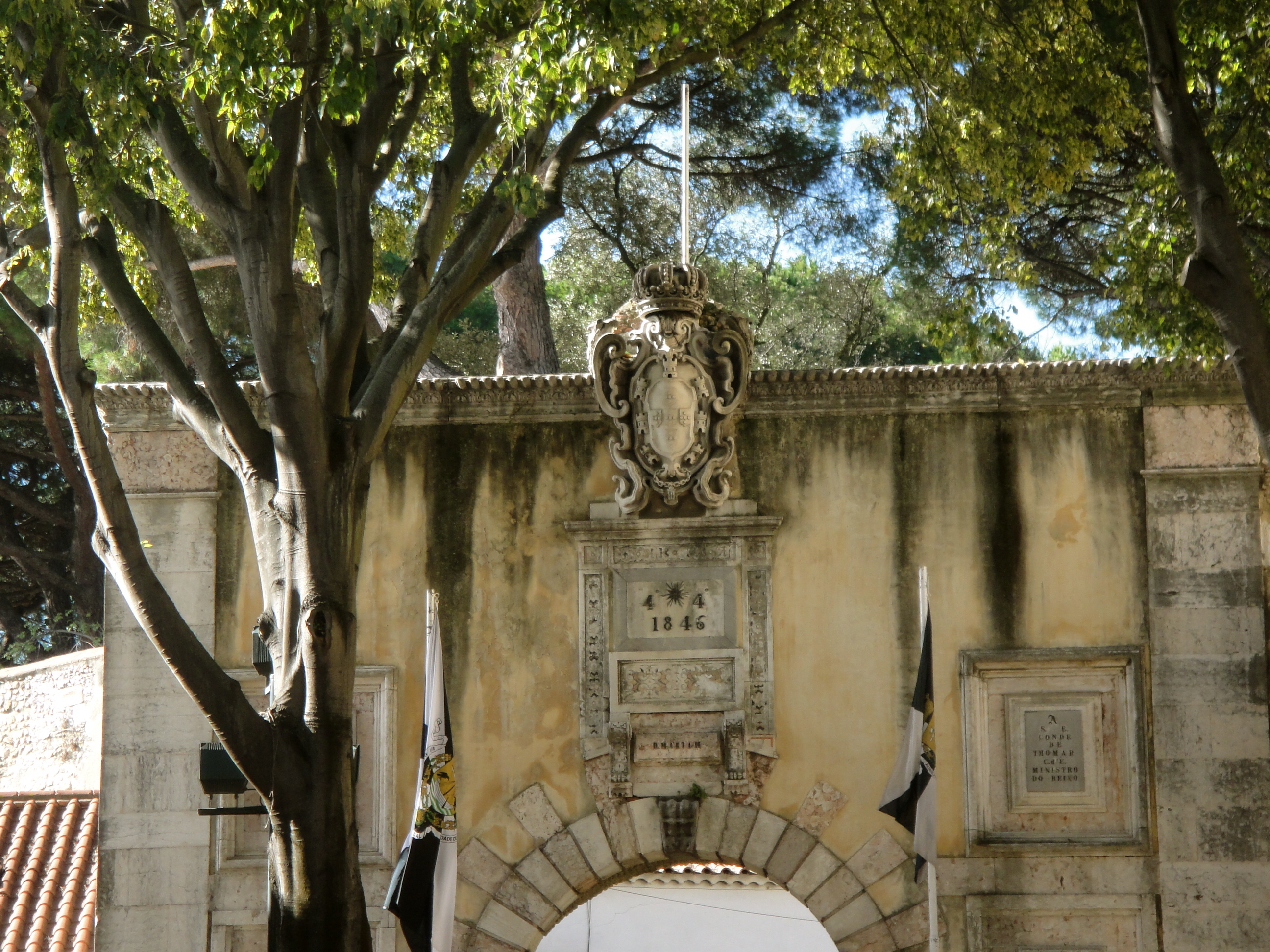
Eventually, as promised, we found our way to the Porta de São Jorge, the imposing castle gate which leads, not onto the main Castelo de São Jorge directly, but first into the ancient residential district of Santa Cruz, a tiny maze of little streets, strung with washing and adorned with pots and flowers, all of which is packed into the castle walls of this ancient citadel. We couldn’t resist exploring these streets, and although the labyrinthine quality meant that we managed to go round in circles on at least 3 occasions, we did manage to find an extremely charming little wine bar, Instinctus (Rua Santa Cruz do Castelo) where the equally charming owner treated us like guests in a family home, preparing traditional but beautifully presented, fresh and delicious bacalao (cod) and sardines, and recommending that all important Portuguese wine – a merlot grape grown in the south of the country. It rushed to our heads like a tidal wave of silken chocolate. It was delicious.
The Santa Cruz district may be small, but after lunch we managed to stumble into another cute cafe, where we indulged in the requisite coffee and a couple of pastel de natas. All this before we once again swayed along the cobbled streets and into the main complex of the castle.

The Castelo de São Jorge emanates directly from the Moorish era, captured in 1147 by the Christian King Afonso Henriquez who transformed the complex into the residence of the Portuguese Kings. The castle did not go completely unscathed in the 1755 earthquake, and many of the ramparts remained in ruins until 1938 when Salazar began a complete renovation. Rebuilding the “medieval” walls and adding gardens and the peacocks who wander around today, the result is a castle which looks both ruined and well-kept – it is an example, I think, of what they called “controlled-clutter”. Old wells, fallen pillars, large weathered stones and rusting old canons surrounded by a bounty of plant life, all set within grounds whose outer terrace boasts incredible views over central Lisbon, the Baixa, Bairro Alto and out towards Belém.
As the sun set over Lisbon and the skies gradually yellowed behind the silhouette of the 25 de Abril bridge, so too did our time in this great city start to draw to an end. Tomorrow we will leave, albeit after a further few hours of exploration. For now however it was time to leave the castle, whose ramparts were growing chilly in the increasing autumn winds and the fading peachy-hued sun, and attempt to make our way down the hill through the winding Moorish streets while we could still remember the way.

Back down in the Lx Boutique Hotel, we had a great dinner to prepare for – a tasting menu at the 100 Manieras, a restaurant whose exquisite cuisine deserves a post all of its own.

For now however…Boa-noite.

Photographs and content © Nicholas de Lacy-Brown and The Daily Norm, 2001-2012. Unauthorized use and/or duplication of the material, whether written work, photography or artwork, included within The Daily Norm without express and written permission from The Daily Norm’s author and/or owner is strictly prohibited. Excerpts and links may be used, provided that full and clear credit is given to Nicholas de Lacy-Brown and The Daily Norm with appropriate and specific direction to the original content.

Lisbon – Day One: Decadence and Decay

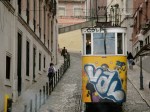
The time had come to escape the freezing London cold; the dark afternoons and the desolate faces; the post-winter desperation of the human races; coughing and sneezing spread between packed commuters on the tube; time to head south for the sun, for warmth, for good food. Swapping London for that other great European ‘L’, we abandoned the swift descent into winter and gathering approach to Christmas. We have come to the land of rich tawny-deep port wine, the ceramic cockerel and the vibrant yellow tram; where life is a little slower and architecture decadent and tired. We’ve come to Lisbon, the rolling, rambling hilly maze of streets which adjoins the grand Tagus river and sits at the heart and soul of Portugal as its capital.

As a regular to the Spanish side of the Iberian peninsular, there is something familiar about Portugal, which I now visit for the first time, but also something tangibly different. Wafts of garlic, of almonds and the thick smoke of strong cigarettes fills the air as it does in neighbouring Spain. However here there is something altogether more hardened, more real; you look into the faces of the Portuguese and you can read a thousand tales, of toil and struggle, of monotony and difficulty; you feast upon the pungent flavours of the food, noting the strong, crudity of the elements, the untempered brilliance of the colours, and the sharp contrasts of the flavours. In Lisbon, the Portuguese do not so much fiesta by night – rather, walking the streets of Lisbon at night, as we did shortly upon our arrival, we felt there was something close to menace in the air – something unsettling and almost unforgiving or discordant echoing off the cracked decaying buildings and shady streets.

Lisbon’s streets are littered with photographic inspiration…

I could not help but notice on our arrival a resilient attitude and a robust confidence, as though the country, which stands on the edge of Europe has hardened itself to the battering forces of the Atlantic ocean spread all along its Western coast. Portugal’s struggles are not just geographical however. The well-known financial woes of the country are tangible all around its capital. We were immediately struck by the huge number of empty properties right in the centre of town. Huge decadent palaces, abandoned to disrepair; once gloriously colourful tiles chipped at the corners or missing great sequences; elegant iron balconies left to rust, and plaster, paint and concrete cracking and falling apart; many of the buildings are covered with graffiti, and some have been left to the elements to such an extent that grasses and moses have started growing over the walls and in between great cracks growing deeper every day.

This is the Lisbon of today, a city of fading grandeur, whose geographical location and undulating topography provides a breathtaking backdrop to a European city which was once, clearly, a city of exceptional elegance and architectural glamour, but which in time has been left to slowly deteriorate and wither, a once pert fresh rose left to stagnate in the brown waters of a once crystal clear vase. But for all this, Lisbon has lost very little of its beauty. In its fading glory, it is a withering beauty, a tired duchess whose wrinkles grow deeper everyday, but whose innate elegance is lost on no one. The bigger the cracks, the more excited I became – for my camera, this decay is like a gold mine of sparkling inspiration, and Lisbon lets set to provide plenty of that.

Lisbon’s glamour is not all faded…

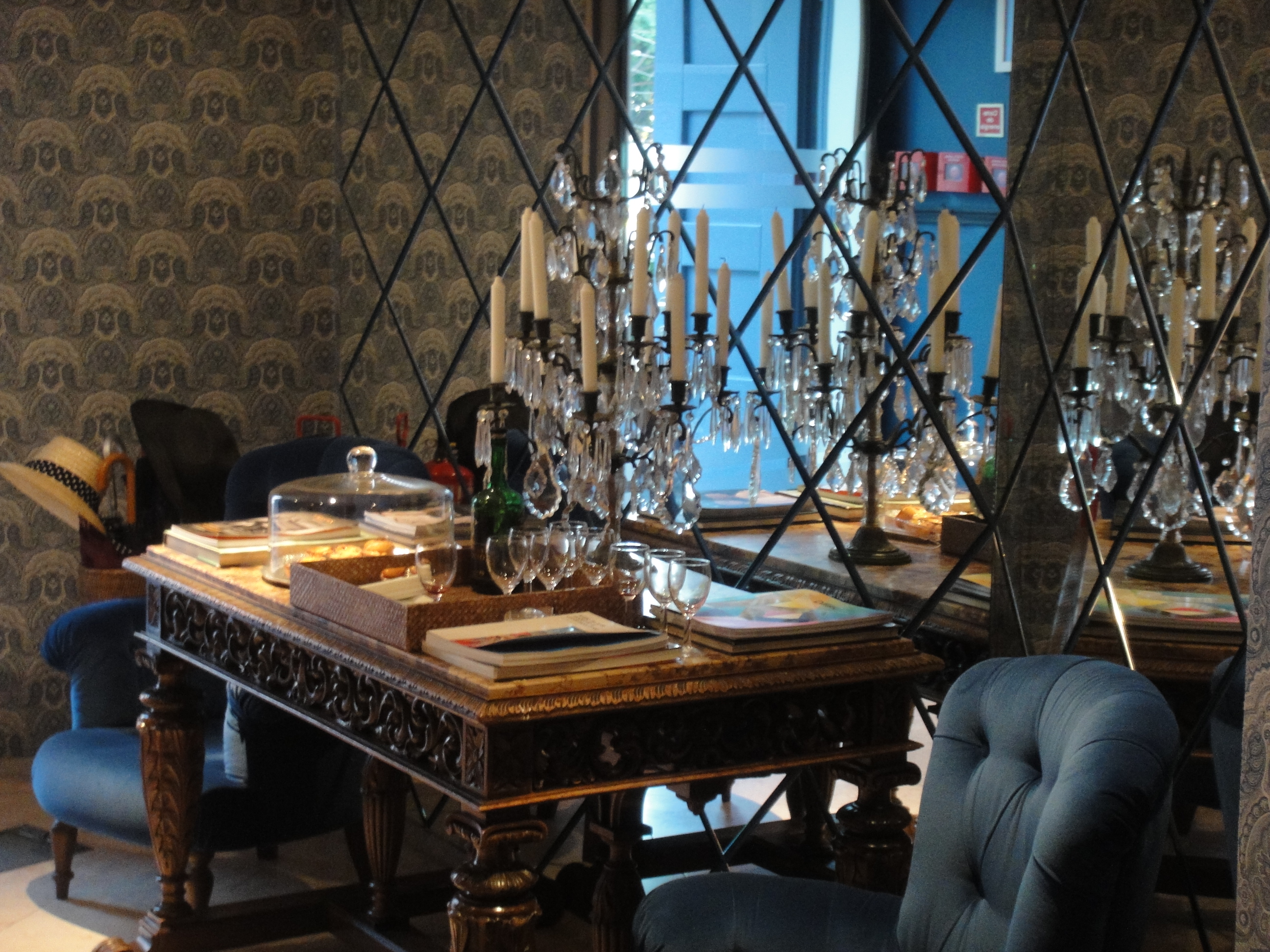
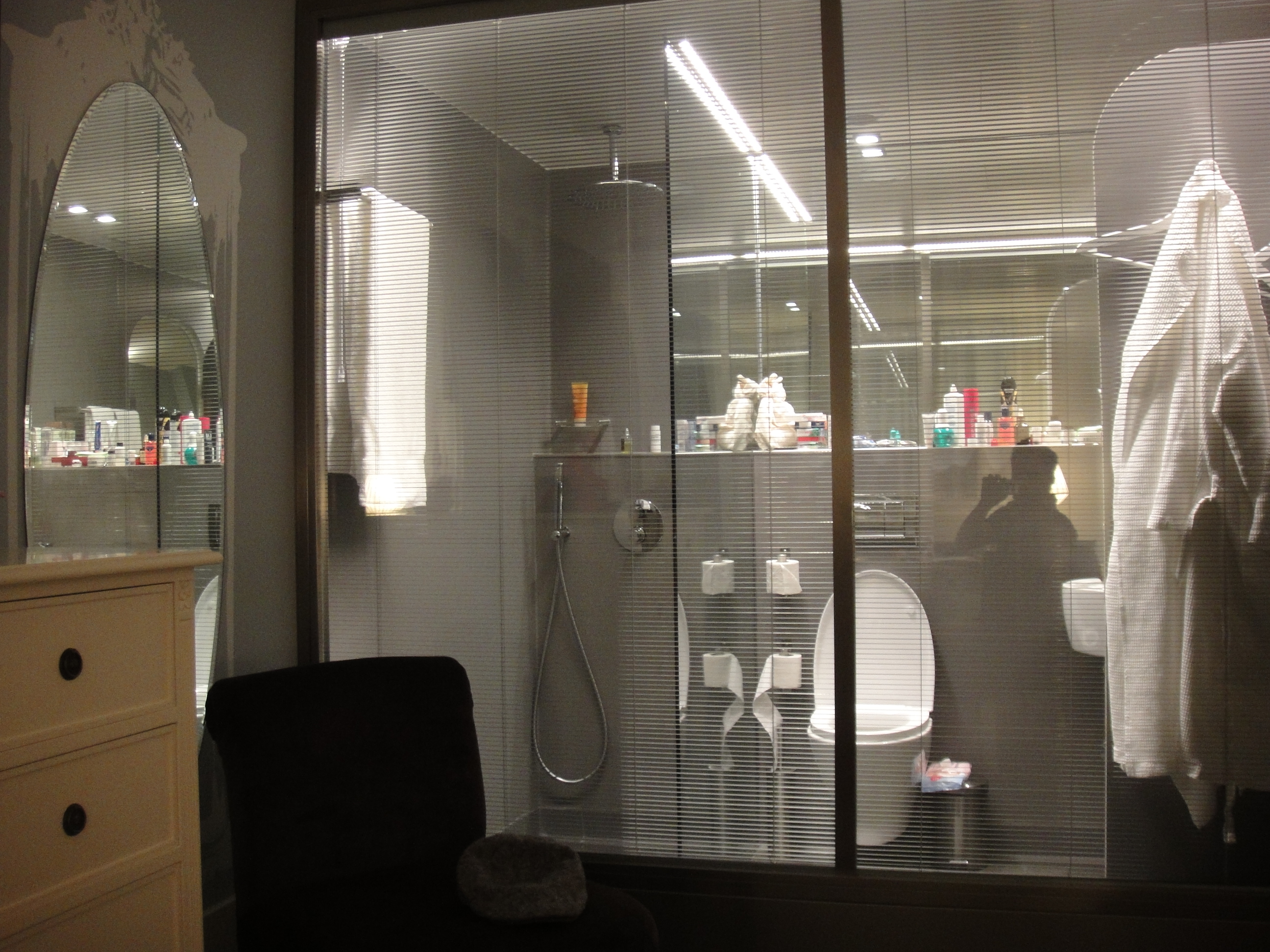
But for all the sadness, the financial misfortunes and the architectural deterioration, Lisbon is a city with a strong undercurrent of creativity and panache. We found this immediately in the guise of our hotel – the Lx Boutique Hotel, which exudes boutique sophistication from each of its photograph-covered, wallpaper lined walls. Our bedroom, with views over the Tagus, oozes Parisian chic, with oversized frames, velvet armchairs and wall stickers emulating contemporary baroque. Meanwhile our bathroom is a glass prism, stood, self-contained to one side of the room, complete with handy blinds set within the glass for the purposes of a little privacy. Meanwhile, conveniently located adjacent to the hotel is the Restaurante Confraria Lx where we headed for sushi and where, feasting upon a plate of some 34 sushi pieces, we ate sashimi  so fresh that the fish almost melted away on our tongues and evaporated like a cloud.

The Lx Boutique Hotel

Our bathroom cube

The hotel’s reception

Day One in Lisbon is over, but already we have discovered the best of two worlds – decadence combined with contemporary style. Looks like Lisbon has vintage chic done to a tee.

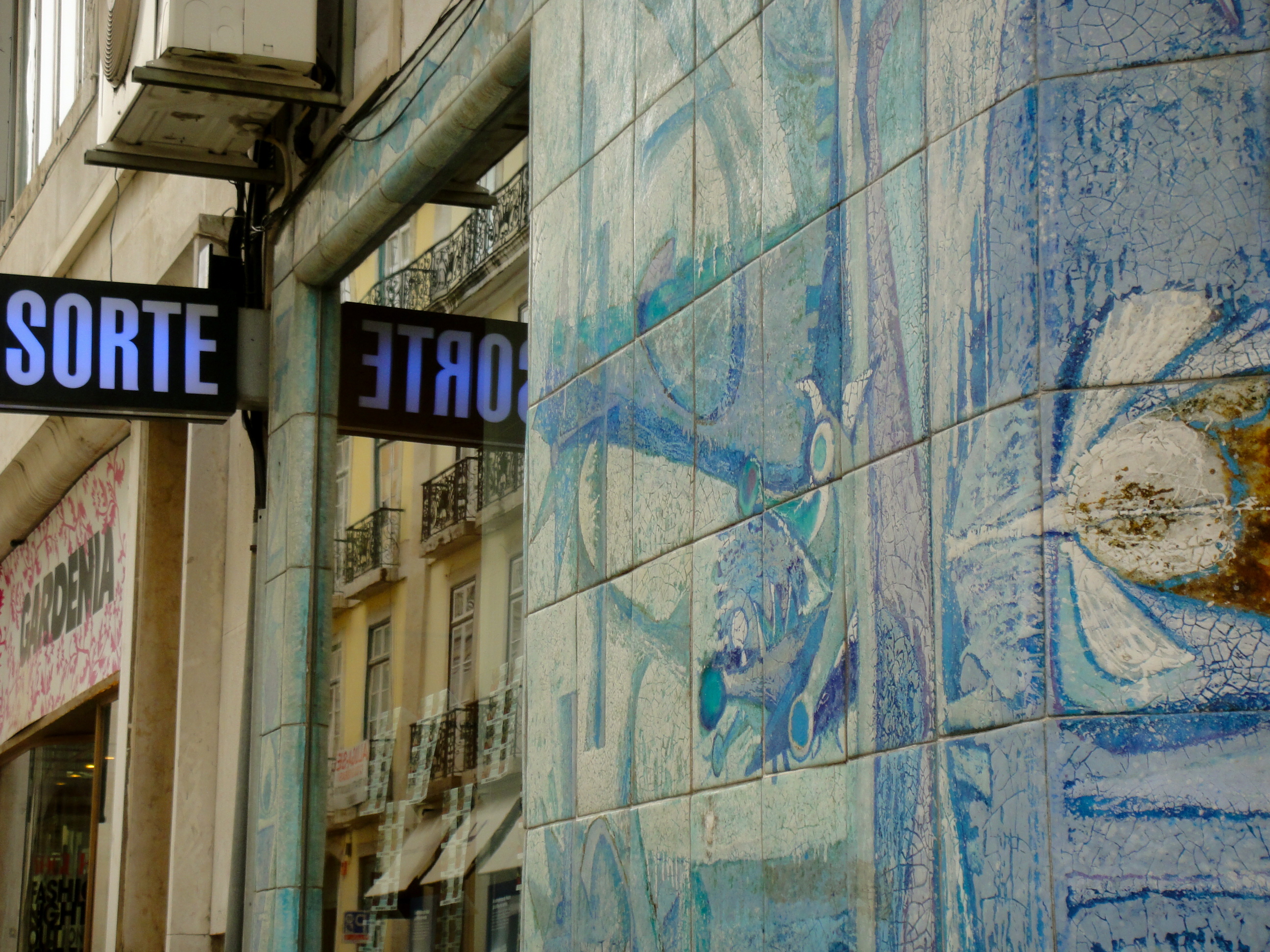
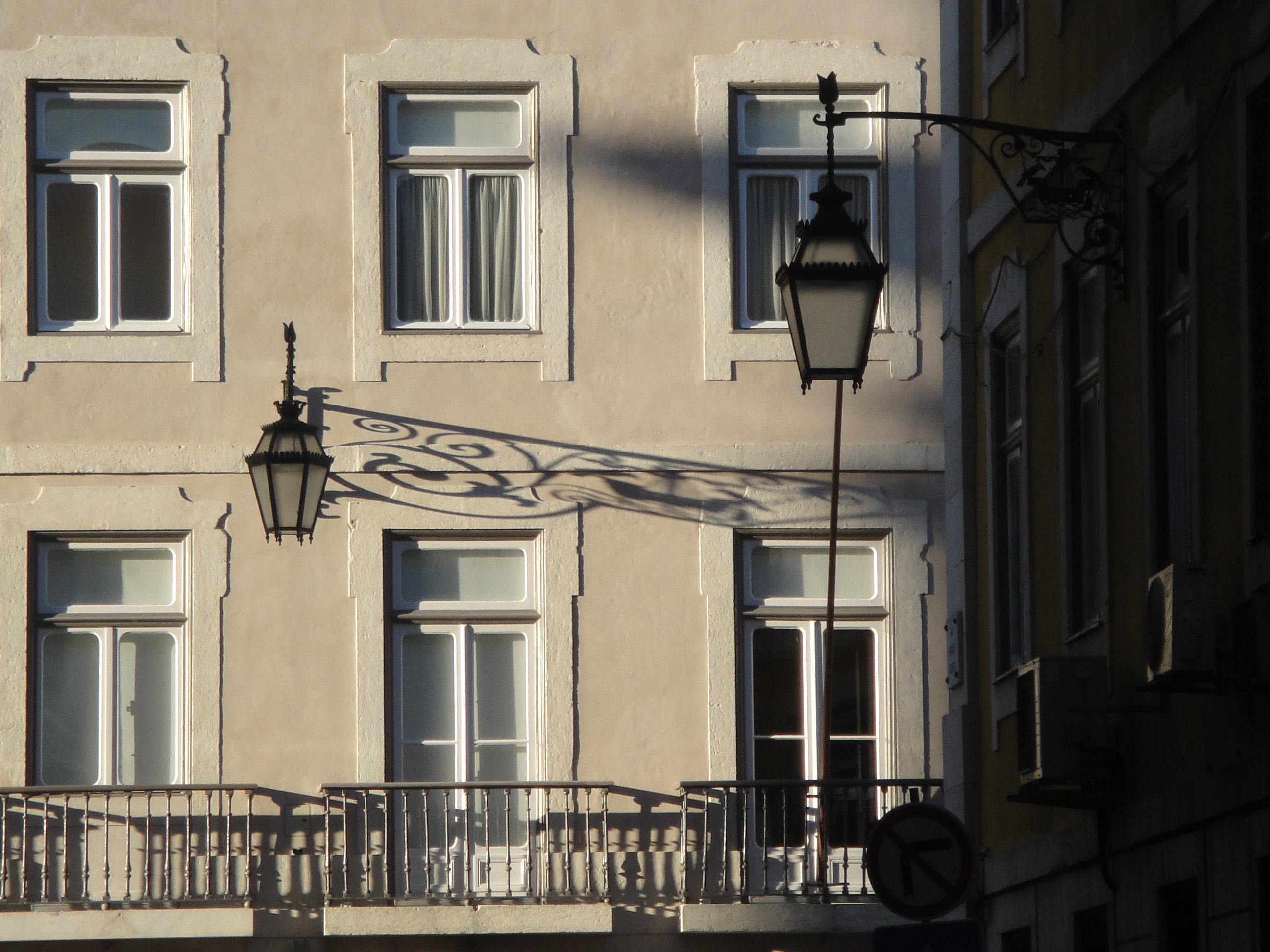
More tomorrow! But in the meantime, here are my photos of the deterioration visible on many of Lisbon’s streets, from graffitied walls and filled in windows of empty houses, to marble monuments left to turn a slimy shade of green – yet through it all there is beauty and character – the great contradiction of decadence and decay.

Photographs and content © Nicholas de Lacy-Brown and The Daily Norm, 2001-2012. Unauthorized use and/or duplication of the material, whether written work, photography or artwork, included within The Daily Norm without express and written permission from The Daily Norm’s author and/or owner is strictly prohibited. Excerpts and links may be used, provided that full and clear credit is given to Nicholas de Lacy-Brown and The Daily Norm with appropriate and specific direction to the original content.

Halloween Party Continued…

Further to yesterday’s post, I’ve been preparing further for Halloween. Lying around yesterday, feeling appropriately close to death with bronchitis coursing through my chest, I decided enough was enough. I forced myself full of paracetamol, took out some cake basics from the fridge, and set about baking. Illness will not stop me, and with regular breaks, perching upon a stool to save my energy, with my Partner as chief taster (I can’t taste anything!) and in fully sanitised conditions (naturally!) I have made some chocolate orange cup cakes for a chic Halloween gathering.
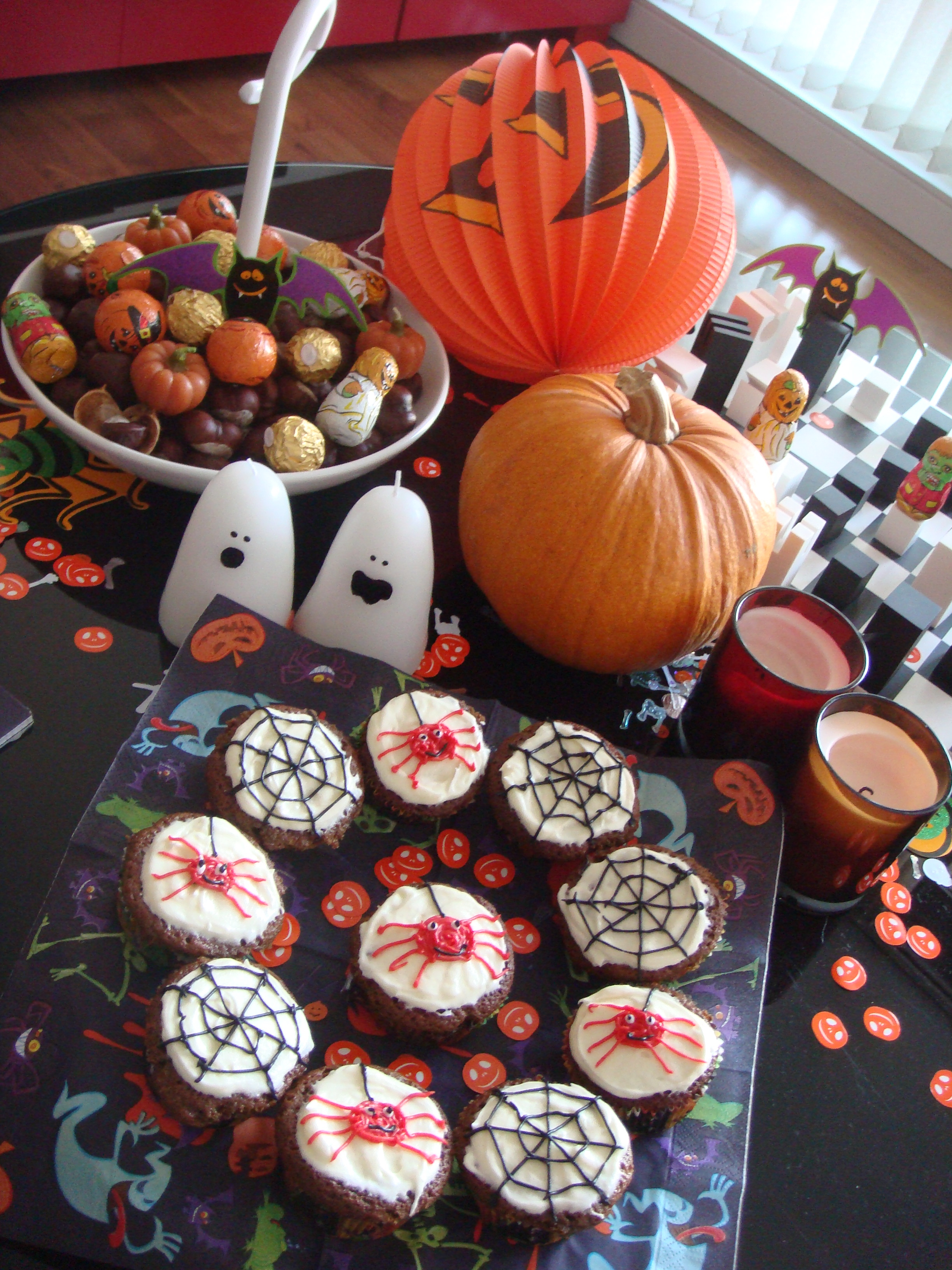
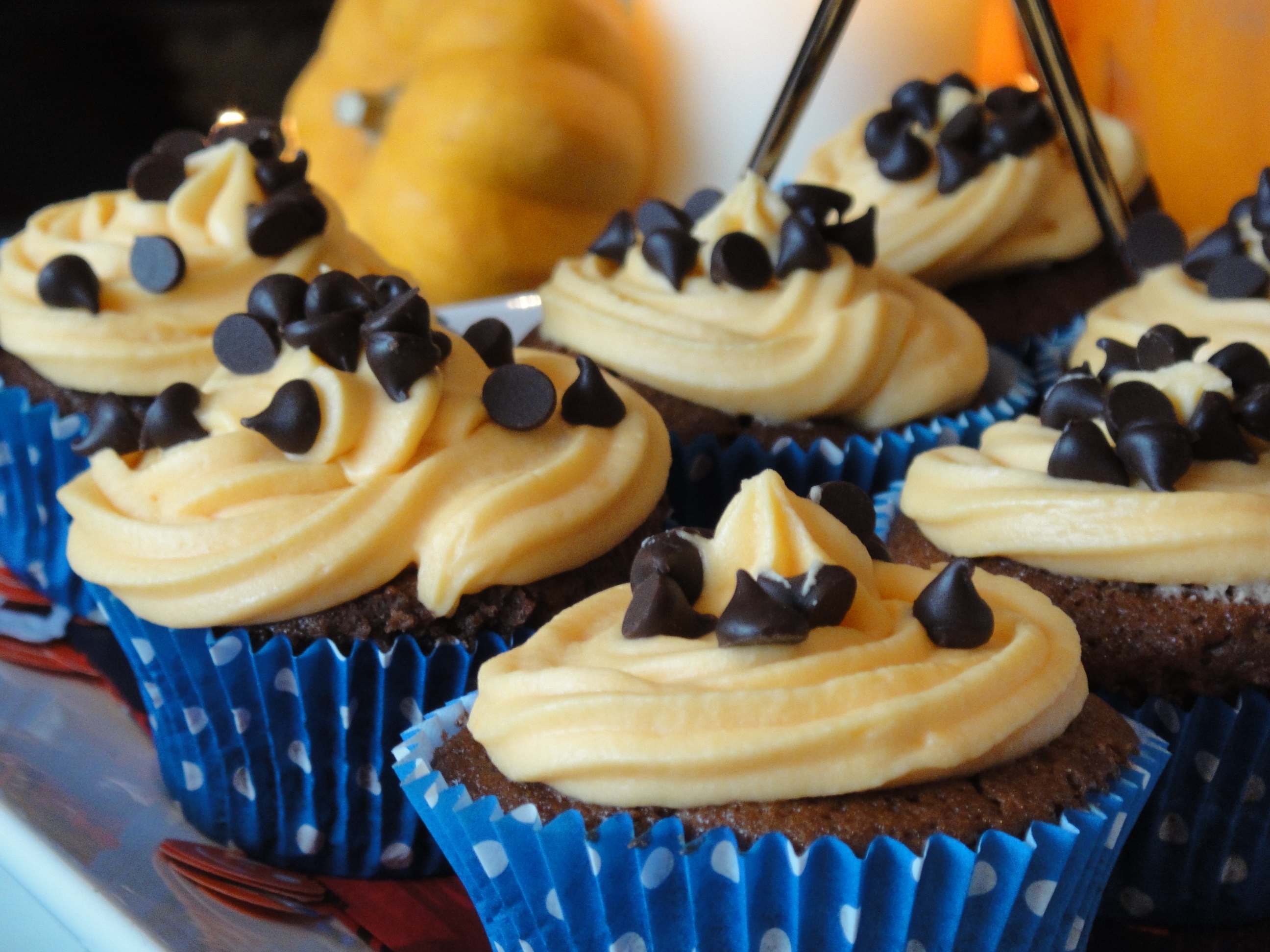
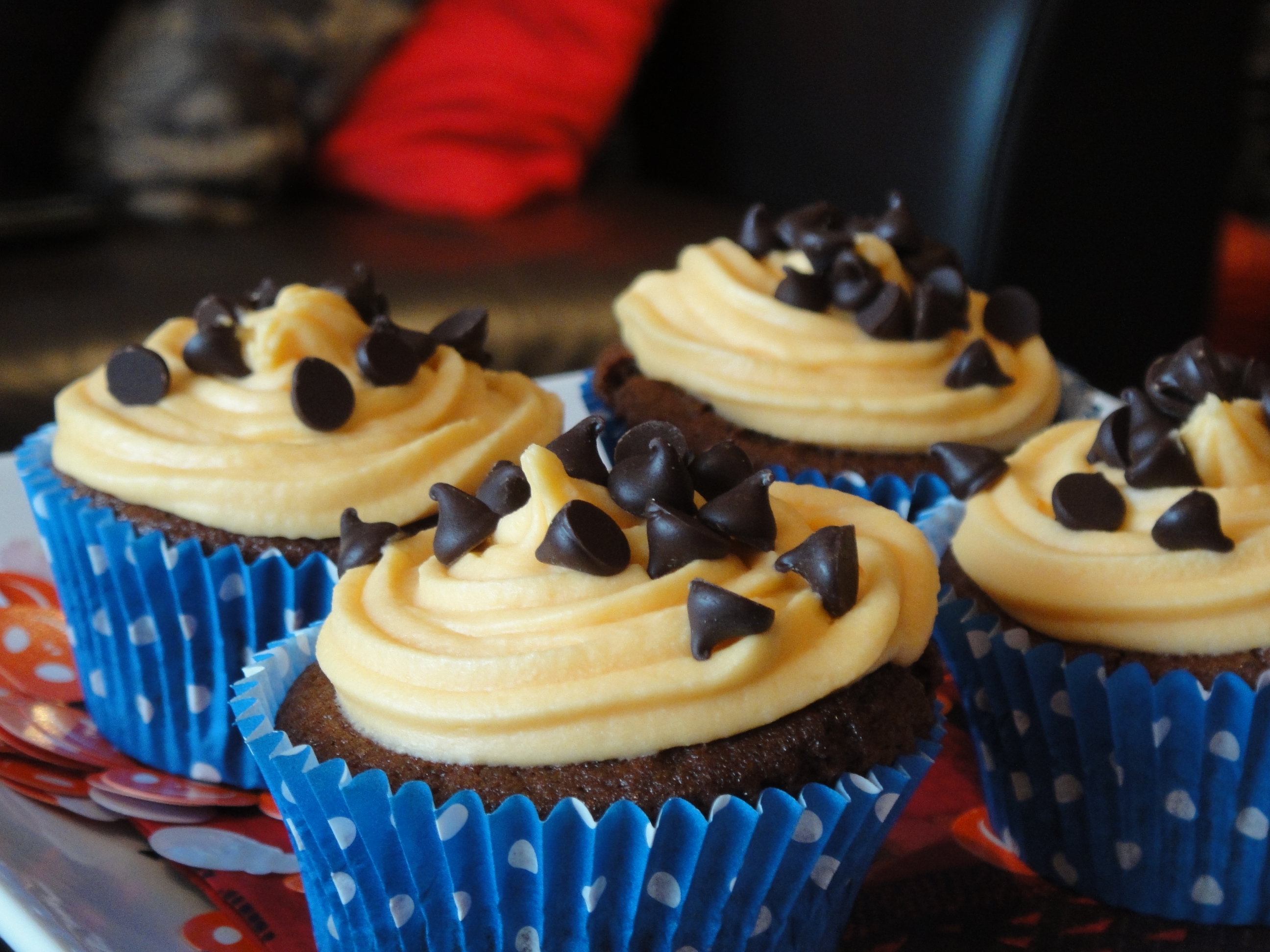
My cakes follow the same simple chocolate sponge as described on yesterday’s post with a delicious white chocolate-orange frosting. This is simple to make. Simply take 300g of icing sugar and whisk up with 100g unsalted butter and 40ml of milk. The longer you whisk this icing mixture, the fluffier and lighter it will become. Then in a metal bowl over a pan of water (making sure the water never touches the bowl) I melted approximately 150ml of orange flavoured (and coloured) white chocolate beads, before adding to the whisked icing mixture and folding in well. I then transferred the icing into a piping bag and placed in the fridge for a good 30 minutes or so while the cakes cooled down.

The wonderful orange icing was easy to pipe (I had to warm the bag up a bit with my hands since the chocolate and butter in the icing sets pretty quickly) and once done, I sprinkled with some dark chocolate drops to achieve the halloween contrast of orange and black.

So there you have it. Hopefully, unlike me, you will actually be able to taste the wonderful fusion of chocolate and orange – my Partner tells me it’s good! I leave you with some photos of my halloween party all set up and ready to go. Ok, so I’m way too ill to have any guests round, but that doesn’t mean I shouldn’t make the effort right? Happy Halloween everybody!

Halloween Party!

I won’t be having a halloween party this year. Sadly after daily encounters with people sneezing in my face on the tube, I have come down with something which progressed from a cold to flu to bronchitis. Fortuitously however, I won’t be needing a halloween costume – my face looks green enough on its own!

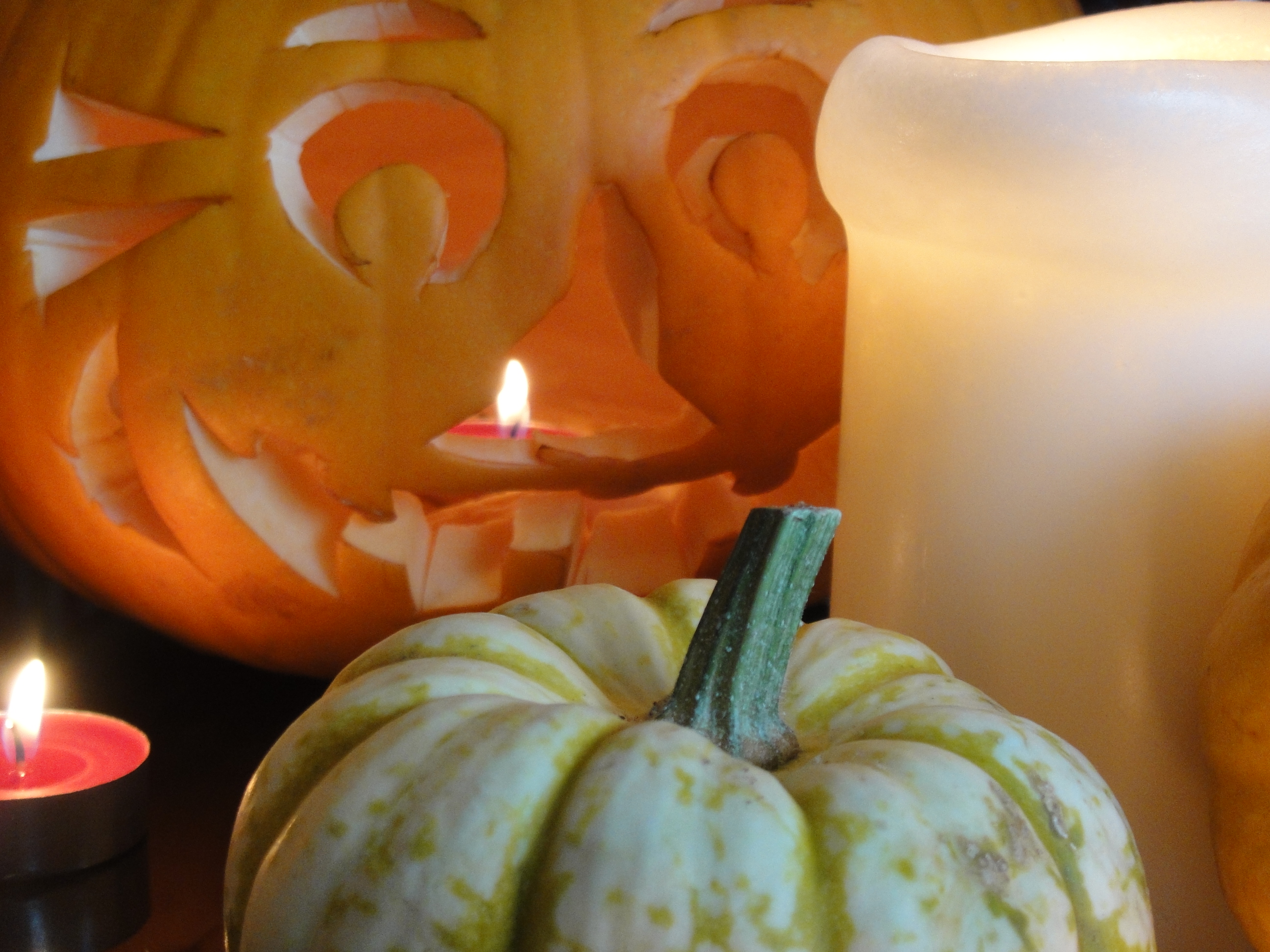
In times past however I have indulged in halloween to the full, and even this year I have managed to stem the tide of my all-encompassing malaise to carve a pumpkin or so. For this time of year, when the days are short and the dark evenings long, it’s all about candles and lanterns, baking and the homely smell of sweet cinnamon and warming winter broths. So in this short exploration of all things halloween, I thought I’d share with you some ideas for a halloween shindig, for baking, and for your requisite seasonal pumpkin.

First up the cakes – no Halloween is complete without them, and when I bake for Halloween, it’s more about the decoration than the sponge. I could go gingery and spiced (I’ll save those for another day), but for these little spooky treats, I stuck with the age-old chocolate sponge recipe my grandmother taught me when I was young. 200g of caster sugar, self-raising flower and butter respectively, two eggs, a dash of milk, a heaped tablespoon of cocoa powder and a heaped teaspoon of baking powder – the ingredients are foolproof. I start by creaming the sugar and egg yolks, and tend to whip up the egg whites for extra air in the sponge. To the egg/sugar mixture I add the sifted dry ingredients, mixing well before folding in the egg whites. Then – and this is my mother’s baking tip – I add a little milk. Enough to make the mixture run off the spoon. This guarantees the lightest of sponges. I pour into fairy cake cases and bake for around 15-20 minutes at 180 degrees, and ice with a butter cream and some shop bought icing tubes. Easy.

For something more adventurous, check out these marzipan and gingerbread beauties sold in Betty’s tearooms in York.

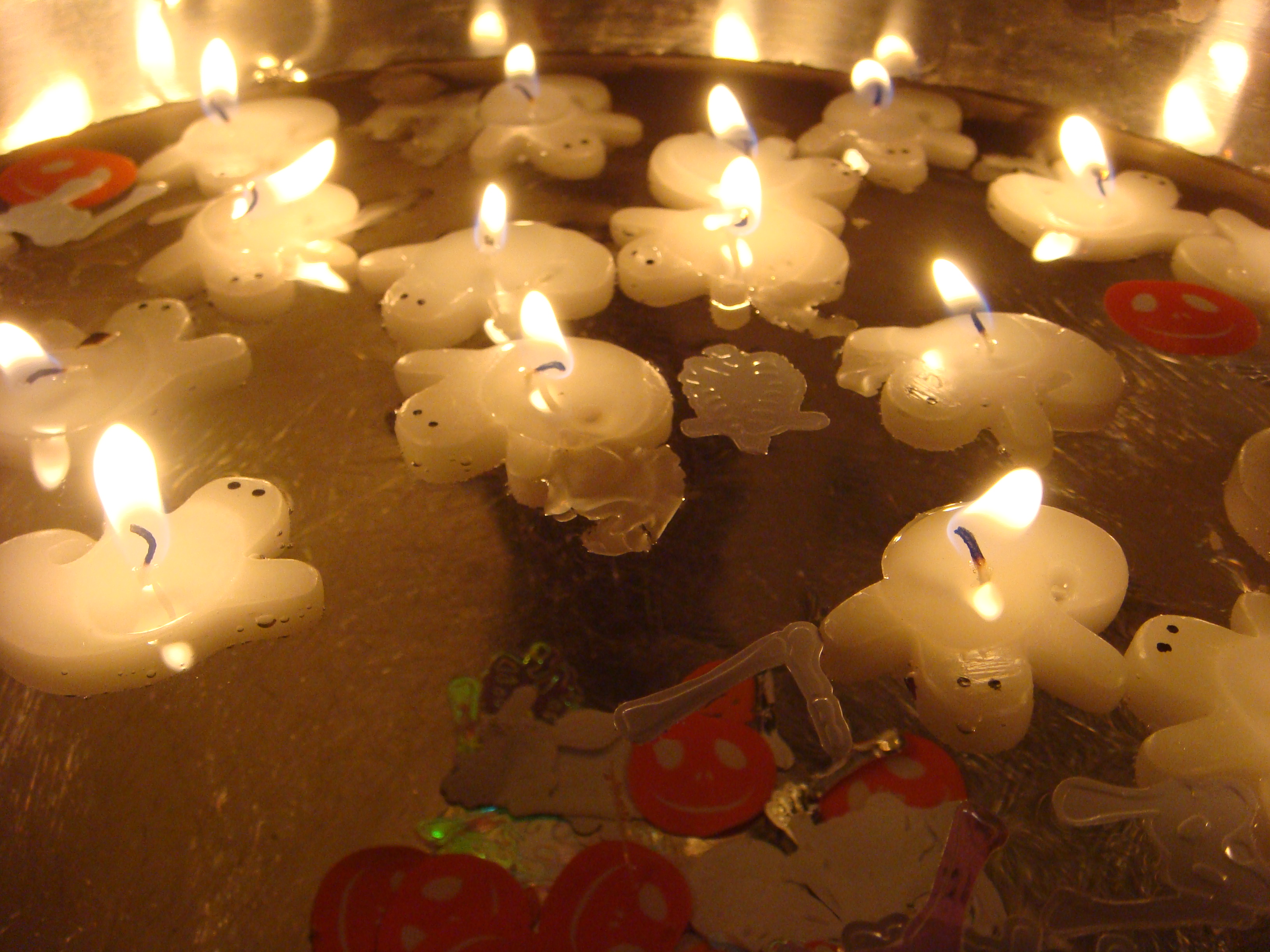
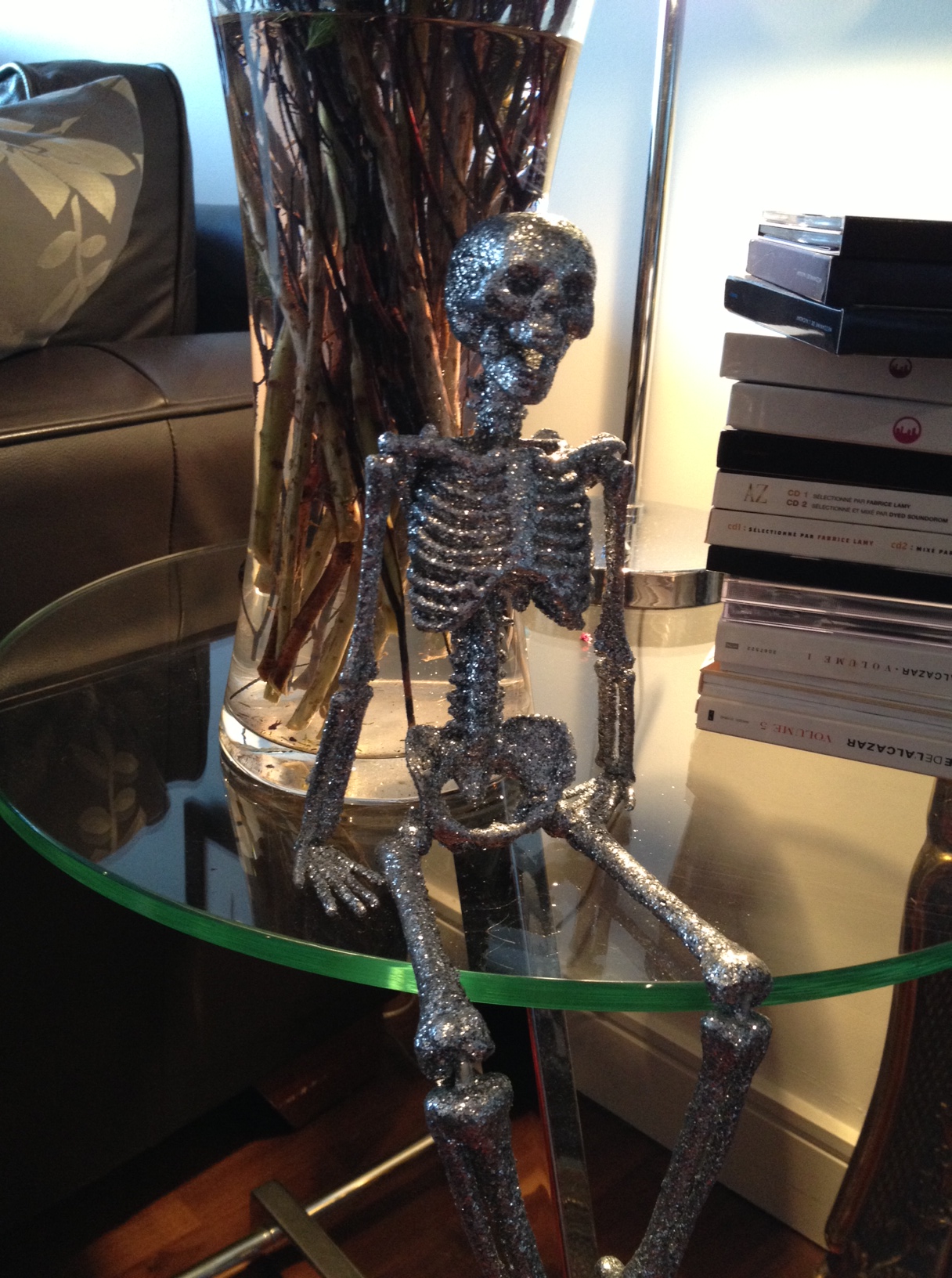
For decorations, I tend to go with candles aplenty, like this ghoulish ghost-shaped floating candles scattered with pumpkin-shaped confetti and other ghosty shapes. I also have a few sparkly skeletons dotted around to bring some Damien Hirst bling to the event. Nats.

Read more

Flavours of Spain – Part 2: Tapas

When most people think of Spanish cuisine, they think of tapas, and why not? These little dishes are a fantastic excuse to sample as many tastes and flavours of dishes from all over Spain as you can manage, while encouraging the shared social environment which the small dish concept inspires. Unable to decide what large dishes to cook when I was over in Spain, and with no recipe books close to hand, I decided to opt for a few simple tapas dishes which I could remember off the top of my head and which are inspired by my own tapas experiences in Andalucia and beyond. Having cooked these tapas creations, you can then supplement your tapas feast with olives, bread with delicious olive oil and different flavoured dipping salts and platters piled high with fresh serrano hams and manchego cheese (see mine at the bottom). You’ll find yourself with way too much food (unless you’re feeding a small army), but the beauty with tapas is that much of it will last for days – bonus!

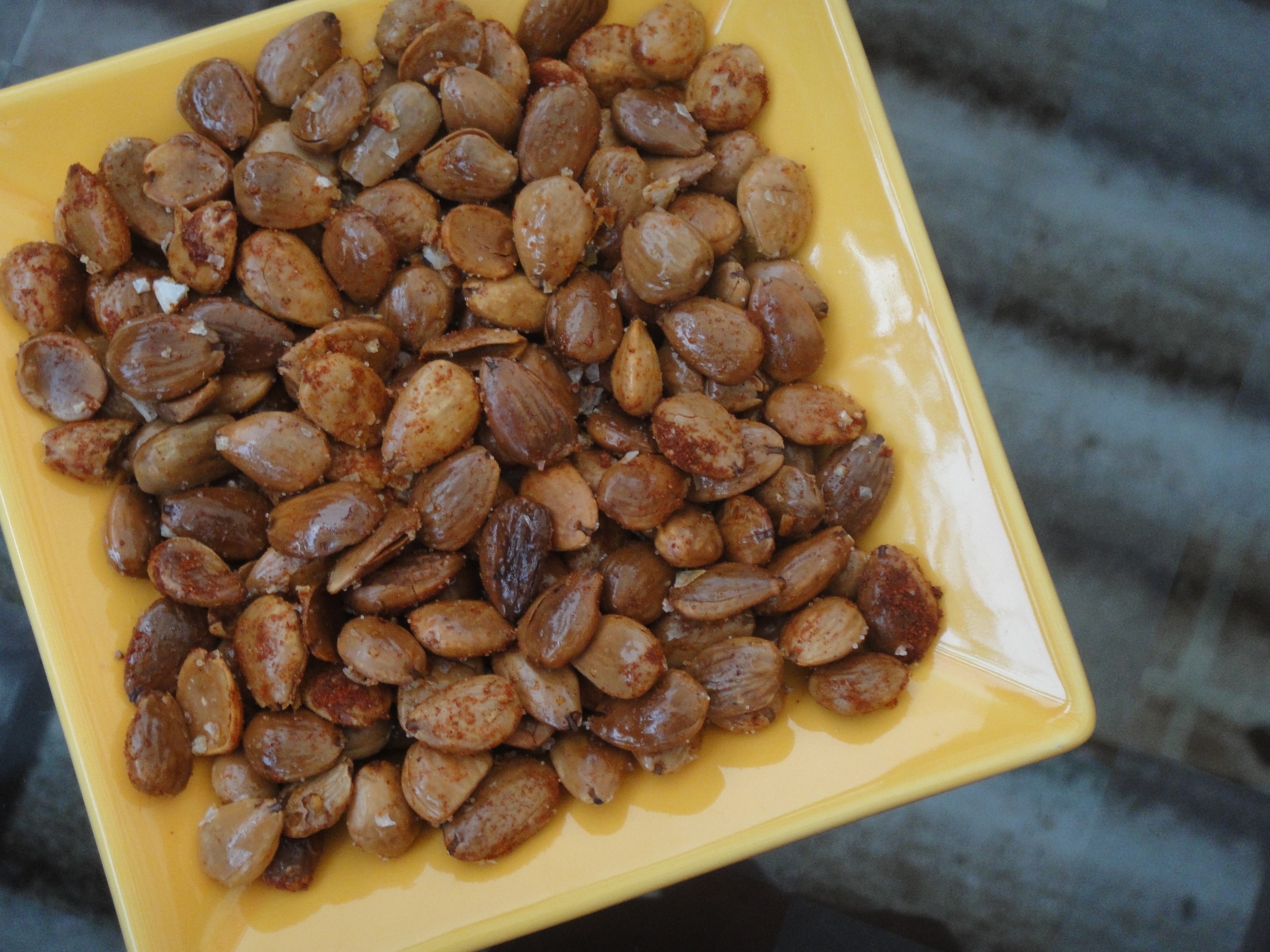
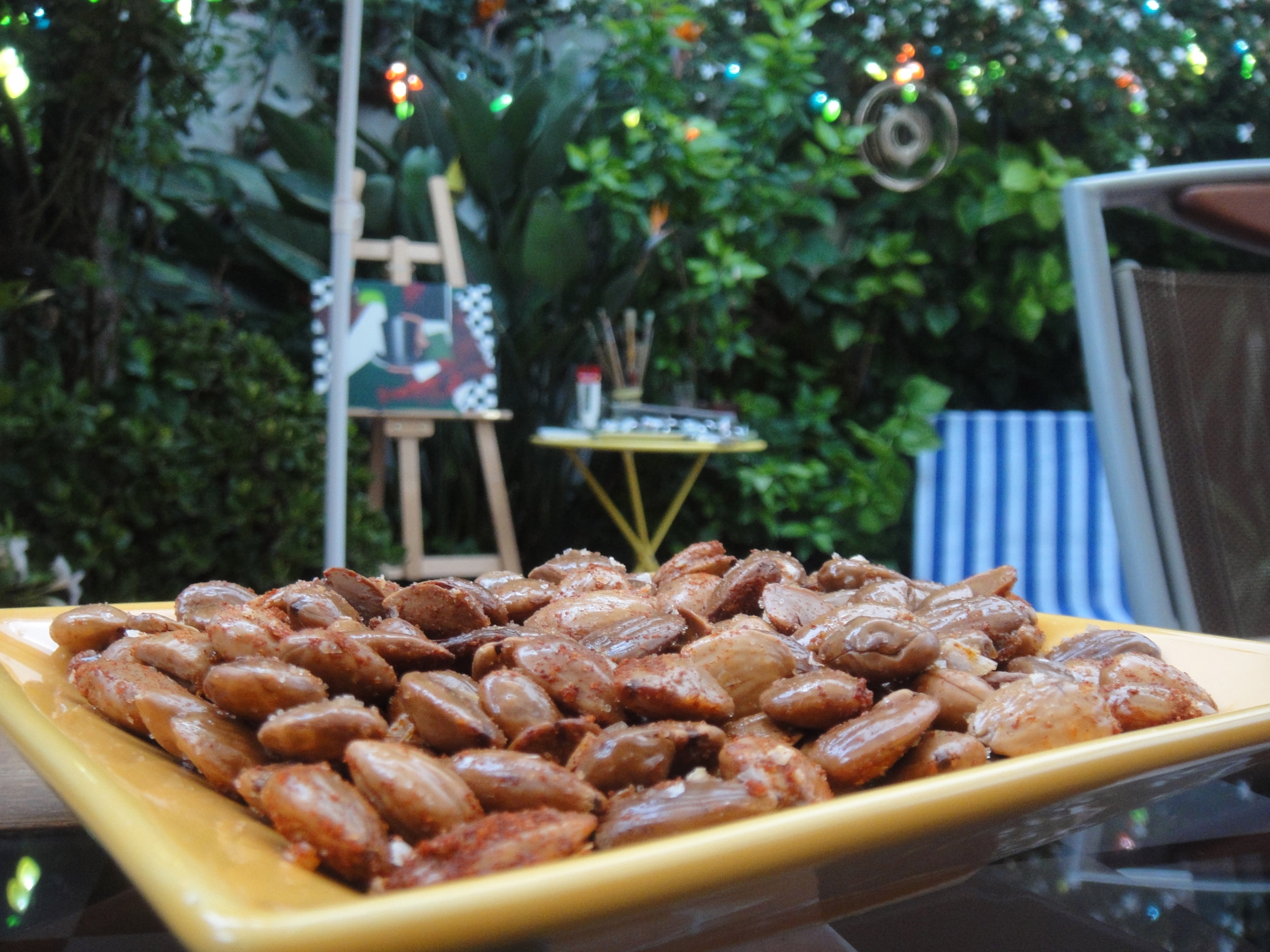
Salted almonds

Great to kick of your evening as a moorish accompaniment to a glass of wine or two, these salted almonds are really easy to make. Take a baking tray and pour in enough olive oil to cover the base. Then throw into it (carefully – I’m not encouraging kitchen recklessness you do understand) 250g of blanched almonds, and sprinkle them with some good quality sea salt and a teaspoon of smoked pimenton. Give the whole lot a good toss, and place in the oven at 180 degrees c for around 20 minutes, tossing every so often during cooking. Be careful not to leave them in for too long – they may look ok on the outside but they can become burnt on the inside if the cooking is overdone.

Salted almonds

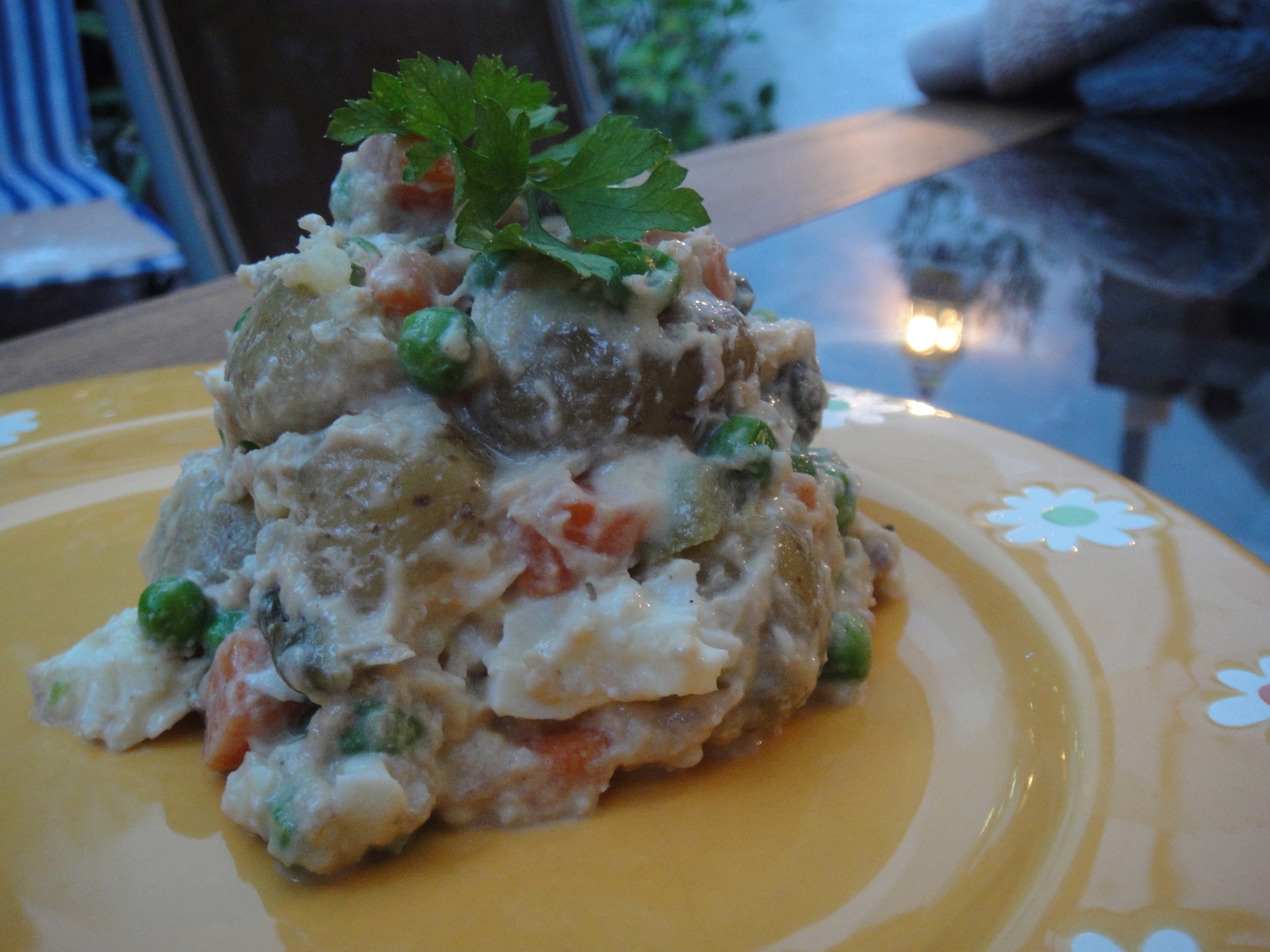
Ensalada Rusa

Russian salad is a tapas staple in traditional tapas bars all over Spain. You can alter the amounts of ingredients below depending on how many you’re cooking for. This made enough for a good 6-8 small tapas-sized helpings.

Start by making your own mayonnaise (if you can be bothered). Whisk up a large egg with a teaspoon of dijon mustard, 2 teaspoons of white wine vinegar and half a teaspoon of salt. Then to this very very gradually whisk in 300ml of oil – for those who like a mild flavour, use sunflower oil, but for a traditional Spanish flavour, extra virgin olive oil is a must. Doing this in a food processor is definitely the easiest way, but for those like me who are in a little holiday home in Spain without the best equipped of kitchens, the good old balloon whisk and a determined wrist can still do the job. Once you have made a nice thick mayonnaise, squirt in the juice of half a lemon (to taste) and 1-2 crushed cloves of garlic.

My homemade mayonnaise

Meanwhile have around 1kg of small new potatoes boiling away nicely (chop them as necessary so they’re roughly the same size). Once tender, leave to cool. Once the potatoes have reached room temperature you need to add a good 4-6 tablespoons of mayonnaise, two tins of tuna (preferably in oil), a one or two of cooked diced carrots and a good handful garden peas, 4-6 chopped gherkins, two tablespoons of capers and some chopped parsely. Then whack in a good dose of seasoning to taste, and play around with flavour – you can add more mayo, more garlic, more lemon, different herbs – whatever you like. I guarantee it will be delicious whatever you try (within reason – obv).

A small portion of Ensalada Rusa

Read more

Flavours of Spain – Part 1: Almejas con hinojos

Regulars of The Daily Norm will know that in my heart of hearts, I am no happier in my kitchen than when cooking up some Spanish flavours to tantalise the taste buds and enliven the corazon. To recreate the rich smells imbued with garlic and pimenton, shellfish and saffron in London is one thing, but to cook in a Spanish kitchen, when already surrounded by a cacophony of those same scents wafting in the air from the nearby houses of my Spanish old town neighbours is an entirely different experience. It is hard not to be inspired, not least by the nearby market, where fresh fish is in abundance, rich meaty steaks are plentiful and vibrantly coloured fruit, vegetables and the spices intrinsic to the flavours of Al Andalus are in bountiful supply in the mercado in the next door street to my house. That is not to say that I felt totally free to indulge. The price of food in Marbella, together with the inflation of the euro, has seen a really hike in food prices – some days I found it more expensive to eat at home than out in a local fish bar. Consequently I had to indulge my culinary ambition with a more limited budget for ingredients.

Samplings of the Marbella market

This dish is perfect for the prudent shopper. Buy yourself a kilo of clams (or almejas) and a fennel bulb and you’ve got the main components of the dish. I made this dish up, having bought myself a fennel bulb (purely because of my love for the liquorice taste) and upon a bounty of clams so fresh that they were popping and moving before my very eyes. Some white wine, an onion, and a few spices later, and I created this dish, Almejas con hinojos – clams with fennel.

Clams cooking in the pot

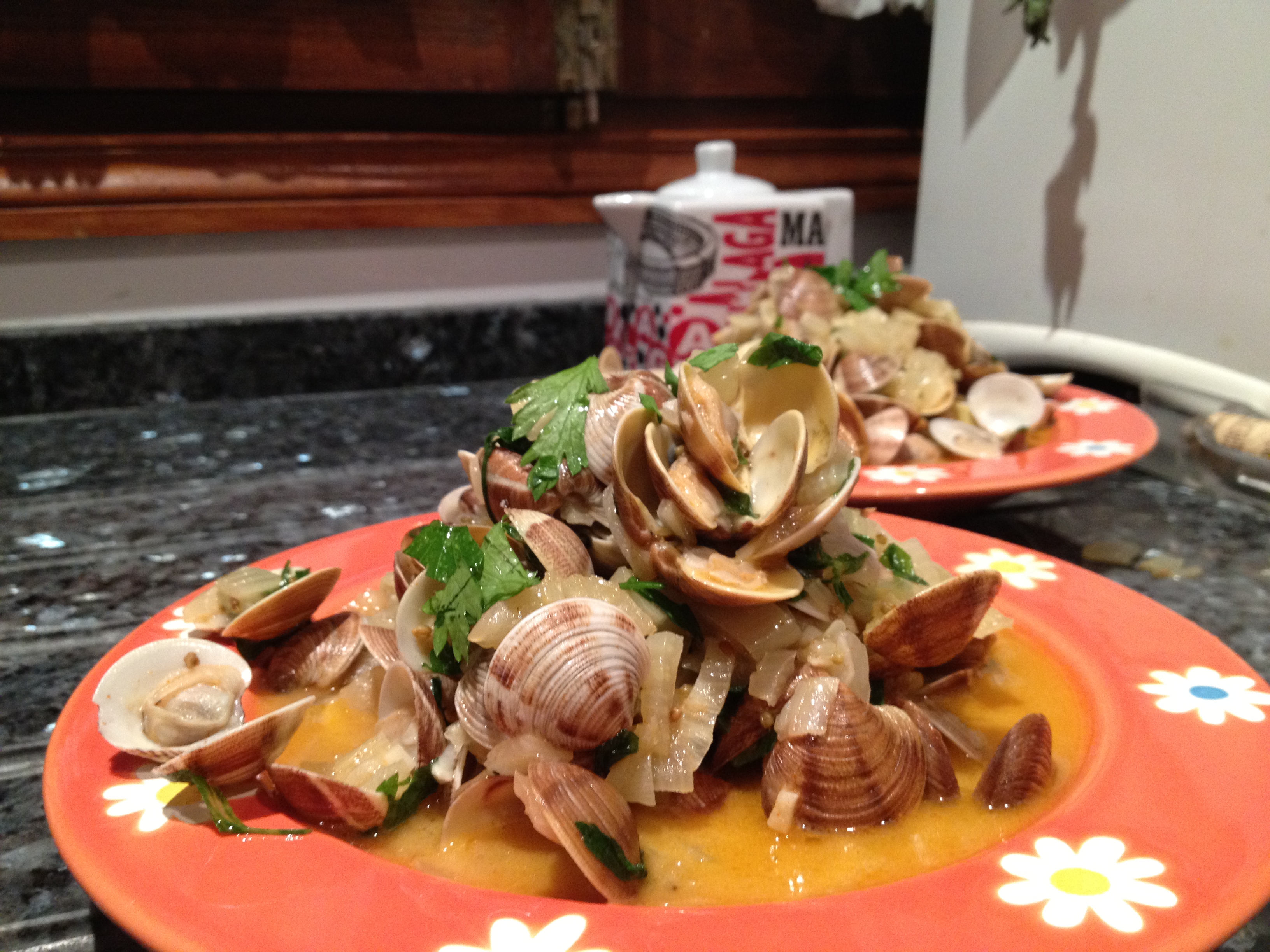
Almejas con hinojos

Chop one onion and 2-3 cloves of garlic finely, as well as a bulb of fennel. Sweat the ingredients together in a large pan on a low heat in a good glug of oil and a good dose of seasoning and a teaspoon of fennel seeds for about 15-20 minutes until the onions/garlic/fennel are soft and near translucent, but not browned. Turn the heat up to medium, and add a teaspoon of smoked pimenton (paprika) and the washed clams. Place a lid over the pan and cook until the clams have opened (around 4-5 minutes depending on their size). Once opened, turn up the heat a little more and add a good glass or two of dry white wine, along with a good handful of chopped parsely and stir so the clams get a good dose of alcoholic indulgence. Cook for a further 5 minutes, just to cook off the wine a bit and that’s it. Your clams are ready. Serve with a few hunks of fresh bread, a glass more of that white wine, and remember to discard any clams which have not opened.

And served up

Enjoy the flavours of Spain, as a burst of mediterranean freshness mixes with the smokey garlic pungency of arid España all in a single mouthful. Surely there is no better way to escape the onset of autumn?

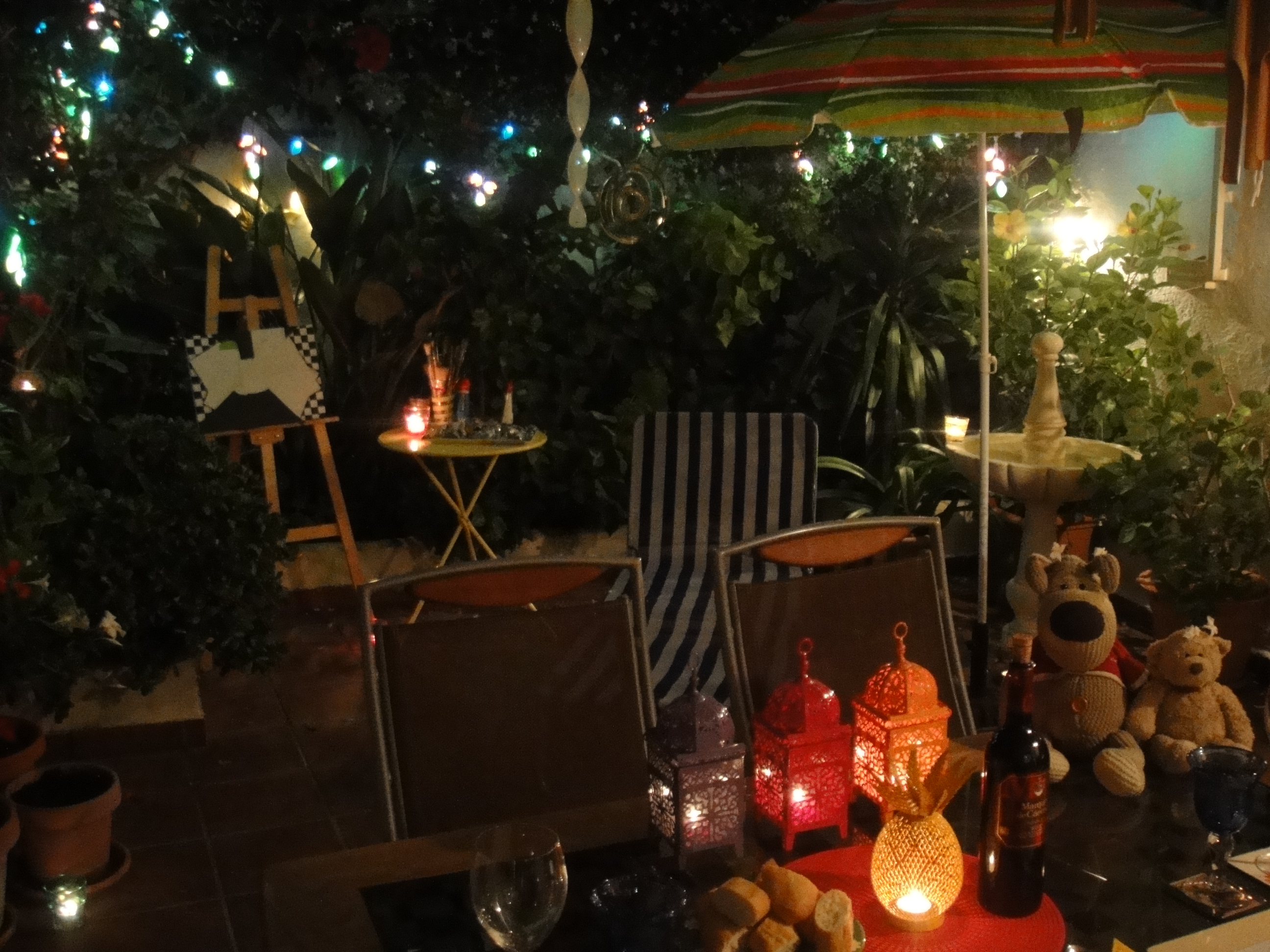
And a candlelit garden full of summer evening warmth in which to eat the clams


Quick canapés to impress your colleagues

Apologies in advance for the rather fuzzy quality of my photos. As with the food featured, the photos were created in something of a rush. And this is the nature of my feature today – for in making up some canapés which don’t look half bad on a plate (they certainly look better than a packet of crisps and some sausage rolls) when you have neither the time nor skill to cook up a storm, party food doesn’t come much easier or quicker than this.

When my team at work decided that we should have a little drinks gathering to wave goodbye to a colleague of ours, I decided that some canapés were in order. But with only a few hours to spare the evening before, and with the prospect of travelling with said canapés on the London underground the following morning I had to think simple.

I came up with the following canapés which were a resounding success, are deceptively simple to make and which despite the ease of their creation, have the ability to seduce both in appearance and flavour.

My canapés

Slightly less glam – the canapés set out on paper plates and tupperware at work

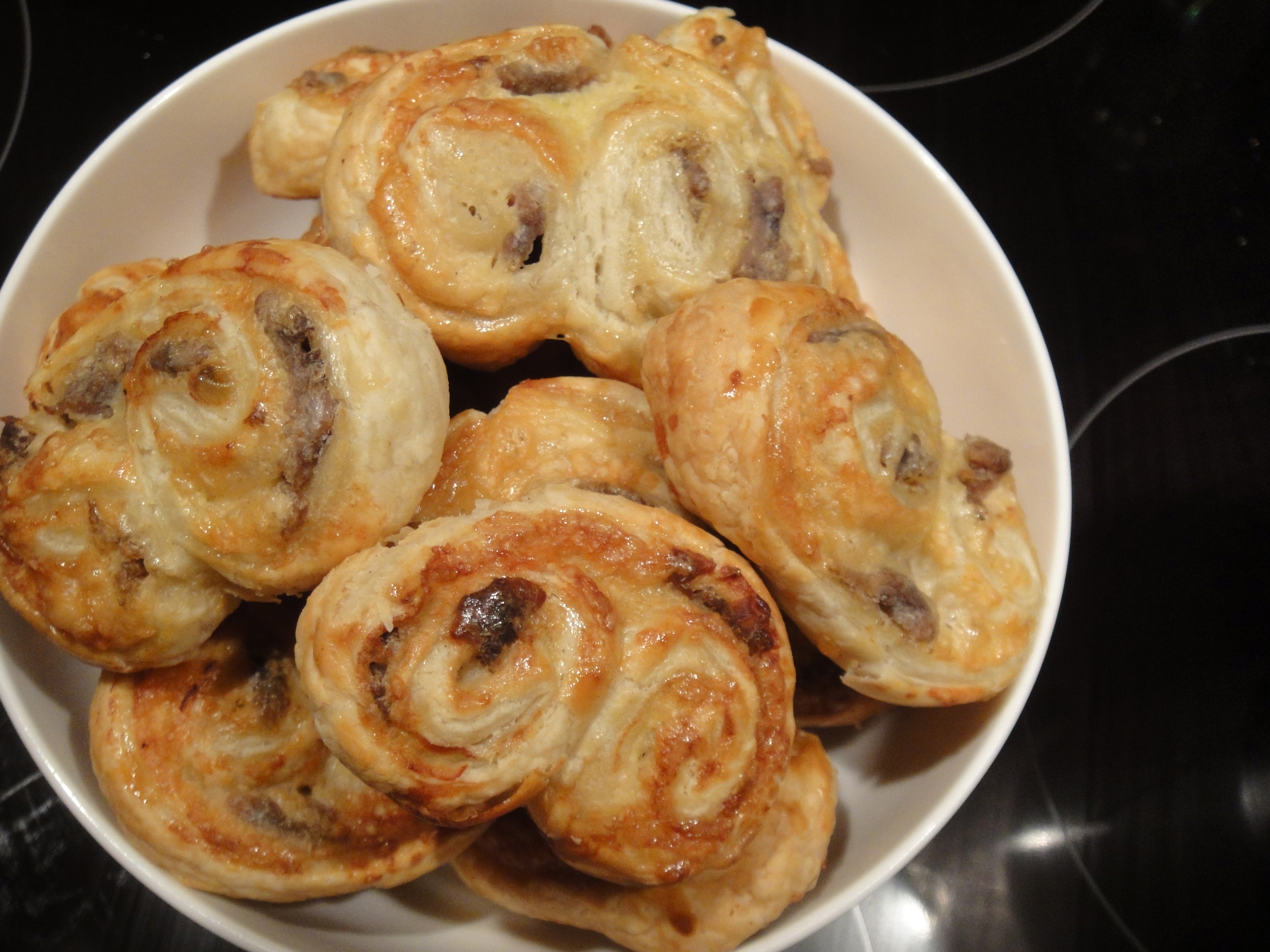
Anchovy and parmesan palmiers

These are a simple savoury variation on my previously posted sweet palmiers recipe. Simply replace the sugar with a handful of freshly grated parmesan and four rows of anchovies laid out parallel to the long sides of the puff pastry (which you roll inwards). Then freeze for 10 minutes before cutting into slices and cooking in an oven at around 200 degrees centigrade for around 20 minutes. These treats are salty but mega moorish.

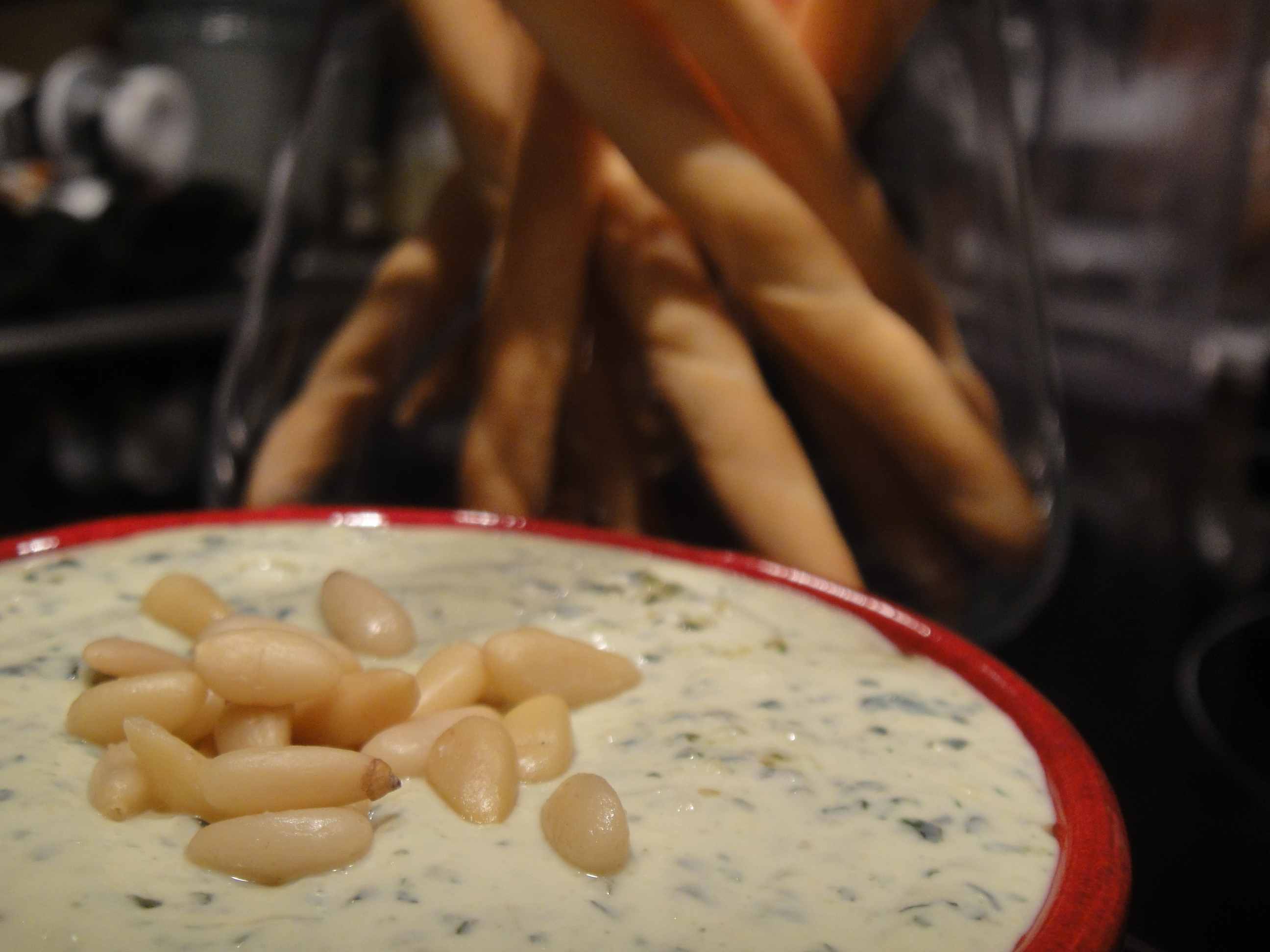
Proscuitto-wrapped grissini with a home-made pesto dip

Such an easy treat, but this one went down the best. Simply wrap one end of some Italian grissini (bread sticks) with proscuitto or parma ham. For the dip make some pesto – I wizzed up half a clove of garlic, four large handfuls of fresh basil with a handful of lightly toasted pine nuts and the same amount of freshly grated parmesan, a good dose of salt and enough olive oil to loosen up the mixture once blitzed in a mini food processor – there’s nothing quite like the smell of freshly made pesto to evoke the pleasant green lands of Roma, picnicking outside the Coliseum – and that was my pesto. I only used about 2 heaped tablespoons of this, adding those to 300g of soft cheese and there was my dip – creamy, with the exquisite flavour of the mediterranean.

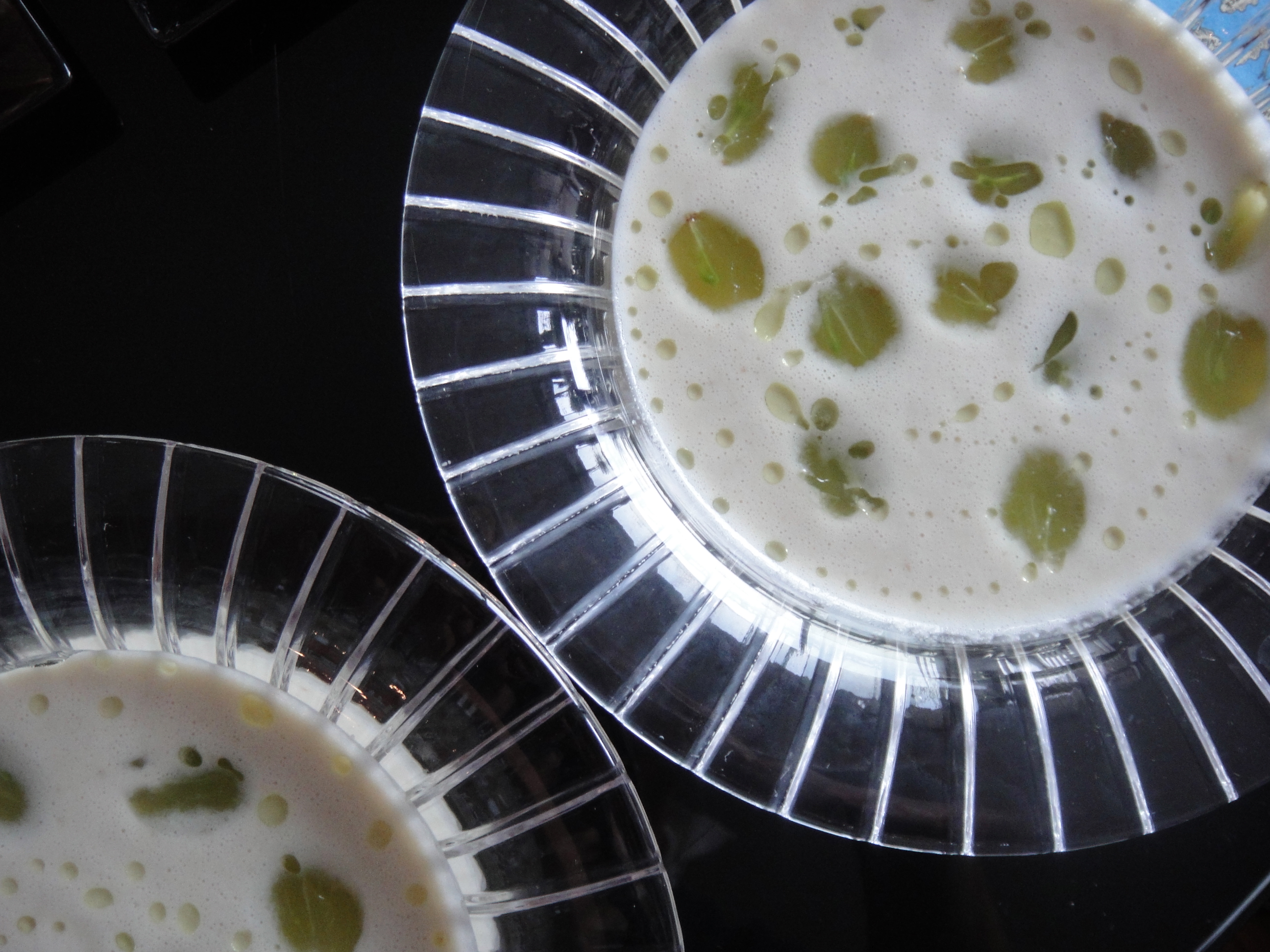
White gazpacho

This is one of my favourite Rick Stein recipes and works great as a starter (in larger portions) or as a canapé in small shot glasses or flutes with a few white grapes scattered into the mix. It’s a creamier more indulgent version of the typical Andalus tomato gazpacho and is so easy to make. Simply soak 200g of stale white crustless bread in 400ml of cold water for around 30 minutes. Place this soggy bread mixture into a liquidizer with 100g of blanched almonds and 1-6 cloves of garlic depending on how strong you like your garlic (I only use one, and I think that’s strong enough) and whizz this up into a smooth paste. With the motor still running, gradually add 150m of good quality olive oil and 4 tablespoons of sherry vinegar. Then add around 400m of more water – more if the soup is too thick. Check the seasoning and add salt if necessary. Then the key is to get the soup nice and cold, so refrigerate for at least 4 hours – overnight preferably. Serve with white grapes and a drizzle more of oil.

White gazpacho as a starter

Smoked trout dip

This one is slightly more controversial as it’s meant to be a mousse, but for some reason mine wouldn’t set. However, it turned out very well as a dip for the variety of crackers we had at the party, so why not add it in here. All I did was to whizz up 165g of smoked trout in a food processor with 225 g of creamed cheese, a squeeze of lemon juice, a sprinkle of dill (to taste) and 2 tablespoons of cream (it could be the cream which prevents it from setting – perhaps try without – I didn’t have time). If you have the time to chill the mixture and get it into a neat piping bag, you will probably succeed where I failed in piping little individual canapes of the mousse onto a blini or even a slice of cucumber. This looks great with some caviar on top. But failing that, serve it up as a simple dip – it’s delicious, especially when eat with the anchovy palmiers.

Figs stuffed with dolcelatte

Finally, and for the easiest of them all, a load of plump dried figs, slit them open as though you are performing a delicate surgical operation, get messy by breaking off some creamy dolcelatte and lovingly stuff each fig with your own fair hands – it’s sticky work, but strangely satisfying. You can seal the deal with some proscuitto wrapped around the fig, or leave it off for veggies (I do however find that a strand of ham makes these canapés looks lightly less poo-like). They’re not the most attractive canapés in the world admittedly, but for ease of method, and for richness of flavour, they don’t come better than this.

Tis soon the season to be jolly, so canapé season is just around the corner – these recipes are perfect for the kitchen shy host with the most – and these will enhance any bash with minimum skill or time required. Enjoy!

24 hours in Paris: Part 1

24 hours is not a long time, but when you spend it in the city of light, of love, and of every other superlative you can throw at it, 24 hours is a ripe excuse to live life to the full – Paris style. A birthday is only one day of 365, and yet it is my belief that it should be appropriately marked. After all, don’t we all deserve to feel special for the day? But with London hosting the world’s greatest sporting event, there was no way I could drag myself away from the city for too long for this year’s birthday celebrations. So for a short burst of Birthday happiness, Paris (now so easy to get to via eurostar it feels like an extension of London) was the obvious choice. Here are my 24 hours in that magical city.

20:00 hrs

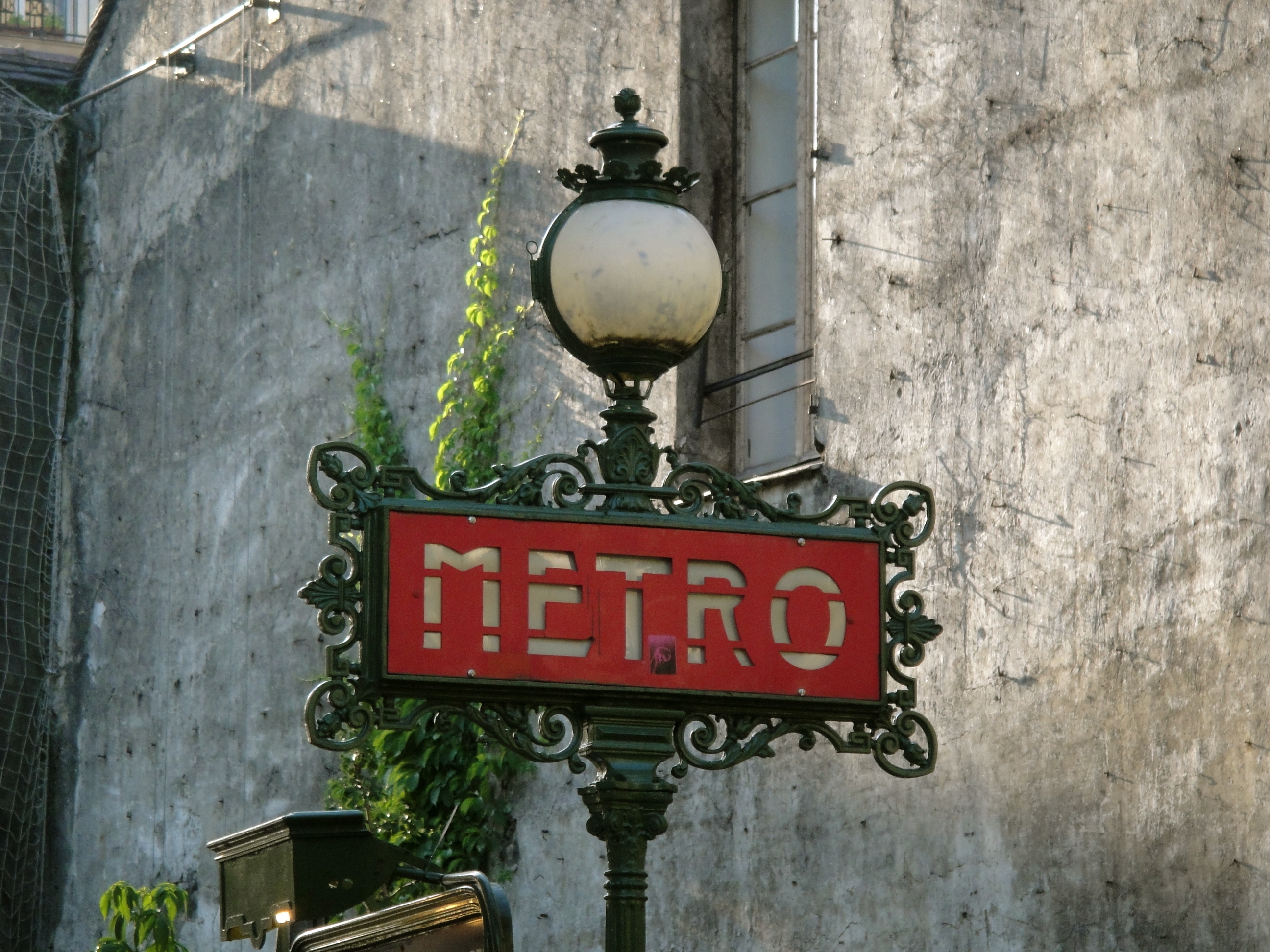
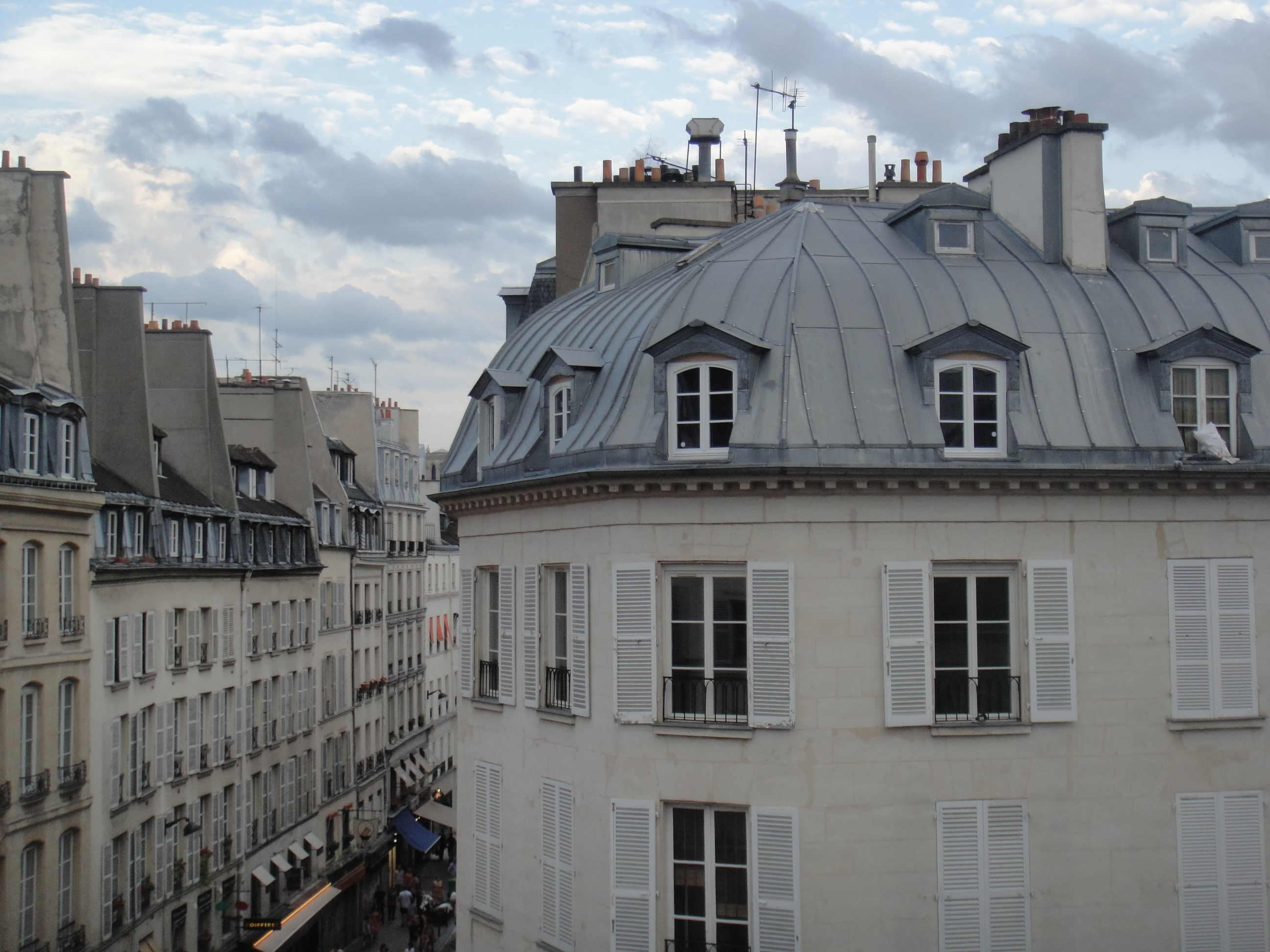
Walking up the steps of any Paris metro station, up onto the streets of the city centre for the first time is always a thrill. Nothing can surpass the architectural splendour of the city, where beauty is consistent from street to street, where Parisians mill from one red-canoped cafe to the next, art nouveau is the design of choice, and a contagion of chic spreads from shop to shopper to every passer by and even to the poodles. After a smooth journey commencing under the huge Olympic rings suspended proudly over the tracks of St Pancras International, to the rather less glamourous welcome of the Gare du Nord in Paris and straight onto the Metro, we arrived at our final destination: the Boulevard Saint Germain des Pres, where, on a small cafe-packed Rue de Buci just round the corner from Les Deux Magots, we checked into our hotel of the same name, where a small but perfectly boutique-chic boudoir awaited us, with perfect views of the street below.

The Hotel de Buci (on the right)

Our rooftop view

21:00 hrs

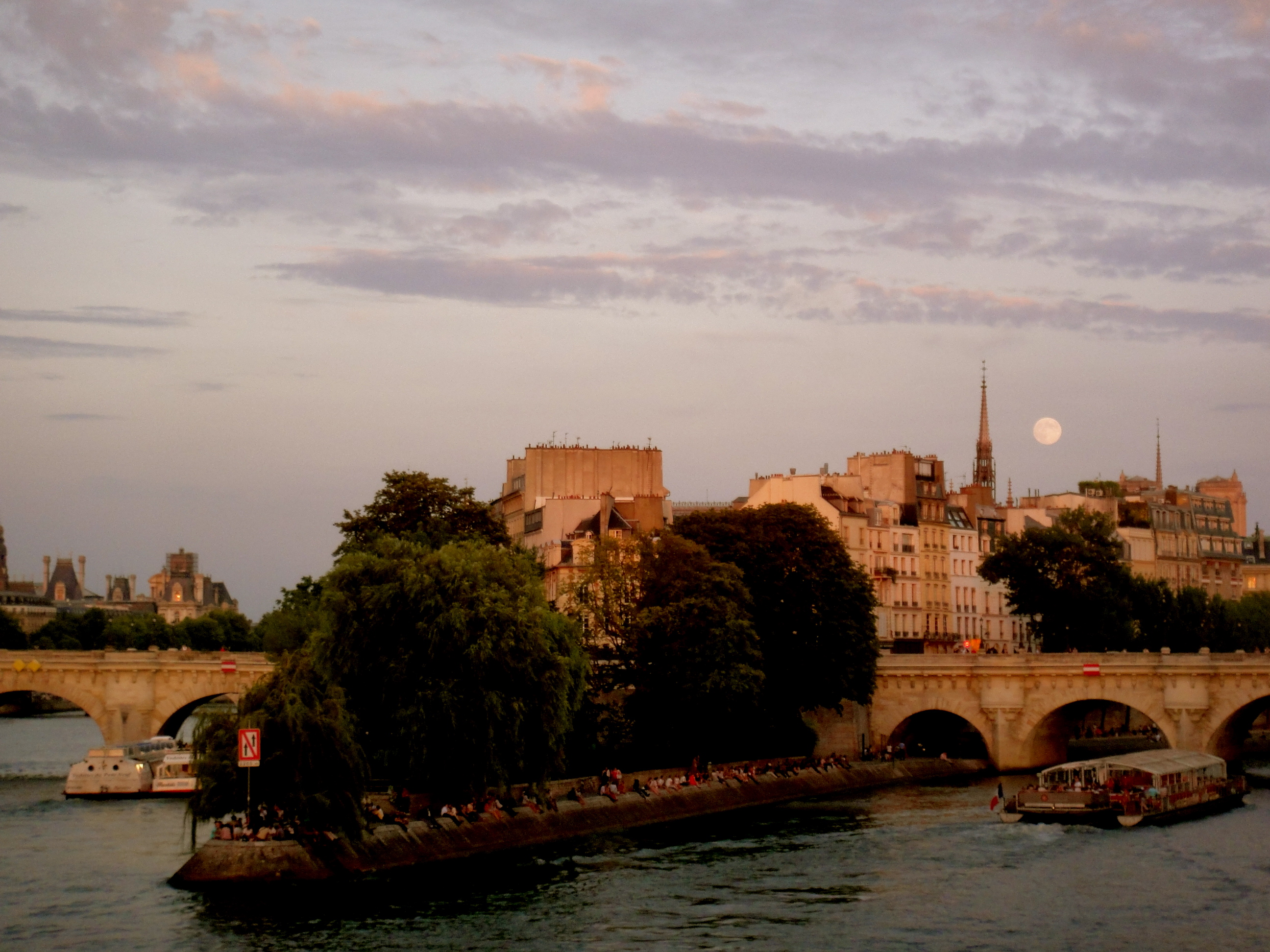
Having made full use of the Hotel de Buci’s elegant facilities, we headed out across Paris, across the Pont des Arts where we were treated to the most spectacular view of Paris at sunset. The sky was like a stracciatella of chocolate rippling clouds across rich layers of rich golden yellows and zesty oranges. When we proceeded through the Cour Carree in the Sully courtyard of the Louvre, the view of I.M.Pei’s glass pyramid with the same, now deepened sunset behind it together with the flashing lights of the Tullleries funfair and the momentous silhouette of the rooftops of the Louvre  was just mind-blowing. Did Paris ever look so good?

22:00 hrs

We rushed off towards our late reservation at a previously favourite eatery in Paris: Jean Georges’ Market  Restaurant (Avenue Matignon, 15), just off the Champs Élysées. Past experience of the restaurant had been excellent – a super chic atmosphere, beautifully presented food, largely asian fusion in origin, all served on a tranquil restaurant floor with subdued lighting, meticulous waiting staff and cool lounge-bar sound track. But what was potent chic of a winter’s evening appeared to have been heavily diluted come the summer. Such is perhaps a symptom of Paris in August, when the Parisians flee for the coast, and Paris is left to the tourists. Since trade is passing, the restaurants let their standards slip. And this was certainly the case at Market, where a menu entitled “taste of the summer” offered diners a choice of utterly random dishes for 38 euros per head. Quite asides from the high price tag (which notably hadn’t slipped along with the standards – and don’t even get me started on the wine list) the mix of food was such a hodge-bodge of world cuisines that it was a real struggle to choose two dishes which would actually work together as a meal. Thus you had ravioli on the one hand, and sushi on the other, chicken samosas for a starter, and american hamburgers for after. Controversially I went for the latter combination – and believe me I did not relish the idea of going American while in Paris, when really I should have been supping upon snails and oysters. Nor did I relish the company of the tourists all around me. I spent much of the meal listening to a couple next door talk about the benefit of Tesco clubcard points. Oh mon dieu. To be fair though, the food was good – it just wasn’t worth over 130 euros for the pleasure.

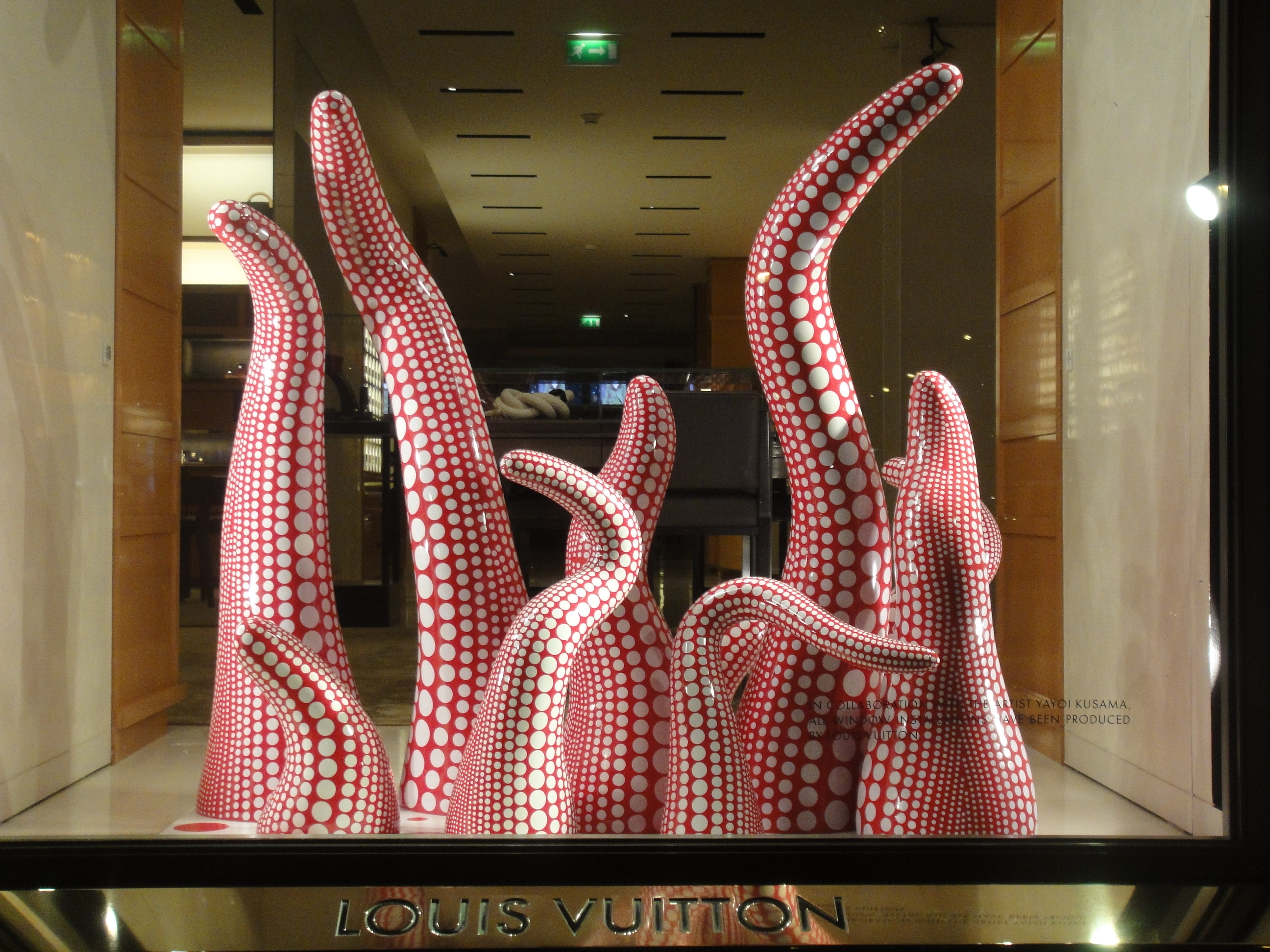
Vuitton’s collaboration with Yayoi Kosama

24:00 hrs

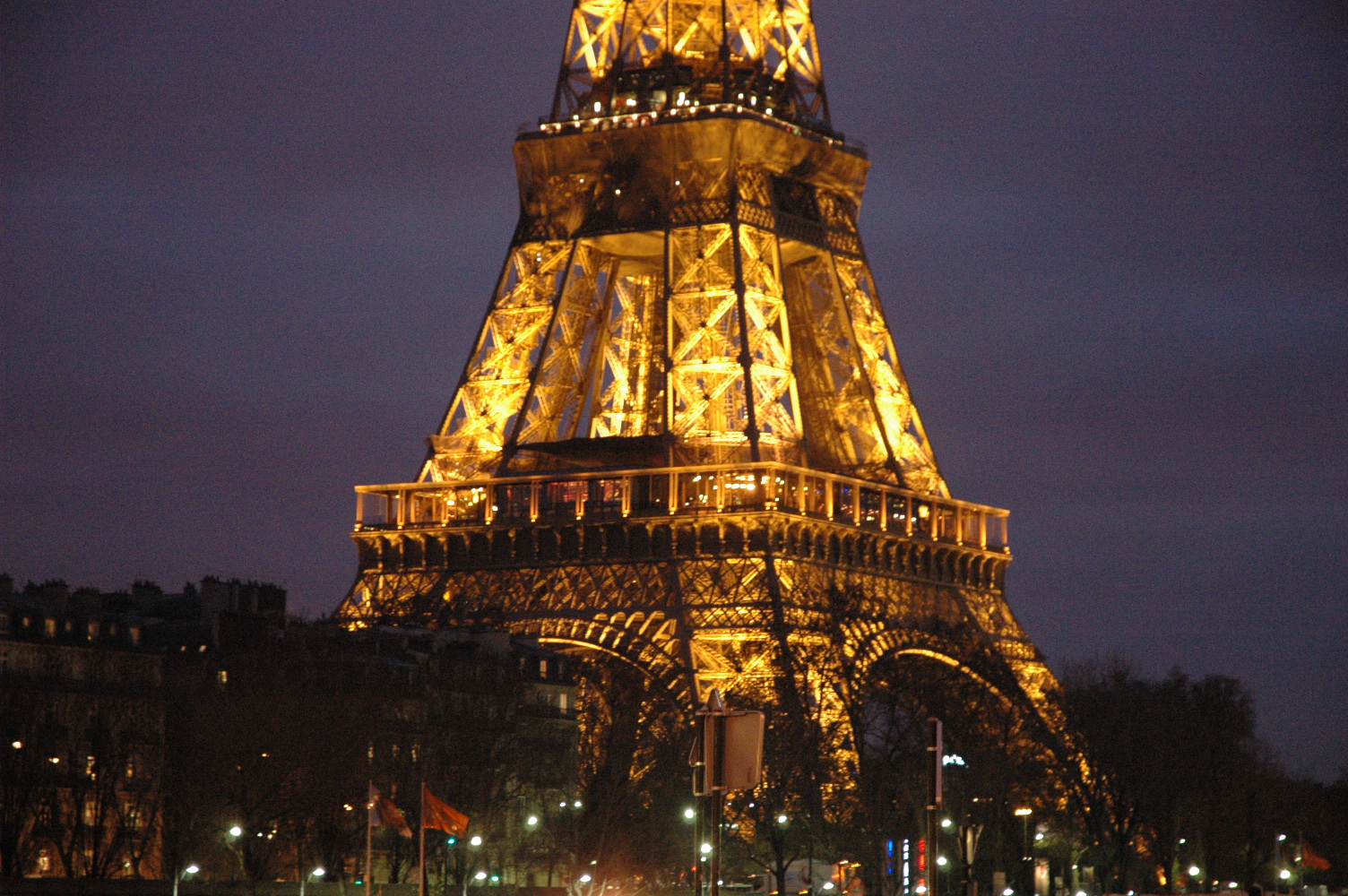
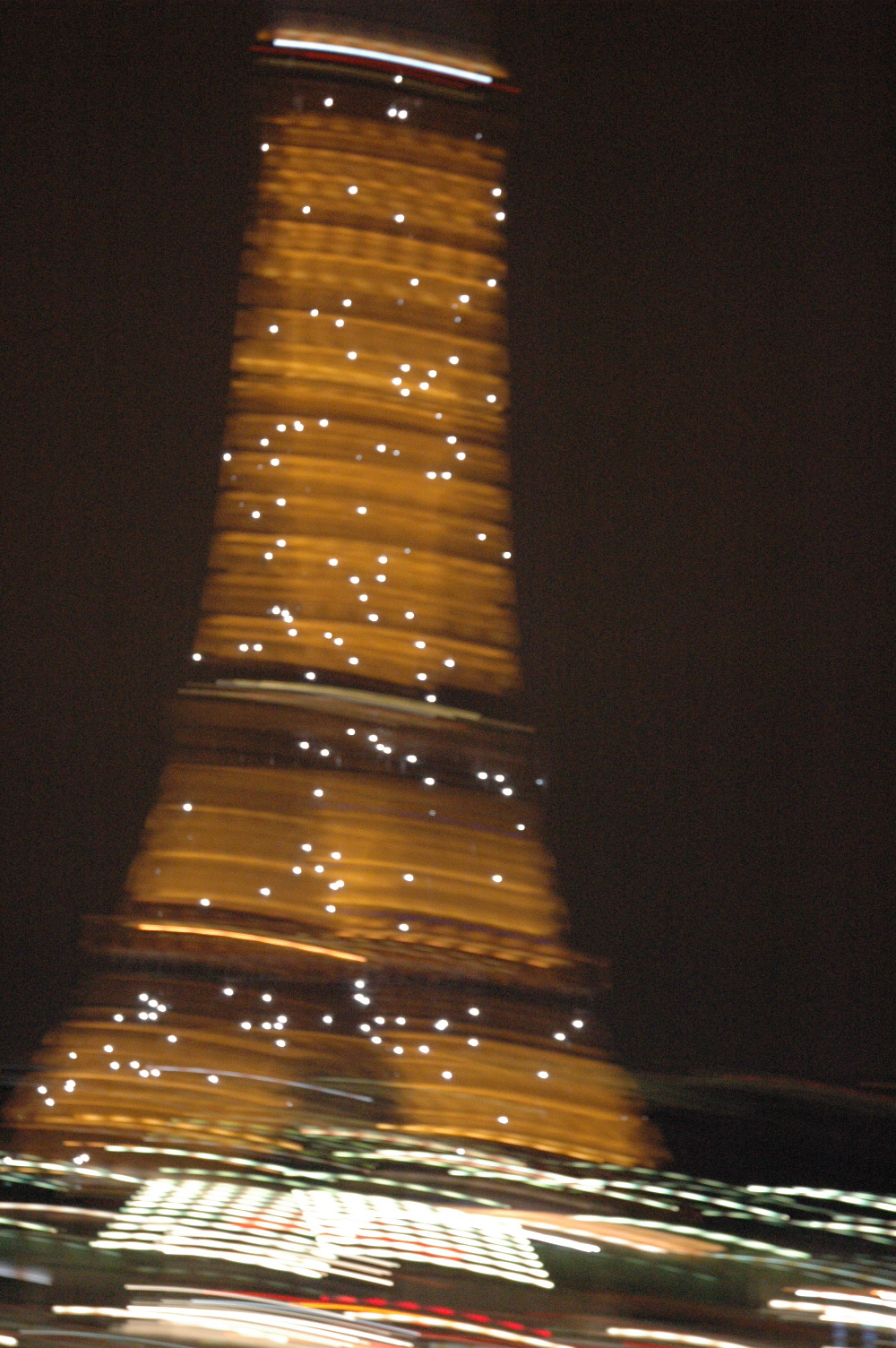
After two hours realising the hard way that Paris in August is a mecca for tourist-tat, we decided that if we couldn’t beat ’em, we would join ’em and headed straight for the Eiffel Tower (via the indubitably chic Avenue Montaigne, lined with the creme de la creme of Parisian high fashion, including, I noted, Yayoi Kusama’s spotty collaboration with Louis Vuitton). The Tour Eiffel is an undisputed tourist icon, favourite of the souvenir tacky-train, splashed across postcards, t-shirts and every other kind of tourist paraphernalia and yet it’s still one of my favourite sights in the city. There’s nothing more magnificent in my opinion that the first view of the vast bulk of the tower when you turn a corner and see the elegant structure rising almost super-human above the nearby overshadowed houses. The sheer audacity of the structure never fails to amaze – how could Gustav Eiffel have ever been so daring as to build something so huge and so utterly alien to the surrounding landscape? It was too late to ascend, but it was surely worth the visit to witness the tower sparkling with several thousand tiny white lights like the world’s biggest diamond at the strike of midnight – what a way to officially start my birthday. Notably however we were not so drunk on birthday spirit that we gave into the relentless approaches of pesky street-sellers trying to force bottles of warm champagne into our hand. Can you imagine anything more lacking in finesse?

Eiffel art…

01:00 hrs

Heading back to the Saint Germain des Pres, I decided it was a good idea to walk from the Eiffel Tower all the way back to the 6th arrondissement – after all, it looks close on the map. Well guess what, it wasn’t, and an hour or so later, with very, very painful feet, we finally made it back to our welcoming soft bed in the Hotel de Buci, where, with curtains open so that we could close our eyes with a moonlit view of the rooftops of Paris, we sunk into a soft sleep, ready and waiting for the daylight to tease our eyelids back open, announcing the start of a whole new day and another bout of birthday celebrations in Paris.

More on that, tomorrow.

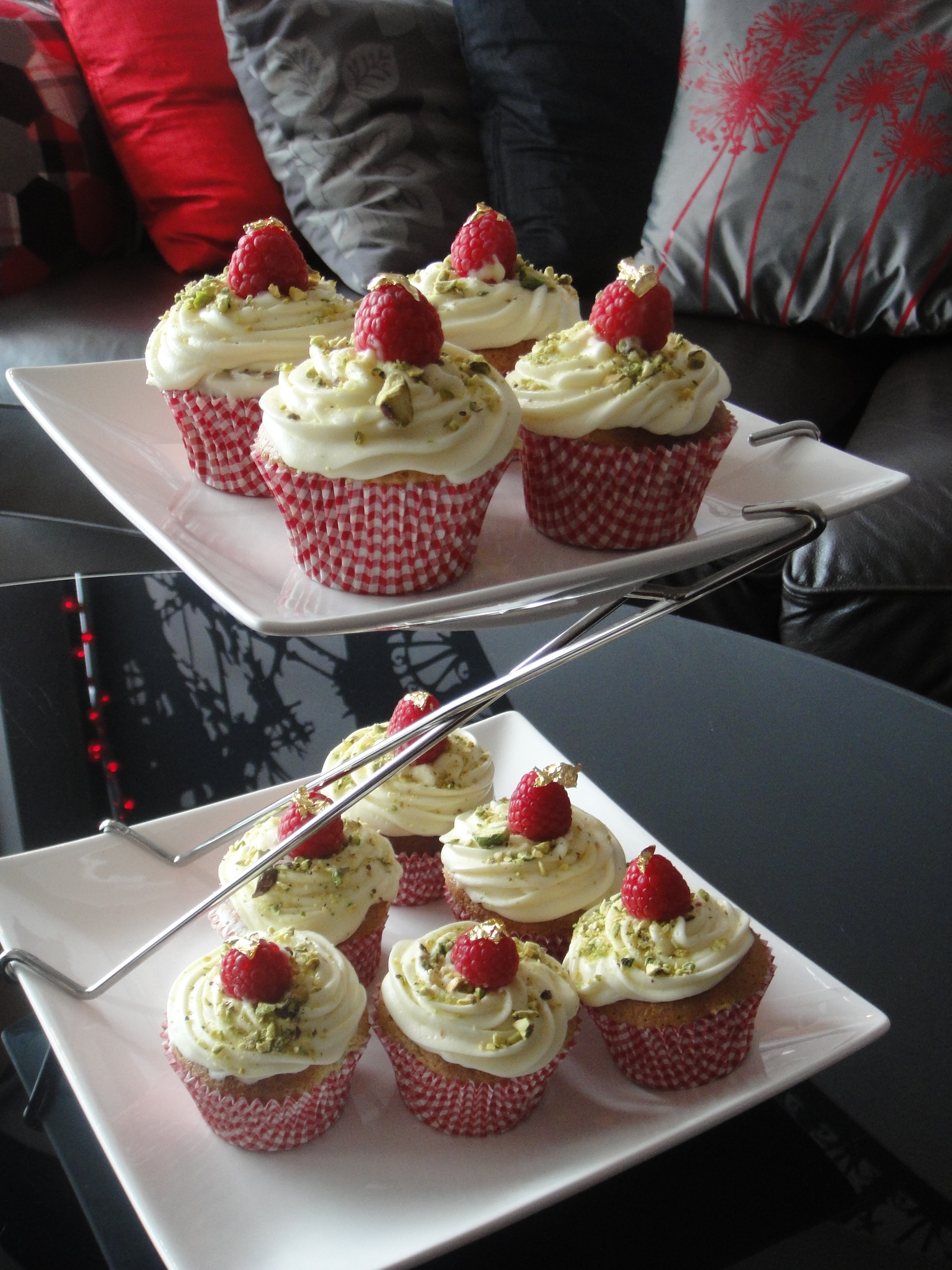
Birthday cupcakes – pistachio and raspberry with white chocolate frosting a little celebratory gold

It’s my birthday!! Woop woop! And while you read this post, I should be sat somewhere on the Rue St Honoré in Paris, sipping delicately upon a cup of strong French coffee with a couple of Ladurée macrons on the side. For a leo birthday can only sensibly be celebrated with a little class and plenty of extravagance, so while I soak in the sights of the city of love for one day only, why don’t you join me in my pursuit of birthday hedonism by making these amazing little cup cakes. Complete with edible gold leaf, these pistachio and raspberry beauties are more than appropriate for a summer birthday, where a ruling sun requires celebrations in all things golden, sparkling and extravagant. Or at least that’s my excuse. The sponge is fat free, which makes it a guilt-free, lighter pleasure for a summer’s afternoon, while the white chocolate frosting reminds that while healthy food is all very well, its the icing on the cake that feeds the eye and fuels the pleasure. Ah mais oui!

This recipe is something of a reinvention of a recipe on my good friend Celia’s super-cool foodie blog, Lady Aga. As soon as I saw her cake, I wanted to devour it there and then. The problem was, my cake was destined for work, to be shared amongst my colleagues who have been long-promised a birthday cup-cake treat. And as this distribution would inevitably entail a journey on the stuffy tube in rush hour (with added olympic pressures), the fresh cream of Celia’s oeuvre was never going to work, nor indeed the incredible constitution of her multi-layered sponge. I therefore opted to turn her recipe into cupcakes, replacing half the ground pistachios with self-raising flour to encourage the cakes to rise, and replacing the cream filling with a super-indulgent white chocolate frosting. I also baked a raspberry in the middle of the sponge for added moisture and a hidden treat in the cake’s centre.

So, how to make:

Grind up 110g pistachios to a fine powder. Grind up a further 50g or so to a mixture of fine and textured crumbs for use on the topping. Next take 6 large eggs and separate. Whisk up the egg white into soft peaks. In a separate bowl, whisk up the egg yolks with 180g of caster sugar until pale and fluffy. Into the egg yolk mix, fold in the ground pistachios and 110g of self-raising flour and a spoon-full of the egg white to loosen the mixture. Once mixed, fold in the egg whites. Divide the mixture between 12 large-ish cup-cake cases and place a single raspberry in the centre of each cake. Bake at around 200 degrees centigrade for around 20 minutes or until an inserted skewer comes out clean. Be careful not to over-bake or the sponge becomes dry. Remove from the oven and place on a wire rack to cool.

In the meantime, take as many raspberries as you have cakes, melt some white chocolate, and fill each raspberry with a drop or so of chocolate until filled. Prop the raspberries upright in a small container and place in the fridge so the chocolate solidifies.

Next, the icing: slowly melt a bar of white chocolate (around 100g I think, but I can’t really tell how much I was melting as I kept on eating it) over simmering water. As the chocolate starts to melt, add a splash or two of full fat milk to loosen up the mixture to a creamy liquidy chocolate. Meanwhile, take 120g unsalted butter and  mix with 375g icing sugar with around 25ml of full fat milk and a small dash of vanilla extract. This should be whisked for extra creamyness, probably for a good 5-10 minutes. Once light and fluffy, mix in the melted chocolate until thoroughly combined and my god you will have created pure nectar worthy of Mount Olympus itself. Pour your icing into a piping bag with a large star-shaped nozzle (I have no idea what this is called) and place the icing bag in the fridge for 20 mins or so to firm up the frosting a bit. Pipe onto the cooled cupcakes and top with a sprinkle of crumbled pistachios, a chocolate filled raspberry and a little fragment of edible gold leaf for extra extravagance. Or try edible glitter if you prefer.

(Obviously if you can’t be bothered with the piping bag – which I can easily understand – just smooth the icing onto the cake with a palette knife – this can look just as good.

And there you have it. Cakes fit for a King. Or a birthday boy.

All photos are strictly the copyright of Nicholas de Lacy-Brown © 2012 and The Daily Norm. All rights are reserved. 

Bologna: La Grassa – Phenomenal food without a Spaghetti Bolognese in sight

I’m going to pardon myself inadvance of a post which will be an unapologetic engorgement upon food glorious food. Bologna is after all the city that brought us Spaghetti Bolognese, tagliatelle, tortellini and mortadella among other Italian favourites. In fact, without Bologna, half of your standard Italian restaurant menu would disappear. And true to form, the city whose third and perhaps most appropriate epithet is La Grassa – the fat – delivered, delivered and delivered again. We made no plans, instead opting to wander into restaurants randomly as they took our fancy. And yet on every occasion we were surprised, enthralled and deeply satisfied by one consistently high quality meal after another. No wonder then that Mr Artusi, great master of culinary arts once wrote, “When you hear about Bologna’s cuisine, make a bow, for it deserves it”. I could eat in Bologna for ever – it may make me grassa, but hell, it’s worth it.

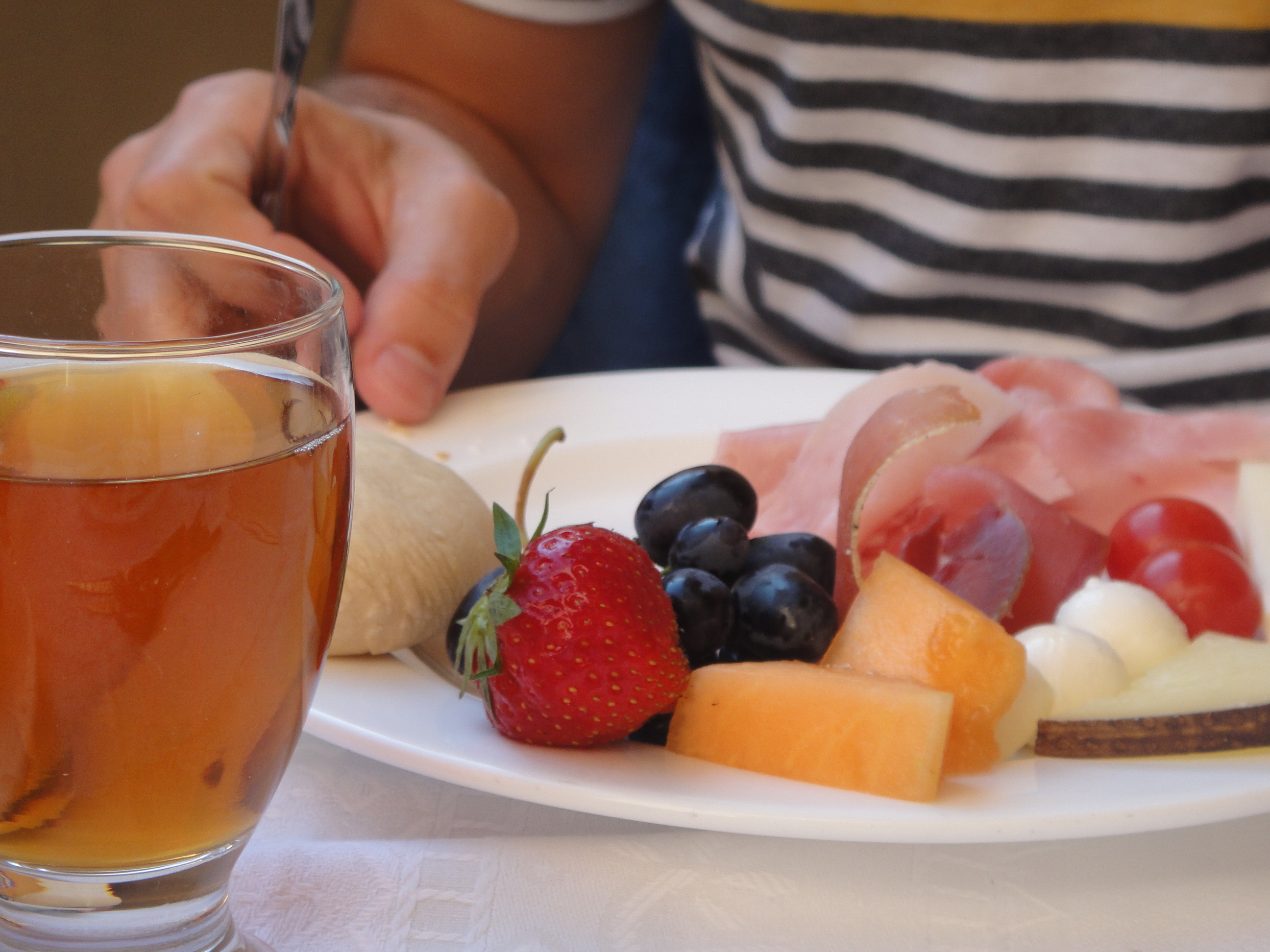
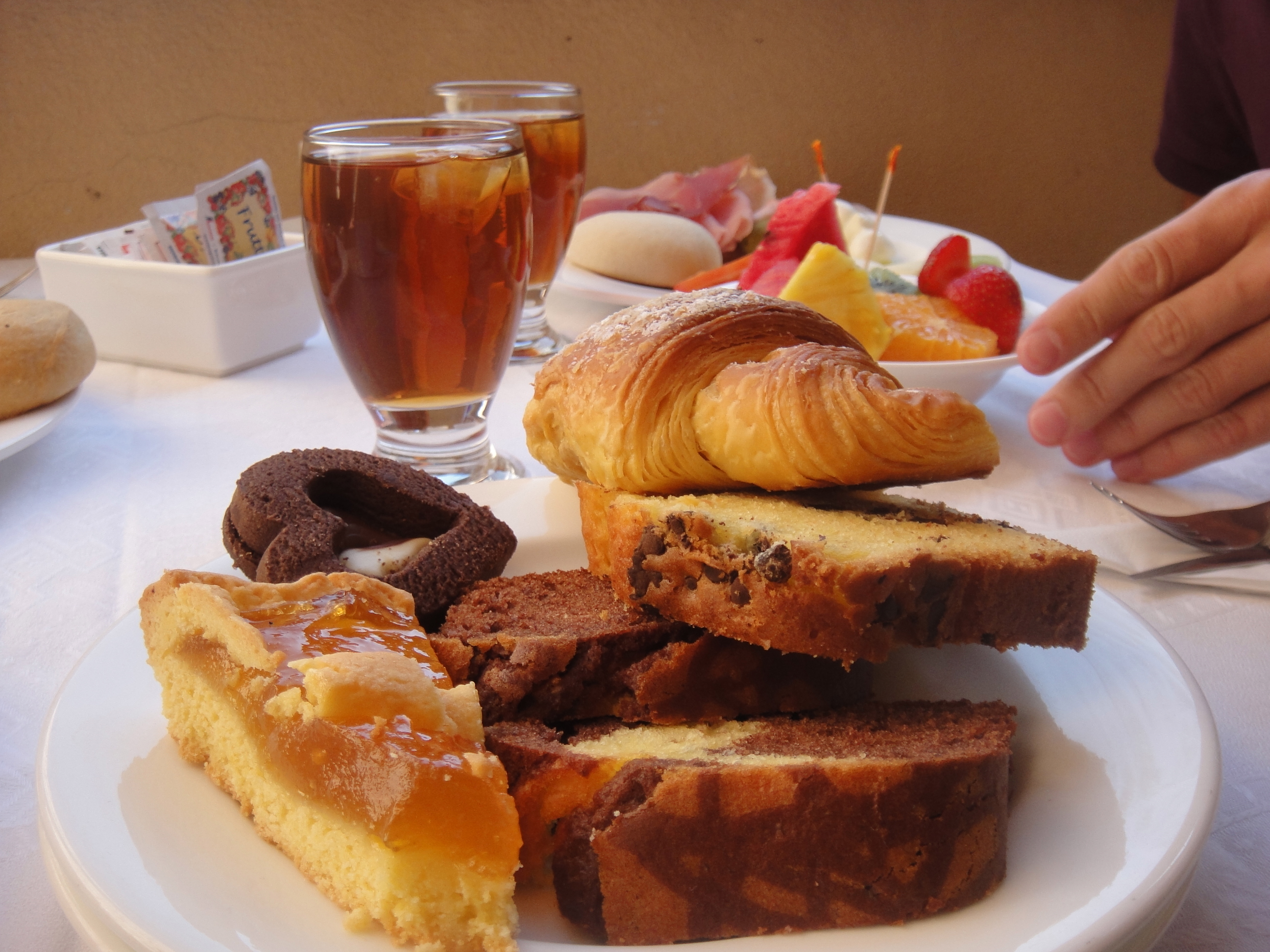
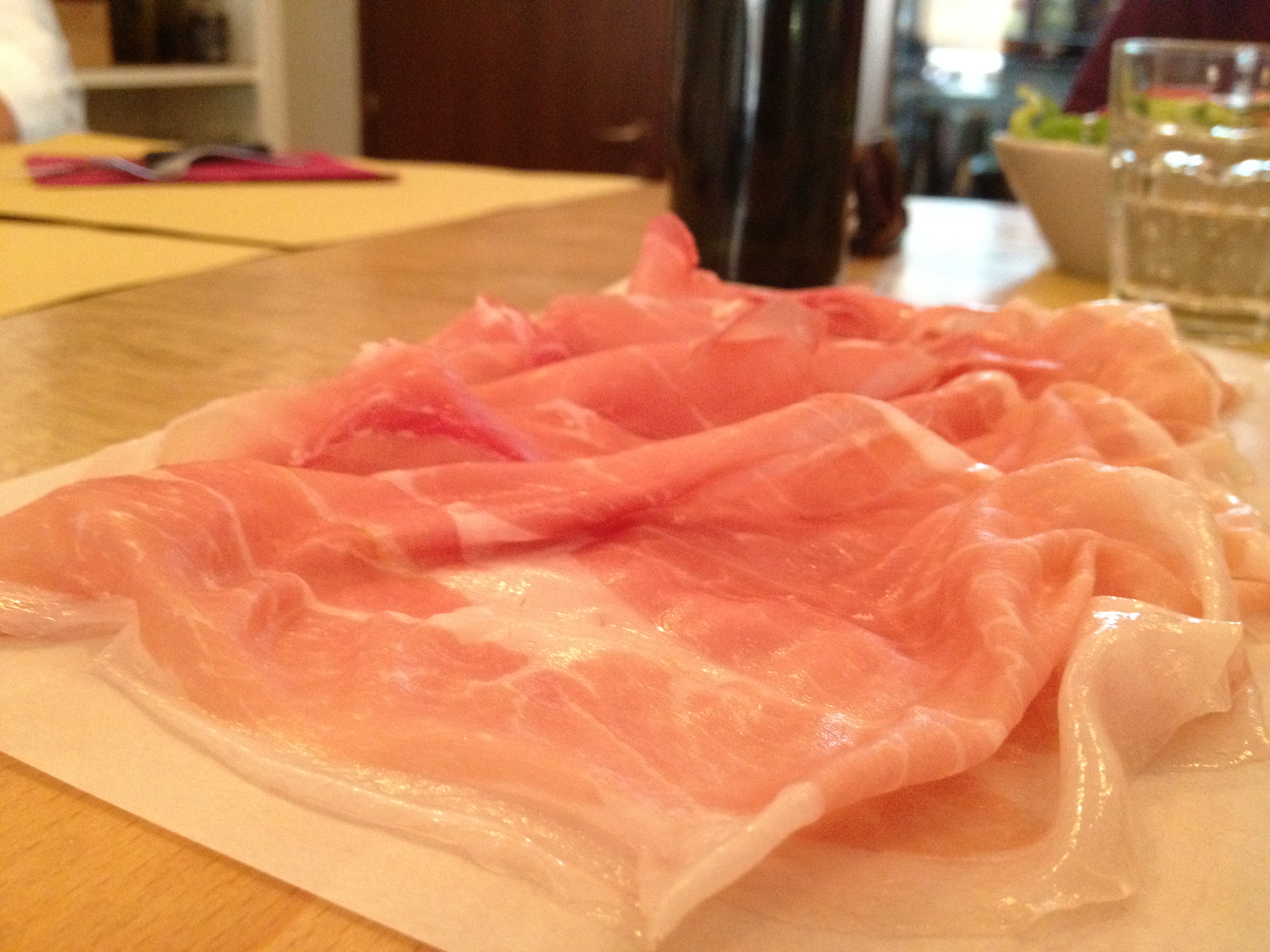
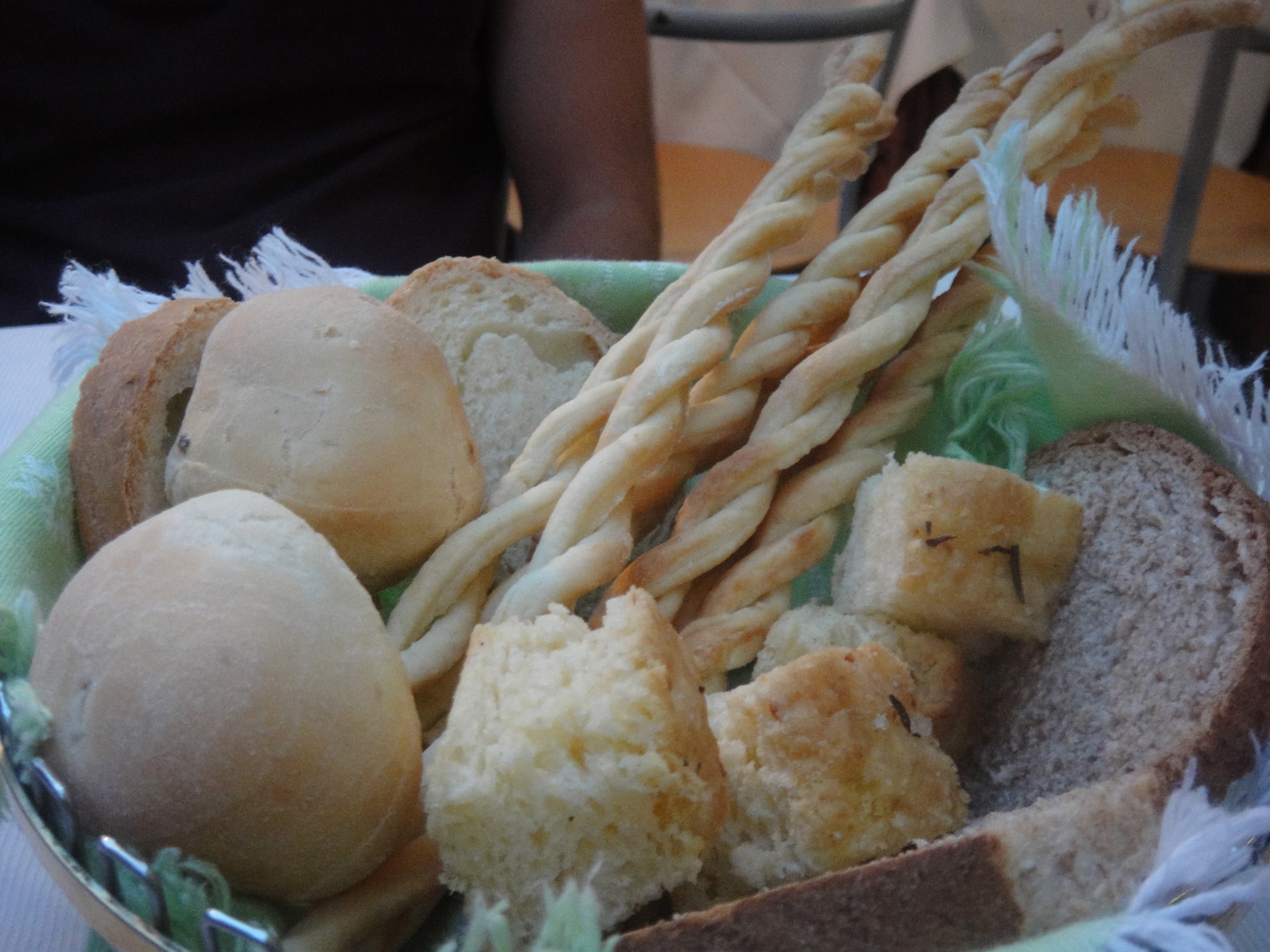
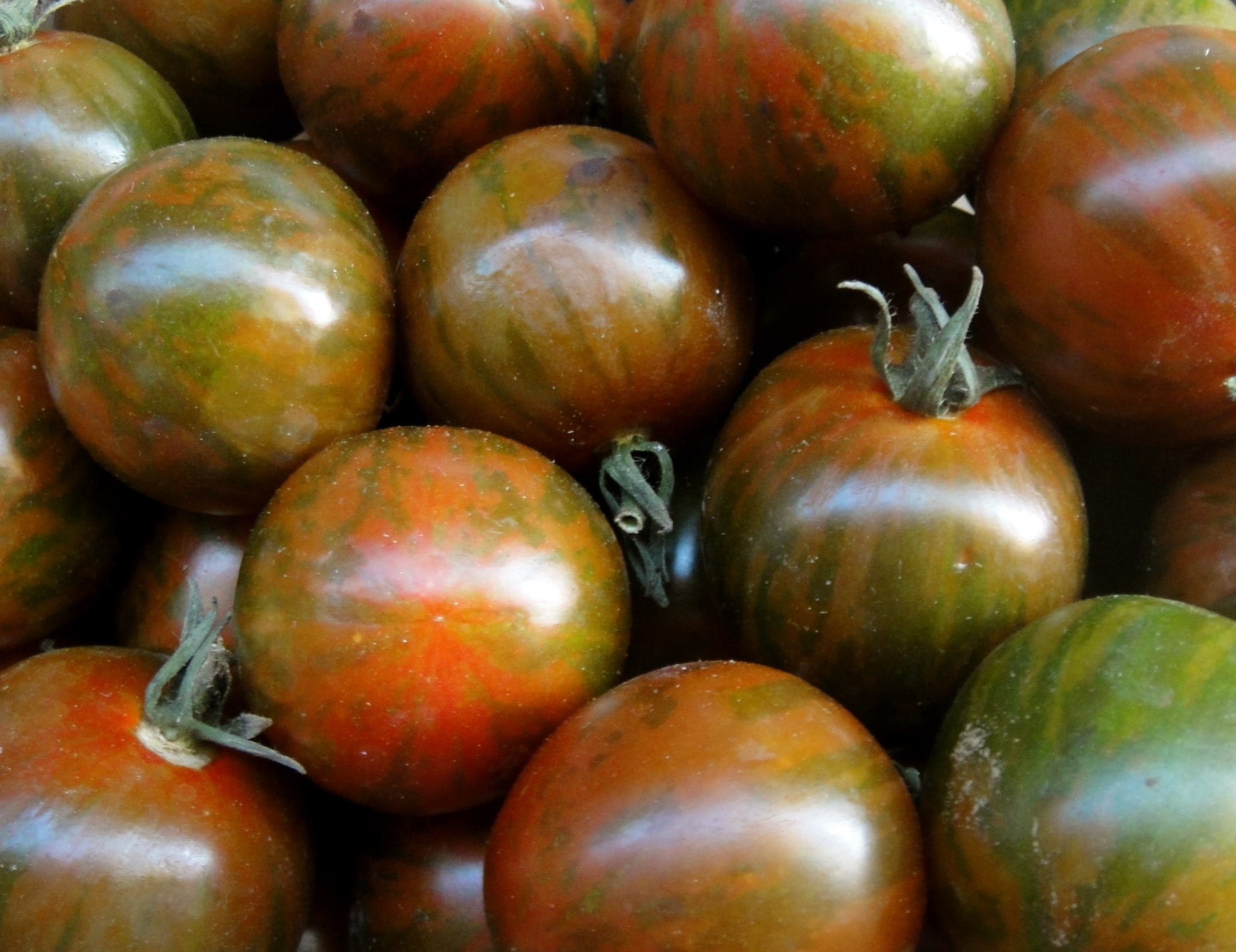
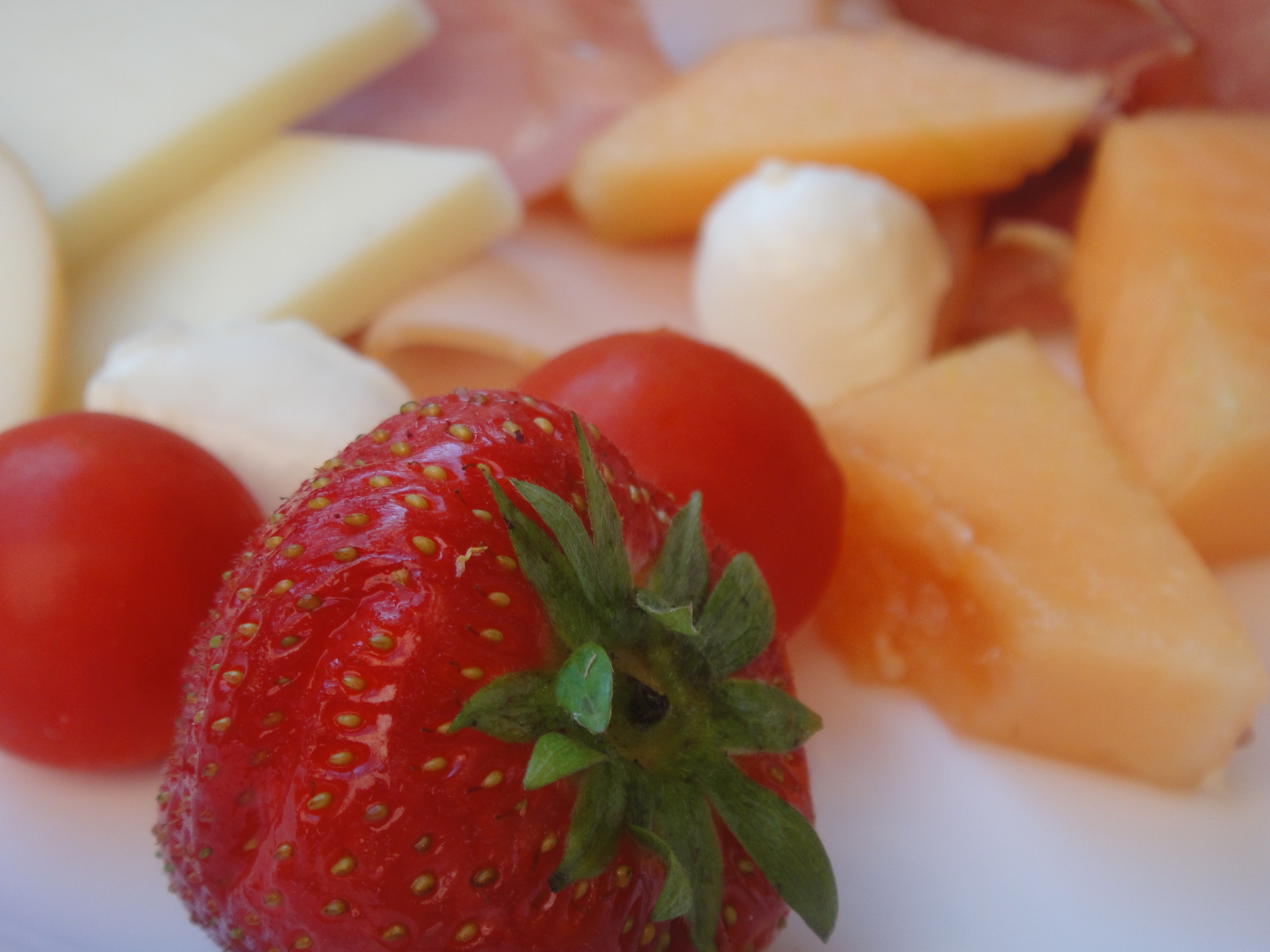
So where to begin. Well, breakfast I guess, a multi-coloured kaleidoscope of colour, as fresh ingredients collided into a cocktail of fruits and meats, soft greasy breads and sweet spongey cakes, all succulently fresh, strawberries as red as La Rossa herself, and mortadella, straight from the manufacturers, limply reclining across our plate. And we didn’t have to go far either. Breakfast was served upon our little terrace at the faultlessly stylish, centrally located  Art Hotel Novecento, a perfect start to each of our four days in Bologna.

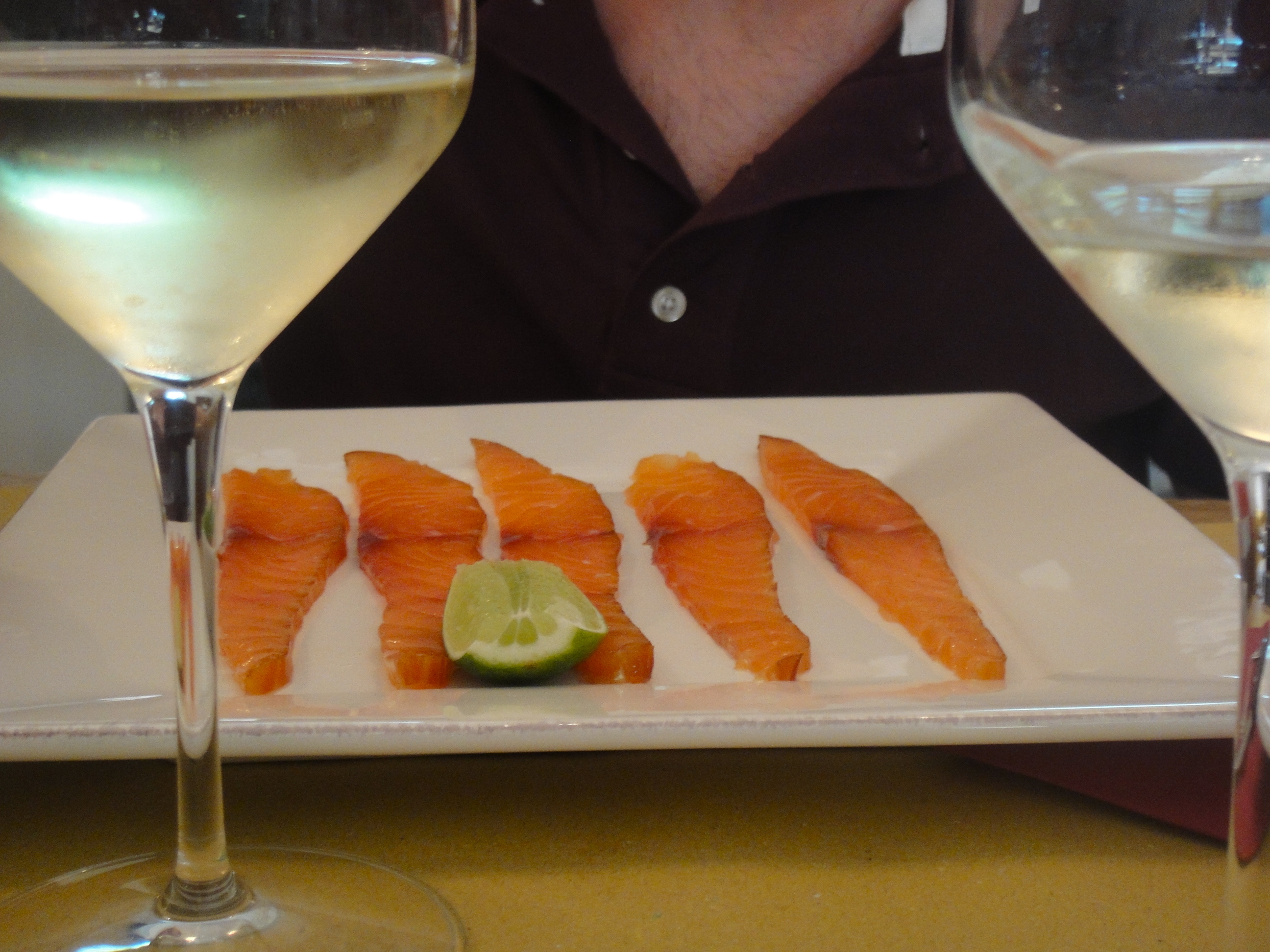
Next, lunch. We stumbled upon this place, Banca del Vino (Via Mantana), on the outskirts of the rough and tumble of Bologna’s ghetto. Here the pizza was amongst the best I have had in Italy. So fresh, so thin and crispy, with a plate of soft silky parma ham served on the side, so that it could be added to the richly endorsed buffalo mozzarella pizza at will. In the meantime, my partner sampled the delights of an equally fresh, thickly cut home-smoked salmon, with a palate-pleasing glass of local white wine on the side. This was rounded off with a rich chocolate parfait with accompanying white chocolate chunks.

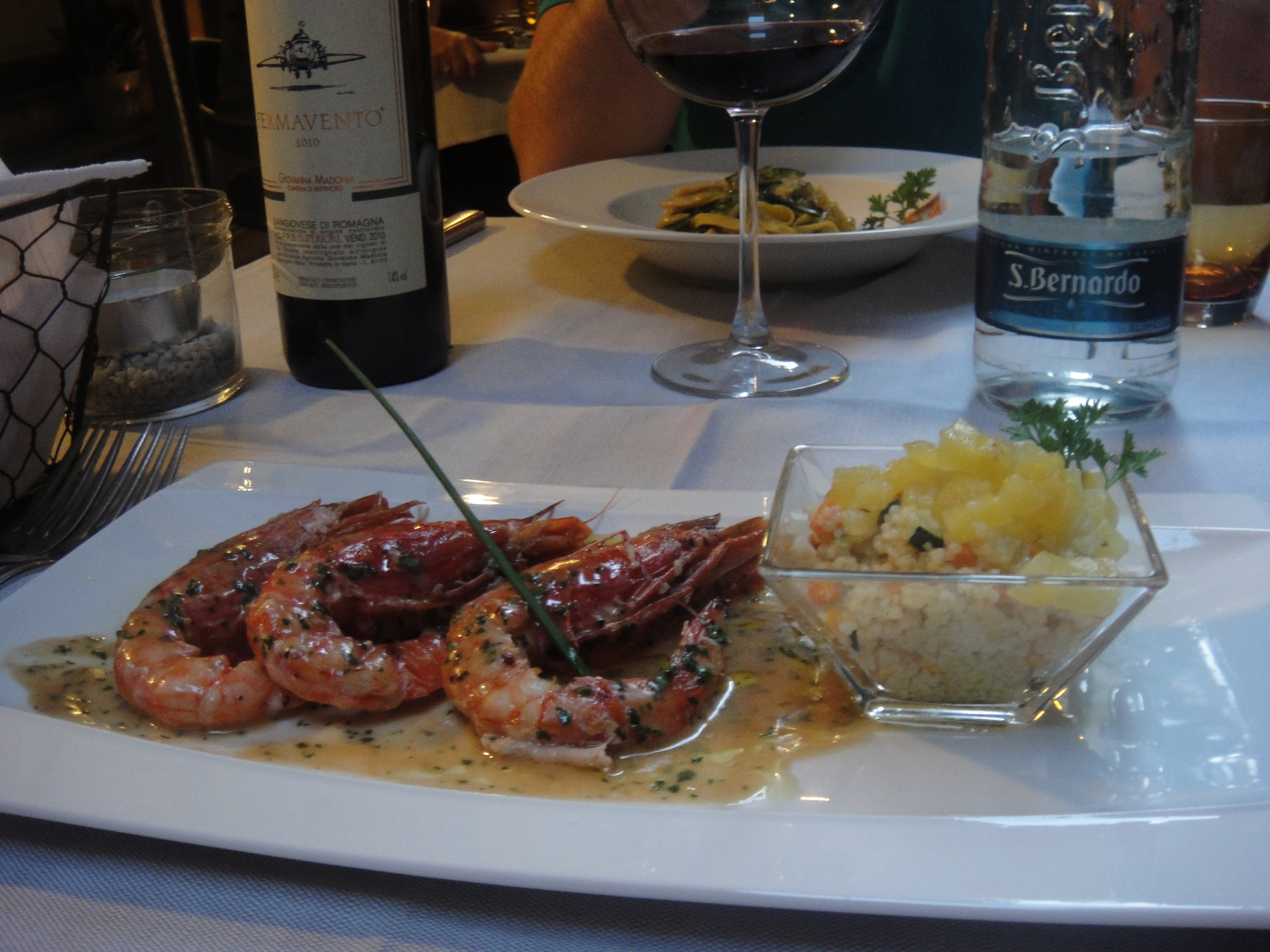
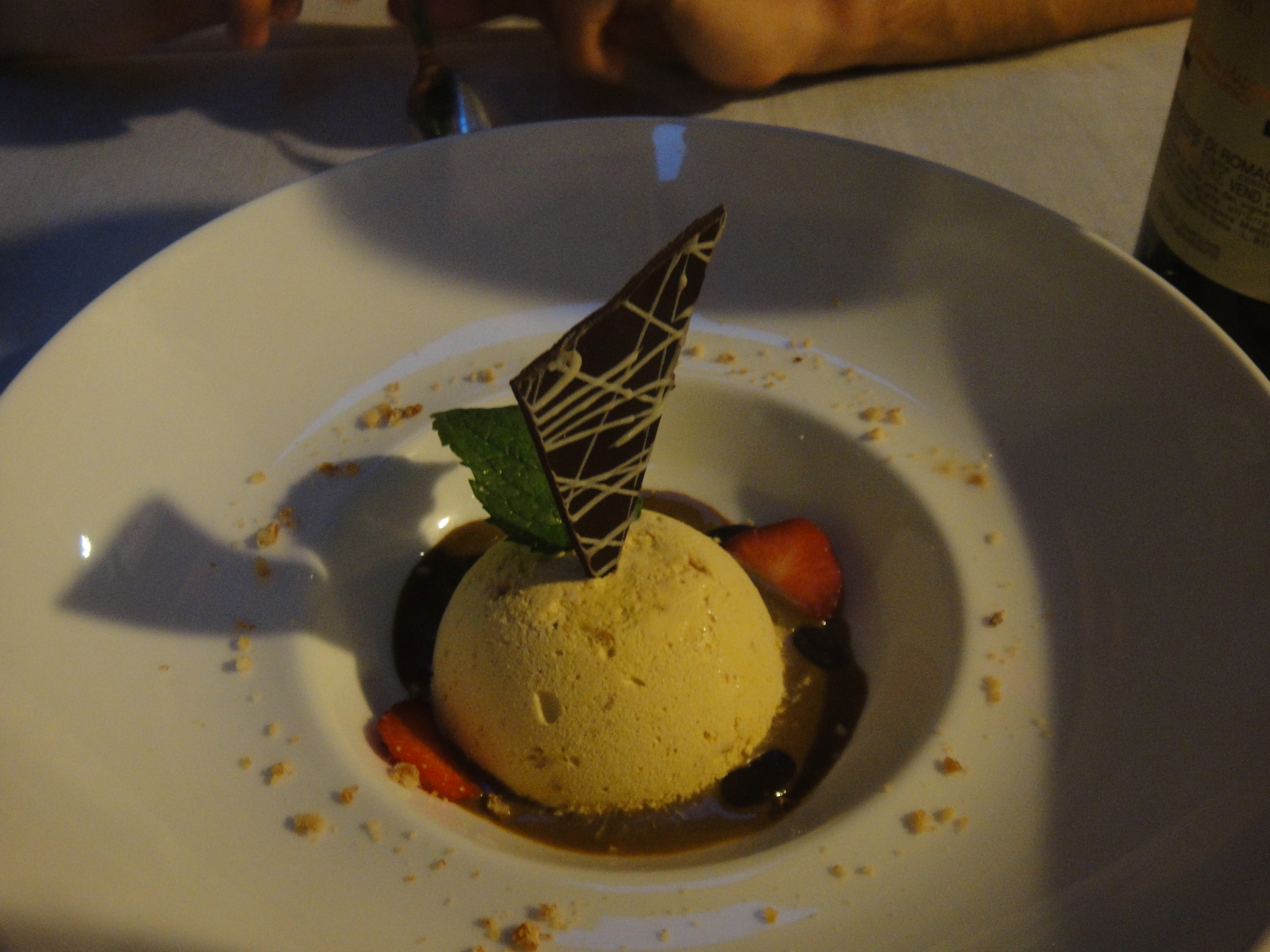
Our first dinner was at the stylish Trattoria Battibecco (Via Battibecco, 4), found down a tiny side street, just off the Piazza Galileo. The food was highly stylised and delicately balanced. I started with the Sformatino di ricotta con cuore di bacon e zucchine su crema di nocciole, a kind of ricotta-enrichend risotto cake, with courgette, bacon and the cream of nuts. Gamberoni rossi in padella leggermente piccanti con cous cous all’ananas was to follow for mains – lightly cooked prawns with pineapple couscous and a chilli hot sauce to balance, while for dessert, a semifreddo with cherry chocolate and a strawberry on the side foretold of the spectacular dinners which were to come.

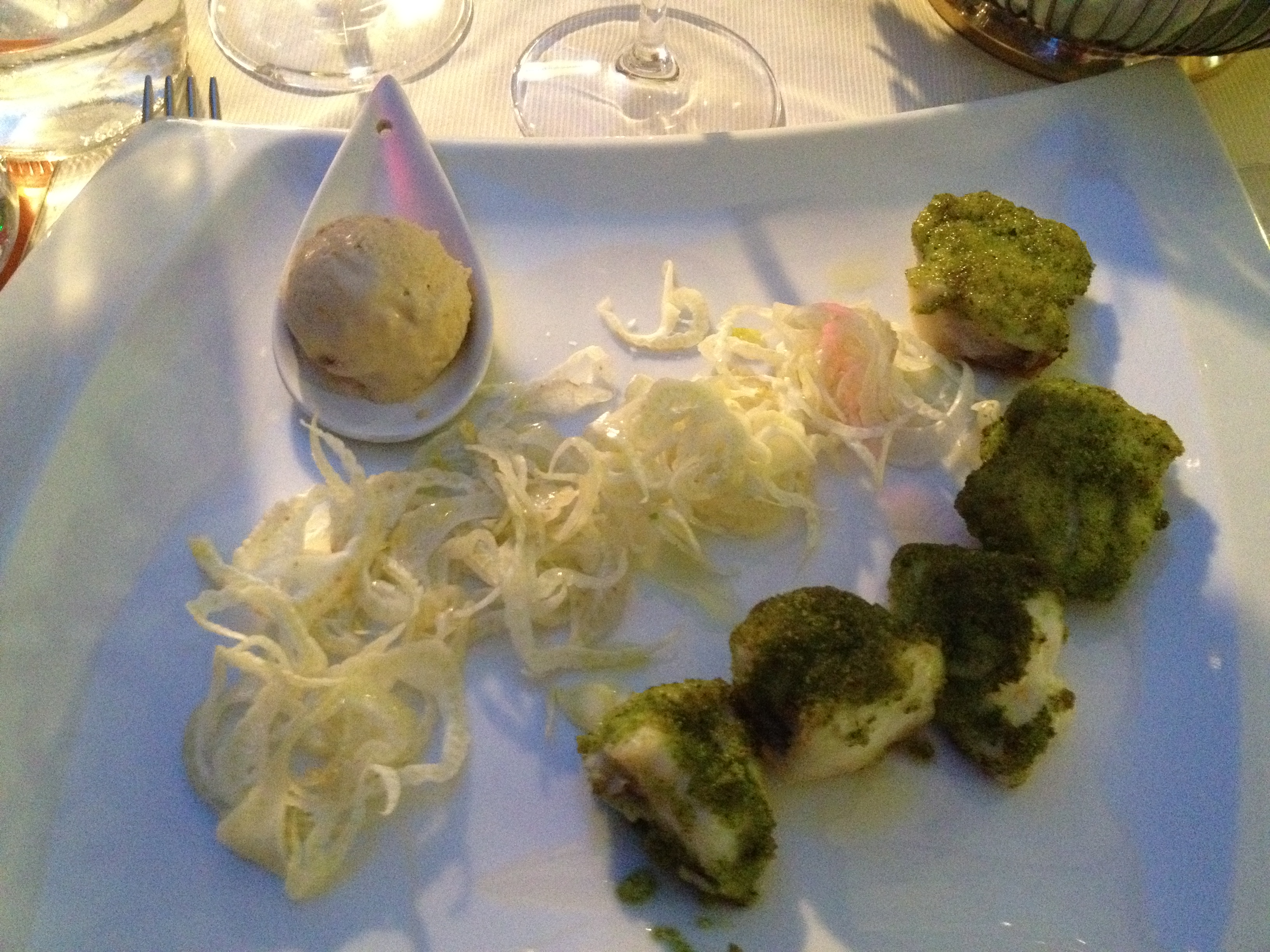
Our second dinner was at the Ristorante Ciacco (Via San Simone), another off-street secret which we stumbled upon having escaped the more tourist-focused affairs of the central Piazzas and cheaper offerings of the university quarter. Here we were treated to an innovation of ice cream, as almost every dish was served with some form of welcomingly-cool ice cream accompaniment. With my warm foie gras, an ice cream flavoured with orange and thyme provided both a sweet and sharp contrast to the rich meaty flavour of the foie, while my partner’s starter (a prawn and scallop club sandwich) was similarly accompanied with an ice cream of wholegrain mustard. For main course, I was treated to a dish of monkfish with liquorice flavoured ice cream – while the monkfish was, inevitably, a little lacking in flavour, the liquorice gave a punch to the dish, helped out in this objective by a light salad of finely sliced fennel. Unsurprisingly, there were innovative ice creams aplenty on the dessert menu, but we instead opted for a white chocolate parfait, accompanied by a vivid green fresh-mint coulis.

Our third dinner was at the super cute Ristorante Teresina di Fuggetta Sebastiano (Via Oberdan, 4), not so much on a side street as much as in a side alleyway – the tables were artfully squeezed in between one leaning old palazzo and another, and the affect was truly cosy and unique, and the later addition of a harp player added a further garnish of romance to the air. Sadly I neglected to take any photos capable of public consumption – the wine caused significant blurring on the old camera – damn that tempting Sangiovese! However the food was super-tempting too. We started with a pea and mint garnished prawn dish, followed by a succulent steak tagliata accompanied by rosemary potatoes. Dessert was a creme caramel of sorts, which my partner declared, with some audacity (clearly bolstered by the Sangiovese) to be better than mine! He was clearly drunk.

Our final instalment of Bolognese dining (as if there was any space left in our significantly lined stomachs by now) was the Ristorante Cesarina (Via Santa Stefano), a more traditional affair, set in the heart of one of Bologna’s most beautiful squares. What this place lacked in innovation, it excelled in traditional cuisine cooked with excellence. We’re talking stuffed Zucchini flowers, faultlessly grilled seafood and all washed down with a mega-strong bottle of Sangiovese. But never mind all of that. The starter I had was simply mind-blowing. I mean, we’re talking a world-stopped-turning moment of culinary ephiphany. And we’re only talking ravioli – and a pumpkin ravioli at that (and from the photo, it doesn’t look all that much either). But OMG, I can’t even begin to explain how good that pasta was – perfectly al dente, giving way to a salty-sweet pumpkin centre topped with a buttery sauce and – the crowning glory – a kind of marzipan/ caramalised/ honeycomb crumb which just set my mouth alight. If I could get the recipe for that dish and bring it back to the UK I could retire early.

It tasted so much better than it looks.

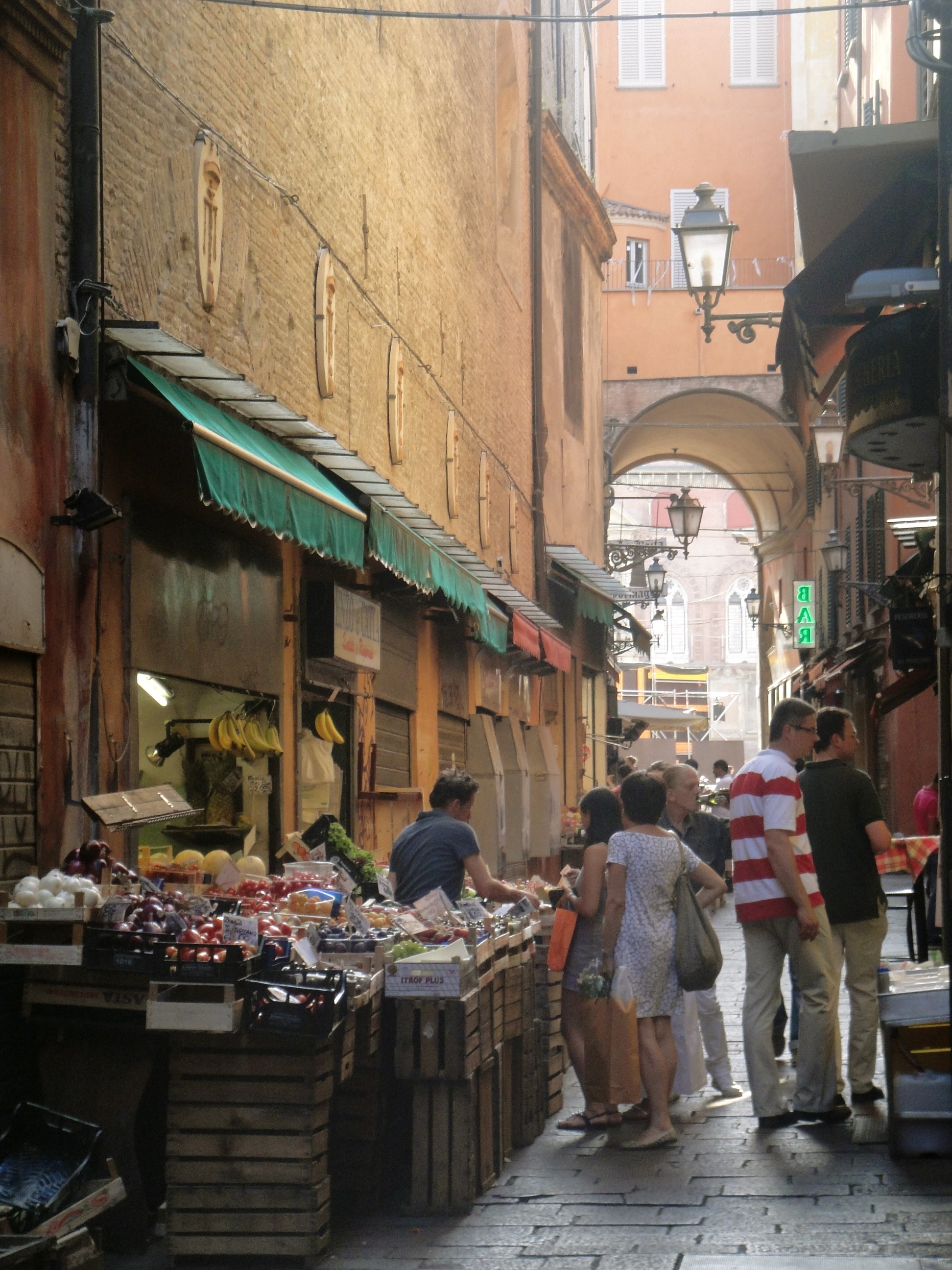
So there you go, a food explosion well worthy of all the fuss. There is no doubt in my mind that Bologna lives up to its reputation of food capital of Italy. And it’s not just the restaurants either. A short walk off the Piazza Maggiore, and you find yourself on the quaint Via Pescherie Vecchie, where a bustling food market continues to thrive and tempt passers by with the fragrant scent of ripe fruits, sea-fresh fish and sweet juicy cold meats. Meanwhile, head to any half-descent cafe, and we’re talking an affogato worth writing home about.

All this talk of food has made me hungry. I’m off to raid my nearest Italian deli. Hey, it’s not Bologna, but I will leave that crowning glory firmly where it belongs, carefully rested upon Bologna’s culinary pinnacle, amongst the perfect colonnades, the cinema under the stars and the perfectly leaning red-bricked towers. Bologna La Grassa, La Dotta, La Rossa: Te adoro.

All photos are strictly the copyright of Nicholas de Lacy-Brown © 2012 and The Daily Norm. All rights are reserved.