Skip to content

Posts from the ‘Food’ Category

Salamanca – Restaurant Focus: El Alquimista and La Cocina de Toño

Ever since Salamanca placed itself on the European cultural map when it was named European Capital of Culture in 2002, the city has actively promoted itself as a capital of gastronomic prowess, advertising itself under the tag line “Salamanca para comérsela” which literally means “Salamanca to eat”. I’d heard about the frog, the glowing sandstone, and the brilliantly baroque Plaza Mayor. Nonetheless, for gastronomy, I would have told you to head up north to San Sebastian (which, by coincidence, will be European Capital of Culture in 2016). However, no sooner had I started investigating restaurant options using the likes of Trip Adviser before jetting off than I realised that Salamanca is jammed back with high quality, innovative restauranteurs, littered with menus degustaciones (taster menus), and brimming with pristine white hatted chefs with a fastidious attitude towards their picture-perfect cuisine. More than once I read that a Salamanca eatery had offered the reviewing diner the “best meal they had eaten in Spain”. Encouraged, I booked up the best of them and went along to enjoy the ride. Here are my two favourites:

El Alquimista, Plaza San Cristobal 6, 37001 Salamanca Tel 923 21 54 93
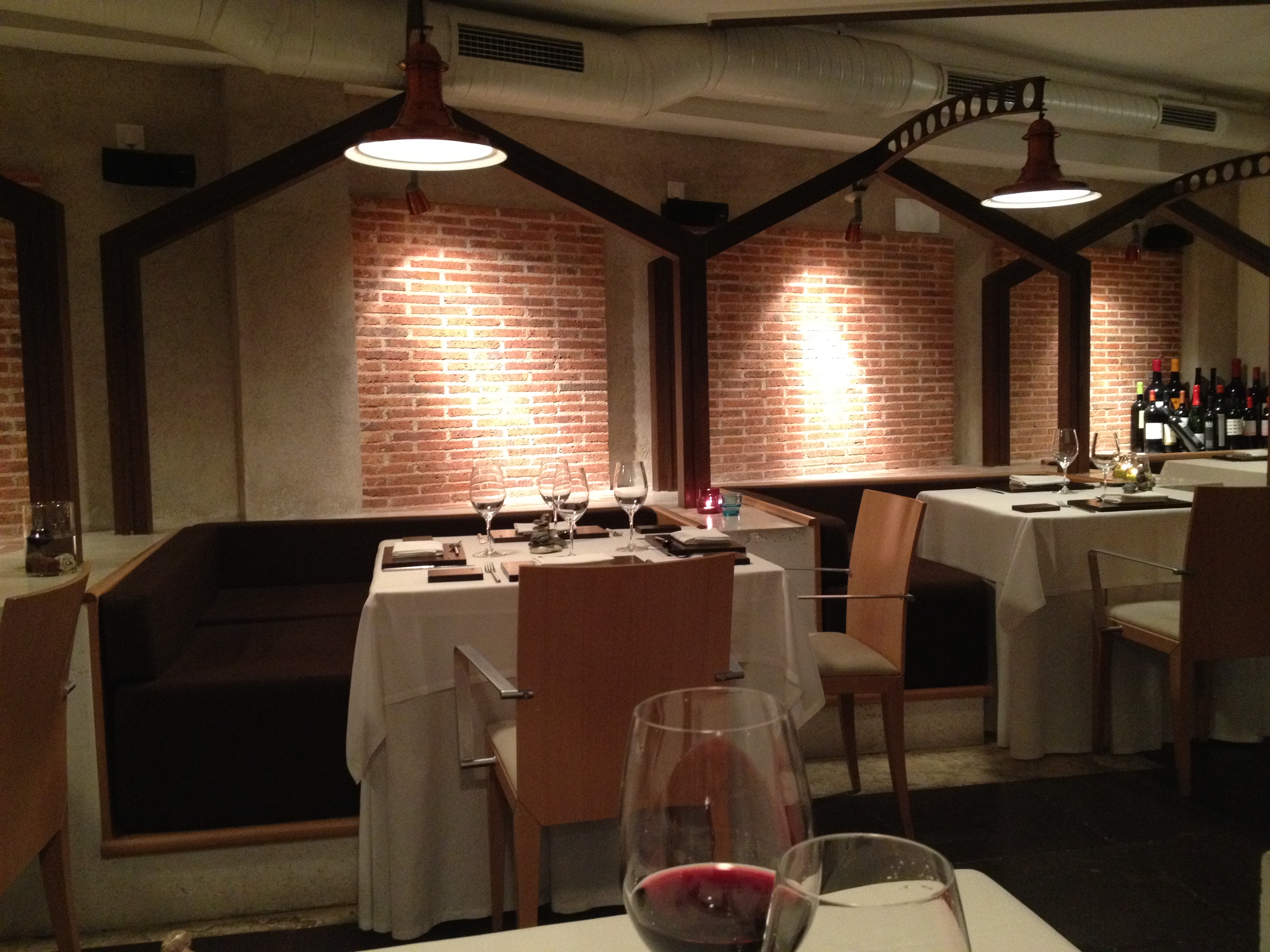
El Alquimista's "urban" interior

I reserved a table at this very unique restaurant on the back of excellent trip advisor reviews which had placed the restaurant in second place out of some 100 restaurants in the city. When I turned up, I began to doubt whether this had been such a good idea. To say the restaurant is off the beaten track is an understatement. Up a steep hill, in a very residential square (surrounded on one side by some dubious looking flats), with a small arrow pointing the way – the restaurant needed this signage, as it could very easily have been missed – approaching the restaurant, one had to double take – it looked like a garage for the flats above. And upon entering, this illusion was not shattered as we were taken through to one of the most unusual restaurant interiors I have ever sat in – with exposed brickwork (newly built) trimmed with concrete slabs to form booths, over which industrial lights hung casting a somewhat unflattering and certainly unromantic harsh light. What was more, when we entered (at around 9pm) the place was empty. The face of my partner probably mirrored my own – concern – although I was trying to put a brave smile on things, not least because my personal pride demanded that my choice be a success, particularly as I boast of being such a good organiser of holiday dining experiences.
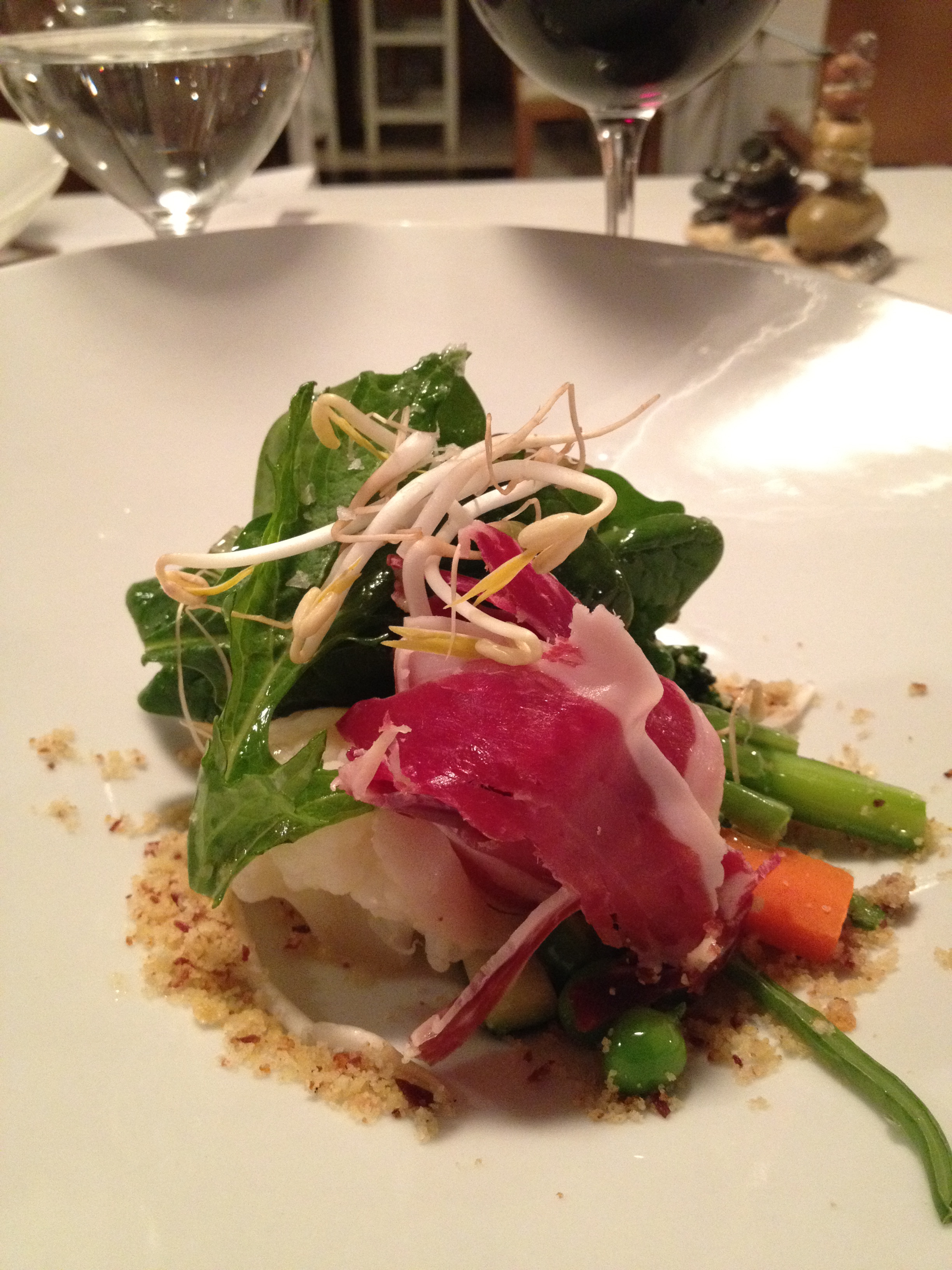
Verduras starter

They call the restaurant “the Alchemist” and at this point, it certainly looked as though some magic was needed. And as though the witching hour itself has come, we found ourselves becoming uncharacteristically merry. I think it was the wine we ordered – I wish I had taken a note of it – it was a Rioja with a mixed grape of around 90% tempranillo and 10% of something else – but it was so good that with one sip, the alchemist seemed to have cast his spell. It’s not that we were drunk – just merried, but certainly sober enough to appreciate the culinary joys which were suddenly to descend upon us, each dish one flurry of magic after another.
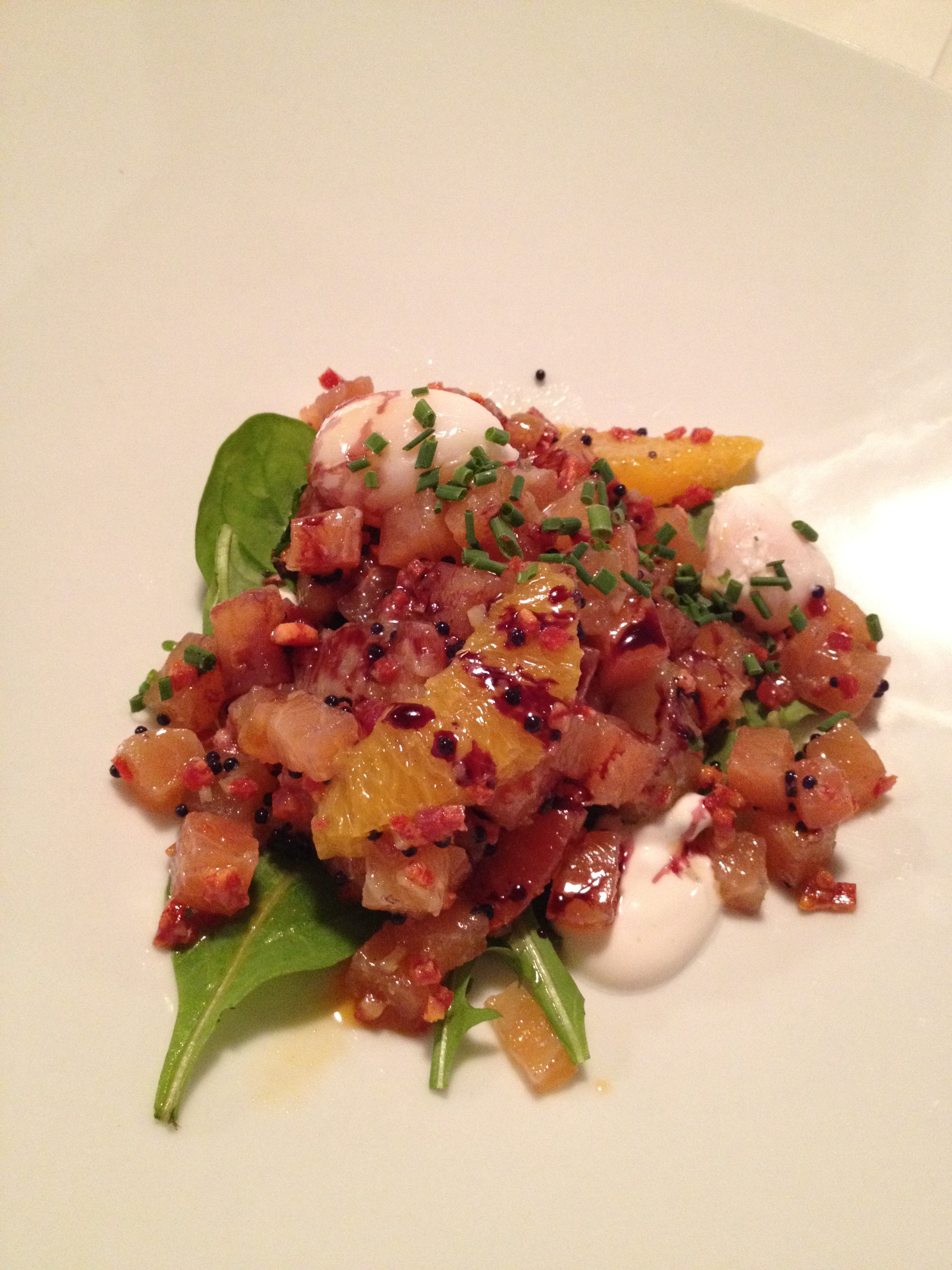
Tartar de salmon

We went for the menu degustacion which, at only €36 per person, was half the price of the sum we are used to forking out for a similar taster menu in Marbella (and far below anything you would pay in London). The first dish was verduras, brotes y hortalizas tibias con lascas de jamon ibérico y migas (Vegetables, sprouts and vegetables with warm slices of Iberian ham and crumbs). The dish was exquisite – the vegetables crunched to perfection, the ham providing a salty undertone and the crumbs a textural variant which provided all round satisfaction with every mouthfull. The dish was one of those perfectly simple but precisely executed why-haven’t-I-thought-of-this kind of dish that you just know you could never recreate so well at home.
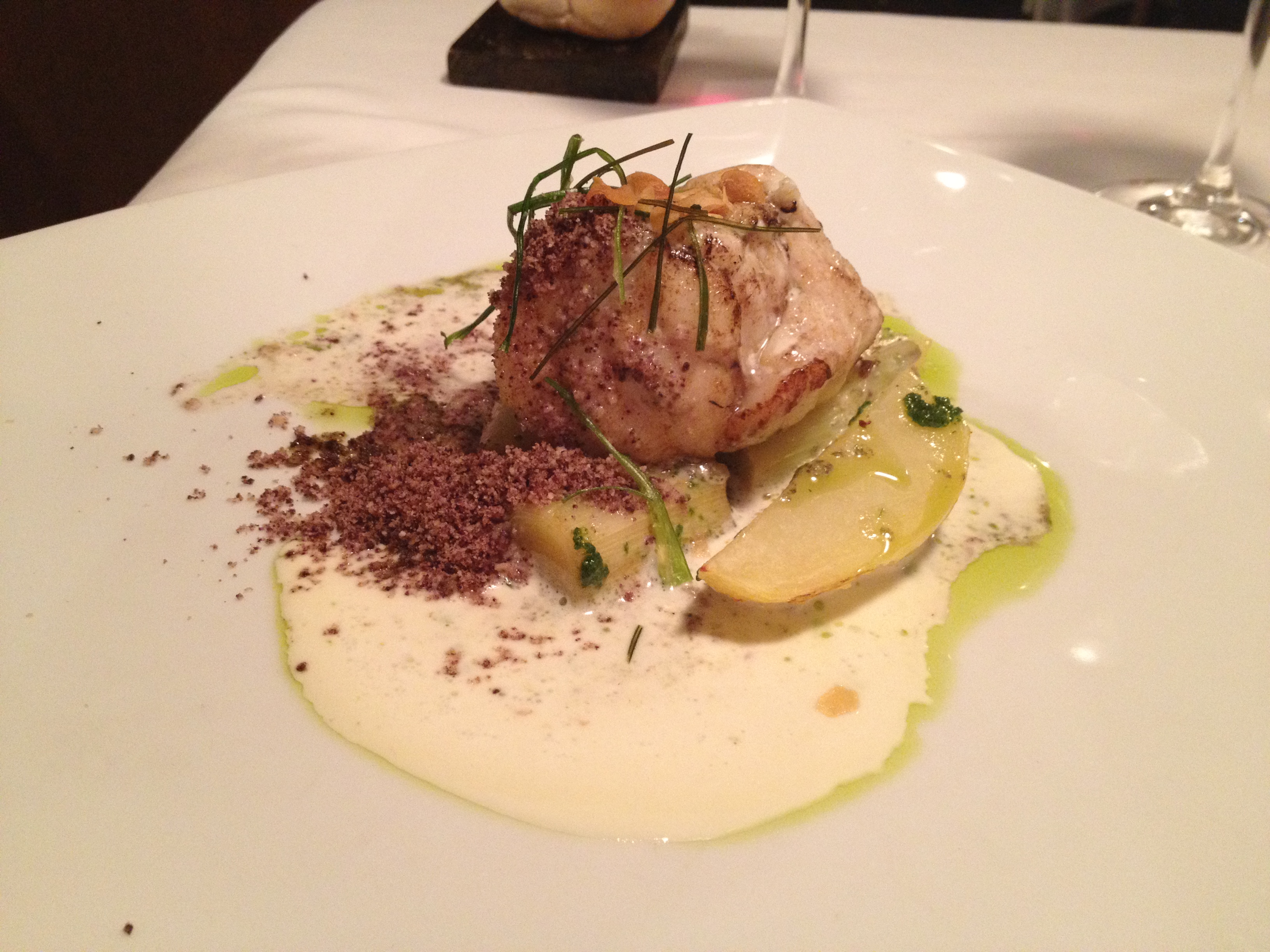
Monkfish

Up next was the tartar de salmon marinado con citricos, chorizo y huevo poché (tartar of salmon marinated in citrus, chorizo and poached egg), a variation on a traditional dish, we were told, where an unlikely fusion of marinated raw salmon with minuscule chorizo pieces scintillated all of the senses with a fresh citrus splash searing lemony acidity through the smokey pimenton of the chorizo. Meanwhile the poached eggs – tiny things – possibly pigeon’s, were perfectly runny, creamy and sweet. Further scintillation was to be provided in the form of rape asado con puerros y polvo de aceituna negra (roasted monkfish with leeks and black olive powder), a fresh and succulent cleansing dish with a seductively rich dusting of black olive to import mediterranean piquancy onto the plate.
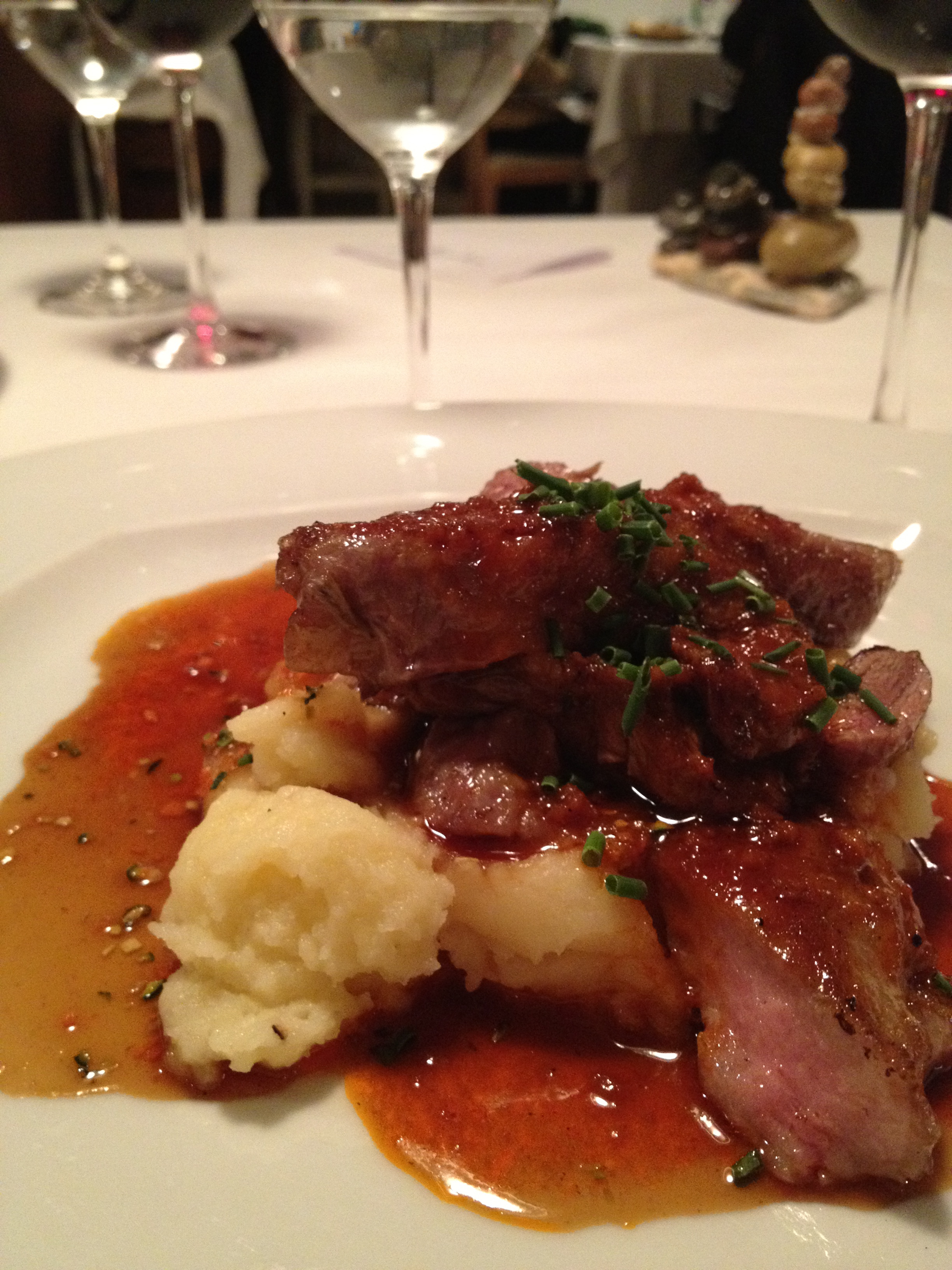
The fatty pork

Things went a little awry while the main course of pluma de cerdo ibérico con ragout de verduras y salsa de miel (iberian pig “pen” with vegetable ragout and honey sauce) which was a little too fatty for us. Some people like fat, and crackling and all that porky sinfulness – I’m not a fan, and, embarrassed by my meek attempts at consumption (and by this point being a little tipsy) I then spent the next 20 minutes trying to hide much of the fatty pork in my napkin so as not to offend the chef. In hindsight, he probably would have forgiven me. He may not, however, forgive the pork-filled linen napkin which he finds in the toilet later.

Back on track for piña a la piña con piña (Pineapple with pineappley pineapple), a dessert which presented pineapple three ways – sorbet, form and carpaccio. Not the most innovative dessert I’ve ever seen, but a welcome palate cleanser after all of that semi-masticated fatty pork.
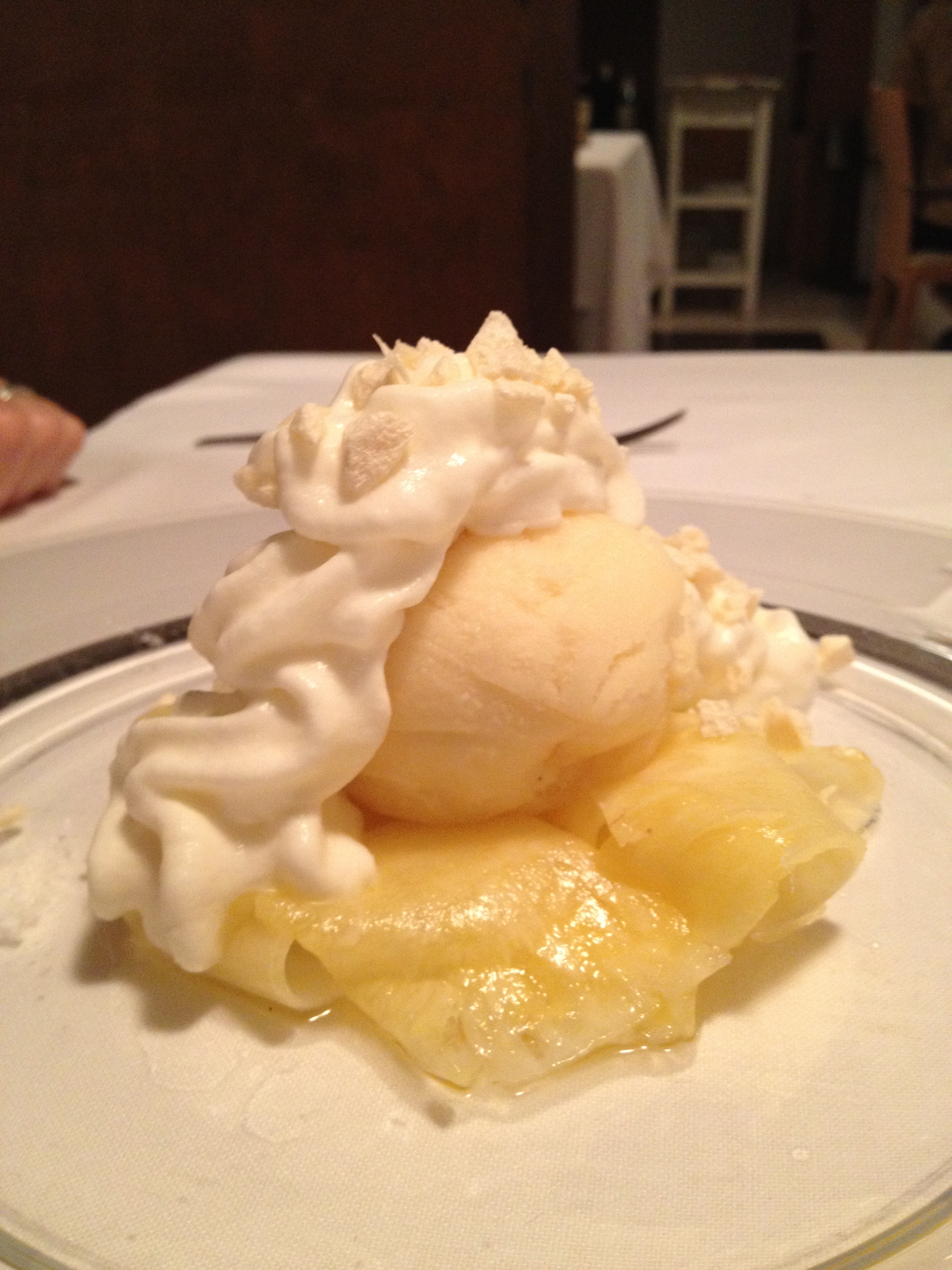
Piña piña piña

La Cocina de Toñoc/ Gran Via, 20, Salamanca  Tel 923 263 977

Strawberry gazpacho

Number 1 on the trip adviser list is this restaurant, the kitchen of Toño, another location which, upon arrival, looked a little speculative – to get into the restaurant you first pass through a very local-looking tapas bar, with a TV, and plenty of old men chatting up at the Bar. Passing through into the restaurant, things get a little better, but the place remains very traditional – old wooden furniture, dark walls, dated decor and a few drinks refrigerators to boot. But the food, ahhh the food. Toño’s kitchen provided nothing short of a culinary spectacle, a carnival of flavours which danced upon the plate, a flurry of gastronomic fusion which was a pure festival for all the senses.

First up was the aperitivo de la casa, a new take on the traditional andalucian gazpacho, the cold tomato based creamy soup successfully fused in Toño’s imaginative kitchen with strawberries. It made for a tantalising combination accompanied by a delicate ricotta for added creamy indulgence. Next up was a bombon de foie relleno de higos (Foie gras bombons with figs), a starter of such flavoursome sophistication that I felt compelled to lose all of my well-bred english inhibitions and gorge upon the delicate creamy form in a few enthusiastic mouthfuls.

Foie gras bonbon
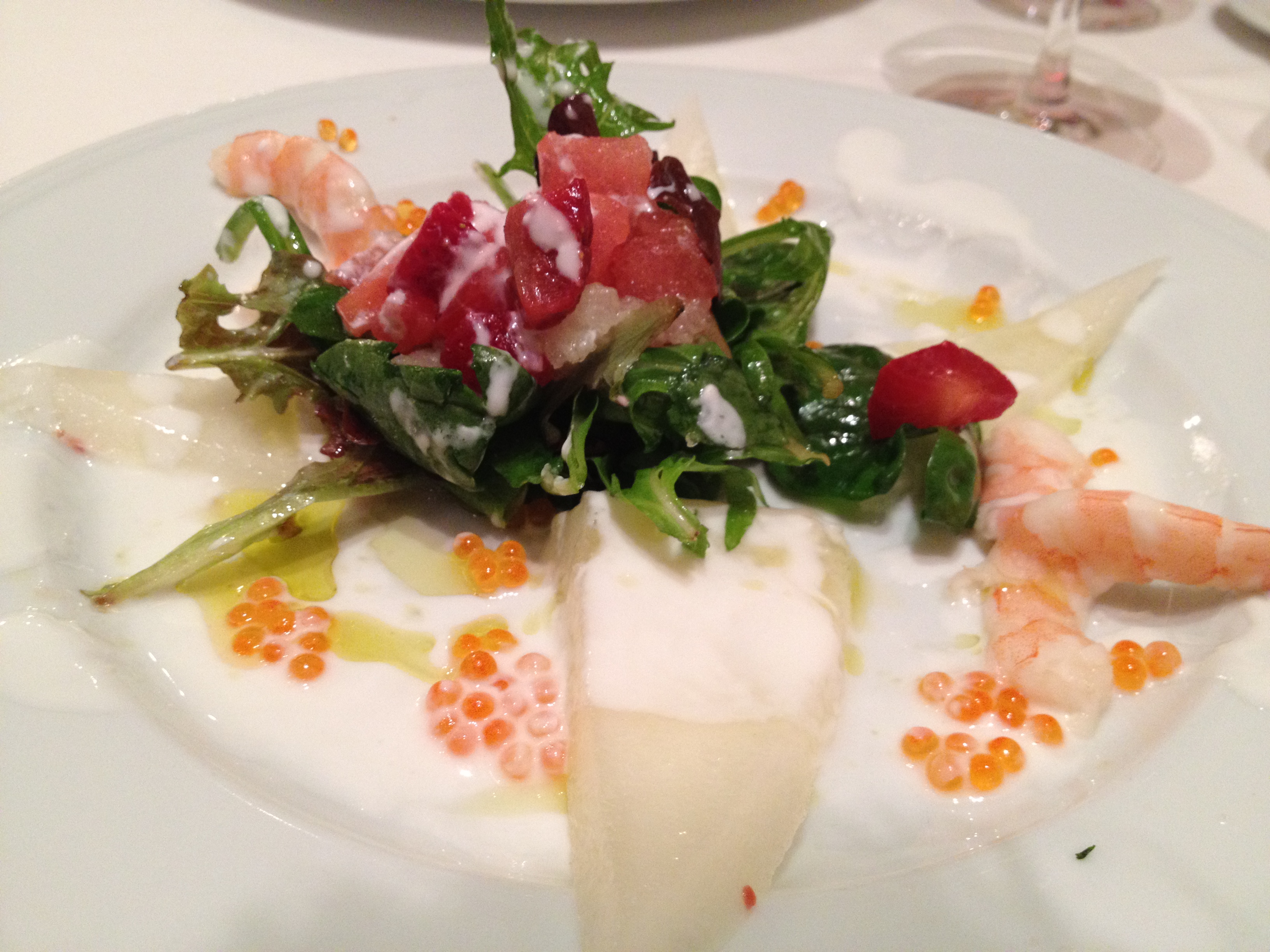
Ensalada de melon y langostinos
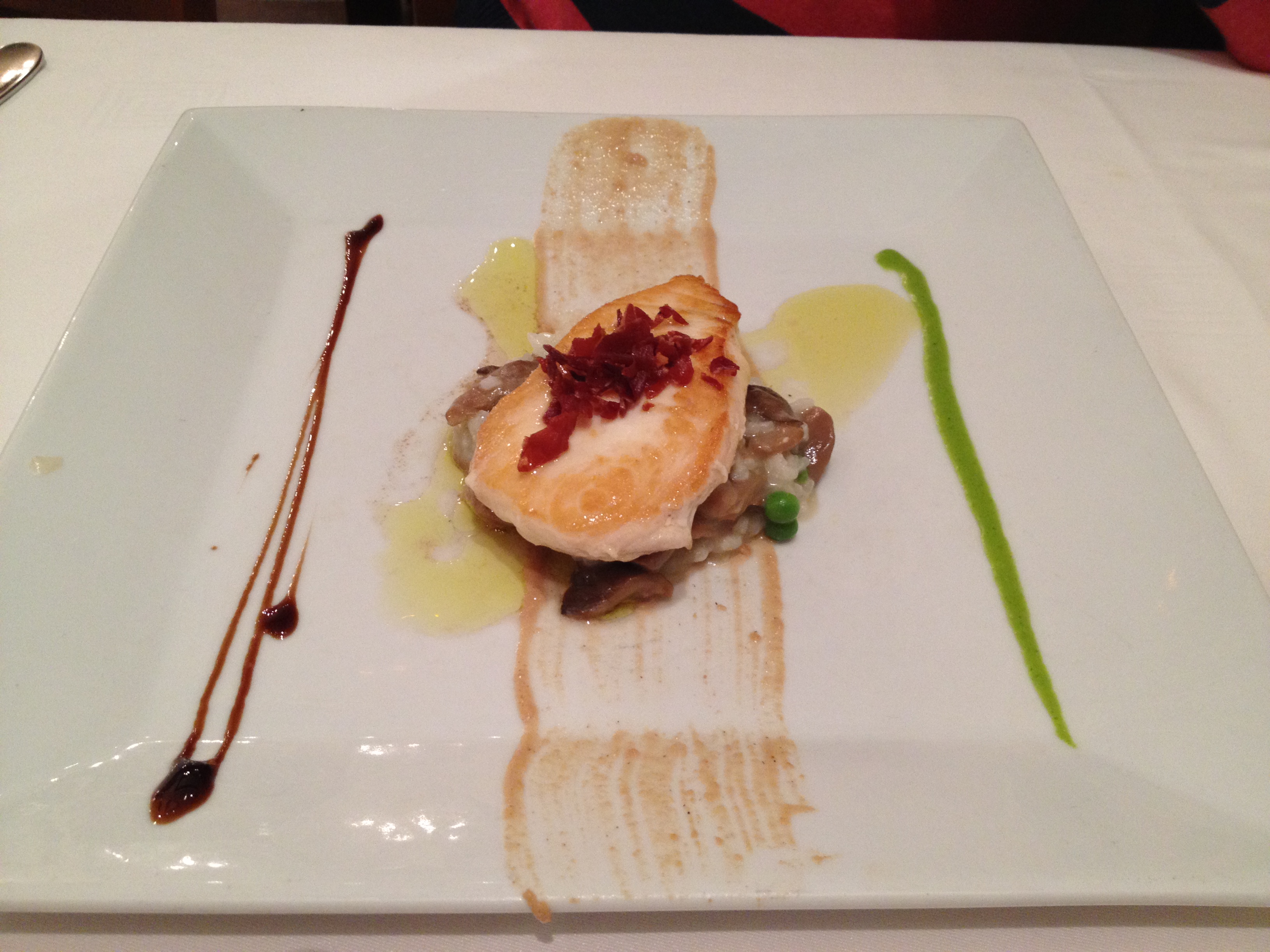
Pez mantequilla

Onto the ensalada de melon con langostinos y vinagreta de yogur (melon salad with prawns and a yoghurt dressing), a delicate but multilayered combination of sweet unctuous prawns and a thirst quenching melon with silky, salty fish roe and sharp strawberries. The fish course came next, a pez mantequilla con arroz meloso con setas, vinagreta de vinagre de trufa y chip de jamon (fish in butter with sticky rice, mushrooms, truffle vinaigrette and a ham chip), a moist perfectly seasoned piece of fish on a creamy risotto base, with a salty ham accompaniment and sticky sweet viaigrette.
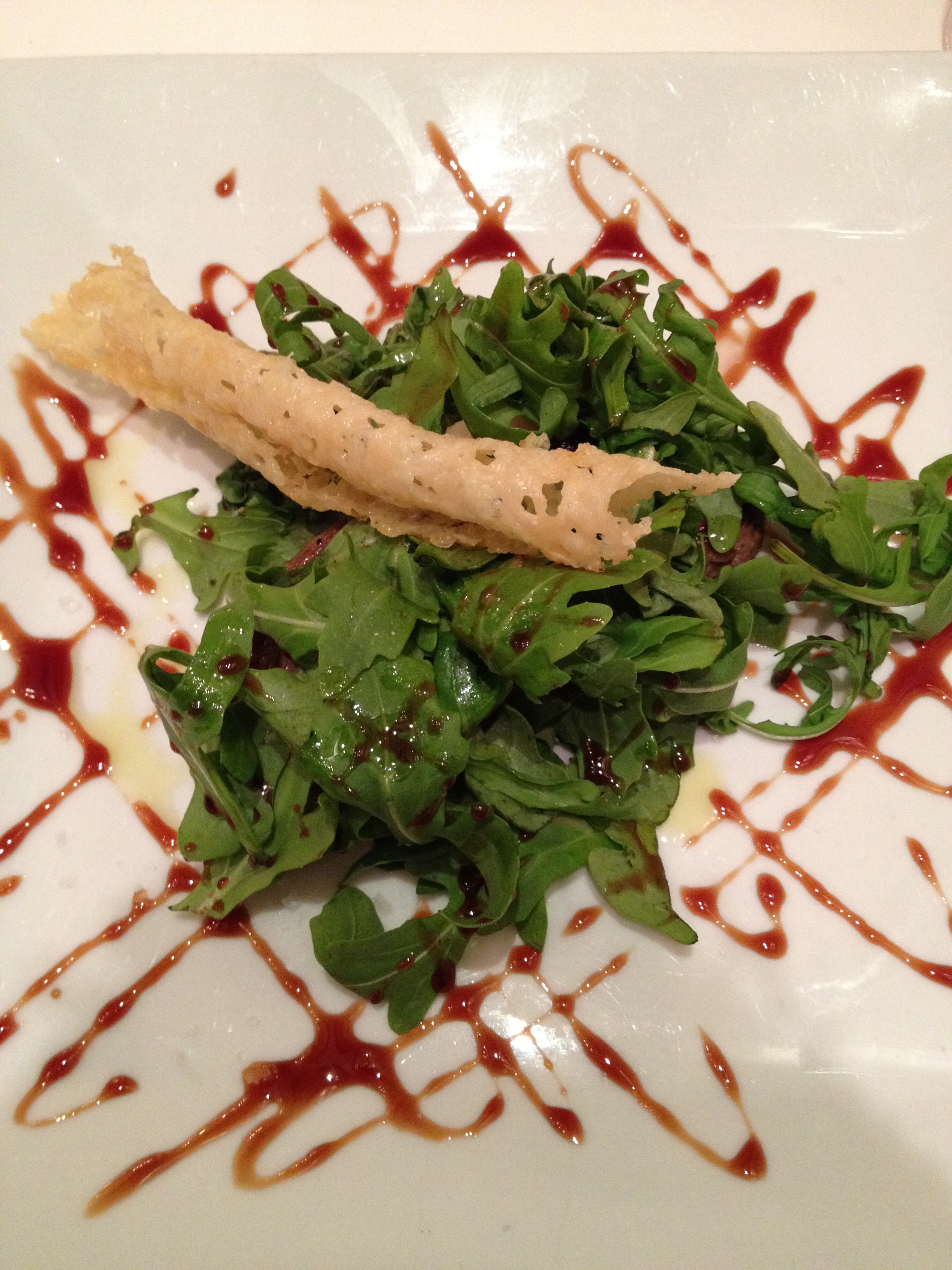
The main course spectacular

But at the Cocina de Toño, the piece de la résistance came with the main course, a dish which, upon first presentation, I didn’t think I would be able to eat, so full was my stomach and so little my remaining appetite. But as I cut beneath a bed of rocket and a perfectly crispy roll of melted cheese, I found a piece of meat so perfectly seasoned, so sensationally juicy and tender, that I could not help but scrape the plate clean – yes, Toño’s presa ibérica con cigala, canelon de queso y melaza de vino (iberico steak with rocket, cheese cannelloni and a wine reduction) was a sensation, a waltz of salts doing a tango on my tongue with a red wine reduction that was a syrupy sweet seduction. Not to be outdone, this was followed by a yoghurt “digestive”, a shot of fizzy, sparkling, sherbety, foamy pink delight, which was like being a child again. It reinvigorated senses which have long lost grown bored by adult life, and tingled down my throat and throughout my body making me shiver with delight. This was real willy wonker magic.
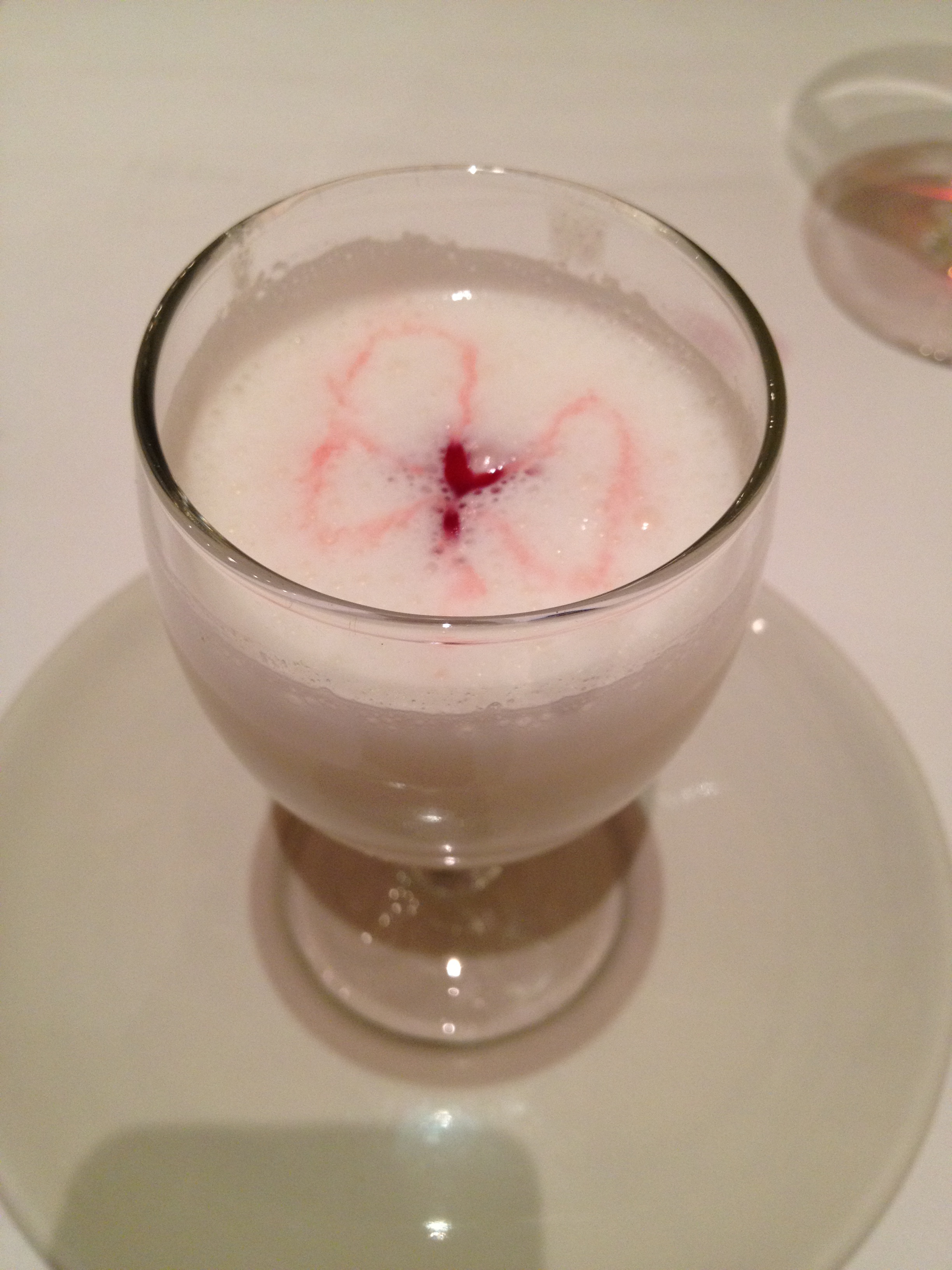
Fizzy yoghurt digestive

One dish more – a dessert of cheesecake, a surprisingly light springy construct, cross-pannacotta and creme brulee with a cheesecake touch. Delicious. But it beat me. This meal was spectacular. I feasted like a king. But felt roundly stuffed like Humpty Dumpty. I nonetheless was so excited, so almost emotional about the fine quality of the food that we had received that I actually kissed the waitress on my way out! Who can ever say that the english are inhibited? (She could I suppose just assume that I’m a typical english drunk).

Oh well, hats off to you Señor Toño. You’re certainly my Salamanca no. 1.
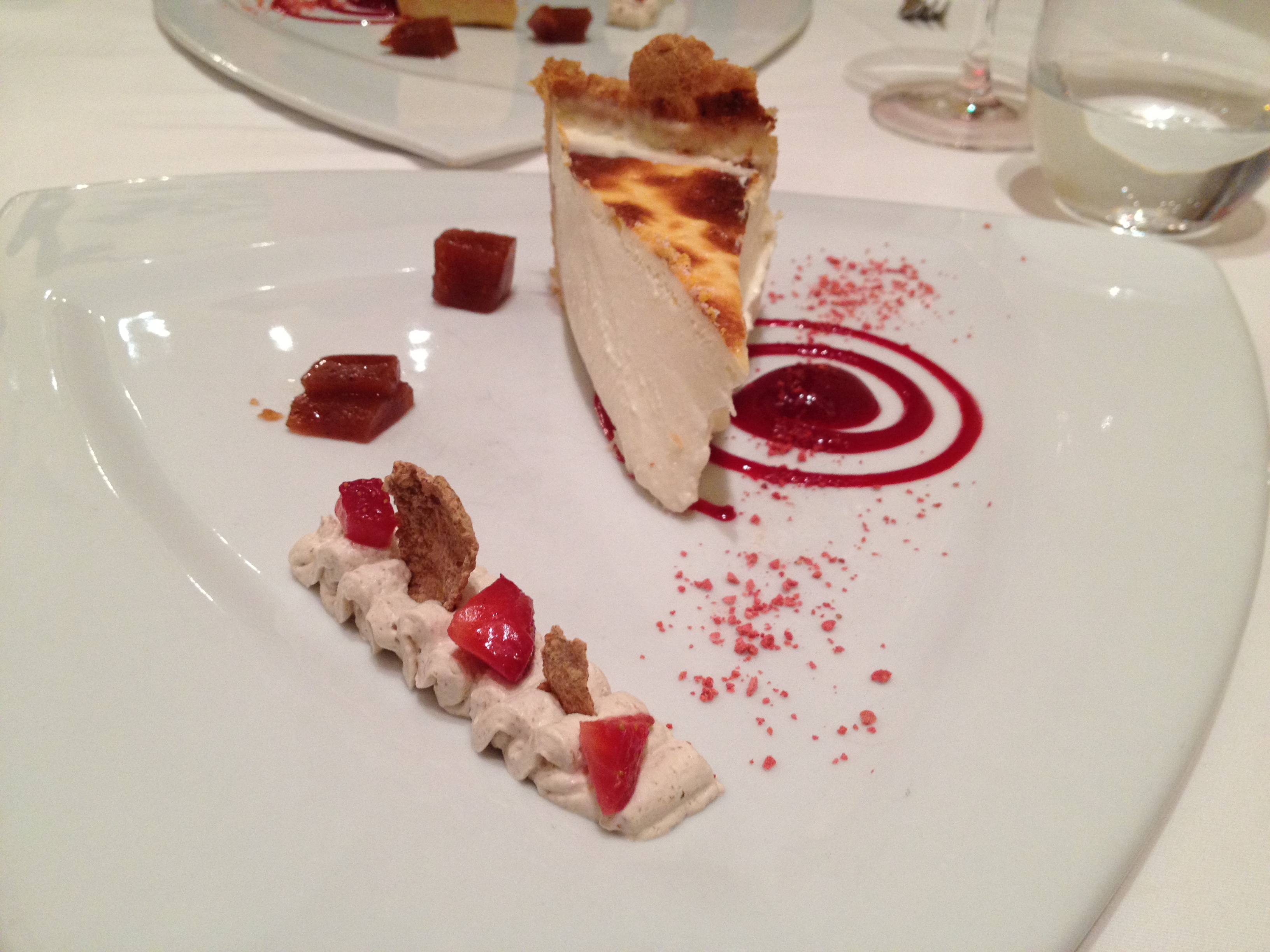
Cheesecake

So that’s it, my blog’s meandering journey through my trip from Madrid to Salamanca is at an end. I hope you’ve enjoyed it, at least as much as you can without actually sampling the gastronomic delights, the golden glow, and the distinctive smell of a town steeped in history at every masterfully stone-masoned house, church and lowly street corner. Time to start thinking about where comes next. Until then…

Madrid – Restaurant focus: Va de Baco and Ølsen

As far as gastronomic finesse goes, Madrid is not as renowned as some of its neighbouring Spanish cities. However the buzz word around Madrid is inevitably tapas, and an innovative approach to tapas is what Madrid does best. Upon arriving in Madrid, late on a Friday night, we knew that many of the most popular tapas bars would already be heaving with the hip young Madrillanean crowd.

Aperitif, croquetas and ensaladilla rusa

One of my favourite tapas bars is Lateral in the Plaza de Santa Ana, a trendy restaurant which offers a fresh and unpretentious approach to tapas classics and innovations alike. The problem is, its prices are so reasonable, and its flavourful offerings so delicious that the place is always packed. And cashing in on their popularity, the restaurant does pack you in into ridiculously tight spaces – generally four people will be crammed in around a corner table the size of a large computer monitor… there is barely room for your knees to squeeze under, let alone for the various tapas dishes to sit upon the table in unison. They also tend to rush you through the meal so that they can more swiftly eat into the lengthening queue which forms outside the restaurant each evening.

Spider crab and albondigas

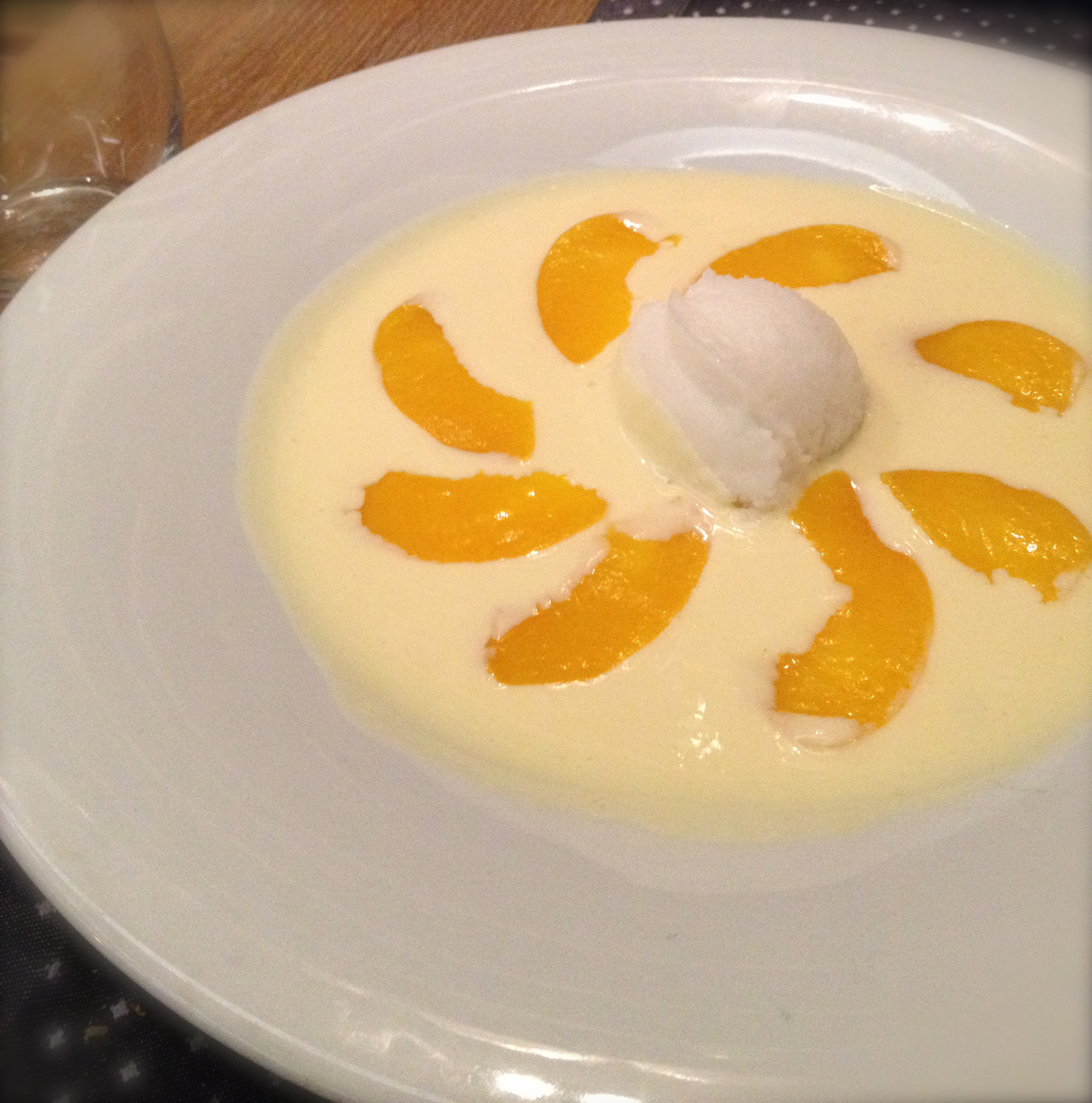
Finding Lateral to be, predictably, pack out with queues stretching well into the buzzing Plaza de Santa Ana, we headed a few blocks down the road along the Calle del Prado, where we stumbled upon Va de Baco at 4 Calle del Prado 28013. The restaurant is seemingly quite new, decked out with chic lighting and cabinets brimming full of wine.  But the real star was the food. To start we were given a free aperitif which comprised a consommé style soup in which well-seasoned chickpeas bobbed gracefully, while on the side a super-creamy jamon croquette added some texture to the dish. Moving on to the tapas we ordered: simple, traditional favourites such as Ensaladilla Rusa (a mayonnaise-based potato salad with tuna a crunchy vegetables) and albondigas (meatballs) were served with contemporary twists such as the creamy curry sauce of the albondigas. More adventurous was a tapas of spider crab, delicately served with a potent wasabi mayonnaise, while the real star of the night was a ginger cream dessert with slices of mandarin and a passionfruit sorbet accompanying – exquisite. And best of all, the final bill, including a large carafe of Rioja plus two glasses extra at the end of the meal, was a mere €45 for the two of us.
Ginger cream

Bread stick...

On our second night in Madrid, we ditched the tapas trail for a hispanic-scandinavian fusion in the form of trendy new restaurant, Ølsen (15, Calle del Prado). The recently opened restaurant is already a firm favourite of the Madrid cool-crowd, with minimalist woods, low lighting and a chilled lounge soundtrack (I distinctly recognised Hotel Costes Volume 15 while we were dining) creating a very atmospheric dining ambience. As for the food, which for the most part pulls on Scandinavian influences, we were constantly thrilled by attention to detail and imaginative flavour fusions.

Sweet corn cakes with various fishy treats

To start we shared a fish sharing platter comprising sweet corn cakes and a selection of smoked salmon, smoked trout, caviar and a delicious taramasalata-styled smoked fish roe accompaniment. The combination of sweet, soft cakes and smokey fish was divine. On the side, bread was served in the form of various bagel-shaped creations, ranging from a sweeter glazed brioche to flat seeded cracker. For mains, we both chose a smoked lean brazed pork, with a red fruit and beer sauce and horseradish mashed potatoes. The meat was so tender and caramelised that along with the acidity of the red fruits and creaminess of the mashed potatoes, this dish took comfort to another level. A comfort which was then cranked up to a level of ridiculous self-indulgence when I had my dessert – a giant, soft and unctuous Oreo cookie with red fruits icecream. Oh god, I would return to Madrid just to have another one of those. Warmly recommended, if not stipulated as a necessary experience of the good life.

Giant Oreo!

But all this was just the start. Salamanca’s gastronomic offerings proved to be an altogether new level of culinary brilliance. Check out The Daily Norm tomorrow when I will try to put those incredible flavours into words!

Madeleine Melody

OK, so admittedly, the macaron attempt a few months back didn’t exactly go to plan, as my post “Macaron Madness” will testify. So I’ve turned to another Frenchie patisserie favourite which has turned out to be slightly easier to master. In fact, I’ve mastered quite a few French favourites of like, including Crème brûlée with a picture-perfect crackable burnt caramel top (courtesy of my new favourite kitchen toy – the mini blow torch) albeit that on my third attempt, the Crème brûlée somehow managed to revert into a kind of mousse brûlée (this being the one which was rather embarrassingly cooked for two French guests – I was full of bravado about English boy being able to cook French food to perfection and then that little mishap occurred… naturally I pretended it was a purposeful reinvention of the classic). And crossing over the Pyrenees to Catalonia, I’ve also recently mastered Crema Catalana, the lighter, citrus and subtly spiced version of the Crème brûlée, a dessert which previously had me stumped – it was either too runny or like jelly. Anyway, I digress, back to France…

I’ve been intending to cook madeleines for some time, ever since I picked up one of those shell-shaped baking moulds as an impulse purchase purely because it was made of silicone and is red (thus matching my kitchen colour scheme to perfection). Nonetheless, there my madeleine mould remained, creased up in my pots and pan cupboard in a way that only silicone could, until one day, a few weeks ago, when my ears customarily pricked up to the words “Paris” on my television screen and I found myself falling instantaneously in love with a new cookery programme: Rachel Khoo’s The Little Paris Kitchen. This programme is a must for any Paris lovers – it’s worth watching alone just for the stunning views of Montmartre roof tops, the Tour Eiffel by sunset, Paris viewed from the roof of the Grand Palais where they keep beehives (who would have known?!) as well as a quirky soundtrack featuring an ecclectic mix of old French classics from the likes of Charles Trenet as well as punchy tango chill from the Gotan Project. But by far the star of the show is the little teeny weeny kitchen which gives the show its title, as well as the equally tiny, affable and engaging proprietress of her little kitchen restaurant, Rachel Khoo. She aims to cook undaunting French classics, more often than not with a contemporary twist. She makes French cooking accessible and very unpretentious, which lets face it, makes a change, and she fills the hearts of us english with a certain pride – she is after all a London girl who has made it good in the closed culinary world of Paris.

Rachel Khoo

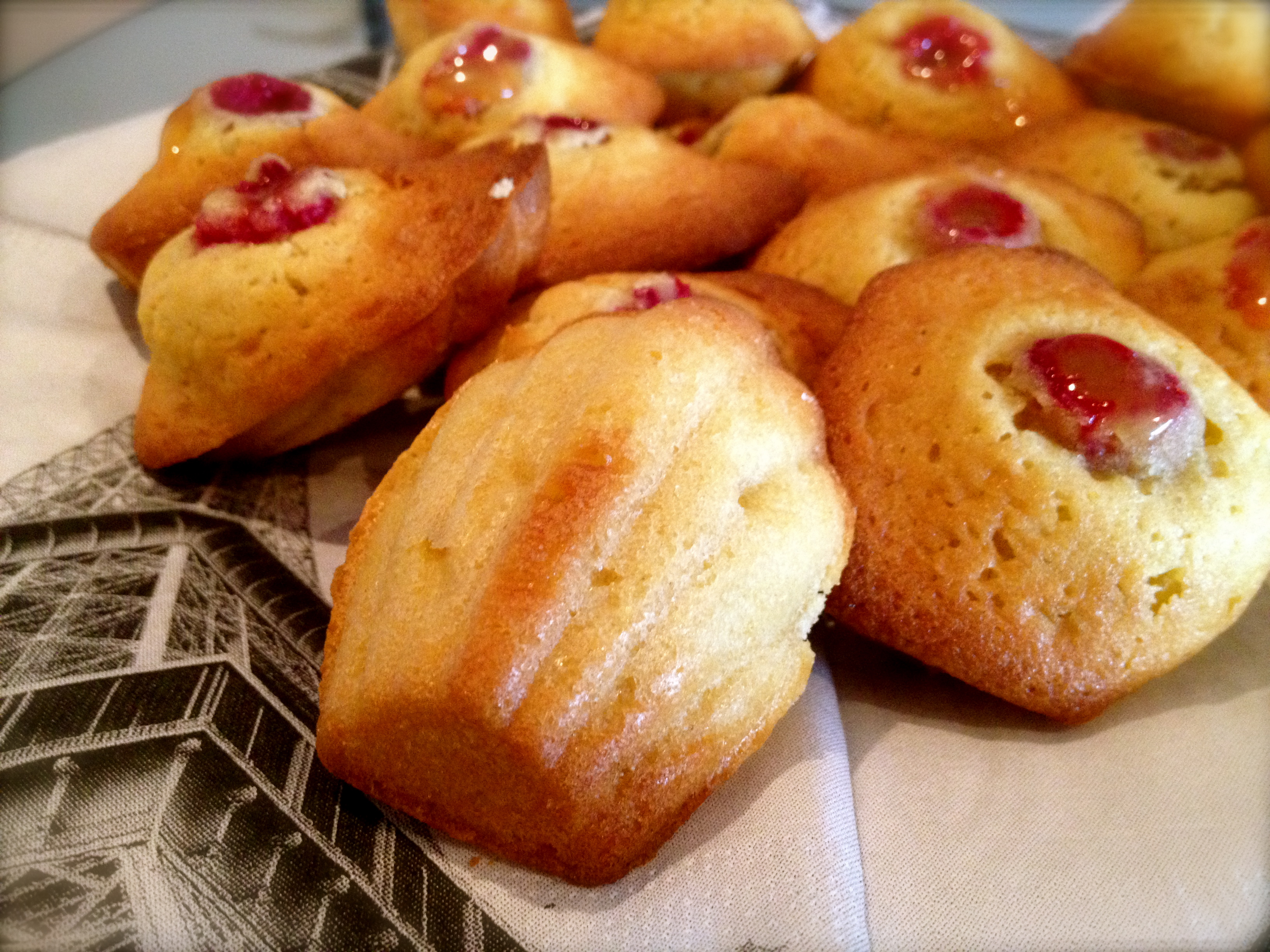
Anyway, it was Rachel Khoo who, in her first episode, made madeleines with a twist – she places a single raspberry in each madeleine before cooking and then, once hot out of the oven, pipes the raspberry’s little opening full of an oozy lemon curd. No wonder I was inspired to take out my funny red silicone tray and try this recipe out. The results were good (see photos below) – the madeleines, unlike those which you can buy cheap in Monoprix, are unctuous and moist, and this is no doubt helped by the the lemon curd and and raspberry, both of which combine to provide a delicious mid-Madeleine treat to break up an otherwise buttery flavour. Rachel Khoo, I salute you.

Pre-cooking - the madeleine mix in my silicone mould complete with raspberries, hole facing upwards

Et voilà, the finished madeleines

I told you I'm obsessed with Paris...

Rachel’s recipe for madeleines à la crème au citron can be found here.

Bon appetite!

Related articles

My Easter Day Spanish Feast Spectacular

Easter day is over, but the Spring has only just begun, and now is as good a time as any to think succulent chicken, sweet wine imbued ice cream and cute little marzipans, just in case your summer beach body needed to endure any further damage! On Easter Sunday I followed my pro-Spanish theme of the previous week by cooking a Spanish feast of which Goya himself would have been proud. And it was so tasty, I feel compelled to share all the ideas with my faithful Daily Norm readers so that you too can go all España this Spring.

First however I should express my gratitude to Claudia Roden who, in her fantastic new book, The Food of Spain, gave me much of the inspiration for the feast.

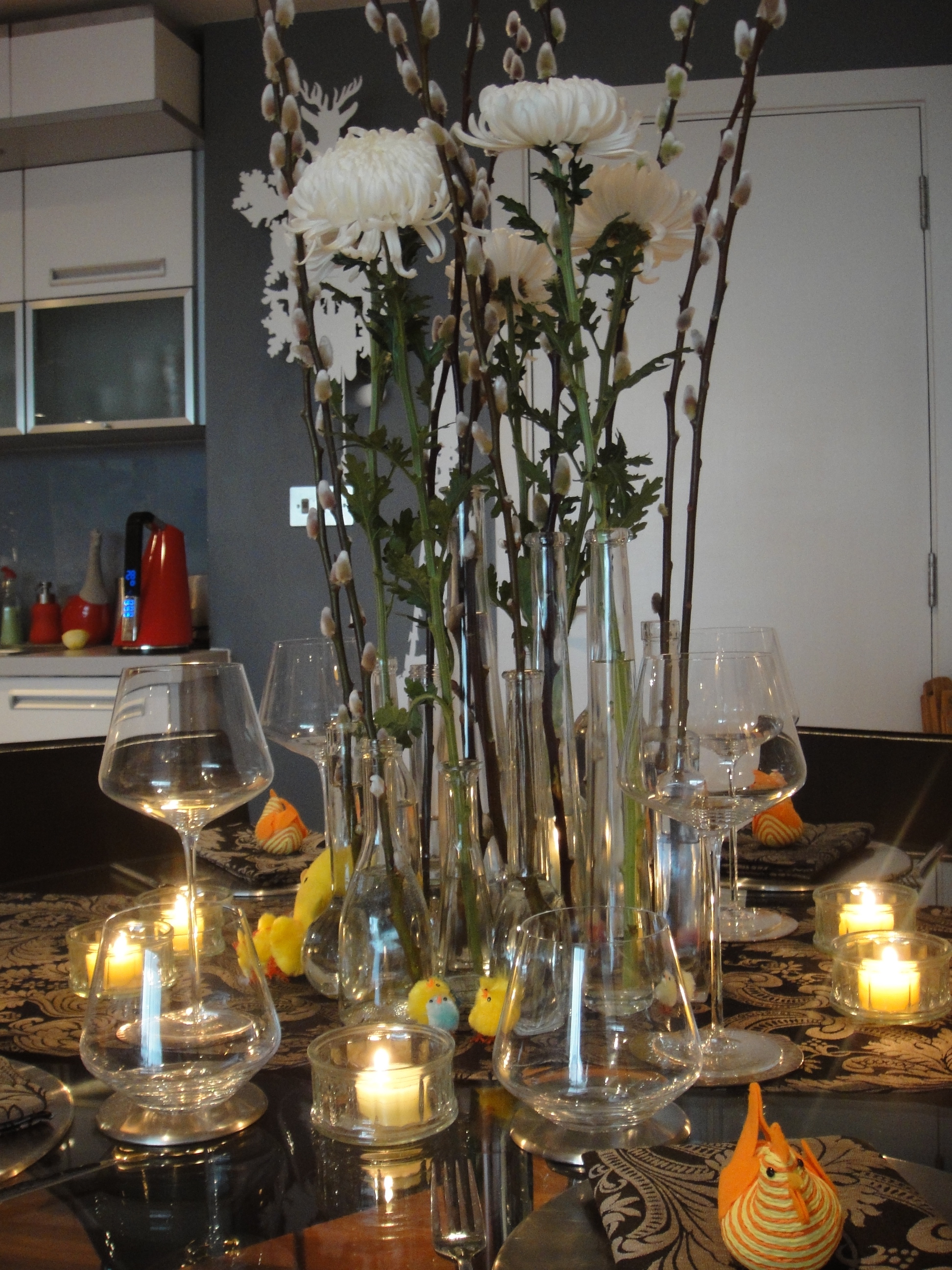
The table

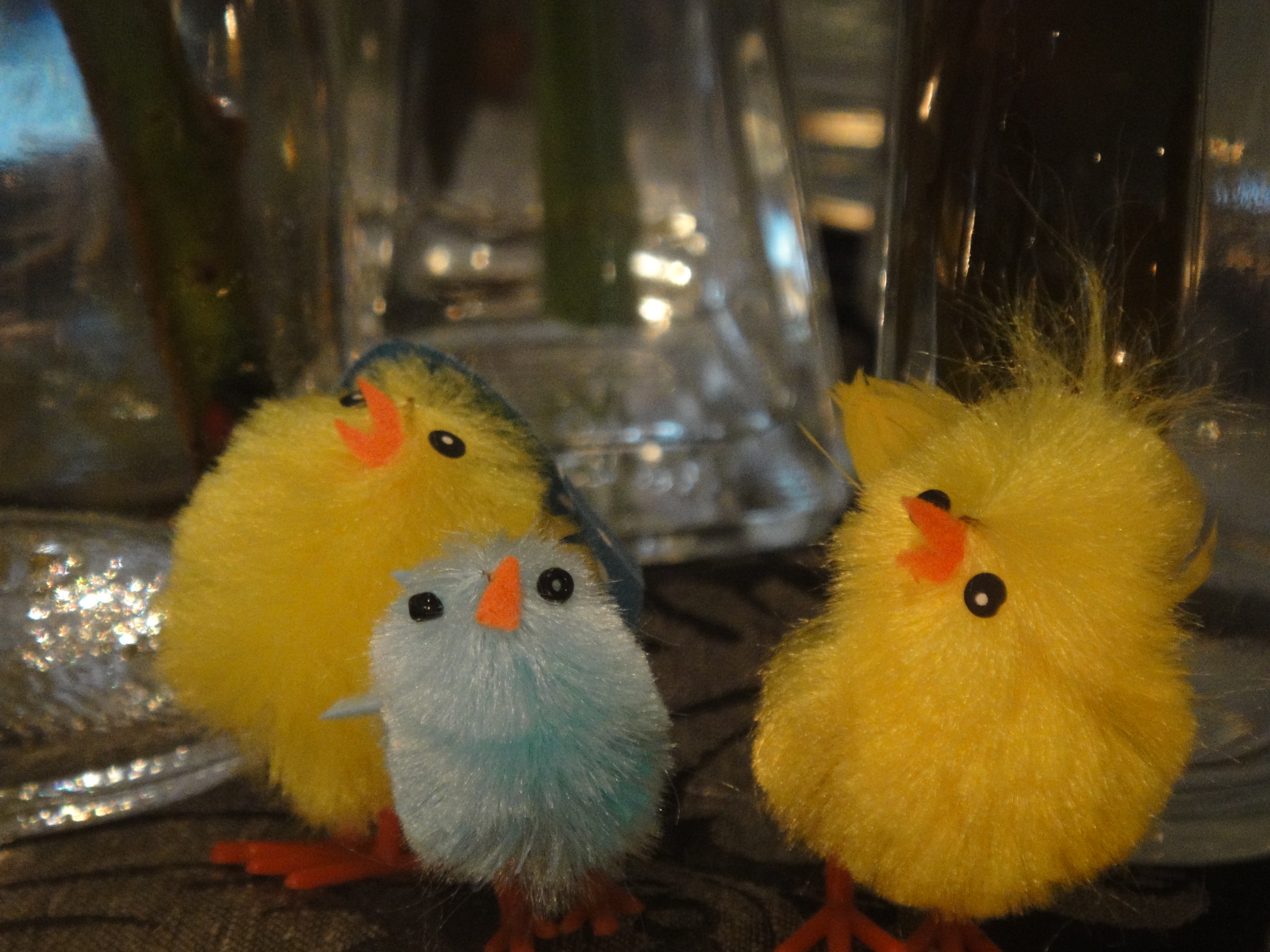
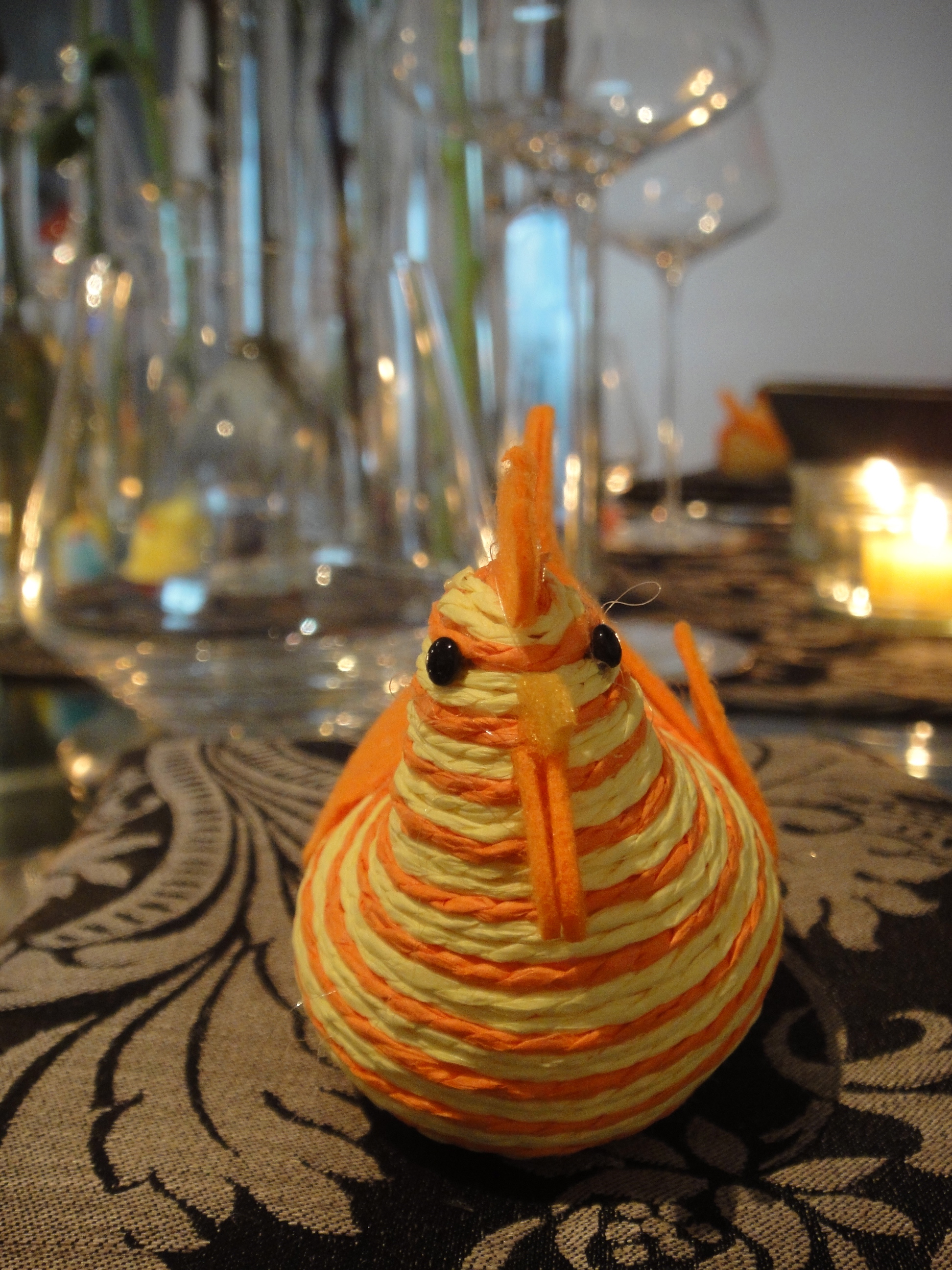
My table was all trussed up for Easter, with a spray of fresh chrysanthemums displayed alongside slender branches of pussy willow in a group of bottles, to contemporary effect. Amongst the flowers sat the must-have fluffy chicks of Easter, while at each person’s place, a damask-style napkin was topped with little paper hens.

To start…

I had to restrain myself from cooking a full-on starter because I knew that otherwise this Spring-like luncheon would become more akin to a Christmas day gorge-fest. Instead I provided some simple tapas, olives, nibbles and delicious mature manchego cheese from the land of Don Quixote, which I’ve discovered is best served sliced and drizzled with honey and sprinkled with thyme – a divine combination which would probably work well with similar hard sheep’s cheeses.

The chicken

The star of the dish was a roast chicken, but with added Spanish flavour. In a simple twist on the humble roast chicken, the chicken is at first basted in grape juice before being roasted, breasts down, for 45 minutes. Once flipped over, the breasts are again drizzled in grape juice. Meanwhile, the chicken cavity is stuffed with chunks of apple giving it a fruity aroma, while the dish is served with caramalised apples and grapes which can be either sautéd or oven cooked alongside the chicken. For the grape juice, you need to blend around 500g of grapes in a food processor and then press the pulp through a sieve to collect the juice. You should get around 250ml of juice. I was worried that the chicken, exposed as it was to the oven (I usually bake it partially wrapped in foil) would be dry, but with regular basting with the grape juices, the chicken was succulent and fruity, while the skin was ravishingly caramalised.

I served the chicken with some oven baked parsnips glazed in honey and wholegrain mustard and a generous portion of cute little Jersey Royal potatoes, straight from this year’s first harvest.

Dessert

Desserts don’t get much more Spanish than a brandy and walnut cake served with a raisin and sweet wine ice cream (helado de pasas y vino dulce). The cake on its own is fairly dry, so certainly benefits from the ice cream accompaniment. Following the Asturian recipe cited by Claudia Roden, I whisked 4 eggs and 200g caster sugar into a thick pale cream, adding 75g melted butter and 3 tablespoons of brandy into the mix. I then grinded up 500g of walnuts in the food processor which were folded into the cream mixture. It was poured into a greased spring-form cake tin and baked for around 45 minutes. The key to this recipe is the syrup which you then pour over the cake when it comes out of the oven. For this dissolve 100g sugar in 250ml water and simmer for around 5-10 minutes until syrupy. Then add a tablespoon of brandy for that alcoholic touch and pour it over the hot cake. Leave the cake for at least an hour to “drink” the syrup. The result is coarse but gooey, perfect with a raisin and wine ice cream – mine was made with a Spanish moscatel wine, but the syrupy sweet Malaga wine would be even better (let me know if you want the recipe – it’s a little to complex to set out here!)

Afternoon tea

What better way to end the day than with that Toledo favourite which I absolutely fell in love with in Spain than little marzipans. I couldn’t believe how easy they were to make! Simply take 200g ground almonds and 200g icing sugar and mix well. Then in a food processor add a few drops of almond extract (not too many or the flavour will overpower) and 2-3 tablespoons of water (you don’t need much as the almond oil makes the paste moist). And that’s it – once you have your paste, you can roll it into balls or make all sorts of imaginative shapes like I did. Once your creative side has been satiated, lay the creations on a baking tray and leave for around 12-24 hours. The marzipans will harden slightly on the outside and remain soft and moist on the inside. The best thing is that they will last for ages!

My Semana Santa nazareños

You can, by the way, glaze the marzipans for added luxor, but I tried this with Claudia Roden’s suggestion of whipped egg whites and icing sugar and it made my marzipans look as though they had been buried under a snow storm. Next time I’ll  stick to a simple egg-white glaze – and just 1-2 minutes under the grill.

¡Buen provecho!

Easter Eggs – the Spanish do those better too.

I know I’m forever praising the efforts of my European neighbours rather than my own here in England, but there is something about continental Europe that just exudes a class and elegance which has been long since forgotten here in the UK. Take Easter Eggs – here the shelves are loaded full of Easter Eggs, but for the most part they are covered in branding, a boring shell in a huge box with plenty of space for adverts and promotion – of Mars, of Milky Way, Twix, Kit Kat and After Eight. Admittedly, there are some exceptions in the higher end market, but otherwise your typical UK egg is likely to be little more than smoke and mirrors, mass produced and devoured without as little thought as went into making it.

By comparison check out these eggs currently to be found gracing the well stocked shelves of local Marbella cafe favourite, Goyo. Yes, there is some branding, in the form of cartoon characters made into eggs, but there is also a wonderful hand made element, an intricacy in the skill shown by the chocolatiers, and a sense of fun and Easter-tide joy. And this runs pretty consistently across the board when it comes to Easter eggs in Spain – all handmade, all intricate, all worthy of this celebratory festival. Even the foil covered eggs are brightly wrapped and spill, as though from Pan’s cornucopia, in all their multicoloured vibrancy from Easter baskets and displays. Beautiful. Only problem is, the calories.

For me, it’s the little things in life that bring the difference between the UK and continental Europe into sharp focus. As I’ve said before, the UK is, and has always been economically driven. Here it’s about mass production, value for money, business efficacy. On the Continent however, precedence is given to the good things in life – taking time to achieve a better, more satisfying finish, prioritising aesthetics, and allowing time to enjoy the joie de vivre. It’s the same with art – take Damien Hirst, currently enjoying an even bigger spotlight than previously at his Tate retrospective. He’s all about lazy art – mass produced, and painted/ created by a factory of assistants. But he’s also about the brand, the business, the marketing. Did Van Gogh care that he hadn’t sold? Not nearly as much as he cared about creating beautiful paintings. And I can guarantee that fewer people will be queueing to see Damien Hirst’s rotting shark in 100 years than queue every day to see Van Gogh paintings around the world.

Happy Easter everyone!

Amsterdam Part IV: The Hotel and the Restaurants

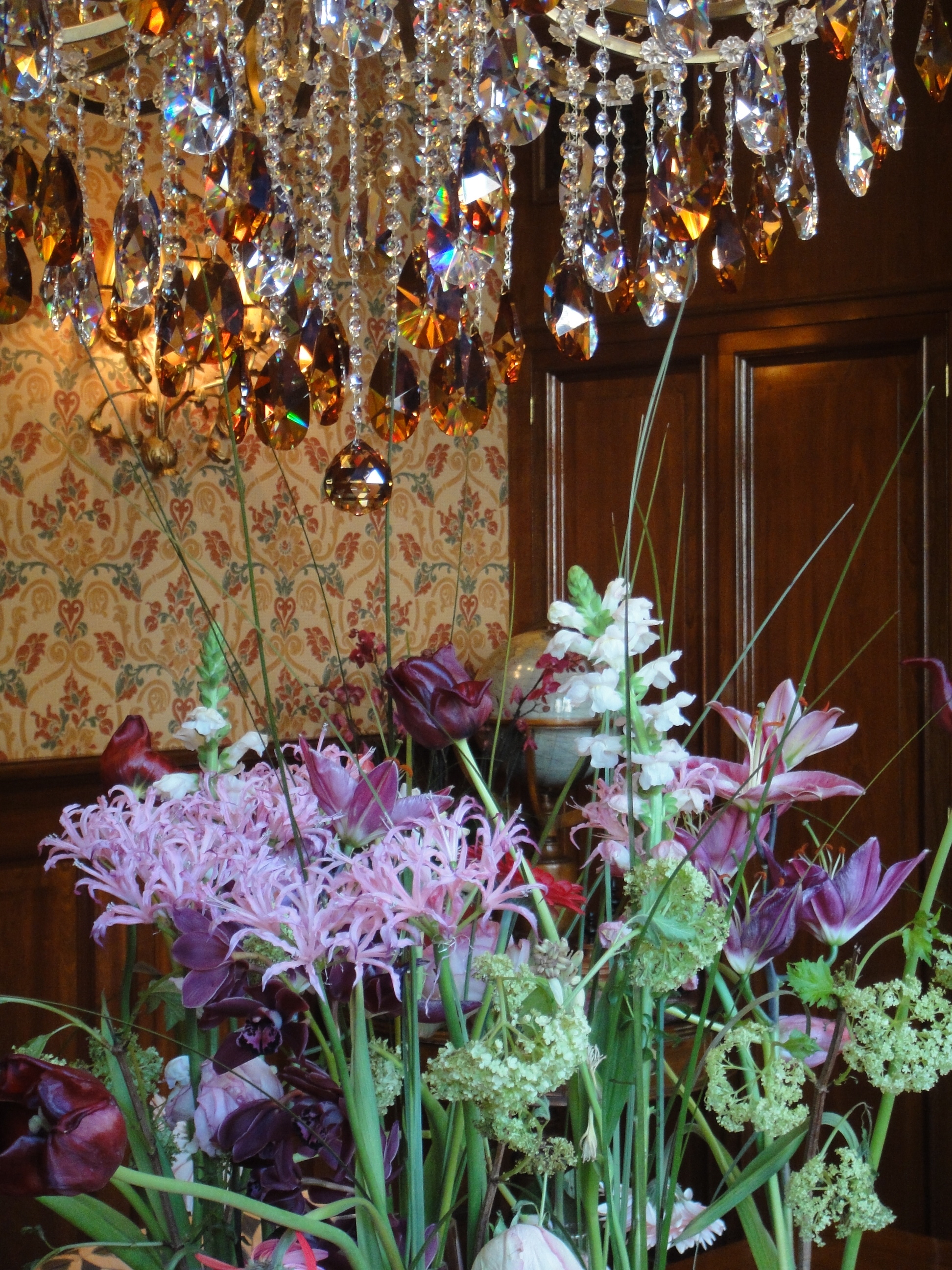
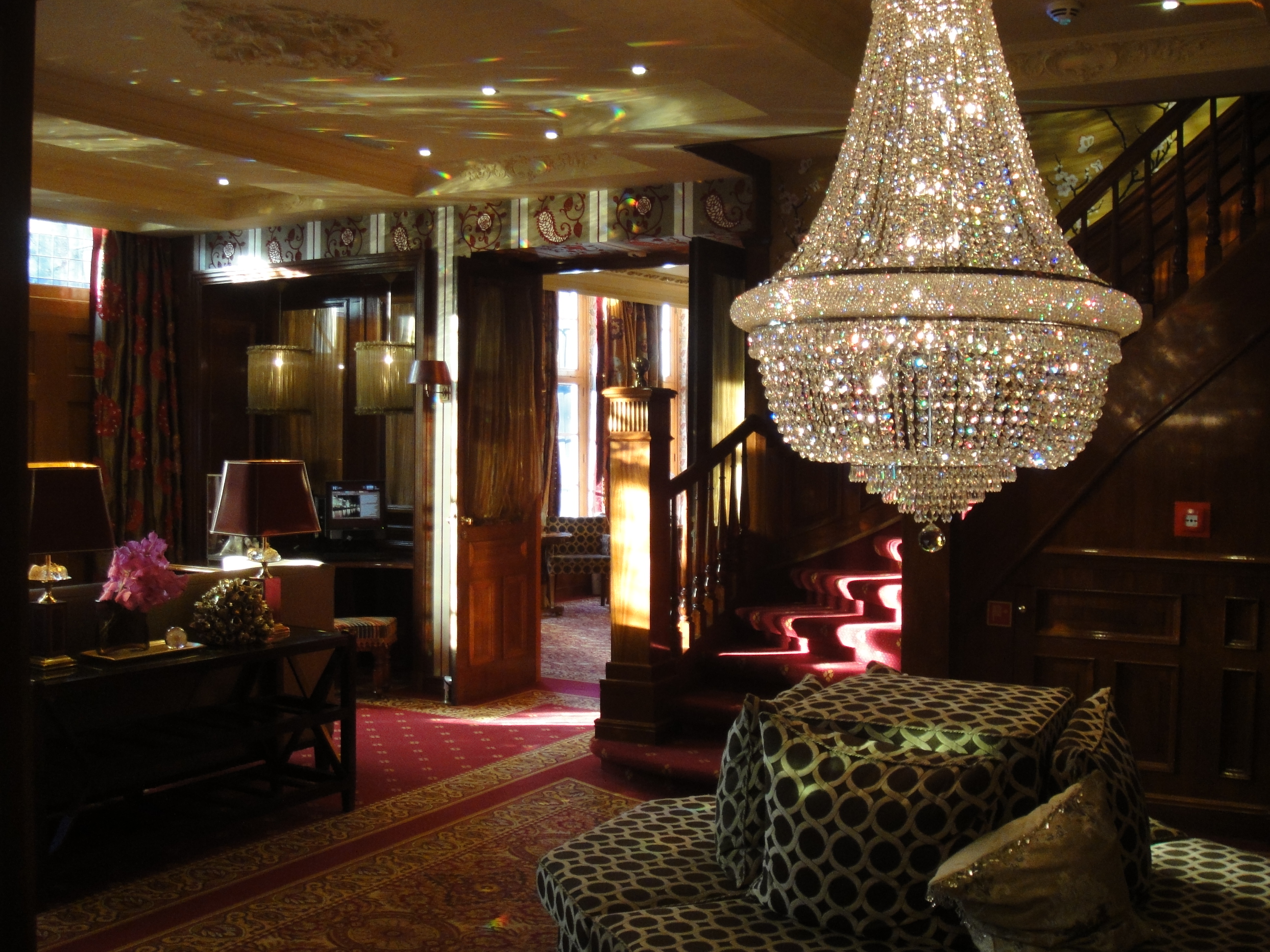
Fresh flowers and chandeliers in the Hotel Estheréa

I’m back from Amsterdam and pretty fed up about it. I find myself crossing the road looking out obsessively for cyclists and finding none. Here, the now familiar bong of the tram bell has been replaced by sirens, and these light filled transport carriages are superseded by the claustrophobic moving coffins of the London Underground. I look at buildings, thinking that something is wrong – then I realise that beneath them there is no reflection. But it’s always been my firm belief that part of the success of a holiday is how well you remember it. Consequently I have set about looking through and editing my prodigious collection of photographs, sorting through the postcards I buy obsessively whenever I go on holiday (with no intention to ever write, or send any) and recollecting the food experiences which filled by Amsterdamian days. With this in mind, I write today in an attempt to share my experience of the restaurants, and more importantly my accommodation while in Amsterdam.  As I’ve said before, in this time of the vindictive TripAdvisor professional complainant, where countless businesses in the hospitality industry are closing down because of picky, negative reviews posted online like school yard insults, I think it is only appropriate that a good experience is also applauded online, and shared so that fellow jetsetters can head off to a recommended restaurant or hotel, emboldened by some honest advice to temper their expectations.

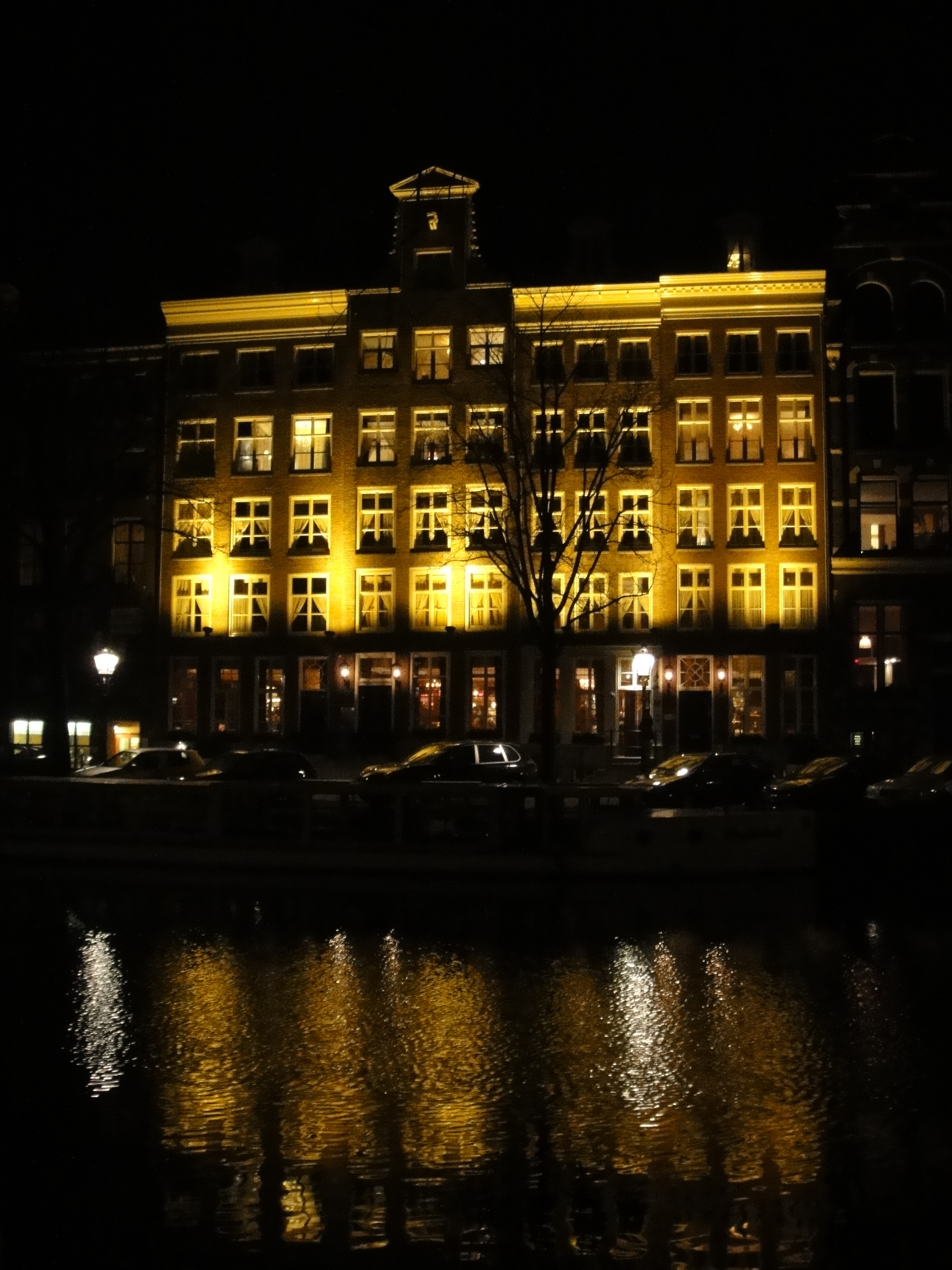
Exterior of the Hotel Estheréa

The hotel – Hotel Estheréa **** – Singel 303-9, Amsterdam

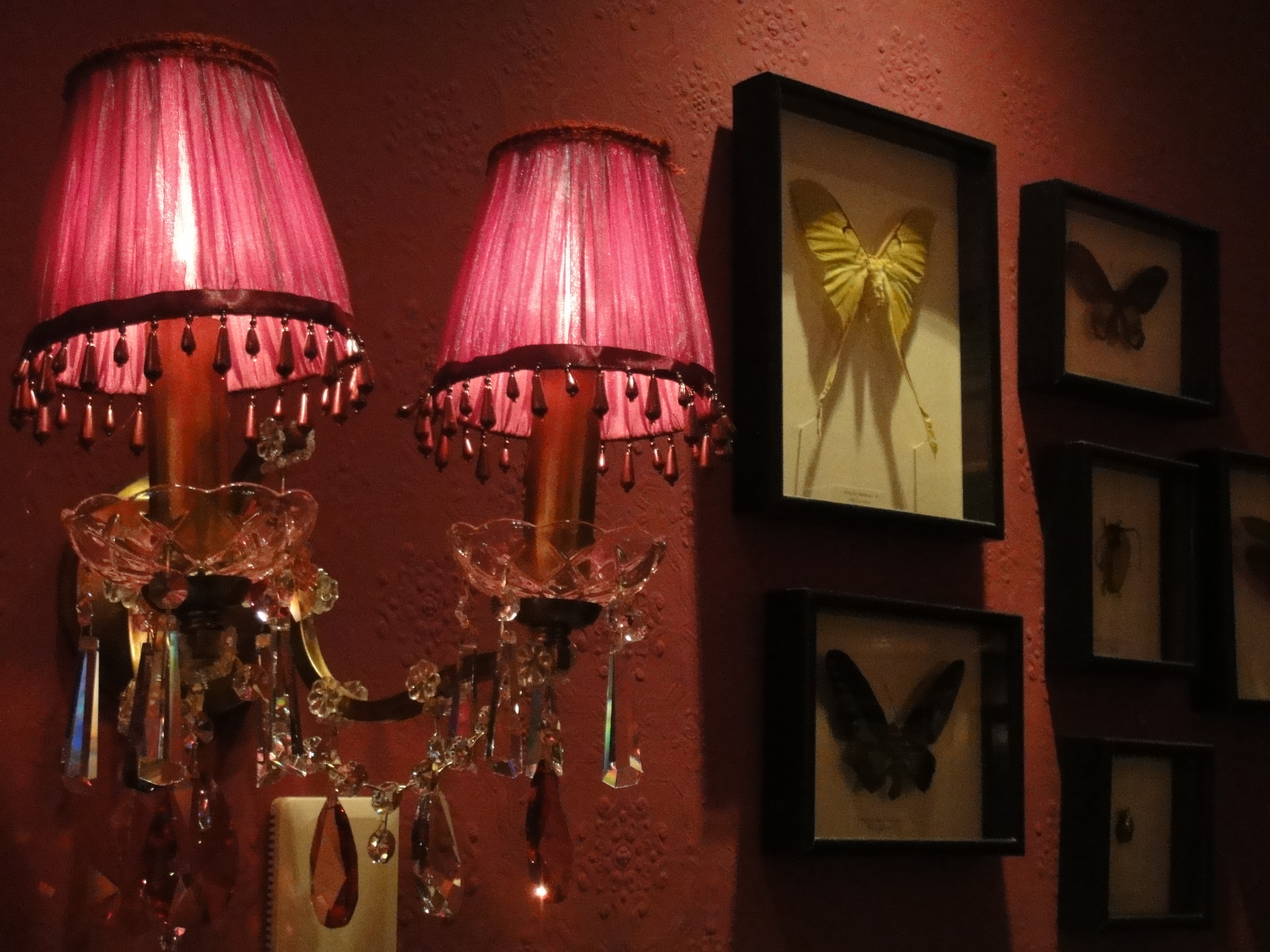
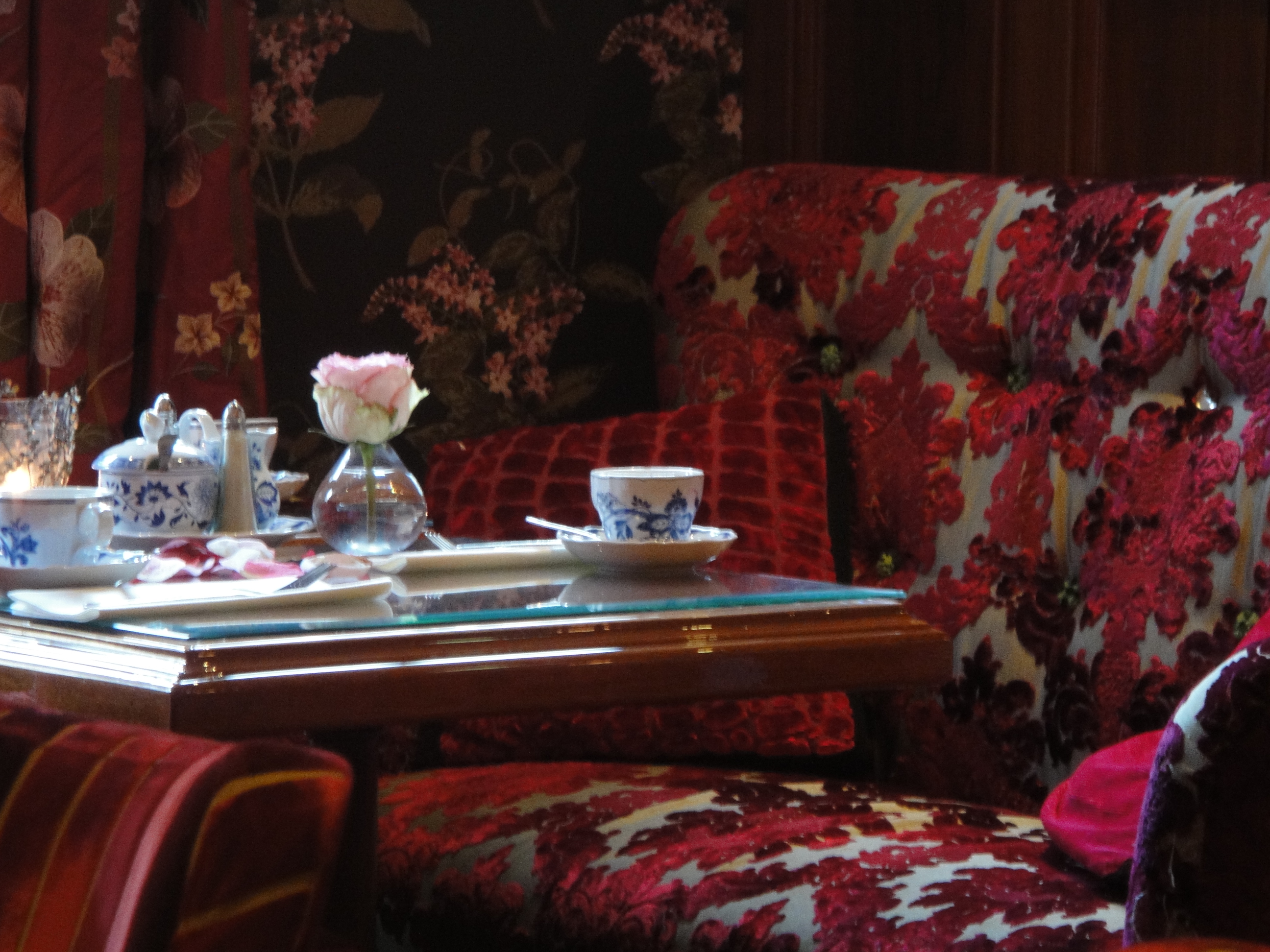
I could use almost every superlative in the thesaurus to describe the Hotel Estheréa and still not do it justice. This hotel, a child of the boutqiue revolution, but also the mother of all opulent sophistication, was a faultessly exquisite base for our Amsterdam stay. The reason, ultimately, for the success of this hotel is attention to detail. In the bedroom, two bottles of water would be provided free to guests everyday – a small thing, but often something which you really feel the need of at the end of a heavy evening and have to revert to what ever dodgyness flows from the tap. In the foyer, tea and coffee is provided all day, a huge range of teas being on offer, and complimentary cakes, biscuits, sweets and multivarious nibbles in retro glass jars. In the various reception rooms, the interior design is stunningly executed with an emphaisis on rejuvinated Victorian elegance – richly patterened wallpapers, huge low hanging chandeliers, various species of taxdermy under closhes and in frames, large damask covered arm chairs, a book-lined library and an array of fresh flowers embuing the air with their fragrance, single stems in collected ecclectic vases and huge bouquets greeting guests in the reception.

Our bedroom at the Hotel Estheréa

Head for the gold and glass lift to the rooms upstairs and you will find a range of bedrooms decorated in an impressive range of different schemes. Ours was a luxuriously drapped room in the roof – spacious, lined with a lavish chinese themed wallpaper of blues and gold, a sinfully comfortable bed loaded with embroidered cushions and a throw shot with blue and gold silk, and a stunning view looking over the Singel canal – one of the principal canals lined with the grand townhouses of former traders and merchants. Admittedly not all rooms benefit from a canal view, and you do have to pay more for the privilege. But I think it’s well worth it – and the premium is not much for the pleasure it provides. Finally the breakfast, while not cheap (18 euros per person) is the perfect set-me-up for the day, including champagne, cooked and continental selections and, best of all, various little pastries and cakes which look like they walked straight out of a Parisian patisserie. Finally I should mention location – it’s perfect, pretty much equidistant from all the main points of interest, so that Anne Frank’s house, the central station, the rosy red lights and the museum district are all within walking distance (though you need stamina – but there’s always that complimentary hotel tea to sustain you when the walking gets to much).

Main foyer in the Hotel Estheréa

Breakfast at the Hotel Estheréa

Lavish design at the Hotel Estheréa

Read more