Skip to content

Posts from the ‘Photography’ Category

Natale Italiano | Naples – A photographic miscellany

You’d be forgiven for assuming from my recent posts of late that I am on something of a downer on Naples. Much has been said about the graffiti and the grime, the overflowing bins and the dodgy back streets. However let me dispel any illusion that I am anything but a fan of this city. Who could be otherwise? Exuding a loud passionate spirit like no other Italian city to the North, Naples is unapologetic in every way, from its robust flavours and shouting locals, to its busy seaside port and its unabashed hoarding of some of the most stunning artistic treasures of art history stretching back to ancient Rome and before.

Benefitting from its stunning Mediterranean location, just North of the idyllic Sorrento peninsula and nestled in a bay in front of the towering majestic presence of Vesuvius, Naples cannot help but exude beauty from every vantage point. But beyond the general geography of the region, Naples is a city which is full of eclectic contrasts, sensational architecture, and all of the small urban details which get my camera clicking faster than a hungry Neapolitan can finish off one of their tasty pizzas (which is fast).

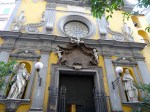
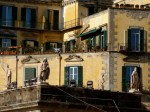
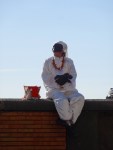
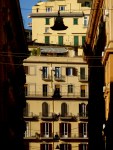
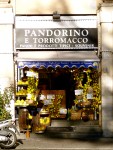
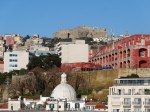
DSC01450 DSC01813 DSC01774DSC01678 DSC01709

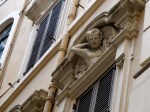
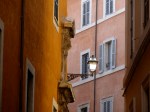
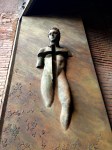
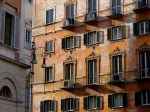
So in my last photographic miscellany of my extensive 5 week Italy blog season (well, I say last, but look out for the atmospheric black and white special coming up at the end of the week!) I explore all of the street details, the architectural peculiarities, and all of the beautiful and unique characteristics which make Naples the seductive city it is.

All photos and written content are strictly the copyright of Nicholas de Lacy-Brown © 2014 and The Daily Norm. All rights are reserved. Unauthorized use and/or duplication of the material, whether written work, photography or artwork, included within The Daily Norm without express and written permission from The Daily Norm’s author and/or owner is strictly prohibited. 

The Daily Norm’s Photo of the Week: Quartieri Spagnoli

In last week’s photography post focusing on the deteriorating face of the urban sprawl of Naples, I reflected, not without sadness, upon the degeneration of a city whose streets and houses were once the envy of the Mediterranean, but which today are the sad victim of reckless neglect and intentional vandalism. And in that post I also mused at the possible cause of this generalised decline – whether it be the possible inertia of a local government faced with the impossible scale of its urban problems, or the significant gap between rich and poor which continues to characterise the city today.

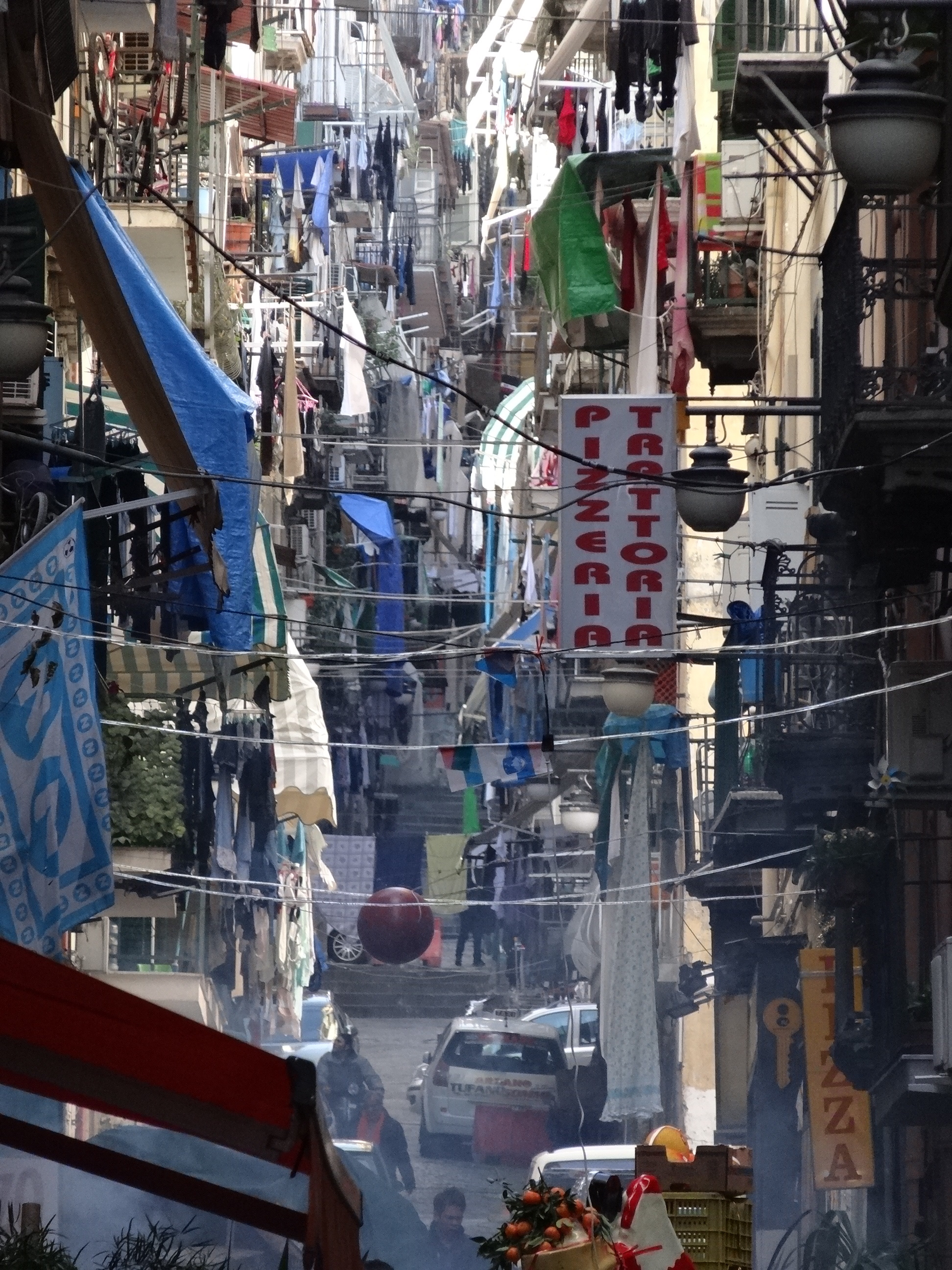
Yet while it is almost inevitably the poorer parts of the city which demonstrate the most obvious signs of neglect and deterioration, there can be no doubting that as a subject for photography, these areas are as captivating as the glossier hotel-packed areas of the city’s coastal facade. And this is no more so than in the Quartieri Spagnoli region of the city – a complete ramshackle hodge-bodge of homes and businesses crammed into tiny hilly streets. While tourists are urged to enter the area with caution, the braver amongst them may well be rewarded for their efforts by the interesting photos which result.

DSC01879

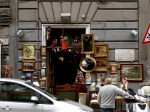
While we did not venture very far into the area, I love this photo which I took of the Quartieri Spagnoli so much that I decided to give it a post all of its own. From the little basket of oranges in the immediate foreground and the differently shaped lamps and shop signs framing the scene from the right and left, to the profusion of laundry hanging out to dry and the wires which criss cross the street; this photo, which shows a typical street of the Quartieri Spagnoli, is a perfect representation of the tightly packed highly populated region, and the Napolese character which it exudes.

All photos and written content are strictly the copyright of Nicholas de Lacy-Brown © 2014 and The Daily Norm. All rights are reserved. Unauthorized use and/or duplication of the material, whether written work, photography or artwork, included within The Daily Norm without express and written permission from The Daily Norm’s author and/or owner is strictly prohibited. 

Natale Italiano | Naples – Photography Focus: Grime beneath the Gloss

Walking through the elegant marble floored glass and steel shopping arcade of the Galleria Umberto I, past the sweeping facade of the Palazzo Reale or along the hotel-lined coastal path , you’d be excused for thinking that Naples is a city as extravagantly wealthy and elegant as Vienna or London or Paris. But Naples is a tale of two cities; a metropolis of two very irreconcilable extremes of wealth and poverty.

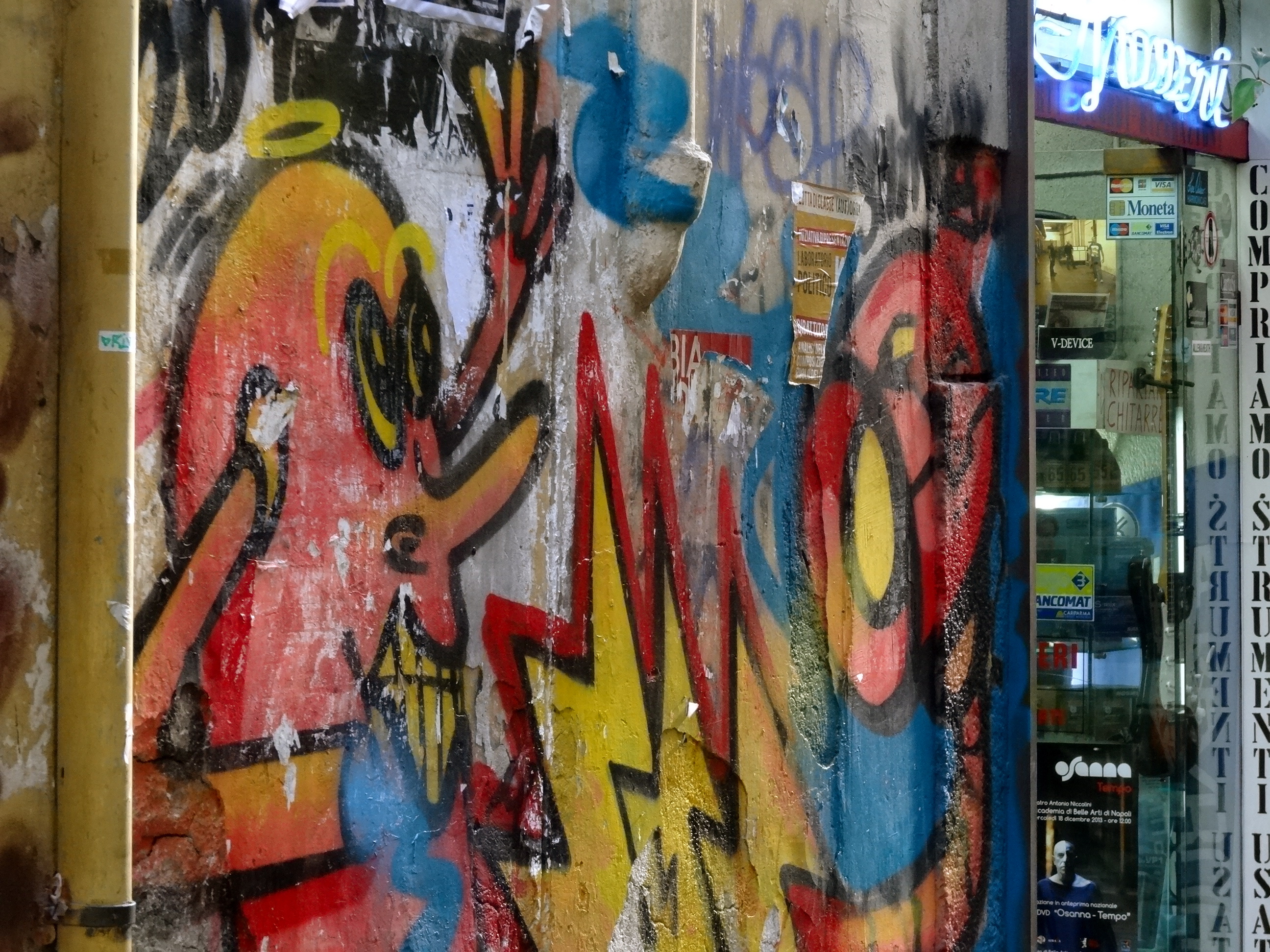
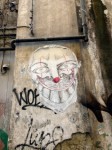
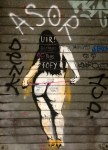
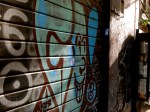
And you don’t need to wander far from the Mediterranean facade to encounter the results of this cultural conflict. Tour guides are careful in warning tourists away from the tightly packed Quartieri Spagnoli district which sits bang in the centre of Naples, but is neverthelss renowned for cramped living conditions, narrow hilly streets and the poverty of its residents. Strung with laundry and dense with local shops and businesses, the area is among the most characterful of the city; but pretty scary, especially after  dusk. Meanwhile, even in the areas where tourism is encouraged and the masterpieces of the city are to be found in their multitudes such as the Spaccanapoli and the Decumano Maggiore, the streets and shops and doorways and houses are covered from head to toe with layer upon layer of ugly graffiti, while further up the facades, the distinct evidence of decay, even on the most palatial of residences, is plain to be seen.

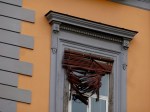
DSC01898 DSC01897 IMG_7131 DSC01900 IMG_7132

But beyond the extremes of rich versus poor, which has no doubt contributed to the miserable living conditions in which many Neapolitans live, Naples appears to be a city which has given up on itself, and lost control of its appearance, and perhaps also its pride. For me it felt like an instance in my own home – when a few things need cleaning up, I’m keen to do the job and have my home sparkling again. But when the dirt and mess mounts up, my energy fails me, and the situation only becomes worse as an inertia takes over any enthusiasm to clean up the mess. In Naples, the same kind of inertia appears to have crept in a long time ago. And it’s a shame – a real shame. For looking upwards in all of the areas mentioned above, you can see palaces and churches which more than rival the architectural gems of the cities further North in Italy, and yet those same beautiful buildings have been gradually covered in graffiti; their pavements covered with rubbish spilling from the bins; and the distinct smell of urine left to stagnate against their walls.

Even in the sunshine (when let’s face it, everywhere looks better), you cannot help but notice these defects which are gradually turning Naples into the kind of dump it does not deserve to be. I’m not sure what the answer is – after all, where would you begin in the mammoth clean-up operation required by this city? But I really hope that one day soon, the Italian government, if not the Naples one, sits up and recognises that in Naples’ decline, they are losing a real, historically important, artistically significant treasure.

All photos and written content are strictly the copyright of Nicholas de Lacy-Brown © 2014 and The Daily Norm. All rights are reserved. Unauthorized use and/or duplication of the material, whether written work, photography or artwork, included within The Daily Norm without express and written permission from The Daily Norm’s author and/or owner is strictly prohibited. 

Natale Italiano | Naples – Photography Focus: Ripples of the Riviera

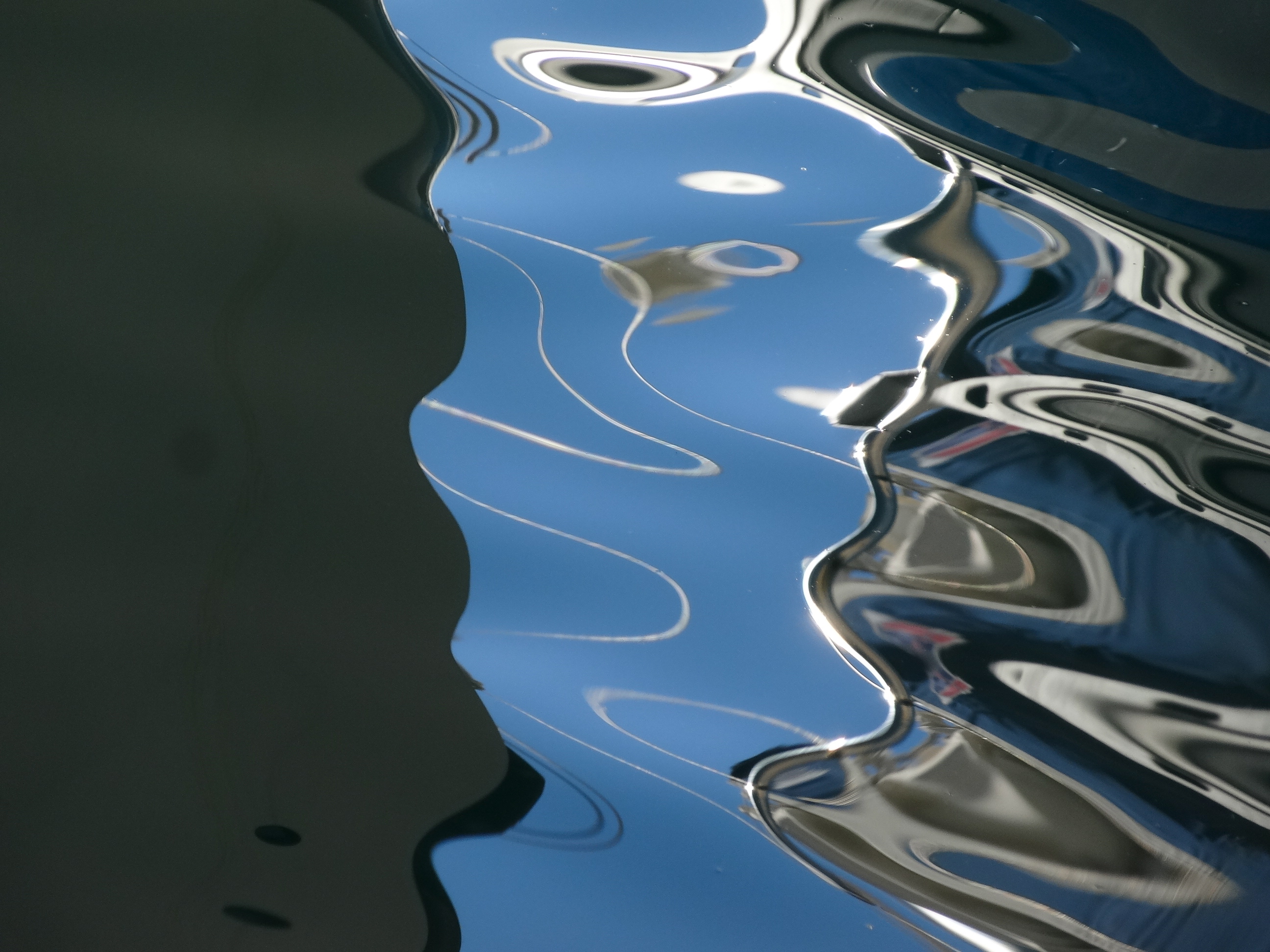
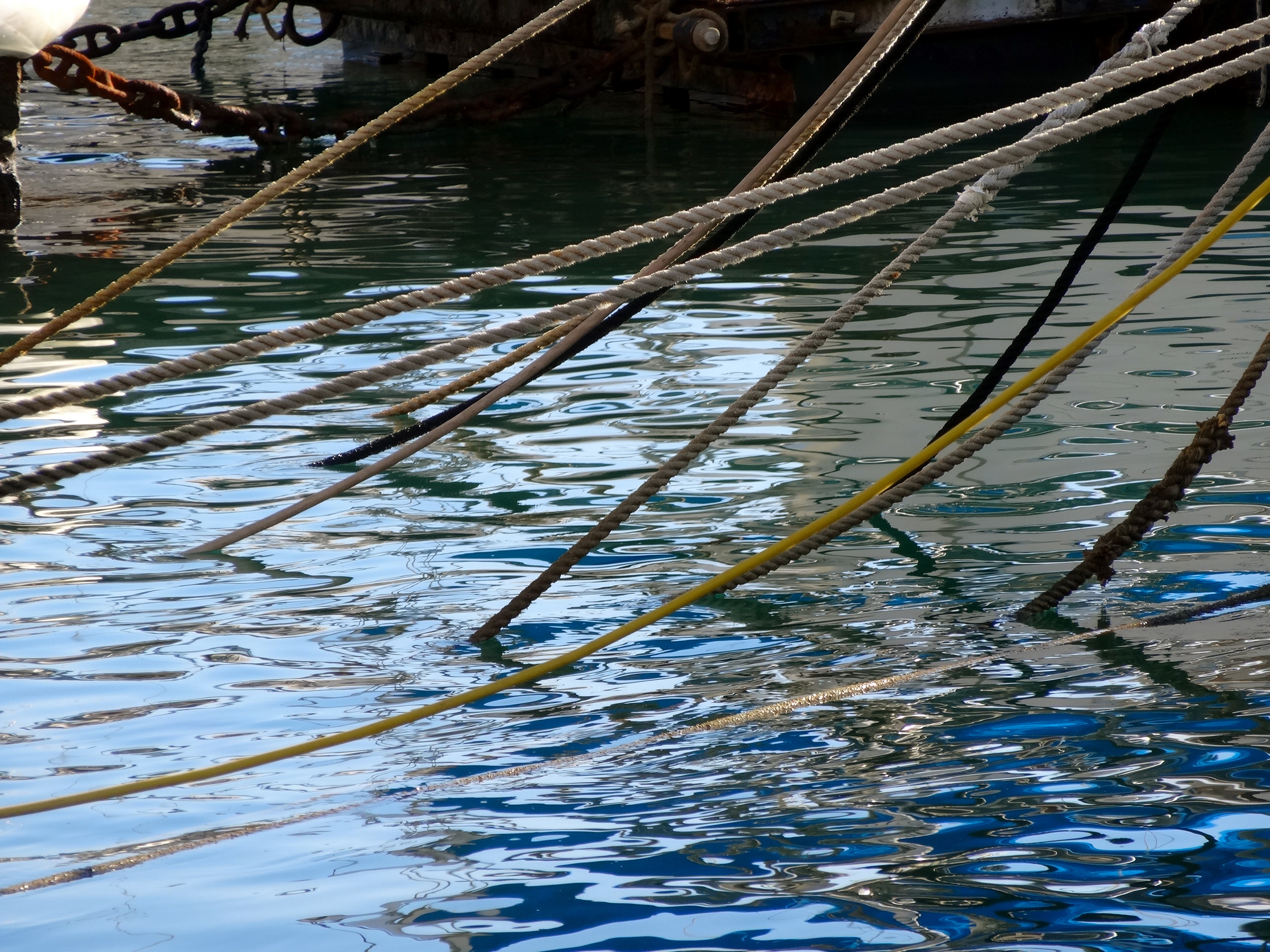
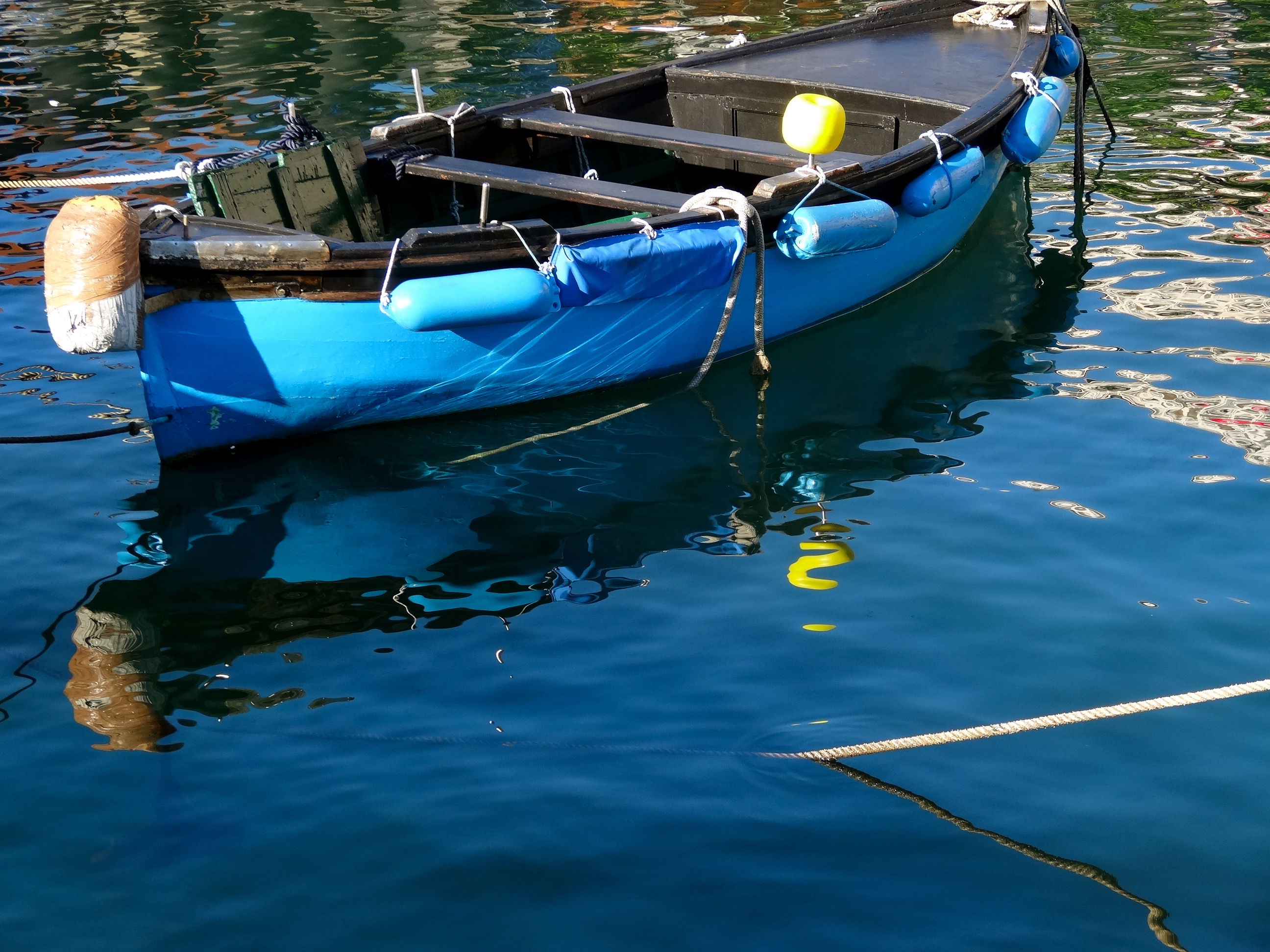
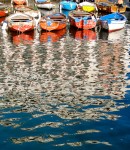
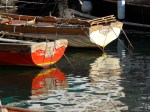
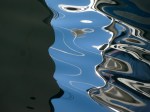
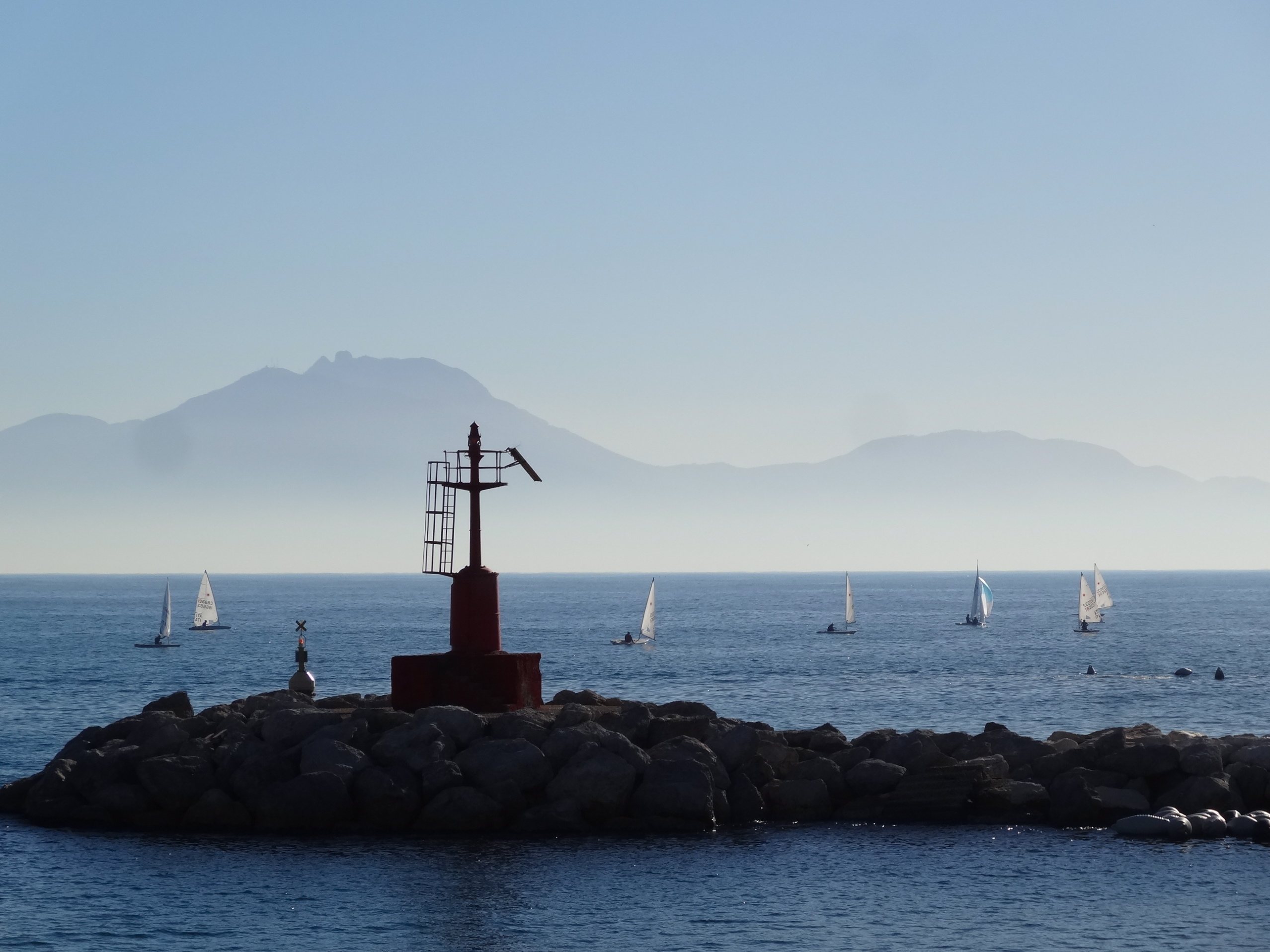
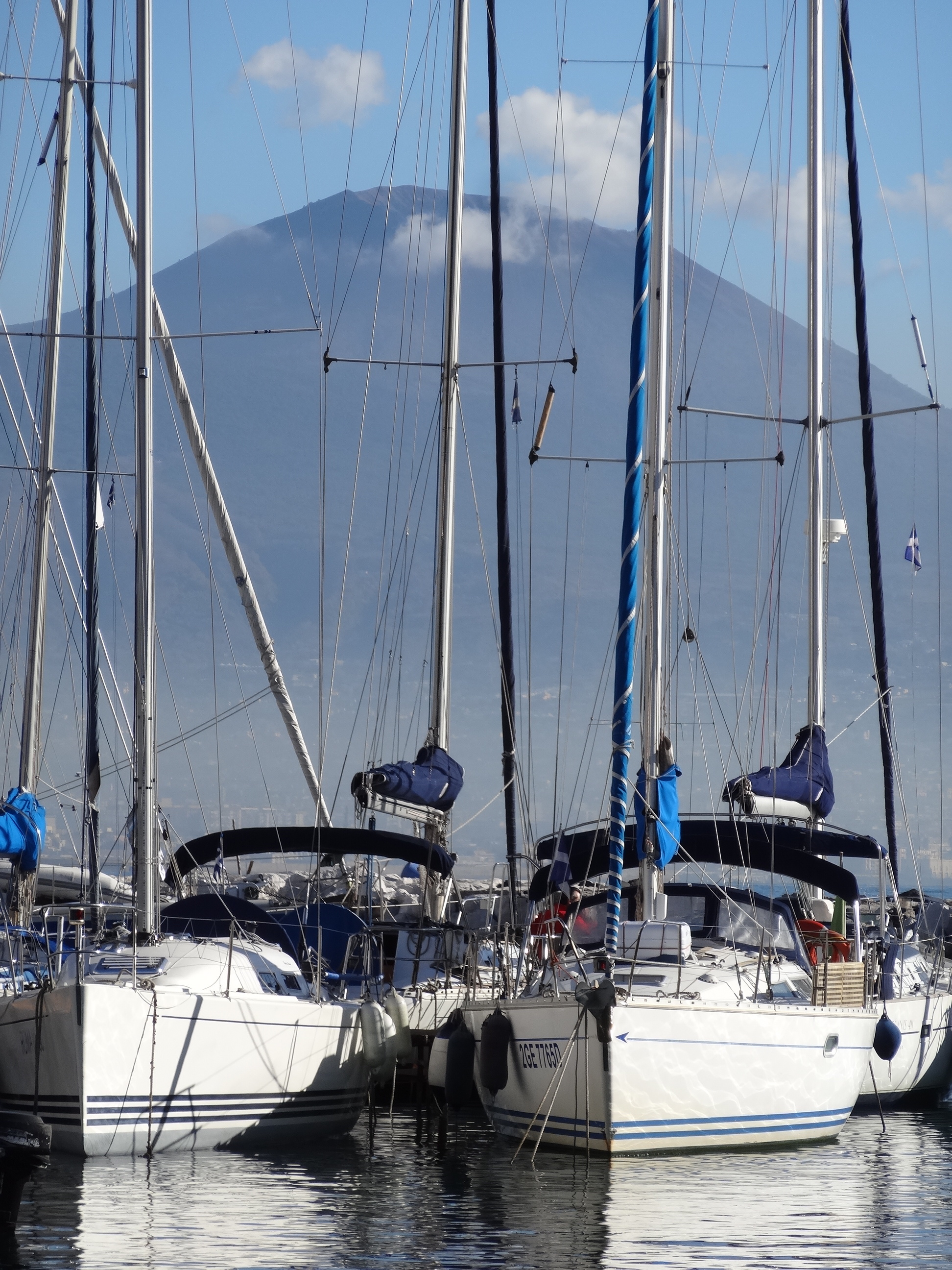
I may have thought the ripples and watery reflections of Venice were great, but in the sun-drenched marinas of Naples, we were given a ripple spectacle like Venice on ecstasy. Boats in vibrant primary colours of yellow and red and blue scattering a kaleidoscope of colour into the water, yachts with their proud white masts punctuating the cerulean ripples reflected below, and the sunshine glinting over the sea like a carpet of crystals – this was photographically seductive, ripple-ravishing heaven.

No doubt it was the timing of this visit – a sunny stroll on an otherwise cold December day – which made the experience of dipping into the sensations of the summer all the more special. Breathing air which is tinted with warmth feels like indulging in a glass of heavenly nectar after a day when wretched thirsty work has left the mouth parched; being by the sea when all of the senses have become numbed by the smoke, the rush and the monotony of city life is like a face splashed with freshness on a hot clammy day; feeling the rays of the sun filling the skin with its vitamin-filled goodness is like applying a glinting layer of gold to a dull pot of steel.

DSC01564 DSC01612DSC01563 DSC01625 DSC01568

Not only did this reconnaissance with the summer make us feel optimistically alive, and produce some stunning photos of the water, but it also seemed to have the world out to enjoy the weather in unison. And so this little set of photos includes not just the incredible effects of mother nature’s fusion of sunshine and water, but also glimpses of Neapolitan life, as fishermen go about their business by the waters edge, and locals come out from their winter-clad houses to enjoy the hope that the fine weather brings.

All photos and written content are strictly the copyright of Nicholas de Lacy-Brown © 2014 and The Daily Norm. All rights are reserved. Unauthorized use and/or duplication of the material, whether written work, photography or artwork, included within The Daily Norm without express and written permission from The Daily Norm’s author and/or owner is strictly prohibited. 

Natale Italiano | Naples – Day 1: Coastline Castles and the Spaccanapoli

After the dazzling ancient spectacles and baroque masterpieces of Rome, and the elegant watery wonderland of Venice, we weren’t exactly enamoured by Napoli when we arrived one late afternoon after Christmas. Described by some as the last bastion of civilisation before Italy turns savage to the South, it felt to us a little like civilisation had gone away for the holidays. Our purported 4 star hotel, La Ciliegina had to be accessed up some dark and dingy lift shaft in a side street block of flats; everywhere we ventured in this crowded rowdy city was doused with layer upon layer of graffiti (even their most sacred palaces and churches) and a most unwelcome rain shower meant that the darkest most intimidating of Naples’ unfriendly looking cobbled streets took on an even more sinister guise, not helped by the shuttered (graffitied) shops and the eery lack of visitors. And all the time our ears were ringing with the forewarnings which had been consistently delivered at every mention of a visit to the city: beware pickpockets, muggers, criminal gangs. Gosh, we had even left our wallets locked away in the hotel safe for fear of attack!

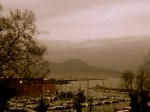
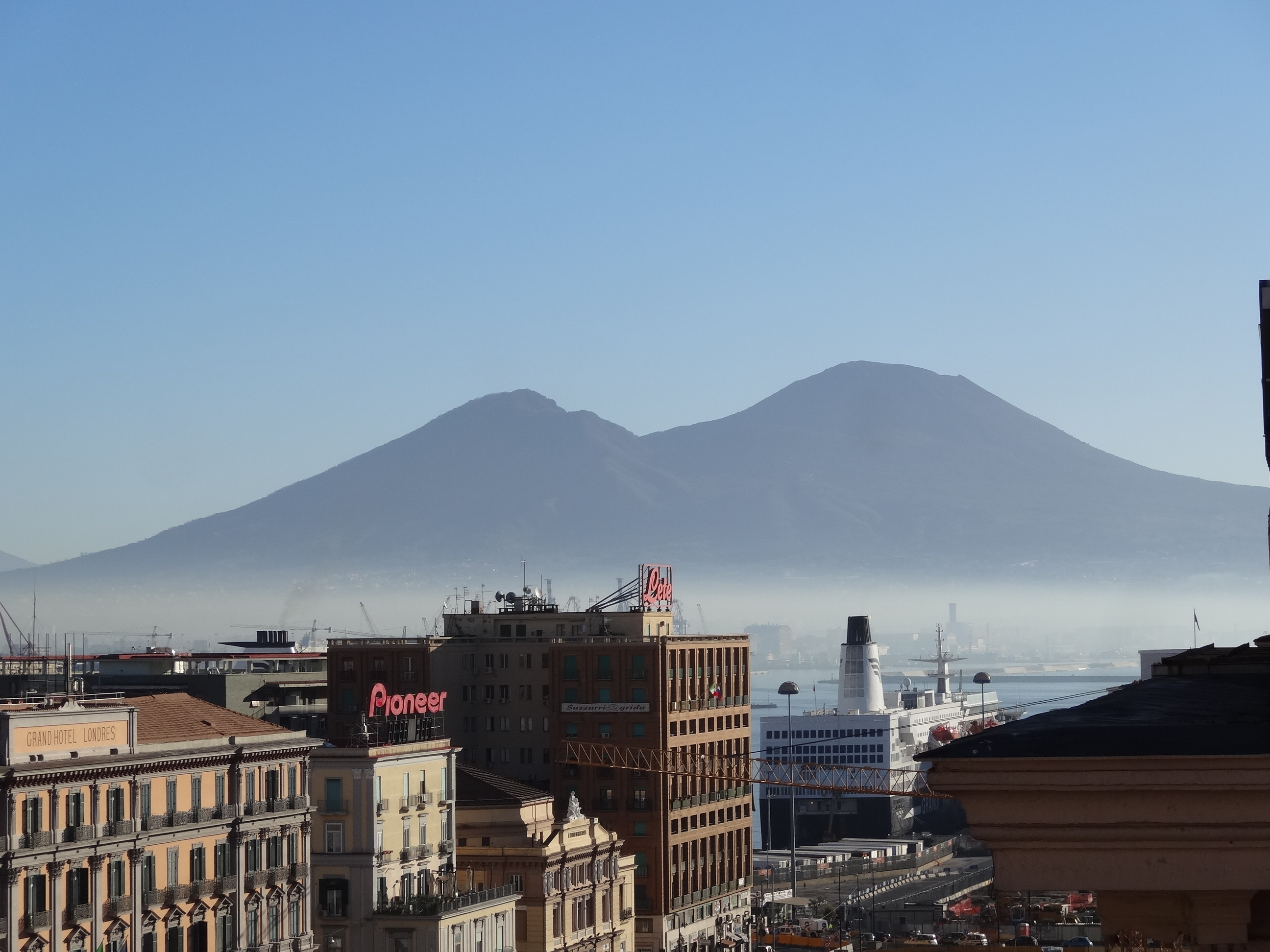
But come the following morning when the sunshine washed its warming radiance across the city, suddenly Naples was a different place. Walking up to the hotel rooftop and seeing the dazzling spectacle of mount Vesuvius, its slopes partially shrouded in mist like some ancient Japanese silk painting, and its grand peaks rising up into the blue sky at the end of the wide sweeping bay of Naples, was like a postcard dream straight out of the summer. Filled with a new sense of excited anticipation, we headed out into Naples to reacquaint ourselves with the city afresh.

IMG_6888 DSC01386 DSC01388DSC01397

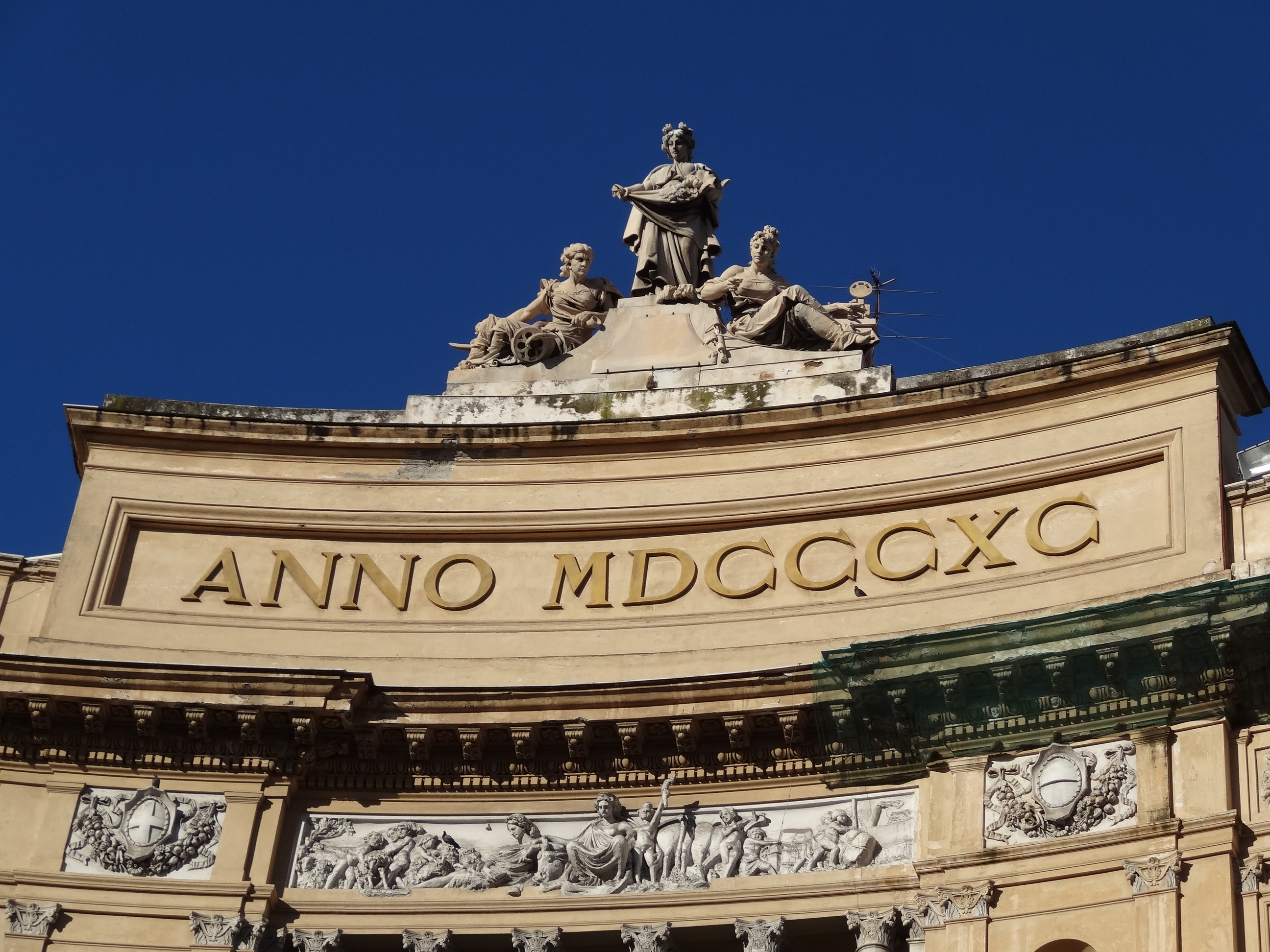
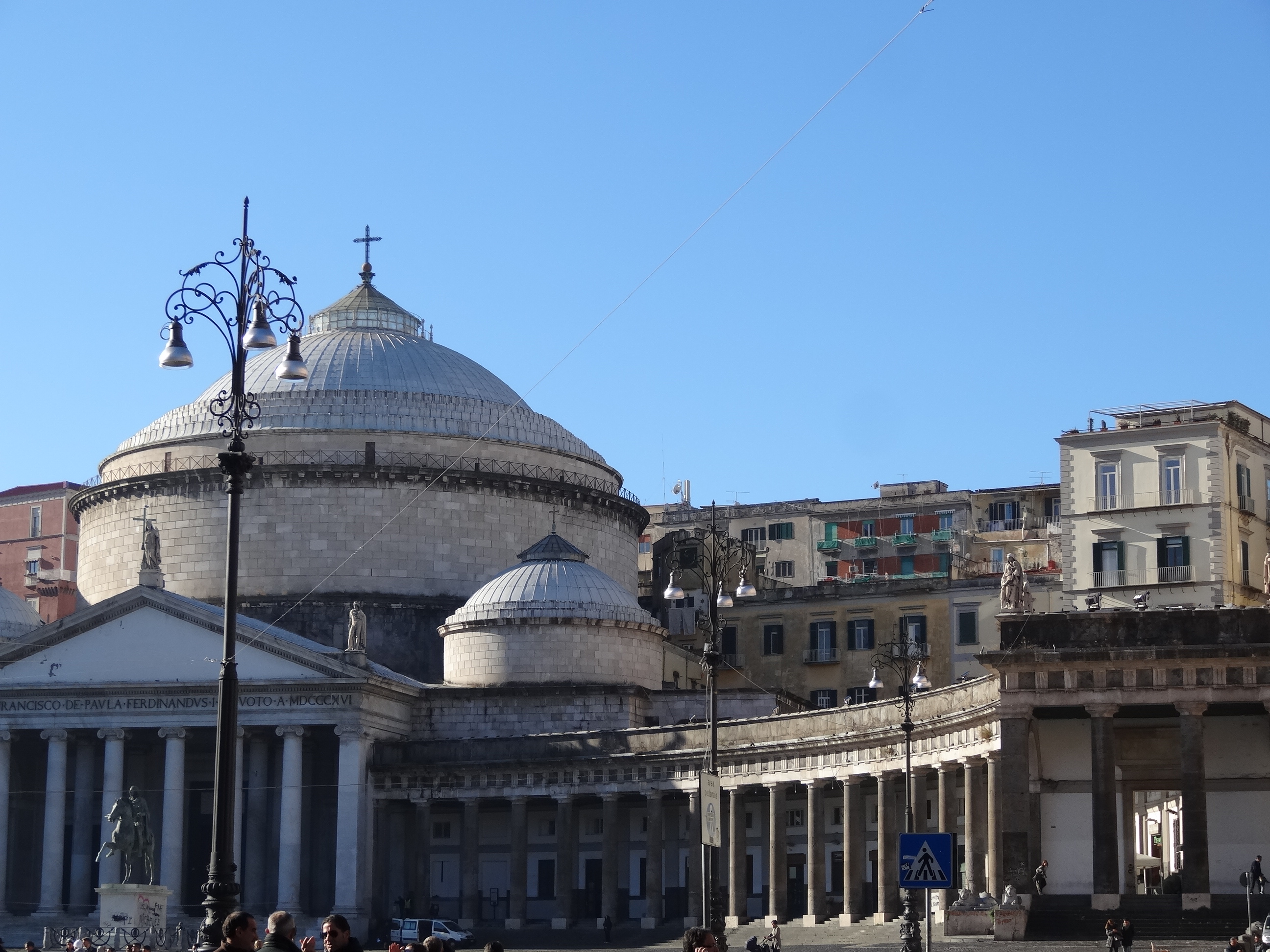
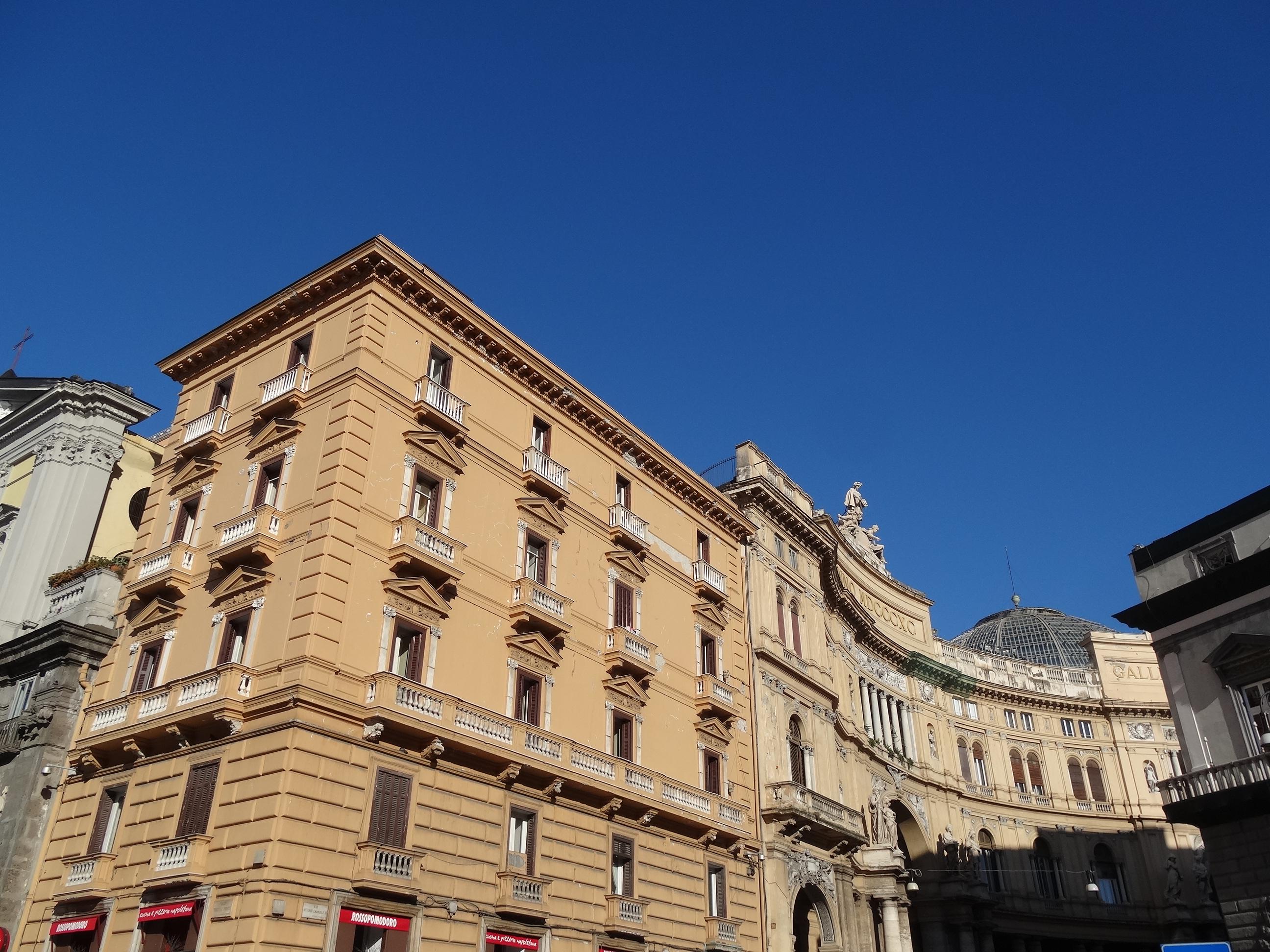
It’s so true what people say: the sun changes everything, and the Naples we found that morning was no longer a dingy den of backstreets but an elegant city of faded grandeur, with its stunning shopping arcade straight out of the Belle Époque (the Galleria Umberto I) and its vast semi circular Piazza Plebiscito nestled between the Basilica di San Francesco and  the old palace dating back to Bourbon rule.

DSC01435 DSC01443 DSC01442

But with the weather so good, we were not about to hang around in the city centre. Rather, after so many months separation, there was only one thing we wanted to embrace that sunny morning – the sea. And so heading down the pine tree lined Via Cesario Condole, our nostrils filling progressively with the light salty perfume of the sea, we soon encountered an even more spectacular view of Vesuvius – with the sparkling sun-drenched waters of the Mediterranean sea lapping up against its feet.

DSC01488 DSC01520 DSC01464IMG_6930IMG_6955

And so began possibly our favourite day of the whole Italy holiday, as we got to know the seafront of Naples with its small marinas, two castles and lines of elegant hotels all under the warmth of a very welcome winter sun.

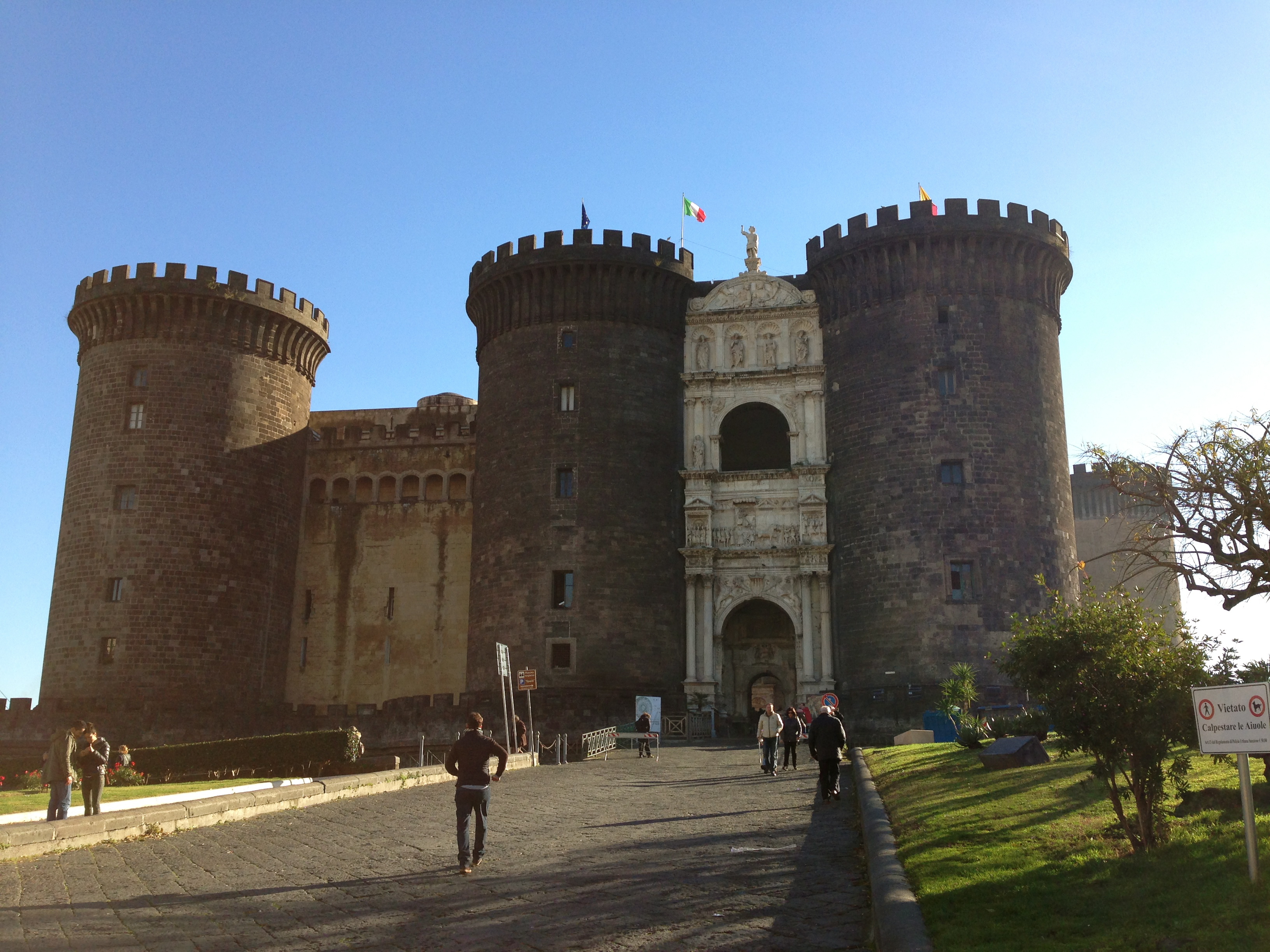
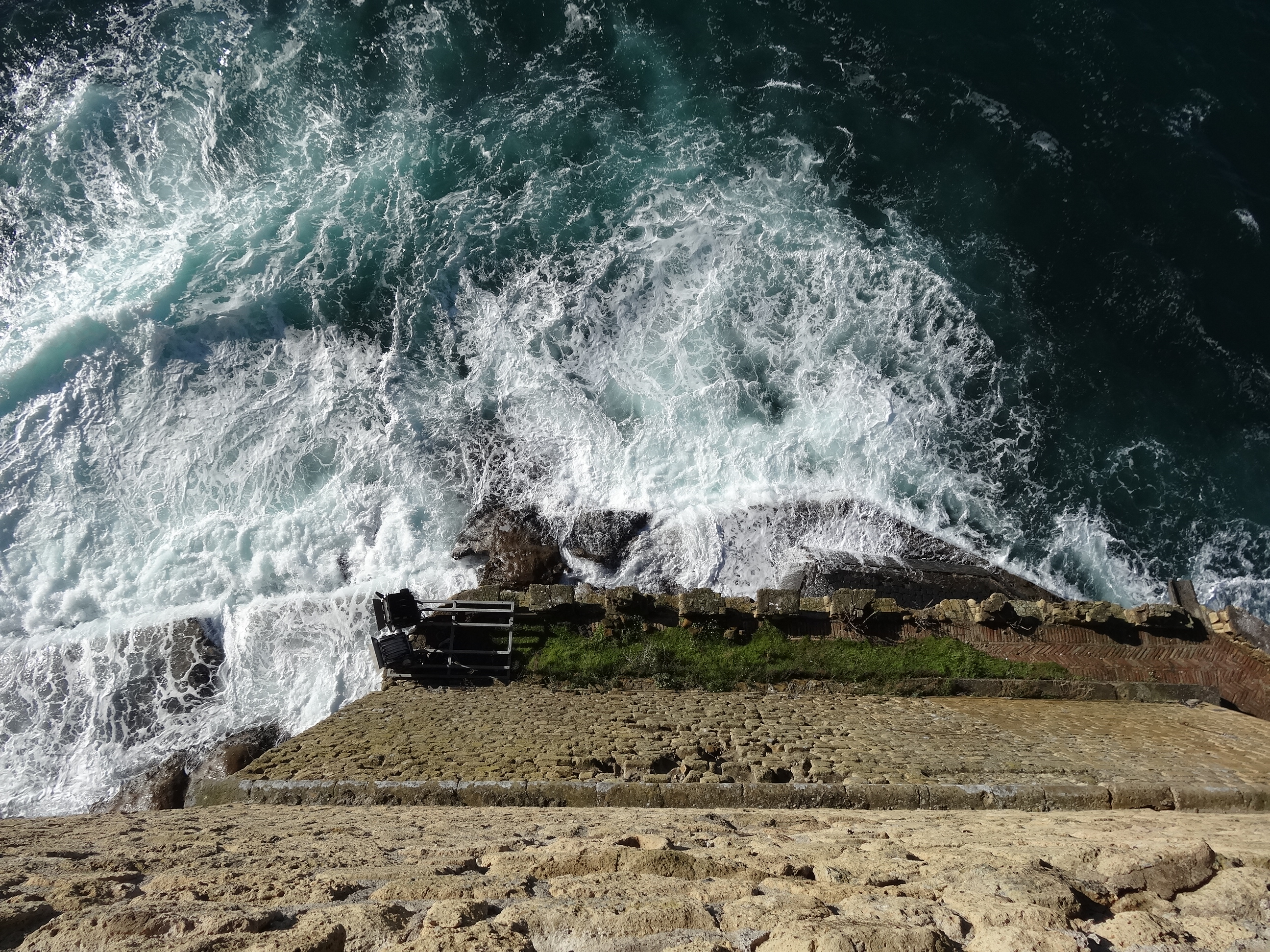
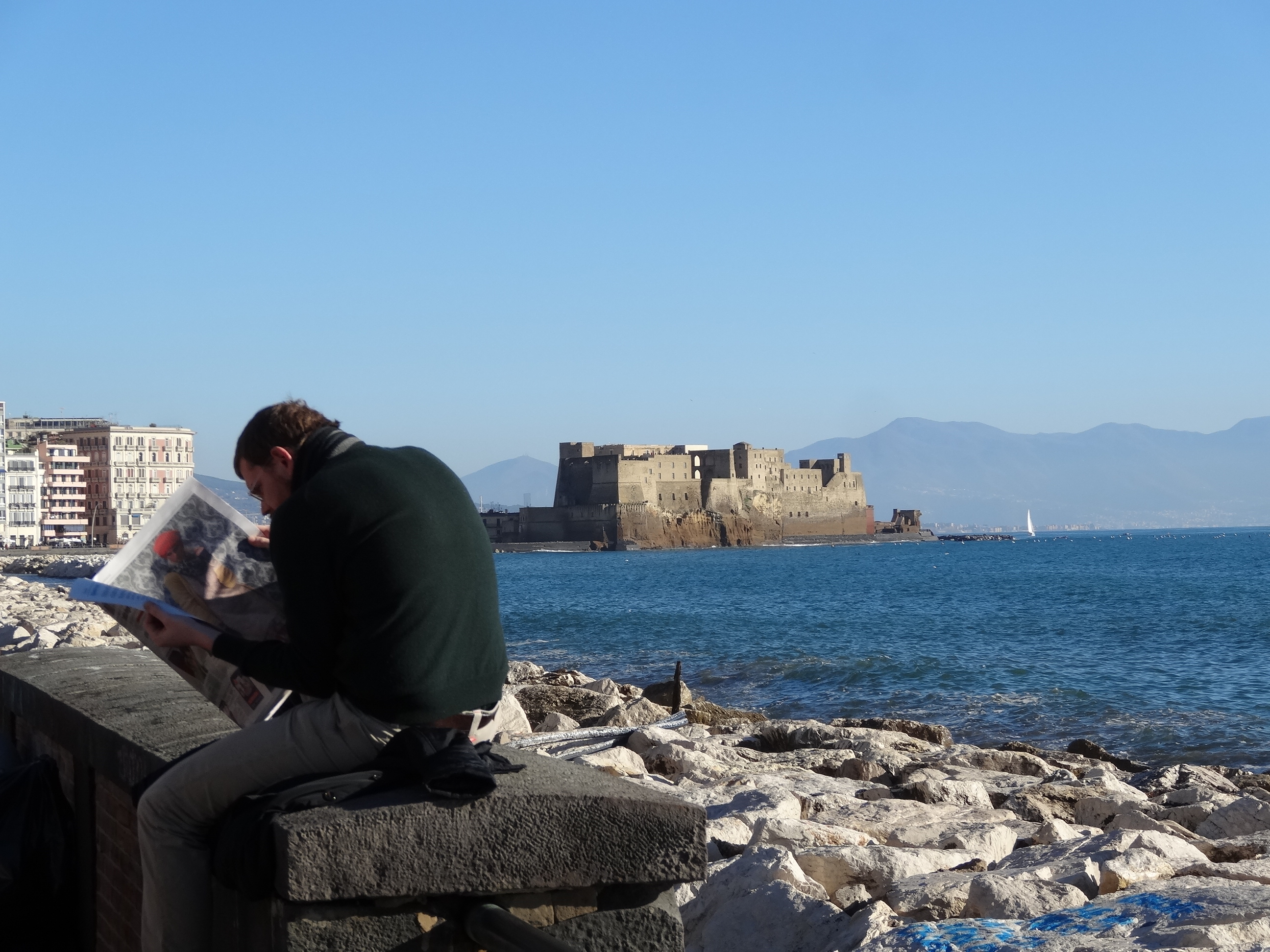
After a quick stroll around the Castel Nuovo, we headed down to the much prettier Castel dell’Ovo, which juts out to sea at one end of the bay of Naples, and encircles in its embrace a little marina. That delightful situation became the sight of an hour or so of enthusiastic photography (see tomorrow’s post) and a divine coffee by the waterside. We also trekked around the vast castle walls from where views of Vesuvius to the south and Naples’ urban sprawl to the North were better than ever. And in the latter vantage, we set our eyes upon a rather welcoming looking seaside cafe and headed straight there for a well earned lunch.

The Castel Nuovo

IMG_6895 DSC01423 IMG_6896 DSC01414DSC01403

and the Castel dell’Ovo and its marina

DSC01710 IMG_6975 IMG_6987 DSC01653 DSC01671 DSC01721 DSC01587

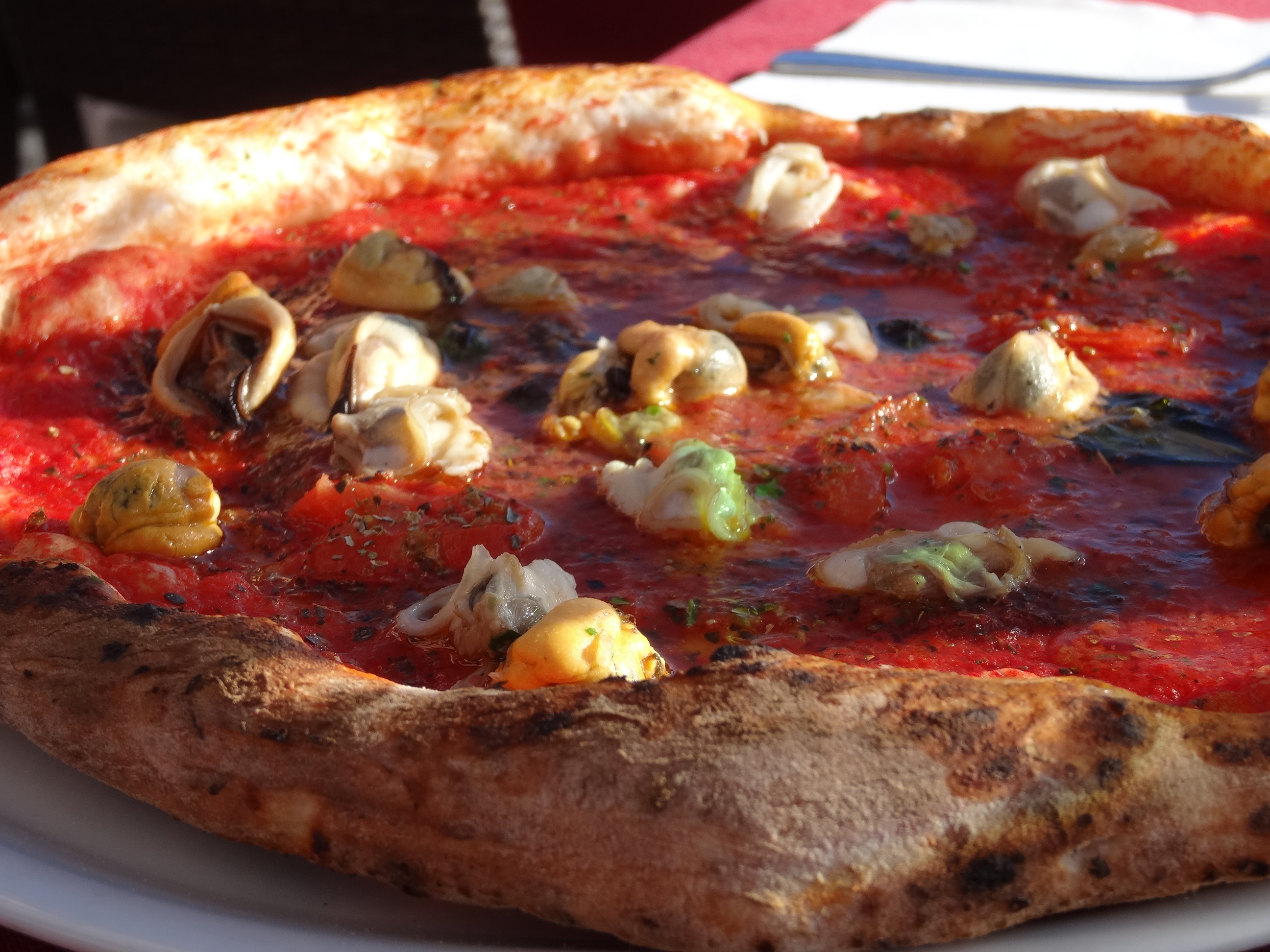
What does one eat in Naples? Well pizza of course, and I ate my first with this spectacular seaside view before me. I have to say, Neapolitan pizzas were a little stodgier than I was expecting, but then I am used to the crispier bases which I gather may be a bastardisation of the north. There was no denying taste or flavour though – covered with a rich pesto, my pizza tasted as good as it looked, helped down by a very chilled and very summery glass of white wine.

DSC01696DSC01697

Read more

Natale Italiano | Rome – A photographic miscellany

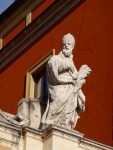
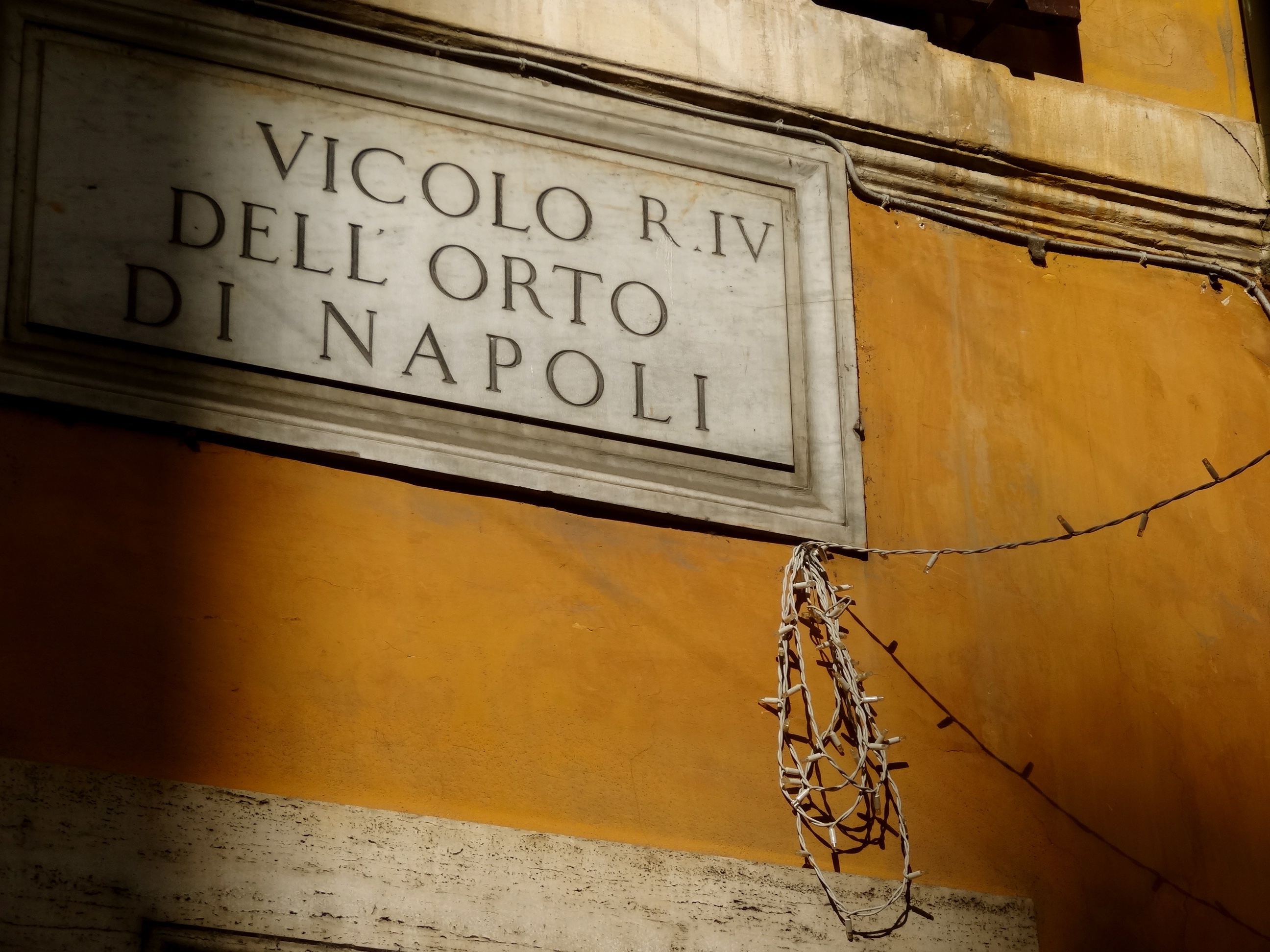
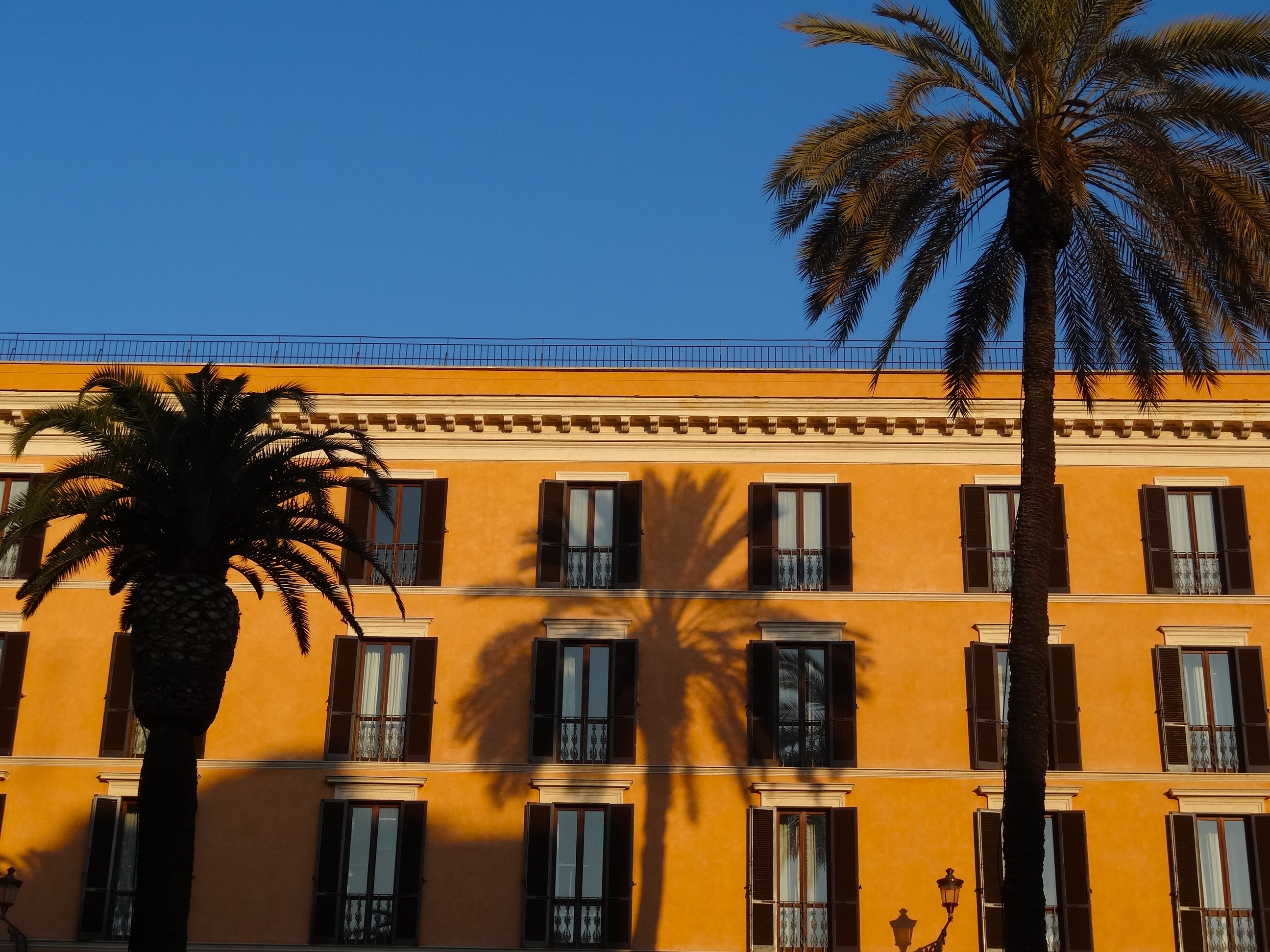
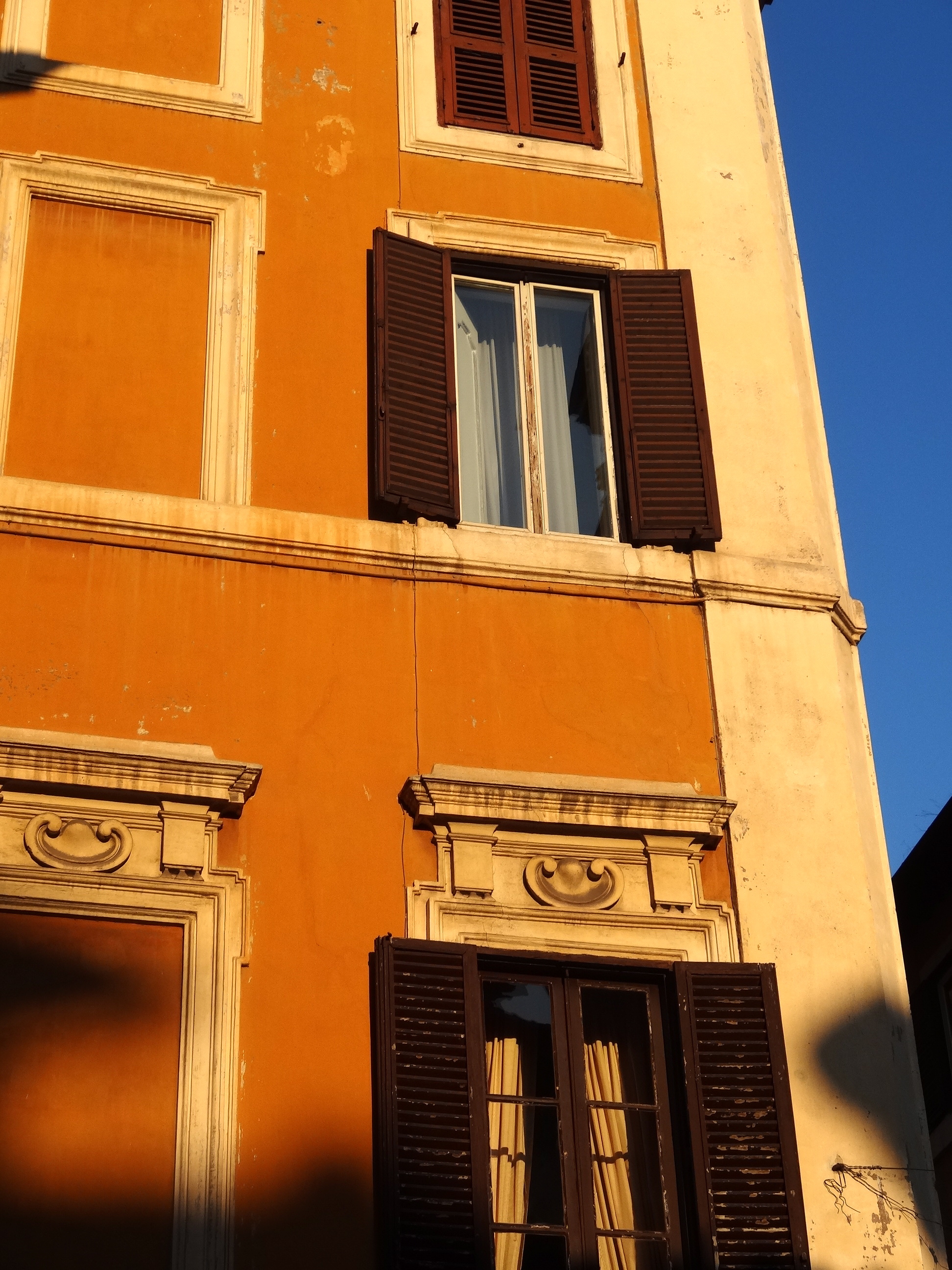
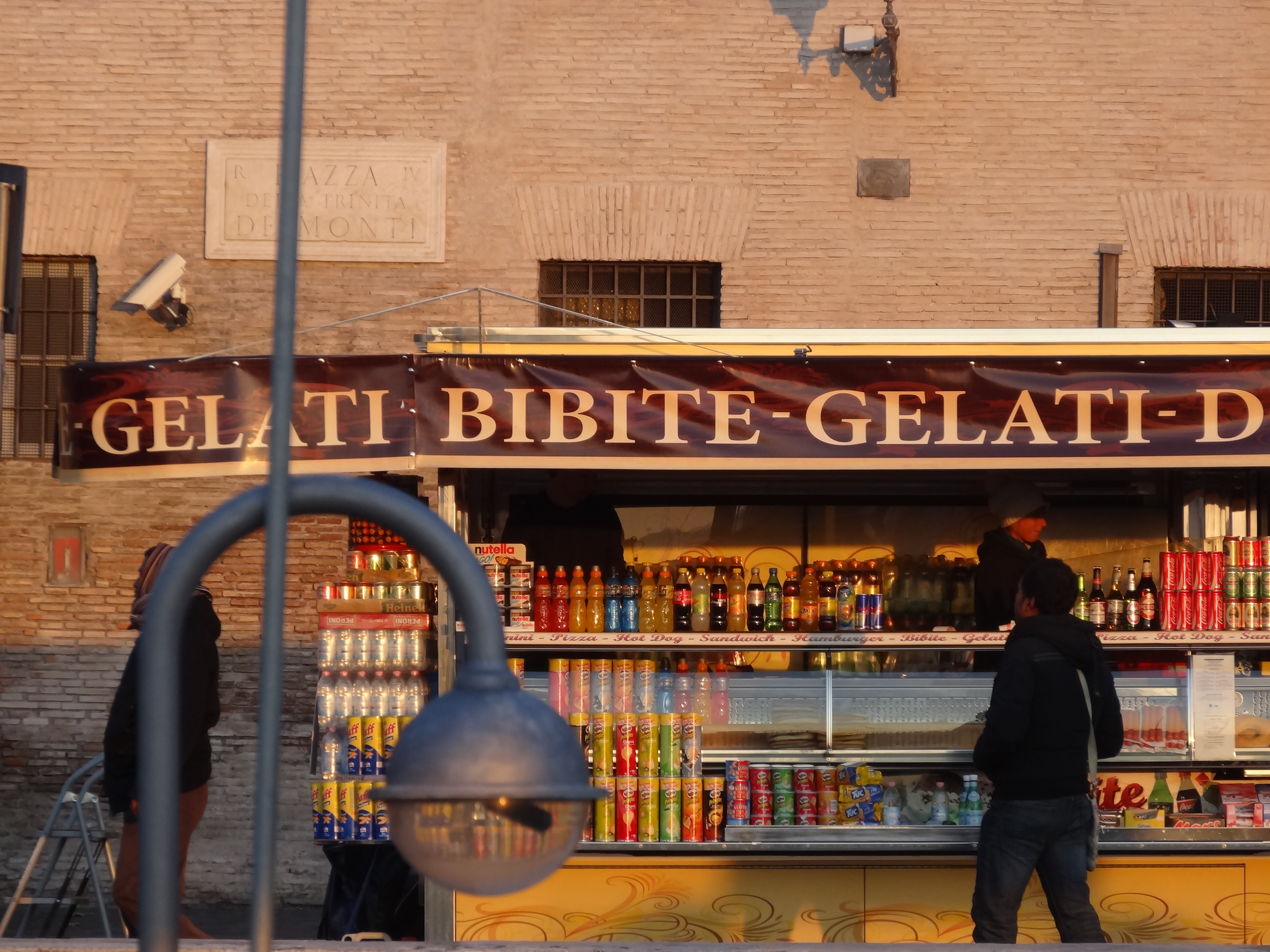
For a city whose every street and structure is punctuated with elaborate statues, architectural flourishes and ancient ruins, Rome is never short on providing photographers and artists alike with ripe inspiration to get their artistic juices flowing. And while passing the Christmas season in Rome meant that I was perhaps not as prolific in the photography stakes as I might otherwise have been, I still look upon this little miscellany of Rome shots which I collected together during that recent trip.

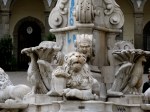
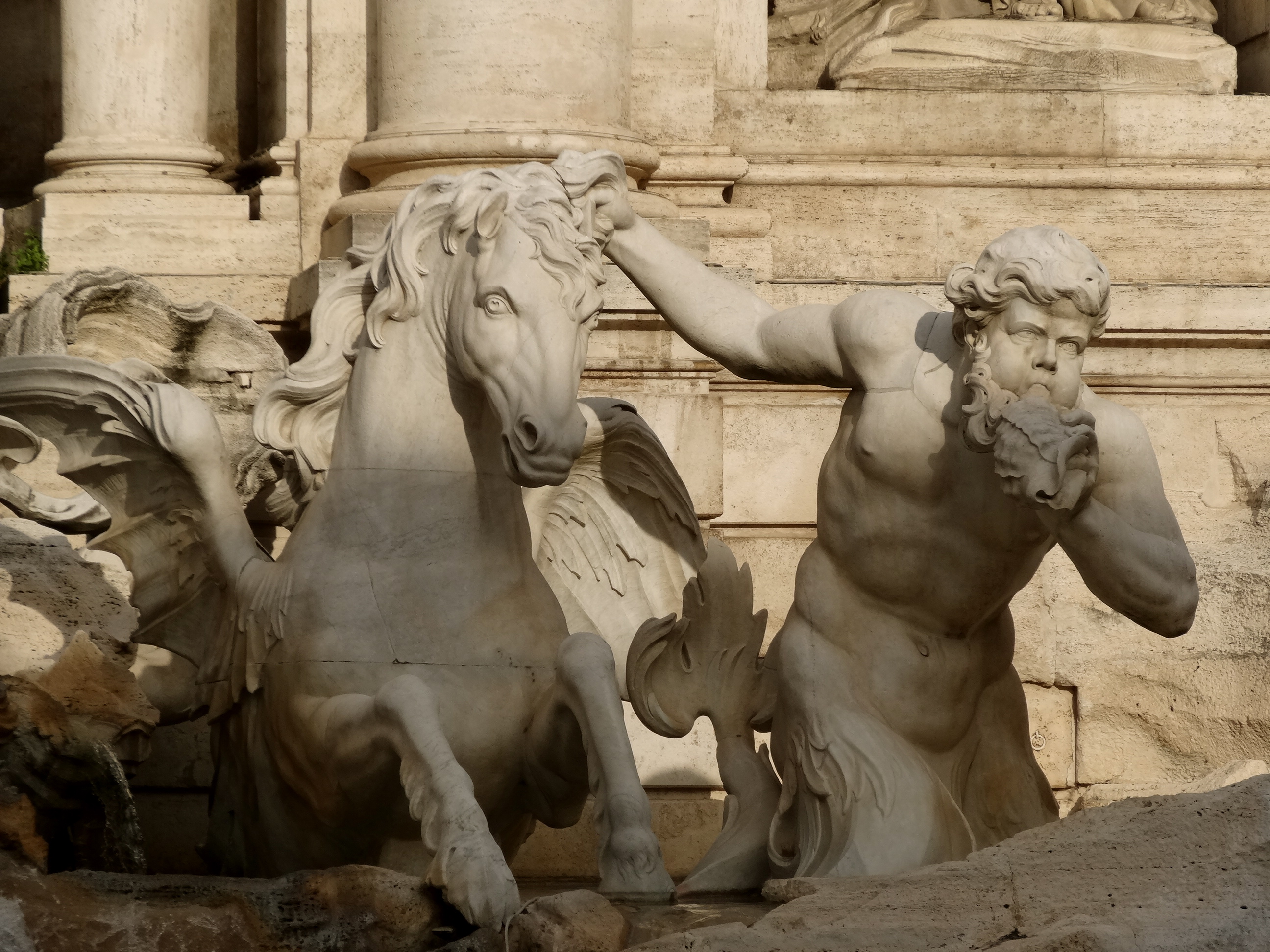
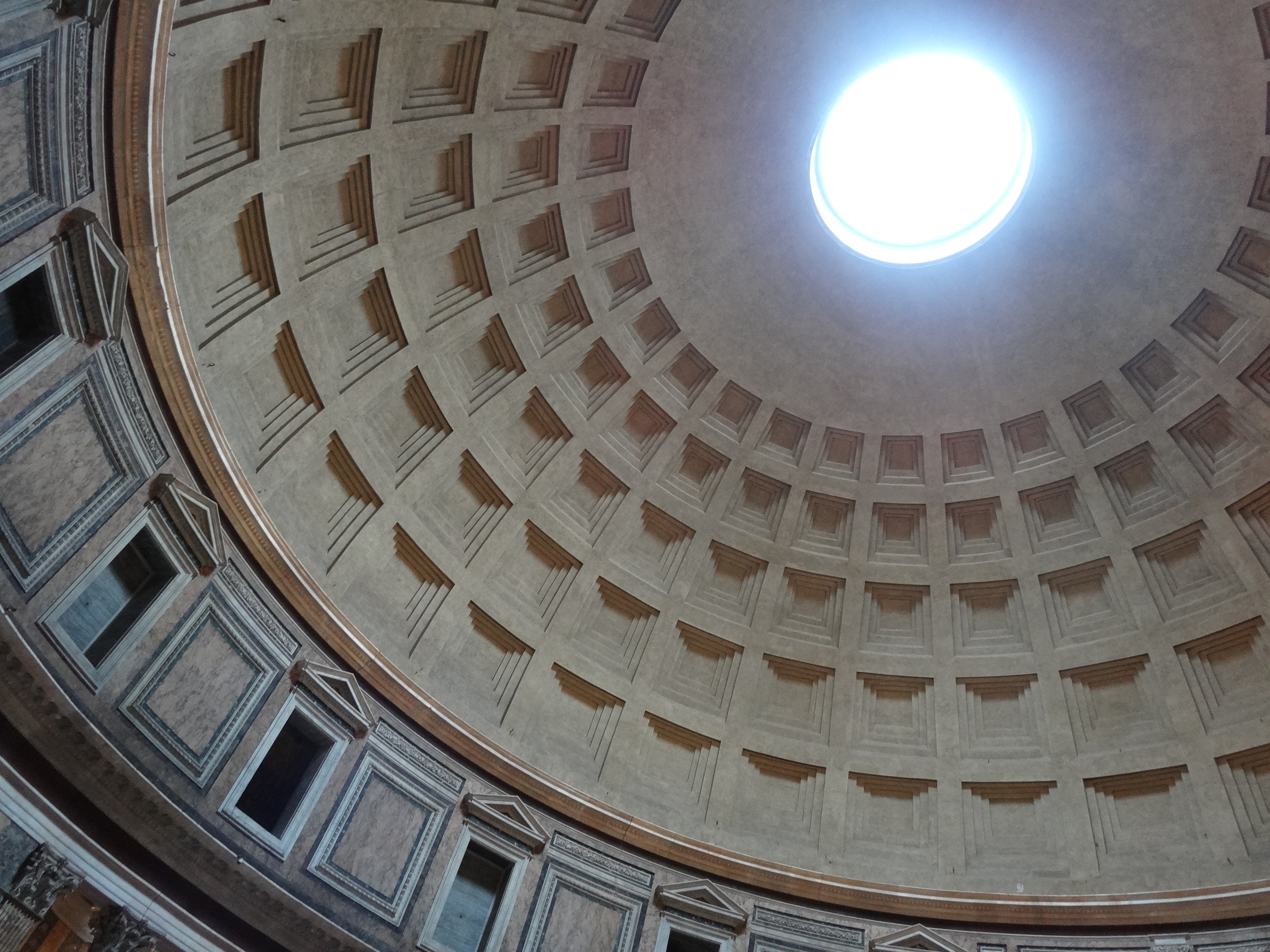
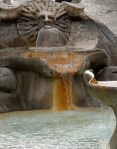
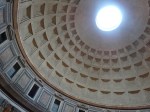
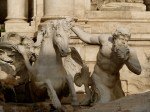
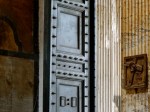
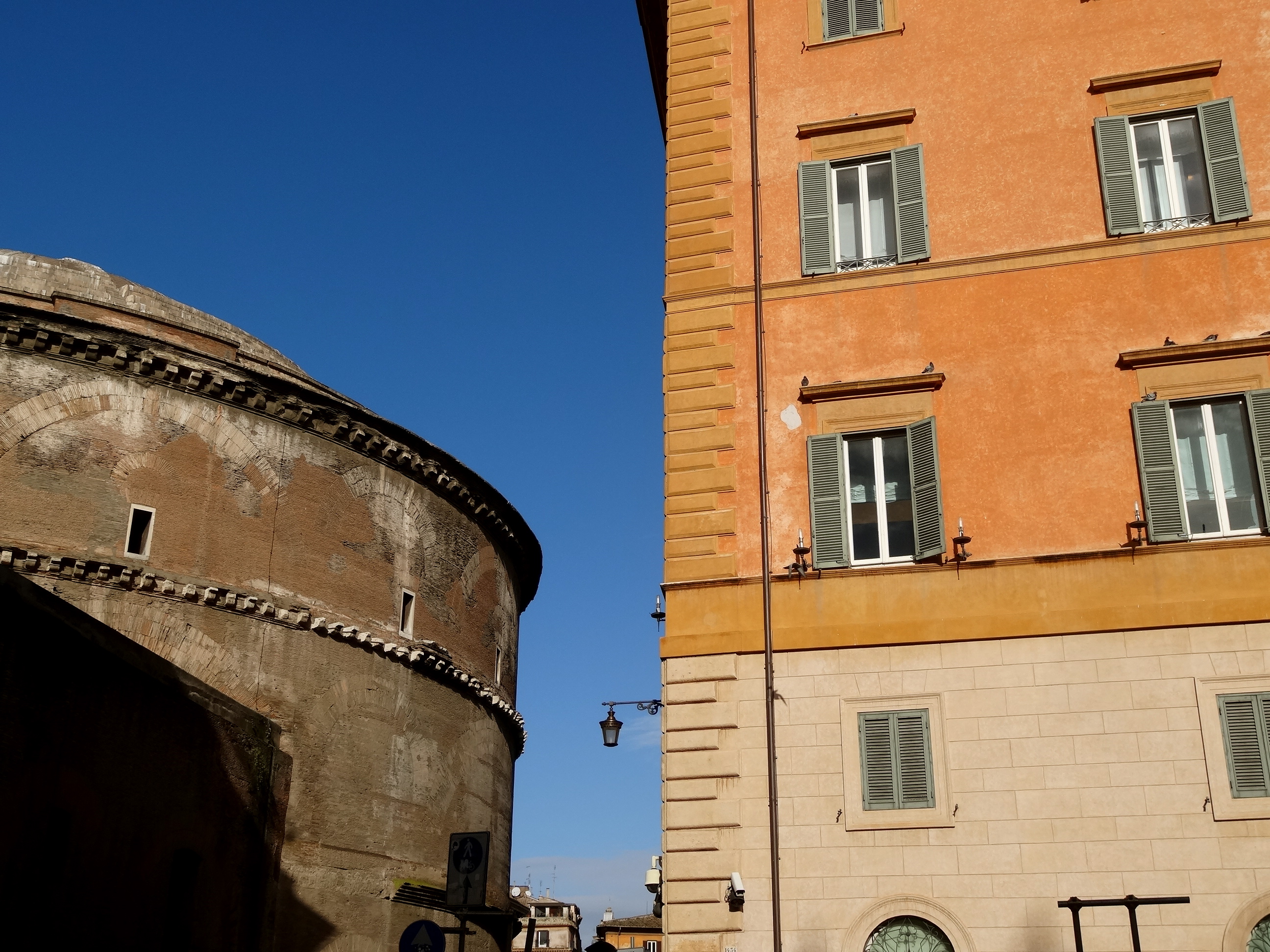
These photos do not aim to expose the most commonplace tourist spots of Rome in all of their magnificent glory, but aims instead to focus in on the smaller details which make those places great, or which might otherwise be missed by the visitor in that moment of complete overwhelming shock at the brilliance of the sights before them. For example, when you are faced with the magnificent Trevi Fountain, you tend to concentrate on the whole flowing mass of this mammoth fountain which appears collectively like a living grotto literally metamorphing from the façade of a baroque palace. However one often misses the fine details of the many sculptures which form the whole, something which these photos attempt to rectify. Likewise my photos of the pantheon concentrate not so much on the brilliant whole, but on the details of the iron door and that incredible roof.

DSC00708 DSC00668DSC01194 DSC00830DSC00697

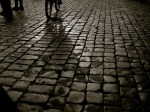
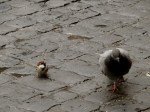
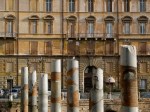
Also amongst these shots are the small features of Rome which make the city such a joy to explore – the cobbled pavements whose monotony is crossed with sunshine and shadows; jazz bands playing upbeat tunes in the Piazza della Rotunda; yellow ochre roman ruins in and around the Forum; and the little birds whose visit to sidewalk cafes is always a pleasure to bestow.

I give you Rome – in photos.

All photos and written content are strictly the copyright of Nicholas de Lacy-Brown © 2014 and The Daily Norm. All rights are reserved. Unauthorized use and/or duplication of the material, whether written work, photography or artwork, included within The Daily Norm without express and written permission from The Daily Norm’s author and/or owner is strictly prohibited. 

Natale Italiano | Rome – Day 3: The Mastery of Bernini

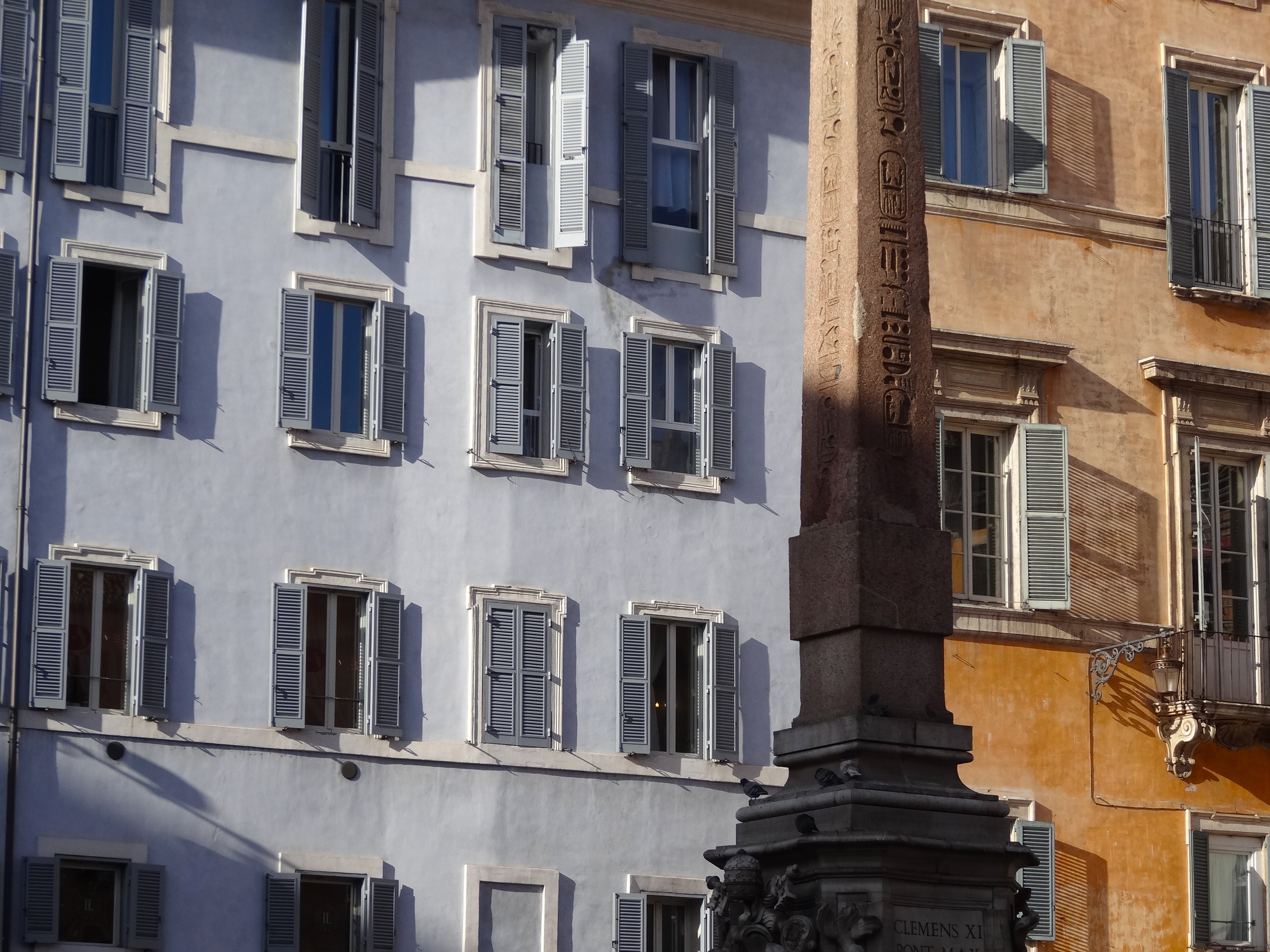
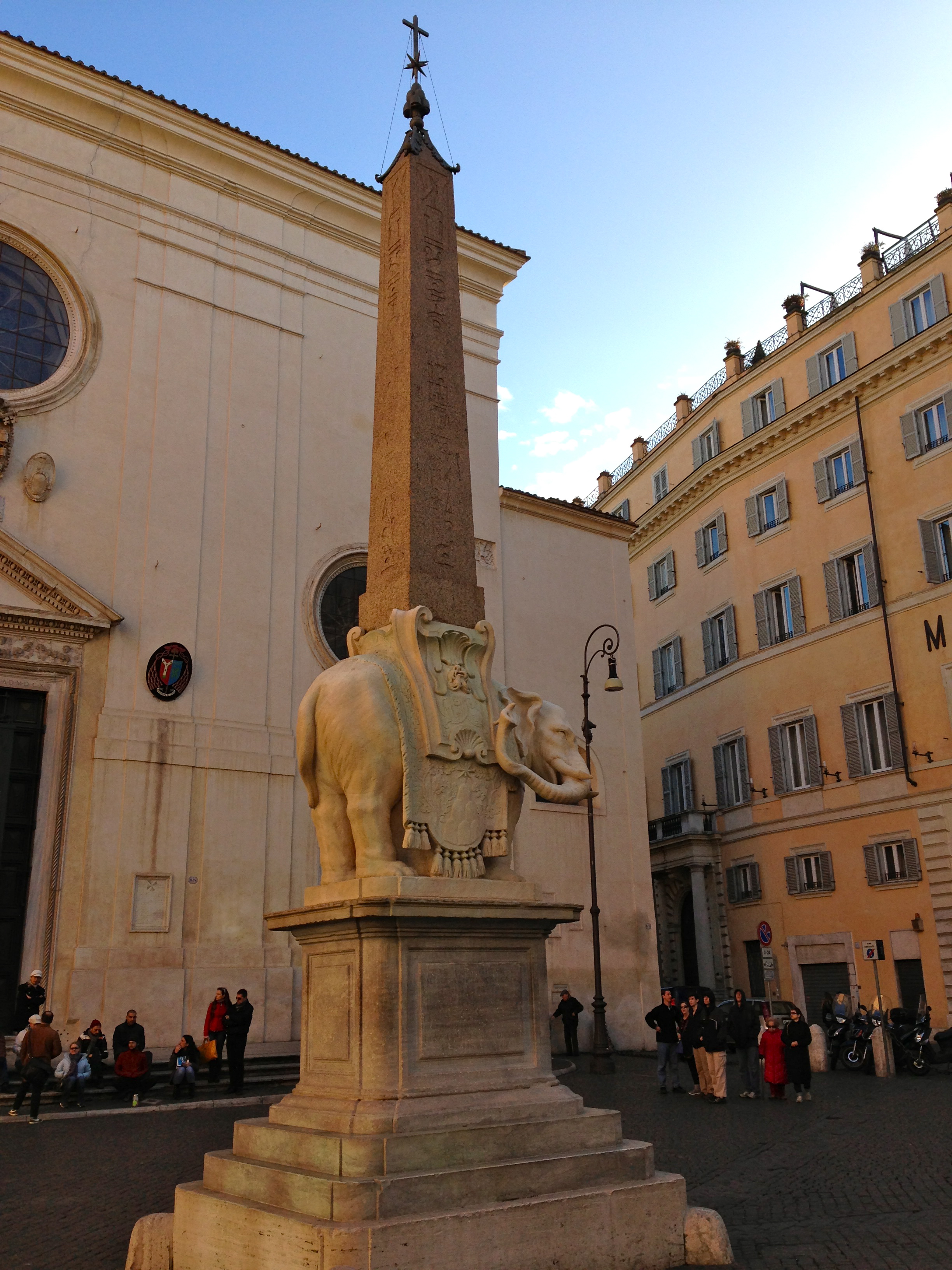
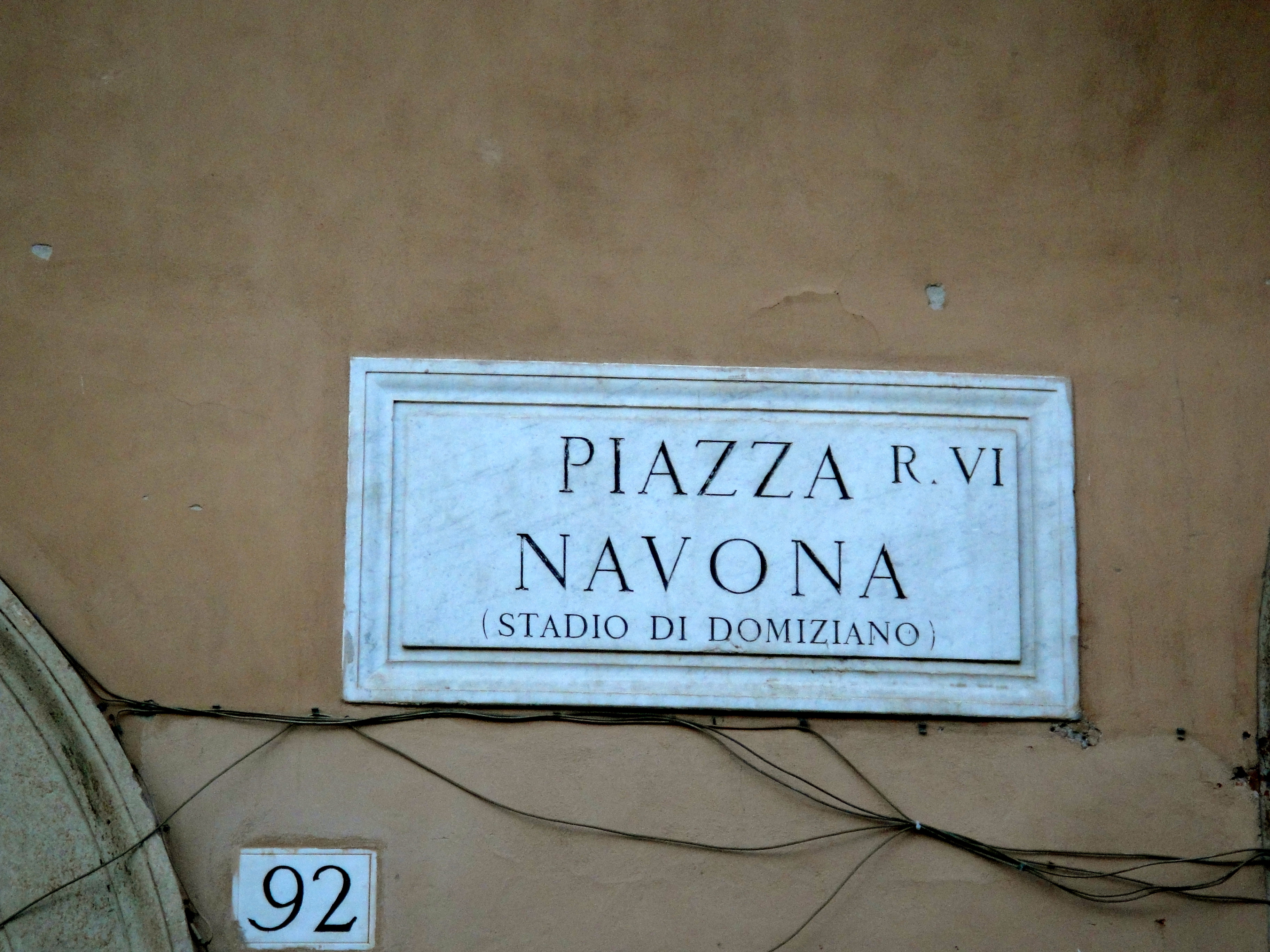
Boxing day was officially renamed “Bernini Day” on 26th December of last year, as we set about discovering the works of this genius which literally pepper the city of Rome with as much generosity as London is filled with red telephone boxes. Starting off with coffee opposite our beloved Pantheon in the Piazza della Rotunda, we only had to walk mere metres past the stunning Roman Temple to the Piazza della Minerva to see Bernini’s rather grand elephant sculpture, showing very little of the strain of the ancient Egyptian obelisk which it carries on its back. Meanwhile, a short walk to the West of the Pantheon took us to the even more spectacular Piazza Navona, where of course that incredible Fontana dei Quattro Fiumi (Fountain of the Four Rivers) by Bernini lords magnificently over the centre of the not so square Square. That incredible gushing fountain, which appears to bring the gods of the rivers to life before one’s very eyes, also carries at its centre an ancient obelisk, albeit that this time the obelisk is far grander, and one of the most impressible of the 13 major obelisks featured in Rome’s most prominent piazzas (although I understand that this once hails from ancient Rome, rather than ancient Egypt).

Minerva and Navona – two sights of Bernini’s mastery with marble

IMG_6492 DSC01198 IMG_6835 DSC00901 DSC00744 DSC00904 IMG_6602

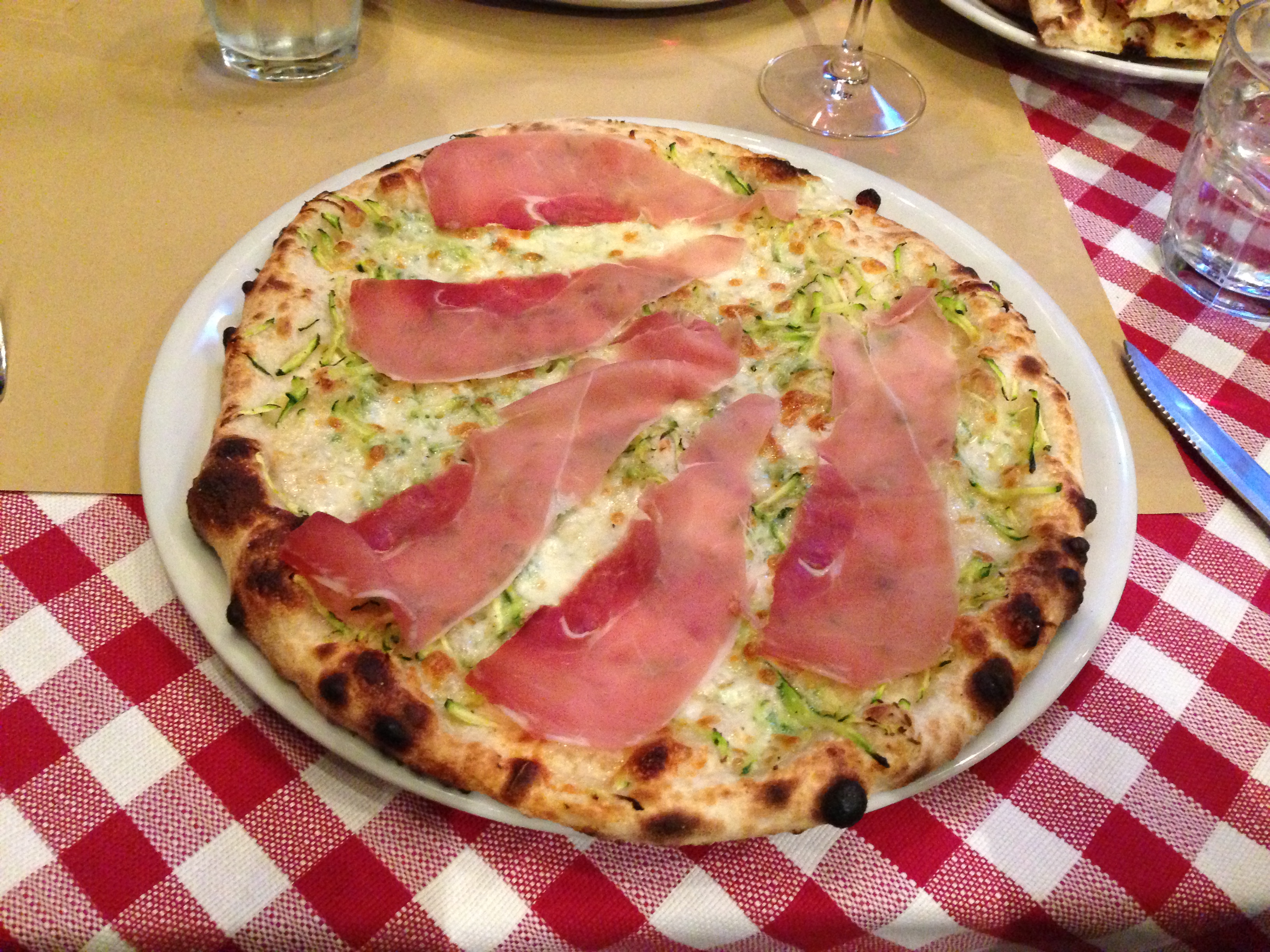
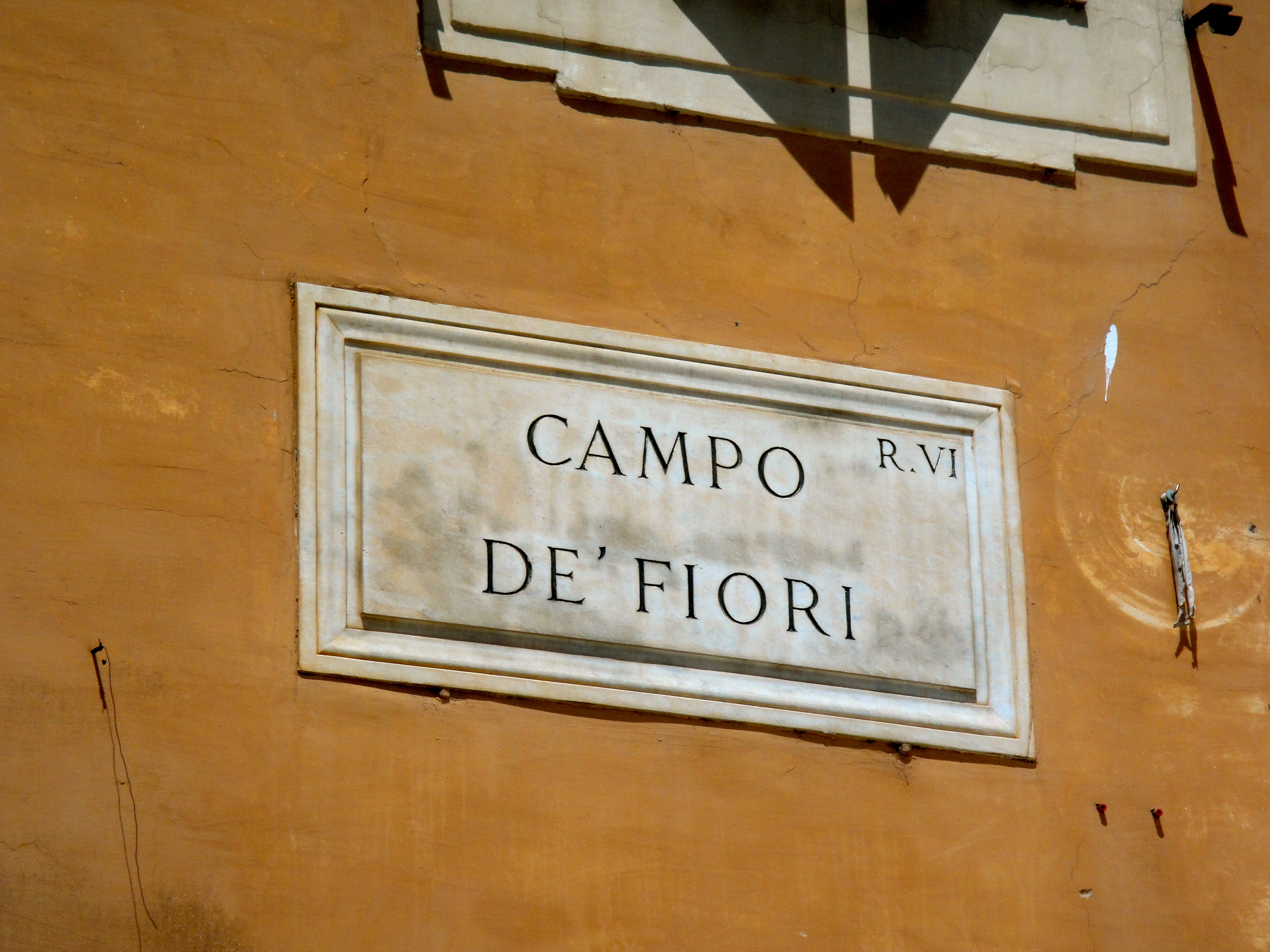
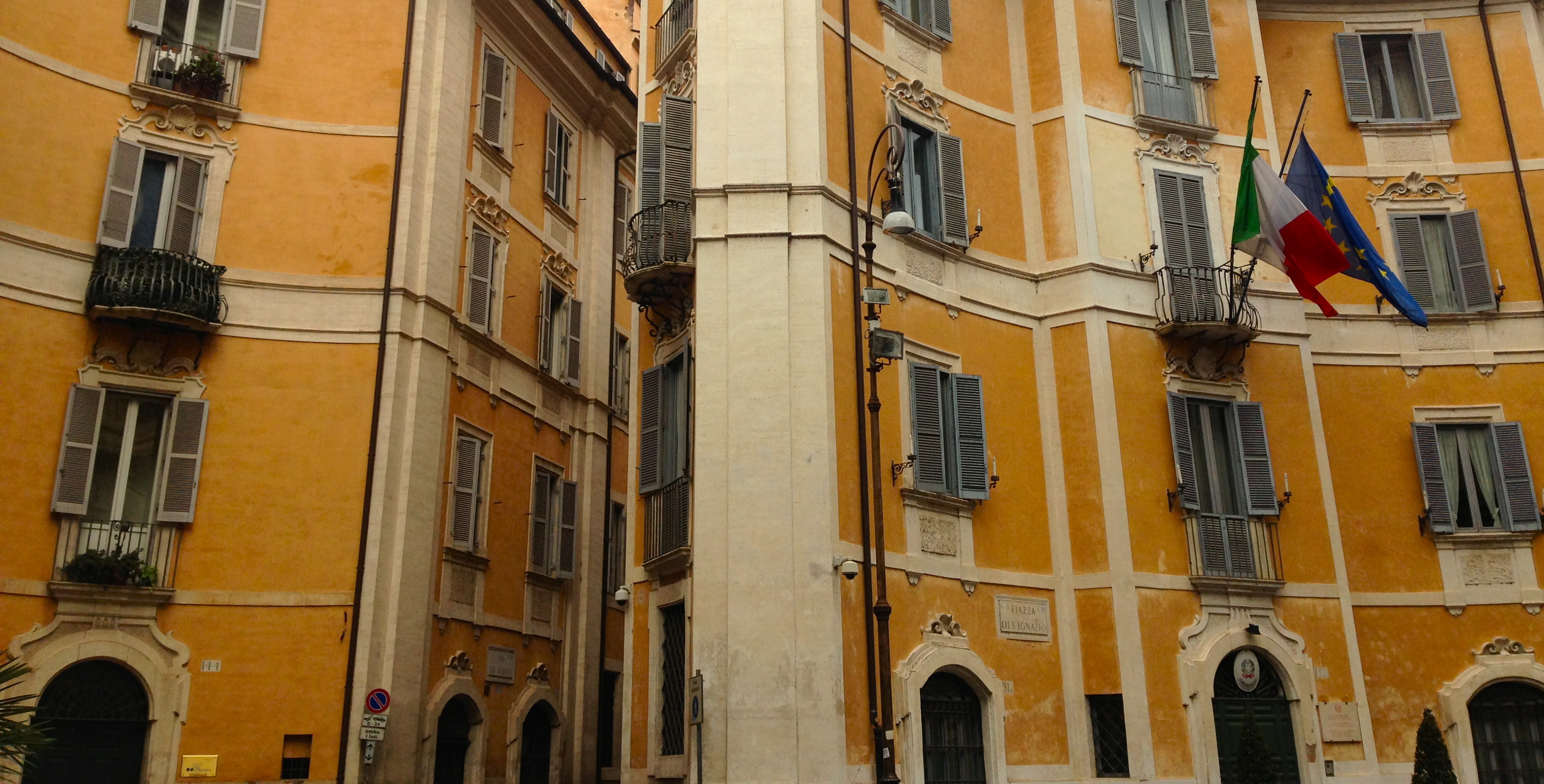
All this Bernini sightseeing had given us a taste for something a little more appetising to set our sights upon, and the proximity of the bustling Campo de’ Fiore meant lunch was not far at hand. The Campo, which translates as “field of flowers” is one of my favourite spots in Rome, particularly in the warmer weather when the encircling buildings are soaked with sunshine, and in the square below, market stalls selling the freshest produce and flowers burst into life. On this Boxing (sorry, Bernini) Day, the Campo was relatively quiet, but its restaurants happily open for business – the crispy Pizza with speck and zucchini which followed our entry into one such establishment was truly a delight worthy of this food-lover’s paradise.

IMG_6628 DSC01214 DSC00929 DSC00935 IMG_6640

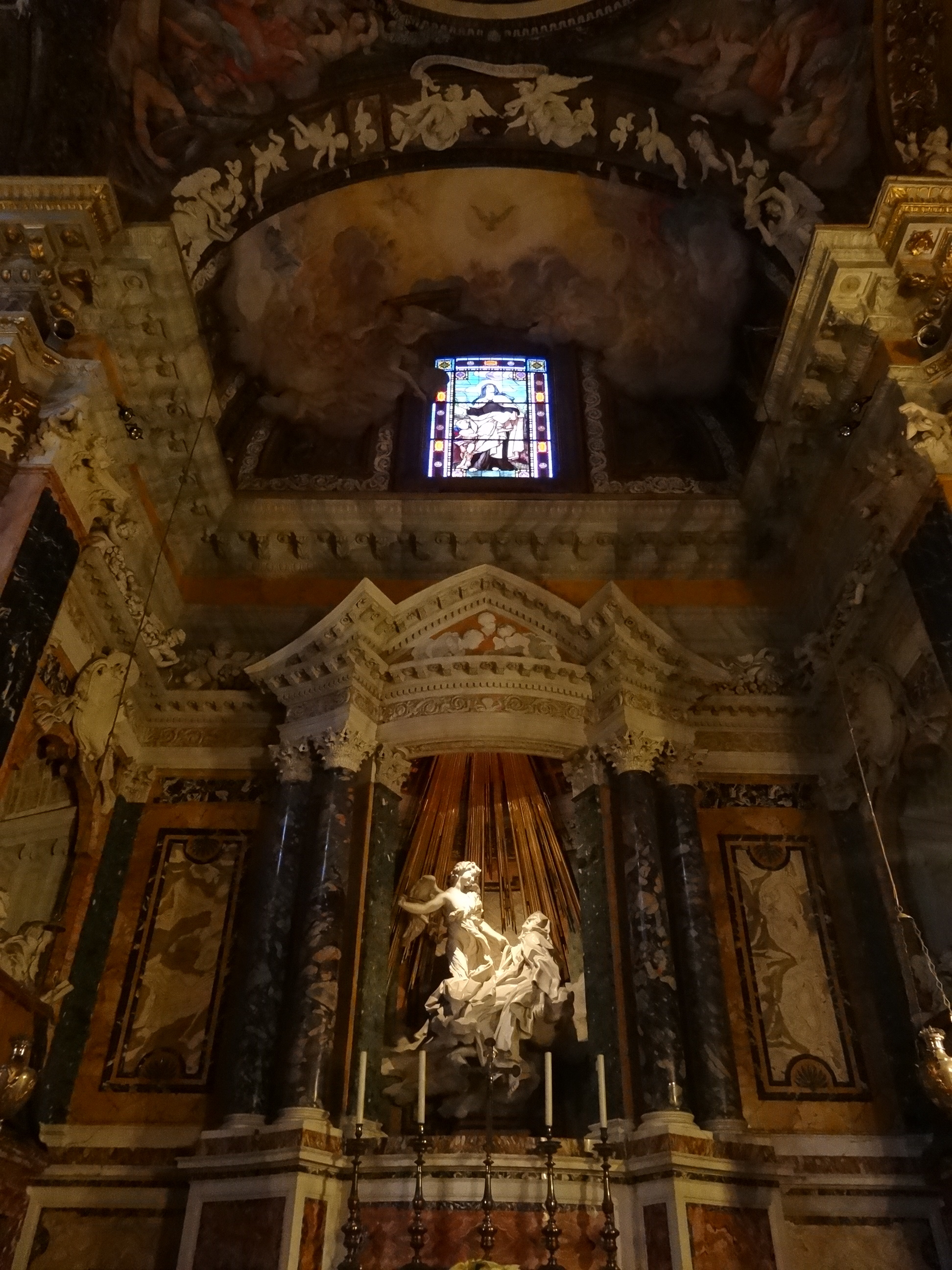
Back to business in the afternoon, and after a sad farewell to my partner’s dearest Mama, we took advantage of the last dying hours of Roman light to make a visit to another of Bernini’s renowned masterpieces, The Ecstasy of Santa Teresa, contained within the Cornaro chapel of the Santa Maria della Vittoria. This stunning sculpture, which appears to show the figures of St Teresa and an angel floating on clouds made of marble, depicts an episode in the life of Teresa of Avila, a mystical cloistered Discalced Carmelite nun, who described a visitation by an angel who appeared to stab her with a golden spear filling her with the pain and ecstasy of god’s love. Lit from above by a little hidden window which reflects off the gilded stucco rays behind the sculptures, this work is truly a masterpiece of Bernini’s oeuvre, and perhaps the most theatrical of all his works.

DSC00981 DSC00987

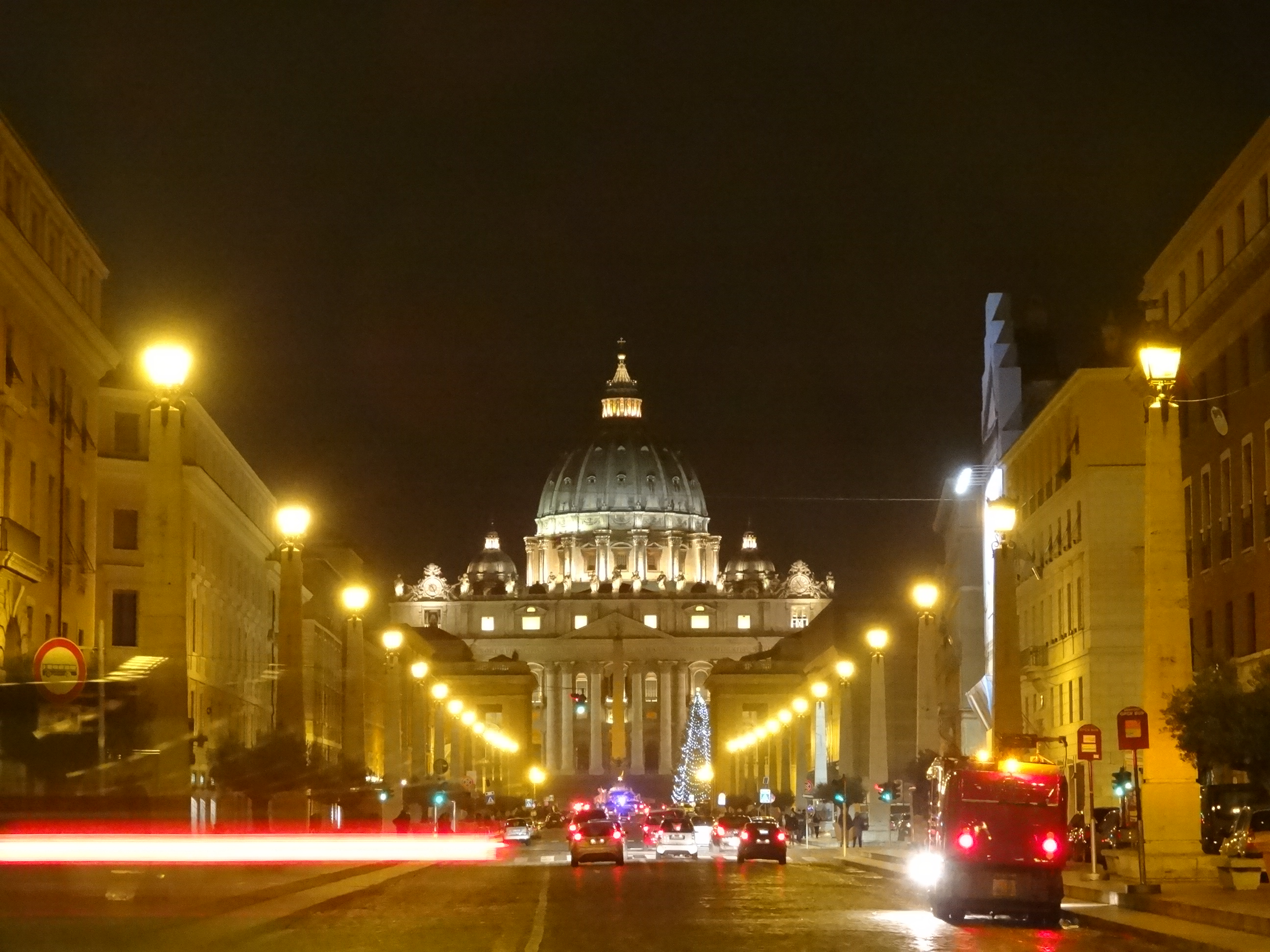
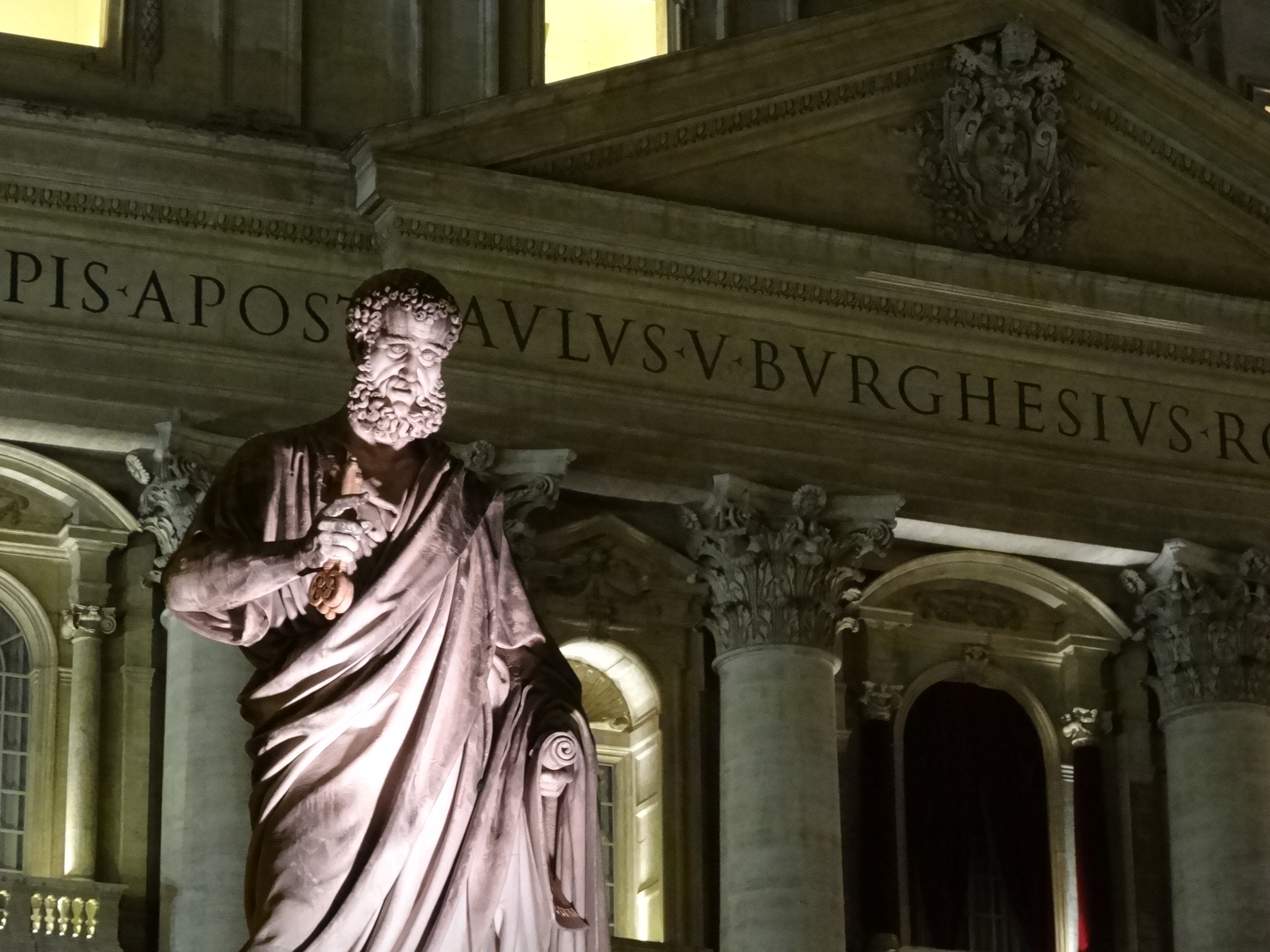
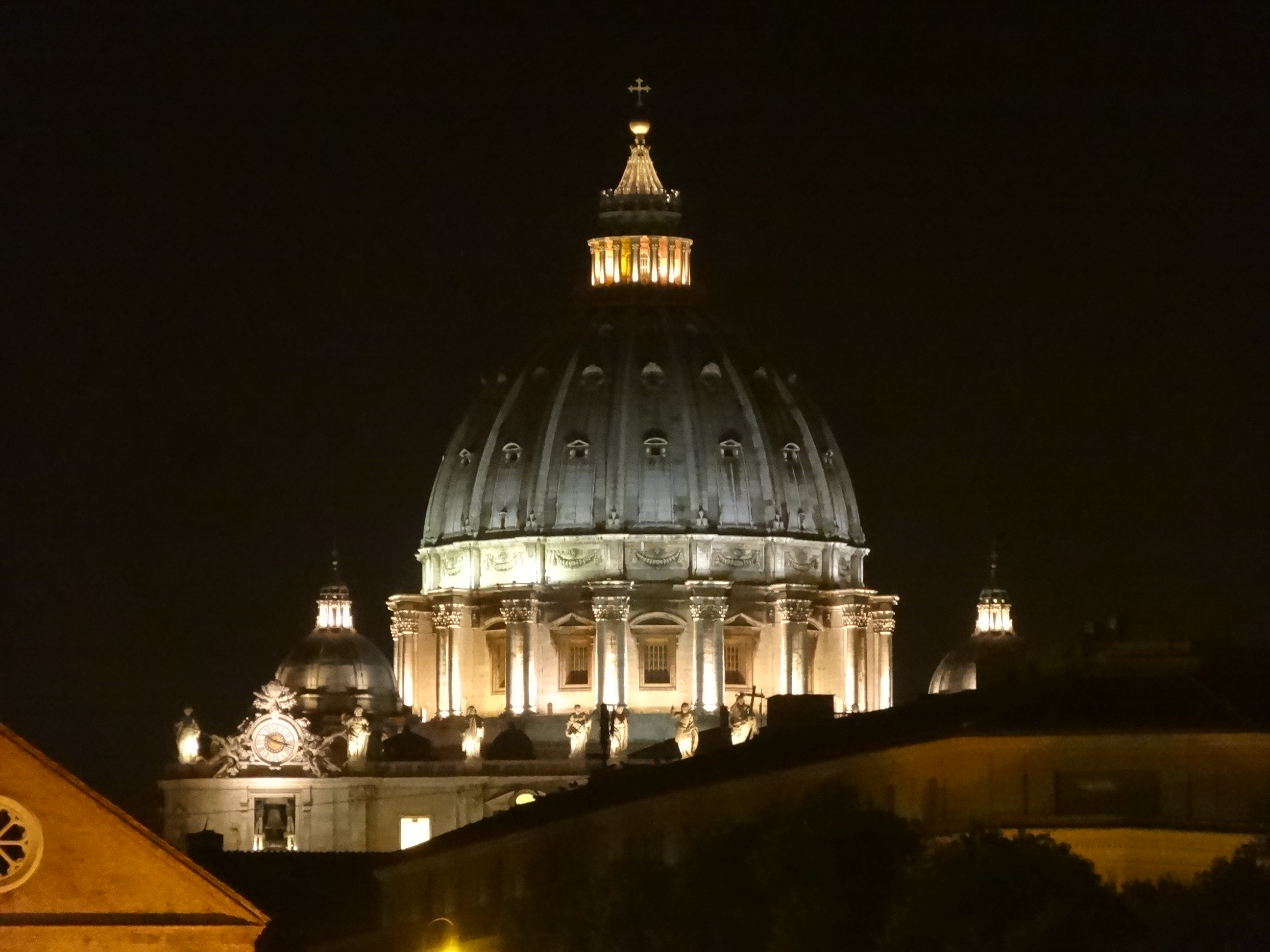
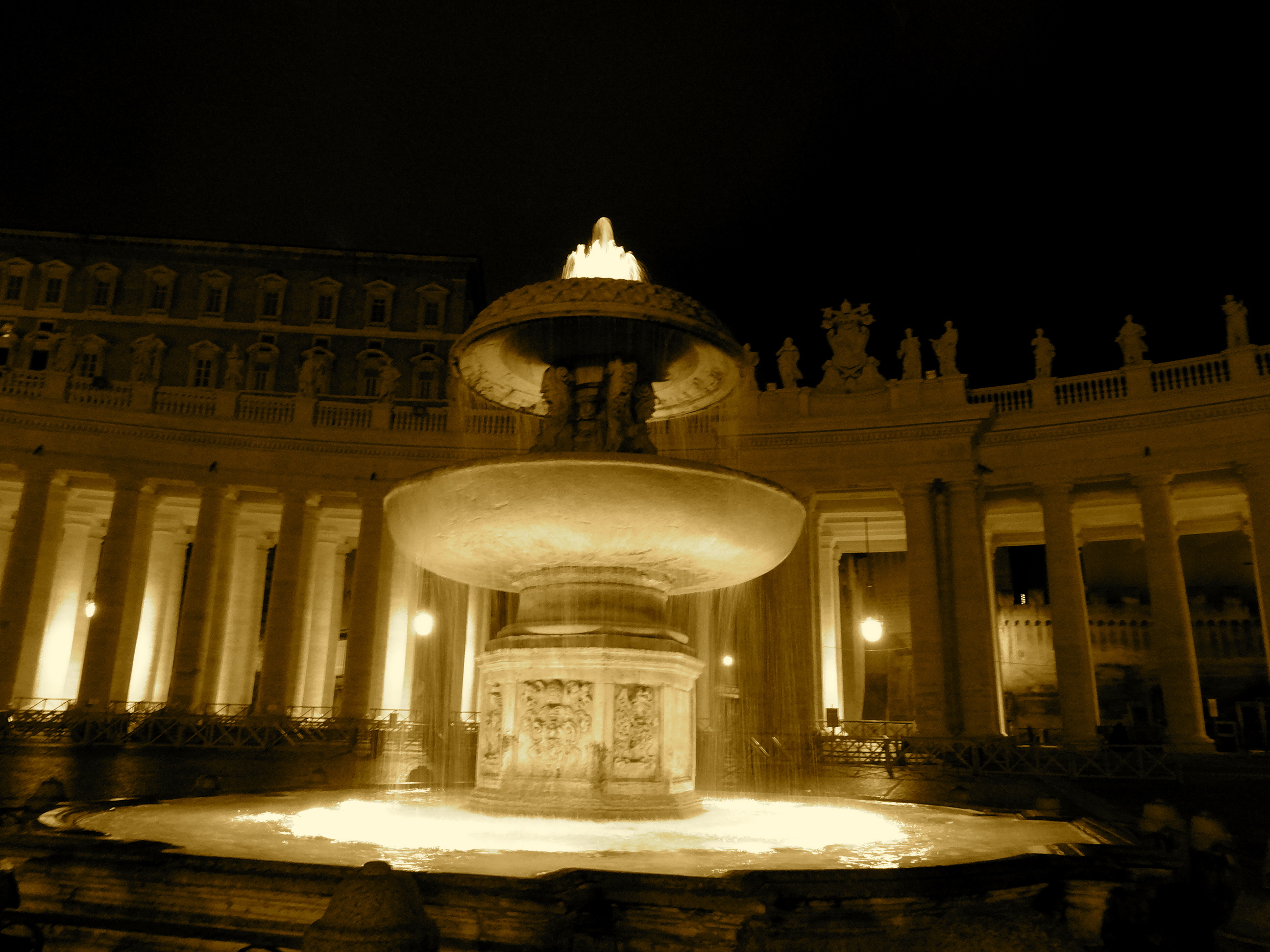
For our final foray into the masterpieces of this genius of marble, we went to see Bernini’s mastery, not over sculpture, but over architecture. Yes, after a final Roman dinner in the atmospheric Ristorante Babette in the Via Margutta, we headed to a place whose structure is indebted to the genius of Bernini – St Peter’s Basilica in the Vatican. This central seat of Catholicism revels in the theatre of religious power and position, and for any visitor walking along the Via della Conciliazione towards St Peter’s imposing façade, there can be no doubting the monumental aspect of this approach. However, surely the most imposing and dramatic feature is the huge colonnaded piazza in front of St Peter’s, a piazza which provides ample space for all the visiting faithful, and further underlines the scale and magnitude of this centre of the Catholic Church. And who was responsible for the architectural design of the palazzo with its vast double rowed colonnades? Why Bernini, of course.

Nighttime walk to Vatican City

DSC01103 DSC01143 DSC01080 DSC01132 DSC01064

And with that monumental encounter with one of Bernini’s final masterpieces, we ended our last full day in the magnificent city of Rome, a city which provided us with such a rich festive experience, and whose streets and squares continued to buzz, despite the passing of the Christmas season. The following day, we would pack up our bags (and my little pop up Christmas tree) once again, and head further South – to Napoli.

DSC01228

All photos and written content are strictly the copyright of Nicholas de Lacy-Brown © 2014 and The Daily Norm. All rights are reserved. Unauthorized use and/or duplication of the material, whether written work, photography or artwork, included within The Daily Norm without express and written permission from The Daily Norm’s author and/or owner is strictly prohibited. 

Natale Italiano | Rome – Day 1: Arrival by sunset

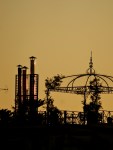
We arrived in Rome as the sun was setting behind Vatican city; the golden yellow and deepening tangerine skies casting a stunning glow behind the silhouette of St Peter’s and the domes and cupolas of ancient Rome. Our arrival to the city amongst the sun’s warm luminescence which gilded all of Rome with a hopeful uplifting lustre, was the happy ending to a transit as smooth as journeys can be – starting out by boat from the Rialto Bridge in Venice, out across a misty lagoon to the Marco Polo airport and onwards onto a swift flight down to Rome Fiumicino and a train into Stazione Termini – the happiest of starts to the second chapter of our festive Italian adventure.

DSC00462

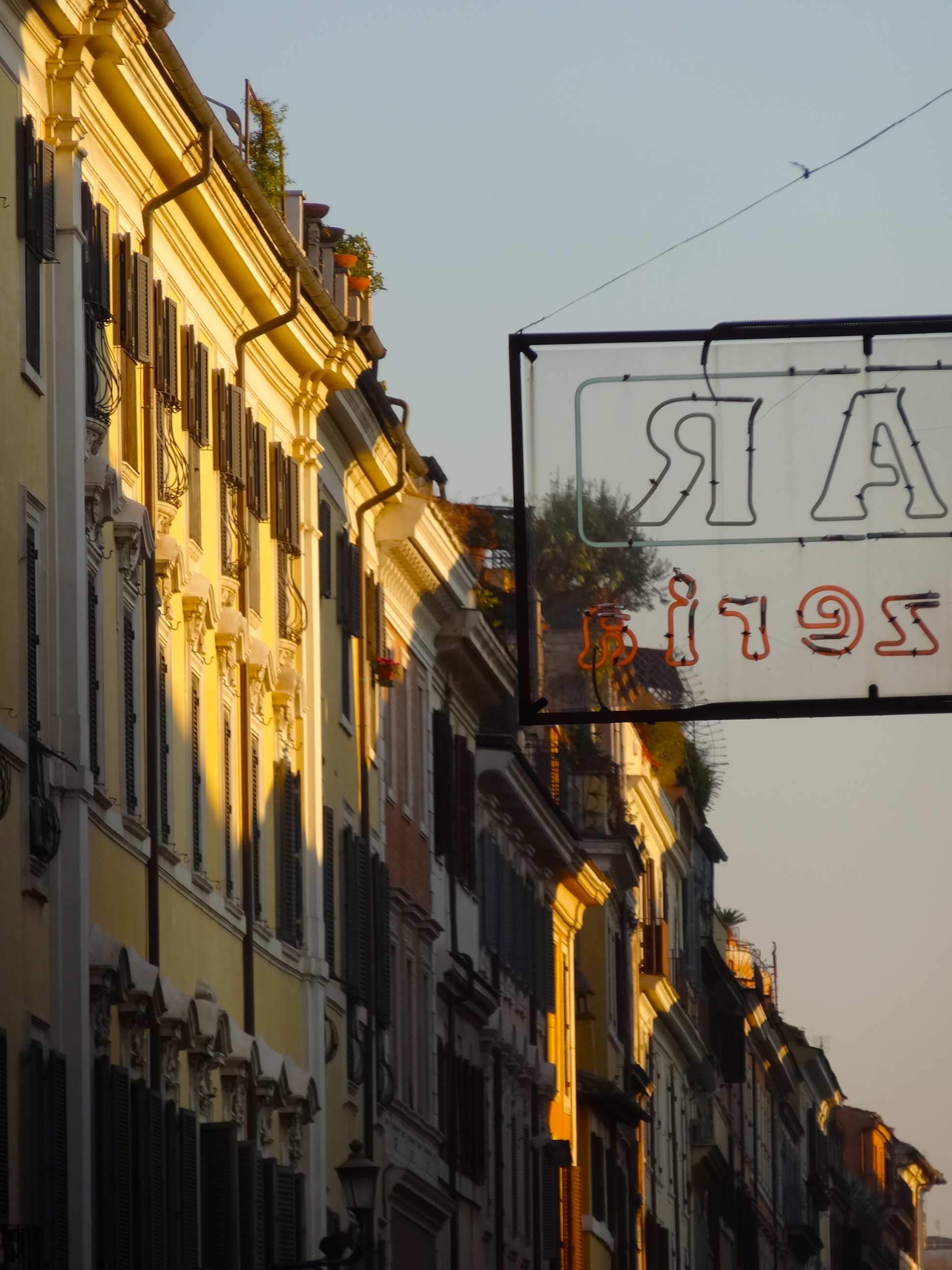
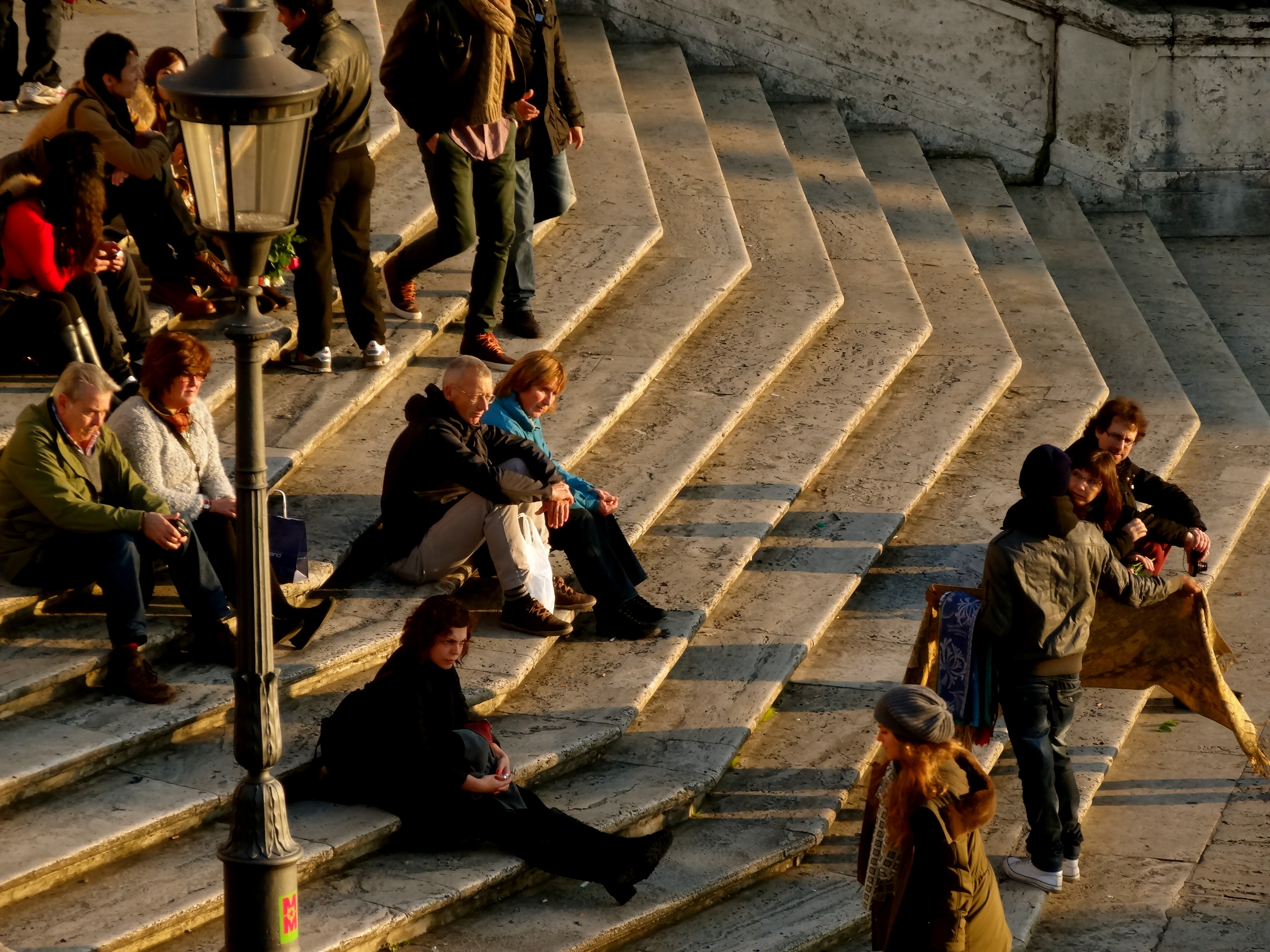
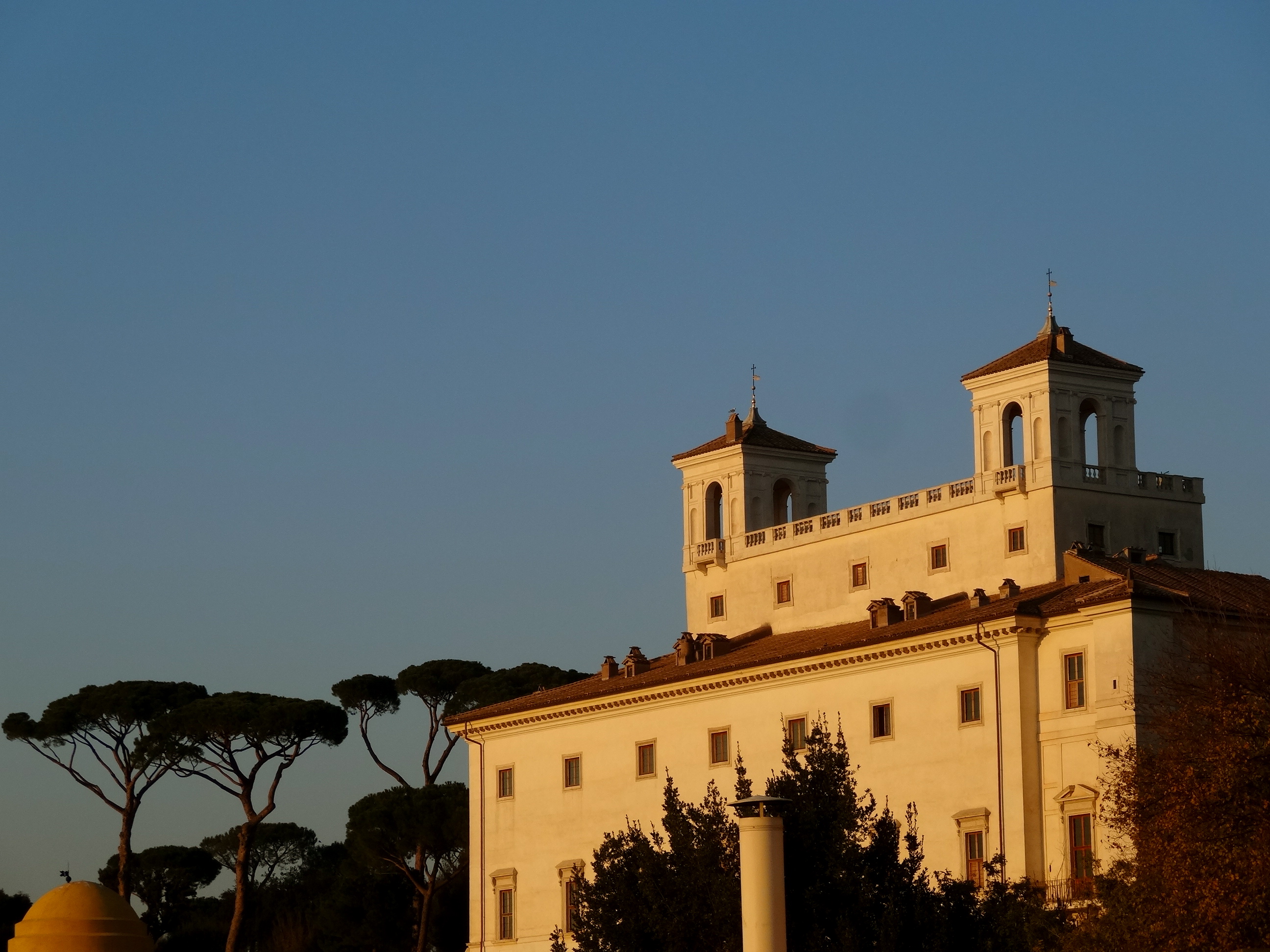
Thrilled to be so swiftly and comfortably installed into the perfectly located Hotel Babuino 181, only minutes from the Spanish Steps, we left unpacking for later in our eagerness to run out onto the cobbled streets of Rome to enjoy the last rays of sun that the day was providing. After all, we had been three days in Venice with not a ray of sun to be seen, such was the density of mist which shrouded the city. But in Rome, all seemed alive under the vibrant blue skies of a winter’s afternoon sundown – hard to believe that this was Christmas Eve. For us it felt like the dying hours of a Spring day, a thought which could not escape us as we sat, but minutes later, upon the terrace of a ritzy hotel bar adjacent to the top of the Spanish steps, watching the seemingly odd combination of sunshine and vibrant mediterranean colours, with the Christmas tree which was installed onto the centre of the steps.

Dying hours of Roman sunshine

DSC00471 DSC00467 DSC00466 DSC00503 DSC00510 DSC00464

People watching on the sun-drenched Spanish steps

DSC00473 DSC00487 DSC00502 IMG_6332 DSC00505 DSC00488DSC00499 DSC00508

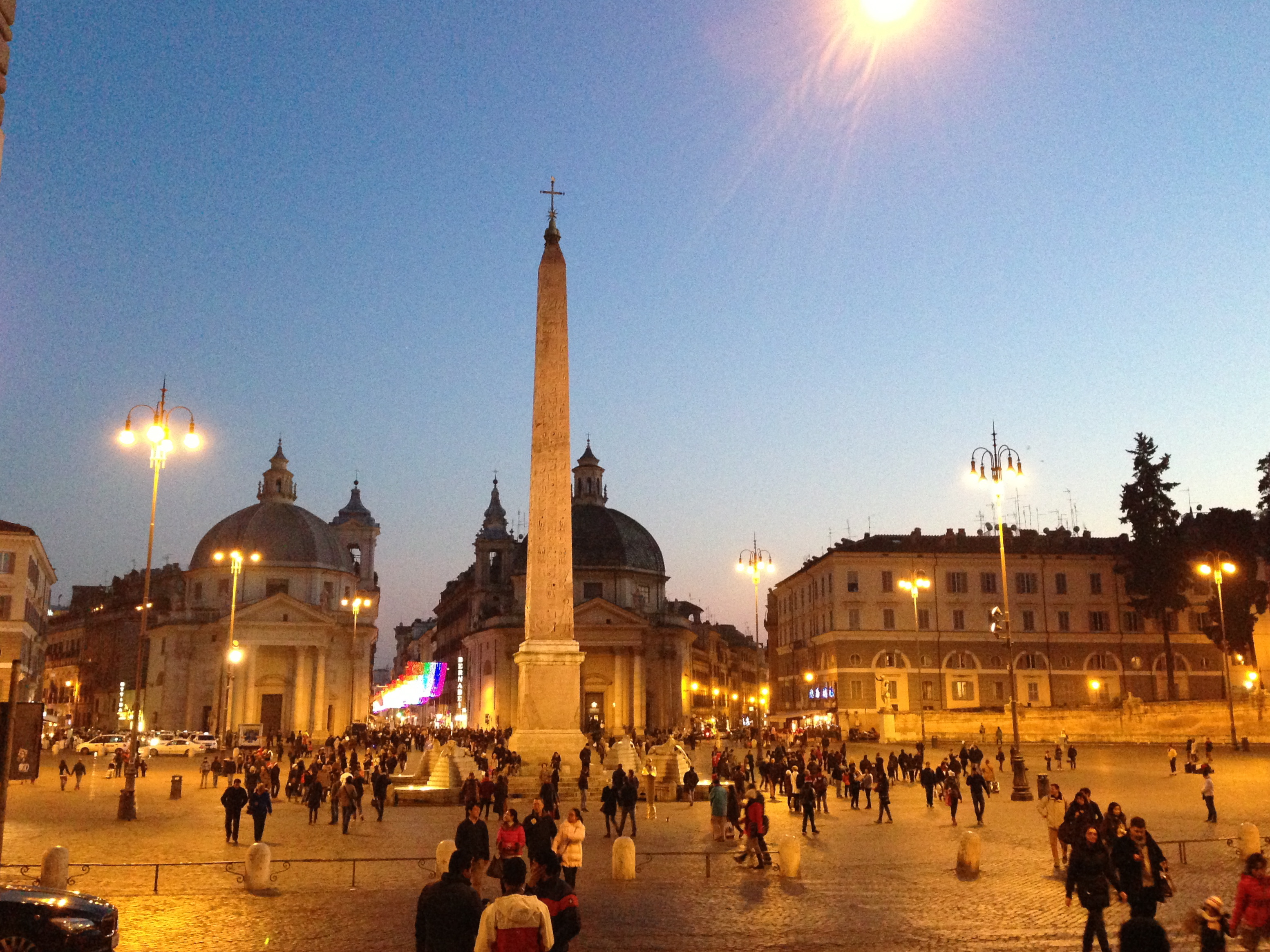
After indulging in the ultimate exercise of people watching in this, the classiest of Roman quarters, with a glass of prosecco in hand and a camera in the other, we headed down into the bustling streets of a Rome but hours before the feast of Christmas. In the chic shopping streets off the Via del Corso, the excitement of Christmas Eve as families and friends scuttered energetically from shop to shop was tangible, and in the nearby Piazza del Popolo, crowds hung around the grand obelisk at its centre, full of the spirit of the holiday season. For us, having a few hours spare before a dinner reservation, we headed across the square to Santa Maria del Popolo to accomplish something which I had intended to carry out when I was last in the city in 2010 but had been thwarted by renovations – to see the two stunning works by Caravaggio which can be found in a small side chapel in this otherwise innocuous church.

IMG_6342 IMG_6355 IMG_6343

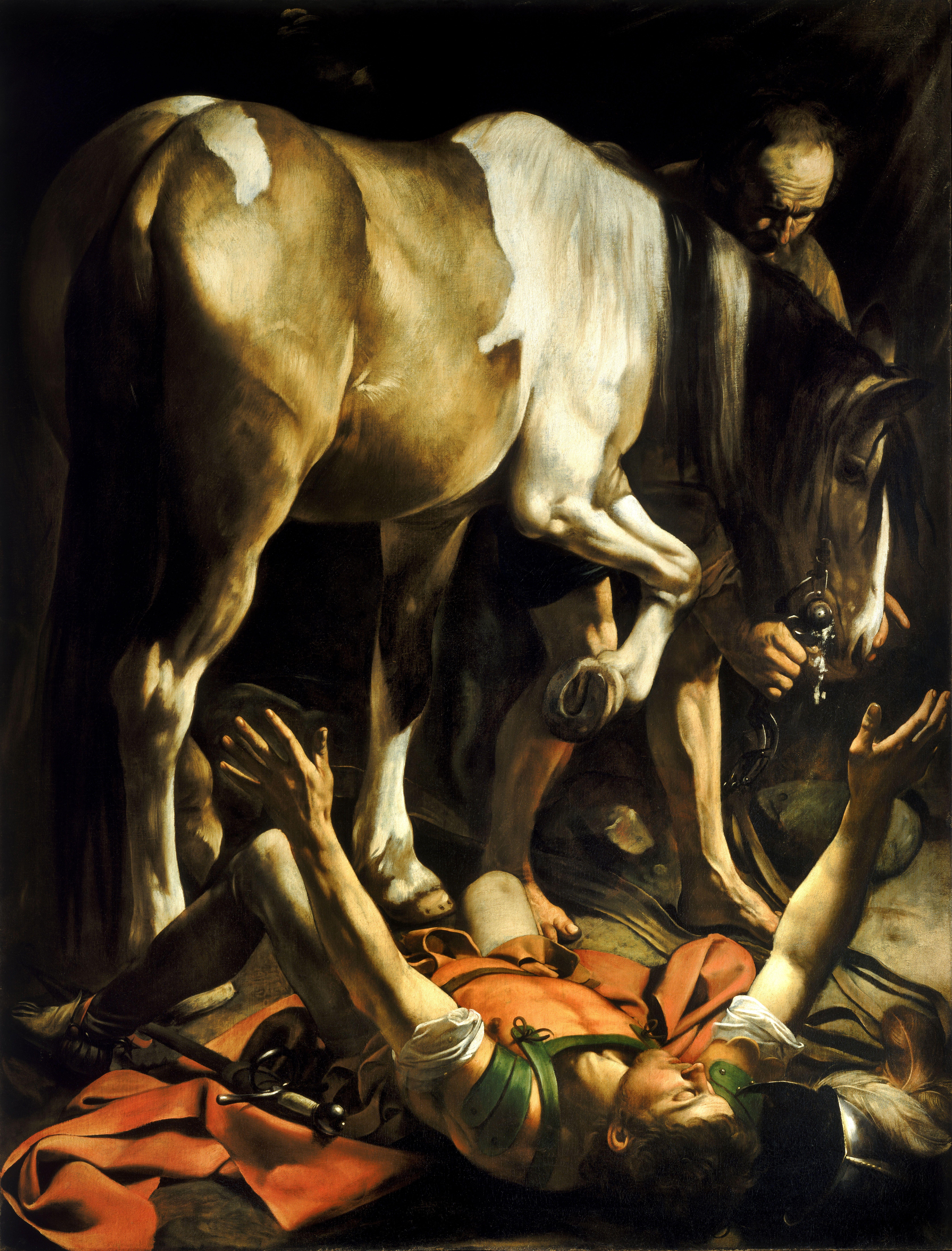
Like most of Caravaggio’s works, these two: the Conversion of St Paul and the Crucifixion of St Peter are utterly stunning works; Caravaggio’s exercise of chiaroscuro as dramatic as ever, while the skillful foreshortening of St Paul falling out towards us and St Peter shown foreshortened on the cross allowing audiences to become utterly absorbed in the paintings – that is at least when we could see them – for this being Rome, we had to insert a coin in a light box in order to have the otherwise shadowed works lit for all of a minute (and us being us, we had no coins on us – meaning that we had to wait for some other earnest Caravaggio fan to come along and supply lighting on our behalf…).

Caravaggio’s Popolo masterpieces

Caravaggio_-_Martirio_di_San_PietroConversion_on_the_Way_to_Damascus-Caravaggio_(c.1600-1)

Read more

Natale Italiano | Venice – A photographic miscellany

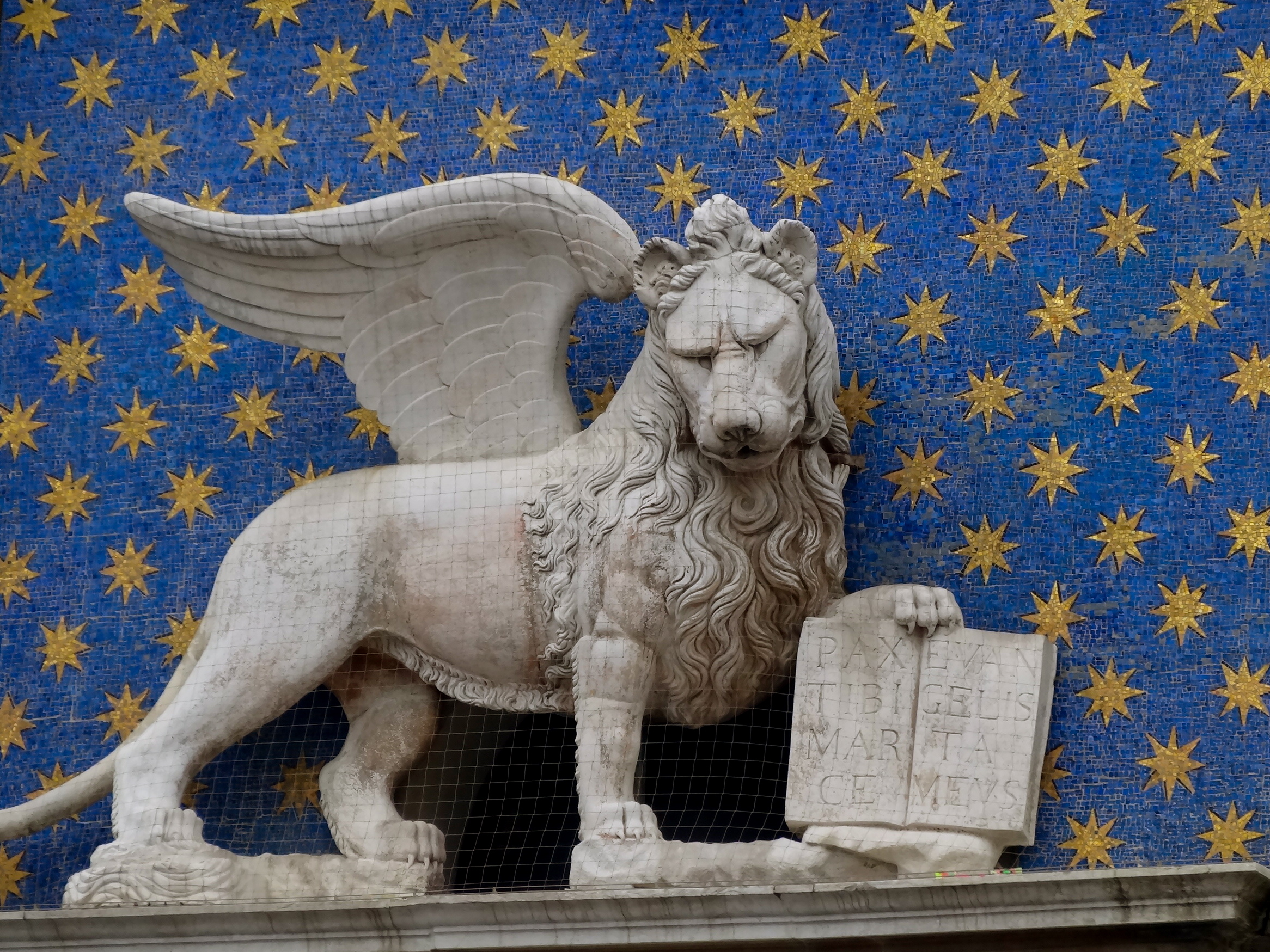
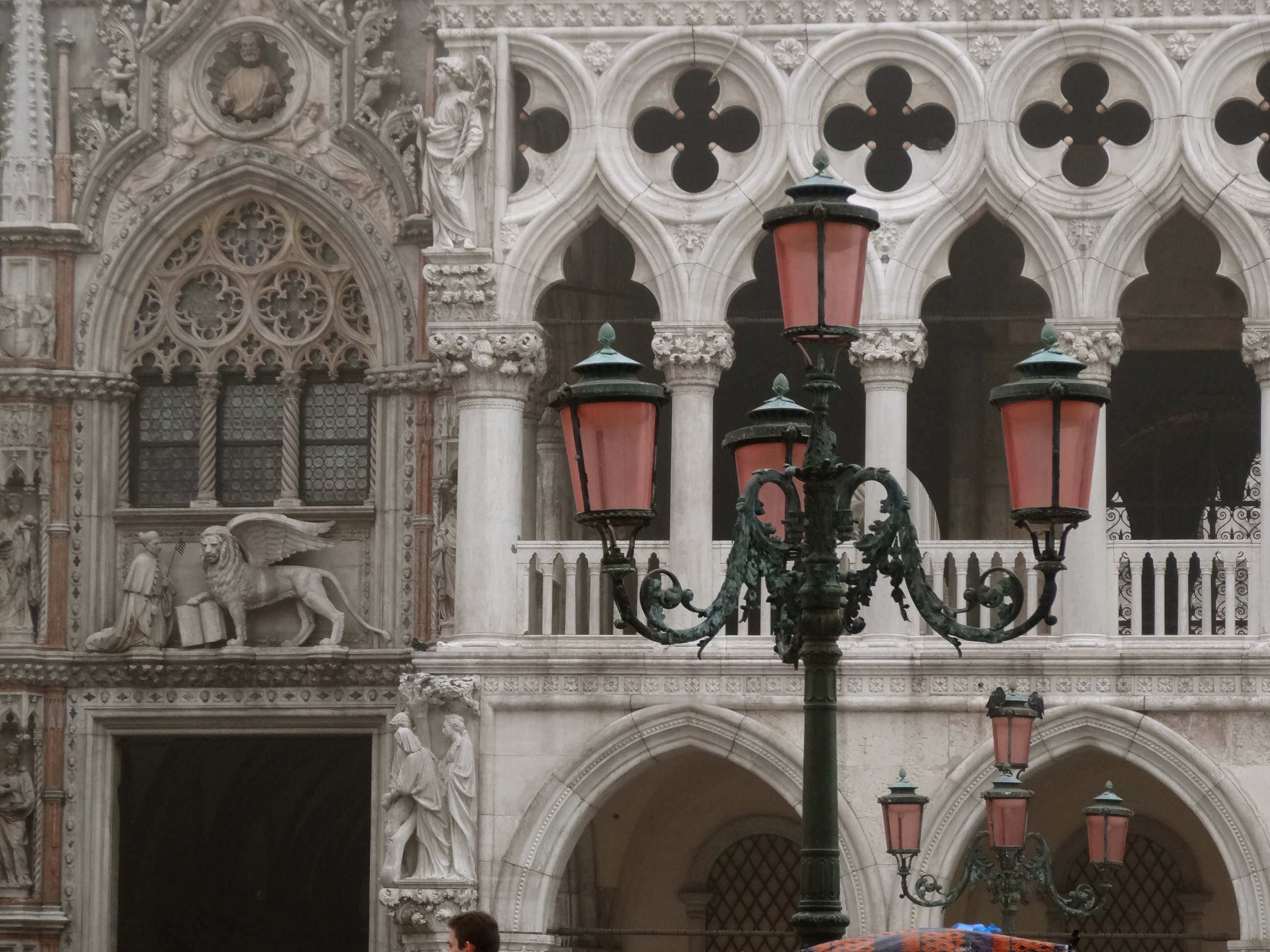
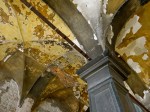
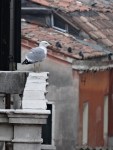
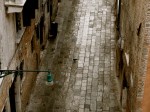
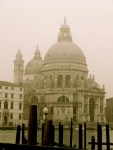
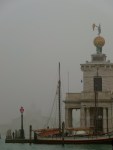
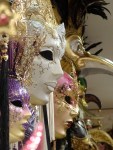
From rose-tinted street lamps and highly-glossed gondolas, to gilded, feathered and hand-painted masks and the much weathered but still glorious colonnades of the Piazza San Marco; this is an album of miscellaneous photos of Venice captured on my recent travels, and with which I shall bid adieu to my tales of Venice on this blog. But despite my finding no better collective title for this set than “miscellaneous”, they are nonetheless bound by one harmonious element: the glory of La Serenissima herself. Venice: City of bridges, of masks, of canals; City of the winged lion, of gilding and of glass. It’s a city whose beauty transfers so easily to all forms of artistic expression. And in photography, it is possible to capture the mood and elegance of the city whatever the weather.

DSC00265 DSC09886 DSC09972 DSC09881 DSC00336

Because every turn of every corner in Venice is like some kind of stroll into wonderland, almost like a make-believe theme park manufactured to pleasure the senses rather than fulfil any kind of logical purpose, there were opportunities to take photographs almost every second of our time on the island city. And so limiting my set of some 1,300 photos down to a featured few has been both a challenge and a delight. But of those which made the cut, I think a sense of the unique mysticism of the city shines through, not only in the deeply atmospheric shots of the lagoon shrouded in mist and the ancient artefacts which pepper the city, but also in the glimpses of those enigmatic masks, calmly gliding gondolas, and the neglected facades of once grand buildings whose every crack and rupture tells a hundred stories of the abundantly rich and decadent history of this city.

I give you Venice: in photographs

See you soon… in Rome!

All photos and written content are strictly the copyright of Nicholas de Lacy-Brown © 2014 and The Daily Norm. All rights are reserved. Unauthorized use and/or duplication of the material, whether written work, photography or artwork, included within The Daily Norm without express and written permission from The Daily Norm’s author and/or owner is strictly prohibited. 

Natale Italiano | Venice – Day 3: Tintoretto Treasure Trove

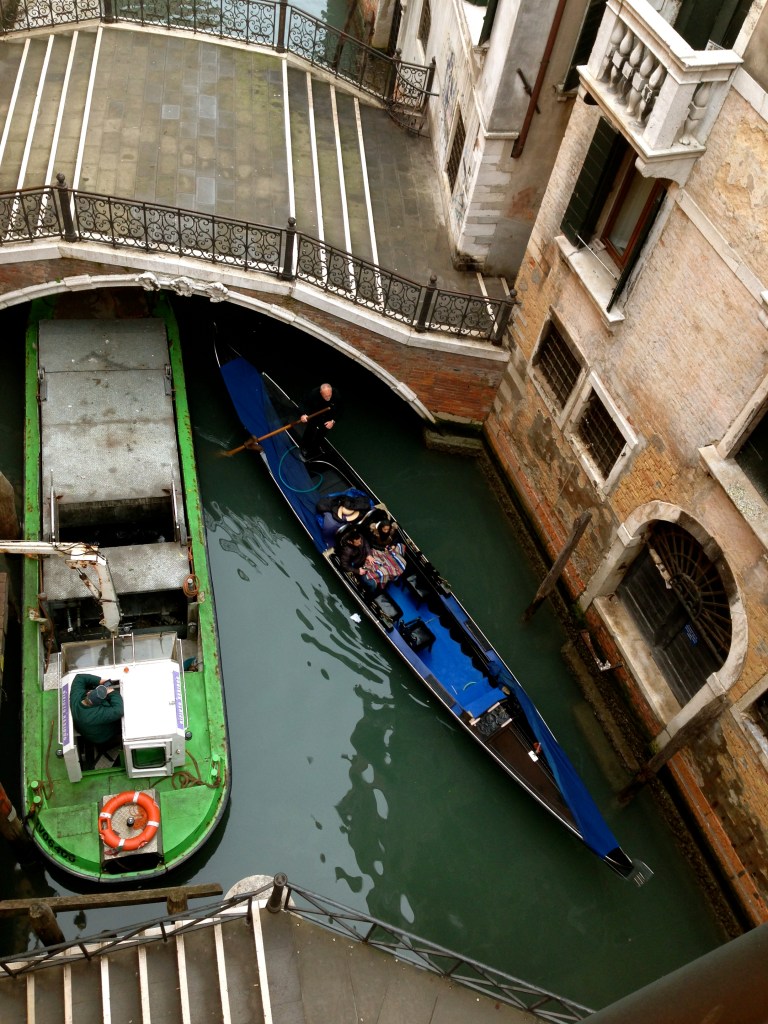
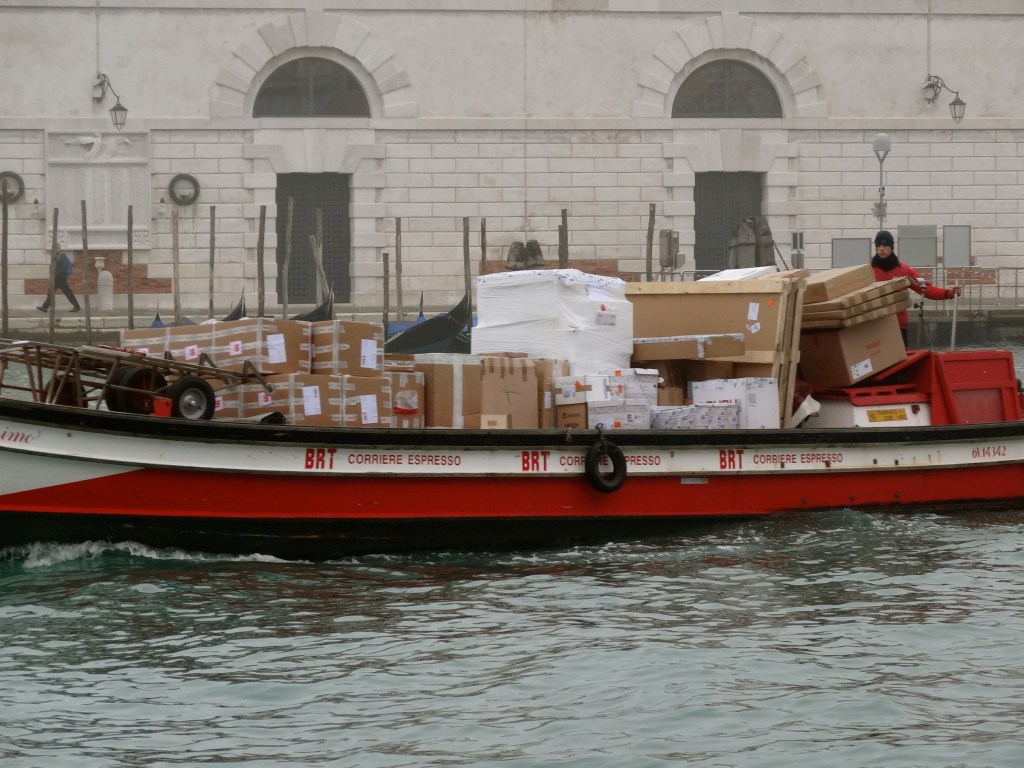
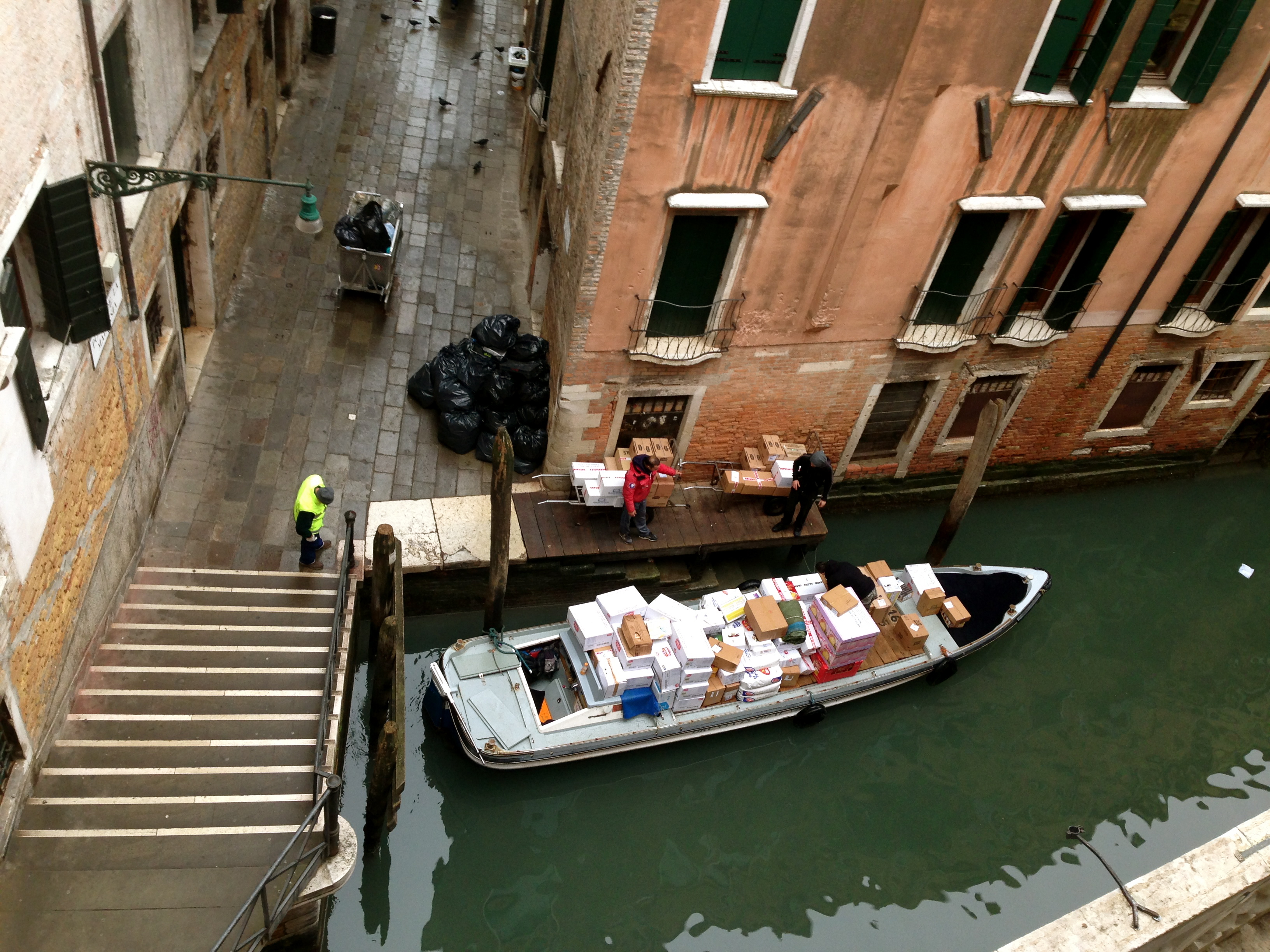
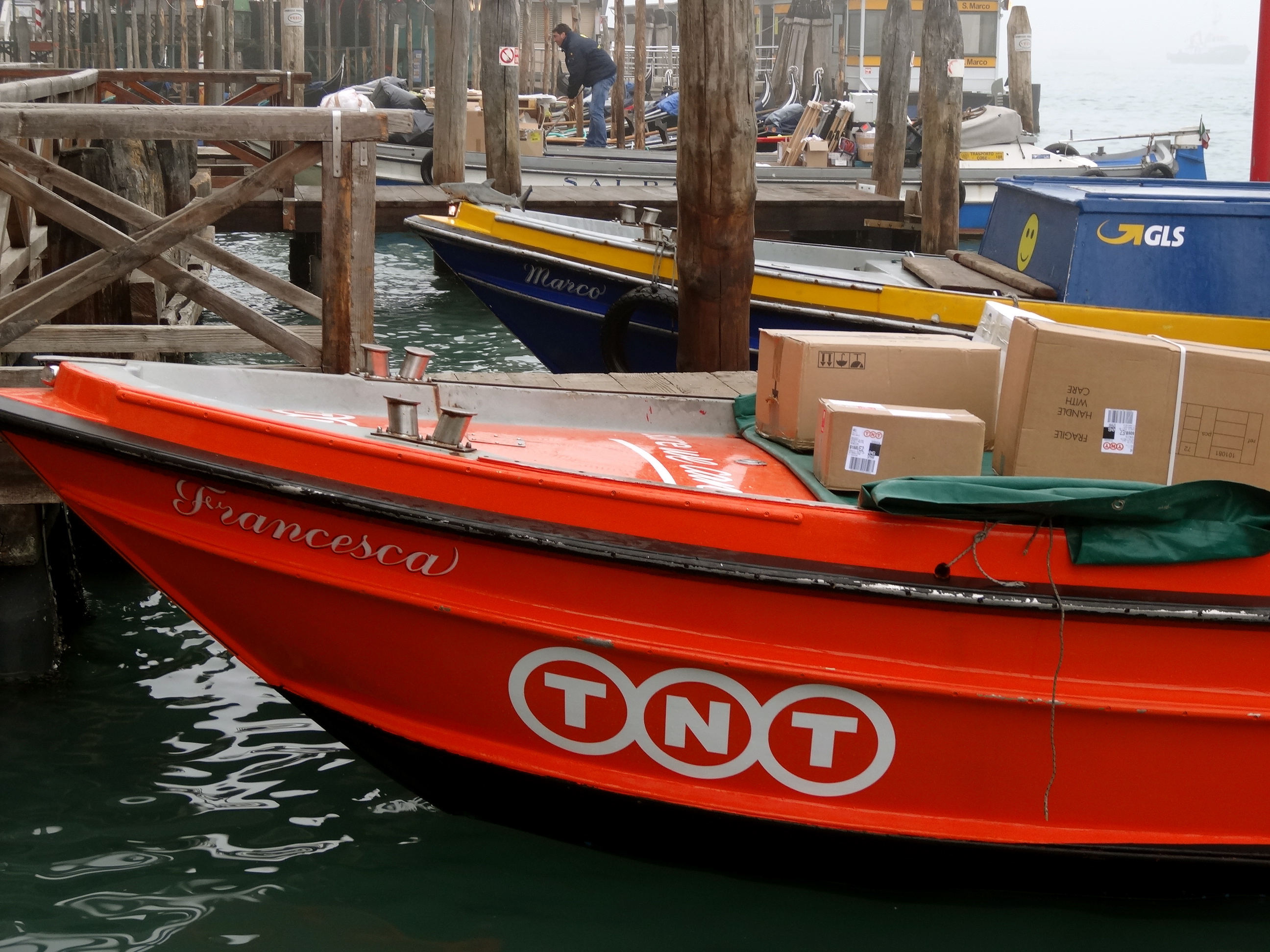
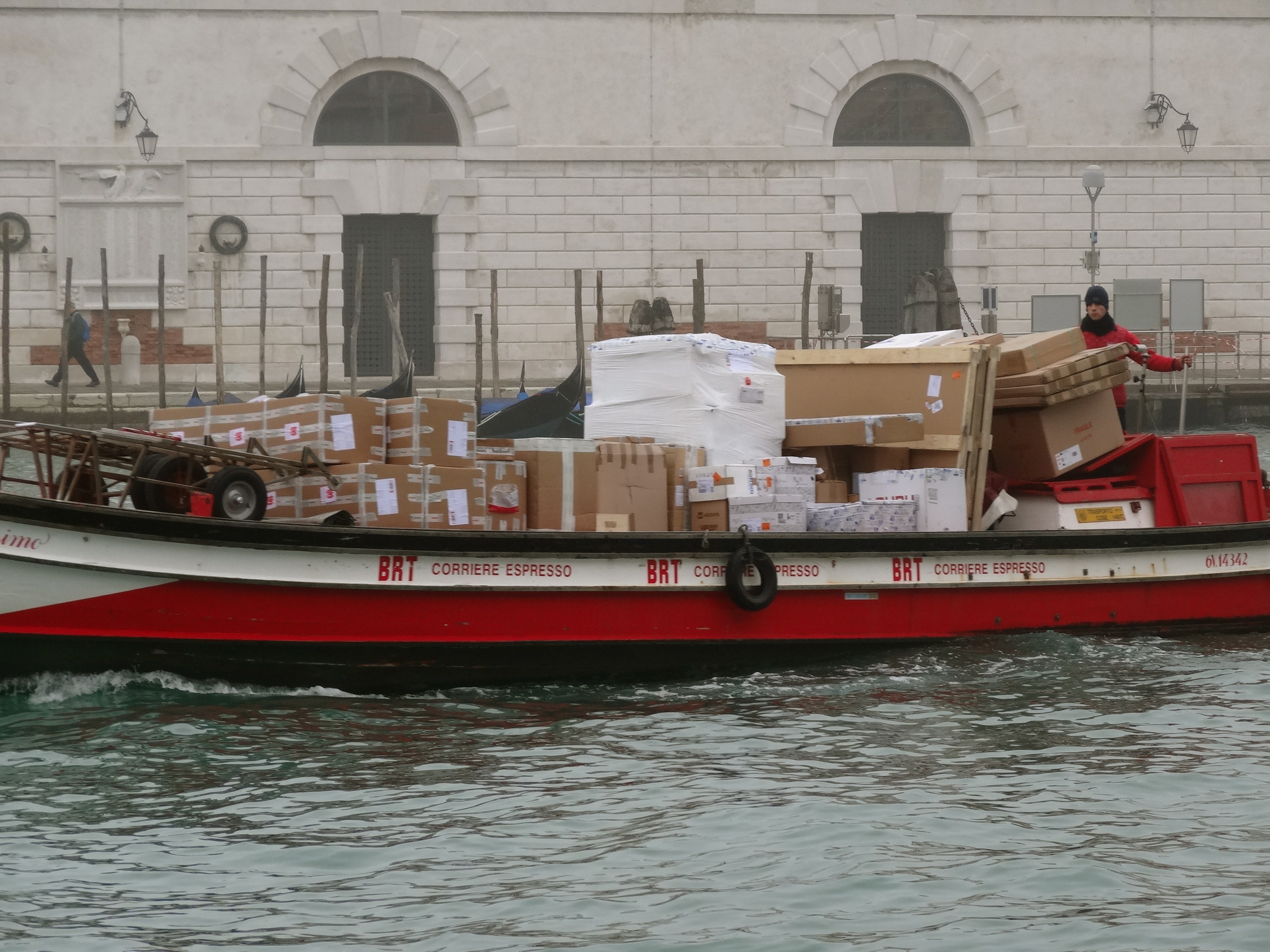
Compared with the weekend days we had spent in Venice so far, waking up to the city on a Monday was a quite different experience. Suddenly, canals which had previously been so quiet, hosting only a lone gondola or two, had suddenly become bustling with working people. It was captivating to watch how Venice came alive, not just as a tourist funfair, but also as a living city with the practical needs and commercial transactions that go with it. So, for example, I whiled away many a minute at the beginning of this day watching a post delivery boat in the canal below our room offloading large parcels onto the quayside, as well as a rubbish boat a few canals down, loading the weekend’s refuse onto its bobbing timbers. It was fascinating to note (although I suppose the thought should have been obvious) that in Venice everything really does come and go via water – a city intrinsically married to the transient milieu which surrounds it.

Venice awakens

IMG_6271 IMG_6278 DSC00308 DSC00316

But we didn’t have time to stop and stare for too long, no matter how tempting that may have been. We had art on the mind – something which comes easily in a city whose historical relationship with art was so strong that today the small island has become an abundant treasure trove of art historical treasures. And no where on the island can you see such a spread of these artistic riches than in the city’s primary gallery, the Gallerie dell’Accademia.

I vividly remember visiting the gallery on what was probably the first day of my art history course in 2001. Our teacher, Grant (“Grantus”) took us into the first main gallery there and sat us on the floor amongst panel after panel of glinting gilded altarpiece paintings. There he took out of his pocket what looked to be a sheet of gold and, like a magician, threw the gold up into the air letting it flutter into our hands. This demonstration served as a introduction to the lavishness of Venetian art, from the gold leaf which adorned the background of these pre-renaissance altar pieces, to the scale and astonishing execution of some of the greater works which came later.

Veronese, Feast at the House of Levi

Veronese, Feast at the House of Levi

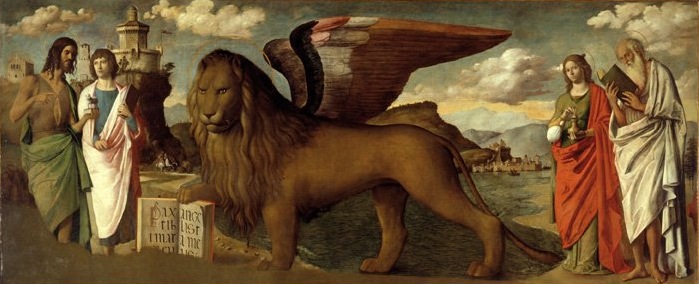
Back in 2013, and the Accademia continued to captivate me as it had 12 years before. For who could not be entranced and knocked back a little by the vast masterpiece, Feast at the House of Levi by Veronese. Originally entitled The Last Supper, Veronese had been forced to change the name when the painting, which shows the traditional Last Supper set-up surrounded by all manner of musicians, actors, animals and various unsavouries, attracted the attention of the Roman Catholic Inquisition. The inquisition called Veronese to answer for what they considered to be the “irreverence and indecorum” of including within the scene depicting Christ and his Apostles a band of “buffoons, drunken Germans, dwarfs and other such scurrilities”. Thanks mainly to the support of Venetian authorities, the painting was saved – but the name changed. And here it hangs to be widely admired today, alongside other brilliant masterpieces – amongst my favourites Bellini’s Madonna of the Red Cherubs, which looks almost futuristic with those surreal blood red cherubs behind her, Antonio Rosso’s Madonna Enthroned, and Giambattista Cima da Conegliano’s Lion of Saint Mark.
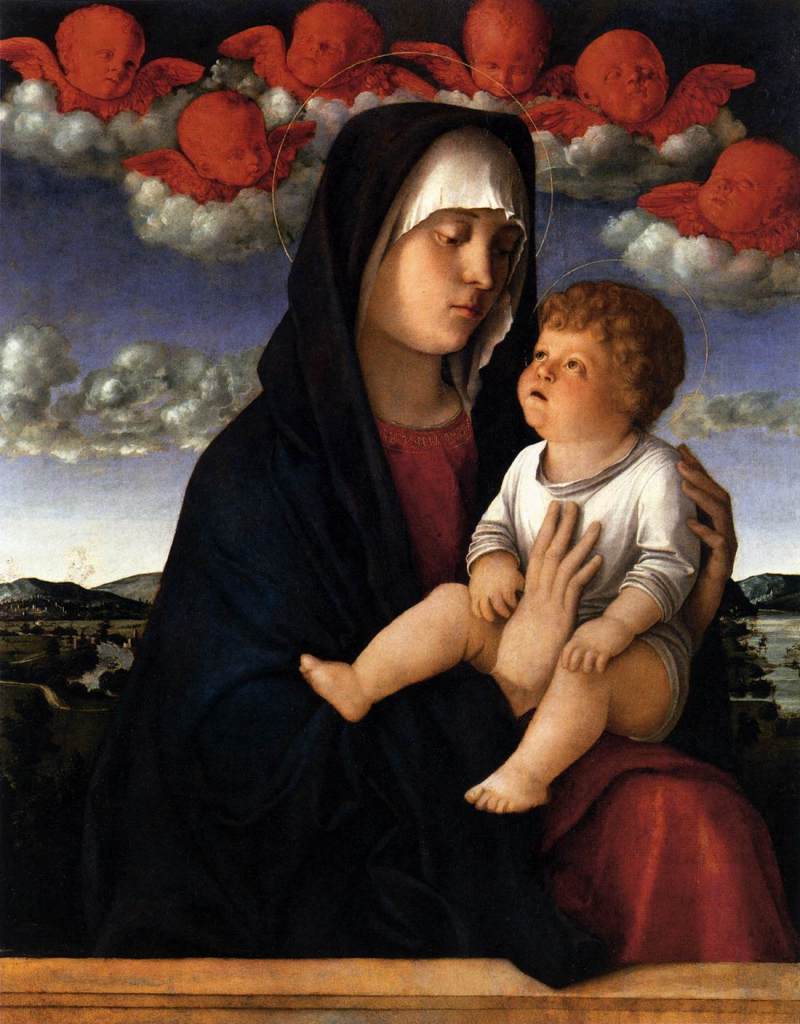
Bellini, Madonna of the Red Cherbubs

Bellini, Madonna of the Red Cherbubs

Giambattista Cima de Conegliano, The Lion of St Mark

Giambattista Cima de Conegliano, The Lion of St Mark

Antonio Rosso, Madonna Enthroned

Antonio Rosso, Madonna Enthroned

However, my favourite work of all continues to be St Mark’s Body Brought to Venice by Venetian supremo, Tintoretto. With its ephemeral light and whispish ghostly forms over on the left of the canvas, as well as its moody blood red sky and dramatically shadowed body of St Mark, the painting demonstrates, to my mind, modernity beyond its time (Tintoretto painted it in 1548). It could easily be mistaken for a surreal masterpiece by Salvador Dali, and you can see the influence of Tintoretto in artists who came later, like Spain’s El Greco with his looser, dramatically coloured figures.

Tintoretto, St Mark's Body Brought to Venice (1548)

Tintoretto, St Mark’s Body Brought to Venice (1548)

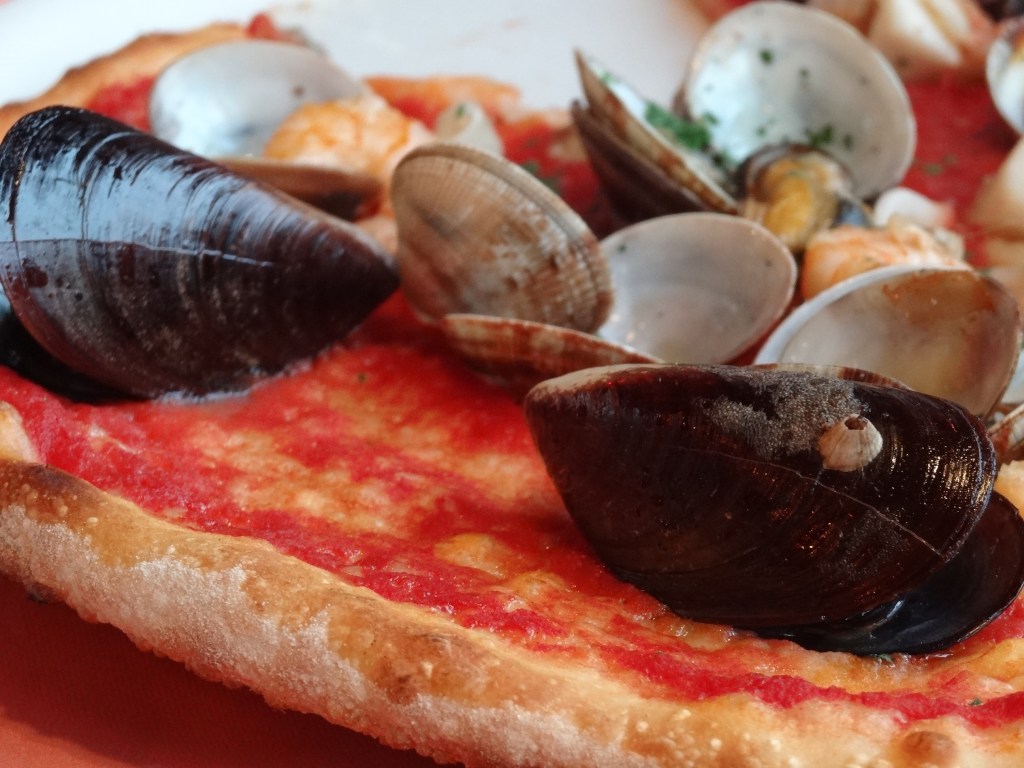
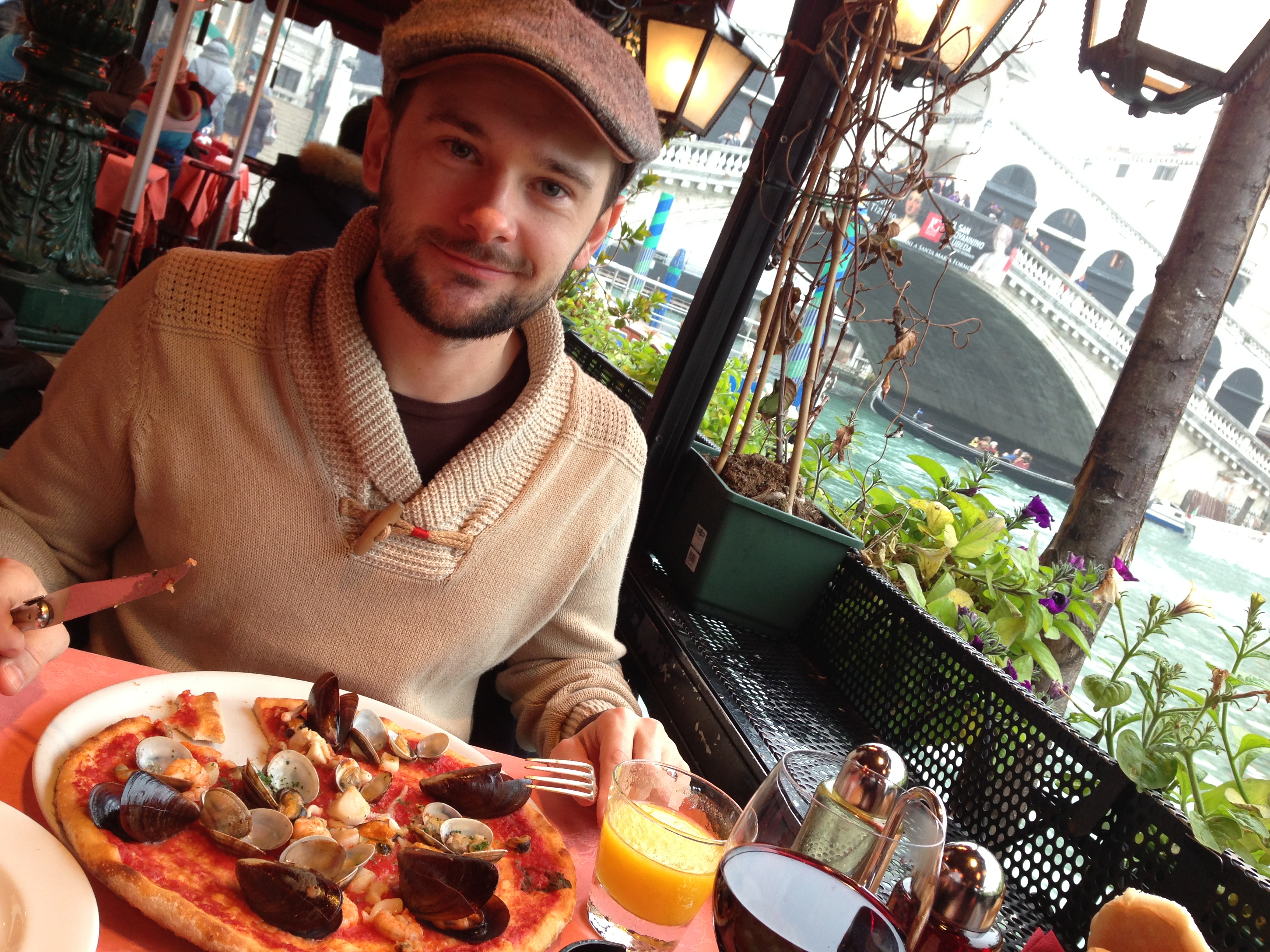
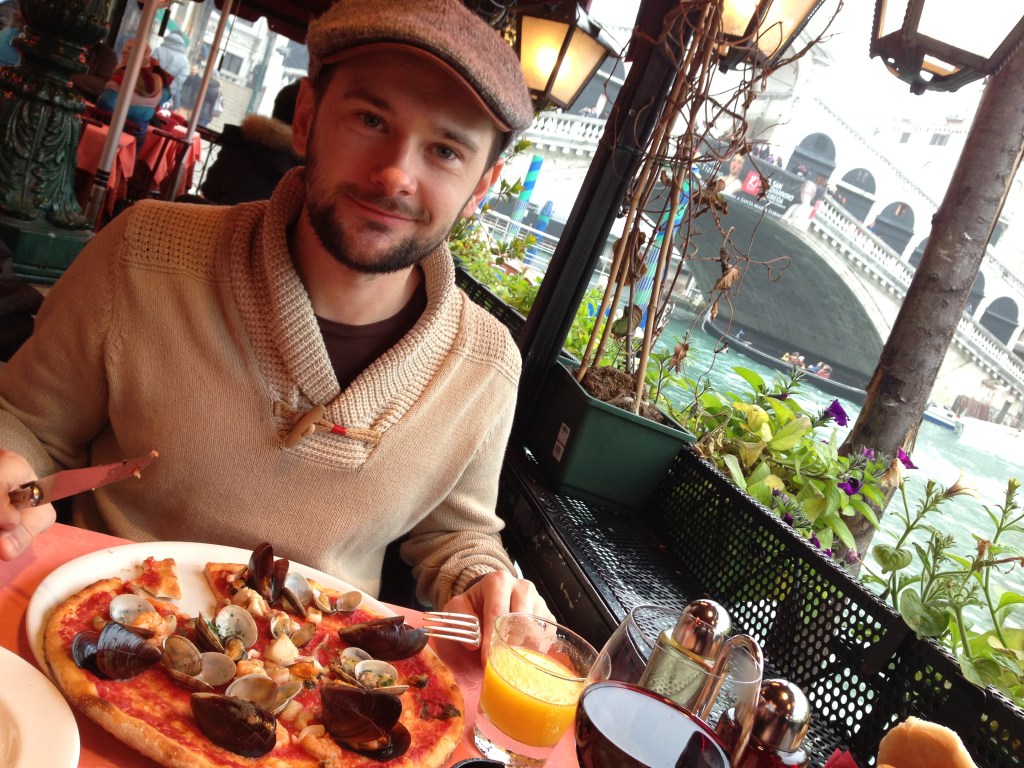
But as we were to discover, the handful of Tintoretto’s on show at the Accademia would only scratch the surface of the Tintoretto treasure trove to be found in Venice. And to discover to what extent Venice lavished upon this artistic supremo, and just how much Tintoretto painted in return, one has to visit the mind-bogglingly beautiful salas of the Scuola Grande di San Rocco, where we headed that afternoon (We did so after a pizza in a slightly dodgy looking tourist pizzeria near the Rialto Bridge. With a view that good, I didn’t think the food would be up to much but we were pleasantly surprised – a perfectly crispy pizza base munched over an unbeatable view: Priceless).

Lunch with a view…
IMG_6210 DSC00390 DSC00407

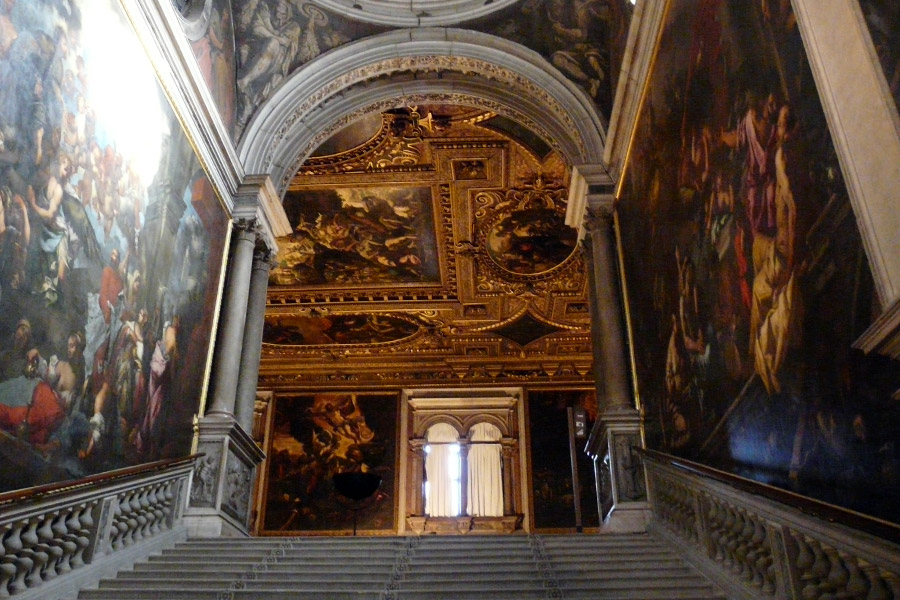
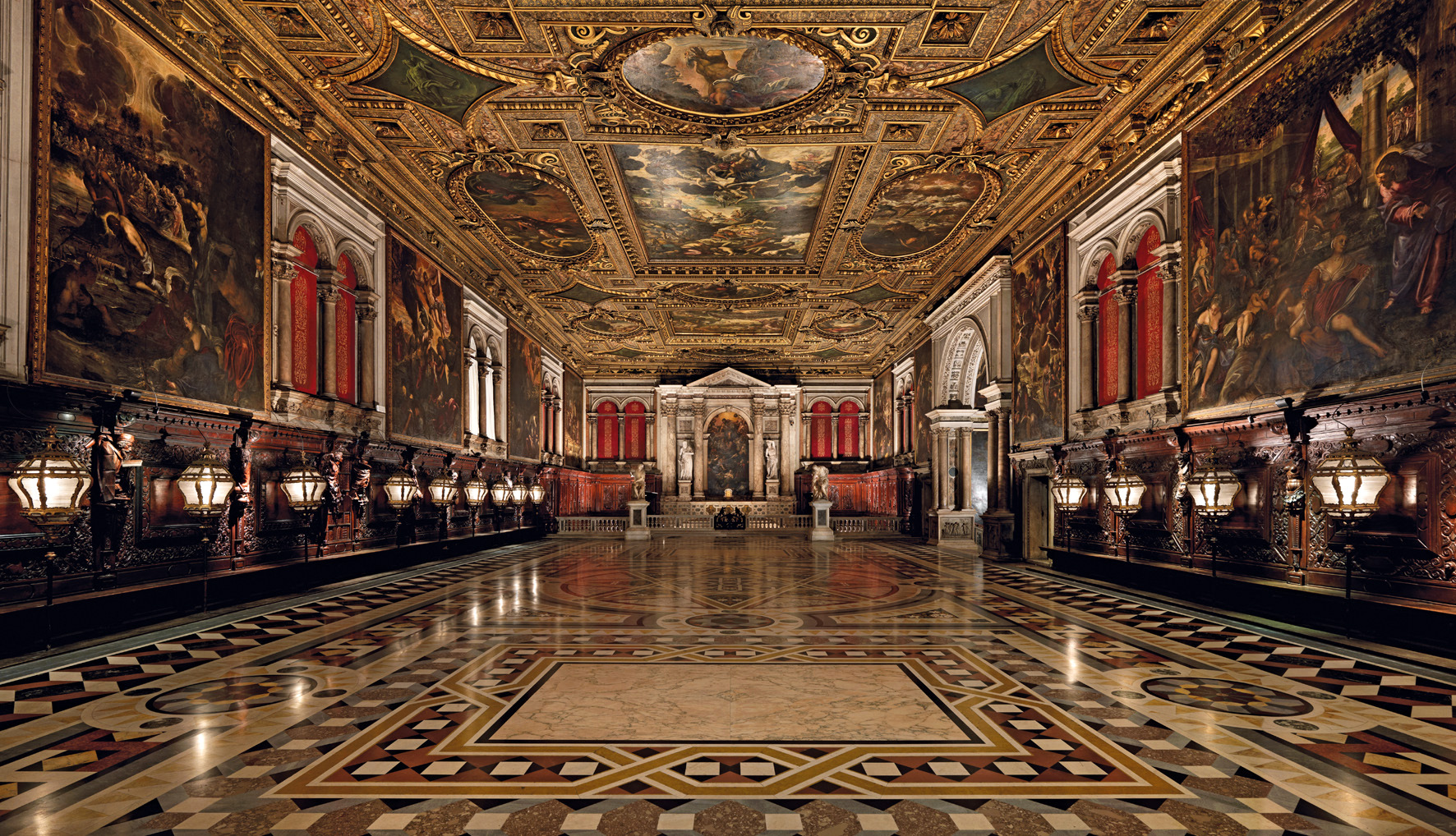
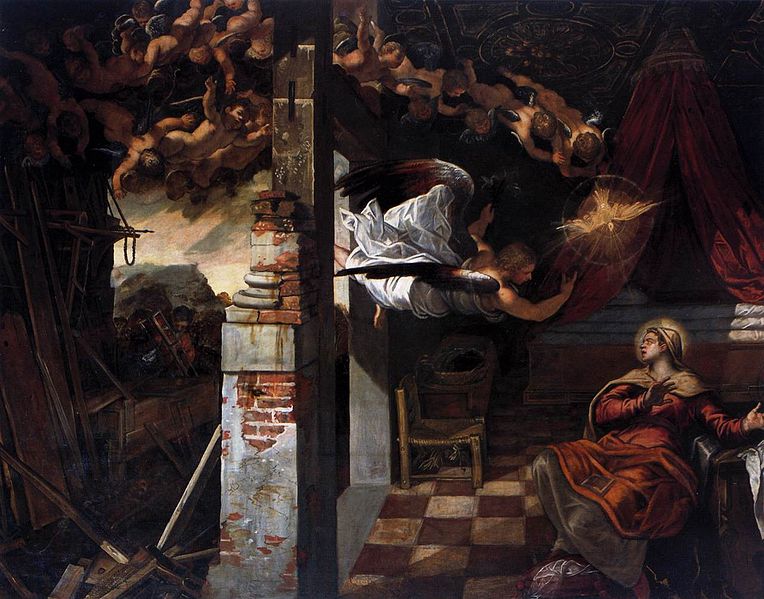
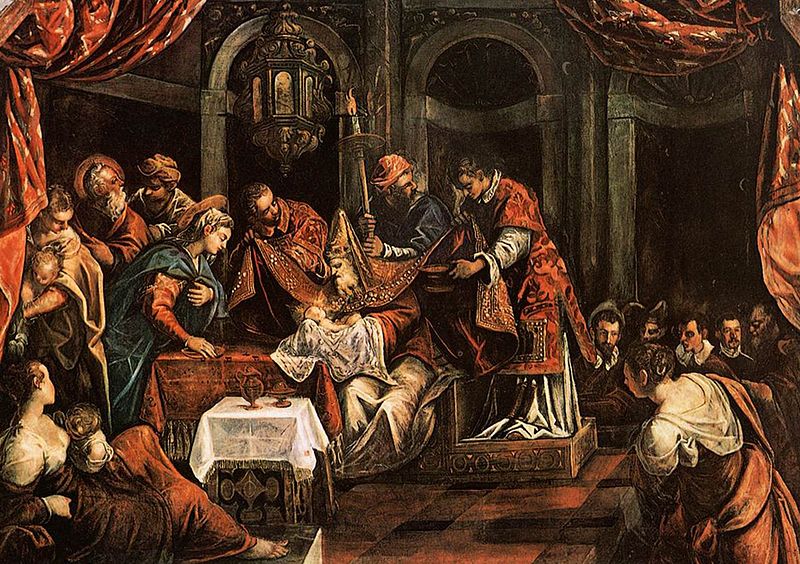
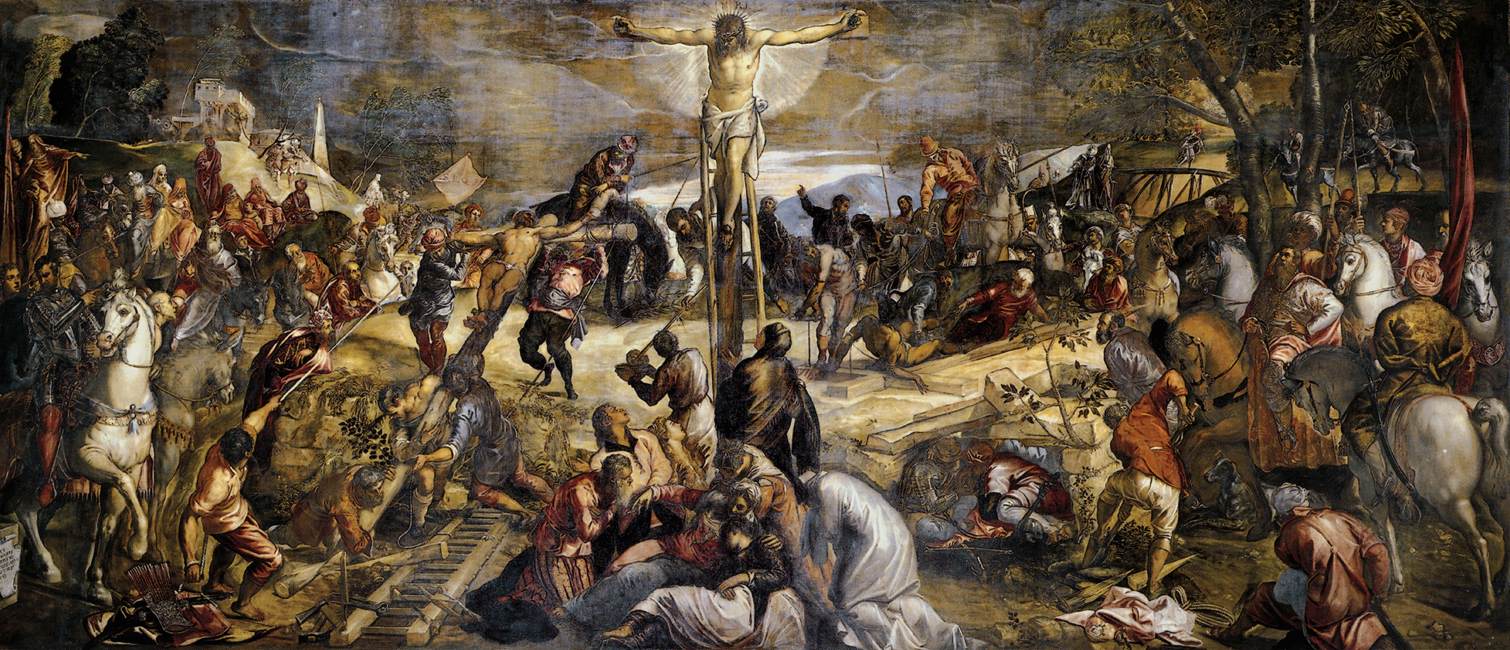
Between 1565 and 1567 and again from 1575 to 1588, Tintoretto, in an incredibly prolific bout of creativity, painted some 50 masterpieces to cover the walls and sensationally gilded ceiling of the new showcase palace of the Confraternity of St Roch. The cycles, dealing with both old testament stories as well as the birth and life of Christ (culminating in a huge crucifixion masterpiece) are startling in their action packed illustrations of these well-known stories, demonstrating more than ever before Tintoretto’s brilliant dexterity when it came to perspective and light, as well as his ability to paint effectively on a monumental scale.

The Scuola Grande di San Rocco

Salone superiore, Scuola grande di San Rocco, Venezia scuola-san-rocco-interior Scuola-Grande-di-San-Rocco3

There was so much to look at in the Scuola, from the sensational wood carved panelling along the walls, and the incredibly opulent gold ceiling and grand staircase leading up to this first floor paradise, that the Tintoretto’s could easily have become second fiddle to the general sensation which one feels when entering the room. Nonetheless, you want to spend at least 10 minutes concentrating on each of Tintoretto’s masterpieces, but soon realise that were you to give them such time, you would remain in the place for a whole day. And so eventually we had to drag ourselves away, leaving the Scuola Grande with such a sense of awe that the previous day’s exploration of all this golden and glamourous had just reached absolute overdrive.

Tintoretto Cycle - Miracle of the Bronze Serpent

Tintoretto Cycle – Miracle of the Bronze Serpent

Tintoretto Cycle - The Annunciation

Tintoretto Cycle – The Annunciation

Tintoretto Cycle, The Adoration of the Shepherds

Tintoretto Cycle, The Adoration of the Shepherds

Tintoretto Cycle - Christ Circumcised

Tintoretto Cycle – Christ Circumcised

Tintoretto Cycle - The Last Supper

Tintoretto Cycle – The Last Supper

Tintoretto Cycle - The Crucifixion

Tintoretto Cycle – The Crucifixion

Exhausted by the efforts of trying to take all this golden glory in, we retreated happily to the Campo San Giacomo dell’Orio where, in the Bar “Al Prosecco” we treated ourselves to two very delectable glasses of “surlie” prosecco – a cloudy variety which allegedly results from the lack of chemicals in this purer form of the drink – which makes you wonder just what chemicals go into the more traditional clear version of the bubbly drink! With these two glasses clinked before the Christmas-twinkling scene before us, we toasted our trip to Venice. For the next day, we were heading south. To Rome.


DSC00433