Skip to content

Posts from the ‘Travel’ Category

Across the Water to Menorca, Part 4: Virgin Beaches

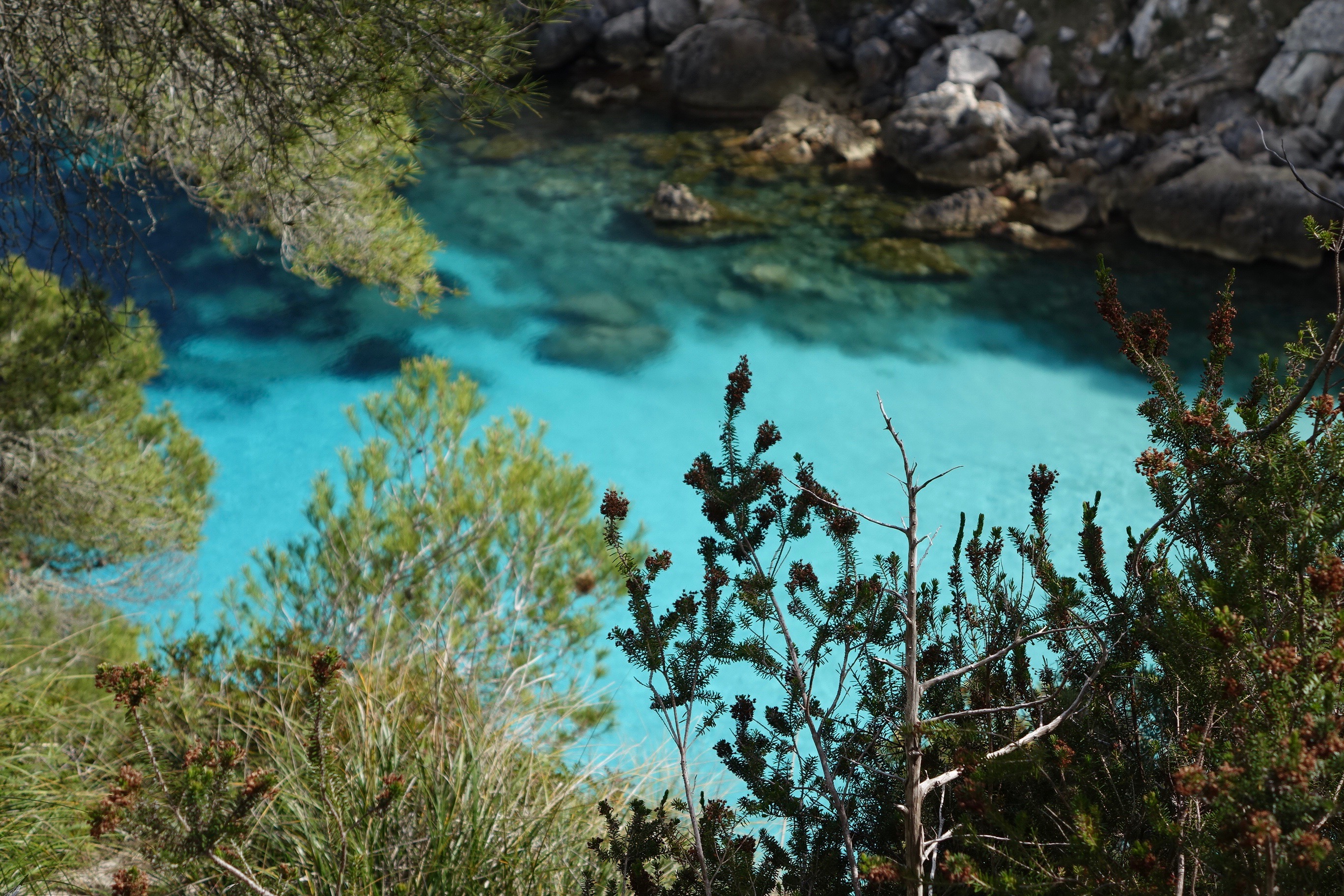
So after all the sun shone on our weekend in Menorca, and while our stay saw its fair share of grey skies tumbling across the island, the times of sunshine were all the more remarkable by contrast. And for my final post of my little Menorca season, I am sharing photos captured on a long sunny Sunday afternoon, where the sun did nothing so well as to magnify the sheer stupefying beauty of Menorca’s natural scenery.

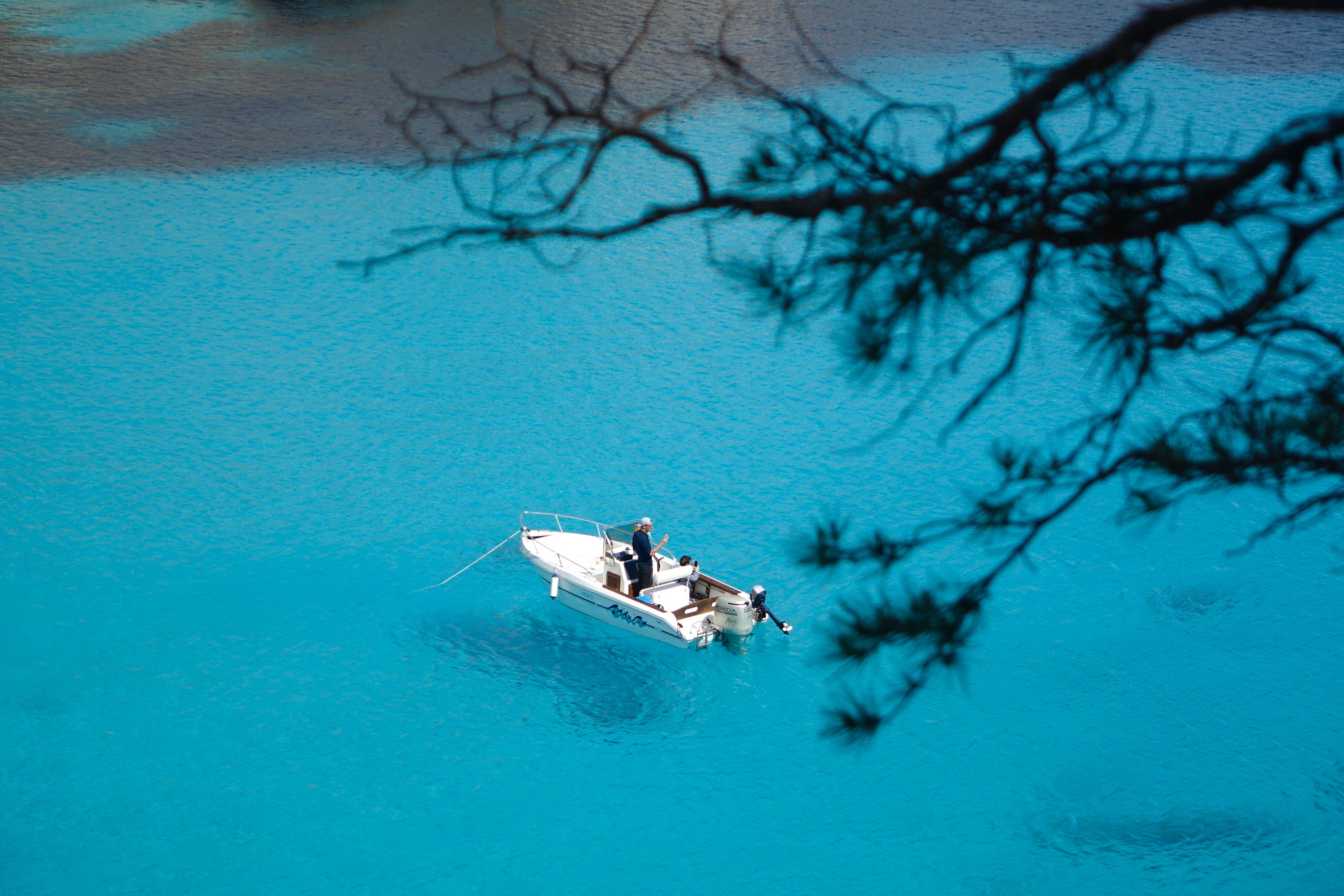
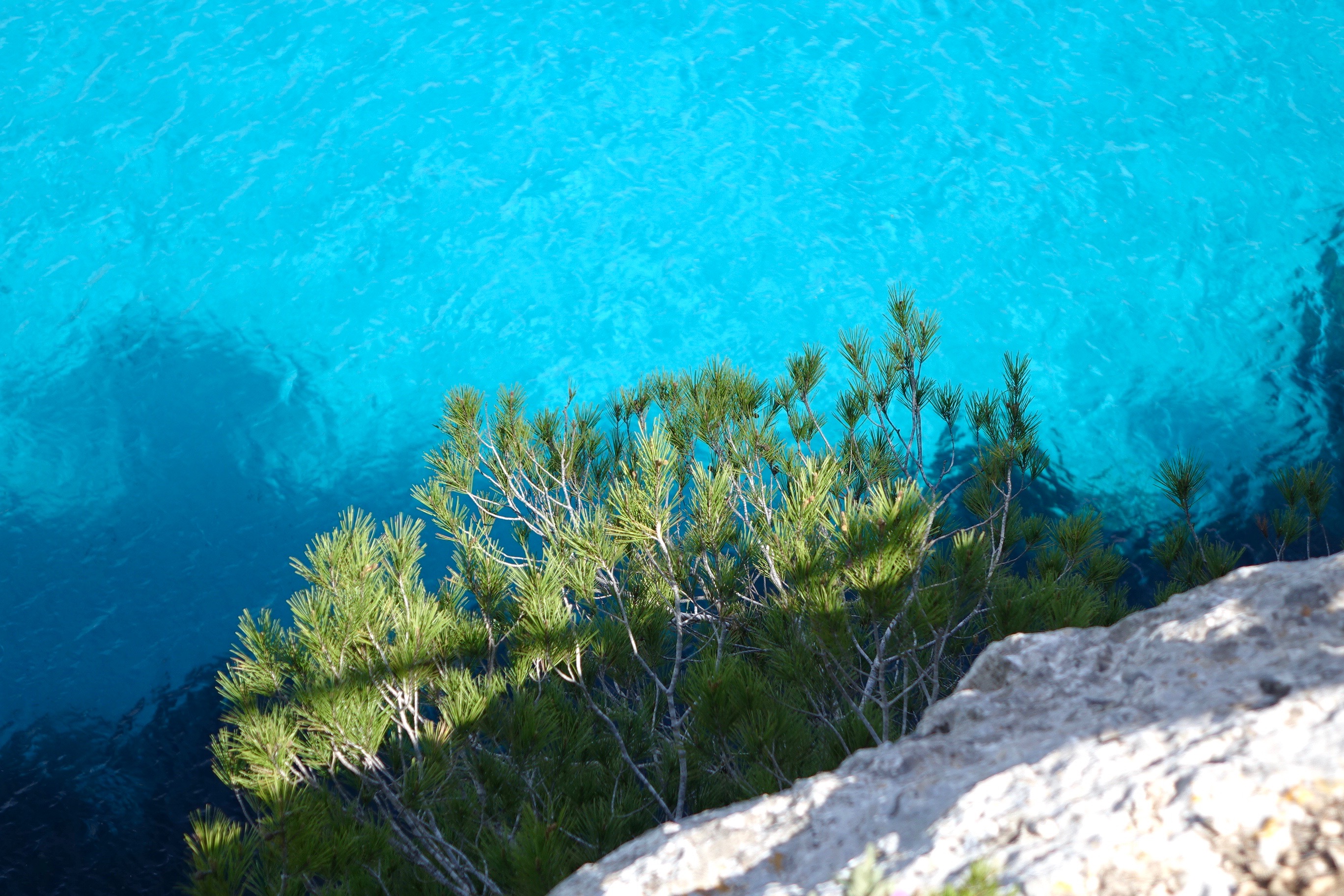
For where Menorca lacks in the city buzz of Palma here on its neighbouring island of Mallorca, it gains in the untouched virgin landscape which nature has left for us humble visitors to enjoy. Just as I thought Mallorca’s beauty could not be beaten, along came the calas (coves) of Menorca whose colours just blew my mind. There, the sands were so white, so pure and unsullied by the slightest hint of humans, that as they slowly descended beneath the fringe of the mediterranean coastline, they did so creating a paradisal cerulean blue melting into darker azure tones. Across the waters, the crystal clear seas shone and glimmered, and just underneath the surface, one could admire the camouflage effect of the odd rocky outcrop contrasting against the golden surface of the seabed.

DSC01220DSC01245DSC01253DSC01212DSC01246DSC01204DSC01249DSC01207DSC01232DSC01213

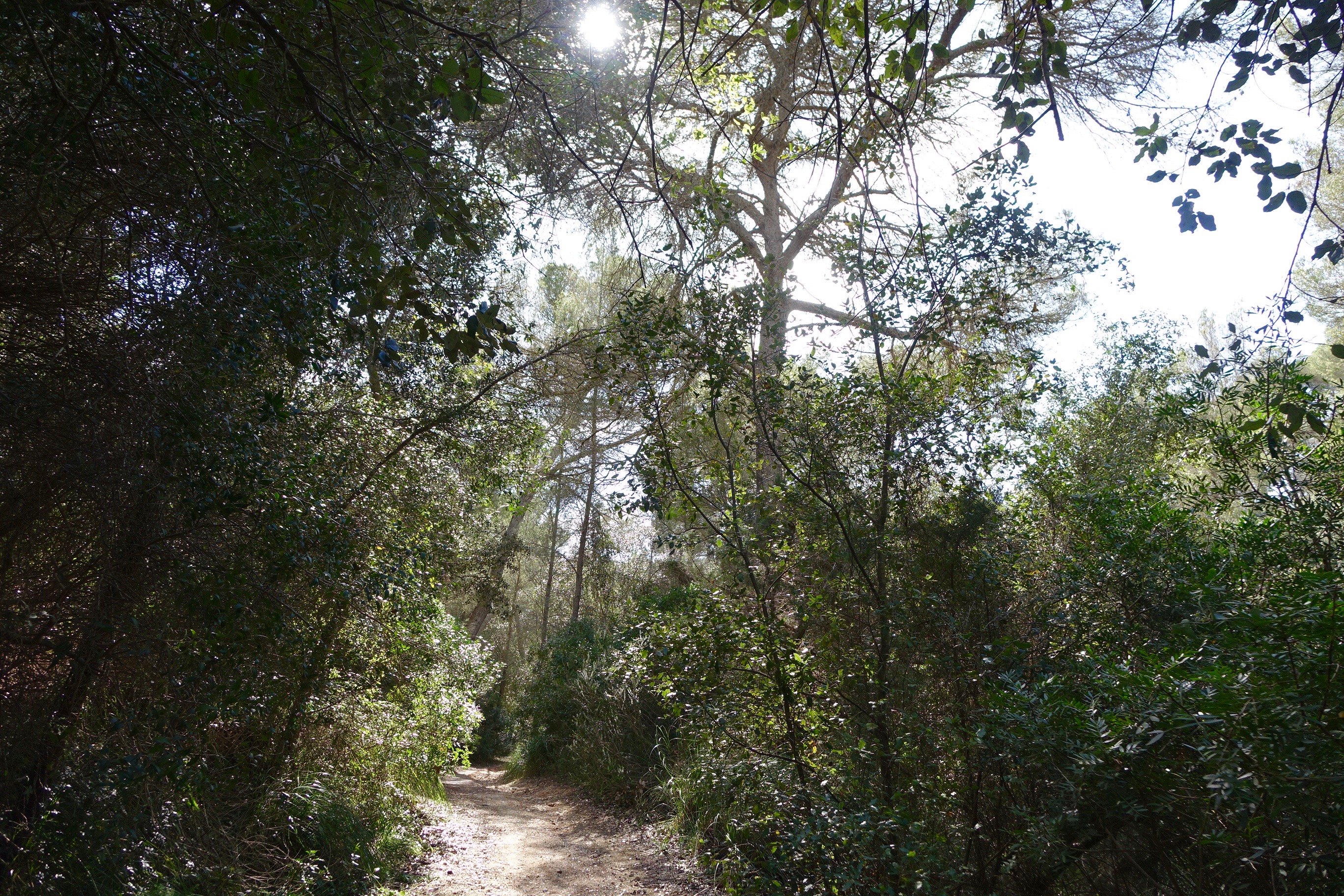
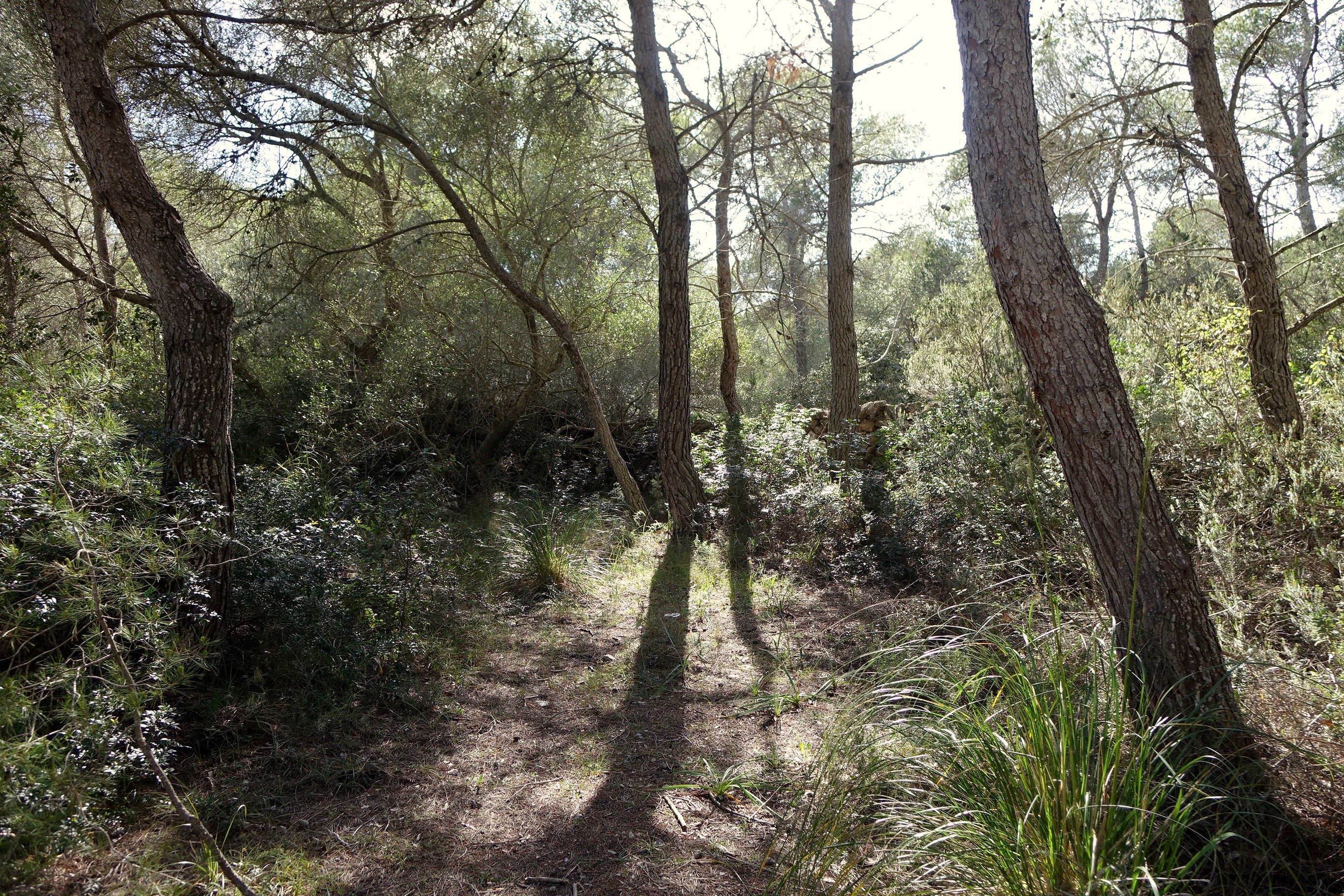
We could have quite easily spent months visiting the many calas which pepper Menorca’s coastline, such are their number, but we satisfied ourselves with the double whammy of the Cala Macarella and its smaller even more beautiful sister, the Cala Macarelleta, just around the corner. Approached through a densely planted aromatically fragrant pine forest, both beaches are a sight to behold and a treat for all the senses. The waters are every bit the match of the Caribbean, untouched, unspoilt and in the month of May blissfully underpopulated (save for the odd nude bather).

DSC01210DSC01244DSC01216DSC01192DSC01255DSC01203DSC01227

Here in the Mediterranean, paradise always feels very close at hand, but in the calas of Menorca, I feel we had practically made it.

All photos and written content are strictly the copyright of Nicholas de Lacy-Brown © 2016 and The Daily Norm. All rights are reserved. Unauthorized use and/or duplication of the material, whether written work, photography or artwork, included within The Daily Norm without express and written permission from The Daily Norm’s author and/or owner is strictly prohibited.

Across the Water to Menorca, Part 3: Ciutadella

When we saw the weather forecast for our weekend in Menorca we were on the verge of cancellation. We even went so far as to check the cancellation charges, as rain descended upon the Mediterranean. Could it be possible, we asked ourselves? Surely it couldn’t rain in Menorca. But as it was, we decided to go, lured by the promise of hotel pampering and a change of environment, and as it happened it didn’t rain all the time as the weatherman had promised. In fact for at least 60% of the time, the sun shone delightfully.

DSC01296DSC01387DSC01408DSC01426DSC01399DSC01422DSC01421

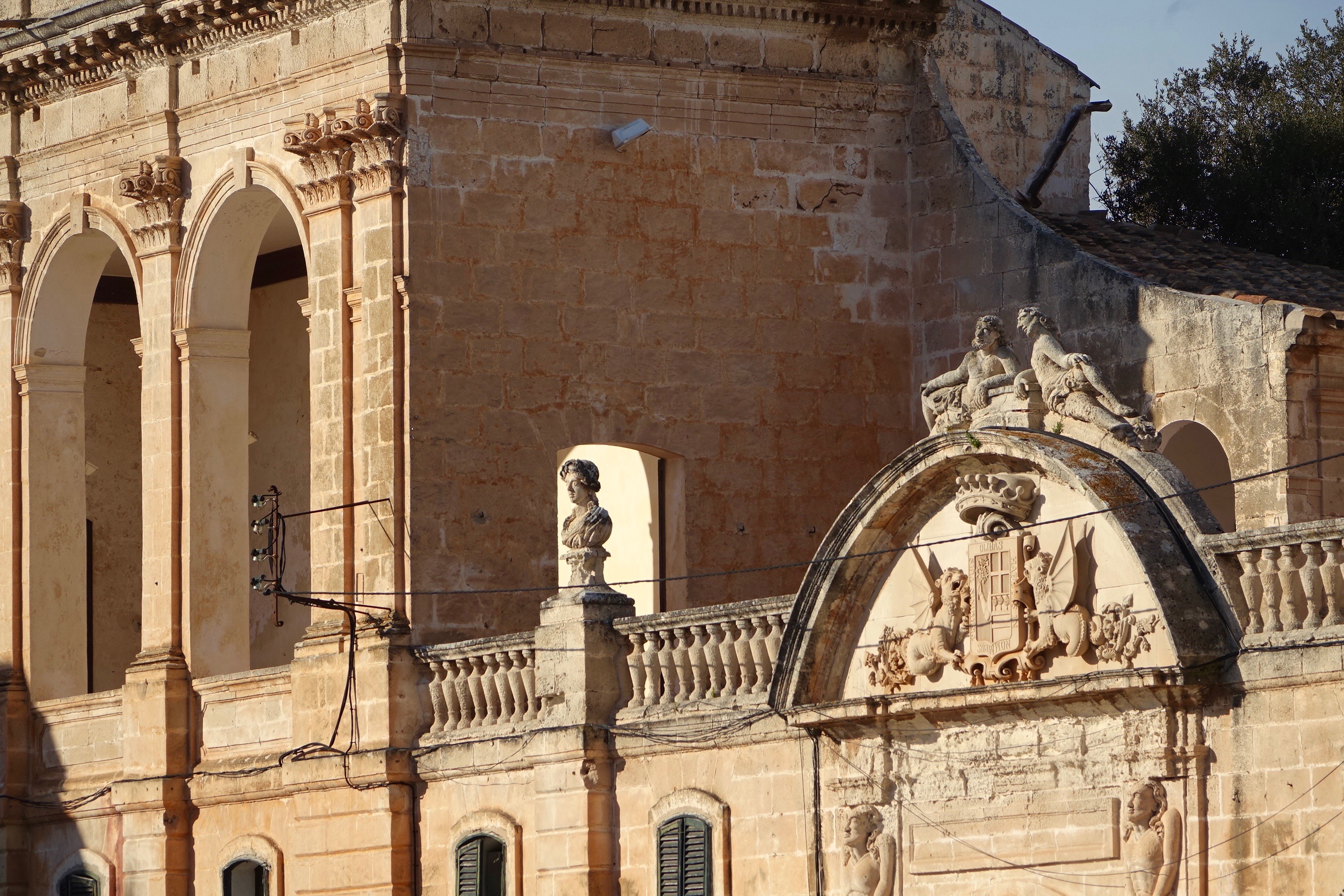
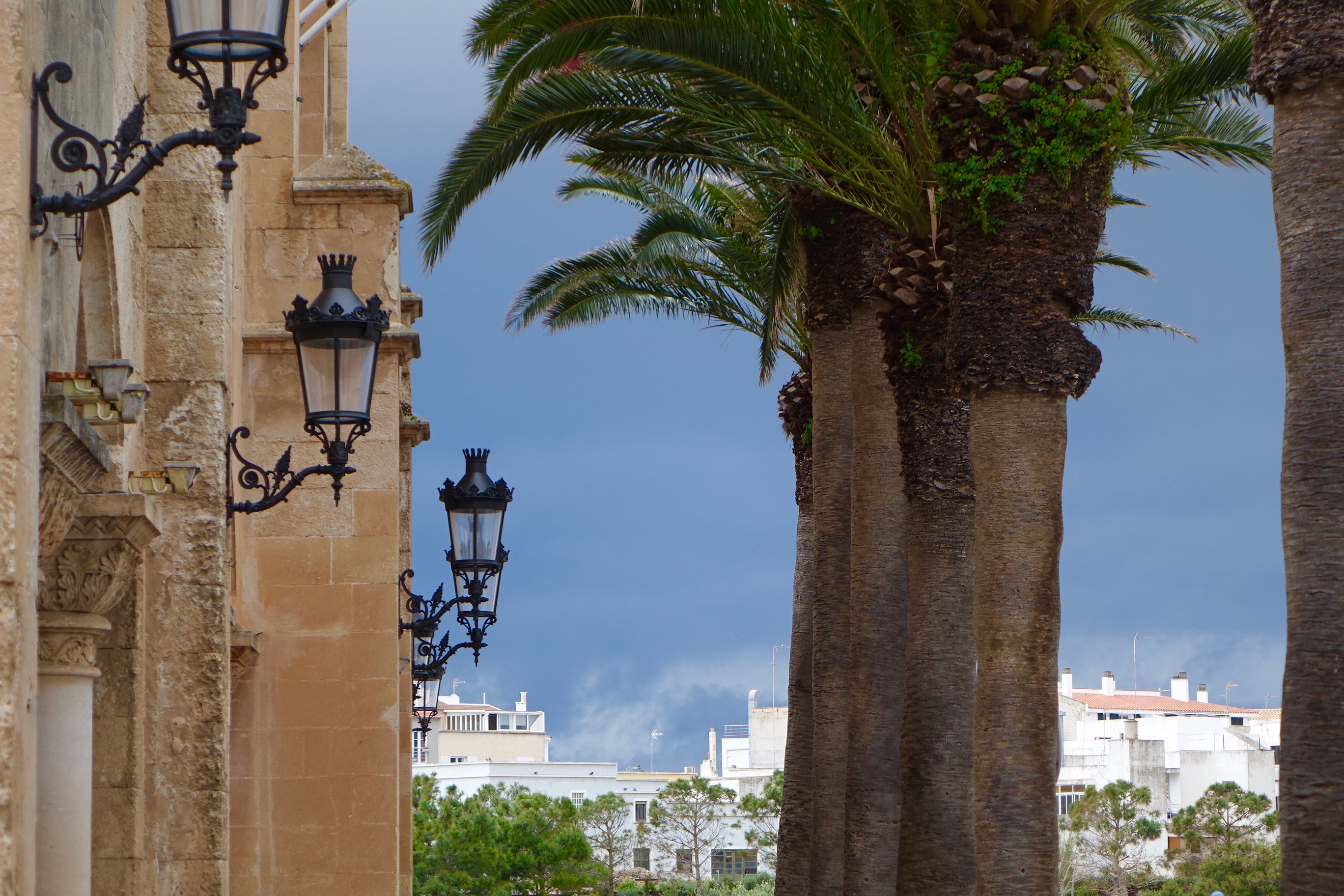
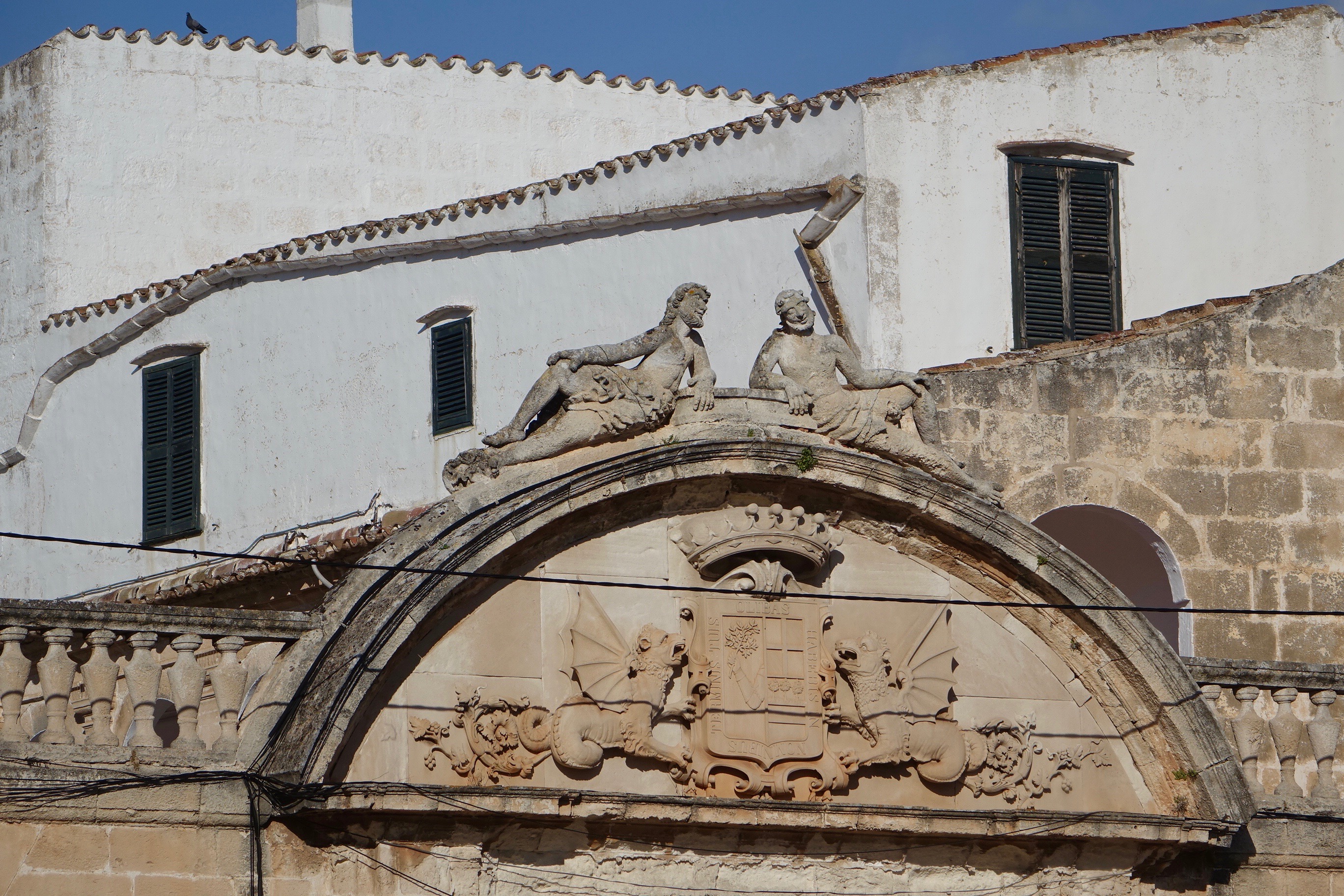
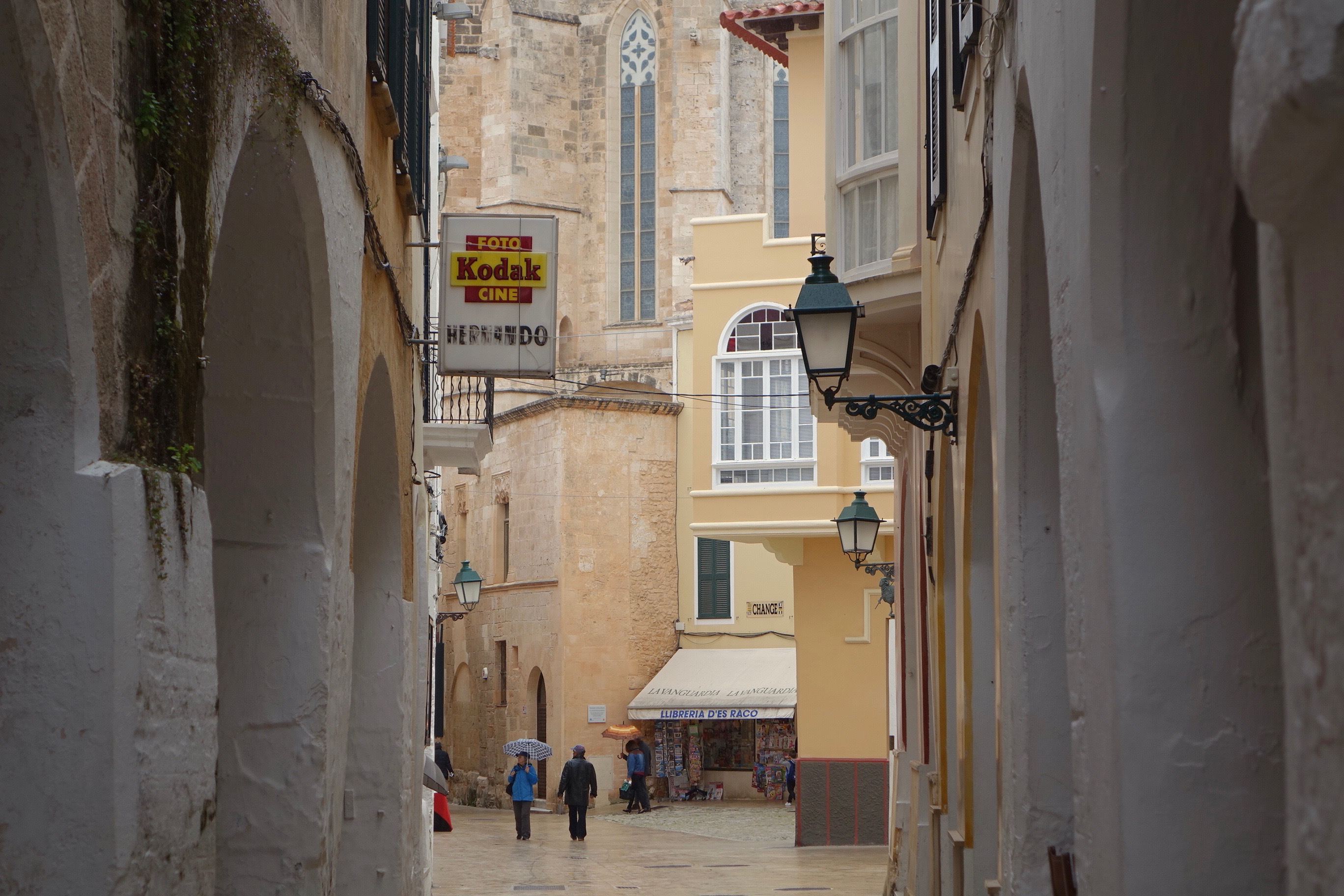
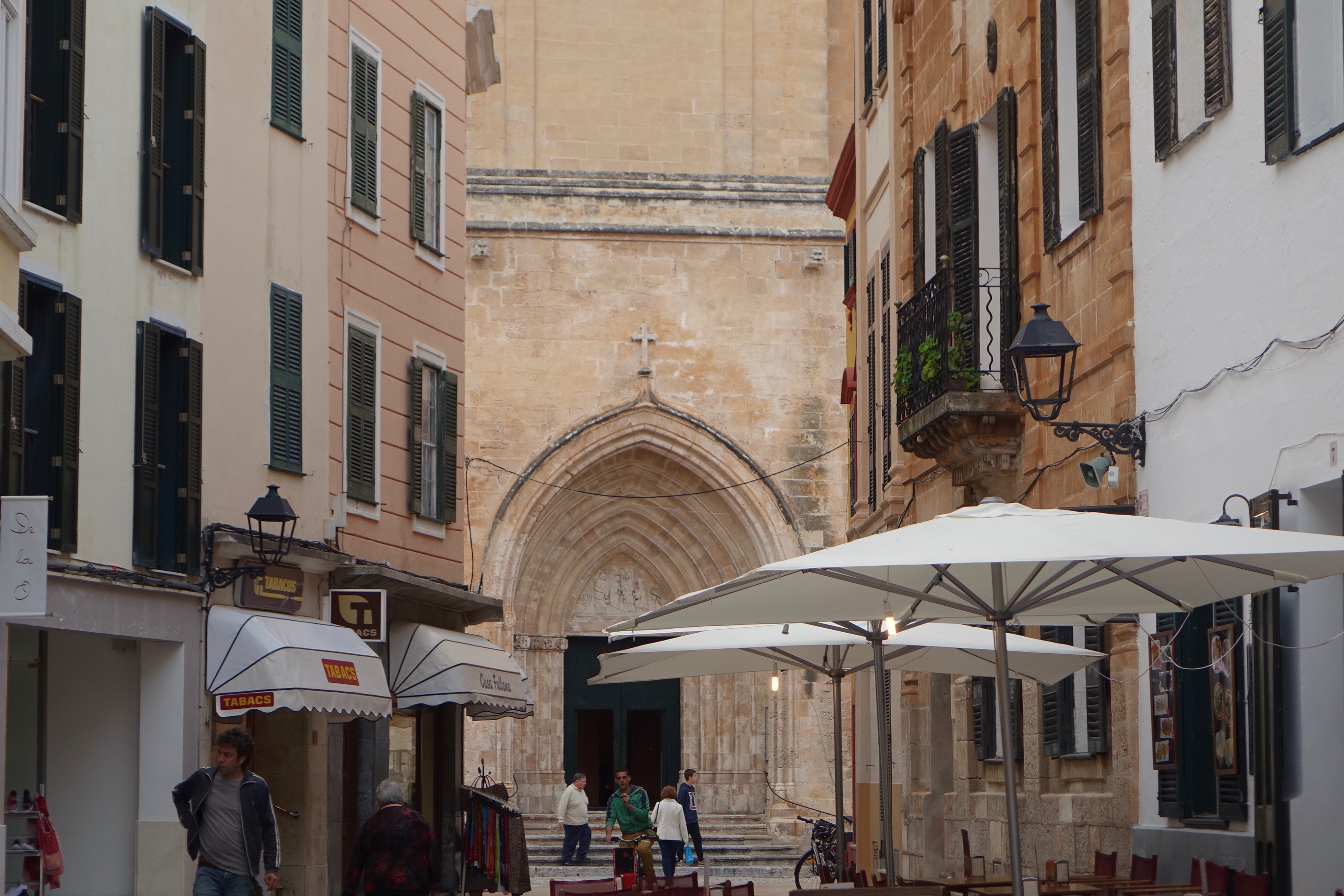
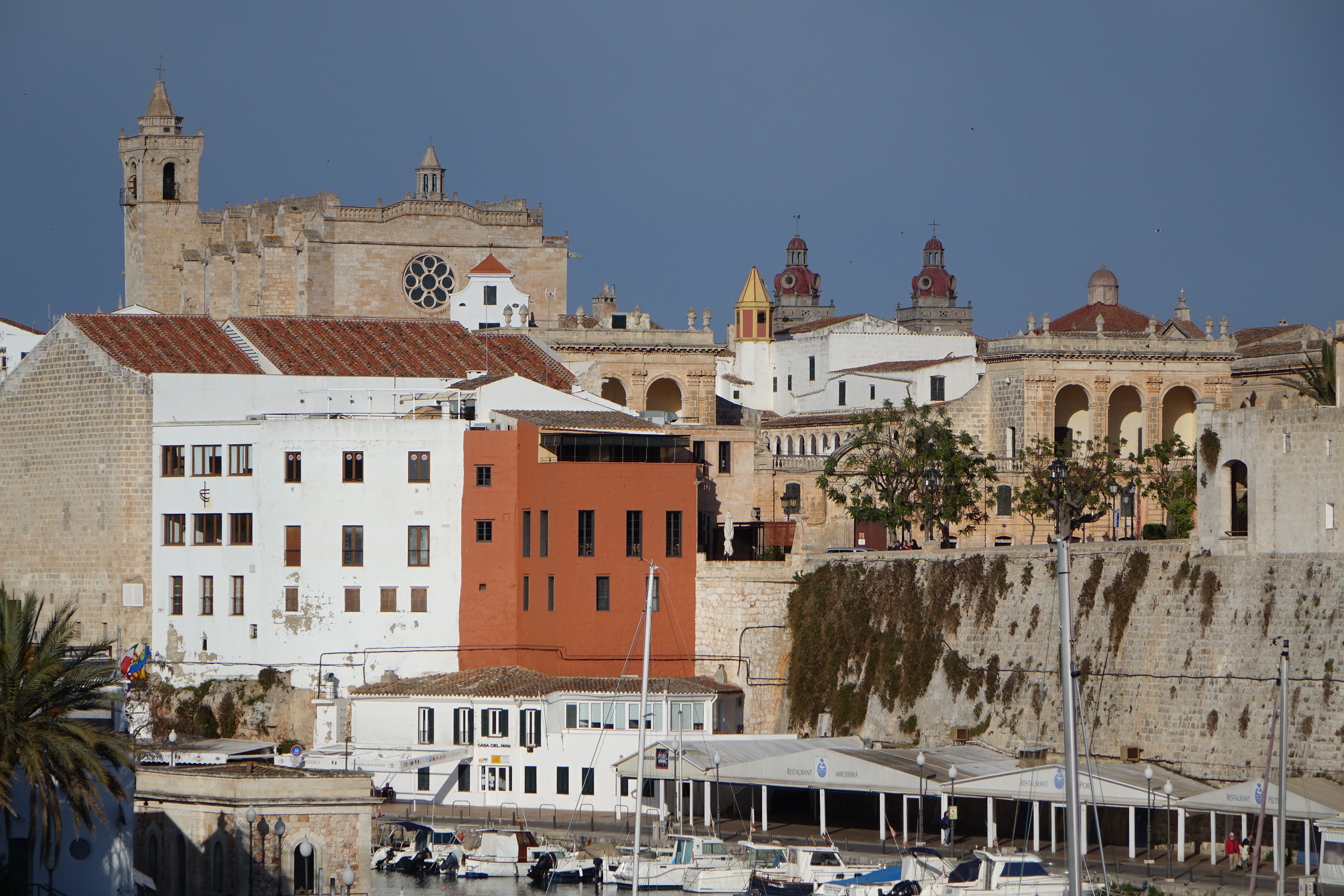
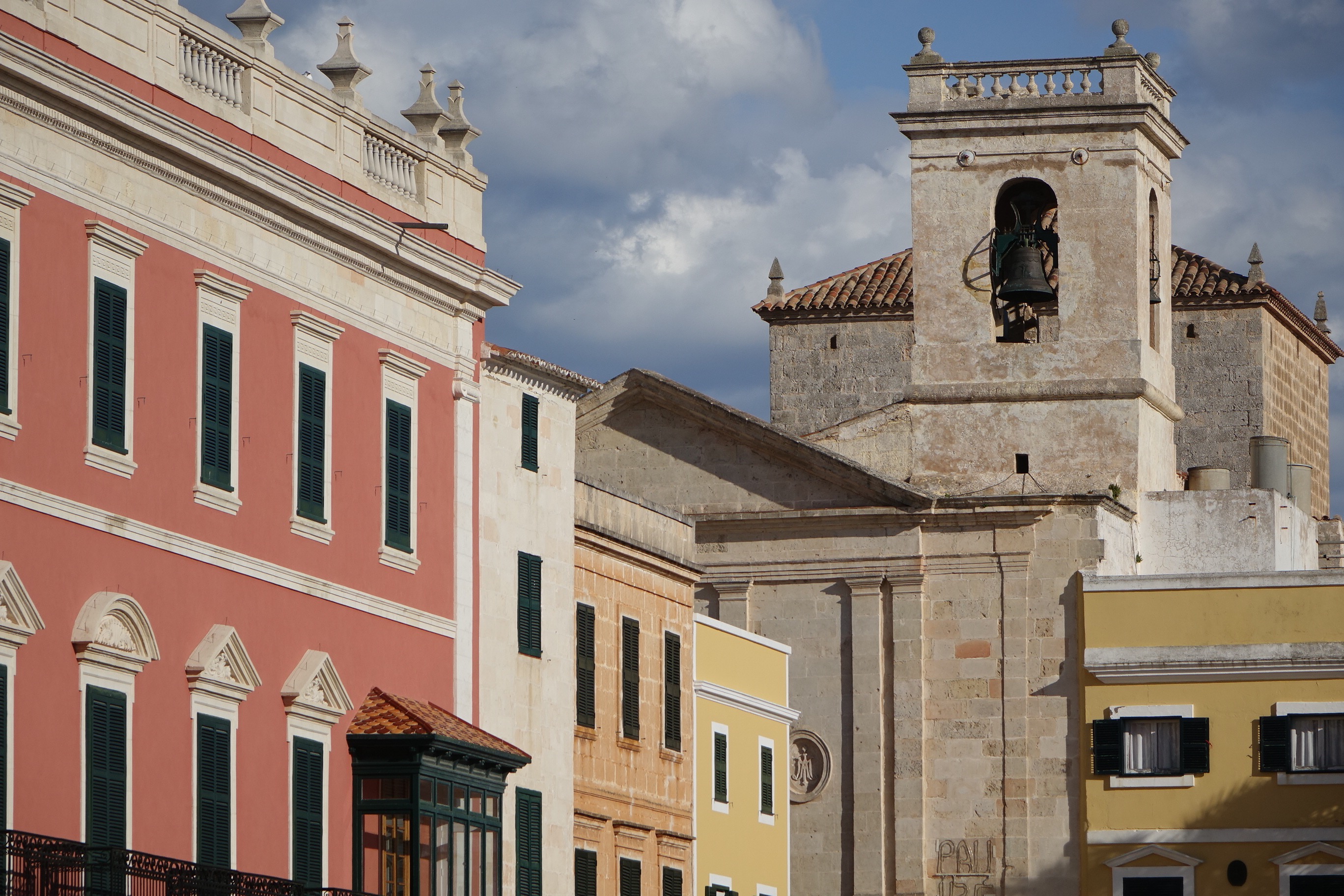
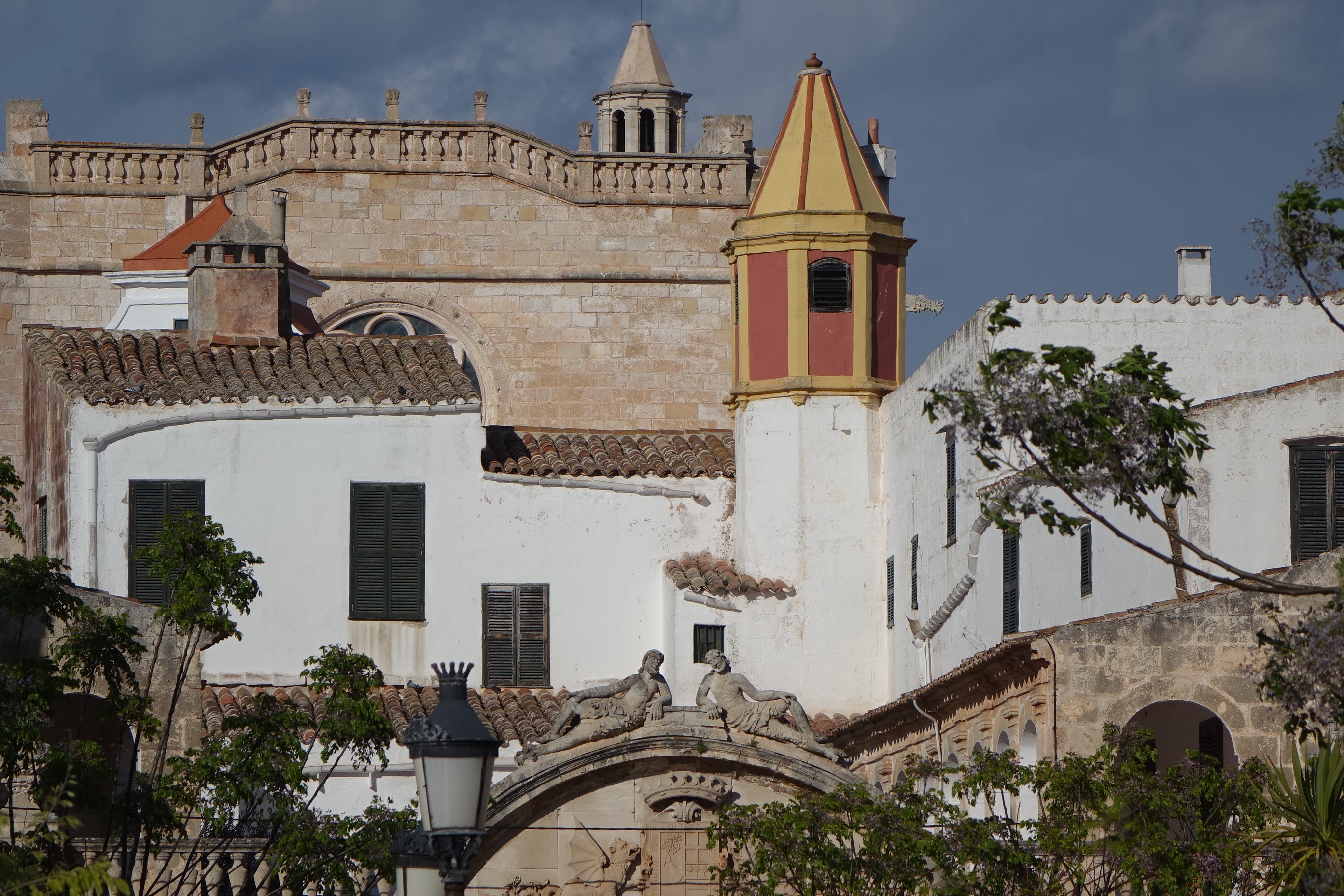
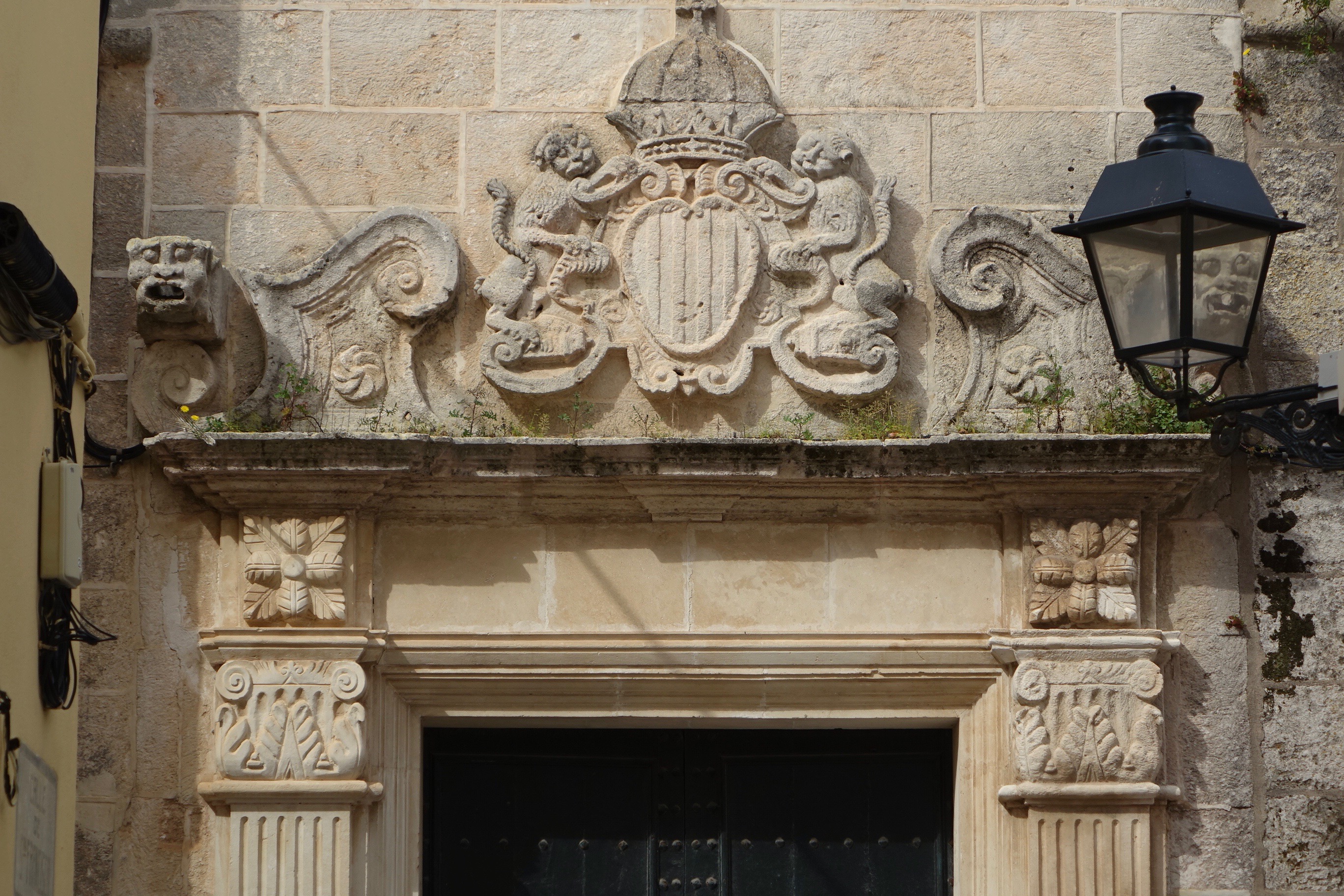
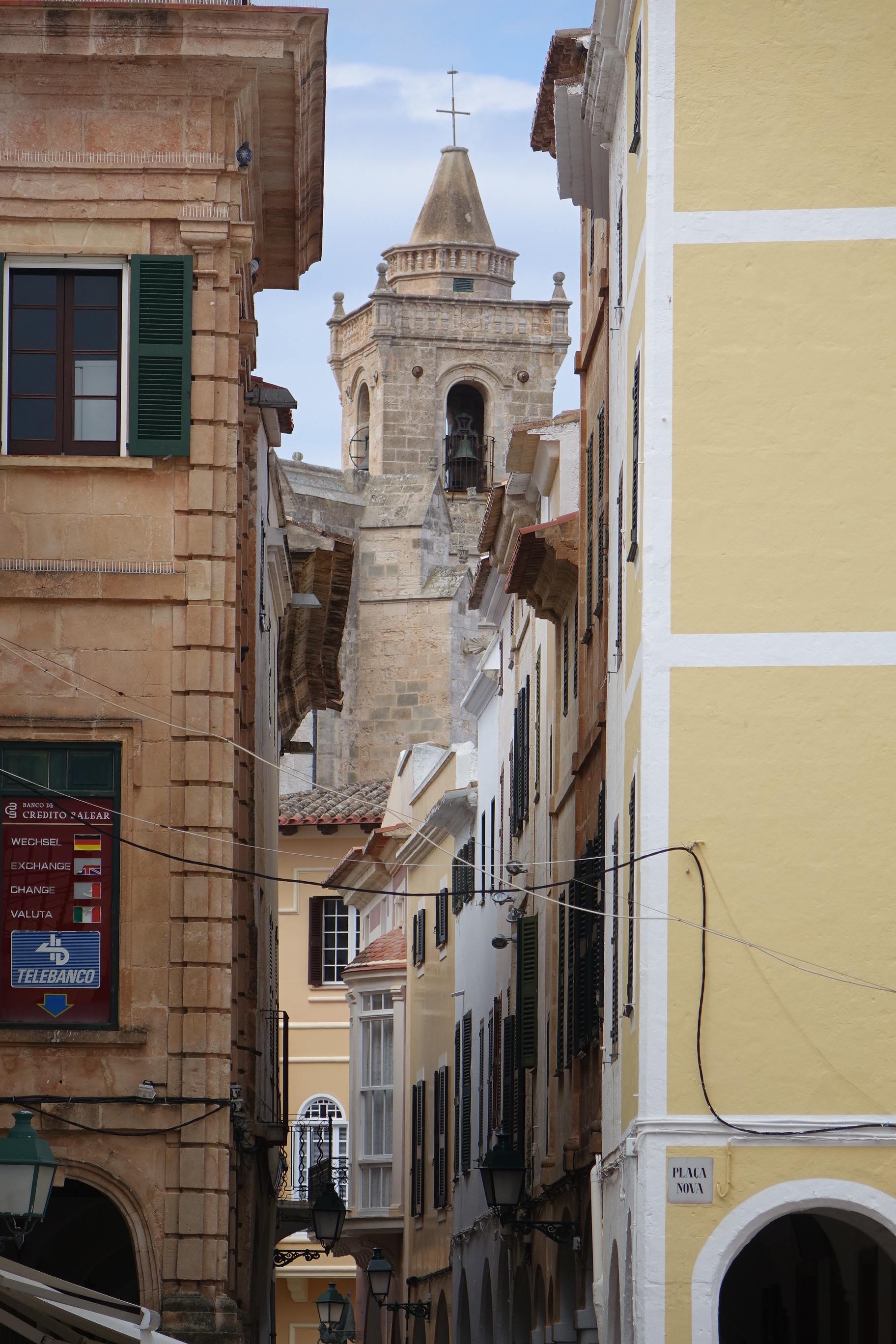
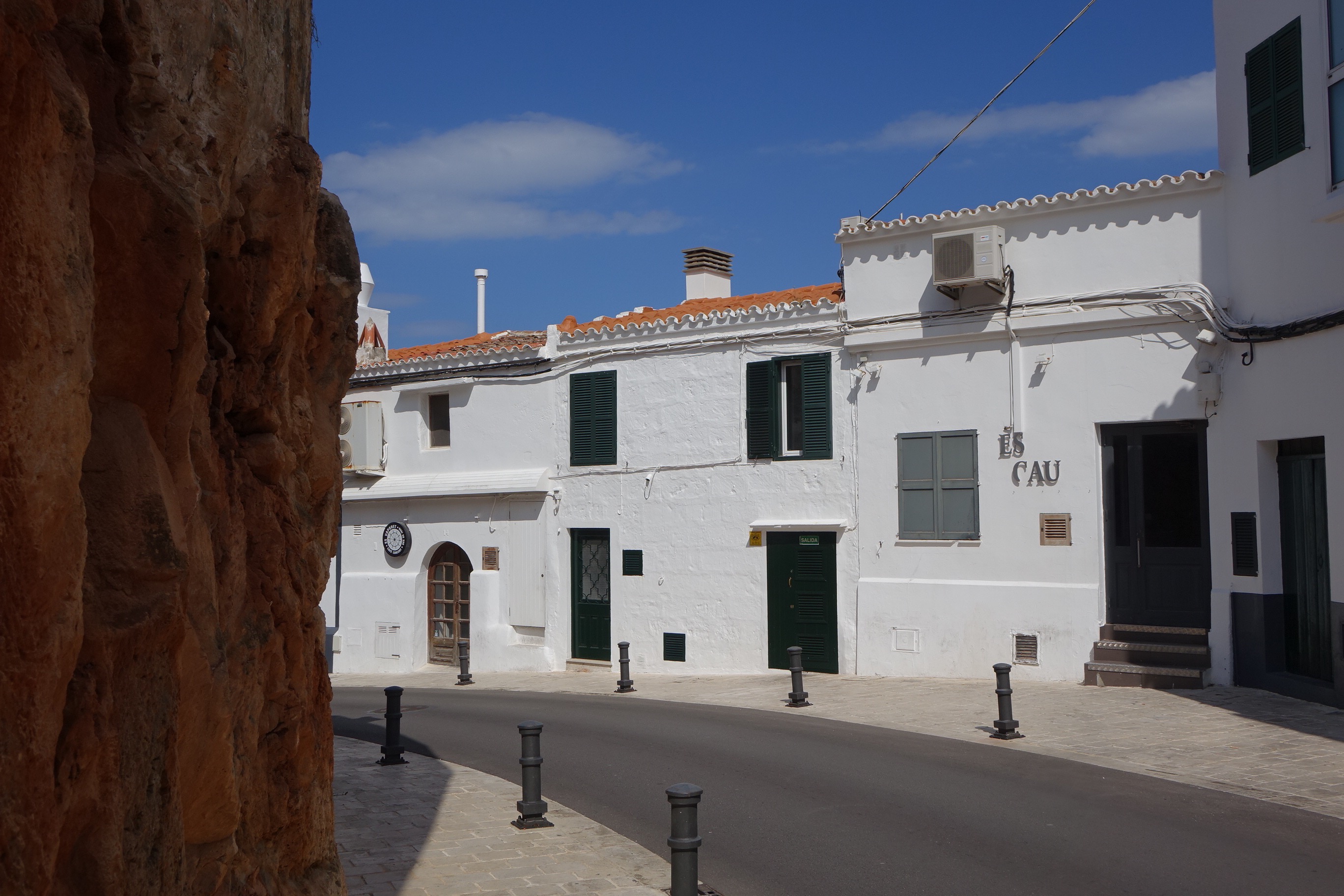
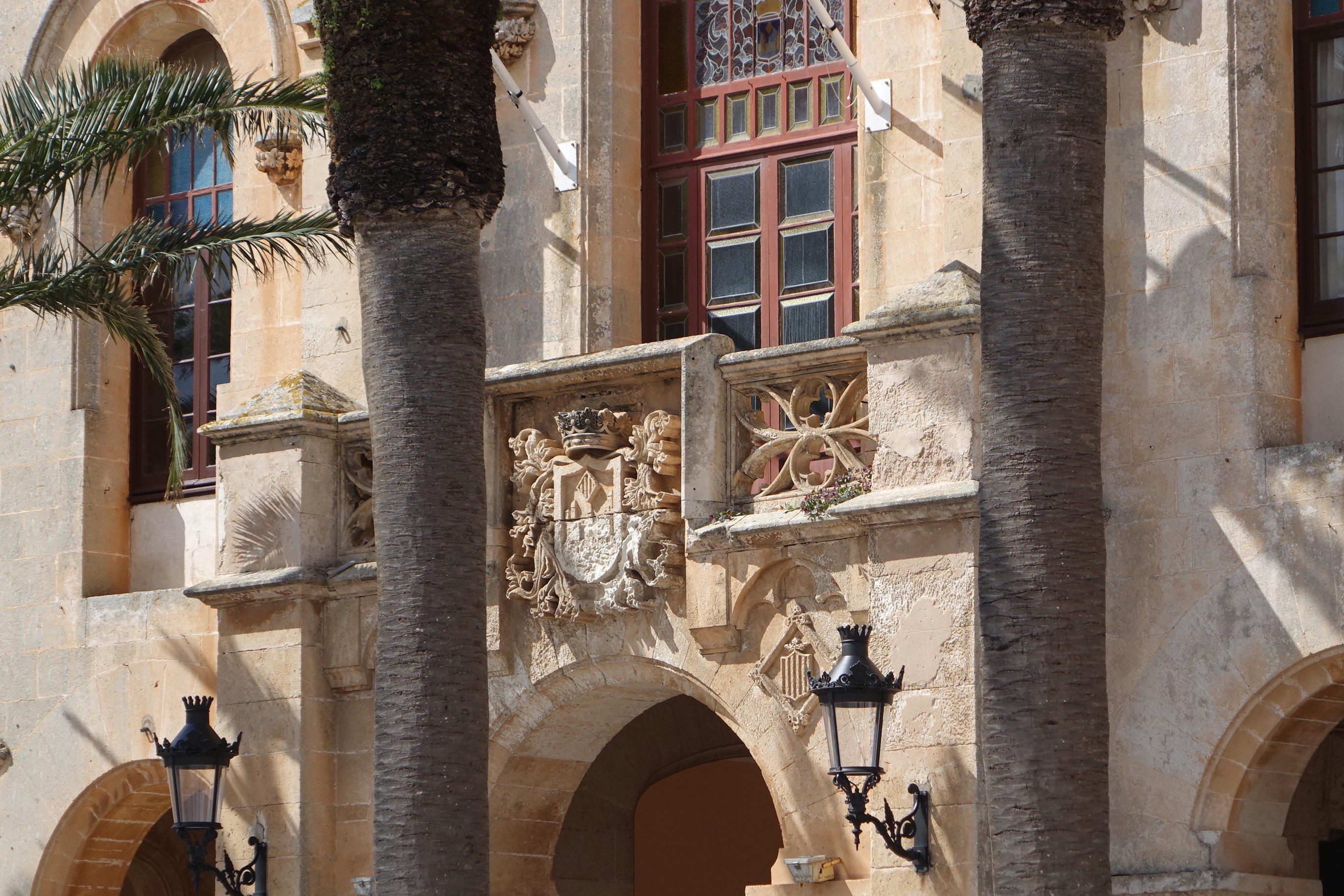
Consequently, our experience of Ciutadella, the beautiful second city of the island in which we based ourselves was something of a mixed weather bag, as we dodged rainfall, spent our time in more cafés and restaurants drinking wine than could perhaps be justified, and constantly revisited the same sights in the hope of capturing the best photos of the famous pink-tinged sandstone which characterises the city. The collection which results is therefore one which shows not only the beautiful city, one filled with little cobbled lanes and impressive palatial buildings, but also the weather conditions which changed its character. I especially love those photos when the buildings are almost illuminated by a hazy sun, but where the promise of a menacing dark rain storm looms in the background.

DSC00916DSC01282DSC00923DSC01303DSC00909DSC01301DSC00887DSC00727DSC00747DSC00748

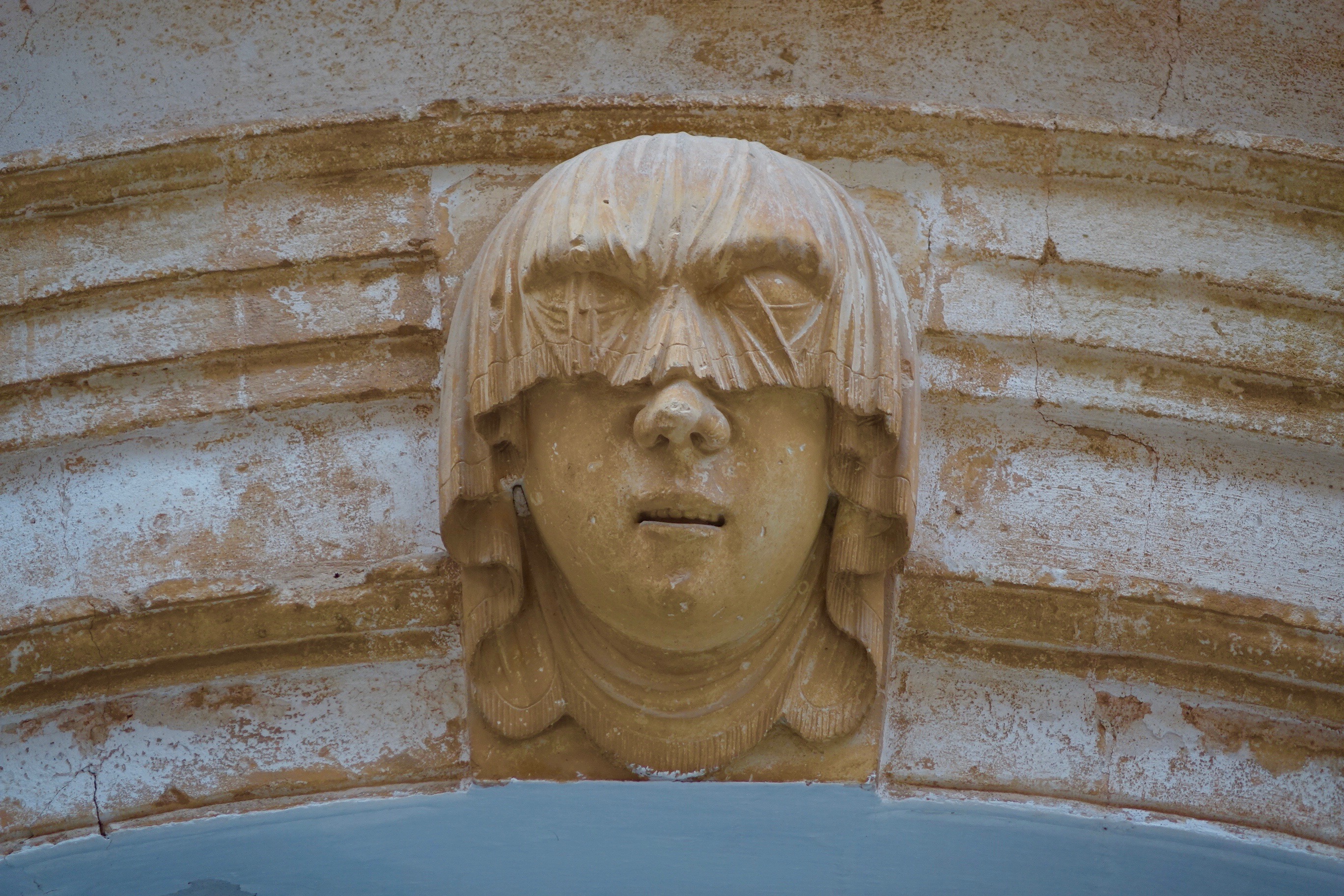
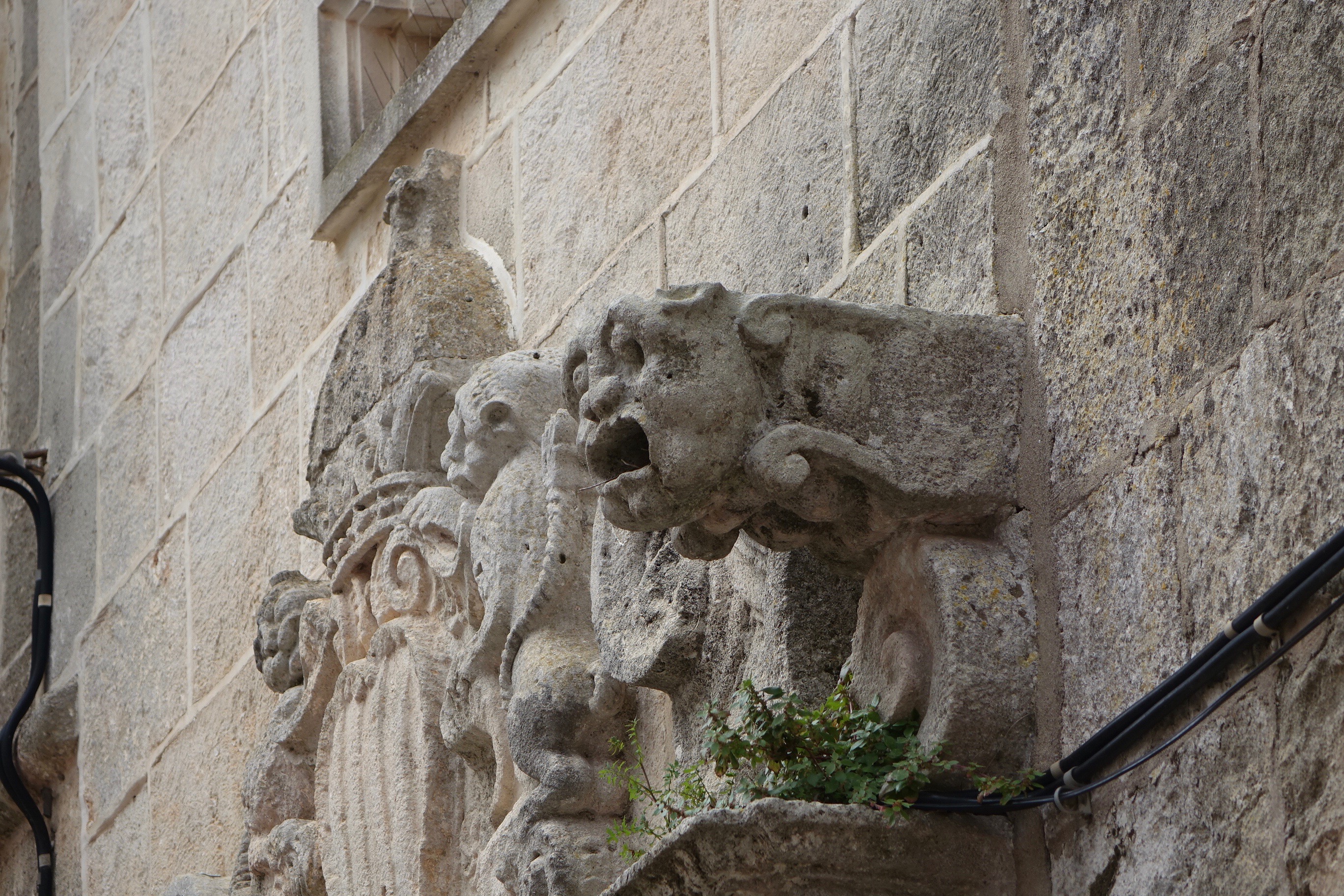
Whatever the weather, there is no doubting the charm of Ciutadella as a holiday destination. Far prettier (in my opinion) than Menorca’s primary city of Mahon, it’s hard to see Ciutadella as a city with some 20,000 inhabitants only. However, there is something truly cosmopolitan about its main square surrounded by baroque and classical facades and an impressive town hall built on the ruins of an old Moorish Alcazar, not to mention it’s imposing cathedral whose box like character looks like a large lump of peach coloured soap, complete with gargoyle detailing and a not displeasing perfume of incense.

DSC01421DSC01410DSC01406DSC01397DSC01384DSC01329DSC01305DSC01304

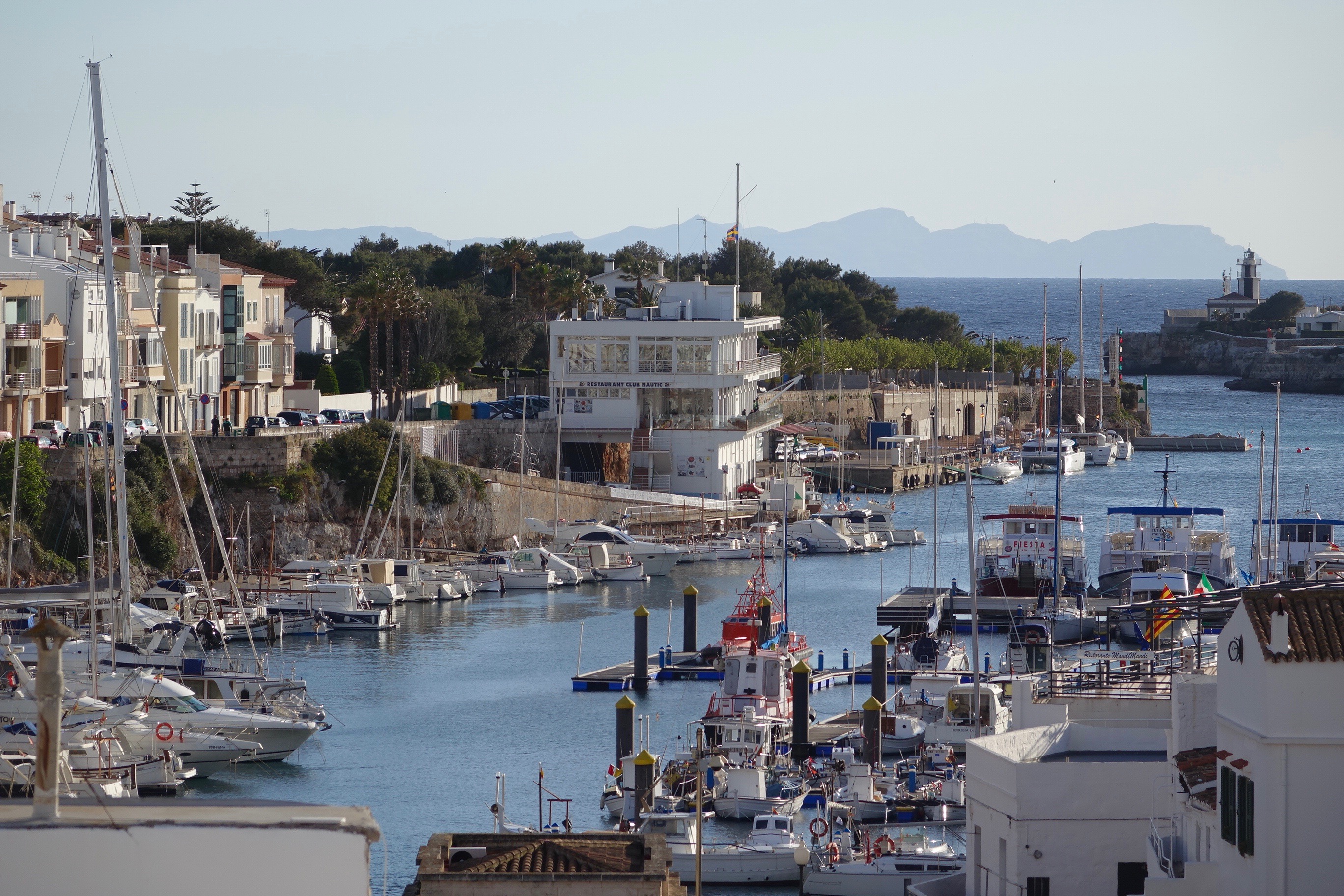
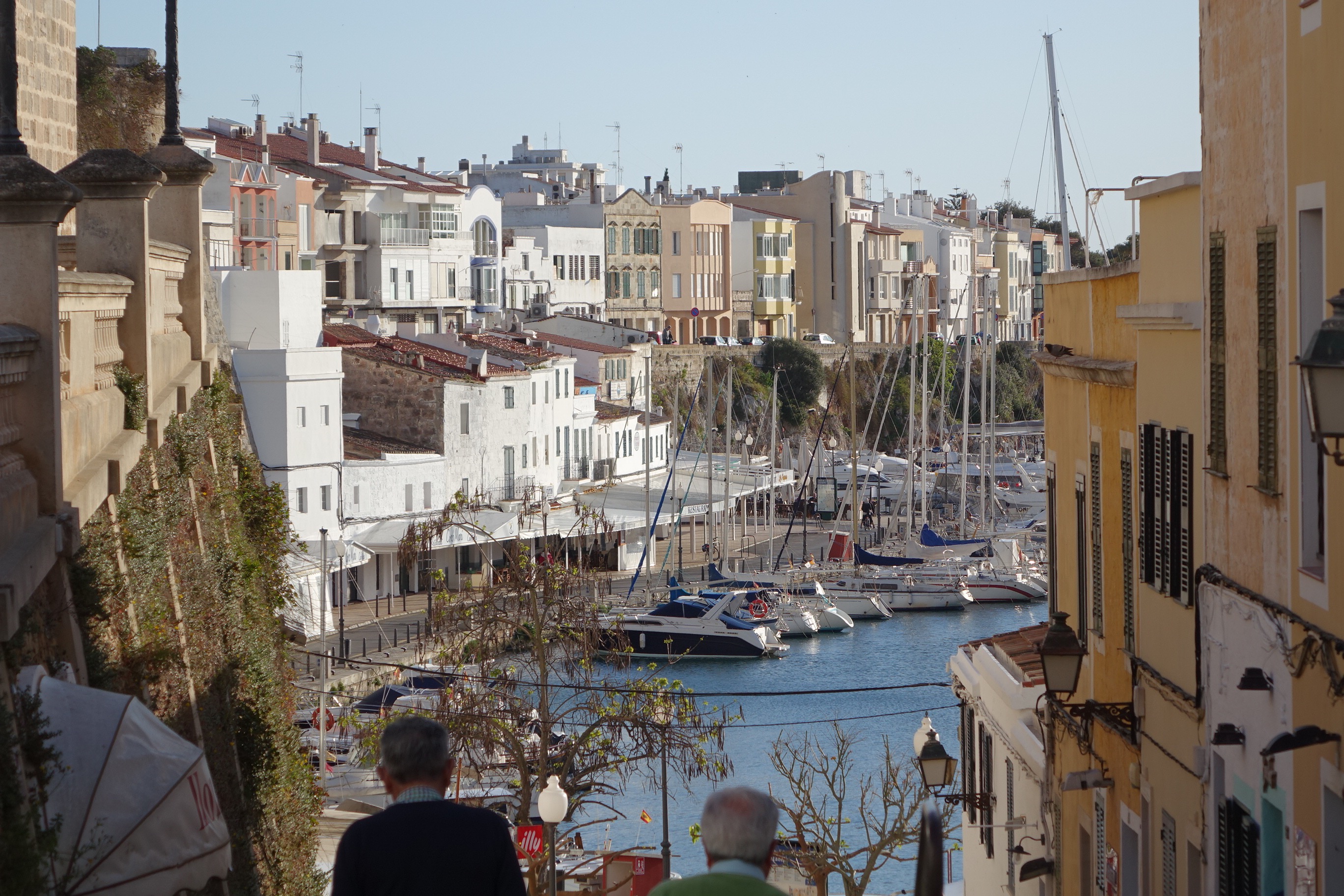
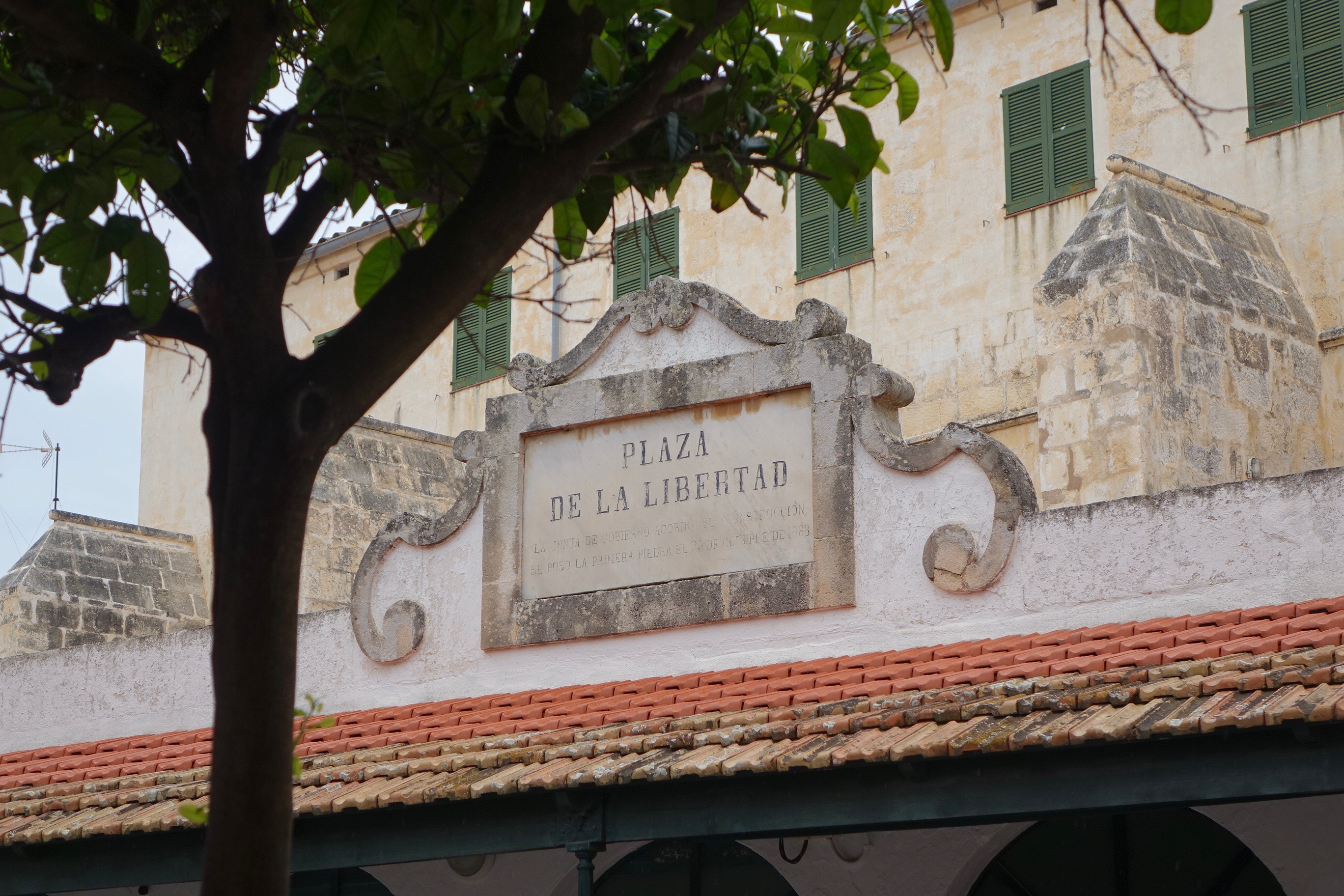
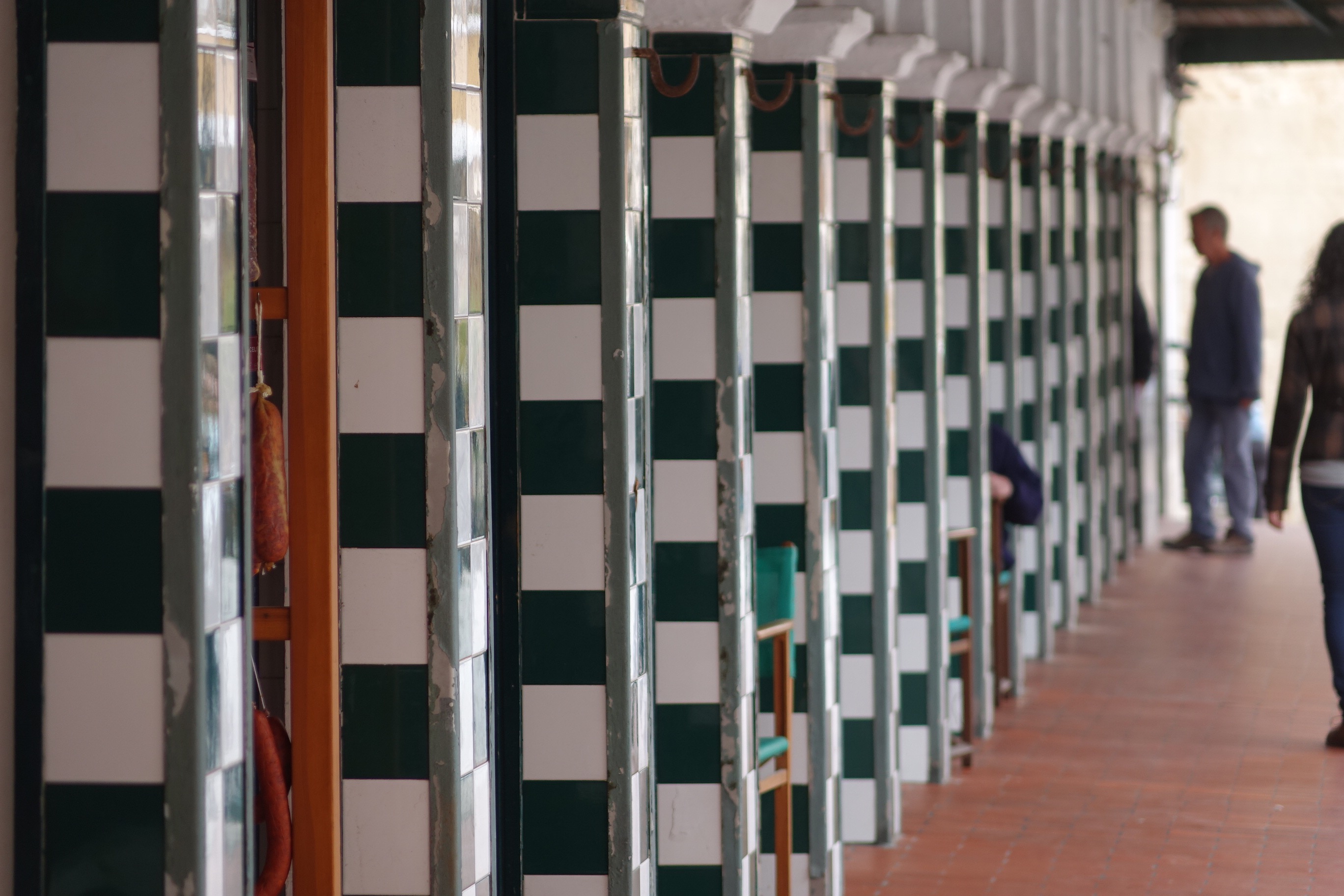
The city also benefits from a very beautiful little port which takes advantage of a natural inlet which creeps into the city from the nearby outer coastline from where the views of Mallorca are truly stunning. Back in the centre, this small city can be enjoyed at its bustling best around the popular Placa Llibertat Market, or in the crowded little arched shopping arcade, Ses Voltes, all white washed of course in the Menorcan fashion.

DSC01346DSC01335DSC01324DSC00928

The Market of Plaça de la Libertad

DSC00881DSC00848DSC00880DSC00840DSC00878DSC00858DSC00877DSC00866DSC00876DSC00854

Come rain, come shine, Ciutadella is Menorca’s gem. A little historical focal point on an island otherwise characterised by its uninhabited open spaces and utterly unspoilt natural beauty.

All photos and written content are strictly the copyright of Nicholas de Lacy-Brown © 2016 and The Daily Norm. All rights are reserved. Unauthorized use and/or duplication of the material, whether written work, photography or artwork, included within The Daily Norm without express and written permission from The Daily Norm’s author and/or owner is strictly prohibited.
Across the Water to Menorca, Part 2: Pedreres de s’Hostal

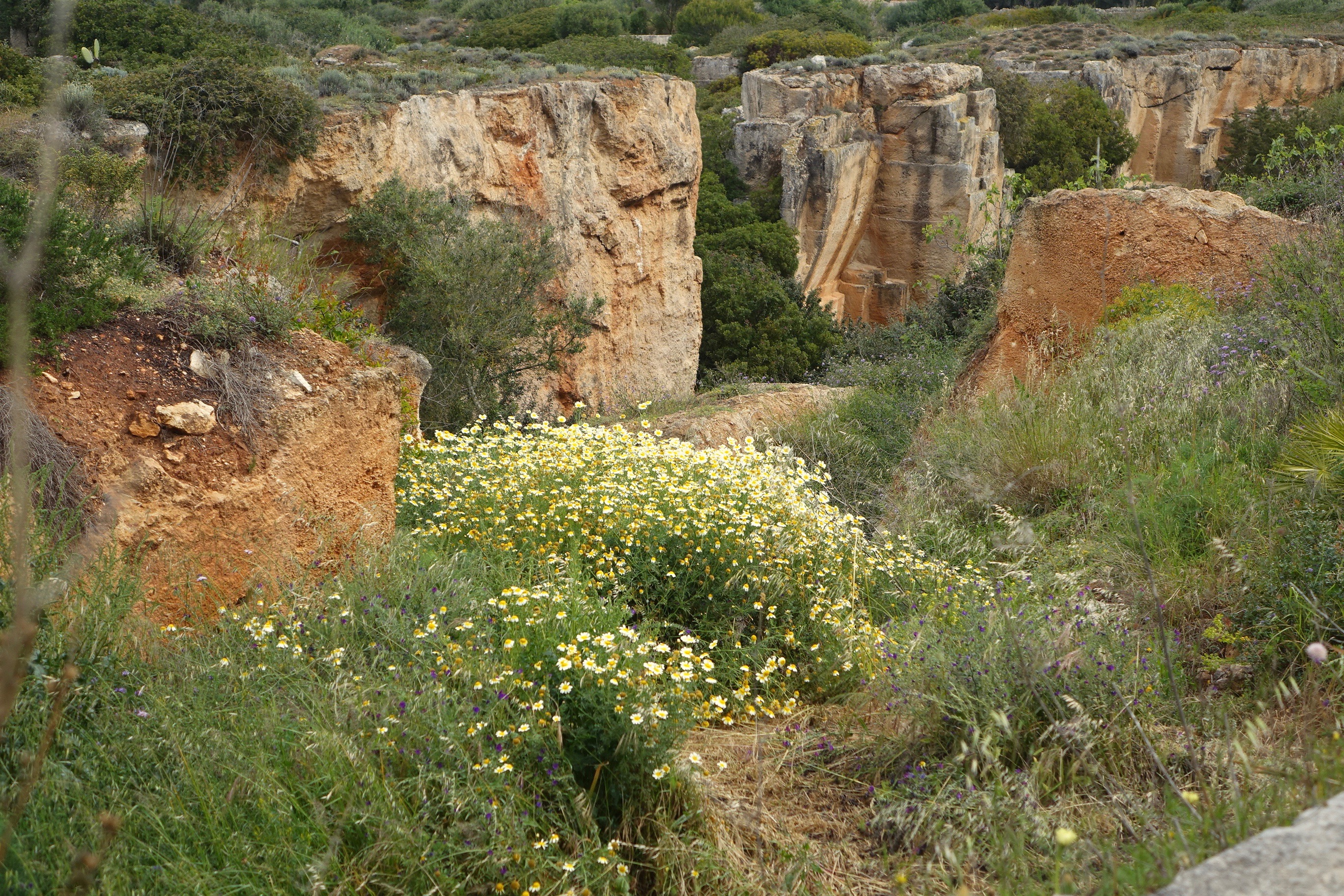
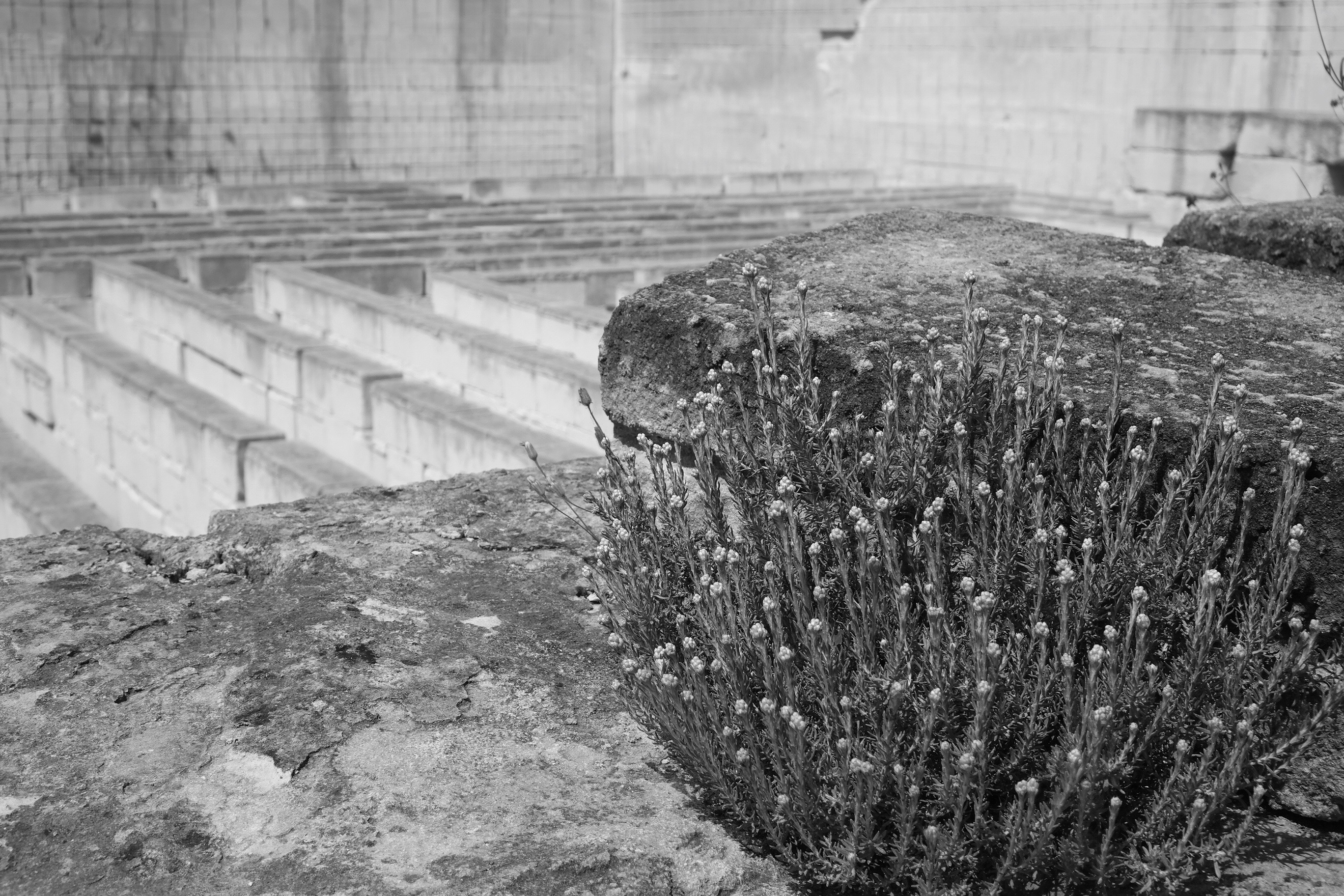
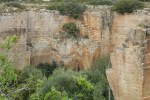
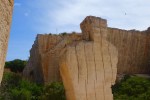
There is something about the largely uninhabited central landscape of Menorca that gives it a mystical enigmatic quality like a magical bucolic setting for Tolkien’s hobbits or something out of Wonderland. But this sensation was deeply magnified at Pedreres de s’Hostal just outside the small city of Ciutadella. Formed out of a vast landscape of old and not-so-old sandstone quarries, the organisation Lithica has done the impossible, transforming what could have been an industrial waste land into the most stunningly unique gardens you are likely to see.

DSC01122DSC01062DSC01108DSC01048DSC01021DSC00982DSC00963

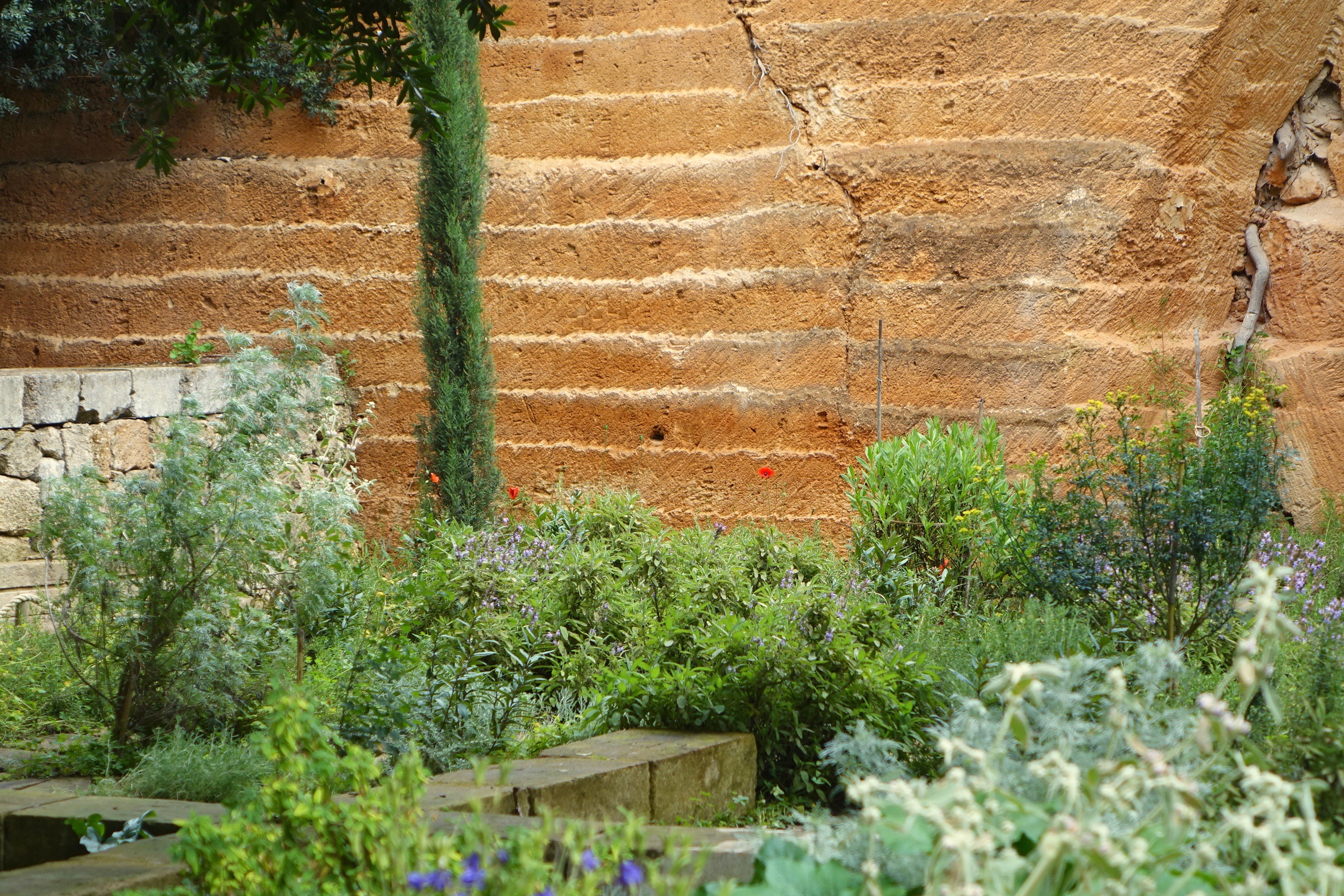
What makes the gardens so unique is the landscape. The shapes left my stone cutters long ago are surreal to say the least. In sharp angular spaces of yellow rock, plants and flowers of every Mediterranean variety appear to have reclaimed the land from the hand of man as they twist and turn across the rock’s surface. Amongst unique anthropomorphic shapes, trees scatter light and herbs their heady aroma. My favourite two gardens were a pristine medieval courtyard garden set within one of the deepest mines like the cloister of a monastery, and a medicinal herb garden planted amongst a twisting path of stone.

DSC01125DSC01096DSC01110DSC01090DSC01086DSC01087DSC01084DSC01103

At the centre of it all are two vast mines more recently quarried, in the largest of which a labyrinth has been crafted from stone. Led into the maze by the challenge of finding the centre, we felt almost mythical in amongst a near Minoan landscape of ochre, half expecting the Minotaur to rear up before us at any turn. With the walls soaring up around us at the most peculiar angles, it was truly like being in a fantasy world.

Sadly the weather that graced our visit was for the most part vexingly cloudy. Nevertheless the photos I took are full of the magical spirit of this place, and when, at the end, the sun finally shone, it was like the golden reward bestowed upon us as the centre of the labyrinth was reached.

More information on the gardens can be found at www.lithica.es

All photos and written content are strictly the copyright of Nicholas de Lacy-Brown © 2016 and The Daily Norm. All rights are reserved. Unauthorized use and/or duplication of the material, whether written work, photography or artwork, included within The Daily Norm without express and written permission from The Daily Norm’s author and/or owner is strictly prohibited.

Across the Water to Menorca, Part 1: Binibèquer Vell

It’s just a small stretch across the water. Reach out your hand from the bay of Alcudia, and you can almost touch the island across the bay, and certainly see its gentle profile floating upon the horizon. Menorca is the little sister of Mallorca, an island which shares much of Mallorca’s Balearic history and culture, but which likewise has its own personality, and much more of the unspoilt beauty which Mallorca too would have retained were it not for the tourism boom. It is an island altogether more tranquil and sedate, with its rolling hills and flattened floral landscape, and with residents so apparently laid back that at times you wonder if they are falling asleep as they charm you with their somniferous tones.

DSC01504DSC01457DSC01471DSC01460DSC01509DSC01481DSC01505

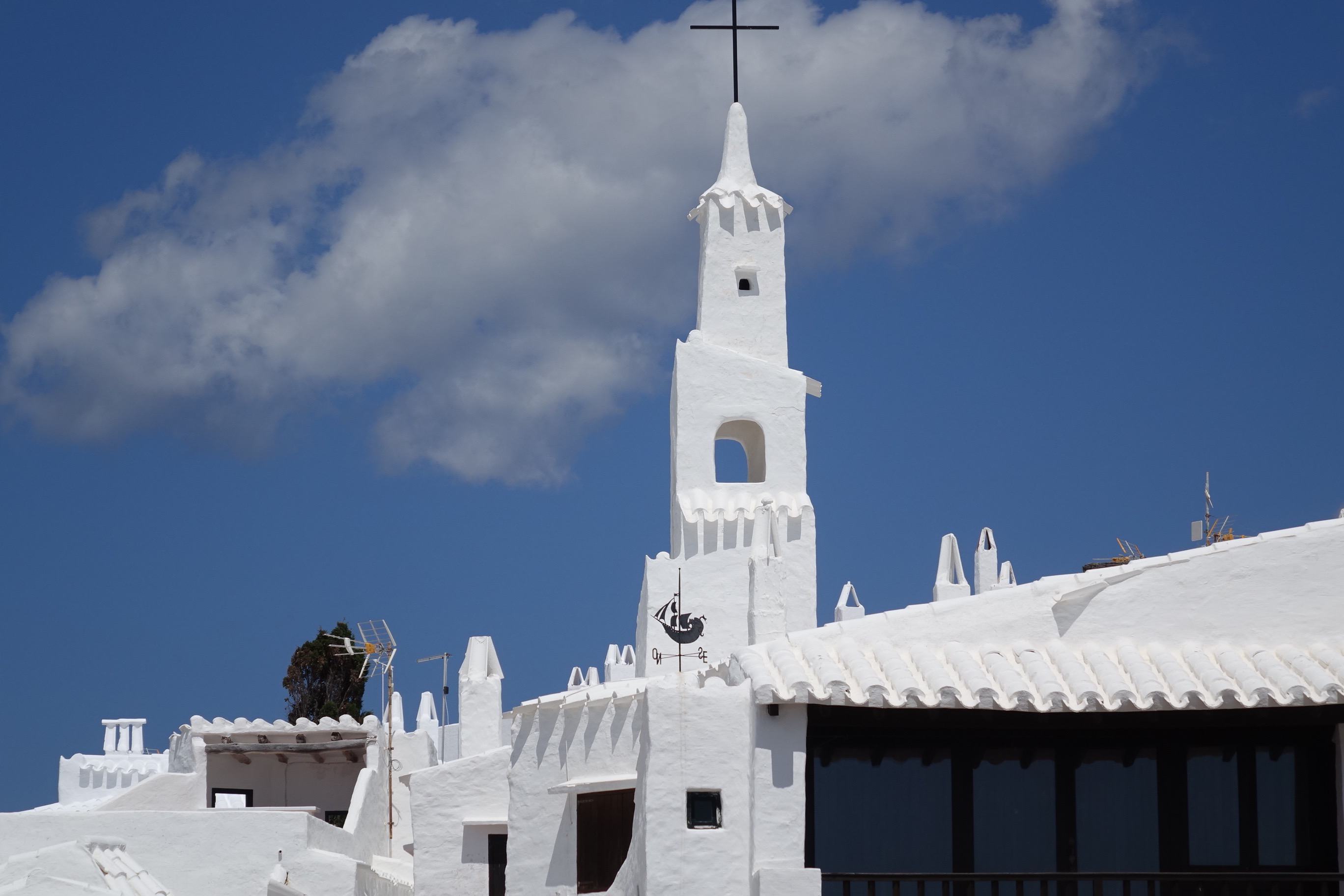
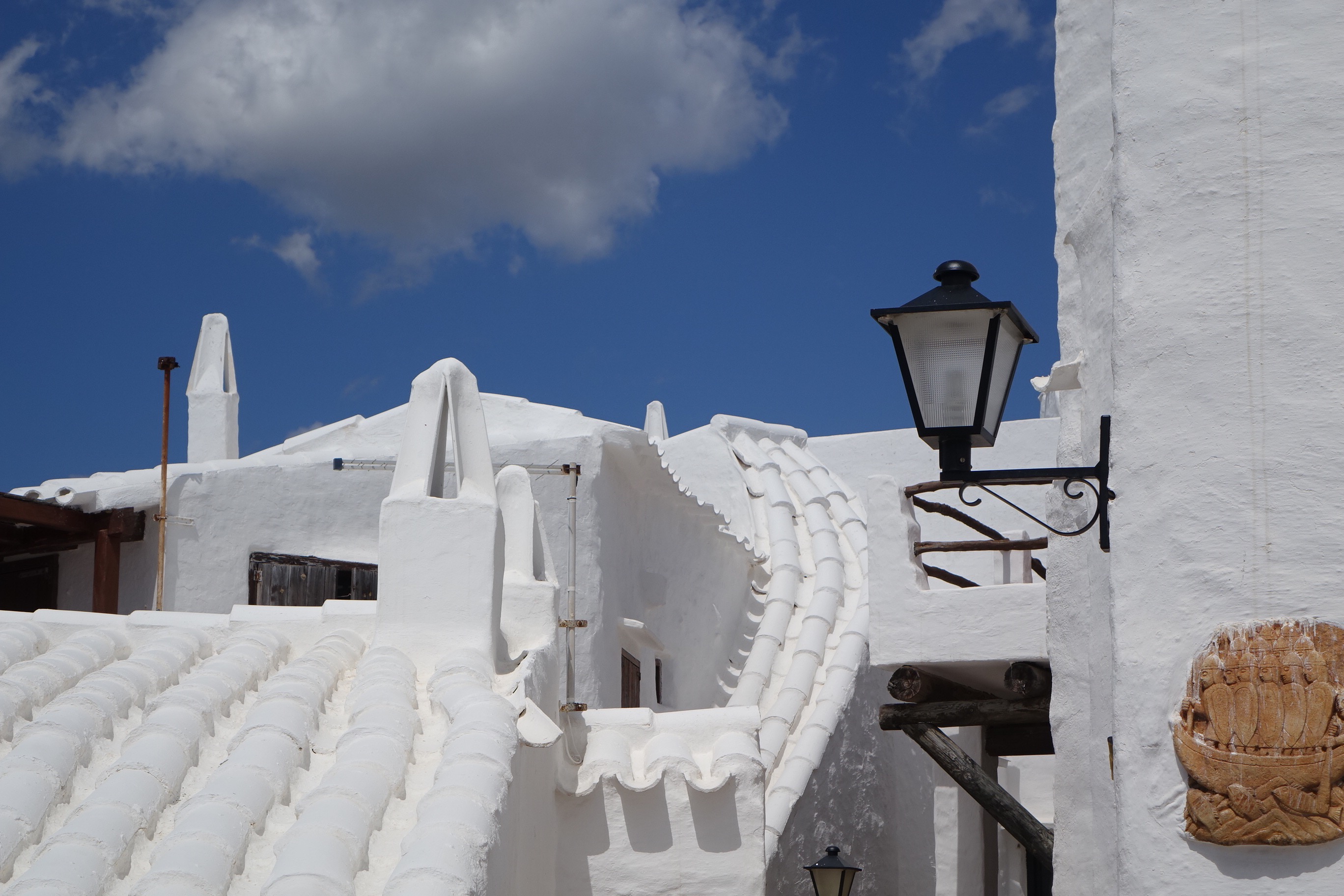
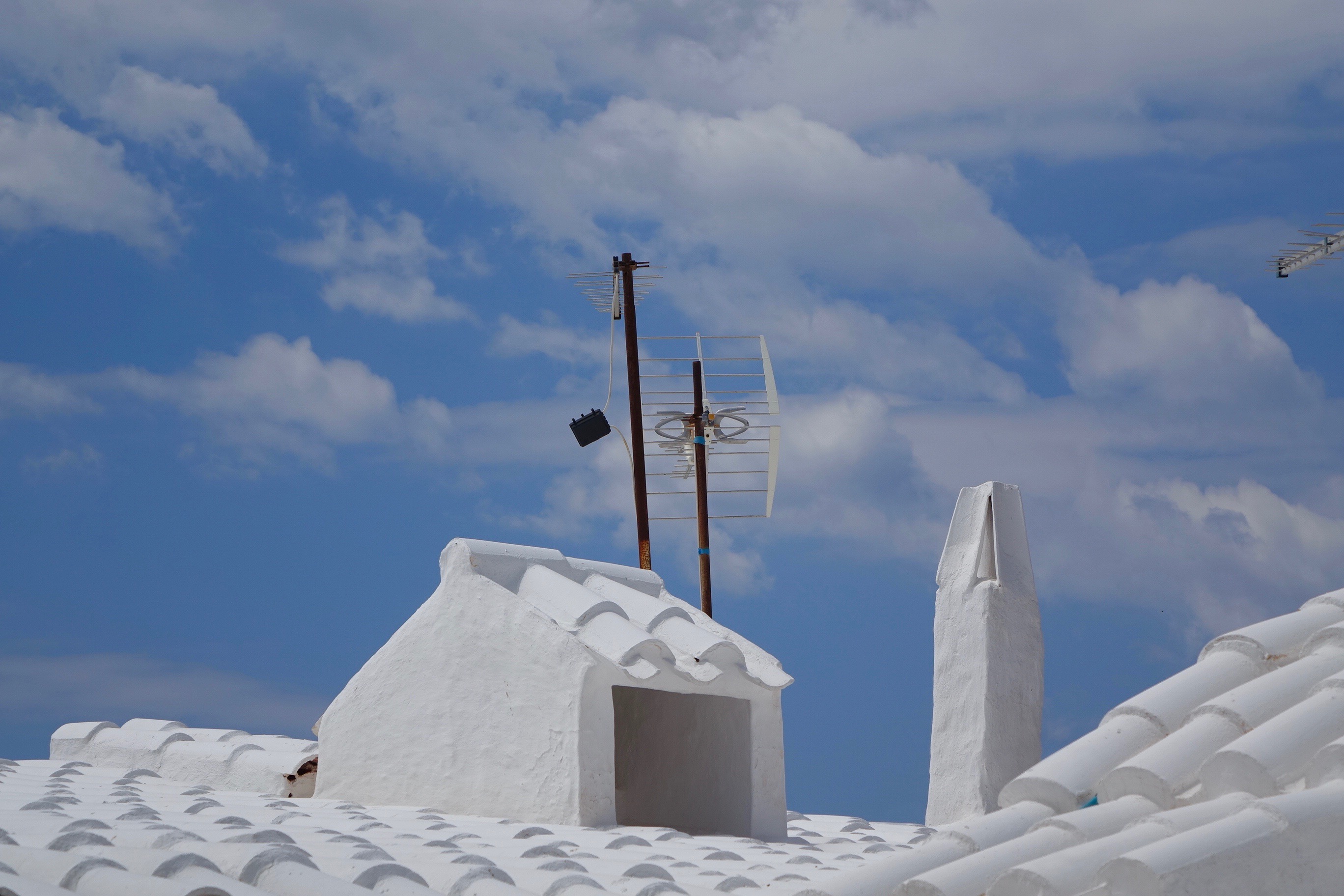
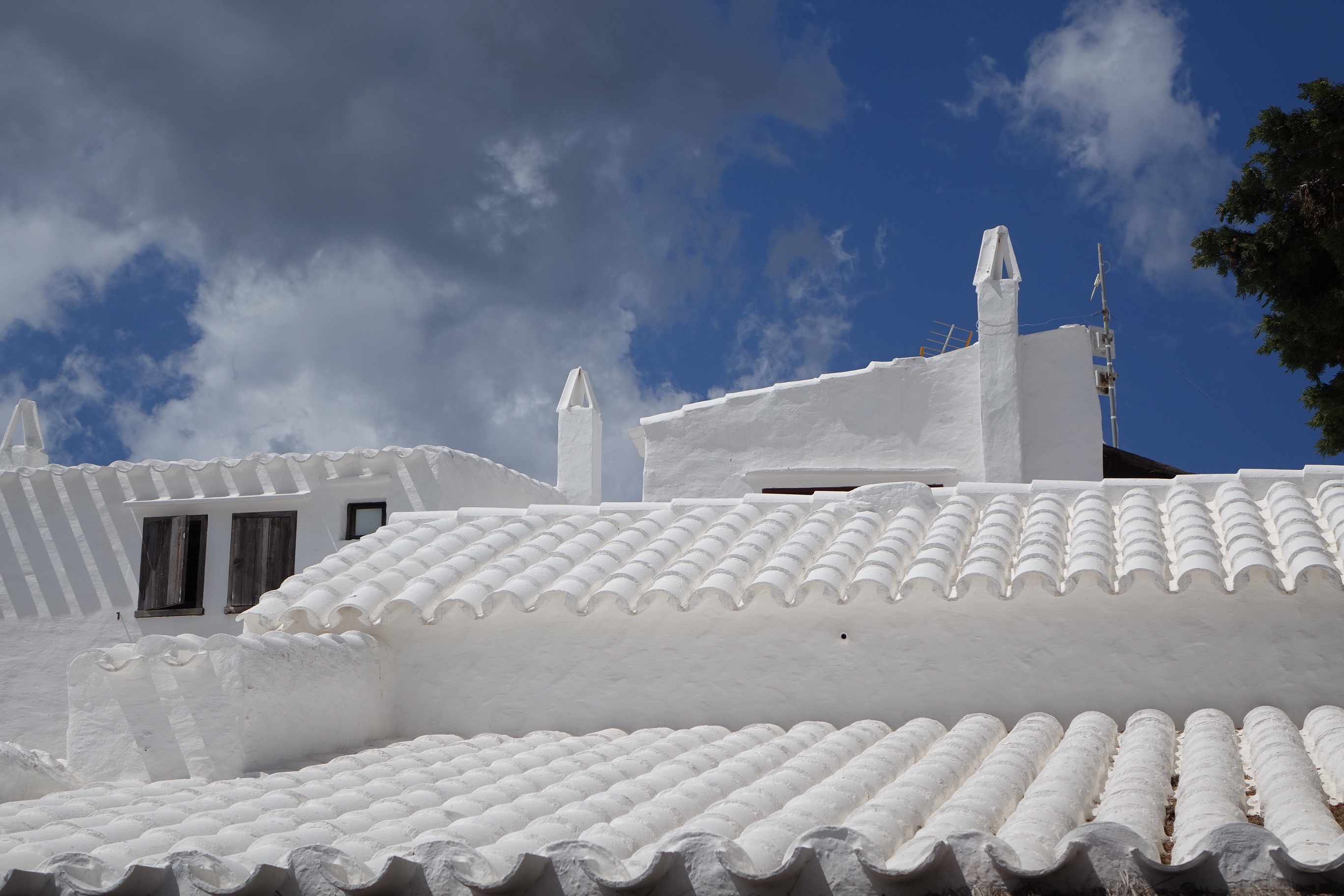
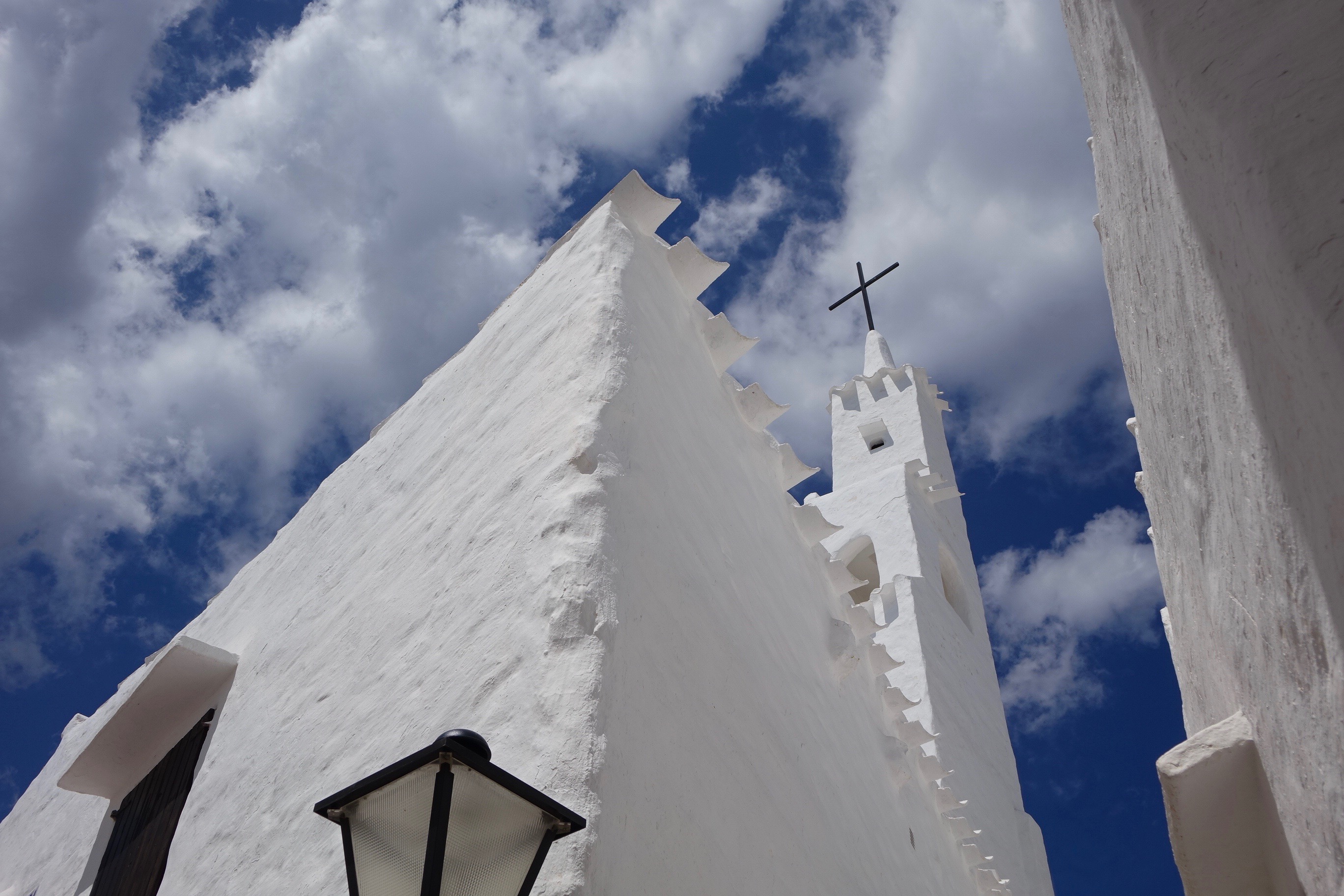
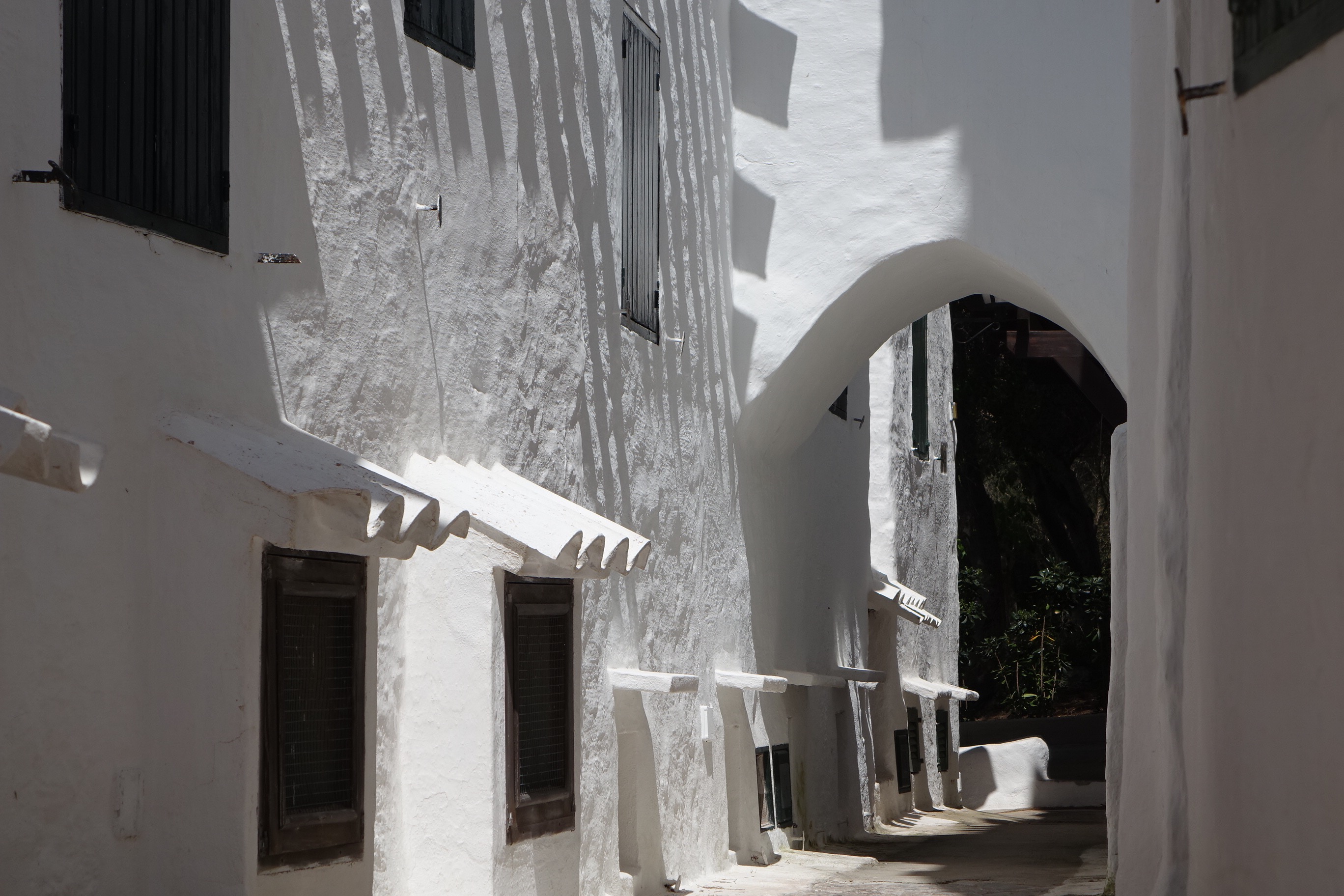
Last weekend we headed, for the first time, to our neighbouring island of Menorca, and while I have several tales from that trip to relay to you hereafter, I am starting somewhat back to front with the last place we visited, just before we returned on our 20 minute hop through the skies. For in visiting Binibèquer Vell, a tiny little whitewashed village by the sea, it felt as though we were seeing in manifest form the very epitome of this island, unravaged and virginal, a place of pure light and clean simplicity.

DSC01513DSC01478DSC01472DSC01473DSC01541DSC01526DSC01490

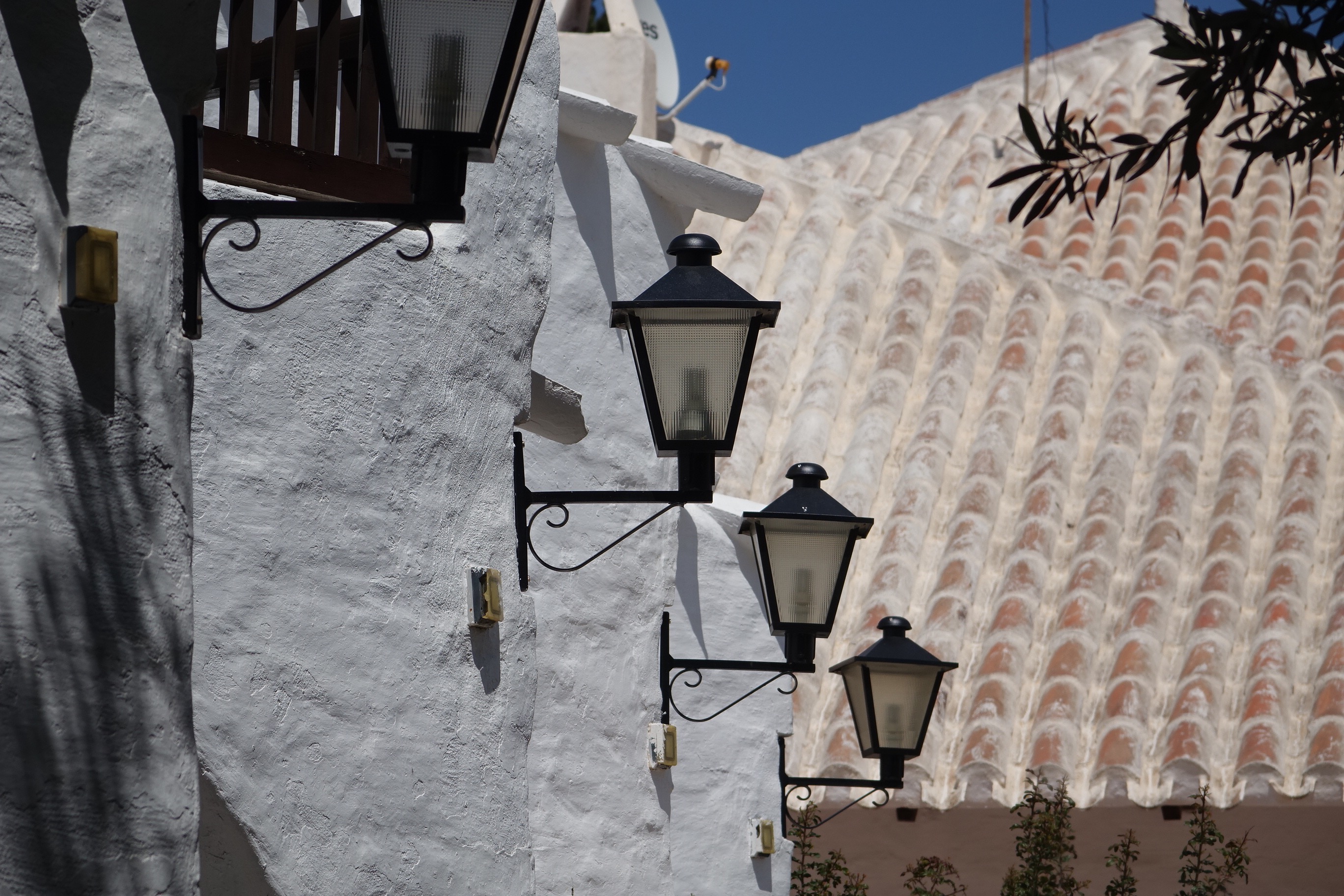
Situated on the southern coast of the island some 15 minutes from the capital Mahon, the “Vell” in Binibèquer Vell connotes its age compared with its more modern counterpart. However, as some commentaries would have it, the village isn’t old at all – rather constructed in the 70s as a kind of reproduction idyll to entice the tourists. I’m not overly sure whether this is as much a myth as the commentators declare the village to be. All I know is that we were both enticed to visit, and enamoured by the whitewashed quaint shapes of this incredibly cute cluster of fishermen’s houses. Caught somewhere between a smurf village idyll and a museum piece, few could deny the charm of this place, with its pure white forms radiating against the almost neon blue skies, and the kind of simplicity which makes the island of Menorca beautiful.

DSC01516DSC01546DSC01536DSC01526DSC01531

All photos and written content are strictly the copyright of Nicholas de Lacy-Brown © 2016 and The Daily Norm. All rights are reserved. Unauthorized use and/or duplication of the material, whether written work, photography or artwork, included within The Daily Norm without express and written permission from The Daily Norm’s author and/or owner is strictly prohibited.

Barcelona (The Yellow Painting)

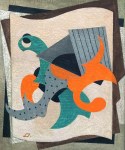
I’m on a new road, it’s an artistic revolution, and as part of the journey my art has become abstracted. I have discovered the joys of simplicity, like breathing the freshness of countryside air after years spent in a congested city. Perhaps, now I come to think about it, my new style is the subconscious manifestation of my new life in Mallorca, a freshness of mind which has opened up since my departure from London.

Whatever the cause, my mind is alive with new ideas, and when I recently spent the Valentine’s weekend with my partner in Barcelona, this new painting, simply entitled Barcelona (but better known in our household as “The Yellow Painting”) leapt into life. It was inspired primarily by the textures and experience of our hotel room, whose luxurious black bedspread inspired the black form in the centre of the painting, while the rose is of course the very symbol of Valentines. Meanwhile amongst the simplified shapes, the four spires of one face of Gaudi’s Sagrada Familia can be found, as well as the curved square blocks of the Eixample area which predominate the shape of the city when seen from above, and which also appears in the simplified rose.

Barcelona FINAL

Barcelona (The Yellow Painting) (2016 ©Nicholas de Lacy-Brown, acrylic on canvas)

But this painting is so much more than what is plainly visible. It is a feeling, a sensation – moments of happiness in a weekend of discovery. When we felt free, and excited, and reinvigorated by the city atmosphere. And its predominant colour – a yellow full of hope – just about perfectly sums up the optimism which this new period of creativity has engendered.

© Nicholas de Lacy-Brown and The Daily Norm, 2001-2016. Unauthorized use and/or duplication of the material, whether written work, photography or artwork, included within The Daily Norm without express and written permission from The Daily Norm’s author and/or owner is strictly prohibited. For more information on the work of Nicholas de Lacy-Brown, head to his art website at www.delacybrown.com
Discovering Mallorca: The walled wonder of Alcúdia

The Mallorca winter has been pretty comfortable so far. With barely three days of rain, temperatures in the teens, and sunshine pretty much every day, few can complain about the 2016 winter, although residents everywhere are looking a little worried about the sheer lack of rain, especially if this coming summer is as dry and hot as the last. Nonetheless, winter is winter when all is said and done, and even when we stroll out into a crisp sunny day, I still reminisce about the days of the summer and early autumn, when our coats remained out of sight, and trousers too had an only infrequent airing.

In the midst of these remembrances, one such special sunny day (some time at the beginning of October when my mother was in town) came to mind, and I realised that until now, it had gone unreported on The Daily Norm, such was the shockingly busy month which followed with a house move followed by a manic season of multiple Christmas decorations. Driving to the North of the island, the day afforded us yet another new discovery on this island of plenty, as we headed to the town and municipality of Alcúdia.

The old town of Alcúdia 

DSC02281DSC02299DSC02254DSC02286DSC02289DSC02261DSC02243DSC02240DSC02294DSC02230

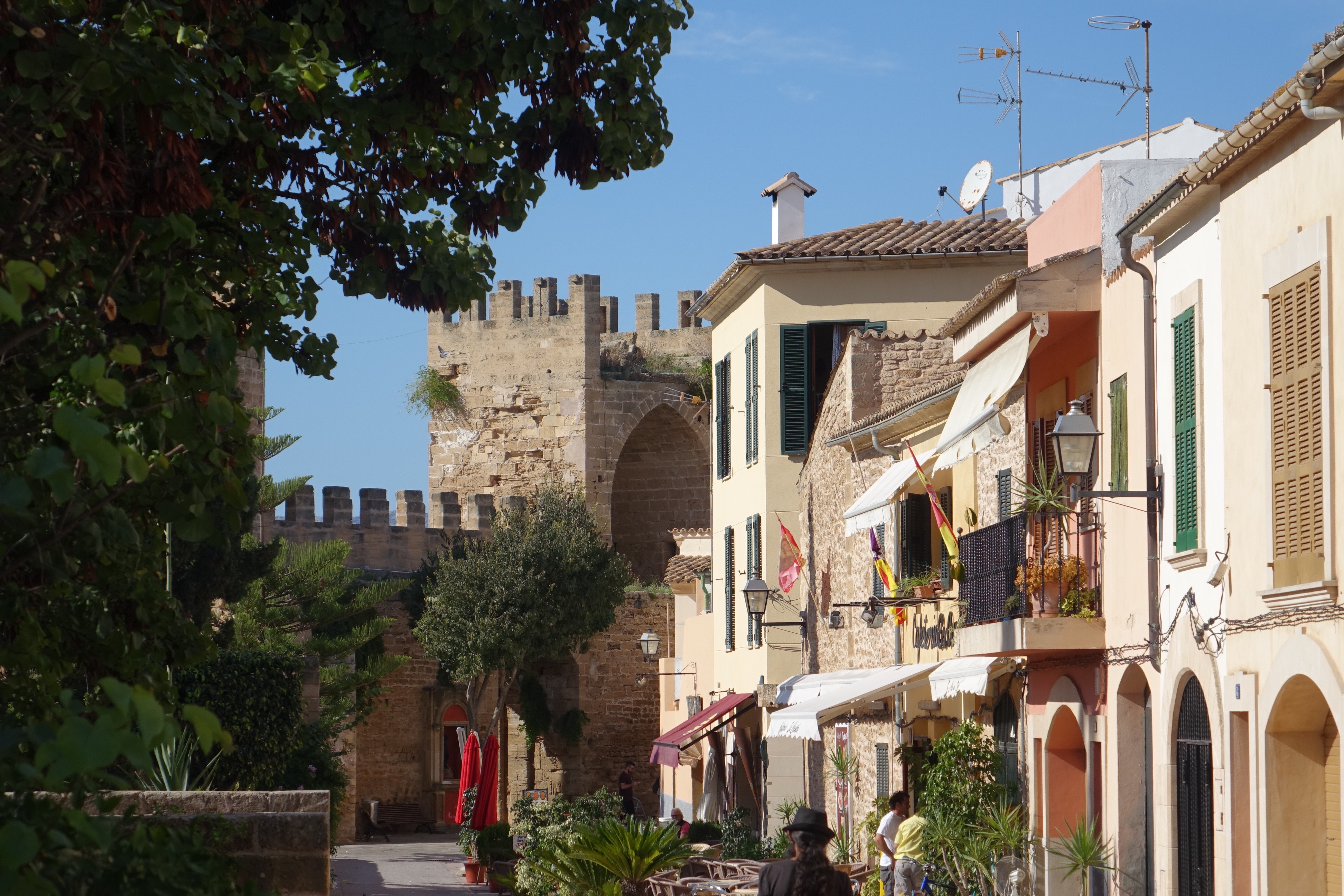
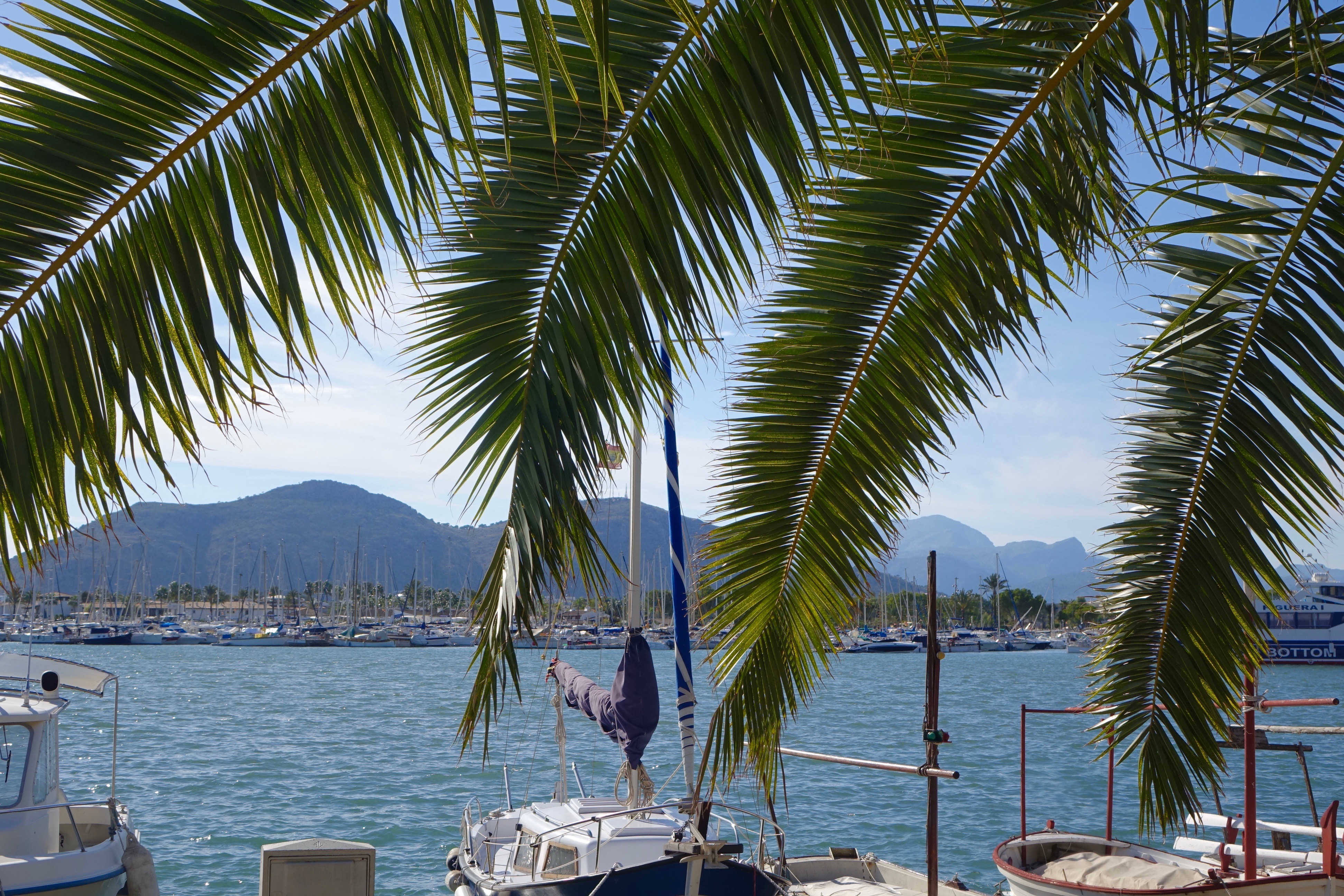
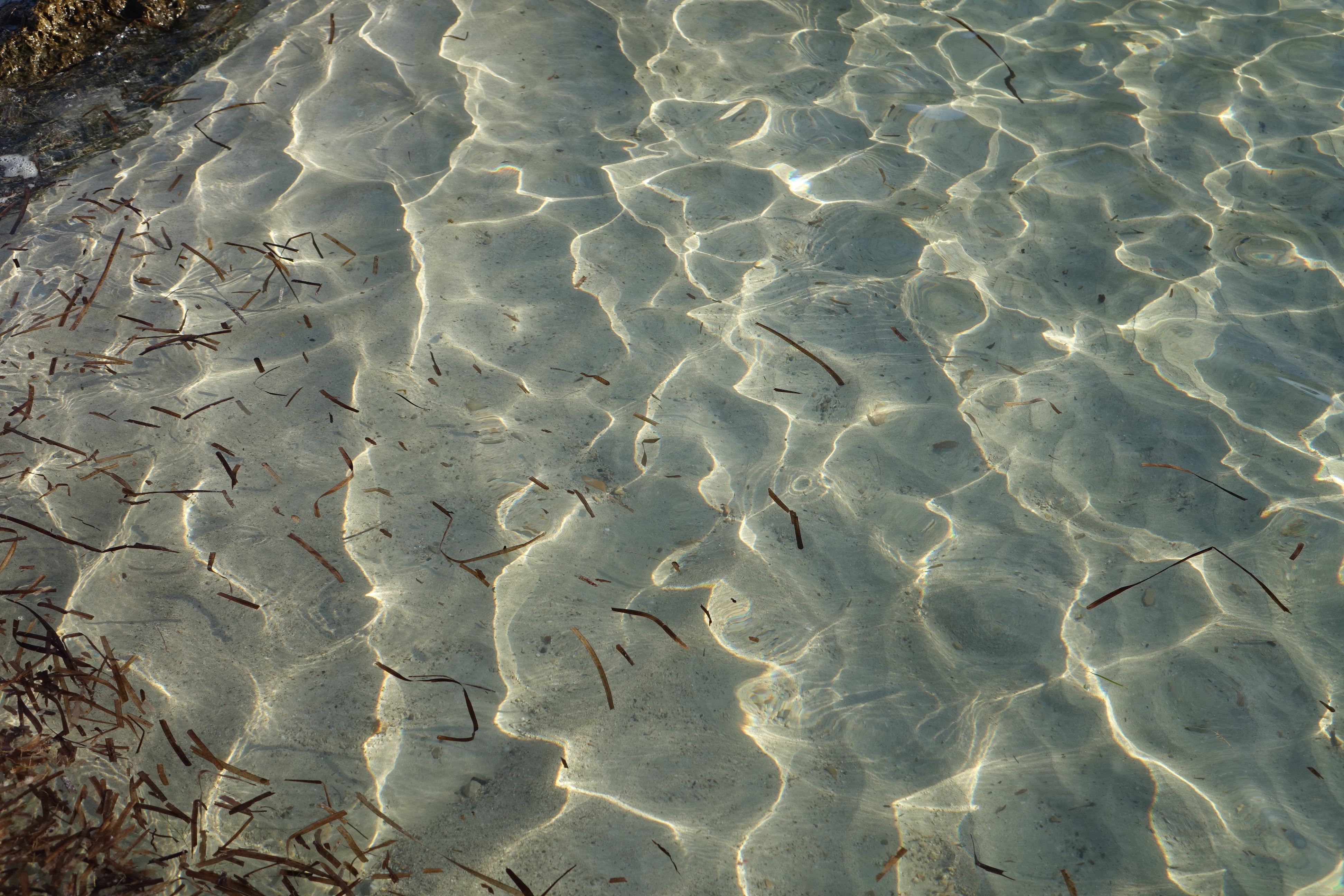
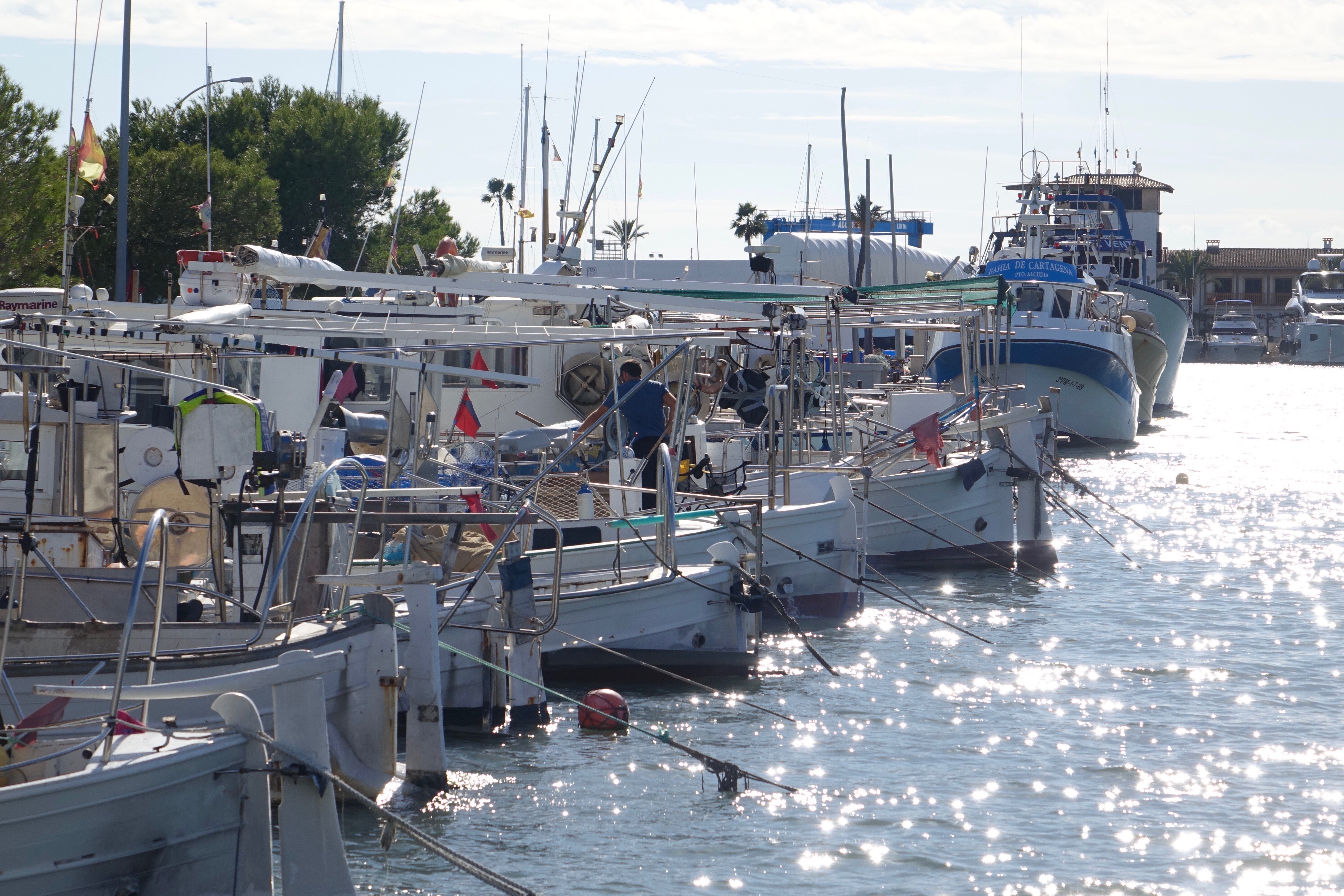
As with much of the island, Alcúdia has become synonymous with its long stretch of shallow sandy beaches, which predictably attracted an influx of tourism and the accompanying construction of endless 1970s hotels, a sight which, while improved by the sparkle of the cerulean Mediterranean sea, is not the most aesthetically pleasing.

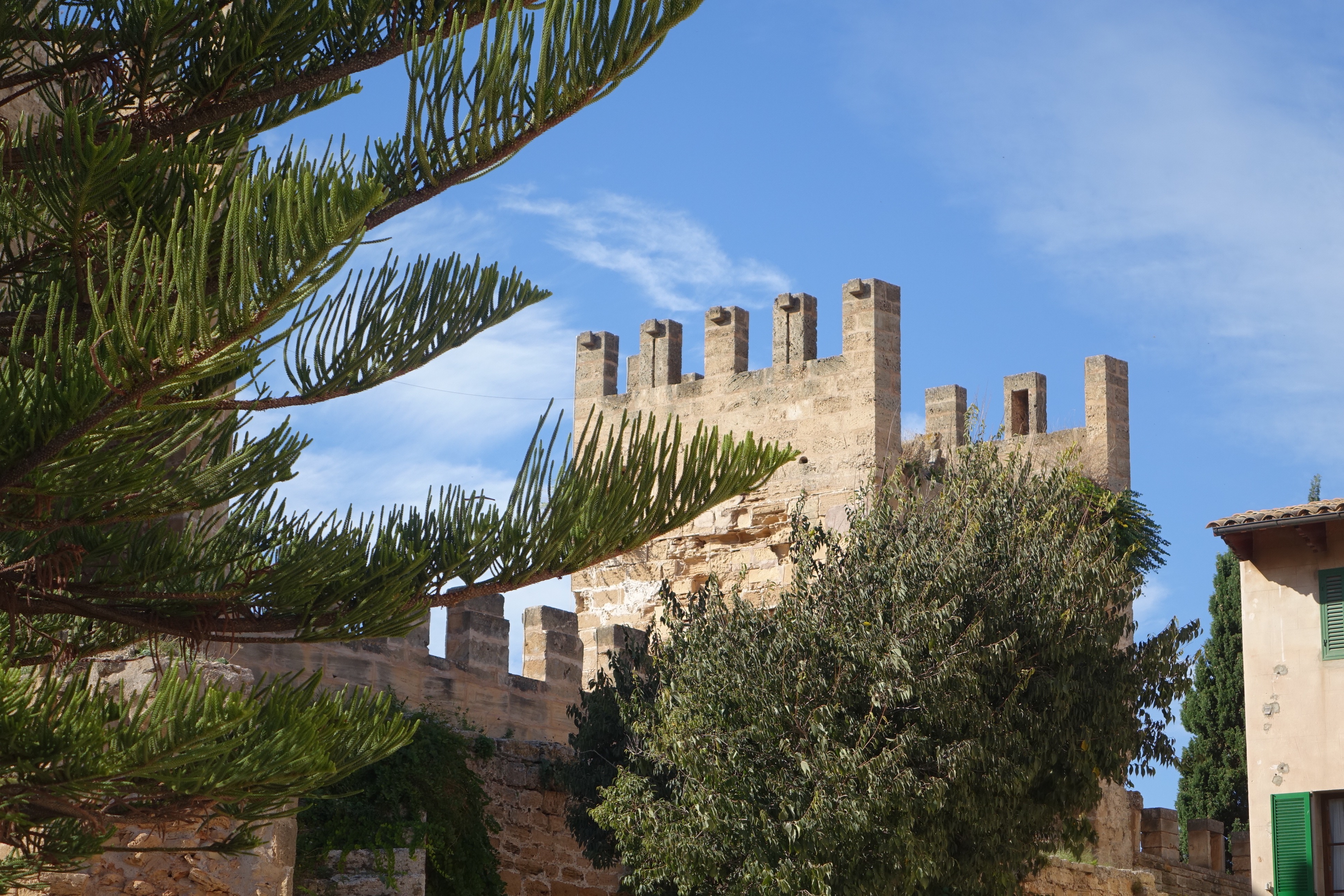
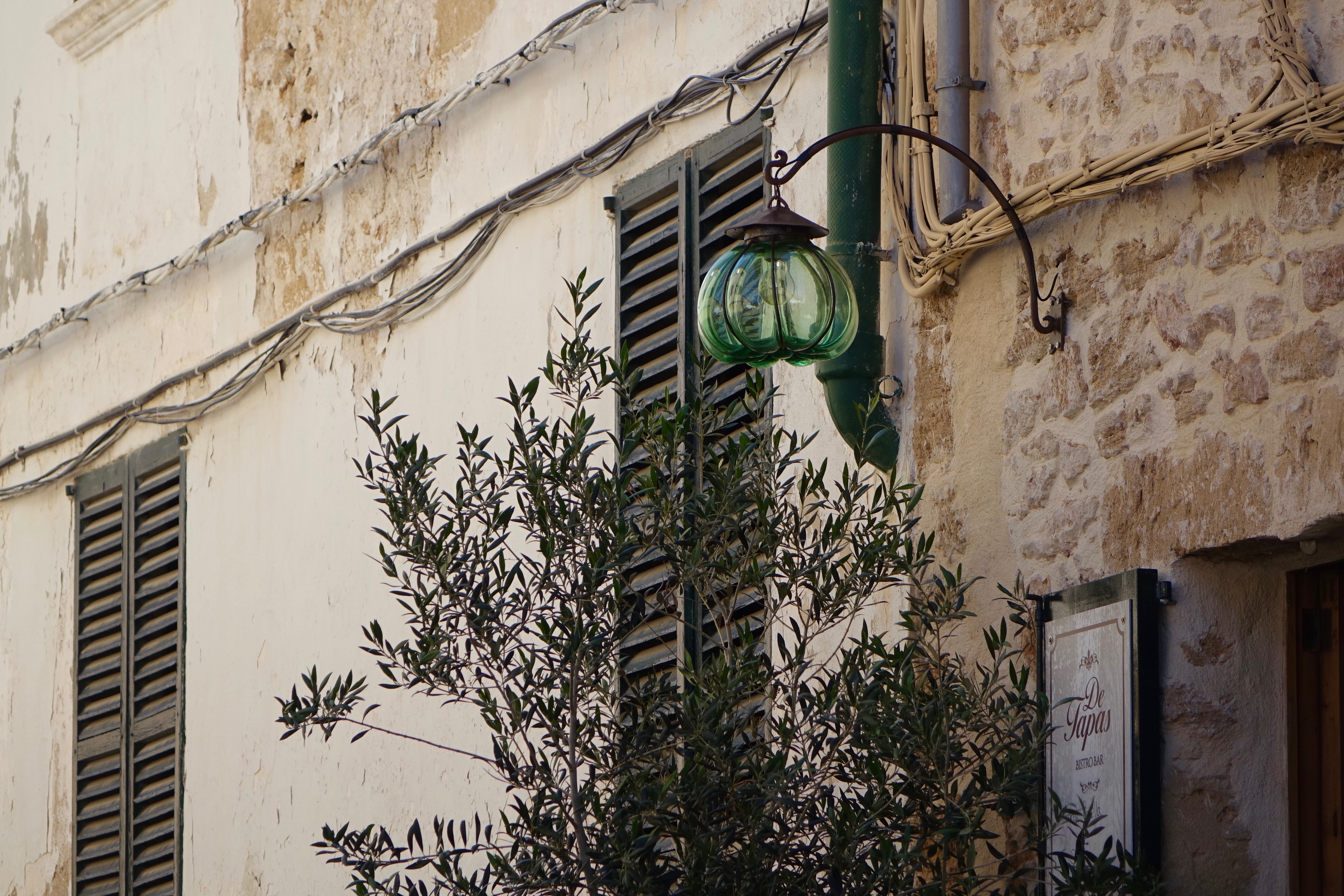
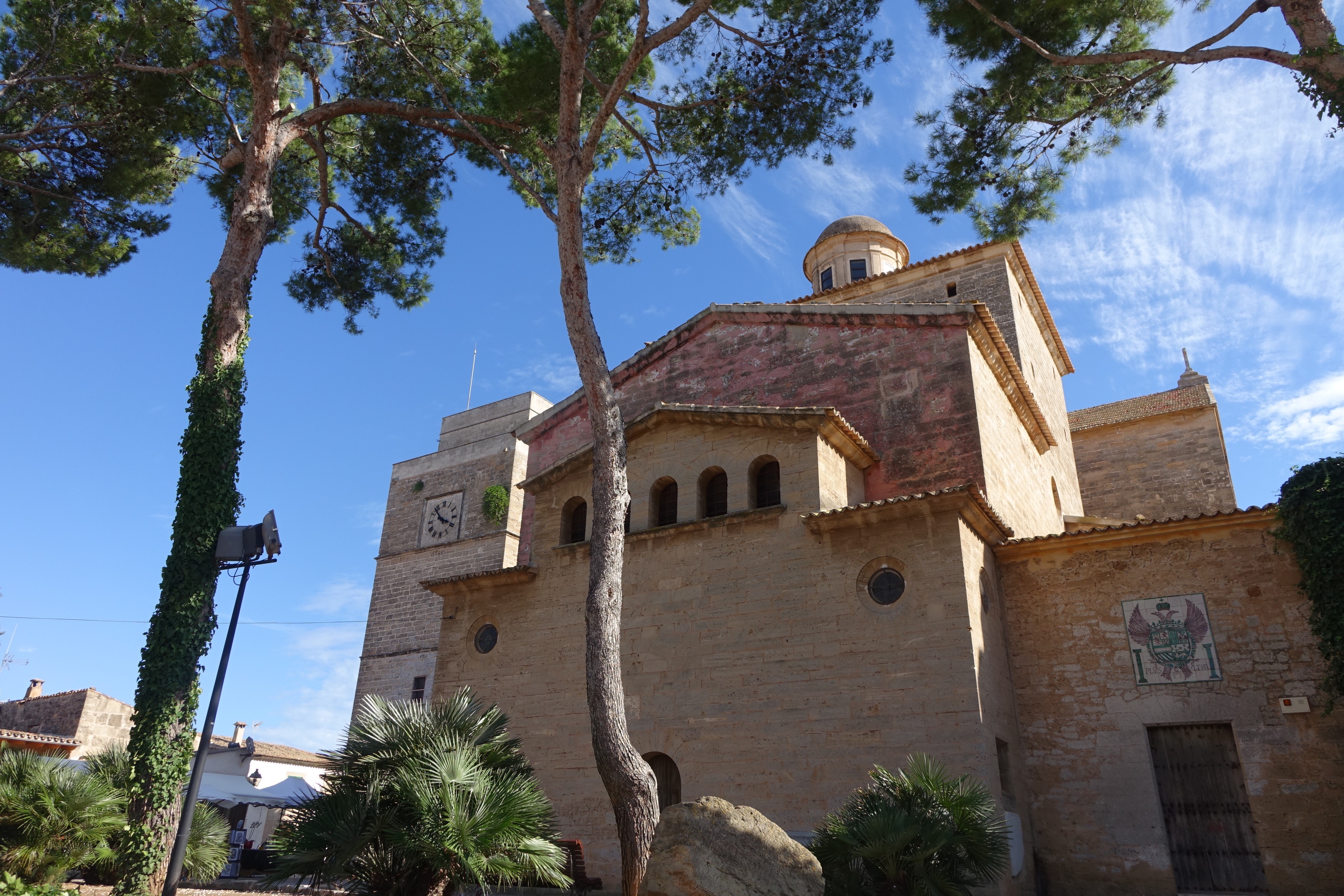
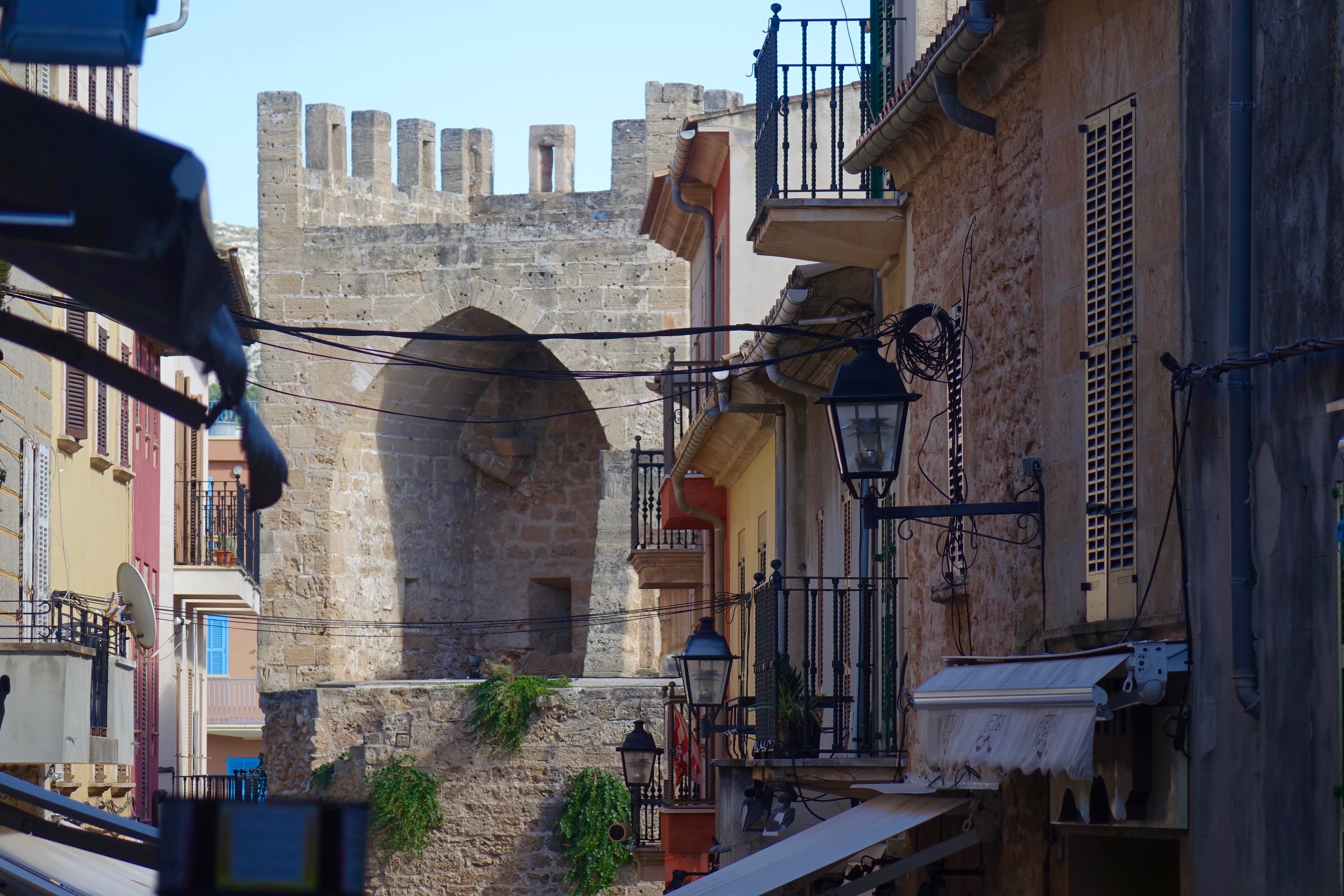
However, head inland, and you reach the real Alcúdia, and there, behind a circle of painstakingly restored medieval walls, you find an arabic citadel perfectly brought back to life. With its narrow streets filled with little shops pouring out onto the streets, and small scenic squares bustling with a range of popular restaurants, it is no wonder that the town has become a favourite of tourists hanging out on the north of the island, making it second only to Palma as the island’s most beautiful historical town.

Nearby beaches and the port

DSC02303DSC02364DSC02320DSC02309DSC02357DSC02304DSC02337DSC02329DSC02301

As I sit now in my cosy apartment, breathing is the perfumed scent of the hyacinths imported into our home from the nearby flower market on La Ramblas, I’m dreaming of those summer days when we can wonder freely, without coats, and with the air flowing around our knees. Something tells me the time is close at hand. And in the meantime I leave you with my photos of Alcúdia, and the memories of the pleasantly warm first encounter of this magical town.

All photos and written content are strictly the copyright of Nicholas de Lacy-Brown © 2016 and The Daily Norm. All rights are reserved. Unauthorized use and/or duplication of the material, whether written work, photography or artwork, included within The Daily Norm without express and written permission from The Daily Norm’s author and/or owner is strictly prohibited.
Valentine’s in Barcelona

We have always loved Barcelona, Dominik and I. For me it’s one of the most perfect cities on the earth. For where else can you find all of the cosmopolitan qualities of London or New York fused so easily with the seaside amiability which comes of being mounted next to the glistening Mediterranean sea, with all of the beach-life benefits that position entails. So when it came to celebrating Valentine’s this year, we decided to take the romantic, candlelit dinner concept a little further, expanding our celebration of love across a weekend city trip where we could show as much love for our surroundings as for each other.

For who could not love Barcelona, a city whose very streets are so elaborately decorated with modernista masterpieces that not a street goes by which does not call for its own round of photographic admiration. It is a place bursting with the colour of Gaudi’s mosaics, an intensity of kaleidoscopic light which results from Barcelona’s natural affinity with the sun, whatever the time of year. And it is a city which exudes creativity from its every facet, from shops and restaurants, characterised by a conceptual brand of cool which stands as ever on the brink of innovation, to endless galleries showcasing both the newest artists and the classic former residents, Miro and Picasso amongst them.

DSC08302DSC07949DSC08088DSC08047DSC07950DSC08073DSC08275

We benefit from a Mallorca location which makes a weekend to Barcelona a mere 30 minute flight away. This left us with plenty of time to enjoy the city to the full, from a miraculously warm February walk in the Park Güell, to our admiration of the architectural designs employed in both the undulating roof of the Mercado Santa Caterina, and the modernista details of the Palau de la Música Catalana nearby. We headed up the hill of Montjuic to admire the collection of the National Museum of Catalan art, and into the depths of the Gothic Quarter to share stares with the 13 geese of Santa Eulalia in the Medieval Cathedral courtyard. And as for Valentine’s? Well this was enjoyed across the weekend, from the exchange of a rose in our cosy hotel bedroom, to the enjoyment of a mouthwateringly good Fideuà seafood paella in the Sunny Port Vell.

What more can I say? Barcelona is a city of plenty, and the perfect venue for a weekend of love. I will allow my photos to fill in the details.

All photos and written content are strictly the copyright of Nicholas de Lacy-Brown © 2016 and The Daily Norm. All rights are reserved. Unauthorized use and/or duplication of the material, whether written work, photography or artwork, included within The Daily Norm without express and written permission from The Daily Norm’s author and/or owner is strictly prohibited.
Onwards to Vienna, Part 3: Palaces of Art

To say that there is a lot of art in Vienna is like saying there are a lot of paellas in Spain. The city literally lives, breathes and exudes art from its every corner and facet. Everywhere you go, large posters advertise the latest sensational exhibition appearing at the Leopold, or the Albertina, while inside the Belvedere and the Kunsthistoriches museums, some of the most famous paintings ever known to the history of art happily reside. We were literally astonished by the wealth of art contained within a small central core of the city, and by the end of our trip were rendered utterly exhausted by the amount of art we saw. But we were all the more fulfilled as a result.

If I were to reproduce a photo of all the paintings we saw in permanent collections and temporary shows alike, the single blog post resulting would probably keep you scrolling downwards for a lifetime. Rather than do that therefore, I wanted to focus a little on the majestic buildings which host Vienna’s amassed artistic treasures, before showing you just a few of the works on show within them.

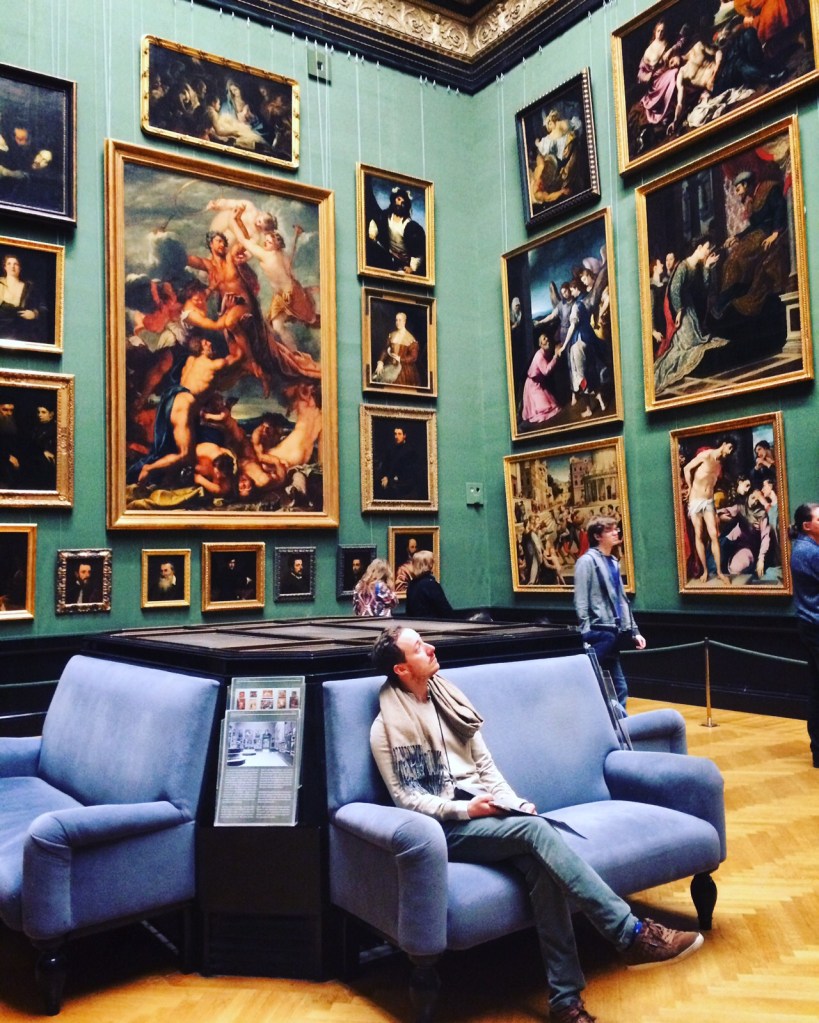
Almost unable to take in the breadth of art at the Kunsthistoriches Museum

Almost unable to take in the breadth of art at the Kunsthistoriches Museum

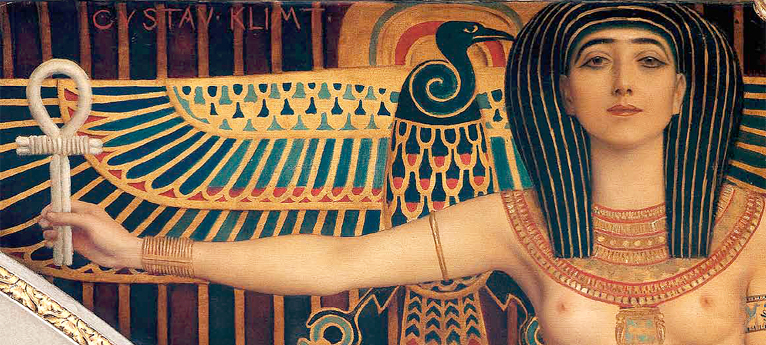
There was no missing the incredible grandeur of the building hosting the Kunsthistoriches Museum (The History of Art Museum), which sits opposite its domed twin – a duo of palaces built some 150 or so years ago upon the advent of the Ringstrasse. With an art collection mainly built up over successive generations of Hapsburg rule, and containing breathtaking masterpieces by the likes of Titian, Rembrandt, Caravaggio and Velazquez, it is no wonder that the museum is visited by more than 1.5 million people every year. But beyond the art on the walls, what is truly momentous is the building itself which, tailor-created especially to hold the very collection which graces the building today, is filled with every kind of creative lavishness, from murals to sculptures, friezes and reliefs, and chief amongst them all, some beautiful wall murals by Gustav Klimt himself.

Klimt murals in the main hallway of the Kunsthistoriches Museum

Klimt5 Lunette Klimt2

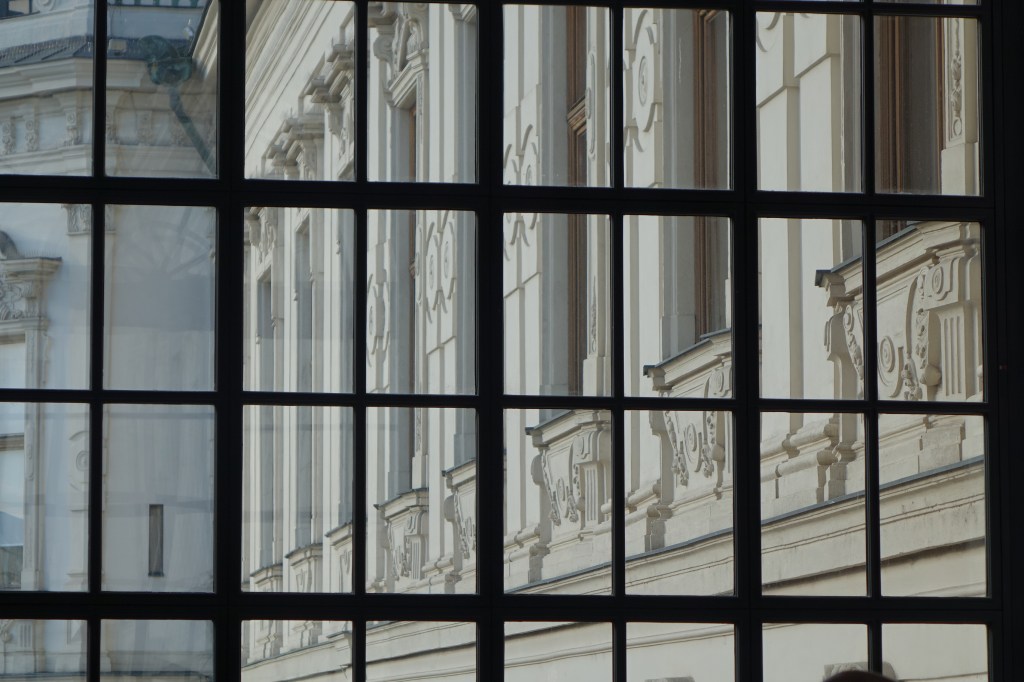
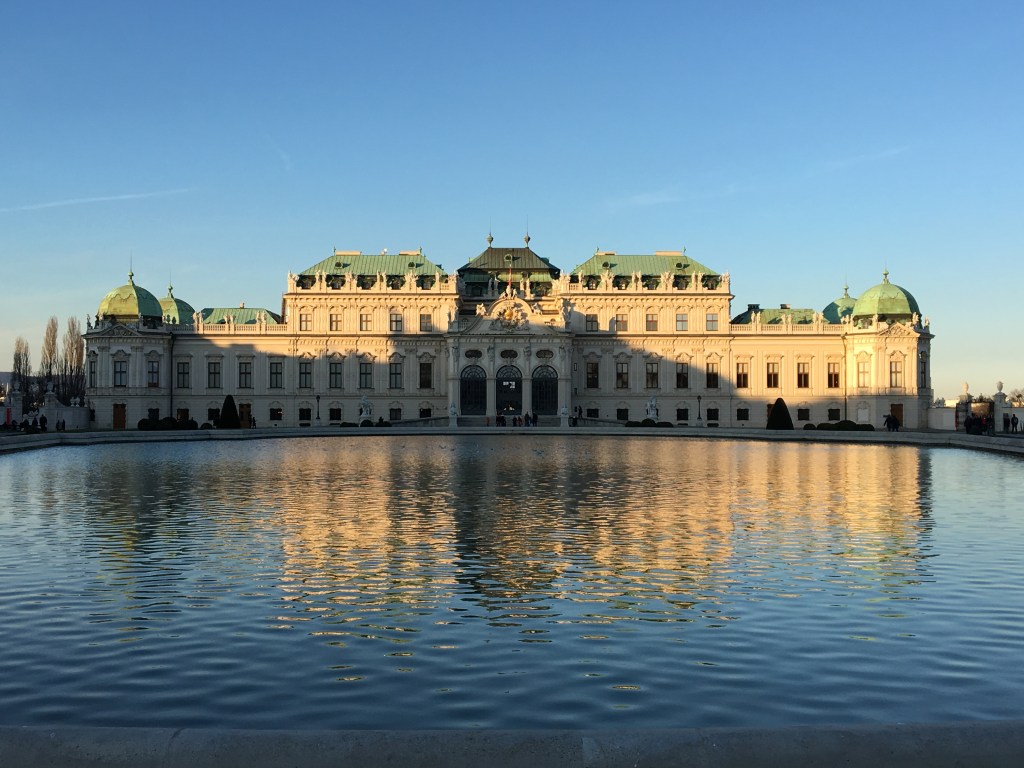
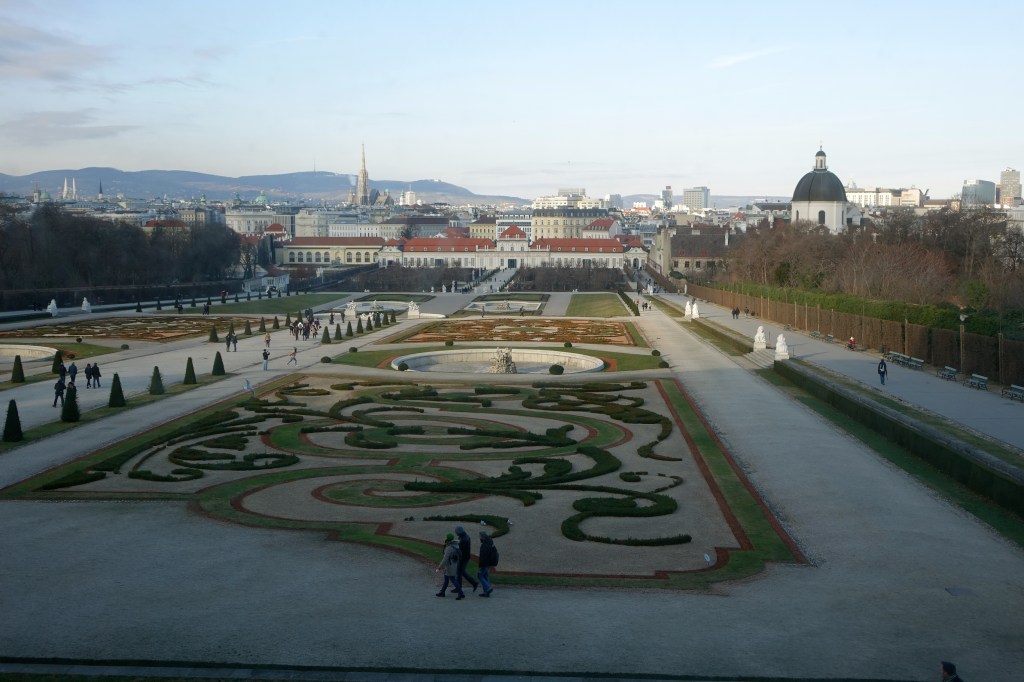
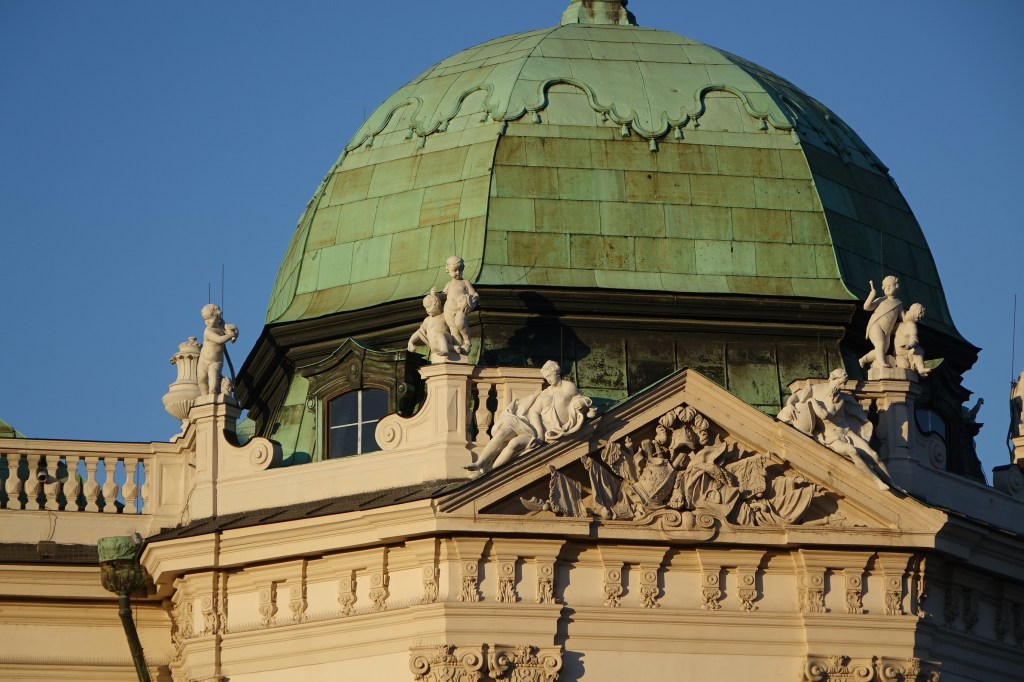
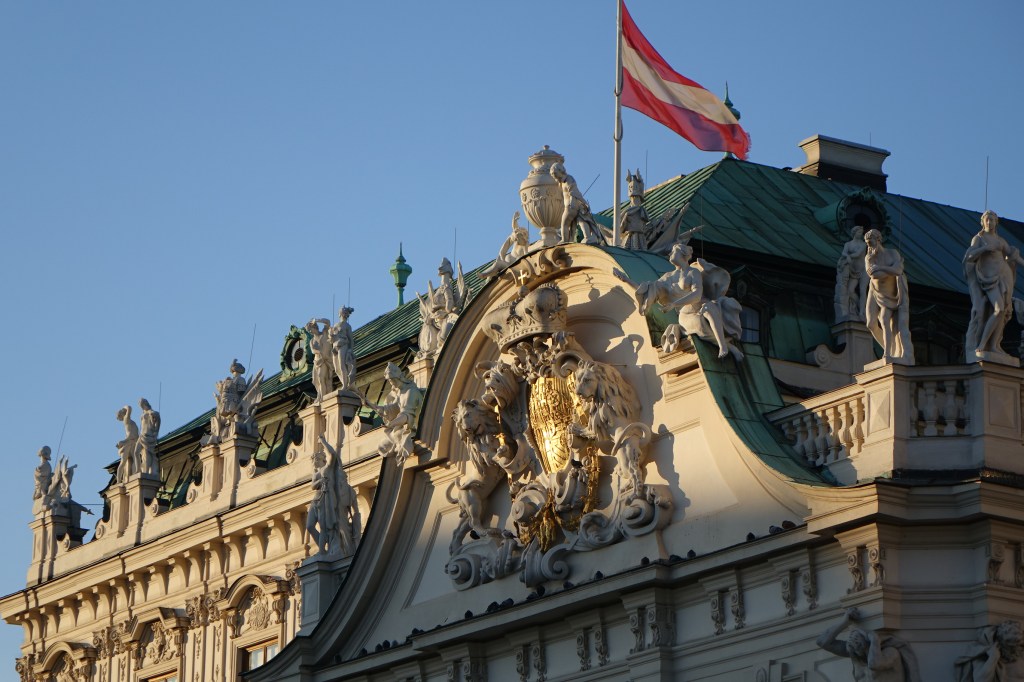
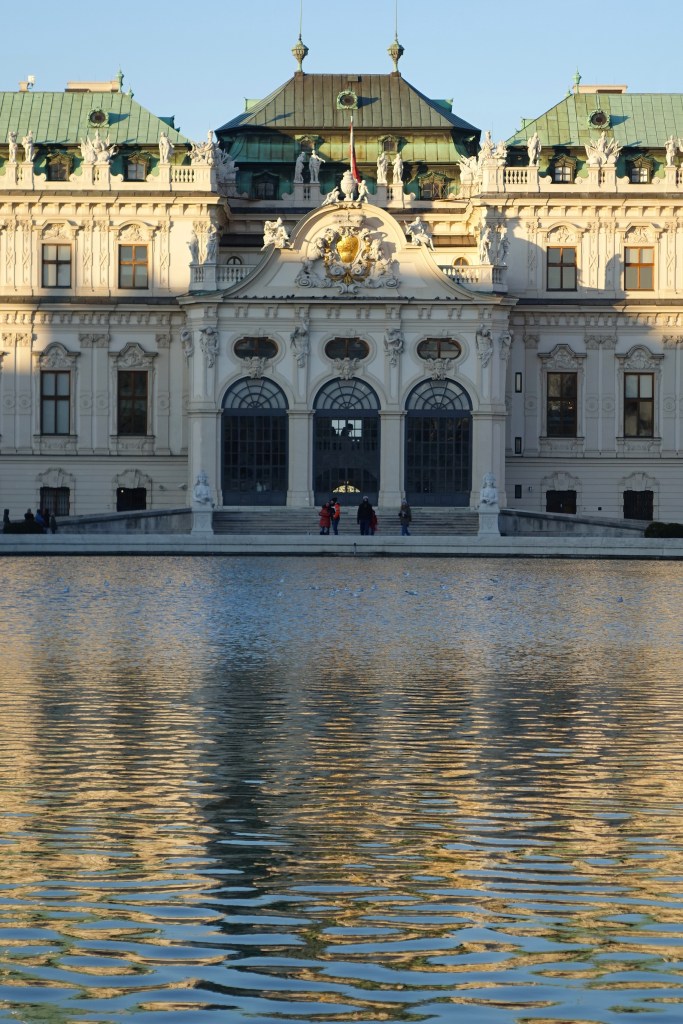
Klimt was of course to take centre stage across Vienna’s artistic offerings, not only in the galleries but in every manifestation of souvenir and guidebook. At the core of the city’s multifaceted Klimt showcase, his famous painting The Kiss lords over all the rest, glimmering with its multi-layered gold leaf in a long gallery on one side of the Upper Belvedere gallery. This equally spectacular palace is just one half of an iconic centre of art which offers exhibitions in both the Upper and Lower galleries and whose buildings are laced with all of the elaborate pomp intended by the original owner, Prince Eugene of Savoy, to evoke the magnificent of his various 17th century military successes.

The beautiful Belvedere

DSC06018 DSC05967 DSC05988 DSC05984 DSC05989 DSC05995 IMG_7449 DSC05997 DSC05991 DSC05981 DSC05992 DSC06021 DSC06008 DSC06017 DSC06006 DSC06014

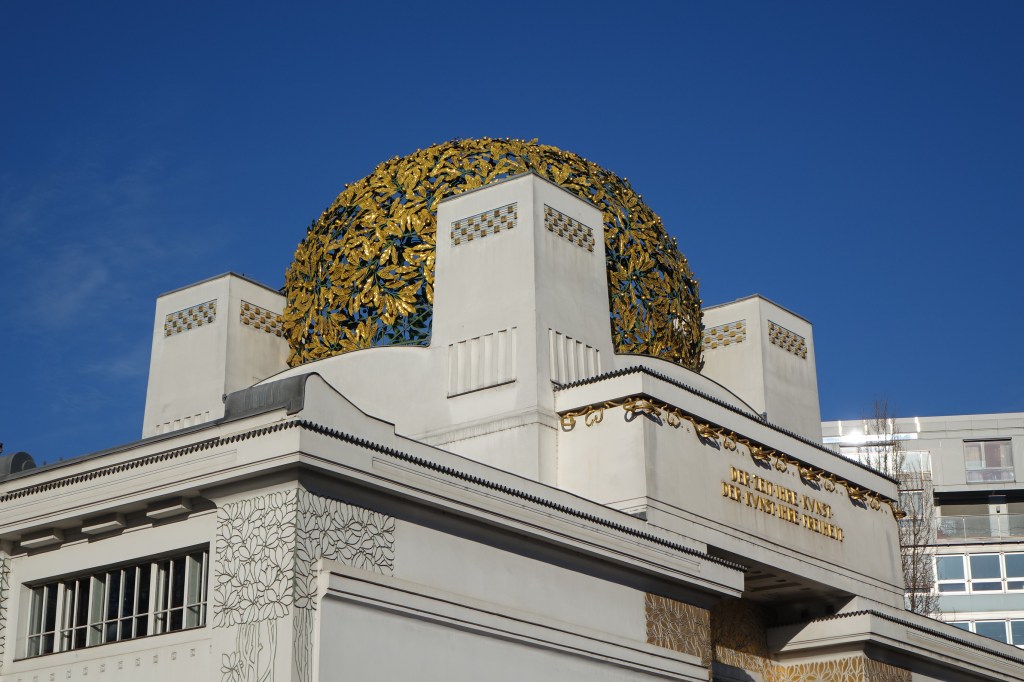
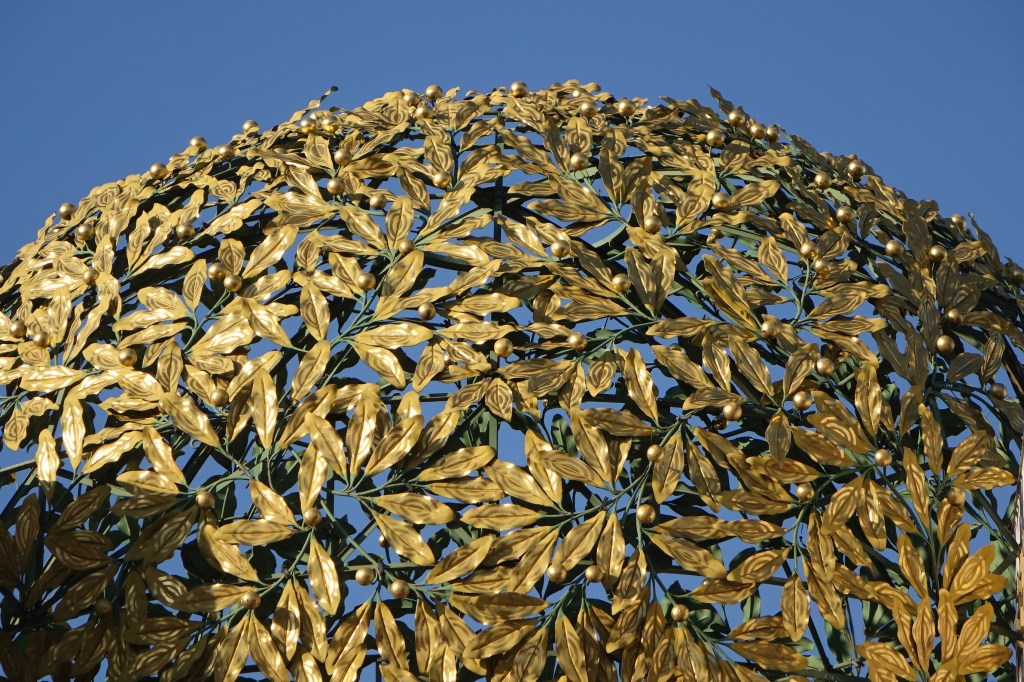
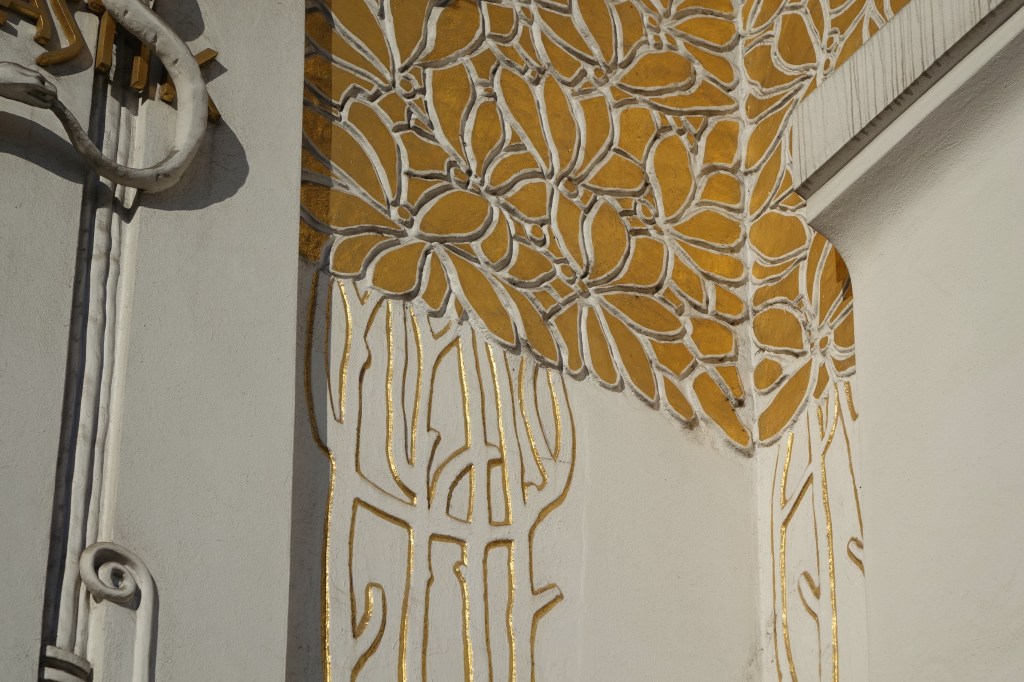
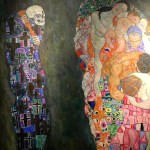
But back to the 20th century, and my favourite of all the Klimt spectacles is the Secession building, a glimmering gold spectacle of modernism constructed in the Jugendstil style as a showcase for the Secession movement’s artists, chief amongst whom was of course Klimt himself. And today, the star attraction is Klimt’s allegorical Beethoven Frieze, one of the most iconic of the artist’s works.

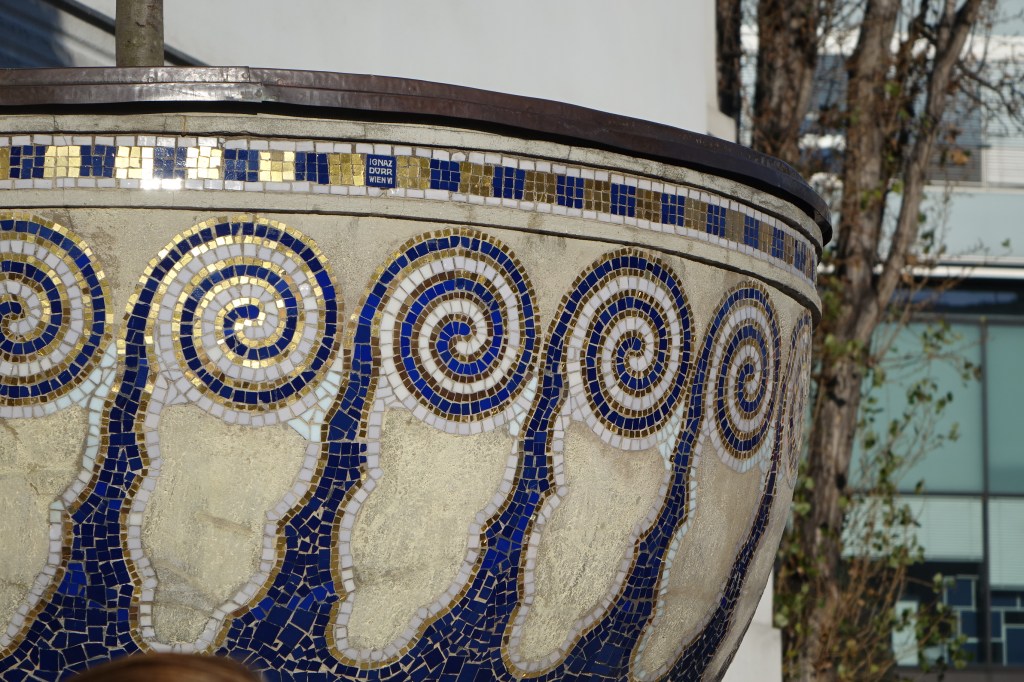
The Secession Building and Klimt’s Beethoven Frieze

DSC06205 DSC06211 DSC06212 DSC06203 DSC06202 DSC06201 DSC06206 DSC06209

000171 I

In all, during 4 days in the city of Vienna, we visited some 8 galleries, an equal number of permanent exhibitions and an additional 12 temporary exhibitions. The vast wealth of art on offer was simply mind blowing, from the ancient treasures of the Kunsthistoriches museum and the delicate 19th century works of the Belvedere, to the in depth studies of Klimt and Schiele in the Leopold museum, and the incredible collection of impressionist art in the Albertina. Below are just a few photos of the many artistic treasures we saw. Far too many to take in, but we made and enjoyed our every attempt.

Exploring the Josefstadt

Behind every great performance, there is the understated support; the less pretentious but no less important timid figures who some might suggest make up the true soul of a show. And thus it is in the city of Vienna, whose grand boulevards and broad open spaces are lined with the most tremendously ornate public buildings and private palaces. Yet step a few paces away, just behind the scenes, and you find the quieter neighbourhoods of Vienna which, for me, give the city its true character.

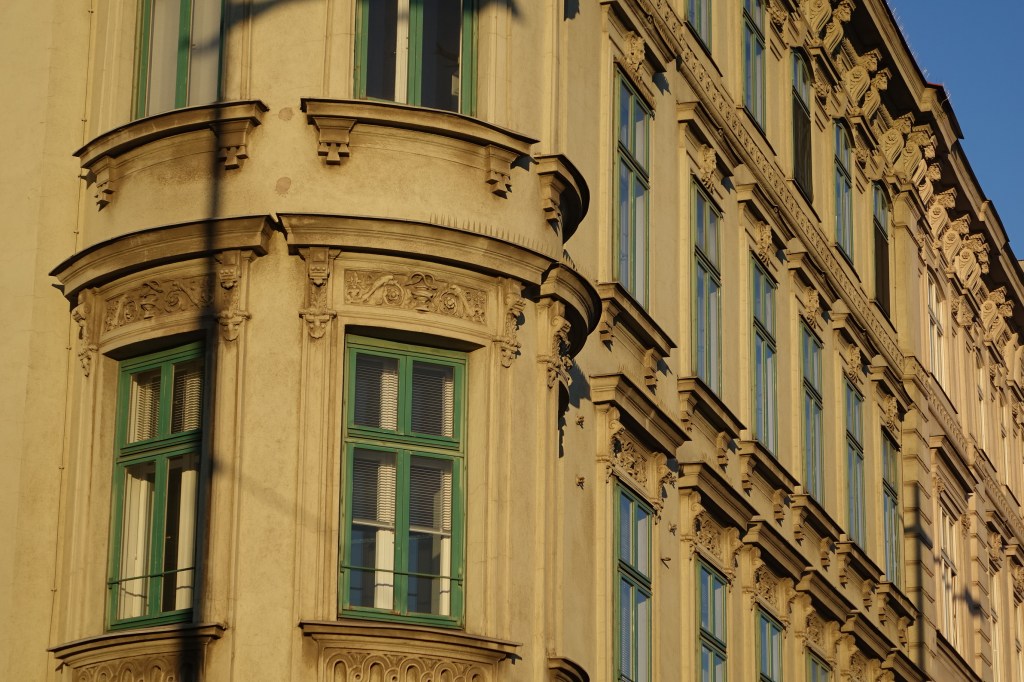
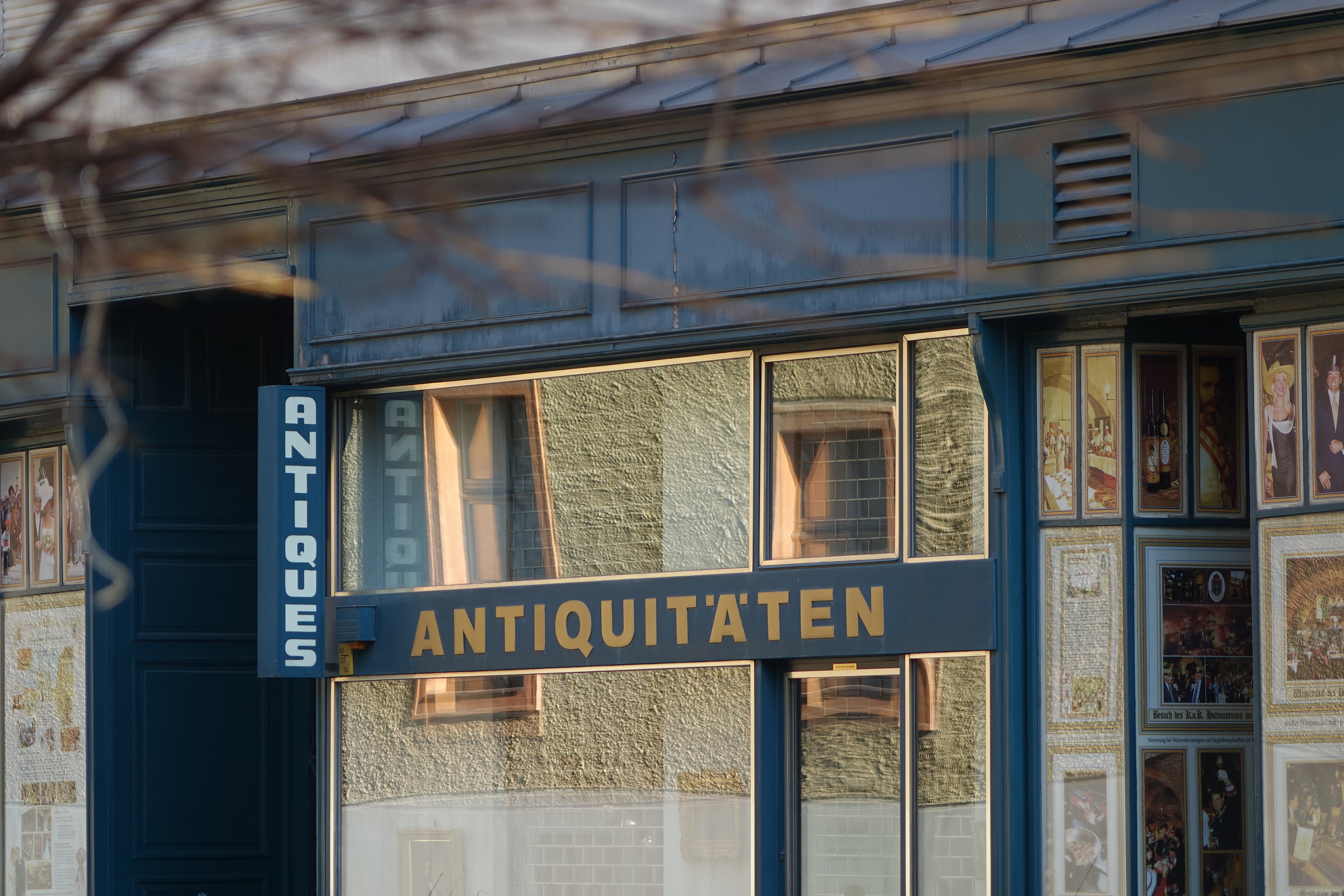
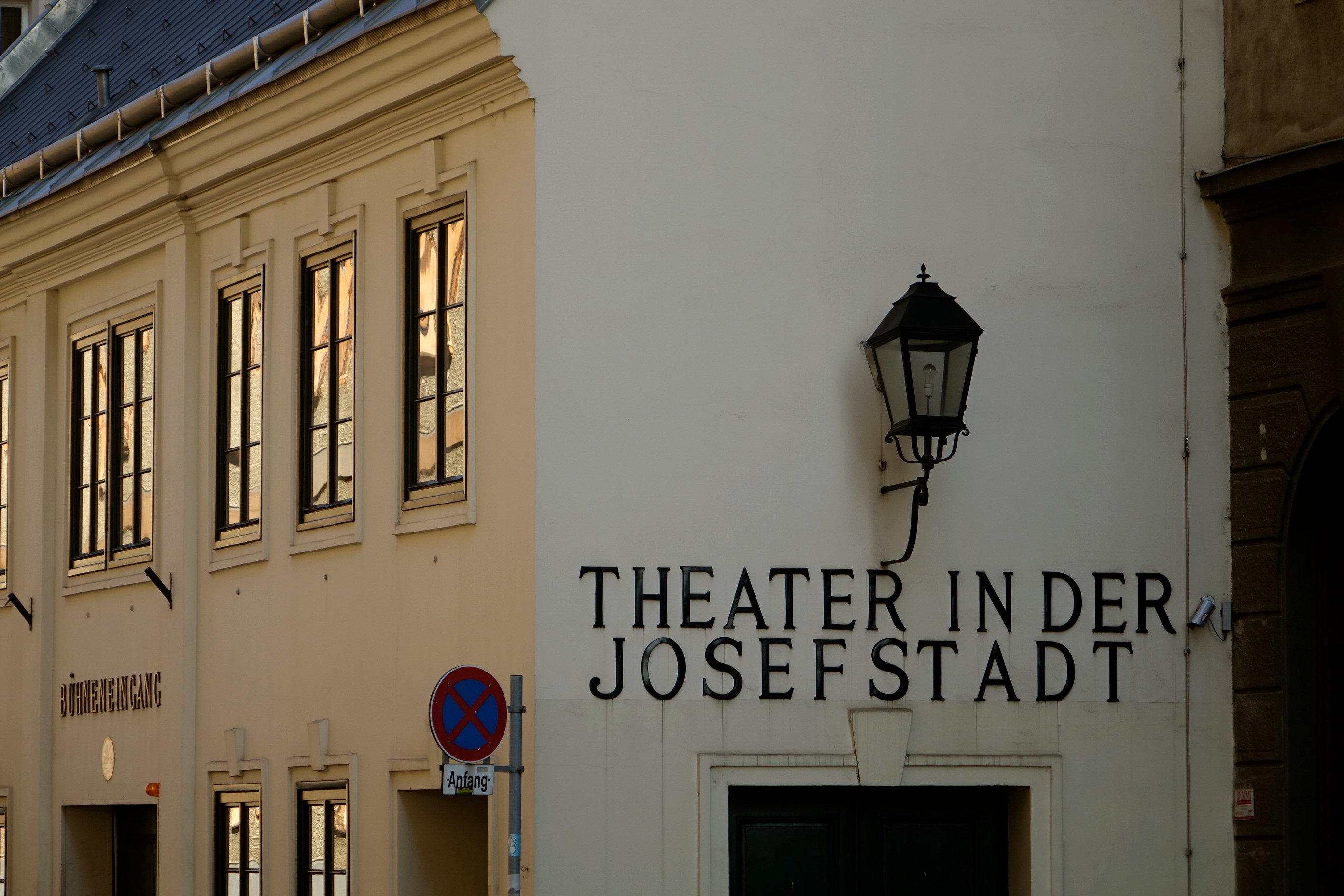
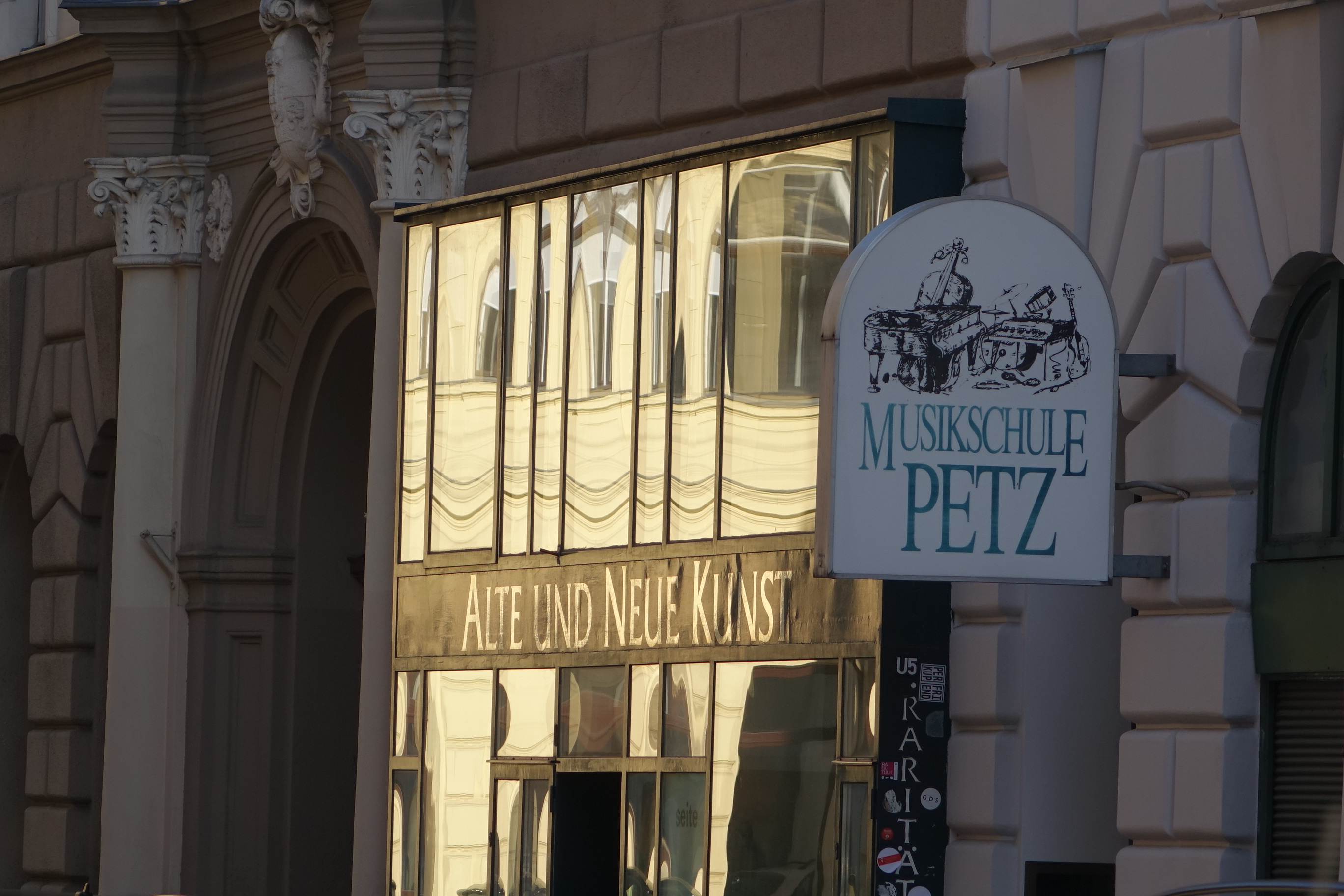
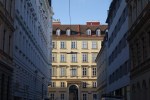
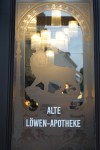
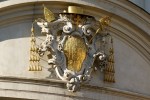
One such neighbourhood, the Josefstadt, can be found tucked away mere metres behind the grand museums of the Ringstrasse, and by a sheer unplanned coincidence was the location of our hotel for the duration of our stay. Grand in name – the area was named after Emperor Joseph II – Josefstadt nonetheless felt to us notably different from the imperial centre, with its smaller buildings, narrower streets, and the kind of cosier neighbourhood feel lacking in the city centre.

DSC06115DSC06114DSC06098DSC06101DSC06124DSC06120

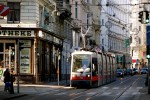
Despite the biting cold, a morning blessed with a little sunshine provided us with the perfect opportunity to explore this area, complete with its little tram lines, beautifully personalised shops and toasty cafes and even the odd church or two (no less grand than their bigger neighbours a kilometre or so down the road).

Walking around this charming area, which is popular with local students from the nearby university as well as lawyers from the political and legal centres along the Ringstrasse, we could not help but be struck by its village like sensibilities. In a city known more for its pomp than for its human embrace, it was perhaps altogether ironic that on this most cold of all the days of our travels, it was probably the morning when our welcome in Vienna felt at its warmest.

All photos and written content are strictly the copyright of Nicholas de Lacy-Brown © 2016 and The Daily Norm. All rights are reserved. Unauthorized use and/or duplication of the material, whether written work, photography or artwork, included within The Daily Norm without express and written permission from The Daily Norm’s author and/or owner is strictly prohibited.
Onwards to Vienna, Part 2: The Churches

If the Ringstrasse and the palatial buildings that line it are demonstrative of Vienna’s more recent 19th century prowess (and, with the recent additions of the MuseumsQuarter, its 21st century cultural advances to boot) then its spectacular churches are demonstrative of a magnificent history which goes back yet further. For these religious monuments have truly stood the test of time, from their inception as far back ago as the 13th century, to the progressively exquisite embellishments which have since followed.
The Stephansdom inside and out

DSC05889DSC05757DSC05758DSC05804DSC05817DSC05816DSC05807

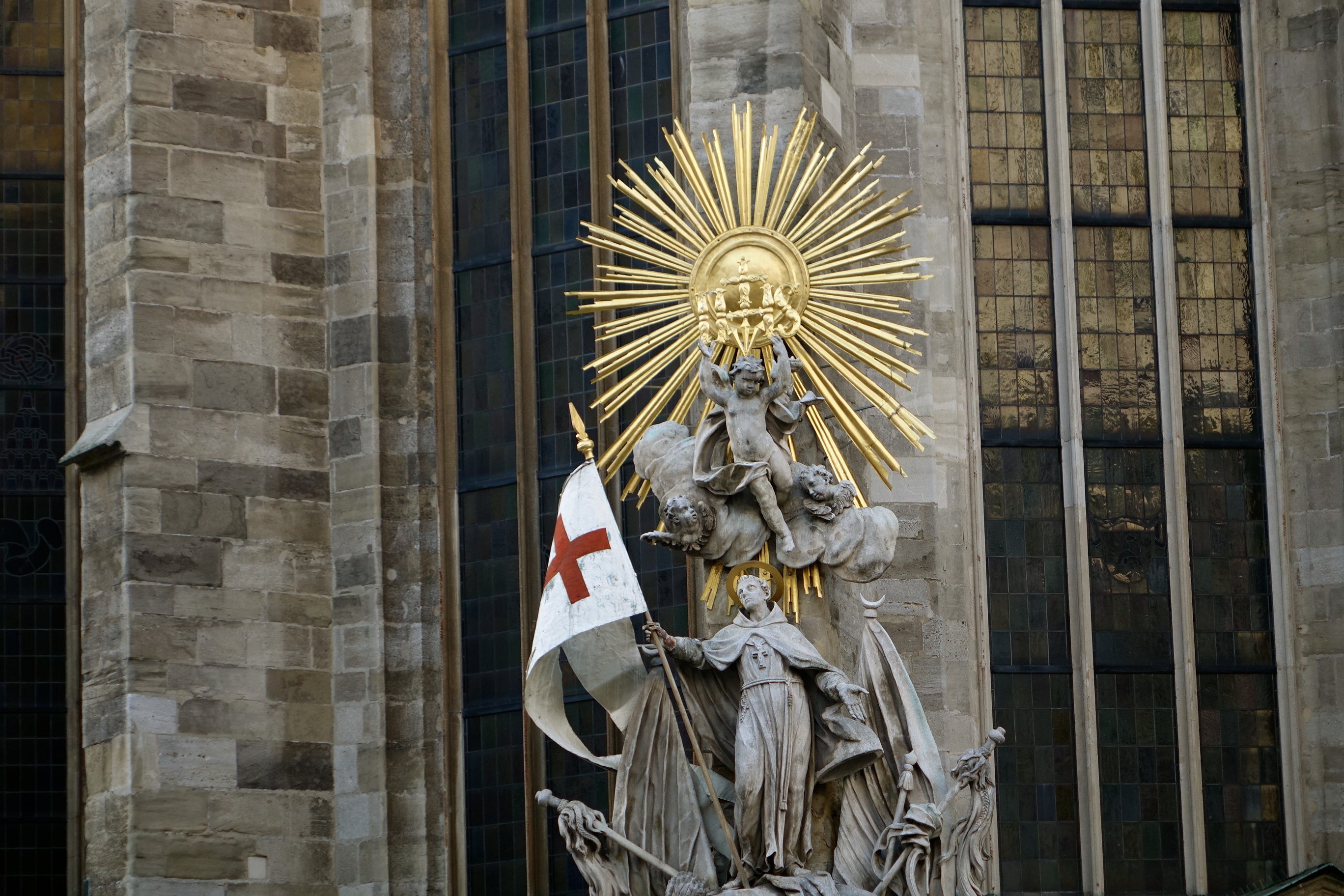
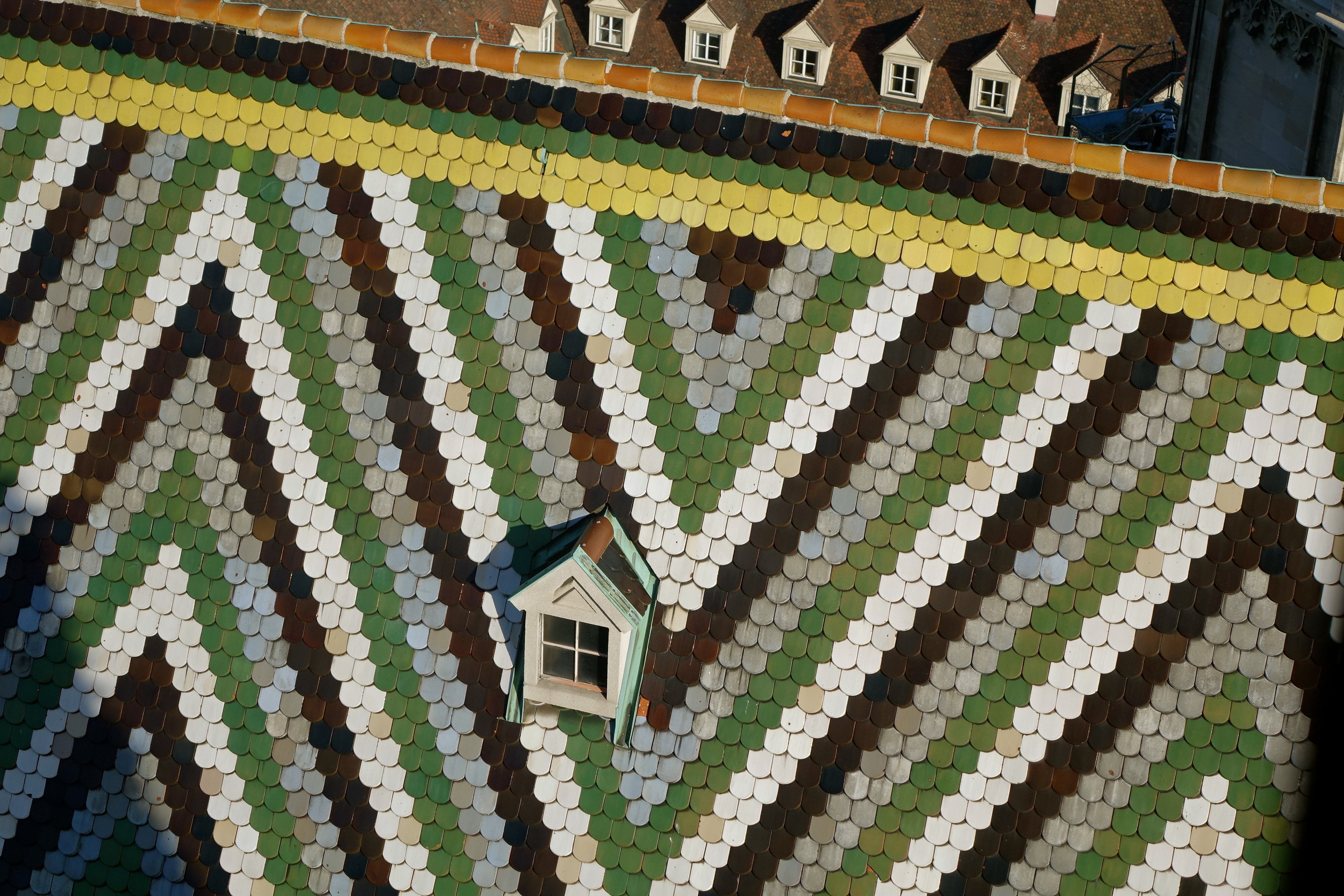
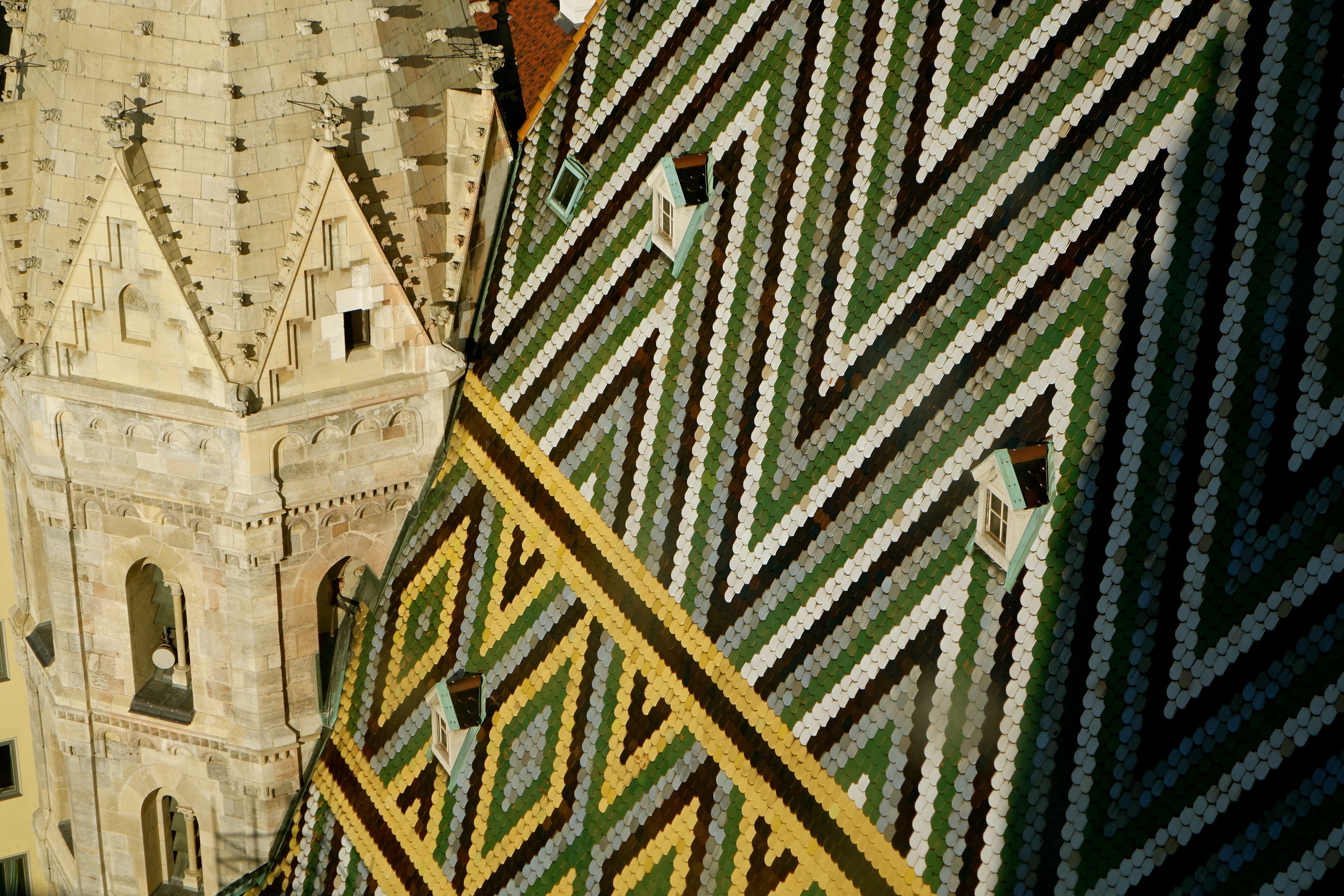
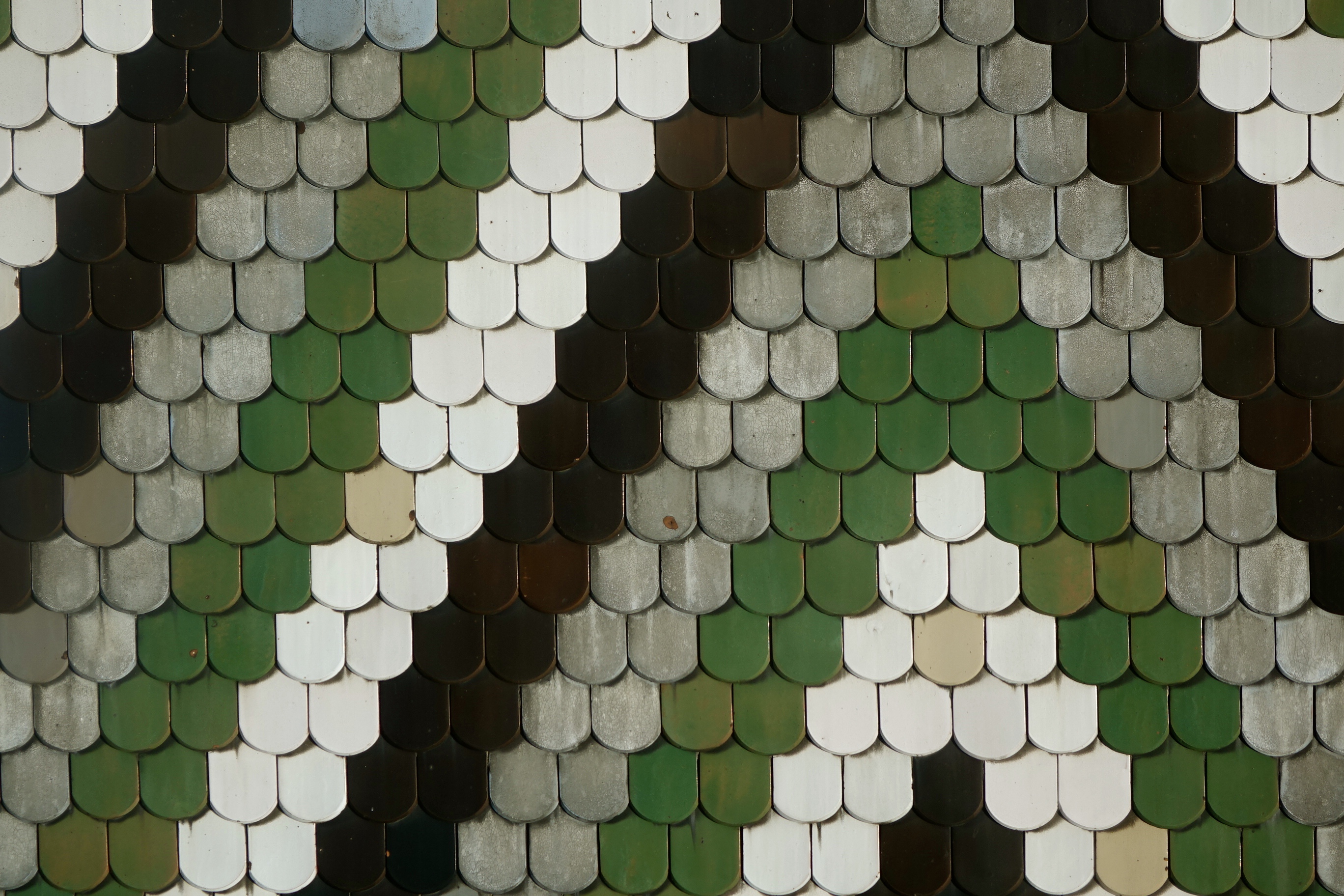
We begun our tour of Vienna’s grandest religious spectacles with the centre point of them all, the Stephansdom cathedral. Often called the soul of the city itself, it is perhaps no coincidence that the cathedral contains a great many of the remains of some of the most historically significant of the Hapsburg rule which lorded over Vienna, and the empire which spread out around it, for centuries. But rather than begin this visit from the inside, we instead claimed the 300 or so steps of its main gothic spire, taking advantage of the aspect which is perhaps most characteristic of this building – its enormous height. There, from somewhere close to the top of the “Steffi” or spire, we were able to enjoy magnificent views not only over all of the city, but of the incredible tiled roof which contains almost a quarter of a million glazed tiles, meticulously restored after the damage inflicted towards the end of the second world war.

Vienna from the top of the Stephansdom

DSC05773DSC05791DSC05792DSC05783

Having caught our breath upon our rather perilous descent down a very narrow spiral staircase, we did not linger in the inside of the cathedral for long. This was not so much owing to a lack of content, but to both the queues for, and the price of, admission, both of which inspired us to take our leave and seek further thrills in this city of plenty.

The Stephansdom’s spectacular tiled roof

DSC05774DSC05771DSC05780DSC05795DSC05772DSC05756

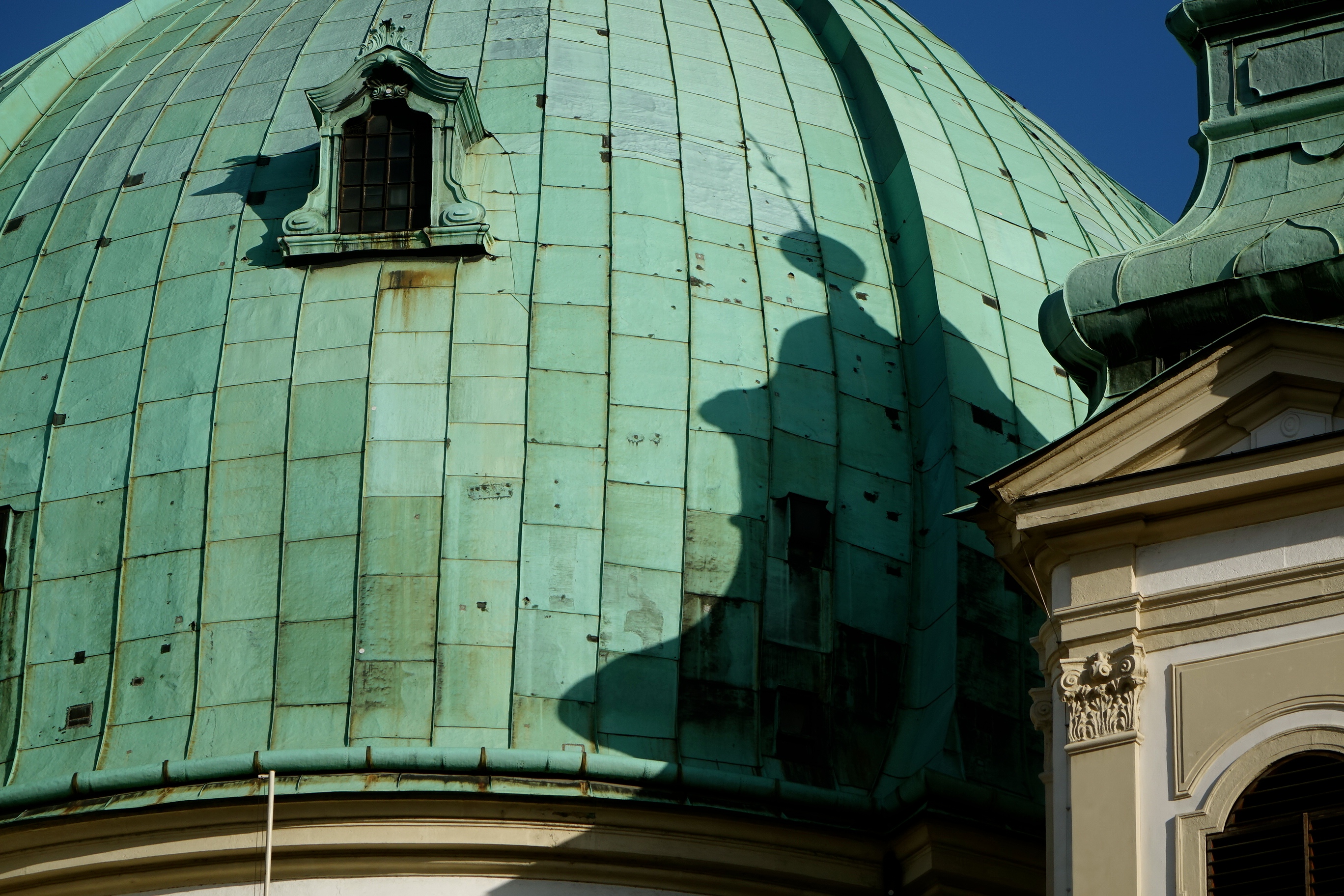
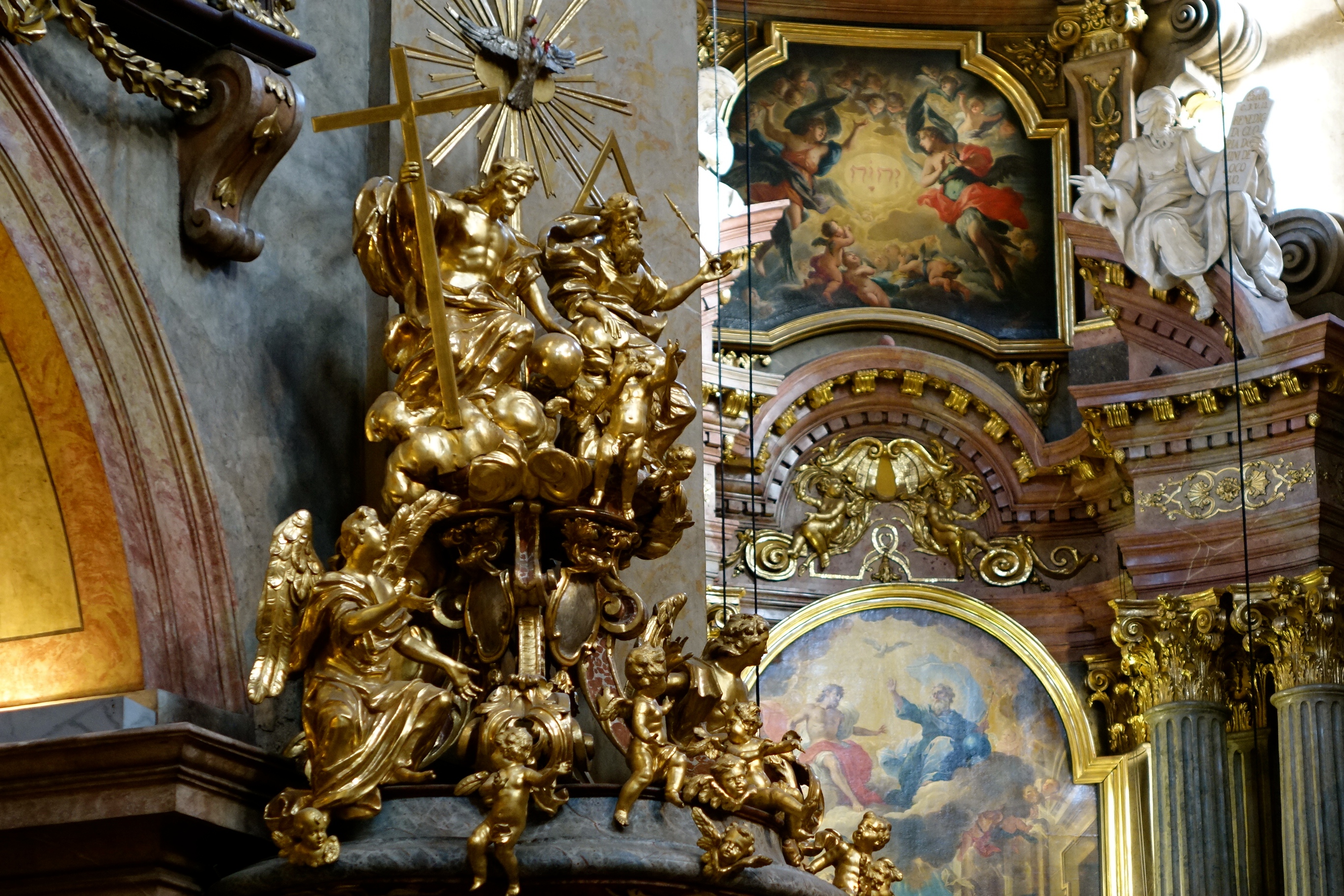
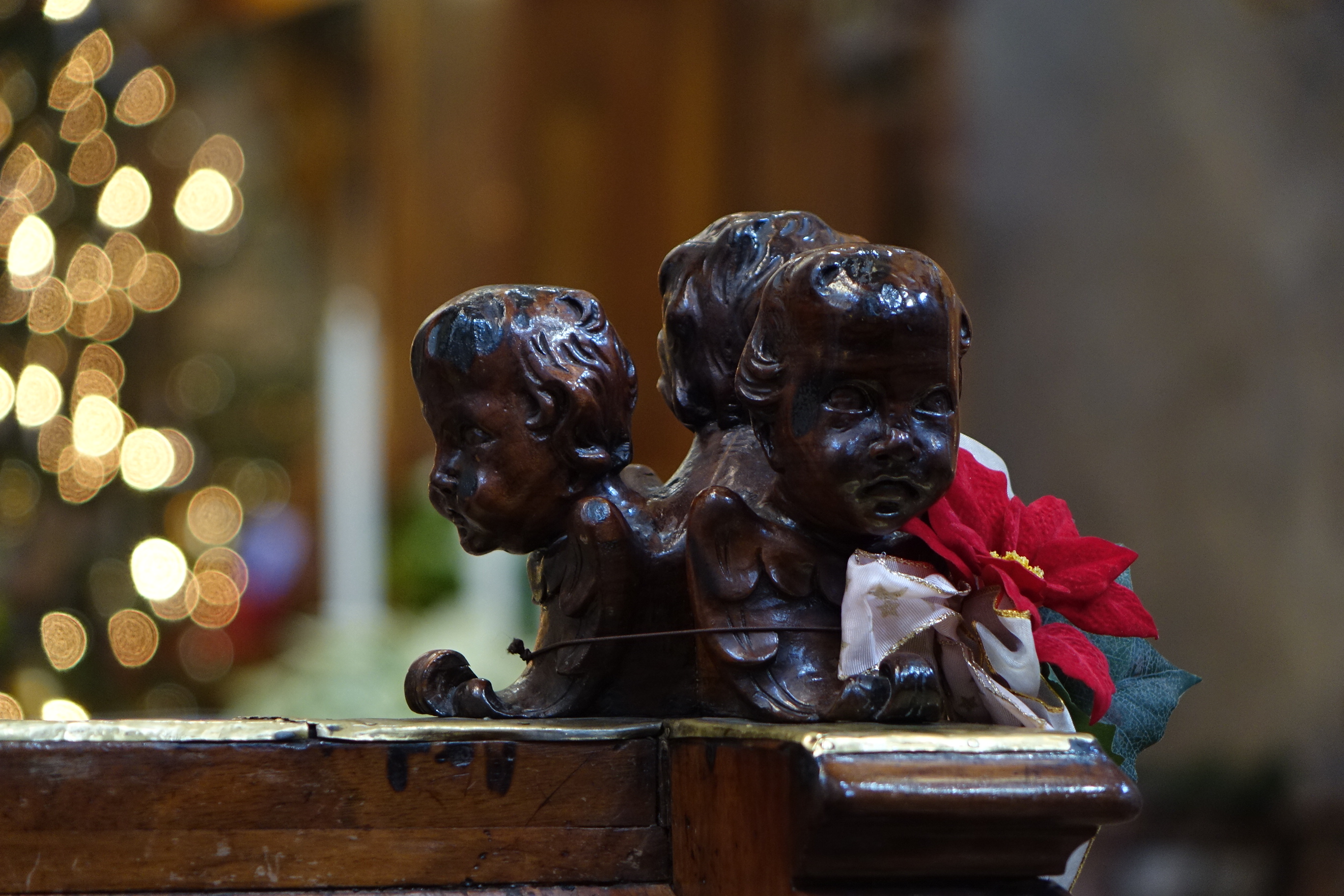
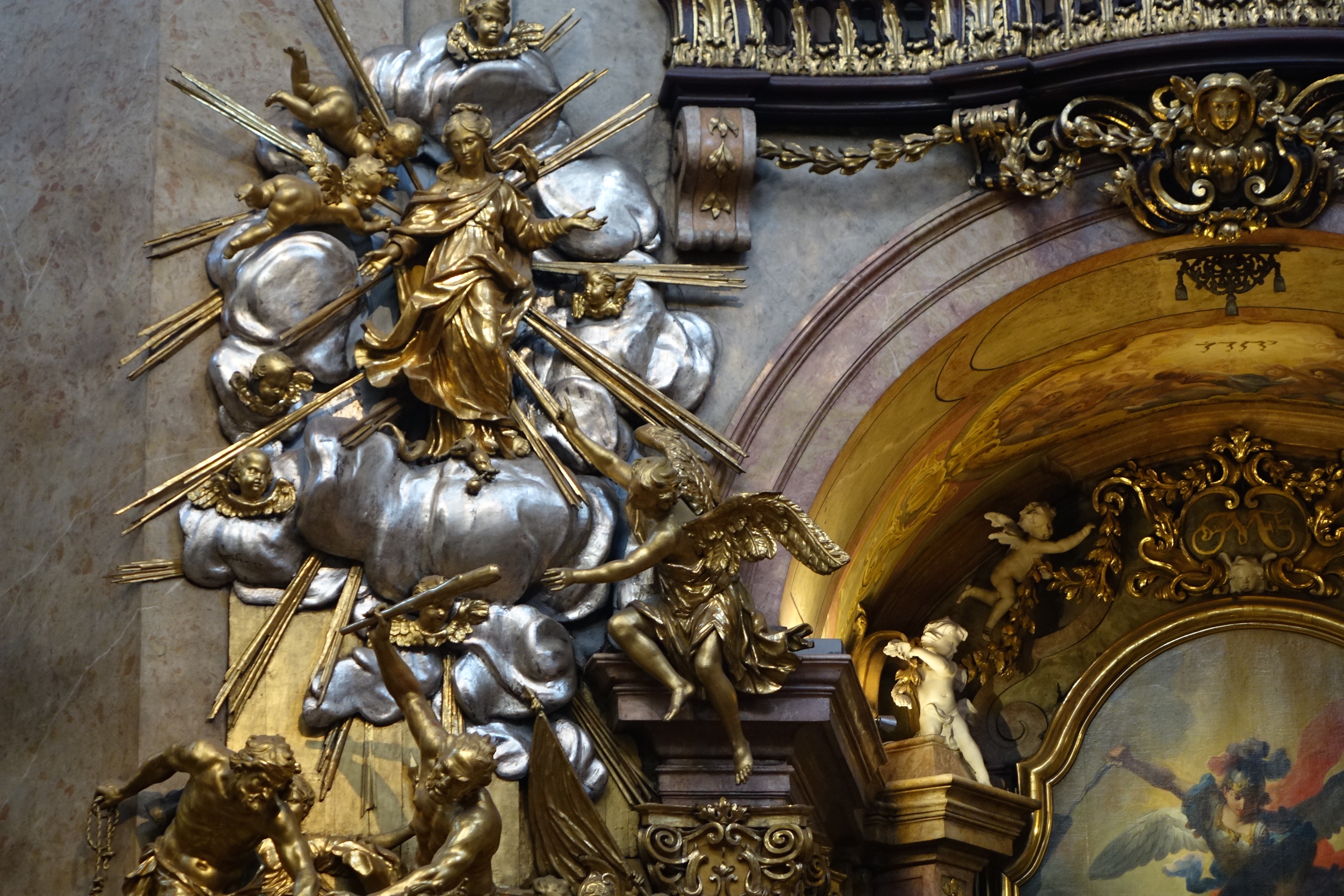
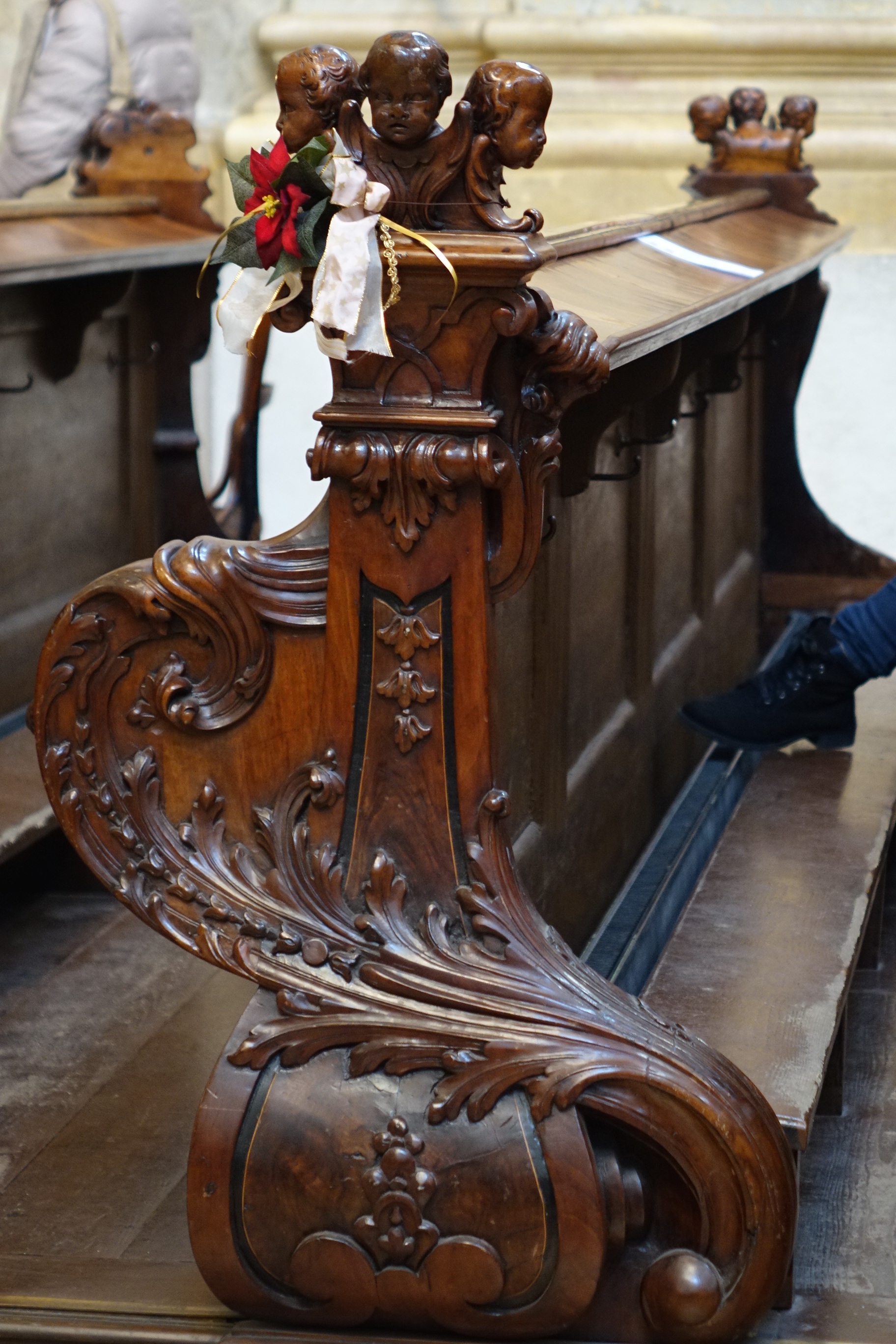
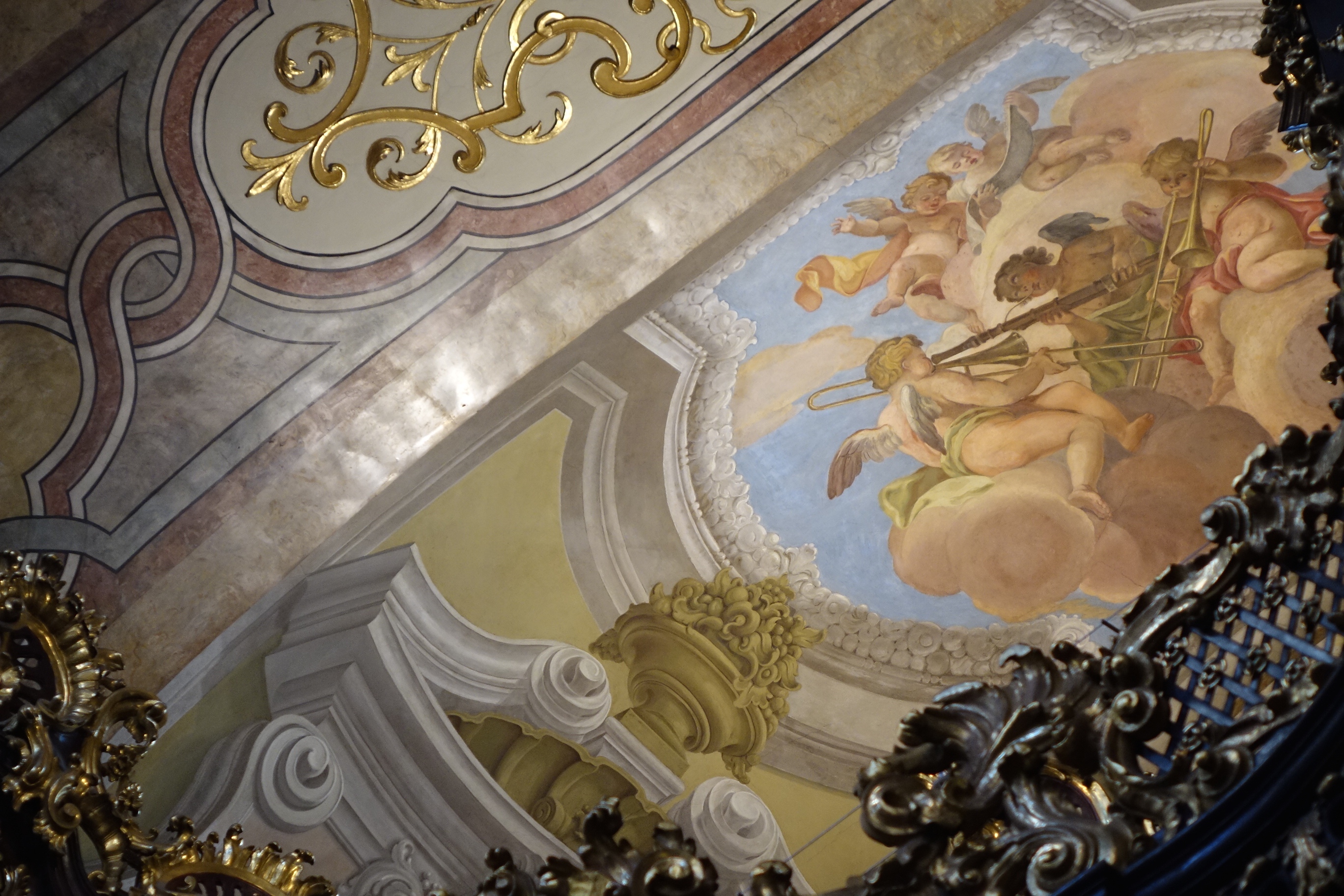
Next on the list was the equally impressive domed Peterskirche, a romantic oval-based construct remodelled in the 18th century on St Peter’s in Rome, and by no means lacking the exuberant ostentatious interiors of its inspiration. For the interiors of Peterskirche are amazingly lavish, with an eye-catching pulpit meticulously sculpted by Matthias Steindi, and frescoes embellishing the huge dome depicting the Assumption of the Virgin by J M Rottmayr. From the extravagant altar to the richly carved pews, this was a church whose every detail was dripping in embellishment, and easily the equal of the Stephansdom up the road.

Peterskirche

DSC05833DSC05826DSC05848DSC05880DSC05843DSC05869DSC05850DSC05863DSC05864DSC05847

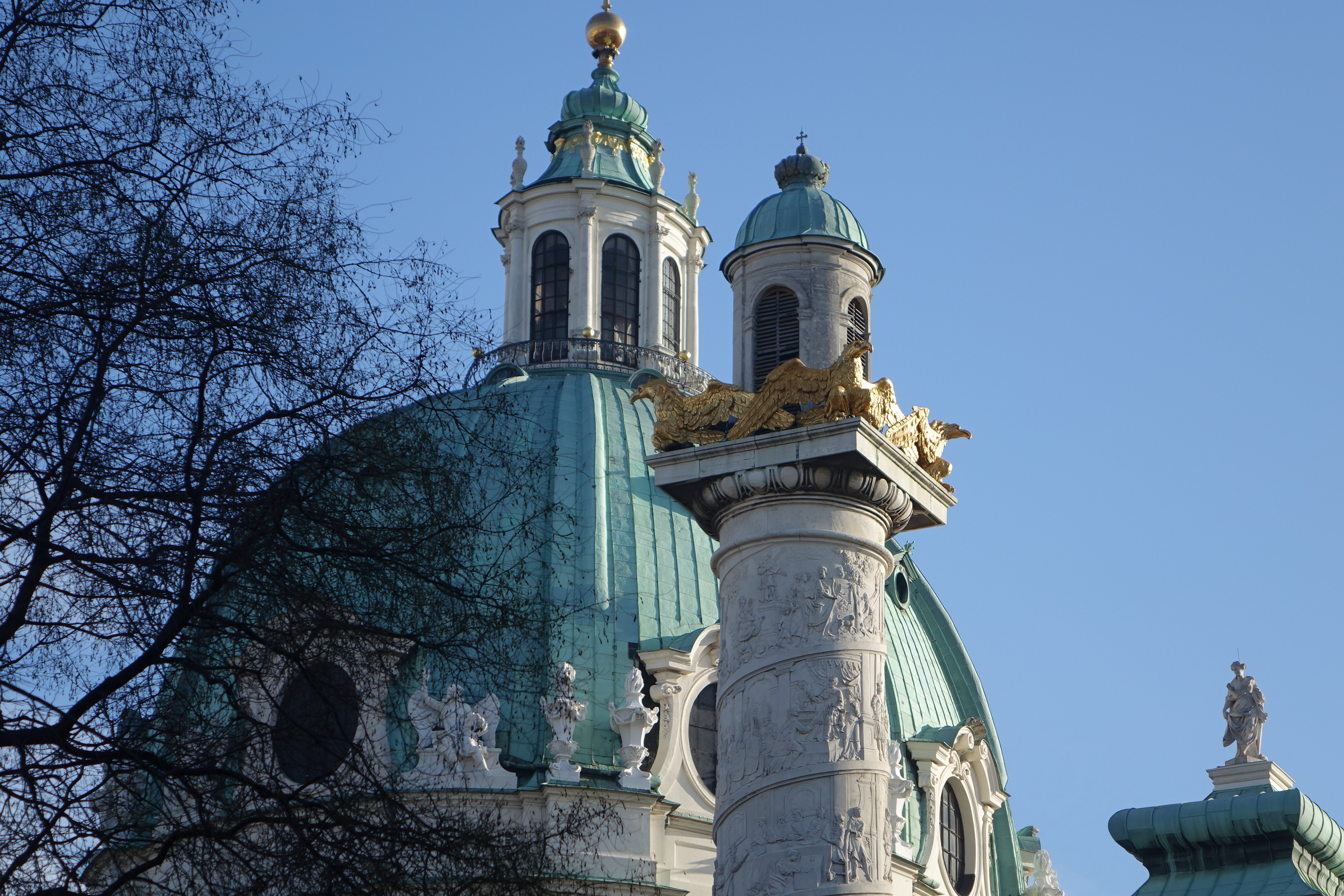
We encountered several other religious spectacles as we proceeded with our tour around Vienna, although we seldom ventured inside. One we would have liked to have explored, on the inside and out, was the last iconic church of the city, Karlskirch, sitting at one end of the central Karlsplatz. But as I bemoaned in Monday’s post, a further prohibited entrance fee found us fleeing from the tourist entrance, leaving us to appreciate this columned baroque masterpiece from the outside – an aspect which, like so many others of the magnificent buildings clambering to be admired in Vienna, could not fail to impress.

Karlskirche

DSC01234DSC06223DSC06219DSC06225DSC06222Karlskirche_Wien

All photos and written content are strictly the copyright of Nicholas de Lacy-Brown © 2016 and The Daily Norm. All rights are reserved. Unauthorized use and/or duplication of the material, whether written work, photography or artwork, included within The Daily Norm without express and written permission from The Daily Norm’s author and/or owner is strictly prohibited.