Skip to content

Posts from the ‘Travel’ Category

Sunday Supplement: Córdoba

Well it’s been quite a week. It started with snow in the UK and hurricane winds where I was in Marbella. Somewhat gleefully escaping the worst of the cold and indulging in plentiful sun drenched coffees at Cappuccino Grand Cafe, I nevertheless came home to London with something of a bump, and I don’t mean on the airplane. Rather, the bump that was troubling me was a rather large lump on my head, and with medical attention required, I had to endure not one, but two operations on said lump/ bump on the back of my head, and therefore ended the week with a sore head and a bandage obscuring half of my face. It is consequently after a couple of days “medical leave” that I return enthusiastically to the Editor’s seat of the Daily Norm to complete my early 2012 Spain Season. This is ahead of a week which promises an almost daily launch of exclusive new Norm paintings which are complete and ready to be shown to all my loyal followers. Starting with a special for Valentine’s day, a whole host of themed Norms will be making their way onto your screens for… Dutch Season! Oh the excitement!

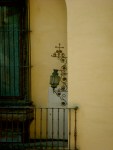
But enough about what is forthcoming. What about today? Well, as the final instalment of my season on Spain, and following in the path of last weekend’s Sunday Supplement on Seville, I thought I would share with you what is perhaps the partner of the Seville Triptych – my work based on another  of Andalucia’s stunning cities – Córdoba . I visited Córdoba in June 2010, just two months after Seville, and as with the latter city,  was instantly inspired to paint. My inspiration, while being sourced from the generalised beauty of a historical Spanish city, was specifically engaged by two characteristic features of the city. First, I was moved by the air of decadence and decay – walls and painted plaster crumbling with such elegance that you would presume it had been perfectly choreographed in an effort to charm visitors with this offering of living history in the streets all around them. Secondly I was scandalised, utterly disgusted, by the architectural maiming of the city’s Great Mosque – otherwise known as La Mezquita – or, controversially, as La Catedral de Córdoba. But a Cathedral this is not.

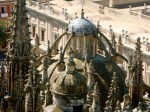
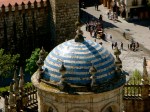
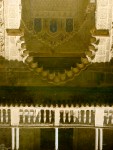
Roof of La Mezquita, from which the Christian cathedral, plunged through the middle, can be seen.

The mosque, arguably the most emblematic symbol of the City with its famous row upon rows of red and white striped arches, was built at the centre of a thriving Islamic city. In 1236 it was captured by the Catholic King, Ferdinand III as part of the Catholic reconquest (“reconquista”) of the Iberian peninsula after 700 years of Islamic dominance there. Once captured, this stunning mosque was turned into a cathedral. Its minaret was rebuilt as a baroque bell tower, the open arches which encouraged people to wander in from all over the city and pray were bricked in and closed off, and most scandalously of all, the centre of the mosque was literally bulldozed to the ground as a completely jarring, architecturally conflicting baroque cathedral was plonked right in the middle of the mosque. Both the Christian and Islamic buildings are impressive in their own right, but forced together constitute, to my mind, a horribly uncomfortable, deeply shameful act of architectural vandalism. It is said that even Charles V, King of Castile at the time when the cathedral was inflicted upon the mosque, eventually regretted the move when he realised that something special and unique had been destroyed by the Christian architects.

It was these two factors – decay and the mosque which inspired my painting, and to my mind, they are closely linked. For Córdoba was a thriving Islamic city in the time of the reconquista, the capital of Al Andalus, with a huge population which included people of all faiths living in harmony together. After the reconquista, the city lost it’s status and importance, as central rule was moved to Madrid, the multi-faith population was driven out, and Córdoba was left to crumble and decay, a state which has continued to this day. Consequently in the beauty of the cracks and crumbling buildings, there are deep historical wounds, which were almost tangible, and certainly the source of melancholy in a city which is now given over mainly to tourists.

Córdoba (oil on canvas, 2010 © Nicholas de Lacy-Brown)

The reconquista is explicitly illustrated in my painting. The elephant represents the conquistadores. Like the elephant in the room, when today’s catholics name the mosque La Catedral they ignore the fact that this was, and to all intents and purposes still is, a great mosque, albeit with a Christian cathedral plunged through the middle. They ignore this senseless act of vandalism, and they assume that we will accept this as a Christian building without any appreciation of its painful historical context. As the reconquest begins, the elephant smashes the mosque to pieces, looking calm as it does so, an emblem of the conquistadores on its cloth, and a Christian altarpiece on its back. The baroque bell tower is flown in, harnessed to a Vatican helicopter, ready to be built on top of the ruins of the mosque. Meanwhile, all around, cracking walls are held tentatively together with safety pins, while the elegant street furniture of the city – lamps and ceramic street names – are interspersed with the slightly coarse application of electricity wires on the outside of the ageing walls. Finally at the foot of the painting, a swimming-pool-like gelatinous form reflects the clouds above, and is featured solely as a personal reflection of the hotel swimming pool in Córdoba which my partner and I enjoyed so much. Across it, the great roman bridge of Córdoba features, a direct pathway leading from the modern town into the old town, crossing the Guadalquivir as it still does today.

I should point out that despite its religious context, this painting does not attempt to take sides. It criticises history. It does not criticise religions in their contemporary manifestation.

Look out for my photos of Córdoba, featured tomorrow. Until then, have a great, relaxed Sunday.

© Nicholas de Lacy-Brown and The Daily Norm, 2005-2012. Unauthorized use and/or duplication of the material, whether written work or artwork, included within The Daily Norm without express and written permission from The Daily Norm’s author and/or owner is strictly prohibited. Excerpts and links may be used, provided that full and clear credit is given to Nicholas de Lacy-Brown and The Daily Norm with appropriate and specific direction to the original content.

Marbella – Hidden wrinkles beneath the botox

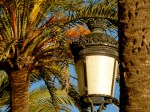
Far beyond the ritzy media archetype of Marbella, with its fake-tanned, label-cluttered, Ferrari-filled Puerto Banus, and its marble clad town centre, complete with grand avenues and mature parks, high street shops and tourist information centres, is a town which resembles none of the glitzy, cosmopolitan manifestations of the media-managed Marbella. It’s a town which is emblematic of historical, culture-rich Spain, where the locals, many forced from their homes by rising house prices, or others packed into small dwellings with three generations of their families, continue living the life they have always lived, while all around them their town of Marbella has enjoyed its ascendency into the darling of the jet set. This is the Marbella which must endure the relentless hardship of the fishing industry to survive, locals who must live far out in the less than salubrious suburbs in order to stay in the town. Yet within these communities is a fun-loving, strong, proud spirit. Rather than being snubbed by a WAG in designer sunglasses, here you are greeted with a pleasant “Buenos Dias”, the locals still sit around outside their homes chatting at all hours, and families flock to the cheaper restaurants whose food is authentic and unpretentious.

As a part-time resident of Marbella for the last ten years, I have become disenfranchised with the town’s superficial identity. I loathe Puerto Banus, the media face of the town, whose geographical beauty is eclipsed by the pretentious tourists, begging for attention with their pursed glossy lips and frozen foreheads. I progressively find myself straying more and more into the Spanish communities, where the essence of Spain is still alive, where Marbella could be any other town in Andalucia, where the smell of garlic pervades the air and flamenco’s anguished cry wafts across the airwaves.

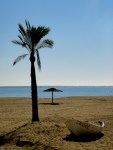
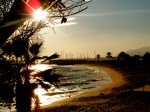
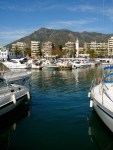
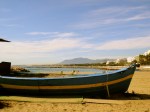
One such place is Cable Beach – it’s East out of Marbella, in the opposite direction from the Golden Mile, where the port is industrial rather than given over to pleasure, and fishermen still work, their cottages still intact having escaped demolition to make way for a hotel, and whose beach, so often deserted, is a wide, beautiful expanse of golden sand. In the photos which follow, I hoped to capture the beauty of this quieter, more authentic side of Marbella, and also include images of the outer suburbs, as well as the town in the aftermath of a recent storm – all views of the hidden, authentic town which thrives still in the shadows of the media glare.

© Nicholas de Lacy-Brown and The Daily Norm, 2005-2012. Unauthorized use and/or duplication of the material, whether written work or artwork, included within The Daily Norm without express and written permission from The Daily Norm’s author and/or owner is strictly prohibited. Excerpts and links may be used, provided that full and clear credit is given to Nicholas de Lacy-Brown and The Daily Norm with appropriate and specific direction to the original content.

Seville: The city which inspired the painting

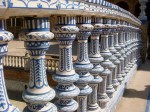
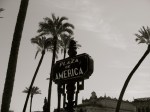
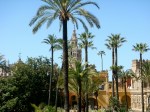
Key to understanding the Seville Triptych I painted, as featured on yesterday’s Sunday Supplement, is the city which inspired it. While I’m sat on a plane (and hopefully not stuck in an airport with snow-induced delays) I’m posting in advance the photos I took of Seville, the star of Spain’s south and one of the most sensational cities I have ever visited. Now all you need is a bottle of rioja, some chorizo tapas and flamenco on CD and winter will be dismissed for good! Enjoy.


© Nicholas de Lacy-Brown and The Daily Norm, 2005-2012. Unauthorized use and/or duplication of the material, whether written work or artwork, included within The Daily Norm without express and written permission from The Daily Norm’s author and/or owner is strictly prohibited. Excerpts and links may be used, provided that full and clear credit is given to Nicholas de Lacy-Brown and The Daily Norm with appropriate and specific direction to the original content.

Sunday Supplement: The Seville Triptych

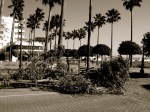
It’s an early 2012 Spanish Season here at the Daily Norm, and what better thoughts to fill your head at this time of ferocious cold across much of the Northern Hemisphere. Here in Spain the snow hasn’t reached us, but the winds were almighty and angry. On emerging from home yesterday we found much of Marbella’s lush greenery had hit the ground. A crying shame, but such is the rapid growth of the plants out here, I’m sure many of the gaps will have filled come July.

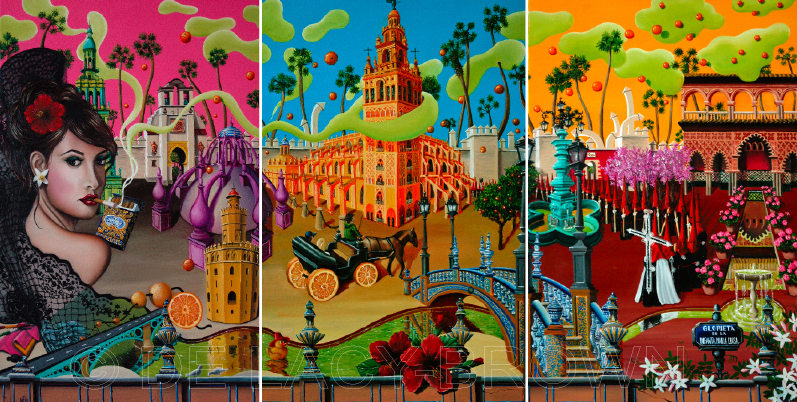
In line with this short season of Spanish indulgence, today’s Sunday Supplement pays homage to one of Andalucía’s most famous and exquisite cities: Seville. Having travelled there in the Spring of 2010 my mind rapidly filled with numerous ideas with all the energy of a kindergarten playground. What resulted was not one, not two, but three canvases portraying the city, which, when placed together flow seamlessly into one complete panegyric to Spain’s southern gem.

Seville Triptych - Canvas I (Oil on canvas, 2010 © Nicholas de Lacy-Brown)

Prominent in the first canvas is a beautiful Spanish lady. Some asked if I had painted Amy Winehouse. Au contraire – this is the infamous Sevillian femme fatale, Carmen, immortalised in Bizet’s opera, seductive in her gaze, languidly smoking a cigarette from a packet which is decorated with the ceramic signage of the Tobacco factory where Carmen worked – a factory which today stands beautifully as ever in the centre of the city, now converted into a university. Beneath her traditional black lace mantilla which, in part, is used as a fisherman’s net, are the paraphernalia of the matador, Escamillo who, in Bizet’s operatic tale, prompted such jealousy in Carmen’s lover Don José that it led to her eventual downfall. Also in this canvas are the Moorish walls of Seville’s Real Alcazar palace, harping back to the city’s Moorish past, which is also embodied in the Torre del Oro which stands by Seville’s Guadalquivir river. Across the river, the bridge designed by Gustav Eiffel features, while from the fishing nets, floating buoys become the oranges for which Seville is renowned throughout the world. Meanwhile the flower from fragrant orange blossom adorns Carmen’s ear, while above her head, the architectural splendour of the ceramic-covered Plaza de España emerges. Finally, sat like a spider upon the ground, the elaborate gothic architecture of Seville’s great cathedral is featured in a vibrant purple.

Seville Triptych - Canvas II (Oil on canvas, 2010 © Nicholas de Lacy-Brown)

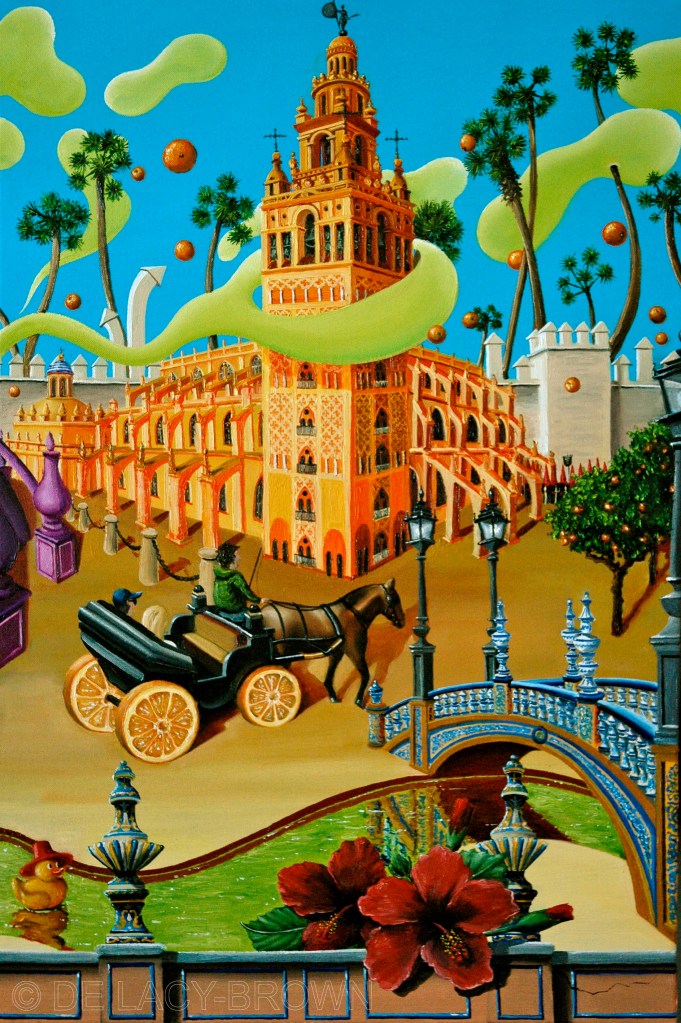
In the second canvas, the Giralda bell tower and the adjoining magnificent cathedral take centre stage, enveloped by the smoke of Carmen’s cigarette smoke. The angle of the building shows off its magnificent gothic details as well as the Moorish features on the lower section of the Giralda tower which is retained from Seville’s Moorish past. In front of the cathedral, a common site of Seville is featured – the horse and cart – whose characteristic yellow wheels are replaced with orange slices. Meanwhile, the distinctive blue and white ceramic bridge of the Plaza de España signifies that here, the river has become the pleasure lake which is central to the Plaza de España complex.

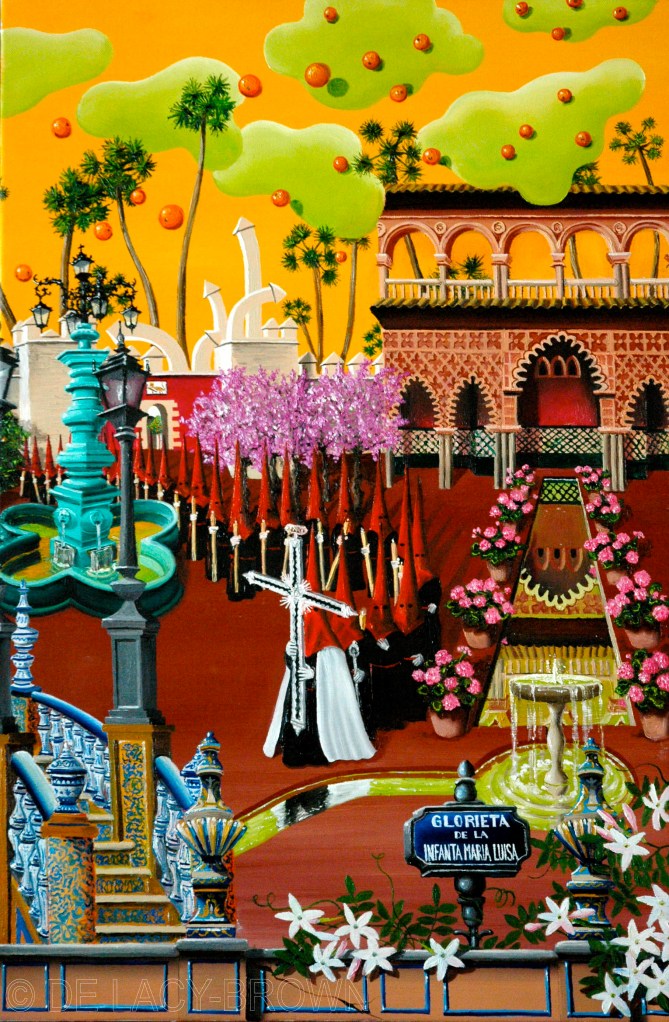
Seville Triptych - Canvas III (Oil on canvas, 2010 © Nicholas de Lacy-Brown)

The third canvas is testament to Andalucía’s complex religious history, from the Moorish architecture which features strongly in the Real Alcazar palace, to the staunchly catholic Semana Santa (Easter Week) parades which are famous throughout Andalucía but most especially in Seville. In the foreground there is a decorative sign from the Parque Maria Luisa, which appears to emanate from the modernist age of design, while in the background, the pointed battlements of the Moorish city walls appear freed from the uniform constraints of their design, playfully reaching for the skies.

Seville Triptych - the complete triptych (Oil on canvas, 2010 © Nicholas de Lacy-Brown)

Across the three paintings, several unifying features dominate: In the immediate foreground are the walls and ceramic decorations of the Plaza de España, and behind it the River Guadalquivir which, in the second canvas becomes the pleasure pools of the Plaza de España and, by the third canvas, has turned into the Moorish pools of the Alcazar palace. In the background, the distinctive slender palm trees which pepper the cityscape and a shower of Seville oranges scatter the painting, while along the horizon, the walls of the Real Alcazar unify the canvas.

© Nicholas de Lacy-Brown and The Daily Norm, 2005-2012. Unauthorized use and/or duplication of the material, whether written work or artwork, included within The Daily Norm without express and written permission from The Daily Norm’s author and/or owner is strictly prohibited. Excerpts and links may be used, provided that full and clear credit is given to Nicholas de Lacy-Brown and The Daily Norm with appropriate and specific direction to the original content.

Cappuccino: No longer just froth and espresso

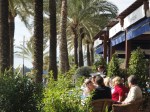
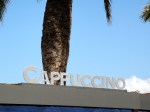
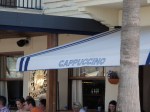
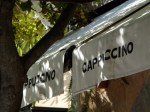
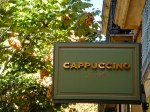
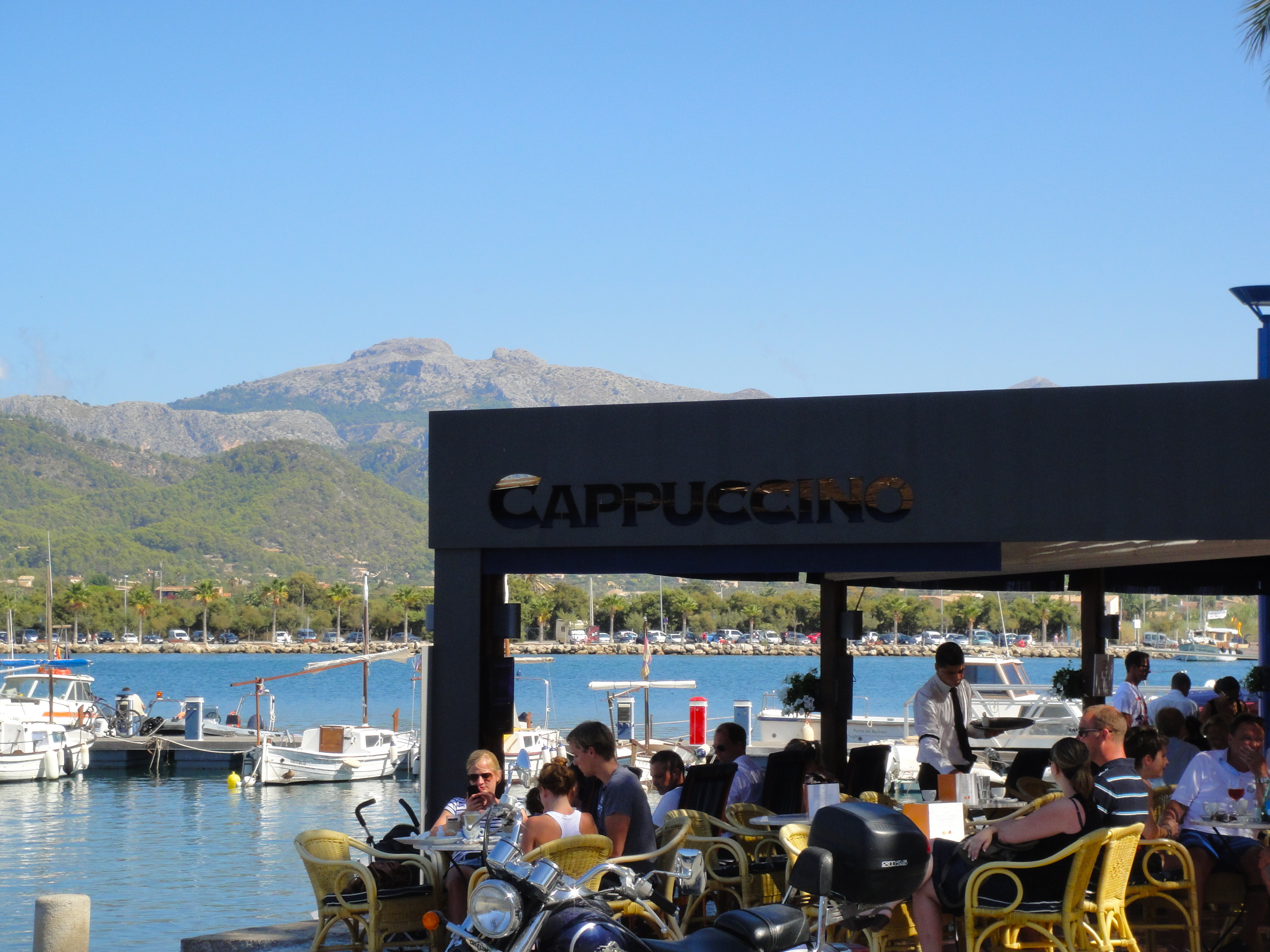
Cappuccino is no longer just a coffee. The café chain which brands itself after the popular italian coffee has rewritten the meaning of this favoured frothy drink. For in Cappuccino Grand Café, the cappuccinos are just the tip of the iceberg. The café group, which is now a predominant restaurant brand across the island of Mallorca, with branches also in Marbella and Valencia, as well as a handful in Jeddah and Beirut, is the ultimate in café chic. It’s exudes sophistication from every bubble of its creamy coffee froth. Its waiters are dressed to impress – with bow ties and black armbands, they are like butlers from a bygone era. Everyone is beautiful, from the staff to the customers who almost become more glamorous upon entering as they allow a wash of Cappuccino couture to penetrate and tantalise all over, as almond latte replaces a standard coffee, and cocktails and wine bubbles aplenty become the new still or sparkling. In the background, a carefully selected soundtrack resonates, wafting the space with Buddah-barish chill and soulfulness, while earlier coffee stops are accompanied by the timeless polyphony of jazz. And to top it off, Cappuccino has managed, almost across the board, to secure itself the very best of restaurant locations, so that in Marbella and Mallorca, you can savour a tranquil seaside view, while in Palma de Mallorca, locations in luxurious former palaces have been made the norm (as opposed to the Norm – let us not confuse the two).

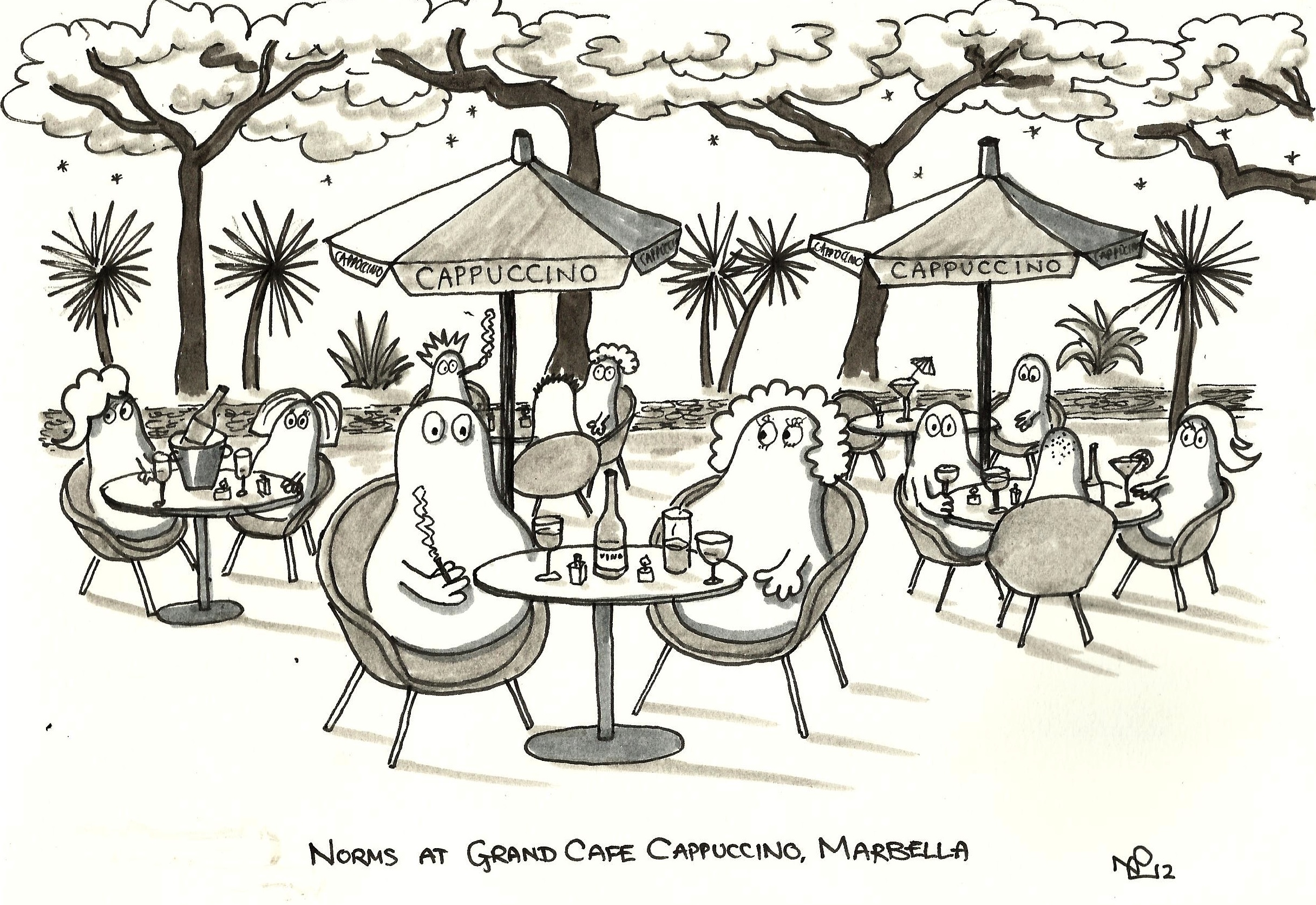
Norms at the Cappuccino Grand Cafe in Marbella (pen on paper 2012 © Nicholas de Lacy-Brown)

So why am I going on an all out campaign to promote this amazing café chain? Well it’s certainly not because they are paying me in free almond lattes (if only – although if the CEO of el Grupo Cappuccino happens to be reading this, please feel free to oblige). Rather, Cappuccino fully deserves its place in my search of all things indulgent and beautiful, because as a place to go for lunch, coffee, drinks or dinner, it is sophisticated, beautiful and ultimately satisfying.

Cappuccino first came to my attention last summer when a new branch opened in Marbella. Situated bang on the paseo maritimo next to the Mediterranean, in a quiet and very exclusive spot (Lord Sugar lives close by, as do those lucky few frequenting the opulent Marbella Club Hotel and other establishments on the Golden Mile), it benefits from superb views and is sheltered from any adverse weather conditions by a canopy of mushroomed pine trees and lush garden surrounds which lead up to the nearest luxury hotel stood behind it. When I went there for the first time, having stumbled upon it during a long walk out of Marbella’s centre, I fell in love. The music, the sunset, the staff and the food which, compared to many Marbella restaurants is very reasonably priced, were spellbinding. There I felt like a pop star, indulged, relaxed, contented.

Cappuccino, Marbella

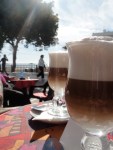
Cappuccino's smooth almond latte

By coincidence, I had a trip booked to Mallorca a few weeks later and there, since it is the island from where the chain originally springs, Cappuccino has marked its claim to various scenic spots all over the island. Such was the beauty of their location that we spent nearly every day indulging in at least one meal in a Cappuccino – for example on the port front of the stunning natural harbour of Port d’Andratx, or in a central square in the charming medieval town of Valldemossa, just round the corner from the Monastery which laid host to one Chopin and his lover. In Palma de Mallorca, there are four Cappuccinos and a number of take away branches and, mercifully, barely a Starbucks in sight (I say barely as there blatantly is a Starbucks somewhere but I have become conversant in the habit of shunning them in cultural locations). These are perhaps some of the most opulent Cappuccinos, set in former palaces with quaint patio gardens and candlelit tables set amongst vast baroque colonnades. On Palma’s vast paseo maritimo, you can sup on the luxurious almond latte in full view of the gothic cathedral, while on Palma’s answer to Bond Street – the Passeig Borne – you can people watch to your heart’s content.

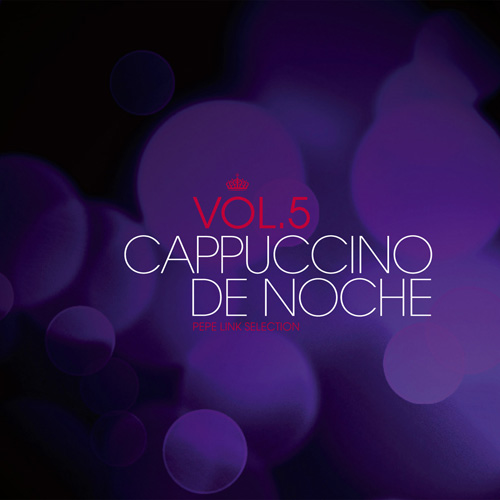
CD Volume 5 of Cappuccino's own sensational soundtrack

And what to do to savour Cappuccino’s magic once you get home? Well the atmospheric soundtrack playing in every café is happily available to purchase – I have all five volumes of the Cappuccino CDs and play them on an almost continuous repeat. The first four make for marvellous coffee music – tinkling jazz and re-imaginings of popular melodies – while the fifth volume is the ultimate in Mediterranean chill.

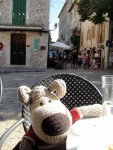
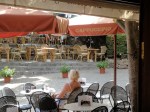
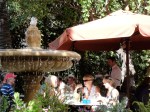
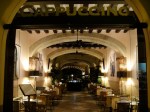
I shall rapture no further, but leave you instead with a selection of snaps I have taken at the various Cappuccinos in Marbella and Mallorca. In the meantime, Cappuccinos website can be found here, including details of all the CDs.

Vive le Cappuccino!

© Nicholas de Lacy-Brown and The Daily Norm, 2005-2012. Unauthorized use and/or duplication of the material, whether written work or artwork, included within The Daily Norm without express and written permission from The Daily Norm’s author and/or owner is strictly prohibited. Excerpts and links may be used, provided that full and clear credit is given to Nicholas de Lacy-Brown and The Daily Norm with appropriate and specific direction to the original content.

Spanish Season 2012: Out of the frost, into the fire.

As the great winter freeze finally began to set in, we at The Daily Norm swiftly decided that the time had come to withdraw from our London offices, and to retreat instead to our little Spanish outpost. And so it was that with a little luck and a lot of expense (Easyjet – once termed a “low cost airline” has almost bankrupted me with its “low cost” flight to Malaga) we have arrived on the Costa del Sol, travelling almost as far south as one can go, while remaining in the confines of our dear, albeit economically shaken, Europe.

Yesterday it was around 2 degrees and lightly snowing when I heaved my suitcase (full of Norms…who tend to be heavy) off the Gatwick Express and boarded a flight due south. When I alighted the flight the other end, things weren’t much better. There was a decided chill to the air in the deserted, white-washed streets of Andalucía, and as a result my winter overcoat remained firmly wrapped about my person. And inside it was even worse – My family and I have found ourselves needing to gather desperately around little electric heaters wrapped in the contents of our suitcases – we look like those motley crowds who gather round vertical heaters on the windy platforms in large echoey French train stations with the result that you feel like a piece of bread toasted on one side – warm and cold all at once. The problem with these old Spanish houses (our home is in Marbella’s casco antiguo – postcard perfect, but otherwise falling apart, damp and consistently calling out for repair and a lot of TLC) is that they are built for the summer. Tiled or stone floors repel the heat while small windows keep the interiors cool. It’s as though their makers presupposed that the Costa del Sol would always be sunny. But it often isn’t, and in the winter, a few hours of daily sun do not compensate for a long night of sleeping inside a refrigerator.

Between seasons: Norm on a Spanish beach in the winter (pen on paper, 2012 © Nicholas de Lacy-Brown)

What a wonderful surprise then when this morning we awoke to beautiful sunshine while not only lifted our spirits but the surrounding temperatures too. As a result we found our bodies quickly warmed from 2 degrees London, through to 10 degrees Spanish night-time to a positively summery 24 degrees basking in the sunshine this lunchtime. Like all things which are scarce in life, the sunshine is never more glorious, never greater appreciated than when, back at home, you know that your friends and compatriots are suffering in the cold. It’s as though you’ve made a lucky escape and are somehow cheating your pre-destined position in life. From London to Spain this has been like leaping from the freeze straight into the fire.

Needless to say, it’s now evening in Spain, and the cold has once again descended as the electric heaters have been boosted onto full power. The problem with these temperature extremes is that you really don’t know whether it’s winter or summer, because you fully experience both seasons in a single day. The key appears to be plenty of layers and a willingness to dress and undress depending on where the sun is, where the clouds are, and how much you can cheat the winter and steal the sun. Of course it also depends on plenty of heating during the evening, and as our electricity system is about as antiquated as our house, the whole lot will probably fuse any minute. With this in mind, I shall finish this post, leaving you with a selection of my photos from the day. Hasta mañana.

Winter light on the Sussex coast

There’s a lot to love about winter in England. When the sun is out, the winds have calmed and clouds erupt like fluffy candy floss into a peachy sky, the effects can be stunning. The winter light is sublime, not least over the dark seasonal sea which seems so much more menacing and destructive in the winter, like a wild beast, lying in wait, ready to pounce ferociously upon the dormant shore. While the summer may provide fair weather views, the winter is more about contrast, drama and suspense. And as a result, beautiful photographs can be found almost anywhere.

Yesterday I was visiting my family in Sussex. As a Londoner, I miss the smells, the sounds and the sights of the coast where I grew up, and make it a priority to indulge in the seaside whenever I am down. Walking along a short distance from Goring-by-Sea to a small café in Ferring, I captured several enchanting shots on my camera. I’m not a photographer but I am an artist. I love beauty and I pursue it relentlessly. These photos show how an impulsive walk along a familiar path can bear fruit of the most artistically fulfilling kind. Beauty is everywhere, even at home.

© Nicholas de Lacy-Brown and The Daily Norm, 2005-2012. Unauthorized use and/or duplication of the material, whether written work or artwork, included within The Daily Norm without express and written permission from The Daily Norm’s author and/or owner is strictly prohibited. Excerpts and links may be used, provided that full and clear credit is given to Nicholas de Lacy-Brown and The Daily Norm with appropriate and specific direction to the original content.

January blues? Dream of the summer

There is only one way to get through these cold winter days, bleak and grey as it was in London today. Either book a summer holiday, or dream of one. Or better still, create summer in your home. Christmas is over, New Year is done. What else do we have to look forward to? With this rather depressing thought in mind, I went about stimulating each of my senses with the promise of a forthcoming 2012 summer.

Beloved Cappuccino... this one in Mallorca's Port d'Andratx

Ears: on the CD player, I played the albums of Cappuccino, the ultimate in Buddah-bar cool, emanating from the chic Mallorcan coffee chain, its music reminding me of long evenings spent under the stars in the Marbella version of the cafe chain, cicadas chirping and the warm mediterranean waves lapping upon the sandy shore as I drank wine and ate almond tart. The second and third senses crying out for satisfaction are smell and taste, and what could be better now than to put away the spicy Christmas chutneys and dried up cold meats, and open a good old Spanish cook book. Entering my third day of a Spanish festival of cooking, today it was Andalucian spiced stuffed aubergines, patatas bravas and a good rioja, the summer smells of cooking garlic and a spiced tomato bravas sauce pervading the cold winter air of my flat.

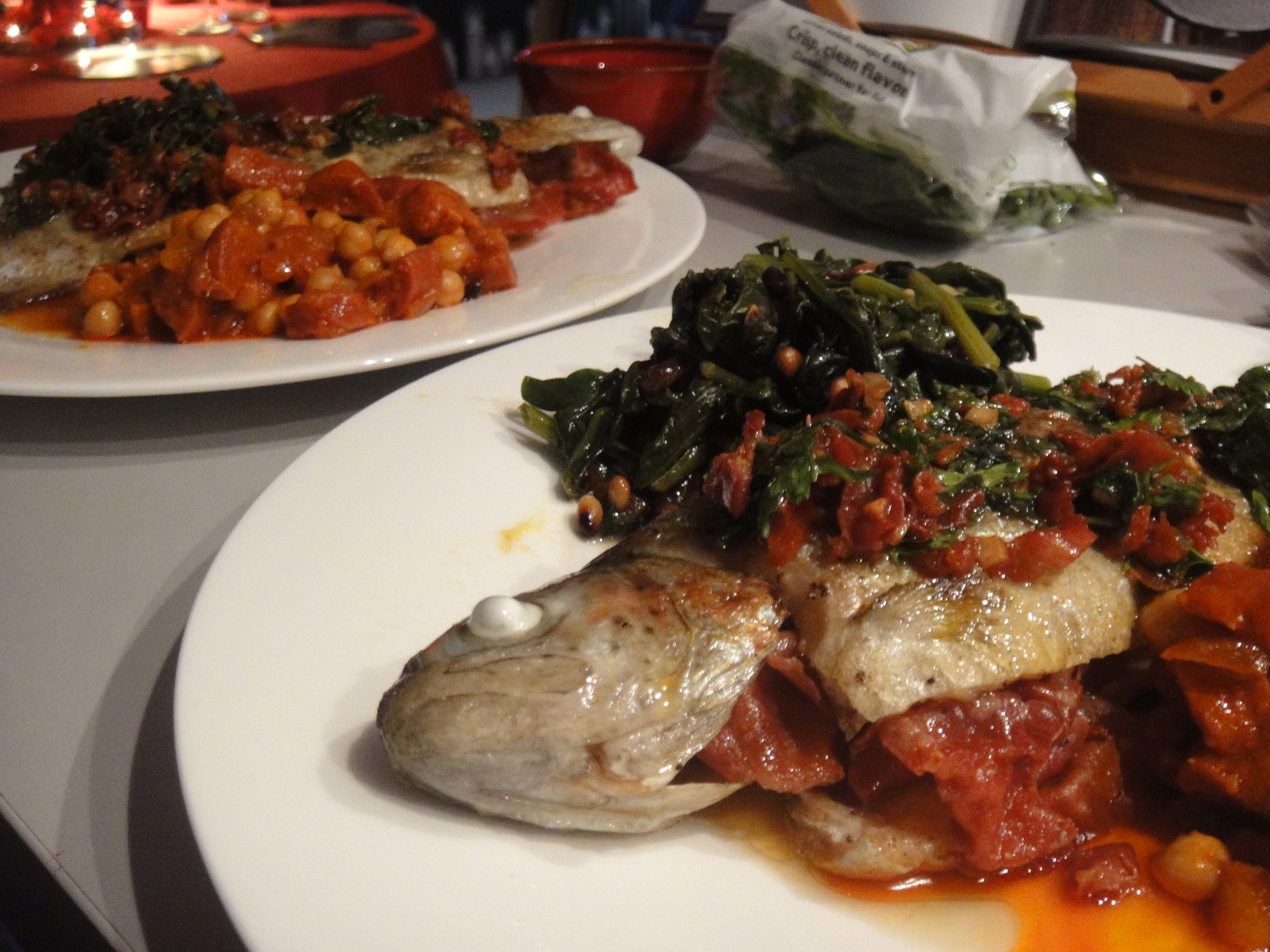
Spanish cooking: Trout stuffed with serrano ham, with chorizo chickpeas and andaluz spinach

Fourthly and all importantly: sight. It’s my summery paintings which get an airing now. Marbella – the town’s long sandy beach, lined with cafes and unusual art deco architecture, the town supported by the stunning backcloth of its Sierra landscape, its buzzing Paseo Martimo reflected into a wide, sparkling expanse of mediterranean sea. On the beach, Henry Moore inspired sculptures soak up the warm rays of an all-encompassing joyful sun, banishing thoughts of winter and reminding all concerned of the joie de vivre of summer.


El Faro de Marbella (with Sunbathing Henry Moore's) (oil on canvas, 2010 © Nicholas de Lacy-Brown)

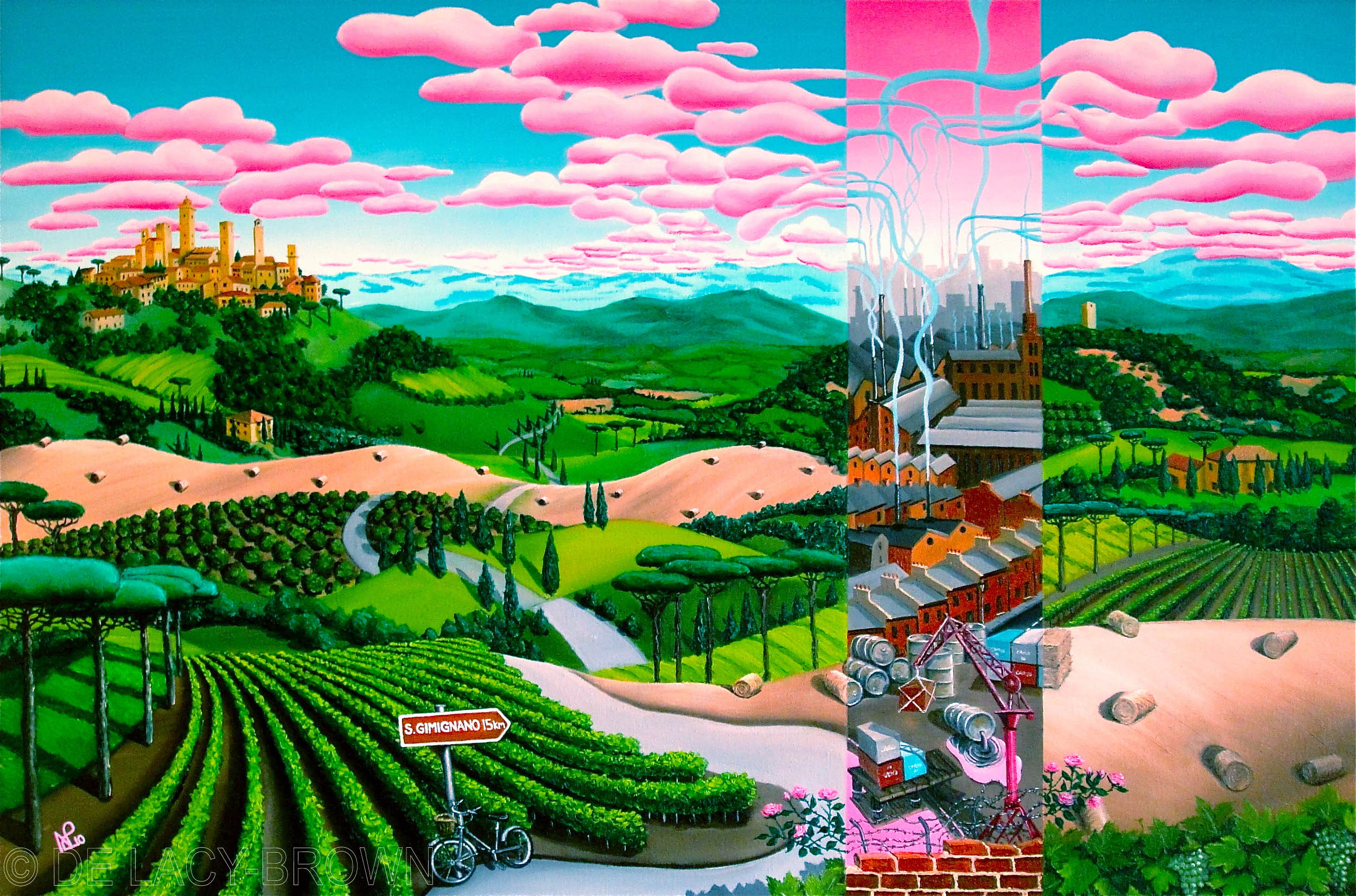
Over the Mediterranean, my mind is racing to Tuscany, and my painting Tuscany Wharf captures the essence of that place I love. Hills rolling elegantly into one another, lush green rolling landscapes broken up by perfectly lined up grape vines and bales of hay, while from beyond the windy road interspersed within the valleys, the glorious towers of San Gimignano emerge, a medieval spectacle, one tower after another, climbing in an apparent ascendancy to heaven itself. And as if to remind me in my daydream of summer of the bleak reality of the English landscape around me, a slice of northern industrial England cuts through Tuscany’s rolling hills, cypress trees replaced with chimneys, hills with terraces, and roses with barbed wire, the polluting plumes emitted by factory chimneys managing to escape, pouring out into the previously clear turquoise Tuscan sky.

Tuscany Wharf (15km to San Gimignano) (oil on canvas, 2010 © Nicholas de Lacy-Brown)

Back to Spain for the evening, and as the sun sets over a peachy bellini-tinted sea, a postcard floats in the air recollecting memories of a Spanish summer holiday spent indulging in thirst-quenching sangria, ice cold San Miguel, and an unctuous paella, while the evenings are spent whisked away by the rhythmic hypnosis of a flamenco dancer’s wailing cries, or the swish, ballerina movement of the Toreador’s vivid red cape.

Souvenir of Spain (oil on canvas, 2010 © Nicholas de Lacy-Brown)

Ahh to dream of the Summer. Check out more of my paintings at my main site www.delacy-brown.com. In the meantime, I’m off to dream of summer…and look for cheap holidays online!

Postscript: Today WordPress included my blog in Freshly Pressed! Thank you so much WordPress and for all those who have previously and subsequently supported my blog and posted comments. Your support means so much. Please come back for more artistic jinks at The Daily Norm!

© Nicholas de Lacy-Brown and The Daily Norm, 2005-2011. Unauthorized use and/or duplication of the material, whether written work or artwork, included within The Daily Norm without express and written permission from The Daily Norm’s author and/or owner is strictly prohibited. Excerpts and links may be used, provided that full and clear credit is given to Nicholas de Lacy-Brown and The Daily Norm with appropriate and specific direction to the original content.

Paris v London: What ever happened to British Café Culture?

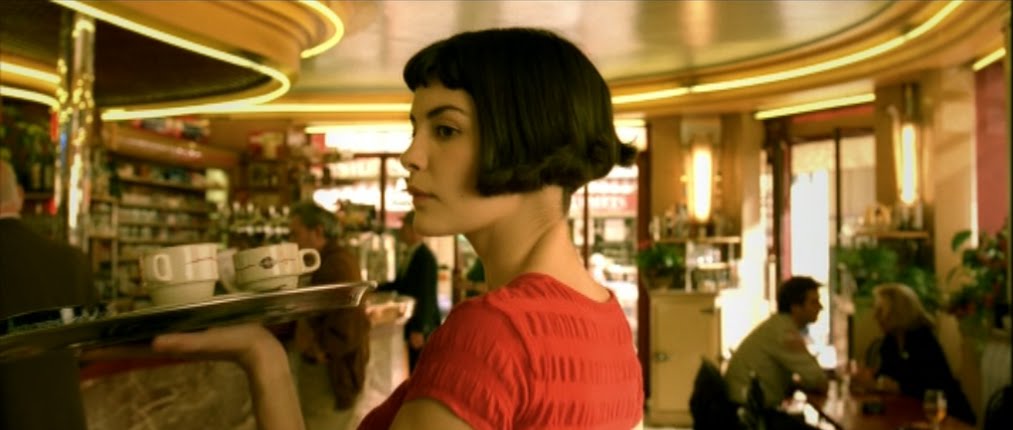
I was reading the post of one of my favourite Paris-based bloggers, Becoming Madame, the other day which described a truly resonant and idyllic scene which she witnessed when sitting inside a Parisian café. Like many of the readers who commented on the post, I was struck by how easily one can be drawn into the romanticised ideal of the Parisian café. It was the same when I was there two weeks ago: There’s something about Parisian cafes which exudes effortless elegance. Some of them are tatty, have tired looking waiters who have been doing the same job for years, browning mirrors and horrible toilets. But there’s something about them, with their hand-written blackboards, mirrored walls, wicker chairs and round tables squeezed outside, and cosy booths inside set amongst an array of old posters and photographs, that just IS romantic and offers us  the very epitome of café culture. This quintessential idyllic view of the French café was very much indulged in my favourite film of all time, Amélie, and yet, despite the cinematic interpretation, the quirky little cafe  captured in than film is wholly representative of reality.

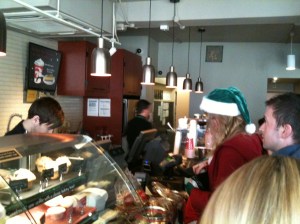
My queuing experience in Starbucks yesterday

So all of this got me thinking (while stood in a massive queue in Starbucks yesterday), while the streets of Paris are literally dotted all over with cafés and brasseries on every corner, each inviting us to indulge with its cherry red awnings and cosy pavement heaters, why is it that in London, the best we can manage is a starbucks or a Cafe Nero every 100 metres? What happened to the Lyons Teahouses which were at the centre of polite society? Or the little privately run café to which everyone would flock for a gossip? In Paris you sit down and are greeted (not always immediately, warranted) by the friendly(ish) face of a smart French waiter. You order your coffee, you sit back, and you indulge in the sweet pleasure that is people watching. In London you queue for a coffee for what seems like an age. You can attempt to sit down, but most of the cafes are turned over to the takeaway trade, so seating is both limited and purposefully uncomfortable so that the turnaround is quick and no one stays too long. Because of the people rushing in and out, the doors are always open. Your experience is cold and drafty and usually, because of lack of accommodation you have to leave with coffee in a paper cup, the small hole in the lid badly designed for sipping so that generally you get half of the scalding liquid down your face before you’ve managed to sit down and enjoy it. And yet the thing is, these cafés are always full, and you get the feeling that in London there really is a growing coffee culture. So why can’t we have the relaxed café culture of Paris?

Read more

Paris Part IV: Photographs

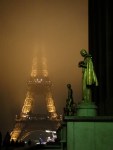
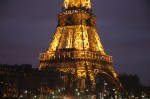
Well I may be back in gloomy old London, but our cousin over the Channel continues to inspire, and as part of The Daily Norm Paris Season, here are some of the photos I took on my recent trip. Ranging from architectural icons, to skyline spectaculars, there is a bit of everything for all the Paris fans amongst us. Enjoy!