Skip to content

Sheepish Easter Greetings from Mallorca

I feel rather sheepish as I creep quietly back into the editing space of The Daily Norm. For such has been the period of grievous separation between myself and my blog that I feel that we are almost like strangers. It may only have been something like two weeks, but for a regular blogger, that period has left me vacant, like a person devoid of a sixth sense. The cause was the run up to the tourist high season, which out here in Mallorca leaves few people with time to breathe the fresh air of Spring, thus leaving me with few opportunities to write, nor indeed anything of interest to share. But now mercifully the Easter is upon us – a time of rest, and of Spring-like hope.
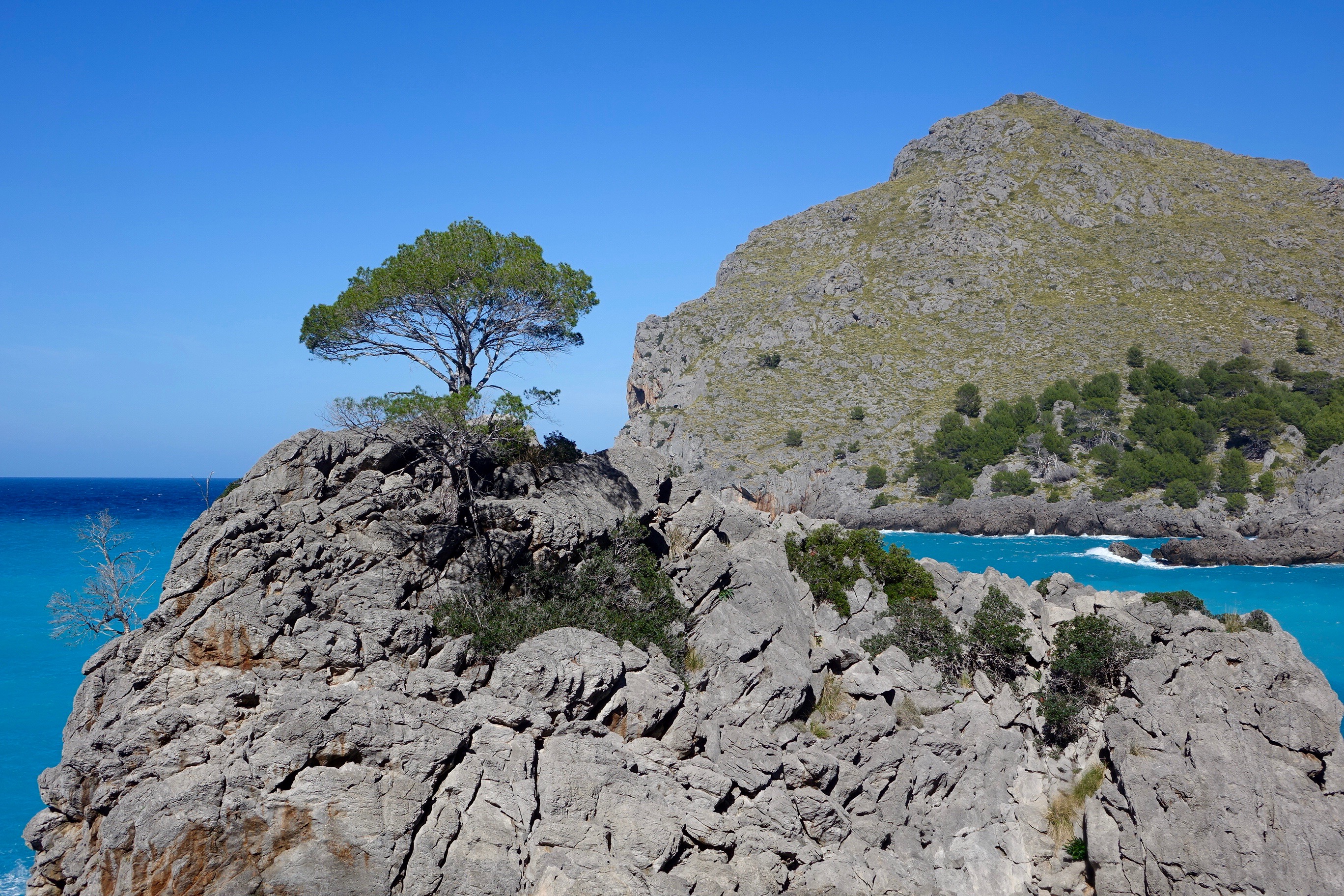
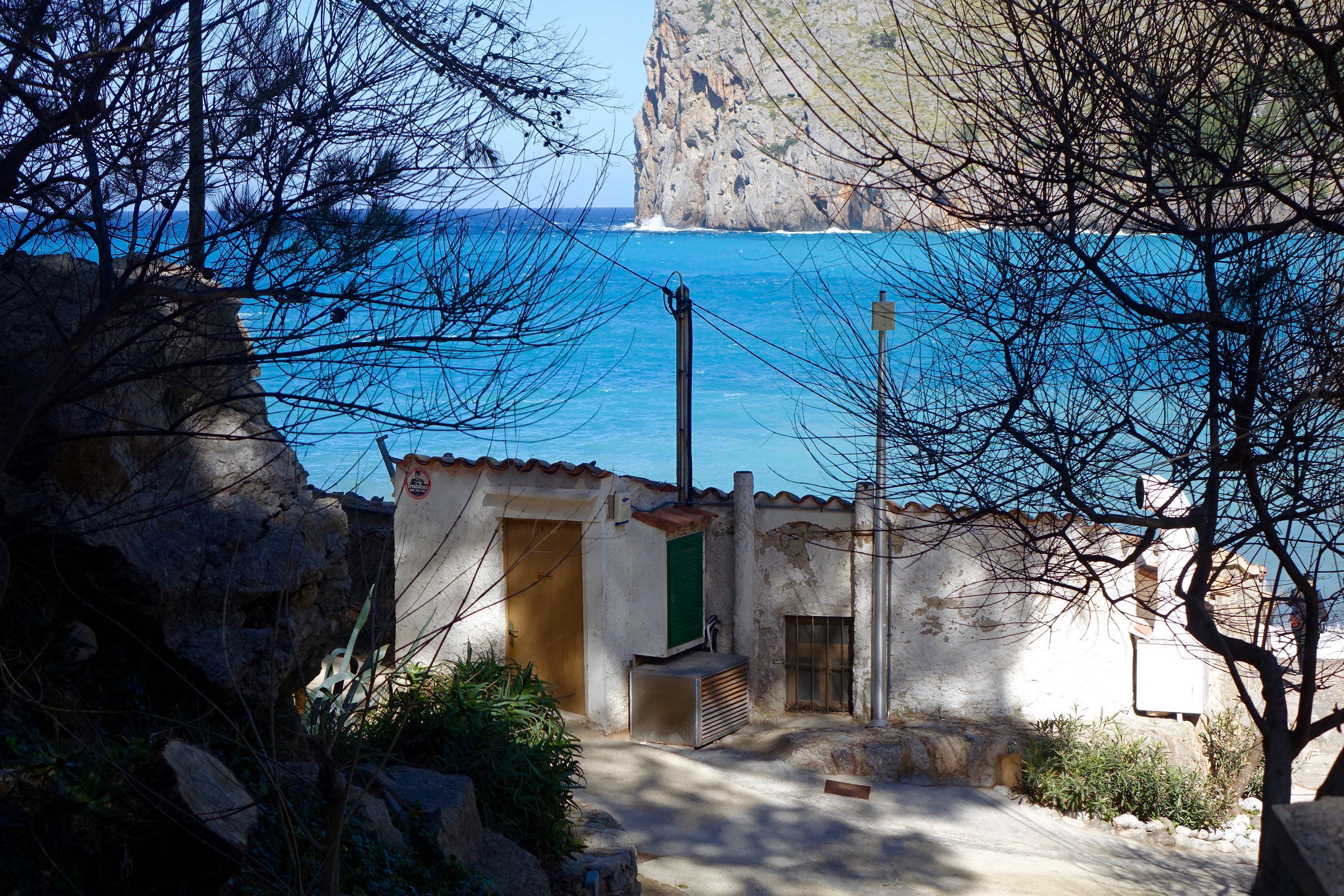
DSC09759DSC09755DSC09747DSC09720DSC09745DSC09729

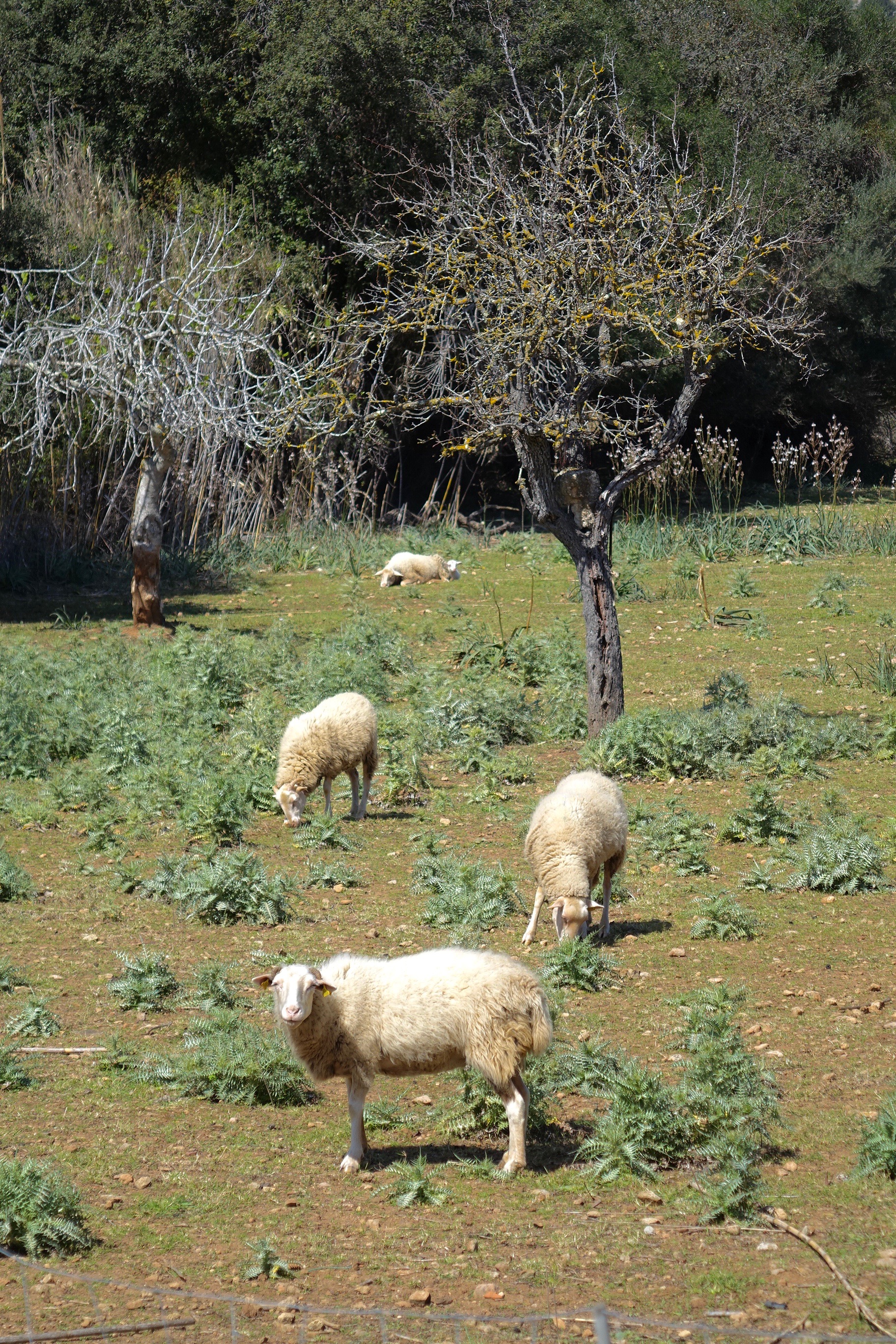
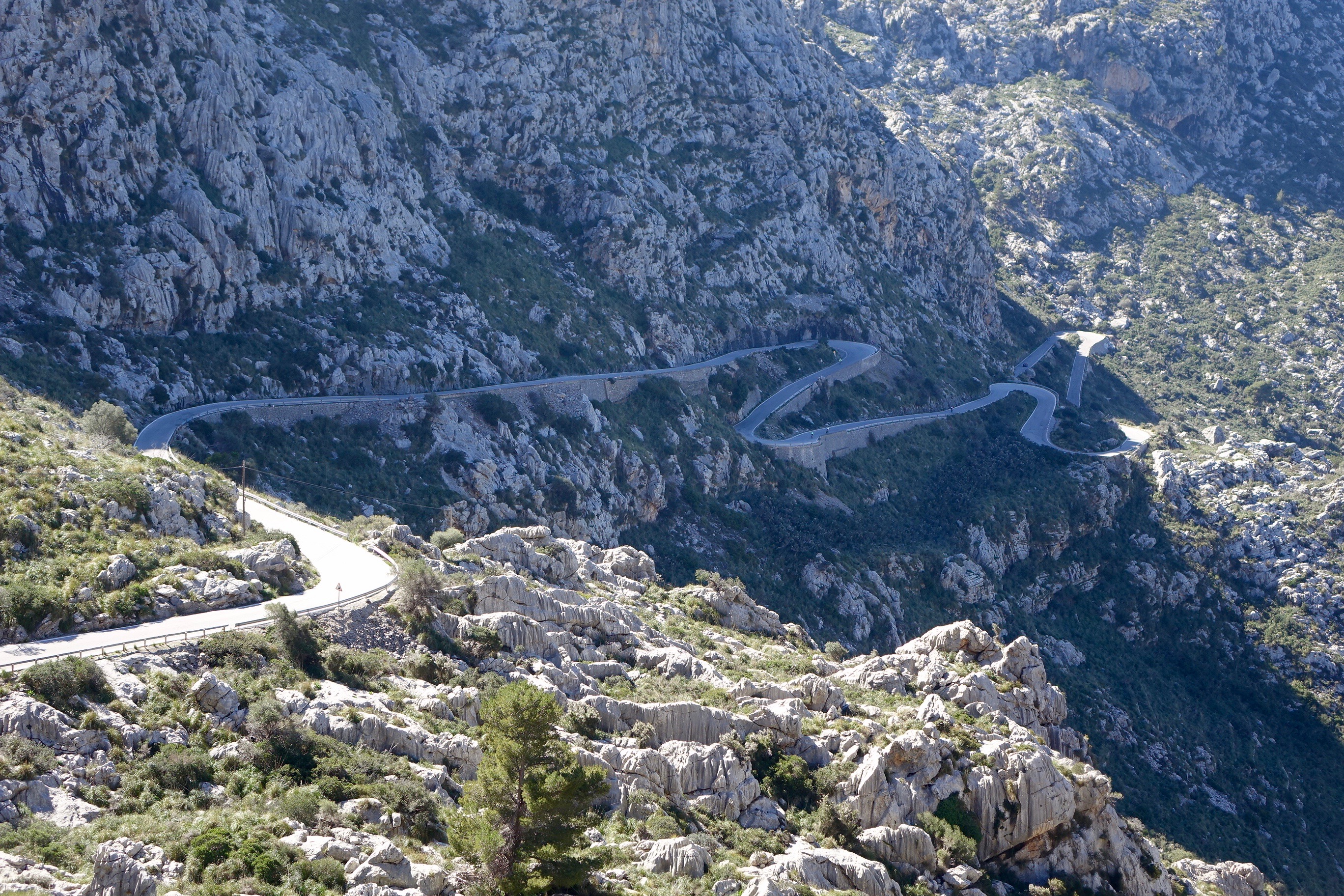
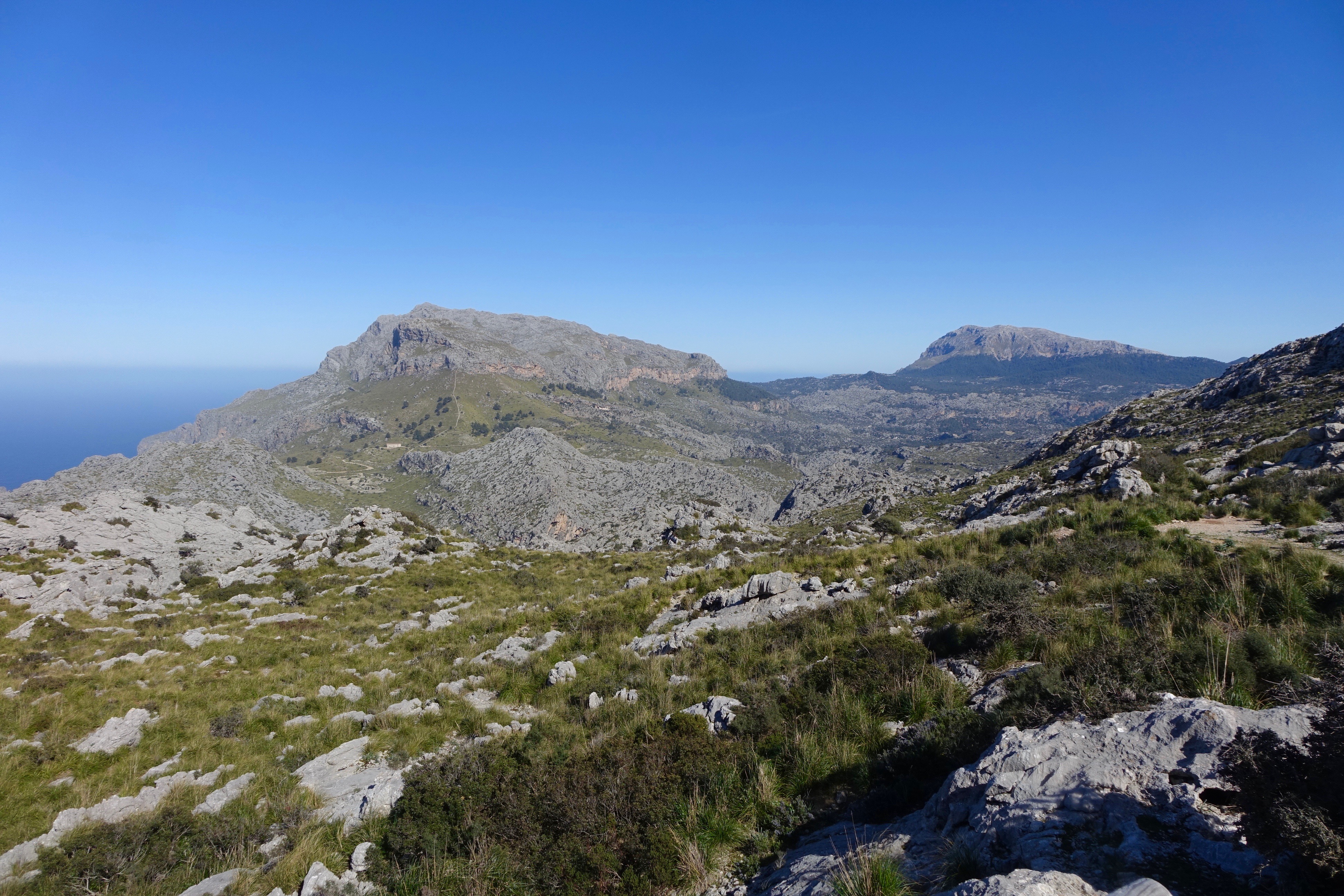
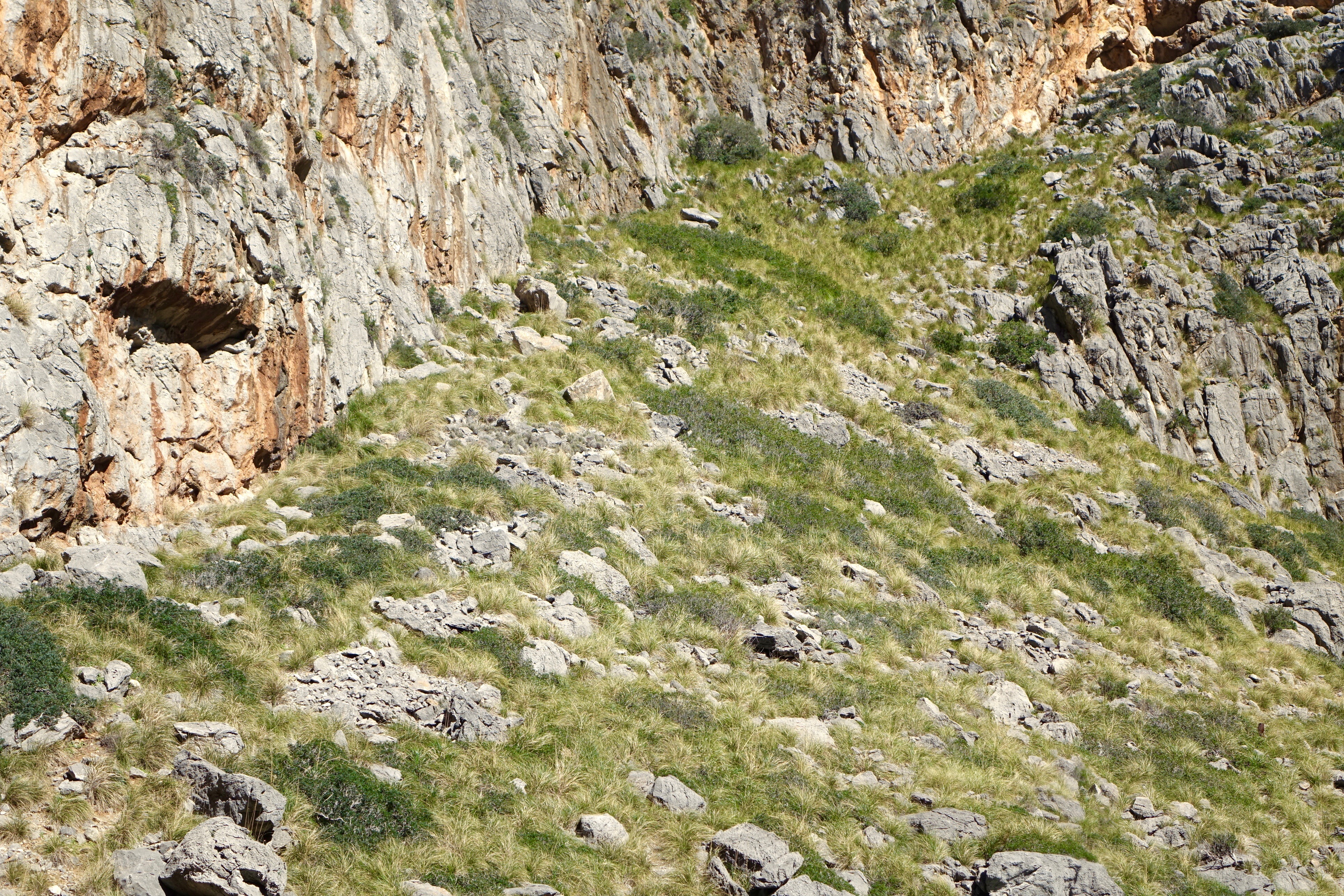
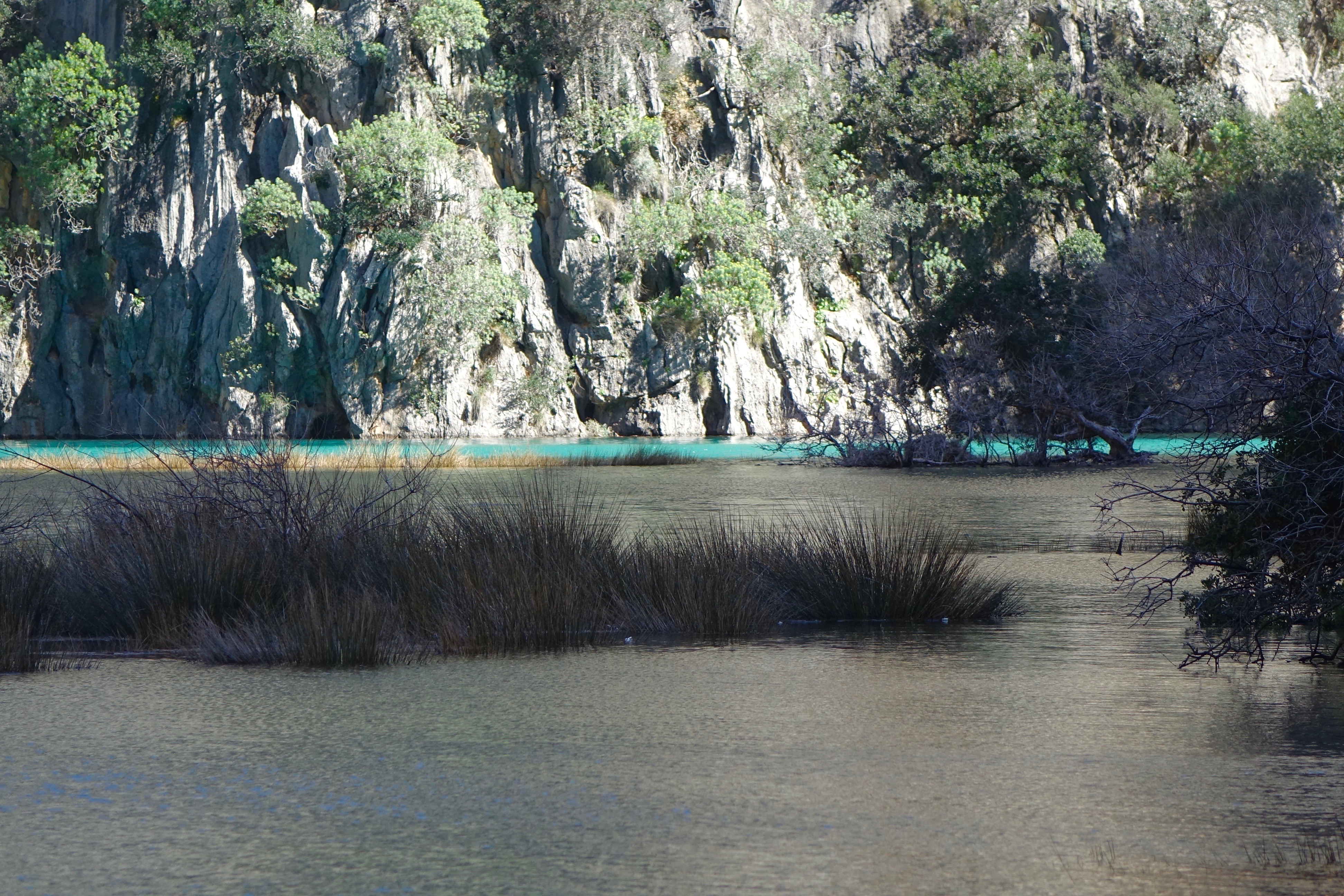
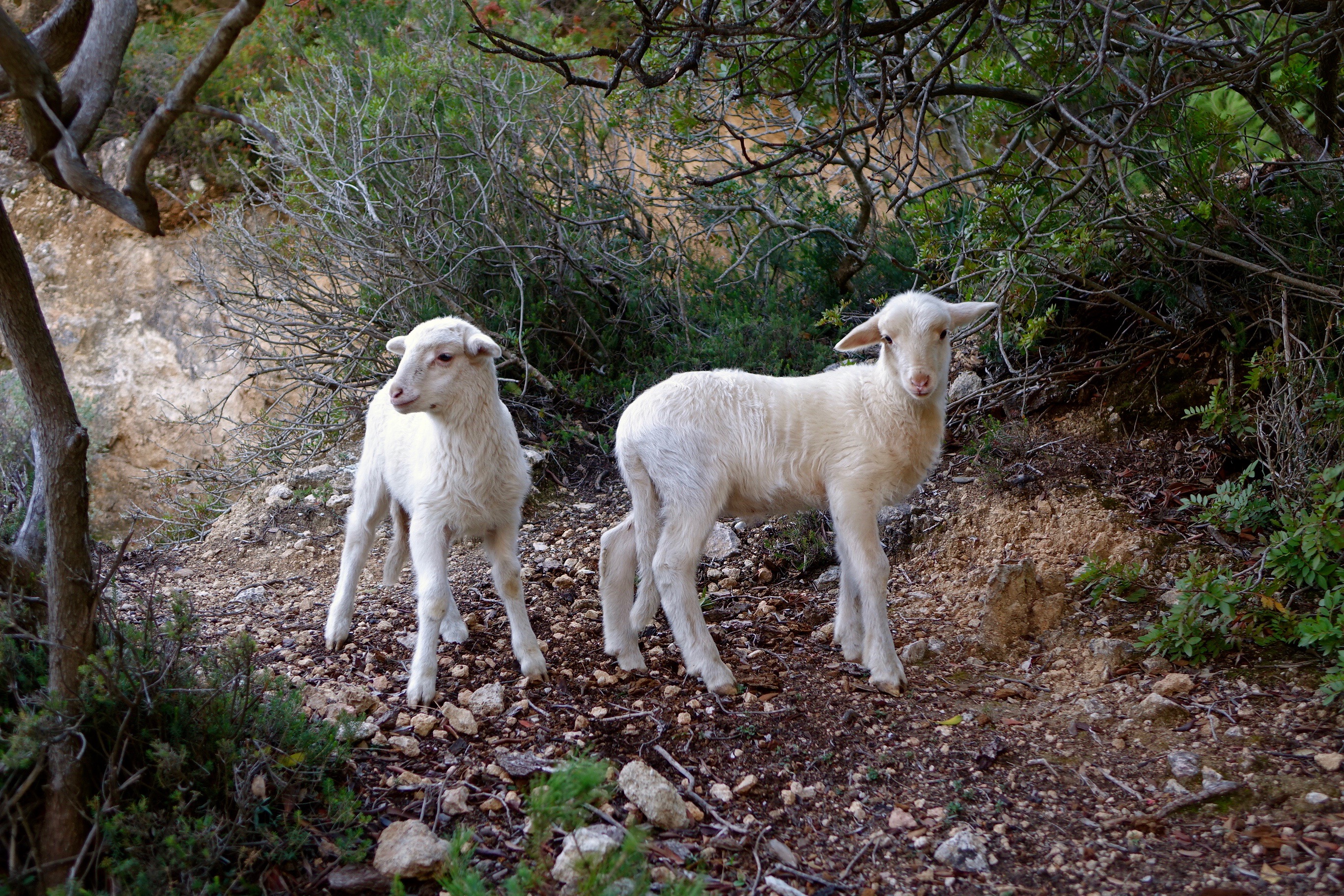
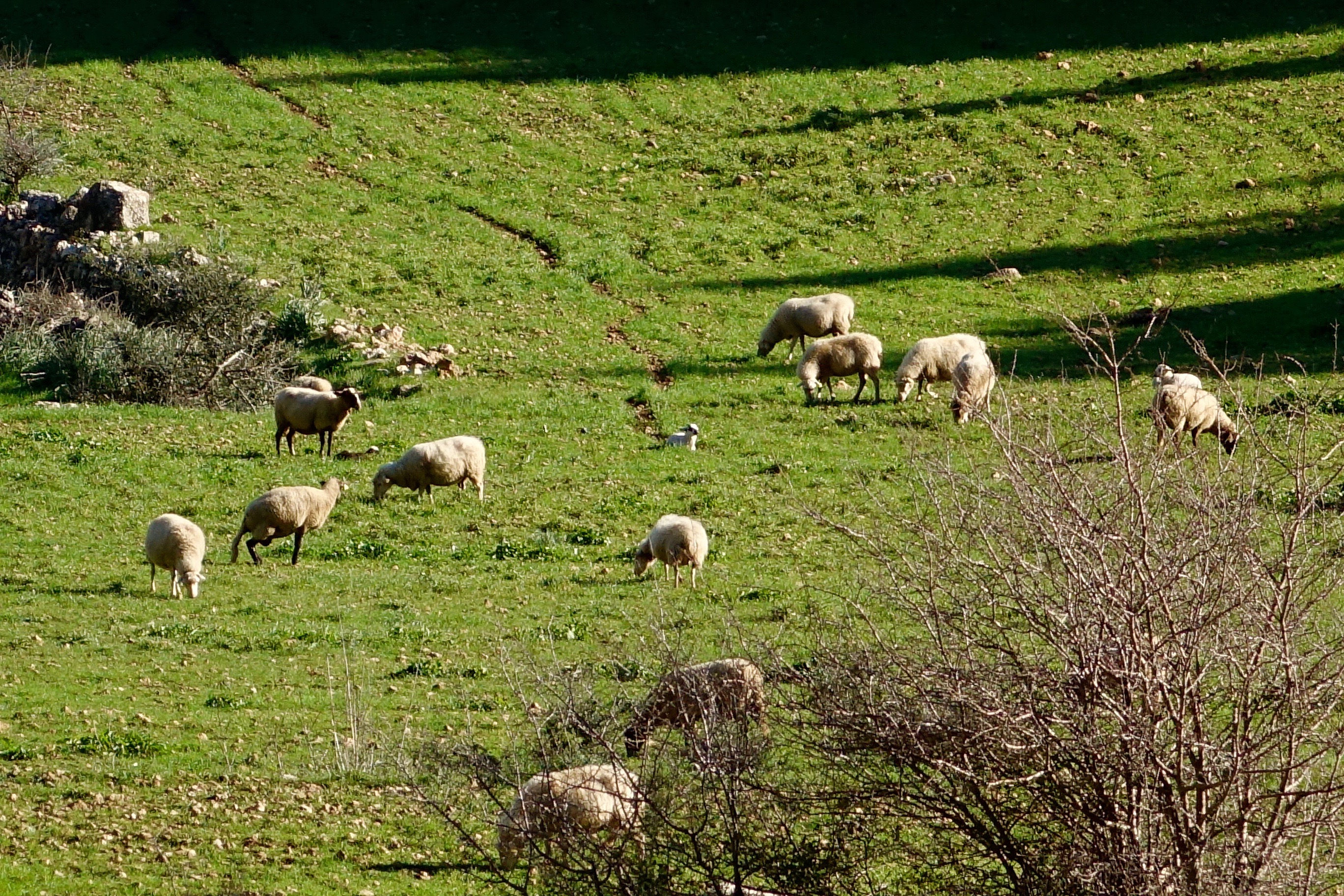
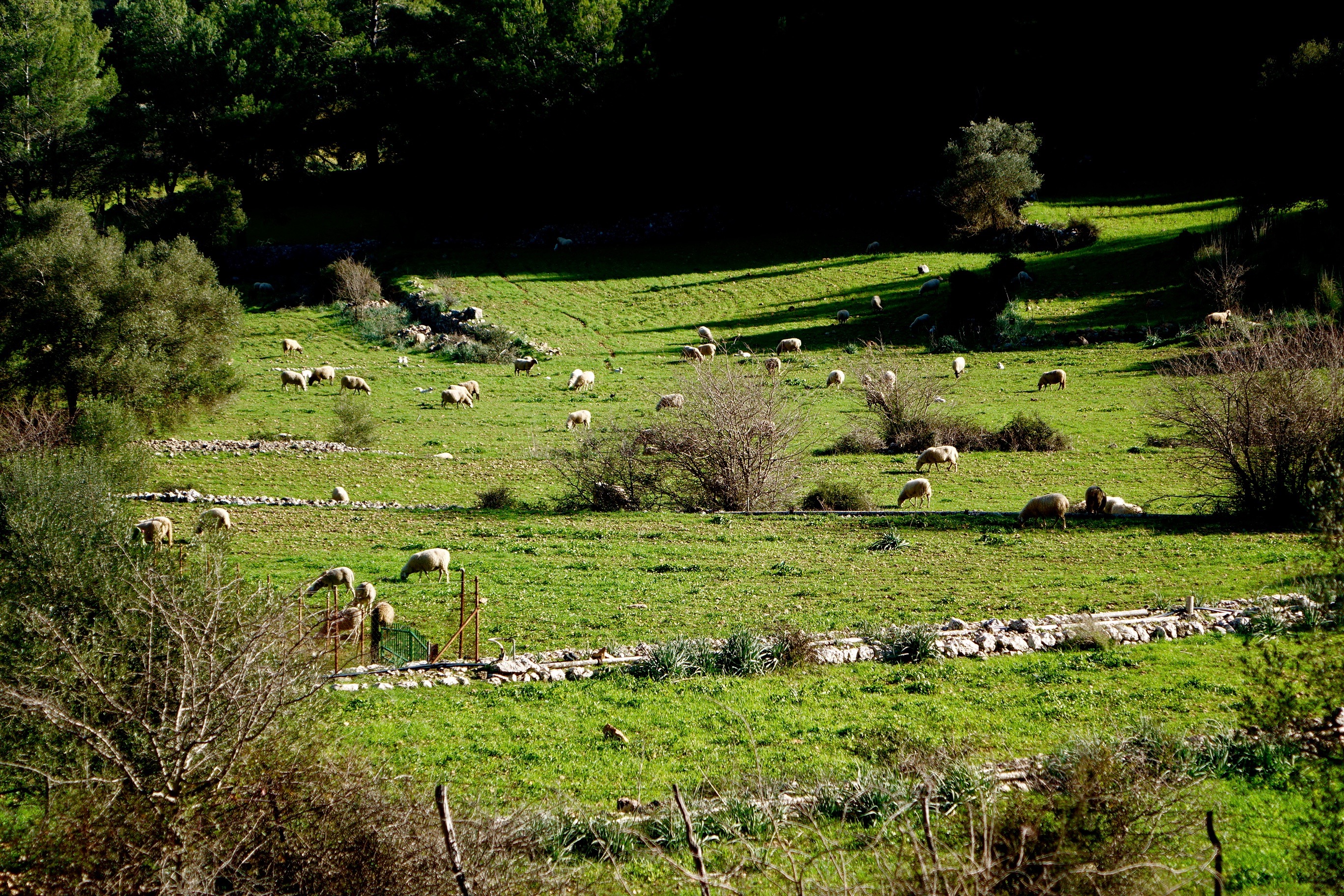
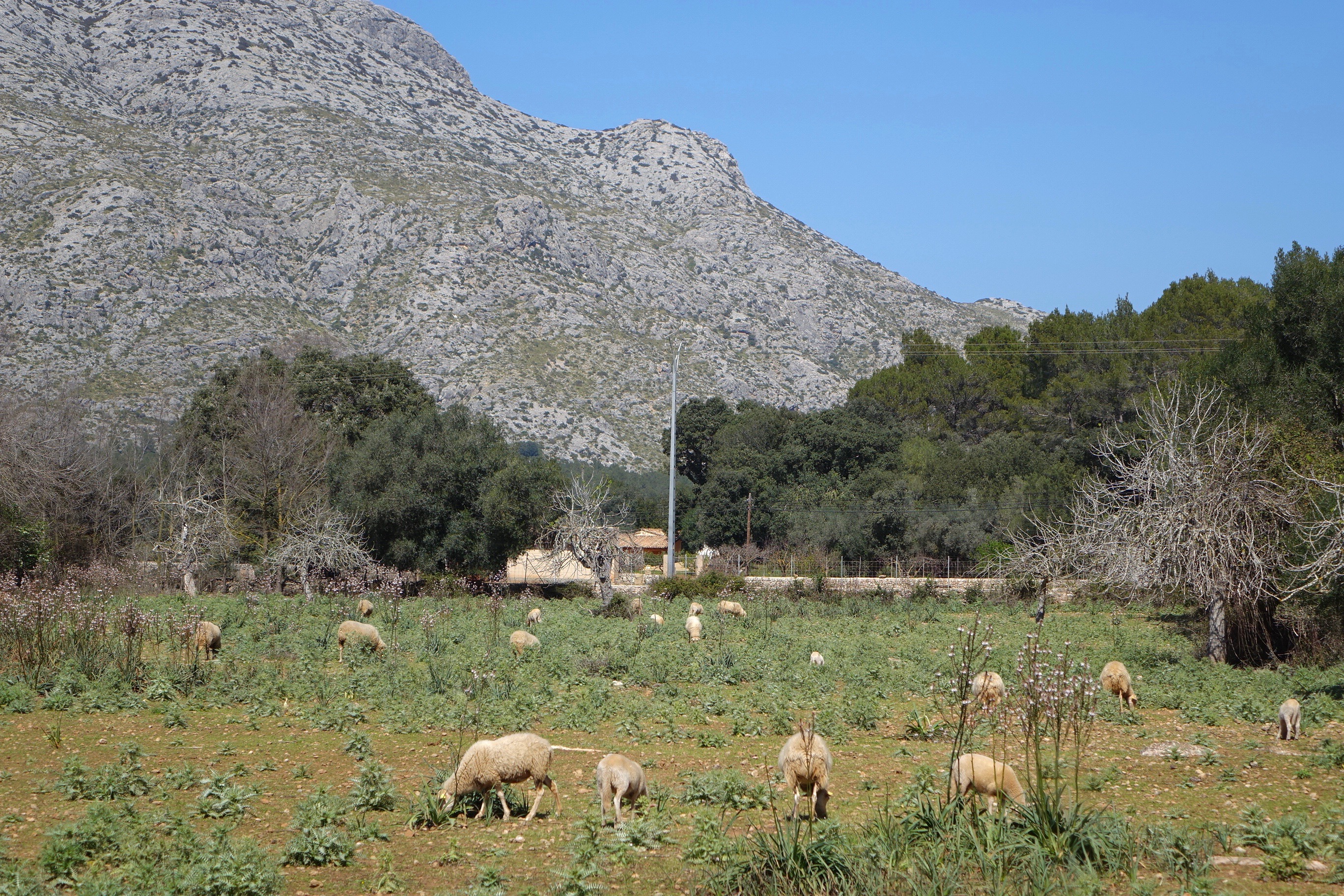
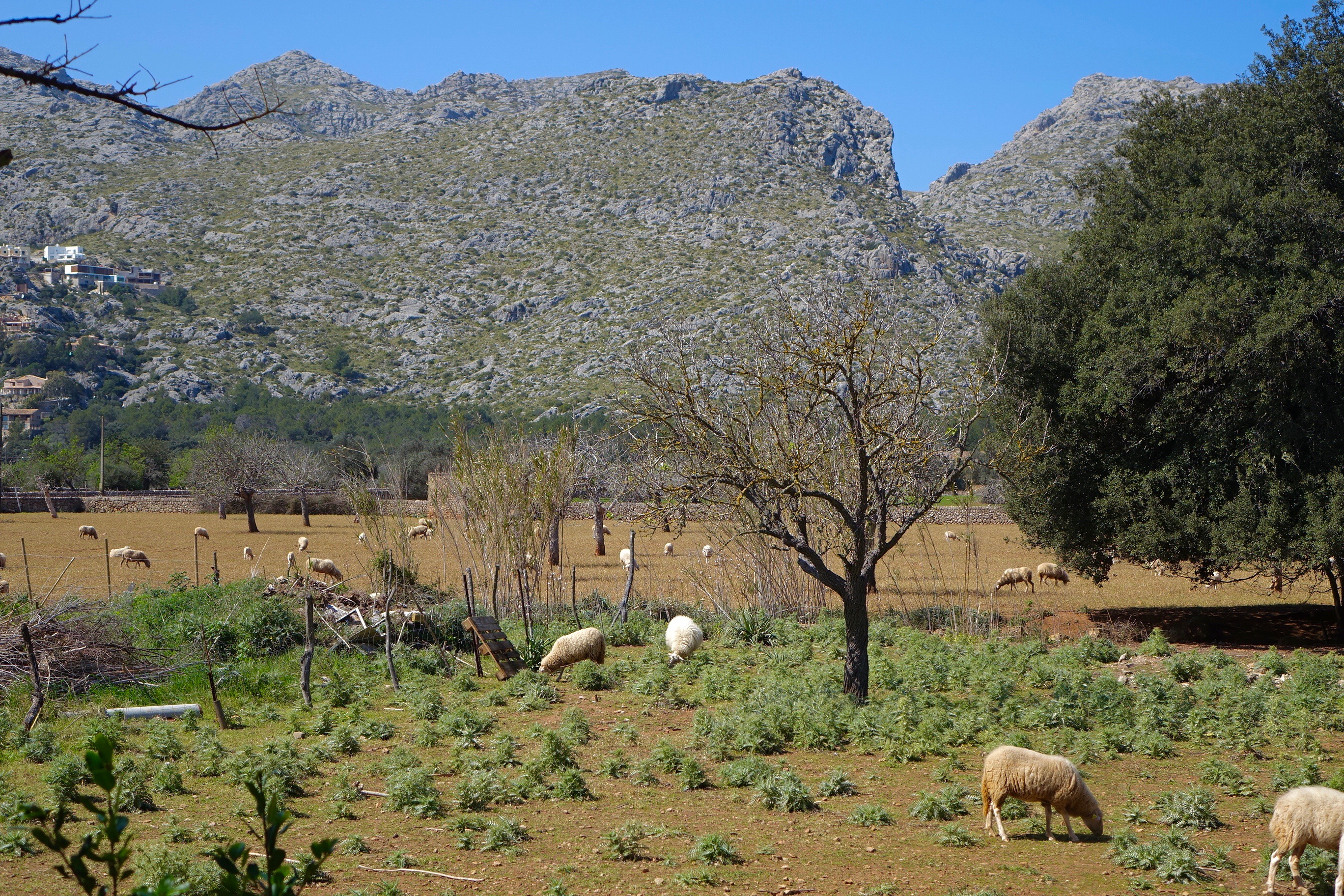
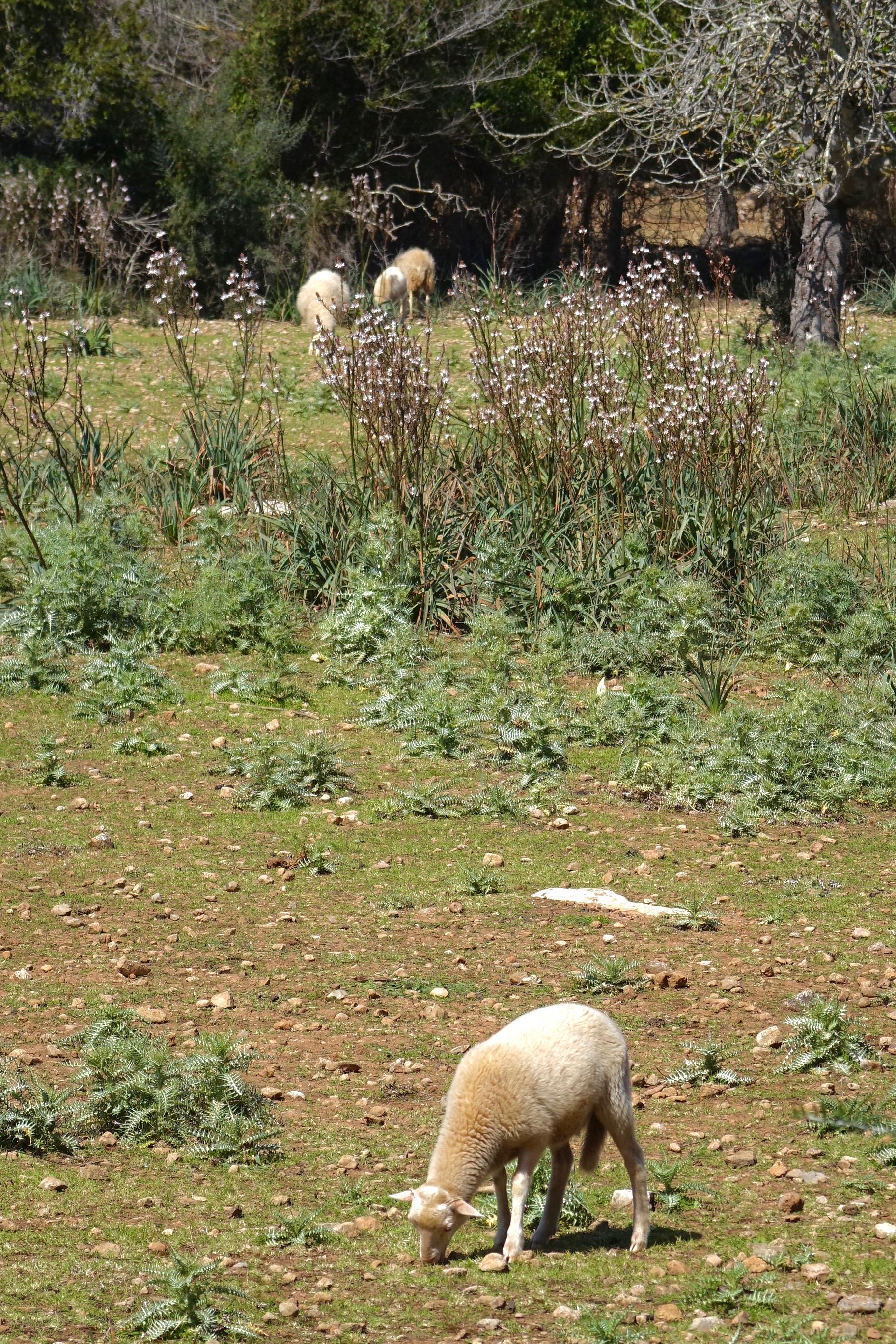
In that vein I wanted to take this opportunity to wish all readers of The Daily Norm a very happy Easter period with a selection of photos I took the other day deep in the midsts of the Mallorca countryside. They are ostensibly simple photos of local sheep, grazing in the grassy pastures close to the Cala Sant Vicenç. But what makes these shots more remarkable to me is the complex layering of the backdrop. In just one photo, you can gaze at blue skies, a stark greyish lilac mountain strata punctuated by dots of planting, a field of golden yellow and a further strata of green before it. Intermingled with everything are dainty white and mauve flowers, and of course the pearly white sheep who are the protagonists of the piece.
DSC09737DSC09732DSC09740DSC09712DSC09727DSC09708

For me these photos express a bucolic ideal and are the perfect way with which to wish you a Happy Easter. I hope you all enjoy the season, and indeed the very welcome entrance of Spring!

All photos and written content are strictly the copyright of Nicholas de Lacy-Brown © 2016 and The Daily Norm. All rights are reserved. Unauthorized use and/or duplication of the material, whether written work, photography or artwork, included within The Daily Norm without express and written permission from The Daily Norm’s author and/or owner is strictly prohibited.

Bacchus & Ariadne

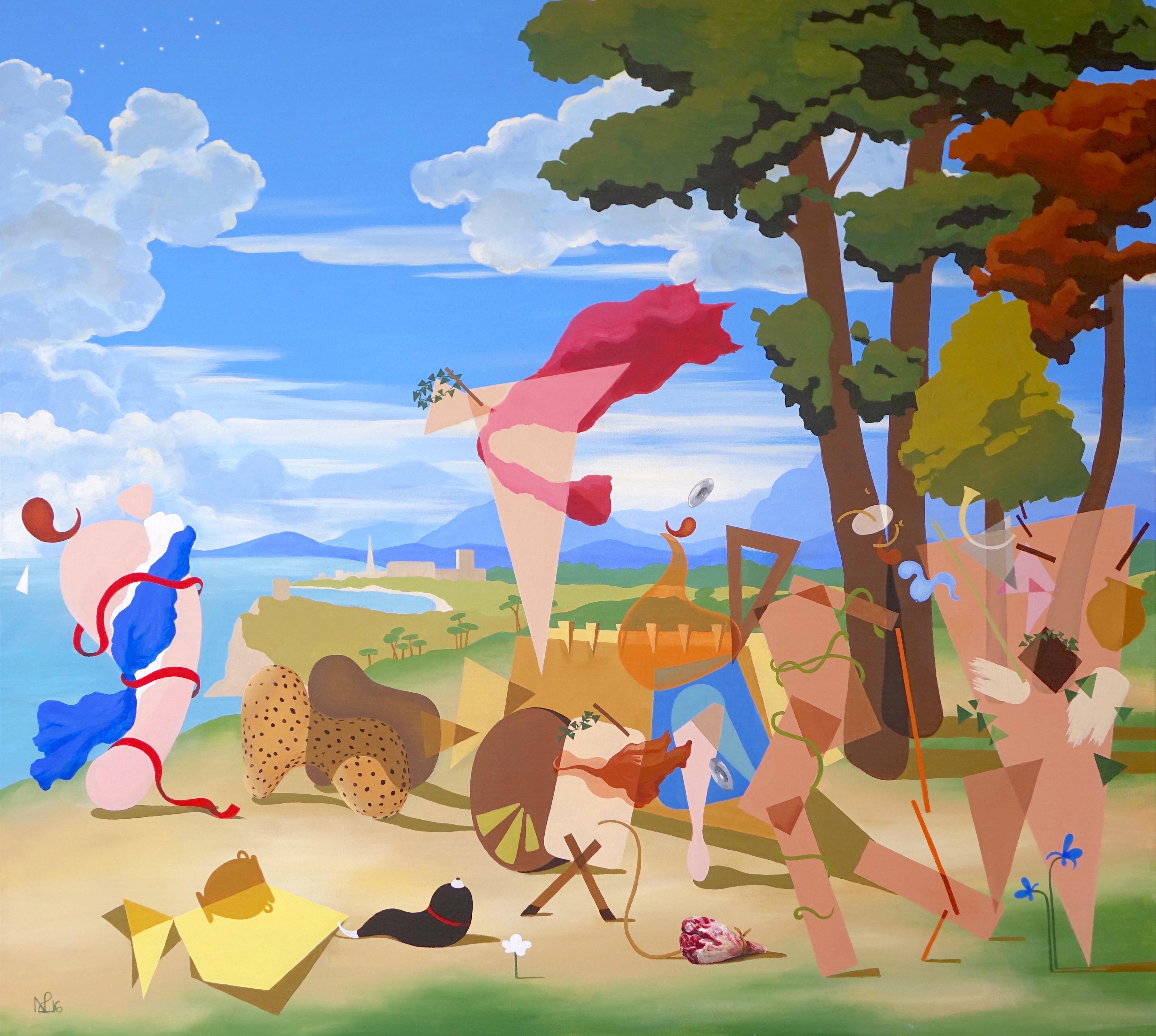
The year toils on, March is upon us, and in line with my new year’s resolution, I have made painting the very heart of my year’s endeavours. In that vein, I am progressing well with a new collection of abstract interpretations, not only of my own experiences, but also of well known masterpieces. Following hot on the heels of my interpretations of Velazquez’s Las MeninasI have now painted what must be my favourite of my entire new collection, an interpretation of Titian’s masterpiece, Bacchus and Ariadne.

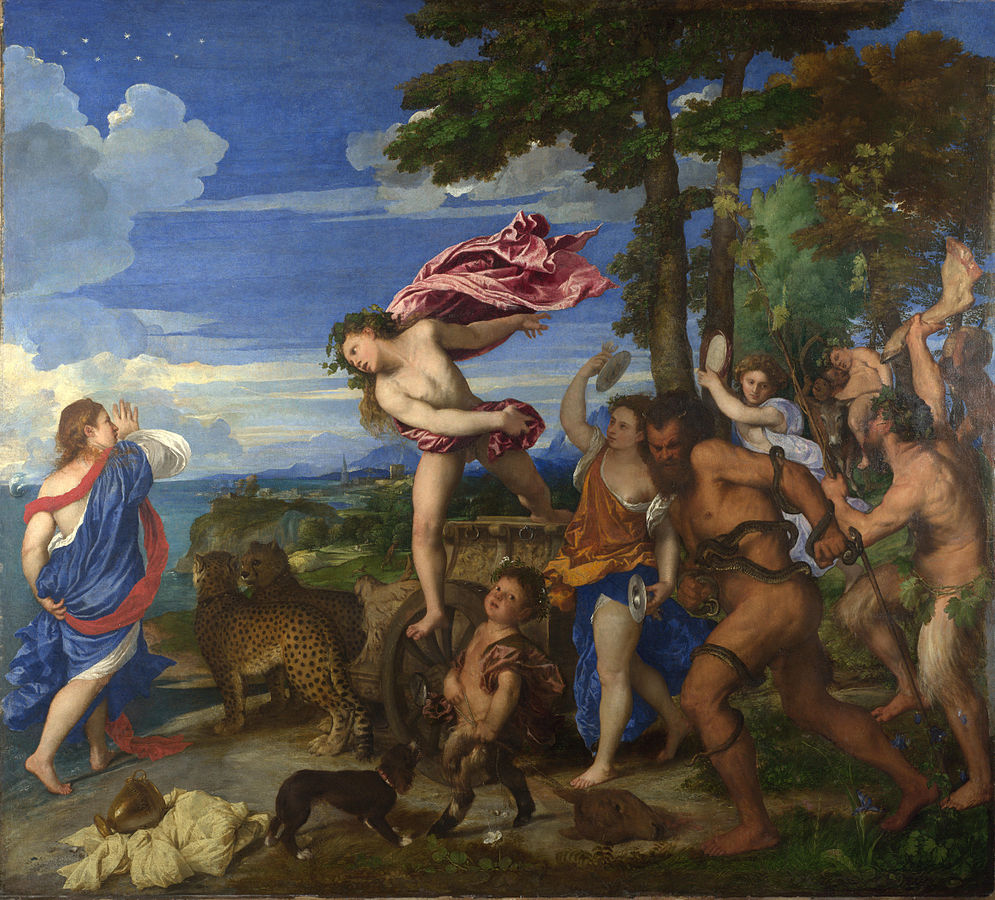
With its stunning sky of ultramarine and the sheer energy of the central character, Bacchus, jumping into the air, the painting has always been one of my absolute favourites in the collection of The National Gallery in London. Painted as part of a cycle of paintings on mythological subjects produced for Alfonso I d’Este, the Duke of Ferrara, the painting is based on a tale told by Roman poets Catullus and Ovid. It depicts Ariadne, daughter of Minos, being deserted by her lover Theseus on the island of Naxos. She is rescued by Bacchus, god of wine who, in a chariot drawn by two cheetahs, sweeps into the scene with his retinue of drunken followers in a campaign to seduce Ariadne. In so doing, he promises her the sky, where, he declares, she will become a constellation of stars, like the Northern Crown which can be seen glimmering in the sky.

Bacchus Ariadne FINAL

Bacchus & Ariadne (2016 ©Nicholas de Lacy-Brown, acrylic on canvas)

995px-Titian_Bacchus_and_Ariadne

Bacchus and Ariadne by Titian, 1522-23 (National Gallery, London)

The composition and the colours are so striking that in painting my own version, I wanted to change neither, instead choosing to retain the stunning blue sky with its rolling fair-weather clouds, while in front simplifying the forms of the characters, the trees and the landscape. In finding ways to “abstract” the figures, I discovered various triangles across the composition, and used this shape, in particular, in depicting the masculine figures in the scene, while for the feminine figures, I used curving forms.

DSC09206DSC09209DSC09205

Nothing can repeat the true genius of the Venetian master, Titian, but my version of this painting, created in perfect ratio to the original, is certainly something of a high point in my new collection of a freshly revolutionised style.

© Nicholas de Lacy-Brown and The Daily Norm, 2001-2016. Unauthorized use and/or duplication of the material, whether written work, photography or artwork, included within The Daily Norm without express and written permission from The Daily Norm’s author and/or owner is strictly prohibited. For more information on the work of Nicholas de Lacy-Brown, head to his art website at www.delacybrown.com
Discovering Mallorca: Sa Calobra and the Torrent de Pareis

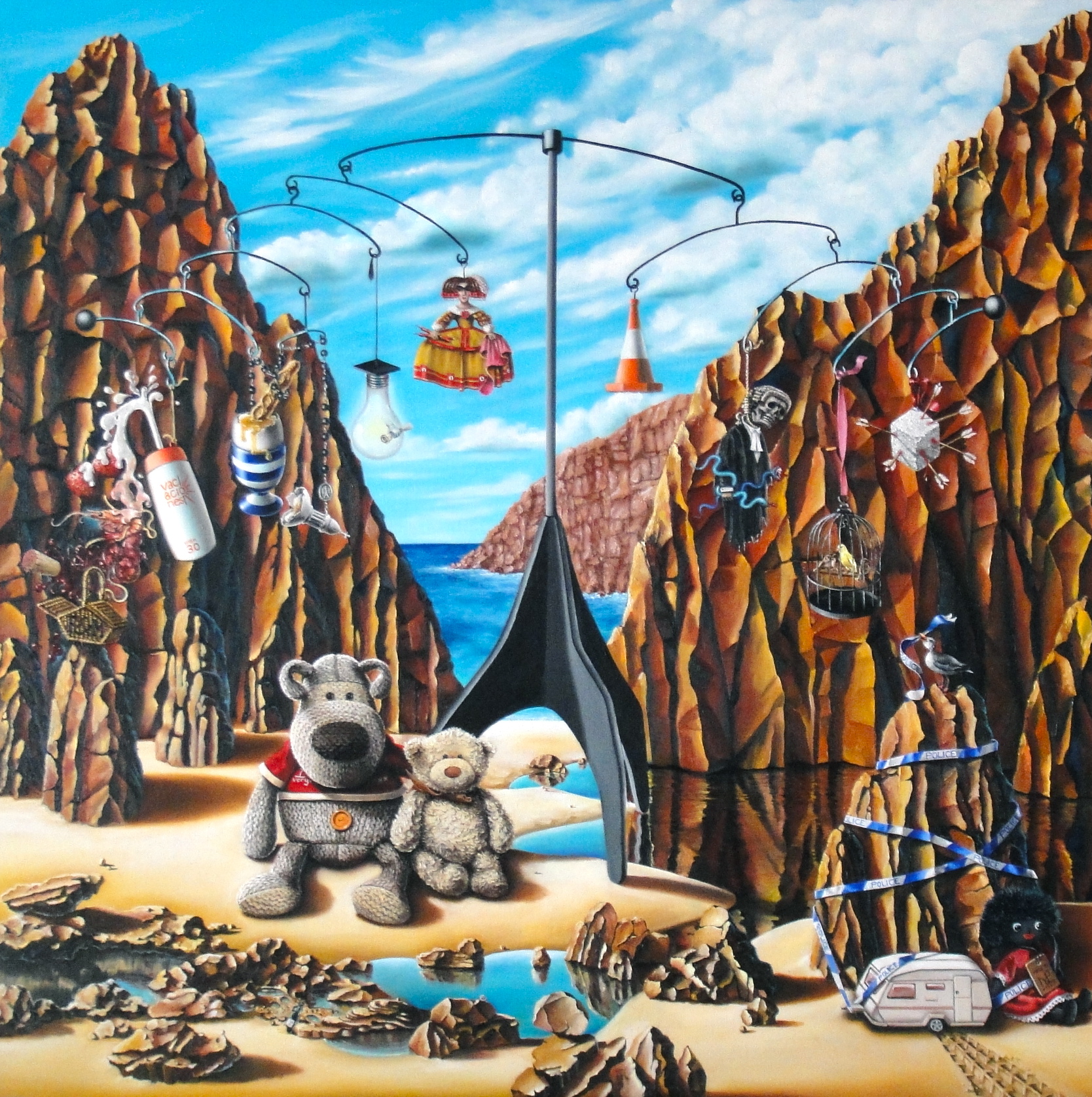
It’s funny how fate works. Some time after my first visit to Mallorca in 2011, I set about painting my Autobiographical Mobile, a painting which was to be the end point of my 2014 exhibition, and which told the story of my life up to that moment, with good and bad balanced out on a Calder-esk mobile on a beach. For whatever reason I decided to set the story of my life on a Mallorca beach, having no idea that I would move to the island some two years later. Not only that, it was the beach of Sa Calobra where I had never even been – my painting was inspired by a postcard I had picked up at the airport. So now I am here, I always knew that in discovering Mallorca, one important place would be the beach I had painted in that signature painting three years ago. And this week I went there.

Autorretrato FINAL

My painting, Autobiographical Mobile (2013 ©Nicholas de Lacy-Brown)

DSC09091

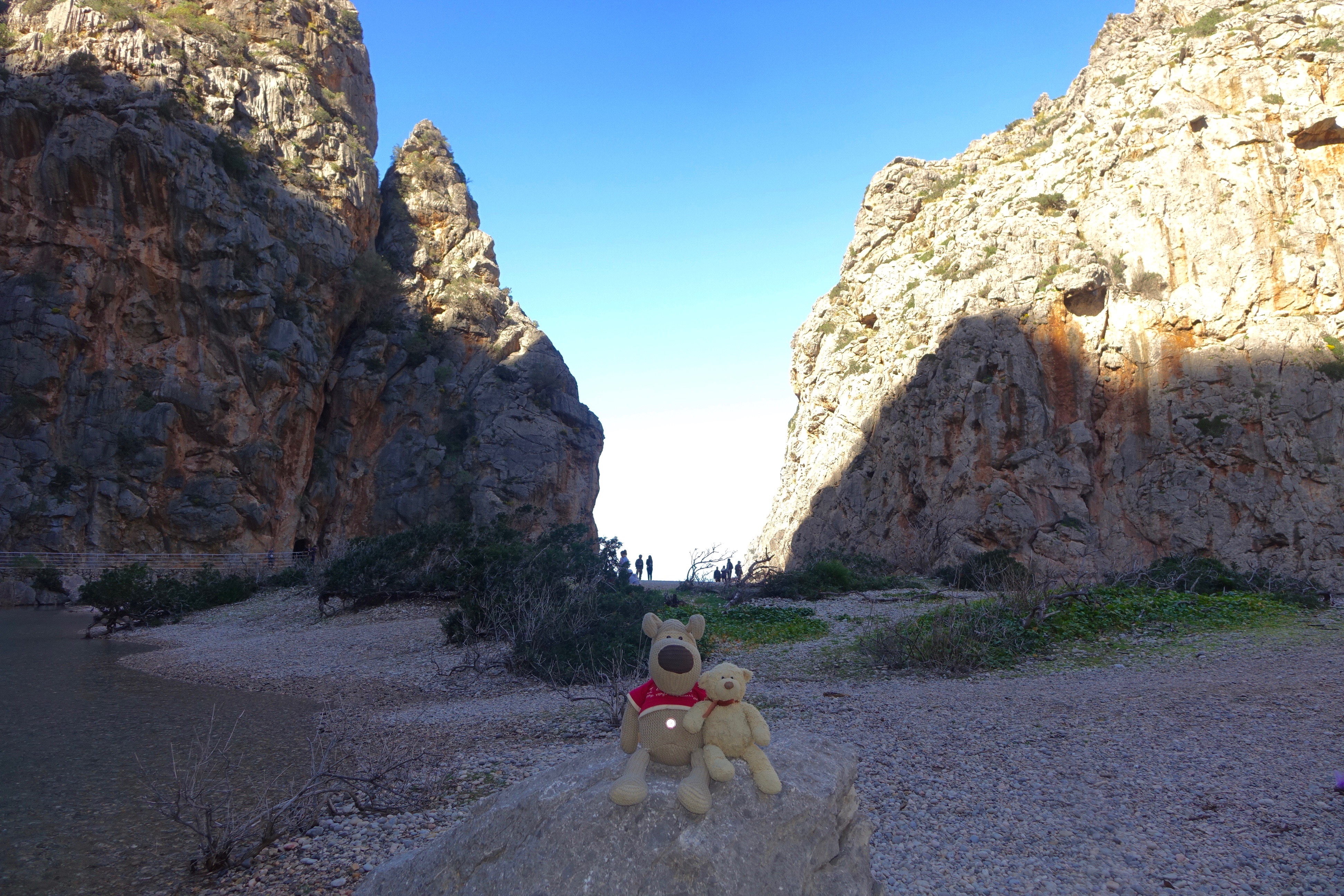
Fluffy and Bilbao pose in front of the real Torrent de Pareis 

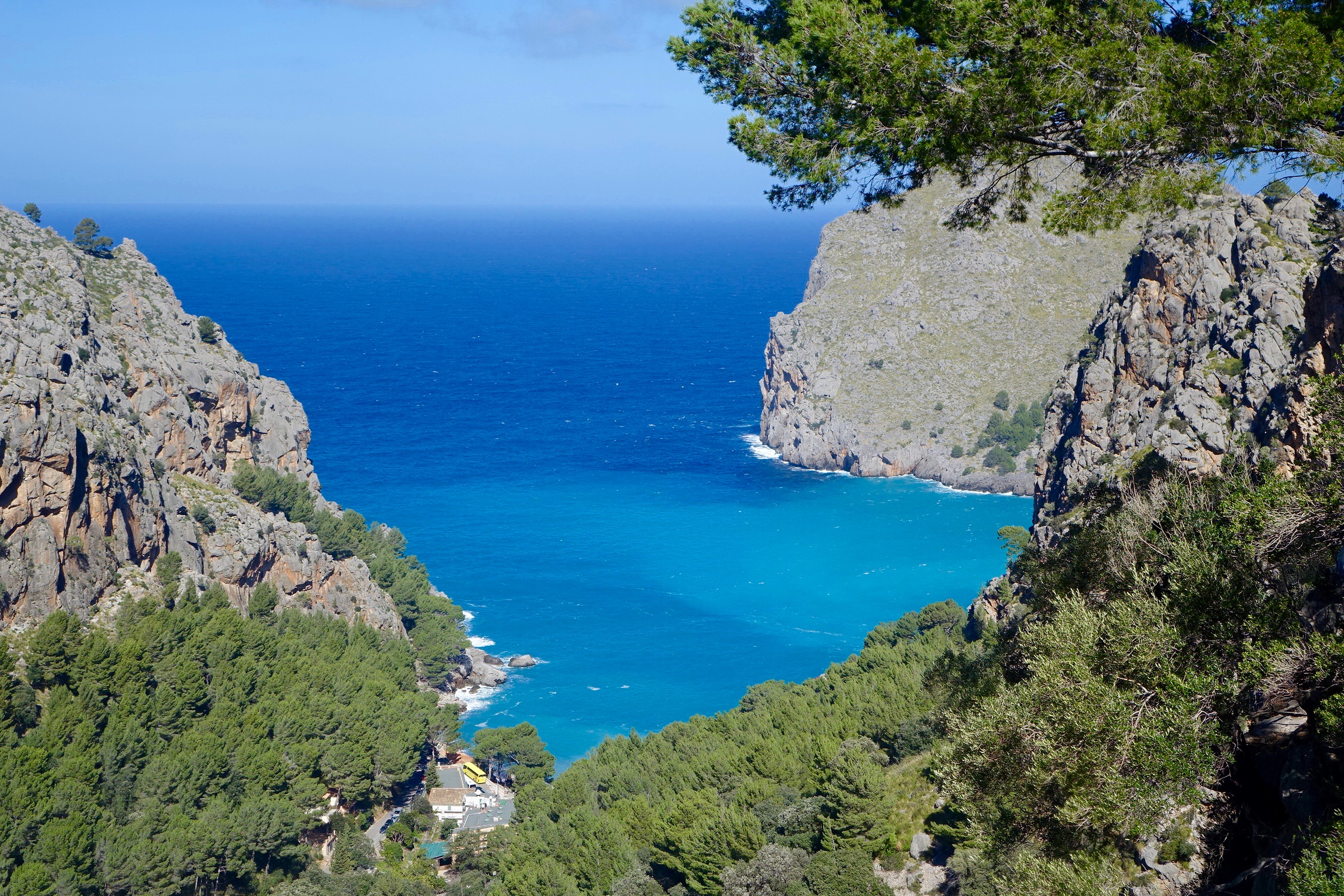
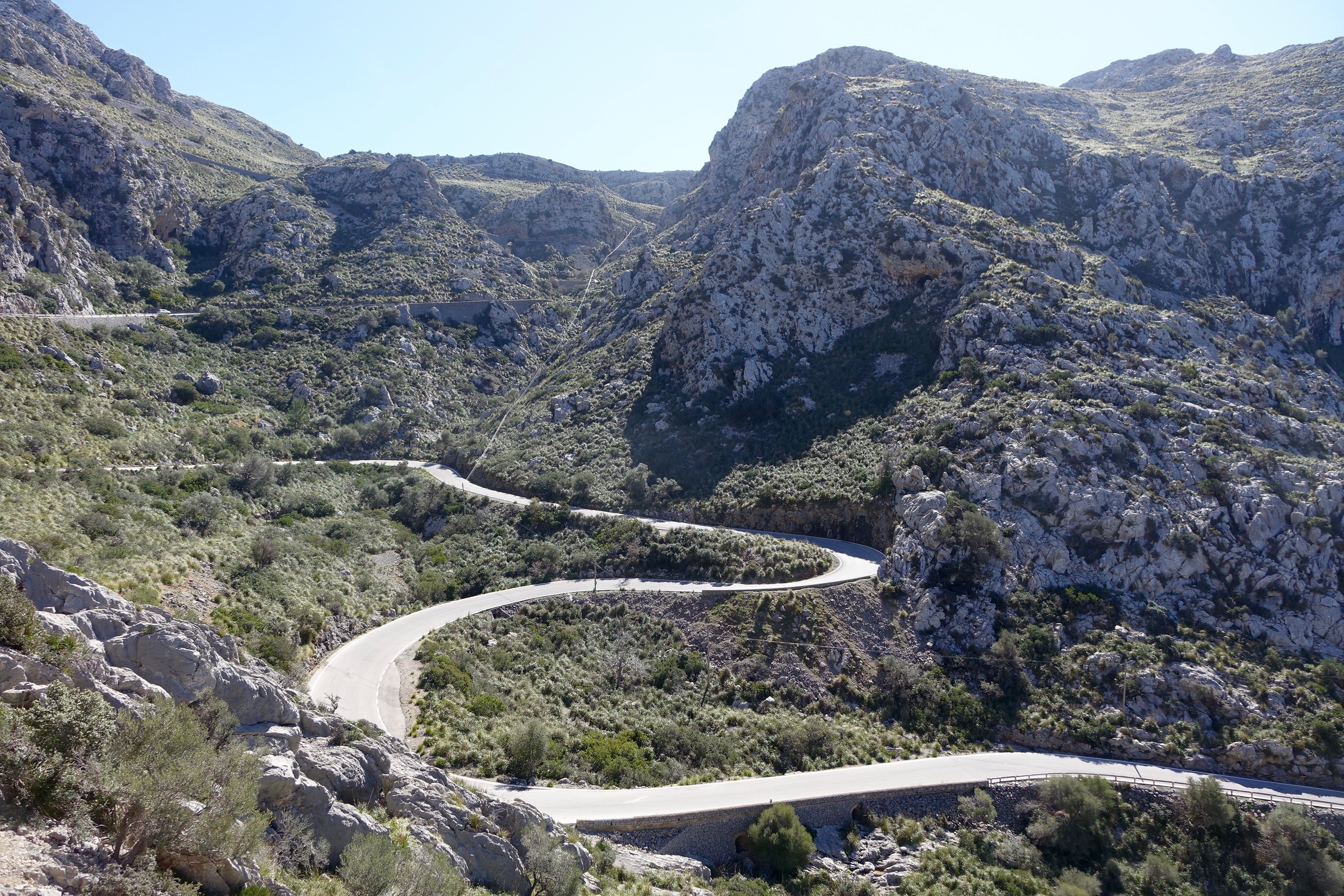
The journey to Sa Calobra, on the North coast of Mallorca, is as memorable as the bay itself. The twisting road is something of a feat of engineering, looping and turning around Puig Major plunging some 800m in just 12km, turning 270 degrees at one point to loop under itself (a feature known as the ‘Knotted Tie’). I lost count of the number of hair pin bends, and indeed at one point it felt as though the road would go on forever. But a glimpse of startling turquoise sea between one mountain valley revealed that our destination was close at hand.

The road to Sa Calobra

DSC08967DSC08965DSC09159DSC09154DSC09153

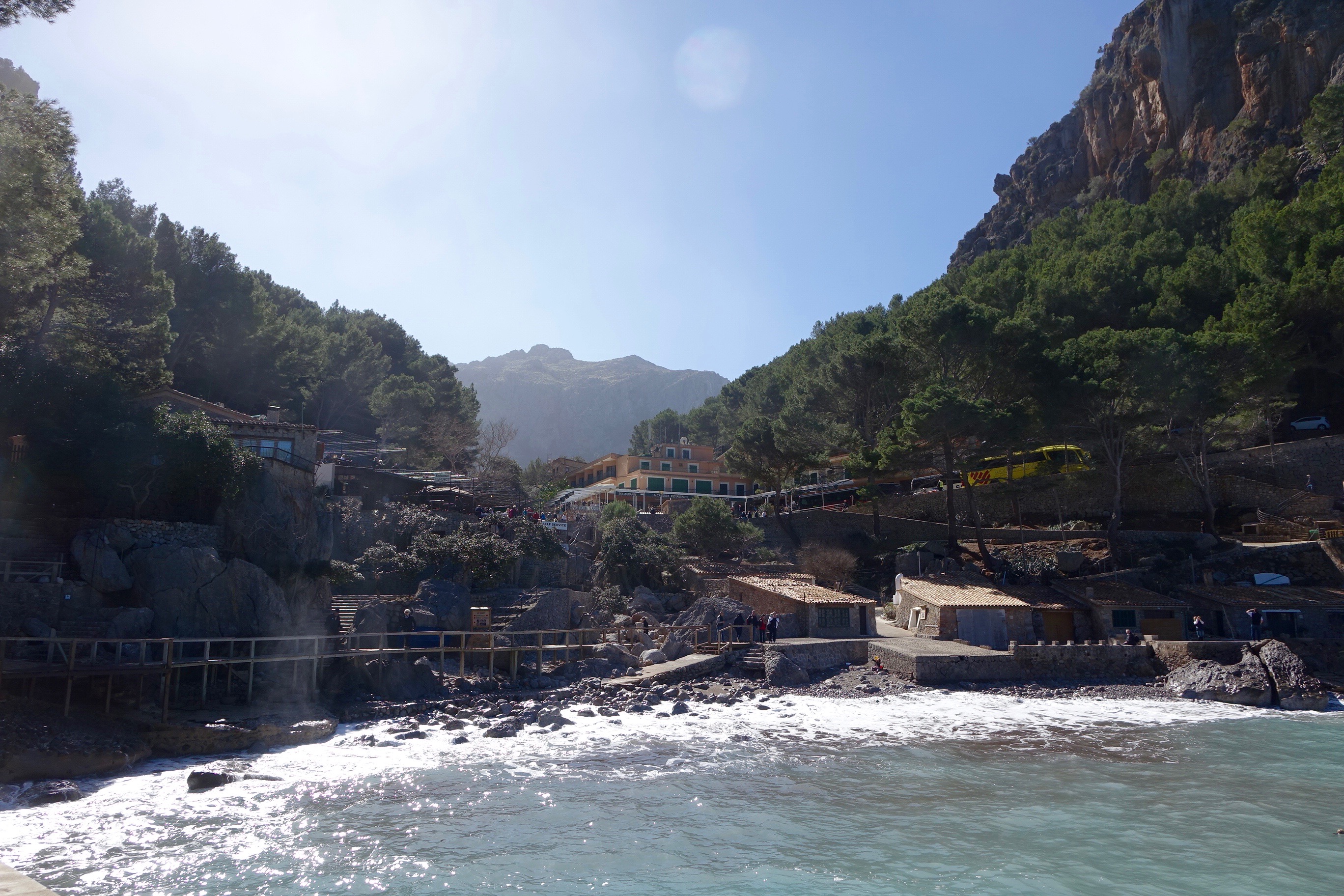
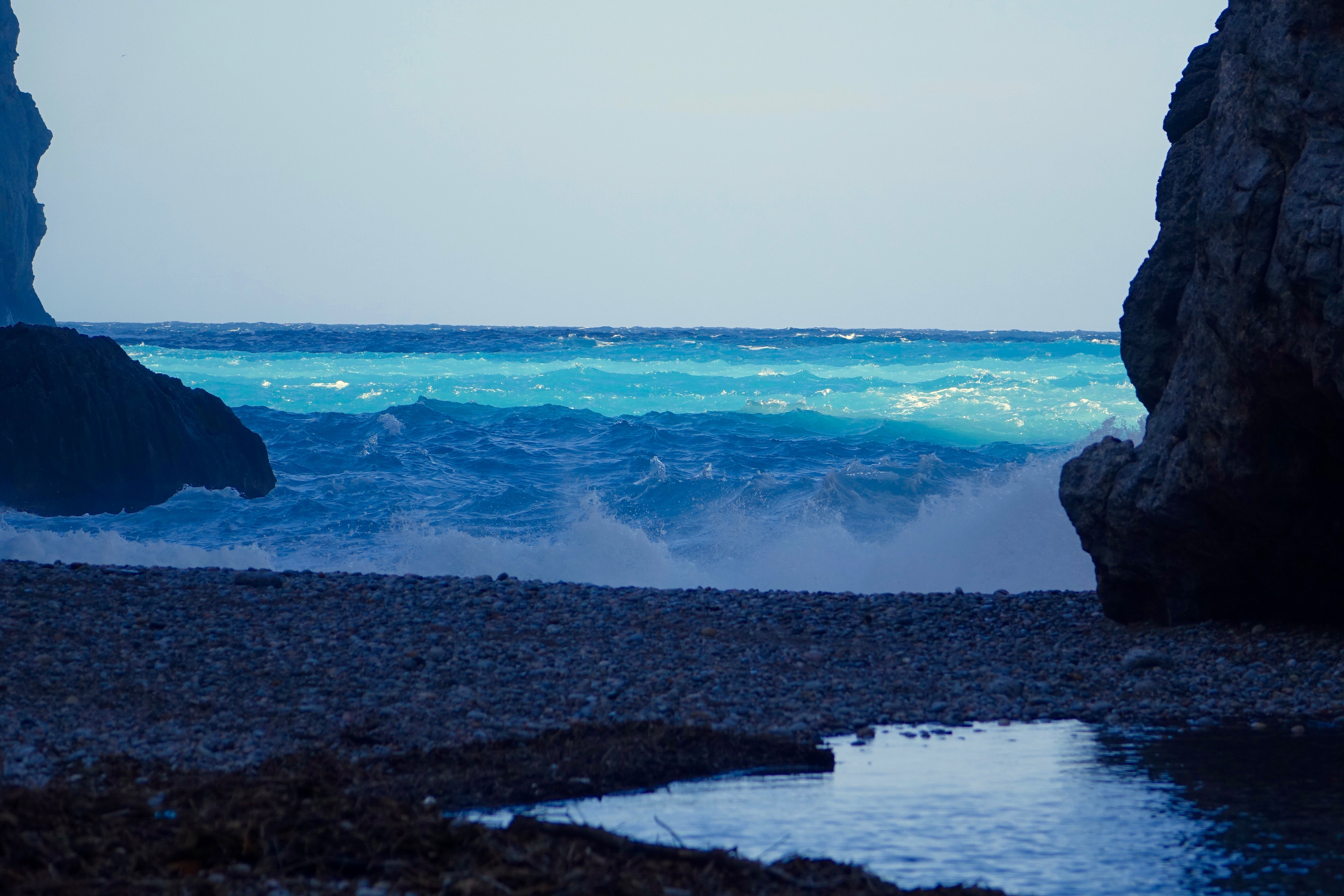
The port of Sa Calobra is surprisingly civilised considering how difficult it is to get there. But the extent to which the little village has been decked out with nicely laid paths and eating facilities is probably testament to the number of tourists who flock to the area each year, numbers which were mercifully lacking during our visit. With its little stone houses, the port is pretty, although it is easily outshone by the incredible colour of the turquoise sea which crashes dramatically against the shore – water whose colour is so vivid a camera is barely able to capture it.

The port of Sa Calobra

DSC08972DSC08981DSC08970DSC09012DSC08995DSC08980DSC09002

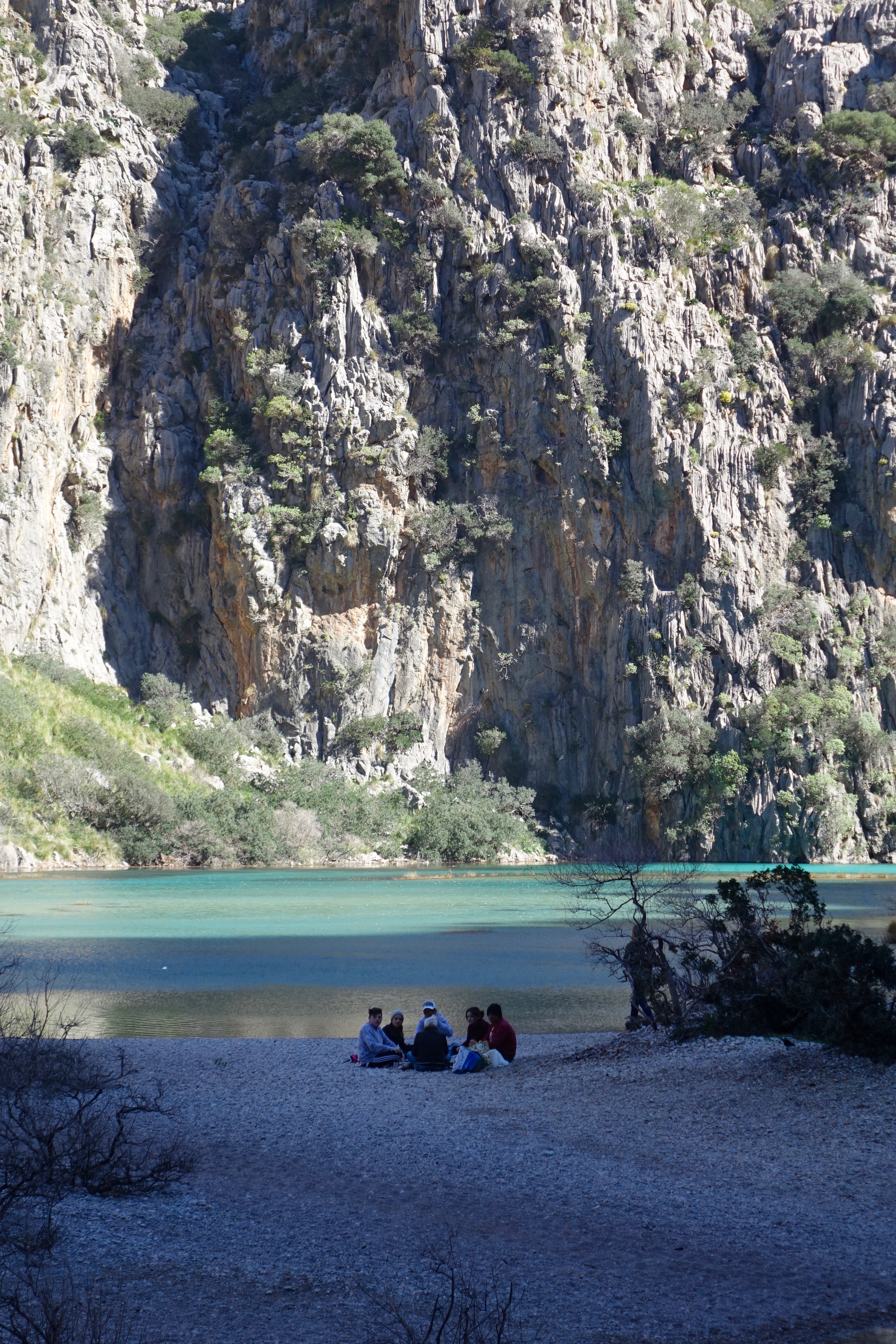
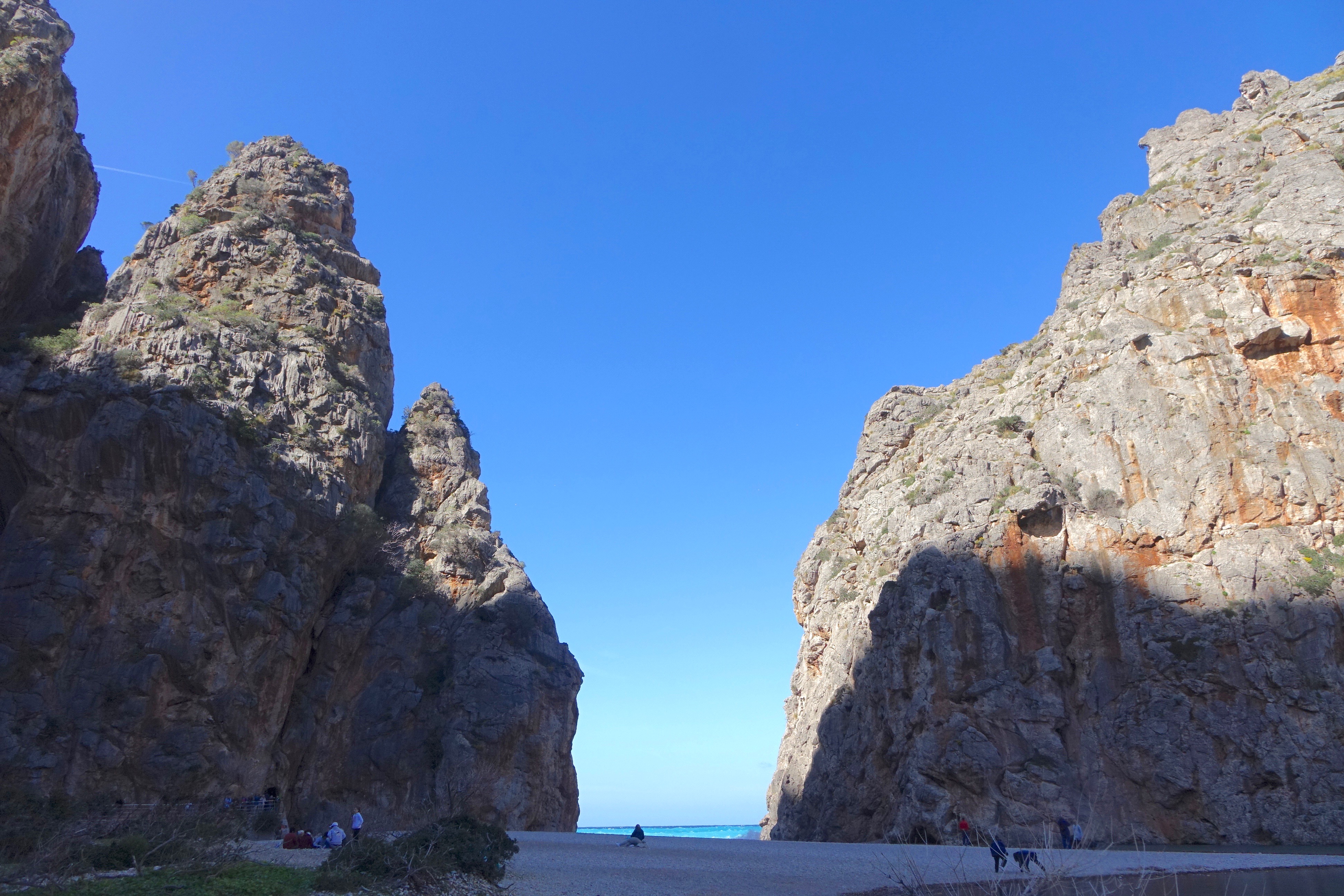
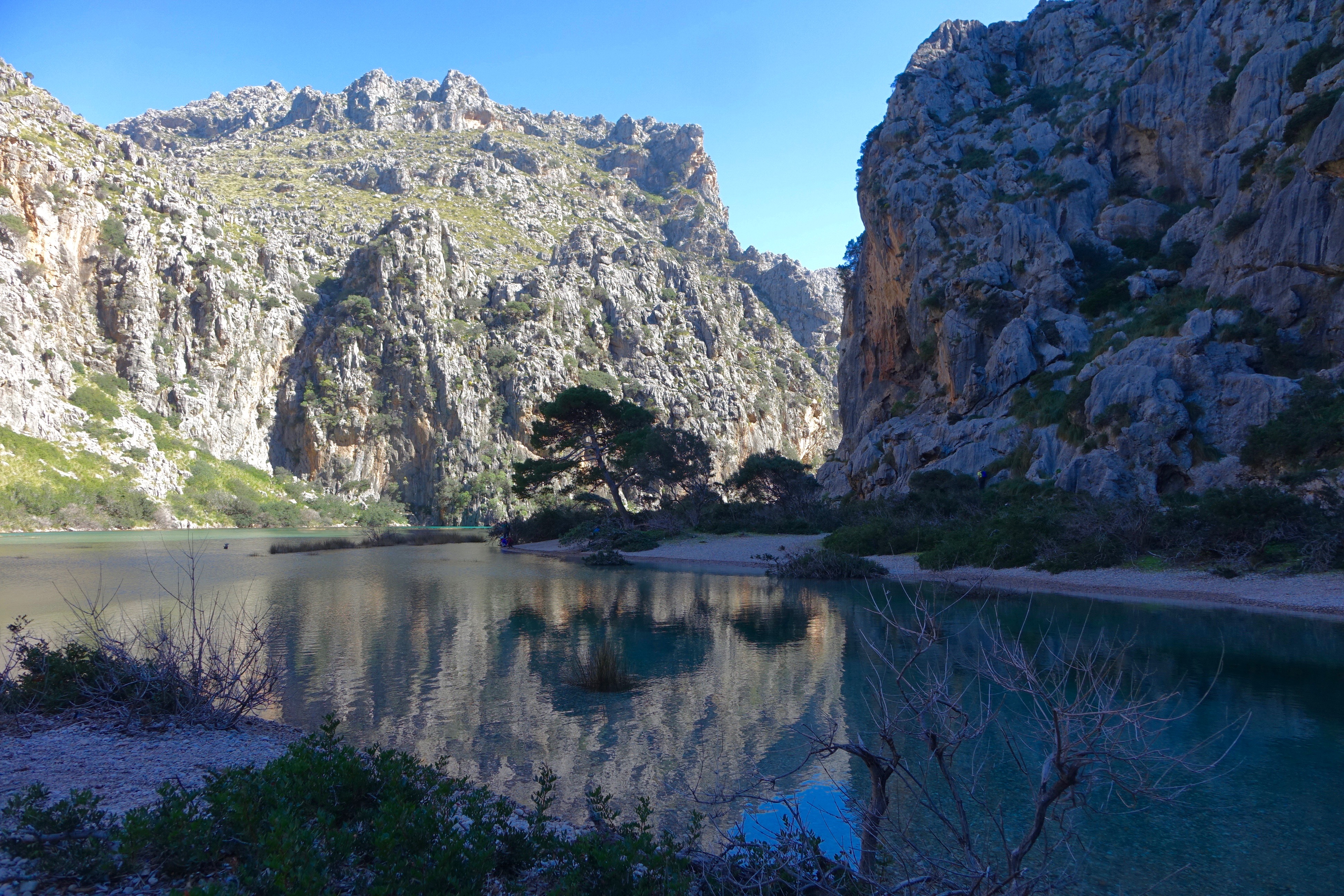
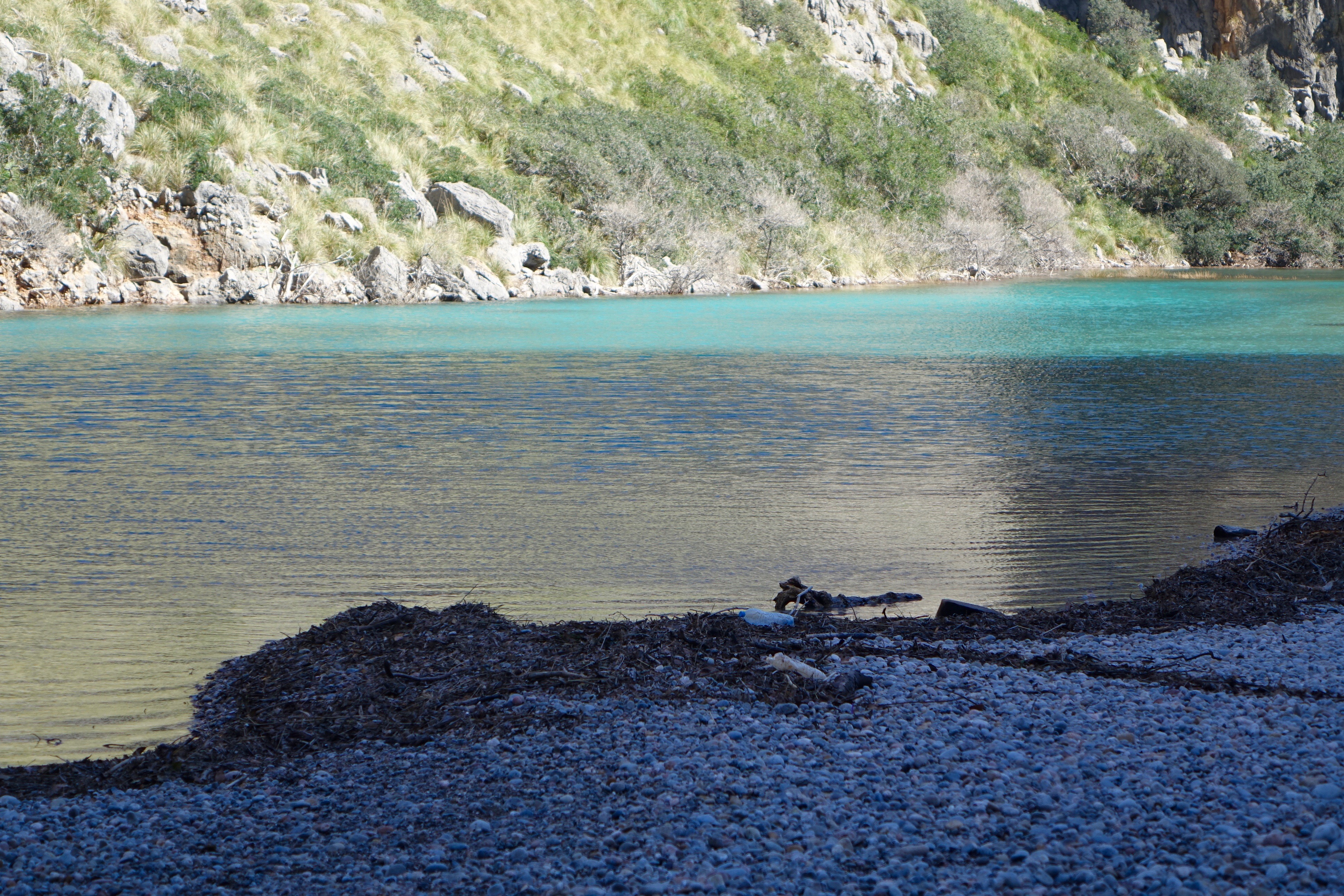
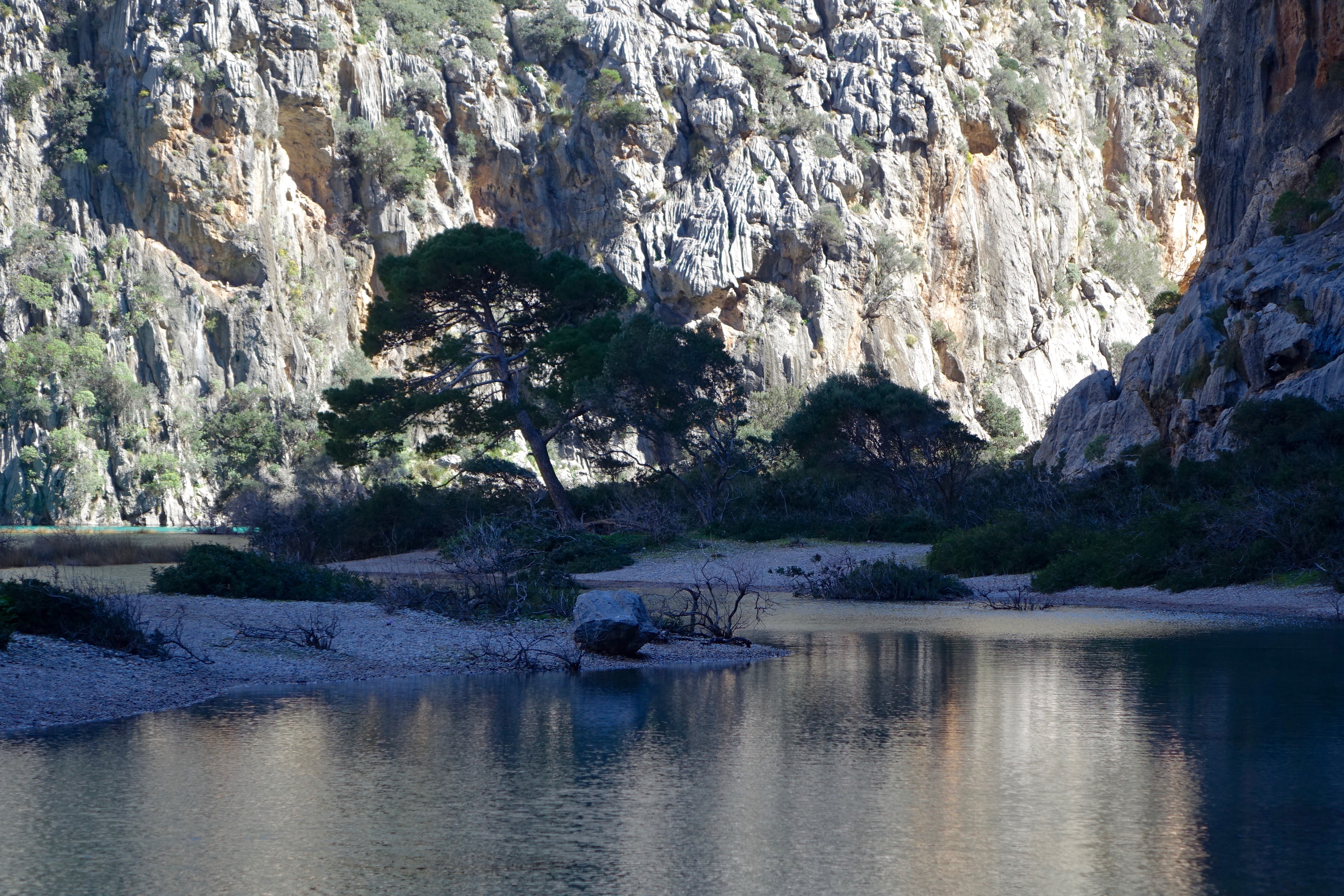
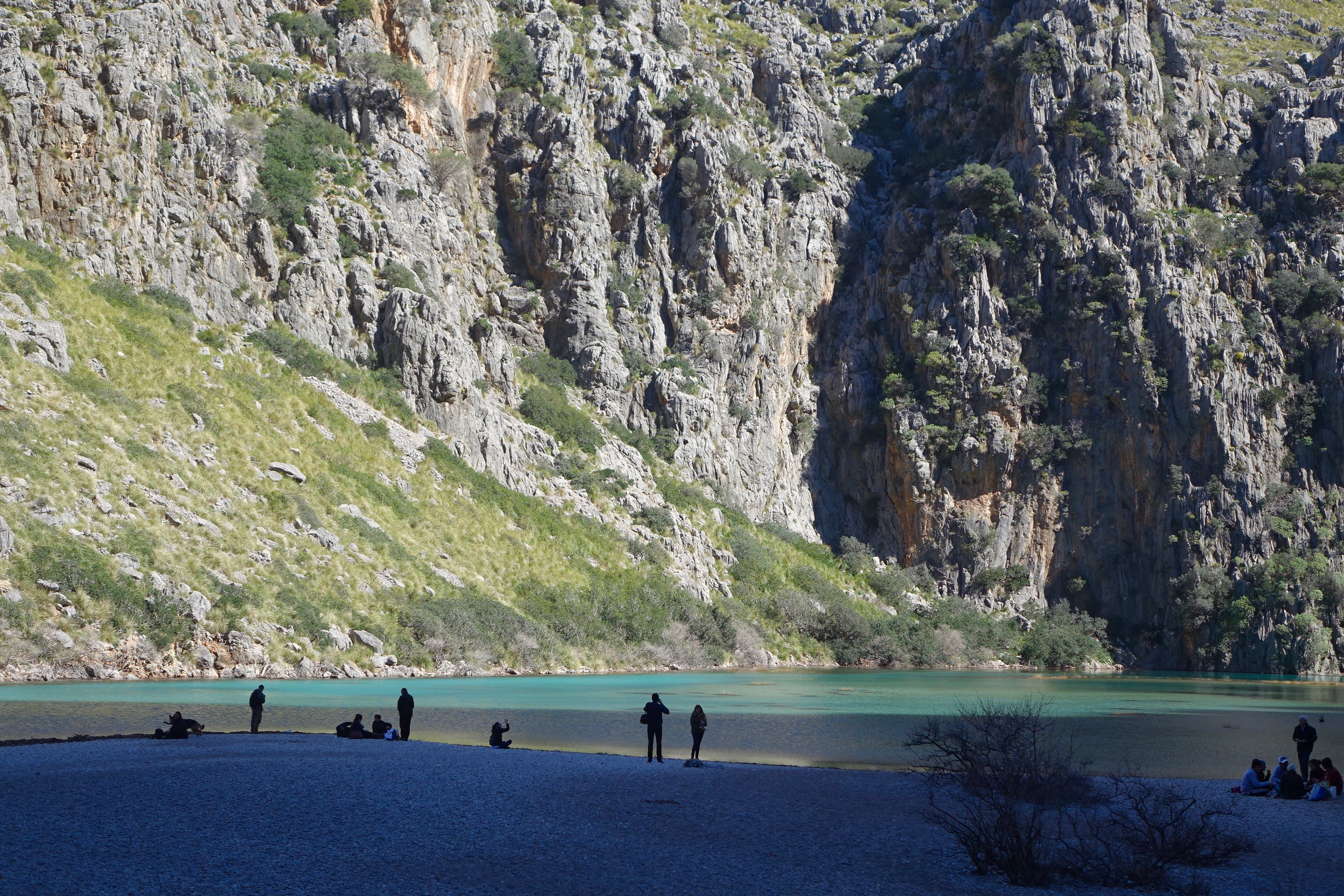
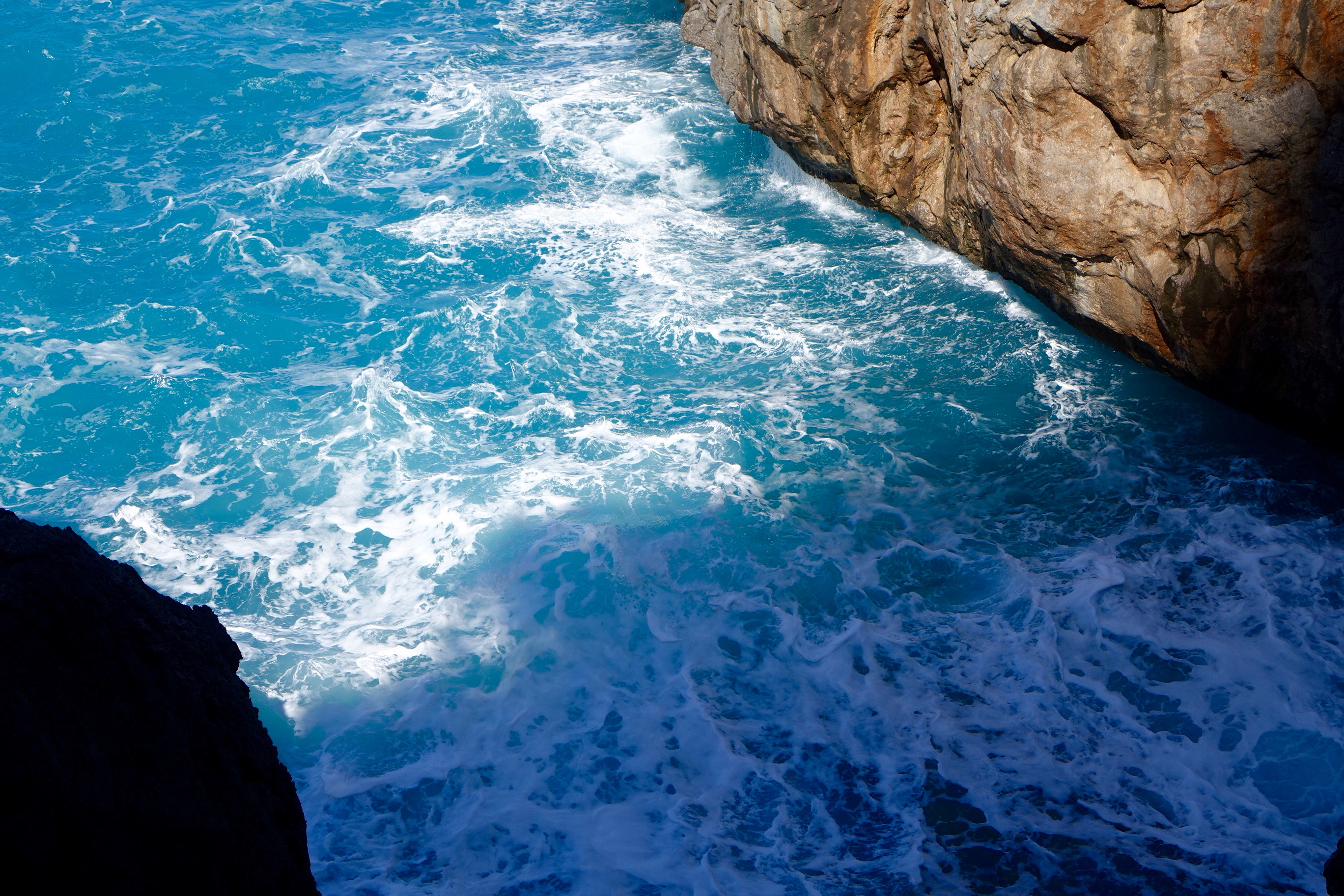
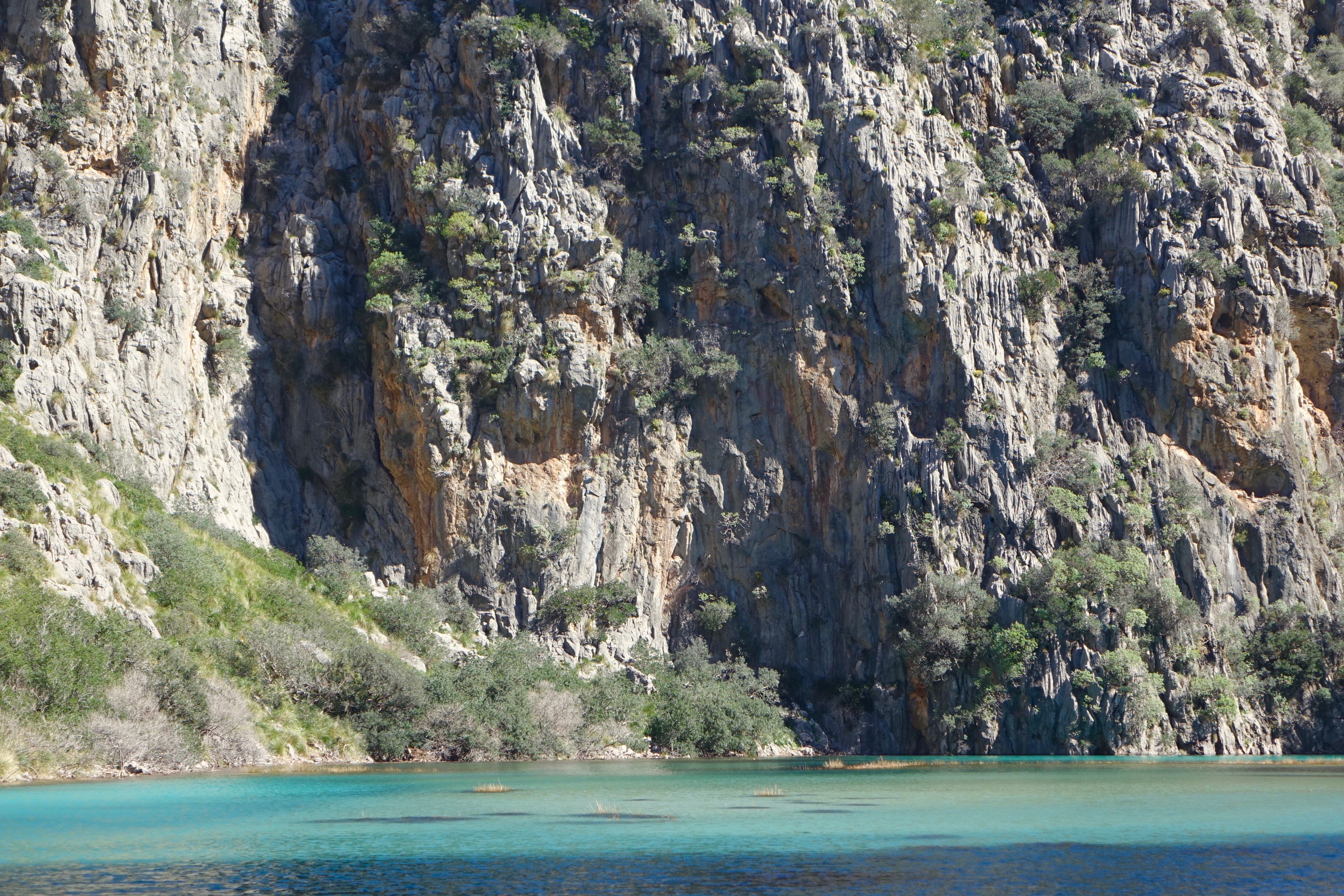
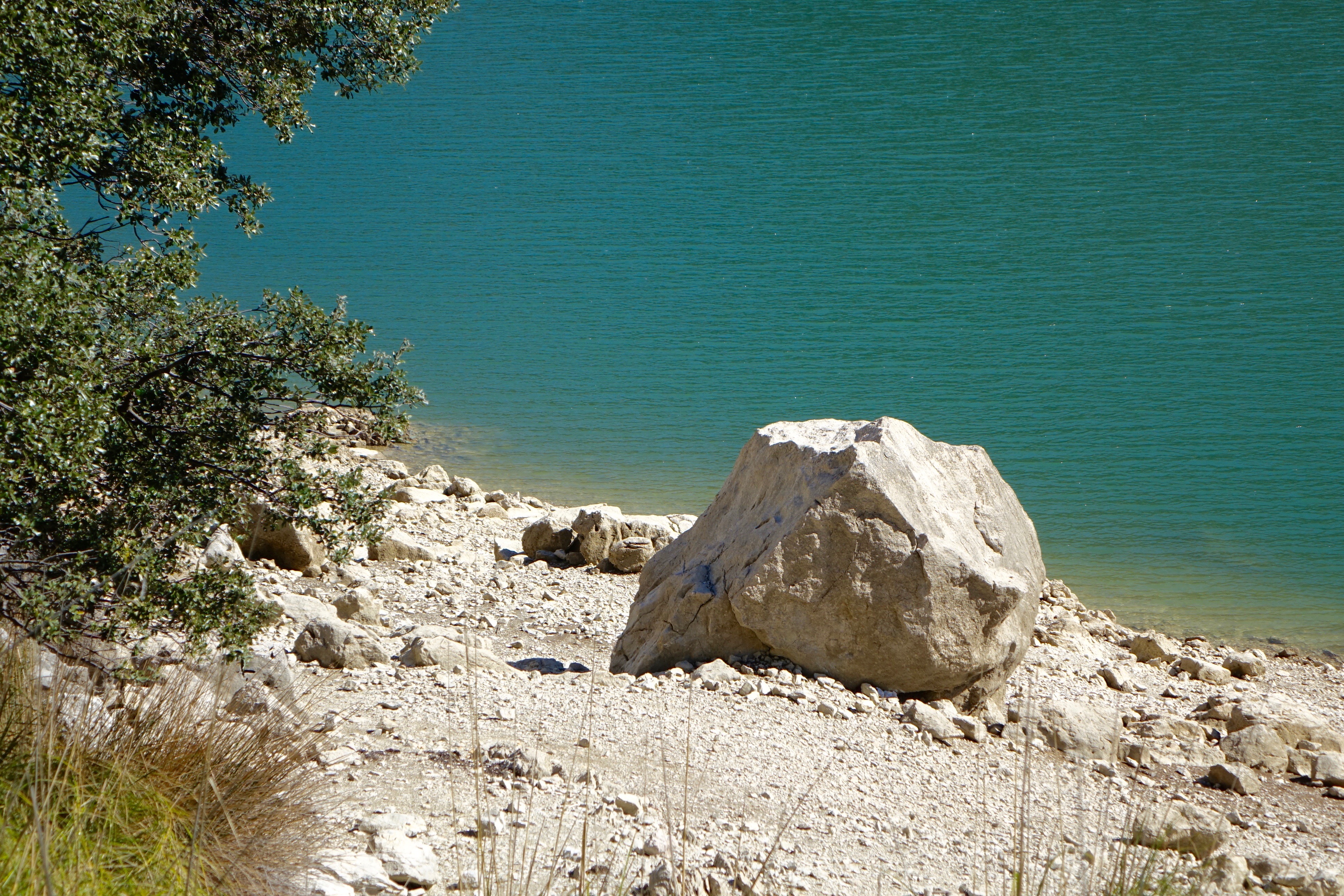
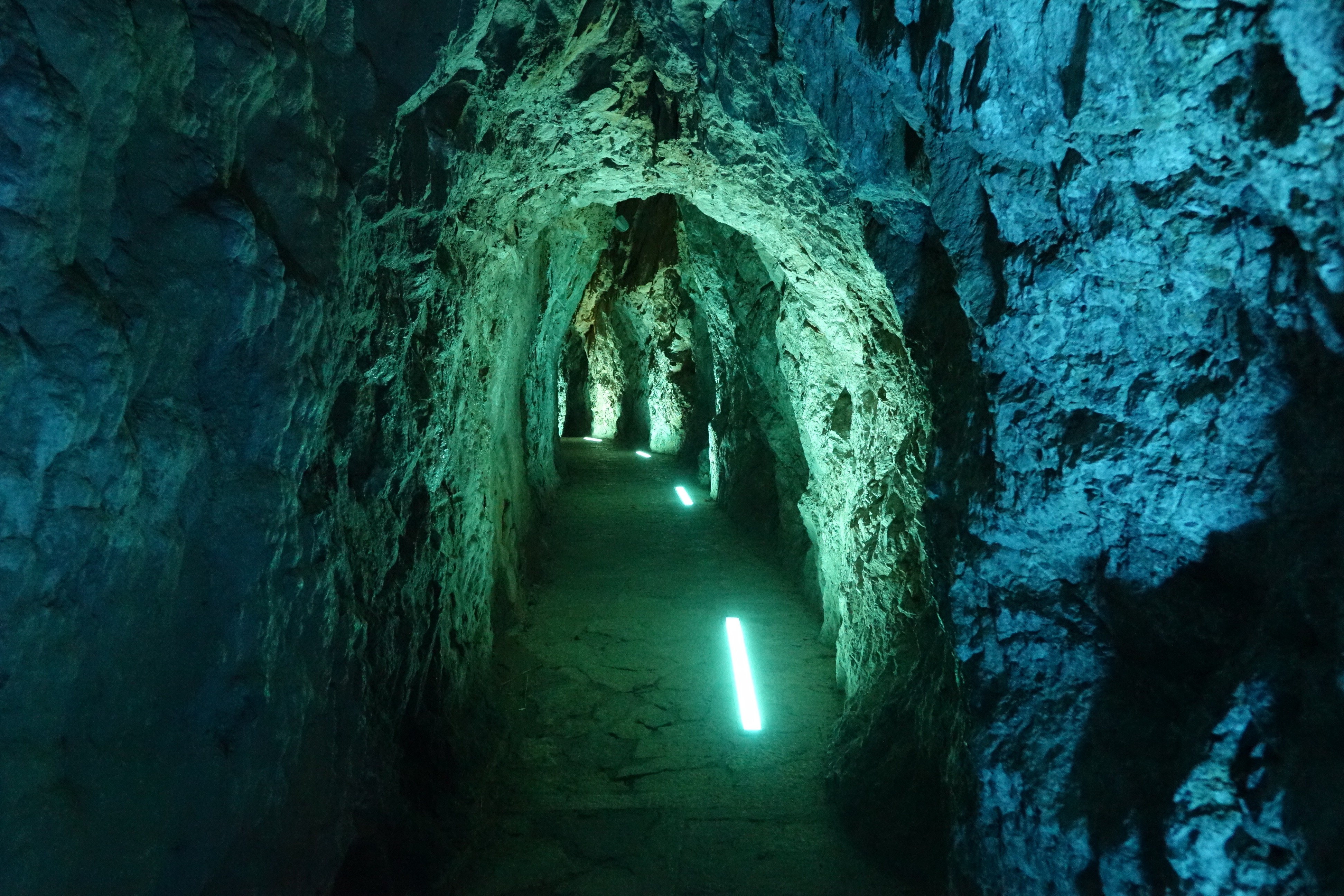
But the real treasure of the region is not Sa Calobra, but the Torrent de Pareis, the setting for my painting. Reached through 200m of tunnels carved through the distinctive twin mountains of the beach, the Torrent de Pareis (‘twin streams’) is a naturally occurring vast mountain gorge formed at the confluence of the torrents of Lluc and Gorg Blau. Up to 400m high and only 30m wide, with some sections never seeing daylight, the dramatic gorge culminates in a small pebble beach punctuated by pools of water and mysterious looking plants.

The Torrent de Pareis

DSC09040DSC09110DSC09103DSC09139DSC09051DSC09028DSC09072DSC09023DSC09009DSC09066

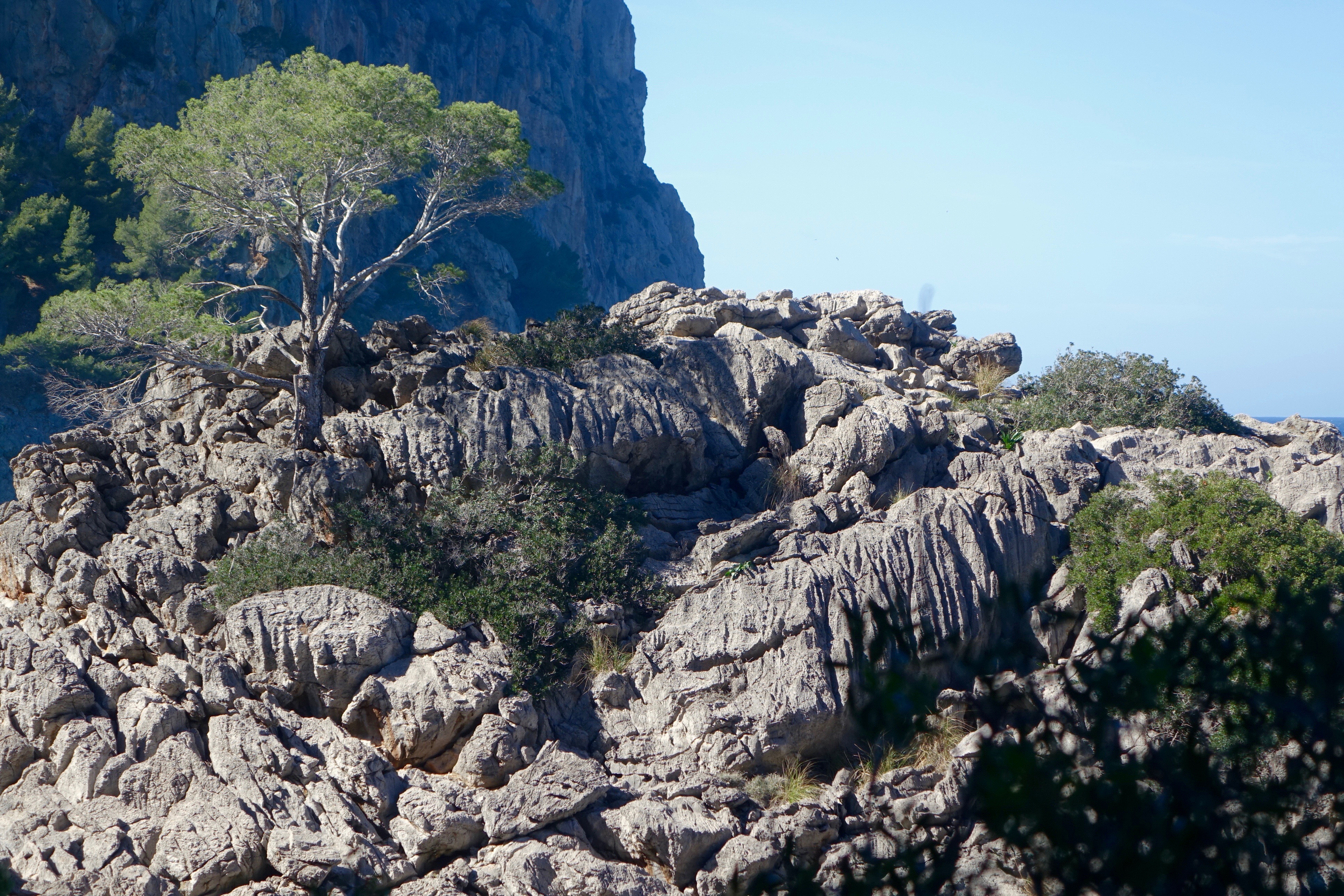
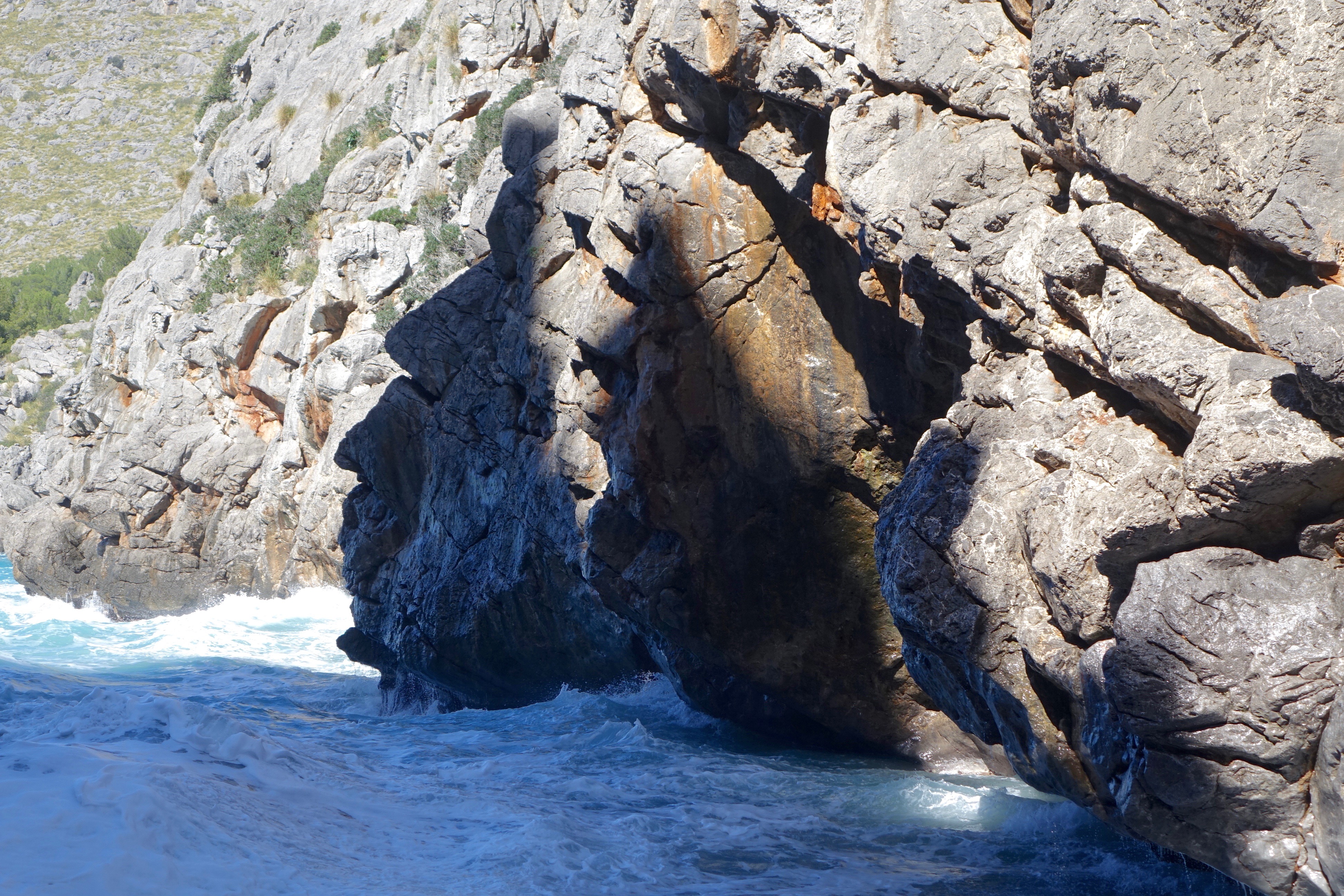
Enveloped in a mystical kind of light, with drooping trees and dramatic lone rocks, the scenery of the gorge is unlike anything I have seen before. Feeling more Tolkien than Spain, there was a menacing scale to the mountain scenery which contrasted uniquely to the utter stillness of the wetlands lying in the gorge. What struck me most of all were the bands of different colours, like horizontal planes of richly varying tones of turquoise and green and grey.

Textures of the Torrent

DSC09096DSC08947DSC09067DSC09142DSC09081DSC09071DSC09130DSC09118

If I hadn’t painted it already, there is no doubt the place would have inspired me. And now I have experienced it, my painting, completed some 3 years ago, has come alive more than ever before.

All photos and written content are strictly the copyright of Nicholas de Lacy-Brown © 2016 and The Daily Norm. All rights are reserved. Unauthorized use and/or duplication of the material, whether written work, photography or artwork, included within The Daily Norm without express and written permission from The Daily Norm’s author and/or owner is strictly prohibited.
Barcelona (The Yellow Painting)

I’m on a new road, it’s an artistic revolution, and as part of the journey my art has become abstracted. I have discovered the joys of simplicity, like breathing the freshness of countryside air after years spent in a congested city. Perhaps, now I come to think about it, my new style is the subconscious manifestation of my new life in Mallorca, a freshness of mind which has opened up since my departure from London.

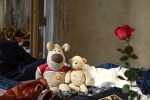
Whatever the cause, my mind is alive with new ideas, and when I recently spent the Valentine’s weekend with my partner in Barcelona, this new painting, simply entitled Barcelona (but better known in our household as “The Yellow Painting”) leapt into life. It was inspired primarily by the textures and experience of our hotel room, whose luxurious black bedspread inspired the black form in the centre of the painting, while the rose is of course the very symbol of Valentines. Meanwhile amongst the simplified shapes, the four spires of one face of Gaudi’s Sagrada Familia can be found, as well as the curved square blocks of the Eixample area which predominate the shape of the city when seen from above, and which also appears in the simplified rose.

Barcelona FINAL

Barcelona (The Yellow Painting) (2016 ©Nicholas de Lacy-Brown, acrylic on canvas)

But this painting is so much more than what is plainly visible. It is a feeling, a sensation – moments of happiness in a weekend of discovery. When we felt free, and excited, and reinvigorated by the city atmosphere. And its predominant colour – a yellow full of hope – just about perfectly sums up the optimism which this new period of creativity has engendered.

© Nicholas de Lacy-Brown and The Daily Norm, 2001-2016. Unauthorized use and/or duplication of the material, whether written work, photography or artwork, included within The Daily Norm without express and written permission from The Daily Norm’s author and/or owner is strictly prohibited. For more information on the work of Nicholas de Lacy-Brown, head to his art website at www.delacybrown.com
Discovering Mallorca: The walled wonder of Alcúdia

The Mallorca winter has been pretty comfortable so far. With barely three days of rain, temperatures in the teens, and sunshine pretty much every day, few can complain about the 2016 winter, although residents everywhere are looking a little worried about the sheer lack of rain, especially if this coming summer is as dry and hot as the last. Nonetheless, winter is winter when all is said and done, and even when we stroll out into a crisp sunny day, I still reminisce about the days of the summer and early autumn, when our coats remained out of sight, and trousers too had an only infrequent airing.

In the midst of these remembrances, one such special sunny day (some time at the beginning of October when my mother was in town) came to mind, and I realised that until now, it had gone unreported on The Daily Norm, such was the shockingly busy month which followed with a house move followed by a manic season of multiple Christmas decorations. Driving to the North of the island, the day afforded us yet another new discovery on this island of plenty, as we headed to the town and municipality of Alcúdia.

The old town of Alcúdia 

DSC02281DSC02299DSC02254DSC02286DSC02289DSC02261DSC02243DSC02240DSC02294DSC02230

As with much of the island, Alcúdia has become synonymous with its long stretch of shallow sandy beaches, which predictably attracted an influx of tourism and the accompanying construction of endless 1970s hotels, a sight which, while improved by the sparkle of the cerulean Mediterranean sea, is not the most aesthetically pleasing.

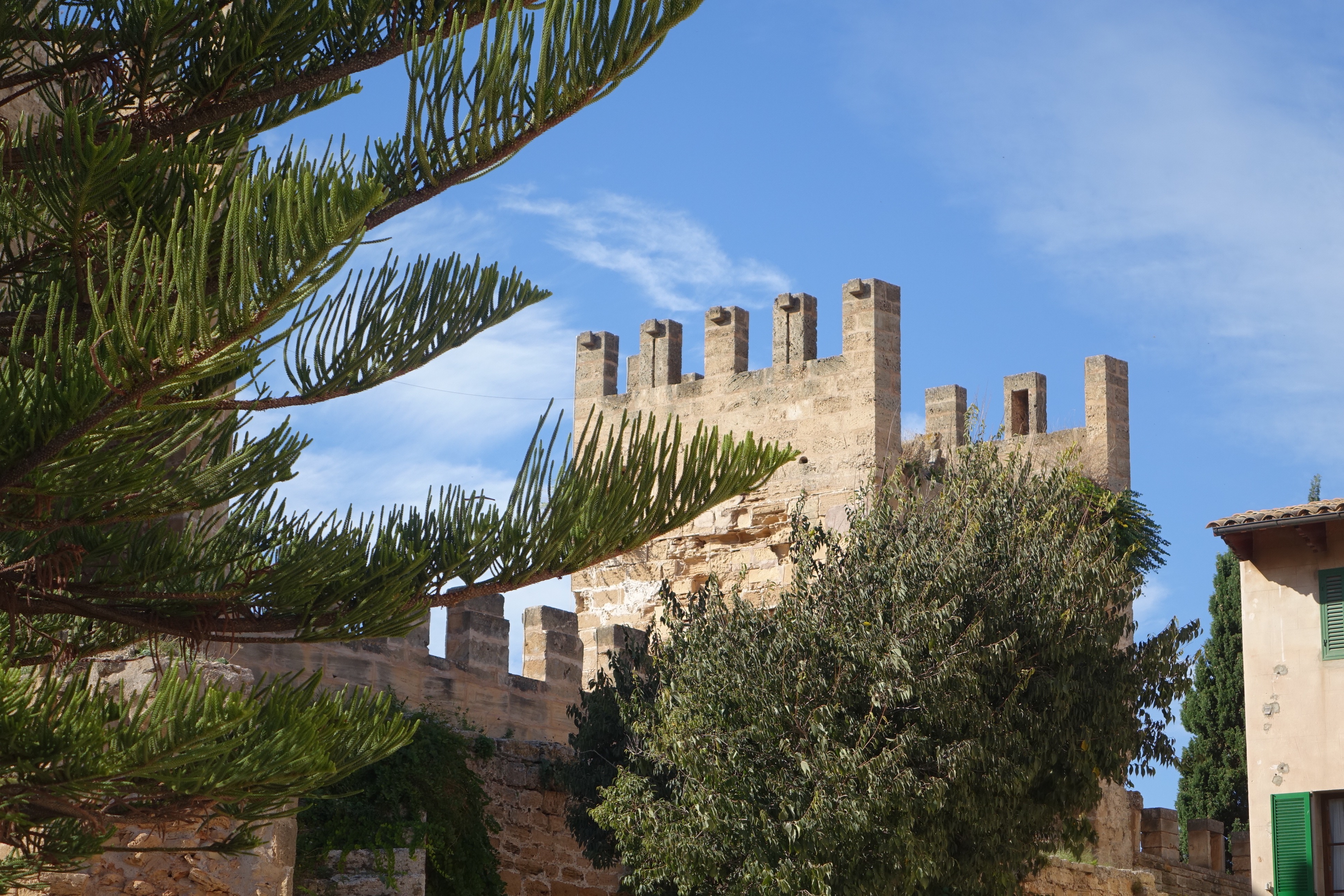
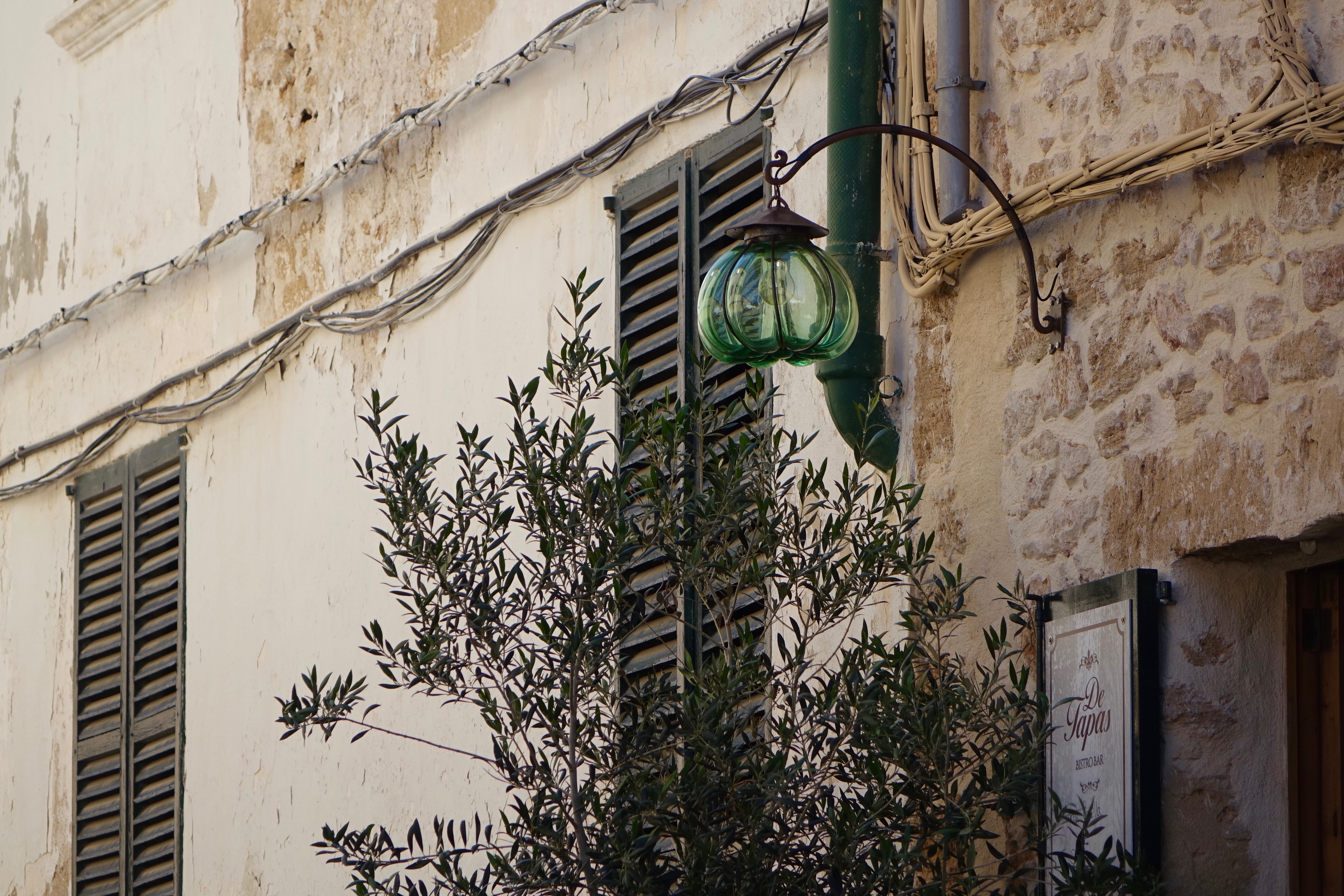
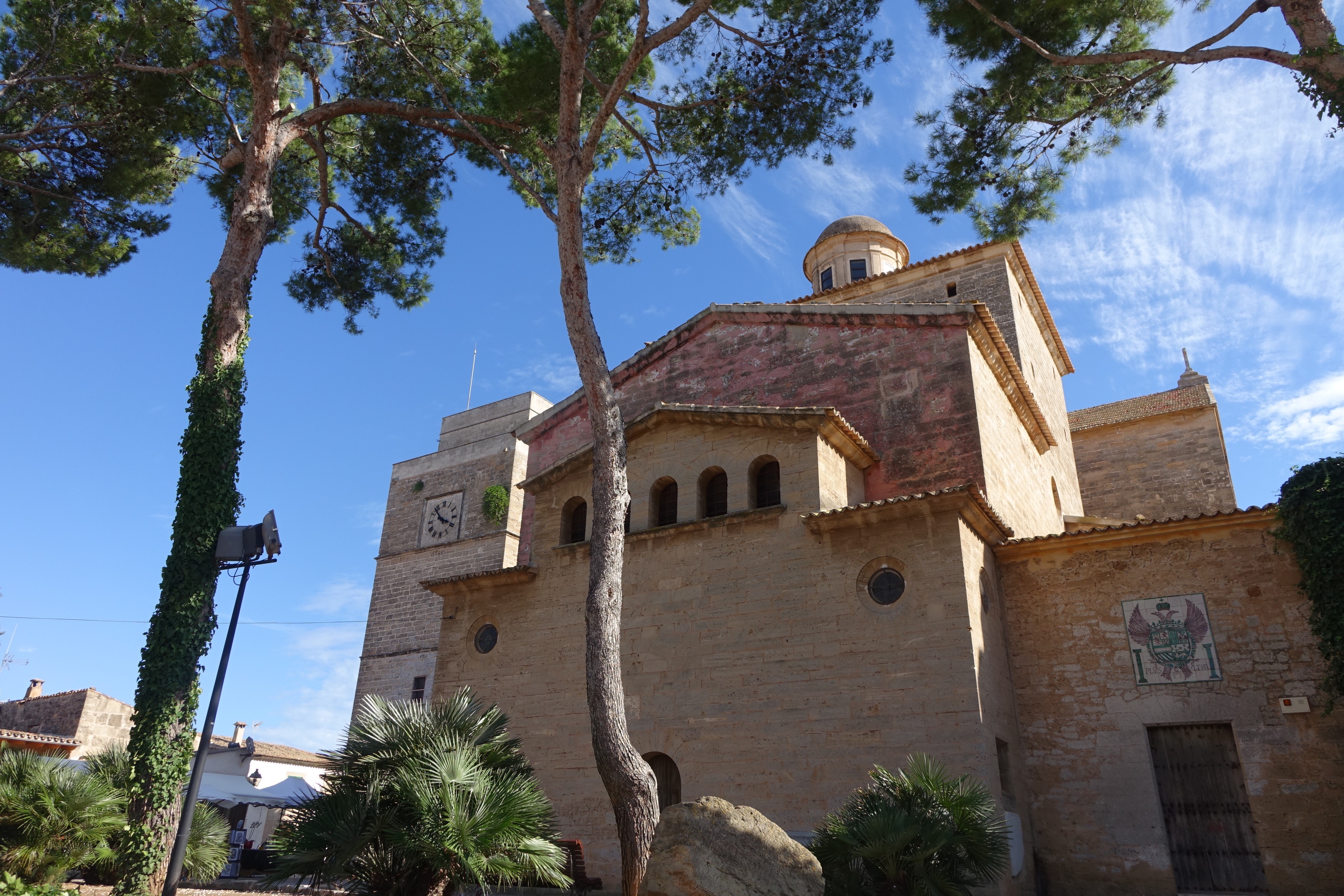
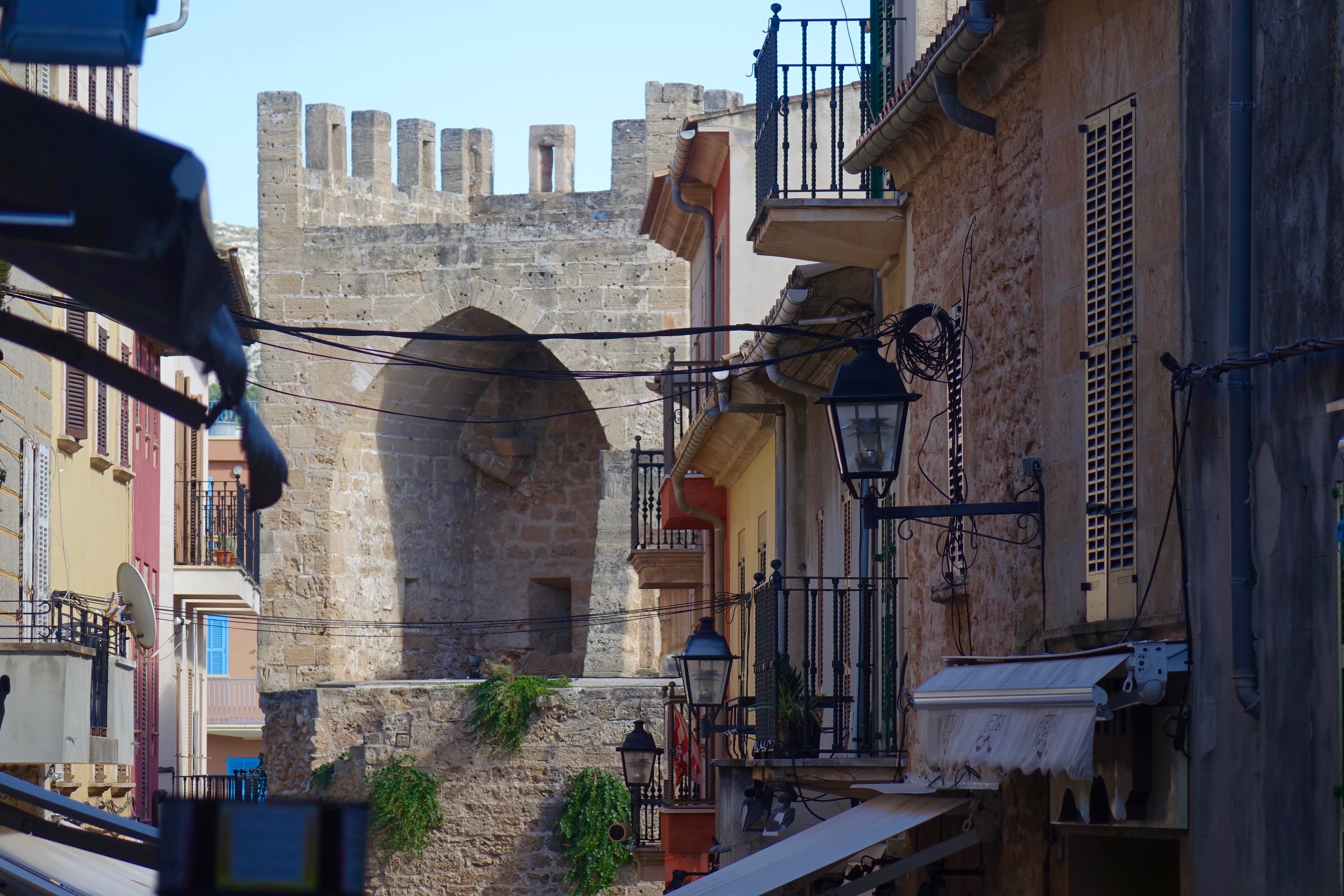
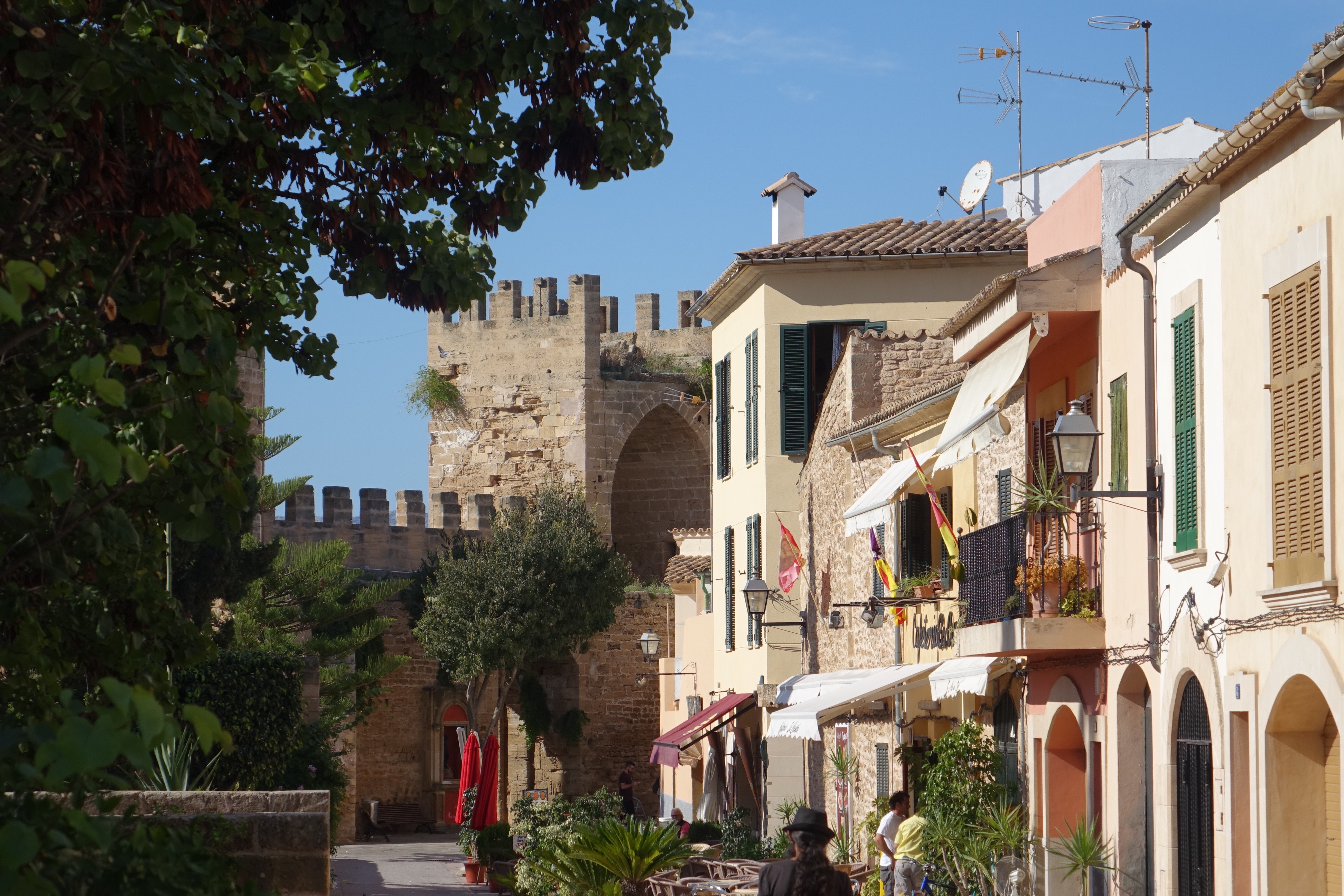
However, head inland, and you reach the real Alcúdia, and there, behind a circle of painstakingly restored medieval walls, you find an arabic citadel perfectly brought back to life. With its narrow streets filled with little shops pouring out onto the streets, and small scenic squares bustling with a range of popular restaurants, it is no wonder that the town has become a favourite of tourists hanging out on the north of the island, making it second only to Palma as the island’s most beautiful historical town.

Nearby beaches and the port

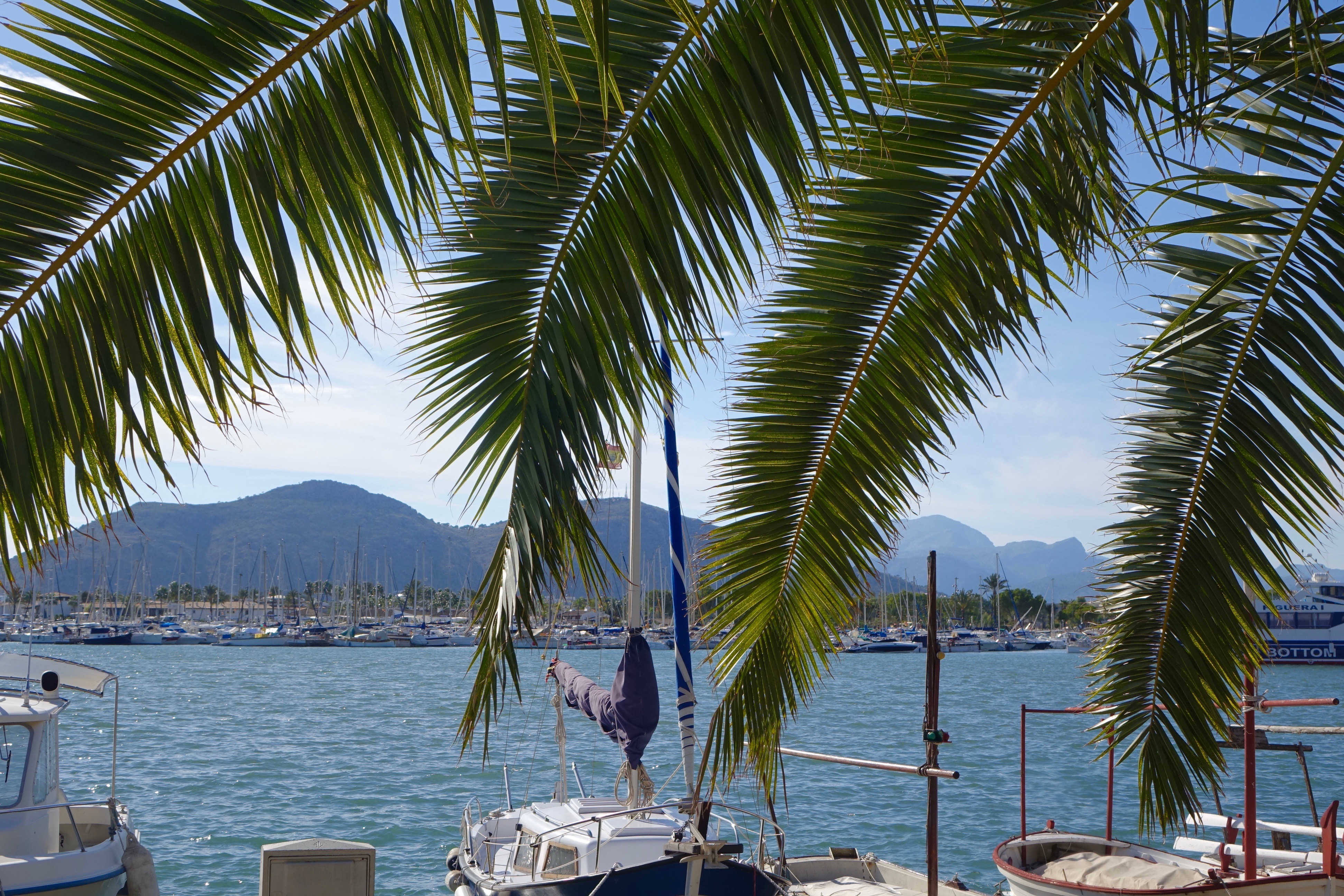
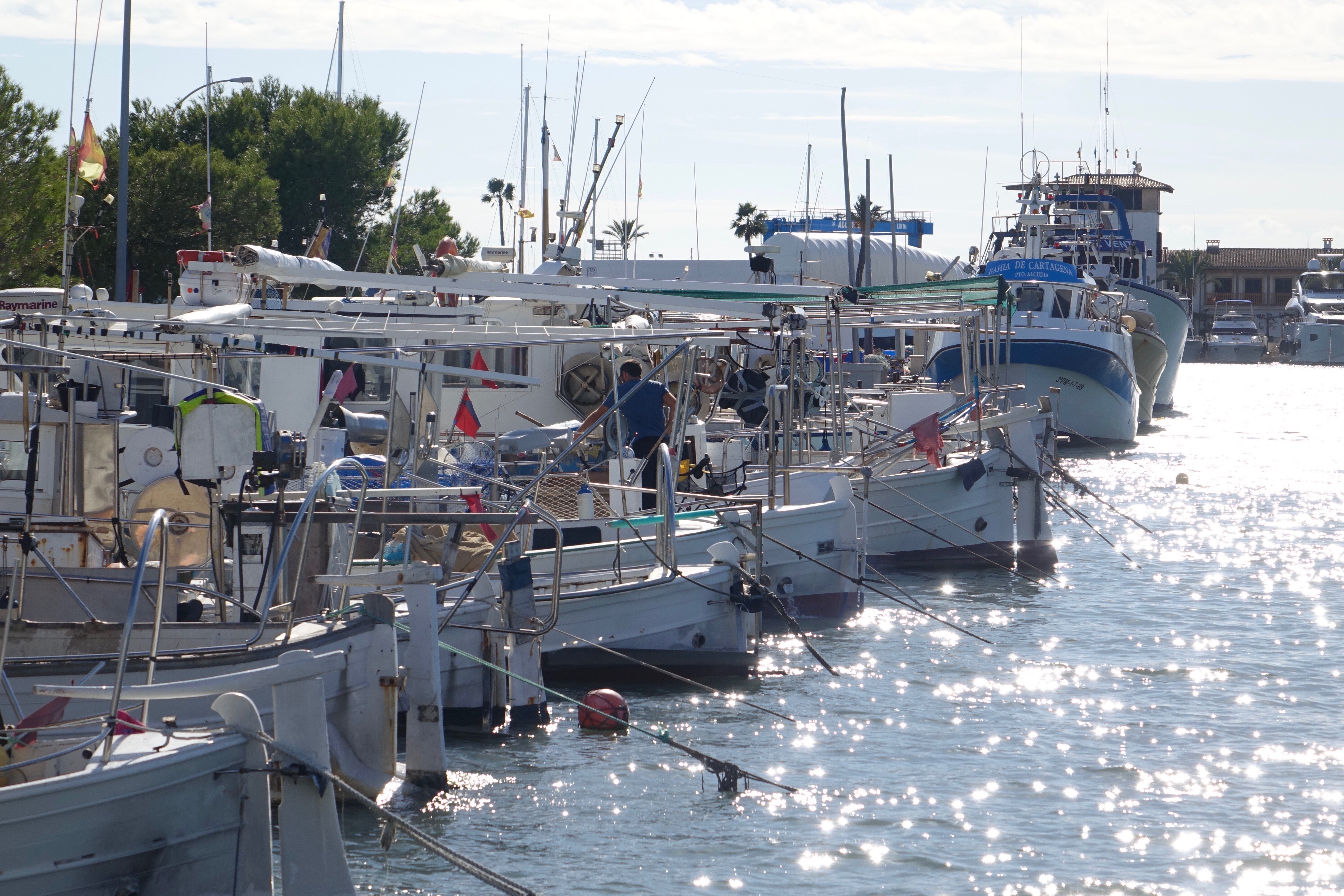
DSC02303DSC02364DSC02320DSC02309DSC02357DSC02304DSC02337DSC02329DSC02301

As I sit now in my cosy apartment, breathing is the perfumed scent of the hyacinths imported into our home from the nearby flower market on La Ramblas, I’m dreaming of those summer days when we can wonder freely, without coats, and with the air flowing around our knees. Something tells me the time is close at hand. And in the meantime I leave you with my photos of Alcúdia, and the memories of the pleasantly warm first encounter of this magical town.

All photos and written content are strictly the copyright of Nicholas de Lacy-Brown © 2016 and The Daily Norm. All rights are reserved. Unauthorized use and/or duplication of the material, whether written work, photography or artwork, included within The Daily Norm without express and written permission from The Daily Norm’s author and/or owner is strictly prohibited.

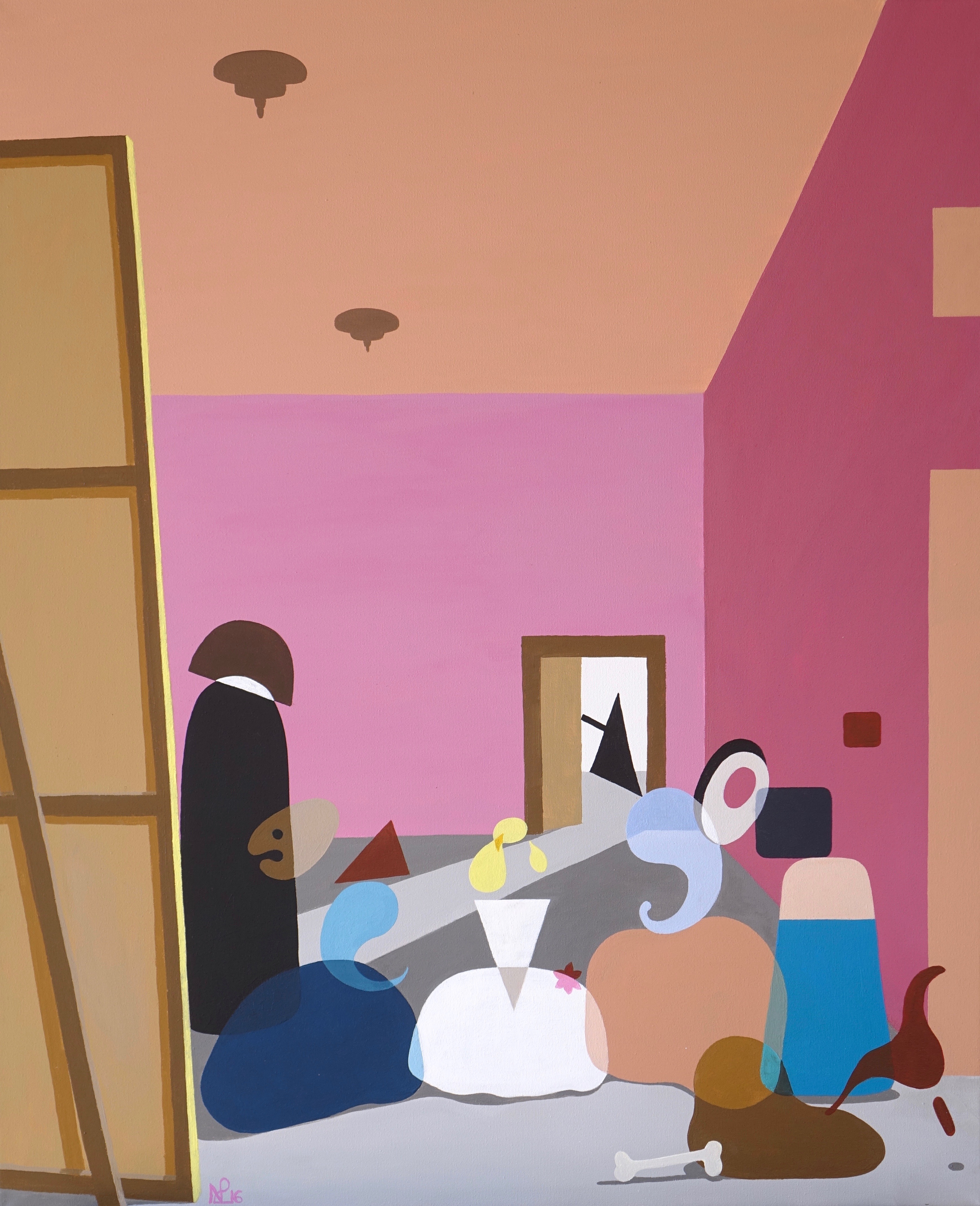
Las Meninas: Third Interpretative Exercise

I’m having an artistic revolution, and my head is spinning with shapes and colours. Ever since my last encounter with Velazquez’s Las Meninas last November, a seed has been sewn and new buds of Spring are rapidly taking shape as they shoot forth from my imagination to the tip of my paintbrush.

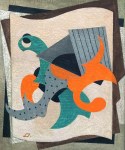
The latest result of this creative flowering is this, the third in my own Las Meninas exercise, each canvas taking a new approach to painting one step further. While in the second of the series, I reduced the famous figures of Velazquez’s work into simplified abstract forms, but maintained the familiar composition, in this third experiment, I have stripped the painting almost entirely of its compositional values, maintaining only the basic three dimensional construct of the room. As for the remainder, all of the shapes which can be found in the second painting are now displaced, recoloured and fragmented, distributed in an energetic whirl of abstracted movement which is entirely free in its composition.

Las Meninas 3 FINAL

Las Meninas: Third Interpretative Exercise (2016 ©Nicholas de Lacy-Brown, acrylic on canvas)

Had I come across a work such as this in an art gallery, I may have assumed that it was easy to paint. Yet as this painting taught me, it was far from simple. The delicacy with which a composition of this nature needs to be approached, not just technically (there are an awful lot of straight lines) but also compositionally, cannot be underestimated. I would spend long periods staring at the painting, trying to work out where the next shape should be placed, knowing that one incorrect angle or placement could throw out the entire energy of the piece, reducing the painting into something mediocre, devoid of its own story.

As it is, and with a few wrong turns rectified along the way, I am delighted with the final composition as it turns out. For me it is a composition rejuvenated, a painting which appears to burst before your eyes. And most importantly it retains, for me, some of the key ingredients of Las Meninas, albeit presenting them in an entirely different way.

© Nicholas de Lacy-Brown and The Daily Norm, 2001-2016. Unauthorized use and/or duplication of the material, whether written work, photography or artwork, included within The Daily Norm without express and written permission from The Daily Norm’s author and/or owner is strictly prohibited. For more information on the work of Nicholas de Lacy-Brown, head to his art website at www.delacybrown.com

Valentine’s in Barcelona

We have always loved Barcelona, Dominik and I. For me it’s one of the most perfect cities on the earth. For where else can you find all of the cosmopolitan qualities of London or New York fused so easily with the seaside amiability which comes of being mounted next to the glistening Mediterranean sea, with all of the beach-life benefits that position entails. So when it came to celebrating Valentine’s this year, we decided to take the romantic, candlelit dinner concept a little further, expanding our celebration of love across a weekend city trip where we could show as much love for our surroundings as for each other.

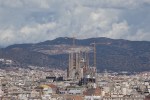
For who could not love Barcelona, a city whose very streets are so elaborately decorated with modernista masterpieces that not a street goes by which does not call for its own round of photographic admiration. It is a place bursting with the colour of Gaudi’s mosaics, an intensity of kaleidoscopic light which results from Barcelona’s natural affinity with the sun, whatever the time of year. And it is a city which exudes creativity from its every facet, from shops and restaurants, characterised by a conceptual brand of cool which stands as ever on the brink of innovation, to endless galleries showcasing both the newest artists and the classic former residents, Miro and Picasso amongst them.

DSC08302DSC07949DSC08088DSC08047DSC07950DSC08073DSC08275

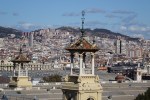
We benefit from a Mallorca location which makes a weekend to Barcelona a mere 30 minute flight away. This left us with plenty of time to enjoy the city to the full, from a miraculously warm February walk in the Park Güell, to our admiration of the architectural designs employed in both the undulating roof of the Mercado Santa Caterina, and the modernista details of the Palau de la Música Catalana nearby. We headed up the hill of Montjuic to admire the collection of the National Museum of Catalan art, and into the depths of the Gothic Quarter to share stares with the 13 geese of Santa Eulalia in the Medieval Cathedral courtyard. And as for Valentine’s? Well this was enjoyed across the weekend, from the exchange of a rose in our cosy hotel bedroom, to the enjoyment of a mouthwateringly good Fideuà seafood paella in the Sunny Port Vell.

What more can I say? Barcelona is a city of plenty, and the perfect venue for a weekend of love. I will allow my photos to fill in the details.

All photos and written content are strictly the copyright of Nicholas de Lacy-Brown © 2016 and The Daily Norm. All rights are reserved. Unauthorized use and/or duplication of the material, whether written work, photography or artwork, included within The Daily Norm without express and written permission from The Daily Norm’s author and/or owner is strictly prohibited.
Las Meninas: Second Interpretative Exercise

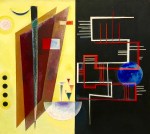
There are some art exhibitions that you go to that simply have the capacity to strike deep. Many shows are pleasing, others interesting, but then there are those which you remember for ever. I’ll never forget for example Frida Kahlo or Henri Rousseau at Tate Modern, Tamara de Lempicka at the Royal Academy, Dali at the Centre Pompidou or Da Vinci at the National Gallery London. Now to that list I add the Kandinsky retrospective at CentroCentro in Madrid, not because it was any better than the Kandinsky I saw many years before at Tate, but simply because the combination of time and energy and who know’s what combined to leave me utterly inspired.

When, the next day, I walked into the Prado and saw Velázquez’s Las Meninas once again, something shifted in my head, and I left an artist converted.

I started my reinterpretations of Las Meninas shortly after the whirl of the Christmas season was over, and my first, Las Meninas (In Our Time) I shared with you a few weeks ago. But my new project was far from over, and this painting, shared today, was the one which leapt into life before my eyes that day in the Prado Gallery when Kandinsky was still very much on my mind.

Las Meninas 2 FINAL

Las Meninas: Second Interpretative Exercise (2016 ©Nicholas de Lacy-Brown, acrylic on canvas)

Las Meninas: Second Interpretative Exercise borrows from Velázquez’s composition, but otherwise radically simplifies the forms of his dramatic personæ, and swaps the dark browns and neutral shades of his painting with a vibrant almost pop-art palette. The result is an image which pleases me incredibly. It is at once abstract but recognisable, tidy but surreal. I had great fun in reimagining each piece of the painting – for example painting the dog’s stretched out arm as a bone, and the nun’s head like a piece of sushi – and best of all, I know that this is only the beginning. Abstraction and simplified forms are spinning around my head. Ideas are overflowing, and I can’t sit still for a need to paint.

It’s why I’ll always remember that Kandinsky show, because it switched on a light in my head which has long remained dormant.

© Nicholas de Lacy-Brown and The Daily Norm, 2001-2016. Unauthorized use and/or duplication of the material, whether written work, photography or artwork, included within The Daily Norm without express and written permission from The Daily Norm’s author and/or owner is strictly prohibited. For more information on the work of Nicholas de Lacy-Brown, head to his art website at www.delacybrown.com
Mallorquín Spring Lamb, enjoyed two ways

It may be premature to announce that Spring has arrived on the island of Mallorca, but having been blessed by almost continuous blue skies pretty much since the summer, it’s sometimes hard to say what season we are in. The only thing I know is that since the new year dawned, and we returned from the chilly climes of Vienna, it has surely felt like Spring is here. And with the arrival of Spring comes a cast of the usual protagonists – blossoming trees, warmer wafts of perfumed air, and the innocent bleating of fluffy little lambs.

DSC06432DSC06398DSC06473DSC06399DSC06447DSC06391DSC06384DSC06420DSC06435

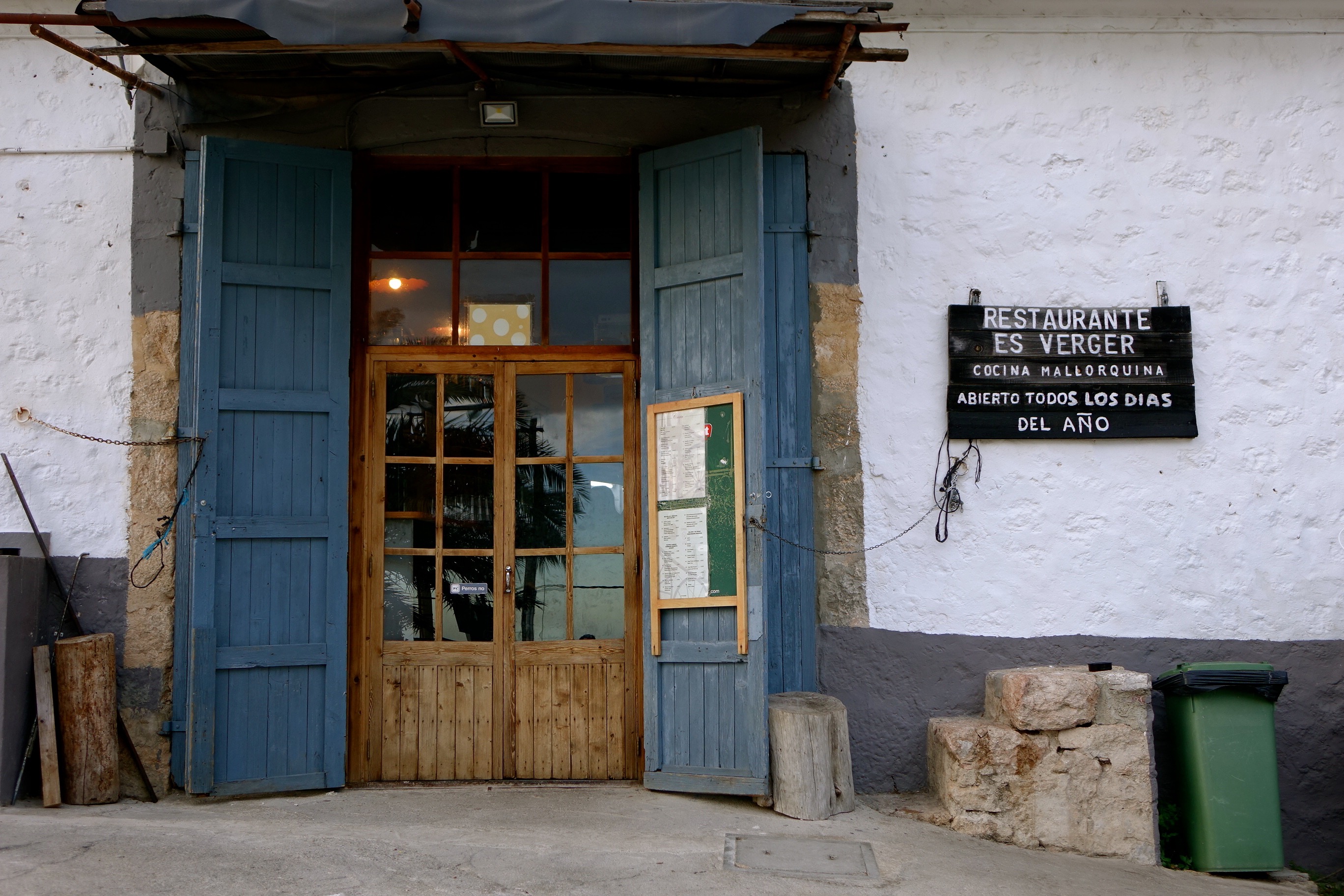
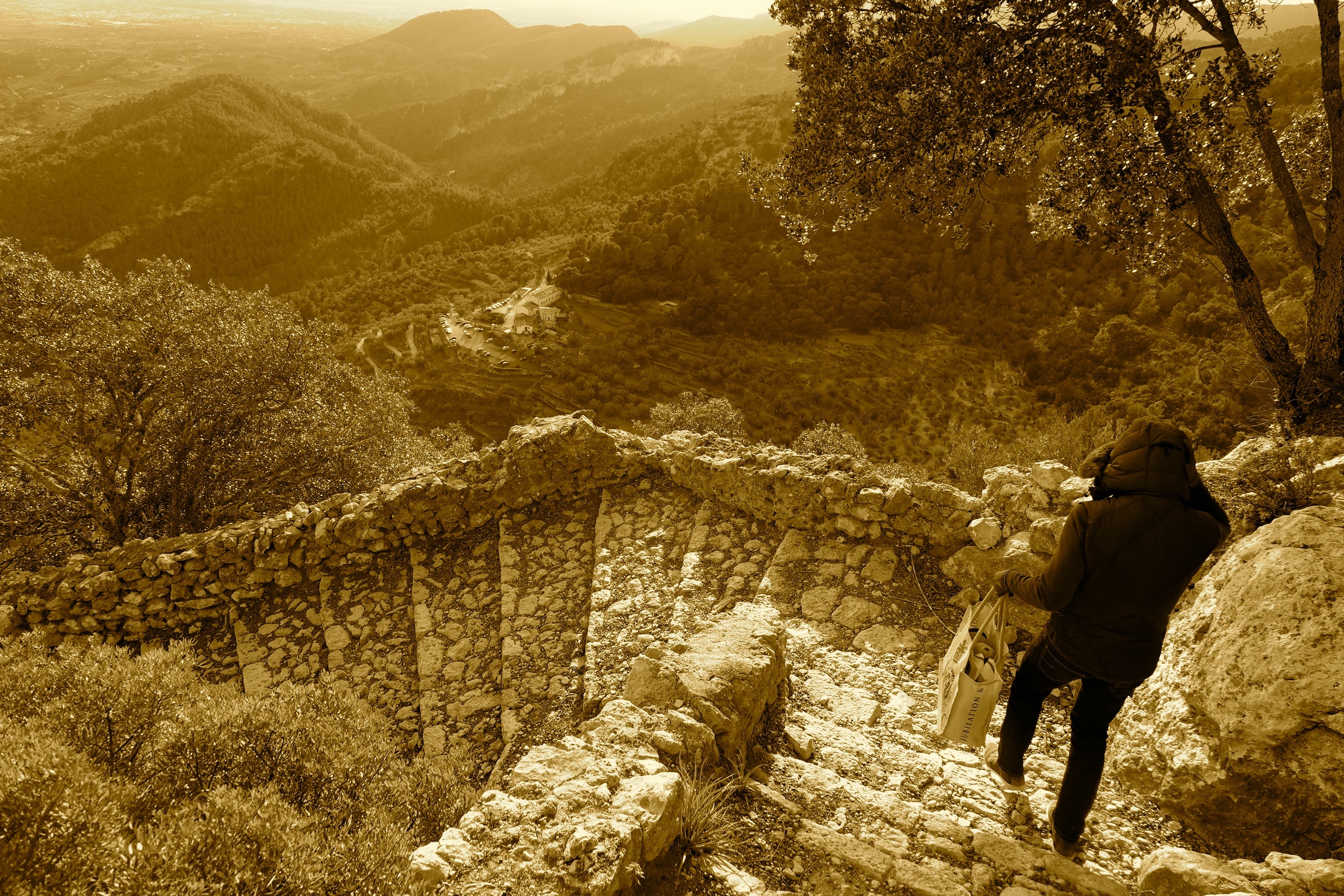
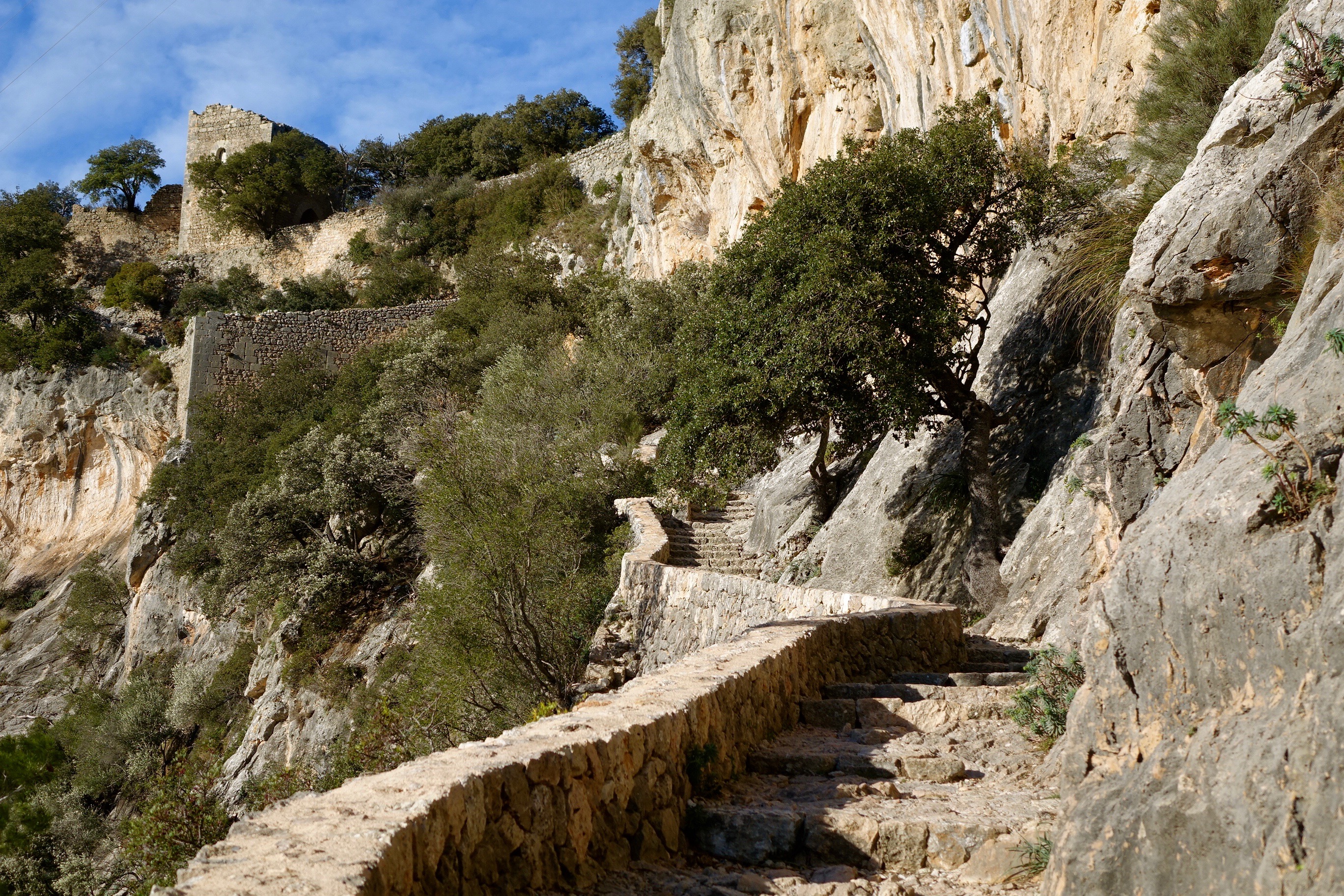
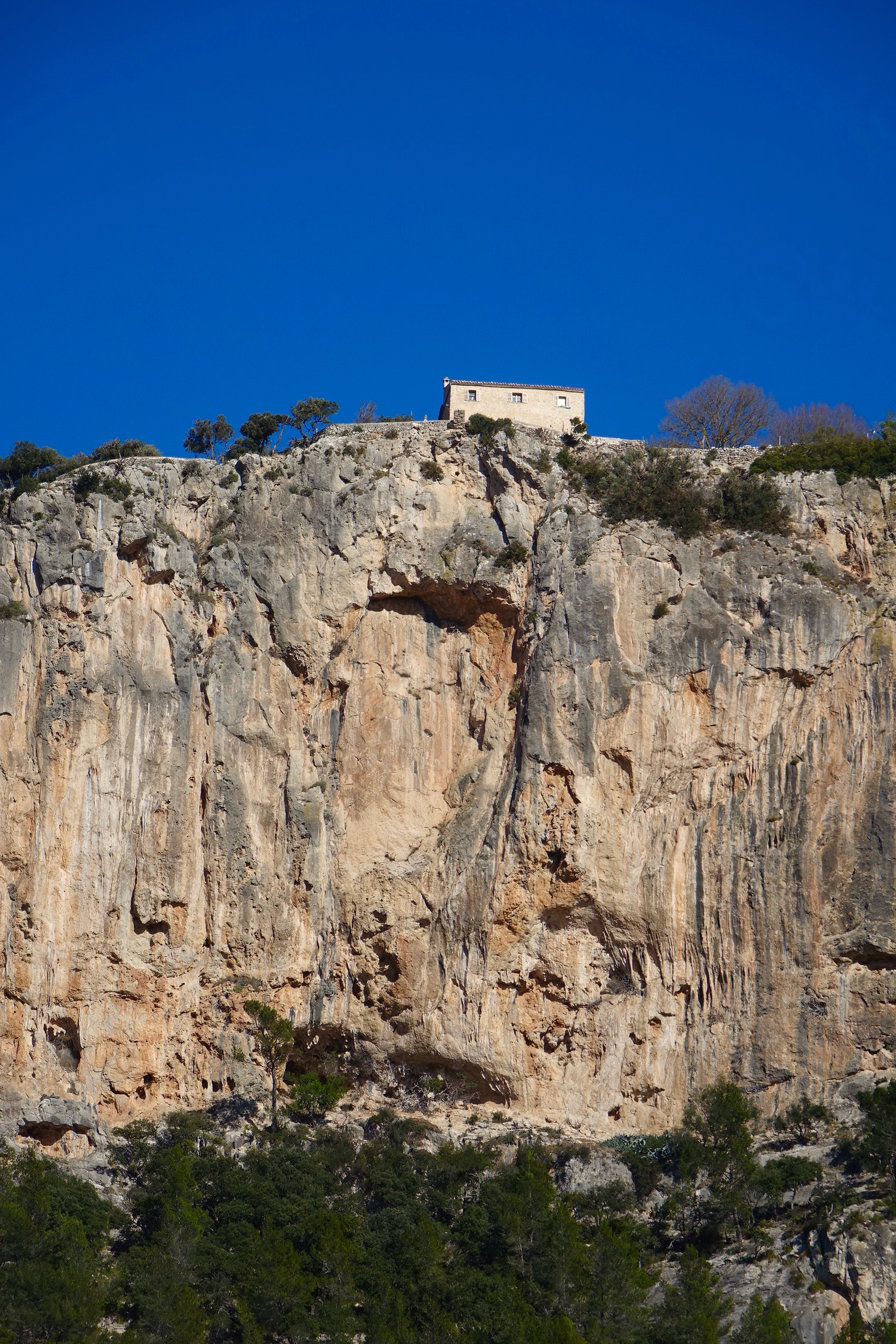
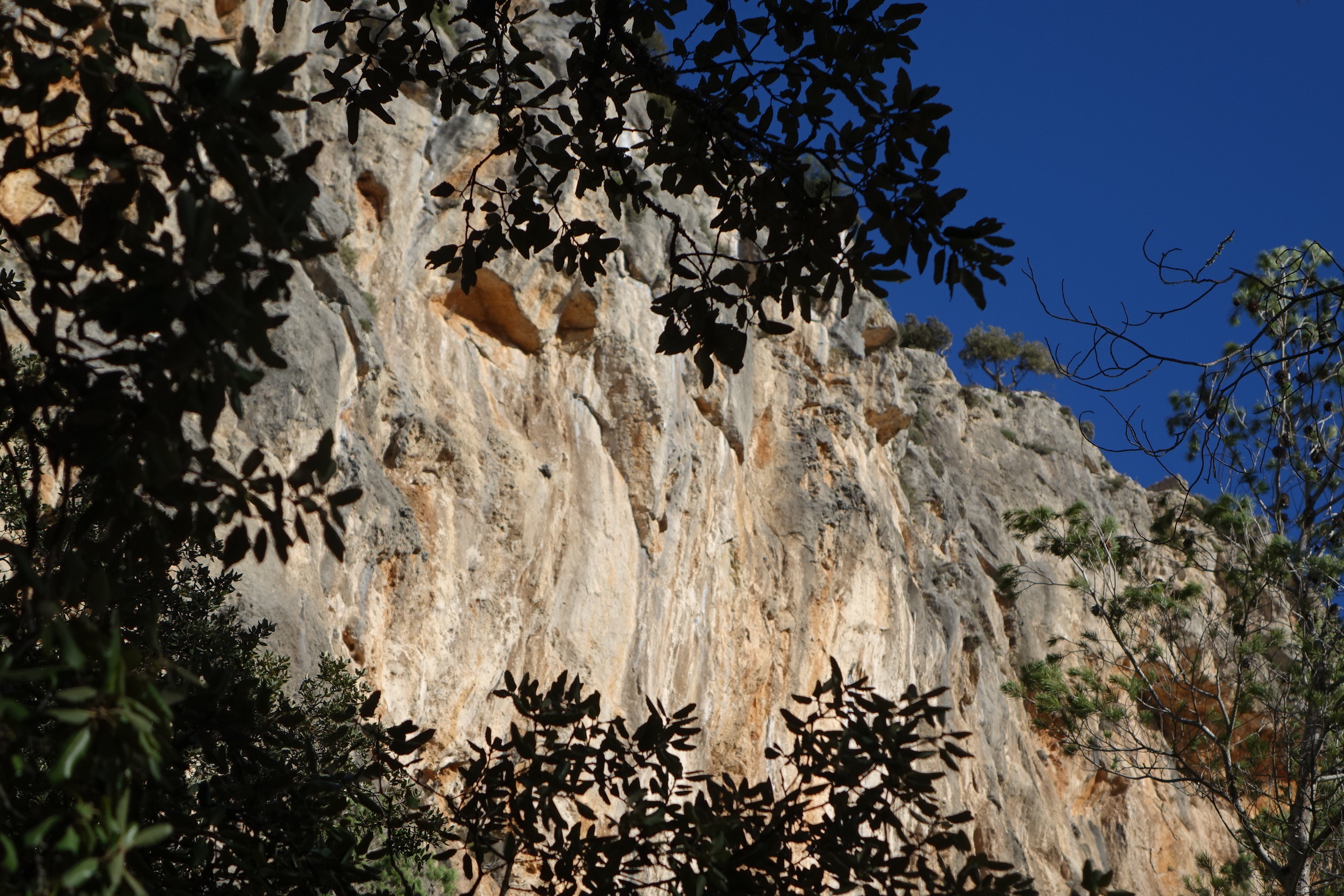
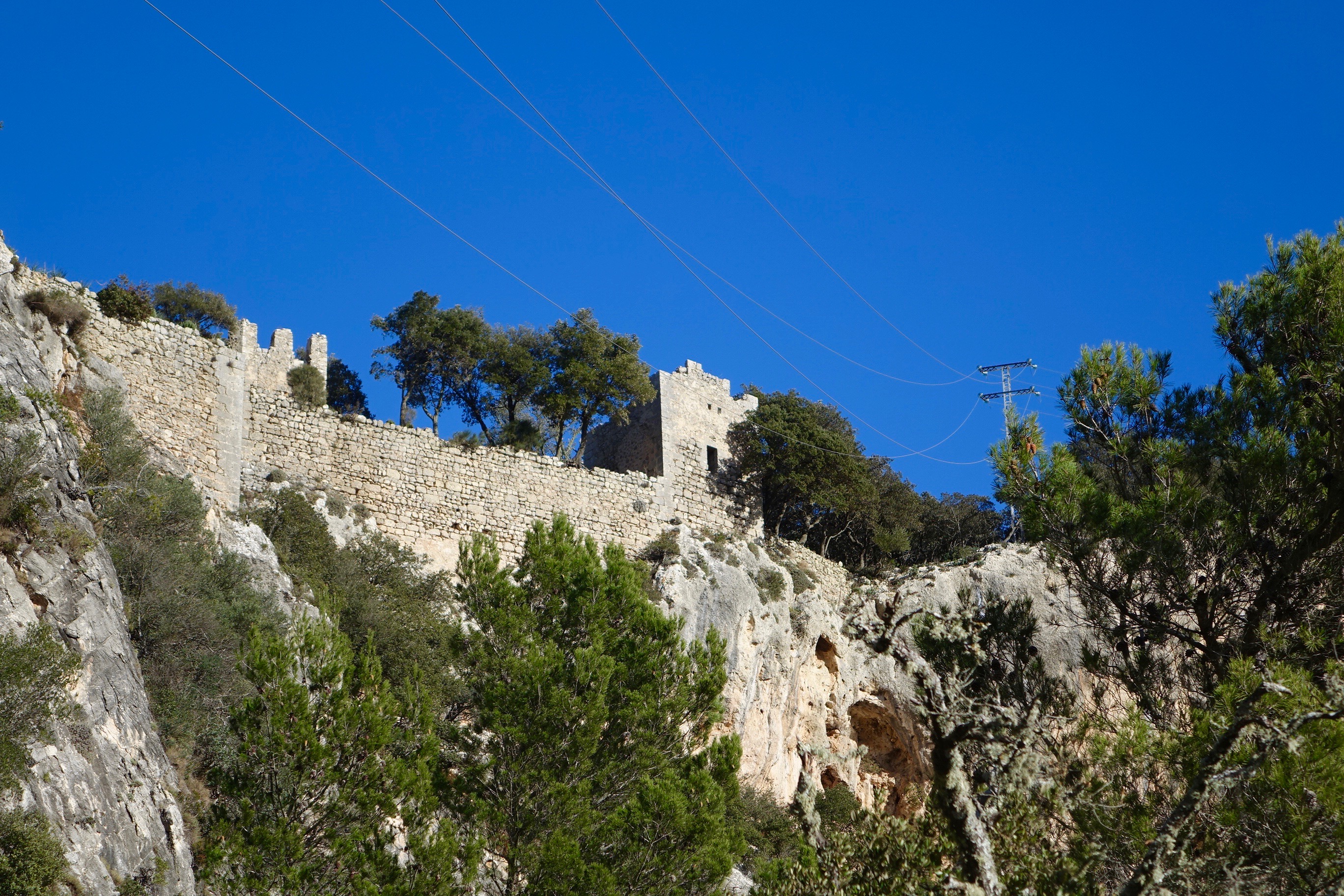
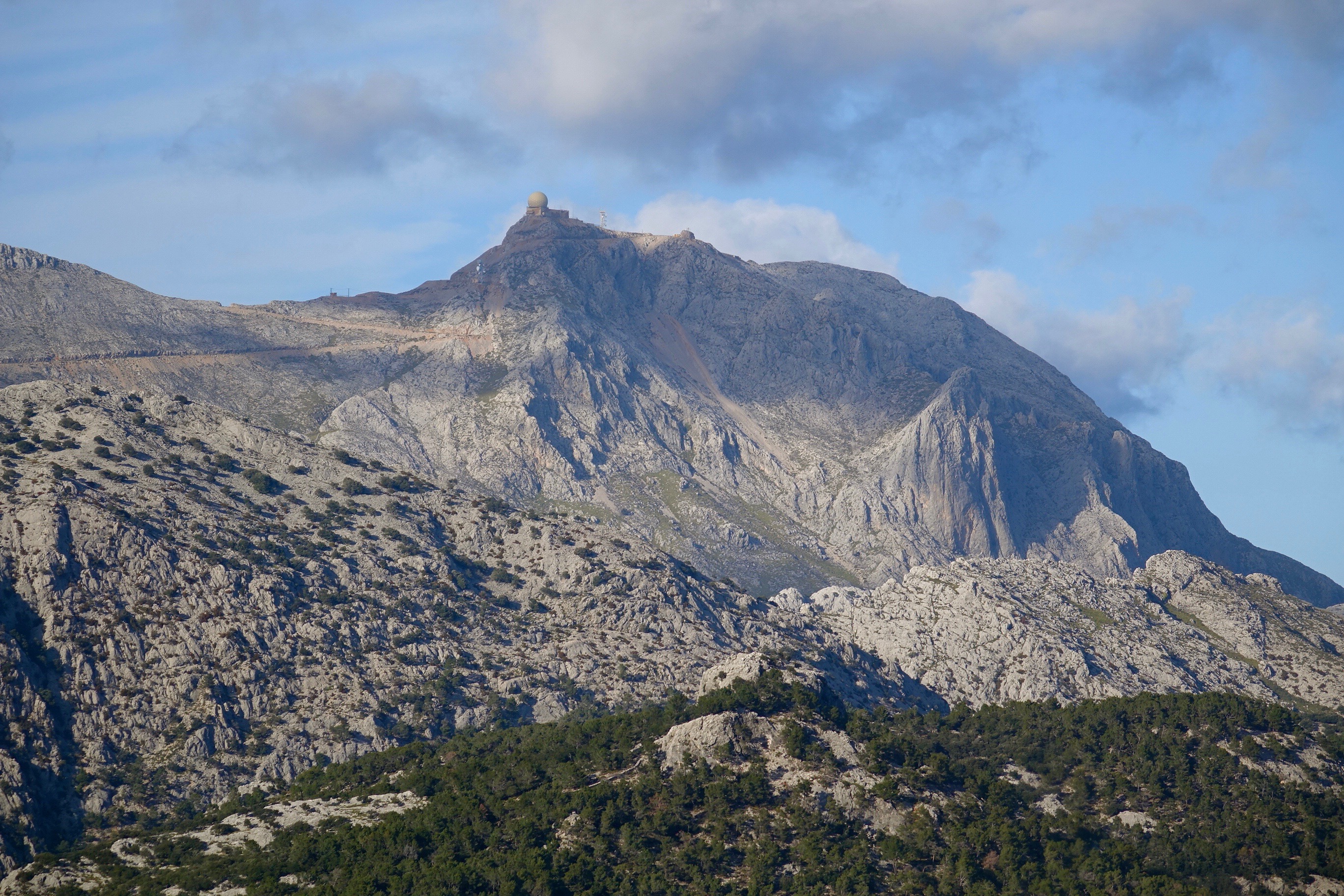
We came face to face with those beautiful little animals on a recent walk through Mallorca’s Tramontana mountains. Heading along one of the island’s worst-surfaced zig-zagging rollercoaster of a roads up one of Mallorca’s highest mountains to the vast valley nestling in the mighty shadow of the ruined Alaró Castle, we had a lunch date at the iconic Es Verger restaurant.

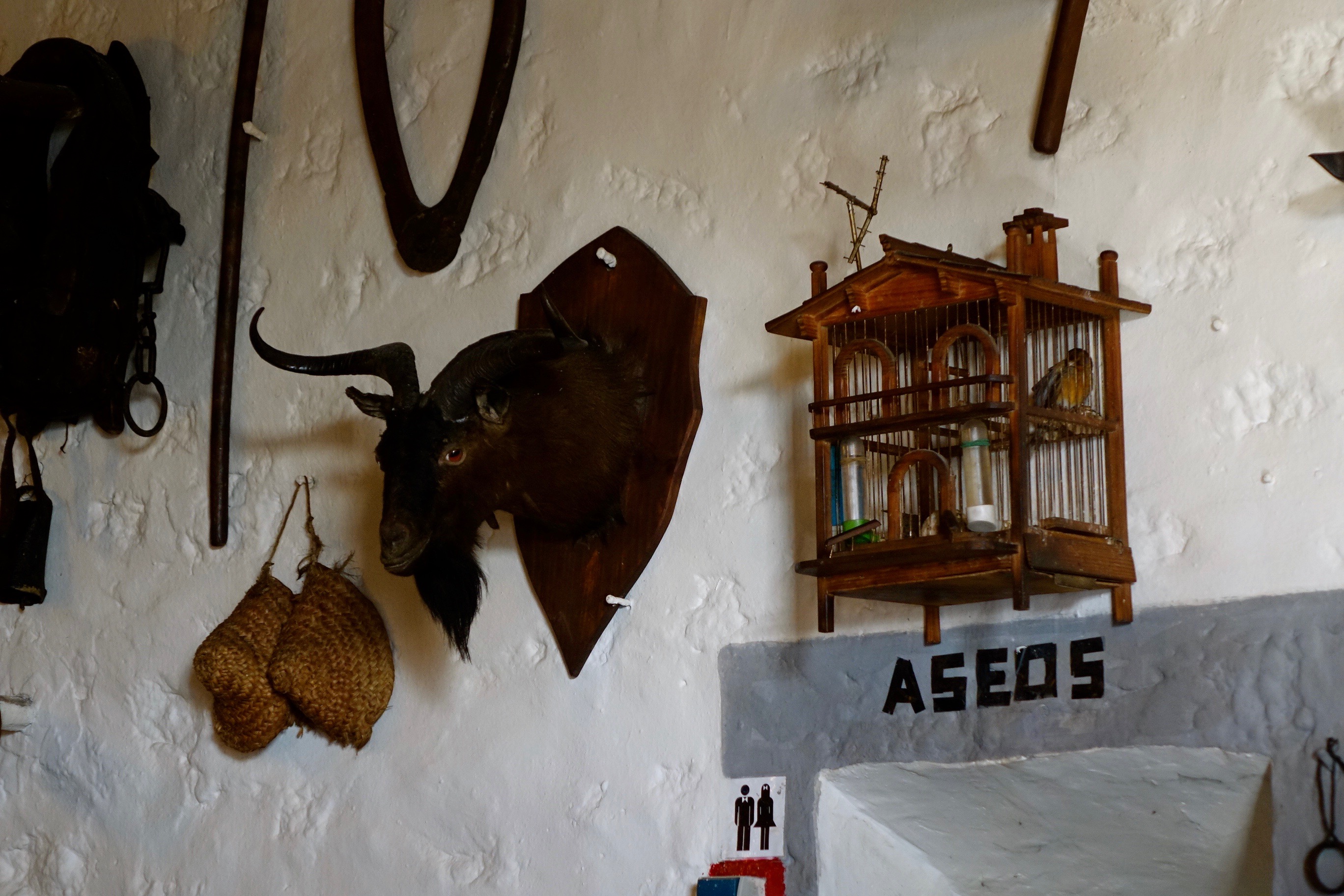
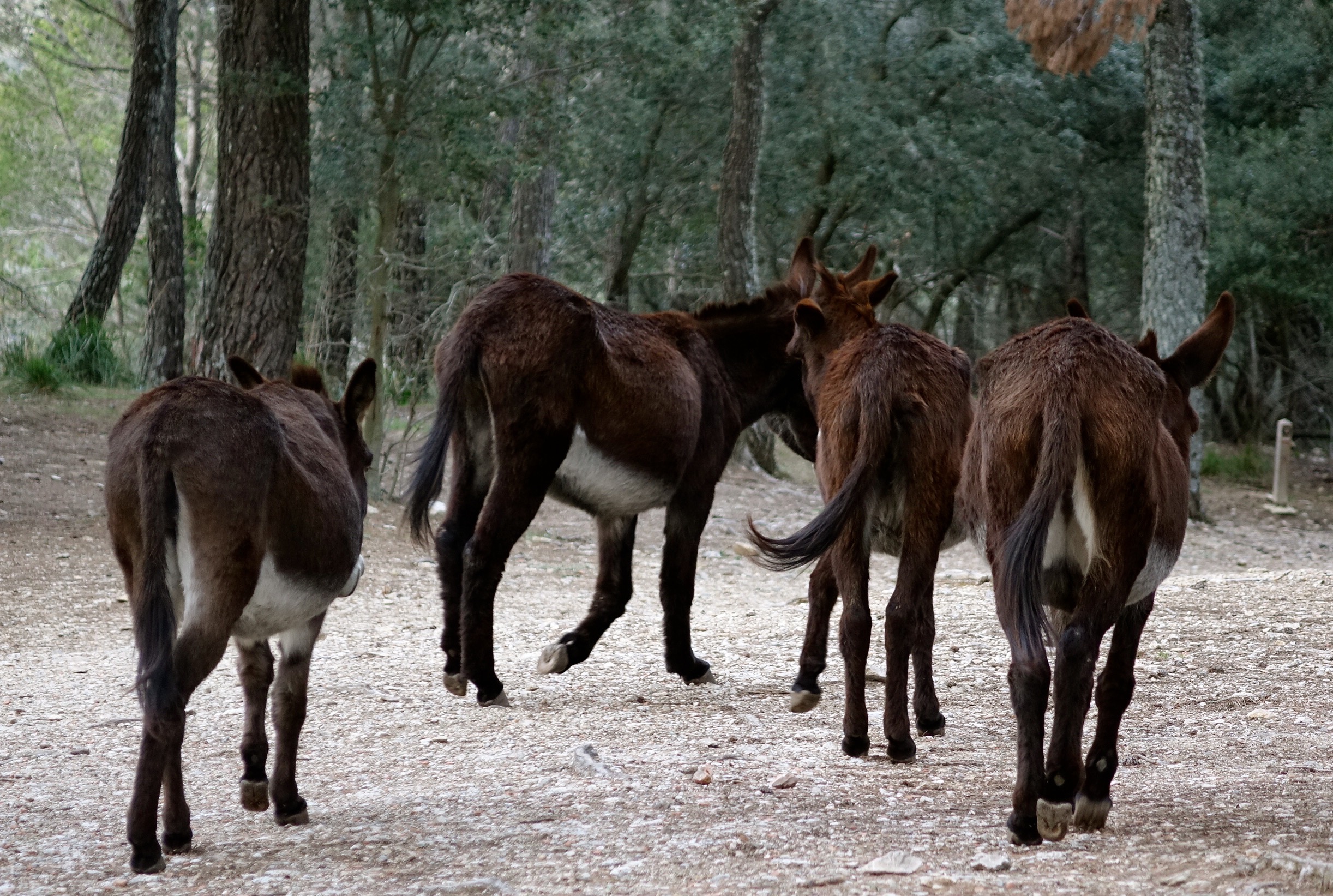
Recently made famous, to UK audiences at least, by its short starring role in one of chef Rick Stein’s televised adventures through the Mediterranean, Es Verger is an unbelievably quaint traipse back through time to the truly bucolic routes of peasant Mallorca, where everything on the limited menu borrows from the immediate rugged environment, and is cooked by a charming old lady using recipes passed down throughout the centuries. The star dish is Mallorquín lamb, the very same animal which only metres from the secluded restaurant you could see bleeding innocently in the rays of a newly sprung-sunshine (see attached photos above for heart-warming snapshots).

DSC06595IMG_7659DSC06407IMG_7662IMG_7666

But any guilt which we could quite easily have felt for seeing these sweet animals and then eating the same was quickly dispelled by the sheer exquisite deliciousness of this incredible dish. Cooked in beer and infused by the juices of a variety of vegetables roasted over long hours in a smokey log fire, the meat both melted over the tongue, and was deliciously caramelised at the edges. Never have I enjoyed meat so much, nor indeed a meal. Pure, simple, and finished off by a cremadillo – a flaming mix of local hierbas liquor, rum, coffee and all sorts of other liquid indulgences.

DSC06571DSC06540DSC06581DSC06509DSC06534DSC06503DSC06522DSC06580DSC06525DSC06551DSC06570

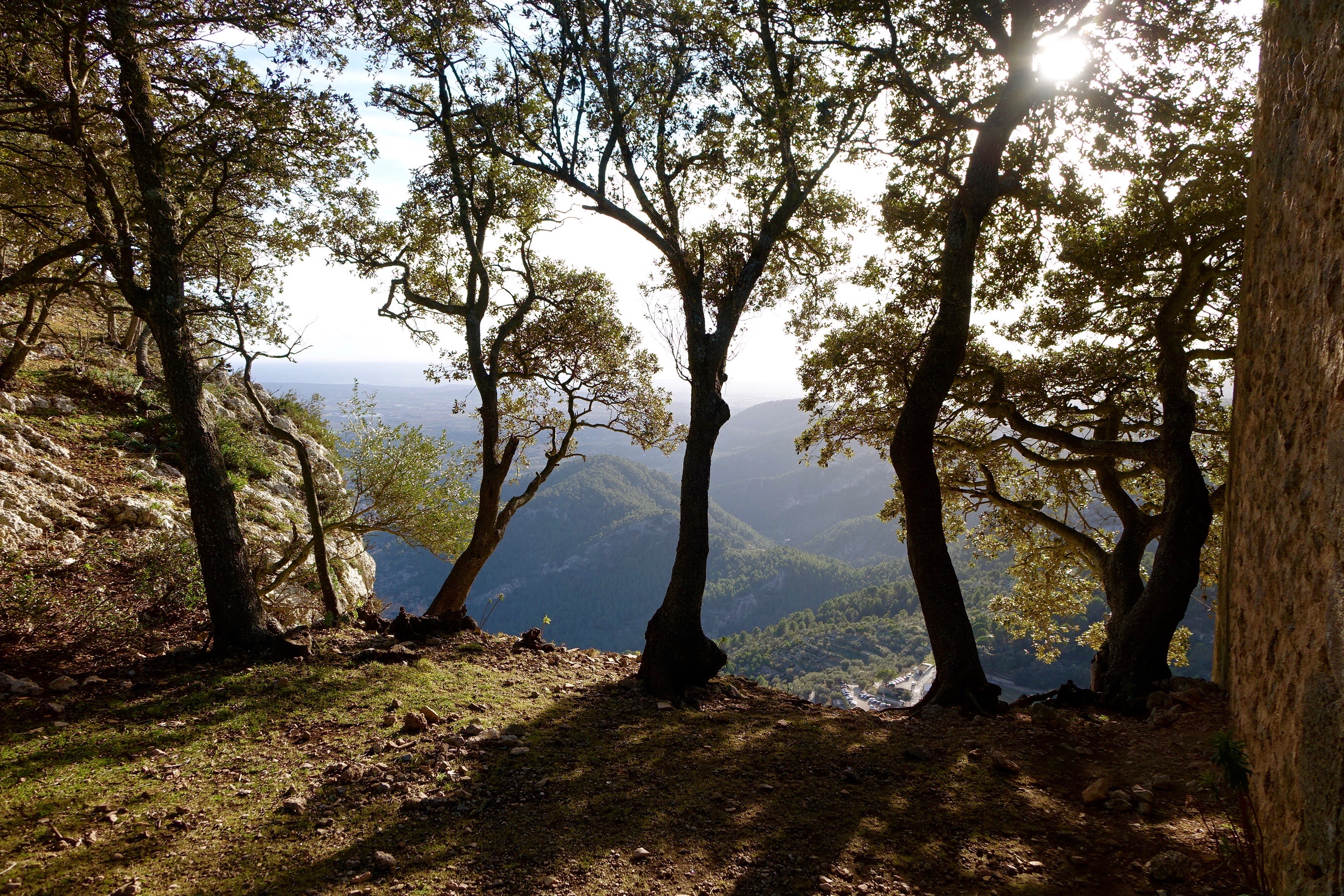
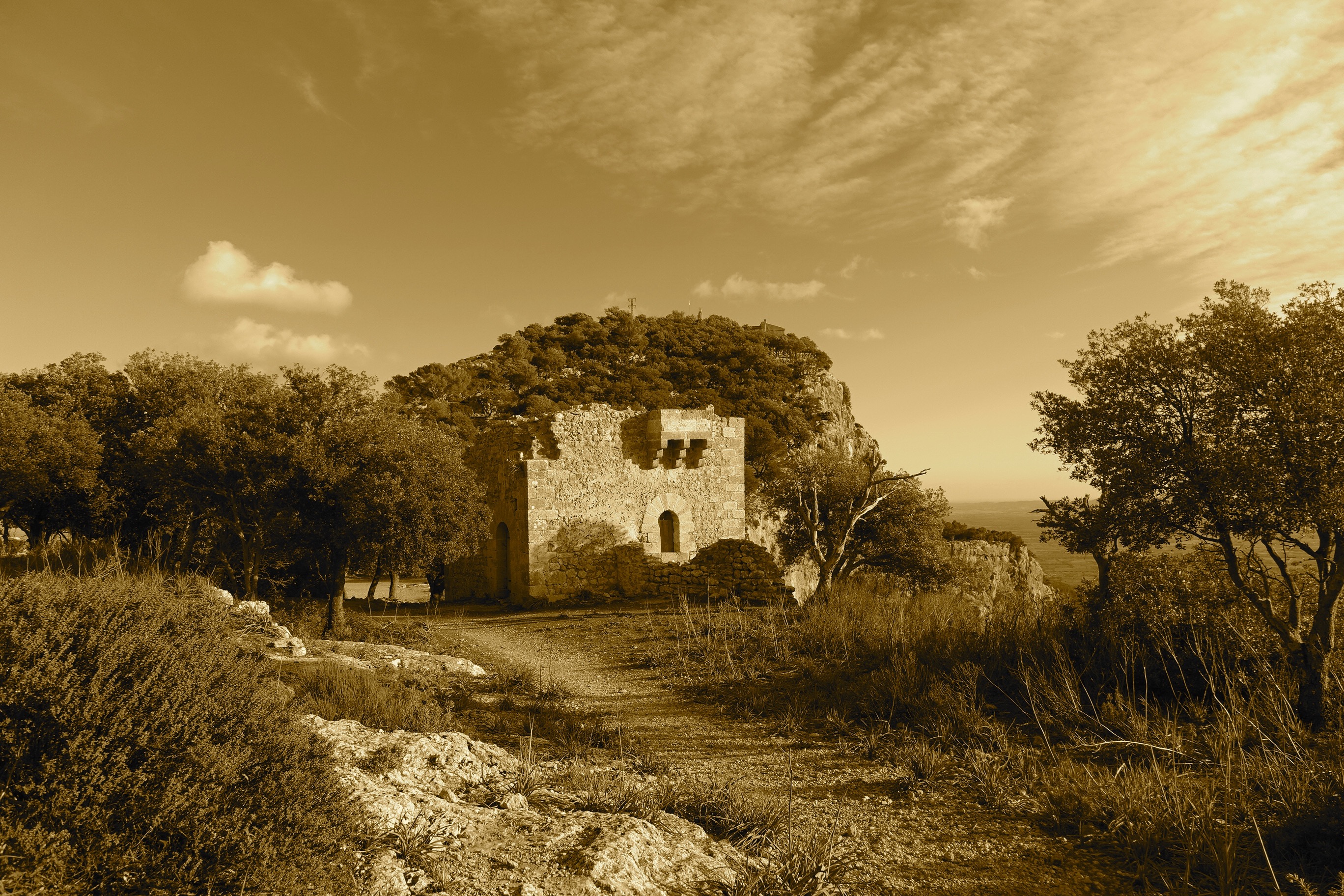
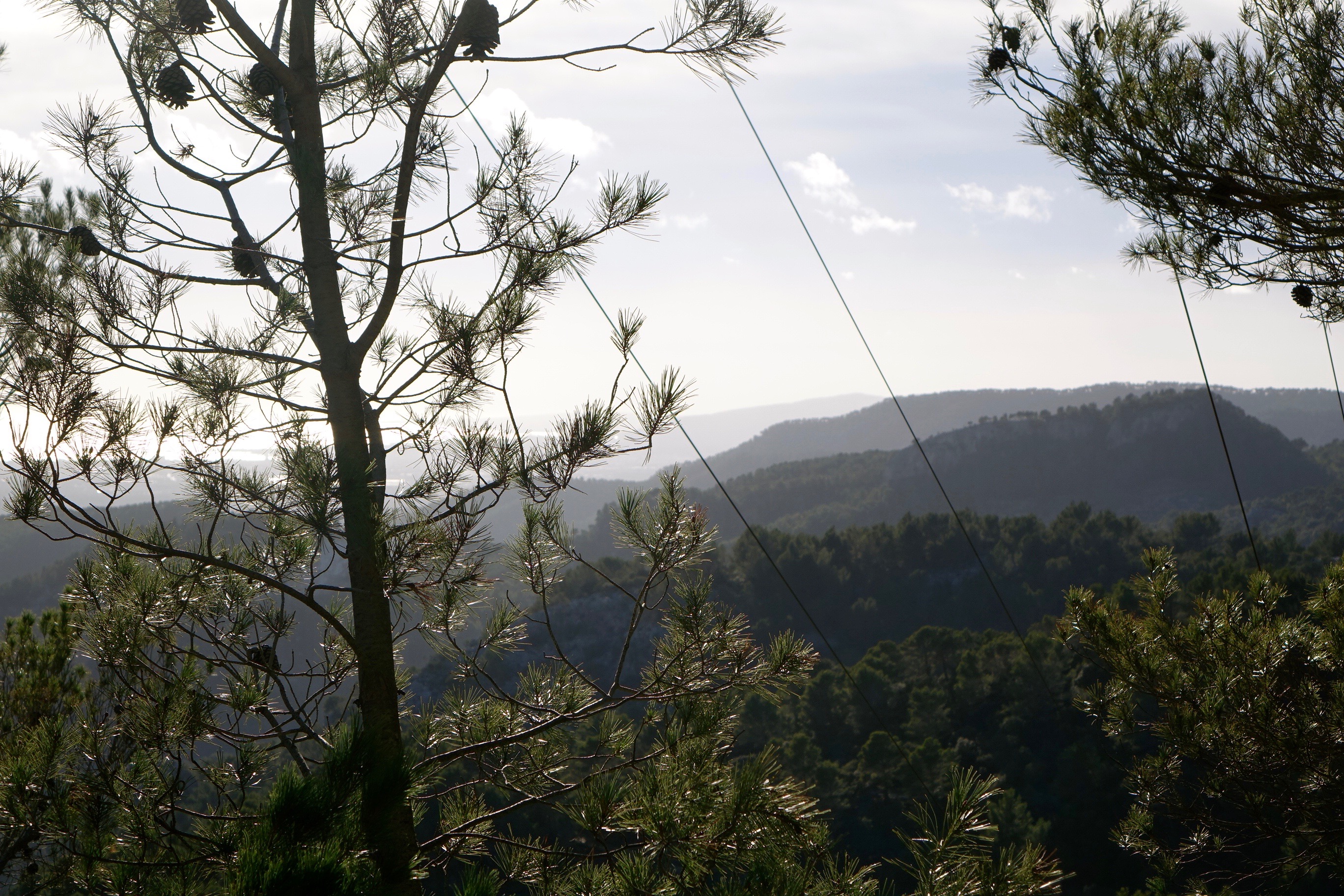
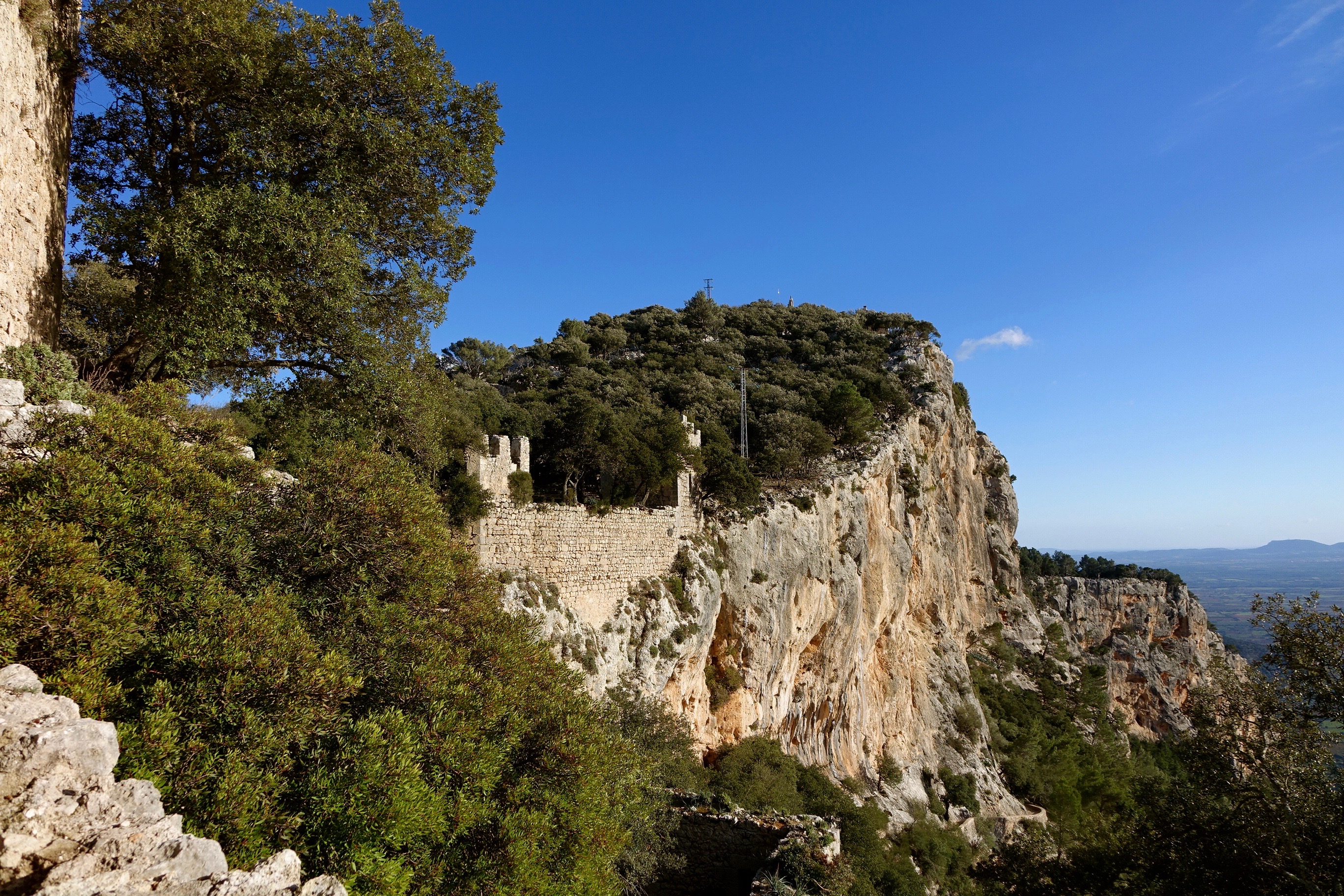
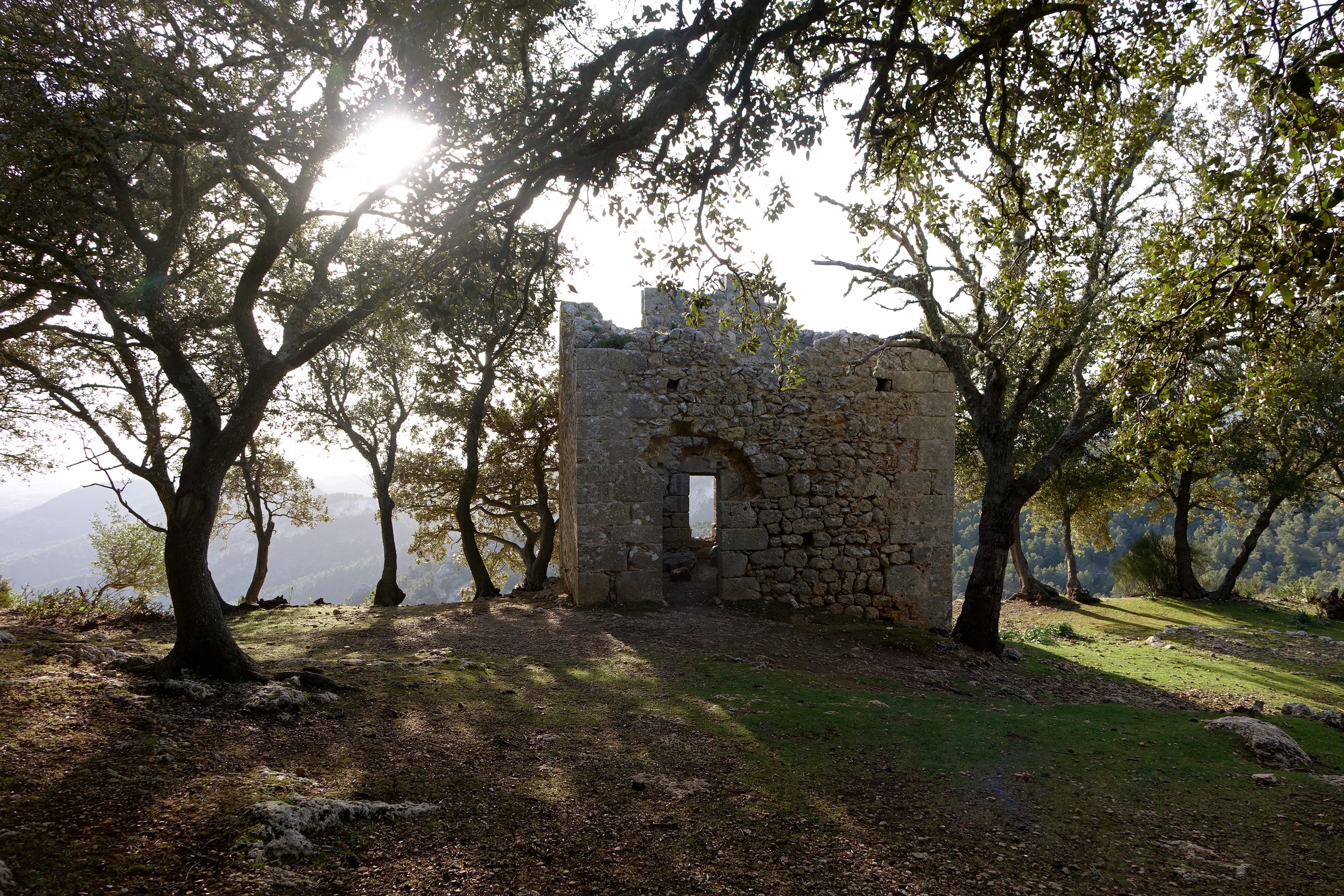
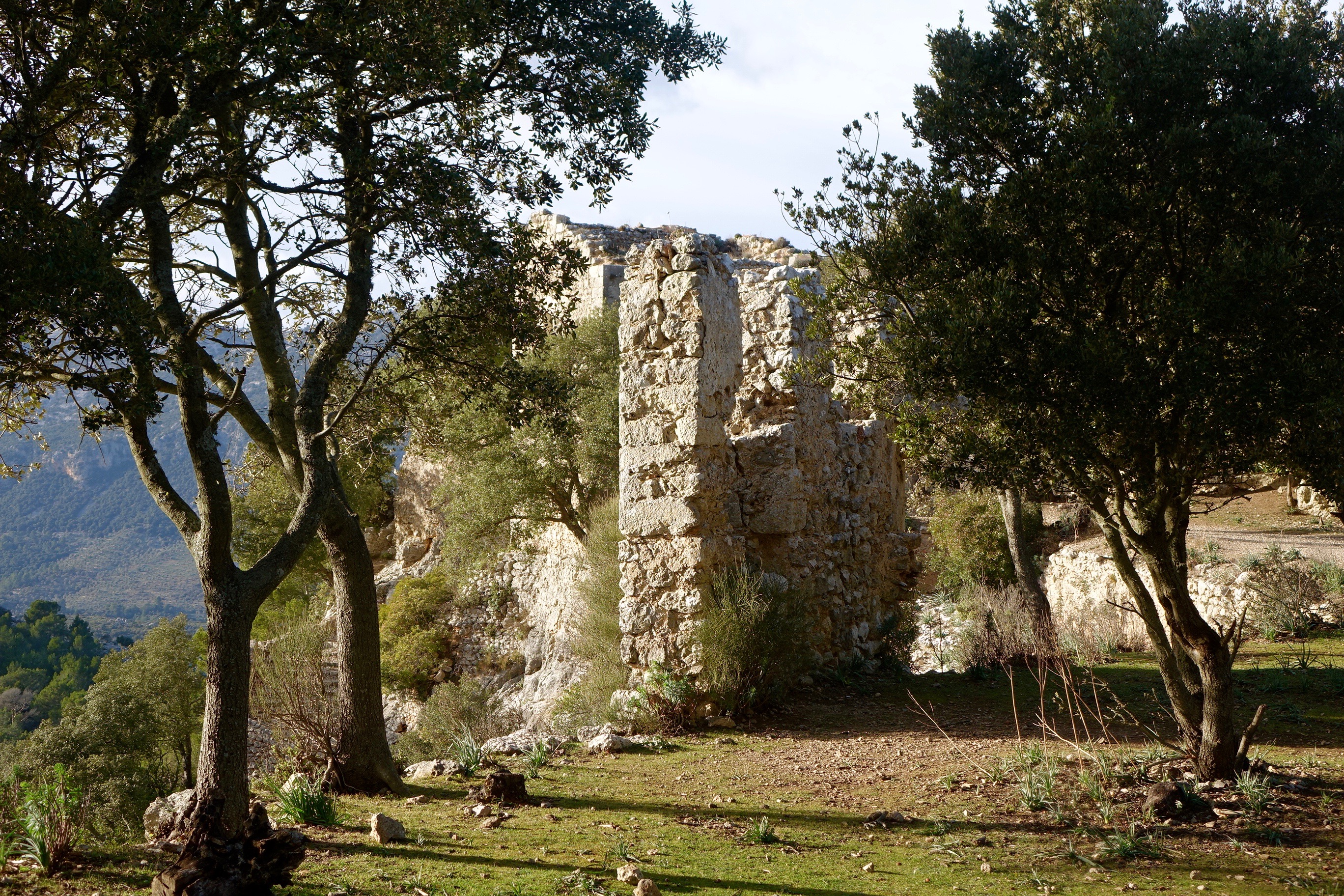
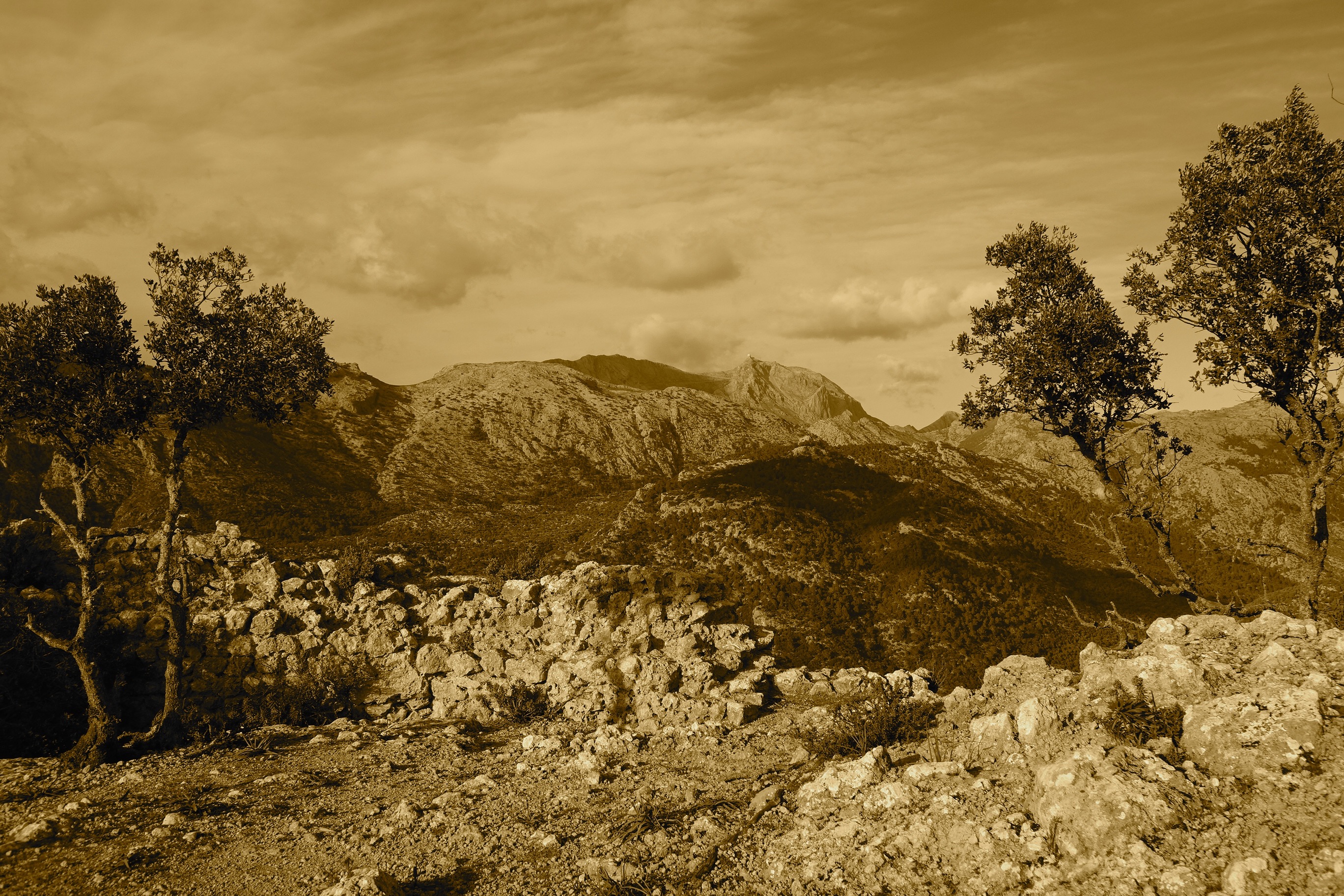
Needing to walk off the alcohol and indulge a little more in the staggering scenery which surrounded us, we headed after lunch to the ruined castle of Alaró, an incredible historical site sat atop the mountain which, while looking deceptively close, required a good hour’s uphill climb along one of Mallorca’s craggier paths. But with views from the top spreading across the bay of Palma on one side and across to Puig Mayor, the island’s highest mountain on the other, we were awfully glad for the scenery, that amazing lunch and the Spring in our step it had given us.

DSC06573DSC06414DSC06578DSC06529DSC06526DSC06510DSC06558DSC06538DSC06576DSC06560DSC06574DSC06593

All photos and written content are strictly the copyright of Nicholas de Lacy-Brown © 2016 and The Daily Norm. All rights are reserved. Unauthorized use and/or duplication of the material, whether written work, photography or artwork, included within The Daily Norm without express and written permission from The Daily Norm’s author and/or owner is strictly prohibited.
Onwards to Vienna, Part 3: Palaces of Art

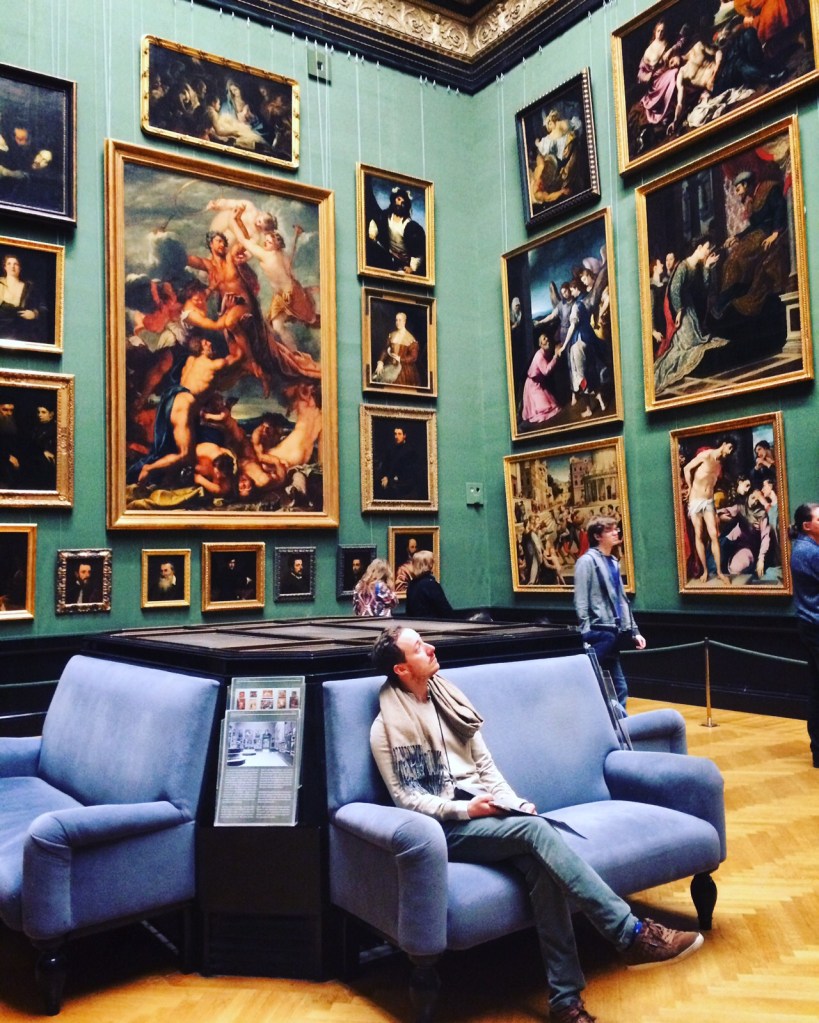
To say that there is a lot of art in Vienna is like saying there are a lot of paellas in Spain. The city literally lives, breathes and exudes art from its every corner and facet. Everywhere you go, large posters advertise the latest sensational exhibition appearing at the Leopold, or the Albertina, while inside the Belvedere and the Kunsthistoriches museums, some of the most famous paintings ever known to the history of art happily reside. We were literally astonished by the wealth of art contained within a small central core of the city, and by the end of our trip were rendered utterly exhausted by the amount of art we saw. But we were all the more fulfilled as a result.
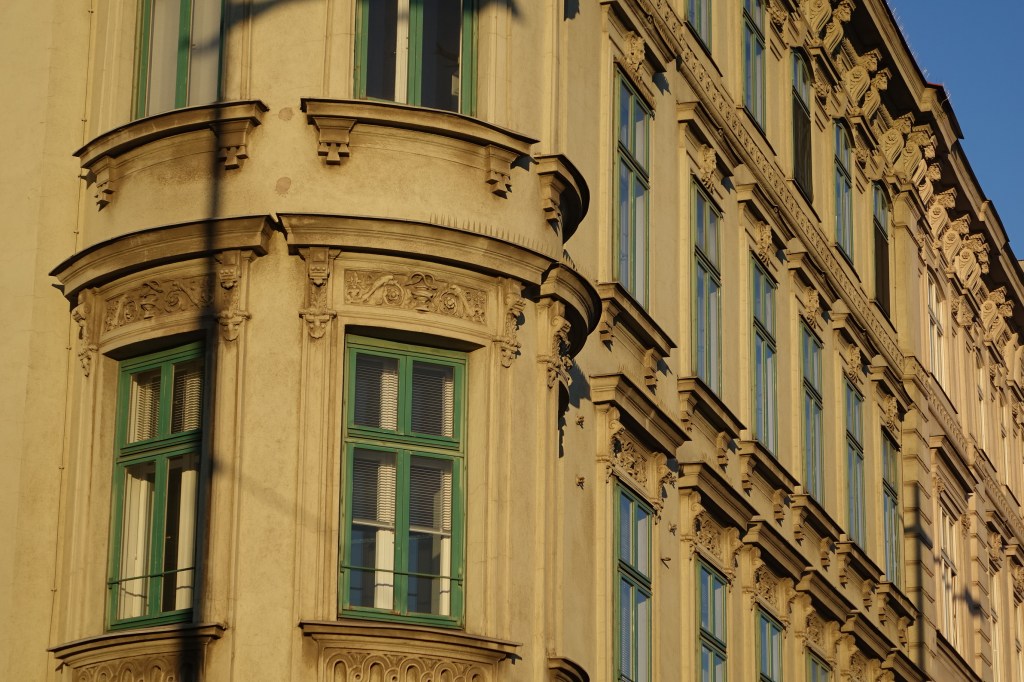
If I were to reproduce a photo of all the paintings we saw in permanent collections and temporary shows alike, the single blog post resulting would probably keep you scrolling downwards for a lifetime. Rather than do that therefore, I wanted to focus a little on the majestic buildings which host Vienna’s amassed artistic treasures, before showing you just a few of the works on show within them.

Almost unable to take in the breadth of art at the Kunsthistoriches Museum

Almost unable to take in the breadth of art at the Kunsthistoriches Museum

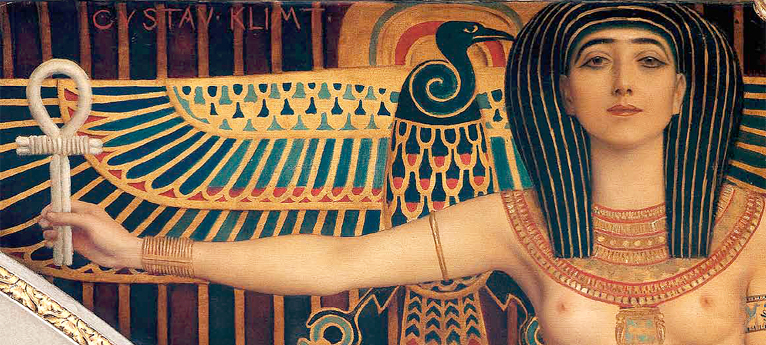
There was no missing the incredible grandeur of the building hosting the Kunsthistoriches Museum (The History of Art Museum), which sits opposite its domed twin – a duo of palaces built some 150 or so years ago upon the advent of the Ringstrasse. With an art collection mainly built up over successive generations of Hapsburg rule, and containing breathtaking masterpieces by the likes of Titian, Rembrandt, Caravaggio and Velazquez, it is no wonder that the museum is visited by more than 1.5 million people every year. But beyond the art on the walls, what is truly momentous is the building itself which, tailor-created especially to hold the very collection which graces the building today, is filled with every kind of creative lavishness, from murals to sculptures, friezes and reliefs, and chief amongst them all, some beautiful wall murals by Gustav Klimt himself.

Klimt murals in the main hallway of the Kunsthistoriches Museum

Klimt5 Lunette Klimt2

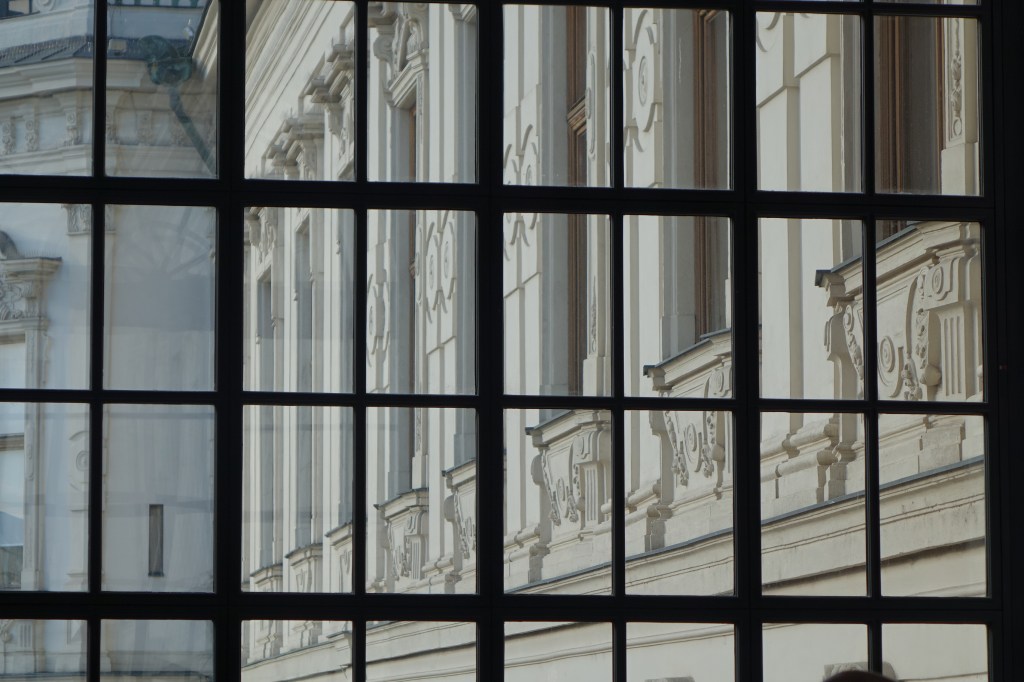
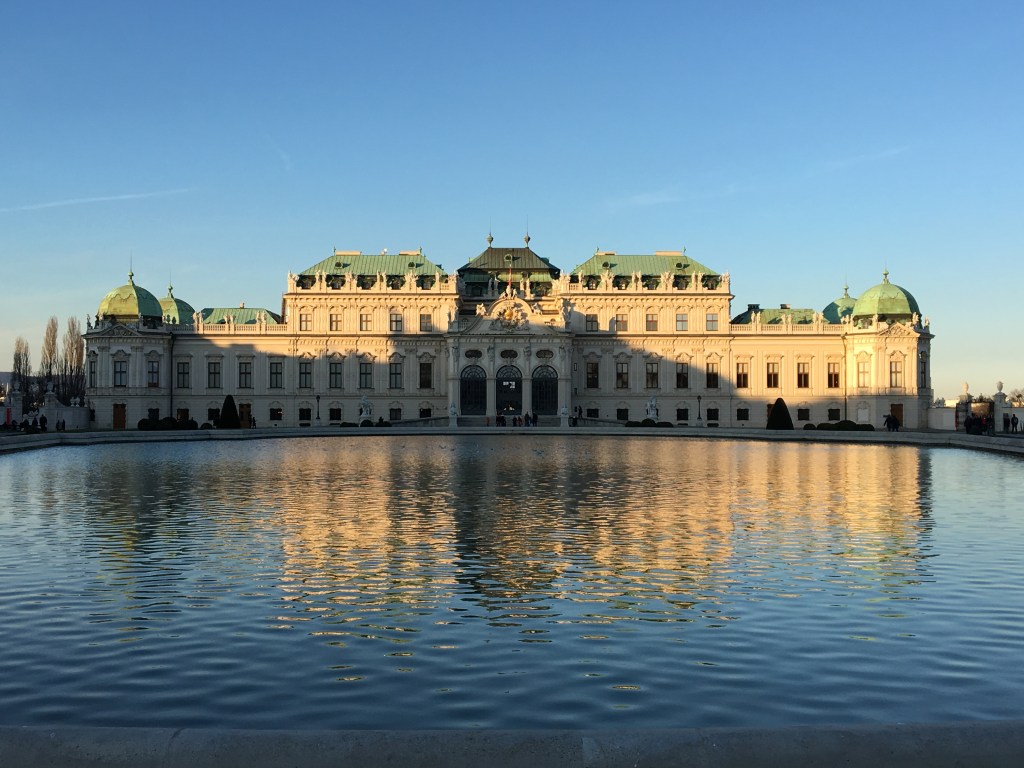
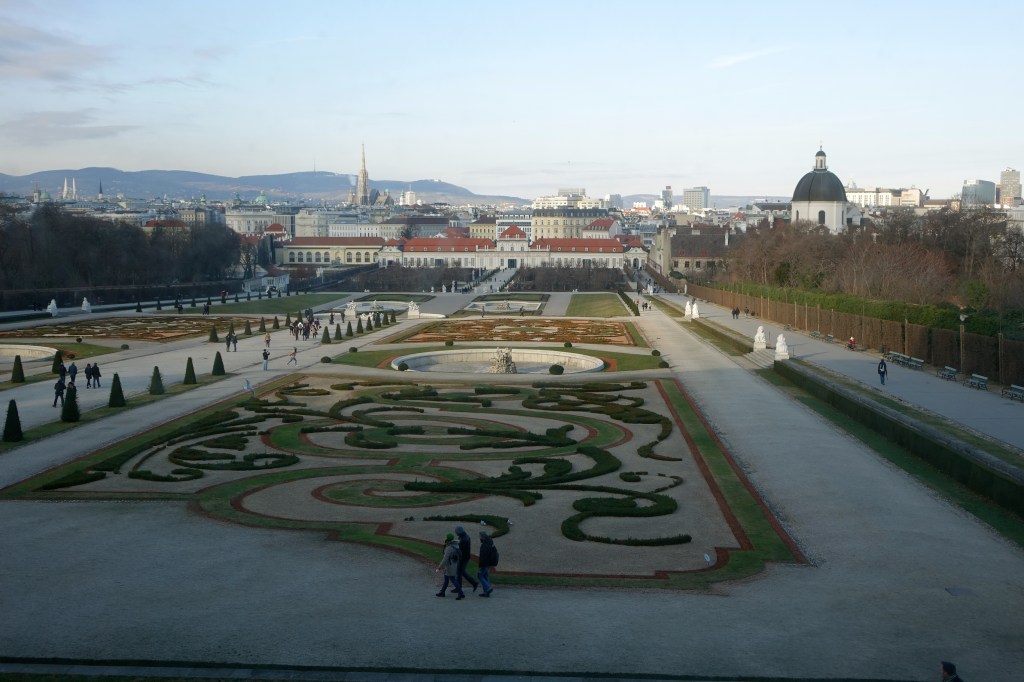
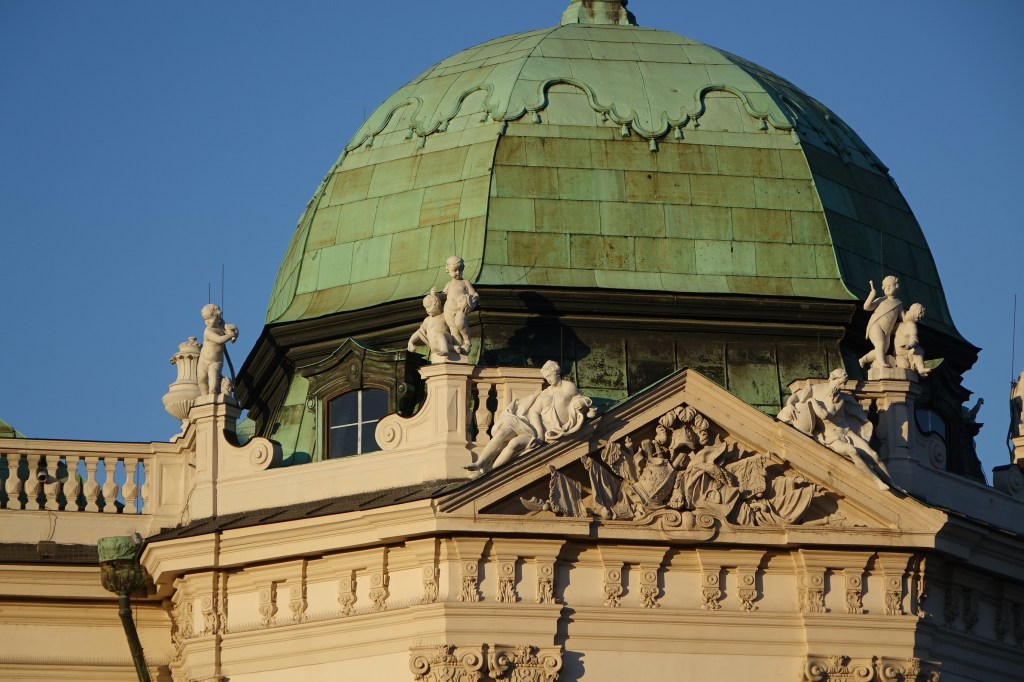
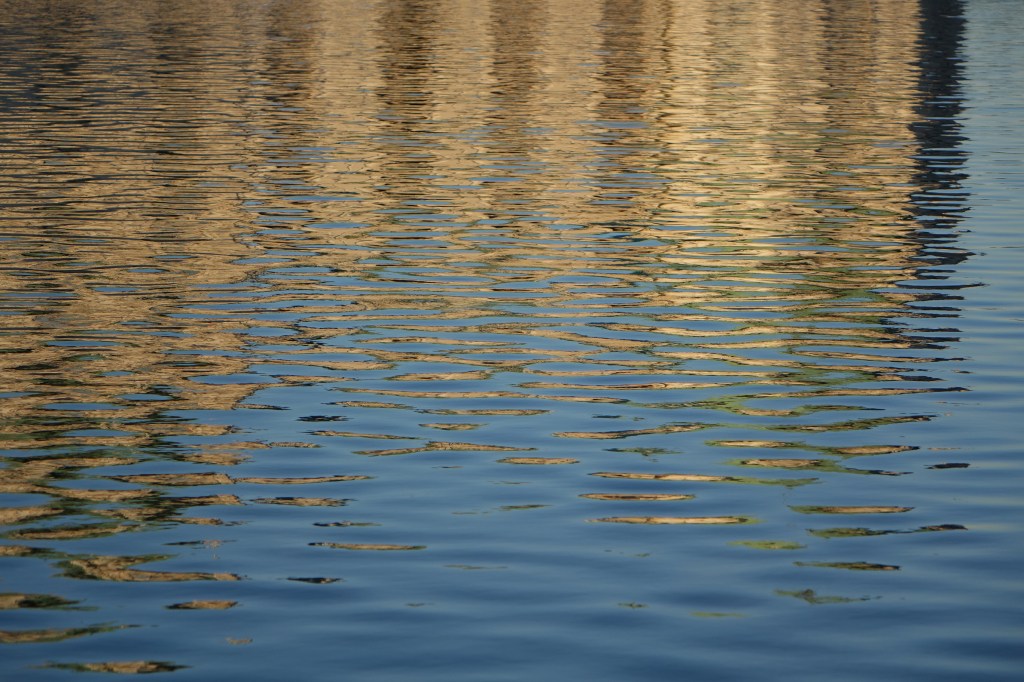
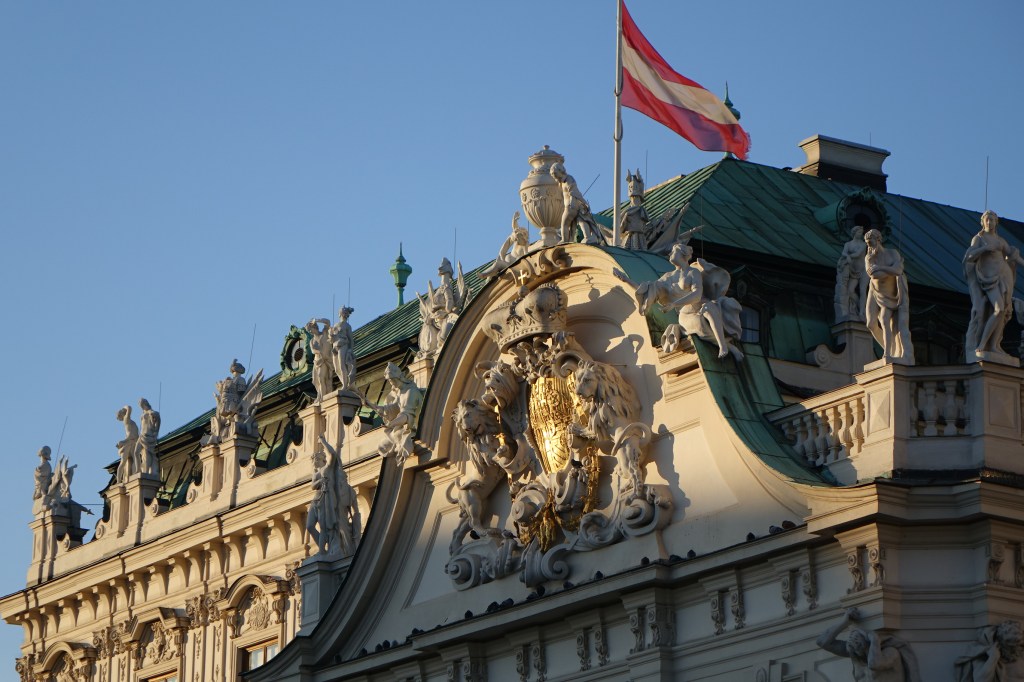
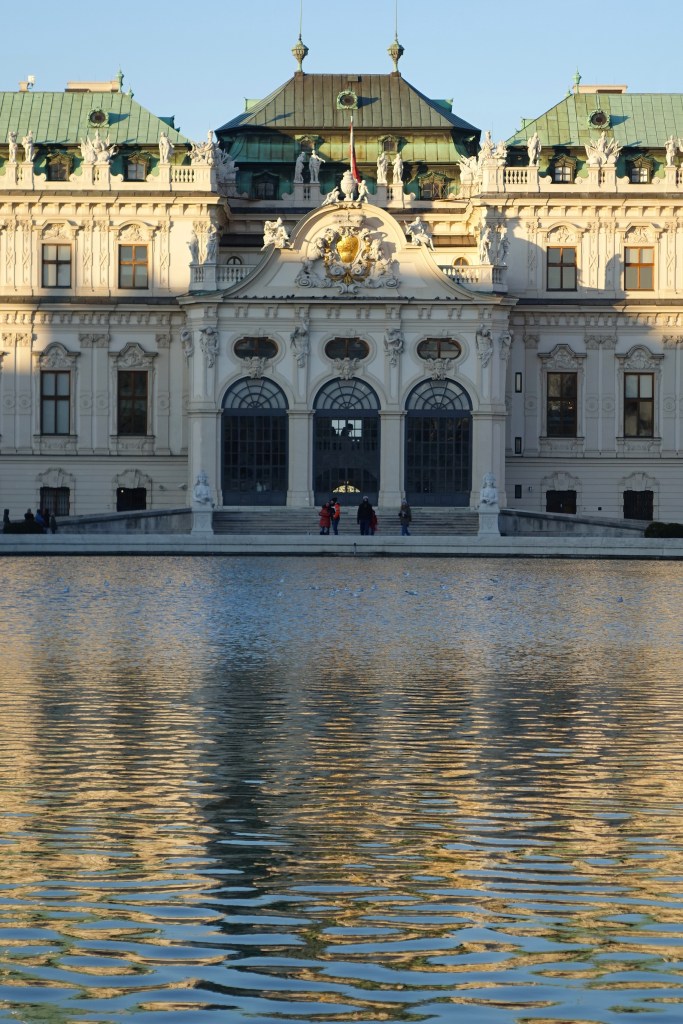
Klimt was of course to take centre stage across Vienna’s artistic offerings, not only in the galleries but in every manifestation of souvenir and guidebook. At the core of the city’s multifaceted Klimt showcase, his famous painting The Kiss lords over all the rest, glimmering with its multi-layered gold leaf in a long gallery on one side of the Upper Belvedere gallery. This equally spectacular palace is just one half of an iconic centre of art which offers exhibitions in both the Upper and Lower galleries and whose buildings are laced with all of the elaborate pomp intended by the original owner, Prince Eugene of Savoy, to evoke the magnificent of his various 17th century military successes.

The beautiful Belvedere

DSC06018 DSC05967 DSC05988 DSC05984 DSC05989 DSC05995 IMG_7449 DSC05997 DSC05991 DSC05981 DSC05992 DSC06021 DSC06008 DSC06017 DSC06006 DSC06014

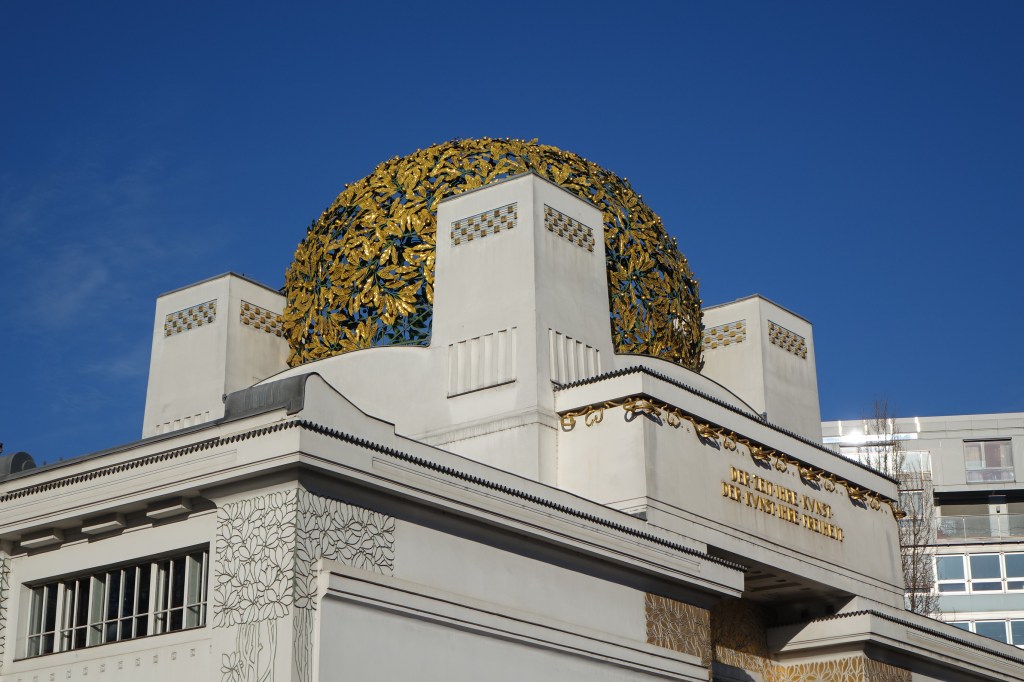
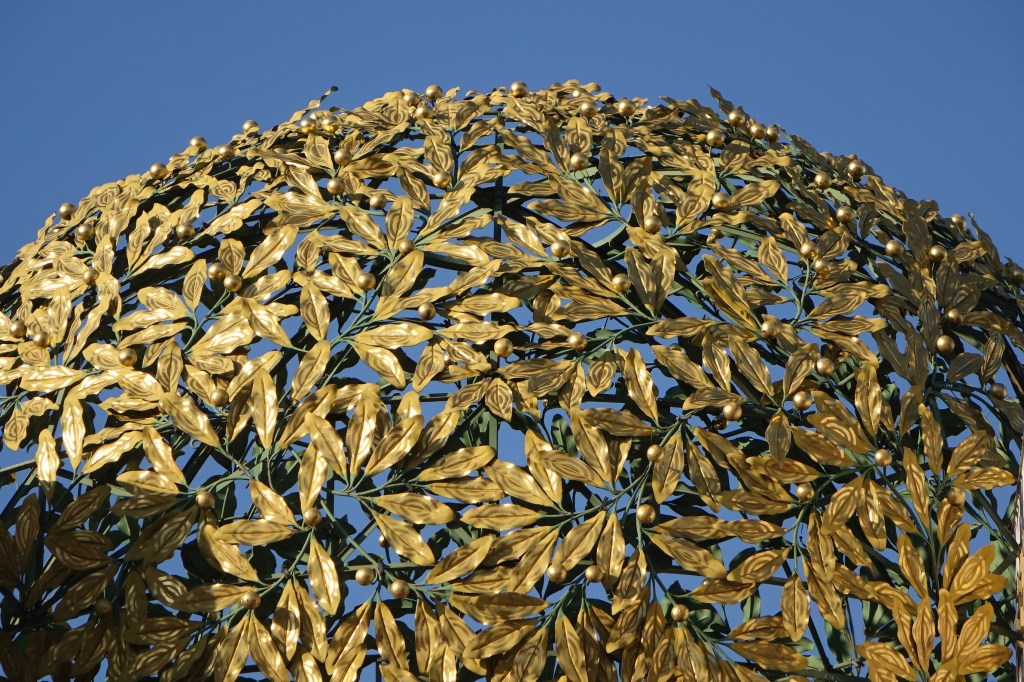
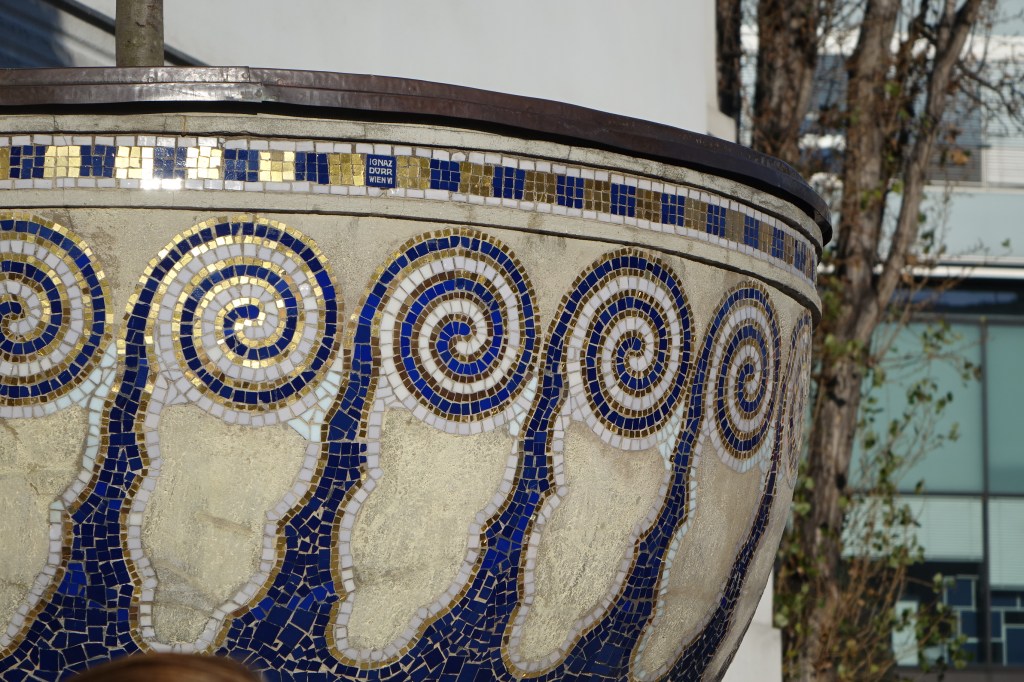
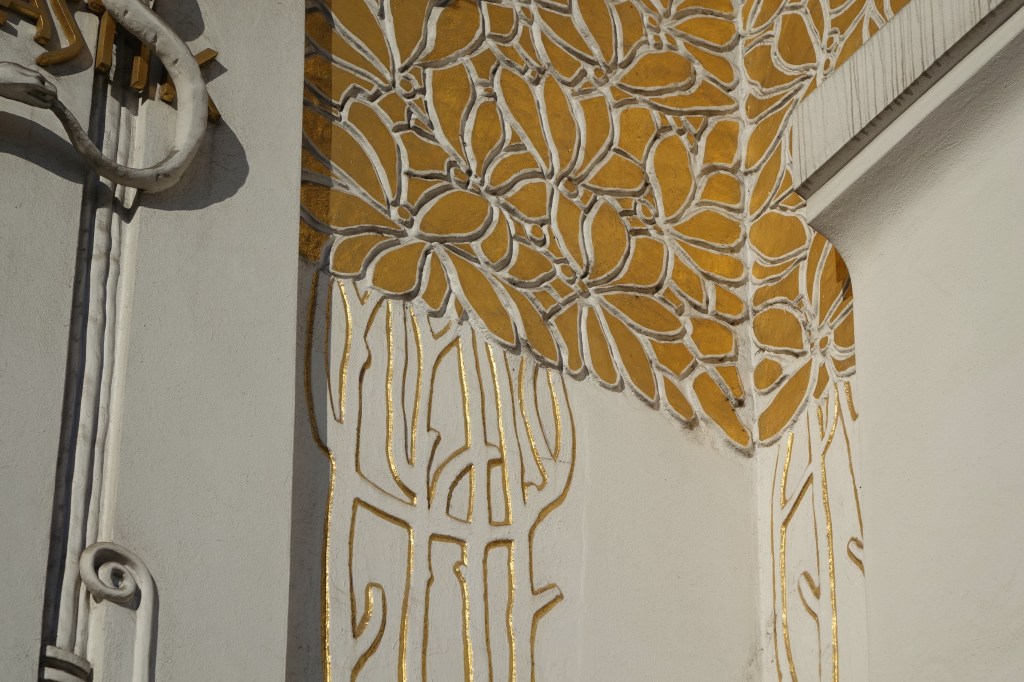
But back to the 20th century, and my favourite of all the Klimt spectacles is the Secession building, a glimmering gold spectacle of modernism constructed in the Jugendstil style as a showcase for the Secession movement’s artists, chief amongst whom was of course Klimt himself. And today, the star attraction is Klimt’s allegorical Beethoven Frieze, one of the most iconic of the artist’s works.

The Secession Building and Klimt’s Beethoven Frieze

DSC06205 DSC06211 DSC06212 DSC06203 DSC06202 DSC06201 DSC06206 DSC06209

000171 I

In all, during 4 days in the city of Vienna, we visited some 8 galleries, an equal number of permanent exhibitions and an additional 12 temporary exhibitions. The vast wealth of art on offer was simply mind blowing, from the ancient treasures of the Kunsthistoriches museum and the delicate 19th century works of the Belvedere, to the in depth studies of Klimt and Schiele in the Leopold museum, and the incredible collection of impressionist art in the Albertina. Below are just a few photos of the many artistic treasures we saw. Far too many to take in, but we made and enjoyed our every attempt.