

Lisbon – Day Four: Alfama the Survivor
On 1 November 1755, the shape of Lisbon was changed forever. 20 churches collapsed, fires ravaged the city, a gigantic tsunami washed up on the shore causing widescale flooding, an estimated 15,000 Lisbon residents lost their lives and over half of the urban landscape was reduced to rubble. The cause was an earthquake so large that it is now recorded as one of the deadliest in history, an earthquake which was felt as far away as Italy but for poor Lisbon, the fabric of the city was literally raised to the ground.

The Alfama and the Castelo seen from below
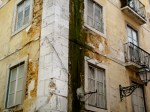
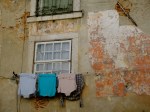
Recovering from that destruction, the city was rebuilt, and the large swathes of grid-patterned streets which fill the centre of the city today are the work of the Marquez de Pombal and the major reconstruction of the capital. However to the East of the city is one noticeable exception. Up on its hill, above the low lying centre, the area of Alfama missed much of the destruction. Many of the buildings survived and the flooding never got this far. What results is a true slice of Lisbon history, an area which, as the name suggests has Moorish origins from the city’s early beginnings, and whose twisty compact streets and steep stairways retain the Moorish layout and the medieval construction of what was once the whole of Lisbon up on its commanding hill. The Alfama is less grand, for sure, than the wide boulevards and piazzas below, but utterly idyllic in its picturesque imperfection, its windy wobbly streets, its cracking facades and cobbled paving, its coloured houses and chipped ceramics, its flower pots, laundry hung streets and plant-packed balconies. In the Alfama one felt the true heart of Lisbon, a little dilapidated treasure trove of pictorial and historical delight. And that was exactly where we headed today.

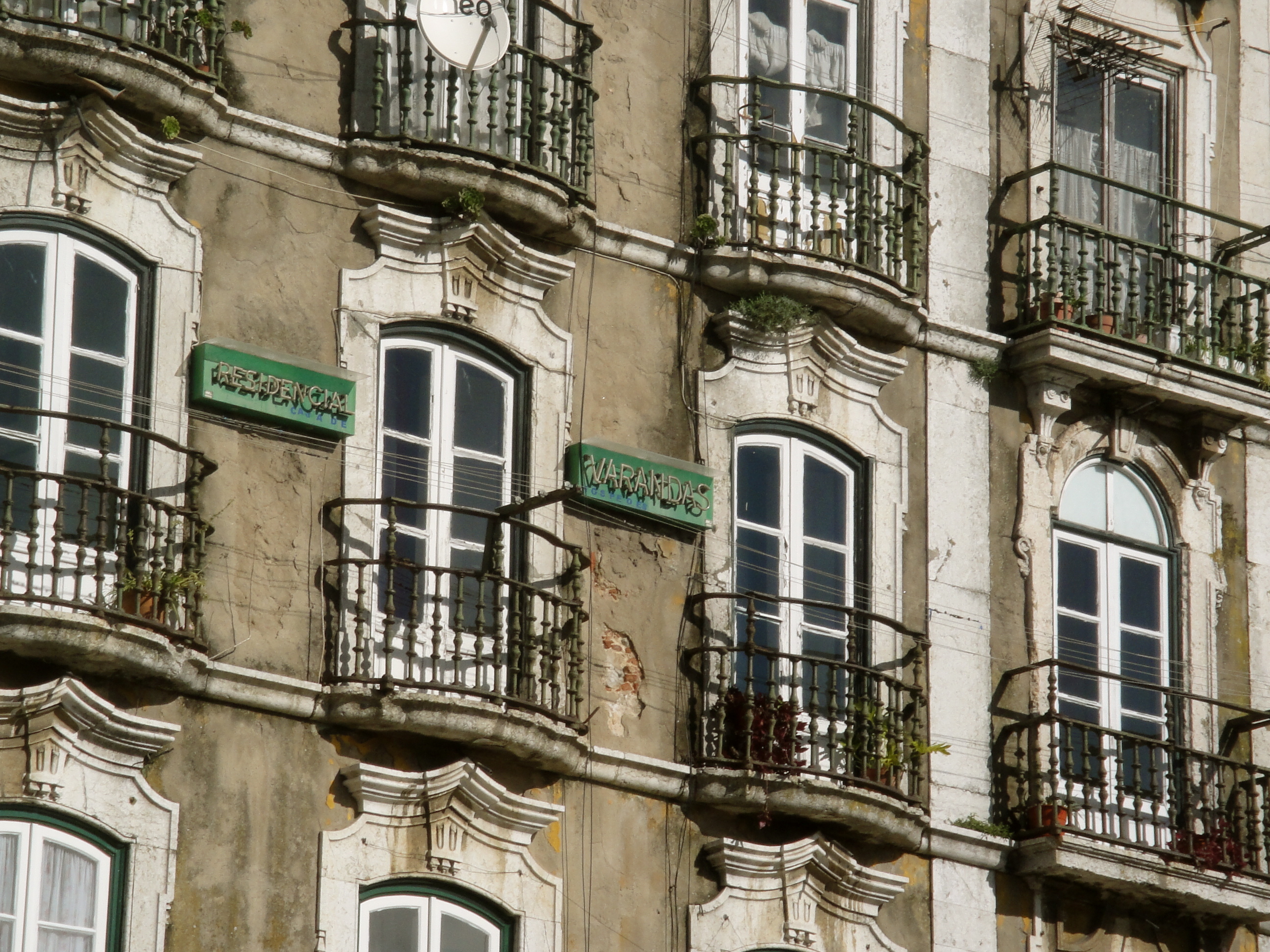

The Alfama was a joy to walk around. We had no itinerary, no predetermined destination, other than to gradually climb the winding streets upwards until reaching the Castelo de São Jorge, the castle which crowns the top of the hill. On our way we passed Sé, Lisbon’s principal Cathedral – an impressive castle-like structure from the outside, although rather gloomy on the inside; we saw the Casa dos Bicos, the conspicuous property with diamond-shaped stones adorning its facade; we marveled at the stunning views over the Eastern Tagus from the Miradouro da Graça; and we dropped into little antique shops, tiny stores crammed with ceramic cockerels, port and postcards and little chapels branded with ancient blue and white painted tiles.

Diamond-shaped stone facade of the Casa dos Bicos

The Cathedral Sé

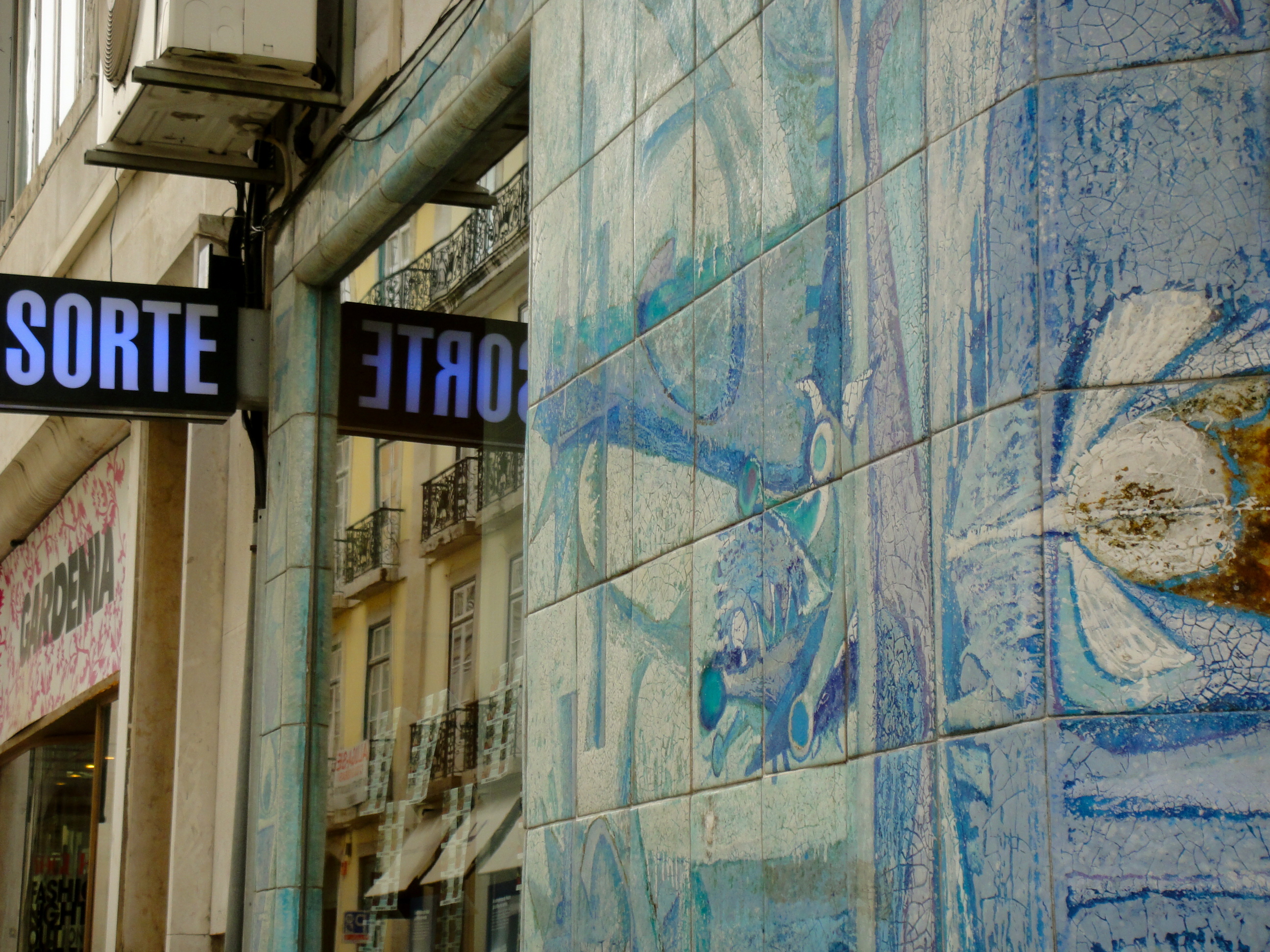
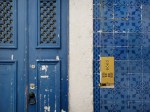
The blue and white tiled facade of Santa Luzia

View from the Miradouro da Graça
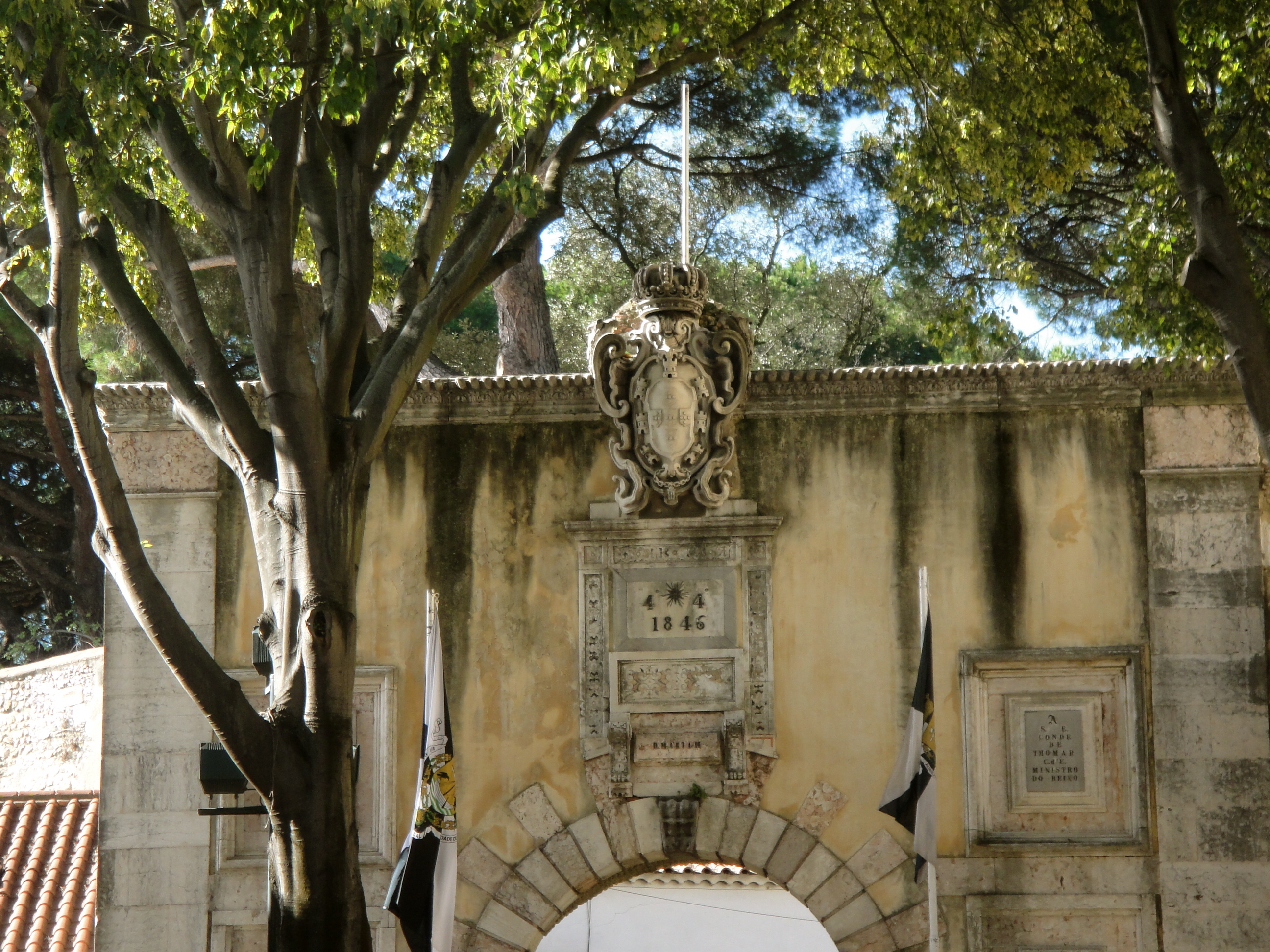
Eventually, as promised, we found our way to the Porta de São Jorge, the imposing castle gate which leads, not onto the main Castelo de São Jorge directly, but first into the ancient residential district of Santa Cruz, a tiny maze of little streets, strung with washing and adorned with pots and flowers, all of which is packed into the castle walls of this ancient citadel. We couldn’t resist exploring these streets, and although the labyrinthine quality meant that we managed to go round in circles on at least 3 occasions, we did manage to find an extremely charming little wine bar, Instinctus (Rua Santa Cruz do Castelo) where the equally charming owner treated us like guests in a family home, preparing traditional but beautifully presented, fresh and delicious bacalao (cod) and sardines, and recommending that all important Portuguese wine – a merlot grape grown in the south of the country. It rushed to our heads like a tidal wave of silken chocolate. It was delicious.
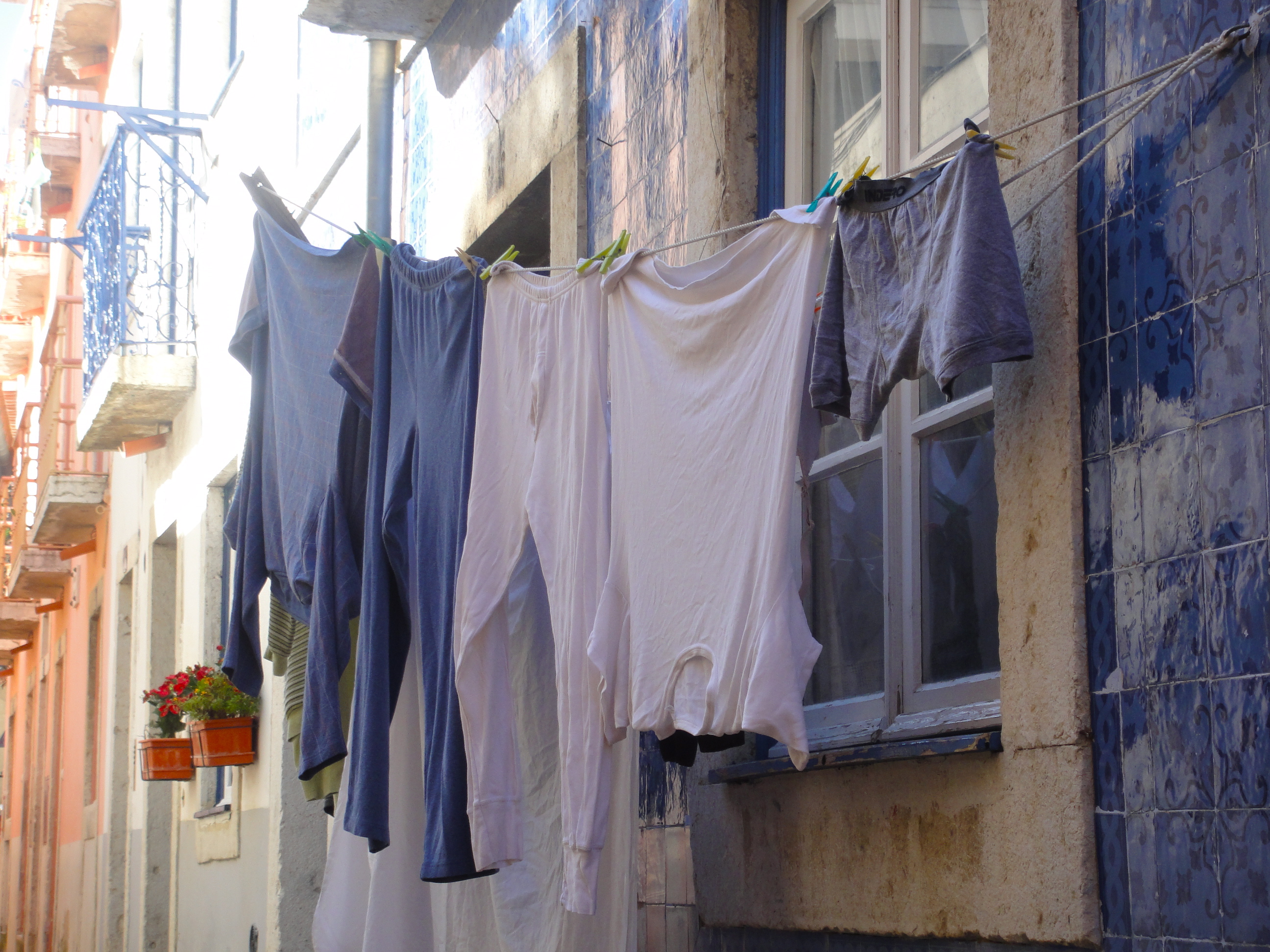


The Santa Cruz district may be small, but after lunch we managed to stumble into another cute cafe, where we indulged in the requisite coffee and a couple of pastel de natas. All this before we once again swayed along the cobbled streets and into the main complex of the castle.


The Castelo de São Jorge emanates directly from the Moorish era, captured in 1147 by the Christian King Afonso Henriquez who transformed the complex into the residence of the Portuguese Kings. The castle did not go completely unscathed in the 1755 earthquake, and many of the ramparts remained in ruins until 1938 when Salazar began a complete renovation. Rebuilding the “medieval” walls and adding gardens and the peacocks who wander around today, the result is a castle which looks both ruined and well-kept – it is an example, I think, of what they called “controlled-clutter”. Old wells, fallen pillars, large weathered stones and rusting old canons surrounded by a bounty of plant life, all set within grounds whose outer terrace boasts incredible views over central Lisbon, the Baixa, Bairro Alto and out towards Belém.


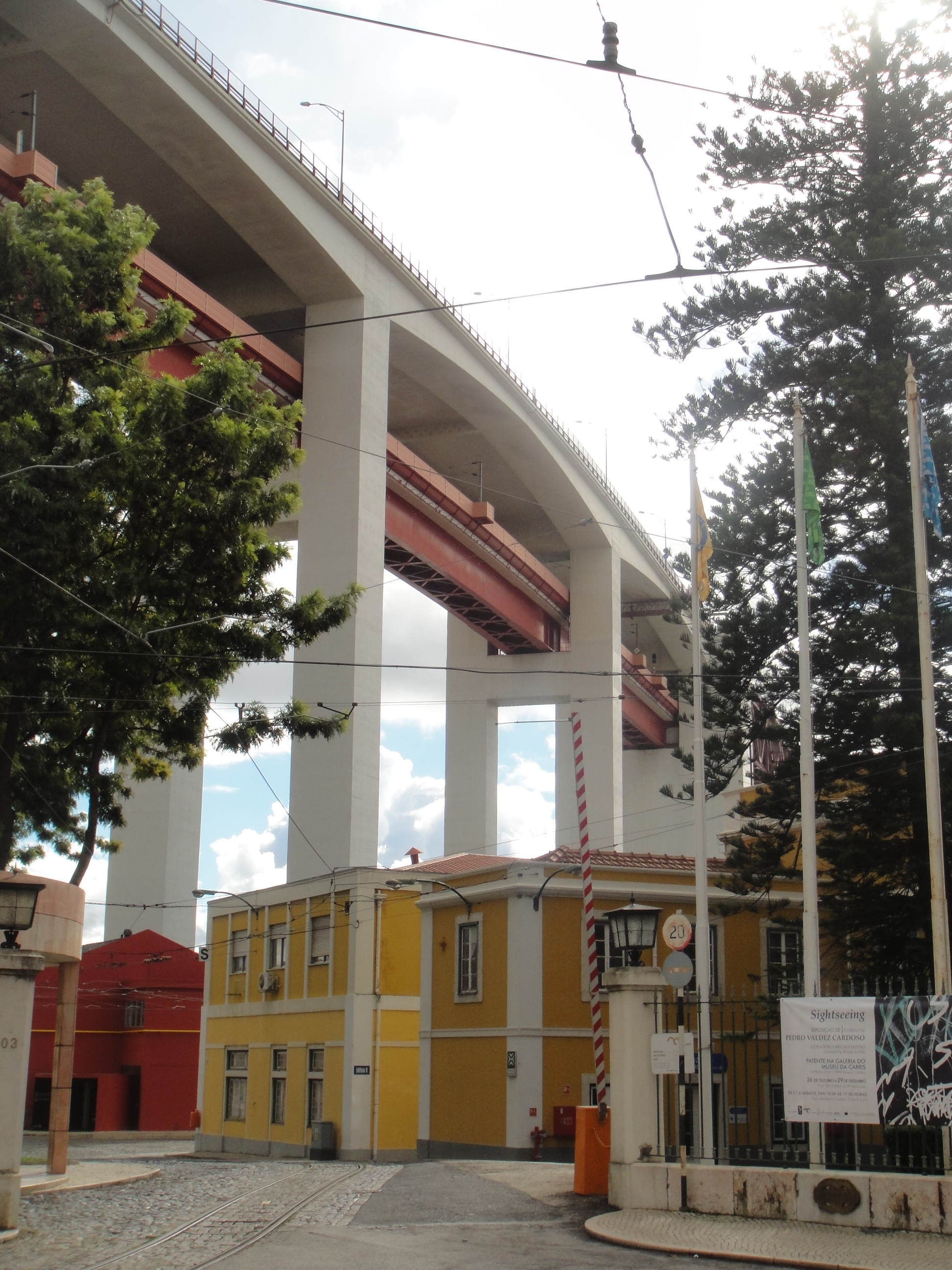
As the sun set over Lisbon and the skies gradually yellowed behind the silhouette of the 25 de Abril bridge, so too did our time in this great city start to draw to an end. Tomorrow we will leave, albeit after a further few hours of exploration. For now however it was time to leave the castle, whose ramparts were growing chilly in the increasing autumn winds and the fading peachy-hued sun, and attempt to make our way down the hill through the winding Moorish streets while we could still remember the way.

Back down in the Lx Boutique Hotel, we had a great dinner to prepare for – a tasting menu at the 100 Manieras, a restaurant whose exquisite cuisine deserves a post all of its own.
For now however…Boa-noite.
Photographs and content © Nicholas de Lacy-Brown and The Daily Norm, 2001-2012. Unauthorized use and/or duplication of the material, whether written work, photography or artwork, included within The Daily Norm without express and written permission from The Daily Norm’s author and/or owner is strictly prohibited. Excerpts and links may be used, provided that full and clear credit is given to Nicholas de Lacy-Brown and The Daily Norm with appropriate and specific direction to the original content.
Related articles
- Lisbon – Day Two: The Ages of the Sea (daily-norm.com)
- Lisbon – Day Three: The Prince of Belém (daily-norm.com)
- Lisbon – Day One: Decadence and Decay (daily-norm.com)



















































 The Daily Norm

Nov 19
Lisbon – Day Five: Bye Bye via the Baixa
Four full days in Lisbon was, it turned out, a convenient little break in which to comfortably and conveniently explore the best of the city’s four main regions: the hill of Bairro Alto, the hill of Alfama, out to Belém and back to the large avenidas of the Baixa, splaying upwards from the Tagus and outwards North of the city in a valley between the two hills. Although this was officially our fifth day in the city, the first, once we had arrived, was more of an evening of orientation. Today, with our suitcases packed, and the Lx Boutique Hotel left behind, the bulk of the day reminded available for discovery, with an evening flight giving us time for one last Lisbon hurrah. It was to the Baixa we headed, perhaps mercifully so, as after four previous days of trekking up what are, at times, the steep streets of Lisbon, the Baxia provided plenty of spacious, flat boulevards and squares for us to explore with comparative ease.
Chestnut seller
The Baixa region is far more typical of a southern European city. Built in the aftermath of Lisbon’s deadly 1755 earthquake in a grid-like layout which allowed for wide sweeping avenues and grand open squares, the Baixa really shows off Lisbon to the full. This is where you find the opulent fountains, the monuments, the old palaces and the new shopping districts which are to be expected of a capital city. Here the buildings are largely Neo-Classical, grander and better preserved. The streets bustle not just with tourists but with the working masses of the city. And although the sun was shining hard, the many shops lining the grand boulevards were packed with Christmas goodies, while on the roadsides, chestnuts were being roasted pouring plumes of smoke into the air and spreading a distinctive warming smell of Christmas all around.
We began the day in the Praça do Municipio, and more particularly the City Hall, where an incredibly interesting, and free of charge photography exhibition examined Lisbon’s significant role during WW2. As a neutral country and on the edge of Europe, Lisbon became a place of escape from the toils of Europe. It handled the exile of significant numbers of escaping Jewish refugees, but was also a place of espionage, spies and political deals, as both Germany and England fought to keep the favour of Salizar and in particular ensure supplies of the natural minerals which, once mined, could prove significant to the production of weaponry during the war. But despite all of this, Lisbon retained some element of normality during a time of European strife. For those lucky enough to have escaped the rest of warring Europe, Lisbon was a place of relative tranquility, albeit laced with suspicion, full of secret police and suffering more and more from food shortages as the war went on.
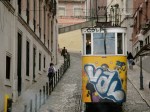
Back in the modern world, and turning from the photos of black and white to the vivid blues of a Portuguese sky, the deep “royal” yellow of the old palace surrounding the impressive Praça do Comércio, and the reds and yellows of the old trams passing through the square, we headed to this former site of the Portuguese royal palace before it became administrative offices of the Republican government following Portugal’s 1910 revolution. Open on one end of the square to the glittering River Tagus beyond, we determined the square to be a perfect location for a coffee, sitting down to do just that while basking in the sun for as long as possible before our later departure to colder climes.
After coffee, we crossed under the impressive triumphal arch to the north of the square, up the Ruo Augusta and into the shopping streets and the great squares beyond. The decay and detrioration of much of Lisbon was not so obvious here, as grandeur dominated and scale took over.
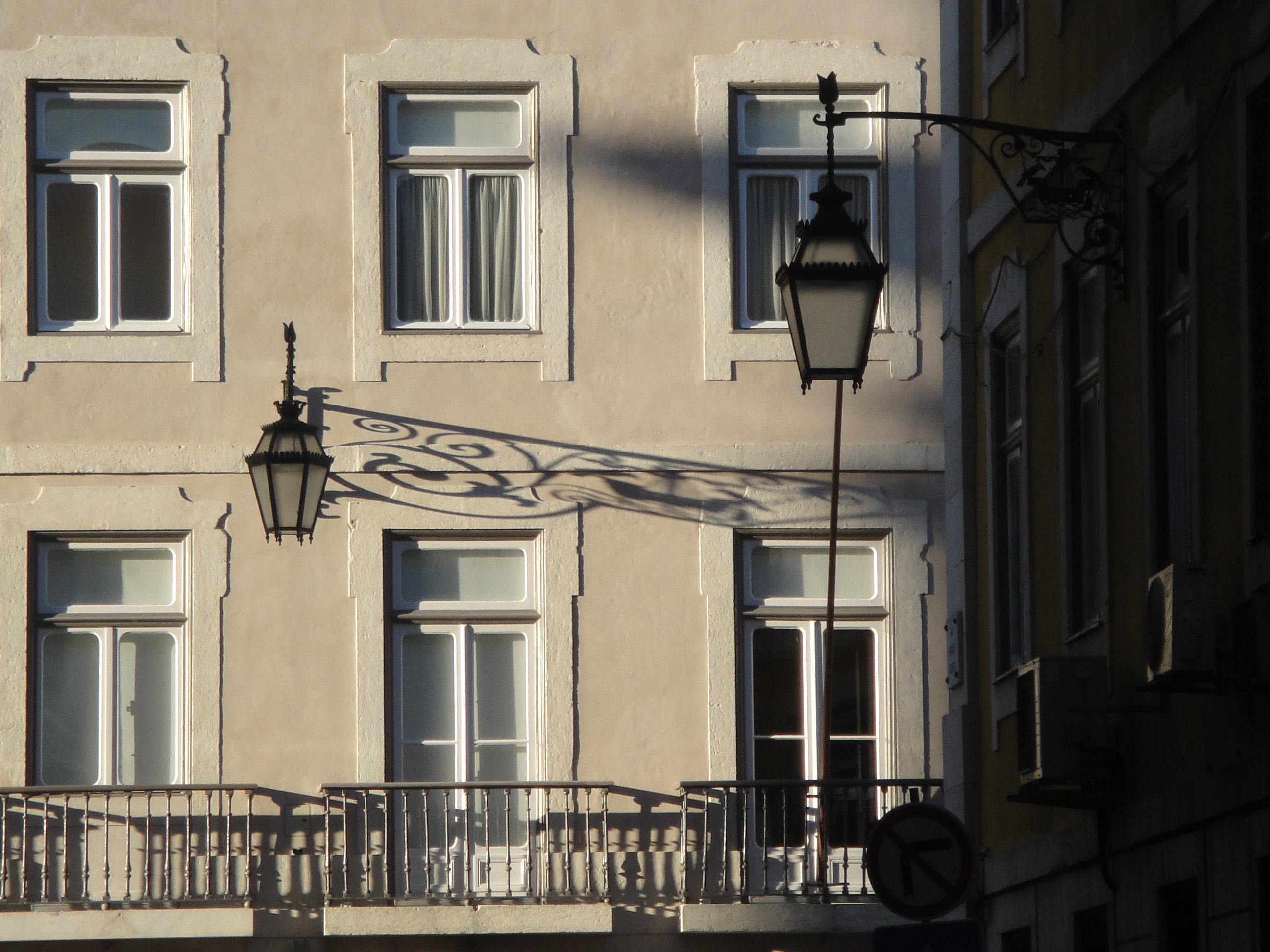
In the Praça Dom Pedro IV, two huge working fountains made a marked contrast to the fountains further North in the city, left to go green with disuse. The square is flanked on one side by the eye-catching Neo-Manueline face of the Rossio Station, complete with two Moorish-style horse-shoe arches and, sadly, a Starbucks. To the North, another grand square, the Praça dos Restauradores boasts a grand obelisk, adorned with sculptures paying homage to those who gave their life during the War of Restoration, while to the East, the Praça da Figuera is home to hundreds of pigeons and the imposing statue of King João I. Here you can quite clearly see Lisbon in its heyday, the grand European capital which was saviour to so many during WW2. You can sense the splendour of the past and see history and grandeur oozing from every building facade and lamp post. And unlike many other European capitals, the squares of Lisbon benefit from the rolling topography of its surroundings, so that in every grand boulevard and Praça, a backdrop of the Alfama and the Castelo de São Jorge, or a straight vista to the sparkling Tagus, provides the visitor with a multi-layered feast for the eyes. A landscape rich in its historical and architectural diversity.
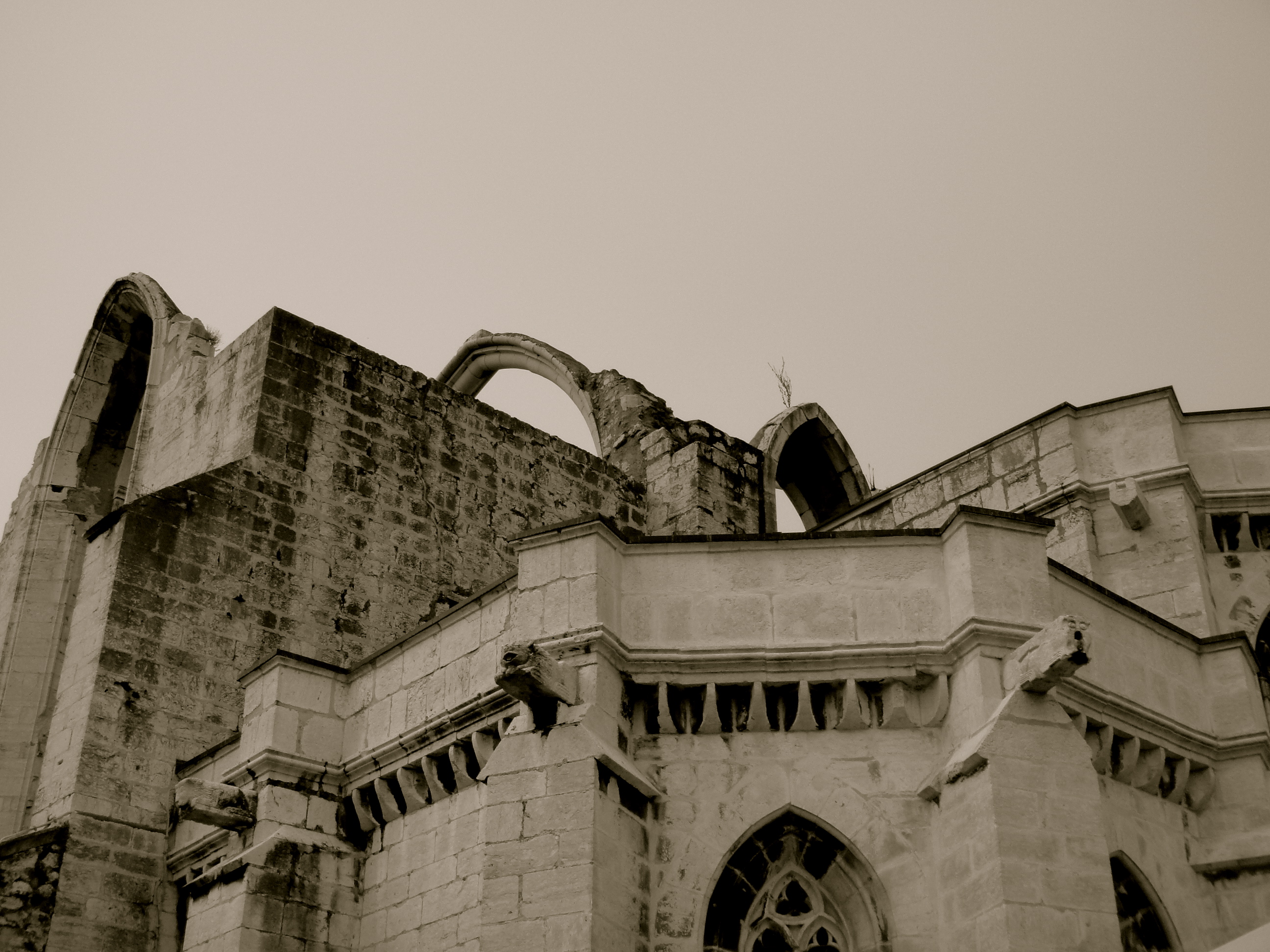
Unmentioned in my travel guide, and not at all obvious from the outside, the interior of this church made my heart miss a beat. Not because of the usual offerings of elaborate gilded beauty and over the top baroque decorations. Quite the opposite. Apparently (so I have learned subsequently), the church suffered a huge fire in 1954, with the result that its interior ornamentation, surface marbles, stone work – pretty much every embellishment was completely destroyed. Having never been renovated, but only the ceiling painted a terracotta orange, the church is utterly bare of all ornamentation, showing its raw and tender bruising and wounds with the dignity of a religious martyr; its statues now unrecognisable, its stone work covered in huge great cracks, holes and patches of damp and detritus. Where the sun streamed in through the southern windows and hit various aspects of the architectural damage, it looked like the church had been submerged for centuries under an ocean gloom, only recently recovered and showing the acid wounds of its salty submersion, or like the cobweb covered, partially decomposed wedding banquet of Dickens’ Miss Havisham. And this deeply inflicted damage was all the more obvious and painful because this church has not been left as ruins. Rather, as a fully used institution, the tidy pews and perfectly smooth ceiling mark a dramatic contrast to the wounds inflicted underneath. This was an unmissable experience, a moment of great epiphany and one which no visitor to Lisbon should miss.
So the day was proceeding fast, and all that really remained for us to do was to sit back, in the glaring autumn sunshine, and enjoy a perfect plate of squid and octapus and a few glasses of ice cold white wine, whiling away the remaining hours before the inevitable return journey began. Time to reflect on a grand tour through a compact but multifaceted city, from castles to rivers, and art museums to stunning churches; time to appreciate the wonderful Lx Boutique Hotel, the great food consumed, and the fantastic restaurants found to recommend and maybe return to one day; time to enjoy the heat of summer once more, before the start of a long frosty winter back in London.
Like the fall of autumn leaves on a windy November day, the scenes from that sun-drenched lunchtime are now dissipating away, as I sit here, returned to London, back in the darkness of a winter’s evening. Distracted by the work I must return to, the practicalities of ironing, and washing, and making myself food, my connection with my holiday grows weaker by the minute, as the warmth of the sun is forever shrouded in the weak light of November, and our shiny red cockerel is the sole remaining proximity to the spirited Portugal of our holiday’s brief acquaintance. But with this blog, my separation is tempered, my ties with Lisbon reforming as I reconnect through cyberspace and share my experiences with you all. Day five is over, but my memories have only just begun.
Still to come: Lisbon – the food, and many more photos. See you then.
Photographs and content © Nicholas de Lacy-Brown and The Daily Norm, 2001-2012. Unauthorized use and/or duplication of the material, whether written work, photography or artwork, included within The Daily Norm without express and written permission from The Daily Norm’s author and/or owner is strictly prohibited. Excerpts and links may be used, provided that full and clear credit is given to Nicholas de Lacy-Brown and The Daily Norm with appropriate and specific direction to the original content.
Related articles