Skip to content

Sunday Supplement: Dicing with Death (La Pieta)

On last week’s Sunday Supplement, I got the ball rolling with an exploration of some of my more traumatic paintings, created while in the immediate and protracted recovery from my nasty life-changing collision with a collapsing wall. In today’s Sunday Supplement, I am featuring the fourth of my accident paintings, and perhaps the most intimate and private of them all.

Dicing with Death (La Pieta de l’accident) explores the nursing roll undertaken by my mother is the aftermath of my accident. While as a family, we had always been close, post-accident, a new extent of proximity was forced upon us, as I went back to being practically a baby in the everyday attention I required. Recovery in hospital was one thing, but three weeks later when I was discharged to my family home in Sussex, the real horrors of my convalescence begun. The daily trauma of wearing an illazarov frame, having to clean around the pin entry point, waking up to sheets soaked in blood, screams of agony when I tried to move from bed to the bathroom, and in the middle of the night when I could stand the pain no longer. All of this was for my parents to bear, and for my mother in particular, who was compelled to be a nurse as well as a physio, feeder and grieving mother, and once again become physically intimate with me when I needed help dressing, cleaning, even going to the toilet, it was a huge ordeal to experience.
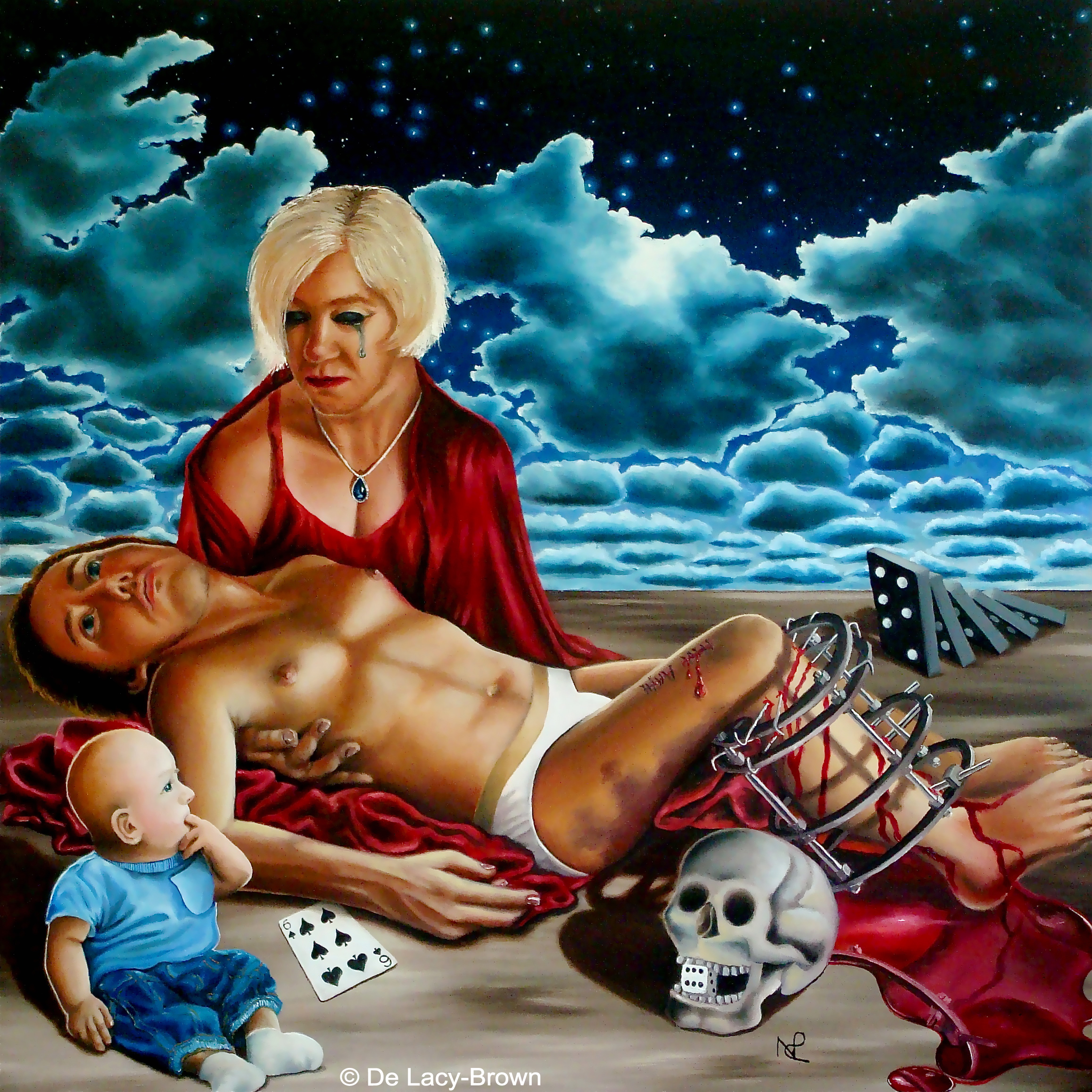
Dicing with Death (La Pieta de l’accident) 2008 © Nicholas de Lacy-Brown, oil on canvas 120cm x 120cm

The worry, the concern and the strain this had on both of my parents was plain to see, even through the fog of pain which clouded my eyes during those terrible months. My attempt at expressing the uncontrollable spread of the effects of my accident upon my family was to paint this work. It is loosely based on the famous La Pieta sculpture by Michelangelo, which poingantly portrays the grieving Mary cradling, with disbelief and agony, the limp dead body of her son. How different this pose is from the celebratory felicity of the typical mother and child pose, the glowing Mary with her new baby Jesus.

Michelangelo’s La Pieta

It was tapping into the great pathos portrayed by La Pieta that I chose to reflect the pose in my Mother, cradling me, the wounded young adult in her arms, not dead, but so close to it as I practically embraced my end under the weight of a crushing collapsed 10ft concrete wall. There too is my baby nephew, born only a few days before the accident, representing both innocence and the cross-generational effect of my trauma, and also in the scene, a skull, reminding me of how close to death I came. The playing cards, the falling dominoes and the dice all go to represent the great gamble we take every day of our life – when everything appears normal until one, life-changing event occurs and alters everything for ever: Look then how the dominoes will fall and the effects of the event begin to traverse every facet of your existence.

Michelangelo’s La Piete is not unique of course, and I leave you with two other variations on the theme – Bellini’s painting, and Picasso’s heart-wrenching study for his great masterpiece of grief and tragedy, Guernica. 

Bellini’s La Pieta

Mother and Child by Picasso

© Nicholas de Lacy-Brown and The Daily Norm, 2001-2012. Unauthorized use and/or duplication of the material, whether written work, photography or artwork, included within The Daily Norm without express and written permission from The Daily Norm’s author and/or owner is strictly prohibited. Excerpts and links may be used, provided that full and clear credit is given to Nicholas de Lacy-Brown and The Daily Norm with appropriate and specific direction to the original content.

Switching the artistic spotlight onto Liverpool: The John Moores Painting Prize 2012

In 1957, Sir John Moores, one time head of the clothing catalogue giant, Littlewoods, established his painting prize. His aim was to draw the attention of the artistic world from the bright lights of London, and instead to illuminate the talent and creativity of the North. Of course, inevitably, being that the prize, like the Royal Academy’s Summer Exhibition, is open to submissions from artists all over the country, it doesn’t necessarily steer that spotlight any brighter over Northern artists than those from the South. Nevertheless, every two years, when the prize, and the exhibition that goes with it, is held at the Walker Gallery in Liverpool, it certainly does its bit to place Liverpool on the cultural map. In fact, some go so far as to call the painting prize the Oscars of the British painting world. It is certainly renowned for spotting rising talent, with previous winners reading like a roll call of the most influencial artists of the last 50 years of British painting, from David Hockney and Richard Hamilton, to Peter Doig.

Paul Collinson’s Temple of Ancient Virtue (2010)

This year, the exhibition is shown as part of the Liverpool Biennial, which also includes other forerunners of the Liverpudlian art scene, such as Tate Liverpool on the Albert Docks. It contains some 62 paintings, whittled down from some 3000 hopefuls (which included my painting which was disgracefully turned down) by a panel of judges which included creative director of the BBC, Alan Yentob, and Iwona Blazwick, director of the Whitechapel gallery as well as previous exhibitors.

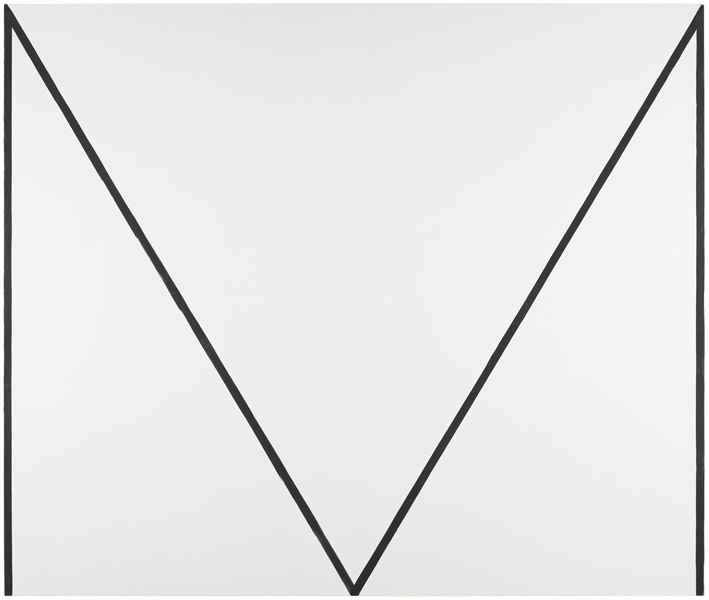
Ian Law, M is Many (2011)

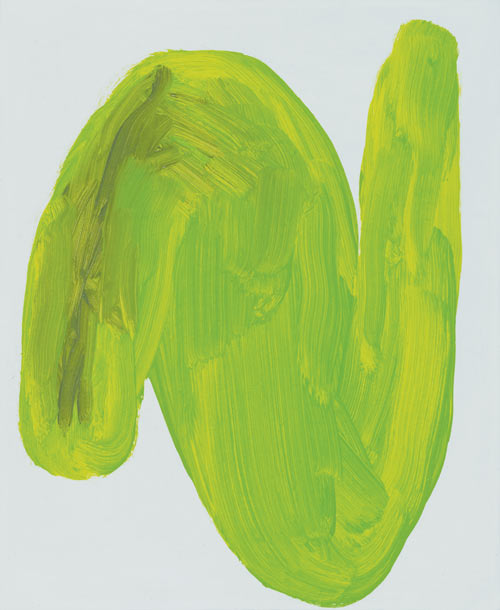
This year’s prize was as varied as ever, but perhaps more manageable than the larger Summer Exhibition – it only fills a few galleries, and in those, the paintings are mercifully spread out so as not to bamboozle the viewer with a “salon style” hang. Of course, as is inevitable in any contemporary art prize, this show had its fair share of “works” whose artistic merit remained highly questionable, like M is many by Ian Law, which basically depicts a black line on a white canvas which, because of its purely geometric form manages to resemble an “M” without doing anything else (oh, and it won a prize, by the way), or Oscar Godfrey’s Mineral 9, a badly painted green curve on a white background, which, if painted with his phlegm may have had more merit, although the colour resembles little else.

Oscar Godfrey, Mineral 9 (2011)

Luckily for those of us who had traipsed several hundred miles from London to visit the exhibition, many of the other paintings showed much more promise. I really loved Emma Talbot’s, The Good Terrorists, which showed a cross-section of a large Victorian looking townhouse, with a number of faceless characters getting up to all sorts in the various rooms of the house. Somehow it seemed quite spooky to me, whether it was because of the faceless individuals who were yet full of expression, or because the roof of the house, with its shattered window, resembled the creepy hotel in Hitchcock’s acclaimed thriller, Psycho. The attention to detail made for great viewing, and I like the way that both the interior and exterior of the house could be seen in tandem.

Emma Talbot, The Good Terrorists

Damien Meade’s Talcum (2011)

Also on my watch list were Virginia Phongathorn’s Comma (Test Piece for an Eye Break) which to my mind looked more like a figure wearing headphones rather than a grammatical symbol, and also reminded me of the work of Philip Guston; I also liked Damien Meade’s Talcum, which looked much like a figure from Cluedo with a super-realistic painted sculptural mess upon its head, and Paul Collinson’s Temple of Ancient Virtue (above) which, painted with blurred edges like an off-focus photograph cleverly combines two forms of abandonment – the relics of an abandoned past, and dilapidated graffiti-covered snack bar of the recently vandalised present. I must also include in my favourites list Elizabeth Magill’s Sighting – too fantastical for some tastes maybe, but this piece really excels in close up, where a mysterious forest atmosphere is filled with little bubbles, specs of glittering dust and nearly missed magical hummingbirds. A wonderfully figurative piece for so contemporary a show.

Virginia Phongsathorn’s Comma (2011)

Elizabeth Magill, Sighting

What is perhaps best of all about the John Moores prize is not that it promotes Liverpool, although there is much to be said for that, but that it promotes painting, a so often overlooked media in the modern age, but one which will, in my opinion, outlive the age of installation, and remain at the centre of art history and art present for centuries to come.

The John Moores Prize is showing at the Walker Gallery until 6 January 2013.

Architectural Innovation in Liverpool

Coming as I do from the South Coast of England, my move to London 10 years ago seemed like quite a long way north to go. And living as I do in South London, I find any journey further north in the city than Bloomsbury to be a slight disorientating prospect. The idea therefore of going to Northern England, as I did last weekend, let alone finding a wealth of cultural and artistic gems up there was simply never conceivable. Which just goes to show how wrong I was.

Too often the rest of the UK is left in the very long shadow left by London’s worldwide glory. When tourists come to England, they head to London, and maybe Brighton if you’re lucky – they probably don’t even know the names of many of our other major cities. Having said this, the city of Liverpool has always been one step ahead. Not only was it a major shipbuilder of the past, putting its name to ships as famous as the Titanic, but it was also birthplace of the Beatles, the foursome who were inextricably linked with their hometown throughout their careers.

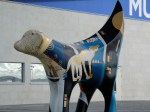
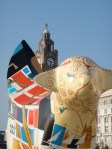
But today, Liverpool has gone so much further than being just the birthplace of the Beatles, and the name painted on the fated Titanic, and has proved itself to be a self-standing centre of artistic excellence, ready to shine in its own right. In fact, Liverpool is already being recognised as the UK’s new cultural capital: In 2008 it was the European Capital of Culture, and there can be little surprise why the city was chosen above the likes of London – it is literally bursting at the seams with culture, offering a cornucopia of superb art works hanging in the Walker Gallery including Pre-Raphaelite favourites and works by the likes of Hockney and Banksy, playing host to the biannual John Moores Painting Prize, and supporting innovative street art and sculpture like the now iconic Lambanana sculpture by Taro Chiezo which has very quickly become a symbol of the city. However, above all things, it is in its architecture, in my opinion, that Liverpool really shines.

An amazing mix of architectural styles

Old meets new

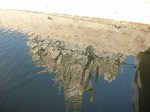
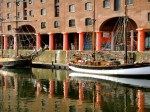
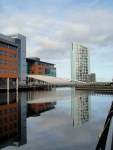
The Albert Docks reflected in the window of Danish-designed Museum of Liverpool

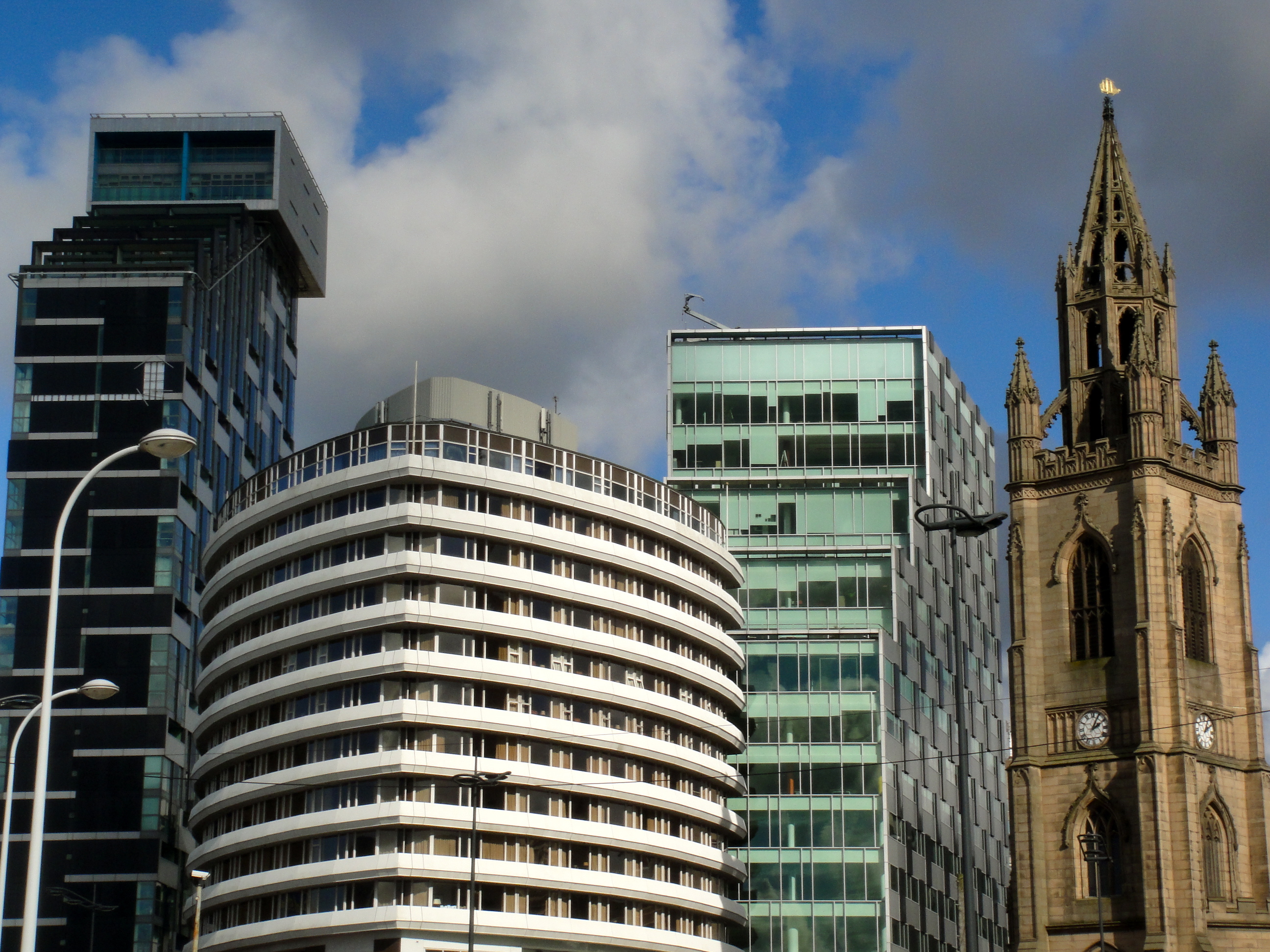
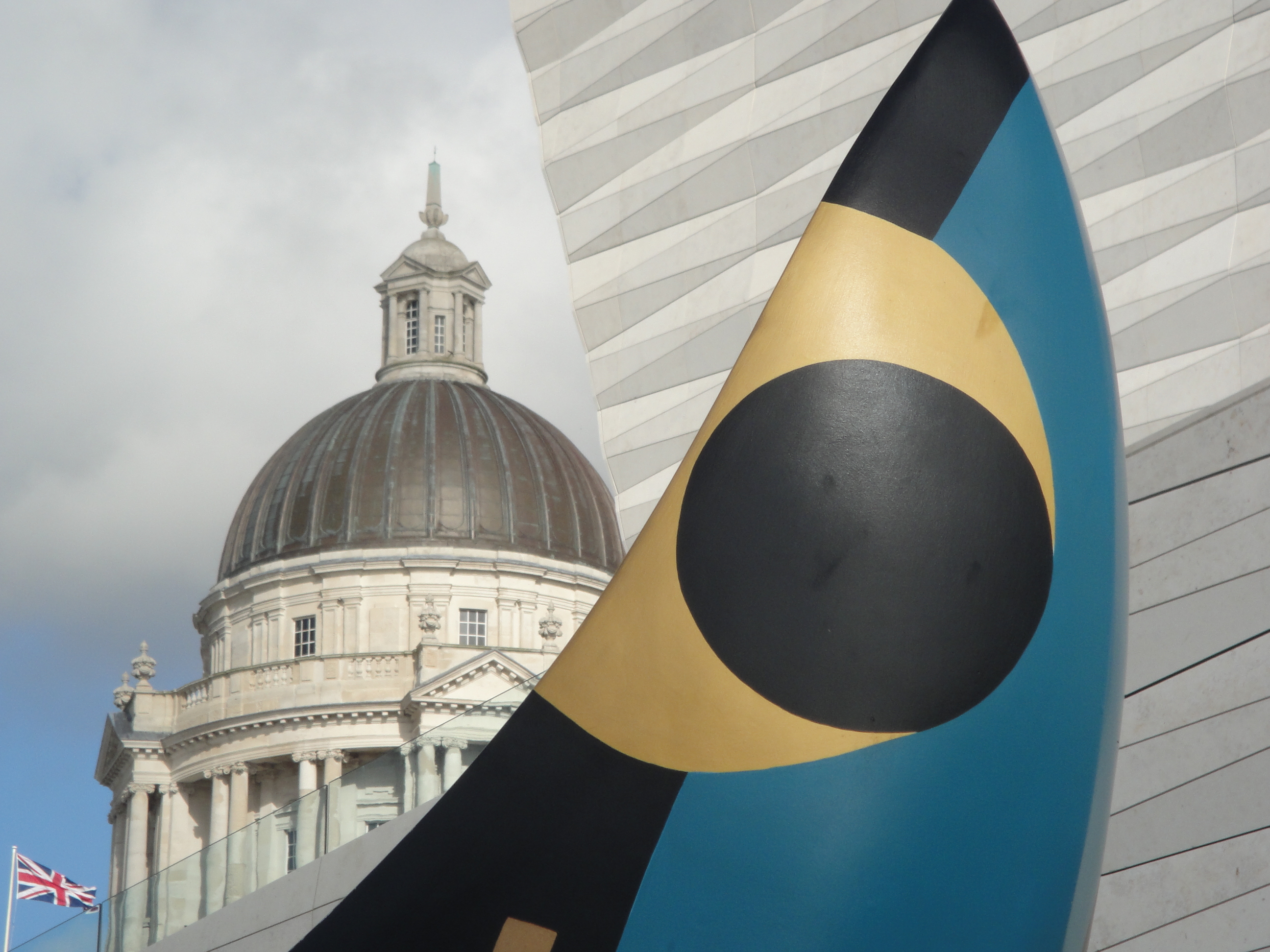
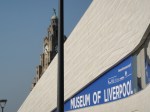
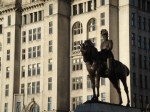
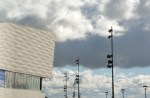
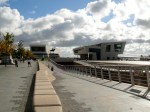
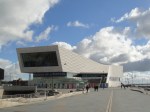
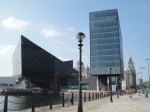
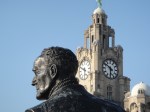
The architecture of the city is so fantastically mixed, so innovative in places and classical in others that one feels disbelief that planning permission was ever granted, and at the same time great relief that it was. So often, when in front of the likes of Bilbao’s Guggenheim by Frank Gehry, or on seeing the incredible curves of the vineyard building of Marquez de Riscal in the Rioja region of Spain, I have bemoaned the lack of British imagination when it comes to installing creative new architectural projects. Most of the new buildings going up in London are pretty standard skyscrapers, and not very exciting at all. Yes, so the Shard is tall, but it’s not all that interesting besides. Yet in Liverpool, you have a superb array of new architectural projects which fill the city with contemporary relevance and an air of bold innovation and creative exploration. From the beauty of the UNESCO protected “Three Graces” (the Liver Building, the Cunard Building and the Port of Liverpool Building) full of neo-classical extravagance and art-deco sophistication, you have the wonderfully regulated but faultlessly reinvigorated Albert Docks, and the brilliant new iconic creation of the curvaceous yet cubic  Museum of Liverpool (by Danish architect Kim Nielson) and the geometric and irregular Pier Head Ferry Terminal by Belfast architects, Hamilton’s.

The result is a brilliant mix of old and new; the old reflected in the sheer glass of the modern, the contemporary lines balancing out the elaborate facades of the old. Liverpool gives you hard industrial edges with refined cultural collections. Serious maritime history with playful Japanese sculptures. And all this some 2 hours north of London – it’s about time the spotlight of the world switched north and showed those European architectural innovators that the UK can do contemporary design too.

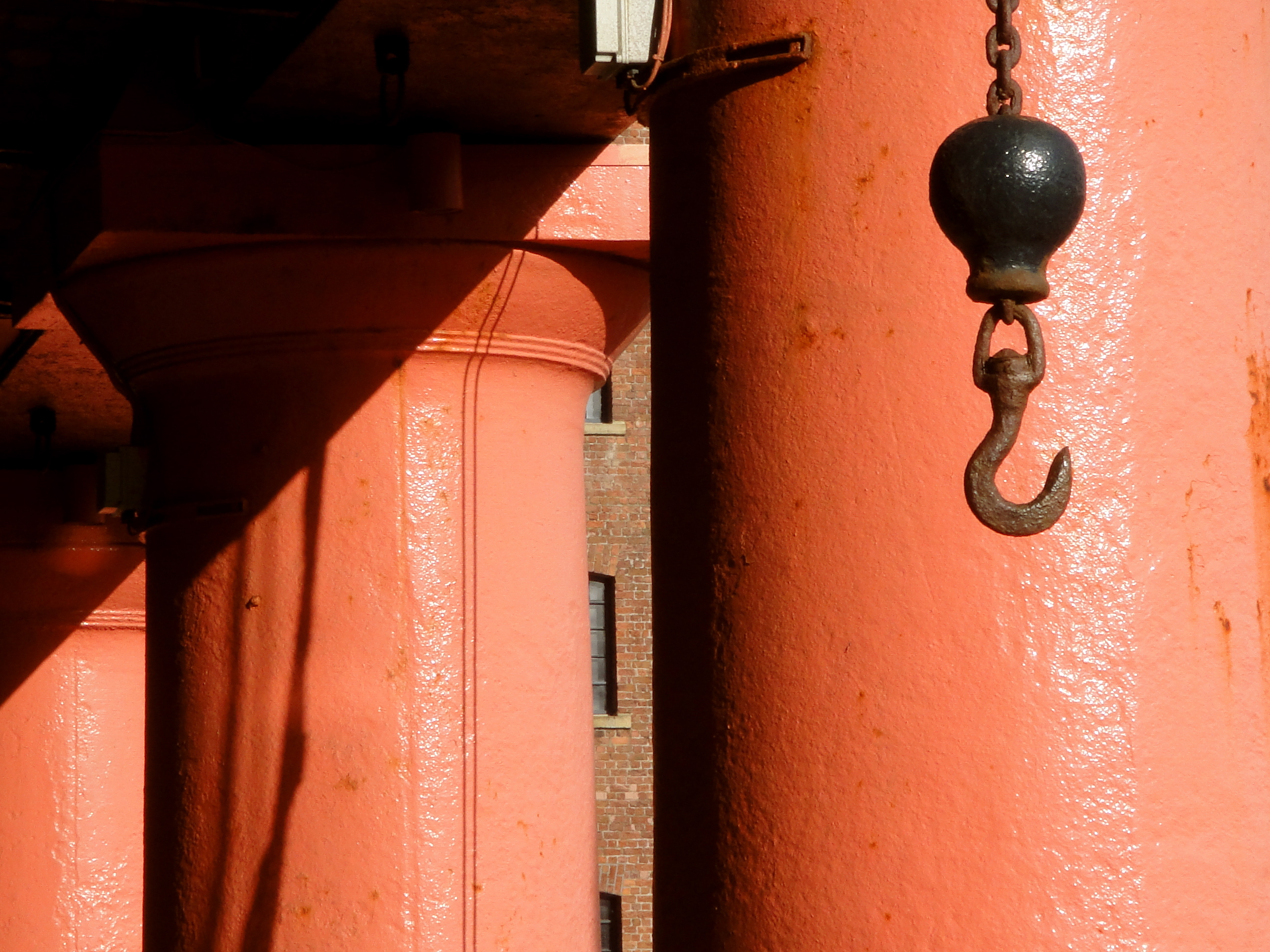
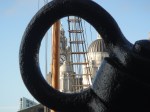
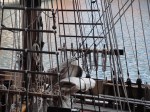
I leave you with some of my photos from the weekend. Enjoy!

© Nicholas de Lacy-Brown and The Daily Norm, 2001-2012. Unauthorized use and/or duplication of the material, whether written work, photography or artwork, included within The Daily Norm without express and written permission from The Daily Norm’s author and/or owner is strictly prohibited. Excerpts and links may be used, provided that full and clear credit is given to Nicholas de Lacy-Brown and The Daily Norm with appropriate and specific direction to the original content.

Collecting conkers for a classy seasonal display

Collecting conkers, fallen from the golden boughs of large horse-chestnut trees, bursting as they are around this time with green spiky cases with their shiny auburn seeds, has always held something of a legendary status for me. When I was younger, it seemed that anyone who was anyone went conker collecting, and the more, the plumper, the shiner you could collect, the better. Of course tradition dictates that conkers are collected, threaded on a string, and then used in a good old game of conker and string, knocking the conkers together until one breaks, the winner being he or she who’s conker remains intact the longest.

Off on our conker search (that’s us in the shadows!)

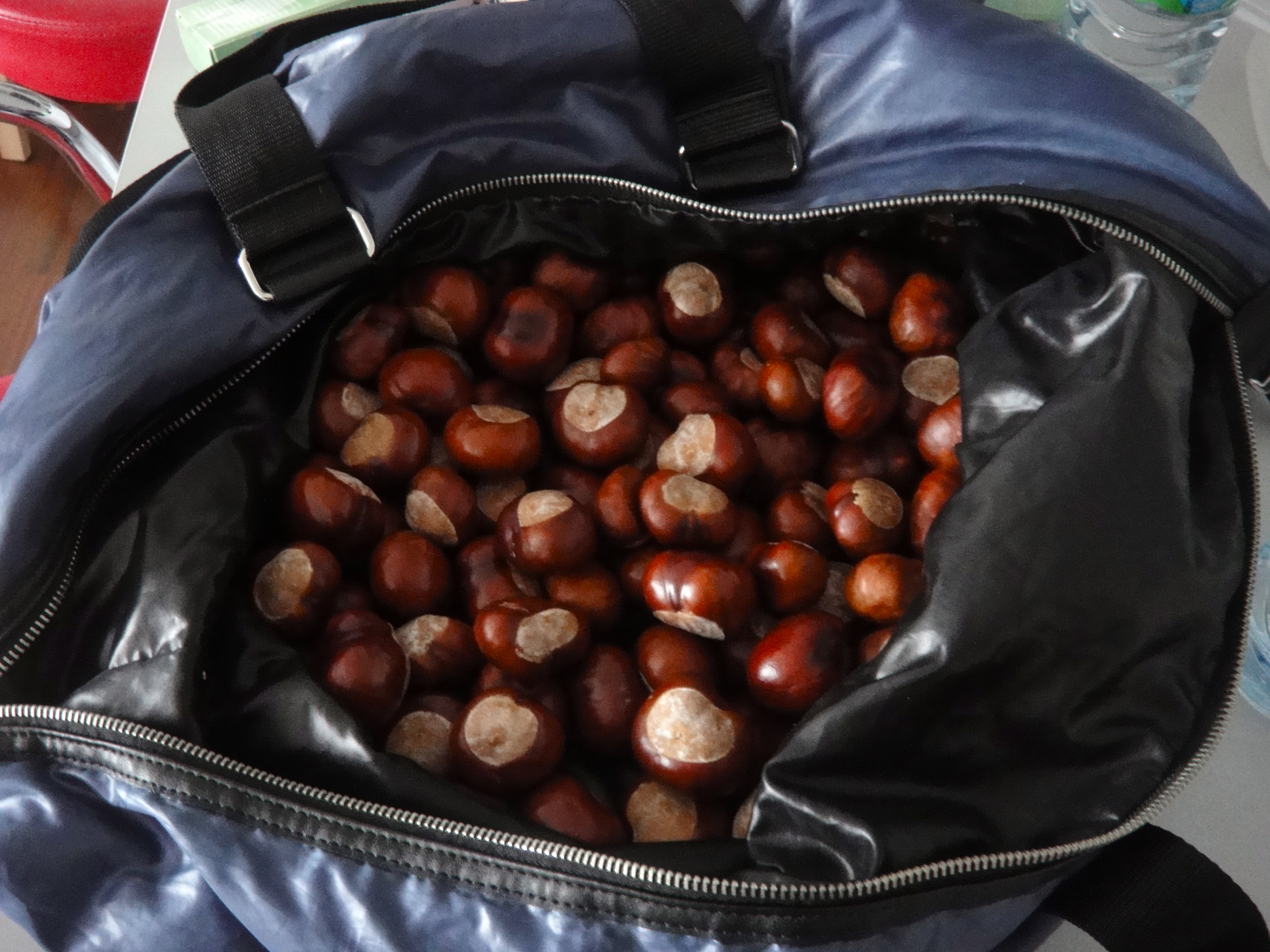
Our conker haul!

The conker game never really appealed to me, but the thrill of finding these shiny round autumn gems certainly satisfied my magpie nature. There was always a great joy to be had in hunting them down, looking amongst piles of crispy brown fallen leaves, all around the wide tree trunks, and coming across a large, plump shiny chestnut-red conker, freshly fallen from the inside of its silky white enclosure, the pure and soft antithesis of the outer thorny shell.

Even now, I love the smell of freshly fallen leaves, slowly starting to decompose in the fresh damp air and the crisp sunny mornings, the scent recalling to my mind those long autumn walks and the joy of collection and discovery, of acorns and conkers, of spiky seeds and ruby red leaves. Living so close to Clapham Common, I have a host of large trees on my doorstep. Unlike the autumns of my Sussex childhood, when my father would use his umbrella to try and pull more conkers down from the trees, such was their scarcity, now, in a single walk, I can bring in a haul of freshly fallen conkers, before the high gloss marbled brown shells have gone dull, or been pecked at my birds or squirrels.

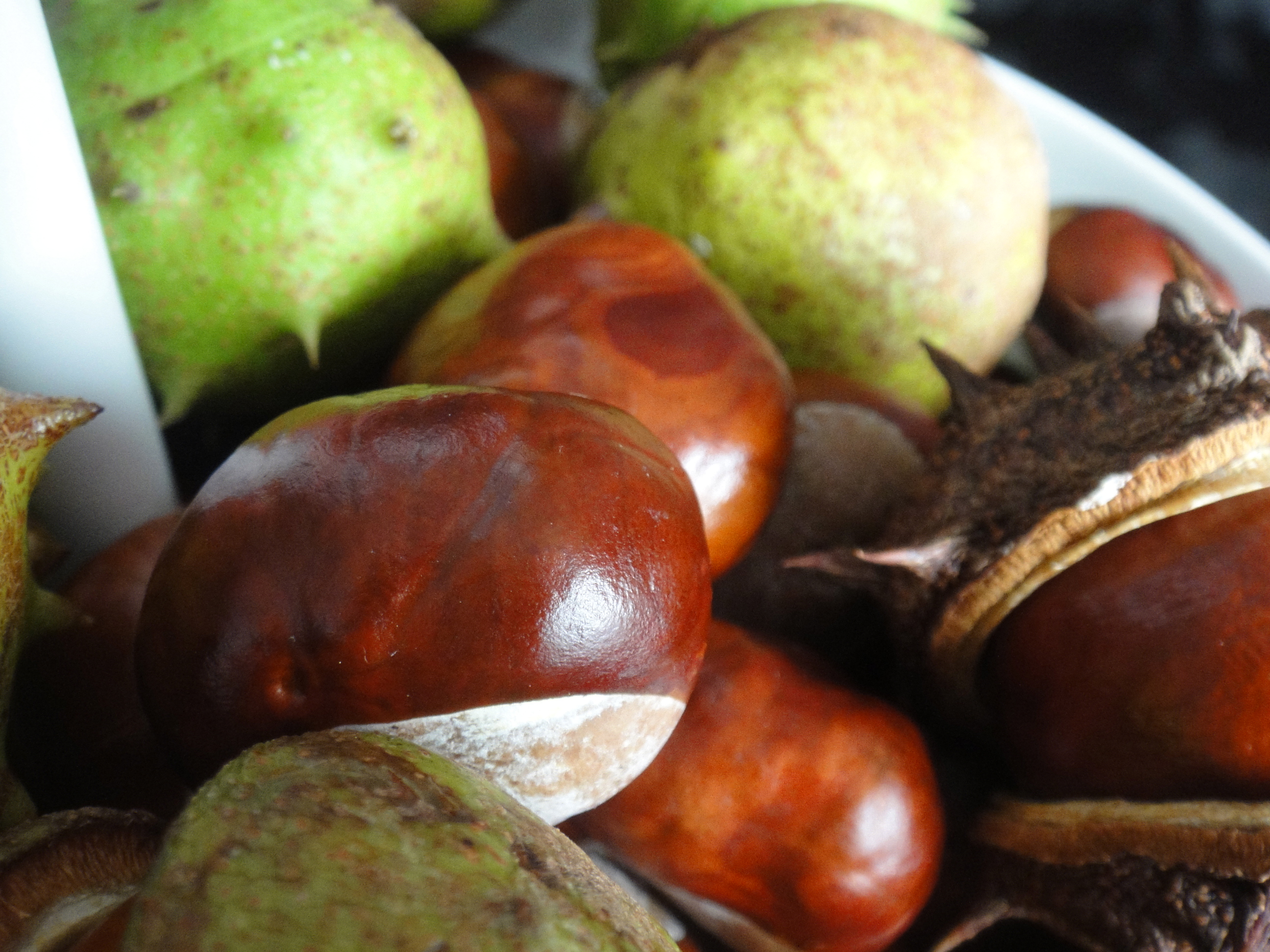
A shiny conker bursting from its shell

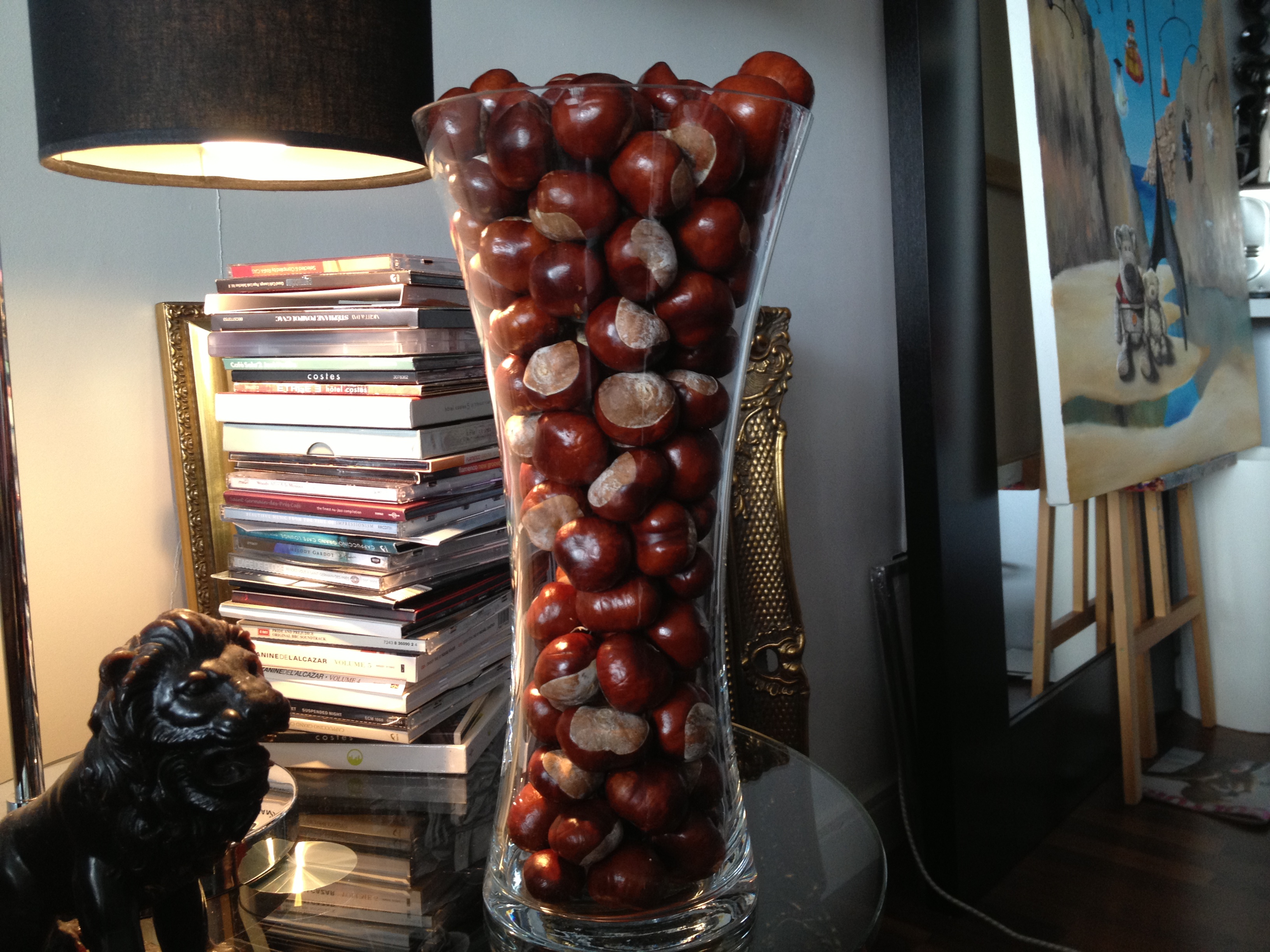
It was one such haul which I collected for myself the other day, as has become a new more adult tradition of my later years here in London. Depending on what I find, I tend to display my collection in fruit bowls so that their lustrous glory can be reflected upon during these darkening autumn days. And this year, so impressed was I with my find, that I even filled a vase full of them too. You should try it – while they don’t last forever, they’re guaranteed to last longer than your average vase of flowers, and better still, they’re free! Try getting a few barely opened complete pods – these will take a few days to open and when they do, the fresh shine of the conker within will look especially good in your display.

Displayed in our fruit bowl

Mixing other autumn seeds into the mix

My vase display

I leave you with some shots of the acorns and conkers I painted as part of my Richmond Park painting last year. Happy conker hunting!

Conkers as featured in my painting of Richmond Park last year

© Nicholas de Lacy-Brown and The Daily Norm, 2001-2012. Unauthorized use and/or duplication of the material, whether written work, photography or artwork, included within The Daily Norm without express and written permission from The Daily Norm’s author and/or owner is strictly prohibited. Excerpts and links may be used, provided that full and clear credit is given to Nicholas de Lacy-Brown and The Daily Norm with appropriate and specific direction to the original content.


Rothko vandalism calls into question the accessibility of Britain’s art

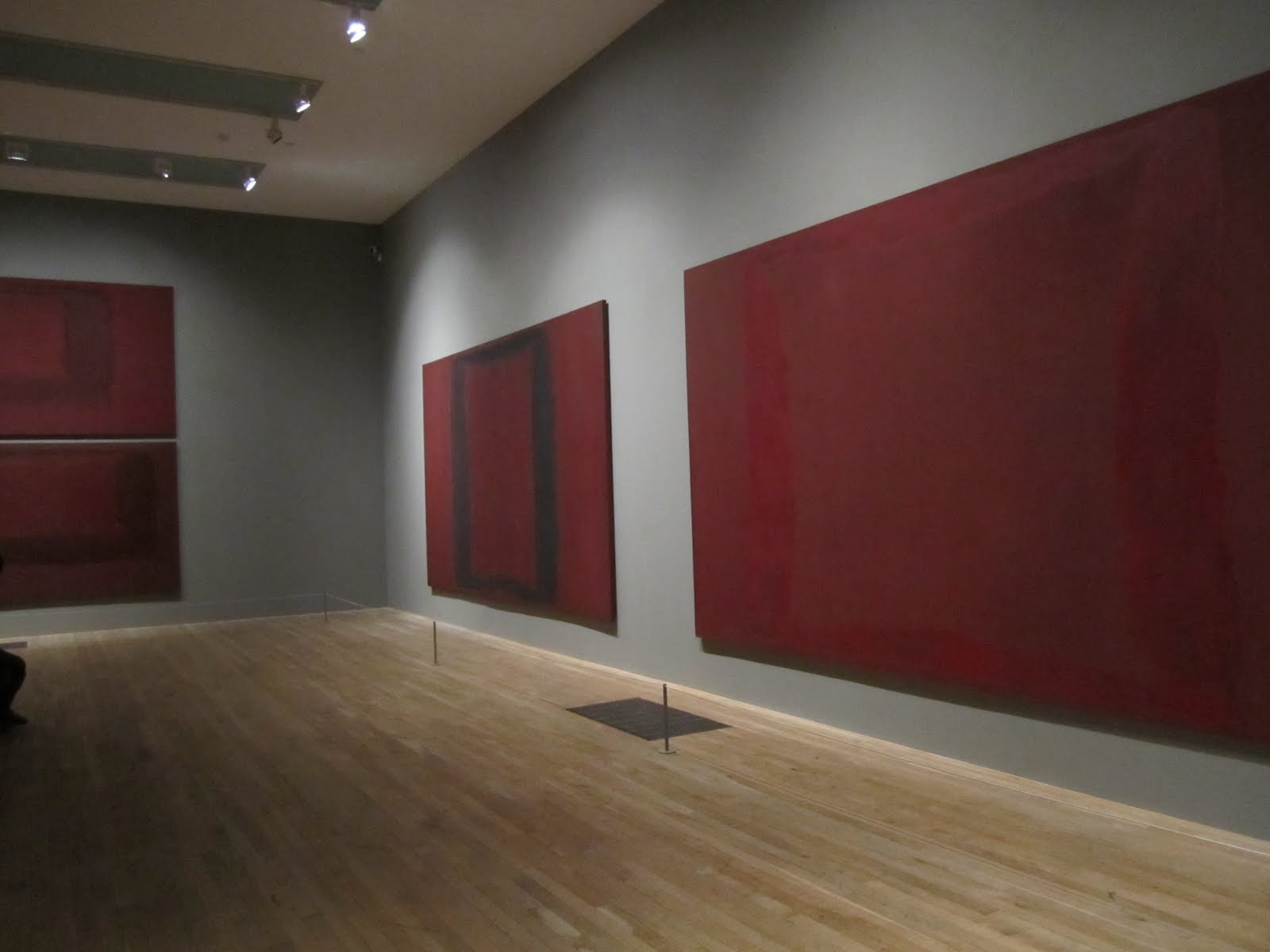
Something about Mark Rothko’s famously monotone canvas, Black on Maroon from the Seagram Murals, looked different when London’s Tate Modern closed its doors yesterday: Sprawled across it’s semi-black surface were the freshly applied words of a savage vandal, a sensational act of vandalism on a painting worth millions, whose fresh drip marks bore a pertinent resemblance to blood – a vicious wound imposed upon this vulnerable and historical canvas. Reading “Vladimir Umanets, A Potential Piece of Yellowism”, this is the work of a blatantly narcissistic probably psychopathic criminal, who believes that he did no wrong. In fact, as he audaciously told the press today, he feels that his attack “adds value” to the priceless Rothko piece.

Yesterday’s vandalism

Of course, in truth, the homeless Russian is yearning for attention, and by writing this article, I am really not intending to give it to him. But what his act of violence does show in the stark light of day is 1) how vulnerable some of our most precious works of art truly are and 2) how lax the security is surrounding them. Considering a similar Rothko piece recently sold for £53.8 million at auction, the potential worth of the now vandalised piece would, if it was a gemstone, be accompanied 24/7 by a troop of armed guards. Yet in most of our galleries, the walls are literally dripping with works of similar or greater value, with only one sleepy security guard to protect a whole room.

The Rothko room at Tate – now closed

But I do not intend to criticise the security efforts of Tate Modern and other galleries like it. Rather, I consider the security provided to be appropriate for the proper appreciation of art, without causing the visitor to feel intimidated, or kept at too far a distance to properly enjoy the work. And herein lies my problem. As more and more attacks such as yesterday’s Rothko outrage continue to occur, the tighter security will become, and the more difficult it will be for us, the art loving public, to enjoy these great works.

I have always loved the way one can wander, uninhibited, into the likes of Tate or the National Gallery and access those wonderful artworks with such ease and with such an intimate proximity. Take, by contrast, the Musée d’Orsay in Paris, home to some of the world’s most famous Impressionists works. There you have to queue out in the cold for a good 40 minutes minimum before you can get into the place, such is the stringency of the airport style security required before a visitor can gain access. It’s a horrible hassle, but is this now the future? You don’t hear of this grand acts of vandalism happening at the d’Orsay, nor the Louvre or Orangerie, where other such security measures are implemented.

The slashed Rokeby Venus

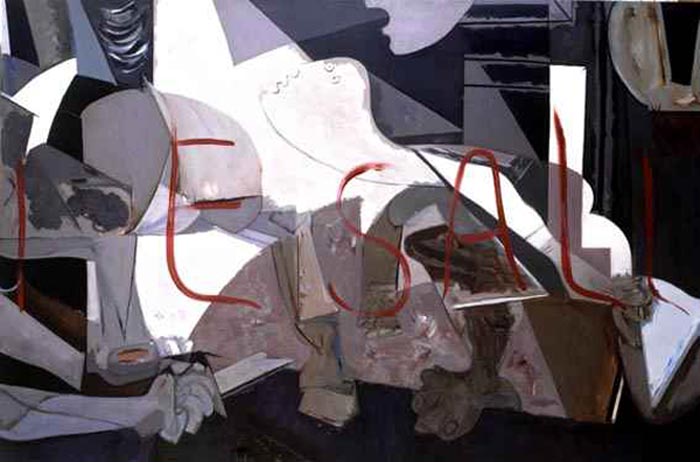
By contrast here in London, I have often worried how in the National Gallery, they allow so many tourists to simply wander in, laden with rucksacks and all, baseball caps covering their faces, traipsing around the gallery in such numbers that it must be practically impossible to properly guard the countless priceless masterpieces on show all around them. And this is the place which itself has been the subject of such sensational acts of vandalism before, such as “Slasher Mary”, the suffragette, who in 1914 slashed the naked back of the poor Rokeby Venus by Velazquez, which still bares the scars to this day. Lessons have been far better learnt by the Dutch however, whose The Night Watch by Rembrandt, slashed in 1975, is now heavily guarded, and by the Reina Sofia in Madrid, who now keep Picasso’s Guernica under heavy guard, hoping to prevent a reoccurrence of the horrible defacing inflicted upon it by Tony Shafrazi when, in 1974, he painted “Kill Lies All” in red paint across it.

Rembrandt’s Night Watch, also vandalised in 1975

Red paint across Picasso’s Guernica

Whatever the security, these incidences of senseless, selfish vandalism will undoubtedly continue to occur every so often. But as inevitable as these attacks may be, so too will increase the inevitability that more and more, our most prized works will be locked away, kept behind a safety rope or bullet-proof glass, and visitors made to queue for frustrating lengths of time in order to get anywhere close. And all this just as gallery visits were at their highest figure for years. It seems nothing good can last forever – there will always be some idiot round the corner to ruin it all.

Sunday Supplement: Bricks and Stones May Break My Bones

Following on from the somewhat tender recollection of my accident when painting the traffic cone upon my autobiographical mobile, I thought the time was probably ripe now to share a few of my accident paintings too. They’re not the easiest of works to suddenly introduce on The Daily Norm which, after all, tends to be more about the joie de vivre and the pleasant past times of daily life. Nonetheless, we would be foolish to underestimate the power of art as a channel through which stories of pain can be relayed in often the most powerful way, and also as an invaluable tool through which, as an artist, that pain can be relayed and tackled head on.

In the months which followed my altercation with a falling wall, I was bed bound and imprisoned under the weight of a barbed metallic illizarov frame. This frame, which is a form of external fixator, was attached to my leg, with some 14 metal rods sinking deep through the flesh and into the bones. The daily pain of moving around with such a structure affixed was indescribable, which, along with my need for crutches, and severe weakness meant that I could do little more than lie, sleep, read and, mercifully, paint.

Bricks and Stones May Break My Bones (The Show Must Go On) 2008 © Nicholas de Lacy-Brown, oil on canvas (130cm x 110cm)

This painting, entitled “Bricks and Stones May Break My Bones (The Show Must Go On)” was the first of ten paintings which I eventually completed during the course of my recovery. I started imagining the painting shortly after the accident, when the effect of a falling wall had become so inextricably linked with the physical and mental course of my life that I imagined myself morphed into the wall, the chilling barbed wire from the top of the wall framing my head like a kind of crown of thorns. With the work growing inside my head, I ordered the canvas while in hospital and set to work as soon as I could when I was at home in my parents’ house in Sussex.

The work wasn’t easy. I had to be lifted onto one chair, with another chair directly in front of me so I could place my leg upon it. Both chairs were on wheels so that I could move around the full dimensions of the canvas (it’s 130cm wide), but in fact I could paint only in short bursts at a time, such was the pain that wracked my leg and the fatigue which overcame me.

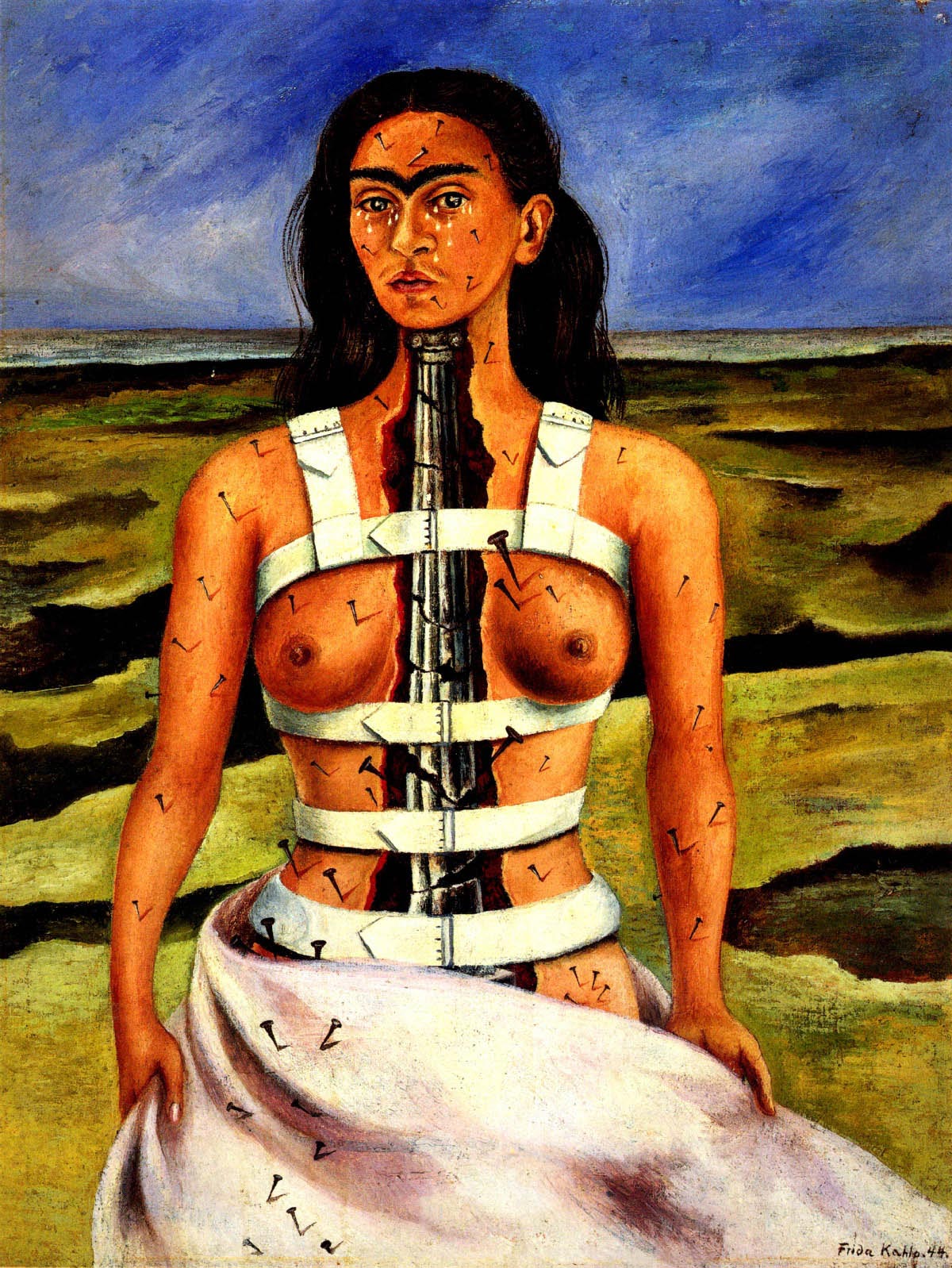
The resulting painting illustrates the accident through a toy lorry, crashing into the wall which has metamorphosed into a classical bust with my horrified face atop it. To my left, my crushed leg is like a column, broken into pieces, the foot, with its nerves damaged resulting in a foot-drop, being propped up by a crutch. I guess I drew influence from Dali for this image, who himself used wooden crutches as symbolism in many of his works – how ironic that after years of loving Dali’s work they should be so pertinent to me now. The broken column meanwhile is a reference to the work of Frida Kahlo, the Mexican artist, who struggled through her career with a spinal injury sustained in a tragic bus crash, and whose pain is transposed so powerfully into her work.

Dali’s Crutches

Frida Kahlo, The Broken Column (1944)
On the right of the canvas, the idea that “the show must go on” is represented, another crutch propping up the theatrical proscenium arch in a demonstration of my means to carry on and not give up at this early and all important stage of my convalescene. However in this theatre, the curtains are red like blood, pinned to an engorged fattened pillar (representing my swollen leg) with the ghastly metal stakes which fixed the illizarov frame to my bones. There too the traditional masks of comedy and tragedy have both adopted the guise of tragedy.

And as my body crumbles, my ear has fallen away and lies in the foreground, next to my artist’s signature. This is my representation that my accident had made me a stronger artist. As a symbol of this, I used the ear, making reference to the likes of Van Gogh who, despite the emotional turmoil, the chopping off of his right ear etc etc, was a real artist, who used his work to give him strength, and communicate his turbulence to the world.

Finally, I should add that the title, “Bricks and Stones May Break My Bones” is a play on the familiar saying “Sticks and stones may break my bones, but words will never hurt me” – a phrase through which a child, perhaps teased at school, attempts to instil strength within himself, despite the pain he feels for having been the victim of mean words. The phrase was pertinent then, because like the child, I was struggling so hard with the relentless pain of my recovery, but through art I drew the strength to somehow get through it and tell my story to the world.

© Nicholas de Lacy-Brown and The Daily Norm, 2001-2012. Unauthorized use and/or duplication of the material, whether written work, photography or artwork, included within The Daily Norm without express and written permission from The Daily Norm’s author and/or owner is strictly prohibited. Excerpts and links may be used, provided that full and clear credit is given to Nicholas de Lacy-Brown and The Daily Norm with appropriate and specific direction to the original content.

Autobiographical Mobile: My painting diary – Day 7: My accident

It was a drizzly dull day, the day that changed my life. I was cleaning my windows. I had laboured all day. My newly found art agent was due to visit my flat the next day and I wanted to make a show of it. So I cleaned away, polishing each surface, wiping away a winter’s worth of raindrops from my large sliding glass windows on this mild May day. The cleaning was time consuming however, and it was past 2pm when I realised I had missed lunch. Just a quick break is all it would take to walk along to Marks and Spencer’s, only two doors away, where I could buy a snack.

So out I went, leaving my flat, and walked along the road to grab a sandwich and a drink so that I could carry on my day. I left my now clean windows open, the TV on. I was only going to be a minute.

But I never got that sandwich. And that TV was switched off by the police.

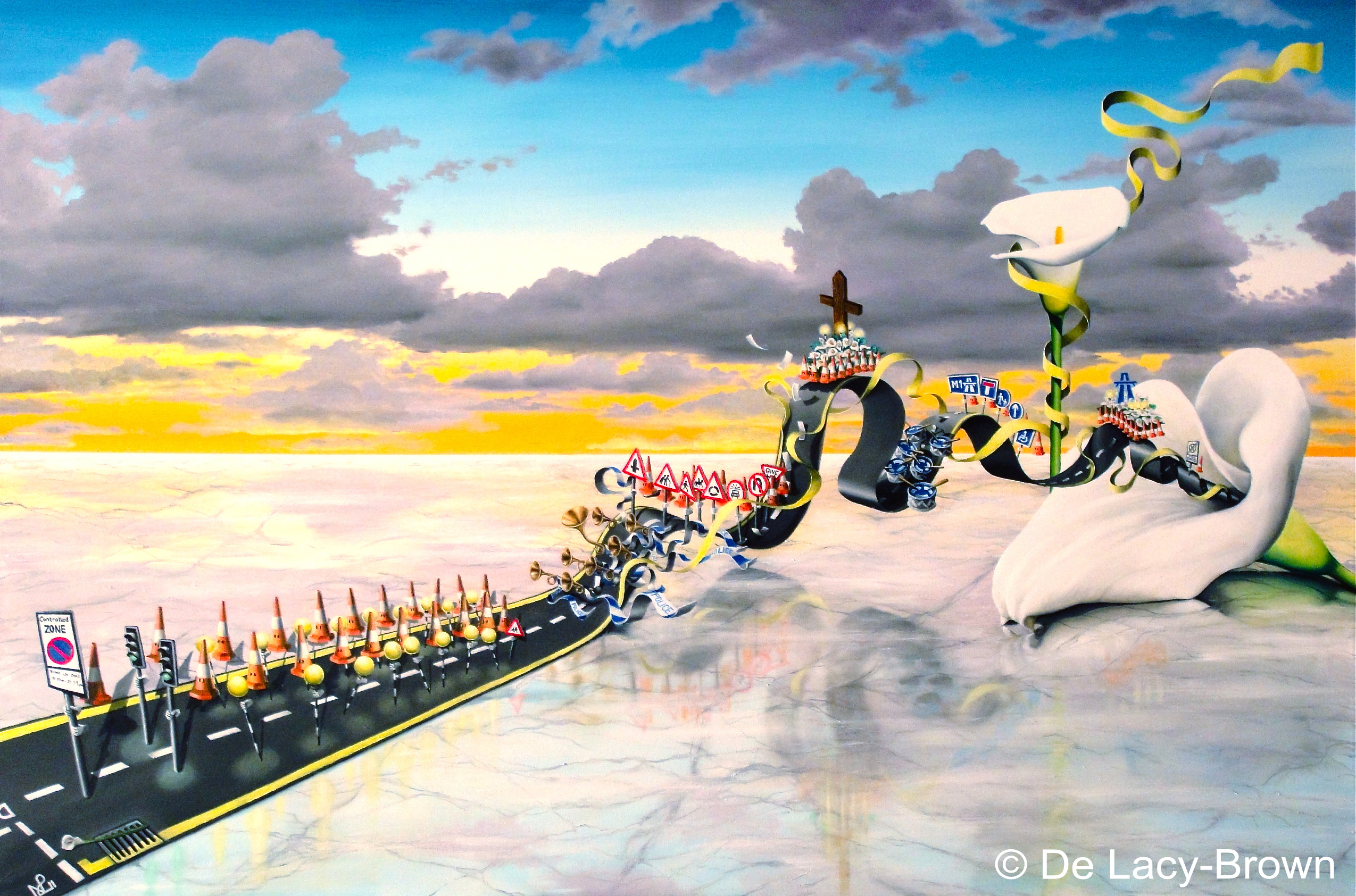
Traffic cones in my art – Road Traffic Control (The Semana Santa Code) (2012 © Nicholas de Lacy-Brown, oil on canvas)

There was a large concrete brick wall next to the building in which I live. Atop the wall, barbed wire prevented trespassers, but also gave the otherwise empty site the appearance of a concentration camp, stark and deserted on the South London skyline. I had walked past this wall countless times, but had never paid it much notice, at least not until that barbed wire cut into my head, like a crown of thorns encircling above my eyes. True, the huge metal gates were occasionally swung open, but were more often closed: the site was used for some kind of storage, and large delivery lorries would occasionally enter and exit the site. There was, occasionally some activity there.

The day that changed my life was one of those days. As I walked past the wall, a large lorry was driving towards the exit. It was heading closer and closer to the wall. But something was wrong. What happened next is something of a blur. It wasn’t a long distance to walk, but as I passed the wall, time seemed to stand still. I will always remember in my mind that enduring image – the top corner of the wall seeming to crumple, like paper, folding outwards towards me. Once I realised that the wall was falling, it was too late. As the masonry fell and the whole weight of the massive 10ft concrete wall started to crash towards the ground, there was no escape. I was already pinned under it.

It’s the loneliness that haunts me. No family, no friends. Alone, imprisoned under a fallen wall. Not knowing whether I would walk again.

I remember the rain. The sickly feeling of a pitter patter around my head. And the stinging sensation. I couldn’t locate it – the signals were all too mixed. But I remember around my face feeling sharp pain, the cold water from the skies, the trickle of blood, the uncomfortable sensation of grit all around me, the numb pain of weight pounding down upon my body as I tried to move.

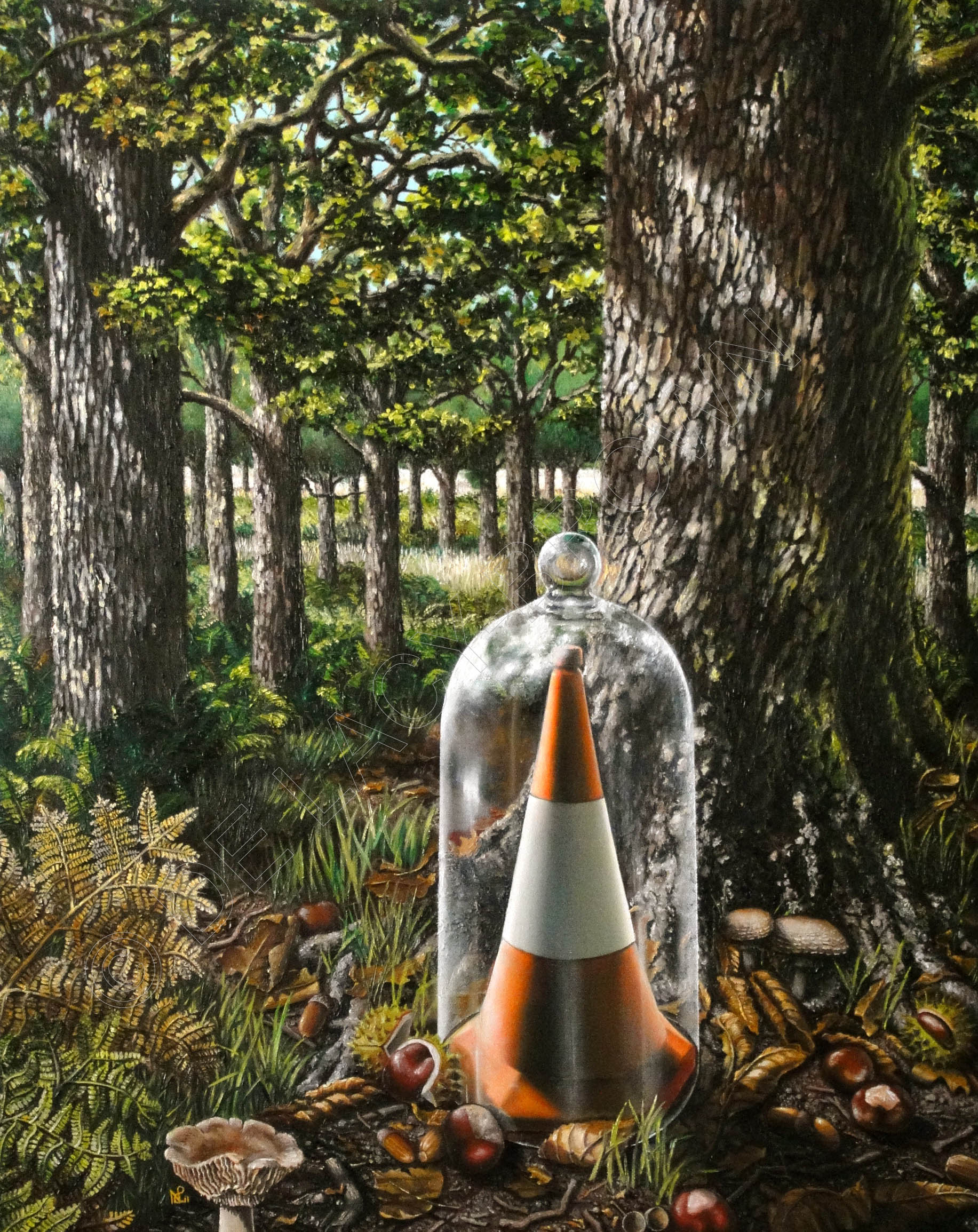
Moving on from my accident – Road Traffic Control (Autumn in Richmond Park) (Oil on canvas, 2011 © Nicholas de Lacy-Brown)

But I couldn’t move, try as I might. Because my right foot was somewhere around my shoulders – my entire body was twisted in a way that no skeleton was ever meant to withstand. The wall had fallen – the lorry had crashed into it, brought it down as the driver tried to go forwards. He was not, as it was later reported, reversing. This driver was heading forwards into the wall, consciously sealing my fate as he continued in his reckless trajectory towards the road. I never knew why he brought down the wall, what he was doing, what was his excuse. I never learnt why he drove away, leaving the scene of the accident until police stopped him. And I was never given an apology.

Yet 4 and a half years after the day, I live with a mercifully saved leg, a leg pieced together by 7 operations but which must, still, endure the intrusion of a string of future operations still to come. After two years on crutches I can now walk unhindered, but not for long. I cannot run, cannot bend my leg sufficiently to get on a bike. I cannot stretch it fully out, and I cannot lift my toes. I’m forever tripping on my feet, and bemoaning the burning sensation which runs down my damaged nerves. I have to fill my shoes with insoles, and build my heels up to compensate for my now shortened leg. But I survived. And in a way, I’m stronger, as cliché as that may be.

The day the wall crushed my leg was a day that changed my life. I face an uncertain future, but I was given the opportunity, as a 23 year old, to face up to the fragility of life, and now live life to the full.

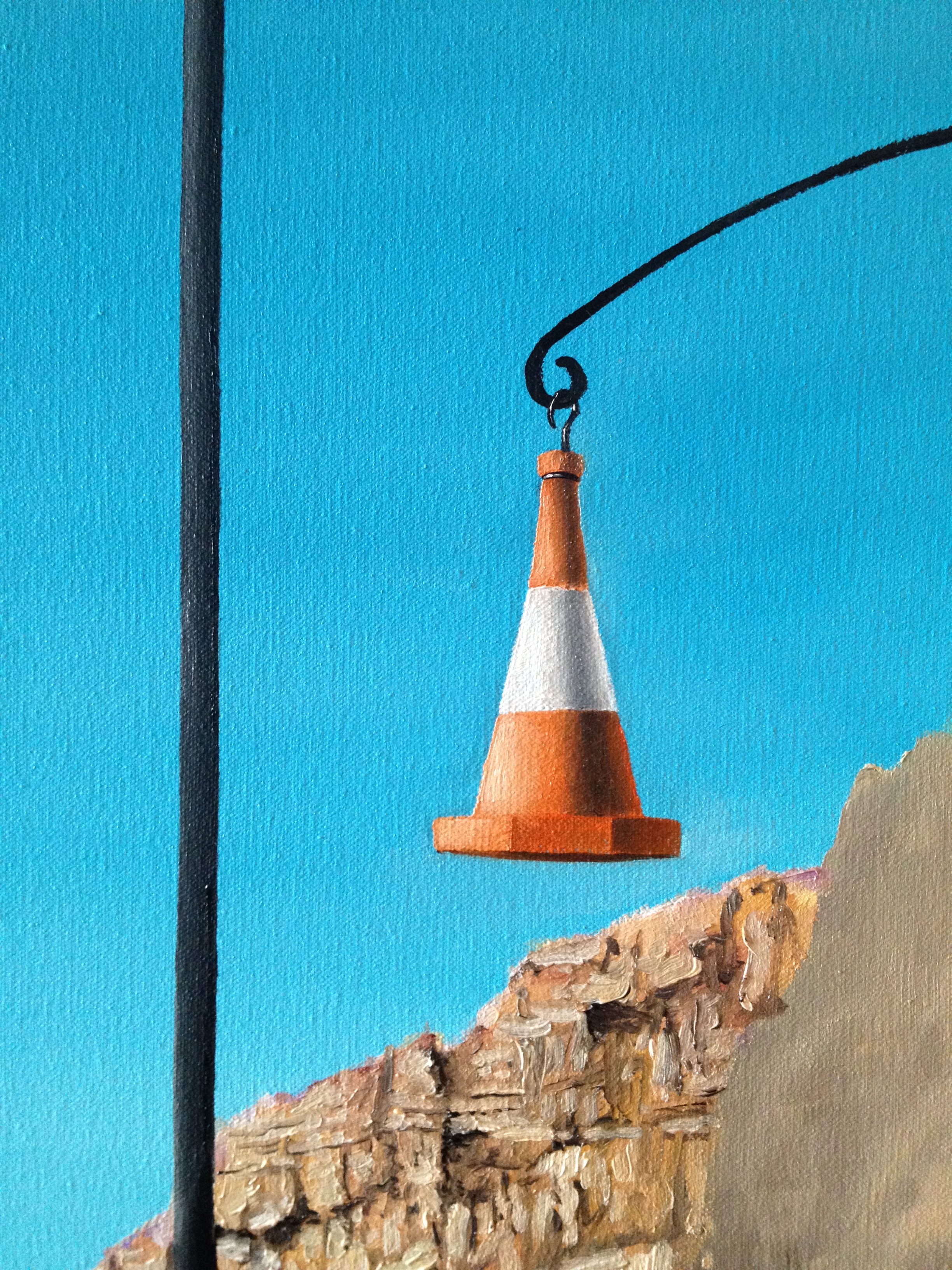
A traffic cone now hangs on my autobiographical mobile

On my autobiographical mobile, my accident must feature. It’s a Calder-based mobile, and simplicity is the key. So what better way then to symbolise the accident, than a simple traffic cone, a symbol which I have already adopted in my art as a representation of my accident on the roadside, when a heavy goods vehicle brought down a wall and disabled a passer by.

The day that changed my life: My accident, my story.

© Nicholas de Lacy-Brown and The Daily Norm, 2001-2012. Unauthorized use and/or duplication of the material, whether written work, photography or artwork, included within The Daily Norm without express and written permission from The Daily Norm’s author and/or owner is strictly prohibited. Excerpts and links may be used, provided that full and clear credit is given to Nicholas de Lacy-Brown and The Daily Norm with appropriate and specific direction to the original content.

Flavours of Spain – Part 2: Tapas

When most people think of Spanish cuisine, they think of tapas, and why not? These little dishes are a fantastic excuse to sample as many tastes and flavours of dishes from all over Spain as you can manage, while encouraging the shared social environment which the small dish concept inspires. Unable to decide what large dishes to cook when I was over in Spain, and with no recipe books close to hand, I decided to opt for a few simple tapas dishes which I could remember off the top of my head and which are inspired by my own tapas experiences in Andalucia and beyond. Having cooked these tapas creations, you can then supplement your tapas feast with olives, bread with delicious olive oil and different flavoured dipping salts and platters piled high with fresh serrano hams and manchego cheese (see mine at the bottom). You’ll find yourself with way too much food (unless you’re feeding a small army), but the beauty with tapas is that much of it will last for days – bonus!

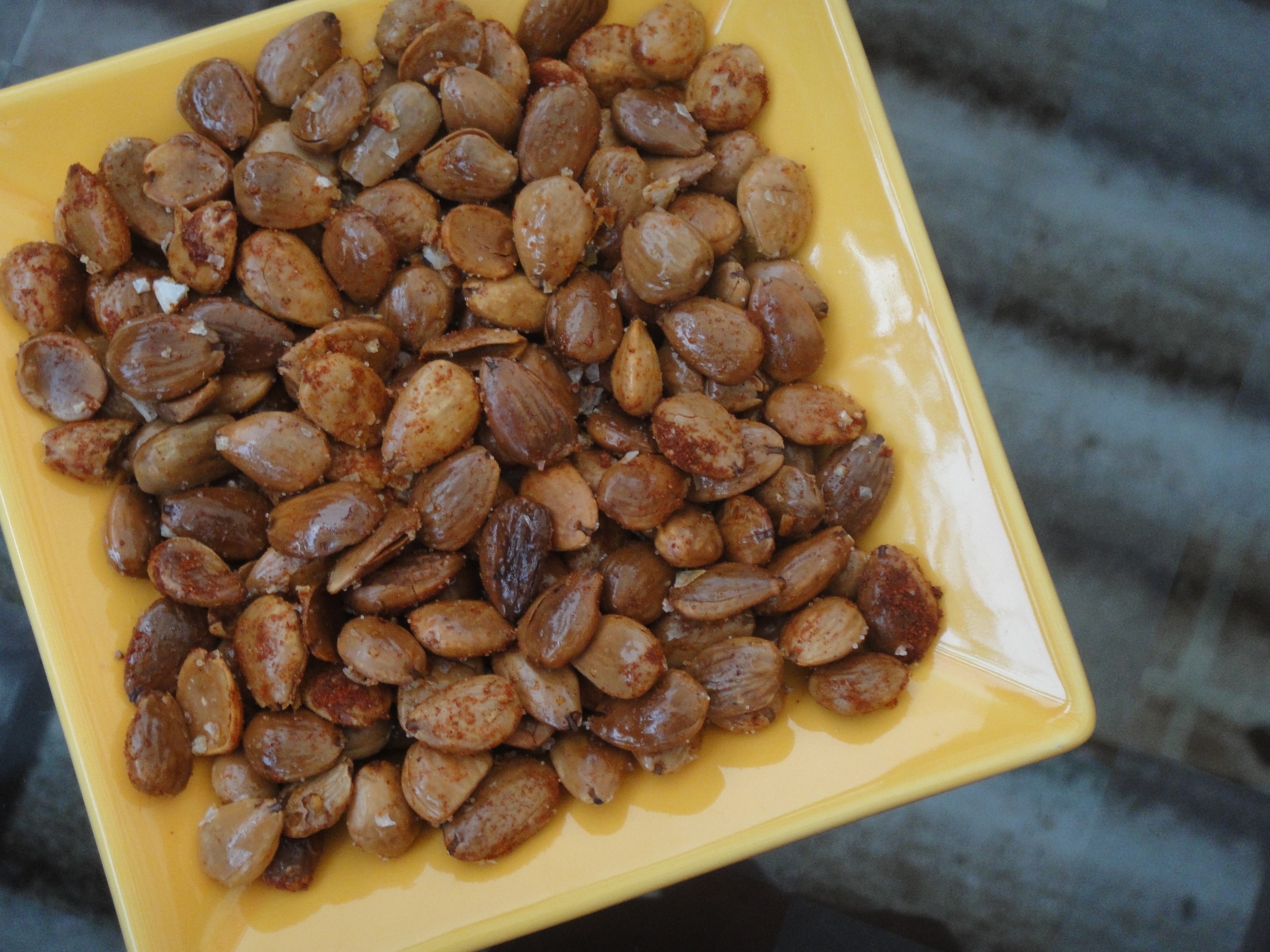
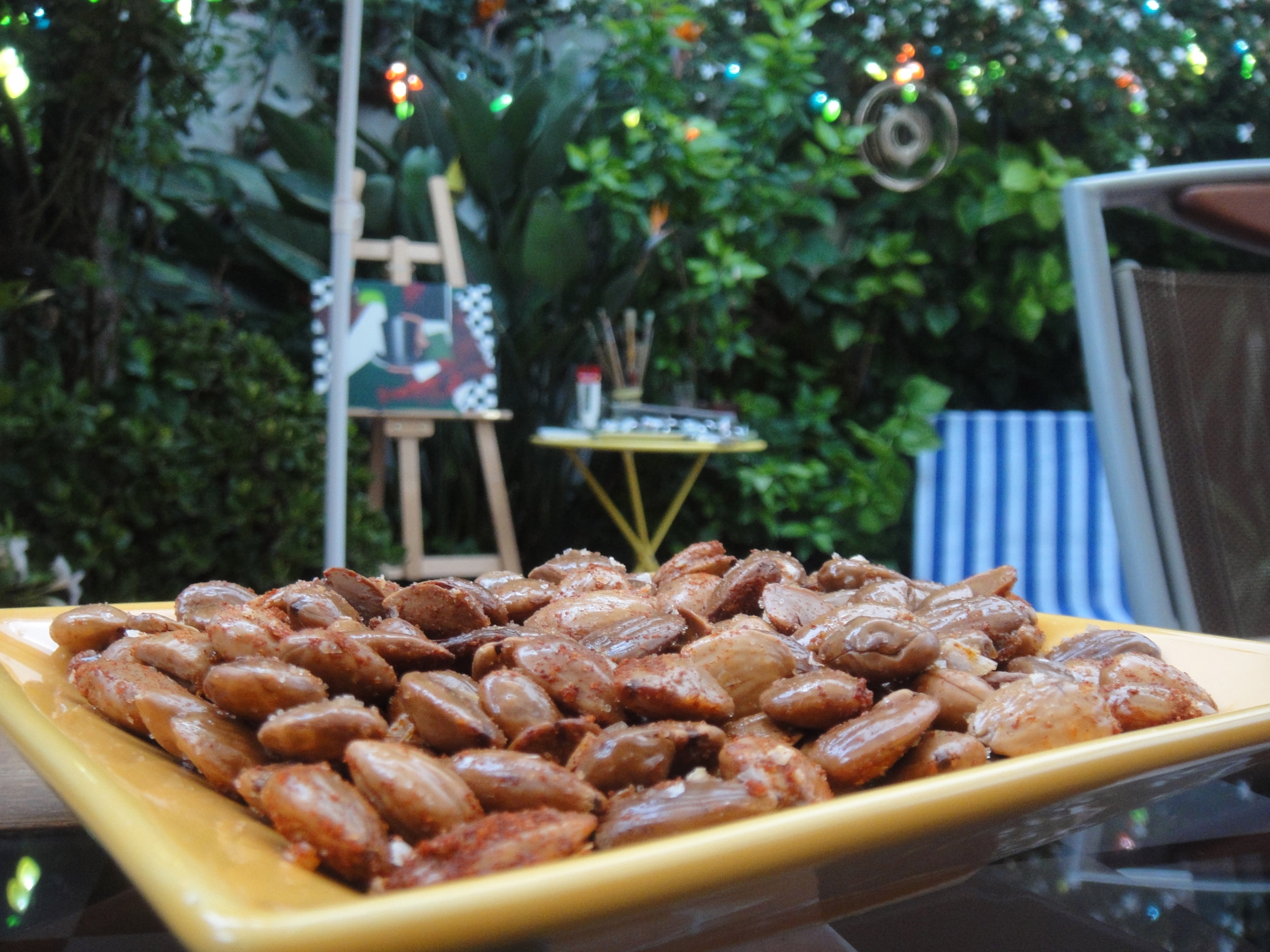
Salted almonds

Great to kick of your evening as a moorish accompaniment to a glass of wine or two, these salted almonds are really easy to make. Take a baking tray and pour in enough olive oil to cover the base. Then throw into it (carefully – I’m not encouraging kitchen recklessness you do understand) 250g of blanched almonds, and sprinkle them with some good quality sea salt and a teaspoon of smoked pimenton. Give the whole lot a good toss, and place in the oven at 180 degrees c for around 20 minutes, tossing every so often during cooking. Be careful not to leave them in for too long – they may look ok on the outside but they can become burnt on the inside if the cooking is overdone.

Salted almonds

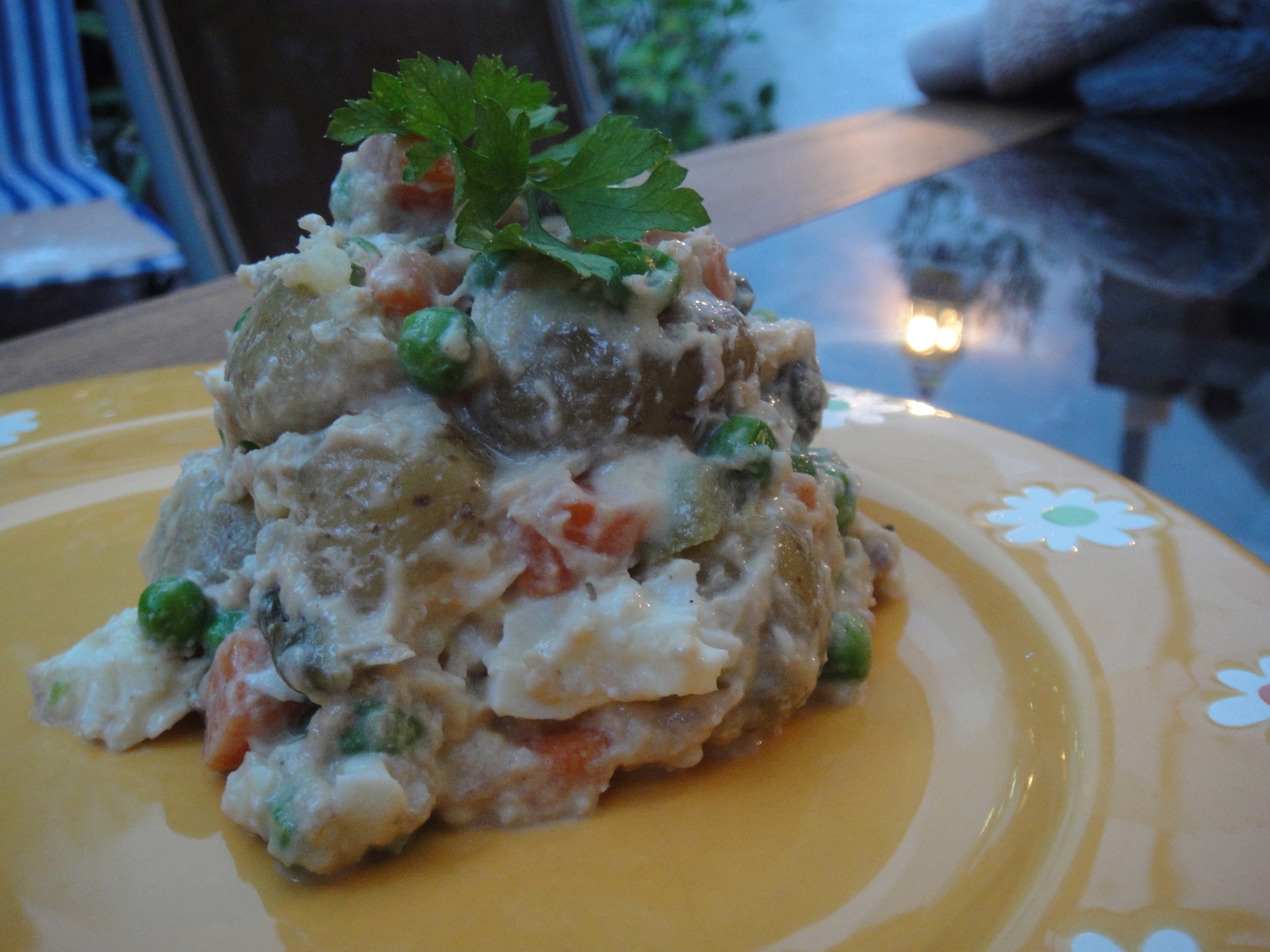
Ensalada Rusa

Russian salad is a tapas staple in traditional tapas bars all over Spain. You can alter the amounts of ingredients below depending on how many you’re cooking for. This made enough for a good 6-8 small tapas-sized helpings.

Start by making your own mayonnaise (if you can be bothered). Whisk up a large egg with a teaspoon of dijon mustard, 2 teaspoons of white wine vinegar and half a teaspoon of salt. Then to this very very gradually whisk in 300ml of oil – for those who like a mild flavour, use sunflower oil, but for a traditional Spanish flavour, extra virgin olive oil is a must. Doing this in a food processor is definitely the easiest way, but for those like me who are in a little holiday home in Spain without the best equipped of kitchens, the good old balloon whisk and a determined wrist can still do the job. Once you have made a nice thick mayonnaise, squirt in the juice of half a lemon (to taste) and 1-2 crushed cloves of garlic.

My homemade mayonnaise

Meanwhile have around 1kg of small new potatoes boiling away nicely (chop them as necessary so they’re roughly the same size). Once tender, leave to cool. Once the potatoes have reached room temperature you need to add a good 4-6 tablespoons of mayonnaise, two tins of tuna (preferably in oil), a one or two of cooked diced carrots and a good handful garden peas, 4-6 chopped gherkins, two tablespoons of capers and some chopped parsely. Then whack in a good dose of seasoning to taste, and play around with flavour – you can add more mayo, more garlic, more lemon, different herbs – whatever you like. I guarantee it will be delicious whatever you try (within reason – obv).

A small portion of Ensalada Rusa

Read more

Sunday Supplement – Orange Square

To think that just a week ago I was sitting in Marbella’s Plaza de Los Naranjos (Orange Square) sipping upon a creamy Cafe con leche, and snacking upon a light crispy churros con chocolate. The sun was shining, and we were sat in the shade, shying away from the September heat which, remarkably, was hitting the 30s. Only a few hours later we took a flight back to London. The realisation only kicked in as the plane started to descend. It was that moment as we plunged from a clear peachy sky at sunset into the grey gloom of a tumultuous storm cloud. The little plane was battered from side to side, the windows were suddenly hit with a rain shower, the drops dancing diagonally across the pain in the direction of our high-speed travel, and within seconds we had been violently redirected from Summer into a deep and depressing winter. Setting down on the concourse at City Airport, we could barely see for the heavy rain all around us, and descending the plane’s steps into the outside, our sun-kissed bodies shivered in despair at the instantaneous 20 degrees drop to which they had been so suddenly sacrificed.

A few hours later and I was back at work. A week later and it’s as if the holiday never happened at all. And yet it’s the memories which to my mind give a holiday its value. When you’re away, its all too often like you’re traversing a dream, your feet never quite touching the ground, as the ties of reality continue to drag your concentration back to the entrapments of home, never quite freeing you sufficiently to fully immerse yourself in your holiday destination. It’s vital then that we remember – and of course this blog, and my photos, and my recipes are key to my success in this.

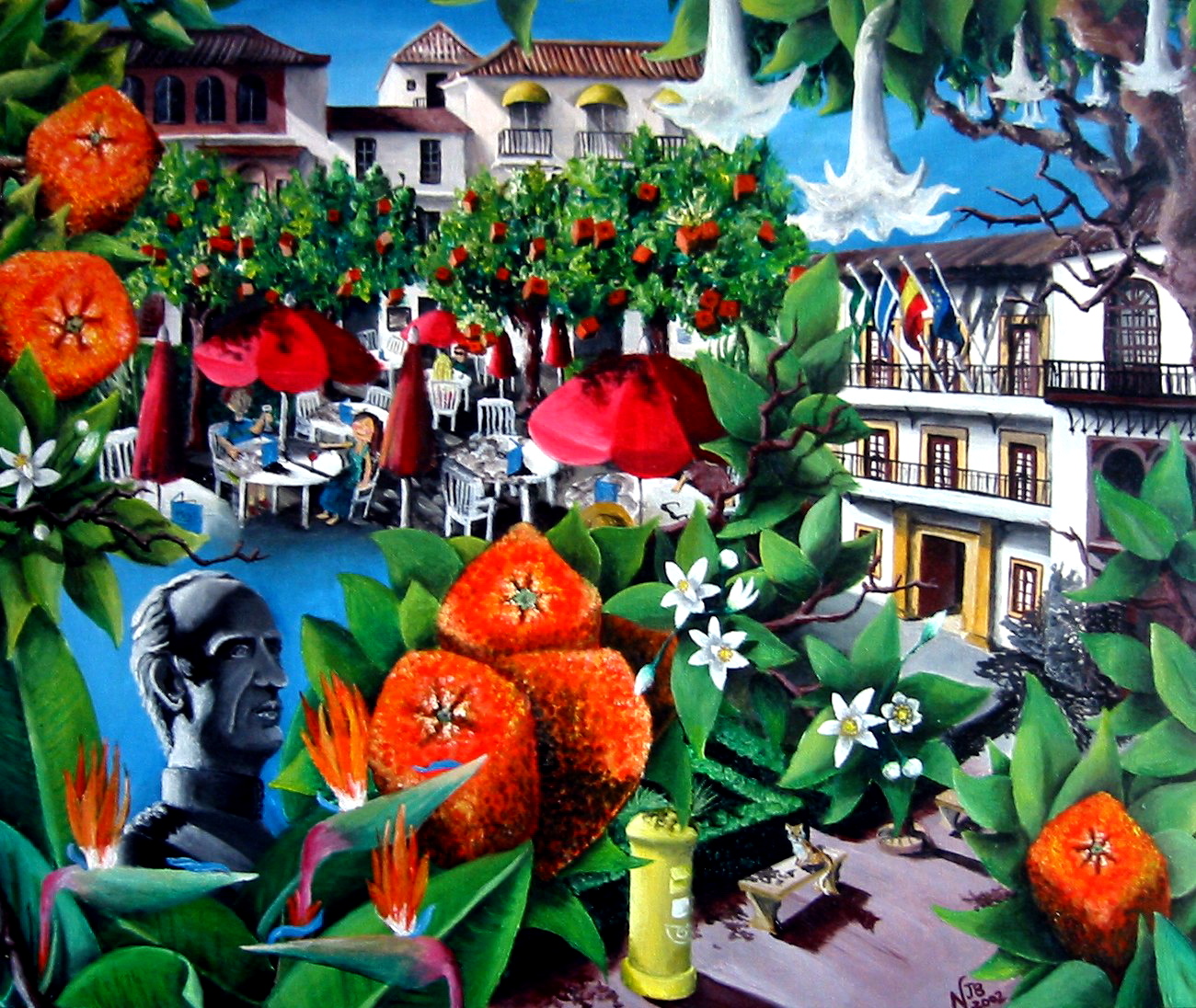
Orange Square (2002 © Nicholas de Lacy-Brown, acrylic on canvas)

For today’s Sunday Supplement then, I have decided to return to one of my earliest paintings, completed in Marbella in 2002. It shows the old town’s main bustling square, full as it is of cafe’s and restaurants, musicians and people turning out for their evening stroll. With a play on words which only the English translation of the square’s name accommodates, I painted the oranges square to give pictorial illusion to the place name. There too is the central bust of King Juan Carlos, and the bright yellow postbox which gives some lemon to an otherwise orange square. Finally the painting is dappled with the flowers – the brugmansia, the bird of paradise and the jasmine whose scent fills the square with perfume all year round.

It may be Autumn all around me, but in my mind, orange hues and blossom scents fill my imagination.

Orange Square in the centre of Marbella’s old town with the bust of King Juan Carlos

PS: If you like my painting of Orange Square, it’s available as a limited edition print along with other prints and my range of Norm Christmas cards on my Etsy Shop – check it out!

Enjoy your Sunday.

© Nicholas de Lacy-Brown and The Daily Norm, 2001-2012. Unauthorized use and/or duplication of the material, whether written work, photography or artwork, included within The Daily Norm without express and written permission from The Daily Norm’s author and/or owner is strictly prohibited. Excerpts and links may be used, provided that full and clear credit is given to Nicholas de Lacy-Brown and The Daily Norm with appropriate and specific direction to the original content.

Flavours of Spain – Part 1: Almejas con hinojos

Regulars of The Daily Norm will know that in my heart of hearts, I am no happier in my kitchen than when cooking up some Spanish flavours to tantalise the taste buds and enliven the corazon. To recreate the rich smells imbued with garlic and pimenton, shellfish and saffron in London is one thing, but to cook in a Spanish kitchen, when already surrounded by a cacophony of those same scents wafting in the air from the nearby houses of my Spanish old town neighbours is an entirely different experience. It is hard not to be inspired, not least by the nearby market, where fresh fish is in abundance, rich meaty steaks are plentiful and vibrantly coloured fruit, vegetables and the spices intrinsic to the flavours of Al Andalus are in bountiful supply in the mercado in the next door street to my house. That is not to say that I felt totally free to indulge. The price of food in Marbella, together with the inflation of the euro, has seen a really hike in food prices – some days I found it more expensive to eat at home than out in a local fish bar. Consequently I had to indulge my culinary ambition with a more limited budget for ingredients.

Samplings of the Marbella market

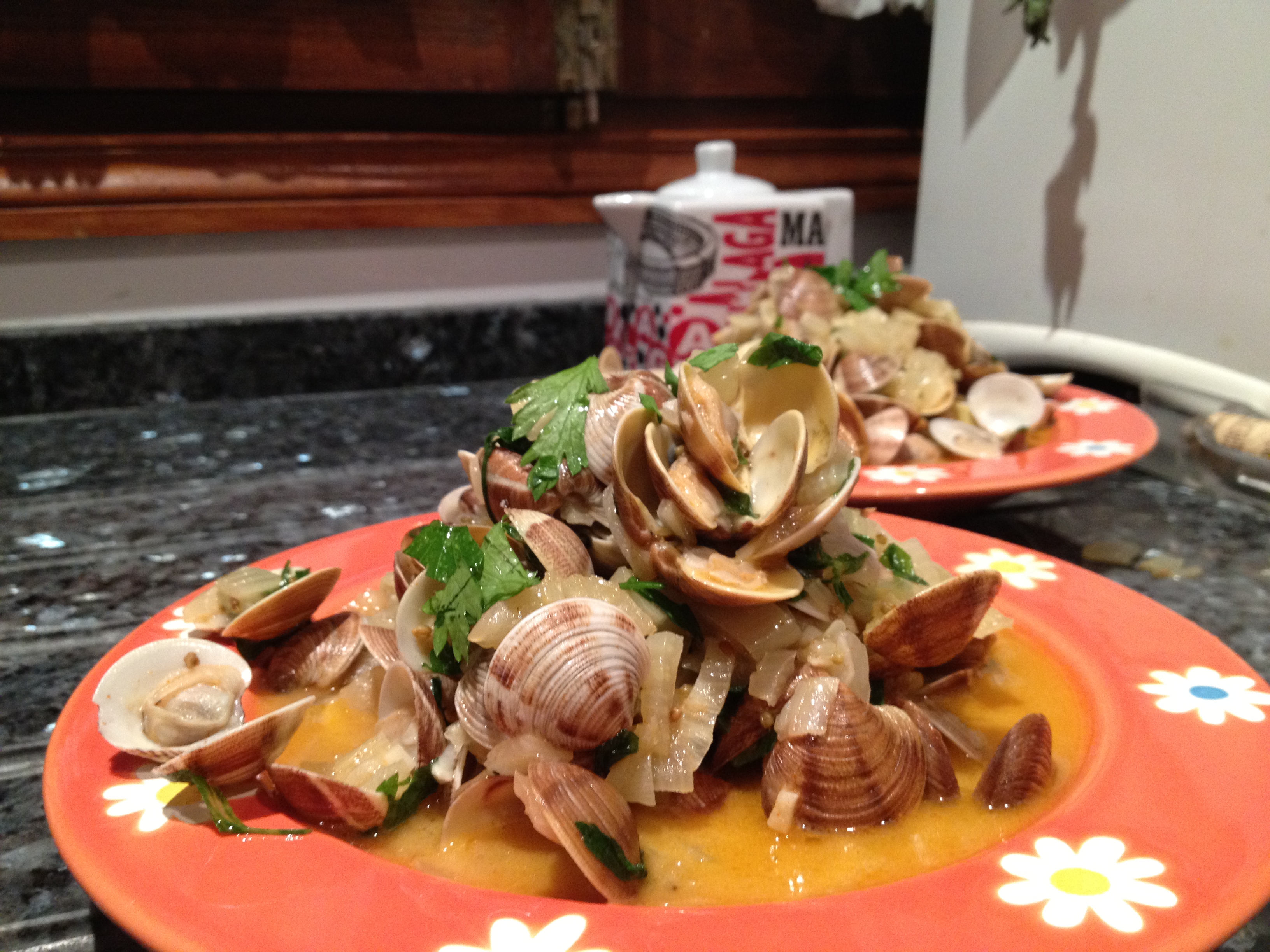
This dish is perfect for the prudent shopper. Buy yourself a kilo of clams (or almejas) and a fennel bulb and you’ve got the main components of the dish. I made this dish up, having bought myself a fennel bulb (purely because of my love for the liquorice taste) and upon a bounty of clams so fresh that they were popping and moving before my very eyes. Some white wine, an onion, and a few spices later, and I created this dish, Almejas con hinojos – clams with fennel.

Clams cooking in the pot

Almejas con hinojos

Chop one onion and 2-3 cloves of garlic finely, as well as a bulb of fennel. Sweat the ingredients together in a large pan on a low heat in a good glug of oil and a good dose of seasoning and a teaspoon of fennel seeds for about 15-20 minutes until the onions/garlic/fennel are soft and near translucent, but not browned. Turn the heat up to medium, and add a teaspoon of smoked pimenton (paprika) and the washed clams. Place a lid over the pan and cook until the clams have opened (around 4-5 minutes depending on their size). Once opened, turn up the heat a little more and add a good glass or two of dry white wine, along with a good handful of chopped parsely and stir so the clams get a good dose of alcoholic indulgence. Cook for a further 5 minutes, just to cook off the wine a bit and that’s it. Your clams are ready. Serve with a few hunks of fresh bread, a glass more of that white wine, and remember to discard any clams which have not opened.

And served up

Enjoy the flavours of Spain, as a burst of mediterranean freshness mixes with the smokey garlic pungency of arid España all in a single mouthful. Surely there is no better way to escape the onset of autumn?

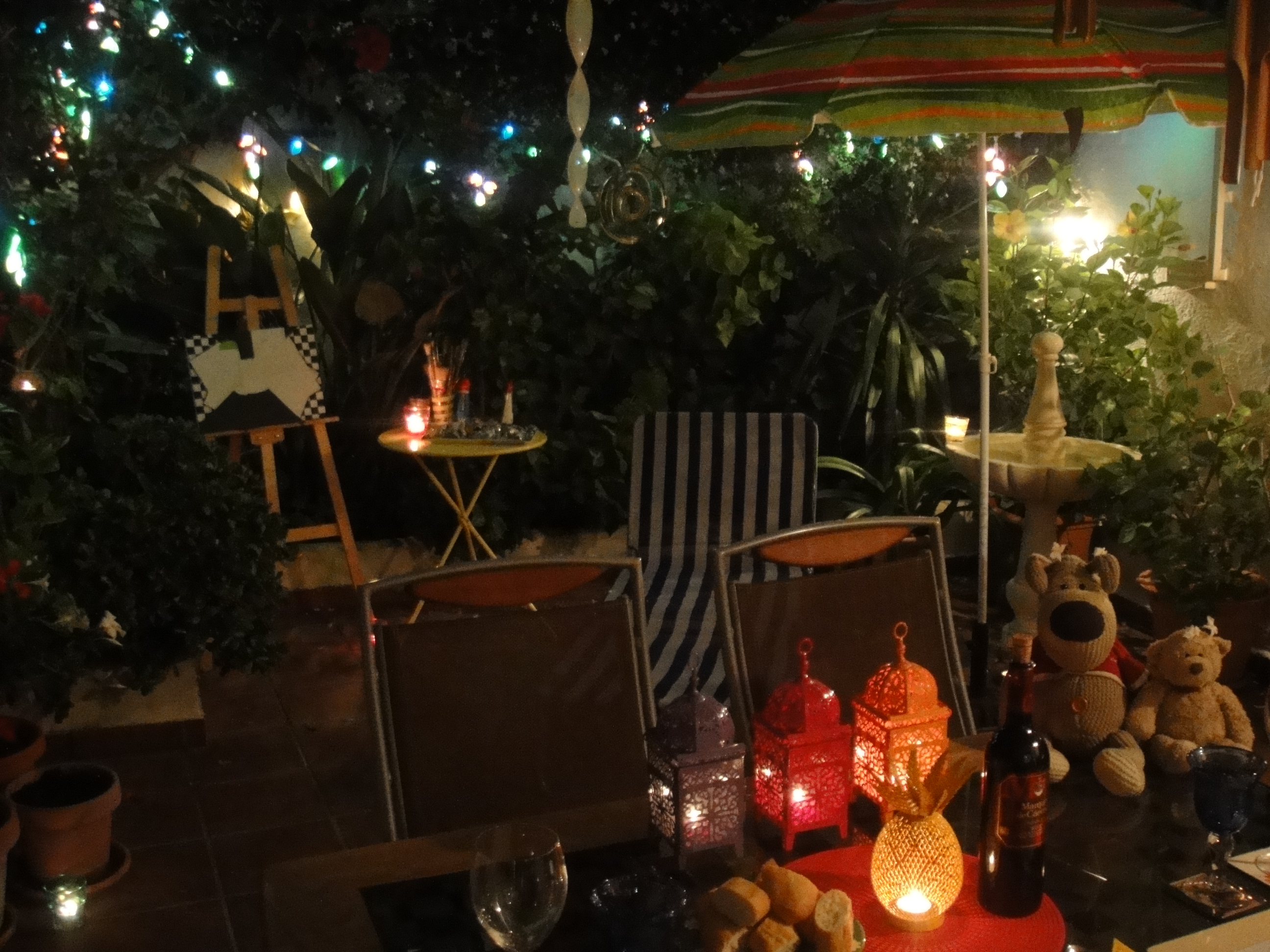
And a candlelit garden full of summer evening warmth in which to eat the clams