Skip to content

Posts tagged ‘Art History’

The Wrestlers (after Courbet)

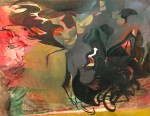
I adore art, especially the masterpieces of old, and I spend a lot of my time gazing in admiration at the works of the old masters and the more recently celebrated artists of the 20th century. However, of all the works I see, only a few inspire me to recreate the work in my own way. Velázquez´s Las MeninasTitian’s Bacchus and Ariadne and Rubens’ Descent from the Cross are three such works which have recently driven me to paint the old masterpieces afresh, and a few weeks ago, another chance encounter had a similar effect.

It was on Instagram in fact that I stumbled across this most recent inspiration – a work by the French master, Gustave Courbet, The Wrestlers – which the instagram user had also discovered for the first time. Painted in 1853, in the typical realist style for which Courbet was best known, and which saw him break away from the classical genre style of painting which was predominant in the mid-19th century, the work is not one I have seen before, perhaps because it is housed in the Fine Arts Museum in Budapest. But as soon as I saw it on the screen of my iPhone, I was struck by the incredible energy of the wrestlers, and the brilliant realism of their taught muscles, interlinked as they strain and struggle against each other – a fantastically visceral image in contrast with the refined crowds watching them from civilised stands in the background.
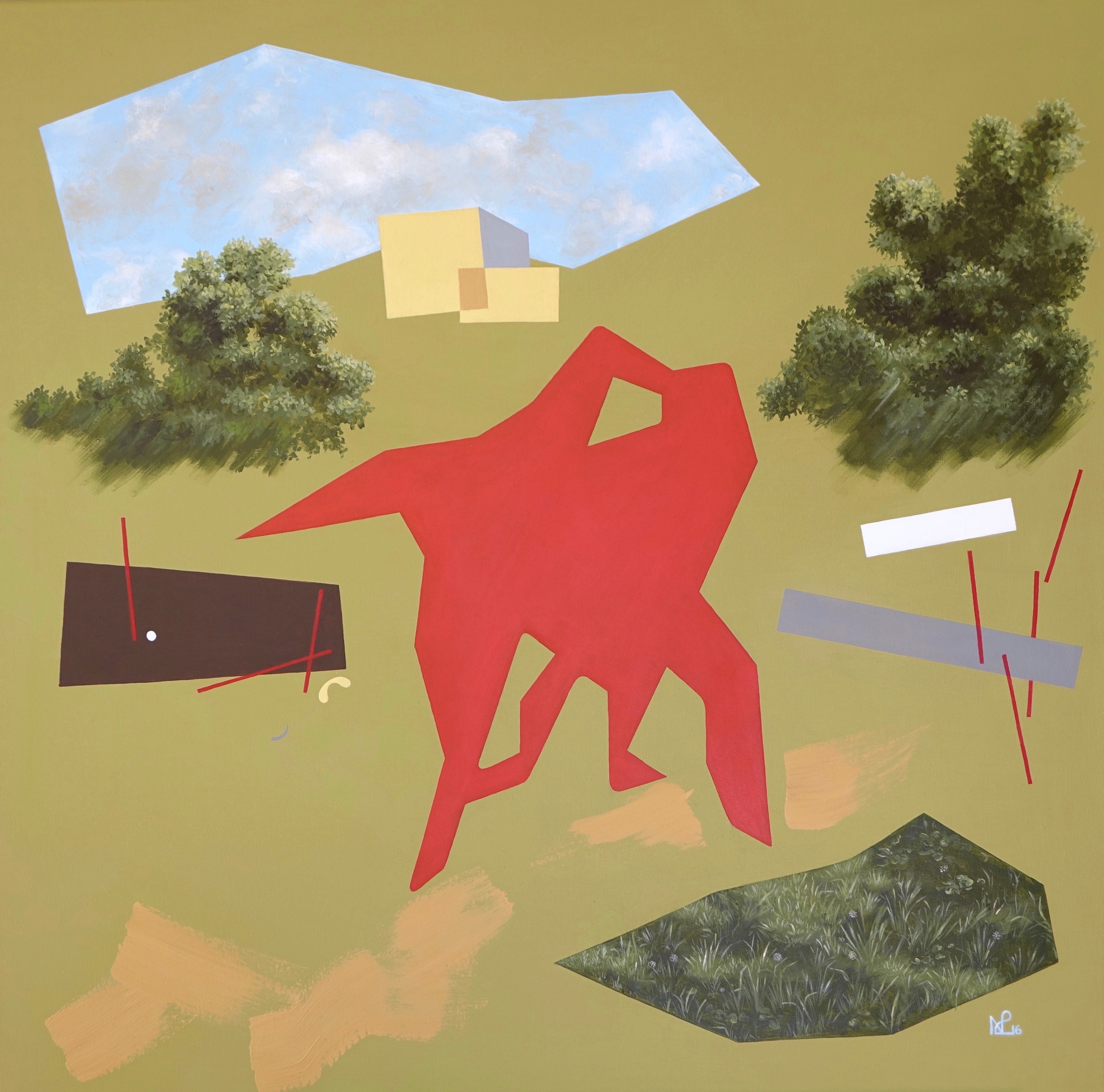
The Wrestlers FINAL

The Wrestlers (after Courbet), 2016 ©Nicholas de Lacy-Brown, acrylic on canvas

It didn’t take long for my own version of the image to form in my head, following my new interpretative abstract style with which to give the work a new treatment. I have included some realistic elements myself, in homage to Courbet, but for the most part my reinterpretation is highly abstracted, not least the central figures themselves. This was by far the most difficult element to complete, and it took me some 20+ attempts before I was happy with the final abstract form. Unsure whether to separate the figures, or paint them as one, I latterly settled on a unified form, since the wrestlers in Courbet’s original are so obviously, almost erotically combined into a single star-like figure. The cadmium red colour however was clear as soon as I saw, around the same time as discovering the Courbet work, a photo of a brilliant red Alexander Calder mobile against a green grassy background. I knew from that moment that my wrestlers had to be red, creating a central contrast which is key to the balance of the painting. And so it was born.

Gustave_Courbet_-_The_Wrestlers_-_WGA5462

The Wrestlers (1853) by Gustave Courbet (Fine Arts Museum, Budapest)

© Nicholas de Lacy-Brown and The Daily Norm, 2001-2016. Unauthorized use and/or duplication of the material, whether written work, photography or artwork, included within The Daily Norm without express and written permission from The Daily Norm’s author and/or owner is strictly prohibited. For more information on the work of Nicholas de Lacy-Brown, head to his art website at www.delacybrown.com

Las Meninas: Second Interpretative Exercise

There are some art exhibitions that you go to that simply have the capacity to strike deep. Many shows are pleasing, others interesting, but then there are those which you remember for ever. I’ll never forget for example Frida Kahlo or Henri Rousseau at Tate Modern, Tamara de Lempicka at the Royal Academy, Dali at the Centre Pompidou or Da Vinci at the National Gallery London. Now to that list I add the Kandinsky retrospective at CentroCentro in Madrid, not because it was any better than the Kandinsky I saw many years before at Tate, but simply because the combination of time and energy and who know’s what combined to leave me utterly inspired.

When, the next day, I walked into the Prado and saw Velázquez’s Las Meninas once again, something shifted in my head, and I left an artist converted.

I started my reinterpretations of Las Meninas shortly after the whirl of the Christmas season was over, and my first, Las Meninas (In Our Time) I shared with you a few weeks ago. But my new project was far from over, and this painting, shared today, was the one which leapt into life before my eyes that day in the Prado Gallery when Kandinsky was still very much on my mind.

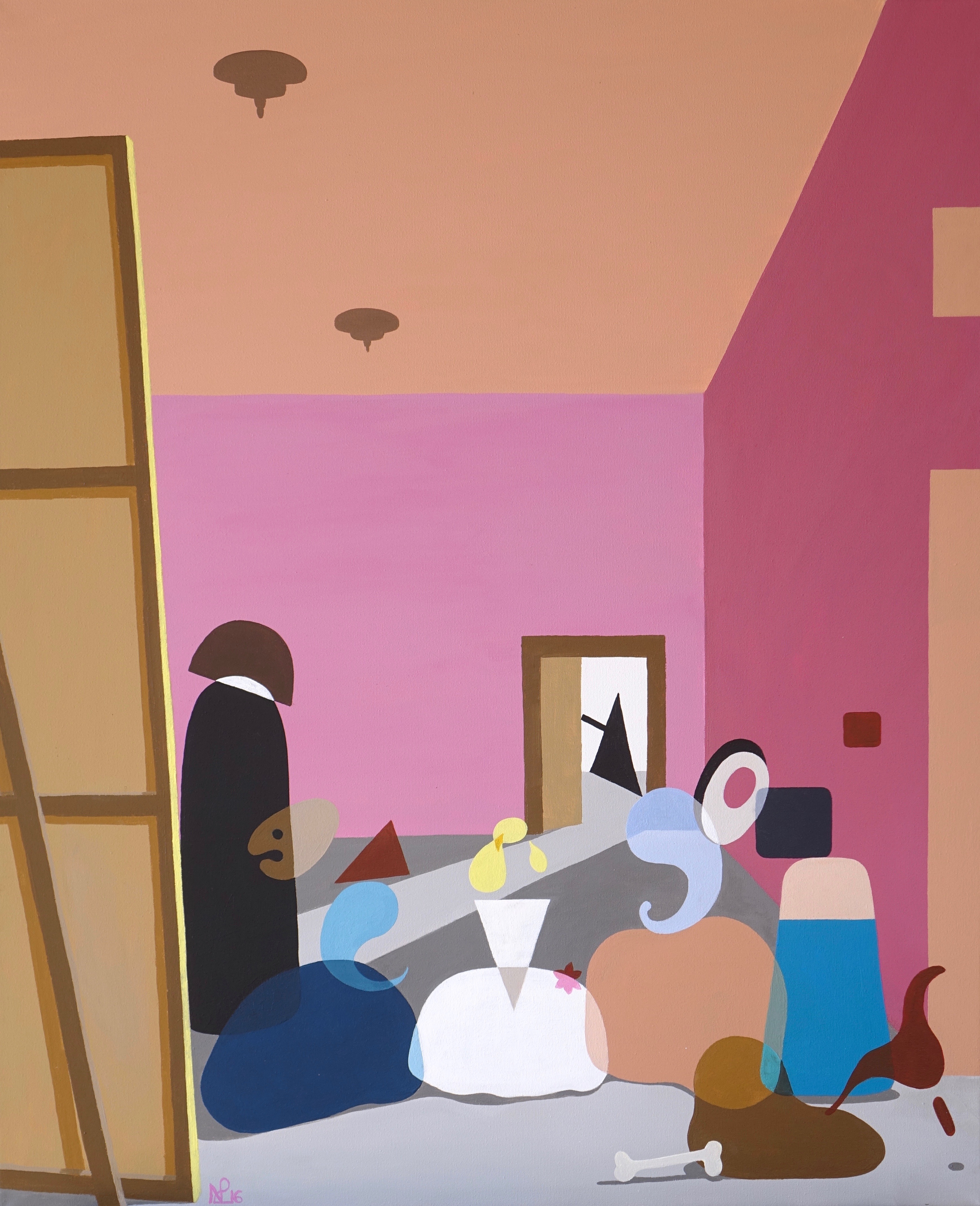
Las Meninas 2 FINAL

Las Meninas: Second Interpretative Exercise (2016 ©Nicholas de Lacy-Brown, acrylic on canvas)

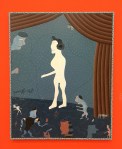
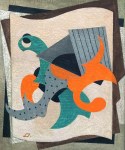
Las Meninas: Second Interpretative Exercise borrows from Velázquez’s composition, but otherwise radically simplifies the forms of his dramatic personæ, and swaps the dark browns and neutral shades of his painting with a vibrant almost pop-art palette. The result is an image which pleases me incredibly. It is at once abstract but recognisable, tidy but surreal. I had great fun in reimagining each piece of the painting – for example painting the dog’s stretched out arm as a bone, and the nun’s head like a piece of sushi – and best of all, I know that this is only the beginning. Abstraction and simplified forms are spinning around my head. Ideas are overflowing, and I can’t sit still for a need to paint.

It’s why I’ll always remember that Kandinsky show, because it switched on a light in my head which has long remained dormant.

© Nicholas de Lacy-Brown and The Daily Norm, 2001-2016. Unauthorized use and/or duplication of the material, whether written work, photography or artwork, included within The Daily Norm without express and written permission from The Daily Norm’s author and/or owner is strictly prohibited. For more information on the work of Nicholas de Lacy-Brown, head to his art website at www.delacybrown.com
Onwards to Vienna, Part 3: Palaces of Art

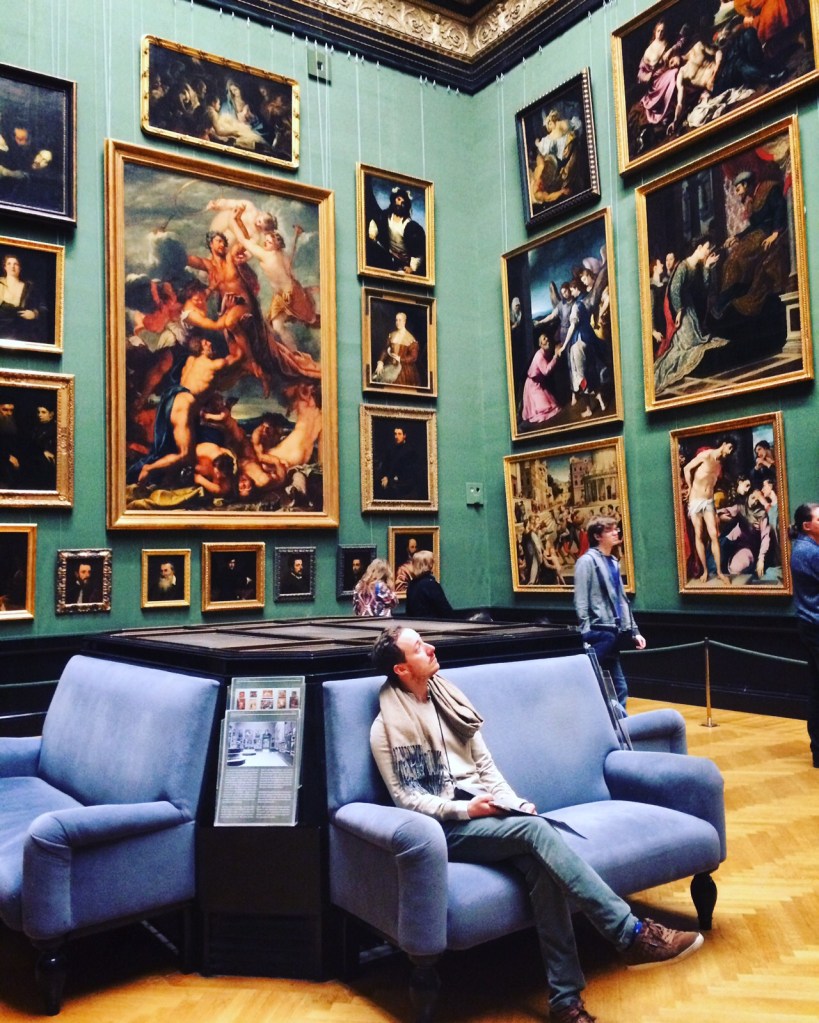
To say that there is a lot of art in Vienna is like saying there are a lot of paellas in Spain. The city literally lives, breathes and exudes art from its every corner and facet. Everywhere you go, large posters advertise the latest sensational exhibition appearing at the Leopold, or the Albertina, while inside the Belvedere and the Kunsthistoriches museums, some of the most famous paintings ever known to the history of art happily reside. We were literally astonished by the wealth of art contained within a small central core of the city, and by the end of our trip were rendered utterly exhausted by the amount of art we saw. But we were all the more fulfilled as a result.

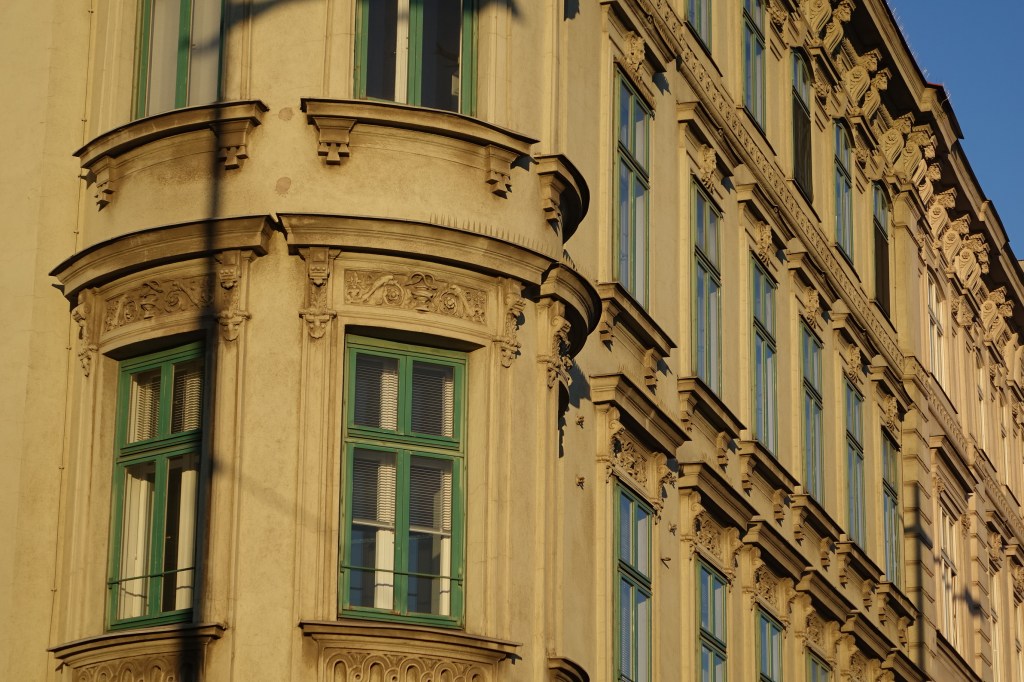
If I were to reproduce a photo of all the paintings we saw in permanent collections and temporary shows alike, the single blog post resulting would probably keep you scrolling downwards for a lifetime. Rather than do that therefore, I wanted to focus a little on the majestic buildings which host Vienna’s amassed artistic treasures, before showing you just a few of the works on show within them.

Almost unable to take in the breadth of art at the Kunsthistoriches Museum

Almost unable to take in the breadth of art at the Kunsthistoriches Museum

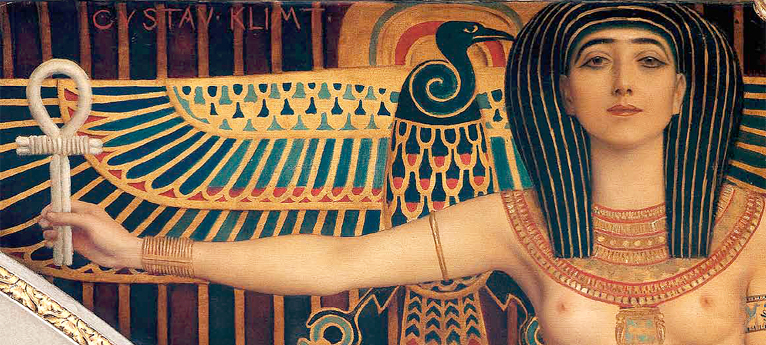
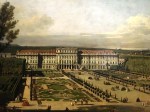
There was no missing the incredible grandeur of the building hosting the Kunsthistoriches Museum (The History of Art Museum), which sits opposite its domed twin – a duo of palaces built some 150 or so years ago upon the advent of the Ringstrasse. With an art collection mainly built up over successive generations of Hapsburg rule, and containing breathtaking masterpieces by the likes of Titian, Rembrandt, Caravaggio and Velazquez, it is no wonder that the museum is visited by more than 1.5 million people every year. But beyond the art on the walls, what is truly momentous is the building itself which, tailor-created especially to hold the very collection which graces the building today, is filled with every kind of creative lavishness, from murals to sculptures, friezes and reliefs, and chief amongst them all, some beautiful wall murals by Gustav Klimt himself.

Klimt murals in the main hallway of the Kunsthistoriches Museum

Klimt5 Lunette Klimt2

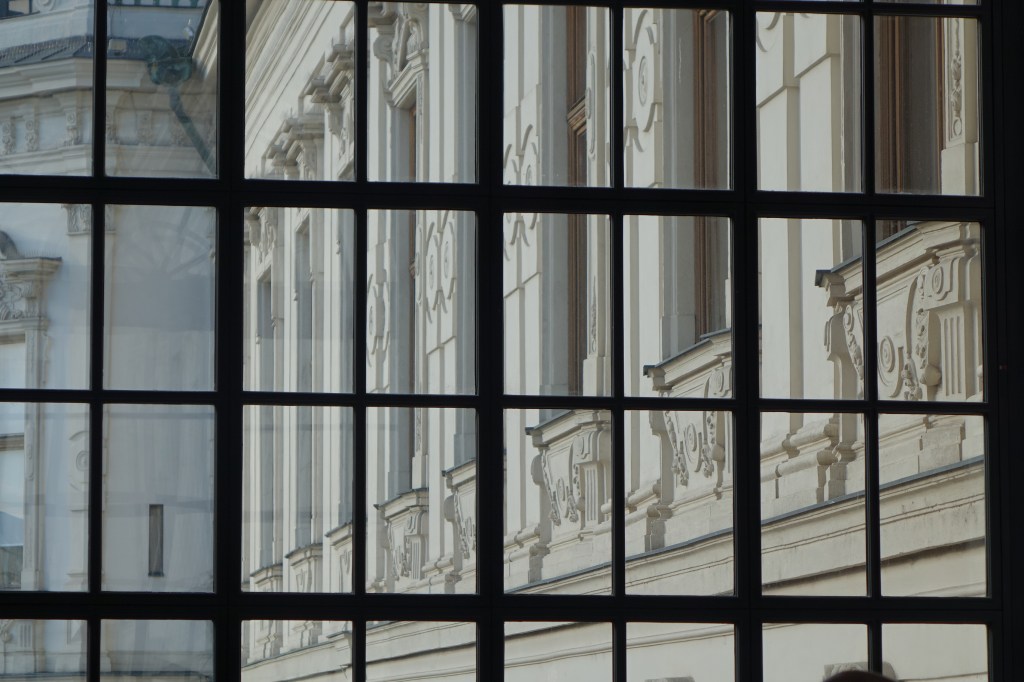
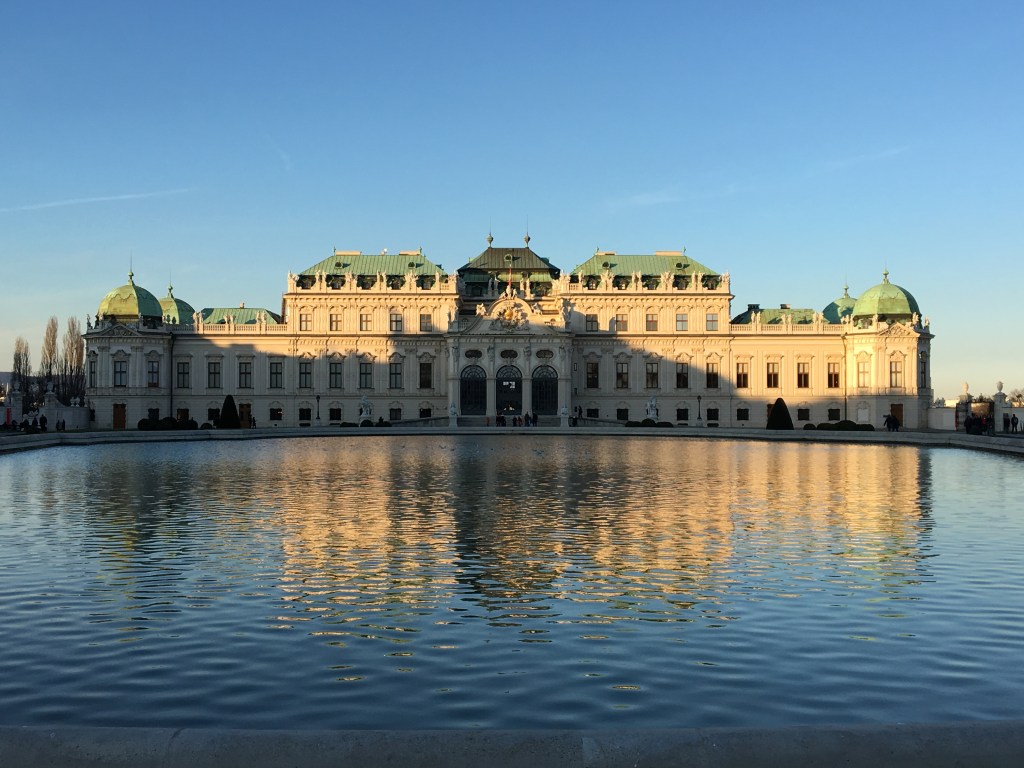
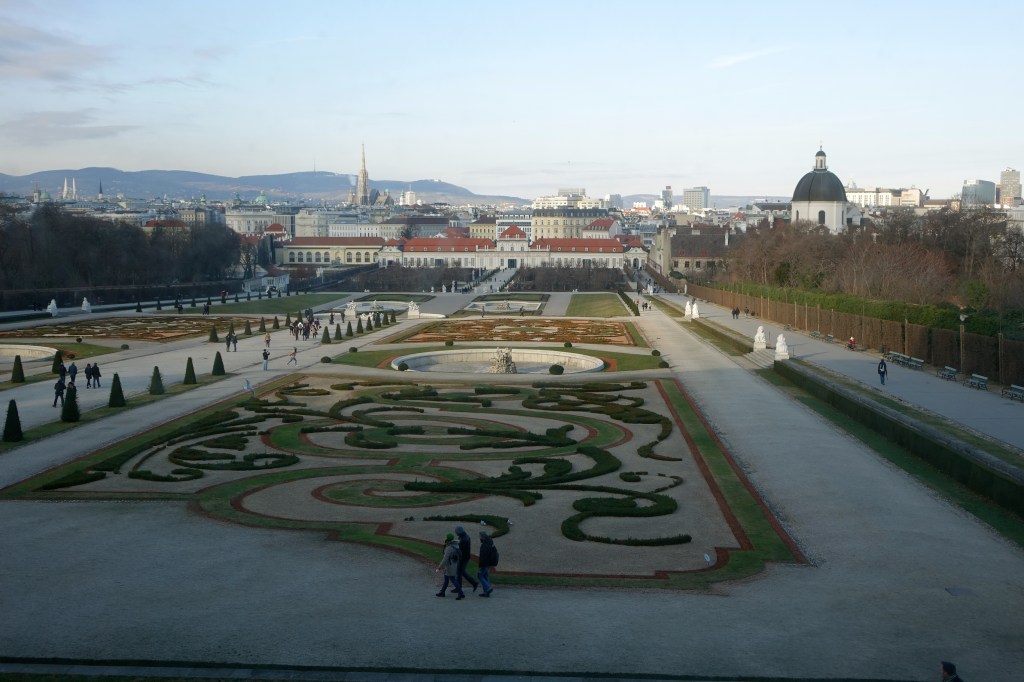
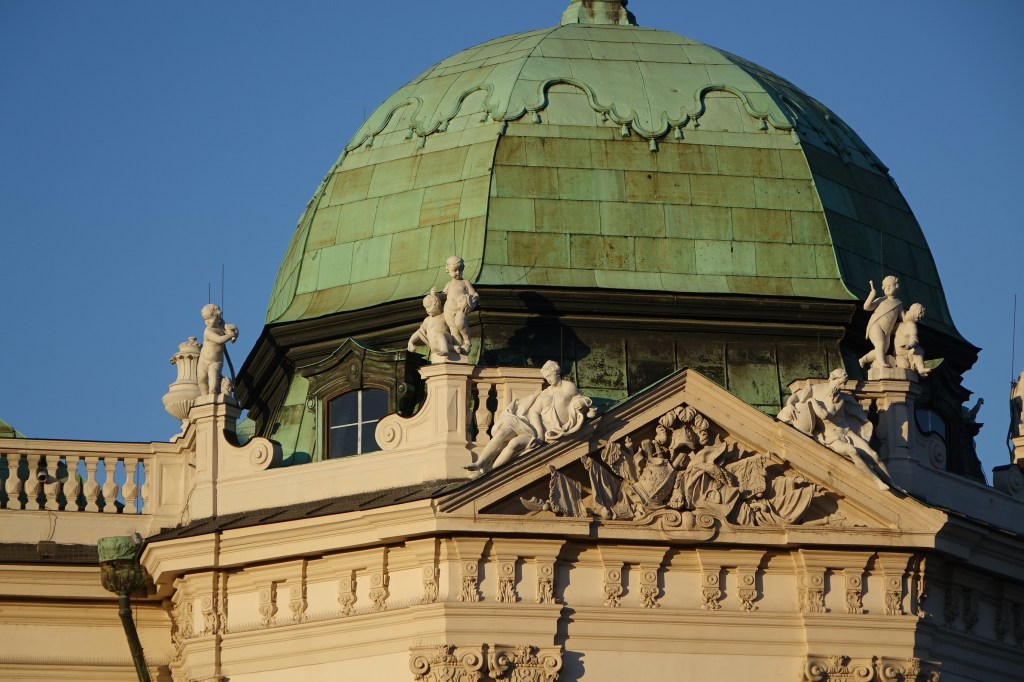
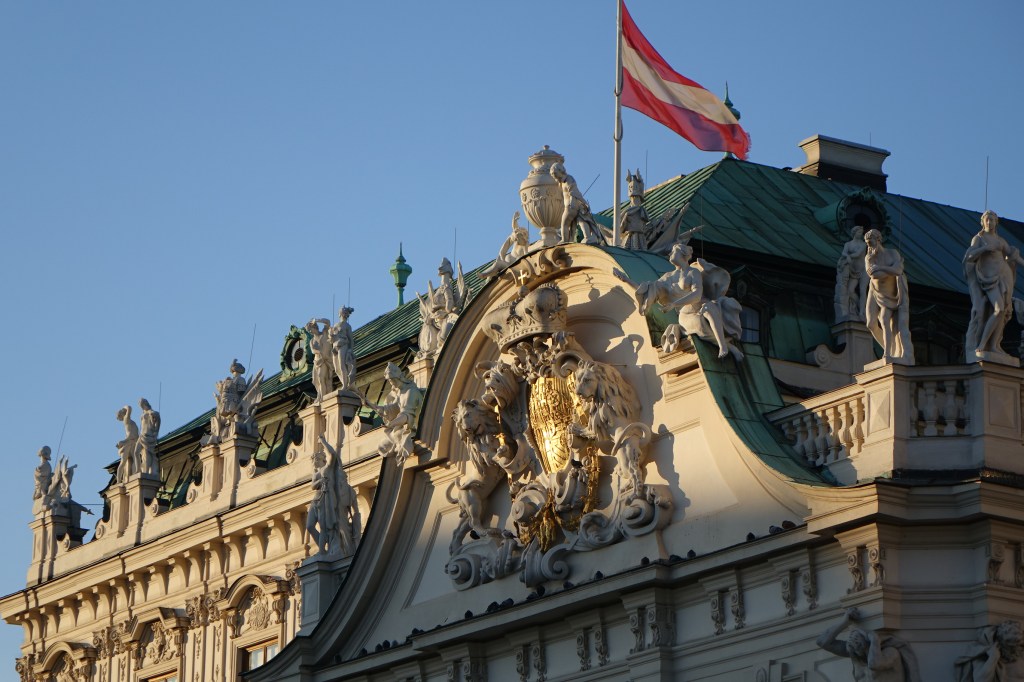
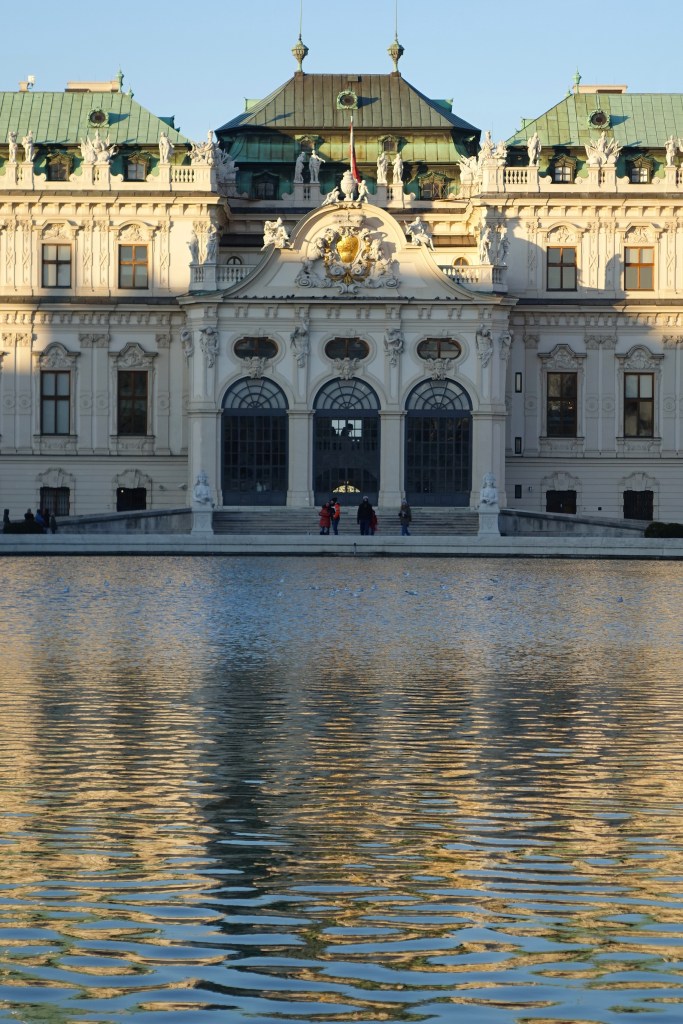
Klimt was of course to take centre stage across Vienna’s artistic offerings, not only in the galleries but in every manifestation of souvenir and guidebook. At the core of the city’s multifaceted Klimt showcase, his famous painting The Kiss lords over all the rest, glimmering with its multi-layered gold leaf in a long gallery on one side of the Upper Belvedere gallery. This equally spectacular palace is just one half of an iconic centre of art which offers exhibitions in both the Upper and Lower galleries and whose buildings are laced with all of the elaborate pomp intended by the original owner, Prince Eugene of Savoy, to evoke the magnificent of his various 17th century military successes.

The beautiful Belvedere

DSC06018 DSC05967 DSC05988 DSC05984 DSC05989 DSC05995 IMG_7449 DSC05997 DSC05991 DSC05981 DSC05992 DSC06021 DSC06008 DSC06017 DSC06006 DSC06014

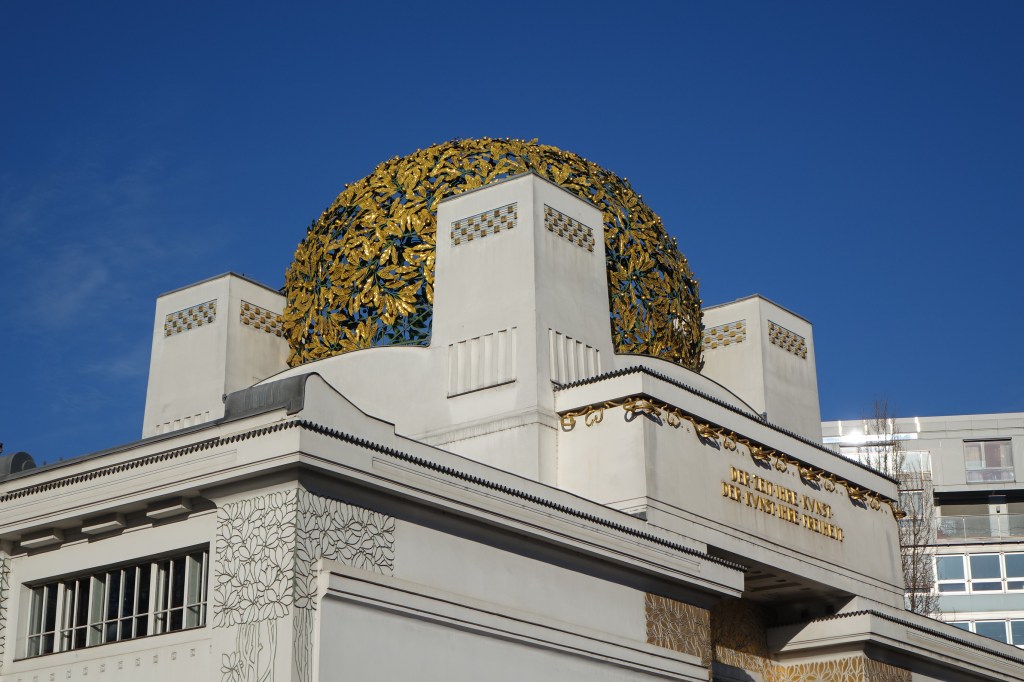
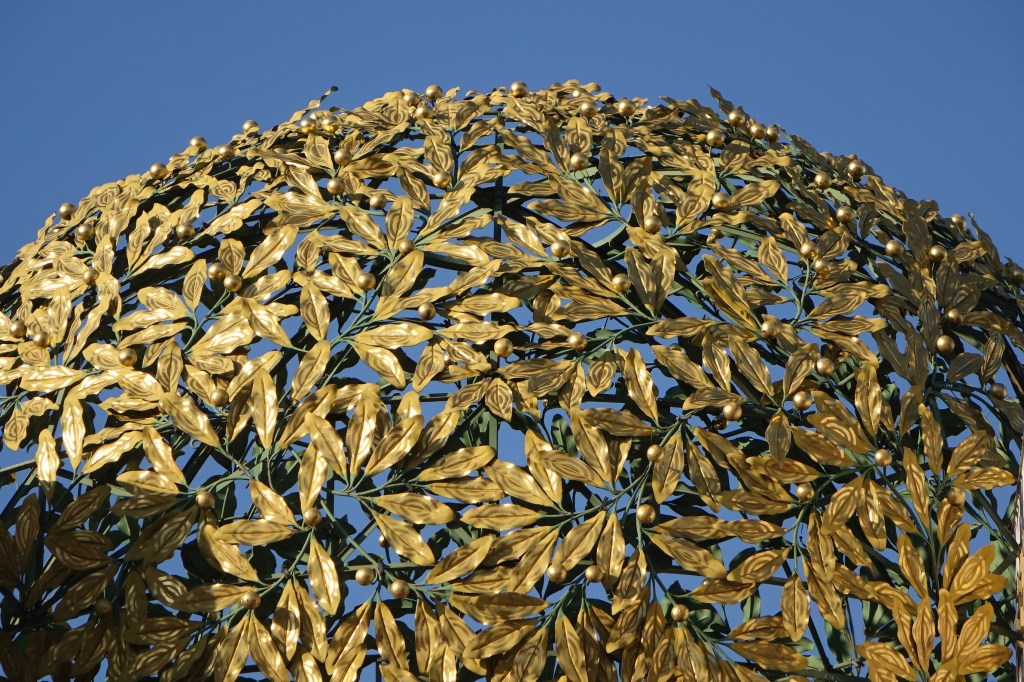
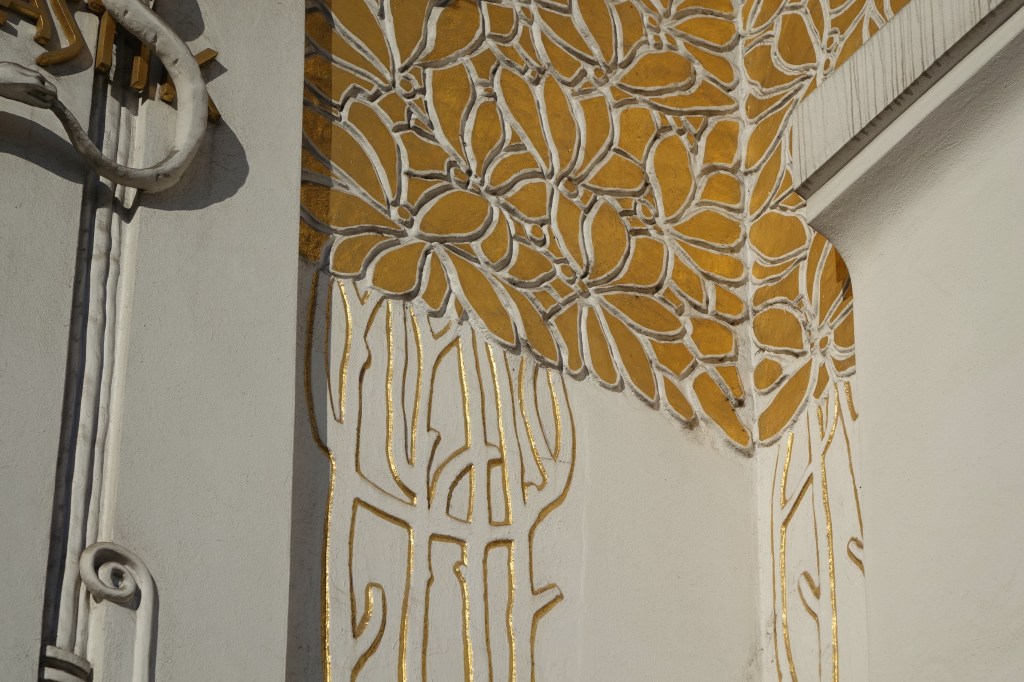
But back to the 20th century, and my favourite of all the Klimt spectacles is the Secession building, a glimmering gold spectacle of modernism constructed in the Jugendstil style as a showcase for the Secession movement’s artists, chief amongst whom was of course Klimt himself. And today, the star attraction is Klimt’s allegorical Beethoven Frieze, one of the most iconic of the artist’s works.

The Secession Building and Klimt’s Beethoven Frieze

DSC06205 DSC06211 DSC06212 DSC06203 DSC06202 DSC06201 DSC06206 DSC06209

000171 I

In all, during 4 days in the city of Vienna, we visited some 8 galleries, an equal number of permanent exhibitions and an additional 12 temporary exhibitions. The vast wealth of art on offer was simply mind blowing, from the ancient treasures of the Kunsthistoriches museum and the delicate 19th century works of the Belvedere, to the in depth studies of Klimt and Schiele in the Leopold museum, and the incredible collection of impressionist art in the Albertina. Below are just a few photos of the many artistic treasures we saw. Far too many to take in, but we made and enjoyed our every attempt.

Onwards to Vienna, Part 2: The Churches

If the Ringstrasse and the palatial buildings that line it are demonstrative of Vienna’s more recent 19th century prowess (and, with the recent additions of the MuseumsQuarter, its 21st century cultural advances to boot) then its spectacular churches are demonstrative of a magnificent history which goes back yet further. For these religious monuments have truly stood the test of time, from their inception as far back ago as the 13th century, to the progressively exquisite embellishments which have since followed.

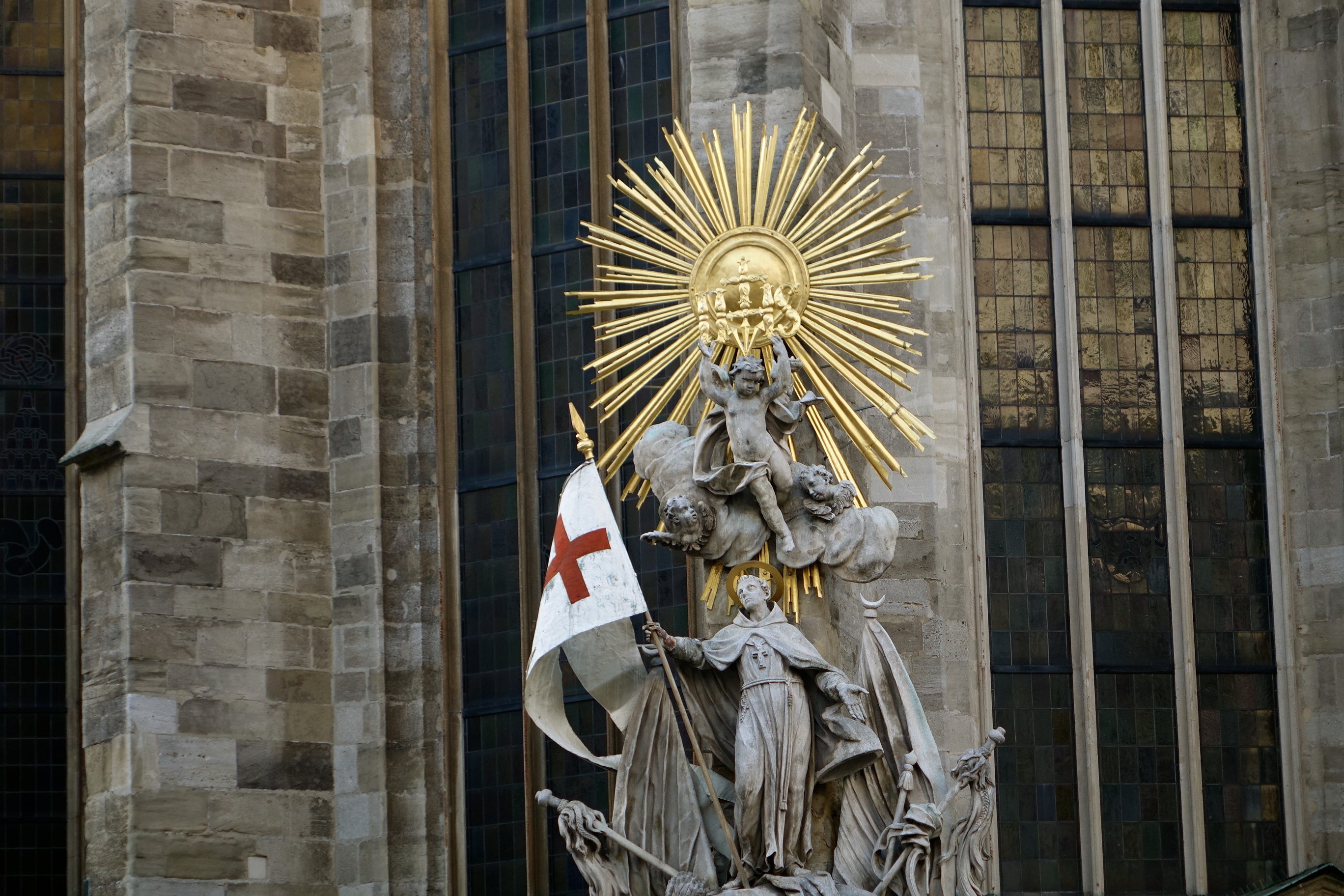
The Stephansdom inside and out

DSC05889DSC05757DSC05758DSC05804DSC05817DSC05816DSC05807

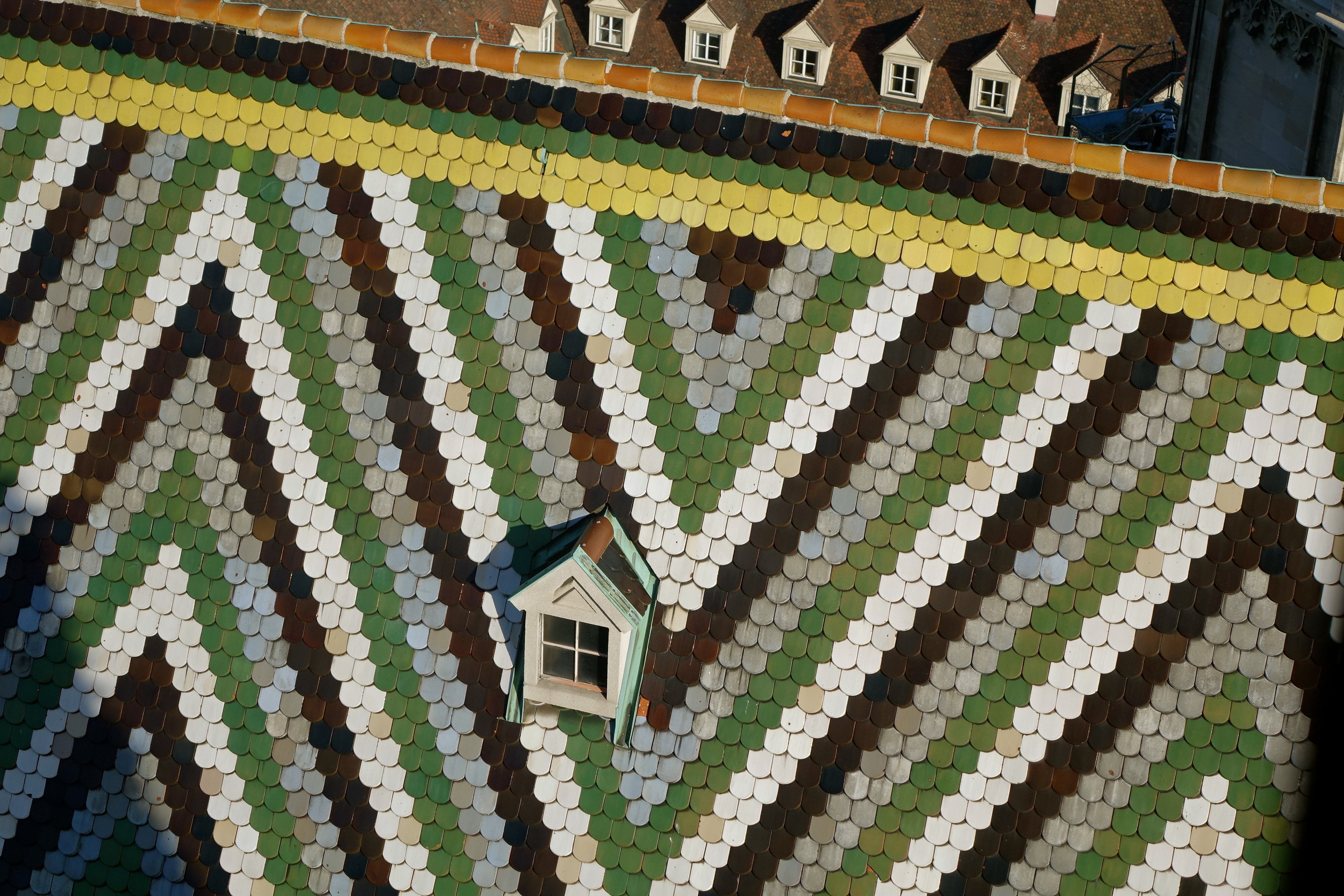
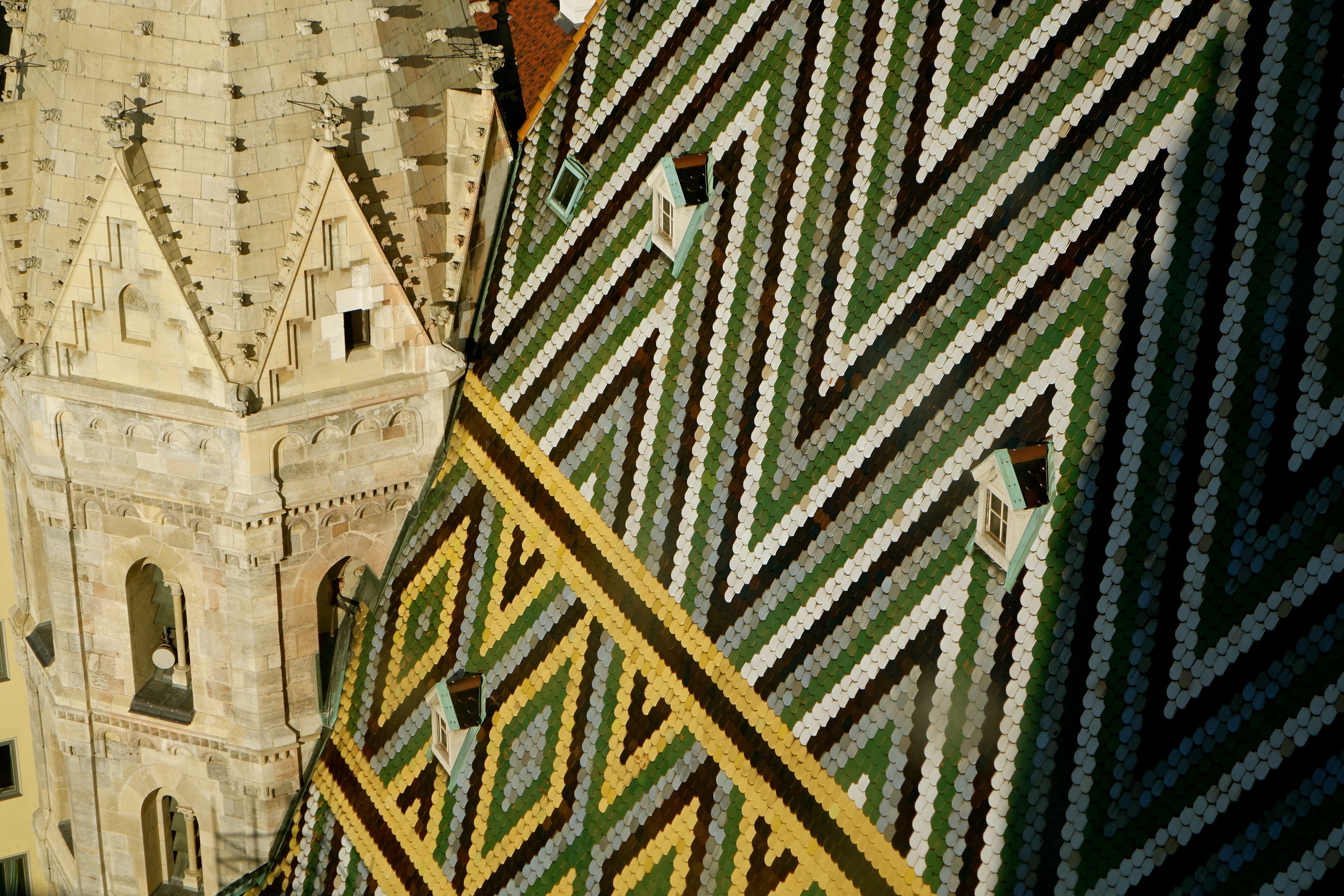
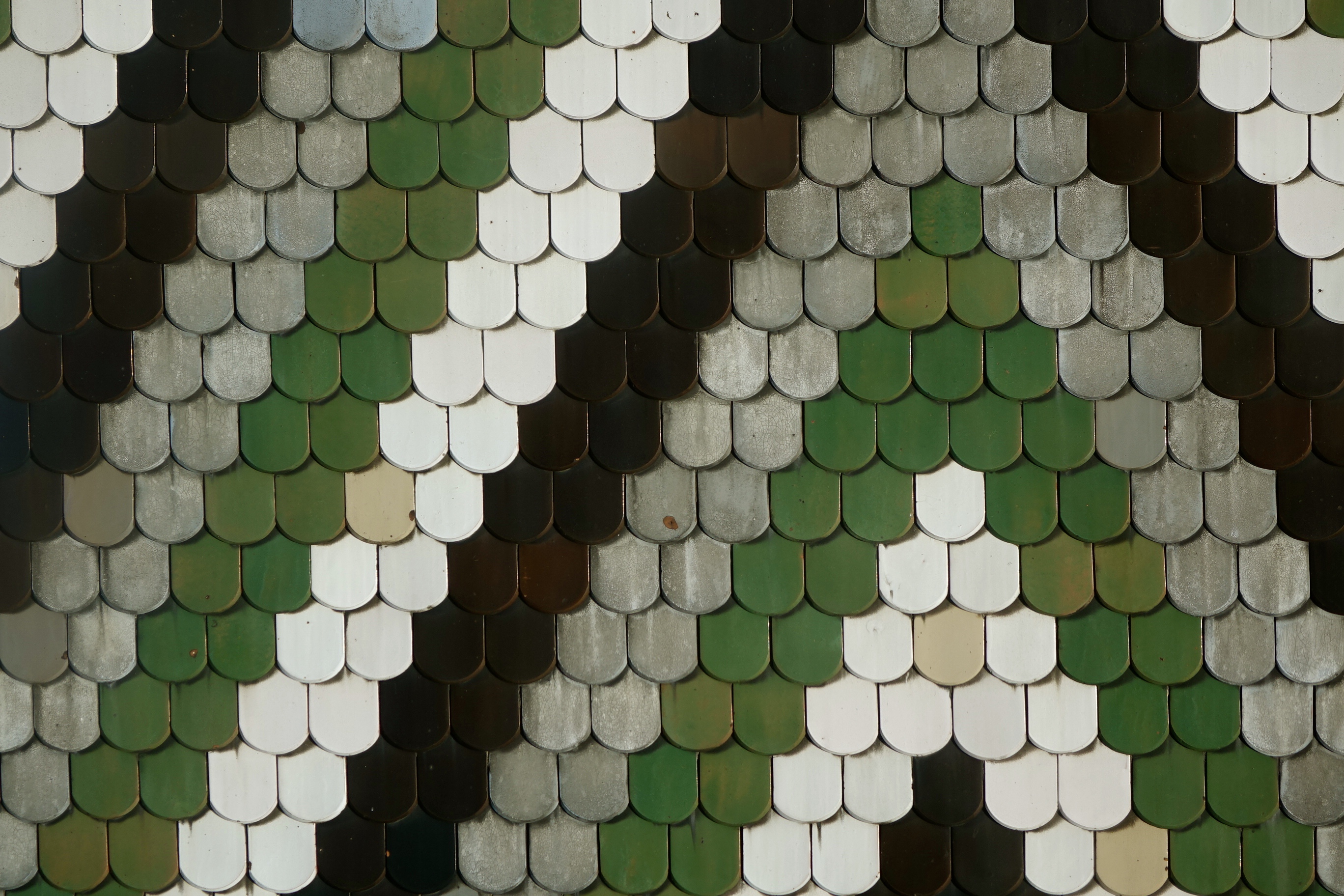
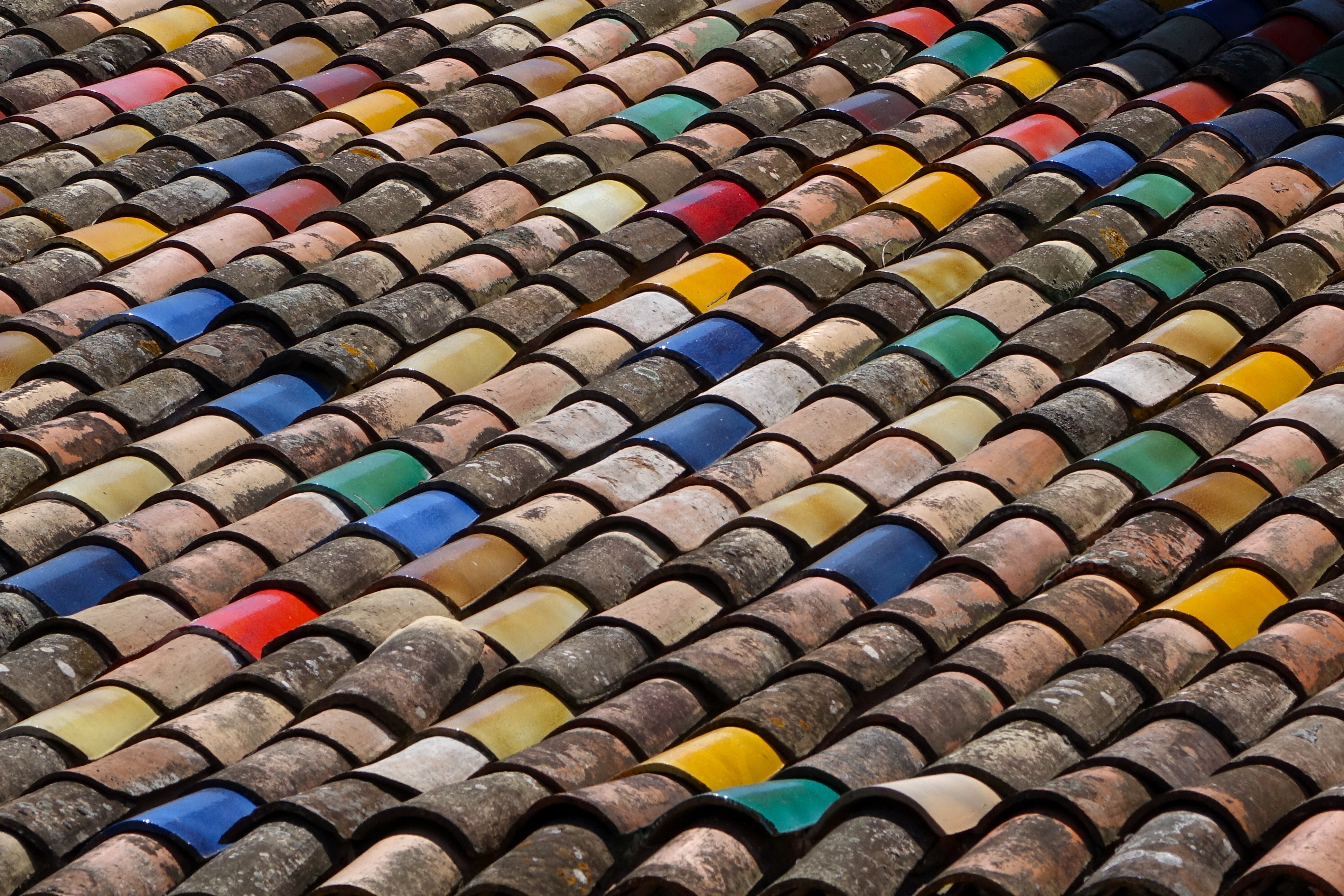
We begun our tour of Vienna’s grandest religious spectacles with the centre point of them all, the Stephansdom cathedral. Often called the soul of the city itself, it is perhaps no coincidence that the cathedral contains a great many of the remains of some of the most historically significant of the Hapsburg rule which lorded over Vienna, and the empire which spread out around it, for centuries. But rather than begin this visit from the inside, we instead claimed the 300 or so steps of its main gothic spire, taking advantage of the aspect which is perhaps most characteristic of this building – its enormous height. There, from somewhere close to the top of the “Steffi” or spire, we were able to enjoy magnificent views not only over all of the city, but of the incredible tiled roof which contains almost a quarter of a million glazed tiles, meticulously restored after the damage inflicted towards the end of the second world war.

Vienna from the top of the Stephansdom

DSC05773DSC05791DSC05792DSC05783

Having caught our breath upon our rather perilous descent down a very narrow spiral staircase, we did not linger in the inside of the cathedral for long. This was not so much owing to a lack of content, but to both the queues for, and the price of, admission, both of which inspired us to take our leave and seek further thrills in this city of plenty.

The Stephansdom’s spectacular tiled roof

DSC05774DSC05771DSC05780DSC05795DSC05772DSC05756

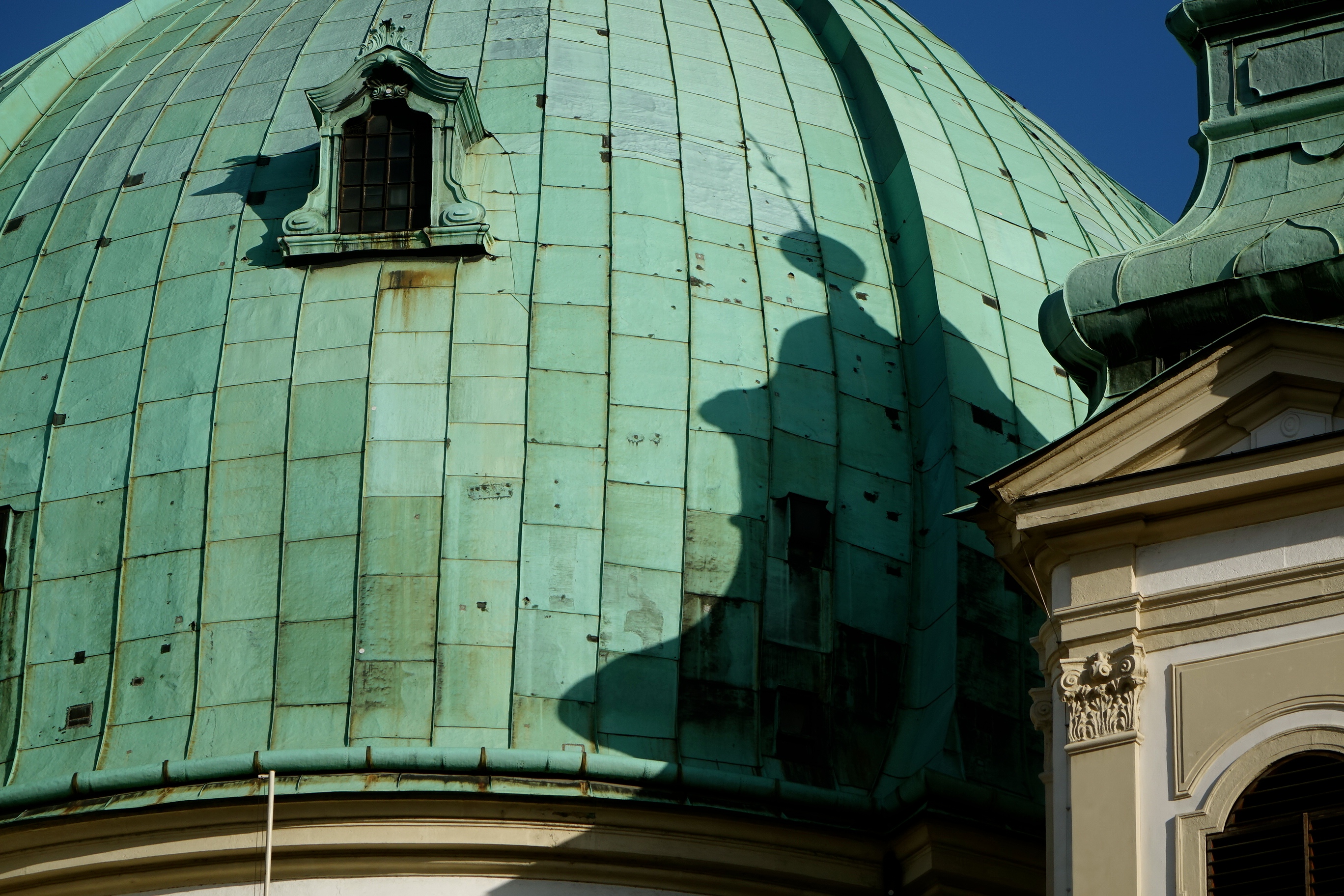
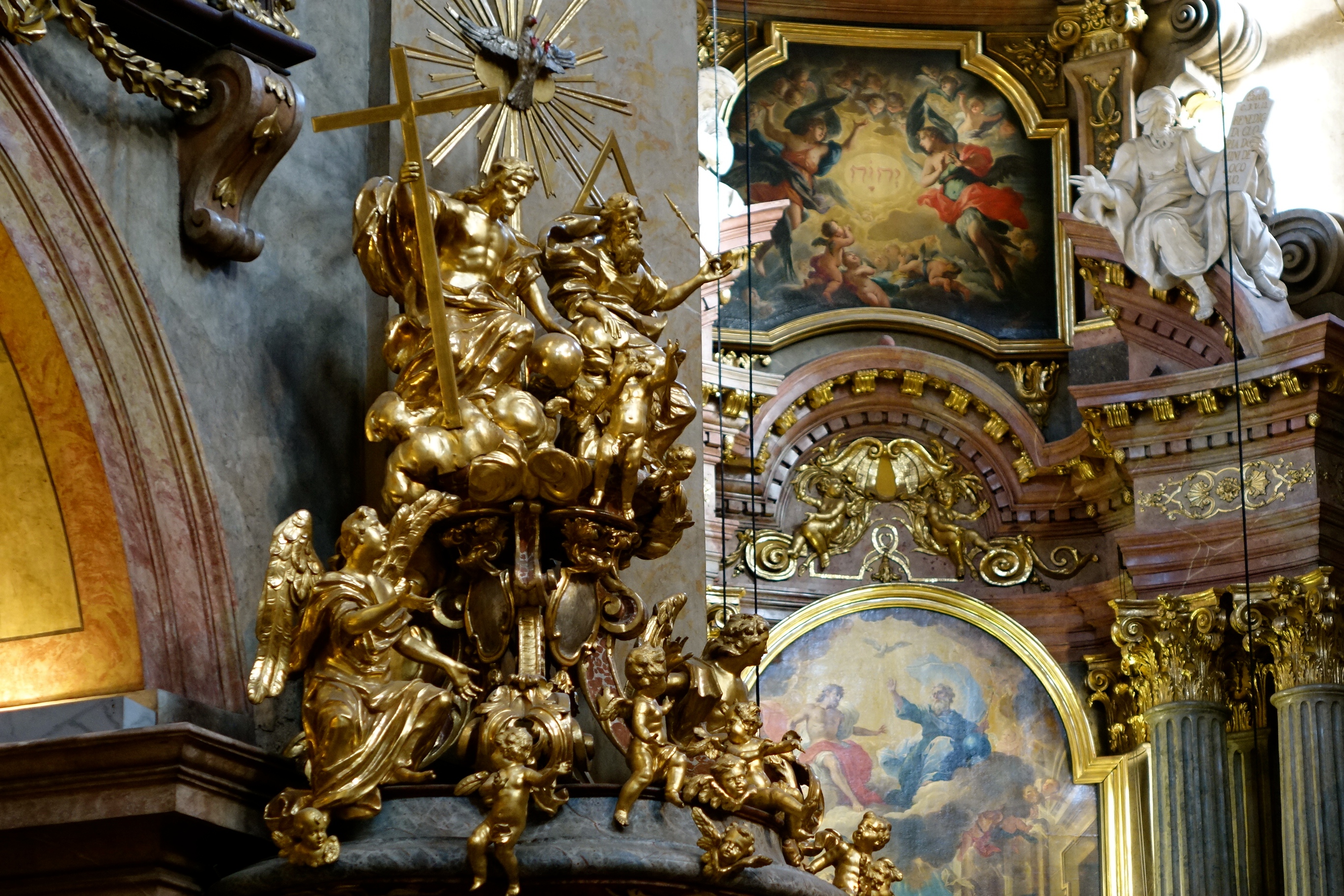
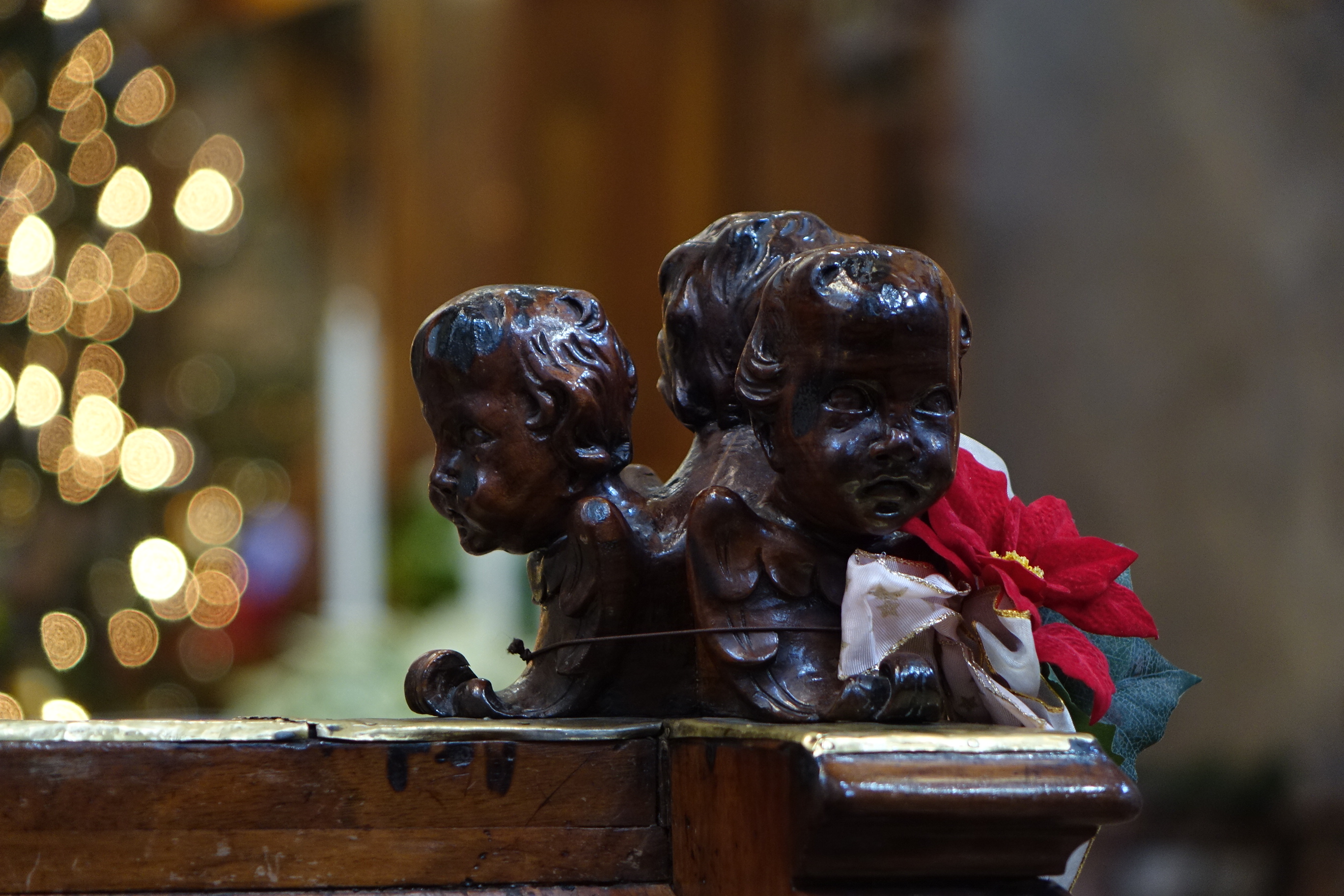
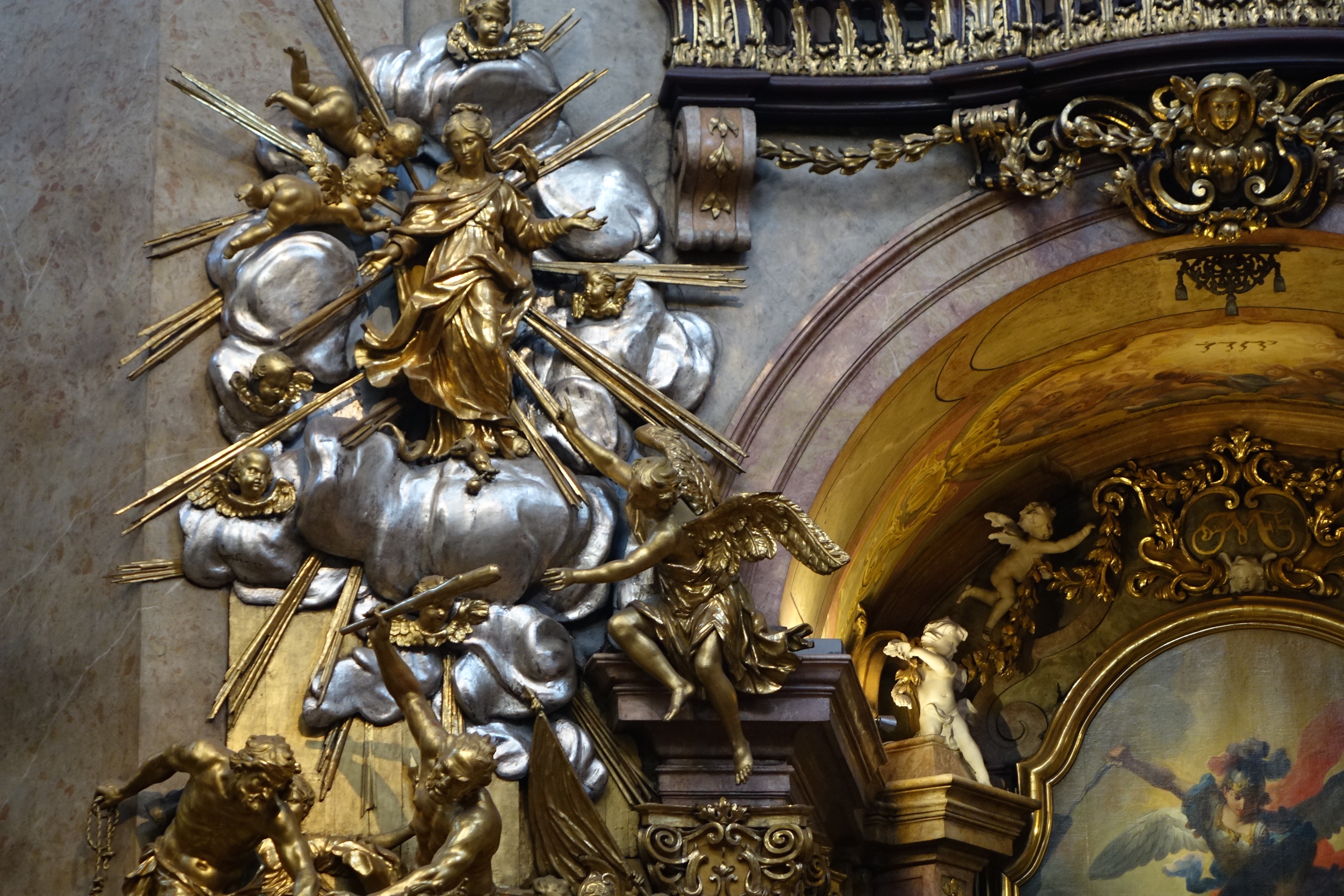
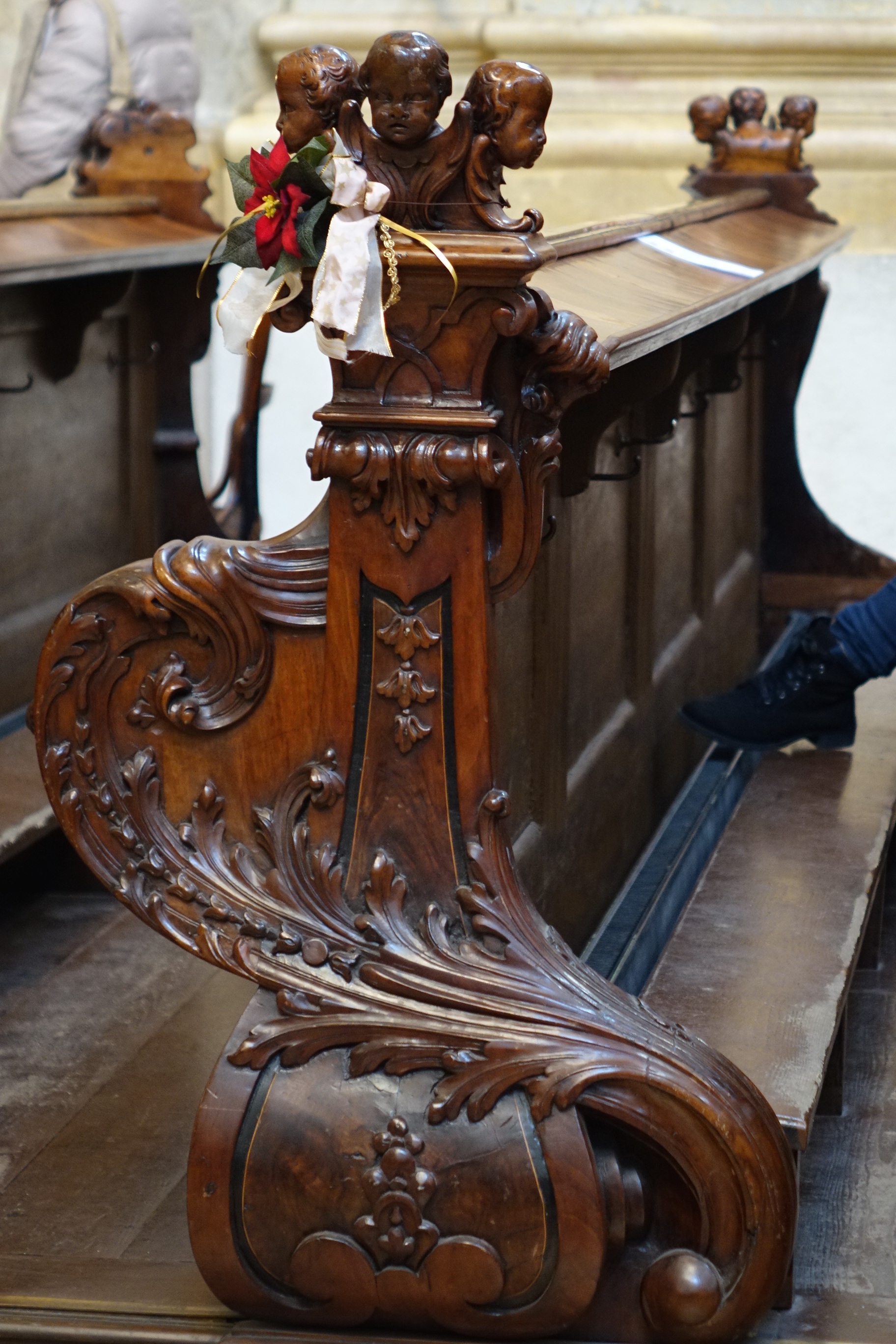
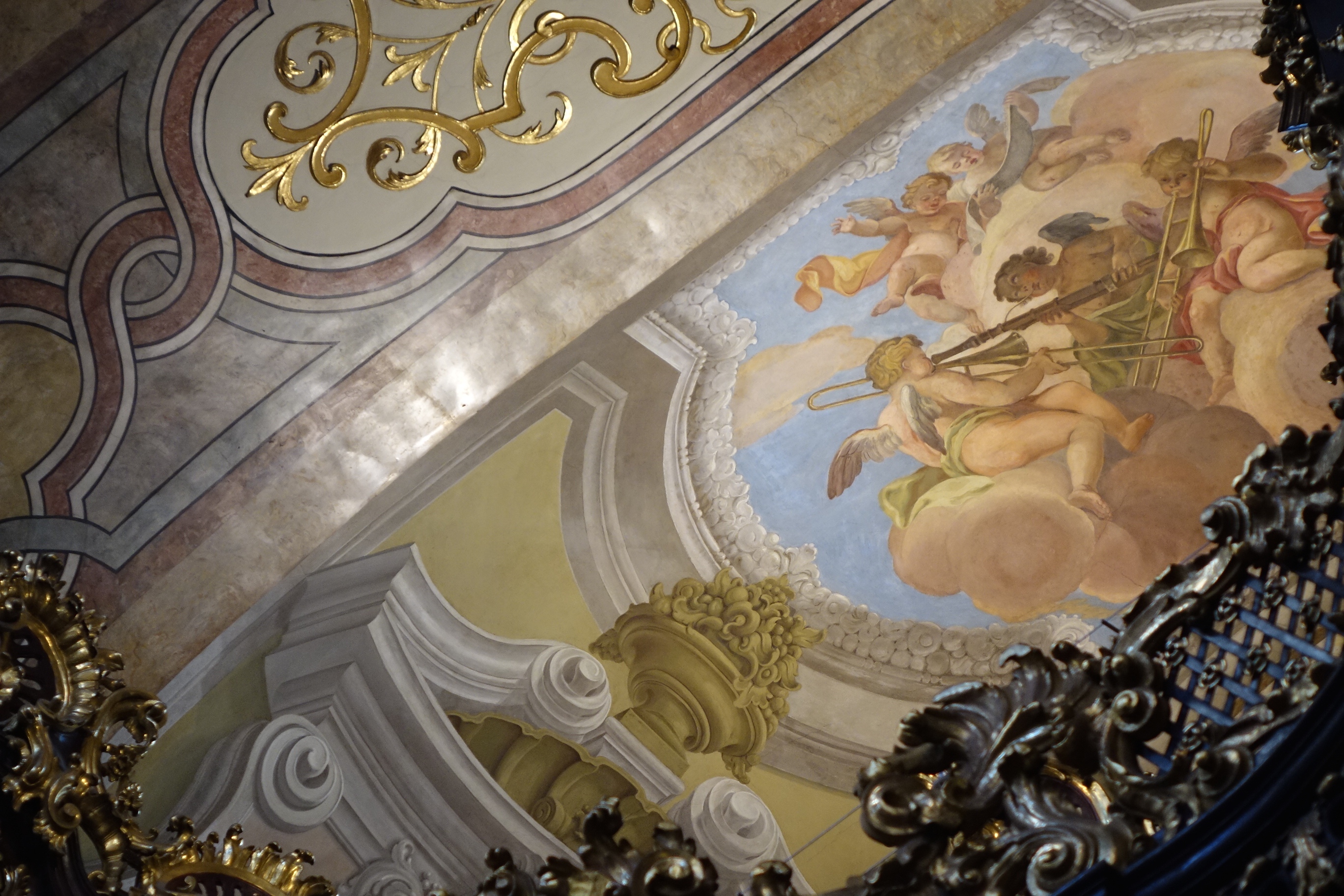
Next on the list was the equally impressive domed Peterskirche, a romantic oval-based construct remodelled in the 18th century on St Peter’s in Rome, and by no means lacking the exuberant ostentatious interiors of its inspiration. For the interiors of Peterskirche are amazingly lavish, with an eye-catching pulpit meticulously sculpted by Matthias Steindi, and frescoes embellishing the huge dome depicting the Assumption of the Virgin by J M Rottmayr. From the extravagant altar to the richly carved pews, this was a church whose every detail was dripping in embellishment, and easily the equal of the Stephansdom up the road.

Peterskirche

DSC05833DSC05826DSC05848DSC05880DSC05843DSC05869DSC05850DSC05863DSC05864DSC05847

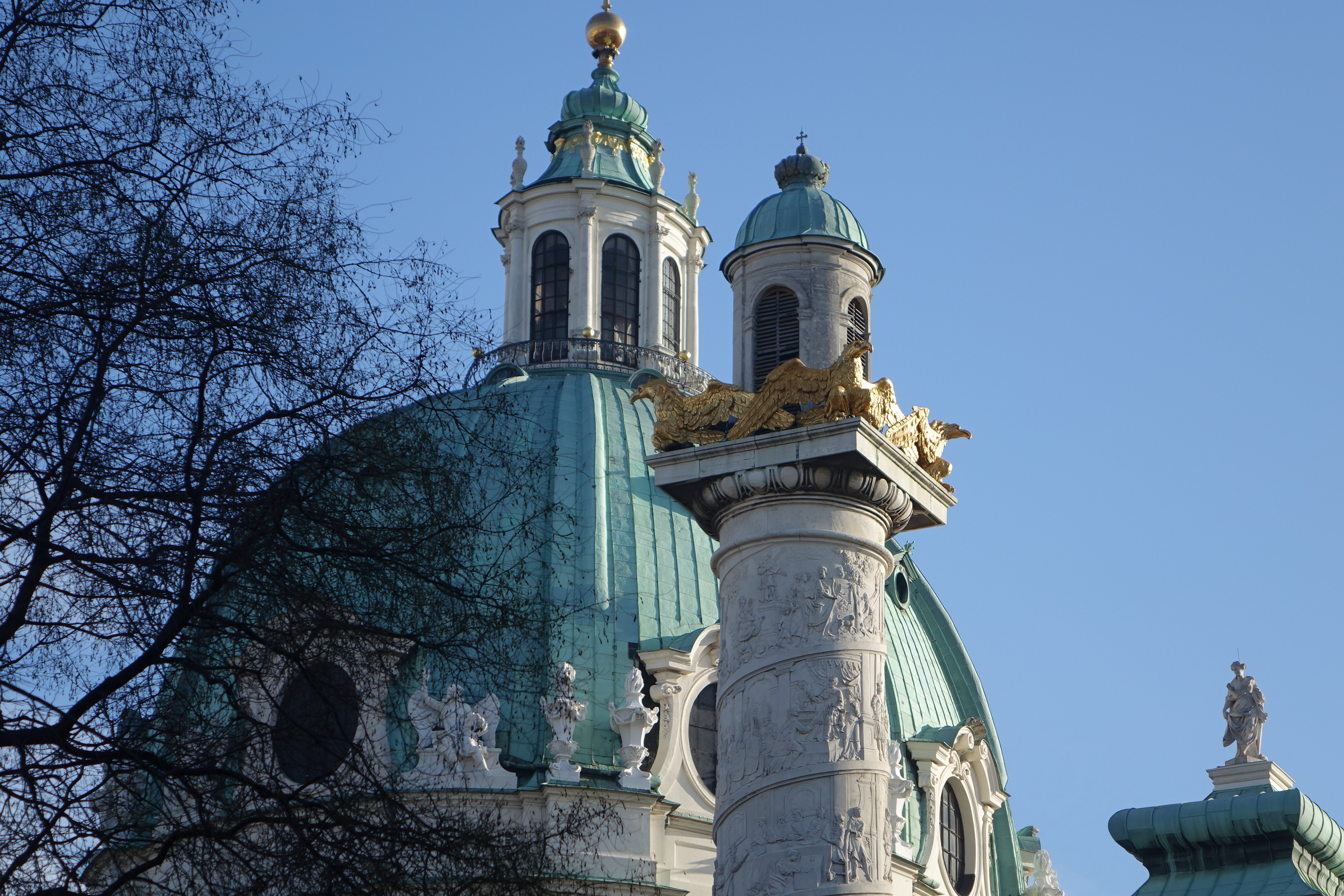
We encountered several other religious spectacles as we proceeded with our tour around Vienna, although we seldom ventured inside. One we would have liked to have explored, on the inside and out, was the last iconic church of the city, Karlskirch, sitting at one end of the central Karlsplatz. But as I bemoaned in Monday’s post, a further prohibited entrance fee found us fleeing from the tourist entrance, leaving us to appreciate this columned baroque masterpiece from the outside – an aspect which, like so many others of the magnificent buildings clambering to be admired in Vienna, could not fail to impress.

Karlskirche

DSC01234DSC06223DSC06219DSC06225DSC06222Karlskirche_Wien

All photos and written content are strictly the copyright of Nicholas de Lacy-Brown © 2016 and The Daily Norm. All rights are reserved. Unauthorized use and/or duplication of the material, whether written work, photography or artwork, included within The Daily Norm without express and written permission from The Daily Norm’s author and/or owner is strictly prohibited.

Art on the Riviera: Musée Fernand Léger

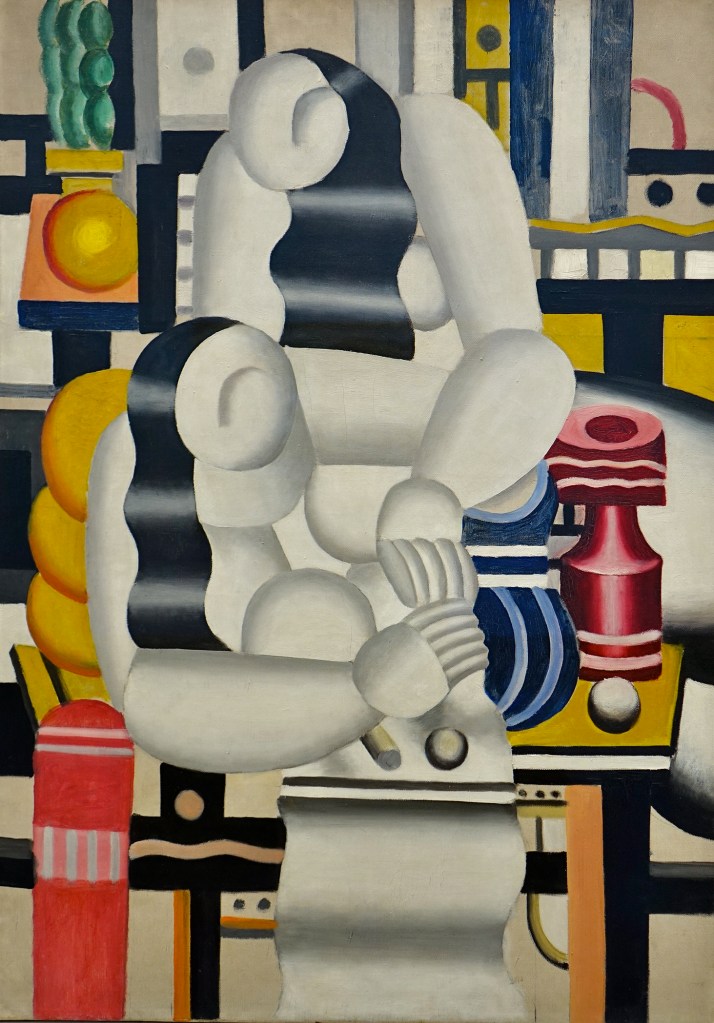
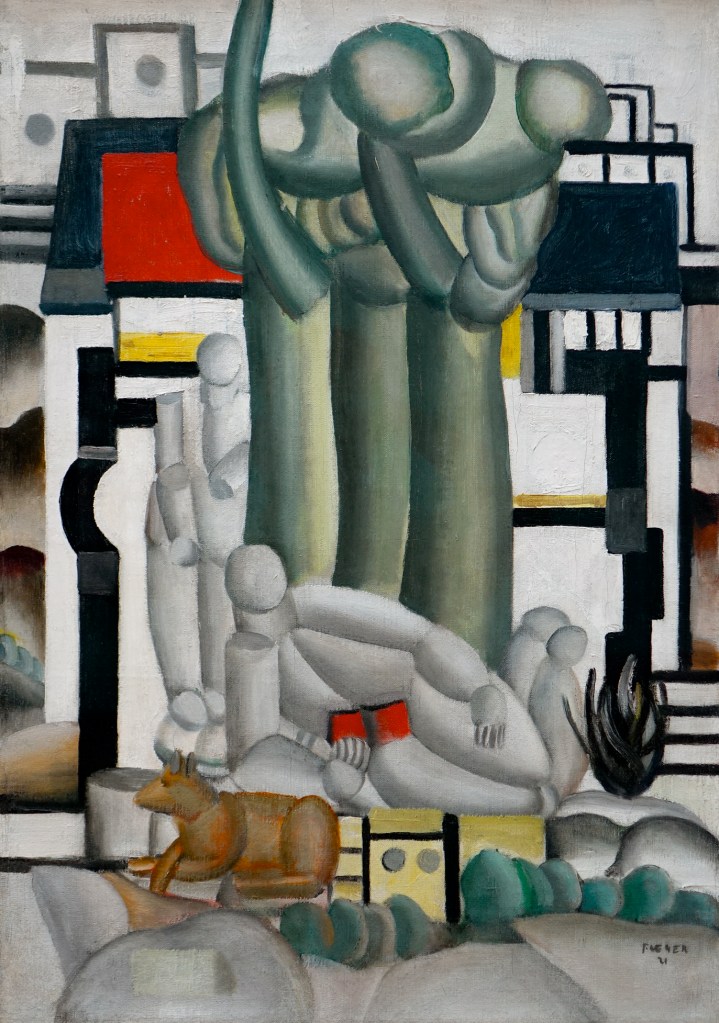
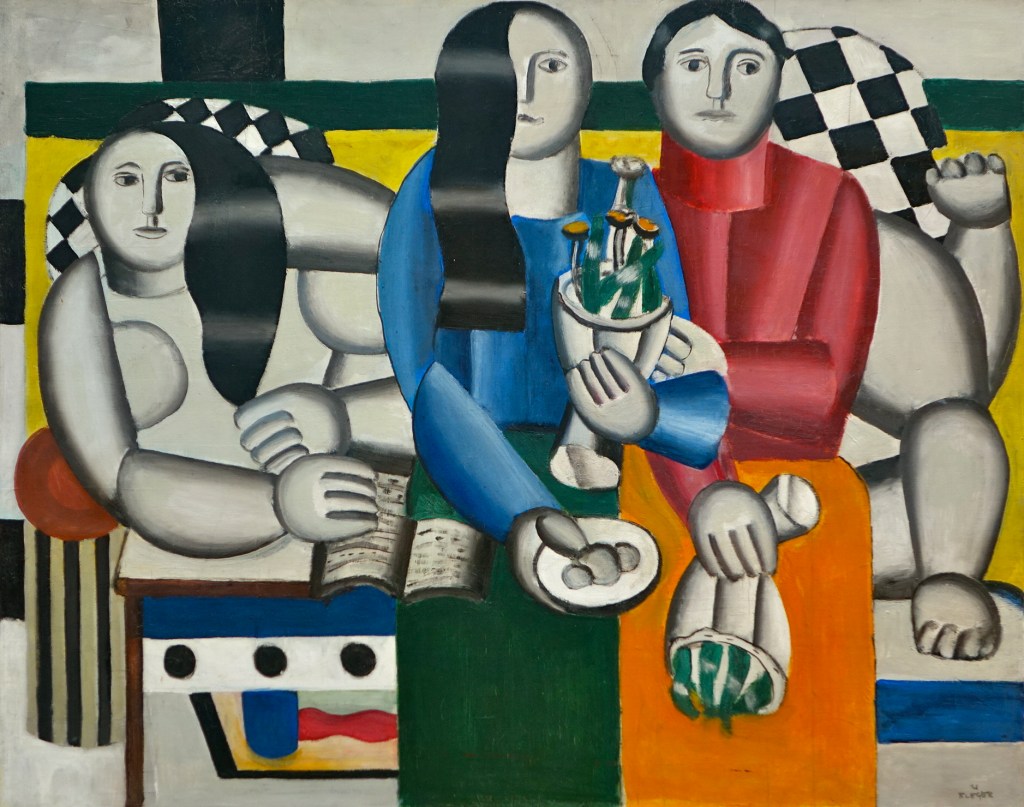
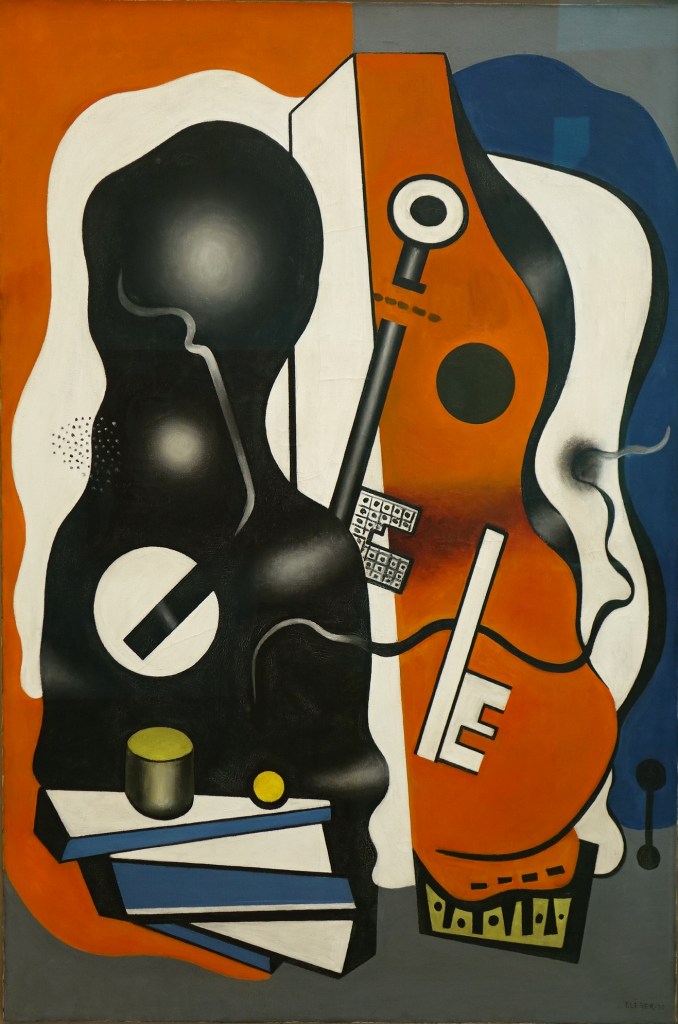
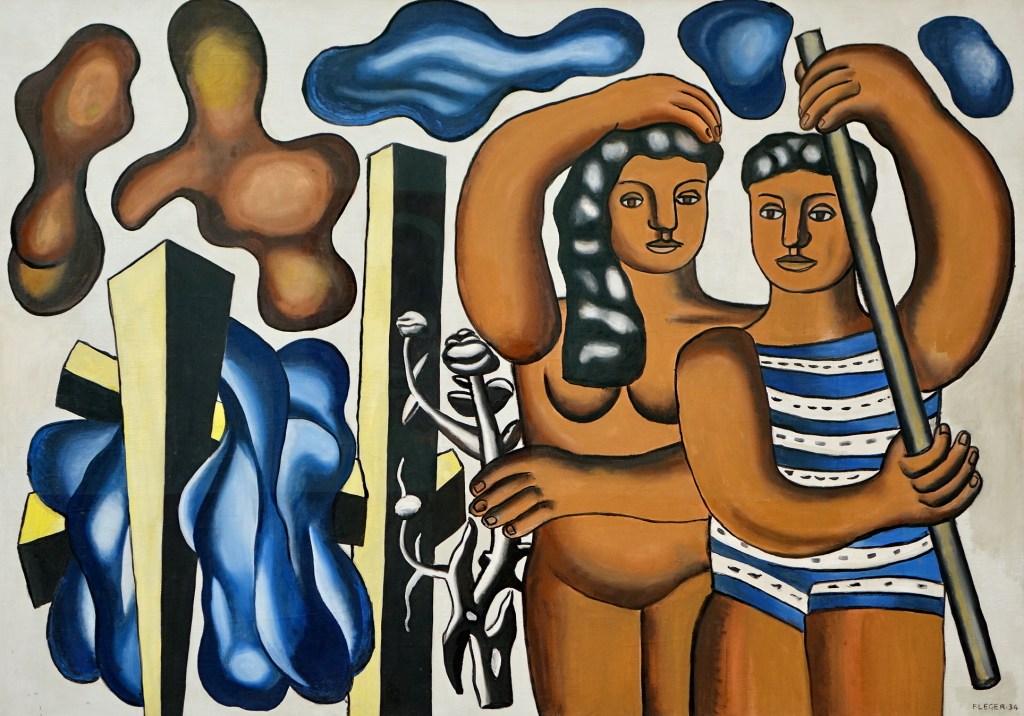
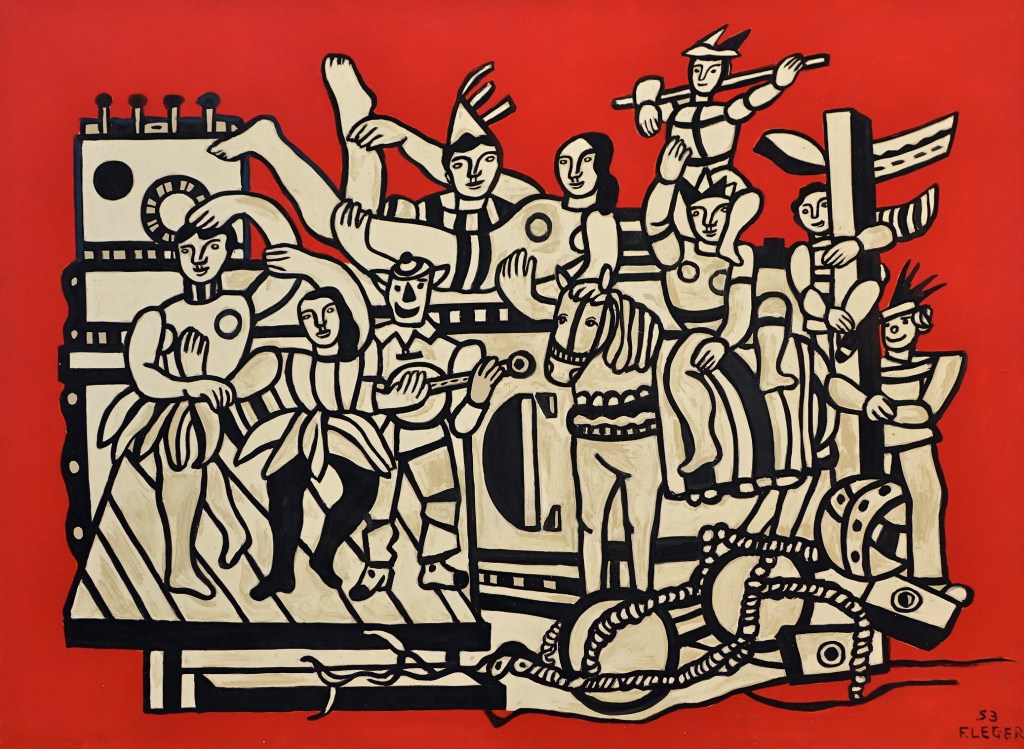
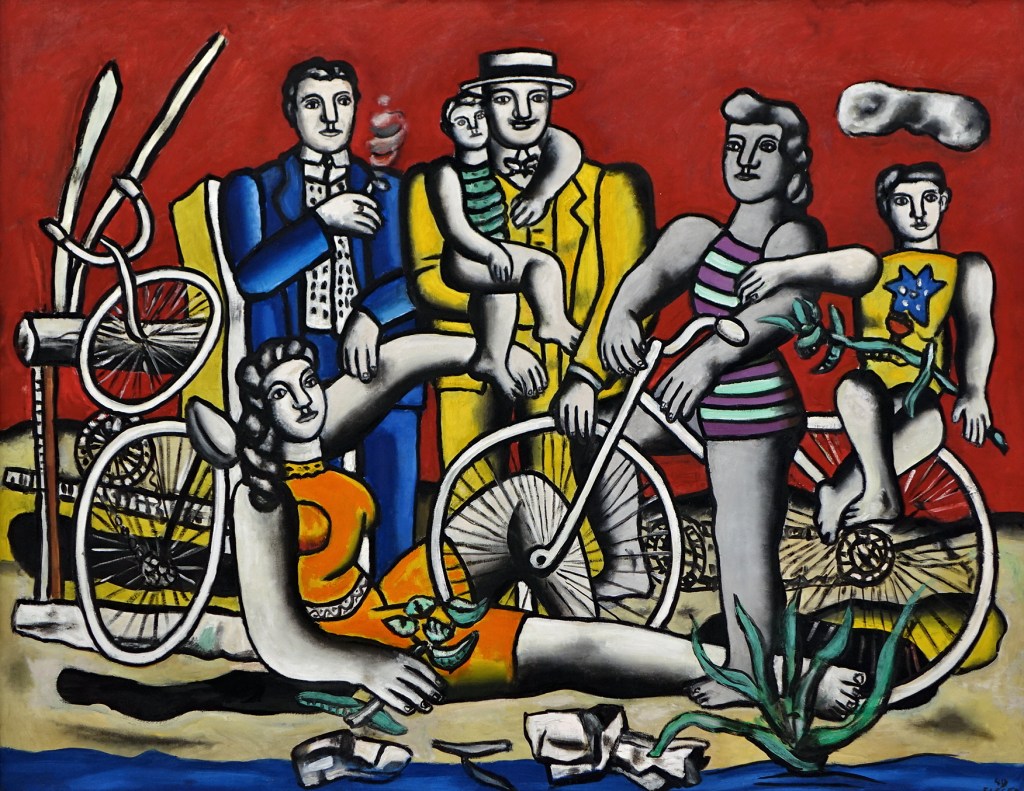
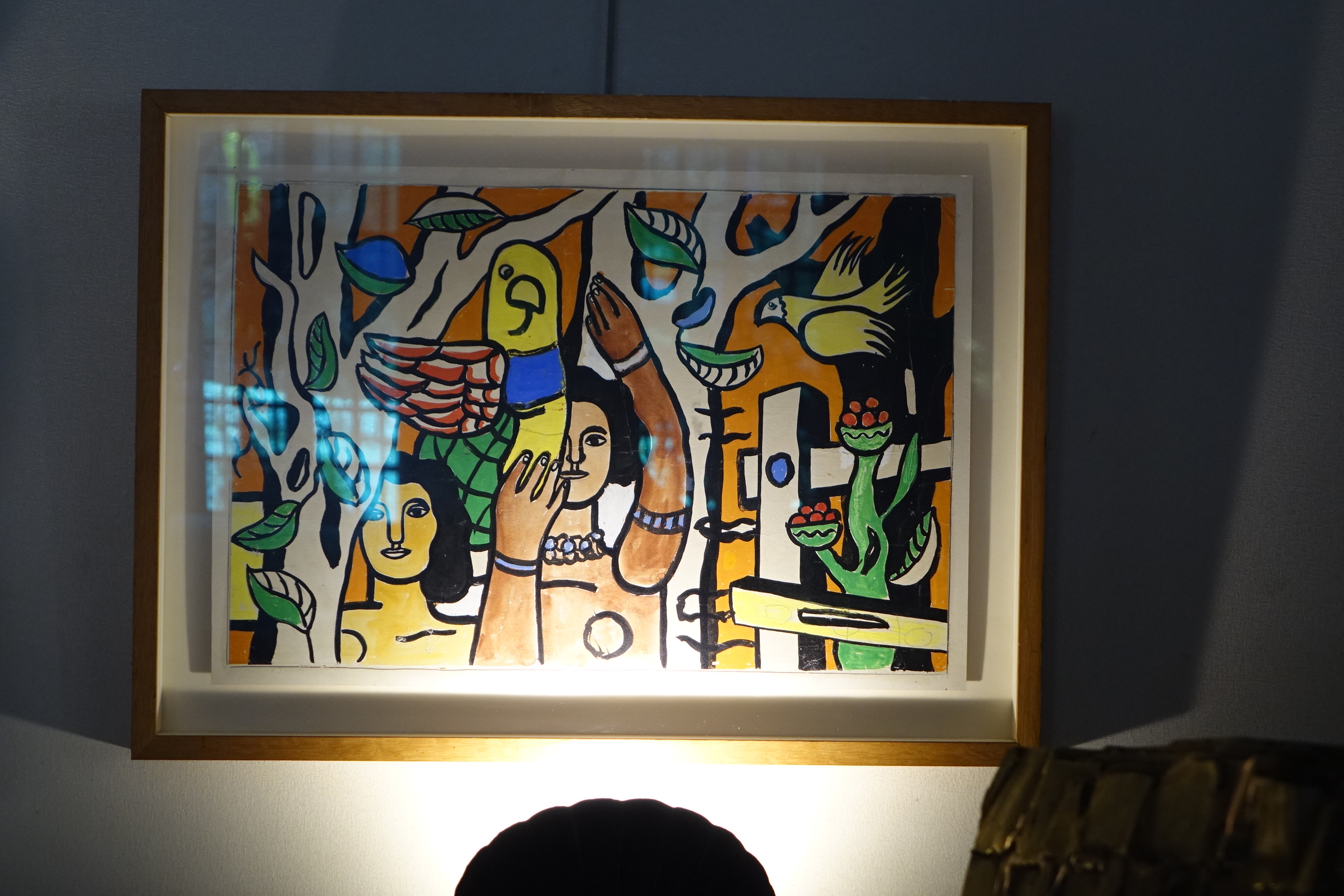
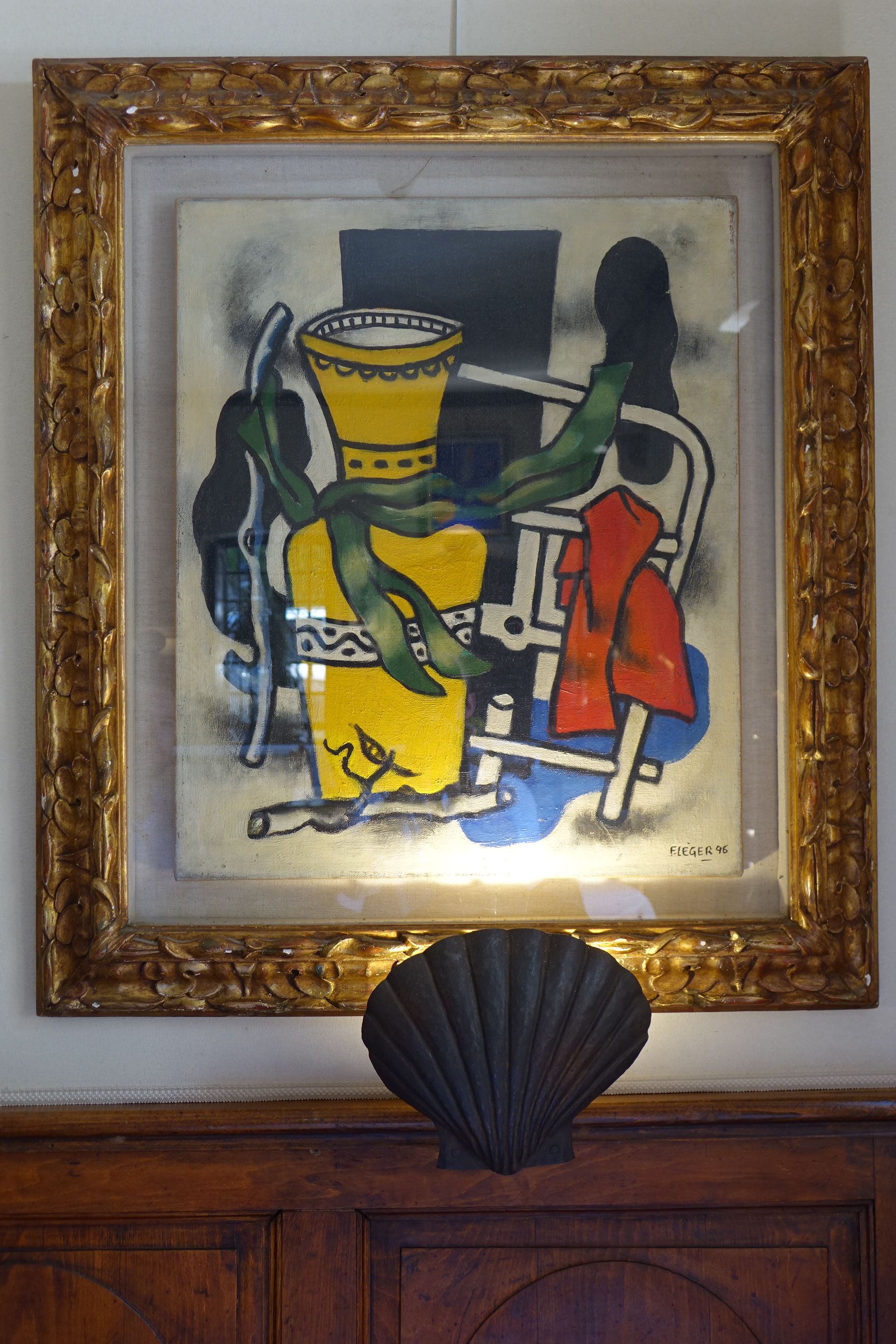
I would be the first to admit that I largely overlooked the work of French artist, Fernand Léger. Although I was aware of his uniquely colourful works characterised by simplified figures painted with shaded tones and outlined in black, I had never really seen enough of them to heed Léger much significance. That grave error was to come to an abrupt end on my honeymoon when I attended the Musée Nacional Fernand Léger in the little town of Biot on the French Riviera. Seeing this artist’s magnificent work en masse, grouped together in a chronological retrospective of his life’s work, left me feeling uplifted and awashed by colour, and deeply, deeply satisfied by the sleek finish and positive subject matter depicted in his work.

Enjoying the Biot museum

DSC07570 DSC07571 DSC07601 DSC07594

Born in 1881 in Normandy, Léger’s early work was characterised by a personal form of cubism, and human forms were reduced and simplified; curling curvaceous hair became what looked like undulating metal sheets, and his paintings drew clear influence from the Futurist movement. Gradually losing people from his works, Léger’s paintings became even more abstractive before an about turn saw the reintroduction of the figure alongside often floating disorientated objects such as keys and blobs of sky and clouds.

Early cubist work leading back into figurative depictions

DSC07572 DSC07577 DSC07573 DSC07575 DSC07579 DSC07582

From this point onwards, Léger adopted a gradually more figurative, populist style as he sought to use art as a means of attracting not just the cultured set, but the whole of society into galleries, attracted by paintings depicting every day life in bright, happy colours, as well as working life, for example in his masterfully conceived works featuring labourers on scaffolding.

Later works

DSC07587 DSC07586 DSC07588 DSC07593 DSC07589

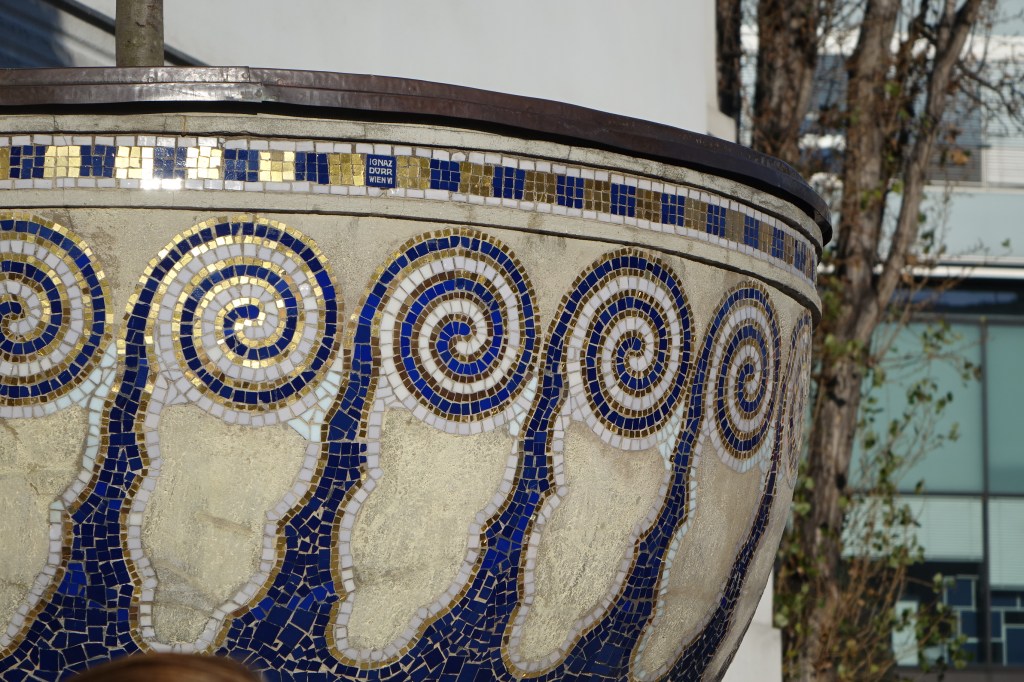
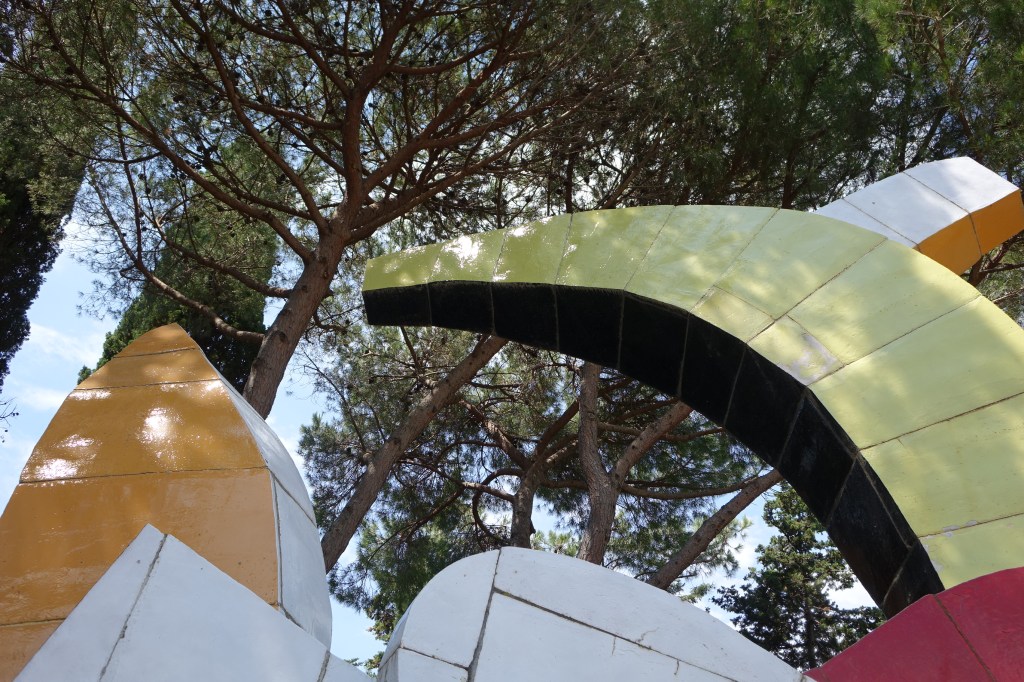
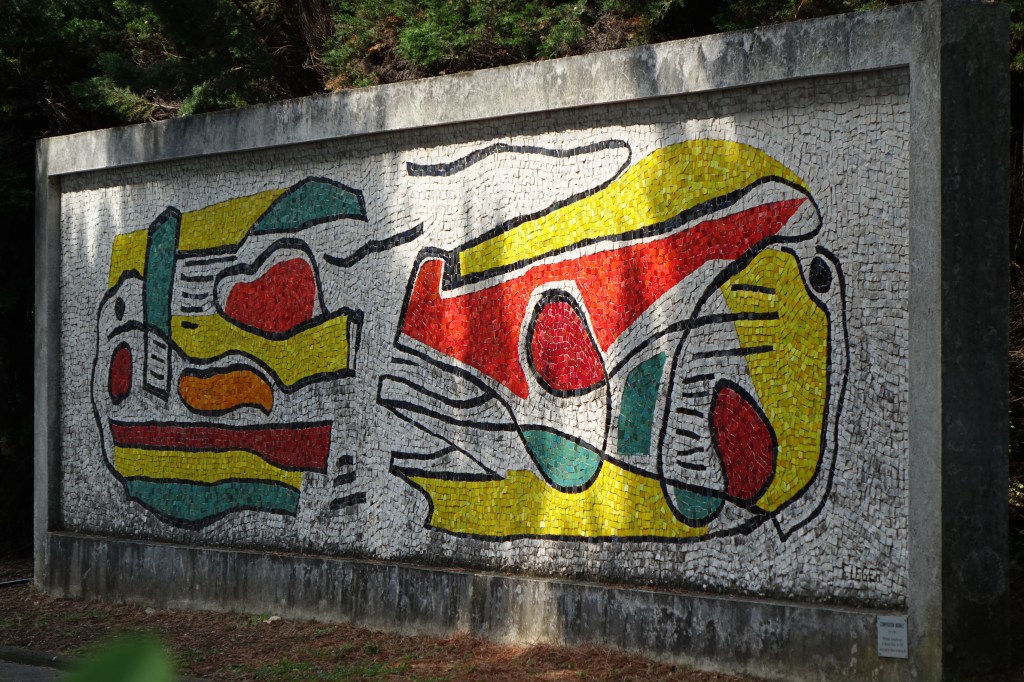
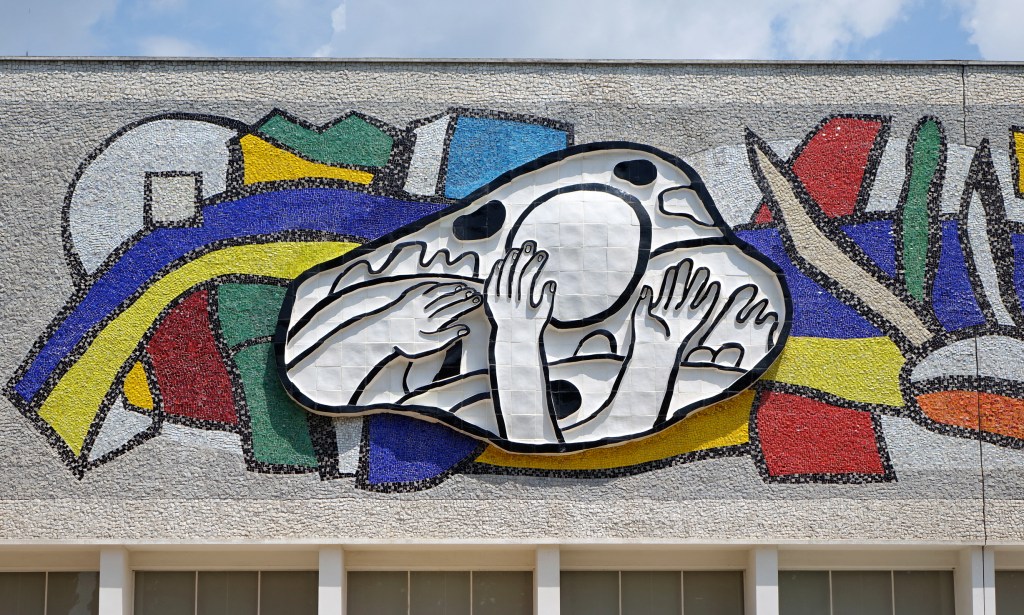
Beyond the galleries, the Biot museum offers an immersive grand-scale opportunity to discover some of the artist’s incredible sculptural, ceramic and mosaic works as demonstrated by the immense mosaics which envelop the building, constructed shortly after the artist’s death by his wife and business partner. In a garden laden with pine trees, Léger’s candy coloured sculptures are dazzling in the Riviera sunshine, while the mosaics explode in the landscape with all of the force deserved by this brilliant 20th century artist.

The museum’s exterior and its gardens

DSC07621 DSC07616 DSC07556 DSC07562 DSC07564 DSC07613 DSC07608 DSC07615 DSC07618

With his boldly simplified treatment of modern subject matter, Léger is rightfully regarded as a forerunner of pop art, and for me an absolute inspiration. I will never underestimate the work of Fernand Léger again.

All photos and written content are strictly the copyright of Nicholas de Lacy-Brown © 2015 and The Daily Norm. All rights are reserved.

The Honeymoon Chronicles, Part V: Vence

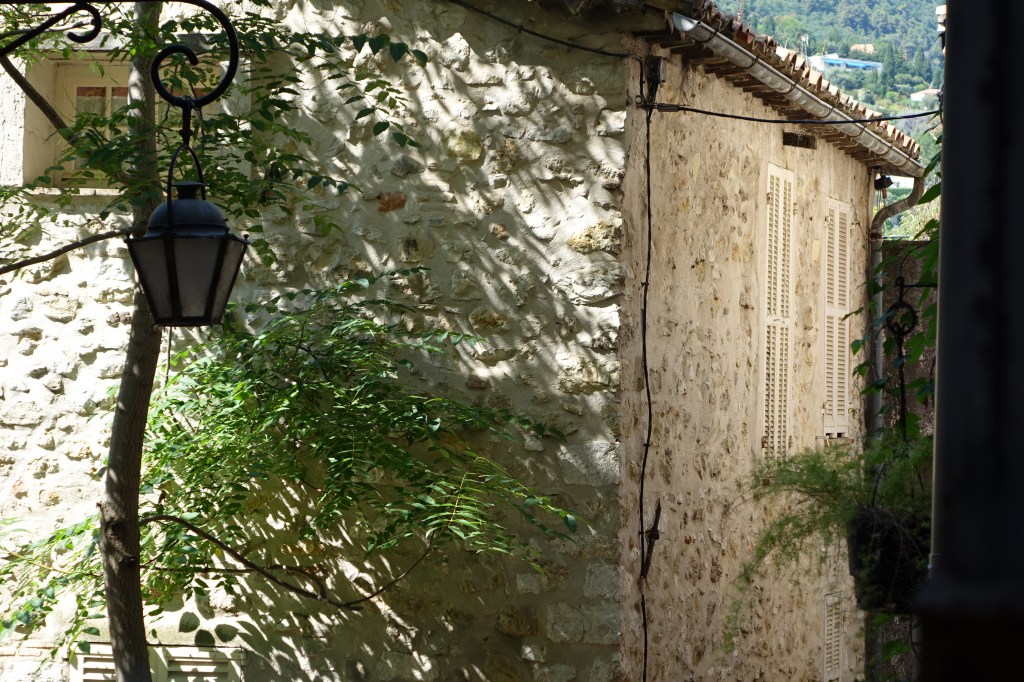
Just up a lush winding mountain road from the beautiful little village of St-Paul de Vence resides its bigger sister, the no less pretty town of Vence. Despite having spread into quite a substantial modern town, not all of which exhibited the most picturesque of sights, the core little old town, nestled within a tight ring of medieval walls and set up on a high hill above a cool mountain spring in the valleys below, is the very epitome of a quaint Riviera gem.

DSC07143 DSC07133 DSC07119 DSC07206 DSC07200 DSC07134 DSC07152 DSC07158 DSC07154 DSC07190 DSC07116

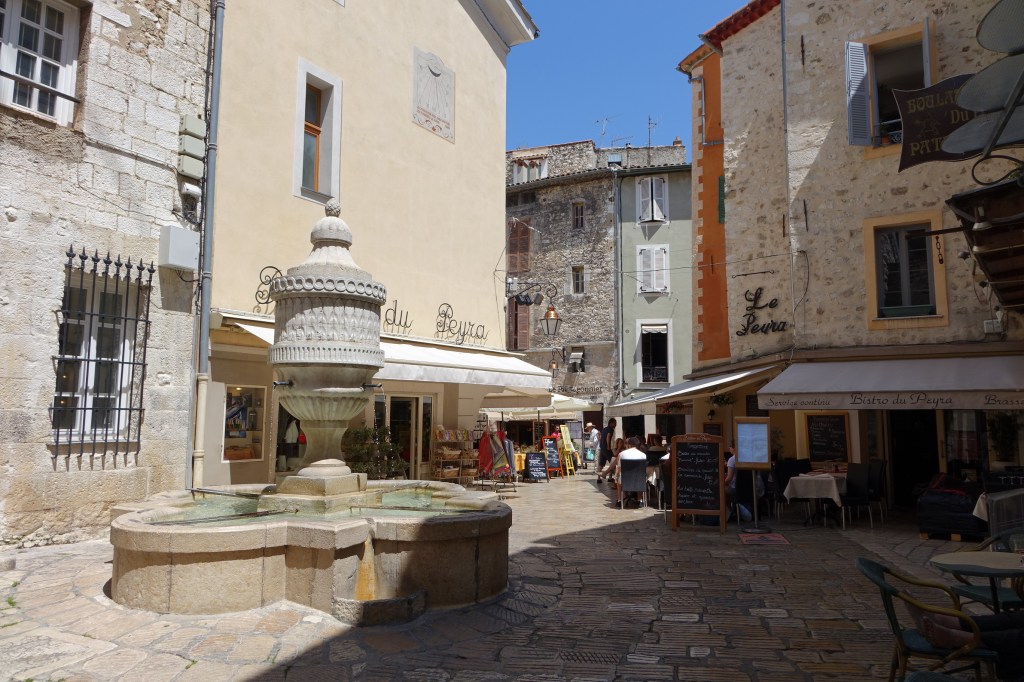
Through the ancient Peyra Gate into the pastel-coloured square bearing the same name, we entered a medieval fairytale of a town whose shuttered houses, little gift shops and typically French restaurants spilling out onto the cobbled streets and squares made for the most idyllic of scenes. Photographing the picturesque sights as rapidly as I took steps to discover them, I was completely enamoured by this beautifully appointed little gem of a town, from the grand Peyra fountain at the entrance dating back to the early 1800s, to the stunning Place Clemenceau, whose baroque little cathedral is allegedly the smallest Cathedral in France.

DSC07153 DSC07191 DSC07177 DSC07118 DSC07168 DSC07198 DSC07150 DSC07121 DSC07173 DSC07124 DSC07115

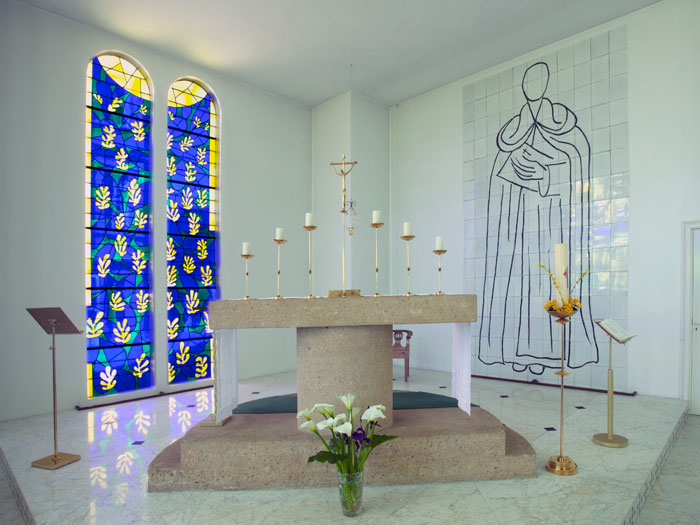
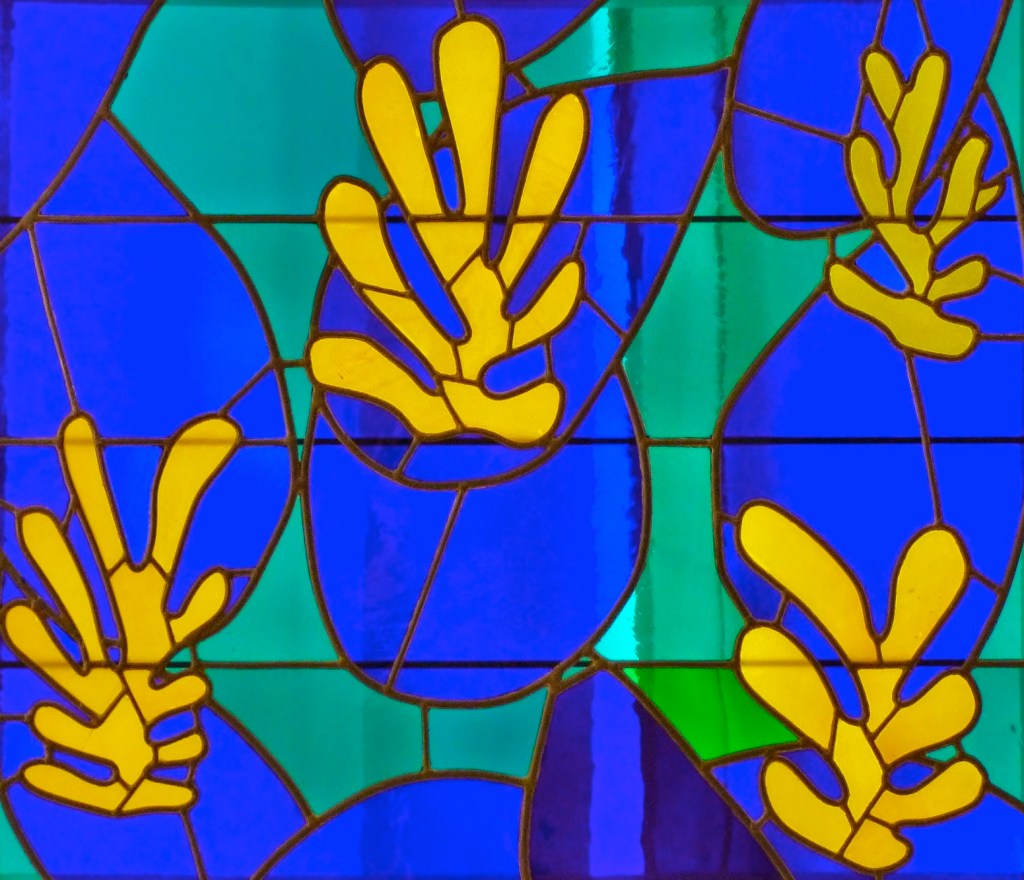
However in addition to the little old town, Vence boasts another attraction which we trekked the 20 minute hot walk out of town to see – the Chapelle du Rosaire designed by Matisse himself. I remember extolling the originality of Matisse’s designs for this little chapel when I visited his cut-outs retrospective at Tate Modern last year. But nothing in that exhibition came close to seeing the Matisse Chapel in reality, with the light shining through his vivid blue and yellow stained glass and bouncing off the white walls of the interior. I wasn’t as sure about the rather sketchy ceramic tiles which otherwise dominate the interior and fell somewhat flat compared to the magnificence of the windows, nor the exorbitant entrance free for such a small space, but seeing Matisse’s chapel surely made our visit to Vence complete.

Chapelle du Rosaire, by Matisse

DSC07145 Matisse interior 1 Matisse window Matisse interior 2

Art on the Riviera: The Fondation Maeght

There can be no doubting the significance of the French Riviera to the history of modern art. Since the time of the Impressionists, the Riviera has been inspiring artists with its incredible light and the potency of its colours. Renoir lived in Cagnes-sur-Mer, Picasso in Antibes, Cezanne in Aix, Fernand Leger in Biot and Matisse in Nice, and surrounding them a seemingly relentless flow of visiting and other artists came to the Riviera in turn. The result is an artistic heritage which is almost unrivalled by other European regions.

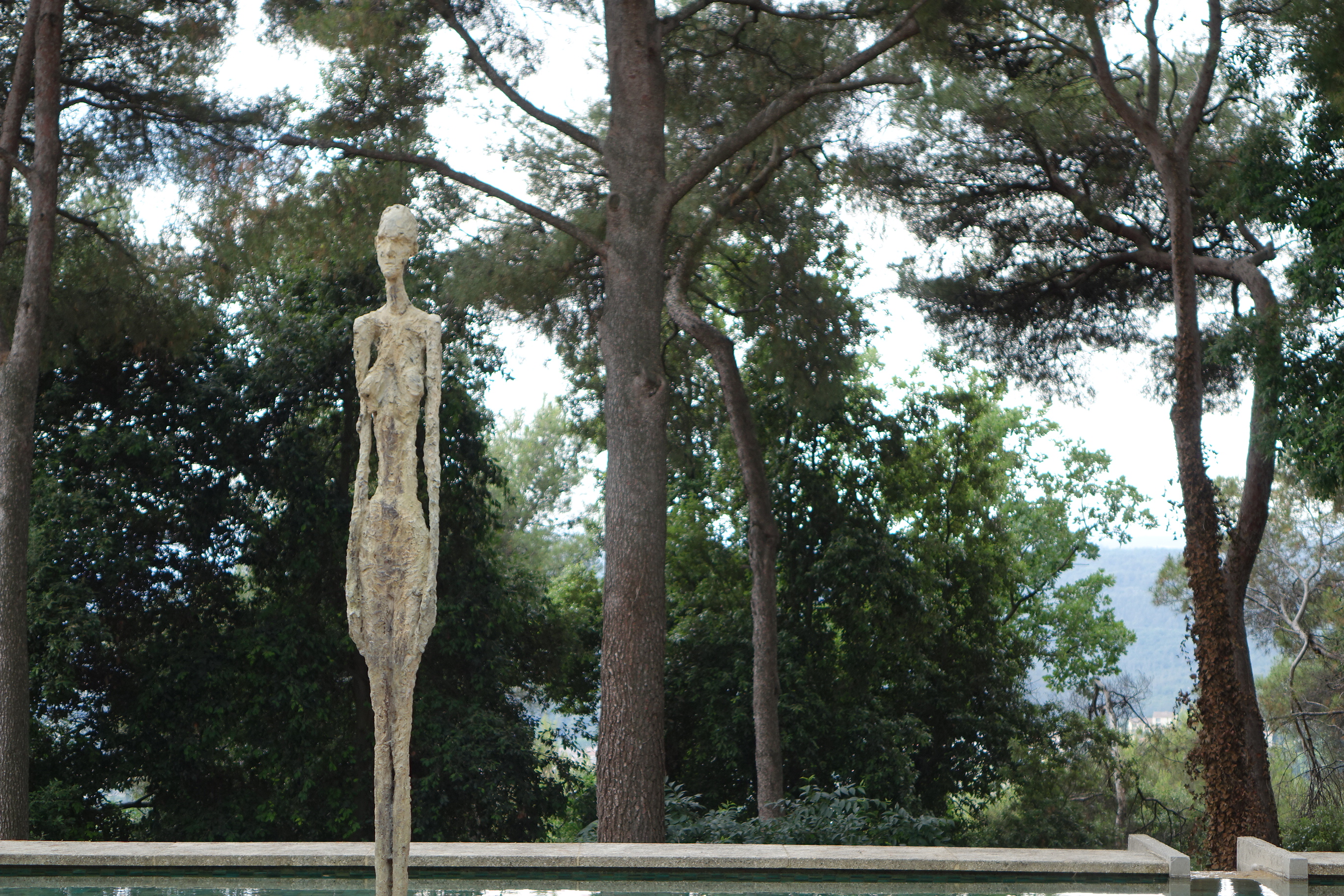
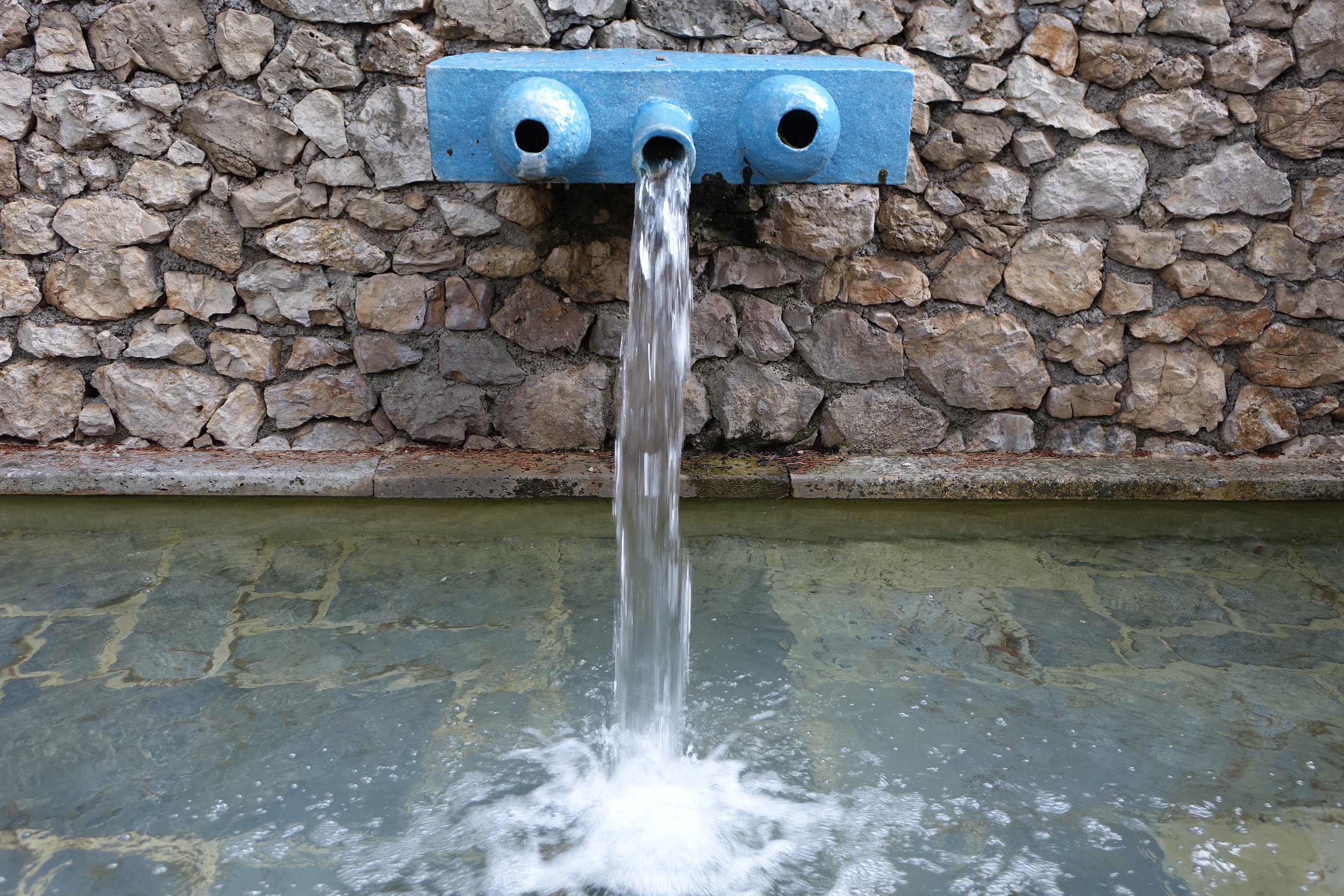
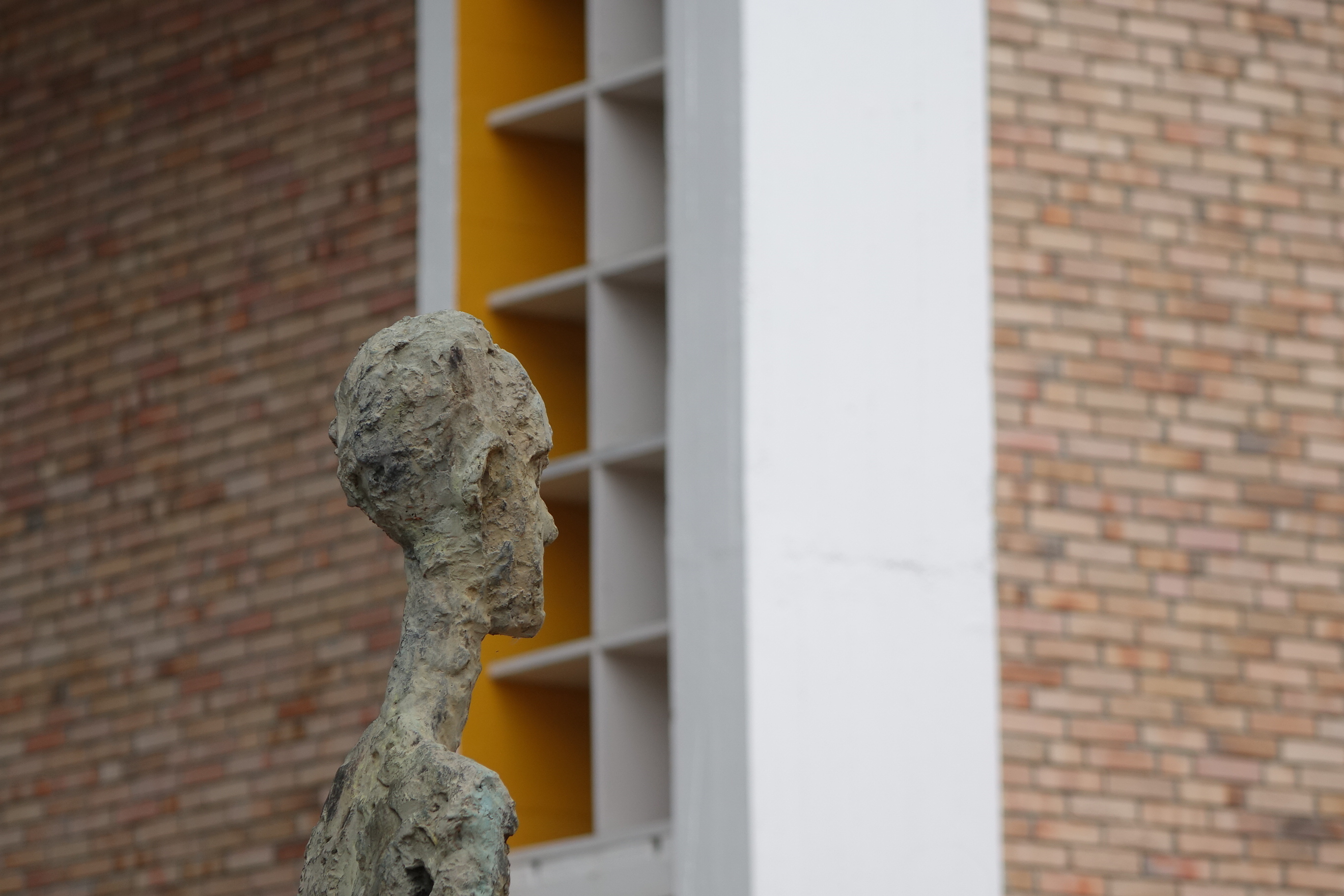
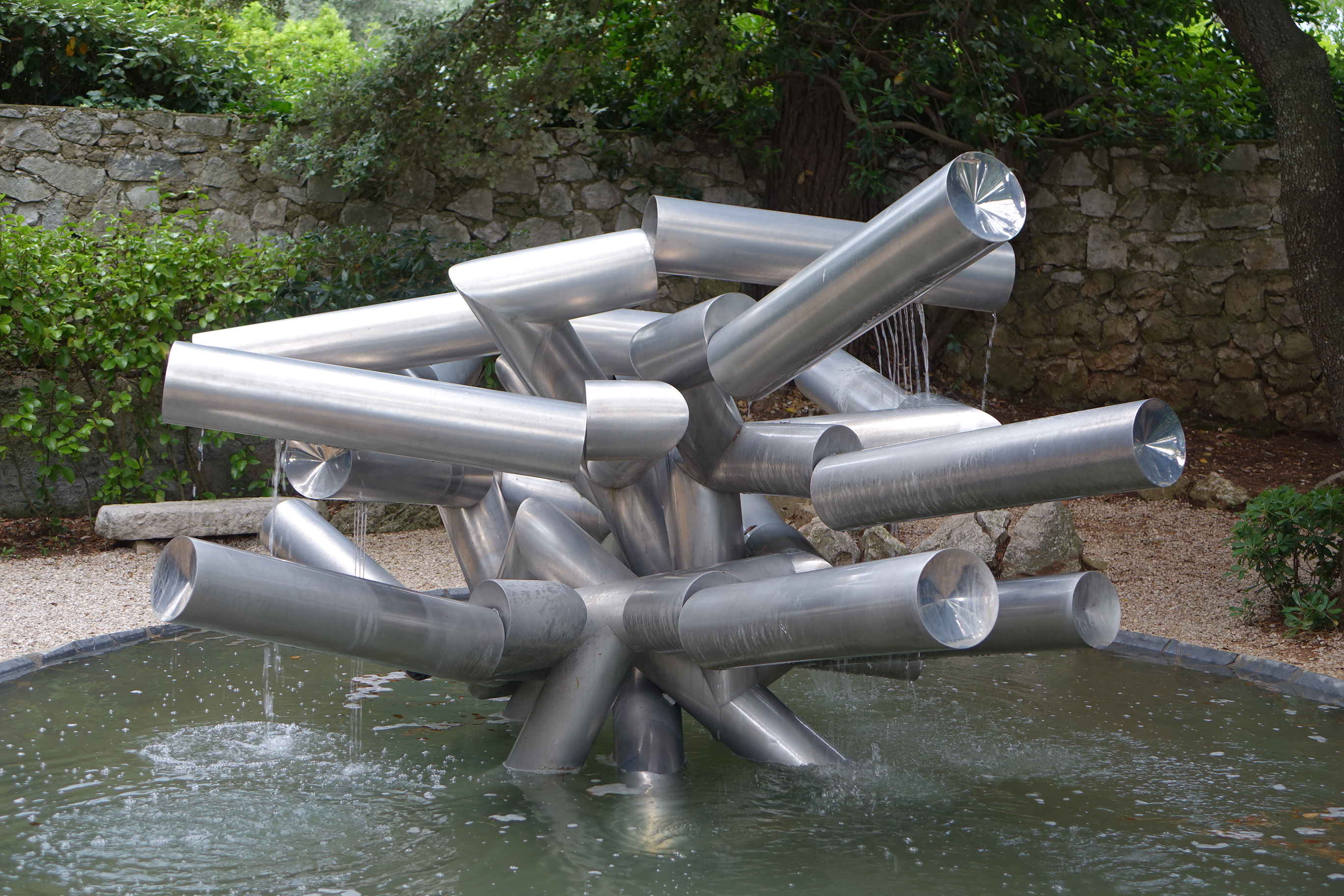
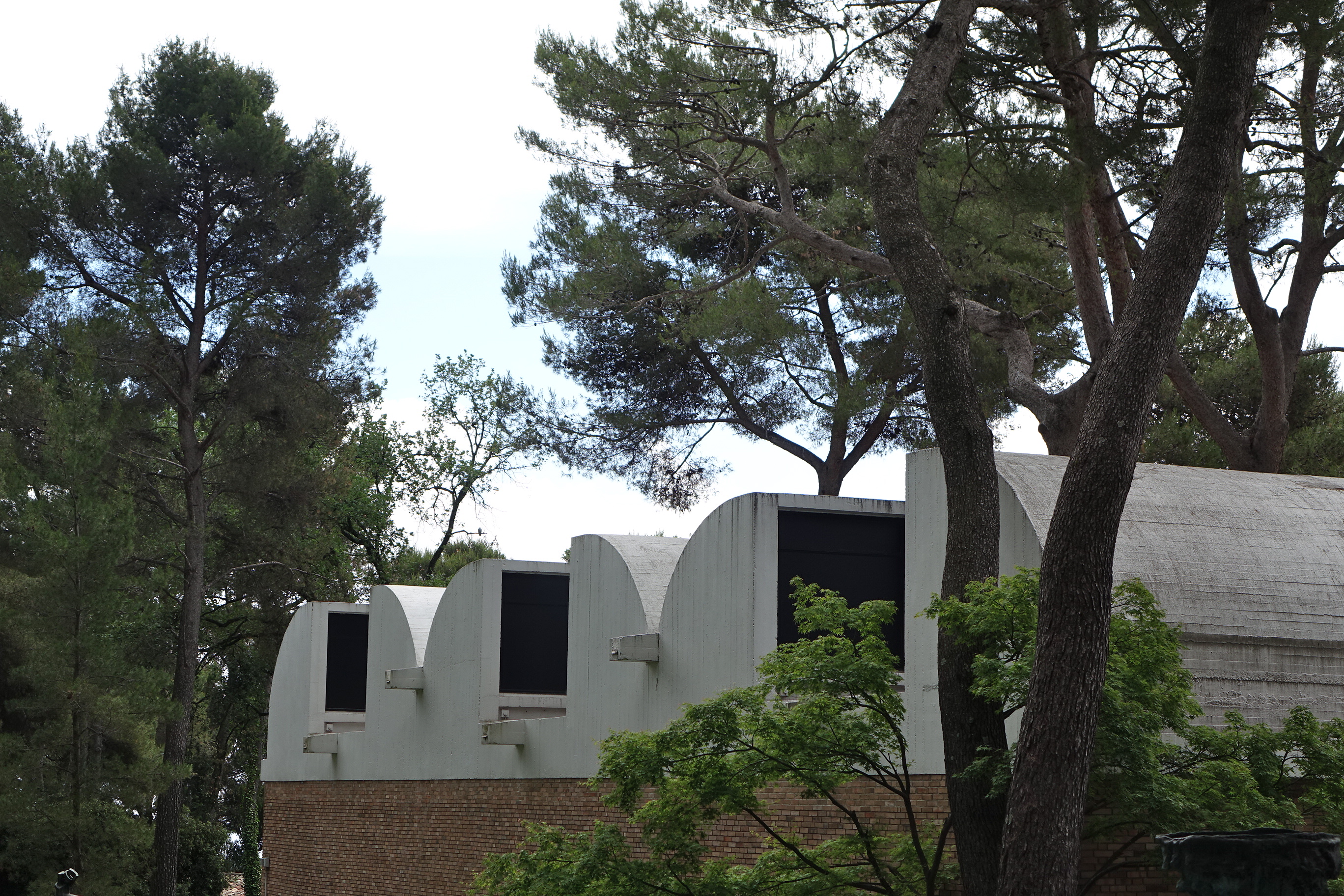
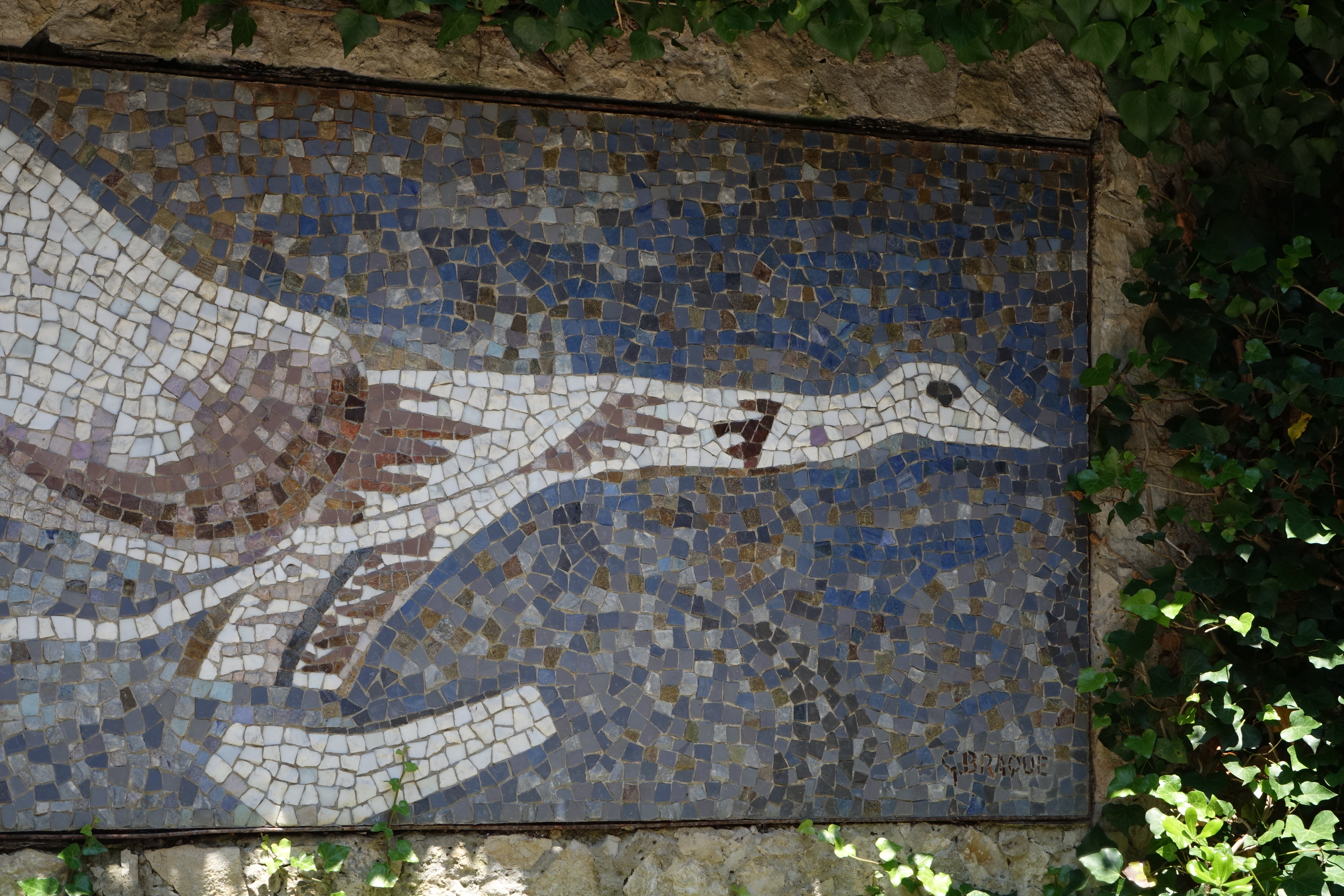
Amongst the many artist-museums which consequently pepper the area, the Fondation Maeght is amongst the most important. Located only minutes from La Colombe d’Or, the foundation was entirely conceived and financed by Marguerite and Aimé Maeght to present modern and contemporary art in all its forms. Painters and sculptors collaborated closely in the realisation of this Foundation with Catalan architect Lluís Sert by creating frequently monumental works integrated into the building and gardens: the Giacometti courtyard, one of the world’s most famous ‘in-situ’ works, the Miró labyrinth filled with sculptures and ceramics, the mural mosaics by Chagall and Tal-Coat, and the pool and stained glass window by Braque.

DSC06587 DSC06574 DSC06590DSC06599 DSC06594 DSC06612 DSC06625

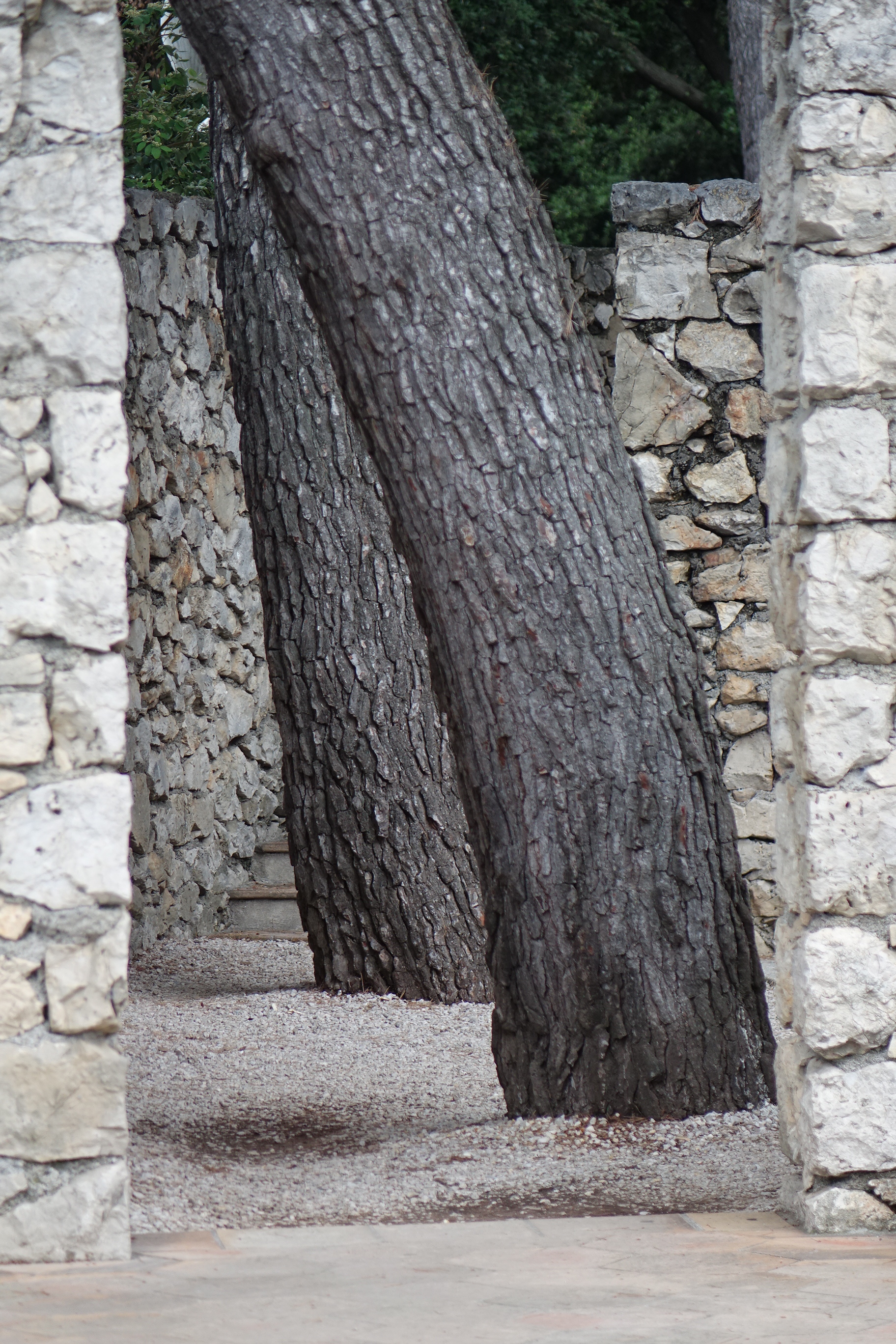
When we ventured to the foundation after some hours languishing by the Calder mobile of La Colombe’s pool, we were somewhat disappointed by the extent of the famed collection. Entire galleries were given over to temporary exhibitions, with only one room seemingly devoted to a permanent collection. However, we could not deny being impressed by the gardens, so sumptuously saturated in art, densely packed under the canopy of a pine-tree forest. There amongst the faded light, a labyrinth collated from sculptures by Miro formed unique and startling silhouettes against a stormy sky, and as the earth rumbled with a humid thunderstorm, the atmosphere seemed charged with the almost surreal atmosphere created by these sculpted forms.

More than 200,000 visitors come each year to the Maeght Foundation, which has put on over 100 monographic or thematic exhibitions since its opening. We were perhaps unlucky to visit when only a fraction of the permanent collection was on display, but for the uniquely conceived art of its gardens, it lived up to its fame. The photos in this post show the best of the incredible outside installations permanently on display.

DSC06595 DSC06583DSC06611 DSC06580 DSC06603 DSC06616

The Honeymoon Chronicles, Part I: La Colombe d’Or

To say that my wedding and the honeymoon which followed was a whirlwind of emotions would be no exaggeration. Within minutes of cutting our sensational ombre wedding cake in Chelsea, we were whisked off in the old fashioned style, straight to our honeymoon, leaving our guests behind, and sadly no tied up cans trailing our vehicle. Our destination was the French Riviera, and with only further wedding cake to keep post-wedding hangovers at bay, we tried to prepare ourselves mentally for this further change in circumstances as we were whisked through the night to the South of France.

DSC07374

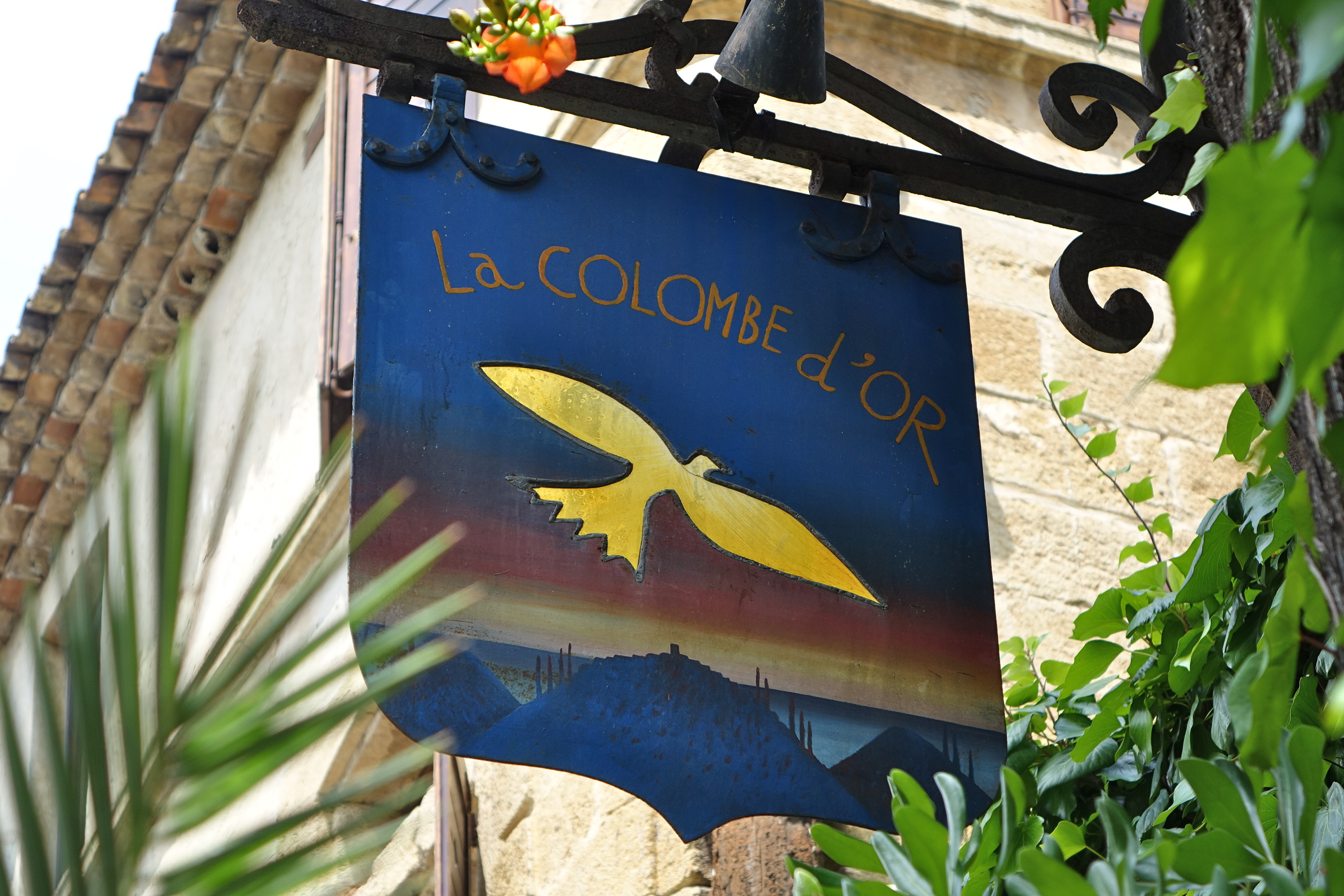
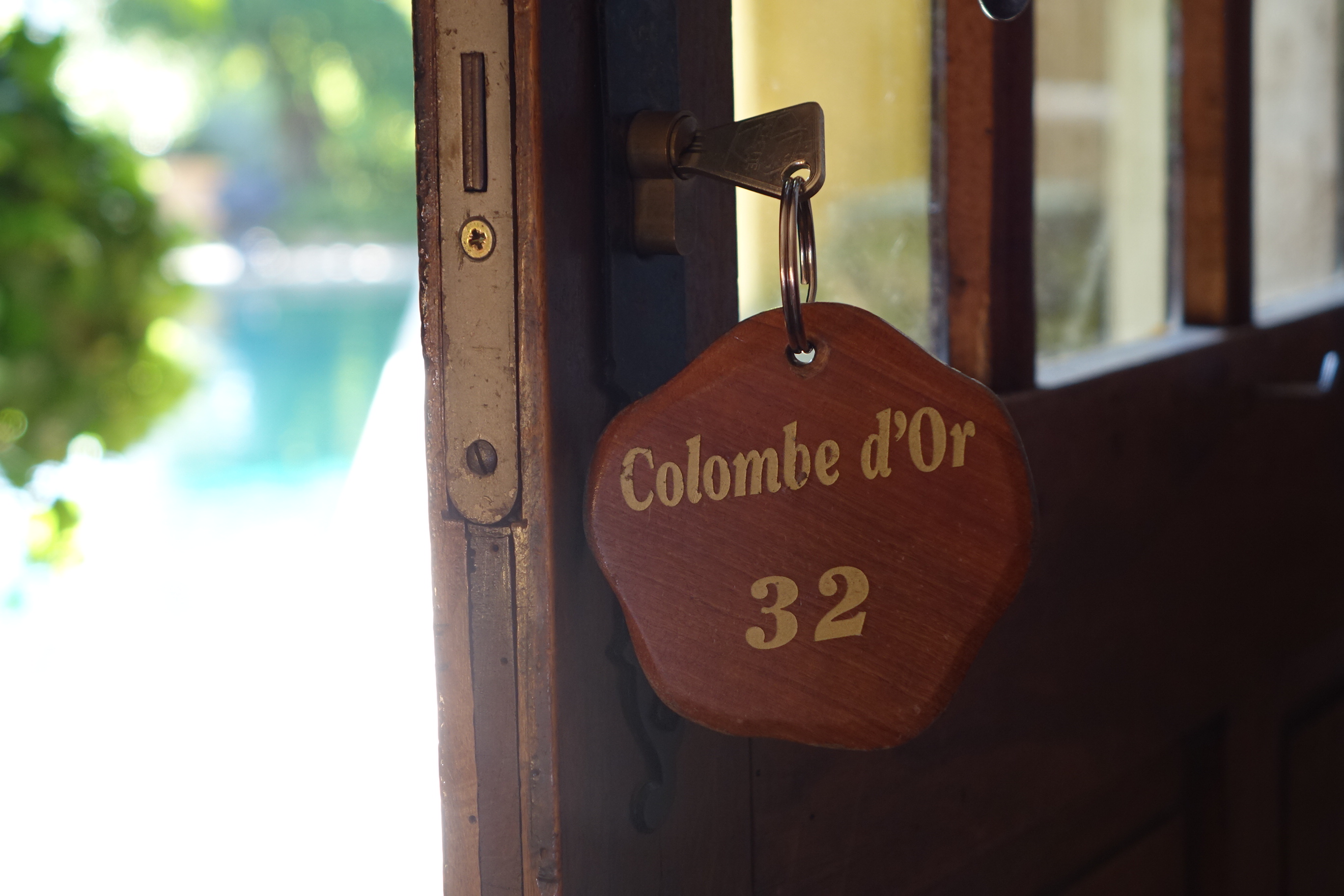
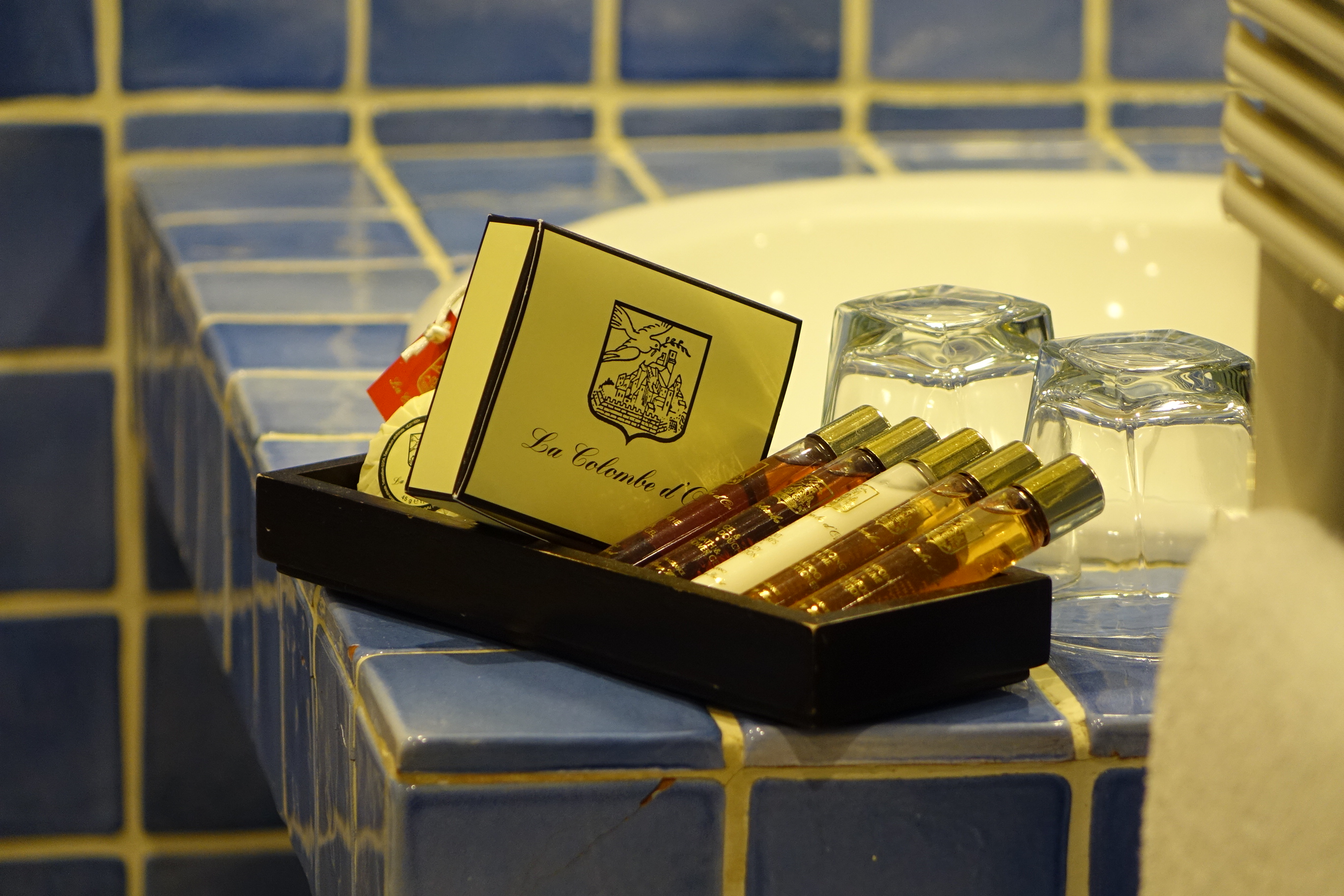
Our arrival in the tiny village of Saint-Paul de Vence near Nice could not have been more different from the city we had departed. Utterly at peace, with a distinctive fragrance of pines and cypresses freshening the air. As darkness had already descended, the village was permeated by little yellow street lamps, subtly illuminating the central plaza where pétanque balls lay in wait for the following day’s play. And amidst the darkness, one sign glowed more than any other: Lighting a golden dove on a blue and yellow sky, it was the sign of La Colombe d’Or – we had arrived.

Our bedroom at La Colombe d’Or

DSC06256 DSC07040 DSC06332 DSC06238 DSC06226 DSC06247 DSC06237 DSC06234

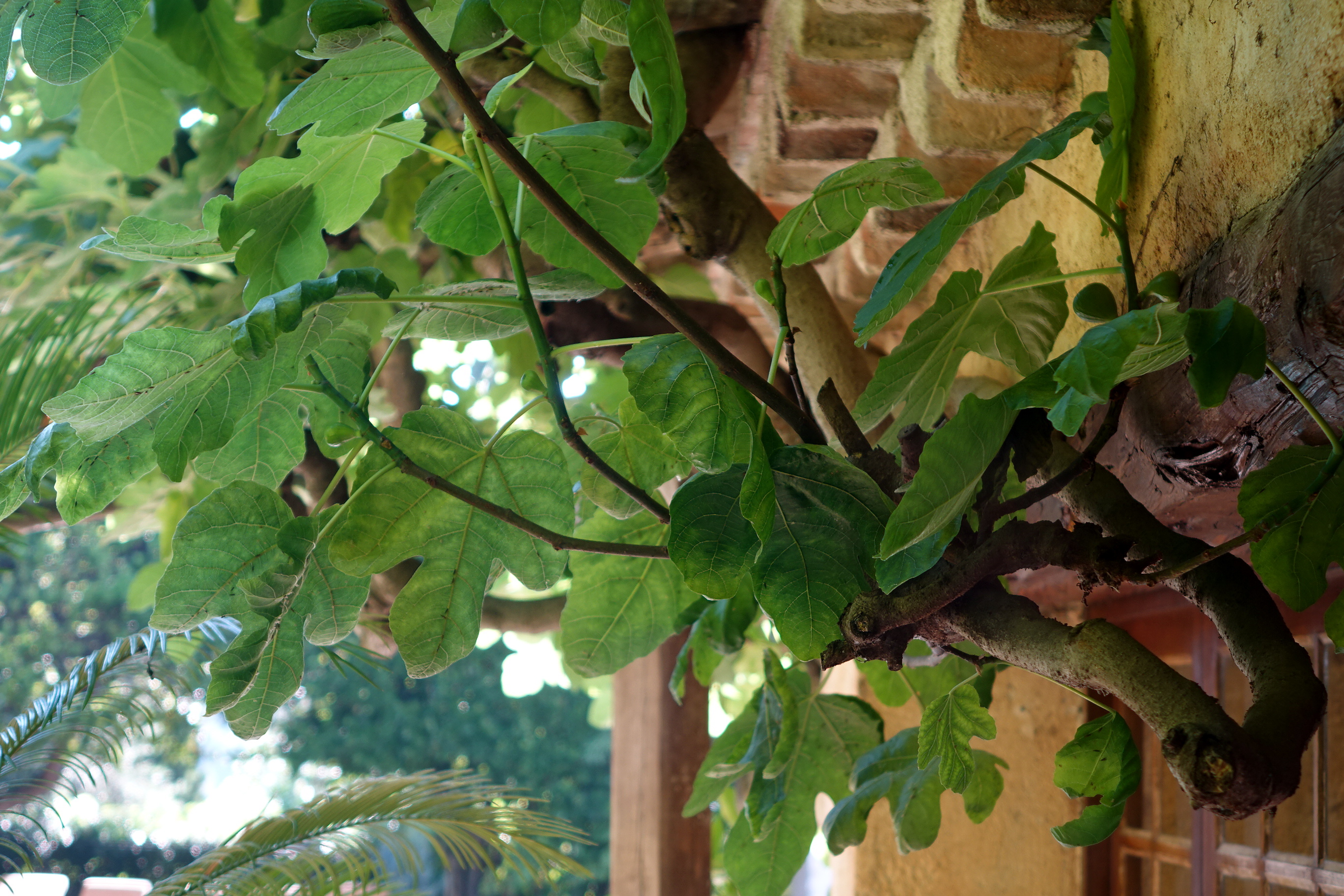
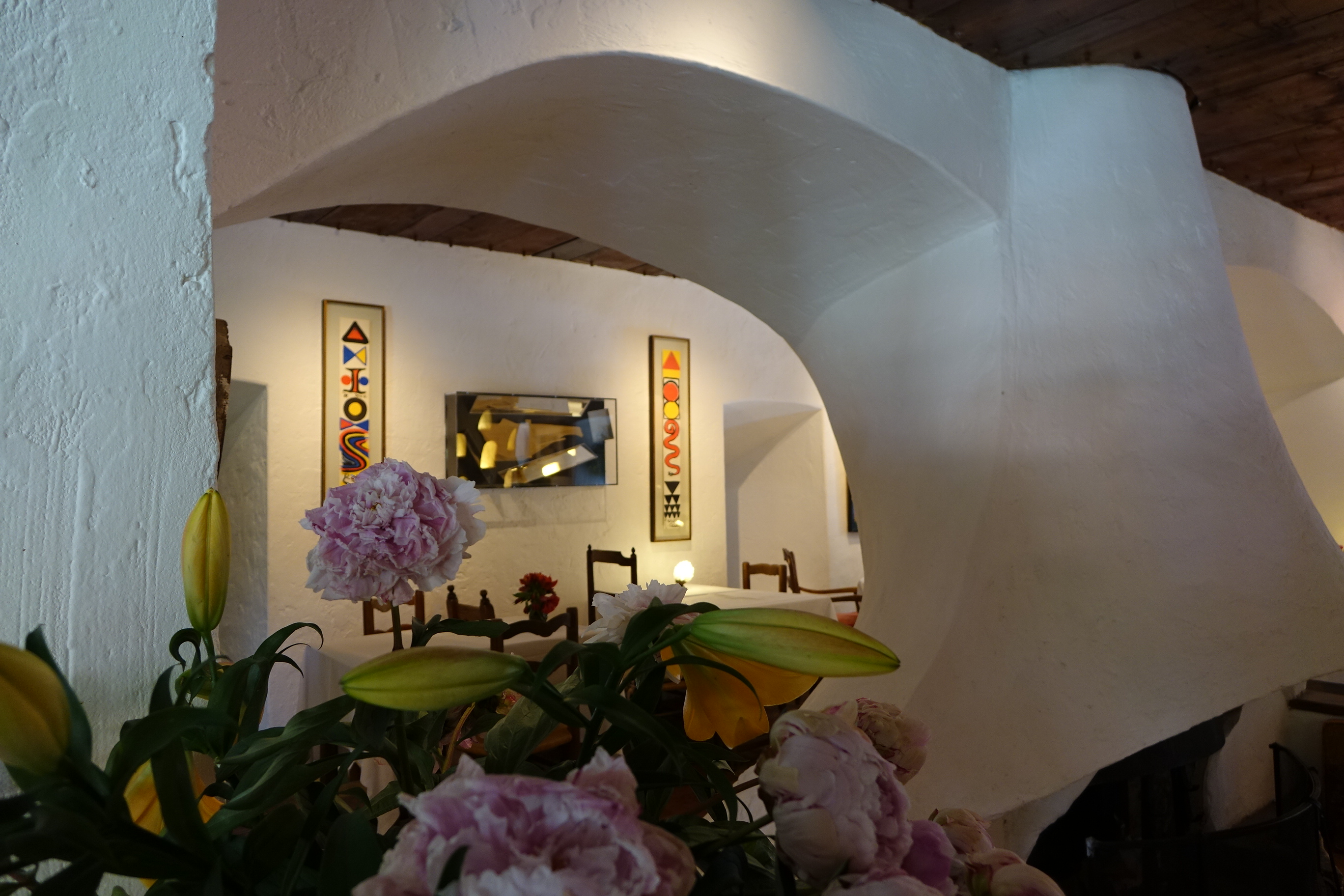
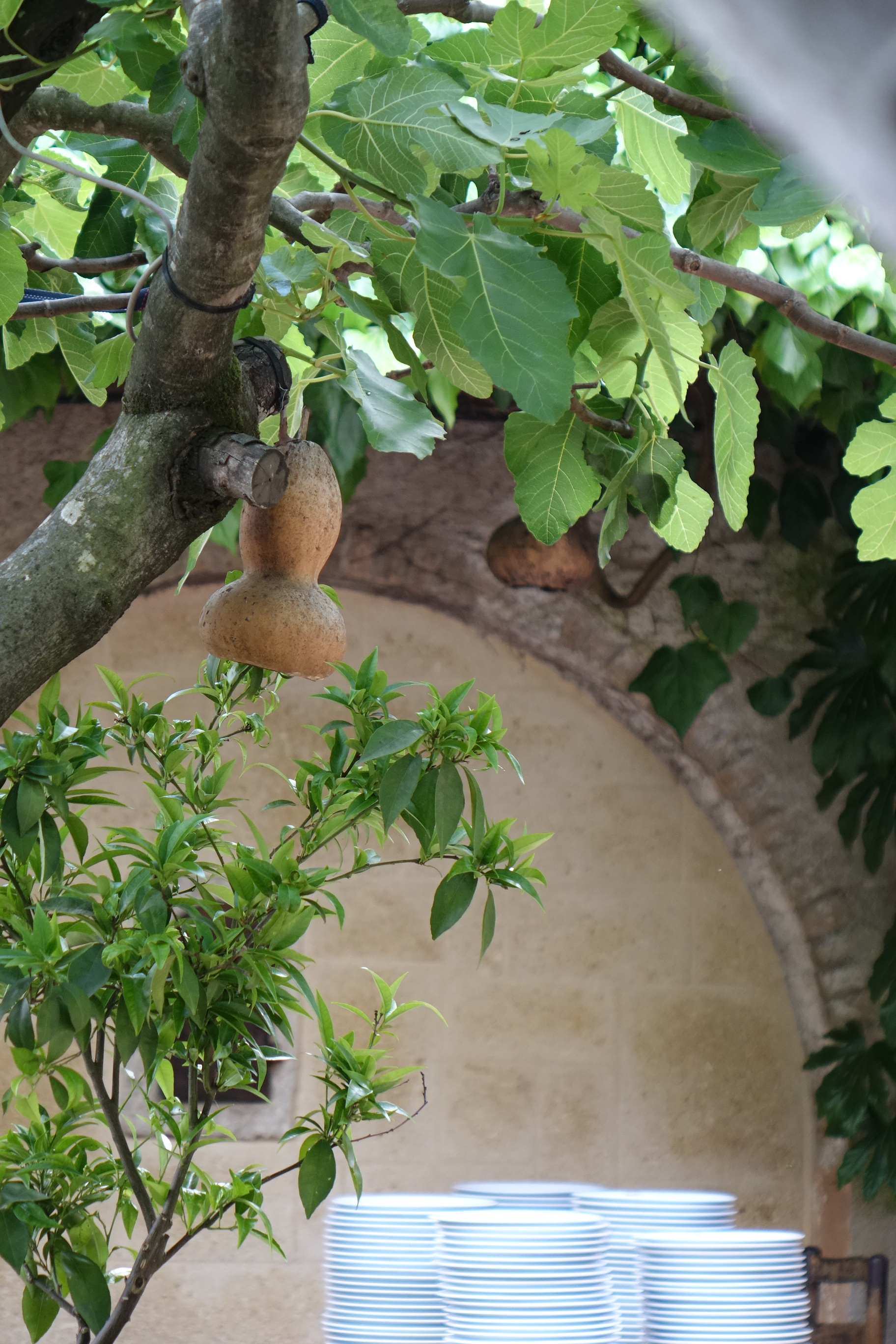
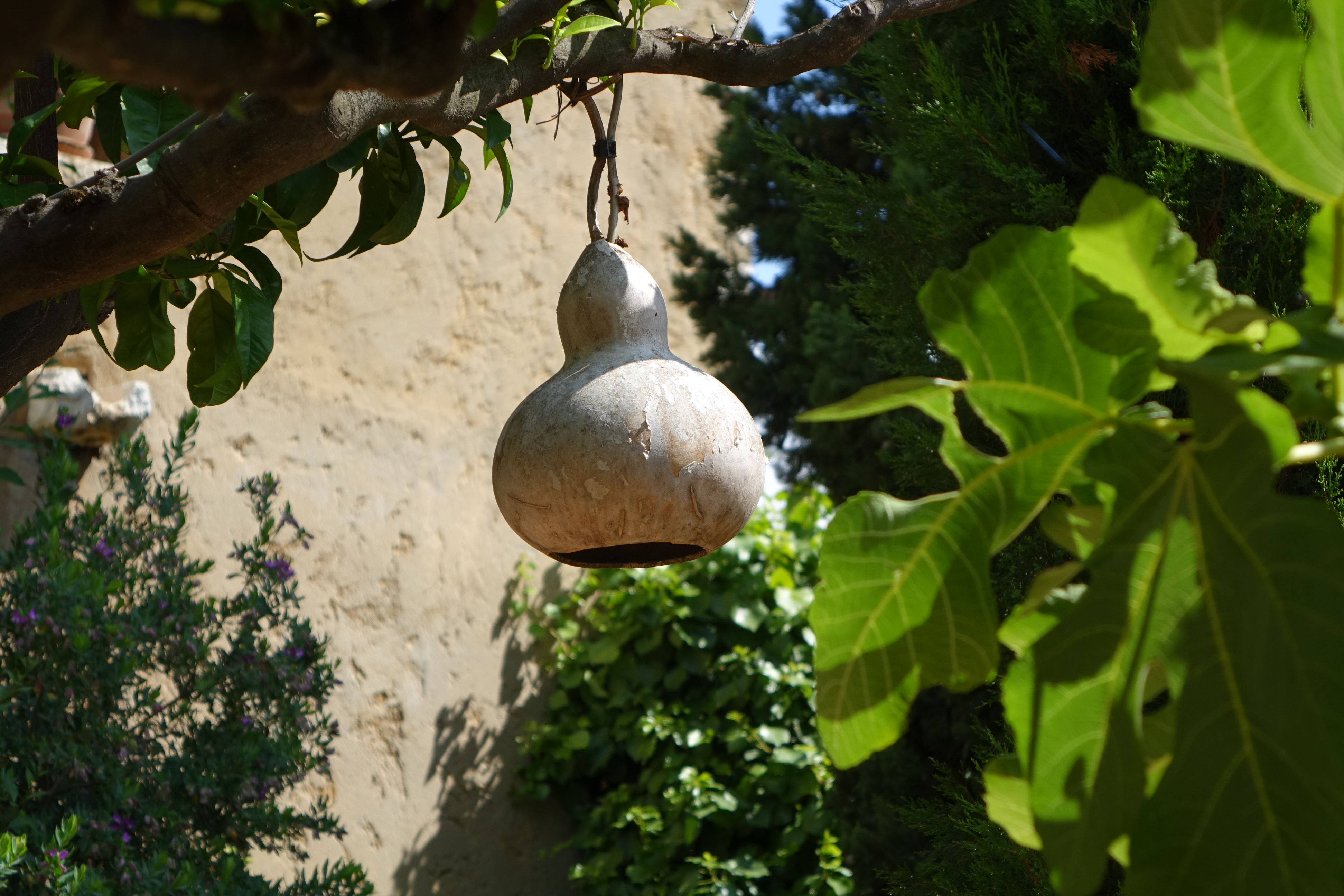
La Colombe d’Or (the golden dove) is a legendary destination in the South of France. First opened in the 1920s by Paul and Baptistine Roux, it began life as a quaint little inn nestled against the magnificent ancient ramparts of the village of Saint-Paul de Vence. Its stunning garden terrace abundant in shady fig trees together with its cosy restaurant interior soon began to attract a faithful clientele, and as the French Riviera became progressively more a centre for thinkers and artists, so too did La Colombe become a gathering place for the crème of the artistic set.

Around the pool and in the gardens

DSC06269 DSC07105 DSC06401 DSC06402 DSC07111 DSC06407 DSC06272 DSC07050 DSC06276 DSC06371 DSC06390 DSC06697 DSC06369 DSC06376

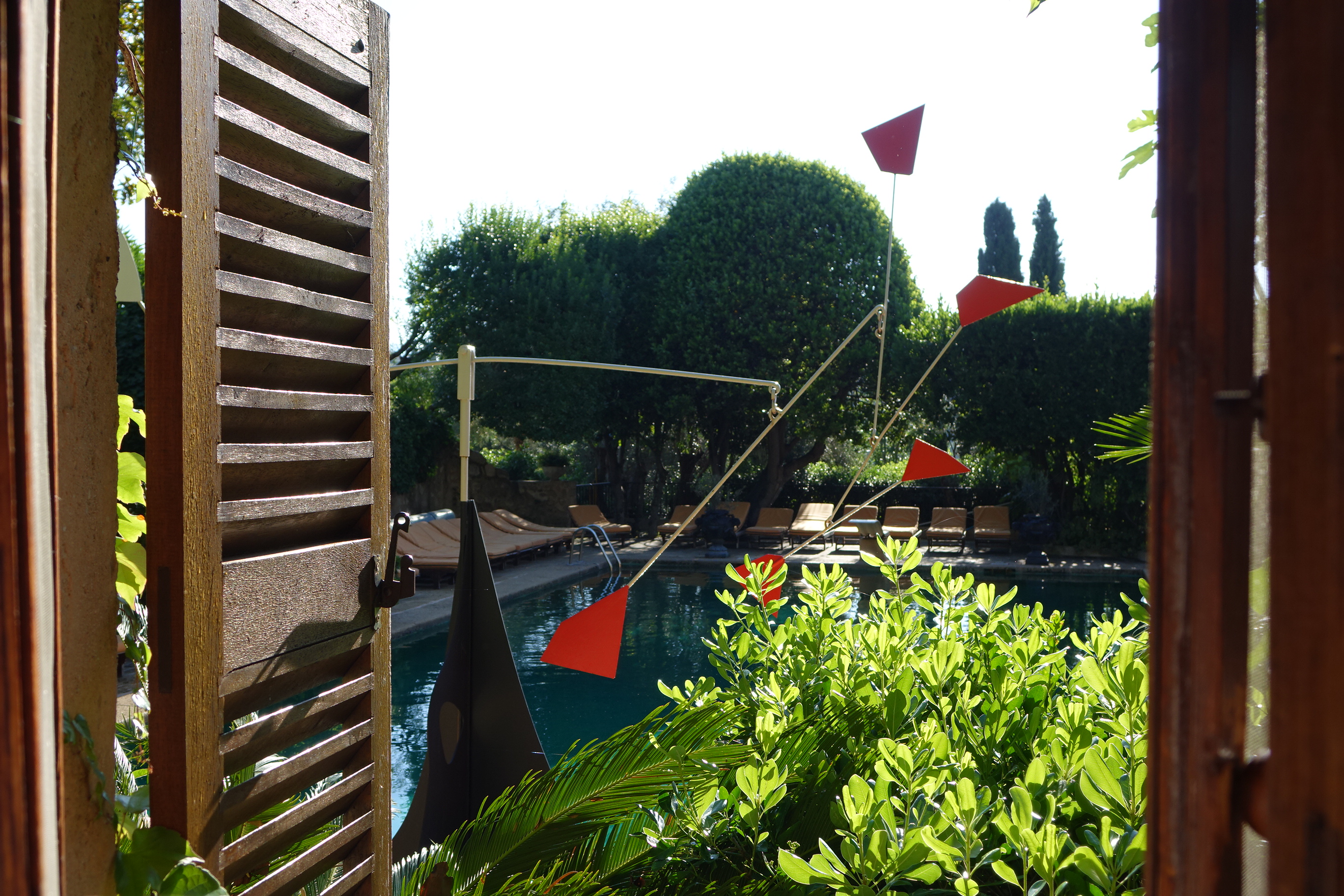
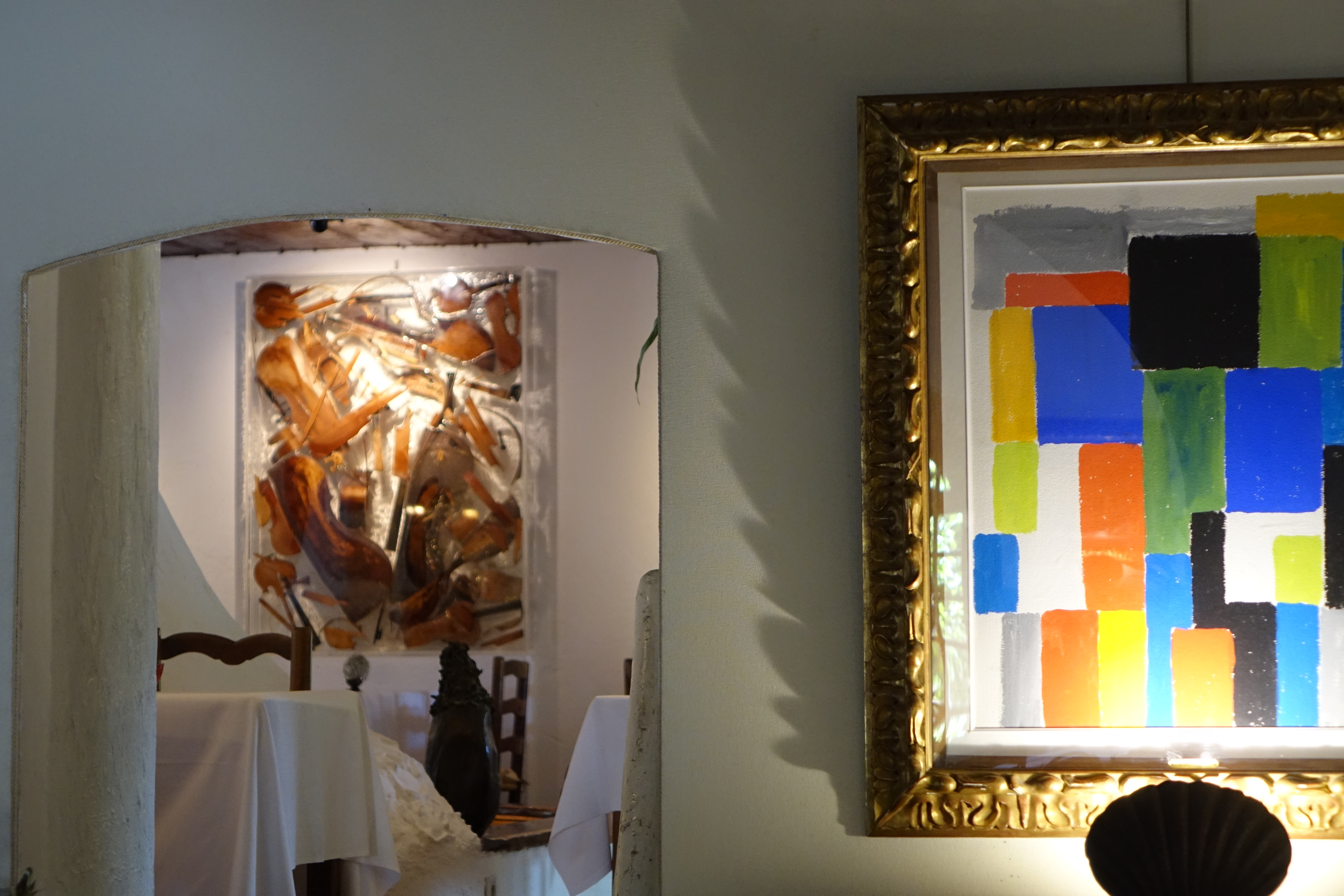
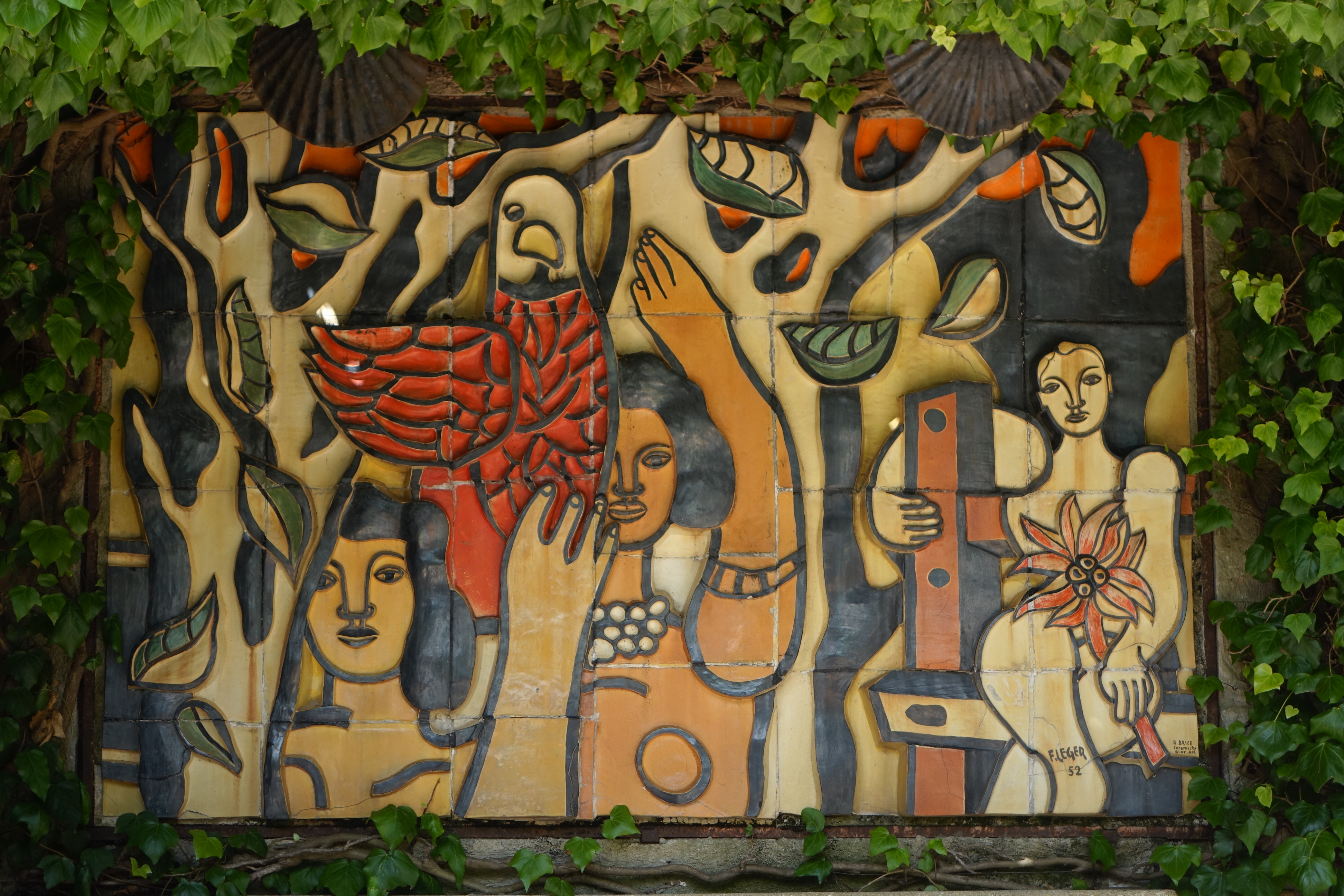
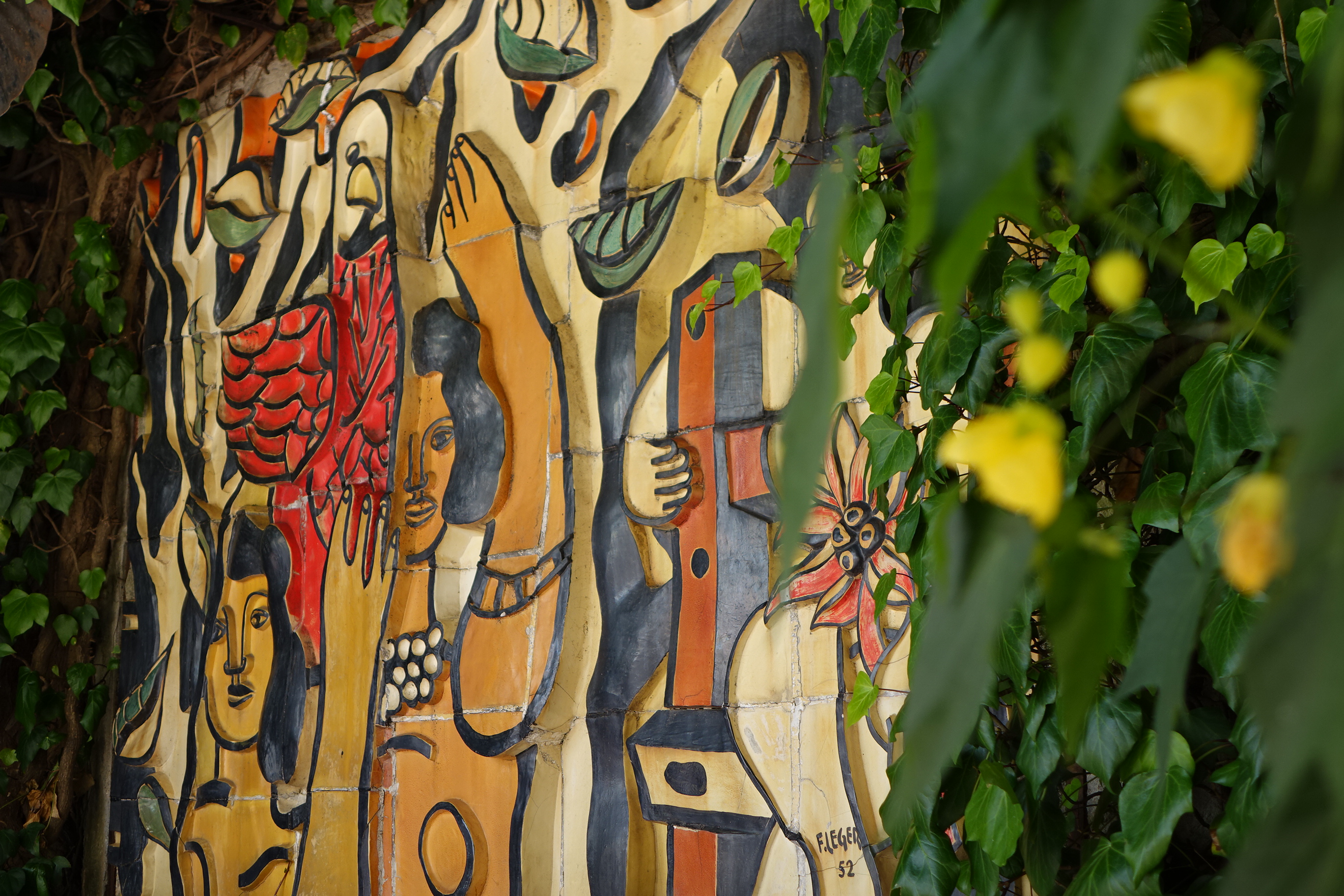
As the years went on, and the Roux family continued to welcome and befriend some of the world’s most famous artists and intellectuals, so too did La Colombe’s remarkable collection of modern art grow, much of which was swapped in exchange for accommodation and their famously delicious Provençal cuisine. So La Colombe d’Or grew, both physically (gradually subsuming neighbouring buildings) and reputationally, and its art collection today stands as one of the most staggering private collections of modern art you could ever hope to see. On its walls, original works by Picasso, Braque, Sonia Delaunay, Calder, Miro, Chagall, Cesar and so many others hang; its leafy terrace is dominated by a stunning ceramic mural by Fernand Leger; and its most stunning swimming pool languishes alongside a remarkable Calder Mobile, a mosaic by Braque, and a recently installed ceramic mural by Sean Scully.

Interiors, and La Colombe’s incredible collection of modern art

DSC06427 DSC07346 DSC07373 DSC07355 DSC06434 DSC07352 DSC06435 DSC07344 DSC07347

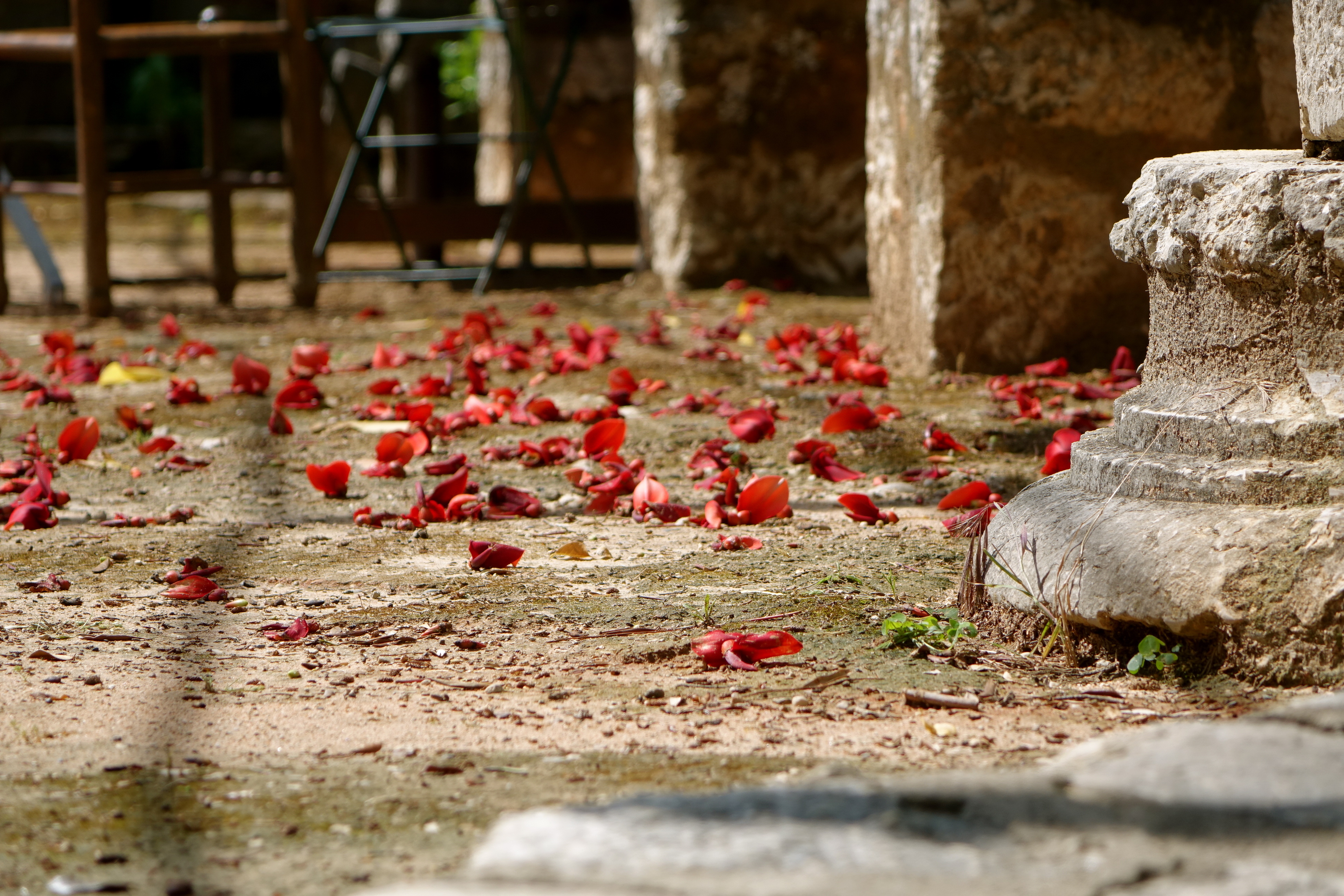
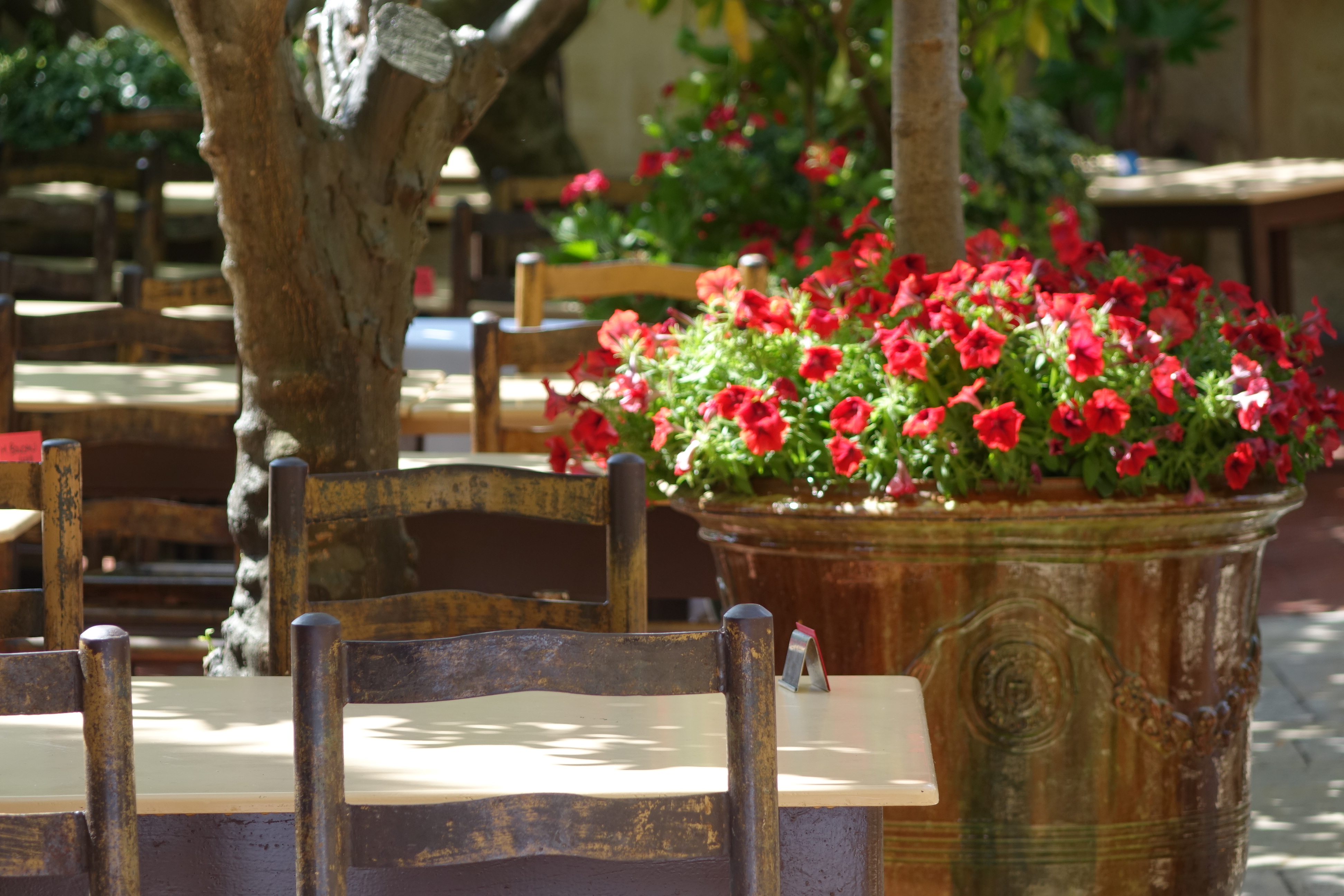
For any enthusiast of 20th century art, or indeed for anyone beloved of the utmost aesthetic tranquility, La Colombe d’Or is a paradise on earth, beyond mere description – it has to be experienced. In the unpretentious little chairs which are clustered on its restaurant terrace, one can see the ghosts of the famous writers and artists who used to sit there in the shadows of the fig trees Jacques Prévert, Yves Montand, James Baldwin, Pablo Picasso… In the unapologetically rustic walls and furniture, you feel as though invited into the warmest of family homes. And in its paradisal gardens, fringed by pillars and scattered with fallen blossom, and alongside that most sensational of swimming pools, you feel as though you have entered some kind of parallel world. Utterly at peace. This was paradise found.

La Colombe’s stunningly cosy restaurant terrace

DSC06333 DSC07367 DSC06410 DSC06421 DSC06352 DSC06349 DSC06354 DSC06350 DSC07370 DSC06412 DSC06335 DSC07360

And so in La Colombe d’Or, we happily stationed ourselves for the first four days of our honeymoon. And so the rush of emotions which had commenced at our wedding continued. It was to be the most sensational few days imaginable.

All photos and written content are strictly the copyright of Nicholas de Lacy-Brown © 2015 and The Daily Norm. All rights are reserved. Unauthorized use and/or duplication of the material, whether written work, photography or artwork, included within The Daily Norm without express and written permission from The Daily Norm’s author and/or owner is strictly prohibited.

Norms: The Saints Collection | Santa Lucia

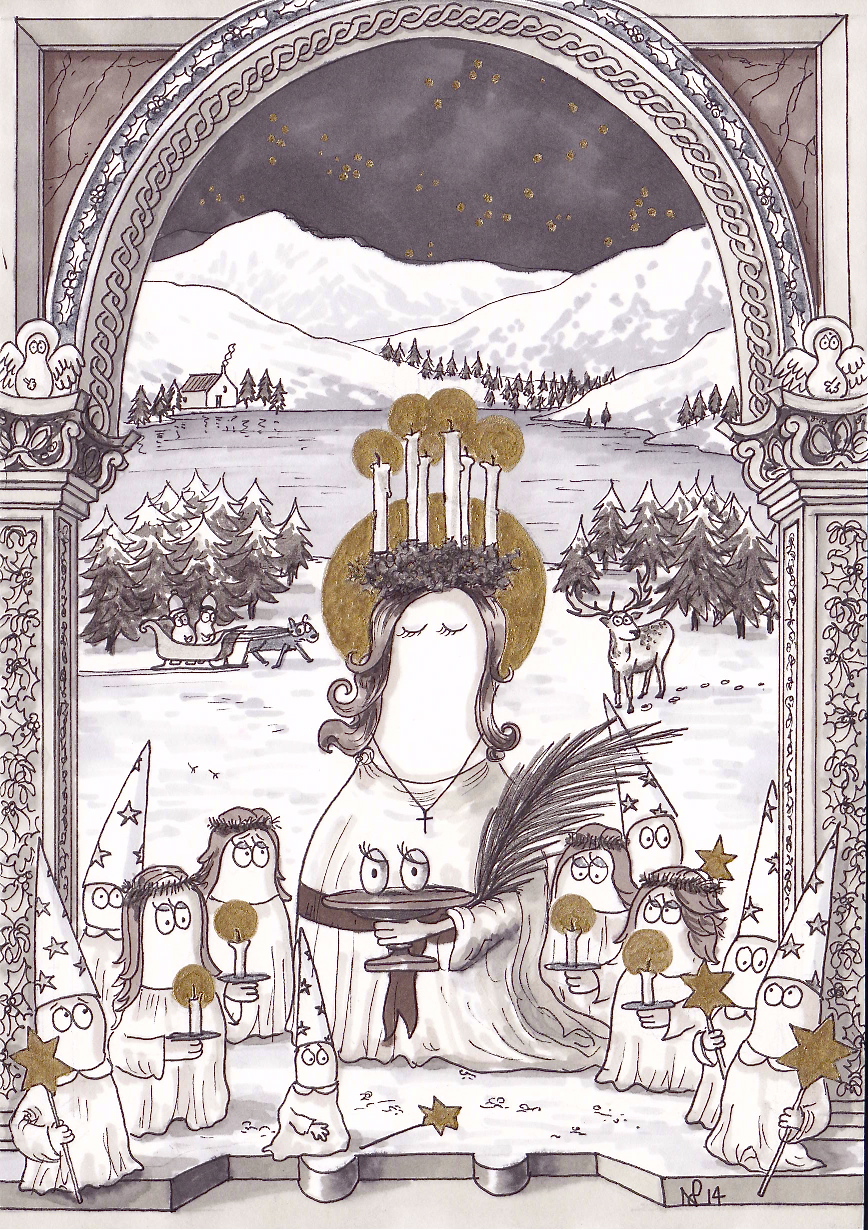
At this festive and, for some, religious time of year, the calendar is awash with Saint’s days and festivals which make the whole Christmas period sparkle with something rather magical. Last week, I noted the passing of St Nicholas’ day, a Saint’s day of the utmost import because it is that rotund smiling fellow who will pass out the presents this December 24th, and of course because he happens to share my name. Last Saturday, another festive favourite was celebrated: St Lucy or Santa Lucia as she is perhaps more widely known, and as the bringer of light and patron saint of sight, this Saint is equally important at this sparkling, light infused time of the year.

In fact such is Santa Lucia’s renown as the bringer of light, that her Saint’s day is celebrated with gusto in the Scandinavian lands, where darkness reigns for much of the day at this time of the year, and where locals therefore gather in reverence to the Saint in the hope that St. Lucy will bring them more light to get through the winter. Apparently her connection with light stems from the fact that at the time of her death at the hands of Emperor Diocletian, her eyes were gouged out, either by order of the Emperor, or by herself in order to disuade a potential suitor from pursuing her. Either way, the story has been taken up in popular iconography, and in more recent times, Santa Lucia has been depicted holding her eyes on a platter.

Santa Lucia Norm (2014 © Nicholas de Lacy-Brown, pen and gold paint on paper)

Santa Lucia Norm (2014 © Nicholas de Lacy-Brown, pen and gold paint on paper)

And so, here is Santa Lucia Norm, depicted in all her glory with eyes upon a platter. No gruesome gouging here (it is Christmas after all), but just the suggestion of it. My Santa Lucia is wearing the crown of candles which is worn by celebrants of her festival in the Scandinavian celebrations which are the basis of my depiction. Those celebrations also include choirs of children wearing white gowns, conical hats and carrying candles in homage to the Saint’s light-giving powers – celebrations which are depicted here against a snowy, Christmassy Scandinavian landscape. More about those celebrations tomorrow, but in the meantime – a Merry Christmas to all!

© Nicholas de Lacy-Brown and The Daily Norm, 2001-2014. Unauthorized use and/or duplication of the material, whether written work, photography or artwork, included within The Daily Norm without express and written permission from The Daily Norm’s author and/or owner is strictly prohibited. Excerpts and links may be used, provided that full and clear credit is given to Nicholas de Lacy-Brown and The Daily Norm with appropriate and specific direction to the original content. For more information on the work of Nicholas de Lacy-Brown, head to his art website at www.delacy-brown.com

Paths of Glory

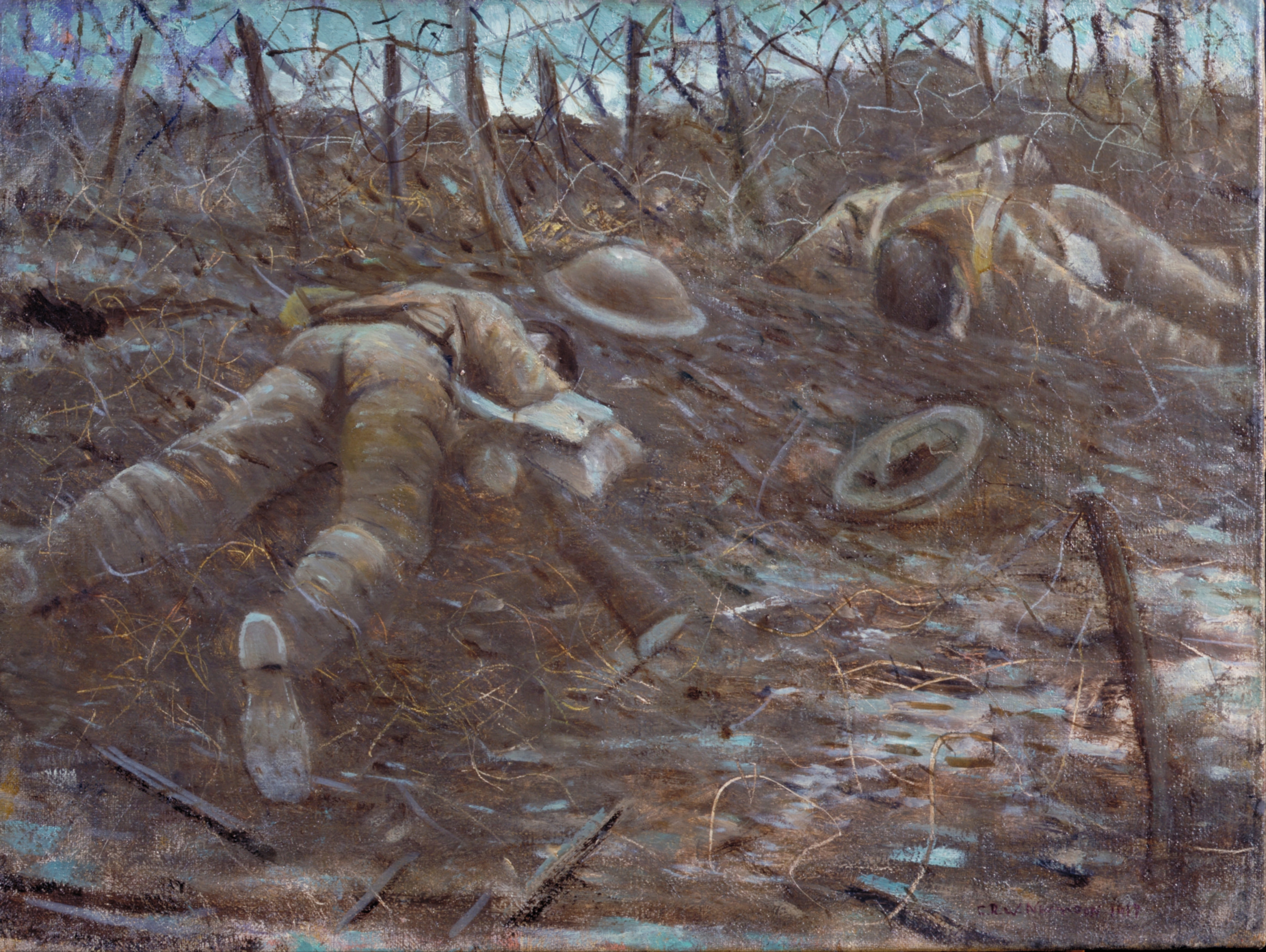
As millions gather across the globe today around war memorials and in reflective places holding poppies in remembrance of the horrors and losses of the First World War which began 100 years ago, I have chosen to reflect in the way I know best: through art.

Few bodies of paintings have ever captured with such visceral power and unhindered emotion the horror of war as artwork capturing the Great War. In the past, we have been used to heavily state controlled glory paintings depicting wars as valiant great history paintings full of patriotism and honour; glinting uniforms and massed weaponry; flags flapping in the wind besides stormy seas and atop galloping horses. But depictions of the First World War were always startlingly different. Instead, the emphasis was on the stories of the individuals fighting in the fields; those who had come from small villages and towns across the world without military training to face a monster of conflict never seen on the earth before. The paintings focus on the futility and the waste; the continuous struggle to a pointless end. They show landscapes ravaged and lives likewise; a world torn apart; lives treated as mere playthings.

The reason for the difference is almost certainly down to timing. WW1 came along at a time of great movement in the history of art. The impressionists had been replaced by emotionally vivid expressionism, wildly colourful fauvism, and starkly mechanical vortism. So when the greatest conflict ever known to man came along, it can be no surprise that the artists either commissioned, or inspired to reflect it on canvas or paper did so with an intensely felt emotional reaction which is as roar today as it was 100 years ago.

Christopher Nevinson, Paths of Glory (1917) Oil on canvas (Imperial War Museum, London)

Christopher Nevinson, Paths of Glory (1917) Oil on canvas (Imperial War Museum, London)

Chief amongst them is Paths of Glory by British artist Christopher Nevinson, which for me is the most perfect artistic manifestation of the pointlessness of war. Against a conflict-ravaged landscape devoid of anything but barbed wire and the detritus of war, the bodies of two British soldiers lay face down in the mud, deprived of a proper burial, of the mourning of their families, of any honour. This is a painting depicting life as a mere instrument of war – pawns in a wider political game, laid to waste on fields of human detriment.
There can be no denying the power of the painting. And that power was equally startling at the time of its creation, so much so that it was censored by the British Government who thought it may hinder the war effort, and exhibited in 1918 with censored labels affixed across the dead bodies. Thank goodness that at that time, the Imperial War Museum saw the great value of the painting and incorporated it into their startling collection of war art. For as years go by, and not a single survivor remains alive to remember it, the horrors of war will only ever be truly visible to our generation through art such as this.