Skip to content

Posts tagged ‘Art History’

The madness continues: Rothko and Munch sales break new auction records (and steal yet more works from the public eye)

Your eyes do quite possibly deceive you. This is not a photo of haphazardly applied paint samples on my living room wall in the consideration of a new mediterranean-inspired coloured scheme. Oh no. It is a painting, originally entitled Orange, red, yellow by american artist Mark Rothko and not just any painting either. This striped bodge-job of a monotoned canvas has the honour of reaching the highest price ever fetched by a piece of contemporary art at auction when it sold at Christie’s auction house last night for $86.9million. And this sale comes only a week after a pastel version of Edvard Munch’s The Screan set a new world record for the highest price ever paid for an artwork (of its era) at auction at a price tag of some $119.9. Did I mention that half the world is in a recession?

Mark Rothko, Orange, Red and Yellow (1961)

That’s not where it ended either. With total takings of $388 million, last night’s Christie’s auction was the most lucrative in history. I’m sure I’m not the only person who feels slightly ill about this. This hideous commercialisation of art works is the same force which drives contemporary artists of our age to be amplified and promoted as serious artists purely because a rich man has backed them despite their decided lack of talent. It’s a world which most artists would gawp at, appalled at the rich men lavishing their coin over an art work, not because of its merit, but because its artificially escalated price tag defines them as wealthy men with apparent cultural appreciation despite their probable inability to tell you a single historical fact about the artist they have just lavished millions on. After all, wasn’t it Rothko himself who, upon being awarded a commission to paint two major mural commissions for the Seagram’s luxury Four Seasons restaurant commented that he wanted to paint “something that will ruin the appetite of every son-of-a-bitch who ever eats in that room. If the restaurant would refuse to put up my murals, that would be the ultimate compliment. But they won’t. People can stand anything these days.” What then would he have thought about one of his works selling for such an absurd sum, and entering the collections of one of the richest men on the earth? He’d say the same thing no doubt: people can stand anything these days, especially when it gives them a bit of status amongst all their equally rich friends.

Edvard Munch, The Scream (pastel)

It’s not just about the price either. Munch’s Scream is thought to be making its way to the private collection of the Qatar royal family, and there it will join Cezanne’s Card Players sold to the Qatari royals for an equally absurd amount last year. What would Munch, whose painting represents a time of intense personal agony, or Cezanne, who spent his career agonising obsessively over finding a new way of representing the life of peasants and Provencial countryside, have thought about their works ending up in some dessert (and oil) surrounded palace in a part of the world where freedoms are suppressed, homosexuals are persecuted, and women are swathed in material, hidden from the view of men? Wasn’t the intention of the impressionists and post-impressionists and most artists for that matter to liberate through their art, to emphasise the lives of the ordinary people, be them whores or gays, women in the nude or men in emotional turmoil? I can almost hear Cezanne turning in his grave, no doubt somewhere near the Mont St Victoire, as I type.

Cezanne, The Card Players – bought by the Qatar Royal Family

Worst of all is that the destiny of the majority of these privately bought paintings is to be hidden away in vast private collections, locked away from public view, as the increased secularisation and privatisation of the world’s masterpieces continues. And as the prices are pushed up, so too is the opportunity for a public gallery, most of them cash strapped, to ever acquire one of these great art works again. While the occasional private purchaser is good enough to loan their acquisition to a public gallery for public view, such as Picasso’s Nude, Green Leaves and Bust sold to a private bidder (thought to be a Russian oligarch) but currently on show at Tate Britain as part of its Picasso and Modern British Artists exhibition, most will never see the light of day again. Much like Renoir’s Bal du moulin de la Galette, purchased by Ryoei Saito in 1990 and supposedly never heard of from that day onwards.

Picasso, Nude, Green Leaves and Bust (1932)

It’s not like these paintings are stunning. Munch’s recently sold Scream was only a pastel study and not nearly as intense as the oil-painted original which thankfully remains on public view in Oslo. Rothko’s work on the other hand (for I hate to call it a “painting”) is a matter of personal taste, although I am sick of constantly being told that Rothko’s works are moving, incredibly important masterpieces worthy of my attention. Because they’re certainly no worthier of my attention than the blank canvases sat in my cupboard, and the only thing that moves me about them is why they are taking up valuable space in some of the most important contemporary art museums in the world. Anyway, I digress. No matter what my personal opinion is of Rothko, I recognise his place in art history, and once again I would prefer to see his works on public display for the contemplation of countless generations, than for the sole entertainment of a few Qatar Royals and a herd of camels.

Renoir, Bal du Moulin de la Galette

In an ideal world, legislation would be passed forcing public galleries to have first dibs when an important work comes up for sale, at a heavily reduced price of course. But sadly this is not how the world works. Everyone wants to make a profit, and no more so than the auction houses of London and New York who revel in their press-grabbing broken records in the same way that White Star Line encouraged a speedier Titanic voyage in order to make headlines with the ship’s early arrival in New York. And we all know how that story ended, don’t we.

Picasso at Tate – highlight of London’s exhibition year so far

The new exhibition at Tate BritianPicasso and Modern British Art, is a triumph. In analysing Picasso’s complex relationship with the UK and his influence upon Modern British painters and sculptors, the Tate approach a well-trodden artistic oeuvre with a new, fresh perspective. The exhibition not only shows off some wonderful Picasso’s, including many lesser known works from the beginning of his career, but it also places the spotlight on some lesser known British artists such as the superb, prickly and moving work of Graham Sutherland, promoting them to the undisputed limelight enjoyed so regularly by Señor Picasso.

The story of Picasso’s relationship with the UK runs throughout the exhibition, both through the works on show and by way of useful curator commentary placed alongside the canvases. Who would have thought that the artist, so universally  accepted as a leading genius of modern art, and whose paintings comprise the top three most expensive paintings ever sold at auction, should have once been so inexorably spurned by the British art institution? When his work was first exhibited here in 1910, one critic, GK Chesterton described one of Picasso’s cubist paintings thus: “a piece of paper on which Mr Picasso has had the misfortune to upset the ink and tried to dry it with his boots”. 

Picasso, Flowers (1901) - Tate's first conservative Picasso purchase

This sort of reaction was by no means unique, and with his few British fans stemming almost universally from groups of budding artists such as the Bloomsbury group with the exception of a few steadfast collectors, it was many years before one of Picasso’s works entered the public collections in Britain. In fact when Britain did at last buy a Picasso work, they made the purchase of probably the most innocuous and dull painting Picasso ever created – Flowers (1901) – which was purchased in 1933 by Tate.

Picasso’s popularity in England did increase in the inter-war period, with works entering the private collections of collectors such as Douglas Cooper, Roland Penrose and Hugh Willoughby, as well as the stir caused as the worldwide propaganda tour of Picasso’s masterpiece, Guernica, passed through the UK in 1938 in support of the Spanish Republican cause during the Spanish Civil War. Nonetheless, it was not until post-WW2, when, numbed to the horrors of war, a newly optimistic peace-time Britain was ready to truly accept and celebrate the talents of Pablo Picasso. Shortly after the end of the war in 1945, the Victoria and Albert museum held an exhibition of Matisse and Picasso, and in 1960, Tate held the largest exhibition of Picasso’s work to date, an exhibition which proved popular enough to attract some 500,000 visitors.
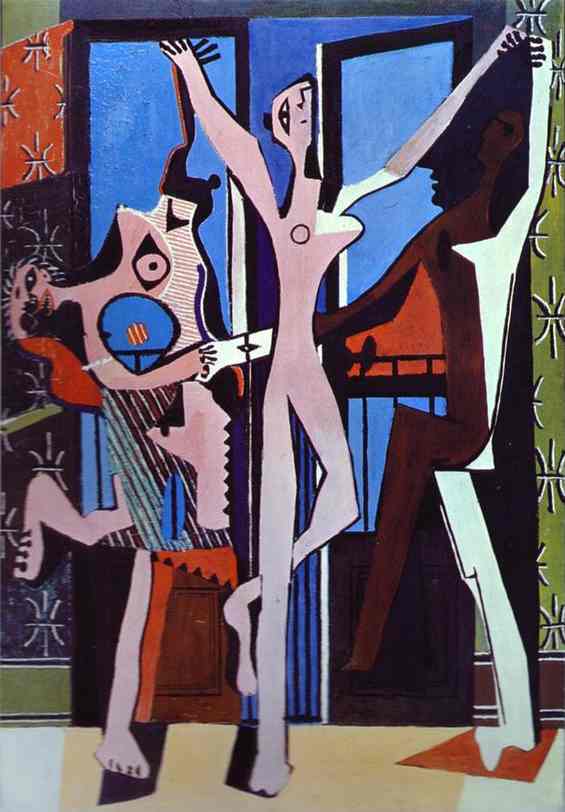
Picasso, The Three Dancers (1925)

It was only after this time that Picasso agreed to sell what he regarded to be one of his most important works to the Tate Gallery in Britian: The Three Dancers, a sale which was agreed in 1965. The work remains one of the masterpieces of Tate Modern’s collection.

Perhaps it’s not all that surprising that Britain was slow to accept Picasso. Historically, the Brits have been a bit slow in adopting anything which causes a disturbance of the traditions which they have always held to be dear. Just look at House of Lords reform – the labour government tried to reform the upper house of Parliament in 1999, but clearly found the disturbance of tradition so ultimately unsettling that they have left the reforms only half completed to this day, a house of semi-herditory peers suspended in history. Even in his time, Turner’s later, more impressionist works proved to be somewhat controversial, even though, by the time the French Impressionists rose to the fore, Turner, cited as a huge influence for the likes of Monet, was held dear to the hearts of the British public. When Picasso came along, the Brits were only just swallowing the new craze of impressionist work coming over from France. Picasso’s cubism and misplaced faces proved a little too radical for most. It is for this reason that Britain, by contrast with the likes of MOMA in New York, holds comparatively few Picasso’s in its public collections (Perhaps this is why Britain is trying to make up for it’s past vacillation by so readily accepting crappy modern art work like Tracey Emin and Martin Creed (you know – lights on, lights off) into its folds? Yes, once again, Britain is out of touch it seems).

Picasso, Weeping Woman (26 October 1937)

Wyndham Lewis, A Reading of Ovid (Tyros)

But despite all those years when Picasso was conspicuous by his absence in the UK’s public galleries, this did not do anything to prevent our budding young artists from being heavily influenced by his work. The second thread of Tate’s exhibition demonstrates how comprehensively Picasso influenced the works of British artists of the time. Duncan Grant, for example, saw many of Picasso’s works when he was in Paris mixing with the likes of Leo and Gertrude Stein. Grant quickly adopted the African-style works which predominated in Picasso’s work around the time of Les Desmoiselles d’Avignon, as well as responding to the collages pioneered by Picasso and his Cubist colleague, Georges Braque. So too was Wyndham Lewis, leader of the Vorticist movement, influenced by Picasso’s work, although he actually sought to criticise Picasso who he considered to be overly sentimental and putting the modern movement “under a cloud”. In fact Lewis’ painting A Reading of Ovid (1920-1) (one of my favourites from the exhibition, sought to criticise Picasso’s return to large curvaceous classical figures at that time (such as The Source, below).

Of other artists influenced by Picasso over the years, amongst them Ben Nicholson (whose first abstract works were notably cubist in style) and Francis Bacon (who readily adopted Picasso’s screaming figures from the Guernica era), one of the most strikingly influenced is British sculptor extraordinaire, Henry Moore. The exhibition proficiently sets up direct comparisons between many of Moore’s sculptural forms and drawings and Picasso’s work. For example in his 1936 Reclining Figure, you can see a direct reference to Picasso’s classical work, The Source. Meanwhile, Moore’s incredibly unsettling and violent work, Three Points (1939) appears to reflect the screaming mouths of Picasso’s Guernica figures, painted two years earlier.
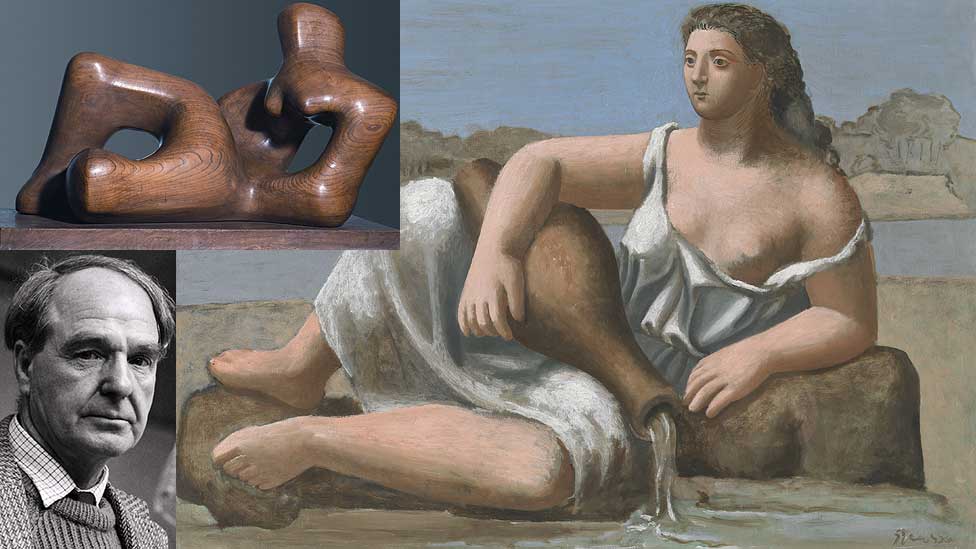
Picasso, The Source (1921) and above, Henry Moore's Reclining Figure (1936)
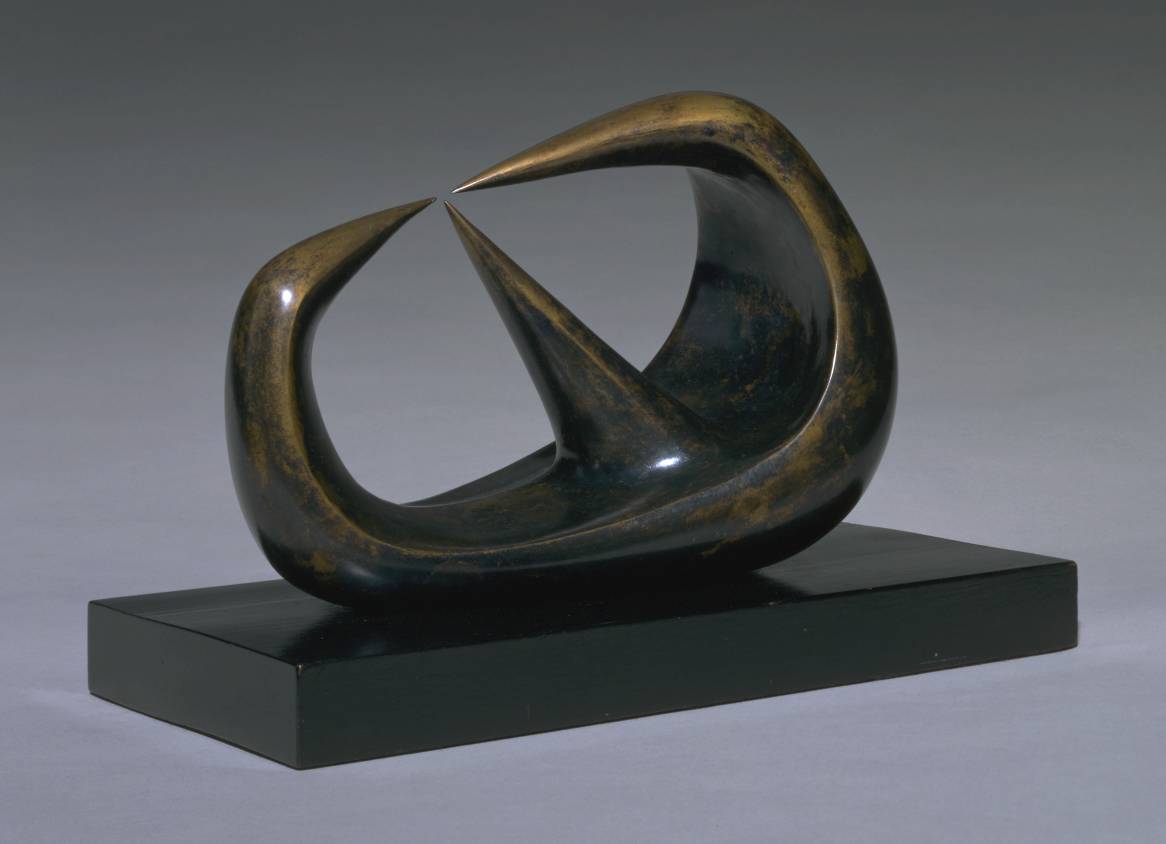
Henry Moore, Three Points (1939-40)

Picasso's Screaming Horse (1937)

Probably my favourite of the British artists on show was Graham Sutherland, whose works had largely escaped my radar before I saw some of his works a few months back at the Pallant House Gallery in Chichester. Sutherland, who acknowledged his debt to Picasso and in particular to Guernica as he set about painting a number of unsettling works during wartime Britian, particularly in his images of the bomb-damaged English cityscapes and his thorn-like figures, is probably best known for his Crucifixion which he was commissioned to paint for the church of St Matthew, Northampton. One such work related to the commission was included here – a blue-backed crucifixion which I just adored.
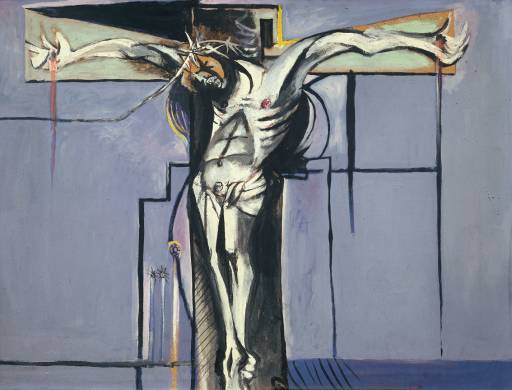
Graham Sutherland, Crucifixion (1946)

Some critics who have been to this exhibition had derided the British artists included in the show, pointing out that next to Picasso, their works fall by the wayside. I disagree. Of course it is clear that many artists owe a great debt to the superbly imaginative, constantly changing oeuvre of Picasso (me included), but this is what artists have always done throughout history – borrowing from one another – just like Picasso himself did when he worked relentlessly on reimagining Las Meninas by Velazquez as well as works by Manet and Delacroix. Nonetheless, all of the British works show an originality and vibrancy of their own, from the undisputed sculptural genius of Henry Moore, to the next level of cubism – photographic cubism, advocated by David Hockney. Of course the true star of this exhibition is Pablo Picasso, but then, that kind of is the point of the show.

Picasso and Modern British Art runs until 15 July 2012 – well worth a visit!

PS Other works I loved…
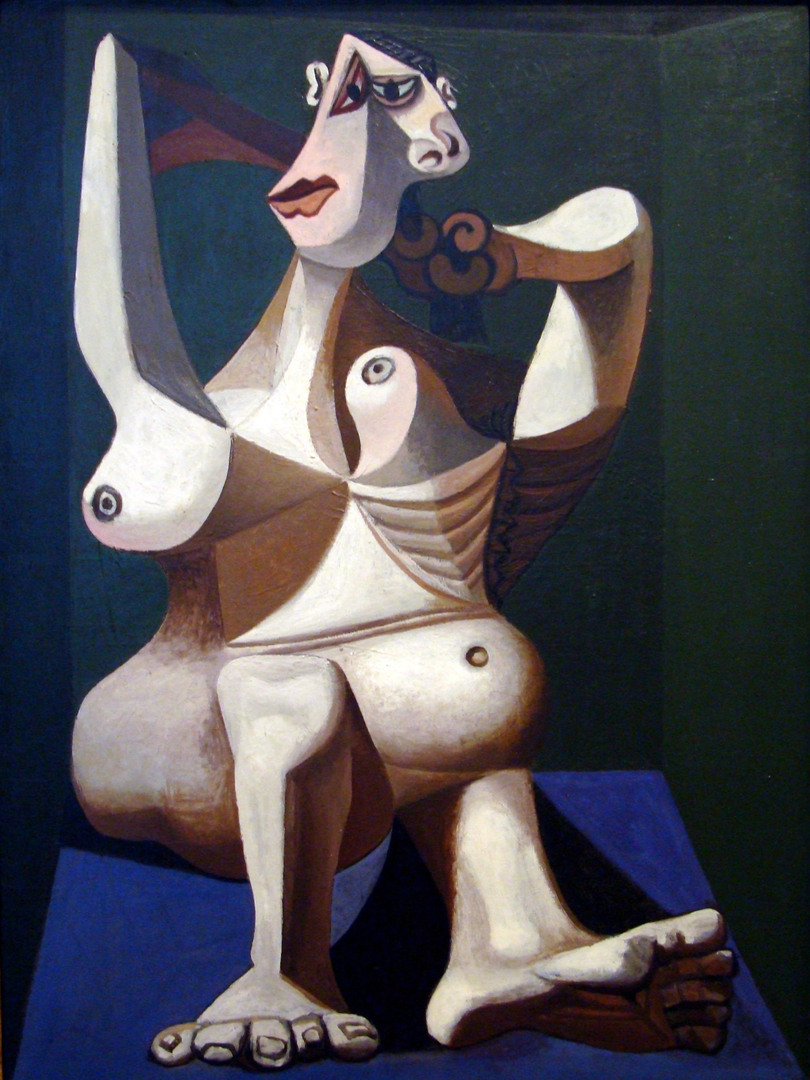
Picasso, Woman Dressing Her Hair (June 1940)

Picasso, Girl in a Chemise (c.1905)
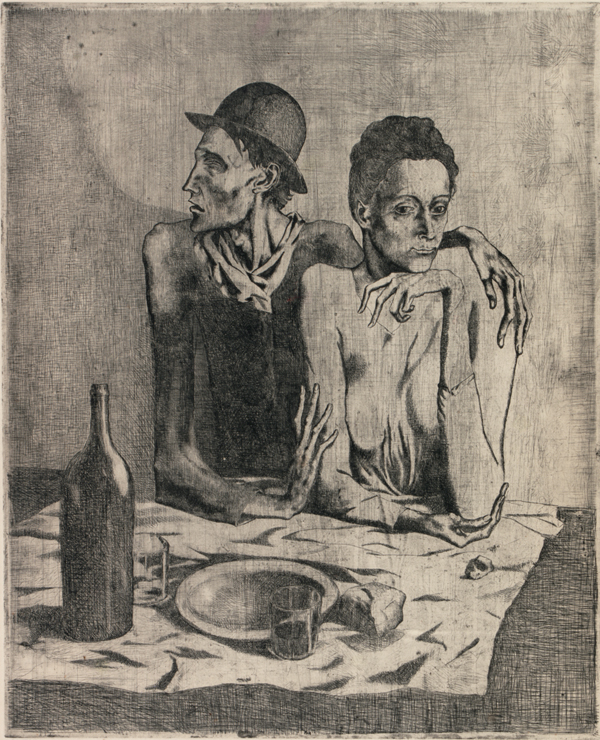
Picasso, The Frugal Meal (1904)
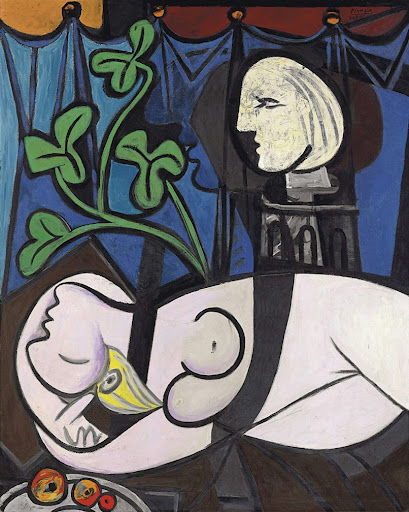
Picasso, Nude, Green Leaves and Bust (1932) - the most expensive painting ever sold at auction

Dutch Masters Season Part 2: Frans Hals

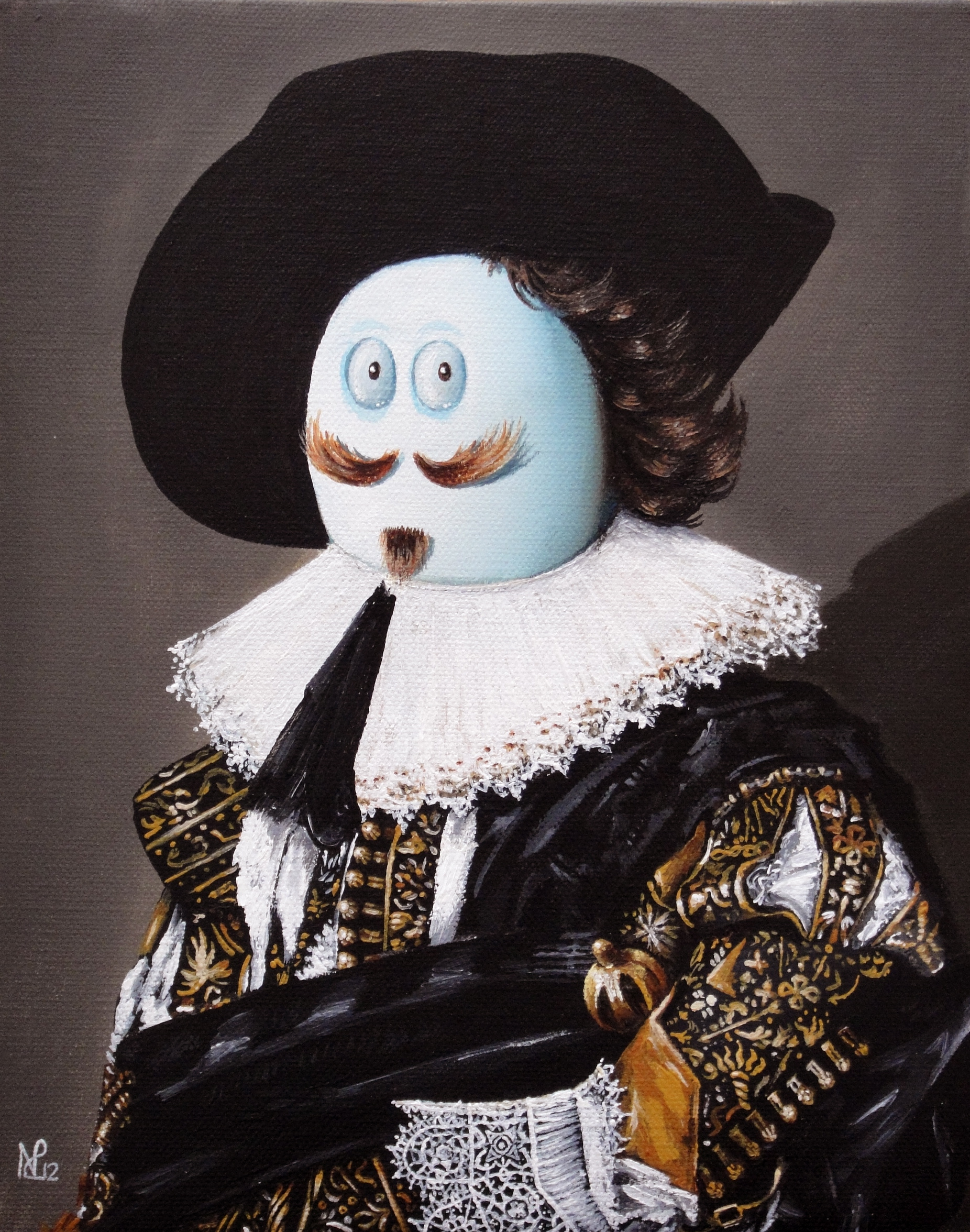
When I told my mother that I was going to paint a series of Norms based on classical paintings, the first suggestion she made was The Laughing Cavalier by Dutch golden age artist, Frans Hals. I thought she was mad! Having seen the portrait on a trip to The Wallace Collection in London some years ago, my lasting memory is being overawed by the intricacy of the portrait, in particular the extravagant embroidery on the “Cavalier’s” sumptuous outfit, and the skill with which Frans Hals had captured the abundance of lace around his neck and cuff. No way could I paint this in small Norm reproduction I thought. But then, when I painted a Norm based on Velazquez with all its lavish silk clothing, followed by a Doisneau inspired Norm painting with the intricacy of that darned complex Opera Garnier, I realised that the Cavalier may not be such a feat after all.

And so, excited by the challenge I had set myself, and all the more enthusiastic in the knowledge that a Laughing Cavalier Norm would make a suitably ravishing addition to my Dutch Masters collection, I attempted to recreate Frans Hals masterpiece on a mere 8″x10″ canvas. And here is the result.

Laughing Cavalier Norm (after Frans Hals) (acrylic on canvas, 2012 © Nicholas de Lacy-Brown)

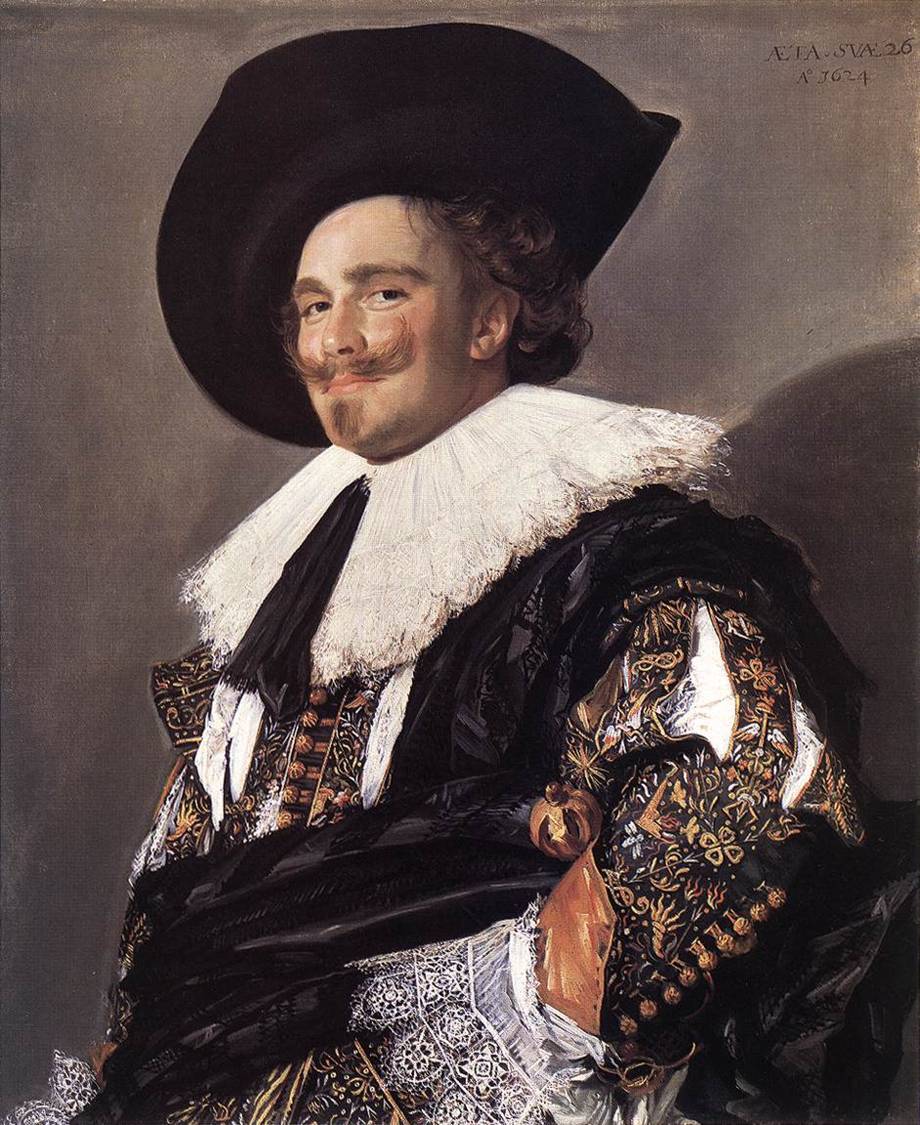
The title of the original work was undoubtedly not The Laughing Cavalier, but the portrait became known as such around the time it first arrived in Britain in the 19th Century. It was thought to be unusual for a portrait of its age (1624) to feature a smiling figure – usually formal portraits were more serious and austere. But this gentleman, while not actually laughing, is certainly jolly, if a little haughty, and his curled up moustache pronounces the smiling contours of his expression. Lucky then that the moustache aids in the creation of a smiley disposition, because with no mouth, my Norm would certainly be all the more somber without it.

Frans Halls, The Laughing Cavalier (1624, The Wallace Collection, London)

English: Frans Hals, "The Laughing Cavali...

Image via Wikipedia

It is also doubtful, incidentally, whether the Laughing Cavalier, asides from lacking in laughter, was even a cavalier. It is said he was most likely a wealthy civilian, perhaps also a military man as suggested by a glimpse of the hilt of his sword. His richly embroidered clothing is aptly demonstrative of his wealth. There are many emblems in the embroidery, allegedly signifying “the pleasures and pains of love” through bees, arrows, flaming cornucopiae, lover’s knots and tongues of fire, while an obelisk-like shape is meant to signify strength and Mercury’s cap and caduceus signifiers of fortune. Meanwhile the turning pose and low viewpoint are shared by a number of similar portraits by Frans Hals.

Whoever this jocular gentleman was doesn’t really matter. There is certainly a power in his expression, through the sparkle of his eyes and confidence of his smile which continues to captivate today. It was often said, when the portrait first rose to fame in Britain, that the Laughing Cavalier’s eyes followed you around the room. They certainly seem to do so – even a digital reproduction on my computer screen seems to come alive, almost bemused at it watches me fussing around the room and clicking away on my computer. No wonder then that this painting has taken its worthy place in the gallery of Dutch masterpieces. It’s a work which breaks the boundaries of formal portraiture, packed with personality, symbolism, and a smiling face which exudes personality to this day.  Tot morgen…Vaarwel.

Dutch Masters Season Part 1: Van Gogh

Its atmospheric canals may be frozen (or perhaps now melting?), its wooden clogs uncomfortable on the feet, and its multi-coloured fields of tulips yet to burst into life, but Holland has so much to offer, especially to art lovers like myself. I’m not overly familiar with the Netherlands – I went once on a geography field trip at school, when we concentrated on the art of land reclamation and urban morphology, but it has always saddened me that I never had time to appreciate the cosmopolitan, thriving city of Amsterdam and all its multifaceted cultural offerings. This weekend, all that will change, as the Daily Norm will head to Amsterdam and hopefully posts bursting with accounts of the great city, its art and its buzzing life will swiftly follow. In anticipation of this exciting event, the Daily Norm is happy to launch the Dutch Masters Season, a three-part series looking at masters of Dutch art, as well as Norm reinterpretations of three Dutch masterpieces. This will be followed by a Sunday Supplement examining the influence of a particular Dutch supremo on a family portrait I created in 2010, and then my trip to Amsterdam will explode onto your screens in a (hopefully) spectacular fashion.

So, without further ado, let us begin this brief cultural survey of Dutch artists with this feature on a painter who is without a doubt the most famous Dutch master of them all… the indomitable sunflower-loving, paint-eating, ear-lopping saviour of colour, Vincent Van Gogh.

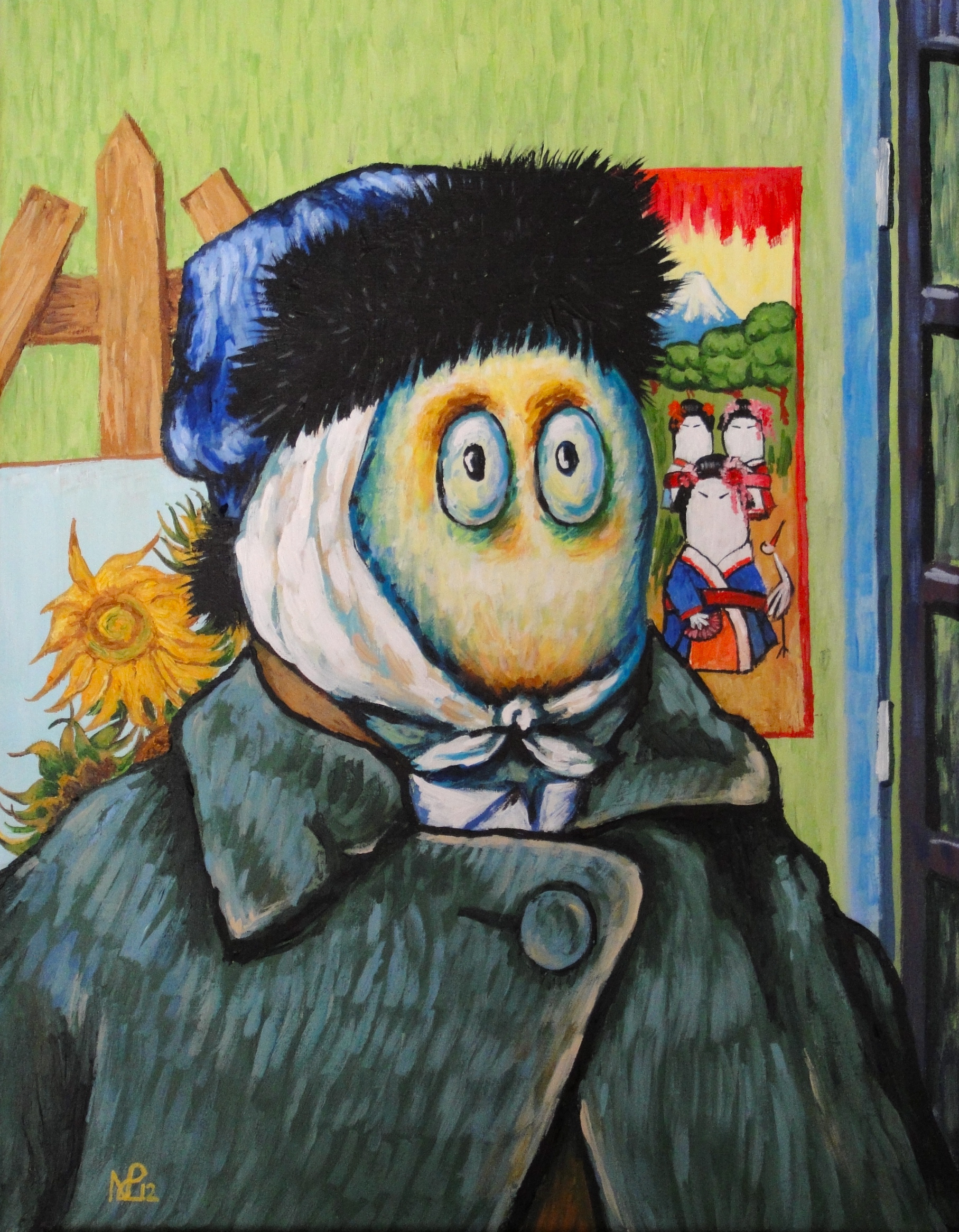
What can be said about Van Gogh that hasn’t been said before? A couple of years ago we got a huge anthology containing translations of his numerous letters, allowing us an invaluable insight into the artist’s sensitive, insightful mind. Last year, a new biography was published, sensationally claiming that rather than killing himself, as is the fabled (and much romanticised) tale, he was quite probably killed in a tragic accident involving local children playing with a gun. Every year some weighty international art institution holds a retrospective of his work, and chocolate boxes, t-shirts and mouse mats containing starry nights, sunflowers or a green faced portrait with decisive brush strokes and vibrant colours fly off the shelves of souvenir shops all over the world. So of course there isn’t much left to say. But where there is renown, let a Norm refresh. Where Van Gogh bandages his ear, let a Norm bandage his face. Yes, I give you, in the style of Van Gogh, Norm with a bandaged face…

Norm with a bandaged face (after Van Gogh) (acrylic on canvas, 2012 © Nicholas de Lacy-Brown)

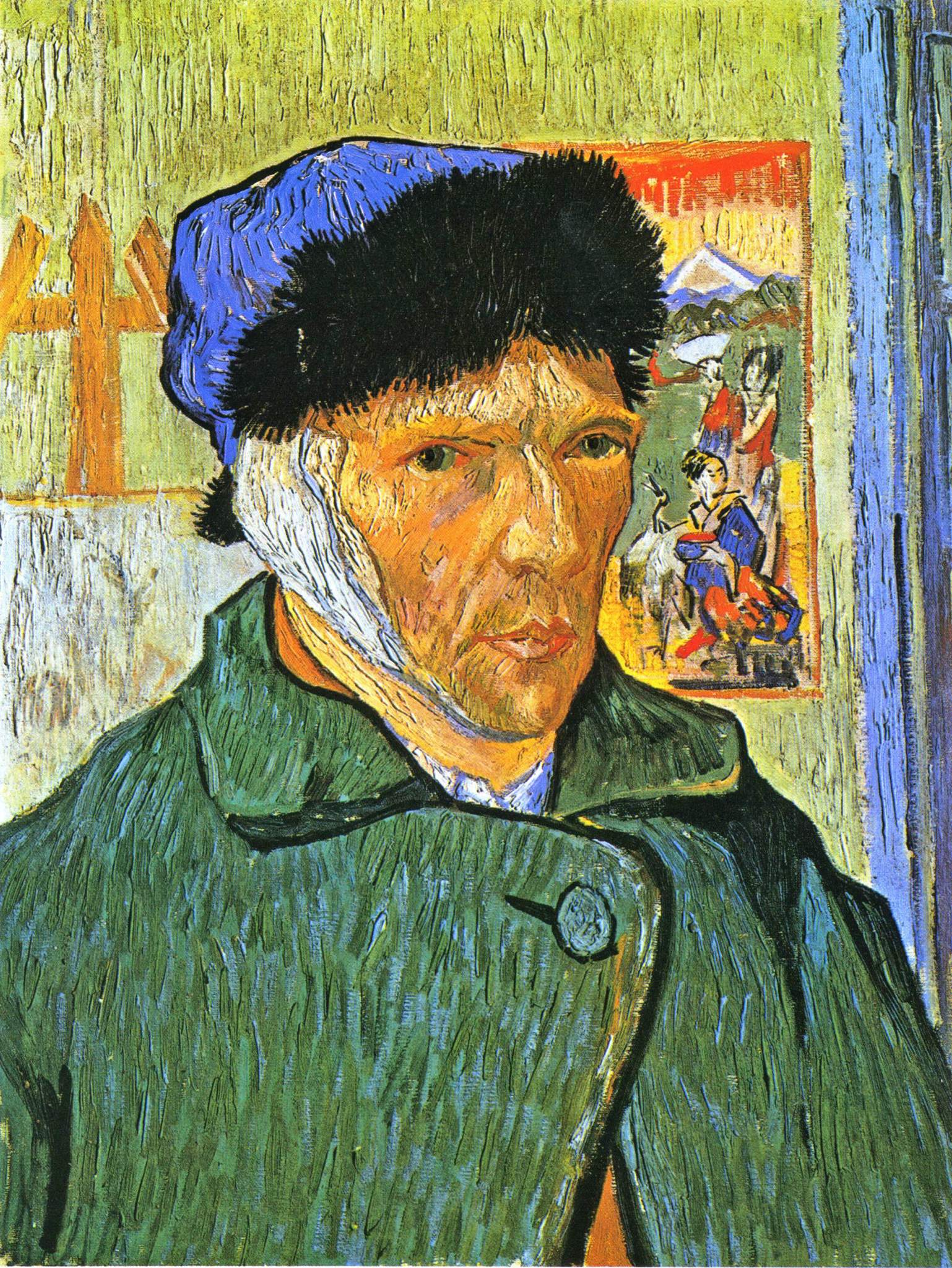
And the original…

Vincent Van Gogh, Self-Portrait with Bandaged Ear (1889, Courtauld Institute of Art, London)

So why did this particular Van Gogh work inspire me? (After all, there are countless Van Gogh portraits to chose from, as well as a number of portraits of the local postman, the doctor, Gaughin’s chair and the like). Well to start with, this painting lives close to home for me, part of the wonderful collection of London’s Courtauld Institute, where more often than not, you can get this portrait, as with many of the other impressionist masterpieces in the collection, all to yourself, while Van Gogh’s Sunflowers, kept down the road at the National Gallery, is surrounded by a permanent semi-circle of tourists and school groups. But then there’s the bandaged ear, which is after all emblematic of the legend that is Van Gogh.

Van Gogh: souvenir hell

It happened one dark night in December 1888. Paul Gauguin, the tumultuous Tahiti-loving artist was staying with Van Gogh in the Yellow House in Arles, Provence. They argued savagely and Van Gogh came at Gauguin with a knife. At the last minute he turned on himself, cut a chunk out of his ear, and attempted to gift it to a local prostitute who sensibly alerted the authorities thus probably saving Van Gogh from bleeding to death. This painting, one of two containing the bandage (and therefore suitably amplifying the tale), was painted a month later in the comparable calm of post-cataclysmic reflection, with Gauguin gone, and Van Gogh all alone, once again, staring in the mirror in contemplation.

Vincent Van Gogh, Vase with Twelve Sunflowers (1888, Neue Pinakothek, Munich)

For me, it’s the perfect Van Gogh, because it gives us snippets of everything he represents. Broad, almost vibrating brush strokes expressing the rawness of his emotions, and the vigour and haste with which he sought to express his feelings on the canvas. A colour palette which is bold, unforgiving, almost happy despite the downbeat subject portrayed. On the wall hangs a japanese print, a recognition of the great influence of Japonisme in his work, while to his right, an easel and canvas is in progress – here I have used a bit of good old artistic licence, adding the sunflowers which are so equally emblematic of Van Gogh – just in case you weren’t immediately sure who I was referencing with this painting! In this way, the warmth of Provence contrasts with the coldness of winter portrayed in the artist’s thick coat and strange furry hat, an outfit which appears to isolate Van Gogh from the viewer, enveloping him in a melancholy introspection which is shared with the audience only through the piercing gaze of his sickly green eyes.

Well there you have it – and it looks like I had a lot to say after all. For me, Van Gogh is a master. Sometimes his works are criticised for being overly loose, coarsely painted and unsophisticated. But you only have to look at his early portraits of peasants, such as his saturnine masterpiece, The Potato Eaters, to recognise his skill as a draftsman. Rather his coarse, thick application of paint allowed him to paint fast, and this was crucial in allowing him to express his vigorous and volatile emotions on canvas, as and when they moved him. And it is this living, breathing, unforgiving emotional intensity which remains so evident in his canvases today in every decisive and quivering brush stroke, capturing audiences and inspiring biographers and curators aplenty, whether it be through sunflowers, cypress trees or in the sorrowful eyes of his many self-portraits. This is why, to my mind, Van Gogh is a true Dutch master.

Van Gogh, The Potato Eaters (1885, Van Gogh Museum, Amsterdam)

Come back tomorrow for Dutch Master number 2.

Postscript: In case you were wondering, no, Norms don’t have ears, but that doesn’t mean that this Van Gogh pretender couldn’t have inflicted a grizzly wound on himself in the same general area!

Norms do…Goya – The Third of May 1808

When people think about paintings of conflict, the first name to pop into their head is generally Guernica. The painting, by Picasso, has become a worldwide antiwar symbol, and as if proving the fact, a large tapestry of the painting hangs outside the UN’s Security Council HQ in  New York (you know, the same one that they covered up with curtains when making the decision to go to war against Iraq). But in actual fact, there was painted, some 120 years earlier, an equally striking image of conflict, sacrifice and war, an image so resonant, in fact, that Picasso  cited it as an inspiration to his Guernica. The painting is The Third of May 1808, by Francisco Goya.

As my regular readers will have twigged, I’m a big fan of Spanish art, and therefore it is no surprise that somewhere in the dark depths of my imagination, a Norm version of Goya’s magnum opus would take its form, emerging as a brief watercolour sketch the other night. Here it is, with Goya’s original masterpiece.

Norms on 3rd May 1808 (after Goya) (Watercolour, 2012 © Nicholas de Lacy-Brown)

The Third of May 1808 by Francisco Goya (1814), courtesy of the Prado, Madrid

To give a brief background, Goya’s work represents an uprising of Madrid residents in response to the French invasion of Spain under Napoleon I. Having tricked the Spanish into an alliance with the French armies with a view to conquering Portugal and splitting it between then, Napoleon entered Spain with his armies in November 1807 under the guise of strengthening Spanish troops. However, having entered Spain, Napoleon’s true intentions were unveiled, and the French troops moved in to take control of the country, facing very little resistance. It was only on 2 May 1808, when the people of Madrid learnt that the Spanish royals were to be exiled to France, that many of them rose up in rebellion against the French troops. The French army ultimately prevailed, but not without great bloodshed, and Marshal Murat, head of the French army in Spain declared: “The population of Madrid, led astray, has given itself to revolt and murder. French blood has flowed. It demands vengeance. All those arrested in the uprising, arms in hand, will be shot.”. Goya’s painting depicts the moment, early the next morning, when hundreds of Spaniards were led from the monastery where they had been imprisoned overnight (probably the buildings shown in the background) to the surrounding barren lands where they faced point-blank execution before a firing-squad.

The Second of May 1808 by Francisco Goya (1814), courtesy of the Prado, Madrid - partner of the Third of May, this painting depicts the uprising itself.

Goya’s painting is a stunning symbol of slaughter and sacrifice. It works so well on so many levels. There is, for example, the haphazard grouping of sacrificial victims on the left, a monk-like figure shown bending to meet his fate, others turning away in despair, the blood of innocents all over the floor, bloody corpses foreshortened as though falling into the space of the audience. The group of victims shows a human, unorganised element which compares effectively with the group of gunmen on the right who are rigid, dark, sinister, grouped together like a killing machine showing no remorse or sway in their murderous resolve. This contrast of dark and light creates a wonderful tension – good versus evil. Of course the most striking character is the central victim, dressed in a glowing white, his colours matching those of the lantern which casts light upon the scene. Shown with his arms outstretched, he is a christ like figure – he even appears to have the marks of stigmata upon his hands – all suggesting that he represents those Spaniards who stood up to the French invaders, sacrificing their lives for the sake of ultimate Spanish victory. It’s a work which portrays bloody human waste – a waste of life, the destruction of the innocents – and this is why it still stands today as such a powerful anti-war symbol.

Unsurprisingly the painting has inspired countless artists since it went on display in a rather pokey corner of the Prado (after it lay in storage for 40 years – the King of the time, Ferdinand VII, didn’t like it as it glorified people rather than him). One of the first interpretations of the image was this one, by Édouard Manet, which depicts the execution of Emperor Maximilian of Mexico.

Édouard Manet's Execution of the Emperor Maximilian (1868-1869)

Maximilian, a member of the Hapsburg family of Austria, had been installed in power in Mexico by Napoleon III of France in an attempt to recover unpaid debts and establish a European presence there. This endeavor failed, ending with the execution of Maximilian and two of his generals by firing squad on 19th June 1867. Here, the emphasis is reversed, as Manet, ever anti-Napoleon, makes the executors the heroes of the piece, dressed in their smart livery, whereas Maximilian and his generals are, by contrast, depicted with dark, undefined, sinister brushstrokes.

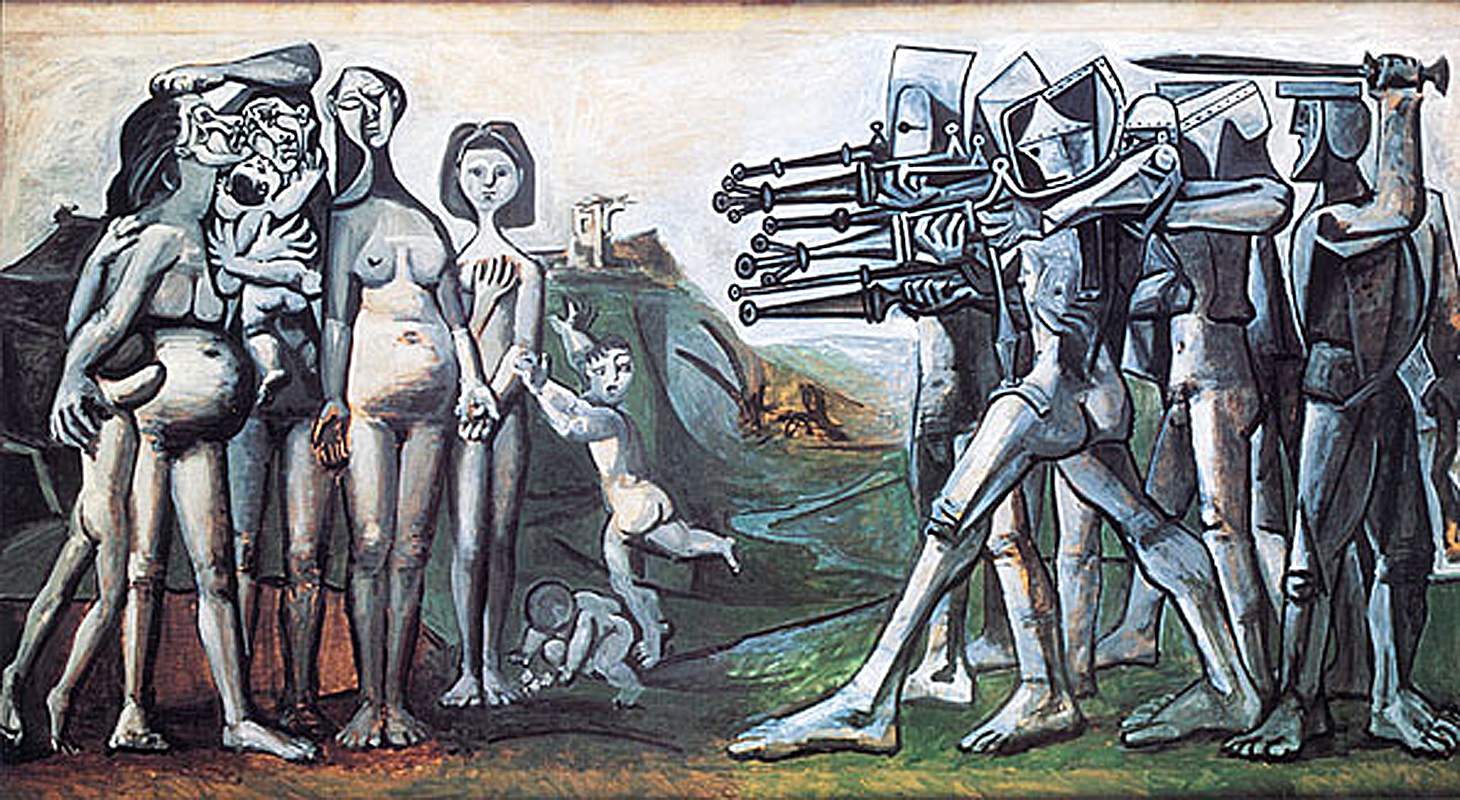
The second most significant use of Goya’s composition is Massacre in Korea by Picasso which depicts the Sinchon Massacre, an act of mass killing carried out by the South Korean and/or American forces in 1950.

Pablo Picasso, Massacre in Korea (1951)

Here the firing squad are once again the aggressors, and Picasso has taken the idea of the killing machine to a new level, depicting the squad as a fantastical group of sinister, mechanical automatons, killing without emotion of any kind. By contrast, the victims are as emotive as could be depicted – women and children, one seemingly pregnant, another’s face crippled with despair.

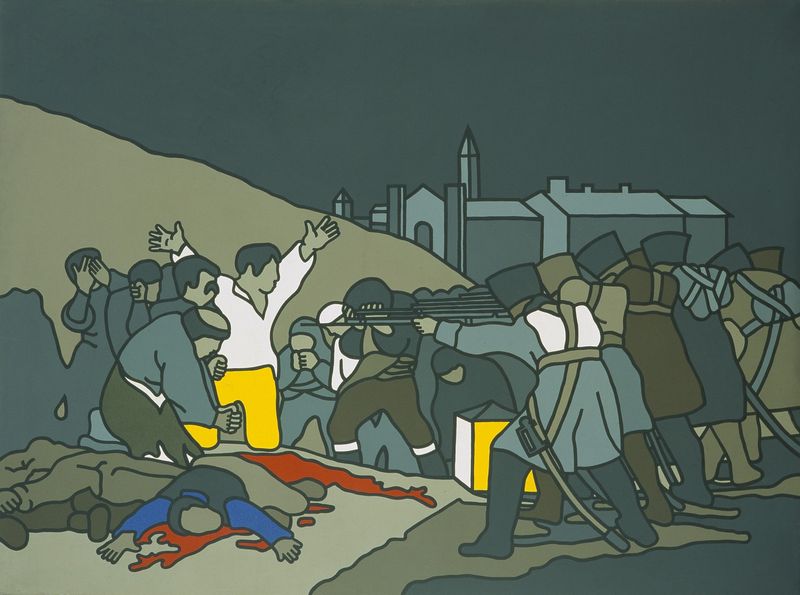
A final, lesser-known depiction, is the pop art homage painted by Irish artist, Robert Ballagh.

The Third of May - After Goya, 1970, by Robert Ballagh

Entitled The Third of May 1970, the painting makes a direct reference to Goya’s work, making no changes to the composition whatsoever, but converting the work into a pop-art creation using black outlines and block colours. The 1970 title of the work is intended to reflect another time of great conflict – this time in Northern Ireland – when British troops entered to enforce some semblance of control.

All three depictions serve demonstrate the continuing relevance of The Third of May 1808 in times of conflict. Like Picasso with his Guernica, Goya created a work for all times, a stark reminder of the brutality and savagery which comes so easily in times of conflict, a brutality which has continued to erupt intermittently around the world, and which, only 120 years after the Third of May, savaged Goya’s homeland, once again.

© Nicholas de Lacy-Brown and The Daily Norm, 2005-2012. Unauthorized use and/or duplication of the material, whether written work or artwork, included within The Daily Norm without express and written permission from The Daily Norm’s author and/or owner is strictly prohibited. Excerpts and links may be used, provided that full and clear credit is given to Nicholas de Lacy-Brown and The Daily Norm with appropriate and specific direction to the original content.

Norm Profile: Norm in the Jungle

Continuing my introduction to the Norms which I painted in the past, and expanding further upon the (variably) tropical theme of my Spanish season, the next Norm stepping into the limelight is Norm in the Jungle. This was the first Norm I ever painted. I gave him as a gift to my grandmother who always adored him, and continues to enjoy him still.

I’m not sure why I chose the jungle as the backdrop to my first Norm. I’ve always been drawn to the idea of a jungle, as I have been to forests with their dark creepy corridors between trees, naturally sheltered by the canopy of vast tree tops and low hanging luscious flowers and furry palms. I think I can identify two sources of inspiration for this fascination. Firstly the stories of the Moomins written and illustrated by Tove Jansson which I was obsessed with as a child. Through her vivid descriptions and beautiful illustrations, she really conjured the idea of a magical midnight forest, full of little creatures hiding under the trees, each plant and crag and corner being imbued with a sense of mystery and adventure.

Tiger in a Tropical Storm (Surprised!)

Image via Wikipedia

The second influence is the art of Henri Rousseau. I adore Rousseau. He’s a great inspiration to me, first and foremost because, like me, he was a self-taught artist, and that lack of teaching can really be seen in the wonderful naivety of his art, as it can be in the work of other self-taught masters such as Frida Kahlo and Van Gogh. Thus in his work there is none of the pretention of a taught artist, but a vivid, often childlike imagination illustrated through wonderful scenes of jungle animals and full and voluptuous vegetation. My favourite work is probably “Tiger in a Tropical Storm (Surprised!)” which we are lucky enough to have hanging in London’s National Gallery free for all to see. All of his jungle works have the power to transpose their audience to the tropics… which is amazing since Rousseau never went to the tropics himself. He actually sought inspiration for his jungle scenes from the Jardin des Plantes in Paris!

Well, Norm in the Jungle was painted a long time ago (in 2005), and as I hope to show you later this week with the exclusive unveiling of four new Norm paintings, the Norms have come on a lot since. But my obsession with jungles and plants remains still. Here is a painting I did in the summer, also out here in Spain, called “Paseo Banus”. A pure celebration of the wonderful plants which grow habitually out here in Andalucía.

Paseo Banus (2011, Acrylic on canvas)

Welcome to the Daily Norm!

Welcome to the Daily Norm, a daily exploration through Normville, the world of the Norms, the little white blobs who have pervaded my artistic output for some years. Through this blog, I hope to introduce you to the lives and times of these blobby little creatures, where they can be found, who’s who in the world of the Norm, and what they’re thinking too.

Norms began as small sketches in my law degree notes, filling my pages where no doubt there should have been complex legal observations and academic discussion. In 2006 they made it onto the canvas, and the first collection of norms I painted sold out in one night. They reappeared briefly in 2008, but haven’t been painted since. Following popular demand, the Norms are back, and this time, they’re venturing into cyberspace! So please follow this blog, and let the norms provide you with a little daily diversion. Also be sure to check the sales section of the site regularly, so that you too can bring a little bit of Norm magic into your home.

Norm you later,

Nick (Editor/ Artist)