Skip to content

Posts tagged ‘Art’

Printmaking Progress IV – La Flamenca (copper etching)

Regular readers of The Daily Norm will know that I have been dabbling in printmaking in recent months, and in particular etching, inspired by the superb results achieved in the medium by the likes of Goya, Picasso and Lucian Freud. Well having dappled a little in zinc plates (I hesitate to say “mastered” – as my recent disaster when aquatinting a zinc plate was to prove), I decided to move onto a copper plate, which, because of its durability, is the optimum plate to use for a bigger print edition.

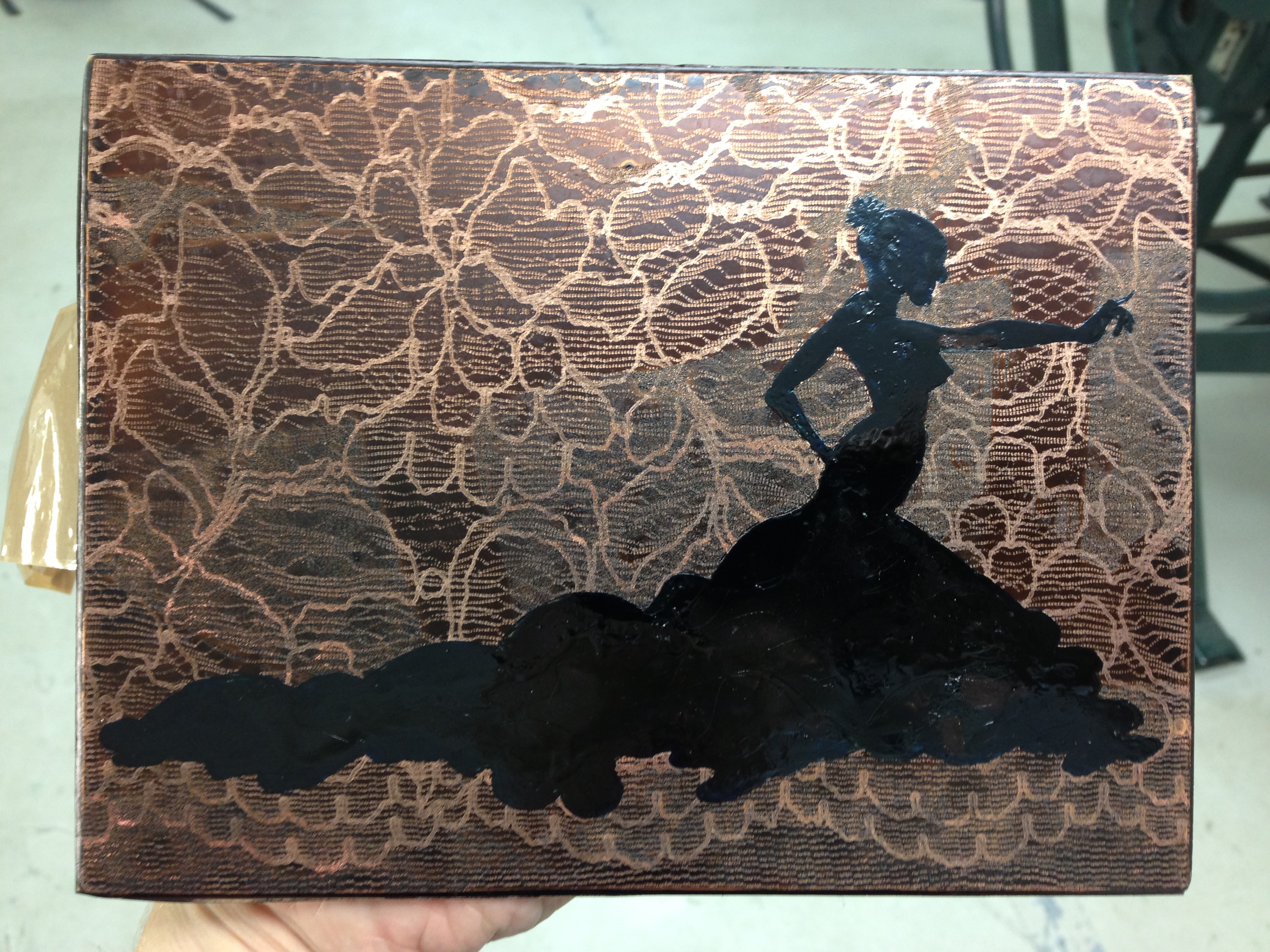
Departing from the Norms who feature on my previous etchings, I decided to follow my familiar passion for Spain, and flamenco, recycling the idea I had for a fragmented dancer in Composition No. 8, and this time etching a flamenco dancer with a free-flowing fluid dress making for the major attraction of the plate. In terms of process, the image itself did not involve a whole lot of etching. Rather, the detail came with the aquatinting and soft-ground applied thereafter. Once the initial dancer image was etched into the plate, I then took a benday dot stencil, the likes of which would have been used by Roy Lichtenstein, and applied a series of polka dots across the background of my plate, emulating the popular pattern of flamenco dresses, and adding variety of tone by dipping in acid for different lengths of time.

La Flamenca (copper etching on paper) © Nicholas de Lacy-Brown, 2013

La Flamenca (copper etching on paper) © Nicholas de Lacy-Brown, 2013

In the lighter areas of the background (kept light through giving them less exposure to acid) I applied an intricate lace pattern using the soft-ground technique. This basically involves painting the plate with a protective liquid ground which is left wet. A piece of lace is then applied on top and the plate sent through the print press. This presses the lace into the soft ground, lifting it off the plate and leaving an impression of the lace in the ground, which is then etched into the metal when exposed to acid. I adore the result, creating a background which now includes both the lace and polka dots so characteristic of flamenco.

The final step then was to print my plate – I did so with a black ink mixed with a warming red to give a real flamenco flavour. I’m really very pleased with the result, so much so that I have decided to make this print a larger edition of 50.
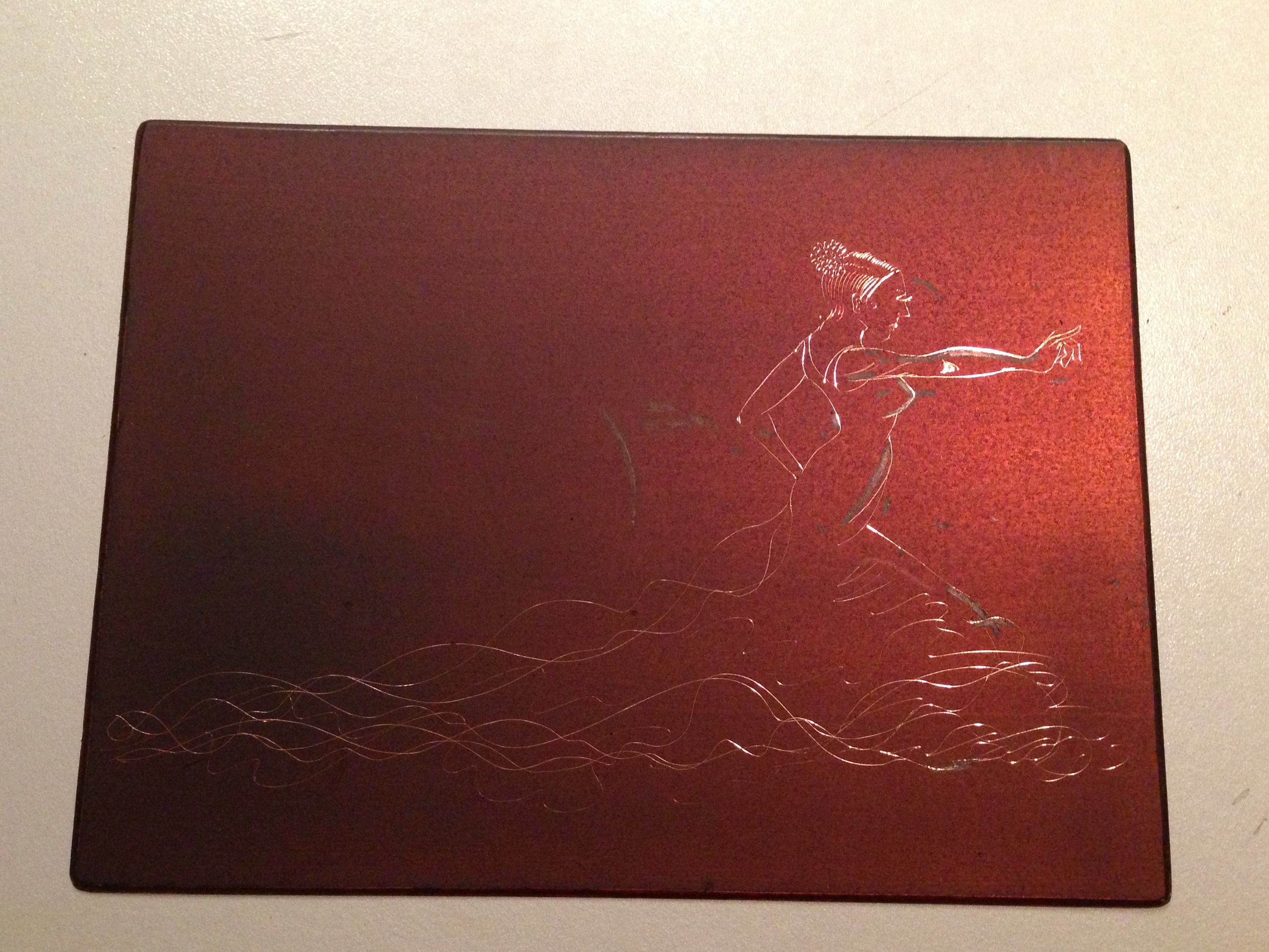
The initial line etching
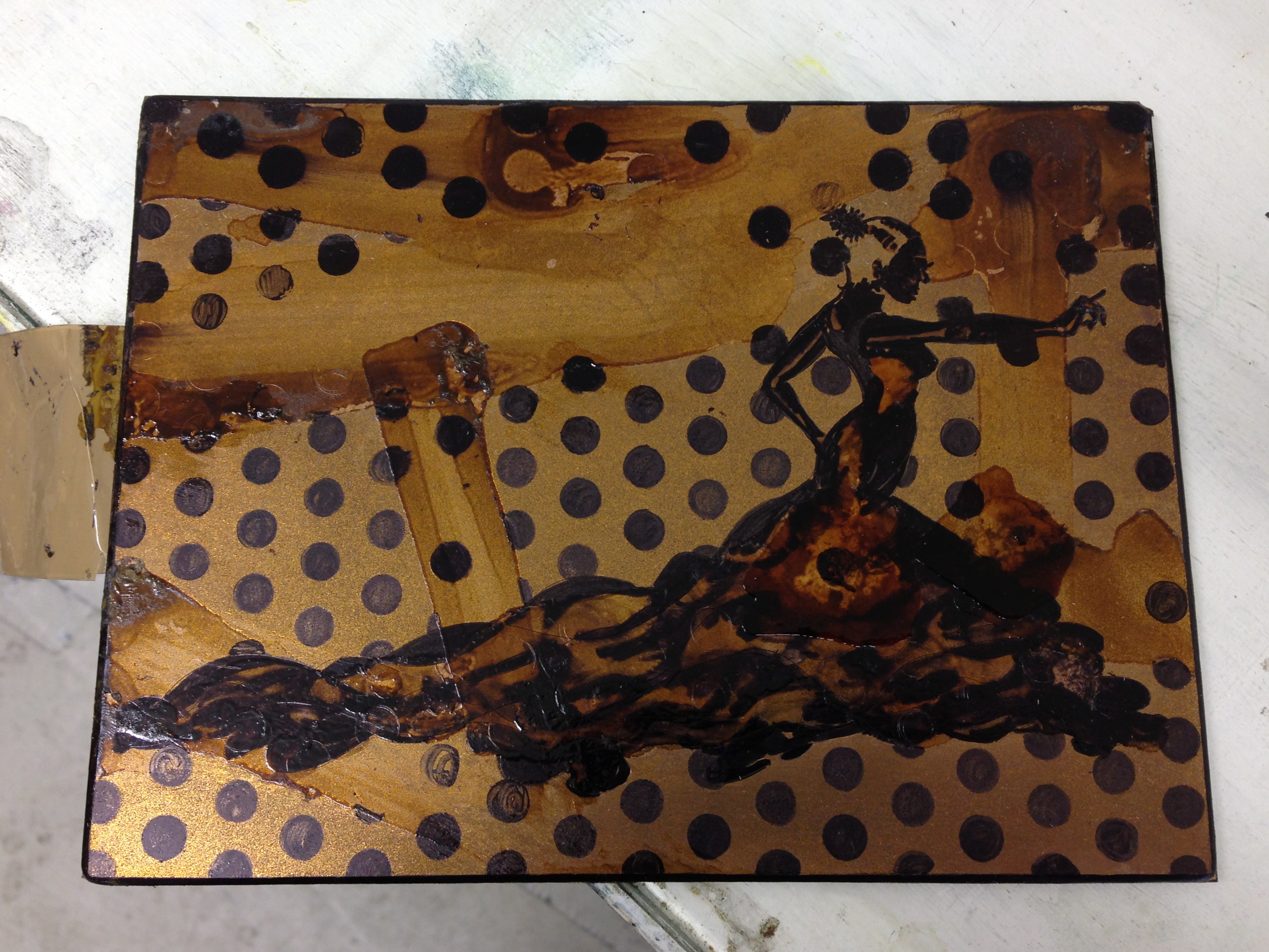
The initial line etching

Applying the dots onto aquatint

Applying the dots onto aquatint

Applying a lace softground

Applying a lace softground

IMG_5175

Stopping out the figure before final acid dip

Stopping out the figure before final acid dip

The finished plate

The finished plate

The finished print

The finished print

If you would like to buy one of my limited edition prints, they’re available now – in my Etsy store. See you there!

© Nicholas de Lacy-Brown and The Daily Norm, 2001-2013. Unauthorized use and/or duplication of the material, whether written work, photography or artwork, included within The Daily Norm without express and written permission from The Daily Norm’s author and/or owner is strictly prohibited. Excerpts and links may be used, provided that full and clear credit is given to Nicholas de Lacy-Brown and The Daily Norm with appropriate and specific direction to the original content. For more information on the work of Nicholas de Lacy-Brown, head to his art website at www.delacy-brown.com

BreathNorm – Norms inspired by De Waal

For an artist like myself, whose almost complete inability to paint in anything but the brightest of colours (as followers of this blog, or indeed of my art website may have realised) has made colour something of a trademark of my creative output, I sometimes surprise even myself when I start to find myself drawn towards simple, monochrome, muted colourless creations. It happened for example earlier this year, when I shunned the great pasty-coloured nudes of Lucien Freud in order to give my full attention to the stunning works in black and white that are his etchings. Completely captivated by the simplicity of the medium, yet the extent of intricacy and emotion he was able to capture in simple black lines, I became obsessed by printmaking, and started etching myself – a pursuit which continues to occupy many of my weekends as I dabble further in this new medium.
Now it has happened again, with the pots of De Waal. As I described in my post yesterday, I was delighted when, by sheer coincidence as I am reading my way through the enthralling pages of The Hare with Amber Eyes, I caught a documentary on the BBC’s Imagine show last week, focusing on the book’s author. While I was fully expecting my attention to be held by all references in the programme to the book which has captivated me for the last few weeks of reading, what I wasn’t expecting was to become so completely enamoured by the artworks which this great novelist also creates. I say also – however art is in fact Edmund De Waal‘s primary calling in life, and he was turning his hands to the malleable craft of pottery long before he ever began to trace the heritage of his netsuke whose story formed the basis of the book which has now made him famous around the world.

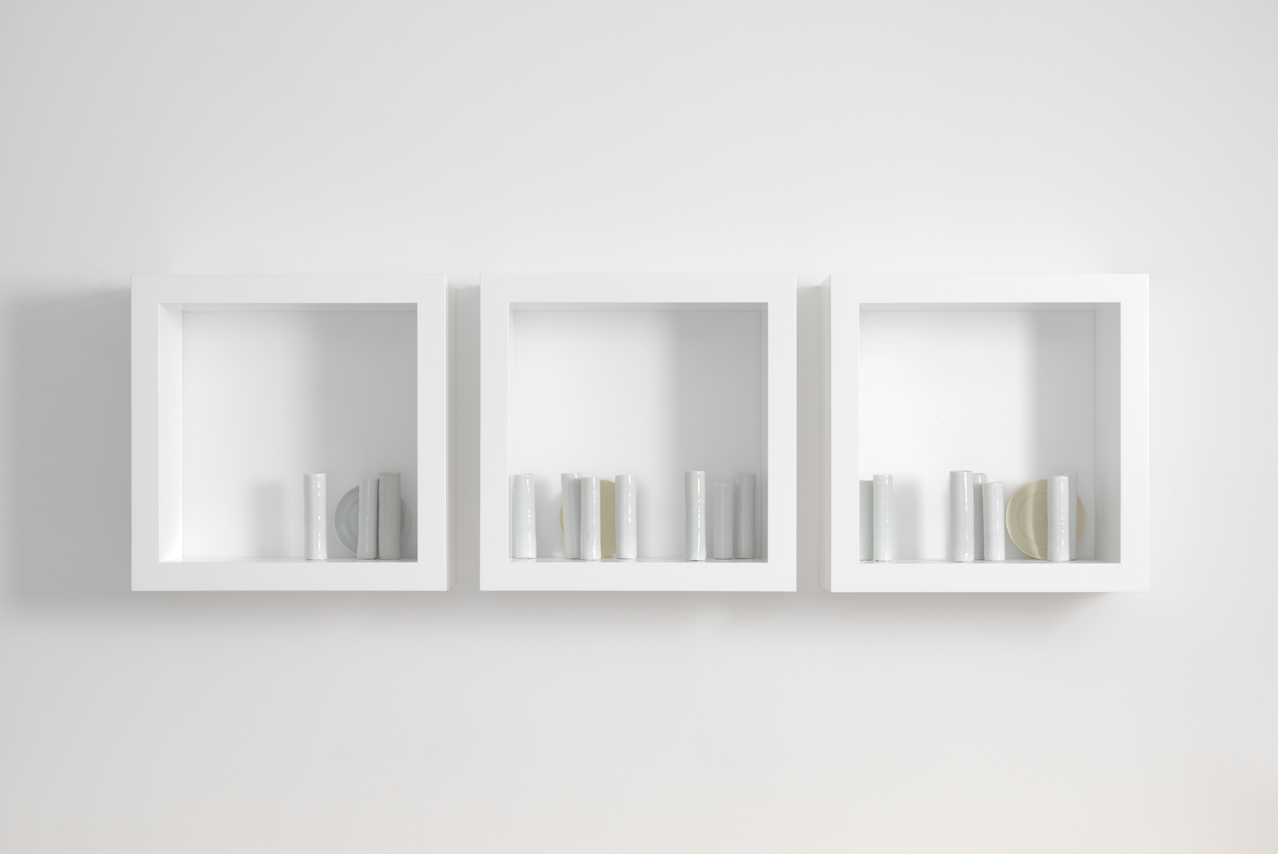
Breathturn II (2013 © Edmund De Waal)
Breathturn II (2013 © Edmund De Waal)

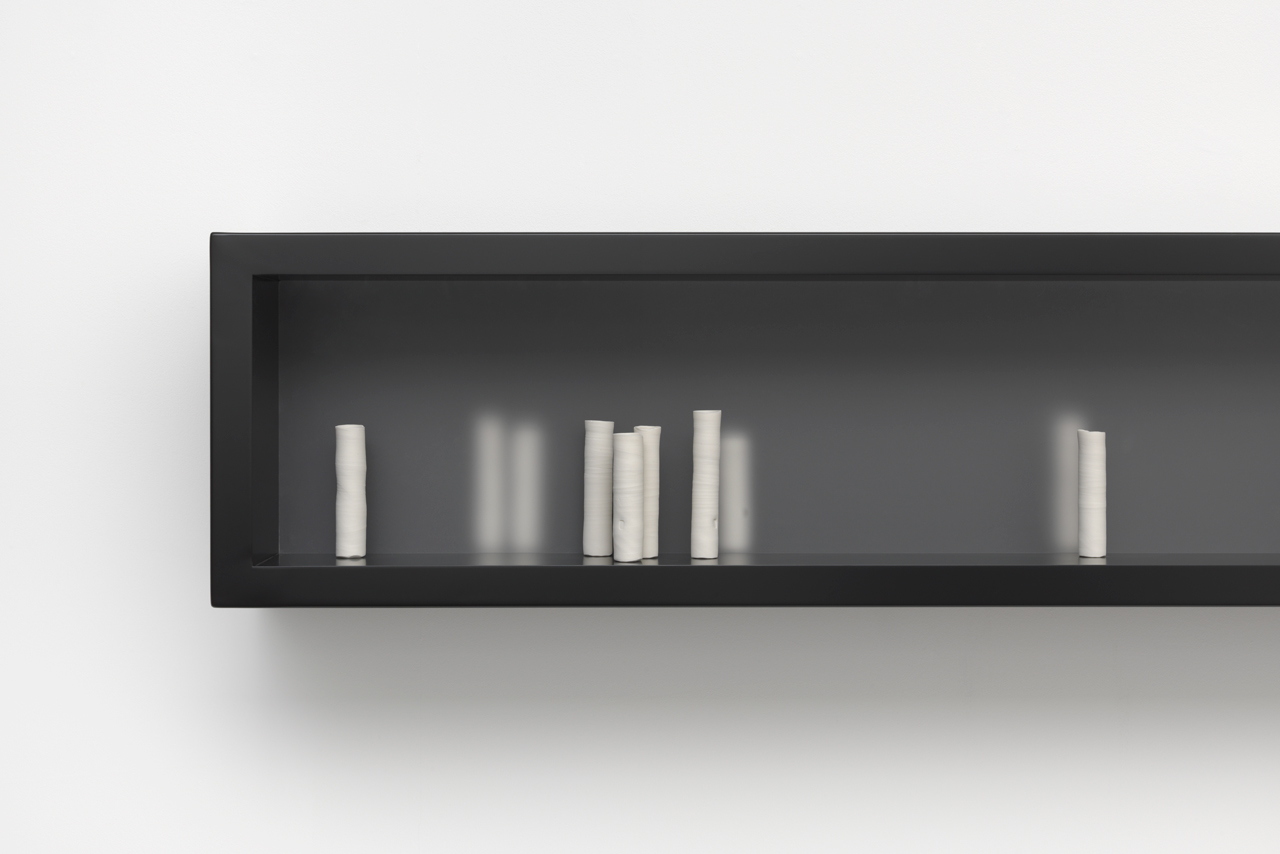
Breathturn IV (detail) (2013 © Edmund De Waal)

Breathturn IV (detail) (2013 © Edmund De Waal)

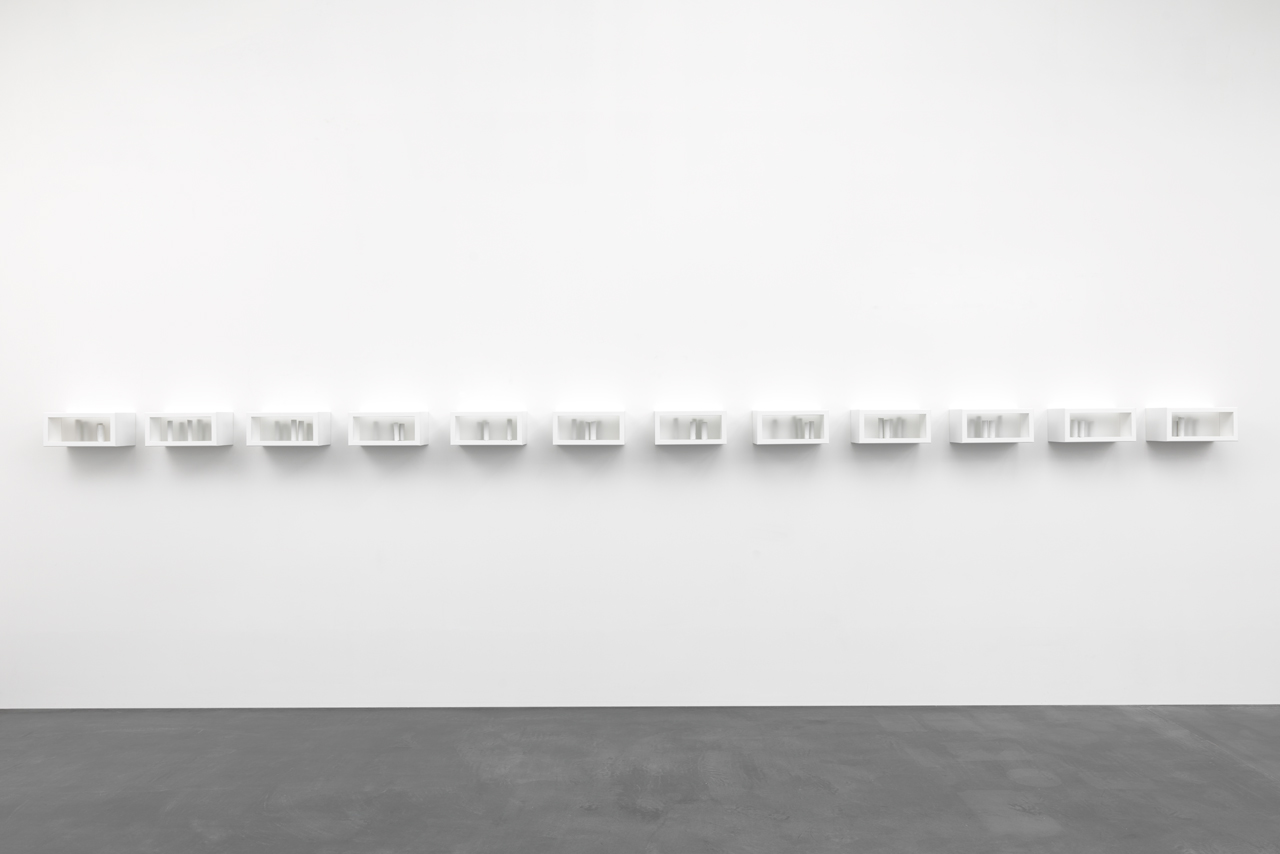
First Light (2013 © Edmund De Waal)

First Light (2013 © Edmund De Waal)

Edmund De Waal’s art is pottery. He makes pots. But pots whose assemblage is so brilliantly pictorial, so evocative of emotions deeply held within the craftsmanship of their creation, and yet so capable of rousing within the viewer deep, reflective emotions, that as installations, these simple pots create artistic masterpieces worthy of the great art collections of his family predecessors.

De Waal’s pots are simple – usually either in black or white – but their beauty tends to be about two things. First, the naive effortlessness of their shape; the mismatched almost drunkeness of one lean after another, which tends to give each pot a handmade personality all of its own, rather than the feeling of machine manufacture. Second, their grouping – it is the way in which De Waal groups his pots together which makes them so effective as works of art: Is it just that I am coloured by the contents of his book, or by his Jewish ancestry, or did he intend to create row after row of pots so uniquely human in their uneven appearance, that they seem to evoke to Holocaust itself? For me, when I see these works, such as the quartet of huge almost bookcase structures, Breathturn, displaying shelf after shelf of randomly placed pots, I think of the row after row of destitute Jews, stripped of their livelihood and of their dignity, waiting like cattle for train crates on bleak station platforms, ready to face the certain horrors of their final destination.

Your hands full of hours (2013 © Edmund De Waal) (detail)

Your hands full of hours (2013 © Edmund De Waal) (detail)

I heard it said (for Berg) (2013 © Edmund De Waal

I heard it said (for Berg) (2013 © Edmund De Waal

How did we live here (2013 © Edmund De Waal) (detail)

How did we live here (2013 © Edmund De Waal) (detail)

The White Road III (detail) (2013 © Edmund De Waal

The White Road III (detail) (2013 © Edmund De Waal

And then there are De Waal’s works which show groups of pots separated by a sheet of translucent perspex, so that you can see the pots behind it, but only in blurred outline. This produces the effect of a solemn group shot, perhaps a family, estranged – people taunted by the shadows or perhaps memories of loved ones; their presence there close at hand, and yet not there, untouchable, ungraspable; the frustrating feeling of irreparable separation, when a blasted great wall separates you from where, or with whom you should be.

These interpretations may well not be what De Waal intended when he made his works, but what does it matter? For in creating works that inspire these kinds of reactions in me, he has surely done the job of a great artist: he has moved his audience to an imagination all of their own.

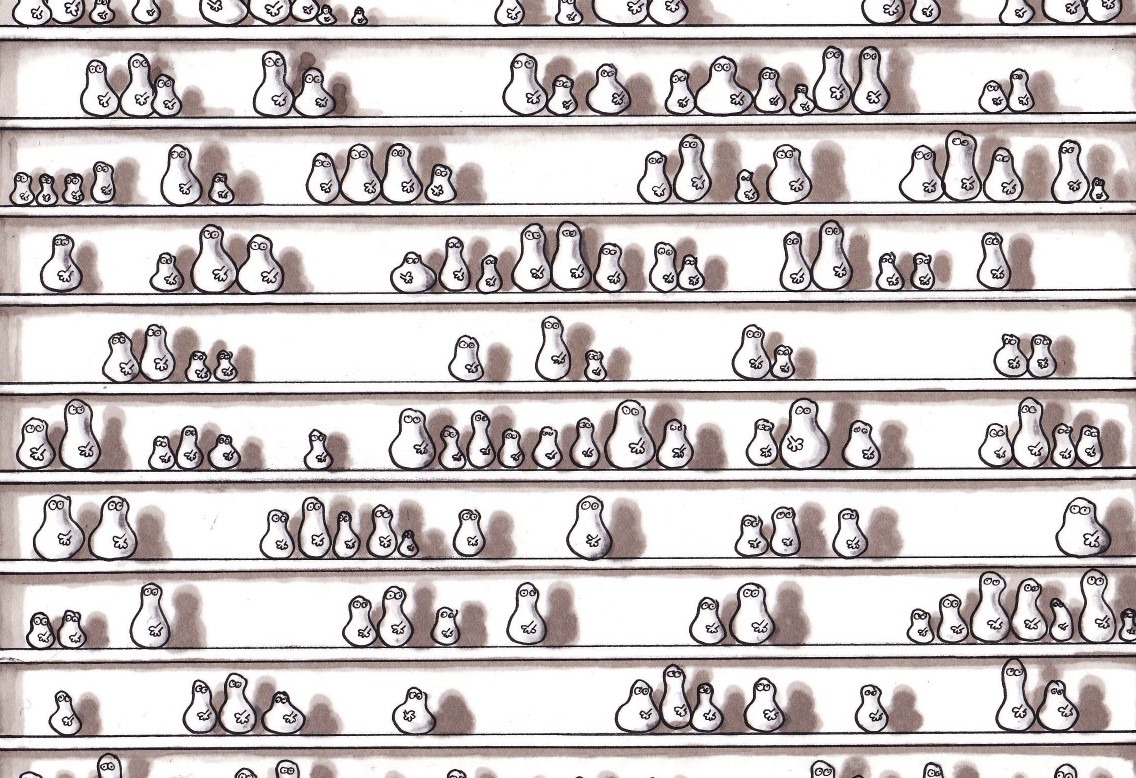
And, as all the great artists have done before him, De Waal not only got my imagination churning when it came to his own works, but also inspired me to create a Norm re-invention of his pottery installations. And so I leave you with my own little Norm group shot; a homage to all those pots and the great variety of emotions their simple poses evoke.

BreathNorms (after De Waal) 2013 © Nicholas de Lacy-Brown, pen and ink on paper

BreathNorms (after De Waal) 2013 © Nicholas de Lacy-Brown, pen and ink on paper

BreathNorm (detail)

BreathNorm (detail)


The photos on this page are the copyright of  © Edmund De Waal, and show the works he prepared for his 2013 exhibition at the Gagosian, New York. Norms are the copyright of me © Nicholas de Lacy-Brown, 2013. The works of Edmund De Waal can be seen on his website, here.

8am Wake-up Call

It’s not so much the fact of my brother-in-law’s tragic end that traumatises me as the way I heard the news. It’s the moment that will always haunt me, continues to haunt me even now, 10 months later.

It was the Saturday before Christmas, and there was no more work until after the season itself. I had seen my dear friend Millie the night before, and had gone to bed full of excitement for the season to come. My partner and I had been so enamoured by the romance that comes so easily with the festive season that we fell asleep with Christmas lights still twinkling and the soft choral chants of a cloister monastery singing medieval carols playing quietly on my iPod. And it was to this Elysium of festive tranquility that we awoke that morning, full of happiness for the season to come.

We lay in bed, discussing what we would do that day. How we would finish wrapping presents and go out to savour the spirit of London at Christmas before leaving town. Dominik was checking Facebook, reading my sister’s last message posted online – she too had been wrapping presents till late, waiting for her 3 babies to fall asleep so as not to spoil the surprise.

But 2 minutes later all that was to change. I’ll never forget it. The landline ringing at 8am exactly. It was my family’s number on the caller display. I thought it was a bit early this call, but answered nonetheless, quite innocent of what was to come.

The tone of my mother’s voice told me immediately that something was wrong. Almost gasping for breath, struggling to annunciate between tears, she said the words that have come to haunt me ever since. Nick, she sobbed, something dreadful has happened. Neri was killed in the night.

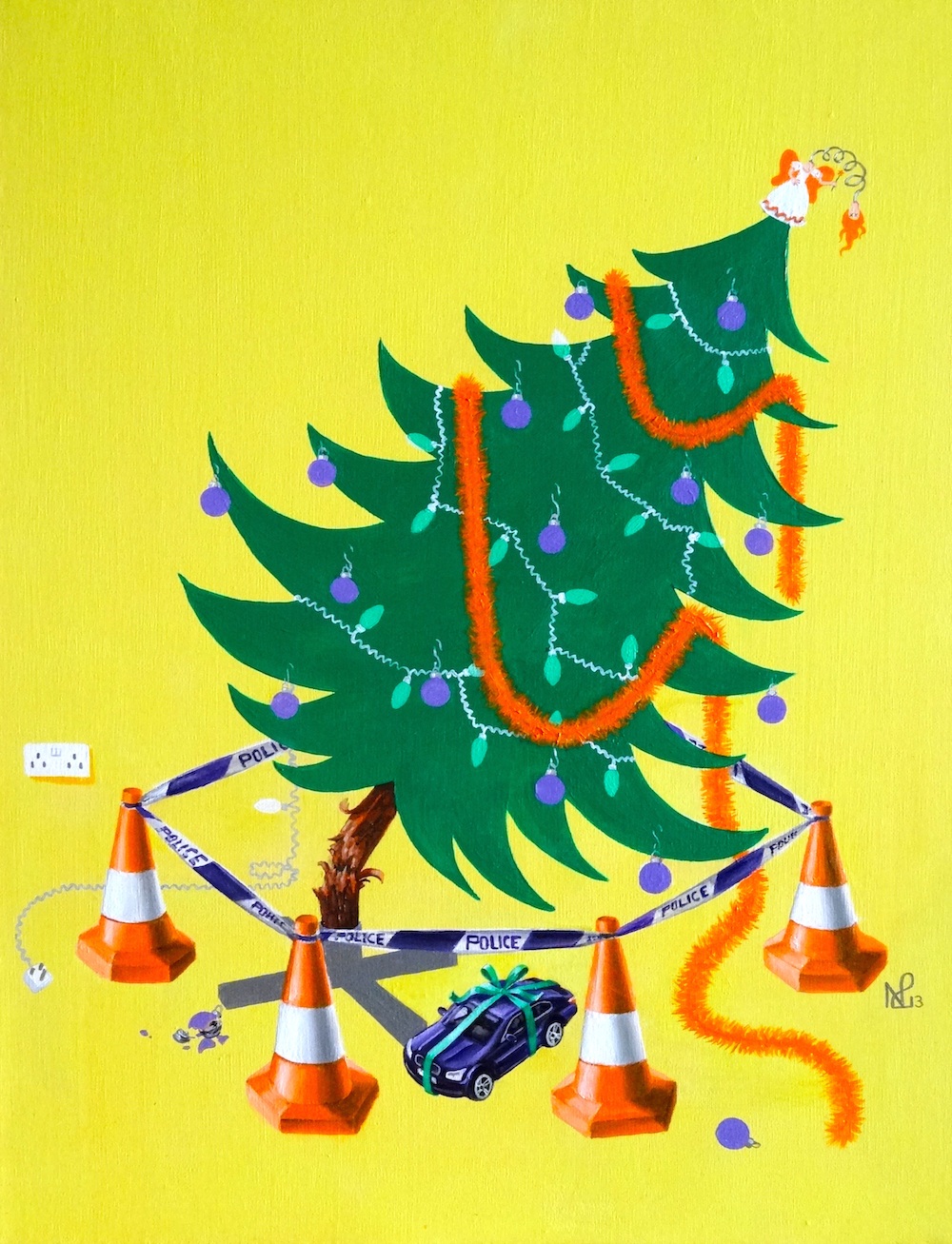
8am Wake-up Call (2013 © Nicholas de Lacy-Brown, acrylic on canvas)

8am Wake-up Call (2013 © Nicholas de Lacy-Brown, acrylic on canvas)

At that moment my world, tangibly, perceptibly, collapsed around me. The hopes and the spirit, the festive joy of Christmas crumbled. All happiness was gone, replaced only by the unquenchable burden of grief.

As the day proceeded and the shock began to take hold, we did not know what to do but to go out. Wandering around the town, London looked the same as it had the days and weeks before. Seeing a city full of the festive spirit, but this time like watching the whole scene unfurl in slow motion. It was as though we were on the outside of a gift shop called Christmas looking in, everyone inside enjoying the warmth and happiness of the season, but our emotions paralysed by the grief which had drowned our souls, as we stood outside in the cold.

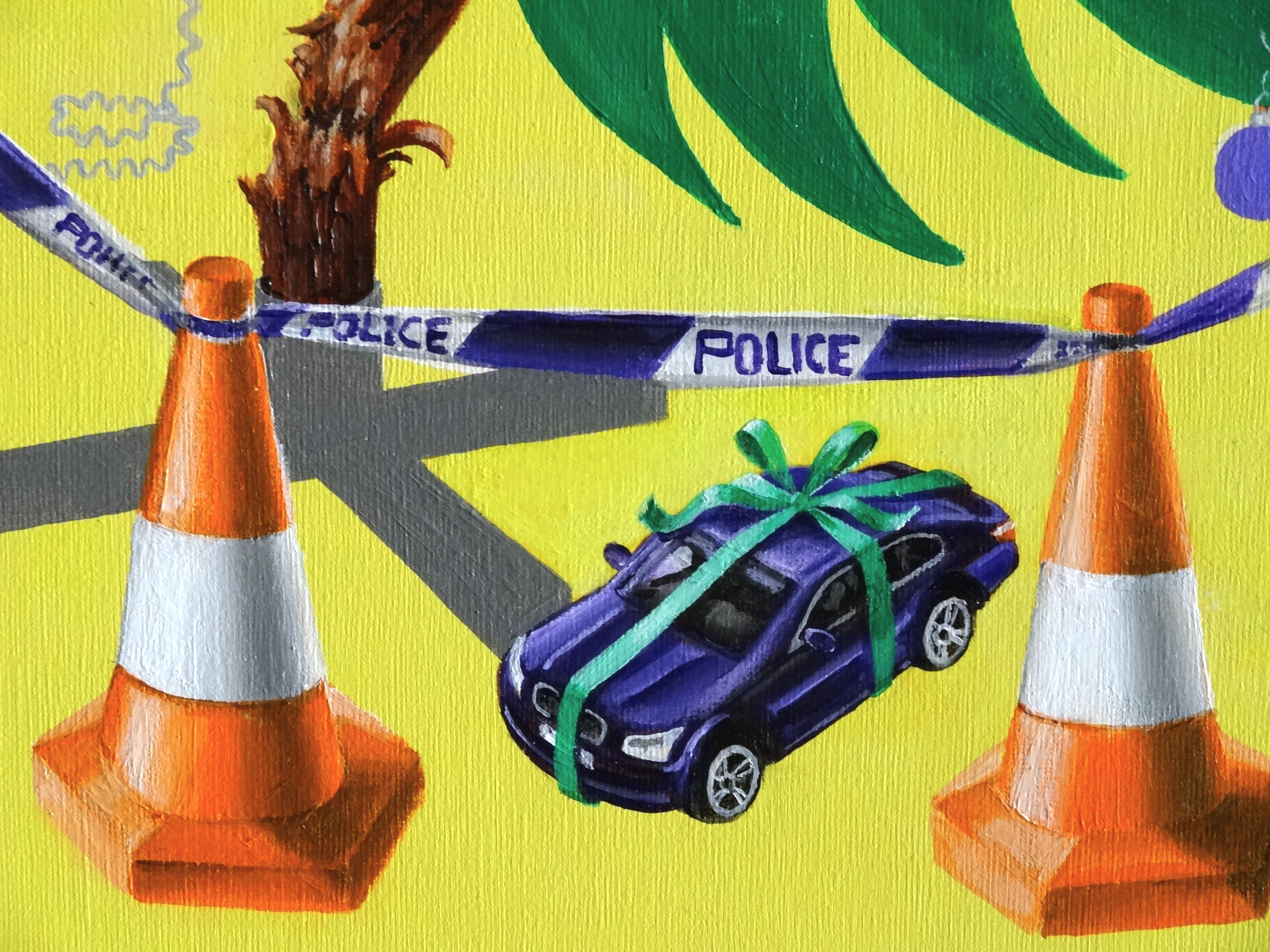
It was the moment when Christmas had ended. Along with so much else. And in this second work, created impulsively in the aftermath of my brother in law’s inquest two weeks ago, I paint the moment when joy, for our family, crumbled before our very eyes. In the simple symbol of a falling Christmas tree, I have attempted to demonstrate how the happiness of Christmas departed us, and our world literally fell apart; the striking colours representing the irony of loss at this, the happiest of all seasons; the only gift under our tree being the ribbon-wrapped car which caused this tragic end. A fate to which we were inescapably tied from that point onwards.

DSC08524

© Nicholas de Lacy-Brown and The Daily Norm, 2001-2013. Unauthorized use and/or duplication of the material, whether written work, photography or artwork, included within The Daily Norm without express and written permission from The Daily Norm’s author and/or owner is strictly prohibited. Excerpts and links may be used, provided that full and clear credit is given to Nicholas de Lacy-Brown and The Daily Norm with appropriate and specific direction to the original content. For more information on the work of Nicholas de Lacy-Brown, head to his art website at www.delacy-brown.com

Return Journey

A little over 10 months ago, just 3 days before Christmas in fact, my brother-in-law was killed in a tragic road traffic accident. It was a tragedy whose catastrophic effects were augmented by the life-changing effect on his three little boys – 2 year old twins and a 4 year old – who in that sudden cataclysmic moment of disaster lost a father, and by the deep heartbreak of his wife, my sister, who lost her husband after only 8 years of marriage. They say that time is a healer – although there are some things which time can never truly mend. It’s as though time acts as a sticking plaster or band aid, only for its thin protection to be unceremoniously ripped away at certain instances of remembrance, one such being the inquest into his death, which we, as his closest family, attended two weeks ago.

I don’t intend to talk about the inquest – it’s details are too sad for sharing; too grave for the lighter side of the blogosphere in which I like to roam. Yet what I did want to share with you is a painting I made, in immediate response to the hearing, a work which for me sums up the sadness of this death. There may be some who believe that to paint a vision of tragedy somehow lessens or trivialises its impact, but I, like many others, would disagree. For just as some of the world’s most famous paintings have been created in a direct response to, and as catharsis for some of history’s worst obscenities (take for example Picasso’s Guernica, or Goya’s 3rd May 1808), so the process of painting has helped me to respond to the horrors of this family loss, in the same way that painting also enabled me to work through the after-effects of my very serious accident 5 years ago.

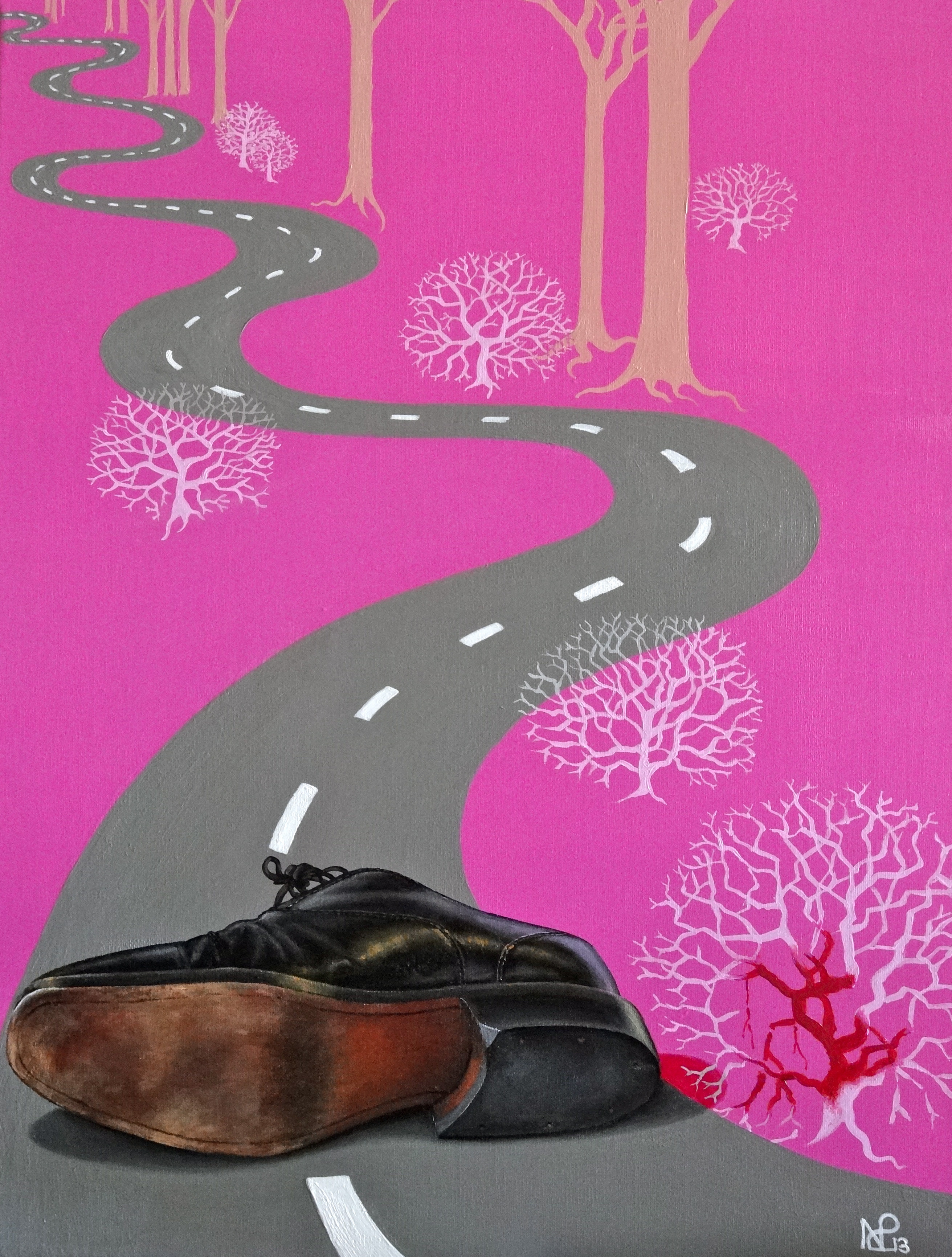
Return Journey (2013 © Nicholas de Lacy-Brown, acrylic on canvas)

Return Journey (2013 © Nicholas de Lacy-Brown, acrylic on canvas)

The painting I am sharing today, Return Journey, is a simple but poignant image, and one which I could not get out of my head once it had formed in response to the testimony of one of the witnesses at my brother-in-law’s inquest. She described how she and the passengers in her car had seen my brother-in-law out on the roadside, alive, but in great peril and, worried for his safety, had taken the first turning round a roundabout, driven back up the opposite carriageway, and then retraced the route where they had first seen him alive. But on their return journey, they could see him no longer – all that visibly remained of my brother-in-law was a single shoe lying in the middle of the carriageway. He was no longer to be found. What we now know is that in the short time between seeing him alive and returning to the scene, he had been struck by a car, and killed.

It’s for that reason that I could not get the image of that lone shoe out of my head, and in creating this work, I felt some sense of catharsis in reaction to that dreadful, but necessary inquest. It’s an image imbued with the heavy shadow of tragedy, but a painting of which I am proud as an artist, and as a family member, in dedication to my brother-in-law’s memory.

© Nicholas de Lacy-Brown and The Daily Norm, 2001-2013. Unauthorized use and/or duplication of the material, whether written work, photography or artwork, included within The Daily Norm without express and written permission from The Daily Norm’s author and/or owner is strictly prohibited. Excerpts and links may be used, provided that full and clear credit is given to Nicholas de Lacy-Brown and The Daily Norm with appropriate and specific direction to the original content. For more information on the work of Nicholas de Lacy-Brown, head to his art website at www.delacy-brown.com

Still life with Gourds

October has been a busy month, and while I could have been indulging more in the autumnal hues of Britain, applying those ruby reds and auburn oranges to canvas, I instead escaped the impending cold and jetted off to retrace a little of my summer in Spain. Then, as is so often the case when one receives a little treat, fate takes back the pleasure with his devilish sense of humour, and gave me a particularly debilitating throat infection. So apart from my Composition 11, which made a study of autumn’s descent on the once green and pleasant leaves of London’s parks, I have been altogether devoid of autumnal artistic activity recently.

So, in the knowledge that art is not all about me (if only…) and pursuing what I love to do more than anything else – gazing longingly at the stunning work of artists who have gone before me – I thought the time was only right to share with you a painting by one of my favourite 20th Century British Artists, Graham Sutherland.

Sutherland, born in 1903, has long fascinated me as one of the most striking and visceral of Britain’s modern-age artists. Made an official war artist during the second world war, Sutherland’s works are full of the morbid, often violent tumult of war, even when war itself is not the protagonist of his canvases. I love Sutherland’s depictions of the crucified christ for example, which exude the pain of the crucifixion without any of the pretensions of a renaissance depiction, and I love his spiky, pugnacious thorn-head images, which in themselves appear to stem from the imagery of the crucifixion’s crown of thorns.

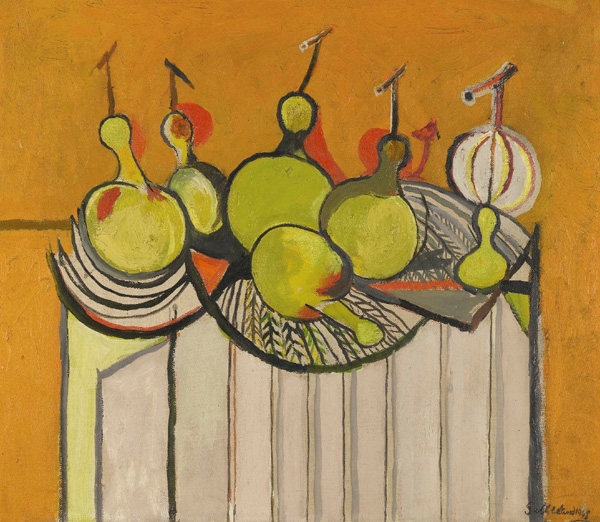
Still life with Gourds (1948) © the Estate of Graham Sutherland

Still life with Gourds (1948) © the Estate of Graham Sutherland

The painting I have chosen to feature on The Daily Norm today is therefore something of a departure from Sutherland’s more savage war and post-war works, and presents a still life composition of gourds which is warming, and even sensuous to the eye, with its bulbous curves and earthy autumnal colour palette. That said, there is some indication of Sutherland’s spiky reflections in the sharp stalks which punctuate the golden background at the top of the vegetables, while the curved lines of the bowl or perhaps table on which the objects sit are finished with sharp almost threatening points.

It’s a hearty autumnal image, but with a perhaps subtle sense of warning about the uneasy seasonal changes which are still to come. Now if this week’s hurricane winds and beautiful calm orange sunrises are anything to go by, I’d say Sutherland has got autumn painted just right.

The image in this post is the copyright of the Estate of Graham Sutherland. Remarkably, the painting appears to be for sale for those lucky few who may be able to afford to add this piece to their collection – go to www.jonathanclarkfineart.com for more details. 

Composition No. 11 – Autumn descends

A couple of weeks ago, a forage amongst the undergrowth and autumn tones of London’s Wandsworth Common inspired a whole series of photographs which celebrated the tangible transformation which accompanies the onset of Autumn. While the weather since that gorgeous sunny weekend has been something of a damp squid (and therefore far from ideal in which to appreciate the ruby hues of Autumn), the inspiration of those initially sun-drenched reflections on the season prompted to me to once again take out my gouache paint box, and create the 11th of my “compositions” series: Autumn descends.

Composition No. 11: Autumn Descends (2013 © Nicholas de Lacy-Brown, gouache on paper)

Composition No. 11: Autumn Descends (2013 © Nicholas de Lacy-Brown, gouache on paper)

Against a backdrop of leaves which turn gradually from summery green, through golden tones until they become a rich autumnal red at the foot of the painting – Autumn in full descent – a group of those delightful forest mushrooms which had prompted me to go out foraging in London’s parks grow whimsically in the undergrowth, each angled playfully one way or another, differing in heights, in shapes and sizes, just like the plethora of mushrooms I found here in London.

Looking out of the window now onto a wet and windy London, I can see that Autumn truly has descended. But it’s not all gloom – Autumn is a time of rich colour and seasonal transformation like none other, something which I hope my latest painting portrays.

© Nicholas de Lacy-Brown and The Daily Norm, 2001-2013. Unauthorized use and/or duplication of the material, whether written work, photography or artwork, included within The Daily Norm without express and written permission from The Daily Norm’s author and/or owner is strictly prohibited. Excerpts and links may be used, provided that full and clear credit is given to Nicholas de Lacy-Brown and The Daily Norm with appropriate and specific direction to the original content.

Introducing my revamped website

The Daily Norm has been fairly quiet of late, and certainly far from daily. But the reason for that is all the work that I and my scurrying little Norms in the Daily Norm office have been doing on this blog’s sister website. For www.delacy-brown.com – the official home of my art – has been revamped, and now finally, with content uploaded and fully up to date, it’s ready to go live.

The process of revamping my website has, despite many hours of late night toil, been a rewarding one, as is so often the case when I see so many of my creations all gathered in one place. But where this revamped website differs from previous versions is the proliferation of Norm content which has grown so significantly since I have been producing artwork for this blog – the home of the Norms. And so, while directing you to the Norm sketches section of my new website, I also thought I’d take this opportunity to look back on a few of my favourite Norm sketches from the last two years – an exercise which is even more appropriate since The Daily Norm will be celebrating its two year birthday next month.

Norms on a Tram in the Praça do Comércio, Lisbon (2012 © Nicholas de Lacy-Brown, pen on paper)

Norms on a Tram in the Praça do Comércio, Lisbon (2012 © Nicholas de Lacy-Brown, pen on paper)

Norms in Venice (2012 © Nicholas de Lacy-Brown, pen and ink on paper)

Norms in Venice (2012 © Nicholas de Lacy-Brown, pen and ink on paper)

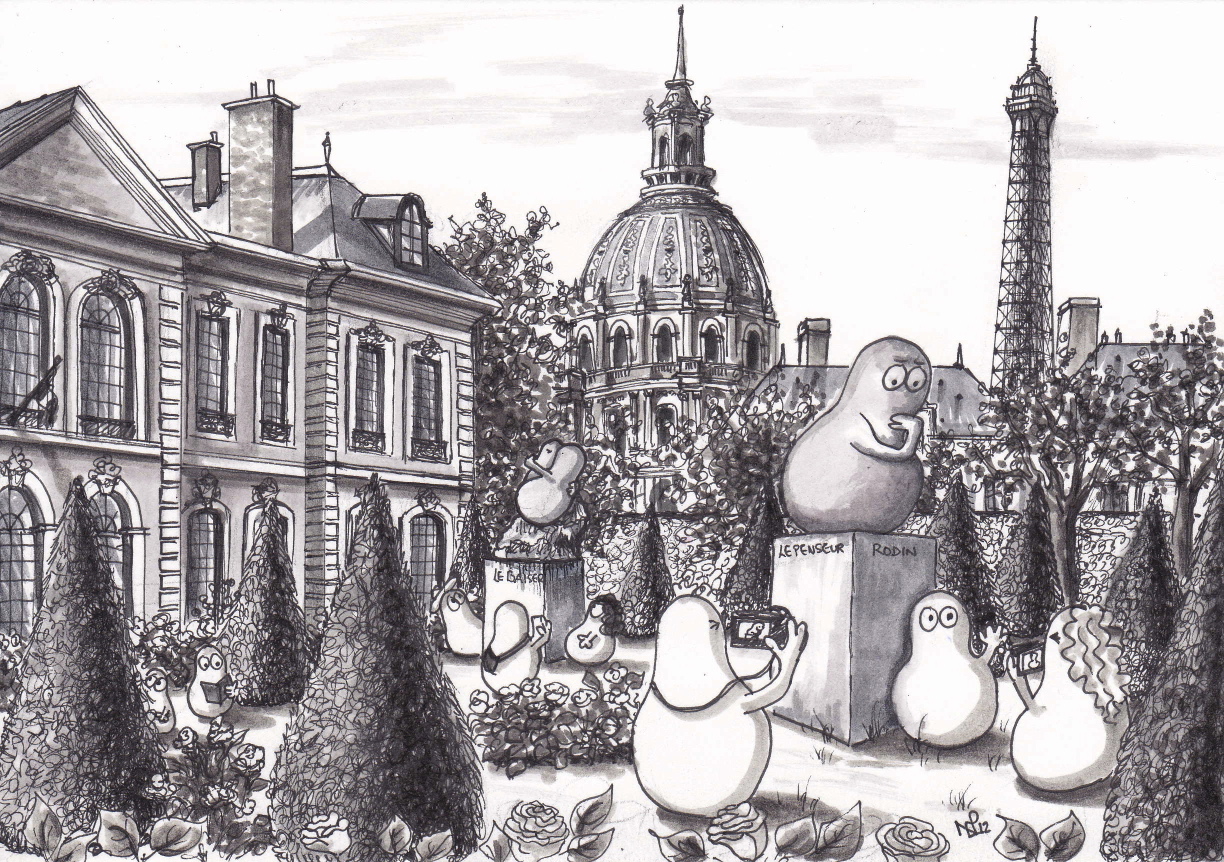
Norms at the Musée Rodin, Paris (2012 © Nicholas de Lacy-Brown, pen on paper)

Norms at the Musée Rodin, Paris (2012 © Nicholas de Lacy-Brown, pen on paper)

Of all the Norm sketches I have even done, my travel images are probably still my favourites, since the travels of these friendly little Norms are synonymous with my own fond travel memories. I love my Norms in Lisbon, for example, which perfectly sum up the charm of the old trams clanking their way around the Portuguese capital; likewise I’m fond of my Norm gondoliers, elegantly steering down Venice’s Grand Canal, and my various Norms in my favourite city of Paris, such as these ones above, looking round the grounds of the Musée Rodin.

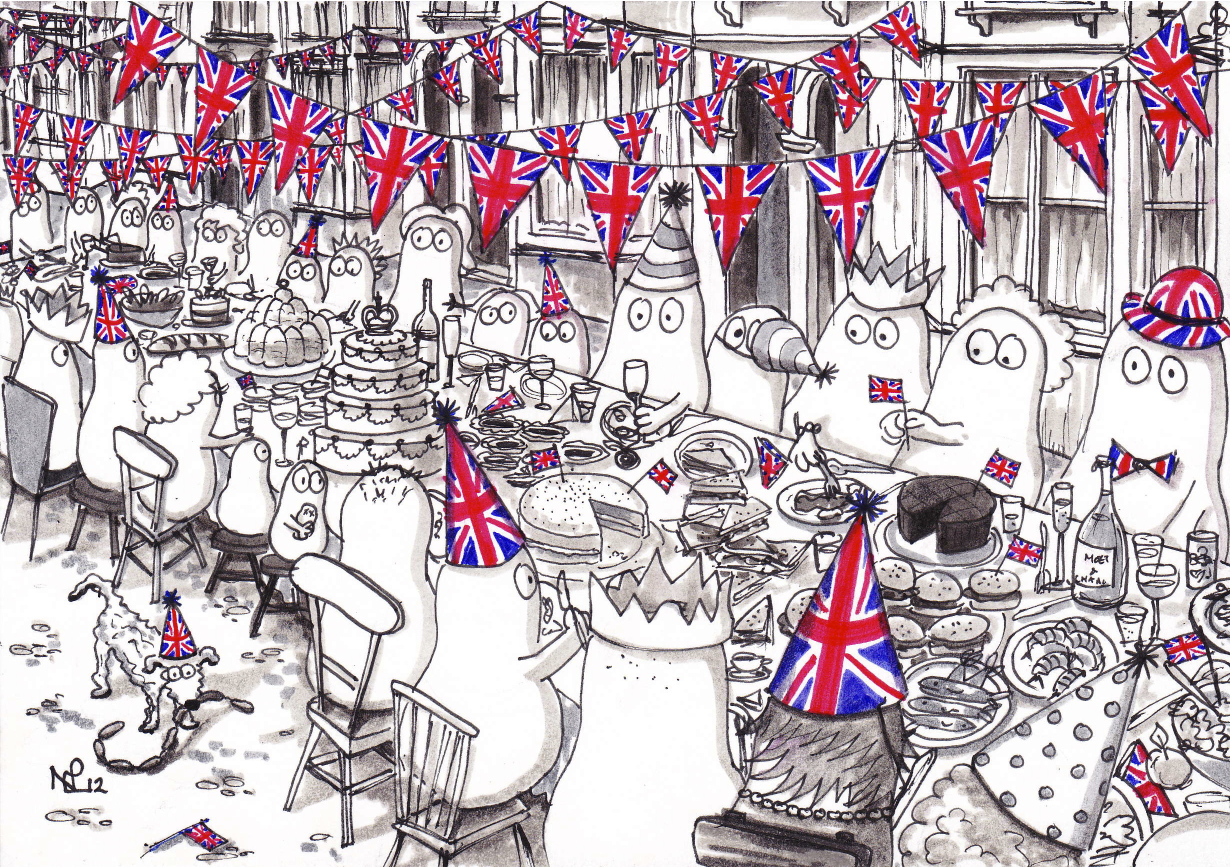
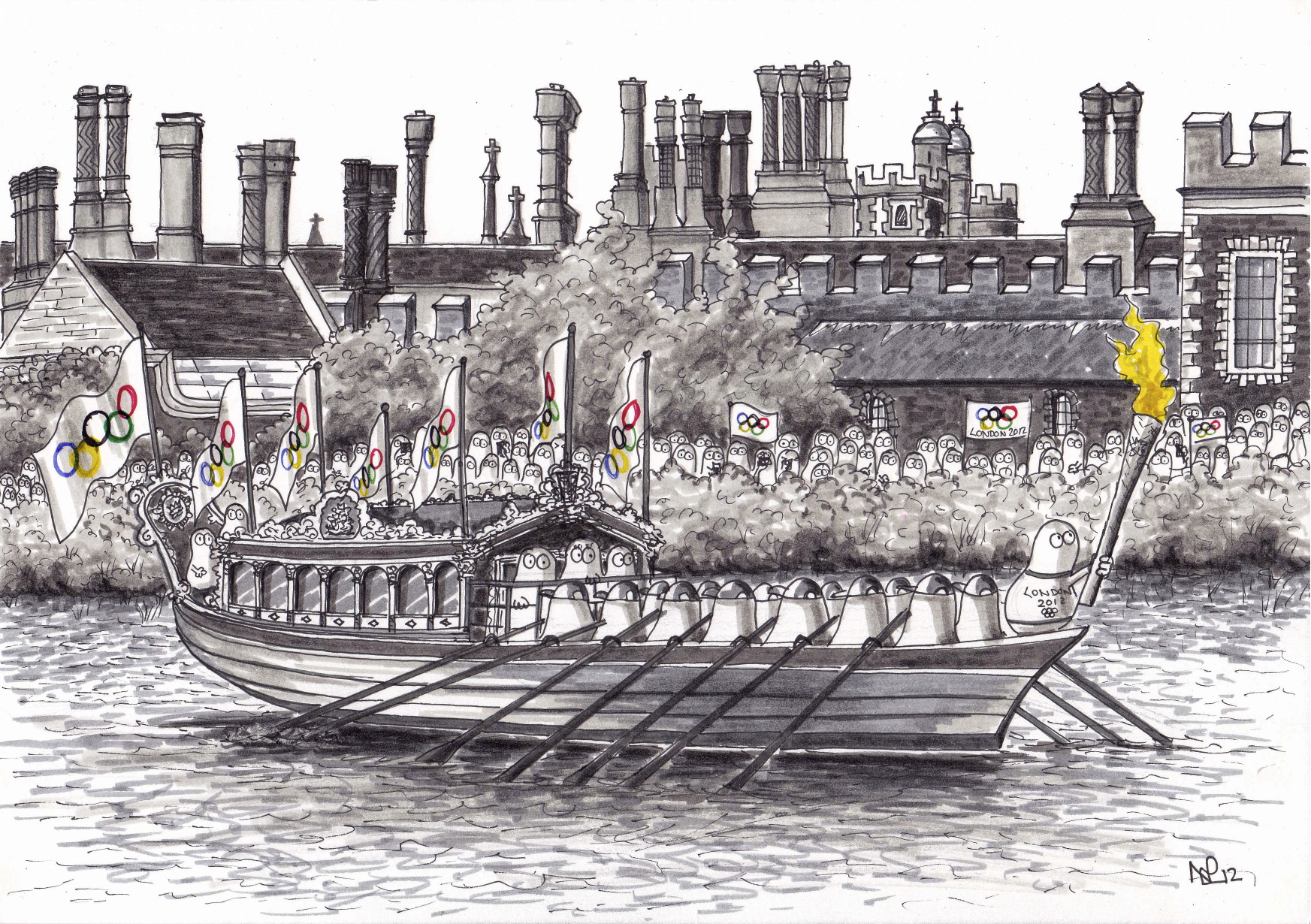
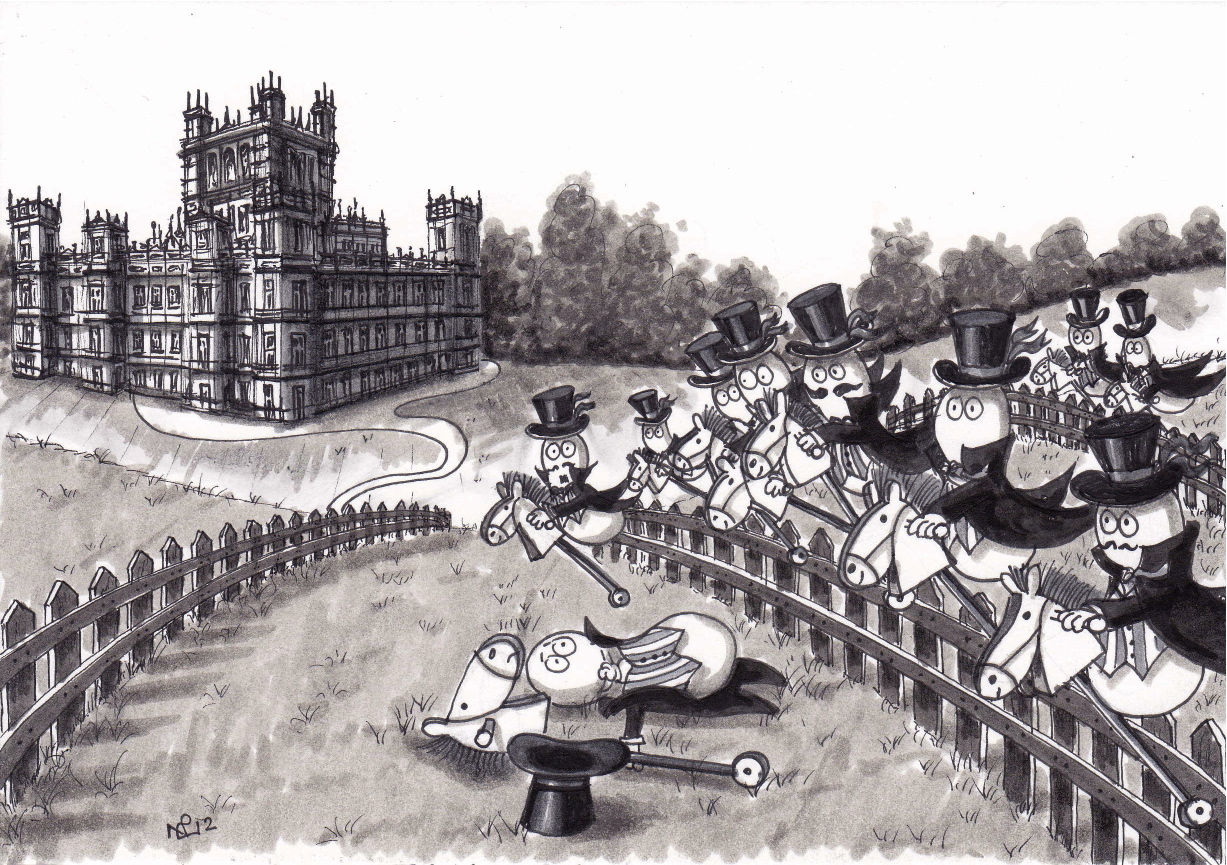
However, my Norm sketches have also been invaluable in enabling me to celebrate the special occasions and life-enhancing experiences of my lifetime; such as Norms at the London 2012 Olympics, and involved in the celebrations of Queen Elizabeth II’s Diamond Jubilee, as well as annual festivities such as Halloween and Christmas.

The Norms' Diamond Jubilee Street Party (2012 © Nicholas de Lacy-Brown) (Pen and pencil on paper)

The Norms’ Diamond Jubilee Street Party (2012 © Nicholas de Lacy-Brown) (Pen and pencil on paper)

Norms at London 2012: The Torch's final journey (2012 © Nicholas de Lacy-Brown, pen on paper)

Norms at London 2012: The Torch’s final journey (2012 © Nicholas de Lacy-Brown, pen on paper)

Normy and Normette ponder the meaning of Dali's Mae West Lips (2013 © Nicholas de Lacy-Brown, pen on paper)

Normy and Normette ponder the meaning of Dali’s Mae West Lips (2013 © Nicholas de Lacy-Brown, pen on paper)

So I leave you with just a few more of my favourite Norm sketches, while encouraging you too look at all of the rest, and the remainder of the comprehensive art content, which can now be found on my revamped, restyled home of my art: www.delacy-brown.com. Look forward to seeing you there!

Norms at the Halloween House of Horrors (2012 © Nicholas de Lacy-Brown, pen on paper)

Norms at the Halloween House of Horrors (2012 © Nicholas de Lacy-Brown, pen on paper)

On the 10th day of Christmas my Normy gave to me, 10 Lords a-leaping (2012 © Nicholas de Lacy-Brown, pen on paper)

On the 10th day of Christmas my Normy gave to me, 10 Lords a-leaping (2012 © Nicholas de Lacy-Brown, pen on paper)

The Nighthawk Norms (after Hopper) (2012 © Nicholas de Lacy-Brown, pen on paper)

The Nighthawk Norms (after Hopper) (2012 © Nicholas de Lacy-Brown, pen on paper)

All photos and written content are strictly the copyright of Nicholas de Lacy-Brown © 2013 and The Daily Norm. All rights are reserved. Unauthorized use and/or duplication of the material, whether written work, photography or artwork, included within The Daily Norm without express and written permission from The Daily Norm’s author and/or owner is strictly prohibited. 

Dürer the Prodigy – at the Courtauld Gallery

It’s always a thrill to turn back the clock on an artist, putting asides the famous masterpieces of their renown, and heading back to their early years. Those formative first works are always so illuminating, not just as an art historical evaluation of the influences which were to be instructive in helping to characterise the artist’s own creations, but also as a demonstration of just how talented an artist truly was. Take Picasso for example : while we are so used to his heavily abstracted, childlike works (some even doubting that he had any talent at all), one look at the exceptional figurative quality of his teenage works demonstrate how truly exceptional he really was, so much so that he famously asserted that he learnt to paint like a master as a child, and then spent the rest of his adult life learning to paint like a child.

London’s exclusive little Courtauld Gallery, whose exceptional collection contains some of the world’s most recognised impressionist and post-impressionst masterpieces including Sr Picasso himself, is the perfect sized gallery to draw such a focus on the formative years of an artist’s life in one of its small but perfectly formed temporary exhibitions. And with its new show, opening to the public yesterday, the Courtauld does just that. With The Young Dürer: Drawing the Figure, the Courtauld examines the very first creative years of this master of the Northern European Renaissance, heading back to the 1490s when, in his late teens and early twenties, Albrecht Dürer set out on his wanderjahre – literally a wandering journey, taking him across Germany and over the Alps into Italy, where the young prodigy was widely influenced and honed his already exceptional drafting skills.

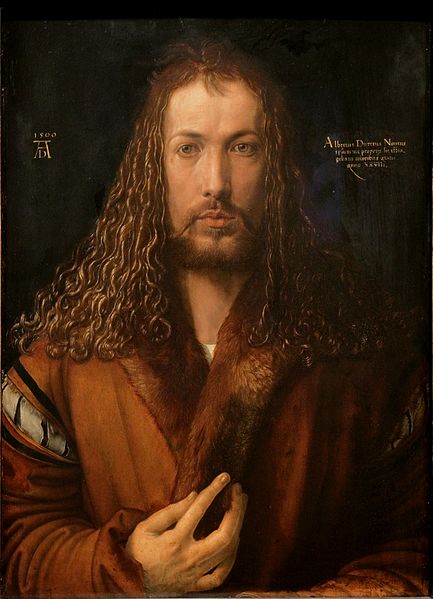
Dürer the great master…

Self Portrait (1500)

Self Portrait (1500)

A Young Hare (1502)

A Young Hare (1502)

Praying Hands (1508)

Praying Hands (1508)

The show, which includes some wonderful works never before seen in the United Kingdom, provides an engaging insight into the early talent of a young Dürer, and for an audience who, like me, loves to study the meticulous details of black and white ink drawings and print works, is a thrilling event. While the few works included in this post from Dürer’s later career demonstrate just how exceptional a draughtsman he was to become, the early works on exhibition at the Courtauld demonstrate how Dürer worked tirelessly to hone those skills which were later to make him one of the most revered draughtsmen of his time.

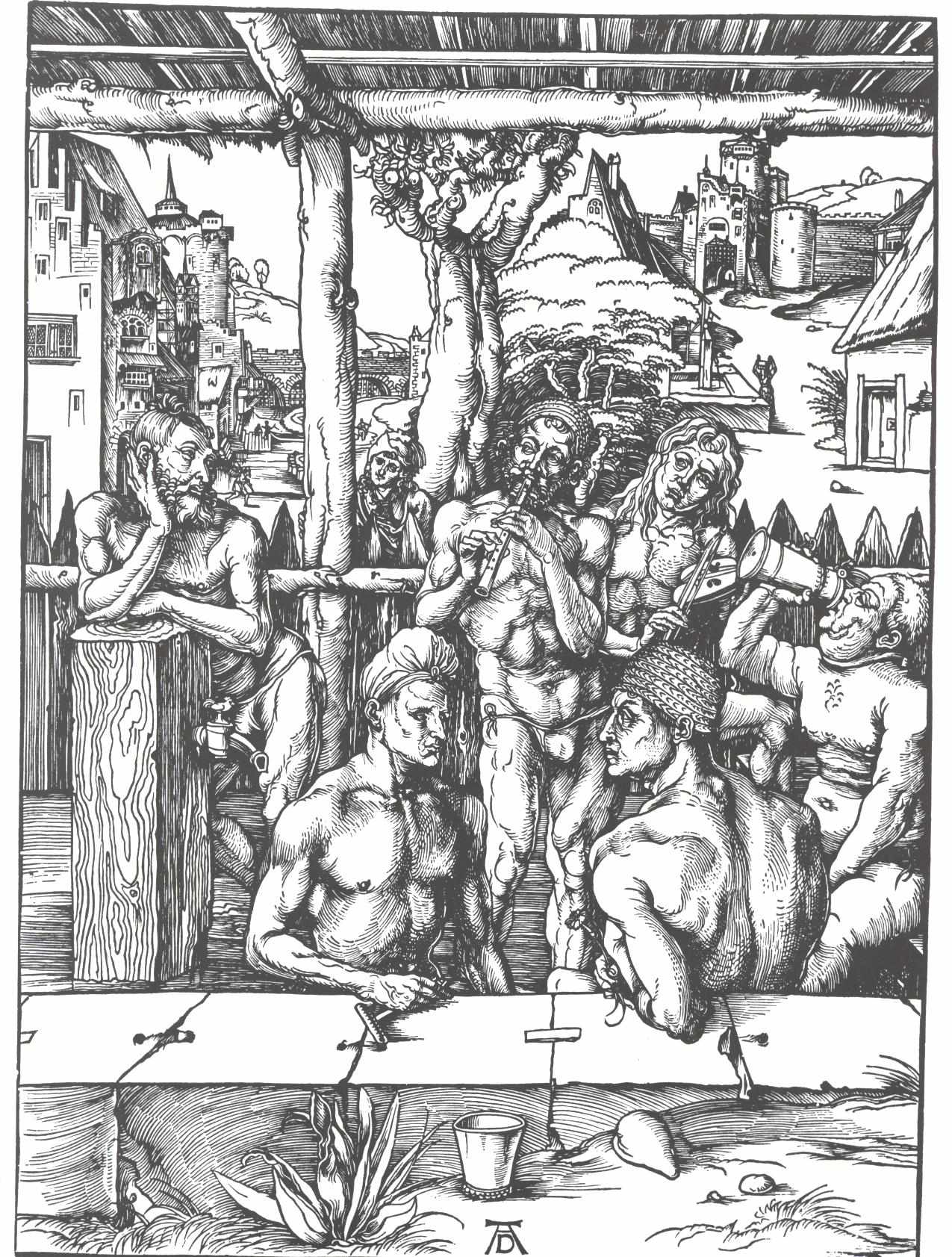
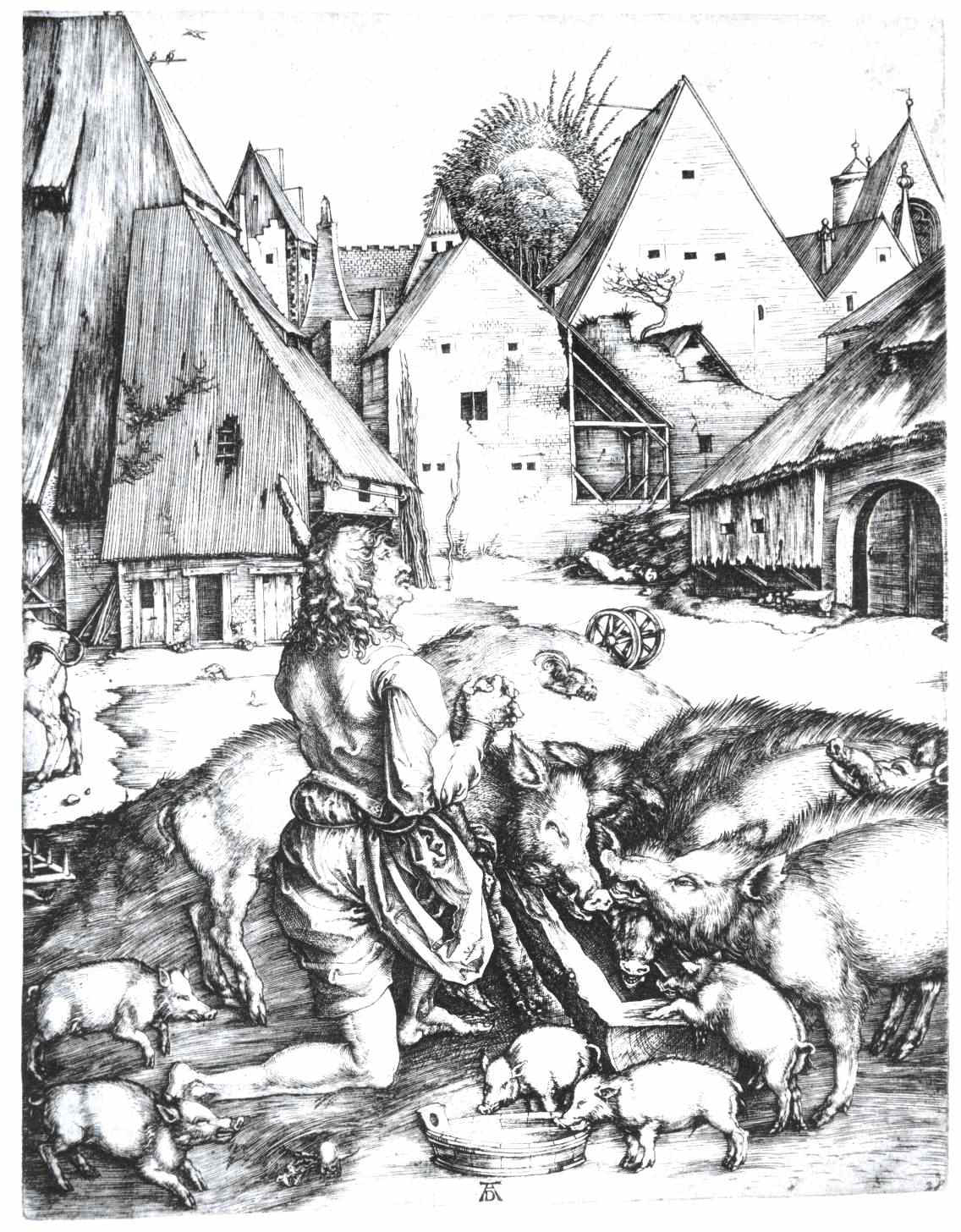
The show includes, for example, a good many studies in pen and ink – of the perilously difficult folds of drapery, the complex fall of the material captured proficiently no matter the many poses adopted by the sitter;  of hands and feet, and the foreshortening of limbs. Such studies are then utilised to brilliant effect, as Dürer moves into creating his first largescale drawings and printworks. In The Prodigal Son for example, Dürer brilliantly captures the detailed fuzzy coats of a group of pigs, while in the fantastically detailed woodcut depicting The Flagellation of Christ, Dürer shows himself to be adept, not just in his portrayal of a complex group of figures, but in his use of foreshortening, and his depiction of drapery and costume.

Dürer the early prodigy

Man's Bath (1496)

Man’s Bath (1496)

The Prodigal Son (1495)

The Prodigal Son (1495)

Flagellation of Christ (from the Large Passion Series) (1497-1500)

Flagellation of Christ (from the Large Passion Series) (1497-1500)

But perhaps one of the most insightful works of them all is the simple self-portrait drawing he made of himself in 1491. Eyes staring, full of melancholy, straight into those of the viewer, the portrait is one with a psychological intensity which invites the modern day audience to travel straight back into the 15th century mind of this young artist, whose skills, as demonstrated here, need no introduction – just look how his brilliantly drawn hand pushes against the slightly sagging skin of his face, distorting his features perfectly. And all this drawn fluidly and confidently in what appears to have been a single attempt.

Self Portrait (1491)

Self Portrait (1491)

It’s a brilliant protrait and a brilliant collection which make artists like me quake in fear that one day a similar such exhibition of our early works may demonstrate just how little talent we had when compared with prodigies such as this. But hey, there will always be those with more talent, and the new Courtauld show allows us to revel in the early skills of one of the greatest.

The Young Dürer: Drawing the Figure is on at the Courtauld until 12th January 2014. Admission to the exhibition is generally £6 unless a concession applies – and that includes the gallery’s stunning permanent collection to boot. Bargain.

Autumn Inspires | Photos (Part 2) – Reflections on a theme

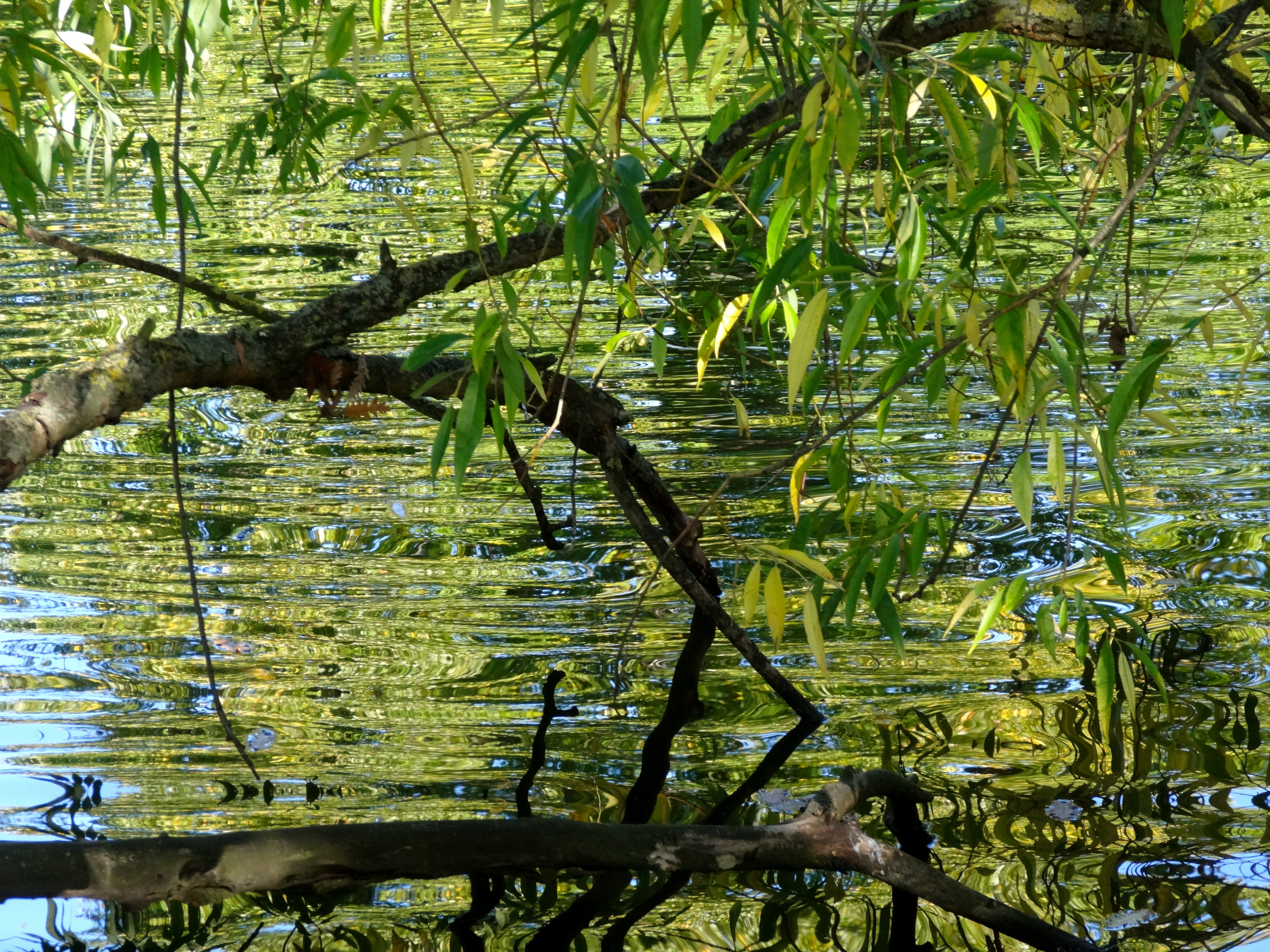
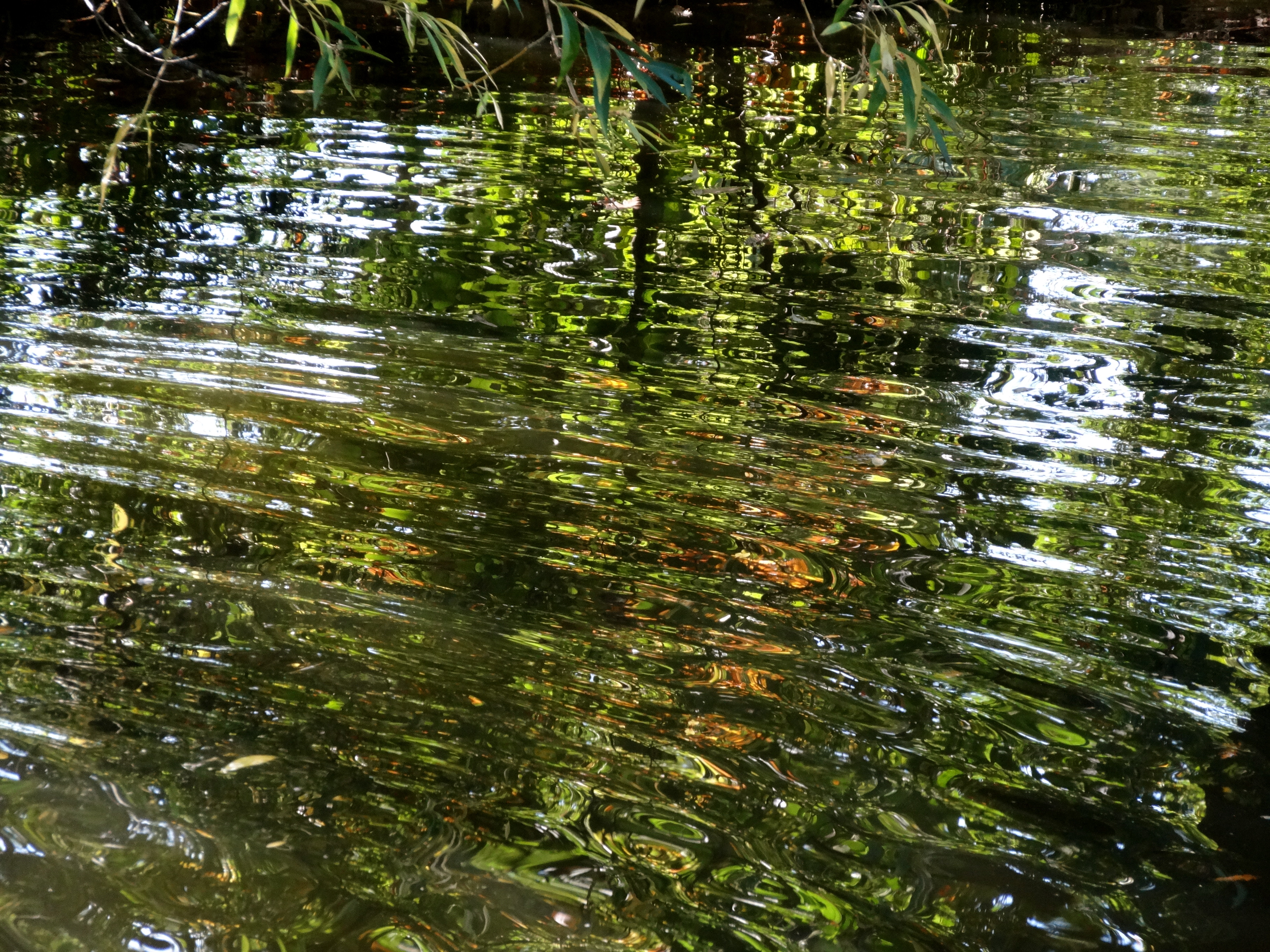
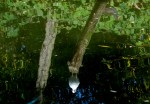
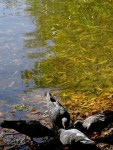
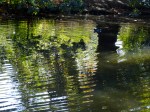
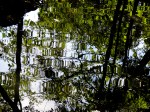
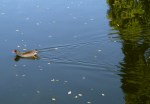
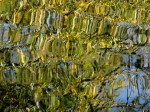
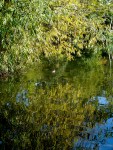
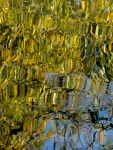
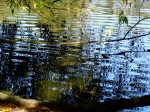
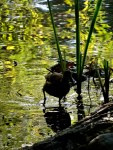
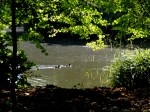
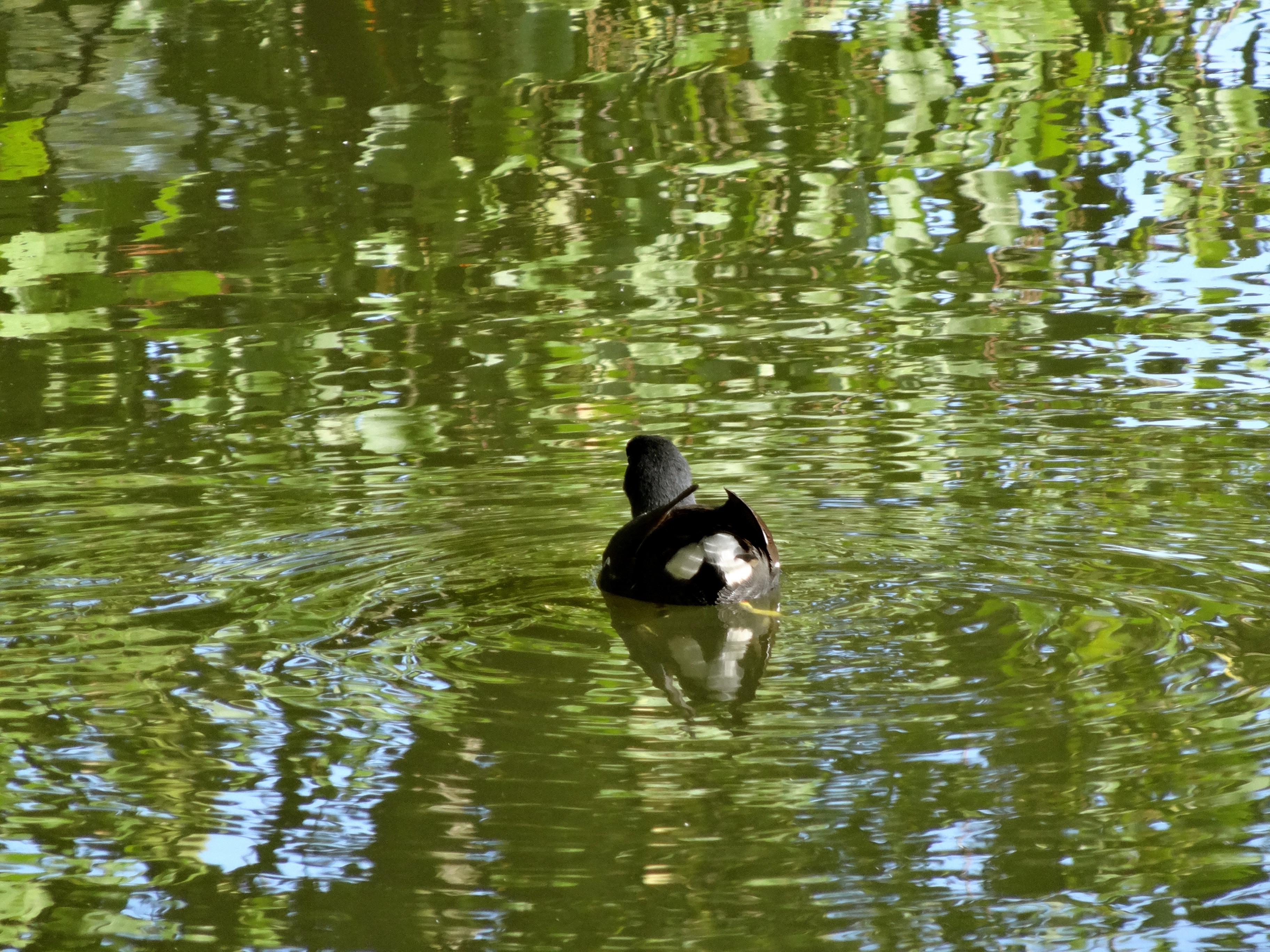
My second post marking something of a photographic introduction to Autumn (I’m sure more will follow) focuses not on the earthy delights of the season which can be found scattered across the ground under the shedding branches of trees, and gathering and growing within the interstices of their damp twisting roots, but on the photographic effects which can be created, when the burnished bronzes and warming golds of the season are reflected in the rippling surface of water.

One of the great attractions of Wandsworth Common, where my partner and I headed for our Autumn stroll last Sunday, is the cluster of ponds, around which little paths and bridges allow the park’s visitors access into this otherwise quite unspoilt natural habitat. So, from the wooden passages, taking the visitor across the waters and around the lakes, you can view what is perhaps nature at its best – all of the colours and shapes of nature captured, but reflected double in this watery mirror at its feet.

DSC08027 DSC08059 DSC08109 DSC08190

The effect is wonderful. In the wide lens views of the whole lake for example, one gets a sense of the enormity of nature as the lake reflects not just the full expanses of trees, but also the sky above. Then, in the closer shots which focus on ripples alone, the effect of movement in the water creates what almost becomes an abstract image, as the reflection of trees is fragmented and, when isolated, forms an entirely new visually enticing image of its own. A few of my ripple shots for example remind me of the art nouveau patterns used in the portraits of Gustav Klimt. I wonder whether the apparently imagined patterns of his works drew similarly from the work of Mother Nature?

Whatever Klimt’s inspiration, these photos have surely inspired me. Not only has the act of photographing Autumn provided me with immense photographic satisfaction, but I can already feel my paint brushes twitching to start painting something similarly inspired by the beauty of nature in this season.

All photos and written content are strictly the copyright of Nicholas de Lacy-Brown © 2013 and The Daily Norm. All rights are reserved. Unauthorized use and/or duplication of the material, whether written work, photography or artwork, included within The Daily Norm without express and written permission from The Daily Norm’s author and/or owner is strictly prohibited. 

Autumn Inspires | Photos (Part 1) – What lies beneath

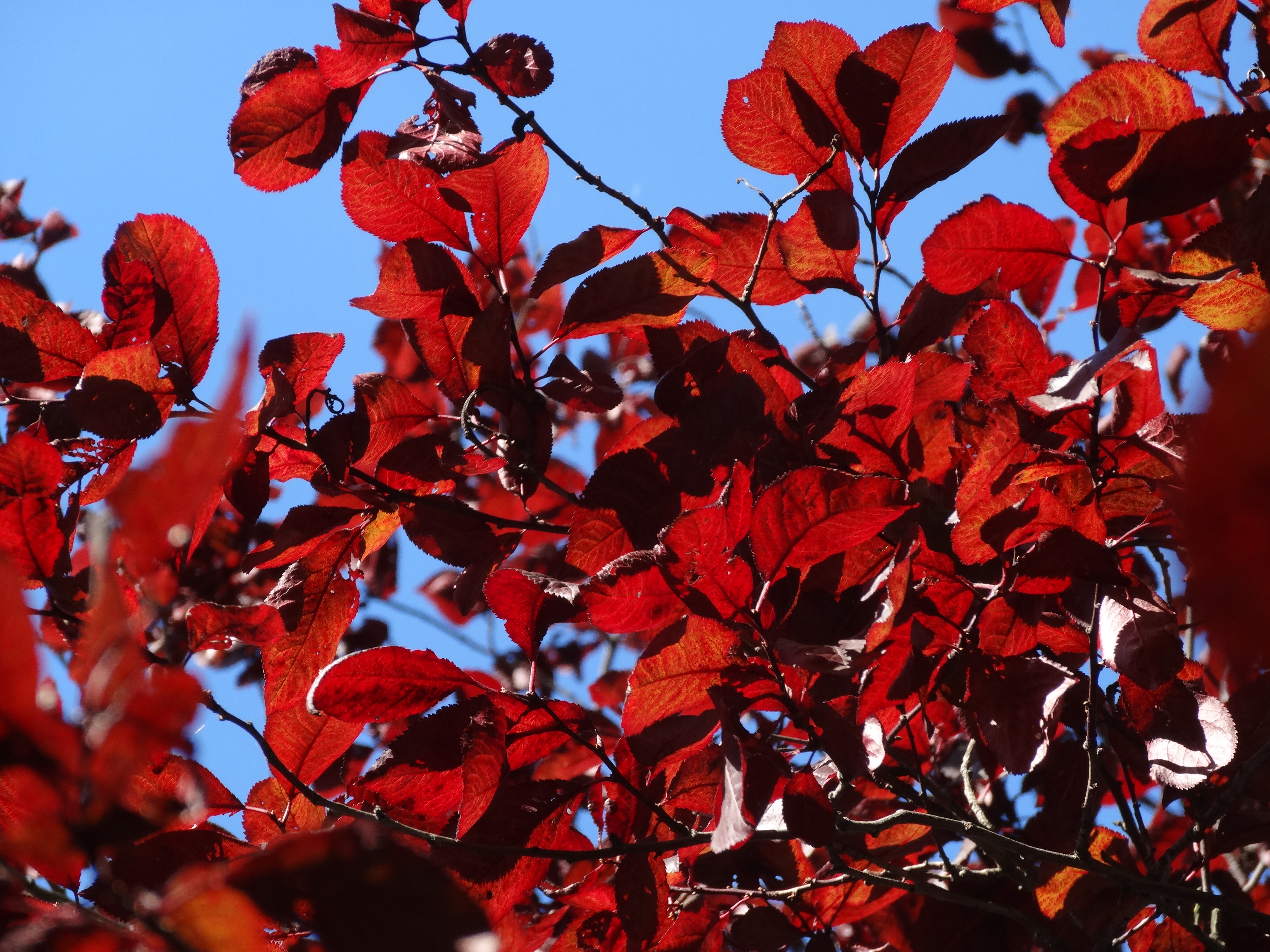
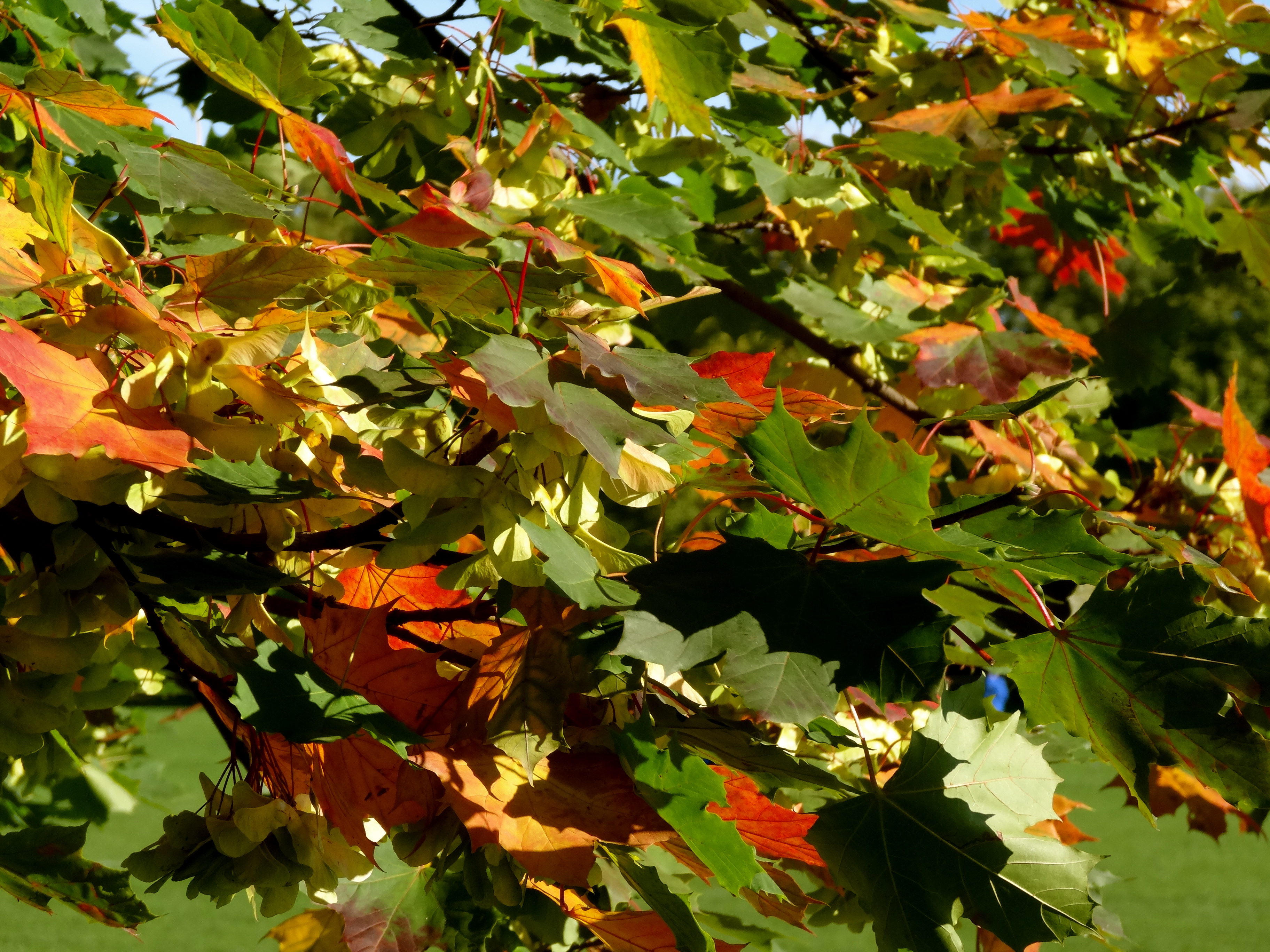
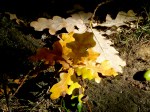
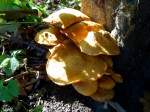
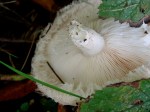
Most artists, photographers and general life enthusiasts will find a shared enthusiasm for the enriching visual changes which the season of Autumn brings in its wake. Like the heat from a furnace being blown slowly over the landscapes below, green summer leaves are turned a shade of burnished bronze and cherry red; the once verdant grassy planes become scattered with pepperings, and clusters of fallen leaves, and dropping from trees like a windfall scattering the treasures from a Christmas tree, are apples and acorns, conkers and chestnuts of every conceivable shade of red and brown and orange, and shaped both shiny and smooth, as well as precariously spiky. Of course Autumn isn’t always a pleasure, not least on those gloomy wet and windy days, when the treasures falling from the trees very quickly become a water saturated mush mixed in with a cocktail of mud and rotten leaves, however when the sun shines on Autumn, and those oranges and reds are offset against a cerulean blue sky, the gems of this season truly sparkle.

Last Sunday was one such day, when the sun shone almost strong enough to feel like Summer, and the colours of autumn, though slow to take hold (given that our Spring this year started in around June, we probably can’t expect to see any significant Autumn changes until the end of November at the earliest) started glimmering in the enhanced morning light. Bemoaning all of those times when I have come across little Autumn gems without a camera in my pocket, I rushed out with my partner and my camera in hand to the mid-urban oasis of Wandsworth Common to search for photographic and artistic inspiration within the folds of this freshly unfurling Autumn season.

DSC07976 DSC08021DSC07999 DSC08169 DSC08049DSC07996

This post will be one of two in which I share some of the photos taken on that day. Roughly split into themes, my second post will focus more on the images created on the moving surface of Wandsworth Common’s lakes; beautiful abstract compositions reflecting all of the Autumnal colours mirrored in these rippled waters. But today’s post focuses on more solid ground; on the leaves dappled with reds and browns, and on the mushrooms which we scrambled around amongst the undergrowth to find, and which have to be my favourite of all features of the Autumn landscape. They weren’t in fact all that easy to find, and at one point we almost gave up on discovering any. But a little squirrel, scurrying past us with a mushroom in her small furry hands soon alerted us to where the mushrooms were lurking, and the photos which result must surely be dedicated in thanks to that squirrel for showing us the way. Thanks also to that beautiful creature for her own adept posing – my photo of said squirrel nibbling carefully on a mushroom has to be my favourite of the lot.

All photos and written content are strictly the copyright of Nicholas de Lacy-Brown © 2013 and The Daily Norm. All rights are reserved. Unauthorized use and/or duplication of the material, whether written work, photography or artwork, included within The Daily Norm without express and written permission from The Daily Norm’s author and/or owner is strictly prohibited.