Skip to content

Posts tagged ‘Artist’

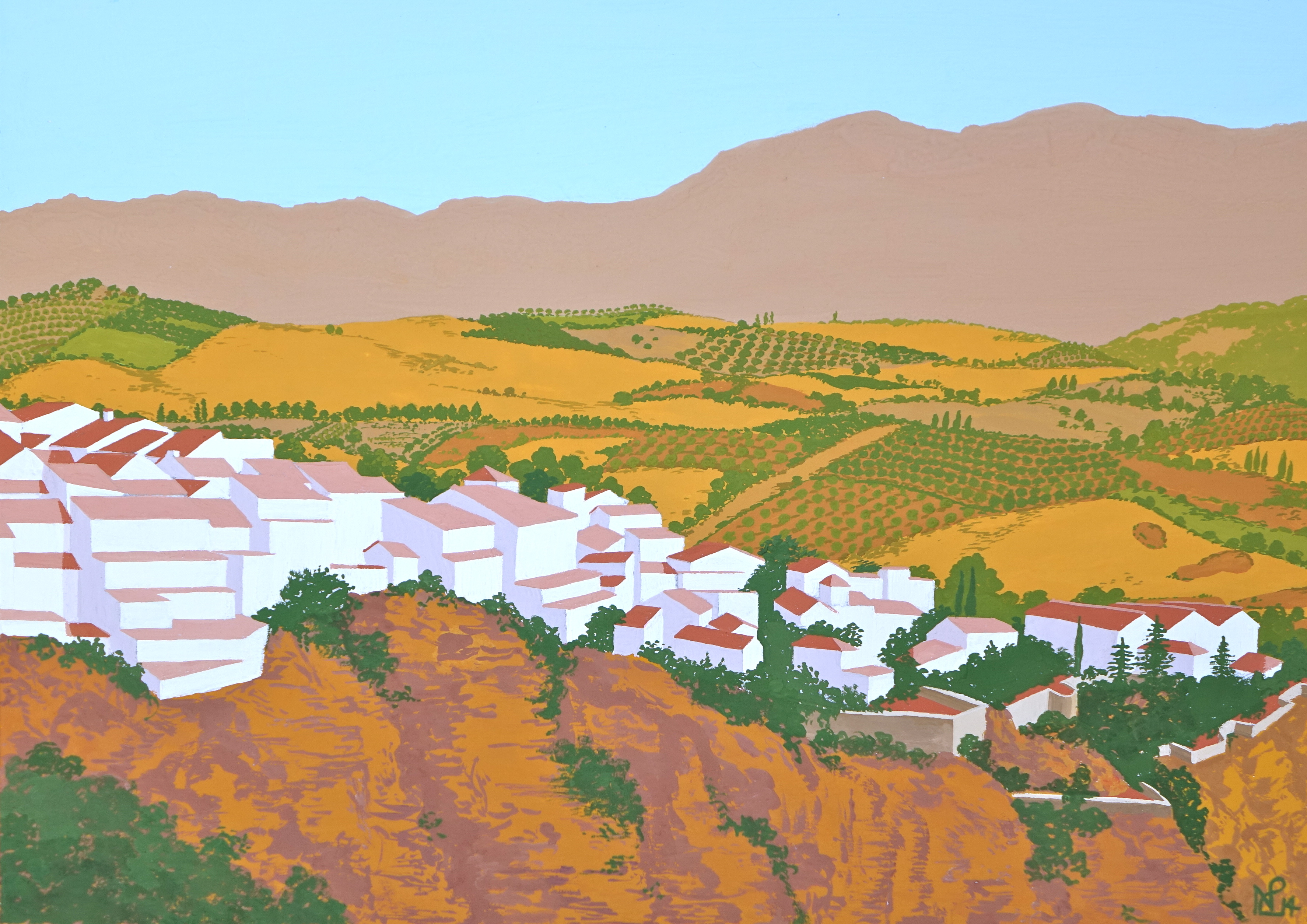
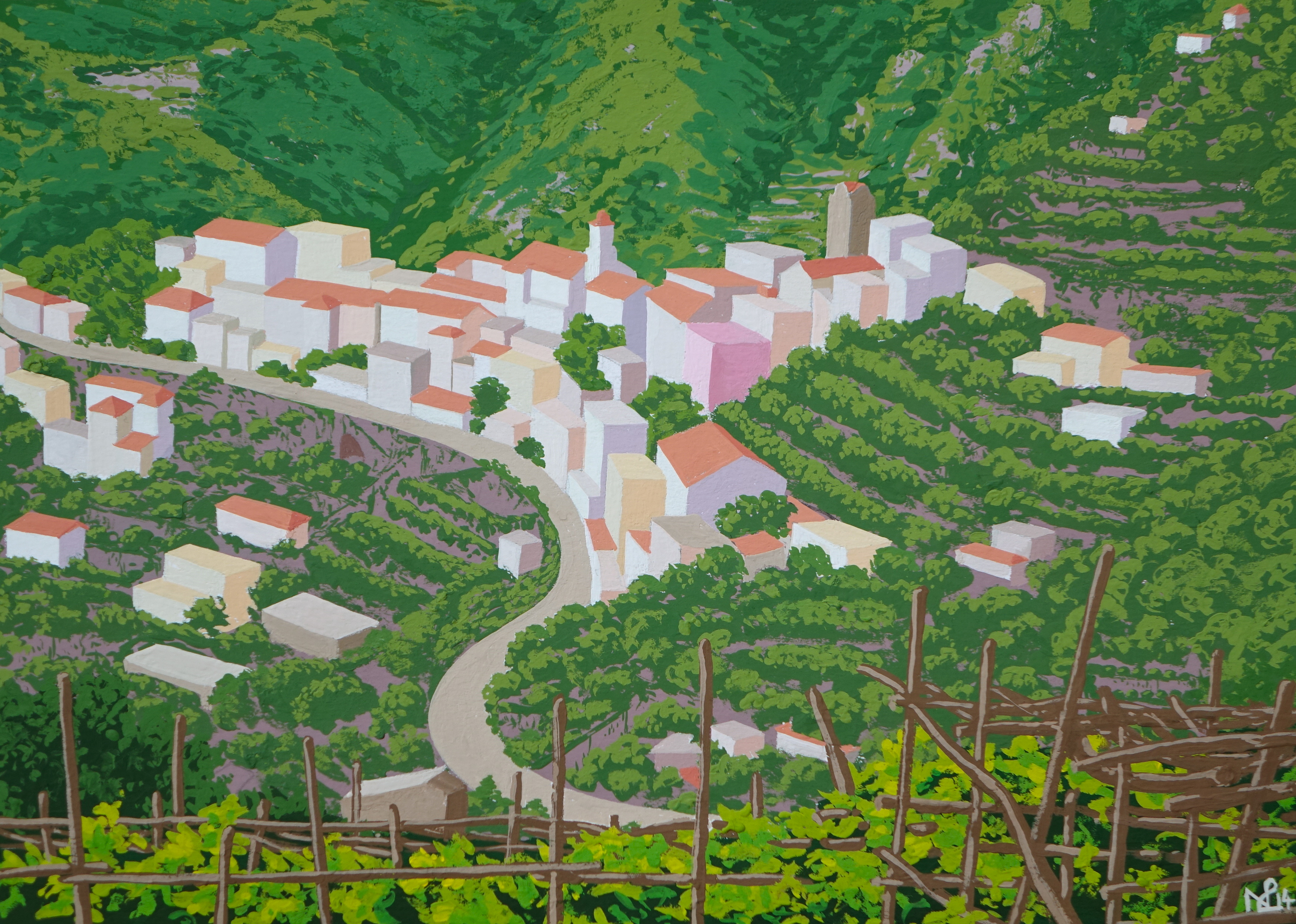
Interpretation No. 8: Ronda cluster above the El Tajo Gorge

Readers of the Daily Norm will know that following my beautiful trip to the Amalfi Coast in June, I embarked on a series on new gouache paintings. I have loosely labelled the collection “interpretations” because they are not so much landscapes as interpretations of a landscape – a simplified landscape with the details of urban structures stripped away so that the focus of the audience can be placed on the general shape made by a town or a cluster of buildings, rather than the details. This is particularly striking where generations of people have built up towns in the most hostile of landscapes, such as the cliff edges of the Amalfi Coast. The result is the development of a group of buildings which look almost out of place and surreal when set against the harsh unapologetic backdrop of nature. It is this contrast which my interpretations seek to emphasise.

Interpretation No. 8 - Ronda (2014 © Nicholas de Lacy-Brown, gouache on paper)

Interpretation No. 8 – Ronda (2014 © Nicholas de Lacy-Brown, gouache on paper)

There was no doubt that having been inspired by the vast rocky coastal crags of Amalfi, I would be likewise moved to paint by the mountainous planes and combination of town versus harsh seemingly unconquerable landscape which characterises the small urban sprawl of Ronda. I set about working on my first Ronda “interpretation” almost as soon as I caught eyes on the views. This first work is the result, a painting which, unlike the Italian works which have gone before it, loses the blues and purples of the Amalfi Coast, and is instead painted in the warm reds, ochres, bronzes and russets for which the arid Southern Spanish landscape is famous. And these colours are not works of fiction – for the El Tajo gorge on which Ronda stands is very much a fiery orange colour, which glows ever more robustly red as the sun sets upon it. It’s an awesome sight, and made for the perfect inspiration for this continuation of my Interpretations collection.

All photos and written content are strictly the copyright of Nicholas de Lacy-Brown © 2014 and The Daily Norm. All rights are reserved. Unauthorized use and/or duplication of the material, whether written work, photography or artwork, included within The Daily Norm without express and written permission from The Daily Norm’s author and/or owner is strictly prohibited. Excerpts and links may be used, provided that full and clear credit is given to Nicholas de Lacy-Brown and The Daily Norm with appropriate and specific direction to the original content. For more information on the work of Nicholas de Lacy-Brown, head to his art website at www.delacy-brown.com

My travel sketchbook: El Tajo Gorge, Ronda

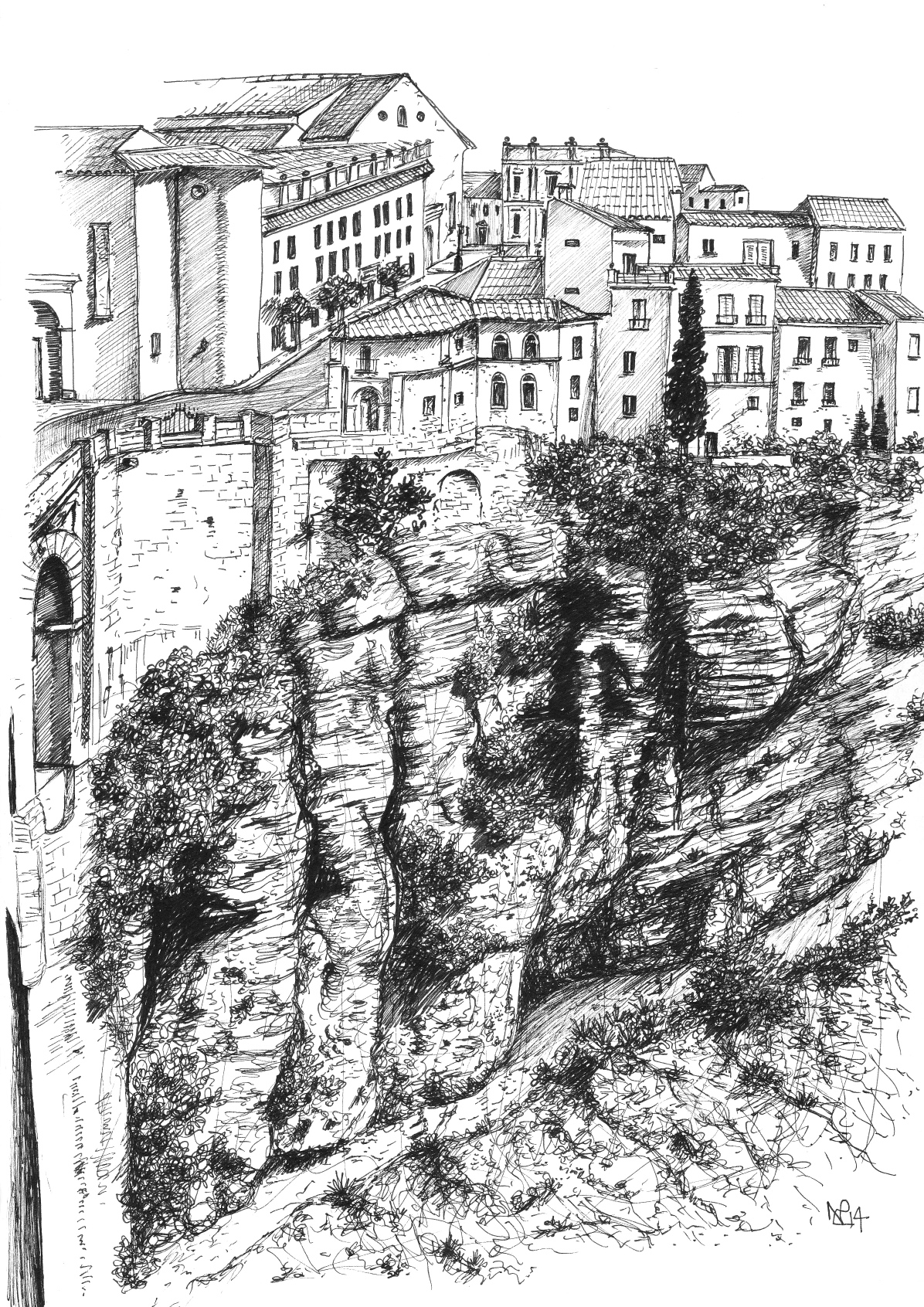
I could have sketched Ronda, the sumptuous Spanish city in Southern Andalucía, forever. Not only were the clusters of white terracotta-roofed old buildings more than easy on the eye, but the great El Tajo gorge upon which the city is precariously built is itself a feast for the eyes, and for a sketchbook. With its multiple craggy rocks, rounded by centuries of weather beatings and the expanse of plant life which has crept over its surface, the steep sided cliffs of the gorge are a picture of complex shapes, angles and shadows, and taken as a whole almost appear to defy gravity, such is the vertical, and in places almost inversed top heavy standing of these vertiginously high cliff faces. All this of course makes for a sensational drawing subject, and within hours of moving into our sumptuously large bedroom and terrace in the Paradores Hotel, I began two pen sketches of the incredible view which we could see from every part of our room.

Ronda 1 - Buildings above the Tajo Gorge, Ronda (2014 © Nicholas de Lacy-Brown, pen on paper)

Ronda 1 – Buildings above the Tajo Gorge, Ronda (2014 © Nicholas de Lacy-Brown, pen on paper)

The two sketches are fairly similar, hence why I am posting them together. They concentrate on the same section of the gorge, with a view onto the oldest quarter of Ronda with its main church stood proudly at the centre. However, one focuses more on a cluster of buildings showing just a little of the gorge below, while the other shows more of the gorge and just a thin slice of the bridge, helping the audience to appreciate just how small the buildings of Ronda appear when perched on the full expanse of this rocky canyon. And this is only what I could see from the hotel – the gorge plummeted deeper still, showing just how dramatic this scenery is.

Ronda 2: The Tajo Gorge (2014 © Nicholas de Lacy-Brown, pen on paper)

Ronda 2: The Tajo Gorge (2014 © Nicholas de Lacy-Brown, pen on paper)

I am delighted with the capacity of these sketches to have captured that drama, along with the great contrast between violently brutal rock face and highly civilised historical architecture which makes Ronda – and now these sketches – so interesting to see.

© Nicholas de Lacy-Brown and The Daily Norm, 2001-2014. Unauthorized use and/or duplication of the material, whether written work, photography or artwork, included within The Daily Norm without express and written permission from The Daily Norm’s author and/or owner is strictly prohibited. Excerpts and links may be used, provided that full and clear credit is given to Nicholas de Lacy-Brown and The Daily Norm with appropriate and specific direction to the original content. For more information on the work of Nicholas de Lacy-Brown, head to his art website at www.delacy-brown.com

Kazimir Malevich: Beyond the Black Square

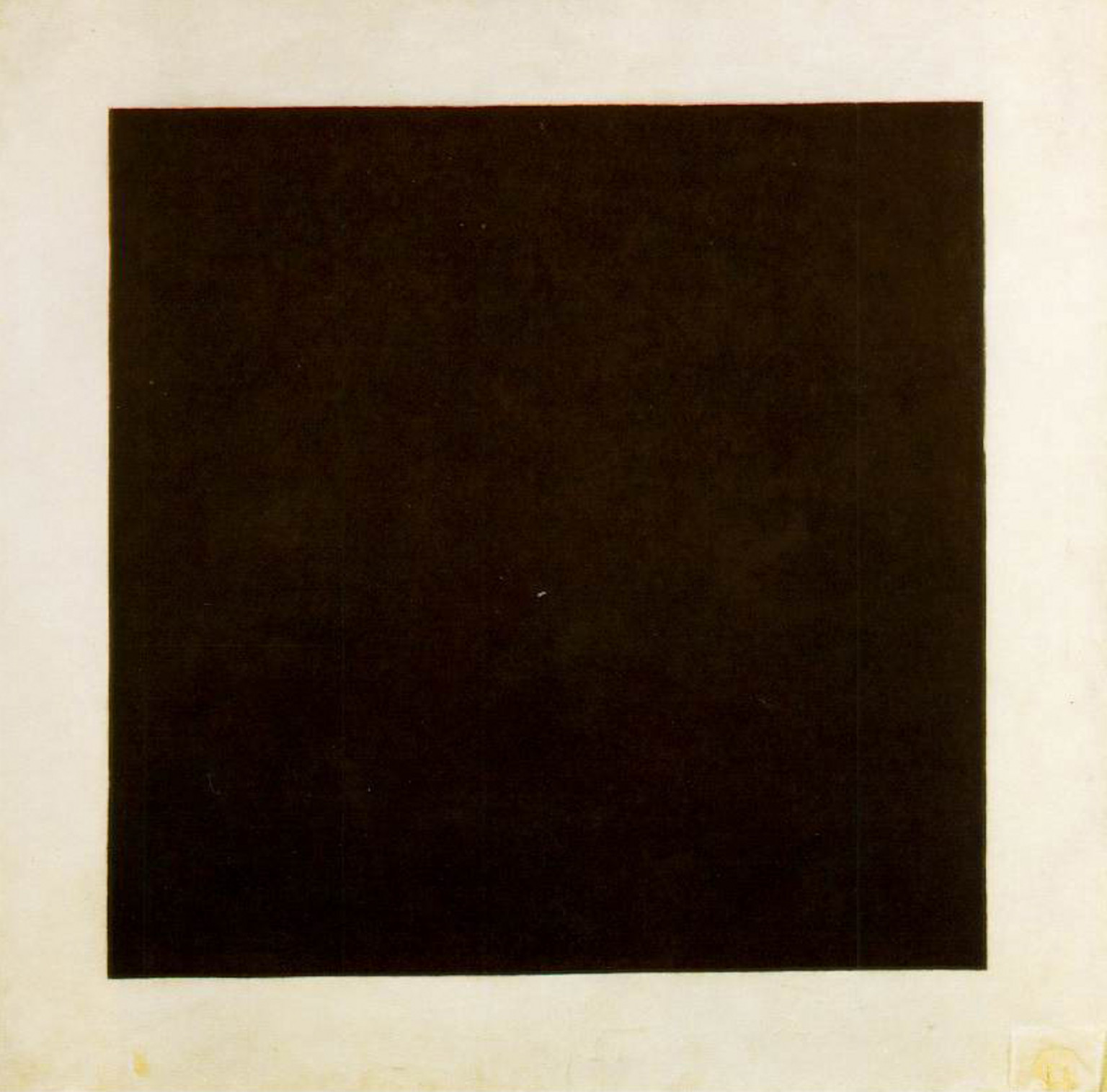
Whether it is the intention of the exhibition or not, Tate Modern’s brilliant new retrospective exhibition of Polish-born Russian Artist, Kazimir Malevich, shows that there is truly more beyond the Black Square. Leading the ranks in an artistic revolution which went from Cubo-Futurism to the simplified geometric forms of Suprematism, Malevich’s most famous and enduring work is a simple, stark and enigmatic black square set on a white canvas. Of course since 1915 when the black square was created, many artists have gone down the single-colour-on-canvas route, and a contemporary art museum is not a contemporary art museum without at least a Blue Canvas or an Untitled (Red Rectangle) to delight and frustrate art audiences in equal measure. But at the time when Malevich’s Black Square was created, it marked a dramatic and stark departure from everything that had gone before it.

Despite its very obvious simplicity, it carries with it an enigmatic complexity as an artistic gesture. Looking at this dark patch of paint, one can almost feel a suppression of joy, a rebellious desire for change, a stark reaction to the turbulence of war, a zero hour in the world of modern art. And yet while it is perhaps understandable why this painting caused such a stir, both positive and negative in the time of its creation, Tate’s new exhibition shows that Malevich had so much more to offer as an artist, and much much more of it in invigorating compositionally intricate colour.
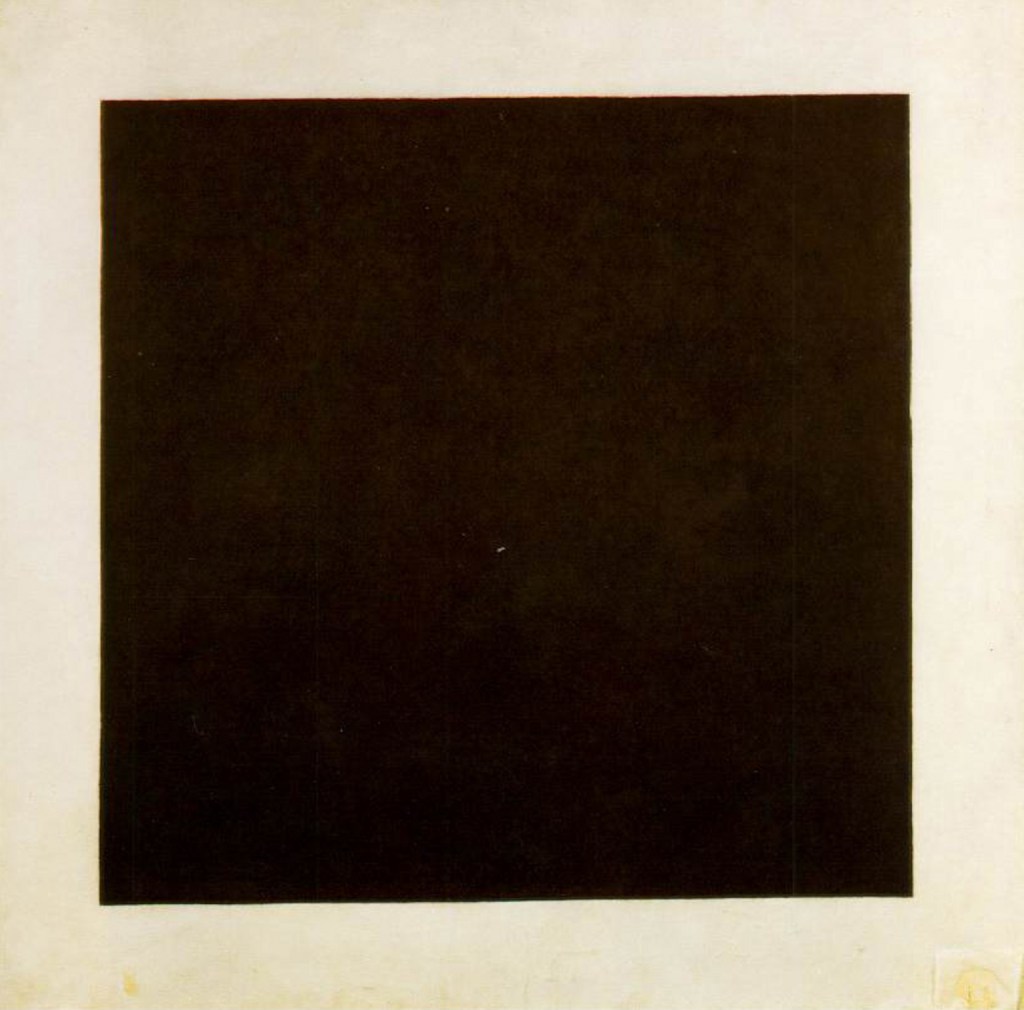
Black Square (1915)

Black Square (1915)

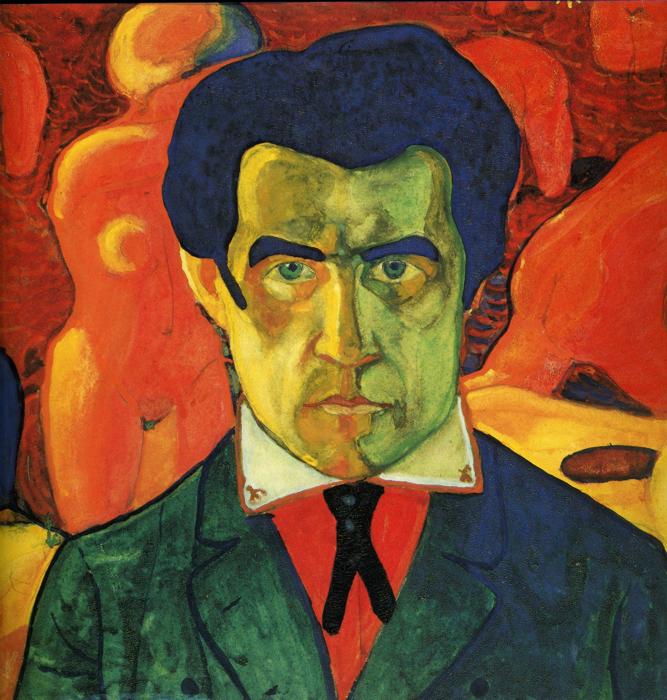
Self Portrait (1908)

Self Portrait (1908)

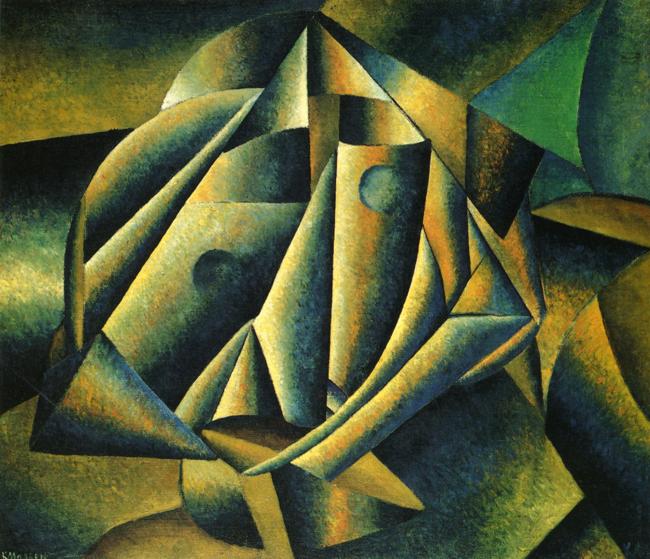
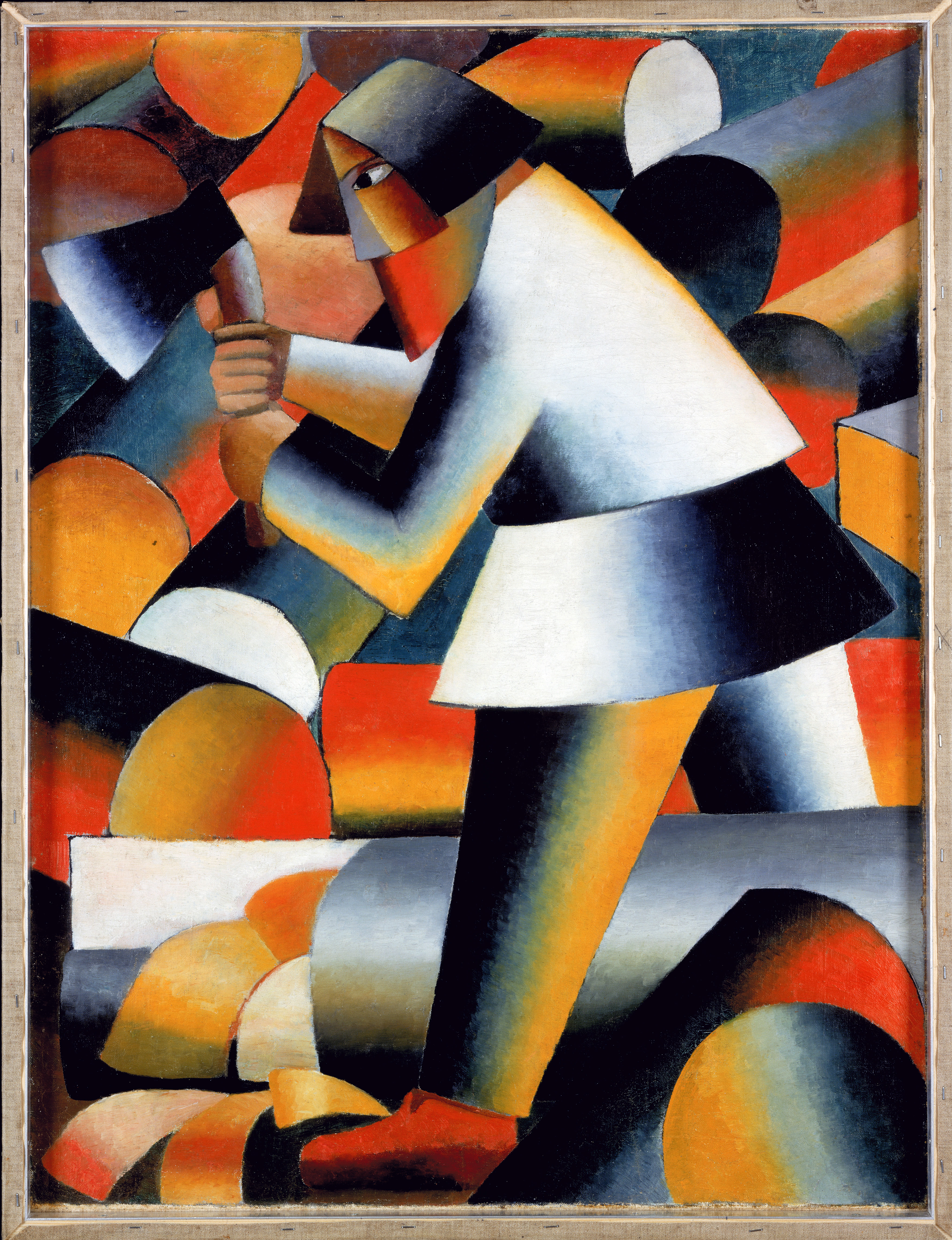
The start of the show demonstrates a certain reliance by Malevich on the artists who had gone before him, and a very clear influence of the avant-garde of post-impressionism, particularly the bold colours of the Fauvists and the flattening of perspective and exotisim advocated by Gauguin. Those influences are particularly obvious in Malevich’s early self-portrait, whose backdrop of exotic nudes and use of a multi-coloured palate recalls the work of Matisse and Gauguin alike. However, very quickly, we see the influence of other artists slipping away as Malevich starts to find a more unique style of his own. While relying to some extent on cubist notions, Malevich rejects the subject matter topical of the works of the Paris avant-garde and starts painting heavily geometric works based on the peasants and traditions of Russia. Painting simplified figures in cubist almost metallic forms, Malevich’s portraits are static like robots, referencing Futurism whose artistic reach was spreading across Europe, and yet exuding a rurality and authentic subject matter which is far departed from the industrialisation which characterises most works of the Futurist movement.

Early works 

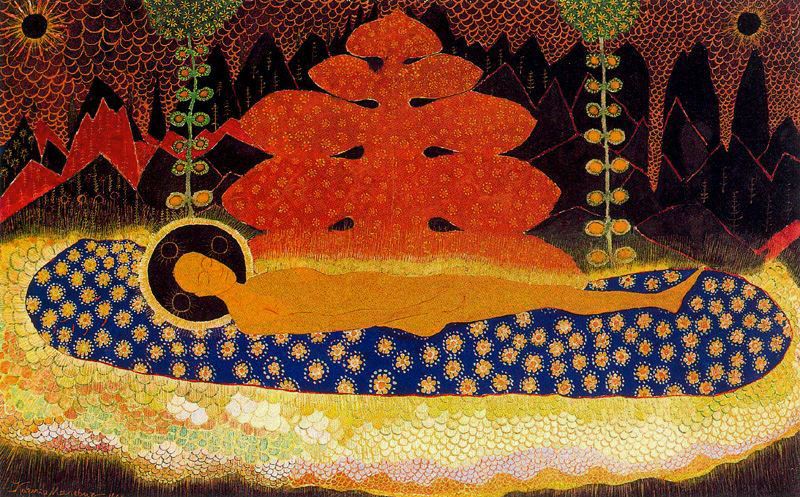
Head_of_a_Peasant_Girl Kasimir Malevich007 Kazimir-Malevich,-The-Woodcutter,-1912_original

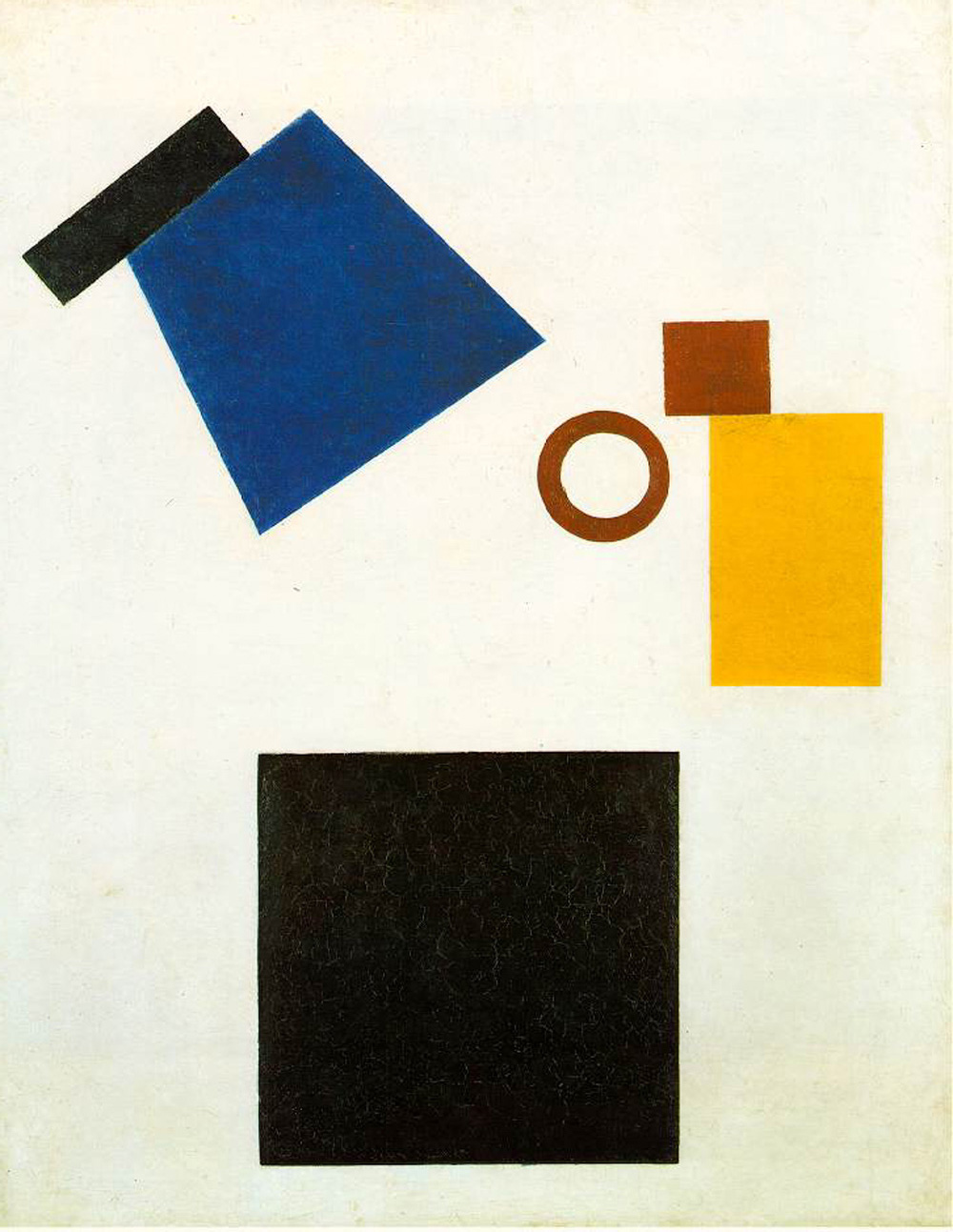
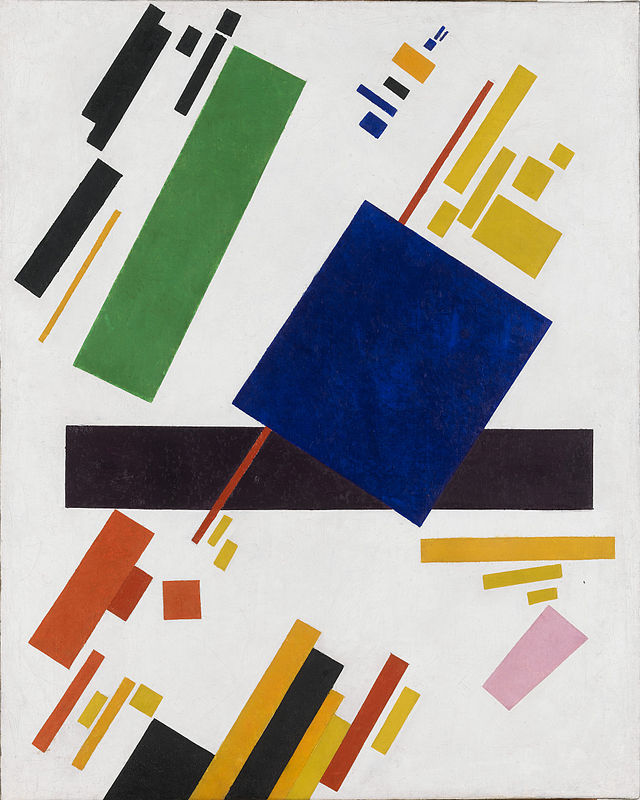
But Malevich’s early cubo-futurist works were only the beginning, and it was when, in 1914, Malevich painted his first black rectangle – Black Quadrilateral – that the artist took a clear and drastic departure from figurative works, presenting his ideas in The Last Exhibition of Futurist Painting 0.10 in what was then Petrograd in 1915. Calling his new direction Suprematism, Malevich believed that “the artist can be a creator only when the forms in his picture have nothing in common with nature” and dismissing the artists of the past as “counterfeiters of nature” he went about creating works which are starkly geometric and lacking in any feature which could link them to the natural world. The paintings which resulted from this period are a wonderful collection of energetic and colourful works (with the exception of the Black Square of course) which I loved. There is a complexity of composition in the way that these various shapes are interlayed and angled which cannot be underestimated, and in seeing these works, I saw that here Malevich really was creating from scratch rather than relying on nature for reference.

Suprematist works

Malevici06 640px-Suprematist_Composition_-_Kazimir_Malevich Kazimir_Malevich_-_Suprematism_-_Google_Art_Project malevich28 malevich4

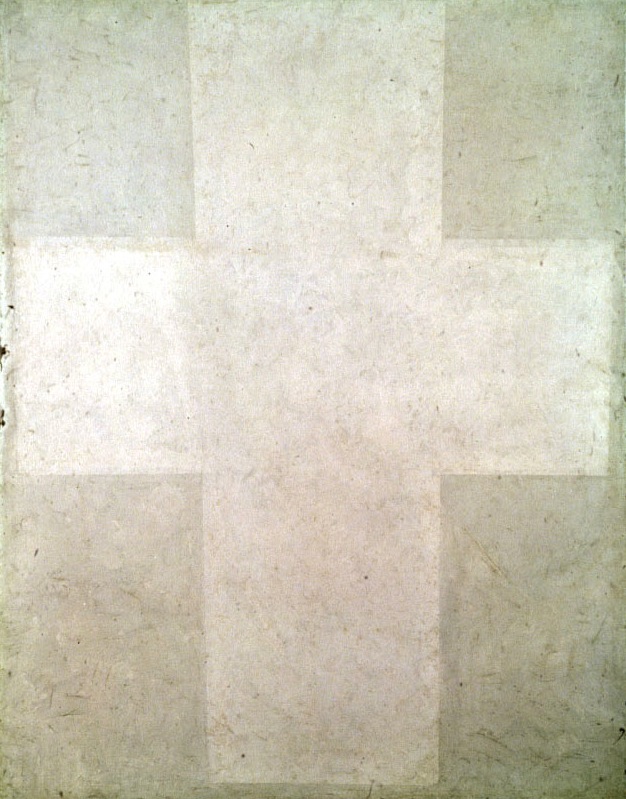
However Malevich could only take his Suprematist ideas so far, and by the time of the Russian Revolution in 1917, he consciously began to “kill off” paintings, gradually draining his paintings of colour in works such as White Suprematist Cross (1920) – a white cross on a white background – and Dissolution of a Plane (1917) where the colour is gradually fading out of the edges of a red rectangle. This was what Malevich called the “death” of painting, and in 1919, Malevich wrote that “Painting died, like the old regime, because it was an organic part of it”and what followed was several years when the artist dabbled in transferring his ideas to architecture, and teaching.

White Suprematist Cross (1920)

White Suprematist Cross (1920)

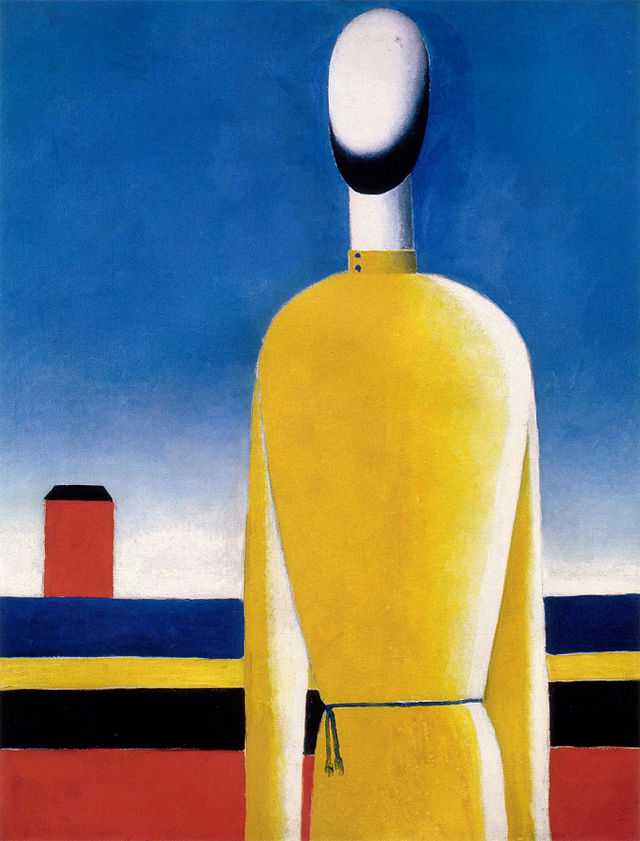
However, it was a temporary death, for a few years later, Malevich came to resurrect his painting, and interestingly, when he did so, he returned not to his Suprematist ideas, but to the cubo-futurist figuration of his early years. It was almost as though his Suprematist manifesto took such efforts that when he returned to painting, almost as a newcomer to it, he found himself drawn more to the instinctive way of painting which was inherent within him from the start. Which just goes to show: the efforts of stripping out nature and forging something new in art may create something of a stir or a statement, but ultimately we always return to the same thing: depicting the world around us, for that is arguably the true purpose and calling of art – to narrate and reference the lives we all live.

Later works
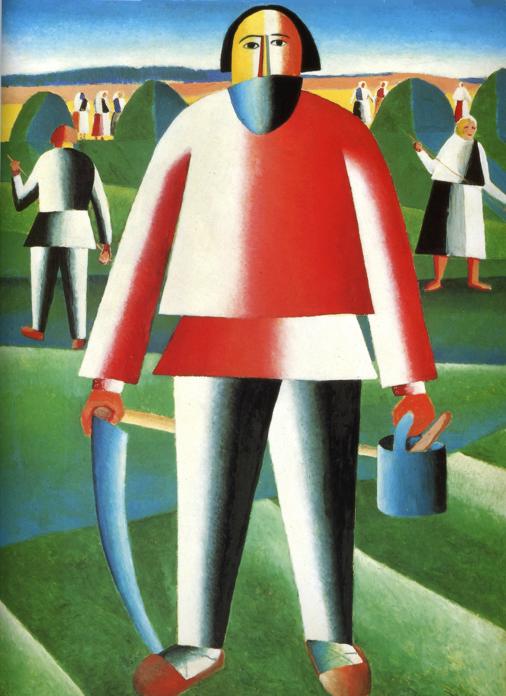
Malevich142 Later

In short this is a marvellous new show which provides a comprehensive review of this important artist, introducing his work to many who, like me, were not familiar with his oeuvre before. Beyond the paintings and the excellent chronological layout of the exhibition, my favourite section was Room 10, which takes a break from the paintings, and is like a mini-retrospective within the bigger story, depicting the whole of Malevich’s career through his works on paper. As such, the display provides a fascinating insight into both Malevich’s preparation of his paintings, and also how quickly his works transformed from cubism to futurism to suprematism and back again. A complex transition truly worthy of a retrospective exhibition on the scale Tate has so ably put on show this summer.

Malevich: Revolutionary of Russian Art is on at Tate Modern, London until 26th October 2014.

Art-in-Amalfi – Painting 7: The terraces of Ravello

As my post on yesterday’s Daily Norm makes abundantly, sensually clear, Ravello on Italy’s Amalfi Coast is a place of stunning beauty. A place so beautiful that countless people, both famed and unknown, have flocked to its heady heights to sample a taste of paradise, and to soak in the views that Gore Vidal called the most beautiful in the world. So as my collection of Amalfi paintings reaches its steady climax (although I still feel inspired to paint more), there was no way that Ravello, and the stunning views from its quaint narrow hillside passages, was not going to be a part of it.

To my eyes, the thing that was so utterly charming about those incredible views was not so much the extensive sea views, but the elegantly terraced hills, loaded with lemon trees and olives and every kind of mediterranean plant growing abundantly. Those carefully sowed terraces gave the appearance of a fashion designed striped fabric in every conceivable shade of verdant green, while the houses clustered along intermittent roads were ripe for re-expression in the delineated cubic forms which have become characteristic of my Italy gouaches.

Ravello (2014 © Nicholas de Lacy-Brown, gouache on paper)

Ravello (2014 © Nicholas de Lacy-Brown, gouache on paper)

So I am delighted to share with you this seventh Amalfi Coast painting, doing so towards the climax of the Daily Norm tales of my Amalfi adventure. But something within me tells me this is not the end. Already my paintbrush is poised to work a little gouache magic across some blank paper in a notepad by my side, and you can be sure that as and when those works are completed, I will share them on The Daily Norm. 

© Nicholas de Lacy-Brown and The Daily Norm, 2001-2014. Unauthorized use and/or duplication of the material, whether written work, photography or artwork, included within The Daily Norm without express and written permission from The Daily Norm’s author and/or owner is strictly prohibited. Excerpts and links may be used, provided that full and clear credit is given to Nicholas de Lacy-Brown and The Daily Norm with appropriate and specific direction to the original content. For more information on the work of Nicholas de Lacy-Brown, head to his art website at www.delacy-brown.com

Art-in-Amalfi – Painting 6: Arrival in Amalfi

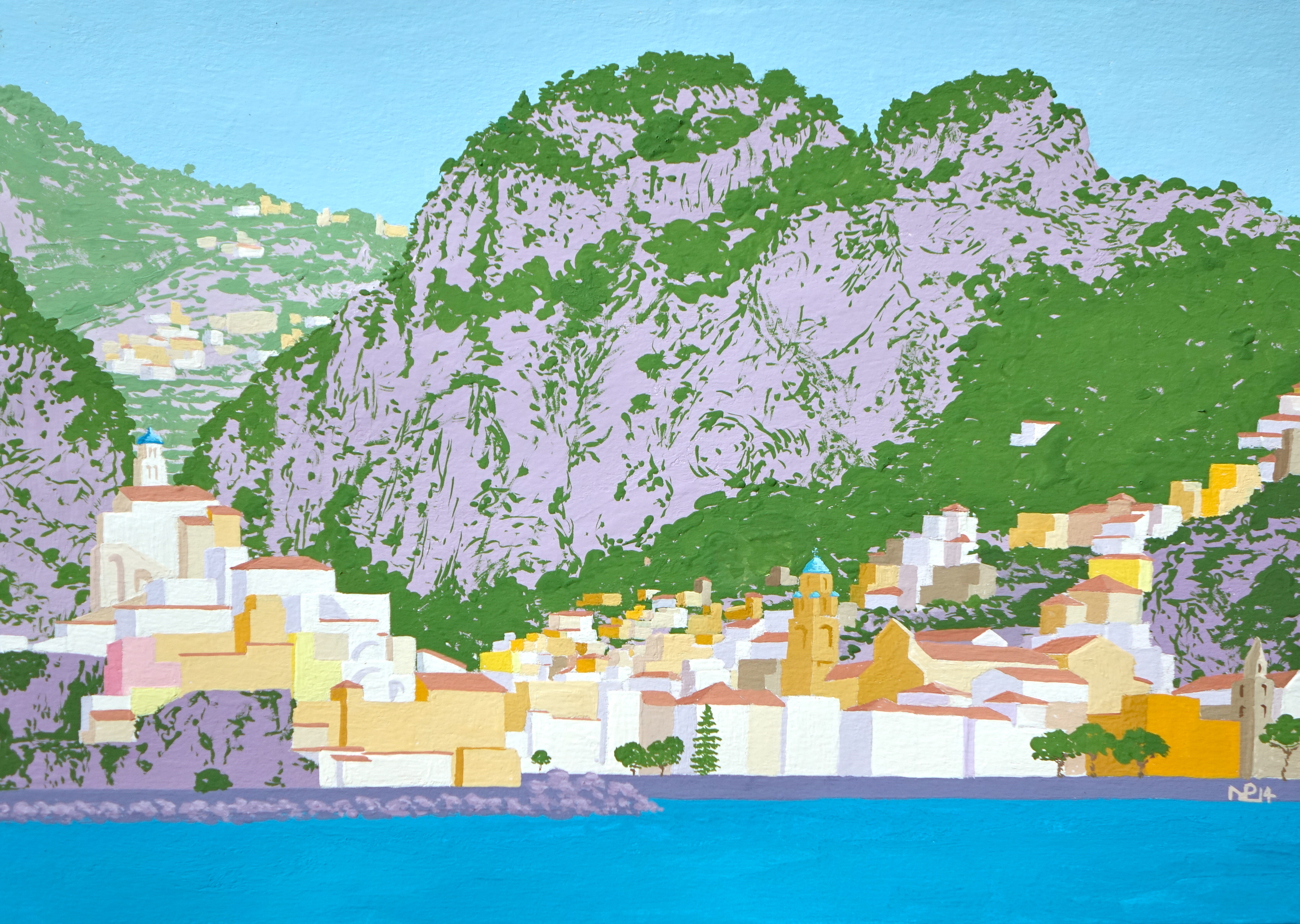
On the Amalfi Coast you really are spoilt for choice. Not only is the coast a veritable paradise of high end shops, hotels and restaurants, but from every angle there is a new and stunning view to pop your eyes pen a little wider with pleasure. As both an Artist and keen photographer, this was both a treat and a burden, for every time I opened my eyes, I saw something incredibly beautiful, and started feeling guilty if I did not capture it in some form. So it was that on a short 45 minute boat ride from Positano to Amalfi I found myself unable to sit still, unsure whether to look backwards out of the boat towards the fading but ever beautiful view of the pastel-coloured town on the magnificent mountainside, look over the side to the similarly nestled hilltop town of Praiano, or forwards, towards the glittering town of Amalfi.

Well the answer to this quandary was that I did all three. Having had my fill of Positano (if that is even possible…) I then turned towards white-gleaming Praiano (and later painted it as Amalfi Coast painting no.5) and then turned my attention towards the grand town of Amalfi which our boat was fast approaching. This painting, my 6th of the holiday and another in the series of cubic simplifications by which I am delineating the houses and structures of the coast, captures the moment when we approached the town, when the gleaming gold facade of the cathedral could be seen flanked my buildings sweeping up the steadily sloping valley on either side. Meanwhile in the background one could just about make out the promised land of Ravello, a town we were to visit later that day.

Amalfi (2014 © Nicholas de Lacy-Brown, gouache on paper)

Amalfi (2014 © Nicholas de Lacy-Brown, gouache on paper)

More about that, tomorrow.

© Nicholas de Lacy-Brown and The Daily Norm, 2001-2014. Unauthorized use and/or duplication of the material, whether written work, photography or artwork, included within The Daily Norm without express and written permission from The Daily Norm’s author and/or owner is strictly prohibited. Excerpts and links may be used, provided that full and clear credit is given to Nicholas de Lacy-Brown and The Daily Norm with appropriate and specific direction to the original content. For more information on the work of Nicholas de Lacy-Brown, head to his art website at www.delacy-brown.com
Art-in-Amalfi – Painting 5: Praiano

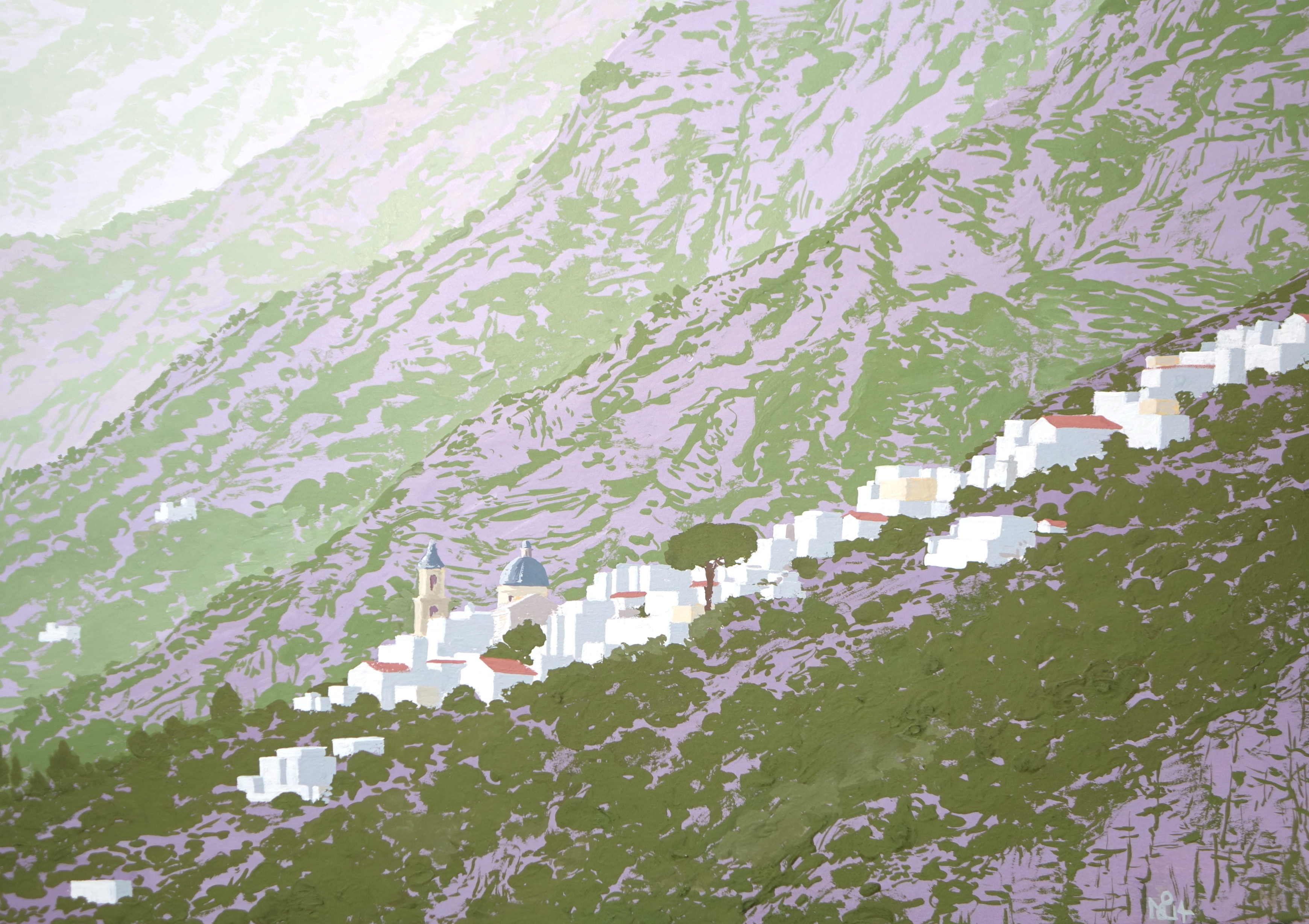
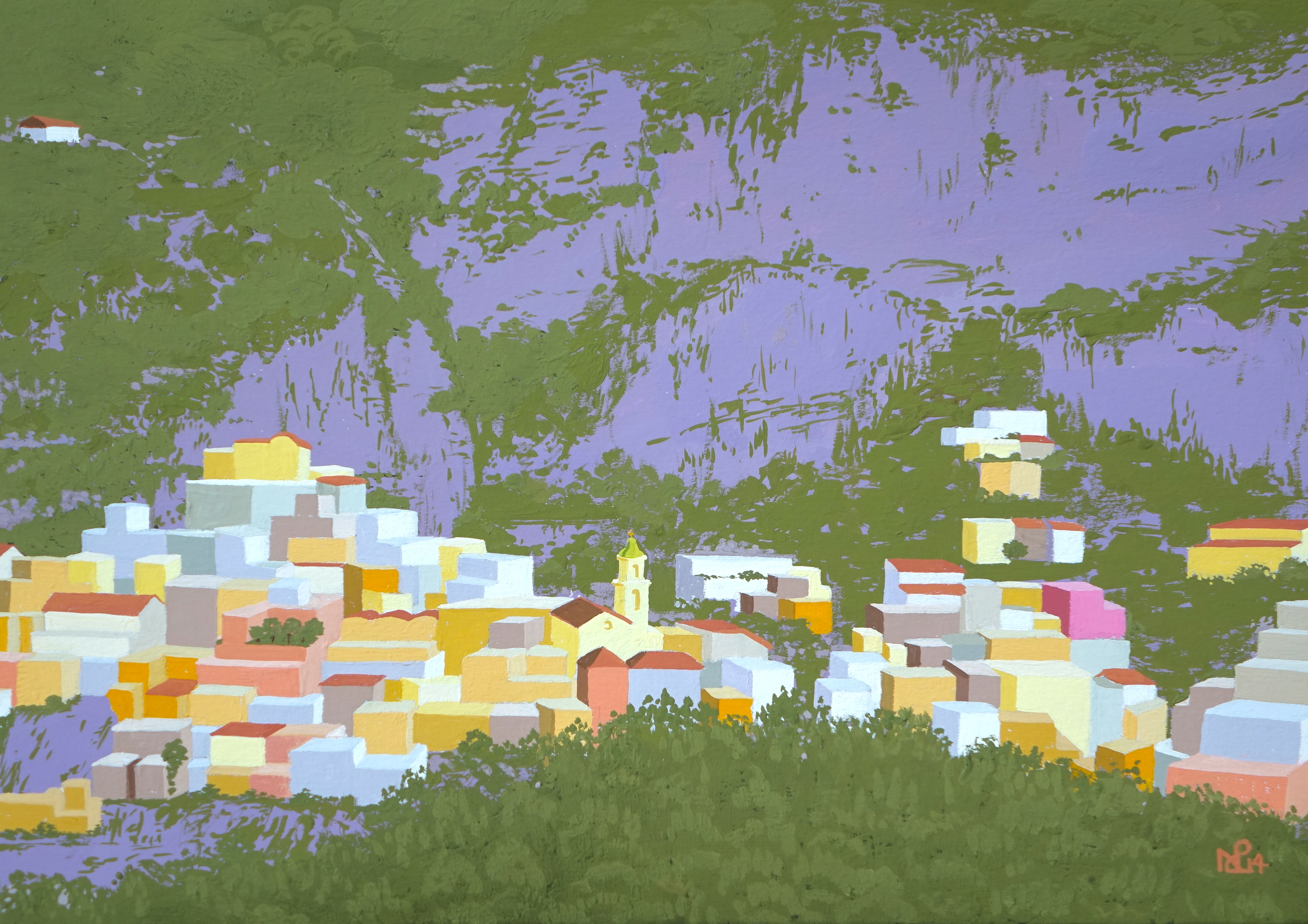
Having painted four views of Positano in gouache on paper, all of which concentrate on the hodgepodge of pastel-coloured cube like houses that are characteristic of the town, I decided to set my sights further afield, and start exploring the artistic potential of locations elsewhere on the Amalfi Coast. The perfect opportunity presented itself when, en route to the epicentre of the coast, Amalfi (see tomorrow’s Daily Norm for more on that front) we passed by the cliff-top town of Praiano.

Smaller than neighbouring Positano, which can be seen directly across the bay and vice versa, Praiano nevertheless has its own glittering domed churche and cluster of houses clinging precariously to the high edges of a mountain slope. However unlike Positano, whose multi-coloured composition can be spotted some distance away, Praiano is characterised by a gleaming symphony of whites and creams, dazzling in the sunshine as its buildings contrast against the green vegetation all around.

Praiano (2014 © Nicholas de Lacy-Brown, gouache on paper)

Praiano (2014 © Nicholas de Lacy-Brown, gouache on paper)

This particular view of the town, seen side on with the gradually fading folds of the mountains in the distance was definitely my favourite angle of those many enjoyed as our boat whisked past the town at speed. And of course in the process of cubic simplification which has been the focus of my recent gouache works, Praiano could not have been a better model – for its white washed houses simplify down to their basic elements brilliantly, while retaining all of the shape and character of this very pretty town.

© Nicholas de Lacy-Brown and The Daily Norm, 2001-2014. Unauthorized use and/or duplication of the material, whether written work, photography or artwork, included within The Daily Norm without express and written permission from The Daily Norm’s author and/or owner is strictly prohibited. Excerpts and links may be used, provided that full and clear credit is given to Nicholas de Lacy-Brown and The Daily Norm with appropriate and specific direction to the original content. For more information on the work of Nicholas de Lacy-Brown, head to his art website at www.delacy-brown.com

Art-in-Amalfi – Painting 4: Positano IV (Yellow Vespa)

As much as Capri may have entranced me, it was Positano that we returned to at the end of the day, the beautiful clustered town gripping for dear life onto the steep mountain slopes of Italy’s stunning Amalfi Coast. And such is the geography of that nature-defying location, that almost everywhere you go in Positano, you end up gazing in wonder at incredible views, either across the sea, the valley in which the bulk of the town is situated, or up at the vast mountains rising almost unendingly up behind it. No wonder then that I was inspired to paint so much when I stayed on the Amalfi Coast and although I was only painting with a small travelling watercolour book and a box of gouache paints, I got the most out of my limited materials.

This fourth and final painting of Positano is loosely based on a charming walk we took along the upper mountain road, where the town feels more authentic and Italian when compared with the tourist-centric core of the town down by the sea. This area, being Italy, was full of all of the characteristics which make a place intrinsically Italian – gossiping old women sitting outside their homes, old men propping up the bar and drinking espresso, and outside one of the most Italian sights of all – the Vespa. This painting captures the moment when we stumbled into a perfect specimen of Vespa – a bright yellow one which, when propped up by the side of this incredible mountainous view, just begged to be painted. And here is the result.

Positano IV (Yellow Vespa) (2014 © Nicholas de Lacy-Brown, gouache on paper)

Positano IV (Yellow Vespa) (2014 © Nicholas de Lacy-Brown, gouache on paper)

© Nicholas de Lacy-Brown and The Daily Norm, 2001-2014. Unauthorized use and/or duplication of the material, whether written work, photography or artwork, included within The Daily Norm without express and written permission from The Daily Norm’s author and/or owner is strictly prohibited. Excerpts and links may be used, provided that full and clear credit is given to Nicholas de Lacy-Brown and The Daily Norm with appropriate and specific direction to the original content. For more information on the work of Nicholas de Lacy-Brown, head to his art website at www.delacy-brown.com

My travel sketchbook: Capri 2 – The Arco Naturale

The Arco Naturale in Capri is one of those sights which just takes your breath from you, propelling it into the atmosphere is a shower of fireworks. For there is nothing quite so stunning as the unexpected, and this mighty towering limestone arch looked so deliciously precarious as it balanced several hundred metres above the turquoise sea below that it felt almost like a stage set. There was something almost arousing about its huge teetering mass, thrust upwards into the blue sky like a declaration of robust resilience in the face of nature’s cruel seas; its hardy mass a swollen emboldened spectacle rising above the battered cliffs and sumptuous plant life besides it to frame the surrounding landscape with its gravity-defying arc. And despite the fact that the little pathway skirting alongside this awesome sight was something of a vertiginous spot, with a sheer drop right below it, I could not resist swinging my legs over the side and getting out my sketchbook to capture the impressive prospect before me.

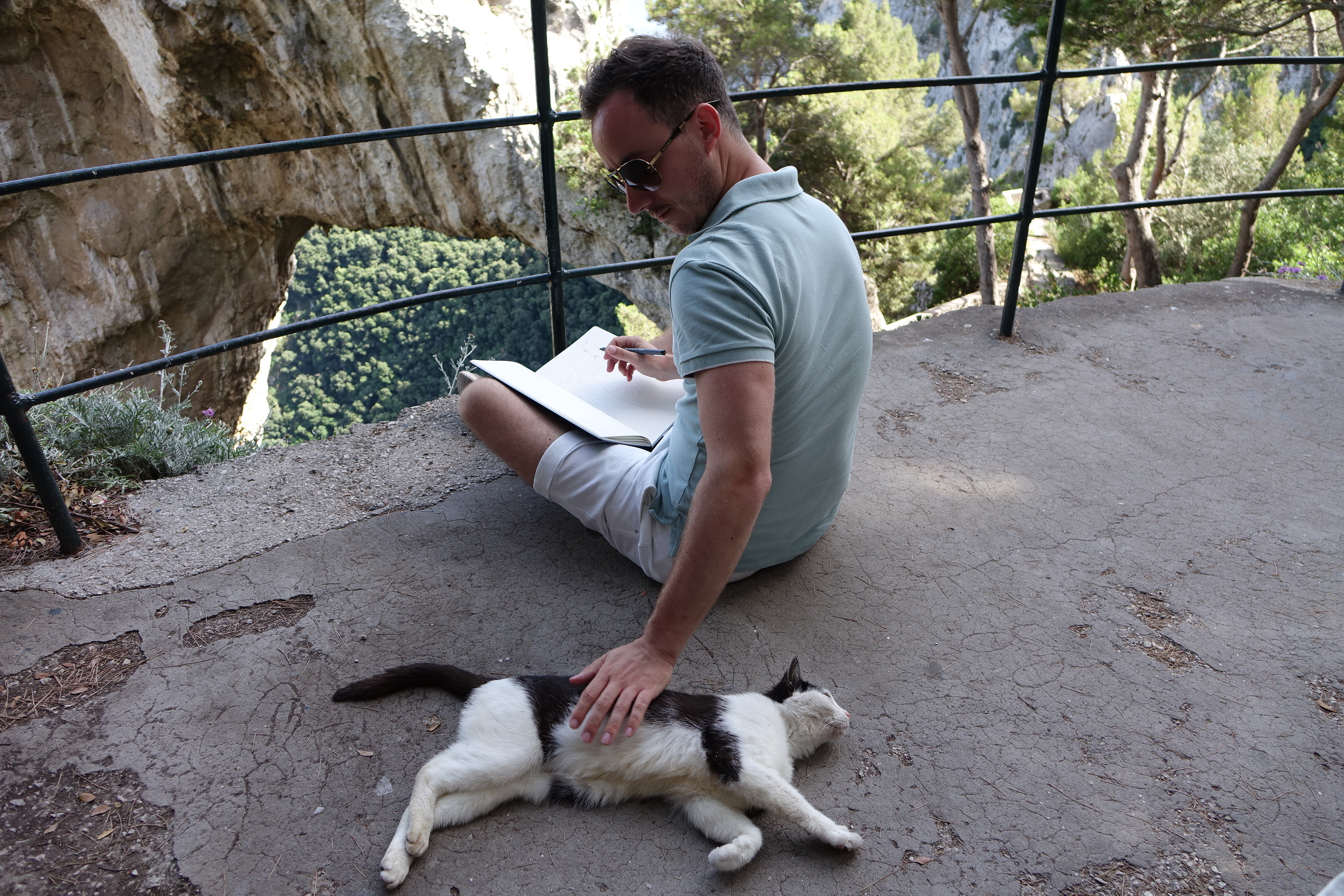
So my fourth sketch of the Amalfi Coast trip was not made without risk, and although my legs were firmly curled around the railings above the cliff edge, I could easily have dropped my pens, or even my beloved sketchbook down that sheer drop – goodness knows how I didn’t. And it wasn’t like I didn’t have distractions – my sketching attracted not just the attention of fellow tourists, but also a dear little cat who curled around me, rubbing itself against the hard edges of my sketchbook, and at times appearing to teeter horrendously closely on the knife edge of the cliff-edge, its perfectly balanced slender body somehow nonplussed by the drop just below. But as you can see, my sketchbook lived to tell the tale – and indeed to be shared, on today’s Daily Norm.

Capri Sketch 2: The Arco Naturale (2014 © Nicholas de Lacy-Brown, pen on paper)

Capri Sketch 2: The Arco Naturale (2014 © Nicholas de Lacy-Brown, pen on paper)

My sketching companion

My sketching companion

Now that's what I call an artist's studio...

Now that’s what I call an artist’s studio…

© Nicholas de Lacy-Brown and The Daily Norm, 2001-2014. Unauthorized use and/or duplication of the material, whether written work, photography or artwork, included within The Daily Norm without express and written permission from The Daily Norm’s author and/or owner is strictly prohibited. Excerpts and links may be used, provided that full and clear credit is given to Nicholas de Lacy-Brown and The Daily Norm with appropriate and specific direction to the original content. For more information on the work of Nicholas de Lacy-Brown, head to his art website at www.delacy-brown.com

My travel sketchbook: Capri 1– Roof of the Church of Santo Stefano

Being as the island of Capri is not exactly short of a tourist or two, and seeing as the prices which a café there can evidently get away with are sky high, you can understand why the cafés packed into the little Piazzetta at the centre of Capri Town are keen to do a quick turnaround of customers. After all, at nearly €10 a pop for a glass of wine or something similar, why would they not want to churn out the customers like a supermarket conveyer belt? So there must have been some extent of vexation for the waiters of one such café located directly beneath the square’s famous ceramic-faced campanile when I sat down at the café table and, after ordering myself a coffee, proceeded to open up my travel sketchbook and start sketching. Fearing no doubt that I would be there all day on the price of one coffee, I could almost feel their frustrated eyes burning into the back of my head as I began to sketch. And yet how could I do otherwise? After all, Capri is undoubtedly a place of beauty, and in the centre of its small capital city, the architecture is so cutely quaint that it feels a bit like Toytown. In particular, I adored the rooftop of the church of Santo Stefano, whose small little domes and white-washed walls captivated me from our first steps in the town. And it was those which I sat down to sketch at that little front line café table.

Capri Sketch 1: The church of Santo Stefano (2014 © Nicholas de Lacy-Brown, pen on paper)

Capri Sketch 1: Roof of the church of Santo Stefano (2014 © Nicholas de Lacy-Brown, pen on paper)

The waiters needn’t have been worried however. As ever with my impromptu sketches made in pen, I wasn’t working on this for long, and in fact had to leave said café before the sketch was completely finished owing to the fast approaching time of the last ferry back to Positano. And yet I’m glad I risked their wrath for the short time I did, because this is definitely one of my favourite sketches of the holiday.

© Nicholas de Lacy-Brown and The Daily Norm, 2001-2014. Unauthorized use and/or duplication of the material, whether written work, photography or artwork, included within The Daily Norm without express and written permission from The Daily Norm’s author and/or owner is strictly prohibited. Excerpts and links may be used, provided that full and clear credit is given to Nicholas de Lacy-Brown and The Daily Norm with appropriate and specific direction to the original content. For more information on the work of Nicholas de Lacy-Brown, head to his art website at www.delacy-brown.com

Art-in-Amalfi – Painting 3: Positano III (cluster on the upper road)

Following hot on the heels of my photographic post on Positano’s upper mountain passages is the third of my Positano paintings it inspired. Unlike my previous two works of Positano, both of which included the sea and the beach as prominent compositional elements, this one concentrates solely on Positano’s mountainous backdrop as it focuses on a cluster of houses on the town’s upper mountain road. With its resulting rocky background and not a slice of sea or sky in sight, the group of pastel houses collected onto the mountain side is even more striking set against these dark and looming surroundings, emphasising just how striking a sight is created by a small town built upon the steep sides of huge imposing mountains.

I kept this painting as simple as possible, and even though the mountains have the appearance of craggy complexity, the brain is doing most of the work here – for in reality I have painted neither shade nor light into the purple mountain – only the impression of texture as created by the strategic placement of green detailing indicating where the mountain’s verdant plant life would be. It’s an effect which I find altogether pleasing, and a simplicity which ultimately does all of the work which a more detailed illustration would provide. Yet in this simpler form it seems altogether cleaner and more contemporary – and for that reason I love it.

Positano III (2014 © Nicholas de Lacy-Brown, gouache on paper)

Positano III (2014 © Nicholas de Lacy-Brown, gouache on paper)

© Nicholas de Lacy-Brown and The Daily Norm, 2001-2014. Unauthorized use and/or duplication of the material, whether written work, photography or artwork, included within The Daily Norm without express and written permission from The Daily Norm’s author and/or owner is strictly prohibited. Excerpts and links may be used, provided that full and clear credit is given to Nicholas de Lacy-Brown and The Daily Norm with appropriate and specific direction to the original content. For more information on the work of Nicholas de Lacy-Brown, head to his art website at www.delacy-brown.com