

Mother and Child
Yesterday I shared a new Norm altarpiece sketch which was inspired by my recent 2013 rendezvous in Venezia, and in particular by a visit to the foremost temple of golden age Venetian art, the Gallerie dell’Accademia. In today’s post, I wanted to share with you an altarpiece painting which was inspired by my first visit to Venice and to its Accademia gallery back in 2001.
What had struck me, when I was studying art history as a young 18 year old gap year student was just how decisive religious, and in particular Christian art, had been in shaping the trajectory of European art history. From the earliest gold glistening mosaics of early Christian church decorations, moving onto the gold leafed altarpieces of the early Renaissance age, to the later grand spectacles of artists such as Tintoretto and Veronese in their imposing and elaborate illustrations of the bible stories, religion was more often than not the primary inspiration if not a reason to paint, and religious institutions an artist’s primary patron. Surprisingly enough, being more a fan from a young age of the more secular art of the Impressionists, and of the boundary-pushing masterpieces of 20th century artists, I wasn’t all that conversant with the religious art which dominated the lion’s share of artistic works pre-18th century. Consequently, it was perhaps this new exposure to religious art of the early second millennium which struck me most as a young student wandering around the major collections of Italian art.
Acting upon this new found knowledge, and also attracted by the prospect of playing with some gold leaf, I set about painting my own early renaissance-style altarpiece when I returned home. But my altarpiece was to be something a little different. Rather than paint Mary and Jesus, I opted for a self portrait and a portrait of my mother (thus moving the “Mother and Child” concept into my own personal sphere). I then went about filling the work with personal references. Asides from the usual blue and red gown worn by Mary, my mother had with her a Burberry bag, while I adorned myself (the “baby”) in a Burberry nappy (Burberry was very big at the time having enjoyed something of its own renaissance!). In my hand I hold “Fluffy”, the cuddly toy who was my favourite throughout my youth, his angry little face always tickling me, and his furry finish comforting me as I slept. Meanwhile on my right, a wooden manikin, the kind used by artists, was intended to symbolise my future destiny as an artist.

Mother and Child (2001 © Nicholas de Lacy-Brown, acrylic and gold leaf on canvas)
I had great fun with this painting, especially in modernising the wooden “throne” upon which we are sitting, and applying gold leaf to the background of the canvas (although I remember it being decidedly fiddly to do). I also applied cracking varnish across the surface, giving the piece and altogether antique look, and framed the canvas in an old antique wood.
Some more religious folk found the work to be a little audacious – perhaps even sacrilegious. But that was never my intention. Rather my aim was to take the traditional and intimate pose of the world’s most famous mother and child and apply it to my own family setting. The gold and the throne, the halos and everything else besides are merely part of the theatre of the piece, and references signposting the art historical genre which had inspired the work.
For most however, the finished work immediately became a favourite of my very early paintings, particularly amongst my family, and the altarpiece was hung immediately in pride of place in the family home, where it continues to hang today. A reminder not just of the close bond between my mother and me, but also of the time when an art history trip to Italy opened my eyes to an even greater expanse of art history than I had ever previously been aware, and to the endless possibilities upon which my own artistic journey would take me.
I leave you with just a few of art history’s best Mother and Child altarpieces. You never know, maybe 200 years from now, mine will join them!

Duccio

Fra Angelico
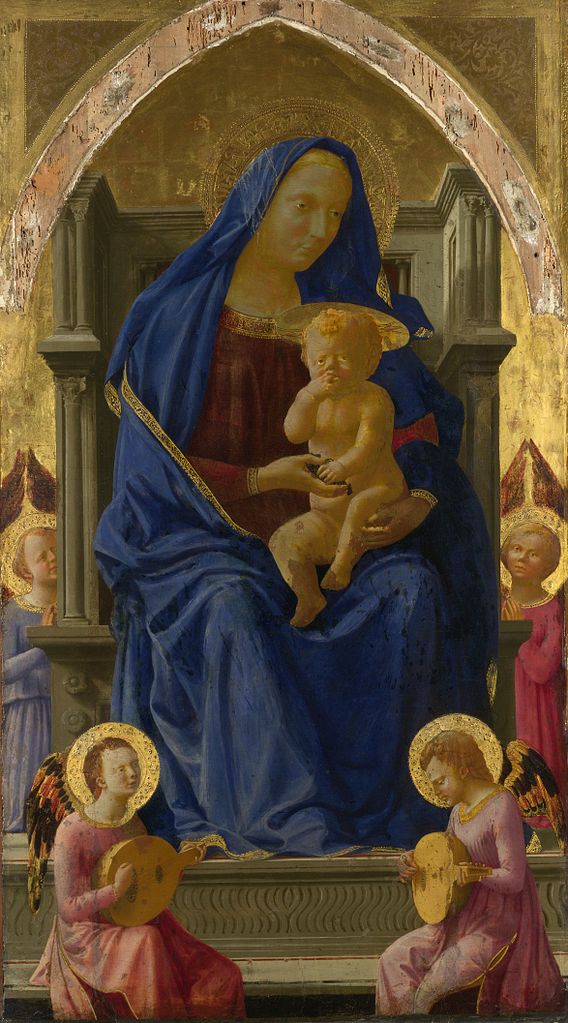
Masaccio
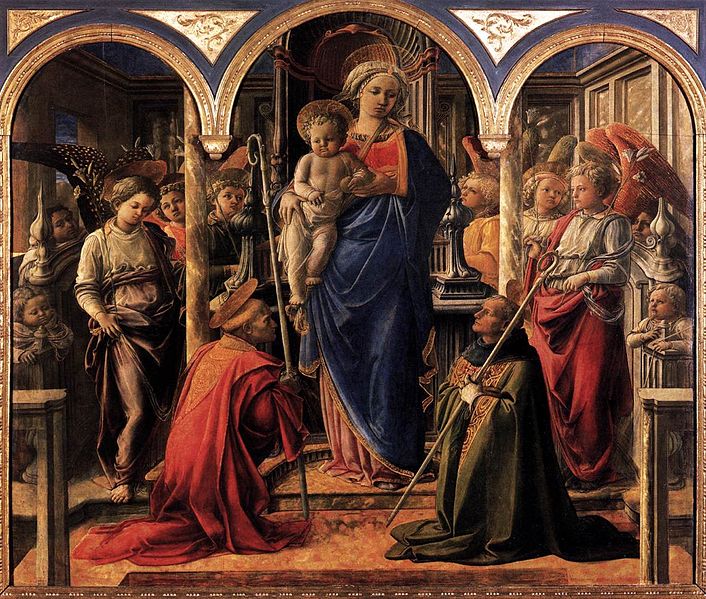
Filippo Lippi

Piero della Francesca
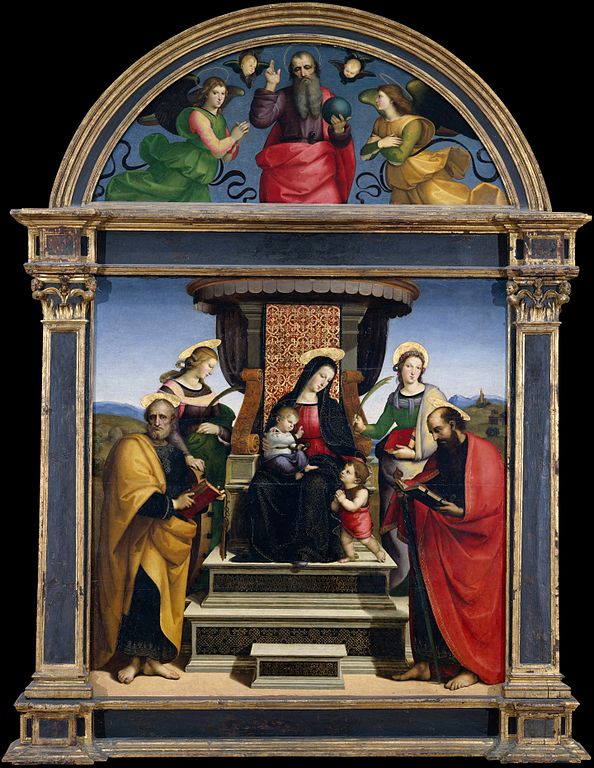
Raphael
© Nicholas de Lacy-Brown and The Daily Norm, 2001-2014. Unauthorized use and/or duplication of the material, whether written work, photography or artwork, included within The Daily Norm without express and written permission from The Daily Norm’s author and/or owner is strictly prohibited. Excerpts and links may be used, provided that full and clear credit is given to Nicholas de Lacy-Brown and The Daily Norm with appropriate and specific direction to the original content. For more information on the work of Nicholas de Lacy-Brown, head to his art website at www.delacy-brown.com





 The Daily Norm