Skip to content

Posts tagged ‘Intaglio’

Printmaking Progress IV – La Flamenca (copper etching)

Regular readers of The Daily Norm will know that I have been dabbling in printmaking in recent months, and in particular etching, inspired by the superb results achieved in the medium by the likes of Goya, Picasso and Lucian Freud. Well having dappled a little in zinc plates (I hesitate to say “mastered” – as my recent disaster when aquatinting a zinc plate was to prove), I decided to move onto a copper plate, which, because of its durability, is the optimum plate to use for a bigger print edition.

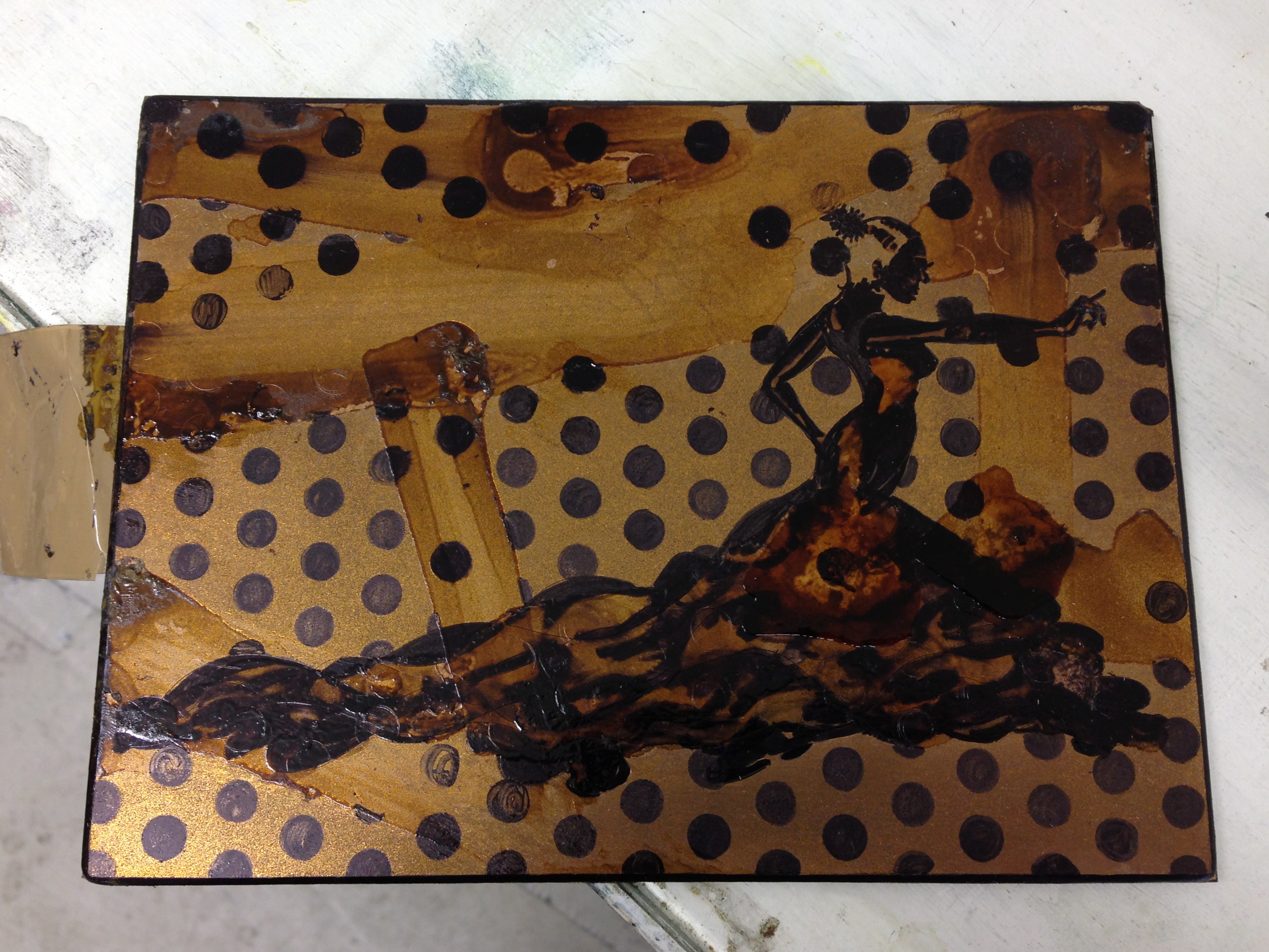
Departing from the Norms who feature on my previous etchings, I decided to follow my familiar passion for Spain, and flamenco, recycling the idea I had for a fragmented dancer in Composition No. 8, and this time etching a flamenco dancer with a free-flowing fluid dress making for the major attraction of the plate. In terms of process, the image itself did not involve a whole lot of etching. Rather, the detail came with the aquatinting and soft-ground applied thereafter. Once the initial dancer image was etched into the plate, I then took a benday dot stencil, the likes of which would have been used by Roy Lichtenstein, and applied a series of polka dots across the background of my plate, emulating the popular pattern of flamenco dresses, and adding variety of tone by dipping in acid for different lengths of time.

La Flamenca (copper etching on paper) © Nicholas de Lacy-Brown, 2013

La Flamenca (copper etching on paper) © Nicholas de Lacy-Brown, 2013

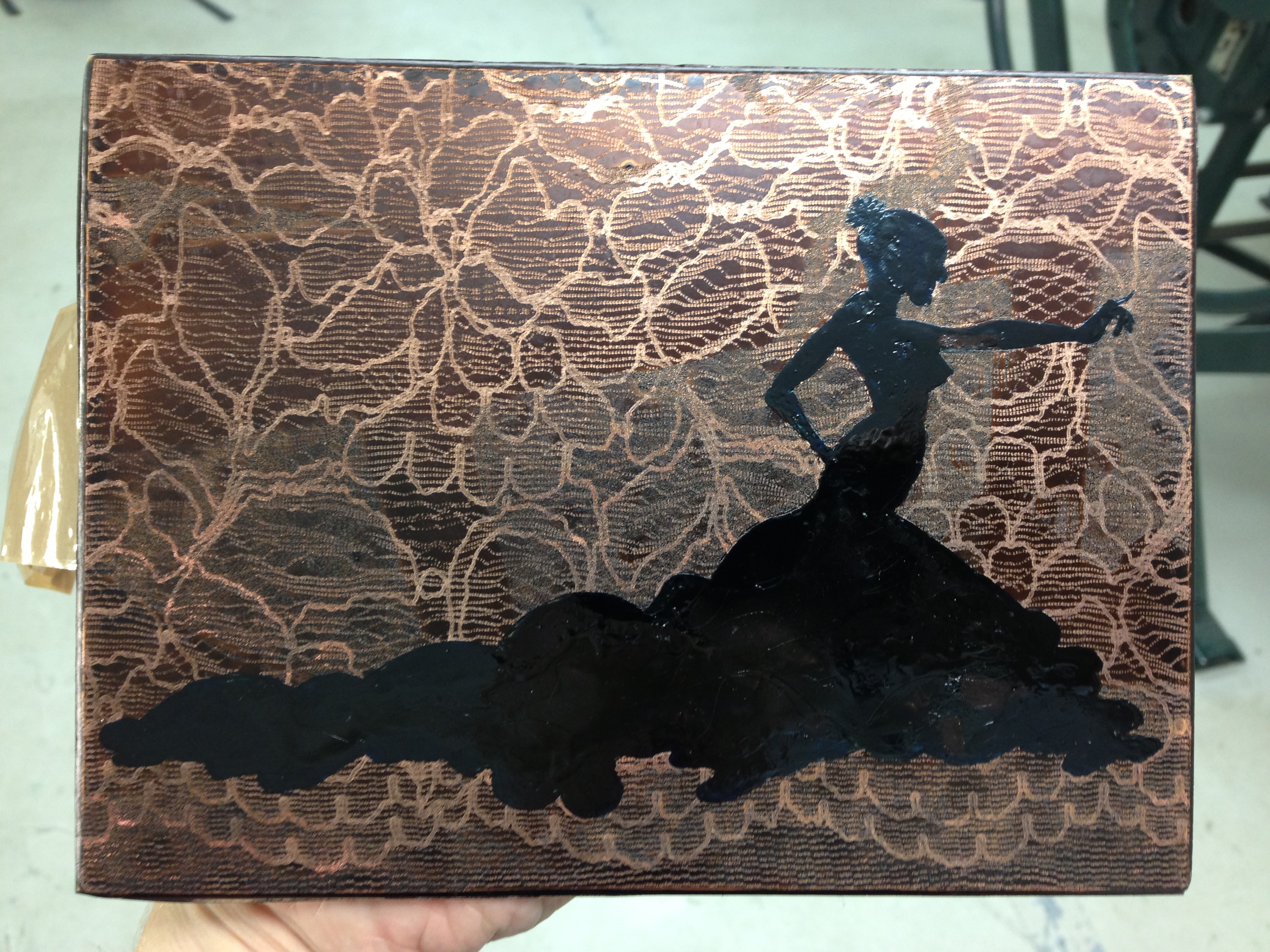
In the lighter areas of the background (kept light through giving them less exposure to acid) I applied an intricate lace pattern using the soft-ground technique. This basically involves painting the plate with a protective liquid ground which is left wet. A piece of lace is then applied on top and the plate sent through the print press. This presses the lace into the soft ground, lifting it off the plate and leaving an impression of the lace in the ground, which is then etched into the metal when exposed to acid. I adore the result, creating a background which now includes both the lace and polka dots so characteristic of flamenco.

The final step then was to print my plate – I did so with a black ink mixed with a warming red to give a real flamenco flavour. I’m really very pleased with the result, so much so that I have decided to make this print a larger edition of 50.
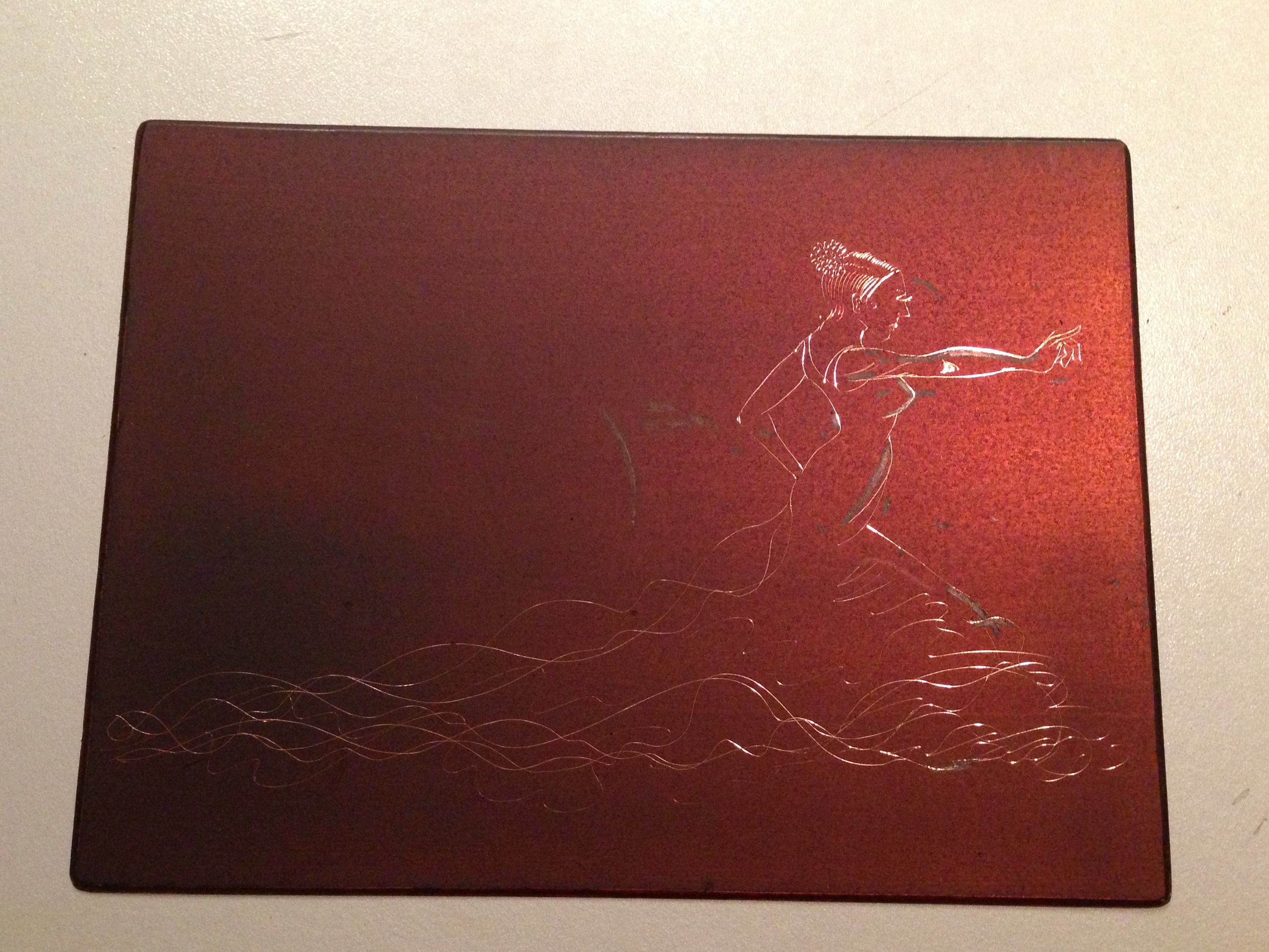
The initial line etching
The initial line etching

Applying the dots onto aquatint

Applying the dots onto aquatint

Applying a lace softground

Applying a lace softground

IMG_5175

Stopping out the figure before final acid dip

Stopping out the figure before final acid dip

The finished plate

The finished plate

The finished print

The finished print

If you would like to buy one of my limited edition prints, they’re available now – in my Etsy store. See you there!

© Nicholas de Lacy-Brown and The Daily Norm, 2001-2013. Unauthorized use and/or duplication of the material, whether written work, photography or artwork, included within The Daily Norm without express and written permission from The Daily Norm’s author and/or owner is strictly prohibited. Excerpts and links may be used, provided that full and clear credit is given to Nicholas de Lacy-Brown and The Daily Norm with appropriate and specific direction to the original content. For more information on the work of Nicholas de Lacy-Brown, head to his art website at www.delacy-brown.com

Printmaking Progress III – Editioning El Marinero

Readers of The Daily Norm may remember that in that optimistic time of Spring, long long ago, I discovered the art of printmaking. Having been inspired to give the medium a go by masters of the craft such as Lucian Freud and the ever dark-minded Spanish great Francisco de Goya, and having dappled at first in a little lino cutting, I very soon fell in love with etching, the technique by which acid is used to “etch” an image into a metal plate, which can then be used to print a whole run of that image (albeit seen back to front – something for which careful planning is required). You’ll be forgiven for thinking that my newfound love of the technique was short lived – after all, I haven’t posted any etchings since May, and have, quite unapologetically, become obsessed with gouache paint on paper which I have pursued relentlessly in the creation of my “Compositions” series.

Well, come the autumn, and with my summer travels, sadly, long behind me, I decided the time was right to re-enter the printmaking studio, not just to start projects afresh, but to finish off the ones I started all those months ago.

I have previously told you about etching the line image onto the metal plate (I used zinc, but other metals can be used and this will affect the number of prints which can eventually be made from the plate), and also about the aquatint process by which tone is added to the plate. The final stage of printmaking is printing and editioning – making sure that every single print is printed identically, so that a closed “edition” can be made, and sold through the aid of a single exhibited example.

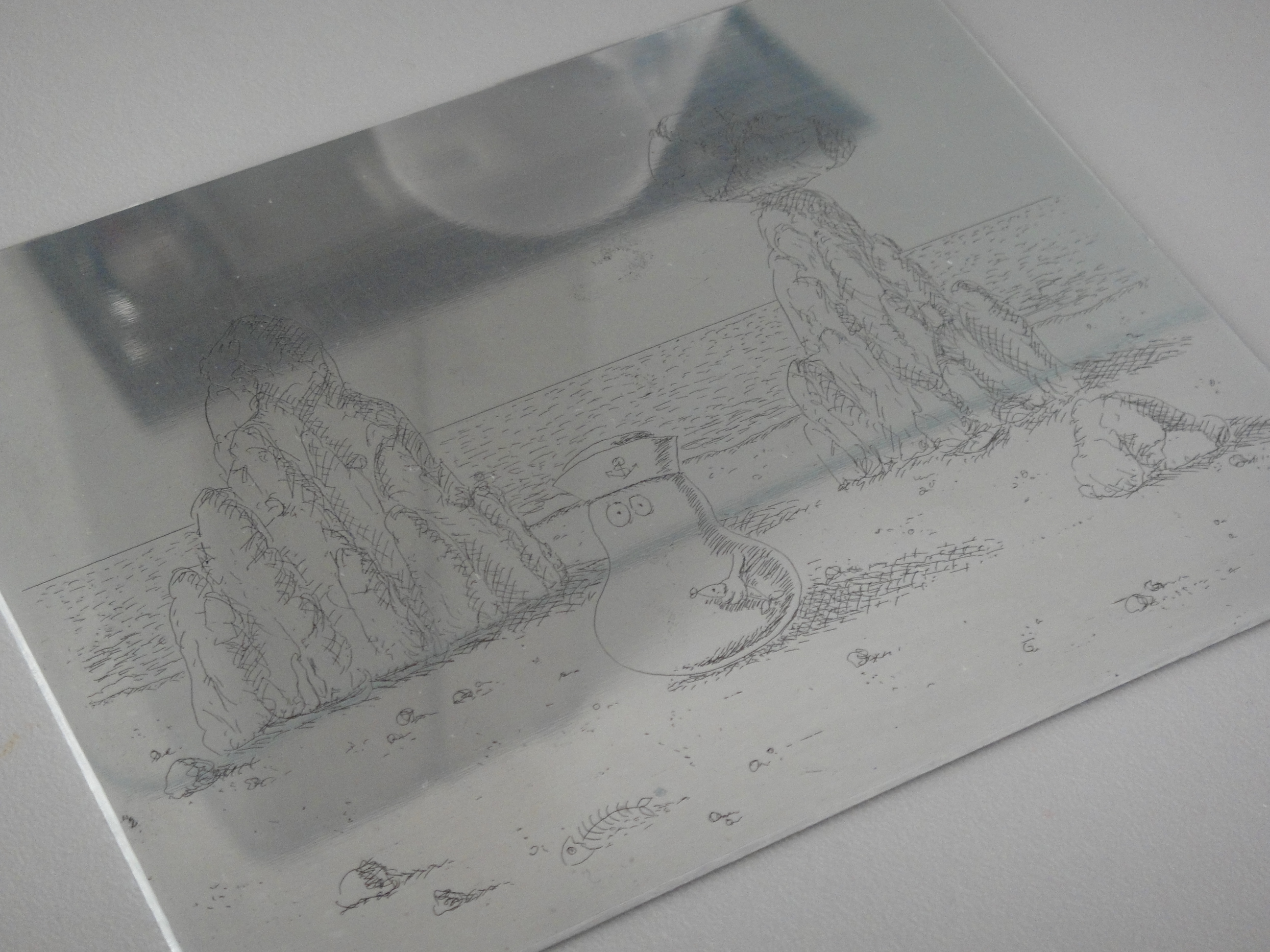
The zinc plate with image etched into it

The zinc plate with image etched into it

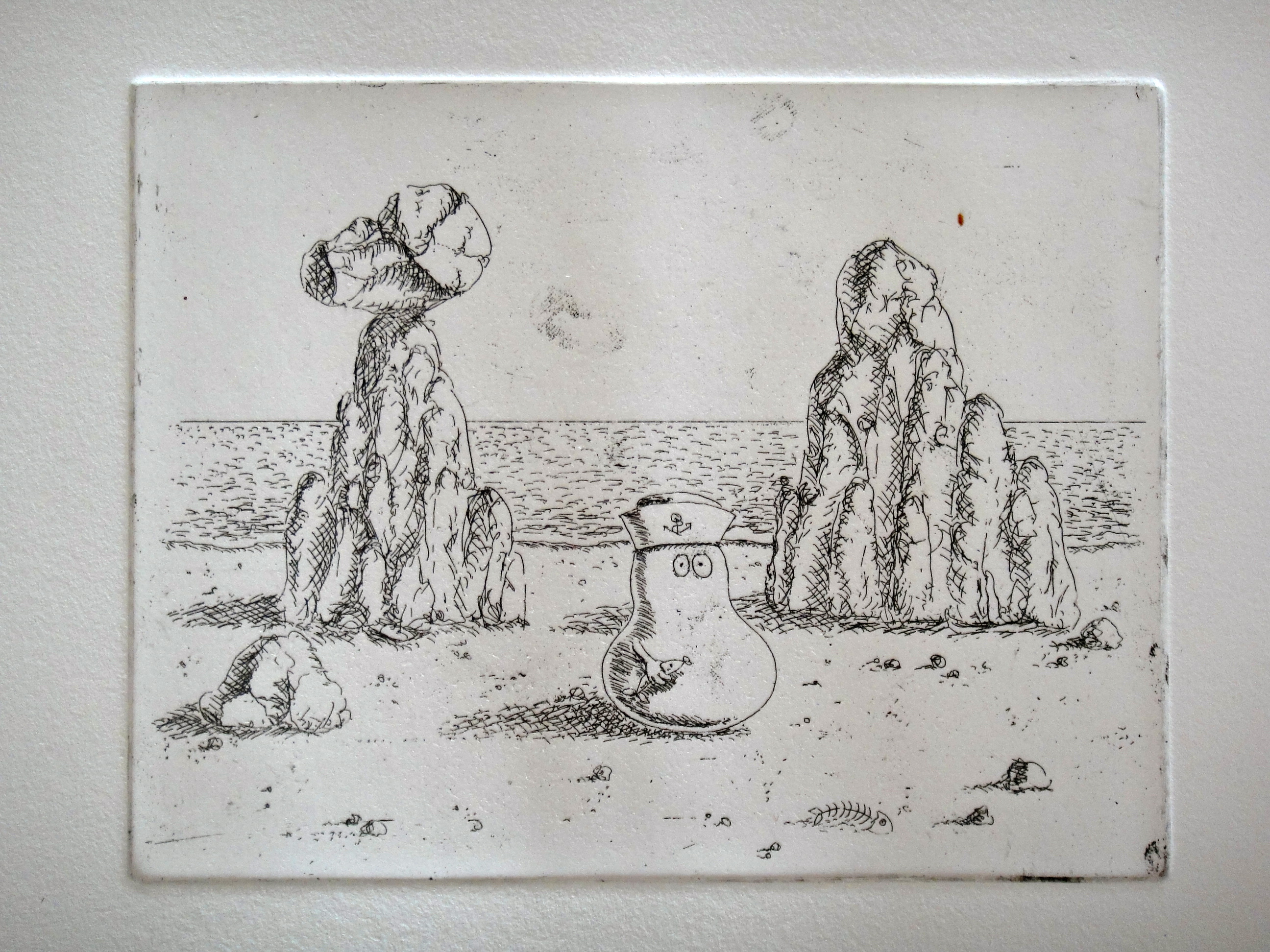
First print - before the aquatint was applied

First print – before the aquatint was applied

El Marinero during the aquatinting process

El Marinero during the aquatinting process

Editioning is an intricate and time consuming process. You have to cut yourself paper of an identical size; bathe it in water to ensure the paper takes the ink, but dry it before printing to ensure the ink does not run. You have to smear the plate in filthy oil-based ink, and then gradually wipe it off again, leaving the ink remaining only in the lines. You have to clean the edge of the plate to ensure that the embossment of the paper around the plate is kept pristine. And finally, ensuring you do not dirty your paper with your inky-black hands, you have to run the plate, and the paper through the printing press. All this takes about 15 minutes per print, but once you get a system going, it’s surprising how easily the human body can become like a factory process.

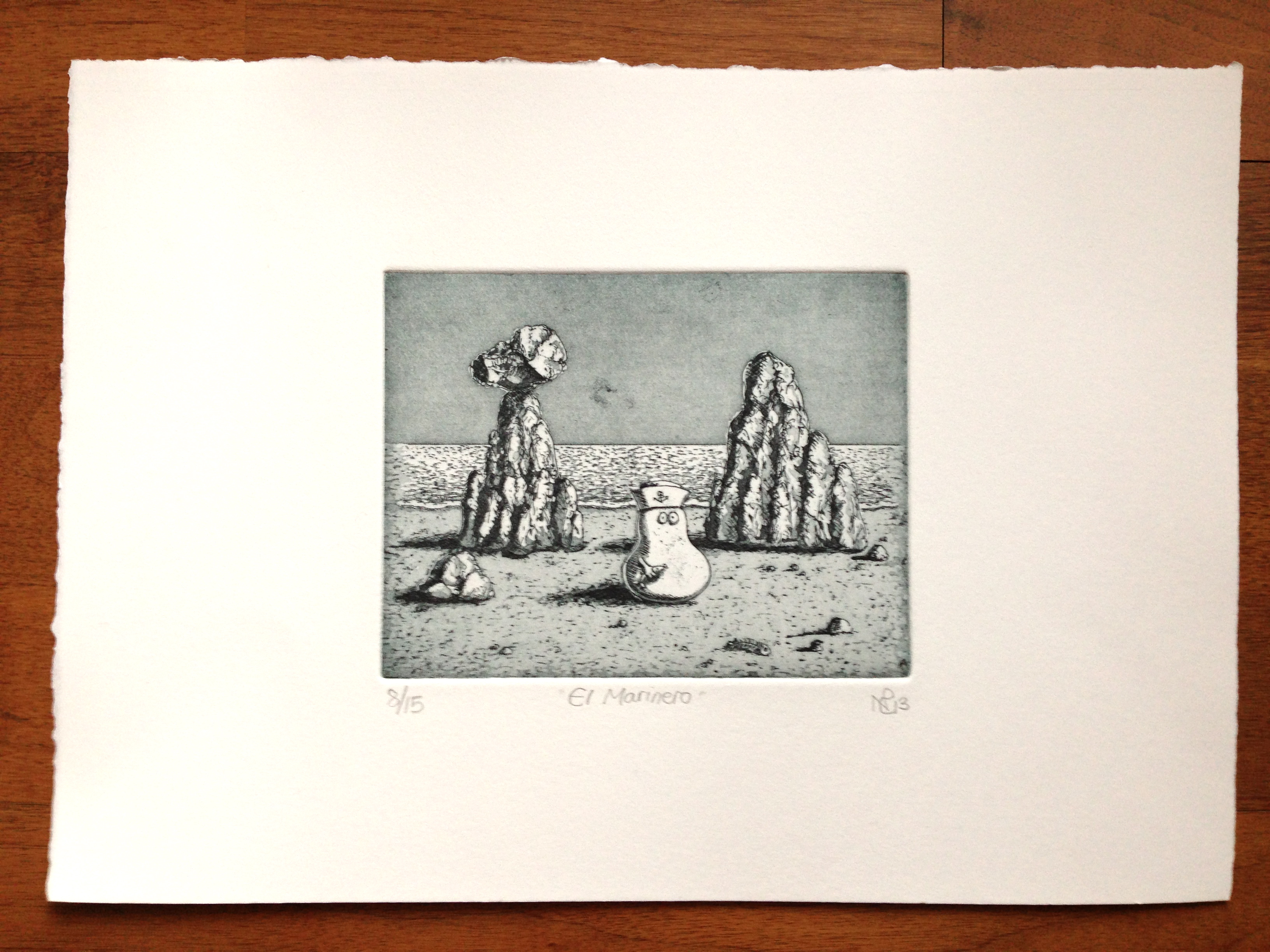
I have now spent several sessions in the studio, making editions of the two zinc etchings I made back in May, and the result I want to share with you today is my first ever plate. When you last saw it, it was a line image only, with no aqua tint adding tone. Now the image is aquatinted and complete, printed as a limited edition set of 15 which, by coincidence, are now available on my online shop to buy.

And a nice close up of the image

The finished print

IMG_5025

The print, entitled “El Marinero” shows a sailor Norm holding a fish on a mysterious Mallorcan rocky beach. It’s an enigmatic image, with its empty shores and strange rocky forms, but one which I cherish as being my first dalliance into the world of etching, and inspired by the surreally-shaped coves of Mallorca’s stunning coastline. Now I am on my third and fourth etchings respectively (one in zinc, and one in copper) and I cannot wait to complete those and share them on The Daily Norm.

Details of how to purchase your own strictly limited print of El Marinero can be found on my Etsy shop. As a closed edition of 15, it’s an extremely limited set, and hopefully therefore an attractive art investment for your future, as well as a pleasing little gift for another, or of course, for yourself.