Skip to content

Posts tagged ‘London’

The Daily Norm’s Photo of the Week: Shard Triptych

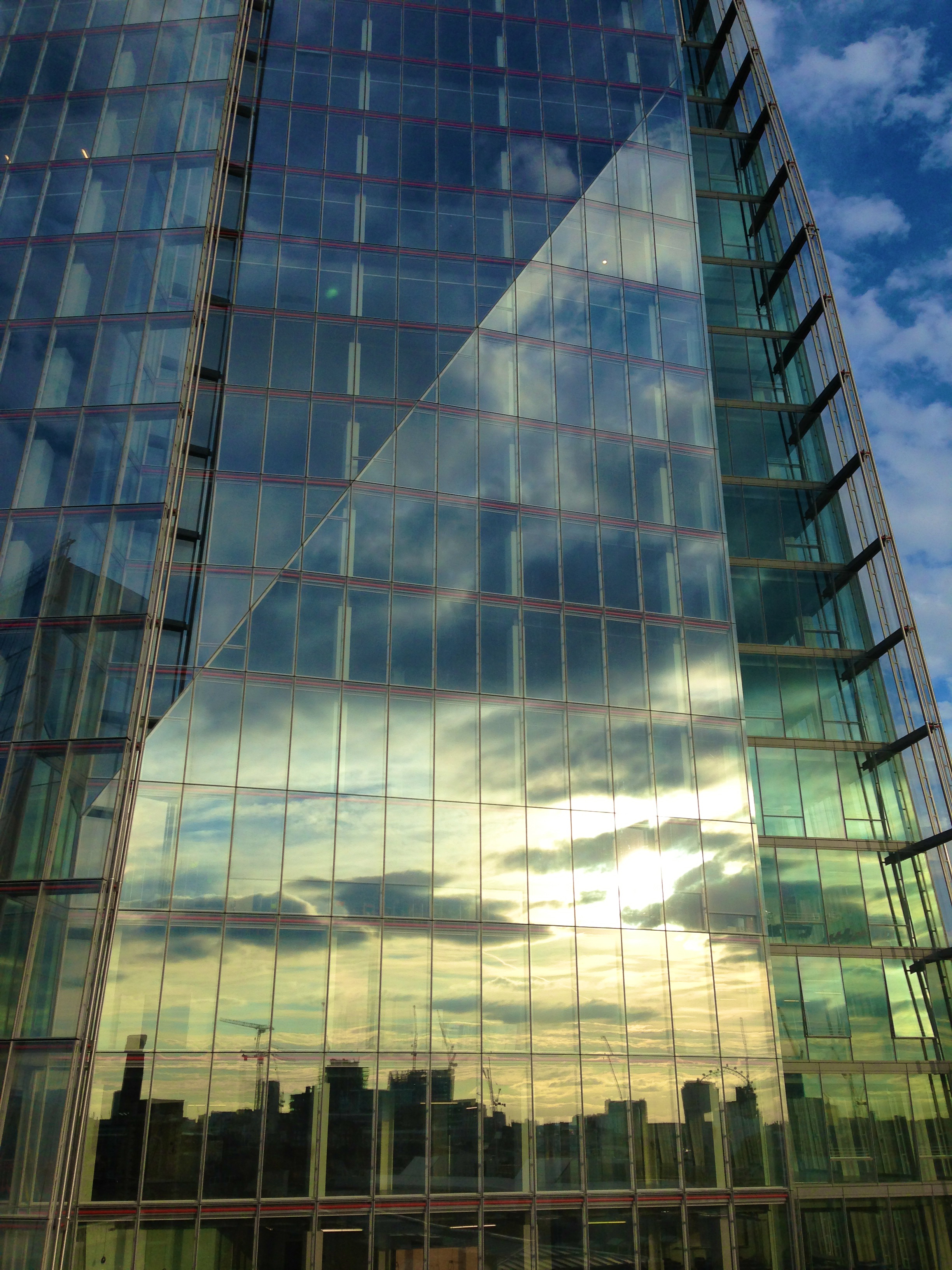
Love it or hate it, you have to admit that the Shard, currently the tallest building in all of Europe at 306 metres high, and the newest addition to the London city skyline, makes for quite an impression on the eye, not least because its construction in the London Bridge area rather than the more developed City, means that the skyscraper is something of a lone ranger in amongst a terrain of far shorter historical constructions. While I had my reservations at first, particularly when I saw the building on completion and realised that the jaggard edges at its summit (said to resemble shards of glass – hence the name) were not going to come together into a satisfying point, I have to admire the way that this vast building stretches into the sky for as far as the eye can see, bursting out of the Bermondsey skyline as an indisputable symbol of man’s quest to build higher and higher into the realms where only nature has previously reined free.

But seeing the mighty Shard from a distance is one thing – how about dining at its foot, on the roof top of a nearby restaurant with the more recognisable skyline of riverside London reflected in the Shard’s huge glass facades? Well that was exactly the dining experience I enjoyed at the end of last week when, with my dear friend Celia, master baker and author of the indefatigably brilliant Lady-Aga blog, we spent the late-summer’s evening at the Rooftop Café of the Exchange building, a laid-back antipodean affair, where aussie chefs and suitably chilled-out waiters serve a menu loaded with tantalising light summer treats, to be savoured while enjoying the view which, thanks to the reflective surfaces of skyrise buildings all around, could be seen wherever the eye did venture.

IMG_4753 IMG_4760 IMG_4766

So while you must excuse the fact that, for all those fine views, my memory of the food is less precise (luckily my fellow diner was more astute in that respect, and I will let her review on Lady-Aga fill you in on all the gastronomic details), as The Daily Norm’s favourite photo(s) of the week will testify, the view of London was simply too breathtaking to let food take centre stage. I could, in fact, fill this post with photos of the views which I took on my handy iphone that evening, as the sky over London went from a fair-weather cloud scattered lemony yellow, to a rich raspberry pink. However in an attempt to pare down my selection to a mere few, I have selected what was undoubtedly my favourite view of all – the double whammy which was provided in seeing the recognisable London skyline (London Eye and Parliament included) reflected in the sparkling new surfaces of the glazed and angular shard.

Quite unable to choose between these three views, each taken slightly later during the evening, I simply opted for all three. One series – a view in transition – taken in three successive shots.

All photos and written content are strictly the copyright of Nicholas de Lacy-Brown © 2013 and The Daily Norm. 

Genius of Geometry: Patrick Caulfield

When I attended the Royal Academy’s Summer Exhibition in 2006, I was completely stunned by an artist to whom the Academy had dedicated a room of its annual summer show: Patrick Caulfield. Born in London in 1936, and died in 2005 (hence the tribute paid to him at the following Summer Exhibition), Patrick Caulfield’s flattened geometric black-lined block coloured works have now become synonymous with the age of British pop-art, although it was a title which Caulfield actually rejected. And he was probably right to. While his works, largely acrylic on canvas, share many of the characteristics of the pop art age (bold colouration, simplified forms, black outlines), pop art promoted and impersonated the commercial world, while Caulfield’s works actually reference art historical notions of representation; from still life to pictorial depth, albeit represented in his characteristic paired down flat colours and simple linear expression.

Early output

Pottery (1969) © The estate of Patrick Caulfield

Pottery (1969) © The estate of Patrick Caulfield

Foyer (1973) © The estate of Patrick Caulfield

Foyer (1973) © The estate of Patrick Caulfield

Café Interior: Afternoon (1973) © The estate of Patrick Caulfield

Café Interior: Afternoon (1973) © The estate of Patrick Caulfield

Wine Glasses (1969) © The estate of Patrick Caulfield

Wine Glasses (1969) © The estate of Patrick Caulfield

Battlements (1967) © The estate of Patrick Caulfield

Battlements (1967) © The estate of Patrick Caulfield

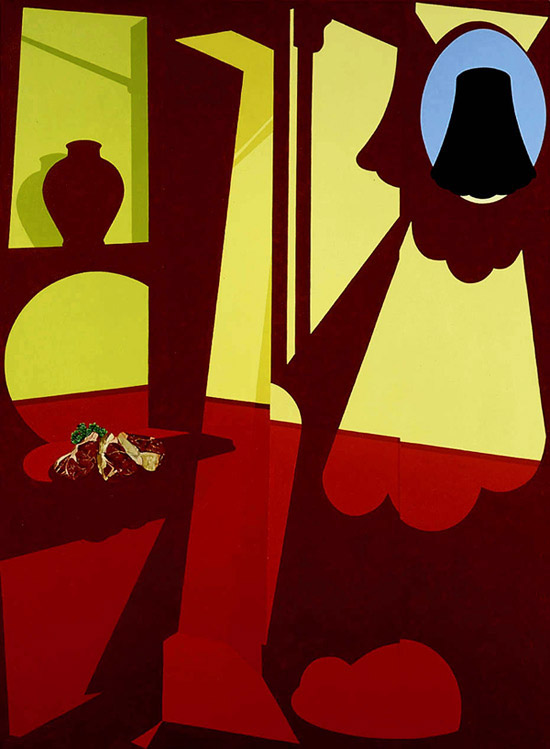
Dining/ Kitchen/ LIving (1980) © The estate of Patrick Caulfield

Dining/ Kitchen/ LIving (1980) © The estate of Patrick Caulfield

It only took one glance that summer of 2006 at the perfectly painted lines and faultless application of block colours used artfully to depict rooms and places, café scenes and still lifes to know that I was completely in love with Caulfield’s works. While I adored the sparse simple images of his 1960s work, my real admiration was reserved for the knockout creations of the mid 70s, when Caulfield started to play with styles, integrating into his then renowned geometric works hints of trompe l’oeil photorealism. So in works such as Dining/Living/Kitchen for example, Caulfield paints a scene characterised by black outlines, block shadows, dispensed brushwork and anonymous handiwork and inserts into it a casserole dish so perfectly represented that you would swear a photo had been collaged onto the background. This technique is used with spectacular success in After Lunch, where the window (or is it a picture hanging on the wall?) looking onto an Austrian landscape is photorealistic to an awe-inspiring standard, while in Happy Hour, the wine glass at the painting’s centre actually reflects in its sheen a realistic depiction of the bar which, elsewhere in the painting is only represented with paired down flattened forms. Absolutely brilliant.

Tromp L’oeil brilliance

Happy Hour (1986) © The estate of Patrick Caulfield

Happy Hour (1986) © The estate of Patrick Caulfield

After Lunch (1975) © The estate of Patrick Caulfield

After Lunch (1975) © The estate of Patrick Caulfield

Still Life Autumn Fashion (1978) © The estate of Patrick Caulfield

Still Life Autumn Fashion (1978) © The estate of Patrick Caulfield

Interior with a Picture (1985) © The estate of Patrick Caulfield

Interior with a Picture (1985) © The estate of Patrick Caulfield

Second Glass of Whisky (1992) © The estate of Patrick Caulfield

Second Glass of Whisky (1992) © The estate of Patrick Caulfield

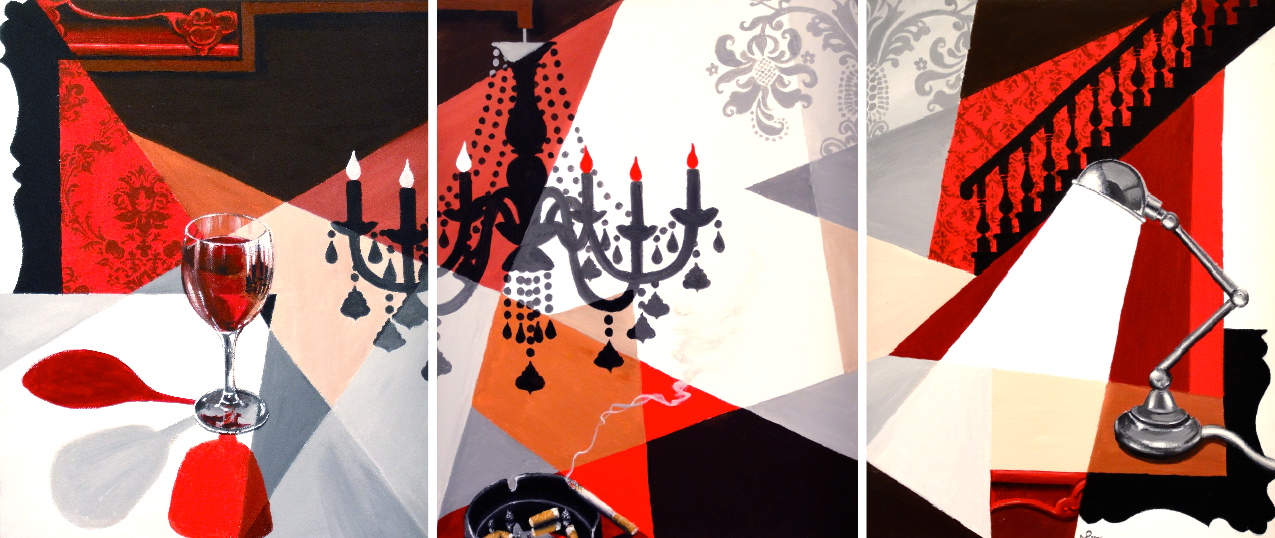
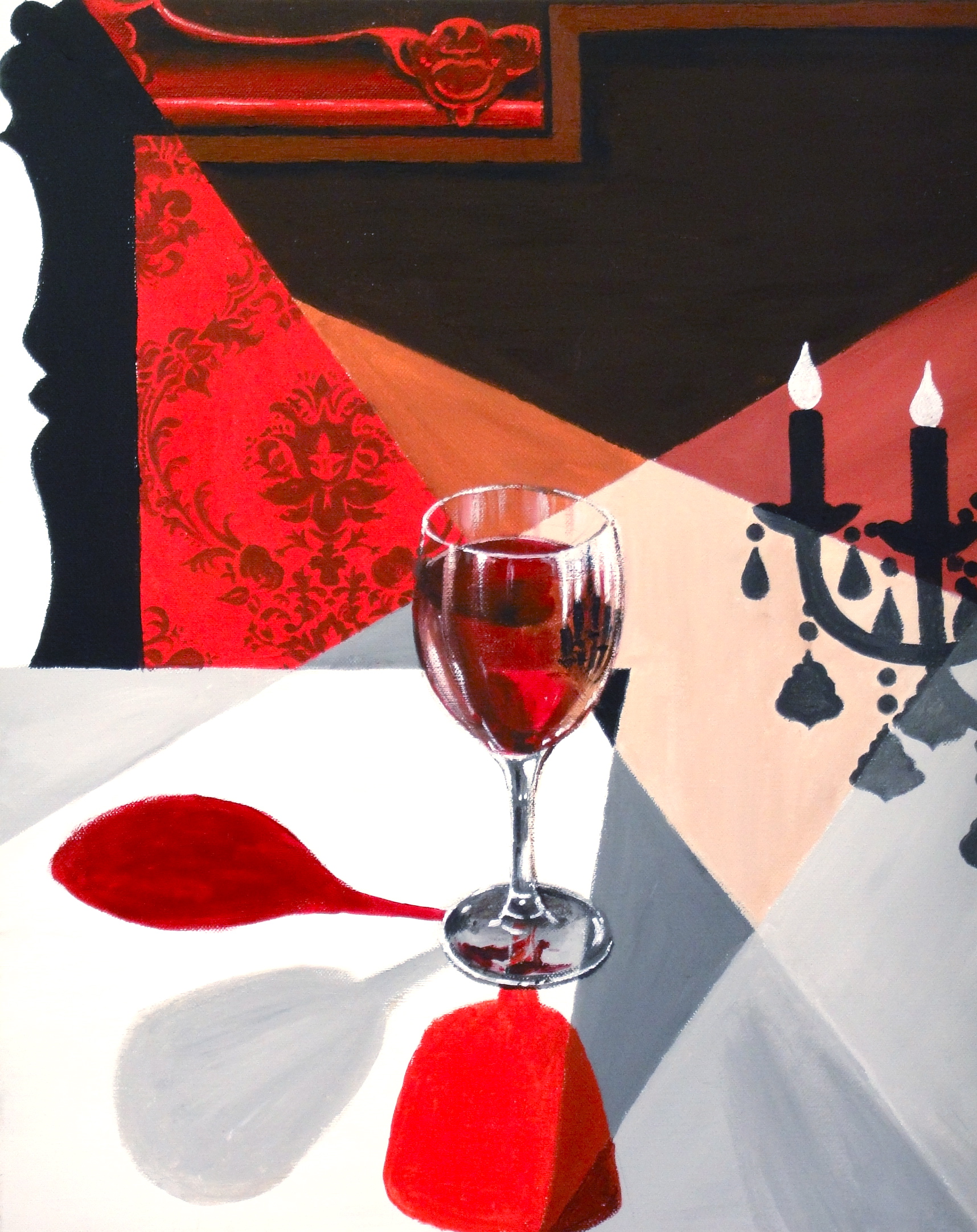
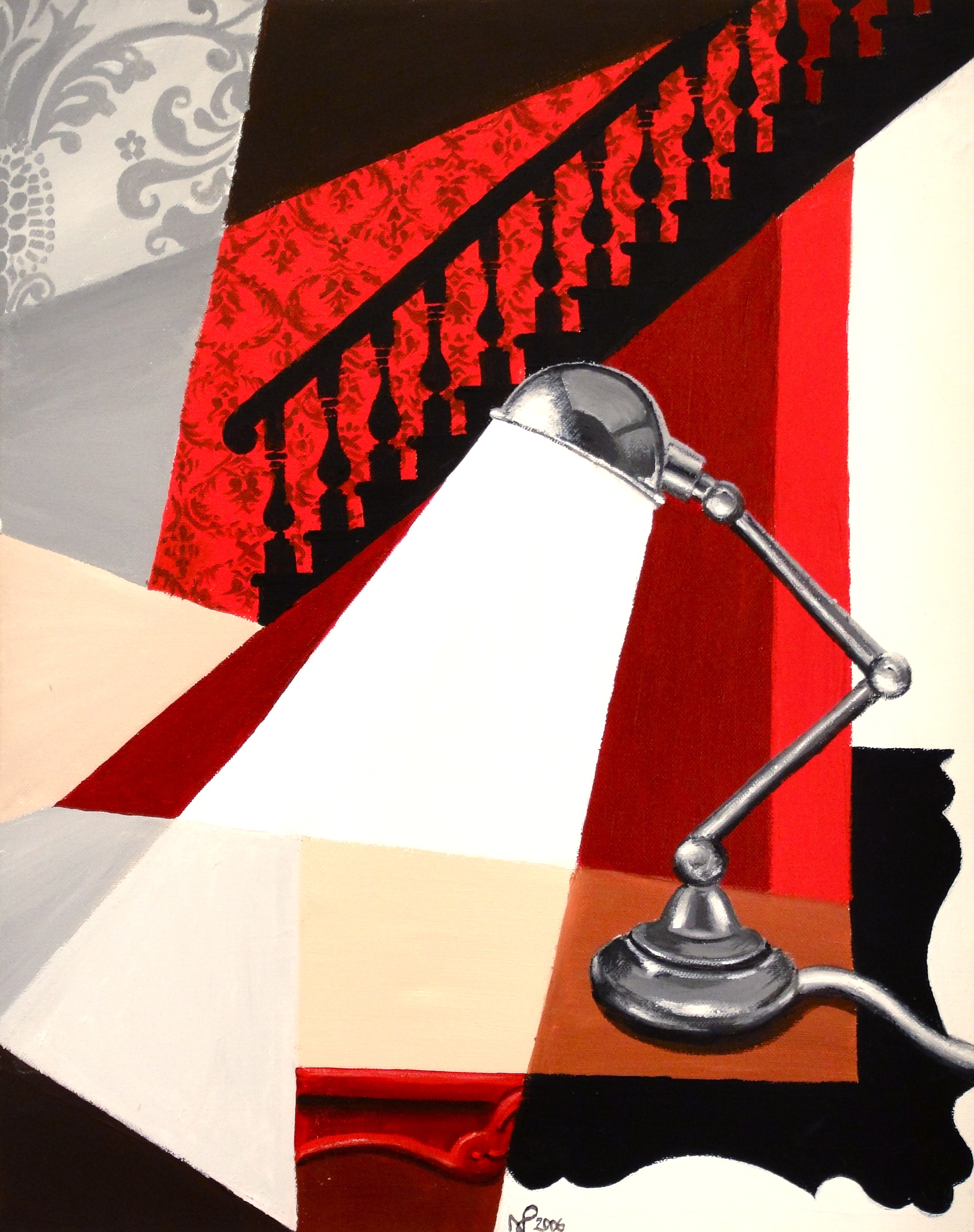
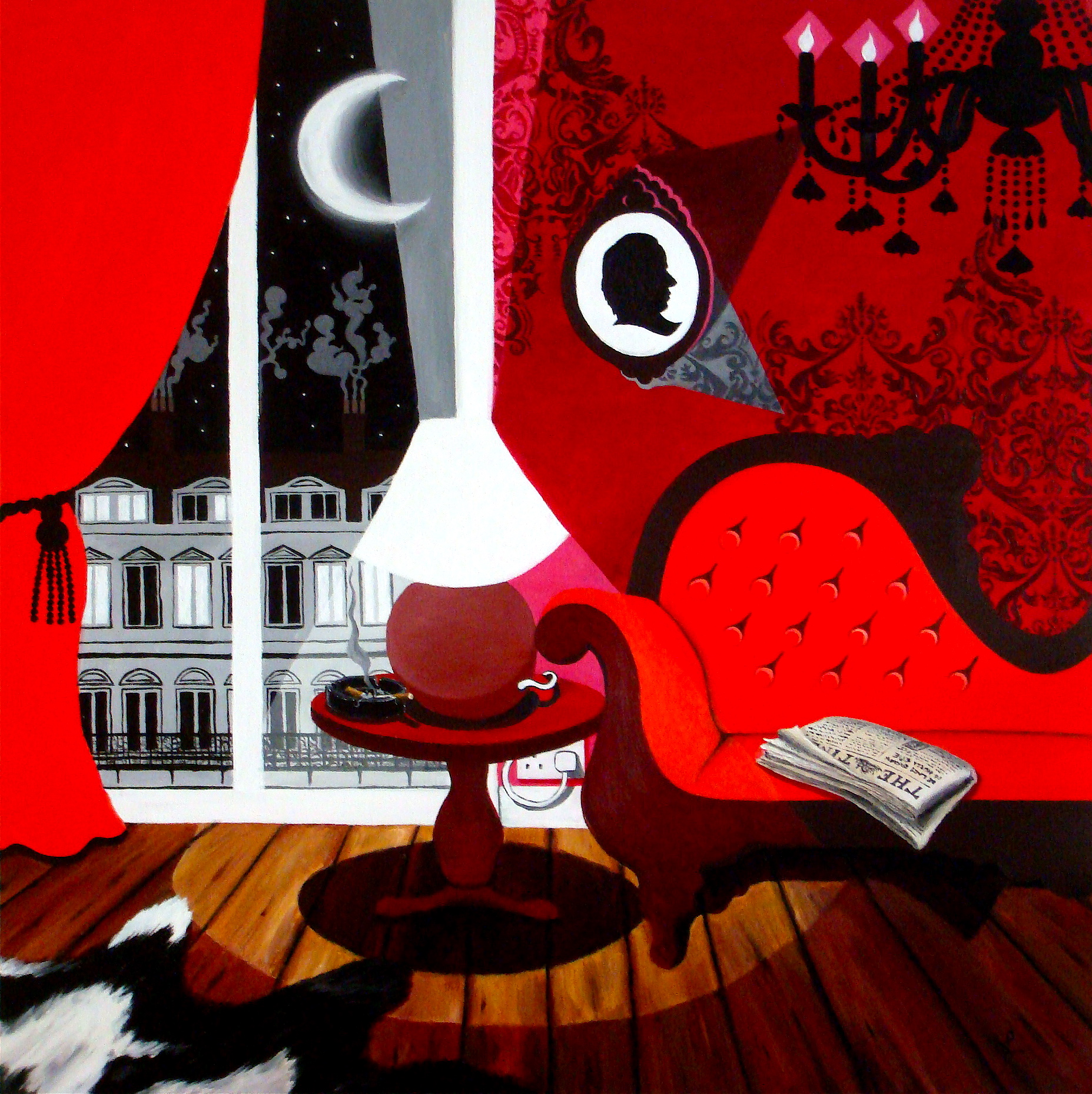
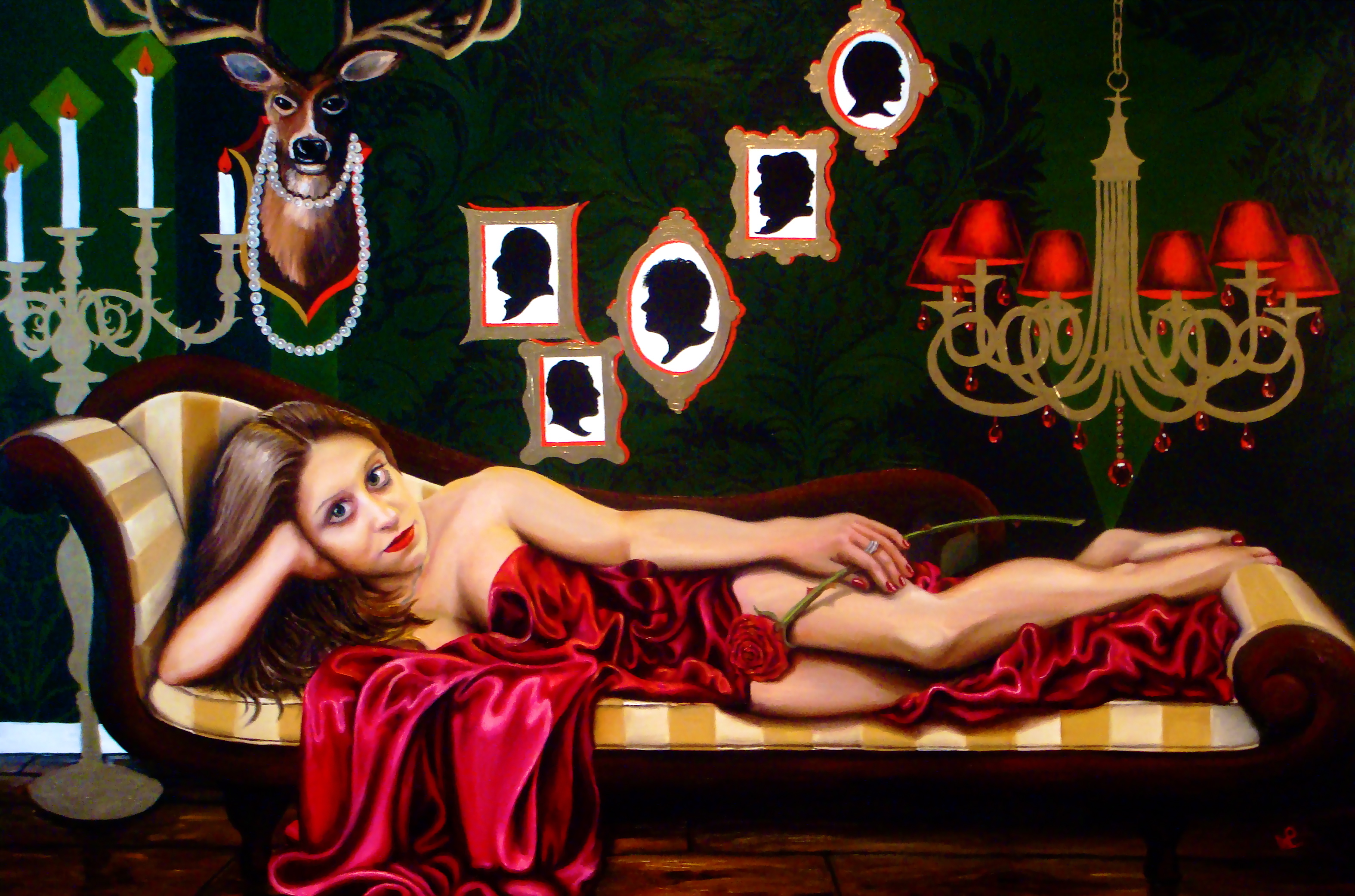
Caulfield’s work not only thrilled me; it also inspired me. I am much indebted to the influence Caulfield had upon my own work – my painting Vintage Q, painted that summer immediately after seeing the RA show, is directly inspired by Caulfield’s technique, while Q4 and Q5, which followed suit, are likewise. Meanwhile, I think much of the interior design I put into place around my apartment flows directly from his mix of contemporary block colours, and interlaced with hints of rich, detailed damask patterns.

Later works: light and shadow

Room 3-95 (1995) © The estate of Patrick Caulfield

Room 3-95 (1995) © The estate of Patrick Caulfield

Trou Normand (1997) © The estate of Patrick Caulfield

Trou Normand (1997) © The estate of Patrick Caulfield

Bishops (2004) © The estate of Patrick Caulfield

Bishops (2004) © The estate of Patrick Caulfield

Hedone's (1996) © The estate of Patrick Caulfield

Hedone’s (1996) © The estate of Patrick Caulfield

Rust never sleeps (1996) © The estate of Patrick Caulfield

Rust never sleeps (1996) © The estate of Patrick Caulfield

Fruit display (1996) © The estate of Patrick Caulfield

Fruit display (1996) © The estate of Patrick Caulfield

So for that reason alone, Caulfield has always stuck in my mind, but imagine my delight when this summer, a solo show held at Tate Britain afforded me the opportunity to see Caulfield’s works all over again. In 5 exquisite galleries, a comprehensive selection of Caulfield’s works took us from his most simplistic 60s creations (a simple grey well reduced to flattened, even more simplified forms; a bend in the road, some castle battlements (above) and so on), to his brilliantly innovative 70s works, where trompe l’oeil dazzles the senses and shines amongst the flatter planes of the large-scale block colour canvases, and then onto the 80s and beyond, when Caulfield began to experiment more with light and shadow, not focusing so much on the thick outlines of black, but expressing an object with shadows and throwing light, albeit in block-colour form.

My works: inspired by Caulfield

Vintage Q (2006 © Nicholas de Lacy-Brown)

Vintage Q (2006 © Nicholas de Lacy-Brown)

Vintage 1 NEW 2011 Vintage 2 NEW 2011 Vintage 3 NEW 2011

Q4 (2007 © Nicholas de Lacy-Brown)

Q4 (2007 © Nicholas de Lacy-Brown)

Q5: Chez Helen (2008 © Nicholas de Lacy-Brown)

Q5: Chez Helen (2008 © Nicholas de Lacy-Brown)

I realise that in writing this review, I am somewhat missing the boat, seeing as the Caulfield show at Tate ended last weekend. But that is no reason why the genius of this brilliant artist should not be applauded to the full – an artist who took 60s simplification in an altogether more mentally complex direction; whose works have become iconic in the chic interiors of London’s cool hotels and boutiques; and whose images have been fundamental in shaping my own creative output as an artist.

My Urban Balcony Garden – 2013

Last summer on this blog I wrote to tell you all about my secret urban paradise – the little balcony garden which runs alongside my South London flat and which has slowly metamorphosed into my own slice of the Mediterranean. Well one year later, this Elysium of urban-imported Andalucian countryside is as healthy and abundant as ever and surely worth another post. For this year, my balcony’s abundance is all the more worth celebrating for England suffered from what was one of the coldest and longest winters on record. Even in April, while I was luckily ambling along the warm cerulean beach at Pollença in Mallorca, they had snow back in the UK. These conditions my balcony disliked. Grumpily my plants began to waken from their interrupted, uncomfortable winter’s slumber, but some, like my vast tropical centrepiece – the bell flowered brugmansia – were stubborn until the very last. Having lost all of its leaves in the cold, I almost gave up hope of the plant ever recovering when in June still no shoots had been forthcoming.

DSC04969 DSC04970DSC01535 DSC05098 DSC04957

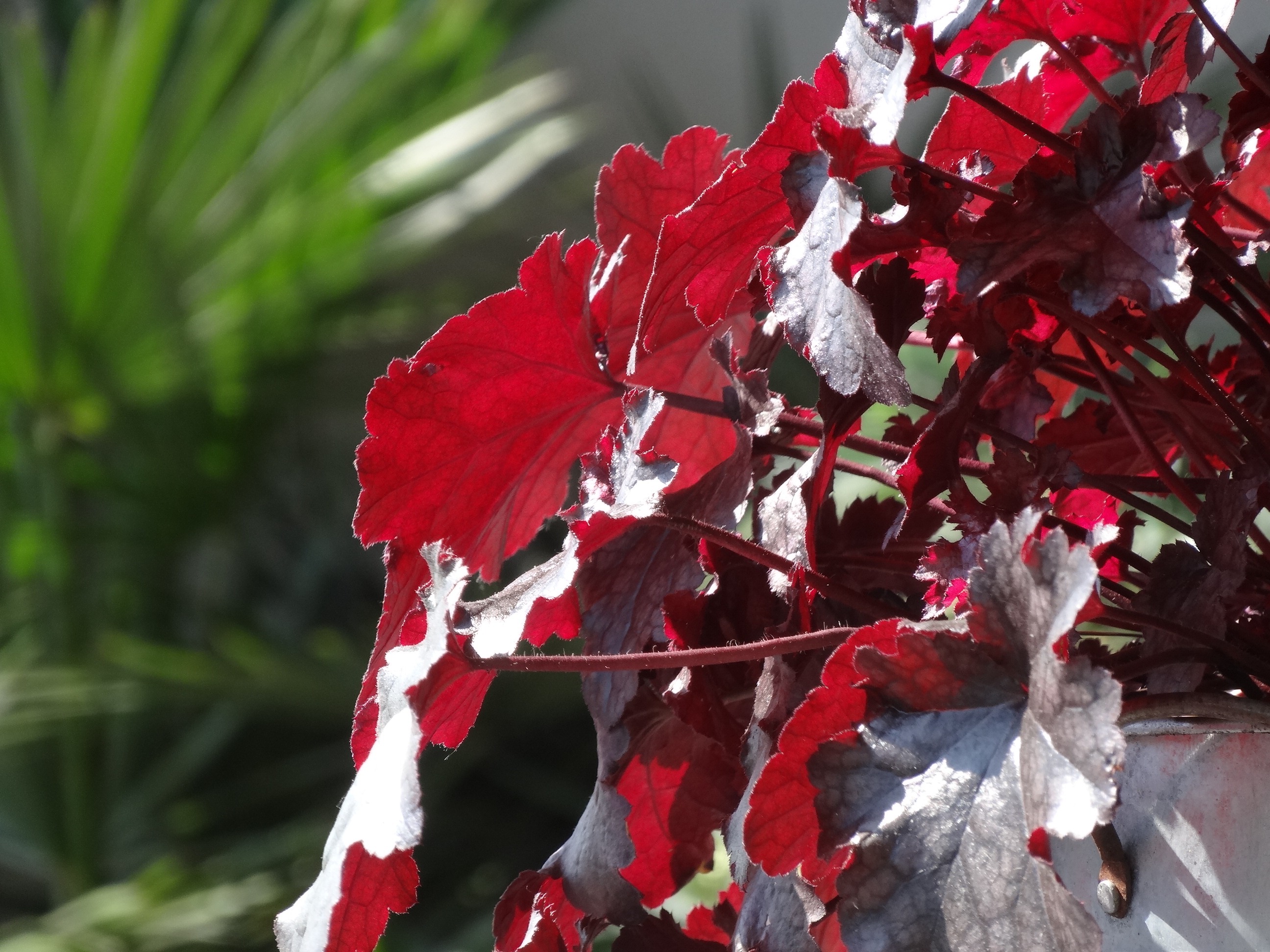
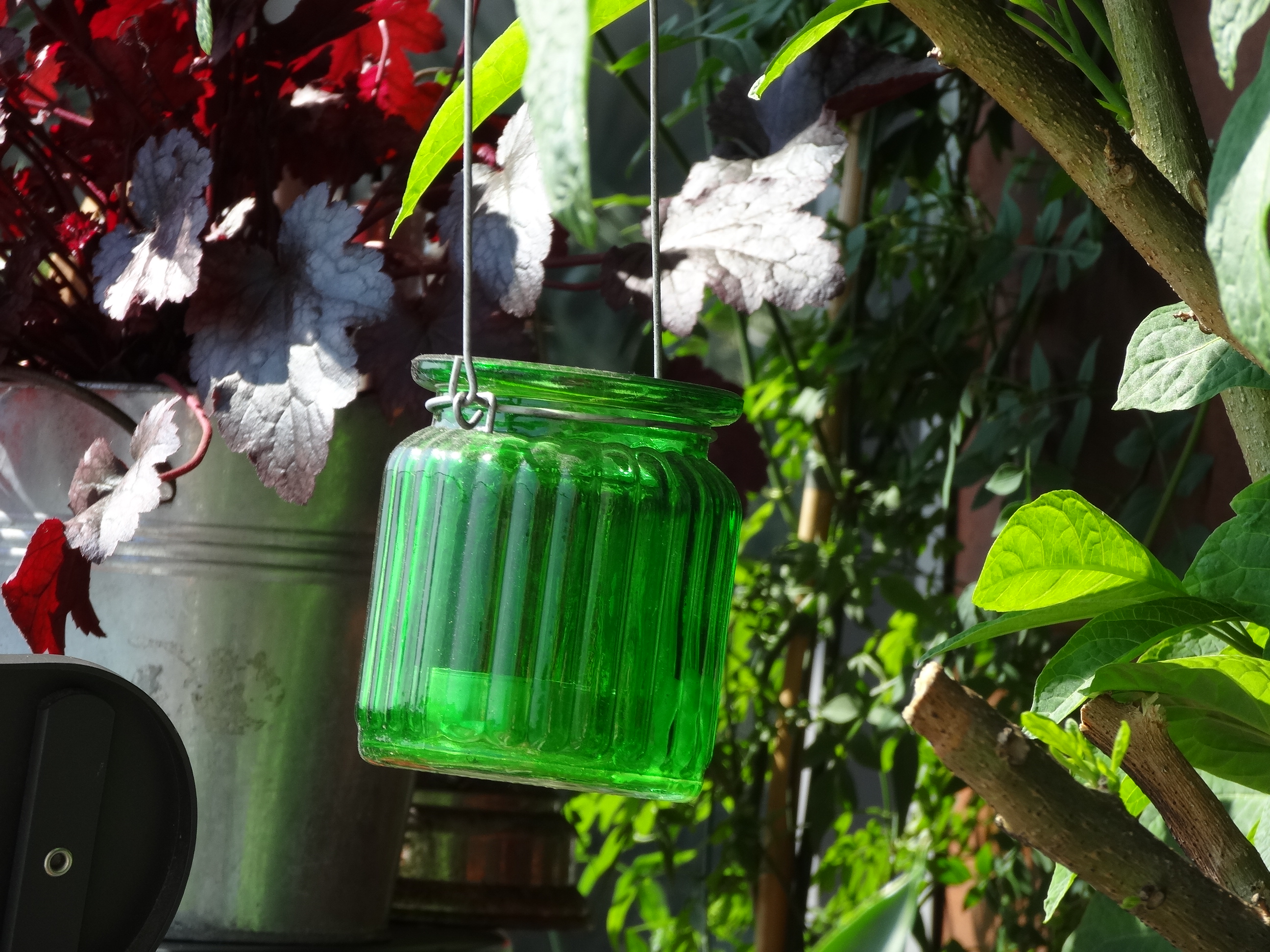
Yet a month later the brugmansia, like the other plants on the balcony, is flourishing. This Mediterranean paradise is tightly designed in shades of black and red to match the interior design of my apartment, but is nonetheless allowed to expand autonomously, thus creating an ever cosier garden space. This year we have imported a fragrant jasmine to remind us of those paradisal nights in my family home in Marbella, where the sweet-smelling perfume is almost overwhelming. That joins the Palms, the wild Passion flower, the abundant olive trees and the vivid and voluptuous red geraniums to make this small balcony space perfectly reminiscent of a slice of Southern Spain, yet with contemporary touches suitable for London brought by black grasses, blood red lilies and other wine-coloured foliage.

My urban balcony garden really is my pride and joy, and this year I’m celebrating its success more than ever.

All photos and written content are strictly the copyright of Nicholas de Lacy-Brown © 2013 and The Daily Norm. All rights are reserved. Unauthorized use and/or duplication of the material, whether written work, photography or artwork, included within The Daily Norm without express and written permission from The Daily Norm’s author and/or owner is strictly prohibited. 

Small pleasures of my walk to work

As most Londoners will tell you, the commute to work (for all except those who are lucky enough to live in the centre of the city) is very frequently something closely resembling Dante’s vision of hell: People everywhere, packed tightly into incredibly undersized train carriages rumbling slowly in the subterranean layers of the city,  all dignity lost in these sardine-can surrounds as you become very closely acquainted with the smallest details of your neighbour’s facial pores, their morning’s perfume (or lack of it), and more often than not the opportunity to guess at what they ate for breakfast. Being used now to the commute, I tend to take it in my stride, delving like most fellow commuters into the depths of my subconsciousness during travel, ears indoctrinated by the ipod headphones pushed firmly into my ears, and mind transported to the other-world of whichever novel I am reading at the tim. However, when the commute is particularly bad, it can really exert the potential to ruin the rest of the working day that follows, not least when problems on the journey make you late for work.

DSC05060 IMG_3390 DSC05046 DSC05064

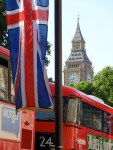
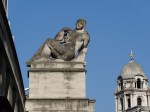
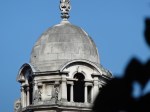
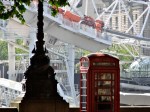
As with so many of the benefits that come with summer, one of my greatest pleasures and equally my greatest of reliefs is to be able to hop off the tube a stop early when the weather is fine, and take the walk, from Embankment station on the River Thames, through the grand streets adjoining Whitehall, and amble along with my freshly made coffee to my place of work on Parliament Square. One of the best things about this walk is the route it takes me along, through the Whitehall gardens which adjoin the embankment, and continuing past some of the grandest of the Governmental buildings, including the infamous entrance to 10 Downing Street itself.

Despite taking the same route ever day, I never tire of the sites before me: the red phone boxes lining Whitehall, and the lines of red buses which so often pass along the same street; the highly ornamented lamp-posts and building facades; and the flowers and verdant grass in the river-side gardens, including the old twisted tree whose branches have to be held up by huge crutches reminiscent of a painting by Dali. The charm of these sights are, like so many things, increased in the sunshine, and as we have been having many  blissful sunny days in London recently, the photos which follow are a small selection of the shots I took one particular morning as I took my usual stroll to work; coffee in hand, and this time my camera in the other. 

All photos and written content are strictly the copyright of Nicholas de Lacy-Brown © 2013 and The Daily Norm. All rights are reserved. Unauthorized use and/or duplication of the material, whether written work, photography or artwork, included within The Daily Norm without express and written permission from The Daily Norm’s author and/or owner is strictly prohibited. 

The Daily Norm’s Photo of the Week – London in June

There’s something about the perverse nature of England that the closer we get to the Summer Solstice, the hopeful time when three months of summertime await, the colder and wetter it suddenly seems to become. Except that this year, it couldn’t get much colder. Even at Easter we had snow, and two months later, some blossom trees are only now coming into bud. Ah yes, the weather of 2013 has been ripe fodder for that good old English tradition – talking about the weather.

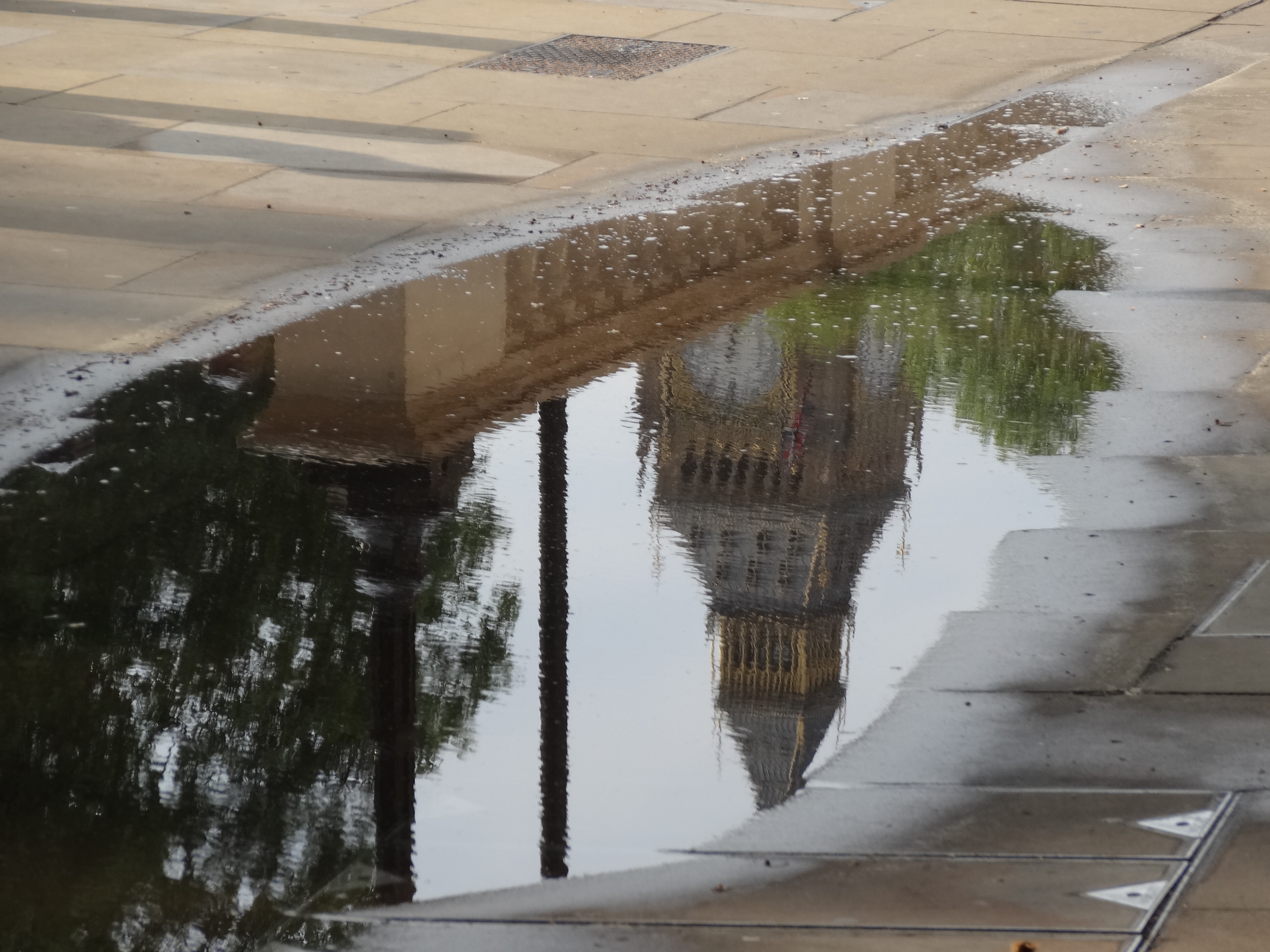
So for this week’s Daily Norm photo of the week, I thought it was only appropriate that I feature a photo I snapped the other day while walking to work in London’s Westminster. Having woken up to gloomy skies and wet pavements, I didn’t think I would be able to enjoy the short stroll I try to make time for each morning by getting off the tube one stop early – it’s a stroll which gives me time to recollect my thoughts before work, and enables me to recover a little composure after the morning’s crush on the tube. Yet just as I was leaving home the sun started to break over damp old London, and 20 minutes later, I took my stroll in the faint morning sunshine, dodging plenty of puddles along the way.

This photo was taken as I passed one such puddle and realised to my delight that London’s most famous landmark, Big Ben (or Elizabeth Tower as we should call it) was reflected perfectly upon the pavement. Grabbing my iphone camera quickly, I managed to capture this shot between commuters rushing moodily by. And for me it’s the perfect illustration of London in June – wet, green, but with a faint, hopeful brightness in the air. Here’s for better weather to come.

Big Ben

All photos and written content are strictly the copyright of Nicholas de Lacy-Brown © 2013 and The Daily Norm. All rights are reserved. 

RA Summer Exhibition – Grayson Perry steals the show

Now in its 245th season, the annual Summer Exhibition at London’s Royal Academy is reputed to be the largest open-submission exhibition in the world, and also one of the oldest. Yet while it is billed as being a show which offers all artists, no matter their qualification, notoriety, nationality or skill, the opportunity to submit work and be hung amongst a who’s who of some of Britain’s most prominent contemporary artists, it is more often the case that those prominent artists more than overshadow those lesser knowns who are lucky enough to have their work selected for the show. In previous years, the non ‘Royal Academician” artists have been crammed into the smallest possible spaces, while the larger galleries have been given over to the same old RA clique, whose submissions never appear to differ from one year to the next.

4576 gallery-1-rasi-13-23776

In that respect, this year’s show, just opened at Picadilly’s Burlington House, is very similar. The same old-same old is prominently hung, including works by the likes of Albert Irvine RA, whose florescent acrylic daubs continue to repel me despite my being consistently exposed to them at each annual Summer Exhibition, and Eileen Cooper RA, whose rather simplistic portraits look more craft fair than art show to my mind. Having said that, the RA appears to have learnt from past grumbles, and has not crammed the non-RA artists into a single small room, rather opting for a “Salon-style” floor to ceiling hang in many of the larger galleries, which, while rather bewildering to look at, at least makes for a more pleasant viewing experience when the large crowds of people, attracted no doubt by the smaller price tags, cluster around these works hoping to invest in the lesser known, affordable artists.

An El Anatsui "sculpture" hangs over the facade of the RA for this year's show

An El Anatsui “sculpture” hangs over the facade of the RA for this year’s show

While the Salon-style hang inevitably means that there are way more pictures on show than anyone can possibly take in on one visit, it does at least mean that there are huge rafts of works on show, and undoubtedly something to suit every taste. In keeping with my positive experience of last year (which resulted in my making two purchases), my favourite gallery of this year’s show was no doubt the print room – a gallery full of prints of all mediums, from etching to relief, screen printing to woodcuts, and I was very happy to see the artist Adam Dant on show at least twice, one of whose encyclopaedic works I had bought last year.

Adam Dant, The Mouth of Italy (Venice) hangs at this year's show © Adam Dant

Adam Dant, The Mouth of Italy (Venice) hangs at this year’s show © Adam Dant

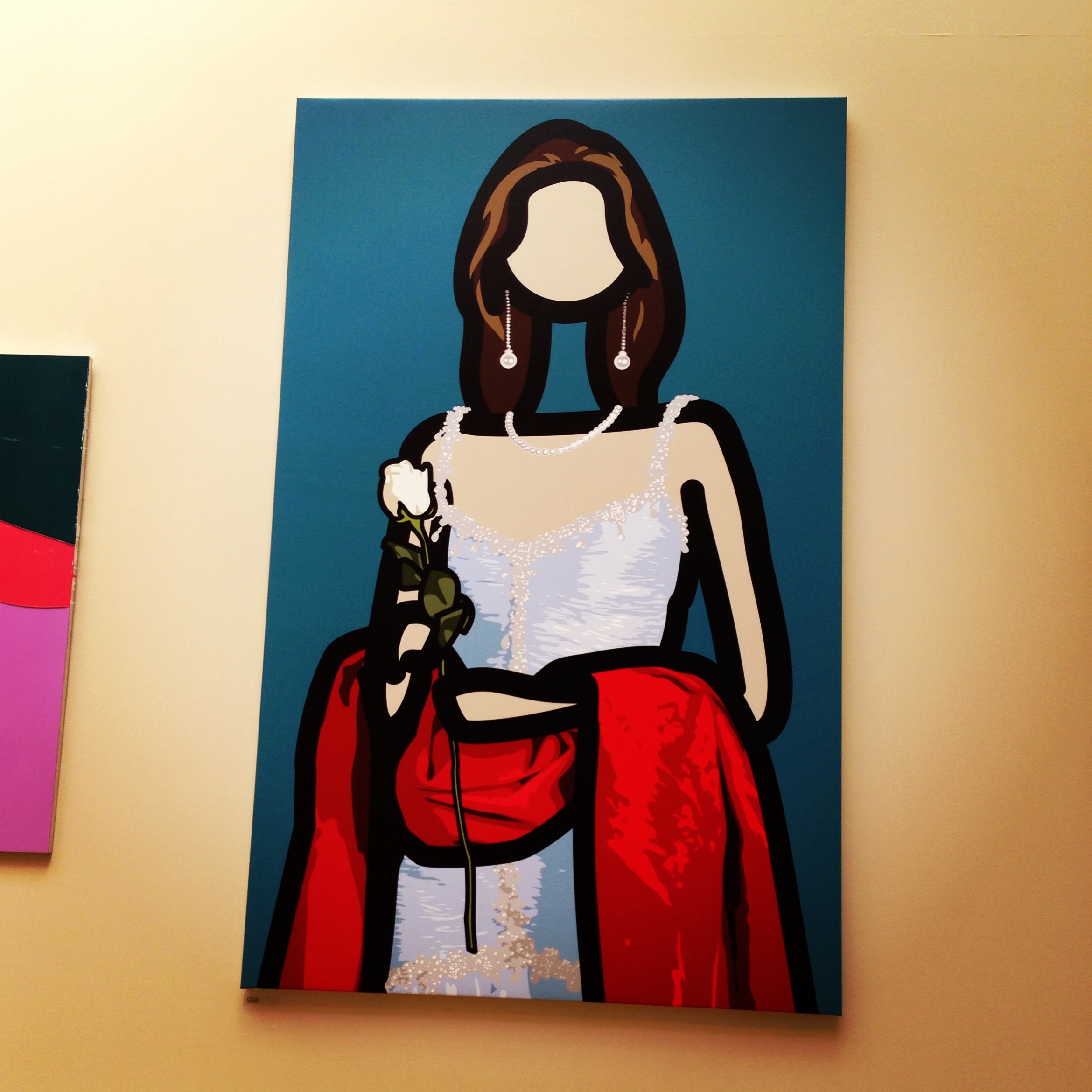
Many of the subsequent galleries flew by in a rush of sculptures, architectural models and so-so paintings. Only a few works really stood out enough for me to remember them subsequently, amongst them Julian Opie’s Maria Teresa I, which I adored, and reminded me of a pop-art Velazquez court-painting.

Julien Opie's Maria Teresa I © Julien Opie

Julien Opie’s Maria Teresa I © Julien Opie

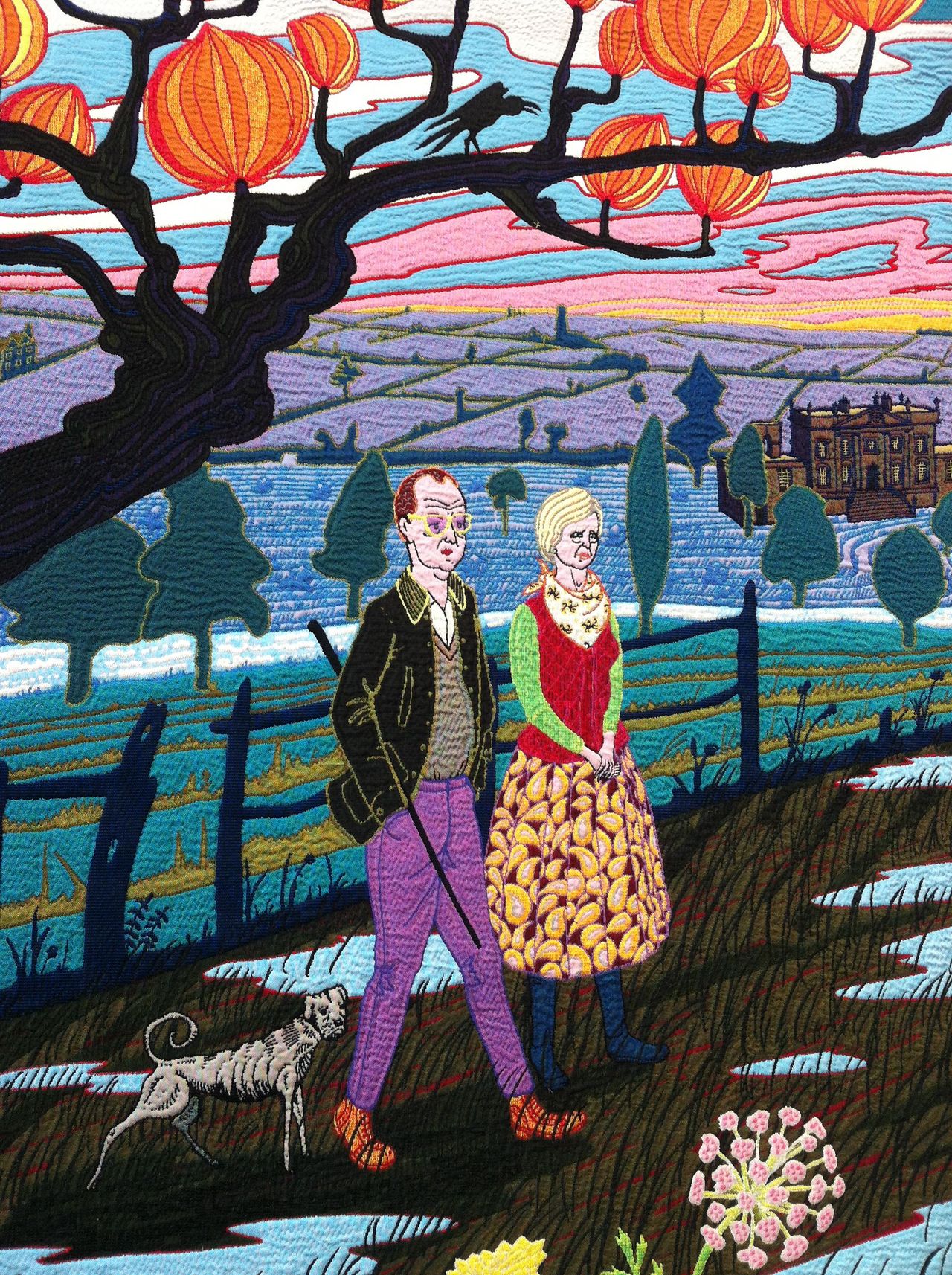
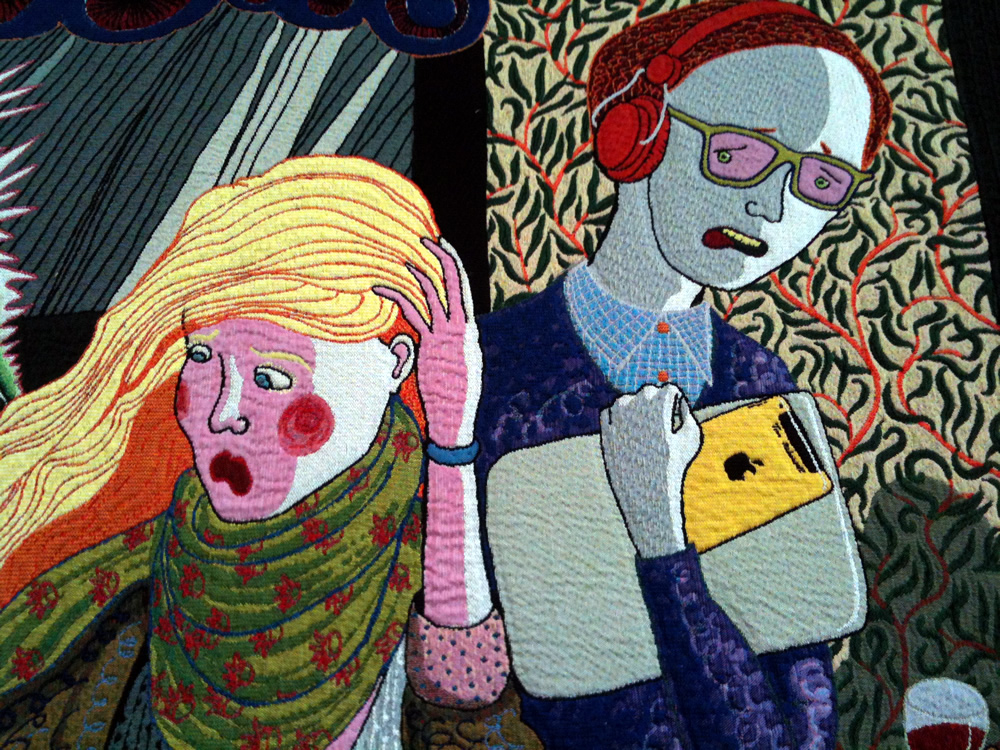
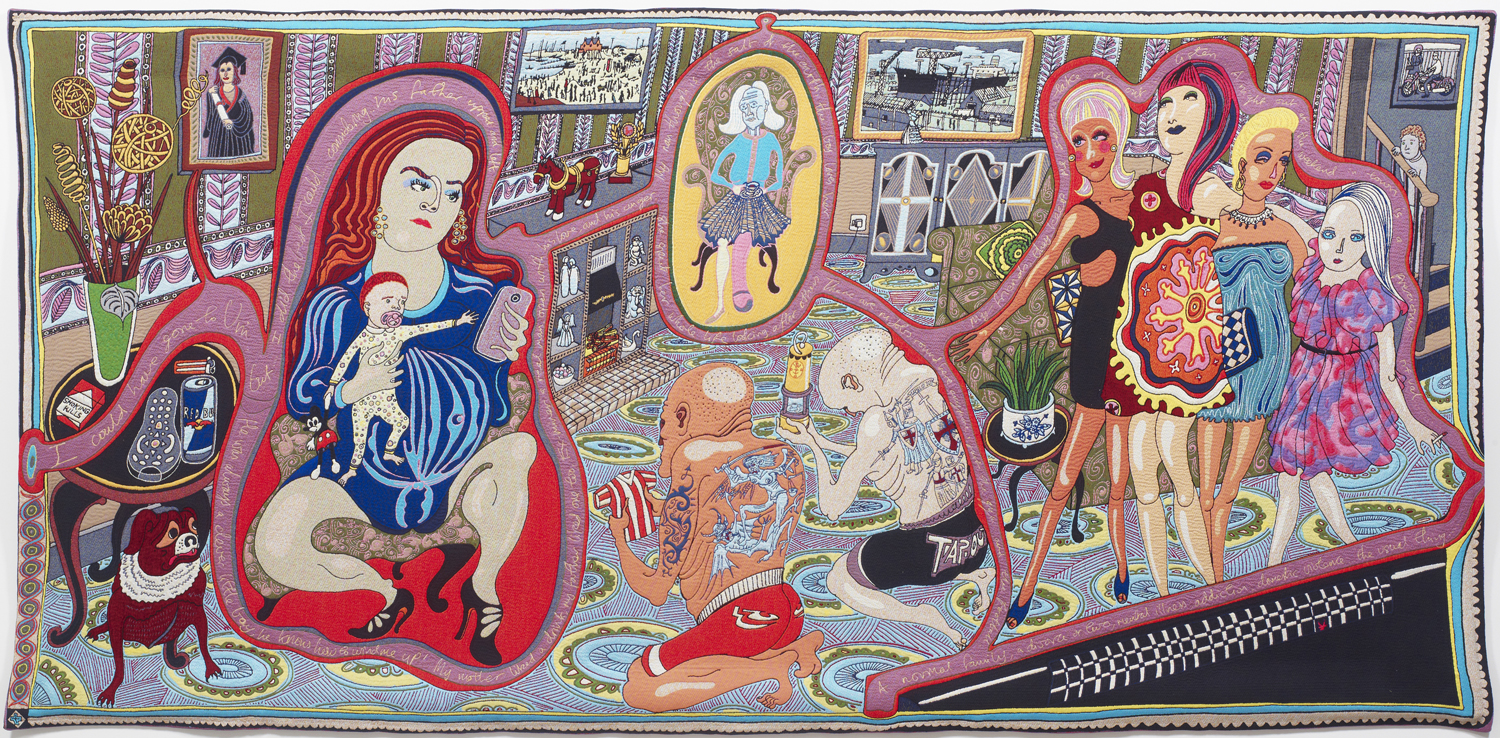
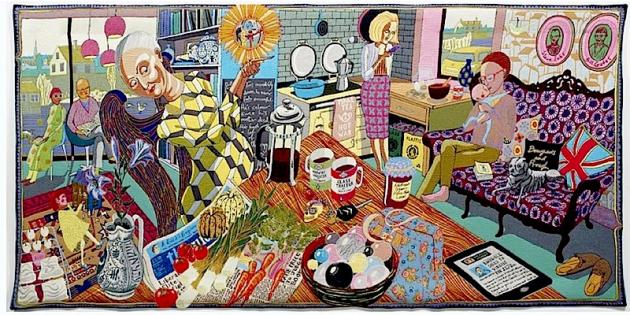
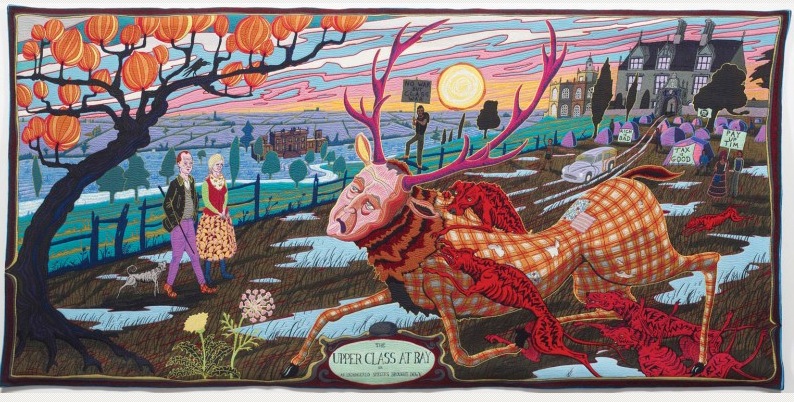
But undoubtedly the real star of this show and the work for which a visit to the exhibition is alone worth a visit, is one Grayson Perry, the witty, perceptive, social-commentating, cross-dressing craftsman and artist. I first estolled the virtues of Perry when I took a trip to his British Museum exhibition one year ago. Now, at the Summer Exhibition, a whole gallery (the last in fact) has been given over to a set of 6 tapestries by Perry which, under the combined title The Vanity of Small Differences, tell the story of one Tom Rakewell, whose rise and fall through life is captured insightfully and comically across these brilliantly detailed, multi-coloured and superbly designed Hogarth-inspired tapestries.

Details from The Vanity of Small Differences © Grayson Perry

tumblr_m7kigl2KaI1r2y5buo3_1280 grayson-perry-masaccio 7592829302_be24f23221_z GraysonPerryTheVanityofSmallDifferencesMugs _68000737_68000736

As is so typical of Perry’s work, these tapestries offer a spot-on insight into what some call Britain’s “tribes”, from stay at home frustrated mother and groups of rowdy clubbing slappers, to our aspiration for the “high life”, a tendency to attack those who the masses perceive as “upper class”, and our obsession with money, gadgets and celebrity culture. There’s so much to take in in these brilliantly conceived tapestries, and even as I write, I am itching to go and see the works again so that I can take in more of the feast of details which Perry offers up for our consumption. In the meantime I include images of all six tapestries to tempt your taste buds, as well as some shots of the wonderful details which are literally stitched into the richly weaved layers of this work.

The Adoration of the Cage Fighters © Grayson Perry

The Adoration of the Cage Fighters © Grayson Perry

The Agony in the Car Park  © Grayson Perry

The Agony in the Car Park © Grayson Perry

Expulsion from Number 8 Eden Close  © Grayson Perry

Expulsion from Number 8 Eden Close © Grayson Perry

The Annunciation of the Virgin Deal  © Grayson Perry

The Annunciation of the Virgin Deal © Grayson Perry

The Upper Class at Bay  © Grayson Perry

The Upper Class at Bay © Grayson Perry

Lamentation  © Grayson Perry

Lamentation © Grayson Perry

The Summer Exhibition is now open at the Royal Academy and runs until 18th August 2013.

Weekend Review – Candy floss and tutus

Sometimes when a weekend is so bounteous in treats, both planned and unplanned, it becomes a chore to try and sift through the experiences and feature one or two on my blog. And since the alternative – which is to write about none of them – does not sit well with the spirit of blogging, nor indeed with what is, after all, meant to be an epnoymously daily blog (although admittedly I’m not currently doing all that well on that front…) I thought I’d just tell you about the whole darn lot!

So, on Friday afternoon, as the clock hand clicked past 5 and I started to feel the rush of weekend relief fill my worked-out body, I rushed home to start the weekend. For me this meant three things: First the completion of my new painting, “Composition I”, an entirely new direction of painted expression (which I’ll try to post up on the blog in a few days time) with which I have discovered gouache paint for the first time. It’s a work inspired partly by the Choucair exhibition I attended last weekend and partly by a typical luncheon by the sea in Marbella, with squid, and patatas – the perfect weekend on any view.

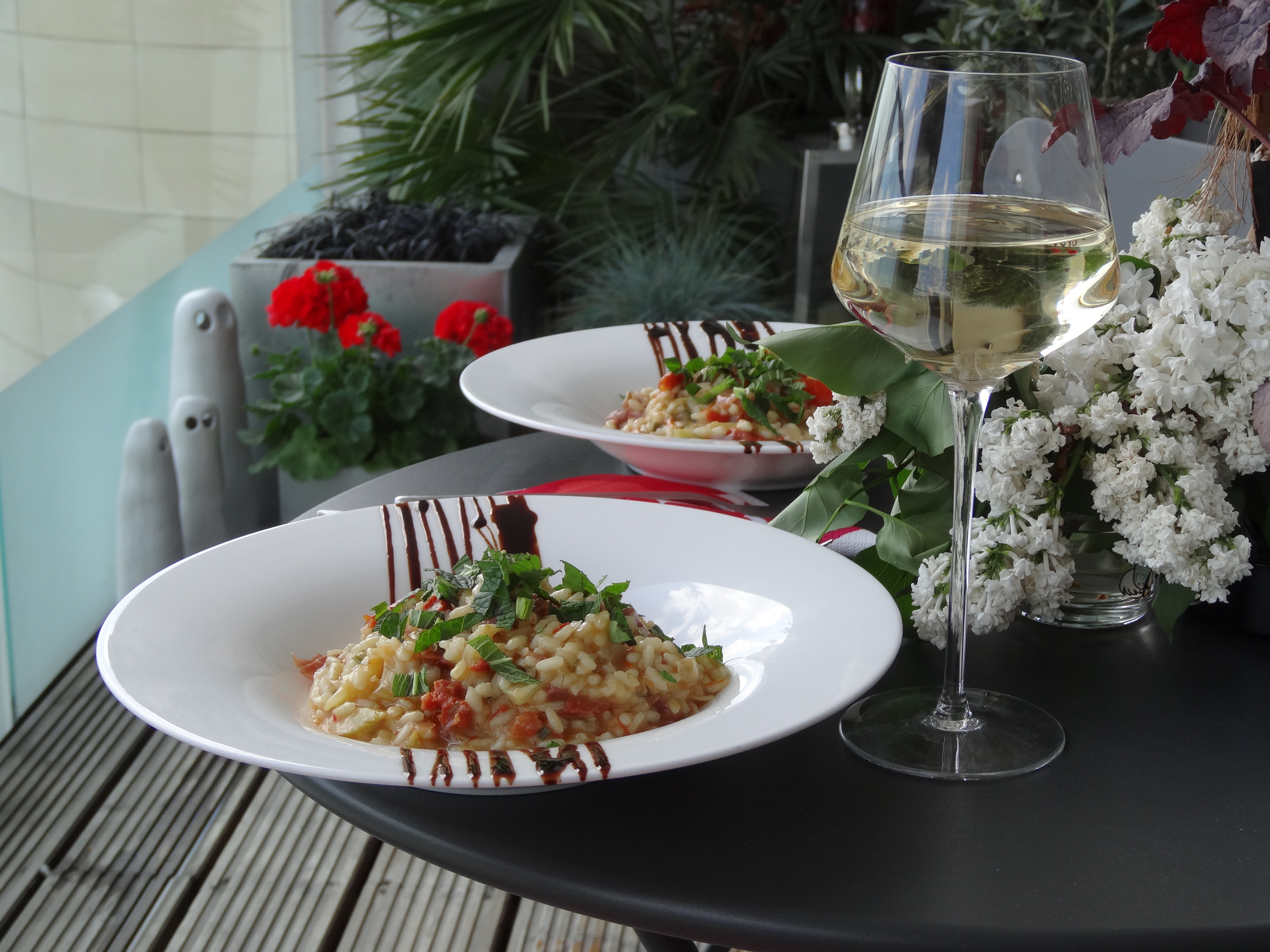
But back to Blighty, and with paint brushes put aside and a wooden spoon picked up in their place, I commenced cooking up a risotto feast – the perfect creamy end of week pleasure, and a good one for using up odds and ends of food after a week’s exhaustion of supplies. In this case it was half a packet of palma ham, some rather old chorizo, a few tomatoes, half a bulb of fennel and a little fresh mint which made it into my rather indulgent left-overs risotto. And what a treat to eat it al fresco too, on our warm London balcony, watching commuters aplenty passing by, the majority with a bounce in their step, overjoyed as we were that the weekend had come at last.

My "odds and ends" risotto

My “odds and ends” risotto

Dining al fresco...

Dining al fresco…

But as ever the al fresco air inspired us to go out into the open air in search of dessert, and a walk across the vast expanse of Clapham Common and back towards Northcote Road in the Clapham Junction area brought us to a new entrant on the restaurant-lined street. In place of what had once been a rather chic Austrian eatery is now a cute little Spanish restaurant AND sherry bar, Rosita. Unsurprisingly we headed straight for said sherry bar in search of our dessert. The fact that we then ended up with two glasses of wine and a few savoury tapas dishes was perhaps inevitable, but dessert did eventually follow, in the form of deep friend sweet potato cakes in a honey syrup. Delicious.

Rosita's sherry bar

Rosita’s sherry bar

Rosita-and-the-Sherry-Bar

Now too fat to move, we bemoaned our over indulgence and returned home, exhausted, to bed.

Read more

Springtime debuts in Dulwich

Waking up on Saturday to the sun streaming into my room and what looked like the faint glimmer of blue sky seen through a crack in my blinds was an odd sensation. Not having to rush up to turn the heater on before swiftly re-burying myself back into the warmth of my duvet was another. For this kind of good weather just doesn’t happen here in the UK, where winter appears to have reigned for so long that most of us had given up any hope of ever having a summer, the assumption being that the White Witch of Narnia was obviously back in power again. Indeed after the coldest March for over 40 years, and an equally chilled start to April, the final debut of Spring this weekend, right at the end of April, was not an event that could be allowed to pass unmarked.

Better late than never I say, and how better to celebrate this sunny saturday than by behaving as a tourist in my own city? Yes, it was to the London suburb of Dulwich, in the south east of the city, and more specifically to the village thereof that we headed to mark the arrival of Spring, a village which, despite some 10 years as fully fledged resident of London, I have never visited. The reason for this? Generally speaking the fact that there is no tube there – but as we found out today, the village is well connected by both bus and train. We took the no. 37 from Clapham Common, which got us to Dulwich, via Brixton and Herne Hill in around 20 minutes.

DSC07336 DSC07374 DSC07352 DSC07370 DSC07339 DSC07378

Dulwich Village is, as my photos will demonstrate, a secluded and rather affluent little enclave, full of picket fences, young families of well-oiled business men and plenty of “ladies that lunch”, yummy mummies and the like. Best of all, what with all the wealth and the family living, together with the rather large expenses houses and spacious gardens, the area of Dulwich is particularly green, full of blossoming trees and robust lawns as well as large open spaces such as Dulwich Park which has its very own boating lake, tennis courts and well-manicured gardens. All very civilised. And of course perfect surroundings for a day which felt ripe with the first inklings of Spring.

DSC07347 DSC07368 DSC07344

The main purpose of our visit was to visit the Dulwich Picture Gallery, a gallery which is so well-established (and is in fact the oldest public gallery in the UK, opening in 1811 at the bequest of Sir Francis Bourgeois RA) that again I wonder why on earth I haven’t visited before. The gallery, which boasts in its permanent collection a singularly impressive selection of notable artists from Velazquez and Gainsborough, to Rembrandt and Canaletto, is quite small but perfectly formed. This first visit to the gallery had been moreover prompted by a temporary exhibition, Murillo & Justino de Neve: The Art of Friendship,  which, as the name suggests, explores the work of a master of the Spanish golden age, Bartolomé Esteban Murillo (1618-1682), and in particular the particularly prolific body of work he created under the patronage of collector Justino de Neve.

DSC07364

De Neve was a man with some not insignificant sway in 17th century Seville, the city of Murillo’s birth, and managed to secure for Murillo a number of high profile commissions, including works for Seville Cathedral like The Baptism of Christ whose exhibition in this show marks the first time the painting has been removed from Seville Cathedral since it was put there in the 1600s. There are various others of those commissioned religious set pieces in the show which has been curated to represent something of a gloomy baroque atmosphere, with darkened walls, and a central “nave” to the exhibition, lined with large lunette canvases and culminating with the star of the show, the Inmaculada Concepcion de los Venerables, a stupendously ephemeral, light infused portrait of the immaculate conception, boasting all of the trademarks for which Morillo became famous, such as the vaporescent light, idealised figures and soft melting forms. The painting, exhibited for the first time back in the sumptuously carved frame for which it was originally intended, is an incredibly well executed work, with its cascade of angels fading gradually into the distance, and its radiant golden light off-set against the blue of Mary’s robes. Yes, it’s a little saccharine for some tastes, but when seen in the right light, it’s an undeniably impressive almost awe-inspiring piece. Sadly, correct lighting was not something that this gallery did particularly well, with so many of the darker paintings being almost eclipsed by reflective light with the result that one could only see the painting by standing at a very specific and distant angle – it’s luckily the gallery was not busier or I fear everyone would have been vying for the same spot.

Murillo, Inmaculada Concepcion de los Venerables (1678)

Murillo, Inmaculada Concepcion de los Venerables (1678)

Murillo, The Baptism of Christ (1967-8)

Murillo, The Baptism of Christ (1967-8)

After a stroll around the Dulwich Picture Gallery’s fine accompanying gardens, complete with a winding path suitable for a contemplative perambulation, and various sculptures to tempt the eye, we headed back into Dulwich Village, where the bustling restaurant Rocca seemed a batter choice than the chain fodder of Pizza Express and Cafe Rouge across the way. As the name suggests, the restaurant presents italian fair, but its menu is depressingly anglicised. Pasta with peas and cream, spaghetti bolognese and tagliatelli carbonara – it doesn’t get much more cliché – and the pizzas, which came in a range of ingredient combination, also lacked the innovation (and the requisite crispy thin base) that comes to be expected of modern Italian cuisine. Nonetheless, we started the meal with a delicious octopus carpaccio (pictured) which was well seasoned and marinaded in chilli and oil, while a lemon and orange tart for dessert, in a rich buttery pastry went down particularly well.

DSC07375

We ended our day by strolling around Dulwich Park, another of the vast green areas of which London so can proudly boast to be one of the greenest cities in Europe. Here the sense of familial civility reached its height, with young families and loved-up couples enjoying the warmth and serenity of a first day of Spring, bobbing around in the peddle-boats of the boating lake as they did so; a scene of such unabashed idealism that I  thought for one moment that I could see the golden glow of Murillo’s paintings emanating into the ephemeral space above.

DSC07386 DSC07356 DSC07393 DSC07353

Murillo & Justino de Neve: The Art of Friendship is on at the Dulwich Picture Gallery until 19 May.

© Nicholas de Lacy-Brown and The Daily Norm, 2001-2013. Unauthorized use and/or duplication of the material, whether written work, photography or artwork, included within The Daily Norm without express and written permission from The Daily Norm’s author and/or owner is strictly prohibited. Excerpts and links may be used, provided that full and clear credit is given to Nicholas de Lacy-Brown and The Daily Norm with appropriate and specific direction to the original content.

Manet: Not exhibited in his lifetime

Glancing through the current Manet retrospective, Manet: Portraying Life, at the Royal Academy, there is one consistent feature which is perhaps even more noticeable that the works themselves: How many of the paintings are labelled “Not displayed in his lifetime”. Why the Royal Academy is so insistent on spelling this out with such apparent alacrity is unclear. But what it demonstrates is that the majority of works comprising this so called “first ever retrospective devoted to the portraiture of Edouard Manet” are what I call “filler works” – paintings which are either unfinished or merely preparations for other works, and none of which the artist had ever intended to be exhibited for public consumption.

It is therefore with some unease that I looked upon these works, which the Royal Academy tries to pass off as paintings worthy of the not insignificant £15 entry-price, the cynic inside me recognising that what we have here is merely a means by which a show that, fundamentally, consists of one room’s worth of finished and accomplished works, is padded out to fill a much bigger space. And even that space is not filled particularly well.

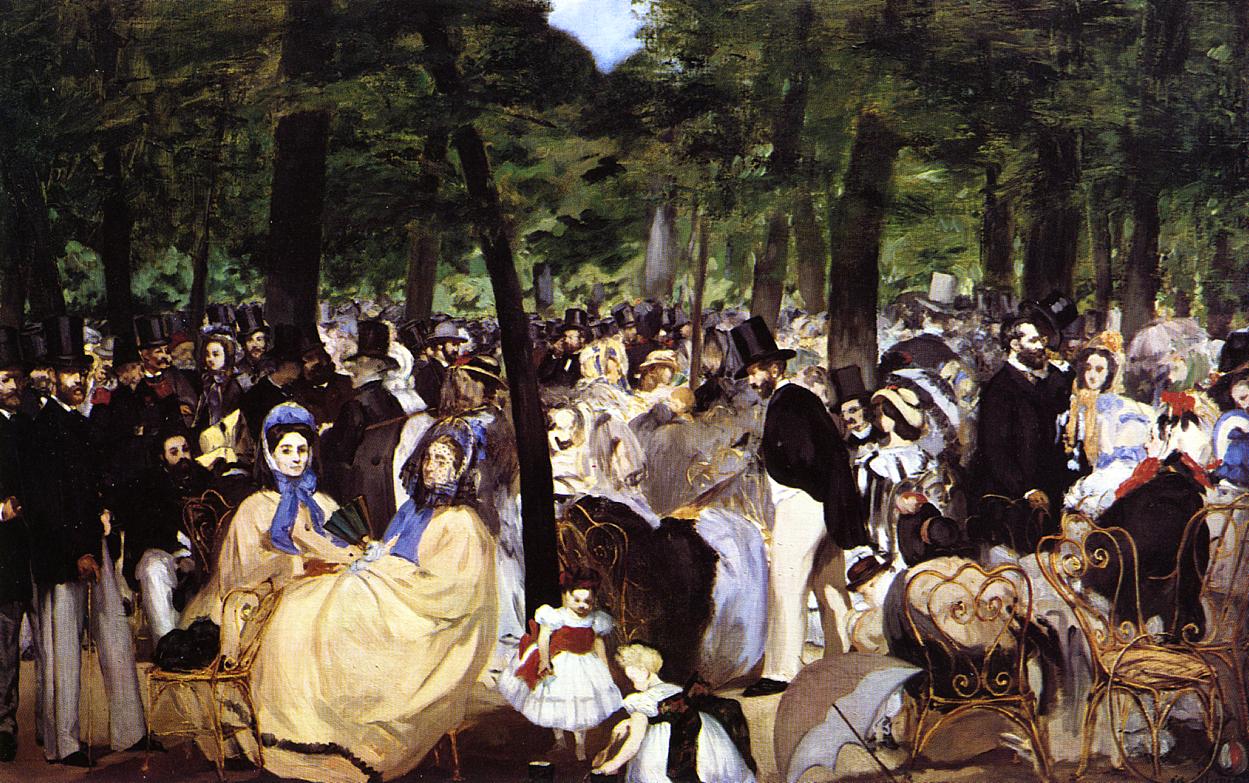
Music in the Tuleries Gardens (1862)

Music in the Tuleries Gardens (1862)

In the second large gallery, for example, the Royal Academy make the slightly unfathomable decision to present Music in the Tuleries all on its own, spotlight upon it, surrounded only by blank walls. I could understand this kind of hang for a masterpiece such as Le Dejeuner sur l’Herbe, which almost single handedly changed the history of art (and sadly lacking from this show), but for this painting? Sure enough, it’s a skilled group painting, giving us a very realistic snapshot of modern day life one sunny afternoon, lacking in the previous contrived composition of the grand historical paintings which were favoured in the time Manet painted it. But the Royal Academy do not succeed in making any significant point worthy of this solo hang. And what’s worse, this painting belongs to London’s National Gallery, so visitors can normally walk up and see the painting whenever they like, without the crowds attracted to the RA, and for free.

But this was not the worse of it. The following gallery was hung, not with paintings, but with a chronology of Manet’s life, and a desk on which copies of the exhibition catalogue could be surveyed – why exactly I’m not sure: after all, isn’t it better to look at the paintings themselves when you have them in front of you?

Unfinished: Portrait of Carolus Duran (1876)

Unfinished: Portrait of Carolus Duran (1876)

But asides from the unpalatable cheek with which the RA filled it’s space and passed off the show as a great survey of Manet’s career, I also felt a deep sense of unease, not as a punter, but as an artist – because so many of these works are so clearly unfinished, unprepared for public consumption. I can imagine Manet now, turning in his grave, horrified at the prospect of these unfinished preparations being gazed at and criticised as though they were finished works. And all for the sake of a buck or too.

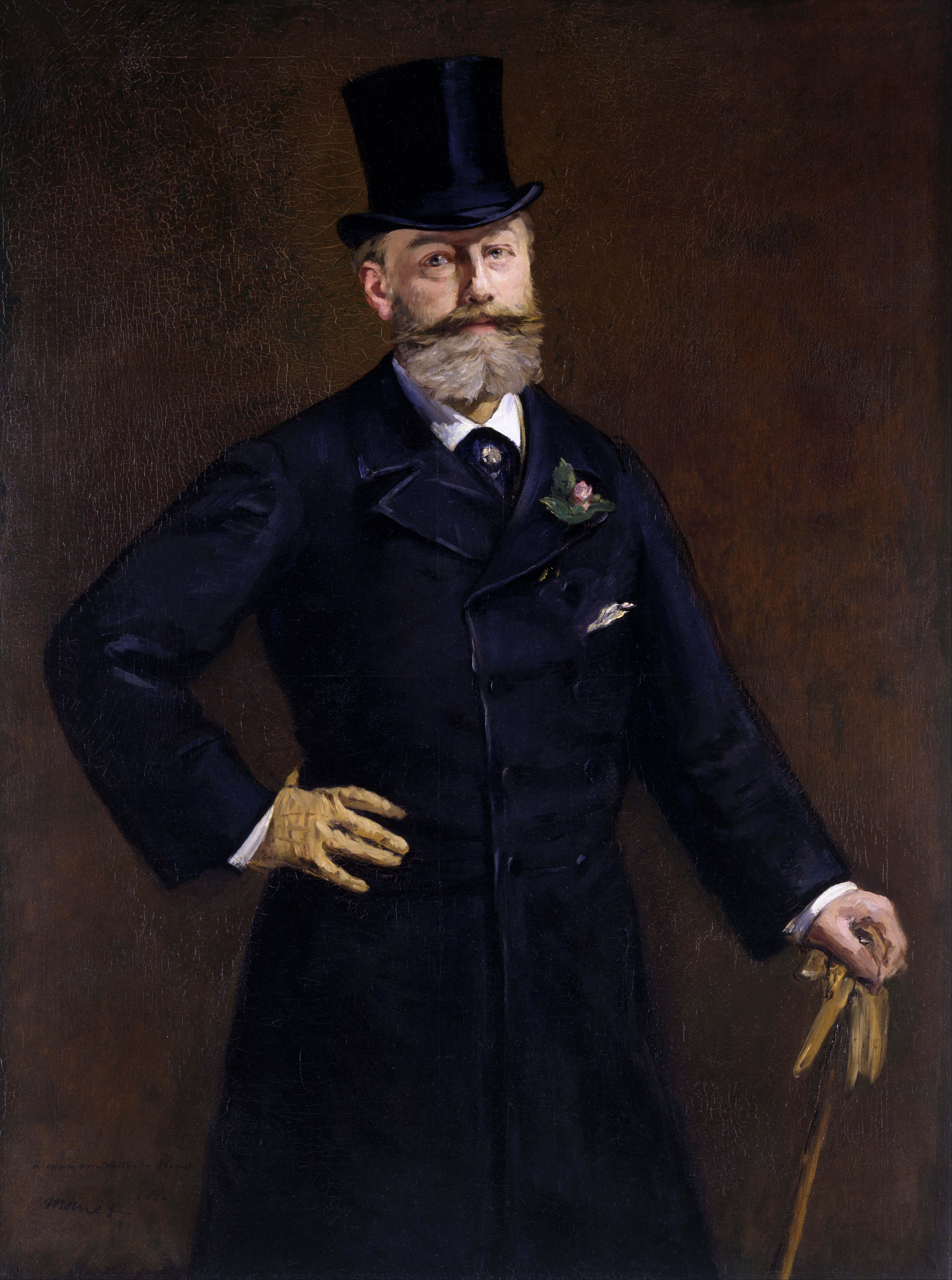
Portrait of M. Antonin Proust (1880)

Portrait of M. Antonin Proust (1880)

The Luncheon (1868)

The Luncheon (1868)

Madame Manet in the Conservatory (1879)

Madame Manet in the Conservatory (1879)

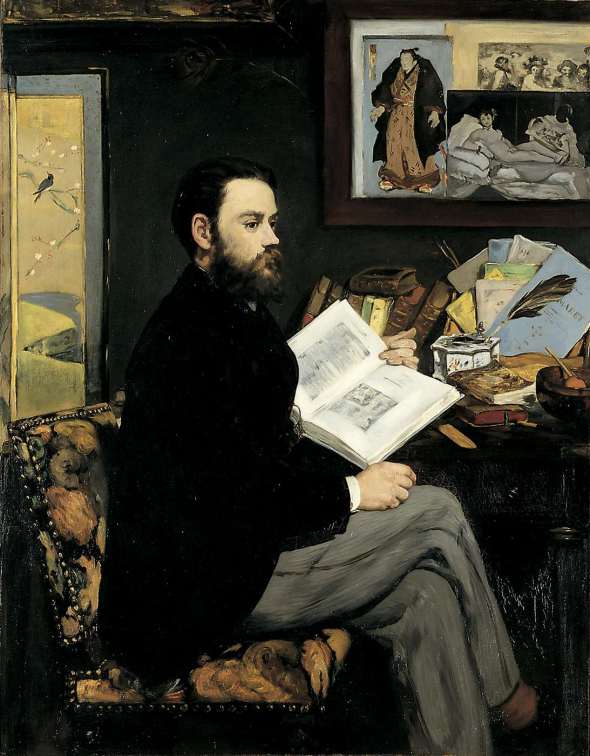
Emile Zola (1868)

Emile Zola (1868)

All that said, the finished works which are on show are masterful Manet’s, apt demonstrations of the artist’s skill at capturing real life, real characters and a sense of the time in which he painted. You get the portrait of M. Antonin Proust (not to be confused with the acclaimed author) – a dandy about town, a man proud and professional in his polished appearance; then there’s Suzanne Leenhoff (later Madame Manet), sat, happily contented in the garden of Manet’s home, her cheeks rosy and her gaze tranquil.

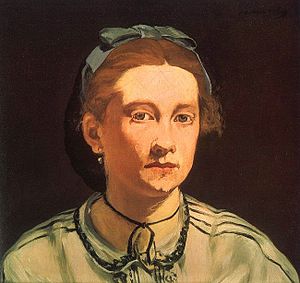
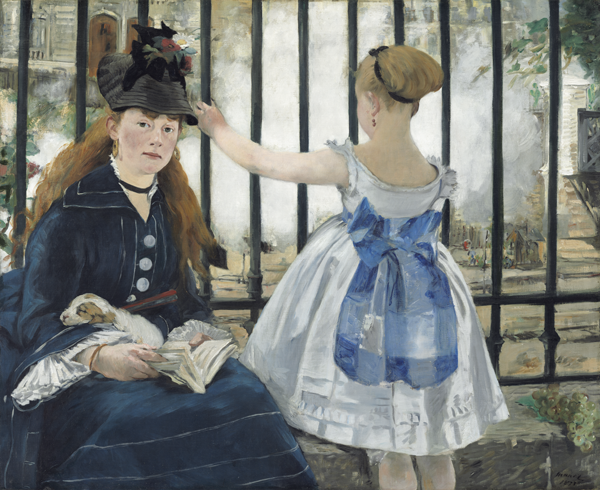
300px-Edouard_Manet_088Then of course there’s Manet’s most infamous sitter of all: Victorine Meurent, who gets a whole gallery to herself in this show. While sadly, and very obviously lacking the two great masterpieces of Manet’s oeuvre in which she features (Le Dejeuner sur l’Herbe (although the Courtaulds inferior and much smaller copy is here) and Olympia), the paintings which are on show present the model with the confidence and audacity which must have attracted the artist to her – the wiley stare, straight out of the canvas, almost judging, daring the viewer to respond. Then there’s Victorine dressed as a street-seller, an accomplished character portrait in which the cherries held to her mouth appear almost as a provocation, a subliminal message inviting us to read a story into her steely gaze,  as well as the wonderful Railway portrait, in which the railings adjoining the railway appear to take centre stage, and the air of noisy, smoky, modern industry appears oddly juxtaposed with the apparent calm and tranquillity of Victorine and her sleeping puppy.

Street Singer (1862)

Street Singer (1862)

The Railway (1883)

The Railway (1883)

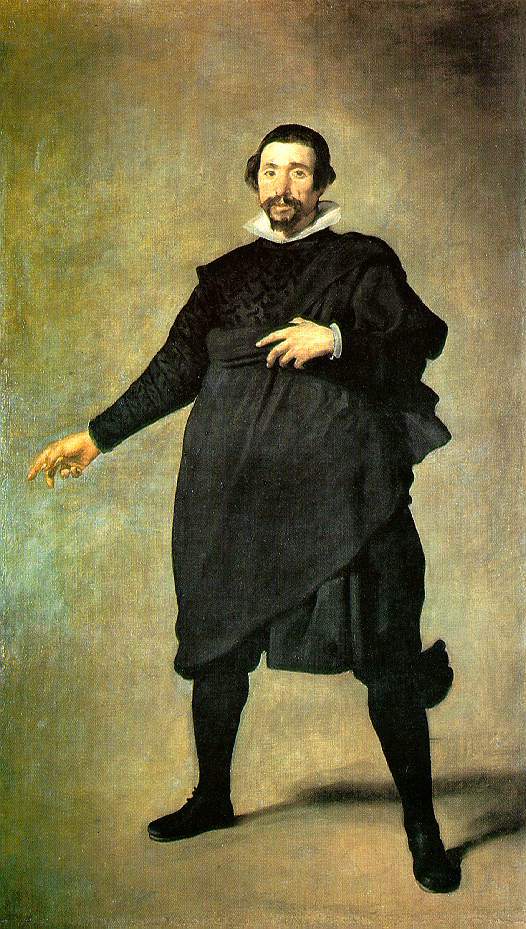
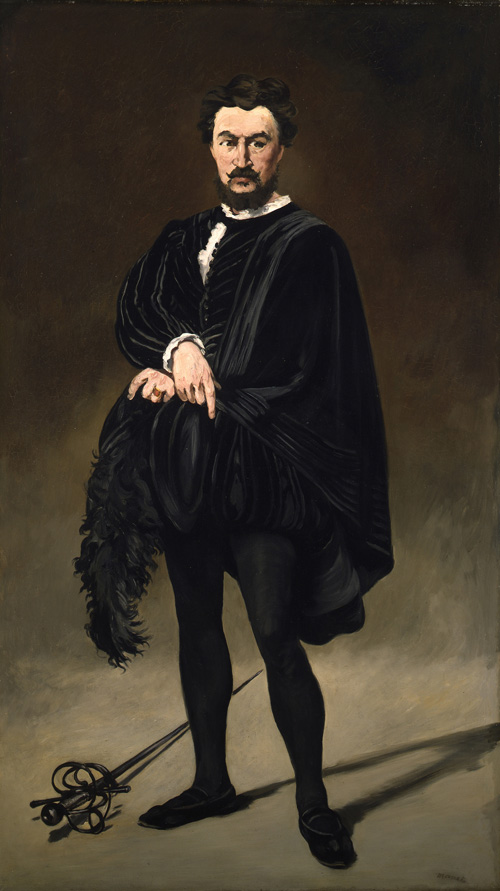
As a Manet lover (need I remind you of my Norm version of both Manet’s Le Dejeuner sur l’herbe and my juxtaposed Manet character Norms sat in Cappuccino Grand Café ?) I was of course familiar with many of the few finished works on show. But one thing that I took out of the show which I had not fully appreciated before was just how influenced Manet had been by Spanish art. Taking a trip to Spain, organised by Zacharie Astruc who’s portrait is also on display, Manet was very quickly inspired by Velazquez, who he saw as a master of painting black in all its surprising variety of shades, as well as other greats such as Goya and Ribera. Following on from this, one can really start to see the Spanish influence infiltrating into Manet’s work. Take the portrait of Rouviere as Hamlet for example, and look how it compares to this portrait by Velazquez. Then of course there’s the portrait of Victorine in the costume of an Espada, again sadly not included in the exhibition, an a portrait of Emilie Ambre as Spain’s favourite operatic diva, Carmen. As an artist much inspired by the Spanish golden age of art, I am well able to understand the effect that Spanish art must have had on Manet, helping him to surge forward as the revolutionary artist he was, in a claustrophobic French art scene which had yet to be struck by the poignancy of Spanish art.

Portrait of Zacharie Astruc (1866)

Portrait of Zacharie Astruc (1866)

Diego Velazquez, The Jester Pablo de Valladoid (1635)

Diego Velazquez, The Jester Pablo de Valladoid (1635)

The Tragic Actor (Rouviere as Hamlet) 1865

The Tragic Actor (Rouviere as Hamlet) 1865

Victorine Meurent in the costume of an Espada (1862)

Victorine Meurent in the costume of an Espada (1862)

Spanish influence: Emilie Ambre as Carmen (1880)

Spanish influence: Emilie Ambre as Carmen (1880)

Of course it is difficult for us, well informed of the contemporary art which followed, to understand just how revolutionary Manet was as an artist, painting in the age when grand history paintings and allegorical images were all the rage. His paintings were so real, so unpretentious a snapshot of the life and the world around him, that many gallery goers took to attacking his paintings with umbrellas. Yet still Manet ploughed on, forging the path which impressionists and expressionists and the whole world of modern art pursued in his wake. This exhibition does not make any statement half so bold as the mighty oeuvre of Manet in itself, but putting asides the unfinished sketches, and concentrating on the completed masterpieces, those works of Manet which are on show are easily strong enough to make an impression all by themselves.

Manet: Portraying Life is on at the Royal Academy until 14 April 2013.

Painting Parliament: Turner, Monet and Me

It’s not only an icon of London, recognisable around the world twice over, but it’s also one which I pass every working day. The Houses of Parliament in London is at the beating heart of the city. We set our clocks by the familiar chime of it’s big ben bell, we pass souvenir stalls packed full of paraphernalia containing the image of building, and we can see the soaring bell tower, now named Elizabeth Tower, from far across London. Yet we are all guilty of taking the Palace of Westminster, a.k.a. the Houses of Parliament for granted. When I emerge from the tube every morning, I do so directly opposite the great gothic palace, but never stop to take in its majesty, despite the hundreds of tourists who are always collecting before it with their cameras ready.
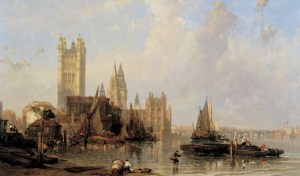
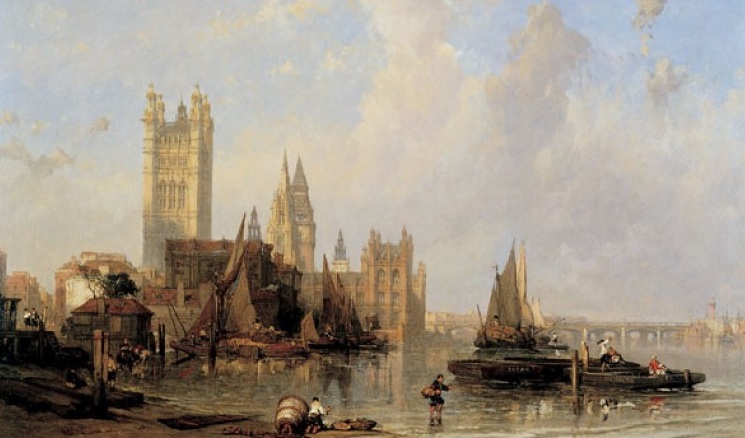
The Houses of Parliament from Millbank, David Roberts (1861) © Museum of London

The Houses of Parliament from Millbank, David Roberts (1861) © Museum of London

However all this changed when yesterday I headed up Elizabeth Tower to meet the great Big Ben first hand. Suddenly I have found myself looking at Parliament afresh. I even went into the Parliament bookshop and bought myself a souvenir or two (including a chocolate Big Ben – every visitor needs one). And all this had me thinking, the Palace of Westminster is such an impressive, iconic building, a masterpiece of architecture which is all the more perfect for its purposeful lack of symmetry, its miscellany of towers, spires and gothic ornamentation – no wonder then that the building has proved such an inspiration to artists over the years. And we’re not just talking any artists, but two of the greats. British favourite JMW Turner, and someone who, in a way, could be called Turner’s protege or disciple, father of the Impressionists, Claude Monet.

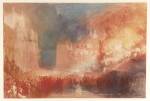
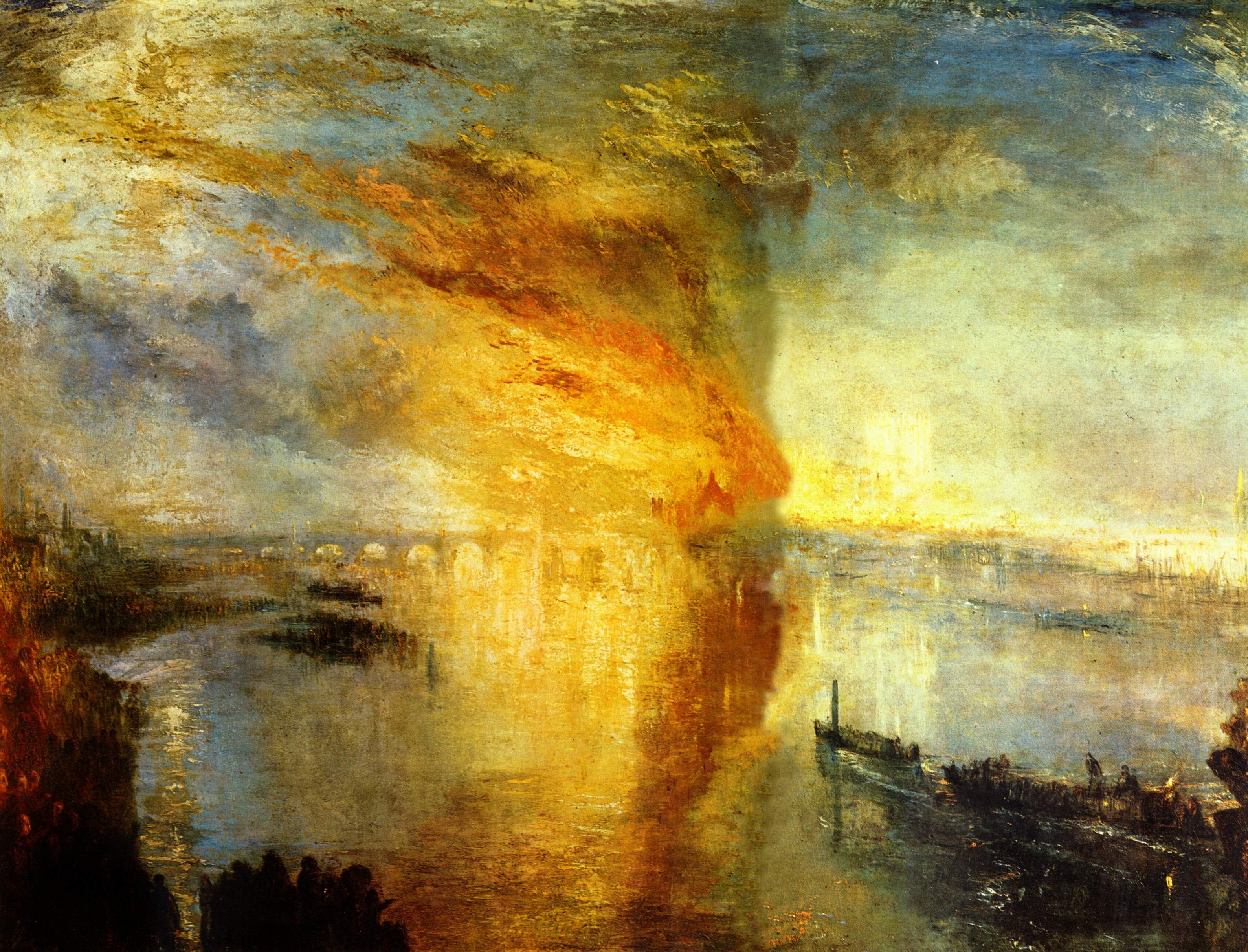
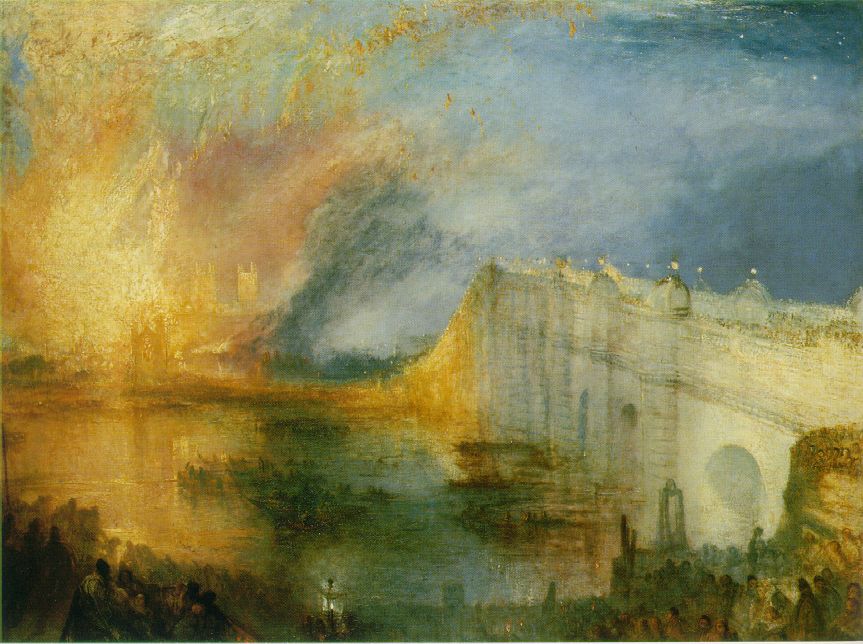
Both artist’s depictions of the Palace of Westminster have become iconic images of Parliament, but are also invaluable depictions of the building’s chequered history. For when Turner painted Parliament, he did so at a crucial point in its history – the day when Parliament was destroyed by fire: 16 October 1834. The fire, which ravaged the palace, gutting almost everything but Westminster Hall, proved inspirational to Turner. Already renowned for capturing the effect of light and smoke, almost impregnable foggy landscapes and turbulent great storms, Turner, who witnessed the great fire raging first hand, was evidently captivated by the gigantic inferno, pouring billowing smoke and red-hot flames high into the sky above the Thames.
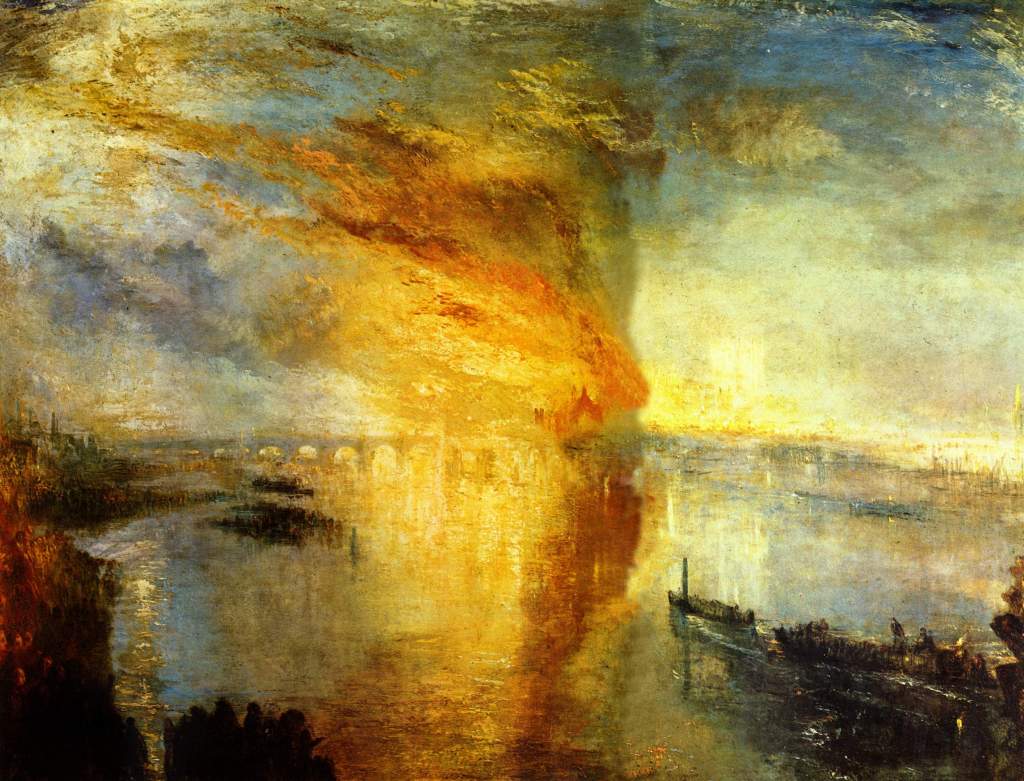
J M W Turner, The Burning of the Houses of Lords and Commons, 16th October, 1834 (1835)

J M W Turner, The Burning of the Houses of Lords and Commons, 16th October, 1834 (1835)

J M W Turner, The Burning of the Houses of Lords and Commons, 16th October, 1834 (1834-5)

J M W Turner, The Burning of the Houses of Lords and Commons, 16th October, 1834 (1834-5)

The canvases which result (the first held by the Cleveland Museum of Art, and the second by the Philadelphia Museum of Art) are brilliant, dramatic depictions of the fire, demonstrating the devastating extent of the inferno as it climbed high into the sky contrasted with the small shocked witnesses in the lower foreground. I love, in the second, the subtle silhouette of Westminster Cathedral glowing before the flames of its now burning neighbouring palace, and the huge column of fire rising dangerously high in the first.

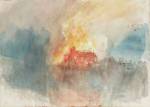
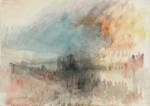
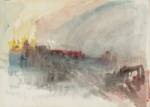
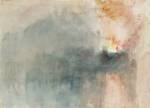
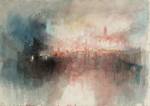
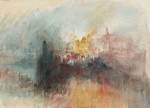
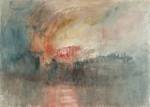
Turner was evidently more than inspired. A series of watercolour sketches (pictured below), which appear to have been sketched roughly at the scene or shortly afterwards, are a striking record of the almost undefinable power of the fire, as the light and heat of the inferno blurs and tempers the city surroundings. These watercolours, which were bequeathed to London’s National Gallery and are now held at Tate, are so instantaneous in their quick creation that they start to look almost abstract in their composition while retaining a powerful contrast between glowing super-hot heat and the foggy smokey surrounds. It’s an effect which is brilliantly executed for such a loose and uncontrollable painting medium as watercolour.

But perhaps the most famous paintings of the Houses of Parliament are those depictions by impressionist master, Claude Monet. Monet, too, was evidently inspired by the elegant gothic structure which, by the time he visited London twice, once seeking safe haven during the Franco-Prussian war in the early 1870s and again at the beginning of the 20th century, had been rebuilt into the structure we know and love today.
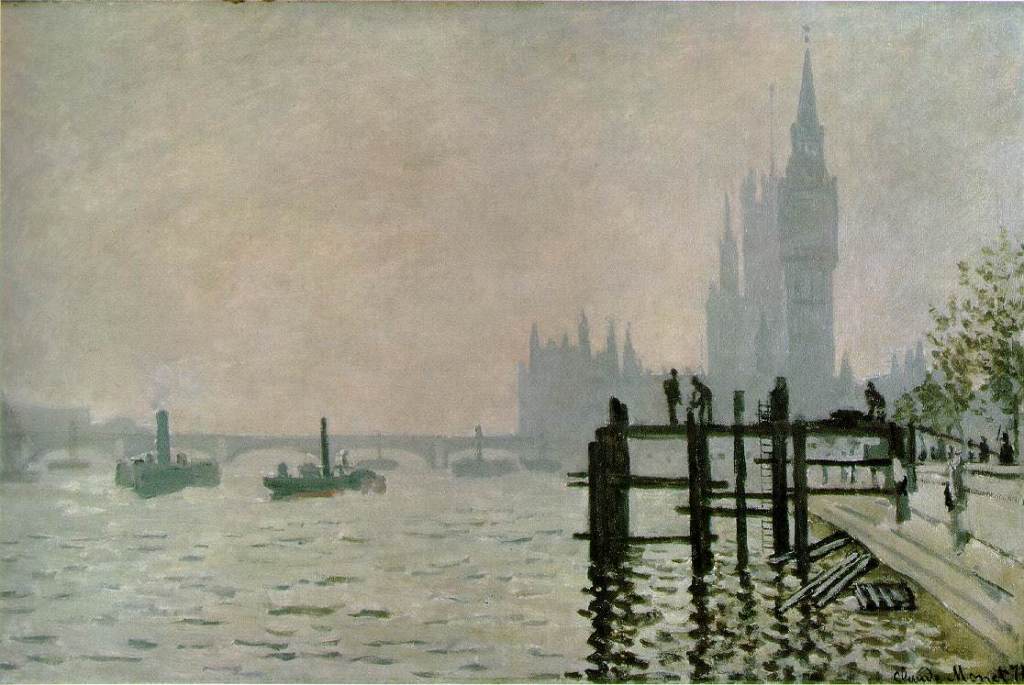
Claude Monet, The Thames at Westminster (1871)

Claude Monet, The Thames at Westminster (1871)

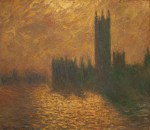
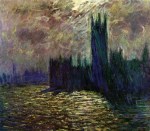
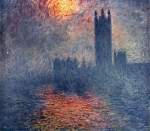
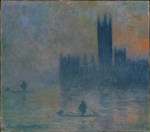
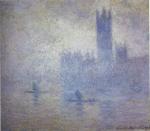
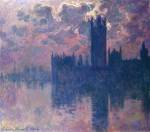
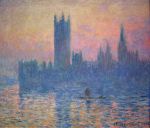
But for Monet, who was, by his own admission, greatly inspired by Turner’s expression of light and changing weather, the real inspiration appears to be not so much the Parliament building itself, but the varying effects of weather, light and city smog upon the building. While his first depiction of Parliament (above) is a fairly detailed depiction of the Thames at Westminster, showing the intricacy of the Palace of Westminster, albeit somewhat faded into a smoggy urban background, his later series of Parliament paintings concentrate far more on the changing light of London than on the landscape itself.

The results are a stunning series of works. The quick application of paint, no doubt painted in a great rush to capture the changing light as was Monet’s obsession, is so energetic and alive that the Palace appears to quiver before our very eyes, the effect of the smog and river mist undulating and turning over the surface of the canvas, capturing in turn the light as it filters through the layers of cloud and vapour. It’s hard to choose between these depictions, all of which are equally evocative of another stage in Parliament’s history, when London was almost chocked with poisonous noxious gases and a horrible river stench. But oh what a beautiful effect it had once captured by Monet’s hand.

Finally, we turn to the modern day. The Houses of Parliament continues to delight Londoners and tourists alike, stood proudly adjacent to the River Thames, and surrounded not by city smog, but by a thriving bustling capital city and, every 31 December, a firework display to rival all others across the world. Yet still, the character of the building changes, and its mood metamorphoses, as weather and light cast transformative moods upon this spectacular structure.

On one such day, when menacing clouds began to break apart, and blue sky and a winter sun peeked out from behind the cover of cloud directly above the great gothic structure, I, like Monet and Turner before me, was captivated by the stunning view before me, and all the more so for the doubling of the image thanks to the reflective image in the river below it. Some time later, I took out my brushes, oil paints and a canvas and painted that view I had seen – it was in fact one of the first oils I had ever attempted. And here it is. It’s no Turner or Monet admittedly, but it is my own painted homage to the power and glory of London’s Houses of Parliament.

Cityscape I: London (2012 © Nicholas de Lacy-Brown, oil on canvas)

Cityscape I: London (2012 © Nicholas de Lacy-Brown, oil on canvas)