Skip to content

Posts tagged ‘Norms’

Next train stop: The National Gallery (aka waiting room/ hang out/ free for all)

I had a free hour between meetings the other day – no point in heading home only to turn around again (always best to avoid the Northern line, whatever time of the day) so I decided to head into London’s preeminent art space, The National Gallery. One of the pulls of the gallery is the fact that it’s free. It means that you can drop in and out as many times as you like and therefore digest the large collection more easily. Nevertheless, it seems that charging no entry has proved to be one pull too many for the many visitors to the Gallery.

Walking into the National felt very much like walking into one of London’s busiest train terminuses. People were rushing about all over the place. Huge groups were gathered in the foyer, others were walking around, luggage in tow, some were on the phone, others having animated conversation. I put this down to its being a foyer – a meeting place for the masses who have toured the galleries or are about to. But to my consternation, once I began to walk around the galleries, I found the situation to be the same even in the farthest of rooms from the entrance. The galleries seemed to act as a thoroughfare for all and everyone in London. There was a constant feeling of unease and stress as the breeze of countless individuals and large groups rushing through the galleries pervaded the air. Meanwhile, all of the seats in the centre of the galleries would be loaded with people who appeared to have been getting cosy there for sometime. I saw people listening to ipods, half asleep. Others reading books, magazines, newspapers. People were chatting, catching up. Others were sat down, eyes to the floor or on their watch, looking bored to tears. Plenty were texting, others speaking on the phone. Most importantly, only 1 in every 25 people who were in the galleries seemed to take any interest in the art on show whatsoever!

Norms (ignoring Art) at the National Gallery (2012 © Nicholas de Lacy-Brown, pen on paper)

For those, like me, who are interested in the wonderful art on show, all this made for a distracting experience. Appreciating art requires a tranquil calm environment, free from distractions. How else can one enter the world which the artist has created, to consider the artist’s motives, his feelings, emotions and the story being narrated on canvas. Trying to appreciate art here was akin to analysing a Rubens hanging in the midst of a busy underground platform.

Busy impressionist gallery at the National Gallery - but at least here some people are looking at the paintings!

The press has recently applauded the increase in visitor numbers to London galleries. The increase, it is said, has been credited to the move of the Labour Government (i.e. the government whose policies ruined most things in the UK) to make the majority of London galleries and museums free back in 2001. It’s a move which has since been adopted by the coalition government, and money is put aside to subsidise the participating institutions who otherwise lose out on the admission fee.

Don’t get me wrong – open access to art is a wonderful thing. Art has a power like nothing else to enrich lives, to enable escapism to another world, to brighten a day, to enhance emotions. And the freer the access the better. The problem is, no one in the National Gallery seemed to even bother with the paintings. For them, the space was a place to hang out, to rest their feet, to chat with friends, to escape the winter weather. And for those of us who do appreciate art, that was a real distraction.

Saint Sebastian by Gerrit van Honthorst (c.1623)

The National Gallery’s collection is superb. I went along to see Velazquez’s Rokeby Venus having recently painted my own Norm piece devoted to the work. But asides from this, a look round just a few galleries introduced me to some wonderful new lesser known pieces of which I had no prior knowledge. Take Saint Sebastian by Gerrit van Honthorst – what a superb painting. St Sebastian is ever the romantic icon – a beautiful matyr who pulls at the heart strings of his viewer. This sensitive portrayal beautifully captures the moment of his ultimate torment. The soft supple depiction of his well toned flesh contrasts to devastating effect with the violence of the arrows piercing it, blood staining the peachy tones of his perfect skin. And what about Willem Kalf’s Still Life with Drinking Horn. Still lifes may be potentially a bit “past it” but the skill of this piece is astonishing, the lobster painted with startling precision, it’s ruby red shell tantalising all the senses, while the portrayal of horn, glass and drapery shows that the artist’s skills can be turned to any material or texture.

Still Life with Drinking Horn by Willen Kalf

Rokeby Venus, slashed by Mary Richardson in 1914

For me, when a gallery becomes a thorough fare, the magnificence of its art is somehow degraded – not given the respect it deserves. This feeling is increased by the lack of security at the gallery – no bag checks at the entrance, no security gates, and security guards who are present but wouldn’t realistically be able to prevent an attack on a painting – only catch the perpetrator. Has the National Gallery not learnt from past lessons then, such as the devastating attack on the Rokeby Venus at the hands of a suffragette, “Slasher Mary” in 1914? The scars are still visible on the great Venus for all to see. By contrast in Paris, at the Louvre, the d’Orsay, the Pompidou, you cannot enter those galleries without full scale security checks, and of course an admission fee. The result is that the paintings are given the respect they deserve – as masterpieces of the nation.

A difficult debate ensues. Should art be made free to the nation and if so, how can you stop abuse by those who take very little interest in the art on show, or whose interest is laced with violent intentions? I think a security check, at the very least, should be installed, and bags, phones, ipods should not be allowed. Free access should be encouraged, but these paintings must be given the respect they deserve, or the ghosts of all those unhappy artists, turning in their graves, will surely haunt us forever.

The Daily Sketch: Norms (attempting to) do ballet

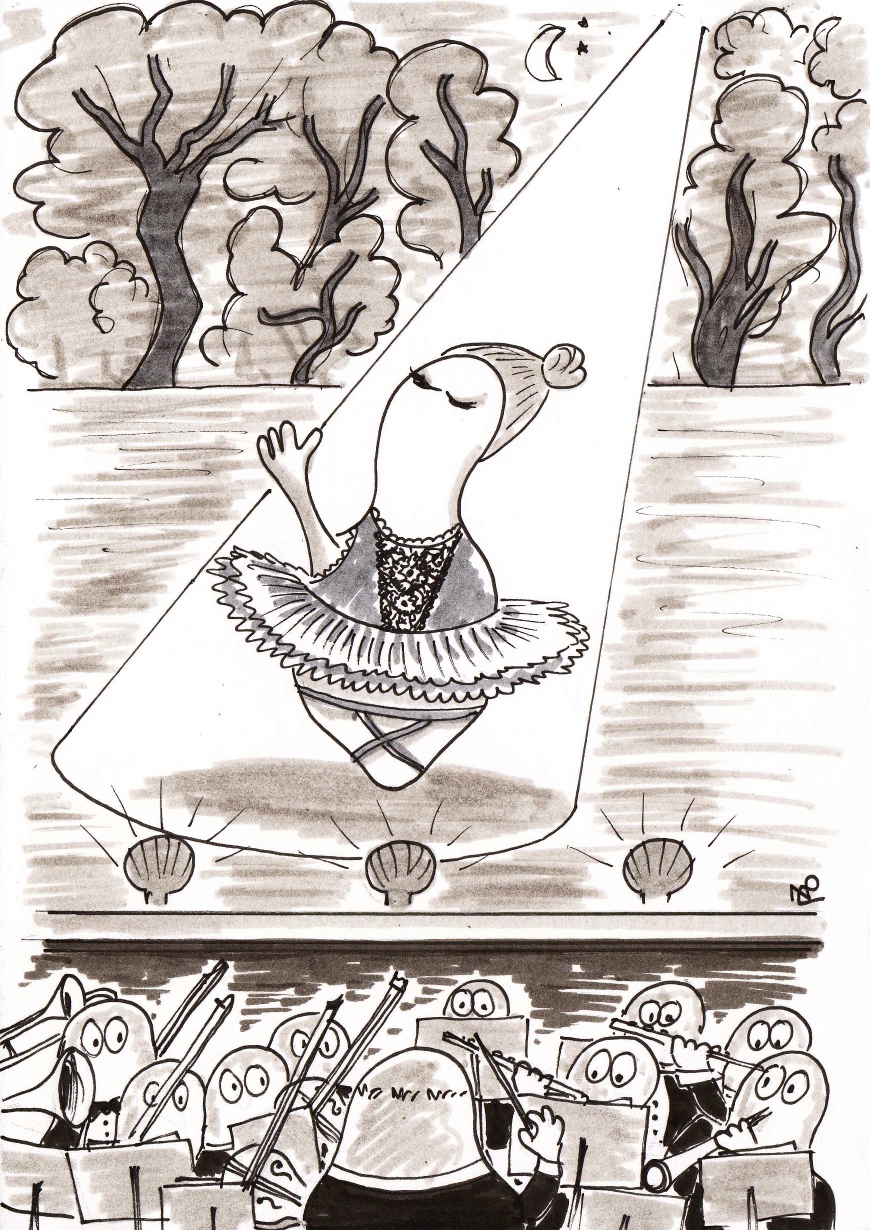
Ballet fever is in the air, well at least in my house, following Monday night’s Royal Ballet double bill spectacular The Dream/ Song of the Earth. Which got me thinking, what would happen if Norms danced the ballet? Well, the limitations are rather obvious. Unlike the sculpted muscular form of the human dancers, the use of which was applied to startling artistic effect in Song of the Earth, Norms are just blobby. This is fine for bouncing across the stage, and with one arm and wide eyes, they can even add a little dramatic expression into their dance. But as far as en pointe goes, the best a Norm can do is try to make themselves pointed… though the trouble then is they begin to resemble a spinning top rather than a ballerina, and we know what happens to the spinning top once it comes to the end of its revolutions. Oh well, you can’t say that the Norms don’t try. Here they are in the attempt, complete with a melodious Norm orchestra and a energetic Norm-ballet lift.

Ballerina Norm (2012 © Nicholas de Lacy-Brown, pen on paper)

The Norm-ballet lift (2012 © Nicholas de Lacy-Brown, pen on paper)

I’m off to live in the real world now. Until next time!

The Daily Sketch: Bikes, windmills, and other Dutch clichés

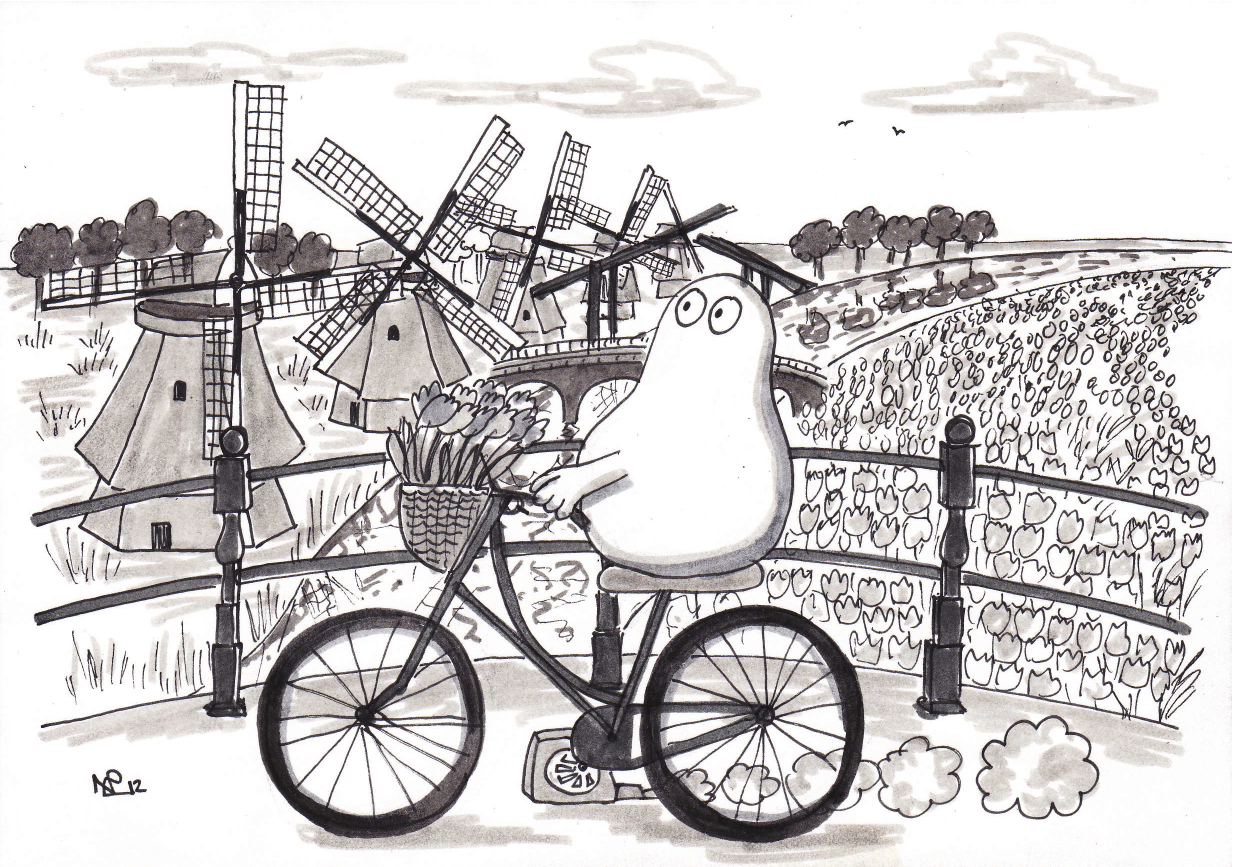
As clichés go, those adhered to The Netherlands aren’t bad at all. While the English are ascribed with being larger louts, football hooligans, eating big fry-ups for breakfast and  imperialistic tendencies (notably continuing into the modern day with the British takeover and generalised destruction of infamous beach resorts all over the Med such as Magaluf, Benidorm and Corfu) the emblematic symbols of The Netherlands include environmentally friendly windmills, fragrant and colourful tulips, and even more conscientious bicycle travel. All very appropriate at this time of year, when we seek to cast off our winter blankets and look forward to the Spring (it is March 1st after all!).

Being, as ever, the traditionalist, when Norm is in Rome, he does as the Romans do. Well then, in Holland, Norm has hopped on to a bicycle, purchased a bunch of tulips, and is surveying the local flat Dutch landscape with its fields full of multicoloured tulips and canal side working windmills. The only problem is, Norms can’t ride bicycles like the rest of us do by virtue of the fact that they don’t have legs. Their solution? Why, a motorised bike of course, puffing away, giving the bicycle all the kinetic energy it needs to traverse these pancake-flat lands. All the Norm has to do is steer  (although with only one arm, steering can be a struggle too I might add). That motor does somewhat takes the environmental out of cycling though. Well it was a good try Norm.

Norm on a bike in Holland (pen on paper, 2012 © Nicholas de Lacy-Brown)

The Daily Sketch: The age-old problem of how a Norm should wear a Clog

Today’s Daily Sketch deals with the age-old problem of how a Norm should wear the good old dutch clog. It certainly is a dilemma. They’re everywhere in Holland, in every souvenir shop and market, hanging from the ceiling in charismatic old cafés and flashed around on postcards as the ultimate emblem of jolly dutch heritage. They’re so tempting in their multicoloured curvaceous form, with their pointed toes and super reflective varnished finish. And the hollow clop-clop sound they make when they’re walked in is just glorious. You can understand the Norms’ disappointment then, upon buying said clog, full of promise, yet lacking instructions about how a Norm should utilise the wooden shoe to any kind of practical advantage. Norms don’t have feet you see, and try as they might to mould their bulging blobby form into feet shape, they just don’t fit. They’re tried balancing clogs on their heads, but invariably they fall off. Even worn as a dangly earring they are rather cumbersome.

The age-old problem of how a Norm should wear a clog (2012, pen on paper © Nicholas de Lacy-Brown)

The solution: why, buy an extra large clog of course (and they do come in all sorts of multifarious sizes). Then the clog really comes into its own! Here is a Norm using his clog as a skier-come-tabogan – the benefits are obvious, as that smooth varnished surface glides over the ice cold snow, the curvaceous form creating a streamlined surface built for speed, and the curved up middle providing Norm with the perfect protective wind shield. After all, how else could a Norm ski, sans feet? But this is just one example. Clog boat? Clog canoe? Clog bed? The possibilities are endless.

...And the Solution: Get a Large One (2012, pen on paper © Nicholas de Lacy-Brown)

The Daily Sketch: Norms in Amsterdam

When I don’t have time to paint, I try to sketch – at least once a day. I used to sketch a lot in my diaries which I have been keeping for 16 years. I still do in fact. But nowadays, my priority is to sketch on little cards which I hope one day to exhibit as a whole, or at least hang them collectively in my hall. In a week which may well include a few sketches (time permitting), I’m reliving last week’s Amsterdam trip through my Norms, keen not to let go of the memories of that trip which remain so strong and leave me caught in daydreams throughout the day, thinking of clogs, and canals, and those pesky cyclists. Here are Norms visiting Amsterdam. Now I’m going to ponder how a Norm would wear clogs. More on that later in the week.

Norms touring Amsterdam (pen on paper, 2012 © Nicholas de Lacy-Brown)

Dutch Masters Season Part 3: Johannes Vermeer

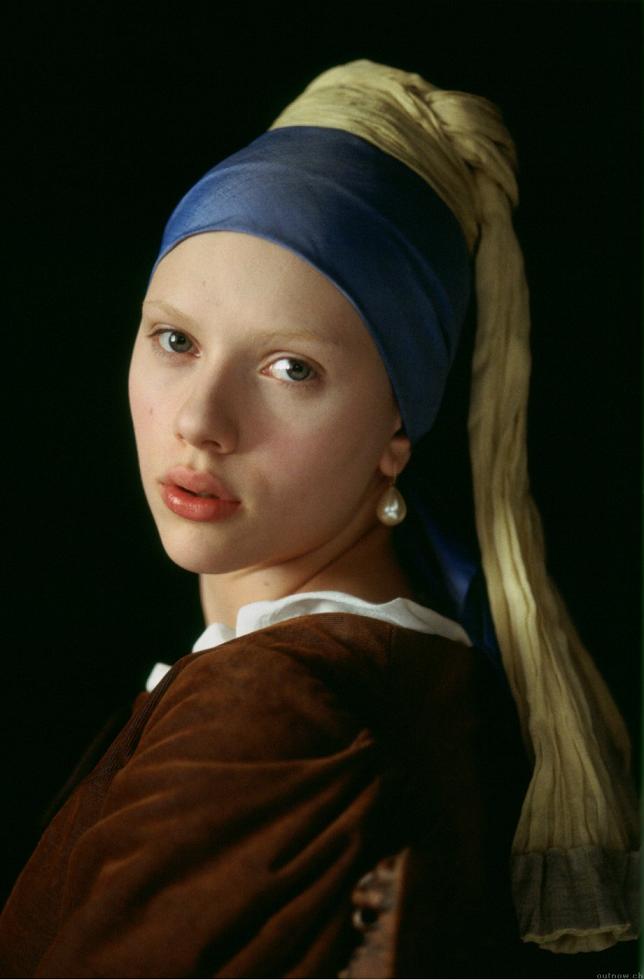
There can be no doubt about just how famous this Dutch masterpiece is. While very little is known about the woman featured, how the painting came about, or even about the life of the great Dutch artist, Johannes Vermeer, this portrait has so captivated audiences across the world that speculation surrounding the work has inspired novels, films and stage shows. It is of course, Girl with a Pearl Earring (Het Meisje met de Parel). And of course, for every masterpiece, a Norm must stand it its place. Here, as my final instalment of the Dutch Masters Season, is Norm with a Pearl Earring, painted on a little  7″ x 5″ canvas with acrylic.

Norm with a Pearl Earring (acrylic on canvas, 2012 © Nicholas de Lacy-Brown)

And the original

Vermeer, Girl with a Pearl Earring (Mauritshuis gallery, the Hague)

It’s a simple painting at it’s heart, but the intensity of the colour contrast against a black background with the glint of a pearl and the wide open welcoming eyes of the model have no doubt contributed to making this painting one of the best known portraits in the world. It is by no means the best of Vermeer’s work, an artist who is renowned for his mastery of sumptuous domestic scenes, including startling realistic windows, checkerboard floors and decorative furniture, and scenes of ordinary middle class life in the family home. In fact it was Vermeer who made the ordinary king in his work centuries before the impressionists swept aside grand classical themes for a focus on everyday life. As such, almost all of Vermeer’s paintings appear to be set in the same two rooms in his home in Delft where he worked, showing the same furniture in various arrangements. Nonetheless they show exquisite skill and attention to detail, and collectively have made Vermeer the darling of Dutch art.

Scarlett Johansson in the 2003 movie, Girl with a Pearl Earring

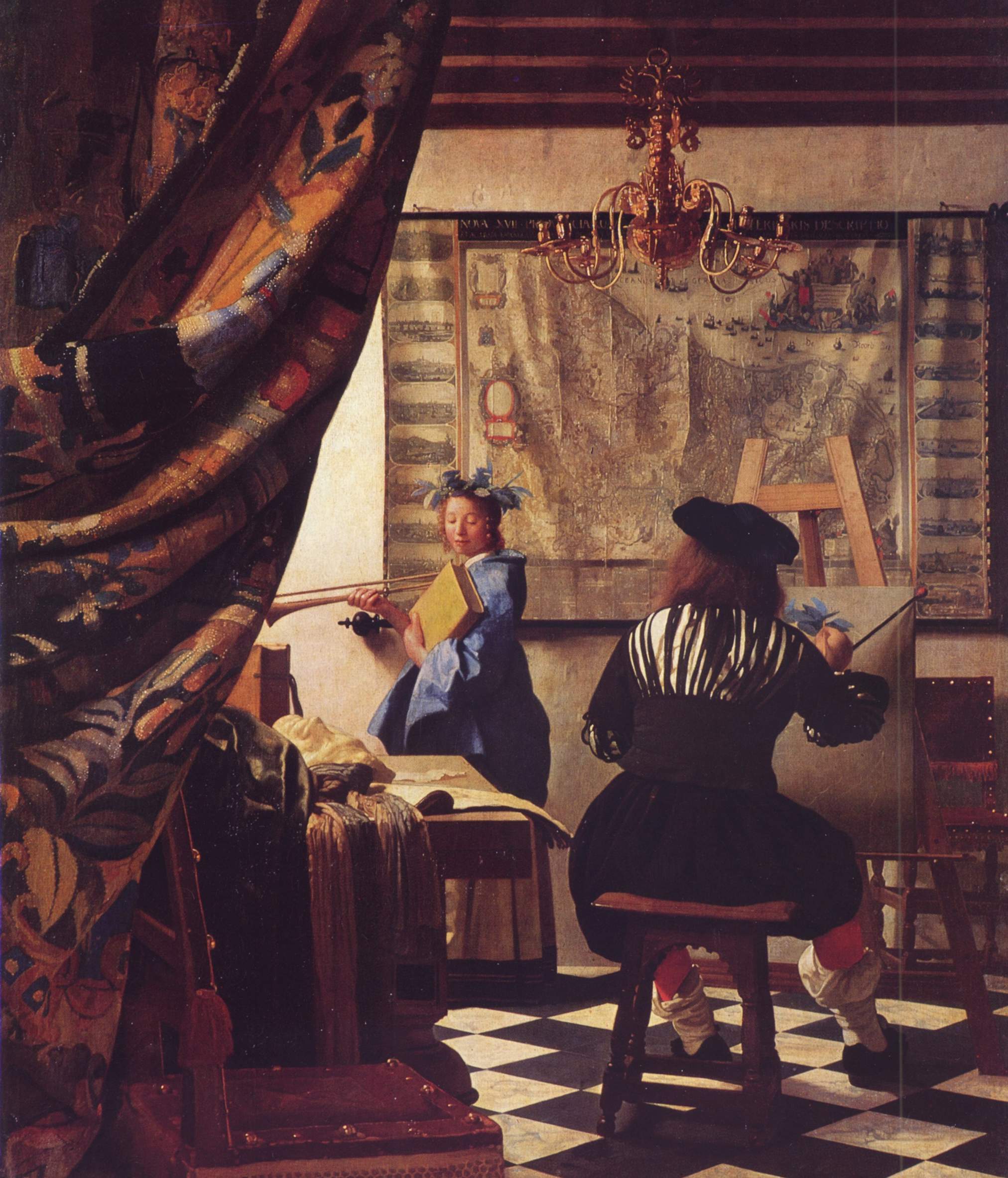
I leave you finally with an image of my favourite Vermeer painting, The Art of Painting, a work which has a truly chequered history which requires no fictionalisation. Set in the same room as most of Vermeer’s paintings, it is nonetheless unique because it appears to feature a self-portrait of the artist, and because it never left the artist’s side. It is thought to have been painted as a showpiece by the artist so that he could use the work to advertise his skill to visiting potential patrons. It is unsurprising therefore that the work is lavish in its detailing – just look at the map on the wall full of creases and the detail in the chandelier. But for being well painted, the items in the work also have their own significance. It is widely thought that Vermeer, a Catholic, painted the work as a allegorical stand against the new protestant rule in the Netherlands. As such, the map of the new Netherlands is creased and torn, suggesting divide and unrest in the nation, while the absence of candles in the chandelier, adorned as it is with the double headed eagle – symbolic of the former Catholic Habsburg rulers of Holland – represents the suppression of the Catholic faith and the darkness which had consequently settled over the land. The girl is the Muse of History, Clio, evidenced by her laurel wreath, holding a trumpet (depicting fame) and a book by Thucydides.

Of even greater significance is perhaps what happened after Vermeer’s death. First, the painting was party to an outrageous act of fraud, as the name of Vermeer’s great rival, Pieter de Hooch, was forged onto the work with the result that it was not recognised as a Vermeer work until 19860. Secondly, in the second world war, after the Nazi invasion of Austria, the work attracted the attention of top Nazi officials – Hermann Göring attempted to acquire the painting, but his efforts were blocked by Hitler himself who acquired the work for his own amassed collection of stolen European masterpieces. Shortly thereafter, during the war, the painting undertook numerous perilous journeys as the Nazis moved it from place to place in an attempt to keep it safe, finally ending up, and being discovered in, a salt mine near Munich. It was presented to the Austrian Government by the Allies in 1946, happily still in one piece, where it has remained ever since.

Vermeer, The Art of Painting (c.1666) (Kunsthistorisches Museum, Vienna)

See you in Amsterdam…

© Nicholas de Lacy-Brown and The Daily Norm, 2005-2012. Unauthorized use and/or duplication of the material, whether written work or artwork, included within The Daily Norm without express and written permission from The Daily Norm’s author and/or owner is strictly prohibited. Excerpts and links may be used, provided that full and clear credit is given to Nicholas de Lacy-Brown and The Daily Norm with appropriate and specific direction to the original content.


Dutch Masters Season Part 2: Frans Hals

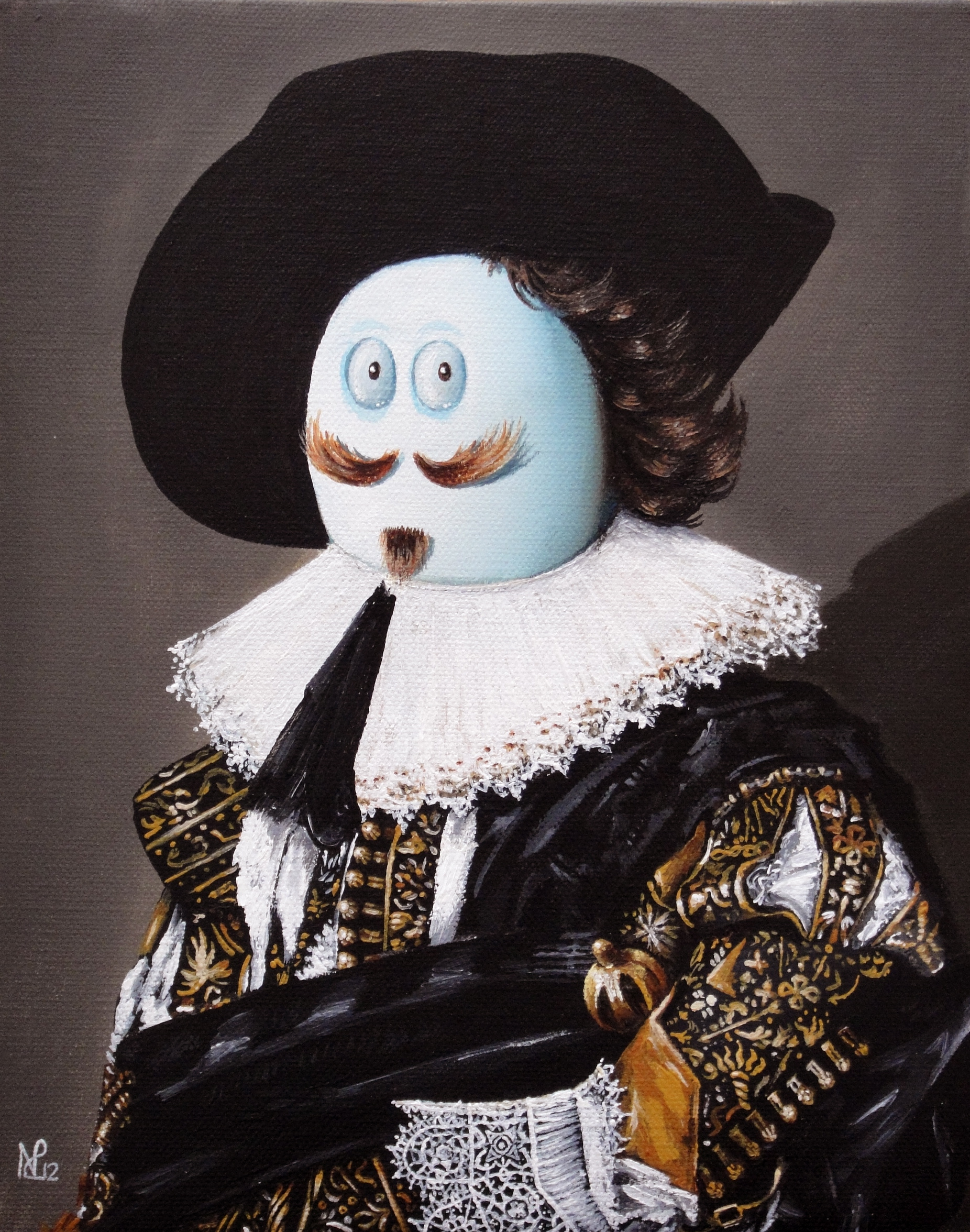
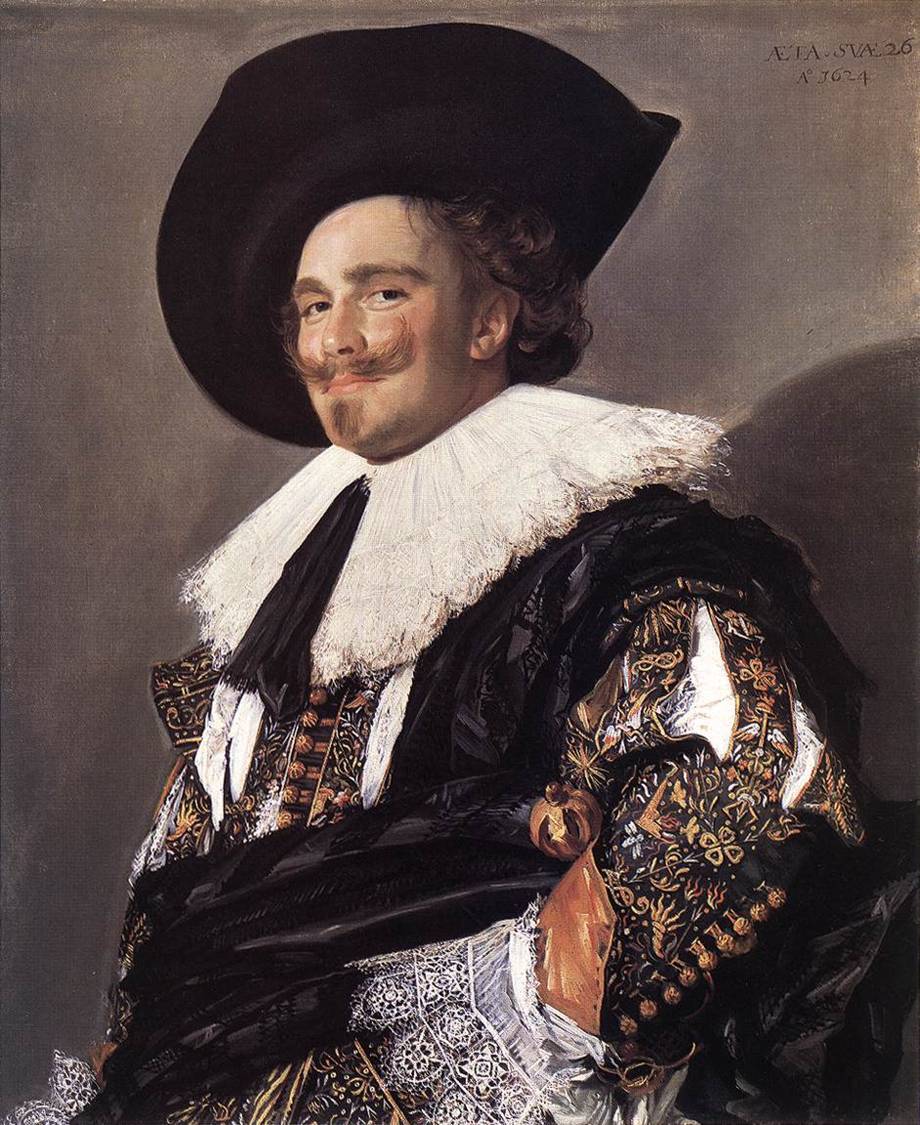
When I told my mother that I was going to paint a series of Norms based on classical paintings, the first suggestion she made was The Laughing Cavalier by Dutch golden age artist, Frans Hals. I thought she was mad! Having seen the portrait on a trip to The Wallace Collection in London some years ago, my lasting memory is being overawed by the intricacy of the portrait, in particular the extravagant embroidery on the “Cavalier’s” sumptuous outfit, and the skill with which Frans Hals had captured the abundance of lace around his neck and cuff. No way could I paint this in small Norm reproduction I thought. But then, when I painted a Norm based on Velazquez with all its lavish silk clothing, followed by a Doisneau inspired Norm painting with the intricacy of that darned complex Opera Garnier, I realised that the Cavalier may not be such a feat after all.

And so, excited by the challenge I had set myself, and all the more enthusiastic in the knowledge that a Laughing Cavalier Norm would make a suitably ravishing addition to my Dutch Masters collection, I attempted to recreate Frans Hals masterpiece on a mere 8″x10″ canvas. And here is the result.

Laughing Cavalier Norm (after Frans Hals) (acrylic on canvas, 2012 © Nicholas de Lacy-Brown)

The title of the original work was undoubtedly not The Laughing Cavalier, but the portrait became known as such around the time it first arrived in Britain in the 19th Century. It was thought to be unusual for a portrait of its age (1624) to feature a smiling figure – usually formal portraits were more serious and austere. But this gentleman, while not actually laughing, is certainly jolly, if a little haughty, and his curled up moustache pronounces the smiling contours of his expression. Lucky then that the moustache aids in the creation of a smiley disposition, because with no mouth, my Norm would certainly be all the more somber without it.

Frans Halls, The Laughing Cavalier (1624, The Wallace Collection, London)

English: Frans Hals, "The Laughing Cavali...

Image via Wikipedia

It is also doubtful, incidentally, whether the Laughing Cavalier, asides from lacking in laughter, was even a cavalier. It is said he was most likely a wealthy civilian, perhaps also a military man as suggested by a glimpse of the hilt of his sword. His richly embroidered clothing is aptly demonstrative of his wealth. There are many emblems in the embroidery, allegedly signifying “the pleasures and pains of love” through bees, arrows, flaming cornucopiae, lover’s knots and tongues of fire, while an obelisk-like shape is meant to signify strength and Mercury’s cap and caduceus signifiers of fortune. Meanwhile the turning pose and low viewpoint are shared by a number of similar portraits by Frans Hals.

Whoever this jocular gentleman was doesn’t really matter. There is certainly a power in his expression, through the sparkle of his eyes and confidence of his smile which continues to captivate today. It was often said, when the portrait first rose to fame in Britain, that the Laughing Cavalier’s eyes followed you around the room. They certainly seem to do so – even a digital reproduction on my computer screen seems to come alive, almost bemused at it watches me fussing around the room and clicking away on my computer. No wonder then that this painting has taken its worthy place in the gallery of Dutch masterpieces. It’s a work which breaks the boundaries of formal portraiture, packed with personality, symbolism, and a smiling face which exudes personality to this day.  Tot morgen…Vaarwel.

Valentine’s Kisses: Norms do… Klimt

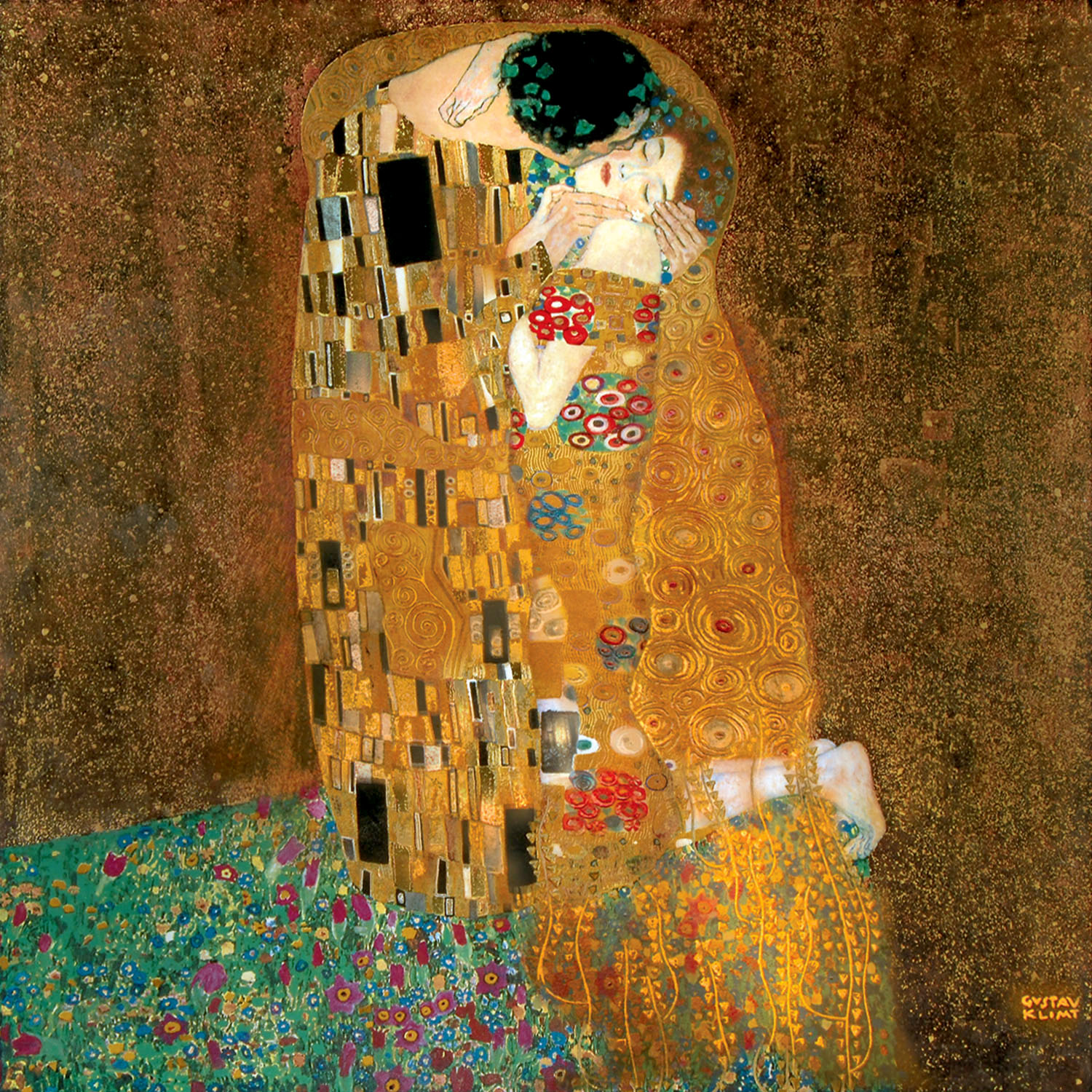
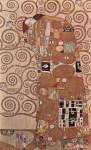
It’s valentine’s day, the day when millions of singletons across the globe shrink in disgust at the notable increase of embracing couples on the streets and inappropriate PDAs (public displays of affection), and when millions more feel the pressure of their partner’s expectation that they out do last year’s offerings with overpriced roses and a box of unwanted chocolates. But none of that here. At the Daily Norm, valentine’s is just an excuse to celebrate the more intimate, emotional side of art, while also using it as an opportunity to present a brand new Norm painting to the world! When I think of love, there is only one painting which comes to mind. It is, perhaps unsurprisingly, the same image which dominates the search results page when you type “The Kiss” into google. It is, of course the world’s must famous and celebrated embrace, The Kiss, by Gustav Klimt. And here, for your viewing pleasure, is the Norm re-inactment along with the original.

The Kiss (after Klimt) (acrylic and gold leaf on canvas, 2012 © Nicholas de Lacy-Brown)

The Kiss by Gustav Klimt (1907-8, Österreichische Galerie Belvedere, Vienna)

It’s a crying shame that like Van Gogh’s sunflowers, or Monet’s bridge/waterlillies, or Degas’ ballerinas, Klimt’s masterful golden embrace has become so commercialised, replicated and reproduced onto every form of tourist tack, from lamps and mousemats to beaded curtains and bed linen, that the automatic reaction of a viewer to the image is to see it through a kind of autopilot. As with all recognition, one fails to actually look, really look at the image. When I embarked upon a Norm version of Klimt’s work, this is exactly what I had to do. Whereas previously I had dismissed the image as cliché, when I started painting my own version, I saw so much more.

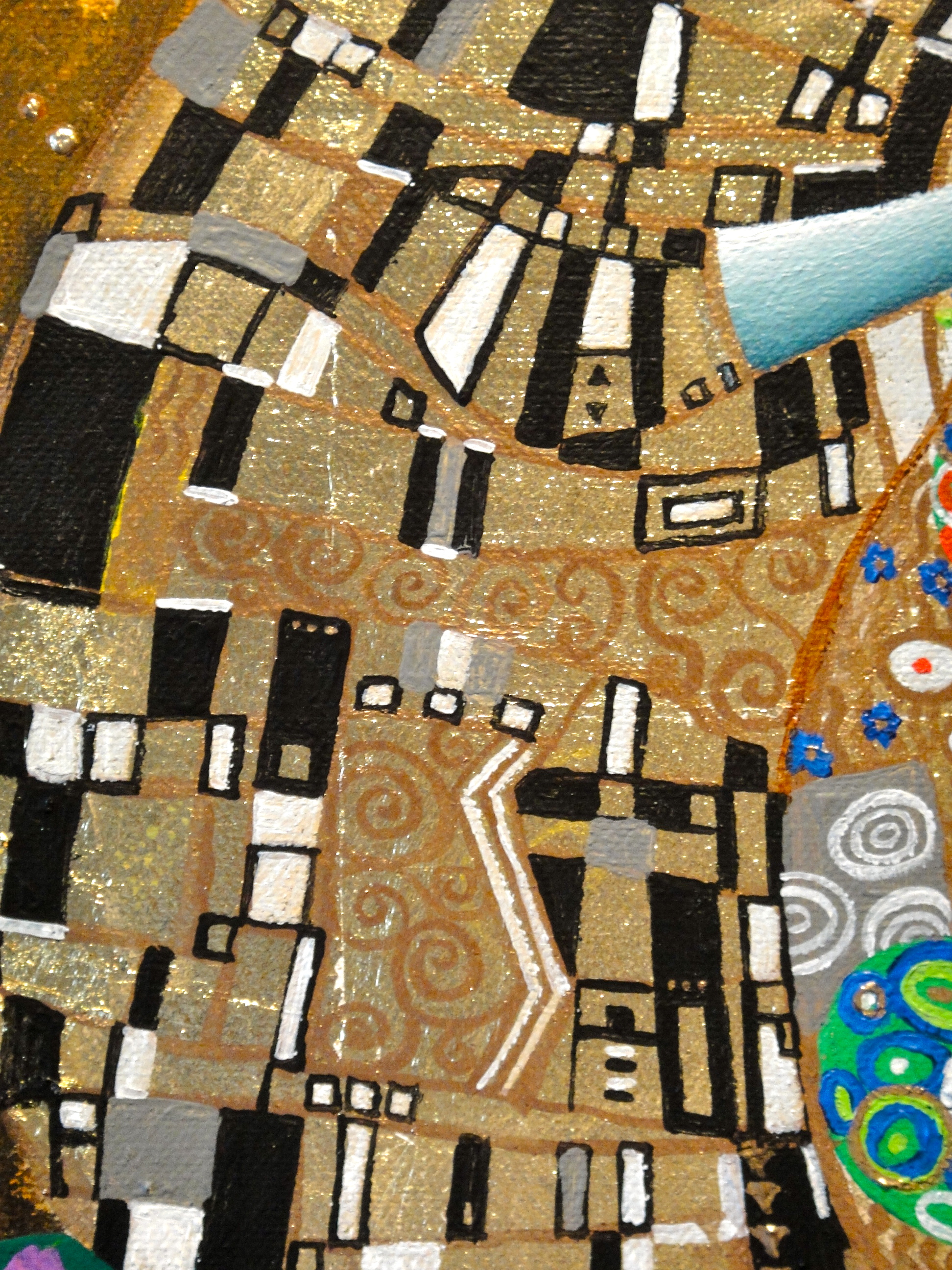
The Kiss (after Klimt) (© Nicholas de Lacy-Brown) - detail of male Norm

First of all, the painting is a superb fusion of evocative emotion mixed with art nouveau-inspired flattened design. It makes for an interesting synthesis, and seems to emphasise and centralise the intensity of the embrace all the more, since the power of the emotion charging through the embrace appears to have instigated the creation of a fantasy world around the couple, as they appear to burst out of a planet of flowers, and all around them, a cosmos of golden stars twinkle. The patterns of the clothing are also interesting. With squares and geometric patterning, the man’s clothing appears quite strong and masculine, where as the woman exudes a more feminine softness with round flowery shapes and waves. However, interestingly the fusion between the characters seems to translate into their clothing, as interspersed between the man’s squares are small patches of swirls, while on the woman, round shapes are occasionally interrupted by squares, particularly where her body touches the man’s. Moreover, the aura-like golden space around them is full of swirls which appear like stars or moving, active emotions. Also, at the bottom of the canvas, the abundant flowing golden plants trailing off the couple seem to suggest fertility, not least because of  the prominence of the upturned triangle which hints at female sexual organs.

The Kiss (after Klimt) (© Nicholas de Lacy-Brown) - detail of female Norm

More interesting still is the pose. From the painting’s title, one would draw the inference that this is a happy, loving embrace. However, having studied the work more closely, there is, to my mind, something all the more sinister about the pose. While the man stands tall and rather menacing with his black hair and firm grip of the lady, she appears to be subservient in the embrace, kneeling before the man. She appears to hold the man, not tenderly, but as though trying to loosen his grasp on her. Notably, her right arm appears to be screwed up into a tense fist rather than tenderly resting upon his shoulder. It also seems significant that the kiss is not on her lips but her cheek, as though the lady has turned her face just in time to avoid the man’s approach.

As with most great masterpieces, much is left to the public’s interpretation, but I am at least glad that in Normyfying this work, it has given me the opportunity to study it further and give it the kind of appreciation it deserves. As for my Norm reimagining, I think that the pose lends itself well to the Norms who, in their curved body shapes, fit effortlessly into the art nouveau theme of the original. Here the awkwardness of the embrace could still be interpreted either way, although as Norms only have one arm, my lady Norm is without her right screwed up fist, while the man cannot grip so firmly upon his Norm lover with his second hand. There was a lot of detail which needed painting in order to do Klimt’s original justice, and as the main photograph doesn’t necessarily show this up, I have included close up detail shots of my Norms (above), as well as a photo showing the effect of the gold leaf when a flash is used on my camera below.

The Kiss (after Klimt) (acrylic and gold leaf on canvas, 2012 © Nicholas de Lacy-Brown) - showing effect of a flash on the gold

In the meantime I wish you all a very happy Valentine’s day, hoping that the day is everything you want it to be (if only if it means the effective avoidance of couples!). For those of you more inclined towards all things romantic, I leave you with a gallery of some of my favourite artistic manifestations of kisses, from Rodin’s sculpture to my own Norm version of Robert Doisneau’s Le Bazier de l’Opera.

© Nicholas de Lacy-Brown and The Daily Norm, 2005-2012. Unauthorized use and/or duplication of the material, whether written work or artwork, included within The Daily Norm without express and written permission from The Daily Norm’s author and/or owner is strictly prohibited. Excerpts and links may be used, provided that full and clear credit is given to Nicholas de Lacy-Brown and The Daily Norm with appropriate and specific direction to the original content.

Norms do… the Rokeby Venus

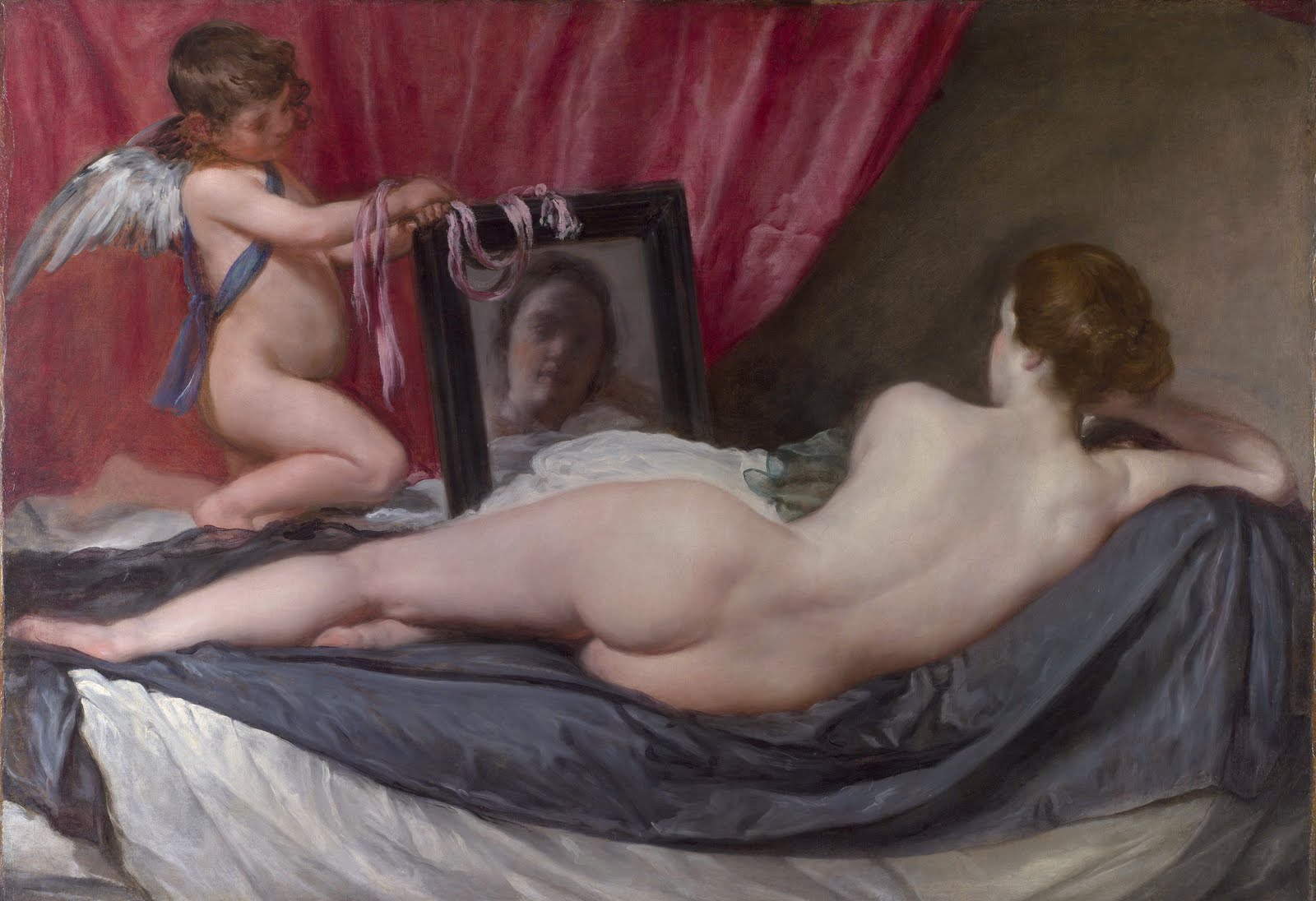
You’d excuse the Duchess of Cambridge, aka our adored Kate Middleton, for being a little miffed at the reception to her sister Pippa’s now famous backside when it meandered up the aisle of Westminster Abbey behind the blushing bride in the decade’s most watched wedding last year. Her bottom was a largely unanticipated feature of the wedding, but one which captured almost as much attention as Kate’s dress, particularly amongst the males watching the wedding (causing unanimous consternation amongst their female partners – one, it was reported, even slashed her boyfriend’s car). But should Duchess Kate wish to console herself of this great usurpation of her wedding day, she need only wander next door from the National Portrait Gallery to which she has recently become patron. There, in London’s National Gallery, she will find a backside which easily eclipses Pippa’s behind in terms of notoriety (and, frankly, beauty), a bottom which has been both ogled at and admired in equal measure for centuries, and one which has stirred such strong reactions in its audience that a King of England helped to purchase it for the nation, and prompted one crazed suffragette to slash the painting repeatedly in pursuit of her campaign for women’s rights (in prompting such violent actions then, perhaps the two bottoms are on par). It is, of course, the beautiful bottom of the Venus, painted by Spanish master Diego Velázquez, which has become known as The Rokeby Venus. 
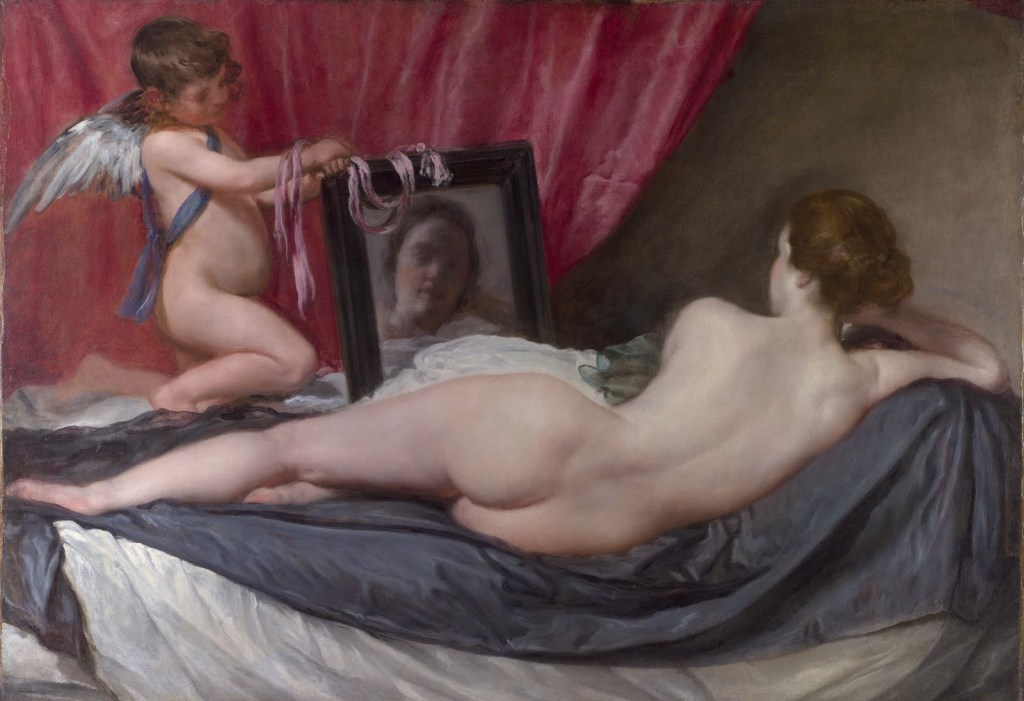
The original Rokeby Venus by Velazquez (courtesy of The National Gallery, London)

The painting, which became known as Rokeby when it was moved to Rokeby Park in Yorkshire in the 19th century, is easily one of the prizes of The National Gallery’s collection. It not only shows a lovely naked body for audiences to admire and, possibly, to become aroused by, as well as an intimate, uninterrupted moment of self-absorbed beauty, it also offers us an innovative way of representing the archetypal duo of classical figures, Cupid and Venus, with Venus’ back to the viewer, and Cupid, without his usual bow and arrows, engaging, assisting Venus in her act of self-appreciation. Painting Venus’ back to the audience was an unusual choice, but it not only adds to the intimacy of the scene, it also allows the nude to be admired from a hitherto unseen perspective. And in order to involve the audience with his portrayal of Venus further, Velázquez uses the mirror as a device to introduce Venus’ face in the scene as well. In this way the composition is not only innovative but highly effective as a tool to seduce and captivate the viewer. As Velázquez goes, this is quite a departure from Las Meninas and his other court portraiture, and would, in fact, have been painted with a degree of secrecy in a society which was prowled by the stricture of the Spanish Inquisition. Its beauty is however equal to, if not greater than these more “official” works, and provides an intimacy and emotional intensity which would never be captured in the stiff pose of a courtier, or even the traditional classical manifestation of Venus.
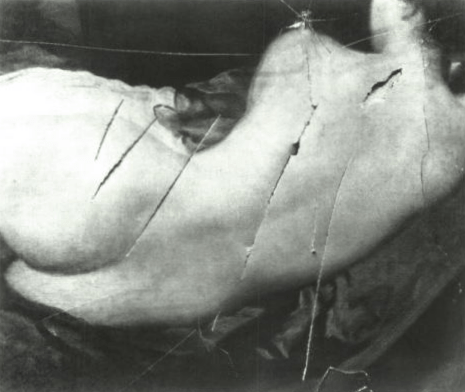
Damaged sustained by the Rokeby Venus when slashed by suffragette Mary Richardson in 1914

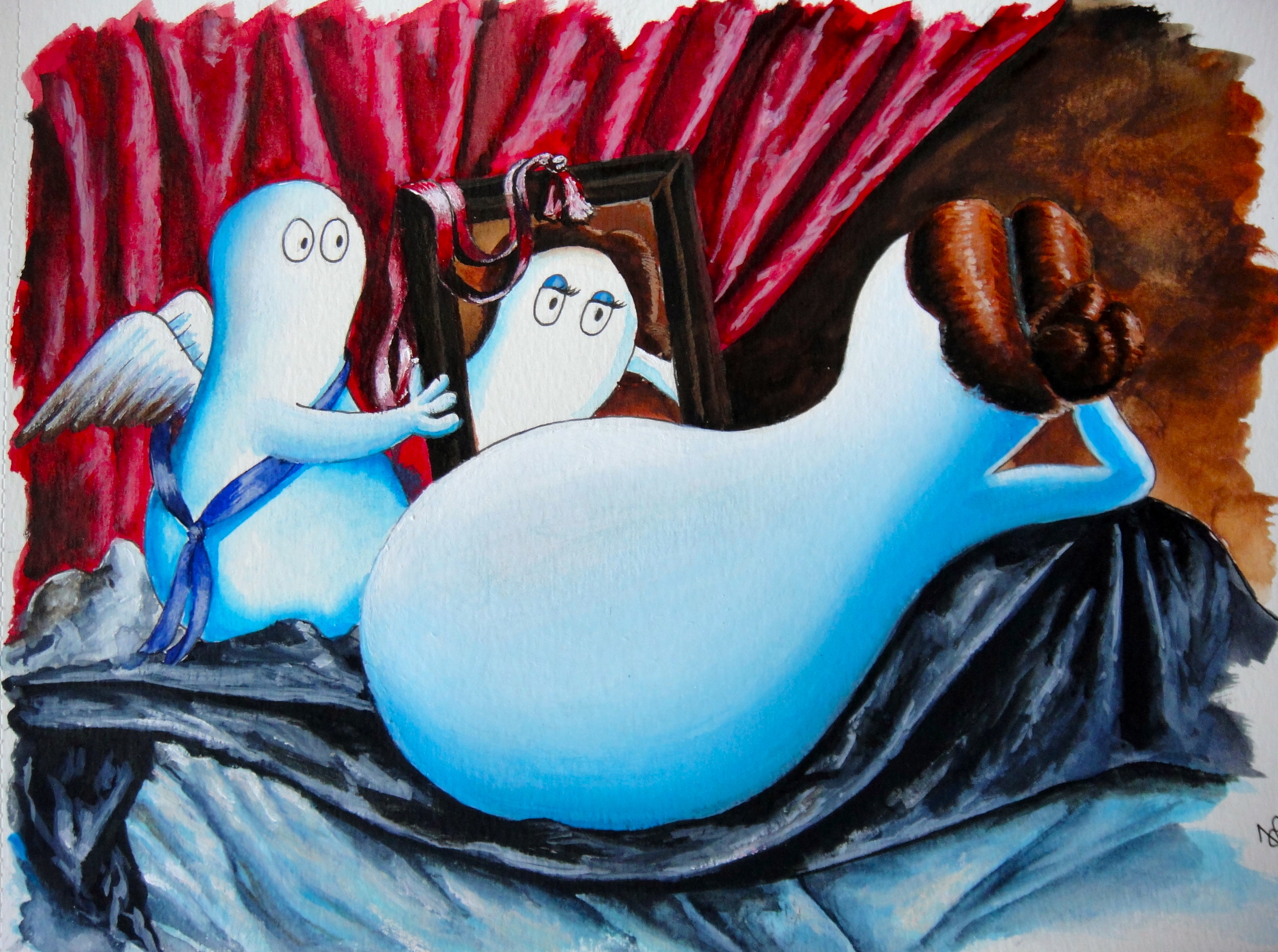
Now the Norms, being as ever, fans of high culture, particularly of a Spanish kind, have adopted the pose of the Rokeby Venus for your pleasure. In this watercolour reimagining of Velázquez’s masterpiece, the composition is pretty faithful to the original, albeit the medium of watercolour provides something of a coarser, more vivid finish than the hazy blended effect which Velázquez has achieved with oils. I also made the face of the Norm in the mirror more prominent that Velázquez’s Venus whose face is inexplicably blurred. Recent National Gallery x-rays have shown that this blurring remains unchanged from the painting’s original finish and was, therefore, always intended by Velázquez. Why he blurred the face no one can be sure, but I like to think that it conformed to the softness of the whole scene, including the gentle finish given to Cupid. In giving Venus a generalised, undefined face, Velázquez emphasises the beauty of her body and the drapery which mirrors its curves so effectively.

The Normby Venus (after Velazquez) (watercolour on paper, 2012 © Nicholas de Lacy-Brown)

Let’s hope that my Norm reimagining remains in one piece and is not slashed to pieces by a protester…

So before leaving you to (hopefully) enjoy my Norm pastiche, just a note on who else has been inspired by the Rokeby Venus. Well the list is fairly long, including Goya, Ingres, and Paul-Jacques-Aimé Baudry with his The Wave and the Pearl. But it is also possible, I think, to attribute Manet’s infamous Olympia to the dare and innovation of Velázquez’s portrayal of the nude. As Velázquez reinvents the female nude with this glance at her behind, so too did Manet reimagine the nude, painting a similarly unembellished nude who stares directly at the viewer, captivating the audience in the same way that the Rokeby Venus pulls the viewer into the intimate scene by way of her reflected stare in the mirror. Notable too is Manet’s drapery, mirroring and enhancing the curvature of his creamy-smooth nude.
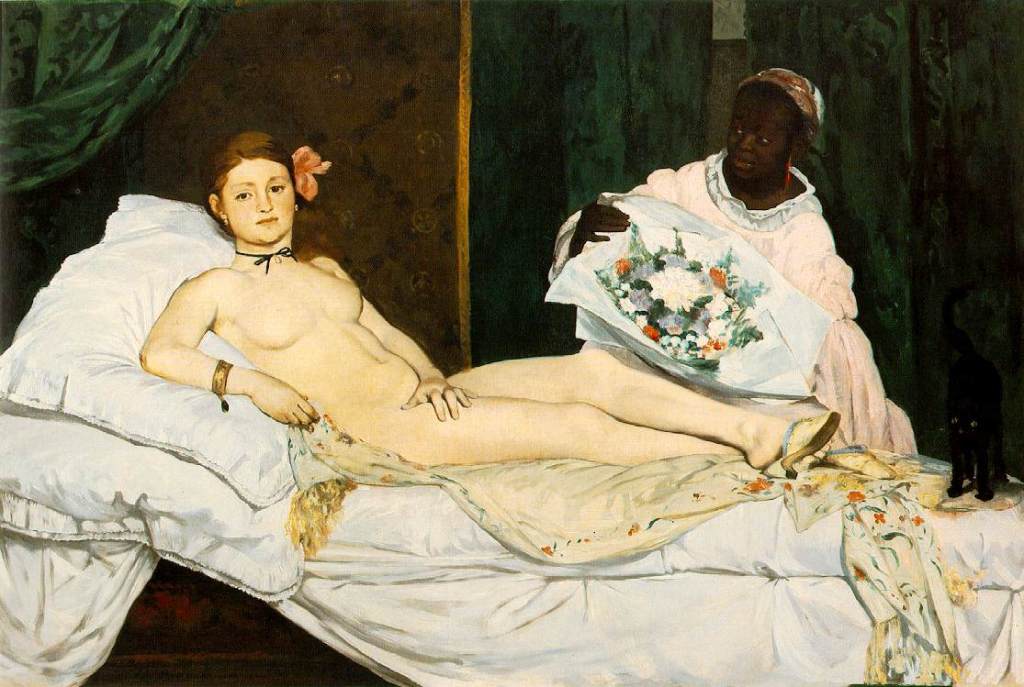
Edouard Manet, Olympia (1863) courtesy of the Musée d'Orsay, Paris

Also of note is the 1970s photographic reinaction of the Rokeby Venus by Bergström as well as by contemporary photographer Sam Taylor-Wood. In the latter photograph, Soliloquy III, Taylor-Wood pushes the erotic nature of Velázquez’s work to a new level, capturing what looks like a self-portrait in the Rokeby pose above a freeze which appears to show a group of people indulging in a mass orgy in an office space.
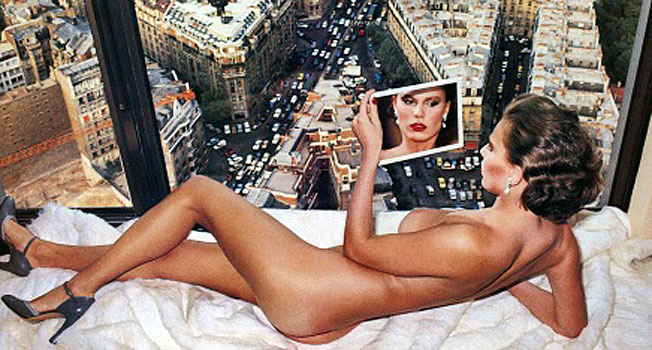
Bergström over Paris (1976)
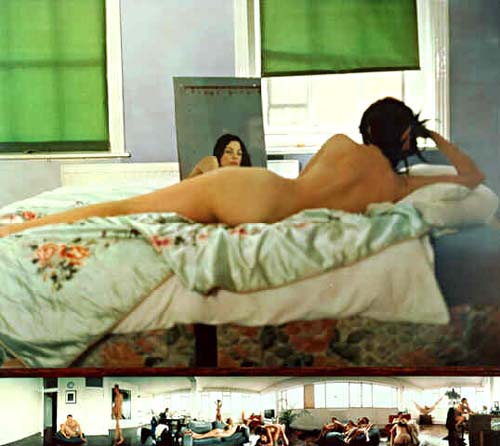
Soliloquy III (1998) Sam Taylor-Wood

Suddenly Pippa’s small, well-covered bottom loses much of its lustre… Until next time.

© Nicholas de Lacy-Brown and The Daily Norm, 2005-2012. Unauthorized use and/or duplication of the material, whether written work or artwork, included within The Daily Norm without express and written permission from The Daily Norm’s author and/or owner is strictly prohibited. Excerpts and links may be used, provided that full and clear credit is given to Nicholas de Lacy-Brown and The Daily Norm with appropriate and specific direction to the original content.

Why you should celebrate your Half Birthday

I like to think/ convince myself/others that, on the occasions when I exhibit too many childish traits for a fully-grown adult, my behaviour can be justified by virtue of my needs as an artist. After all, it was in the realm of childhood that the majority of us escaped into a world of make-believe, when our heads were filled with original, uncorrupted ideas, and when we would fully accept a fantastical story which, when imported into the adult world, would be derided as fanciful or shelved as being surreal and not-in-the-real-world. Having said all of this, I am not so childlike in my demands that, like the Mad Hatter in Alice’s Wonderland, I require an indulgent daily celebration of an “unbirthday”. What I do, however, celebrate every year is… my Half Birthday!

It’s a peculiarity to which those who know me have become accustomed, patiently tolerating the slightly eccentric annual demand I make of them in insisting that my half birthday is marked. I think it stems from my childhood when my parents, ever the diplomats, would give my sister and me a small present when the other was celebrating their birthday. In this way it meant that the one of us who was not celebrating did not feel left out. By coincidence, my sister’s birthday falls almost 6 months from mine, and consequently, long after my parents gave up on catering for our whims, I took it upon myself to celebrate my half birthday on an annual basis.

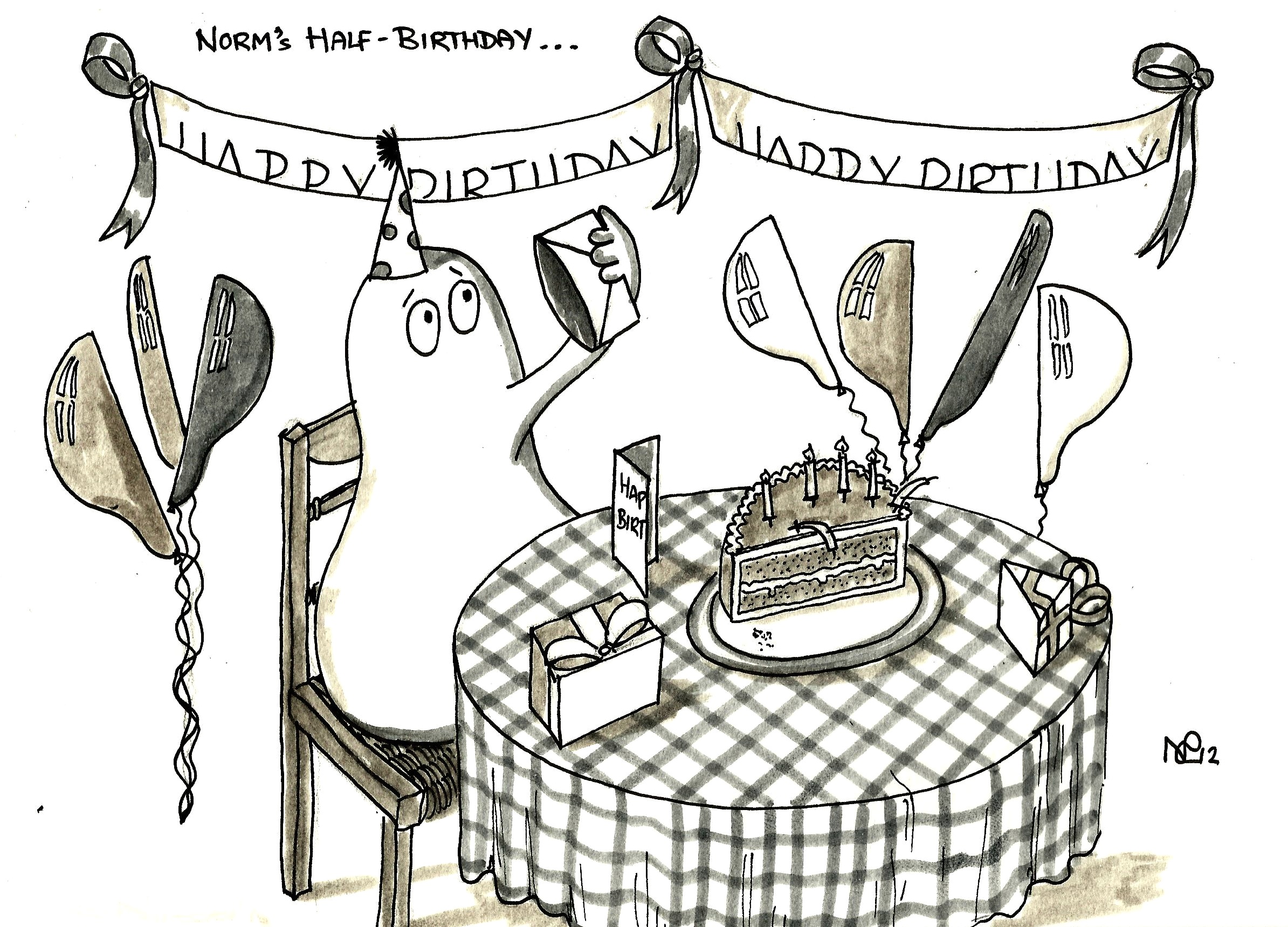
Norm's Half Birthday - Norm looks for the other half of his card (2012 © Nicholas de Lacy-Brown)

In practice no one actually gives me anything for my half birthday, and most people (including me) forget all about it. But on the occasion I do remember, I still use the date, unashamedly, as an excuse for out-of-the-blue celebrations, emotional blackmail and the like. I always remember my first year at university when my new friends, obliging my strange request, made me birthday cards which they then cut in half (I never did get the second half). This was followed by a massive half birthday party in my masters year, never, sadly to be repeated (spilt wine ruined my carpets so I quickly concluded celebrating my half birthday should be an altogether more sedate affair).

With the uni years well behind me, I really am now too old for all of this. Nevertheless, trying never hurt anyone, and since yesterday was my half birthday, I successfully persuaded my parents to join me in embarking on an impromptu celebration which included an extravagant afternoon tea out at Marbella’s very established Goyo tearooms, and dinner out at Zozoi – the darling of the Spanish expats – a fantastic French-Belgian brasserie in the heart of Marbella’s old town. And while I thought it may be a little demanding of me to insist on a cake (or half a cake) as well, judging by this amazing handbag cake I spotted in a shop window earlier, Marbella is clearly the place to pick up something special. I may try that one tomorrow…

Amazing Louis Vuitton inspired handbag cake in a shop window in Marbella

So why should you celebrate your half birthday? Well one birthday a year is pretty lousy when you consider there are 364 other days to get through. And after all, the Queen gets two birthdays doesn’t she. To me, it seems pretty reasonable to have a little celebration every six months – after all, being half a year older is just as much of a feat in my opinion. There is of course the slight issue that it will be yet a further reminder that you are getting older (I spotted a rather substantial grey hair the other day – nightmare) but all the more reasons to get yourself merry and insist your friends and family do the same. And if they complain, remind them that you could always start celebrating your quarter birthdays too. Or monthly. Now there’s a thought…