Skip to content

Posts tagged ‘Norms’

Norm Profile: Cool Norm (2005)

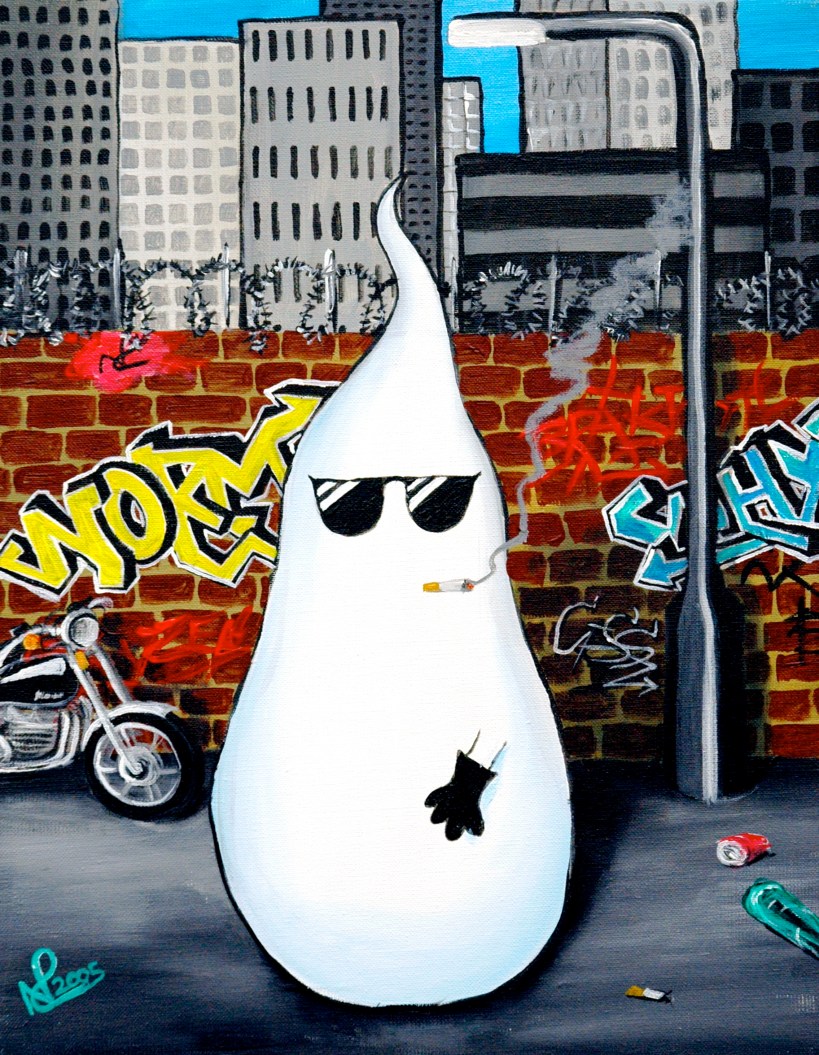
Following on from yesterday’s Turner Prize blog entry, in which I examined the melancholy but strangely beautiful and atmospheric works of both Martin Boyce and George Shaw, it follows naturally that in today’s Daily Norm, I introduce you to one of my first Norm paintings, painted back in 2005: “Cool Norm”.

Cool Norm (Acrylic on canvas, 2005 © Nicholas de Lacy-Brown)

Read more

Christmas comes to the Daily Norm! Snowman Norm, Santa Norm, and Christmas cards for sale!!

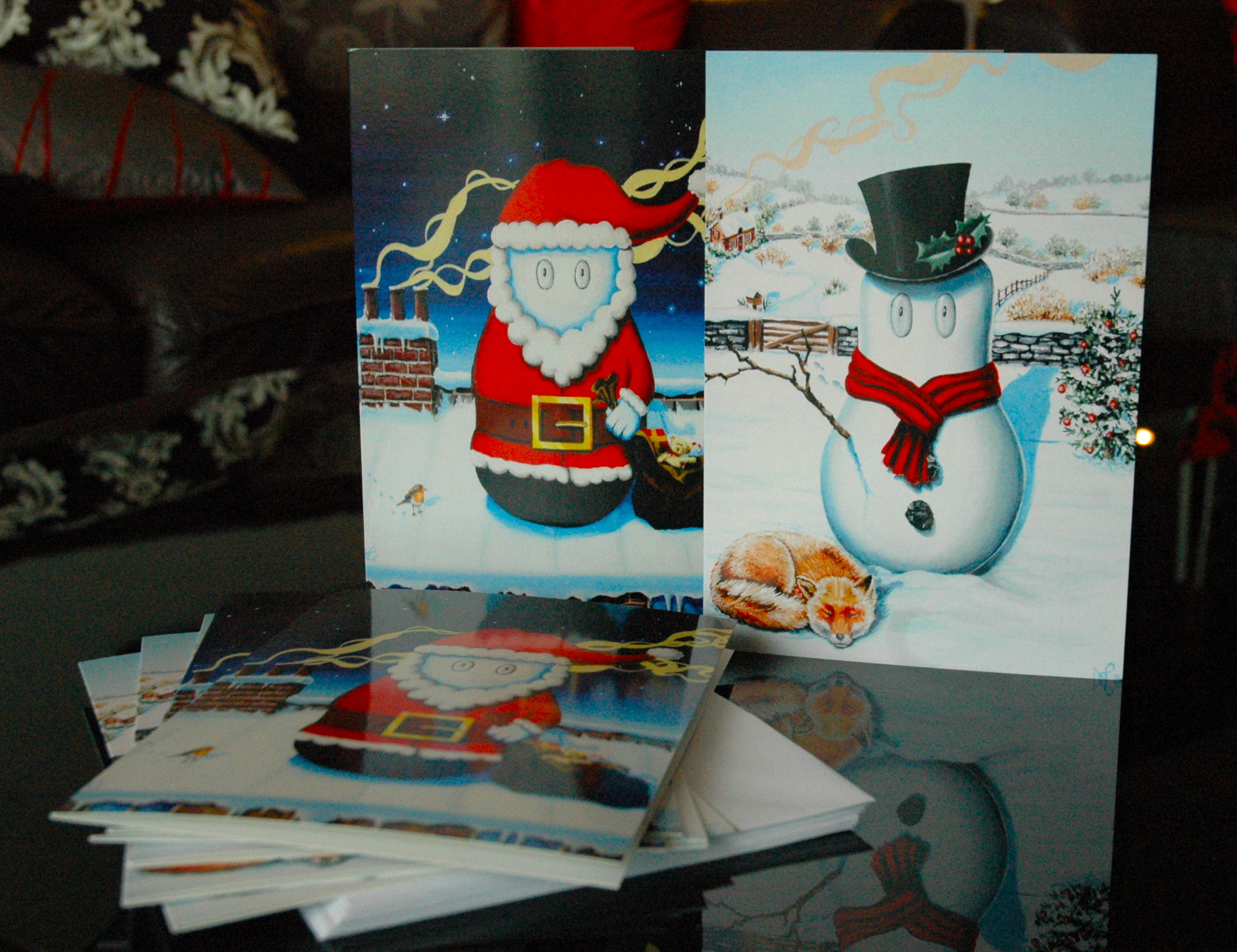
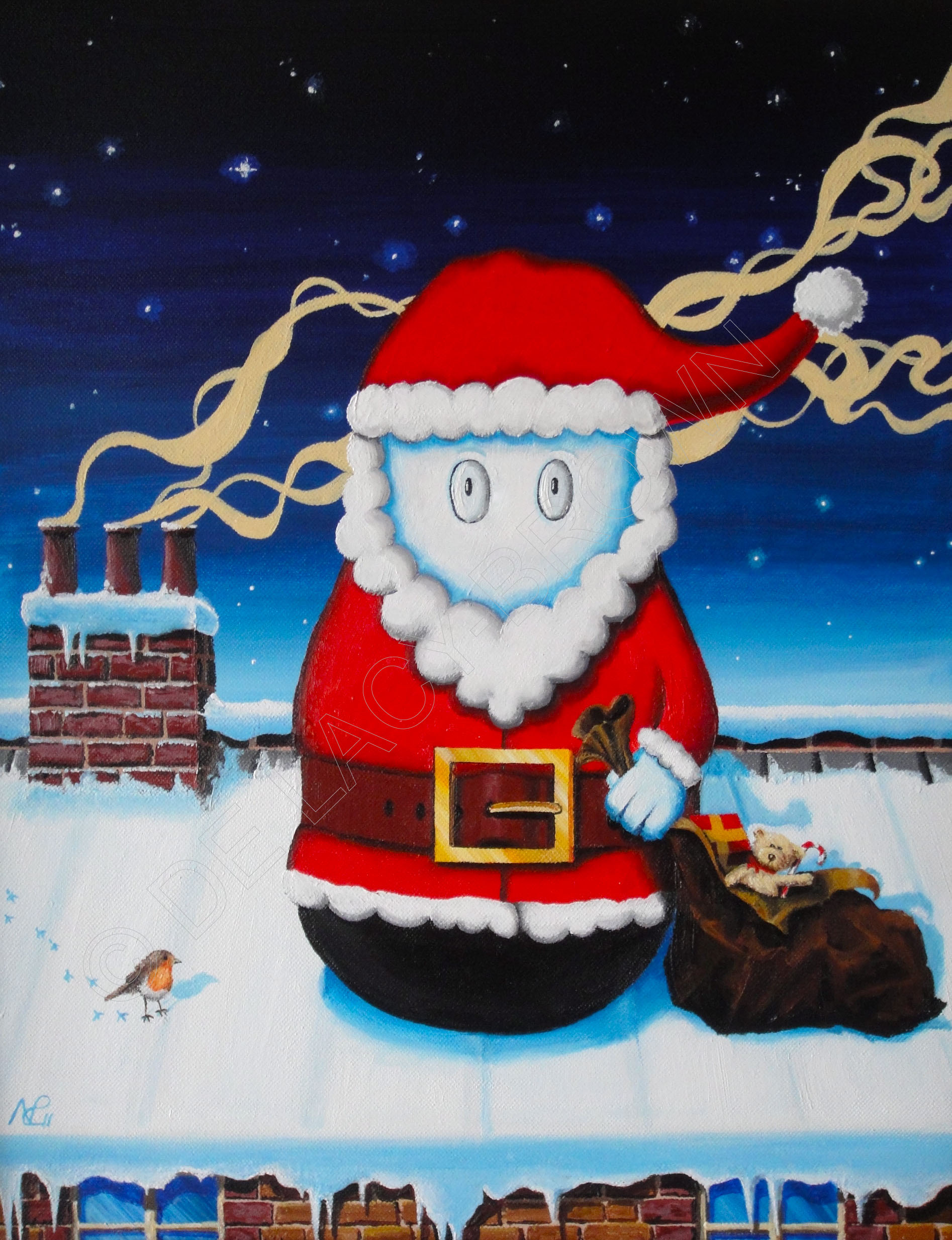
Christmas has come early to the Daily Norm with the introduction of yet two more next generation Norm paintings! Getting into the Christmas spirit (and I usually get into the Christmas spirit in around October, once I’ve given up on the summer and started indulging in the decoration displays in the London department stores) I have painted two new Norms especially for Christmas… Santa Norm and Snowman Norm. And not only have I painted these new Norms for your viewing pleasure, but I have also turned them into Christmas cards available for purchase on Etsy!

So, visit my Etsy shop to make a purchase of what must be some of the most original Christmas cards on the market! I am selling the cards in packets of 10 cards, each containing the two designs – 5 Snowmen, 5 Santas, with 10 white envelopes to match. And the price of £4.99 is not much to ask for these semi-gloss super quality cards printed onto a sizeable A5 to thoroughly impress every recipient! Buy quickly though… December is fast approaching and stocks are limited… and I’ve already started selling since putting them online last night!

In the meantime I leave you with the Norms themselves. Merry Christmas from the Norms!!

Snowman Norm (2011, acrylic on canvas) © Nicholas de Lacy-Brown

Santa Norm (2011, acrylic on canvas) © Nicholas de Lacy-Brown

Read more

Norms do… Picasso

Norm with Guitar, Pipe and Newspaper (After Picasso) (2011)

Continuing with the Spanish theme of my current blogs written from the great European peninsula itself, I have decided to focus on one Spaniard who has frequently influenced my own work as an Artist, and countless artists over the last 100 years: Pablo Picasso. The great artist, whose works boast the first, second and third place in the world records for the most expensive art works ever sold, was born very close to where I am currently staying, in Malaga. His works are sometimes divisive, but most universally admired. A few critics bemoan the childlike expression of much of his latter work, but as I have often found, it is in fact much more difficult to paint naively when, like Picasso, it is a natural instinct to paint well. What appear to be haphazard brush strokes are probably the result of many hours or even days of contemplation. The underlying balance which enables us to view a Picasso painting as a satisfied viewer may well have taken an enormous amount of preparation to achieve. In any case, Picasso is not just about eyes found where ears should be, and ears painted somewhere around the sitter’s feet. He was in fact tremendously vital to art history. He took art to new boundaries. He was a key proponent in cubism, and in abstract. He brought us a new, emotionally raw way of portraying lovers, family and other people in his life, opening the doors to the likes of Francis Bacon and his infamously savage, blurred and disfiguring portraits . Moreover, the breadth and variety of Picasso’s career provides us with a significant account of twentieth century history, not least his stunning and deeply poignant portrayal of the Spanish Civil War in Guernica, which continues to stir emotions today as perhaps the boldest declaration against war ever painted.

Read more

Norm Profile: Matador Norm and the beauty of the Corrida

As part of my introduction to the Norms which I’ve painted so far, it is only appropriate, since I write this is sunny Spain, that the first Norm to take the stand is Matador Norm. He’s a popular chap: Used as the principle publicising image of my 2006 solo exhibition “Between Me and My Reflection”, he was one of the first paintings to be sold on the opening night. The buyer (who’s name, of course, I am not at liberty to publicise) is the owner of one of the UK’s most prominent men’s fashion and accessories brands and I was therefore delighted when the sale was made – the buyer obviously has excellent taste! While Norms have always been popular amongst my dedicated art-loving followers, it did not surprise me that Matador Norm had particular appeal. The image, with its warm golden colours, the sparkling costume of the Matador, and a slightly retarded looking bull, all flanked by a curious crowd of spectator norms, combines to illustrate the spectacle of the bullfight which is now synonymous with Spanish culture across the world. Read more

Introduction to the Norms Part I: Kelsen’s Theory of Normativity

I’ve already said that my Norms first emerged from the strange depths of my imagination in a law lecture when, no doubt, I should have been focusing on other things. As even the brightest law student will tell you, it isn’t always easy to concentrate in law lectures, especially when the subject is jurisprudence, where the very idea of legal philosophy fills most budding lawyers with abject horror, and then, inevitably, boredom. One such lecture introduced us to the legal theorist Hans Kelsen, who’s Pure Theory of Law (“Reine Rechtslehre”) has become a staple of jurisprudential study and was itself a radical modernist legal theory when first published in 1934. Like most legal theorists, Kelsen was trying to establish why law is what it is, how it works, why it is obeyed, and what it says about us as a society, our moral compass and the importance (if any) of religion as a backbone to society’s legal machinery. All fairly irrelevant questions you may think: The law is what the law is and that’s that. And you may be right – it’s certainly a question that went through my mind on a number of occasions when I first started studying jurisprudence. But the subject throws up some very interesting questions which make for a fascinating dinner table conversation, even for the most unwitting philosopher. Read more