Skip to content

Posts tagged ‘Photography’

Amsterdam Part V: Photographs

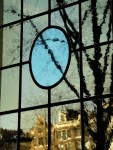
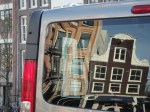
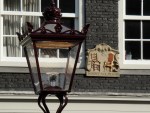
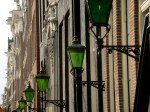
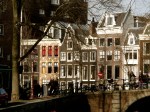
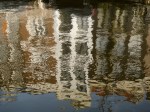
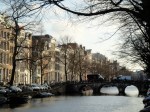
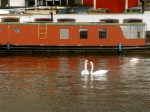
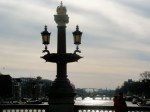
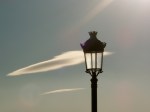
It’s my last Amsterdam post after four wonderful days in the city, and a couple of days reflection from my home in London, and probably my favourite of the bunch as I get to share with you my photographs of the trip. Amsterdam wasn’t always easy to photograph – when walking around, one is constantly wowed by the beauty of one canal after another, but what inspires at the time can be repetitive when the result is one canal shot after another. I’m hoping that in the selection I have posted, you will get to see more than just canals, although as ever, my obsession with street lamps continues throughout this bunch of photos. I only had my cybershot with me, leaving my bulkier SLR at home, but I’m pretty pleased with some of the resulting shots. It certainly wasn’t hard to be inspired by Amsterdam, even when the sun went in I was won over by beauty at every corner – so much so that it was hard not to have my camera permanently glued to my face. I will let the photos do the talking now and hope that you enjoy viewing them as much as I enjoyed taking them. Wishing you all a great weekend.

© Nicholas de Lacy-Brown and The Daily Norm, 2005-2012. Unauthorized use and/or duplication of the material, whether written work or artwork, included within The Daily Norm without express and written permission from The Daily Norm’s author and/or owner is strictly prohibited. Excerpts and links may be used, provided that full and clear credit is given to Nicholas de Lacy-Brown and The Daily Norm with appropriate and specific direction to the original content.

Córdoba: The city which inspired the painting

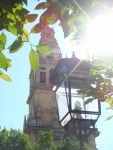
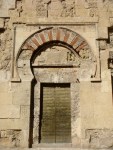
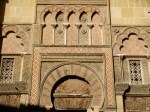
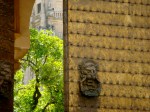
It’s my last dip into the Iberian peninsular before I go all Valentines on you… Following yesterday’s Sunday Supplement in which I introduced my painting, Córdoba, here are my photos of the city which inspired the work.

Córdoba is a unique little place. It doesn’t share the same thriving spirit as Seville or Granada for example, at least not in the very self-contained old town which looks and feels very much like a living museum given over to the tourists. Asides from La Mezquita at its centre, there are a few quaint art museums and an excellent archeological museum, but otherwise there is not a huge amount to see. Surprisingly, it did make the short list for Spain’s European Capital of Culture in 2016 which scandalously Malaga, home of the great Picasso Museum, a flashy new airport, a thriving city and a contemporary art museum, did not. Having said this, Córdoba is a crucial visit for those with an interest in Spain’s rich cultural heritage, and in particular its Moorish past. Should you go, be sure to sample Berejenas Fritas – deep fried aubergine served with a syrupy sauce – divine.

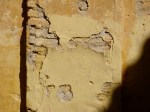
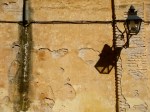
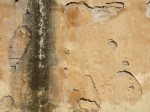
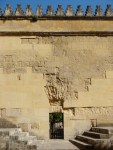
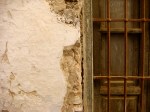
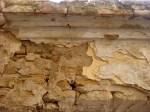
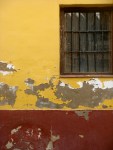
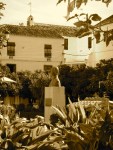
Below are a selection of the photos I took when in Córdoba. If you saw my post yesterday, you’ll recognise the crumbling facades, elegant wrought-iron lamps, the quenching relief of a hotel swimming pool, and that shameful architectural vandalism which took place in the great mosque after the Christian reconquista. This is a city where history is not only preserved, but the wounds of the past are still uncomfortably evident.

© Nicholas de Lacy-Brown and The Daily Norm, 2005-2012. Unauthorized use and/or duplication of the material, whether written work or artwork, included within The Daily Norm without express and written permission from The Daily Norm’s author and/or owner is strictly prohibited. Excerpts and links may be used, provided that full and clear credit is given to Nicholas de Lacy-Brown and The Daily Norm with appropriate and specific direction to the original content.

Marbella – Hidden wrinkles beneath the botox

Far beyond the ritzy media archetype of Marbella, with its fake-tanned, label-cluttered, Ferrari-filled Puerto Banus, and its marble clad town centre, complete with grand avenues and mature parks, high street shops and tourist information centres, is a town which resembles none of the glitzy, cosmopolitan manifestations of the media-managed Marbella. It’s a town which is emblematic of historical, culture-rich Spain, where the locals, many forced from their homes by rising house prices, or others packed into small dwellings with three generations of their families, continue living the life they have always lived, while all around them their town of Marbella has enjoyed its ascendency into the darling of the jet set. This is the Marbella which must endure the relentless hardship of the fishing industry to survive, locals who must live far out in the less than salubrious suburbs in order to stay in the town. Yet within these communities is a fun-loving, strong, proud spirit. Rather than being snubbed by a WAG in designer sunglasses, here you are greeted with a pleasant “Buenos Dias”, the locals still sit around outside their homes chatting at all hours, and families flock to the cheaper restaurants whose food is authentic and unpretentious.

As a part-time resident of Marbella for the last ten years, I have become disenfranchised with the town’s superficial identity. I loathe Puerto Banus, the media face of the town, whose geographical beauty is eclipsed by the pretentious tourists, begging for attention with their pursed glossy lips and frozen foreheads. I progressively find myself straying more and more into the Spanish communities, where the essence of Spain is still alive, where Marbella could be any other town in Andalucia, where the smell of garlic pervades the air and flamenco’s anguished cry wafts across the airwaves.

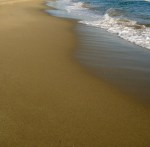
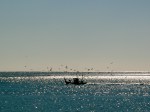
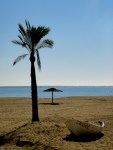
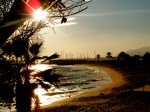
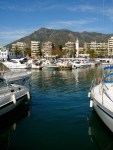
One such place is Cable Beach – it’s East out of Marbella, in the opposite direction from the Golden Mile, where the port is industrial rather than given over to pleasure, and fishermen still work, their cottages still intact having escaped demolition to make way for a hotel, and whose beach, so often deserted, is a wide, beautiful expanse of golden sand. In the photos which follow, I hoped to capture the beauty of this quieter, more authentic side of Marbella, and also include images of the outer suburbs, as well as the town in the aftermath of a recent storm – all views of the hidden, authentic town which thrives still in the shadows of the media glare.

© Nicholas de Lacy-Brown and The Daily Norm, 2005-2012. Unauthorized use and/or duplication of the material, whether written work or artwork, included within The Daily Norm without express and written permission from The Daily Norm’s author and/or owner is strictly prohibited. Excerpts and links may be used, provided that full and clear credit is given to Nicholas de Lacy-Brown and The Daily Norm with appropriate and specific direction to the original content.

Seville: The city which inspired the painting

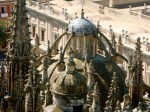
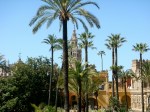
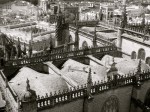
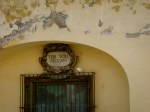
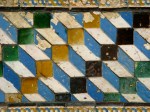
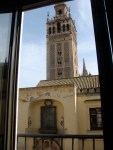
Key to understanding the Seville Triptych I painted, as featured on yesterday’s Sunday Supplement, is the city which inspired it. While I’m sat on a plane (and hopefully not stuck in an airport with snow-induced delays) I’m posting in advance the photos I took of Seville, the star of Spain’s south and one of the most sensational cities I have ever visited. Now all you need is a bottle of rioja, some chorizo tapas and flamenco on CD and winter will be dismissed for good! Enjoy.

 

© Nicholas de Lacy-Brown and The Daily Norm, 2005-2012. Unauthorized use and/or duplication of the material, whether written work or artwork, included within The Daily Norm without express and written permission from The Daily Norm’s author and/or owner is strictly prohibited. Excerpts and links may be used, provided that full and clear credit is given to Nicholas de Lacy-Brown and The Daily Norm with appropriate and specific direction to the original content.

Spanish Season 2012: Out of the frost, into the fire.

As the great winter freeze finally began to set in, we at The Daily Norm swiftly decided that the time had come to withdraw from our London offices, and to retreat instead to our little Spanish outpost. And so it was that with a little luck and a lot of expense (Easyjet – once termed a “low cost airline” has almost bankrupted me with its “low cost” flight to Malaga) we have arrived on the Costa del Sol, travelling almost as far south as one can go, while remaining in the confines of our dear, albeit economically shaken, Europe.

Yesterday it was around 2 degrees and lightly snowing when I heaved my suitcase (full of Norms…who tend to be heavy) off the Gatwick Express and boarded a flight due south. When I alighted the flight the other end, things weren’t much better. There was a decided chill to the air in the deserted, white-washed streets of Andalucía, and as a result my winter overcoat remained firmly wrapped about my person. And inside it was even worse – My family and I have found ourselves needing to gather desperately around little electric heaters wrapped in the contents of our suitcases – we look like those motley crowds who gather round vertical heaters on the windy platforms in large echoey French train stations with the result that you feel like a piece of bread toasted on one side – warm and cold all at once. The problem with these old Spanish houses (our home is in Marbella’s casco antiguo – postcard perfect, but otherwise falling apart, damp and consistently calling out for repair and a lot of TLC) is that they are built for the summer. Tiled or stone floors repel the heat while small windows keep the interiors cool. It’s as though their makers presupposed that the Costa del Sol would always be sunny. But it often isn’t, and in the winter, a few hours of daily sun do not compensate for a long night of sleeping inside a refrigerator.

Between seasons: Norm on a Spanish beach in the winter (pen on paper, 2012 © Nicholas de Lacy-Brown)

What a wonderful surprise then when this morning we awoke to beautiful sunshine while not only lifted our spirits but the surrounding temperatures too. As a result we found our bodies quickly warmed from 2 degrees London, through to 10 degrees Spanish night-time to a positively summery 24 degrees basking in the sunshine this lunchtime. Like all things which are scarce in life, the sunshine is never more glorious, never greater appreciated than when, back at home, you know that your friends and compatriots are suffering in the cold. It’s as though you’ve made a lucky escape and are somehow cheating your pre-destined position in life. From London to Spain this has been like leaping from the freeze straight into the fire.

Needless to say, it’s now evening in Spain, and the cold has once again descended as the electric heaters have been boosted onto full power. The problem with these temperature extremes is that you really don’t know whether it’s winter or summer, because you fully experience both seasons in a single day. The key appears to be plenty of layers and a willingness to dress and undress depending on where the sun is, where the clouds are, and how much you can cheat the winter and steal the sun. Of course it also depends on plenty of heating during the evening, and as our electricity system is about as antiquated as our house, the whole lot will probably fuse any minute. With this in mind, I shall finish this post, leaving you with a selection of my photos from the day. Hasta mañana.

London Chills: White landscapes

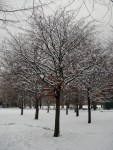
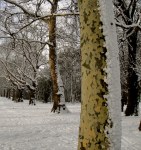
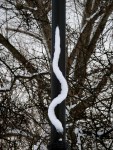
It’s gone all cold at The Daily Norm. Yesterday, as icy winds entered London and shook the optimistic hopes for Spring out of all of us, I decided to pay homage to the cold by presenting my collection of Nordic-inspired paintings. Today the cold theme continues in parallel to the dropping dial of the thermometer, and with snow forecast in many places, I have decided to showcase my collection of snowy landscape photography. The photos are not contemporary – I took them last winter – but sadly (or positively for Londoners who actually want to get to work without hours of delays) we have had none of the vast snowfalls which befell us last year. Consequently, in the optimistic hope that temperatures will never drop quite low enough for a repeat performance of a white blanketed London landscape, I thought it an ideal time to present last year’s photos of snowy London for the pleasure of all Daily Norm readers.

The photos were taken on a brief morning walk across Clapham Common in South West London. One of the best things about London in the snow is how idyllic and Victorian it all becomes – suddenly London lampposts and street furniture appear positively Dickensian, as the muddled cityscapes of a frantic city become uniform, clean and bright as a result of an indiscriminate scattering of snowfall. In my photos I have explored how a spray of white snow can emphasise the beautiful, complex structure of trees, particularly their branches, how, against a white backdrop, leafless-trees glow more vividly with rich colours all of their own, and how Victorian street furniture gains renewed elegance when the clutter of modernity is suppressed beneath a tidy blanket of thick snow.

Best enjoyed, laptop in hand, wrapped in a blanket with a large mug of hot tea…

© Nicholas de Lacy-Brown and The Daily Norm, 2005-2012. Unauthorized use and/or duplication of the material, whether written work or artwork, included within The Daily Norm without express and written permission from The Daily Norm’s author and/or owner is strictly prohibited. Excerpts and links may be used, provided that full and clear credit is given to Nicholas de Lacy-Brown and The Daily Norm with appropriate and specific direction to the original content.

Norms do… Robert Doisneau

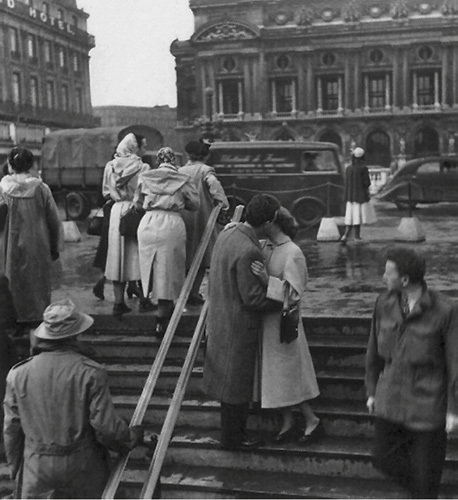
It’s mid January, and with the Christmas stocks cleared away and the January sales dwindling fast, the shops are filling with all things red – roses, truffles, cards adorned with hearts and pink champagne, all in the name of Valentine’s Day. I must confess, while I do find it slightly demeaning to be told I am loved just because a saint’s day says it should be so – and only once a year at that – I am a romantic at heart and do turn into a little softy around mid-February time. In anticipation of this great time of romance, the Daily Norm has looked to the one and only true source of all things amour… the city of Paris. And not only is Paris the undoubted City of Love, in the superbly nostalgic black and white moments captured by the world-renowned photographer, Robert Doisneau (1912-1994), it provides the backcloth to some of the most iconic romantic images ever captured on film. When I think of the ultimate image of love, I think of Robert Doisneau’s most celebrated photograph, Le basier de l’Opera (1950) (The Opera Kiss). Perhaps not quite as famous as his Hotel de Ville kiss, it is nonetheless postcard perfect: 1950s Paris, going about its way, people rushing up and down the stairs at Opera, traffic passing by the grand Opera Garnier, and all the while, the world seems to stop as a couple meet, and kiss, in the middle of the staircase. In fact, here at The Daily Norm, we love this image so much that the Norms have decided to reenact it. And so, voila, for your viewing pleasure, here is the latest Norm creation as the Norms do Doisneau…

Norms Kiss at the Opera (after Doisneau) (acrylic on canvas, 2012 © Nicholas de Lacy-Brown)

And here is Doisneau’s photographic original:

Le baiser de l'Opera (Robert Doisneau, 1950)

“There are days when the technique of an aimless stroll – without timetable or destination – works like a charm, flushing out pictures from the non-stop urban spectacle”

Robert Doisneau

“The “Hôtel de Ville lovers” were part of a series, on which I had already worked for a week and which I had to complete with two or three photos of that kind. But the fact that they were set up never bothered me. After all, nothing is more subjective than l’objectif (the French word for “lens”), we never show things as they “really”are. The world I was trying to present was one where I would feel good, where people would be friendly, where I could find the tenderness I longed for. My photos were like a proof that such a world could exist.”

Robert Doisneau

As you can see, I made a bit more of the Opera House, since it is so beautiful and its details undoubtedly stunning. The fact that my Opera House leans the other way wasn’t exactly intended, but once it started heading that way, there was no stopping it. Painting straight lines is already difficult enough with a hand balancing in mid air, but apparently my steady hand has a tendency to lean to the right.

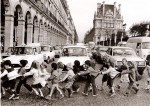
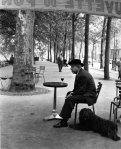
Le bazier de l’Opera is by no means the only shot taken by Doisneau which is deserving of recgonition. Flicking through any collection of Robert Doisneau photographs is like being transported back down memory lane to a time of idyllic laissez faire. Of course, German-occupied Paris and the post-war city were far from easy times for the Parisians, but there is something about the goodness of human nature which Doisneau manages to capture in his iconic scenes of ordinary life. Plus of course the black and white pallet instantly transforms the image to one having great atmospheric nostalgic effect. In this way, the work of Doisneau has immortalised the magic of Paris, capturing poetry in the commonplace lives of its inhabitants and emphasising the artistic beauty which ripens at every corner of the city. I urge those of you who are not familiar with his work to buy a volume to look through on a sunday afternoon, some Billie Holiday playing in the background, a coffee or glass of wine on standby. You should however be warned that in following my advice, you will probably start hating the modern, inelegant world around you. But like Doisneau, pick up a camera or a paintbrush, and you’ll be surprised what magic you can find in everyday life. In the meantime I leave you with a small gallery of Doisneau shots to muse over. Until next time…

All the photographs are the copyright of Robert Doisneau

War in reflection: Poems from the trenches, photos for peace

In the last of my “War series” posts of this week (though look out for my paintings on war next week – I need to get photos of them first!) I turn to reflect on one of the most poignant records which have come out of World War 1: the poetry. It may seem banal, especially after all my talk of cliches earlier in the week, that I choose to reflect on poems which, in the most part, are already extremely well known. But their notoriety is testament to their pure brilliance, their power to move and take the reader right back into the quagmire hell of trench warfare. They may now be the staple of the English literature national curriculum  all over the UK (and as I know too well, this often causes the student who is agonising over the supposed multifaceted meaning of each line to hate the poem rather than admire it), but these poems are still ripe to be rediscovered, to be reread and savoured as a most moving testament to the suffering of so many during those times.

The reason why these poems work so well is that there are times of such horror that normal prose just won’t do. Through poetry, the soldiers are able to pour out their soul, their recollection of the horror in abstract phrases, bursts of painful memory, shattering like gunfire around them, painfully but beautifully transcribed onto the page.  In the poems I have selected below, hopefully you will be equally touched by every loaded word as I have been. I know this is not the traditional time for remembrance, but do we really need a date in the diary to recollect the sacrifice that was made for us?

In between the poems, I’ve included some of my own photos. Not of war, but photos which seem appropriate when remembering the dead. Those posted between the poetry are taken in the local cemetery in Marbella, Spain. Quite out of the way of the usual tourist track of the glitzy coastal town, it is nonetheless one of my favourite places to go on a summers day, to wander in the shadows of cypress trees amongst tombs and gravestones dappled with silent sunlight. It is a place of great tranquility but not of sadness. In the devotion shown by a single flower placed by one family member tending the grave of their dead, you appreciate the great family love which still retains a place of such central importance in the Spanish home. At the bottom of my post you’ll find a gallery of some of my favourite flower photos which I’ve taken over the years. Much war poetry talks of flowers, and of course the poppy has become a worldwide symbol of remembrance. It’s appropriate that this product of natural beauty has grown from a ground riddled with the ghosts of a tumultuous history. In this way flowers are a symbol of hope and continuing beauty.

Marbella cemetery © Nicholas de Lacy-Brown

Read more

Winter light on the Sussex coast

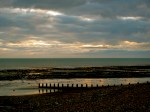
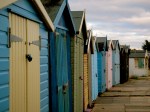
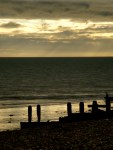
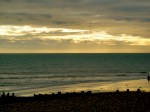
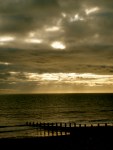
There’s a lot to love about winter in England. When the sun is out, the winds have calmed and clouds erupt like fluffy candy floss into a peachy sky, the effects can be stunning. The winter light is sublime, not least over the dark seasonal sea which seems so much more menacing and destructive in the winter, like a wild beast, lying in wait, ready to pounce ferociously upon the dormant shore. While the summer may provide fair weather views, the winter is more about contrast, drama and suspense. And as a result, beautiful photographs can be found almost anywhere.

Yesterday I was visiting my family in Sussex. As a Londoner, I miss the smells, the sounds and the sights of the coast where I grew up, and make it a priority to indulge in the seaside whenever I am down. Walking along a short distance from Goring-by-Sea to a small café in Ferring, I captured several enchanting shots on my camera. I’m not a photographer but I am an artist. I love beauty and I pursue it relentlessly. These photos show how an impulsive walk along a familiar path can bear fruit of the most artistically fulfilling kind. Beauty is everywhere, even at home.

© Nicholas de Lacy-Brown and The Daily Norm, 2005-2012. Unauthorized use and/or duplication of the material, whether written work or artwork, included within The Daily Norm without express and written permission from The Daily Norm’s author and/or owner is strictly prohibited. Excerpts and links may be used, provided that full and clear credit is given to Nicholas de Lacy-Brown and The Daily Norm with appropriate and specific direction to the original content.

2011: My year in photos

It’s the last day of 2011, and for my second review of the year that’s almost behind us, I’ve looked back on all the photos I’ve taken this year and selected a few of my favourites. In this way, I can share with you my year. It’s been a pretty good year for me in some ways – trips to Paris, Mallorca, Madrid and Marbella as well as Liverpool and Cornwall in England. All made for some inspirational scenes which begged to be captured on my camera. But so to does home continue to inspire, the autumnal glow of nearby Clapham Common and Richmond Park offering stimulating riches with which the lens so easily engages. So please enjoy the photos I have set out and in the meantime I trust that all the readers of The Daily Norm will enjoy a superb New Year’s Eve and have a very prosperous 2012. My little online paper has only been running a short while, but I am truly appreciative of all the support garnered so far. Please continue to drop in on my Norm-world in 2012 and help to spread all things artistic, aesthetic and beautiful around the globe. Happy New Year!

© Nicholas de Lacy-Brown and The Daily Norm, 2005-2011. Unauthorized use and/or duplication of the material, whether written work, photography or artwork, included within The Daily Norm without express and written permission from The Daily Norm’s author and/or owner is strictly prohibited. Excerpts and links may be used, provided that full and clear credit is given to Nicholas de Lacy-Brown and The Daily Norm with appropriate and specific direction to the original content.