Skip to content

Archive for

Norms do… Gauguin

In the same way that an inquisitive child may like playing dress up in the clothes box of his or her parents, so too do the art-loving Norms love to emulate the works of the great artistic masters. In the past on The Daily Norm, the Norms have brought you Frans Hals, Van Gogh, Degas, Picasso, Klimt, Da Vinci and Vermeer to name but a few. Next in line to receive the Norm treatment is none other than the post-impressionist master, Paul Gauguin himself.

Gauguin, master of colour, and leader of the movement out of impressionist naturalism into the more expressionistic unreality, he is famous for his vibrant images of the Pacific island of Tahiti, and perhaps infamous for the rather suspect love affairs he had while on the island, allegedly with underage girls.

It is undoubtedly one such girl who is the subject of one of Gauguin’s most famous paintings, Nevermore O Tahiti, which today enthralls audiences at its home, the Courtauld Gallery in London’s Somerset House. With its striking bright yellow pillow, its richly coloured background, and the mysterious and melancholy gaze of the nude stretched out before us, it has long been one of my favourite paintings, not just by Gauguin, but in the richly constituted Courtauld collection.

It is hardly surprising then that the time would come when I could resist painting a Norm version of this enigmatic masterpiece no longer. So without further ado, I give you, Nevermore Norm…

Nevermore Norm (after Gauguin) (2012 © Nicholas de Lacy-Brown, acrylic on canvas)

Nevermore was painted by Gauguin in 1897 in Tahiti, the Polynesian island which the French artist made his home in the latter years of his career. The painting is highly enigmatic both in image and title. Asides from being painted onto the canvas, the title is potentially an allusion to the idea of paradise lost (Milton’s epic poem, with which Gauguin would have been familiar) but more likely refers to the poem by Edgar Allan Poe’s The Raven which Stéphane Mallarmé, a French poet, is said to have recited at the Café Voltaire around the time when Gauguin left Paris. In the poem, a man imagines that a bird flapping at the window repeating the word “nevermore” is the spirit of his dead lover. Hence, perhaps, why Gauguin, in his work, has painted the raven stood on the window sill of this colourful Tahitian room.
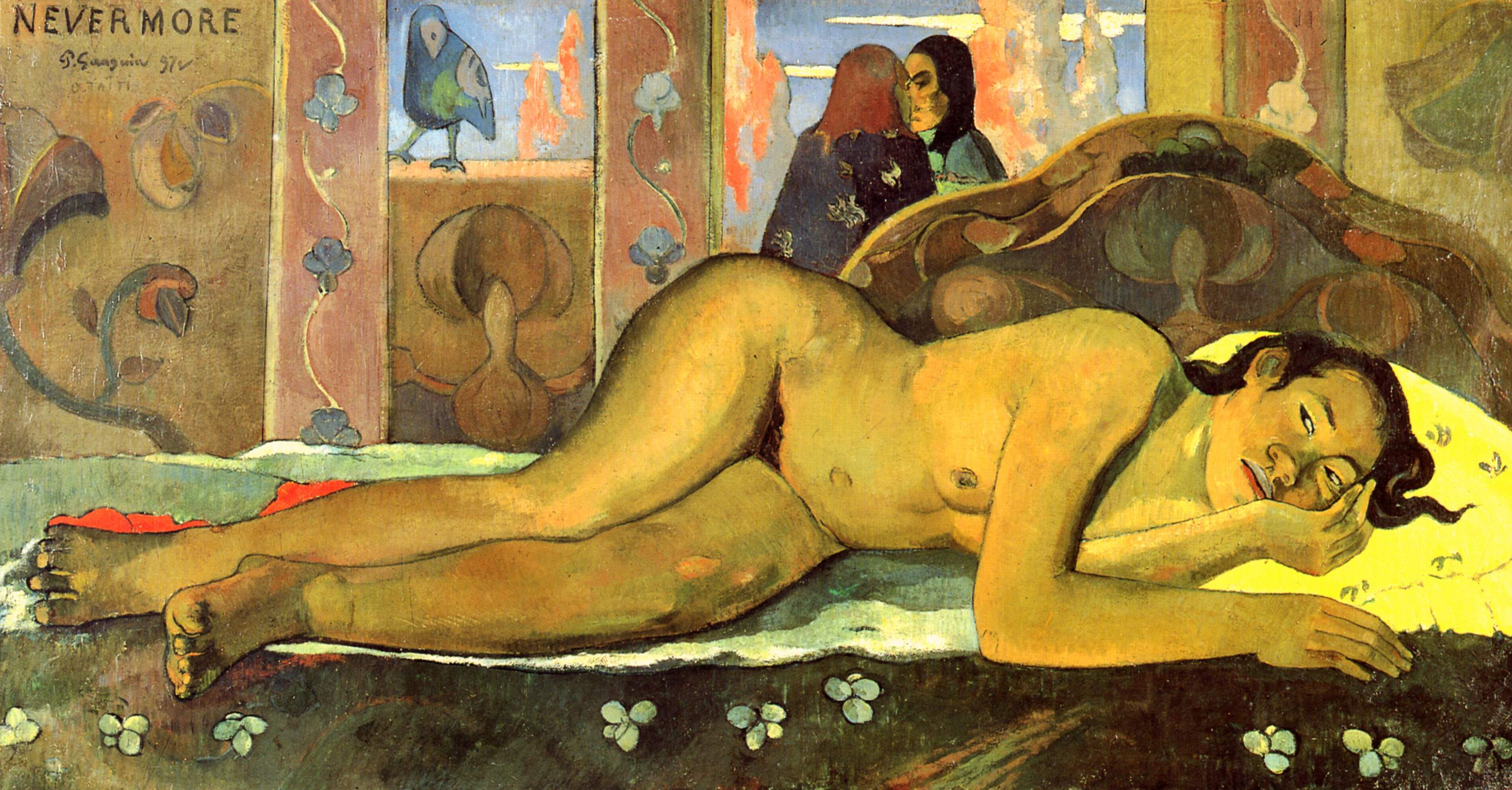
Nevermore O Taiti, Paul Gauguin (1897) (Courtauld Institute, London) (Source: wikipedia commons)

As for the rest of the painting, its meaning is less certain. The picture is dominated by a full length reclining Tahitian nude.  Her attention seems to be turned towards the figures and the raven in the background. She appears almost to be listening, bitterly aware that the two are gossiping maybe, or conspiring against her, but unwilling to rise from her repose and confront the pair. But could they, on the other hand, be figments of her imagination, together with the almost dreamlike two dimensional blue sky and yellow clouds, and the patterned walls of her home which feels and looks almost like a temporary stage set?

Whatever the meaning behind this elusive piece, it is characteristic of Gauguin’s pursuit, post-impressionism, not of reality, but of introspection. It was in fact Guiguin’s pursuit of inner vision, rather than external reality which led to his quarrel with Van Gogh in Arles which in turn culminated in the latter’s infamous ear-cutting incident. In Nevermore, we see Gauguin at his introspective, expressionist best, fabricating an image from a sense of unreality, while hinting at the tropical bounties of the lush Pacific surroundings in which he was painting.

While Gauguin’s time on Tahiti has since been revealed to have been littered with sexual controversy and even a defamation wrangle with the governor of the Marquesas Islands, it is certain that the works he produced during his extensive stay on the island are amongst his best. Vivid, exploding with colour, as blue skies, tropical plants and the bronzed tones of his beautiful Tahitian women fill the canvas and make the viewer yearn to leave Europe, and its watery impressionistic landscapes behind forever. That is, in fact, what Gauguin did, dying not in his native France, but in Tahiti, of syphilis, alcoholism and all manner of other health problems. But what he left behind was an amazing collection of paintings which have since served to capture Tahiti in the hearts and minds of art lovers across the world.

Here are just a few to feast your eyes upon…

Paul Gauguin, Tahitian Women on the Beach (1891) (wikipedia commons)

Paul Gauguin, Where Do We Come From? What Are We? Where Are We Going?, (1897) (wikipedia commons)
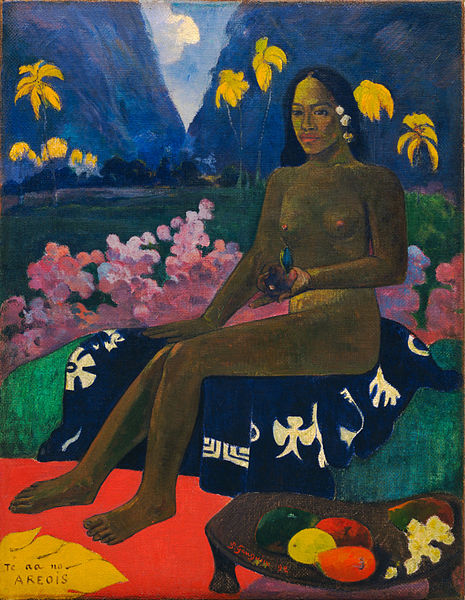
Paul Gauguin, Tahitian: Te aa no areois (The Seed of the Areoi) (1892) (wikipedia commons)
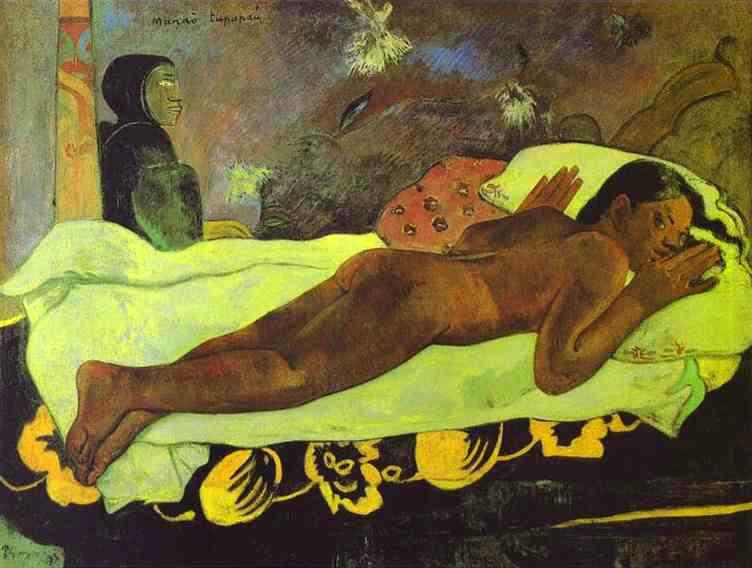
Paul Gauguin, Manao tupapau (The Spirit of the Dead Keep Watch) (1892) source: wikipedia commons
The question now is, who will the Norms set their sights upon next?

© Nicholas de Lacy-Brown and The Daily Norm, 2001-2012. Unauthorized use and/or duplication of the material, whether written work, photography or artwork, included within The Daily Norm without express and written permission from The Daily Norm’s author and/or owner is strictly prohibited. Excerpts and links may be used, provided that full and clear credit is given to Nicholas de Lacy-Brown and The Daily Norm with appropriate and specific direction to the original content.

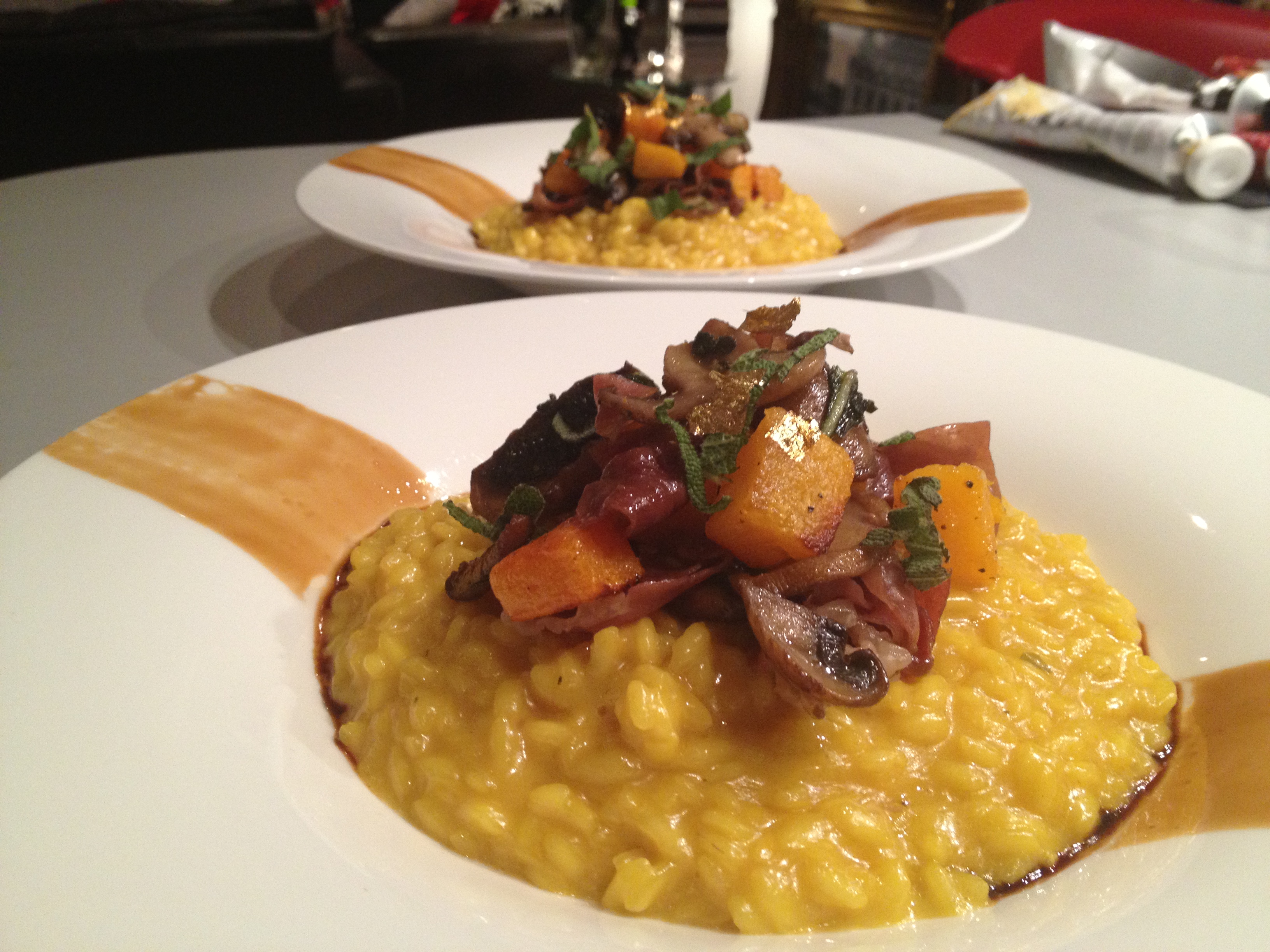
Saffron Risotto with a gathering of autumn flavours, edible gold leaf and an espresso reduction

I always thought I had risotto down until I watched an episode of Australia’s Masterchef on TV the other day (yes, we have the Aussie show in the UK and it’s so much better than the British version – Apprentice challenges meets cooking stress – classic). A couple of weeks back, the budding final 10 contestants had flown half way around the world to the lavish panoply of gastronomic delights that is Italia. Across the week, the illusive risotto, previously termed “the masterchef death dish” (because so many contestants failed in their attempts to cook it), was cooked twice – and appropriately so, being as they were in the home of the famed rice-based dish. For the first, a saffron-yellow, creamy and simple risotto was topped by a single sheaf of edible gold leaf and frankly looked amazing (needless to say, most of the contestants failed in  their attempts to recreate the dish). The second risotto was made in a master-class at the end of the week. Again, the recipe was for a simple risotto, which, instead of adding onions at the beginning, added them right at the end as a type of purée. I was inspired.

So last weekend, I decided that my tried and tested risotto method should be set aside for a new radical approach which was to be something of a combination of the two methods I saw on TV with a little of my own twist on top.

Up first was the stock. I used 900ml of ordinary chicken stock and added to this the dried old husks from a hunk of parmesan cheese which had been hanging around in my fridge. This lends a wonderfully rich parmesan undercurrent to the risotto without going overkill at the end. I also added some chunks of ham and a good pinch of saffron strands straight from my spanish travels. I allowed this stock to simmer gently while getting on with the other components.

My red onion purée

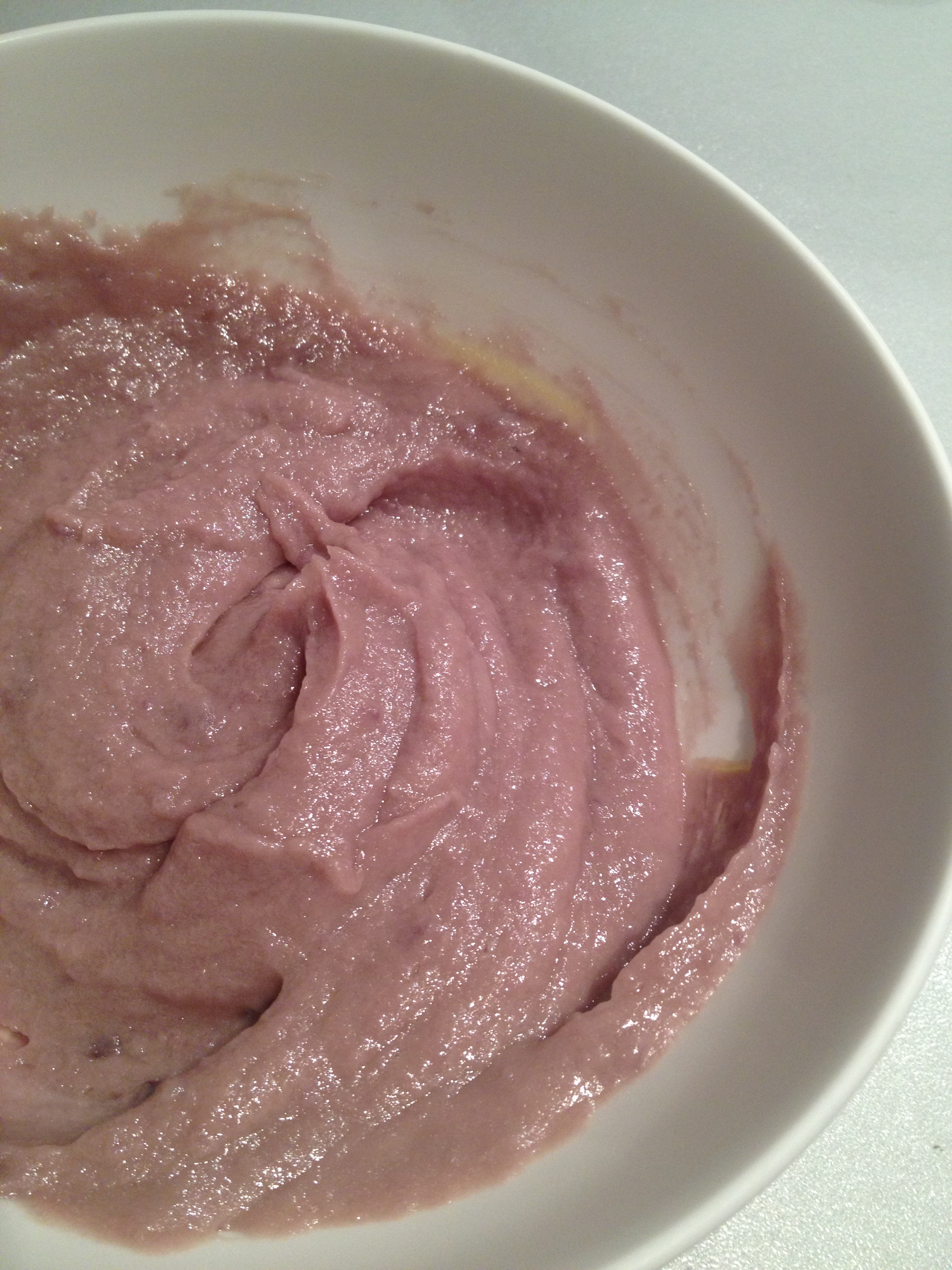
Up next, I chopped an onion (it should be a white one – I only had red, which tends to redden the saffron yellow colour of the risotto when stirred in at the end, but it’s not a big deal). I sweated my onion, covered, over a low heat in plenty of butter (a good 50g worth) and seasoning. I left the onion to sweat for a good 20 minutes, before adding it to a food processor, along with another knob of butter and making a creamy puree. This I then placed in the fridge to firm up a bit for use later.

Next, while the onions were sweating, I turned to my espresso reduction –  This creates a wonderful deep, almost bitter-sweet contrast to the richness of the risotto’s parmesan flavour, and looks amazing when painted onto the plate. For the reduction, I made two double espressos in my coffee machine, and adding a single sachet of sugar (about a dessert spoon) and the coffee to a pan, I started simmering the coffee fairly rapidly, stirring often, until it started to reduce. Be careful this doesn’t burn or the espresso will become too bitter. Once thickened and syrupy, I set aside (keeping warm).

Before moving onto the risotto, I chopped around half a butternut squash, seasoned, drizzled with oil and placed in the oven at 200 degrees Celsius.

OK, onto the risotto. So in a pan went 200g of arborio rice, which I toasted lightly in a few knobs of melted butter for a minute or so. Then, straight to the rice (no wine added in this recipe) I went with my first ladle-full of stock, stirring appropriately. On masterchef, George, the presenter, suggested that one should “aggravate” rather than stir the risotto – personally, in my pans, it’s stir or stick, so I ignored his approach, but feel free to shake the rice around a lot rather than stir if you have a really effective non-stick pan. Taking the dish one ladle-full at a time, the rice started to become thicker and yellower and overall more delicious.

As the risotto neared its completion, I fried up a good handful of sliced mushrooms (you can use any variety, the prettier the better) in some butter and oil, along with some chopped sage, a crushed garlic clove, seasoning and some chopped parma ham (pancetta would also work well). These create some amazing autumn flavours and a textural variation to the risotto. Before the autumn ingredients were done, and once the stock was used up, I left my risotto to rest for 4-5 mins with the lid on (the risotto, once cooked, should be creamy and yet loose, with the rice tender, but still with some bite).

So, pulling everything together, I first painted my plates with the espresso reduction. I then stirred my onion puree into the risotto – so creamy and amazing it made me salivate instantly. I then spooned the risotto onto my plates, and carefully piled some of the butternut squash and mushroom mix onto it. I then crowned my dish with a few fragments of edible gold leaf in homage to the incredible creation I saw made on TV.

And there you have it. The new radical approach to cooking risotto worked. No wine, no parmesan at the end, but with an onion puree and a very original coffee puree on the side. So different from my previous method, but so, so good.

The Lisbon Sketch II – Norms on a Tram

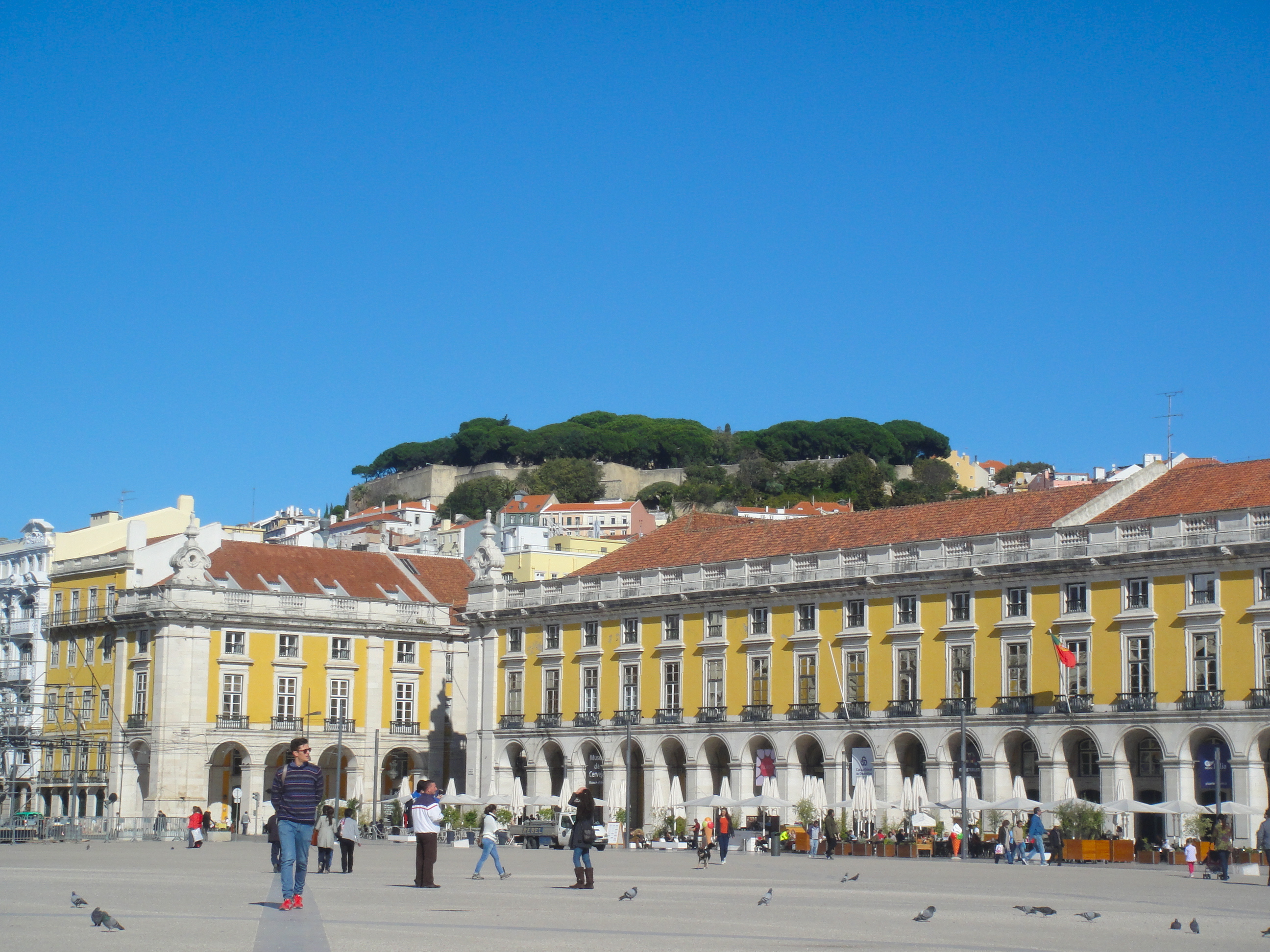
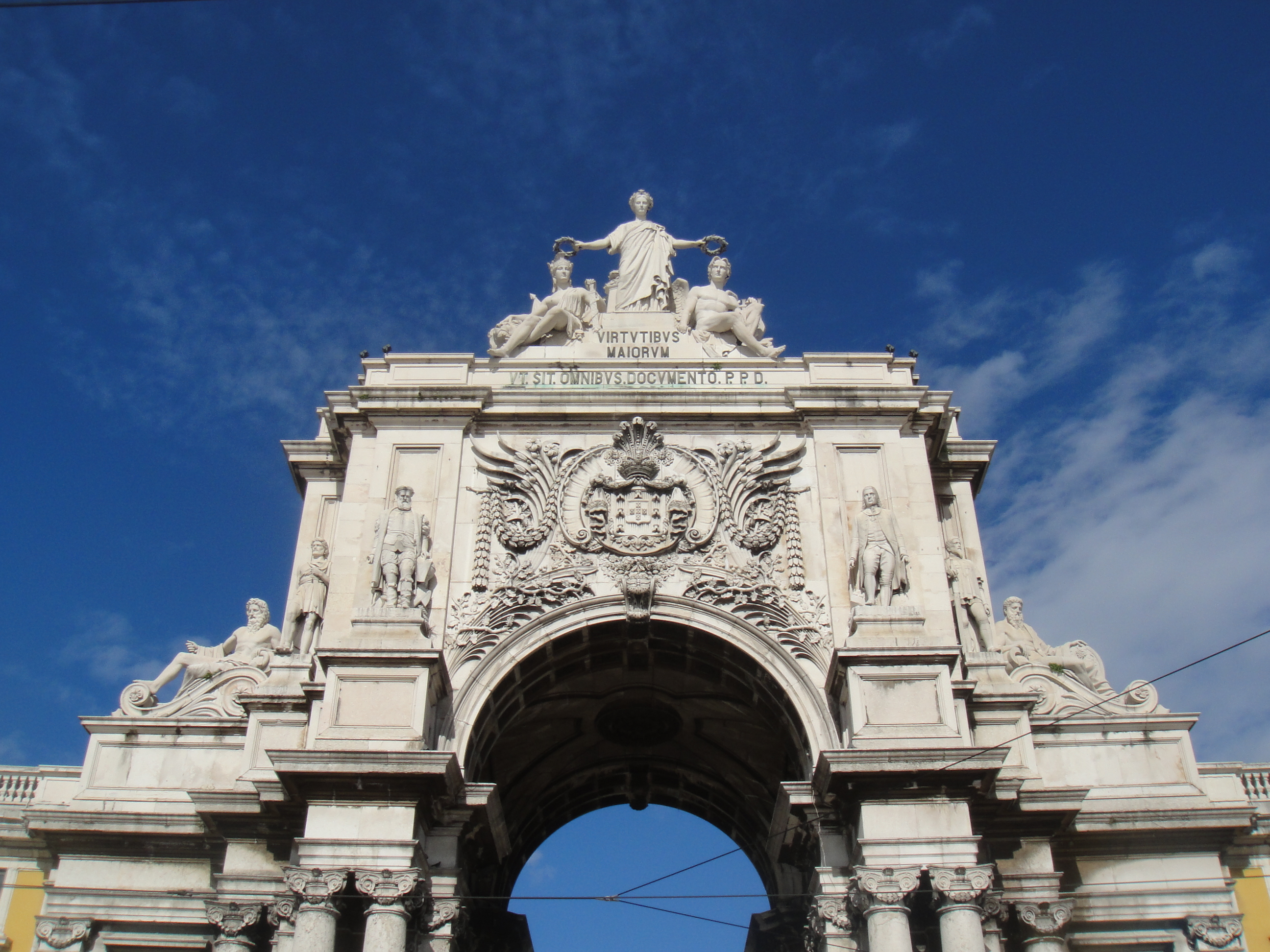
It’s another busy day in Lisbon’s Praça do Comércio, bustling central square of Portugal’s capital city, and transport hub for the  many passing rambling little trams from Lisbon’s pre-war era. Here in the square which was the site of Lisbon’s former palace before revolution in 1910 made it the centre of the new Republic’s administration, Lisbon locals, business Norms, and tourist Norms alike mix, mingle and meander against the backdrop of the square’s vast geometric cobbled paving and its impressive triumphal arch.

But for these Norms, there is little time to gaze in wonder at the palatial surroundings. For now it’s time to board the number 83 tram which will take these little passengers straight along the coast to Belém, under the gigantic Ponte 25 de Abril and past the little residential districts sprawling in its ample shadow. It’s a busy day and there are plenty already on board, as as these Norms are about to find out, it doesn’t take much to fill these cute little vehicles. Best let them get on with it…

Norms on a Tram in the Praça do Comércio, Lisbon (2012 © Nicholas de Lacy-Brown, pen on paper)

© Nicholas de Lacy-Brown and The Daily Norm, 2001-2012. Unauthorized use and/or duplication of the material, whether written work, photography or artwork, included within The Daily Norm without express and written permission from The Daily Norm’s author and/or owner is strictly prohibited. Excerpts and links may be used, provided that full and clear credit is given to Nicholas de Lacy-Brown and The Daily Norm with appropriate and specific direction to the original content.

The Lisbon Sketch – Norm Monument to Discoveries

If there’s one thing that Norms do really well, it’s make a good old discovery. Why, only the other day, Henrique Norm discovered that he could eat 5 blackforest gateaux in one go, while Françoise Norm discovered that if she bounces really hard from Les Champs des Mars, she can make it almost as high as the first floor of the Tour Eiffel.

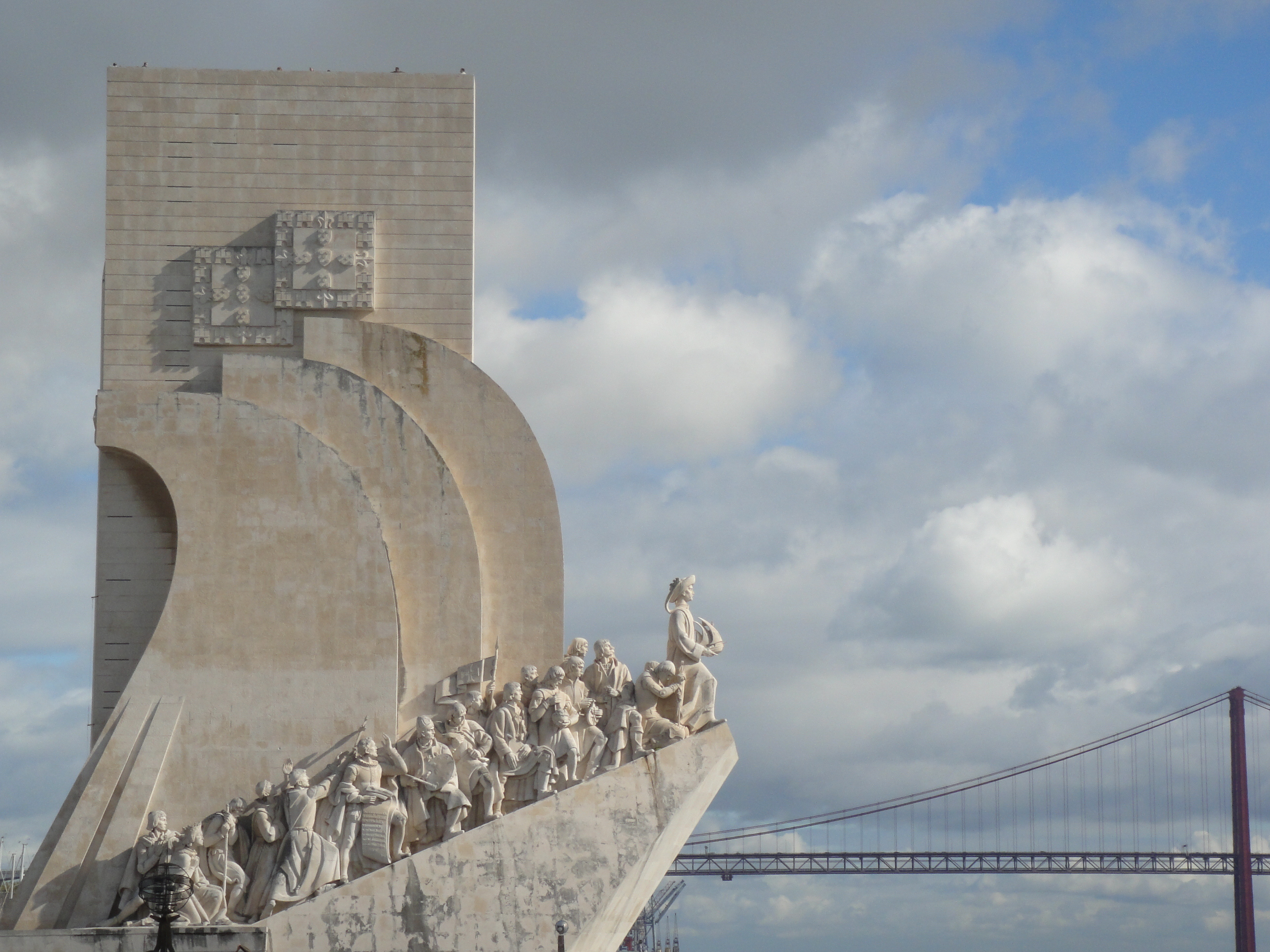
Of course Henrique and Françoise are not alone in the fascinating little discoveries made amongst Norms all over Normland every day. But the same too went for their ancestors, and it was in celebration of some of the great discoveries of the Portuguese Norms that at the beginning of the last century, the Norm Prime Minister of Portugal decided to build a great monument paying homage to their discoveries for all eternity. Why, up there on the “Padrão dos Descobrimentos” (as they call it) is Pedro Norm, who discovered that combining some eggs, pastry, sugar and a little cinnamon makes the most delicious little pastries, not to mention Bonifácio Norm, who single handedly circumnavigated the globe in search of exotic flavours for his favourite jellied desserts.

And here it is, the Norm Monument to Discoveries – discover it for yourself…

The Norm Monument to Discoveries, Lisbon (2012 © Nicholas de Lacy-Brown, pen on paper)

© Nicholas de Lacy-Brown and The Daily Norm, 2001-2012. Unauthorized use and/or duplication of the material, whether written work, photography or artwork, included within The Daily Norm without express and written permission from The Daily Norm’s author and/or owner is strictly prohibited. Excerpts and links may be used, provided that full and clear credit is given to Nicholas de Lacy-Brown and The Daily Norm with appropriate and specific direction to the original content.

Lisbon – The Photos: Part II

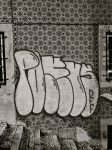
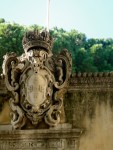
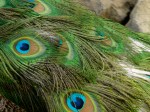
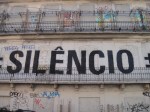
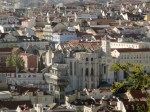
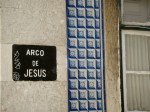
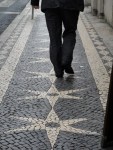
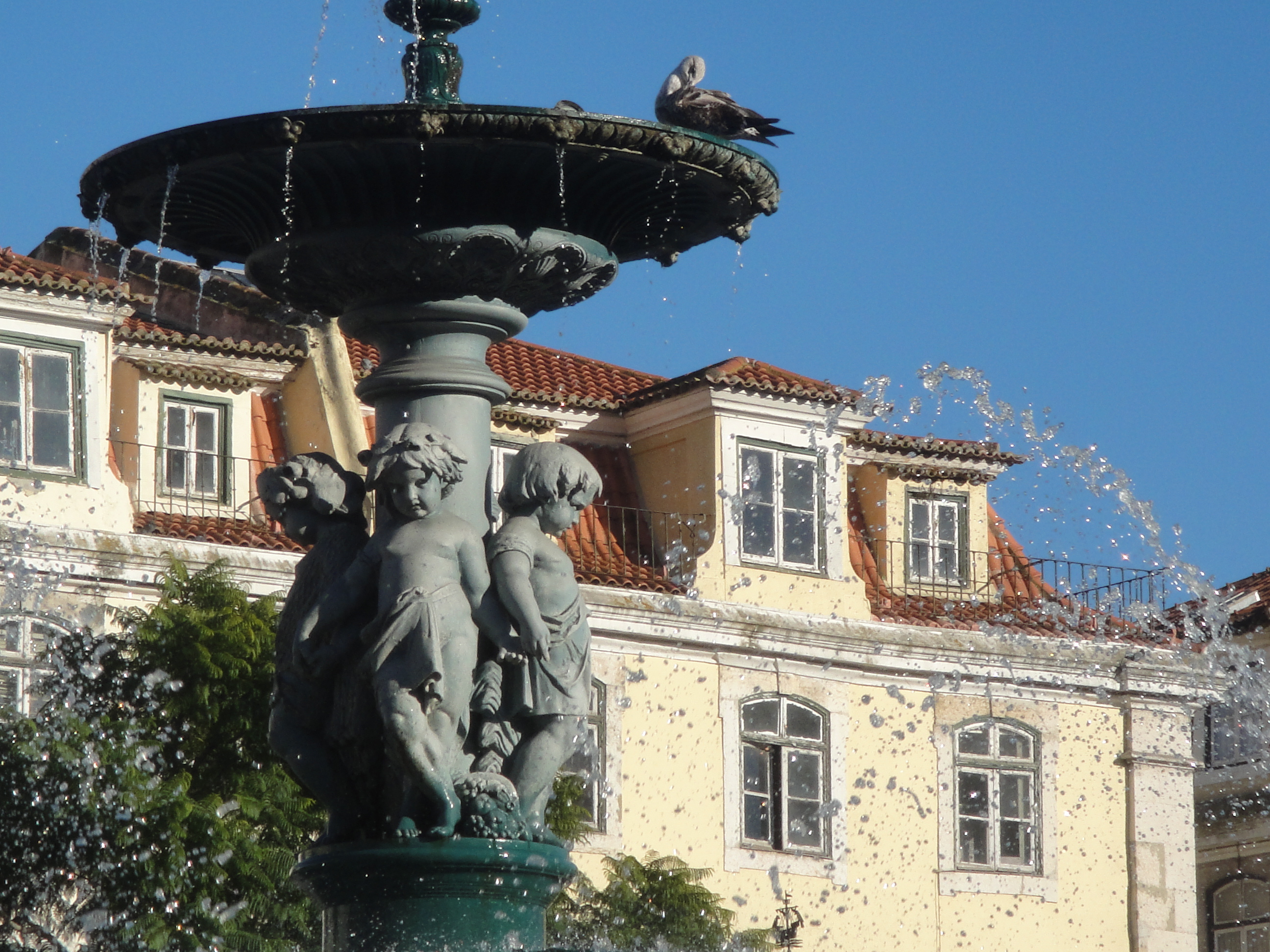
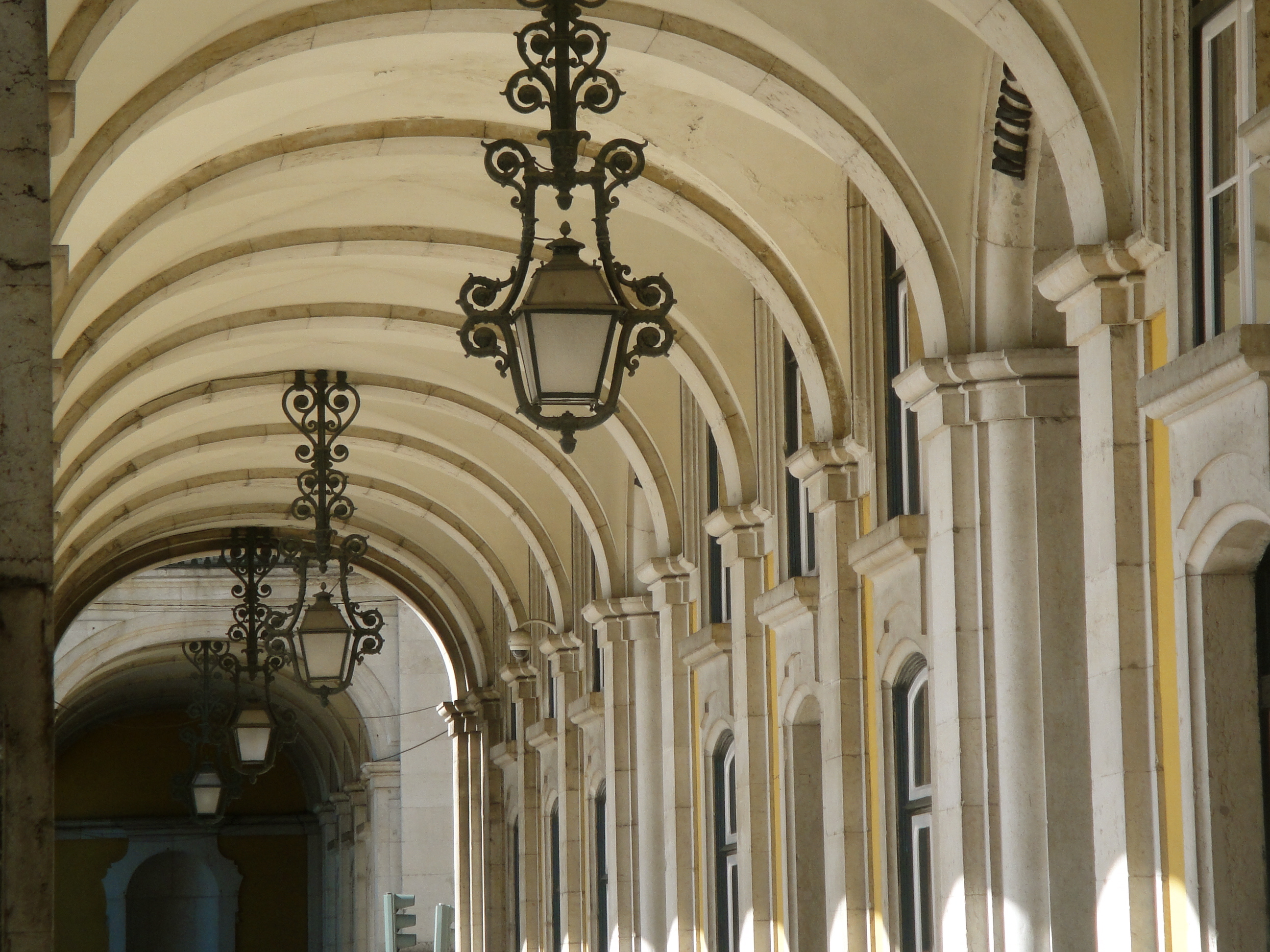
It’s time for the second raft of my photographic tour of lisbon, a tiny digitalised image captured in time, but helping me to immortalise colourful, beautiful Lisbon in my memories for life. From graffiti galore and trams aplenty, there’s chipped ceramics and cast iron door knockers; beautiful pink bourganvilla casting long shadows across white-washed walls, and triumphal statues standing still and staring boldly across the city. In Lisbon I captured ancient religious icons inspiring solemnity and awe, and the vivid feathers of a peacock, nature’s great gift to us all. There’s wavy paving patterns, dilapidated old doors, and the chestnut seller filling the street with great billowing festive smoke; there’s stone steps in the sunlight, tram wires criss-crossing the sky and elegant fountains glittering in the sun.

This is Lisbon, captured on my camera.

All photographs and content © Nicholas de Lacy-Brown and The Daily Norm, 2001-2012. Unauthorized use and/or duplication of the material, whether written work, photography or artwork, included within The Daily Norm without express and written permission from The Daily Norm’s author and/or owner is strictly prohibited. Excerpts and links may be used, provided that full and clear credit is given to Nicholas de Lacy-Brown and The Daily Norm with appropriate and specific direction to the original content.

Lisbon – The Photos: Part I

It already feels so far away, our time in Lisbon. The realities of daily London life, the rush hour on the tube, the cold fronts and the grubby newspapers, the traffic jams and the lack of sun, all play their part in driving a wedge deeper between today and our holiday in the vivacious, exciting and at all times colourful Portuguese capital. Luckily, with a wade of 1200 photographs constantly on slideshow in my flat, I can never truly feel the true isolatory chill of winter knocking at my door, so long as the warm hues of my Lisbon photographs pour life back into my home.

After some 6 posts, you’d think I’d have run out of photographs, but there are many many more I could share. I therefore plan to publish what is really just a handful of some of my favourite shots across two photography posts devoted to Lisbon. These photos don’t really need captions or much introduction. They are, of themselves, a group of varied snapshots of Lisbon, its architecture, its colours, its people, and its more unique facets; a cascade of quick glimpses into the life and the look of an incomparable, soulful and visually titillating city. From the smallest of details, like the tile-lined step of a little town house, to the vast awe-inspiring views over the Tagus river, this is Lisbon, captured on my camera.

All photographs and content © Nicholas de Lacy-Brown and The Daily Norm, 2001-2012. Unauthorized use and/or duplication of the material, whether written work, photography or artwork, included within The Daily Norm without express and written permission from The Daily Norm’s author and/or owner is strictly prohibited. Excerpts and links may be used, provided that full and clear credit is given to Nicholas de Lacy-Brown and The Daily Norm with appropriate and specific direction to the original content.

Lisbon – The Food: Amazing Alma and the masterpiece of 100 Maneiras

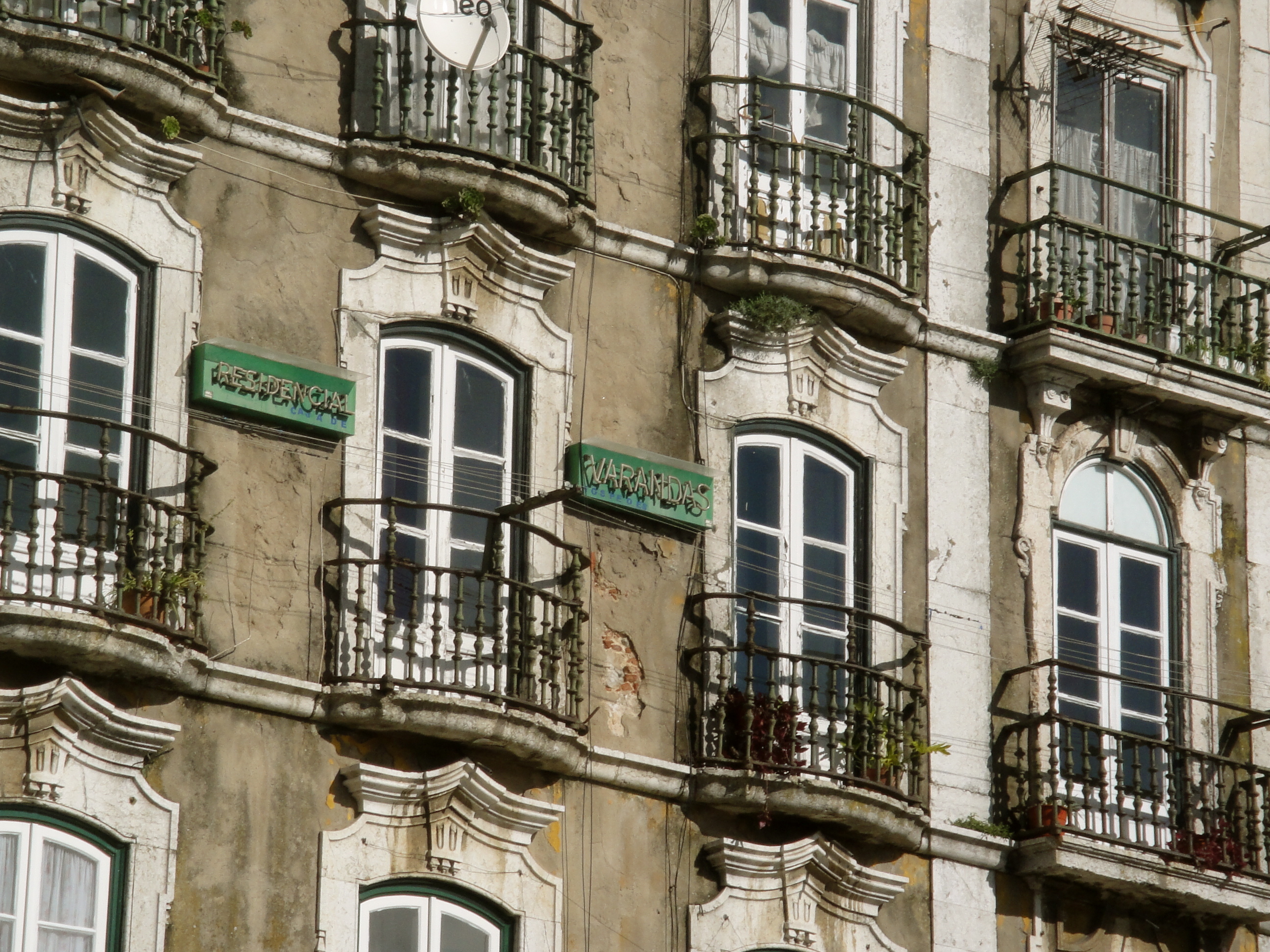
You’d be excused from assuming, from the deterioration which is widespread on Lisbon’s streets, the chipped ceramics and the cracking plaster, the plethora of graffiti and the deserted algae-covered fountains, that the Portuguese would be a little behind on the food front too. But like so much of the underlying spirit of Lisbon, when it comes to trends, to creativity, to meeting the fashion vibes that spread through the most sophisticated cities of Europe, Lisbon is certainly plugged in to the undercurrent of cool.

When it came to food during our five days in Lisbon, we simply didn’t have a bad meal. Whether it be the freshest of all sushi at the Restaurante Confraria Lx and simple squid with vegetables sat out on the cobbled streets of the Baixa, to simple pastels de nata in any random street cafe of your choice, we were met with consistently high standards of food, the freshest of ingredients and prices which were half what you would pay in some neighbouring Spanish cities, let alone the outrageous excesses of London and Paris.

Of our evening meals – the sushi at Confraria Lx, followed by an evening spent in the charming surrounds of the Restaurante Olivier (where a tasting menu for starter plus a main course was only around 35 euros), two meals were absolute standout exceptions, so good in fact that I couldn’t resist but take photos aplenty and devote to them an entire post all of their own.

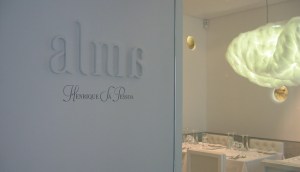
Alma – Henrique Sa Pessoa – Calçada Marques de Abrantes, 92 Santos – Lisboa

The first of the two was at Alma, the restaurant of fresh-faced Portuguese celebrity chef (who spent some of his time training at the Park Lane Hotel in London’s Mayfair). The restaurant itself is very small and VERY white – the chairs, tables, walls together with a rather hypnotic white cloud swaying suspended from the ceiling are all similarly, clinically white. This doesn’t make for the cosiest of atmospheres, but mercifully, with low lighting and due to the restaurant’s sheer popularity, we certainly felt warm and very welcome.

The service was faultlessly efficient, speedy but not rushed, and with perfect english spoken by all. We even got to meet the celebrity chef himself when I complimented him on the quality of the food – that personal touch sets this restaurant apart – in English celebrity chef-owned restaurants, you’d be lucky to get the “celeb” cooking in the kitchen at all, let alone greeting his guests.

So talking of that food, well avoiding the tasting menu for one evening (we had been stuffing ourselves rather royally during the preceding days) we opted for a set menu with the usual choice of starter, main and dessert. But normal this dinner was not. The quality of the wines (we opted for the chef’s choice of matching wines), the bread, the stylisation of the food – all was exquisite.

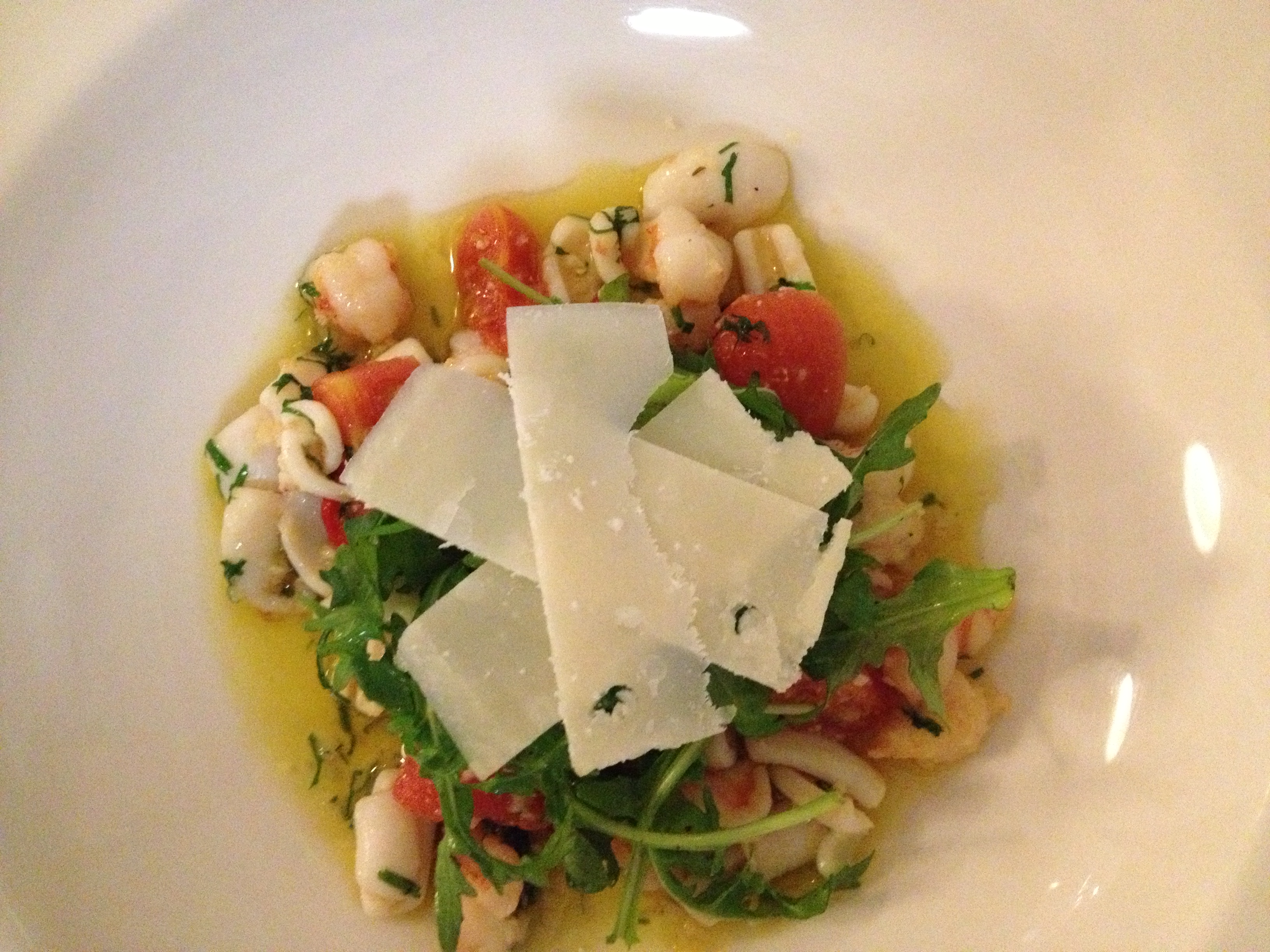
So to start, after home made flat breads and a rosemary and garlic foccacia, I opted for a starter of strawberry gazpacho (such a good combination of the acidic vinegary base coupled with the roundness and sweetness of the strawberry) with a little filo parcel of goats cheese, while my partner went for squid and prawns sautéed in garlic and chilli, with a cherry tomato compote and a rocket and parmesan salad.

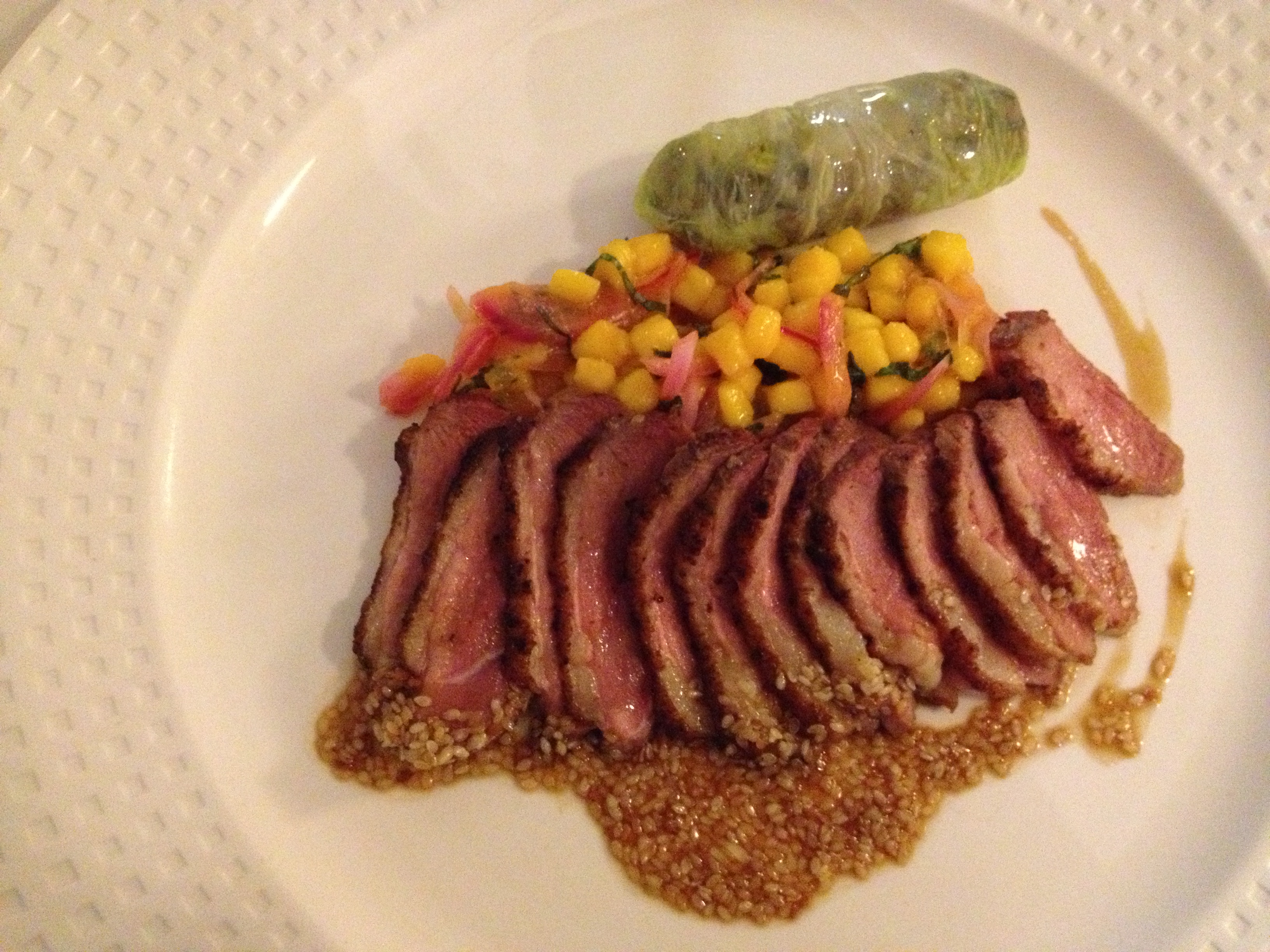
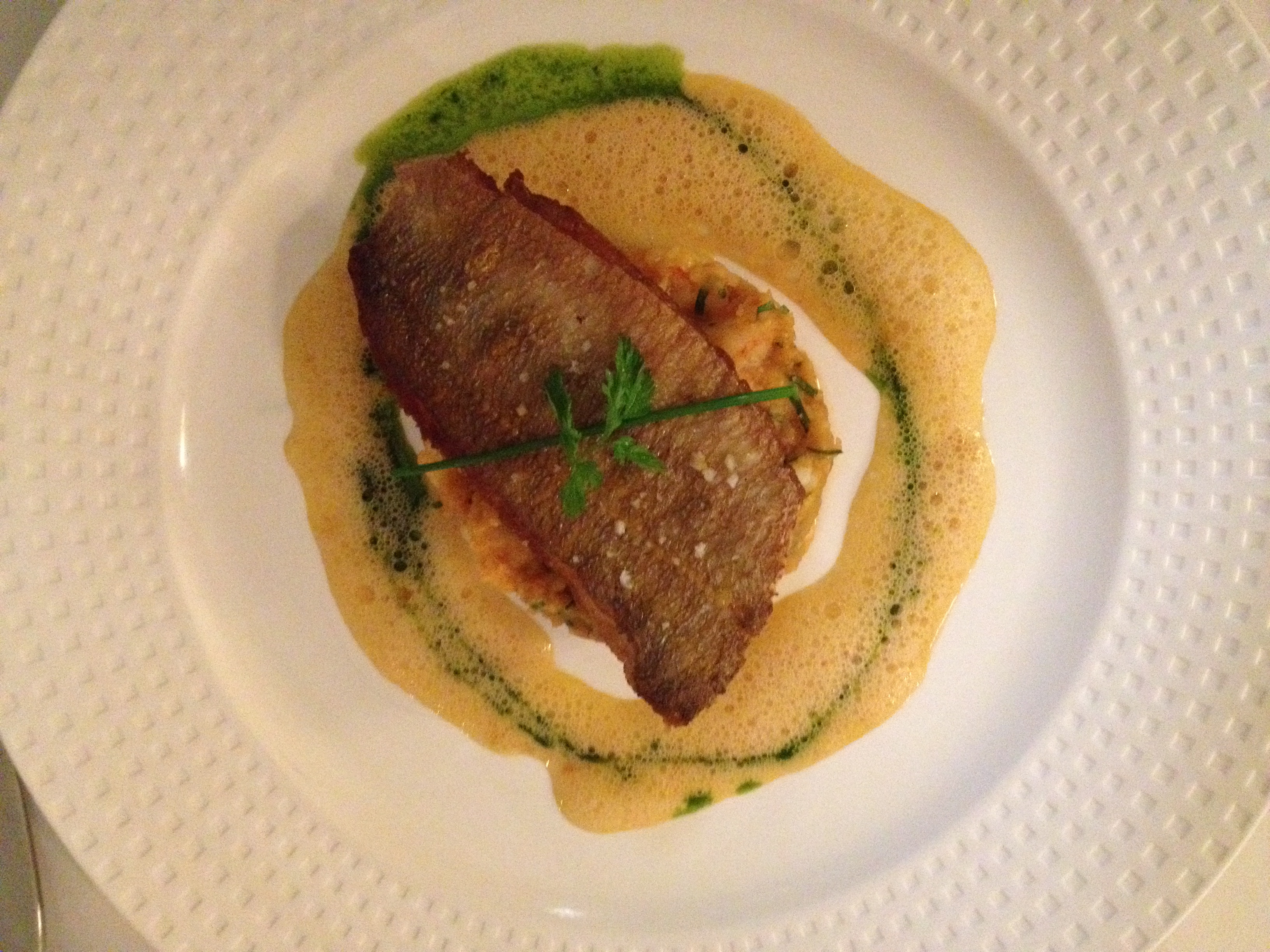
To follow, the stakes were upped. I had an exquisite duck which was perfectly seasoned and marinated in chinese spices and sesame seeds together with a sweetcorn salad and little shiitake mushrooms wrapped in… what were they wrapped in? Cabbage? I can’t remember. Nonetheless it was delicious! My partner meanwhile opted for a roast fillet of cod with a chick-pea purée, chickpea vinaigrette, and roasted potatoes – a faultless combination of Portuguese flavours with an elegant twist.

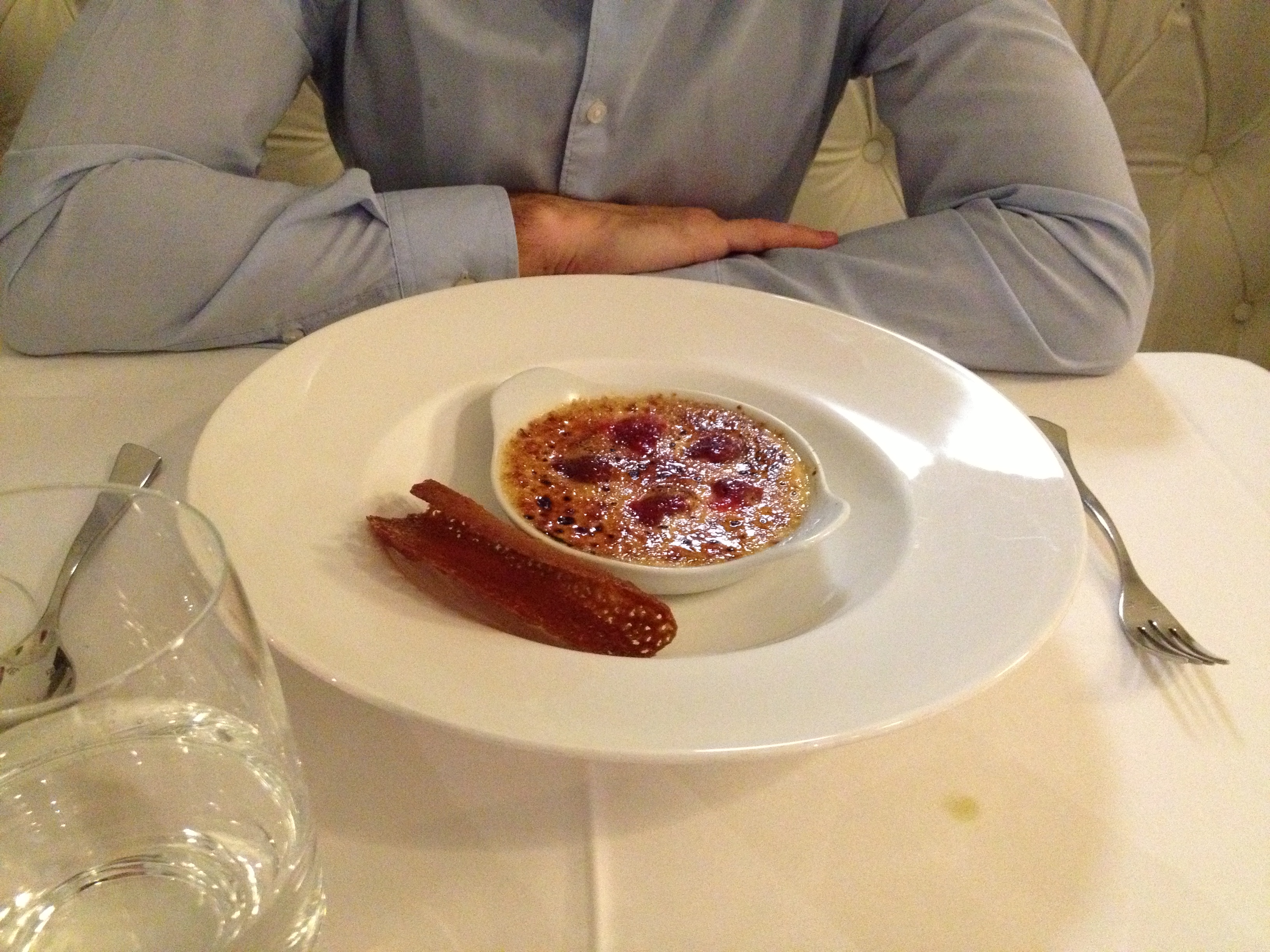
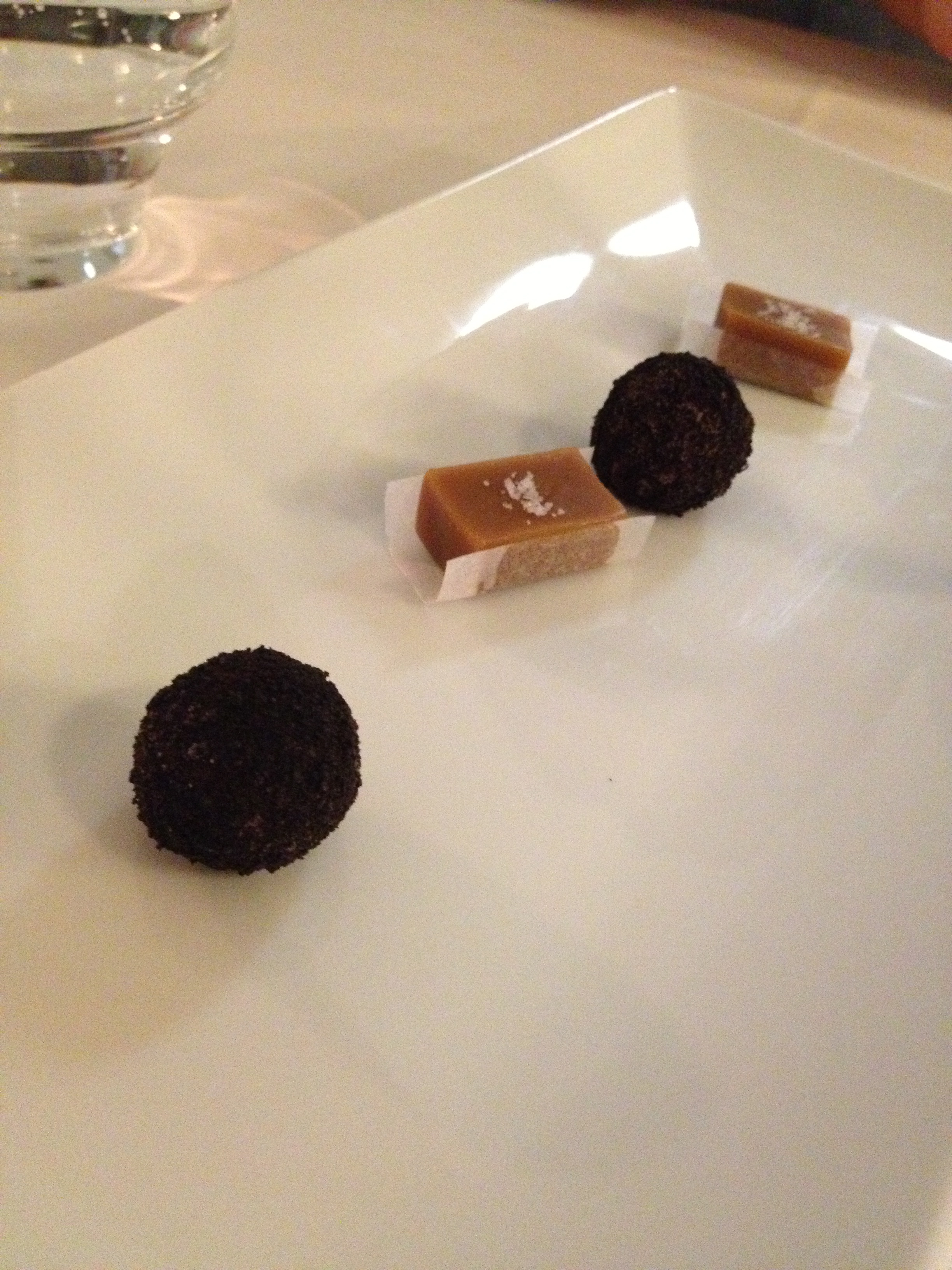
For dessert, we shared a combination of the creamiest but not at all heavy raspberry and lemongrass crème brûlée with a coconut tuile (thus combining French classic with tropicana bay to dreamy effect), and a plum crumble with a coconut ice cream. And as if we hadn’t indulged ourselves enough then, dinner was rounded off with petit fours of salted caramel fudge and little chocolate truffles.

100 Maneiras – R. Teixeira 35, 1200-459 Lisboa

But as far as feasts go, Alma was just the starter to the gastronomical banquet which ensued. Read more

Lisbon – Day Five: Bye Bye via the Baixa

Four full days in Lisbon was, it turned out, a convenient little break in which to comfortably and conveniently explore the best of the city’s four main regions: the hill of Bairro Alto, the hill of Alfama, out to Belém and back to the large avenidas of the Baixa, splaying upwards from the Tagus and outwards North of the city in a valley between the two hills. Although this was officially our fifth day in the city, the first, once we had arrived, was more of an evening of orientation. Today, with our suitcases packed, and the Lx Boutique Hotel left behind, the bulk of the day reminded available for discovery, with an evening flight giving us time for one last Lisbon hurrah. It was to the Baixa we headed, perhaps mercifully so, as after four previous days of trekking up what are, at times, the steep streets of Lisbon, the Baxia provided plenty of spacious, flat boulevards and squares for us to explore with comparative ease.

Chestnut seller

The Baixa region is far more typical of a southern European city. Built in the aftermath of Lisbon’s deadly 1755 earthquake in a grid-like layout which allowed for wide sweeping avenues and grand open squares, the Baixa really shows off Lisbon to the full. This is where you find the opulent fountains, the monuments, the old palaces and the new shopping districts which are to be expected of a capital city. Here the buildings are largely Neo-Classical, grander and better preserved. The streets bustle not just with tourists but with the working masses of the city. And although the sun was shining hard, the many shops lining the grand boulevards were packed with Christmas goodies, while on the roadsides, chestnuts were being roasted pouring plumes of smoke into the air and spreading a distinctive warming smell of Christmas all around.

We began the day in the Praça do Municipio, and more particularly the City Hall, where an incredibly interesting, and free of charge photography exhibition examined Lisbon’s significant role during WW2. As a neutral country and on the edge of Europe, Lisbon became a place of escape from the toils of Europe. It handled the exile of significant numbers of escaping Jewish refugees, but was also a place of espionage, spies and political deals, as both Germany and England fought to keep the favour of Salizar and in particular ensure supplies of the natural minerals which, once mined, could prove significant to the production of weaponry during the war. But despite all of this, Lisbon retained some element of normality during a time of European strife. For those lucky enough to have escaped the rest of warring Europe, Lisbon was a place of relative tranquility, albeit laced with suspicion, full of secret police and suffering more and more from food shortages as the war went on.

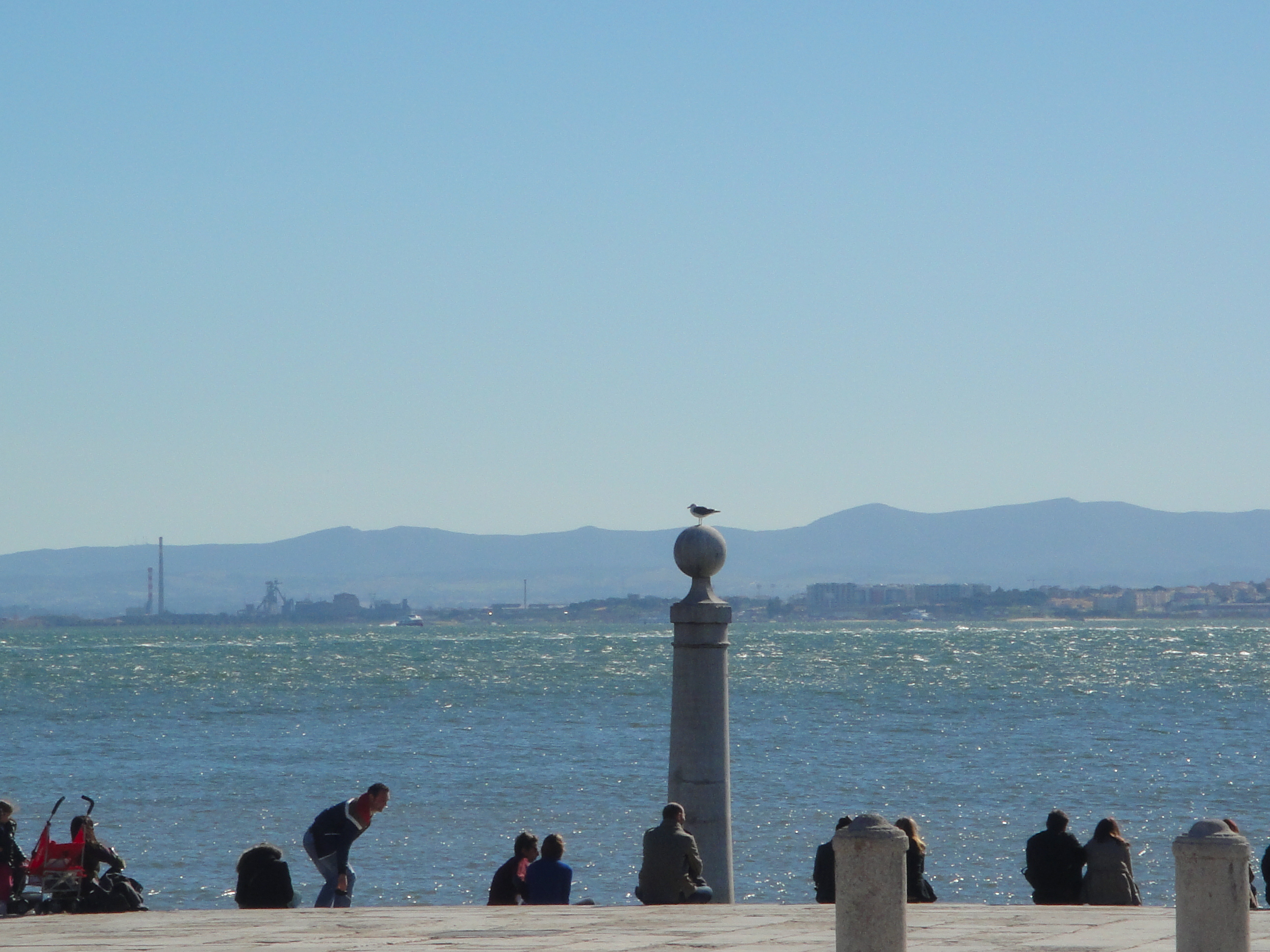
Back in the modern world, and turning from the photos of black and white to the vivid blues of a Portuguese sky, the deep “royal” yellow of the old palace surrounding the impressive Praça do Comércio, and the reds and yellows of the old trams passing through the square, we headed to this former site of the Portuguese royal palace before it became administrative offices of the Republican government following Portugal’s 1910 revolution. Open on one end of the square to the glittering River Tagus beyond, we determined the square to be a perfect location for a coffee, sitting down to do just that while basking in the sun for as long as possible before our later departure to colder climes.

After coffee, we crossed under the impressive triumphal arch to the north of the square, up the Ruo Augusta and into the shopping streets and the great squares beyond. The decay and detrioration of much of Lisbon was not so obvious here, as grandeur dominated and scale took over.

In the Praça Dom Pedro IV, two huge working fountains made a marked contrast to the fountains further North in the city, left to go green with disuse. The square is flanked on one side by the eye-catching Neo-Manueline face of the Rossio Station, complete with two Moorish-style horse-shoe arches and, sadly, a Starbucks. To the North, another grand square, the Praça dos Restauradores boasts a grand obelisk, adorned with sculptures paying homage to those who gave their life during the War of Restoration, while to the East, the Praça da Figuera is home to hundreds of pigeons and the imposing statue of King João I. Here you can quite clearly see Lisbon in its heyday, the grand European capital which was saviour to so many during WW2. You can sense the splendour of the past and see history and grandeur oozing from every building facade and lamp post. And unlike many other European capitals, the squares of Lisbon benefit from the rolling topography of its surroundings, so that in every grand boulevard and Praça, a backdrop of the Alfama and the Castelo de São Jorge, or a straight vista to the sparkling Tagus, provides the visitor with a multi-layered feast for the eyes. A landscape rich in its historical and architectural diversity.

Both history and architecture collided to stunning effect in one of the last surprises of the trip. En route to the Rua de Santo Antão, famed for its fish restaurants, we passed through the Largo São Domingos, a little square sandwiched inbetween its grander neighbours, and, passing the fairly innocuous facade of São Domingo thought we may as well drop in. What we saw upon our entrance made me gasp out loud.

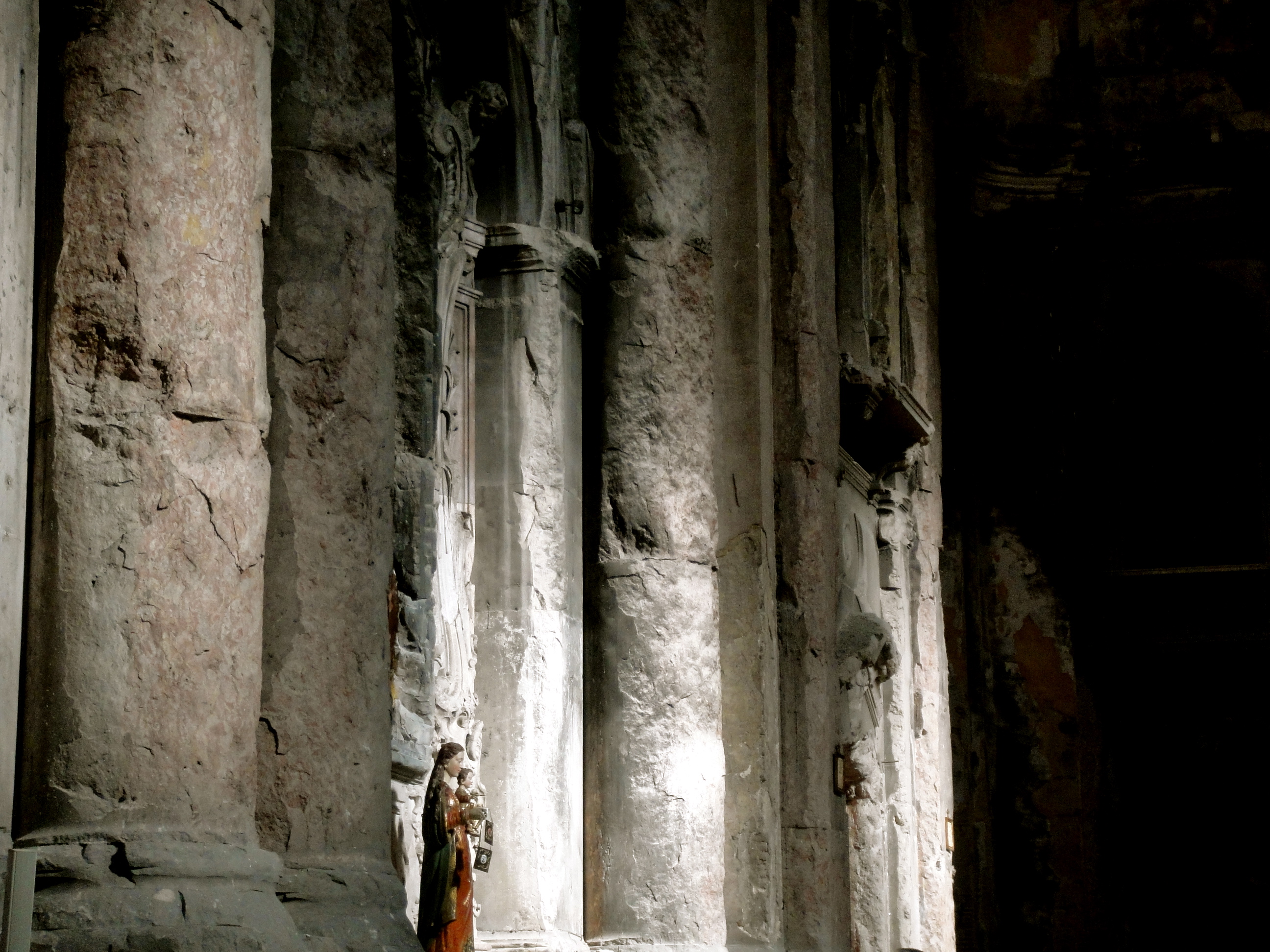
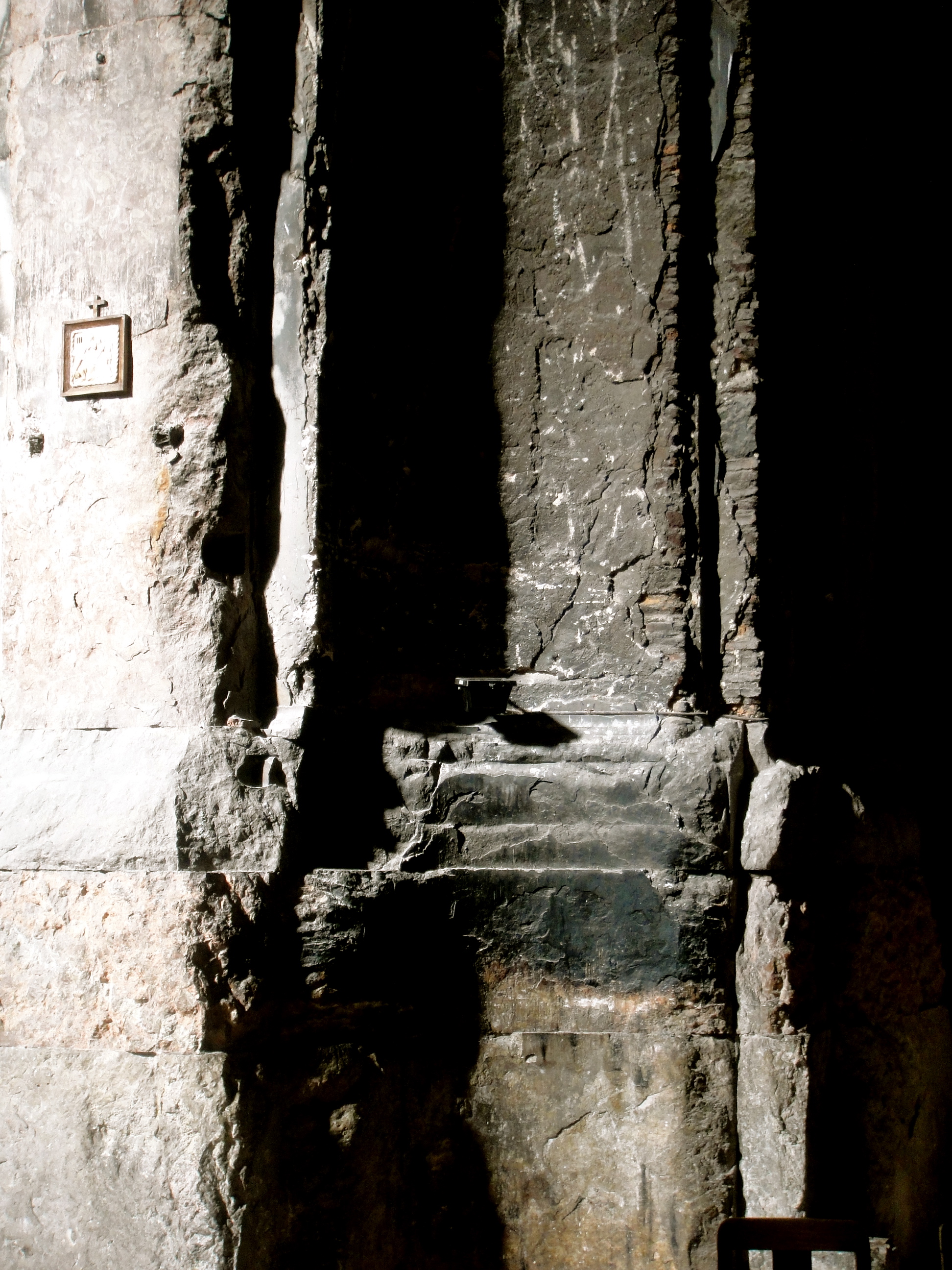
Unmentioned in my travel guide, and not at all obvious from the outside, the interior of this church made my heart miss a beat. Not because of the usual offerings of elaborate gilded beauty and over the top baroque decorations. Quite the opposite. Apparently (so I have learned subsequently), the church suffered a huge fire in 1954, with the result that its interior ornamentation, surface marbles, stone work – pretty much every embellishment was completely destroyed. Having never been renovated, but only the ceiling painted a terracotta orange, the church is utterly bare of all ornamentation, showing its raw and tender bruising and wounds with the dignity of a religious martyr; its statues now unrecognisable, its stone work covered in huge great cracks, holes and patches of damp and detritus. Where the sun streamed in through the southern windows and hit various aspects of the architectural damage, it looked like the church had been submerged for centuries under an ocean gloom, only recently recovered and showing the acid wounds of its salty submersion, or like the cobweb covered, partially decomposed wedding banquet of Dickens’ Miss Havisham. And this deeply inflicted damage was all the more obvious and painful because this church has not been left as ruins. Rather, as a fully used institution, the tidy pews and perfectly smooth ceiling mark a dramatic contrast to the wounds inflicted underneath. This was an unmissable experience, a moment of great epiphany and one which no visitor to Lisbon should miss.

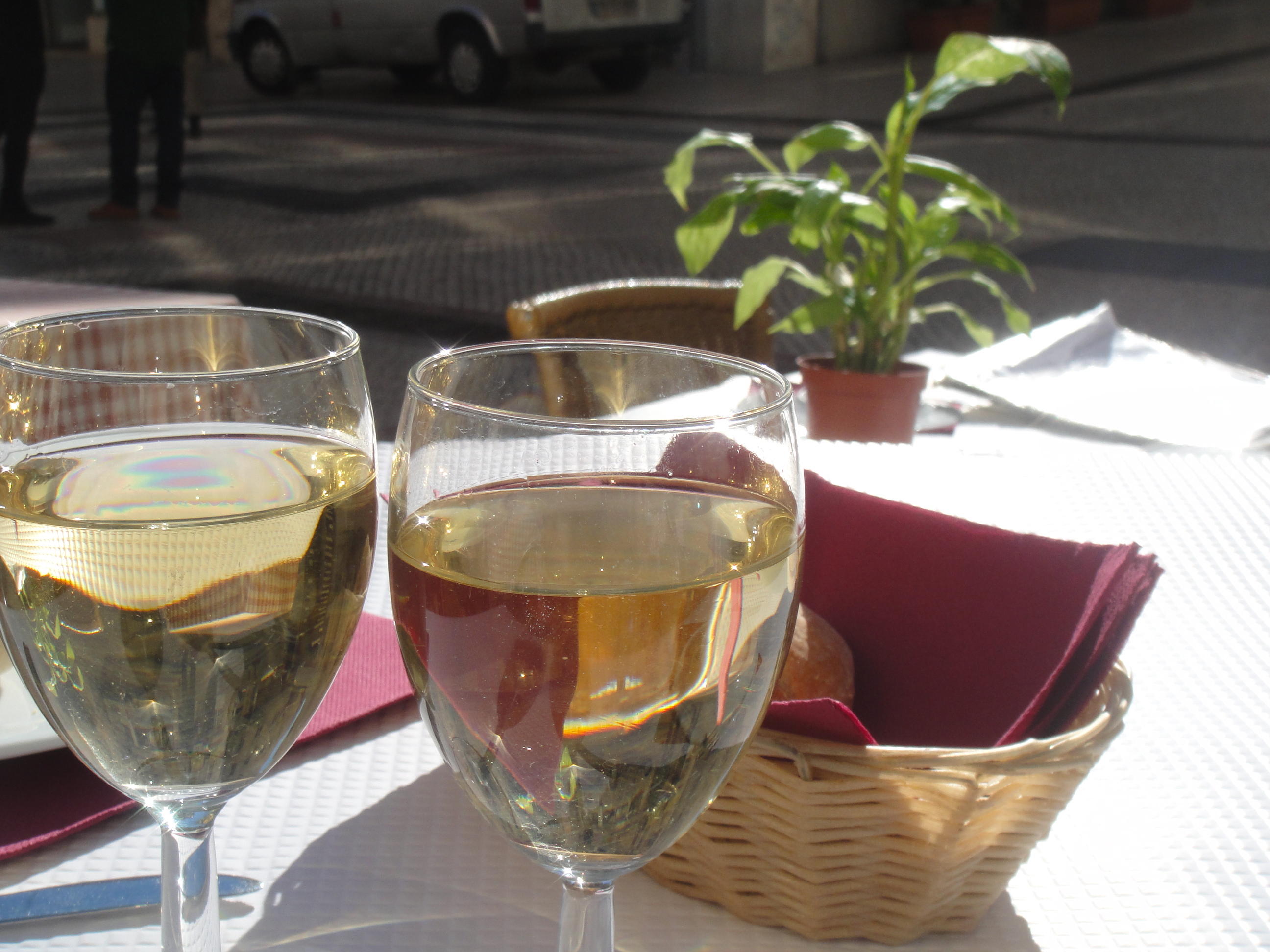
So the day was proceeding fast, and all that really remained for us to do was to sit back, in the glaring autumn sunshine, and enjoy a perfect plate of squid and octapus and a few glasses of ice cold white wine, whiling away the remaining hours before the inevitable return journey began. Time to reflect on a grand tour through a compact but multifaceted city, from castles to rivers, and art museums to stunning churches; time to appreciate the wonderful Lx Boutique Hotel, the great food consumed, and the fantastic restaurants found to recommend and maybe return to one day; time to enjoy the heat of summer once more, before the start of a long frosty winter back in London.

Like the fall of autumn leaves on a windy November day, the scenes from that sun-drenched lunchtime are now dissipating away, as I sit here, returned to London, back in the darkness of a winter’s evening. Distracted by the work I must return to, the practicalities of ironing, and washing, and making myself food, my connection with my holiday grows weaker by the minute, as the warmth of the sun is forever shrouded in the weak light of November, and our shiny red cockerel is the sole remaining proximity to the spirited Portugal of our holiday’s brief acquaintance. But with this blog, my separation is tempered, my ties with Lisbon reforming as I reconnect through cyberspace and share my experiences with you all. Day five is over, but my memories have only just begun.

Still to come: Lisbon – the food, and many more photos. See you then.

Photographs and content © Nicholas de Lacy-Brown and The Daily Norm, 2001-2012. Unauthorized use and/or duplication of the material, whether written work, photography or artwork, included within The Daily Norm without express and written permission from The Daily Norm’s author and/or owner is strictly prohibited. Excerpts and links may be used, provided that full and clear credit is given to Nicholas de Lacy-Brown and The Daily Norm with appropriate and specific direction to the original content.

Lisbon – Day Four: Alfama the Survivor

On 1 November 1755, the shape of Lisbon was changed forever. 20 churches collapsed, fires ravaged the city, a gigantic tsunami washed up on the shore causing widescale flooding, an estimated 15,000 Lisbon residents lost their lives and over half of the urban landscape was reduced to rubble. The cause was an earthquake so large that it is now recorded as one of the deadliest in history, an earthquake which was felt as far away as Italy but for poor Lisbon, the fabric of the city was literally raised to the ground.

The Alfama and the Castelo seen from below

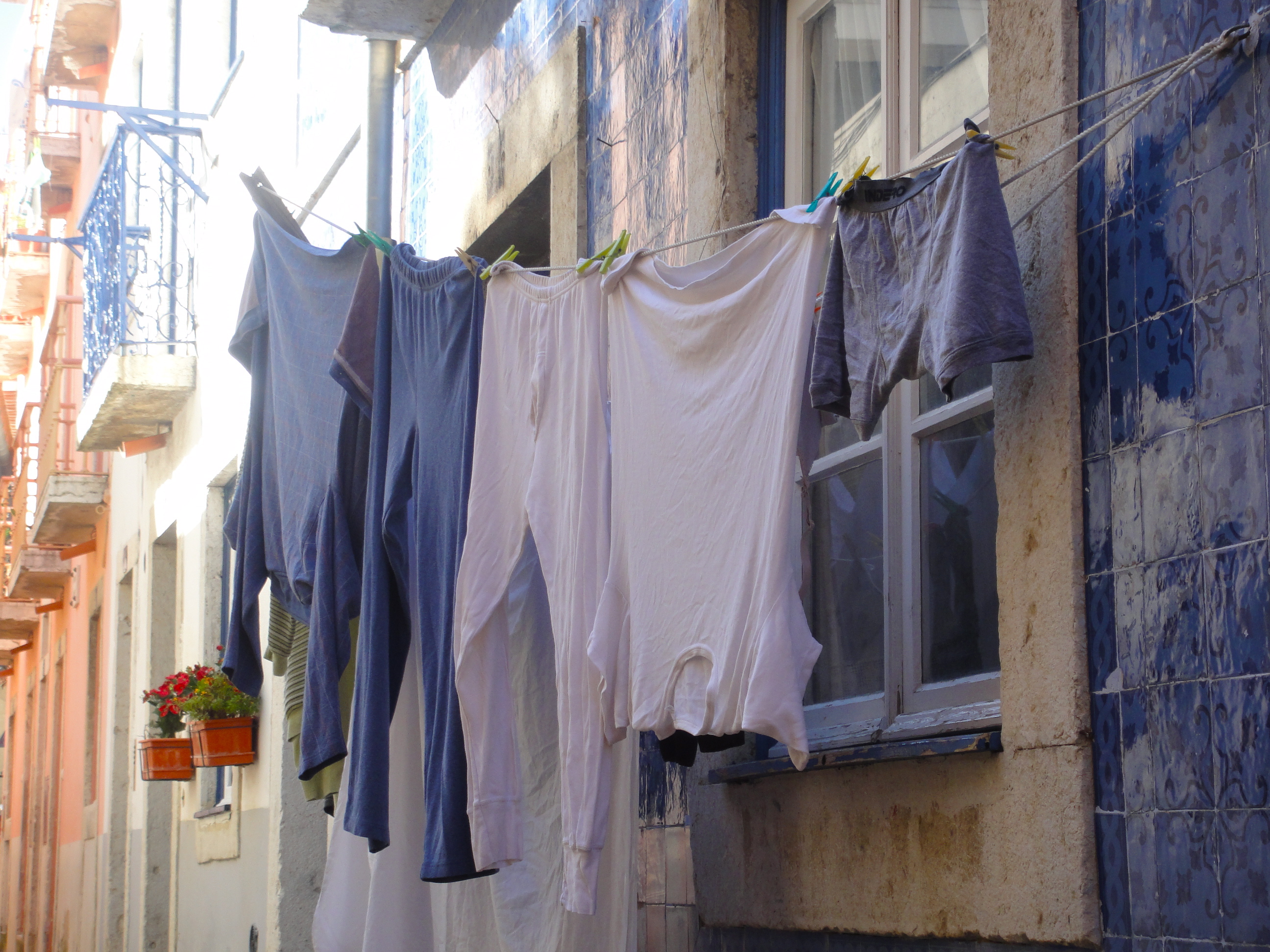
Recovering from that destruction, the city was rebuilt, and the large swathes of grid-patterned streets which fill the centre of the city today are the work of the Marquez de Pombal and the major reconstruction of the capital. However to the East of the city is one noticeable exception. Up on its hill, above the low lying centre, the area of Alfama missed much of the destruction. Many of the buildings survived and the flooding never got this far. What results is a true slice of Lisbon history, an area which, as the name suggests has Moorish origins from the city’s early beginnings, and whose twisty compact streets and steep stairways retain the Moorish layout and the medieval construction of what was once the whole of Lisbon up on its commanding hill. The Alfama is less grand, for sure, than the wide boulevards and piazzas below, but utterly idyllic in its picturesque imperfection, its windy wobbly streets, its cracking facades and cobbled paving, its coloured houses and chipped ceramics, its flower pots, laundry hung streets and plant-packed balconies. In the Alfama one felt the true heart of Lisbon, a little dilapidated treasure trove of pictorial and historical delight. And that was exactly where we headed today.

The Alfama was a joy to walk around. We had no itinerary, no predetermined destination, other than to gradually climb the winding streets upwards until reaching the Castelo de São Jorge, the castle which crowns the top of the hill. On our way we passed Sé, Lisbon’s principal Cathedral – an impressive castle-like structure from the outside, although rather gloomy on the inside; we saw the Casa dos Bicos, the conspicuous property with diamond-shaped stones adorning its facade; we marveled at the stunning views over the Eastern Tagus from the Miradouro da Graça; and we dropped into little antique shops, tiny stores crammed with ceramic cockerels, port and postcards and little chapels branded with ancient blue and white painted tiles.

Diamond-shaped stone facade of the Casa dos Bicos

The Cathedral Sé

The blue and white tiled facade of Santa Luzia

View from the Miradouro da Graça

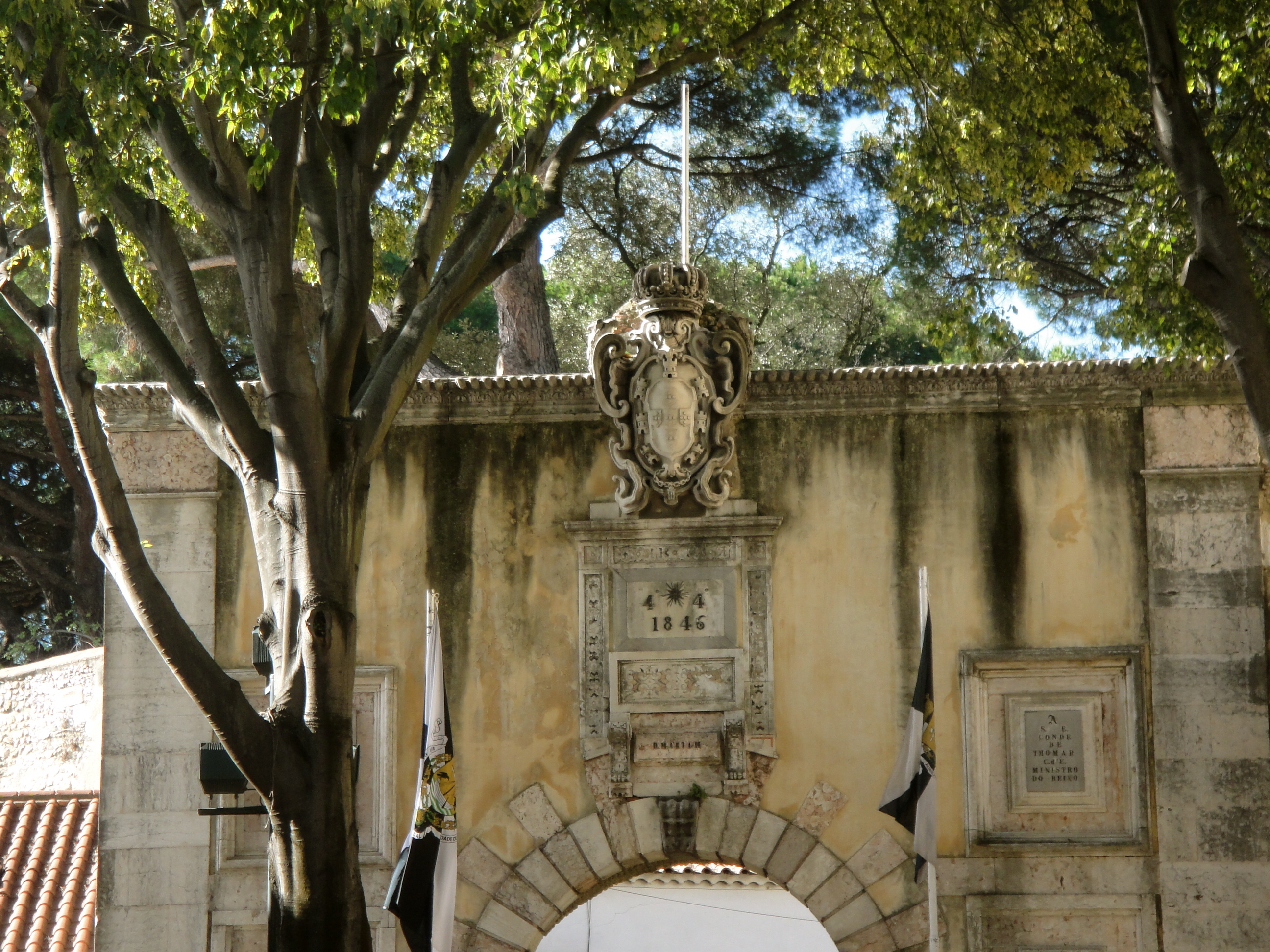
Eventually, as promised, we found our way to the Porta de São Jorge, the imposing castle gate which leads, not onto the main Castelo de São Jorge directly, but first into the ancient residential district of Santa Cruz, a tiny maze of little streets, strung with washing and adorned with pots and flowers, all of which is packed into the castle walls of this ancient citadel. We couldn’t resist exploring these streets, and although the labyrinthine quality meant that we managed to go round in circles on at least 3 occasions, we did manage to find an extremely charming little wine bar, Instinctus (Rua Santa Cruz do Castelo) where the equally charming owner treated us like guests in a family home, preparing traditional but beautifully presented, fresh and delicious bacalao (cod) and sardines, and recommending that all important Portuguese wine – a merlot grape grown in the south of the country. It rushed to our heads like a tidal wave of silken chocolate. It was delicious.

The Santa Cruz district may be small, but after lunch we managed to stumble into another cute cafe, where we indulged in the requisite coffee and a couple of pastel de natas. All this before we once again swayed along the cobbled streets and into the main complex of the castle.

The Castelo de São Jorge emanates directly from the Moorish era, captured in 1147 by the Christian King Afonso Henriquez who transformed the complex into the residence of the Portuguese Kings. The castle did not go completely unscathed in the 1755 earthquake, and many of the ramparts remained in ruins until 1938 when Salazar began a complete renovation. Rebuilding the “medieval” walls and adding gardens and the peacocks who wander around today, the result is a castle which looks both ruined and well-kept – it is an example, I think, of what they called “controlled-clutter”. Old wells, fallen pillars, large weathered stones and rusting old canons surrounded by a bounty of plant life, all set within grounds whose outer terrace boasts incredible views over central Lisbon, the Baixa, Bairro Alto and out towards Belém.

As the sun set over Lisbon and the skies gradually yellowed behind the silhouette of the 25 de Abril bridge, so too did our time in this great city start to draw to an end. Tomorrow we will leave, albeit after a further few hours of exploration. For now however it was time to leave the castle, whose ramparts were growing chilly in the increasing autumn winds and the fading peachy-hued sun, and attempt to make our way down the hill through the winding Moorish streets while we could still remember the way.

Back down in the Lx Boutique Hotel, we had a great dinner to prepare for – a tasting menu at the 100 Manieras, a restaurant whose exquisite cuisine deserves a post all of its own.

For now however…Boa-noite.

Photographs and content © Nicholas de Lacy-Brown and The Daily Norm, 2001-2012. Unauthorized use and/or duplication of the material, whether written work, photography or artwork, included within The Daily Norm without express and written permission from The Daily Norm’s author and/or owner is strictly prohibited. Excerpts and links may be used, provided that full and clear credit is given to Nicholas de Lacy-Brown and The Daily Norm with appropriate and specific direction to the original content.

Lisbon – Day Three: The Prince of Belém

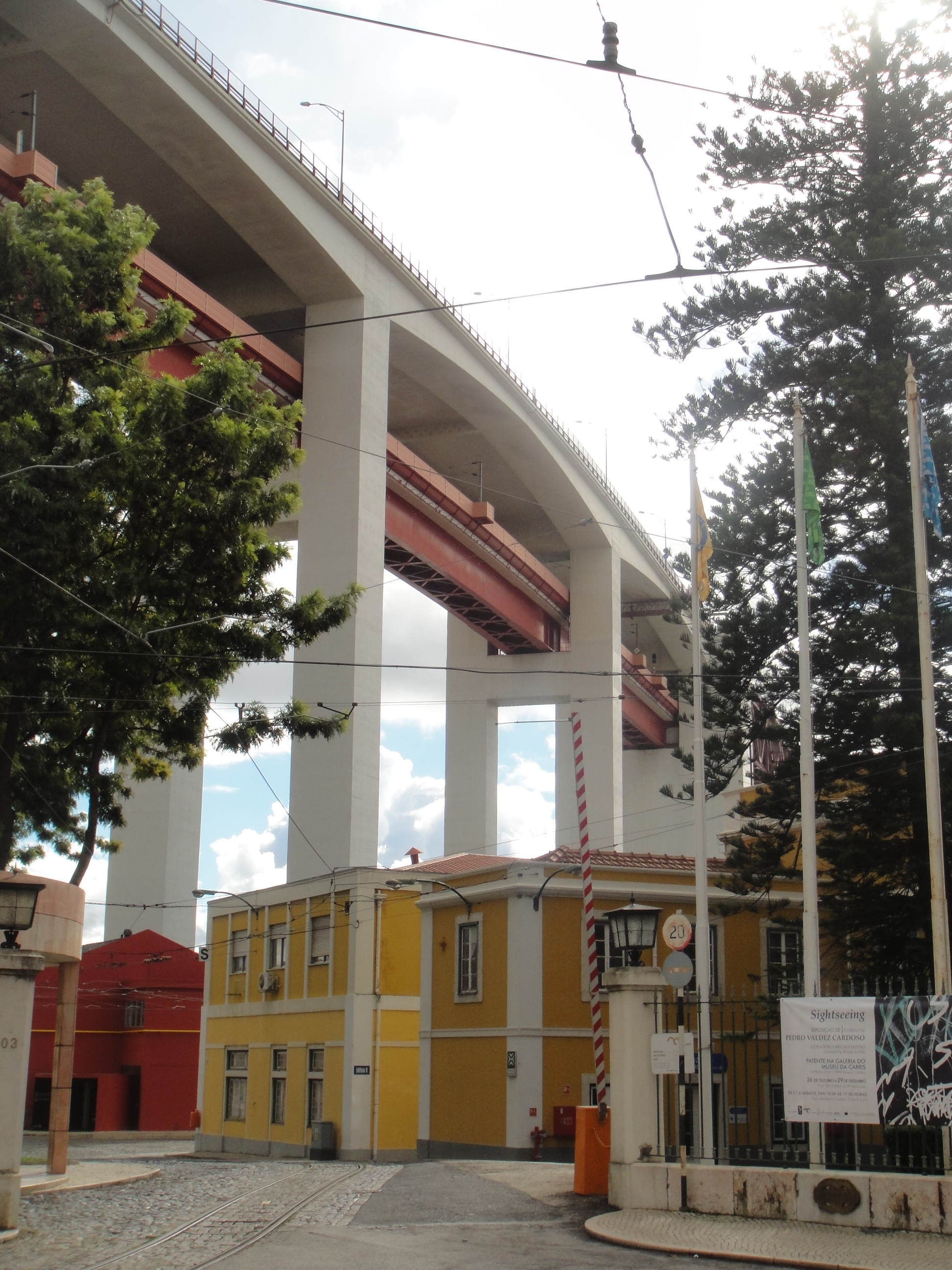
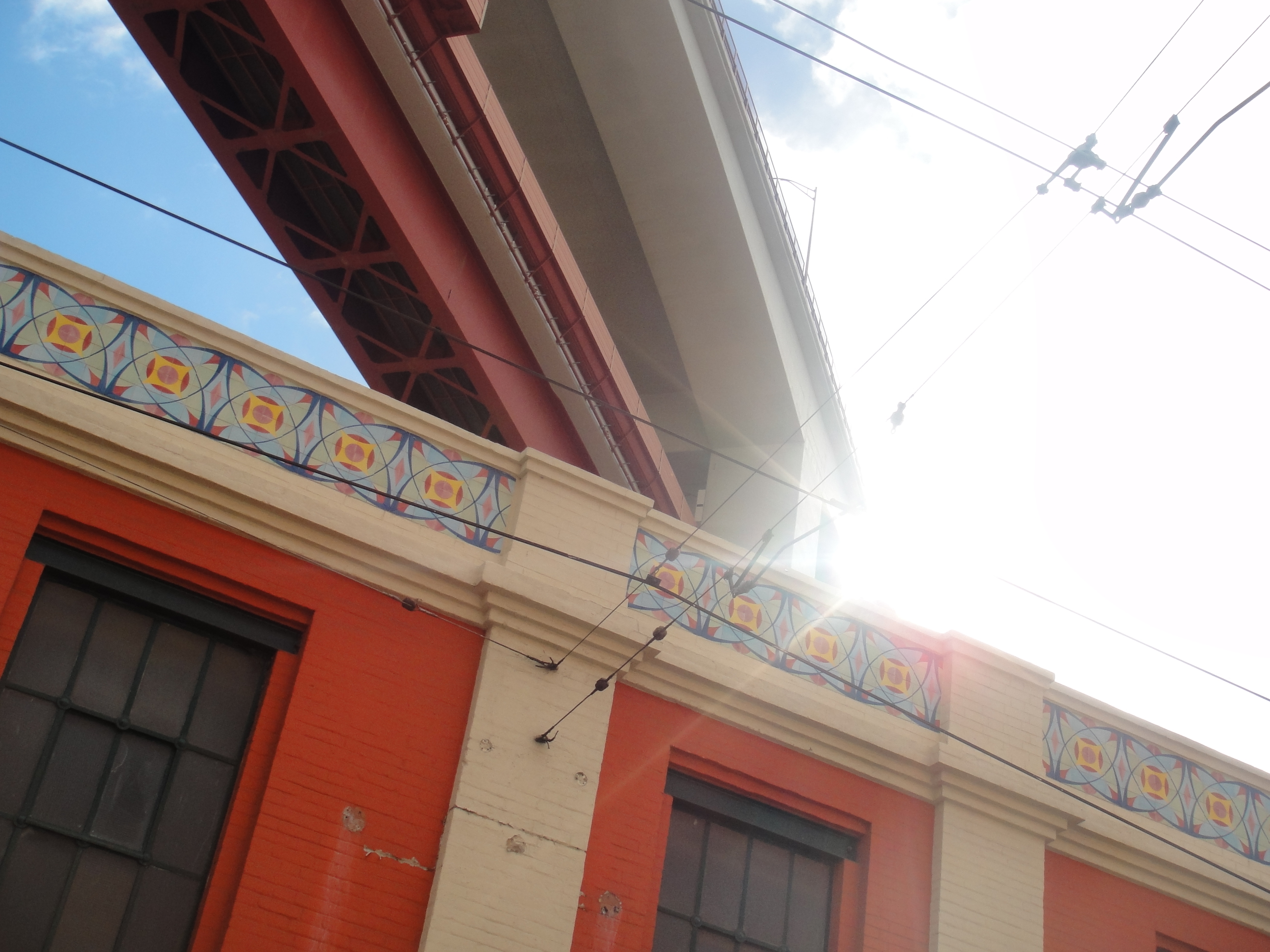
West of central Lisbon, in an area separated on the tourist map by a large swathe of un-chartered city (at least by the travel guides – presumably the neighbourhood is deemed unattractive to tourists) is the area of Belém. It’s quite a hassle to get to. You need to take a tram (or a taxi which actually, so we found, doesn’t cost all that much more) which, sadly, is not one of the rickety old pre-war types, but a modern sleeker affair (well I say sleek by way of comparison, but in fact most were covered with graffiti, their seats falling apart at the seams and the polythene sponge falling out). The tram journey we embarked upon was not altogether successful. The tram was rammed like the sardines for which Portugal is so famous, but the journey didn’t take us far. We got almost as far as the Ponte 25 de Abril before the tram stopped, without reason, and we were all unceremoniously ejected from the tram. Not knowing an alternative way to travel, and being literally shooed away by the driver of the equally packed tram behind, we set out on foot. This took us under the mightly Ponte 25 de Abril which literally towered above the streets of this Lisbon suburb. In fact it looked as though the various concrete plinths holding up the bridge were planted in people’s gardens, as the huge red metal form soared right above an entire residential district. It made for quite a paradoxical sight.

Having walked past the bridge, and with Belém still some distance away, we were lucky enough to coincide with the arrival of another, much emptier tram as it approached a bus stop. We were away. And we even got a seat, albeit no longer cushioned by the long disintegrated polythene padding that once sat upon it.

In no time we had arrived at Belém. Situated at the mouth of the River Tagus, where the river opens out into the vast Atlantic Ocean and the end of continental Europe, the region is inextricably linked with Portugal’s golden age of travel and discovery. As a result, the area has sprung up with a surprising wealth of monuments, churches and gardens despite its distance from central Lisbon, and is consequently a must of the tourist trail. Amongst those many monuments is the more contemporary and yet no less striking Monument to the Discoveries (Padrão dos Descobrimentos). Standing prominently on the Belém waterfront, the immense angular monument was built in the 1960s to mark the 500th anniversary of the death of Henry the Navigator and features likenesses of many of Portugal’s great Discoverers, including Vasco de Gama and Pedro Alvares Cabral (the discoverer of Brazil). Having been commissioned by the Salazar regime, it’s not surprising that it is quite blatantly arrogant in its prominence and unapologetic  historical propaganda, and it has something of a look of a communist monument about it. Still, there’s no denying its impact, nor the splendour of its location, overhanging the Tagus against a backdrop of the 25 de Abril bridge.

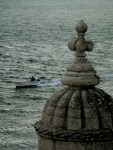
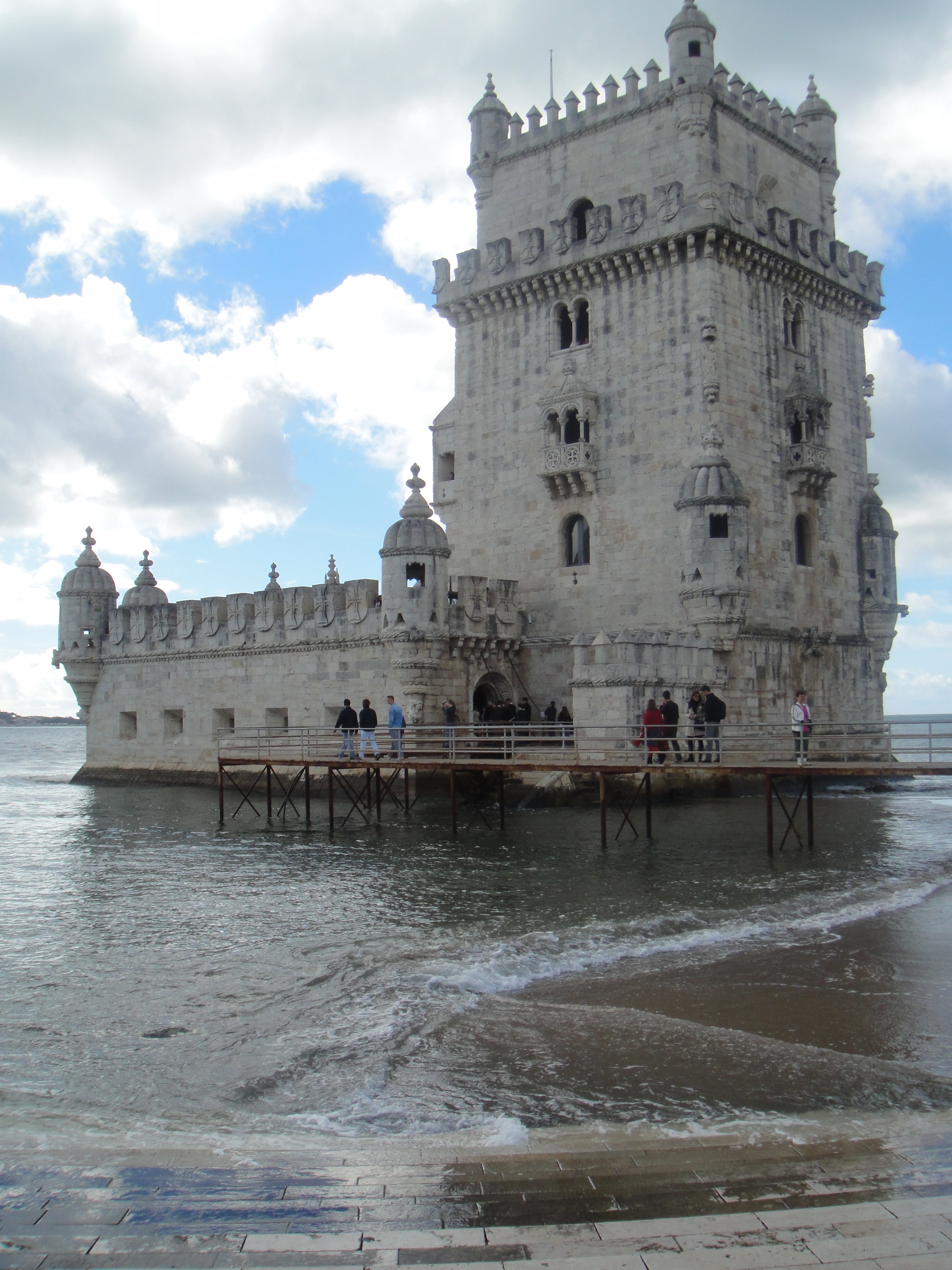
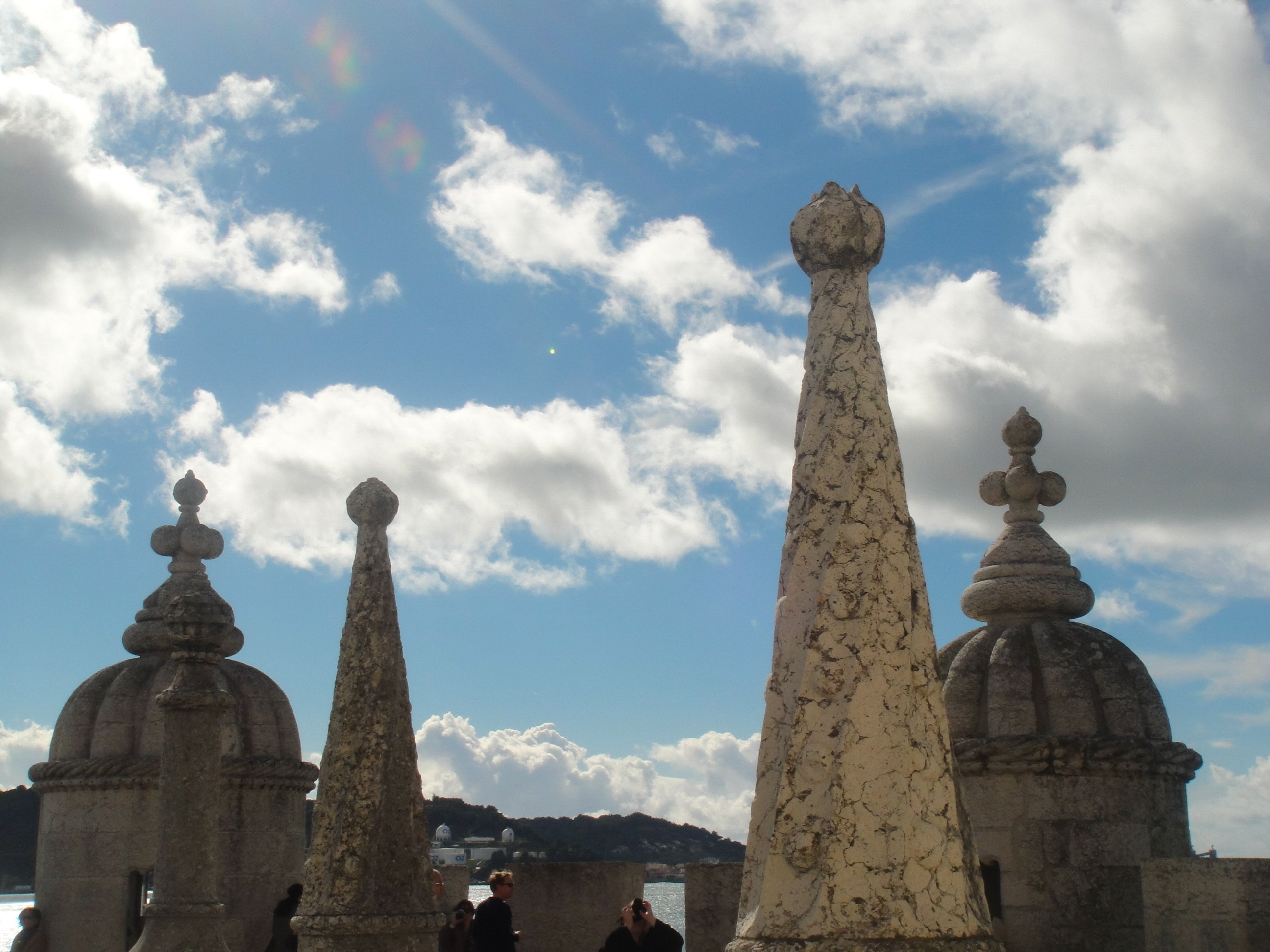
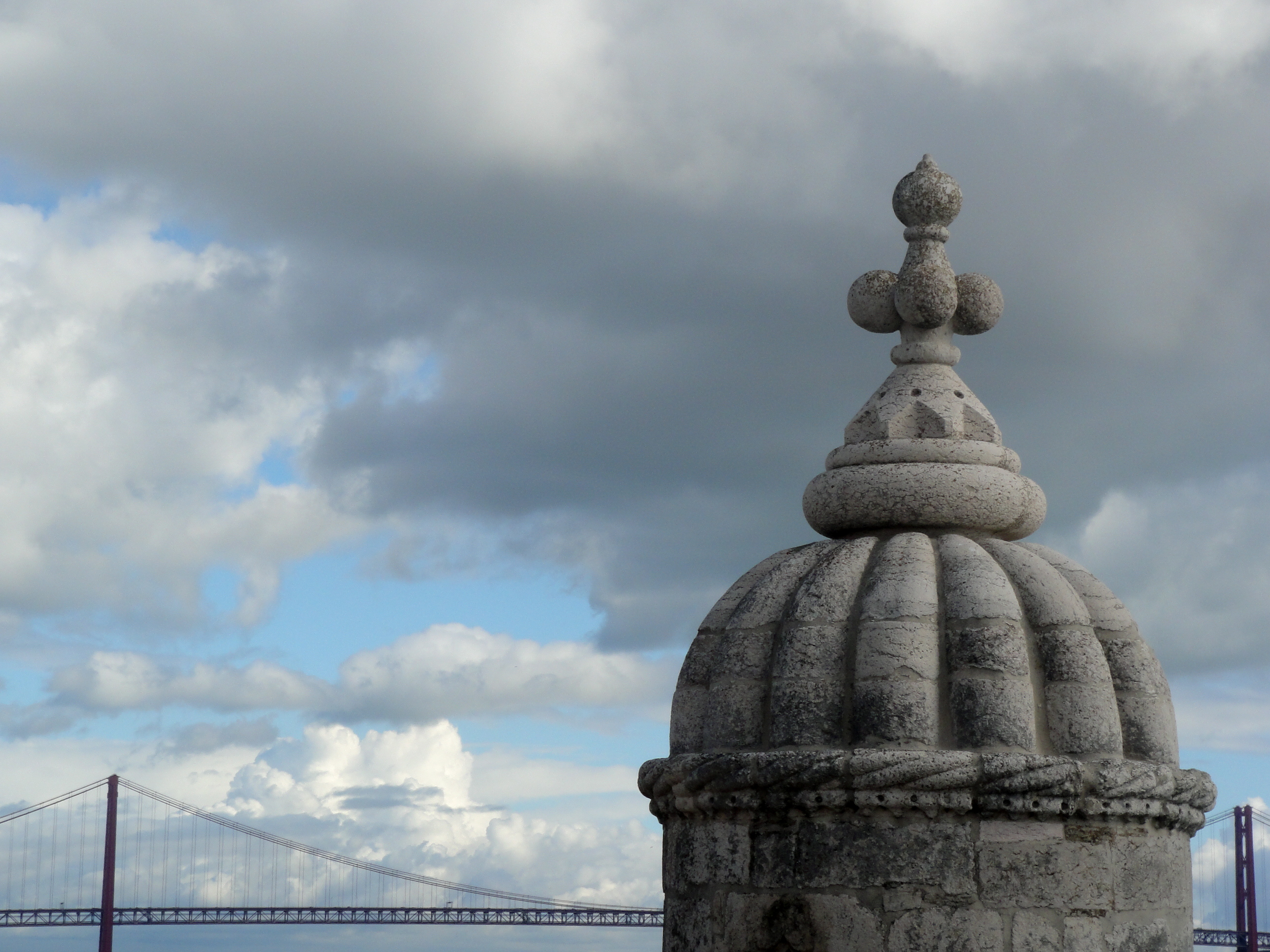
Bolstered by the good weather, and having gawped to our satisfaction at the Discoveries monument, we headed on a pleasant river-side stroll, stopping off at an Ibiza-esk all white chic waterfront bar for a requisite morning coffee and a touch of sun-inspired abandon. Next on the agenda though was the Torre de Belém, a little fortress emerging straight out of the sandy beach like a child’s sandcastle, but with all of the strength of the war machine and guardian of the city which was its design and purpose. For a fortress, the tower was surprisingly elegant in its intricate stone work and heavily adorned terrace, whose balustrades and battlements were of such varying shapes and sizes that they reminded me of the chimneyed rooftop of Gaudi’s Casa Mila in Barcelona.

Up a very steep and very narrow winding staircase, with regular stops as tourists attempted to squeeze past each other with unfortunate proximity (there was sadly no one-way system – these castles weren’t built for tourists, after all) we eventually made it to the top terrace. Ahh, up there with the sun on my face and the brisk ocean wind ruffling my hair, with a view across the Atlantic, sweeping down towards central Lisbon and the vibrant red suspension bridge beyond, I felt like the Prince of Belém, guardian of the city, King of the Castle.

But of course all dreams must come to an end. I was, after all, being butted in the back by the large cameras of the bustle of overzealous tourists nearby, each one leaning over the battlements attempting to capture the best view of Lisbon and the Monument of Discoveries in the foreground. Time to leave, and back along the river, where a luncheon at Portugalia, a traditional affair, ensued, but with a picture perfect view of the Monument and a face full of sun. One can’t moan.

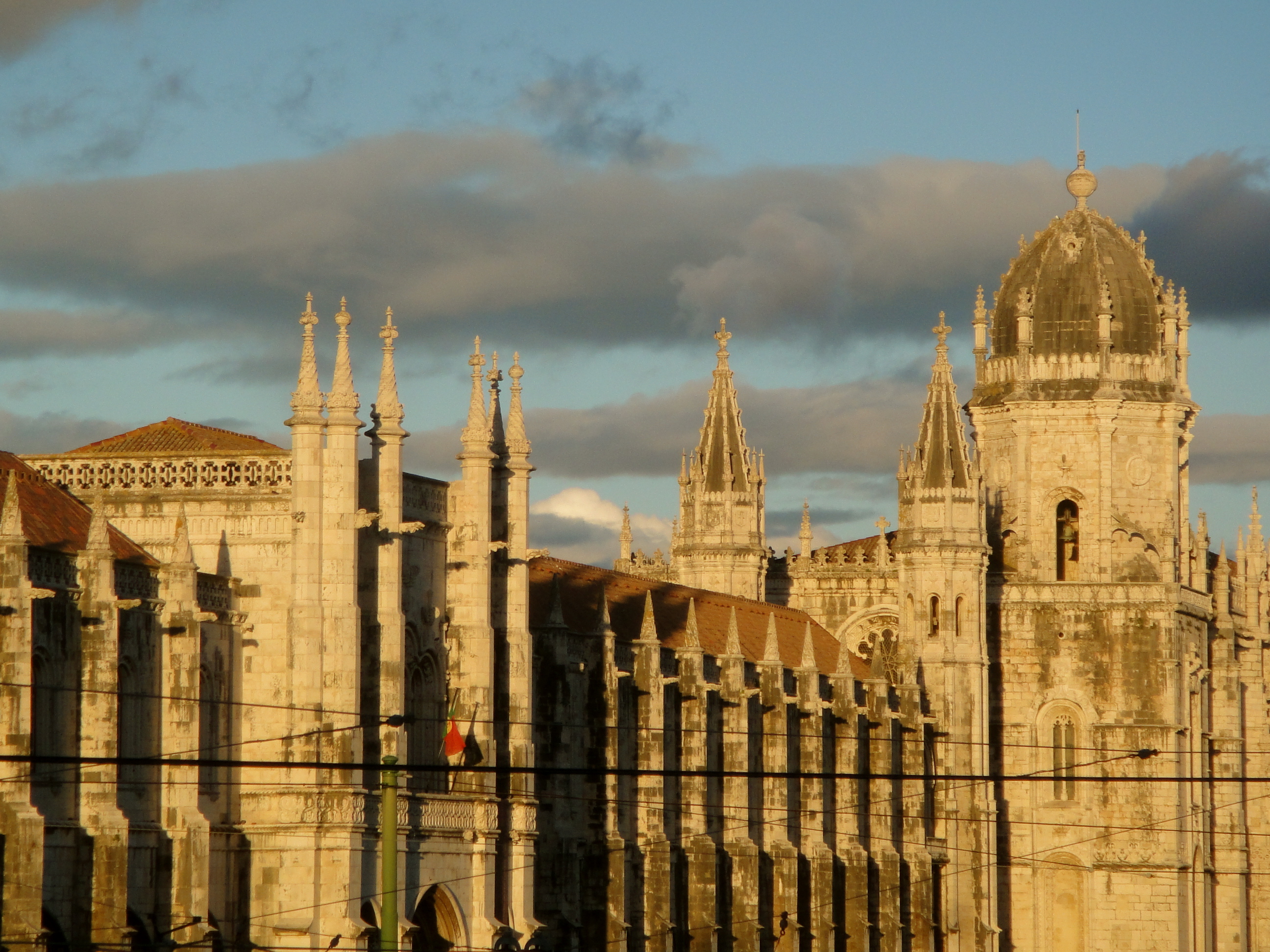
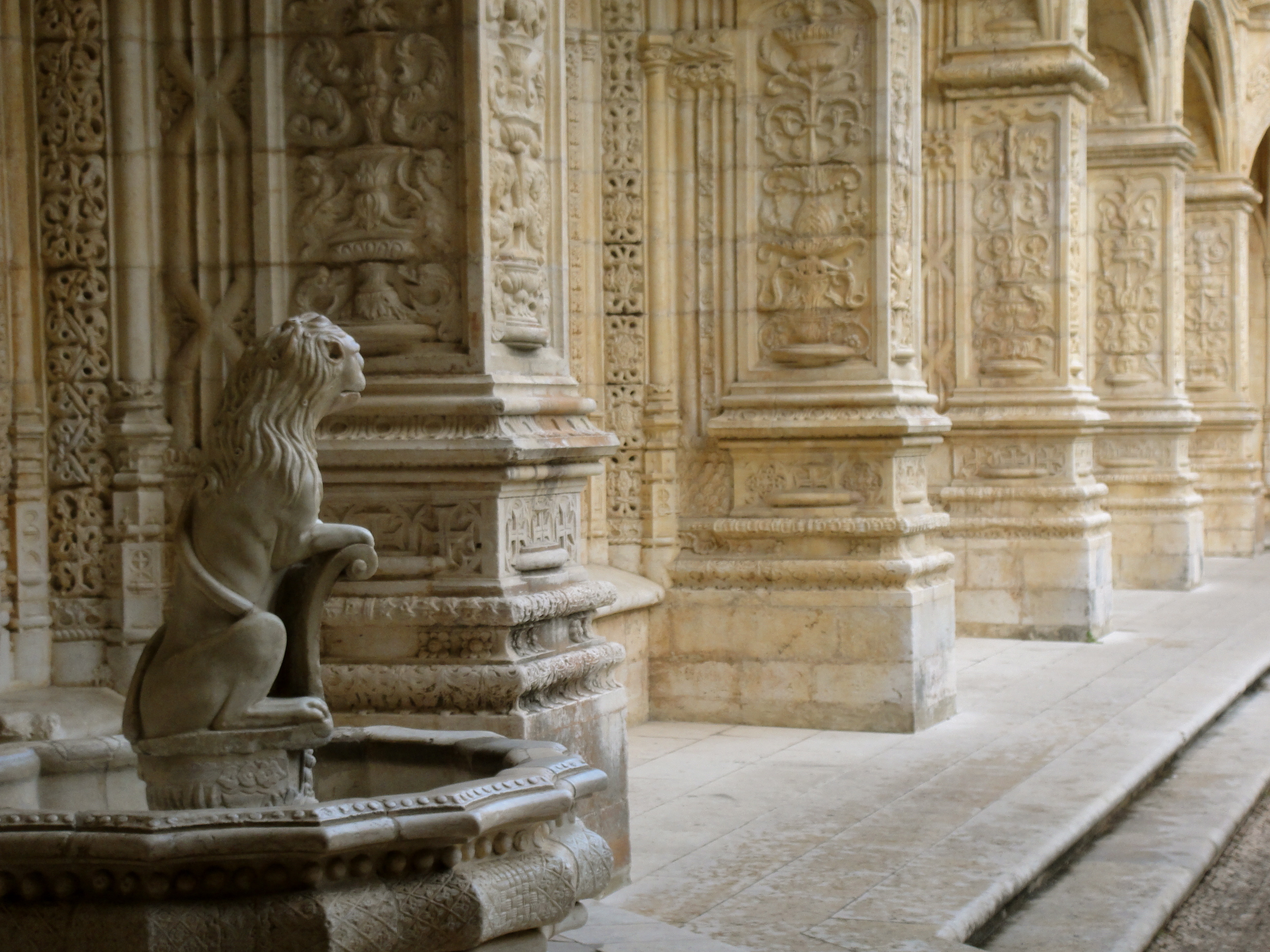
Belém is like a tourist paradise. There’s so much to see and do, and with light fading fast, we did not repose unduly. For the soaring towers and the elaborately crafted Mosterio dos Jerónimos awaited, a vast monastery complex which also benefited from the riches brought back to Portugal during the Age of Discovery, and rather appropriately hosting the burial place of one of the greatest discoverers of them all, Vasco de Gama. The Nave and the Portal of the large adjoining church were undoubtedly stunning, but my favourite area was the sun-soaked tranquility of the stone-wrought cloisters, engraved with a multitude of carved creatures and plants, geometric patterns and soaring gothic arches. Also there was the cute little lion-shaped fountain (dried up, like many of Lisbon’s water features), heraldic animal of St Jerome.

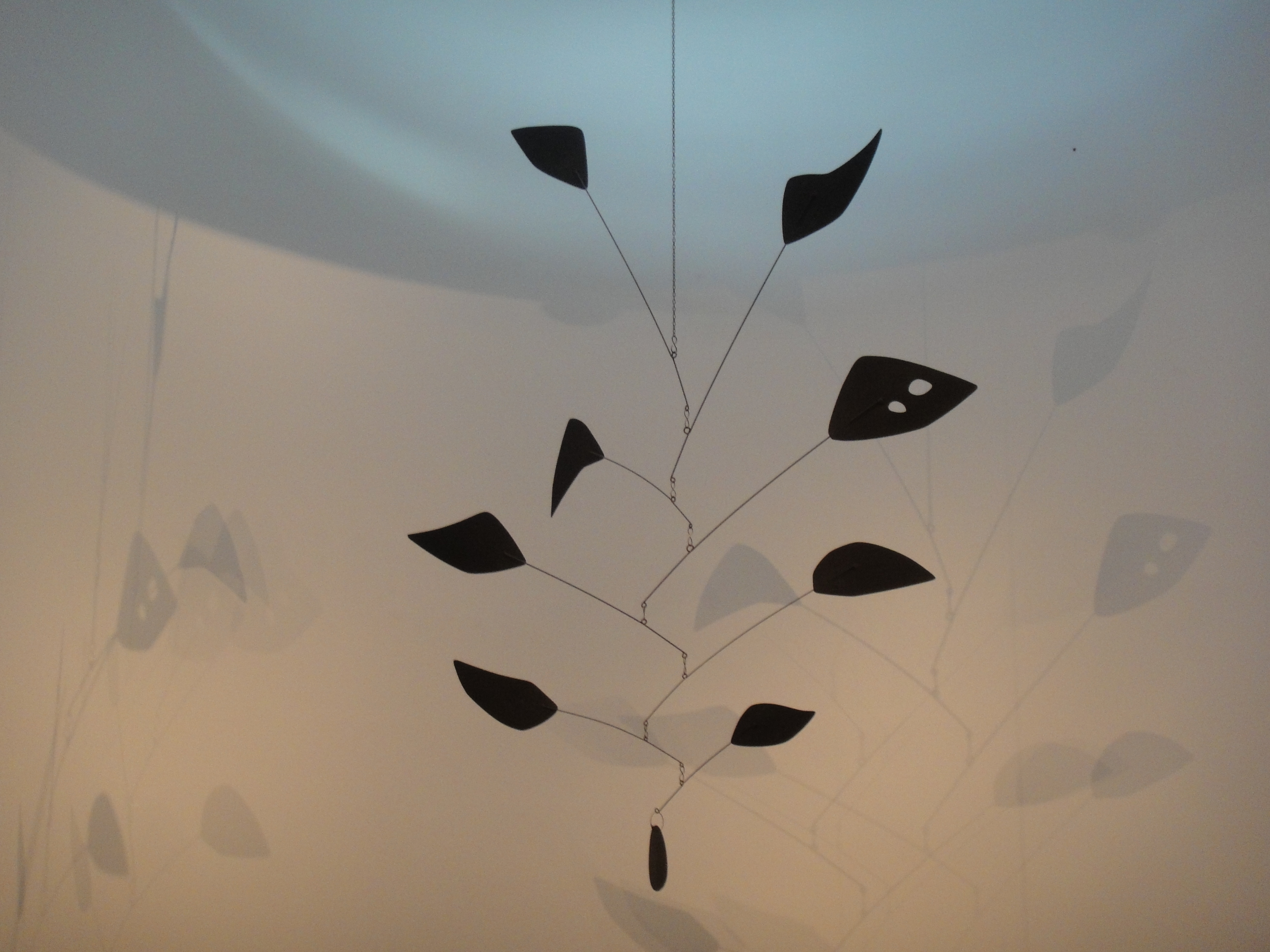
Almost ready to drop, but with one place more to go. The Museu Colecção Berardo Arte Moderna e Contemporânea is another cruicial stop on Lisbon’s art trail, an impressive collection of art from the business mogul and collector José Manuel Rodrigues Berardo which boasts some 1000 works and provides a rich compendium of a century of modern and contemporary art including Picasso, Dali, Warhol, Francis Bacon, Henry Moore, Jeff Koons and, to my great pleasure, a huge swinging mobile by Calder. The gallery could easily compete with the almost unconquerable Tate Modern, not least because in guiding visitors through a chronologically curated ordering of modern art, it presented all visitors with a visually interactive education of the multifaceted changes which rocked the world of contemporary aesthetics.

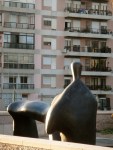
Henry Moore

The Museum of Modern Art

Calder Mobile

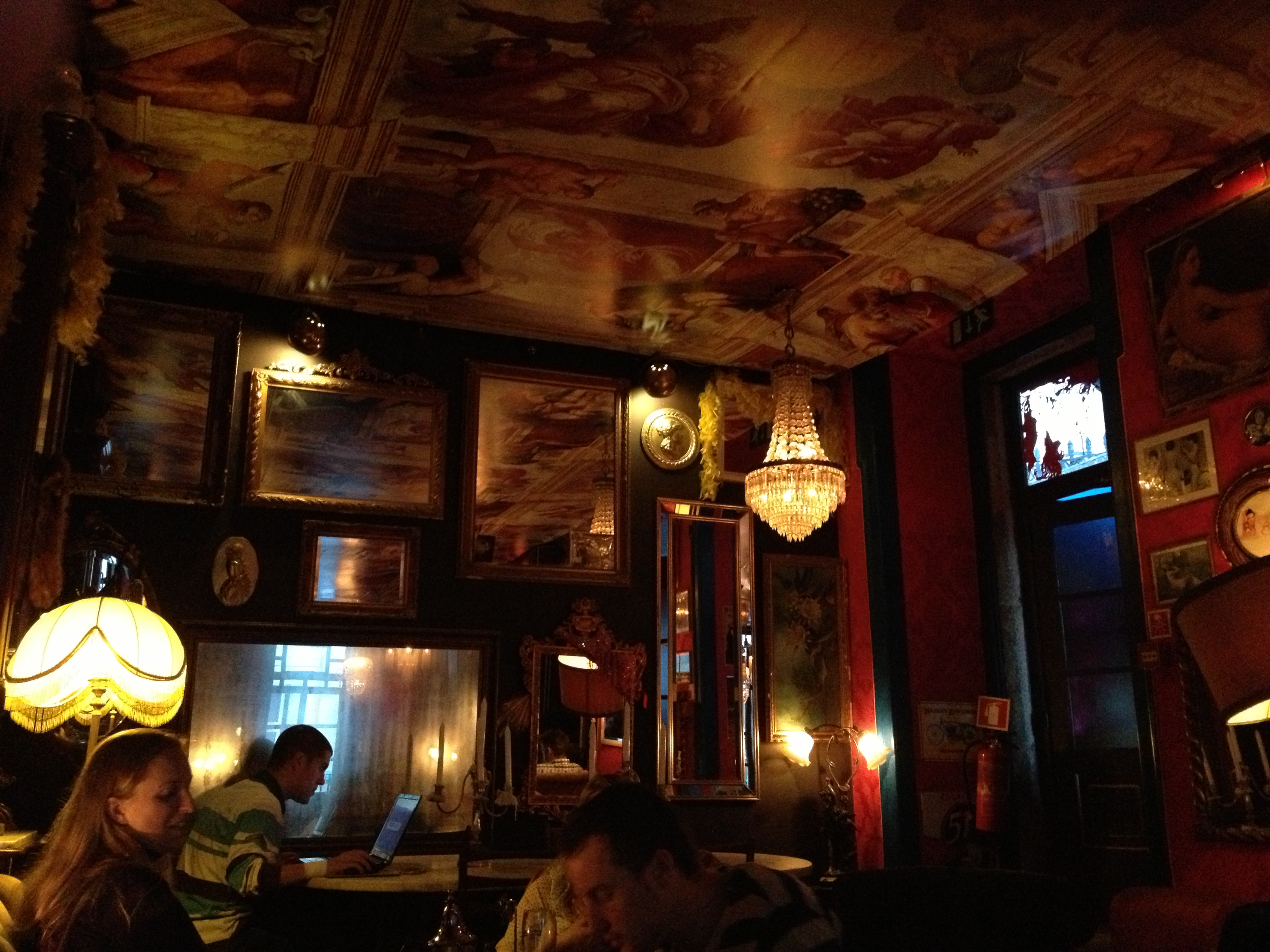
Quite exhausted, we were in no mood for the tram. Leaving a sunset-softened Monument of Discoveries behind us, we rushed off along the riverfront in a taxi which cost us only 20 centimos more than the tram, and refreshed by the comparative convenience of the journey were much buoyed to find opposite our hotel a bar of utterly indulgent romantic boudoir-resembling beauty. Draped with lavish scarlet damask wallpaper, and crammed full with gilt-framed mirrors, chandeliers and art nouveau lighting of every size and variety, statuettes, an amplitude of armchairs, flickering candles and all species of paraphernalia straight out of the Versailles court,  this bar (appropriate called the Pensão Amorlooked more like a Moulin Rouge brothel, but was so excessively indulgent that as I sat there drinking tea, and then (inevitably) port, I began to redesign my entire hallway in my head to emulate it.

The lavish darkness of the Love Pensão

Can things get any better than this? Well they did at dinner – a feast fit for the Prince of Belém himself, in the restaurant of celebrity chef Henrique Sa Pessoa – AlmaBut let me lavish praise no further – that exquisite dinner needs a post all of its own. Until then… Let Lisbon sleep, and our feet recover in time for Day 4 of our own age of discoveries.

Photographs and content © Nicholas de Lacy-Brown and The Daily Norm, 2001-2012. Unauthorized use and/or duplication of the material, whether written work, photography or artwork, included within The Daily Norm without express and written permission from The Daily Norm’s author and/or owner is strictly prohibited. Excerpts and links may be used, provided that full and clear credit is given to Nicholas de Lacy-Brown and The Daily Norm with appropriate and specific direction to the original content.