

Lisbon – Day One: Decadence and Decay
The time had come to escape the freezing London cold; the dark afternoons and the desolate faces; the post-winter desperation of the human races; coughing and sneezing spread between packed commuters on the tube; time to head south for the sun, for warmth, for good food. Swapping London for that other great European ‘L’, we abandoned the swift descent into winter and gathering approach to Christmas. We have come to the land of rich tawny-deep port wine, the ceramic cockerel and the vibrant yellow tram; where life is a little slower and architecture decadent and tired. We’ve come to Lisbon, the rolling, rambling hilly maze of streets which adjoins the grand Tagus river and sits at the heart and soul of Portugal as its capital.
As a regular to the Spanish side of the Iberian peninsular, there is something familiar about Portugal, which I now visit for the first time, but also something tangibly different. Wafts of garlic, of almonds and the thick smoke of strong cigarettes fills the air as it does in neighbouring Spain. However here there is something altogether more hardened, more real; you look into the faces of the Portuguese and you can read a thousand tales, of toil and struggle, of monotony and difficulty; you feast upon the pungent flavours of the food, noting the strong, crudity of the elements, the untempered brilliance of the colours, and the sharp contrasts of the flavours. In Lisbon, the Portuguese do not so much fiesta by night – rather, walking the streets of Lisbon at night, as we did shortly upon our arrival, we felt there was something close to menace in the air – something unsettling and almost unforgiving or discordant echoing off the cracked decaying buildings and shady streets.
Lisbon’s streets are littered with photographic inspiration…


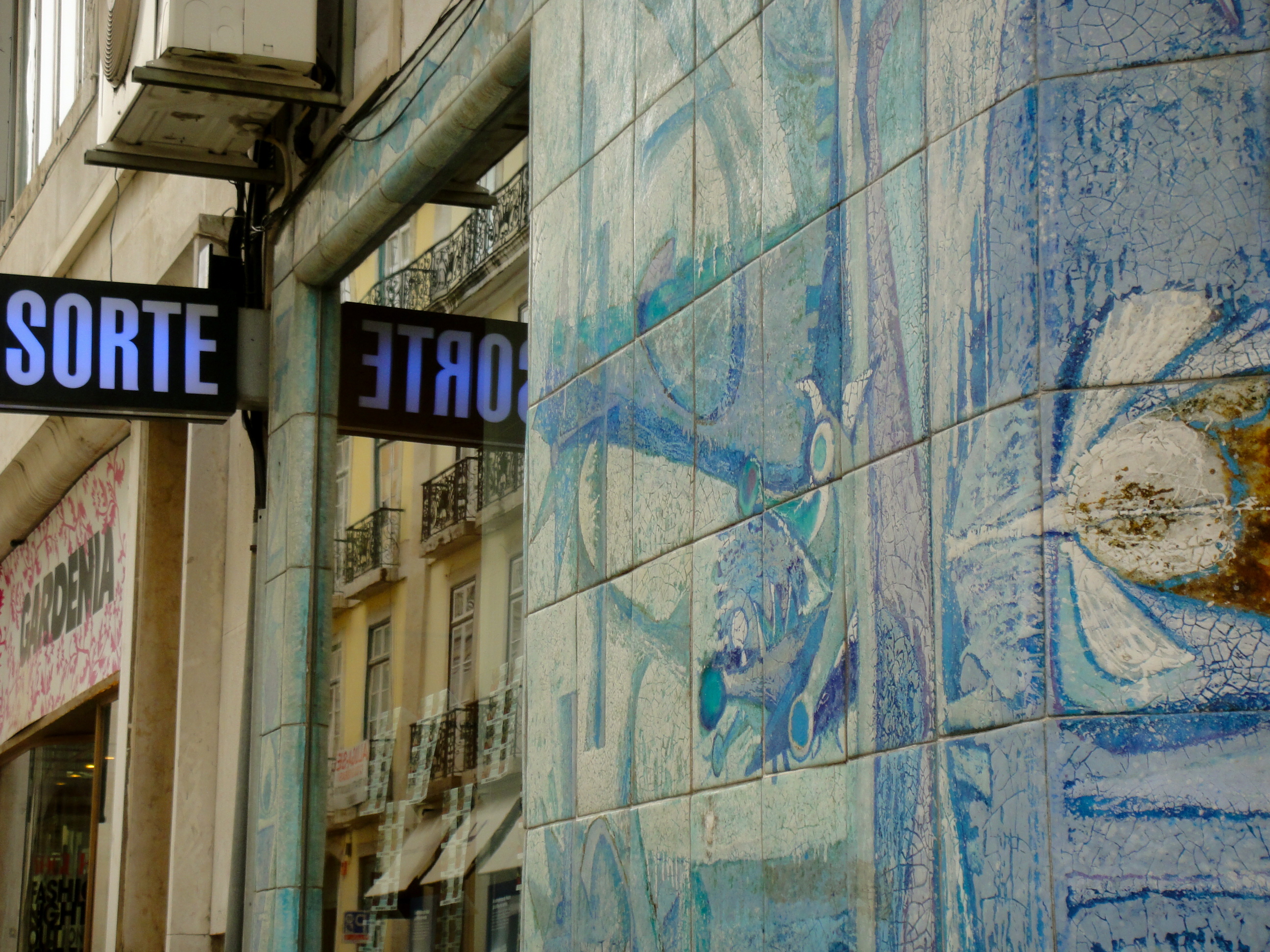
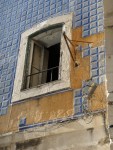
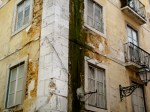
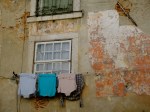
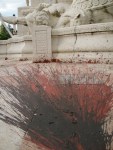
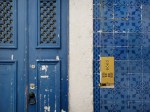
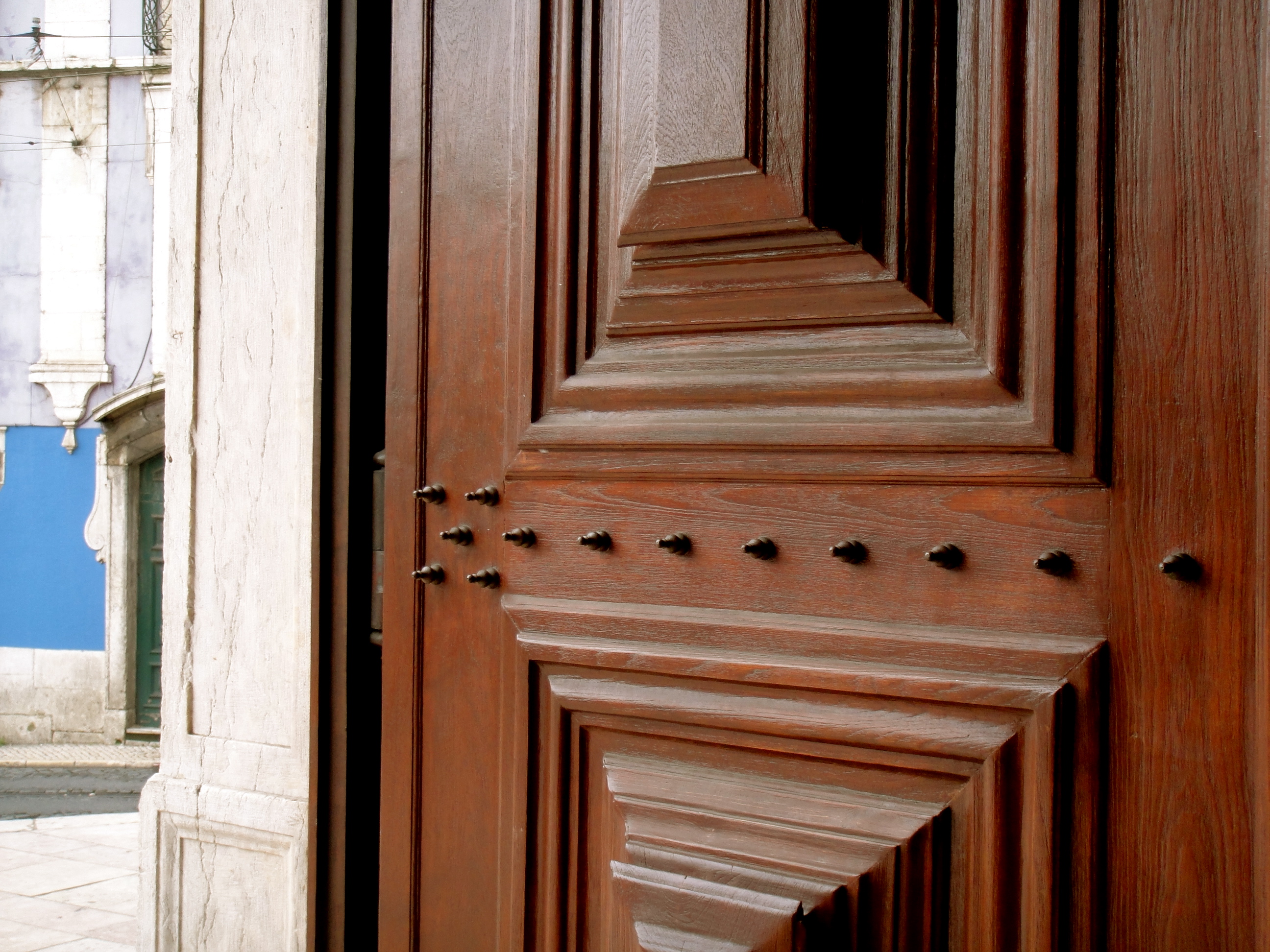
I could not help but notice on our arrival a resilient attitude and a robust confidence, as though the country, which stands on the edge of Europe has hardened itself to the battering forces of the Atlantic ocean spread all along its Western coast. Portugal’s struggles are not just geographical however. The well-known financial woes of the country are tangible all around its capital. We were immediately struck by the huge number of empty properties right in the centre of town. Huge decadent palaces, abandoned to disrepair; once gloriously colourful tiles chipped at the corners or missing great sequences; elegant iron balconies left to rust, and plaster, paint and concrete cracking and falling apart; many of the buildings are covered with graffiti, and some have been left to the elements to such an extent that grasses and moses have started growing over the walls and in between great cracks growing deeper every day.
This is the Lisbon of today, a city of fading grandeur, whose geographical location and undulating topography provides a breathtaking backdrop to a European city which was once, clearly, a city of exceptional elegance and architectural glamour, but which in time has been left to slowly deteriorate and wither, a once pert fresh rose left to stagnate in the brown waters of a once crystal clear vase. But for all this, Lisbon has lost very little of its beauty. In its fading glory, it is a withering beauty, a tired duchess whose wrinkles grow deeper everyday, but whose innate elegance is lost on no one. The bigger the cracks, the more excited I became – for my camera, this decay is like a gold mine of sparkling inspiration, and Lisbon lets set to provide plenty of that.
Lisbon’s glamour is not all faded…


But for all the sadness, the financial misfortunes and the architectural deterioration, Lisbon is a city with a strong undercurrent of creativity and panache. We found this immediately in the guise of our hotel – the Lx Boutique Hotel, which exudes boutique sophistication from each of its photograph-covered, wallpaper lined walls. Our bedroom, with views over the Tagus, oozes Parisian chic, with oversized frames, velvet armchairs and wall stickers emulating contemporary baroque. Meanwhile our bathroom is a glass prism, stood, self-contained to one side of the room, complete with handy blinds set within the glass for the purposes of a little privacy. Meanwhile, conveniently located adjacent to the hotel is the Restaurante Confraria Lx where we headed for sushi and where, feasting upon a plate of some 34 sushi pieces, we ate sashimi so fresh that the fish almost melted away on our tongues and evaporated like a cloud.
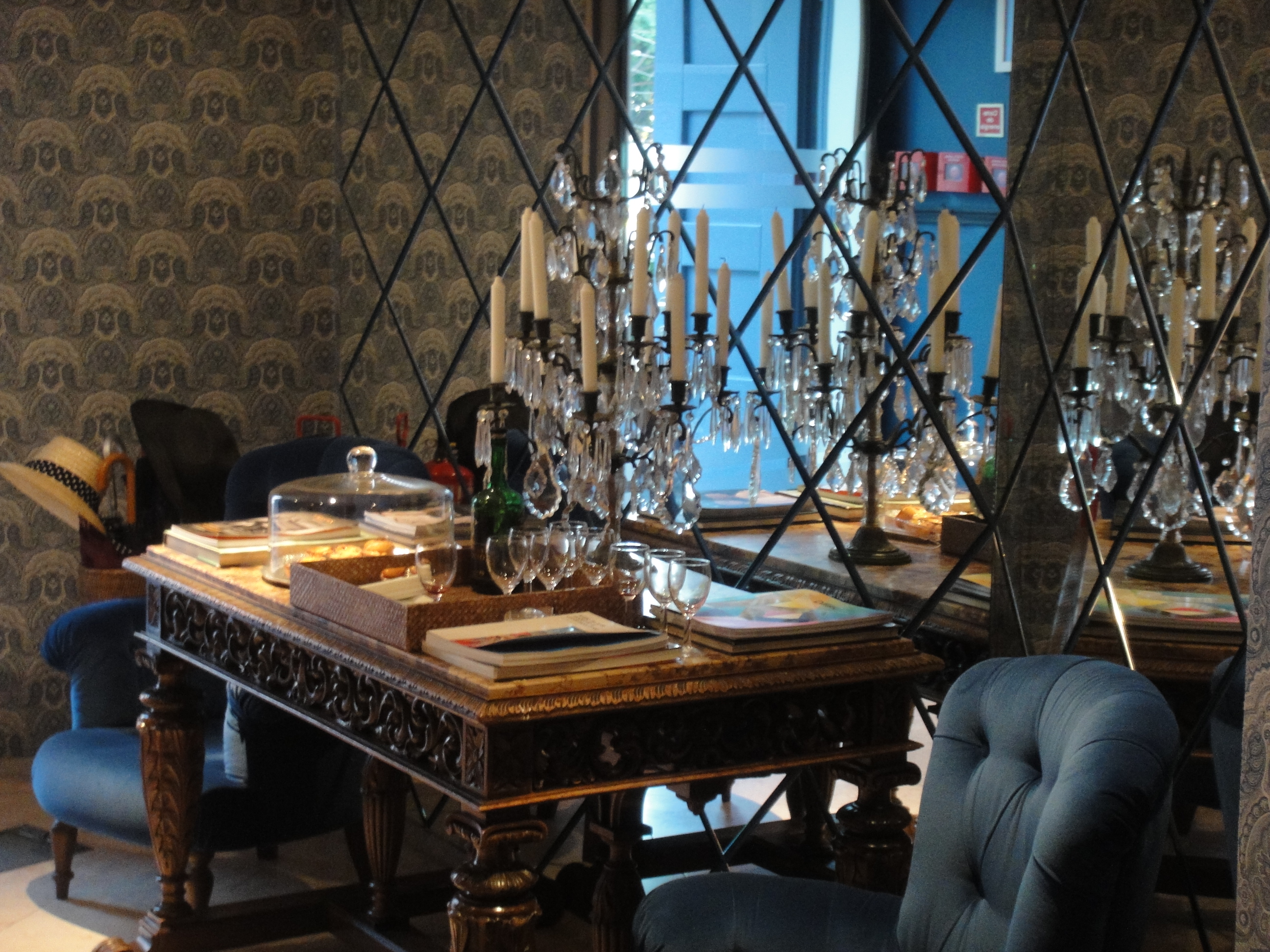
The Lx Boutique Hotel
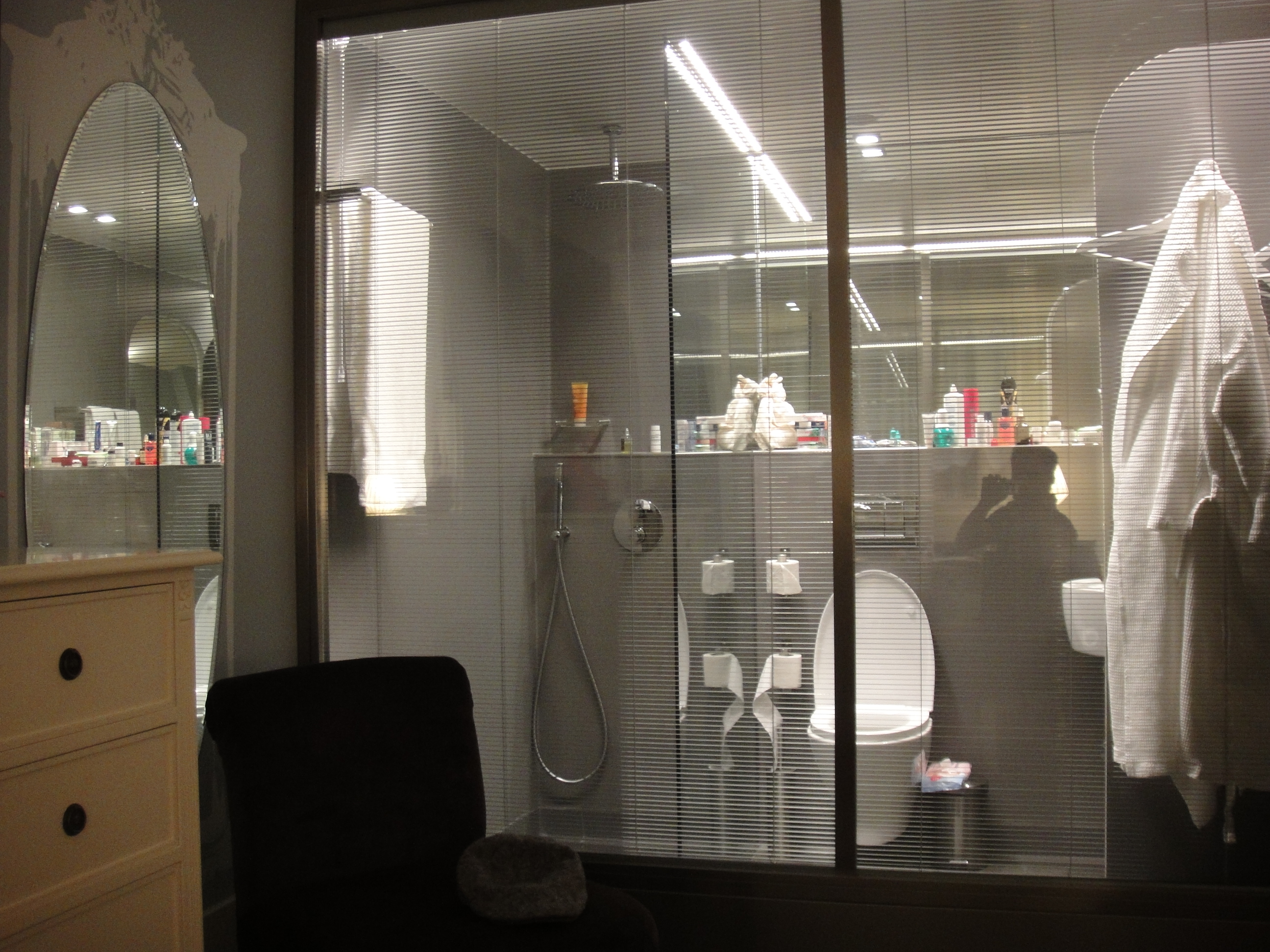
Our bathroom cube

The hotel’s reception
Day One in Lisbon is over, but already we have discovered the best of two worlds – decadence combined with contemporary style. Looks like Lisbon has vintage chic done to a tee.
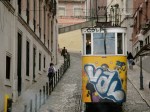
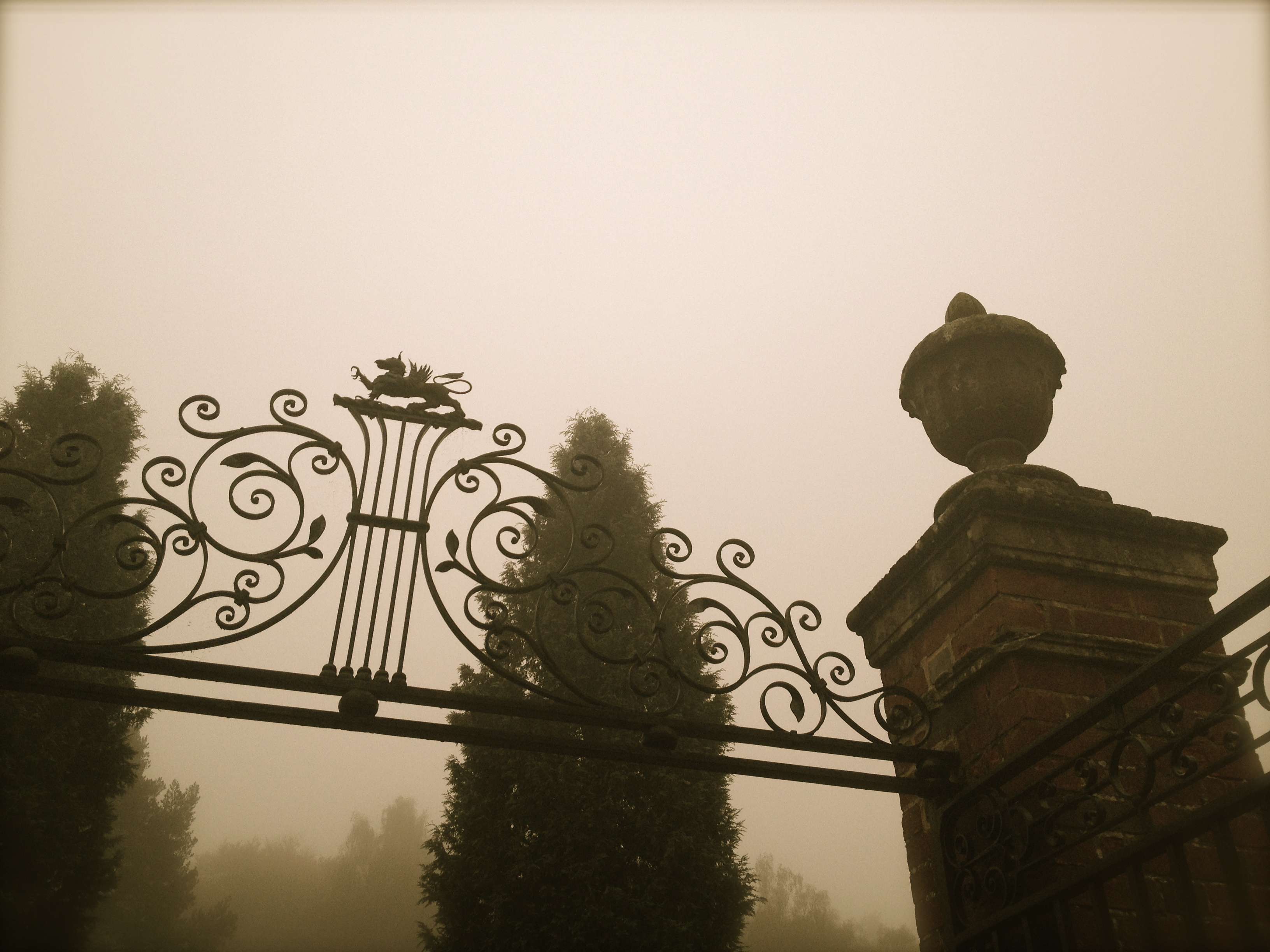
More tomorrow! But in the meantime, here are my photos of the deterioration visible on many of Lisbon’s streets, from graffitied walls and filled in windows of empty houses, to marble monuments left to turn a slimy shade of green – yet through it all there is beauty and character – the great contradiction of decadence and decay.








Photographs and content © Nicholas de Lacy-Brown and The Daily Norm, 2001-2012. Unauthorized use and/or duplication of the material, whether written work, photography or artwork, included within The Daily Norm without express and written permission from The Daily Norm’s author and/or owner is strictly prohibited. Excerpts and links may be used, provided that full and clear credit is given to Nicholas de Lacy-Brown and The Daily Norm with appropriate and specific direction to the original content.





































































 The Daily Norm
Nov 16
Lisbon – Day Two: The Ages of the Sea
The super-soft bedding of the Lx Boutique Hotel made getting up difficult, even though one 90 degree tilt upwards would reveal a picture-postcard view across the city of Lisbon, over the Tagus towards the San-Francisco inspired scarlet-red suspension bridge, the Ponte 25 de Abril and the Rio inspired giant statute of Jesus puncturing the landscape beyond. Having made the leap of faith and breathed in the yellow-hued light of this bright new city, energy levels were replenished by a nourishing breakfast, back in the Japanese restaurant of the night before (which happens to double up as the hotel’s breakfast room) but (perhaps mercifully?) was not Japanese-themed for the morning shift. Rather a few pastries (but a decided lack of the Portuguese speciality pastel de nata) later and we were on our feet, making the climb up the steeply undulating streets of the Bairro Alto (high quarter), the cobbled and bustling shopping district atop one of Lisbon’s two central hills.
Cristo-Rei, seen from our room
And once the mist has cleared
The Lisbon of the morning is a different place to the Lisbon of night. By day, the city gains a vibrancy all of its own, as rickety old pre-war yellow and red trams rumble along the endless grid of tram lines crisscrossing the cobbled streets, making that characteristic metallic screech at every bend and corner, locals hang out at little cafe kiosks catching up on the often miserable news, shop keepers linger out on the pavement trying to drum up trade (which, they tell us, is limited) and workers and visitors alike bustle about with energy, but not stress.
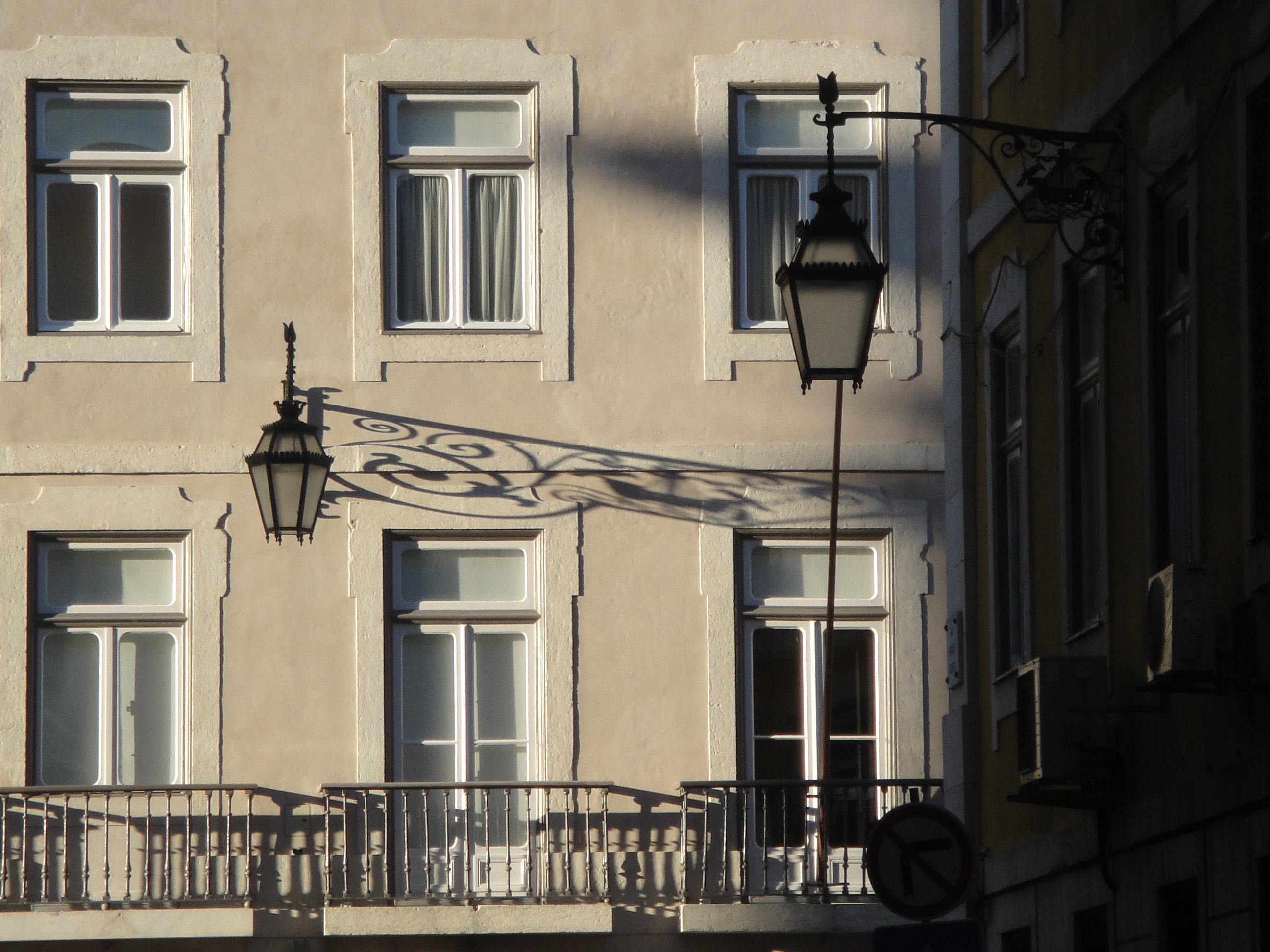
We joined that popular bustle, heading around the Bairro and taking in the very juxtaposed landscape, from the bright red walls of the Teatro da Trindade and the intricately pained tiled facades of many a house and shopfront, to the decadent art deco exterior of the Tavares restaurant and the eery skeletal arches of the Igreja do Carmo, once a Carmelite church and one of the largest in Lisbon, but now, as a half collapsed shell, a poignant reminder of the earthquake which destroyed so much of the city in 1755. Delicate details were all around these streets for the drinking – I loved the statue of Eça de Quieros by Teixeira Lopes, showing a novelist inspired by a scantily veiled muse, and the street lamps whose ironwork features the ship which is today the emblem of Lisbon, a boat which, so legend dictates, carried the remains of the martyred St Vincent safely to Lisbon protected by ravens.
Pastel de nata
While the Bairro Alto could no doubt have amused us all day, our central aim was dedicated to art. North of the city, close to the sprawling Parque Eduardo VII is the Museu Calouste Gulbenkian, which houses the vast art collection of Armenian oil magnate, Calouste Gulbenkian and which was bequeathed to the city by the multi-millionaire in the 1960s. The museum comprises a surprisingly rich collection, boasting Picasso, Manet, Turner, Gainsborough and Constable amongst its prized exhibited artists, and including a truly beautiful collection of Lalique glassware by the art nouveau genius René Lalique. This hat pin (below) depicting a dragon fly morphed into the elegant female figure of the belle époque was just stunning. Meanwhile, for the more modern works including Robert Delaunay and José de Almada Negreiros, you only have to head across a very tranquil park to explore this extension of the same collection, all housed within a super-cool iconically 60s designed gallery which also provides visitors with a welcome retro little cafe and those famous pastel de nata which must feature on every self-respecting Portuguese menu.
Lalique’s jewellery
But for a museum which just keeps on giving, the real highlight from the Gulbenkian foundation, for me, was the temporary exhibition, The Ages of the Sea, which runs from 26 October 2012-27 January 2013. Containing some 109 paintings brought together from across the world, the show, which is supported by the Musée d’Orsay in Paris, is based on an historical survey of the visual representation of the Sea and seeks to identify the major themes which led to its extensive and recurrent depiction in Western Painting. Across themes split into six sections – myths, power, labour, shipwrecks, the ephemeral and the quest for infinity, the collection was not short of big names, including Van Goyen, Lorrain, Turner, Constable, Friedrich, Courbet, Boudin, Manet, Monet, Signac, Fattori, Sorolla, Klee, De Chirico, Hopper. The result was an exhibition which literally exuded the salty-sweet freshness of the sea, the bright feeling of freedom when one stands on the edge of a vast sunny coastline, the feeling of trepidation when met with an ocean stirred up by the forces of weather, wind and rain, and the feeling of awe when the land ends and only a vast watery mass spreads from the beach to the very edges of the horizon. Walking around the exhibit was like looking through a hundred windows on the coast from all over the world. It was like taking a hundred holidays all at once, a hundred walks along a beachside promenade, a hundred embraces of the ocean’s advances.
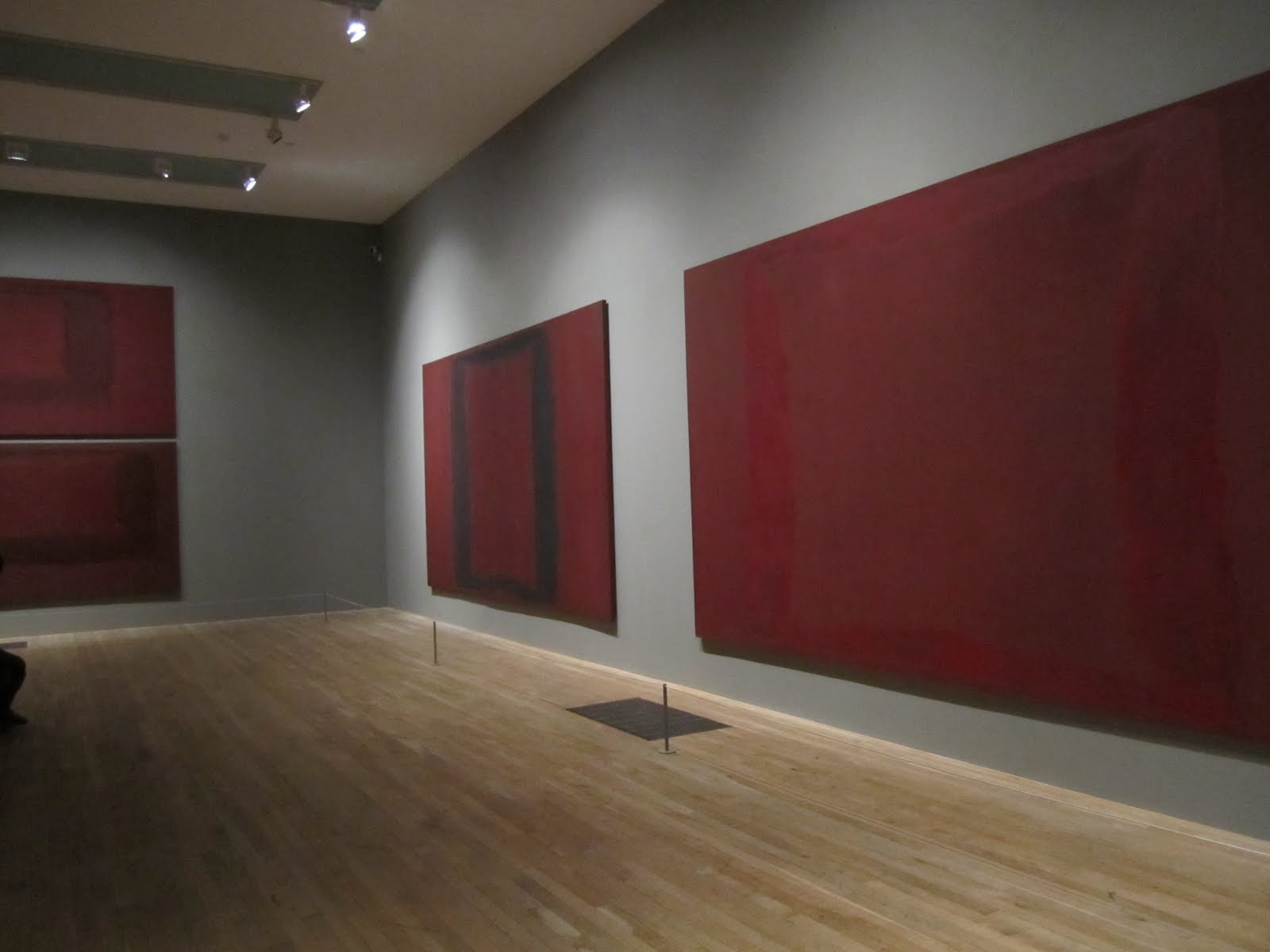
Of the many masterpieces on show, it was the fresher, more modern works which caught my eye. In particular I adored Luís Noronha da Costa’s From Subnaturalism to Supernaturalism, which in close up was such a simple work – one layer of semi-transparent paint over another – but stepping away revealed a peaceful seascape at sunset; I loved too Amadeo de Souza-Cardoso’s The Sloop, an unusual take on a ship wreck in a stormy sea; and I was captivated by the unusual coastal scene painted by Edward Hopper, better known for being the painter of introspective loners in cafes.
Luís Noronha da Costa, From Subnaturalism to Supernaturalism (Cold Painting), 1988
Amadeo de Souza-Cardoso, The Sloop, 1914
Edward Hopper, Square Rock, 1914
But perhaps the greatest picture of them all was the real landscape of Lisbon with which we ended our day. Heading back down to the centre, through the impressive expanse of the Praça dos Restauradores (albeit littered as it is with drug sellers who approached us 8 times) and up the steep slope of the Calçada da Gloria (up which a popular tourist tram climbs slowly at fairly regular intervals) we were greeted with the greatest of all rewards for our exhausting trek up hill – in the Miradouro de Sao Pedro de Alcantara, we found a little fountained square which presented such a stunning vista across the Baixa and over to the Castelo de Sao Jorge that it was worth a thousand paintings.
So what way to end this day packed full of such new discovery that we felt like Vasco da Gama himself? Why, two glasses of that other Portuguese speciality of course – Port – which we enjoyed in the elegant surroundings of the Solar do Vinho do Porto, a Port bar with some 200 ports on the menu, set within a grand 18th century mansion. We went for the tried and tested method of selecting port by the names which most prominently jumped out at us – and it worked a treat. Our first choice, a 10 year old tawny port was delicate on the palate and golden in colour, while a vintage ruby to follow was dark, deep and rich. No wonder then that one port led to another, and then a deliciously decadent dinner followed in the Restaurante Olivier just down the road, with a 10-course tasting menu as a starter and another bottle of the good stuff. I could get used to this.
Photographs and wording © Nicholas de Lacy-Brown and The Daily Norm, 2001-2012. Unauthorized use and/or duplication of the material, whether written work, photography or artwork, included within The Daily Norm without express and written permission from The Daily Norm’s author and/or owner is strictly prohibited. Excerpts and links may be used, provided that full and clear credit is given to Nicholas de Lacy-Brown and The Daily Norm with appropriate and specific direction to the original content.
Related articles