Skip to content

Posts from the ‘Review’ Category

Sorolla: The Colour of the Sea

When I made my life-changing move from London to Mallorca earlier this month, I moved to a place equally as enriched by culture as the city from which I came. In fact comparing the size of Palma de Mallorca to London, you could quite easily declare Palma to be disproportionately abundant in art. Everywhere you walk in amongst the maze of streets in the old town, a flashy new contemporary art gallery or dusty quaint antique shop emerges, and of course the city lays host to Es Baluard, one of Spain’s most significant contemporary art spaces. However Palma is also home to one of the La Caixa Foundation’s finest art galleries, set within the stunning art nouveau setting of the old Gran Hotel building, and its exhibition diary is easily as significant and varied as that of a much larger city. And La Caixa’s current exhibition, Sorolla: The Colour of the Sea is no exception.
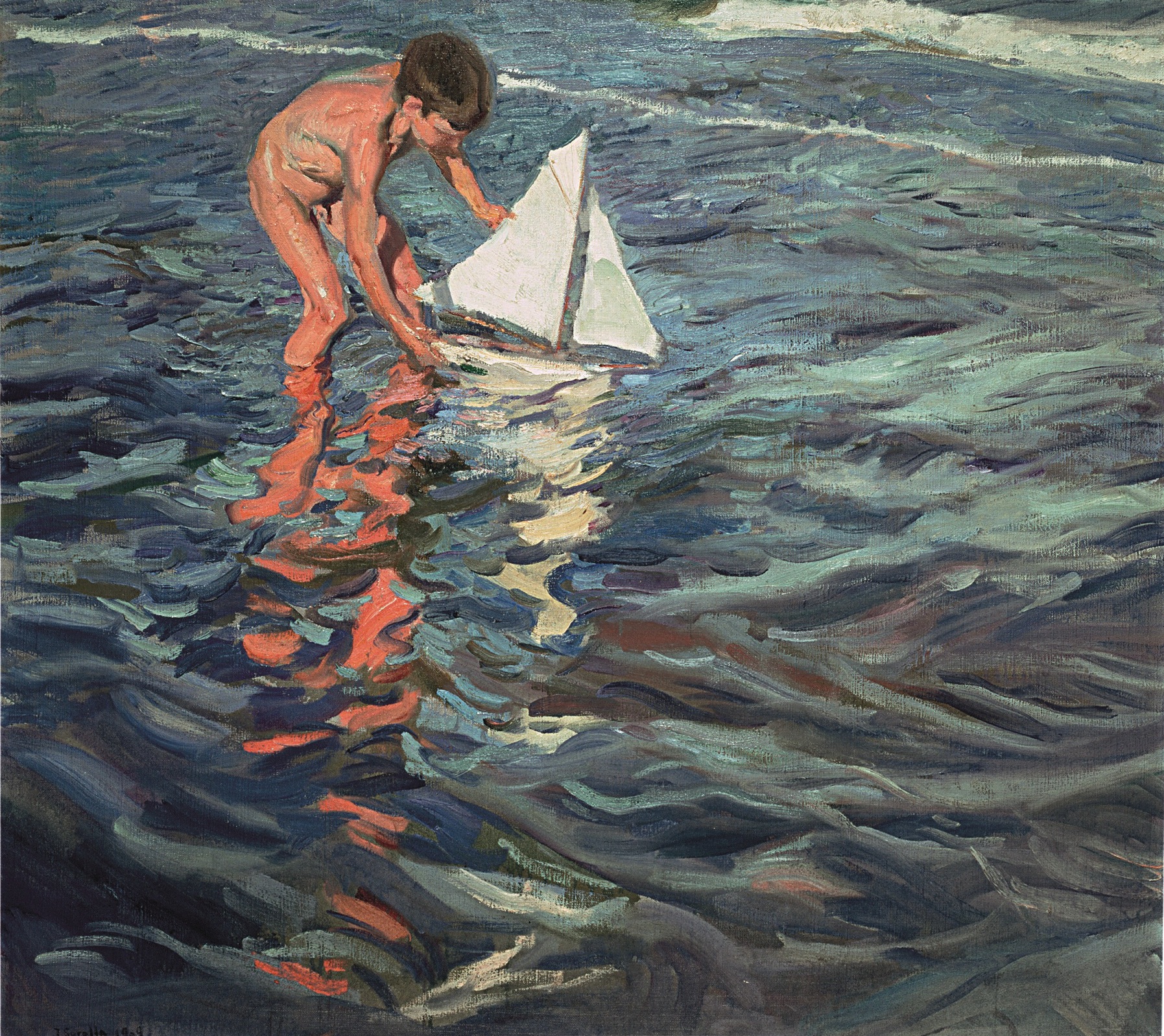
Joaquín Sorolla. El balandrito, 1909. © Fundación Museo Sorolla

Joaquín Sorolla. El balandrito, 1909. © Fundación Museo Sorolla

Exploring the oeuvre of Spanish master, Joaquin Sorolla, the exhibition focuses on what the artist, famous for the luminosity of his light and the proficiency of his landscape, painted best: the sea. Sorolla was born in Valencia in 1863 and as such was painting at a time when impressionism was at its height. Often compared to his friend, artist John Singer Sargent, Sorolla painted both people and landscapes with great sensitivity, and captured a startling degree of light. In painting the sea, Sorolla managed to capture a luminosity which I have always found so difficult when working on coastal images myself. Take his 1904 Estudio del Mar for example: This simple painting of waves breaking upon the shore is alive with the current of water, and magnificently captures the many colours hidden within the ordinary blues of the water. Similarly, his 1905 painting simply entitled Mar depicts shallower waters magnificently, with the light glinting over the surface and the dark purples suggesting rocks lurking just beneath.

Joaquín Sorolla. Estudio de mar, Valencia. 1904. © Fundación Museo Sorolla

Joaquín Sorolla. Estudio de mar, Valencia. 1904. © Fundación Museo Sorolla

Joaquín Sorolla. Mar (Jávea). 1905. © Fundación Museo Sorolla

Joaquín Sorolla. Mar (Jávea). 1905. © Fundación Museo Sorolla

No wonder this exhibition is called “the colour of the sea”, and no better example exists of just how rich those colours can be than Sorolla’s depictions of Mallorca itself, such as his painting of the Cove at San Vincente. If you hadn’t been to Mallorca, you might assume that these superb aqua marines and subtle mauves of the surrounding mountainous landscapes were made up, but I can assure you that they are very much representative of reality. Even my lucky November dip in the sea last weekend proved that much.

Joaquín Sorolla. Cala de San Vicente, Mallorca. 1919. © Fundación Museo Sorolla
Joaquín Sorolla. Cala de San Vicente, Mallorca. 1919. © Fundación Museo Sorolla

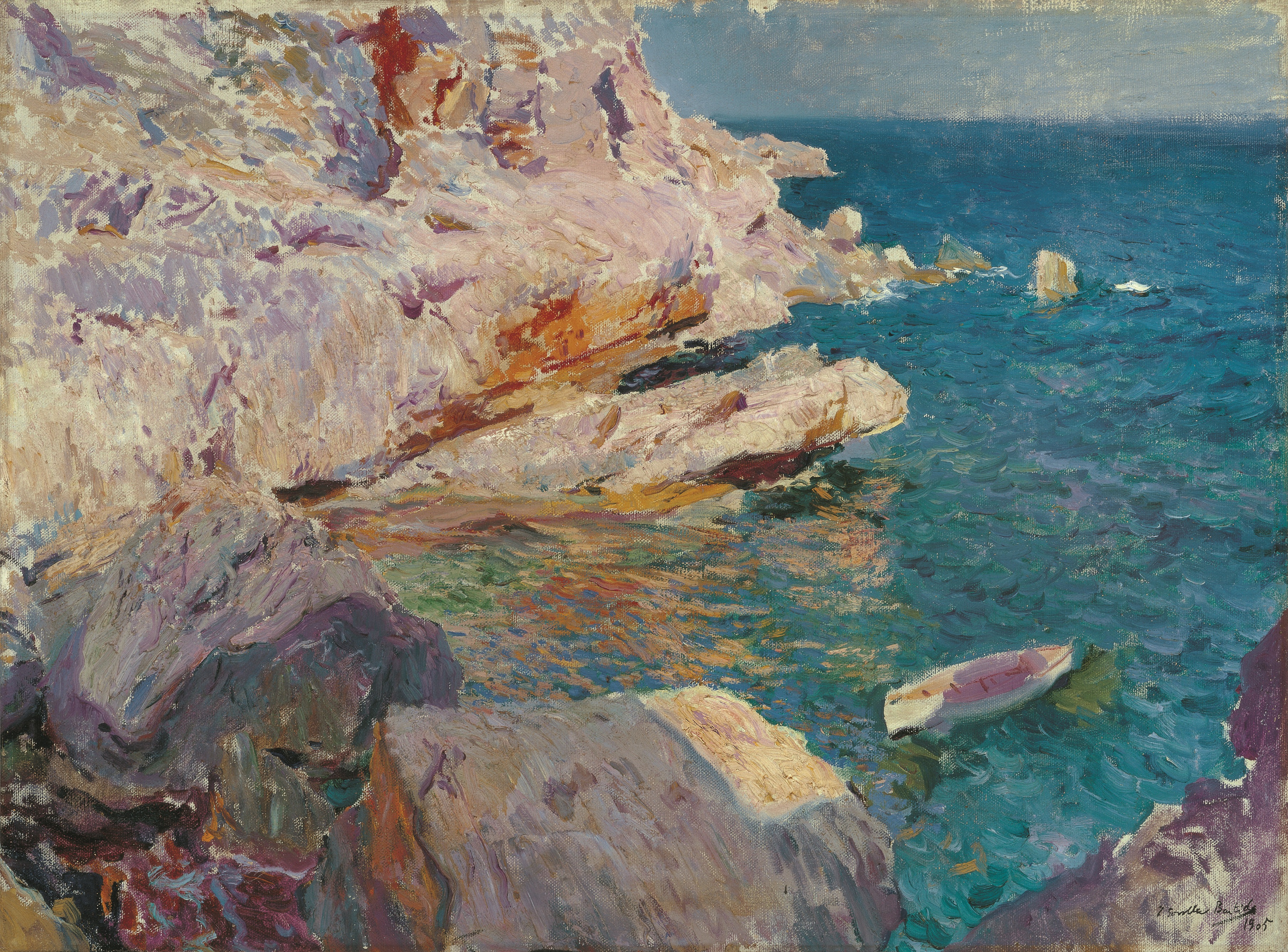
Joaquín Sorolla. Rocas de Jávea y el bote blanco, 1905.  © Colección Carmen Thyssen-Bornemisza en préstamo gratuito al Museo Carmen Thyssen Málaga

Joaquín Sorolla. Rocas de Jávea y el bote blanco, 1905. © Colección Carmen Thyssen-Bornemisza en préstamo gratuito al Museo Carmen Thyssen Málaga

Joaquín Sorolla. Mar de Zarauz. 1910. © Fundación Museo Sorolla

Joaquín Sorolla. Mar de Zarauz. 1910. © Fundación Museo Sorolla

Awash with mediterranean light, Sorolla’s seascapes are alive with the fresh coastal air and tranquil dance of the waves. Seen as a group, you could almost be excused for feeling as though you were on the beach, watching Sorolla painting (he invariably took his canvases down to the beach, hence why they are probably so imbued with the naturalistic light that one sees in reality). However, it’s not just Sorolla’s landscapes which come alive before your eyes. For as this exhibition shows, Sorolla was also particularly adept at portraying people naturalistically, and this is seen no more so than in works such as Saliendo del baño, where a mother dries her child after a dip in the sea, and Pescadora con su hijo – a brilliantly realistic depiction of a mother masking her eyes from the sinking late afternoon sun.

Joaquín Sorolla. Saliendo del baño. Firmado y fechado. 1915. © Fundación Museo Sorolla

Joaquín Sorolla. Saliendo del baño. Firmado y fechado. 1915. © Fundación Museo Sorolla

Joaquín Sorolla. Pescadora con su hijo, Valencia, 1908 © Fundación Museo Sorolla

Joaquín Sorolla. Pescadora con su hijo, Valencia, 1908 © Fundación Museo Sorolla

Joaquín Sorolla. Nadadores, Jávea. 1905. © Fundación Museo Sorolla

Joaquín Sorolla. Nadadores, Jávea. 1905. © Fundación Museo Sorolla

So even if you come to Mallorca and the weather is not at its best, this superb exhibition has the power to transport you right to a sunny day on the coast. Although let’s face it, with Mallorca’s track record of brilliant sunny record all year around, you should probably be able to do both.

Sorolla: The Colour of the Sea runs at La Caixa Foundation Palma until 8 February 2015.

Intelligent Insight: Grayson Perry – Who Are You?

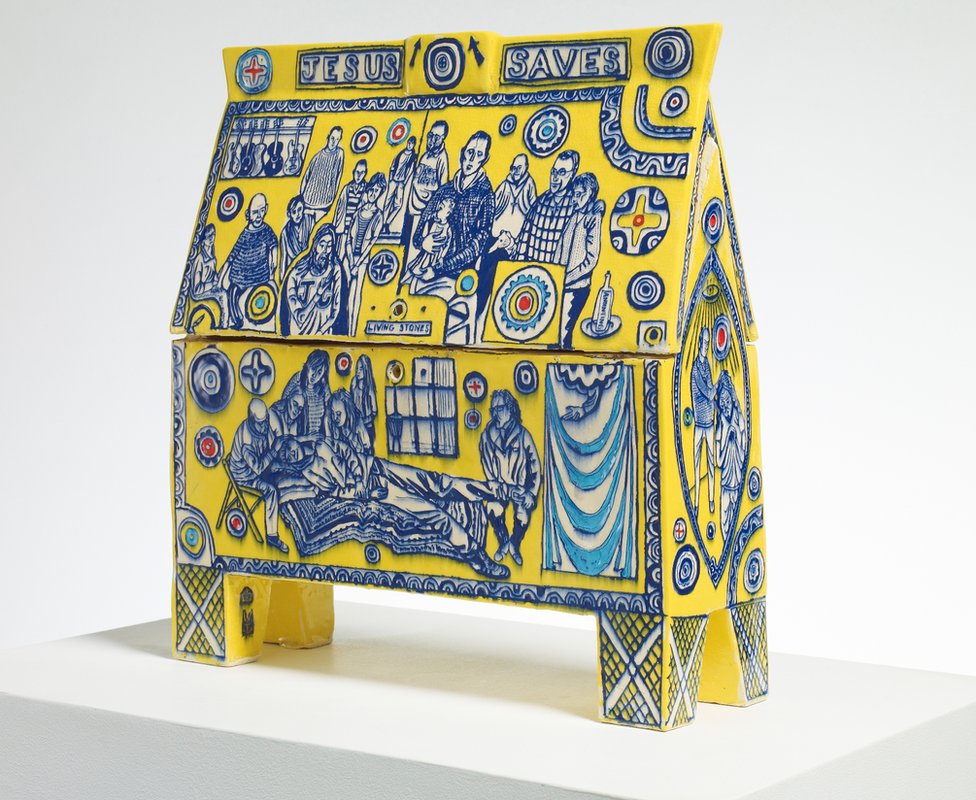
Following on from his superb show, Tomb of the Unknown Craftsmen at the British Museum in 2010 is the latest collection of brilliantly insightful works by artist and craftsman Grayson Perry. This time fitting seamlessly into the collection of the National Portrait gallery, peppered throughout the museum therefore encouraging visitors on a kind of magical mystery your through the space, Perry’s new exhibition, Who are You? once again shows that Grayson Perry is one of the most intelligent artists of our times. Made in conjunction with a series of channel 4 documentaries reflecting on a series of individuals each struggling with some particular facet of their individuality, these “portraits” are very appropriately located within the hallowed halls of the London’s temple of portraiture. Ranging from etching to tapestry, enamel portrait to glazed pottery, they show Perry at his adroit best. But beyond the skilled execution of these works is the messages they so sensitively and intelligently portray. 

Line of Departure (2014 © Grayson Perry)

Line of Departure (2014 © Grayson Perry)

Jesus Army Money Box (2014 © Grayson Perry)

Jesus Army Money Box (2014 © Grayson Perry)

The Earl of Essex (2014 © Grayson Perry)

The Earl of Essex (2014 © Grayson Perry)

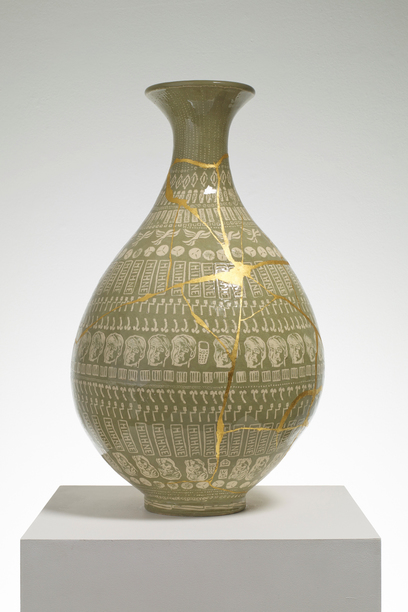
The Huhne Vase (2014 © Grayson Perry)

The Huhne Vase (2014 © Grayson Perry)

In mounting the show, Perry tells how he chose sitters who were each on some kind of identity journey. People who had changed religion or gender, physical or mental facilities, lost status or belonging to a group who are actively trying to change the way others see them. Thus Perry presents a vase representing the fall from grace of politician Chris Huhne, who was imprisoned for perjury after asking his wife to take the blame for a speeding offence he had committed. The vase shows his image and that of his car registration plate repeated over and over like the tire tracks of his car. It was smashed and pieced back together again in gold demonstrating Huhne’s downfall but also the fact that his new fragility in a world dominated by generic status figures will make him a richer more complex individual. There too Perry gives us a miniature enamel portrait hidden away in glass cases with others far older. It portrays XFactor star Rylan Clark as the Earl of Essex because, as Perry says, celebrity is the aristocracy of the day. 

But amongst my favourites was the Ashford Hijab, a brilliantly drafted black, white and red design on a silk scarf (appropriately) illustrating the draw of Islam for young white middle aged women who are sick of consumer culture and sexualised scrutiny of women and seek instead the comparative calm and integral values of Islam. So it shows one woman leading her family towards Mecca, her hijab being the metamorphosis of a road which in turn transforms from the outlet shopping centre of consumer culture from which she flees. Brilliant. 

The Ashford Hijab (2014 © Grayson Perry)

The Ashford Hijab (2014 © Grayson Perry)

Memory Jar (2014 © Grayson Perry)

Memory Jar (2014 © Grayson Perry)

I also loved Memory Jar, the vase sensitively portraying the effects of Alzheimer’s on a couple, as the disease ravages the mind of one man leaving his wife deprived not only of his personality and mental functions, but also destroying their shared memories. As Perry says, two people are the guardians of their shared memories. Once one person goes, so does the poignancy of the memories, and in depicting this he shows a kind of demon cutting up the family photos of the couple also reflected on the vase. It’s a stunning piece. 

And of course mention has to go to Comfort Blanket, a huge banknote tapestry representing everything that is so intrinsic to British culture and which makes the country such a stable, lawful, integral place, drawing people from all over the world. Of course fish and chips looms large, as well as words like “fair play” and “Posh and Becks”. Everything on it was so English I stood in awe at how masterfully Perry had managed to capture the essence of an entire nation in one tapestry. It also felt particularly poignant for me, an Englishman, as I prepare to leave England to move overseas in only a few days time. 

Comfort Blanket (2014 © Grayson Perry)

Comfort Blanket (2014 © Grayson Perry)

Grayson Perry: Who are You? is showing at The National Portrait Gallery until 15 March 2015. Entrance is free.

Rembrandt’s Late Works: Better seen, and never forgotten

While the works of Rembrandt, Dutch master and one of the most applauded artists in the history of art, are instantly recognisable for their energetic brush strokes, moody lighting, undeniable intensity and rich umber colour palate, there is nothing like seeing his paintings in reality to truly appreciate the virtuosity of his work.

The National Gallery London’s new blockbuster on Rembrandt, The Late Works, provides just the opportunity to do that. In the dark bowels of the Sainsbury Wing of galleries, in rooms purpose-designed with dark walls and sharp focused lighting perfectly offsetting the brilliance of Rembrandt’s mastery over light, one enters the exhibition to come face to face with not one, but a whole room of Rembrandt self-portraits. Each demonstrates a startling honesty in self-examination, as the artist becomes visibly older and more saggy. But in as much as this room shows that a Rembrandt self-portrait is far from a rareity  (he made some 80 painted, drawn or etched self portraits in the course of his career), it immediately demonstrated that there is nothing like seeing these famous works in reality: for only then can you appreciate the brilliant layering of the paint, and the masterful use of brushwork to build an aging texture of skin which appears so realistic as it catches the light against a dark mocha background, that it almost feels as though Rembrandt has cast himself in three dimensions, ready to climb out of the frame when the many visitors to the exhibition have gone home.

Self-Portrait (1669)

Self-Portrait (1669)

Self-Portrait (1669)

Self-Portrait (1669)

Self Portrait with Two Circles (1665-9)

Self Portrait with Two Circles (1665-9)

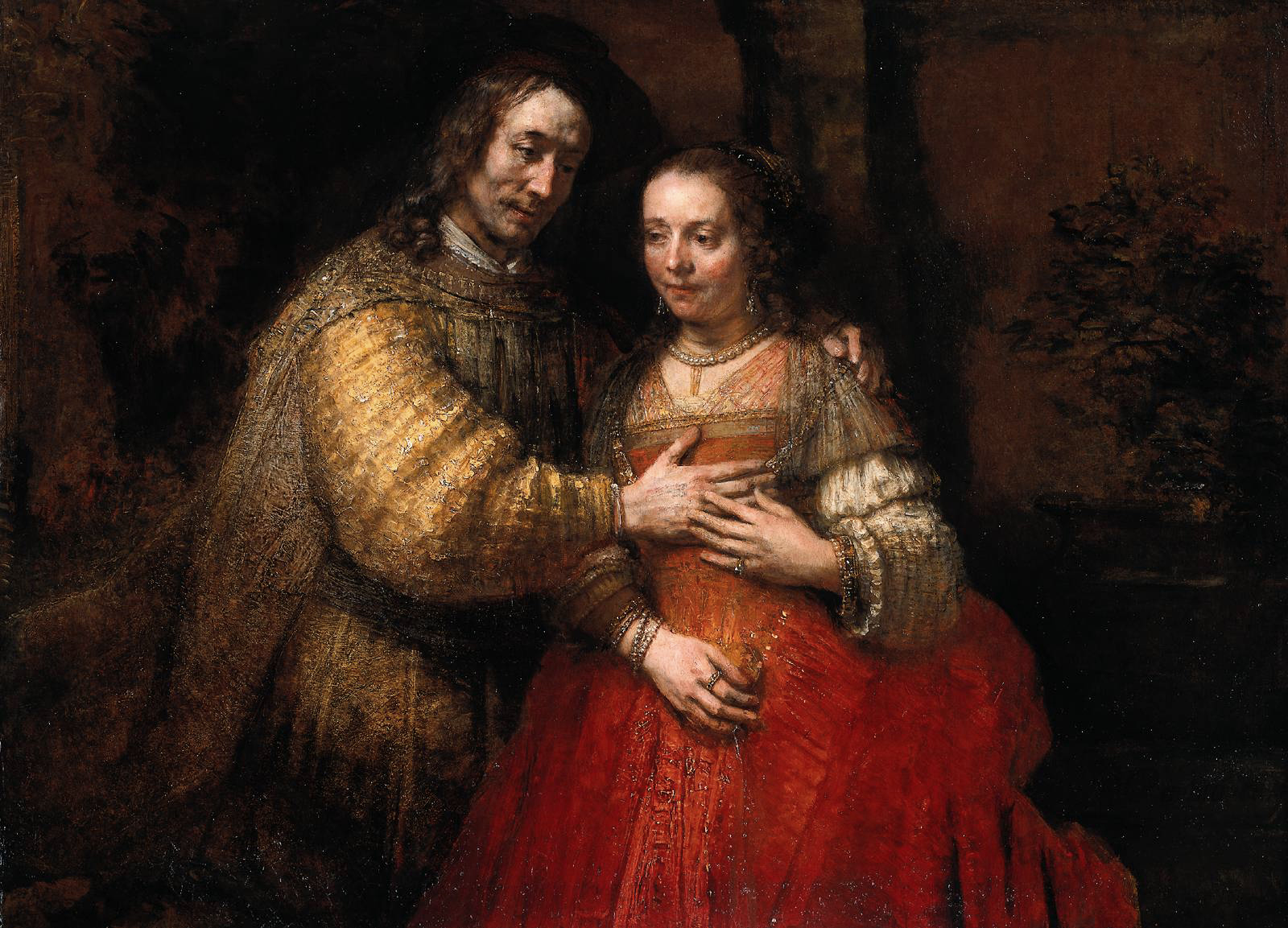
Such was the main impression that this excellent new exhibition left on me as I departed. I felt thrilled to have had the opportunity to see so many brilliant works executed at the tail end of Rembrandt’s career, when his personal fortunes were in decline, but when the product of his paintbrush was more fantastic than ever. But so too was I struck by the breadth and significance of the collection on show, testament no doubt to the National Gallery’s partnership in organising the exhibition with the Rijksmuseum in Amsterdam, who either own or have access to much of the works on show. The result is the chance to come face to face with famous works such as the Jewish Bride – a subtly romantic painting which held Van Gogh so spellbound that he declared he would give up 10 years of his life for a few moments before the painting – and the masterful group portrait, The Syndics, a superb work on a huge scale, surely surpassable only by The Night Watchmen, perhaps Rembrandt’s most famous work.

The Syndics (1662)

The Syndics (1662)

The Jewish Bride (1665)

The Jewish Bride (1665)

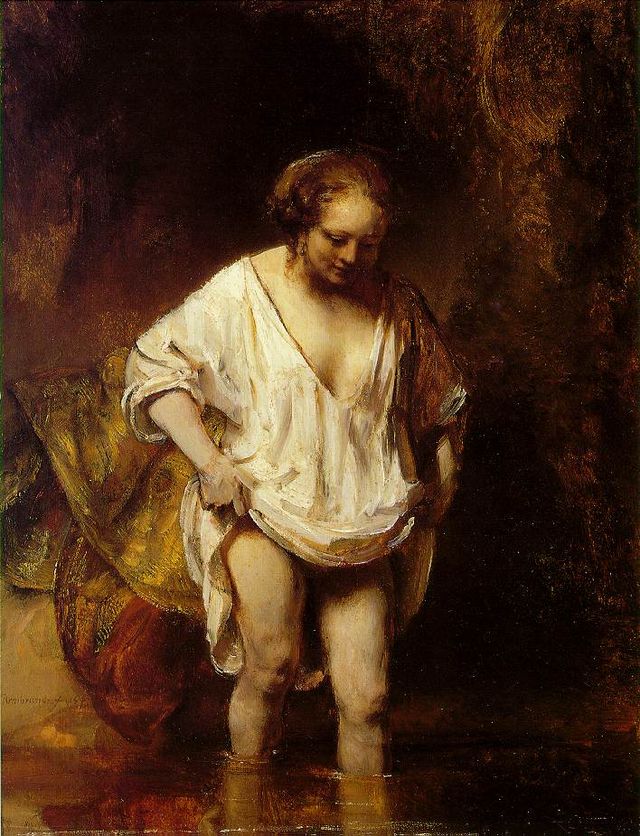
A Woman Bathing in a Stream (1654)

A Woman Bathing in a Stream (1654)

The Consipiracy of the Batavians under Claudius Civilis (1661)

The Consipiracy of the Batavians under Claudius Civilis (1661)

The other thing that struck me was how bloody popular this exhibition is. Even when you have a timed ticket, you need to queue. Admittedly I went along at the weekend, but that does not mean to say that this show will be any quieter during the week, such is the appetite no doubt for a sensational London art show after a year consisting largely of flops and unknowns (I do not include Tate Modern’s brilliant Matisse or Malevich shows in this otherwise scathing review). What this then means is something of a struggle throughout the show, something which is felt less when gazing upon huge works such as the rather questionable Conspiracy of the Batavians under Claudius Civilis, a portion of Rembrandt’s less than successful painting for Amsterdam’s new Town Hall. It is however annoying when trying to study the stunning intricacies of Rembrandt’s print works. I never knew that he was such a skilled printmaker, and his drypoint etchings were, in particular, worth elbowing the odd visitor out of the way.

The Three Crosses (1653)

The Three Crosses (1653)

Christ Presented to the People (1655)

Christ Presented to the People (1655)

Christ Presented to the People

Christ Presented to the People

Christ Preaching (1652)

Christ Preaching (1652)

But what these crowds all go to show is how superb this show is – a final hurrah for 2014, and the first great show to come out of The National Gallery, in my view, since the Da Vinci sensation in 2011/2012. Whether it be the intense forlorn gaze of Lucretia at the point of her honour suicide, the sensationally melancholic Man in Armour thought to be Alexander the Great, or the knowledgeable calm grace of Margaretha de Geer depicted wearing her ginormous lace ruff, there are masterpieces aplenty to keep you hooked to this show, and resilient to the many crowds around you.

Rembrandt_lucretia

Portrait of Margaretha de Geer (1661)

Portrait of Margaretha de Geer (1661)

A Man in Armour (Alexander the Great?) 1655

A Man in Armour (Alexander the Great?) 1655

Rembrandt, the Late Works is on at  the National Gallery until 18th January 2015.

Radical and a little racy… Schiele’s nudes at the Courtauld

They’ve done it again! Short, sweet, brilliantly focused, the Courtauld Gallery in London has once again mounted a brilliant temporary exhibition with a sharp focus on a particular artist and theme. And following on from the gallery’s scintillating study of the single most important year in the development of Picasso’s career, this time the Courtauld is looking at the prolific work of an Austrian artist who sadly never lived out the full career his talent so obviously deserved: Egon Schiele. Instead, almost as though he had a premeditation of the Spanish flu that would kill him at the end of the First World War at the age of only 28, Schiele worked frantically, producing in the few short years of his career such a virtuosity of artwork that even after that short time he has been declared a pillar of Austria’s Expressionist art movement. 

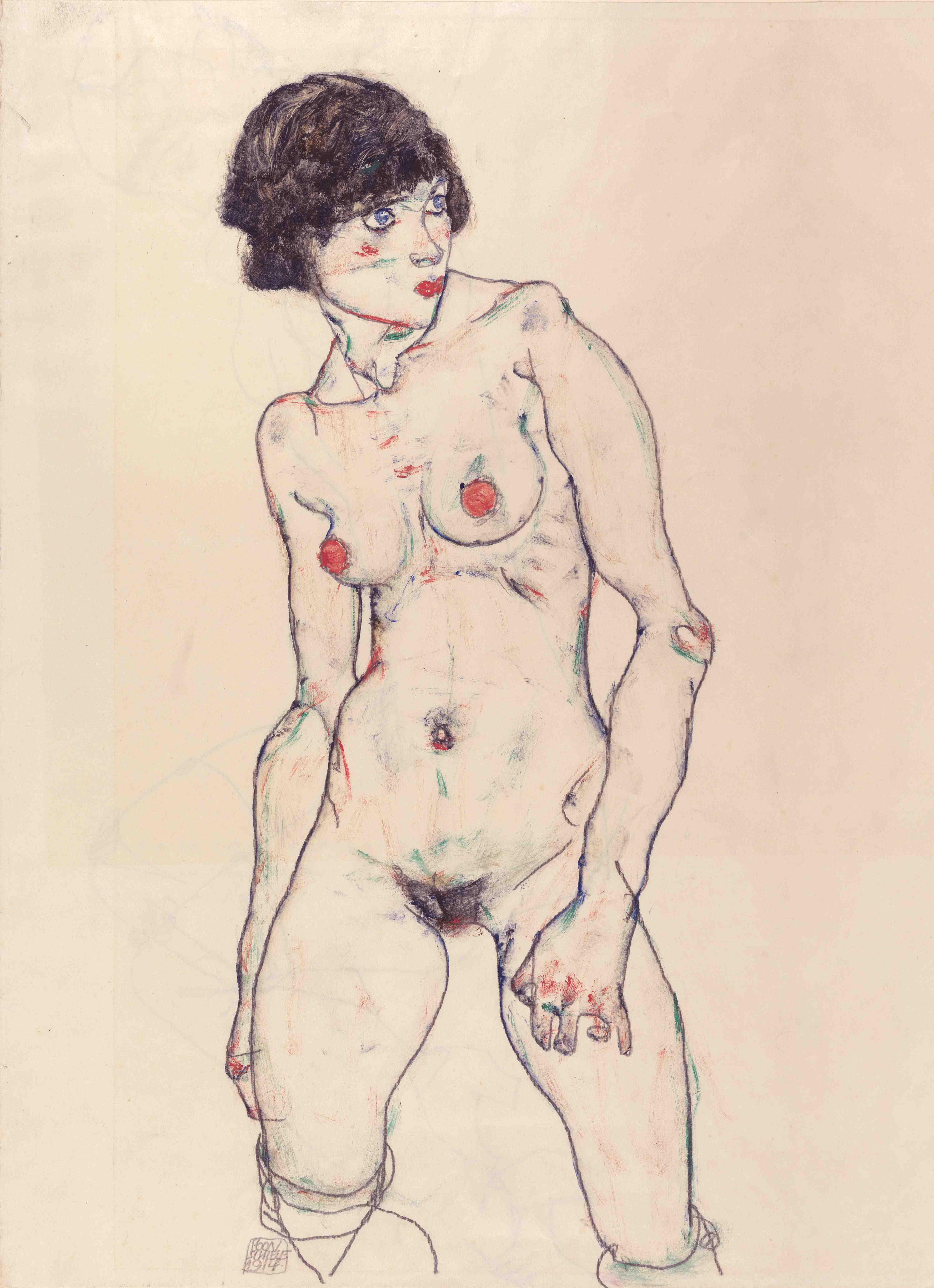
Such was Schiele’s prolific output that the Courtauld had the luxury of being able to chose to focus in on one distinct element of his work: his depiction of the nude. And in doing so they have surely touched on perhaps the most memorable and striking chapter of his oeuvre. For in his depictions of the nude, Schiele was indeed very much the radical, just as the show suggests. Depicting his models with an angular and uncomfortable frame, and raw and visceral colouring, Schiele’s nudes are at once uncompromising and vulgar, while being completely fascinating and electric to the eye. 

Standing Nude with Stockings, 1914

Standing Nude with Stockings, 1914

Egon Schiele, Male Lower Torso, 1910

Egon Schiele, Male Lower Torso, 1910

Nude Self-Portrait in Gray with Open Mouth, 1910

Nude Self-Portrait in Gray with Open Mouth, 1910

Squatting Female Nude, 1910

Squatting Female Nude, 1910

Schiele wasn’t exactly one to keep with the confines of classical approaches to depicting the nude. Far from it. As well as colouring in his heavily lined nudes with a raw almost skinless muscular palate of dark bloody pinks and bruised purples and ambers, he also strayed very close to the pornographic frontier, depicting women in an unflinchingly abrupt and exposed fashion. I don’t think I ever saw so many views of what lies between a woman’s thighs on a gallery wall! And yet these paintings are not porn. They do not depict a promise of pleasure, but a deeply exposed portrait of the sitter. Yes these women look seductive and often slutty, but it’s as though Schiele is inviting us to read that as part of their story rather than to have an aroused response at what they are offering. 

And of course this exhibition is far from being about the naughty bits. For what these 30 or so paintings demonstrate is the brilliance and apparent confidence of Schiele’s line work as well as the originality of his depiction. These are bodies like we have never seen them before. Distorted, and occasionally out of proportion, bulging and contorting where they shouldn’t and often with sharp edges where supple skin should be, these are nudes taken up a level to an almost abstract exploration; poses which are almost impossible to hold; limbs seemingly amputated from the torso in order to focus the audience on a particular present part of the body; and expressions which are both exposing and intensely emotional: this is uncompromising portraiture. 

Seated Female Nude with Raised Arm (Gertrude Schiele), 1910

Seated Female Nude with Raised Arm (Gertrude Schiele), 1910

Crouching Woman with Green Kerchief, 1914

Crouching Woman with Green Kerchief, 1914

Two Girls Embracing (Friends), 1915

Two Girls Embracing (Friends), 1915

Erwin Dominik Osen, Nude with Crossed Arms,1910

Erwin Dominik Osen, Nude with Crossed Arms,1910

So is this small but perfectly formed show worth braving the growing queues for? It undoubtedly is. For this is an unprecedented chance to focus in on the bold feverish creative output of a quickly lost genius and almost certainly one of the most important shows of London’s artistic year. The only complaint you may have is that this sharp focus doesn’t go on longer. 

Egon Schiele: the Radical Nude runs until 18 January. But beware – the show contains some explicit images and may not be deemed suitable for all. 

Late Turner at Tate: Repetitious repertoire with moments of genius

I think I may be almost alone amongst my British compatriots when I declare that I am not a huge fan of J M W Turner. In fact I’m fully expecting to receive a raft of hate mail when this review goes live on my blog and I conclude that Tate Britian’s latest exploit of this undoubtedly revolutionary British Artist is all a bit insipidly, uninterestingly “pastel”. Now don’t get me wrong, I am well aware that Turner was a master of his times, and likewise that he was crucial in the development of the impressionist, and then expressionist art movements that changed the world of art history. I do not doubt that without him, the whole revolution of modern art may never have seeded in quite the way it did, if at all. And I recognise that in so far as great British artists go (of which there are few), he is almost certainly one of the best. Yet when I am faced with a painting by Turner, I cannot help but feel depressed, and a little uninterested, my attention somewhat wondering away from the smudged colour palette, the greys and the pastels.

Tate Britain’s new Turner exhibition has opened with considerable fanfare. This is insuperably the case when any Turner show is opened in the UK, but the problem is, we’ve seen so much of the work before. Such is the result of an exhibition of Turner being shown at Tate, the very same museum which was bequeathed hundreds of Turner works a short time after his death. Since the exhibition focuses on “Late Turner” (works produced between 1835 and his death in 1851), it almost certainly features the lion’s share of the Turner Bequest, meaning that there is very little new to be seen by we London regulars. Still, one cannot doubt the scale and ambition of the show, which ably demonstrates that Turner was perhaps at his innovative best in this final period of his life. While the artwork is still trenched in the rigid tradition of the prescribed artistic and aesthetic tastes of the time (antiquity, pastoral landscape, naval scenes and the like), Turner was presenting canvases which aimed to capture more of an effect than a historical narrative. Even his history and antiquity paintings (of which there are many) focus more on the breathtaking light of a sunrise or sun set, or the moody effect resulting from a foggy encounter, than the story itself.

Regulus (1828)

Regulus (1828)

Peace - Burial at Sea (1842)

Peace – Burial at Sea (1842)

Ancient Rome; Agrippina Landing with the Ashes of Germanicus (1839)

Ancient Rome; Agrippina Landing with the Ashes of Germanicus (1839)

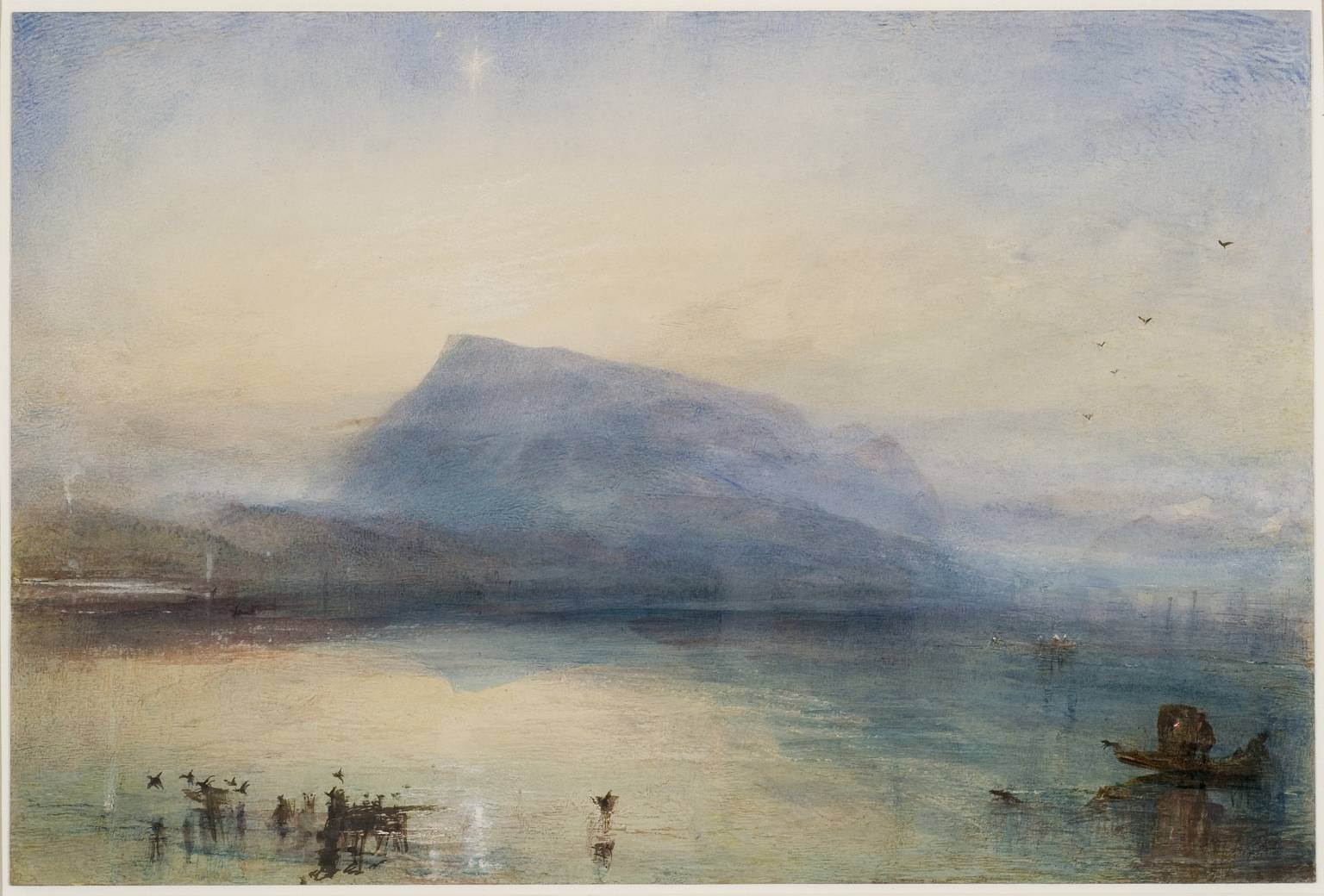
So to give the show its dues and focus in on the “good”, one cannot help but be stirred at times by some of Turner’s more atmospheric works, such as his paintings of stormy seas in Snowstorm (1842), so cyclical like a washing machine drum that you feel as though you are swept out at sea yourself – an effect which just can’t be captured from a postcard reproduction of the work. Mention also has to go to the stunning effects of light achieved by Turner – for example the burning glow of the Fire at the Houses of Parliament, and the incredible blinding light captured in his painting Regulus (1828) – an effect so well captured that I felt compelled to look away from the painting, as though I was staring into the sun itself.

Snowstorm (1842)

Snowstorm (1842)

The Blue Rigi Sunrise (1842)

The Blue Rigi Sunrise (1842)

Burning of the Houses of Lords and Commons (1834)

Burning of the Houses of Lords and Commons (1834)

For me though, the success of the show – its scale – was also its downfall, as with so many Turners from the same period exhibited all together, one couldn’t help conclude that it was all a bit samey, and repetitive – a feeling also engendered by the RA’s Monet show a few years back, when one water lily after another began to look like a single mesh of watery wobbly lines so that you could no longer distinguish between them. This feeling is proliferated at Tate’s show by the unfortunate decision to paint the walls in the same predominant colour as the paintings, so that in one room, a gallery full of dull yellow paintings feels even duller and more dated thanks to the same colour having been painted on the wall. If only the whole show had been curated like the middle room, where Turner’s square and round paintings were hung on dark walls and spot-lit to magnificent effect. Under those conditions, the works really came alive.

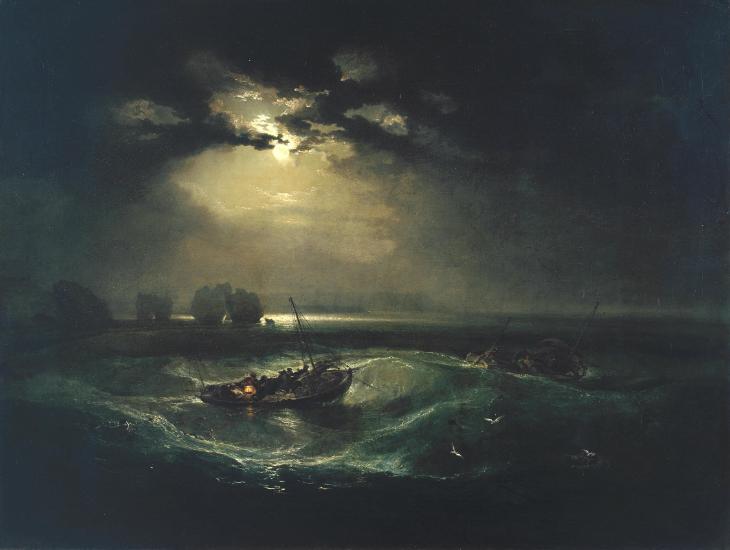
So coming out of this exhibition, my conclusions were as follows: Turner left me flat, not so much because of his work, but because of the way the show had been put together. Too much, too samey, and horrible decisions regarding wall colours. What Turner was brilliant at was capturing light, and it is this, set against dark backgrounds, that Tate should have concentrated on, to give Turner’s final years the kind of exhibition they perhaps deserve.

Fishermen at Sea (1796)

Fishermen at Sea (1796)

Late Turner: Painting Set Free is showing at Tate Britian until 25 January 2015

Prague (Part 3): Buddha-Bar Chic and delectable places to eat

When a city trip is turning into something of a damp squib and you’ve realised you should have brought a winter coat despite its being late summer, sometimes all you need is a little luxury to make things right again. When the squares and museums are packed to the rafters with no-budge tourists and the cafes are full of larger-lout British stag parties, it’s the escape to the finer side of things that will put a smile back on your face. And so it was, when my partner and I ventured recently to Prague in the Czech Republic, that ever optimistic of having a happy holiday experience, we were able to turn round the somewhat disappointing experience of an ever so cold, damp weekend in tourist-packed Prague into two nights of luxurious hedonism, thanks to the hotel where we were staying, and some of the great restaurants we were lucky enough to find during the trip.

Our hotel of choice was the 5 star Buddha Bar hotel situated a few minutes from the centre of Prague’s Old Town. Being what it suggests on the tin – a concept hotel with a strongly oriental-influenced twist – it was an unusual choice for us. We love chic little boutique hotels, but I would usually go for something that at least resembled the local culture. But Buddha Bar are a long established brand that stands for the quintessence of cool: of dark chic surroundings, of sumptuous self-indulgent luxuries, all pulled together by the classic asian-inspired lounge-bar melodies of the famous Buddha bar soundtrack. Consequently when I discovered that there was a hotel of the brand so well situated in Prague, and probably half the price what a 5 star would cost in capital cities elsewhere, I was seduced and decided to take the plunge into the orient. And I’m so glad we did.

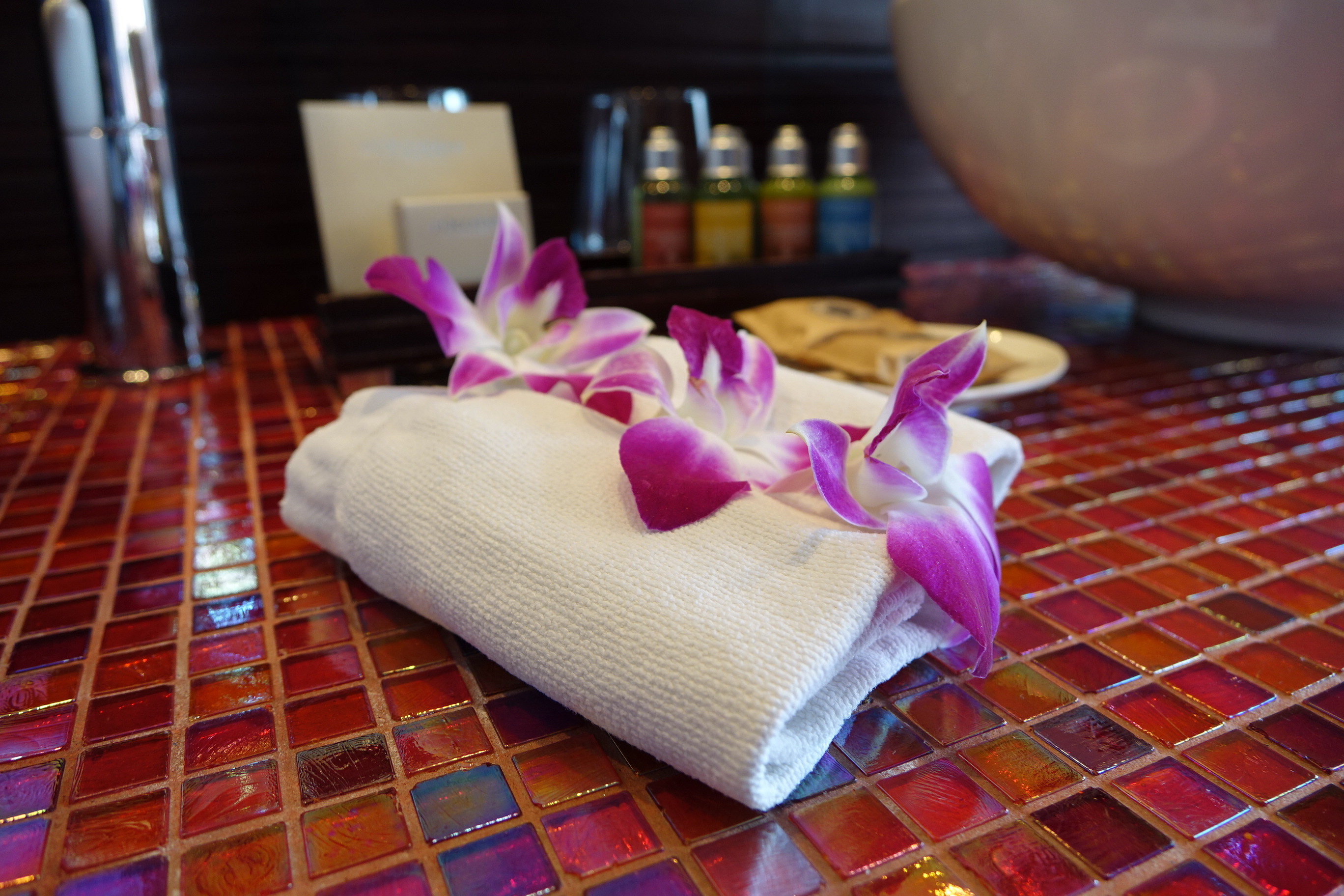
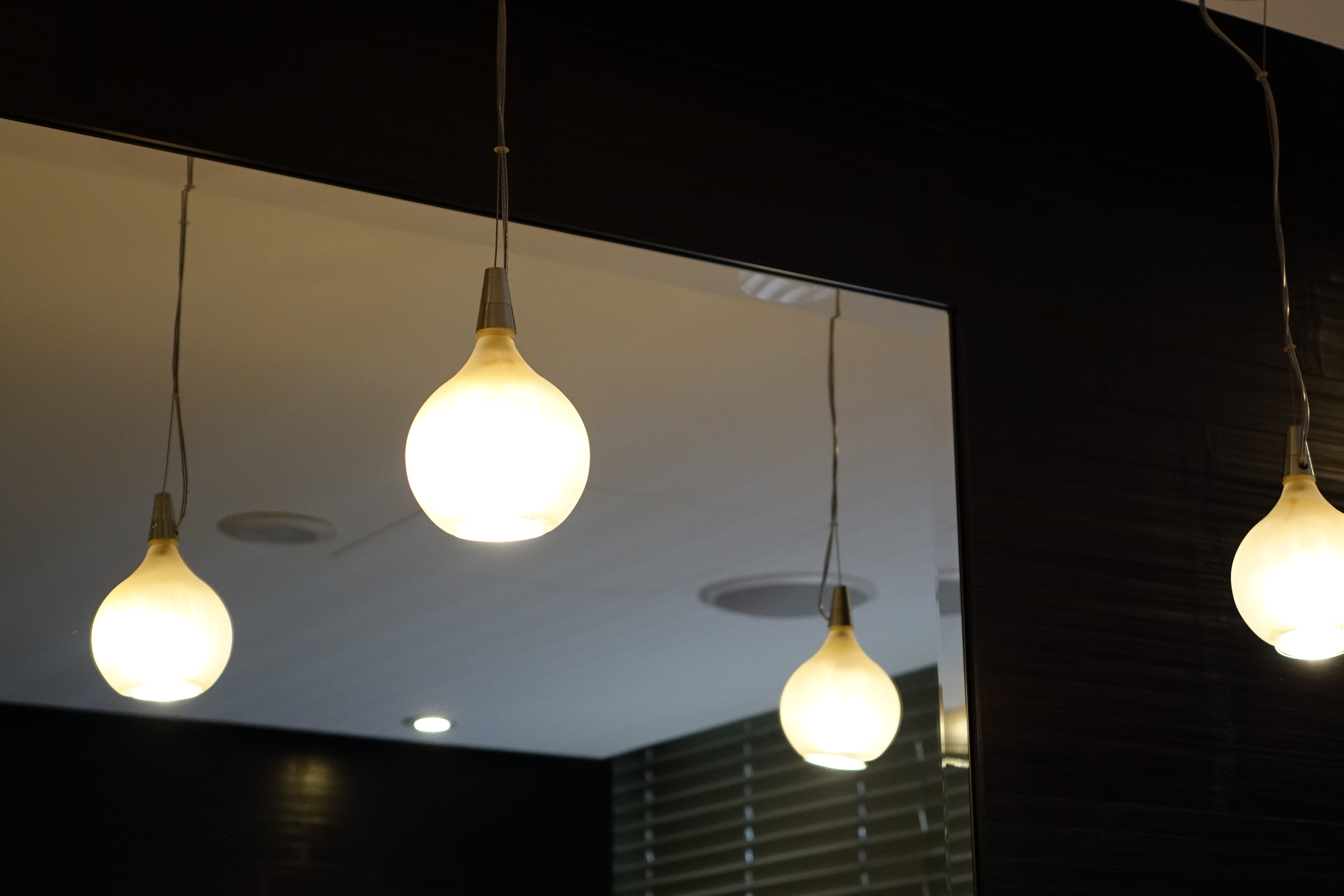
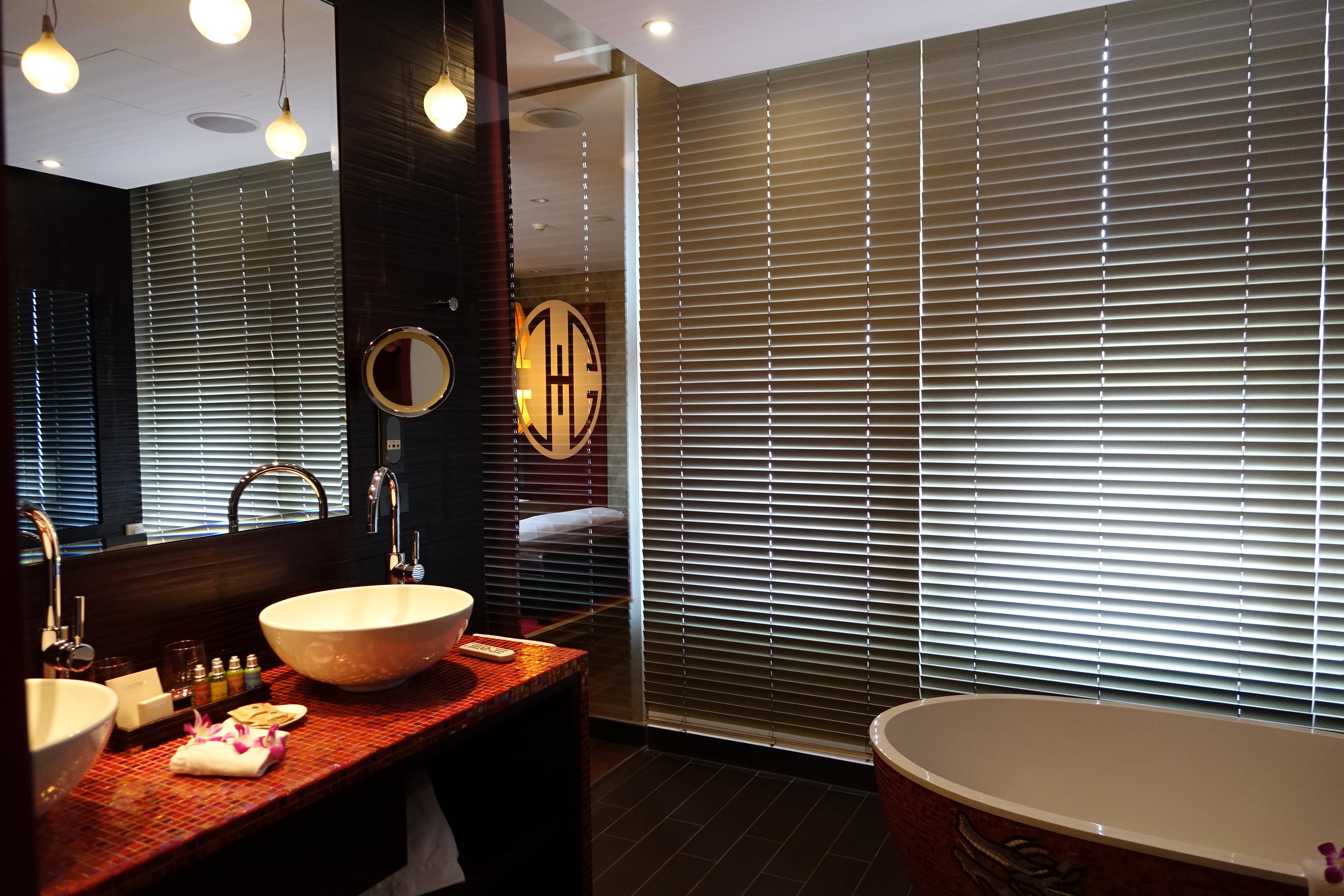
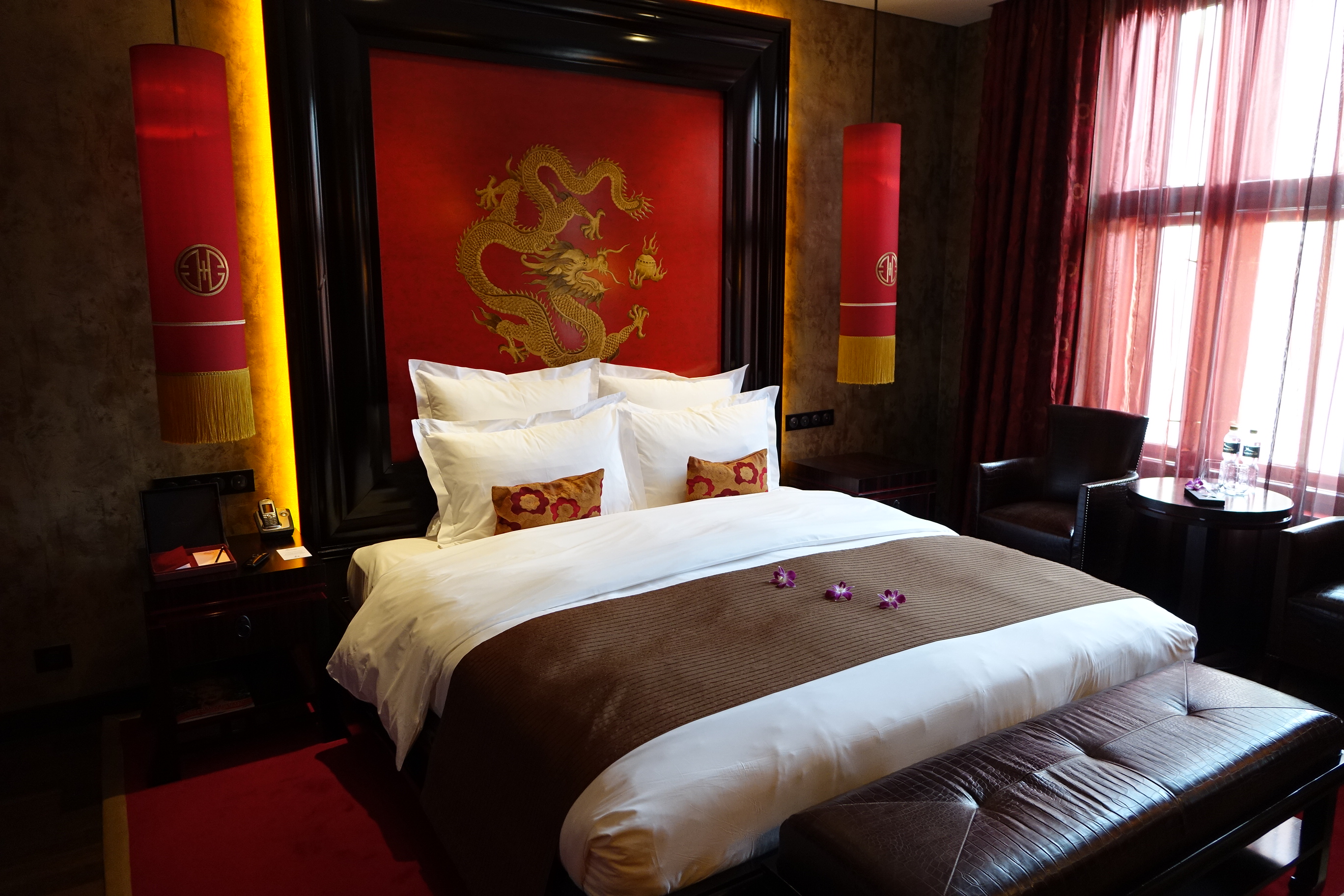
Our room at the Buddha Bar Hotel

DSC06289 DSC06299 DSC07342 DSC06284 DSC06287 DSC06297 DSC06309 DSC06281 DSC06308 DSC06270 DSC06271 DSC06306 DSC06268 DSC07332 DSC06280

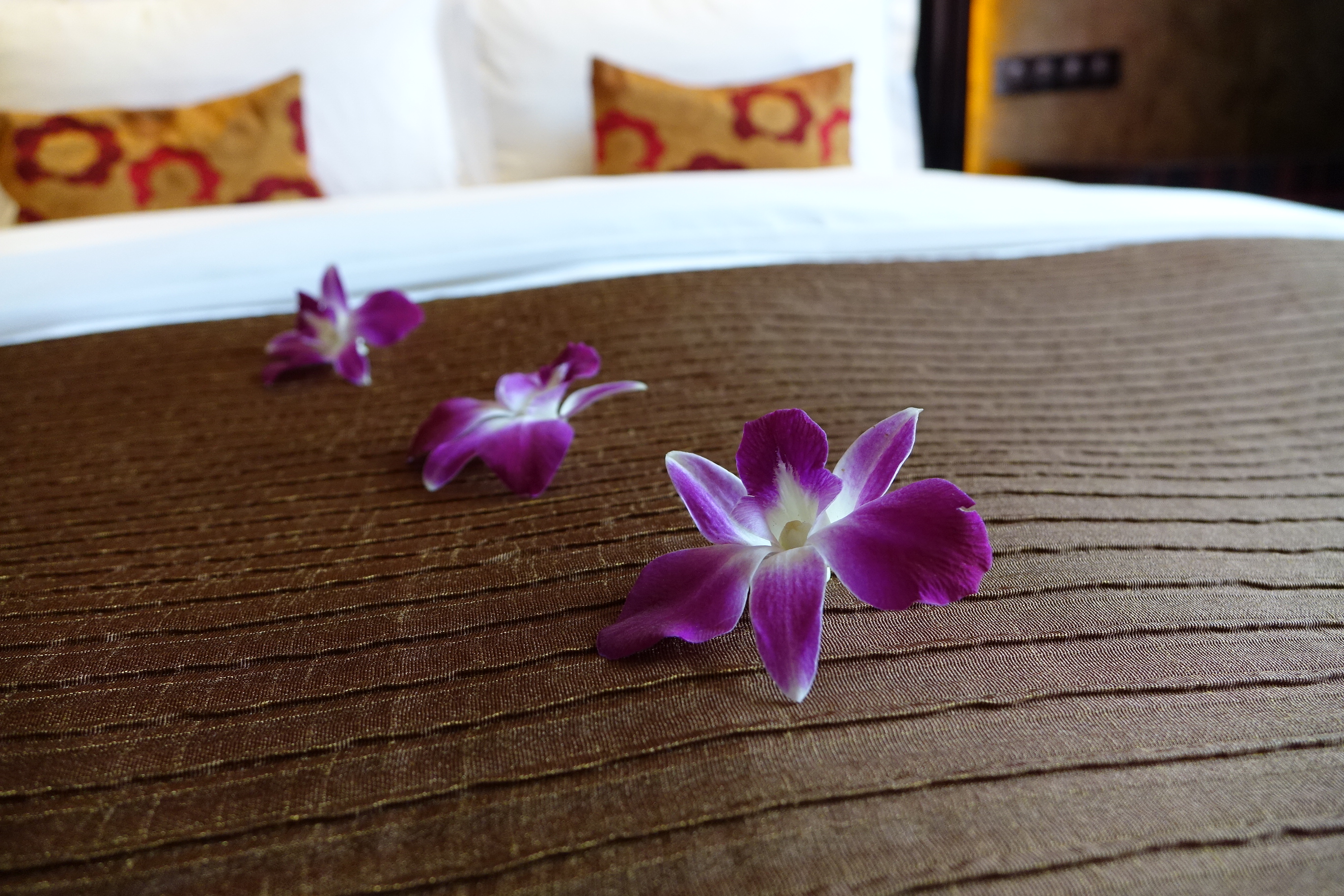
In our luxuriously pampered room, every detail had been taken care of. On the wall, a Bang & Olufsen TV pumped out a selection of Buddha Bar groves through expertly mastered surround sound speakers extending to all parts of our room. In our extensive bathroom, a free standing bath benefitted from its own dedicated TV, floor to ceiling windows overlooking Prague, and remote controlled electric blinds should you prefer a little privacy from amongst your bubbles; while the his and hers sinks were accompanied by a panoply of l’Occitane branded bath products. In the bedroom, an indulgently soft bed was plied high with luxurious throws and cushions, while beside it, a seating area already came fully stocked with gifts of chocolate and a complementary cocktail each – the perfect antidote to the tourist scrum outside. Meanwhile, across the room, on the surfaces and alongside notes and information booklets, little fresh orchids had been delicately placed – the height in attention to detail, which followed through to the whole hotel experience.

For beyond our room, the hotel of course enjoyed its own Buddha Bar restaurant, a large cavernous place camped up with a huge oversized golden Buddha around which densely candlelit tables glittered in an otherwise dark and seductive atmosphere. We enjoyed an abundance of creative sushi whose innovative flavour combinations buzzed and zinged in a way that the bog standard California role could never hope to replicate. Meanwhile upstairs, a daily breakfast combining buffet treats and a choice of hot dishes always came accompanied with a glass of chilled prosecco. Now that’s my kind of breakfast.

The Buddha Bar restaurant – images courtesy of www.buddhabarhotelprague.com

buddha-bar-restaurant-gal-11-1300x867 buddha-bar-restaurant-gal-06-1300x867

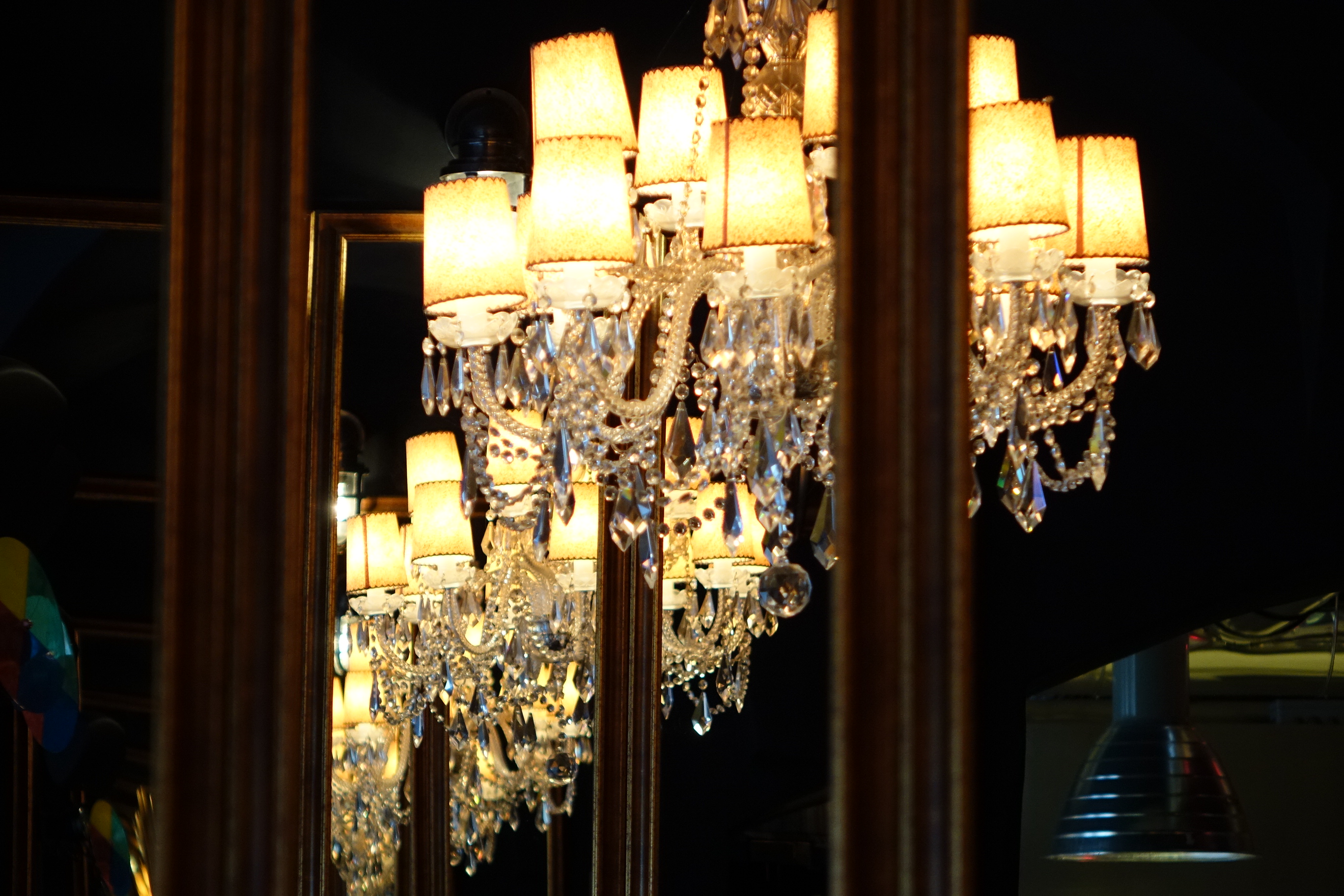
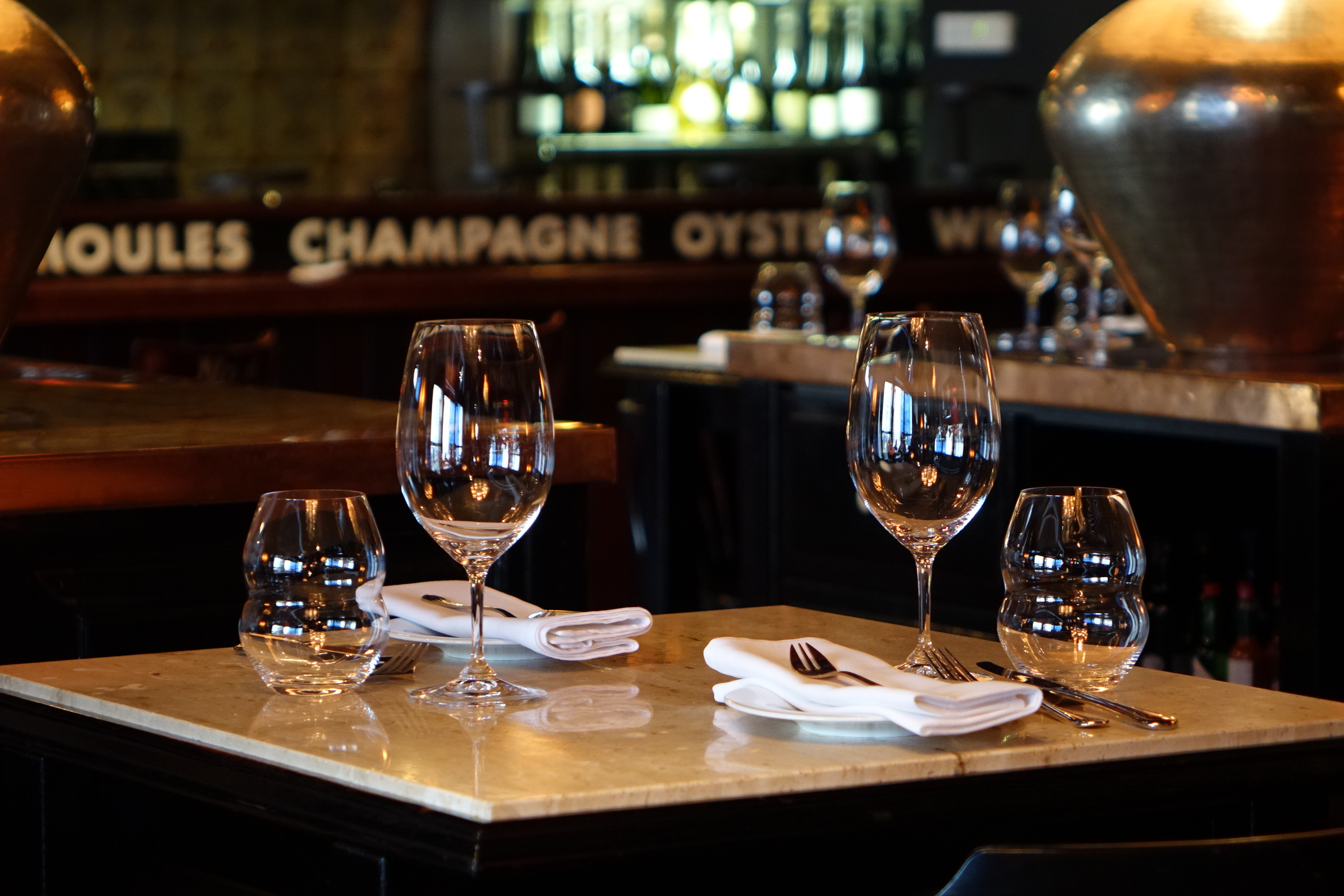
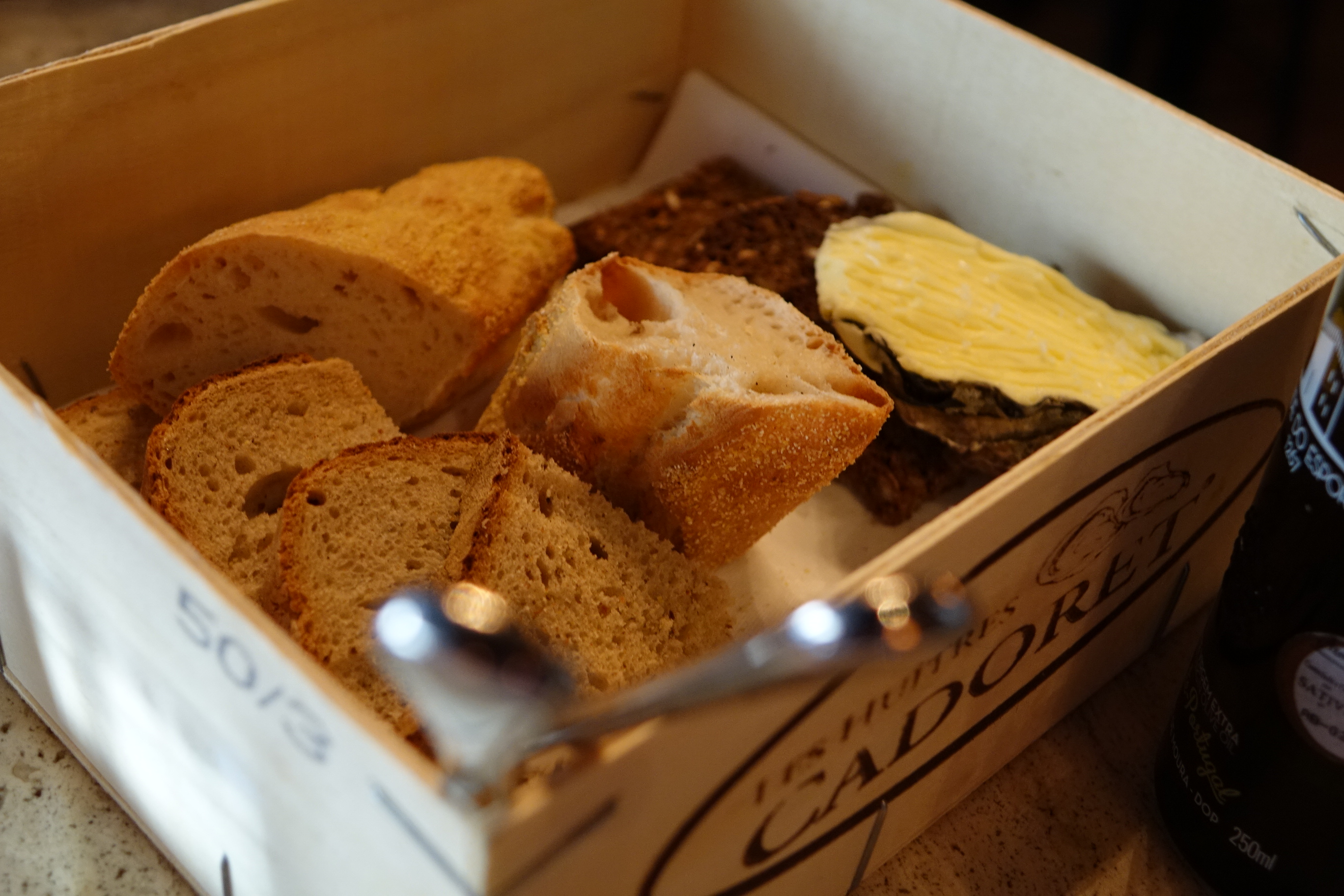
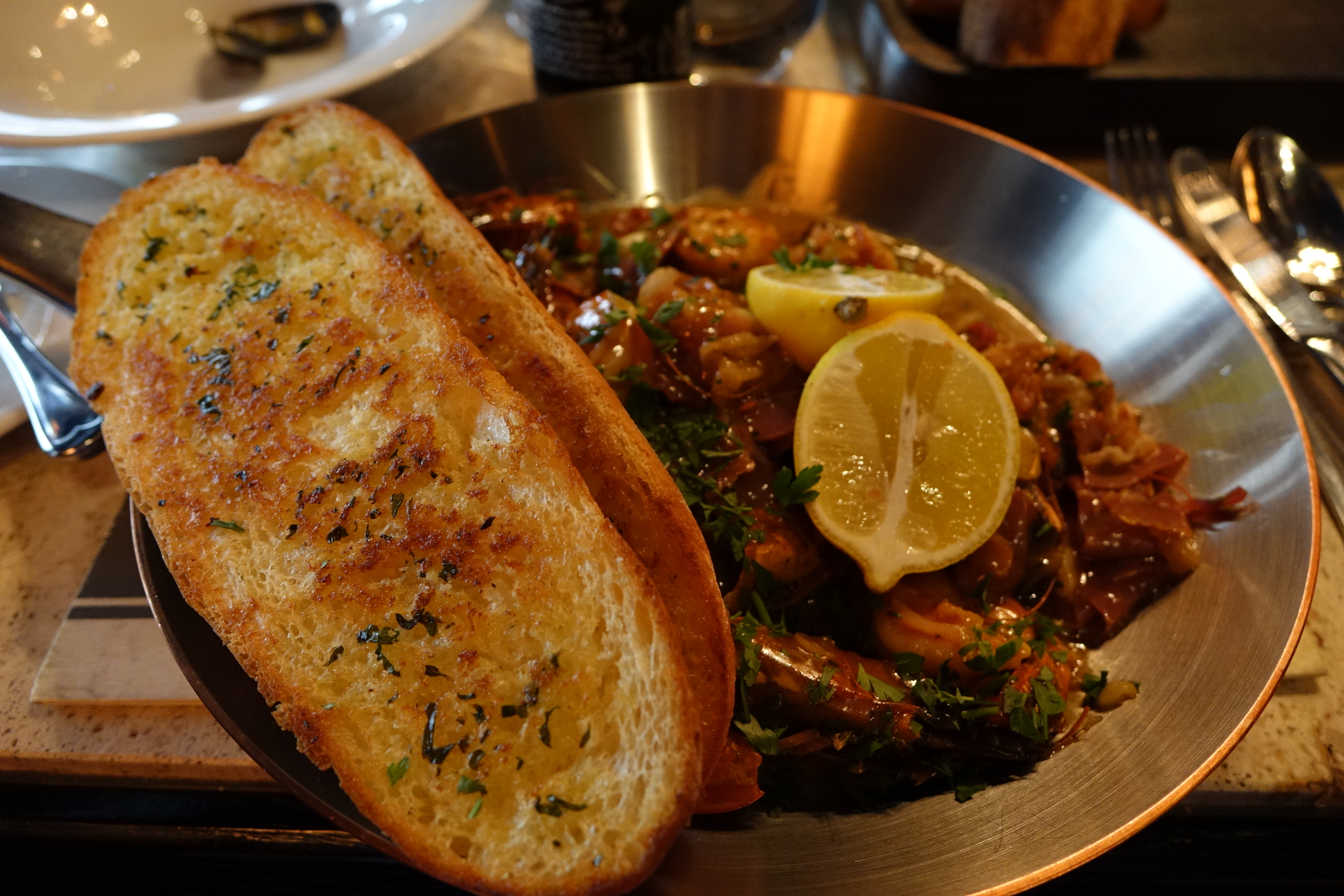
But of course we had to leave the hotel sometimes, and when sightseeing got too much, we managed to find two equally exquisite restaurants in which to enjoy the classier side of life. The first, a discovery quite by accident, was Zdenek’s Oyster Bar, an exceptionally chic little place, filled with brass fittings and lamps made from champagne bottles, that more closely resembled an upmarket Parisian bistro than a traditional Czech eatery. Being as Prague is very much inland, we were at first sceptical of a seafood restaurant in the heart of the city, but our doubts were put to rest by a main of succulent grilled prawns in a creamy sweet peppery rich sauce, with buttery toasted brioche served to be dipped into the tasty liquor. Never have I lavished so enthusiastically over a dish of prawns. I was completely won over on the one dish alone, let alone the other details which made the meal so special – an oyster shell filled with creamy salted butter; delicious crisp local white wine, and steaming muscles each ripe and juicy and a joy to eat.

Zdenek’s Oyster Bar

DSC06341 DSC06347 DSC06343 DSC06350 DSC06344 DSC06349

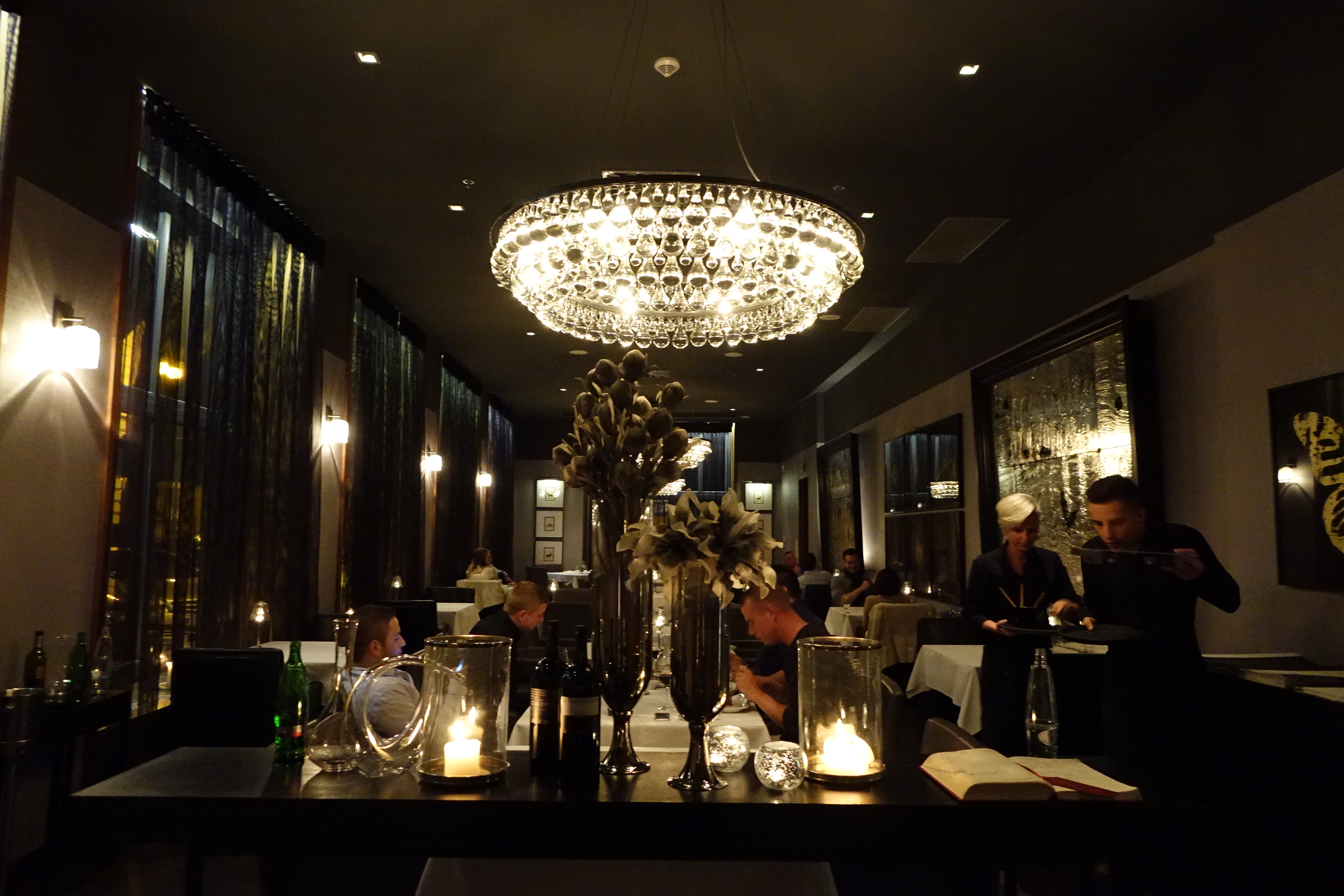
The second of our restaurant successes was likewise a departure from the Czech theme – this time George Prime Steak, which was less traditional steak house than a high class boudoir decked out with highly polished chrome and black lacquer interiors all made to sparkle with modern chandeliers and low lighting. The only real nod to America was the extensive Californian wine list, one of which we enjoyed to the full, despite the waiters leaving the bottle on a far away table and then neglecting to refill our often empty glasses. But they can be forgiven – for the real star of the show was the steak. We opted for fillet which, they told us, was fried in temperatures so hot that it immediately caramelised the outside into a rich sweet crust – a delectable exterior encasing soft tender flesh. It was almost certainly one of the best steaks I have ever eaten.

My only drunken picture of George Prime Steak’s opulent interior…

DSC07316

But we were in the Czech republic after all, and my final nod of this post has to go to what must be my favourite aspect of Prague gastronomy – the multi layered Czech honey cake “Medovnik”. Without looking at a recipe, I can only guess that this cake comprised thin layers of honeyed sponge interlaid with a honey and gently spiced gingery, cinnamon cream. Oh it was truly to die for, hence why I must have eaten around 5 slices before the trip was out. Now that really was worth fighting the tourist scrum for.

and that honey cake to die for

medovnik

All photos and written content are strictly the copyright of Nicholas de Lacy-Brown © 2014 and The Daily Norm. All rights are reserved. Unauthorized use and/or duplication of the material, whether written work, photography or artwork, included within The Daily Norm without express and written permission from The Daily Norm’s author and/or owner is strictly prohibited.

London’s homage to print: Part 3 – Bruegel to Freud

Earlier this year I reviewed two London exhibitions which played homage to the brilliance and versatility of the printmaking medium, both through the chiaroscuro effects achieved in early renaissance woodcuts, or through the work of a Titan of contemporary British printmaking – David Hockney. Well no sooner had those shows shut up shop than another showcase to print has opened up, this time at my favourite gallery in London, the Courtauld. 

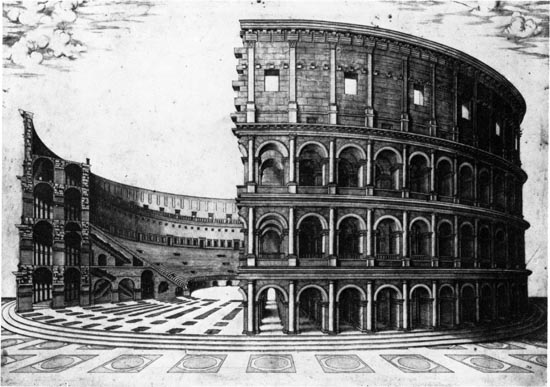
This new exhibition, From Bruegel to Freud is characteristic of the shows that the Courtauld does best: small yet focused, and although it displays only some 30 or so prints from a total collection of 24,000, the chosen prints perfectly illustrate the startling breadth and variety of the Courtauld’s impressive print holdings. And in giving itself over to a range of prints rather than honing in on one type or period, the exhibition ably demonstrates the potential of print both as an educator and communicator (for example Nicolas Beatrizet’s vast engraved copy of the Last Judgment wall of the Sistine Chapel, or the historical engravings of various architectural buildings such as the wonderfully detailed engraving of Rome’s Colosseum exhibited), as well as a wonderfully diverse medium for artistic expression in its own right. 

Engraving of the Colosseum

Engraving of the Colosseum

Nicolas Béatrizet, The Last Judgment

Nicolas Béatrizet, The Last Judgment

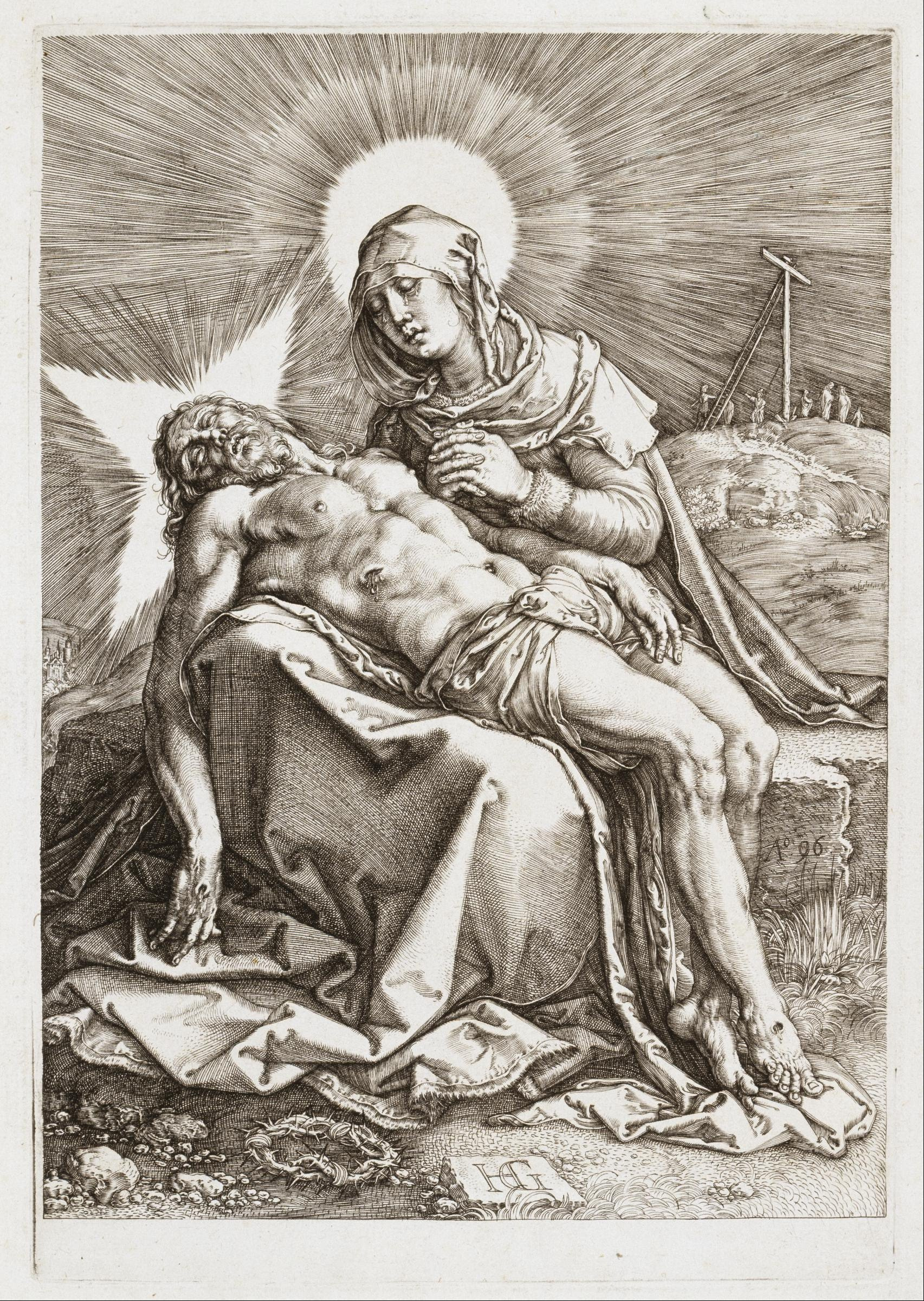
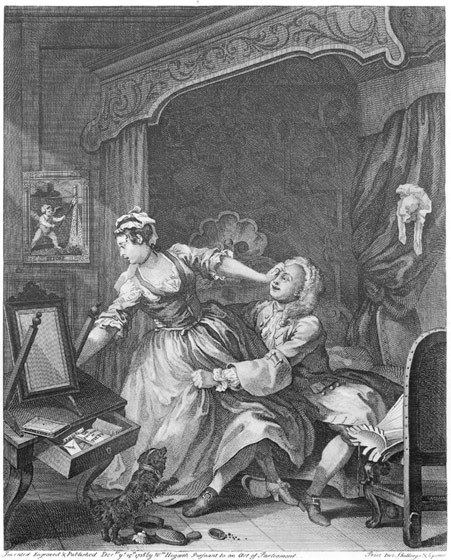
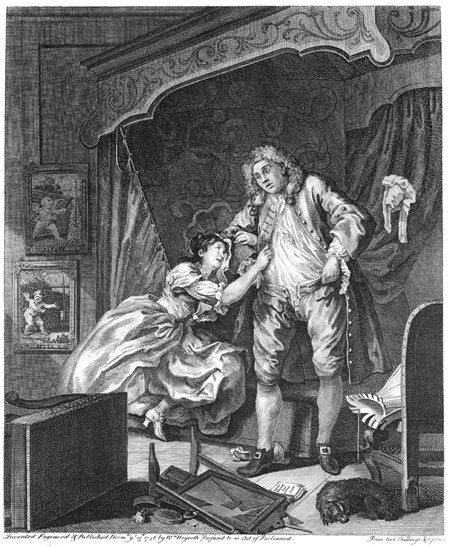
Starting with prints from the likes of Andrea Mantegna from the mid 1400s and ending with recent offerings from Chris Ofili, the show is chronologically broad. The early works are full of exquisite detail. I loved Agostino Veneziano’s The Academy of Baccio Bandinelli which, through engraving not only captures the brilliant detail of artists at work in a studio but also the drama of low candlelight with incredible shadows dancing and flickering on the wall behind. I also adored Hendrik Goltzius’s The Pieta, another engraving utilised to maximum effect – the lines and contours of Christ’s muscular body are stunning here. There was also great humour in Hogarth’s Before and After engravings, showing a man ravaged with passionate desires for a woman in one print, and the same man much dismissive once he has had his saucy way with her. 

Agostino Veneziano, The Academy of Baccio Bandinelli

Agostino Veneziano, The Academy of Baccio Bandinelli

Hendrick Goltzius, The Pieta

Hendrick Goltzius, The Pieta

William Hogarth, Before

William Hogarth, Before

William Hogarth, After

William Hogarth, After

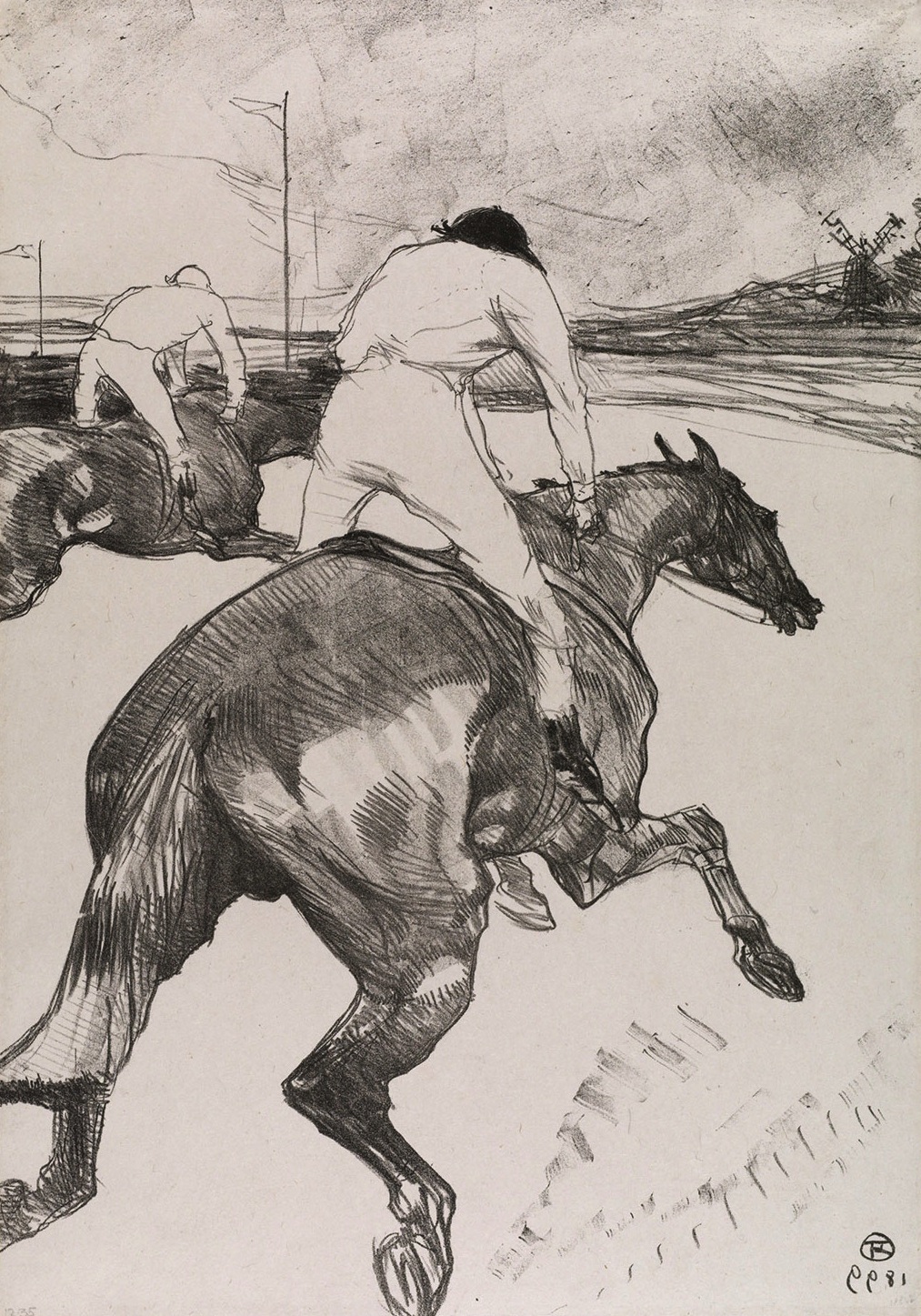
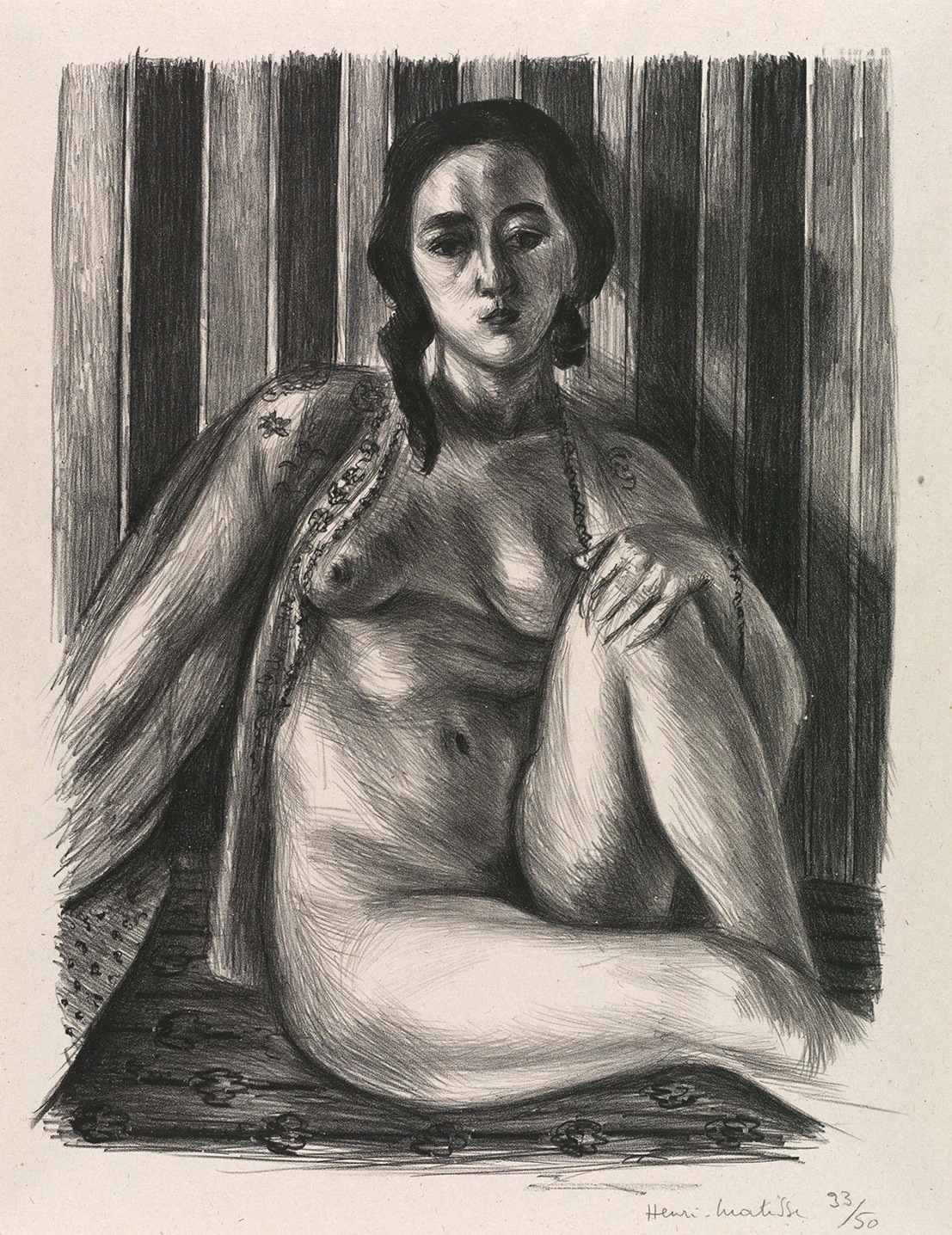
But perhaps unsurprisingly for a museum whose finest collection is its impressionist and post impressionist works, my favourites were those emanating from the late 1800s when printmaking as a medium was having a new hayday, and innovations such as lithography were opening up printmaking to more artists. Amongst them was Toulouse-Lautrec whose lithograph of a jokey straddling a fast moving galloping horse was rightly displayed at the centre of the show, and Bonnard, whose whimsical and somewhat mysterious Woman with a Child and dog from the Nannies’ Promenade series was my favourite in show. 

Toulouse Lautrec, The Jockey (1899)

Toulouse Lautrec, The Jockey (1899)

Matisse, Seated Nude Woman with a tulle blouse

Matisse, Seated Nude Woman with a tulle blouse

Pierre Bonnard - The Nannies' Promenade (1897)

Pierre Bonnard – The Nannies’ Promenade (1897)

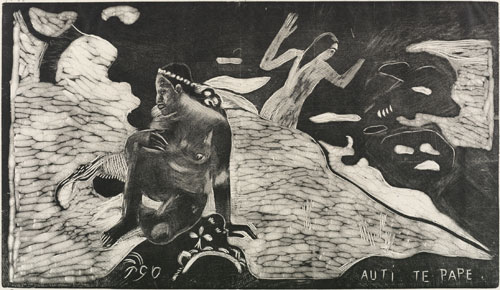
Gauguin, Auti te Pape

Gauguin, Auti te Pape

But of course I cannot end this brief canter through the Courtauld’s show without mentioning one of the last prints being exhibited – Blond Girl by Lucian Freud. For it was this very etching, and those others held in the Courtauld’s collection, that inspired me to start printing a little over a year ago. And for all of the etchings and woodcuts I have done since, I have Freud and the Courtauld to thank.

Lucian Freud - Blond Gird (detail)

Lucian Freud – Blond Girl (detail)

This brilliant homage to print is on at the Courtauld until 21 September 2014.

Kazimir Malevich: Beyond the Black Square

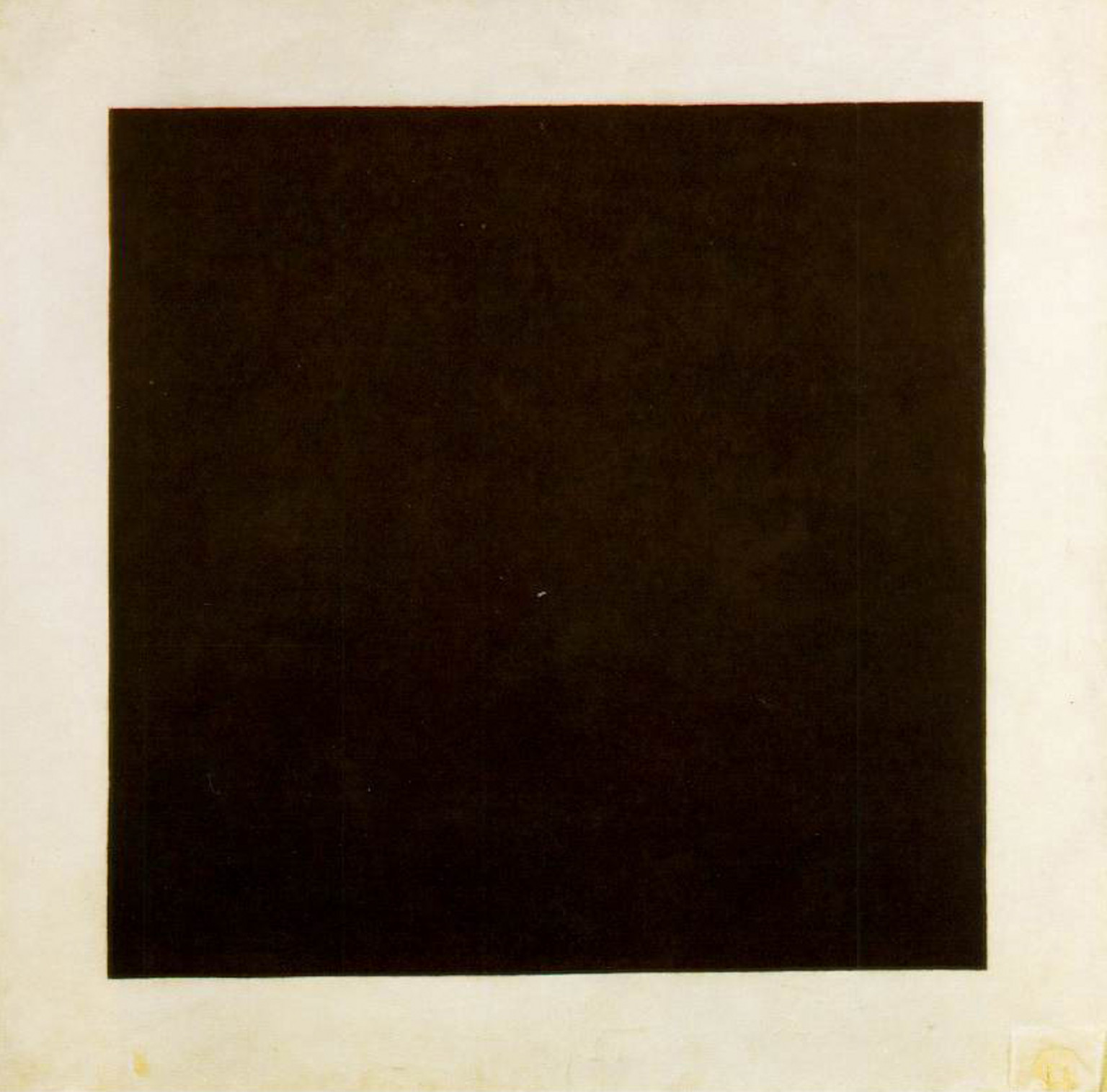
Whether it is the intention of the exhibition or not, Tate Modern’s brilliant new retrospective exhibition of Polish-born Russian Artist, Kazimir Malevich, shows that there is truly more beyond the Black Square. Leading the ranks in an artistic revolution which went from Cubo-Futurism to the simplified geometric forms of Suprematism, Malevich’s most famous and enduring work is a simple, stark and enigmatic black square set on a white canvas. Of course since 1915 when the black square was created, many artists have gone down the single-colour-on-canvas route, and a contemporary art museum is not a contemporary art museum without at least a Blue Canvas or an Untitled (Red Rectangle) to delight and frustrate art audiences in equal measure. But at the time when Malevich’s Black Square was created, it marked a dramatic and stark departure from everything that had gone before it.

Despite its very obvious simplicity, it carries with it an enigmatic complexity as an artistic gesture. Looking at this dark patch of paint, one can almost feel a suppression of joy, a rebellious desire for change, a stark reaction to the turbulence of war, a zero hour in the world of modern art. And yet while it is perhaps understandable why this painting caused such a stir, both positive and negative in the time of its creation, Tate’s new exhibition shows that Malevich had so much more to offer as an artist, and much much more of it in invigorating compositionally intricate colour.

Black Square (1915)

Black Square (1915)

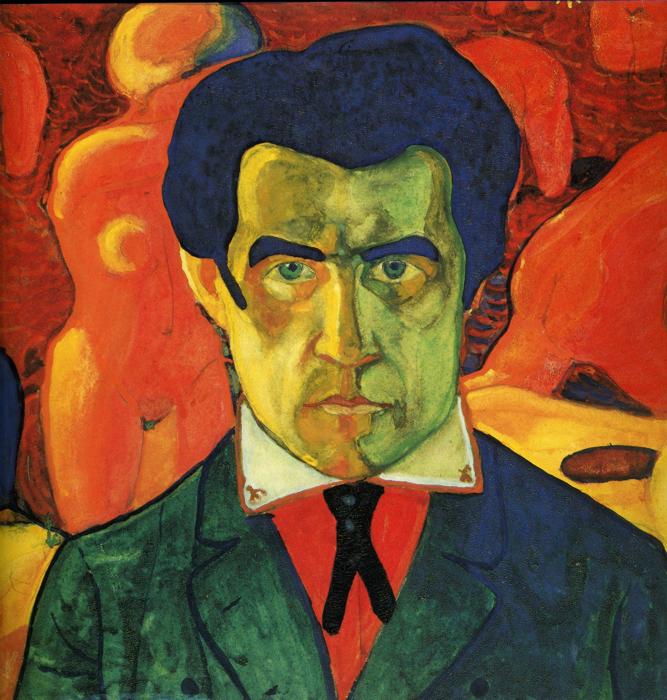
Self Portrait (1908)

Self Portrait (1908)

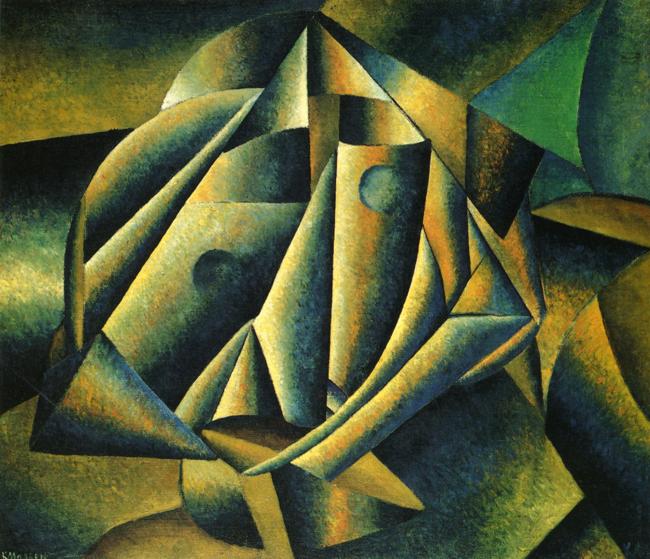
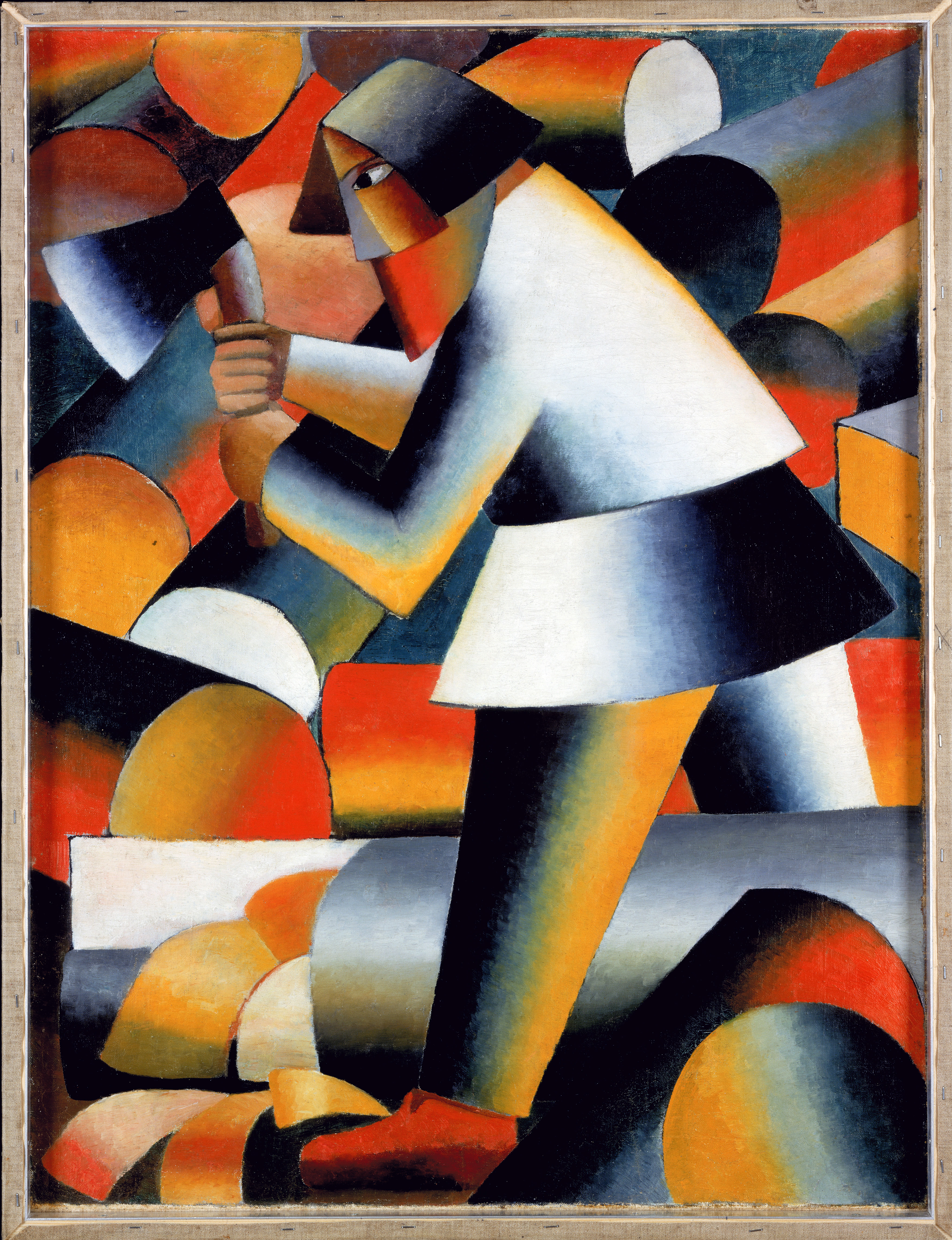
The start of the show demonstrates a certain reliance by Malevich on the artists who had gone before him, and a very clear influence of the avant-garde of post-impressionism, particularly the bold colours of the Fauvists and the flattening of perspective and exotisim advocated by Gauguin. Those influences are particularly obvious in Malevich’s early self-portrait, whose backdrop of exotic nudes and use of a multi-coloured palate recalls the work of Matisse and Gauguin alike. However, very quickly, we see the influence of other artists slipping away as Malevich starts to find a more unique style of his own. While relying to some extent on cubist notions, Malevich rejects the subject matter topical of the works of the Paris avant-garde and starts painting heavily geometric works based on the peasants and traditions of Russia. Painting simplified figures in cubist almost metallic forms, Malevich’s portraits are static like robots, referencing Futurism whose artistic reach was spreading across Europe, and yet exuding a rurality and authentic subject matter which is far departed from the industrialisation which characterises most works of the Futurist movement.

Early works 

Head_of_a_Peasant_Girl Kasimir Malevich007 Kazimir-Malevich,-The-Woodcutter,-1912_original

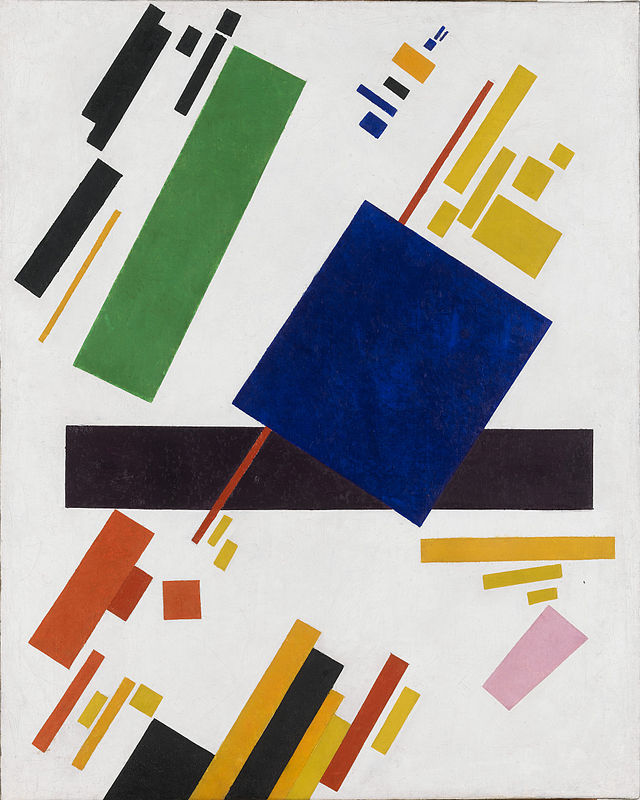
But Malevich’s early cubo-futurist works were only the beginning, and it was when, in 1914, Malevich painted his first black rectangle – Black Quadrilateral – that the artist took a clear and drastic departure from figurative works, presenting his ideas in The Last Exhibition of Futurist Painting 0.10 in what was then Petrograd in 1915. Calling his new direction Suprematism, Malevich believed that “the artist can be a creator only when the forms in his picture have nothing in common with nature” and dismissing the artists of the past as “counterfeiters of nature” he went about creating works which are starkly geometric and lacking in any feature which could link them to the natural world. The paintings which resulted from this period are a wonderful collection of energetic and colourful works (with the exception of the Black Square of course) which I loved. There is a complexity of composition in the way that these various shapes are interlayed and angled which cannot be underestimated, and in seeing these works, I saw that here Malevich really was creating from scratch rather than relying on nature for reference.
Suprematist works

Malevici06 640px-Suprematist_Composition_-_Kazimir_Malevich Kazimir_Malevich_-_Suprematism_-_Google_Art_Project malevich28 malevich4

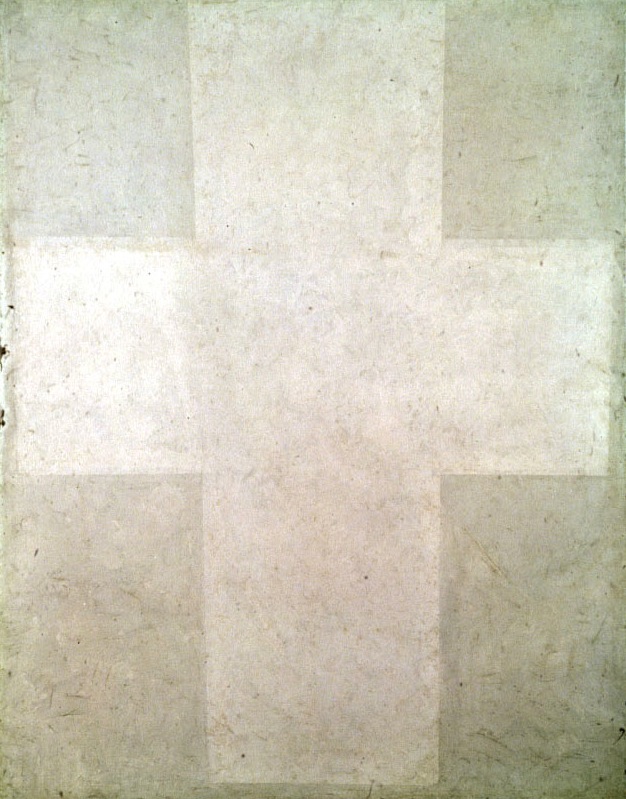
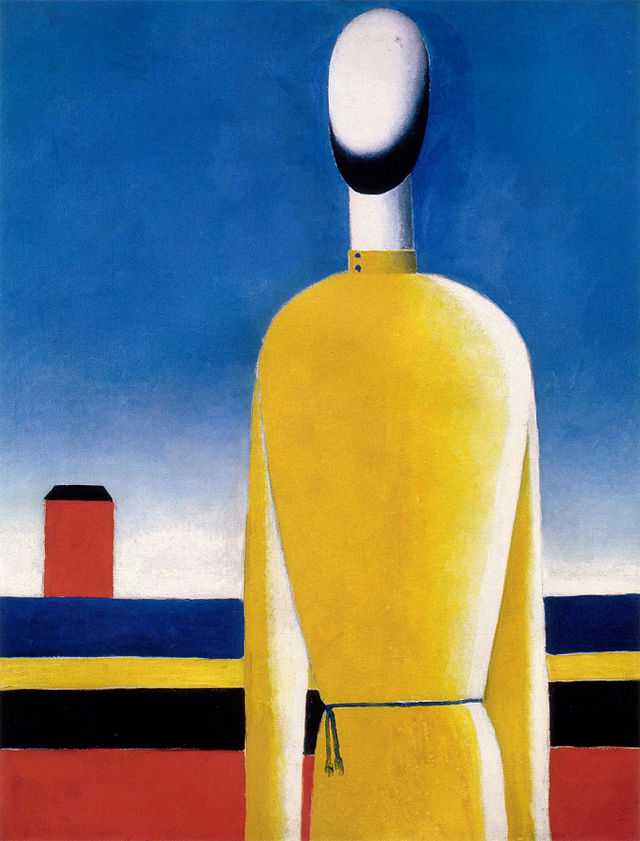
However Malevich could only take his Suprematist ideas so far, and by the time of the Russian Revolution in 1917, he consciously began to “kill off” paintings, gradually draining his paintings of colour in works such as White Suprematist Cross (1920) – a white cross on a white background – and Dissolution of a Plane (1917) where the colour is gradually fading out of the edges of a red rectangle. This was what Malevich called the “death” of painting, and in 1919, Malevich wrote that “Painting died, like the old regime, because it was an organic part of it”and what followed was several years when the artist dabbled in transferring his ideas to architecture, and teaching.

White Suprematist Cross (1920)

White Suprematist Cross (1920)

However, it was a temporary death, for a few years later, Malevich came to resurrect his painting, and interestingly, when he did so, he returned not to his Suprematist ideas, but to the cubo-futurist figuration of his early years. It was almost as though his Suprematist manifesto took such efforts that when he returned to painting, almost as a newcomer to it, he found himself drawn more to the instinctive way of painting which was inherent within him from the start. Which just goes to show: the efforts of stripping out nature and forging something new in art may create something of a stir or a statement, but ultimately we always return to the same thing: depicting the world around us, for that is arguably the true purpose and calling of art – to narrate and reference the lives we all live.

Later works

Malevich142 Later

In short this is a marvellous new show which provides a comprehensive review of this important artist, introducing his work to many who, like me, were not familiar with his oeuvre before. Beyond the paintings and the excellent chronological layout of the exhibition, my favourite section was Room 10, which takes a break from the paintings, and is like a mini-retrospective within the bigger story, depicting the whole of Malevich’s career through his works on paper. As such, the display provides a fascinating insight into both Malevich’s preparation of his paintings, and also how quickly his works transformed from cubism to futurism to suprematism and back again. A complex transition truly worthy of a retrospective exhibition on the scale Tate has so ably put on show this summer.

Malevich: Revolutionary of Russian Art is on at Tate Modern, London until 26th October 2014.

Wonderful Wimbledon: strawberries, cream and a place to be seen

I interrupt this ambrosial Amalfi story to sneak a peak at the sweet verdant lands and the rolling hills of summertime England, where far away from the sun-baked mountains of the mediterranean, different peaks are being climbed – peaks of physical fitness and sporting prowess when the world’s best tennis stars come together for the ultimate in tennis championships, the creme de la creme of all tournaments: Wimbledon.

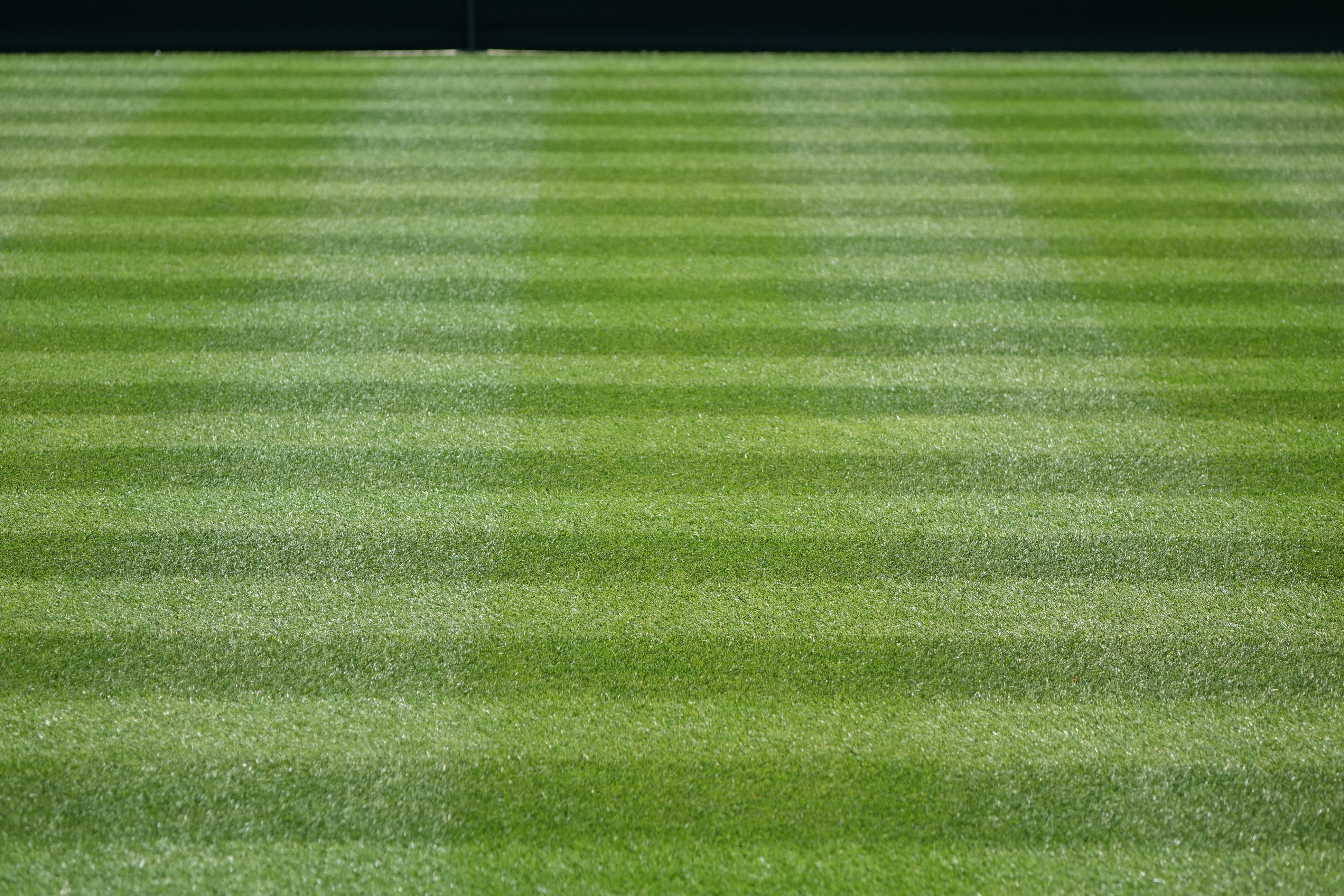
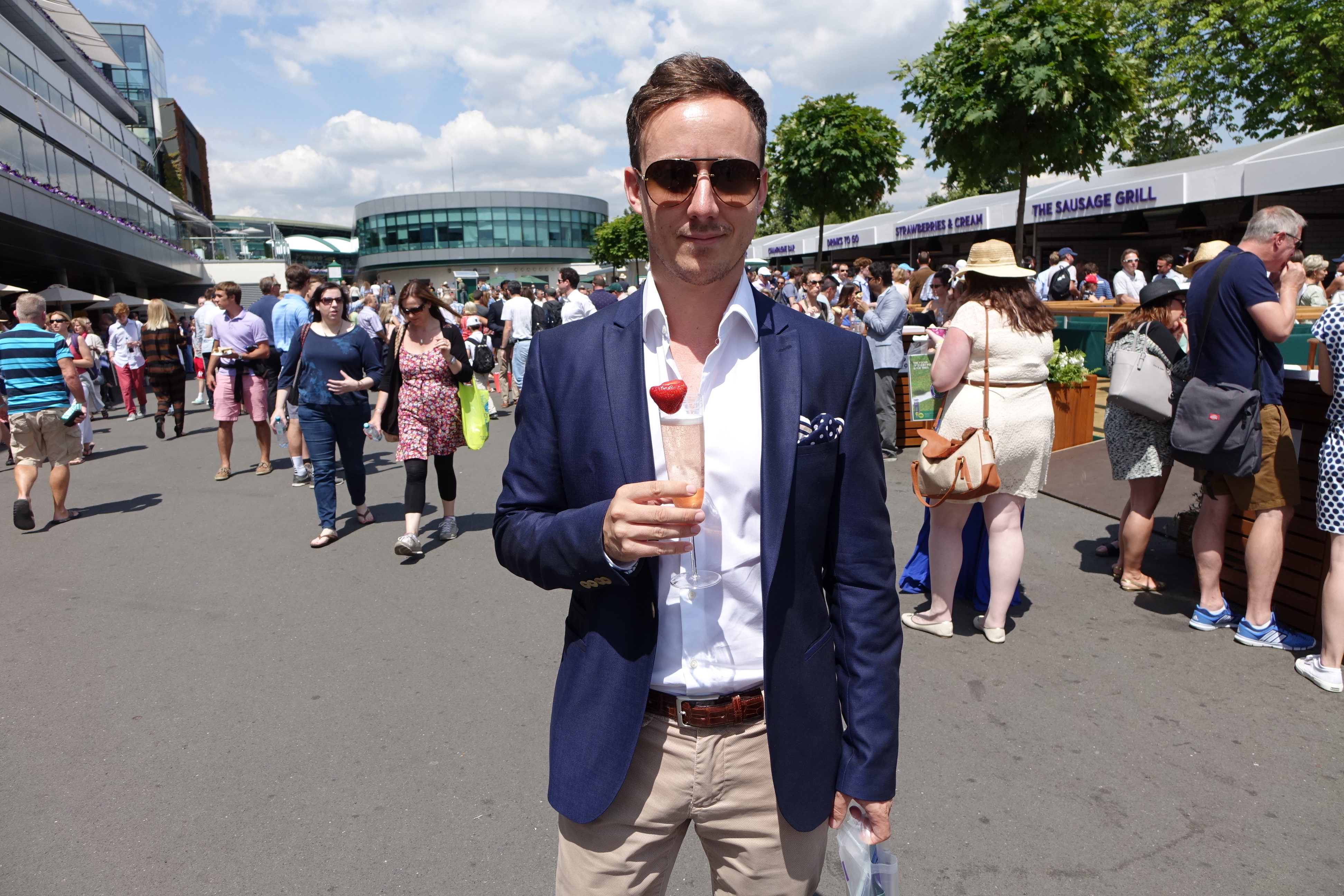
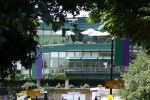
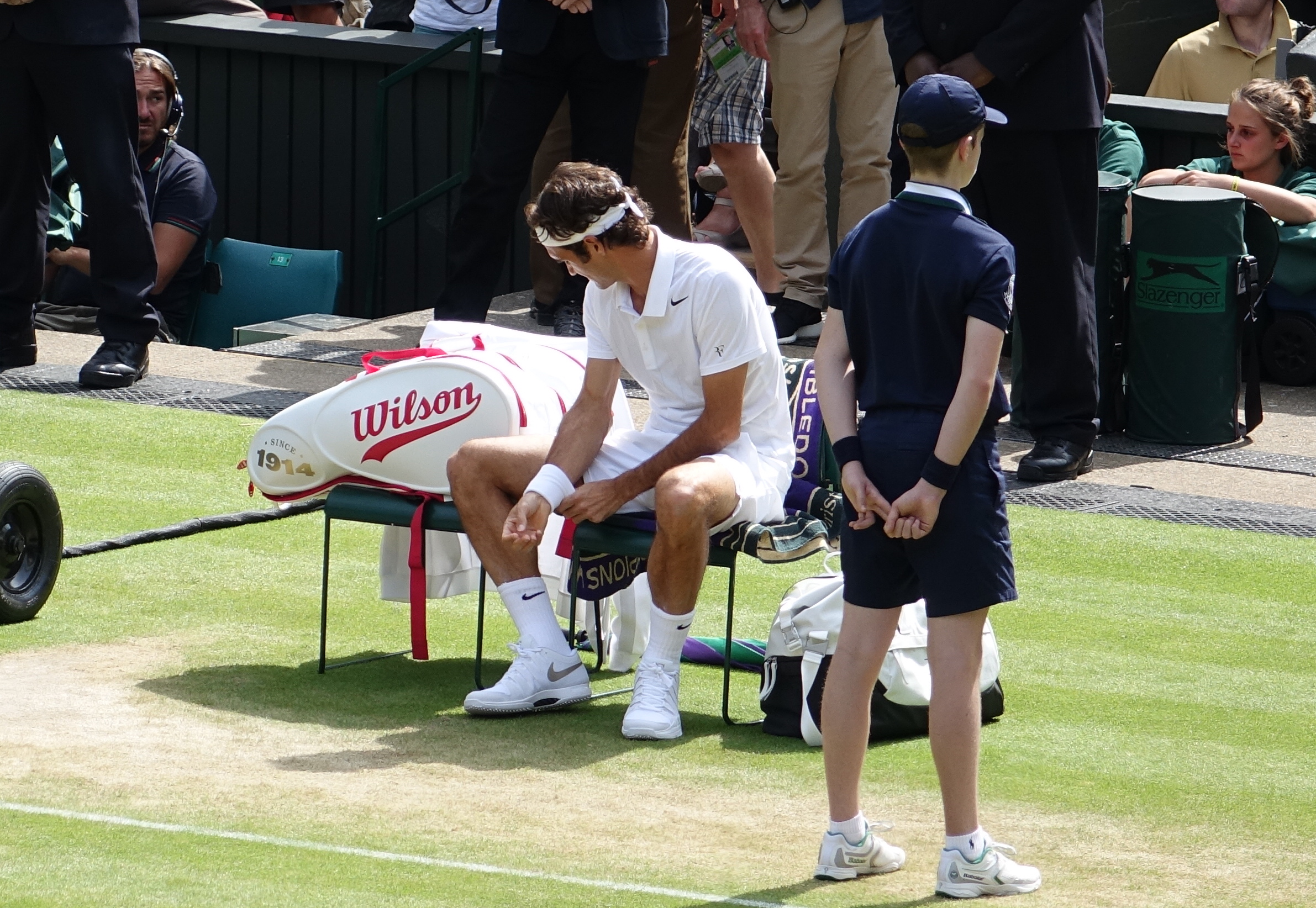
Wednesday may have been a grey day for British tennis, when national hopeful Andy Murray was chased out of the championships in a depressing straight-set defeat, but above the perfectly manicured lawns of centre-court where I was lucky enough to be a spectator all day, the skies shone a vivid blue, and all around the many courts of the All England Lawn Tennis Club, the glamourous and chic of high society perambulated in their finery, clutching glasses of lansen champagne in one hand and a tub of the traditional Wimbledon accompaniment of strawberries and cream in the other.

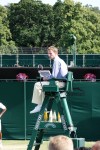
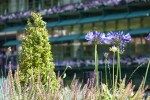
DSC04290 DSC04276 DSC04406 DSC04272 DSC04286

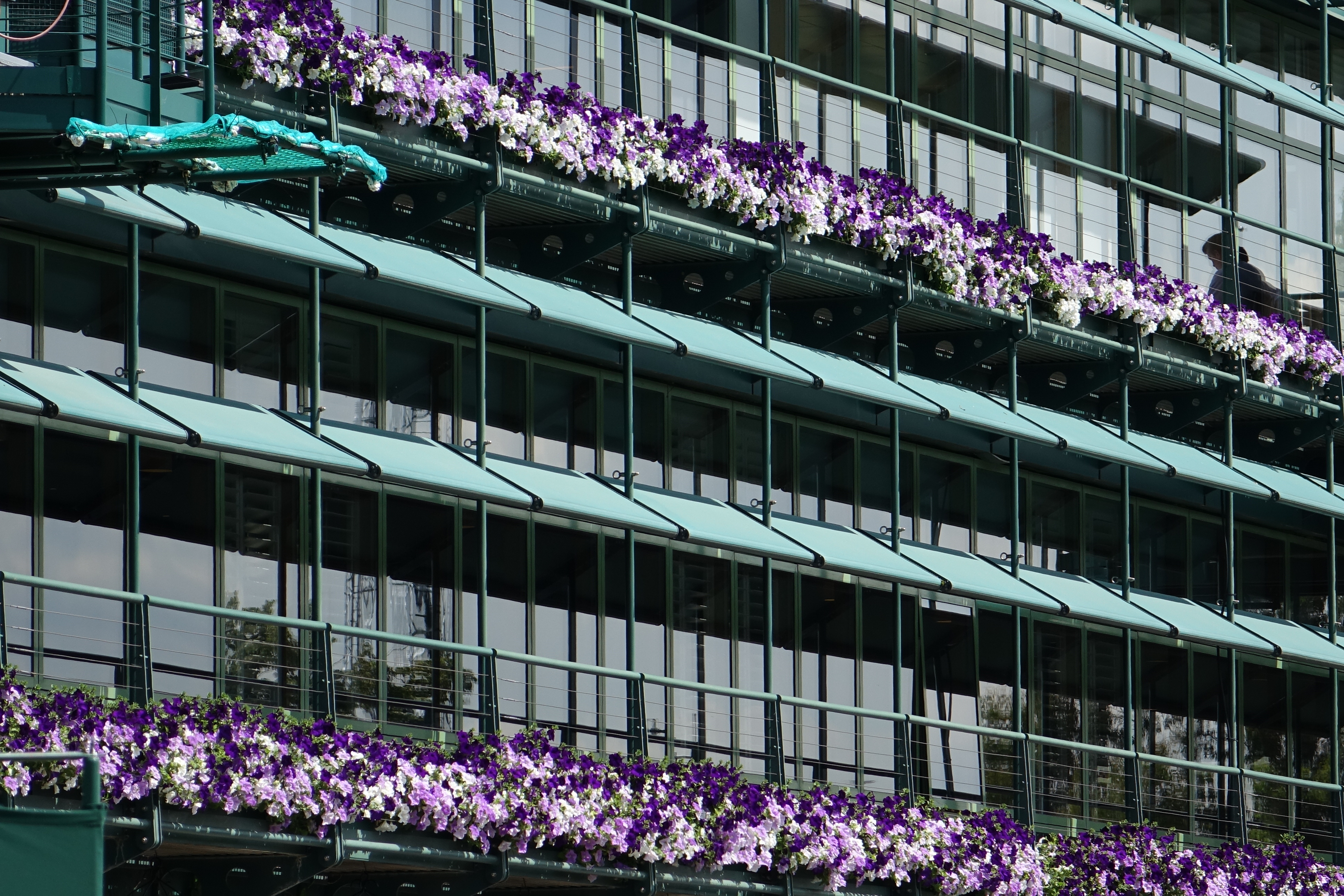
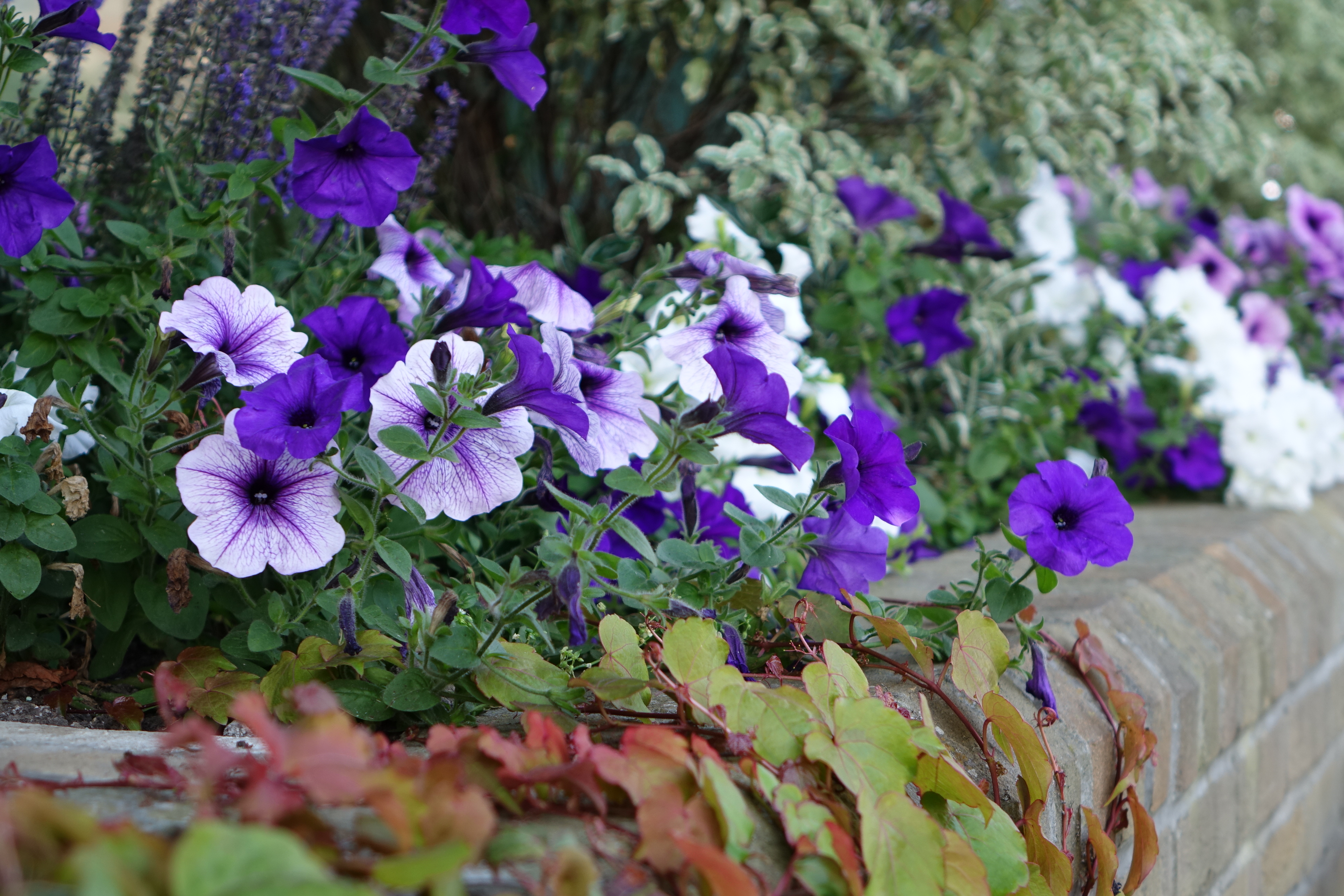
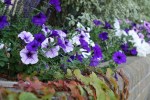
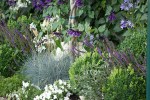
For even those few who do not get caught up in the all-encompassing excitement of riveting rallies and tense tie-breakers, Wimbledon is an unmissable event of the season. With a ground filled with perfectly manicured floral blooms in the championship colours of green and purple, when styled summer frocks and panama hats get an airing, and some of the world’s best players and celebrity spectators gather together, Wimbledon is surely the high point of the British summer, when the tennis loving crowds include even the royals themselves – why yesterday the Duke and Duchess of Cambridge (otherwise known as Wills and Kate) were in attendance.

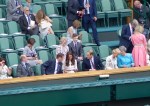
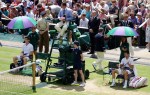
DSC04444 DSC04509 DSC04371

Naturally, while I rode the emotional wave of highs and lows that came with watching Murray’s defeat and Federer’s later quarter final victory, I also felt happily immersed in the high-flying excitement of the entire Wimbledon experience, and these photos are testament to the day we had. As with the good english weather, these two weeks of Wimbledon are a transient experience – so like me, I hope you will enjoy the brief interlude of Wonderful Wimbledon while you can.

All photos and written content are strictly the copyright of Nicholas de Lacy-Brown © 2014 and The Daily Norm. All rights are reserved. Unauthorized use and/or duplication of the material, whether written work, photography or artwork, included within The Daily Norm without express and written permission from The Daily Norm’s author and/or owner is strictly prohibited. Excerpts and links may be used, provided that full and clear credit is given to Nicholas de Lacy-Brown and The Daily Norm with appropriate and specific direction to the original content. For more information on the work of Nicholas de Lacy-Brown, head to his art website at www.delacy-brown.com

Perfect in every way: Caperuza Bistro, Marbella

It’s very rare that you will ever get to enjoy a restaurant meal when every single dish is completely perfect. Even when I’ve had the most delicious high end tasting menus, there’s always been at least one dish which hasn’t quite hit the mark. But in the completely unassuming new little restaurant, Caperuza Bistro, which by complete coincidence is located a mere 100 metres from my home in Marbella, I recently had a dinner which was just that: perfect in every way.

The restaurant is small (just one small room with an open plan kitchen facing onto the narrow old town Calle Aduar) and perfectly formed. With a small team of staff, you get a friendly smile and attentive home-spun service right from the first moment of entering, while cosy candlelight makes the otherwise contemporary interior feel authentic and comfortable. The menu is said to work like tapas, although in reality, it’s more like a tasting menu than tapas, because the restaurant, considerate of the need to savour the complex flavours and stunning presentation of each dish, serve dishes one by one, so that every element can be enjoyed and you never feel overwhelmed (as is so often the problem with the traditional tapas format).

DSC04033

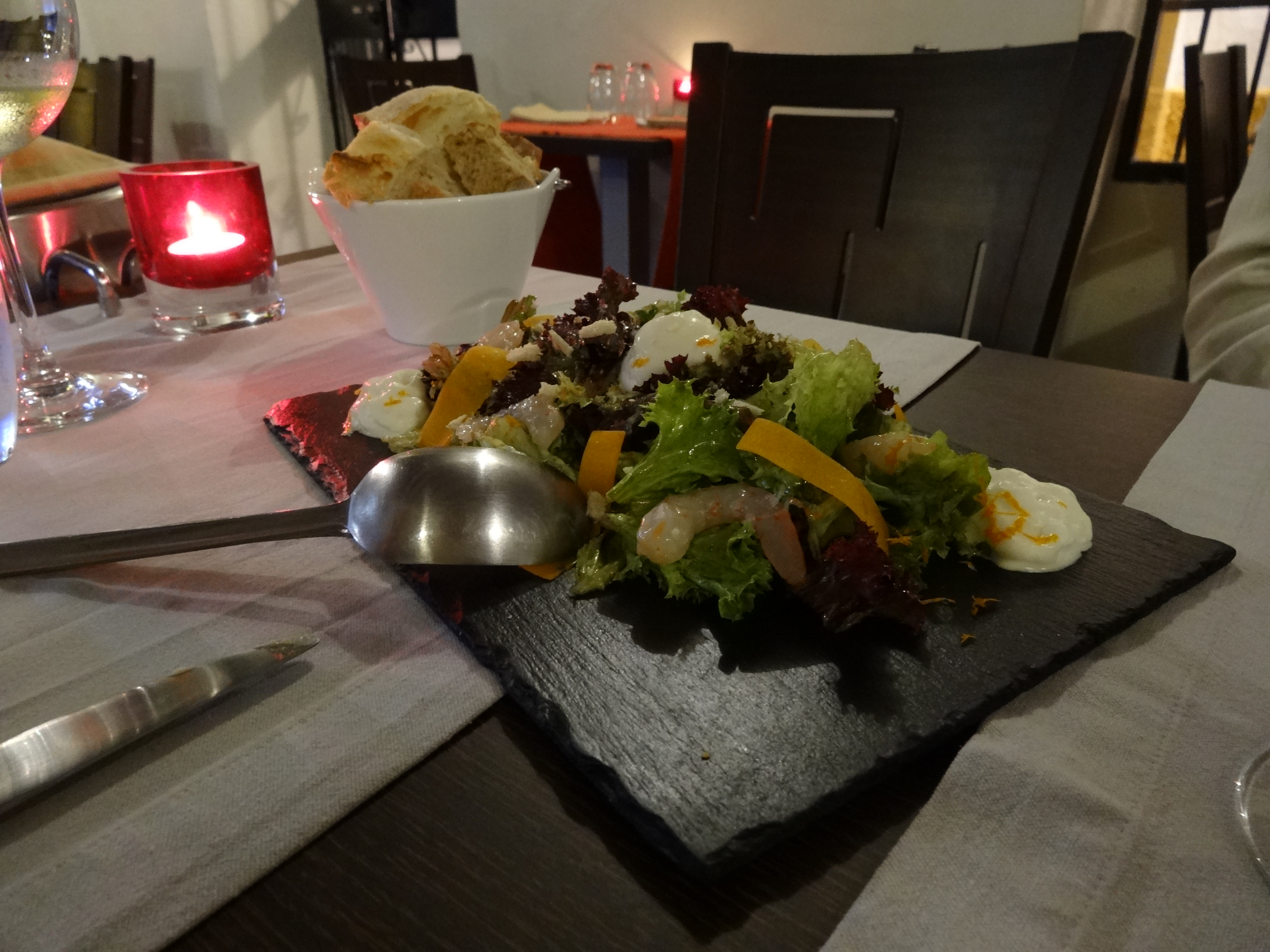
On the recommendation of the amiable waitress, we went for 6 dishes each shared between the three of us. The dishes were served consecutively, with perfect timing and small but adequate pauses between each. We started with a salad of super fresh raw prawns in a smokey foam with sensationally seasoned leaves dressed in orange and what I think was soy. The balance was so delicately and expertly executed that every taste bud in my mouth was tantilised. I can still remember every satisfying flavour now. It was a sensation that was to continue.

DSC03915

Our second dish was a chicken liver pate, beautifully presented in little glass jars with wafer thin bread. While the pate was rich and creamy, it was not overdone. The portion was a perfect size and the elegant crunch of the bread a perfect accompaniment.

DSC03916

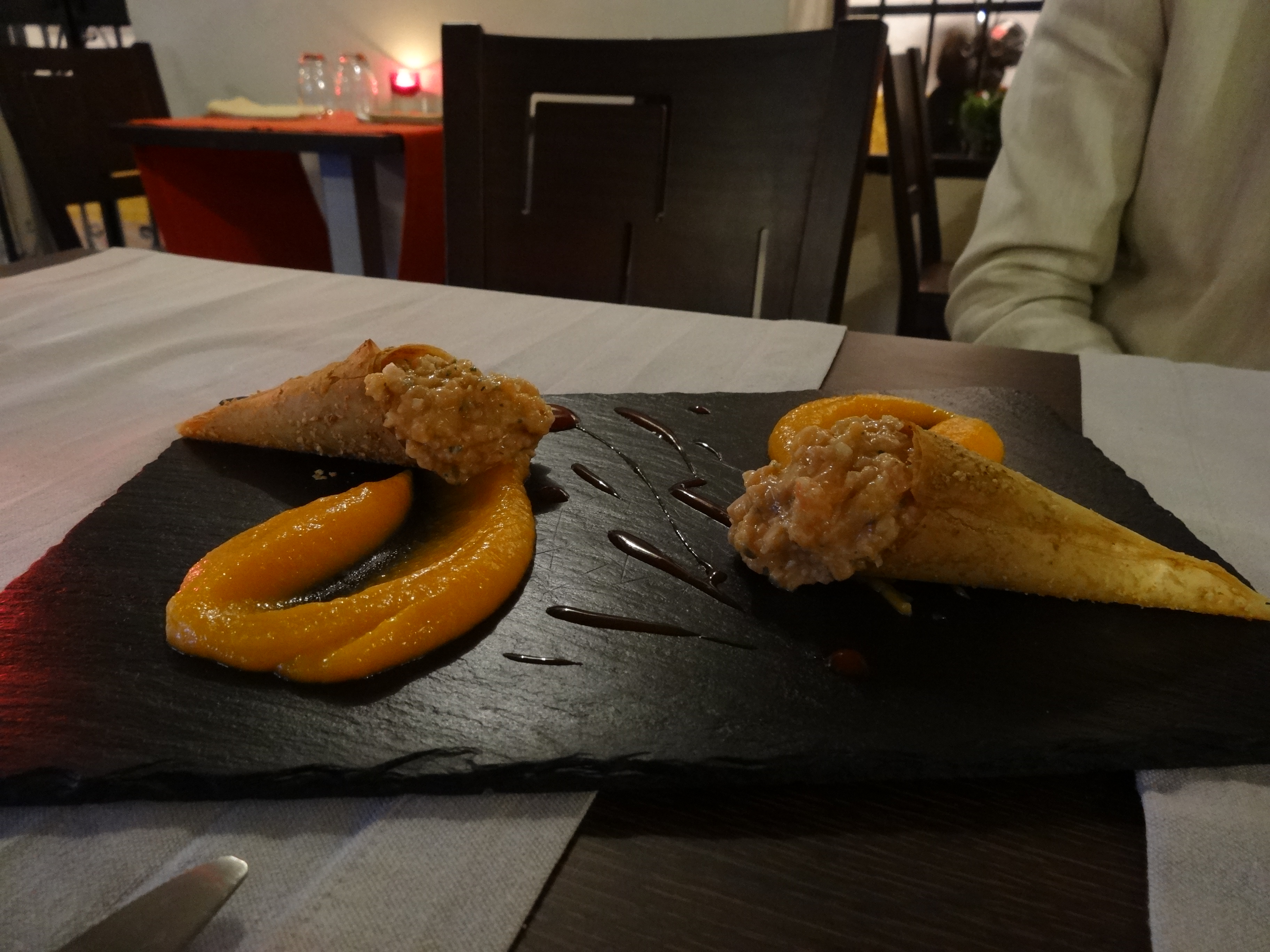
Onto a dish of salmon tartar, spilling out of little crunchy cornets draped over an unforgettable ginger and carrot purée. Balance, balance, balance – this place had it all, with this dish another prime example which lasted but seconds before we finished it up – all washed down with the delicious bottle of Rueda chosen for us by the dedicated staff.

DSC03917

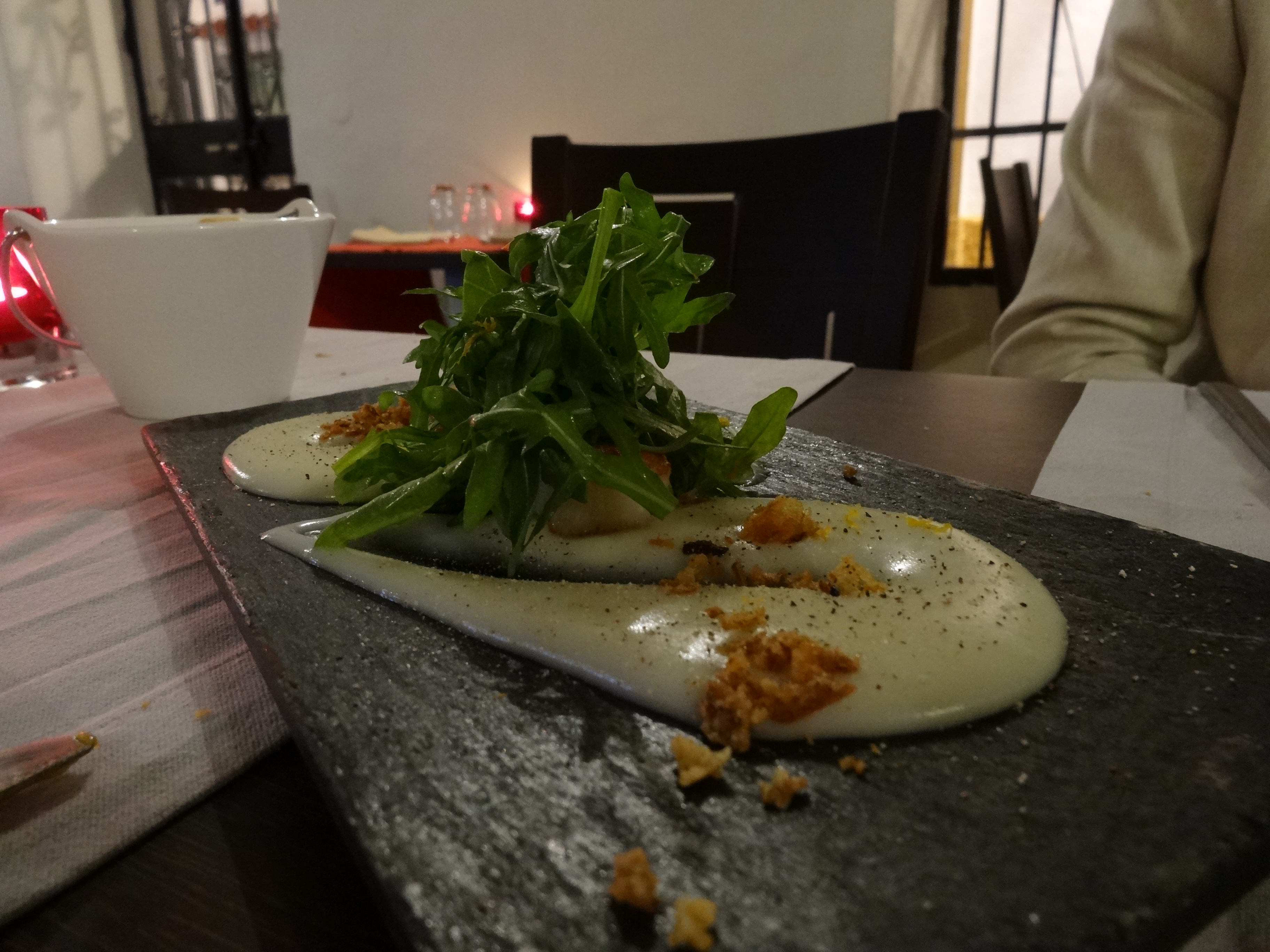
Could it get any better? Why yes, for up next was a dish of scallops hiding within another ample helping of seductively seasoned rocket salad whose peppery bitterness contrasted perfectly with an exquisite lemon and potato puree which brought the lemon groves of Sorrento alive in my mouth. Such freshness of flavour was countered only by the sweet and delicious caramelisation of the scallops. My only complaint – that this dish did not go on forever.

DSC03918

Thankfully, what I now consider to be the best dish of all was still to come. A dish of sweet sticky vermicelli noodles, with juicy big prawns, toasted almonds and garlic. I can’t tell you how delicious this dish was, nor properly communicate just how well the crunch of the almonds contrasted with the silky noodles, and how the delicate shellfish stock had caramelised into a golden sweet pasta sauce. Oh sensational.

DSC03919

Finally we dug into an equally successful dish of asian inspired duck served with a little creamy peanut puree. Need I say more about the excellence of this cuisine? (I forgot to take a photo of that one!)

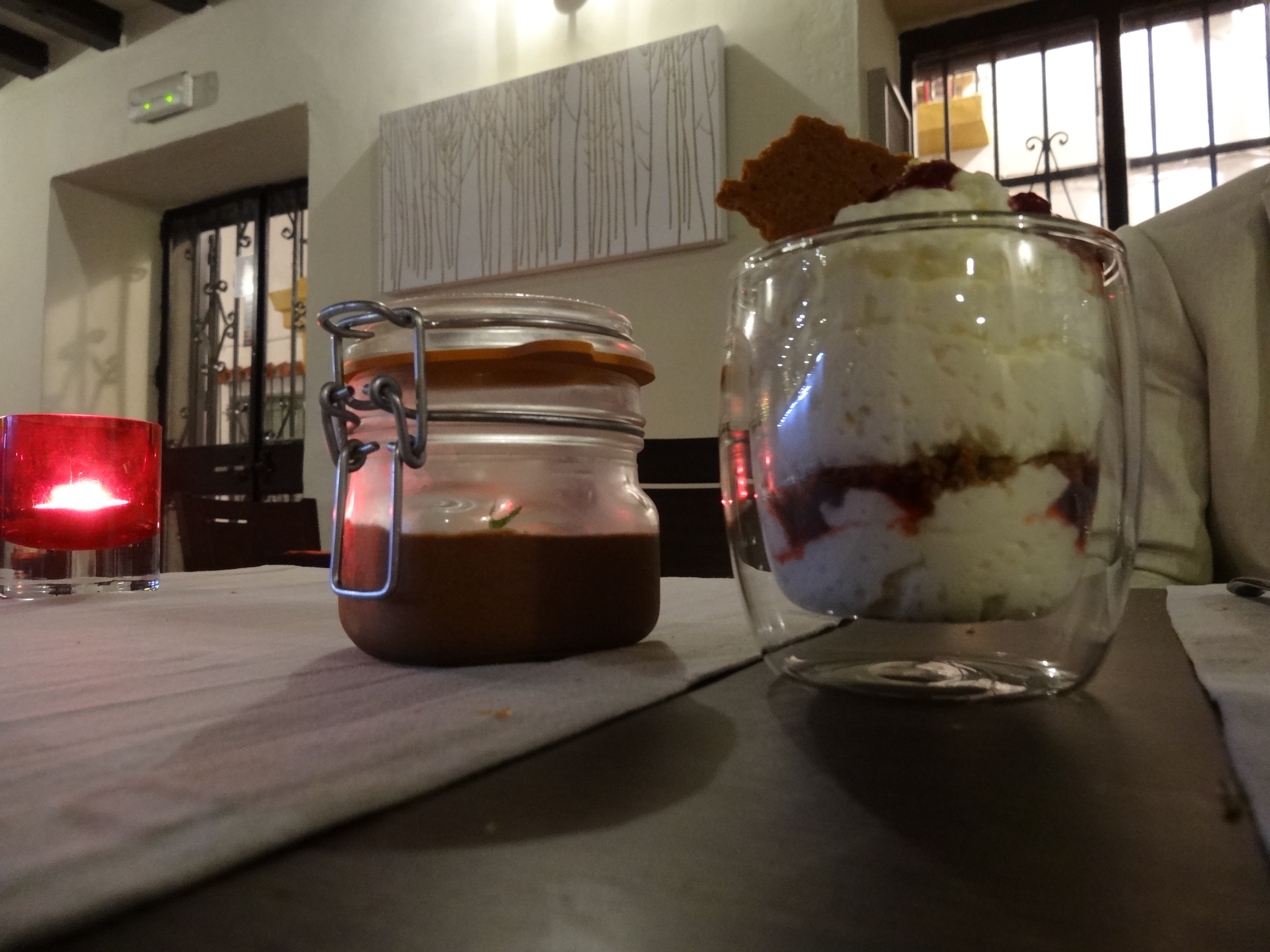
Well yes actually, because dessert was to follow. And just when we thought the mains could never be beaten, along came a cheesecake mousse – I mean for god’s sake, can life get any better than this? Puffy little clouds of the most satisfyingly delicious mousse served with a little buttery biscuit on the side. And then there was the super fresh pineapple sorbet with a creamy smooth mango soup. I was in heaven.

DSC03920 DSC03922

My only hope now is that this little restaurant, which is relatively understated and slightly off the tourist track, remains open to serve this sensational cuisine for a long time to come. The quality of the food was out of this world, and simply could not have been anticipated from the outside of the restaurant, nor from the menu whose prices were so reasonable that one wonders how the restaurant can make any profit at all. But take advantage of those while you can, because if the chef continues cooking this well, they’re bound to rise fairly swiftly in turn.

Caperuza Bistro is at 22 Calle Aduar in the Old Town (Casco Antiguo) of Marbella, Spain. Tel: (+34 951 395 593)