Skip to content

Posts from the ‘Travel’ Category

My travel sketchbook: El Tajo Gorge, Ronda

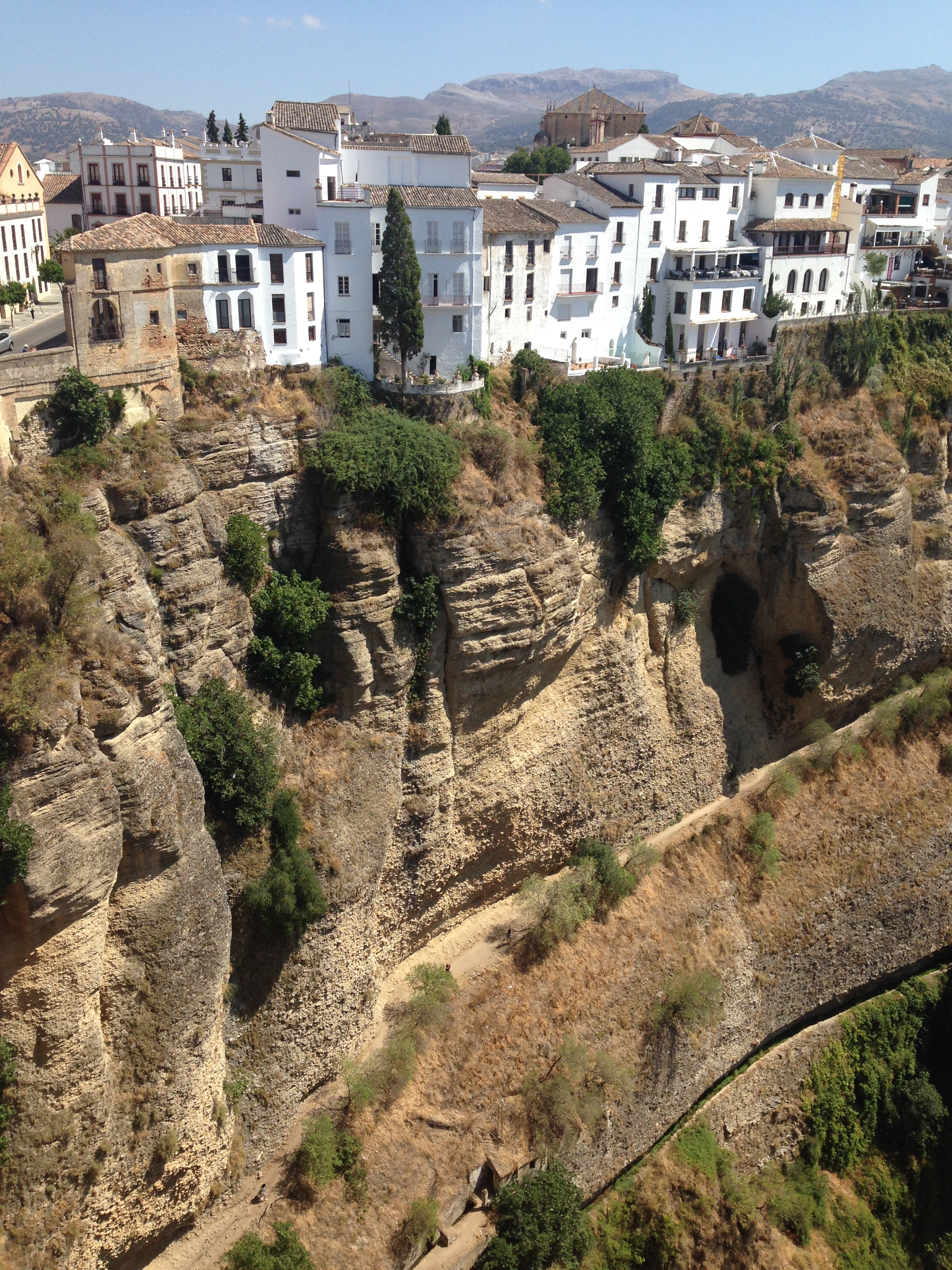
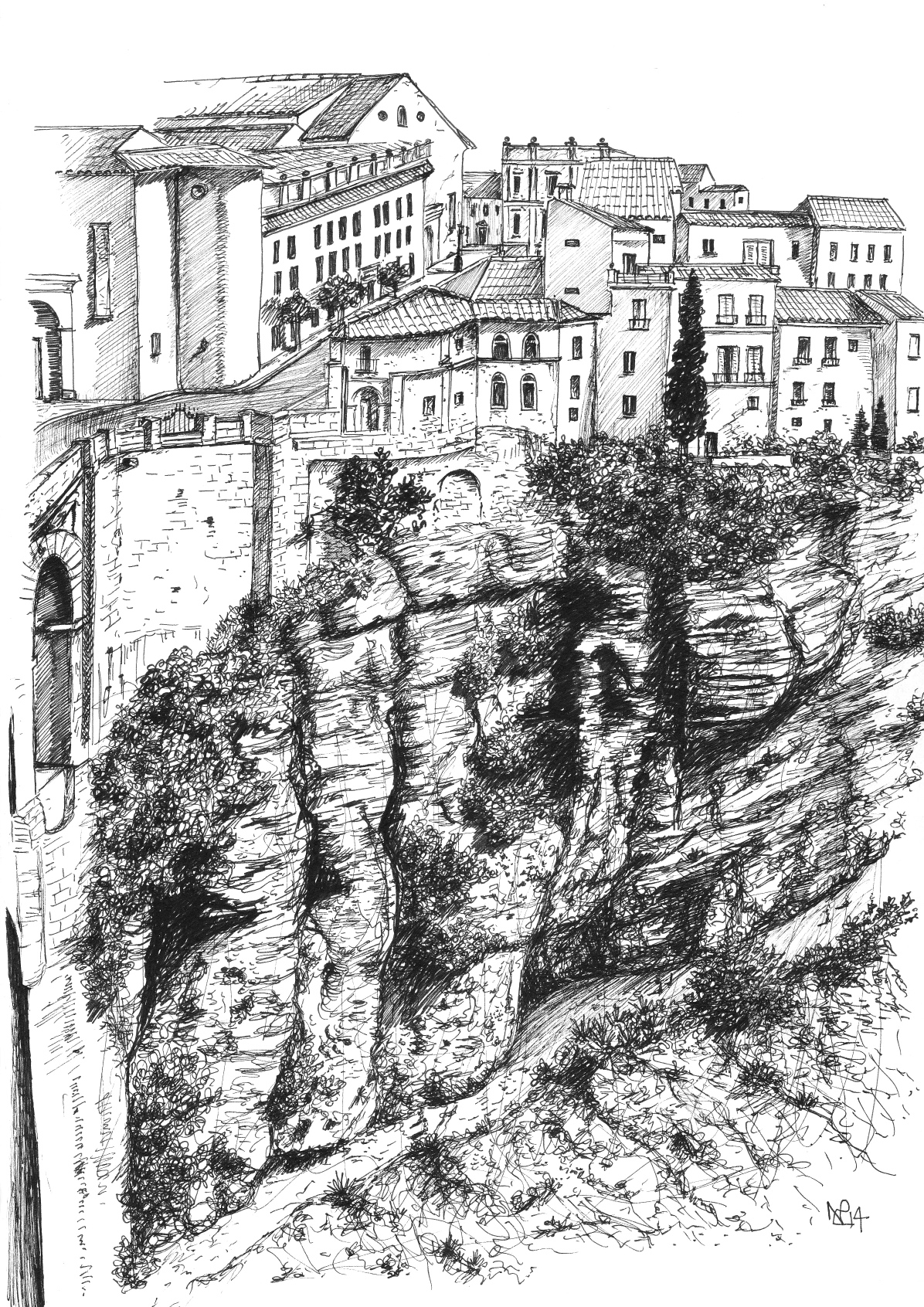
I could have sketched Ronda, the sumptuous Spanish city in Southern Andalucía, forever. Not only were the clusters of white terracotta-roofed old buildings more than easy on the eye, but the great El Tajo gorge upon which the city is precariously built is itself a feast for the eyes, and for a sketchbook. With its multiple craggy rocks, rounded by centuries of weather beatings and the expanse of plant life which has crept over its surface, the steep sided cliffs of the gorge are a picture of complex shapes, angles and shadows, and taken as a whole almost appear to defy gravity, such is the vertical, and in places almost inversed top heavy standing of these vertiginously high cliff faces. All this of course makes for a sensational drawing subject, and within hours of moving into our sumptuously large bedroom and terrace in the Paradores Hotel, I began two pen sketches of the incredible view which we could see from every part of our room.

Ronda 1 - Buildings above the Tajo Gorge, Ronda (2014 © Nicholas de Lacy-Brown, pen on paper)

Ronda 1 – Buildings above the Tajo Gorge, Ronda (2014 © Nicholas de Lacy-Brown, pen on paper)

The two sketches are fairly similar, hence why I am posting them together. They concentrate on the same section of the gorge, with a view onto the oldest quarter of Ronda with its main church stood proudly at the centre. However, one focuses more on a cluster of buildings showing just a little of the gorge below, while the other shows more of the gorge and just a thin slice of the bridge, helping the audience to appreciate just how small the buildings of Ronda appear when perched on the full expanse of this rocky canyon. And this is only what I could see from the hotel – the gorge plummeted deeper still, showing just how dramatic this scenery is.
Ronda 2: The Tajo Gorge (2014 © Nicholas de Lacy-Brown, pen on paper)

Ronda 2: The Tajo Gorge (2014 © Nicholas de Lacy-Brown, pen on paper)

I am delighted with the capacity of these sketches to have captured that drama, along with the great contrast between violently brutal rock face and highly civilised historical architecture which makes Ronda – and now these sketches – so interesting to see.

© Nicholas de Lacy-Brown and The Daily Norm, 2001-2014. Unauthorized use and/or duplication of the material, whether written work, photography or artwork, included within The Daily Norm without express and written permission from The Daily Norm’s author and/or owner is strictly prohibited. Excerpts and links may be used, provided that full and clear credit is given to Nicholas de Lacy-Brown and The Daily Norm with appropriate and specific direction to the original content. For more information on the work of Nicholas de Lacy-Brown, head to his art website at www.delacy-brown.com

Ronda | Day One: Matadors, Miradores and Multiple Moments of Epiphany

I am going to say something potentially controversial. I think that the experience of a moment of epiphany is the preserve of artists and creatives. Not because other people can’t be placed in the often emotional, sense-tantilising circumstances that give rise to such a moment, but because they do not have the creative mentality which makes them aware of it, or at least of just how sensational are the surroundings giving rise to it. Not everyone therefore will necessarily understand me when I say that in Ronda, a small mountain-top city in Spain’s Andalucia, the surroundings were so bone-achingly beautiful that I experienced multiple moments of epiphany – times when situation, atmosphere and inspiration combine into a powerful fusion of mood and moment; when creative ideas pop and flow from my head like bubbles out of a fast-moving fountain. (The blogosphere does however tend to me full of creatives, and I therefore retain high hopes that most of my readership will be able to flow effortlessly along with me as I describe the happening of those moments under the hot sunny skies of a summer-baked rolling Spanish landscape). 

The Spanish City of Ronda

The Spanish City of Ronda

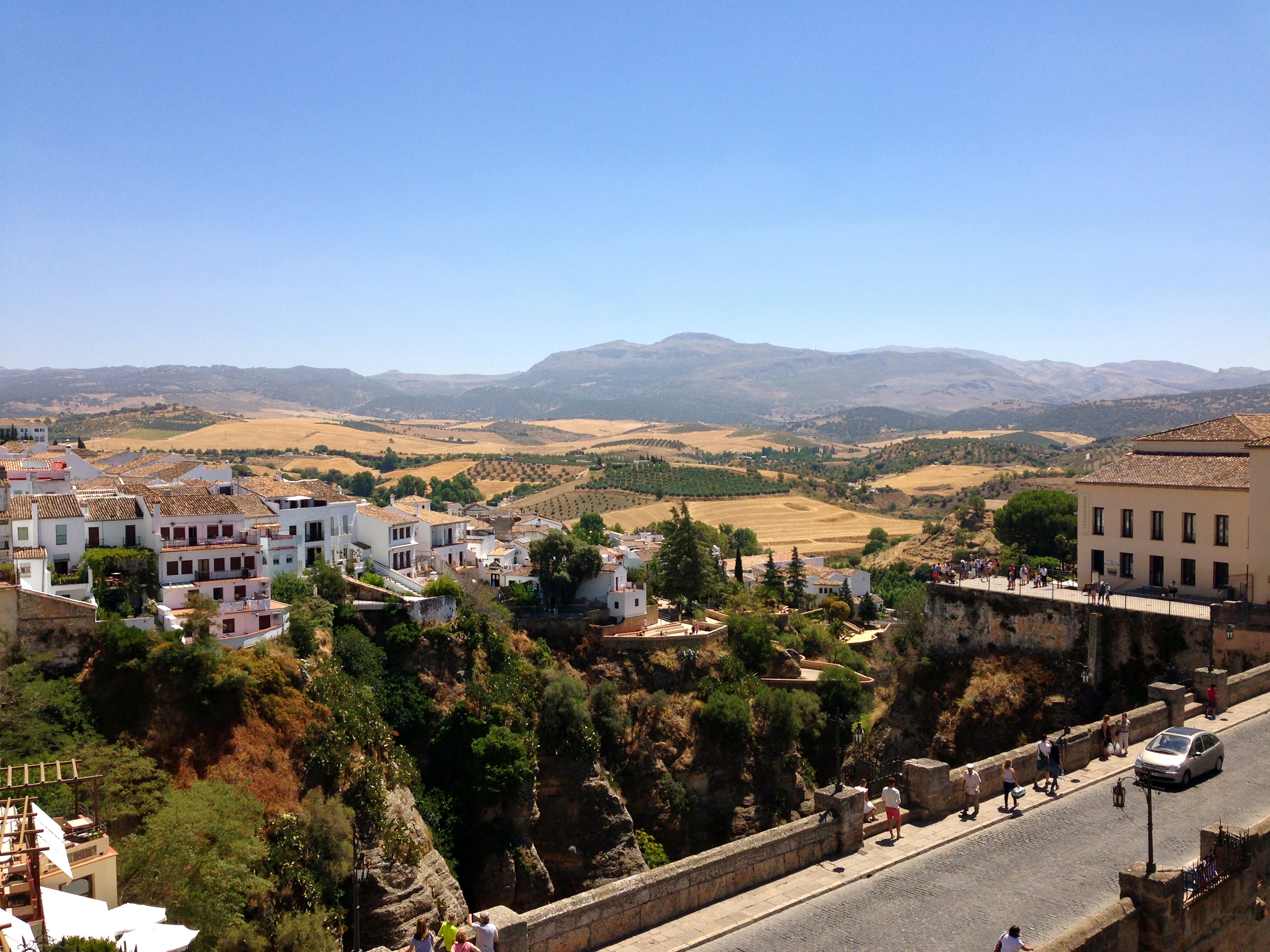
The first of those moments occurred shortly after our arrival in this incredibly placed city up in the vast mountain ranges that sit behind Marbella. As if the incredible view of vertiginous mountain passages on the wildly meandering road from Marbella to Ronda weren’t enough, but up in the city itself, our hotel (and one of the town’s best) – the Paradores – was so sensationally located as to give us the very best views wherever in the hotel we happened to be situated. Located bang next door to Ronda’s iconic Puente Nuevo, the newest and largest of three bridges that span the 120-metre-deep chasm that carries the Guadalevín River and divides the city, the hotel has an enviable location right on the edge of the vast El Tajo gorge on which the whole city is precariously perched. 

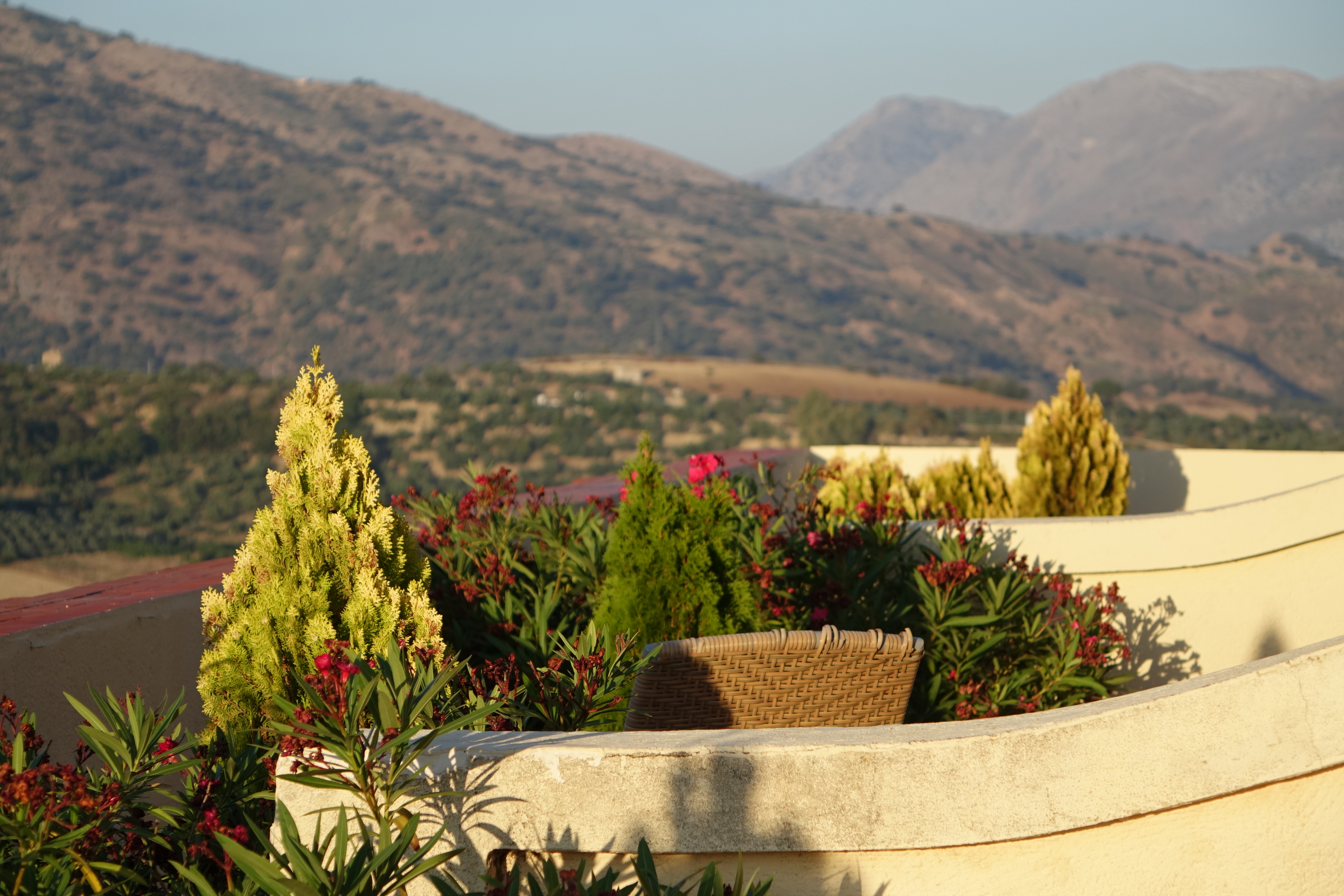
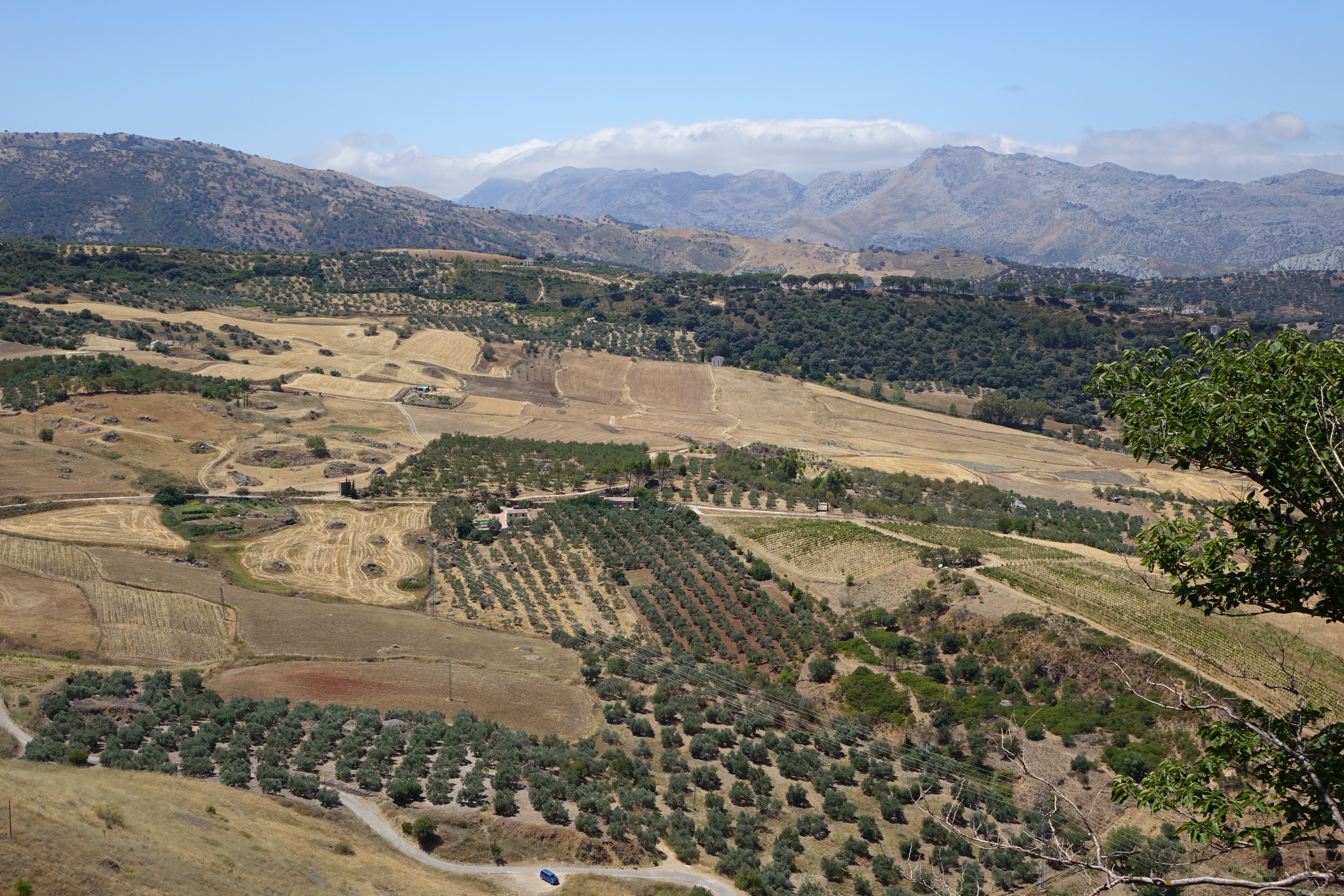
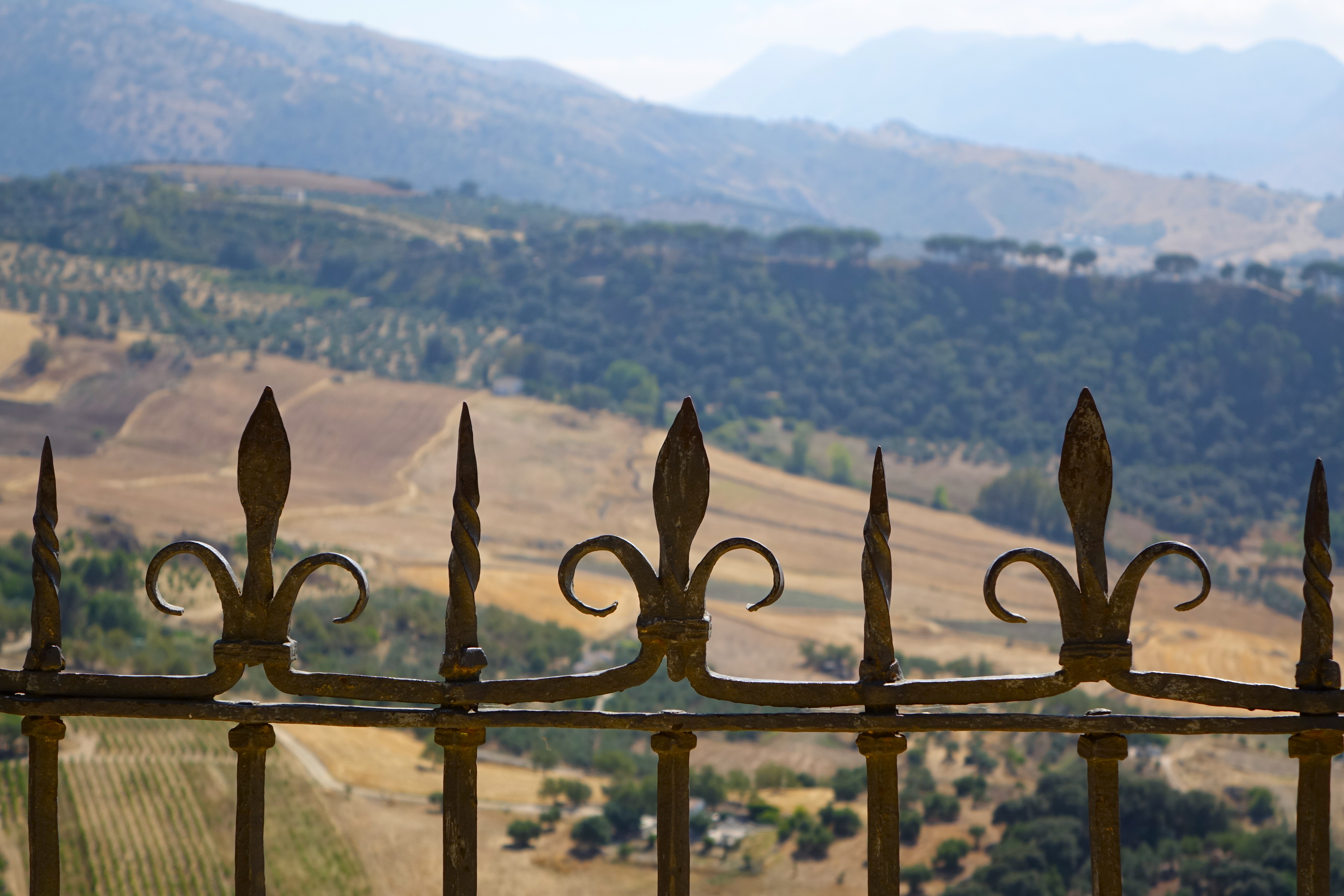
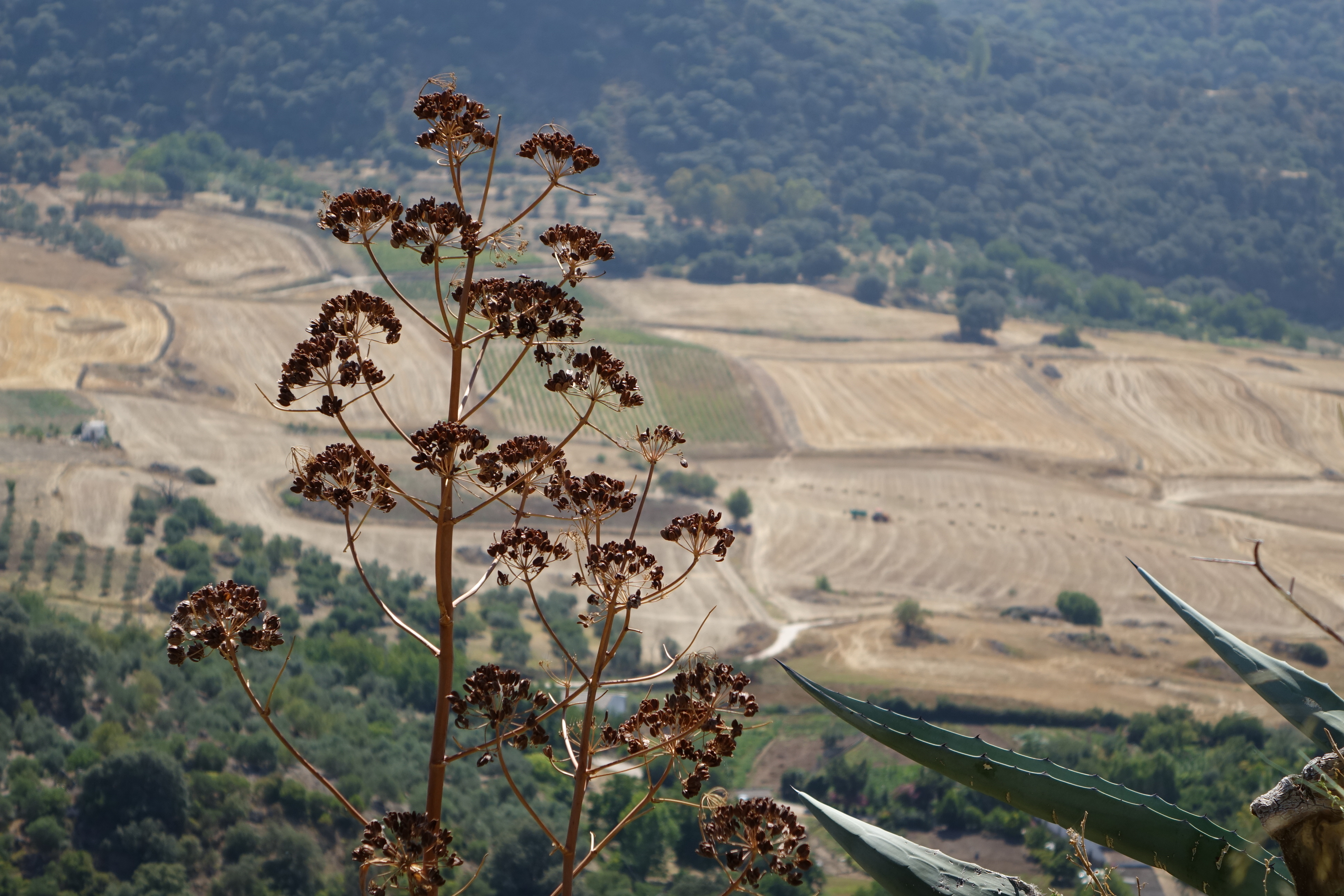
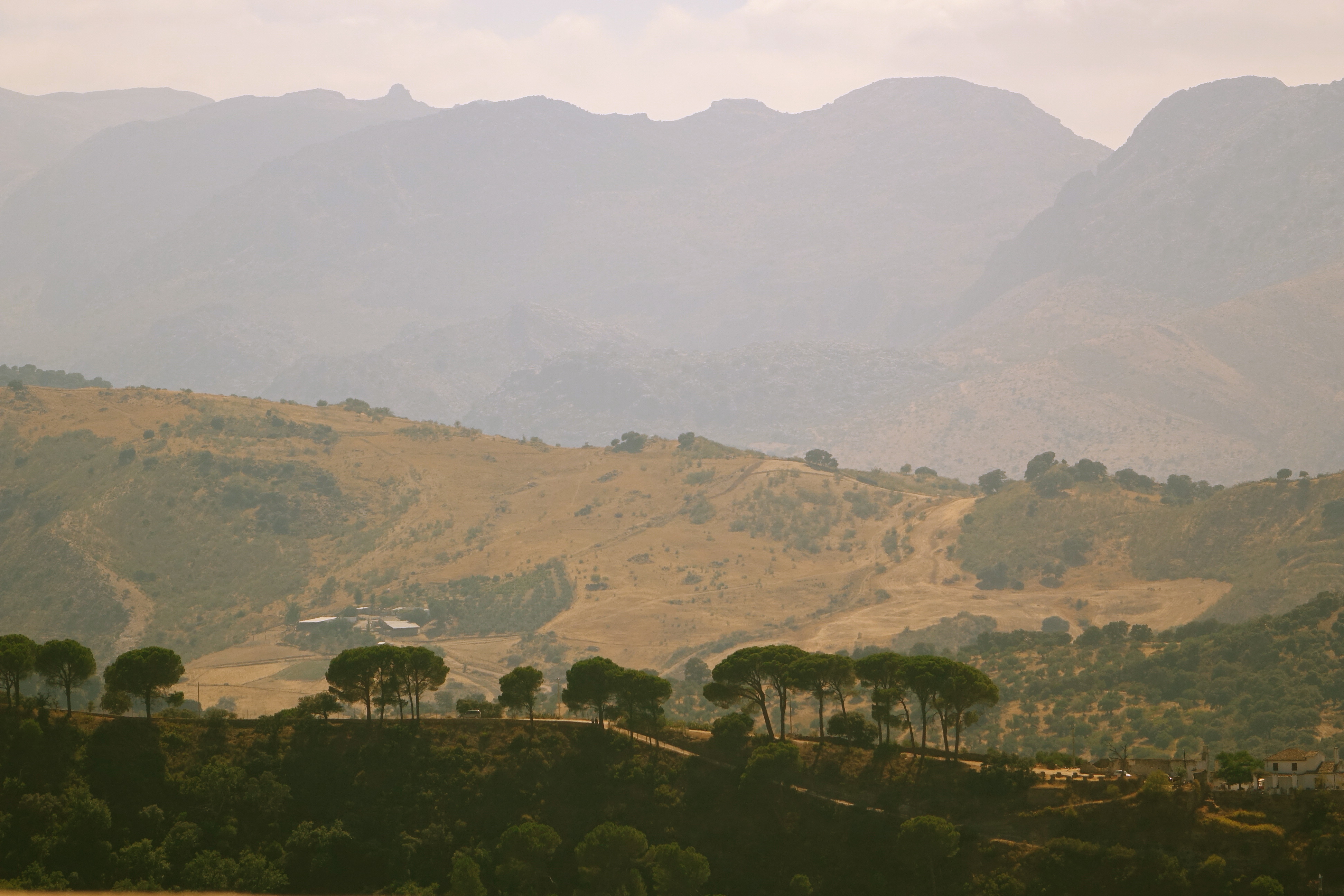
But my moment of epiphany came not in the hotel lobby, or in its well appointed restaurant or swimming pool gardens, but in our own room which we had, with great fortune, been allocated with a vast hotel terrace spanning one whole corner of the hotel and presenting the most sensational almost 360 degree views of Ronda, the El Tajo gorge, the bridge and the mountainous valleys and hills beyond. Looking over the variously angled terracotta rooftops of Ronda’s old town houses, across the rocky gorge and over to vast planes in a tapestry of sun-burnt browns, coppers, umbers and olive greens, we could see hints of Tuscany, moments of Malta, the green verdancy of lush tropics, but predominating over all the unmistakable russet richness of a Spanish landscape. In those fields were every conceivable shade of orange and red; pastures haphazardly placed and others neatly planted with olive trees; curving meandering roads lined with cypresses and Spanish firs, and exposed hard-edged rocky outcrops with birds of prey flying overhead. 

What a view…the Paradores Hotel, our terrace, and the landscape beyond

DSC05709 DSC04834 DSC05152 DSC05108 DSC04912 DSC04815 DSC05155 DSC04884 IMG_9461 DSC04832 IMG_9465

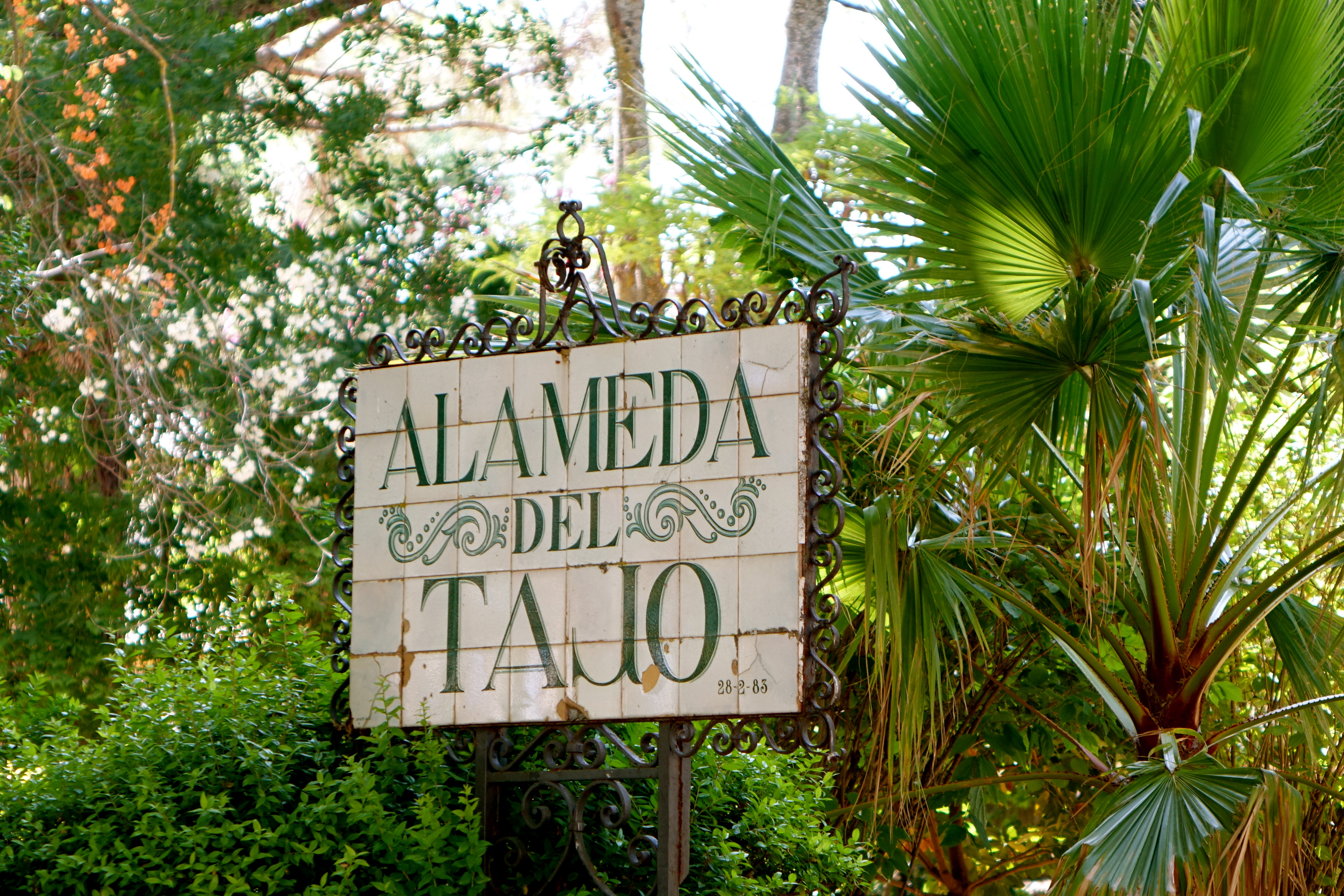
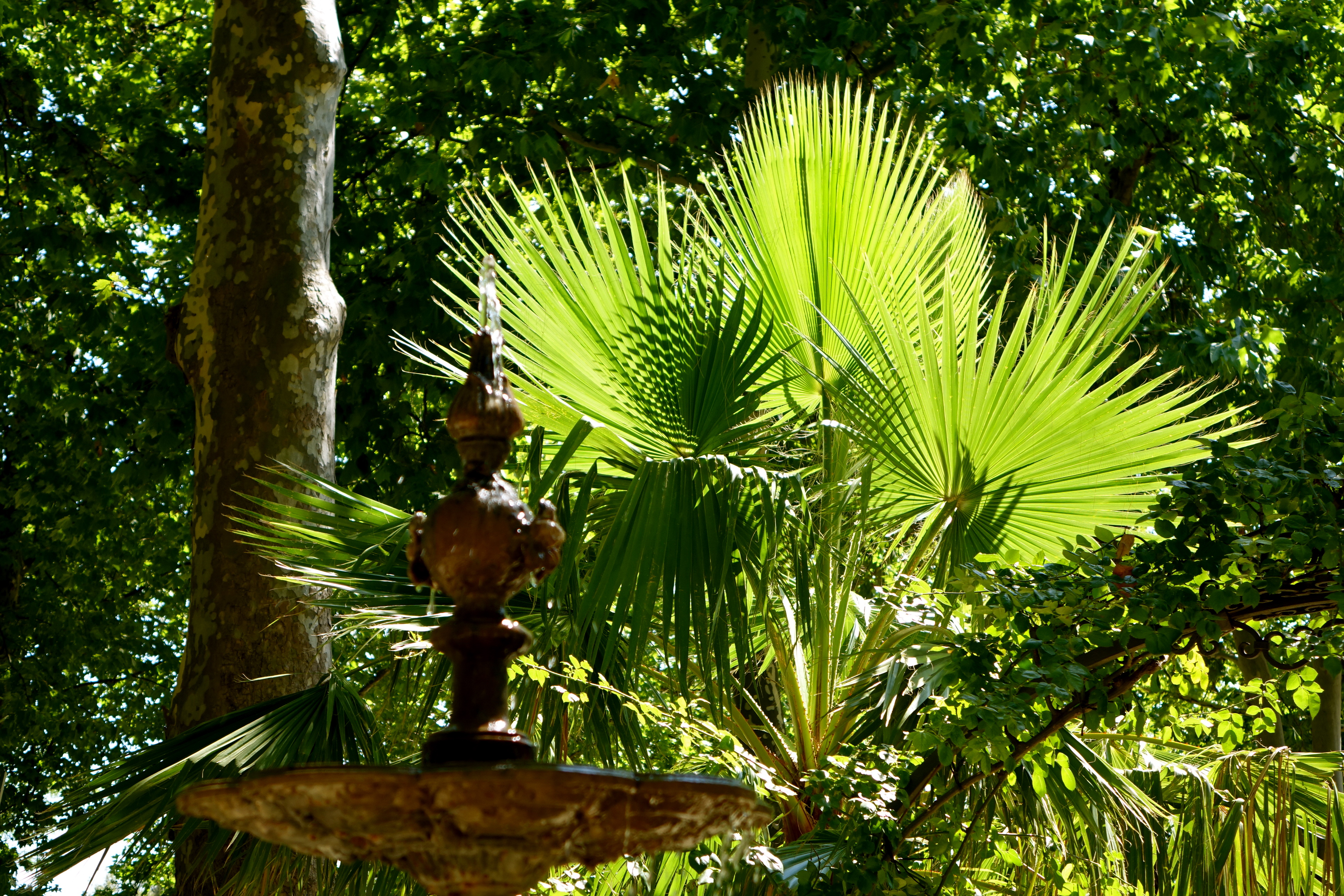
From the hotel, we were but moments away from the Alameda Park; lush botanical gardens whose beauty would themselves make for a view worthy of lavished attention, but which are largely overlooked because of the incredible mountain views which span the entire length of the gardens at the bottom of their sun dappled paths. This reminded me of those sensational gardens at the Villa Cimbrone in Ravello – stunning gardens, much overlooked by visitors who rush to the Terrazzo dell’lnfinito (Terrace of Infinity) to see the unbeatable views of the Mediterranean which the terrace affords. 

The stunning Alameda Park

DSC04865 DSC05287 DSC04859DSC04864 DSC05299 DSC04873 DSC04870 DSC04880 DSC05004 DSC04902 DSC04899 DSC05291 DSC05253

Read more

Photo Focus: Marbella Mix

It’s Marbella week on The Daily Norm, a blog which has become progressively taken over by a summer of Mediterranean (and Adriatic!) travel as I seek to pursue the only true source of a man’s spiritual and creative happiness: La Dolce Vita itself. And back in Marbella, the place which has been my family home for over decade and which has given birth to so many of my most successful creative moments, the typically Andalucian charming little old town which inspired me from my first visit in the year 2000 continues to do so these 14 years later. Still, when I walk around the town, I take my camera with me, for the excitement that this Spanish beauty instils in me continues to inspire creativity of every form, and a camera is a necessary tool in those moments.

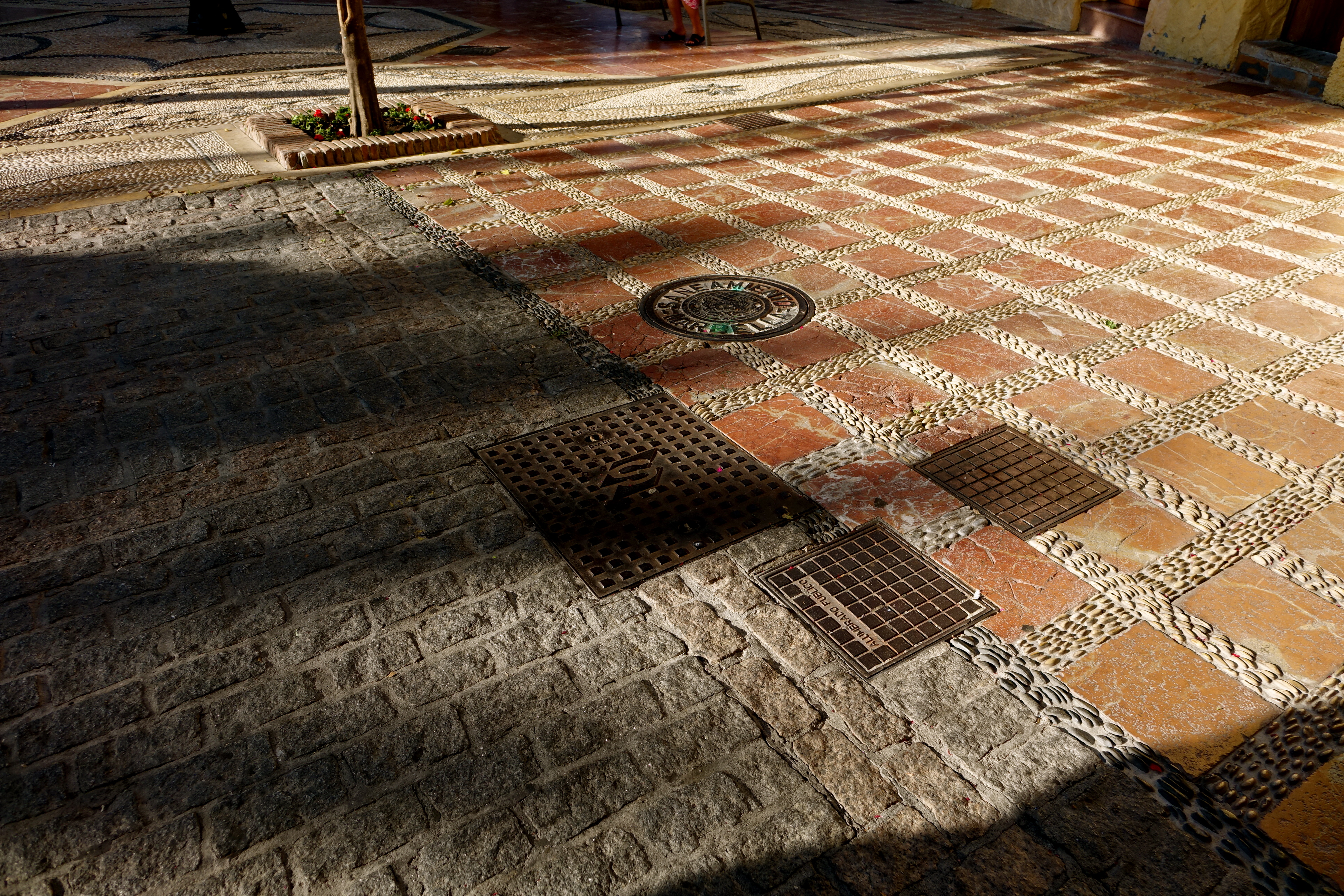
So this post contains just a few of the Marbella shots I took while I spent two wonderful weeks recently ambling down its little narrow alleyways, through large cobbled squares, and around its lush gardens and seaside promenades. In this mixed old bunch of shots, you’ll enjoy energetic bursts of fountains glittering in the hot afternoon sun, you’ll see old Spanish locals creating a picture-postcard grouping as they gather together out in the warm balmy evening air to gossip; and you can share in the burst of optimism which the long shadows and sharp sunshine of an early Spanish morning can bring – when hope itself goes out for a promenade. Amongst the Marbella locals, you’ll see a rather friendly pigeon enjoying those ample fountains, you can meet the rather handsome patron saint cast in bronze outside the Iglesia de la Incarnacion, and, like the lady in one photo, you’ll want to sit out in an Andaluz square reading while the sun breaks out around you.

DSC06140 DSC06024 DSC05989 DSC06177 DSC06144

These photos are very much an expression of the true authentic heart of one of Andalucía’s most overlooked historical centres. For as I’ve said so many times before, Marbella is not just about the superficial glitz of Puerto Banus – it has a heart and soul too.

All photos and written content are strictly the copyright of Nicholas de Lacy-Brown © 2014 and The Daily Norm. All rights are reserved. Unauthorized use and/or duplication of the material, whether written work, photography or artwork, included within The Daily Norm without express and written permission from The Daily Norm’s author and/or owner is strictly prohibited.

My travel sketchbook: Marbella de la Encarnacion

As may have become obvious from my last two posts featuring my spot of summertime DIY, I have recently spent some quality time in the town I am very lucky to call my second home – Marbella in Southern Spain. Despite the fact that the white washed cobbled streets, the charmingly authentic squares, and the alleyways full of geraniums and plant pots and old gossiping locals have all become very familiar to me, I cannot help but be inspired by their quaint beauty on each of my many visits to the town. And since this summer, back in Dubrovnik, I started dedicating my artistic energies to capturing a place in my travel sketchbook, I felt it only apt that I take my sketchbook out into the old town of Marbella, to immortalise the town I love most in all the world.

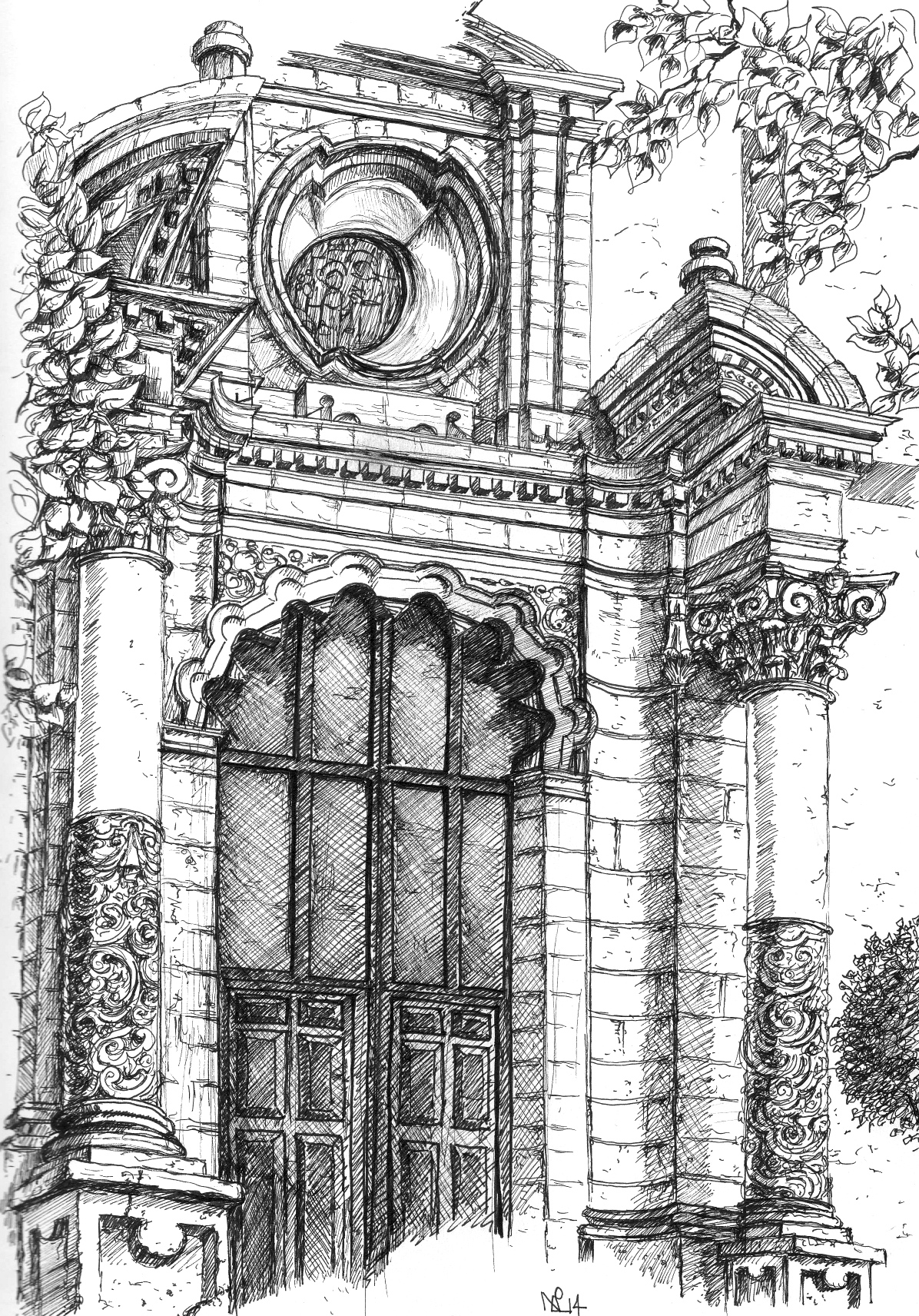
The view I chose to create is the view which I can see from one of my favourite benches in Marbella’s old town. Set nestled between two leafy orange trees, this bench is where my partner and I love to sit and while away long balmy summer evenings, listening to the relaxed bustle of restaurants nearby. But best of all, we get to gaze upon the wonder of Marbella’s Iglesia de Nuestra Señora de la Encarnacion – in other words the town’s main church, an architectural mix of classical grandeur, moorish sumptuousness, and baroque excesses, and nothing shows that mix of styles better than the churches grand doorway, which is what I have attempted to capture in this sketch.

Doorway of Marbella's Iglesia Encarnacion (2014 © Nicholas de Lacy-Brown, pen on paper)

Doorway of Marbella’s Iglesia Encarnacion (2014 © Nicholas de Lacy-Brown, pen on paper)

I accept that the sketch is a bit wobbly in parts, but that’s what you get when sketching in the open, a book resting on your knee, while drawing in unforgiving, unerasable pen – but altogether I love this sketch. For it perfectly captures the imposing grandeur of one of my favourite Marbella views, and the moment in which I sketched it.

© Nicholas de Lacy-Brown and The Daily Norm, 2001-2014. Unauthorized use and/or duplication of the material, whether written work, photography or artwork, included within The Daily Norm without express and written permission from The Daily Norm’s author and/or owner is strictly prohibited. Excerpts and links may be used, provided that full and clear credit is given to Nicholas de Lacy-Brown and The Daily Norm with appropriate and specific direction to the original content. For more information on the work of Nicholas de Lacy-Brown, head to his art website at www.delacy-brown.com

Positano & beyond | Photos Part 5 – Epilogue

I began my Daily Norm tale of my time on Italy’s stunning Amalfi Coast with a post examining the unrivalled beauty of the town of Positano, which we had made our base, and in particular the ravishing sea views from our room. As the weeks have gone by, and I have shared with you tales of our visits to Capri, Amalfi and Ravello, as well as walks around Positano and days on the beach, not to mention my many sketches and paintings which the trip has inspired, it has never failed to amaze me what a beautiful place the Amalfi Coast is. Of course you realise it when you are there – how can you not? Yet it is of course so easy to slip into easy complacency when you are surrounded by perfection at all times. But happily, complacency never got so much that my photographs, or indeed my artistic expressions of Positano and beyond ever ceased, and sat now in a far more urbanised London environment reviewing both my posts on this blog as well as my many photos and souvenirs from the trip, I can appreciate with renewed energy that it really was a paradise on earth.

DSC04207 DSC02337 DSC04224 DSC02243 DSC04167

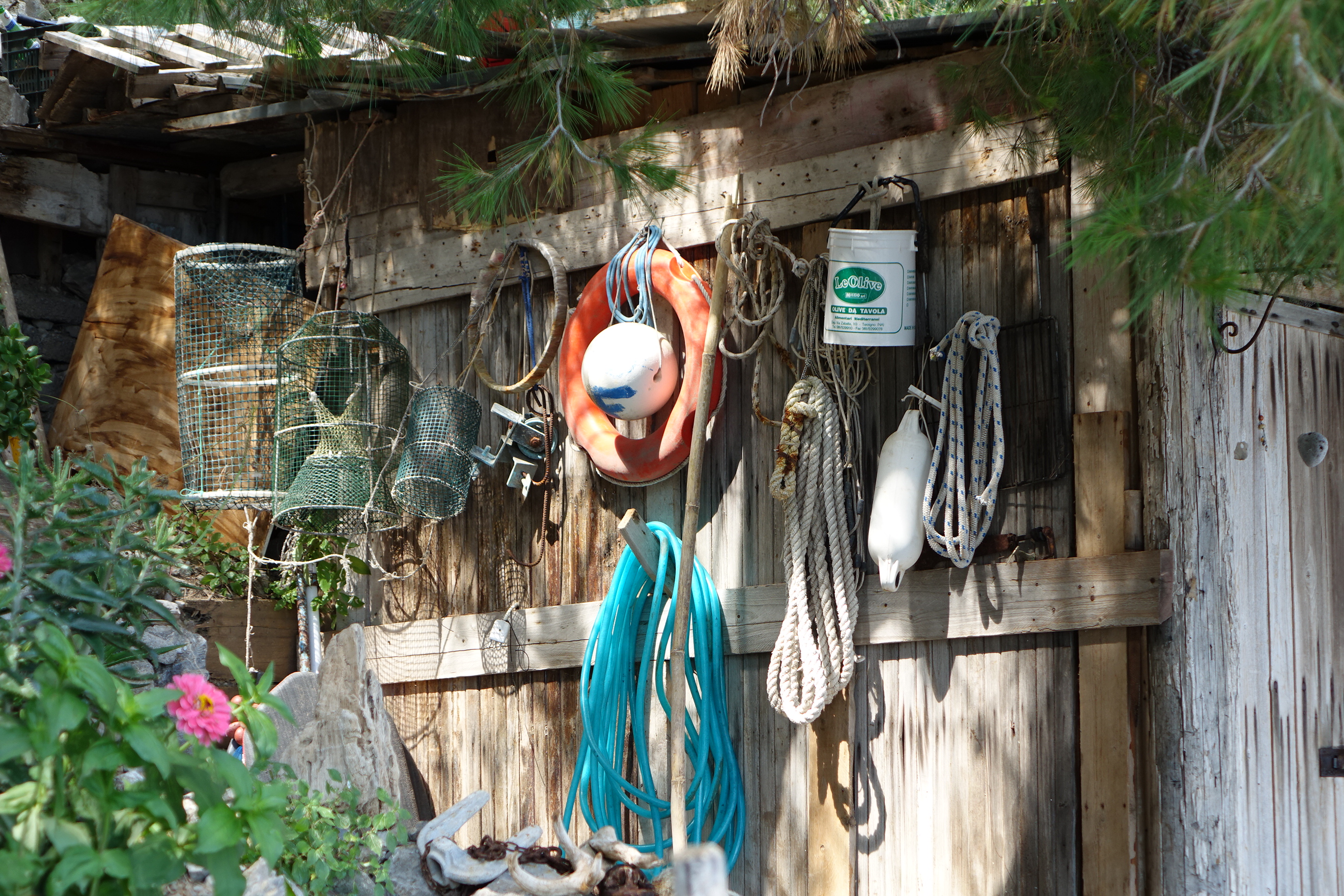
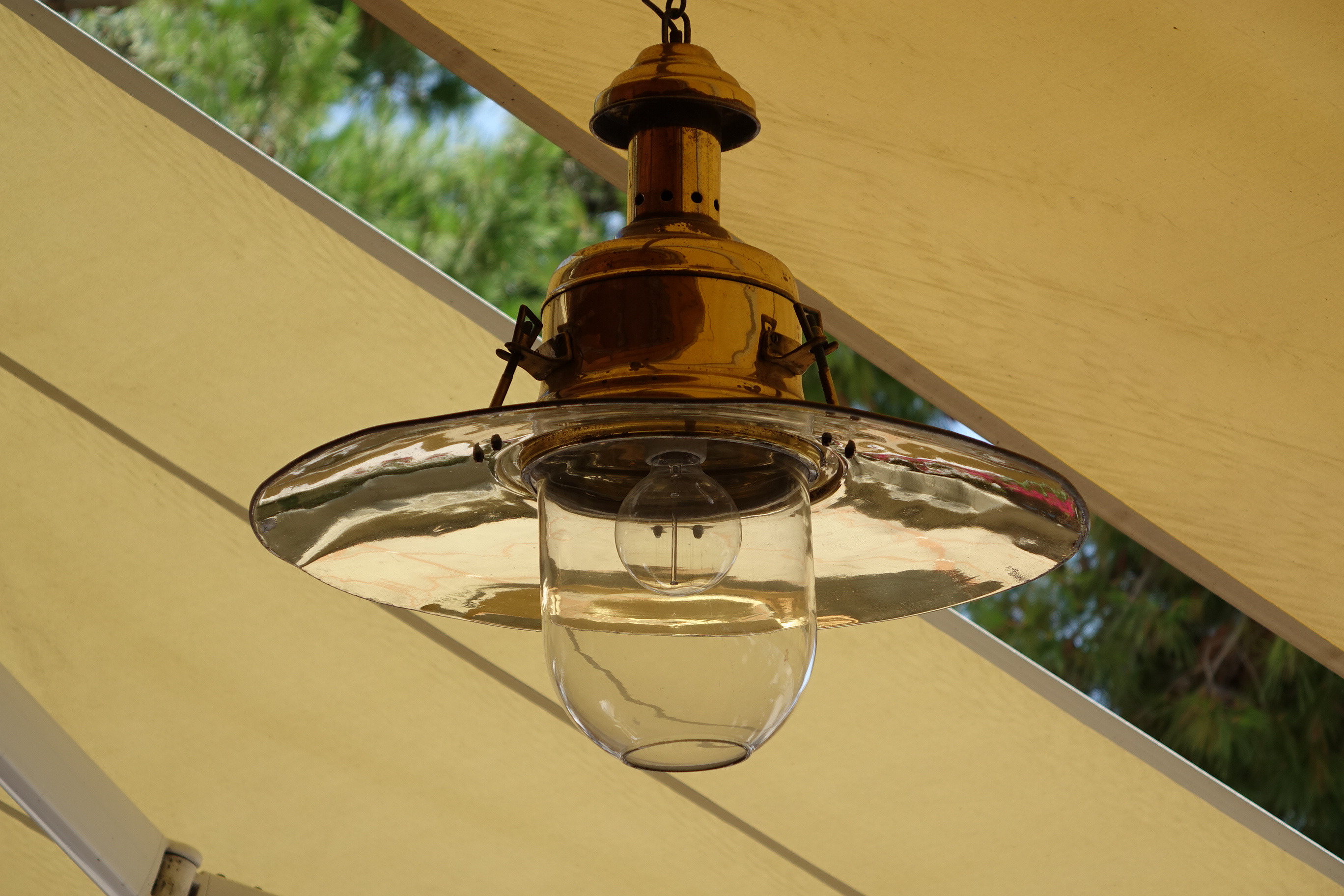
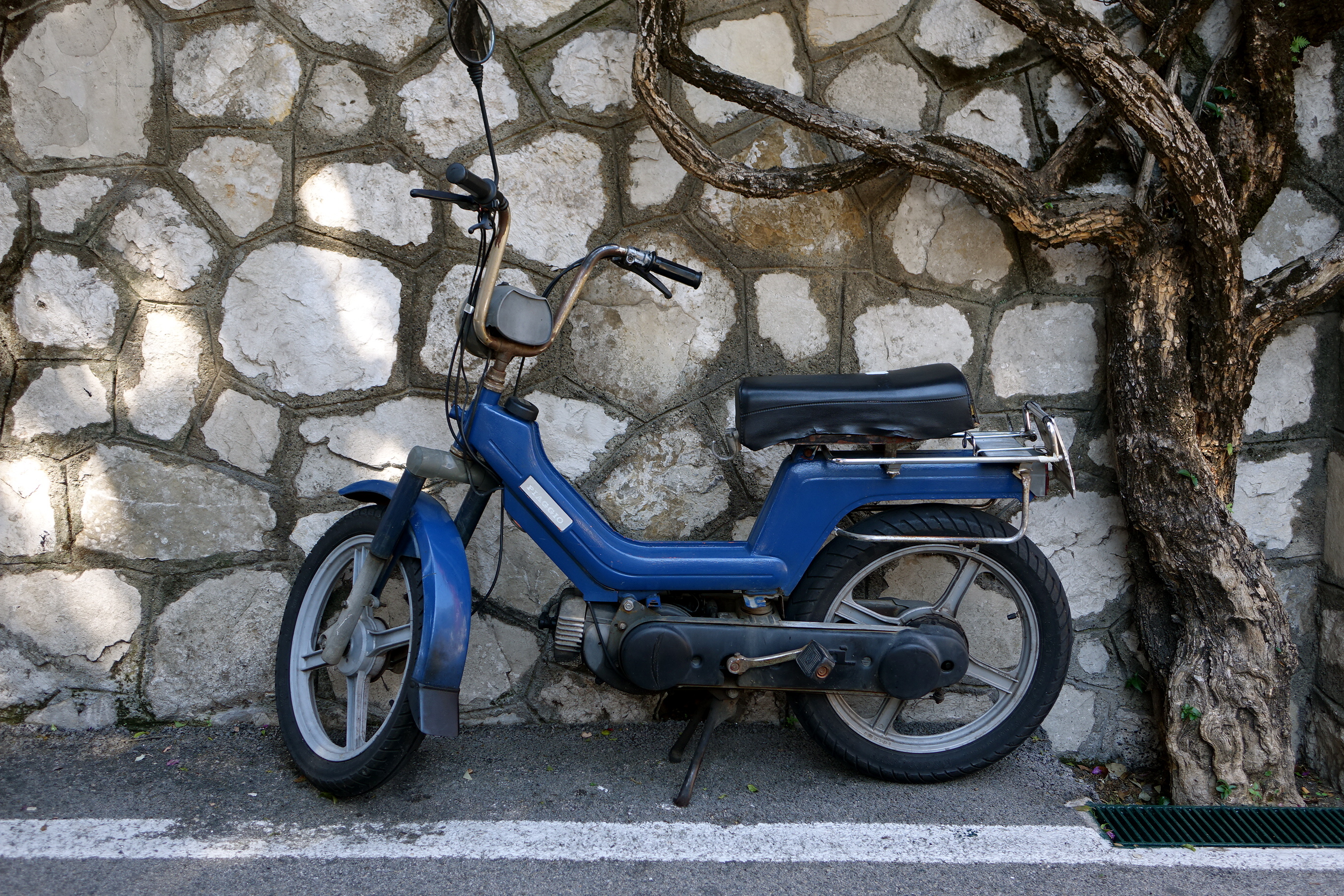
My final hurrah at this conclusion to my Amalfi Coast series is a good old hodgepodge of miscellaneous shots which otherwise never made their way in to any of my more focused posts. They are accordingly a wide-ranging bunch, from further shorts of the lush green gardens of Ravello, to yet more views from our hotel balcony. The selection is also packed, as always, with plenty of the finer details which caught our attention and tickled our interest when we ambled through the quaint narrow streets of Amalfi’s coastal towns. Sure they may have bankrupted us, but they sure were wonderful places to explore.

And with these photos I bid a hearty farewell to my engorged photo album of Positano & beyond, as my travel-hungry eyes rove around the globe in search of new pastures to explore. The possibilities are quite frankly endless. Best get saving…

All photos and written content are strictly the copyright of Nicholas de Lacy-Brown © 2014 and The Daily Norm. All rights are reserved. Unauthorized use and/or duplication of the material, whether written work, photography or artwork, included within The Daily Norm without express and written permission from The Daily Norm’s author and/or owner is strictly prohibited.

Art-in-Amalfi – Painting 7: The terraces of Ravello

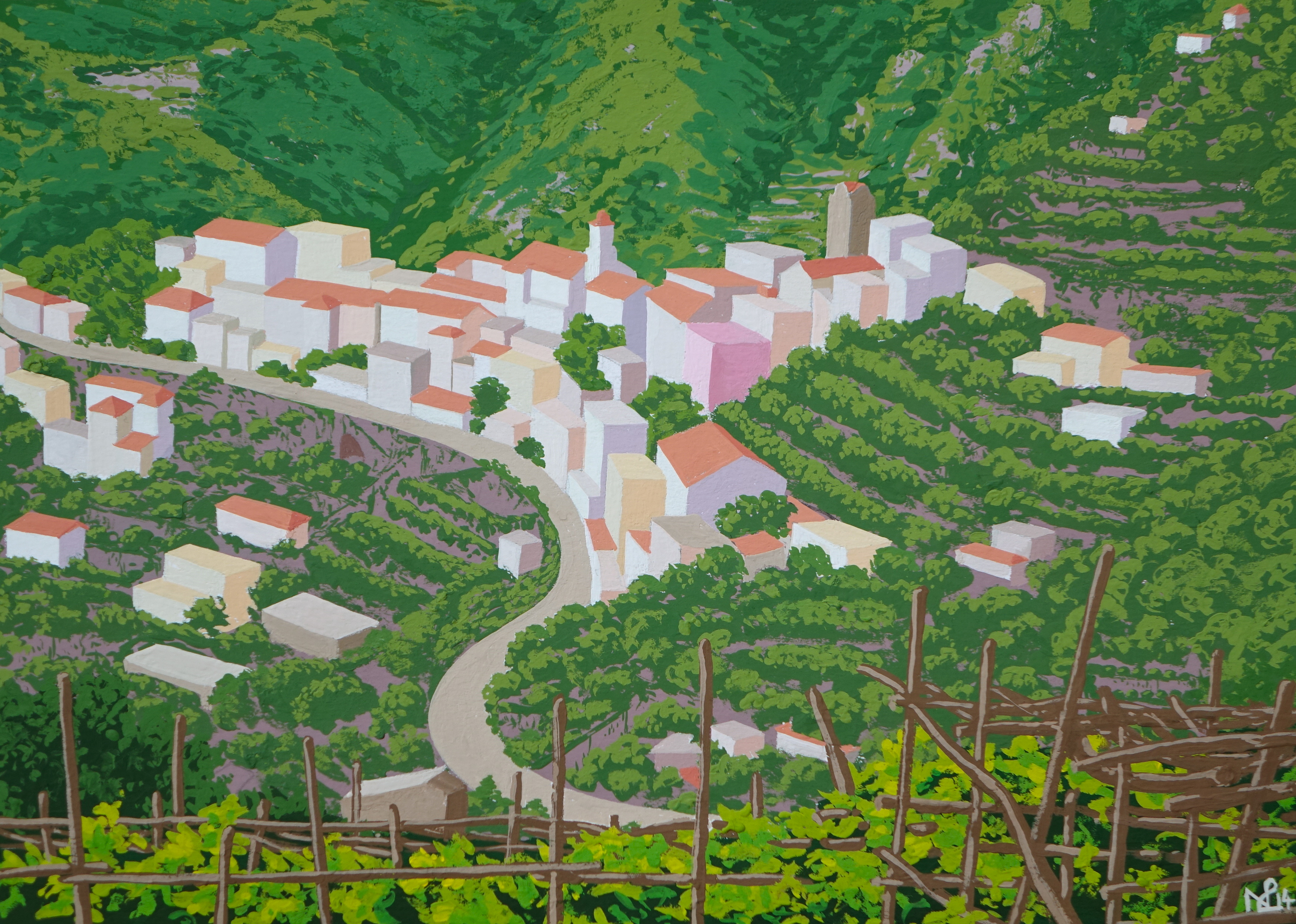
As my post on yesterday’s Daily Norm makes abundantly, sensually clear, Ravello on Italy’s Amalfi Coast is a place of stunning beauty. A place so beautiful that countless people, both famed and unknown, have flocked to its heady heights to sample a taste of paradise, and to soak in the views that Gore Vidal called the most beautiful in the world. So as my collection of Amalfi paintings reaches its steady climax (although I still feel inspired to paint more), there was no way that Ravello, and the stunning views from its quaint narrow hillside passages, was not going to be a part of it.

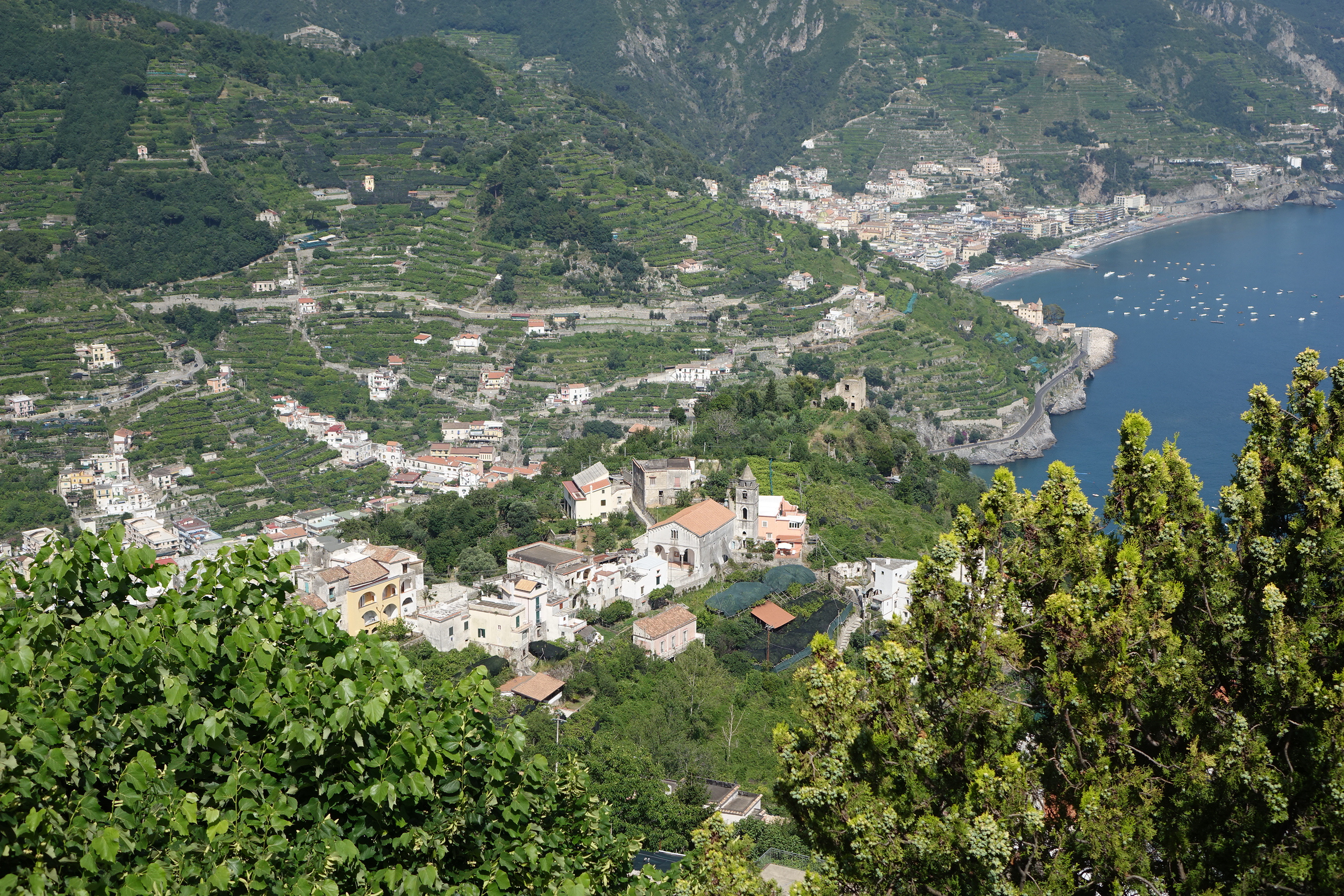
To my eyes, the thing that was so utterly charming about those incredible views was not so much the extensive sea views, but the elegantly terraced hills, loaded with lemon trees and olives and every kind of mediterranean plant growing abundantly. Those carefully sowed terraces gave the appearance of a fashion designed striped fabric in every conceivable shade of verdant green, while the houses clustered along intermittent roads were ripe for re-expression in the delineated cubic forms which have become characteristic of my Italy gouaches.

Ravello (2014 © Nicholas de Lacy-Brown, gouache on paper)

Ravello (2014 © Nicholas de Lacy-Brown, gouache on paper)

So I am delighted to share with you this seventh Amalfi Coast painting, doing so towards the climax of the Daily Norm tales of my Amalfi adventure. But something within me tells me this is not the end. Already my paintbrush is poised to work a little gouache magic across some blank paper in a notepad by my side, and you can be sure that as and when those works are completed, I will share them on The Daily Norm. 

© Nicholas de Lacy-Brown and The Daily Norm, 2001-2014. Unauthorized use and/or duplication of the material, whether written work, photography or artwork, included within The Daily Norm without express and written permission from The Daily Norm’s author and/or owner is strictly prohibited. Excerpts and links may be used, provided that full and clear credit is given to Nicholas de Lacy-Brown and The Daily Norm with appropriate and specific direction to the original content. For more information on the work of Nicholas de Lacy-Brown, head to his art website at www.delacy-brown.com

Positano & beyond | Ravello

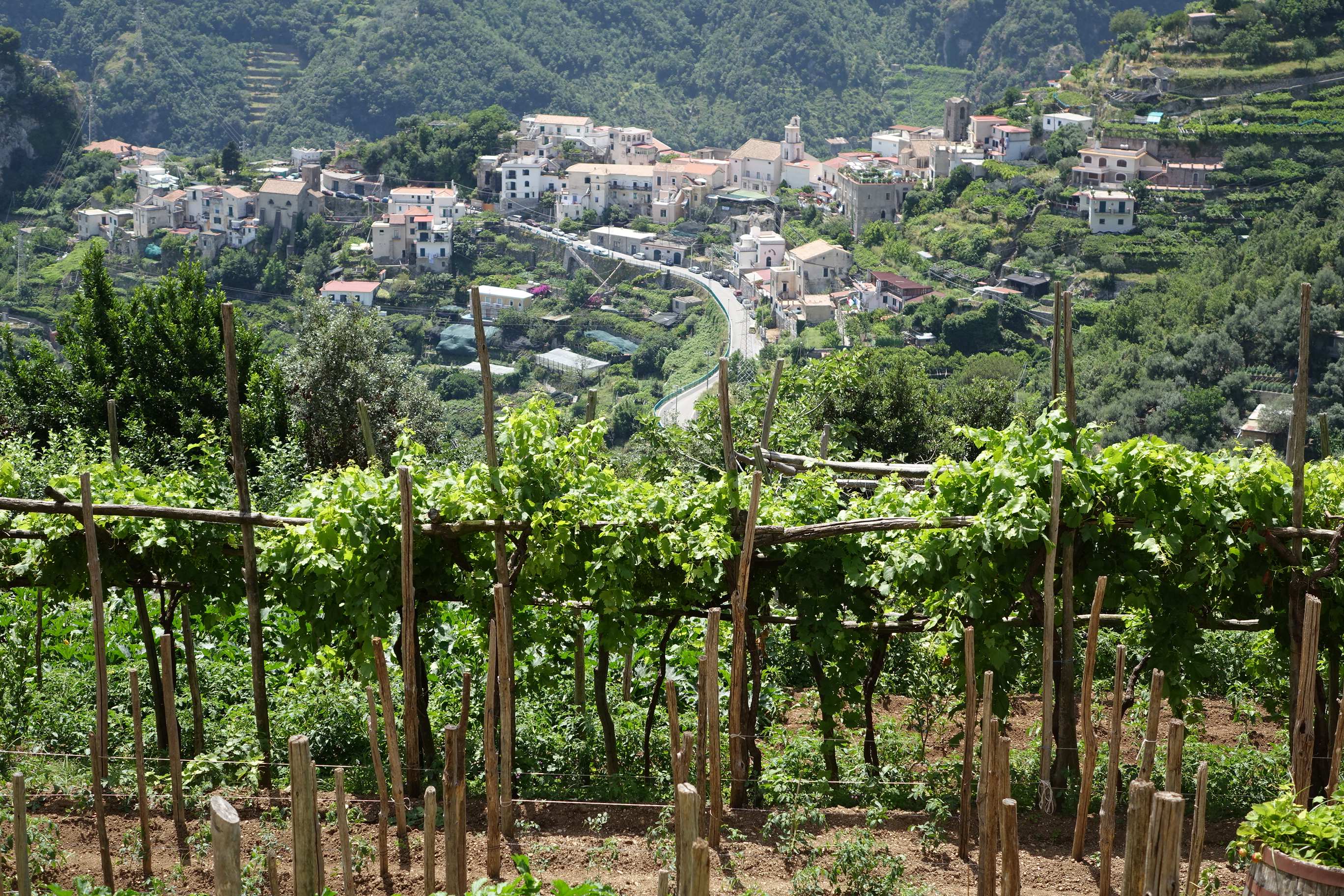
It would have been sinful to take the 45 minute long boat journey all the way from Positano to Amalfi only to miss the real jewel of the Amalfi Coast to be found a mere 5km behind the town. Containing some of the most luxurious of the coast’s hotels, playing host to a string of celebrities past and present from DH Lawrence and Humphrey Bogart, to Salvador Dali and Leonardo DiCaprio, and boasting its own internationally renowned arts festival extending from June until the early Autumn each year, the town of Ravello is an unmissable high point of the Amalfi experience.

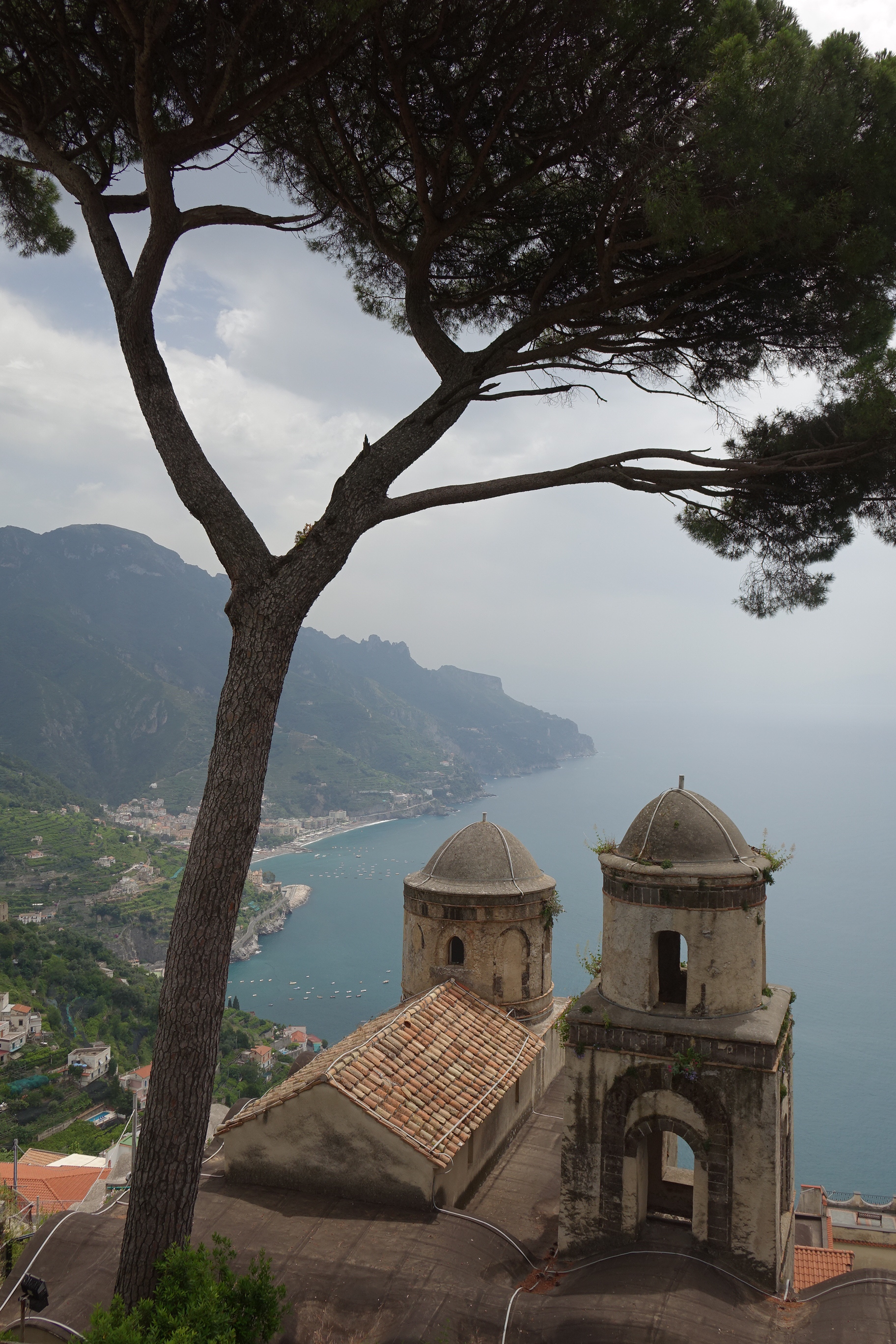
And high it really is. For the mere 5km distance of which I have alluded does not take into account the fact that Ravello is a spectacular 1,200ft above sea level, set along a perfectly situated mountain ridge, and that the journey to get there takes in some of the most dizzyingly vertiginous hairpin bends of all the roads on the coast. Yet even though many a visitor will arrive in the town with their nails bitten down halfway closer to their cuticles, the views that will greet you, and remain in sight from almost every aspect in Ravello are well worth the stomach flips. Glittering, stunning vistas down to the coast around Salerno and beyond make these views some of, if not the most stunning anywhere in Italy.

Ravello’s Duomo and the stunning views it’s famed for

DSC03760DSC03735 DSC03725 DSC03740 DSC03580 DSC03738 DSC03688 DSC03417

We and a vast number of other tourists crammed somewhat hazardously into the once-an-hour bus from Amalfi to Ravello and arrived in the town around 40 stomach-churning minutes later. Knowing that Ravello contains two of the most stunning gardens in the Amalfi region, we headed straight for the first – the Villa Rufolo, former villa/palace of the wealthy Rufolo family whose gardens are so picture-perfect that Wagner modeled the magical gardens in his opera Parsifal on them. Owing to the recent start of Ravello’s arts festival, much of these gardens was taken up with the construction of a temporary auditorium and stage benefiting from the very best of the jaw-dropping views (I wonder how anyone concentrates on the performers with these views behind them). However there were still sufficient treats in store in this garden to make us realise quite why the gardens had provided such inspiration to Wagner and many others before and after him.

The Villa Rufolo

DSC03533 DSC03451 DSC03485 DSC03534 DSC03497 DSC03420DSC03438DSC03470 DSC03724

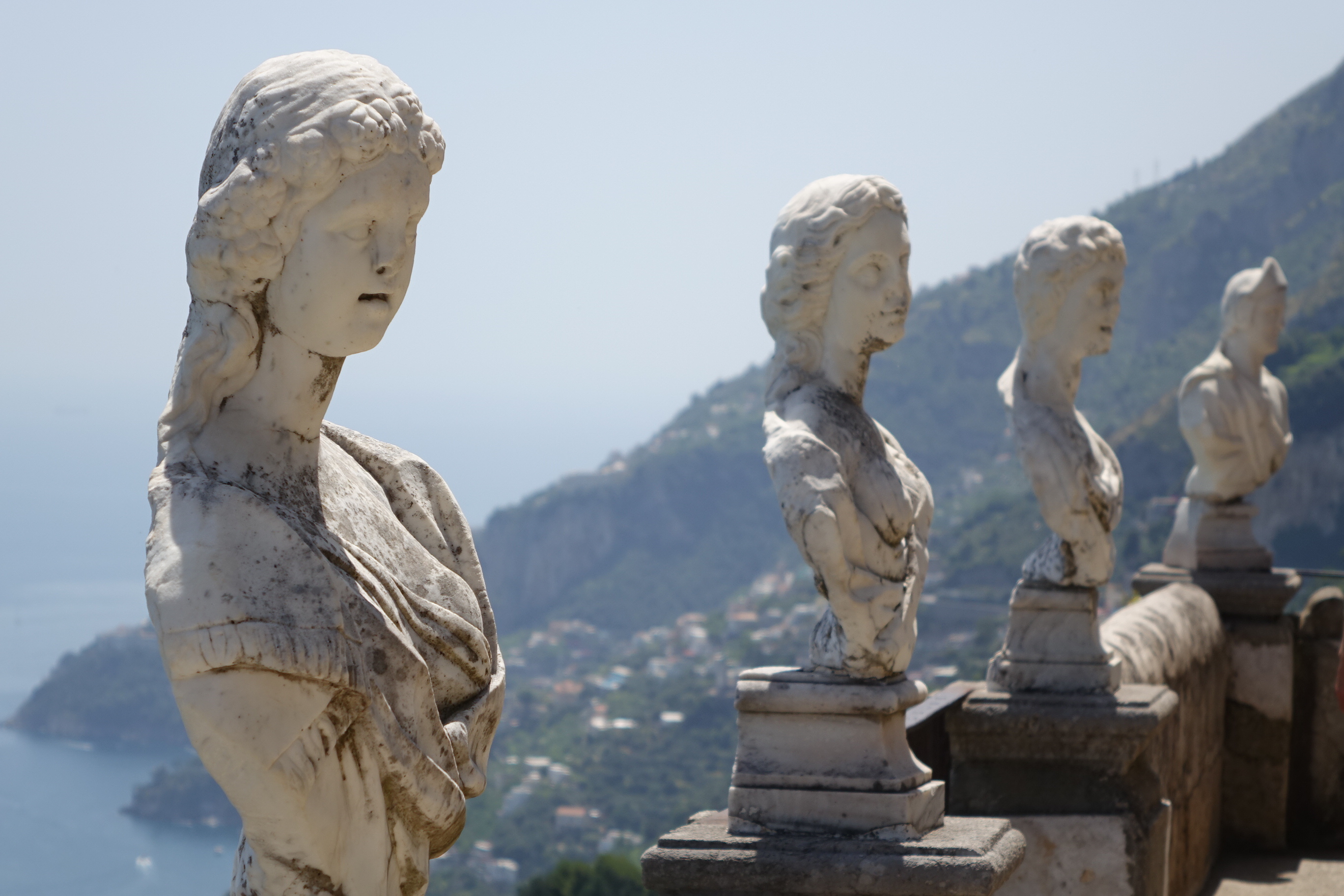
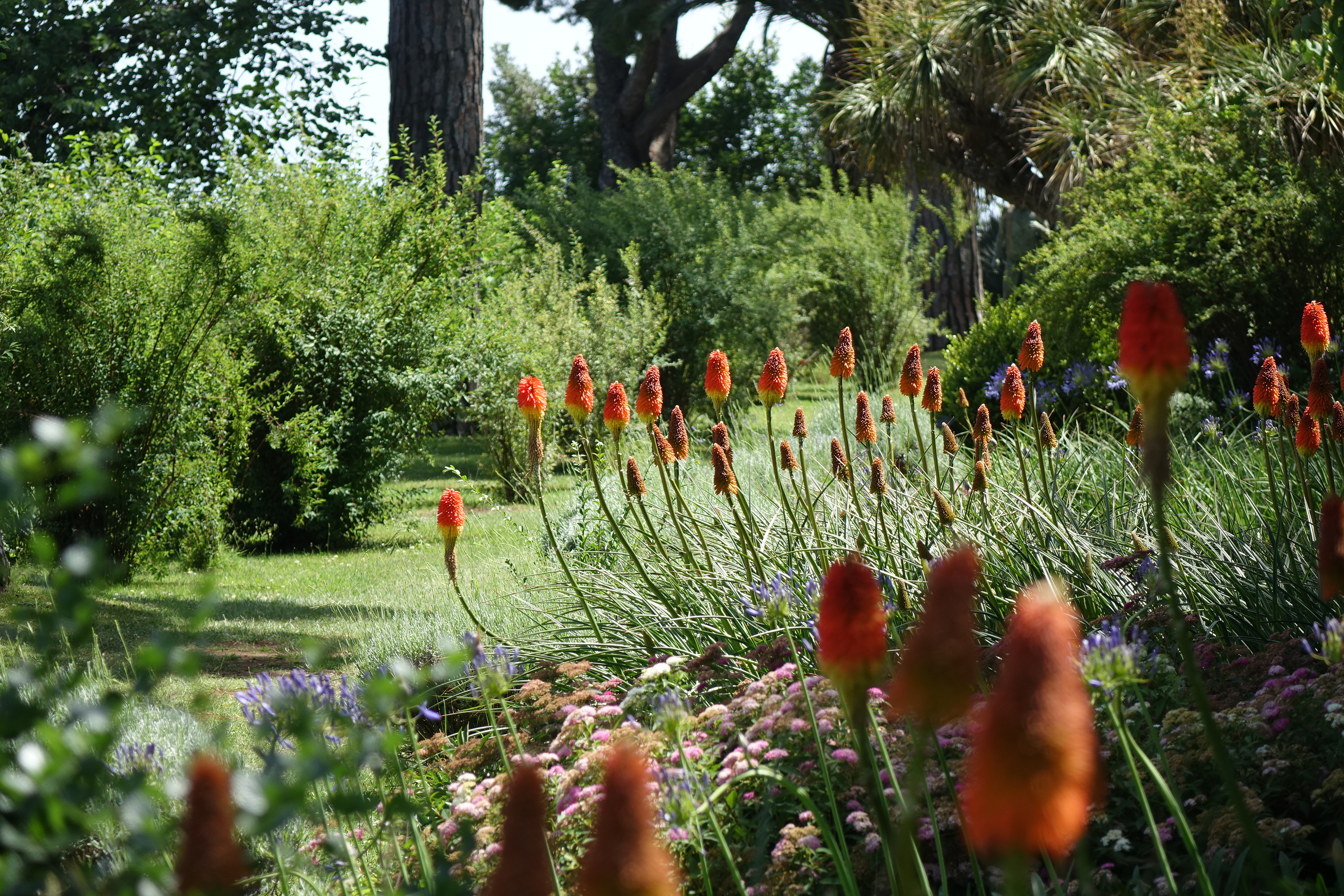
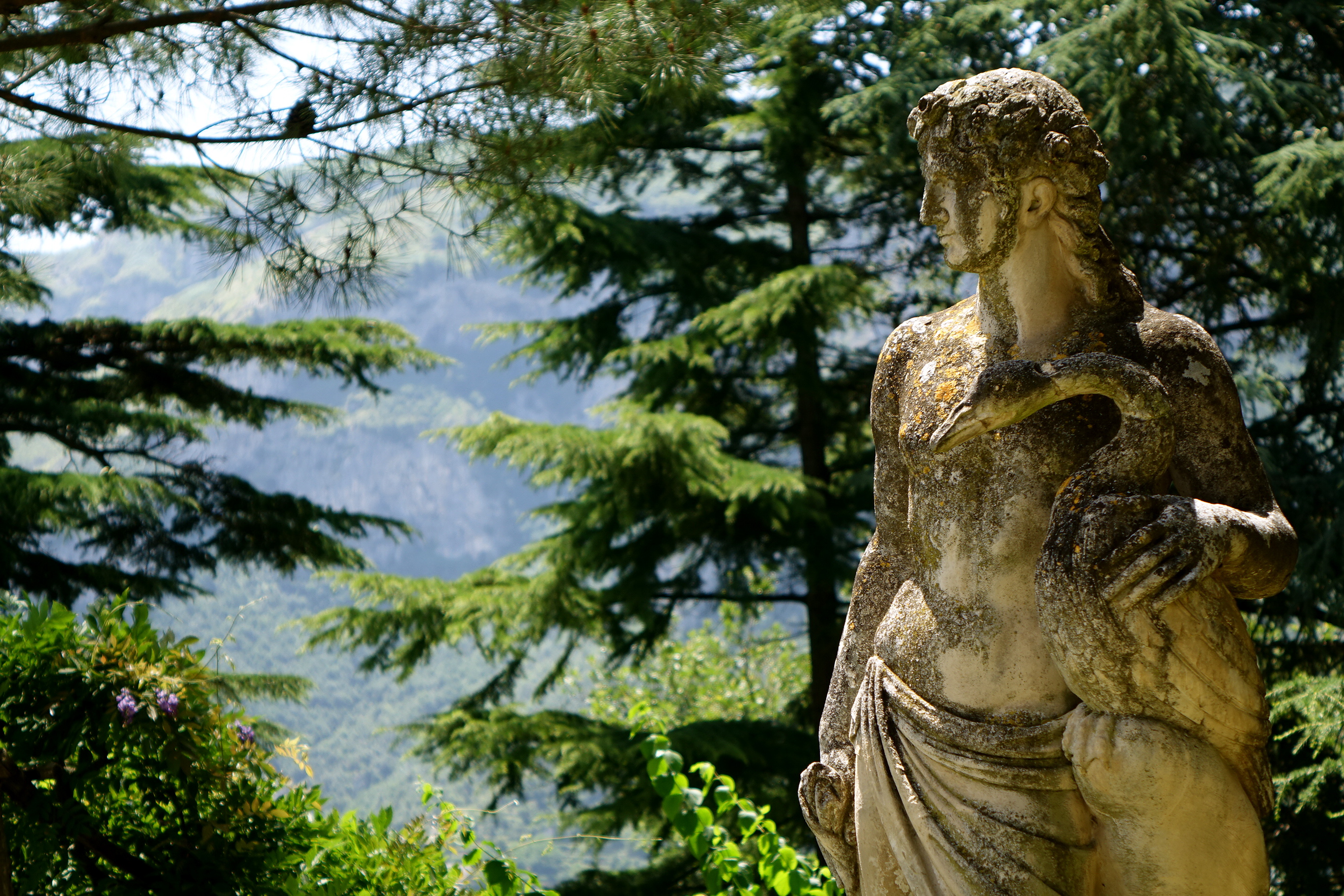
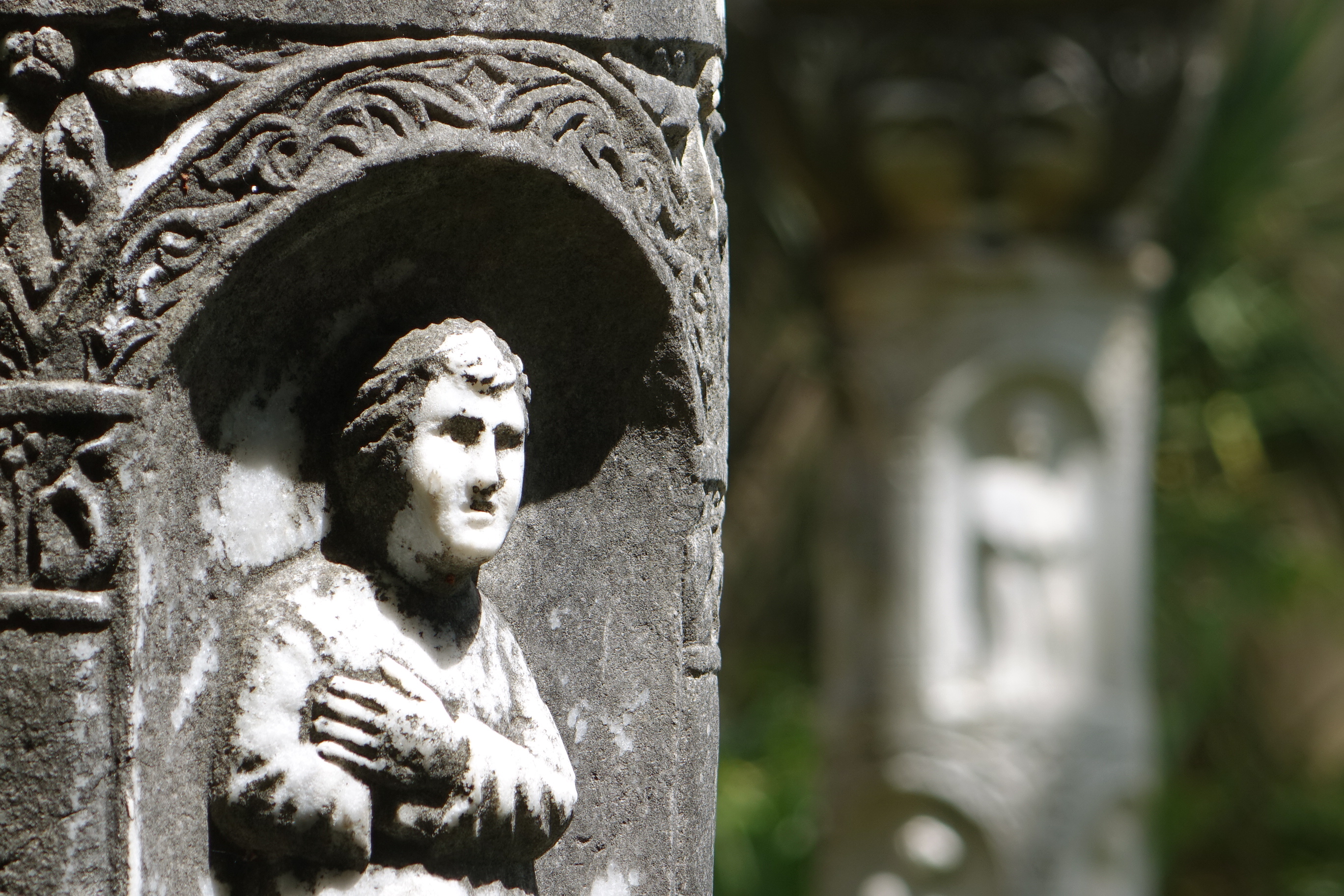
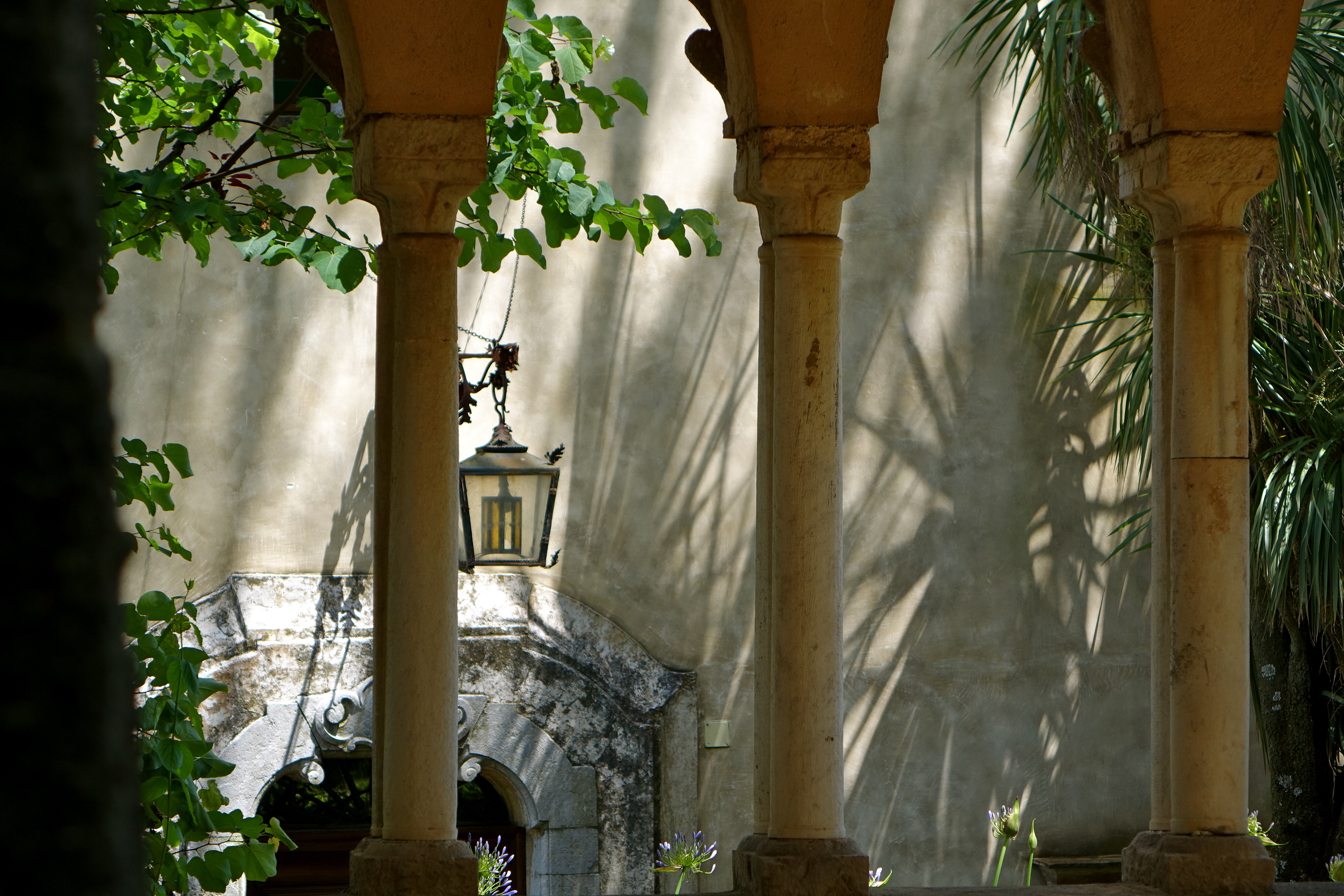
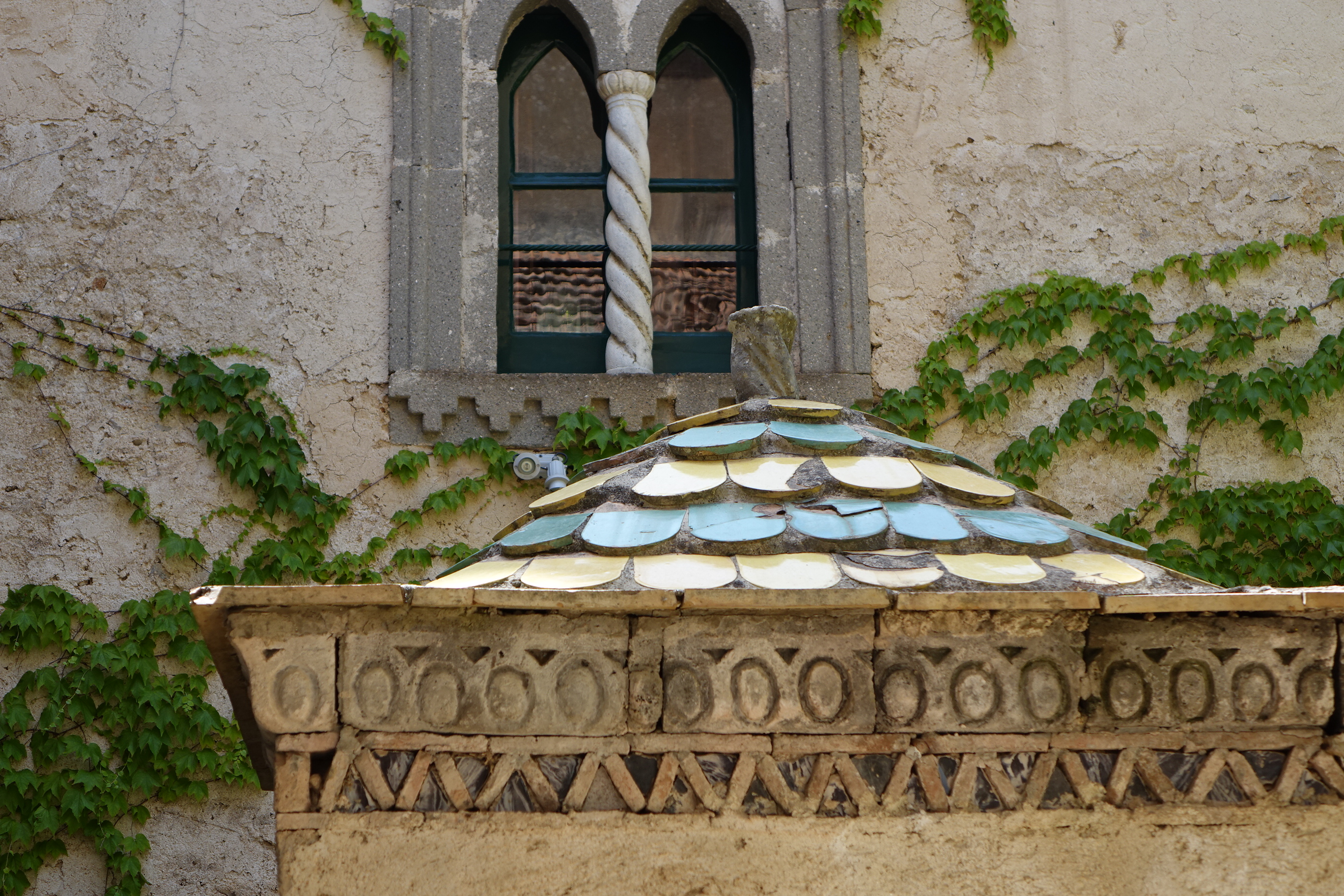
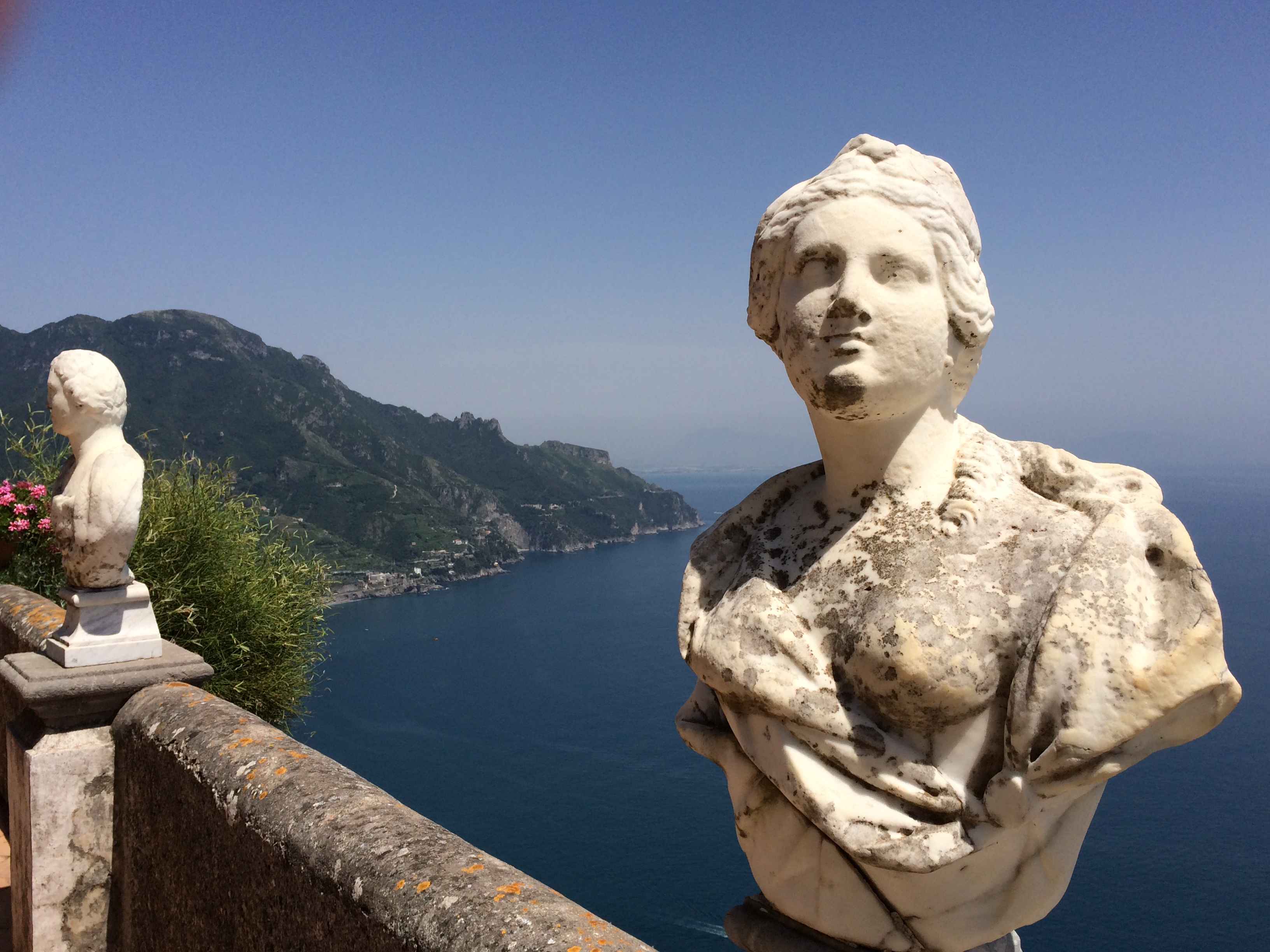
But in retrospect, I can see that the Villa Rufolo was only the appetizer of the great banquet which was to follow – the incredible Villa Cimbrone. Created in the “English style” by Vita Sackville-West who bought the sight for mere spare change, and later made the home of Gore Vidal, these six acres of lush gardens boasting the most incredible position at the edge of a rocky peninsular with commanding views extending almost 300 degrees over coast and valley are probably the most paradisally perfect gardens I have ever been in. They contain almost everything you could want from a garden. Shady sun-dappled paths lined with cypress trees and olives, bouncy green lawns interspersed with moss-covered greek and roman statues, little hidden cupolas and  grottos, and avenues lined with hydrangeas and wisteria and every other kind of beautiful flower. But most stunning of all is what can be found at the bottom of the garden – the Terrace of Infinity, with views over the bay of Salerno so ravishing that Gore Vidal declared it to be “the most beautiful view in the world”. I am not going to disagree.

The Villa Cimbrone

DSC03675 DSC03706 DSC03690 DSC03714 DSC03633 DSC03659 DSC03615 DSC03647 DSC03683 DSC03619 DSC03646 DSC03635 DSC03712 DSC03609 DSC03604 DSC03613 DSC03593 DSC03594 IMG_7388

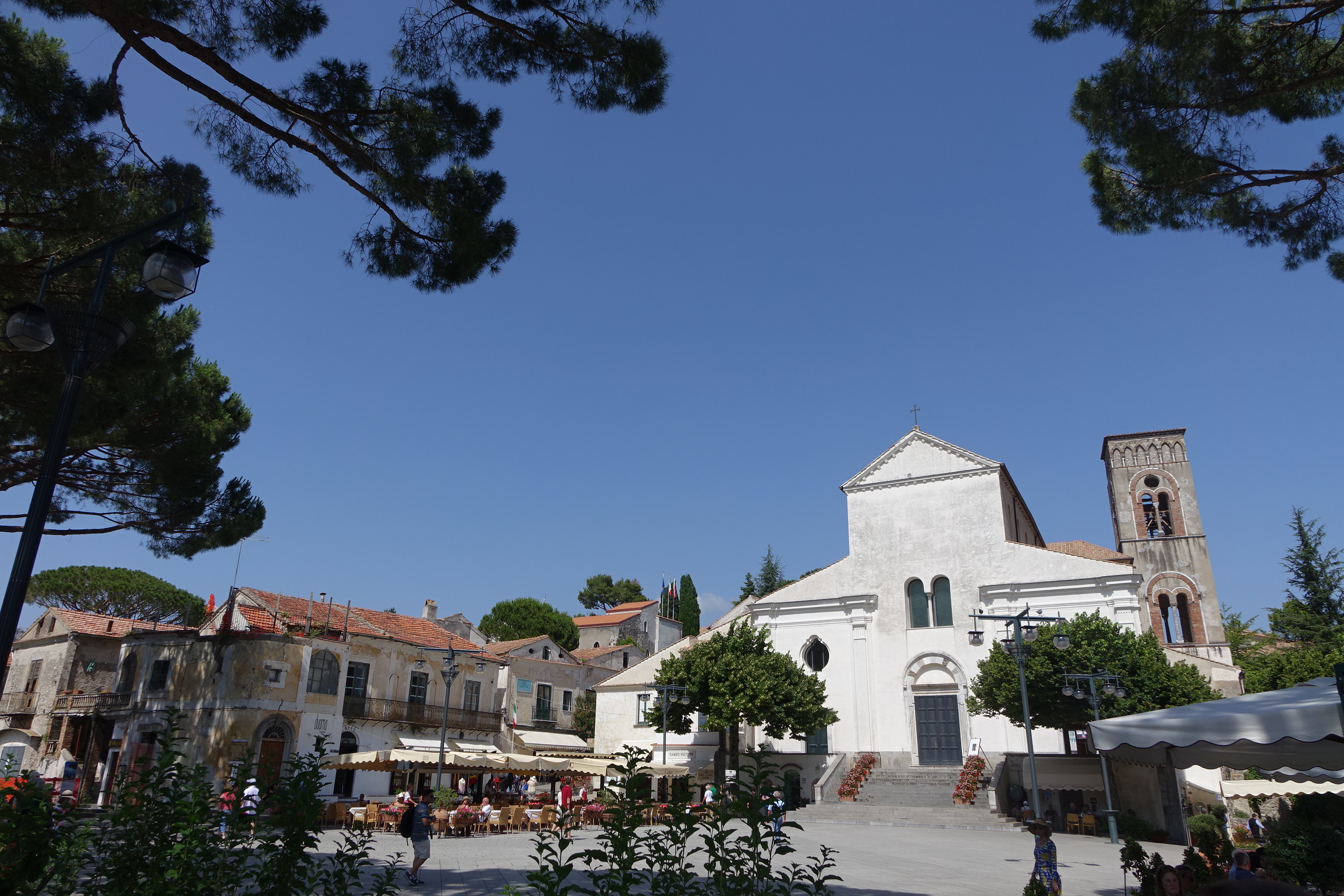
Asides from those two great garden paradises, Ravello is a small and quiet little town compared with the boutique filled mecca of Capri or the bustling shopping streets of Amalfi down on the coast. With one main square flanked by a simple white washed Duomo and a few friendly cafes, it is the perfect place to sit back and contemplate the breathtaking views that are all around, somewhere to breathe deep the freshest of air in these mountain heights, and try to make sense of what it was to sample paradise, before finally heading back down to sea level, and to reality. But let’s face it, if that reality is still the Amalfi Coast, it’s never going to be far from heaven is it?

All photos and written content are strictly the copyright of Nicholas de Lacy-Brown © 2014 and The Daily Norm. All rights are reserved. Unauthorized use and/or duplication of the material, whether written work, photography or artwork, included within The Daily Norm without express and written permission from The Daily Norm’s author and/or owner is strictly prohibited.

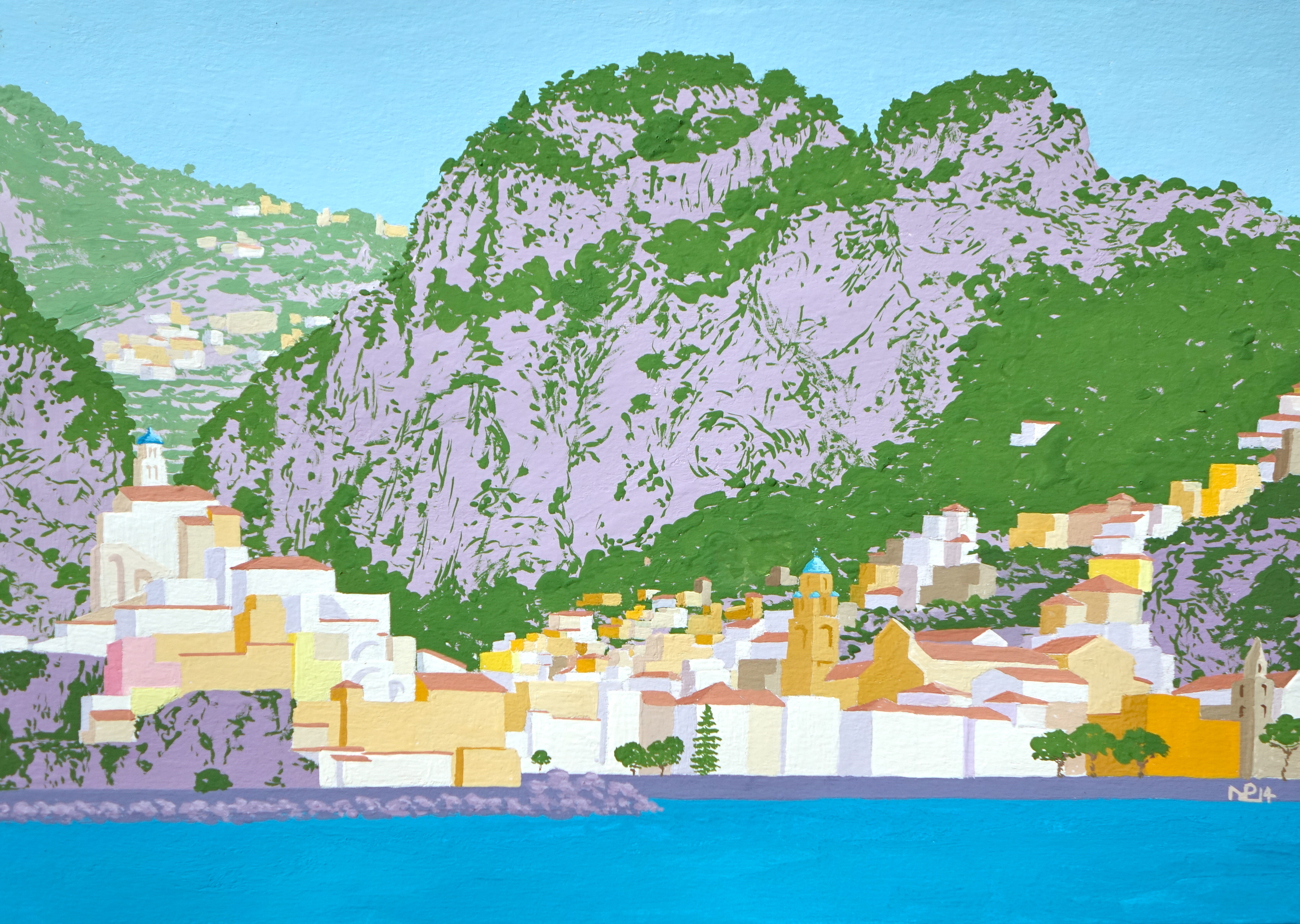
Art-in-Amalfi – Painting 6: Arrival in Amalfi

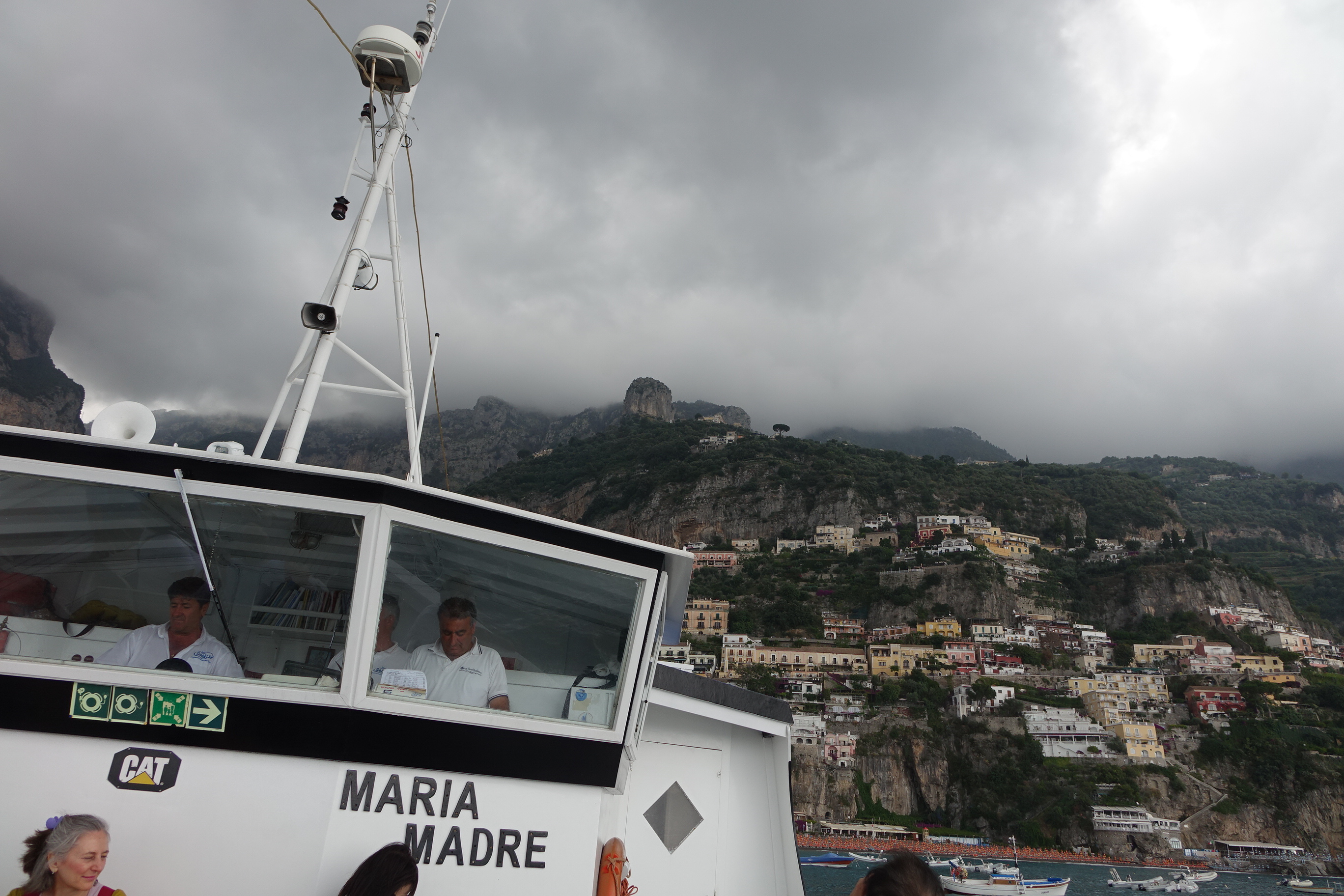
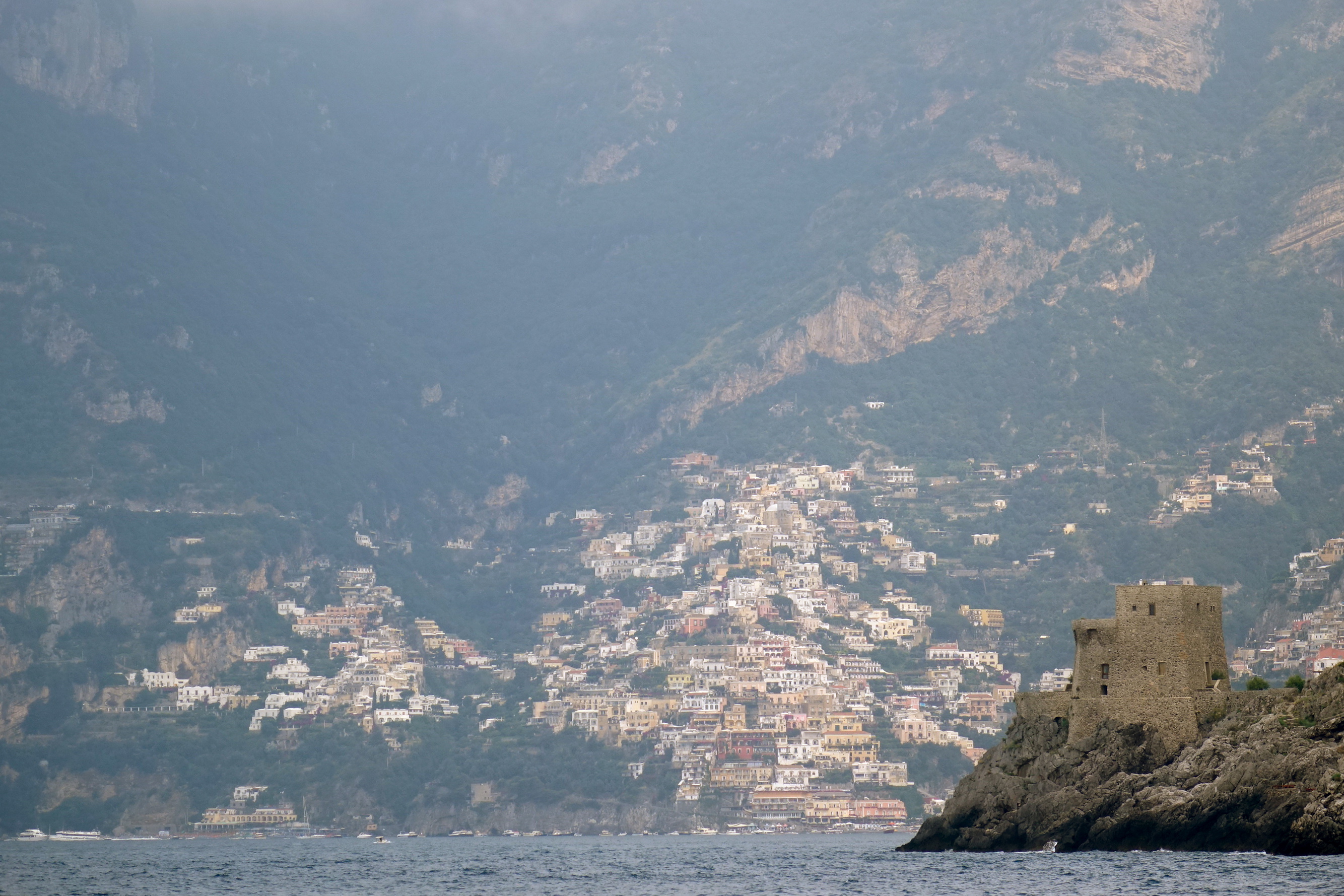
On the Amalfi Coast you really are spoilt for choice. Not only is the coast a veritable paradise of high end shops, hotels and restaurants, but from every angle there is a new and stunning view to pop your eyes pen a little wider with pleasure. As both an Artist and keen photographer, this was both a treat and a burden, for every time I opened my eyes, I saw something incredibly beautiful, and started feeling guilty if I did not capture it in some form. So it was that on a short 45 minute boat ride from Positano to Amalfi I found myself unable to sit still, unsure whether to look backwards out of the boat towards the fading but ever beautiful view of the pastel-coloured town on the magnificent mountainside, look over the side to the similarly nestled hilltop town of Praiano, or forwards, towards the glittering town of Amalfi.

Well the answer to this quandary was that I did all three. Having had my fill of Positano (if that is even possible…) I then turned towards white-gleaming Praiano (and later painted it as Amalfi Coast painting no.5) and then turned my attention towards the grand town of Amalfi which our boat was fast approaching. This painting, my 6th of the holiday and another in the series of cubic simplifications by which I am delineating the houses and structures of the coast, captures the moment when we approached the town, when the gleaming gold facade of the cathedral could be seen flanked my buildings sweeping up the steadily sloping valley on either side. Meanwhile in the background one could just about make out the promised land of Ravello, a town we were to visit later that day.

Amalfi (2014 © Nicholas de Lacy-Brown, gouache on paper)

Amalfi (2014 © Nicholas de Lacy-Brown, gouache on paper)

More about that, tomorrow.

© Nicholas de Lacy-Brown and The Daily Norm, 2001-2014. Unauthorized use and/or duplication of the material, whether written work, photography or artwork, included within The Daily Norm without express and written permission from The Daily Norm’s author and/or owner is strictly prohibited. Excerpts and links may be used, provided that full and clear credit is given to Nicholas de Lacy-Brown and The Daily Norm with appropriate and specific direction to the original content. For more information on the work of Nicholas de Lacy-Brown, head to his art website at www.delacy-brown.com

Positano & beyond | Amalfi

We had been some time on Italy’s stunning Amalfi Coast before we actually visited the town of Amalfi itself. Or perhaps I should call it a city, for Amalfi is a place rich in maritime history left over from a time when it was as important on the trading map as Venice and Genoa. Today however it is a mere shadow of its former glory – small in size and population, but still retaining all the highlights of its historical magnificence. 
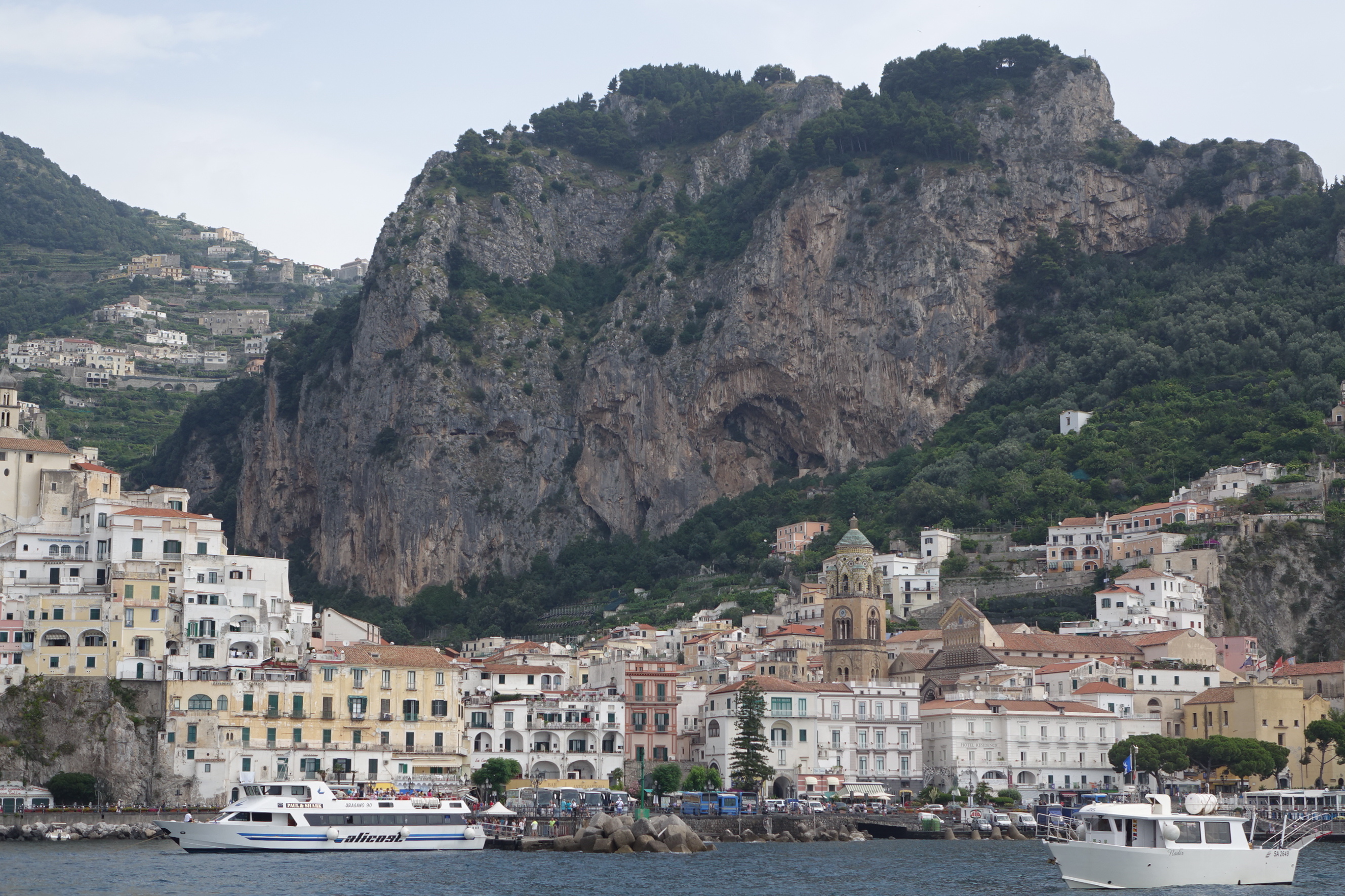
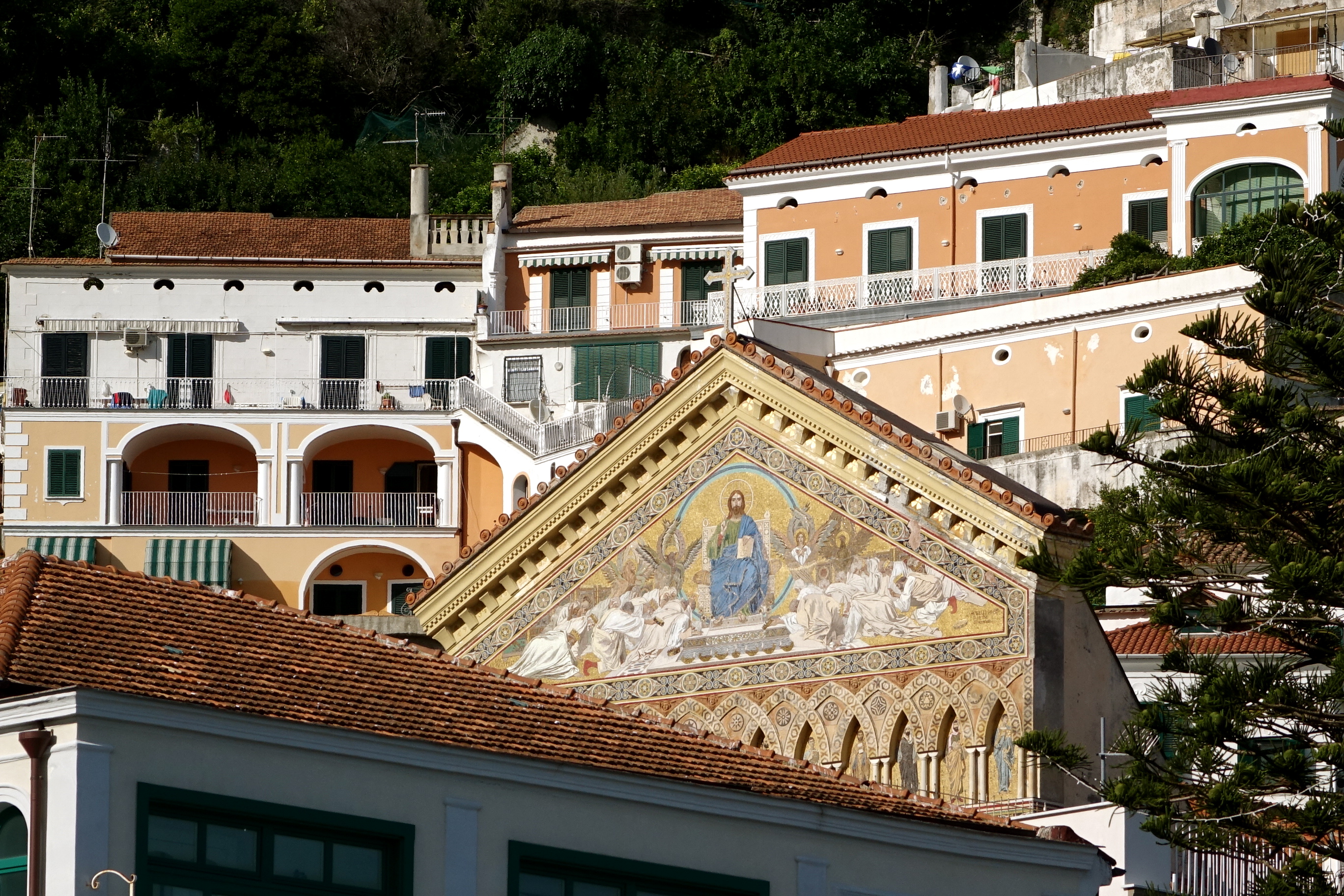
We set out to Amalfi one stormy morning from Positano, after a night when humid thunderstorms had tried to break through the sauna of heat clinging to the mountain sides down by the sea. However within the 45 minutes of our boat journey along the coast, the clouds were already rolling away, and the arrival of the sun coincided perfectly with our arrival into Amalfi, it’s magnificent gold tiled Duomo reflecting the sun like a lone diamond and glinting visibly all the way out to sea. 

Journey and arrival…

DSC03208 DSC03239 DSC03280 DSC03292

As the boat docked on Amalfi’s busy quayside it was already obvious that the town had a much more tangibly urban feel than little Positano. Along the seafront, larger ornate apartment blocks stood proudly like the kind usually found in Rome or Naples; in its port boats glided in and out with greater regularity and purposefulness; and in its squares, crowds bustled in a way which inferred that real life was going on here, as well as tourism. 

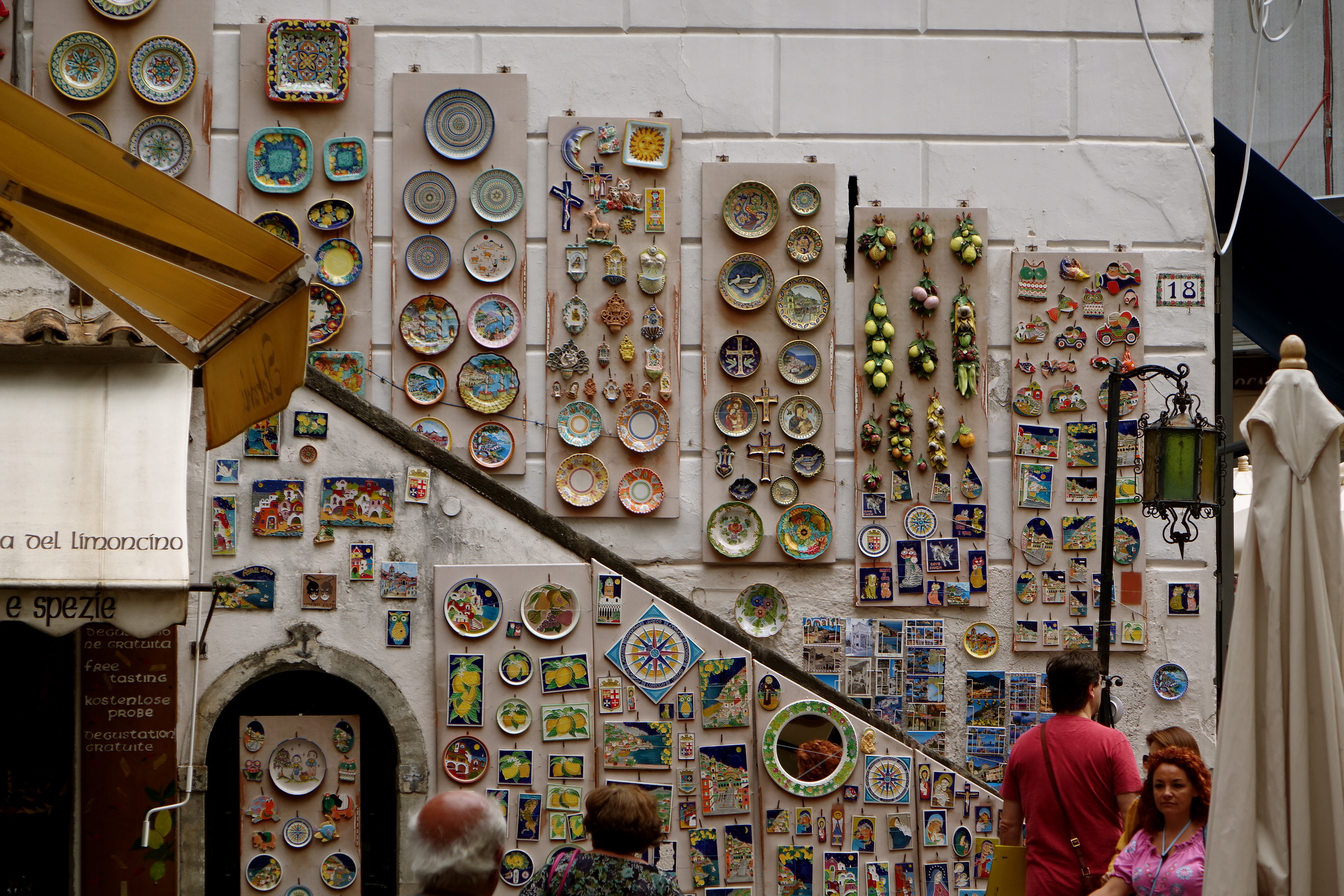
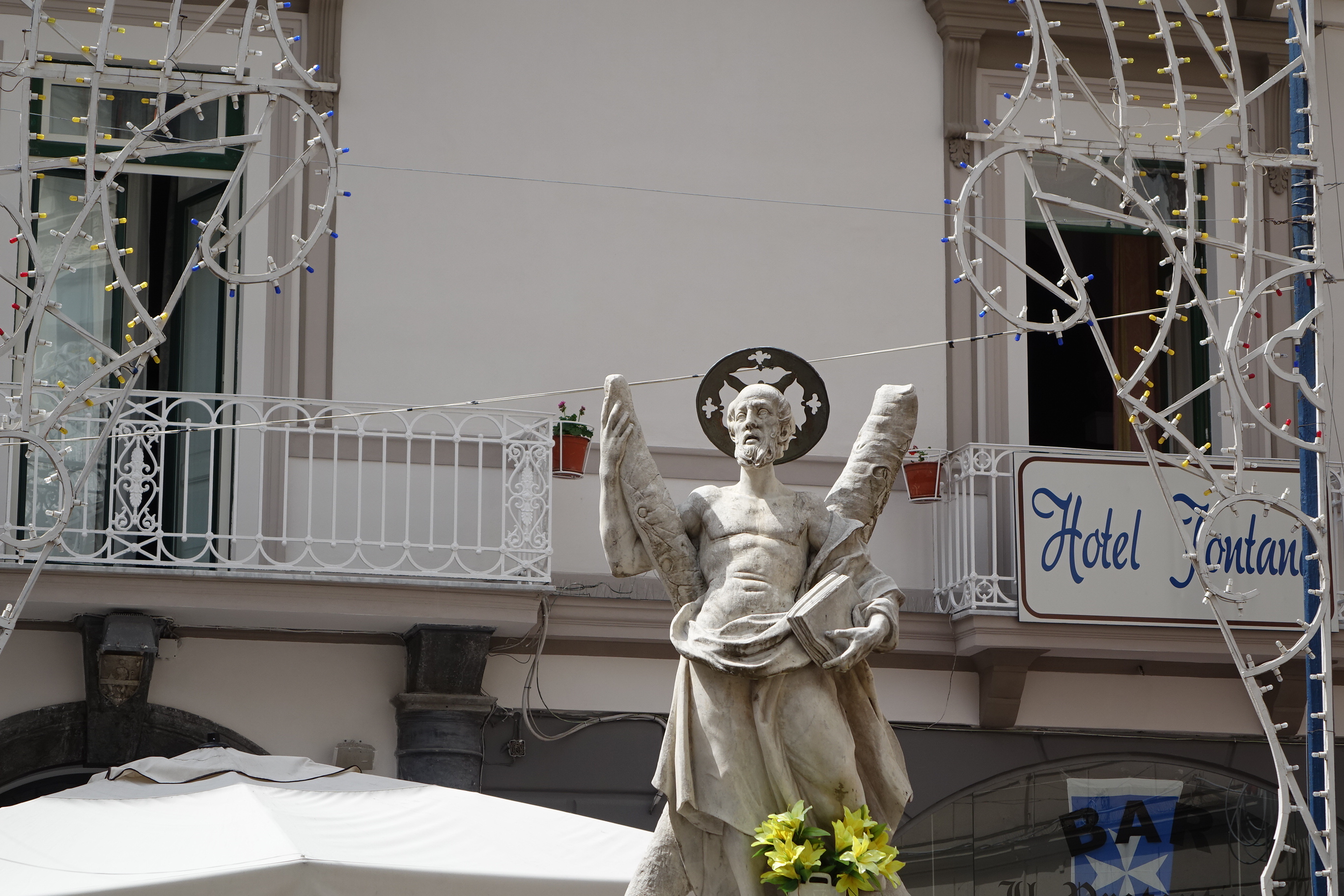
The streets of Amalfi

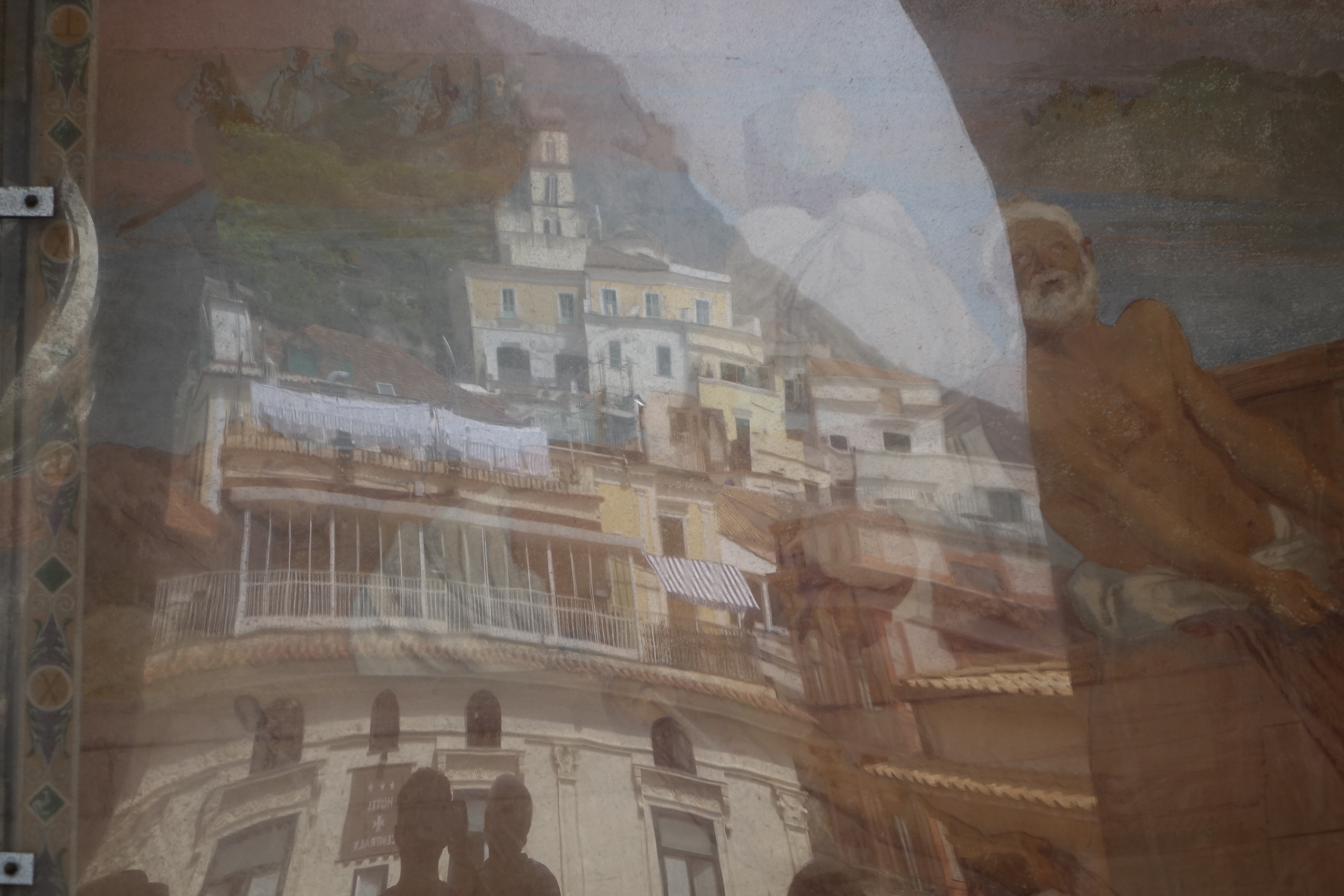
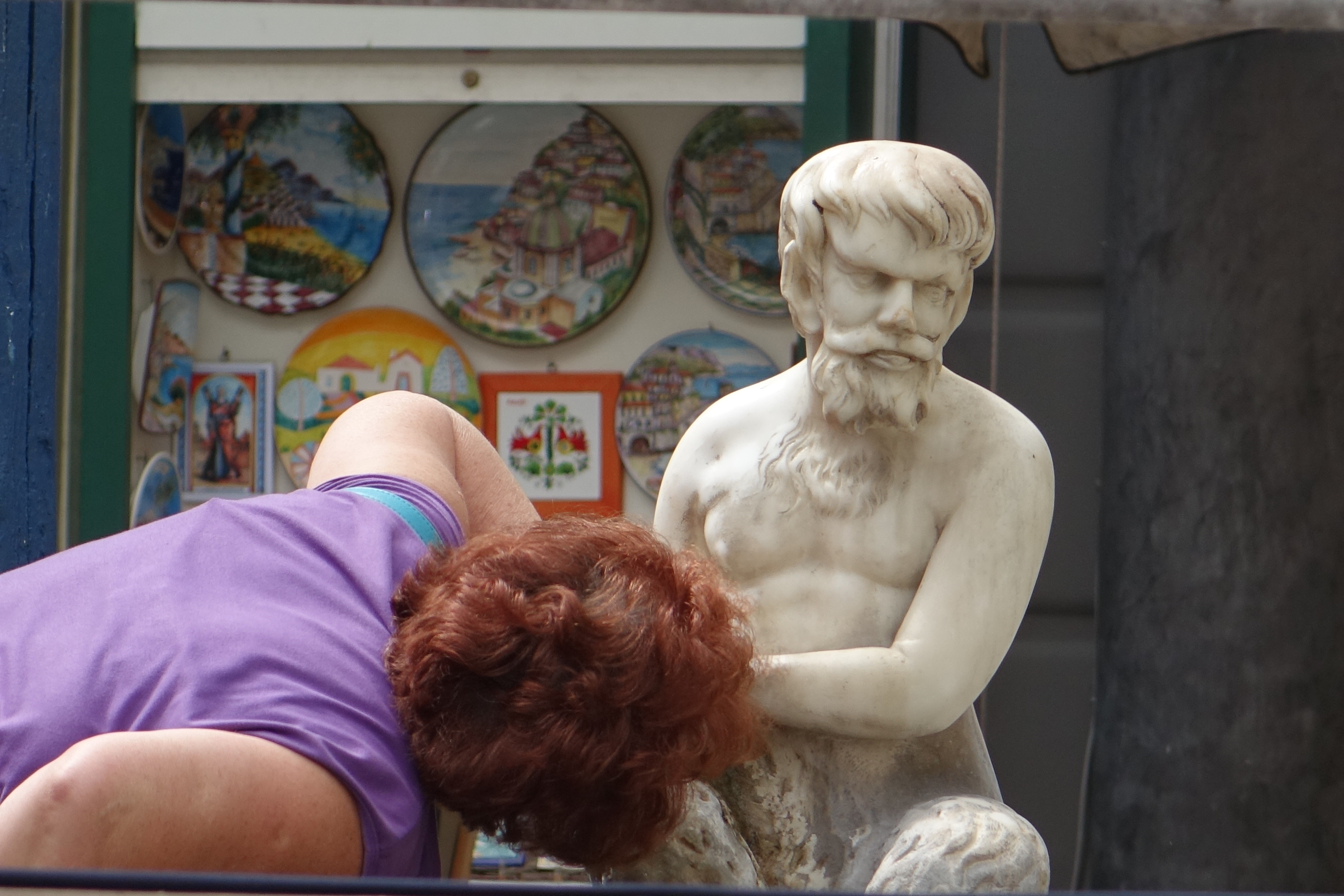
DSC03936 DSC03927 DSC03902 DSC03889 DSC03888 DSC03874 DSC03388 DSC03377 DSC03365 DSC03335 DSC03321 DSC03903 DSC03332 DSC03331 DSC03314 DSC03383 DSC03342 DSC03324

Read more

Art-in-Amalfi – Painting 5: Praiano

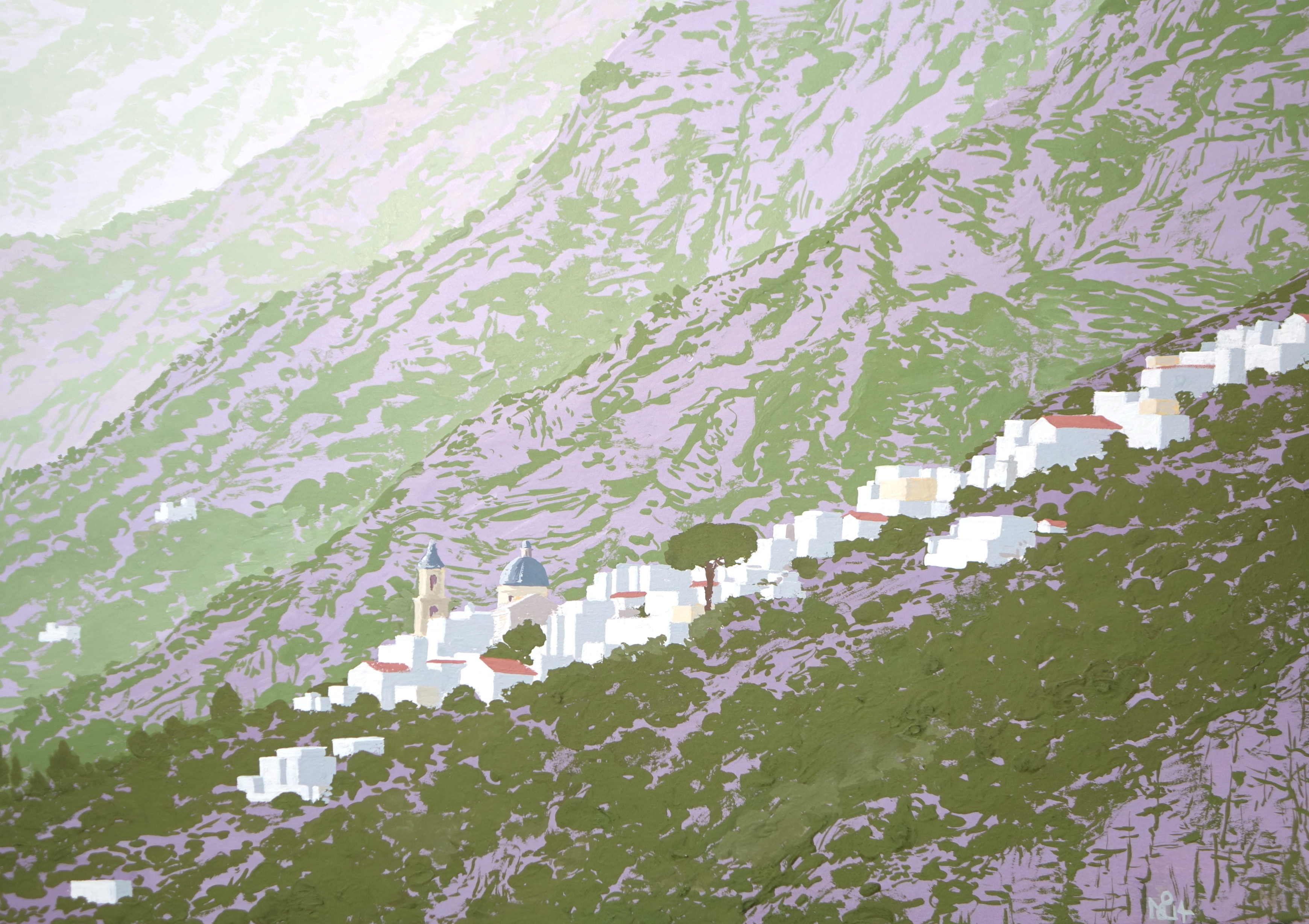
Having painted four views of Positano in gouache on paper, all of which concentrate on the hodgepodge of pastel-coloured cube like houses that are characteristic of the town, I decided to set my sights further afield, and start exploring the artistic potential of locations elsewhere on the Amalfi Coast. The perfect opportunity presented itself when, en route to the epicentre of the coast, Amalfi (see tomorrow’s Daily Norm for more on that front) we passed by the cliff-top town of Praiano.

Smaller than neighbouring Positano, which can be seen directly across the bay and vice versa, Praiano nevertheless has its own glittering domed churche and cluster of houses clinging precariously to the high edges of a mountain slope. However unlike Positano, whose multi-coloured composition can be spotted some distance away, Praiano is characterised by a gleaming symphony of whites and creams, dazzling in the sunshine as its buildings contrast against the green vegetation all around.

Praiano (2014 © Nicholas de Lacy-Brown, gouache on paper)

Praiano (2014 © Nicholas de Lacy-Brown, gouache on paper)

This particular view of the town, seen side on with the gradually fading folds of the mountains in the distance was definitely my favourite angle of those many enjoyed as our boat whisked past the town at speed. And of course in the process of cubic simplification which has been the focus of my recent gouache works, Praiano could not have been a better model – for its white washed houses simplify down to their basic elements brilliantly, while retaining all of the shape and character of this very pretty town.

© Nicholas de Lacy-Brown and The Daily Norm, 2001-2014. Unauthorized use and/or duplication of the material, whether written work, photography or artwork, included within The Daily Norm without express and written permission from The Daily Norm’s author and/or owner is strictly prohibited. Excerpts and links may be used, provided that full and clear credit is given to Nicholas de Lacy-Brown and The Daily Norm with appropriate and specific direction to the original content. For more information on the work of Nicholas de Lacy-Brown, head to his art website at www.delacy-brown.com