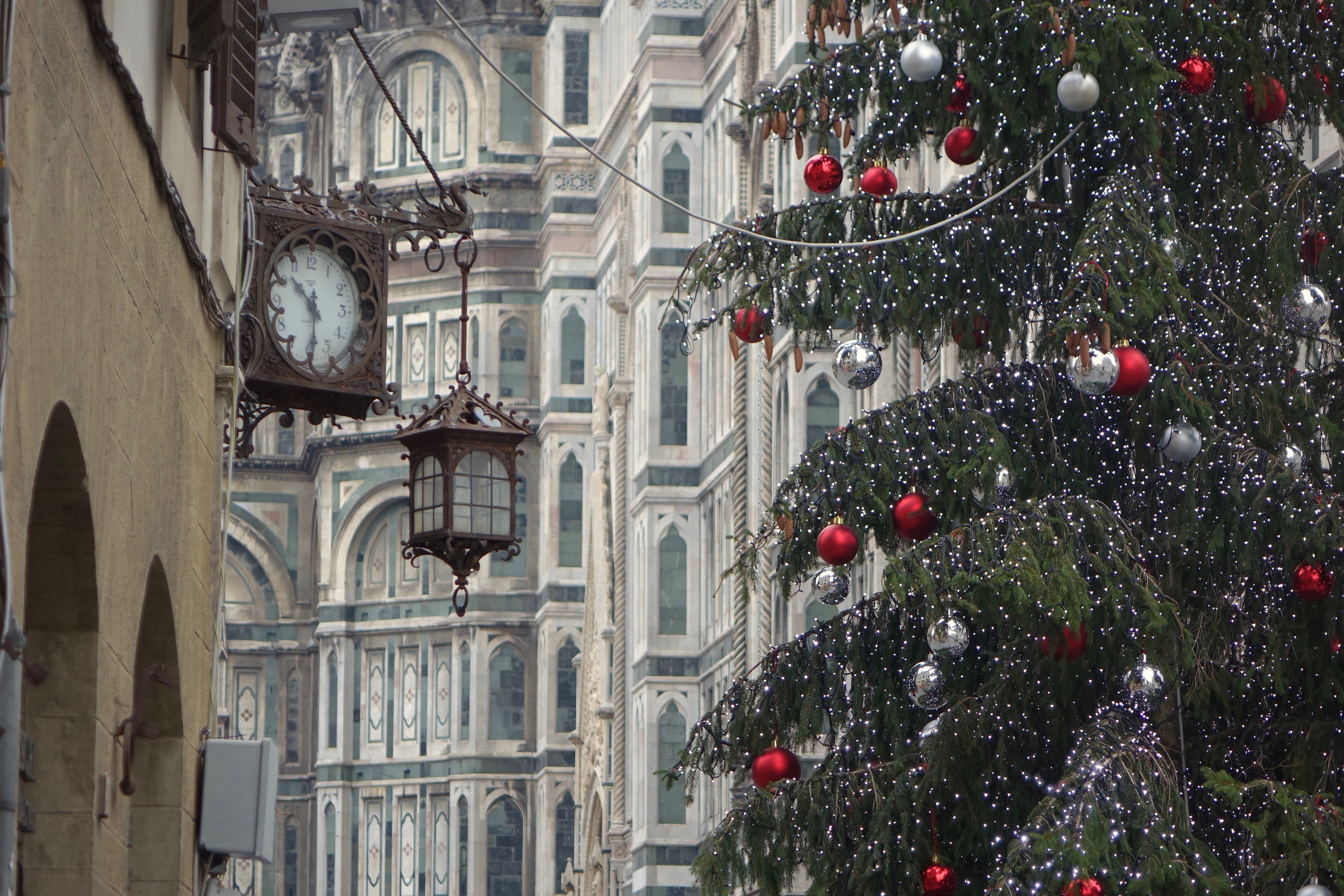
Skip to content

Posts from the ‘Travel’ Category

Magnificent Milano (Part 6): Stazione Centrale

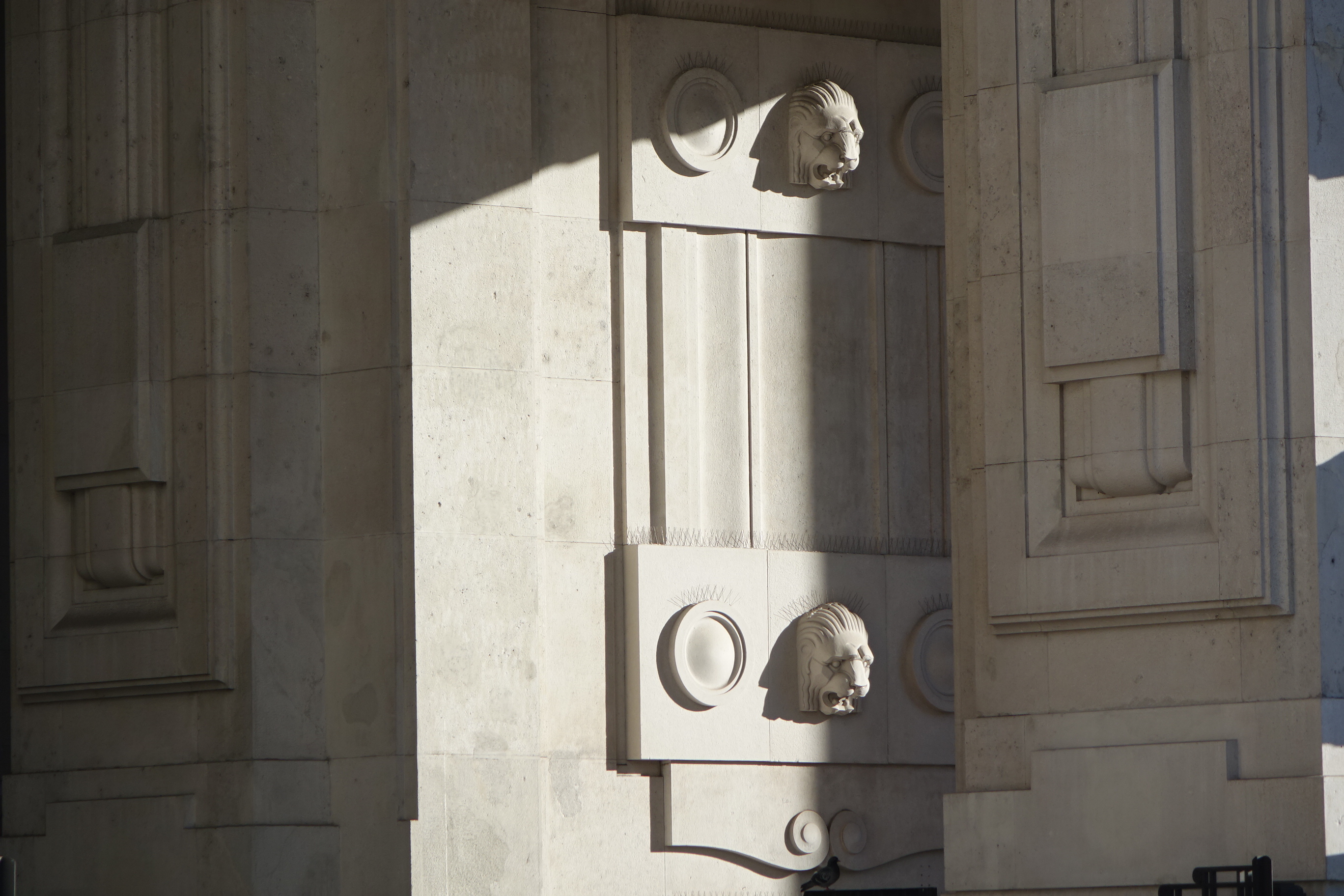
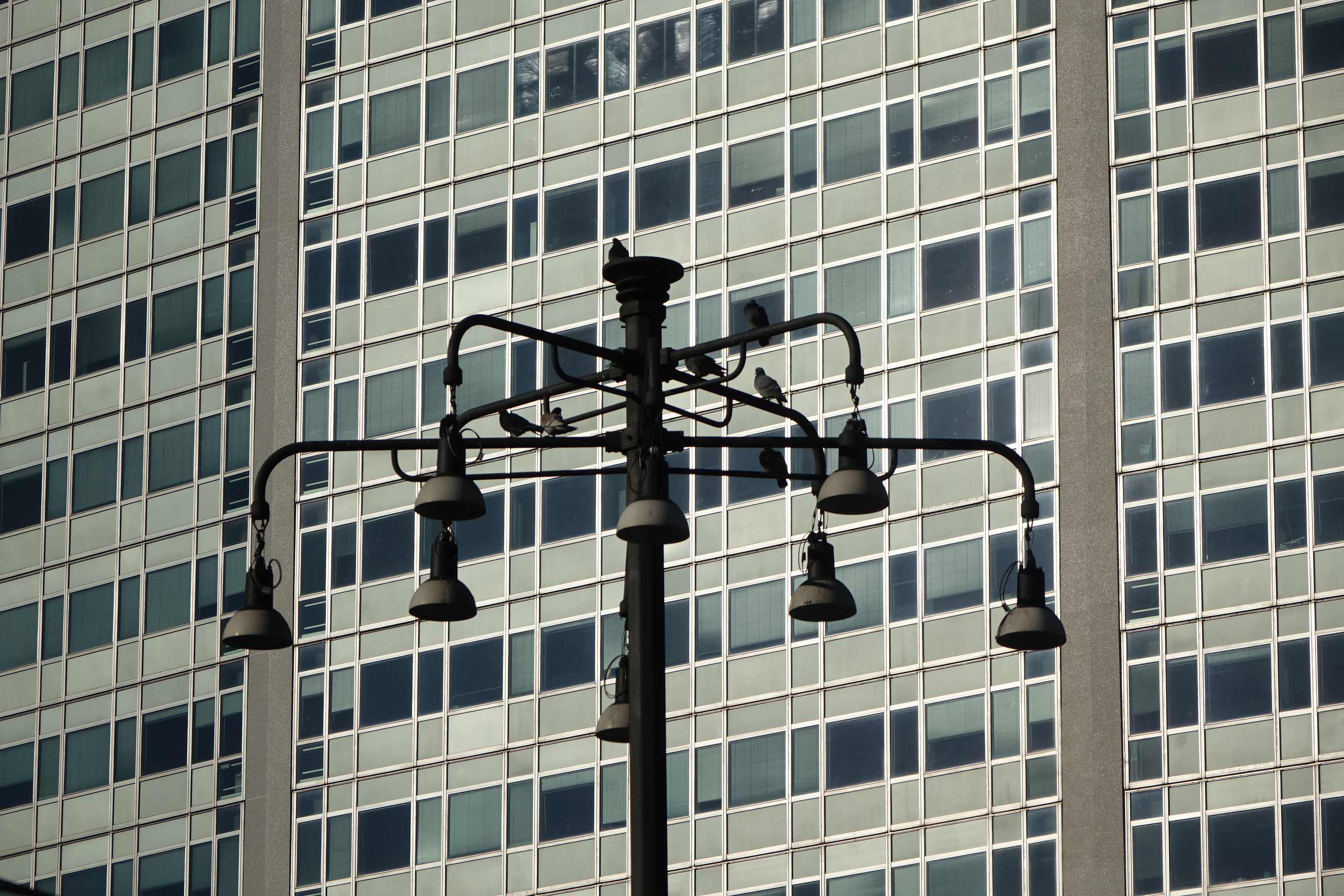
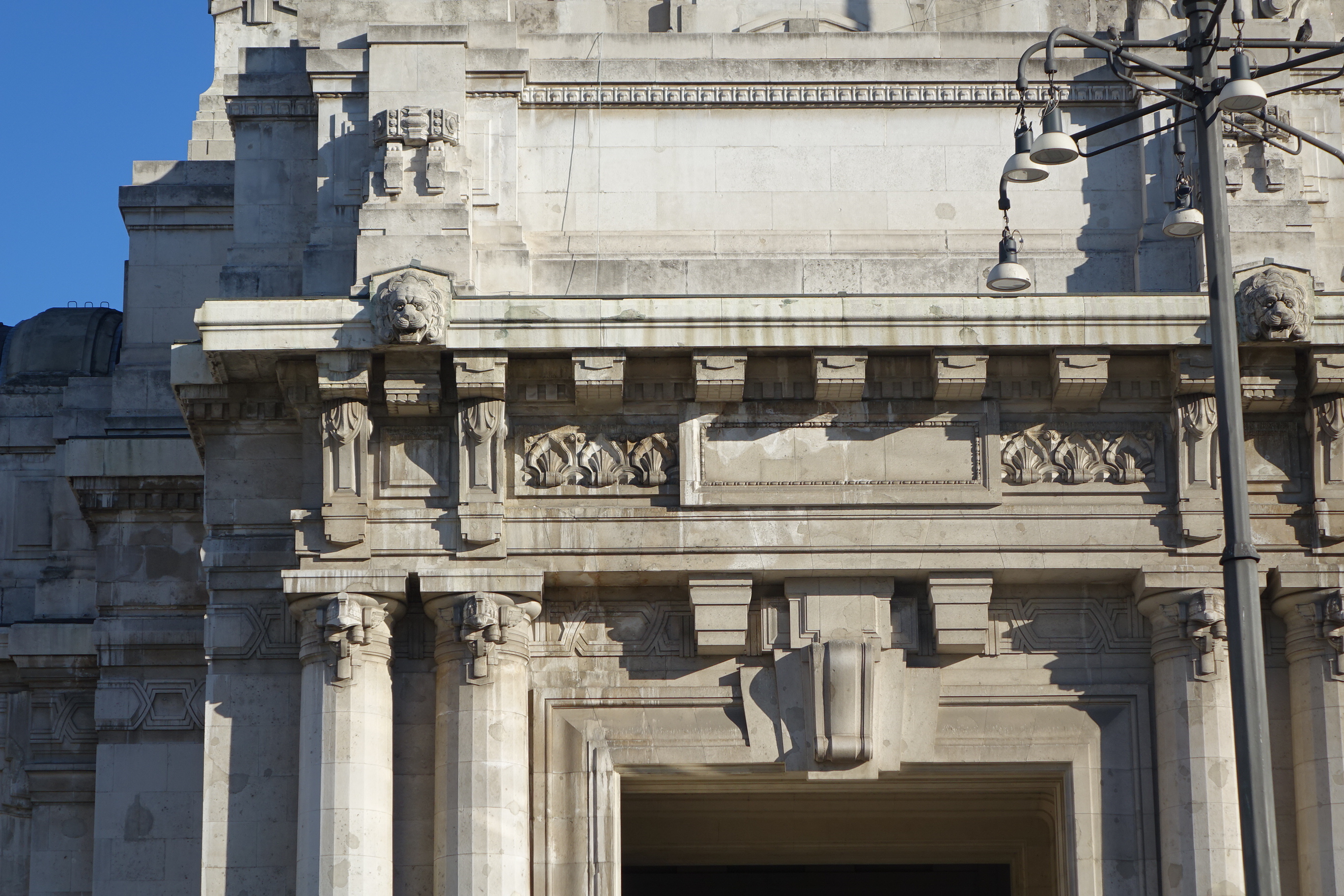
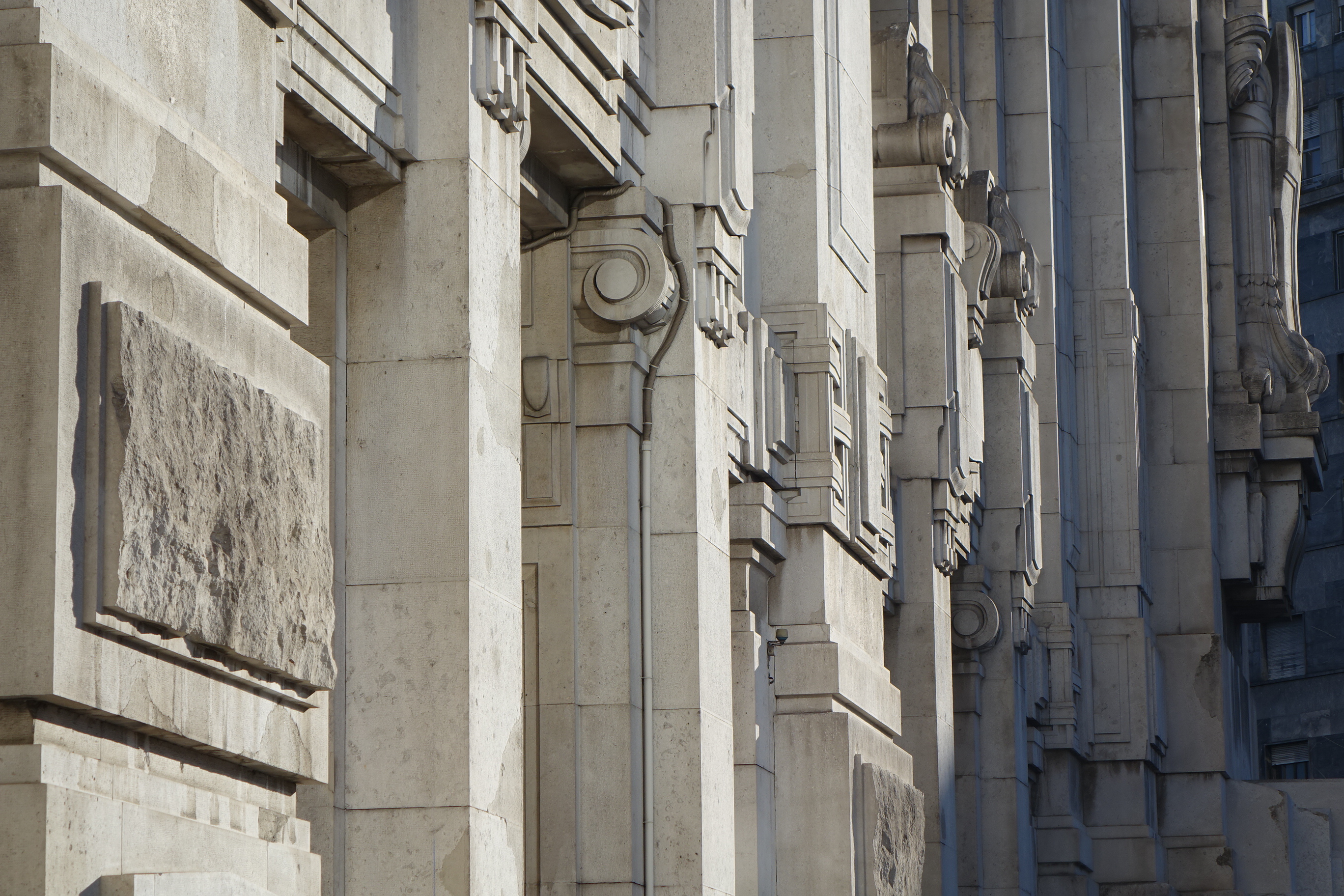
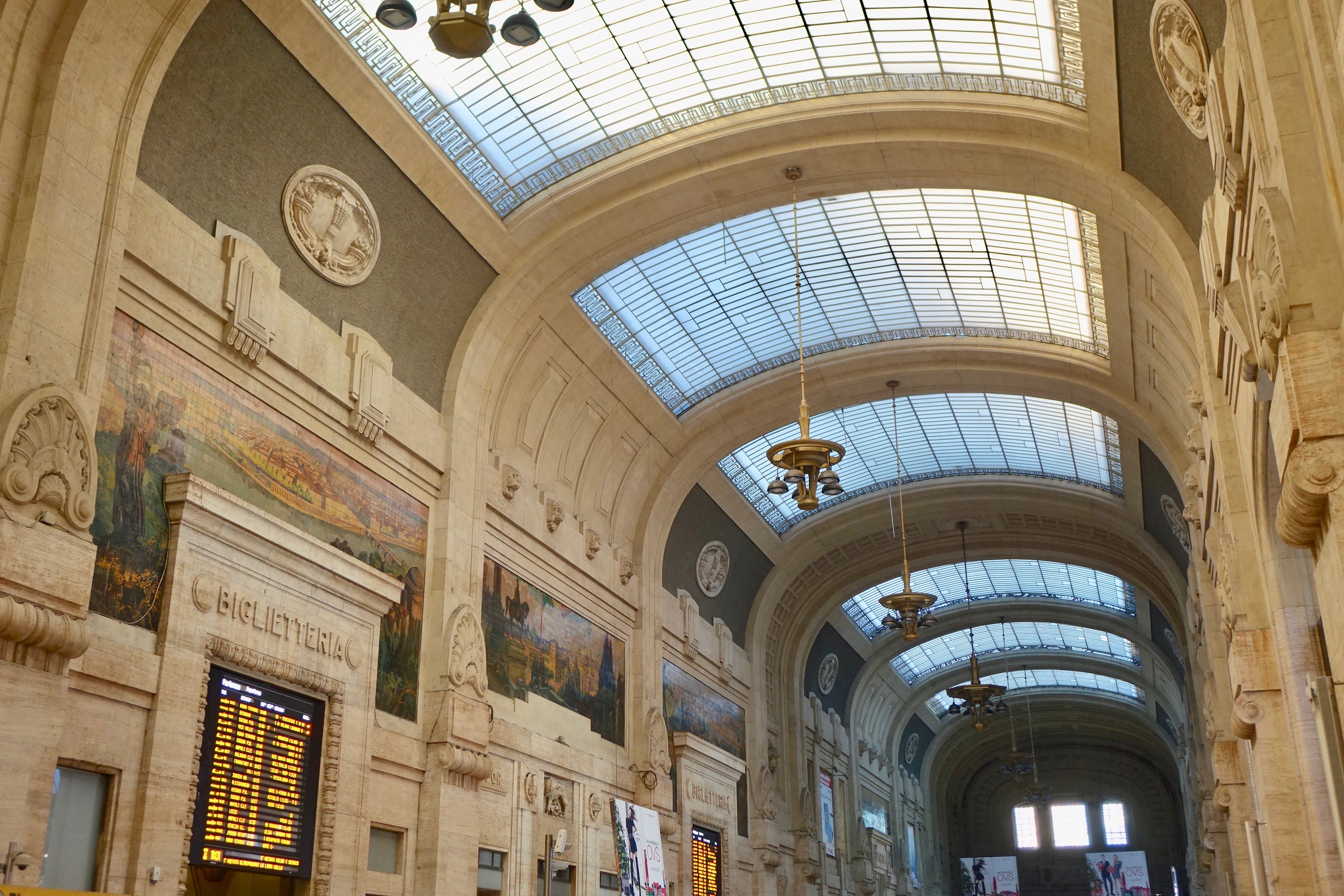
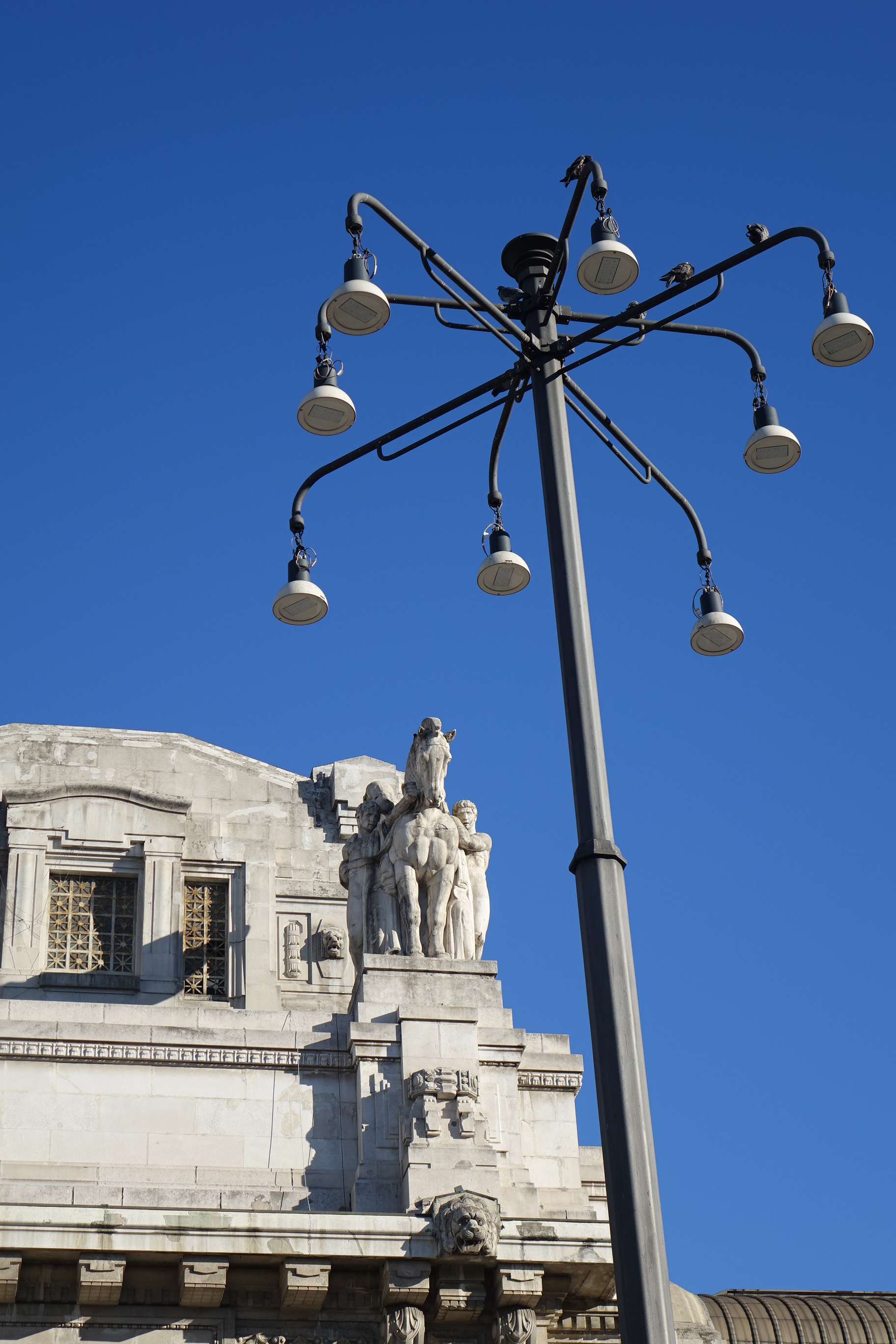
It’s not often when you leave a city that you start snapping away with your camera, but with the stupendous scale and majesty of its liberty-style architecture, the Stazione Centrale of Milan makes for one hell of a farewell. Inaugurated in 1931, and heavily influenced by the onset of Italy’s Fascist age of might and power, the building pronounces Milan and Italy a true powerhouse of the modern age and a gateway to the advanced engineering which meant that Milan was connected through vast railway tunnels running North through the Alps, and along endless expanses of track traversing the Italian peninsula.
DSC09440DSC09402DSC09435DSC09422DSC09413DSC09399DSC09442DSC09415

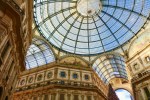
It’s hard to know where to look. While passengers may be accustomed to concentrating on the departures board, Milan’s central station is itself a masterpiece of art which beckons the viewer to look beyond the travel information and up into the soaring 72 metre height of its great loft ceilings, and over the art deco lines and cubist sculptures which represent, in very Fascist terms, the will of the worker and the strength of Milan as Italy’s industrial capital.
DSC09397DSC09420DSC09409DSC09388DSC09401DSC09391DSC09394DSC09390

The station is mightily impressive. You have to traverse three huge entrance porticos before you even reach the 24 platforms, each bigger than the one before and displaying new feats of architectural engineering and decorative brilliance. What can be termed as “halls” are each double the size of your average city train station, and pack their punch in aesthetic excellence and awe-inspiring impact.

It made leaving Milan that sunny blue-sky day all the more difficult, but think how it must impress as a gateway to the city? Whether it be political propaganda or a testament to design, the Stazione Centrale is a true icon of its age, and seeing it was a magnificent end to our Milanese Odyssey. Arrivederci Milano… we will return to revel in your splendour one day soon.

IMG_6162

© Nicholas de Lacy-Brown and The Daily Norm, 2011-2018. Unauthorised use and/or duplication of the material, whether written work, photography or artwork, included within The Daily Norm without express and written permission from The Daily Norm’s author and/or owner is strictly prohibited.

Magnificent Milano (Part 5): Città di Notte

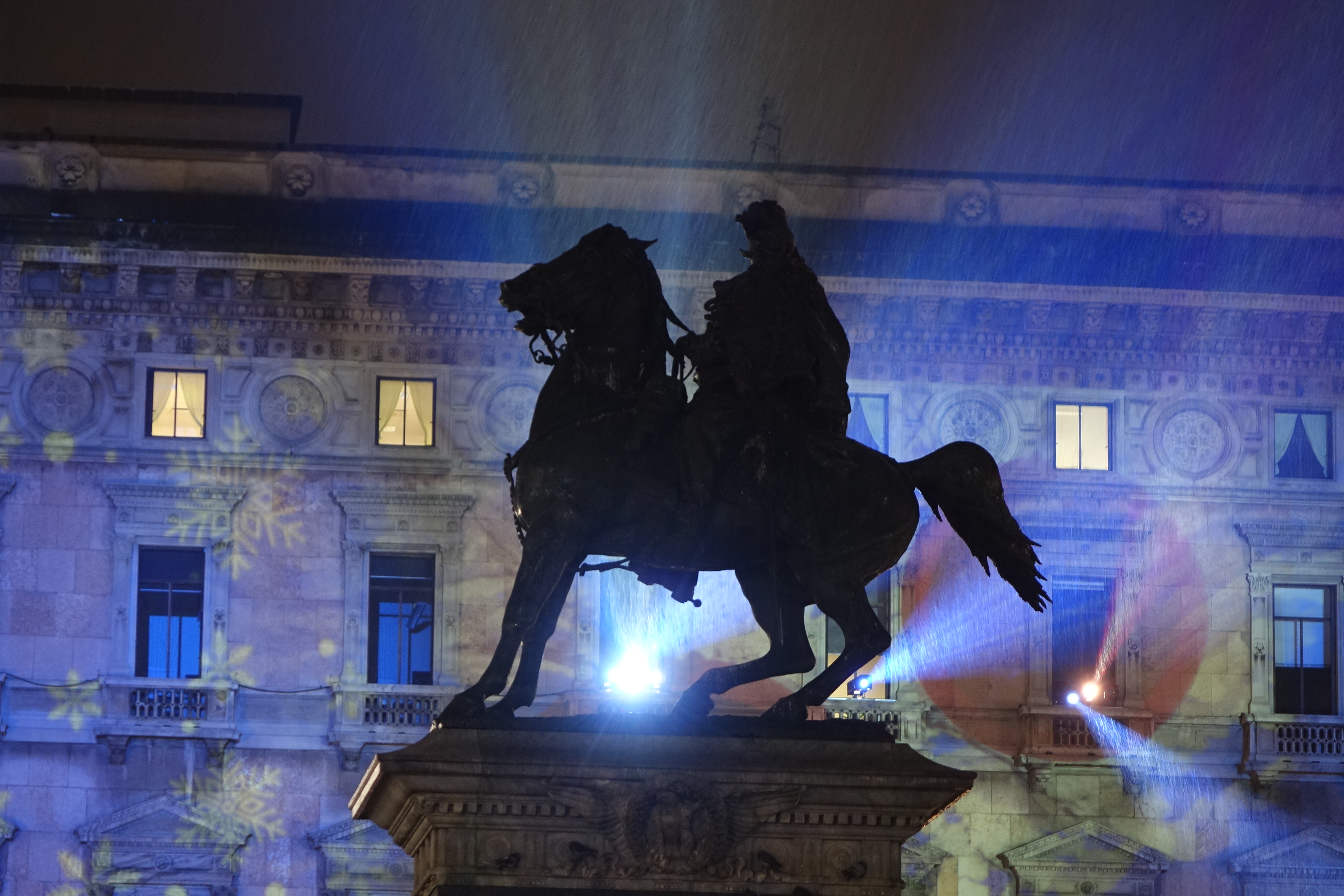
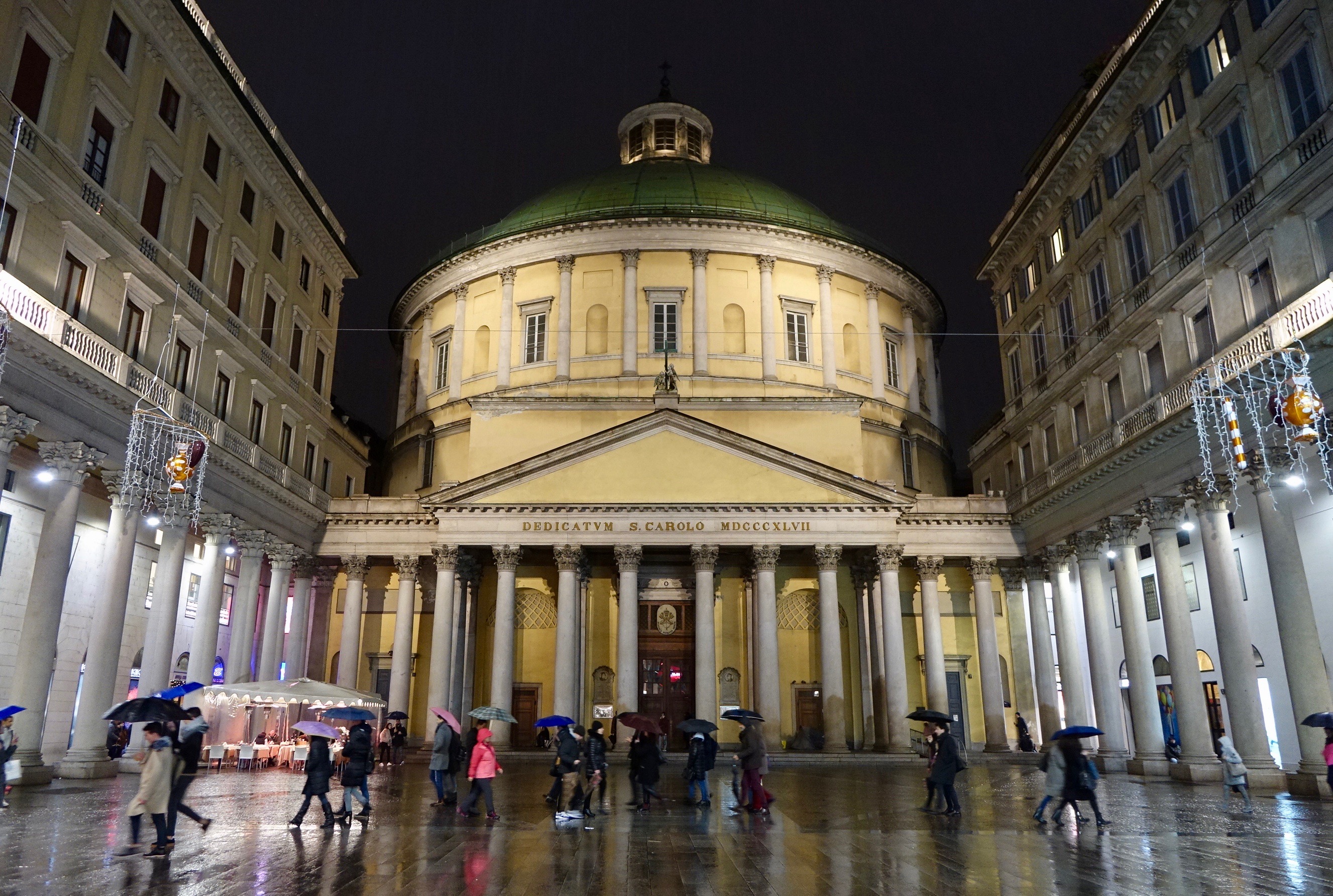
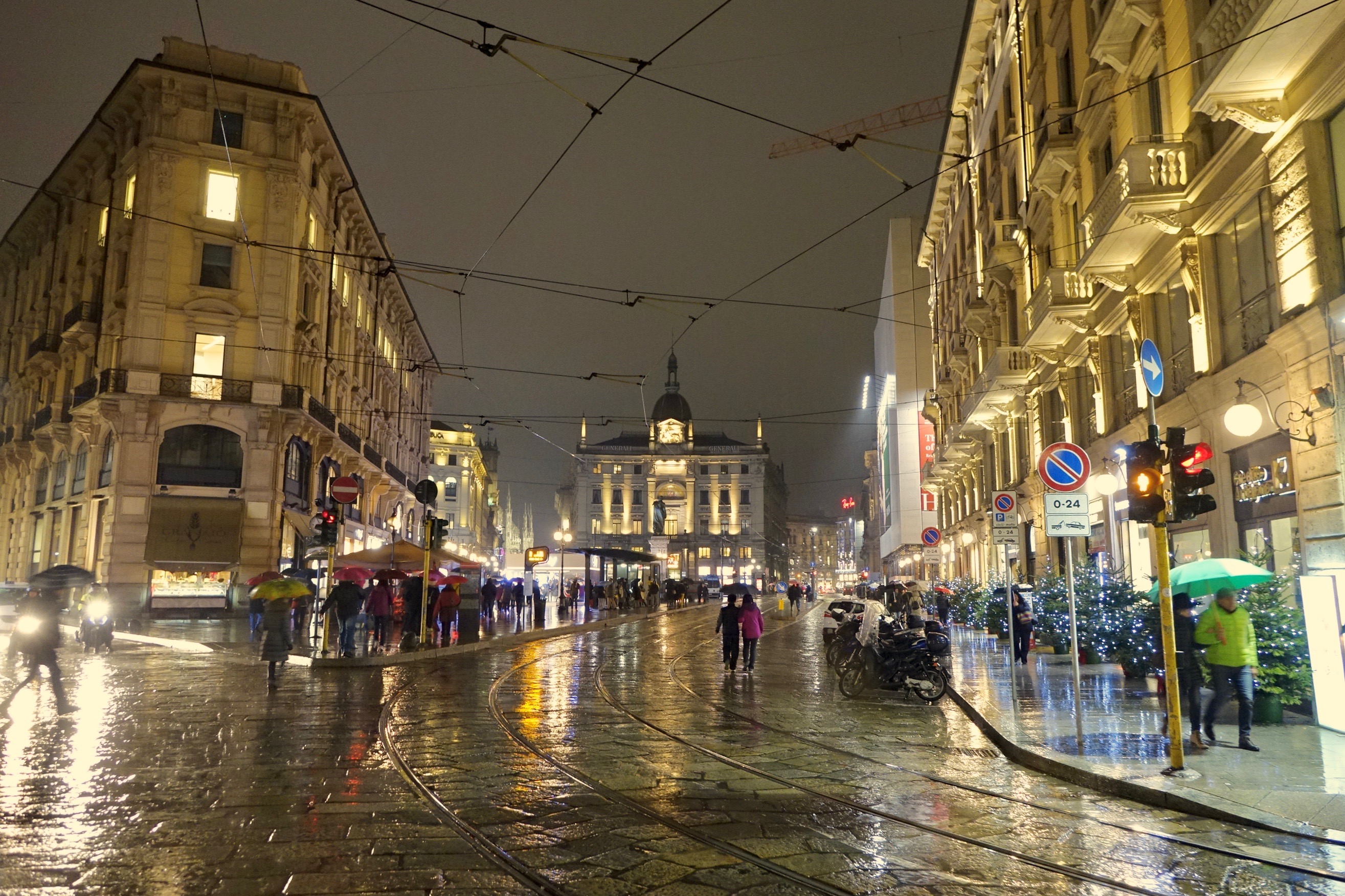
I feel as though this is progressively becoming a one-man crusade to prove the beauty of Milan. Even the other day, when I spoke of our travels, my dinner companion piped up: “ah yes, Milan is ugly so they say”. No! I protested, as I proceeded to upload the pages of  The Daily Norm on my phone. And now that you’ve seen the famous Duomo in all its guises together with Milan in its sparkling sunlit state, I thought I would further demonstrate the beauty of this Northern Italian city by showing yet another facet of its elegant urban character: Milan by Night.

DSC08843DSC08819IMG_6016DSC08857DSC09383

I don’t have many photos to share – you know that cameras (or at least the photographer) can be a little shaky at night – but those I do have show something of the vivacity of a city which is emboldened after hours, as the city comes alive with thousands of sparkling lights, and its iconic buildings take on a new robust character which makes them pop from amongst their unlit neighbours. Milan is a city known for its intemperate rain showers, and this we experienced on our first night in the city. But the result was to scatter those street lights across every wet reflective surface making, to my mind, an even more beautiful pictorial celebration of Milan by moonlight.

DSC08859DSC09376DSC09035DSC08929DSC08845

© Nicholas de Lacy-Brown and The Daily Norm, 2011-2018. Unauthorised use and/or duplication of the material, whether written work, photography or artwork, included within The Daily Norm without express and written permission from The Daily Norm’s author and/or owner is strictly prohibited.
Magnificent Milano (Part 4): The Duomo, Rooftop forest

In fashioning the most extravagantly elegantly shaped dresses and forging trends to go bankrupt for, the designers of Milan are merely following in the footsteps of their city forefathers who constructed a Cathedral to wow, inside and out. And while their objective was most certainly achieved in all the most conspicuous of places, they didn’t fall short of embellishing even those sections seen more regularly by the birds than by the faithful down below. For the Duomo’s rooftop is every bit as beautiful as its marble facade and its stunning grandiose interior. In fact to my mind, it’s the icing on the cake, and the cherry on top all rolled into one magnificent exhibition of man’s greatest craftsmanship.

DSC09121DSC09101DSC09106DSC09135DSC09115DSC09138DSC09110

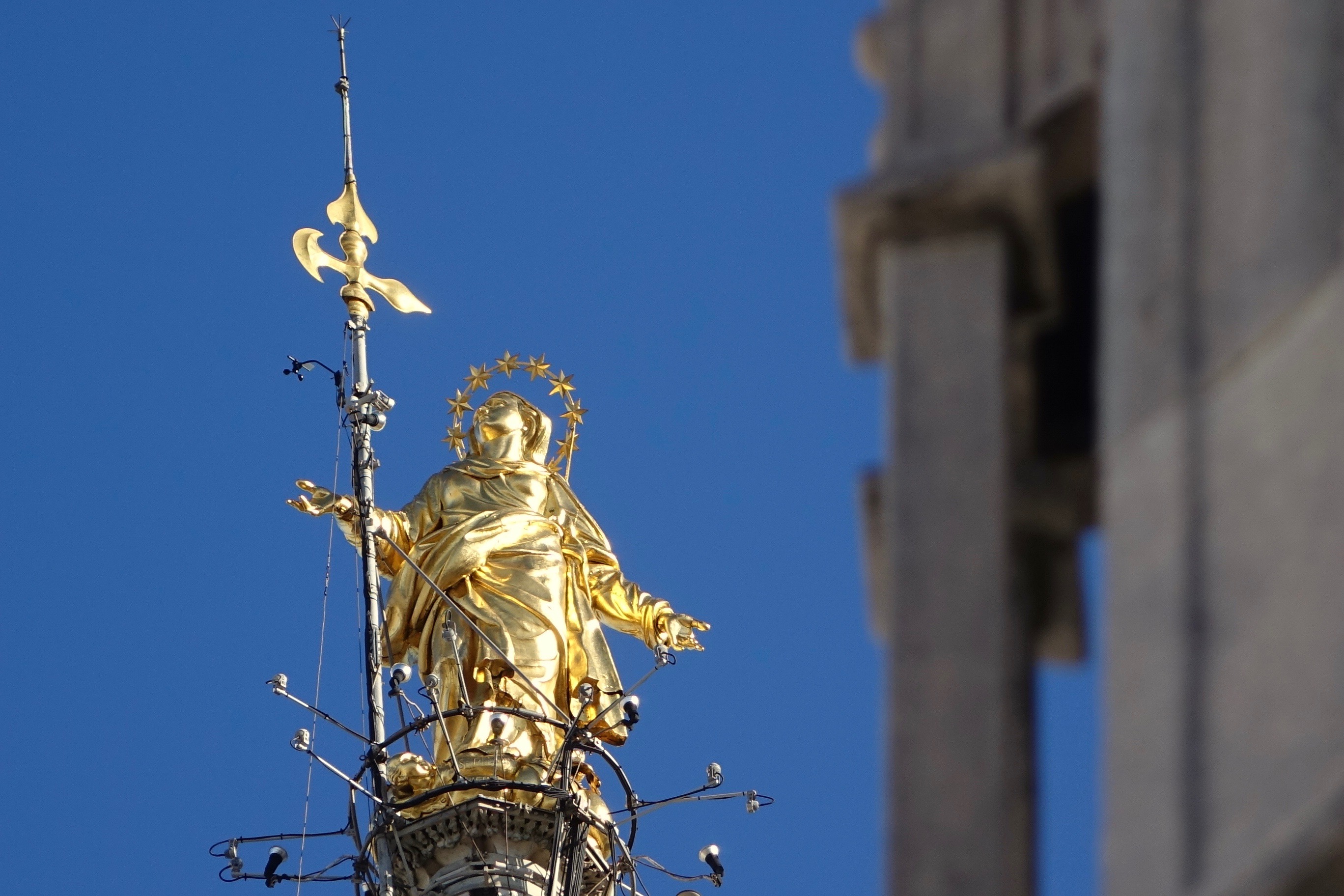
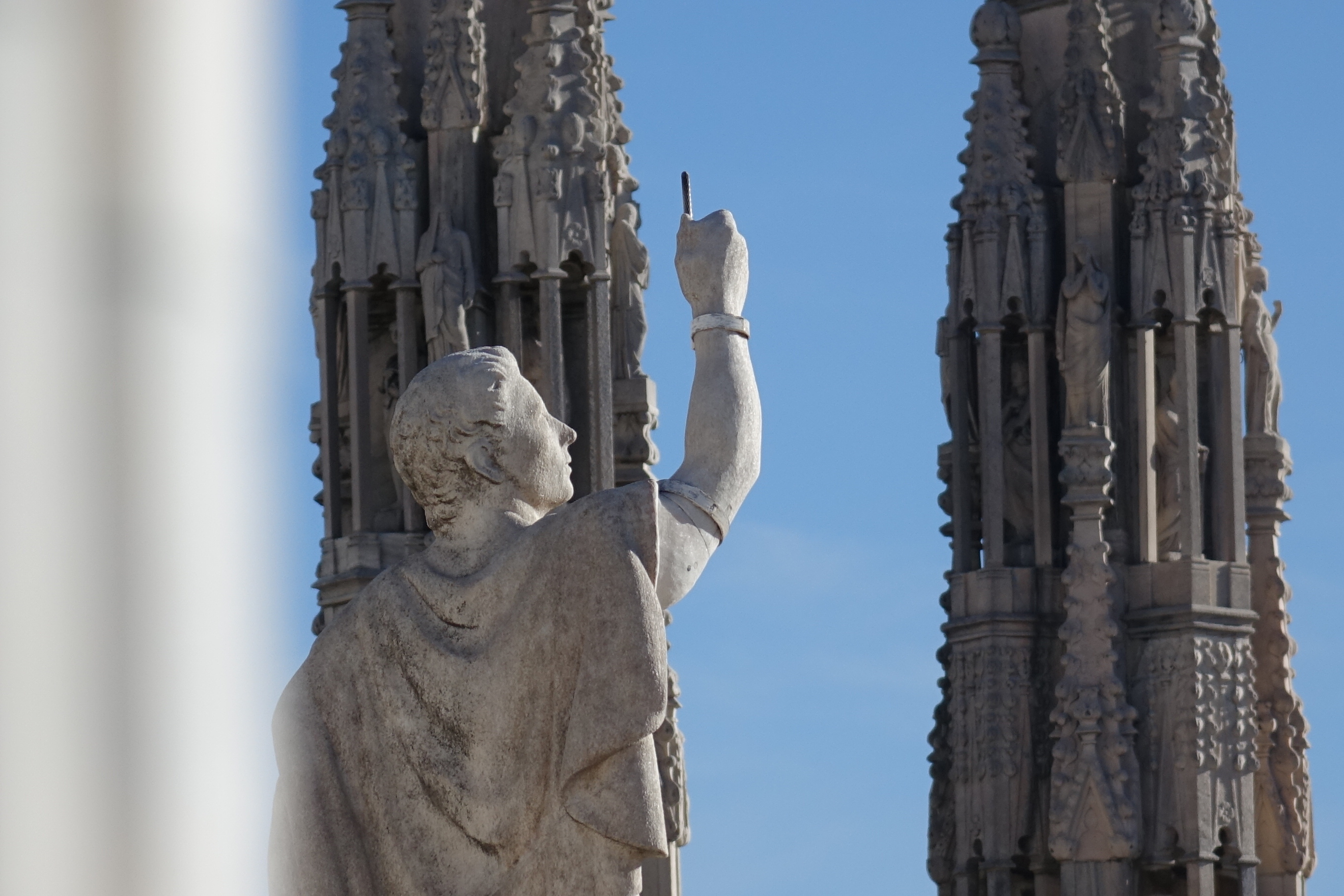
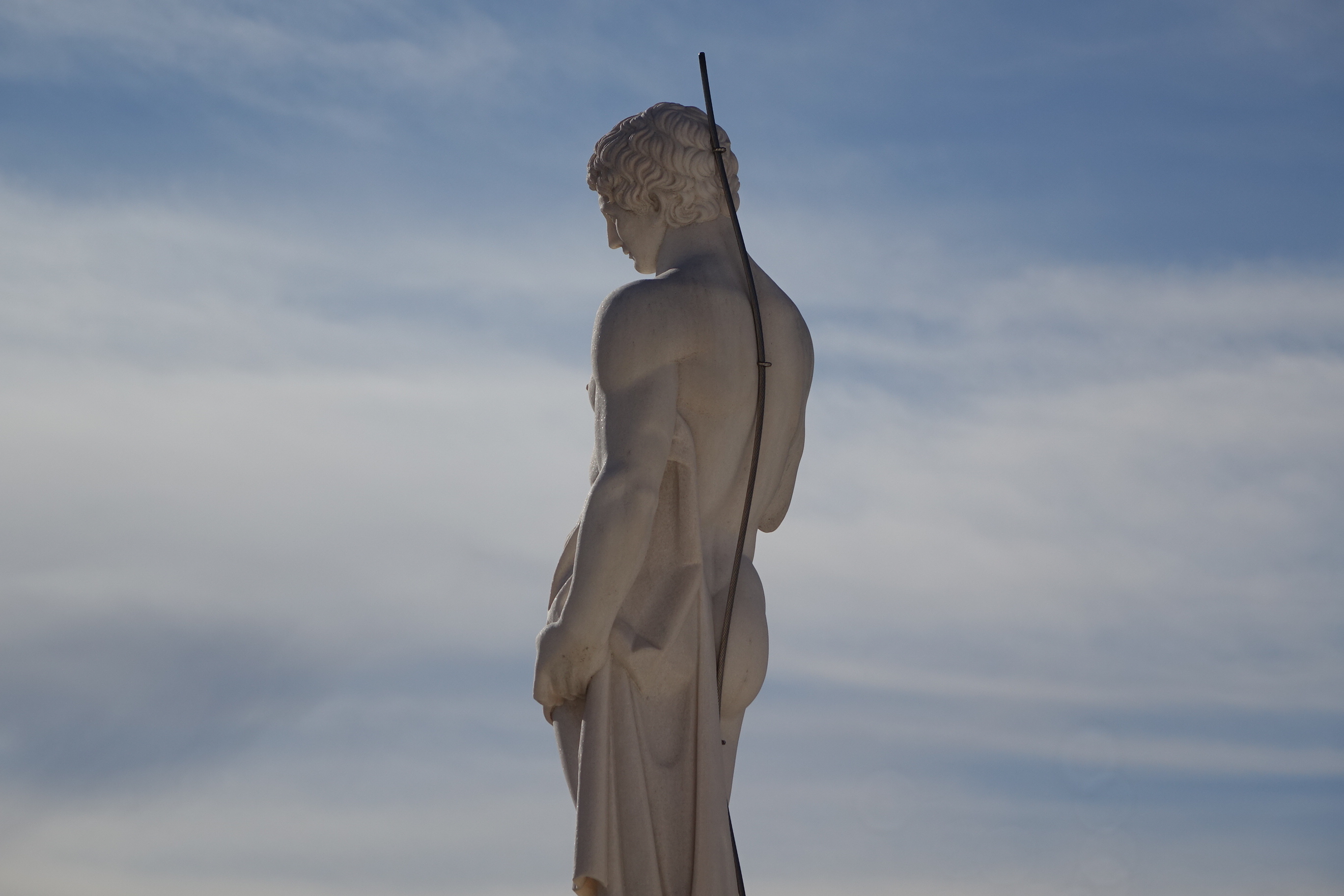
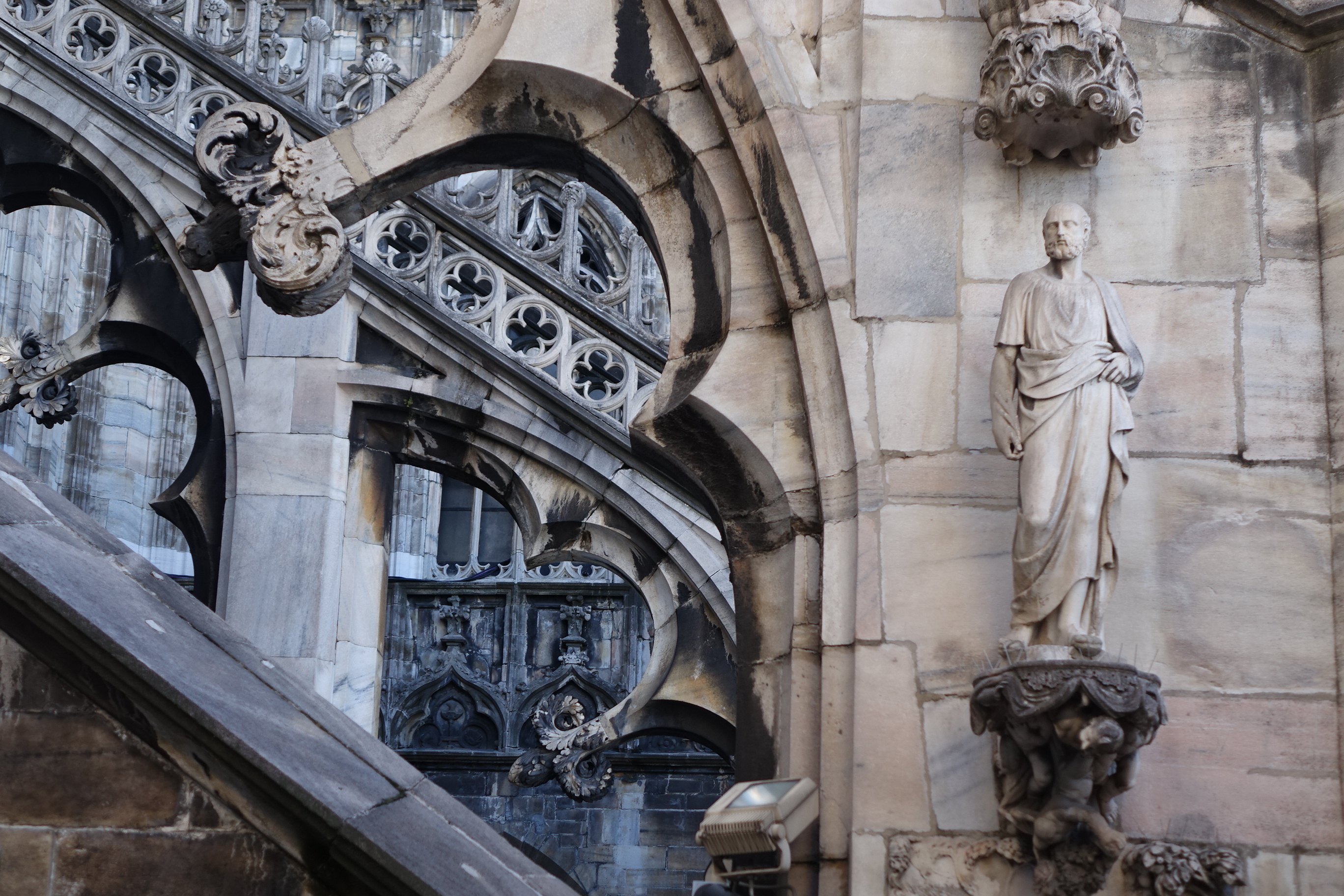
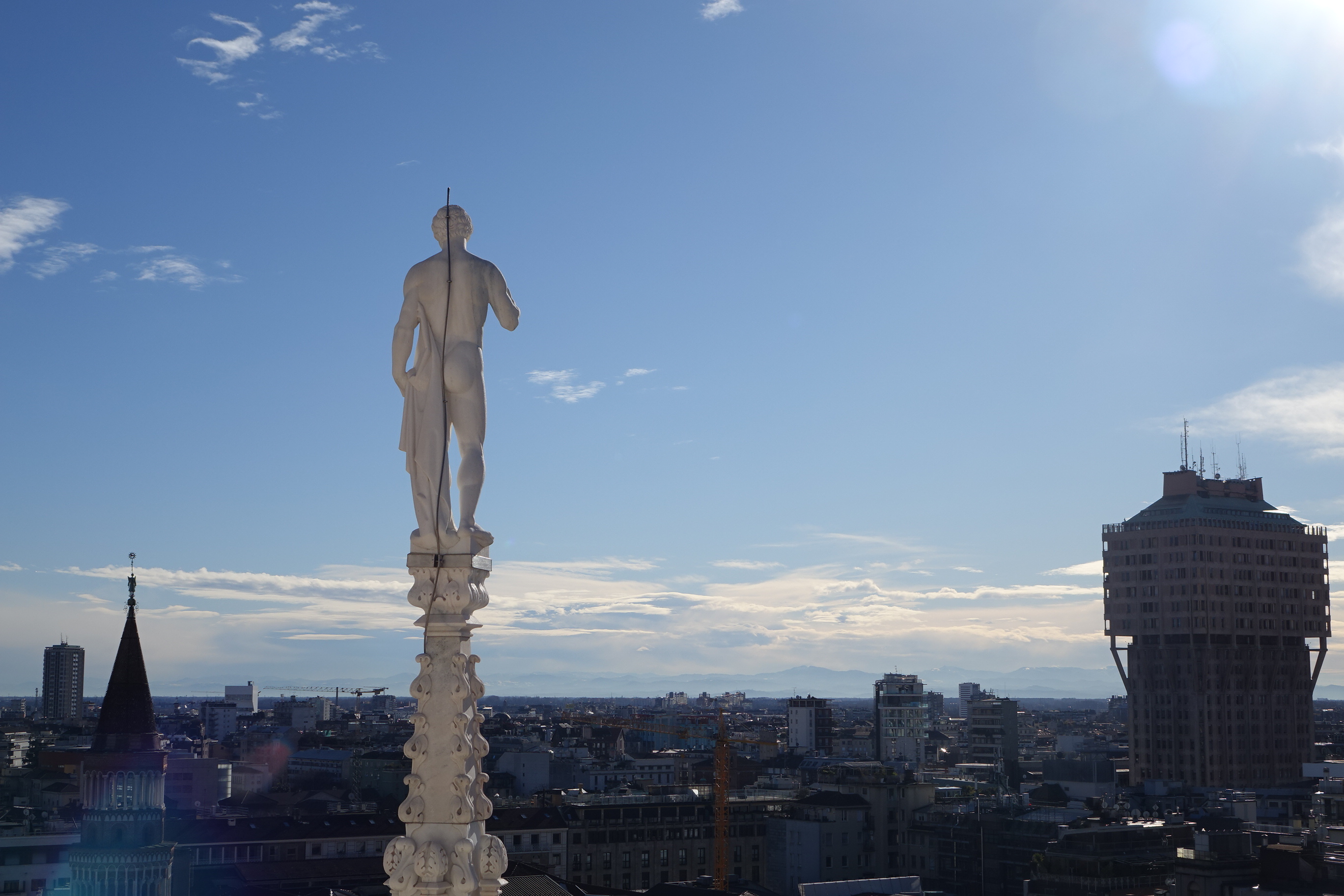
The roof of the Duomo of Milan is a veritable forest of marble Gothic spires (some 135 in all) topped by perfectly sculpted images of the saints, flowers and gargoyles. These upward thrusts of stone are coupled with gently arching buttresses which support the nave and make the initial approach along one side of the building and up to the central section a real treat of overlapping stone. Once on the very top, you need to have both a head for heights and a steady footing, as you literally walk on the sloping sides of the vaulted ceiling. But if you suffer from vertigo, think of Mary, whose golden statue still looks minuscule, even from the roof, as it soars upwards hundreds of metres into the sky.

DSC09102DSC09128DSC09145DSC09116DSC09153DSC09139

But perhaps the greatest aspect of the roof is the view. Behind the spires and the ancient statues is a city skyline progressing fast with the times. Out of the shadow of modernista palazzos, a vibrant new landscape of skyscrapers and apartment blocks is growing, from Ponti and Pier Lugui Nervi’s iconic Pirelli Tower, to the more recent, twisting form of Zaha Hadid’s Generali Tower or the strangely verdant Bosco Verticale by Stefano Boeri. It’s ancient meets modern, which more or less sums up the character of Milan: A city forging way ahead of many of its ancient Italian cousins, but retaining at its heart one of the most impressive historical buildings of them all: the Duomo.

DSC09142DSC09124DSC09149DSC09095DSC09127DSC09118

© Nicholas de Lacy-Brown and The Daily Norm, 2011-2018. Unauthorised use and/or duplication of the material, whether written work, photography or artwork, included within The Daily Norm without express and written permission from The Daily Norm’s author and/or owner is strictly prohibited.
Magnificent Milano (Part 3): The Duomo, Inside and Out

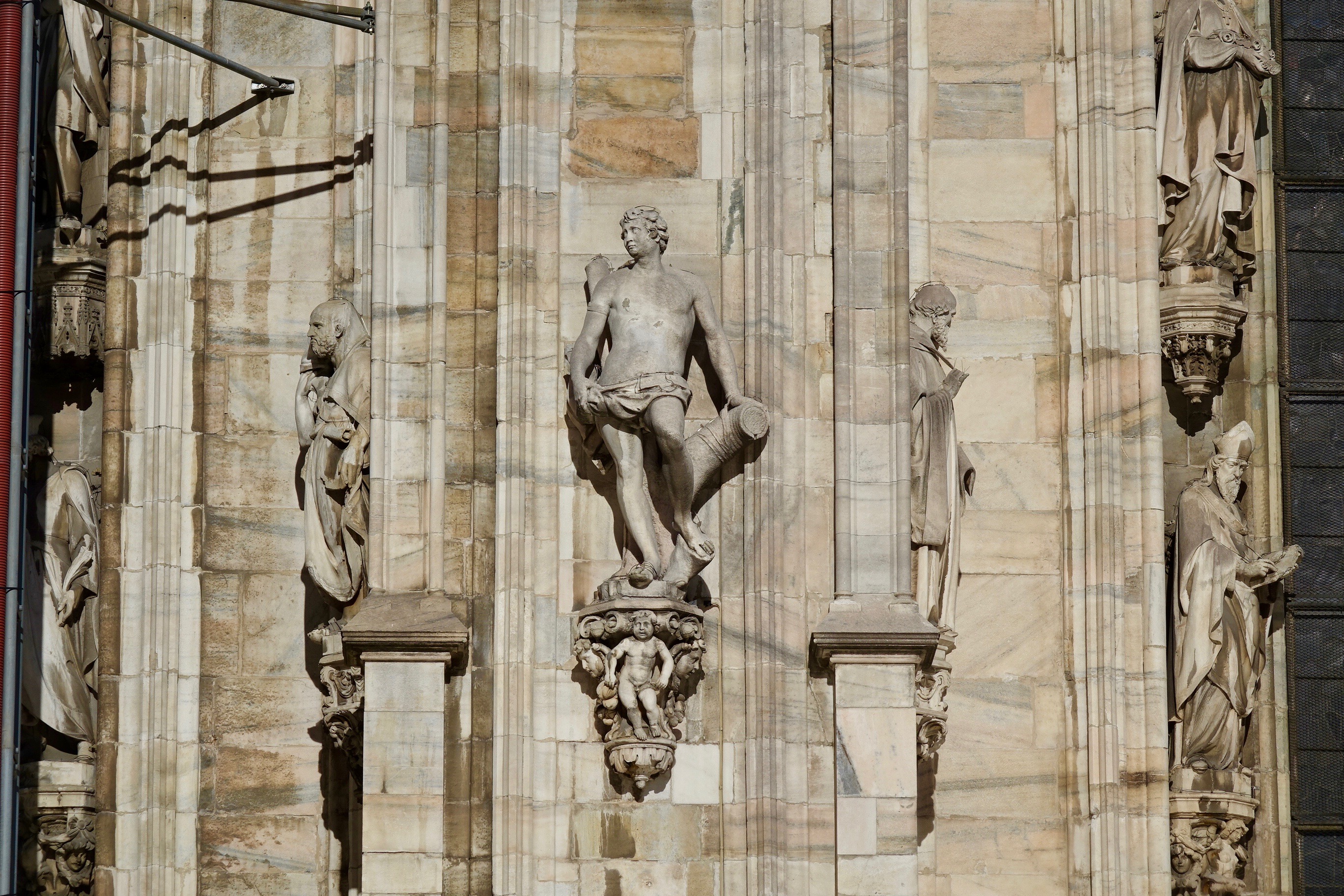
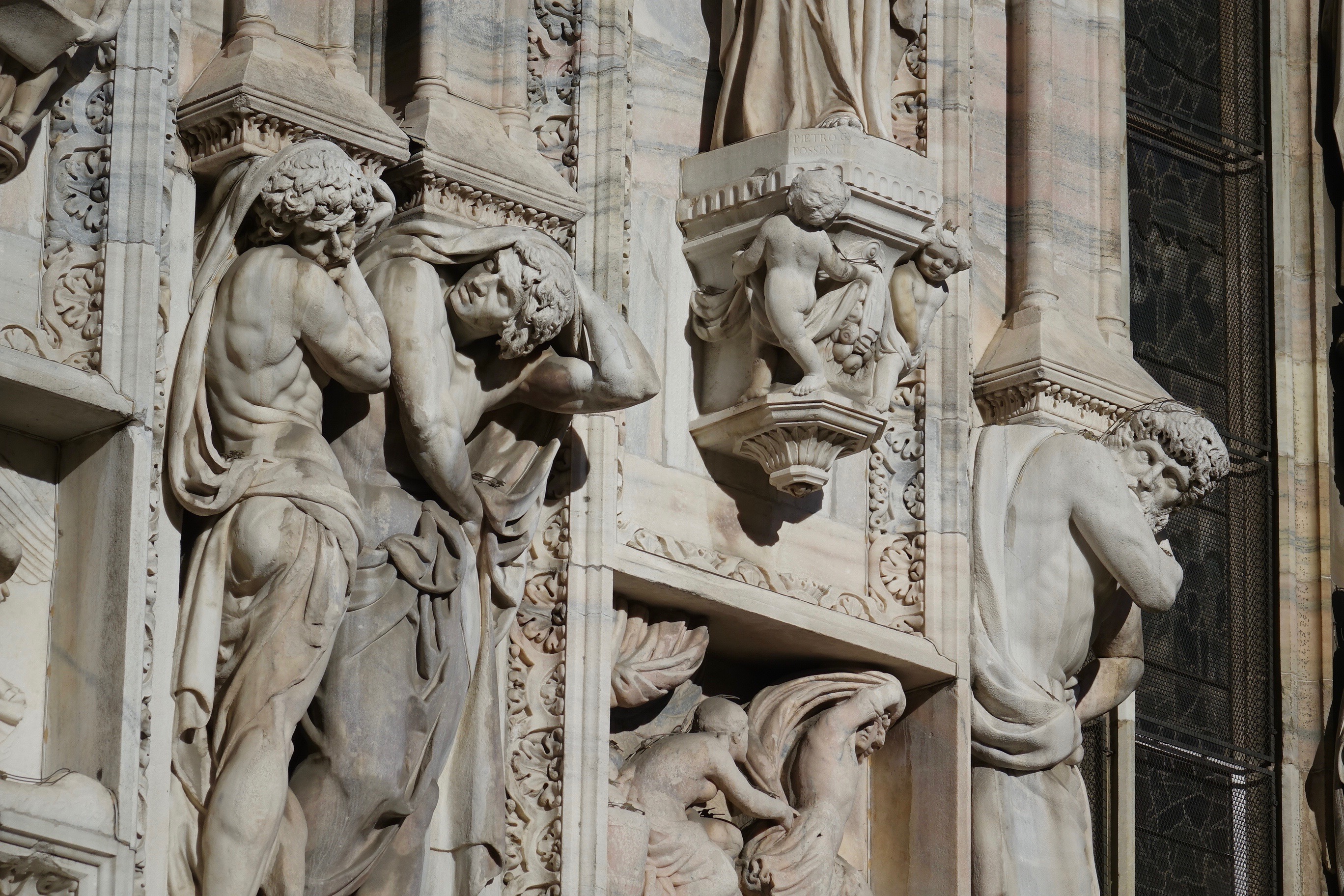
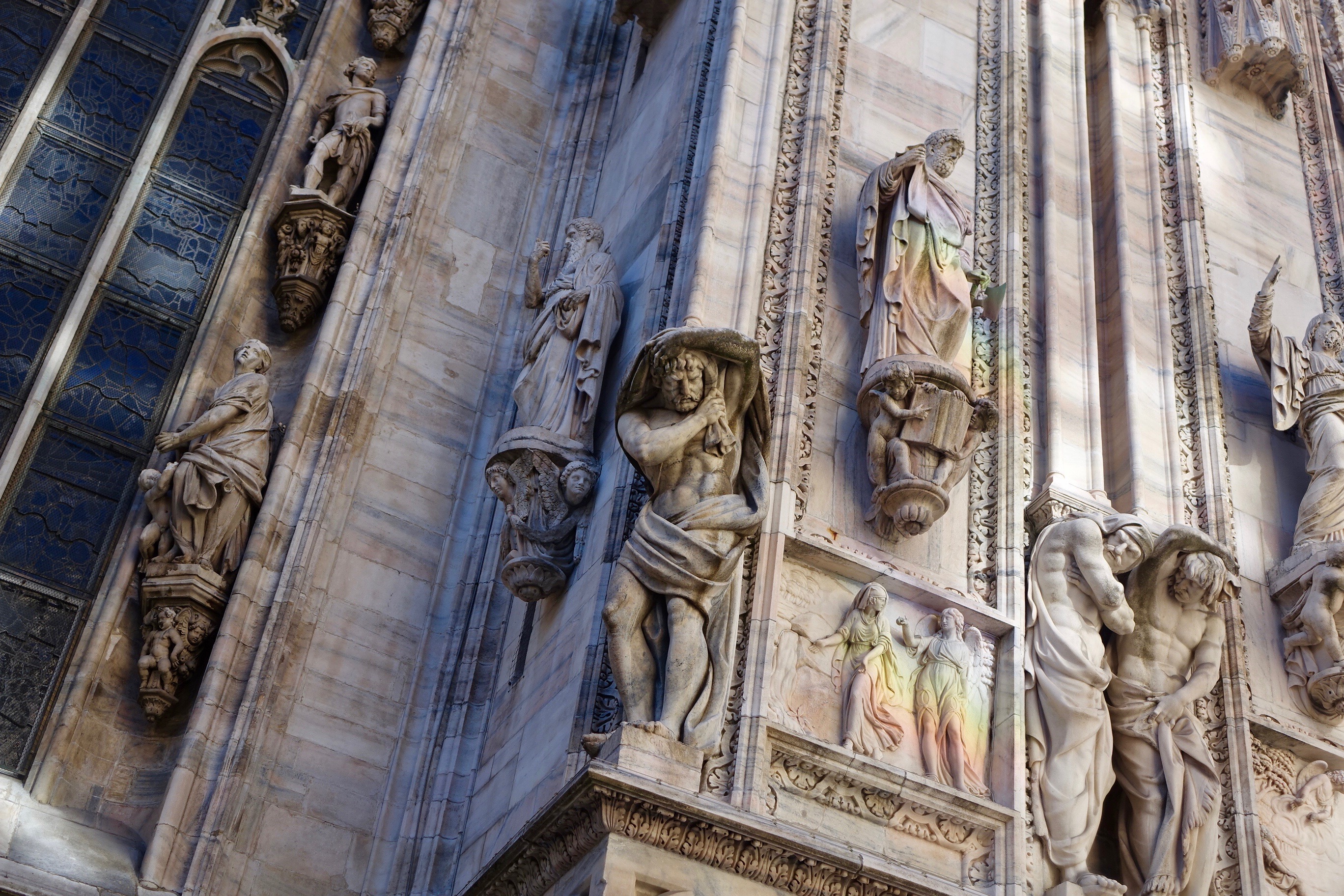
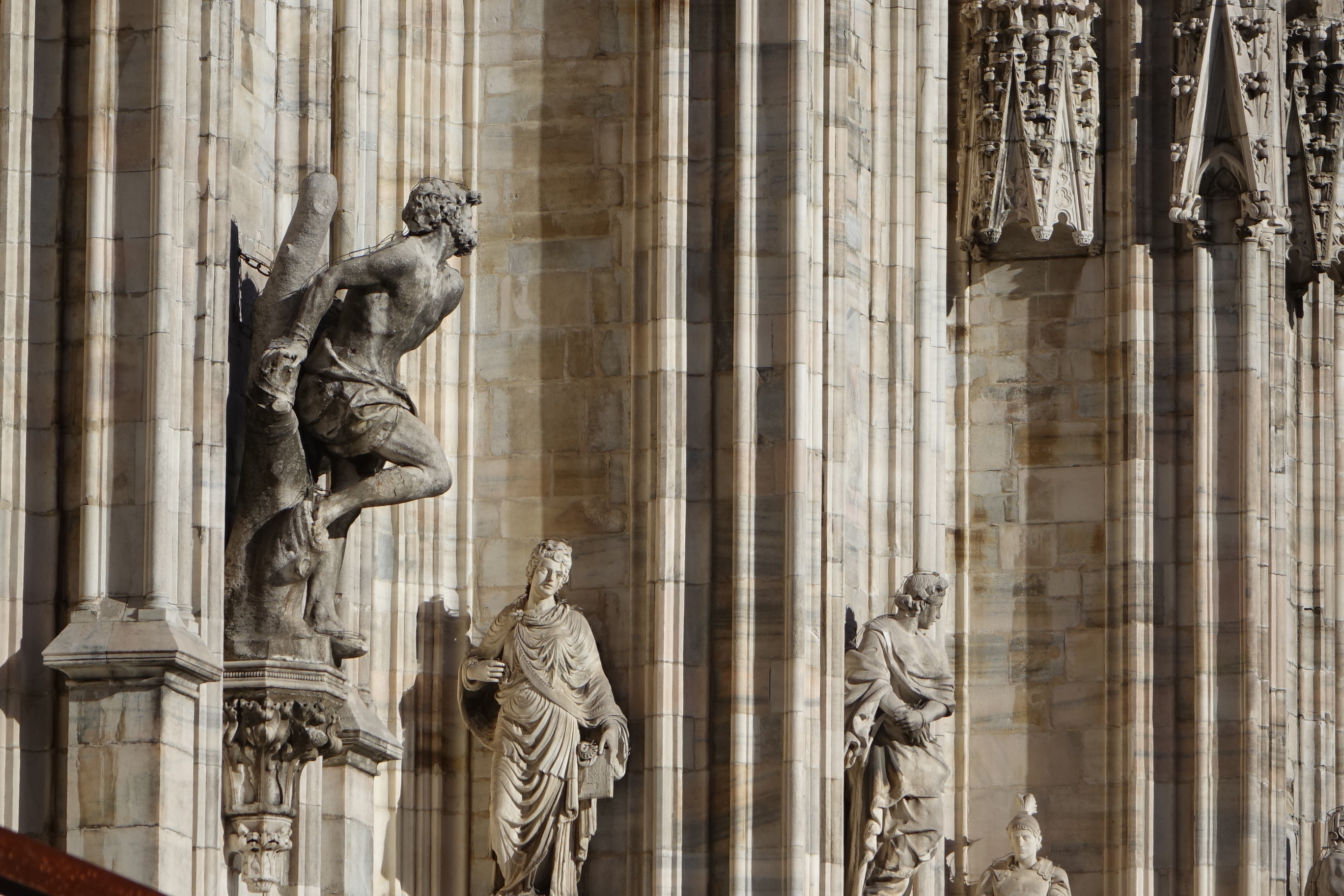
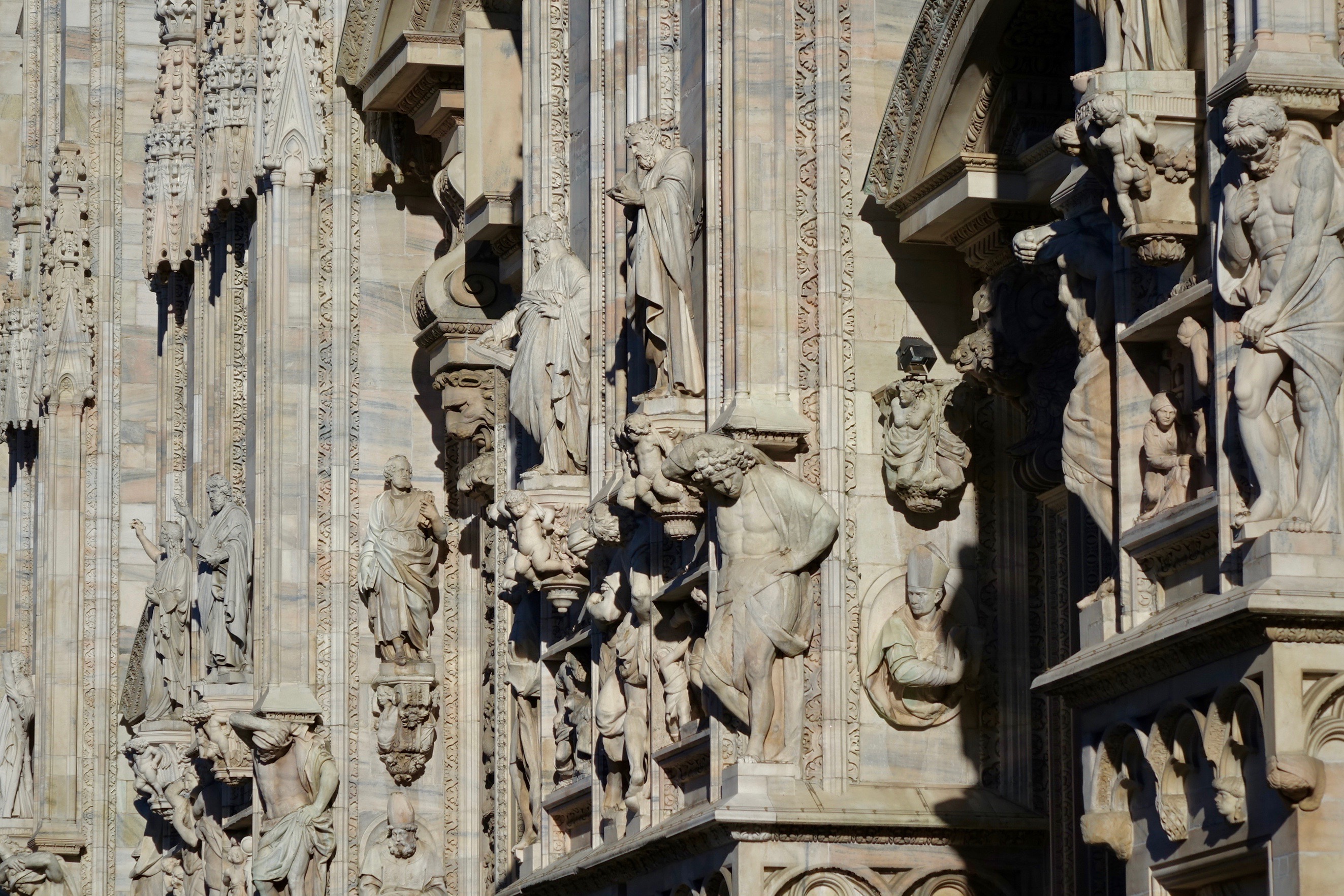
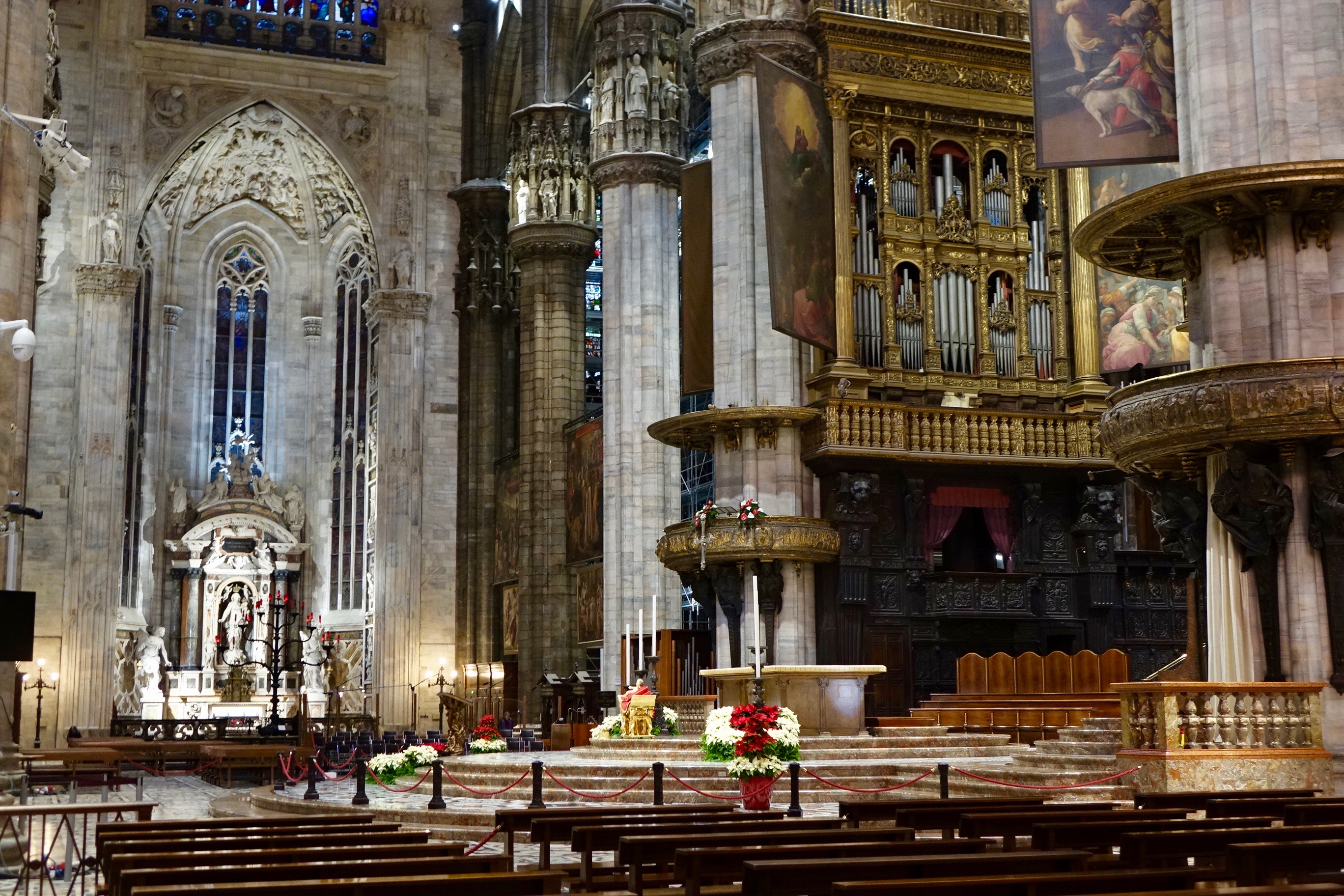
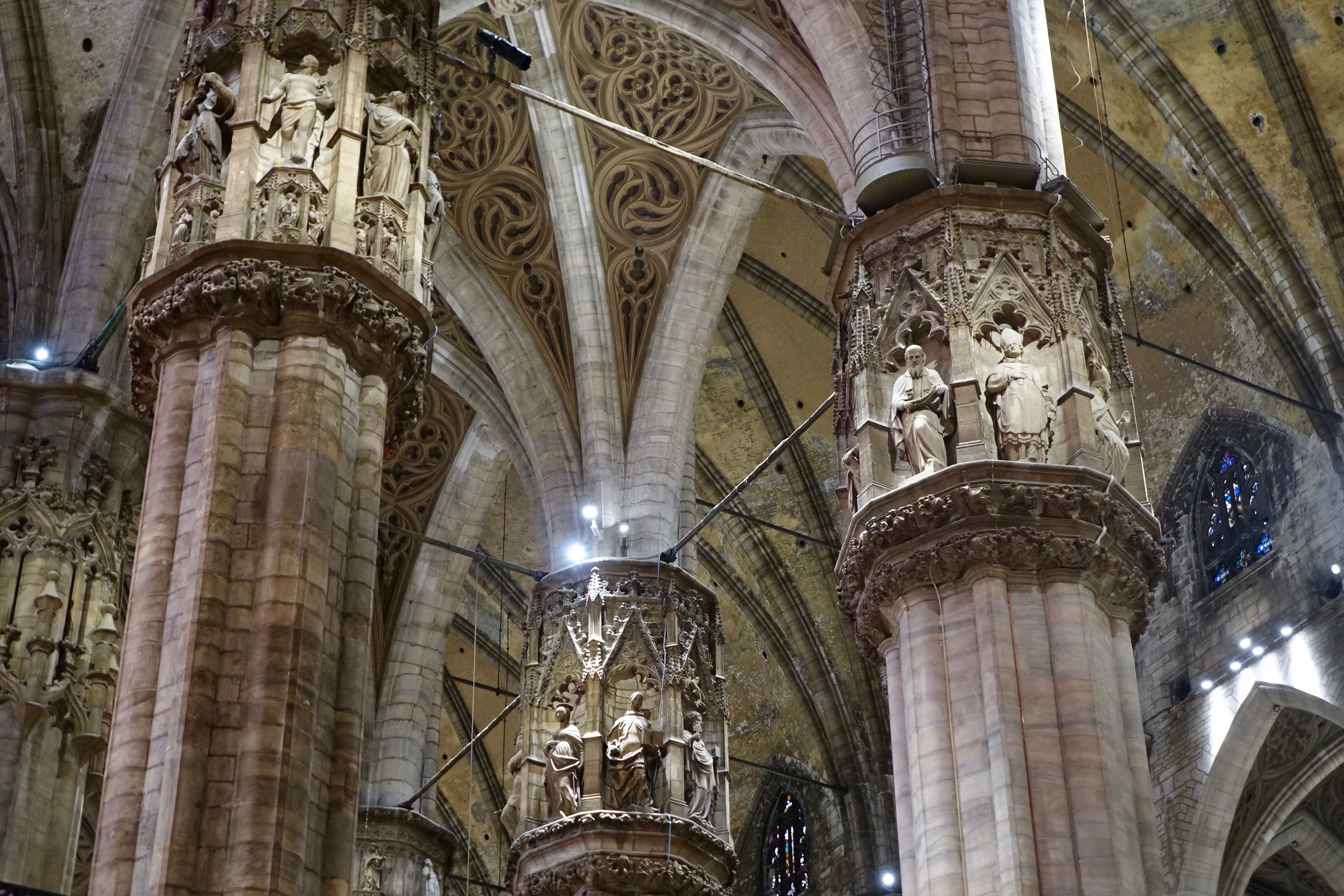
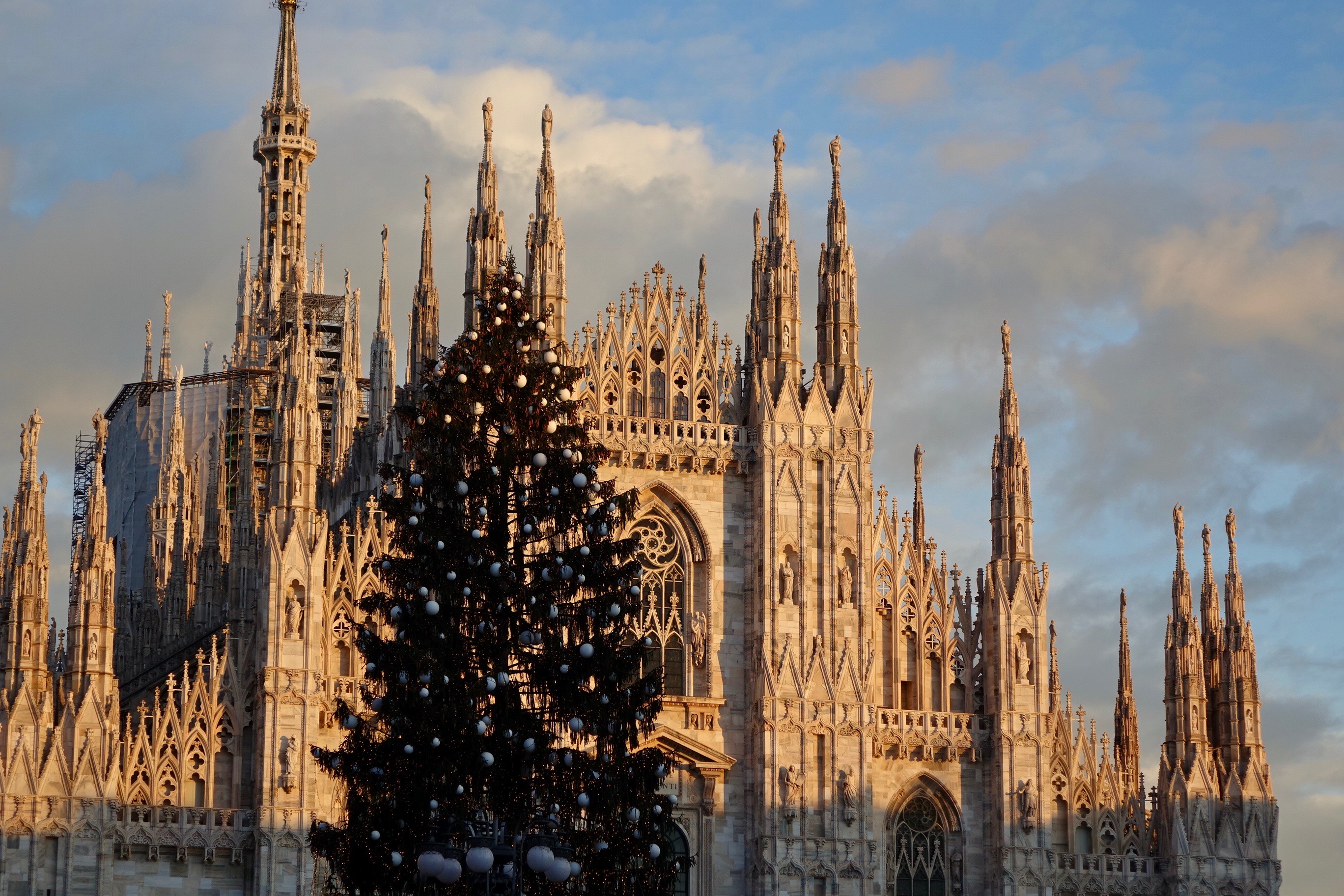
Move aside Prada, take a seat La Scala. For when it comes to the true and undisputed icon of Milan, it’s the mighty cathedral, Milan’s Duomo which will always take centre stage. The ultimate celebration of the gothic style at its most flamboyant, the Duomo is a veritable forest of multiple spires, and a jewellery box of delightfully pearlescent Candoglia marble which is crafted into an entire cast and crew of saints, sinners and ghoulish gargoyles peppering every inch of the abundantly decorated facade.

We must consider ourselves lucky in this century to see the Duomo in its current state of perfection. For the gigantic structure, which is surely one of the most dazzlingly ambitious historical structures to have ever been built, took some 6 centuries to complete after its commencement in 1386. And happily too, it survived the WW2 bombs which made mincemeat of much of the surrounding area.

Outside…

DSC09181DSC09086DSC09089DSC09090DSC09178DSC09175DSC09166DSC09172DSC09168

So not knowing quite where to begin with this enormous building, which is in fact the third largest church in the world, we spent almost a whole sunny day admiring the Duomo from all angles. Starting with the wonderful roof (which will have a post all of its own), we turned our visit on its head, following the great heights of the soaring cathedral with a protracted study of its beautiful exterior furnishings while waiting, somewhat agonisingly, in the freezing wind, as we queued to get inside. While it took some time to defrost when we finally made it through one of the Duomo’s great bronze doors, the visual feast to be discovered within was more than sufficient to warm us up again.

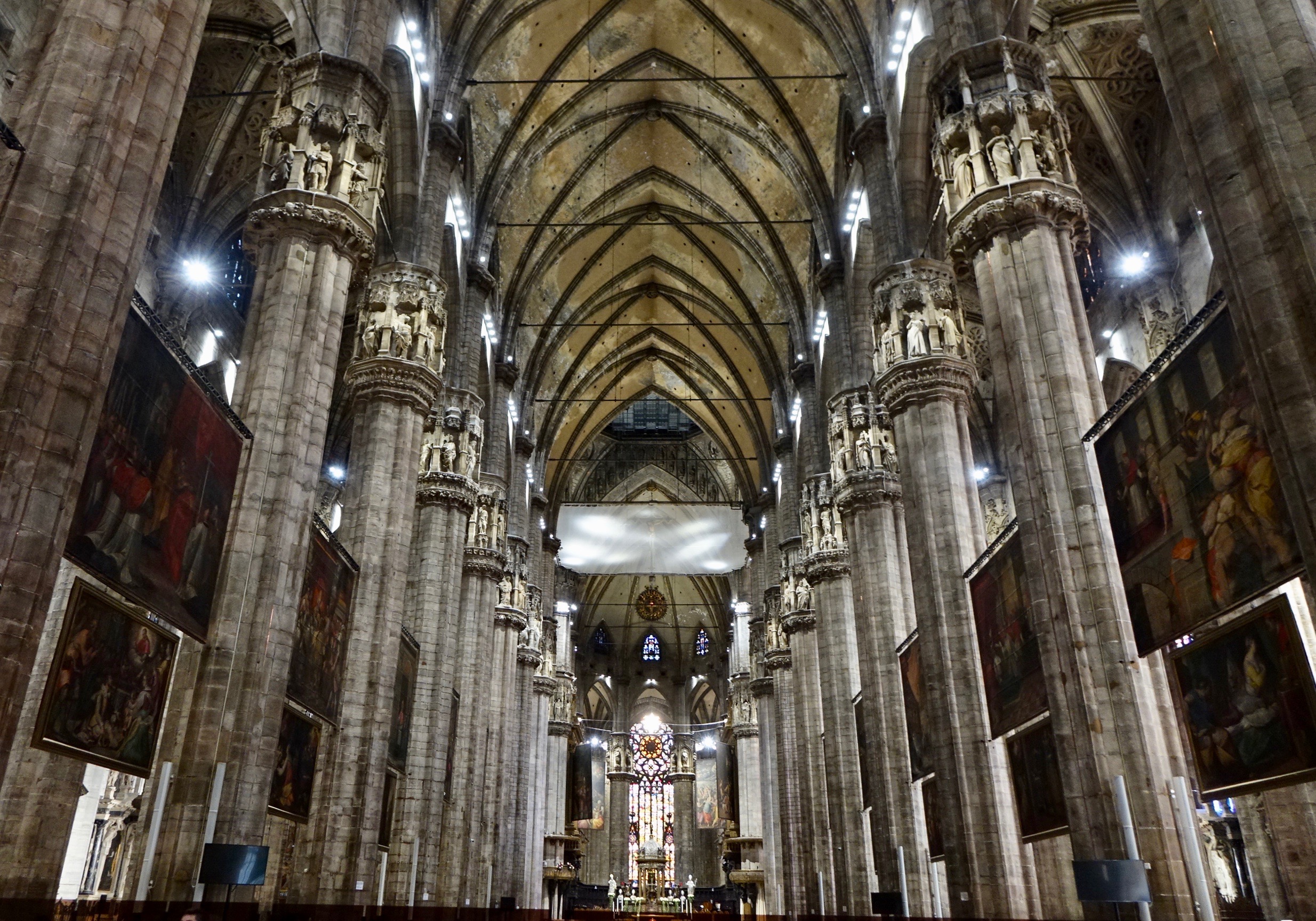
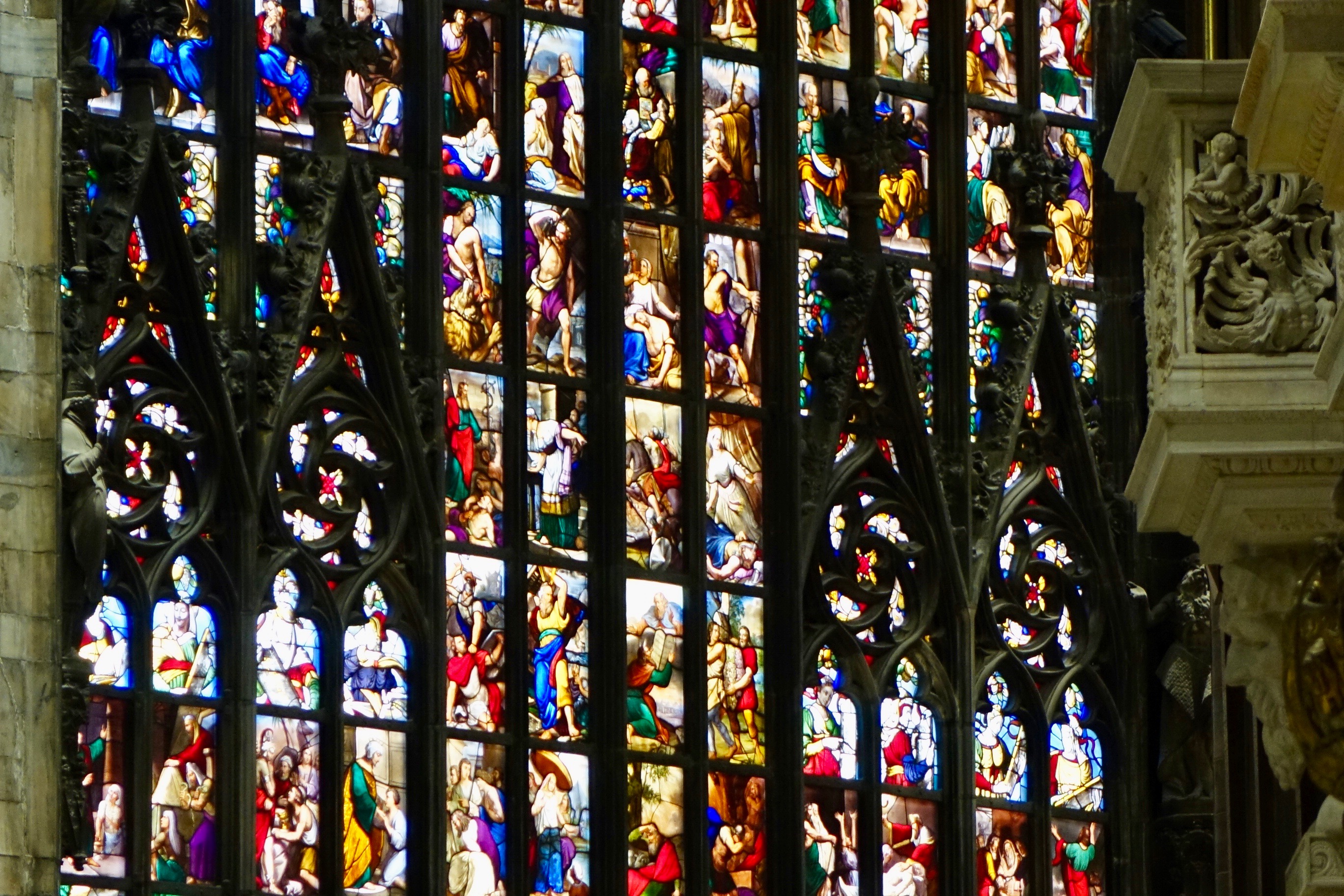
I have been in many a cathedral, but I don’t think I have ever been quite so dazzled as when faced by the sheer scale and magnitude of this cathedral. Appearing even bigger on the inside than it did on the out, I didn’t know whether to focus first on the elaborately patterned marble floor, the soaring forest of 40 great pillars, the soaring, vaulting ceilings far, far above, or the stained glass windows which are the most complex and stunningly coloured I have ever seen. A mere side chapel of this Cathedral is the size of the principal place of worship of most countries. And just one small panel of the great stained glass windows close to the altar was packed with more detail and narrative than you would find across the entire diameter of a finely crafted rose window elsewhere.

…and inside

DSC09188DSC09284DSC09214DSC09194DSC09213DSC09255DSC09232DSC09199DSC09241

If the great propaganda machine of historical Catholicism intended to dazzle and dominate with the sheer theatre of its religious spectacle, this place had me converted. Like a mere supplicant, I felt lost in the scale and sense of awestruck enormity of it all, and by the time we made our way outside again, I had quite lost all sense of proportion. Happily a Milanese lunch, and a quick look at some of the nearby boutique’s average prices gave me the sharp shock I needed to bring me back to reality.

© Nicholas de Lacy-Brown and The Daily Norm, 2011-2018. Unauthorised use and/or duplication of the material, whether written work, photography or artwork, included within The Daily Norm without express and written permission from The Daily Norm’s author and/or owner is strictly prohibited.
Magnificent Milano (Part 2): Da Vinci’s fading masterpiece

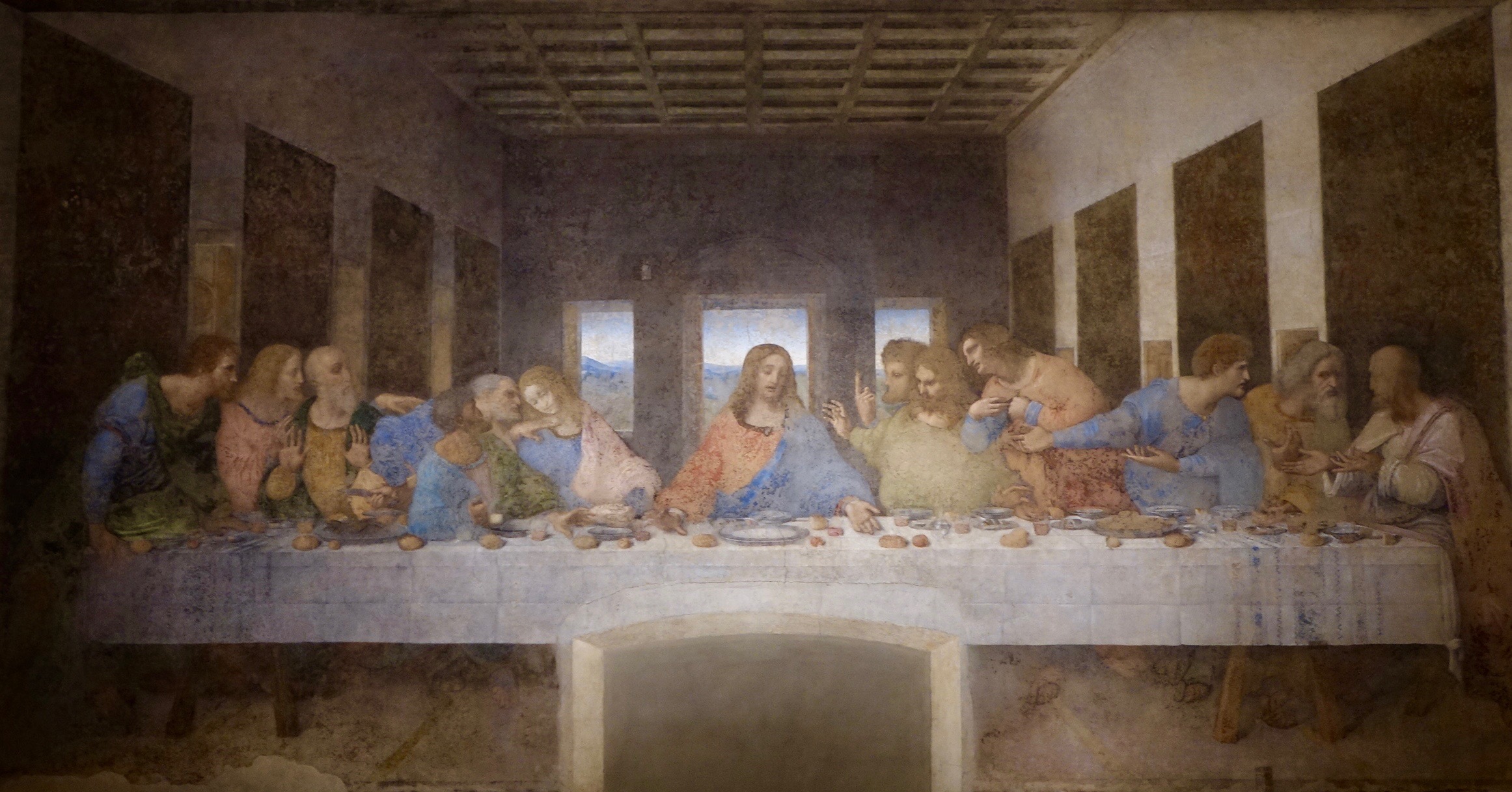
Despite its bustling, cosmopolitan centre, its soaring modern skyline and fashion boutiques paving the way of global style, Milan is a city with a rich historical heritage equal to any other city in Italy, and with an artistic treasure to rival the very best. Far less accessible than the Botticelli’s and the Michelangelo’s it may be, but Milan’s offering is considered by many to be one of the most significant and symbolically loaded works in all the history of art: I am of course talking about The Last Supper, by Leonardo da Vinci.

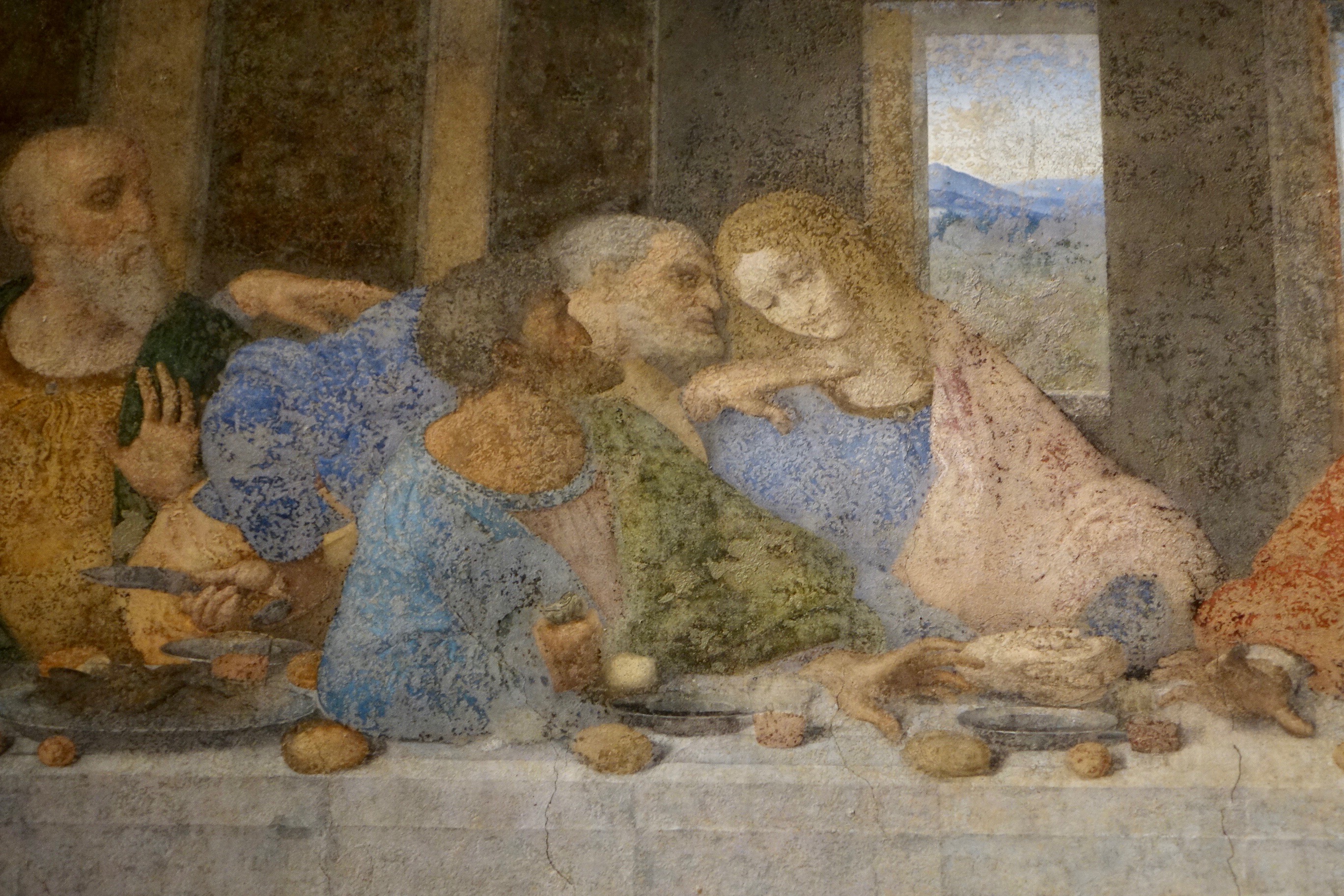
Yet this work, renowned though it is, has had a troubled past. Fated to bad fortune from the outset when Da Vinci experimented unsuccessfully with a fresco technique which started to deteriorate away from the surface of the wall within years of its completion, the fresco has fallen swift victim to both the ravages of time, and the additional disasters of war, including a near miss bombing and exposure to the elements when the buildings around the fresco found themselves in the direct path of the same air raid.

DSC08875DSC08900DSC08890

All this means that a visit to see Da Vinci’s fresco is a unique experience. First of all, getting your hands on a strictly time-controlled ticket is almost like seeking out the very same holy grail which author Dan Brown will tell you the painting is subliminally intended to represent. With ticket in hand, you and a small group of other ticket holders will then be taken through a series of air-controlled vacuum chambers, each set of doors opening successively upon another, incrementally purifying the elements to which the crumbling fresco is exposed. Finally, you enter the main refectory of Santa Maria della Grazie, where the first sight of Da Vinci’s Last Supper feels all the more surreal by virtue of the effort required to get there.

The visitor controls ultimately make the 15 minutes you get to spend with the painting a pleasurable experience, just because the numbers allowed into the refectory at any one time are small indeed. This makes for an intimate encounter with one of the world’s most recognisable images. Yet no matter how familiar the subject, little can prepare you for the impact which the full scale image will have, nor the shocking state that the fresco betrays upon closer inspection.

DSC08883DSC08887DSC08889

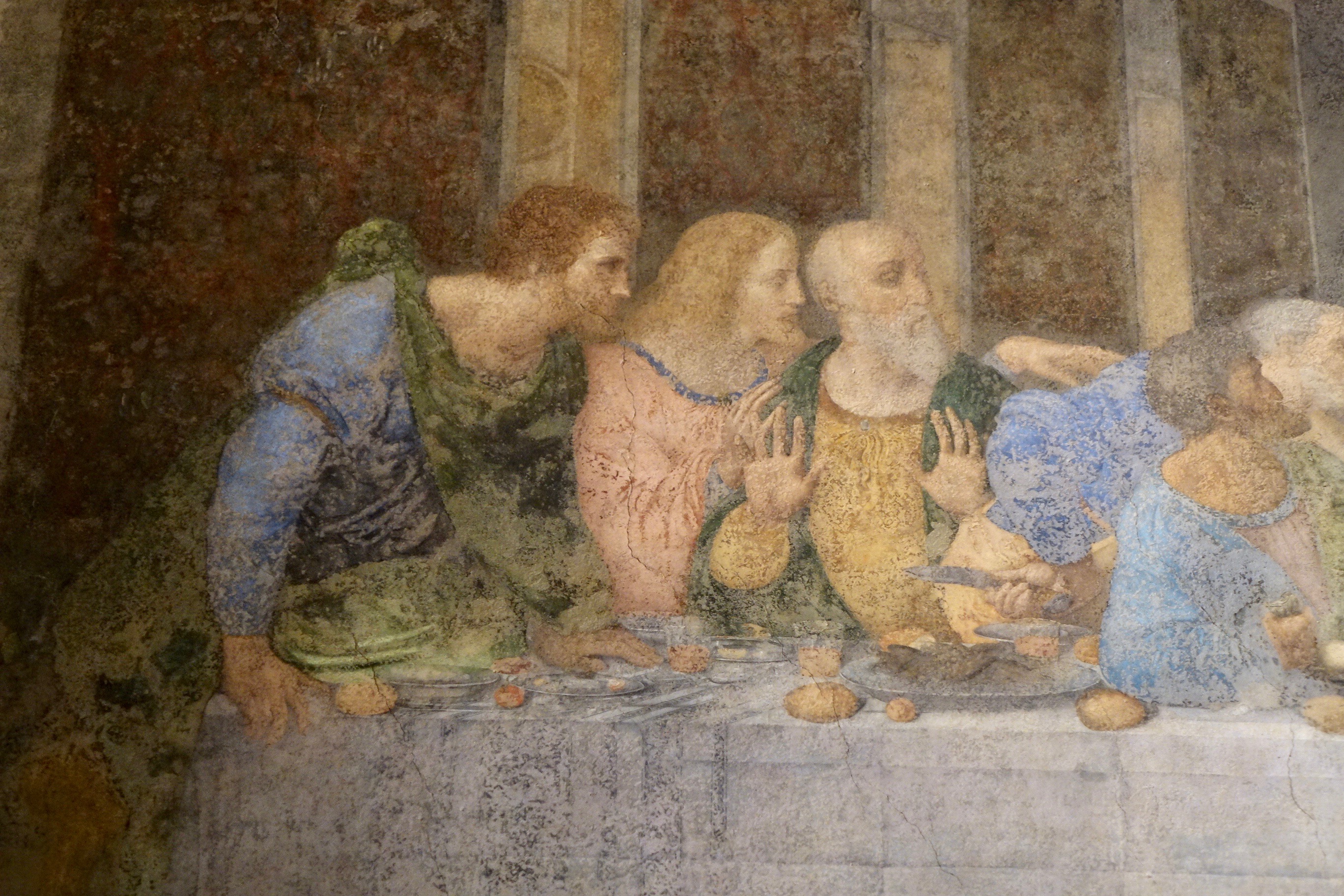
What we see today really is a mere shadow of what once was. The fresco appears so badly flaked that a gust of wind could shake half of it away like fallen leaves in a first gust of autumn. In places, nothing but a mere outline of what was remain. In others, the retention of more detail, such as on the folds of the tablecloth, offer a tantilising glimpse of the wealth of colour and composition that the work would have once boasted.

For me, the fresco feels like an allegorical narrative of something beyond the simple depiction of the last supper. The reactions of the protagonists feel stilted, almost mannerist in their exaggerated expression, suggesting that Da Vinci has attempted to go beyond the simple story of the last supper and is hinting at meanings beyond the surface. Yet beyond this surface there is very little to behold but a crumbling wall, as we are forced to see one of art history’s most significant masterpieces slowly deteriorate to dust. It’s why this painting should be a must-see for any art history buff, and prioritised before its condition worsens yet further.

DSC08907

© Nicholas de Lacy-Brown and The Daily Norm, 2011-2018. Unauthorised use and/or duplication of the material, whether written work, photography or artwork, included within The Daily Norm without express and written permission from The Daily Norm’s author and/or owner is strictly prohibited.

Magnificent Milano (Part 1): Città di Giorno

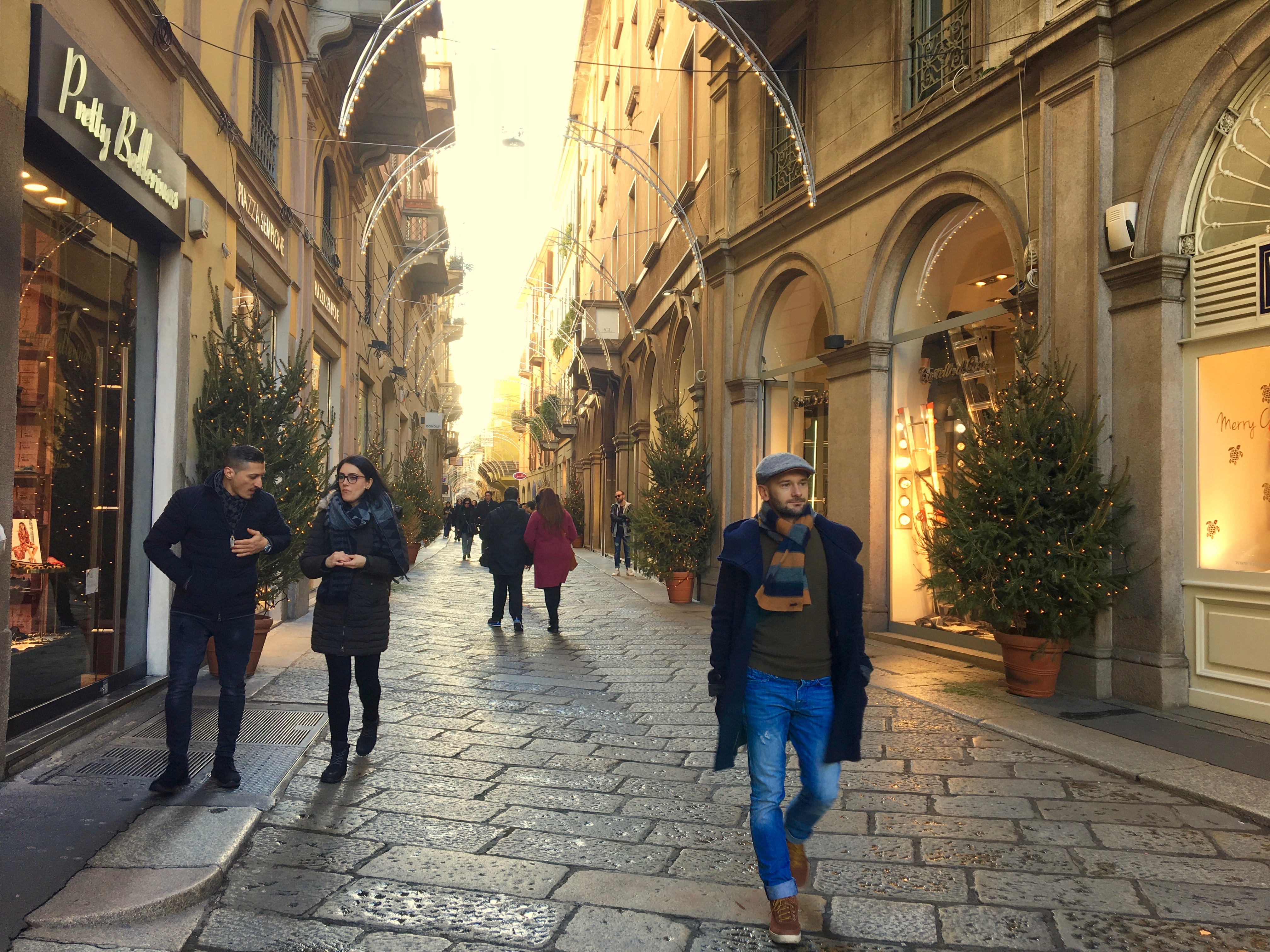
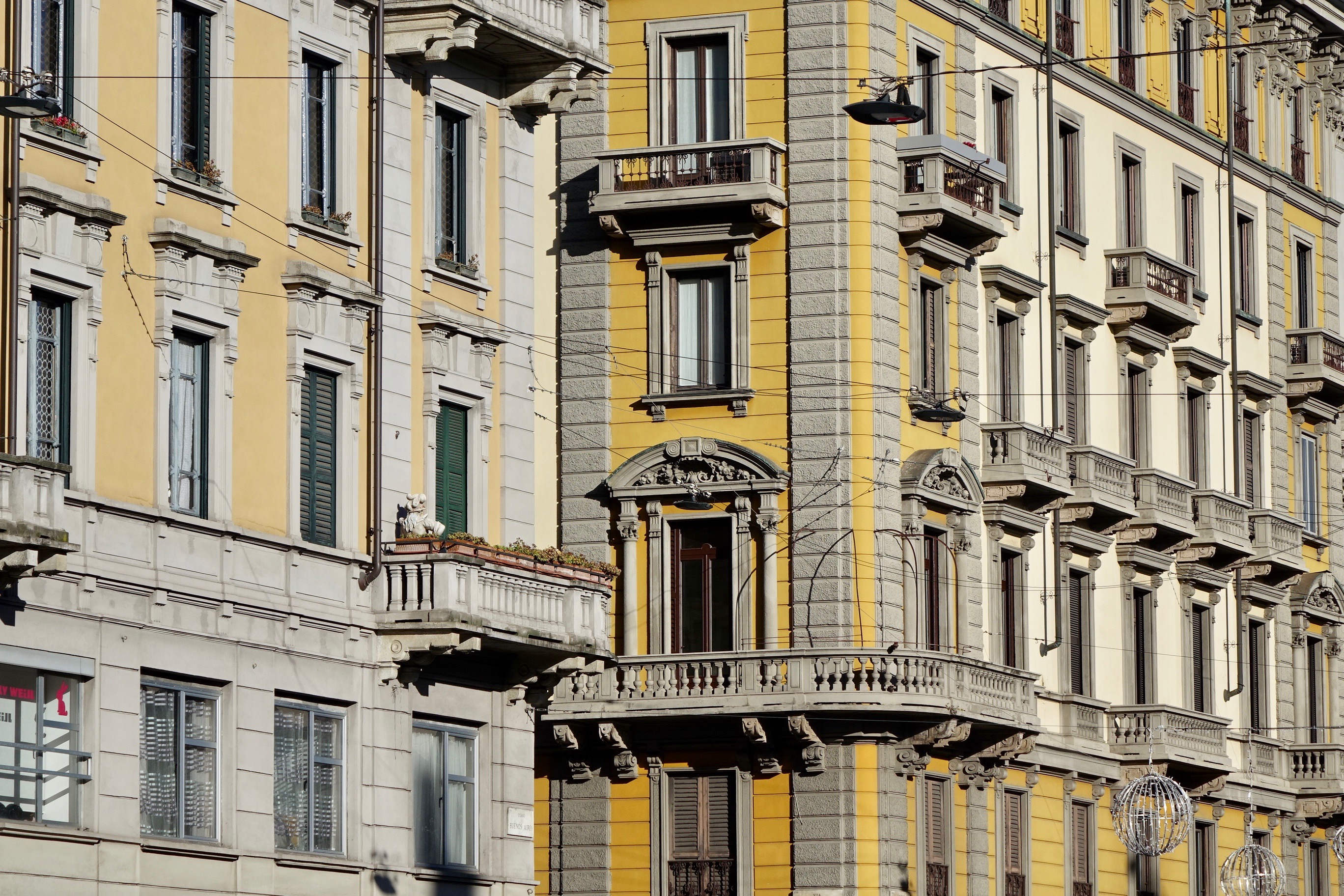
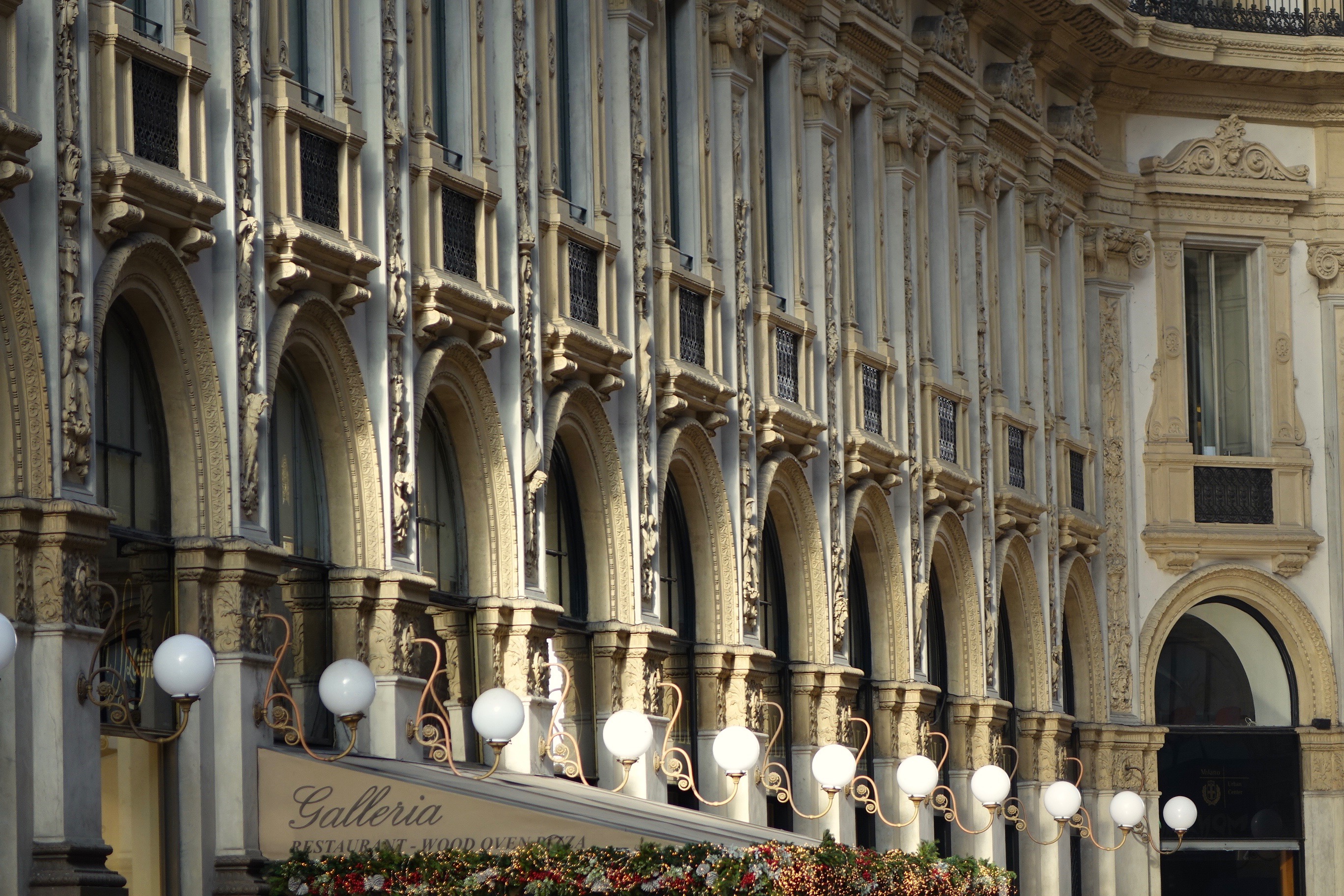
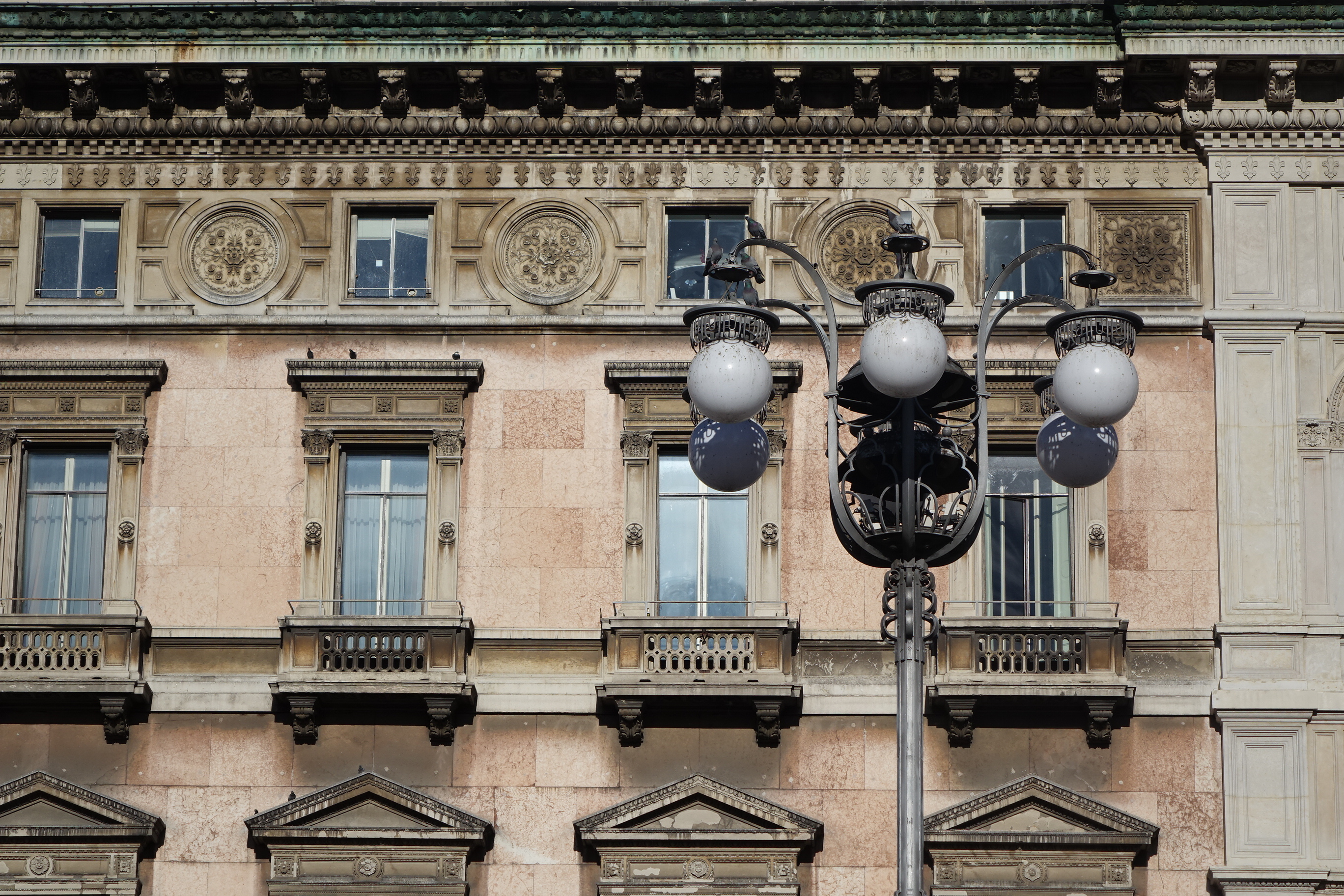
It has become something of a trend to describe Milan as an ugly city. Tourists who travel there come away disappointed when they find a famous Italian city which is not filled with Renaissance palaces and cobbled maze like streets glowing calmly under a terracotta sunset; which lacks the romance of bridges reflected in a calm river, or the magnificence of baroque churches and grand old museums at every corner. However to visit Milan with the expectation that it will be like Rome or Florence or Venice is to miss the very unique charm which Milan holds above other cities. Yes it’s big, and urban and thriving. And yes it has a whole identity quite asides from pandering to tourists. But I would hesitate to call it “industrialised” as many do, and I would certainly never call it ugly.

IMG_6078DSC09369DSC09057DSC08992DSC08970

For me Milan is a city with a beauty all of its own. It’s big and bustling and oozes elegance from every corner. Its streets resonate with the sound of old squeaking trams and the clip-clopping of Prada stiletto heels. It’s a place which is characterised by the charm of Northern European cities, but the all the chic of the Italians. And chic it certainly is. For Milan is the capital of fashion, and its Quadrilatero della Moda is a district bedecked with lavishly decorated boutique shop windows and prices to make you faint, yet humbled by the charm of its private little ateliers and shiny cobbled pavements.

DSC09077DSC09064DSC08997DSC08952DSC09353DSC09080DSC09170

Milan reminds me of Barcelona. It has the same spirit of creative energy while surging towards a future where the Italian capital, Rome, has long since lagged behind and which is evident from its skyline glittering with modern skyscrapers and measured but thriving urbanisation. Its history is evidenced by one of the most splendid and enormous of all Italy’s cathedrals, while its cathedral of transport, the Stazione Centrale, is the most impressive train station I have ever seen, with its lofty art deco interiors which soar hundreds of metres into the sky. Meanwhile Milan is a city which takes pride in its food, but not just in the traditional dishes such as its creamy saffron risotto and ossobucco. Milan is a place where food is crossing new boundaries of creativity as the city surges forwards to greater levels of gastronomic superiority… again, far in advance of other cities in Italy.

Our brief trip to Milan brought one day of rain, but also one of beautiful sun. These photos are a reflection of the city on that wonderful sunny day. Now who can call this city ugly?

© Nicholas de Lacy-Brown and The Daily Norm, 2011-2018. Unauthorised use and/or duplication of the material, whether written work, photography or artwork, included within The Daily Norm without express and written permission from The Daily Norm’s author and/or owner is strictly prohibited.

Florence, Land of the Medici (Part 3): The Gozzoli Chapel

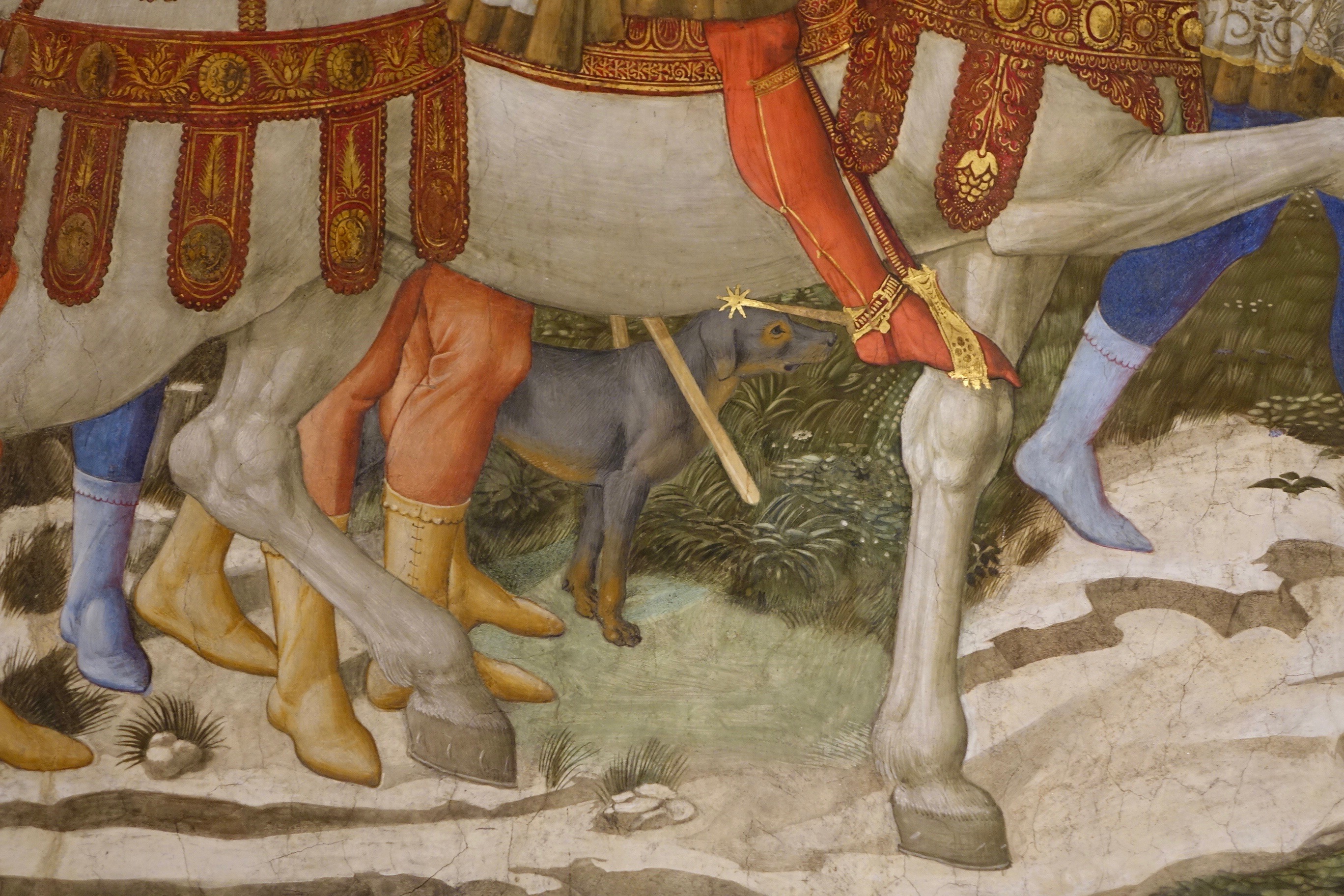
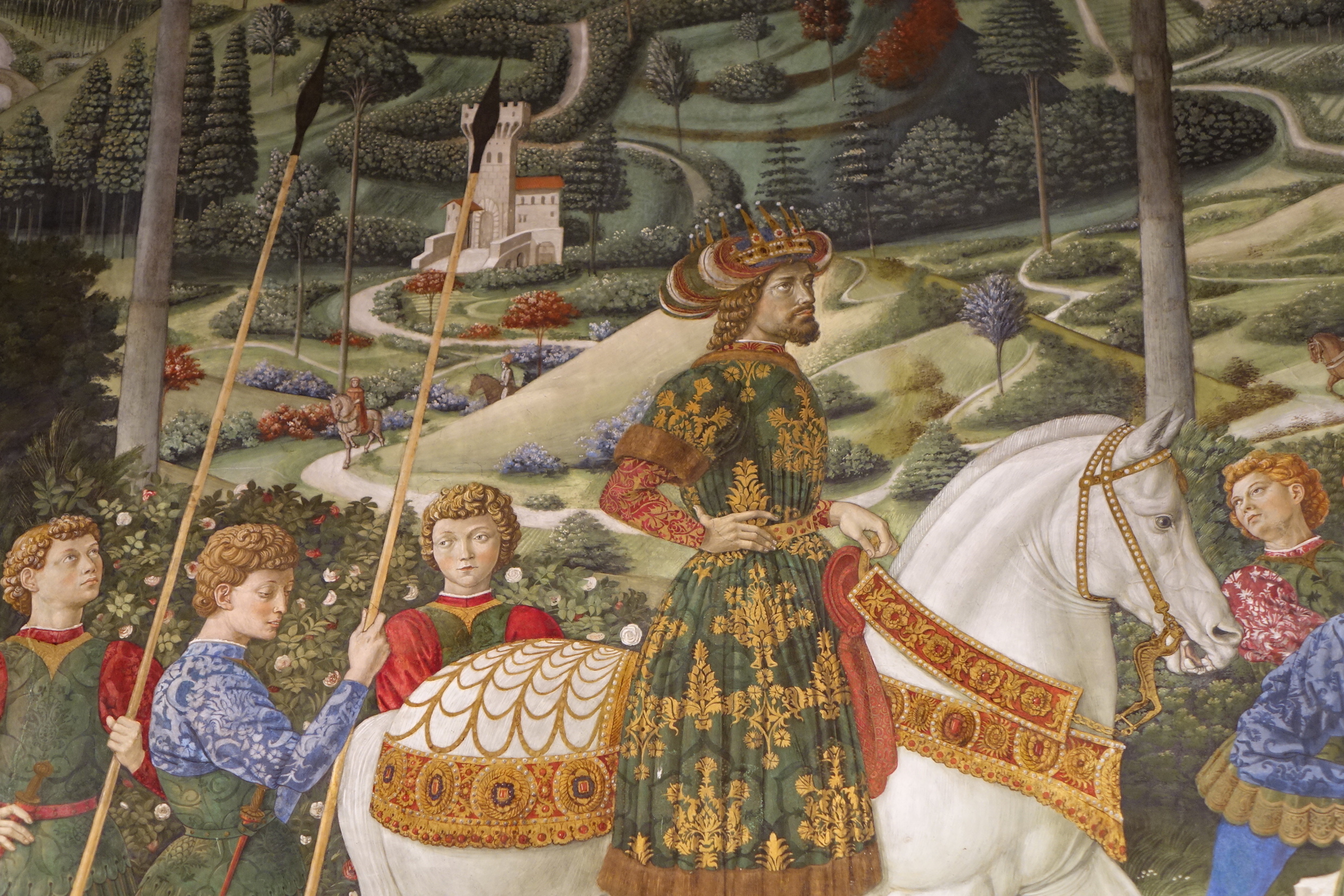
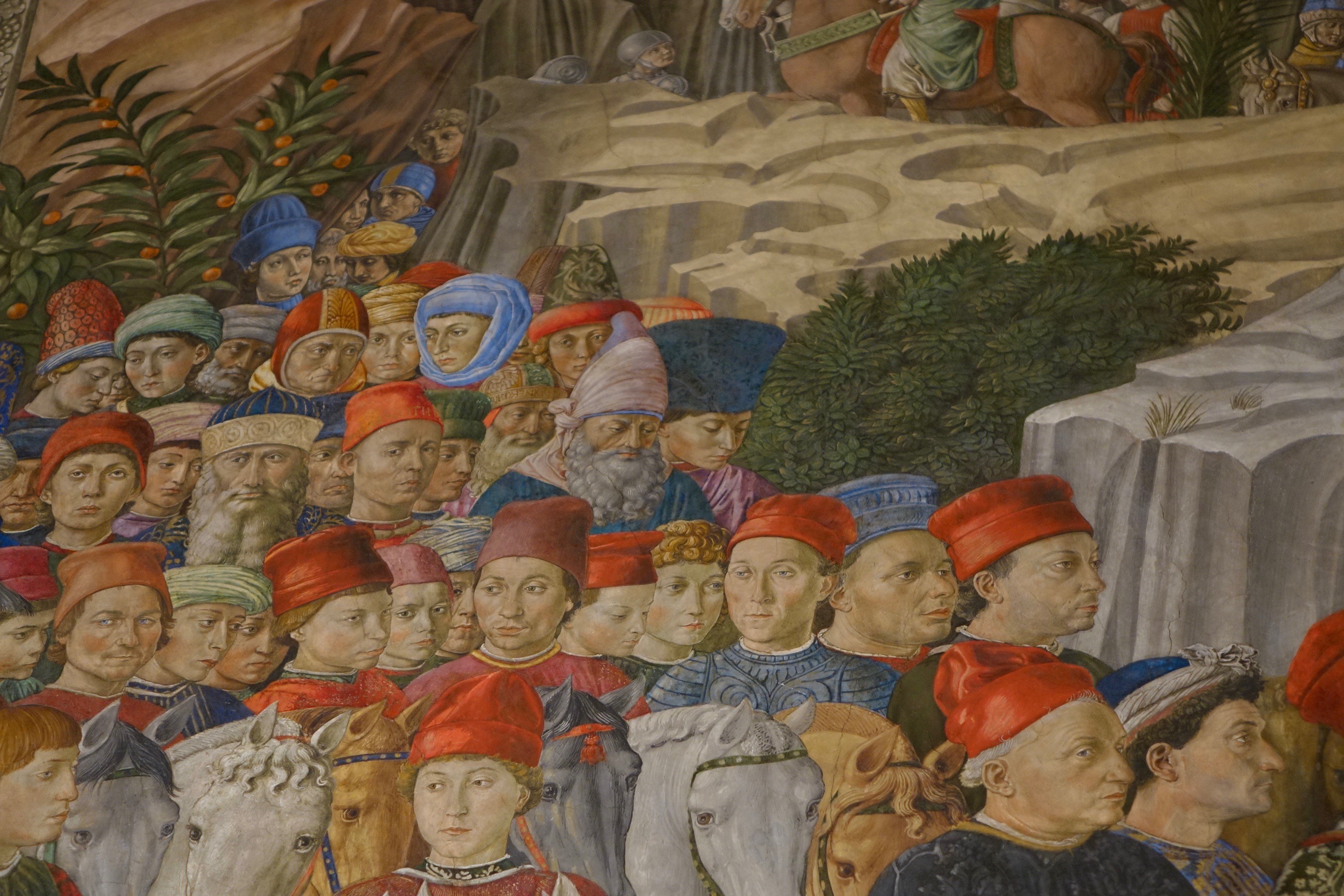
Attempting to highlight one work of art in the vast collection amassed by Italy’s most famous Renaissance patrons, the Medici dynasty, is rather like choosing one golden bean from a bag of thousands. The Medici family brought together such a hoard of masterpieces that one could choose a different highlight for each day of the year, and never run out during the course of an entire lifetime. But certainly one of the most enchanting of the works commissioned by the family is one which says Medici like none other, a masterpiece of colour and figuration which is unapologetic in its glorification of the entire Medici clan. I am, of course, talking about the fresco series painted by one Benozzo Gozzoli and depicting the journey of the Magi in all its magical splendour.

DSC08389DSC08392DSC08396

Entirely covering the walls of the private chapel of the Palazzo Medici, close to Florence’s Duomo, the Gozzoli fresco must surely be one of the most magnificent examples of Renaissance decoration ever conceived. Its location deep within the mammoth fortress-like pietra-forte walls of the Medici’s palace makes the chapel conceivably missable by those unaware of its existence (I am lucky enough to enjoy the highly refined recommendations of my dear friend Charlotte, whose suggestions for art historical treasures always hit the spot), but has also been the source of its superb condition, protecting the inherently delicate surface of the fresco from the elements. Only structural changes to the chapel when a new owner, the Riccardi family, took over the palace in the 18th century, caused damage to the fresco when an entire corner was moved inwards to make way for a staircase, spoiling the perfect symmetry conceived for the original cycle. However, what remains today is nonetheless a feast for the eyes, and frankly my photos don’t do it justice.

DSC08414DSC08393DSC08390

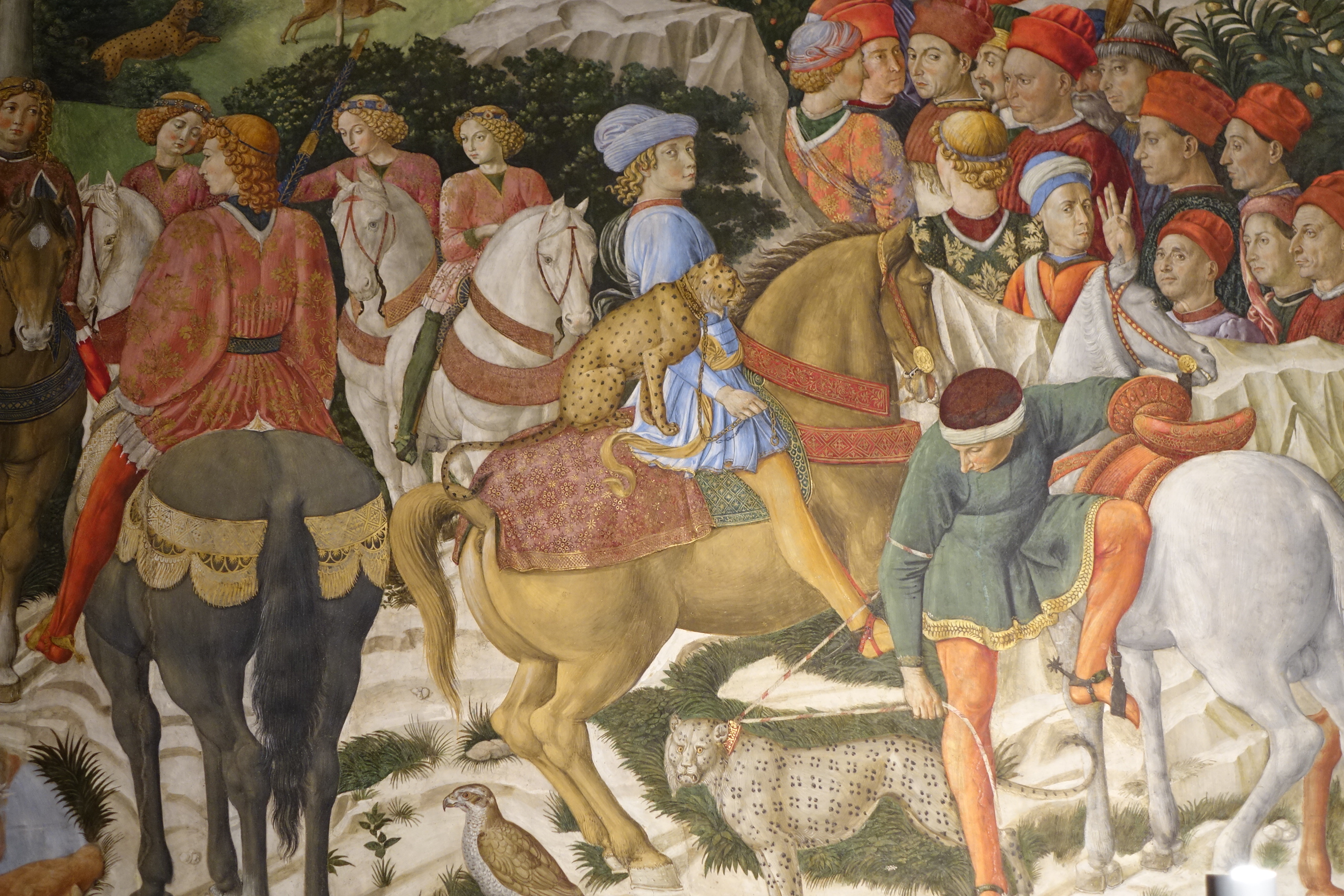
Gozzoli’s fresco is both a perfectly festive narrative of the Three Kings’ journey to visit the newly born Jesus, but also a wonderfully characterful portrait of the Medici family and their magnificent entourage. There you can find an idealised cherub-like portrait of what was, in reality, a rather ugly Lorenzo the Magnificent. The original father of the Medici tribe, Cosimo the Elder is also in the crowd, together with Pietro the Gouty and Lorenzo’s assassinated brother, Giuliano. Quite asides from the portraits, I adore the colours – unapologetic homage is paid to cadium reds and ultramarine blues, verdant green landscapes and cool grey rocky outcrops. The fresco is filled with little details – deer chased in a hunt, a pond surrounded by ducks and delicate birds, and hillsides rolling across valleys and peppered with trees of every shape and size.

DSC08379DSC08395DSC08378

Moving across all four walls of the chapel, Gozzoli artfully steers the viewer along the course of the mountain road, encouraging your eye to follow the route of the Magi and so feel immersed in their same magical journey. The result is the sensation of being not in a tiny chapel, but out in the open air enjoying the Tuscan countryside with these magnificent looking Medieval monarchs, filled with the excitement of the birth of this new Messiah.

How many relics from the 1460s have such a transformative effect and contemporary feel? So often the age and condition of Renaissance works predicates against total engagement of the kind intended by the artist at that time. It’s too easy to be distracted by the signs of age, by the cracks and the mildew. But like the perfectly conceived David, Gozzoli’s work is another example of the immediacy and wonderful accessibility of Renaissance art when unimpeded by the deterioration of the years. It is a true gem of the Medici collection and an undisputed treasure perfectly preserved of the age. I can only thank Charlotte for recommending it, and suggest that all visitors to Florence make it an equal priority of their trip.

DSC08382

© Nicholas de Lacy-Brown and The Daily Norm, 2011-2018. Unauthorised use and/or duplication of the material, whether written work, photography or artwork, included within The Daily Norm without express and written permission from The Daily Norm’s author and/or owner is strictly prohibited.

Florence, Land of the Medici (Part 2): Michelangelo’s David

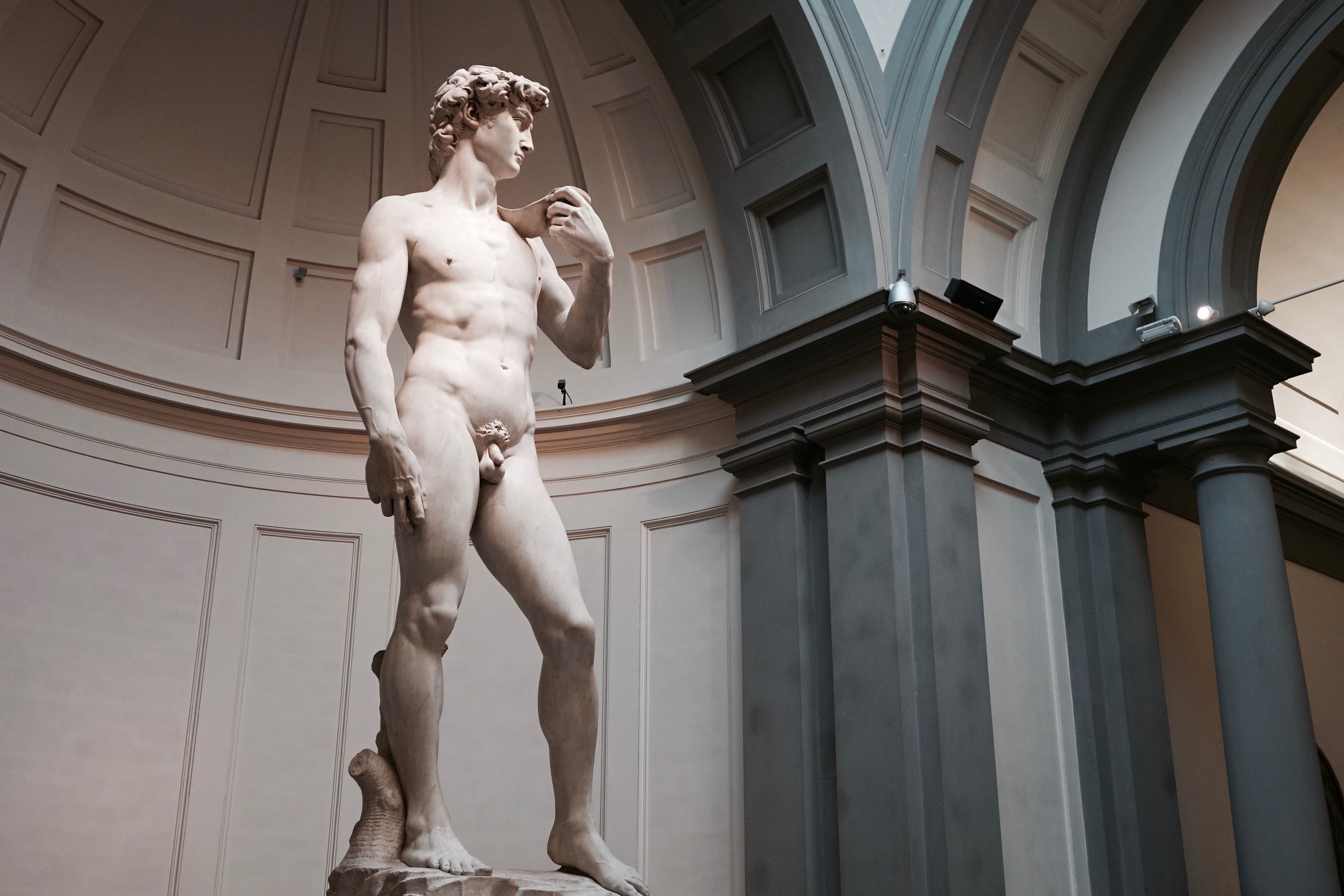
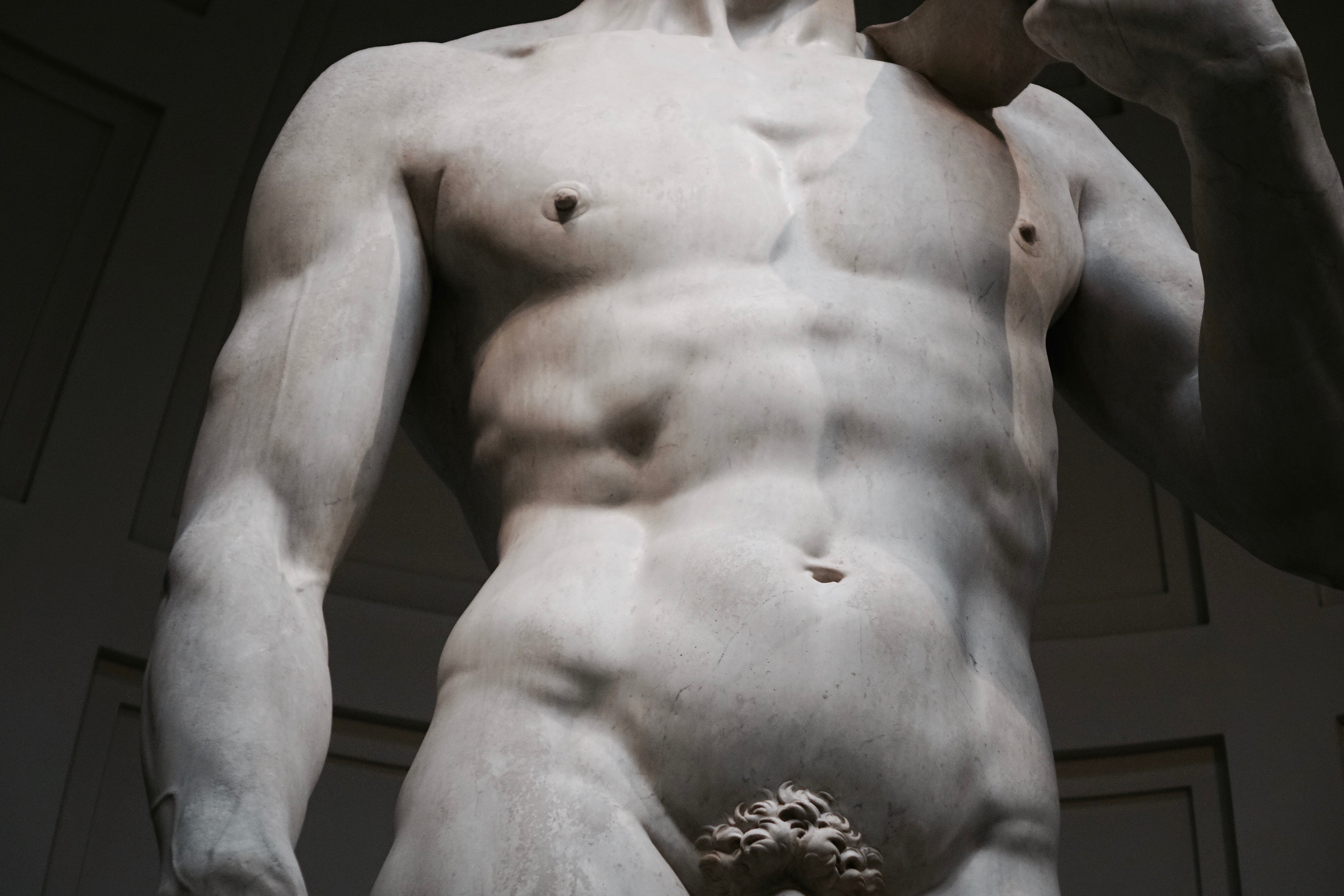
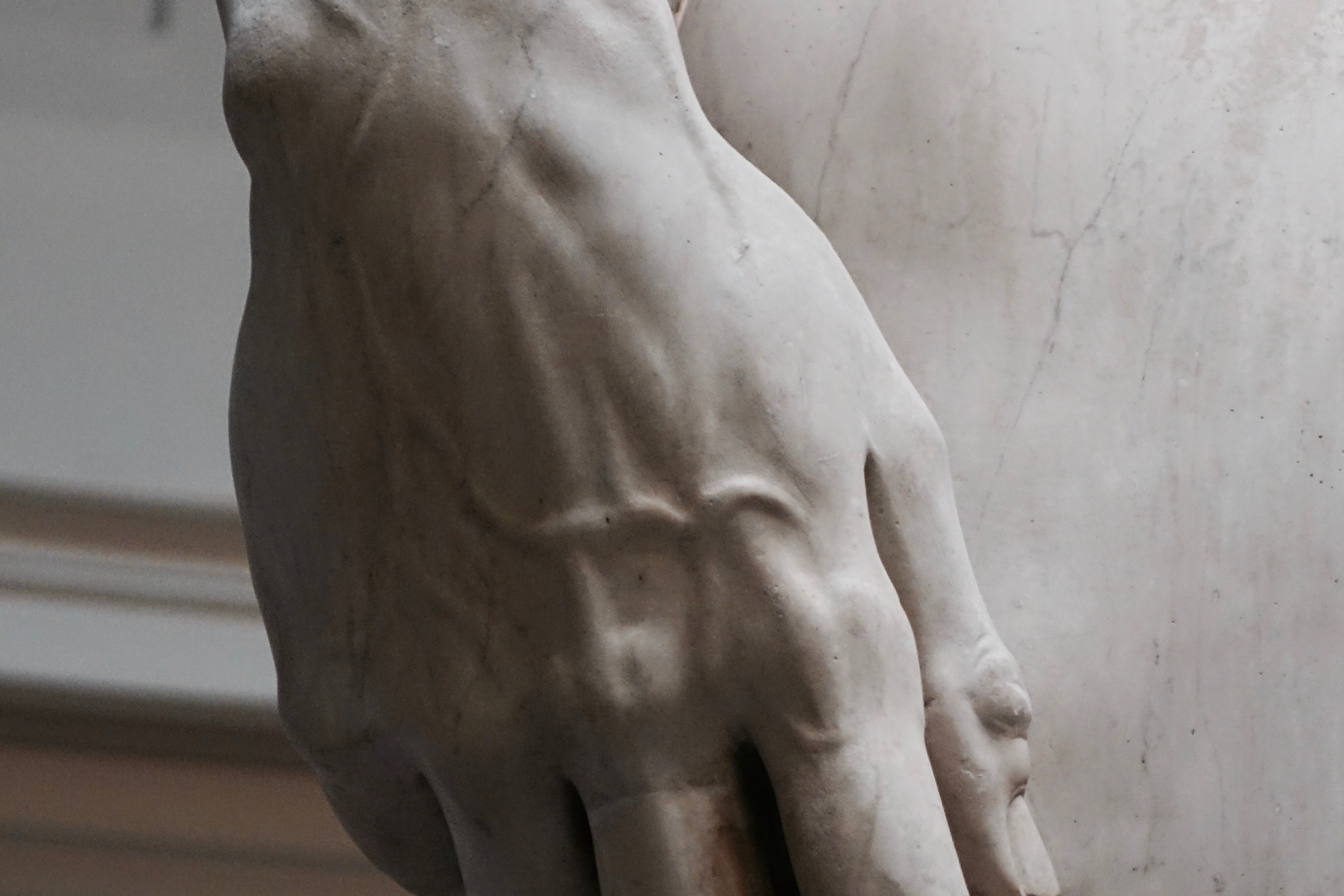
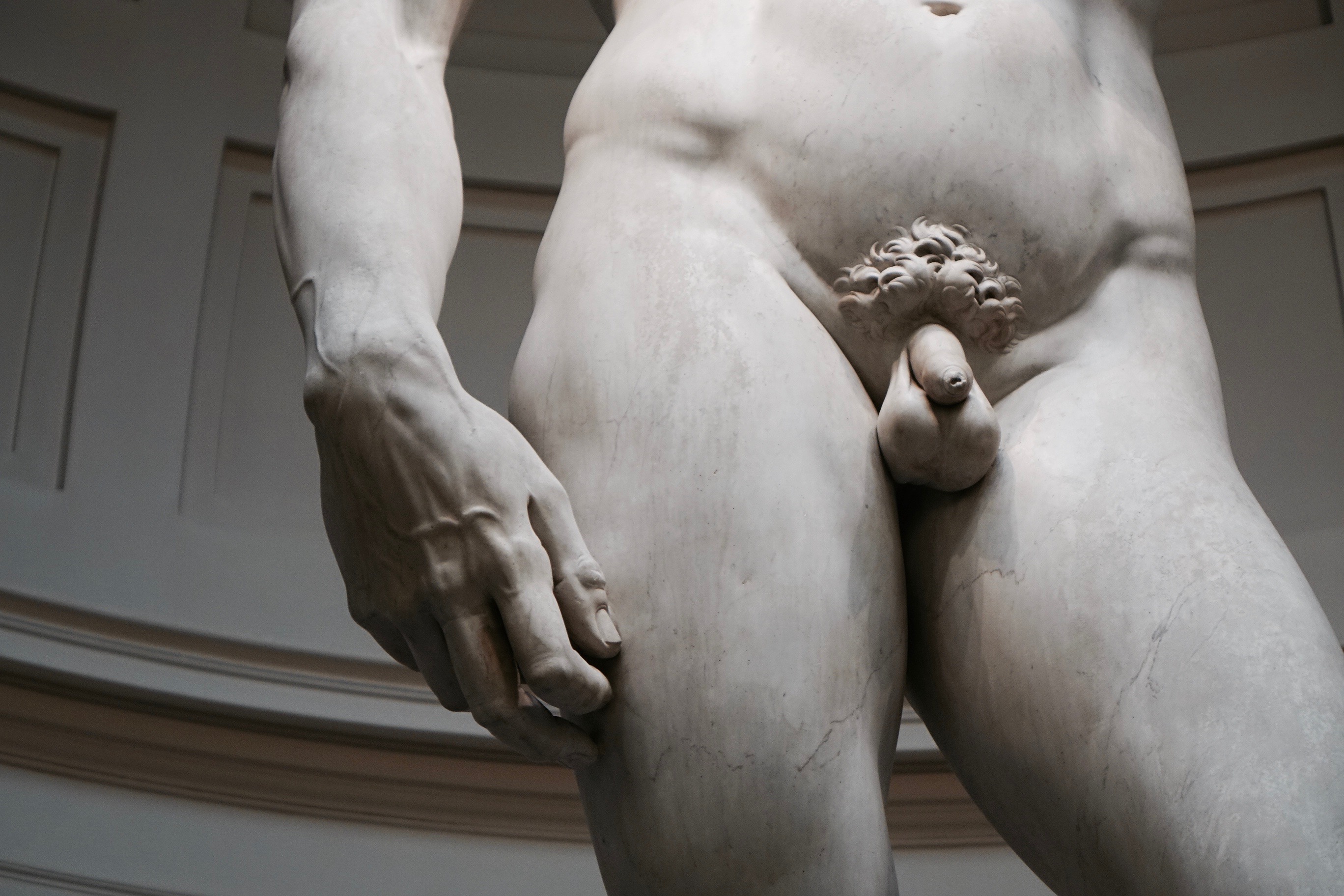
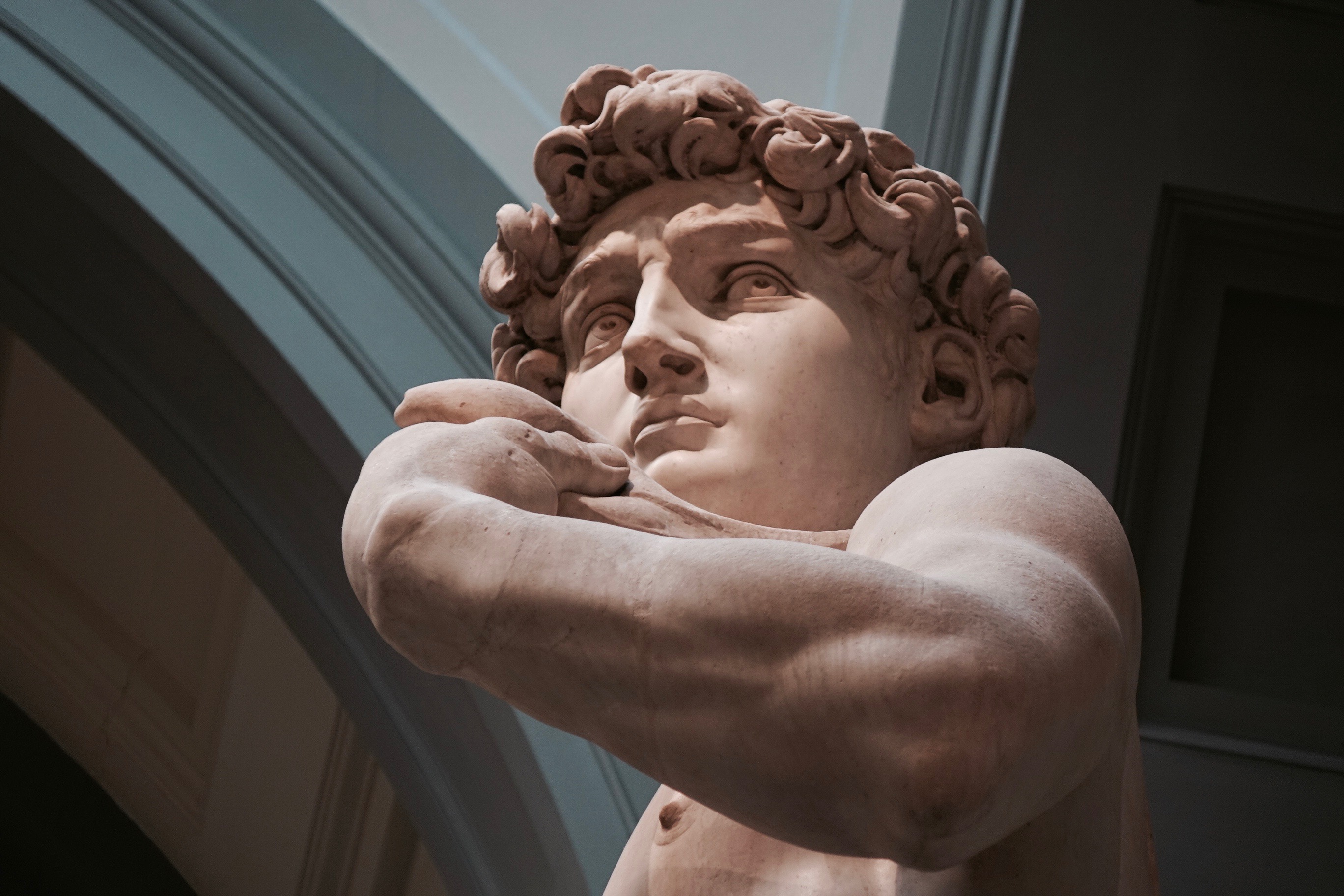
It is one of the most famous icons in all the history of Art, and one of the world’s undisputed masterpieces of sculpture. Michelangelo’s David must have been reproduced more than any other statue across the globe: You’d be hard pushed to find a garden centre which didn’t contain a moss-covered replica, or an Italian souvernir shop which didn’t have a panoply of aprons focusing on David’s genitals, keyrings of the same, and your own personal desktop David in every size and colour variation. Yet despite it’s high visibility, nothing can prepare you for seeing the real thing. Nothing.

DSC08297DSC08285DSC08306DSC08302DSC08284

I remember the moment of my first acquaintance with David when I studied art history in 2001. It was the day I was least looking forward to, since I thought David was too well-known and obvious to excite. But when I saw the original, the huge vast scale of it, the sheer perfection of his exquisitely sculpted flesh in marble, it made me cry. I stood before that masterpiece completely enraptured. And I have looked forward to making a second acquaintance ever since. Some 16 years passed before I could see David up close again, but as these photos show, he inspired me every bit as much on this second visit, and I took a long and happy pause to revel in every details of Michelangelo’s impossibly perfected magnum opus.

DSC08307DSC08293DSC08289DSC08345

Created between 1501 and 1504, David is the work not of an experienced sculptor at the height of his game, but of a junior Michelangelo in the early years of his career. Much nurtured by his patron, Lorenzo (the Magnificent) di Medici, Michelangelo enjoyed a swift rise to fame, but his talent was the true driver, something which was never so brilliantly exhibited as in the creation of this perfect nude. The work is yet more incredible when you consider that Michelangelo first had to sculpt around the previous abandoned attempts made by two other sculptors on the same block of marble. He also had to make the best of this mammoth hunk of stone which had suffered notable deterioration during the 26 years when it had lain abandoned in a sculptural workshop, exposed to the elements. But as Michelangelo always said, he did not create sculptures, but simply freed them from the marble. And with David, he gave liberty to the most perfectly formed being ever seen in the history of art.

DSC08338DSC08336DSC08328DSC08322

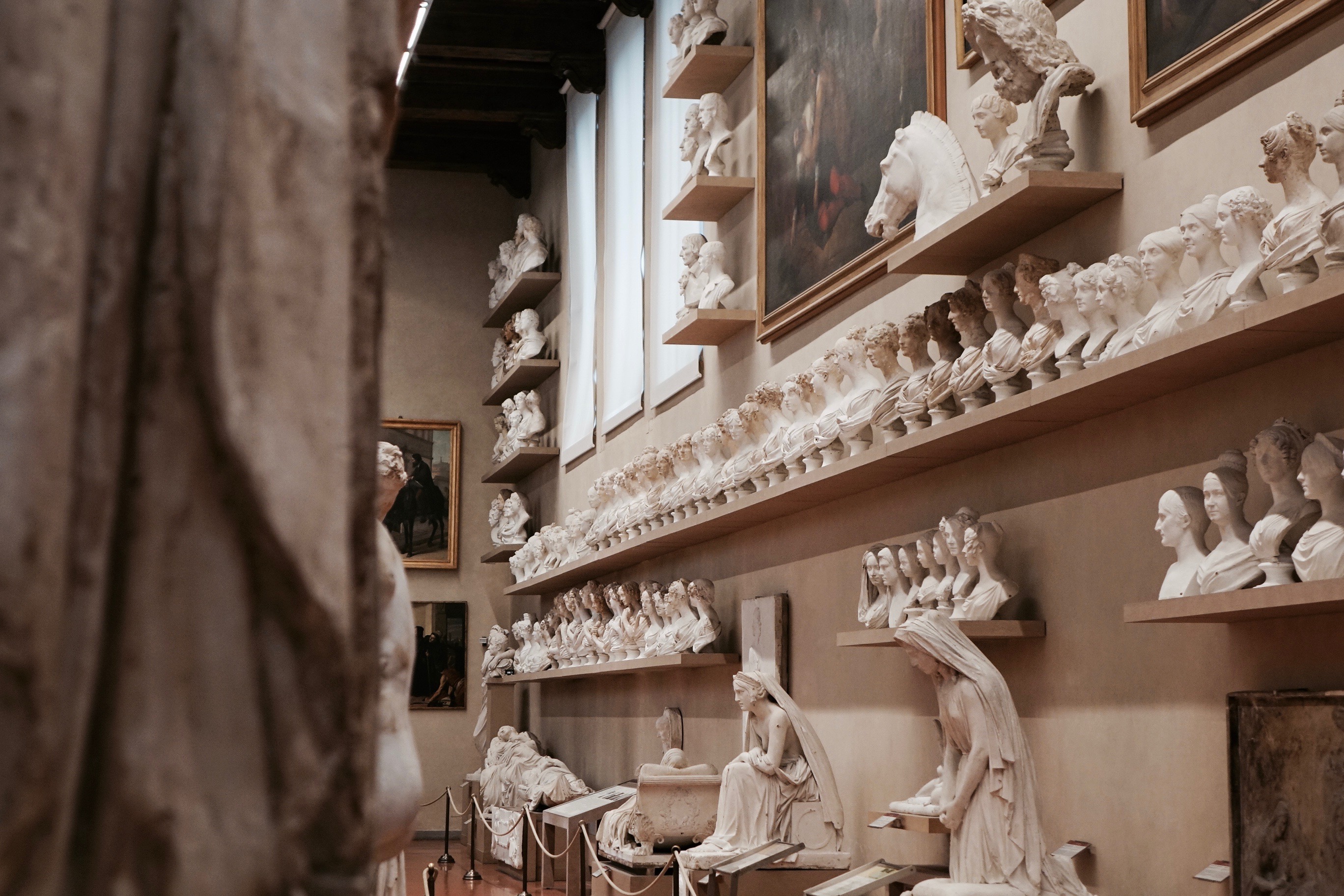
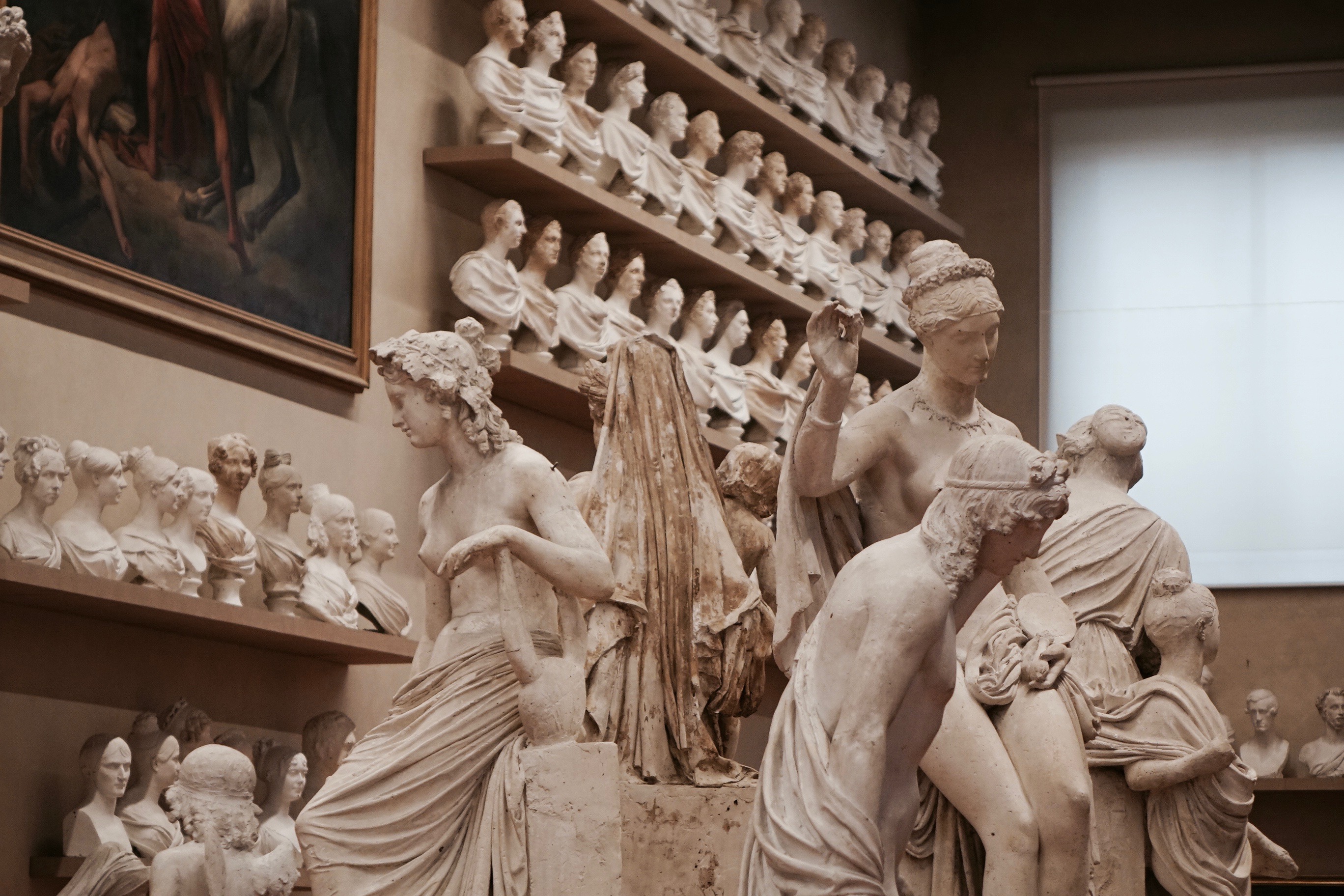
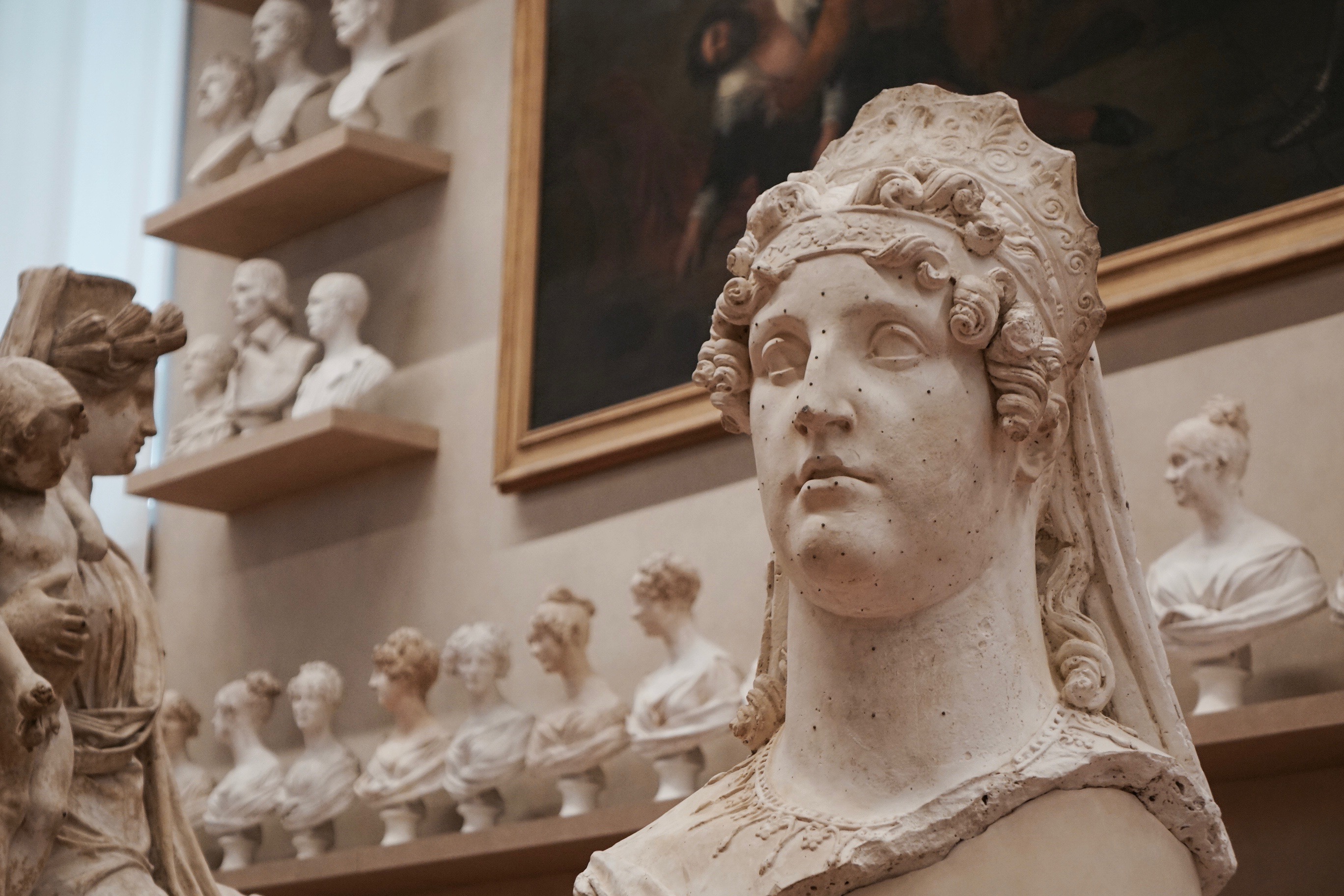
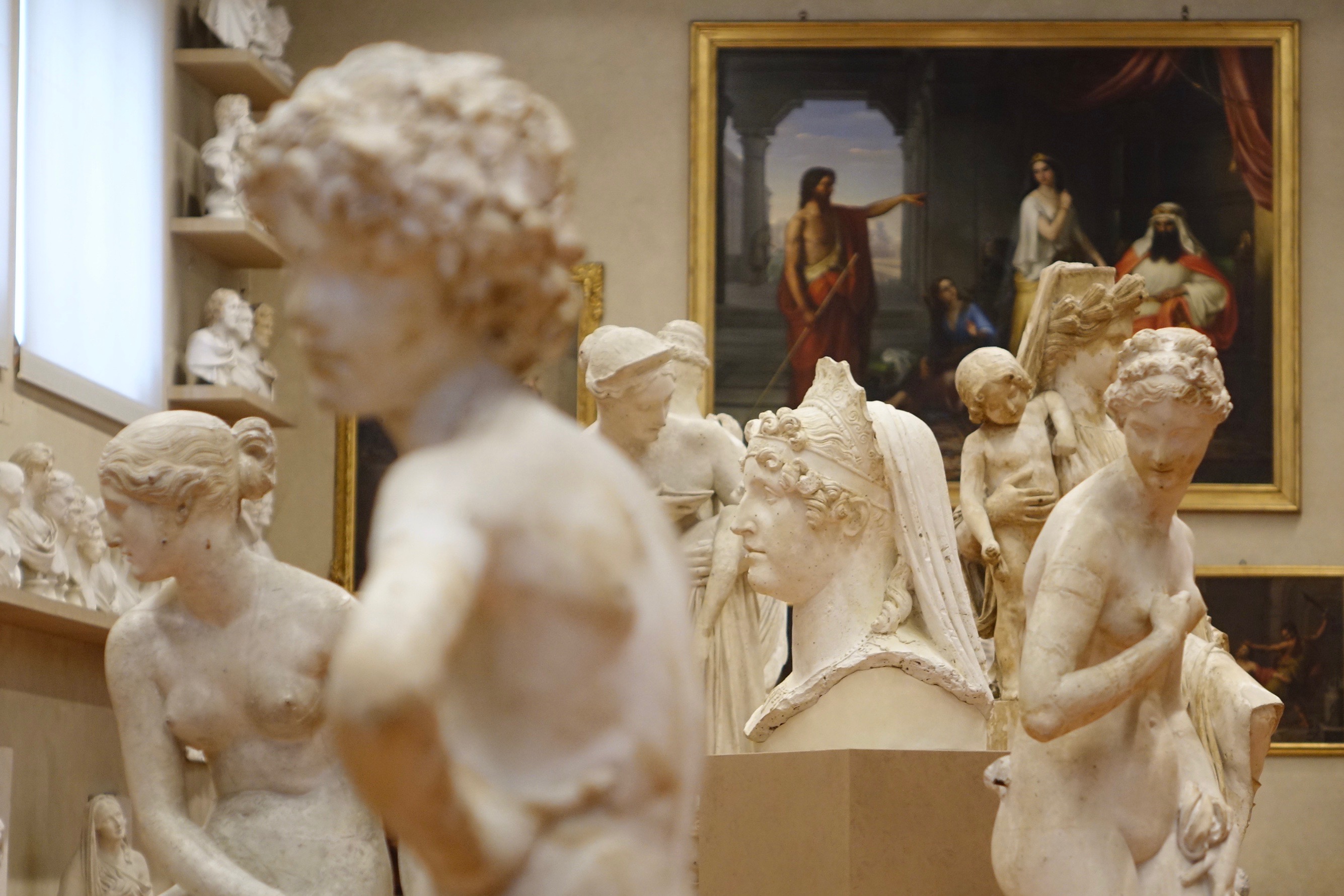
Of course David is not the only gem to be discovered in the Accademia Gallery where he can now be found. There reside a number of the unfinished Michelangelo’s sculptures commenced in anticipation of the great Pope Julius II tomb of which the sculptor’s famous Moses was also intended to be part. Likewise there is a room loaded full of plaster casts, all of which were used to give instructions to fellow scuptors who, like Michelangelo, would come to emerge from this indubitable city of the rebirth of Art. All of it makes a visit to the Accademia gallery a must, but book online to avoid the queues – it’s well worth the not waiting :-).

DSC08320DSC08318DSC08317DSC08315

© Nicholas de Lacy-Brown and The Daily Norm, 2011-2018. Unauthorised use and/or duplication of the material, whether written work, photography or artwork, included within The Daily Norm without express and written permission from The Daily Norm’s author and/or owner is strictly prohibited.

Photographing Firenze

Whenever I go abroad, my camera is never far from my hands. If I had a preference, I guess I would capture all of those mesmerising European views with a paintbrush and canvas. But that’s just not practical with the pace of our travels, and photography offers the unrivaled ability to snatch moment upon moment in an endless succession of beautiful images. In Florence, my camera was with me less. The reason is quite simple: in a city with such a rich art historical offering, my eyes were otherwise engaged, and there is something about photographing paintings which makes me squeal inside. The masterpieces of artists require our undivided attention. Captured through the camera feels like a betrayal.

DSC08456DSC08341DSC08275DSC08771DSC08809DSC08461DSC08560

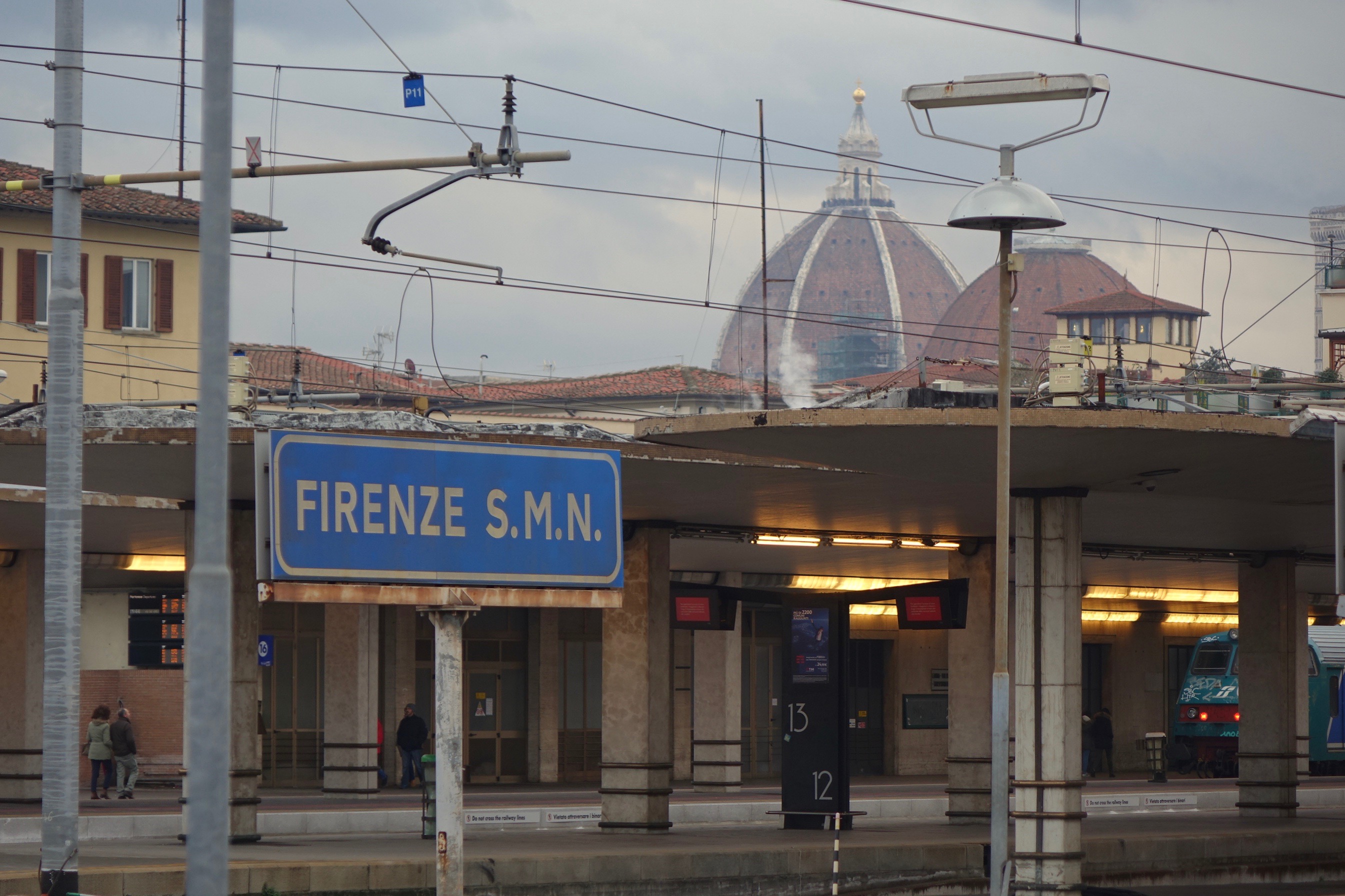
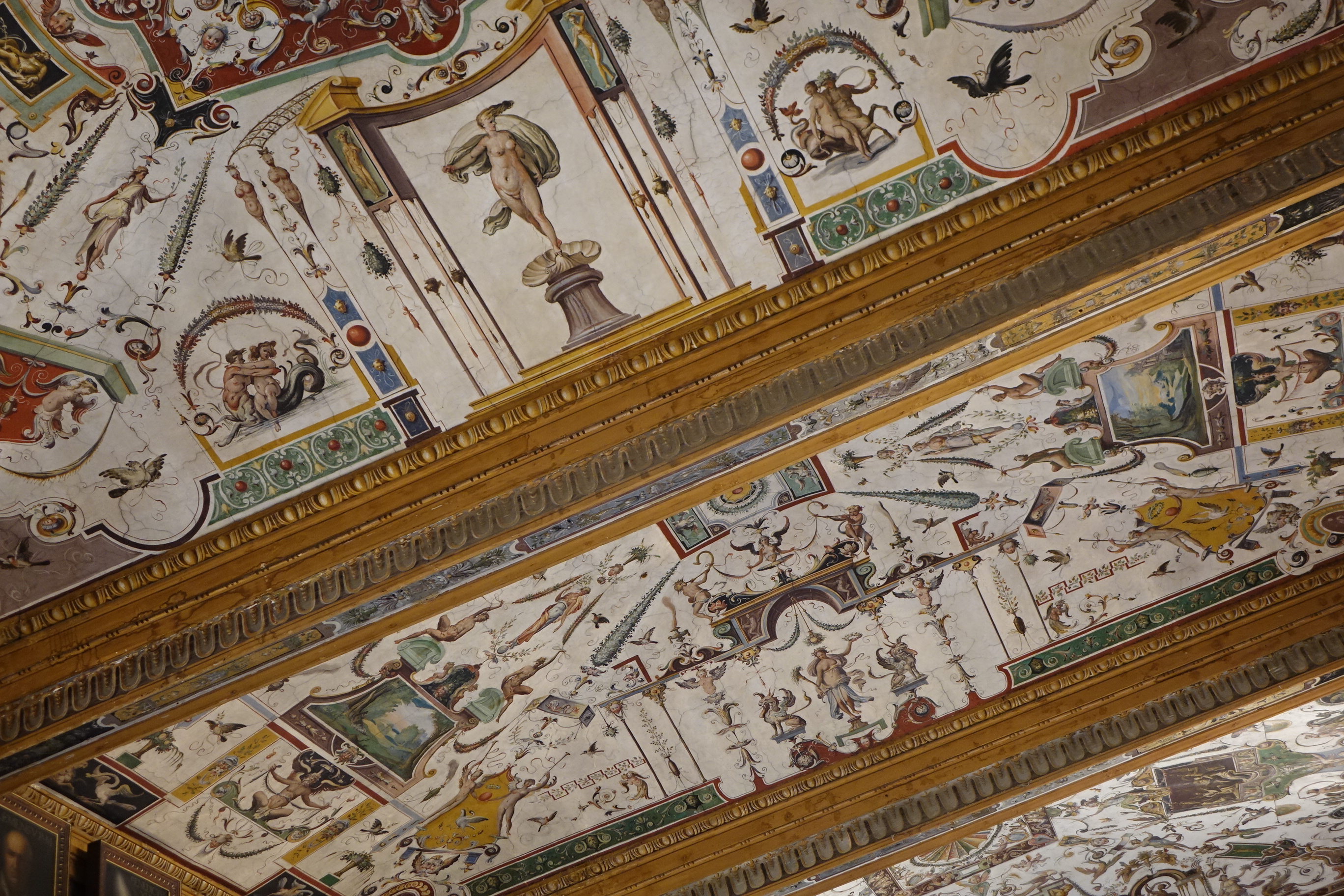
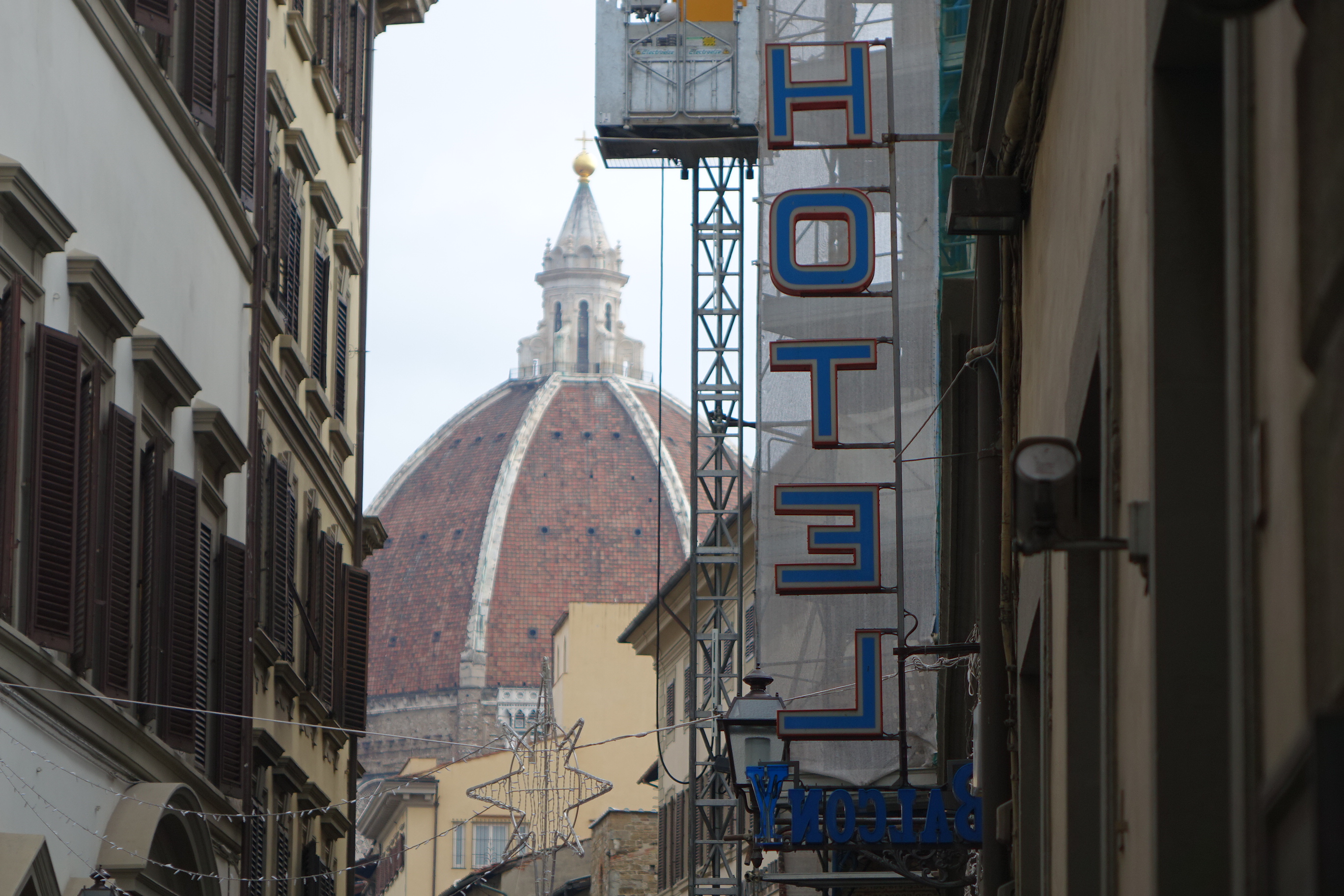
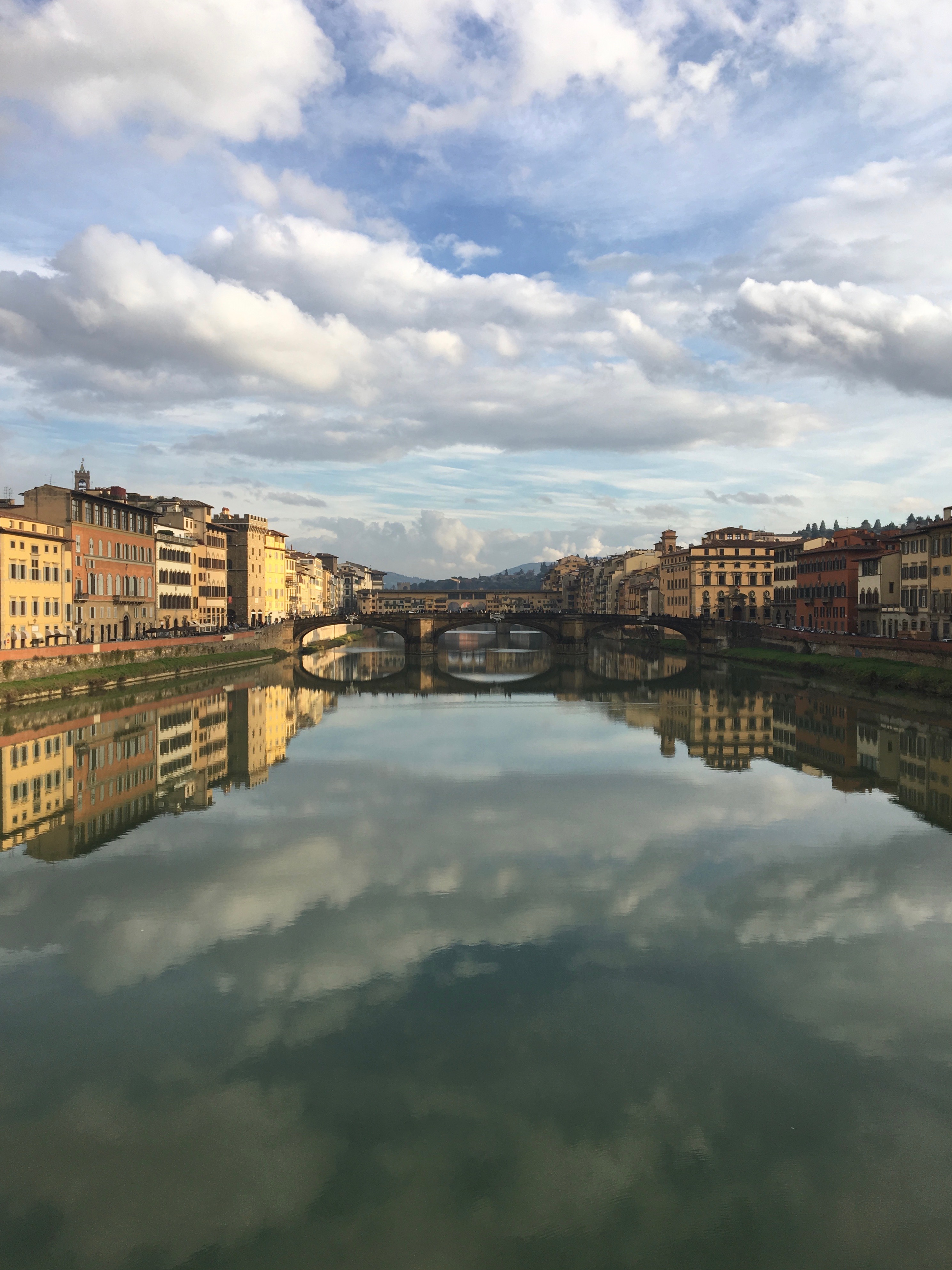
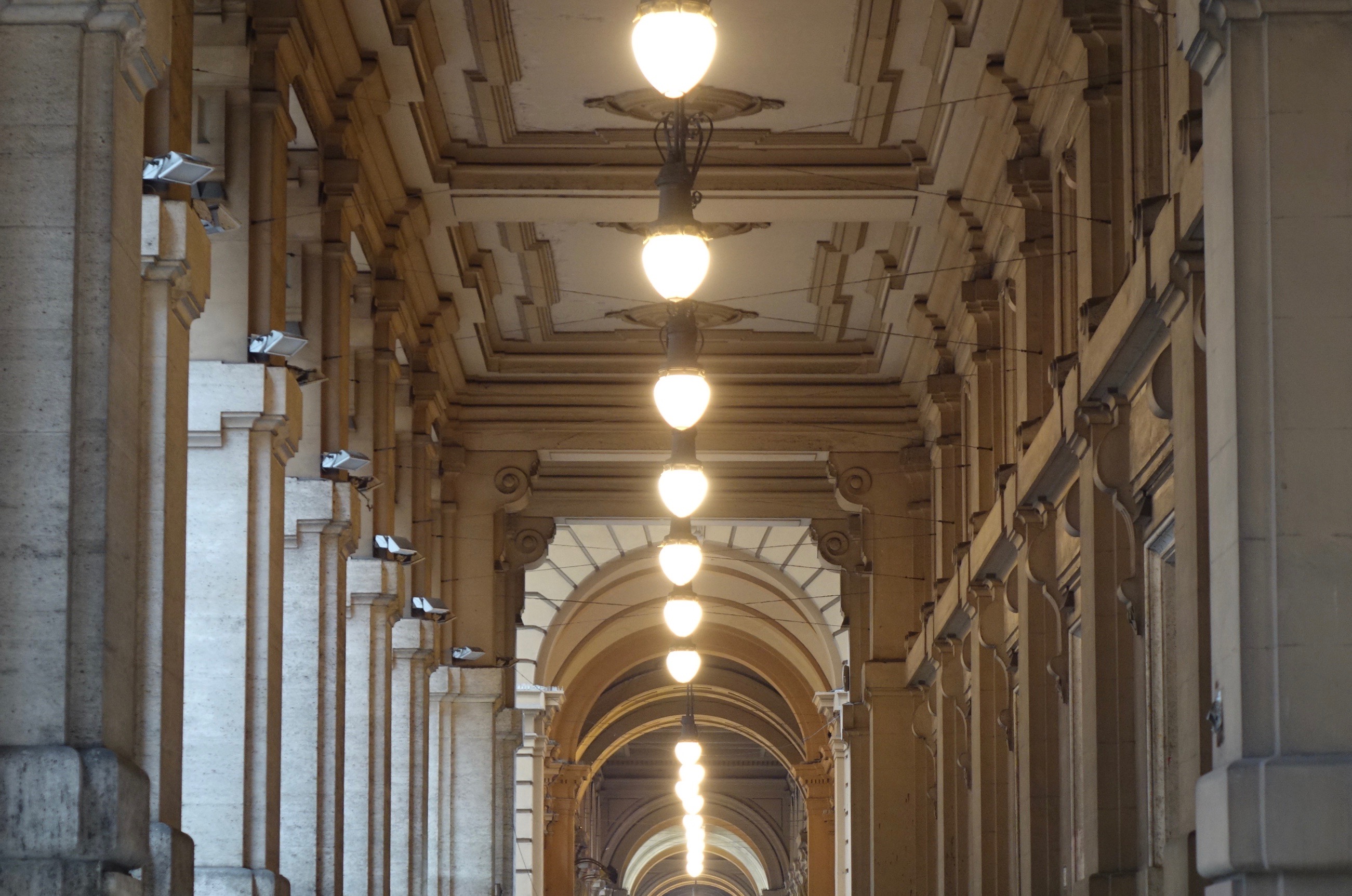
So as a result, I don’t have that many photos of Florence, from this past trip at least.  It’s a city whose beauty speaks for itself, and whose bustling cobbled streets, ancient rugged stone walls, multiple church towers and tangible medievalism lends itself very easily to the camera, a fact which is proven by the few photos which I did take, collated together for this post.

DSC08817DSC08814DSC08423 2DSC08411DSC08448DSC08774DSC08256

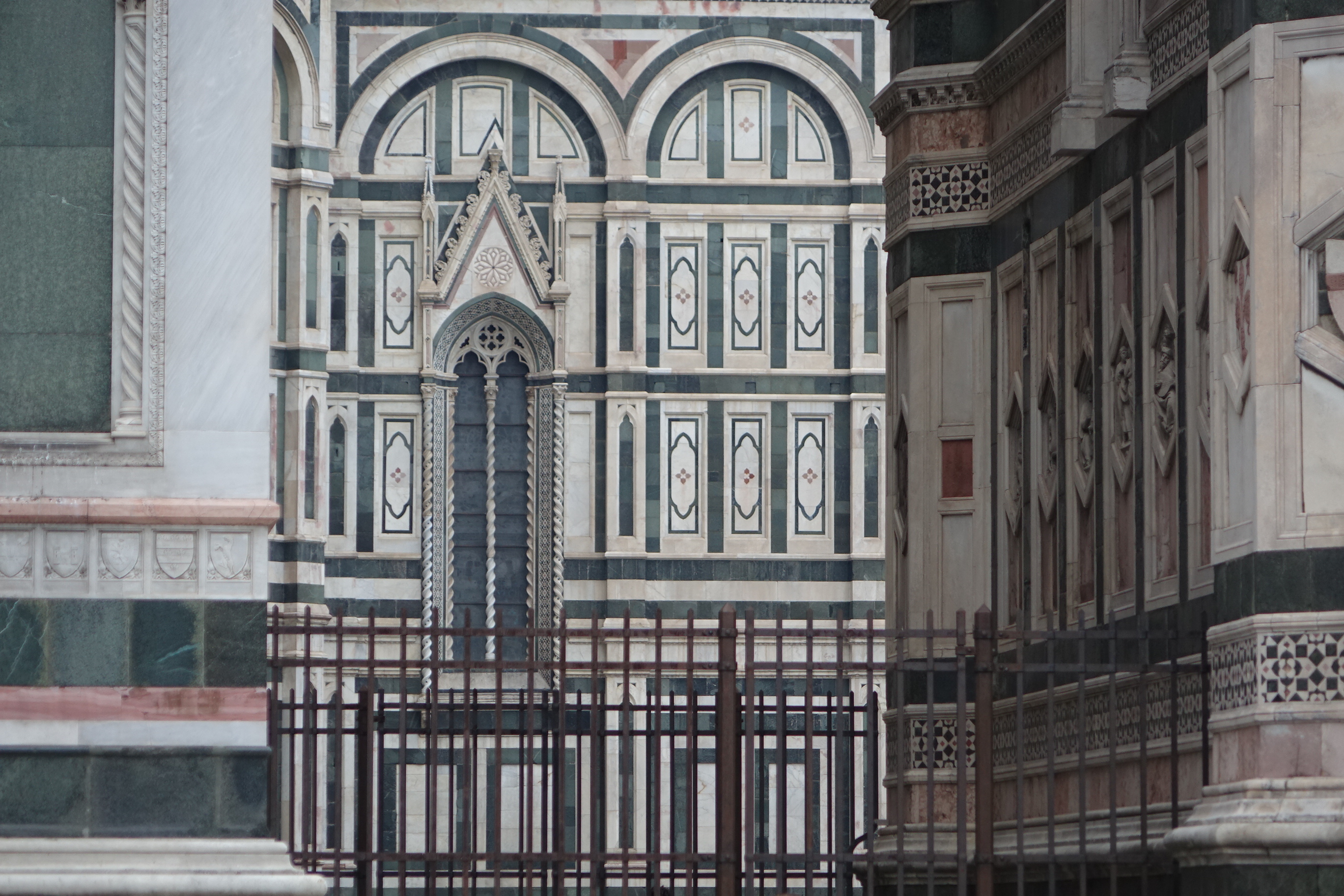
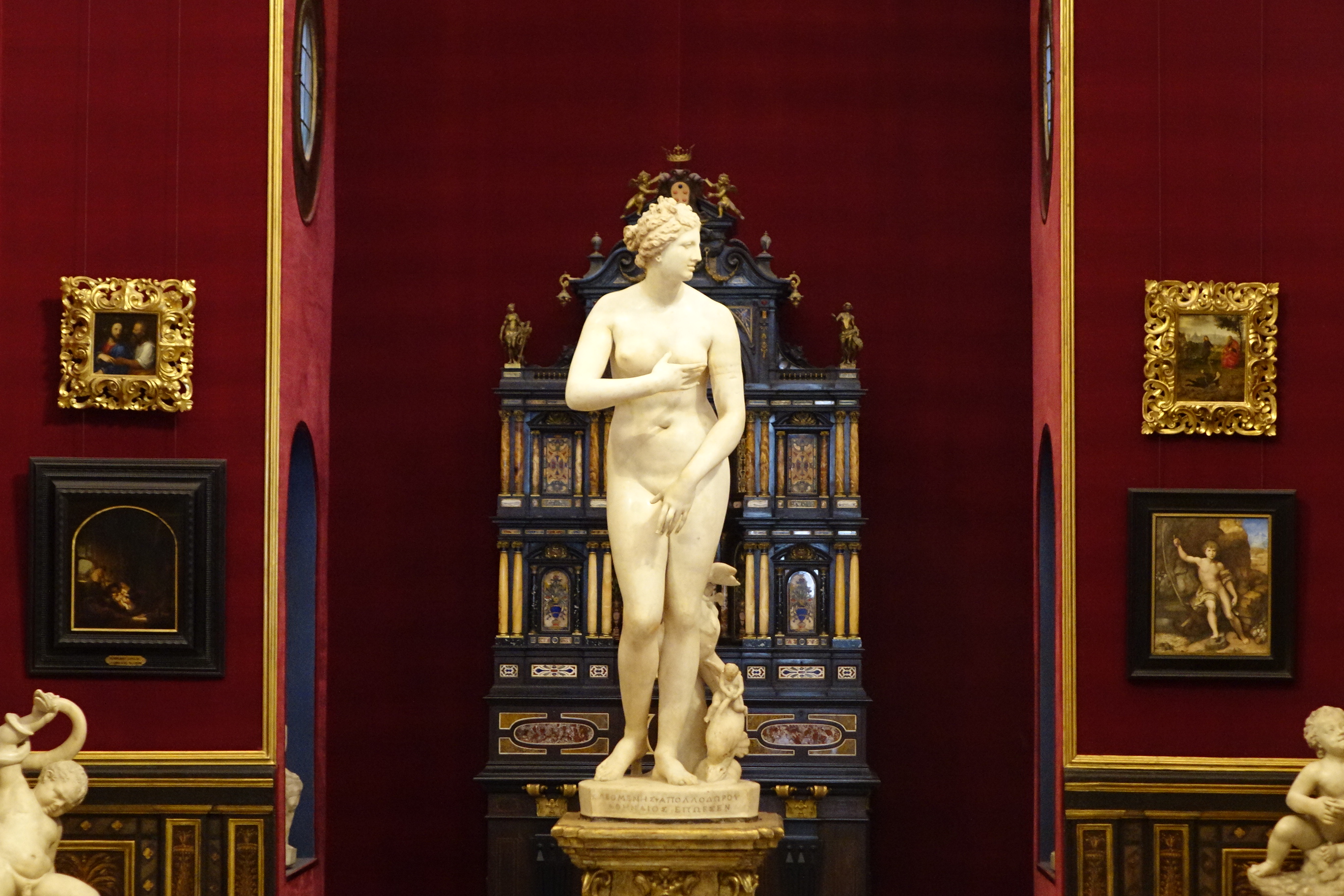
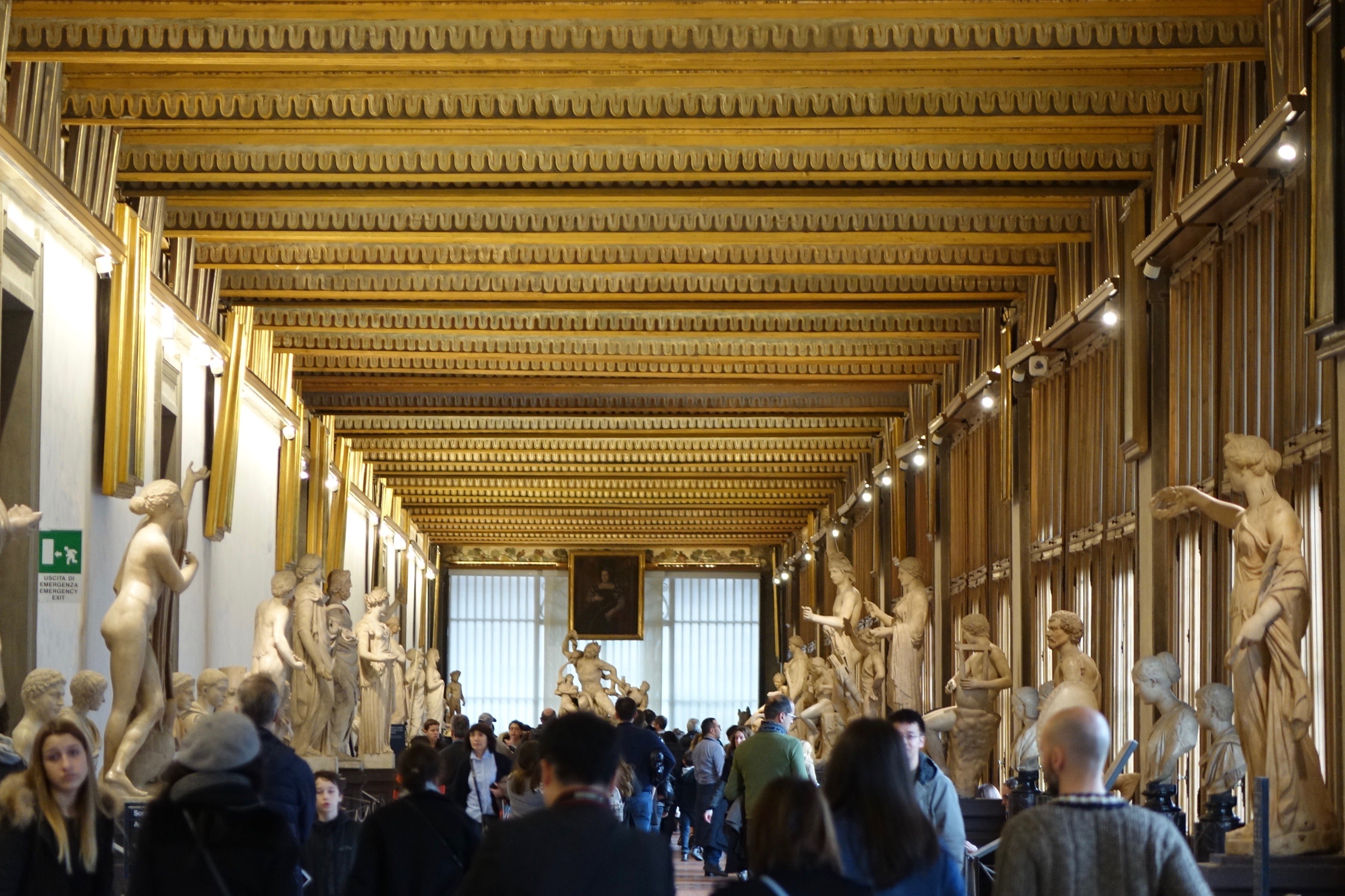
Here the golden pomposity of the Medici palaces is evident, as well as the proud riverside residences of the merchants who made the city great. The photos are peppered with the varying marble tones which decorate the most famous facades of the city’s churches, and demonstrate something of the scale of the grand urban planning which the ruling Medicis put in place when they designed the long airy galleries of the Uffizi and the broad sweeping shop-lined streets.

DSC08812DSC08718DSC08712IMG_5872DSC08457DSC08272

Florence is a city which glows warmly in the summer and comes alive in the Spring. In the autumn it is a place of comfortable elegance. And as I was to discover on this past trip, at Christmas it was a city alive with the spirit and magic of the time. Florence truly is a gem for all seasons.

© Nicholas de Lacy-Brown and The Daily Norm, 2011-2018. Unauthorised use and/or duplication of the material, whether written work, photography or artwork, included within The Daily Norm without express and written permission from The Daily Norm’s author and/or owner is strictly prohibited.

Florence Nocturne

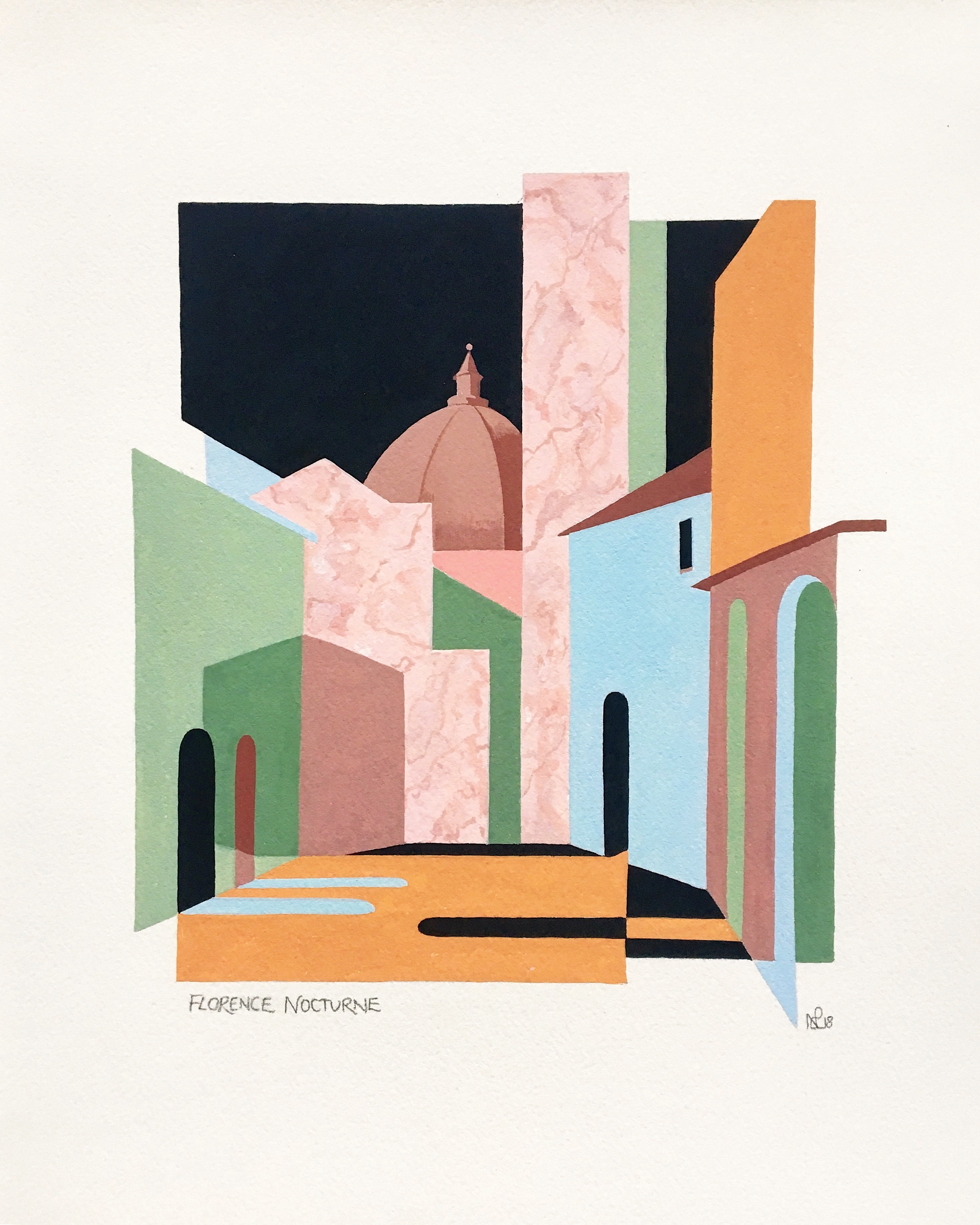
The inspirational capability of Florence is extreme. There is no doubting the city’s role in the rebirth of art in the western world and its transformation into the greatest proliferation of creativity seen since the age of antiquity. So there can be no surprise that it has inspired artists to paint, draw, sculpt and write ever since. I could paint the city endlessly. But time never stands to indulge me. I had time for just one small gouache, hastily designed on the train from Florence to Milan, but executed when time allowed me to reflect on the pastel shades and Renaissance brilliance of that impeccable city.

Florence Nocturne

Florence Nocturne (©2018, Nicholas de Lacy-Brown, gouache on paper)

My work, Florence Nocturne, is like a musical homage to a city lost in the dream-world of sleep but whose elegant topography remains unchanged by the twilight. It mirrors the city with simple lines – it was after all a city known for the relative austerity of its grandeur compared with the later embellishments of baroque Rome and romantically Gothic Venice, and its palette reflects the pink and green marble of the ornamental Duomo.

It captures the moment when the tourists have gone home and the city sleeps, but its pearly white facades remain aglow against the dark night sky. It is my poetic dedication to Florence, the city which inspired the greatest lights of Art, and which has continued to ensnare new generations of creatives ever since.

© Nicholas de Lacy-Brown and The Daily Norm, 2001-2017. Unauthorized use and/or duplication of the material, whether written work, photography or artwork, included within The Daily Norm without express and written permission from The Daily Norm’s author and/or owner is strictly prohibited. For more information on the artwork of Nicholas de Lacy-Brown, visit http://www.delacybrown.com