Skip to content

National pride in a Diamond Jubilee Spectacular

As the Diamond Jubilee weekend draws to an end, there is a unanimous consensus that London has never looked so good, nor love for the Royal Family reached such an all-time high. Today’s climax of the Diamond Jubilee celebrations brought with it all the spectacular pomp and ceremony for which Britain is famed around the globe, awe-inspiring parades of gold and red, plush uniforms, glittering livery, grandly dressed horses and the stunning uniformity of hundreds of cavalry riding with precision along union jack flapping and crowd-lined streets. At its centre, the Queen and the Royals were a delight to watch, humbled and stunned by the incredible show of public support, as they made their way back to Buckingham Palace which last night played host to an unbeatably brilliant star-stunned concert and fireworks spectacle, and which today brought the celebrations to a glorious climax with the Queen’s balcony appearance and Royal Air Force fly past.

Words alone cannot properly express the full glorious extent of the past weekend, when spirits have run so high, and all the British and millions from Commonwealth countries around the world have joined together in giving shared thanks to the Queen for 60 years in which she has sacrificed herself for the good, the stability and the strengthening of all her peoples. The party which has resulted shows that London knows how to celebrate, even when times are down, and as the Diamond Jubilee has awed across three days of brilliant spectacle, we can only now sit back and look forward in feverish anticipation towards the Olympic festivities which are still to come.

Norms fly the flag for the Diamond Jubilee procession (2012 © Nicholas de Lacy-Brown, pen on paper)

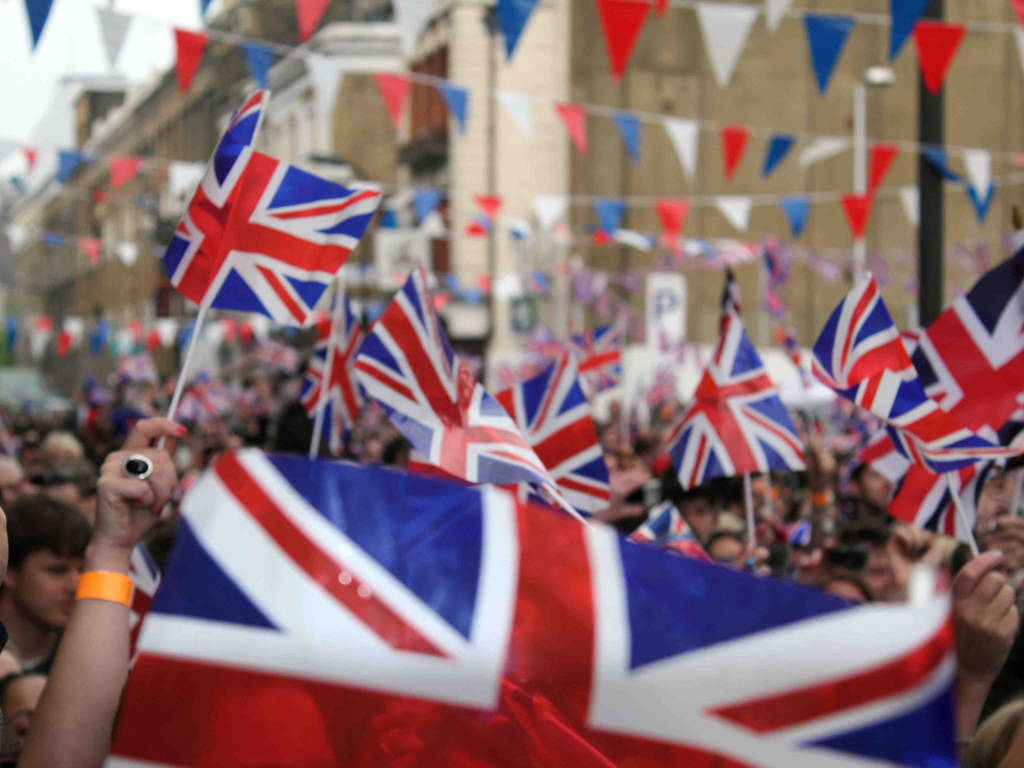
Since words are insufficient to express the brilliance with which London erupted into Jubilee carnival this weekend, I have scanned the internet, collecting together a series of photos which show just how incredible London looked as millions celebrated this weekend. But before you take a look at those, cast your eye over this little sketch which I made as the celebrations progressed. For in Norm world, they too have celebrated the Diamond Jubilee, lining the streets, waving the flag, and celebrating 60 fantastic years of their Queen. Long may it continue!

Note: these photos (apart from my sketch above) are from the internet. Appropriate copyright for the images is shown where the source was indicated on the bottom of the photos. Where a source is not indicated, the copyright belongs to either the BBC or the Daily Mail websites. 

Diamond Jubilee Pageant: A Right Royal Wash-out

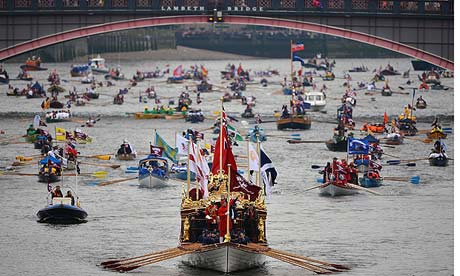
You have to feel for the Queen. Sixty years of rule and 86 years of age, and when the time finally came to celebrate her Diamond Jubilee, she had to stand out in the cold and damp for some three hours, gritting her teeth and ensuring none of the thousands who came out to watch could view her displeasure. As usual, HRH Queen Elizabeth II has put everyone else before her now weather-beaten person.

After a week of almost Mediterranean heat, this weekend has once again seen London dip right back into the wintery monotony which has hung over it like a bad smell for the bulk of 2012, right at the very time when two and a half years of planning reach their peak, and the country goes into Diamond Jubilee celebration-mode with a four day diary packed almost exclusively with outdoor activities. You also have to feel for the thousands of people who were out waiting hours by the river today to see a glimpse of HRH upon the Royal Barge, and the thousand or so ships which made up London’s biggest River Pageant for some 400 years. Not only must they have freezed (I, sensibly, wasn’t one of them), but they’ve probably all caught the flu.

The broadcasters kept on telling us that the weather didn’t dampen Jubilee spirits, but come on, let’s get real here – half of the pageant could barely be seen through the mist which descended over London, covering up much of the newly-constructed Shard in its midsts (it is, after all, the tallest building in Western Europe, but more than usual of it’s lofty facade disappeared today) or because of the rain drops covering the lenses of TV cameras. Meanwhile the large finale of hellicopters and goodness knows what other treats had to be cancelled, while a group of poor sodden opera singers desperately carried on until the end, dripping from head to toe atop their boat like a group of stranded sailors, no doubt praying that they would avoid electrocution from all of the drenched microphones wired around their person.

That is not to say that the good old British spirit did not live on, making the most of a bad situation (every cloud has a silver lining and all that jazz) but just imagine how good it could have been if the clouds, which feel insuperably magnetised towards the UK soil, got lost, for once.

Norms at the Diamond Jubilee Pageant (2012 © Nicholas de Lacy-Brown, pen on paper)

Here’s hoping for a bit of sun tomorrow, and that the Queen is suitably wrapped up with a hot water bottle tonight.

Diamond Jubilee Weekend: Let the street parties begin!

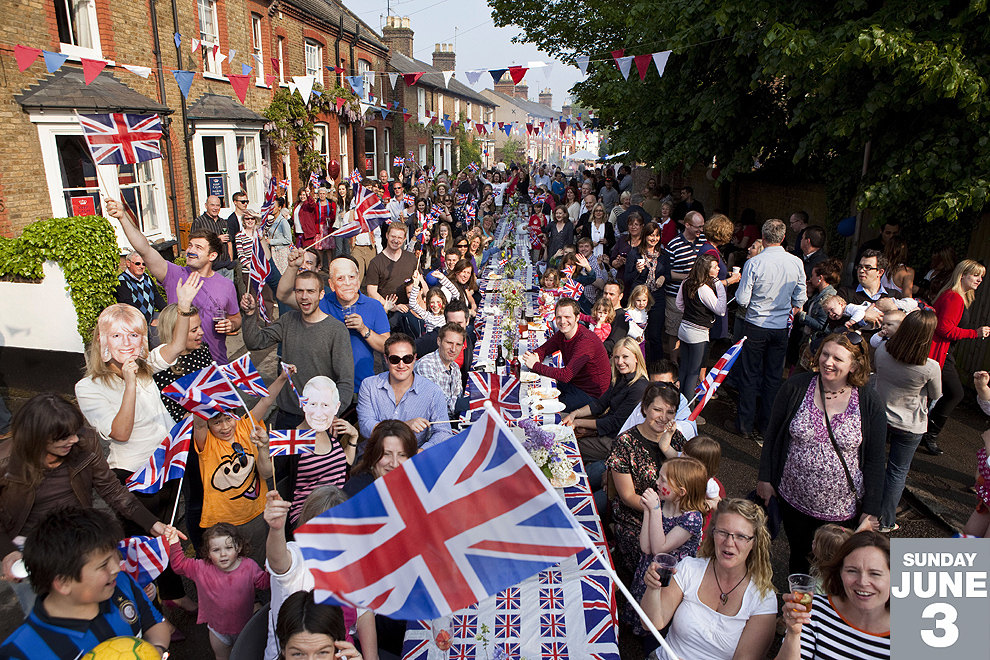
They’ve strung out the bunting and covered cup cakes and cookies and muffins in red, white and blue. The tables are being set up where cars normally dominate, huge, long white sheets become makeshift tablecloths on a street-long banqueting space, the dishes are assembled, each decorated with a token miniature union jack, and the cars are formally banished, as neighbours gather together for the event of the decade: the Diamond Jubilee Street party is here!

It’s a rather anachronistic tradition, but one which is all the more necessary now that neighbourhoods have become soulless and people who live side by side barely know each other’s names. Back in the middle of the 20th Century, when the street party was a more regular occurrence (notable street parties included celebrations at the close of the Second World War and the Queen’s Coronation itself, in 1953) street parties were probably more of a naturally organised occasion. Neighbours lived in one another’s front rooms, borrowing cups of sugar, nosing into each other’s gossip, and standing around on the street corners, having a chat. But as society has become gradually more transient, with people moving around for career changes, schooling changes, and moves abroad as part of the gradual trend towards globalisation, the idea of neighbourhood has been relegated to soap dramas on TV. In today’s age, with neighbourly relations at an all time low, and english reserve causing a general aptitude towards individual isolation, that the age of the street party is starting to catch on again, as people harp back to the old days, seeking a return to the days of neighbourhood values, when your street was a haven, a place where children played safely, and people felt the support not just of their closer relatives, but of the people living all around them.

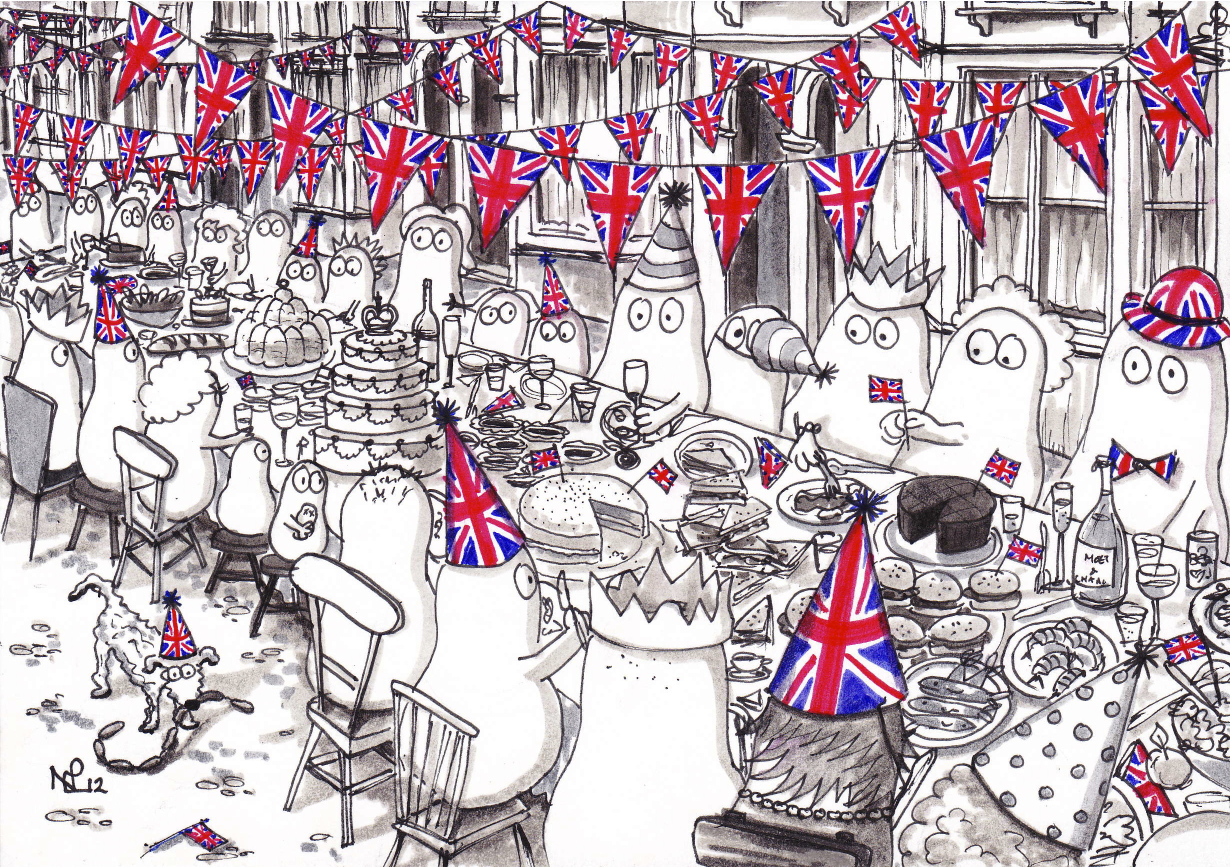
The Norms’ Diamond Jubilee Street Party (2012 © Nicholas de Lacy-Brown) (Pen and pencil on paper)

What with the Golden Jubilee ten years ago, the Royal Wedding last year, and the Diamond Jubilee now upon us, the street party is on the up, and this weekend will see the union jack go into overdrive, not just in London, but all over the UK. Naturally, the Norms are not likely to miss out on the action, and here in Normville, the Norms have missed none of the Jubilee spirit, stringing out the bunting, decking the tables with cakes, and sandwiches, jellies and bottles of bubbly, as they fly the flag high in honour of a magnificent 60 year reign of our Queen, Elisabeth II. May the jubilee weekend begin!!

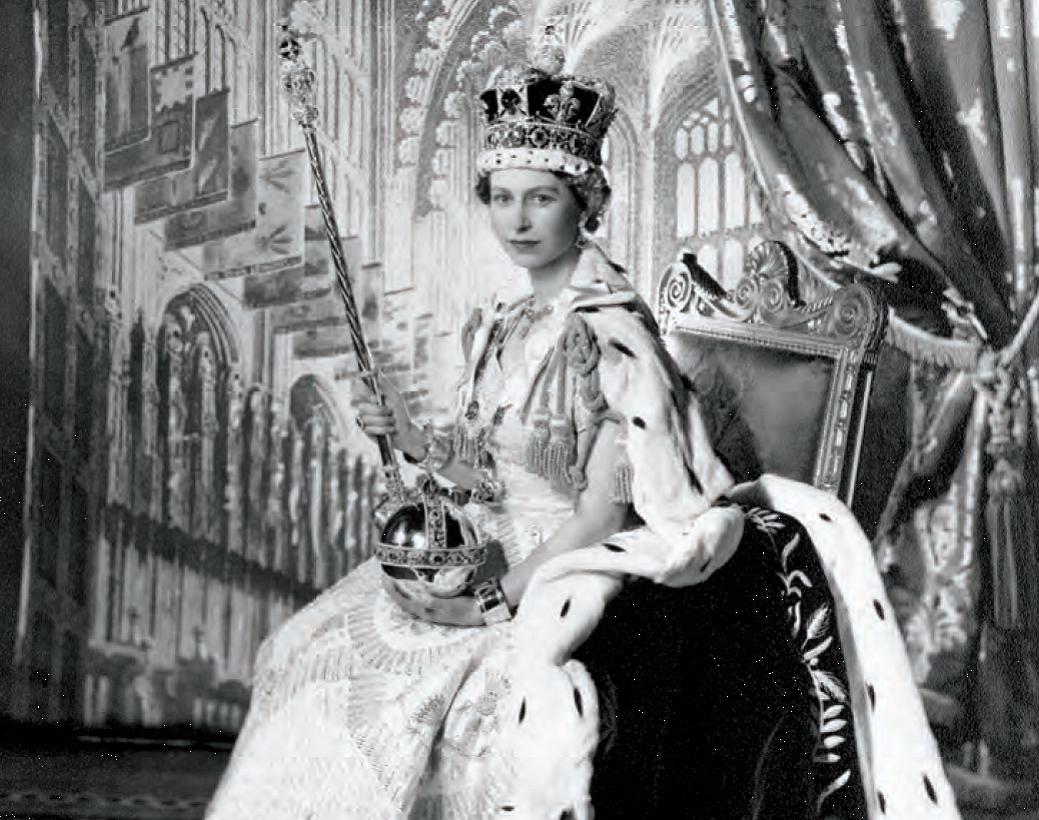
The coronation of HRH Queen Elizabeth II

A street party back in 1977 for the Silver Jubilee

London is filled to bursting point with bunting and union jacks

PS For the best jubilee cake ever known to man, check out the award winning cake made by my dearest friend Celia on her blog, Lady Aga.

© Nicholas de Lacy-Brown and The Daily Norm, 2001-2012. Unauthorized use and/or duplication of the material, whether written work or artwork, included within The Daily Norm without express and written permission from The Daily Norm’s author and/or owner is strictly prohibited. Excerpts and links may be used, provided that full and clear credit is given to Nicholas de Lacy-Brown and The Daily Norm with appropriate and specific direction to the original content.

Out and about with my iPhone – Part II

It was William Blake who wrote of England’s green and pleasant lands, words which have since been transposed into the rousing melody of “Jerusalem” by Hubert Parry.

I will not cease from mental fight, 
Nor shall my sword sleep in my hand, 
Till we have built Jerusalem
In England’s green and pleasant land

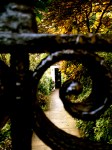
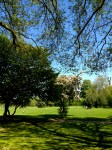
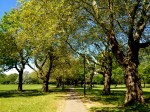
Now, as I walk around my surroundings, down in suburban South London, I find the final bars of that great hymn circling relentlessly inside my head, as all around me, after a month of unseasonably consistent rainfall, England has literally burst into the most pleasant, lusciously green landscape I have seen in recent memory. The tree boughs are so heavily weighted by a cornucopia of vivid green leaves and fresh, unfurling buds that they almost touch the ground. The grass is rich and thick, full of daisies and dandelions, betraying not a single batch of earth in between its lustrous verdant carpet. And all around the air is full of blossom, as it is gently warmed by a balmy early-summer sun, bringing with it ripe rememberings of childhood summers past, when with my family I would enjoy effortless evenings amongst the thickly sheltered forests of Hampshire and the Isle of Wight, picking bunches of wild flowers, and going to bed with a head full of fresh summer air and the imaginings of a Midsummer Night’s Dream.

All this comes to mind as I revel in this newly revitalised greenery surrounding me, even here, on the outskirts of London. And freshly inspired, with an excellent camera phone in my pocket, I have roistered the benefits of having a camera continuously by my side, so that for every scene of early-summer beauty before me, I can capture it like the work of art it is, a still life framed forever, to share with you on The Daily Norm.

These photos are just a few from a mass I have taken while enjoying the unseasonably warm weather we have had recently in the UK, as finally we were given a break from months of rainy monotony, and gave the summer a brief chance to shine through. I hope you enjoy them.

© Nicholas de Lacy-Brown and The Daily Norm, 2001-2012. Unauthorized use and/or duplication of the material, whether written work or artwork, included within The Daily Norm without express and written permission from The Daily Norm’s author and/or owner is strictly prohibited. Excerpts and links may be used, provided that full and clear credit is given to Nicholas de Lacy-Brown and The Daily Norm with appropriate and specific direction to the original content.

Deconstructed Norm Sculptures in a Setting (after Henry Moore)

Henry Moore, the British sculptor, is famous the world-over for his semi-abstract rounded bronze figures and organic wood-carved nudes. His indisputable popularity as one of the greatest sculptors of our age is demonstrated by the sheer proliferation of his works on public display in town centres and parks and the gardens of large country estates throughout the UK and around the globe. His organic, satisfying rounded forms do not offend polite society, but instead offer the right about of minimalist abstraction mixed with sentimental femininity and human characterisation. His sculptures often dominate the landscape, while inviting passers by to interact with the various holes and curves intrinsic to Moore’s work. They are like a Picasso abstract come to life, or a Michelangelo mother and child melted into a tender rounded form.

Henry Moore, Five Figures in a Setting (1937)

Yet it is not his sculptures which attract me. Don’t get me wrong – I love his works. They are satisfyingly curvaceous, with a mixed attraction of sharp edges and smooth polish, a recognisably humanised form with a metaphysical expressionless finish, open to interpretation, and perfectly executed from every angle. But for me, the real stars of any Henry Moore show are his sketches.

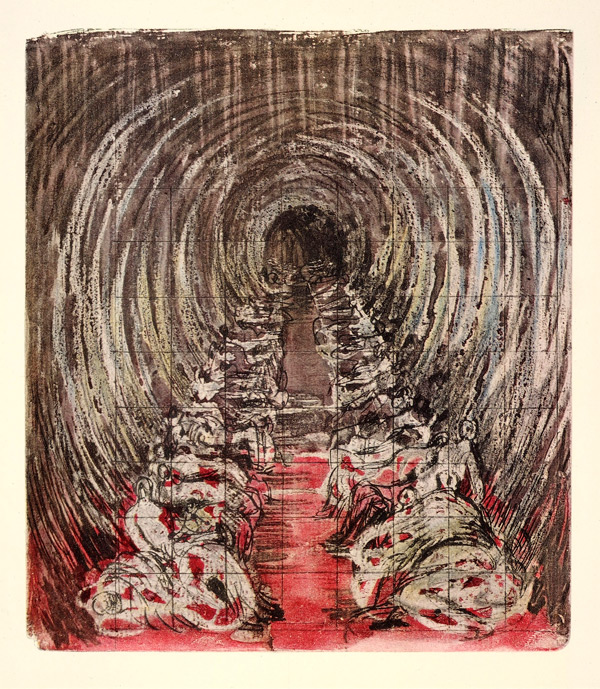
Henry Moore, Shelter Sketch Book (1967)

Often he sketched when ideas came into his head. Consequently Moore left us with a great variety of sketches in which we can see Moore exploring the various organic forms which are now famous sculptural manifestations, as well as plenty of rough drawings devoted to the mother and child image that so obsessed him, and paintings in which Moore appears almost to capture his three-dimensional forms, imprisoning them within an eternal two-dimensional abstract landscape. Come the second world war, and Henry Moore was made an official war-artist for Britain, but not as a sculptor. Instead Moore would head down to the packed tube stations, where thousands would huddle, every night, using the dark tunnels and airless platforms of the London underground as make-shift bomb shelters. There he captured moving scenes of humans at one in their vulnerability, trying to sleep through their anxiety, curled up together for moral support.

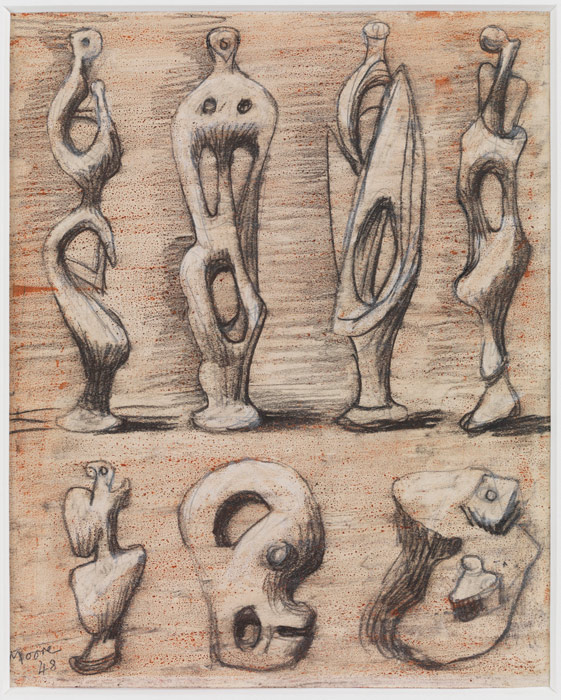
Henry Moore, Standing Figures and ideas for Sculpture (1948)

Moore’s sketches offer us an invaluable insight into the great sculptor’s mind at times when he would pour his sculptural imaginings straight onto paper, some of which eventually made it into three-dimensional form, but many of which never made it beyond the confines of pen on paper. But these sketches are far more than just studies or ideas. They are works of art in themselves, capturing moments of intense human emotion, with a dark intensity and an often surreal setting. They are artistic masterpieces worthy of as much attention as the finished sculptural articles which have become a staple of British art all over the world.

Ever inspired by the wonderful art around me, I sketched my own Moore-inspired sculptural forms. Taking the humble Norm as the basis for my drawing, I deconstructed my Norm, presenting the customary rounded figure as a body with strings and a hollow inside, a head, two large eyes, the Norm’s characteristic single hand, and a crescent-like structure which I like to think of as an expression of a Norm’s eye-lashes. The result is a sketch full of the abstract surrealism which Moore’s own works promote, but with that hint of Norm playfulness, some strings and a blood-red hollow, all set within a shady landscape leading to nowhere. If only Moore had seen it. The Deconstructed Norm would have been slowly rusting somewhere in a park by now. Unless it was made of metal, in which case it would have been nicked…

Deconstructed Norm Sculptures in a Setting (after Henry Moore) © 2012, Nicholas de Lacy-Brown, pen, pencil and watercolour on paper

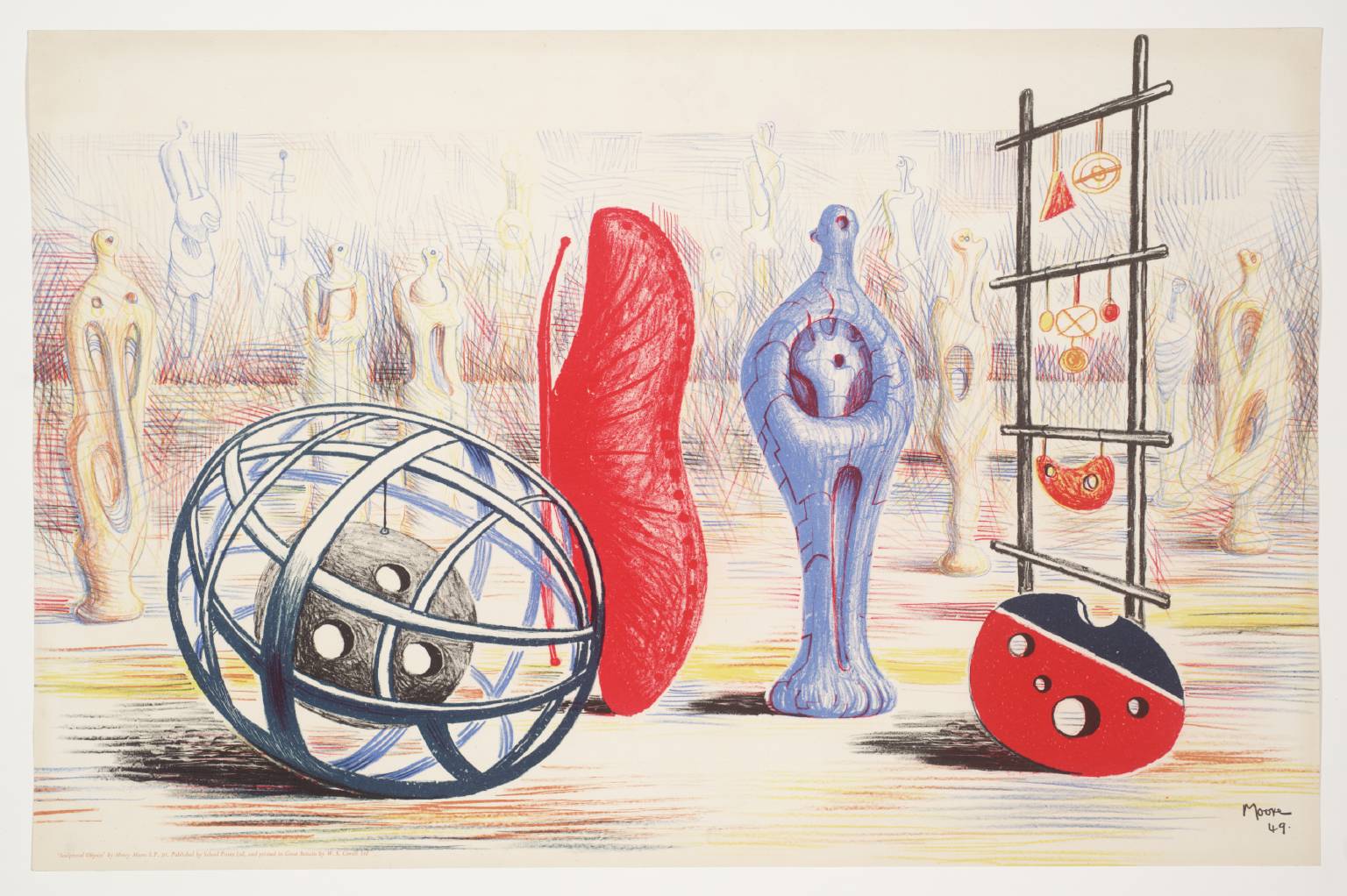
I leave you with a mere handful of some of Moore’s incredible works on paper. Until next time…

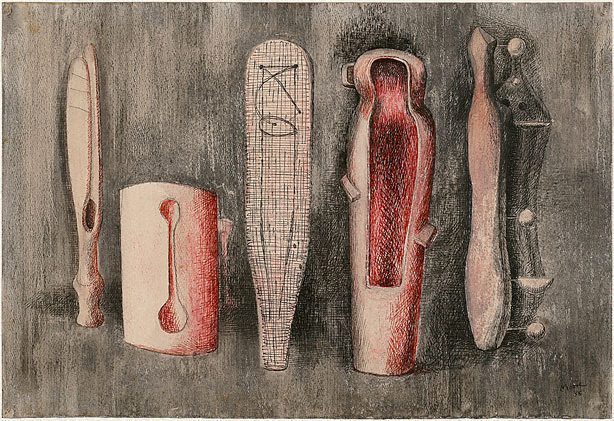
Henry Moore, Sculptural Objects (1949)

Henry Moore, Sculptural Ideas, hollow form (1938)

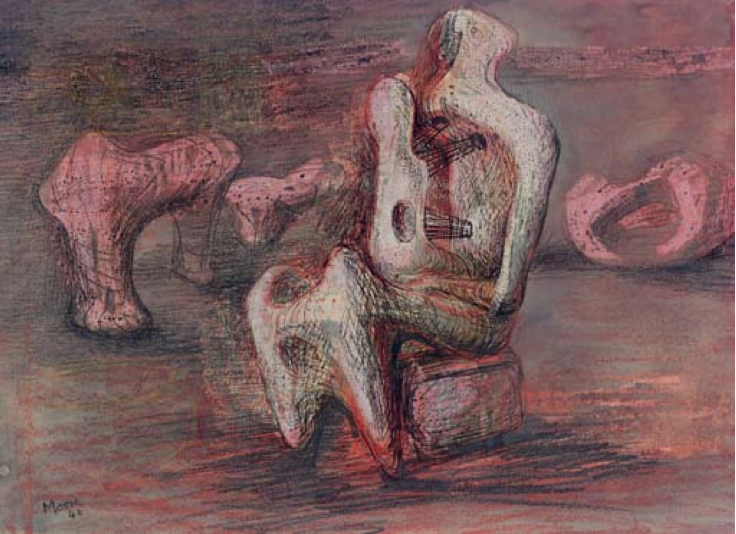
Henry Moore, Mother and Child; Drawing for a sculpture in wood and string (1949)

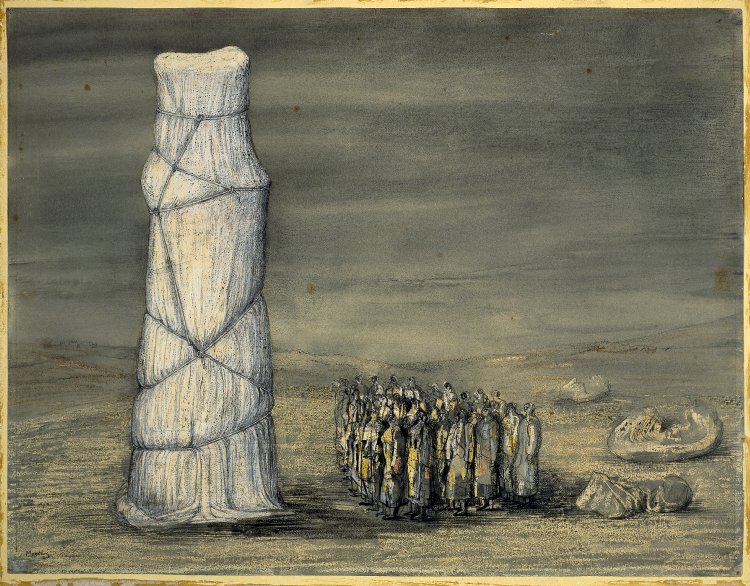
Henry Moore, Crowd Looking at a Tied-uo Object (1942)

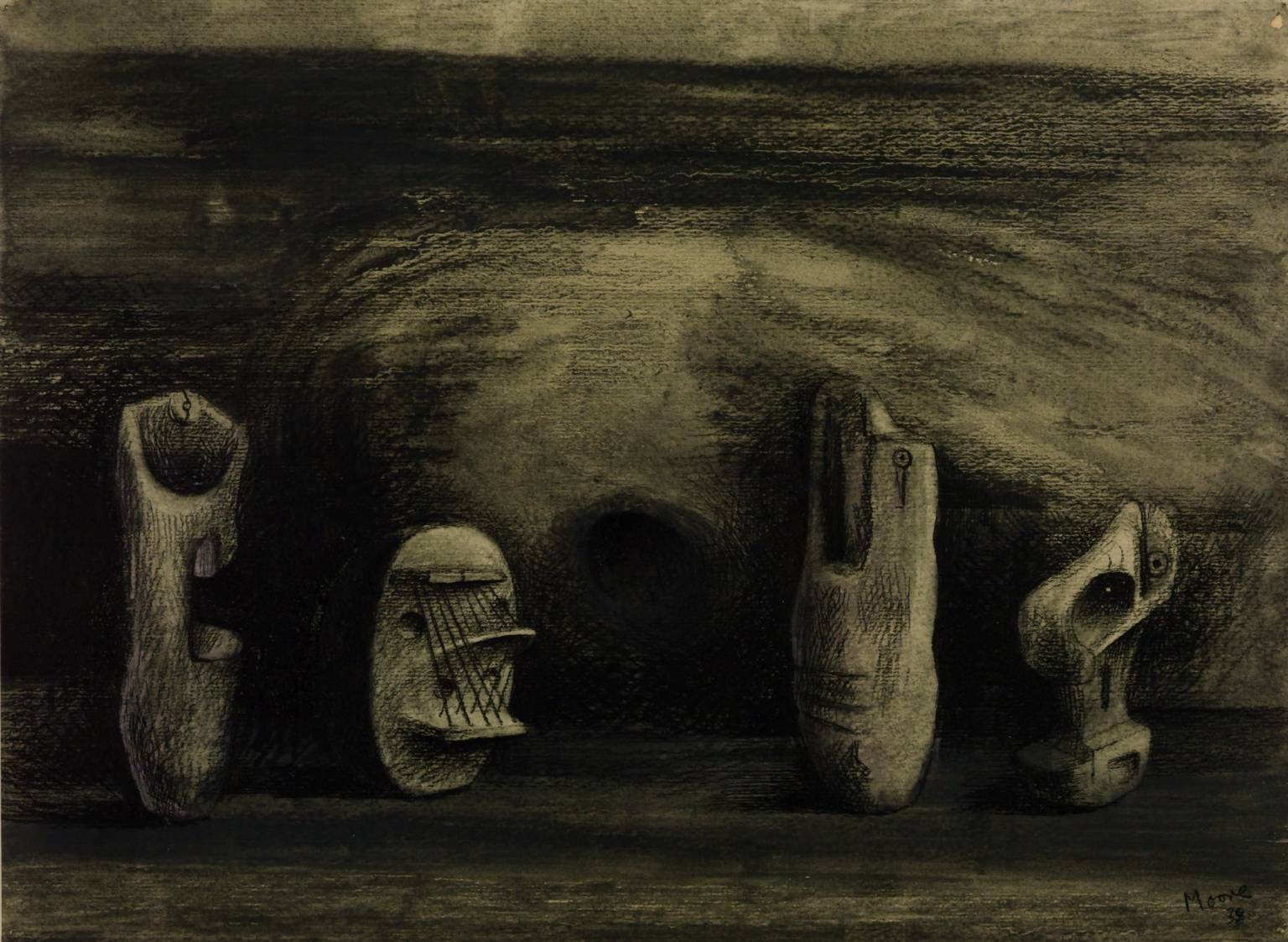
Henry Moore, Four Forms, drawing for a sculpture (1938)

Henry Moore, Ideas for Sculpture in a Setting (1938)

Never judge a Sweet William by its prickly little cover

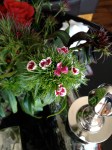
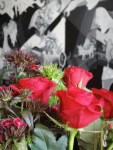
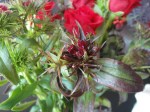
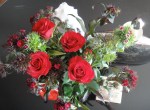
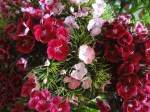
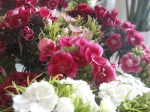
When I walked into Marks and Spencer the other day, I stumbled upon a bucket of flowers which captivated me for their sheer ugliness. Next to all the perfectly grouped roses and the pure white long-leaved lilies, these were like little monsters, wrapped in a flower bag. It seemed peculiar that what looked like sea urchins on asparagus sticks should be marketed as flowers, but always seduced by something different, I decided to pick up a few bunches to place amongst my previously selected bunch of red roses – at least this way I could flesh out the vase and not spend so much on the roses. Once home I arranged my red roses with these strange prickly flowers between them, looking contemporary and chic with their varied prickles of deep green and pale sage, grouped in old pickle jars (minus the pickles) for an extra contemporary touch.

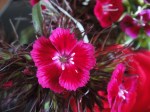
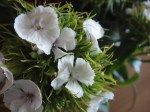
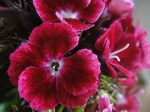
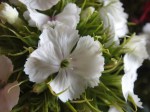
The next morning I came into the room and couldn’t believe my eyes – the tiny little buds grouped amidst the pulp of little prickles had exploded open into the most amazing floral show. Bursting with shades of scarlet and fuchsia, bright cadium, pale lavender and dainty white, these moss-resembling creatures had given life to the most beautiful range of flowers which now placed even the perfect red roses in the shade. And as the days have gone by, the flowers have got better and better, with groups of up to 30 little flowers opening on each spiky outcrop.

I am a man converted. The flowers, for no apparent reason but clearly with some very important although long-since forgotten historical reason, are named Sweet Williams, and I will be sure to make them a regular feature of my vases whenever they are in season. It all just goes to show, never judge a Sweet William by its prickly little cover – As the following photos will hopefully demonstrate. Enjoy.

A baby showered with a chequerboard of tropical cupcakes

We English don’t easily accept the idea of being influenced by America. We’ve always been the slightly supercilious older brother of our younger indefatigable sibling across the pond, wincing at the loosening of our Queen’s erudite parlance, the widening of the vowels, the advent of stuffed-crusts, of bagels and Reese’s peanut butter cups, the creator of drive-thru culinary culture and the over-eager stentorian expression which makes the refined of Kensington tut condescendingly. Yet it’s an indubitable fact of English life that the influence of the big U-S-of-A is all around us, in our music, in our food, on TV, in politics and on the high street, and no more so is this influence felt than in the way we party. The US gave us candy-abundant halloween and fairy light-filled dazzling Christmas spectaculars. And the latest craze which is doing the rounds is the Baby Shower.

According to wikipedia, a Baby Shower is generally thrown either shortly before or shortly after a baby is born. Only women are invited (!) and the new mother in question is “showered” with presents. So when my dear friend Sarah gave birth to a beautiful baby girl, Ruby, a few months ago, and announced that she would finally bring her angelic daughter down to London to be celebrated amongst our vivacious friendship circle, I decided that this baby shower business ought to be tried and tested, refined in the way that only the english know best. For starters we had men, and quite right too. In the modern world, with fathers playing an increasingly dominant role in the daily task of bringing up their children, why shouldn’t they too be showered with gifts and praise and plenty of sweet treats? Presents were showered aplenty – little cute girly outfits and some alcoholic indulgence for papa (when he’s off duty, naturally) and my gift – a norm sketch of course – devoted to little Ruby.

Welcome Ruby (© 2012 Nicholas de Lacy-Brown, pen and ink on paper)

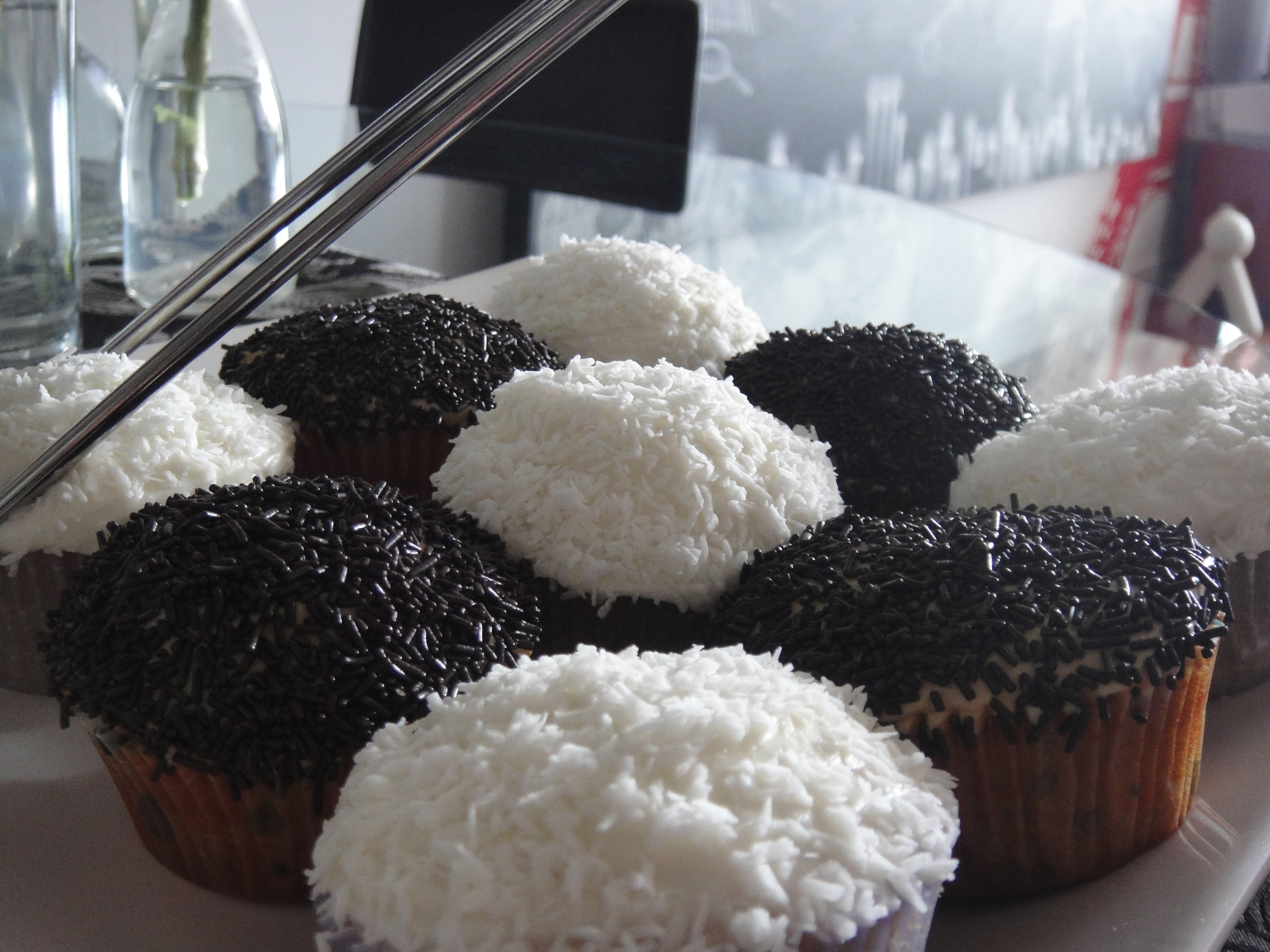
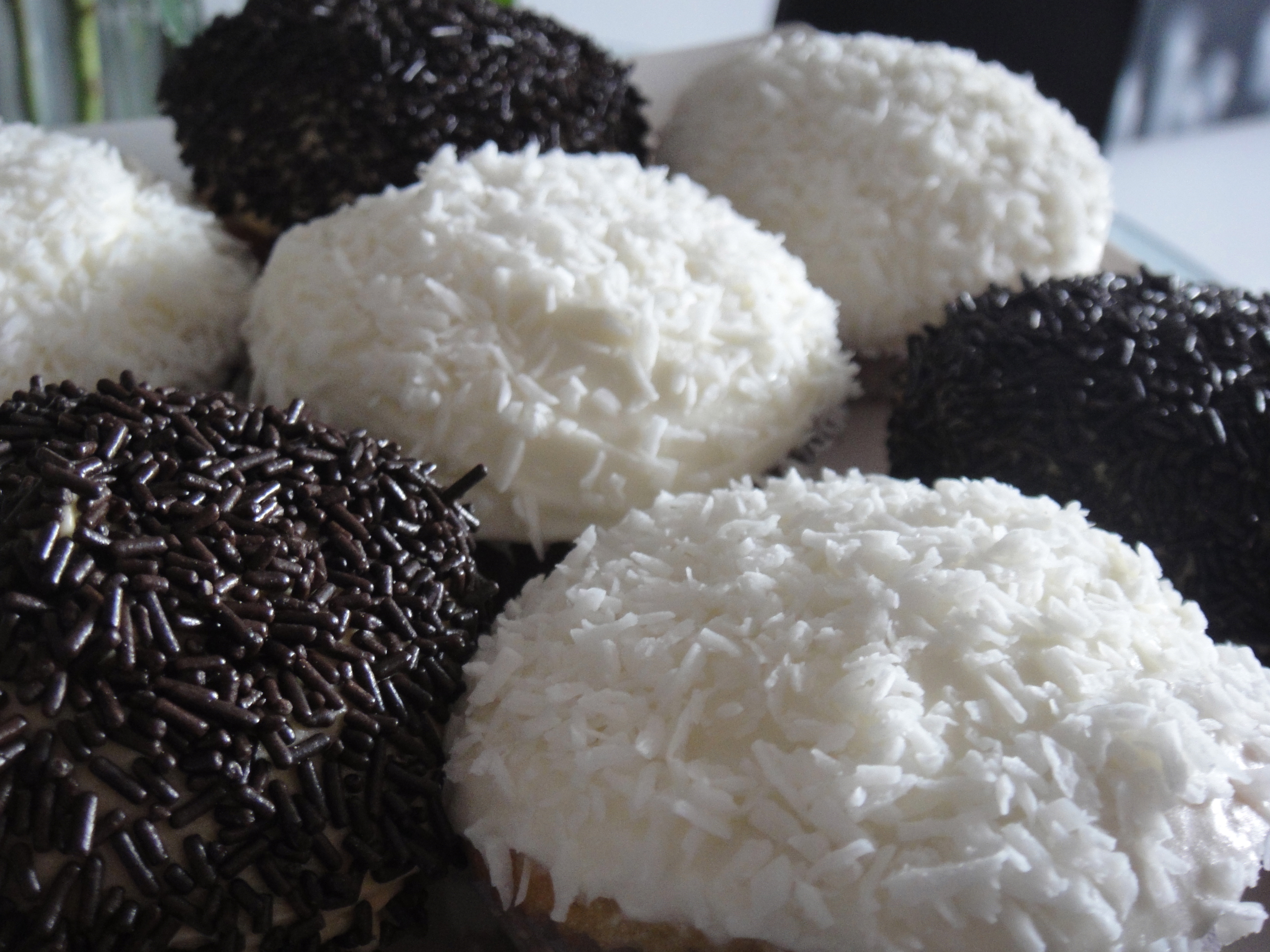
As for the sweet treats – cupcakes went all tropicana, as I chose flavours referencing the mixed and culturally rich heritage of Ruby’s parents – I made one batch of tropical cupcakes –  pineapple and coconut cupcake referencing Sarah’s Jamaican heritage and father Truong’s South Pacific patrimony – while tropical banana meets England’s now demised Hungry Monk restaurant, inventor of the infamous Banoffee Pie, inspiration for my second selection – a banoffee cupcake, loaded with indulgent dulce de leche and a gingery spiced banana sponge. Tropical flavoured, but London refined, these cupcakes were the epitome of english chic, served like a chequerboard of black and white, with one cake covered in coconut and the other in chocolate vermicelli. The fruit in both, and additions of creamy coconut milk and indulgent full fat milk respectively, made these cakes moist and delicious, while the butter cream icing was a suitably indulgent celebration of the beautiful new life in our midsts.

My recipes were adapted from London’s favourite purveyor of cupcakes, the Hummingbird Bakery. To make the pineapple and coconut cupcake, take 140g caster sugar and beat in 40g unsalted butter. Then add 120g plain flour, a pinch of salt, and 1 and a half teaspoons of baking power and mix everything together with an electric mixer. Once everything is combined, gradually mix 120ml of coconut milk and half a teaspoon of vanilla essence into the flour mixture, and finally add and mix in one egg (I actually used a bit more coconut milk – my mother always told me that the softest sponge mixtures always drip of the mixing spoon like syrup, and therefore I always add a bit more milk to achieve this effect – but it’s a matter of personal taste). Prepare 12 paper cupcake cases. Chop up 8 rings of tinned pineapple into small chunks and disperse evenly in the bottom of the paper cases. Pour the cake mixture on top and place in the oven at 170 degrees celsius for around 20-25 minutes. Test with a skewer to make sure the cakes are cooked. The skewer should come out clean. Once the cakes are cooled, make your butter icing. Beat 250g icing sugar with 80g unsalted butter with an electric mixer. Slowly add 25ml of coconut milk and whisk until very white and light and frothy (around 5-10 minutes). Paste onto the cake with a palette knife and sprinkle liberally with desiccated coconut.

The banoffee cupcakes are pretty similar. 140g of caster sugar should be added to 80g of unsalted butter. Then add 120g plain flower, a teaspoon of baking powder, a pinch of salt, a teaspoon of ground ginger and a teaspoon of ground cinnamon. Mix until well combined and then slowly add 120ml of whole milk and two eggs. Separately mash up approximately one largish banana (around 120g peeled) and stir into the cake mixture. Spoon into paper cases and cook at 170 degrees for around 20 minutes. For the icing, beat 250g icing sugar with 80g unsalted butter. Then, if you want to make your icing indulgently dulce de leche, take a small can of condensed milk and simmer on a low heat for 3 hours (yep, this takes patience) without opening the can. Make sure the water doesn’t dry out in the pan and the tin is always covered with water or the tin will explode. After three hours, open up the can and you should find yourself with a tin full of caramel deliciousness. Add a few tablespoons of this to your butter icing mixture depending on how sweet and rich you want it. Build up on your cakes with a palette knife and sprinkle chocolate vermicelli liberally over the cakes.

And there you have it. Uber sophisticated tropical cupcakes, perfect for the summer, whether a baby is forthcoming, newly arrived, or just a distant pipe-dream.

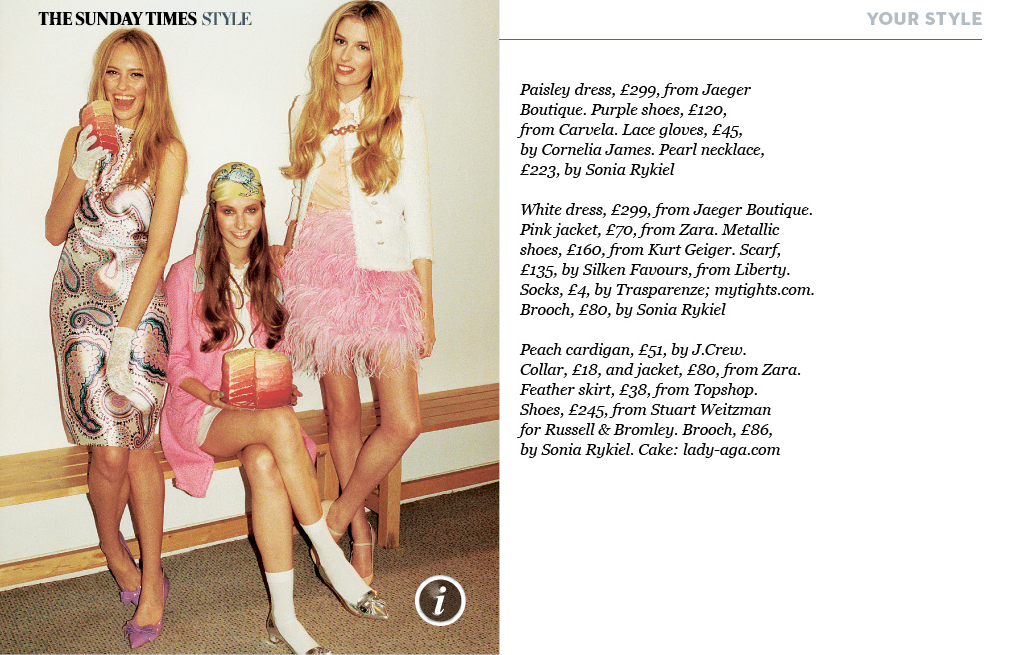
PS: Talking of uber-chic cupcakes, I am SO proud of my friend Celia whose red-velvet multi-layered ombre cake made it into this week’s Sunday Times style section as shown here… amazing!

Sunday Supplement – The Joie de Vivre Triptych

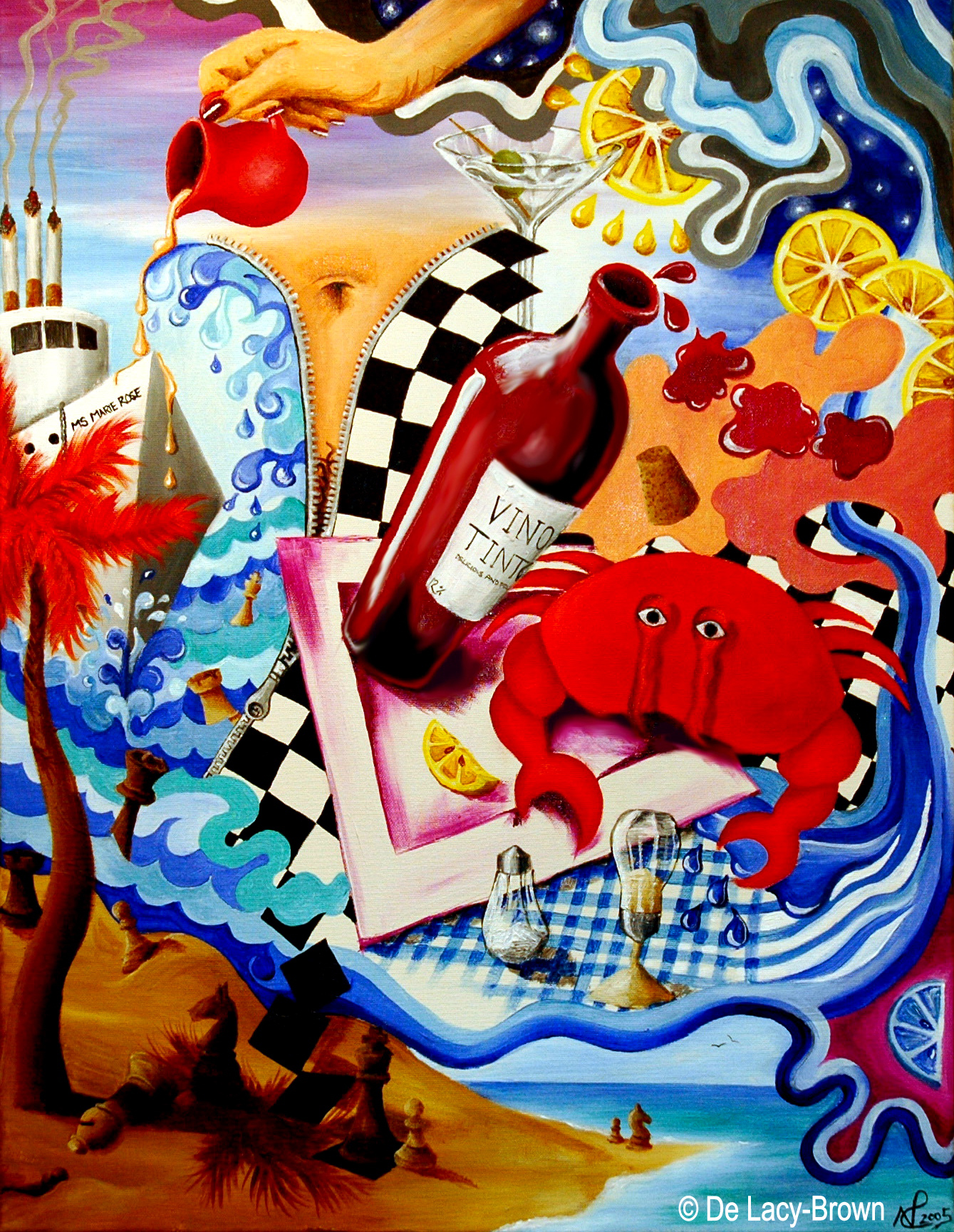
The sun is shining in London, the olympic torch is gradually winding its way around the country to rapturous applause, and the nation is decking its streets in union jacks in anticipation of the Diamond Jubilee celebrations next weekend (you notice I’ve ignore the slight blip that was eurovision last night, when the UK came second from bottom in the results table – but no surprises there, it only goes to emphasise our disconnection from continental europe). So with spirits high, and with what looks like the arrival of summer (finally!) I have decided to showcase a triptych of paintings which I completed when the times were good, the sun was shining, and I was enjoying uninhibited zest for life. I was holidaying in Marbella, Spain at the time. I had just finished my law degree, and was spending almost a month in Spain. By day I would enjoy the freshness of the mediterranean sea, the heat of the beach, and the pleasure of seafood and of wine. In the balmy afternoons, I would retreat to our sun-dappled garden, under the shade of our fragrant jasmine tree, and rest, contemplate, and (being english, even when in Spain) drink tea.

It was in these times of ultimate afternoon delight that the Joie de Vivre triptych was born, three paintings which were unplanned, but which burst freely out of my paintbrush and straight onto canvas, an apt demonstration of my uninhibited happiness when life was good, the drinks flowed, the sea lapped upon the shore and my imagination came to life.

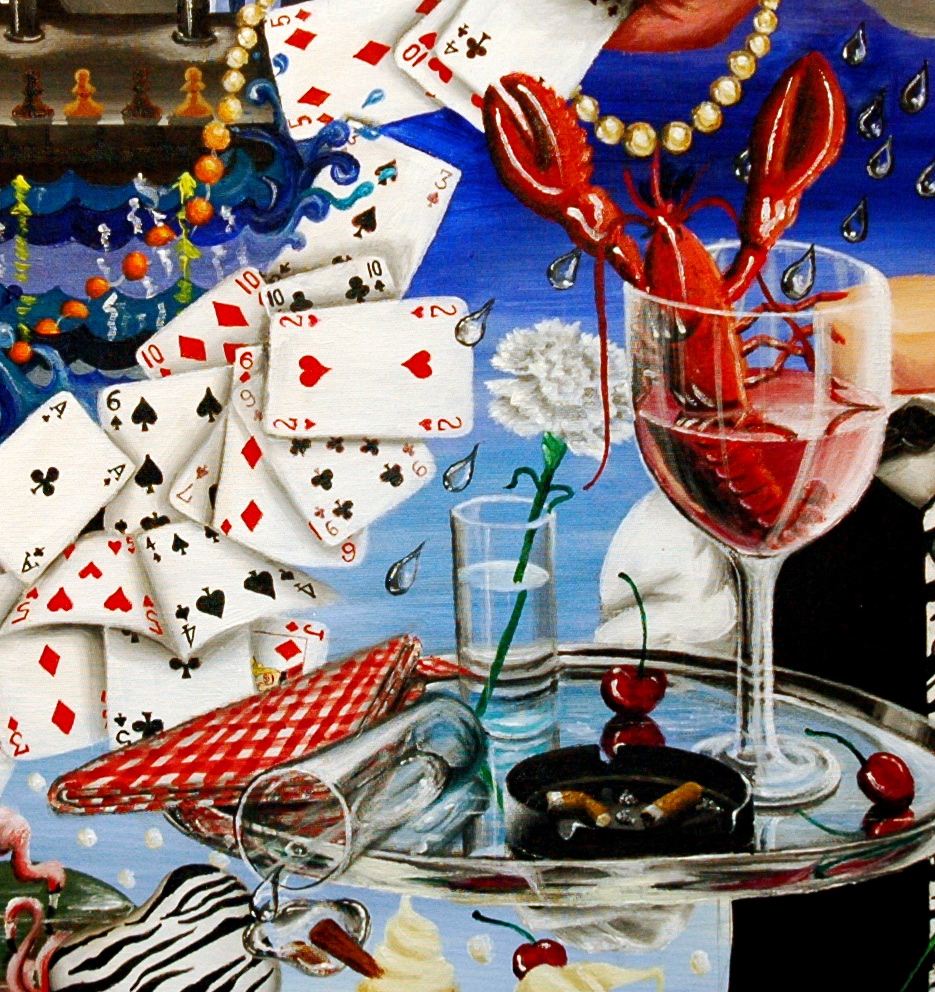
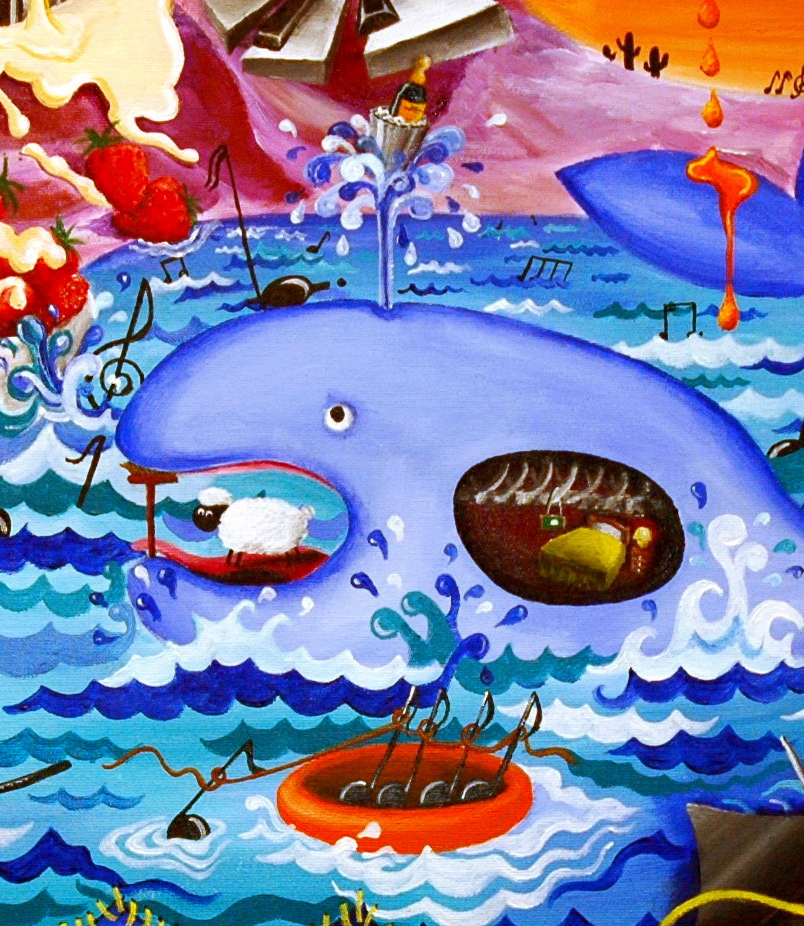
The resulting triptych sold at my 2006 exhibition, Between me and my Reflection and is now one of my best selling limited edition prints (with some still for sale on my Etsy store). It celebrates the ‘zest’ or joys of life through an illustration of the three stages of culinary and alcoholic indulgence during the day; lunchtime, afternoon tea and evening. Recreation and hedonism are central to the juxtaposed images with a further emphasis on home entertainment, namely piano/music, cards/gambling and chess. Opulence is illustrated by symbols of extravagance contained within all three images, as well as buried treasure and jewellery. Sea food is the culinary indulgence on the menu: many other life-forms or objects are anthropomorphised, for example, the sheep seen in the domestic setting of its whale-house, the musical notes struggling to save each other from the perils of a rough sea, and a snail which digs underground to retrieve the buried treasure. The ‘zest of life’ which these images embody is also specifically reflected by the citrus slices which radiate perfect weather conditions in each scene, while a human hand is always “on hand” to assist in the activities being illustrated, whether it be pouring the cream for the afternoon’s strawberries and the marie-rose sauce for the crab, or dealing out the cards for an evening of casino entertainment. The painted images flow and metamorphose from one object to another, as a string harbour-side lights becomes a string of pearls which in turn  becomes of floating buoys or a sudden rain shower becomes ice cream, piled on a cone to be enjoyed with a glass of rosé.

There’s a lot to explore in these paintings, which are typical of what happens when I set my mind loose, so without further ado I will let you enjoy the paintings in full, hoping that you take from them the optimism for life which they engender as you go about enjoying your sunny sunday and forthcoming summer.

Joie de Vivre/ Zest of Life 1: Crab Cocktail (2005 © Nicholas de Lacy-Brown, acrylic on canvas)

This print is available to purchase as a limited edition print at my Etsy store 

Joie de Vivre/ Zest of Life 2: Afternoon Sea (2005 © Nicholas de Lacy-Brown, acrylic on canvas)

This print is also available to purchase as a limited edition print at my Etsy store

Joie de Vivre/ Zest of Life 3: Casino Nights (2005 © Nicholas de Lacy-Brown, acrylic on canvas)

This print is also available to purchase as a limited edition print at my Etsy store

© Nicholas de Lacy-Brown and The Daily Norm, 2001-2012. Unauthorized use and/or duplication of the material, whether written work or artwork, included within The Daily Norm without express and written permission from The Daily Norm’s author and/or owner is strictly prohibited. Excerpts and links may be used, provided that full and clear credit is given to Nicholas de Lacy-Brown and The Daily Norm with appropriate and specific direction to the original content.

Monotone May = Culinary indulgence: The Orrery and The Delaunay

The good weather may have reached our shores at last this week in fair-weather Angleterre, but last weekend it was an altogether different picture. One gloomy weekend followed another, as almost 7 weeks after a hose-pipe ban was enforced, we in England were subjected to day upon day of grey rainy autumnal weather. So what can one do to keep happy in such weather? Why, self-indulge, naturally!

As a result of my very rare recourse to hedonism, I visited two superb restaurants in London, both of which deserve the Daily Norm review treatment.

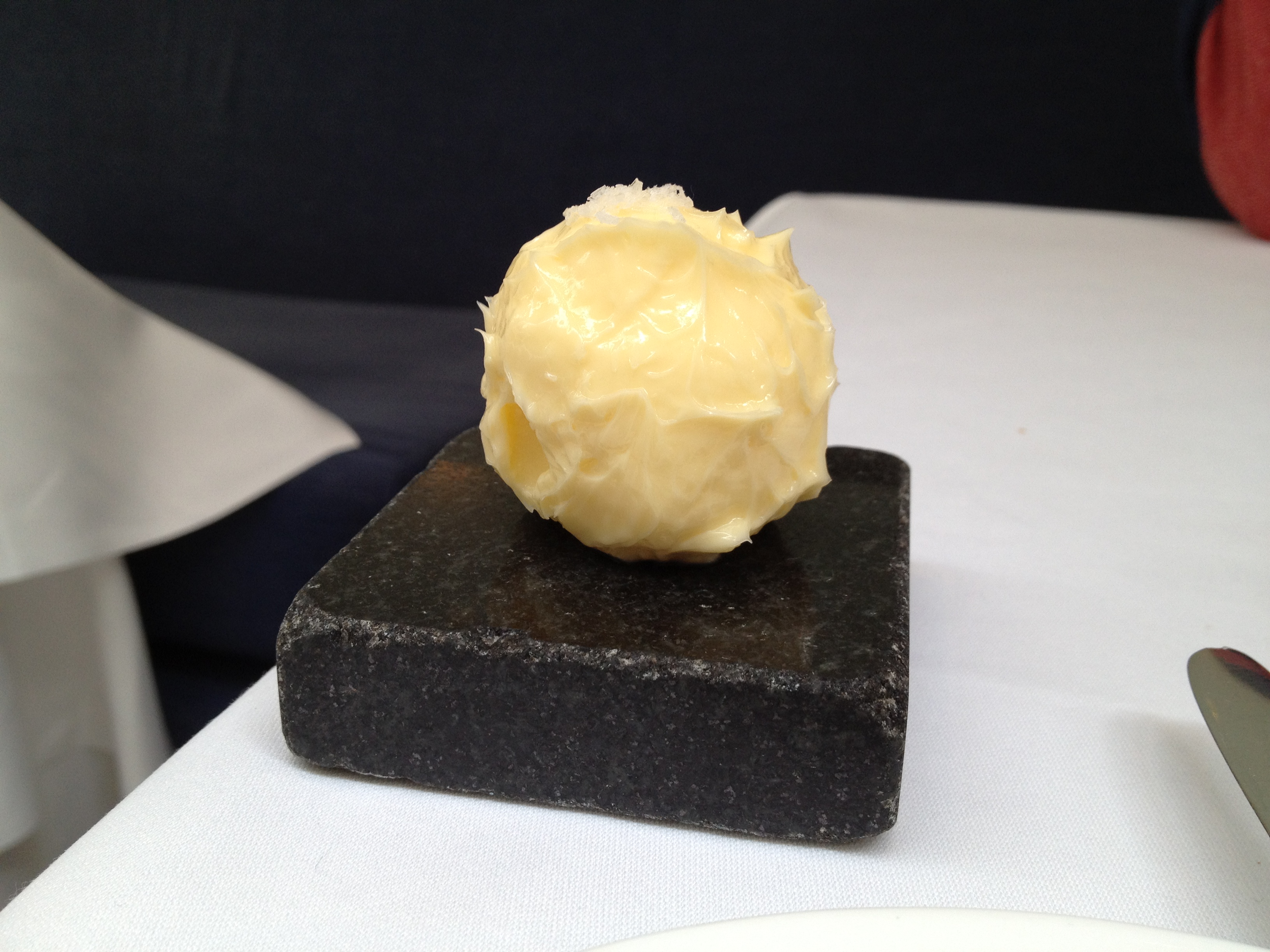
Le beurre

Stop one was Orrery, 55 Marylebone High Street, London, a classy first floor venue situated above the uber-chic Conran Store in Marylebone. I always think that a restaurant with an upstairs location possesses a certain superior exclusivity in the way in which it can go unnoticed so easily, and only those “in the know” get to sample it’s elevated delights. I did already know about the existence of this place, purely because on my frequent visits to Conran (I am interior design obsessed, not that I can afford many of the overblown prices in the place) I could never work out how from the front the shop appeared to have big first floor windows and yet when inside, there were no windows to look through. The secret to this great conundrum lay in a very slim line restaurant, set at the front of the building in a long gallery-like setting, but whose narrow floor-space barely registers owing to the excellent use of mirrors to reflect the large rounded windows which run along one side of the space. Having worked out where the restaurant was, I never in fact went along, that was until I saw it featured on the glitsy docu-soap Made in Chelsea last week. Anything they can do, I can do better, thought I, without anything remotely comparable to the stars of the show padding my wallet. And so it was, that having escaped quickly from Tate Modern on saturday in order to resist the temptations of dining in Tate’s expensive but view-spectacular restaurant, we ended up somewhere even pricer. Whoops.
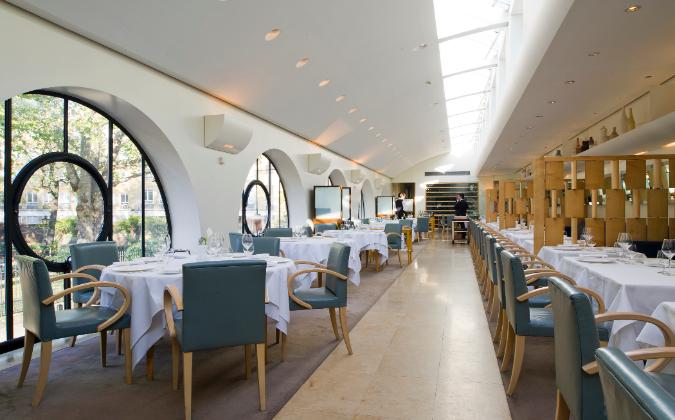
Orrery’s interior

From the moment we walked into Orrery, we were treated like royalty. The service was exquisite – attentive and brisk, but we did not feel rushed, only well looked after. The menu we went for was the Menu du Jour, which at £25 for three courses didn’t seem bad, especially when the food then came out in a spectacular show-stopping fashion. But let me not rush this. Let us first concentrate on the unctuous fig-imbued bread with creamy home-churned butter, and a delicate amuse bouche of gazpacho – perfectly accompanied by the Catalan wine I had chosen from the wine list with all the bias of my Spain-conditioned heart.

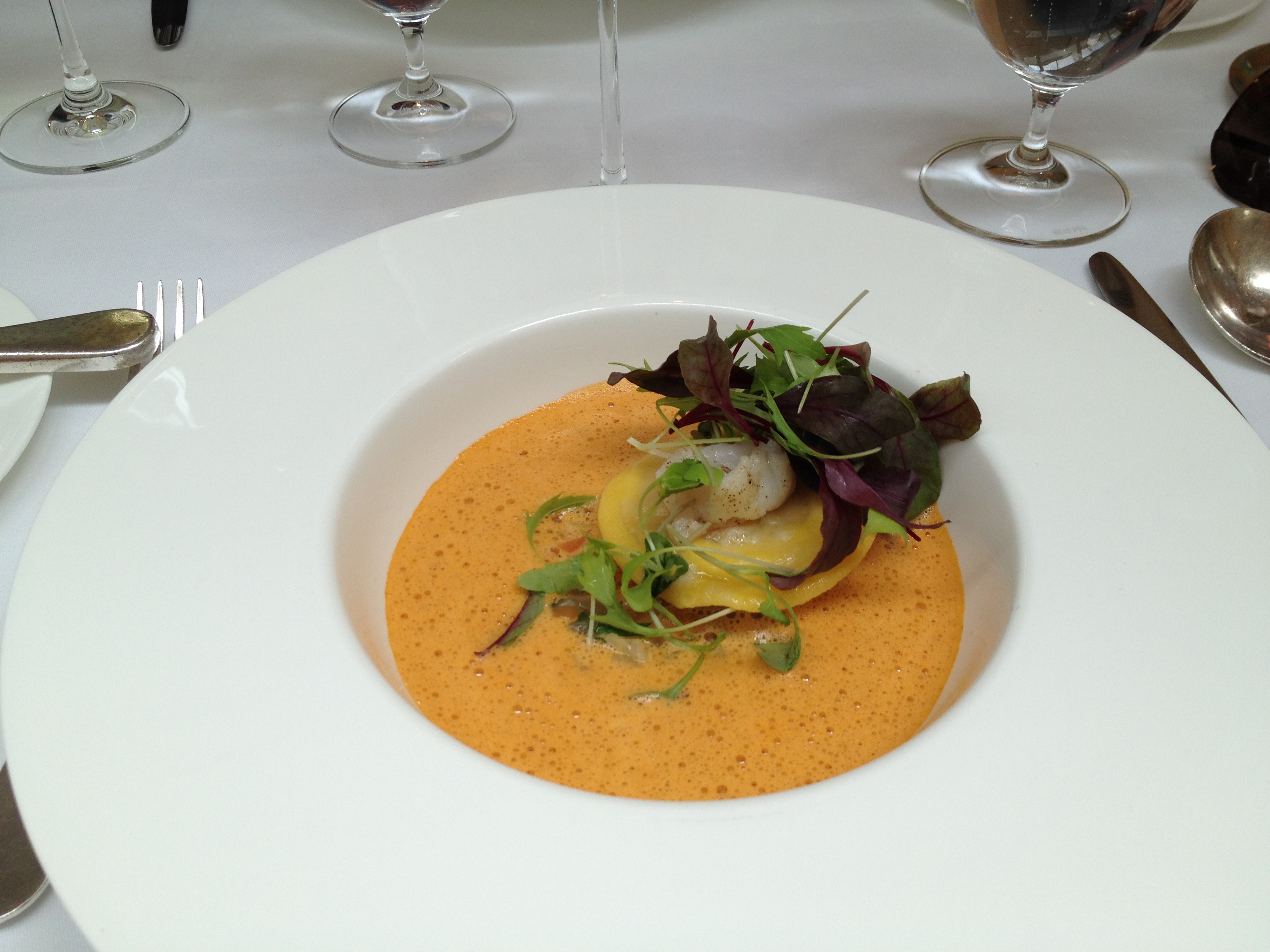
Raviolo

Up the next was the starter. We both went for the seafood raviolo (i.e. just one) surrounded by a frothy seafood bisque and served with a sweet, nutty pile of salad leaves and micro herbs. It was moist, well flavoured, delicate and perfectly seasoned, and the froth reminded of the incoming silky bubbles of a warm mediterranean seashore.
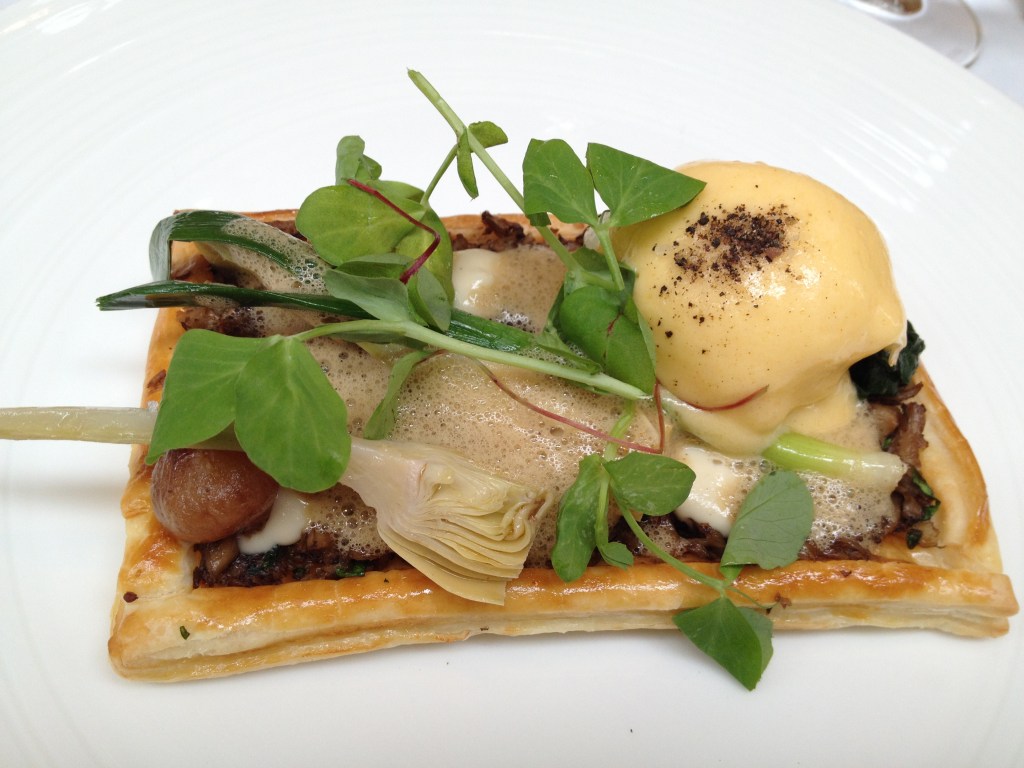
Feuilleté
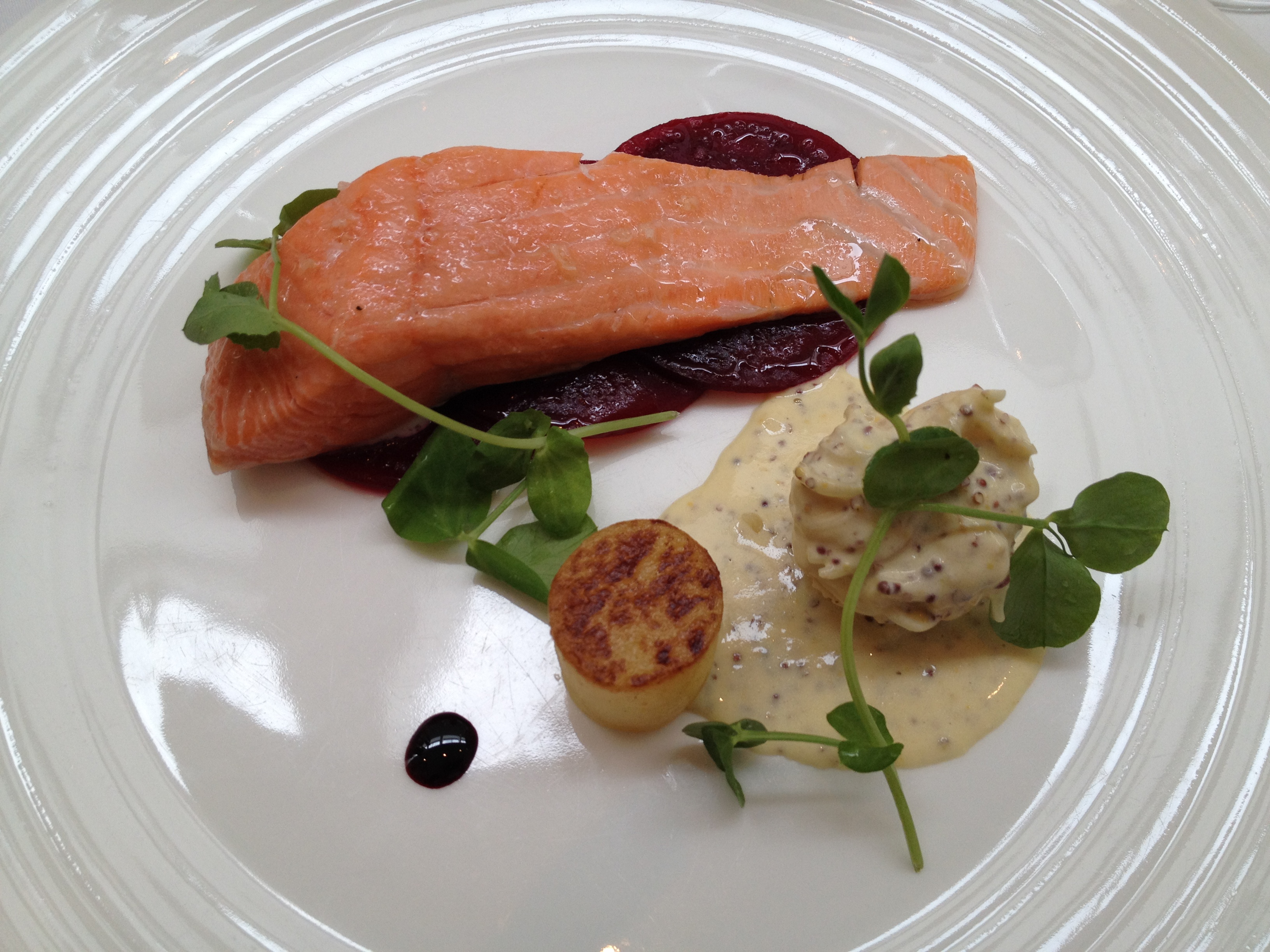
Salmon

For mains I had the Feuilleté of wild mushroom, poached egg, sauce Hollandaise – it was the vegetarian option which I rarely go for but my goodness I’m glad I did. The puff pastry was golden and caramelised, the mushrooms rich and creamy, and the poached egg broke open to reveal a runny goey egg yolk which was a rich and perfect orange spilling sweetly to provide a silky sauce for the dish. My partner had salmon which, he says, was utterly moist and completely delicious. For dessert we were both unable to resist a chocolate mousse with champagne jelly and hazelnuts. Served in frosted little bowls reminiscent of 60s retro furniture, it was cool as well as classy. Finally before dragging ourselves away, we were given complimentary chocolate truffles which broke open in our mouth to reveal a super sweet but seductively sharp passion fruit syrup. Amazing.
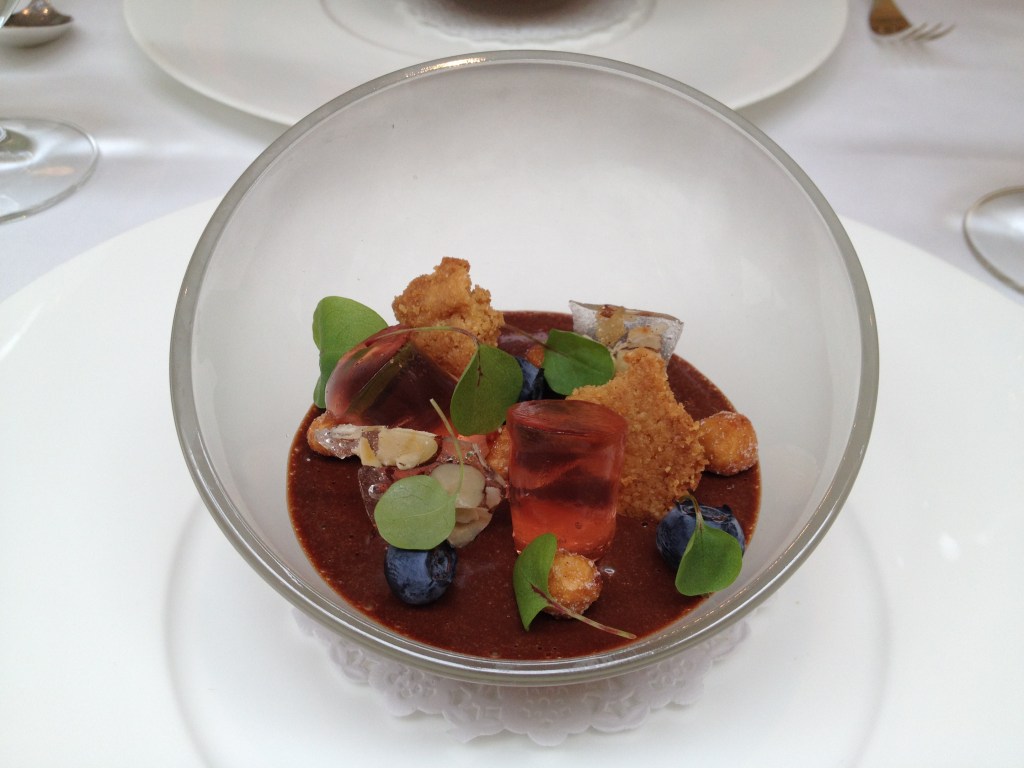
Chocolate mousse with champagne jelly

Best of all, I discovered that the astronomers globe instrument I bought in Salamanca is actually called an “Orrery” named after the Earl of Orrery. You see, you learn a new thing every day.

Delaunay interior

The next day, a long-standing and much anticipated late-luncheon engagement with my delectable chic bride-to-be companion in all things gastronomique, Celia, was on the agenda. We were off to The Delaunay, on the Aldwych, London, a restaurant which describes itself as a Café restaurant in the Grand European Tradition. Grandeur was in fact expected – the restaurant is part of the Wolseley group, known for its old-style grandeur renowned of Paris and Vienna, more than London. And as far as grandeur goes, the Delaunay did not disappoint. As I entered, the place was heaving, veritably full with those who lunch, and those who wish that we could all live in the age when every restaurant was clad in brass and marble with giant wall clocks, wood panelling and snobby waiters just like this one (don’t we all, well, perhaps without the snobs). Luckily my exquisitely turned out lunch companion was a lady in red, guiding my eye across the crowded tables so that we could swiftly commence the important business of choosing wine. Slightly intimidated by the prices, we went for house white, which must have been fine, because we were onto prosecco in no time. The food menu at this time of the day was fairly brunchy, but had sufficient choice for us to be able to indulge in a three course feast which proved highly satisfying, in the Grand European traditional way, naturally.
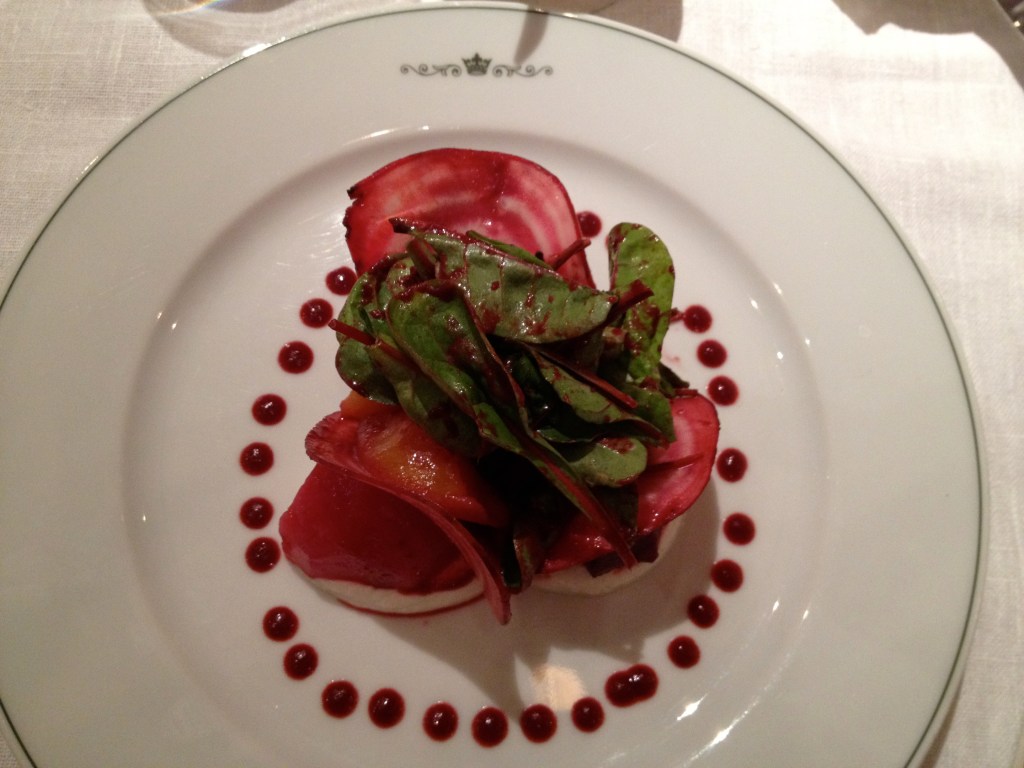
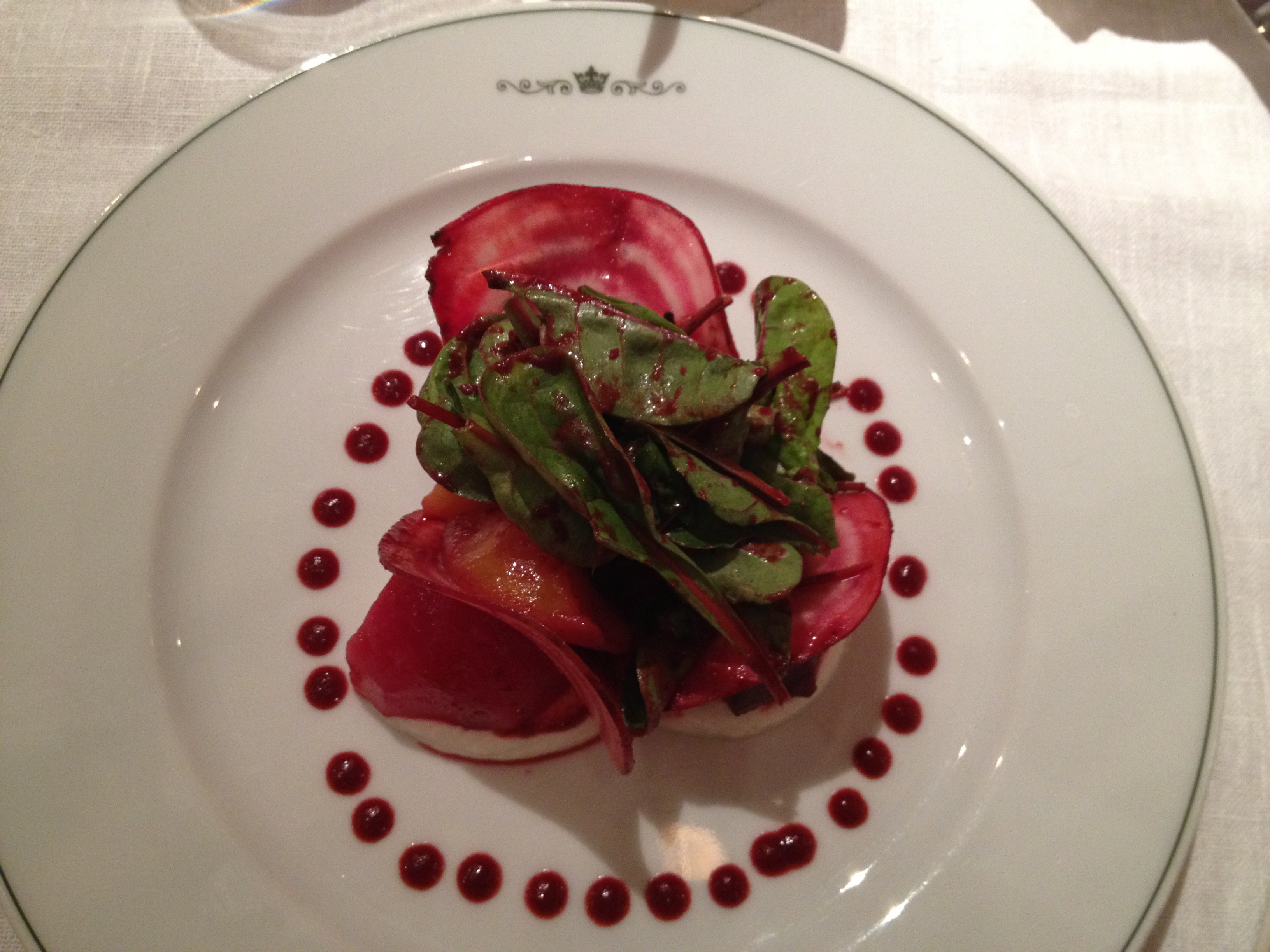
Beetroot and goat’s cheese curd salad

Something fishy

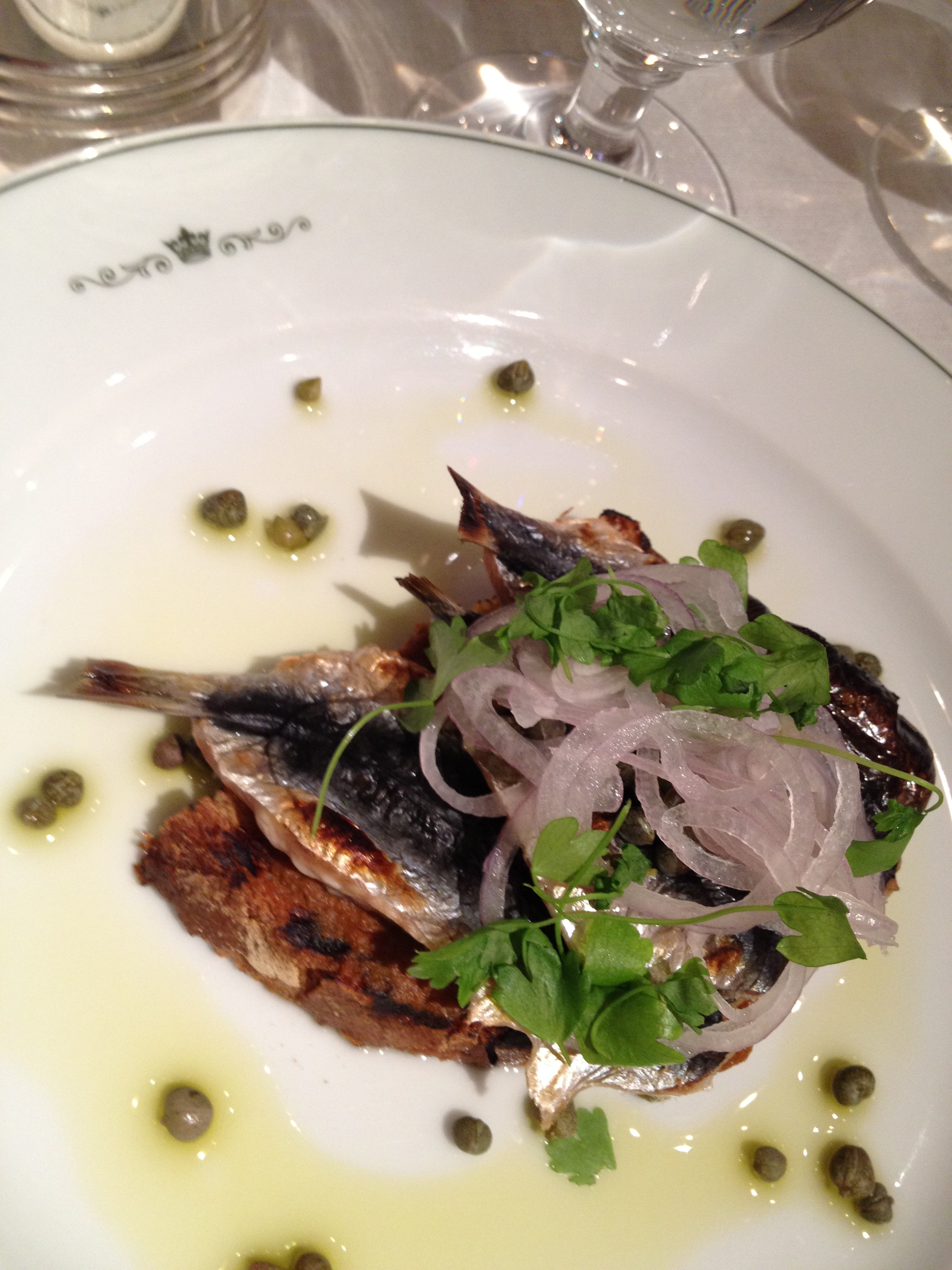
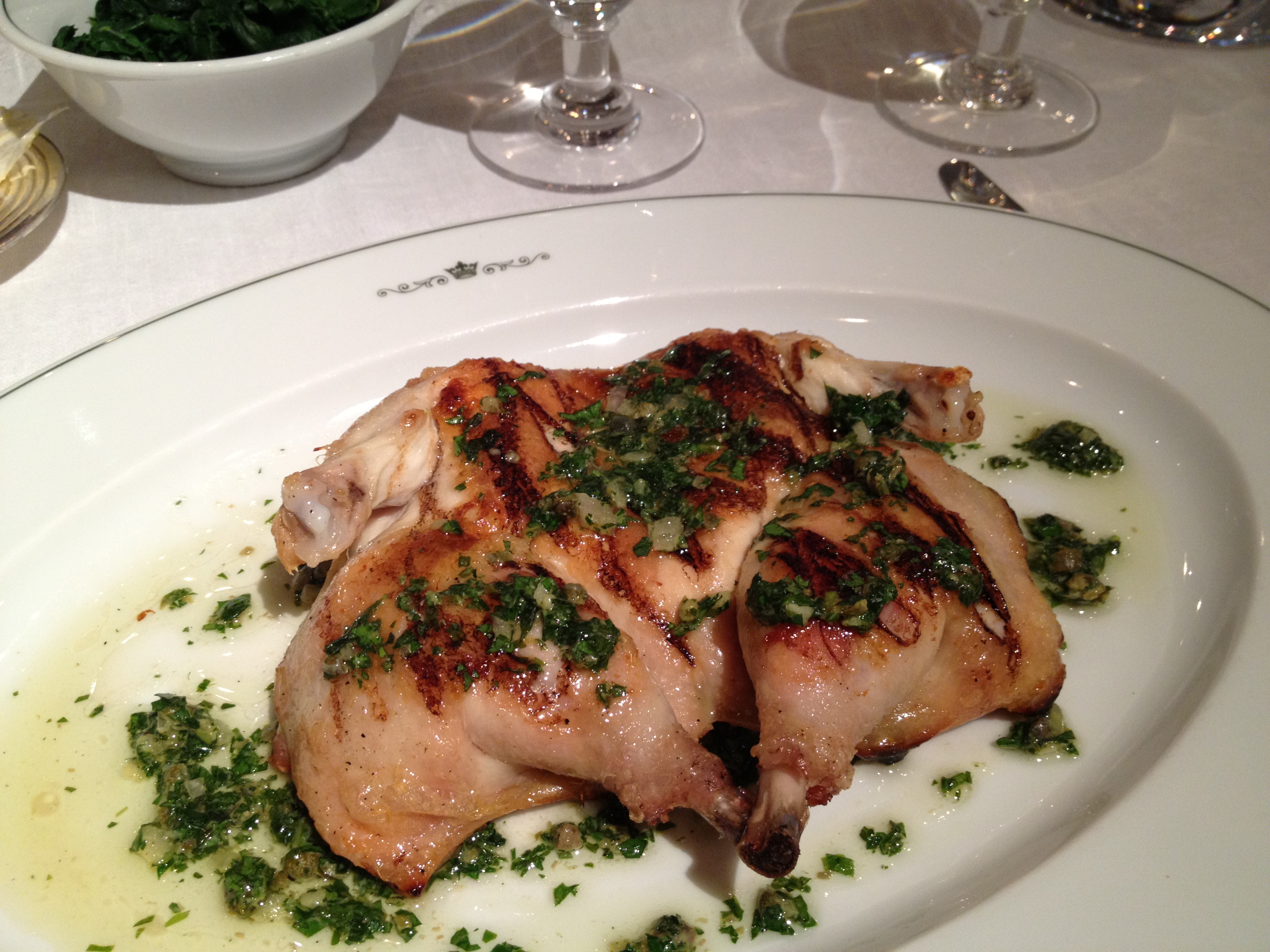
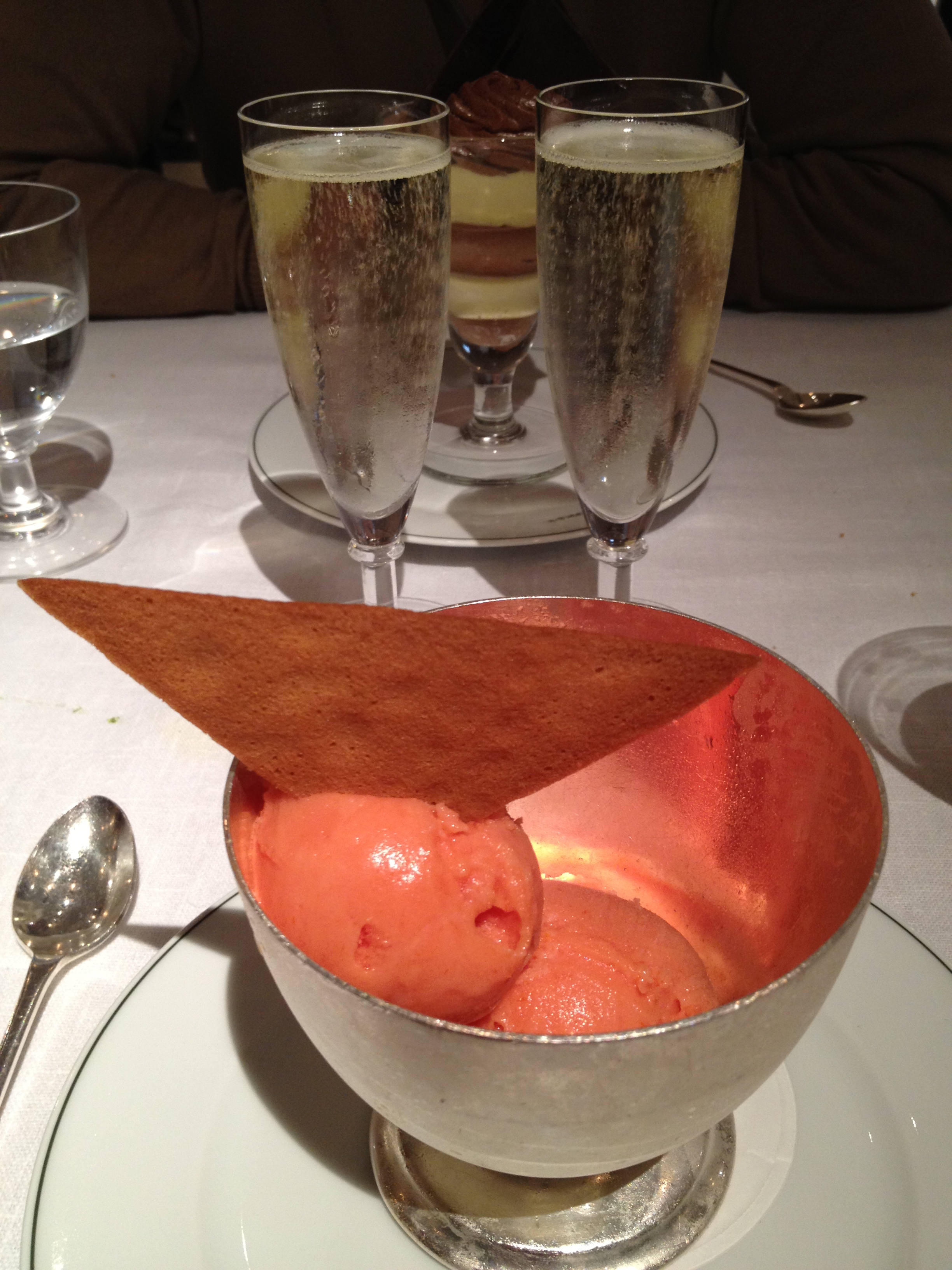
I started with a young beetroot salad with goat’s curd cheese. The flavour balance was perfect – a creamy cheese, not as heavy as it’s older, firmer counterpart, perfectly partnered by a series of different coloured and textured beetroots. Celia had something deliciously fishy. I can’t exactly remember what it was, but I’ll let her tell you on her superb food blog, Lady Aga. Next up I indulged in a golden crunched chicken schnitzel, which was incontrovertibly bad for my summer beach body attempts, but comforting on a grey May day (that rhymes so well, it must be why May turned out to be such a dire month). Celia won on this course though – her poussin with salsa verde was so moist and delicious and meaty I could have stolen the lot. For dessert I went for a white and dark chocolate mousse (I know, I know, second day running, but a boy knows what he likes) and Celia, undoubtedly feeling the pressure of my “hinted” suggestions whispered under my breath, went for a Sevillan orange sorbet which was like a walk along the sun-dappled paths of the Alcazar all over again.
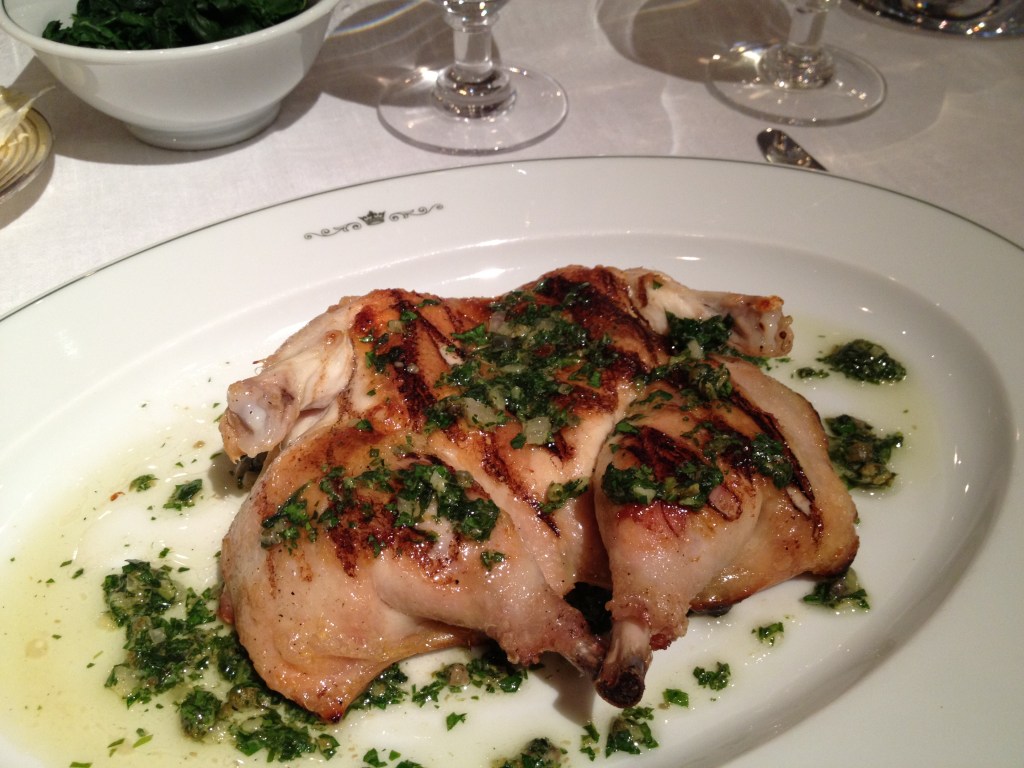
Poussin
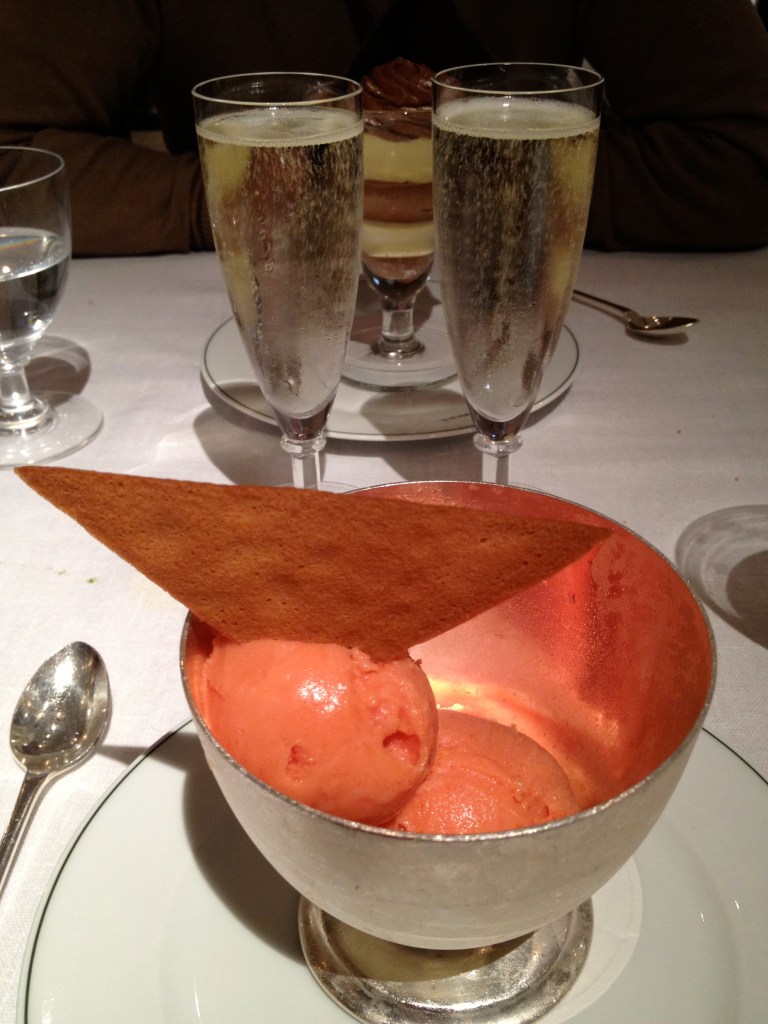
Seville orange sorbet, prosecco and a stripey chocolate mousse somewhere in the background.

The Delaunay does well in promoting the traditional grand café, particularly since it only opened recently. You could easily imagine Coco Chanel dropping in on a brief visit to London. And taking tradition seriously, I noted with bemusement that the maître d’ clicked his fingers when he wanted the attention of his waiters. Ouch. Mind you, the attention of the numerous waiters was often found wanting at our table too, which is surely one tradition Coco would not have approved of.
The Daily Sketch: Norms at the Damien Hirst Exhibition

It’s all very well a gallery playing host to these rotting cow heads and life cycles of flies with their maggots and detritus and moving little black bodies, but what if the little scientific show-in-action managed to escape from the careful confines of its Damien Hirst supervised glass tank? Even when we visited Hirst’s room full of butterflies at Tate Modern last weekend, we managed to walk out of the room with part of the exhibit attached to our backs (a butterfly landed on my partner… and was swiftly rescued by a Tate attendant before we walked off with potentially one of the most valuable butterflies in the word unknowingly upon our person). So what if those pesky flies managed to escape too? Sadly in Norm world, this question was not just posed in theory alone. All that rotting caused a flap of the tank to come open (or perhaps it was sabotage?!) and for one poor Norm who took the insects’ peculiar fancy, he found himself the number one lunch attraction for a very hungry group of flies.

Norms at Tate Modern (2012 © Nicholas de Lacy-Brown, pen on paper)

And just in case you don’t know which Damien Hirst “artwork” I am talking about, herewith, the offending article… I swear that blood must cause havoc for a gallery’s wooden floors…

Damien Hirst, A Thousand Years (1990)

So let this be a lesson to you all ye who dare to enter Tate Modern’s latest Damien Hirst retrospective. It’s all well enough to stop and stare, but those ghastly flies are but a pane of glass away from a role reversal whereby you become the attraction! Of course while you’re there, be sure to look out for  the Norm in Formaldehyde, which will surely be the highlight of your experience. Here’s a picture of it (one I made earlier).

The Physical Possibility of a Norm in Formaldehyde (after Damien Hirst) (2011 © Nicholas de Lacy-Brown, pen on paper)

© Nicholas de Lacy-Brown and The Daily Norm, 2001-2012. Unauthorized use and/or duplication of the material, whether written work or artwork, included within The Daily Norm without express and written permission from The Daily Norm’s author and/or owner is strictly prohibited. Excerpts and links may be used, provided that full and clear credit is given to Nicholas de Lacy-Brown and The Daily Norm with appropriate and specific direction to the original content.