Skip to content

Posts tagged ‘Art’

Manet Norms at the Cappuccino Grand Café – Part II: Decoding the Manet’s

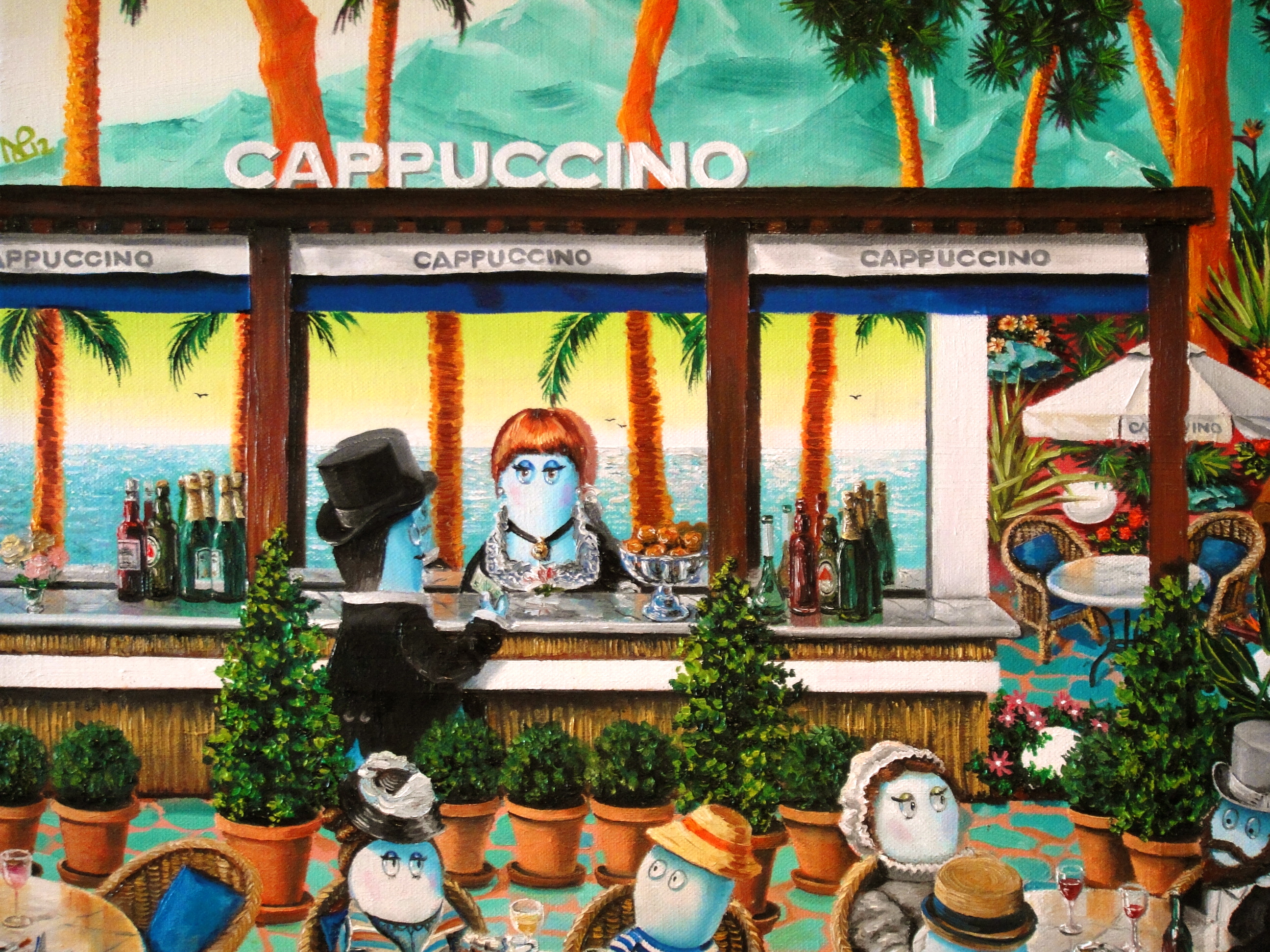
Yesterday I launched my new painting onto the public stage – Manet Norms at the Cappuccino Grand Café. Having stemmed from an idea to recreate Manet’s masterpiece, Bar at the Folies-Bergère, I felt that an insertion of the painting into my Cappuccino landscape would only work if the other Norms too were based on Manet paintings. One look at Manet’s oeuvre revealed a host of images which were ripe for reconstruction within my Normy café scene. Like many of his impressionist colleagues after him, Manet was a pioneer of painting real life, scenes capturing the French society all around him, from lonesome drinkers supping upon a plum brandy, to day trippers out on the coast and a child fascinated by the plumes and puffs of the steam railway. All this Manet captured to perfection, and feasting hungrily upon his works, I transformed a great many of them into Norm customers at my café when presenting the thriving, bustling atmosphere for which Cappuccino Grand Café is famous.

So without further ado, here are all of Manet’s original paintings followed by my own interpretation as featured in my new Cappuccino café scene. Despite being some 150 years apart, these characters slip effortlessly behind the elegant marble tables and botanical celebration of Cappuccino’s terrace in a café which exudes sophistication, and retains the feeling of glamour and recreational hedonism which was intrinsic to venues such as the Folies-Bergère back in Manet’s day. Parfait!

Bar at the Folies-Bergère

Edouard Manet – A Bar at the Folies Bergère (1882)

My reimagination of the Bar at the Folies Berger…

Those bottles…

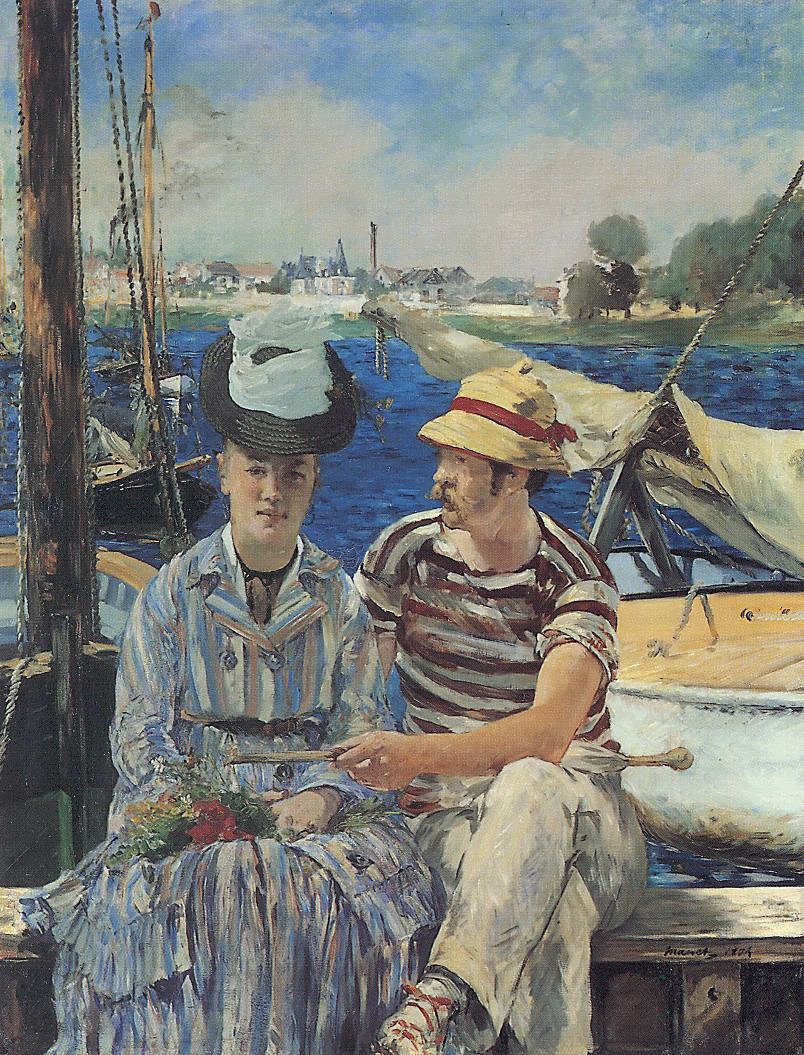
Argenteuil

Edouard Manet – Argenteuil (1874)

My Norms, loosely based on the figures in “Argenteuil”

The Luncheon

Edouard Manet – The Luncheon (1868-9)

The Luncheon-based trio of Norms

Le Chemin de Fer (The Railroad)

Edouard Manet – Le Chemin de Fer (The Railroad) (1873)

Norms, complete with the little sleeping puppy

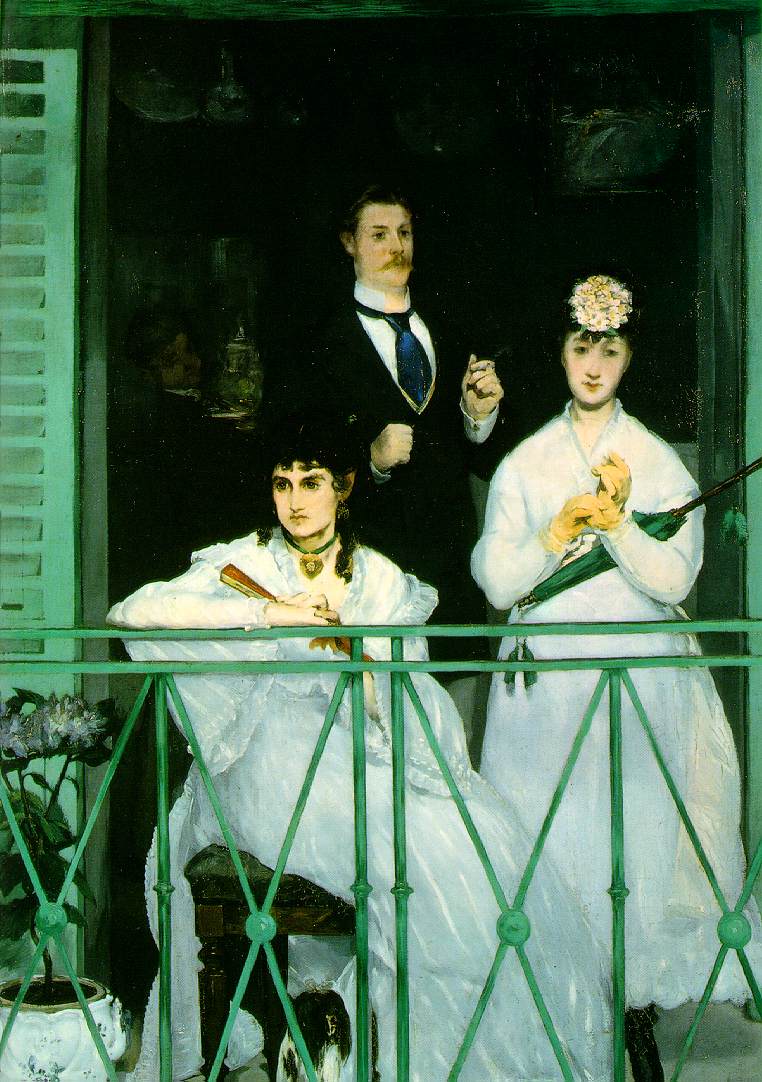
The Balcony

Edouard Manet – The Balcony (1868-9)

Not on a balcony, but the same trio as Norms

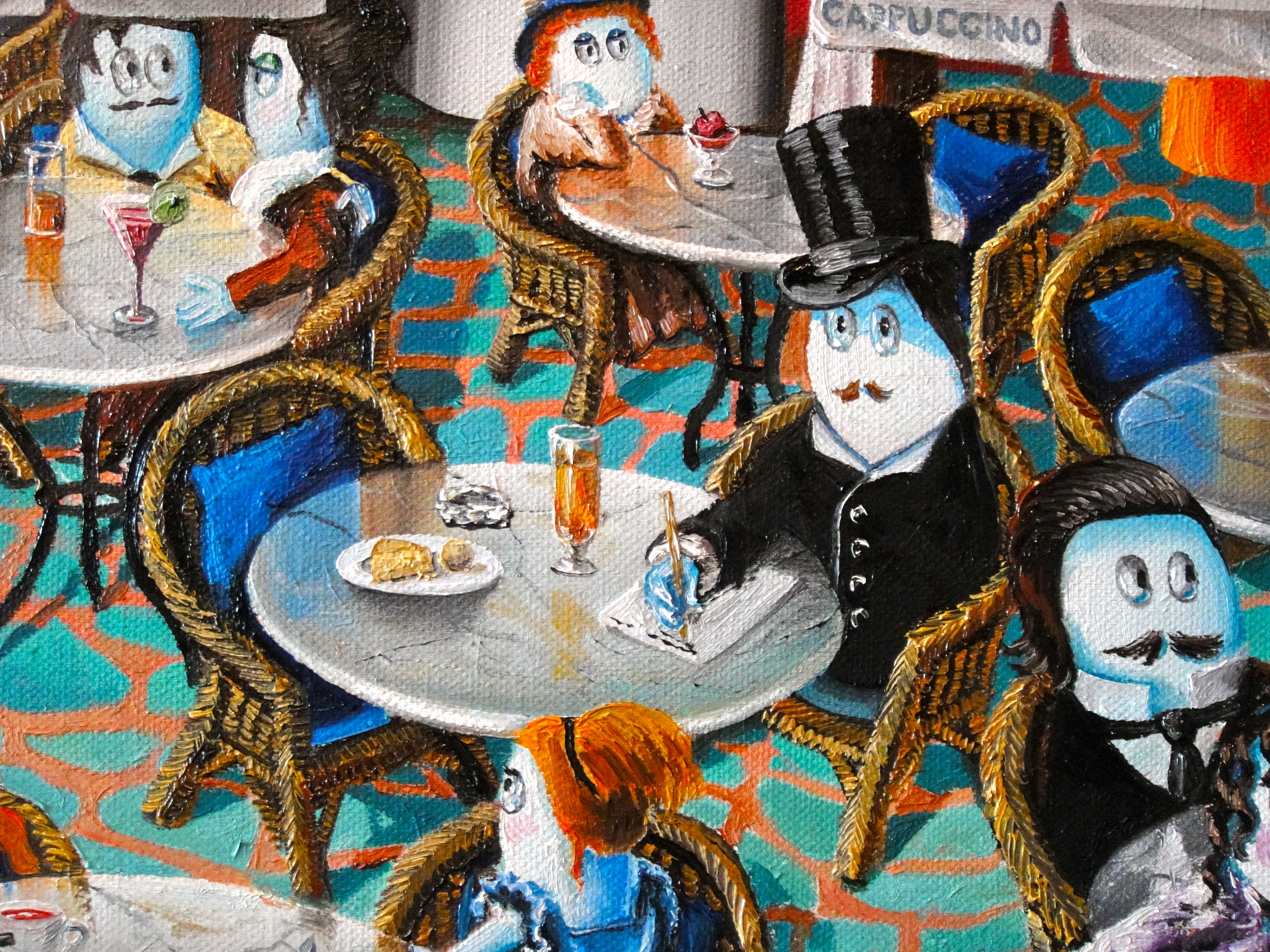
Man writing in a café / “Chez Tortoni”

Edouard Manet – Man Writing in a Café / ‘Chez Tortoni’ (1878)

Writing just the same “Chez Cappuccino”

Chez Le Pere Lathuille 

Edouard Manet – Chez Le Pere Lathuile (1879)

Love is in the air, at least for one of these Norms…

La Prune (The Plum Brandy)

Edouard Manet – La Prune (The Plum Brandy) (1876-8)

I hope the Norm writing will join this lone drinker for a date

© Nicholas de Lacy-Brown and The Daily Norm, 2005-2012. Unauthorized use and/or duplication of the material, whether written work or artwork, included within The Daily Norm without express and written permission from The Daily Norm’s author and/or owner is strictly prohibited. Excerpts and links may be used, provided that full and clear credit is given to Nicholas de Lacy-Brown and The Daily Norm with appropriate and specific direction to the original content.

Manet Norms at Cappuccino Grand Café – Part I

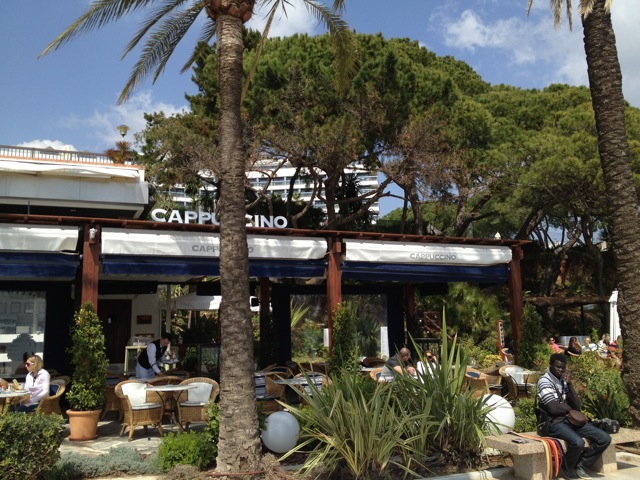
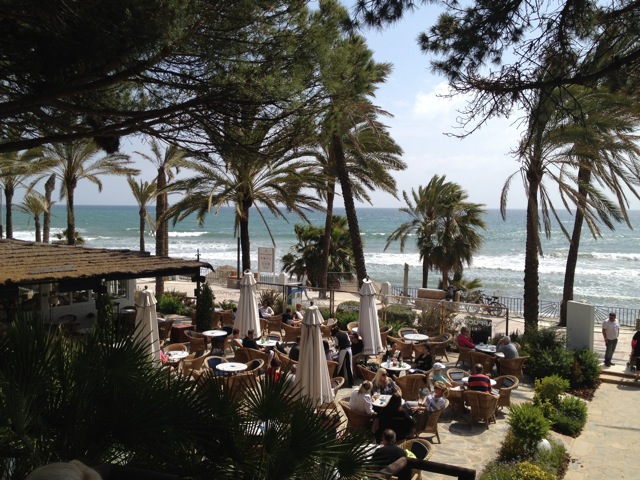
It came to me one sunny afternoon, when I was painting my last Norm work, Le Dejeuner sur l’herbe. My mind should have been on the painting, but as is often the case when painting the minutiae of a large detailed canvas, my mind was elsewhere, in Spain’s jet-set Marbella in fact, on a hazy summer’s day, sitting in the green and bounteous garden of the Cappuccino Grand Café, with the sea calmly lapping the sandy shore, and all the worries of the world wafting away in the sweet-smelling mediterranean air. Such is the effect of the Grupo Cappuccino’s free radio station, whose chilled jazz and nostalgic bossa-nova  transports one back to the Cappuccino experience so thoroughly enjoyed in the summer past, even when all around you southern England, land of the current “drought” is on high flood alert.

The real Marbella Cappuccino

So there I was thinking about Cappuccino, and I knew that following a recent trip there, I just had to recreate the café on canvas, so that, as well as listening to its soundtrack, I could also hang a large image of my favourite Spanish café in my home here in London. Trouble was, I already had a canvas reserved for another Norm parody based on a second masterpiece of impressionist favourite Eduoard Manet, A Bar at the FoliesBergère. 

Cappuccino’s gardens by the sea

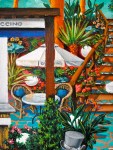
That’s when it occurred to me – I want to paint Manet, and I want to paint Cappuccino – why not combine the two? And so the idea was born. I set about creating this partner to my Norm version of Le Dejeuner sur l’herbe with Manet’s renowned Bar at the FoliesBergère installed right where Cappuccino’s own bar stands. And that was just the start. Having decided to paint one Manet masterpiece within the scene, it seemed consistent to bring several other Manet characters to life when I painted the customers of my café. So, in these gardens, you have an ultra chic, wonderfully contemporary Cappuccino Grand Café together with resident DJ Pepe Link, and a dashing Norm waiter while, conversely, the customers comprise a load of Norms in 1860s period dress. It’s a combination which I love and I am so proud of the result.

Without further ado, I give to you my latest Norm creation, Manet Norms at Cappuccino Grand Café.

Manet Norms at Cappuccino Grand Café (2012 © Nicholas de Lacy-Brown, Oil on canvas)

On tomorrow’s post I’ll guide you through all the Norms featured in Cappuccino’s lush tropical garden, and all the paintings by father of the Impressionists, Edouard Manet, which inspired them. In the meantime I leave you with a gallery of some details from this new Normic landscape. À tout à l’heure.

© Nicholas de Lacy-Brown and The Daily Norm, 2005-2012. Unauthorized use and/or duplication of the material, whether written work or artwork, included within The Daily Norm without express and written permission from The Daily Norm’s author and/or owner is strictly prohibited. Excerpts and links may be used, provided that full and clear credit is given to Nicholas de Lacy-Brown and The Daily Norm with appropriate and specific direction to the original content.

Picasso at Tate – highlight of London’s exhibition year so far

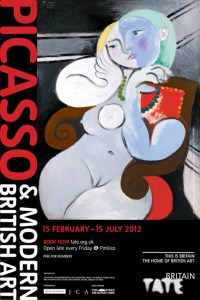
The new exhibition at Tate BritianPicasso and Modern British Art, is a triumph. In analysing Picasso’s complex relationship with the UK and his influence upon Modern British painters and sculptors, the Tate approach a well-trodden artistic oeuvre with a new, fresh perspective. The exhibition not only shows off some wonderful Picasso’s, including many lesser known works from the beginning of his career, but it also places the spotlight on some lesser known British artists such as the superb, prickly and moving work of Graham Sutherland, promoting them to the undisputed limelight enjoyed so regularly by Señor Picasso.
The story of Picasso’s relationship with the UK runs throughout the exhibition, both through the works on show and by way of useful curator commentary placed alongside the canvases. Who would have thought that the artist, so universally  accepted as a leading genius of modern art, and whose paintings comprise the top three most expensive paintings ever sold at auction, should have once been so inexorably spurned by the British art institution? When his work was first exhibited here in 1910, one critic, GK Chesterton described one of Picasso’s cubist paintings thus: “a piece of paper on which Mr Picasso has had the misfortune to upset the ink and tried to dry it with his boots”. 

Picasso, Flowers (1901) - Tate's first conservative Picasso purchase

This sort of reaction was by no means unique, and with his few British fans stemming almost universally from groups of budding artists such as the Bloomsbury group with the exception of a few steadfast collectors, it was many years before one of Picasso’s works entered the public collections in Britain. In fact when Britain did at last buy a Picasso work, they made the purchase of probably the most innocuous and dull painting Picasso ever created – Flowers (1901) – which was purchased in 1933 by Tate.

Picasso’s popularity in England did increase in the inter-war period, with works entering the private collections of collectors such as Douglas Cooper, Roland Penrose and Hugh Willoughby, as well as the stir caused as the worldwide propaganda tour of Picasso’s masterpiece, Guernica, passed through the UK in 1938 in support of the Spanish Republican cause during the Spanish Civil War. Nonetheless, it was not until post-WW2, when, numbed to the horrors of war, a newly optimistic peace-time Britain was ready to truly accept and celebrate the talents of Pablo Picasso. Shortly after the end of the war in 1945, the Victoria and Albert museum held an exhibition of Matisse and Picasso, and in 1960, Tate held the largest exhibition of Picasso’s work to date, an exhibition which proved popular enough to attract some 500,000 visitors.

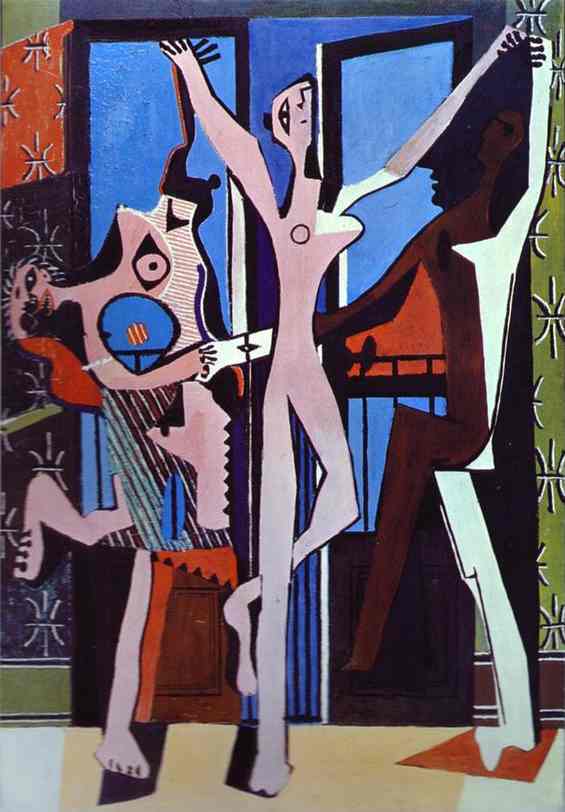
Picasso, The Three Dancers (1925)

It was only after this time that Picasso agreed to sell what he regarded to be one of his most important works to the Tate Gallery in Britian: The Three Dancers, a sale which was agreed in 1965. The work remains one of the masterpieces of Tate Modern’s collection.

Perhaps it’s not all that surprising that Britain was slow to accept Picasso. Historically, the Brits have been a bit slow in adopting anything which causes a disturbance of the traditions which they have always held to be dear. Just look at House of Lords reform – the labour government tried to reform the upper house of Parliament in 1999, but clearly found the disturbance of tradition so ultimately unsettling that they have left the reforms only half completed to this day, a house of semi-herditory peers suspended in history. Even in his time, Turner’s later, more impressionist works proved to be somewhat controversial, even though, by the time the French Impressionists rose to the fore, Turner, cited as a huge influence for the likes of Monet, was held dear to the hearts of the British public. When Picasso came along, the Brits were only just swallowing the new craze of impressionist work coming over from France. Picasso’s cubism and misplaced faces proved a little too radical for most. It is for this reason that Britain, by contrast with the likes of MOMA in New York, holds comparatively few Picasso’s in its public collections (Perhaps this is why Britain is trying to make up for it’s past vacillation by so readily accepting crappy modern art work like Tracey Emin and Martin Creed (you know – lights on, lights off) into its folds? Yes, once again, Britain is out of touch it seems).

Picasso, Weeping Woman (26 October 1937)

Wyndham Lewis, A Reading of Ovid (Tyros)

But despite all those years when Picasso was conspicuous by his absence in the UK’s public galleries, this did not do anything to prevent our budding young artists from being heavily influenced by his work. The second thread of Tate’s exhibition demonstrates how comprehensively Picasso influenced the works of British artists of the time. Duncan Grant, for example, saw many of Picasso’s works when he was in Paris mixing with the likes of Leo and Gertrude Stein. Grant quickly adopted the African-style works which predominated in Picasso’s work around the time of Les Desmoiselles d’Avignon, as well as responding to the collages pioneered by Picasso and his Cubist colleague, Georges Braque. So too was Wyndham Lewis, leader of the Vorticist movement, influenced by Picasso’s work, although he actually sought to criticise Picasso who he considered to be overly sentimental and putting the modern movement “under a cloud”. In fact Lewis’ painting A Reading of Ovid (1920-1) (one of my favourites from the exhibition, sought to criticise Picasso’s return to large curvaceous classical figures at that time (such as The Source, below).

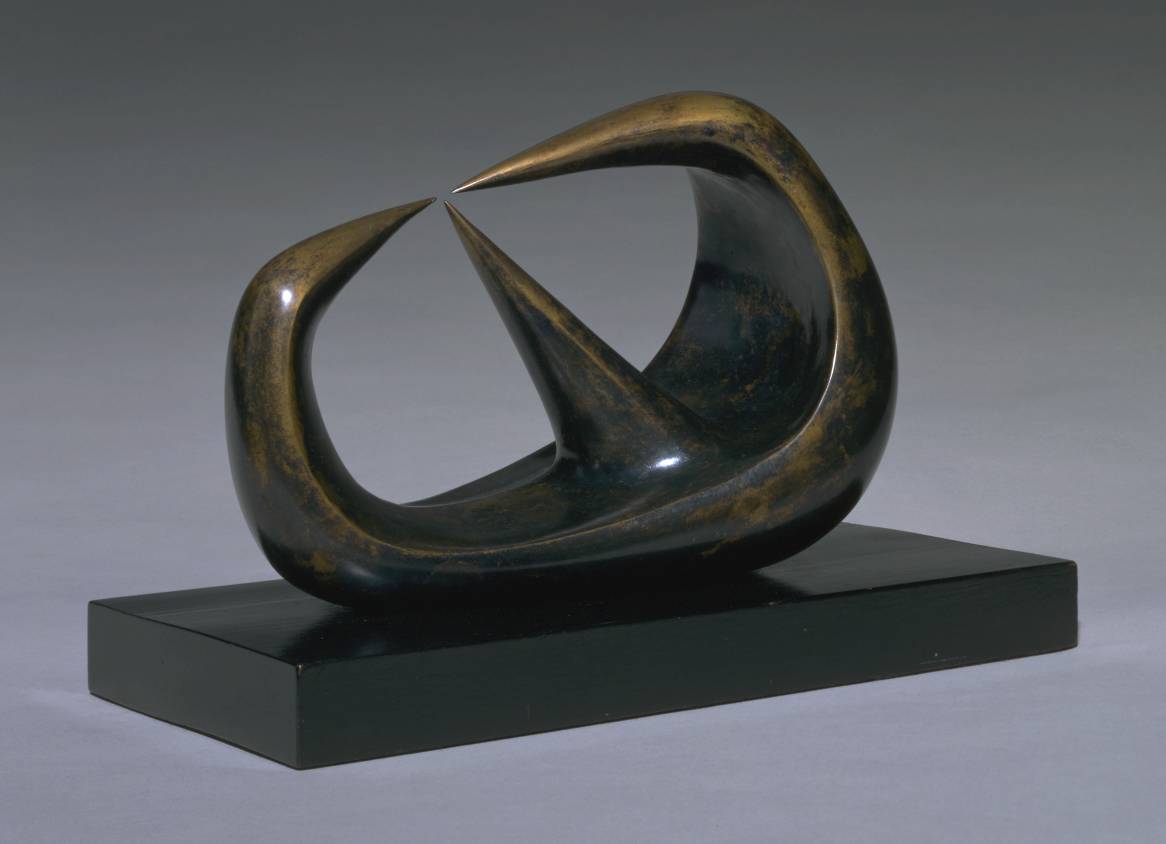
Of other artists influenced by Picasso over the years, amongst them Ben Nicholson (whose first abstract works were notably cubist in style) and Francis Bacon (who readily adopted Picasso’s screaming figures from the Guernica era), one of the most strikingly influenced is British sculptor extraordinaire, Henry Moore. The exhibition proficiently sets up direct comparisons between many of Moore’s sculptural forms and drawings and Picasso’s work. For example in his 1936 Reclining Figure, you can see a direct reference to Picasso’s classical work, The Source. Meanwhile, Moore’s incredibly unsettling and violent work, Three Points (1939) appears to reflect the screaming mouths of Picasso’s Guernica figures, painted two years earlier.
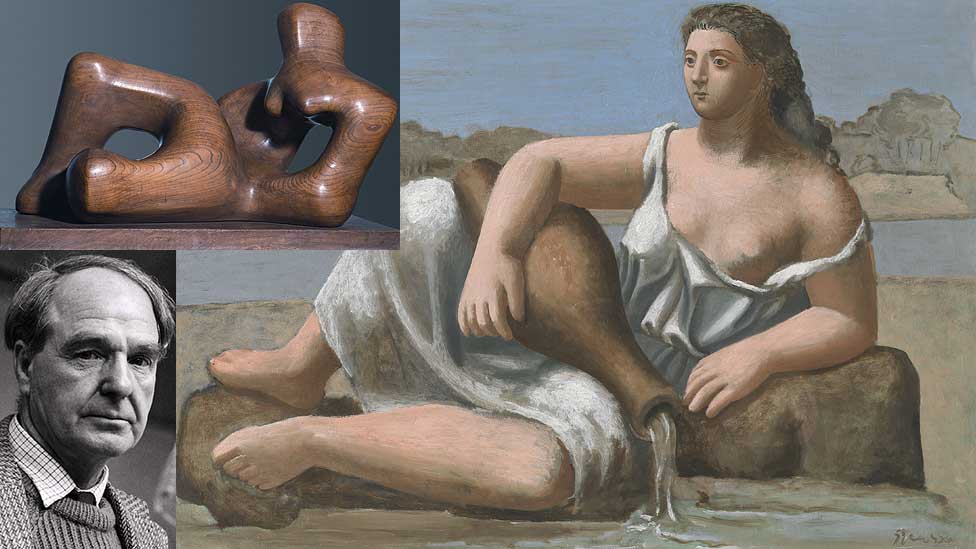
Picasso, The Source (1921) and above, Henry Moore's Reclining Figure (1936)
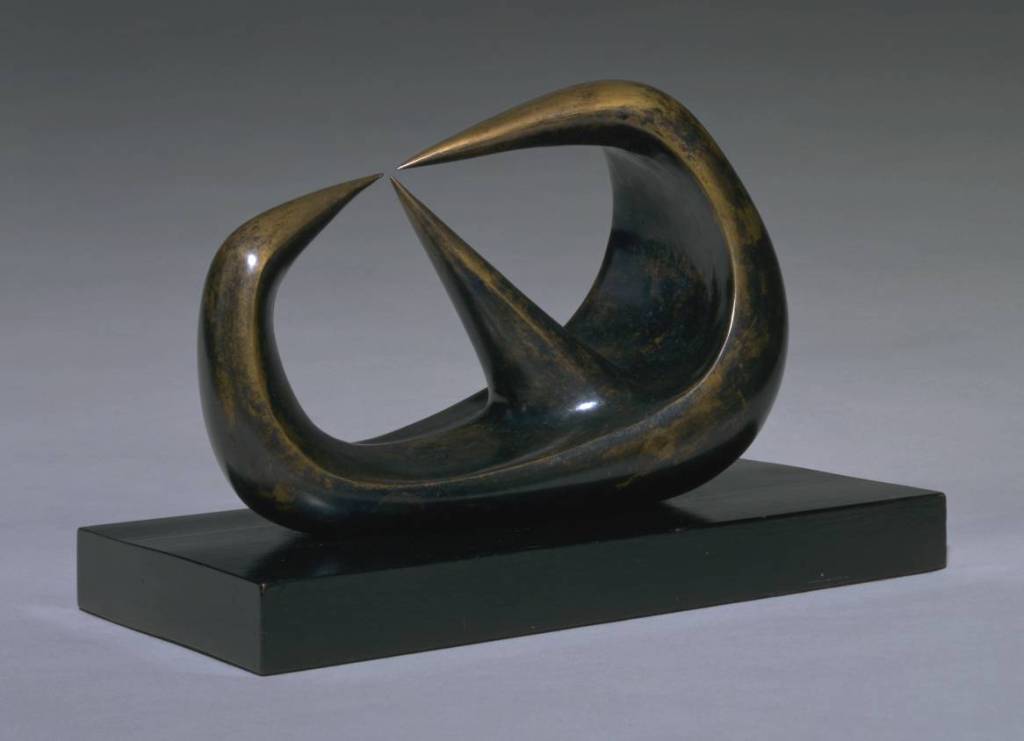
Henry Moore, Three Points (1939-40)
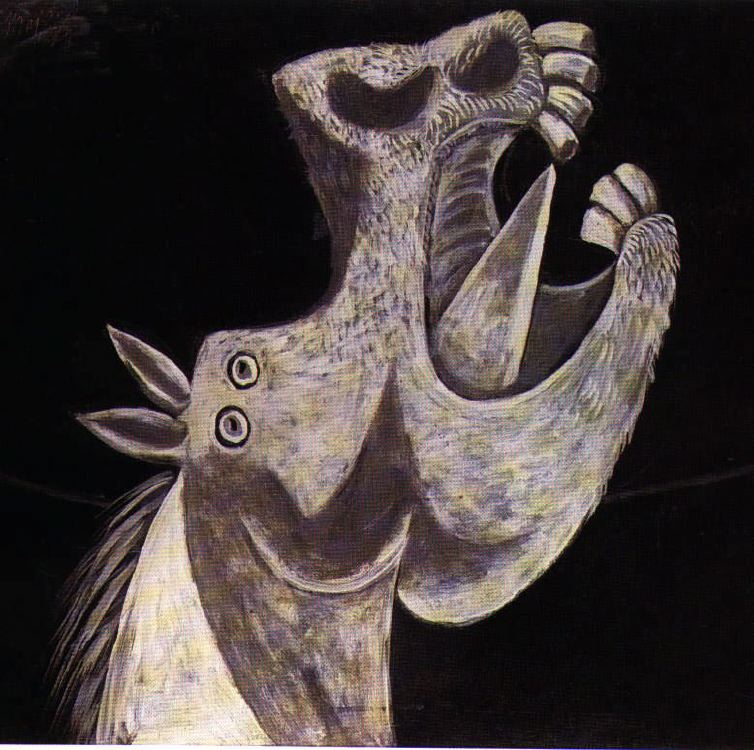
Picasso's Screaming Horse (1937)

Probably my favourite of the British artists on show was Graham Sutherland, whose works had largely escaped my radar before I saw some of his works a few months back at the Pallant House Gallery in Chichester. Sutherland, who acknowledged his debt to Picasso and in particular to Guernica as he set about painting a number of unsettling works during wartime Britian, particularly in his images of the bomb-damaged English cityscapes and his thorn-like figures, is probably best known for his Crucifixion which he was commissioned to paint for the church of St Matthew, Northampton. One such work related to the commission was included here – a blue-backed crucifixion which I just adored.
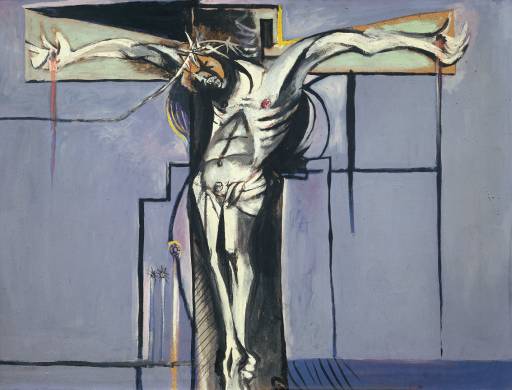
Graham Sutherland, Crucifixion (1946)

Some critics who have been to this exhibition had derided the British artists included in the show, pointing out that next to Picasso, their works fall by the wayside. I disagree. Of course it is clear that many artists owe a great debt to the superbly imaginative, constantly changing oeuvre of Picasso (me included), but this is what artists have always done throughout history – borrowing from one another – just like Picasso himself did when he worked relentlessly on reimagining Las Meninas by Velazquez as well as works by Manet and Delacroix. Nonetheless, all of the British works show an originality and vibrancy of their own, from the undisputed sculptural genius of Henry Moore, to the next level of cubism – photographic cubism, advocated by David Hockney. Of course the true star of this exhibition is Pablo Picasso, but then, that kind of is the point of the show.

Picasso and Modern British Art runs until 15 July 2012 – well worth a visit!

PS Other works I loved…

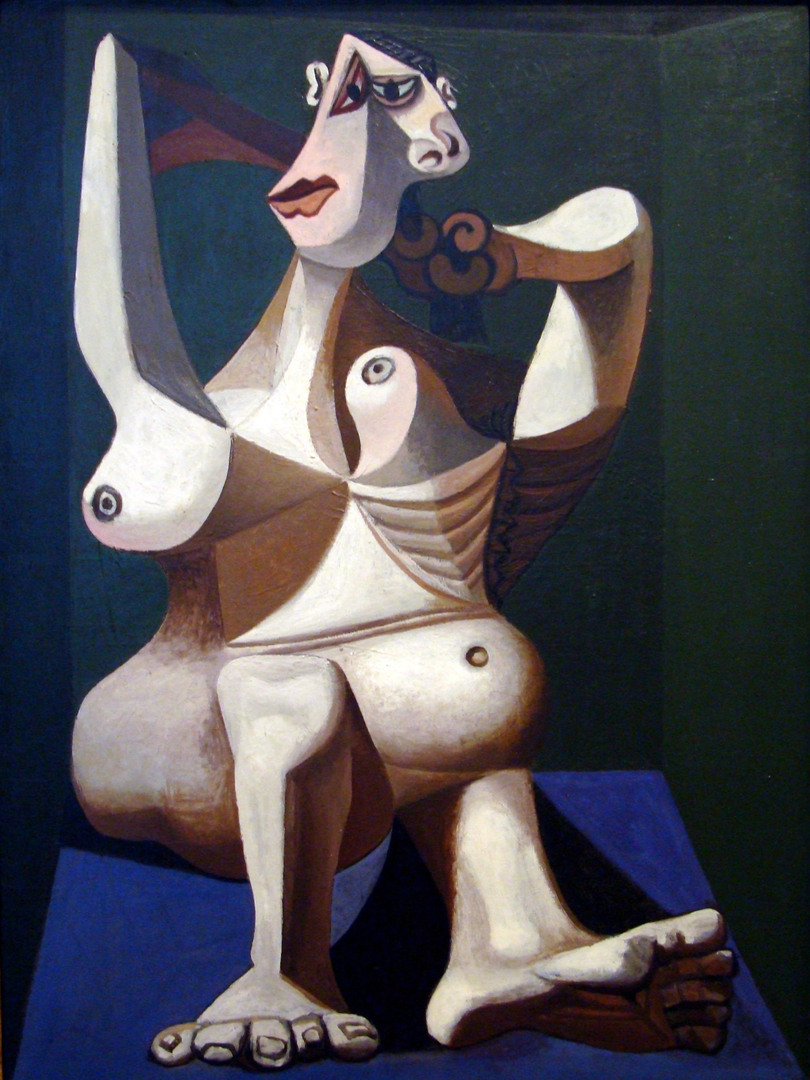
Picasso, Woman Dressing Her Hair (June 1940)

Picasso, Girl in a Chemise (c.1905)
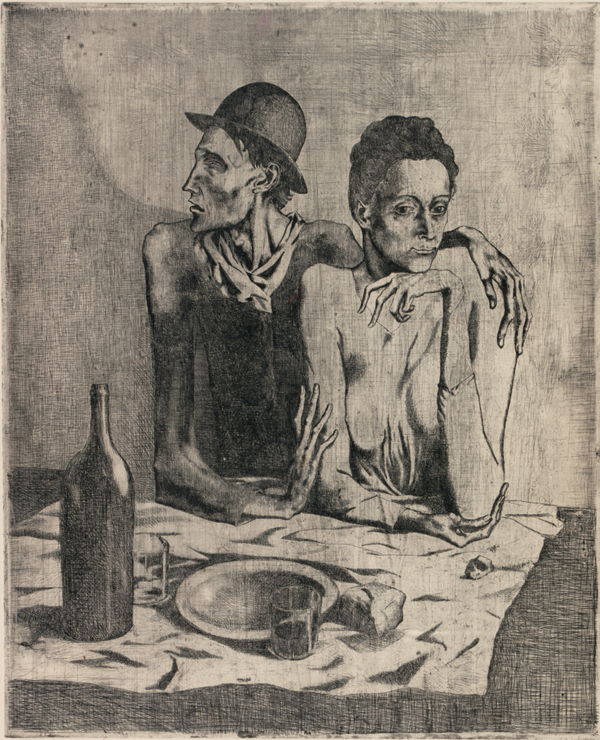
Picasso, The Frugal Meal (1904)

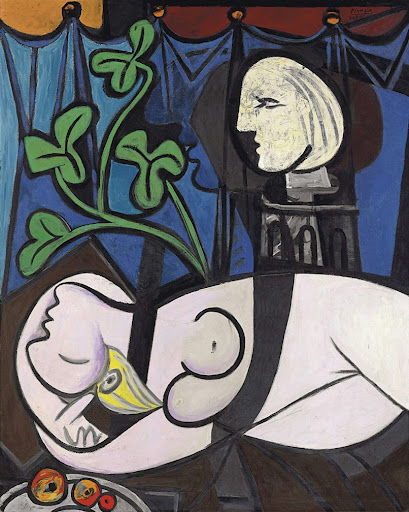
Picasso, Nude, Green Leaves and Bust (1932) - the most expensive painting ever sold at auction

Sunday Supplement: Fish in Four Quadrants

The humble goldfish has filled many a household with a splash of orange and a friendly face in the morning. However my experience with goldfish hasn’t been great. My first twosome, Gucci and Versace, died after about 10 days, both found one solemn morning floating on the surface of their little tank, neither escaping the sad fate which had befallen them. My next attempt: Giorgio and Armani fell subject to the same fate, despite all of our efforts to clean their tank, feed them as appropriate, and even manage their surroundings into a beautiful catwalk of fish tank beauty as befitted their namesake. But no. Dead again.

So I put my attempts at keeping goldfish to bed, humbly accepting defeat and concentrating instead on the guinea pigs who gave me such childhood pleasure. Nonetheless, when my sister headed to university, she found herself drafted into looking after the goldfish of one of her friends until, almost by default, she became its new adopted mother. This fish, named by the family “Fish Brown” after our surname, had nonesuch the glamourous title given to my former protégés, but what this fish lacked in name, it surely made up for in nature. This was no ordinary goldfish, with swaying silky fins which wafted elegantly behind him whenever he moved. Even with a long poo hanging from his tummy, this fish looked persistently debonair. Unsurprisingly, I was inspired to paint him, but being undecided as to which pose I should concentrate on, I painted Fish Brown from four different angles, set against different backgrounds of light and shade.

My Fish in Four Quadrants was born.

Fish in Four Quadrants (2004 © Nicholas de Lacy-Brown, Acrylic on canvas)

If you like the painting and fancy a slice of Fish Brown in your own home, both this original canvas, and limited edition prints of the painting are available for sale. If you are interest in acquiring one, send me a message and I’ll give you all the details. Alternatively all of my limited edition prints are for sale via my main website www.delacy-brown.com. Have a great Sunday!

© Nicholas de Lacy-Brown and The Daily Norm, 2004-2012. Unauthorized use and/or duplication of the material, whether written work or artwork, included within The Daily Norm without express and written permission from The Daily Norm’s author and/or owner is strictly prohibited. Excerpts and links may be used, provided that full and clear credit is given to Nicholas de Lacy-Brown and The Daily Norm with appropriate and specific direction to the original content.
Madrid-Salamanca Part III: A frog, an astronaut, and a very cold ice cream

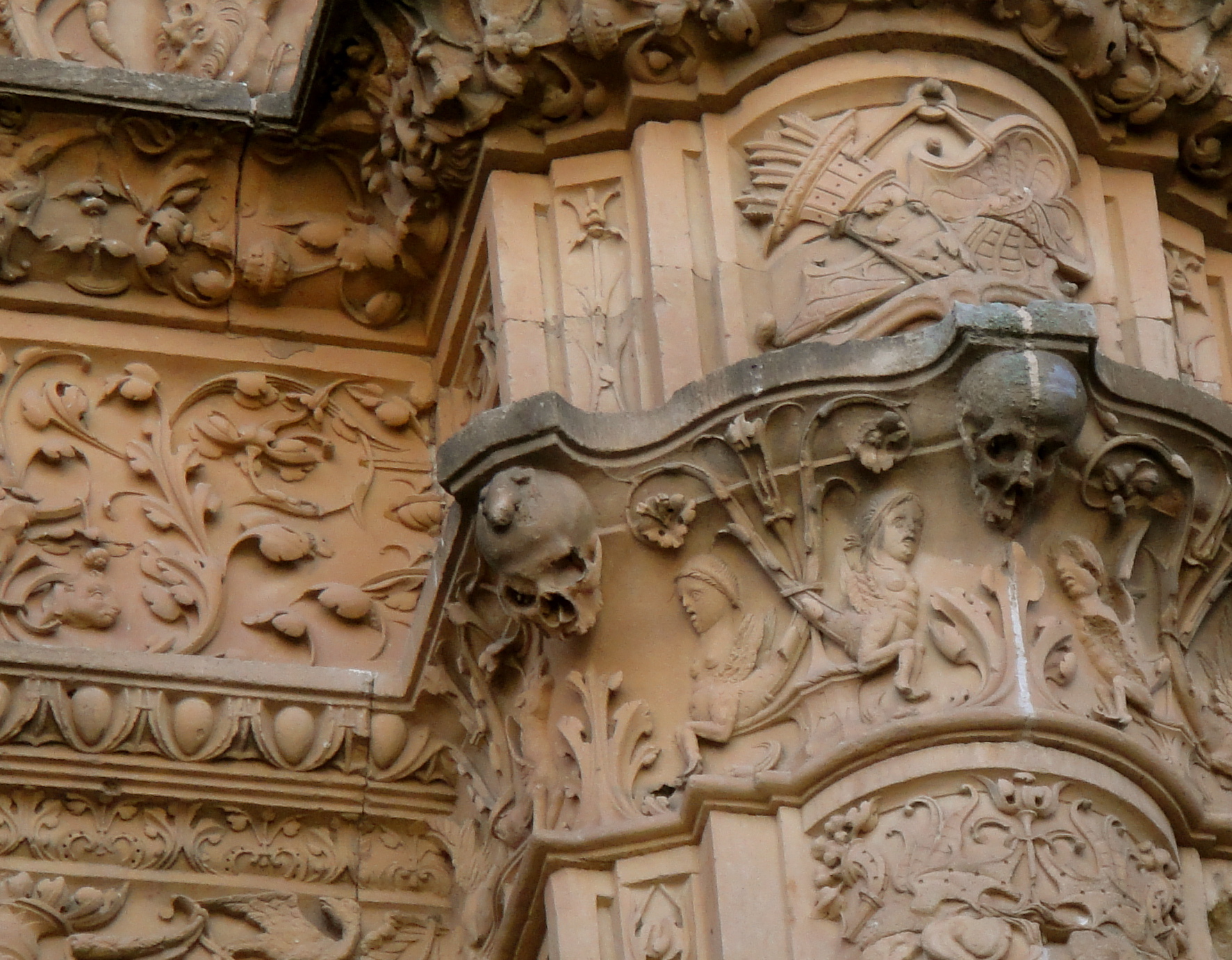
The souvenir shops of Salamanca are full to the brim with little green frogs, largely horrendously bastardised tacky creations with google eyes and a “thumbs up” gesture, frogs donning mortar boards, others wearing baseball caps. You get the picture. So what are all these frogs in aid of? It has nothing to do with the city playing host to a frog-friendly wetland habitat (the river is more likely to play host to the many fag ends and other detritus left over from the revels of Salamanca’s students who regularly gather on its banks in weed-smoking masses). Rather, the humble frog has become the symbol of the city owing to the very inconspicuous inclusion of a tiny carved frog in the stunning plateresque facade of the University. So inconspicuous in fact is the frog that it has long since become the subject of a traditional hunt for any student or visitor to the university: He who finds the frog will, tradition dictates, be lucky. Predictably the tradition has been repeated in every tourist patter, and large groups of tourists are frequently to be found staring up at the sensationally complex facade with strained faces.

The frog is in here somewhere - can you find it?

The astronaut on the Catedral Nueva

I found the frog straight away. The problem is, I had already visited the university shop, where its location was at least partially given away by the multitude of frog postcards sold therein. Not to mention the fact that all the Japanese tourists were pointing in one direction, which kind of gave the game away. I’m nonetheless hopeful that my quick witted discovery, based on deductions stemmed from postcard clues and the careful observation of tourist behaviour, will lead to luck of some sort. Or perhaps it just emphasises a point I have often made: you make your own luck in life. Well, you may as well try it out – I’ve included a photo above of the general area of the frog (thus giving you a head start) – see if you can find it! You never know what luck it may give you.
Ice cream cone on the facade of the Catedral Nueva

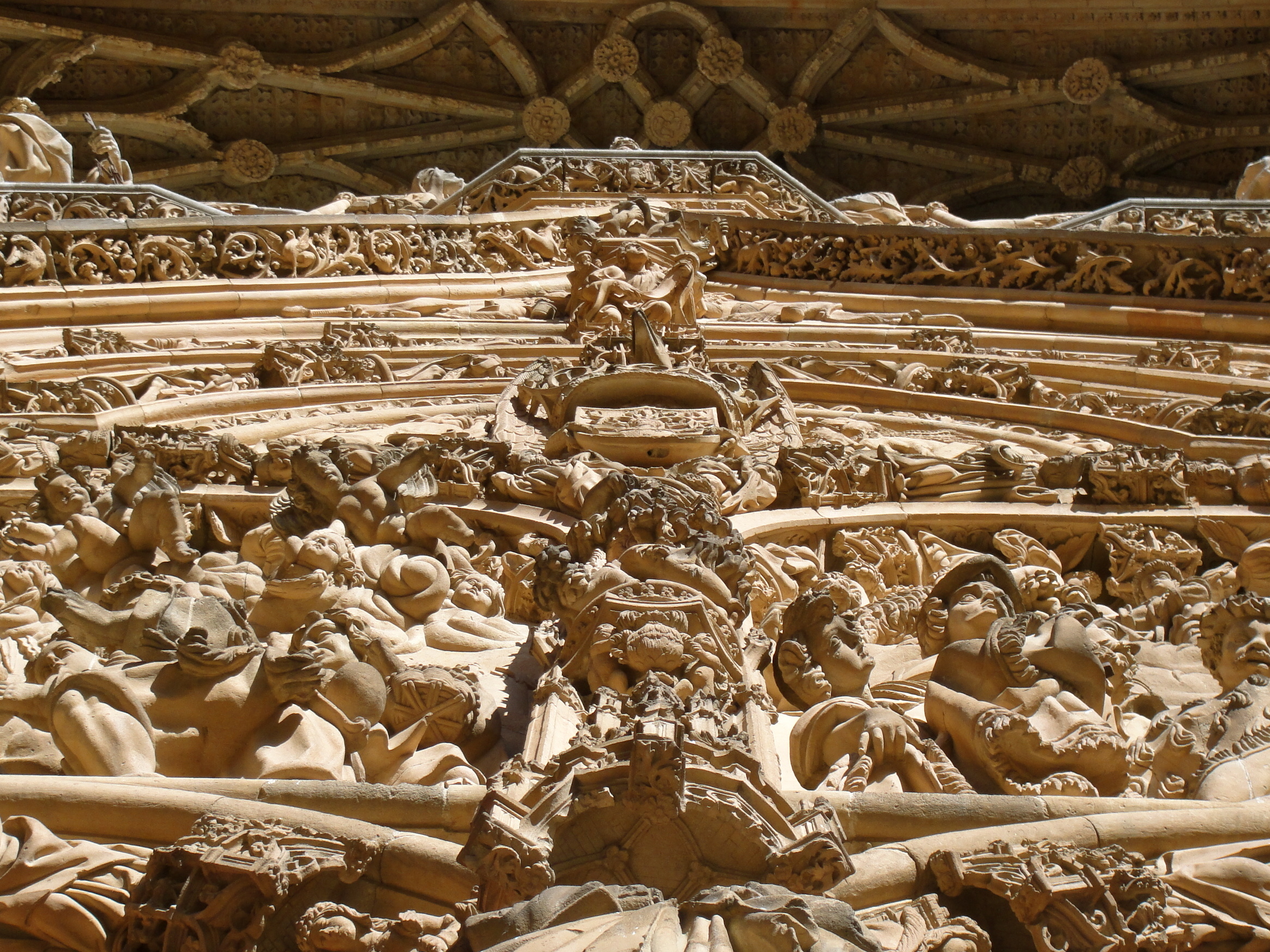
Sensing the potential profitability out of all this froggy fuss, the neighbouring cathedral has not allowed itself to be outdone. Within its equally complex facade, some cheeky renovators recently added an astronaut floating in amongst the pre-existing baroque foliage, as well as a mythical wolf like creature grasping an ice cream cone. I adore both additions, and love the humour which has been so readily embraced by the Cathedral authorities. Can you imagine a similar attempt by restorers of an ancient building in England? English Heritage would be all over them with threats and protestations quicker than an ice cream could melt. The only trouble is, you can spot the renovated pieces of sandstone quickly enough, and thus finding this cheeky twosome amidst the older, more eroded stonework can be done with a degree of ease. This does not detract from their charm however, and unlike the frog, they’re big enough, and sufficiently unweathered enough, to actually appreciate!

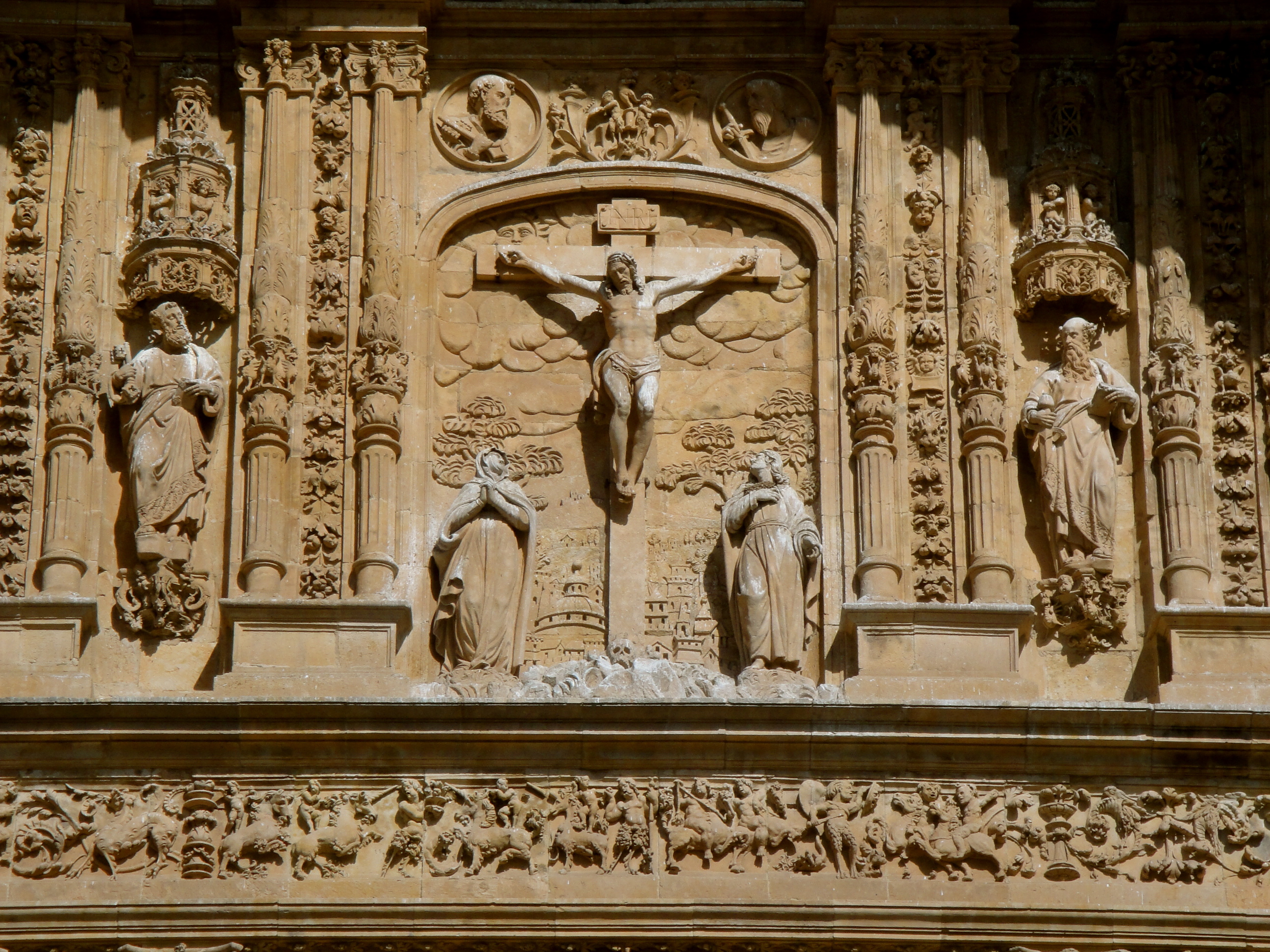
Whatever their contents, there is no escaping the stunningly elaborate and incredibly detailed building facades which literally choke the streets of Salamanca with their excessive virtuosity. These “plateresque” facades, so called because they are overtly elaborate, thus resembling silver work or “plata”, are synonymous with 15th and 16th century baroque architecture in Spain, but are all the more stunningly executed in Salamanca in the local Villamayor sandstone, the like of which enabled the stonemason to carve with even more precision, but which also gives a glimmering golden glow to the finished product.

Looking up at the facade of the Catedral Nueva

Facade of the Convento de San Esteban

Cloisters in the Convento de San Esteban

Asides from the breathtaking examples of stonemasonry covering the cathedral and the university facade, another standout example is to be found on the facade of the Convento de San Esteban, our next destination. The facade is nothing short of extraordinary, rising like an altar over the southeastern corner of the city, depicting the stoning of San Esteban (St Stephen) as its central motif. The detail of the work is mind blowing – I just hope that it survives the sustained attack of natural erosion upon its delicate forms.

Past this beautiful facade and into the convent, we found an equally stunning Gothic-Renaissance cloister, a space of such tranquility that, with the sun streaming through the long gothic windows and only the sound of quiet birdsong emanating from the carefully tendered gardens, one finds the ability to think and reflect more clearly than ever before. This cloister was like a place of epiphany. I fell almost trancelike into uninhibited introspection as I walked around the cloister and around the magnificent adjoining church, feeling my mind, body and soul slowing to a different pace of life, all the buzz of city life left behind, and my eased spirit released into the tranquil empyrean all around me. It was pretty difficult to leave I can tell you. I felt bad that we had only paid €2 to get in. It seemed an insanely small amount of money for the benefit we had received in return, especially compared with the university, where a €12 admission fee was charged to look around a few dark old classrooms and a library which you can’t enter but are forced to view from behind heavily protective perspex.

Cloisters in the Convento de San Esteban

Back into Salamanca, yet more architectural gems lay in wait – like the Casa de las Conchas, one of the city’s most endearing buildings, named after the several hundred scallop shells which cling to its facade and are even wrought in iron onto the front door. Surely this house had to have inspired Salvador Dali when he went about designing his theatre-museum in Figueres? It is thought that the shell symbolism stems from the shell symbol of the ancient Order of Santiago, of which the house’s original owner, Dr Rodrigo Maldonado de Talavera, was an evidentially proud member. It certainly makes for a novel site in amongst the more complex facades which otherwise dominate Salamanca’s old town.

Casa de las Conchas

With the sun starting to fade and Salamanca taking on that familiar peachy hue, we took the opportunity to gaze at the architectural splendours from afar – walking over Salamanca’s ancient Roman bridge to the other side of the river. Not only were we greeted by the picture-postcard view of the city, we also found a guilty pleasure – an empty children’s playground and a pair of swings. We couldn’t resist squeezing our adult bottoms into those swings and setting off into the air, a feeling of unadulterated childlike pleasure in an adult world, memories of our youth flooding back as the wind swished past us and our stomachs lurched as the swinging motion took hold.

Frogs, astronauts, ice creams and swings – in a city where imposing and austere church buildings dominate, there is still an ascendant feeling of fun, a feeling augmented by the city’s thriving student population which breathes youth and vitality into the arteries of this historical monument to Spain’s rich architectural, educational and religious heritage.

© Nicholas de Lacy-Brown and The Daily Norm, 2005-2012. Unauthorized use and/or duplication of the material, whether written work or artwork, included within The Daily Norm without express and written permission from The Daily Norm’s author and/or owner is strictly prohibited. Excerpts and links may be used, provided that full and clear credit is given to Nicholas de Lacy-Brown and The Daily Norm with appropriate and specific direction to the original content.

The Daily Sketch – Birth of Venus

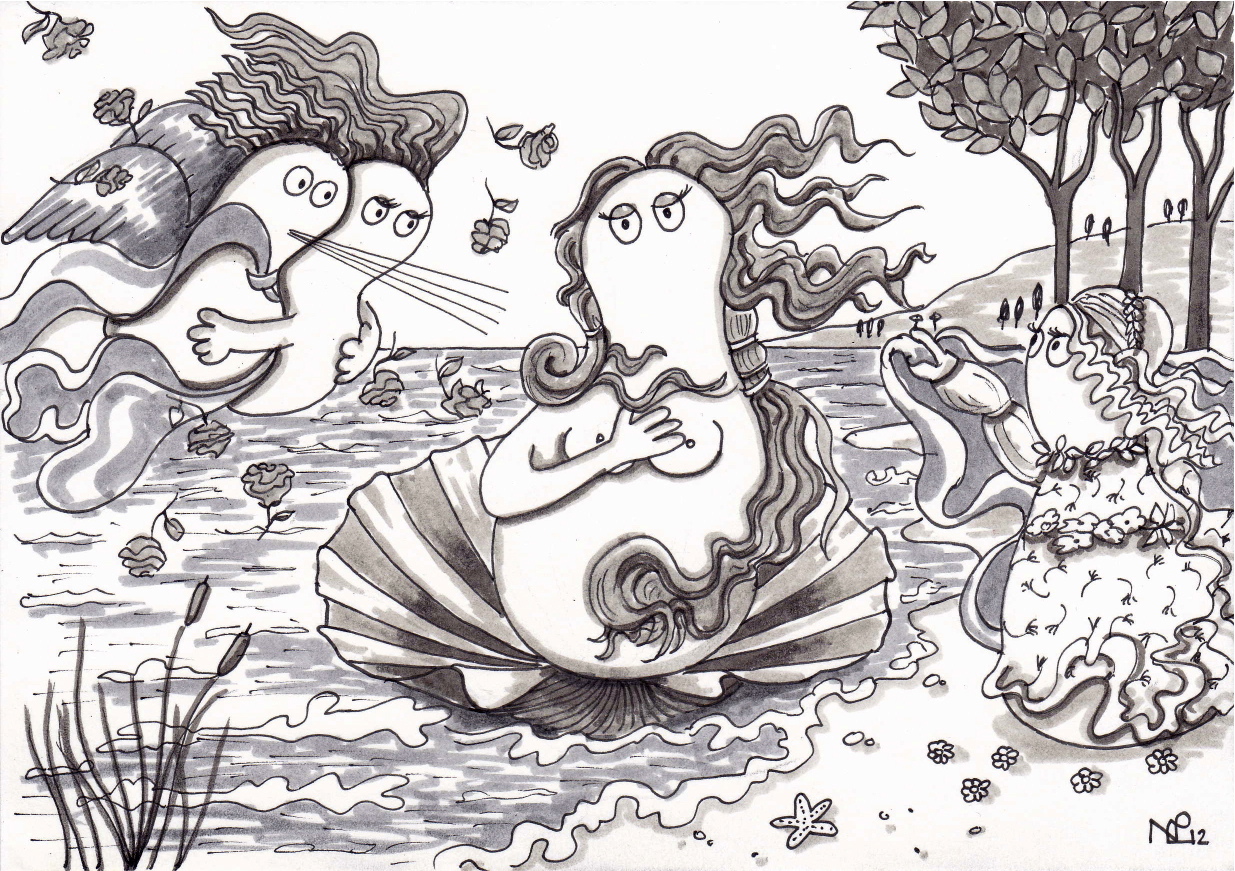
After the success of my wonderful Rachel Khoo inspired madeleines (and thank you so much Rachel for your kind compliment on twitter – the great chef herself has complimented the “perfect gold crisp crust” on my efforts, woo!!) I’ve been feeling all shell inspired. Not so inspired that I have redecked my city pad in shells and shabby-chic battered wood installations. No, my shell thoughts have been drifting further afield, to the long lofty corridors of Firenze’s ubiquitous Uffizi gallery, home to surely the most famous artistic depiction of a shell in all the world, not to mention the picture perfect Venus rising from it’s pearly-smooth contours. I am of course talking about Botticelli’s The Birth of Venus, a work full of allegory, beauty, flowing locks and scattered rose petals. What more could you want on a Spring afternoon as you sit down with a cup of tea and a madeleine. And just in case you can’t make it all the way to Florence to see the original, why not gaze upon this Norm take of Botticelli’s masterpiece, breasts, flowing locks and all.

The Birth of Norm Venus (after Botticelli) (2012 © Nicholas de Lacy-Brown, pen on paper)

© Nicholas de Lacy-Brown and The Daily Norm, 2005-2012. Unauthorized use and/or duplication of the material, whether written work or artwork, included within The Daily Norm without express and written permission from The Daily Norm’s author and/or owner is strictly prohibited. Excerpts and links may be used, provided that full and clear credit is given to Nicholas de Lacy-Brown and The Daily Norm with appropriate and specific direction to the original content.

Sunday Supplement: Road Traffic Control (The Semana Santa Code)

Happy Easter everyone! Yes it may be grey, and bleak, and ever so slightly damp here in London, but my flat is nonetheless filled with all the yellows of Spring, a chicken (cooked Spanish style with a grape juice glaze and caramalised apples) is about to go into the oven, and I am still putting up total resistance to the chocolate temptations all around.

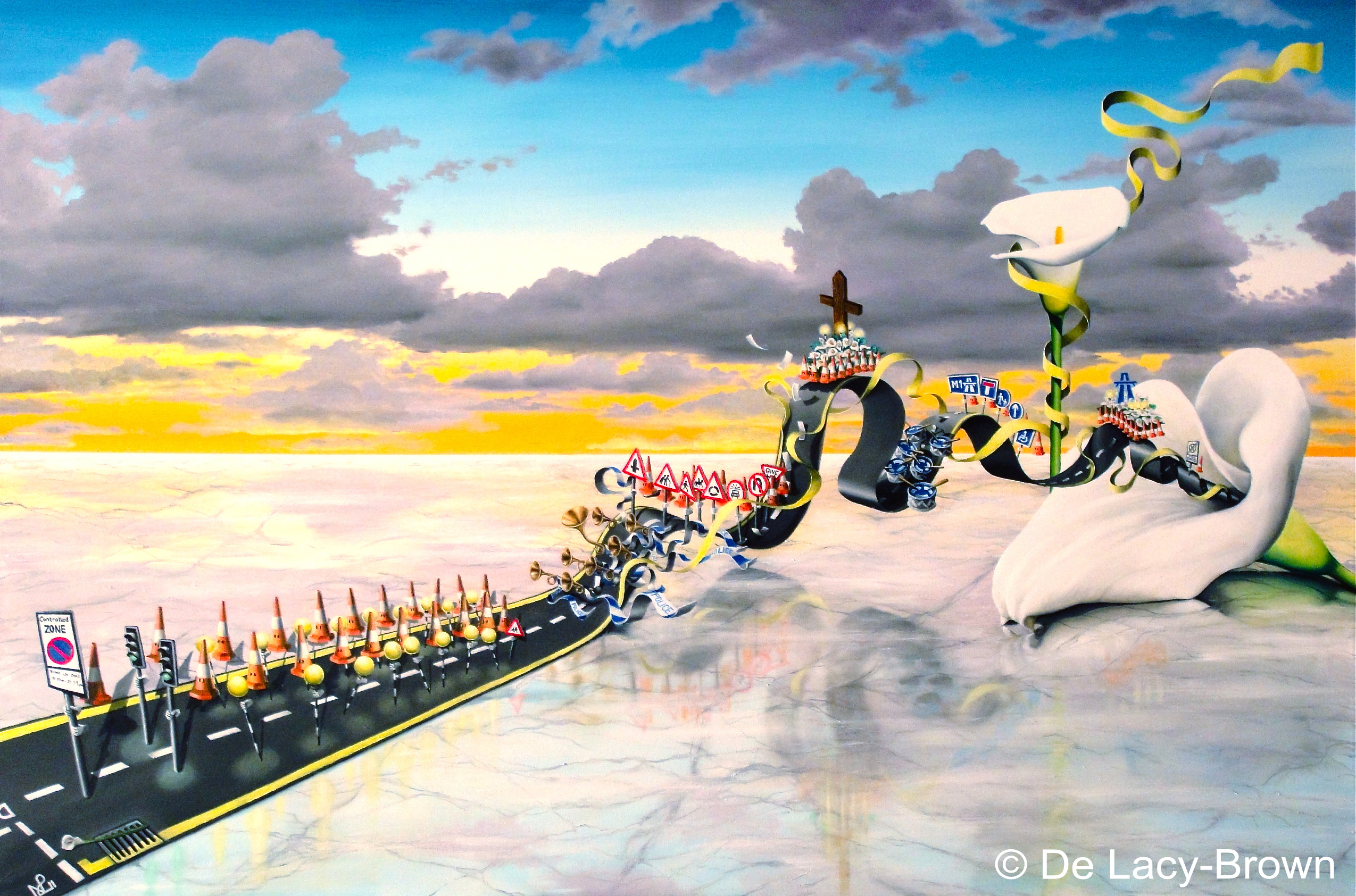
In this final post in a week which has been bursting full of Easter-themed homages, mainly to the sensational Semana Santa spectacles of my dear España, I introduce you to my ultimate canvas exploring the theme of Semana Santa. This vast painting, entitled Road Traffic Control (The Semana Santa Code) was painted by yours truly towards the end of last year and is consequently my most recent painted depiction of the Semana Santa parades. But this work, which measures some 150cm across, depicts Semana Santa processions in a slightly unusual way, using road traffic symbols from the highway code to illustrate the main characters in a typical Semana Santa procession. In fact, the symbolism is at times so detailed that I like to think of the painting as being something of a new Da Vinci Code, the likes of which I will decrypt in today’s Sunday Supplement.

Road Traffic Control (The Semana Santa Code) (2012 © Nicholas de Lacy-Brown, oil on canvas)

Traffic Cones and the Lily Cathedral

Road Traffic Control - Nazareños detail (2012 © Nicholas de Lacy-Brown)

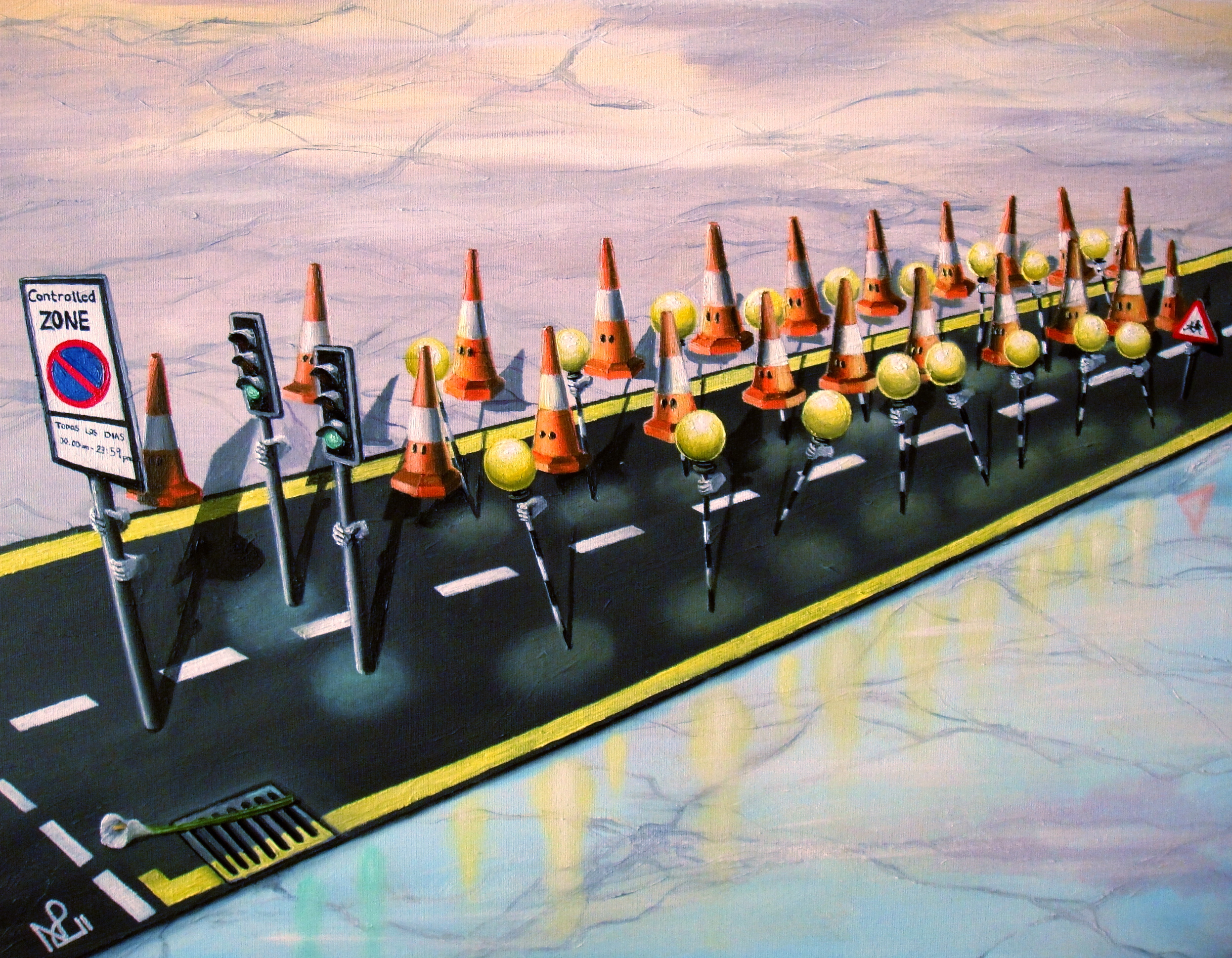
The idea behind this interpretation of Semana Santa came to me when I was watching a procession last year and it occurred to me that the Nazareños with their pointed hats look a bit like walking traffic cones. From there the idea was born – their candles were swiftly replaced by zebra crossing lamps, the large lanterns carried at the front of the parade were replaced by traffic lights, and the banner held at the front of the procession was replaced by a “Controlled Zone” sign – after all, isn’t religion an attempt to control or at least orchestrate a way of life? The road is of course no different from the kind of road which a procession in Spain would walk along, except that here it spirals and wafts like a ribbon in full flight, from its point of emergence from a large lily, which represents a great Spanish Catedral, the smaller bell-like cala lily representing the cathedral’s campanile.

Brass Bands

Road Traffic Control - Brass band detail (2012 © Nicholas de Lacy-Brown)

Road Traffic Control - Drums detail (2012 © Nicholas de Lacy-Brown)

In every procession, there are at least two brass or military bands setting a rhythm and a melodic resonance for the procession. Generally speaking, a band will either lead or follow the Jesus tronos, and a second will either lead or follow Mary. Here the representation of the bands follows the road traffic theme, with old fashioned car hooters and police ribbon making up the first band, while roundabout drums with sides made up from a road’s diagonal warning lines (which warn of an approach to a junction or crossing) make up the second.

The depiction of Jesus

Road Traffic Control - Crucifix detail (2012 © Nicholas de Lacy-Brown)

Road Traffic Control - Jesus detail (2012 © Nicholas de Lacy-Brown)

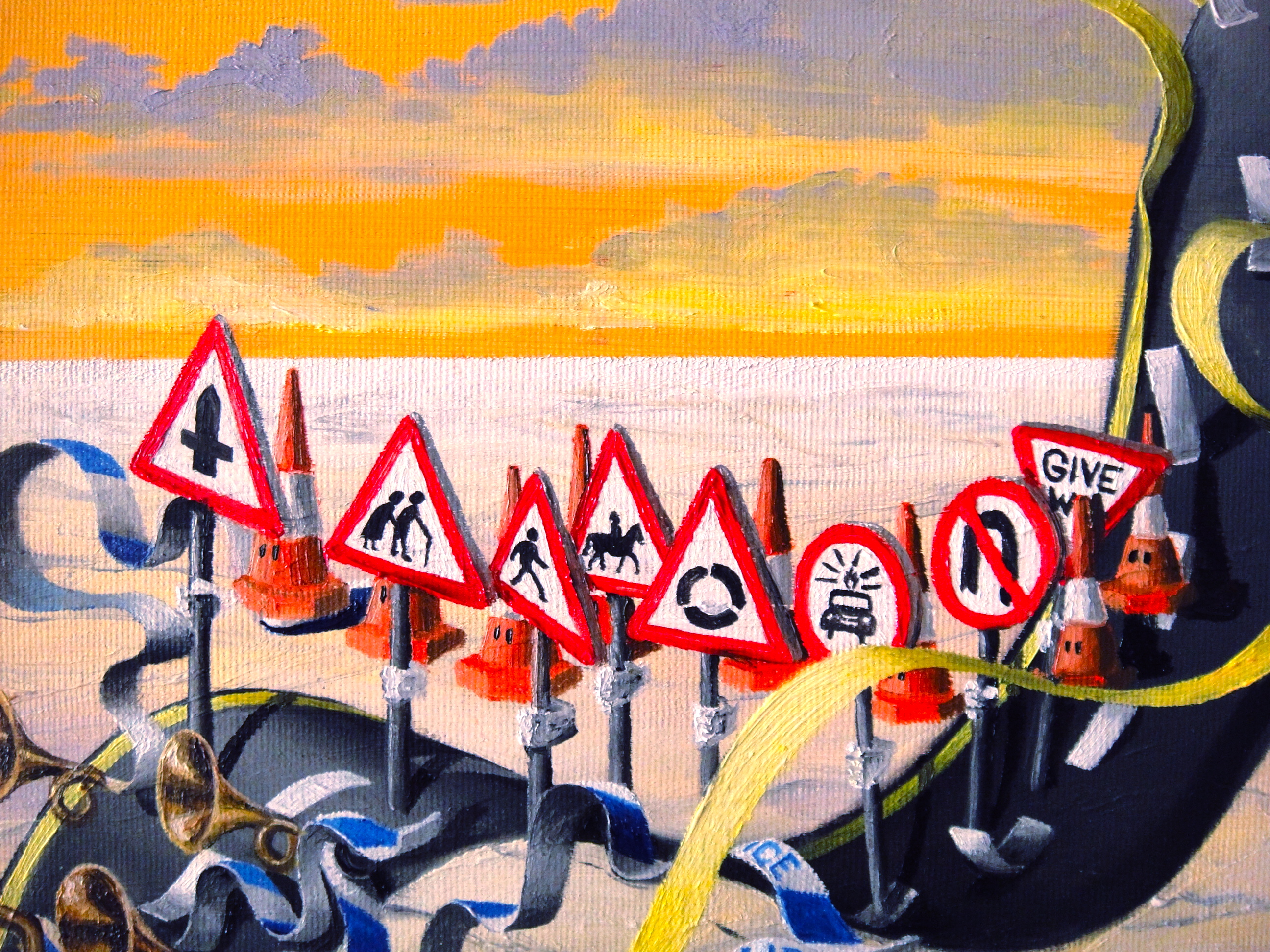
For me, the depiction of Jesus came as easily to my mind as the traffic cones – I used the “crossroads” symbol to represent the crucifixion carried on a tronos, while before it, the signs carried by Nazareños represent, in order: the crucifxion (cross roads); pilgrims (elderly crossing); the disciples (pedestrians); Jesus on a donkey; the Holy Trinity (roundabout); the crusades (explosives); no U-Turn i.e. do not turn your back on Christ; and Give Way – to the Catholic faith as the one and only true religion.

The depiction of Mary

Road Traffic Control - Mary detail (2012 © Nicholas de Lacy-Brown)

Road Traffic Control - Mary detail (2012 © Nicholas de Lacy-Brown)

Mary is depicted using the “motorway” symbol which, with the addition of a small bridging line at the top, resembles a figure with a veil over her head. Meanwhile, the parade which precedes her includes signs with the following meaning: Mary, Mother of Christ (M1); the immaculate conception (no through way); Mother and Child; the ascension; pilgrims (disabled – such as those visiting Lourdes to visit the shrine of Mary).

Finally the painting ends with a sign signifying the end of the “controlled zone”. Hence the title of the painting, “Road Traffic Control”.

Road Traffic Control - Zone end detail (2012 © Nicholas de Lacy-Brown)

I hope you’ve enjoyed the painting and have a great Easter Day, wherever you are.

© Nicholas de Lacy-Brown and The Daily Norm, 2005-2012. Unauthorized use and/or duplication of the material, whether written work or artwork, included within The Daily Norm without express and written permission from The Daily Norm’s author and/or owner is strictly prohibited. Excerpts and links may be used, provided that full and clear credit is given to Nicholas de Lacy-Brown and The Daily Norm with appropriate and specific direction to the original content.

Semana Santa – inspiration for my art

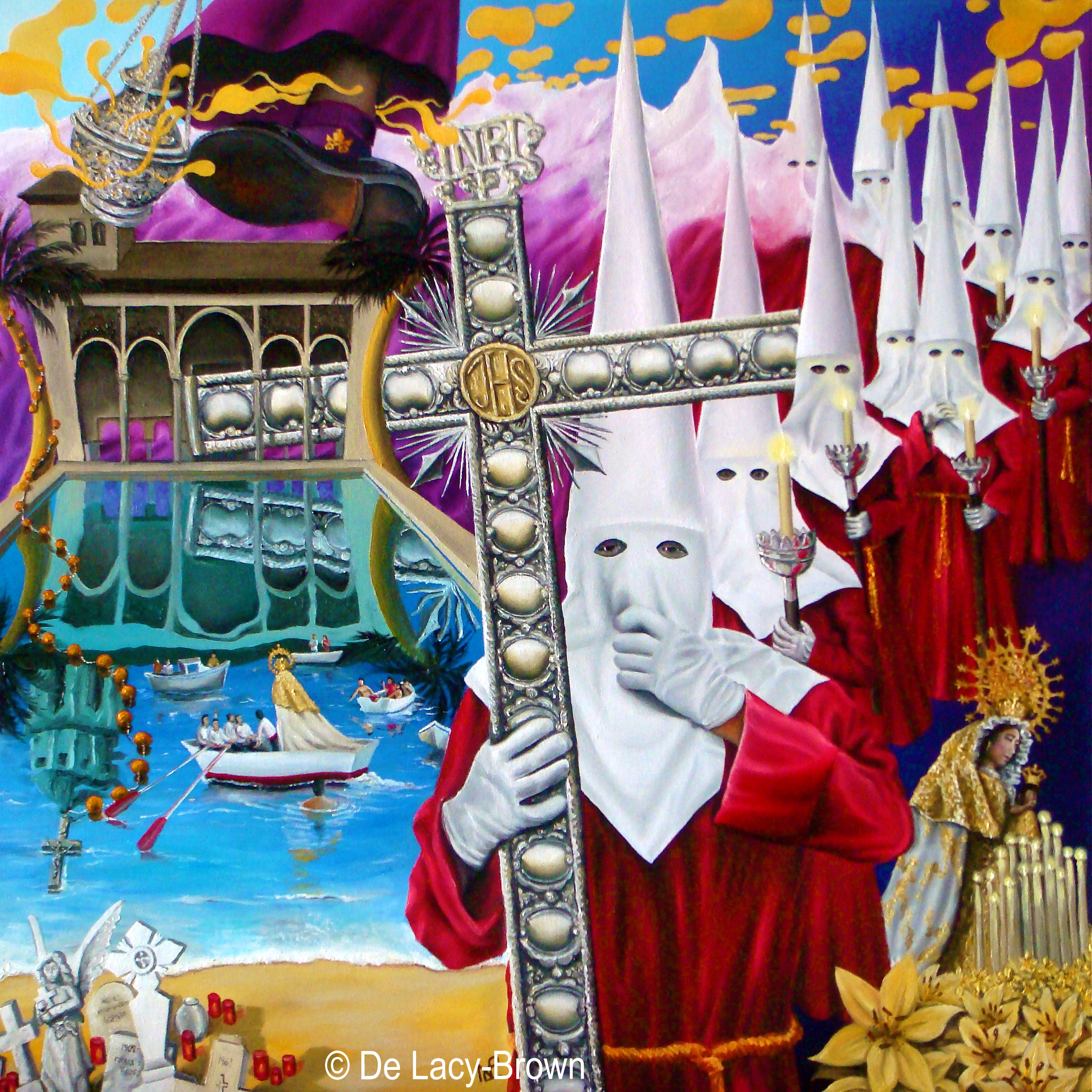
Yesterday, I introduced you to the endlessly fascinating and enduringly captivating Spanish processions which run through the streets of countless Spanish towns during this special week, Semana Santa, approaching Easter Sunday. From the moment I first saw one of these processions, I was overwhelmed by the spectacle. On the one hand, the hooded figures, marching by candlelight besides a wax figure of a dead or dying Christ make for a disturbing, slightly sinister sight. But look beyond the costume, to the breadth of participants involved, and to the widespread interaction of all of Spanish society which comes out to see the processions, and one is filled with an overwhelming sense of warmth and emotion. All of this combined makes for a substantial source of inspiration, and it is for this reason that Semana Santa has cropped up in my art work so often. I’ve now featured the parades in four of my major works and several smaller works. Nonetheless, I still don’t feel like I have truly captured the sheer scale and wonder of the spectacle, but hope that one day I will create a piece with which I can be truly satisfied.

Catholicism, Catholicism (España Volver II) (2009 © Nicholas de Lacy-Brown) Oil on canvas

In this, the second canvas from my España Volver collection, Catholicism, Catholicism,  the Semana Santa processions forms the centrepiece of what is a generalised depiction of the continuing importance of Catholicism in Spain’s current culture, as well as its historical significance. Here the nazareños are shown metamorphosing from the Sierra mountains behind the city of Granada, the site of one of Catholicism’s most significant defeats over Muslim rule during the reconquista. To the right of the nazareños is a typical statue of Mary as paraded through the streets on tronos. This is not to be confused with the Mary sent out to sea by fishermen as depicted on the left on the canvas, this detail depicting the festival of Maria del Carmen, whereupon fishermen across the Costa del Sol give thanks to Mary for keeping them safe every July.

My depiction of Semana Santa in Catholicism, Catholicism was in turn based upon this study I made a few months before of a group of nazareños during Marbella’s Domingo de Ramos (palm sunday) procession.

Grupo de Nazareños (2009 © Nicholas de Lacy-Brown) Oil on canvas

A Semana Santa procession also features rather prominently in the third canvas of my Seville Tryptic, appropriately so since the Semana Santa processions in Seville are by far the most famous.

Seville Triptych - Canvas III (Oil on canvas, 2010 © Nicholas de Lacy-Brown)

It surprises me that so few people outside of Spain actually know what these processions are. When most English people see my paintings, they think I’ve portrayed the Ku Klux Klan – as if. This observation causes me relentless frustration, and I hope that through my art, photography and now my blog, I can help to share Spain’s Easter spectacles around the world.

That’s all for now. But check The Daily Norm this Easter Sunday, where a special Sunday Supplement will feature my most substantial (and recent) depiction of Semana Santa.

© Nicholas de Lacy-Brown and The Daily Norm, 2005-2012. Unauthorized use and/or duplication of the material, whether written work or artwork, included within The Daily Norm without express and written permission from The Daily Norm’s author and/or owner is strictly prohibited. Excerpts and links may be used, provided that full and clear credit is given to Nicholas de Lacy-Brown and The Daily Norm with appropriate and specific direction to the original content.

The Daily Sketch: Summertime begins in Brighton

Record March temperatures have been recorded in the United Kingdom, and for most of the population, this means for unabashed sun worship whenever the opportunity affords. And with the start of summertime now upon us, we may even get a little time to sun ourselves after work. For the Norms, a quick trip down to Brighton at the weekend was the obvious choice. For worn out Father-Norm, a restful afternoon in a deck-chair on the seafront promenade  was his chief desire, leaving time for the little norms to engorge themselves on ice creams and candy floss. Ahhh Norms do like to be beside the seaside!

Start of Summertime, in Brighton (2012 © Nicholas de Lacy-Brown, pen on paper)

© Nicholas de Lacy-Brown and The Daily Norm, 2005-2012. Unauthorized use and/or duplication of the material, whether written work or artwork, included within The Daily Norm without express and written permission from The Daily Norm’s author and/or owner is strictly prohibited. Excerpts and links may be used, provided that full and clear credit is given to Nicholas de Lacy-Brown and The Daily Norm with appropriate and specific direction to the original content.

Sunday Supplement – Metamorphosis: Pond Life in the Afternoon

Spring is in the air in the UK. In fact, ever since the spring solecist on 21 March, the sun has been beating down, and it has felt more akin to early summer than early spring. OK, it’s true, we are going to be punished with a hosepipe ban come 1 April – as they say, nothing in life is free – but in the meantime, I am happy to bask in these early symptoms of summer and, starting from today, lighter summery evenings too.

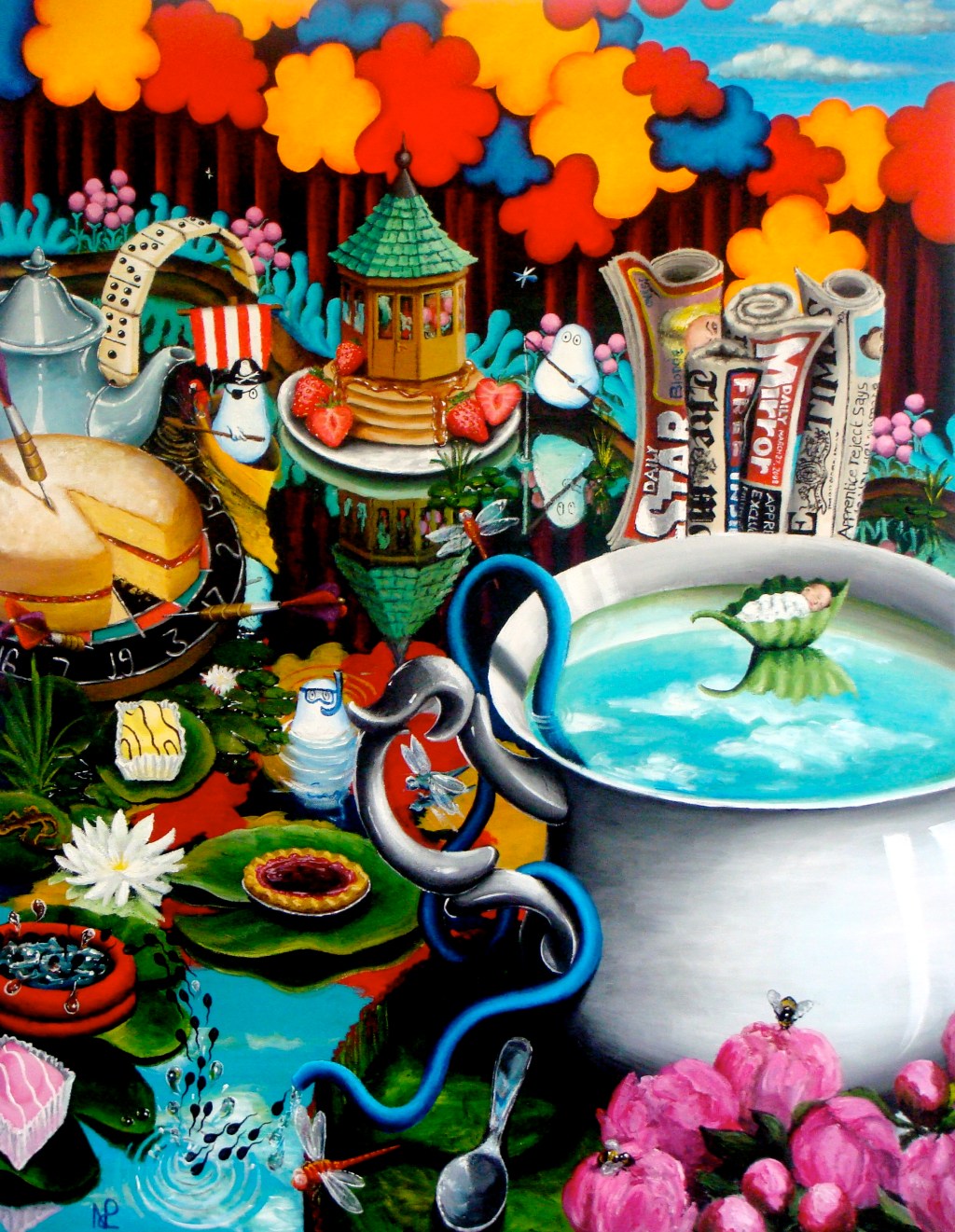
In celebration of the onset of the British Summertime, in today’s Sunday Supplement, I focus on a painting which I created in May 2008, Metamorphosis: Pond Life in the Afternoon. The name of the work, and the imagery, were both created in anticipation of a solo retrospective exhibition of my work in Belgravia, London, during which the collection of work on show hoped to demonstrate my evolution as an artist over 10 years – from more naive figurative work to deeper, more thematically sophisticated representations. Thus, in this painting, a number of features make reference to my former body of work.

Metamorphosis: Pond Life in the Afternoon (2008, acrylic on canvas) © Nicholas de Lacy-Brown

At the top of the canvas, naively painted colourful trees are planted amidst simple plants, recollecting paintings such as Orange Square painted in 2002. Next come the Norms, who dominated my work in 2005 and who here are shown enjoying a summer afternoon in a pond. Around them, game symbols of dominoes and a dart board reference my 2005/6 paintings – the Joie de Vivre collection, Tragic Conflict: Sophocles’ Antigone and La Foret des Jeux, in which game symbols dominated. As we travel downwards through the canvas, the work becomes more precise, from simple trees above to more delicately painted peonies and cakes.

In the meantime there are two representations of my life at the time of painting the work – the birth of my nephew, as shown floating around in a large cup of tea, and a group of tabloid newspapers featuring stories about me – I had at this time just appeared in the popular TV show, The Apprentice. 

The over all setting is English garden life on a summer’s afternoon – playful games in water, and afternoon tea complete with Victoria Sponge, pancakes, strawberries, jam tarts and fondant fancies. The title “Pond Life” also refers to the tabloid press however – since pond life in English slang, also means “scum”. And that represented my feelings for the press at the time. Meanwhile “metamorphosis” refers not only to my artistic changes, but also to the changes and growth within nature, hence the tadpoles and bees, representing fertility and rebirth in this garden of delights.

It is ironic perhaps that only days after this painting was completed, I was involved in a life-altering accident which changed my artistic style forever.

Metamorphosis: Pond life in the afternoon (detail) (2008 © Nicholas de Lacy-Brown)

I leave you now to enjoy a hopefully sunny Sunday. See you next week.

© Nicholas de Lacy-Brown and The Daily Norm, 2005-2012. Unauthorized use and/or duplication of the material, whether written work or artwork, included within The Daily Norm without express and written permission from The Daily Norm’s author and/or owner is strictly prohibited. Excerpts and links may be used, provided that full and clear credit is given to Nicholas de Lacy-Brown and The Daily Norm with appropriate and specific direction to the original content.