Skip to content

Posts tagged ‘Art’

Norms do… Amsterdam’s Red Light District

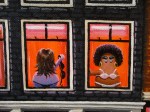
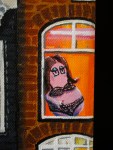
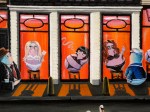
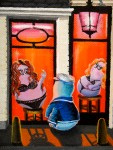
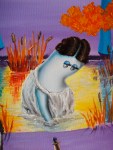
Before I had even booked my trip to Amsterdam, I couldn’t help but plan a Norm representation of what must be Amsterdam’s most renowned attraction: its red light district. Some people see Norms as being child-friendly. This painting may persuade them otherwise. Here Norms are dressed in sex head to…err…round base, with lacey bras, thongs and other revealing lingerie. On their hands, acrylic nails to tap against the glass windows help them to attract the attention of their shy customers, while heavy makeup and perfectly coiffed hair complete a carefully manicured look. As for the customers, they come from all walks of life. Here is a business man, skulking away from work, hoping for a “quickie” before he goes home to his affluent home, his wife and children. There too is a sailor, desperate after weeks away at sea for a lady’s touch. And finally we have the Norm chav, covered in tattoos and a dirty vest – he can’t afford these classy scarlet women of the night, but he can stare, and wish.

Norms in Amsterdam's Red Light District (2012 © Nicholas de Lacy-Brown, acrylic on canvas)

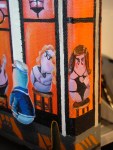
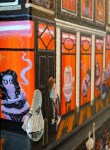
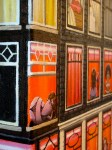
The canvas is a box canvas, so I have painted around the sides to feature more buildings, and a few more of those lovely ladies. You can see the sides, and some detailed shots of the canvas below. Enjoy!


© Nicholas de Lacy-Brown and The Daily Norm, 2005-2012. Unauthorized use and/or duplication of the material, whether written work or artwork, included within The Daily Norm without express and written permission from The Daily Norm’s author and/or owner is strictly prohibited. Excerpts and links may be used, provided that full and clear credit is given to Nicholas de Lacy-Brown and The Daily Norm with appropriate and specific direction to the original content.

Brit art shunned by dOCUMENTA (13) – time for the UK to face up to our talentless contemporary art?

From June to September this year, the town of Kassel, Germany, will play host to the 13th dOCUMENTA exhibition. Established in 1955 by artist, teacher and curator Arnold Bode, the 5-yearly exhibition, whose first show featured the likes of Picasso and Kandisky, is self-proclaimed as a “key international exhibition of contemporary art worldwide”. Yet  the “worldwide” element seems to have missed out a key player from its compass: At dOCUMENTA (13), the UK is conspicuous by reason of British artists’ total absence from the show. Are they trying to tell us something?

I read an interesting article in yesterday’s Sunday Times written by  resident art critic, Waldemar Januszczak. He blamed dOCUMENTA’s apparent shunning of British artists on curators. He argues: “[t]he chief reason British art is mistrusted and hated abroad is that international curators disapprove of it. It isn’t clever enough for them. It does not espouse enough theory. It has a directness to it that makes their gaseous interpretations redundant. And it likes jokes, which they don’t”.

Damien Hirst - A thousand years

Good on Januszczak for being patriotic. But I can’t help but conclude that the real joke is British art itself. Contemporary art is a sticky wicket, a difficult often inaccessible manifestation of an artist’s attempts to find some new avenue which art has left hitherto unexplored. The trouble is, artists don’t have the luxury which the impressionists or the cubists or the abstractists did – these artists were emerging out of a rigid, regulated era of art, where paintings closely followed convention and artists feared exploring techniques beyond figurative representations of classical and biblical themes. Once artists began to break the mould, there were so many directions where artists could go, and so much they could do with the familiar canvas image, leading to an explosion of creativity and the creation of some of the world’s best loved works – the Picassos, the Van Goghs, the Matisses. Come the 1960s and things started to dry up. Jackson Pollock started to spray his canvases without any perceptible talent and Rothko painted vast works in a single colour. Little by little the need for actual artistic talent fell to the wayside as the singular requirement for “ideas” took hold until finally the hand of the artist was made entirely redundant: the art of the “readymades” reigned triumphant, right up until the monstrosity that was Tracey Emin’s unmade bed.

My bed - © Tracey Emin 1998 (like you'd want to copy it)

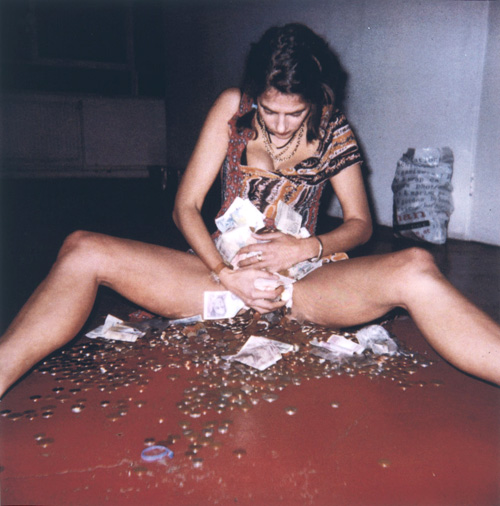
This would all be fine – call it a fad – if these artists weren’t taken so damn seriously. Damien Hirst has become a serial industrialist, a commercial tycoon all in the name of “art”. His works – pickled shark, rotting cow and polka dots aplenty (the majority of which he didn’t paint himself because, allegedly, he “couldn’t be ****ing arsed”) – are about to be given a huge solo retrospective at Tate Modern of all places. Meanwhile, Tracey Emin – who can’t draw to save her life – has been made Professor of Drawing at London’s Royal Academy, while her annual contribution to the RA’s Summer Exhibition make me want to weep. Yet still the visitors lap them up, buying each and every print of her childlike scrawl at lightening pace, just because they think, or rather they know, that they are making a good investment.

Damien Hirst - LSD

And herein, in my opinion, lies the problem. Compared to the romantic sentimentalism of countries like France, and the aesthetic-led inclination of countries like Italy, England has always been the boring big brother – the big industrialist placing economic concern at its core. We didn’t give birth to the airy luminescence of  impressionist paintings – but we did bring you gloomy scenes of the industrial North by Lowry. We didn’t give you empassioned El Greco or compassionate Da Vinci, but we did give you Lucien Freud – creator of the most expensive painting every sold by a living artist. We’ve always been led by money, by investment, by industry.

Tracey Emin "I’ve got it all" (2000) - says it all really doesn't it.

We don’t rave about Emin and Hirst because we think they are any good – we know about them because advertising tycoon Charles Saatchi has bought into them. And once Saatchi invests in an artist, they must be good right? Wrong. Saatchi is the man with the money. He isn’t an authority on taste and this is why British art is being shunned by exhibitions like dOCUMENTA. Because our artists make it big because of investment, not talent. All the integrity of our art has flown out of the window, as we gaze in apparent wonder at a whole gallery turned over to a lightbulb switching on and off. And why is Tate modern giving itself over to that Hirst retrospective this summer? – Why, because it’s olympic year, and they can pull in the punters, and the admission fee, of course.

Tracey Emin Tower Drawing 18 (2007) monoprint, paper size: 4 11/16 x 5 11/16 in. (11.9 x 14.4 cm), Photography by Stephen White. Courtesy of White Cube.
© Tracey Emin ("Professor of Drawing")

In conclusion, dOCUMENTA (13)’s shun of Brit art should make collectors and galleries in the UK stand up and think. Art shouldn’t be about money – it should be about talent; about discovering an artistic genius who will place British art on the map for centuries to come, long after the last scrap of that unmade bed has been swept away into the rubbish. But  how likely is that to happen so long as the powers that be stand to make a buck or too? I think you can answer that one for yourself.

Le Déjeuner sur l’herbe Part II – A Norm Re-imagining

Yesterday I explored how Manet’s enigmatic masterpiece, Le Déjeuner sur l’herbe, innovated an entirely new artistic mindset, setting a path towards impressionism, expressionism and beyond. In recognition of its important place in the history of art, countless artists have drawn inspiration from the work, and now I can add myself to the list. In today’s Daily Norm, I exclusively reveal to you my re imagining of Le Déjeuner sur l’herbe…Norm style.

At 40″ x 30″ it’s a large canvas and one that has taken me a lot of work since I begun painting shortly after Christmas. The detail of the picnic, the hampers and the clothes certainly took some doing, not least because I chose to work in oils, with multiple layers which needed to dry before adding the next. Nonetheless, the work was a joy to paint, because Manet’s original provided a template, but not a precise blueprint which meant that I could really explore my own imagination when interpreting the original.

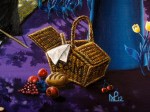
Le Déjeuner sur l'herbe (after Manet) 2012 © Nicholas de Lacy-Brown, Oil on canvas

As a result, my luncheon is on the grass, but the Norms have a picnic blanket to give them more comfort. Meanwhile the picnic itself is a more civilised affair. Manet’s basket of food is replaced by two hampers from the premium Piccadilly department store, Fortnum and Masons, while the spread of food on offer ranges from traditional pork pies and scotch eggs to a seafood platter, sardines and a cheese board, as well as a number of sweet treats. To drink, the Norms enjoy a bottle of Veuve Clicquot while in the hamper behind them, a flask of earl grey tea lies ready and waiting.

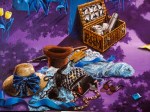
Because I made something of a feature of the picnic in the centre of the canvas, I decided to replace Manet’s spilling basket on the left of the canvas with a spilling Chanel handbag set amongst the nude female’s discarded clothing. Naturally, as well as a compact and nail varnish, the Norm’s handbag contents also include a much needed Oyster travel card, perfectly balancing the canvas with the real oysters within the seafood platter. A pair of Chanel sunglasses and a discarded bra add even more sex-chic to the scene (and yes, Norms do appear to have breasts!).

There are plenty of details in this painting, so below I include a gallery of detail shots for you to enjoy. And with this I leave you to feast your eyes upon this new Luncheon on the Grass, the latest interpretation of a painting which will continue to inspire throughout this next Millennium.

© Nicholas de Lacy-Brown and The Daily Norm, 2005-2012. Unauthorized use and/or duplication of the material, whether written work or artwork, included within The Daily Norm without express and written permission from The Daily Norm’s author and/or owner is strictly prohibited. Excerpts and links may be used, provided that full and clear credit is given to Nicholas de Lacy-Brown and The Daily Norm with appropriate and specific direction to the original content.

Persistently mysterious; indubitable genius: Manet’s Le Déjeuner sur l’herbe

It’s a mystery to us all. Just why would a naked woman be sitting with two clothed men in the middle of the forest? Are they not hot? Is she not cold? Why is there an uneaten picnic, and why does the background look so flat, almost like stage scenery? What is the woman in the background doing and why is the woman in the foreground looking at us with such fervour?

Ever since it’s sensational first appearance at the Salon des Refuses in 1863, Le Déjeuner sur l’herbe (luncheon on the grass) by Edouard Manet has given rise to a relentless stream of questions and comparatively few answers. While it’s meaning and narrative might have been profoundly unclear to contemporary audiences, what it did do was shock and inspire in equal measure from the first moment of its appearance. It disgraced the reserved Parisian audiences of the 1863 Salon des Refuses, spurred on by a sensational outcry in the press, outraged to see a shockingly unapologetic female nude staring out at the audience so audaciously and mixing with fully clothed civilised gentlemen. But in equal measure it inspired: It was art for art’s sake – not retelling a classical mythological tale as was common at the time – this was a large canvas reserved for every day life. It was a work which exposed the artist’s active hand through visible brush strokes and a hastily composed background. It was a nude woman whose every crease and curve was unflatteringly exposed, ending the previous hypocritical use of nudes as a representation of deity in all their smooth perfection – here was a real woman, with folds of flab and an unwavering gaze. Unsurprising then that this painting became the touchstone of a new impressionist movement, a movement of artists who would circle around Le Déjeuner’s maker, Manet, making him their leader, a movement which would change the course of art history forever.

Le Déjeuner sur l'herbe by Edouard Manet (1863)

No surprise then that despite the initial outcry caused by the image, Le Déjeuner sur l’herbe has gone on to inspire countless generations of artists, and has become an artistic icon of our times. The work has always been one of my favourites of the (pre-)impressionist era, and I too have been inspired to recreate the scene in my own individual way (and yes, it involves Norms!). I’ll be unveiling my finished work tomorrow, but before I do, it seems only appropriate that the original work and those works which have followed in its shadow should be separately analysed, not least because of the sheer number of artists who have been similarly inspired by the work.

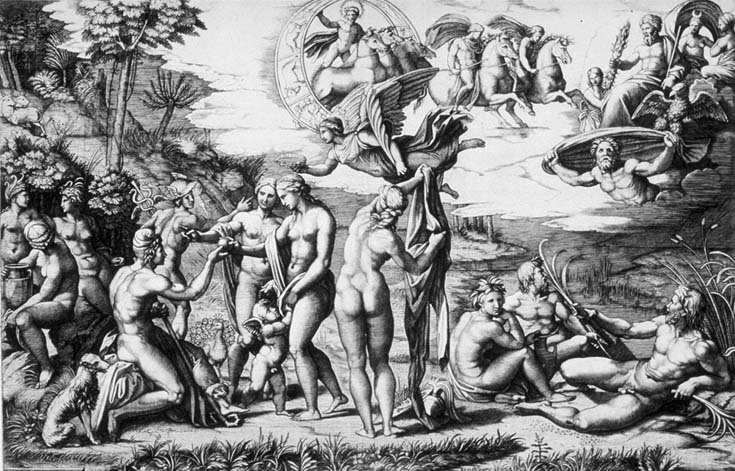
The Judgement of Paris by Marcantonio Raimondi (c.1510-20)

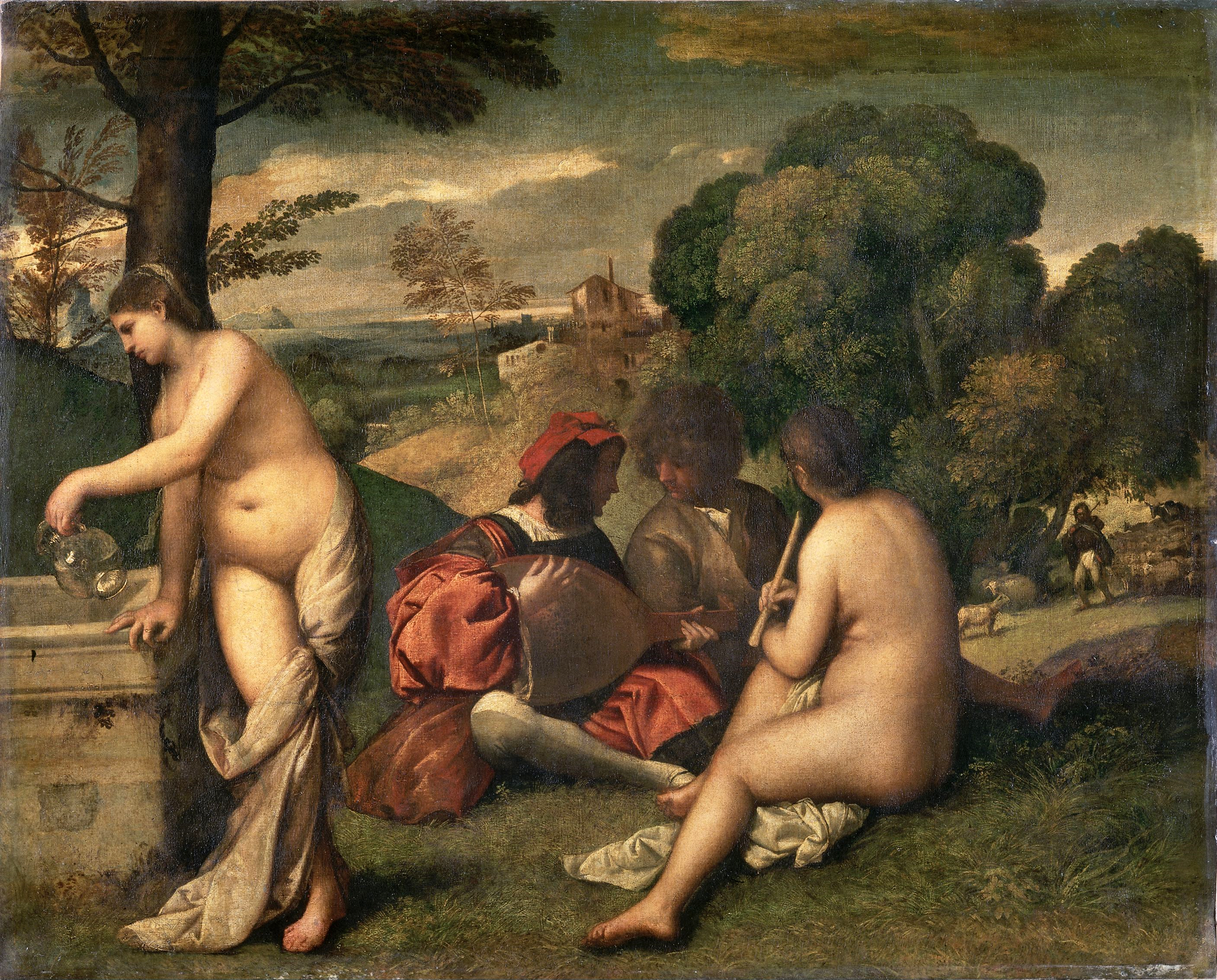
However, before looking at the subsequent reinventions of the work, it is interesting to note the possible sources of Manet’s inspiration as he set about painting this work. It is now thought that Manet was at least partly inspired by two works which would have been staple masterpieces of his time. The first is The Judgment of Paris by Marcantonio Raimondi (above). The engraving, which itself was based on a work by Raphael and copies of which would have been widely distributed at the time Manet set to work on Le Déjeuner includes a familiar composition in the bottom right hand corner. Here, a water nymph and two river gods are sat on the ground watching the judgment of Paris in poses which are exactly reminiscent of the poses adopted in Le Déjeuner sur l’herbe. It may well have been that when deciding to reference these poses, Manet was making a purposeful reference to the judgment of Paris as being like the judgment of paintings submitted to the Salon, the annual open art exhibition of Paris for which Manet’s work, as with every other artist’s work in Paris at that time, was intended. For Manet, it was important to be accepted by the unforgiving group of Salon judges, but only on his terms. Therein lay the difficulty. Nudes were very popular at the time, generally as mythological characters, and it is possible that in painting his very realistic confrontational nude, Manet was both aiming to please the Salon, while also sticking a finger up at their traditions – giving with one hand, and taking away with the other. As for Manet’s decision to mix his nude with clothed male characters, it is likely that Manet took inspiration from Pastoral Concert (c.1510) attributed to Titian and a gem of the Louvre collection. Here two contemporaneously clothed men are joined by two naked nymphs – but this was excusable being that the nymphs were inherently and permanently naked.

Pastoral Concert, attributed to Titan or Giorgione (Louvre Paris) c.1510

Here an interesting point arises. In subsequent xrays of Le Déjeuner sur l’herbe, it has been revealed that the pile of clothes on the left of the scene was actually a last minute addition by Manet. It is therefore highly possible that in first painting the scene, he wished to conform with Salon standards by painting two contemporaneously dressed men being visited by a classical nymph, or two (and thus representing an up-to-date reinvention of the Titian work). It was only towards the completion of his work, perhaps realising that despite his coarse brush stroked finish and striking pose of the nude, his work was not going far enough to be innovative and daring, that he decided to add the discarded clothes, thus transforming the nude from a nymph into an everyday woman (it is highly possible he would have added the light chiffon clothing to the woman in the background at the same time). In adding these clothes, Manet transforms the entire tenor of the piece, from mythological pleasantry into a scene of social scandal, as ladies of the time would have recognised the nude as a prostitute consorting with well-bred gentlemen, while the gentlemen in the audience would have undoubtedly felt judged and debased by the direct unwavering gaze of the nude as if to say: “remember me? I’m the one you had behind your wife’s back in Montmartre last night”.

Read more

Sunday Supplement: La Foret des Jeux / Q4- exploring the subconscious

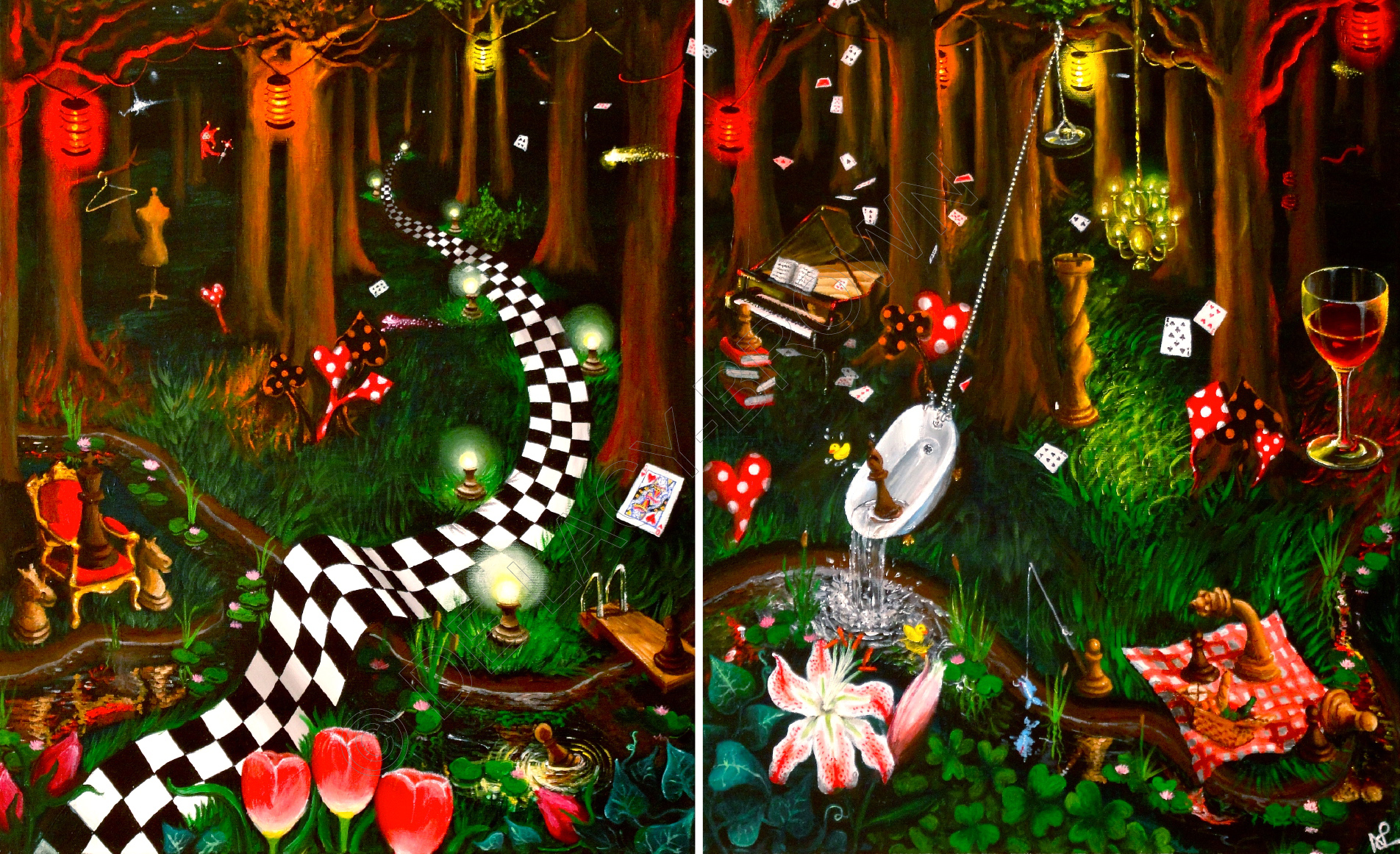
A sunday supplement focusing on my non-Norm paintings is well overdue I think, and for this weekend’s supplement, I have decided to go with a painting which I created in 2007/8 following something of a recurrent dream. It’s a work which is magical and jovial, surreal and fantastical, and therefore a perfect follow up to the Royal Ballet’s superb performance of The Dream which I saw last Monday.

The works featured today were painted within a short space of one another when I was exploring my subconscious. There are two “places” on which I constantly reflect in my subconscious and as an artist seeking inspiration. Both are imaginary. One is a kind of chic but dilapidated house, quite dark, with heavy damask wall coverings, low lighting, lavish furnishings and a general air of mysterious desertion about it. Out of the window is a city landscape – rooftops – almost certainly Paris, and the weather is bleak, probably autumn, dark. This place is triggered in my imagination by certain things – cool lounge music such as Hotel Costes often does the trick. Often there is no trigger at all – I just find myself transformed there in the middle of a working day. I tried to represent this place in my 2007 canvas, Q4. As with any attempt to drag the subconscious level into everyday language, the task was difficult, and while the painting comes close to creating that place to which my mind wanders, it cannot fully represent the feeling I have when I escape into the realms of my deepest imagination.

Q4 (2007 © Nicholas de Lacy-Brown, acrylic on canvas)

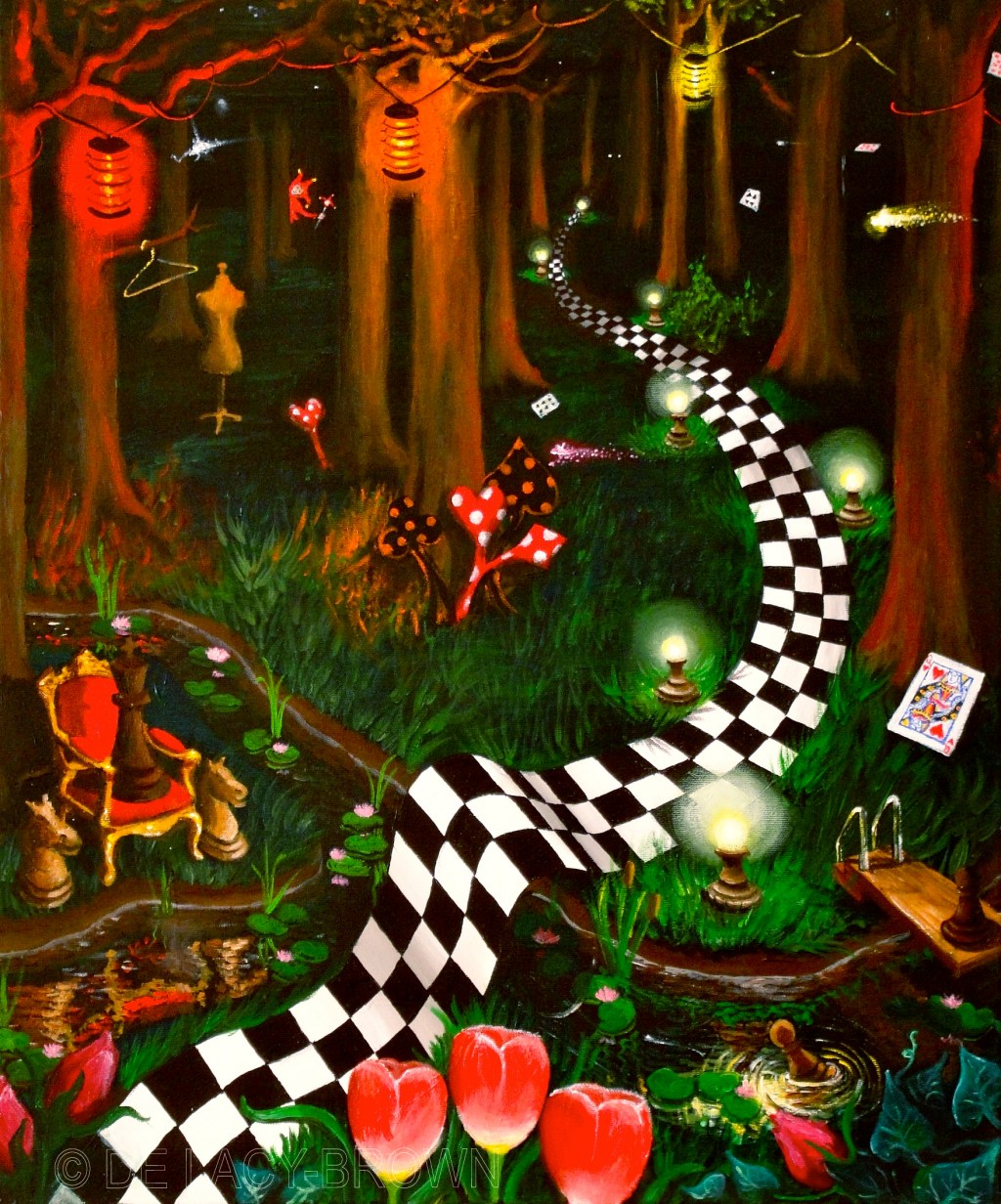
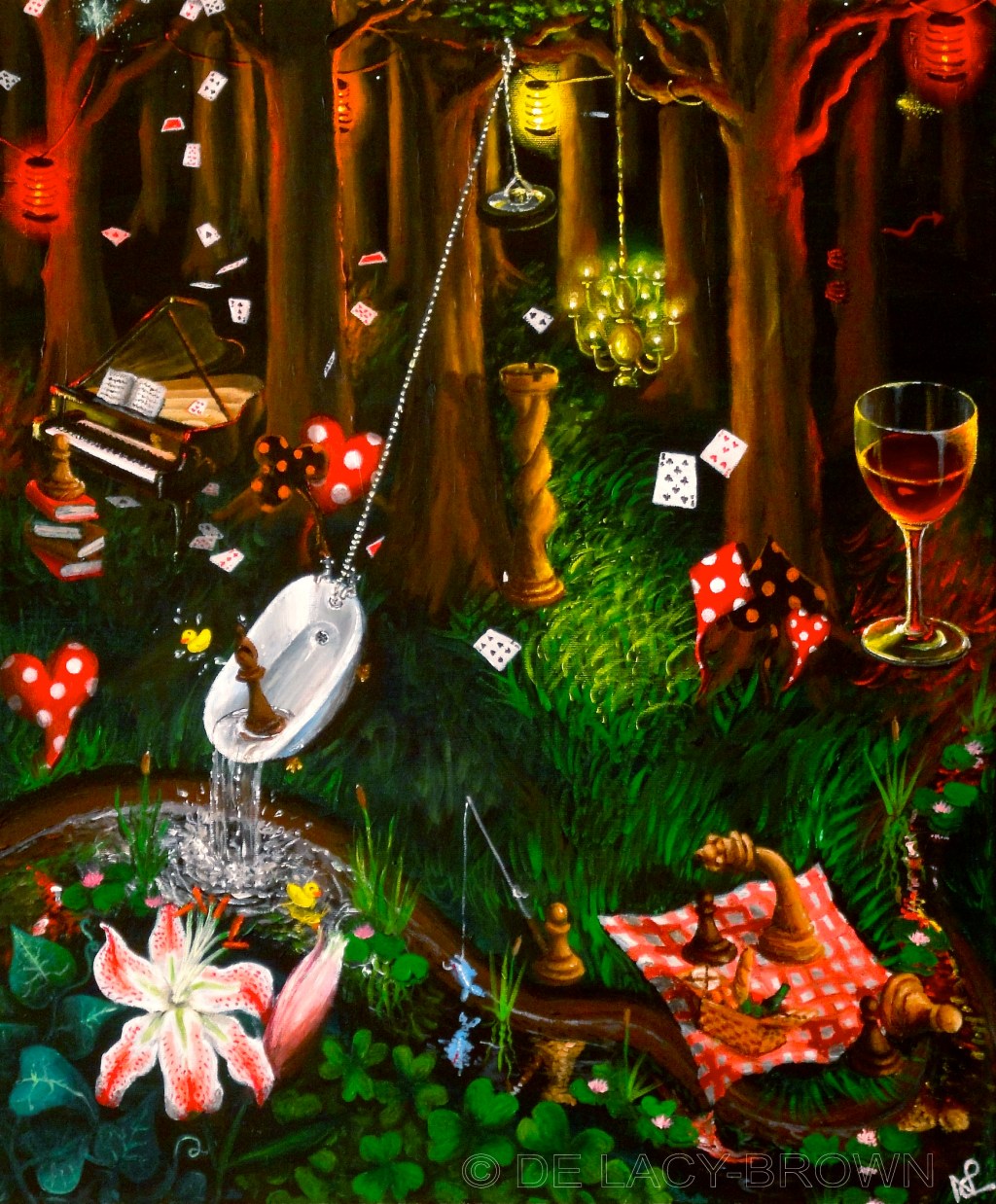
The second place I constantly return to in my subconscious is a dark forest on a summer’s night. The forest is full of surreal things, semi-hidden signs of life and a small source of water. It’s a little scary but not intimidating – the forest is hung with paper lanterns, and forest creatures provide a welcome atmosphere to me – the visitor. In seeking to paint this whimsical vision on canvas in La Foret des Jeux (the Forest of Games), I played on the surreal themes which I knew were weaved into my own imaginings. I imported the theme of games – as I had done in previous surreal paintings – and no doubt inspired by the likes of Lewis Carroll’s Alice in Wonderland. I anthropomorphised chess pieces bringing life to the scene – showing the King sitting upon a thrown, the Bishop falling from a tipped bath of water, and the Queen picnicking with her playing Pawn children. There onwards I let my imagination run wild, making for a rather surreal but playful image. It was painted at a time when my imagination was ripe for the picking – I’m not so sure I could paint something like this today.

La Foret des Jeux (2008 © Nicholas de Lacy-Brown, acrylic on canvas)

La Foret des Jeux, Canvas 1 (2008 © Nicholas de Lacy-Brown, acrylic on canvas)

La Foret des Jeux, Canvas 2 (2008 © Nicholas de Lacy-Brown, acrylic on canvas)

Wishing you a relaxed and enjoyable Sunday.

© Nicholas de Lacy-Brown and The Daily Norm, 2005-2012. Unauthorized use and/or duplication of the material, whether written work or artwork, included within The Daily Norm without express and written permission from The Daily Norm’s author and/or owner is strictly prohibited. Excerpts and links may be used, provided that full and clear credit is given to Nicholas de Lacy-Brown and The Daily Norm with appropriate and specific direction to the original content.

Next train stop: The National Gallery (aka waiting room/ hang out/ free for all)

I had a free hour between meetings the other day – no point in heading home only to turn around again (always best to avoid the Northern line, whatever time of the day) so I decided to head into London’s preeminent art space, The National Gallery. One of the pulls of the gallery is the fact that it’s free. It means that you can drop in and out as many times as you like and therefore digest the large collection more easily. Nevertheless, it seems that charging no entry has proved to be one pull too many for the many visitors to the Gallery.

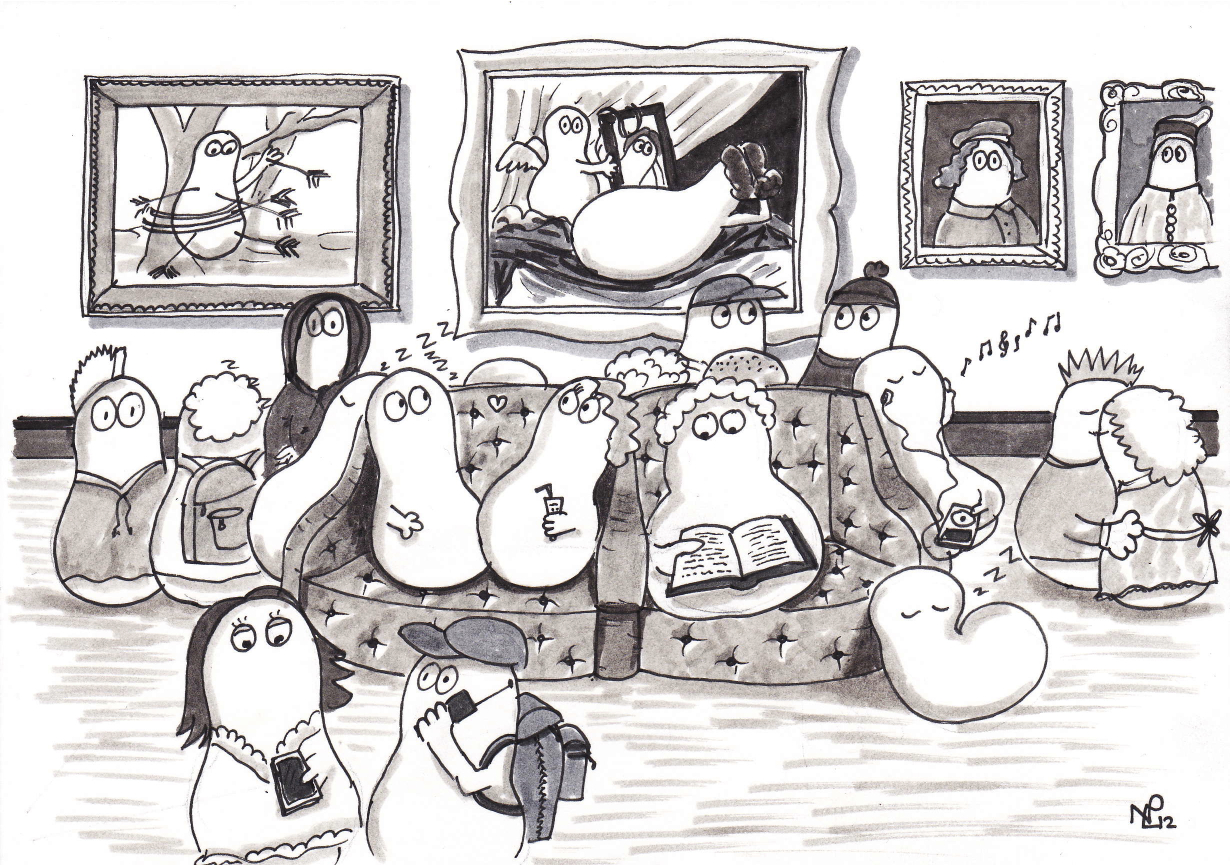
Walking into the National felt very much like walking into one of London’s busiest train terminuses. People were rushing about all over the place. Huge groups were gathered in the foyer, others were walking around, luggage in tow, some were on the phone, others having animated conversation. I put this down to its being a foyer – a meeting place for the masses who have toured the galleries or are about to. But to my consternation, once I began to walk around the galleries, I found the situation to be the same even in the farthest of rooms from the entrance. The galleries seemed to act as a thoroughfare for all and everyone in London. There was a constant feeling of unease and stress as the breeze of countless individuals and large groups rushing through the galleries pervaded the air. Meanwhile, all of the seats in the centre of the galleries would be loaded with people who appeared to have been getting cosy there for sometime. I saw people listening to ipods, half asleep. Others reading books, magazines, newspapers. People were chatting, catching up. Others were sat down, eyes to the floor or on their watch, looking bored to tears. Plenty were texting, others speaking on the phone. Most importantly, only 1 in every 25 people who were in the galleries seemed to take any interest in the art on show whatsoever!

Norms (ignoring Art) at the National Gallery (2012 © Nicholas de Lacy-Brown, pen on paper)

For those, like me, who are interested in the wonderful art on show, all this made for a distracting experience. Appreciating art requires a tranquil calm environment, free from distractions. How else can one enter the world which the artist has created, to consider the artist’s motives, his feelings, emotions and the story being narrated on canvas. Trying to appreciate art here was akin to analysing a Rubens hanging in the midst of a busy underground platform.

Busy impressionist gallery at the National Gallery - but at least here some people are looking at the paintings!

The press has recently applauded the increase in visitor numbers to London galleries. The increase, it is said, has been credited to the move of the Labour Government (i.e. the government whose policies ruined most things in the UK) to make the majority of London galleries and museums free back in 2001. It’s a move which has since been adopted by the coalition government, and money is put aside to subsidise the participating institutions who otherwise lose out on the admission fee.

Don’t get me wrong – open access to art is a wonderful thing. Art has a power like nothing else to enrich lives, to enable escapism to another world, to brighten a day, to enhance emotions. And the freer the access the better. The problem is, no one in the National Gallery seemed to even bother with the paintings. For them, the space was a place to hang out, to rest their feet, to chat with friends, to escape the winter weather. And for those of us who do appreciate art, that was a real distraction.

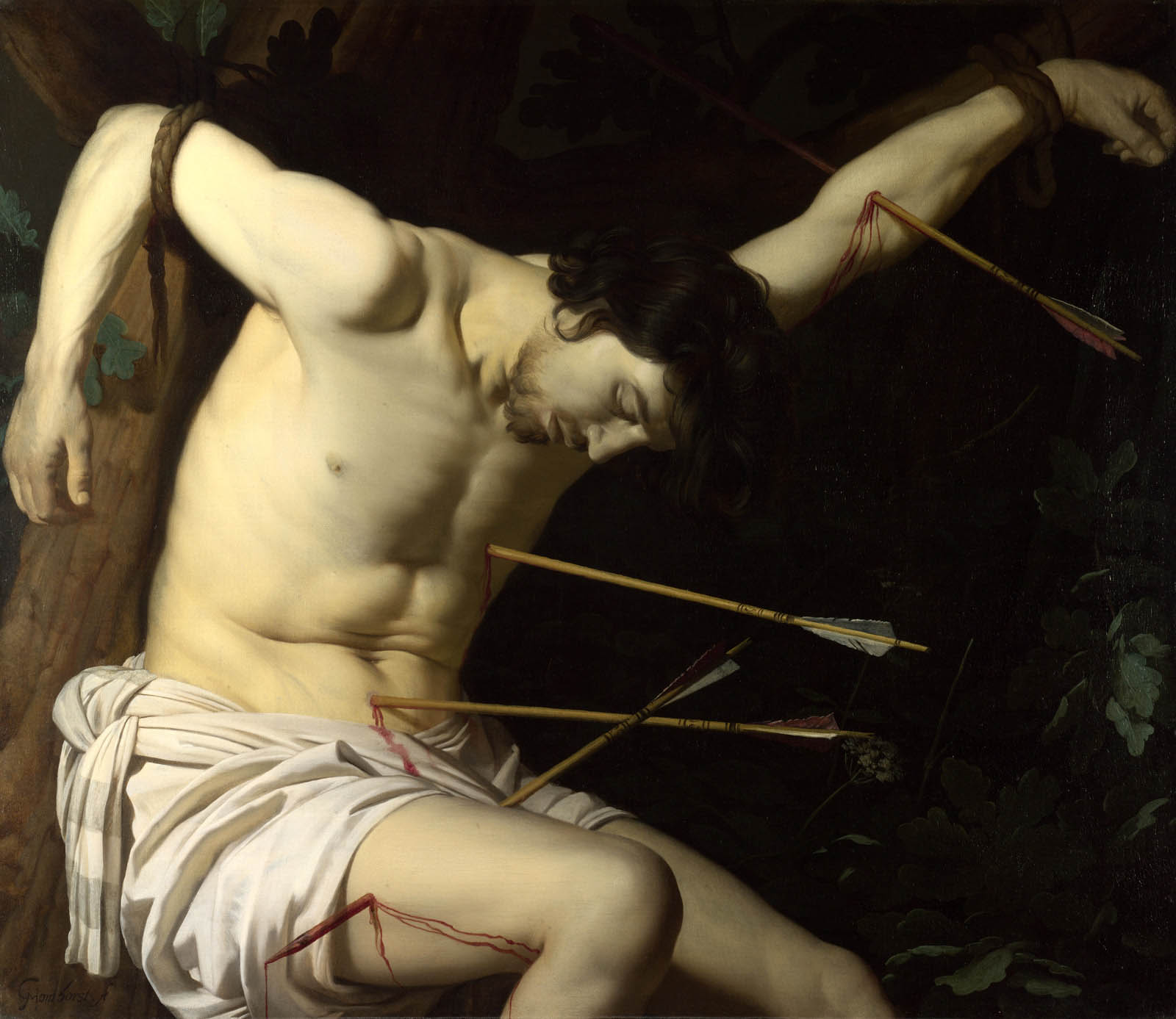
Saint Sebastian by Gerrit van Honthorst (c.1623)

The National Gallery’s collection is superb. I went along to see Velazquez’s Rokeby Venus having recently painted my own Norm piece devoted to the work. But asides from this, a look round just a few galleries introduced me to some wonderful new lesser known pieces of which I had no prior knowledge. Take Saint Sebastian by Gerrit van Honthorst – what a superb painting. St Sebastian is ever the romantic icon – a beautiful matyr who pulls at the heart strings of his viewer. This sensitive portrayal beautifully captures the moment of his ultimate torment. The soft supple depiction of his well toned flesh contrasts to devastating effect with the violence of the arrows piercing it, blood staining the peachy tones of his perfect skin. And what about Willem Kalf’s Still Life with Drinking Horn. Still lifes may be potentially a bit “past it” but the skill of this piece is astonishing, the lobster painted with startling precision, it’s ruby red shell tantalising all the senses, while the portrayal of horn, glass and drapery shows that the artist’s skills can be turned to any material or texture.

Still Life with Drinking Horn by Willen Kalf

Rokeby Venus, slashed by Mary Richardson in 1914

For me, when a gallery becomes a thorough fare, the magnificence of its art is somehow degraded – not given the respect it deserves. This feeling is increased by the lack of security at the gallery – no bag checks at the entrance, no security gates, and security guards who are present but wouldn’t realistically be able to prevent an attack on a painting – only catch the perpetrator. Has the National Gallery not learnt from past lessons then, such as the devastating attack on the Rokeby Venus at the hands of a suffragette, “Slasher Mary” in 1914? The scars are still visible on the great Venus for all to see. By contrast in Paris, at the Louvre, the d’Orsay, the Pompidou, you cannot enter those galleries without full scale security checks, and of course an admission fee. The result is that the paintings are given the respect they deserve – as masterpieces of the nation.

A difficult debate ensues. Should art be made free to the nation and if so, how can you stop abuse by those who take very little interest in the art on show, or whose interest is laced with violent intentions? I think a security check, at the very least, should be installed, and bags, phones, ipods should not be allowed. Free access should be encouraged, but these paintings must be given the respect they deserve, or the ghosts of all those unhappy artists, turning in their graves, will surely haunt us forever.

The Daily Sketch: Norms (attempting to) do ballet

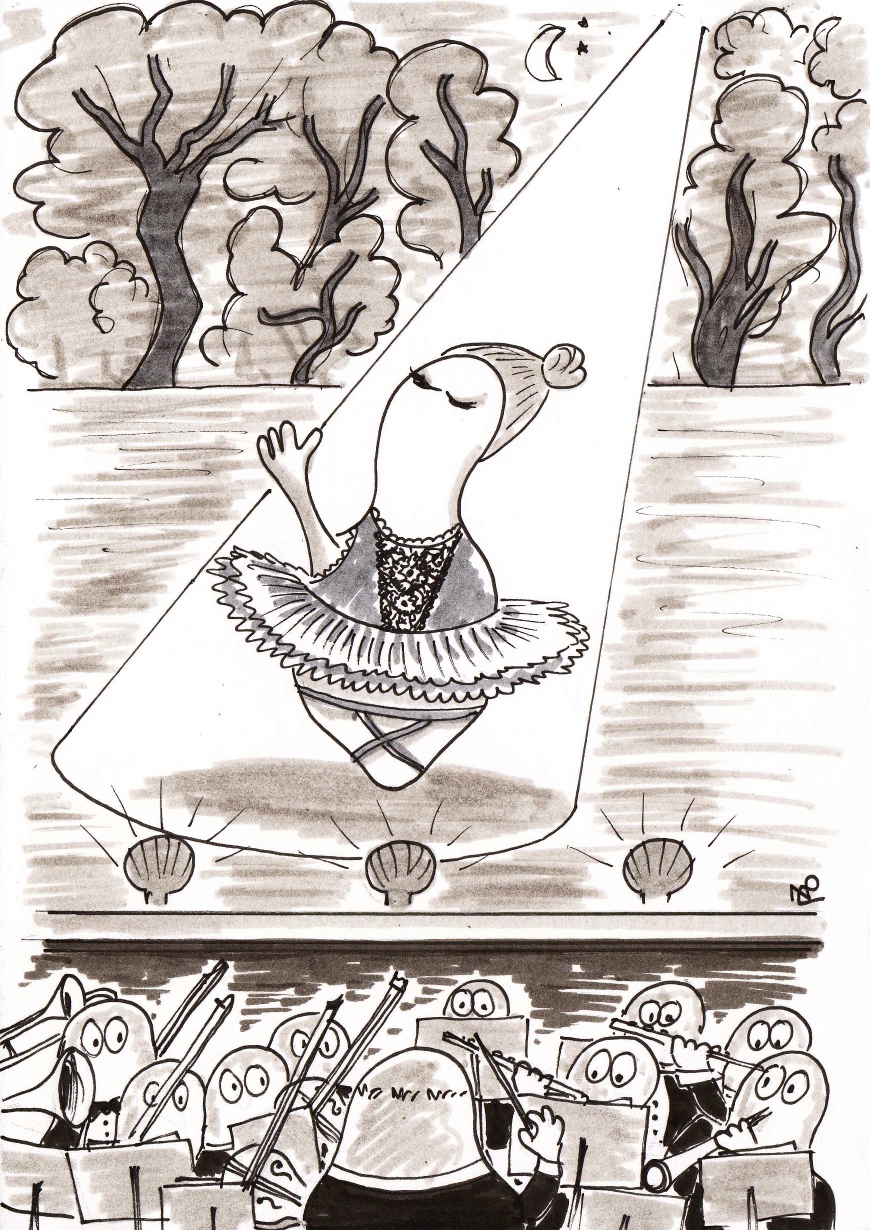
Ballet fever is in the air, well at least in my house, following Monday night’s Royal Ballet double bill spectacular The Dream/ Song of the Earth. Which got me thinking, what would happen if Norms danced the ballet? Well, the limitations are rather obvious. Unlike the sculpted muscular form of the human dancers, the use of which was applied to startling artistic effect in Song of the Earth, Norms are just blobby. This is fine for bouncing across the stage, and with one arm and wide eyes, they can even add a little dramatic expression into their dance. But as far as en pointe goes, the best a Norm can do is try to make themselves pointed… though the trouble then is they begin to resemble a spinning top rather than a ballerina, and we know what happens to the spinning top once it comes to the end of its revolutions. Oh well, you can’t say that the Norms don’t try. Here they are in the attempt, complete with a melodious Norm orchestra and a energetic Norm-ballet lift.

Ballerina Norm (2012 © Nicholas de Lacy-Brown, pen on paper)

The Norm-ballet lift (2012 © Nicholas de Lacy-Brown, pen on paper)

I’m off to live in the real world now. Until next time!

Lucian Freud Portraits

Roll up roll up for the 2012 London Cultural Olympiad. All the big wigs of the Brit-art A-list are in town, the banners are up, and the art posters line the saturated platforms of the underground as the PR machine goes into overdrive. As if in response to the cattle cry, the crowds have come to town –  the galleries are packed, the gallery restaurants have waiting times of over an hour, and the gallery shops are partitioned by huge queues of customers cashing in on memorabilia of these big-billed art shows. It’s all really quite stressful.

Next in line to meet my sampling eye was the Lucian Freud portraits retrospective at London’s National Portrait Gallery. Having been in the pipeline for some time, and organised in collaboration with the artist himself, the NPG’s exhibition gained additional poignance when, last July, Lucian Freud died at the ripe old age of 88. He did so working right up until the end, and his unfinished portrait of his studio assistant and dog hangs at the climax of the show.
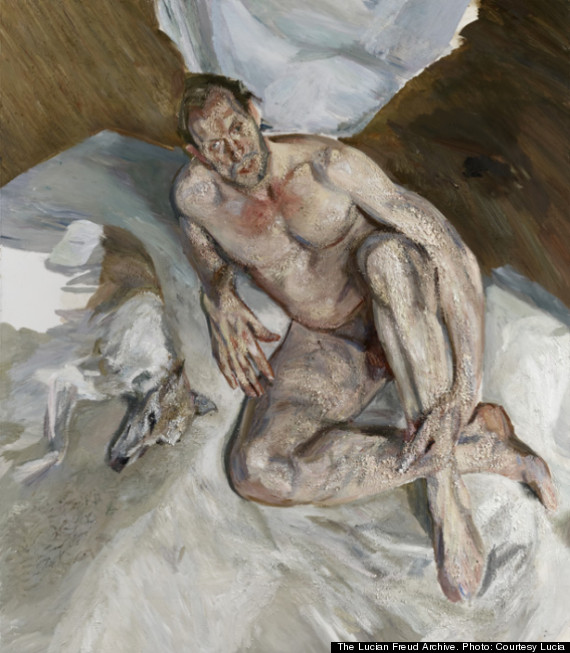
Portrait of the Hound (2011)

There is no doubting Freud’s stature as a preeminent star of British art. When his painting, Benefits Supervisor Sleeping, sold at Christie’s in New York for the sum of US$33.6million in 2008, it broke the record for the highest price paid for a painting by a living artist. It is consequently appropriate that he should be lined up along with the likes of David Hockney and Damien Hirst for blockbuster solo exhibitions which promise to showcase British art to the world. It is also appropriate that the show focuses on his portraits, for Lucian Freud is long associated with his unforgiving nudes, painted with a multi-layered impasto application of fleshy pale paint, striking often uncomfortable and usually unflattering poses, and portraying a deeply penetrated psychological profile cast free from boundaries, clutter or clothing for full and frank disclosure to the world.
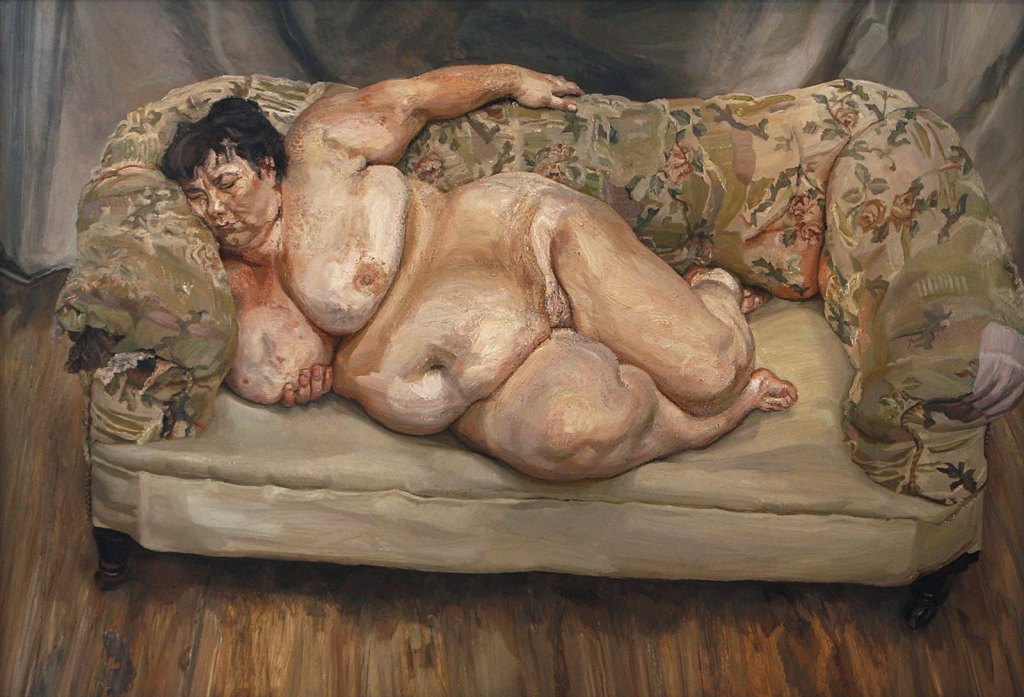
Benefits Supervisor Sleeping (1995)

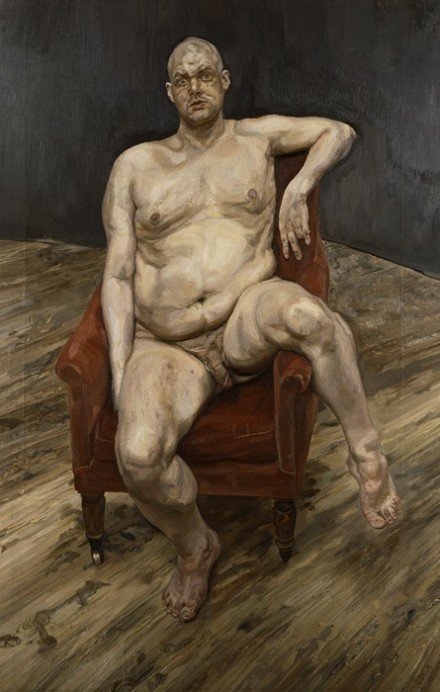
Leigh Bowery (Seated) (1990)

In this show, the NPG give us plenty of raw unabashed flesh to stare at, as Freud’s emboldened, unrepentant portraits confront the audience rather than seduce. In the galleries, there was an almost tangible electricity in the air, as the scale of the show and the sheer number of these awkwardly posed nudes threw light on the often disconcerting relationships between artist and model, the somewhat fragmented and awkward relationship between artist and children, and the range of dynamic but often slightly disturbing characters on show.

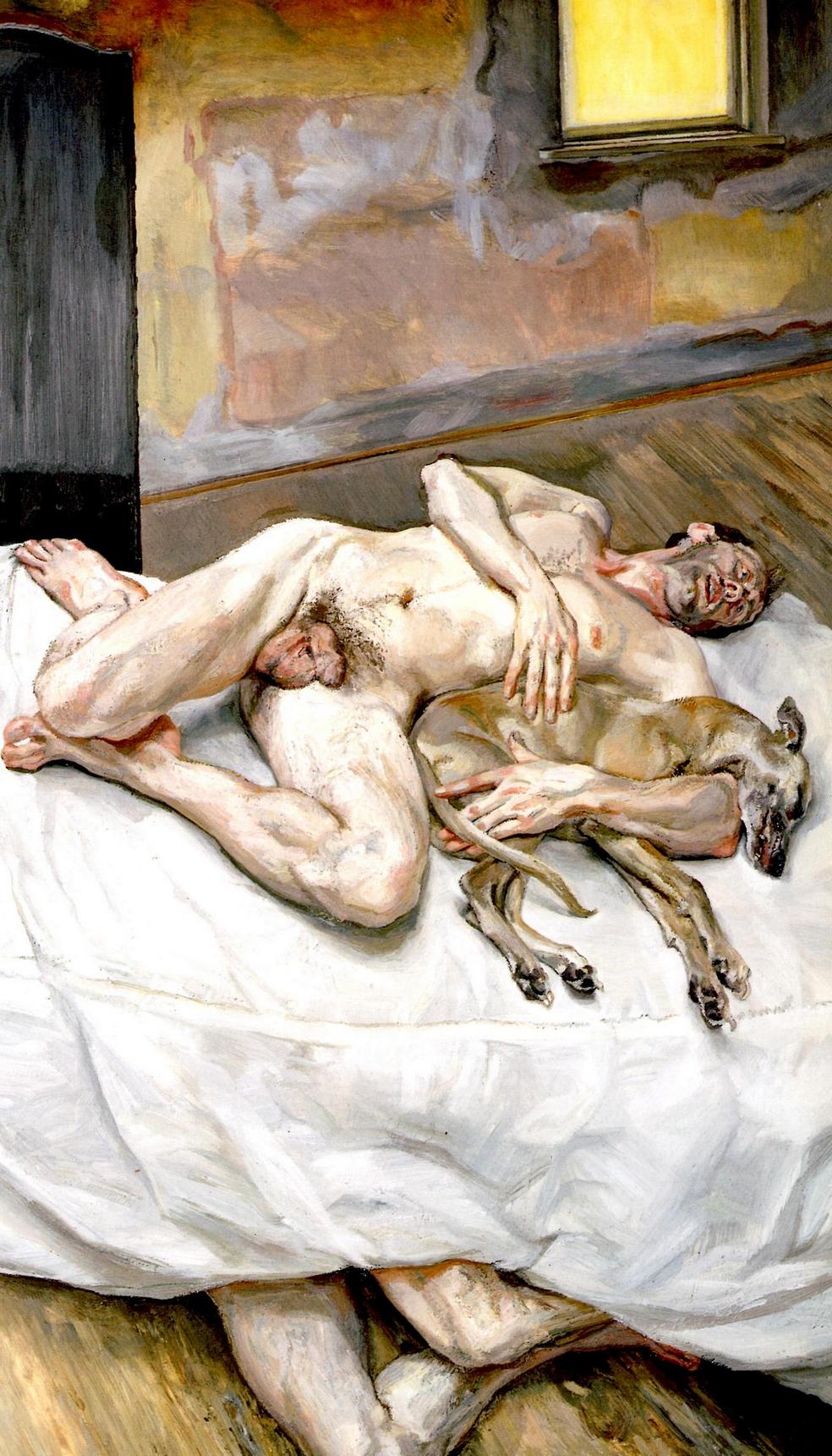
Sunny Morning - Eight Legs (1997)

The paintings are never going to be easy to look at, not least because these are not ideological nudes. This is not like looking at the beautifully blended, perfectly shaped backside of the Rokeby Venus (by Velazquez) and appreciating the aesthetics of the scene. These portraits depict ordinary people, with very ordinary bodies in no holds barred portrayal, pubic hair out, penises dangling, sagging flesh. It would be like walking along the street and seeing everyone naked, their legs parted awkwardly, their private parts on full view. It’s not easy to look at, but these portraits are undoubtedly fascinating to view, just because they are ordinary people – people who have bared all to the artist and, through him, to the world.

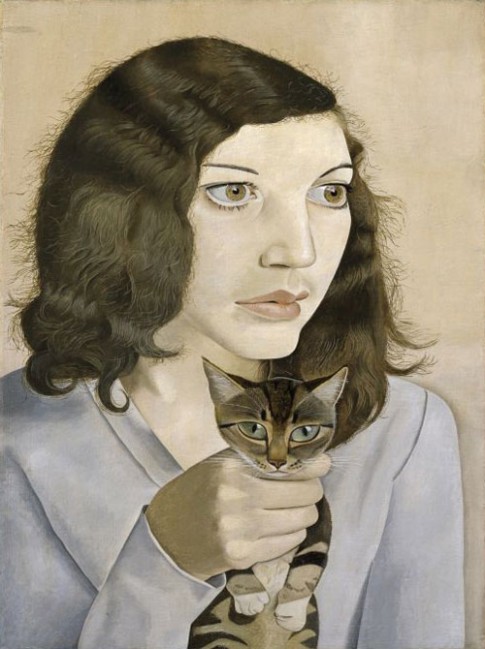
Girl with a Kitten (1947)

Nonetheless, emblematically Freudian impasto flesh asides, my favourite paintings were those from the beginning of Freud’s career. In this delightfully chronologically curated show, the first few galleries, while packed, showed Freud’s fastidiously executed, perfectly drafted early portraits, when he used very fine brushes and paid close attention to every detail. Thus in the portraits of his first wife, Kitty Garman, you can see every hair on her head, and in the portrait of her wearing a yellow gown (with boob unceremoniously flopping out), each fibre of that gown’s toweling texture is painted. As Freud’s portraits grew less detailed and Freud’s preference was for thicker sable brushes, he still paid close attention to a number of background factors in his work. In Interior with Plant, Reflection Listening (1968) for example, the leaves of the plant are painted with excruciating detail – every millimeter of the plant, from its shiny leaves and rough edges, to the dying leaves and dried up ends, are perfectly represented by Freud. His early paintings have lost none of their intensity in being scrupulously painted – the sitters look tense, and the widened eyes, typical of Freud’s portraits at that time, are full of emotional anxiety and unguarded vulnerability. From the very beginning, Freud had an exceptional talent for painting simple portraits loaded with dramatic tension and emotional complexity.

Girl with a White Dog (1950-51)

Interior with Plant, Reflection Listening (Self-Portrait) (1967-8)

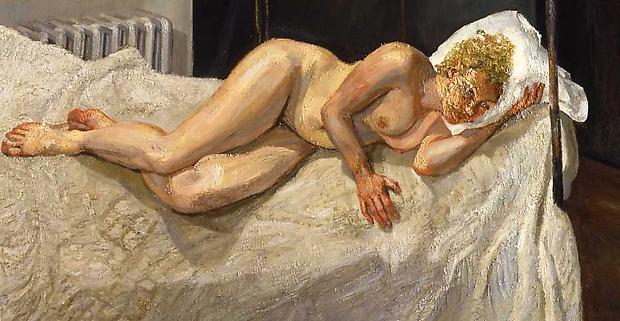
As the show goes on, the works become more ambitious and the nakedness more frequent. This is all very well, but what upset me was not the nudity, but the increased coarseness of Freud’s finish. From his Benefits Supervisor onwards, the texture of his paint finish becomes more and more lumpy which really made my stomach turn. In his 2007 portrait, Ria, Naked Portrait, the face of Ria appears disfigured by a mass of lumpy built up textured paint on her face, which looks more like the affliction of some terrible skin disease. The effect is the same in his final, unfinished painting, Portrait of the Hound (above) where the face of his studio assistant appears contaminated by the same warty contagion. It’s an unpleasant finish which rather repulsed me as I walked away from this show.

Ria, Naked Portrait (2006-7)

Still, this messy end did nothing to dissuade me of the overall merits of this show, and the superb skill which Freud demonstrated throughout his career. Through his paintings, he has created self-contained independent souls who appear to jump from the canvas and steal the attention of the viewer. In this way, Freud leaves behind a multifaceted legacy which will live on wherever his portraits hang. In the meantime, this opportunity to see so many hung together is truly a must-see, and so much more fulfilling than 5 million purple trees lauded down the road in Piccadilly.
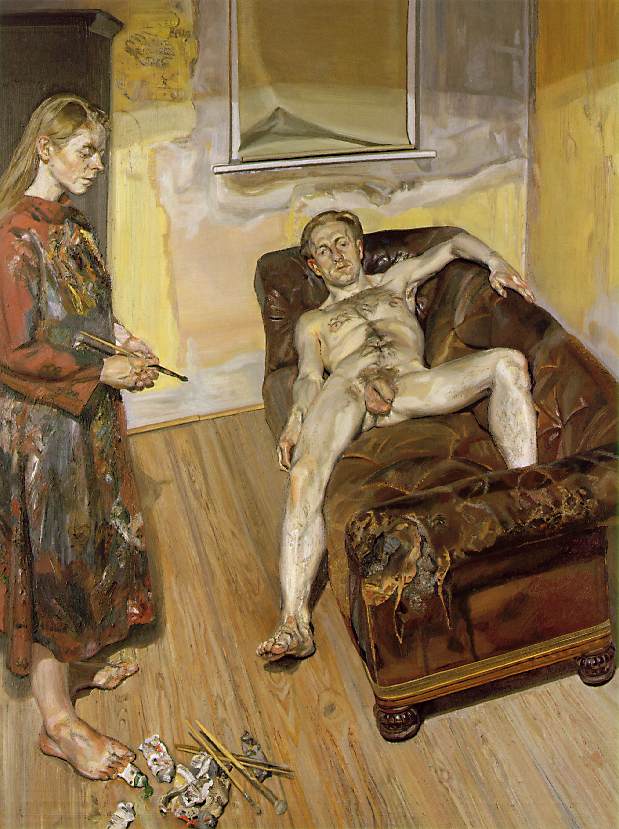
Painter and Model (1986-7)

All images above are the copyright of Lucian Freud.

The Daily Sketch: Bikes, windmills, and other Dutch clichés

As clichés go, those adhered to The Netherlands aren’t bad at all. While the English are ascribed with being larger louts, football hooligans, eating big fry-ups for breakfast and  imperialistic tendencies (notably continuing into the modern day with the British takeover and generalised destruction of infamous beach resorts all over the Med such as Magaluf, Benidorm and Corfu) the emblematic symbols of The Netherlands include environmentally friendly windmills, fragrant and colourful tulips, and even more conscientious bicycle travel. All very appropriate at this time of year, when we seek to cast off our winter blankets and look forward to the Spring (it is March 1st after all!).

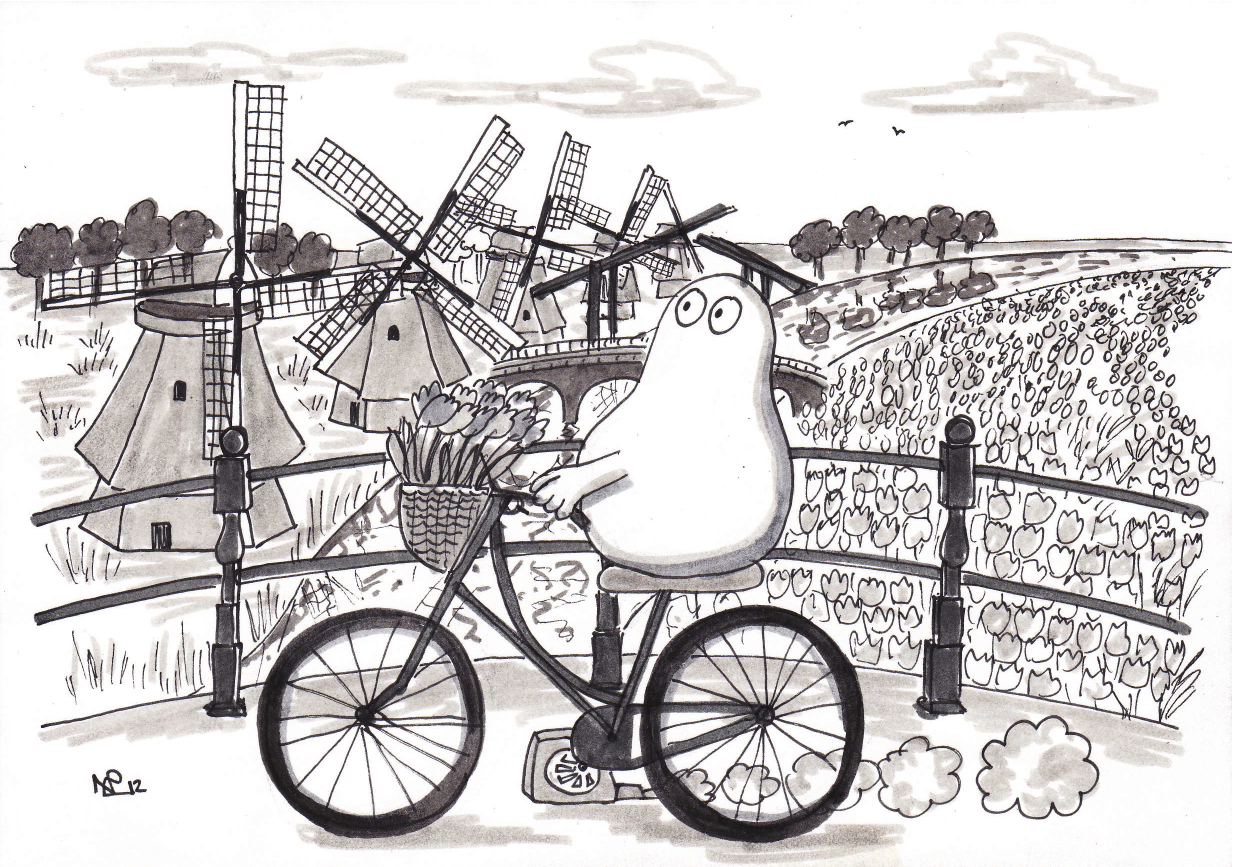
Being, as ever, the traditionalist, when Norm is in Rome, he does as the Romans do. Well then, in Holland, Norm has hopped on to a bicycle, purchased a bunch of tulips, and is surveying the local flat Dutch landscape with its fields full of multicoloured tulips and canal side working windmills. The only problem is, Norms can’t ride bicycles like the rest of us do by virtue of the fact that they don’t have legs. Their solution? Why, a motorised bike of course, puffing away, giving the bicycle all the kinetic energy it needs to traverse these pancake-flat lands. All the Norm has to do is steer  (although with only one arm, steering can be a struggle too I might add). That motor does somewhat takes the environmental out of cycling though. Well it was a good try Norm.

Norm on a bike in Holland (pen on paper, 2012 © Nicholas de Lacy-Brown)

The Daily Sketch: The age-old problem of how a Norm should wear a Clog

Today’s Daily Sketch deals with the age-old problem of how a Norm should wear the good old dutch clog. It certainly is a dilemma. They’re everywhere in Holland, in every souvenir shop and market, hanging from the ceiling in charismatic old cafés and flashed around on postcards as the ultimate emblem of jolly dutch heritage. They’re so tempting in their multicoloured curvaceous form, with their pointed toes and super reflective varnished finish. And the hollow clop-clop sound they make when they’re walked in is just glorious. You can understand the Norms’ disappointment then, upon buying said clog, full of promise, yet lacking instructions about how a Norm should utilise the wooden shoe to any kind of practical advantage. Norms don’t have feet you see, and try as they might to mould their bulging blobby form into feet shape, they just don’t fit. They’re tried balancing clogs on their heads, but invariably they fall off. Even worn as a dangly earring they are rather cumbersome.

The age-old problem of how a Norm should wear a clog (2012, pen on paper © Nicholas de Lacy-Brown)

The solution: why, buy an extra large clog of course (and they do come in all sorts of multifarious sizes). Then the clog really comes into its own! Here is a Norm using his clog as a skier-come-tabogan – the benefits are obvious, as that smooth varnished surface glides over the ice cold snow, the curvaceous form creating a streamlined surface built for speed, and the curved up middle providing Norm with the perfect protective wind shield. After all, how else could a Norm ski, sans feet? But this is just one example. Clog boat? Clog canoe? Clog bed? The possibilities are endless.
...And the Solution: Get a Large One (2012, pen on paper © Nicholas de Lacy-Brown)