Skip to content

Posts tagged ‘Baroque’

Hampton Court Palace, Part 2: Bipolar Palace

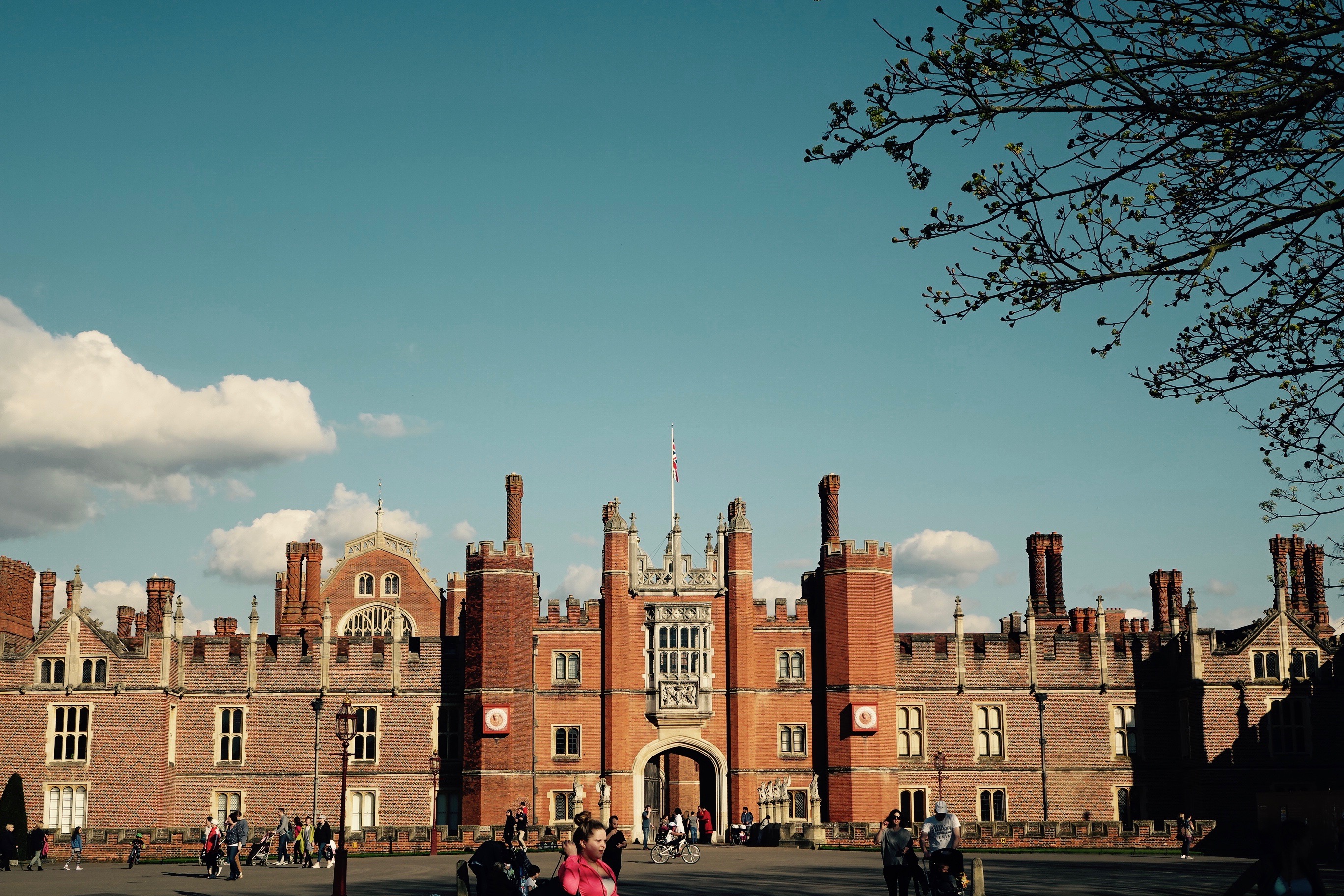
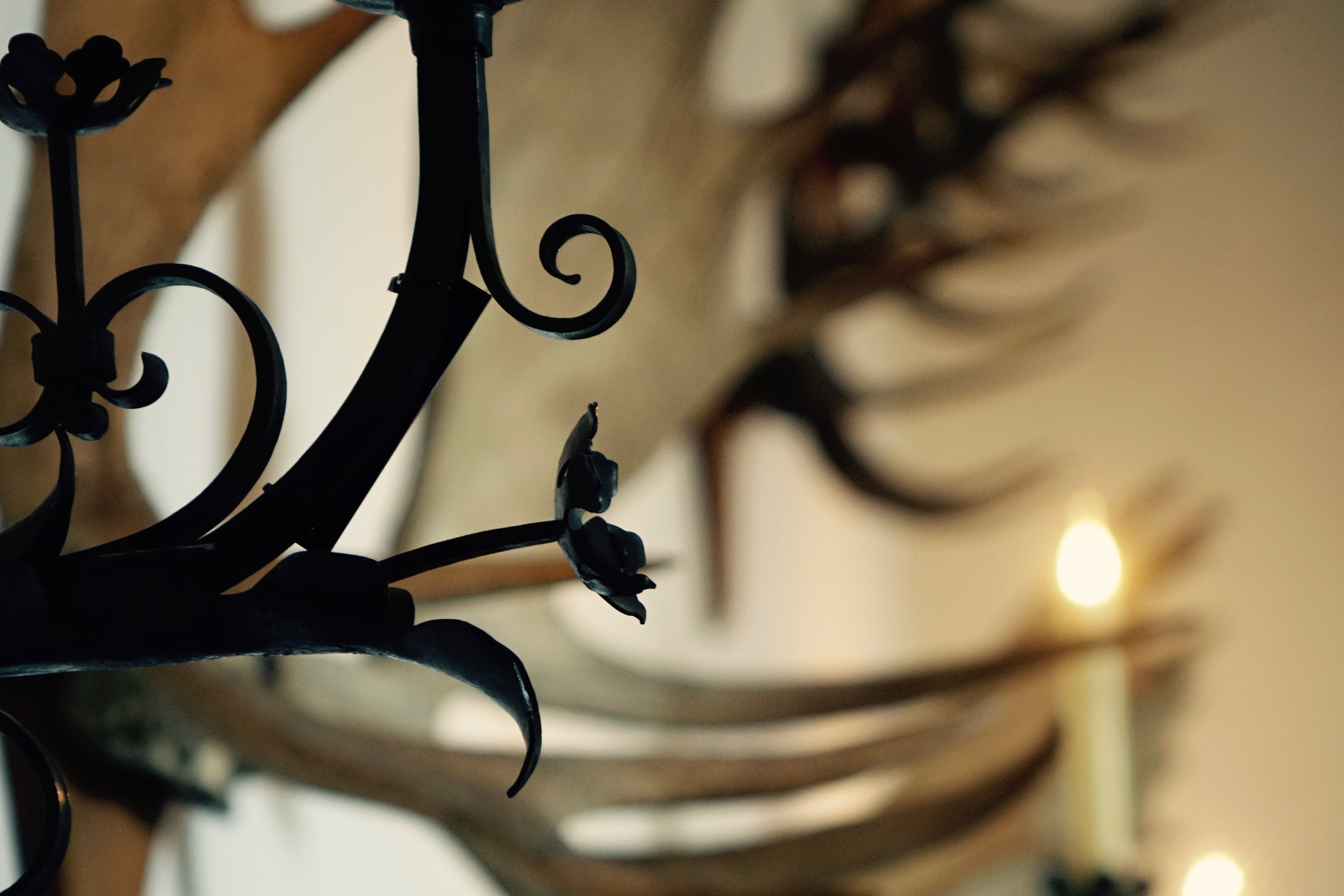
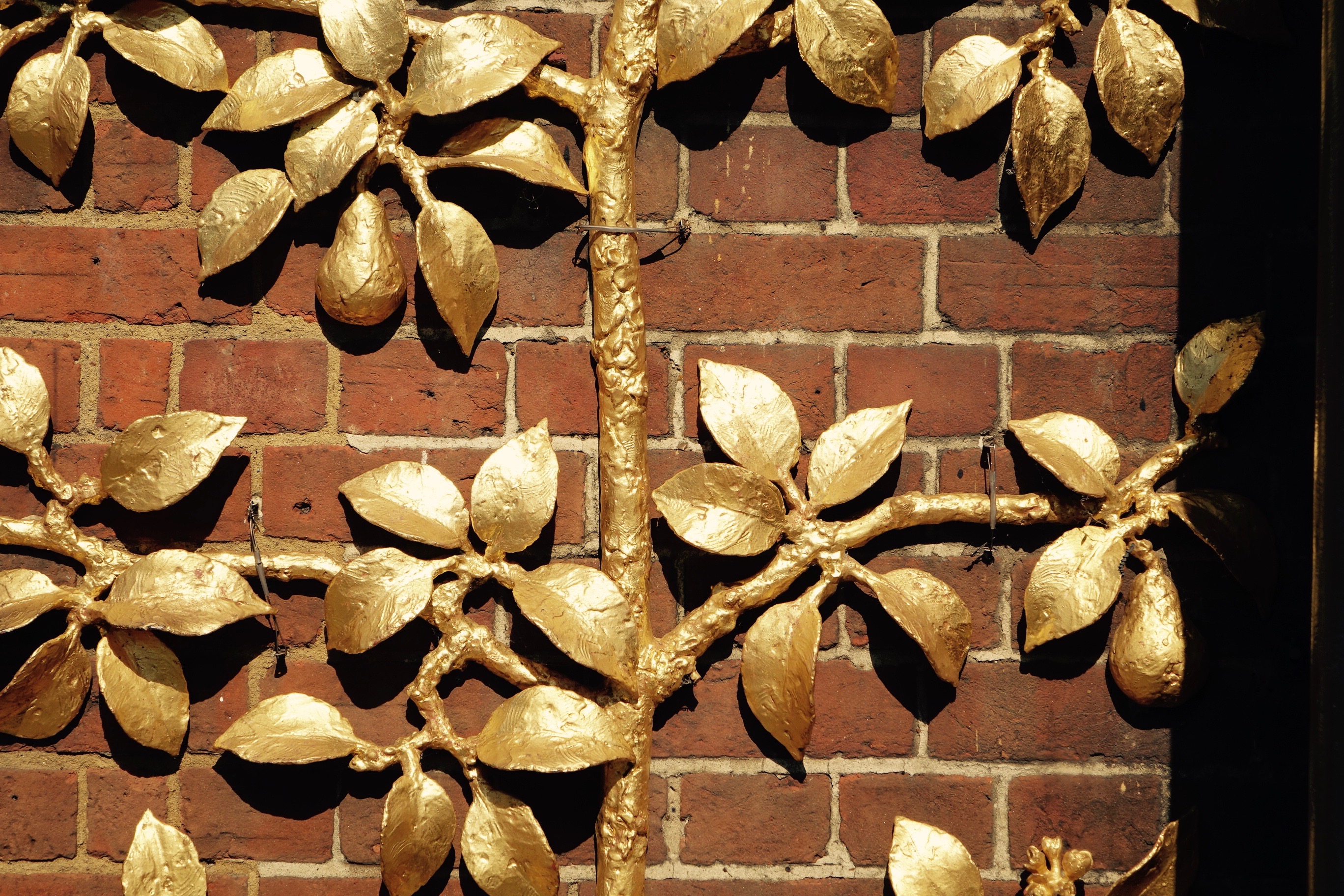
For me, Hampton Court Palace is all about its gardens, or at least it certainly was when I visited, and outside the fragile glass which history has maintained within the ancient woodwork of the Palace’s hundred-fold windows, the sun shone with a rare early glimpse of British Summer in Spring. Yet there is something unapologetically festive about the hallowed halls of the Tudor-come-Baroque palace, which I’m sure on a colder day would be all the more enchanting. For Hampton Court Palace has the power to ensnare like no other.

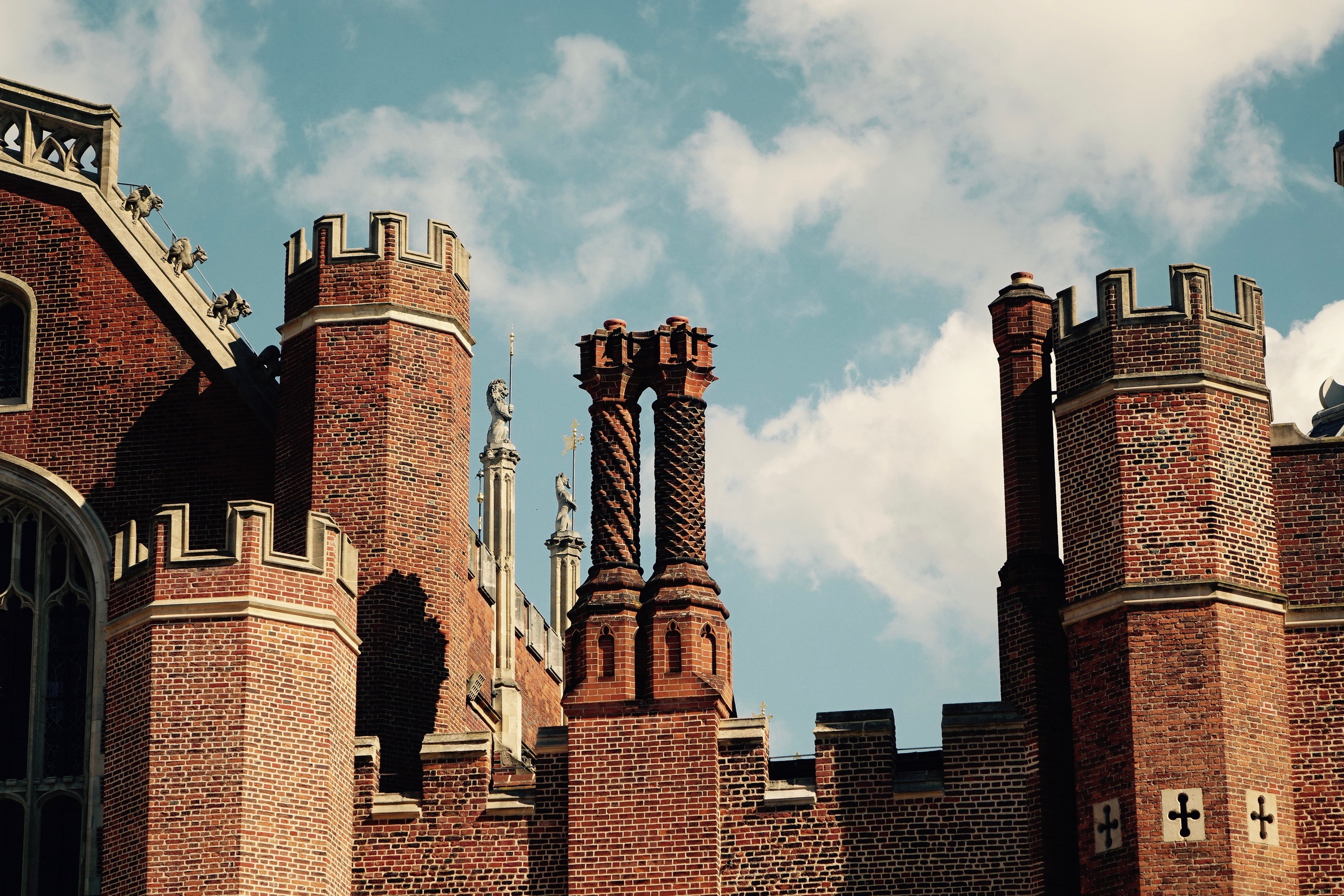
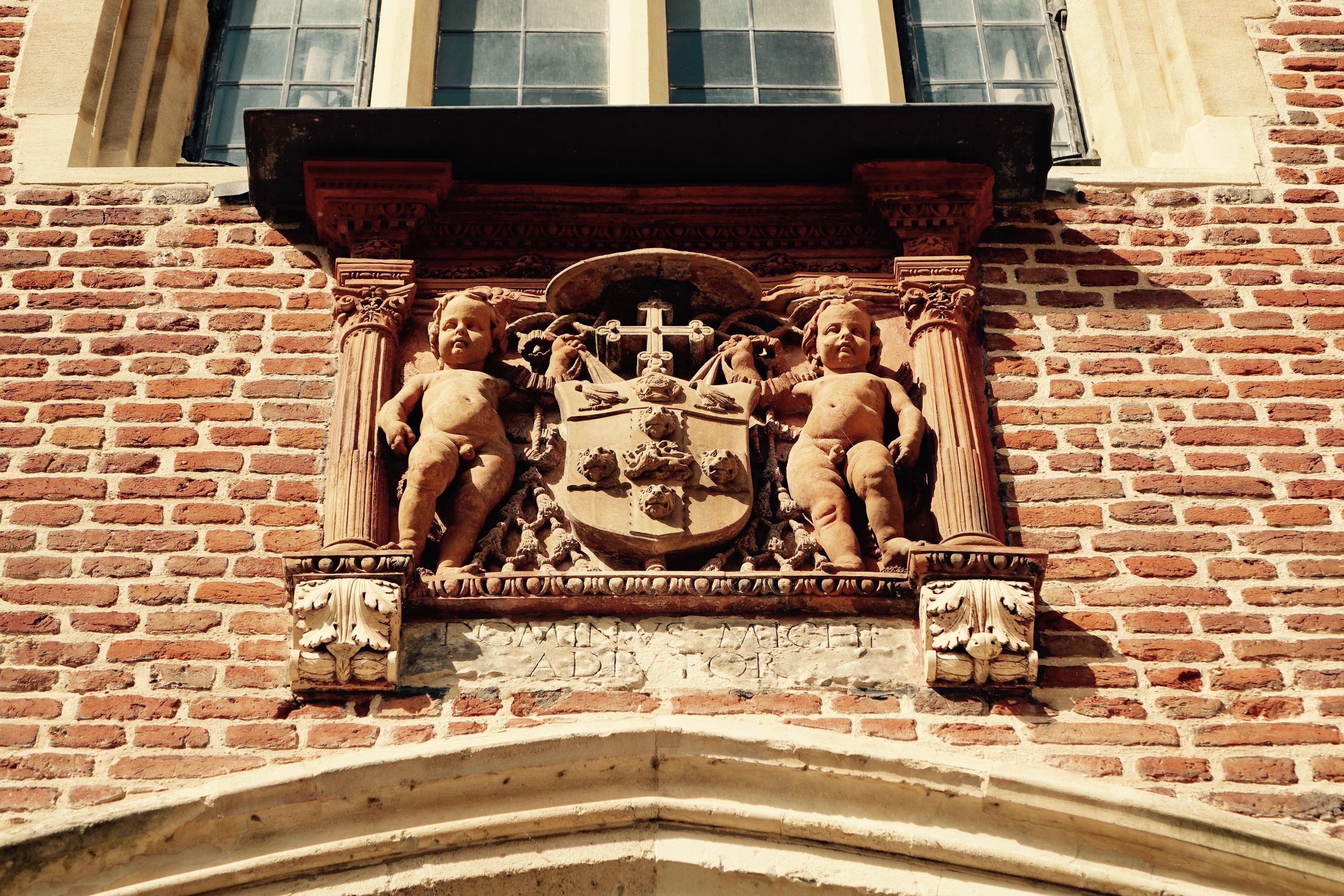
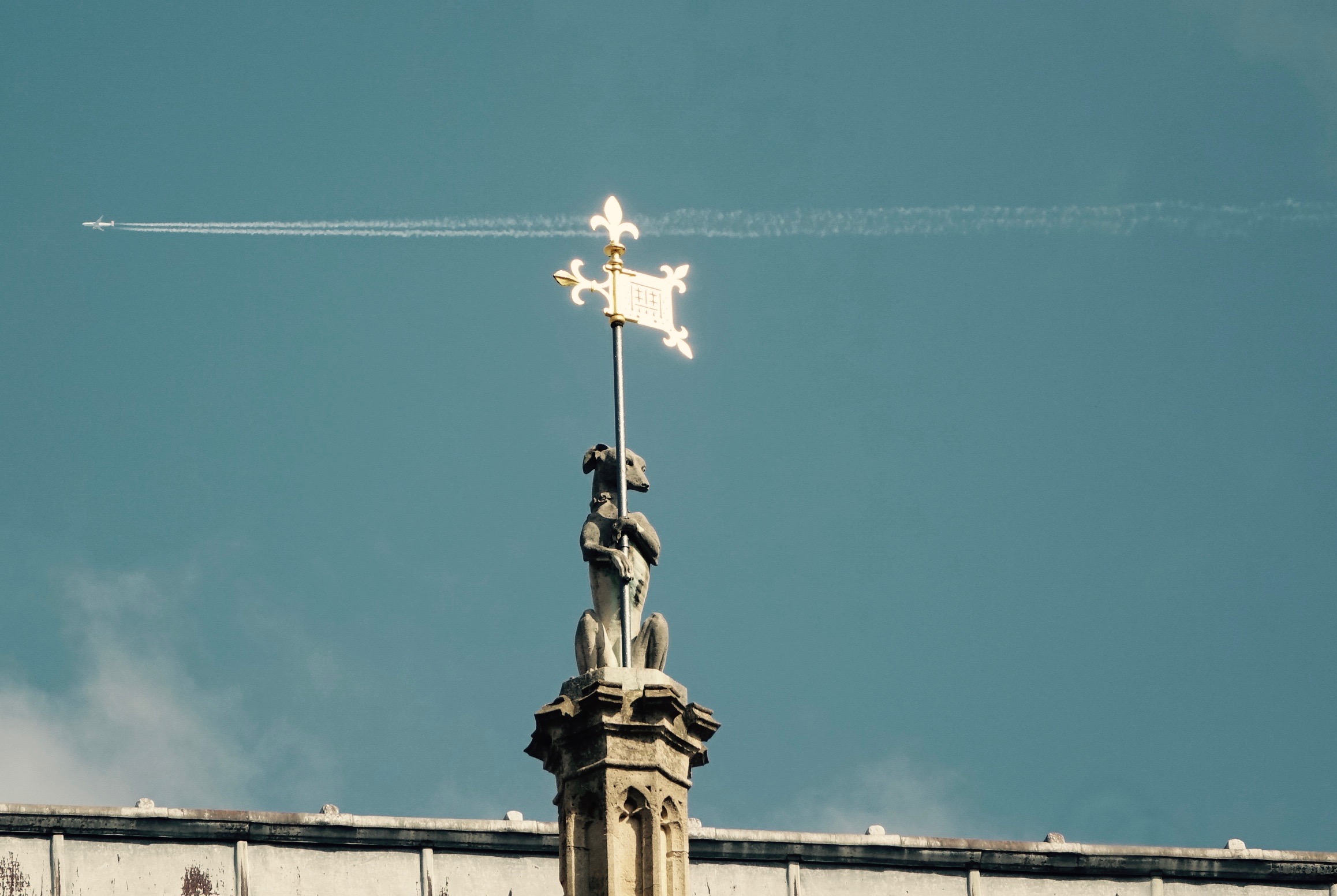
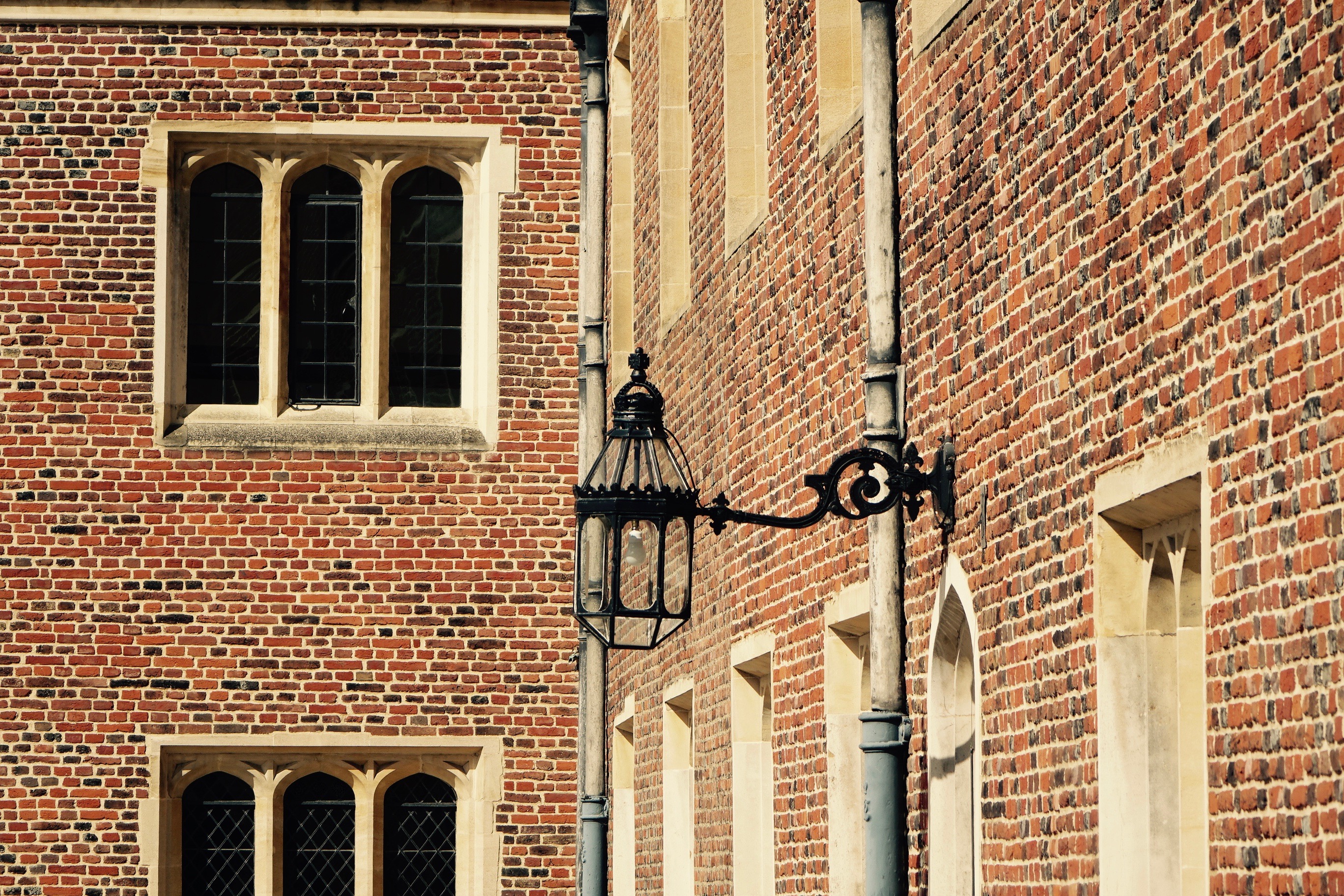
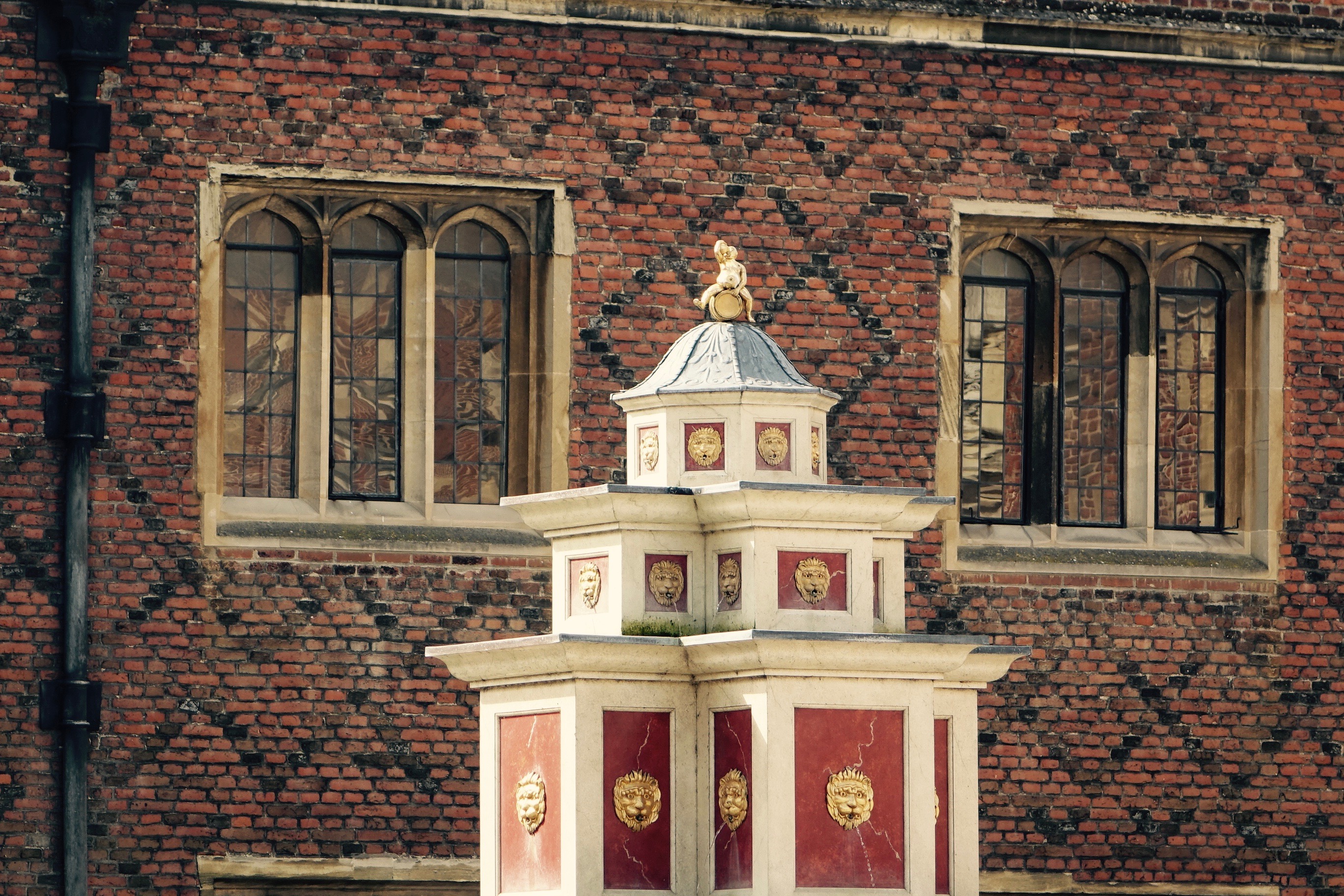
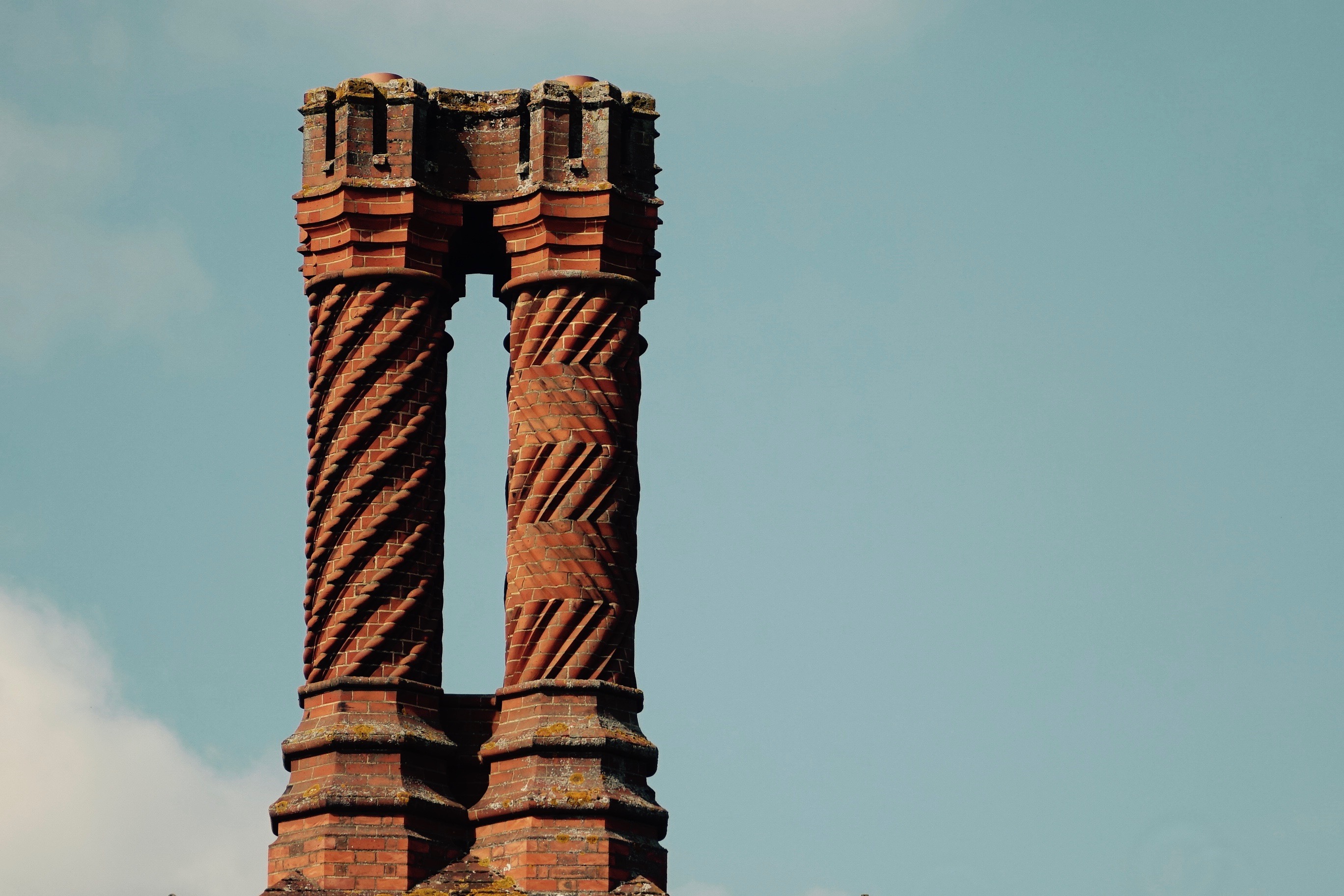
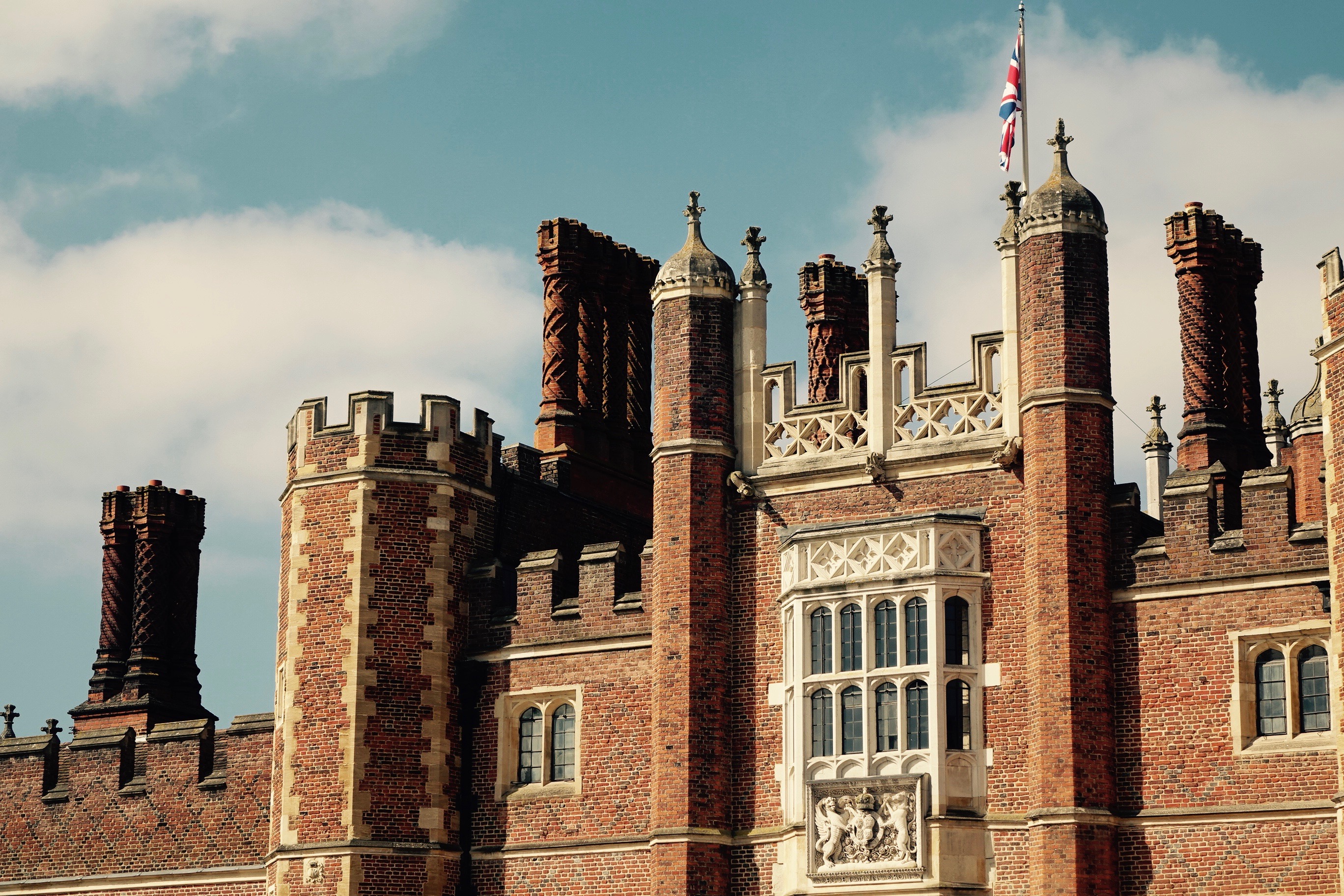
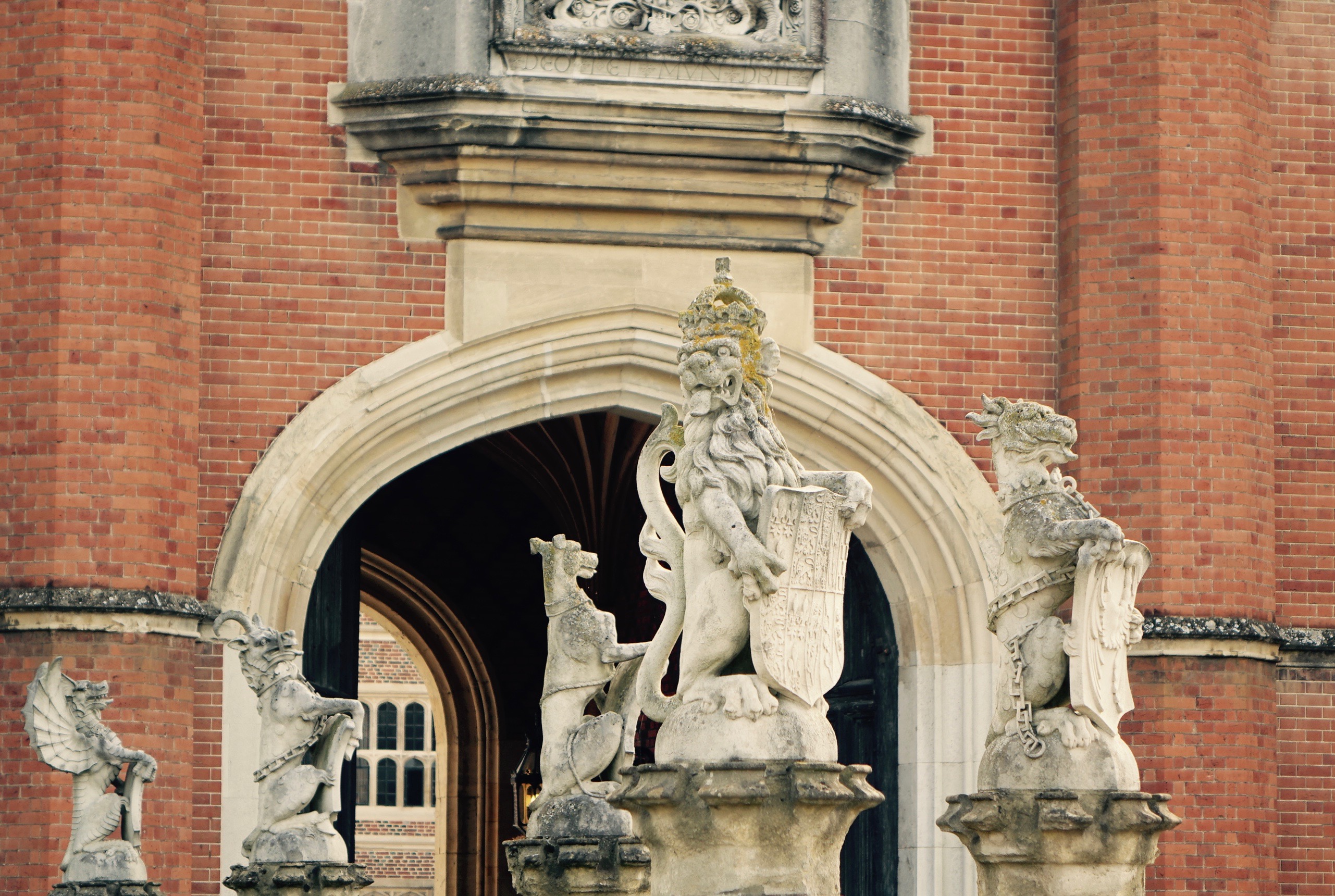
Tudor exteriors

DSC08136DSC08090DSC07987DSC07832DSC07731DSC07736DSC07725DSC07732DSC07729DSC07727DSC07726DSC07709

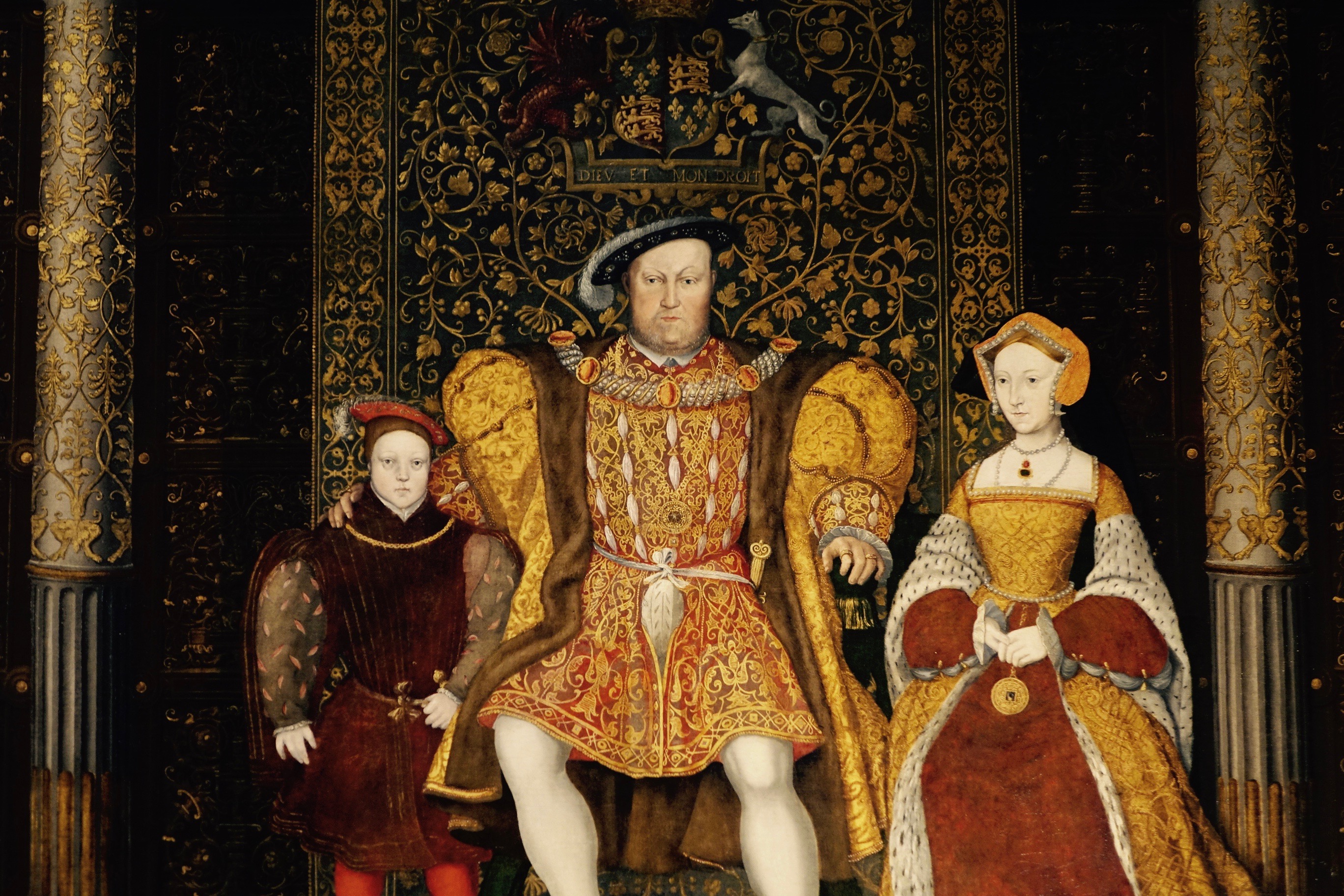
First it is characterised by the glamorous myth which surrounds the British Tudor Dynasty. Whether it be the 6 wives of Henry VIII who were either divorced, beheaded, died (naturally) or survived, the great religious schism triggered by Henry’s thirst for a male heir, the very bloody Queen Mary, or the flame-haired majesty of England’s favourite Queen, Elizabeth I, the Tudors are the stuff of legends, not just in English classrooms, but around the world. Seen as the very archetype of Britain in the Middle Ages, Hampton Court Palace was, and remains, the backdrop of that tumultuous time, and today its walls literally echo with wealth of that history, ghosts and all.

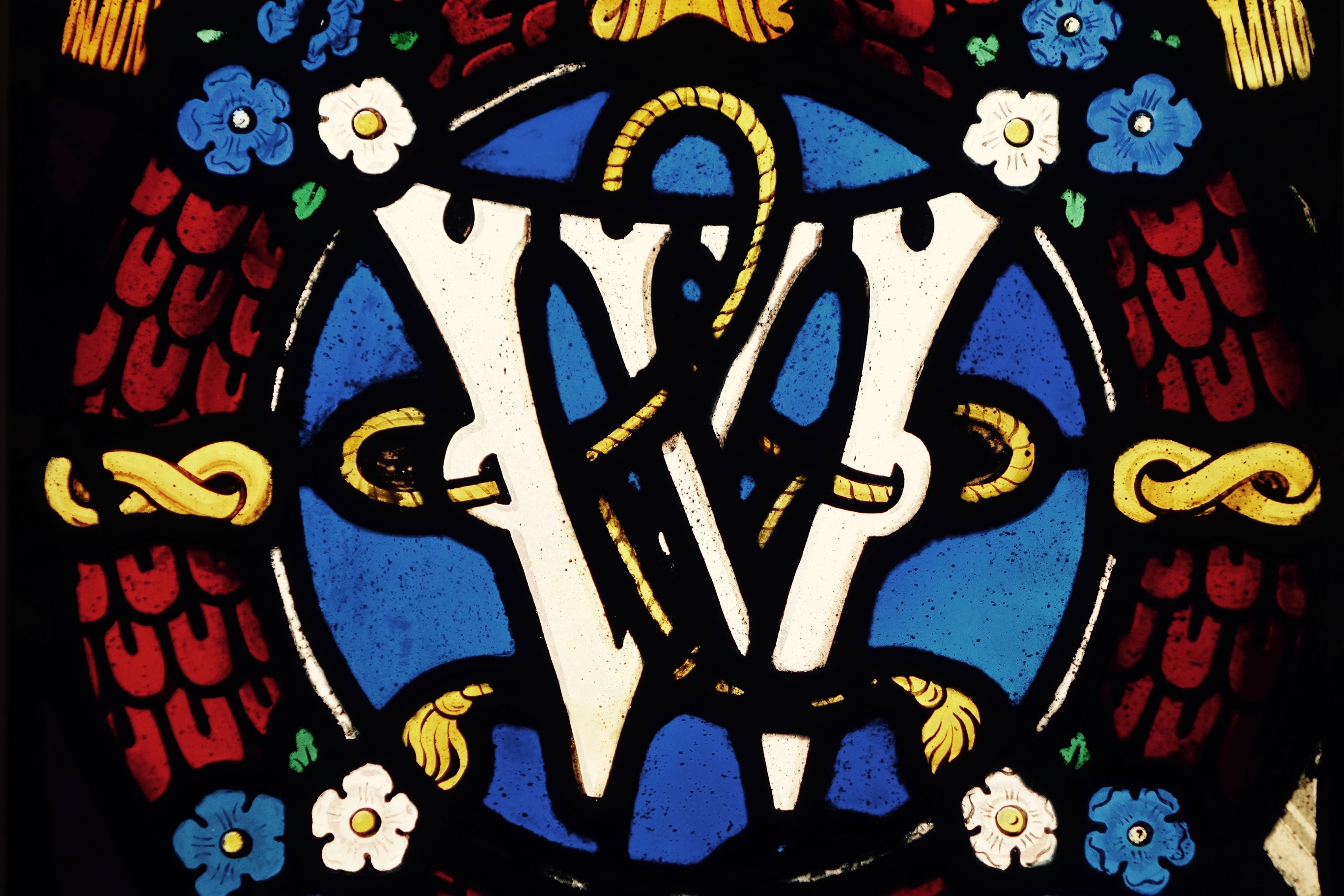
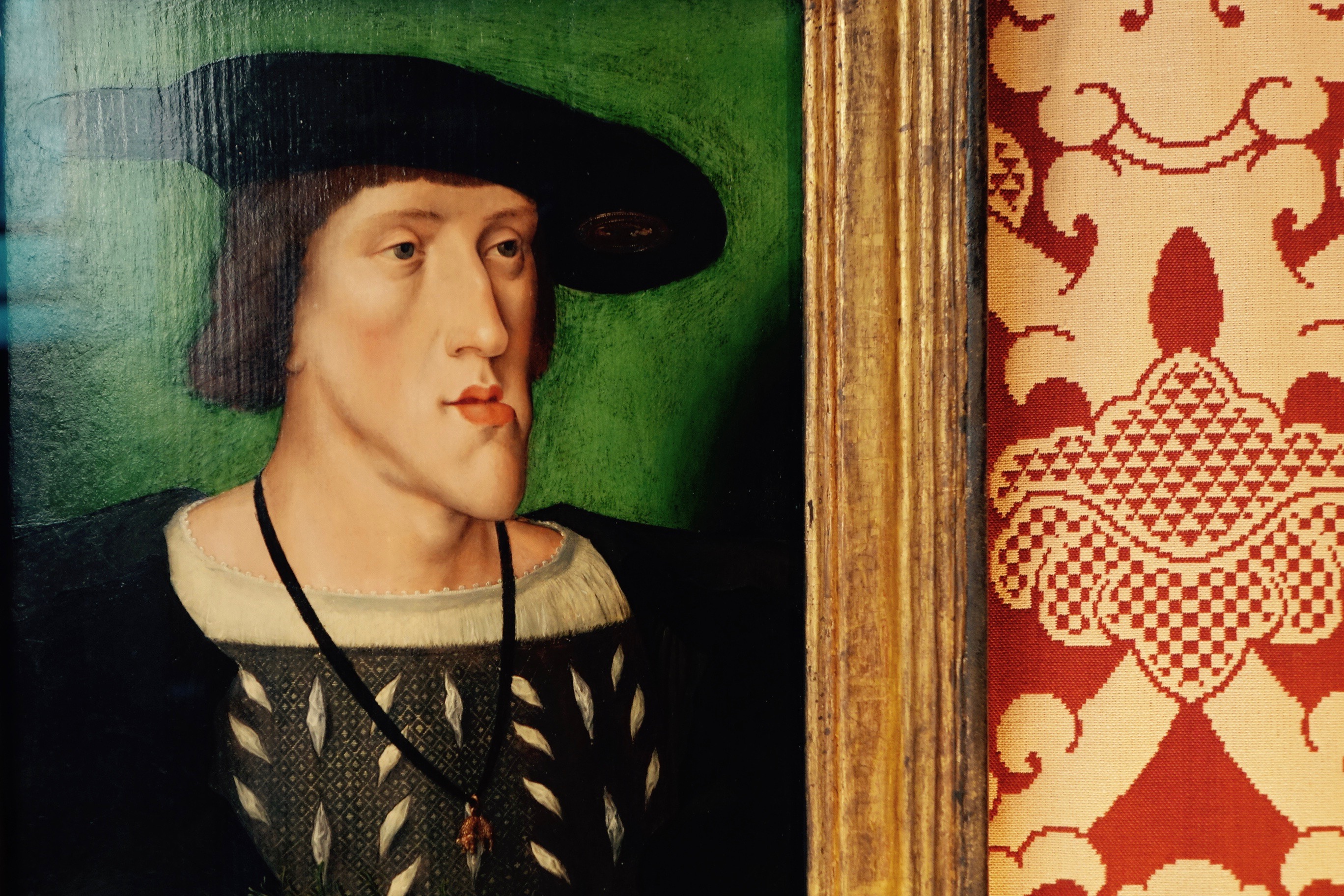
Tudor interiors

DSC07990DSC07769DSC07777DSC07775DSC07772DSC07767DSC07766DSC07760DSC07756DSC07752DSC07741DSC07765

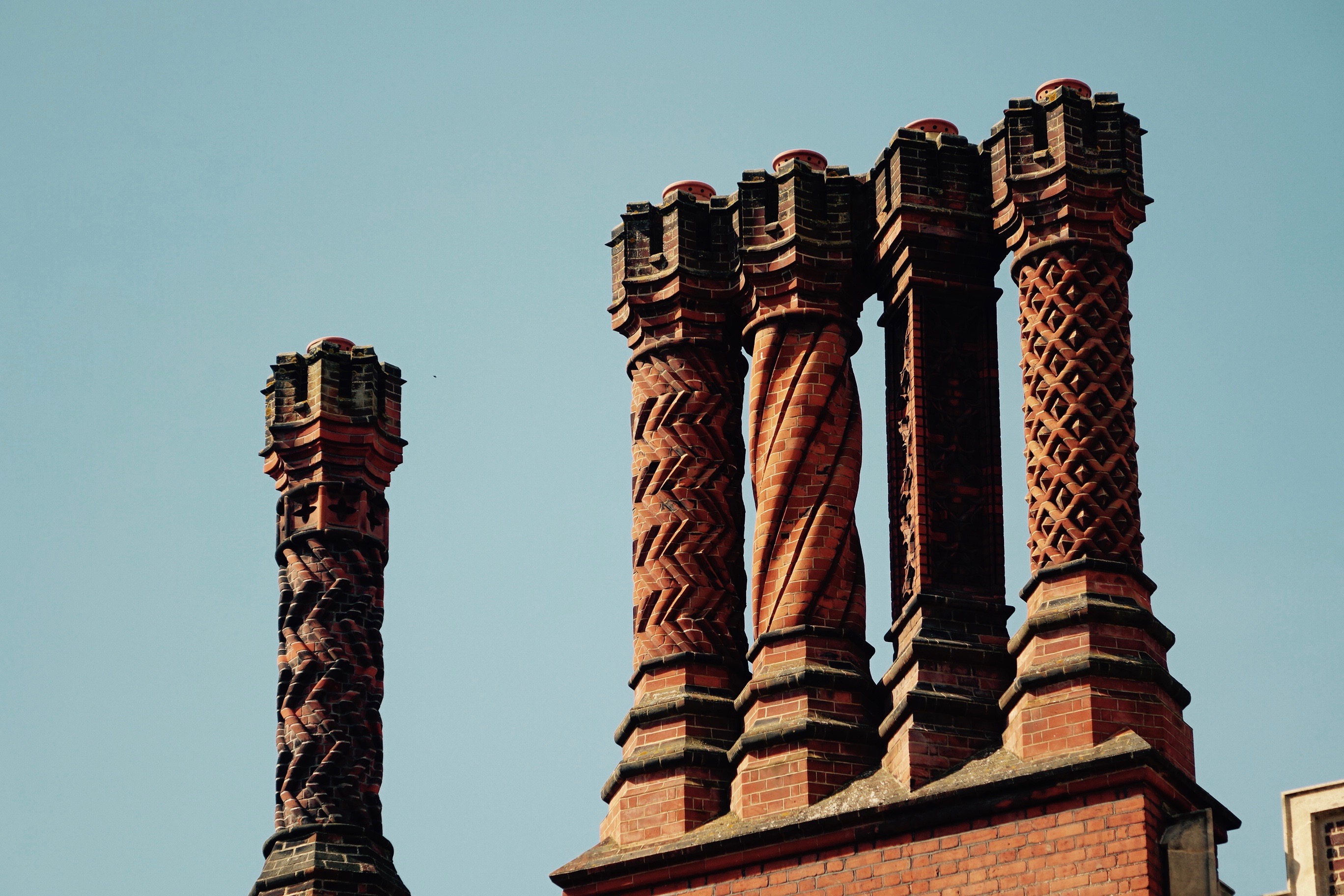
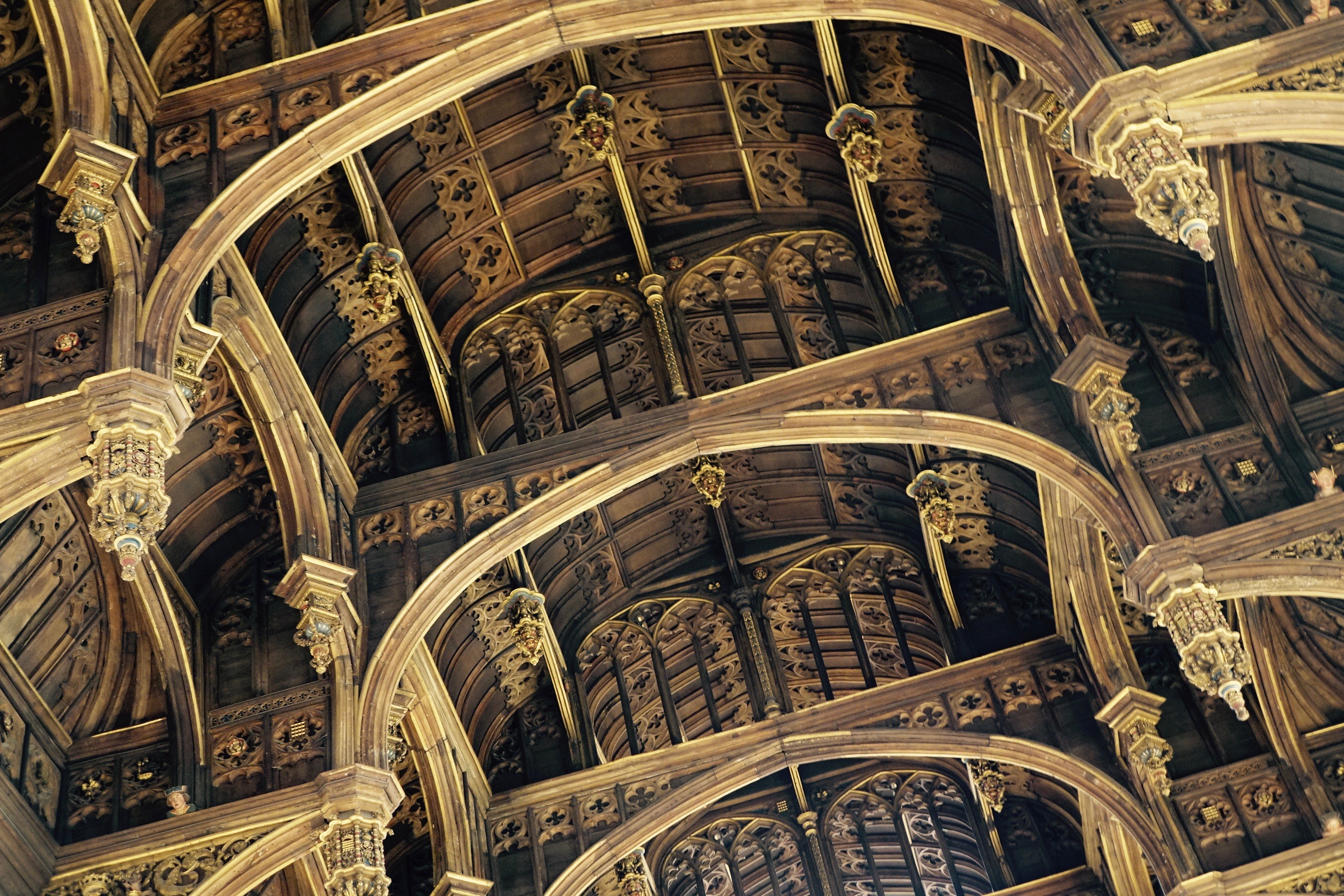
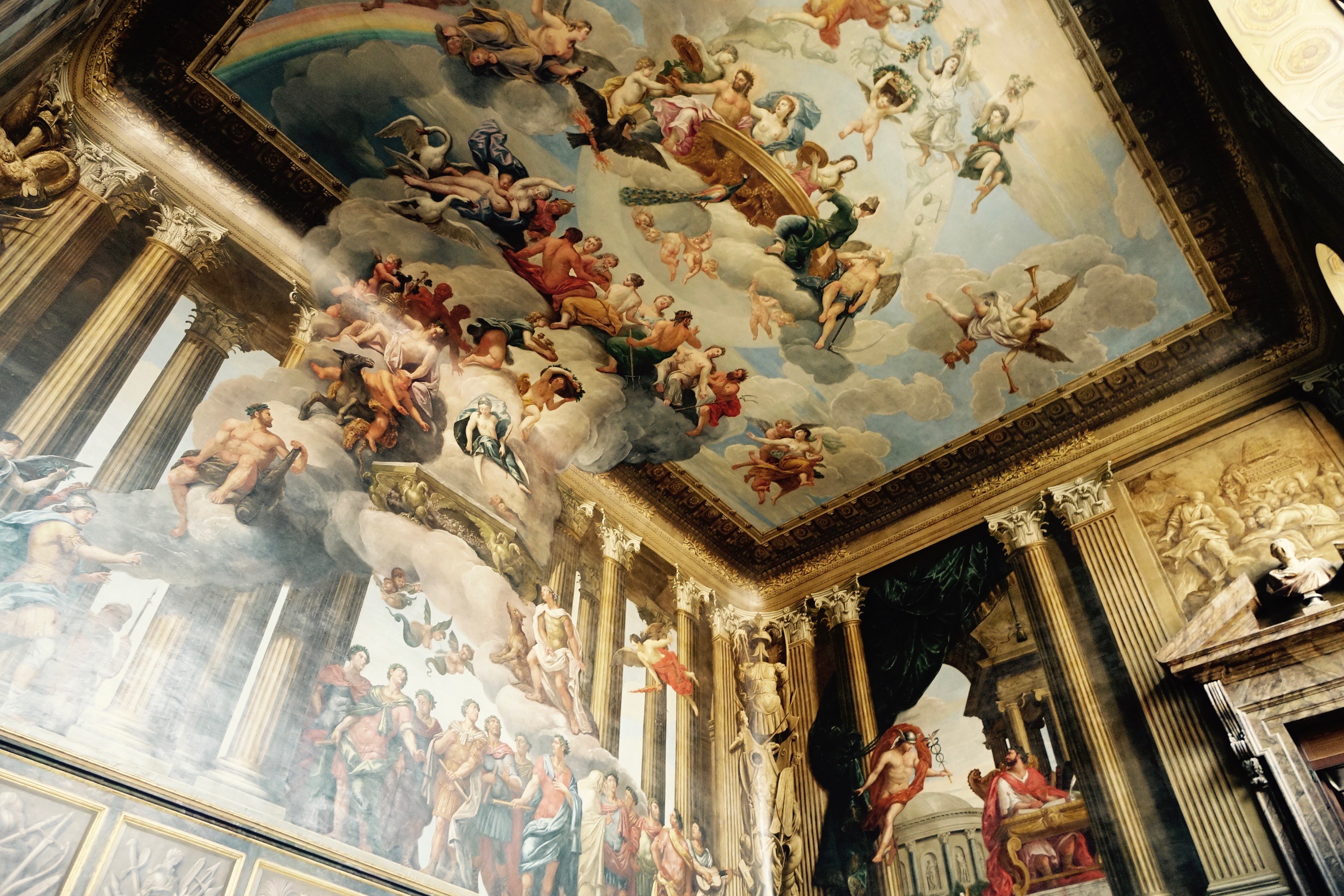
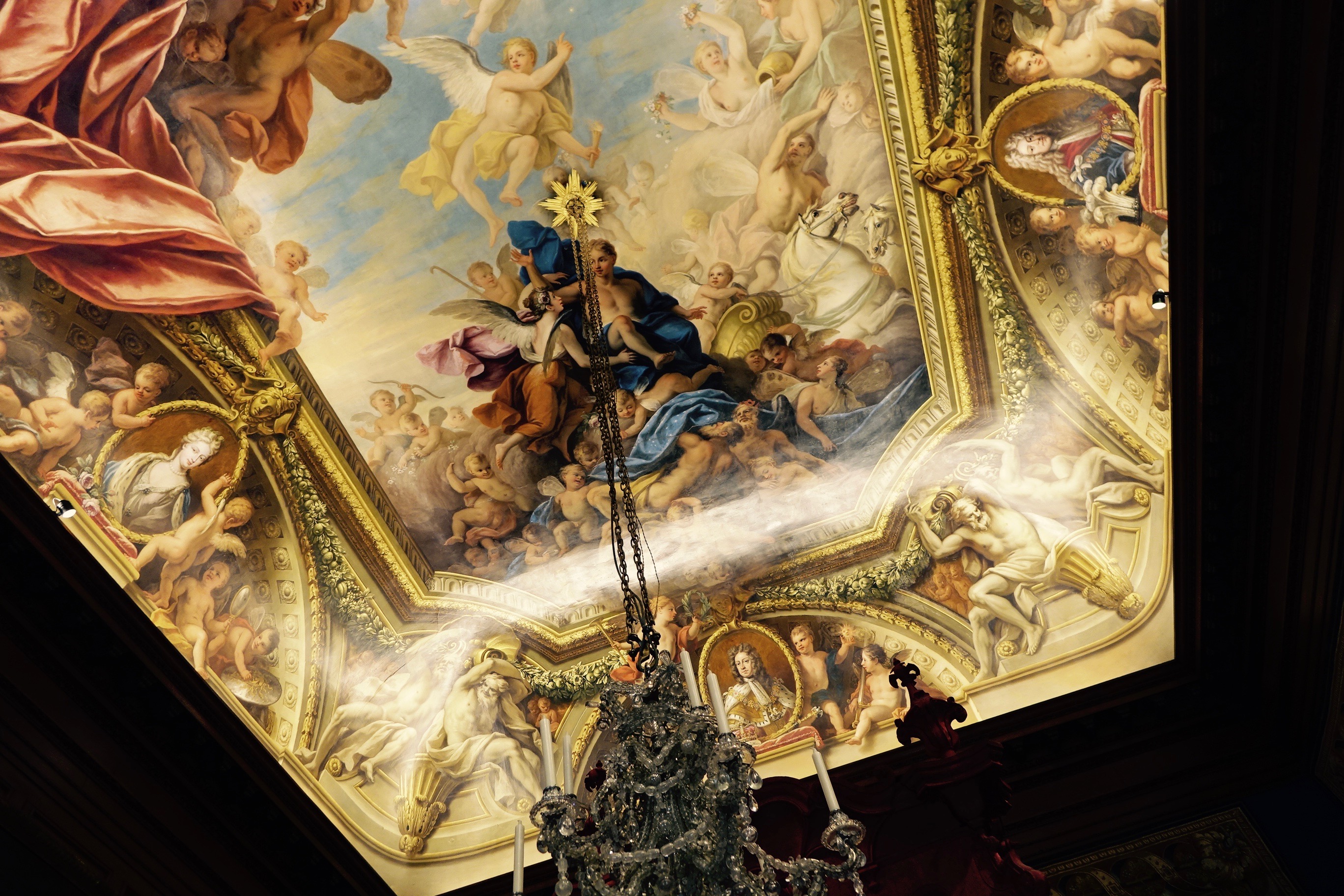
Secondly, the Palace is enticing because of its dual personality. A very Tudor entrance, a grand hall and a suite of wood panelled, stained glass rooms lead swiftly on to a complete architectural about-turn, as the gothic metamorphoses into the palatial Baroque, and a construct more akin to Versailles emerges from behind the forest of Tudor chimneys. This great change was the result of a complete renovation project began by King William and Queen Mary of Orange when they moved into the palace in the late 1600s and who felt the need to modernise, largely to compete with the Sun King in France. Sweeping aside whole swathes of Henry VIII’s palace, they replaced it with a grand symmetrical construct based around quadrangles of triple rowed grandiose windows, elaborately frescoed interiors, and a new landscape of neatly geometric flowerbeds and fountains. However they ran out of money before the restauration was complete, and it is for this reason that today’s Palace is the hybrid of Tudor and Baroque, something for which we must be grateful – how else could we explore a slice of the grandeur at the heart of the Tudor Dynasty which today remains so remarkably intact.

The Baroque alter ego  

DSC07981DSC07847DSC07841DSC07834DSC07829DSC07827DSC07796DSC07792DSC07785DSC07782DSC07779DSC07821

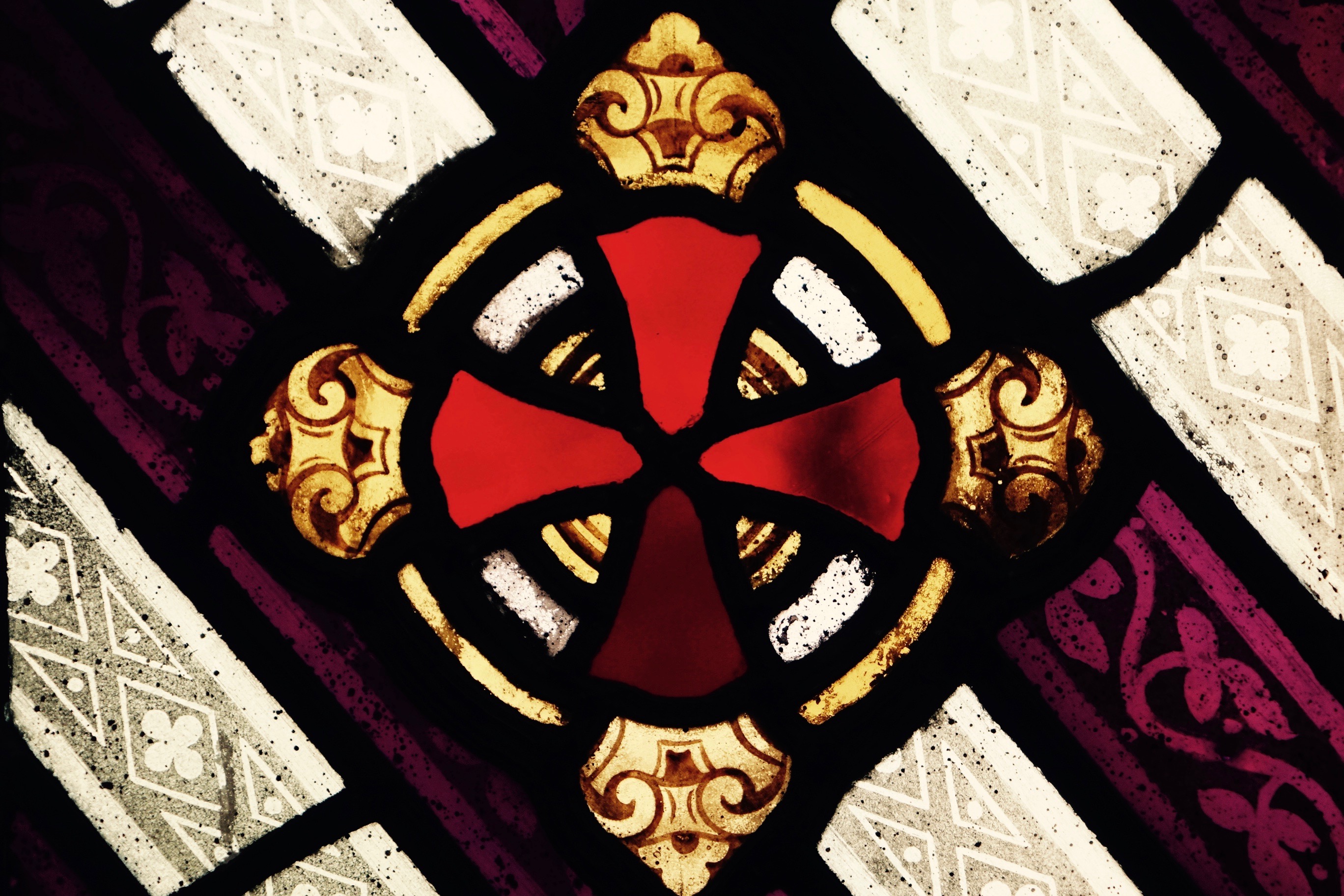
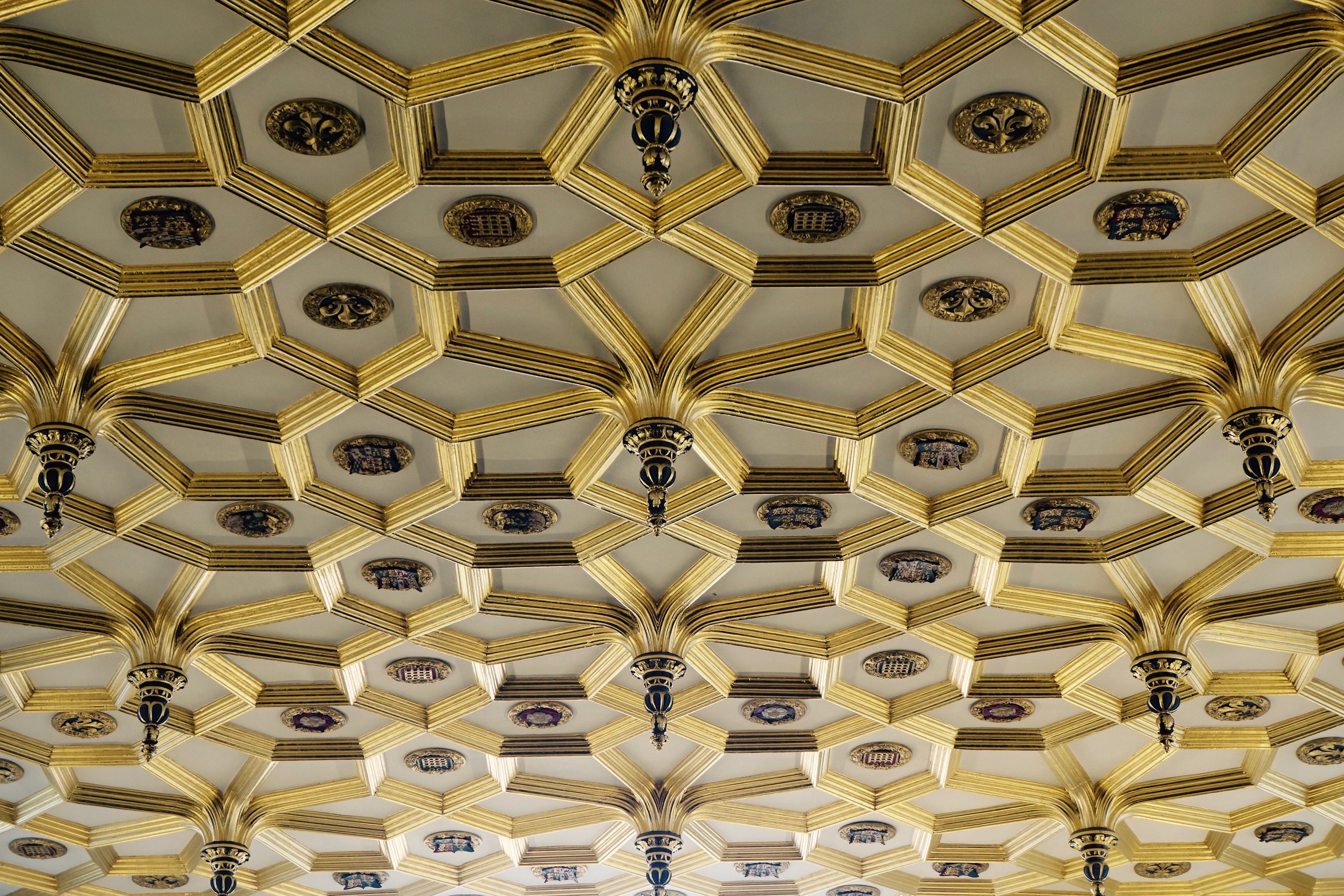
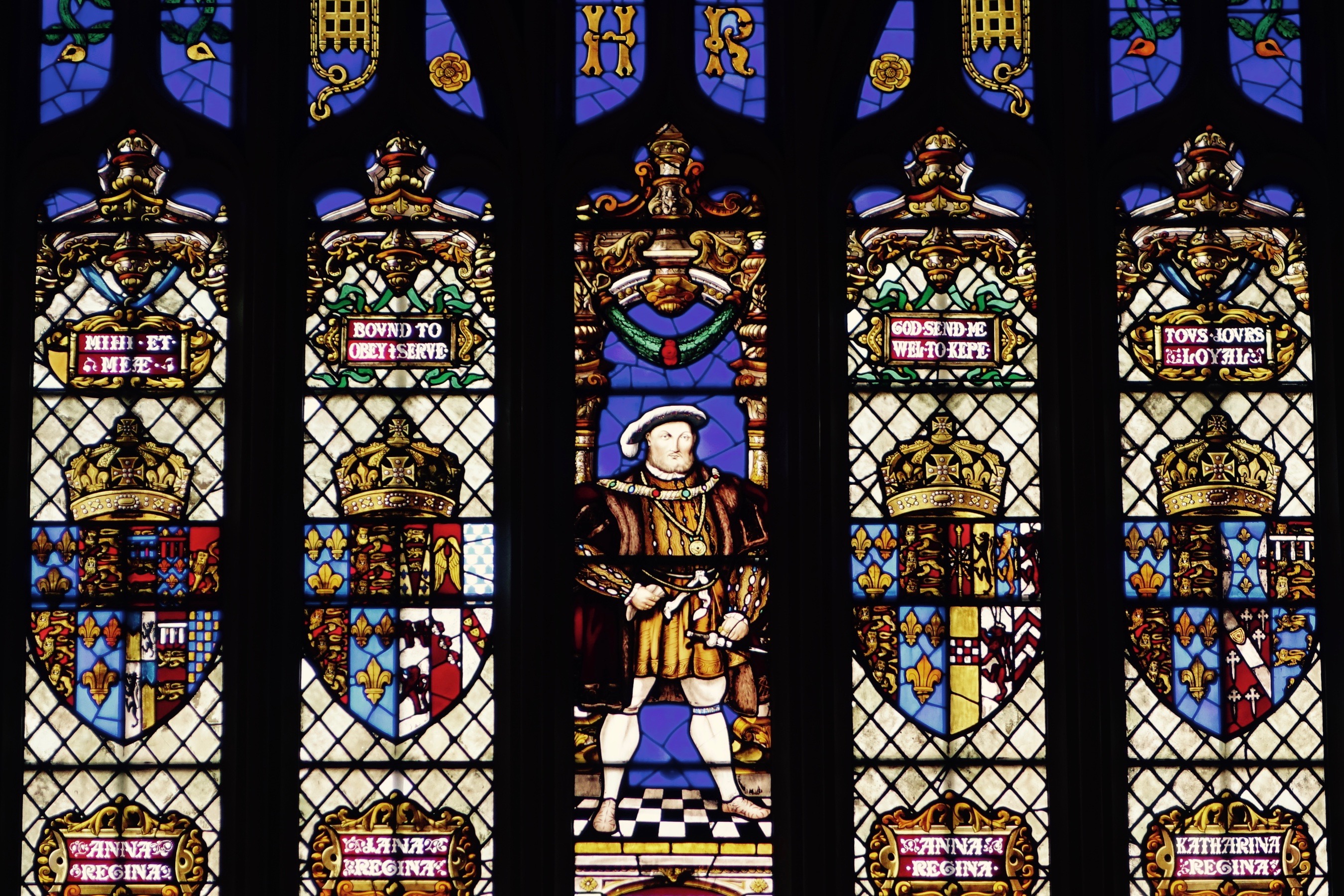
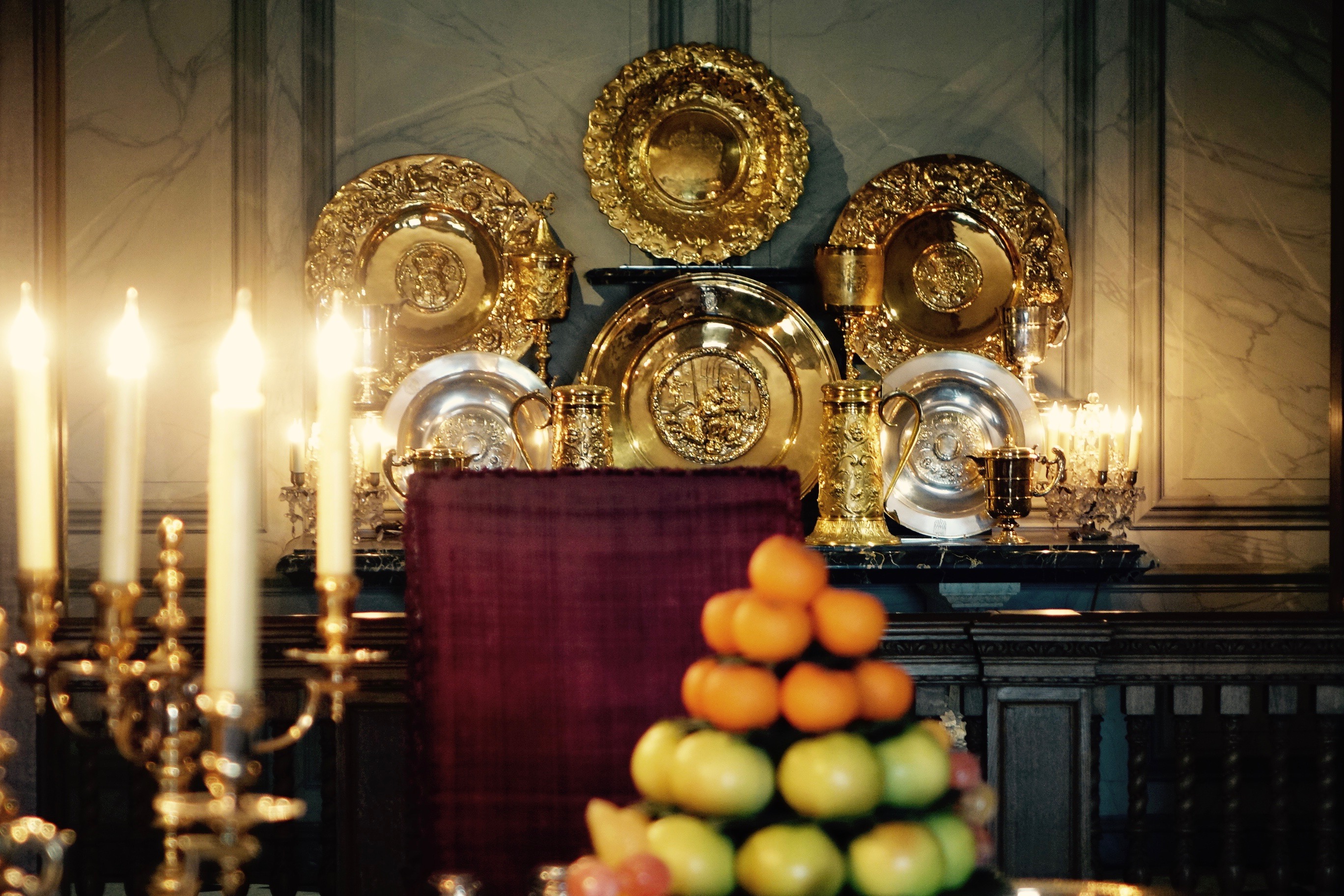
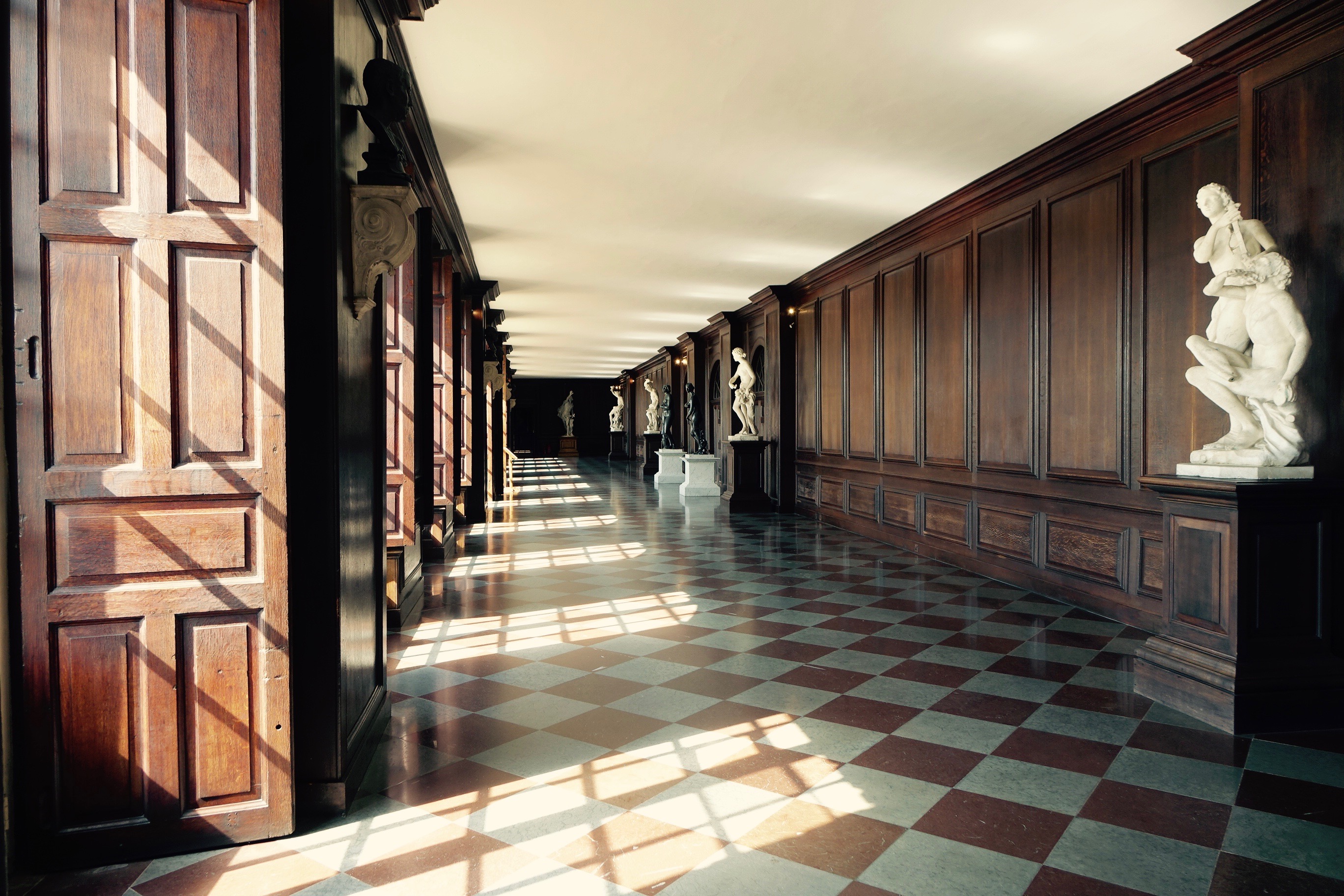
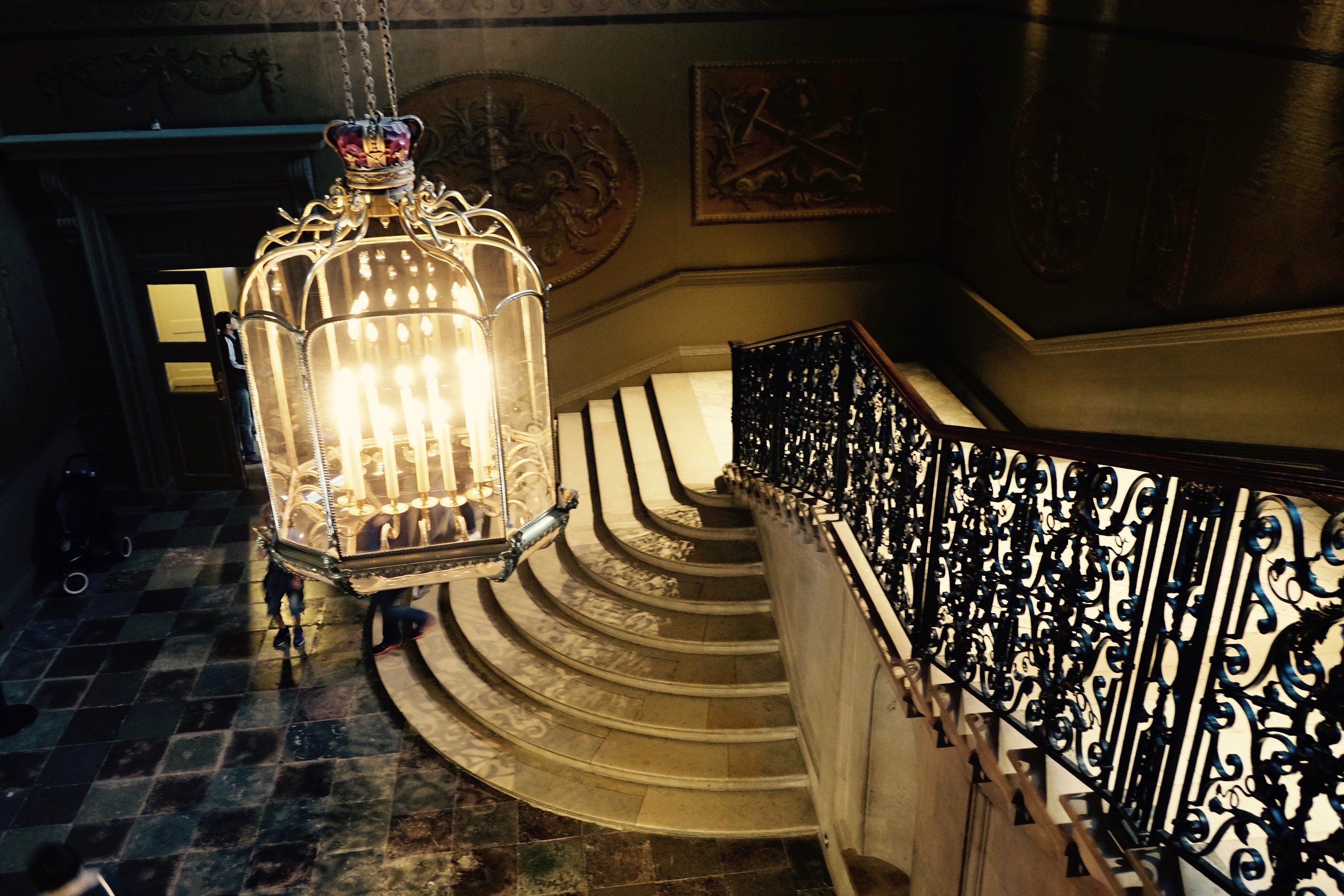
The photos which are shared in the post give a flavour of the great contrast between the Tudor and the Baroque aspects of Hampton Court. What perhaps the Tudor side lacks in elaborately frescoed ceilings it makes up for in colourful stained glass and the stunning gothic ceiling of the Royal Chapel. And what the Baroque side lacks in stag heads and grand vaulted ceilings it instead replaces with wide sweeping staircases and rooms flooded with light from the masterfully manicured garden beyond. All in all, this is a tale of two Palaces, offered, very conveniently, to be enjoyed all at one time.

© Nicholas de Lacy-Brown and The Daily Norm, 2001-2017. Unauthorized use and/or duplication of the material, whether written work, photography or artwork, included within The Daily Norm without express and written permission from The Daily Norm’s author and/or owner is strictly prohibited. 

Prague (Part 4): Baroque Brilliance and a Stained Glass Symphony

Having spent my first day in Prague thoroughly put out at the bad customer service, the horrendous gangs of British stag parties cluttering up the best squares and cafes, and the poor state into which the city has so often been left to decline, I started my second day afresh, determined to focus on the beauty for which the city is otherwise famed. For you don’t need to look far beyond the tourist hoards and the badly serviced cafés to find what everyone is making all the fuss about: a city filled with beautiful bubbling baroque sculptures, elegant architectural amplifications, pastel coloured building facades and a skyline littered with turrets and cupolas of every shape and size.

While last week’s photo post concentrated on the art nouveau which replaced vast swathes of the “new” town and Jewish Quarter at the turn of the 20th century, today’s turns more to the predominant feature of the city – the endlessly extravagant, unapologetically dramatic artistic showpiece that is the Baroque.

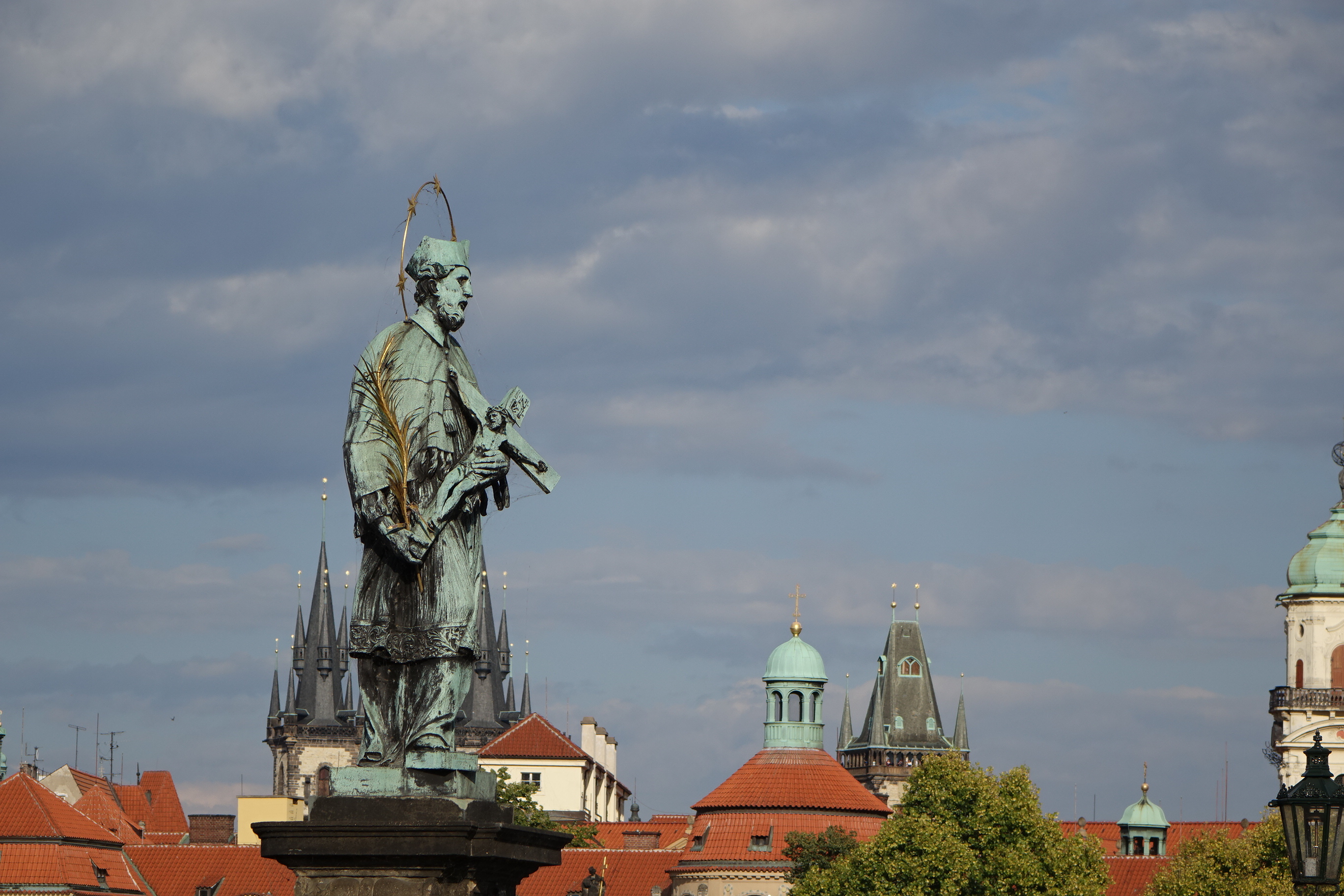
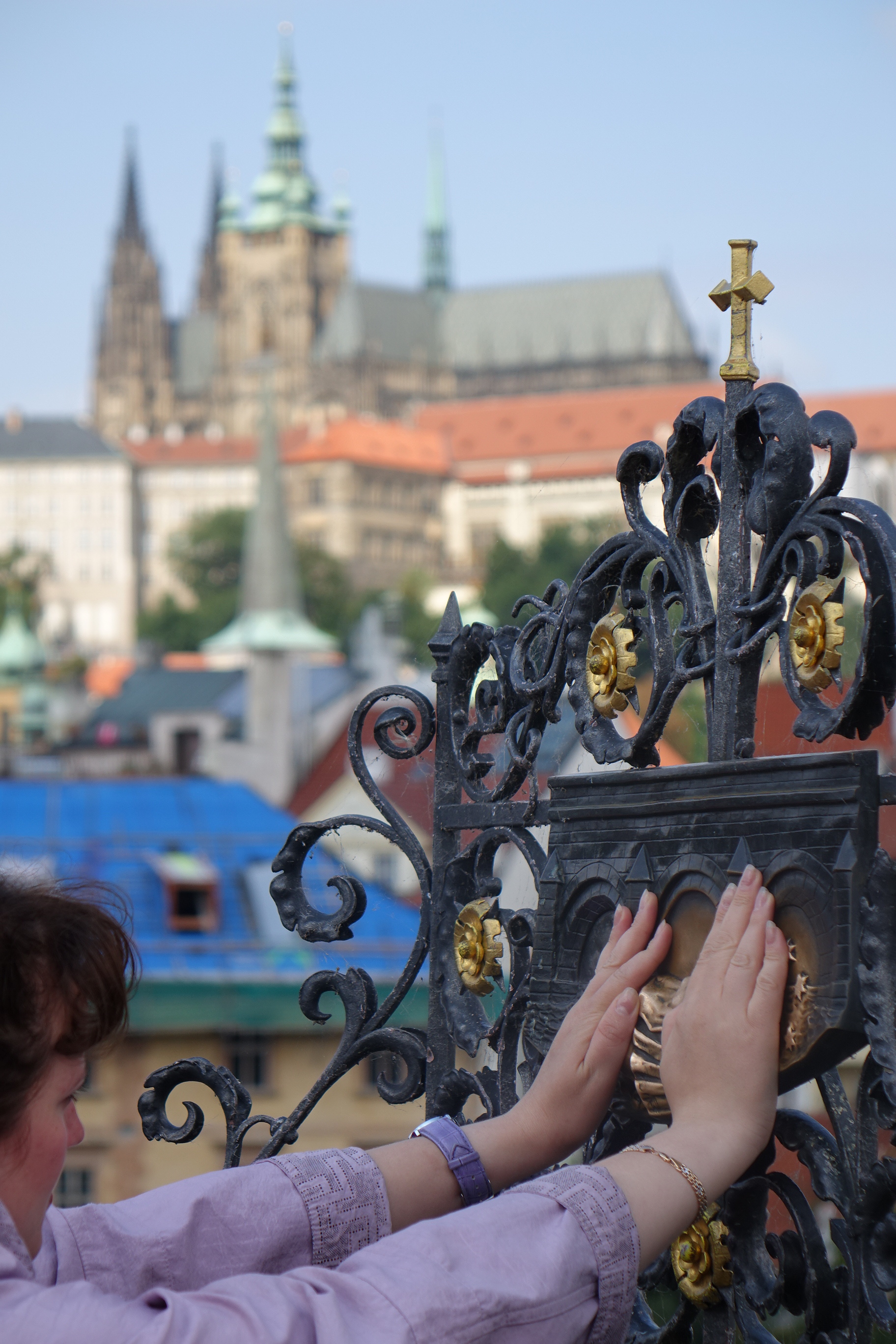
And it is everywhere. Perhaps the most famous sight of the city’s baroque virtuosity is the Charles Bridge. This pedestrianised bridge harks from the 14th century, and is a mecca for tourists and street musicians, artists and souvenir sellers; and there is little surprise why that may be. For on each of its 30 pillars stands a statue so superbly executed in the baroque fashion that it is more than rival for the Ponte Sant’Angelo in Rome, whose Bernini sculptures this collection was intended to emulate. With depictions ranging from the patron saint of the city, St Wenceslas, to a 17th century crucifixion adorned by hebrew words forcibly paid for by a Jew as punishment for blasphemy, the bridge is an art gallery to some of history’s best sculpture. It’s just a shame they are all too filthy to be properly appreciated. Yet two of the sculptures in particular are in need of less cleaning, so polished are they by the hands of tourists who touch them repeatedly in the hope of the luck they may bring.

The Charles Bridge

DSC07581 DSC06675 DSC07194 DSC06664 DSC07188 DSC07583 DSC06671 DSC06639 DSC06651

We resisted touching the sculptures – the queues to do so would have taken up half the day after all, and instead crossed over the bridge to the area of Prague they call “the Little Quarter”. The Little Quarter (Mala Strana) is indeed quite little in terms of scale compared with the grander “new town” across the Charles Bridge with its multi-storey classical faces and gilded theatres and boulevards. Here, the streets are all together more charming, with shorter pastel coloured buildings, cobbles and even little canals which separate the mainland from the little Kampa Island. There in turn are little relaxed gardens from which views of the city can be caught from shady benches, and beyond those, small cobbled squares are gently decaying as their paint flakes away and the whole place feels laid back and somniferous.

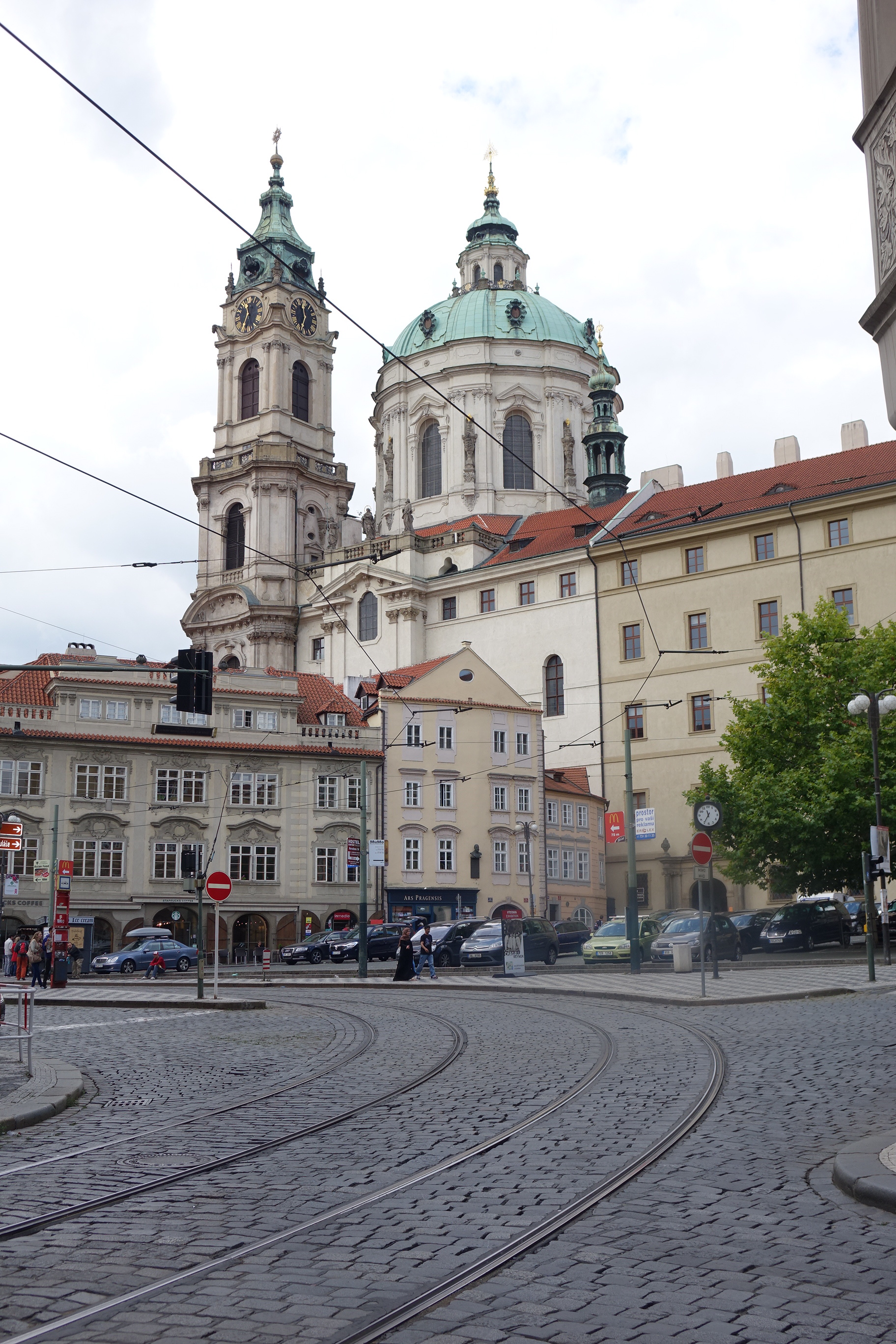
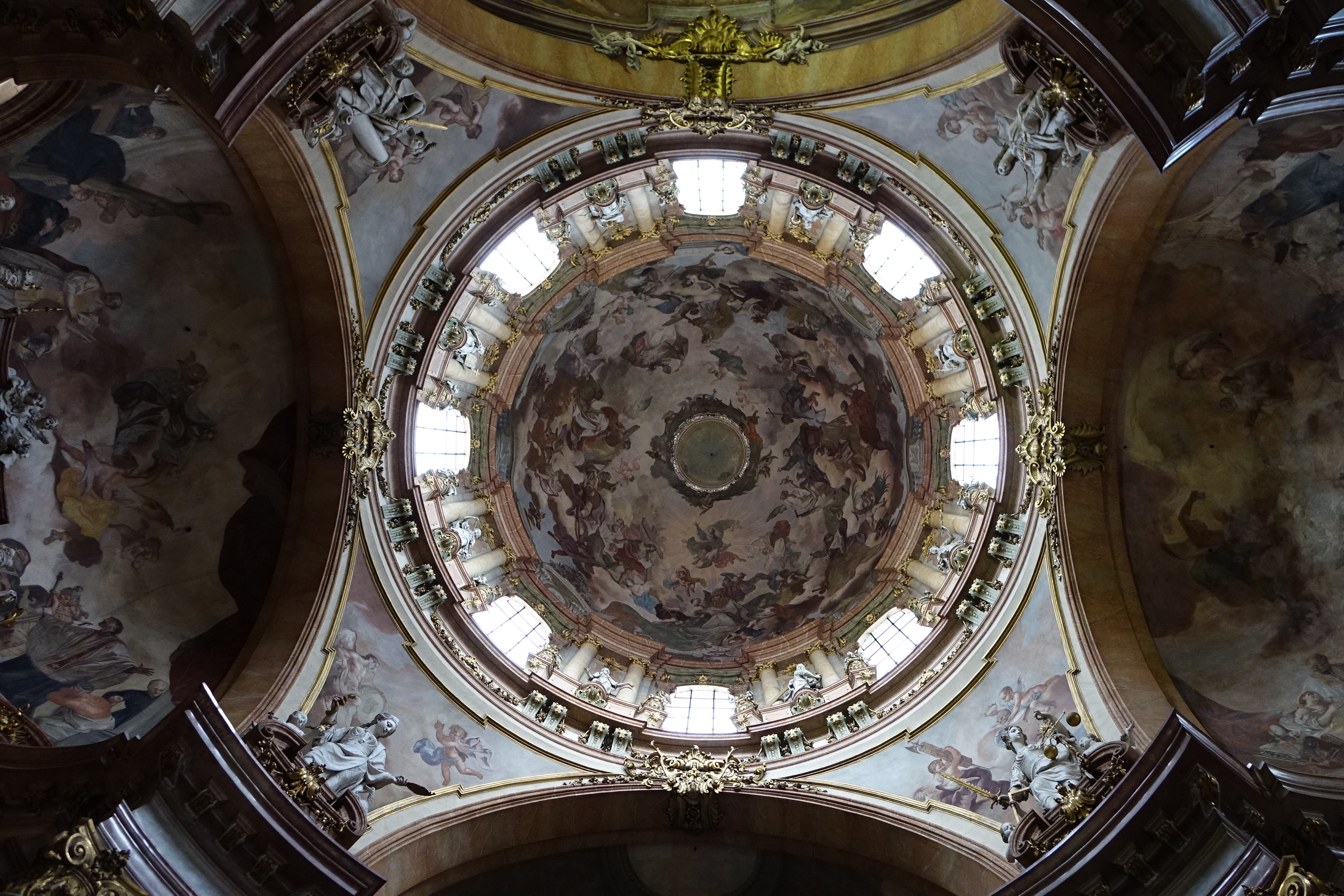
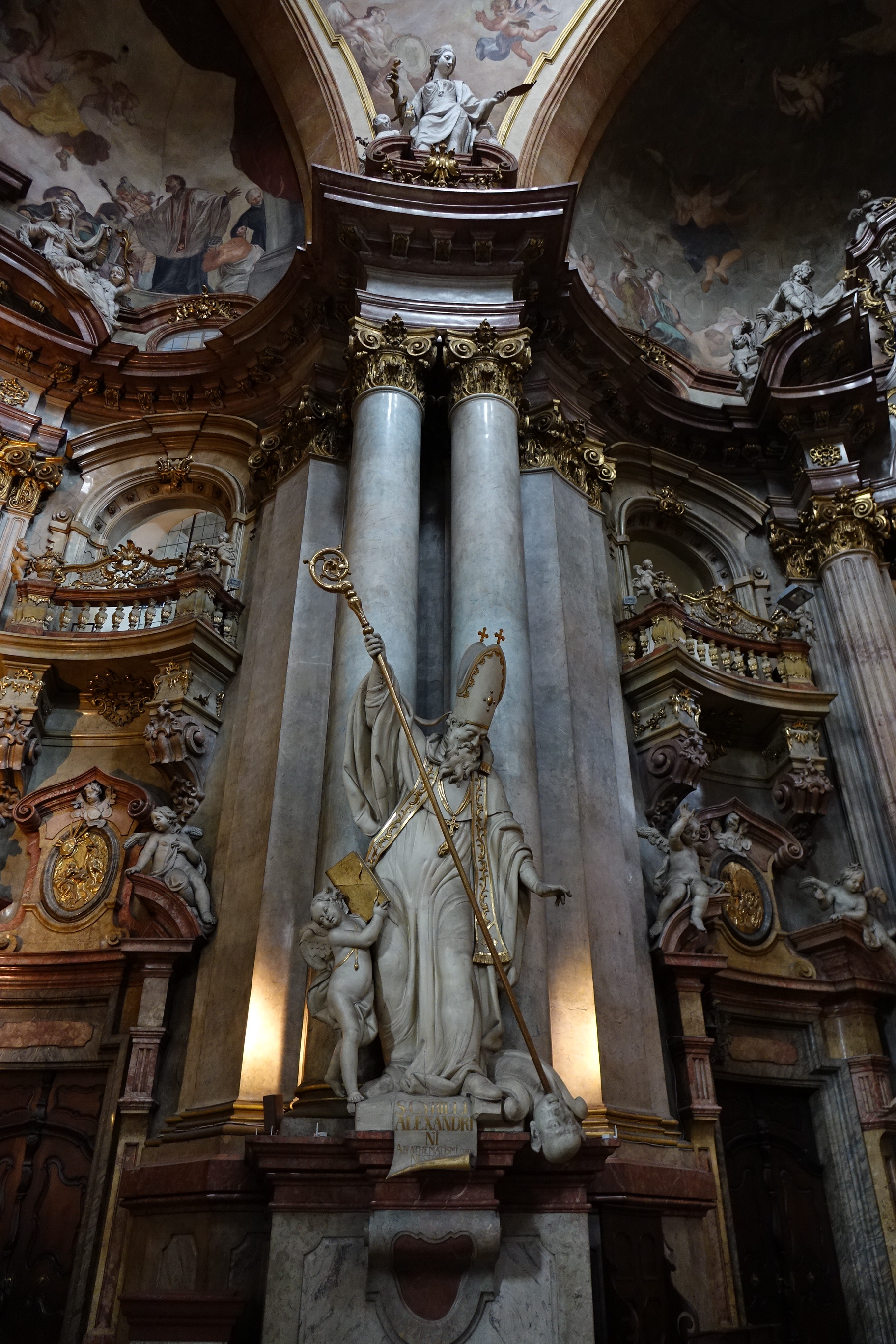
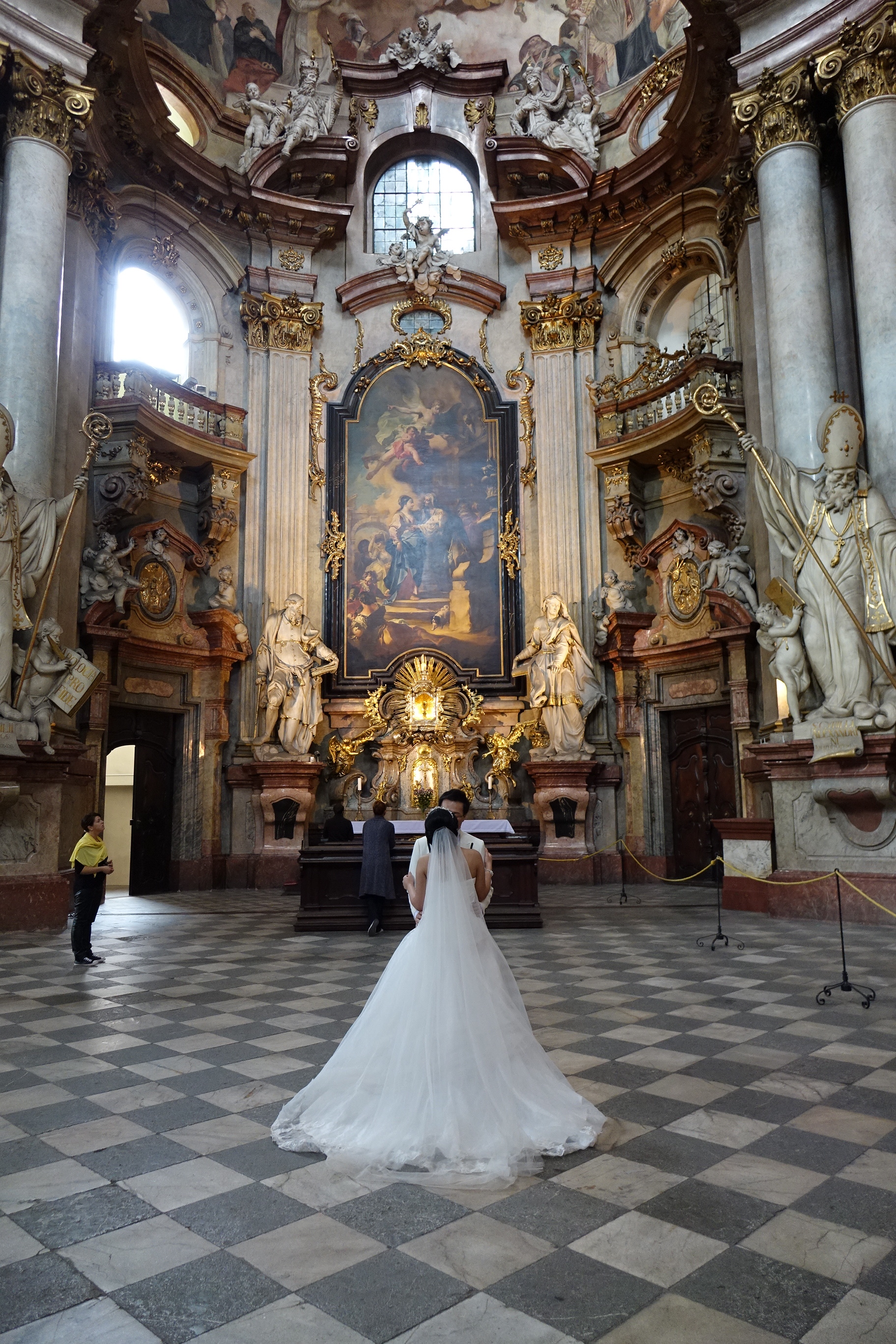
But amongst those small streets is one building which certainly does not match the title “Little”. For with its imposing great dome and matching campanile, the Church of St Nicholas is no shrinking violet. Rather, it is the next stop on the tour of baroque jems, for as the baroque goes, it doesn’t get much more extravagant that this church. Built by father and son architects Christoph and Kilian Ignaz Dientzenhofer, Prague’s greatest exponents of the High Baroque, the church is filled with an outlandishly extravagant array of excessive decoration, with gold capitals, marble pillars, great towering statues of popes and bishops, and cherubs everywhere you look filling the space. Although amusingly enough, scratch beneath the surface of all this opulence and you notice that much of it is mere theatre: the marble pillars are actually painted plaster; the gilded details simply painted gold. But then wasn’t the baroque all about the first stunning moment of theatre, when your breath is audibly taken away by the magnificence of the scene created?

The baroque spectacle of St Nicholas’ Church

DSC06730 DSC07086 DSC07101 DSC07080 DSC07066 DSC07110 DSC07106 DSC07099

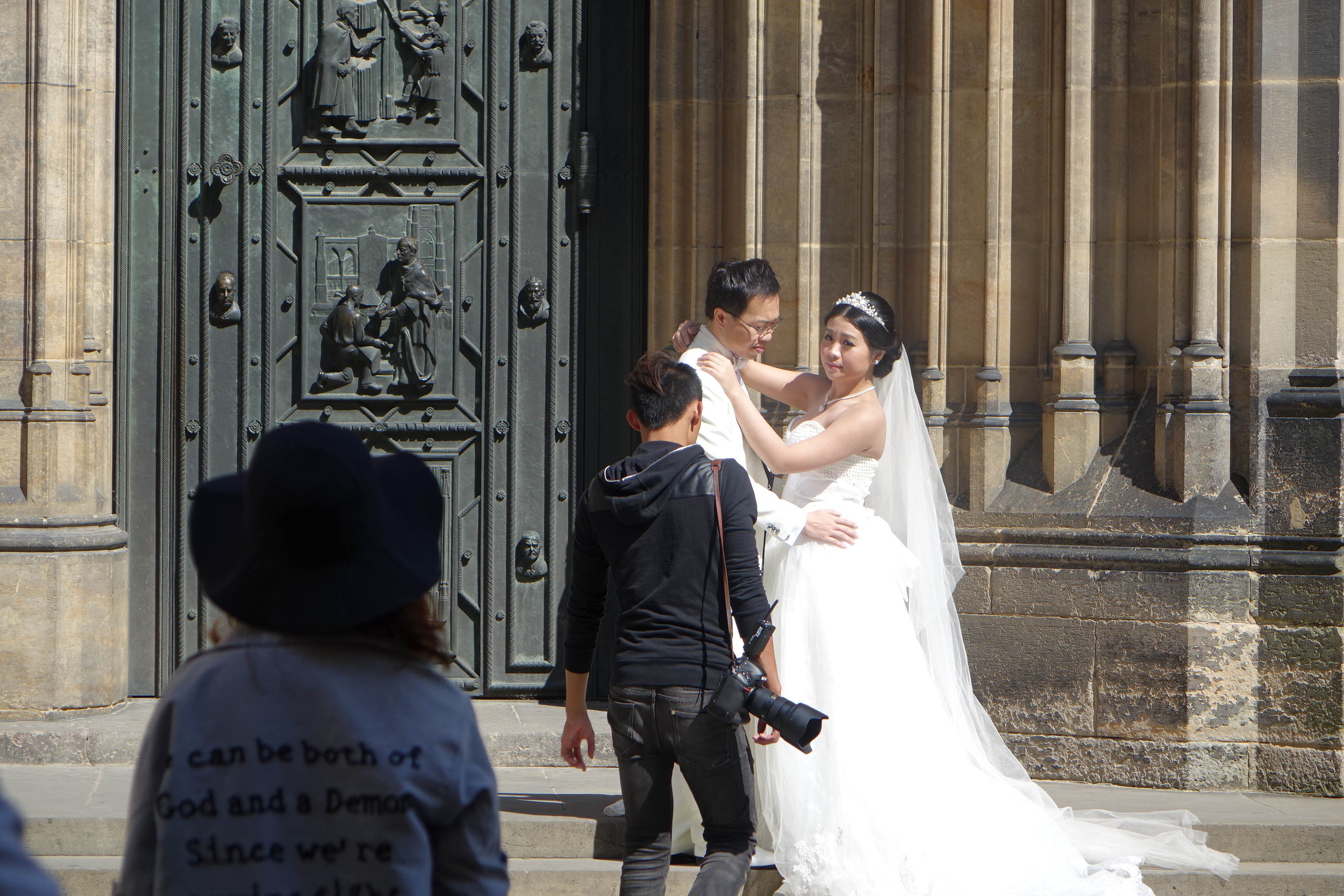
And talking of theatre, we couldn’t help noticing the latest Chinese craze of wedding couples getting married in China and then travelling to Europe to photograph themselves in full wedding regalia in front of some of Europe’s most famous monuments. We saw this couple all over prague – wherever we went, so did they, and their camera, their photographer and their make-up team…

DSC07097 DSC07051 DSC07052

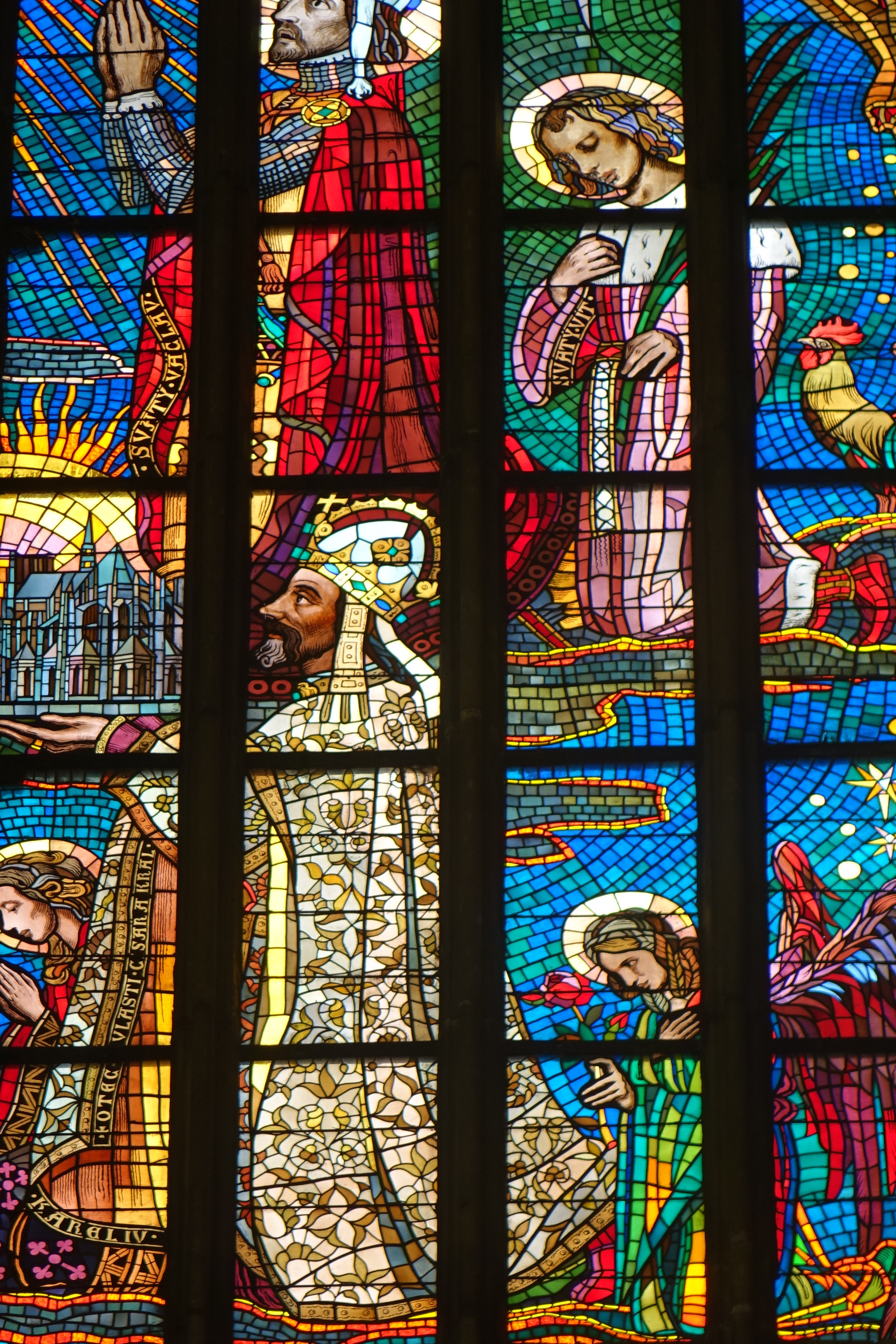
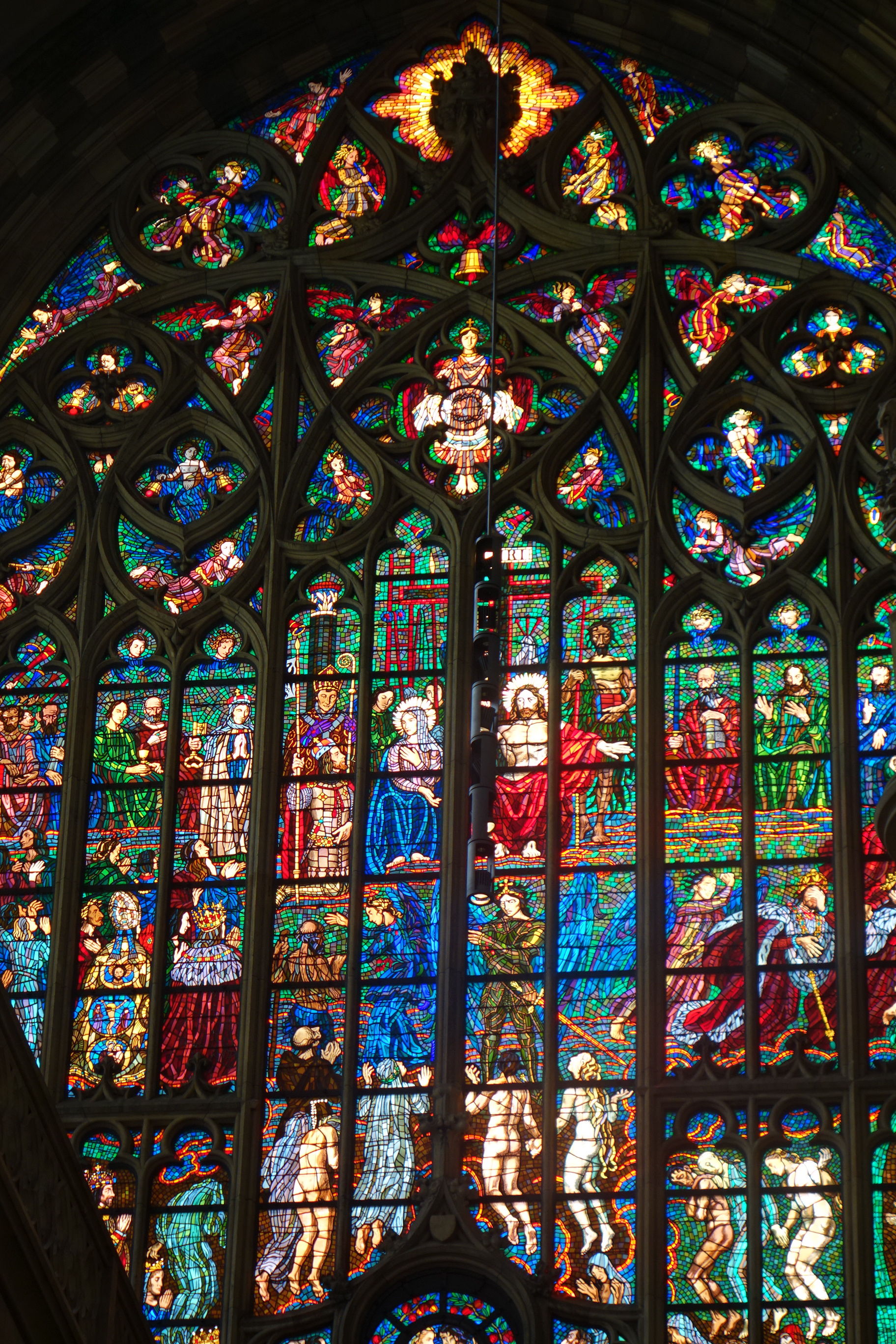
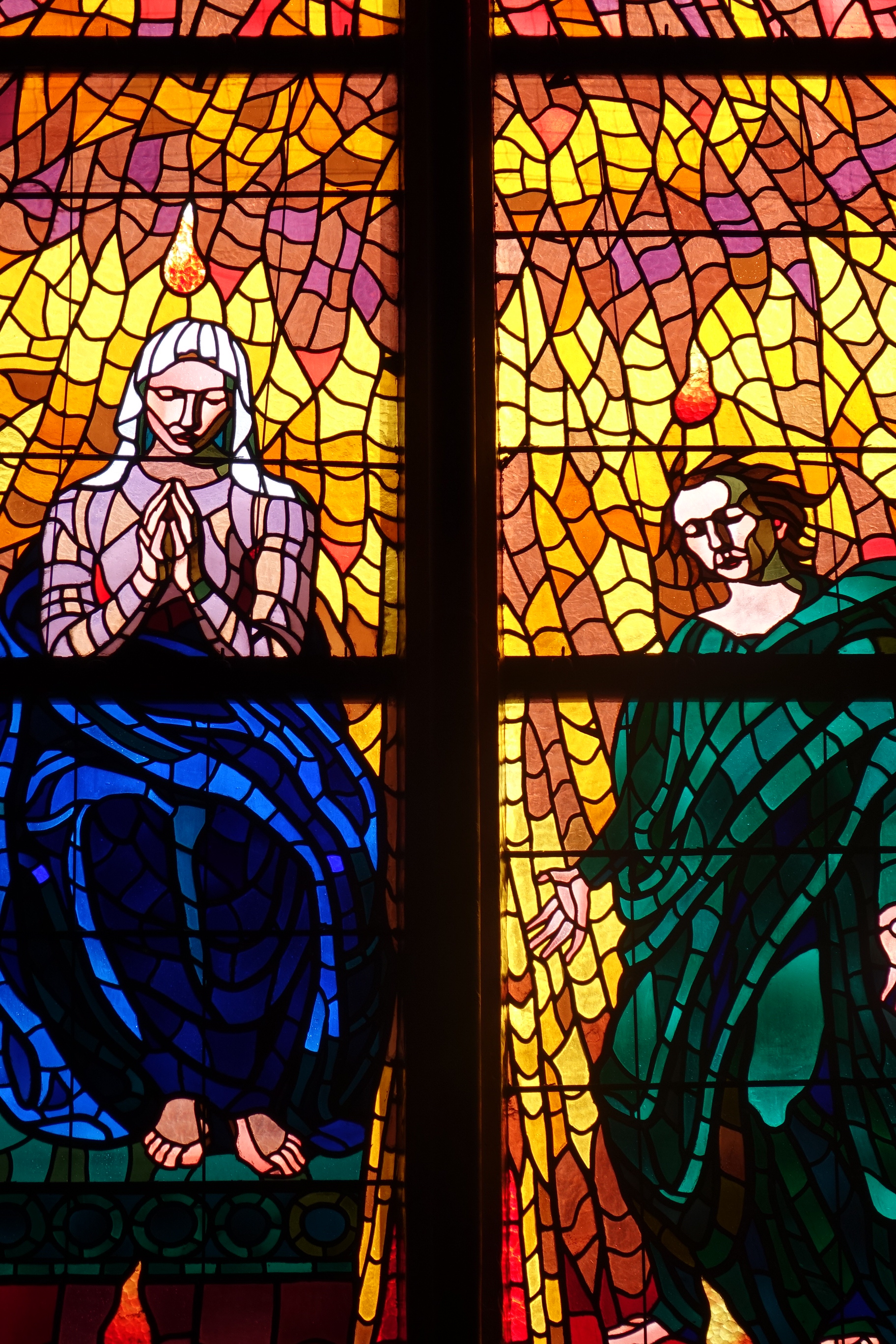
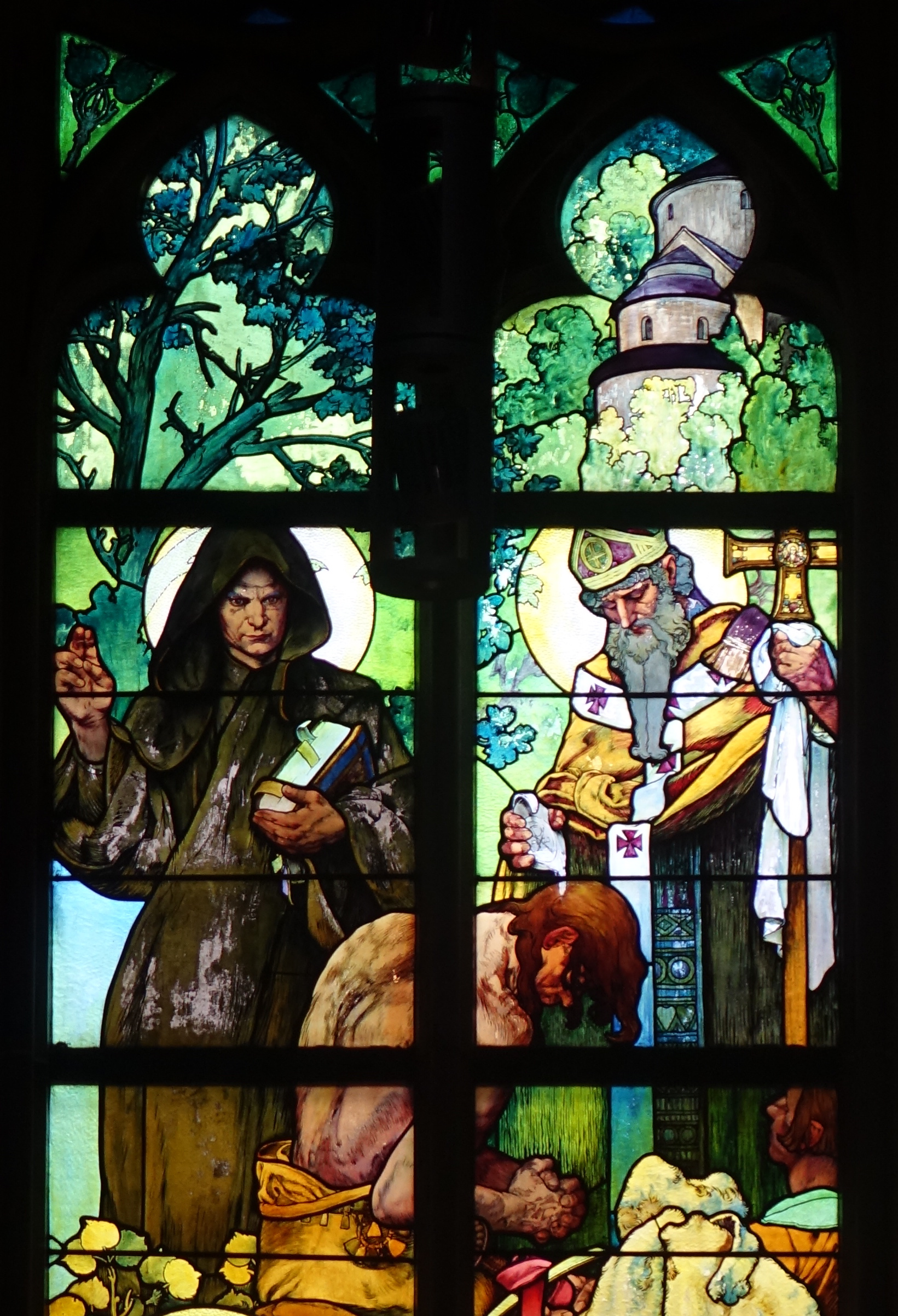
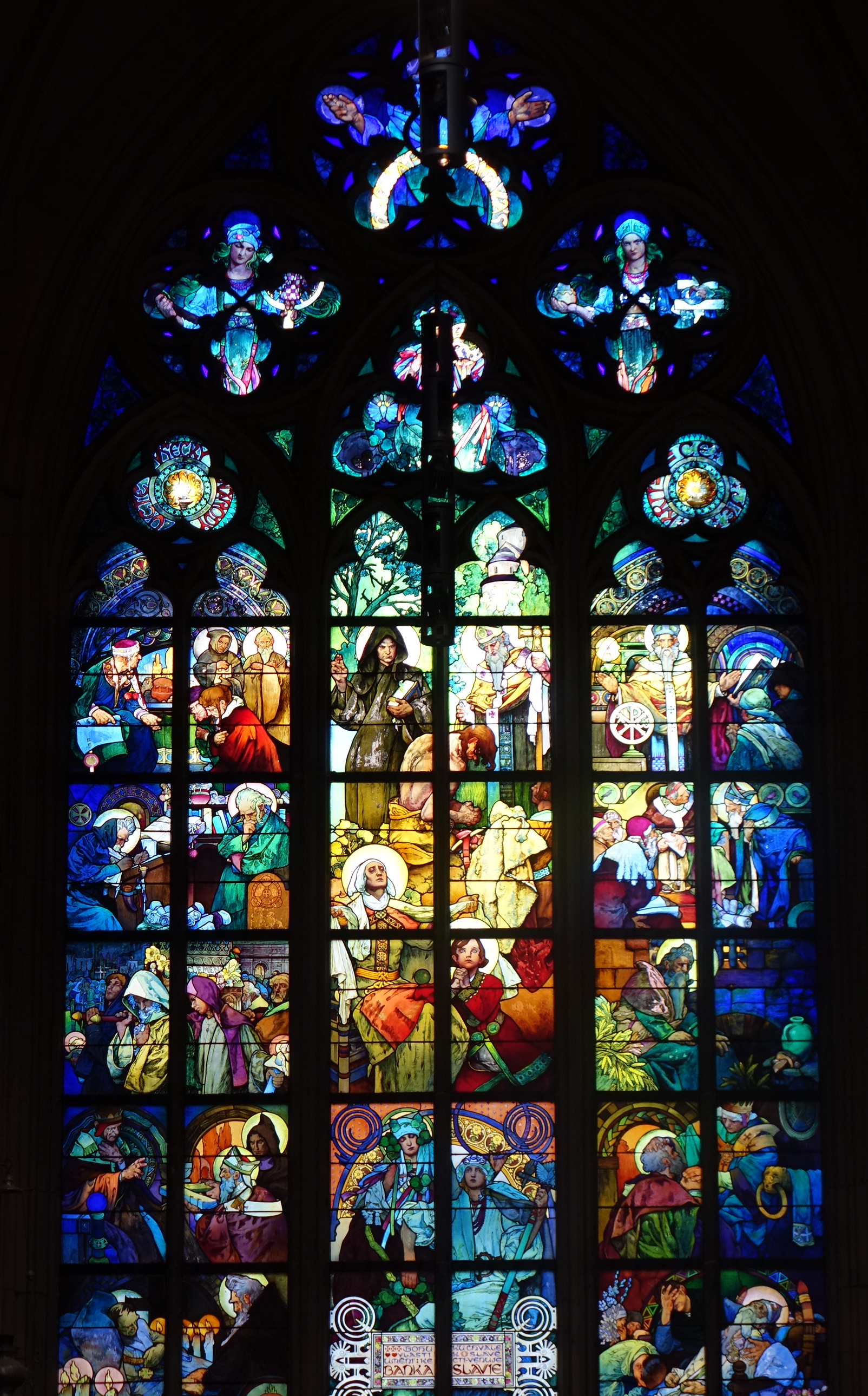
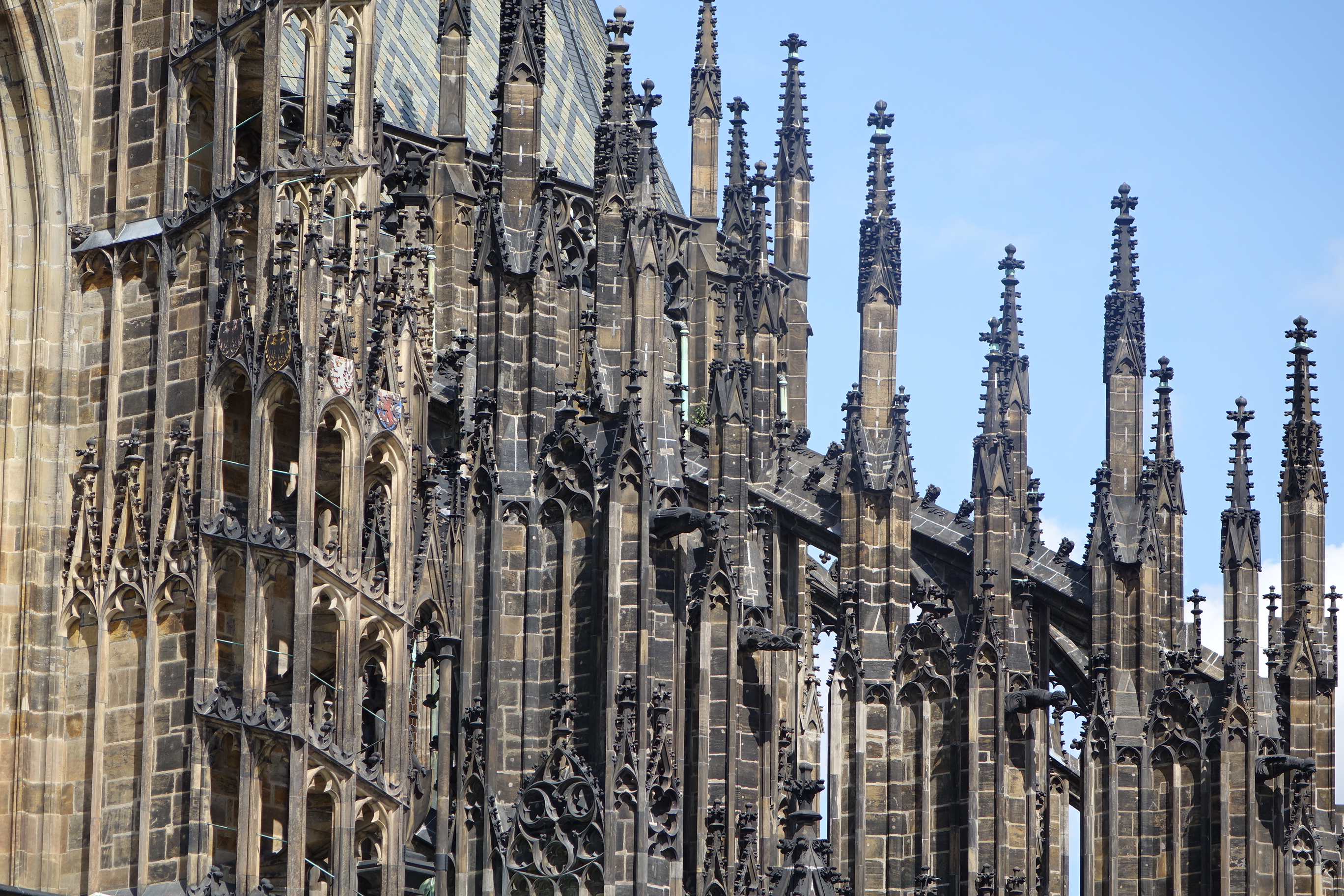
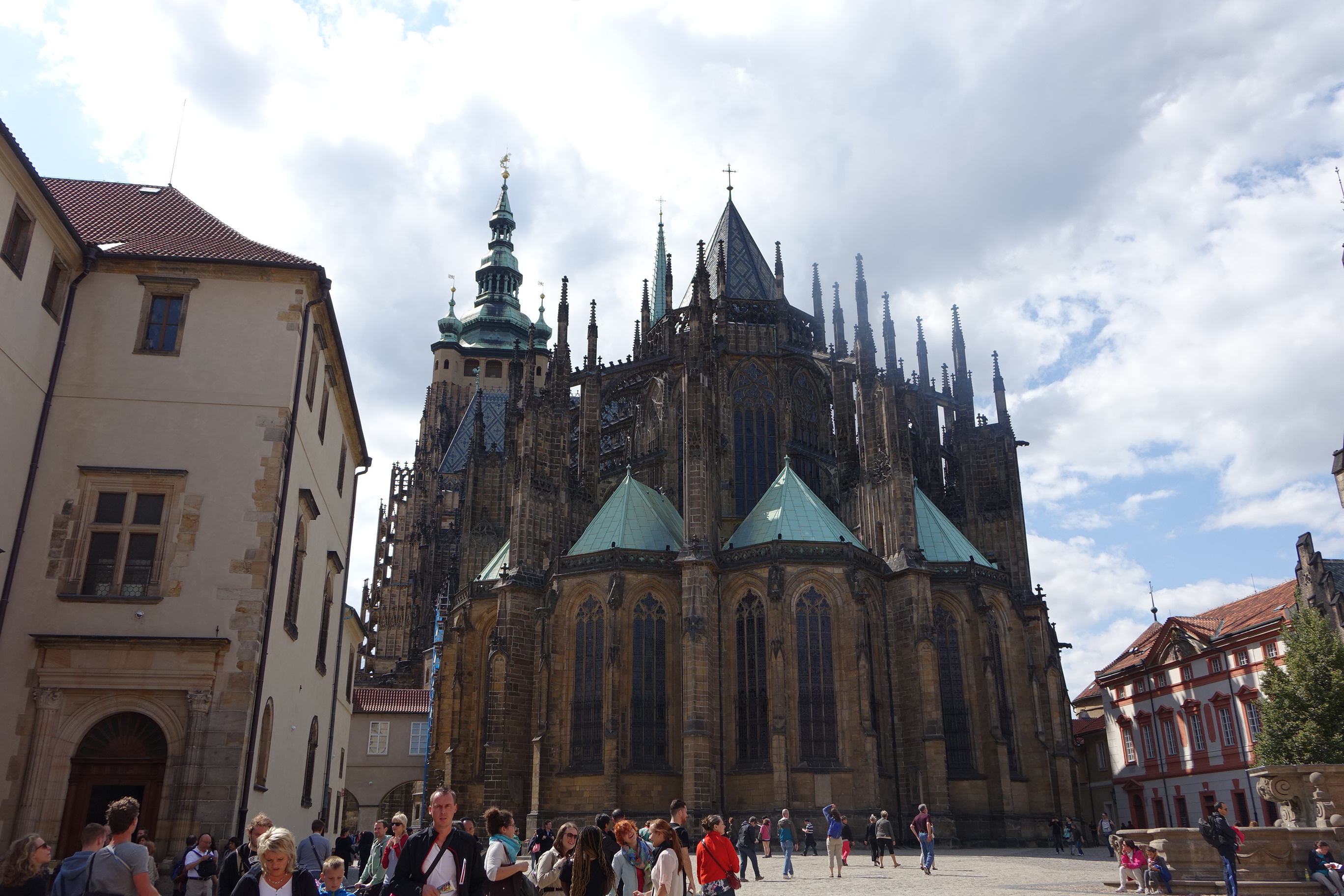
As the day went on, we felt ourselves becoming steadily baroque-saturated, and as the sun made its daily passage across the skies, it was to Prague Castle where we ascended, the great complex of royal palaces and the city’s main cathedral, St Vitus, and it was there where we laid witness to what must be one of the city’s greatest artistic treasures of all – its stained glass windows. When you walk into St Vitus (having queued like us for almost an hour to get tickets from the ridiculously inefficient ticket desk), you are almost overcome by the coloured light that fills the place. For in each of the cathedral’s large windows is stained glass in a panoply of colours, and depicting scenes of stunning detail which is just brought alive by the light shining through it, projecting the image like in a cinema across the imposing stone interior.

Stained glass symphony

DSC06794 DSC06826 DSC06910 DSC06897 DSC06823 DSC06820 DSC06836 DSC06788 DSC06898 DSC06818 DSC06908

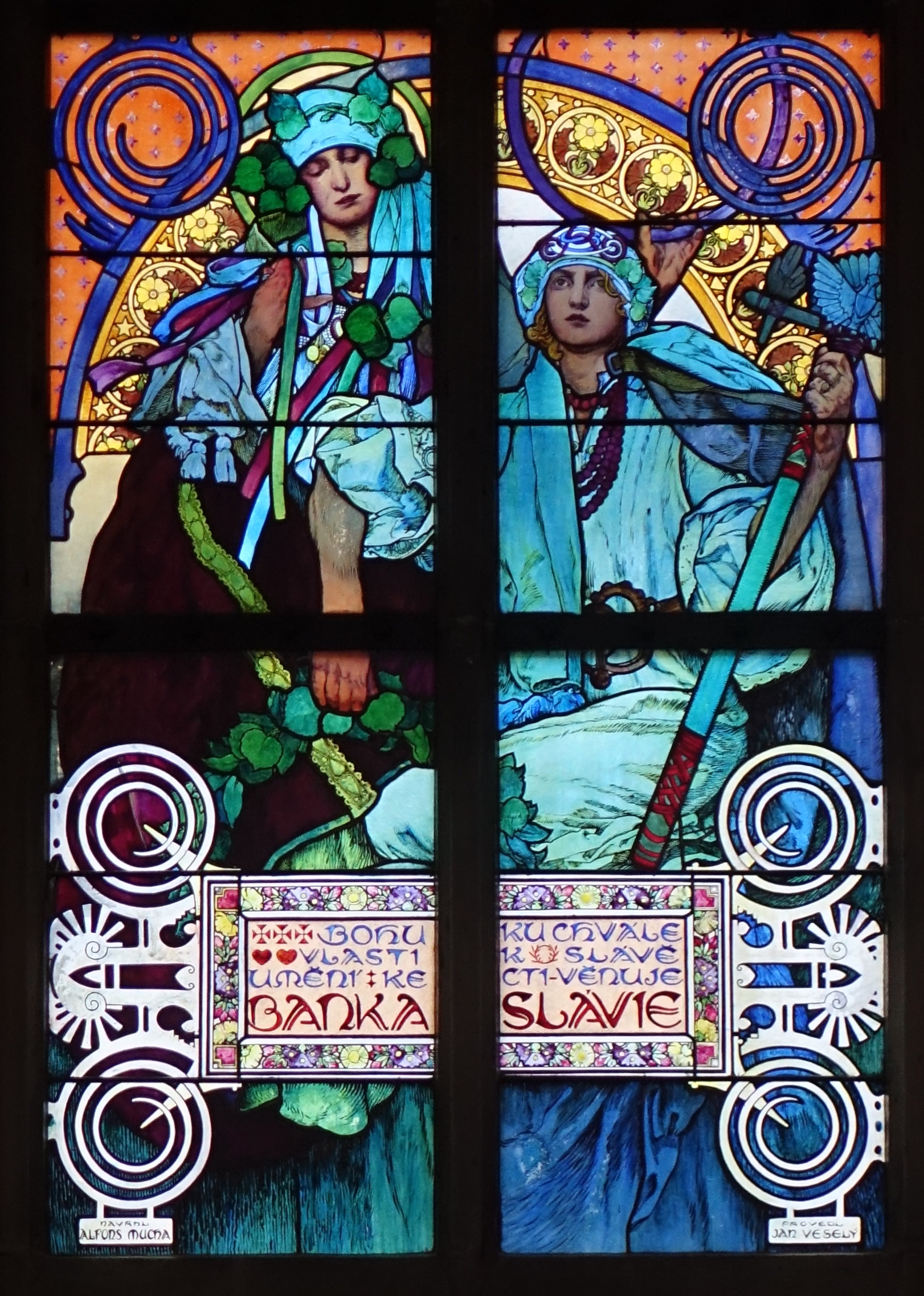
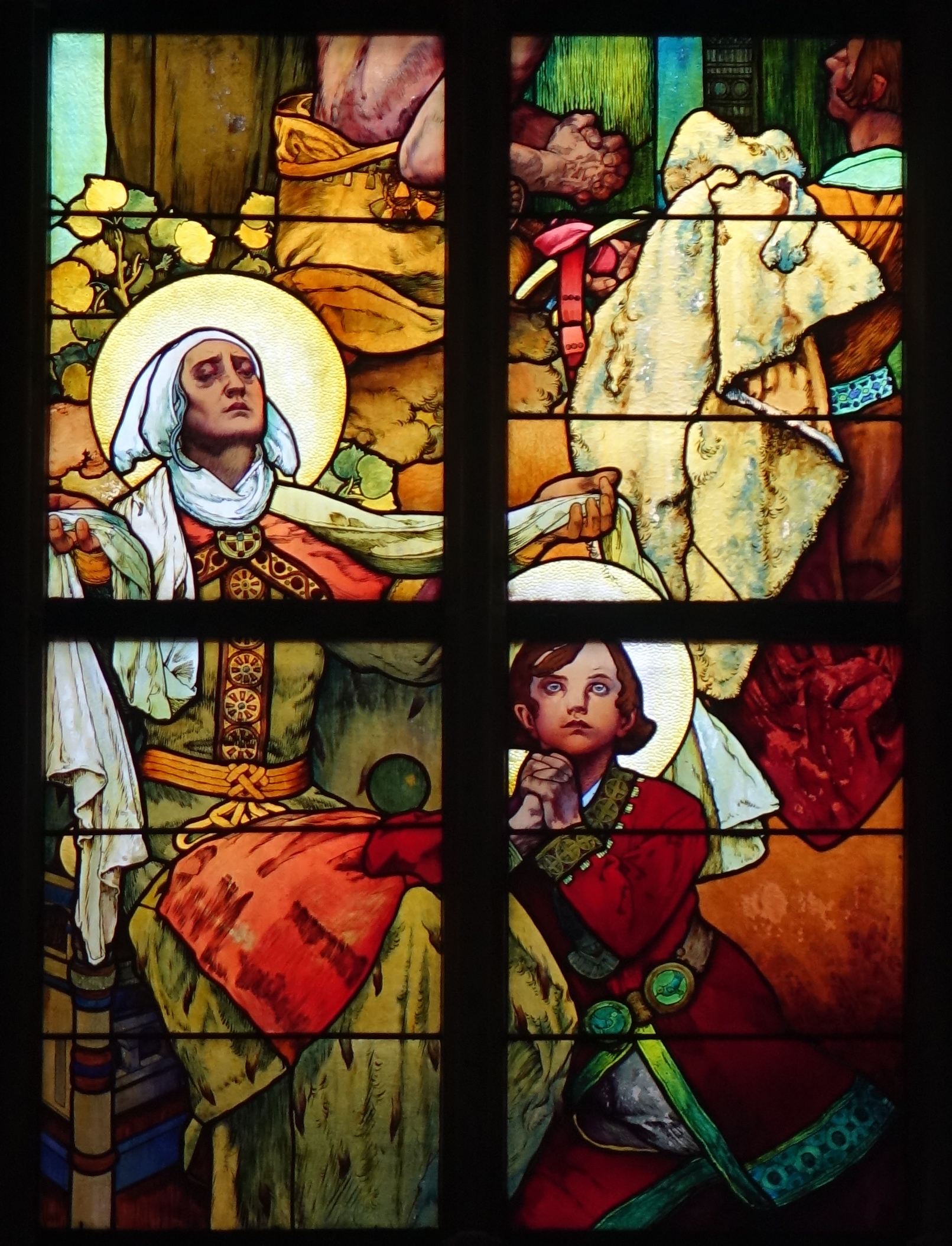
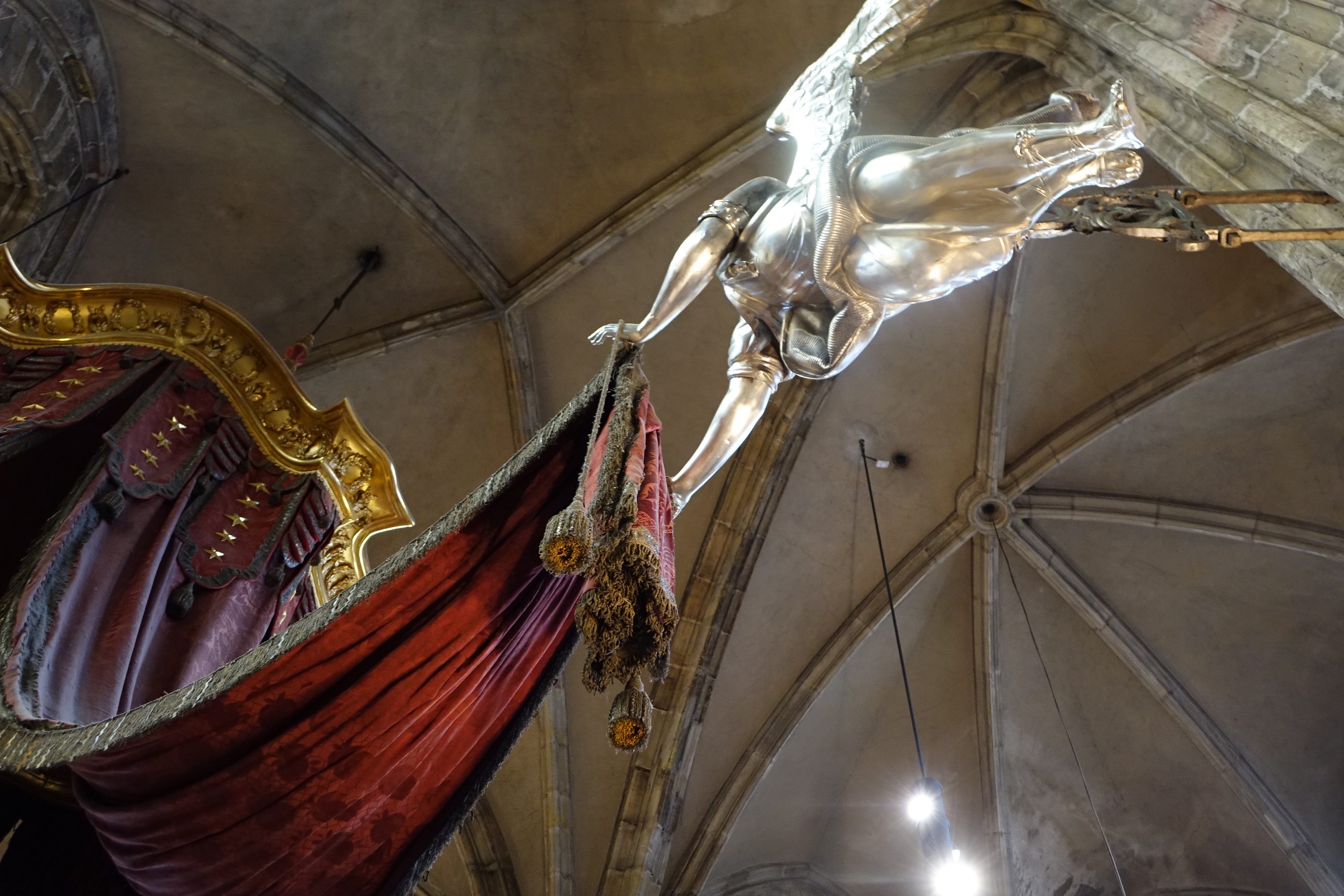
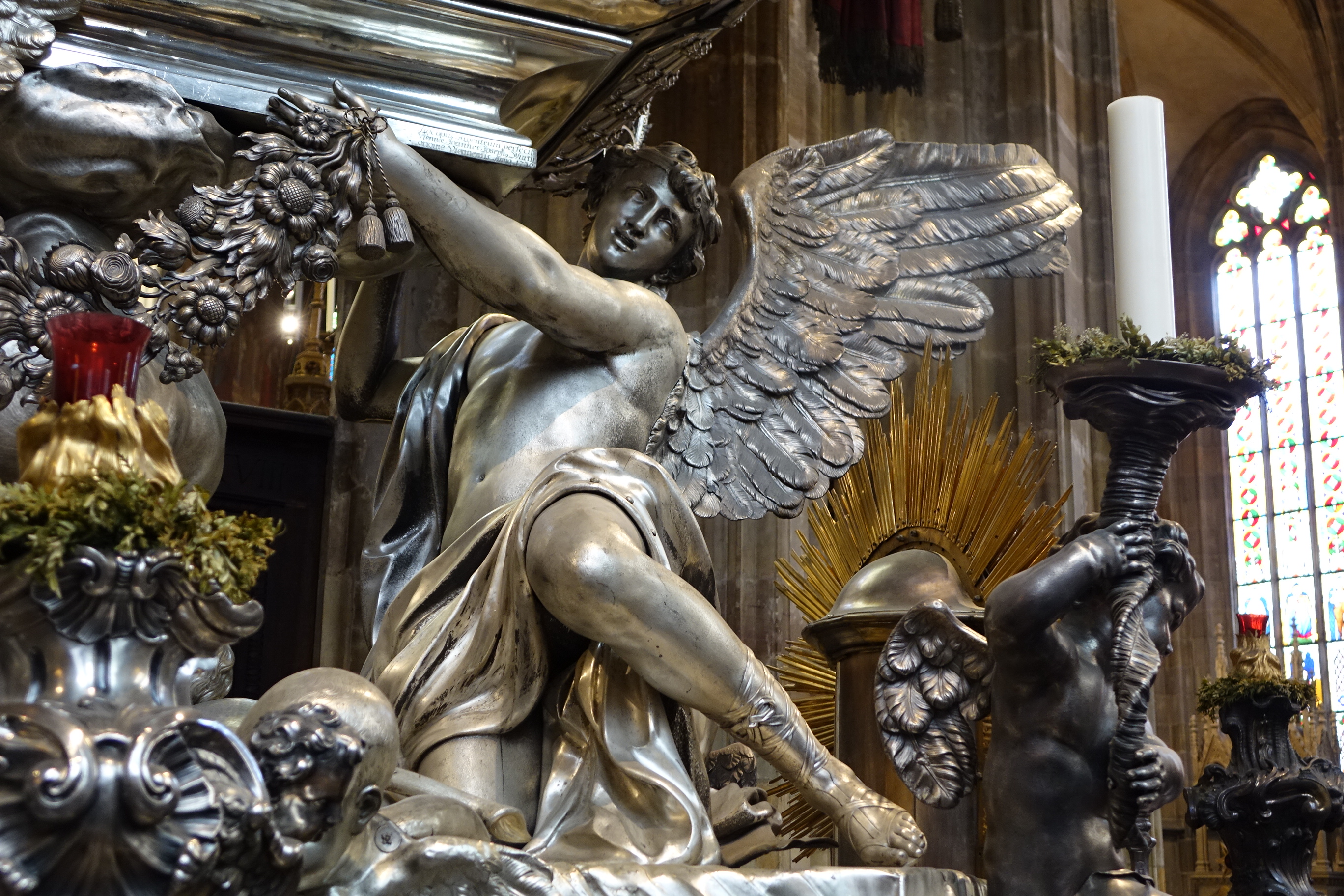
My favourite of all the windows has to be that designed by famous Czech art nouveau artist Mucha towards the end of his life, and many of the photos here feature that brilliant design. But here too are a selection of the other windows, both old and new, all exhibiting a kaleidoscope of colour which was incredible to behold. But just in case we had forgotten it, the trusty Baroque made sure that it had its day inside the cathedral as well, as these photos of the sensational royal mausoleum of Ferdinand I, and the opulent tomb of St John Nepomok aptly demonstrate.

Mucha’s window

DSC06877 DSC06868 DSC06875 DSC06865

St Vitus’ baroque

DSC06919 DSC06829 DSC06913 DSC06853 DSC06917 DSC06863 DSC07026 DSC06857

All photos and written content are strictly the copyright of Nicholas de Lacy-Brown © 2014 and The Daily Norm. All rights are reserved. Unauthorized use and/or duplication of the material, whether written work, photography or artwork, included within The Daily Norm without express and written permission from The Daily Norm’s author and/or owner is strictly prohibited.

Valencia (i) – Day 1: Beauty and the Bell Tower

As I stood listening to the huge iron bell strike atop the Miguelete tower at 1pm, I was caused to reflect on where I had been just two weeks ago. Having climbed the 330-odd steps to the top of London’s Elizabeth Tower, to view the gigantic bell famous throughout the world as “Big Ben”, my ascendance up this latest bell tower marked my second climb up the steep spiralling steps of a campanile in as many weeks. Yet the differences in the visits were all too visible. In Elizabeth tower, the 330 steps were fairly gentle and wide; here the 207 steps were steep and arduous, narrowing as they got higher. In London, we were the only visitors on the stairs, whereas in the Miguelete tower high numbers of tourists meant crossing each other’s paths going up and down these narrow spirals was perilous to say the least. Up here, our ears only suffered one single bong, whereas up Big Ben at 12pm, 12 huge dongs reverberated around our bodies causing us near deafness and a strong case of jellylegs.

The city, viewed from above

DSC_0578 DSC_0583 DSC_0587

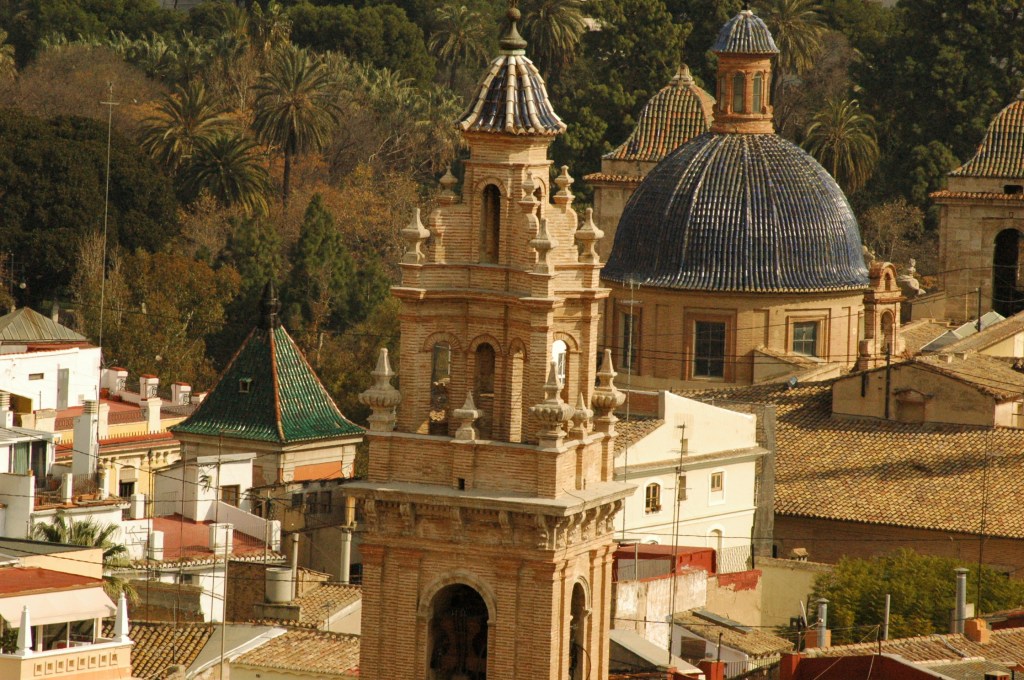
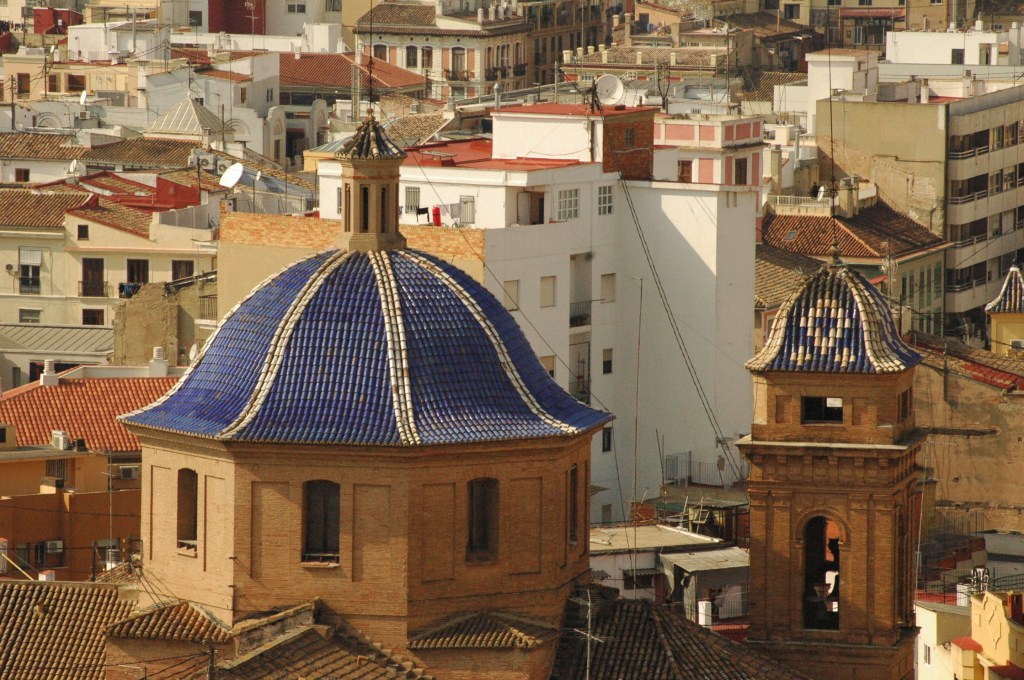
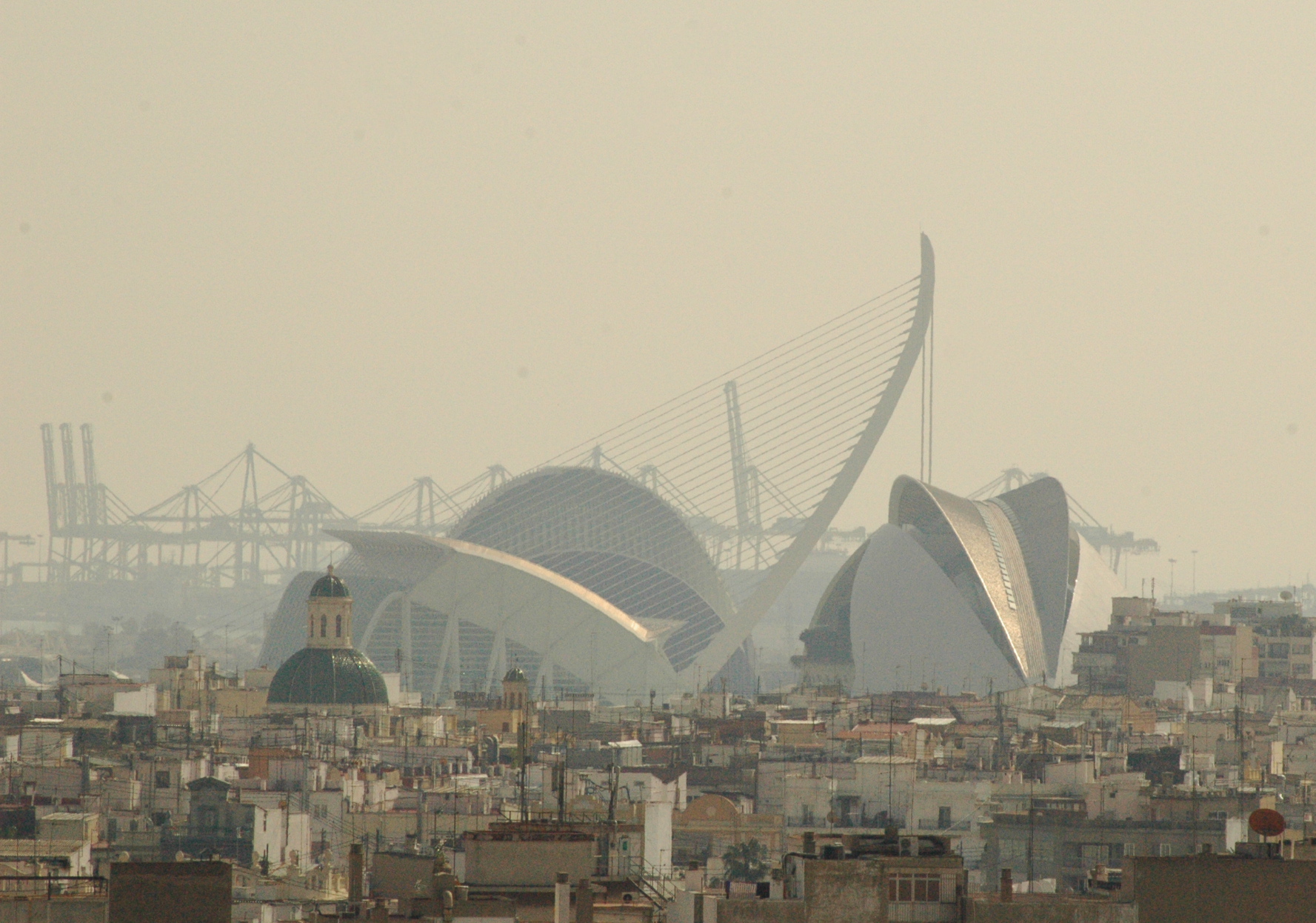
But the biggest differences between these two bell towers were twofold: First, temperature – in London I perished in freezing cold winds, desperate to get inside behind the relative shelter of the clock’s huge stained-glass faces; whereas atop the Miguelete tower, I was in a pleasant 20 degrees. Secondly, the view: From Big Ben the city of London spread out beneath my feet, famous landmarks were one to the dozen, but they were basked in cold and grey and ice; here, another city spread before me – golden browns and auburn hues toped with elegant ceramic tiled domes of blues and greys, eau de nil and white, while towards the sea beyond, the eccentric discordant architectural forms of Santiago Calatrava’s revolutionary arts and science park rose from the now empty basin of the old river Turia. So what was the city I was viewing from this bell tower with such felicitous awe and inspiration? None other than Valencia.
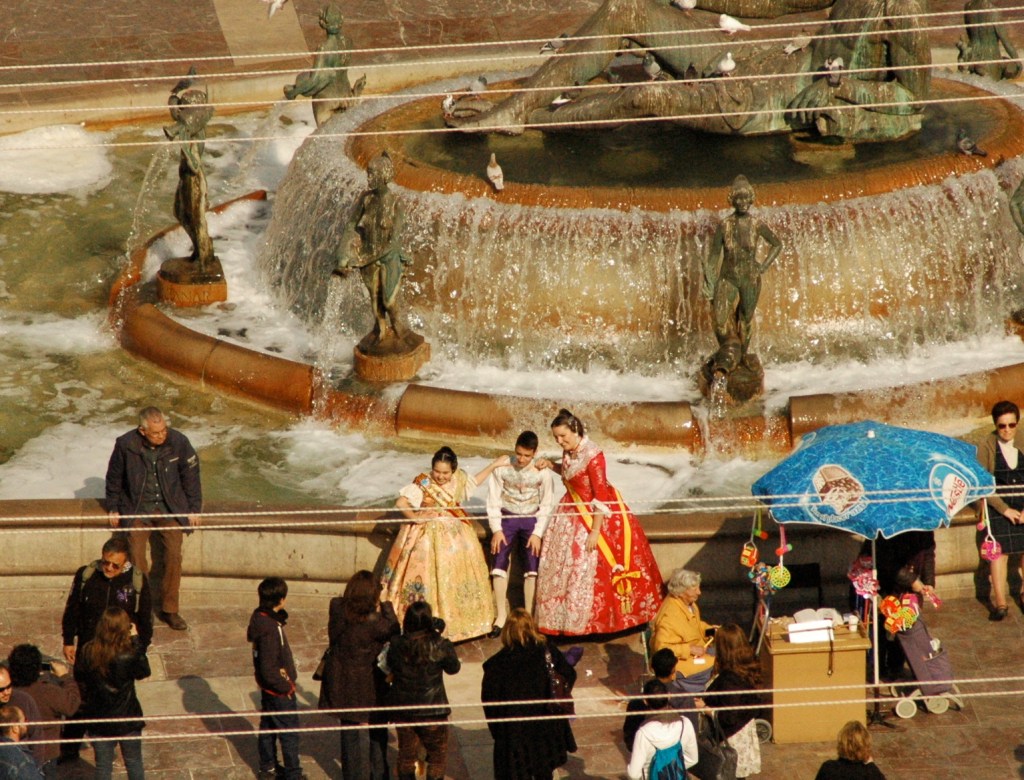
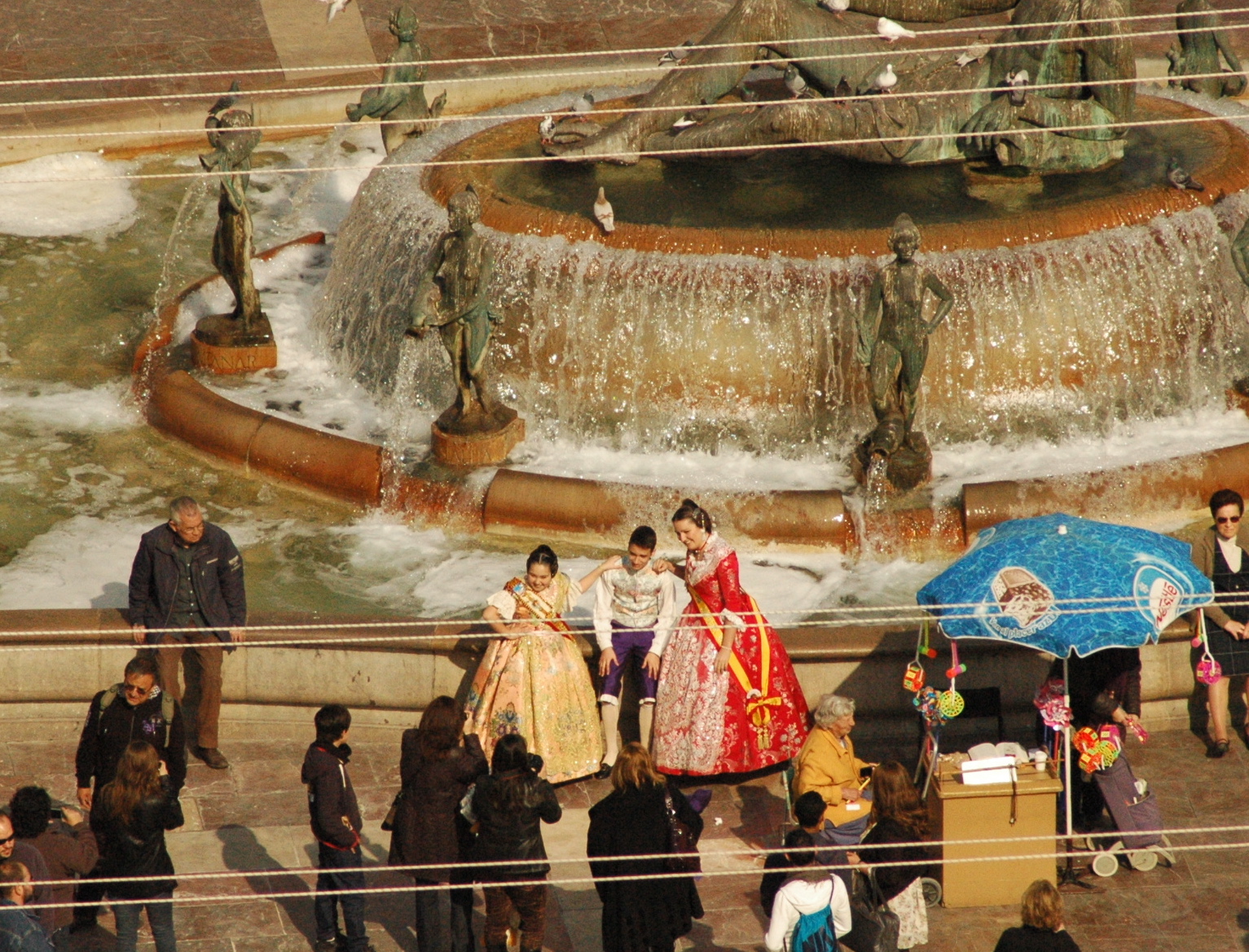
Traditionally dressed Valencians cause a stir in the Plaza de la Virgen

Traditionally dressed Valencians cause a stir in the Plaza de la Virgen

The City of Arts and Sciences in the distance

The City of Arts and Sciences in the distance

Valencia, capital of its own eponymously self-named region and located on the Eastern Mediterranean coast of the Iberian Peninsular, is Spain’s third largest city and one of the most visited in the country. Famous for Las Fallas, its March festival in which huge models are paraded down the city streets in a carnival of colour and festivity, as well as the rather oddly traditional mass human tomato fight (La Tomatina) which is held each August in the nearby town of Buñol, Valencia is a city with many facets, from its charming old centre, to its super modern Ciudad de las artes y las ciencias which boasts such startlingly innovative architecture as to have put Valencia on the architectural map of the world.

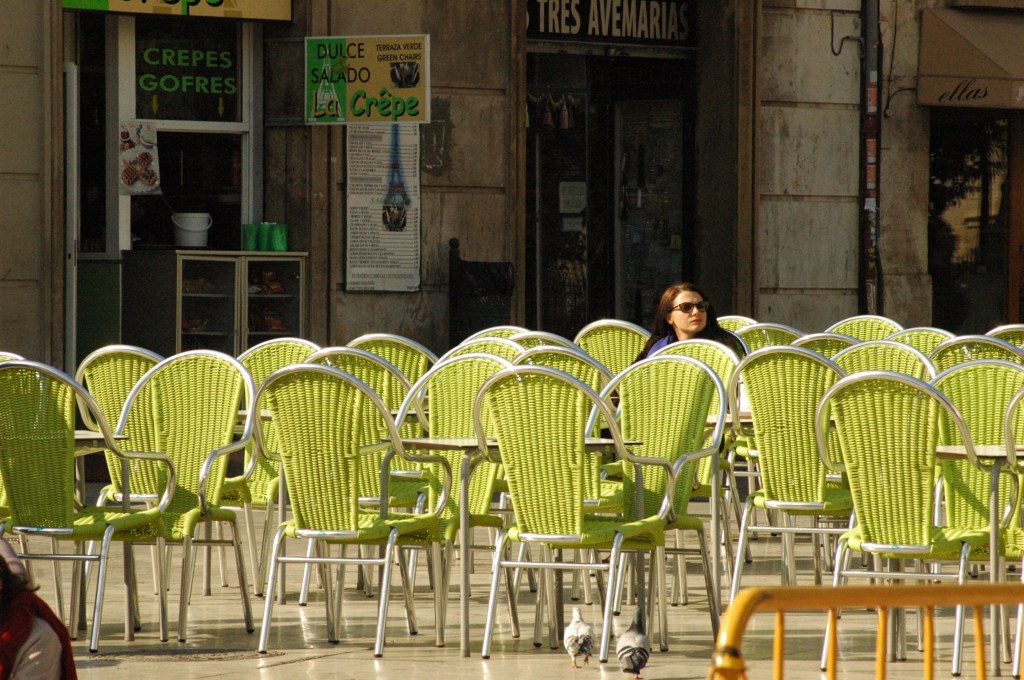
It seemed appropriate that having explored so much of my beloved Spain, I would eventually make it to this bustling Spanish centre, and all the more so at Valentines, a festival which shares so much of the city’s name. Romance wasn’t exactly my priority however – I was visiting with my Mother, with whom I have a shared love for Spanish culture – although it was certainly not lacking in the picturesque streets, charming street cafes, and large open squares of this iconic Spanish heartland.

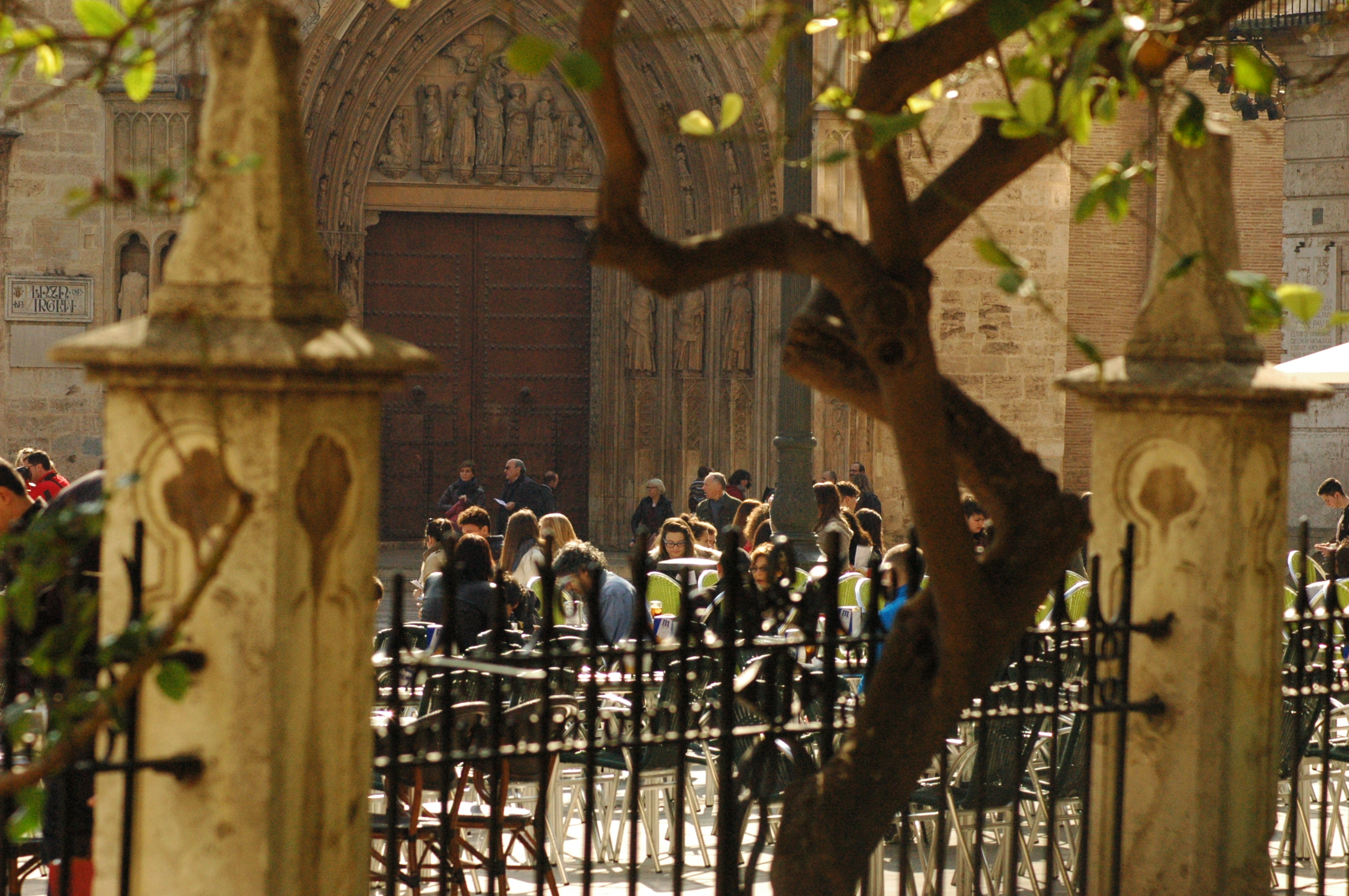
Views of Valencia’s historic quarter

DSC_0473 DSC_0375 DSC_0356 DSC_0439 DSC_0462 DSC_0511

Staying in the heart of Valencia’s historic centre, in the conveniently located, wonderfully modernista Vincci Palace Hotel, we were only a short stroll away from the Plaza de la Virgen and next door, the Plaza de la Reina, in between which the city’s principle cathedral and it’s Miguelete bell tower mark the city’s centre-point. And what a place to begin what has surely followed as a love affair with this diverse and inviting city (although the steep spiralling stairs down from the tower did perhaps make sightseeing for the remainder of the day a little more tiresome). The cathedral’s tower is however only one aspect of this architecturally multi-faceted building. From austere gothic nave, to elaborate renaissance altar, and classical colonnaded rear to a front entrance dripping in baroque details, the cathedral is, to a degree, a perfect representation of this city. Not only is it situated at the beating heart of the city’s historical centre, but it demonstrates the plethora of influences and historical changes which have helped to shape and expand Valencia into the sprawling and diverse city it is today.
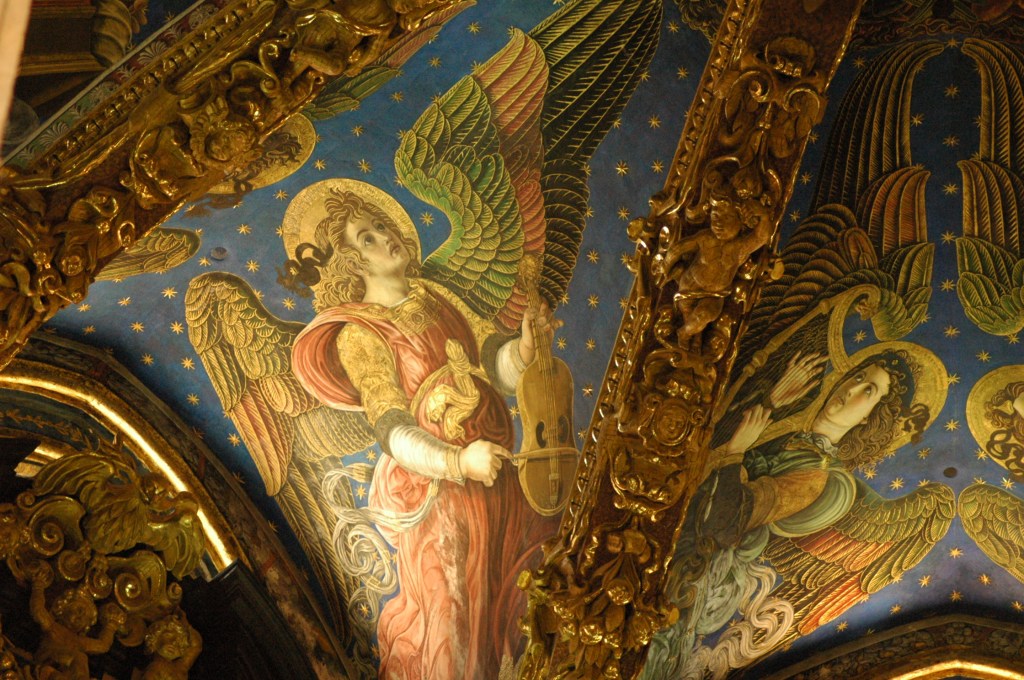
The Cathedral's gothic interior

The Cathedral’s gothic interior

and its baroque facade
and its baroque facade

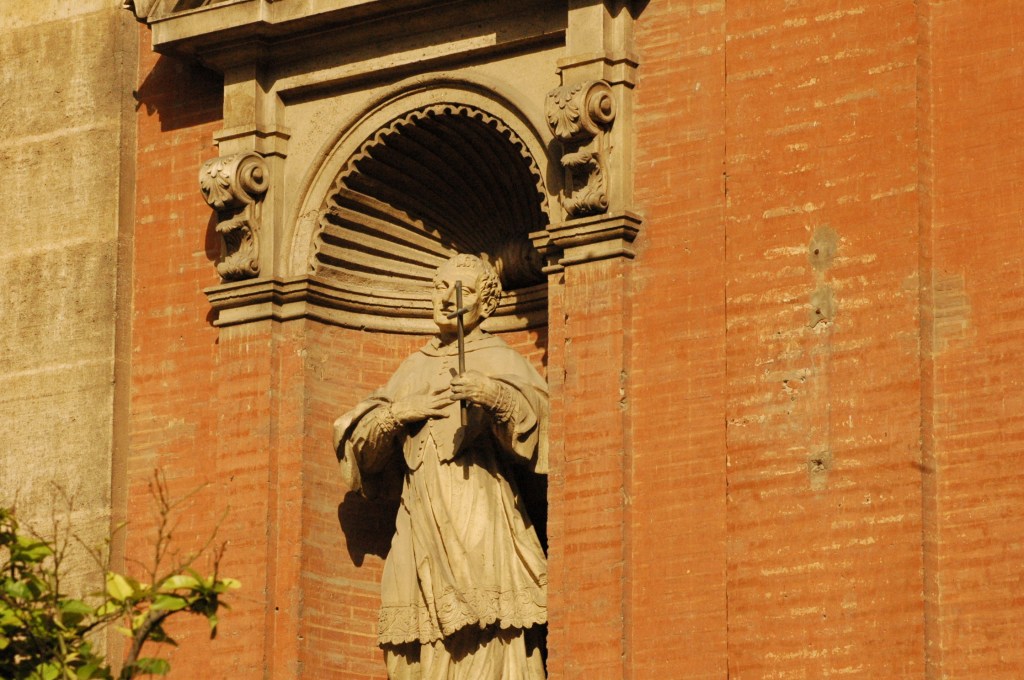
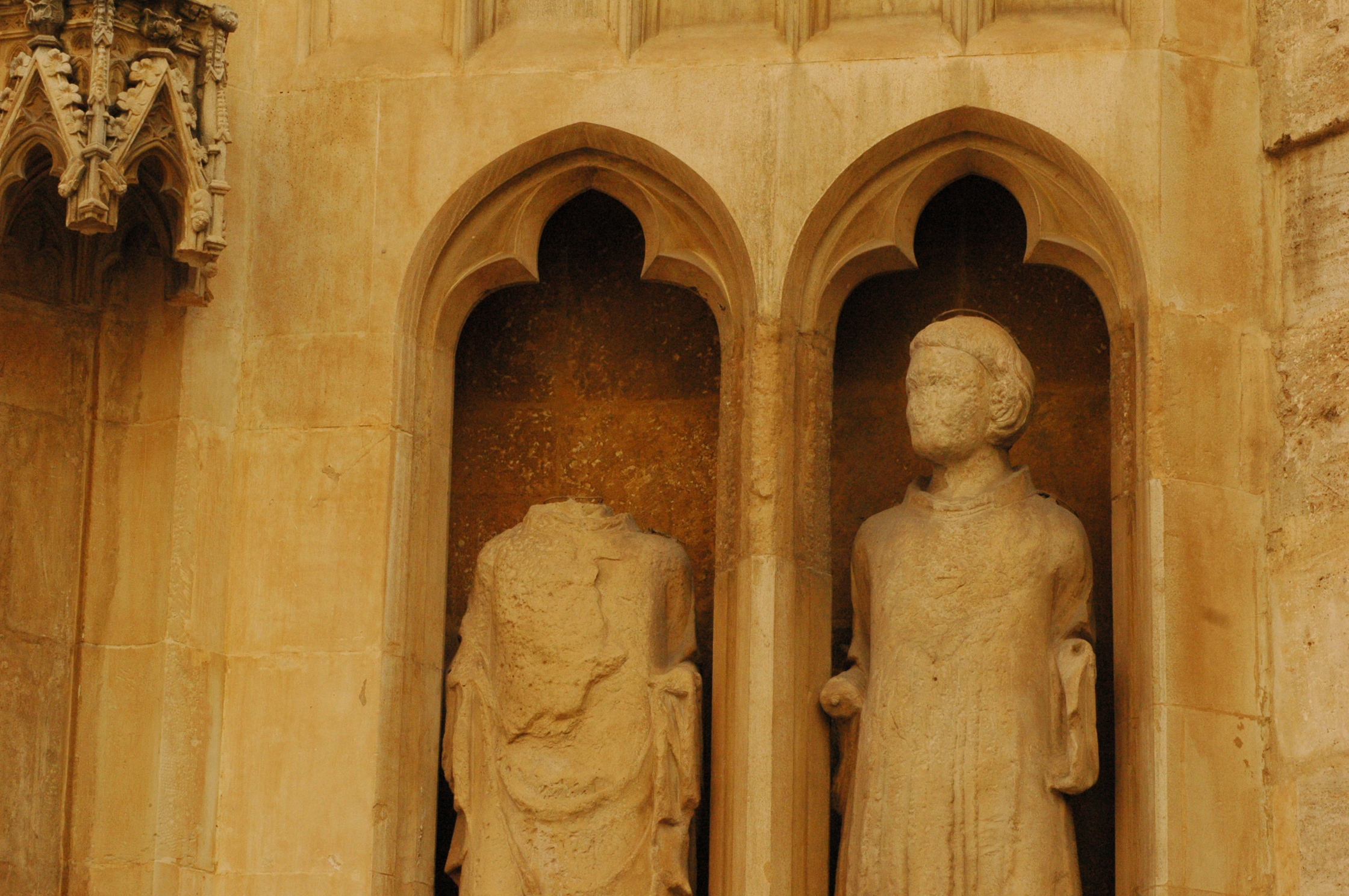
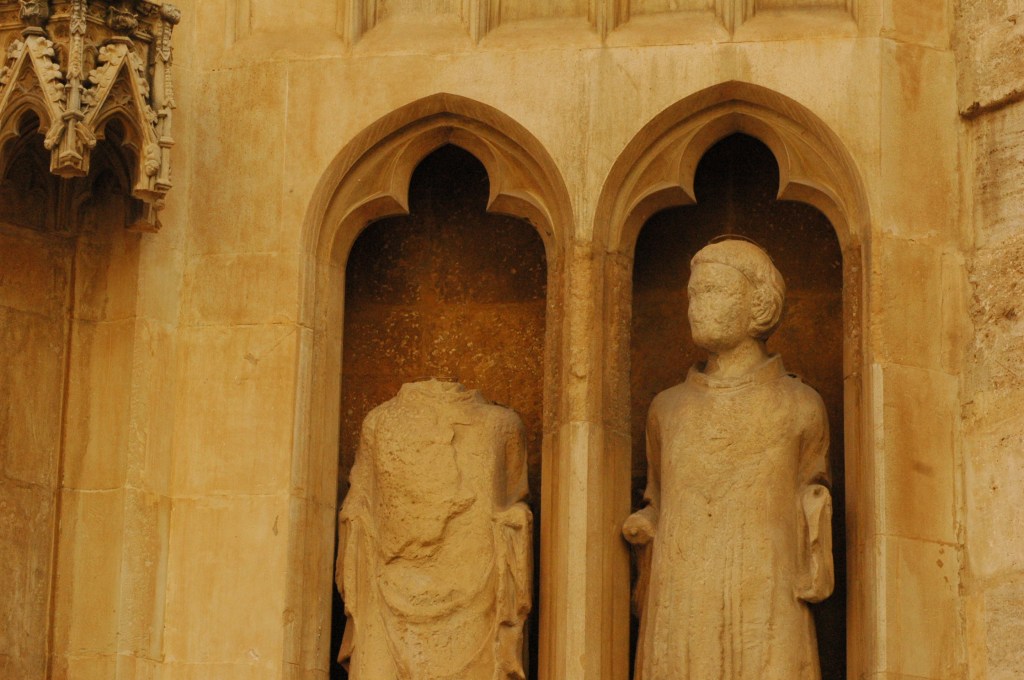
And a poor headless saint

And a poor headless saint

So with a taste for the city’s multi-faceted personality, we spent our morning ambling contentedly from one square to another, down narrow little streets full of souvenir shops and cafes, photographing fountains and statues of (sometimes headless) saints and sinners, and noting the details of human gargoyles and colonnaded arches, heavily decorated churches and shady orange-tree lined courtyards which fill the old quarter.

After lunch, and having reached the northern extent of the old town, we crossed what was once the River Turia in pursuit of the city’s fine art collection. The old River Turia is perhaps one of the oddest elements of the city. Once a thriving great river which ran around the city’s historic centre like the caressing arm of a lover, the river caused such devastating floods in 1957 that the decision was taken to divert the river away from the city and out to the Mediterranean via a different course. The result is a strange ghost of what was once – still the river bed runs around the city, and still the bridges which once crossed water cross this large basin. However instead of water, along the old river bed runs extensive gardens for some 9km. The effect is to inject a huge swathe of greenery running through the heart of the city’s modern expanse, but it’s also an odd one – the base of bridges, normally plunging into water, plunge straight into concrete and flower beds instead – a ghost of what once was.
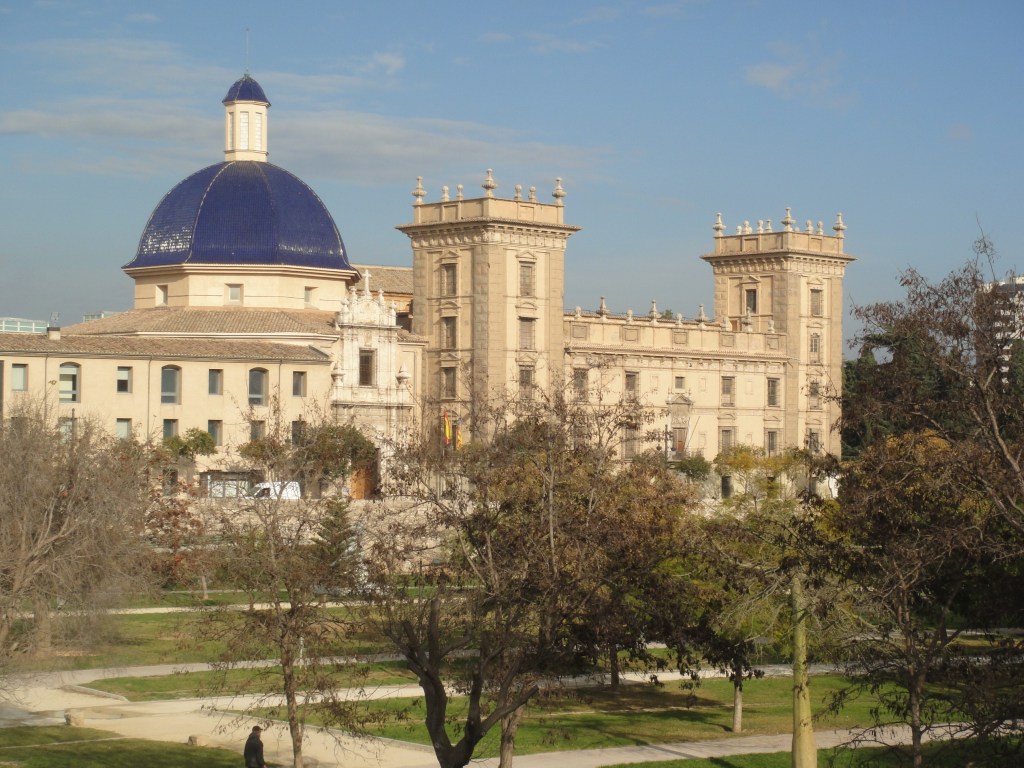
The Museum of fine arts with the gardens now in the old river bed in front

The Museum of fine arts with the gardens now in the old river bed in front

A bridge plunges into concrete on the old river

A bridge plunges into concrete on the old river

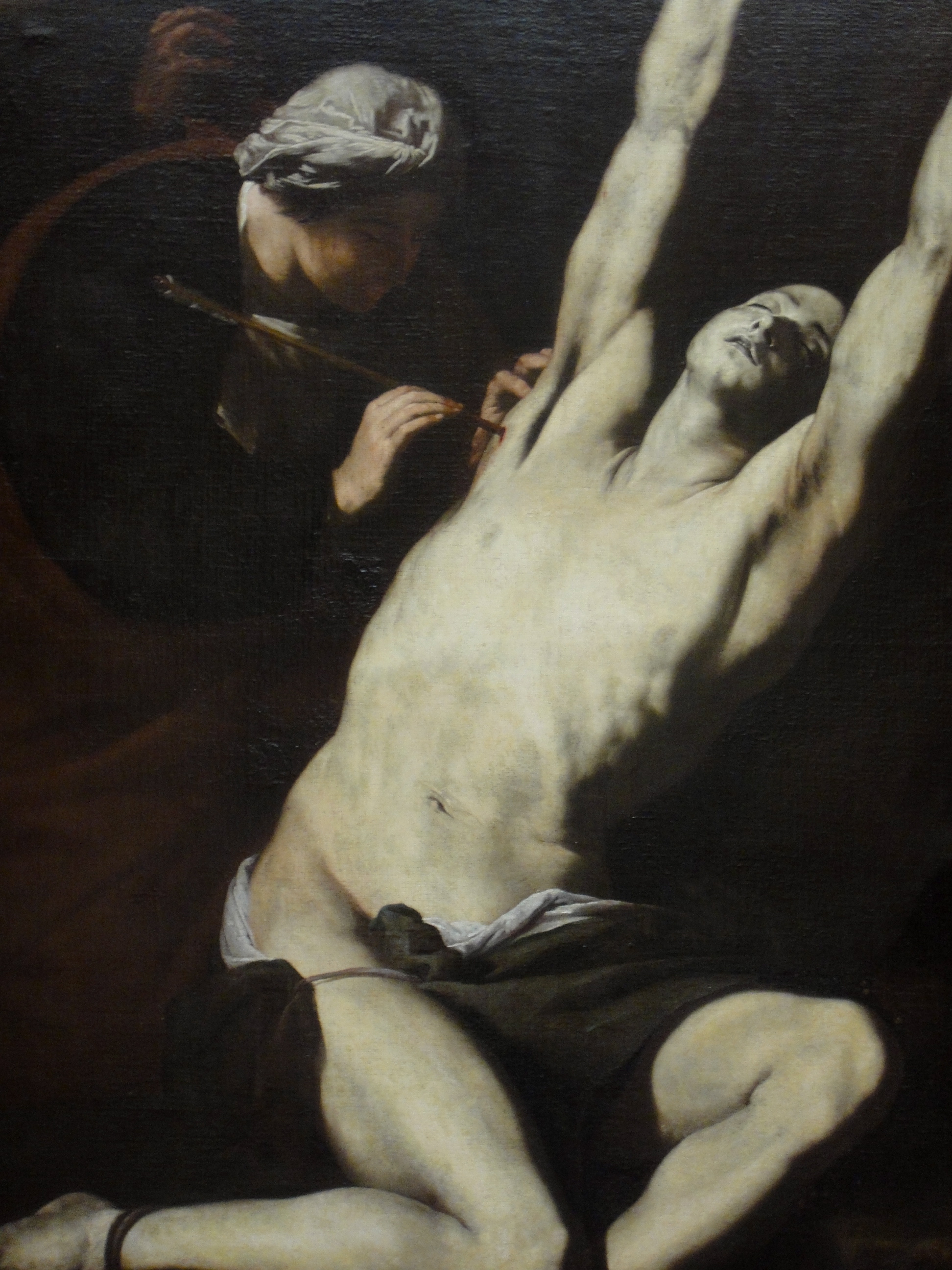
So crossing the ghost of the Turia, we arrived at the aptly named Museo de Bellas Artes. Said to have a collection second only in size to Madrid’s Prado (although I’m not sure how – the Reina Sofia in Madrid seems much bigger, although perhaps Valencia’s complete collection is not out on display) the museum is a cornucopia of paintings from Spain’s golden age of painting, including a self-portrait by Velazquez, several works by Goya, and an incredibly beautiful painting of Saint Sebastian by de Ribera (see below). The purity of his skin, pierced by arrows and tended to by the Saint Irene, against the beauty of his face, almost ecstatic with the extent of his martyrdom, made for an incredible painting to behold.
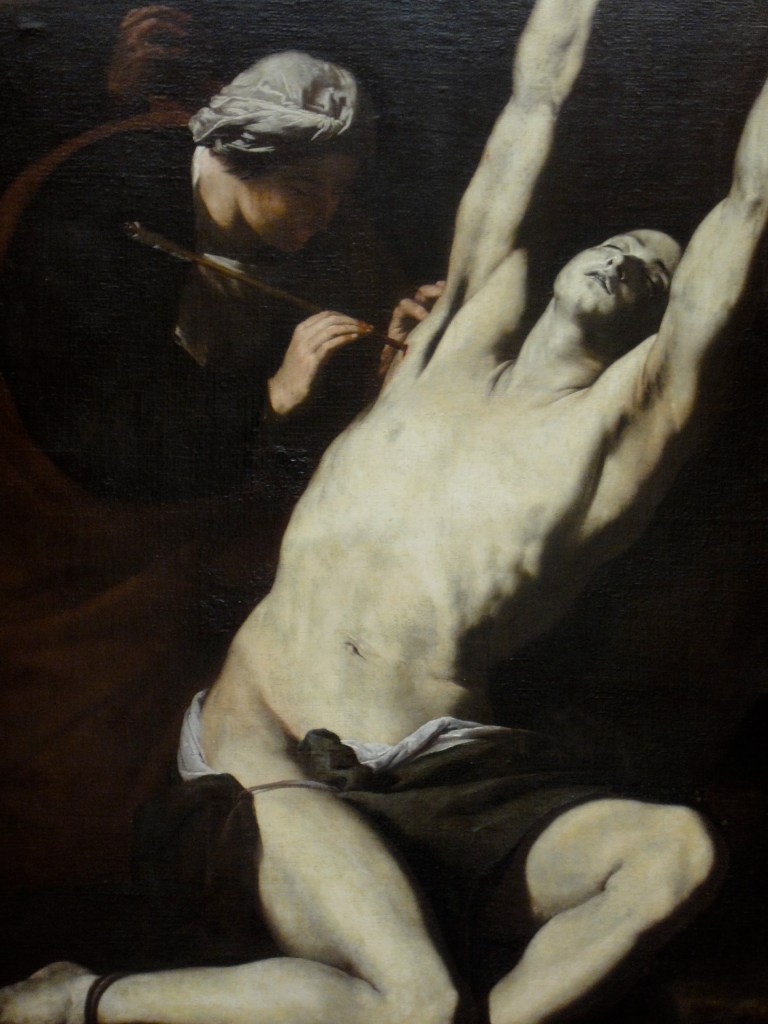
St Sebastian tended by St Irene, by Jose de Ribera (1591-1652)

St Sebastian tended by St Irene, by Jose de Ribera (1591-1652)

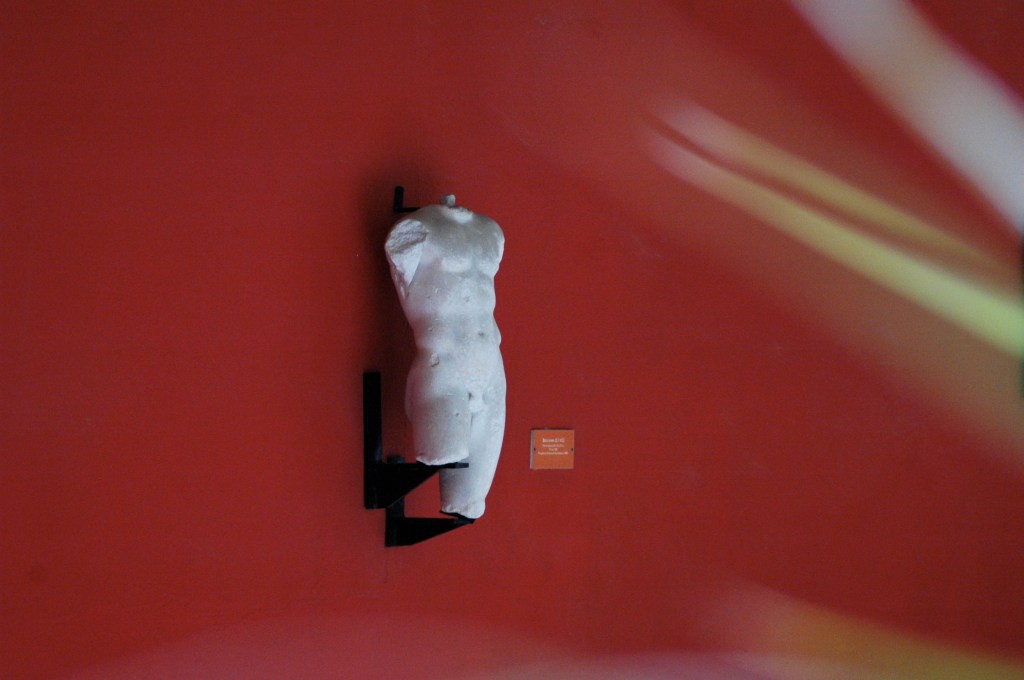
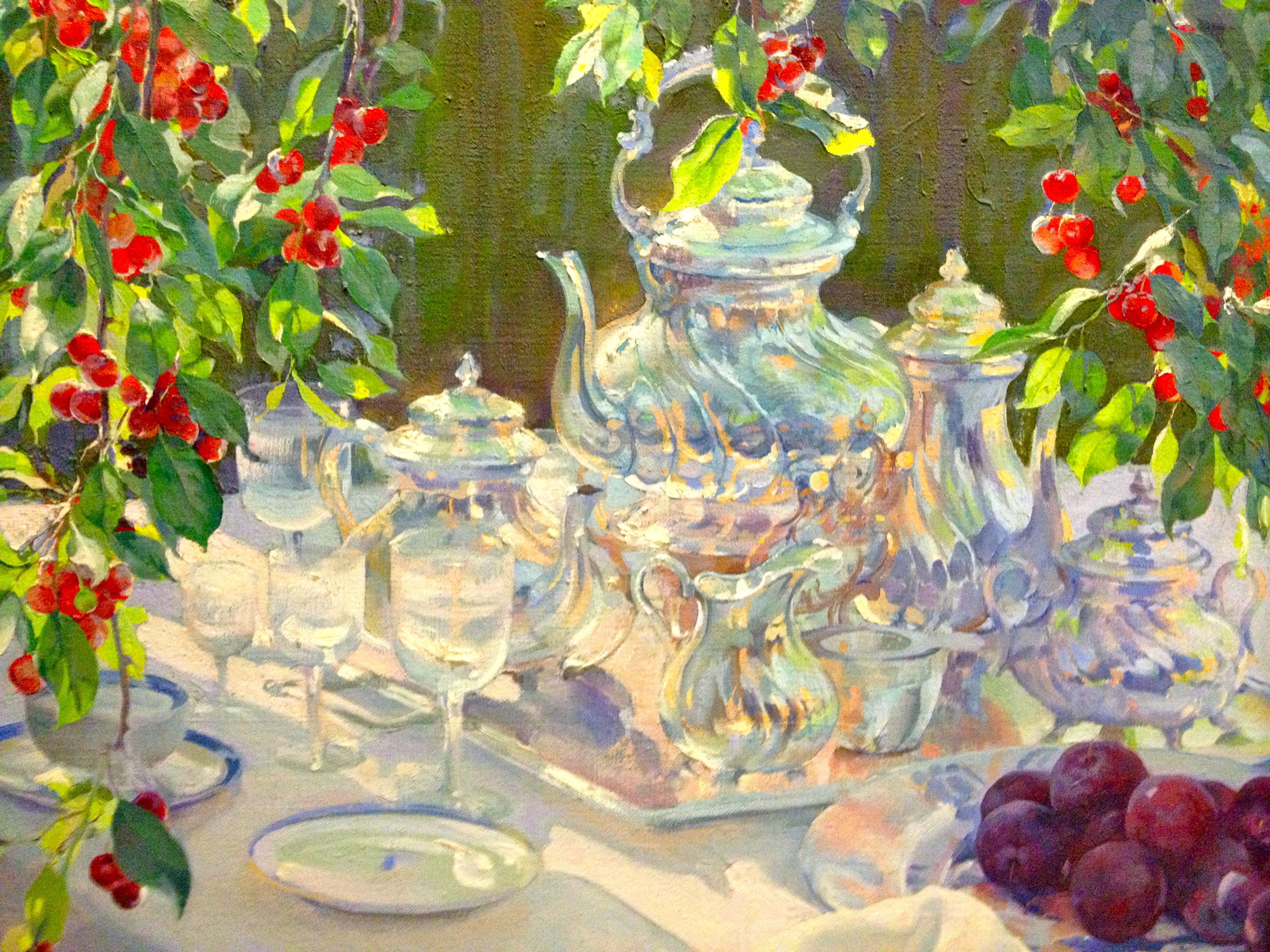
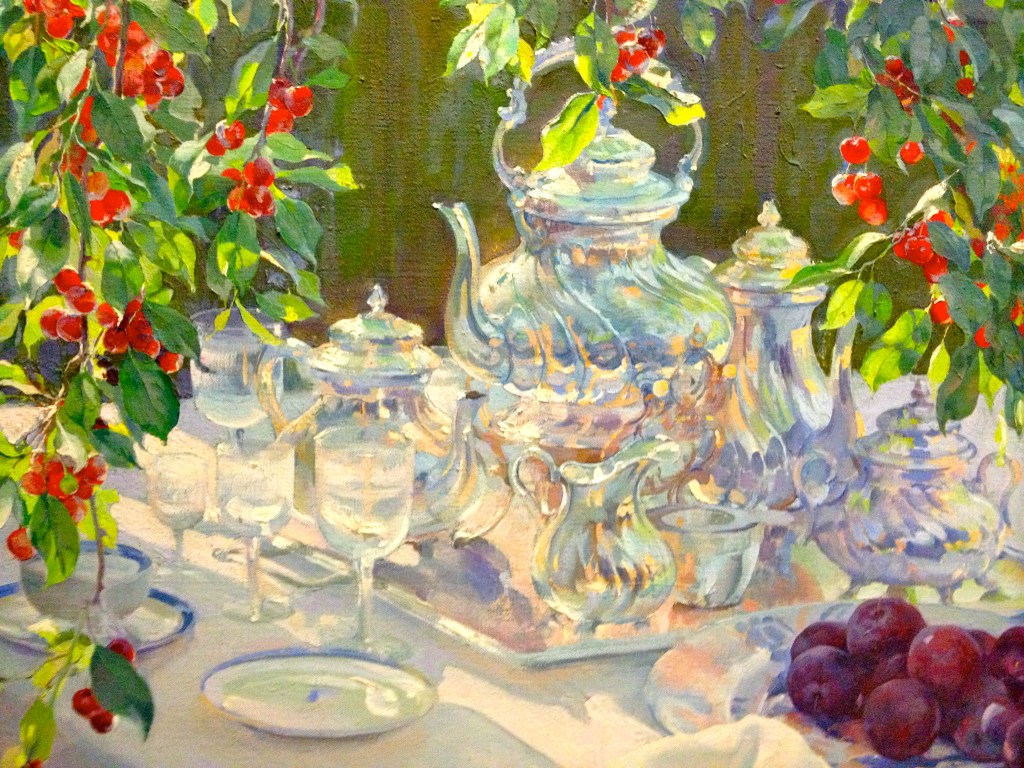
Also at the gallery are the works of leading Spanish exponent of the impressionist school, Joaquin Sorolla. Valencian born, and bequeathing his works to his home city on the condition that they would be collected together in a gallery such as this, the museum boasts a fine collection of mainly portraits which provide an evocative, very personal view of the city and its residents. Of particular attraction, for me, were his nudes and human studies, such as this academic study of a male, below. Also at the more modern end of the collection was this beautiful study of Cherries by Pons Amau, who perfectly captures the effect of sun shining through the leaves of this cherry tree.
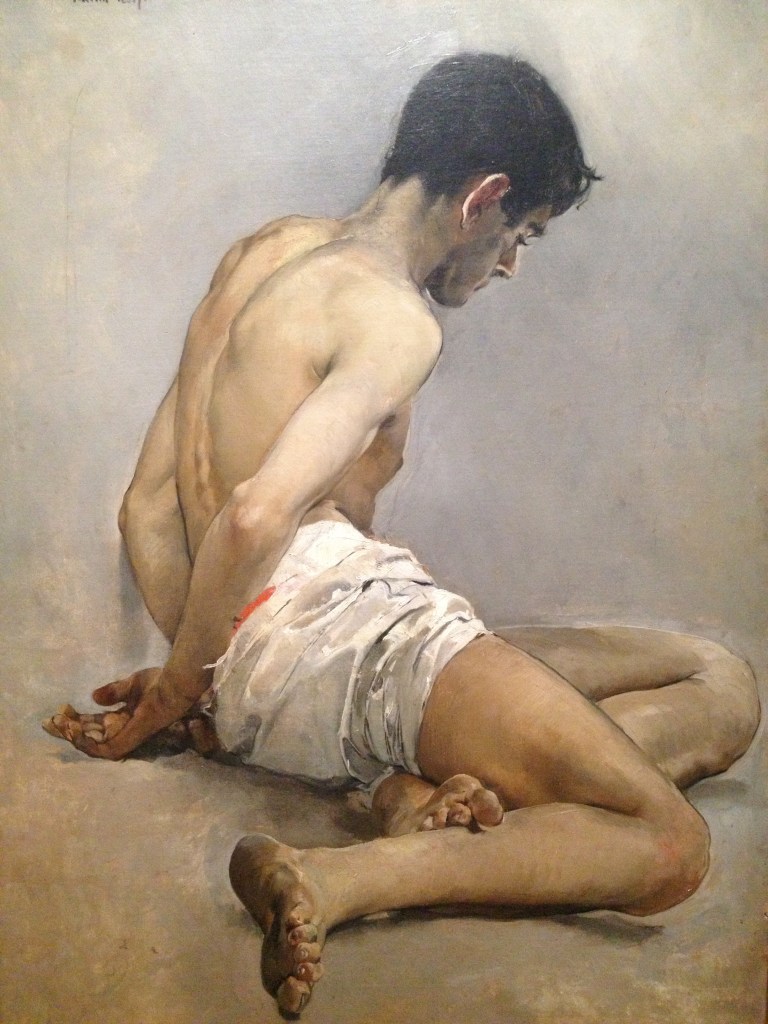
Joaquin Sorolla, Academic Study from Life (Man) (1887)
Joaquin Sorolla, Academic Study from Life (Man) (1887)

Francisco Pons Amau, Cherries (1886-1953)

Francisco Pons Amau, Cherries (1886-1953)

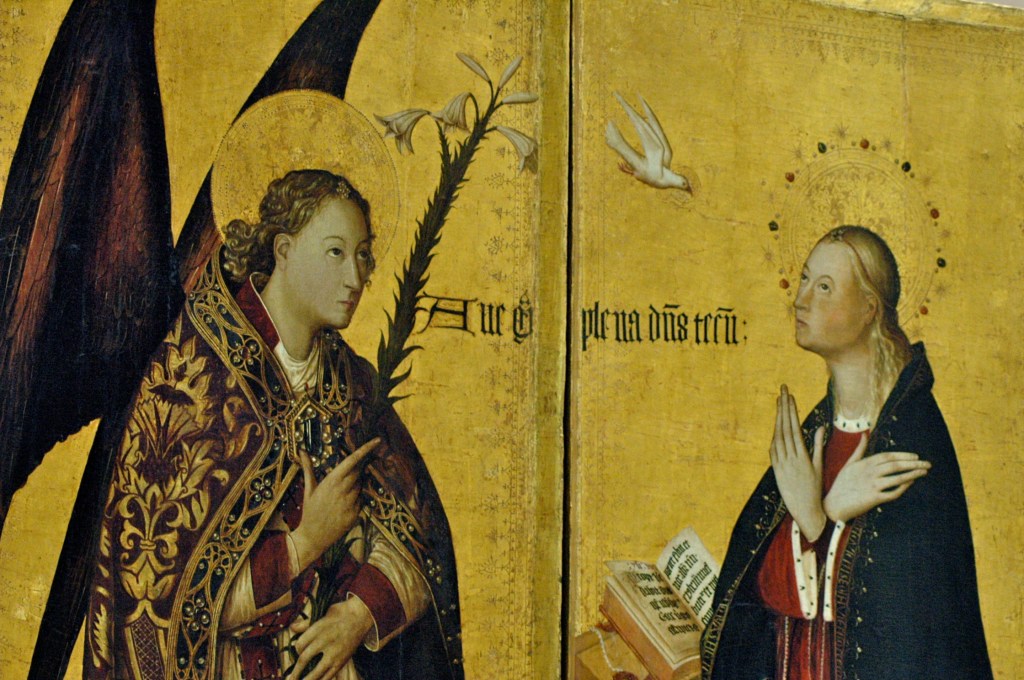
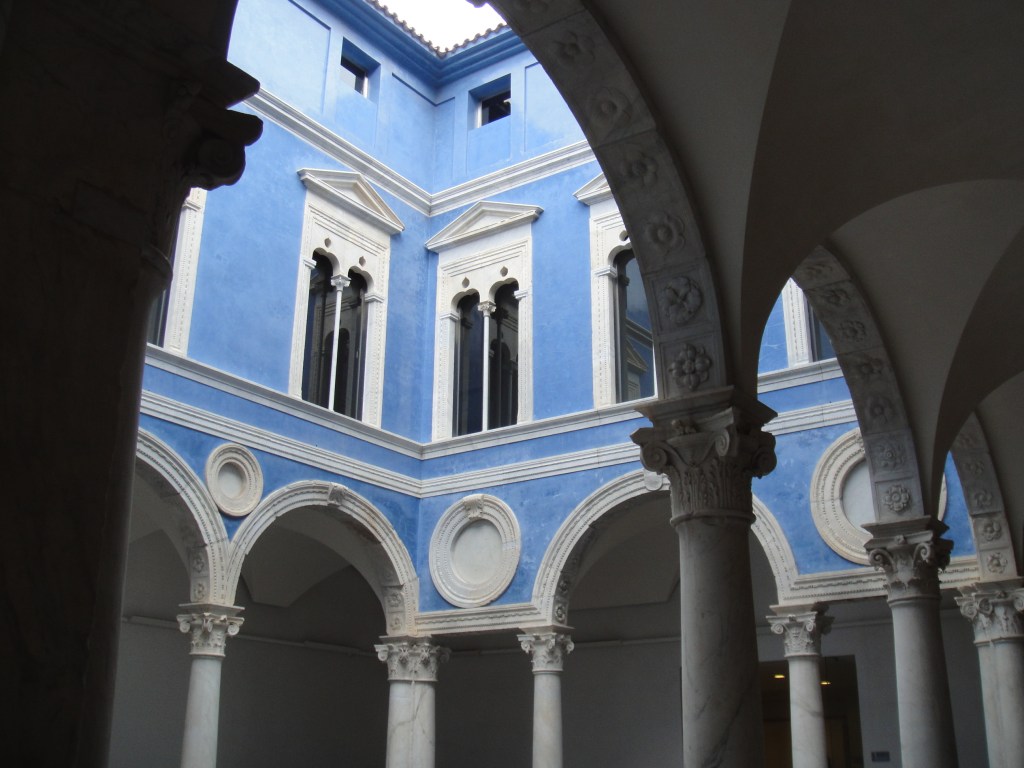
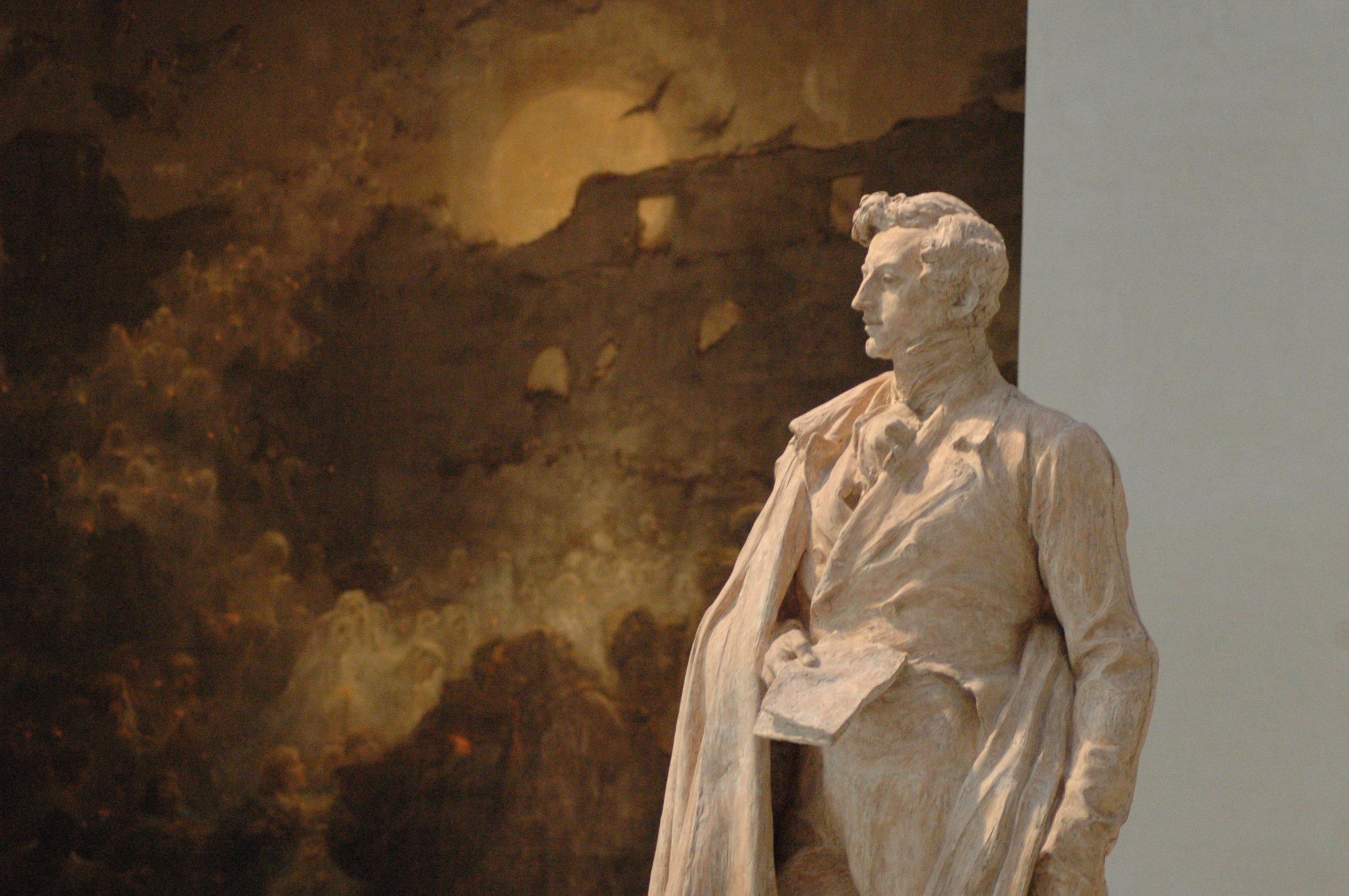
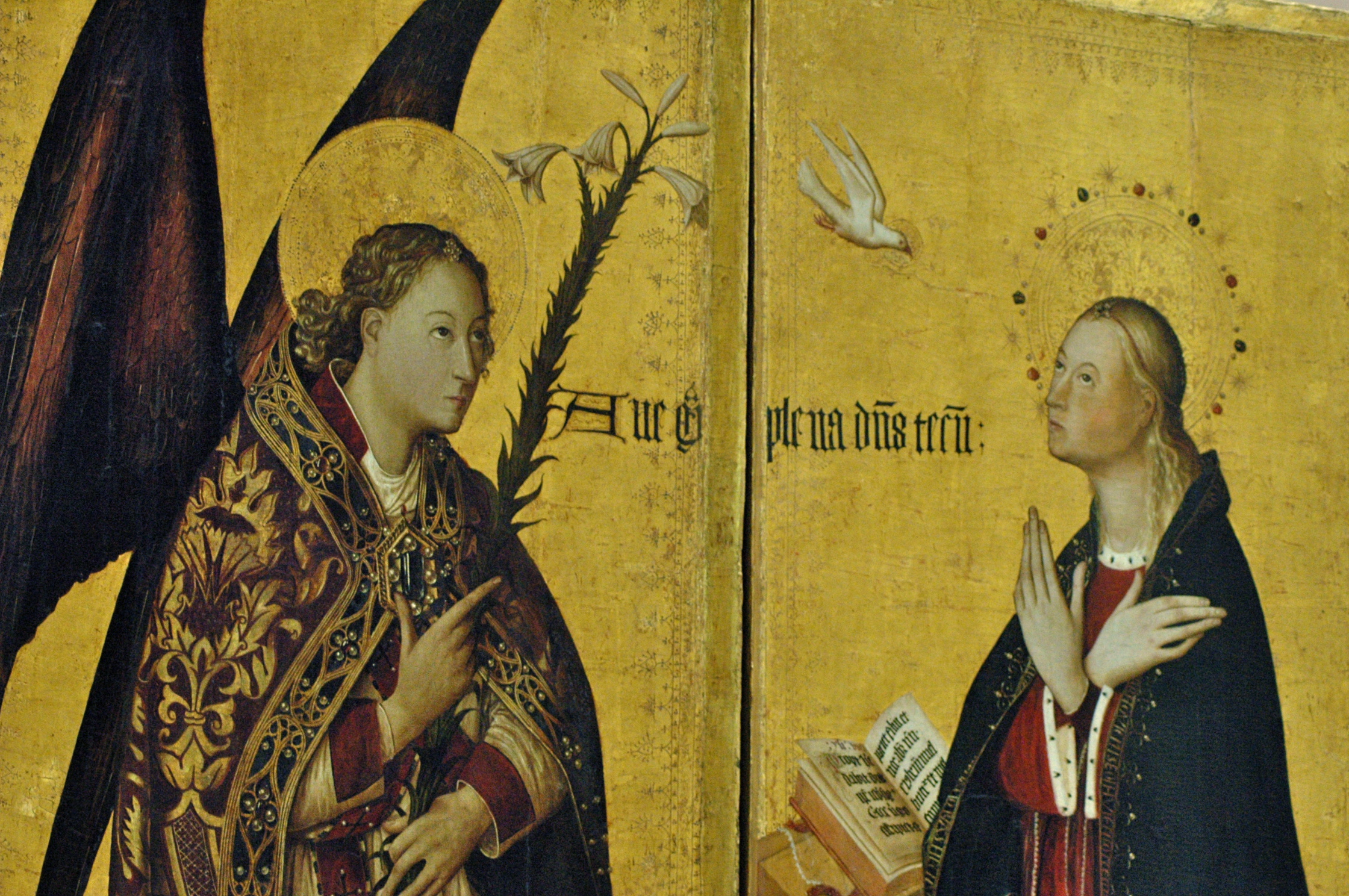
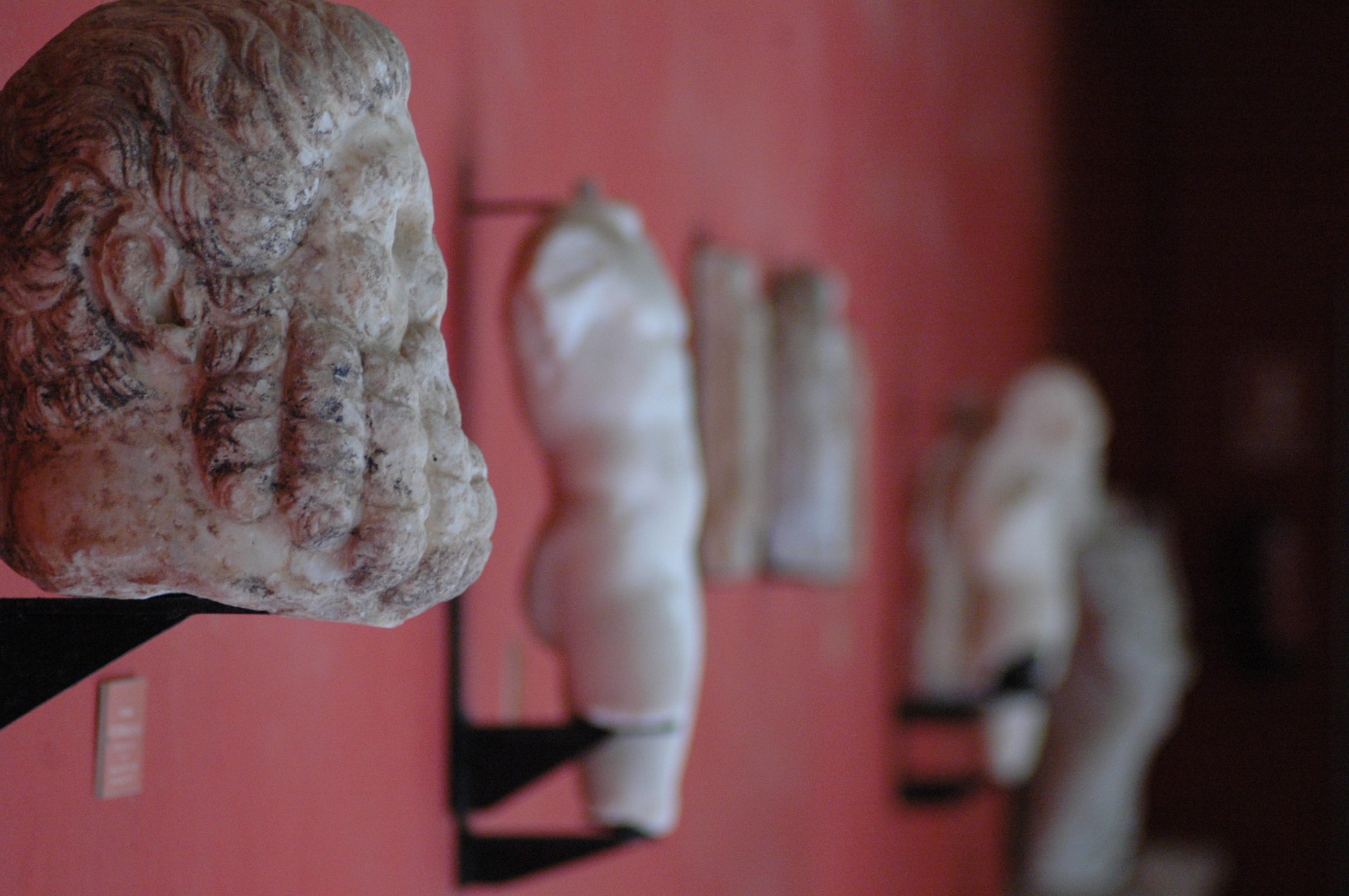
Oh and beyond the paintings, I should also mention the museum’s two palatial courtyards, one red and one blue, both bursting with busts and relics from antiquity, the perfect places of calm to explore towards the end of our first Valencian day.

Other highlights from the Museo Bellas Artes

DSC_0700 DSC_0676 DSC_0672 DSC05067DSC_0677

So from the 207 steps of the Miguelete bell tower, across the historic quarter of Valencia, over the old Turia river and around the Belles Artes museum, our first day in Valencia presented a complex opening in this urban tale, a tale in which we were presented with the undeniable beauty of Valencia’s belles arts, as well as the clamouring melodies of its bells, ringing out in recognition that the central heart of this vast city bursts full of vigour for all to see, hear and explore. And that’s just what we intend to do tomorrow.
© Nicholas de Lacy-Brown and The Daily Norm, 2001-2012. Unauthorized use and/or duplication of the material, whether written work, photography or artwork, included within The Daily Norm without express and written permission from The Daily Norm’s author and/or owner is strictly prohibited. Excerpts and links may be used, provided that full and clear credit is given to Nicholas de Lacy-Brown and The Daily Norm with appropriate and specific direction to the original content.