Skip to content

Posts tagged ‘Cooking’

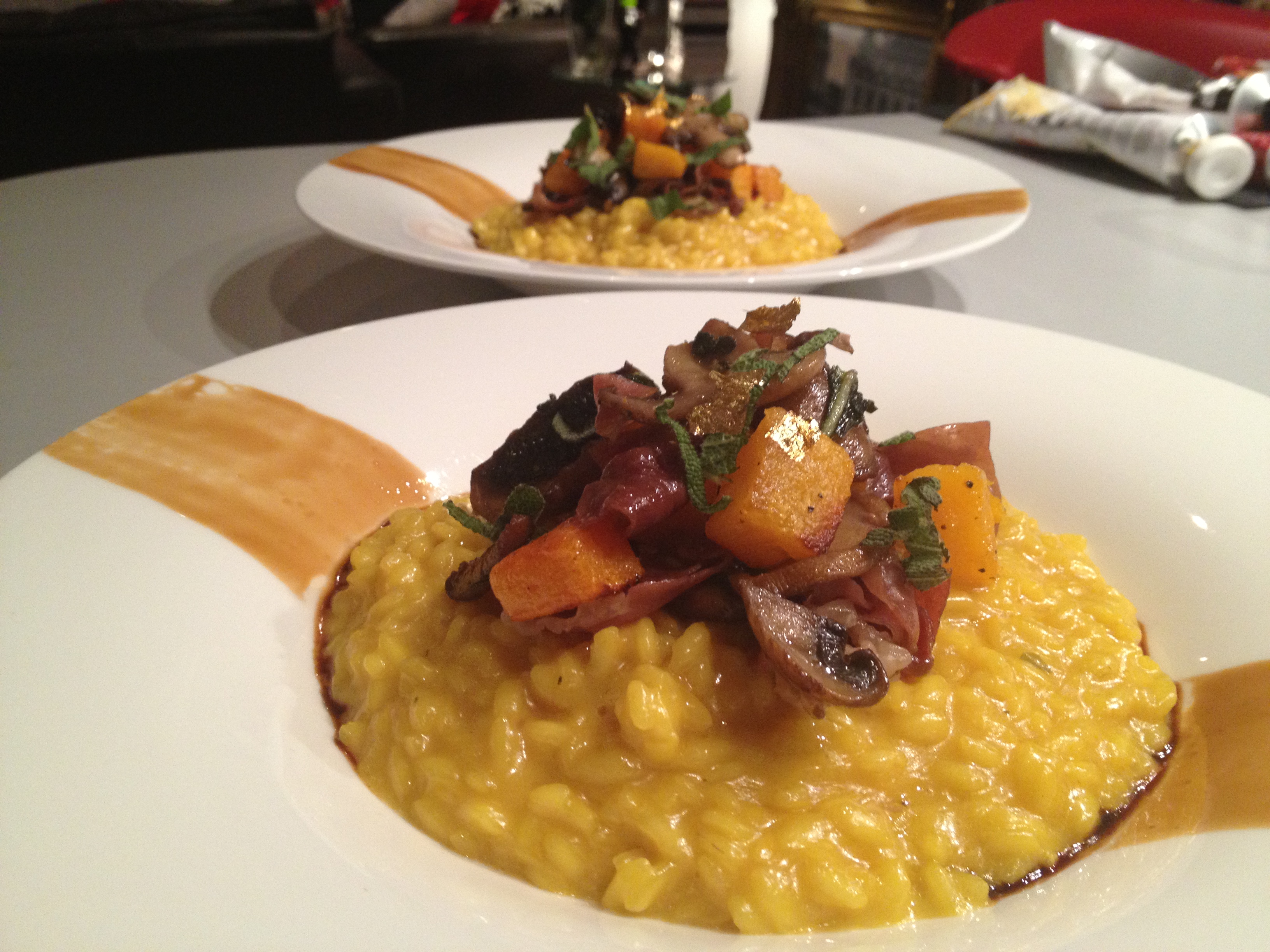
Saffron Risotto with a gathering of autumn flavours, edible gold leaf and an espresso reduction

I always thought I had risotto down until I watched an episode of Australia’s Masterchef on TV the other day (yes, we have the Aussie show in the UK and it’s so much better than the British version – Apprentice challenges meets cooking stress – classic). A couple of weeks back, the budding final 10 contestants had flown half way around the world to the lavish panoply of gastronomic delights that is Italia. Across the week, the illusive risotto, previously termed “the masterchef death dish” (because so many contestants failed in their attempts to cook it), was cooked twice – and appropriately so, being as they were in the home of the famed rice-based dish. For the first, a saffron-yellow, creamy and simple risotto was topped by a single sheaf of edible gold leaf and frankly looked amazing (needless to say, most of the contestants failed in  their attempts to recreate the dish). The second risotto was made in a master-class at the end of the week. Again, the recipe was for a simple risotto, which, instead of adding onions at the beginning, added them right at the end as a type of purée. I was inspired.
So last weekend, I decided that my tried and tested risotto method should be set aside for a new radical approach which was to be something of a combination of the two methods I saw on TV with a little of my own twist on top.

Up first was the stock. I used 900ml of ordinary chicken stock and added to this the dried old husks from a hunk of parmesan cheese which had been hanging around in my fridge. This lends a wonderfully rich parmesan undercurrent to the risotto without going overkill at the end. I also added some chunks of ham and a good pinch of saffron strands straight from my spanish travels. I allowed this stock to simmer gently while getting on with the other components.
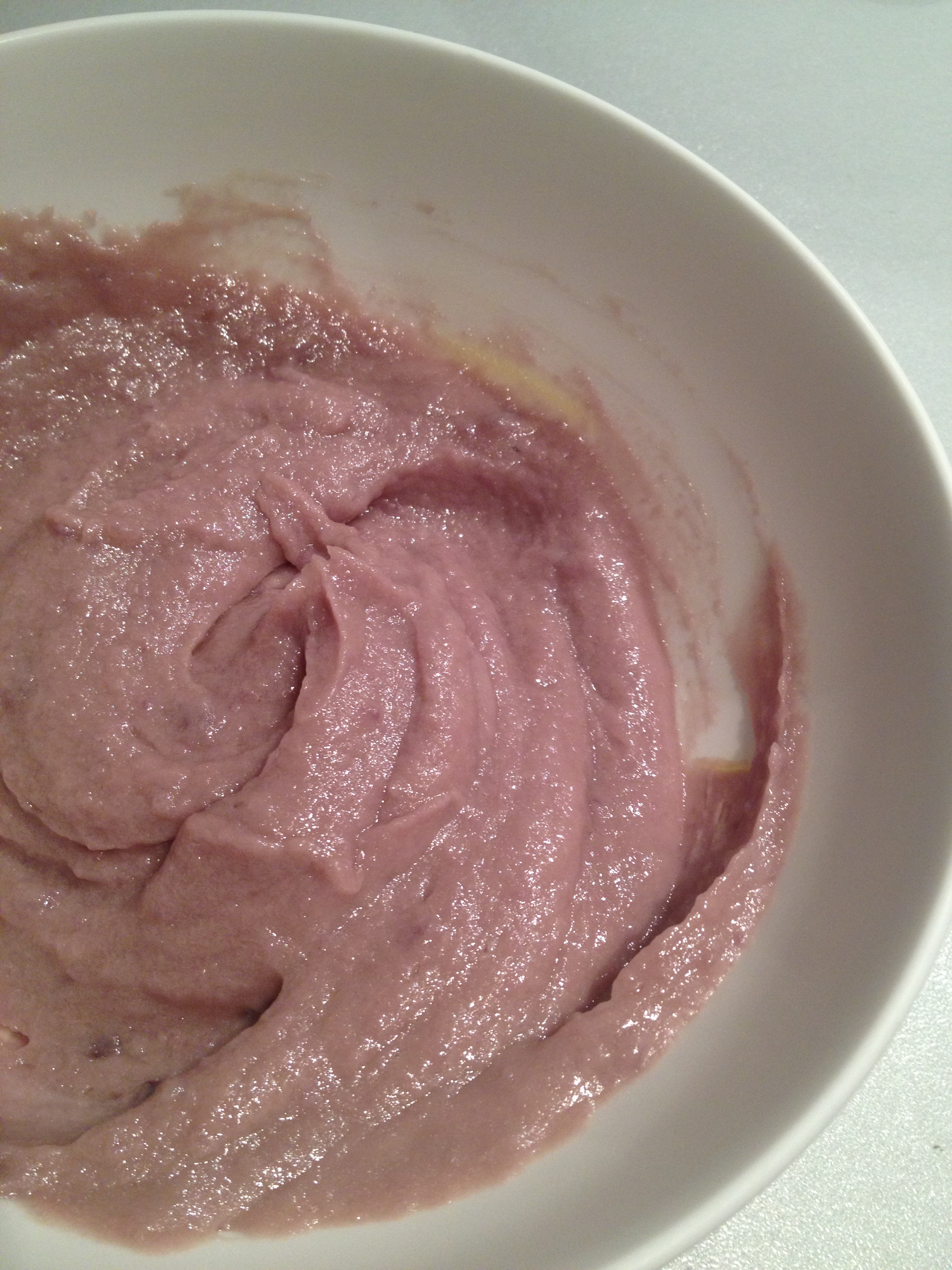
My red onion purée

Up next, I chopped an onion (it should be a white one – I only had red, which tends to redden the saffron yellow colour of the risotto when stirred in at the end, but it’s not a big deal). I sweated my onion, covered, over a low heat in plenty of butter (a good 50g worth) and seasoning. I left the onion to sweat for a good 20 minutes, before adding it to a food processor, along with another knob of butter and making a creamy puree. This I then placed in the fridge to firm up a bit for use later.

Next, while the onions were sweating, I turned to my espresso reduction –  This creates a wonderful deep, almost bitter-sweet contrast to the richness of the risotto’s parmesan flavour, and looks amazing when painted onto the plate. For the reduction, I made two double espressos in my coffee machine, and adding a single sachet of sugar (about a dessert spoon) and the coffee to a pan, I started simmering the coffee fairly rapidly, stirring often, until it started to reduce. Be careful this doesn’t burn or the espresso will become too bitter. Once thickened and syrupy, I set aside (keeping warm).

Before moving onto the risotto, I chopped around half a butternut squash, seasoned, drizzled with oil and placed in the oven at 200 degrees Celsius.

OK, onto the risotto. So in a pan went 200g of arborio rice, which I toasted lightly in a few knobs of melted butter for a minute or so. Then, straight to the rice (no wine added in this recipe) I went with my first ladle-full of stock, stirring appropriately. On masterchef, George, the presenter, suggested that one should “aggravate” rather than stir the risotto – personally, in my pans, it’s stir or stick, so I ignored his approach, but feel free to shake the rice around a lot rather than stir if you have a really effective non-stick pan. Taking the dish one ladle-full at a time, the rice started to become thicker and yellower and overall more delicious.

As the risotto neared its completion, I fried up a good handful of sliced mushrooms (you can use any variety, the prettier the better) in some butter and oil, along with some chopped sage, a crushed garlic clove, seasoning and some chopped parma ham (pancetta would also work well). These create some amazing autumn flavours and a textural variation to the risotto. Before the autumn ingredients were done, and once the stock was used up, I left my risotto to rest for 4-5 mins with the lid on (the risotto, once cooked, should be creamy and yet loose, with the rice tender, but still with some bite).

So, pulling everything together, I first painted my plates with the espresso reduction. I then stirred my onion puree into the risotto – so creamy and amazing it made me salivate instantly. I then spooned the risotto onto my plates, and carefully piled some of the butternut squash and mushroom mix onto it. I then crowned my dish with a few fragments of edible gold leaf in homage to the incredible creation I saw made on TV.

And there you have it. The new radical approach to cooking risotto worked. No wine, no parmesan at the end, but with an onion puree and a very original coffee puree on the side. So different from my previous method, but so, so good.

Flavours of Spain – Part 2: Tapas

When most people think of Spanish cuisine, they think of tapas, and why not? These little dishes are a fantastic excuse to sample as many tastes and flavours of dishes from all over Spain as you can manage, while encouraging the shared social environment which the small dish concept inspires. Unable to decide what large dishes to cook when I was over in Spain, and with no recipe books close to hand, I decided to opt for a few simple tapas dishes which I could remember off the top of my head and which are inspired by my own tapas experiences in Andalucia and beyond. Having cooked these tapas creations, you can then supplement your tapas feast with olives, bread with delicious olive oil and different flavoured dipping salts and platters piled high with fresh serrano hams and manchego cheese (see mine at the bottom). You’ll find yourself with way too much food (unless you’re feeding a small army), but the beauty with tapas is that much of it will last for days – bonus!

Salted almonds

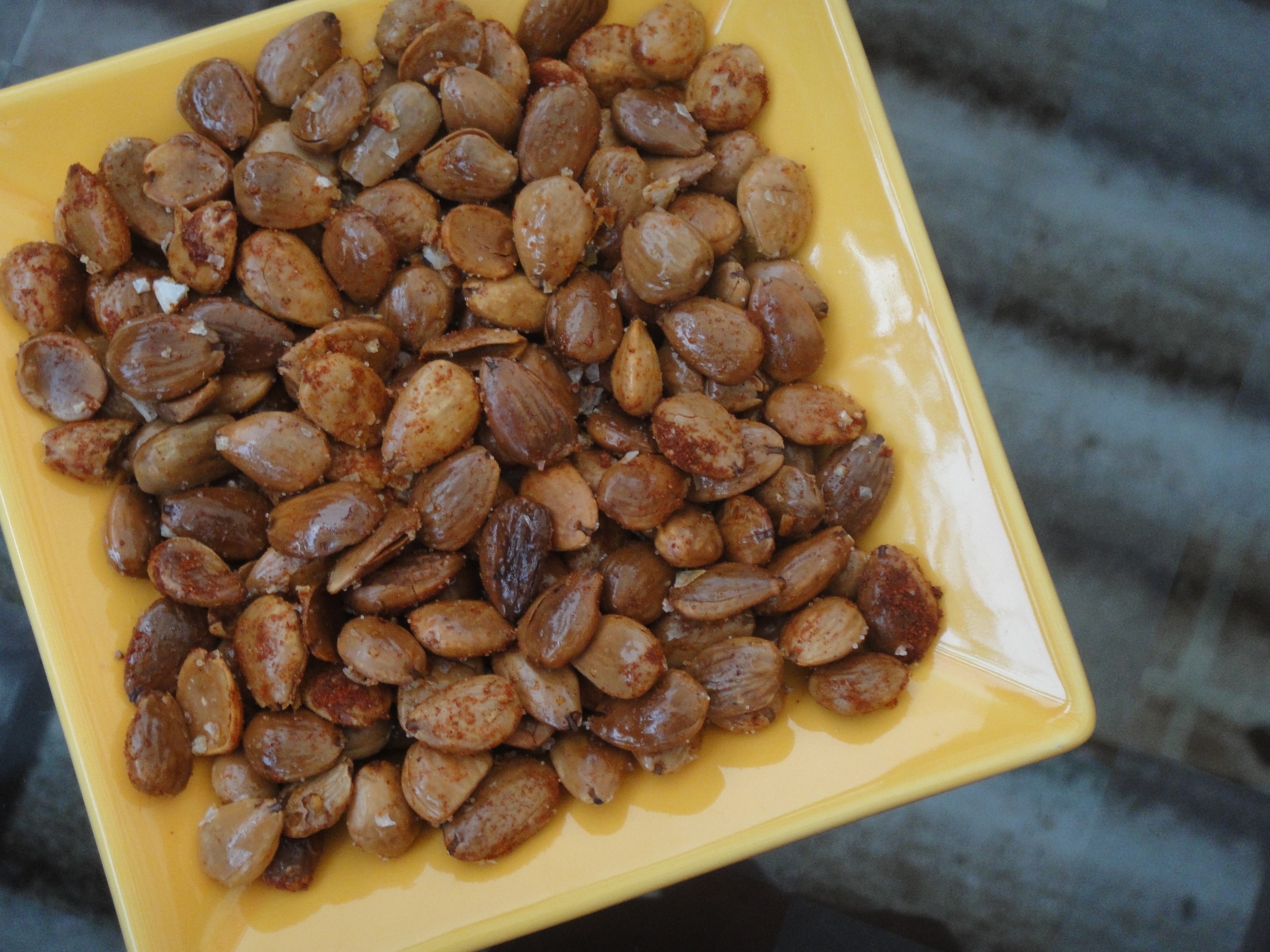
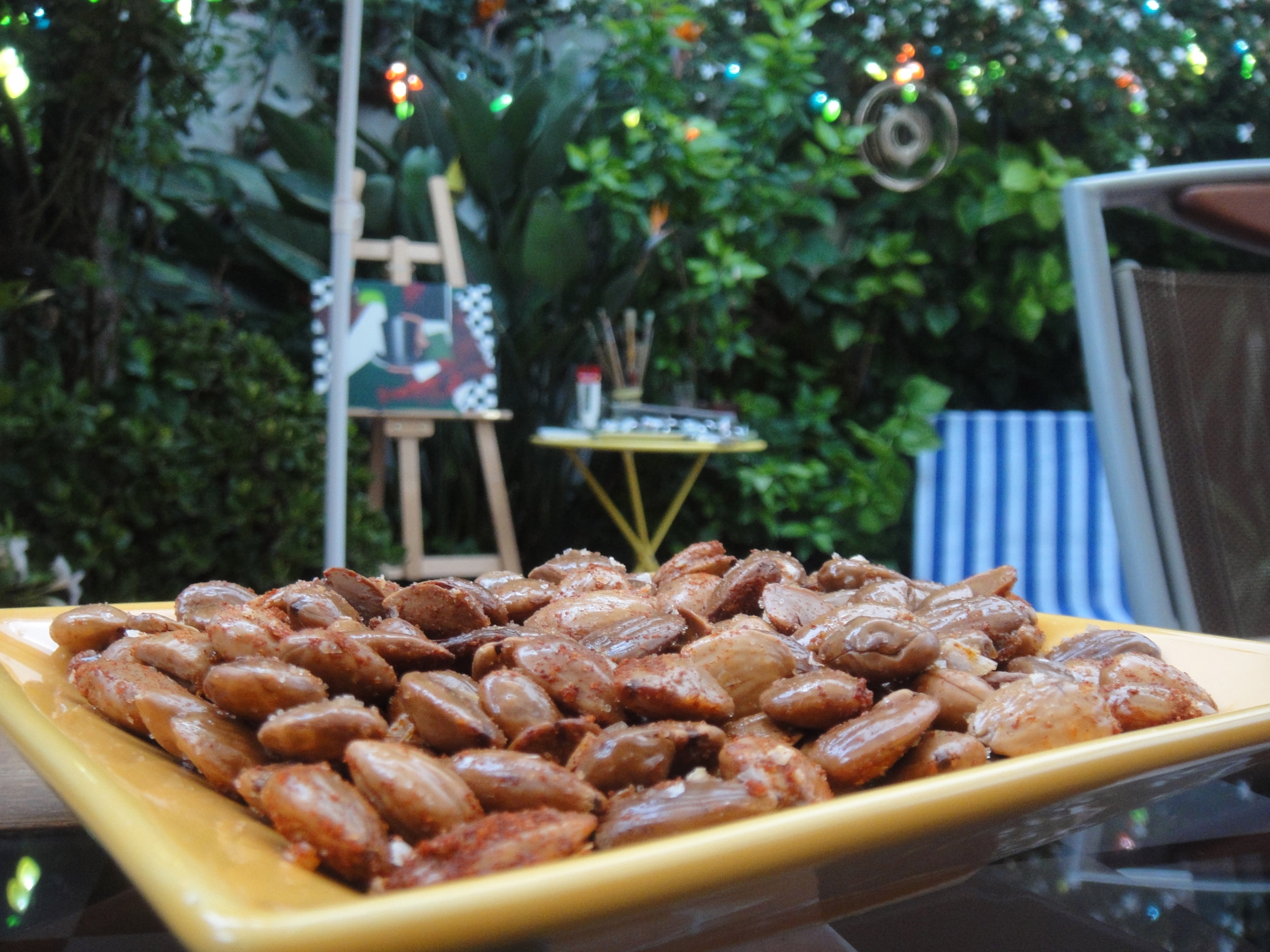
Great to kick of your evening as a moorish accompaniment to a glass of wine or two, these salted almonds are really easy to make. Take a baking tray and pour in enough olive oil to cover the base. Then throw into it (carefully – I’m not encouraging kitchen recklessness you do understand) 250g of blanched almonds, and sprinkle them with some good quality sea salt and a teaspoon of smoked pimenton. Give the whole lot a good toss, and place in the oven at 180 degrees c for around 20 minutes, tossing every so often during cooking. Be careful not to leave them in for too long – they may look ok on the outside but they can become burnt on the inside if the cooking is overdone.

Salted almonds

Ensalada Rusa

Russian salad is a tapas staple in traditional tapas bars all over Spain. You can alter the amounts of ingredients below depending on how many you’re cooking for. This made enough for a good 6-8 small tapas-sized helpings.

Start by making your own mayonnaise (if you can be bothered). Whisk up a large egg with a teaspoon of dijon mustard, 2 teaspoons of white wine vinegar and half a teaspoon of salt. Then to this very very gradually whisk in 300ml of oil – for those who like a mild flavour, use sunflower oil, but for a traditional Spanish flavour, extra virgin olive oil is a must. Doing this in a food processor is definitely the easiest way, but for those like me who are in a little holiday home in Spain without the best equipped of kitchens, the good old balloon whisk and a determined wrist can still do the job. Once you have made a nice thick mayonnaise, squirt in the juice of half a lemon (to taste) and 1-2 crushed cloves of garlic.

My homemade mayonnaise

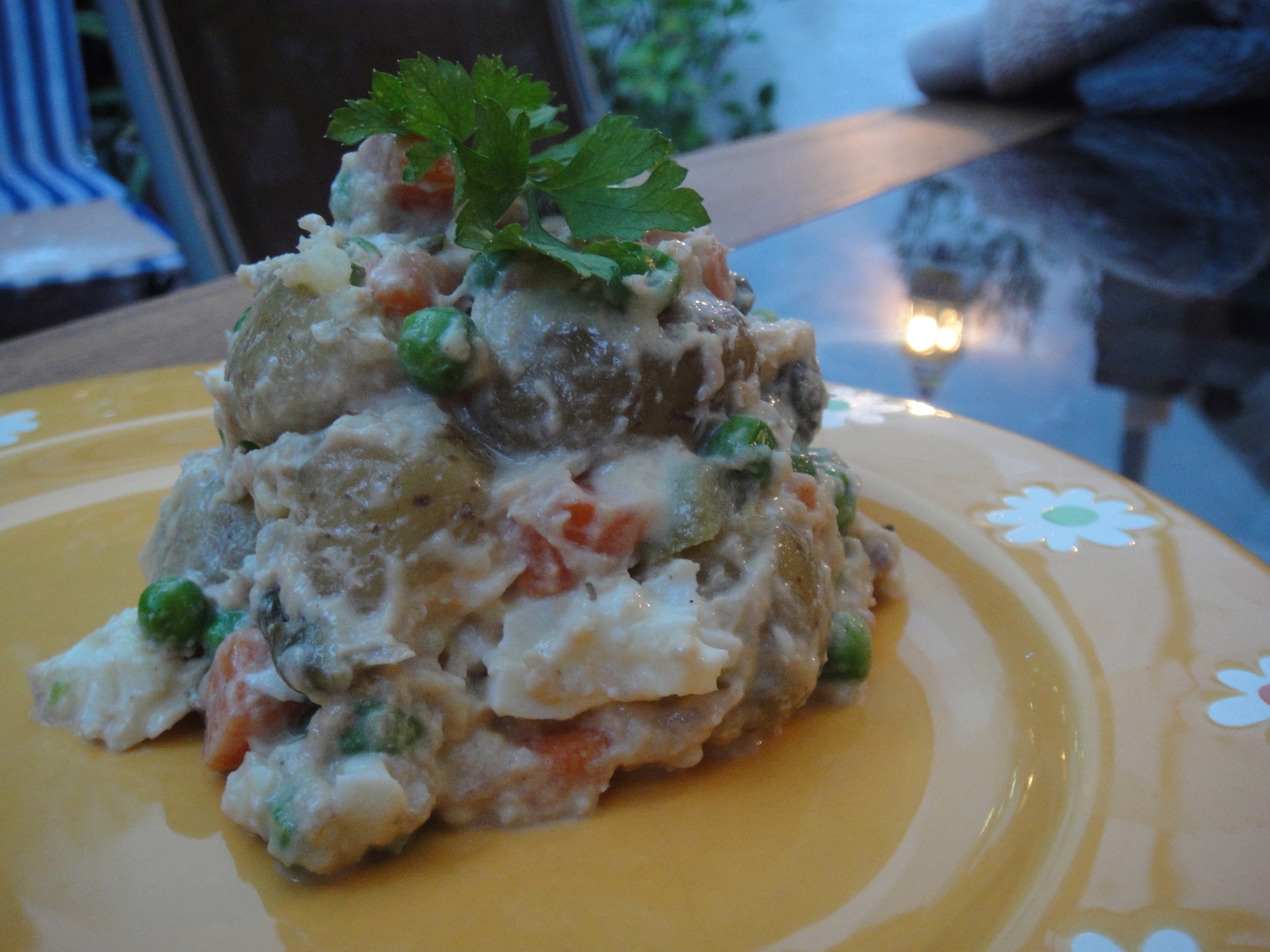
Meanwhile have around 1kg of small new potatoes boiling away nicely (chop them as necessary so they’re roughly the same size). Once tender, leave to cool. Once the potatoes have reached room temperature you need to add a good 4-6 tablespoons of mayonnaise, two tins of tuna (preferably in oil), a one or two of cooked diced carrots and a good handful garden peas, 4-6 chopped gherkins, two tablespoons of capers and some chopped parsely. Then whack in a good dose of seasoning to taste, and play around with flavour – you can add more mayo, more garlic, more lemon, different herbs – whatever you like. I guarantee it will be delicious whatever you try (within reason – obv).

A small portion of Ensalada Rusa

Read more

Flavours of Spain – Part 1: Almejas con hinojos

Regulars of The Daily Norm will know that in my heart of hearts, I am no happier in my kitchen than when cooking up some Spanish flavours to tantalise the taste buds and enliven the corazon. To recreate the rich smells imbued with garlic and pimenton, shellfish and saffron in London is one thing, but to cook in a Spanish kitchen, when already surrounded by a cacophony of those same scents wafting in the air from the nearby houses of my Spanish old town neighbours is an entirely different experience. It is hard not to be inspired, not least by the nearby market, where fresh fish is in abundance, rich meaty steaks are plentiful and vibrantly coloured fruit, vegetables and the spices intrinsic to the flavours of Al Andalus are in bountiful supply in the mercado in the next door street to my house. That is not to say that I felt totally free to indulge. The price of food in Marbella, together with the inflation of the euro, has seen a really hike in food prices – some days I found it more expensive to eat at home than out in a local fish bar. Consequently I had to indulge my culinary ambition with a more limited budget for ingredients.

Samplings of the Marbella market

This dish is perfect for the prudent shopper. Buy yourself a kilo of clams (or almejas) and a fennel bulb and you’ve got the main components of the dish. I made this dish up, having bought myself a fennel bulb (purely because of my love for the liquorice taste) and upon a bounty of clams so fresh that they were popping and moving before my very eyes. Some white wine, an onion, and a few spices later, and I created this dish, Almejas con hinojos – clams with fennel.

Clams cooking in the pot

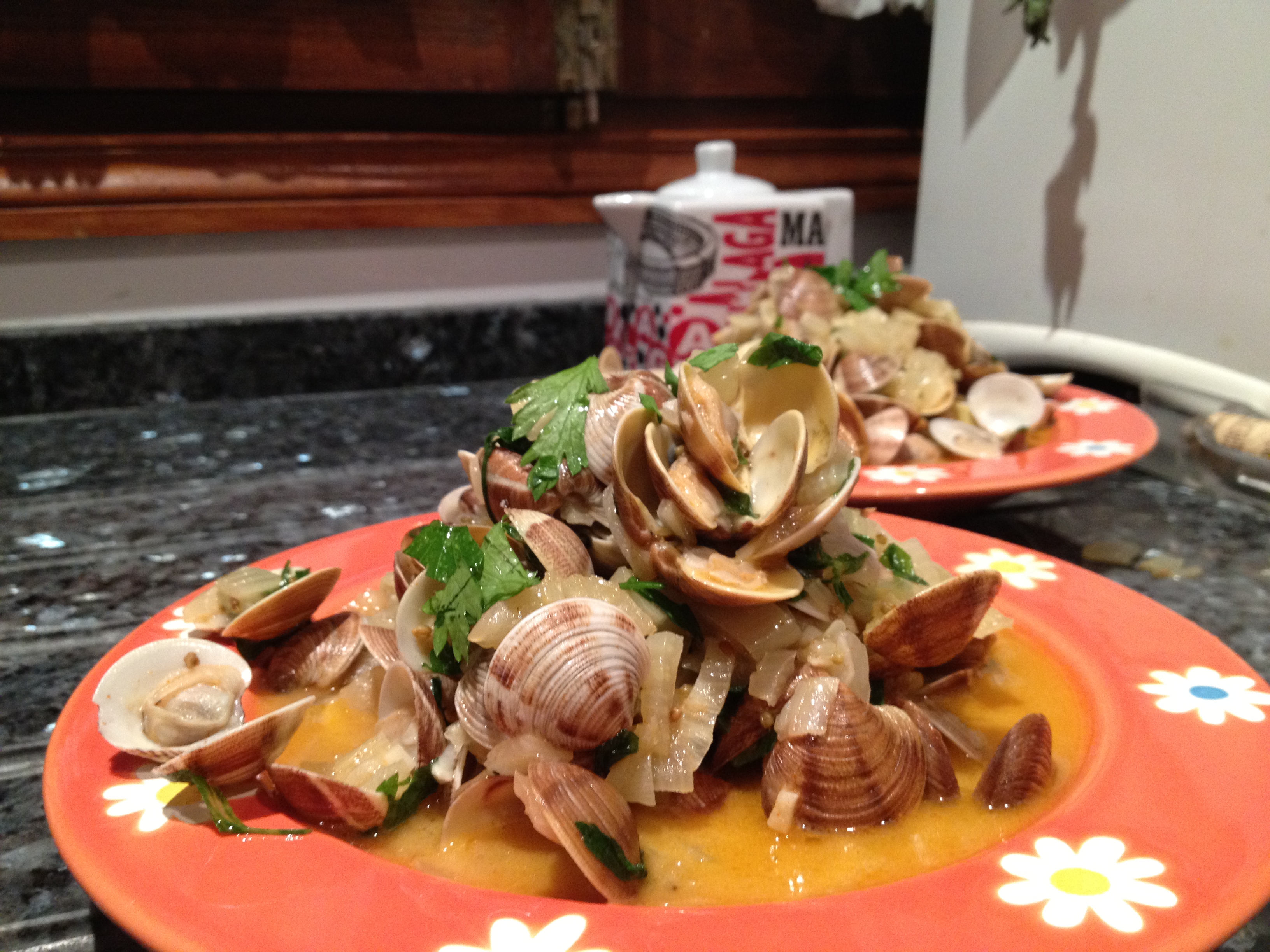
Almejas con hinojos

Chop one onion and 2-3 cloves of garlic finely, as well as a bulb of fennel. Sweat the ingredients together in a large pan on a low heat in a good glug of oil and a good dose of seasoning and a teaspoon of fennel seeds for about 15-20 minutes until the onions/garlic/fennel are soft and near translucent, but not browned. Turn the heat up to medium, and add a teaspoon of smoked pimenton (paprika) and the washed clams. Place a lid over the pan and cook until the clams have opened (around 4-5 minutes depending on their size). Once opened, turn up the heat a little more and add a good glass or two of dry white wine, along with a good handful of chopped parsely and stir so the clams get a good dose of alcoholic indulgence. Cook for a further 5 minutes, just to cook off the wine a bit and that’s it. Your clams are ready. Serve with a few hunks of fresh bread, a glass more of that white wine, and remember to discard any clams which have not opened.

And served up

Enjoy the flavours of Spain, as a burst of mediterranean freshness mixes with the smokey garlic pungency of arid España all in a single mouthful. Surely there is no better way to escape the onset of autumn?

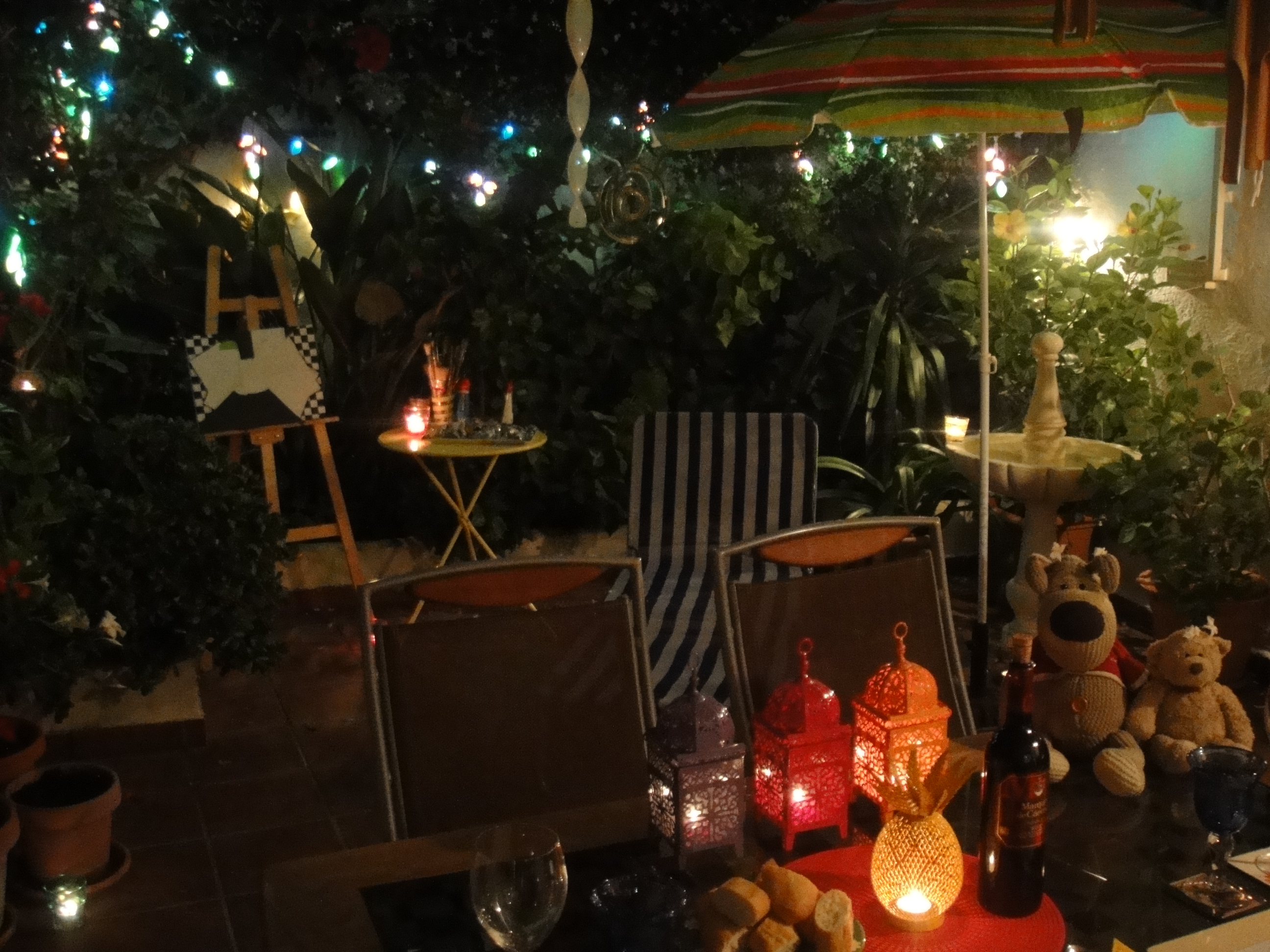
And a candlelit garden full of summer evening warmth in which to eat the clams


Quick canapés to impress your colleagues

Apologies in advance for the rather fuzzy quality of my photos. As with the food featured, the photos were created in something of a rush. And this is the nature of my feature today – for in making up some canapés which don’t look half bad on a plate (they certainly look better than a packet of crisps and some sausage rolls) when you have neither the time nor skill to cook up a storm, party food doesn’t come much easier or quicker than this.

When my team at work decided that we should have a little drinks gathering to wave goodbye to a colleague of ours, I decided that some canapés were in order. But with only a few hours to spare the evening before, and with the prospect of travelling with said canapés on the London underground the following morning I had to think simple.

I came up with the following canapés which were a resounding success, are deceptively simple to make and which despite the ease of their creation, have the ability to seduce both in appearance and flavour.

My canapés

Slightly less glam – the canapés set out on paper plates and tupperware at work

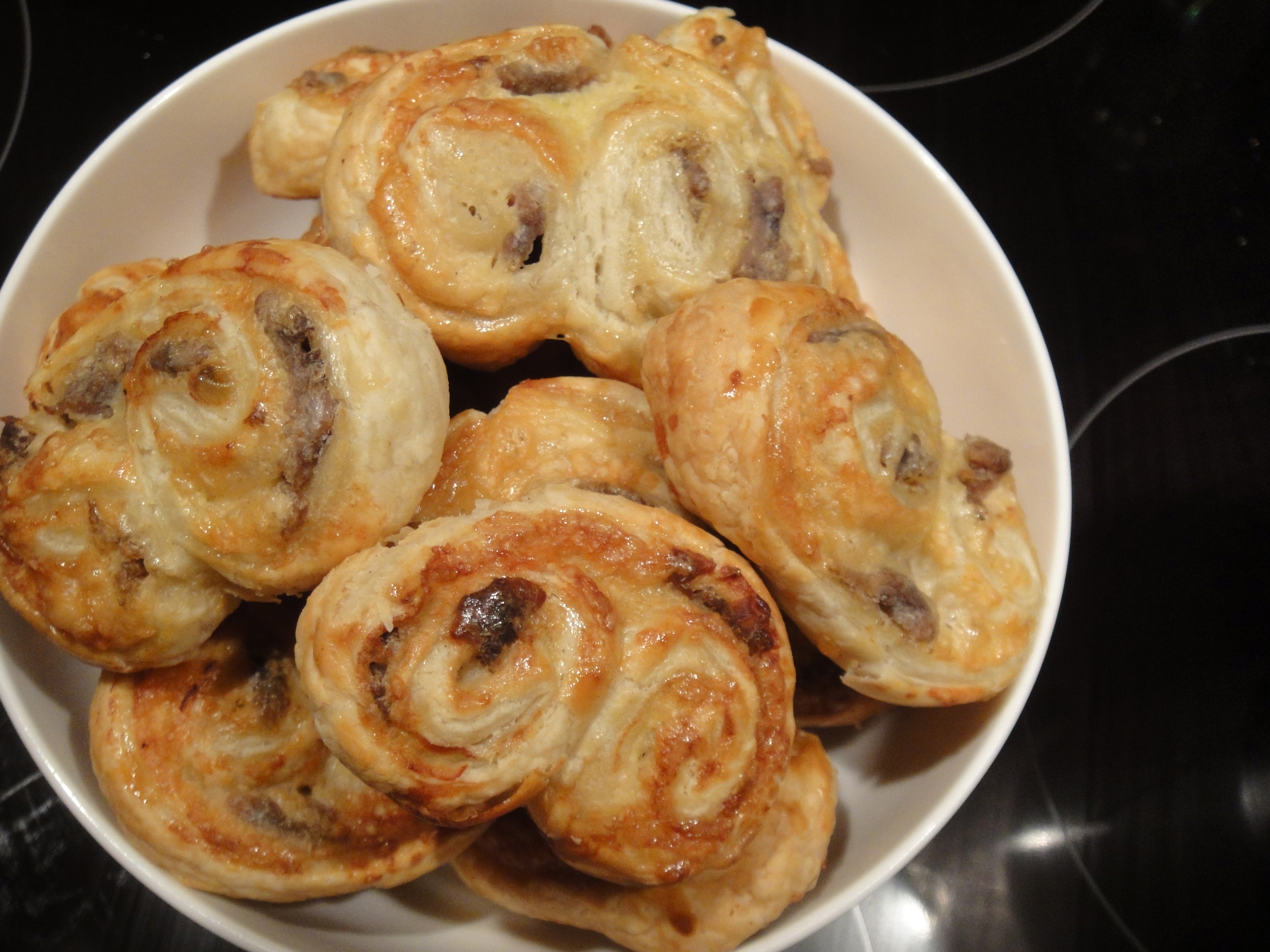
Anchovy and parmesan palmiers

These are a simple savoury variation on my previously posted sweet palmiers recipe. Simply replace the sugar with a handful of freshly grated parmesan and four rows of anchovies laid out parallel to the long sides of the puff pastry (which you roll inwards). Then freeze for 10 minutes before cutting into slices and cooking in an oven at around 200 degrees centigrade for around 20 minutes. These treats are salty but mega moorish.

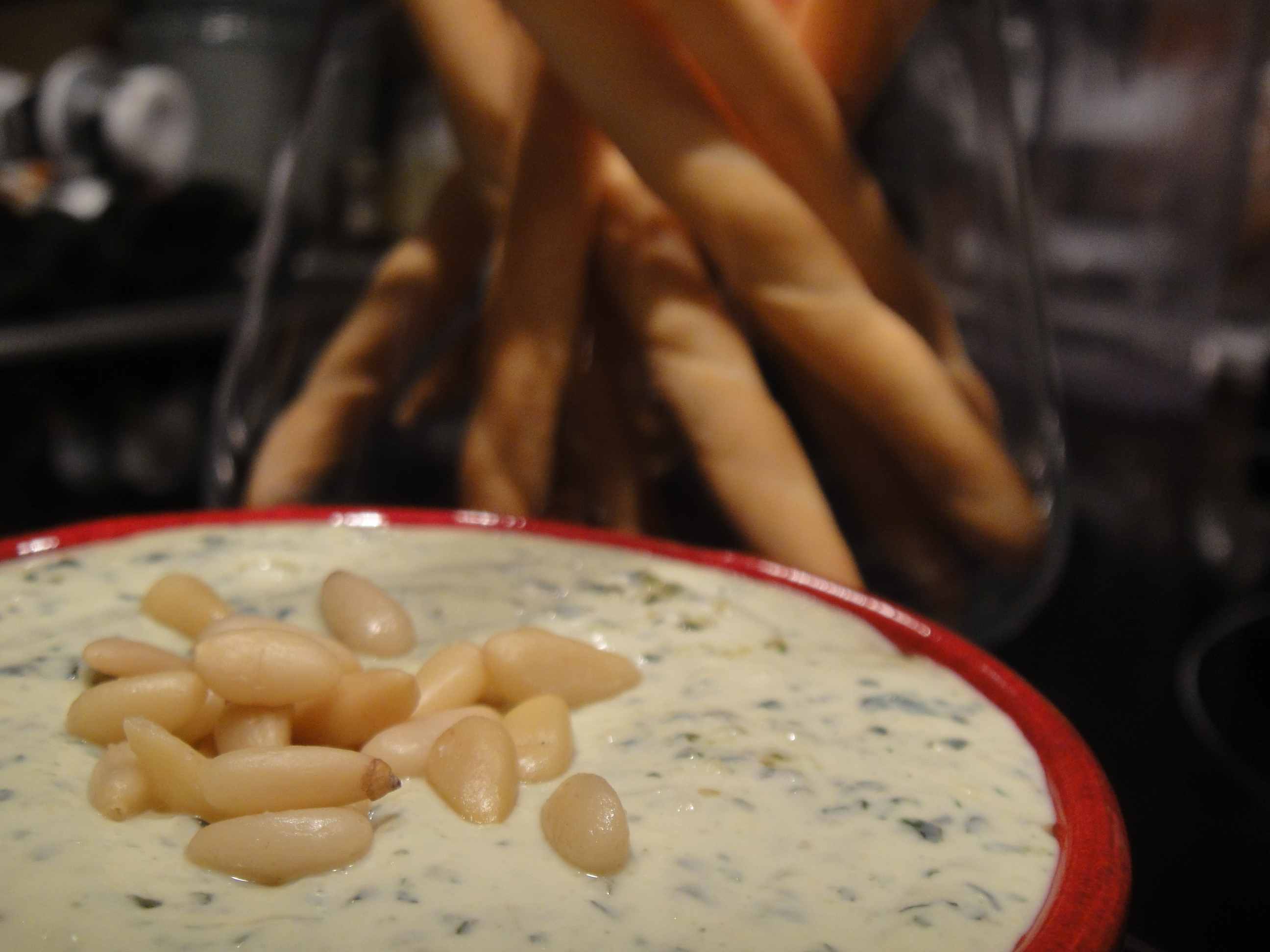
Proscuitto-wrapped grissini with a home-made pesto dip

Such an easy treat, but this one went down the best. Simply wrap one end of some Italian grissini (bread sticks) with proscuitto or parma ham. For the dip make some pesto – I wizzed up half a clove of garlic, four large handfuls of fresh basil with a handful of lightly toasted pine nuts and the same amount of freshly grated parmesan, a good dose of salt and enough olive oil to loosen up the mixture once blitzed in a mini food processor – there’s nothing quite like the smell of freshly made pesto to evoke the pleasant green lands of Roma, picnicking outside the Coliseum – and that was my pesto. I only used about 2 heaped tablespoons of this, adding those to 300g of soft cheese and there was my dip – creamy, with the exquisite flavour of the mediterranean.

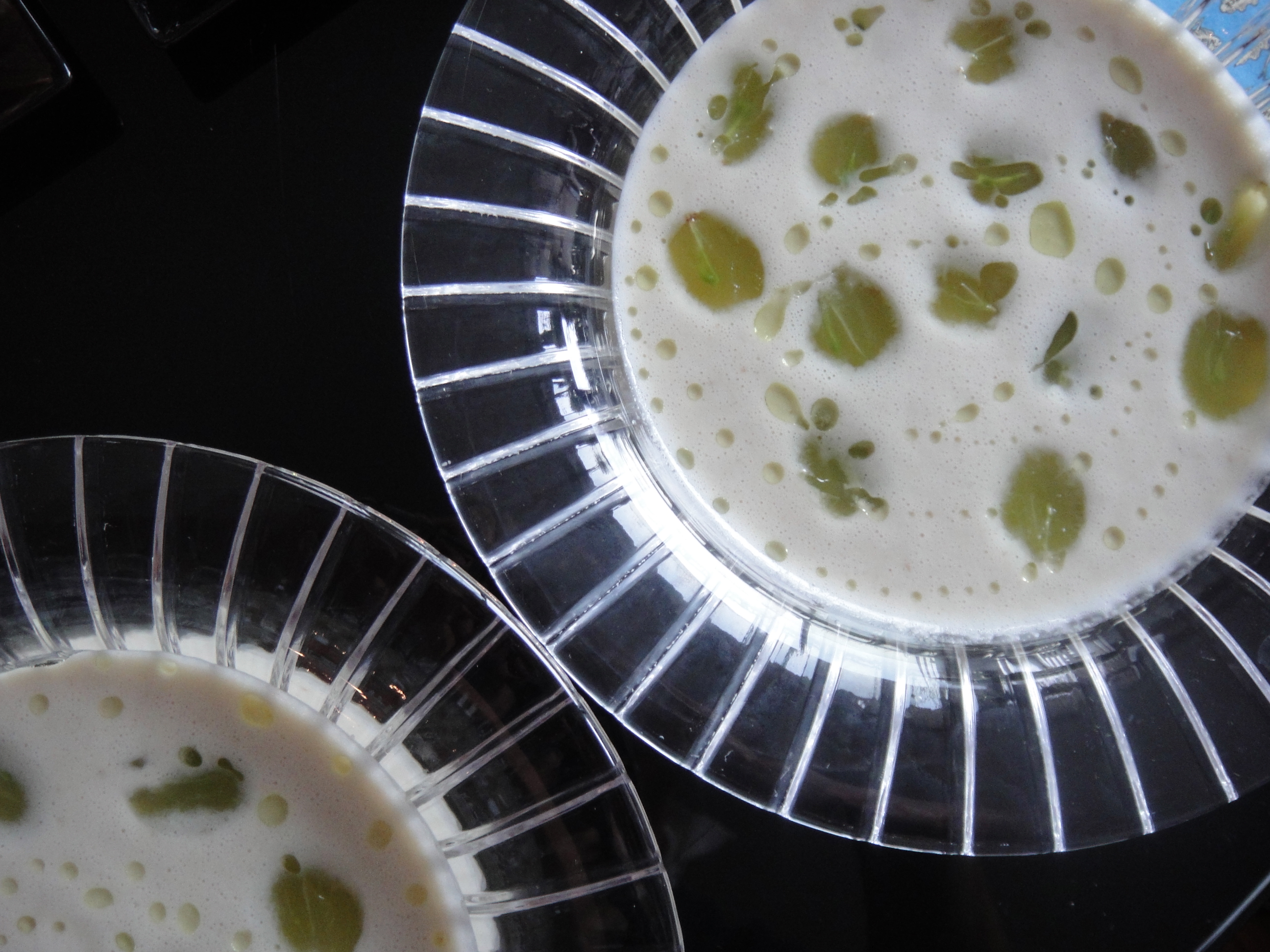
White gazpacho

This is one of my favourite Rick Stein recipes and works great as a starter (in larger portions) or as a canapé in small shot glasses or flutes with a few white grapes scattered into the mix. It’s a creamier more indulgent version of the typical Andalus tomato gazpacho and is so easy to make. Simply soak 200g of stale white crustless bread in 400ml of cold water for around 30 minutes. Place this soggy bread mixture into a liquidizer with 100g of blanched almonds and 1-6 cloves of garlic depending on how strong you like your garlic (I only use one, and I think that’s strong enough) and whizz this up into a smooth paste. With the motor still running, gradually add 150m of good quality olive oil and 4 tablespoons of sherry vinegar. Then add around 400m of more water – more if the soup is too thick. Check the seasoning and add salt if necessary. Then the key is to get the soup nice and cold, so refrigerate for at least 4 hours – overnight preferably. Serve with white grapes and a drizzle more of oil.

White gazpacho as a starter

Smoked trout dip

This one is slightly more controversial as it’s meant to be a mousse, but for some reason mine wouldn’t set. However, it turned out very well as a dip for the variety of crackers we had at the party, so why not add it in here. All I did was to whizz up 165g of smoked trout in a food processor with 225 g of creamed cheese, a squeeze of lemon juice, a sprinkle of dill (to taste) and 2 tablespoons of cream (it could be the cream which prevents it from setting – perhaps try without – I didn’t have time). If you have the time to chill the mixture and get it into a neat piping bag, you will probably succeed where I failed in piping little individual canapes of the mousse onto a blini or even a slice of cucumber. This looks great with some caviar on top. But failing that, serve it up as a simple dip – it’s delicious, especially when eat with the anchovy palmiers.

Figs stuffed with dolcelatte

Finally, and for the easiest of them all, a load of plump dried figs, slit them open as though you are performing a delicate surgical operation, get messy by breaking off some creamy dolcelatte and lovingly stuff each fig with your own fair hands – it’s sticky work, but strangely satisfying. You can seal the deal with some proscuitto wrapped around the fig, or leave it off for veggies (I do however find that a strand of ham makes these canapés looks lightly less poo-like). They’re not the most attractive canapés in the world admittedly, but for ease of method, and for richness of flavour, they don’t come better than this.

Tis soon the season to be jolly, so canapé season is just around the corner – these recipes are perfect for the kitchen shy host with the most – and these will enhance any bash with minimum skill or time required. Enjoy!

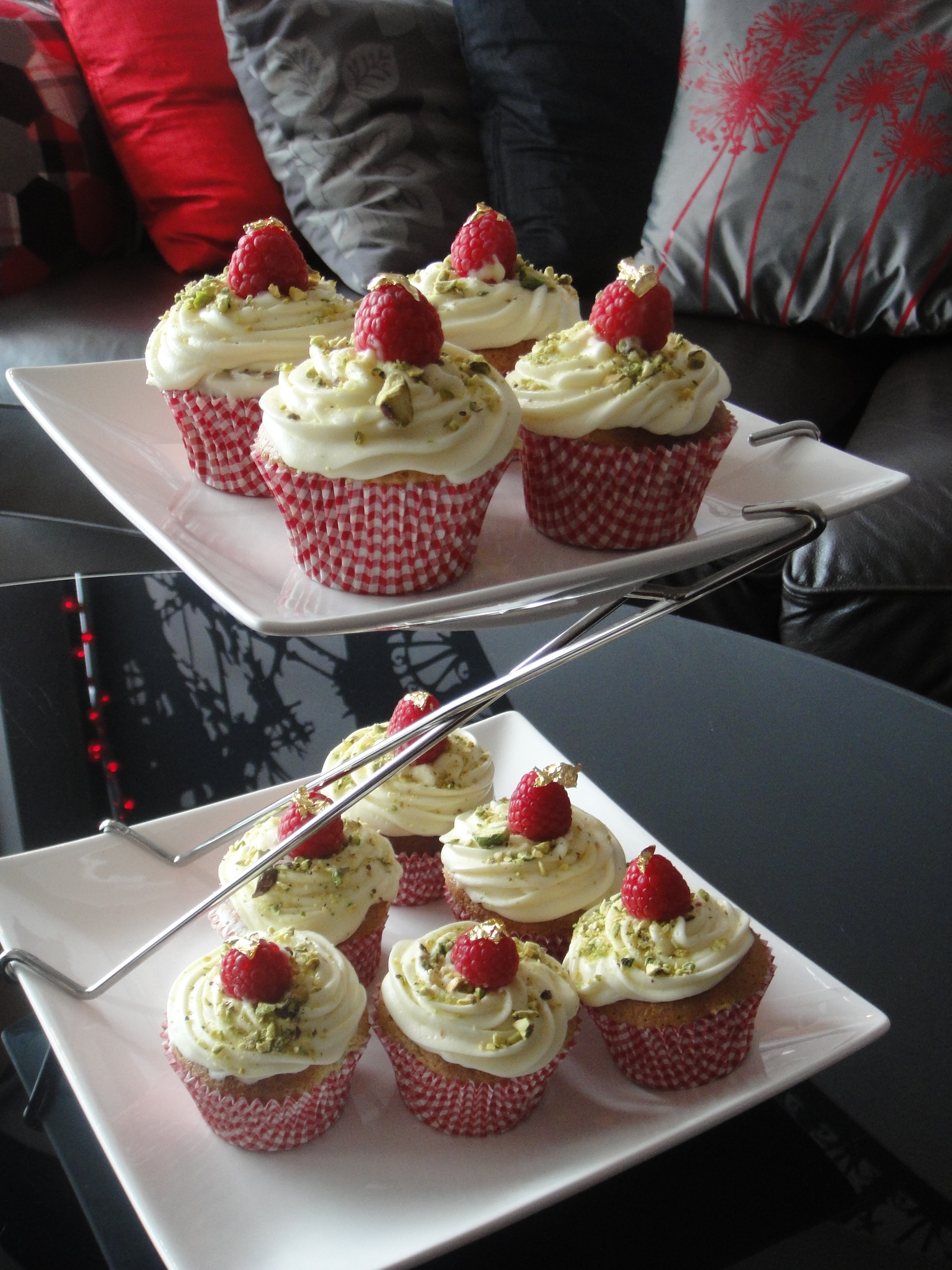
Birthday cupcakes – pistachio and raspberry with white chocolate frosting a little celebratory gold

It’s my birthday!! Woop woop! And while you read this post, I should be sat somewhere on the Rue St Honoré in Paris, sipping delicately upon a cup of strong French coffee with a couple of Ladurée macrons on the side. For a leo birthday can only sensibly be celebrated with a little class and plenty of extravagance, so while I soak in the sights of the city of love for one day only, why don’t you join me in my pursuit of birthday hedonism by making these amazing little cup cakes. Complete with edible gold leaf, these pistachio and raspberry beauties are more than appropriate for a summer birthday, where a ruling sun requires celebrations in all things golden, sparkling and extravagant. Or at least that’s my excuse. The sponge is fat free, which makes it a guilt-free, lighter pleasure for a summer’s afternoon, while the white chocolate frosting reminds that while healthy food is all very well, its the icing on the cake that feeds the eye and fuels the pleasure. Ah mais oui!

This recipe is something of a reinvention of a recipe on my good friend Celia’s super-cool foodie blog, Lady Aga. As soon as I saw her cake, I wanted to devour it there and then. The problem was, my cake was destined for work, to be shared amongst my colleagues who have been long-promised a birthday cup-cake treat. And as this distribution would inevitably entail a journey on the stuffy tube in rush hour (with added olympic pressures), the fresh cream of Celia’s oeuvre was never going to work, nor indeed the incredible constitution of her multi-layered sponge. I therefore opted to turn her recipe into cupcakes, replacing half the ground pistachios with self-raising flour to encourage the cakes to rise, and replacing the cream filling with a super-indulgent white chocolate frosting. I also baked a raspberry in the middle of the sponge for added moisture and a hidden treat in the cake’s centre.

So, how to make:

Grind up 110g pistachios to a fine powder. Grind up a further 50g or so to a mixture of fine and textured crumbs for use on the topping. Next take 6 large eggs and separate. Whisk up the egg white into soft peaks. In a separate bowl, whisk up the egg yolks with 180g of caster sugar until pale and fluffy. Into the egg yolk mix, fold in the ground pistachios and 110g of self-raising flour and a spoon-full of the egg white to loosen the mixture. Once mixed, fold in the egg whites. Divide the mixture between 12 large-ish cup-cake cases and place a single raspberry in the centre of each cake. Bake at around 200 degrees centigrade for around 20 minutes or until an inserted skewer comes out clean. Be careful not to over-bake or the sponge becomes dry. Remove from the oven and place on a wire rack to cool.

In the meantime, take as many raspberries as you have cakes, melt some white chocolate, and fill each raspberry with a drop or so of chocolate until filled. Prop the raspberries upright in a small container and place in the fridge so the chocolate solidifies.

Next, the icing: slowly melt a bar of white chocolate (around 100g I think, but I can’t really tell how much I was melting as I kept on eating it) over simmering water. As the chocolate starts to melt, add a splash or two of full fat milk to loosen up the mixture to a creamy liquidy chocolate. Meanwhile, take 120g unsalted butter and  mix with 375g icing sugar with around 25ml of full fat milk and a small dash of vanilla extract. This should be whisked for extra creamyness, probably for a good 5-10 minutes. Once light and fluffy, mix in the melted chocolate until thoroughly combined and my god you will have created pure nectar worthy of Mount Olympus itself. Pour your icing into a piping bag with a large star-shaped nozzle (I have no idea what this is called) and place the icing bag in the fridge for 20 mins or so to firm up the frosting a bit. Pipe onto the cooled cupcakes and top with a sprinkle of crumbled pistachios, a chocolate filled raspberry and a little fragment of edible gold leaf for extra extravagance. Or try edible glitter if you prefer.

(Obviously if you can’t be bothered with the piping bag – which I can easily understand – just smooth the icing onto the cake with a palette knife – this can look just as good.

And there you have it. Cakes fit for a King. Or a birthday boy.

All photos are strictly the copyright of Nicholas de Lacy-Brown © 2012 and The Daily Norm. All rights are reserved. 

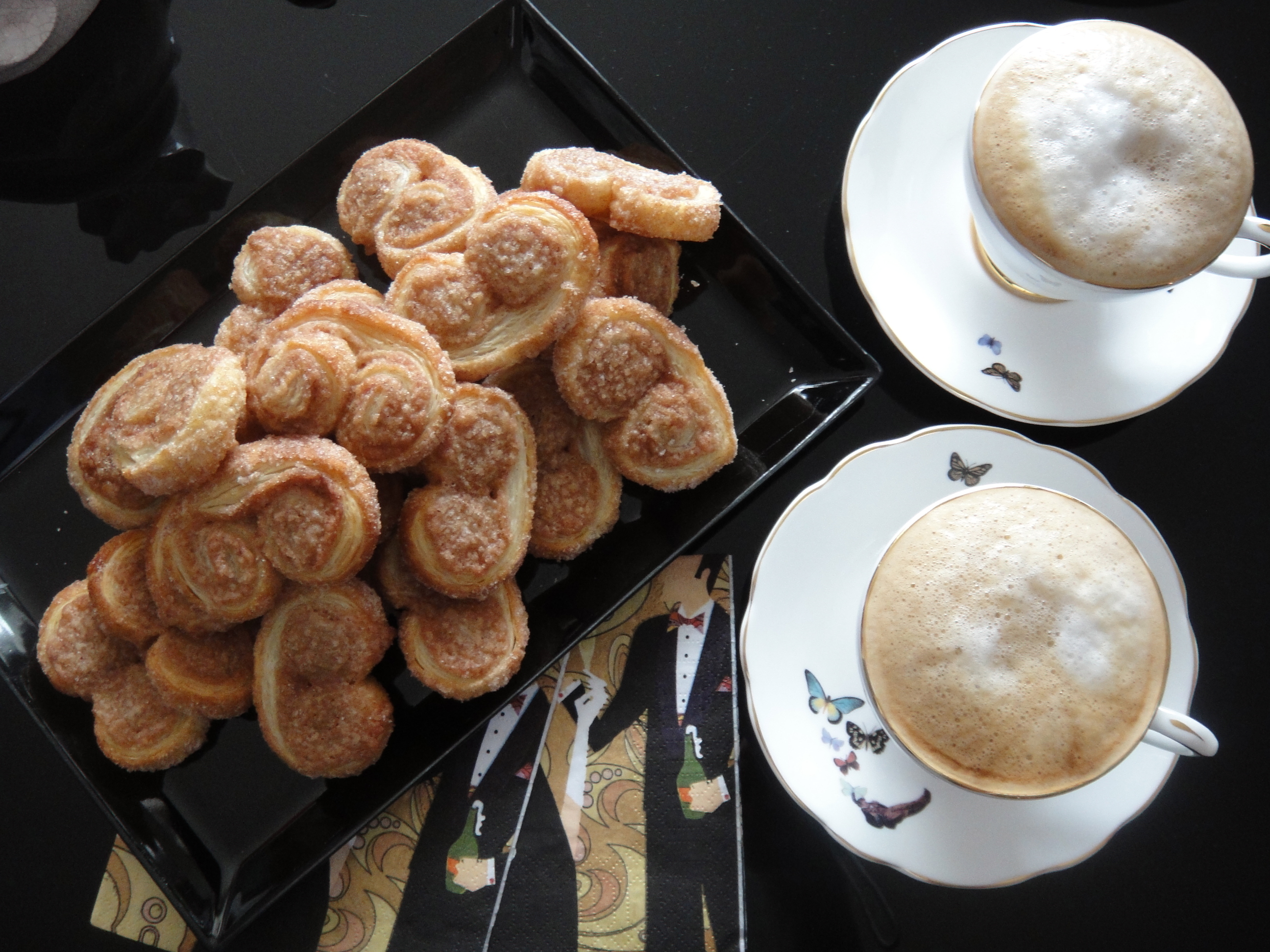
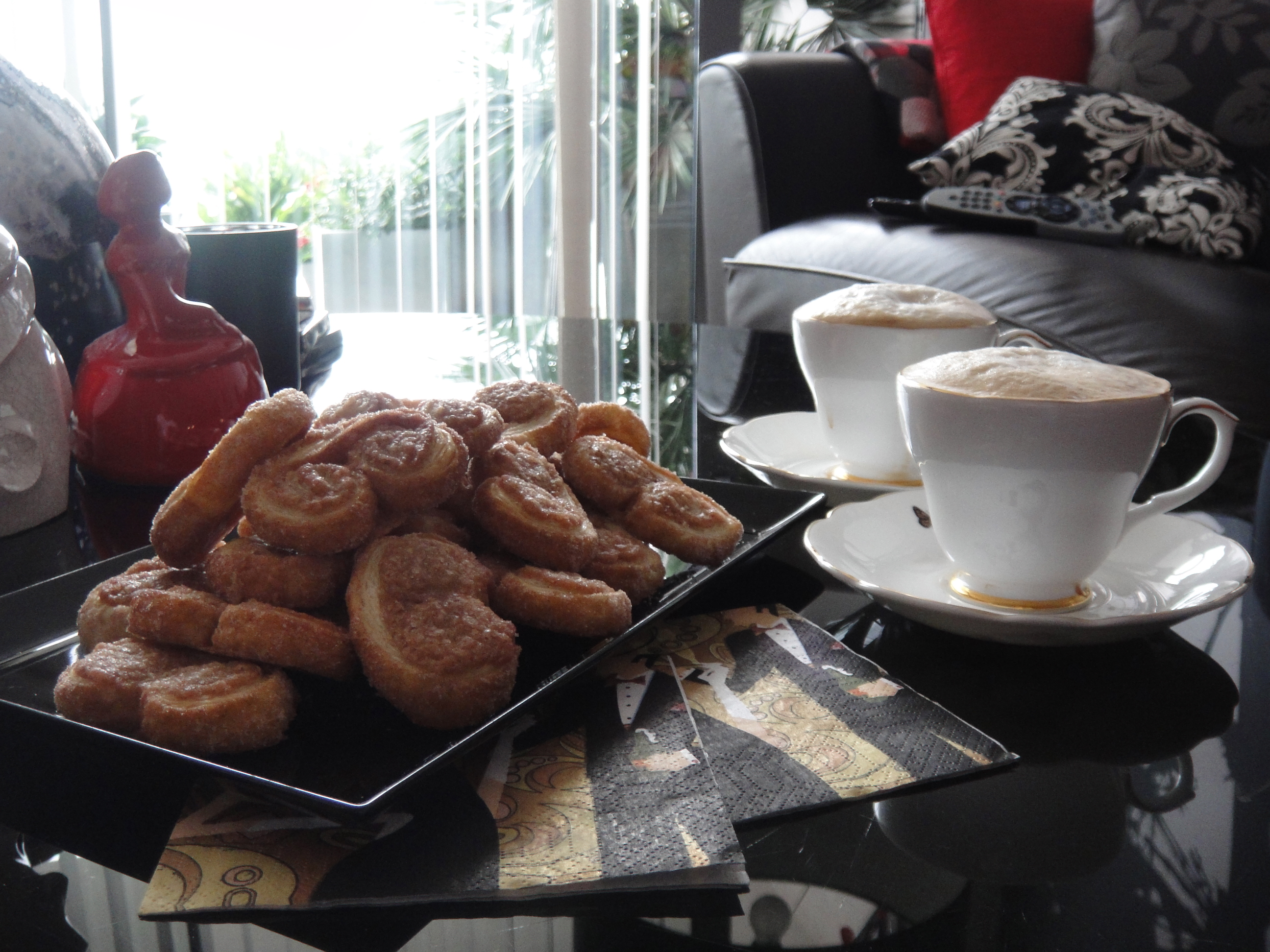
Palmiers for coffee-time – baking doesn’t come easier than this

I’m the first to admit that I am guided throughout the day by sugary treats and a healthy dose of caffeine. In the mornings I look forward to 11am, around which time I make a fresh frothy cappuccino in a vintage cup with a little treat on the side. In the afternoon meanwhile I long for my earl grey tea with a little cake, and a cleansing green tea a little later. In the evenings I go for my favourite: a fresh mint tea, or jasmine, the smell of Spanish summer, and try to resist something a little naughtier on the side.

Ok, weight-watchers this isn’t, but a giver of easy baking tips – I’m your man. The other day, I bought a roll of puff pastry from the supermarket intending to make some crayfish puff pastry treats but then couldn’t get the crayfish or anything remotely similar. So the puff pastry was sitting in the fridge and I suddenly thought to myself – hmm I should make palmiers.

Palmiers get their name from the humble palm leaf (which, somehow, they are meant to resemble) – other people call them elephant ears (probably more accurate). In Spain we call them palmeras, were they are a staple of most patisseries and cafes either glaceada (with icing) or con chocolate. Either way, they are a delicious treat and seductively simple to make.

Simply take some shop-bought buff pastry (no point in making this from scratch – hours of labour will commence for the same results) and in a cup mix up about 100g caster sugar and a heaped teaspoon of ground cinnamon. Roll out your puff pastry if it’s not rolled out already, and sprinkle generously with some of the sugar mix all over. Then fold over, roll out again, and sprinkle with some more sugar. Do this a few times until the sugar is sort of combined (it doesn’t really combine into the pastry all that well, but not to worry – you’ll sprinkle more on at the end). Then roll your pastry into a large rectangle around 12-14 inches in length and 10 inches in width.

To get the palmier shape, role the pastry along the longest side until it reaches the middle of the rectangle and stop. Then do the same with the other side, rolling into the middle until the two halves meet. Place the result in the freezer for about 10 minutes so the pastry can firm up a bit for cutting. Take the pastry out and cut into slices about half an inch thick and lay them on their side (i.e. curly pattern face up) on a baking tray, leaving a little space around each for puffing. Sprinkle them all with a little more sugar (though not too much as I went a bit mad and mine turned out uber-sugary) and bake in an oven at around 200 degrees celsius for around 10-15 minutes until they are puffed up and golden and the sugar has melted on top.

And that’s it! Leave a few minutes to cool down and you have the perfect coffee-morning treat.

PS: I should add, if you don’t like cinnamon, just leave it out. You can also make these without sugar, and dip them in chocolate at the end. You can also make savoury versions by rolling cheese into the puff pastry and then using them as bases for canapes. The world is your oyster.

A night at Glyndebourne Part 2: Damp Grounds; Delicious Dinner

When you attend the opera in most theatres, doors will open half an hour before. No sooner have you arrived that the bell will go and you’ll hurry to your seats. The interval will provide at most, the opportunity for a rushed glass of something bubbly before your brisk return into the theatre again for the second half. Once the curtain goes down, it’s home as quick as your legs can carry you, avoiding the waves of leaving attendees wherever possible.

Going to see an opera at Glyndebourne is very different. It’s an event; it’s practically a day trip. Before the start of a performance, you can stroll around the grounds, walk around the dammed stream and look at the sheep, enjoy a glass of champagne on a bouncy lawn, or take high tea in one of the restaurants. There is even a small art gallery in the basement of the opera house for your entertainment, and walled gardens bursting with multi-coloured blooms. When it’s finally time for the Opera to begin you watch the first half followed by an interval of 80-90 minutes. It’s during this time that the spirit of Glyndebourne really comes alive, as picnics, already set up by opera-goers all over the perfectly maintained grounds are enjoyed, with time to sit back, sup, and discuss the first half of the performance.

A dammed stream in Glyndebourne’s extensive grounds

It’s the picnics that are, for me, emblematic of Glyndebourne, and offer a wonderful insight into a slice of English society. It’s hilarious to see how people subtly compete with one another. Far from picnicking out on a mere blanket, the Glyndebourne picnickers bring practically their whole dining room with them. They’ll be those who bring a fold up table and deck chairs which are fairly easy to carry and unpretentious. Of course they’ll have a Fortnums hamper with them, but then who doesn’t? They’ll be the ones with the plastic plates and food wrapped up in foil. But on the table next door they’ll be no such shortcuts. For those proud picnickers, the presentation of the picnic is a status symbol. So they bring chairs which are sturdy and firm. Their table is covered by a linen tablecloth with matching napkins. They’ll bring china plates and glass champagne flutes. And who could picnic without a crystal vase of flowers to set off the contents of the table? I wouldn’t be surprised if some of these picnickers bring a Butler too. I adore the charming pretention that comes with these picnics, seen equally as guests vie for the best spot on the grounds, marking their claimed territory with grand extensions of blankets and umbrellas, huge picnic baskets and other tokens of home. All done of course with a broad smile and exchanged pleasantries with the picnic table next door.

Flowers in the walled gardens

Sadly, of my four trips to Glyndebourne, I have never once been able to picnic in the grounds. I’m clearly cursed, as on each of my visits, it’s been either raining, perilously windy, or both. Such is the instability of the English summer. On good days it must be amazing in those grounds. Sadly I am yet to find out. On this visit my mother and I had long given up the hope of picnicking. We were travelling from London with minimal time to prepare, so we booked a table at the Middle & Over Wallop restaurant. As the day approached, we did not regret our decision. True, the rain just about held off, but with a keen wind and grey skies, picnicking conditions were not ideal. Yet still the majority of guests braved the conditions and stuck with their picnicking plans – another apt demonstration of Englishness – to stick it out, no matter what.

For we, perhaps more cynical diners, the Middle & Over Wallop restaurant, run during the season by Leiths with chef Albert Roux overseeing operations, provided a delicious mid-Opera feast in opulent surroundings (the restaurant must be hung with about 50 or so separate chandeliers) which was, most importantly, cosy and dry. What with time being on the short side, everything was chosen in advance, so a swift service was guaranteed.

The Middle and Over Wallop Restaurant

We both started with Hure of organic salmon, smoked salmon, crab and quail egg with watercress dressing. That dressing was light and peppery, and the smoked salmon delicate and moist. It was a fairly simple arrangement but full of flavour.

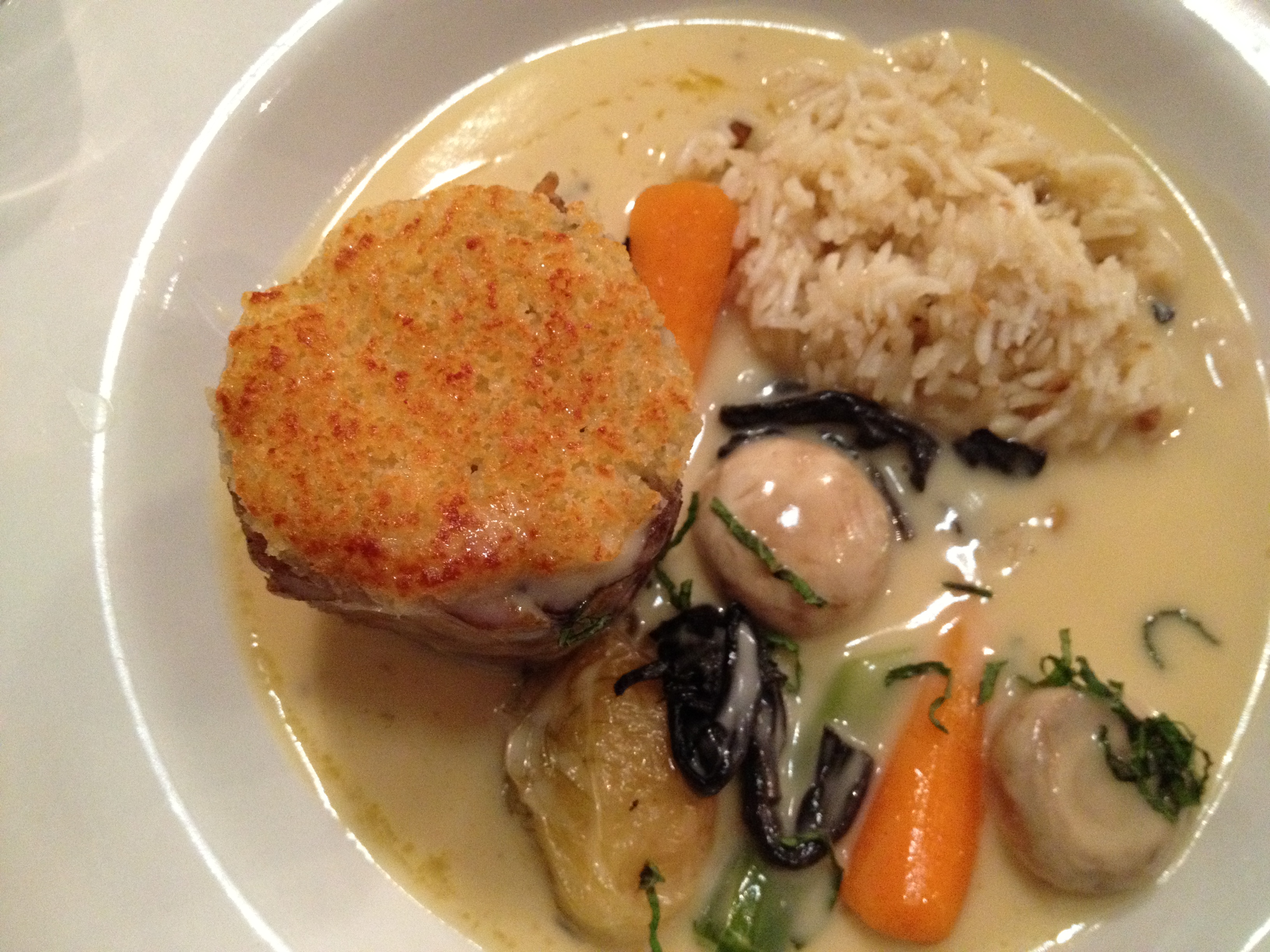
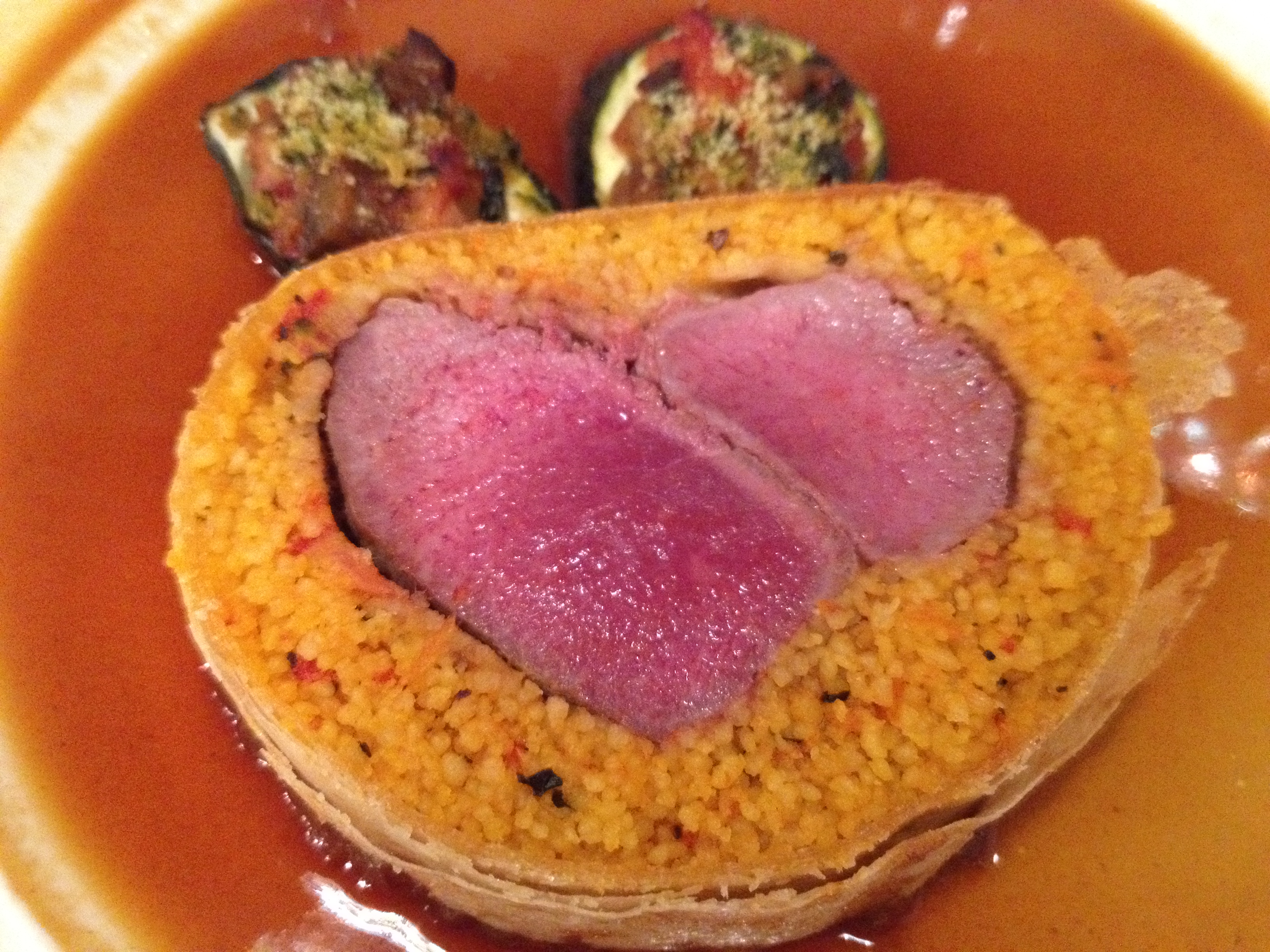
Next up for me was a blanquette of veal with mint, baby onions, Chanteney carrots and basmati rice. It was exquisite. The cheesy crumb on the top of the veal was to die for, while the meat just fell apart under my knife. Meanwhile my Mummy had a loin of Cumbria fell bred lamb wrapped with saffron couscous, and cumin rataouille. She too was aptly impressed, and this once can even be recreated at home – bonus!

Blanquette of Veal

Saffron couscous encrusted lamb

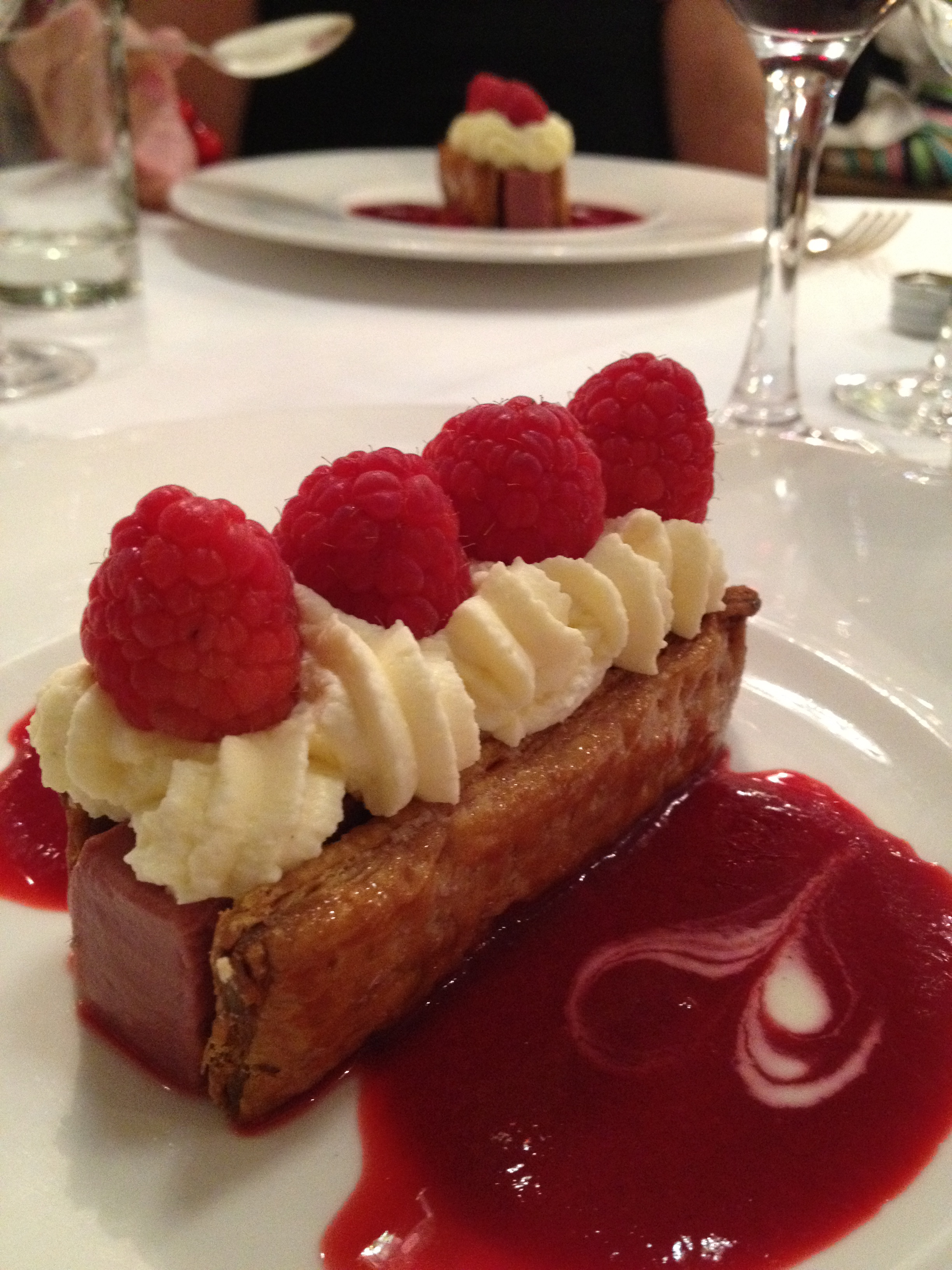
Dessert was a raspberry triple – a millefeuille of Kent raspberry, raspberry mousse and raspberry coulis. It tasted as good as it looked.

The raspberry triple

Luckily the food, while swiftly served, was light with fairly small portions – I was wearing a waist-repressing cummerbund after all!

So you see, Glyndebourne ain’t all about the Opera – it’s very much an occasion, and one which I cannot wait to repeat again. You never know, next time the sun may actually come out, and I might get to enjoy that picnic after all. But just watch me coming fellow picnickers if I get out on that lawn. Competitive is my middle name.

Eating España, again – Part II: The sweet stuff

So after a heavy dose of savoury Spain and seductive Salamanca you’d be forgive for thinking that this week, the week in which Spain was once again splashed over the headlines as a bank bailout was agreed, that The Daily Norm couldn’t get any more Spanish. Well you would be wrong, for today, it’s time for the ever-so-tempting waist-line enlarging pudding-perfect postres, all of which I cooked, and ate, at the weekend (I am now avoiding my bathroom scales – I feel that our current acquaintance could lead to a small falling out).

First up, something for afternoon tea, and as cakes go, this one is more almond than butter, which must make it healthy, right? It’s the very traditional Santiago Almond Cake, a firm Spanish favourite, moist in its naturally oily almond component, with a delicate and delicious simplicity.

Tarta de Santiago (Almond cake)

I first ate this delicious cake in Cappuccino Grand Café is the stunning hill-top town of Valldemossa in Mallorca. No sooner had I returned home than I was buying up the local supply of ground almonds and sampling my own.

This recipe is from the collection of Spanish desserts by the vivacious and frequently tipsy TV chef favourite, the late Keith Floyd. His recipe is so simple you have no excuse not to make this cake. In fact probably the trickiest part of the whole operation is lining a 20cm cake tin (I use a spring form to make the operation even simpler at the end). Once you’ve done that, all you need to do is get yourself a food processor and all the work will be done for you – Just whizz up 3 eggs with 225g caster sugar, 100g butter, 175g self-raising flour and 125ml water until all of the ingredients are well blended.Then add 225g ground almonds and the grated zest of 1/2 a lemon. Whizz for a few seconds only, just to mix (if you overwork the almonds the mixture will become too oily). And that’s it! Tip the mixture into your greased and preferably lined tin and bake at 180 degrees centigrade for an hour. Test with a skewer and when it comes out clean, you’re done. Once the cake is cooled, sprinkle with icing sugar and enjoy.

Flan de naranja (Orange Crème caramel) 

Next up are Rick Stein’s Orange Flans (the Spanish equivalent of the French Crème caramel, or if you want to entirely strip the words of their glamour, Caramel Creams). But these have an orange twist which provides an exquisite burst of Sevillian sunshine in your mouth. I’ve cooked these a few times now and they’ve gone down ravishingly well on each occasion. They’re not that fiddly either – just be careful not to burn the sugar.

Ok, so you need to start by preparing your space. You’re going to need around 6 ramekins which should be ready placed in a roasting tin so you can make a bain marie later (this needs to be ready because once you’ve made your caramel, you need to pour it directly into the ramekins otherwise it will turn rock hard in your pan).

Onto the caramel then. This is where you need to be careful. Place 100g caster sugar and 45ml of water in a heavy-based pan and leave over a very low heat until the sugar has completely dissolved (I stir it a bit to ease the process, but old Rick doesn’t tell you to). Once the sugar has dissolved, whack the heat up to high and leave to boil rapidly, without stiffing, until the syrup starts to turn orange, orangier, red and then a pale brown brick red colour (tends to take around 5 minutes). Be careful here. If you let it go too far into the red zone, it will very quickly burn – I’m talking seconds here. So as soon as it starts to go a brick red, whip it off the heat and pour straight into the ramekins, distributing it evenly between them. You can leave them there as you turn your attention to the orange cream.

Finely grate the zest from 2 oranges and squeeze the juice out of these and 2 others until you have around 400ml of fresh orange juice. Pour this, the zest and 300g caster sugar into a pan and bring to the boil over a low heat, stirring now and then to dissolve the sugar.

In the meantime separate out 14 (yes, fourteen!) egg yolks (discard the egg white – or save it for a nice pavlova (see below)) and place with two whole eggs (this hen has been busy) in a mixing bowl and whisk. When the orange juice comes to the boil, turn down the heat and allow it to simmer rapidly for 2 minutes. Then, through a sieve, pour the orange juice mixture into the eggs and mix.

Now it’s time to pour the mixture into your ramekins on top of the caramel. Once this is done, pour boiling water into the baking tin so it comes to two-thirds of the way up the sides of the ramekins. Place in the oven at 160 degrees centigrade for around 15 minutes for small ramekins, and 20 minutes if they’re a bit bigger. Once out of the oven lift out of the water (being careful, obv) and allow to cool before placing in the fridge. Ensure they are refidgerated for at least 4 hours before eating, but preferably overnight.

When serving, carefully invert each dish onto a small serving plate. With a bit of jigging they should plop out quite easily, but you can always eaze around the side with a knife if they’re being obstinate. Some caramel will come out on the top, but if you want more from the mass that is stuck to the bottom of your ramekin, place back in a roasting tin filled with boiling water and leave until the caramel melts a bit. Now go and eat the divine things – you’ll be booking flights straight to Andalucia in no time.

And one for luck… a very un-Spanish mini strawberry pavlova

Wasting all of those egg whites from the Flan would have been a crying shame, so I decided to make a few meringues, just to soothe my guilt at pouring so much of a hen’s hard work down the sink. I used Raymond Blanc’s simple meringue recipe which can be found here except I made mine smaller. The original intention was to crush up the meringue and make an Eton Mess but the meringues turned out so surprisingly beautifully that I made them into mini pavlovas. Here are the fruits of my labour, and well worth the extra effort.Happy cooking!


A baby showered with a chequerboard of tropical cupcakes

We English don’t easily accept the idea of being influenced by America. We’ve always been the slightly supercilious older brother of our younger indefatigable sibling across the pond, wincing at the loosening of our Queen’s erudite parlance, the widening of the vowels, the advent of stuffed-crusts, of bagels and Reese’s peanut butter cups, the creator of drive-thru culinary culture and the over-eager stentorian expression which makes the refined of Kensington tut condescendingly. Yet it’s an indubitable fact of English life that the influence of the big U-S-of-A is all around us, in our music, in our food, on TV, in politics and on the high street, and no more so is this influence felt than in the way we party. The US gave us candy-abundant halloween and fairy light-filled dazzling Christmas spectaculars. And the latest craze which is doing the rounds is the Baby Shower.

According to wikipedia, a Baby Shower is generally thrown either shortly before or shortly after a baby is born. Only women are invited (!) and the new mother in question is “showered” with presents. So when my dear friend Sarah gave birth to a beautiful baby girl, Ruby, a few months ago, and announced that she would finally bring her angelic daughter down to London to be celebrated amongst our vivacious friendship circle, I decided that this baby shower business ought to be tried and tested, refined in the way that only the english know best. For starters we had men, and quite right too. In the modern world, with fathers playing an increasingly dominant role in the daily task of bringing up their children, why shouldn’t they too be showered with gifts and praise and plenty of sweet treats? Presents were showered aplenty – little cute girly outfits and some alcoholic indulgence for papa (when he’s off duty, naturally) and my gift – a norm sketch of course – devoted to little Ruby.

Welcome Ruby (© 2012 Nicholas de Lacy-Brown, pen and ink on paper)

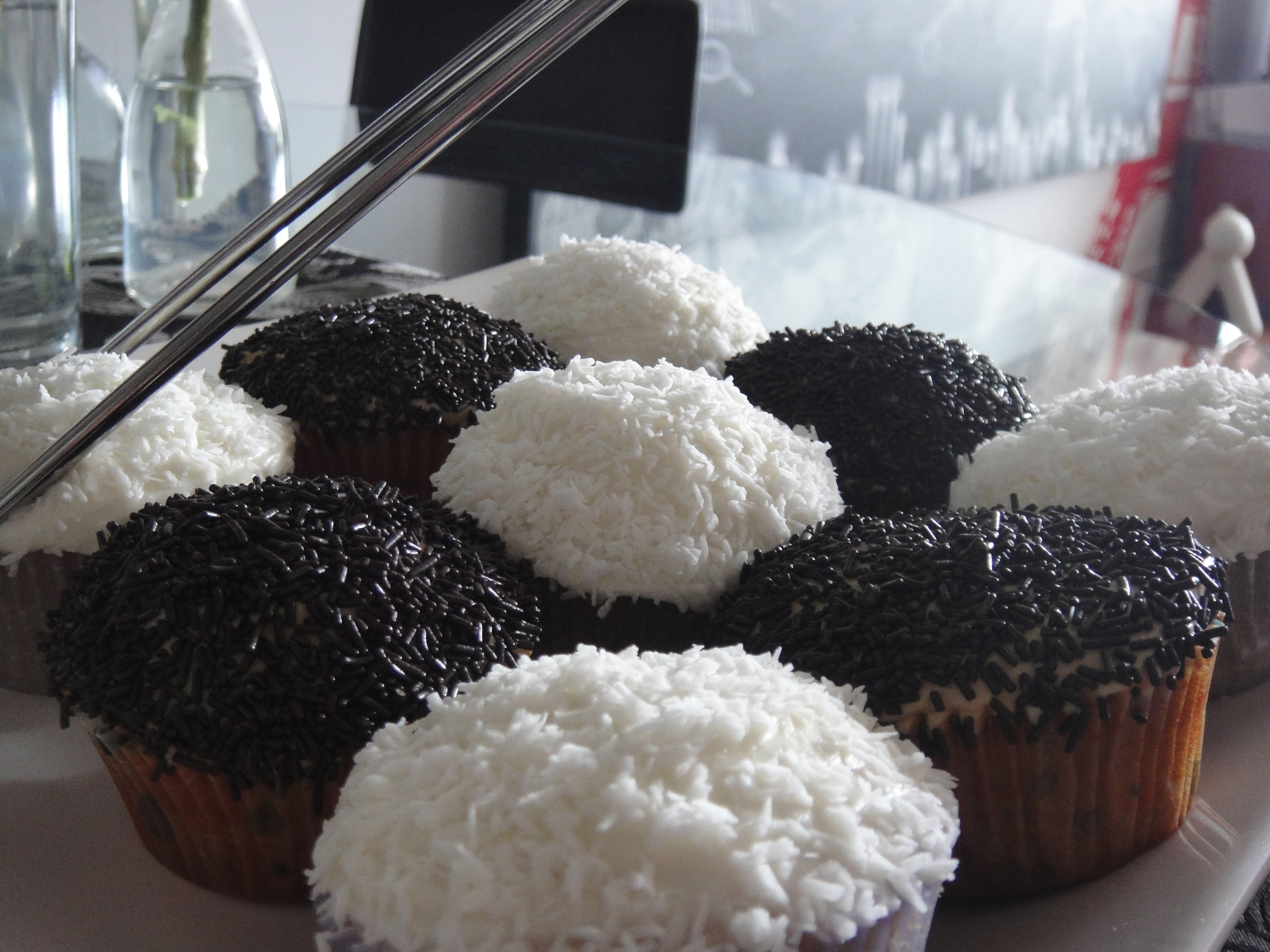
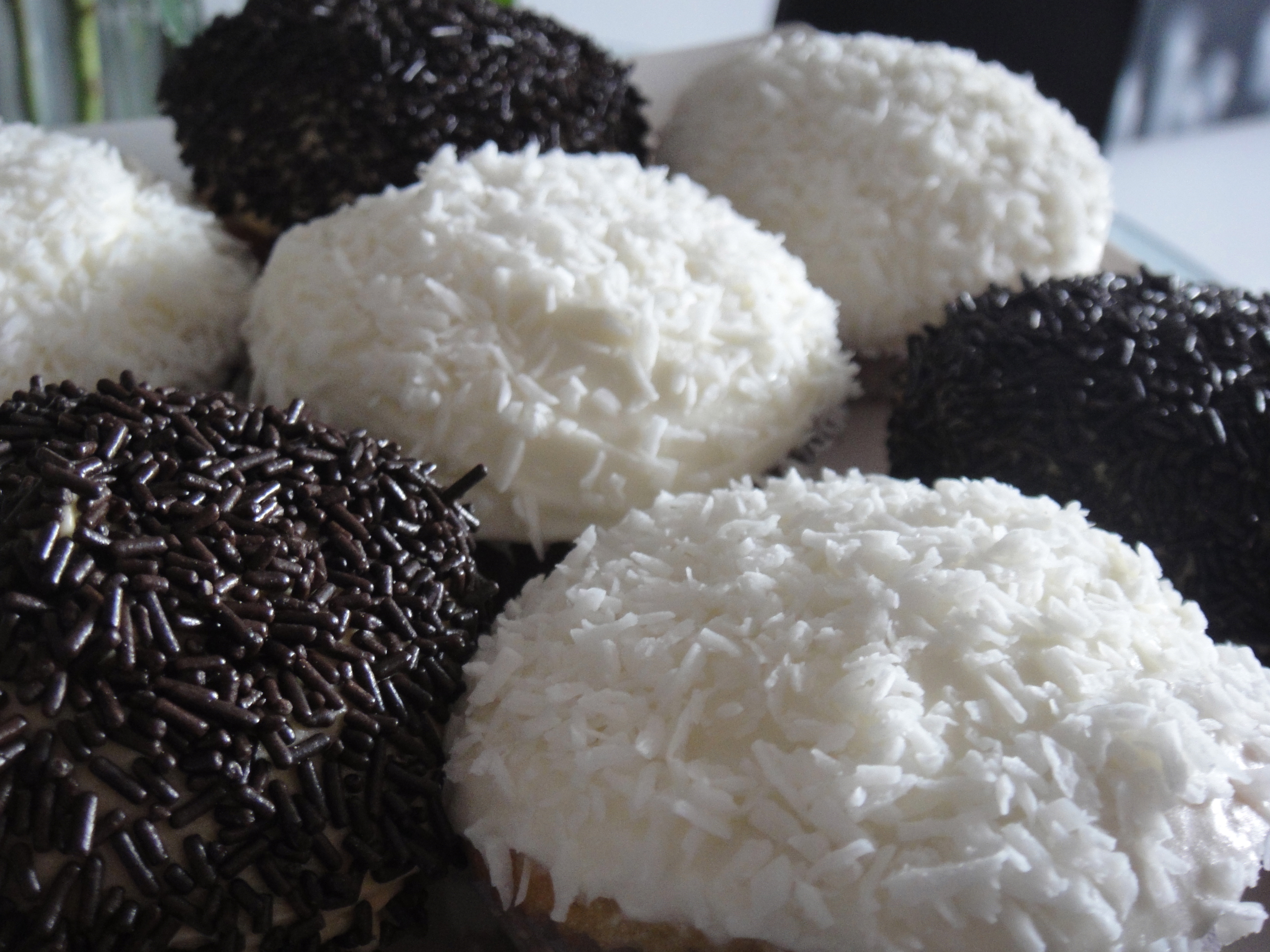
As for the sweet treats – cupcakes went all tropicana, as I chose flavours referencing the mixed and culturally rich heritage of Ruby’s parents – I made one batch of tropical cupcakes –  pineapple and coconut cupcake referencing Sarah’s Jamaican heritage and father Truong’s South Pacific patrimony – while tropical banana meets England’s now demised Hungry Monk restaurant, inventor of the infamous Banoffee Pie, inspiration for my second selection – a banoffee cupcake, loaded with indulgent dulce de leche and a gingery spiced banana sponge. Tropical flavoured, but London refined, these cupcakes were the epitome of english chic, served like a chequerboard of black and white, with one cake covered in coconut and the other in chocolate vermicelli. The fruit in both, and additions of creamy coconut milk and indulgent full fat milk respectively, made these cakes moist and delicious, while the butter cream icing was a suitably indulgent celebration of the beautiful new life in our midsts.

My recipes were adapted from London’s favourite purveyor of cupcakes, the Hummingbird Bakery. To make the pineapple and coconut cupcake, take 140g caster sugar and beat in 40g unsalted butter. Then add 120g plain flour, a pinch of salt, and 1 and a half teaspoons of baking power and mix everything together with an electric mixer. Once everything is combined, gradually mix 120ml of coconut milk and half a teaspoon of vanilla essence into the flour mixture, and finally add and mix in one egg (I actually used a bit more coconut milk – my mother always told me that the softest sponge mixtures always drip of the mixing spoon like syrup, and therefore I always add a bit more milk to achieve this effect – but it’s a matter of personal taste). Prepare 12 paper cupcake cases. Chop up 8 rings of tinned pineapple into small chunks and disperse evenly in the bottom of the paper cases. Pour the cake mixture on top and place in the oven at 170 degrees celsius for around 20-25 minutes. Test with a skewer to make sure the cakes are cooked. The skewer should come out clean. Once the cakes are cooled, make your butter icing. Beat 250g icing sugar with 80g unsalted butter with an electric mixer. Slowly add 25ml of coconut milk and whisk until very white and light and frothy (around 5-10 minutes). Paste onto the cake with a palette knife and sprinkle liberally with desiccated coconut.

The banoffee cupcakes are pretty similar. 140g of caster sugar should be added to 80g of unsalted butter. Then add 120g plain flower, a teaspoon of baking powder, a pinch of salt, a teaspoon of ground ginger and a teaspoon of ground cinnamon. Mix until well combined and then slowly add 120ml of whole milk and two eggs. Separately mash up approximately one largish banana (around 120g peeled) and stir into the cake mixture. Spoon into paper cases and cook at 170 degrees for around 20 minutes. For the icing, beat 250g icing sugar with 80g unsalted butter. Then, if you want to make your icing indulgently dulce de leche, take a small can of condensed milk and simmer on a low heat for 3 hours (yep, this takes patience) without opening the can. Make sure the water doesn’t dry out in the pan and the tin is always covered with water or the tin will explode. After three hours, open up the can and you should find yourself with a tin full of caramel deliciousness. Add a few tablespoons of this to your butter icing mixture depending on how sweet and rich you want it. Build up on your cakes with a palette knife and sprinkle chocolate vermicelli liberally over the cakes.

And there you have it. Uber sophisticated tropical cupcakes, perfect for the summer, whether a baby is forthcoming, newly arrived, or just a distant pipe-dream.

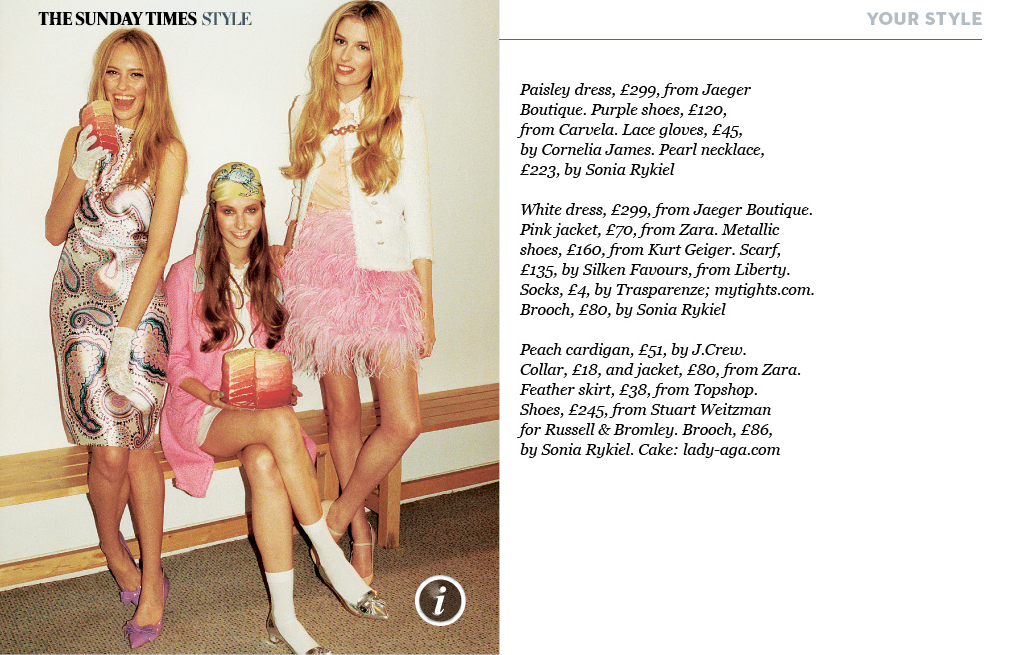
PS: Talking of uber-chic cupcakes, I am SO proud of my friend Celia whose red-velvet multi-layered ombre cake made it into this week’s Sunday Times style section as shown here… amazing!

A Greek-inspired weekend feast without a single mention of austerity measures

It’s true. You can’t talk about Greece these days without the mention of austerity measures, riots in Athens, political instability and the potential crash of the Euro. All of this has had a knock-on effect on the Greek tourism industry, as families are put off by negative news pictures showing growing social unrest, and the current trend for “staycations” means tourists are setting their sights on local drafty beaches rather than the blue-domed, white-washed panoramas of Greece’s formerly favoured island attractions. While Greece loses its tourists, and its economy dwindles further, the tourists lose the opportunity to enjoy an affable burst of Grecian spirit in their lives, denied their chance to indulge in the mediterranean smells of garlic and basil, mint and spinach, flakey pastry and syrupy dessert, thick rich yoghurt and fresh just-caught seafood. So while Greece finds itself thrown into yet a further bout of political and social uncertainty, I have chosen, as always, to look on the brighter side of life, taking it upon myself to celebrate the sunshine-imbued gastronomic culture for which Greece should be making headlines, and importing the tastes and smells of a warm mediterranean evening into my flat. As such, I have been cooking up a storm of Greek-inspired food in my flat here in gloomy London, and the results have been so good, I feel compelled to share the results.

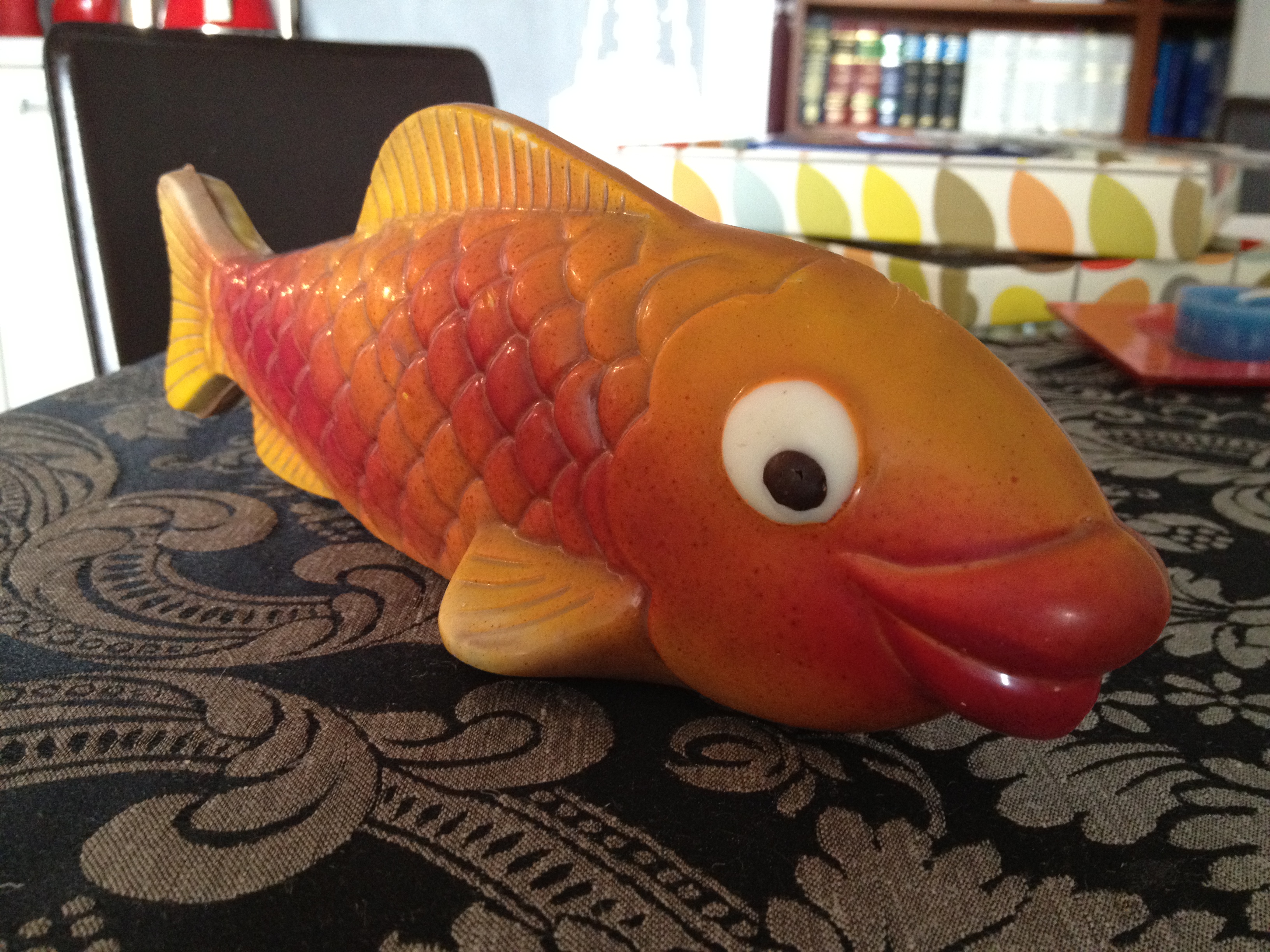
Most of the recipes are taken or adapted from Rick Stein’s Mediterranean Escapes (© Rick Stein 2007), but the cheese platter and stuffed squid dish are entirely my own creation (the chocolate fish is, sadly, so perfect as to be un-makeable – well, at least by my clumsy hands).

Feast 1 – light lunch cheese platter with a chicory salad

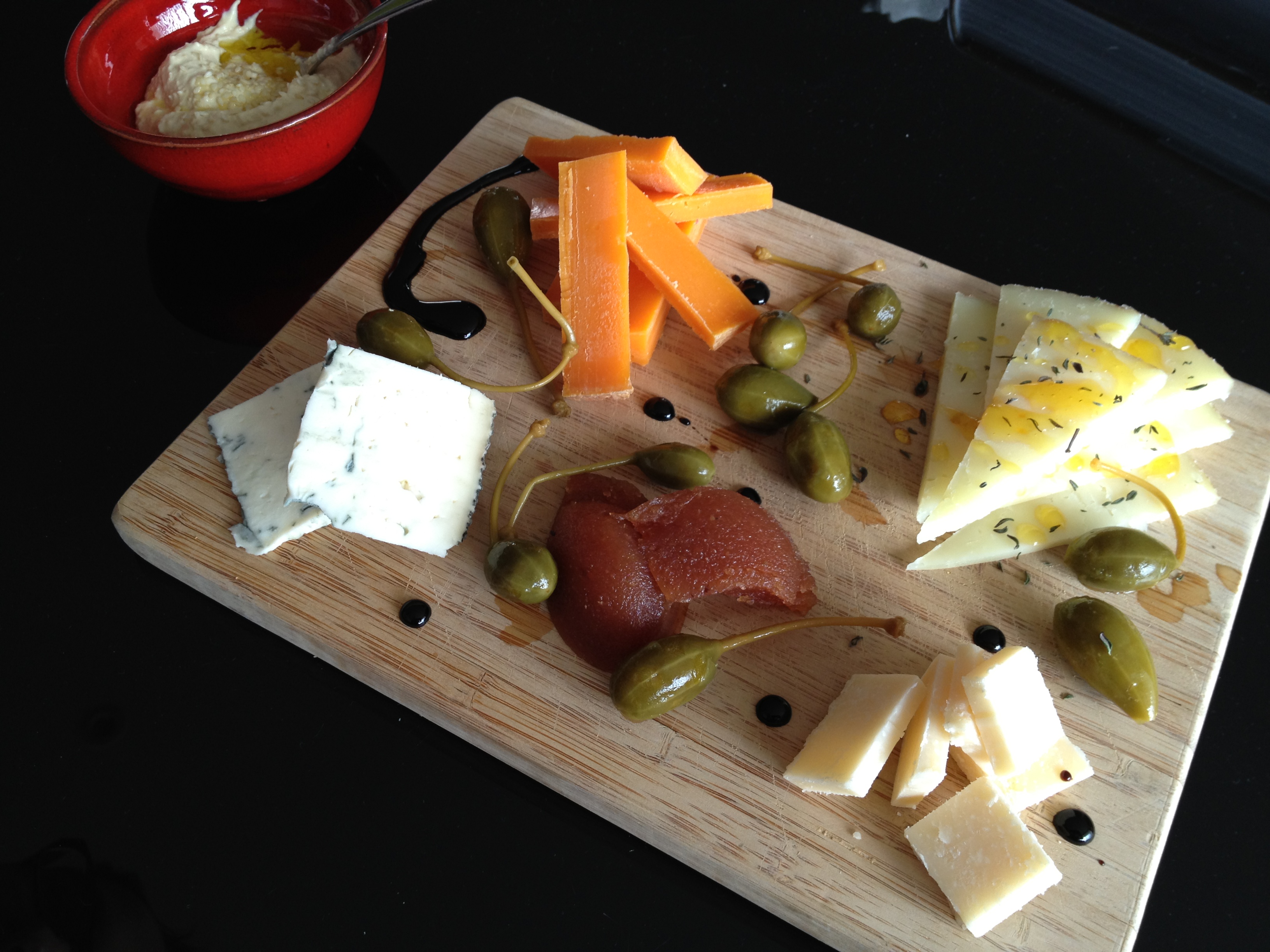
I started my greek food season (I should point out that i didn’t eat all of this at once – this was over a few days) with a light snack: a cheese platter with some greek (kefalotiri, halloumi and feta) and other mediterranean cheeses (there’s always space for my favourite Spanish cheese – manchego – drizzled with honey and sprinkled with thyme). With so many Greek cheeses out there you can go mad. I served my cheese board with a home made houmous sprinkled with sesame seeds, flat bread and rather large Greek capers, as well as a chicory, pomegranate and walnut salad.

Feast 2 – Greek mezze: shallow-fried squid with a pimenton dipping sauce, Tzatziki, Baba Ghanoush, Spanakopita and pitta bread

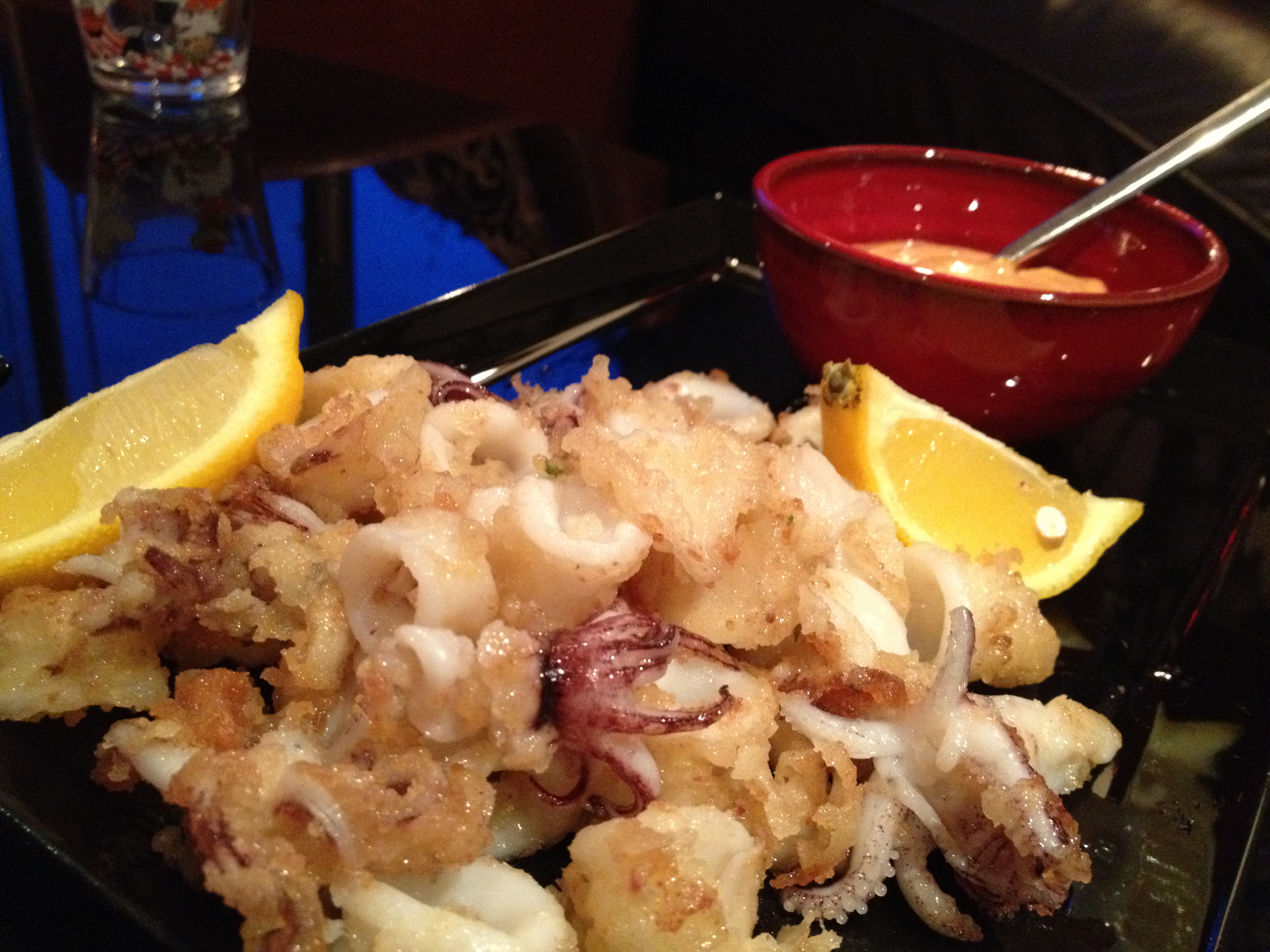
For a real taste of the mediterranean, you can’t go wrong with some simple, lightly fried squid, dusted in well-seasoned flour and shallow fried. The key is to leave the flour-coated squid for a couple of minutes before frying as the damp flour will give a crispier finish. Then you just need to shallow-fry the squid in oil (I use olive-oil for a more rich mediterranean flavour) for around a minute. I served the squid with a wedge of lemon and a smoked pimenton mayonnaise – simply make up a standard mayonnaise with a little extra lemon. Finely chop some garlic and crush into a smooth paste with the flat blade of a knife. Add this and a teaspoon of smoked pimenton to the mayo and you have the perfect dipping sauce for the squid.

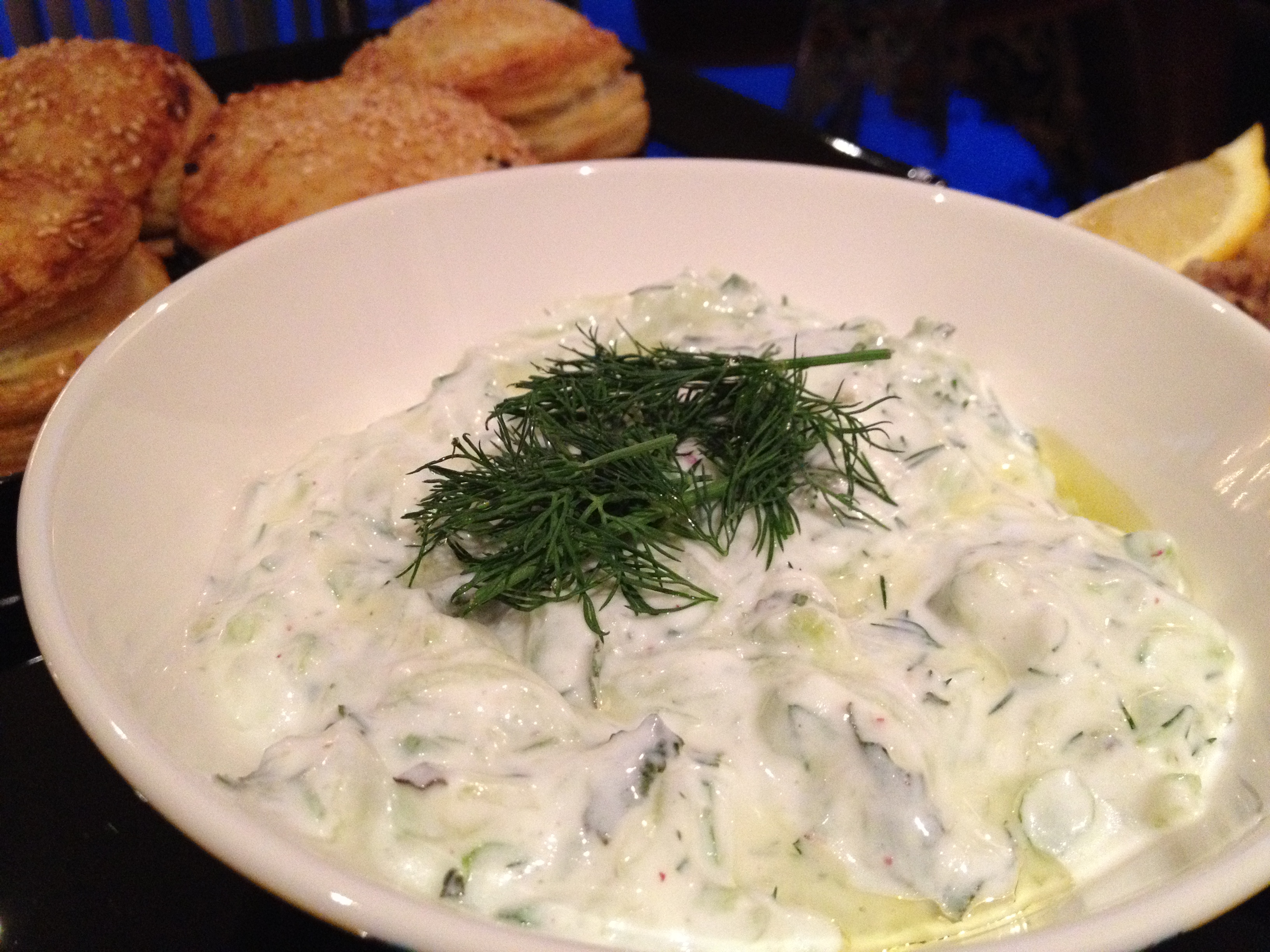
No mezze is complete without Greek favourite, Tzatziki, a cucumber and yoghurt dip perfect for eating with flat bread or pitta bread. There are various pools of thought as to how to make Tzatziki. My Cypriot friend swears by yoghurt with oregano, where as others will use mint. Rick Stein recommends dill. And frankly all of these herbs work well. Personally I’m a lover of mint, but I couldn’t resist adding a little dill as well, and I found the Tzatziki lost nothing for this herb combination. So you need to take a cucumber which should be coarsely grated (you can peel off the skin if you like, although I generally leave it for texture). Squeeze most of the juice out of the cucumber in a (clean, obviously) tea towel and add to 500g Greek yoghurt, 75g of finely chopped spring onions, 2-3 heaped tablespoons of your chopped herbs (mint, dill, and/or oregano as preferred), 2 tablespoons of good quality olive oil, a teaspoon of white wine vinegar, seasoning and 1-2 crushed garlic cloves (be careful here – the raw garlic can be surprisingly overpowering in this dish. In my experience it’s best to start with one clove and add more if you like a pungent garlic flavour).

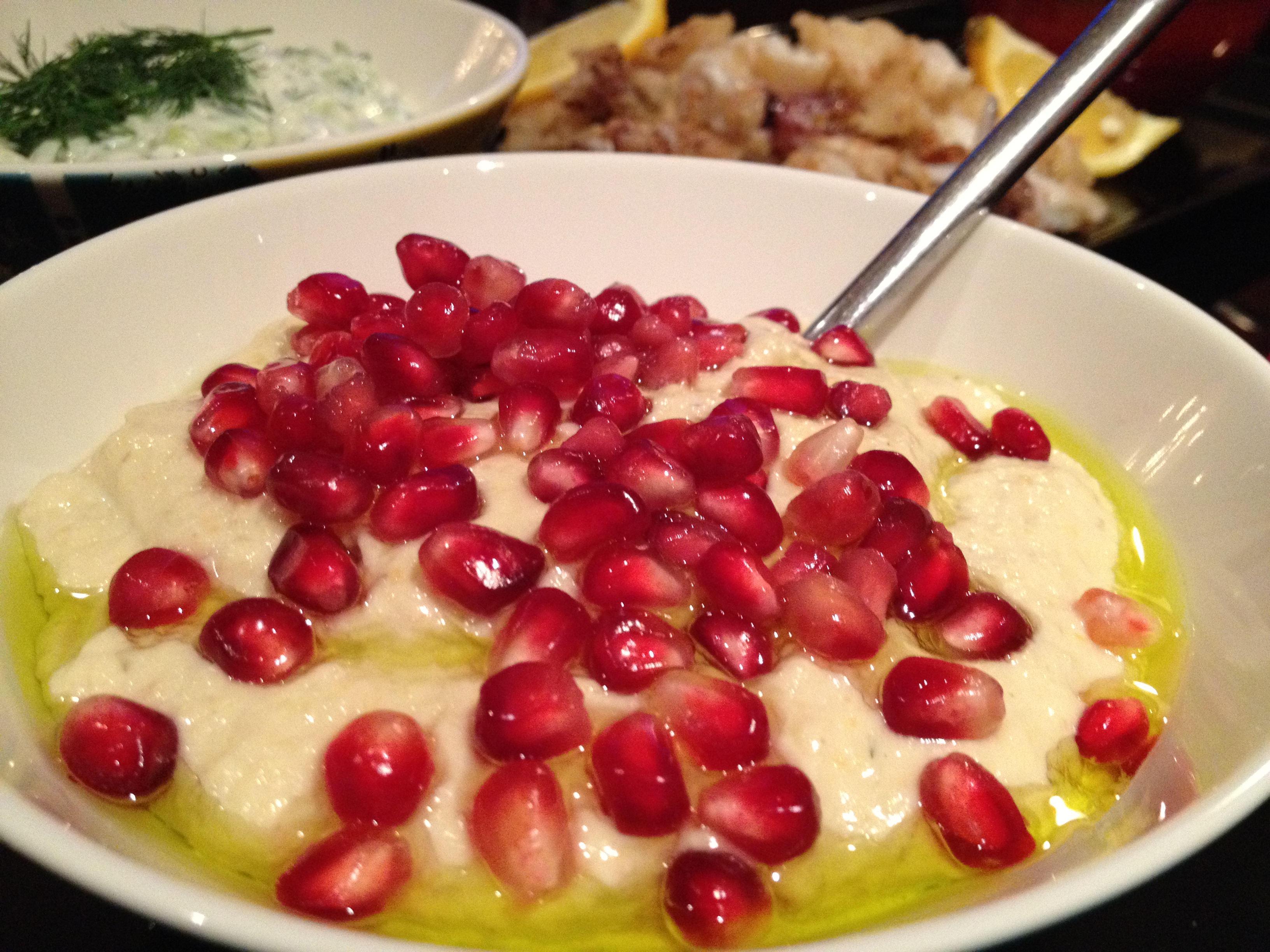
Typical mezze will include a houmous as well as a tzatziki, but I decided to import a dish from Turkey to add variation to the typical hummus dish. Baba Ghanoush has a similar texture to houmous but with a predominant flavour of smoked aubergine which is delicious, especially when served sprinkled with pomegranate. To make the Baba Ghanoush, take three large aubergines, and pierce them near the stalk to prevent them from bursting. Place them under a grill for around 40 minutes until black on the outside and soft in the middle. Once cool enough to handle, cut the aubergines lengthways and scoop out the flesh. This should be mashed up with a masher or fork, or for those who like a smoother texture, whizz it in the food processor. Time to add 2-3 garlic cloves, crushed (again, be careful about adding too much – it’s best to start with one and keep testing), plenty of salt, 3 tablespoons of light tahini paste, a drizzle of olive oil and half a teaspoon of sesame seed oil, a squeeze of lemon juice and some parsely to garnish. Serve with pomegranate and an extra drizzle of oil.

I completed my mezze with standard greek favourites, spanakopita  (I got over excited and forgot to photograph them). These are delicious crispy spinach and feta filled pastries and are wonderful when accompanied with the tzatziki or on their own. For the filling, sweat half a small onion and two finely chopped spring onions until soft. In a separate pan wilt 500g of spinach and press out the juices. Once cool, combine the spinach and sweated onions and add 100g of crumbled feta cheese, 1 large egg, 1 tablespoon of finely grated kefalotiri or parmesan cheese, a pinch of nutmeg, 2 -3 large tablespoons of fresh mint, and seasoning and mix well. For the pastry, buy a packet of pre-made filo pastry. Cut the stack of pastry into strips 7.5 cm wide. Brush the top layer with melted butter and place a heaped teaspoon of the spinach filling into the centre of one strip at the end nearest you. Then fold one bottom corner of the pastry diagonally over the filling so that the corner touches the opposite side to make a triangle. Then fold over the filled triangular corner, continuing to fold along the whole strip until a perfect triangular pastry is formed. Do the same for all the mixture. Brush the pastries with more butter (and, if you like, sprinkle with sesame seeds). Place on a lightly buttered baking tray and bake for 25 minutes at 180 degrees centigrade/ gas mark 4 until golden and crisp. I should note that you can make this recipe with puff pastry – I did it when I bought the wrong pastry and it was still delicious!

Feast 3 – Pot roasted chick with sun-dried tomatoes, cinnamon and oregano

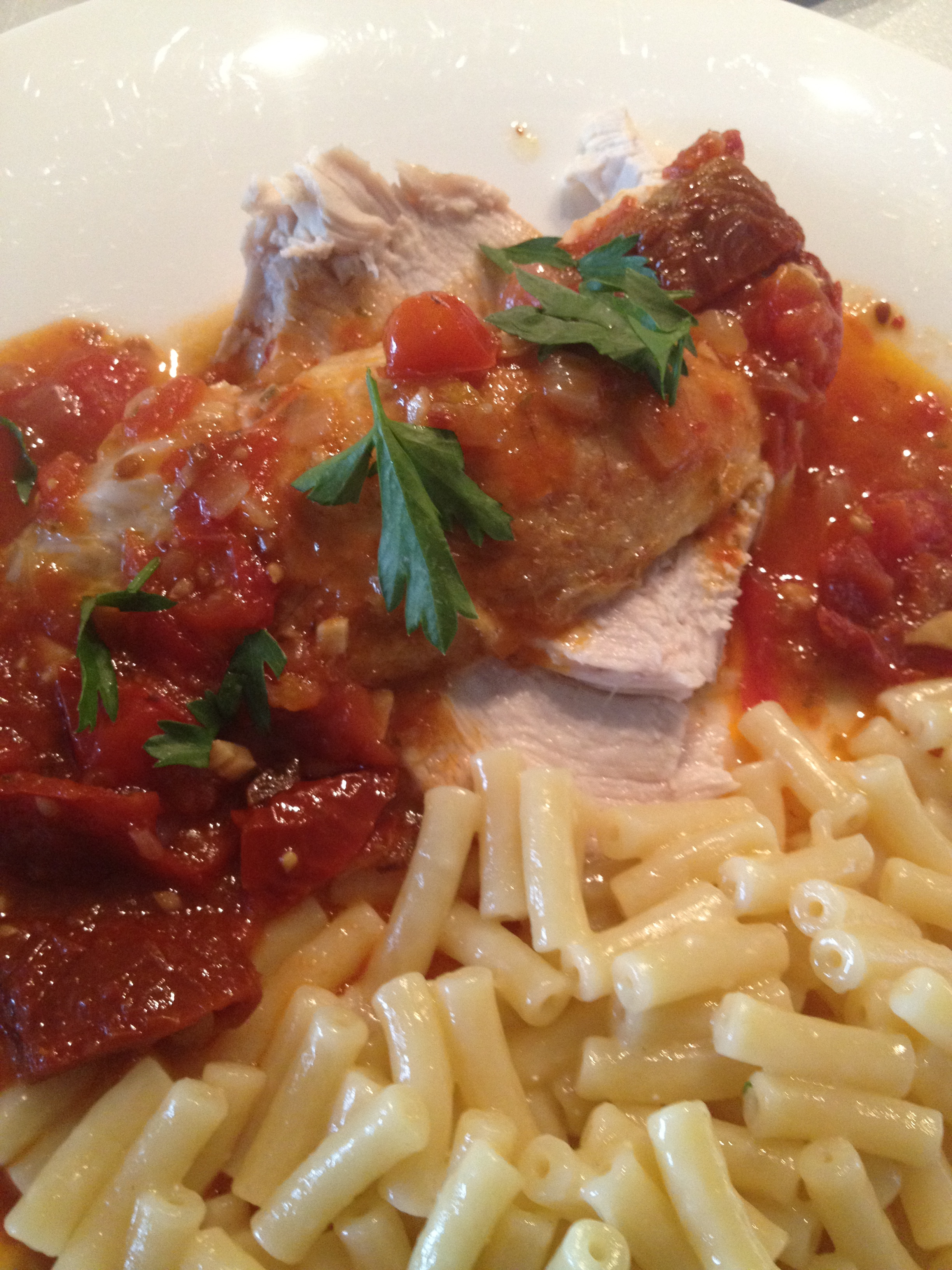
Next up an easy-cook chicken dish which imports the spices of the Aegean sea with a rich tomatoey mediterranean sauce. Simply take a whole chicken (around 2kg) and pan fry in a casserole for a few minutes on each side to brown. Remove the chicken and in the same pan gently brown a thinly sliced onion. Add 4 garlic cloves, thinly sliced, 60 g of sun-dried tomatoes, 500g of chopped vine tomatoes (or a tin of chopped tomatoes is fine), a cinnamon stick, 150ml of chicken stock, a generous pinch of dried chillies, 1 teaspoon of dried oregano and seasoning. Bring to a simmer and replace the chicken. Cover with a tight fitting lid and bake in the oven for 1.5 hours at 180 degrees celsius/ Gas Mark 4 and baste the chicken with the sauce every so often. Once the chicken is cooked and the juices run clear, lift the chicken onto a carving board and wrap in foil to keep warm. Then bring the tomato juices to a rapid simmer for around 10 minutes until slightly reduced and thickened. Remove the cinnamon stick and serve the tomato gravy in a generous flurry over the carved chicken. You’re meant to serve this dish with orzo (rice-shaped pasta) tossed in a handful of grated kefalotiri/ parmesan cheese, but since I couldn’t source any locally, I used macaroni – which worked surprisingly well!

Feast 4 – Grilled stuffed squid with a broccoli and beetroot salad (with a chocolate fish for dessert)

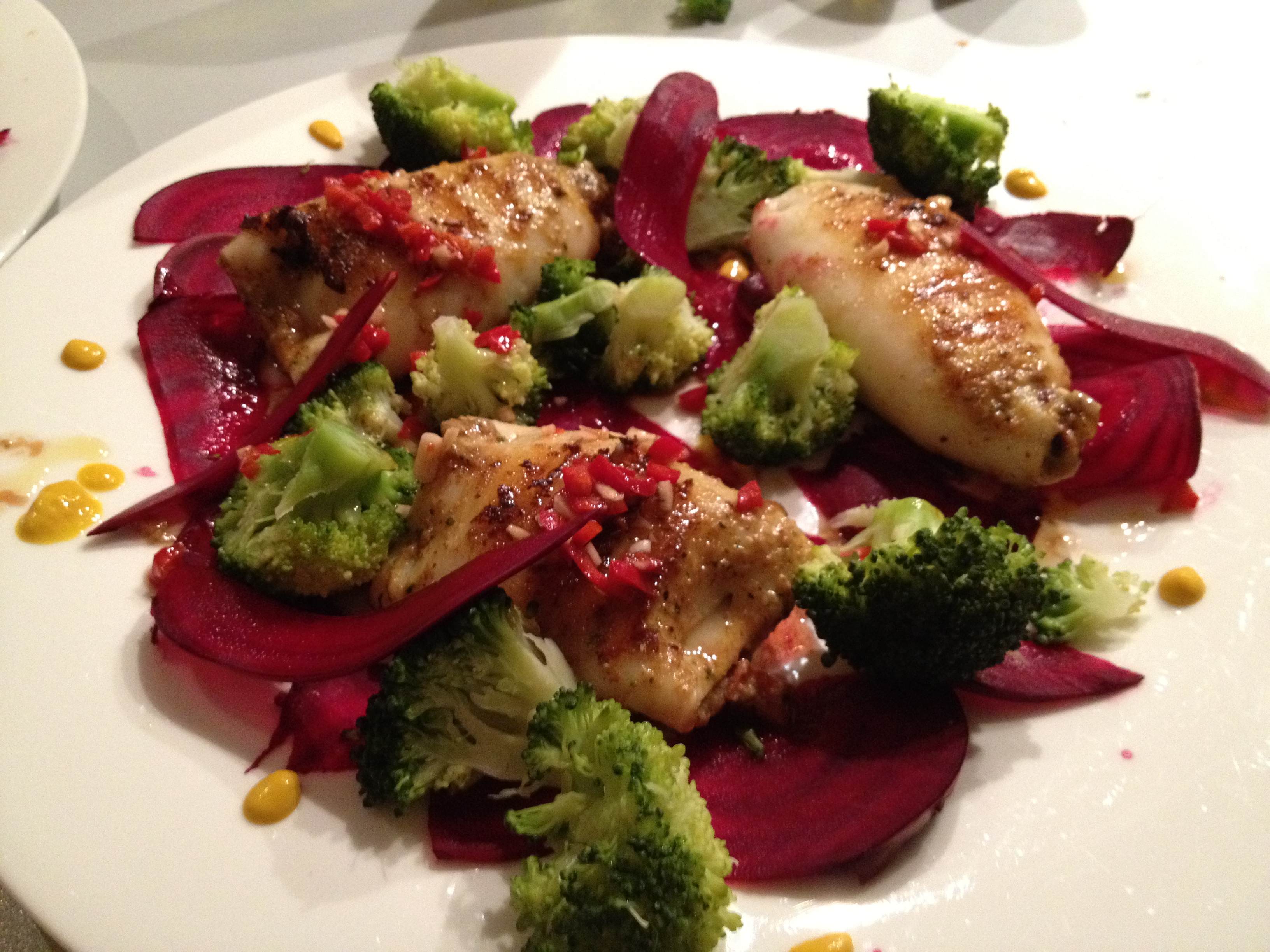
My final installment of Greek food was a stuffed squid dish which was an exercise in using up the contents of my fridge. I defrosted 6 frozen squids (they’re not currently in season) and stuffed them with a mixture of lightly toasted pine nuts, 50g or so of feta cheese, 50 g or so of mozarella cheese, a handful of basil, a good squeeze of lemon, some very finely chopped spanish chorizo sausage, seasoning and a lightly sauteed finely chopped shallot. I made a pesto-style paste from half the pine nuts by whizzing them in a food processor with the cheese and basil and added this to the gently friend chorizo and shallots along with the other half of the toasted pine nuts (I used a 100g bag in total). This made for a variety of textures. I stuffed each squid with the mixture and fastened the end shut with a toothpick for cooking. I then grilled the squid in a griddle pan for 2-3 minutes on each side. In the meantime I lightly steamed some broccoli and finely sliced a beautiful fresh raw beetroot which I scattered over the plate at random, along with a light dressing of chopped chilli, olive oil and a squeeze of lemon juice. I also dressed the plate with a few blobs of mustard for decoration and yet more flavour intensity.

For dessert we ate something which has no remote connection to Greece whatsoever, but so beautiful was this chocolate fish which we gorged upon that he merits inclusion in this post. Bought in Salamanca, Spain a few weeks back, this fish is a chocolate beauty, so good that we resisted eating him for at least 3 weeks until finally succumbing to temptation last weekend. He tasted as good as he looked.