Skip to content

Posts tagged ‘food’

Burger and Lobster

Monopoly players across the world will recognise Mayfair as the uber expensive dark blue site which the most prudent property developer should aim to develop with little plastic green houses and fat red hotels should they wish to sweep the board of this favourite winter’s weekend family game. And in reality, the real Mayfair has existed in parallel to its board game namesake, boasting amongst the most valuable reality in London, from lavish luxury hotels including the Ritz, and refined shopping such as Fortnum and Masons, and swanky car showrooms, packed to the rafters with private drinks receptions of the well healed and fur-wrapped gentry, to private members clubs aplenty and restaurants whose prices are conspicuous by their absence from well-bound menus.

Yet in a city where ambition is the fuel which keeps the big urban pump grinding, and the lavish lifestyle of the London yuppy class predominates as the ultimate aspiration for career ladder climbers and socialites alike, Mayfair is as ever the ultimate in London hangouts, but one which is becoming more and more accessible as a place for everyone with a little taste to embrace the highlife. Take Fortnums, the refined department store, which last Christmas reported its best ever sales in the shops 300 or so year history, swamped by the thousands who decided to prioritise the traditions of a heritage Christmas, despite the economic downturn all around us.
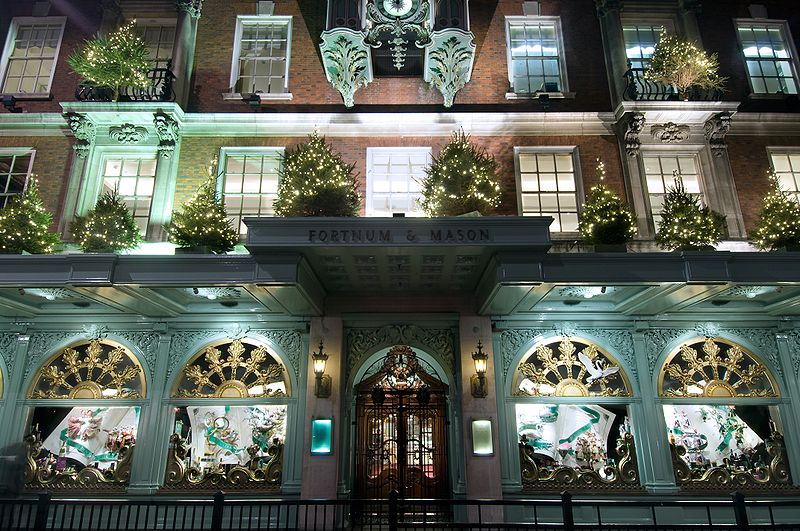
Fortnum and Masons

Fortnum and Masons

Then there is Burger and Lobster, the location of my dinner tonight. The name just about says it all. You can have burger, or lobster, or both (or lobster in a brioche roll). That’s the extent of it (hence why perhaps their website is so decidedly bare). The dishes are £20 each. Simples, as the meerkats would have it. Yet for your highly reasonable £20, you get a lobster which is so meaty, and so decidedly unfiddly, that you barely need that funny little fork thing that comes with lobster, and can munch on the freshly grilled flesh to your heart’s desire, along with the moorish salad and chips which accompany it.
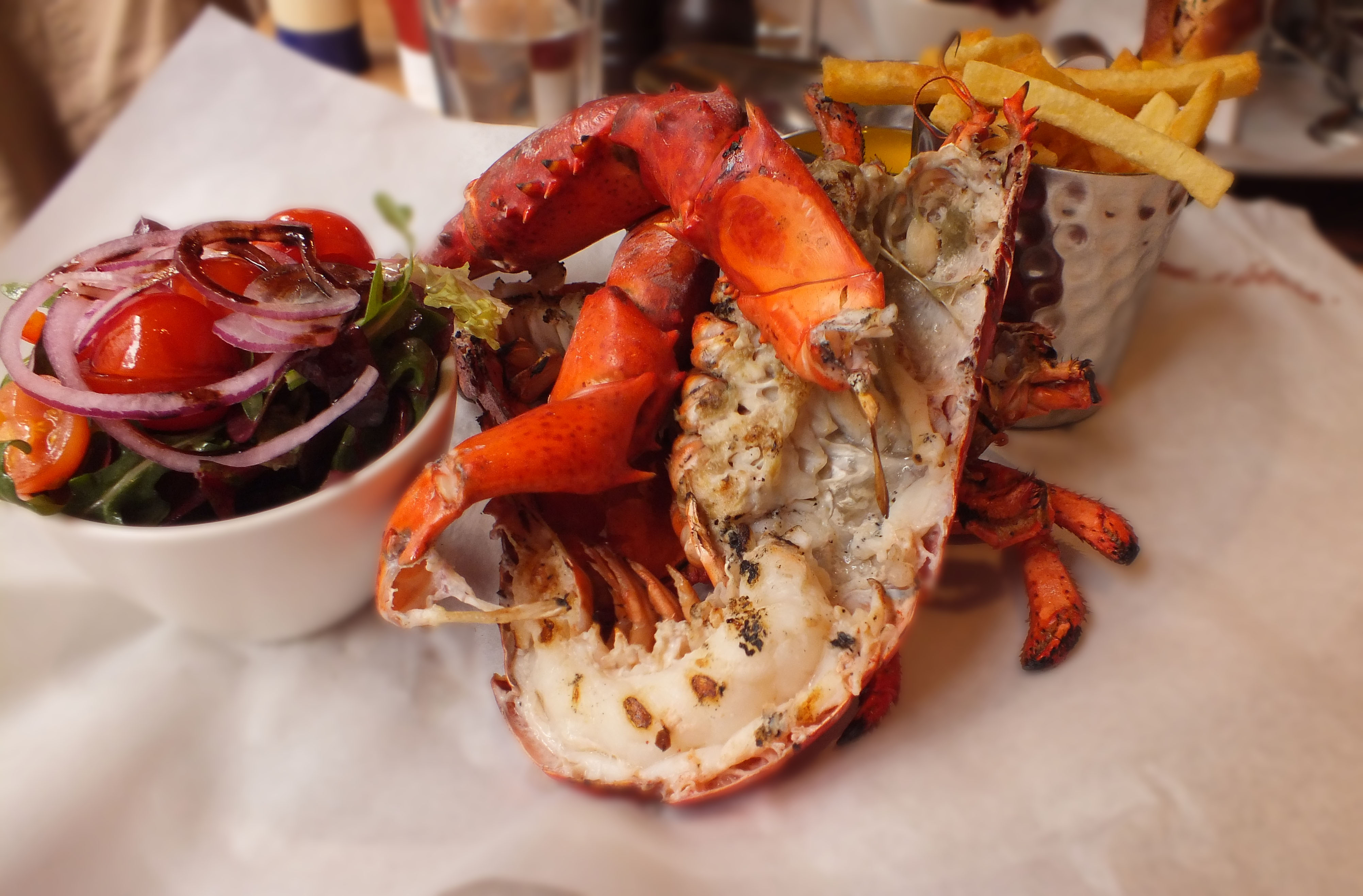
The eponymous lobster
The eponymous lobster

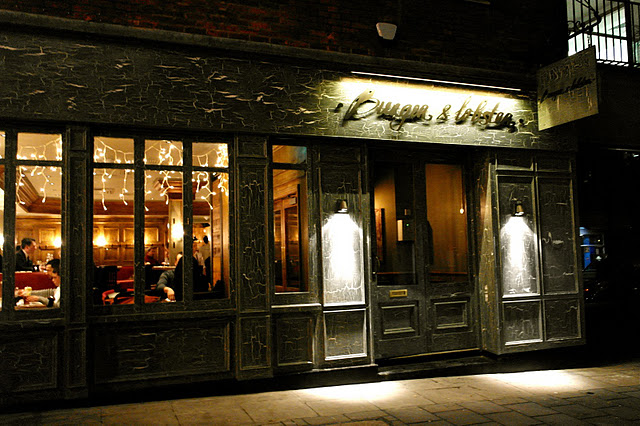
Burger and Lobster, Mayfair

Burger and Lobster, Mayfair

So need Mayfair be monopolised by the dark blue hue of extravagant wealth? Apparently not. Our dinner tonight was excellent value, and came accompanied by a healthy portion of salted caramel cheesecake and some bubbles, all billing at around £40 per person. The only slight snag is you can’t book ahead. We went along shortly after 6pm and at that time had an hour to wait, but this was conveniently filled by some quail eggs and wine at Fortnum’s local winebar – a suitable restoration for two lawyers after a full days work of legal wrangling.

Shanaz's lobster roll

Shanaz’s lobster roll

Cassandra's grilled lobster

Cassandra’s grilled lobster

So for your fill of mid-week extravagance, head along to one of Burger and Lobster’s 4 London branches (Soho, Mayfair, Farringdon, City), and if you do have to wait for a table, fill the waiting time (in Mayfair at least) with a drink in Fortnums, a guilty peek at nearby Laudurée’s delectable macaron selection or, if you’re really lucky, why not pop into the Royal Academy, Mayfair’s pre-eminant art establishment, where a Manet blockbuster is due to open its doors within days.

I leave this post with some shameless self-promotion – my paintings of lobsters (sans burgers) – just to get you in the mood 🙂
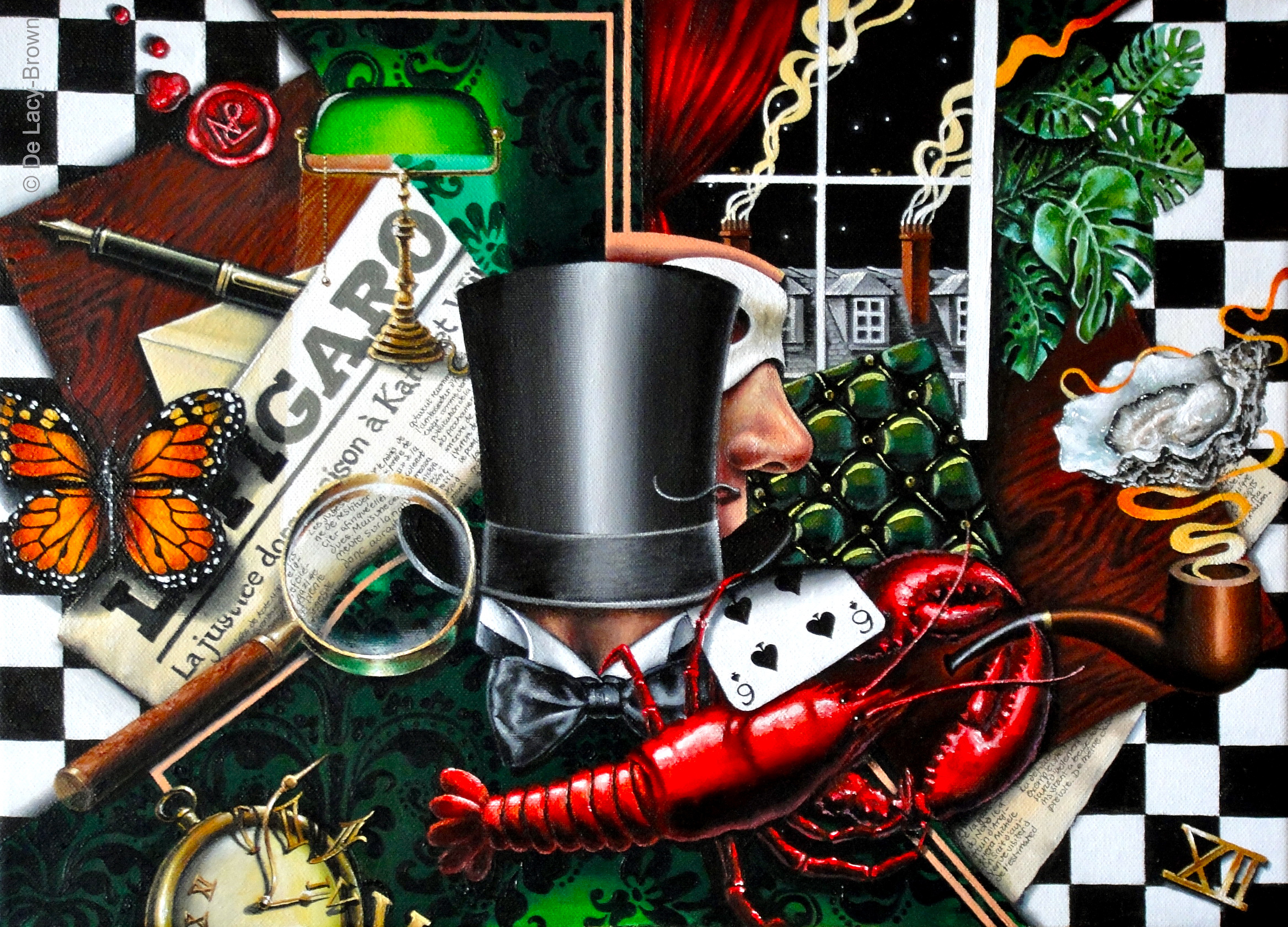
The Gentleman (in Paris) 2012 © Nicholas de Lacy-Brown, acrylic on canvas

The Gentleman (in Paris) 2012 © Nicholas de Lacy-Brown, acrylic on canvas

Joie de Vivre/ Zest of Life 3: Casino Nights (2005 © Nicholas de Lacy-Brown, acrylic on canvas)

Joie de Vivre/ Zest of Life 3: Casino Nights (2005 © Nicholas de Lacy-Brown, acrylic on canvas)
Nicholas in the Renaissance (detail) (2008 © Nicholas de Lacy-Brown, oil on canvas)

Nicholas in the Renaissance (detail) (2008 © Nicholas de Lacy-Brown, oil on canvas)


Goodnight!

Pizzetta by Polpo

It’s official, I’ve gone Polpo-loco. Following Saturday’s octopussy success, on Sunday I went Pizzetta crazy, producing some 12 mini pizzas as inspired by the London eatery Polpo‘s glorious cookbook which was undoubtedly my favourite Christmas gift this year.

I was a little put off by the prospect of making my own dough, what with a day of painting ahead and a pile of Sunday-night ironing to get through and very little time for kitchen disasters. However, the toppings were almost too tempting to bare, and there was no way I was going to contaminate the fine flavours with a shop-bought pizza base. So, following the Polpo recipe, I set about making my pizzetta dough which, as it turned out, was as easy as it was enjoyable – all that kneading was both a stress reliever and January workout for the arms, which is good, because two weeks in and my new year’s resolution to workout daily is failing abominably.

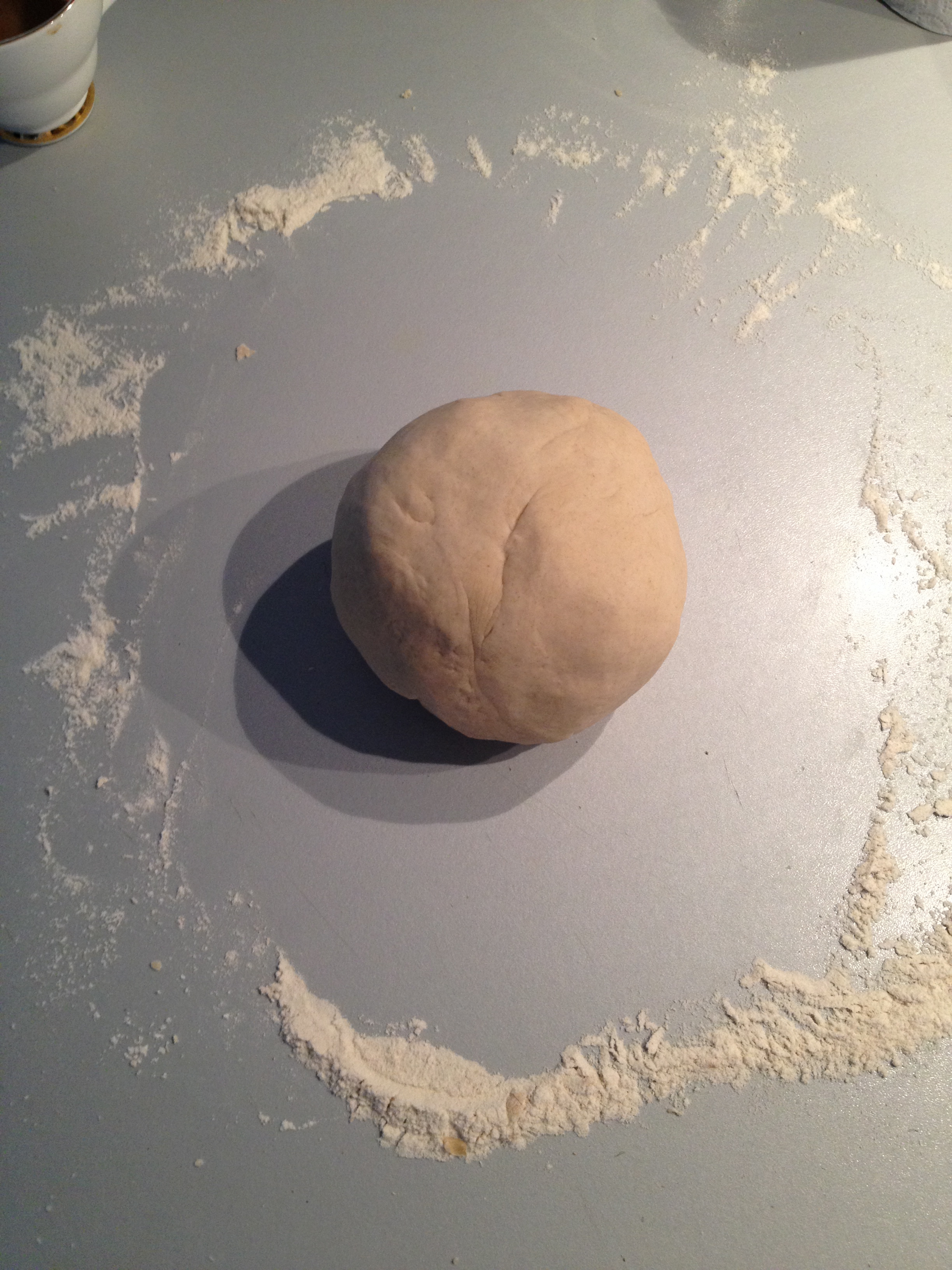
My dough, ready to go...

My dough, ready to go…

To make the dough, you just take 500g of strong white flour, and mix this in a bowl with 300ml of tepid water, 15g of salt (2 teaspoons) and a 7g sachet of fast action dried yeast (or 15g if you can get your hands on fresh). Once mixed into a ball, you knead the dough for about 10 minutes on a floured surface, stretching the dough and then bringing it back into a ball, doing this again and again until the dough feels springier. I kneaded mine while watching Francesco Di Mosto’s BBC Venice series – a perfect accompaniment to my Venetian culinary adventure.

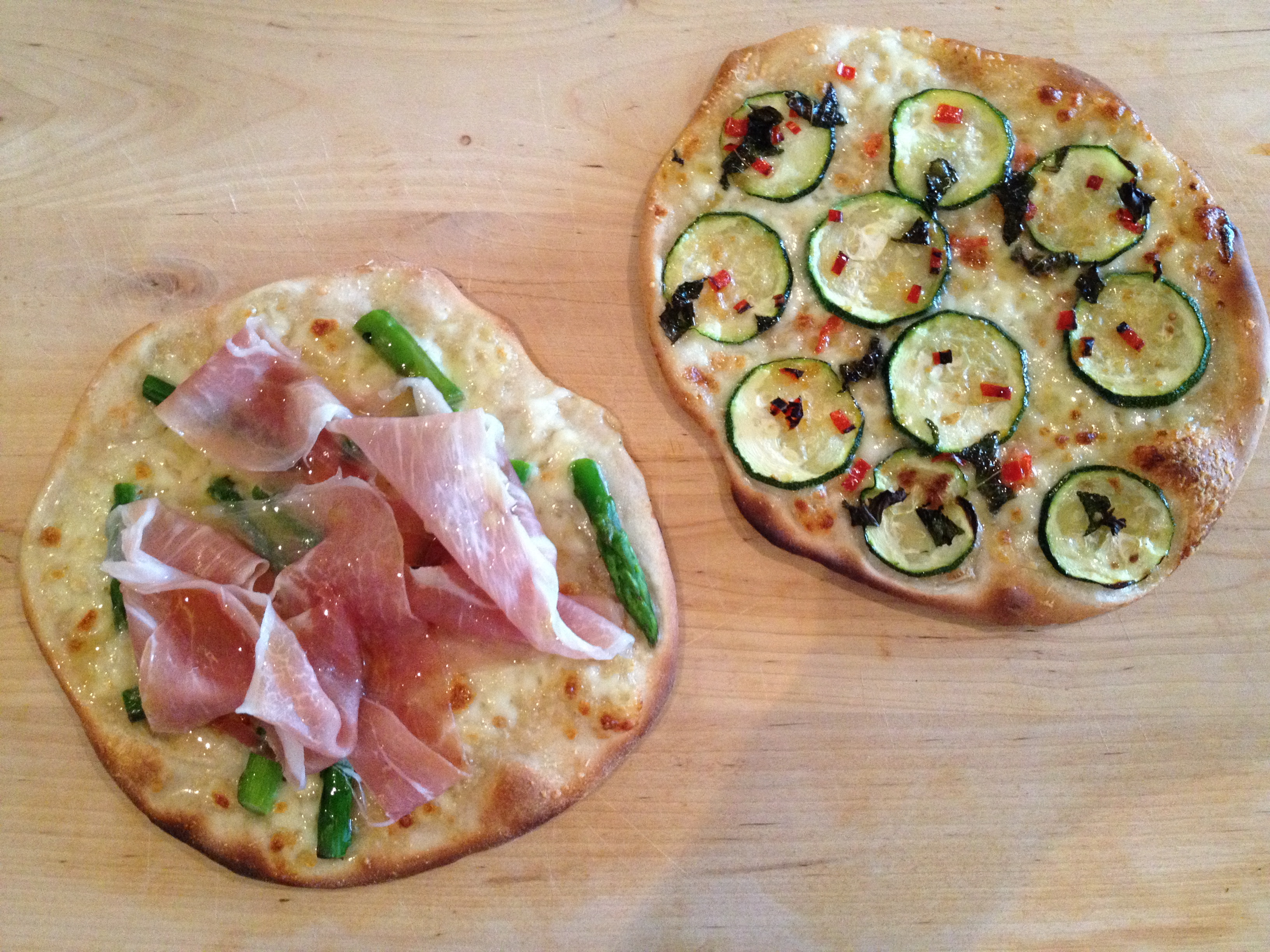
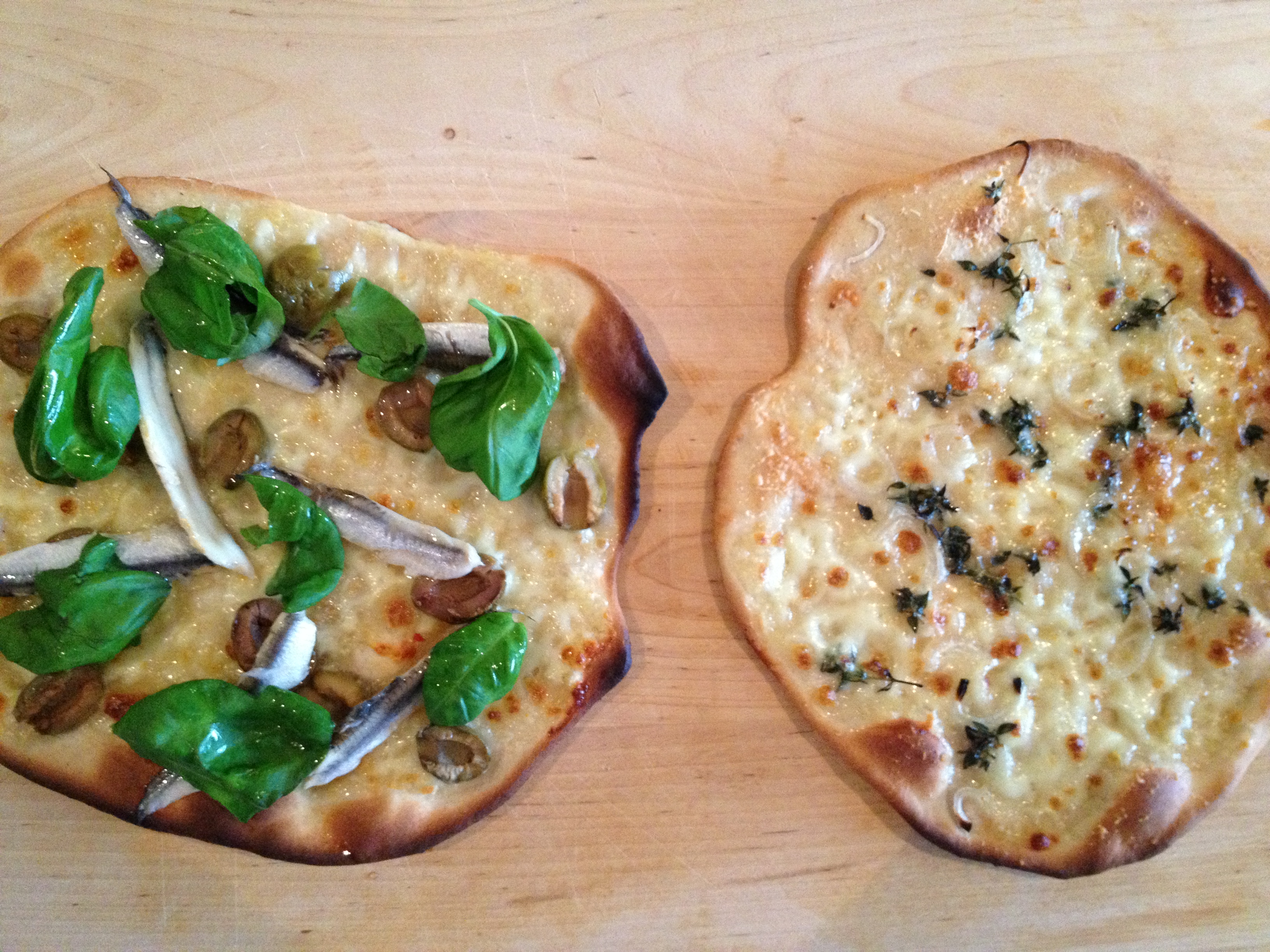
Once kneaded, place your dough in a bowl covered with oiled clingfilm and leave somewhere warm until the dough doubles in size (at least 30 minutes). Then, divide the dough into 12 pieces and roll out each into an approx. 20 cm disk and then get creative with your toppings. I tried the following…

Prosciutto & Asparagus and Zuccini, Chilli and Mint

Prosciutto & Asparagus and Zuccini, Chilli and Mint

Pizzetta Bianca and Anchovy, olive and basil

Pizzetta Bianca and Anchovy, olive and basil

Spinach with a soft-cooked egg

Spinach with a soft-cooked egg

Mortadella with gherkins and blue cheese/ Salami Milano with fennel

Mortadella with gherkins and blue cheese/ Salami Milano with fennel

Rosemary and potato/ Prosciutto, mushroom and blue cheese

Rosemary and potato/ Prosciutto, mushroom and blue cheese

Salami, sundried tomatoes and torn basil

Salami, sundried tomatoes and torn basil

The combinations above are pretty self-explanatory, and who needs a recipe when you have the blank canvas of pizza dough before you. But a few tips: I started off with a basic cheese base of half grated parmesan and a scattering of good quality mozzarella. Don’t overload your  pizzetta with cheese or they will be soggy.

If potato and rosemary is your thing, thinly slice a potato and blanch the potato in boiling water for about 30 seconds before placing on the pizza. Do the same with the asparagus if using it with prosciutto as above. The spinach combination is a large handfull of wilted spinach chopped with half a clove of finely chopped garlic and a tablespoon of creme fraiche – cover your pizzetta base with the spinach mix and crack an egg over the top before placing straight in the oven – be sure not to overcook – that egg needs to be nice and runny. Oh, and don’t forget to season your pizzas as you would any other food, and a good douse of olive oil certainly adds the magic touch just before serving.

Re cooking, restaurant ovens are around 300C. My oven only goes up to 275C which was good enough – but make sure you heat your baking trays before hand so the base of the pizzetta’s go nice and crispy. Each pizza should only take around 6 minutes.

These pizzetta’s are so easy to make and somehow less daunting than full sized pizzas. Plus, you get to sample a more varied palate of delicious Italian ingredients in a single meal. Buon appetito!

Polpo by Polpo

It took me almost a week to take down my Christmas decorations. What with last weekend being my partner’s 30th, I had to risk superstition and undress each Christmas tree, one evening at a time this week after work. Finally, on Thursday night, I put away the last strand of tinsel and wrapped the last of my vast bauble collection and started turning my mind to the summer.

It’s not the easiest of tasks when a glimpse outside of the window presents a vision of dreary grey England, leafless trees straining to hold onto their roots in a blustery winter wind, and people wrapped head to toe in their winter woolies. Yet while the eyes may face the disappointment of a continuing wintery outlook, the other senses remain open to the invitation of an early summer. And so, to my kitchen I have headed, ready to tempt my taste buds and my nose with the smells and flavours of a verdant green and azul blue summer. For in my opinion, there is nothing quite like bringing the food of the Mediterranean into your home to kick away those winter blues.

DSC04936

At Christmas I received a beautifully presented cookbook (after much well-placed hinting), Polpo, a book of Venetian-based cuisine flaunting the flavours of that deeply charismatic little island and the delicate tastes of the Adriatic beyond. The book is a collection of recipes from the London based eatery of the same name, whose philosophy is simple: to capture the essence of the Venetian backstreets, where quaint little bacari serve a plethora of deceptively simple but delicious Italian treats.

polpo-restaurant-london-soho-cookbookI couldn’t wait to delve into this book, littered as it is with sumptuous views of Venice, and offering some 140 recipes inspired by the dazzling city. It is perhaps no coincidence that the first recipe I tried was the very thing that the restaurant was named after: octopus, or polpo. However, it wasn’t actually the book which engendered this desire to eat polpo. Rather, having spent the last two nights occupied in another of my winter-beating activities, looking for summer holidays, my search through holiday deals in the South of France and the Italian riviera brought to mind a delicious yet simple dish of polpo with potatoes which I devoured, with a glass of chilled prosecco, in San Vincenzo in Tuscany last summer. This was my inspiration, and to my great pleasure, Polpo had a recipe which was perfect in fulfilling my desire to recreate that hot July day in January.

San Vincenzo's version of the salad

San Vincenzo’s version of the salad

and the Prosecco

and the Prosecco

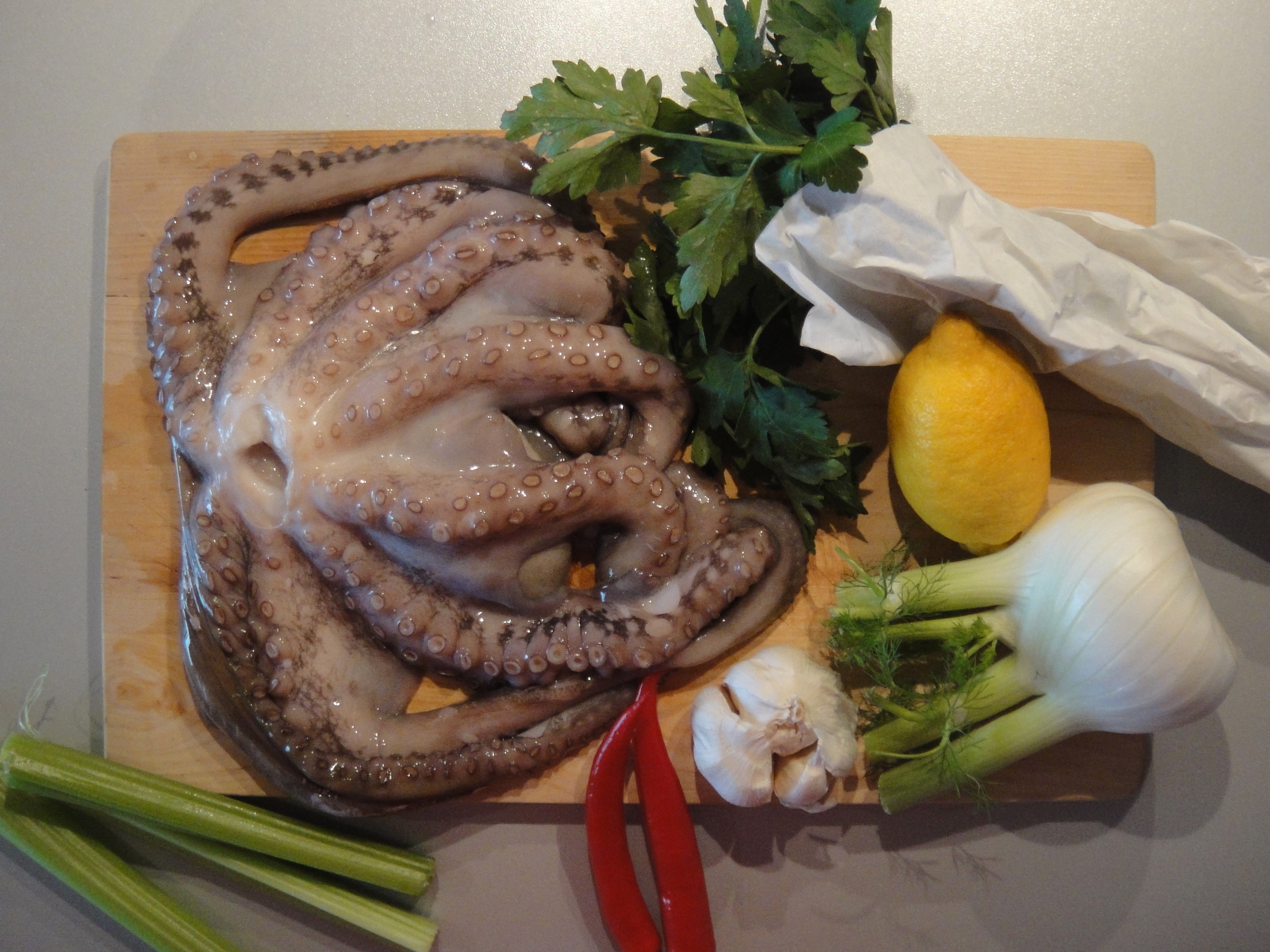
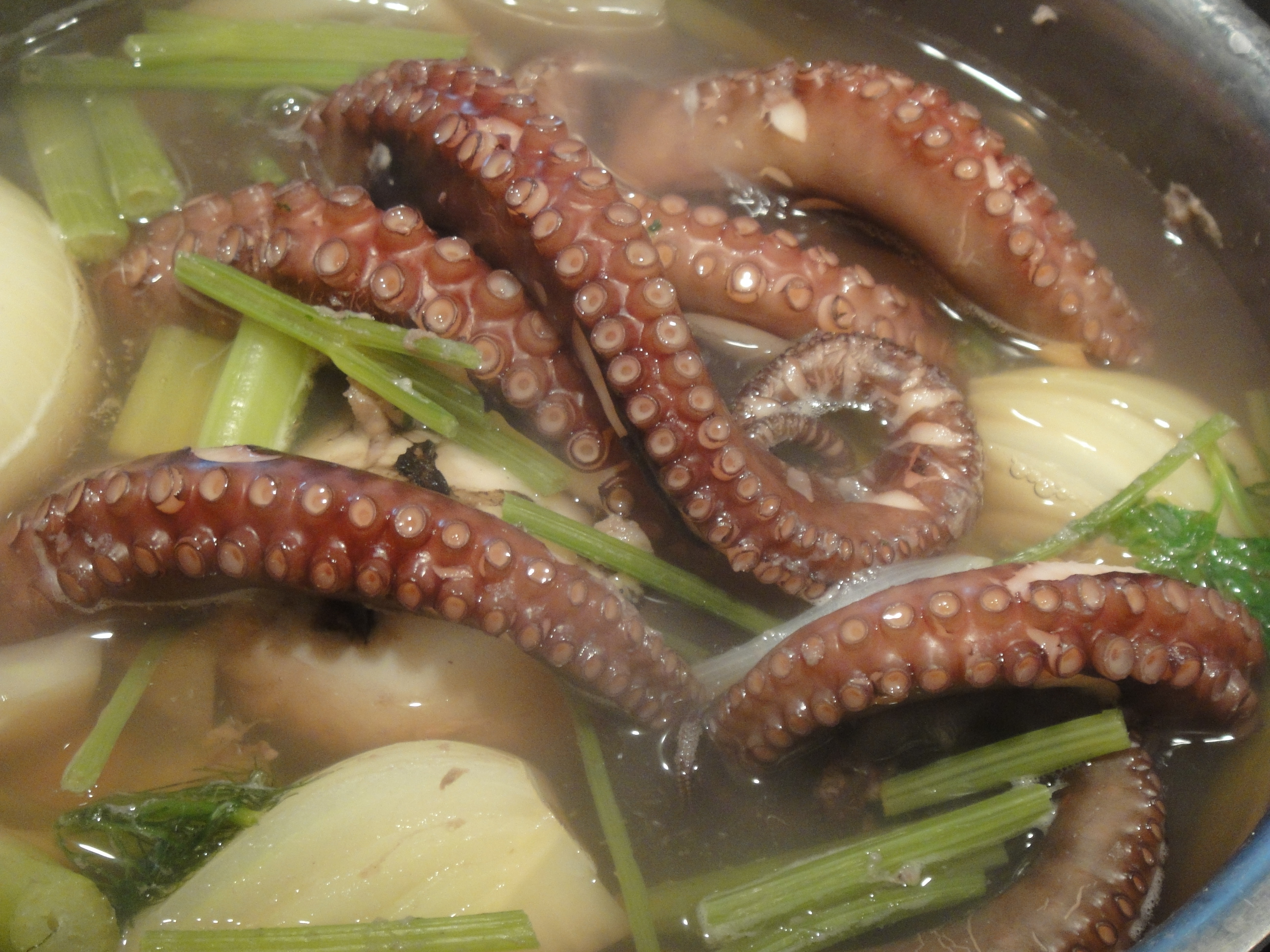
So, to make a warm octopus salad, you need (for 4 persons) a medium sized octopus. Frozen is as good as any, not least because this helps to tenderise the flesh. I got mine from the local fishmongers, although it was Spanish in origin, and weighed in at 1.5kg. Defrost the octopus (and if it’s not frozen, consider freezing it first to get it nice and tender) and place in a large pan of unsalted water with a couple of roughly chopped celery sticks, the stalks of a bunch of parsley, an onion chopped in half, and a fennel bulb also chopped in half. This should be simmered for around 40-60 minutes until a fork can easily pierce the flesh. Mine was closer to 40 mins. Watch out you don’t overcook it.

Meanwhile, peel and chop 3-4 waxy potatoes into bite sized pieces and simmer until cooked. Again make sure these aren’t over cooked. They need to hold their shape, not crumble.

Beautiful raw octopus

Beautiful raw octopus

The octopus cooking

The octopus cooking

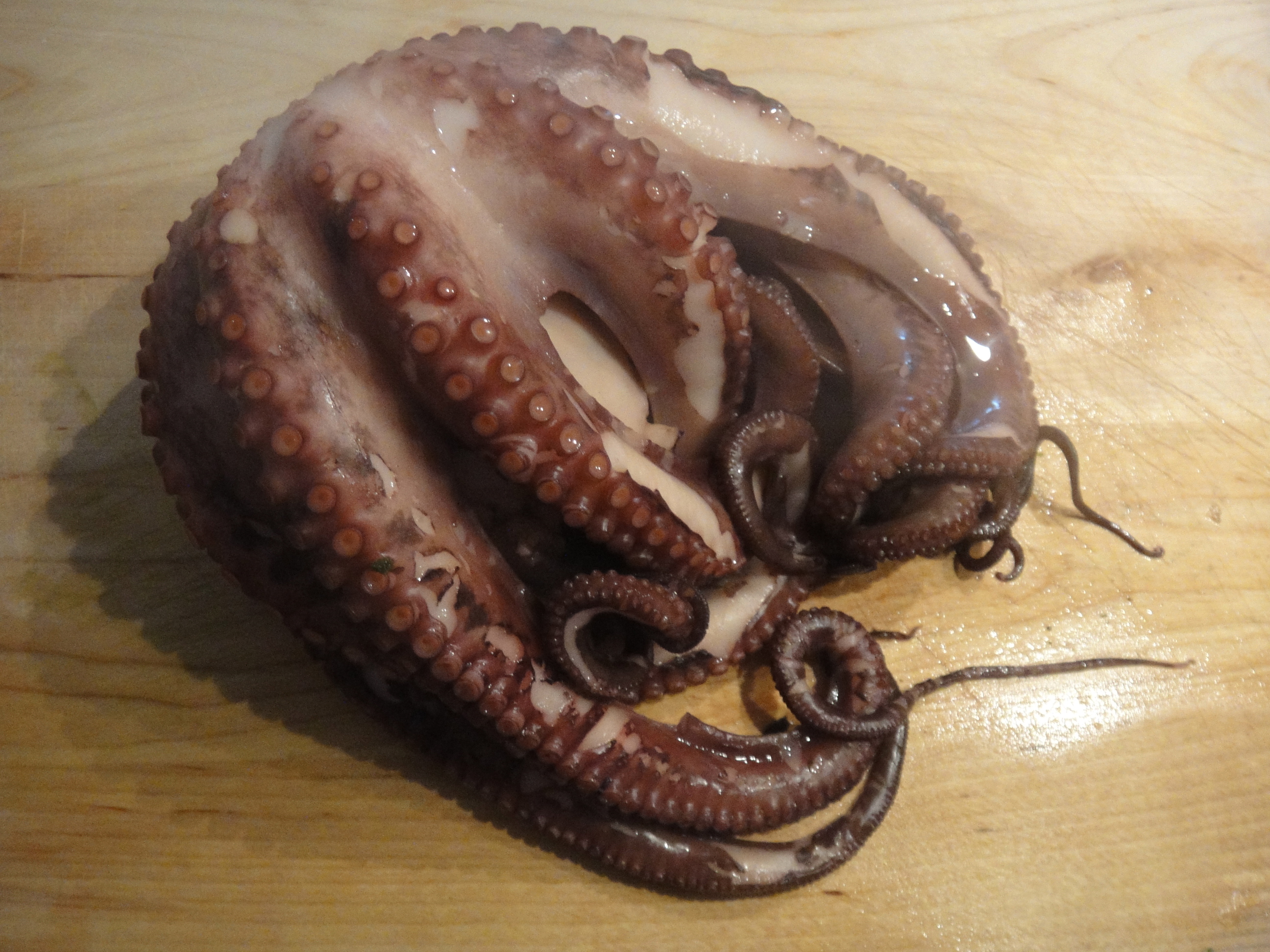
When the octopus is done, chop it into bite sized pieces, removing the eyes, claw etc if you still have them on, and remove as much of the slimey under skin layer if you can (you can leave the nice pink skin around the tentacles – it’s the best bit). Rinse these pieces under clean warm water and place in a large bowl with your cooked potatoes, a finely chopped clove of garlic, a handful of chopped parsley, a teaspoon of dried chilli flakes, a good glug of good quality olive oil (mine comes direct from said town in Tuscany) and the juice of around half a lemon. Season well and serve.

Cooked

Cooked

And chopped

And chopped

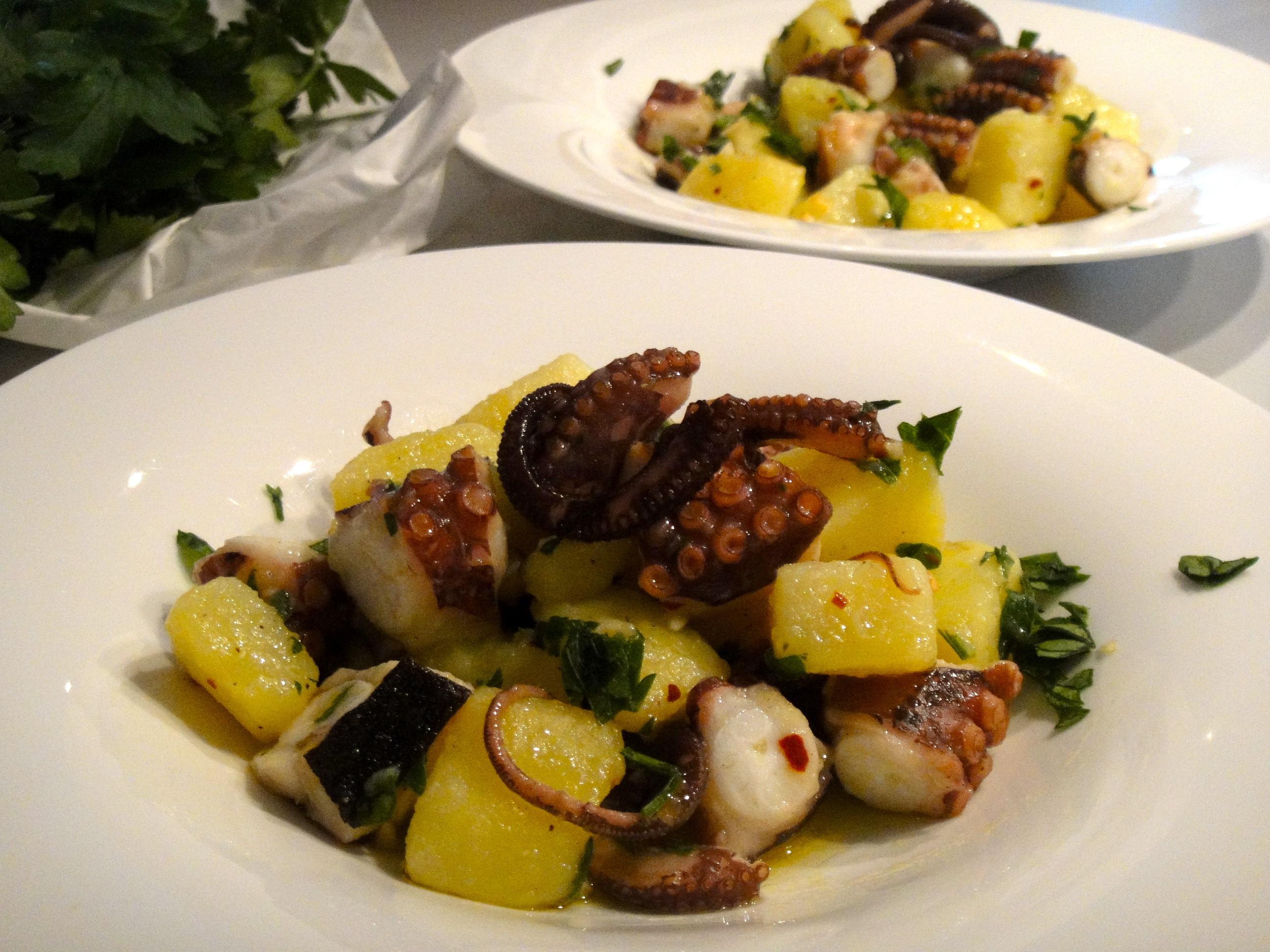
The finished dish

The finished dish

The flavours of the Med (and Venice, I suppose) are just sublime, and guaranteed to brighten any cold winter’s day with the thoughts of the summer. Right, I’m off to book that summer holiday…

Duck & Waffle – a combination worth climbing 40 floors for

There are restaurants, and then there are Restaurants. You have your bog-standard local, great for a catch-up with friends, a quick snack when lunching alone, or a dinner when you really can’t be bothered to cook. But then there are the Restaurants – the crème de la crème of gastronomic performance, where a reservation is a date with the chef, a ticket at food theatre, or a seat in a location which dazzles like a cinematic display of visual glory. It was to one such gastronomically glorious location that I headed at the weekend, in celebration of my partner’s 30th birthday, which clearly called for something special. And where does one go to celebrate such a magnificent (if not daunting!) event, to mark the ascension to the ripe old years of proper, responsible adulthood? Why, I could think of no better than to ascend the dizzying heights of London’s newest skyscraper: The Heron, upon which, at the dazzling 40th floor, sits the Duck & Waffle restaurant, in a supper sleek, panorama-spectacular glass cube all of its own.

6fd857b9-cc9b-4643-adcb-eaca7e7a5c09.img

This was a super-exciting event. I’d kept the reservation a secret, but knew nothing of the restaurant itself except that the views promised to be nothing short of spectacular. So ascending from Liverpool Street station, and catching my first glimpse of the heroically high tower which was to be the location of our dinner made for quite an eye-full. As we passed the foot of the huge glass tower, and saw within the main foyer a fish tank bigger than my entire flat, I knew that we were in for a treat. And soon, thereafter, did my partner, as I took a sharp turn into the building that was to be the host of his birthday treat, and we ascended, at super-sonic pace, all 40 floors up to the restaurant. The speed not only made our stomach’s lurch, but the visual spectacle as street turned to streets and district turned to entire glittering city struck us both pretty dumb with awe. Almost shaking as we reached the top, I managed to vocalise the name of our reservation, before we passed through a bar, where a plummeting orange glass spiral staircase overlooked (yes, that’s overlooked) the shorter Gherkin tower to stunning effect, and into the restaurant.

The interior

The interior

The interior

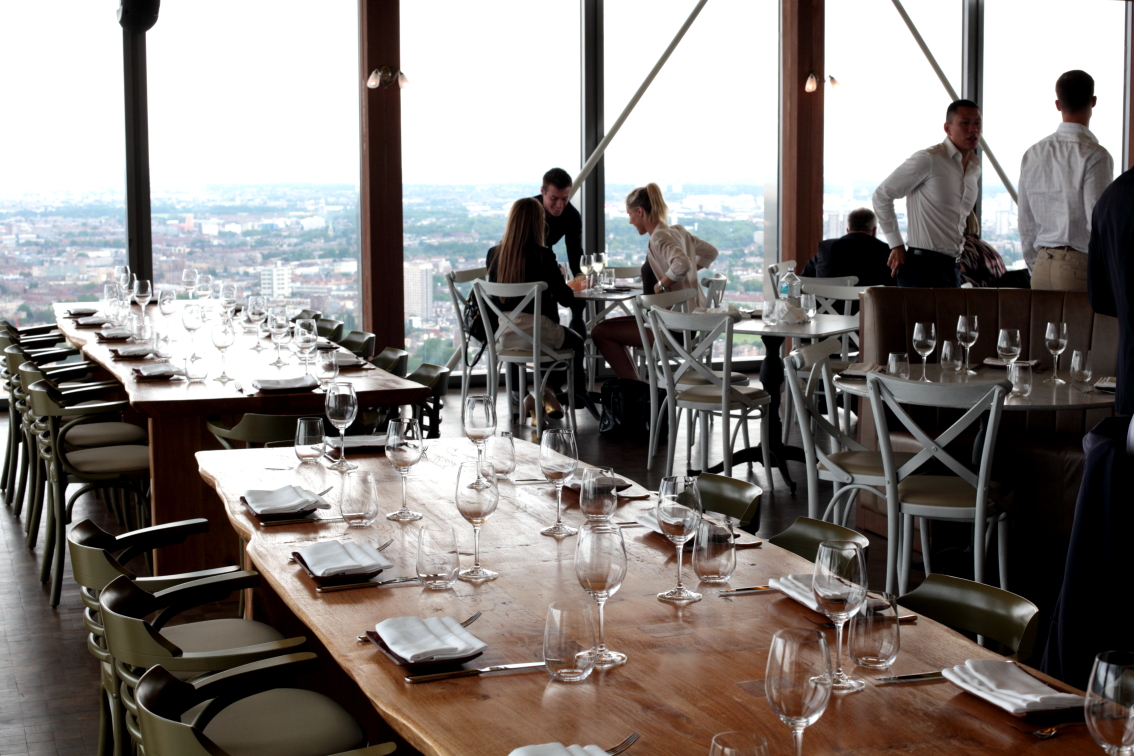
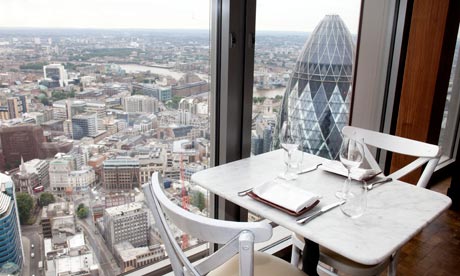
Most tables benefit from the great view

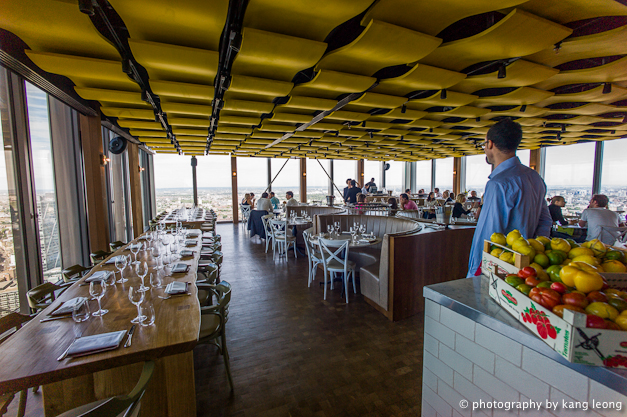
The restaurant is surrounded on three sides by an unbeatable panorama which extends so far over London that the horizon blurs with the sky and all you can see is a galaxy of twinkles. From our beautiful window-side table, we looked straight onto the Gherkin, and beyond Tower Bridge, under which the Thames snaked its way towards the towers of Canary Wharf from where the view grew misty. In fact by dessert the whole view had gone rather misty – I think we may have found ourselves in a cloud. Anyway, I digress. The interior is funky and modern, with a golden yellow ceiling which appears to be rippling, and an open kitchen which allows you to check out what the busy chefs are up to.

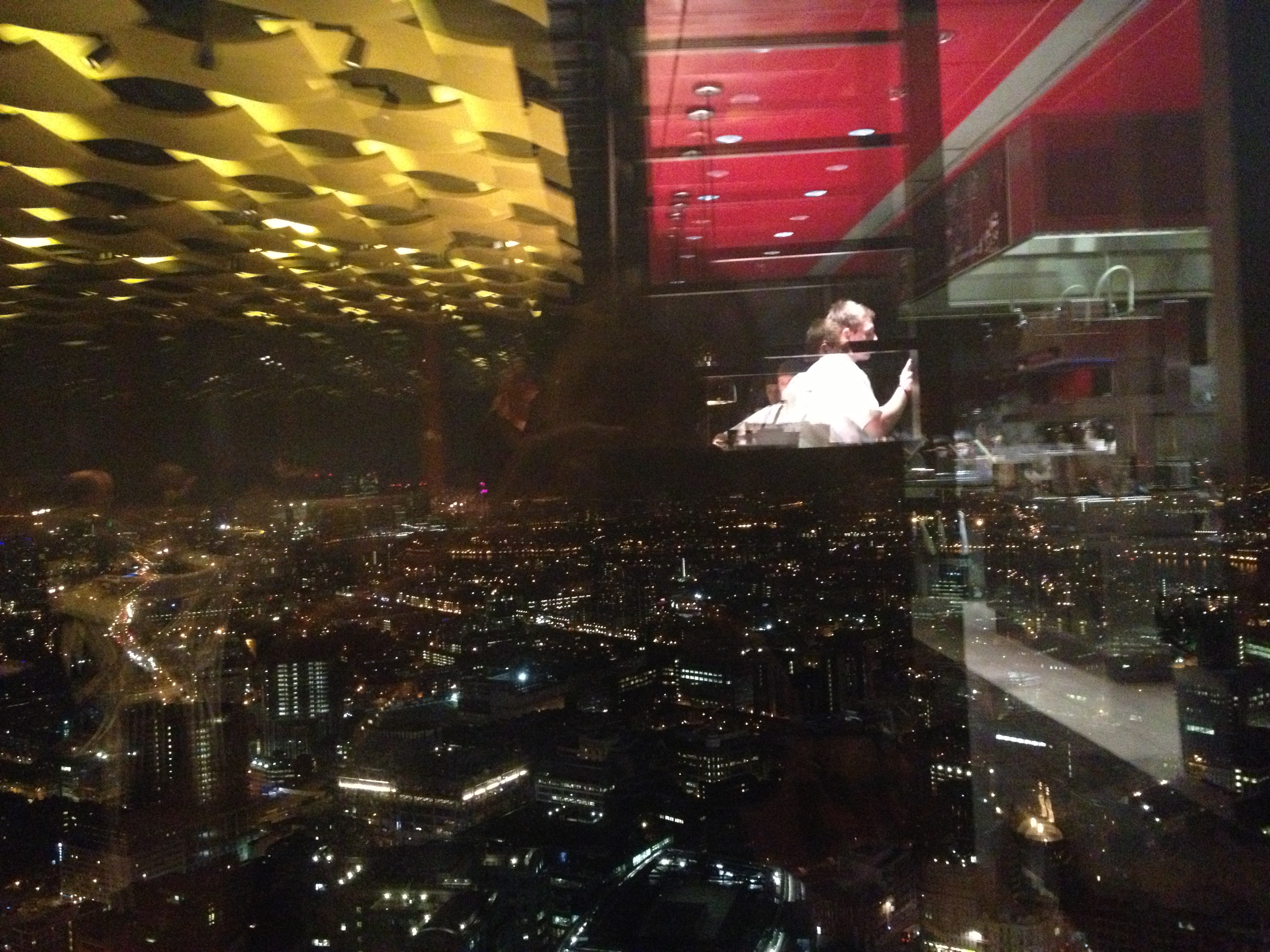
Our view with chef reflected

Our view with chef reflected

Our view with chef

and again

The great thing about the restaurant is that for the views, it’s very unpretentious. The menu is even affordable, and the whole outfit is quite casual and trendy. The food is served in a tapas style – the intention is to share dishes which range from snack-sized bites, sushi-style raw fish and a range of mediterranean breads, to cold cuts and speciality mains including the restaurant namesake, duck and waffle. The dishes then come as and when they are ready which, in our case, was sequenced pretty much in size order starting with the snacks, bread and raw fish and ending with the duck.

Our table!

Our table!

We went for 6 dishes spread from across the menu. We started with dates wrapped in bacon with a creamy mustard side sauce – the flavours were so good I could have eaten a whole basket full of these things. From the breads, we went for a garlic and rosemary foccacia. The smells immediately transported us to Italy’s mediterranean coast, and the flavours were deliciously pungent and well seasoned, although the bread itself was a bit doughy in the middle. Onto the raw fish – exquisite strips of tuna, served with a small cube of watermelon, a tiny basil leaf and drizzled with a balsamic glaze which made for a perfect balance of flavour. As ever, the aromatic basil won me over as it does in most food combinations.

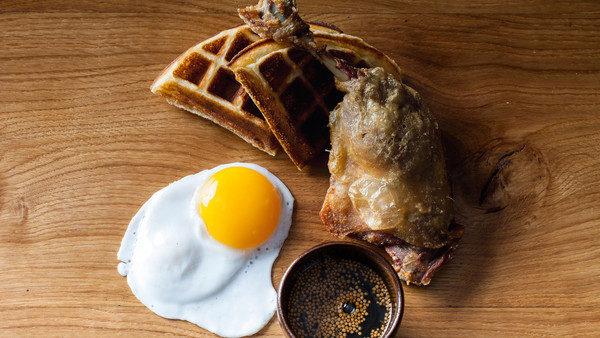
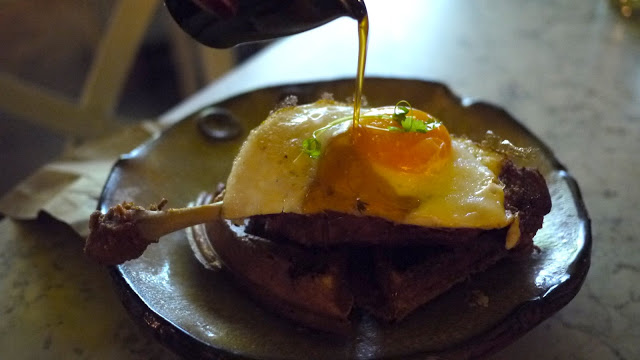
Onto the slightly bigger choices, we had a sizzling baked golden beetroot dish which was accompanied by creamy goat’s curd and honeycomb – so good, although the delicious honeycomb did tend to cling onto my teeth with unnecessary enthusiasm. We also had a deliciously spanish octopus cooked with chorizo. However the best dish of all had to be the trademark duck and waffle. Oh my goodness, the very thought of that dish makes me salivate like the Niagara Falls. A Belgian-style waffle was topped with an unctuous leg of duck and a gooey fried egg, over which one poured (to taste) an ambrosial syrupy nectar which appeared to be maple syrup with mustard seeds giving a slightly fiery, textured edge. The dish was so delicious, and the syrup so exquisitely sinful that I actually ended up drinking the residual syrup straight from the jug (no one was looking!). I would walk the 40 floors to get to that dish if I had to!

The famous duck and waffle

The famous duck and waffle

We ended our evening with two selections from a great dessert choice. My partner had gooey chocolate brownies, again with honeycomb and peanut butter icecream. I had a spiced pear “cappuccino” which was a pear syrup and froth, spiced, with chunks of pear and gingerbread – very festive and just about appropriate as it was the 12th day of Christmas.

IMG_2925

And so ended our fantastic night. This restaurant is a must for those who love a good view. It is simply mind-blowing. The food is not overly expensive, although it can mount up if you have too many dishes (which is the temptation – the portions aren’t that large). The wines are expensive though. The cheapest bottle of red I could find was £40 so we opted for a couple of glasses instead. The main drawback for me was the fact that the open kitchen was very smoky. The aromas of all the cooking, grilling and frying were very cloying in the air which is not ideal for an enclosed glass space – like frying bacon inside a hot greenhouse. This left us smelling quite heavily of fried food when we left. But we weren’t overly bothered. That view will stay with us for much longer, and as for the lift journey down, we took the lift up and down about 3 times – it was like a fairground ride with the best ever view – priceless!

It was a long way up...

It was a long way up…

The staircase in the bar - check out the gherkin outside

The staircase in the bar – check out the gherkin outside

Details of the Duck & Waffle can be found here. Allegedly they’re open 24/7 so if you ever happen to be strolling through the city at 3am (which won’t be such a novelty for the city lawyers I know) that syrupy duck treat will lift your spirits in no time.

The culinary bounties of a Christmas Day feast

As the saying goes, the show must go on, and despite news which rocked my family to its core, the most important thing, for me, was to keep the flame of Christmas burning, despite the grief all around. In that vain, I decorated, I cooked and I ate to my heart’s content, and here within are the fruits of my labour (and product of my hefty post-Christmas weight gain)…

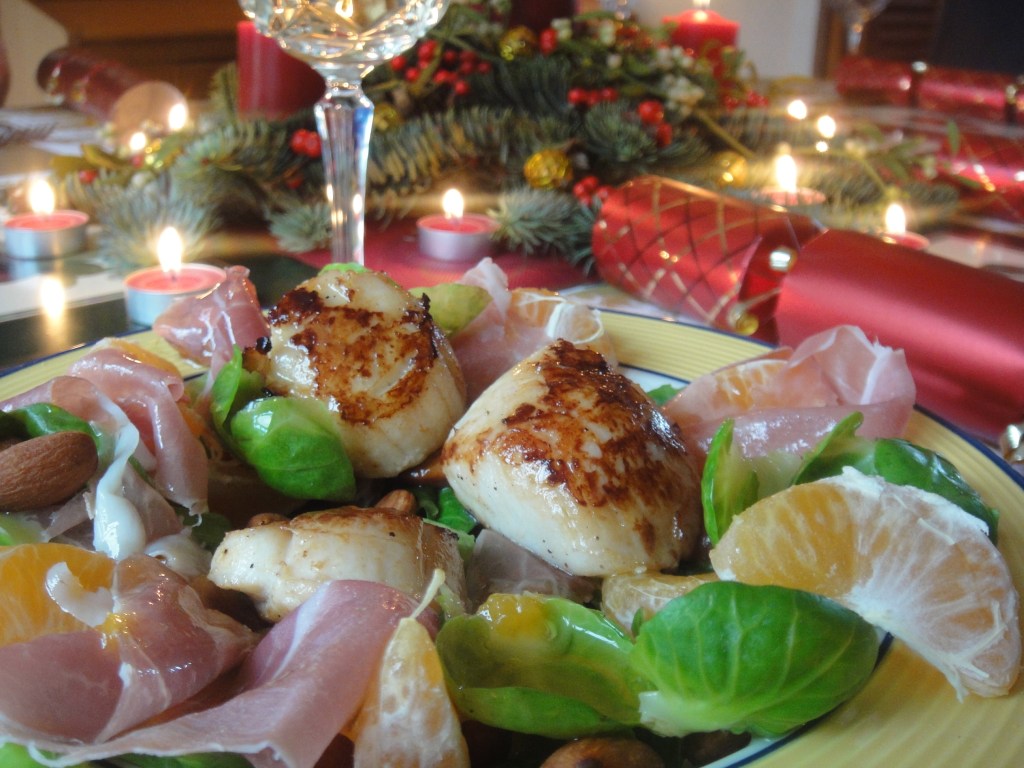
A starter of Scallops with clementine, ham, almond and an oloroso dressing

DSC04517

This starter was taken from a recipe by Richard Corrigan in the style section of The Sunday Times a few weeks back. It made for a refreshing, bright and beautifully balanced start to what can often be a heavy Christmas feast, and brought a burst of Spain into an otherwise traditionally dressed English dining room. (Serves 8)

I started by making a dressing for the salad. For this, to the juice of 2 clementines I added 2 tablespoons of caster sugar, 4 tablespoons of oloroso (or other dry) sherry, 2 tablespoons of sherry vinegar, 12 tablespoons of olive oil and a pinch of salt. Setting aside the dressing for now, I peeled the outer leaves from a 750g bag of brussel sprouts (leave the centres for a further sprout dish later) and blanched them in boiling salted water for around 30 seconds before plunging them into iced water to bring out the green and stop any cooking. I then assembled my salad – I broke up 8 clementines and placed these into bowls alongside the drained brussel sprout leaves, 16 slices of torn up parma ham and a scattering of salted almonds.

I then set about frying my scallops (3-4 per person) for around 2 minutes on each side (less if they’re smaller) and placed these atop my salad as the crowning glory. All was finished with my Spanish dressing and some seasoning.

DSC04518

The main event – Guinea fowl with sweet potato and marshmallow gratin, sauteed brussel sprouts (with chestnuts and bacon), red cabbage and apple, and spinach and parmesan stuffing balls. 

The Guinea Fowl

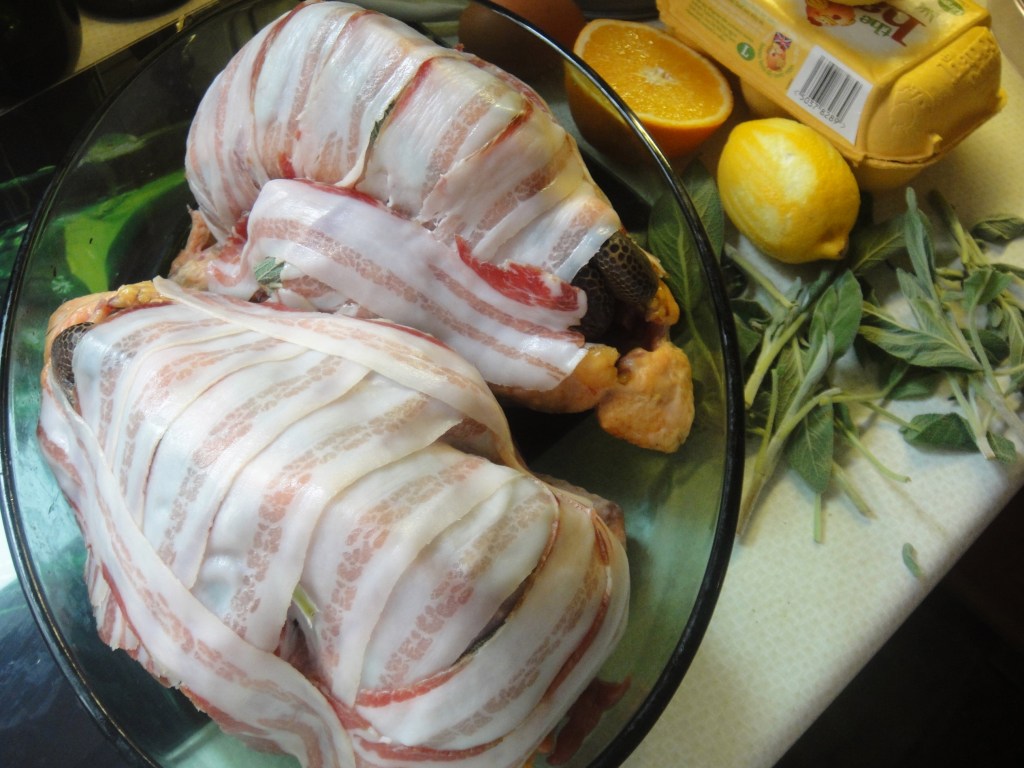
I hadn’t eaten guinea fowl for years until I sampled it again at the wedding of my friend Celia and realised how delicious it is (I believe my propensity not to eat the bird was probably down to my fondness for guinea pigs when I was younger and the inevitable confusion which may have ensued). So, with my two guinea fowl in tow (these should feed 4 easily, 6 at a squeeze), I wrapped the birds in 16 slices of pancetta, enclosing a few sage leaves underneath. Placing the birds in a pan, I then doused the lot in a little olive oil, two ample blobs of butter, 200ml of white wine, seasoning and a few more sage leaves. The birds were then ready to go into the oven at 170 degrees centigrade (if it’s a fan oven, up to 190 if not).

My guinea fowl pre-cooking

My guinea fowl pre-cooking

After an hour, I turned both birds onto their breasts, turned the heat down to 150 (170 if not a fan oven) and cooked for a further hour. I should note that I did use foil for around an hour of the cooking to lock in the moisture and prevent the pancetta from burning. However the same effect can probably be gained from regular basting. Once the birds are done, make sure you rest them. I rested them in their pan (covered in foil) for a good 30 minutes which ensured the meat was moist, unctuous and literally fell apart in the mouth.

Read more

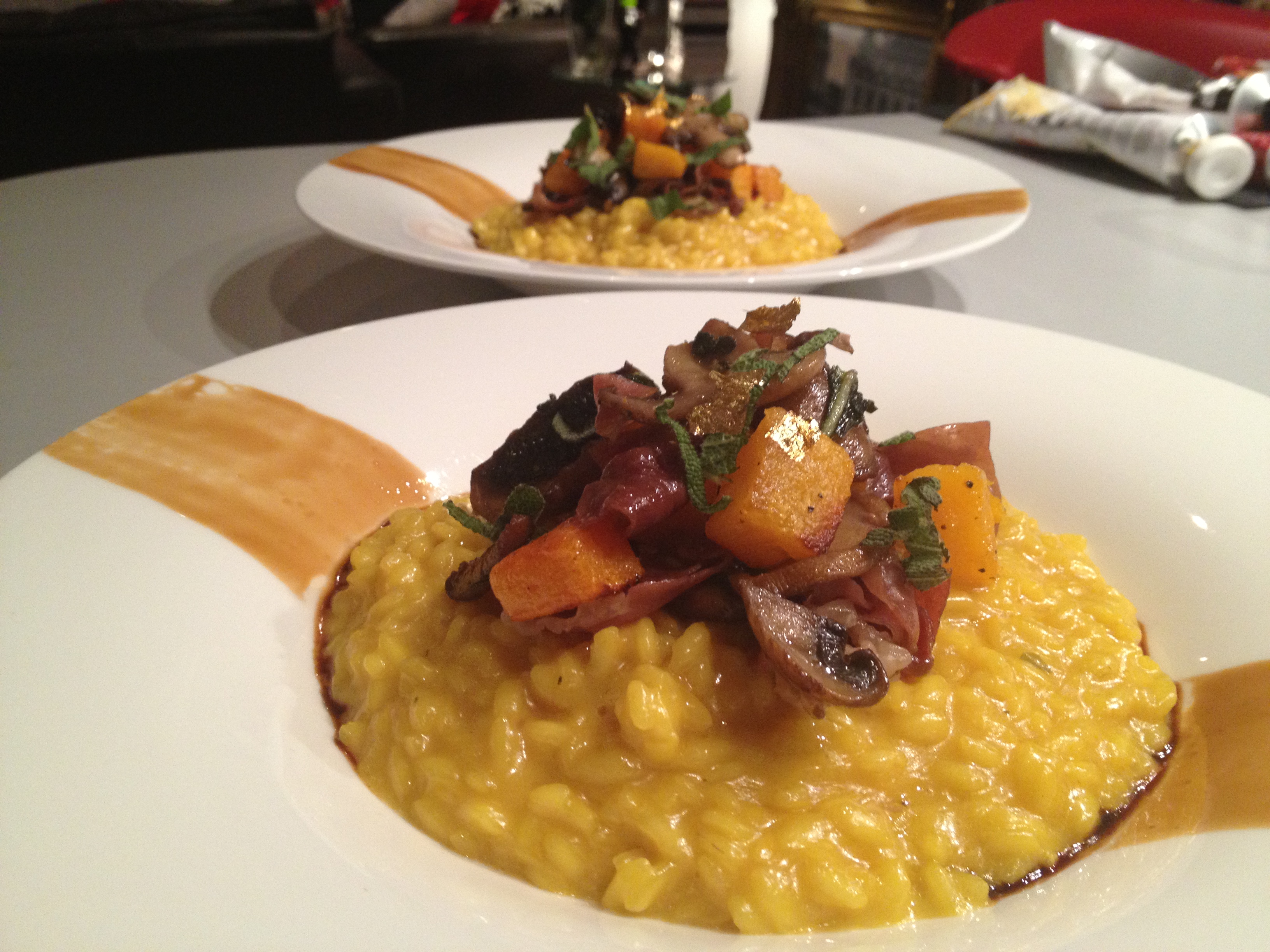
Saffron Risotto with a gathering of autumn flavours, edible gold leaf and an espresso reduction

I always thought I had risotto down until I watched an episode of Australia’s Masterchef on TV the other day (yes, we have the Aussie show in the UK and it’s so much better than the British version – Apprentice challenges meets cooking stress – classic). A couple of weeks back, the budding final 10 contestants had flown half way around the world to the lavish panoply of gastronomic delights that is Italia. Across the week, the illusive risotto, previously termed “the masterchef death dish” (because so many contestants failed in their attempts to cook it), was cooked twice – and appropriately so, being as they were in the home of the famed rice-based dish. For the first, a saffron-yellow, creamy and simple risotto was topped by a single sheaf of edible gold leaf and frankly looked amazing (needless to say, most of the contestants failed in  their attempts to recreate the dish). The second risotto was made in a master-class at the end of the week. Again, the recipe was for a simple risotto, which, instead of adding onions at the beginning, added them right at the end as a type of purée. I was inspired.

So last weekend, I decided that my tried and tested risotto method should be set aside for a new radical approach which was to be something of a combination of the two methods I saw on TV with a little of my own twist on top.

Up first was the stock. I used 900ml of ordinary chicken stock and added to this the dried old husks from a hunk of parmesan cheese which had been hanging around in my fridge. This lends a wonderfully rich parmesan undercurrent to the risotto without going overkill at the end. I also added some chunks of ham and a good pinch of saffron strands straight from my spanish travels. I allowed this stock to simmer gently while getting on with the other components.

My red onion purée

Up next, I chopped an onion (it should be a white one – I only had red, which tends to redden the saffron yellow colour of the risotto when stirred in at the end, but it’s not a big deal). I sweated my onion, covered, over a low heat in plenty of butter (a good 50g worth) and seasoning. I left the onion to sweat for a good 20 minutes, before adding it to a food processor, along with another knob of butter and making a creamy puree. This I then placed in the fridge to firm up a bit for use later.

Next, while the onions were sweating, I turned to my espresso reduction –  This creates a wonderful deep, almost bitter-sweet contrast to the richness of the risotto’s parmesan flavour, and looks amazing when painted onto the plate. For the reduction, I made two double espressos in my coffee machine, and adding a single sachet of sugar (about a dessert spoon) and the coffee to a pan, I started simmering the coffee fairly rapidly, stirring often, until it started to reduce. Be careful this doesn’t burn or the espresso will become too bitter. Once thickened and syrupy, I set aside (keeping warm).

Before moving onto the risotto, I chopped around half a butternut squash, seasoned, drizzled with oil and placed in the oven at 200 degrees Celsius.

OK, onto the risotto. So in a pan went 200g of arborio rice, which I toasted lightly in a few knobs of melted butter for a minute or so. Then, straight to the rice (no wine added in this recipe) I went with my first ladle-full of stock, stirring appropriately. On masterchef, George, the presenter, suggested that one should “aggravate” rather than stir the risotto – personally, in my pans, it’s stir or stick, so I ignored his approach, but feel free to shake the rice around a lot rather than stir if you have a really effective non-stick pan. Taking the dish one ladle-full at a time, the rice started to become thicker and yellower and overall more delicious.

As the risotto neared its completion, I fried up a good handful of sliced mushrooms (you can use any variety, the prettier the better) in some butter and oil, along with some chopped sage, a crushed garlic clove, seasoning and some chopped parma ham (pancetta would also work well). These create some amazing autumn flavours and a textural variation to the risotto. Before the autumn ingredients were done, and once the stock was used up, I left my risotto to rest for 4-5 mins with the lid on (the risotto, once cooked, should be creamy and yet loose, with the rice tender, but still with some bite).

So, pulling everything together, I first painted my plates with the espresso reduction. I then stirred my onion puree into the risotto – so creamy and amazing it made me salivate instantly. I then spooned the risotto onto my plates, and carefully piled some of the butternut squash and mushroom mix onto it. I then crowned my dish with a few fragments of edible gold leaf in homage to the incredible creation I saw made on TV.

And there you have it. The new radical approach to cooking risotto worked. No wine, no parmesan at the end, but with an onion puree and a very original coffee puree on the side. So different from my previous method, but so, so good.

Lisbon – The Food: Amazing Alma and the masterpiece of 100 Maneiras

You’d be excused from assuming, from the deterioration which is widespread on Lisbon’s streets, the chipped ceramics and the cracking plaster, the plethora of graffiti and the deserted algae-covered fountains, that the Portuguese would be a little behind on the food front too. But like so much of the underlying spirit of Lisbon, when it comes to trends, to creativity, to meeting the fashion vibes that spread through the most sophisticated cities of Europe, Lisbon is certainly plugged in to the undercurrent of cool.

When it came to food during our five days in Lisbon, we simply didn’t have a bad meal. Whether it be the freshest of all sushi at the Restaurante Confraria Lx and simple squid with vegetables sat out on the cobbled streets of the Baixa, to simple pastels de nata in any random street cafe of your choice, we were met with consistently high standards of food, the freshest of ingredients and prices which were half what you would pay in some neighbouring Spanish cities, let alone the outrageous excesses of London and Paris.

Of our evening meals – the sushi at Confraria Lx, followed by an evening spent in the charming surrounds of the Restaurante Olivier (where a tasting menu for starter plus a main course was only around 35 euros), two meals were absolute standout exceptions, so good in fact that I couldn’t resist but take photos aplenty and devote to them an entire post all of their own.

Alma – Henrique Sa Pessoa – Calçada Marques de Abrantes, 92 Santos – Lisboa

The first of the two was at Alma, the restaurant of fresh-faced Portuguese celebrity chef (who spent some of his time training at the Park Lane Hotel in London’s Mayfair). The restaurant itself is very small and VERY white – the chairs, tables, walls together with a rather hypnotic white cloud swaying suspended from the ceiling are all similarly, clinically white. This doesn’t make for the cosiest of atmospheres, but mercifully, with low lighting and due to the restaurant’s sheer popularity, we certainly felt warm and very welcome.

The service was faultlessly efficient, speedy but not rushed, and with perfect english spoken by all. We even got to meet the celebrity chef himself when I complimented him on the quality of the food – that personal touch sets this restaurant apart – in English celebrity chef-owned restaurants, you’d be lucky to get the “celeb” cooking in the kitchen at all, let alone greeting his guests.

So talking of that food, well avoiding the tasting menu for one evening (we had been stuffing ourselves rather royally during the preceding days) we opted for a set menu with the usual choice of starter, main and dessert. But normal this dinner was not. The quality of the wines (we opted for the chef’s choice of matching wines), the bread, the stylisation of the food – all was exquisite.

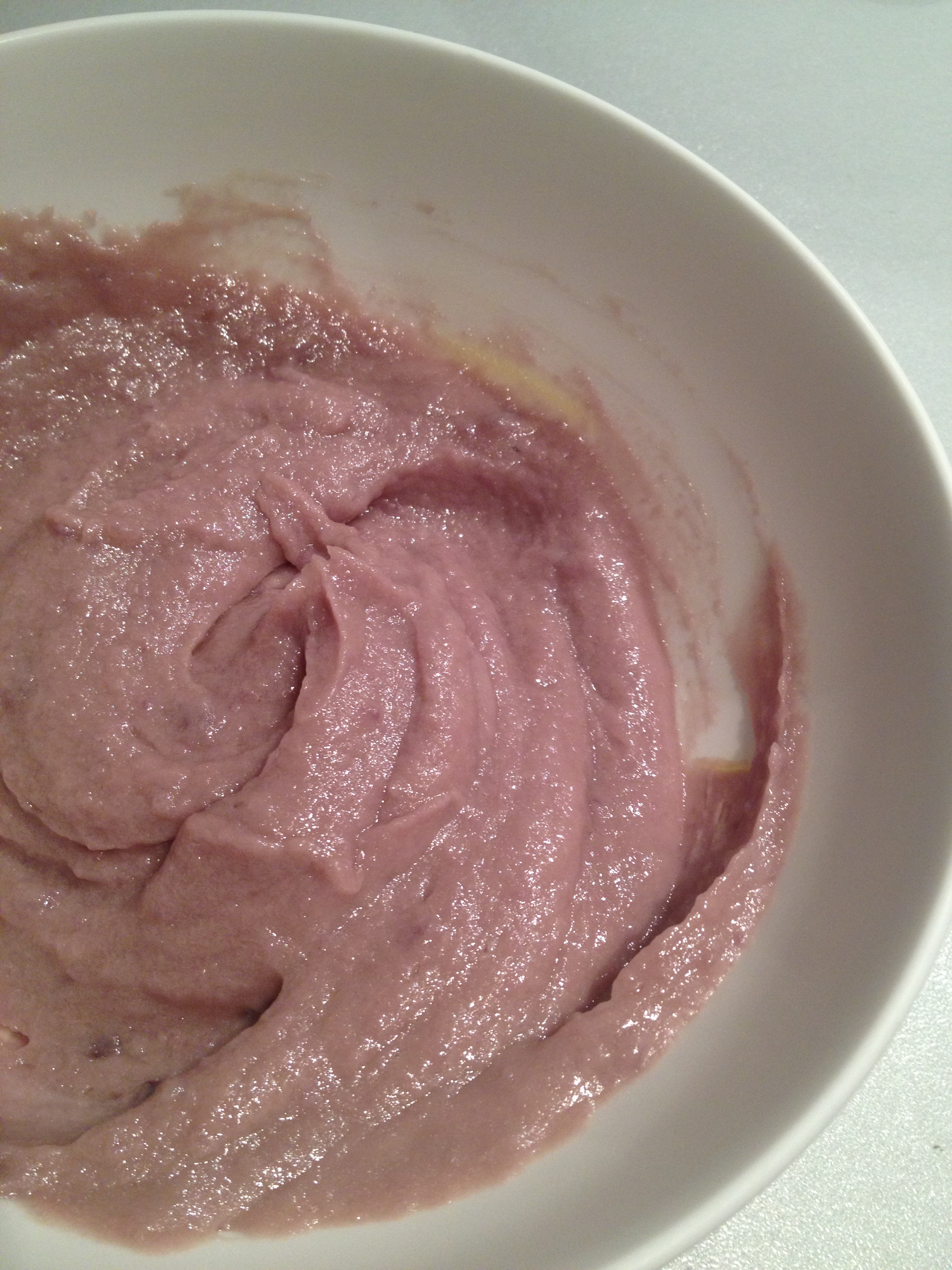
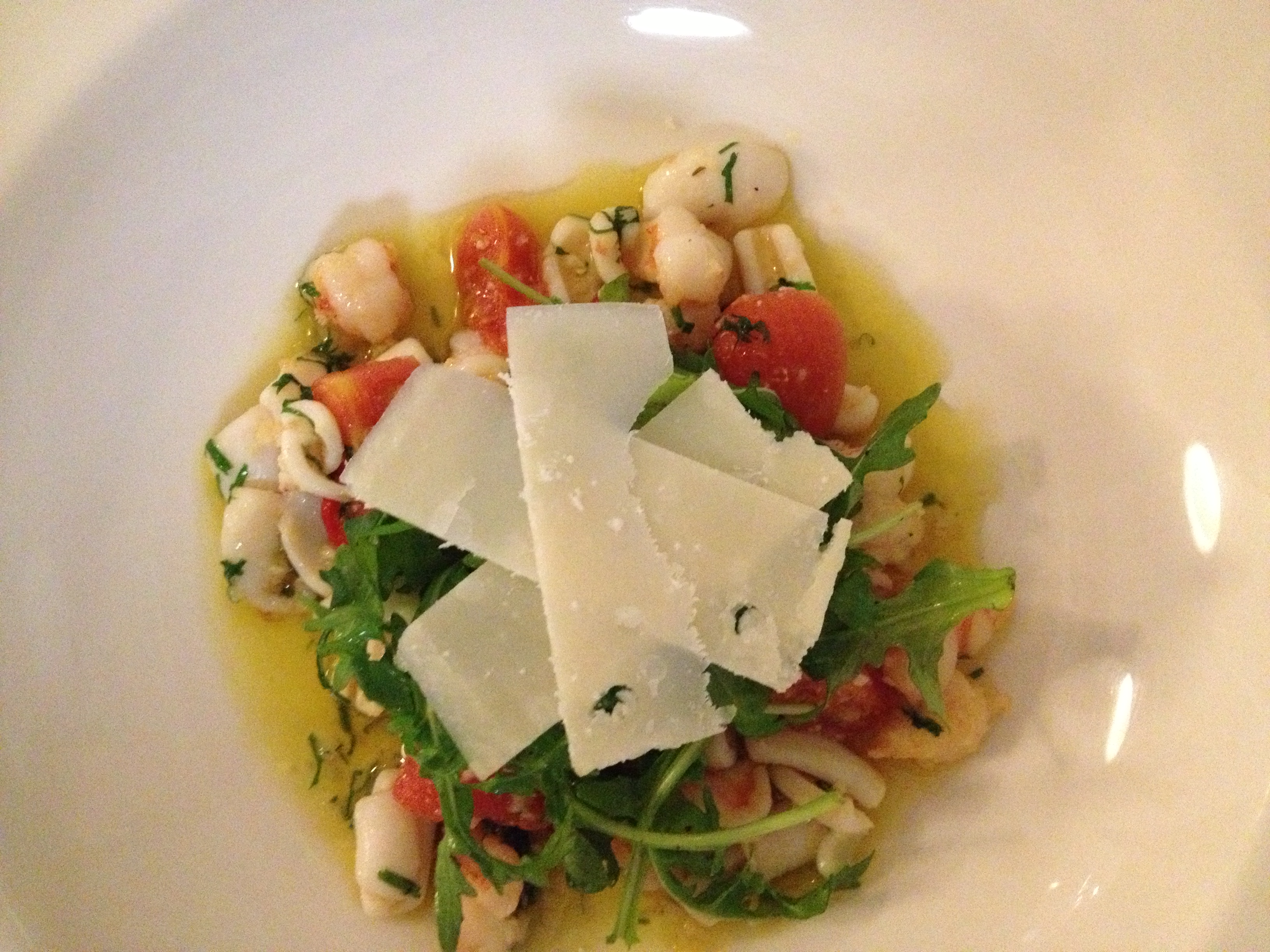
So to start, after home made flat breads and a rosemary and garlic foccacia, I opted for a starter of strawberry gazpacho (such a good combination of the acidic vinegary base coupled with the roundness and sweetness of the strawberry) with a little filo parcel of goats cheese, while my partner went for squid and prawns sautéed in garlic and chilli, with a cherry tomato compote and a rocket and parmesan salad.

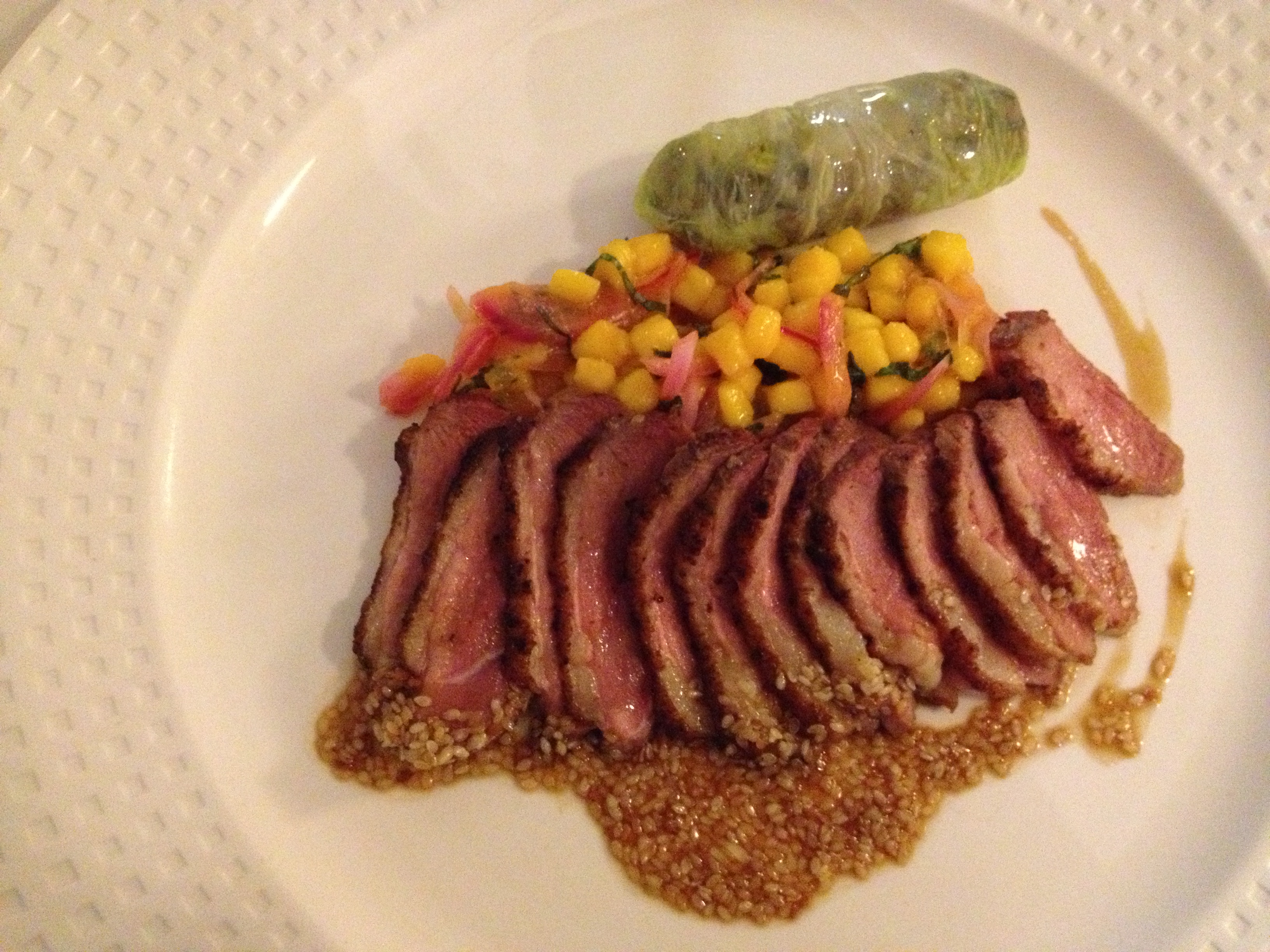
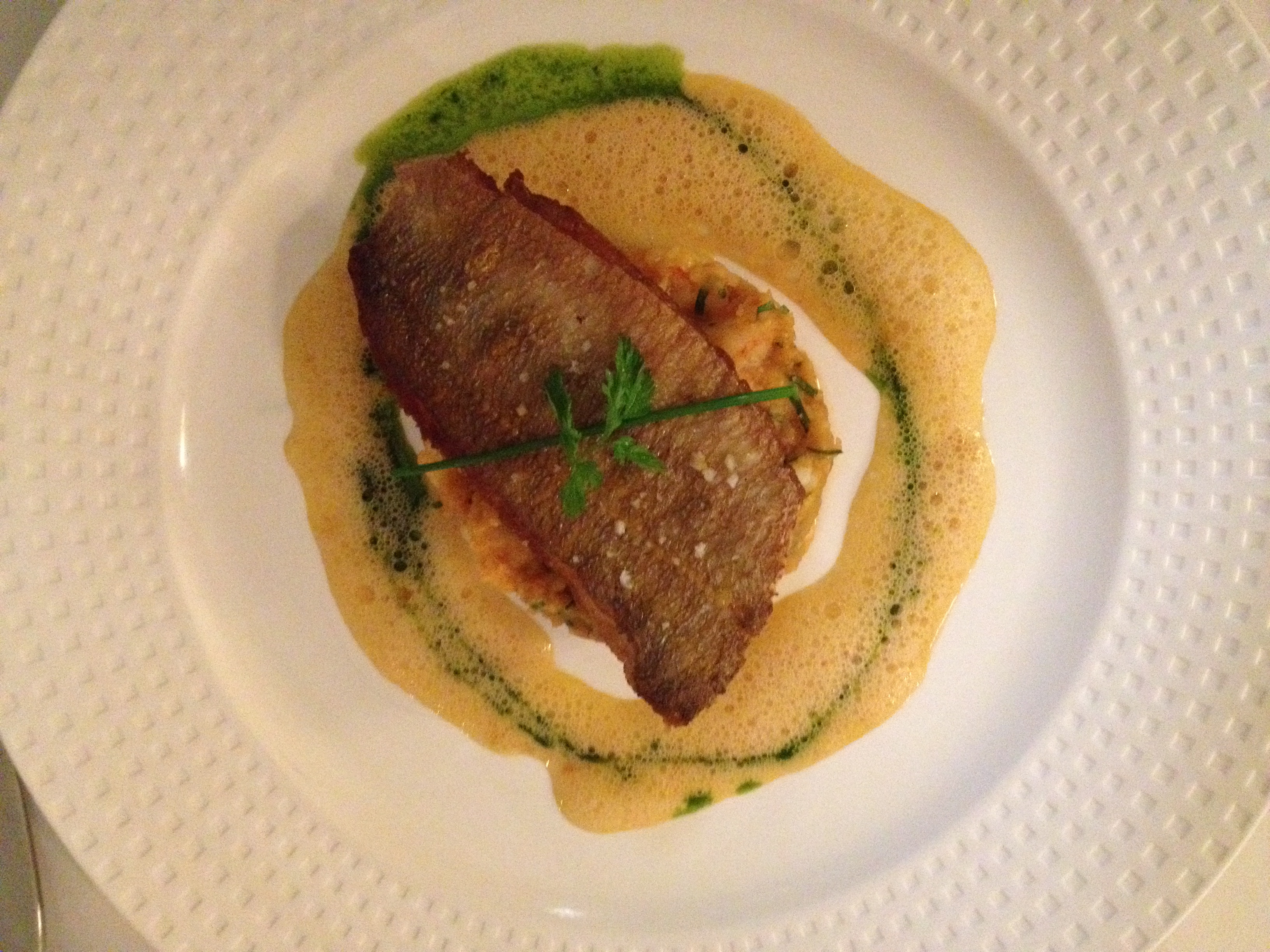
To follow, the stakes were upped. I had an exquisite duck which was perfectly seasoned and marinated in chinese spices and sesame seeds together with a sweetcorn salad and little shiitake mushrooms wrapped in… what were they wrapped in? Cabbage? I can’t remember. Nonetheless it was delicious! My partner meanwhile opted for a roast fillet of cod with a chick-pea purée, chickpea vinaigrette, and roasted potatoes – a faultless combination of Portuguese flavours with an elegant twist.

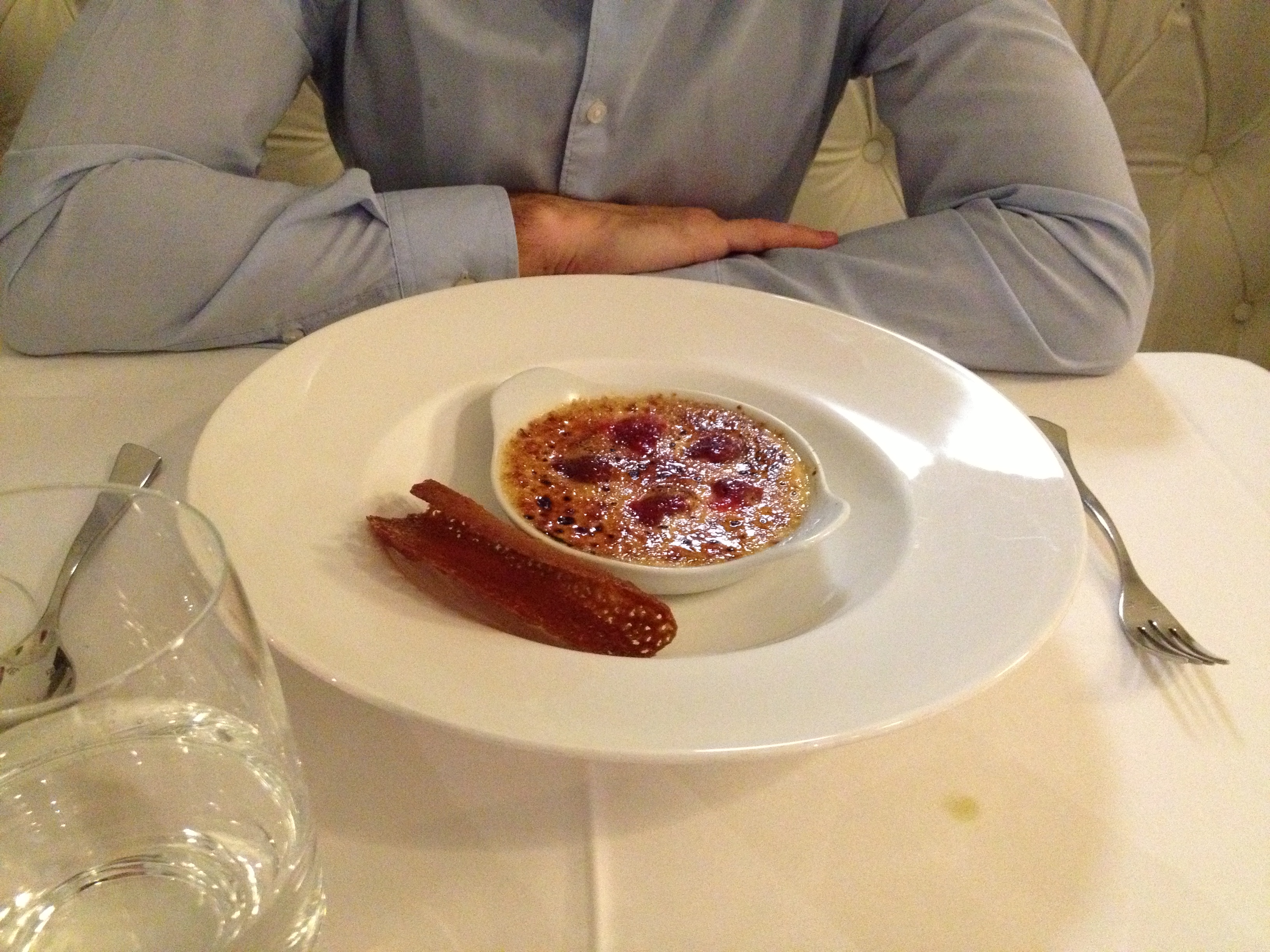
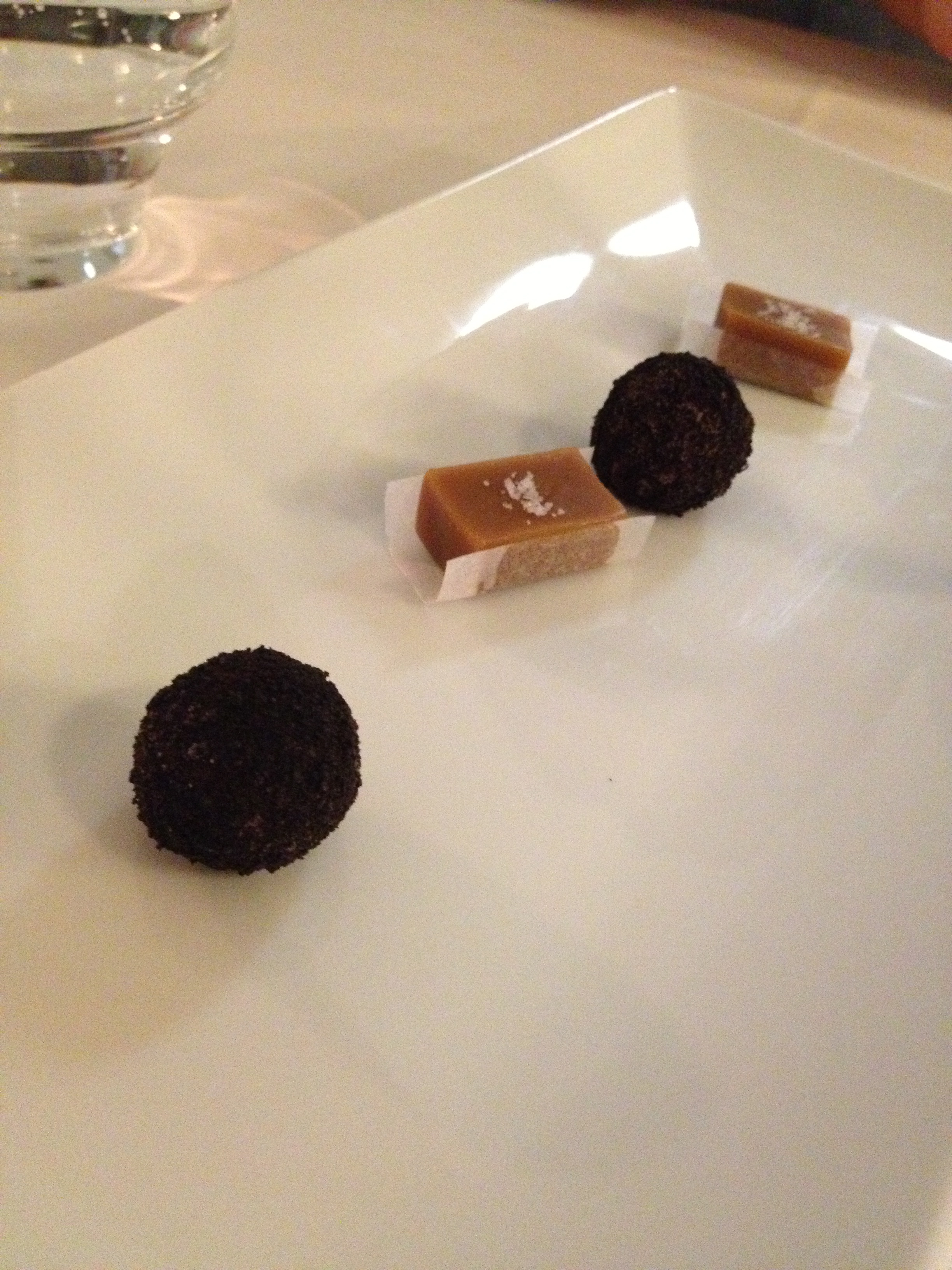
For dessert, we shared a combination of the creamiest but not at all heavy raspberry and lemongrass crème brûlée with a coconut tuile (thus combining French classic with tropicana bay to dreamy effect), and a plum crumble with a coconut ice cream. And as if we hadn’t indulged ourselves enough then, dinner was rounded off with petit fours of salted caramel fudge and little chocolate truffles.

100 Maneiras – R. Teixeira 35, 1200-459 Lisboa

But as far as feasts go, Alma was just the starter to the gastronomical banquet which ensued. Read more

Flavours of Spain – Part 2: Tapas

When most people think of Spanish cuisine, they think of tapas, and why not? These little dishes are a fantastic excuse to sample as many tastes and flavours of dishes from all over Spain as you can manage, while encouraging the shared social environment which the small dish concept inspires. Unable to decide what large dishes to cook when I was over in Spain, and with no recipe books close to hand, I decided to opt for a few simple tapas dishes which I could remember off the top of my head and which are inspired by my own tapas experiences in Andalucia and beyond. Having cooked these tapas creations, you can then supplement your tapas feast with olives, bread with delicious olive oil and different flavoured dipping salts and platters piled high with fresh serrano hams and manchego cheese (see mine at the bottom). You’ll find yourself with way too much food (unless you’re feeding a small army), but the beauty with tapas is that much of it will last for days – bonus!

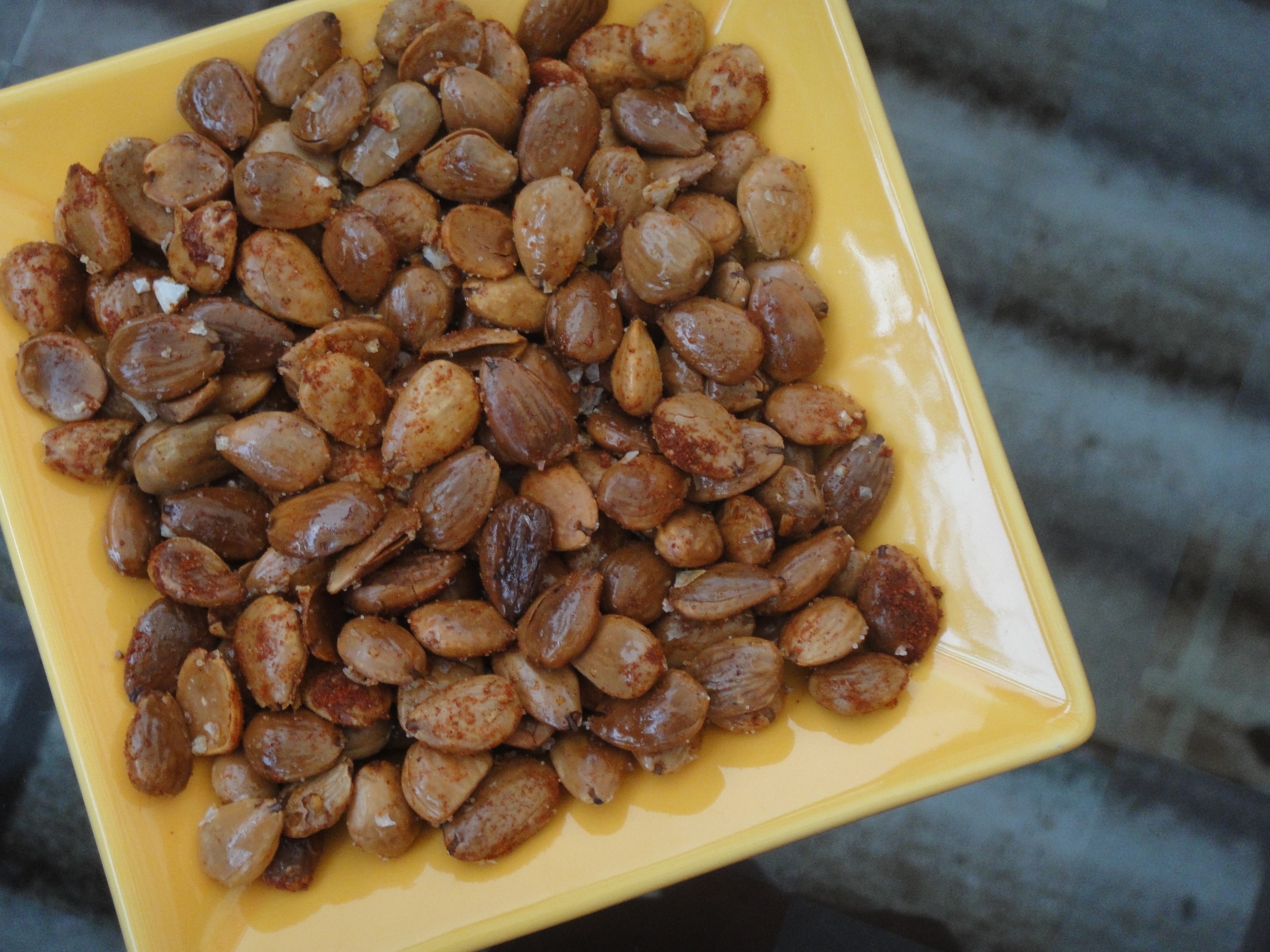
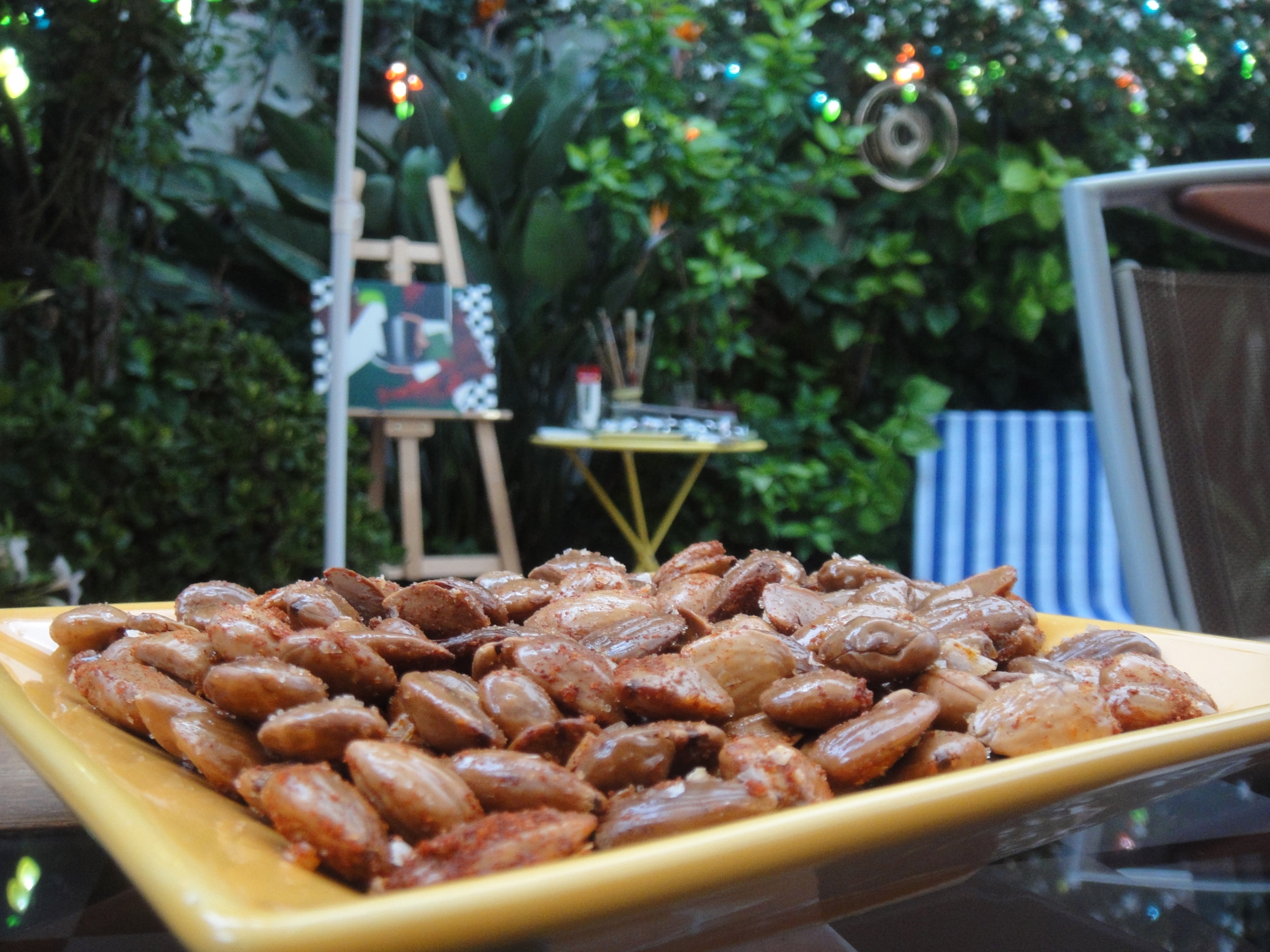
Salted almonds

Great to kick of your evening as a moorish accompaniment to a glass of wine or two, these salted almonds are really easy to make. Take a baking tray and pour in enough olive oil to cover the base. Then throw into it (carefully – I’m not encouraging kitchen recklessness you do understand) 250g of blanched almonds, and sprinkle them with some good quality sea salt and a teaspoon of smoked pimenton. Give the whole lot a good toss, and place in the oven at 180 degrees c for around 20 minutes, tossing every so often during cooking. Be careful not to leave them in for too long – they may look ok on the outside but they can become burnt on the inside if the cooking is overdone.

Salted almonds

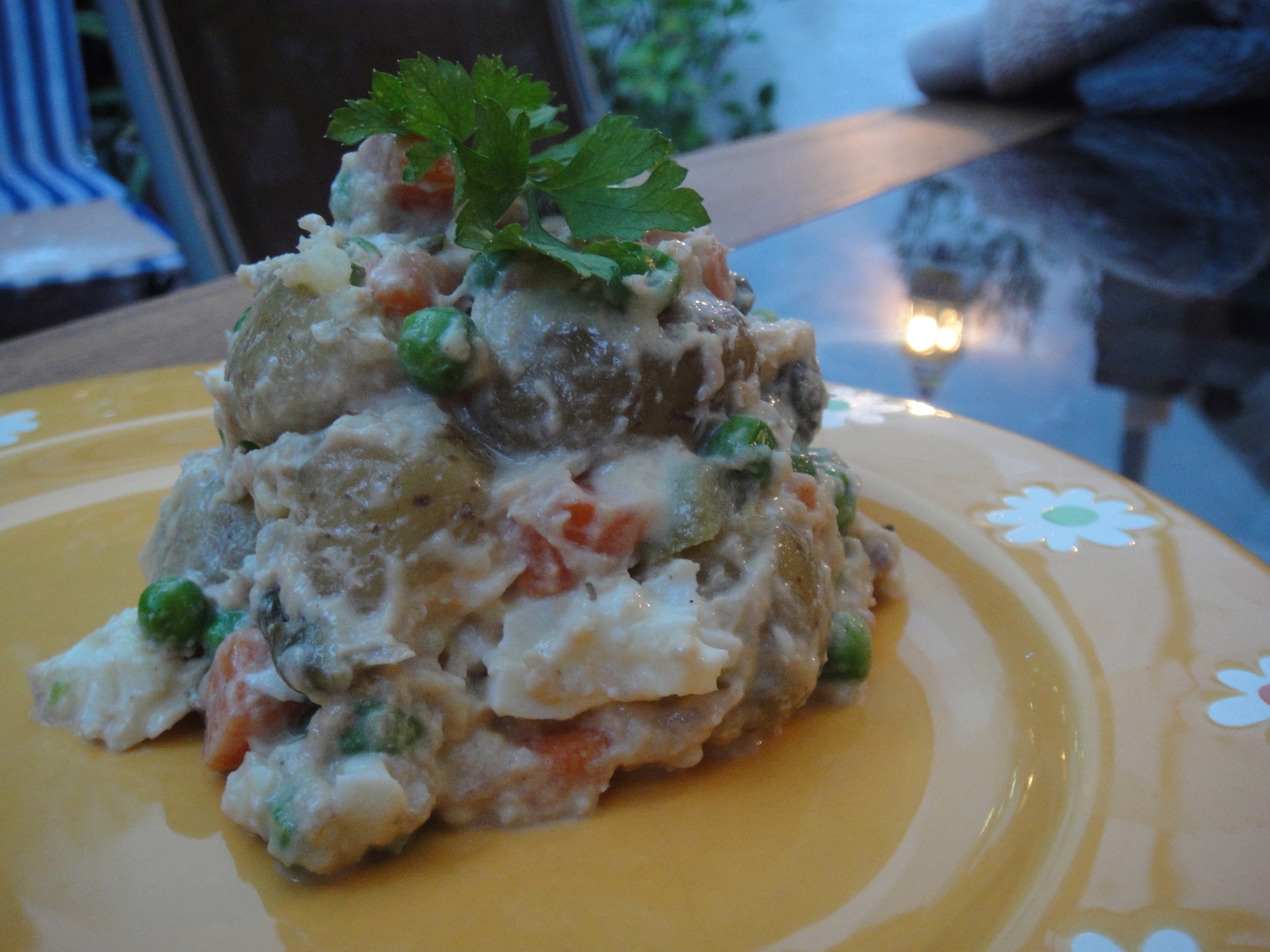
Ensalada Rusa

Russian salad is a tapas staple in traditional tapas bars all over Spain. You can alter the amounts of ingredients below depending on how many you’re cooking for. This made enough for a good 6-8 small tapas-sized helpings.

Start by making your own mayonnaise (if you can be bothered). Whisk up a large egg with a teaspoon of dijon mustard, 2 teaspoons of white wine vinegar and half a teaspoon of salt. Then to this very very gradually whisk in 300ml of oil – for those who like a mild flavour, use sunflower oil, but for a traditional Spanish flavour, extra virgin olive oil is a must. Doing this in a food processor is definitely the easiest way, but for those like me who are in a little holiday home in Spain without the best equipped of kitchens, the good old balloon whisk and a determined wrist can still do the job. Once you have made a nice thick mayonnaise, squirt in the juice of half a lemon (to taste) and 1-2 crushed cloves of garlic.

My homemade mayonnaise

Meanwhile have around 1kg of small new potatoes boiling away nicely (chop them as necessary so they’re roughly the same size). Once tender, leave to cool. Once the potatoes have reached room temperature you need to add a good 4-6 tablespoons of mayonnaise, two tins of tuna (preferably in oil), a one or two of cooked diced carrots and a good handful garden peas, 4-6 chopped gherkins, two tablespoons of capers and some chopped parsely. Then whack in a good dose of seasoning to taste, and play around with flavour – you can add more mayo, more garlic, more lemon, different herbs – whatever you like. I guarantee it will be delicious whatever you try (within reason – obv).

A small portion of Ensalada Rusa

Read more

Quick canapés to impress your colleagues

Apologies in advance for the rather fuzzy quality of my photos. As with the food featured, the photos were created in something of a rush. And this is the nature of my feature today – for in making up some canapés which don’t look half bad on a plate (they certainly look better than a packet of crisps and some sausage rolls) when you have neither the time nor skill to cook up a storm, party food doesn’t come much easier or quicker than this.

When my team at work decided that we should have a little drinks gathering to wave goodbye to a colleague of ours, I decided that some canapés were in order. But with only a few hours to spare the evening before, and with the prospect of travelling with said canapés on the London underground the following morning I had to think simple.

I came up with the following canapés which were a resounding success, are deceptively simple to make and which despite the ease of their creation, have the ability to seduce both in appearance and flavour.

My canapés

Slightly less glam – the canapés set out on paper plates and tupperware at work

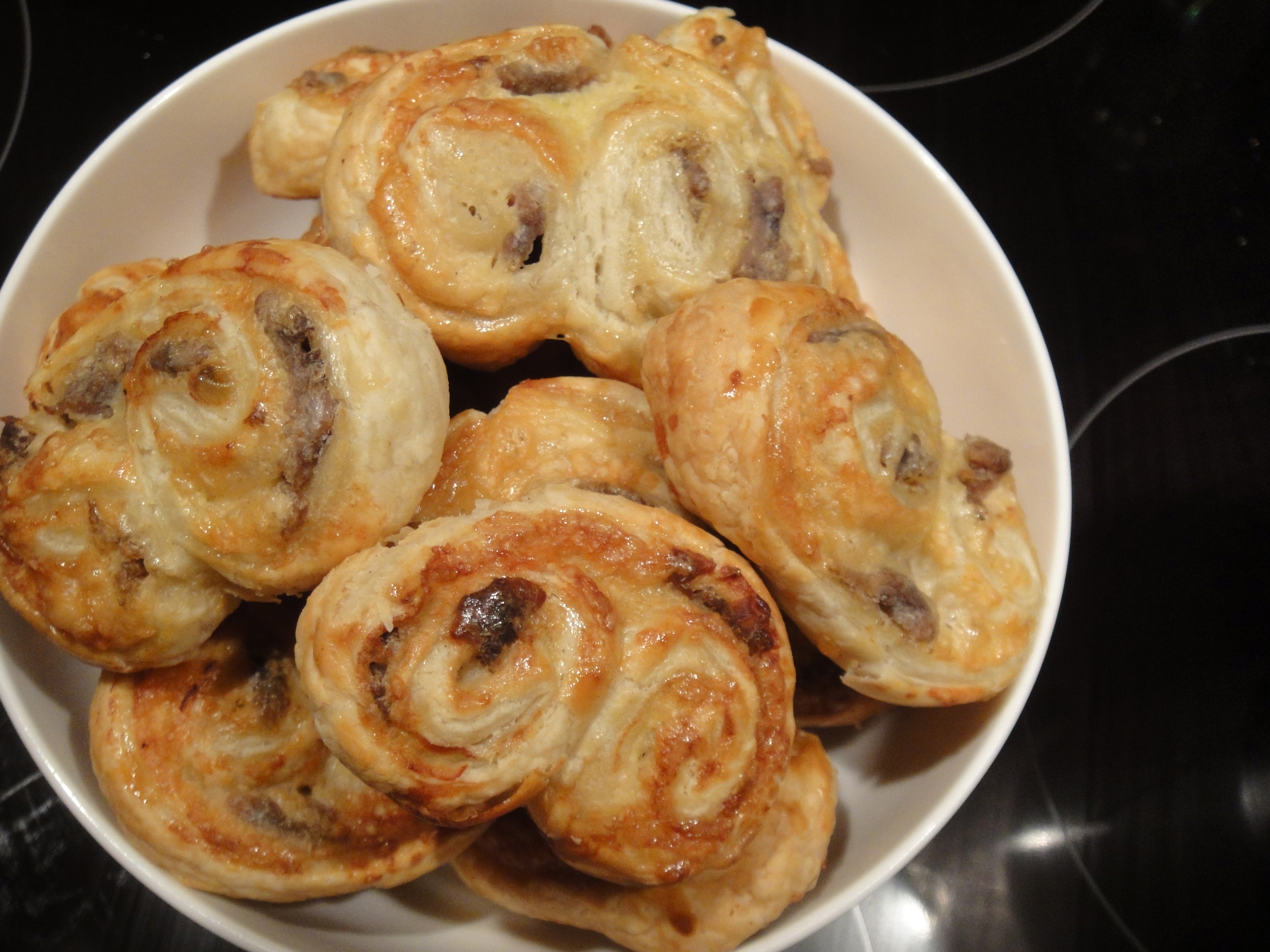
Anchovy and parmesan palmiers

These are a simple savoury variation on my previously posted sweet palmiers recipe. Simply replace the sugar with a handful of freshly grated parmesan and four rows of anchovies laid out parallel to the long sides of the puff pastry (which you roll inwards). Then freeze for 10 minutes before cutting into slices and cooking in an oven at around 200 degrees centigrade for around 20 minutes. These treats are salty but mega moorish.

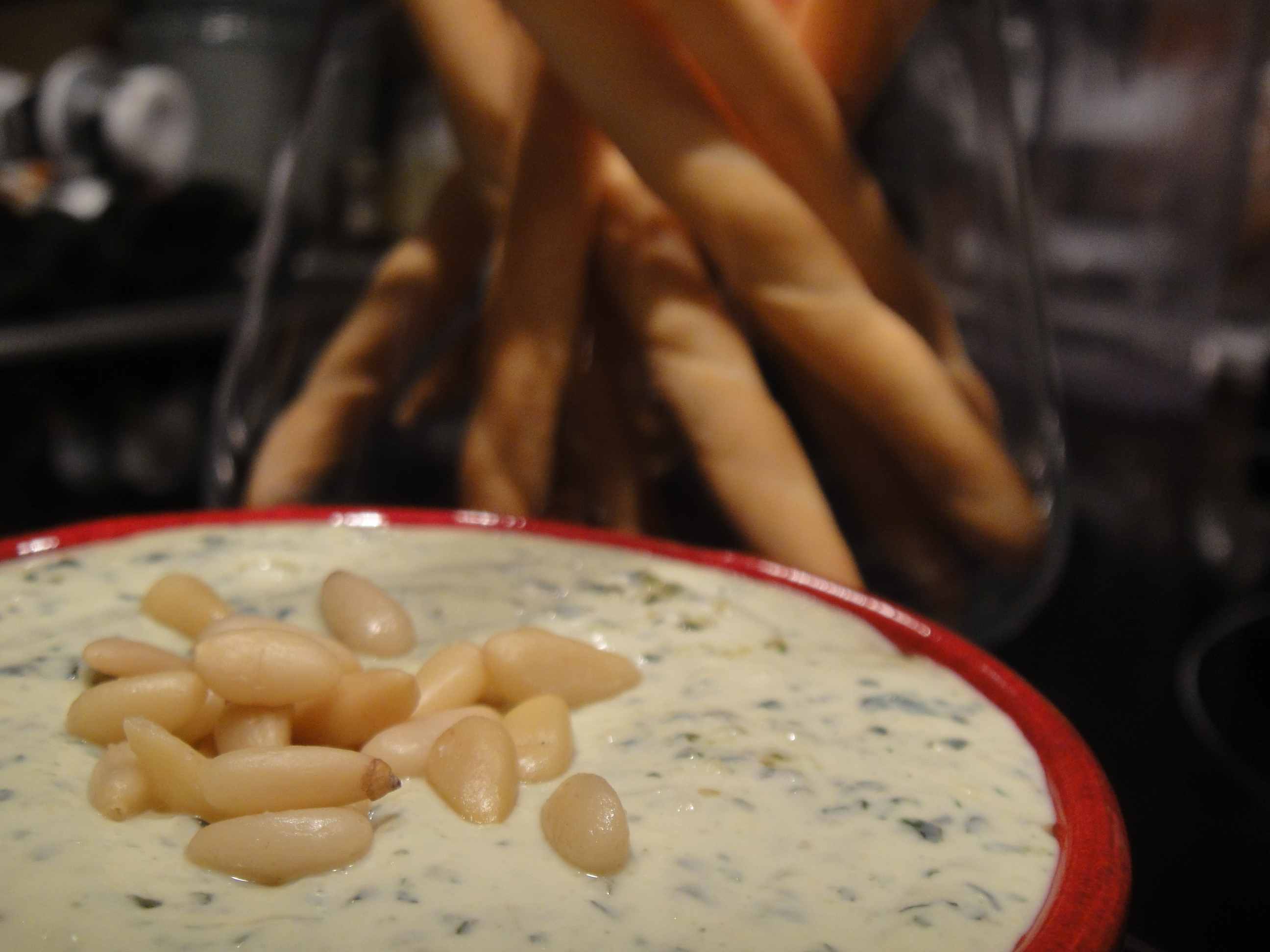
Proscuitto-wrapped grissini with a home-made pesto dip

Such an easy treat, but this one went down the best. Simply wrap one end of some Italian grissini (bread sticks) with proscuitto or parma ham. For the dip make some pesto – I wizzed up half a clove of garlic, four large handfuls of fresh basil with a handful of lightly toasted pine nuts and the same amount of freshly grated parmesan, a good dose of salt and enough olive oil to loosen up the mixture once blitzed in a mini food processor – there’s nothing quite like the smell of freshly made pesto to evoke the pleasant green lands of Roma, picnicking outside the Coliseum – and that was my pesto. I only used about 2 heaped tablespoons of this, adding those to 300g of soft cheese and there was my dip – creamy, with the exquisite flavour of the mediterranean.

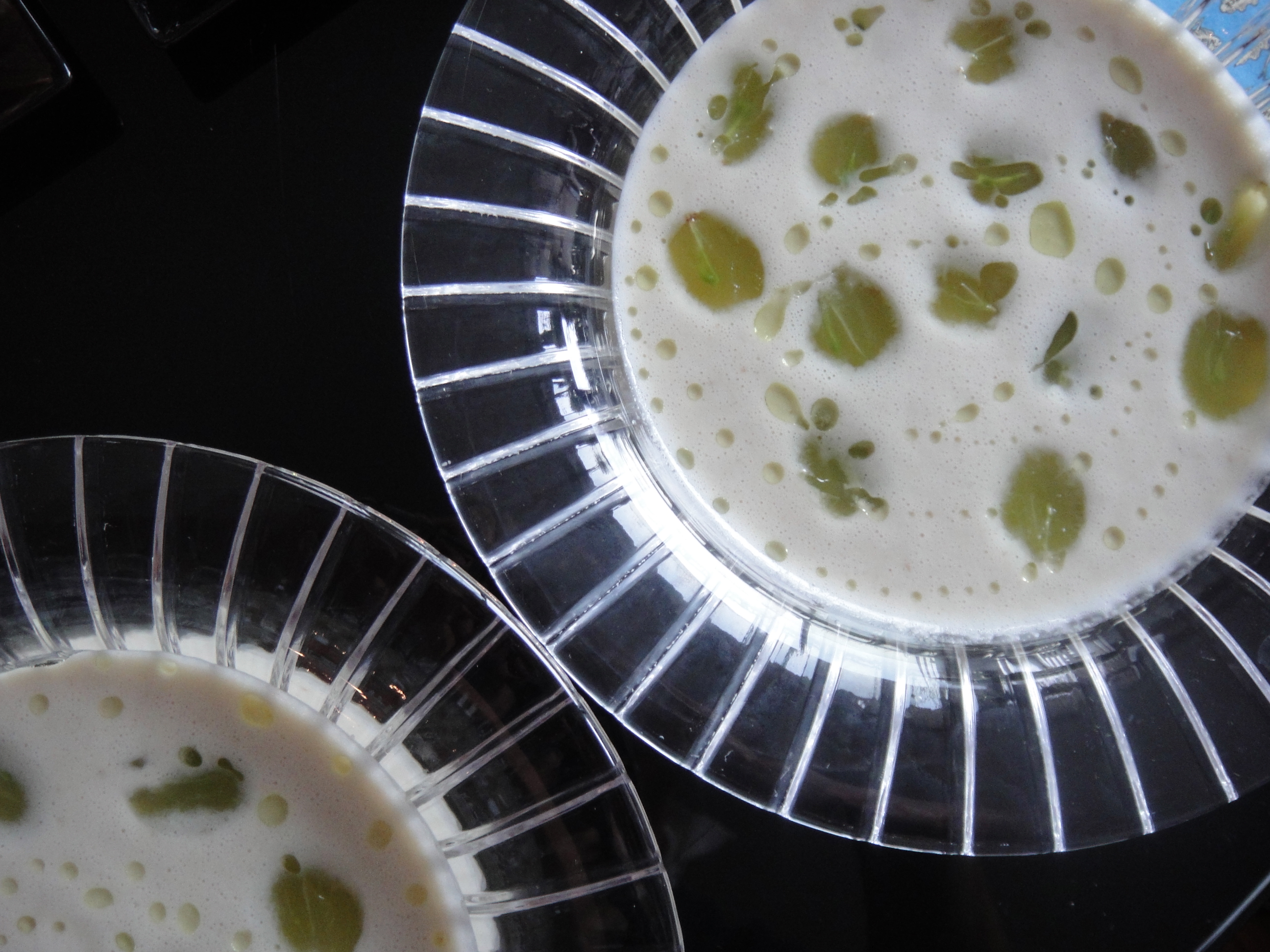
White gazpacho

This is one of my favourite Rick Stein recipes and works great as a starter (in larger portions) or as a canapé in small shot glasses or flutes with a few white grapes scattered into the mix. It’s a creamier more indulgent version of the typical Andalus tomato gazpacho and is so easy to make. Simply soak 200g of stale white crustless bread in 400ml of cold water for around 30 minutes. Place this soggy bread mixture into a liquidizer with 100g of blanched almonds and 1-6 cloves of garlic depending on how strong you like your garlic (I only use one, and I think that’s strong enough) and whizz this up into a smooth paste. With the motor still running, gradually add 150m of good quality olive oil and 4 tablespoons of sherry vinegar. Then add around 400m of more water – more if the soup is too thick. Check the seasoning and add salt if necessary. Then the key is to get the soup nice and cold, so refrigerate for at least 4 hours – overnight preferably. Serve with white grapes and a drizzle more of oil.

White gazpacho as a starter

Smoked trout dip

This one is slightly more controversial as it’s meant to be a mousse, but for some reason mine wouldn’t set. However, it turned out very well as a dip for the variety of crackers we had at the party, so why not add it in here. All I did was to whizz up 165g of smoked trout in a food processor with 225 g of creamed cheese, a squeeze of lemon juice, a sprinkle of dill (to taste) and 2 tablespoons of cream (it could be the cream which prevents it from setting – perhaps try without – I didn’t have time). If you have the time to chill the mixture and get it into a neat piping bag, you will probably succeed where I failed in piping little individual canapes of the mousse onto a blini or even a slice of cucumber. This looks great with some caviar on top. But failing that, serve it up as a simple dip – it’s delicious, especially when eat with the anchovy palmiers.

Figs stuffed with dolcelatte

Finally, and for the easiest of them all, a load of plump dried figs, slit them open as though you are performing a delicate surgical operation, get messy by breaking off some creamy dolcelatte and lovingly stuff each fig with your own fair hands – it’s sticky work, but strangely satisfying. You can seal the deal with some proscuitto wrapped around the fig, or leave it off for veggies (I do however find that a strand of ham makes these canapés looks lightly less poo-like). They’re not the most attractive canapés in the world admittedly, but for ease of method, and for richness of flavour, they don’t come better than this.

Tis soon the season to be jolly, so canapé season is just around the corner – these recipes are perfect for the kitchen shy host with the most – and these will enhance any bash with minimum skill or time required. Enjoy!

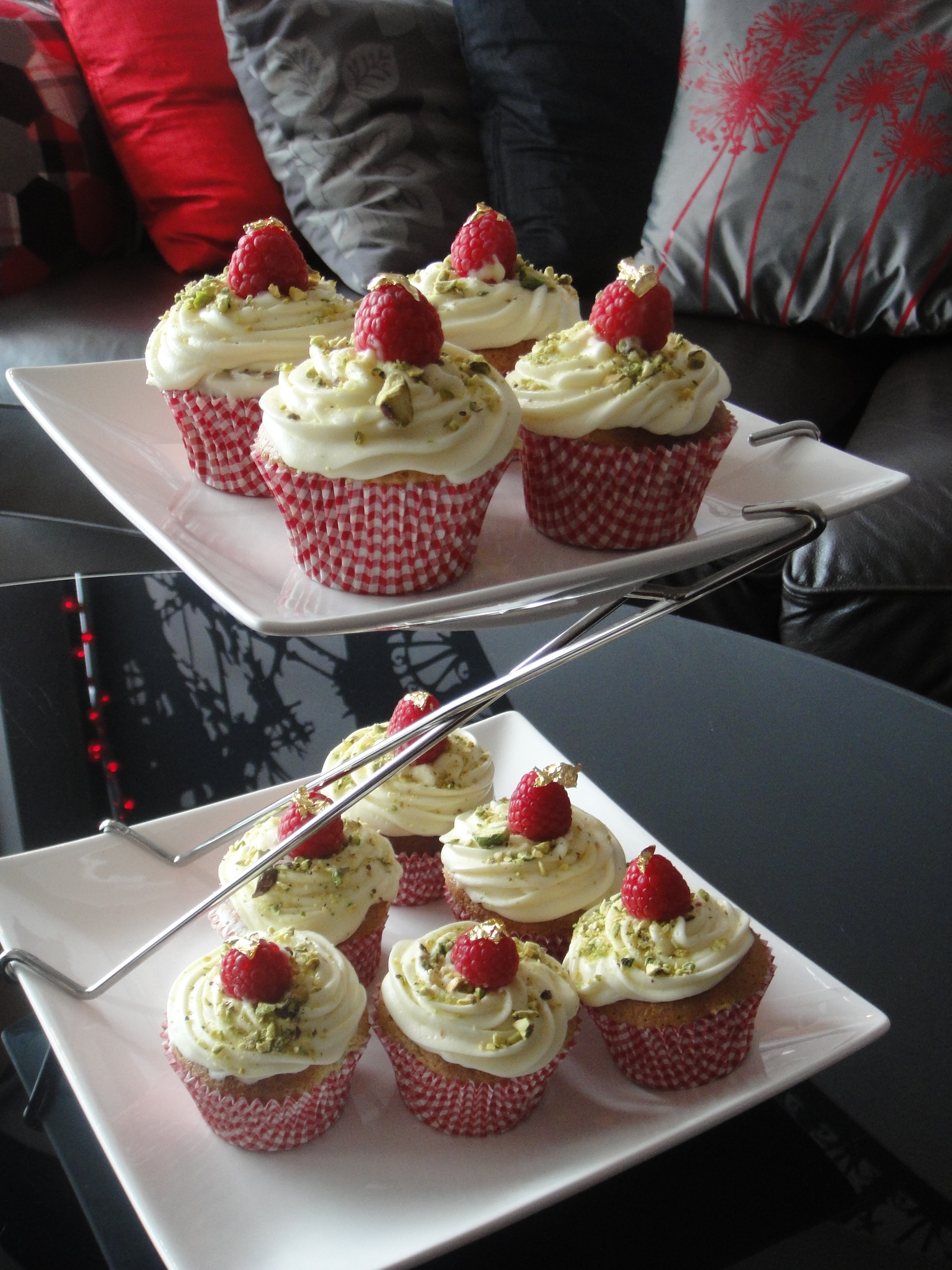
Birthday cupcakes – pistachio and raspberry with white chocolate frosting a little celebratory gold

It’s my birthday!! Woop woop! And while you read this post, I should be sat somewhere on the Rue St Honoré in Paris, sipping delicately upon a cup of strong French coffee with a couple of Ladurée macrons on the side. For a leo birthday can only sensibly be celebrated with a little class and plenty of extravagance, so while I soak in the sights of the city of love for one day only, why don’t you join me in my pursuit of birthday hedonism by making these amazing little cup cakes. Complete with edible gold leaf, these pistachio and raspberry beauties are more than appropriate for a summer birthday, where a ruling sun requires celebrations in all things golden, sparkling and extravagant. Or at least that’s my excuse. The sponge is fat free, which makes it a guilt-free, lighter pleasure for a summer’s afternoon, while the white chocolate frosting reminds that while healthy food is all very well, its the icing on the cake that feeds the eye and fuels the pleasure. Ah mais oui!

This recipe is something of a reinvention of a recipe on my good friend Celia’s super-cool foodie blog, Lady Aga. As soon as I saw her cake, I wanted to devour it there and then. The problem was, my cake was destined for work, to be shared amongst my colleagues who have been long-promised a birthday cup-cake treat. And as this distribution would inevitably entail a journey on the stuffy tube in rush hour (with added olympic pressures), the fresh cream of Celia’s oeuvre was never going to work, nor indeed the incredible constitution of her multi-layered sponge. I therefore opted to turn her recipe into cupcakes, replacing half the ground pistachios with self-raising flour to encourage the cakes to rise, and replacing the cream filling with a super-indulgent white chocolate frosting. I also baked a raspberry in the middle of the sponge for added moisture and a hidden treat in the cake’s centre.

So, how to make:

Grind up 110g pistachios to a fine powder. Grind up a further 50g or so to a mixture of fine and textured crumbs for use on the topping. Next take 6 large eggs and separate. Whisk up the egg white into soft peaks. In a separate bowl, whisk up the egg yolks with 180g of caster sugar until pale and fluffy. Into the egg yolk mix, fold in the ground pistachios and 110g of self-raising flour and a spoon-full of the egg white to loosen the mixture. Once mixed, fold in the egg whites. Divide the mixture between 12 large-ish cup-cake cases and place a single raspberry in the centre of each cake. Bake at around 200 degrees centigrade for around 20 minutes or until an inserted skewer comes out clean. Be careful not to over-bake or the sponge becomes dry. Remove from the oven and place on a wire rack to cool.

In the meantime, take as many raspberries as you have cakes, melt some white chocolate, and fill each raspberry with a drop or so of chocolate until filled. Prop the raspberries upright in a small container and place in the fridge so the chocolate solidifies.

Next, the icing: slowly melt a bar of white chocolate (around 100g I think, but I can’t really tell how much I was melting as I kept on eating it) over simmering water. As the chocolate starts to melt, add a splash or two of full fat milk to loosen up the mixture to a creamy liquidy chocolate. Meanwhile, take 120g unsalted butter and  mix with 375g icing sugar with around 25ml of full fat milk and a small dash of vanilla extract. This should be whisked for extra creamyness, probably for a good 5-10 minutes. Once light and fluffy, mix in the melted chocolate until thoroughly combined and my god you will have created pure nectar worthy of Mount Olympus itself. Pour your icing into a piping bag with a large star-shaped nozzle (I have no idea what this is called) and place the icing bag in the fridge for 20 mins or so to firm up the frosting a bit. Pipe onto the cooled cupcakes and top with a sprinkle of crumbled pistachios, a chocolate filled raspberry and a little fragment of edible gold leaf for extra extravagance. Or try edible glitter if you prefer.

(Obviously if you can’t be bothered with the piping bag – which I can easily understand – just smooth the icing onto the cake with a palette knife – this can look just as good.

And there you have it. Cakes fit for a King. Or a birthday boy.

All photos are strictly the copyright of Nicholas de Lacy-Brown © 2012 and The Daily Norm. All rights are reserved.