Skip to content

Posts tagged ‘Italy’

Memoirs from Venezia, Part 1: Christmas on a Gondola

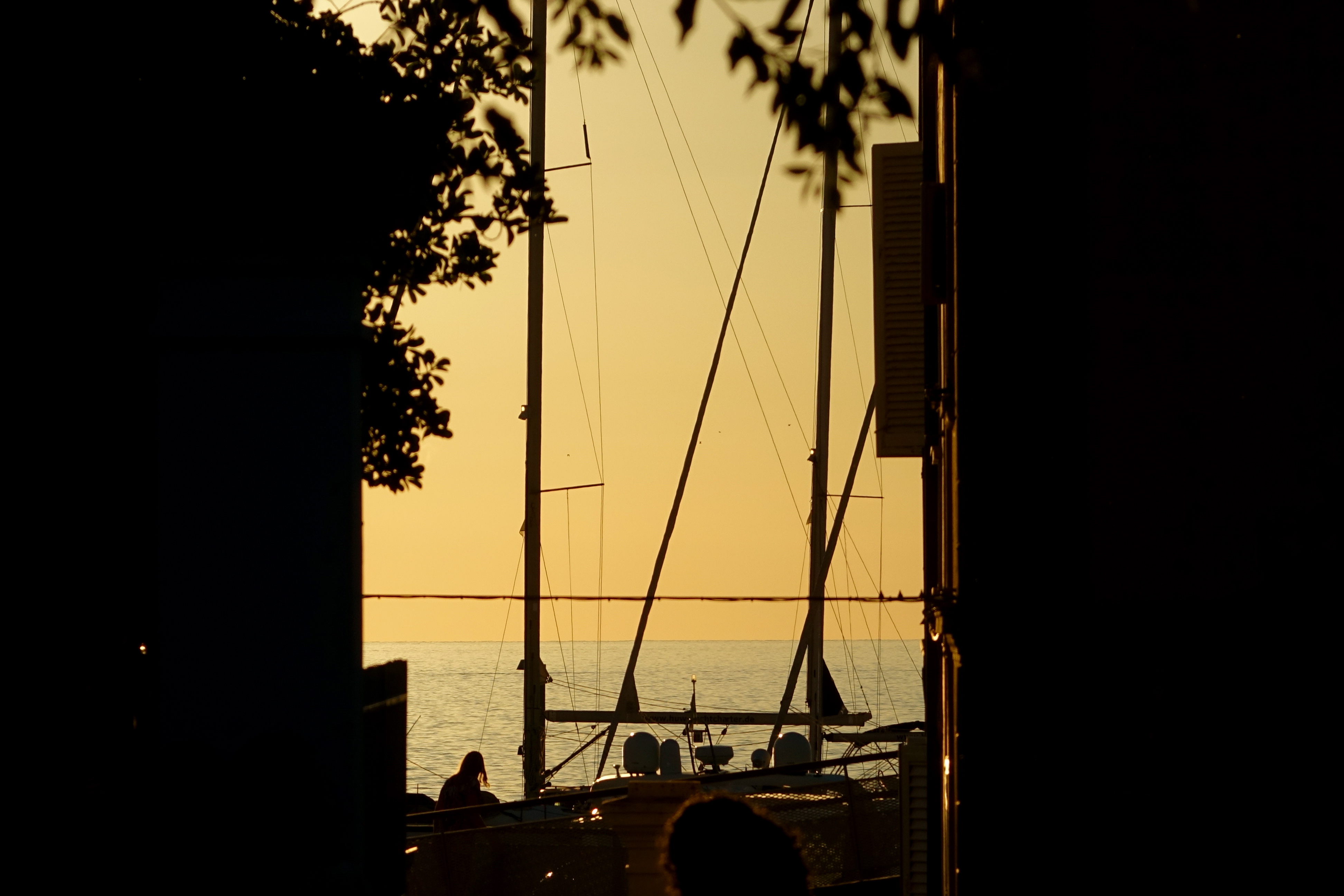
As most of us look, somewhat gloomily, towards a mediocre post-Christmas period with our homes becoming sparser as decorations are packed away and everything returns to normal, I am sustained by a head full of daydreams, as I recall the time I spent this Christmas in Venice.

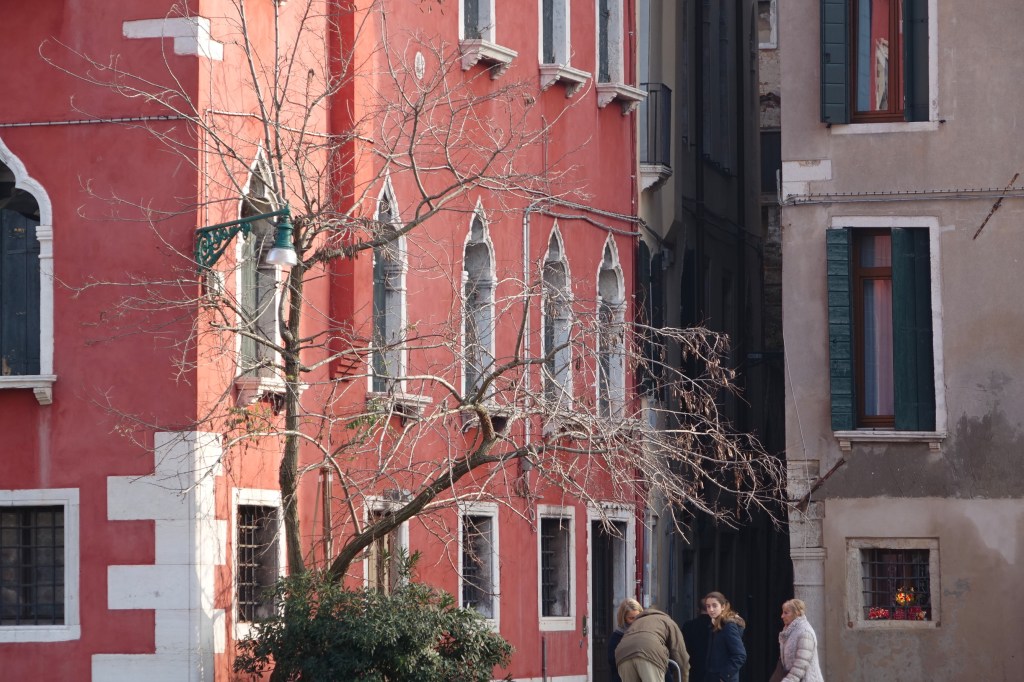
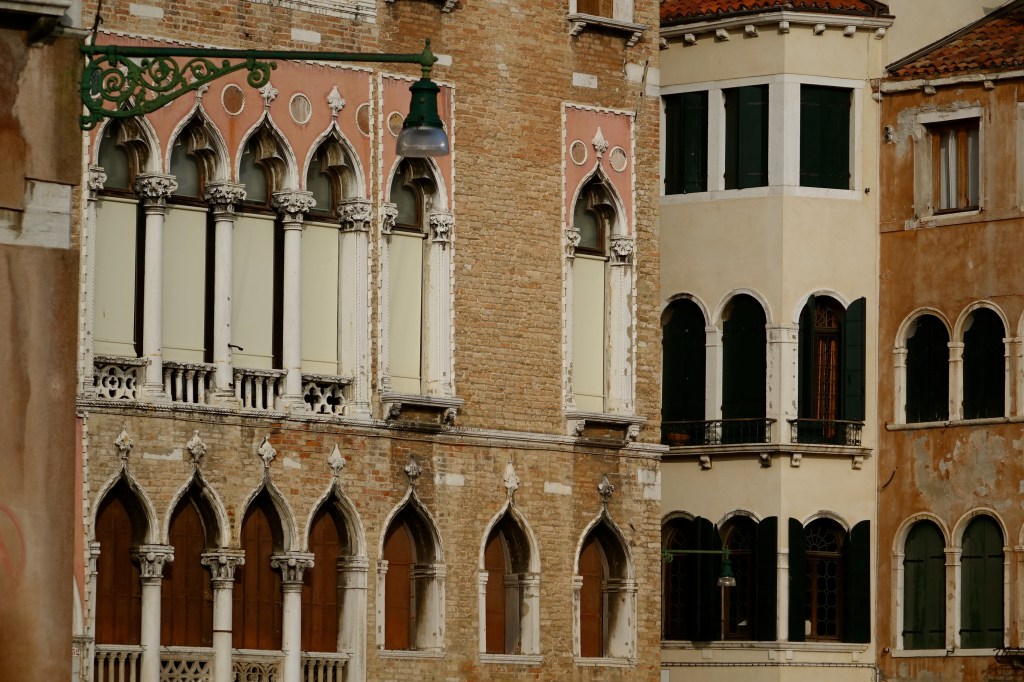
I am no stranger to this utterly unique, magical floating city, but no matter how many times I go, I am equally if not increasingly held captive by its enchanting spell. For where else on earth can you find palaces whose golden doorsteps are laced with a layer of green algae; whose magical buildings appear and disappear within veils of mist as mysterious as the masked characters who walk the city’s streets; and where you can spend Christmas day on a gondola.

The jewel of the Adriatic, as photographed on Christmas morning
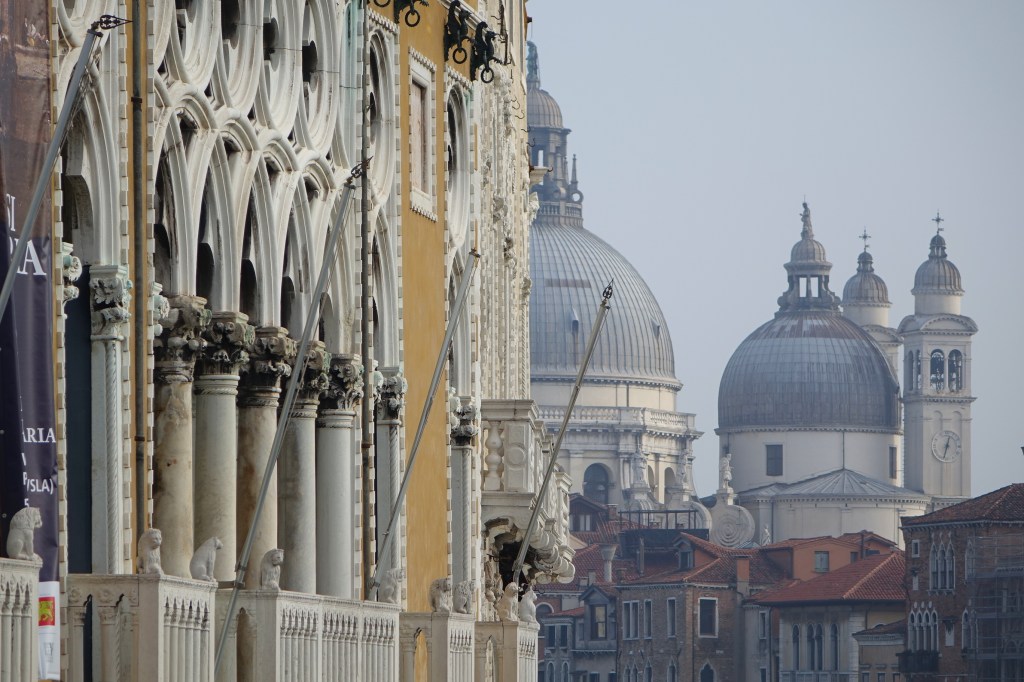
DSC05463 DSC05469 DSC05464 DSC05467 DSC05470 DSC05472 DSC05468 DSC05460

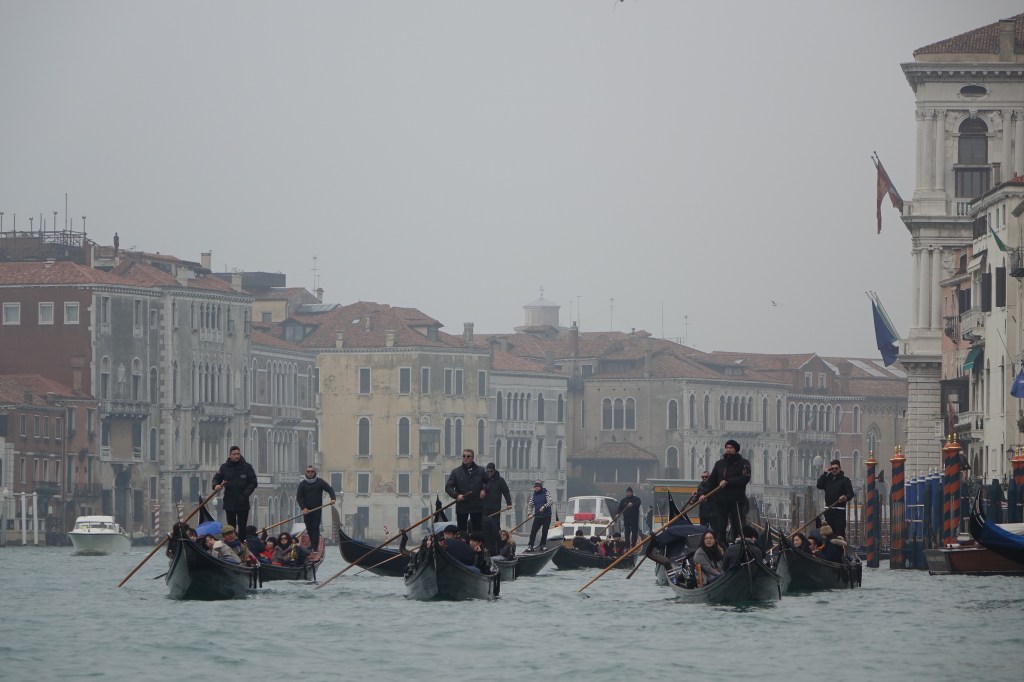
For with my partner’s mother making our Christmas a family affair, this festive season was going to be special for all sorts of reasons. And first on the to-do list of the day was to toast Christmas and the city from the luxurious comfort of a gondola. Despite its being my fourth visit to the city, I had never before been in one of these iconic vessels, fearing the grossly inflated prices and tourist traps. But when you discover that it is as expensive to remain on land in Venice as it is to embark upon the water, this cheeky half an hour on board one of the world’s most famous boats can be easily justified.

On a gondola for Christmas!

DSC05303 DSC05403 DSC05356 DSC05375 DSC05354 DSC05391 DSC05316 DSC05306 DSC05406 DSC05335 DSC05323

And so as families all over the world toasted the day over a roast turkey, we started ours floating gently over the milky green canals of Venice, gazing in wonder as we passed cracking palaces, rosy-pink street lamps and some of the most beautiful churches ever built. The day continued with indulgent feasting in the Taverna la Fenice, a stroll across the Accademia Bridge to the gentle Dorsoduro district, the purchase of far too many handmade glass santas from the island of Murano, and later prosecco bubbles with homemade Tuscan panettone munched in-between the exchange of presents aplenty.

Magical details, from the water and back on land

DSC05369 DSC05422 DSC05439 DSC05430 DSC05441 DSC05432 DSC05456 DSC05455 DSC05471DSC05457

It was, in every way, the perfect Christmas day, and the memory I hold with me now as I reticently prepare to leave Christmas behind for another year.

DSC05476

All photos and written content are strictly the copyright of Nicholas de Lacy-Brown © 2016 and The Daily Norm. All rights are reserved. Unauthorized use and/or duplication of the material, whether written work, photography or artwork, included within The Daily Norm without express and written permission from The Daily Norm’s author and/or owner is strictly prohibited.  

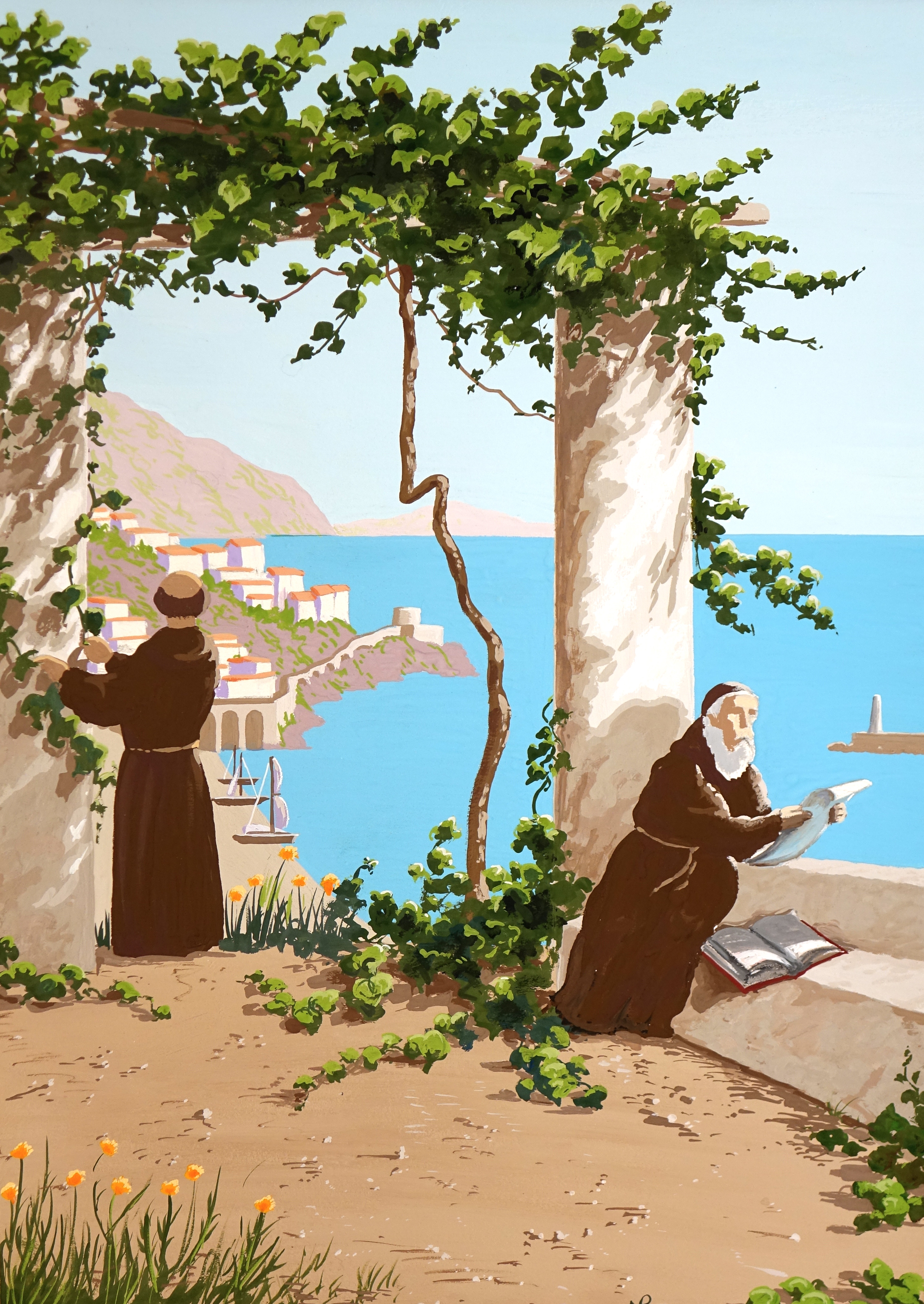
Interpretation No. 12 – Capuchin Monks, Amalfi

The heady days of Amalfi coast indulgence are now too many days behind me to count – it must be at least 250 rather forlorn days since I sampled the paradise of Amalfi, Capri and Positano during a blissful week on the Italian coast last summer. And it has been almost as long since I last thought to paint the place, even though it was on my hotel balcony on the Amalfi Coast that my collection of interpretations began. It was therefore something of a blast from the past when, opening up sketch book the other day in order to start a new gouache project, I discovered a half finished gouache painting based on the Amalfi Coast, left sadly uncompleted.

My feeling with paintings is that each painting has its time, and even when a project goes unworked for some time, it should always be left until the time is again right to continue it. A painting should never be destined for the bin. So when I reopened this hitherto unfinished work, I so enjoyed the breath of fresh Italian air that gushed open my opening it that I decided that the time was right to finish it off, even if it meant completing the Amalfi scene here in my new home of Mallorca.

Interpretation No. 12: Capuchin Monks, Amalfi (2014-15 © Nicholas de Lacy-Brown, gouache on paper)

Interpretation No. 12: Capuchin Monks, Amalfi (2014-15 © Nicholas de Lacy-Brown, gouache on paper)

The painting, which will be the 12th in my collection of gouache interpretative landscapes, was actually based on an old engraving we picked up in Amalfi just before catching a boat back home to Positano. Being a city renowned for its ancient homemade papers, we could not resist buying a print on Amalfi’s finest, and as soon as we found this image, I was captivated. There was something about the alluring tranquil activity of the Capuchin monks depicted, one tying back a vine and the other reading before a view of Amalfi, that made me want to recreate this idyllic scene of the joie de vivre for modern times.

The original engraving we purchased in Amalfi (c. 1880, artist unknown)

The original engraving we purchased in Amalfi (c. 1880, artist unknown)

A gouache interpretation was born and now, thanks to my rediscovery of the image, it is completed. I am pleased with the relative simplification I have achieved by repainting the scene in broad flat gouache colours, and I have to say that the colour has certainly brought this 19th century engraving back to life. It could almost be modern day except that, sadly (or not for those rich enough to stay there), the Capuchin Monastery of Amalfi is today the swish Gran Hotel Convento di Amalfi, a place from which this view can still be very much enjoyed, albeit sadly without the monks.

© Nicholas de Lacy-Brown and The Daily Norm, 2001-2015. Unauthorized use and/or duplication of the material, whether written work, photography or artwork, included within The Daily Norm without express and written permission from The Daily Norm’s author and/or owner is strictly prohibited. Excerpts and links may be used, provided that full and clear credit is given to Nicholas de Lacy-Brown and The Daily Norm with appropriate and specific direction to the original content. For more information on the work of Nicholas de Lacy-Brown, head to his art website at www.delacy-brown.com

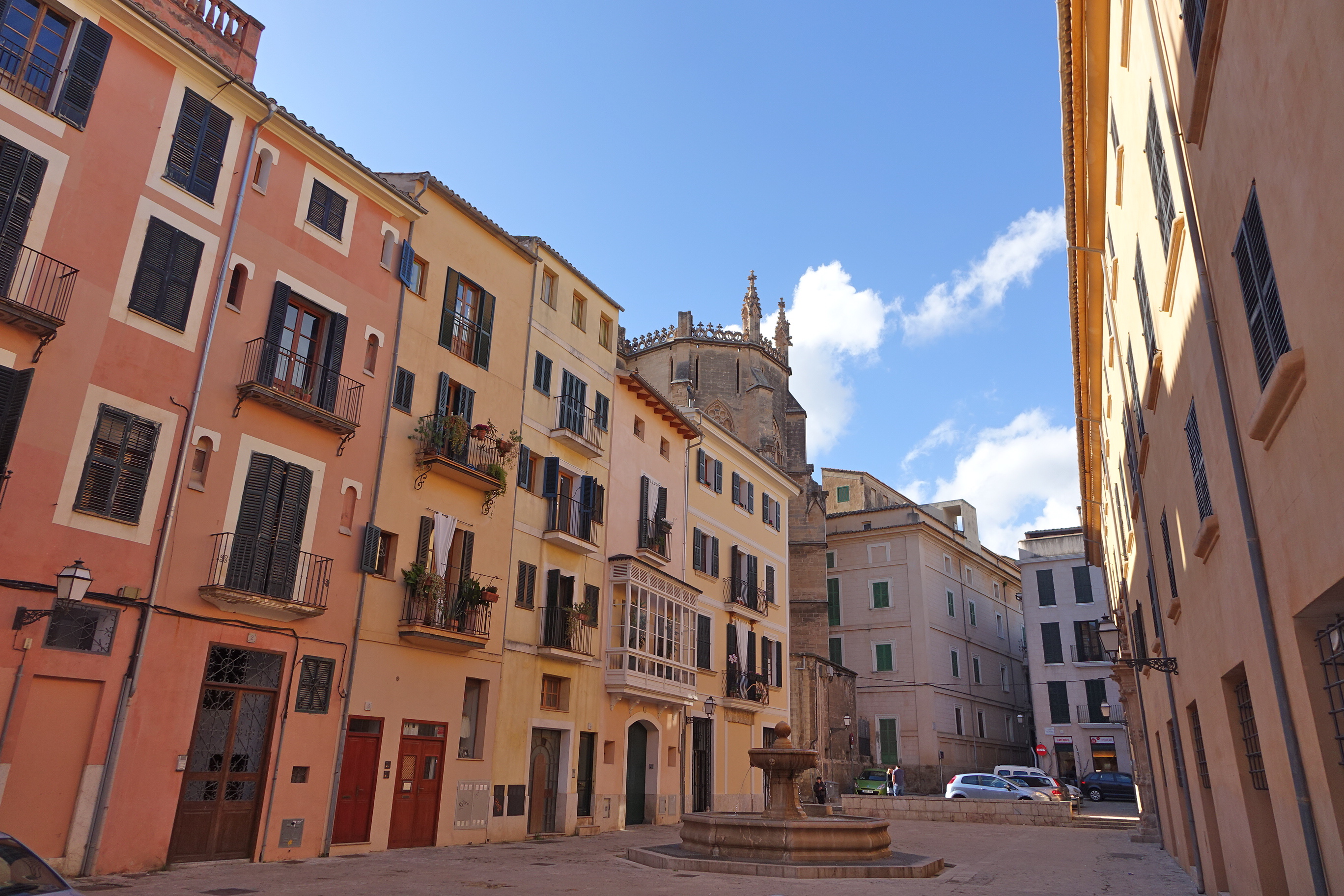
Venice without the water: Plaça de Sant Jeroni, Palma

I can’t quite hide the fact that apart from being deliriously happy surrounded by the Christmas spirit of my new home in Palma de Mallorca, there is still a little piece of me that yearns for Venice at Christmas. It’s always been this way, ever since my blissful gap year spent in Italy, when an extended stay in Venice introduced me to the city enveloped in an enchanting wintery mist which made the glowing shops selling golden masks and glass Christmas trees all the more inviting. Every Christmas since I have yearned for Venice: my Christmas trees are invariably peppered with sparkling Venetian masks, my Murano glass trees are in pride of place amongst my decorations, and in fact this time last year I was in the pearl of the Adriatic herself.

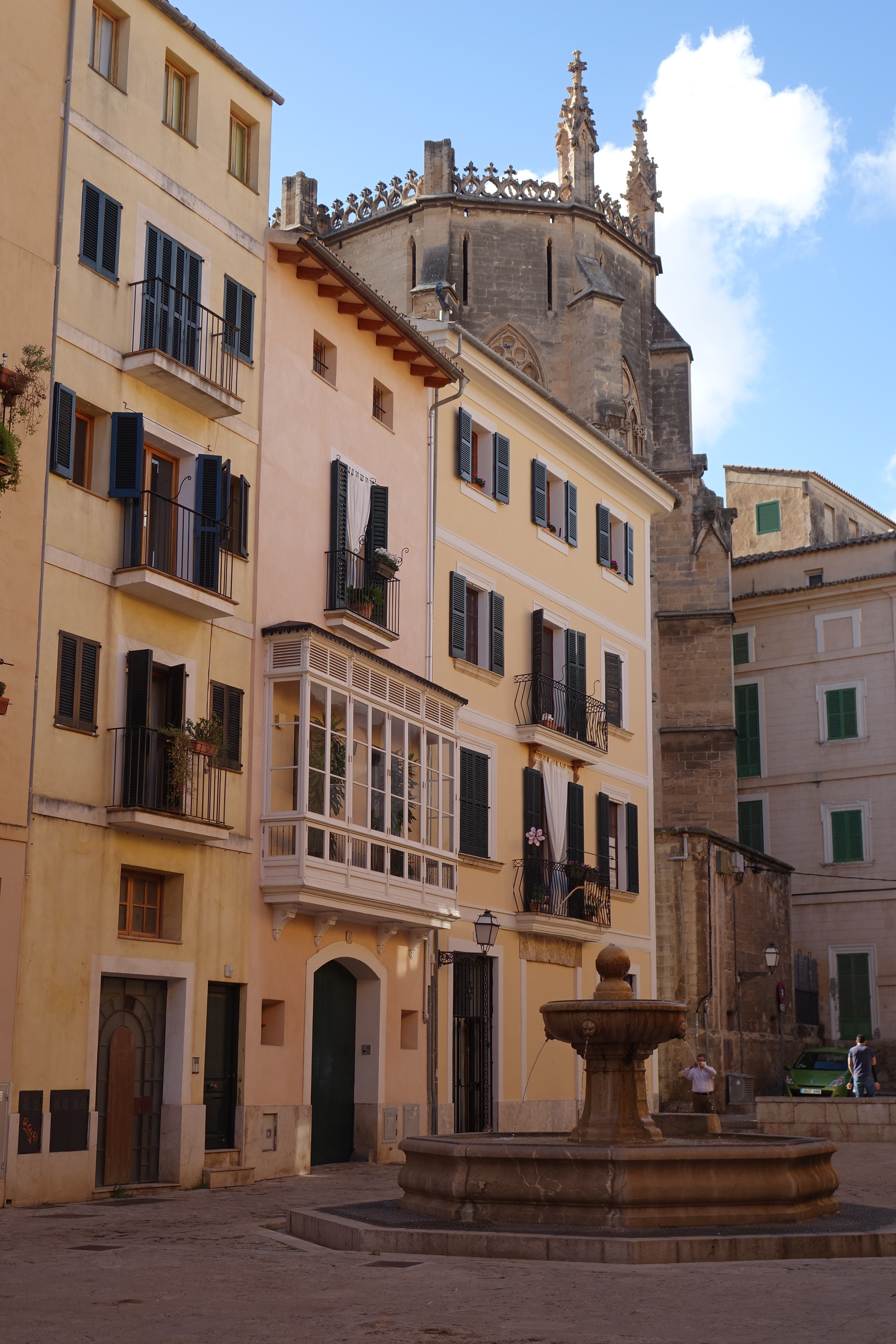
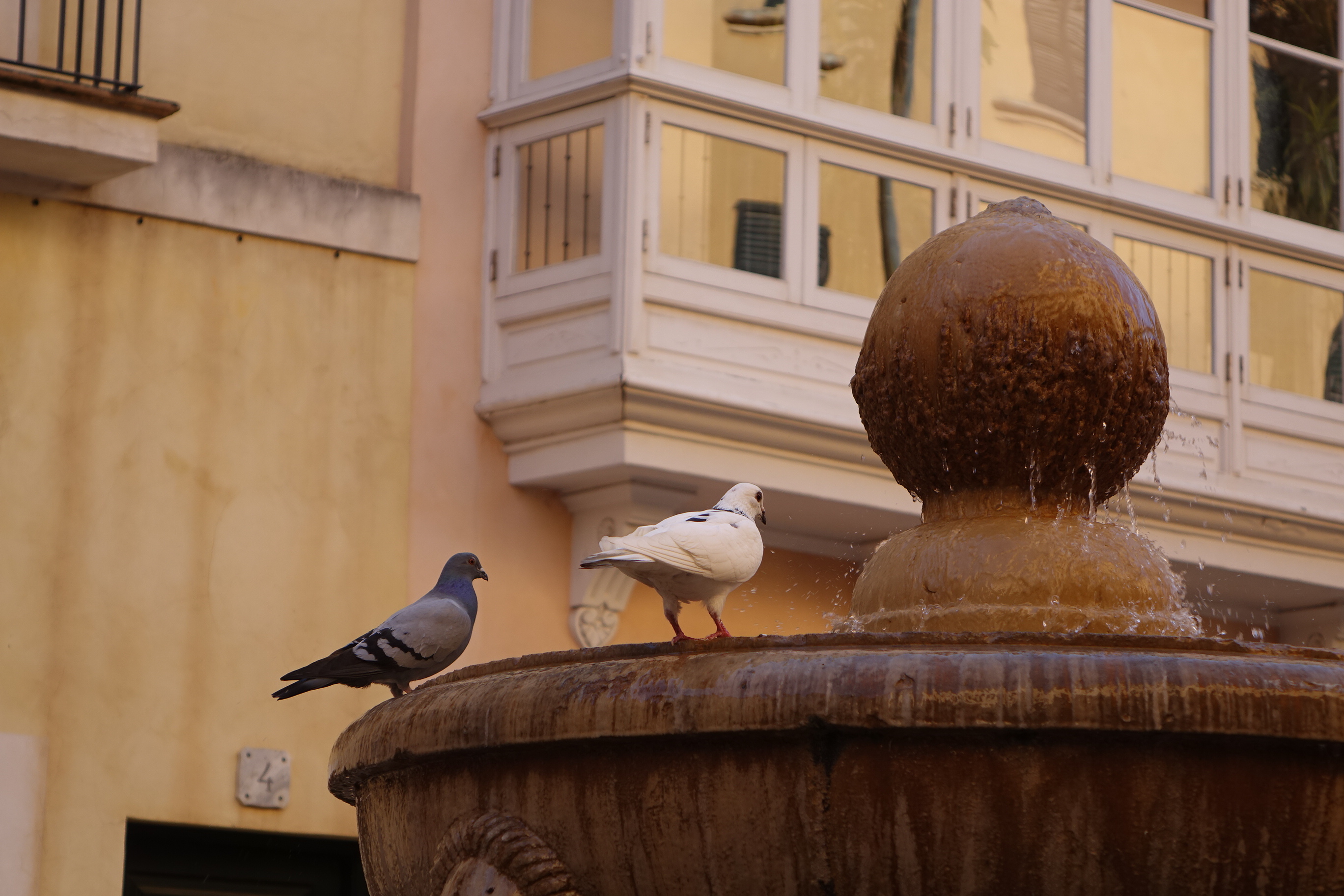
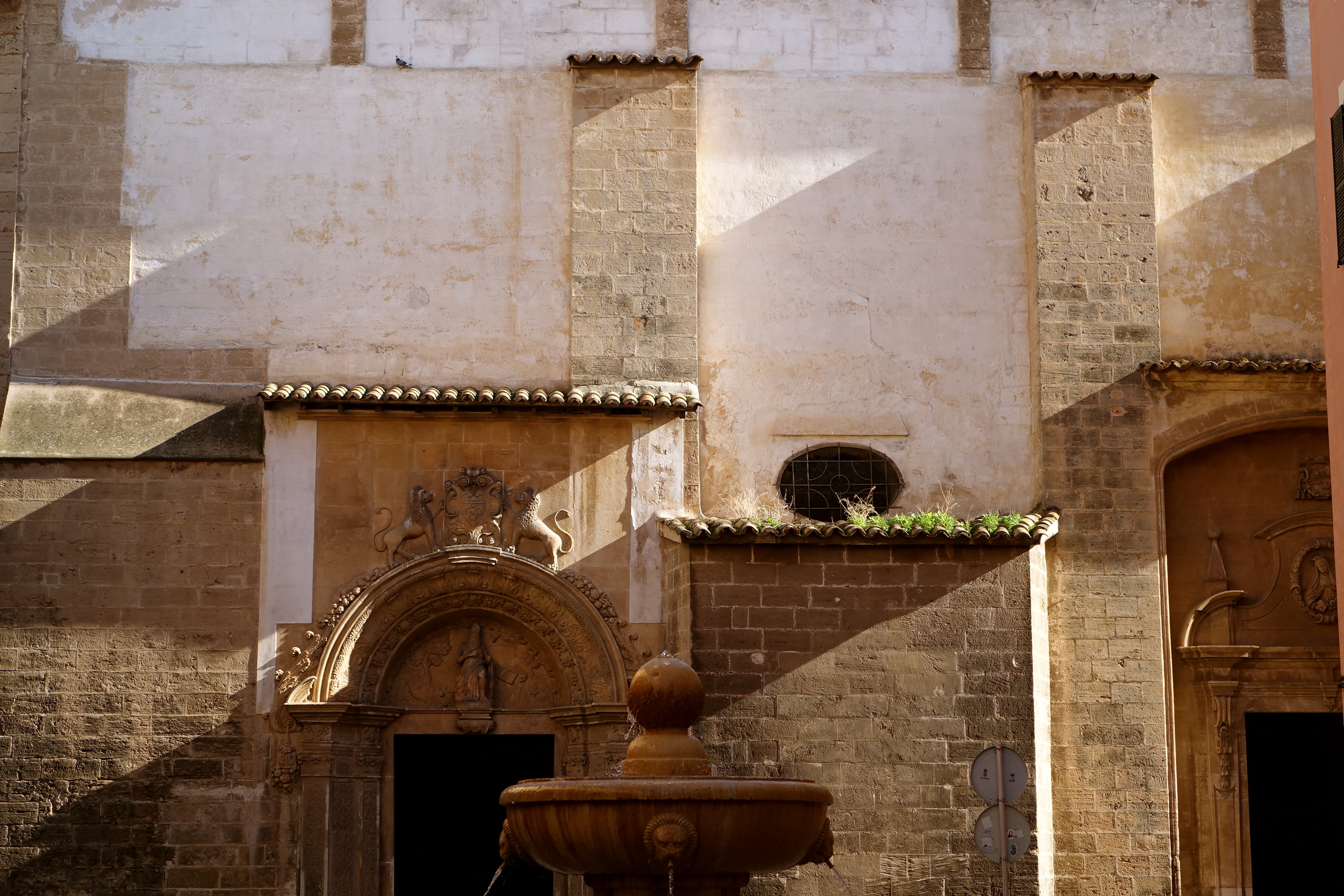
So it was perhaps in part because of this yearning, but also because of its inherent characteristics that when I stumbled into the Plaça de Sant Jeroni, a tranquil little square deep in the old town of Palma the other day, I could have sworn I had stumbled into Venice. And having now declared the square my favourite in all the city, I just had to share it with you.

The Plaça de Sant Jeroni

DSC01974 DSC01949 DSC01975 
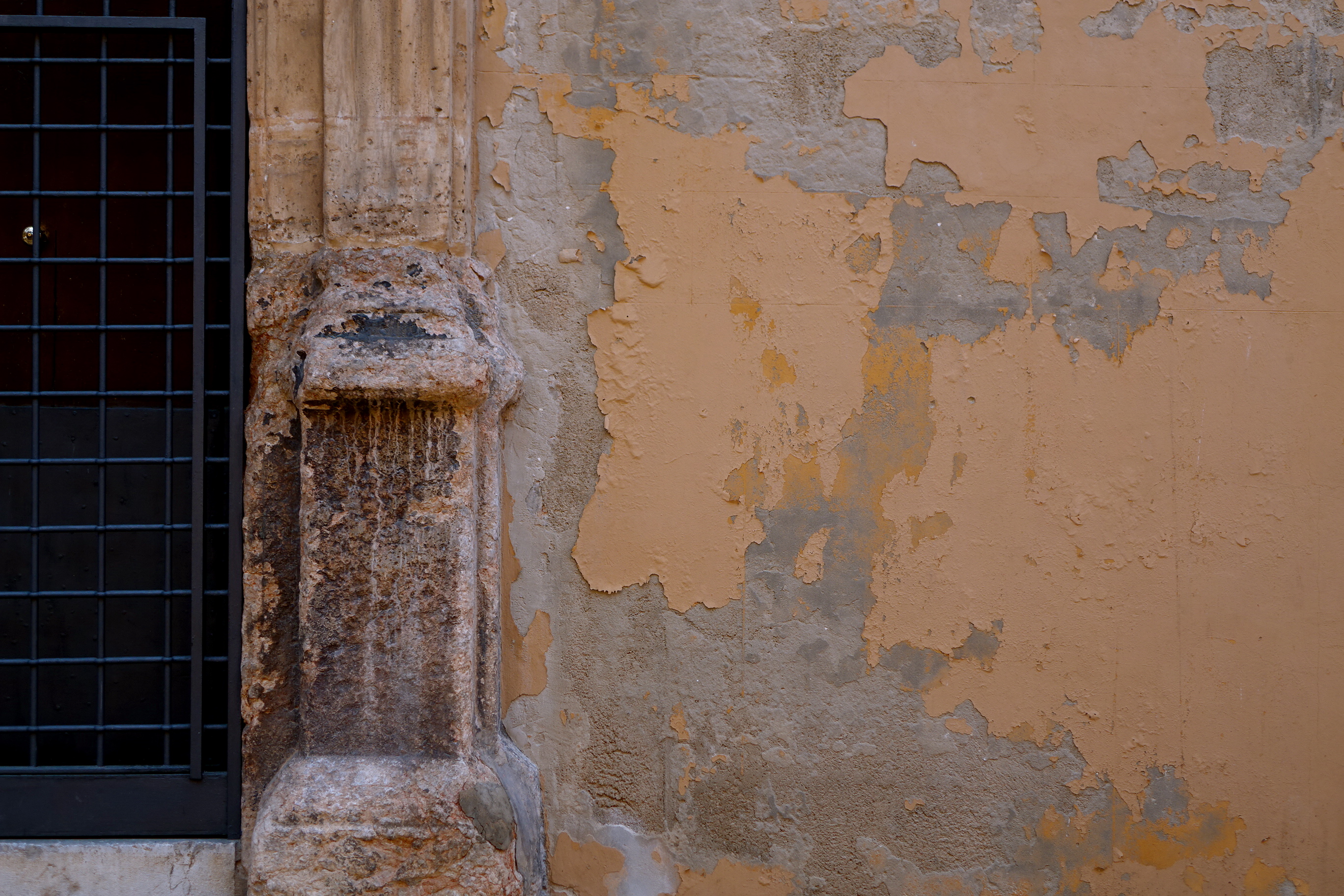
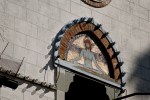
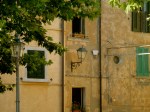
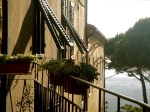
For me there are many features that make this square Venetian. For one thing, its taller than average narrow buildings, which remind me of the palaces fighting for prowess along the Grand Canal or the tall blocks of the Venetian Ghetto, squeezing gradually upwards for space where there was none at ground level. Second it’s the colours: pinks, yellows and terracottas, these are almost certainly the colours which reflect so majestically in the canals of the city. Third the fountain at its centre – glamorous enough to be a city superstar, but appearing almost forgotten in this nostalgic backwater far from the tourist trail. Fourth the two churches, both incredibly ornate – for where else do you find churches in such neighbourly proximity than in Venice? Fifth the general sense of dilapidation – the cracks and flaking paint; the tired romanticism which have attracted so many artists to Venice since its historical decline began. 

The details I love

DSC01950 DSC01956 DSC01954 DSC01943 DSC01947 DSC01944 image2 DSC01979 DSC01964 DSC01937 DSC01961
But where are the canals I hear you ask? Well true, they are missing, but like so many of the hidden gems in Venice, this is like one of the rare squares tucked away between buildings where the canals do not pass. I love them there as I love this square here. 

I know nothing else about this square. Only its name. But for me it will always be characterised by its Venetian tones. And for that reason, it’s a comfort to know that this pretty piazza is but a stroll away, for a moment or a visit whenever I yearn for Venice. 

DSC01934

All photos and written content are strictly the copyright of Nicholas de Lacy-Brown © 2014 and The Daily Norm. All rights are reserved. Unauthorized use and/or duplication of the material, whether written work, photography or artwork, included within The Daily Norm without express and written permission from The Daily Norm’s author and/or owner is strictly prohibited.

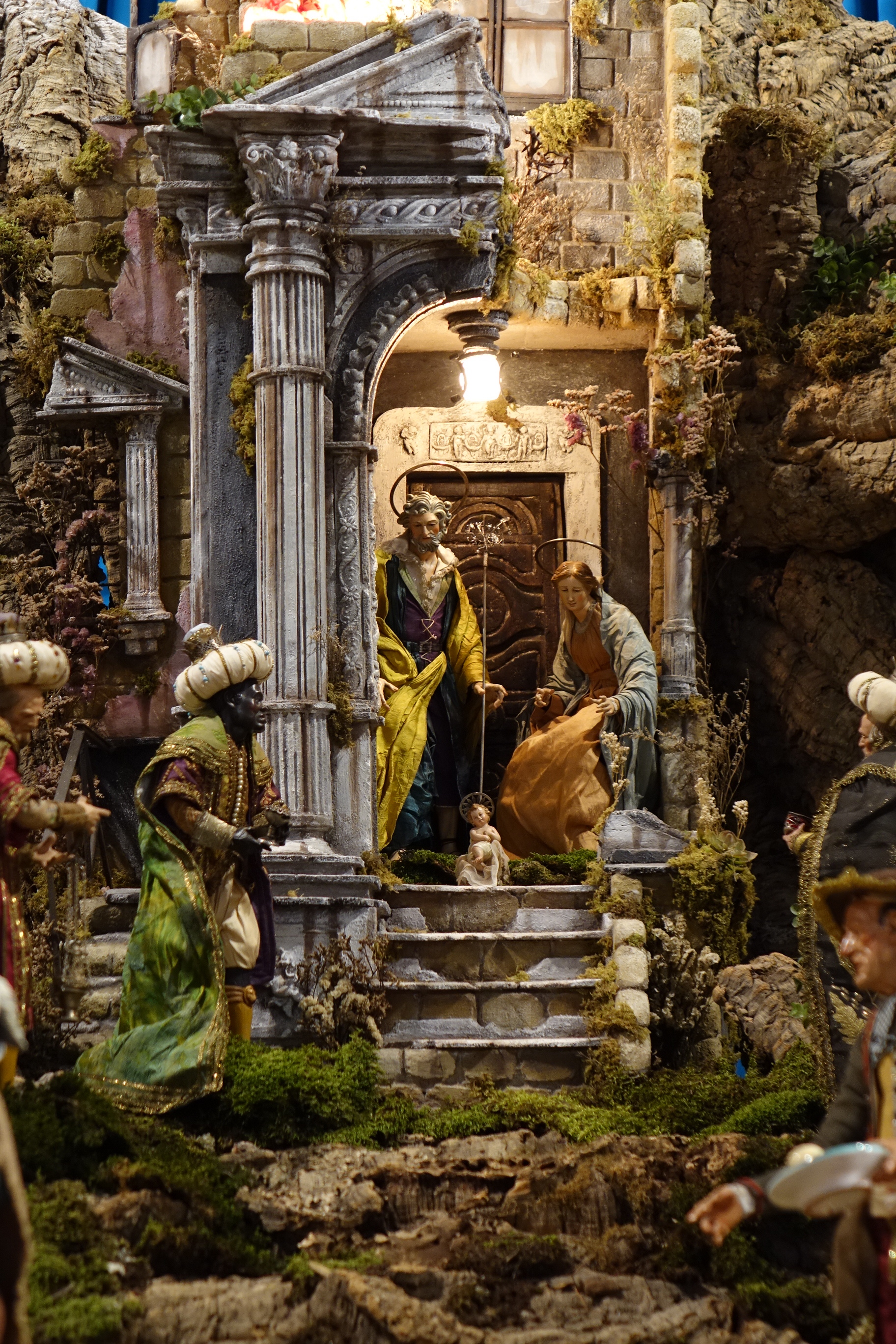
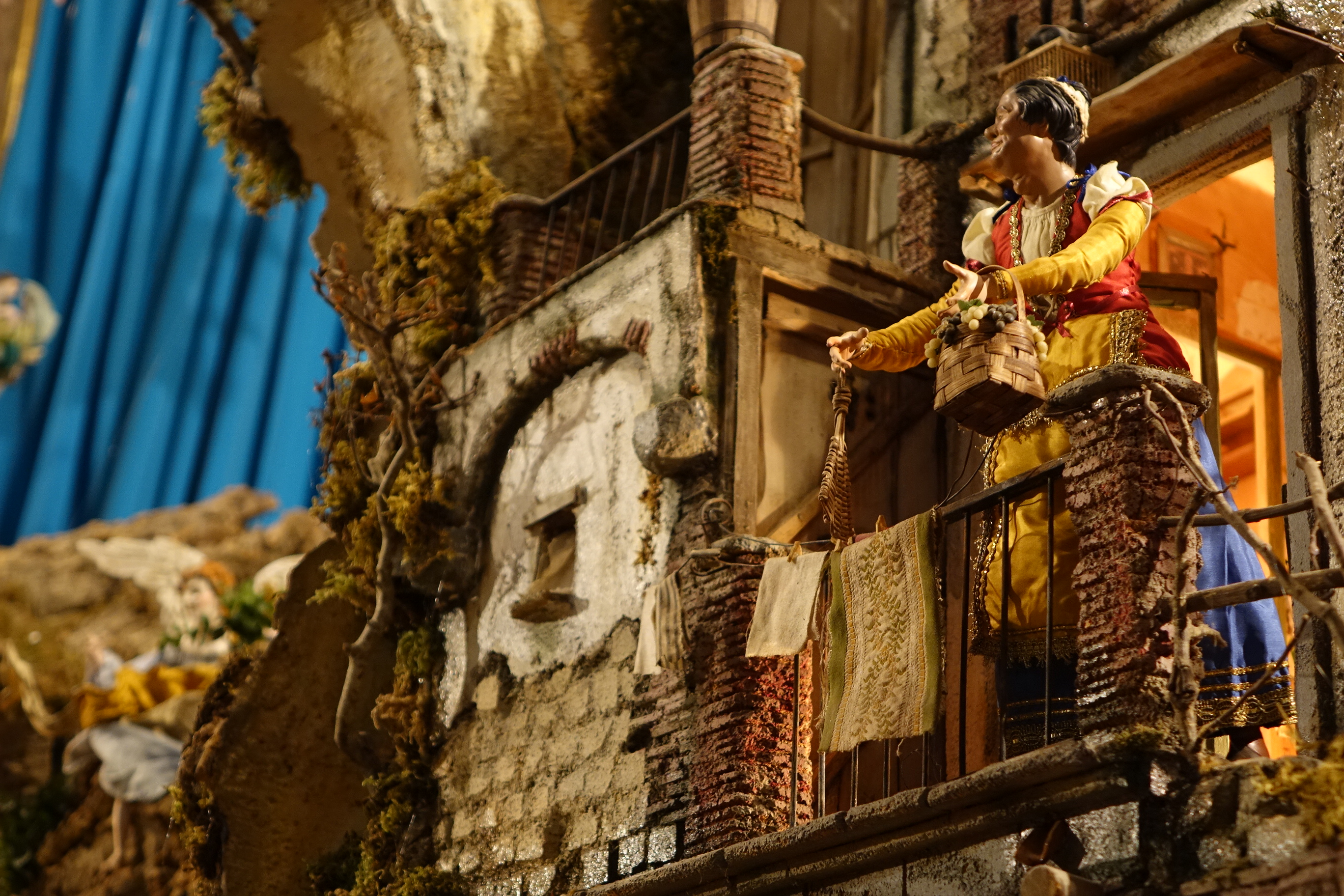
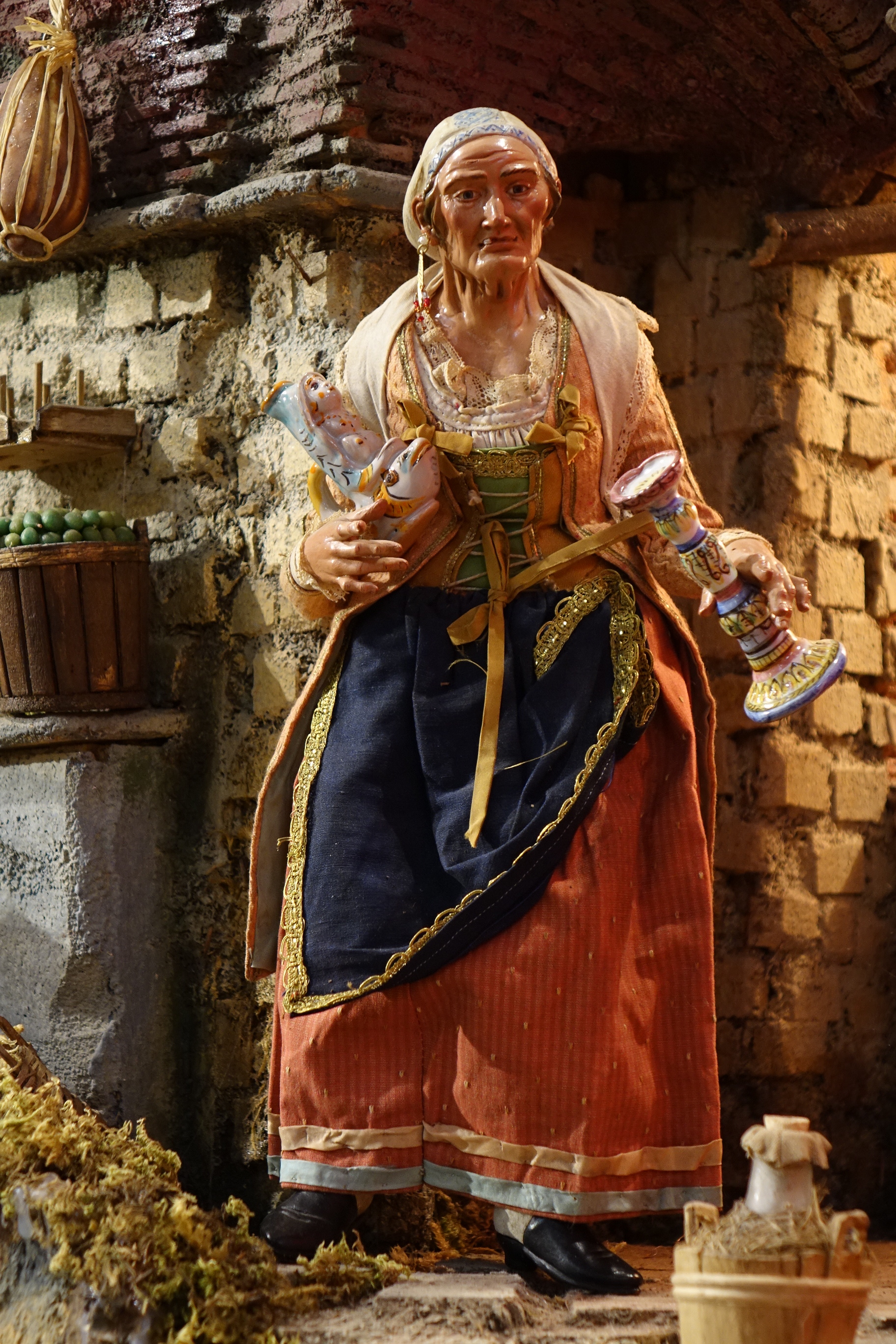
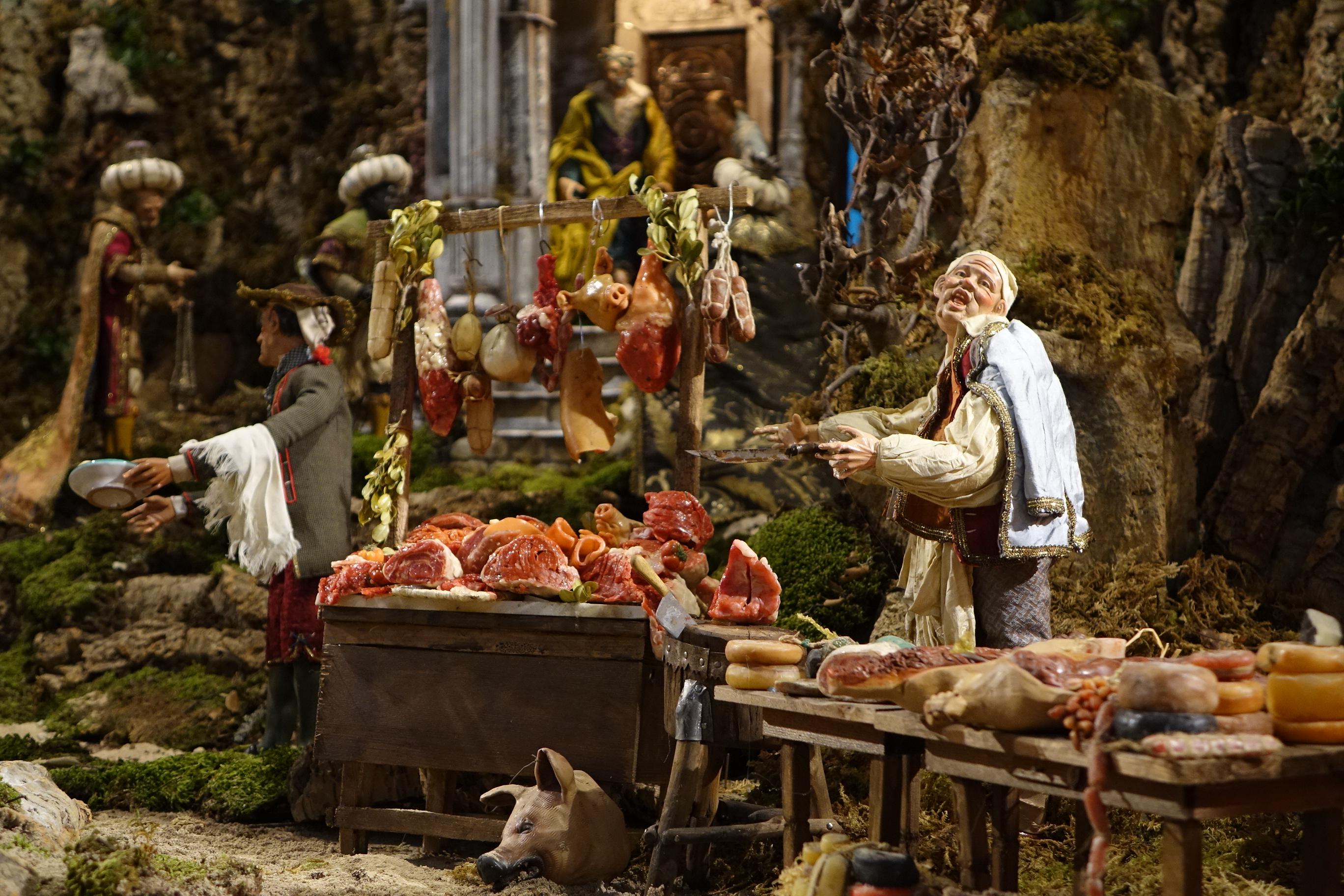
No detail too small: the intricate spectacle of a Neapolitan Nativity

In a large number of countries the Nativity scene (Belem in Spain, Presepe in Italy) is as big a part of the Christmas festivities as the lights switch-on in London’s Oxford Street or the Christmas tree at the centre of a family home. Having gone to Catholic school as a boy, I still remember the prominence with which the Nativity set was placed in the front entrance, and how perplexed I was (and remain) that the teachers remained insistent that the Jesus figure should not be placed in the manger until Christmas Day: but this is a school I thought – who on earth is going to see it during the holidays?

Despite the fact that the tradition of setting out a nativity is centuries old in many a catholic country, the general belief is that it all began in Italy where St Francis of Assisi is credited with creating the first nativity scene in 1223 at Greccio, Italy. There he is said to have recreated the birth of Christ through placing people dressed in the various nativity roles in a cave. A tradition was born, and perhaps for this reason, it is arguable that Italy has remained the predominant master of the nativity craft. This is not least in Naples where, in the famous Via San Gregorio Armeno, the entire street is given over to the craftsmen who make every intricate detail of the characters and setting of the Neapolitan presepe. 

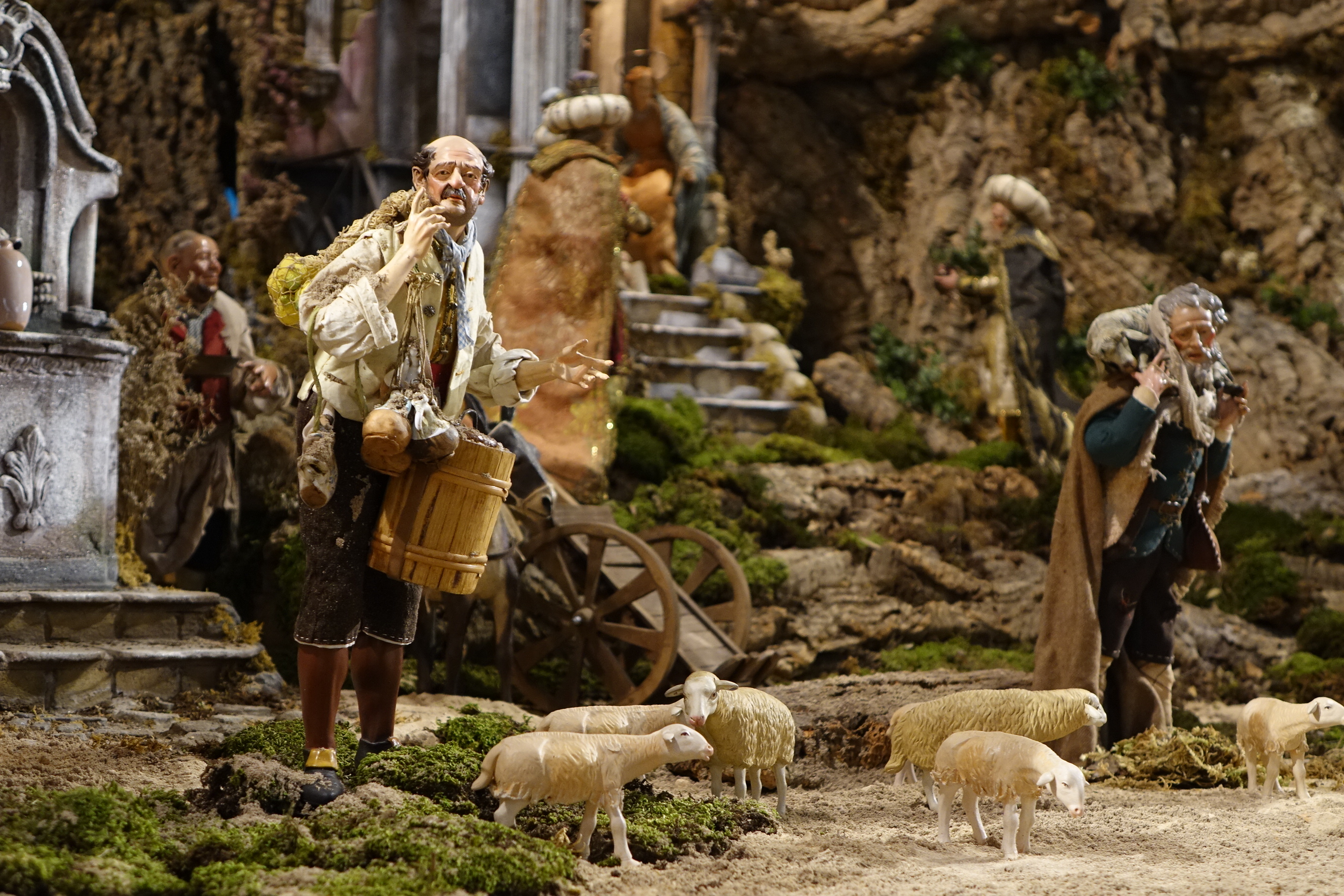
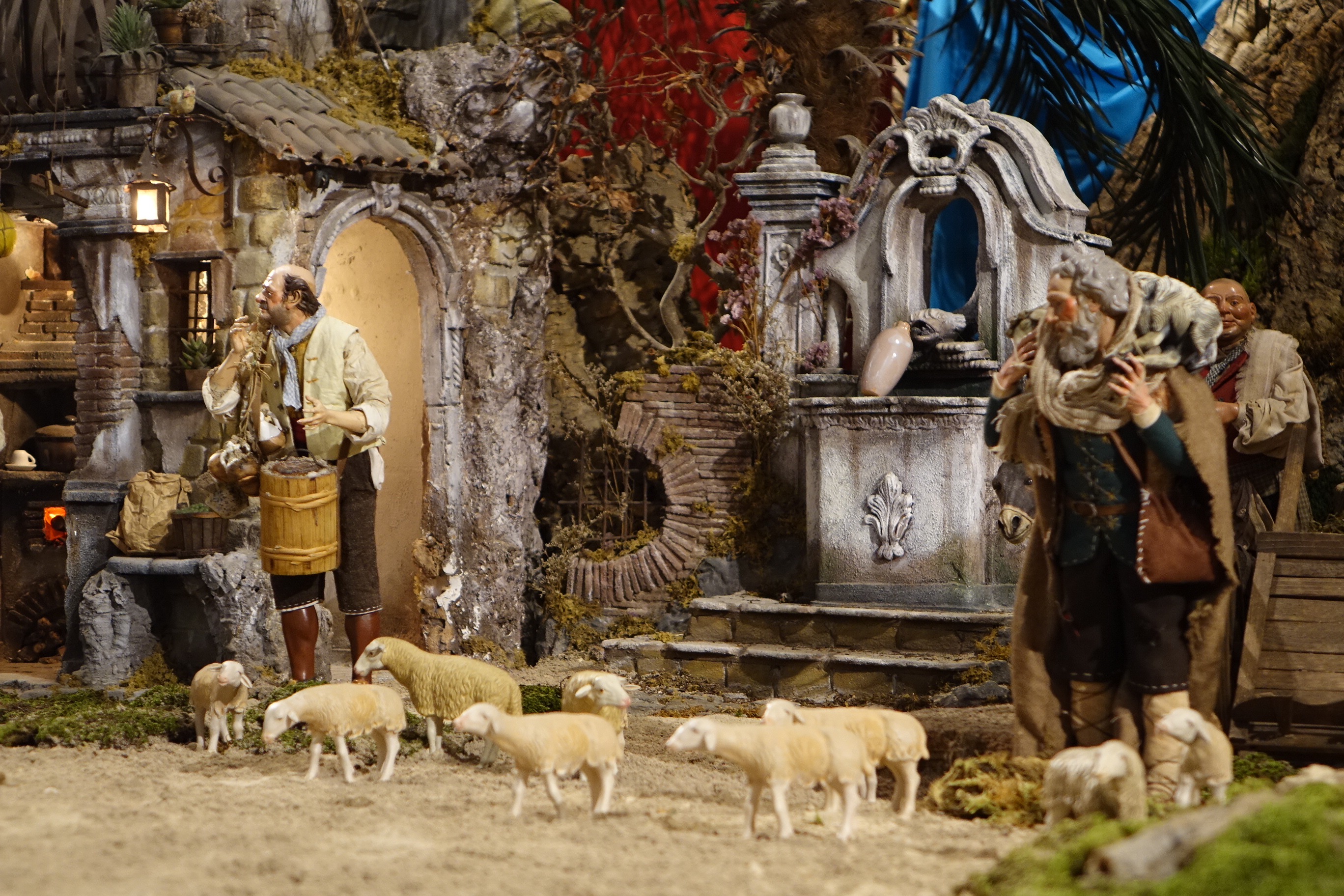
DSC02526 DSC02529 DSC02532 DSC02548 DSC02545 DSC02560 DSC02558 DSC02535

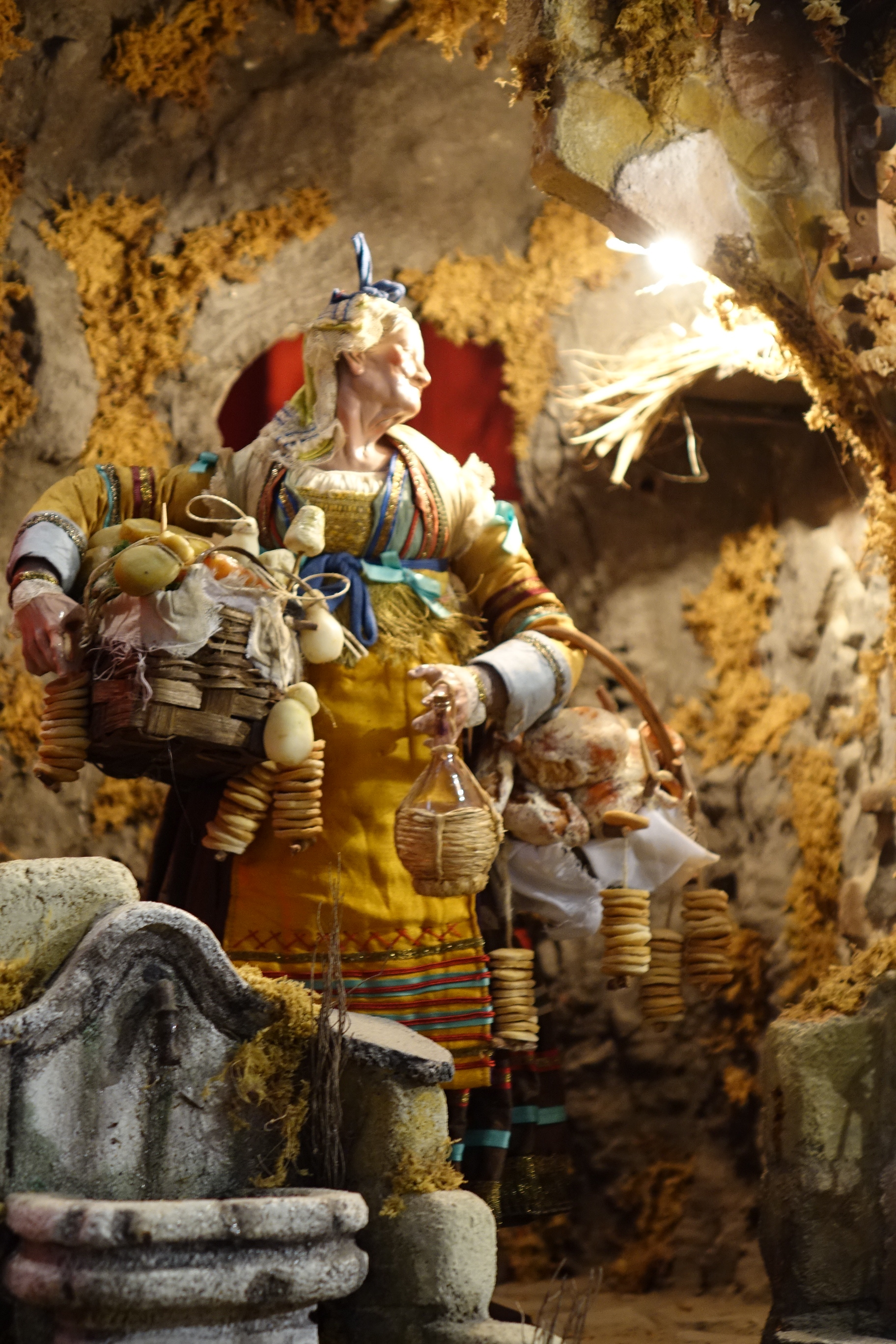
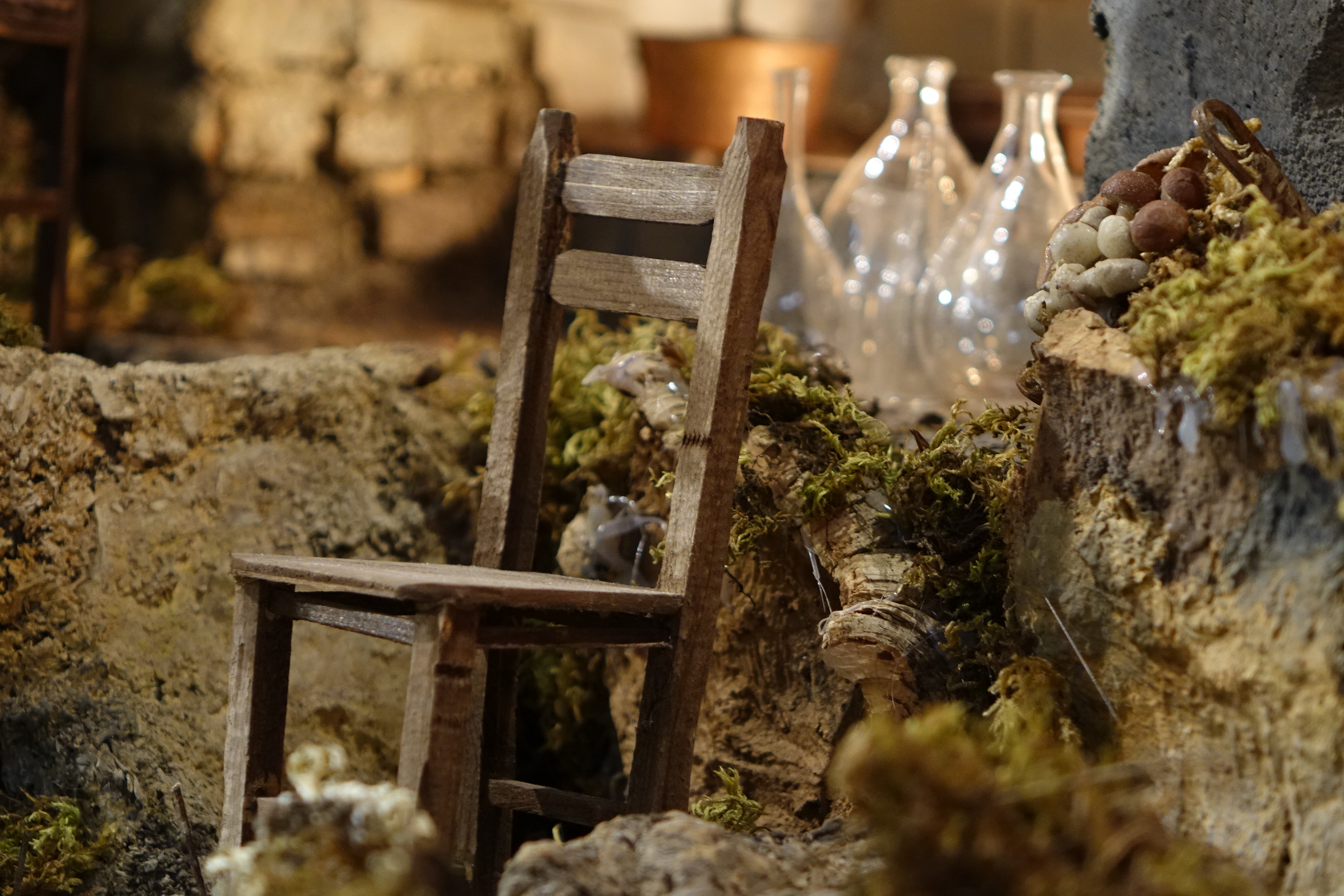
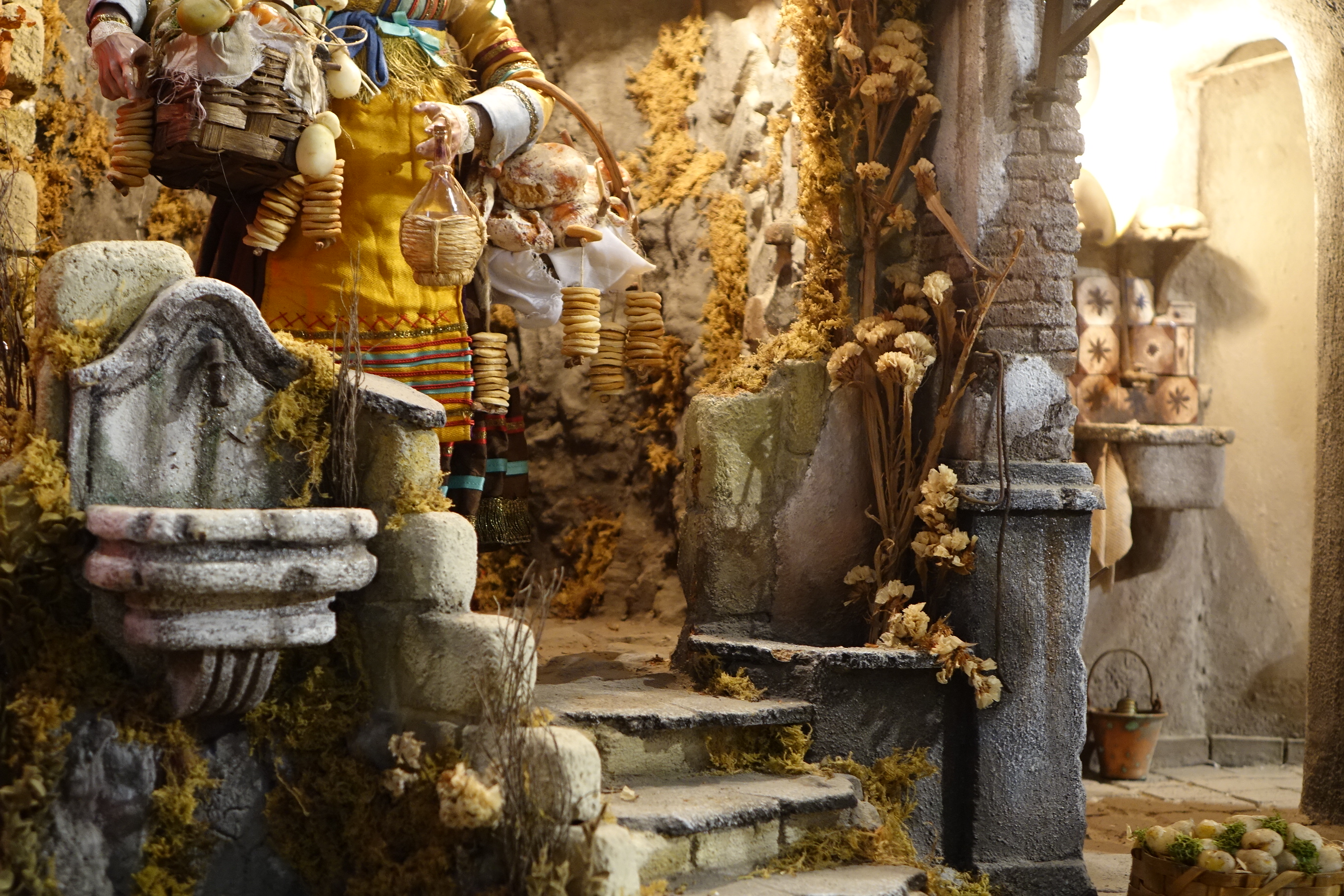
While last Christmas I braved the crowds who had crammed their way up the dark side streets of the Spaccanapoli to get a view of this famous Neapolitan craft, this year I have had the fortune to see their masterpieces at far closer a proximity. For here in Palma de Mallorca, but 2 minutes from my flat in an inconspicuous church on the Carrer de San Miquel, there is a Neapolitan gem of its own. Set out across a mountain plane simulated from the supple bark of a cork tree, and comprising a phenomenal range of architectural features and carefully characterised figures, this Nativity demonstrates why the Neapolitan craft remains so renowned. Not a single detail of street life has been missed, from the slimy pig’s head sold by the Butcher, to the bag of eggs swung by the old housewife. What tickles me are the gruesome details of their lined faces, and their masterful expressions – so full of personality you’d swear they were alive. 

DSC02567 DSC02564 DSC02562 DSC02555 DSC02537 DSC02540 DSC02527

In fact Palma de Mallorca holds the nativity or Belem dear to its heart, with a trail tracing once fantastic Belem to another across the city. But few could deny that the real brilliance of Belem craft has been mastered by the Neapolitans, as the nativity photos above demonstrate so well. 

All photos and written content are strictly the copyright of Nicholas de Lacy-Brown © 2014 and The Daily Norm. All rights are reserved. 

Two Weekends: Thinking about Cappuccino

It only takes a mere moment for your life to change forever. December 2012 taught me that much – a life obliterated – or May 2008 – when another’s mistake had irreversible consequences for the rest of my days. Yet if those moments of change taught me anything, it was that life is too short to stay where you are comfortable but unhappy, where monotony sets in and where you feel as though your train is trundling steadily up the wrong path. 

Earlier this autumn the chance to change paths and find happiness in change occurred to me very suddenly. It only took an email to set the new track in motion, and only two weekends for a decision to be made. For it was in those two weekends that I both attended an interview that would take me on a new path, and in which I made the ultimate decision, standing at the crossroads, that this new path was right for me. 

Two weekends: Thinking of Cappuccino is my newest oil painting, and it tells the story of how my life is all about to change: how I have accepted the offer to become Artistic Director of a global company bearing the name of Cappuccino and stationed within the sunny shores of Mallorca in Spain, and how in taking that offer it will mean moving from London, to Palma. 

Two Weekends: Thinking about Cappuccino (2014 © Nicholas de Lacy-Brown, oil on canvas)

Two Weekends: Thinking about Cappuccino (2014 © Nicholas de Lacy-Brown, oil on canvas)

But the painting came to me in Italy, sitting by the seaside in Donoratico in Tuscany, home of my partner’s family. Sitting at a cafe by a sea so still it might have been a photo, with our own breakfast of cappuccino and crostata (jam tart) on the table, all we could think about was a move to Mallorca, despite breathing the pine tree perfumed air of Tuscany, and drinking in the beauty of that Tuscan beach before us. 

The obvious symbols came to mind: the lifeguard’s hut was the new sanctuary that a home within the medieval streets of Palma de Mallorca would offer us; through the window we looked onto the famous skyline of Palma seen behind the green shutters that are famous in both Tuscany and Mallorca. The lifeguard’s ring has given salvation to the artist within me, represented by the manakin sitting on the sand: it is not so comfortable a position as the crostata tart sitting securely on a blanket, but this tart is the law, and within the confines of its pastry lattice, the blood of my life and career development is congealed and imprisoned, like a soul left out of the fridge too long. 

And of course at the heart of it all is the Cappuccino. No longer just froth and espresso

I think it was in that moment, and in that second weekend of two, that we finally made up our minds to go, to take the leap of faith, to have an adventure and to change our lives. Now the move is in full swing, and by the end of this month we should be reinstalled in Mallorca. Which just goes to show that life can change in a moment. 

© Nicholas de Lacy-Brown and The Daily Norm, 2001-2014. Unauthorized use and/or duplication of the material, whether written work, photography or artwork, included within The Daily Norm without express and written permission from The Daily Norm’s author and/or owner is strictly prohibited. Excerpts and links may be used, provided that full and clear credit is given to Nicholas de Lacy-Brown and The Daily Norm with appropriate and specific direction to the original content. For more information on the work of Nicholas de Lacy-Brown, head to his art website at www.delacy-brown.com

The Daily Norm Photo of the Week: Il Grillo Parlante

Whenever The Daily Norm focuses in on a particular photo, that photo is more often than not a nature shot. For there is nothing quite so beautifully complex as the work of mother nature, especially the little beasties that she has gathered around the earth. And this week’s offering is no exception, for following hot on the heels of my Tuscany exposé is a spectacular little resident of the region who we happened to meet one sunny morning over coffee in the town of Campiglia Marittima. Meet Jiminy Cricket himself, a right royal example of this bandy legged wonder, sat aloofly in a lush leafy plant neighbouring our table as we sat nonchalantly sipping cappuccino in the sun.

With his large oval eyes casting side glances at the viewer, and dappled wings whose complex pattern looks like a cracked ceramic tile or a Roman mosaic, this insect is truly a beauty, and I was delighted to achieve this closeup without the said spectacle jumping swiftly out of sight. But I also love other aspects of the photo too, such as the soft defocus of the cobweb in the immediate foreground which has the appearance of rainbow electrics shooting through the air.

DSC08139

It seems appropriate that this marvellous cricket should have been found in amongst the verdant landscape of Italy, for Jiminy Cricket himself, perhaps the most famous cricket of them all and illustrated character of Disney’s Pinocchio was of course based on a character of Italian author  Carlo Collodi‘s original Pinocchio tales, a character whose simple name, The Talking Cricket (Il Grillo Parlanate) takes the name of this post. 

Interpretation No. 11 – Castagneto Carducci

Last week’s Daily Norm was a glorious panoply of Tuscan views, scenes and sensations and it’s not quite over yet. For hot on the heels of my Tuscan weekend comes my 11th interpretative landscape – part of my Interpretations collection which I began some three months ago after being inspired by the sumptuous landscapes and cubic shapes of Italy’s Amalfi Coast. 

Back in Italy this September, and one glimpse up through the vine-packed fields of Donoratico to the emerging landscape of Castagneto Carducci made me realise that this pretty hill top town was an obvious contender for an interpretative overhaul. For with its tightly packed cluster of pastel coloured houses all set up on a Tuscan hill, Castagneto offers a wonderful synthesis between petit-urban development set amidst a stunning landscape, which is exactly what the Interpretations series sets out to emulate. And I think this 11th Interpretation is probably one of my favourites of them all.   

Interpretation No. 11 - Castagneto Carducci (2014 © Nicholas de Lacy-Brown, gouache on paper)

Interpretation No. 11 – Castagneto Carducci (2014 © Nicholas de Lacy-Brown, gouache on paper)

© Nicholas de Lacy-Brown and The Daily Norm, 2001-2014. Unauthorized use and/or duplication of the material, whether written work, photography or artwork, included within The Daily Norm without express and written permission from The Daily Norm’s author and/or owner is strictly prohibited. Excerpts and links may be used, provided that full and clear credit is given to Nicholas de Lacy-Brown and The Daily Norm with appropriate and specific direction to the original content. For more information on the work of Nicholas de Lacy-Brown, head to his art website at www.delacy-brown.com

Sunset on Tuscany

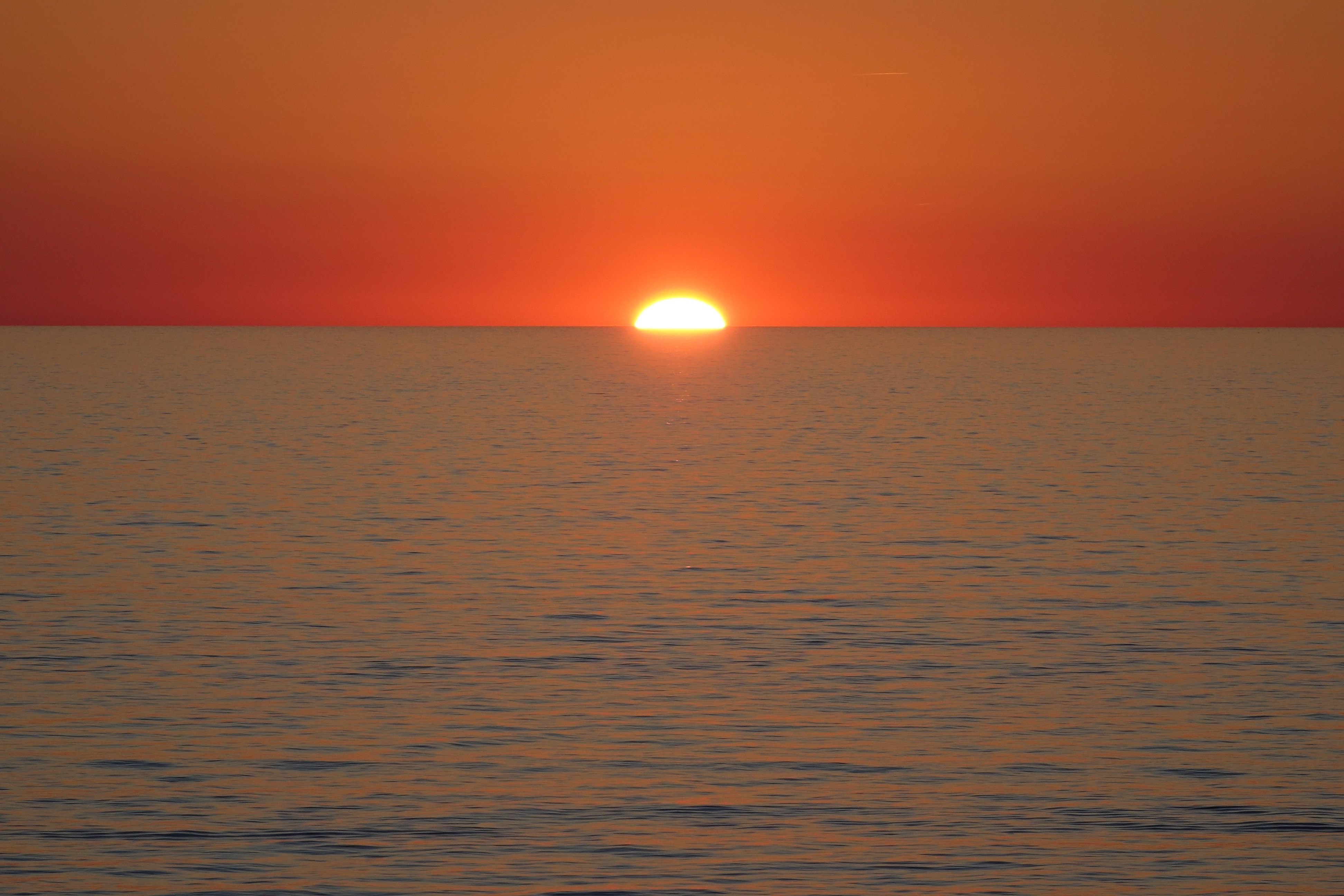
Just as this week of Tuscany posts began with an essay on a sensational sunny morning, when the sun was slowly rising over the calmest of seas, so now it ends with the most sumptuous of sunsets, as that round ball of fire on which we are all so inherently reliant made its 180 degree course through our northern hemisphere before dropping gracefully beyond the reach of the equator to pursue a further path on the other side of the world. 

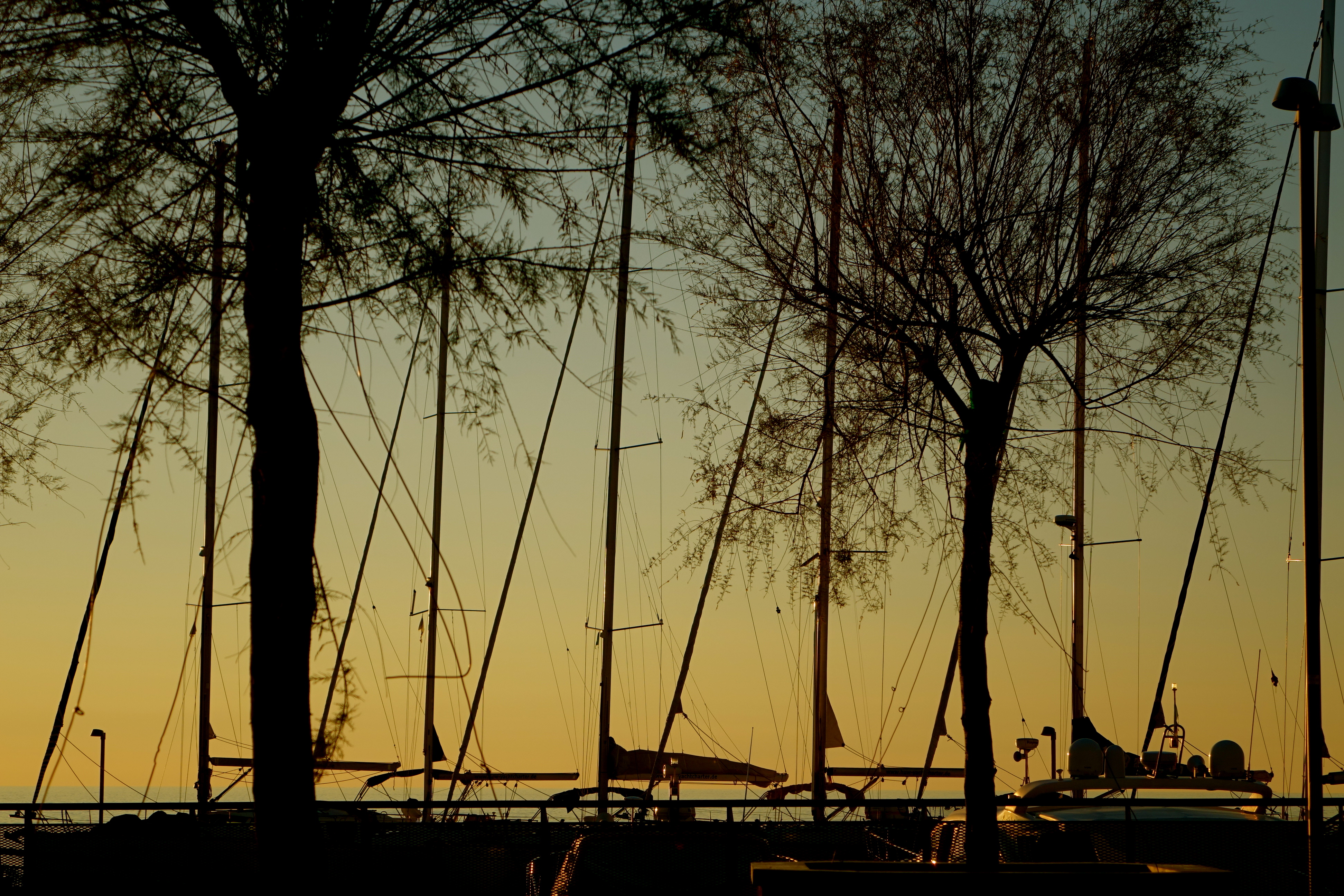
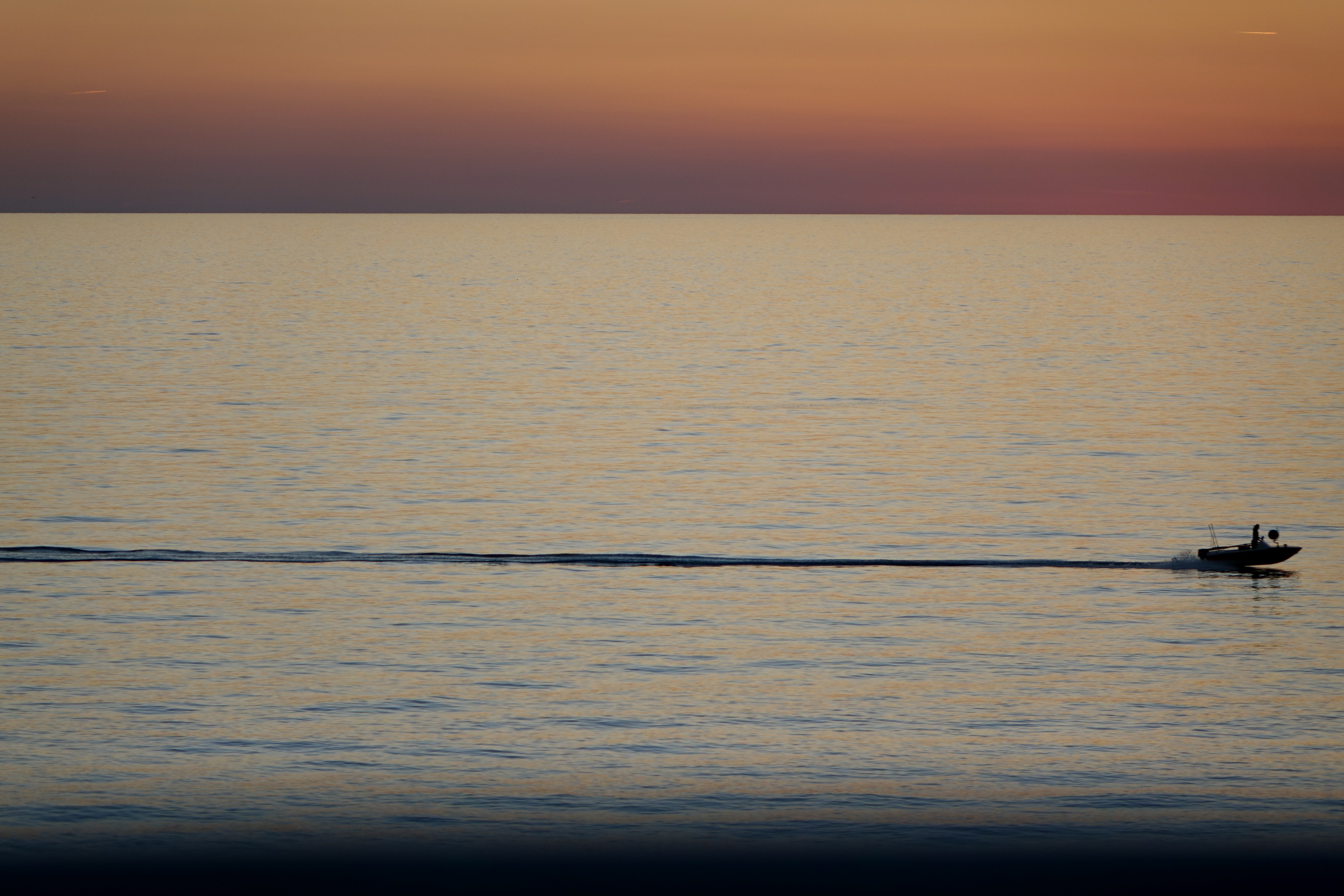
As the Tuscan coastline universally faces west, wherever you are on that beautiful stretch of pine tree lined coast, you are guaranteed to be treated to the most stunning of sunsets, whatever the time of the year. Over just a short weekend in Tuscany, we witnessed three incredible shows, and with each the panoply of colours striding through the sky seemed to increase. From a lemon yellow deepening through to mango, when the sun eventually plunged beneath the horizon, the sky was shot with the most exquisite shades of rose and raspberry ripple so that, by the time night descended, the sky had danced its way through a cabaret of colours, inspiring fruit filled cocktails and artists aplenty in its wake. 

DSC08364 DSC08393 DSC08355 DSC08414DSC08359

But just as the sun had to set, a little earlier each day, so too did the time have to set on our little trip to Tuscany. For the nature of a weekend is the inevitable onset of work the following Monday, and with this damned thought in mind, we made our long way back, besides a fading purple sky, along the dark winding road to Pisa. 

All photos and written content are strictly the copyright of Nicholas de Lacy-Brown © 2014 and The Daily Norm. All rights are reserved. Unauthorized use and/or duplication of the material, whether written work, photography or artwork, included within The Daily Norm without express and written permission from The Daily Norm’s author and/or owner is strictly prohibited.
Tuscan Town Triple: Numero Tre – Monteverdi and the Vineyards of Donoratico

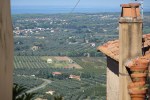
Monteverdi Marittimo is, on the map at least, mere kilometres from the little Tuscan Town of Castagneto where we journeyed on yesterday’s Daily Norm. But as the name suggests, Monteverdi rests atop a very green mountain, and the map does little to betray the extensively meandering length of road which takes a good half an hour to wind round and round the ascent of that mountain to reach the town on the top. As you do so, it is interesting how the air becomes yet clearer still, and the surroundings greener and more forested than ever – this is after all the terrain of the wild boar and the various huntsmen who annually go in their pursuit. 

Upon our eventual arrival in this tiny town, the spirit and feel of the hunt was very much in the air. The town has an altogether more “gamey” feel to it. Take away the sun and you might have been in Scotland, its old stone cottages and streets looking somewhat hardened by the elements. In fact I half expected to find stags heads and hunting rifles at every turn. Instead I found a atypical Tuscan town metamorphosed into an altogether more robust version of its normal romanticised cliche.

DSC08572 DSC08586 DSC08569

Here the green shutters of the lower towns had been painted a muddy shade of brown; from here the views of the surrounding Tuscan countryside were so much lower down in altitude that they had become misty with distance. But despite the very beautiful results of old town against winning views, the town lacked soul. It’s streets were empty – we didn’t see a soul – almost as though the whole population had heard of an oncoming disaster, something of which we remained blissfully unaware, that is at least until we had lunch at the Trattoria del Pettirosso whereupon a disaster really did unfold – a gastronomic catastrophe of chewy badly cut ill cooked steak tagliata and a vino rosso so foully fizzy that the thousands of local wine growers around the town must have had a moments reflex of stomach-churned disgust. 

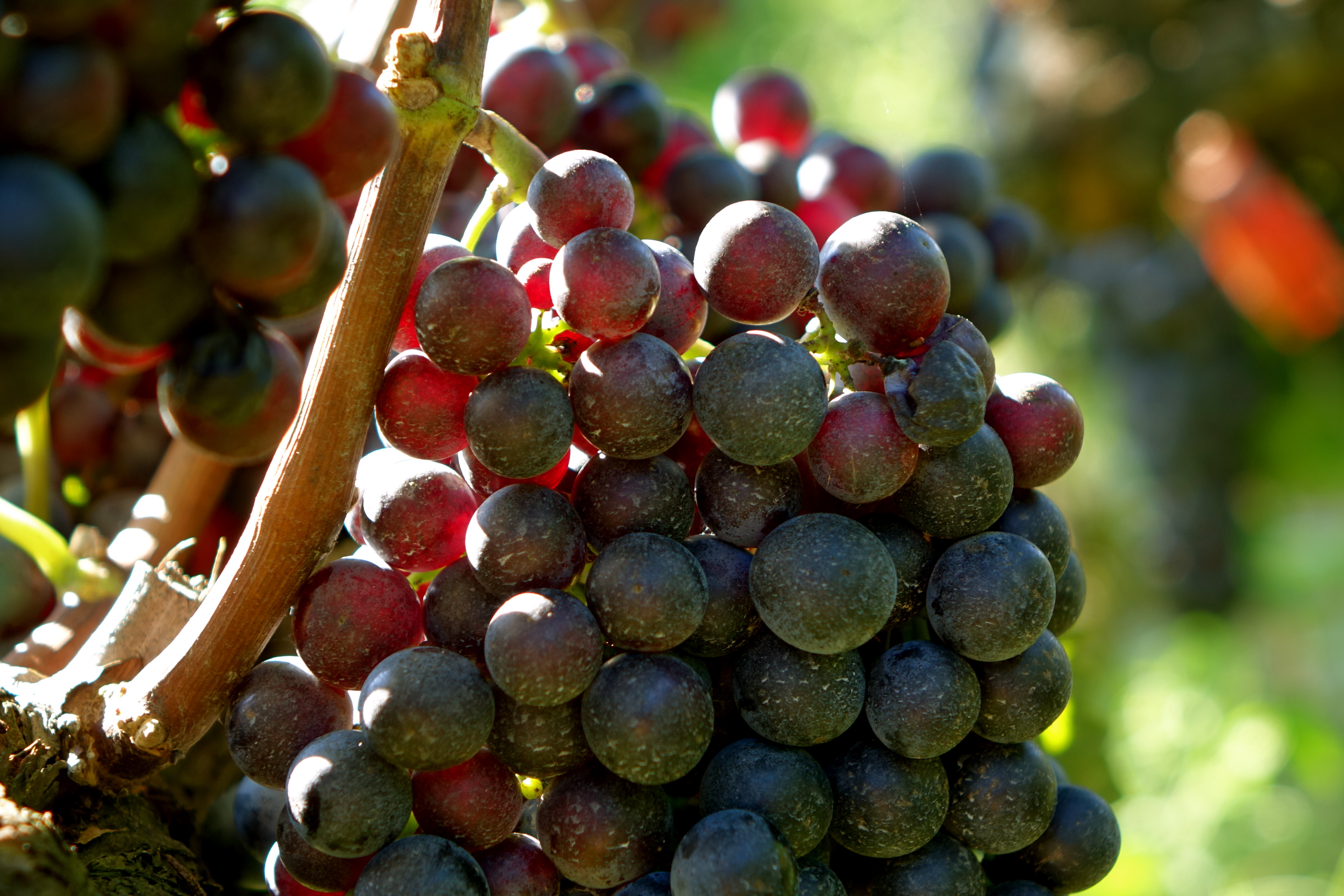
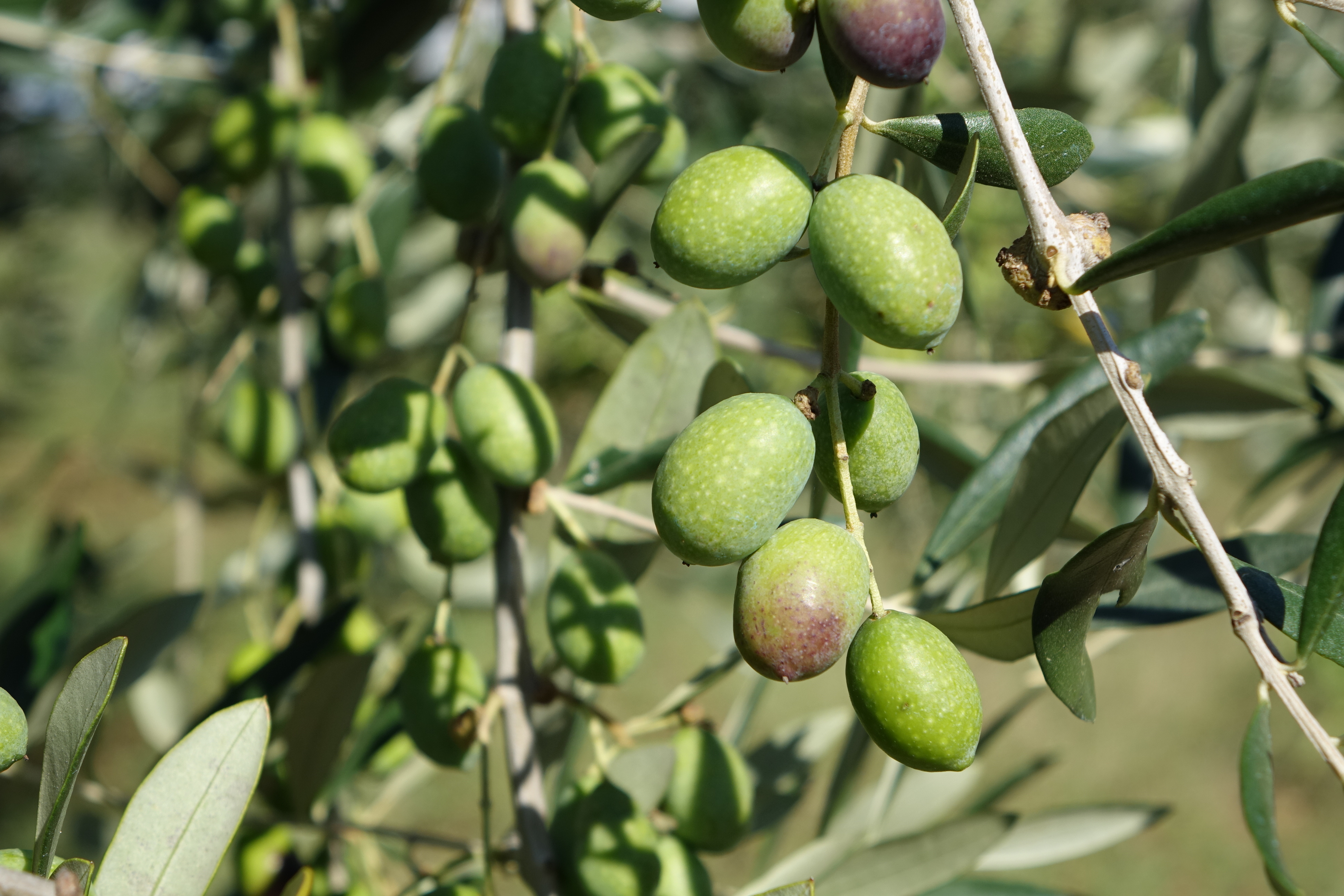
Still, there was no denying the abundance of verdant countryside between Monteverdi and the sea, and as we descended back to ground level, we had the opportunity to wander amongst olive groves and vineyards full of the plumpest sweet grapes, taking the opportunity to sneakily taste one or two – for any day now these will be picked and harvested to make their way into a hopefully far superior wine than the horror which had ensued at lunch. 

DSC08646 DSC08616 DSC08622

All photos and written content are strictly the copyright of Nicholas de Lacy-Brown © 2014 and The Daily Norm. All rights are reserved. Unauthorized use and/or duplication of the material, whether written work, photography or artwork, included within The Daily Norm without express and written permission from The Daily Norm’s author and/or owner is strictly prohibited.

Tuscan Town Triple: Numero Due – Castagneto Carducci

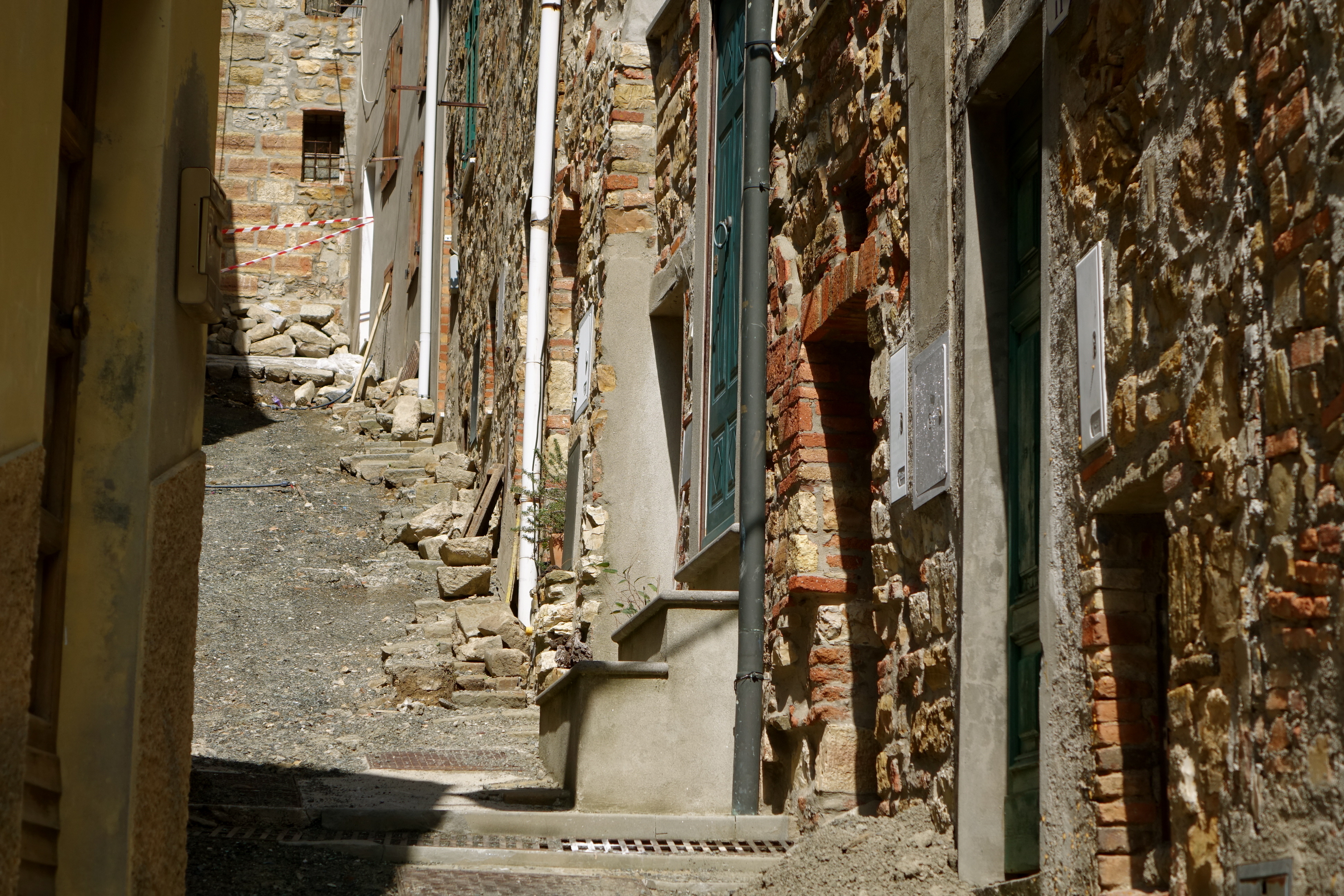
Castagneto Carducci has a grand ring to it, like an aristocratic stronghold or a line of infamous popes. It is in fact quite the opposite of grand – a tiny hill top town clustered in the heart of wine-producing Italy so small that cars are band from its centre, and it comprises only a handful of small winding streets. Happily for me, this delightful little town is but minutes from my partner’s family home, a more than pleasant drive meandering through vineyards and fields packed with ripely fruited olive trees. 

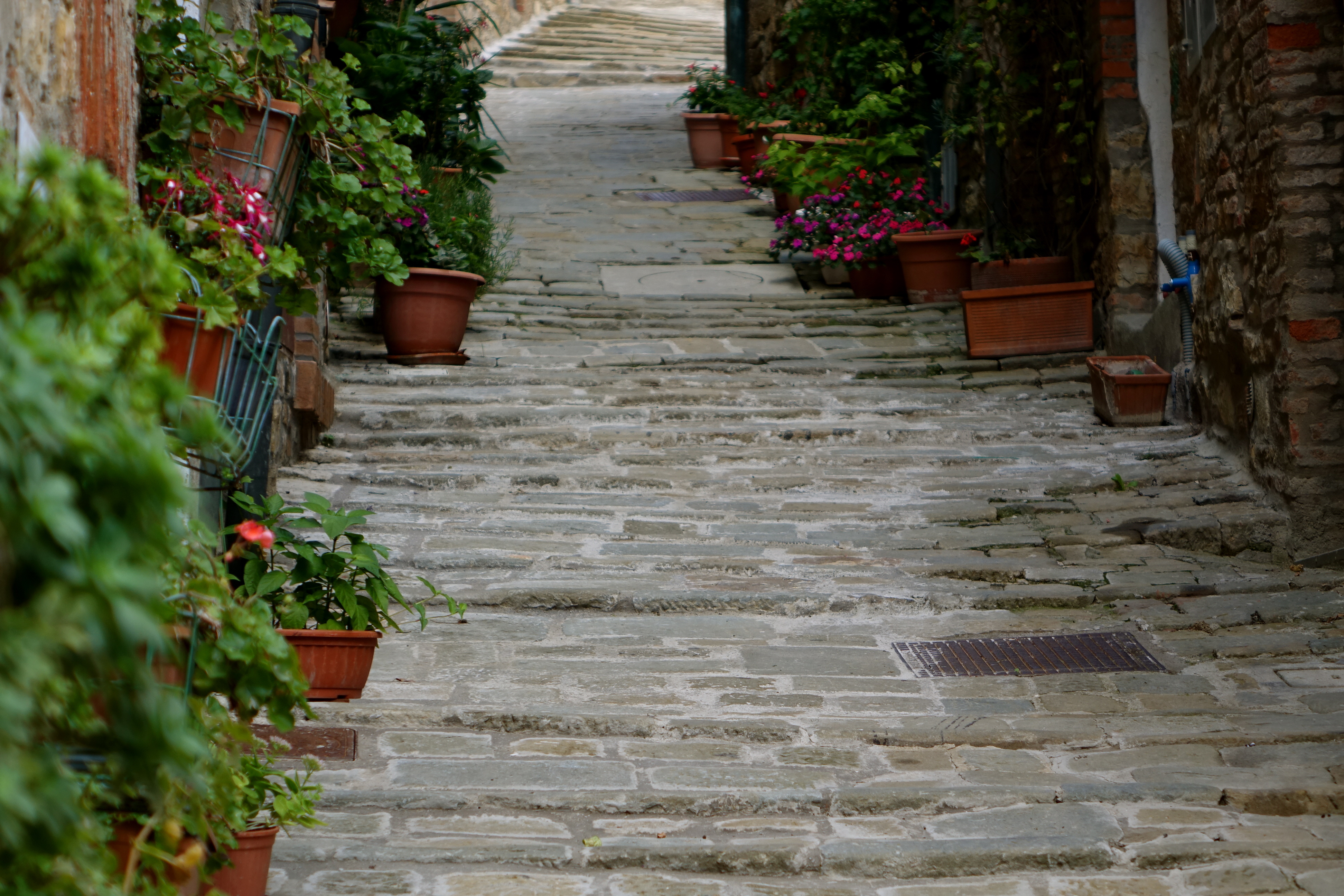
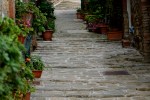
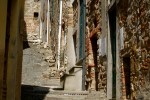
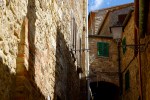
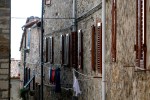
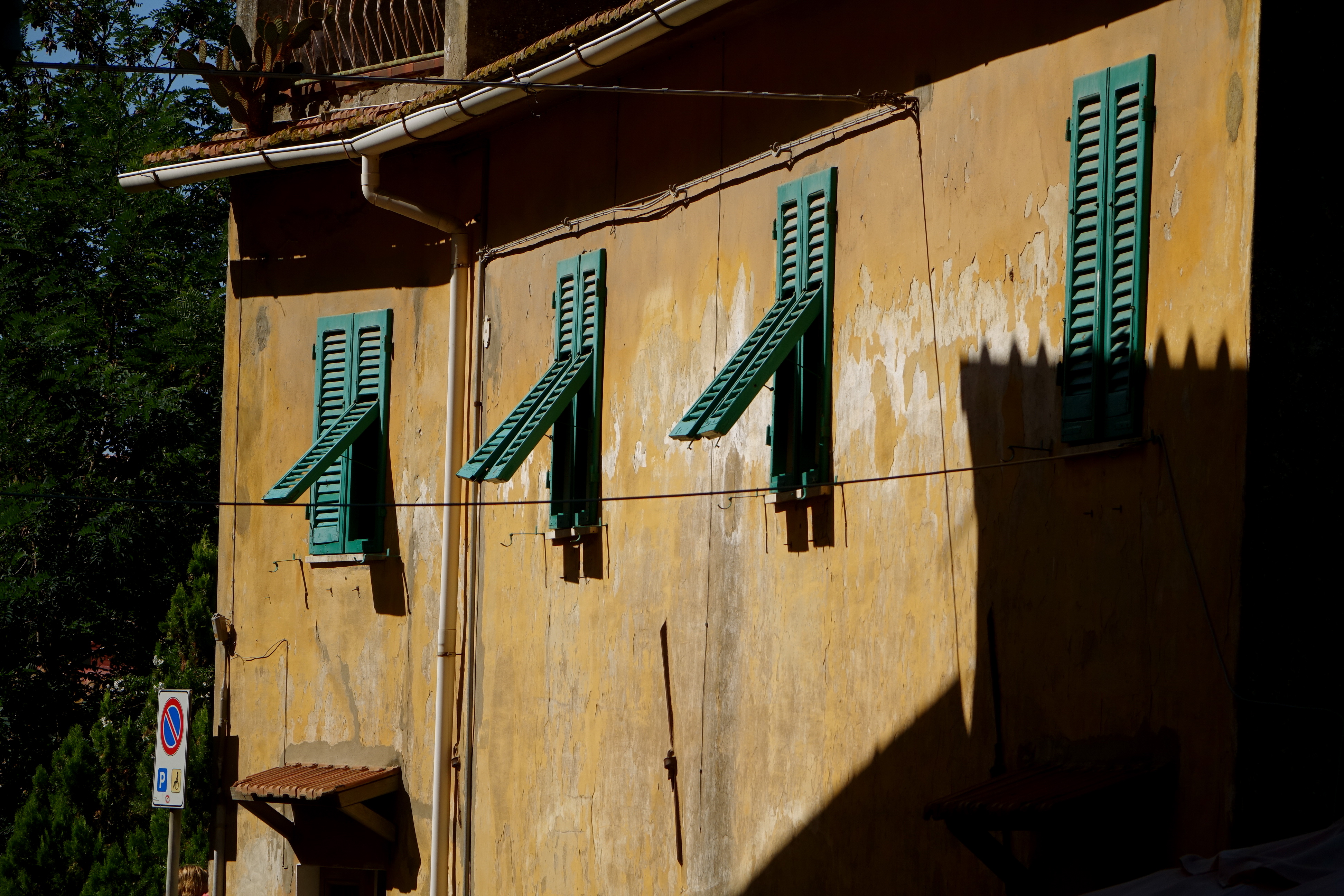
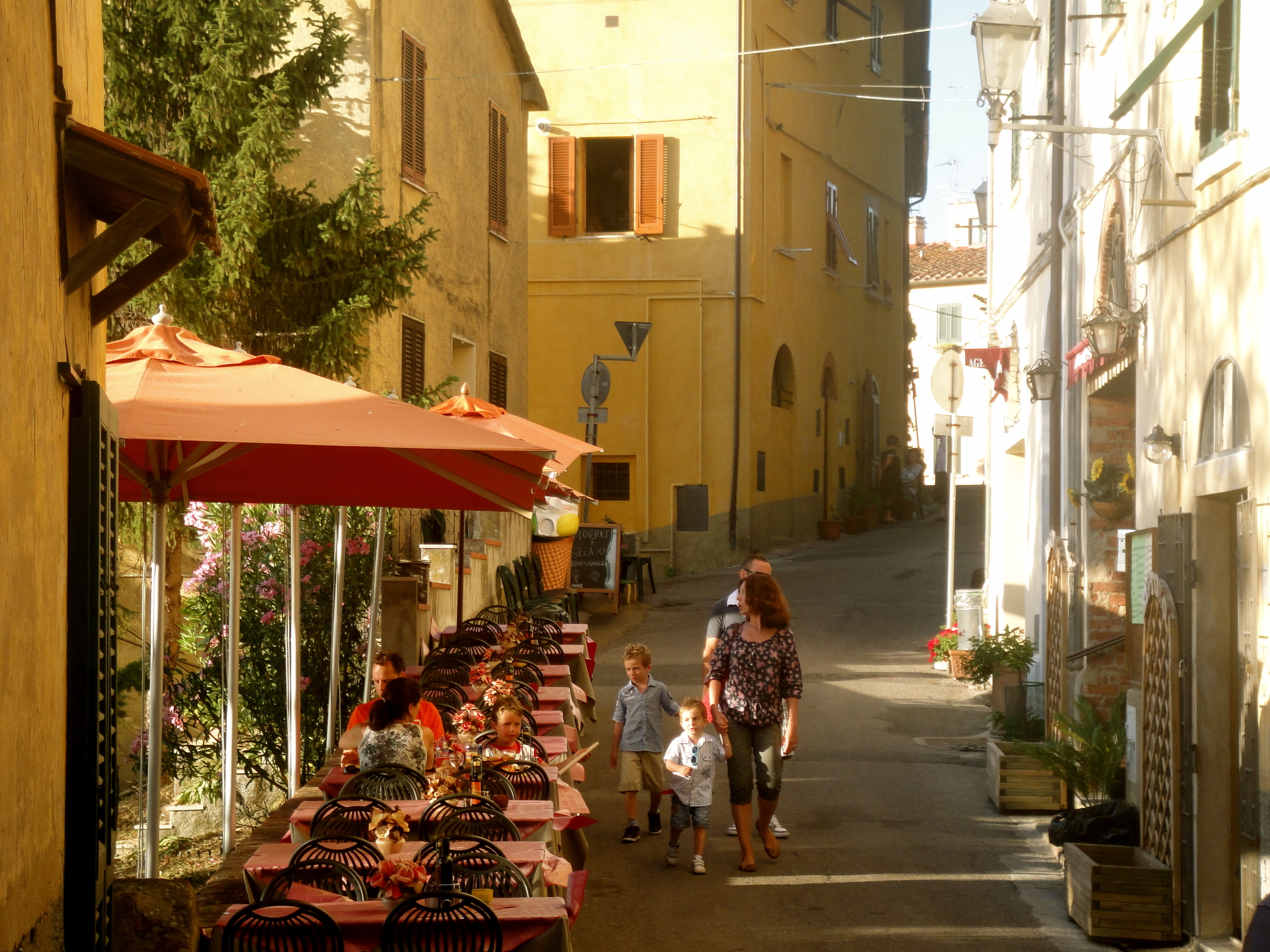
Up in Castagneto it’s like another world. Car-free, worry-free, the visitor to this little Tuscan gem can wander uninhibited in and out of little shops selling the best local produce, wines, oils, herbs and soaps before stopping in one of the charming little cafes for an aperol spritz or a morning prosecco. Having had a heavy night sampling only the best of the local Bolgheri vino rosso, we opted for coffees before indulging in the photography which this little charismatic enclave begs for, taking in the little side streets populated by sun-loving cats and chatting locals all set against a backdrop of sunny pastel houses and more of those iconic Mediterranean window shutters. The results of those amblings are the harvest festival of photos shown on today’s Daily Norm.

DSC08473DSC09394DSC09351DSC08472DSC09407DSC09408 DSC09367

But for those left salivating at this dip into the Elysium of Tuscany’s fields, your wait for the next picture-perfect treat will be brief: return to The Daily Norm tomorrow for numero tre in the Tuscan Town Triple. In the meantime here’s a gallery of what Castagneto does best.

All photos and written content are strictly the copyright of Nicholas de Lacy-Brown © 2014 and The Daily Norm. All rights are reserved. Unauthorized use and/or duplication of the material, whether written work, photography or artwork, included within The Daily Norm without express and written permission from The Daily Norm’s author and/or owner is strictly prohibited.