Skip to content

Posts tagged ‘London’

Hampton Court Palace, Part 2: Bipolar Palace

For me, Hampton Court Palace is all about its gardens, or at least it certainly was when I visited, and outside the fragile glass which history has maintained within the ancient woodwork of the Palace’s hundred-fold windows, the sun shone with a rare early glimpse of British Summer in Spring. Yet there is something unapologetically festive about the hallowed halls of the Tudor-come-Baroque palace, which I’m sure on a colder day would be all the more enchanting. For Hampton Court Palace has the power to ensnare like no other.

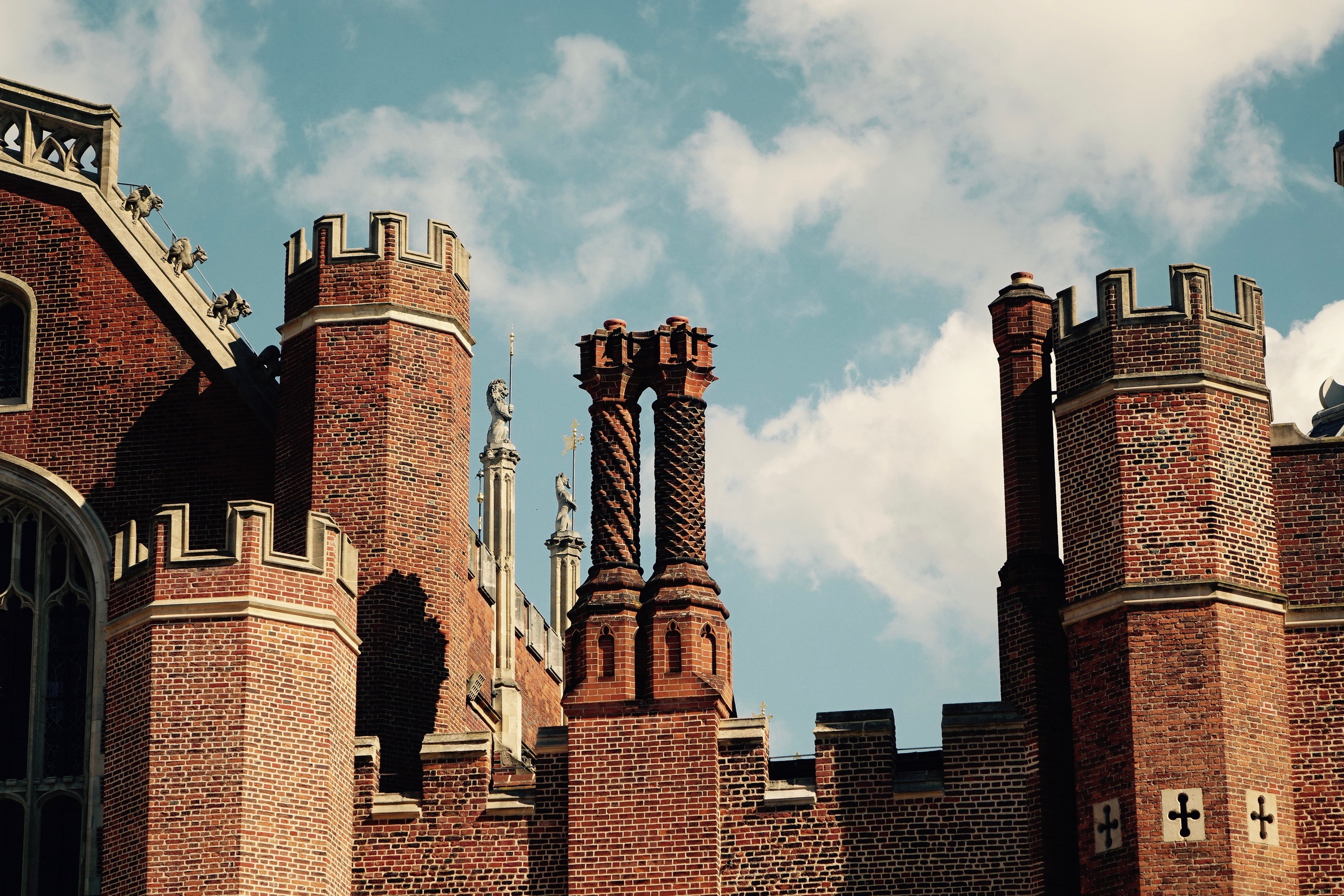
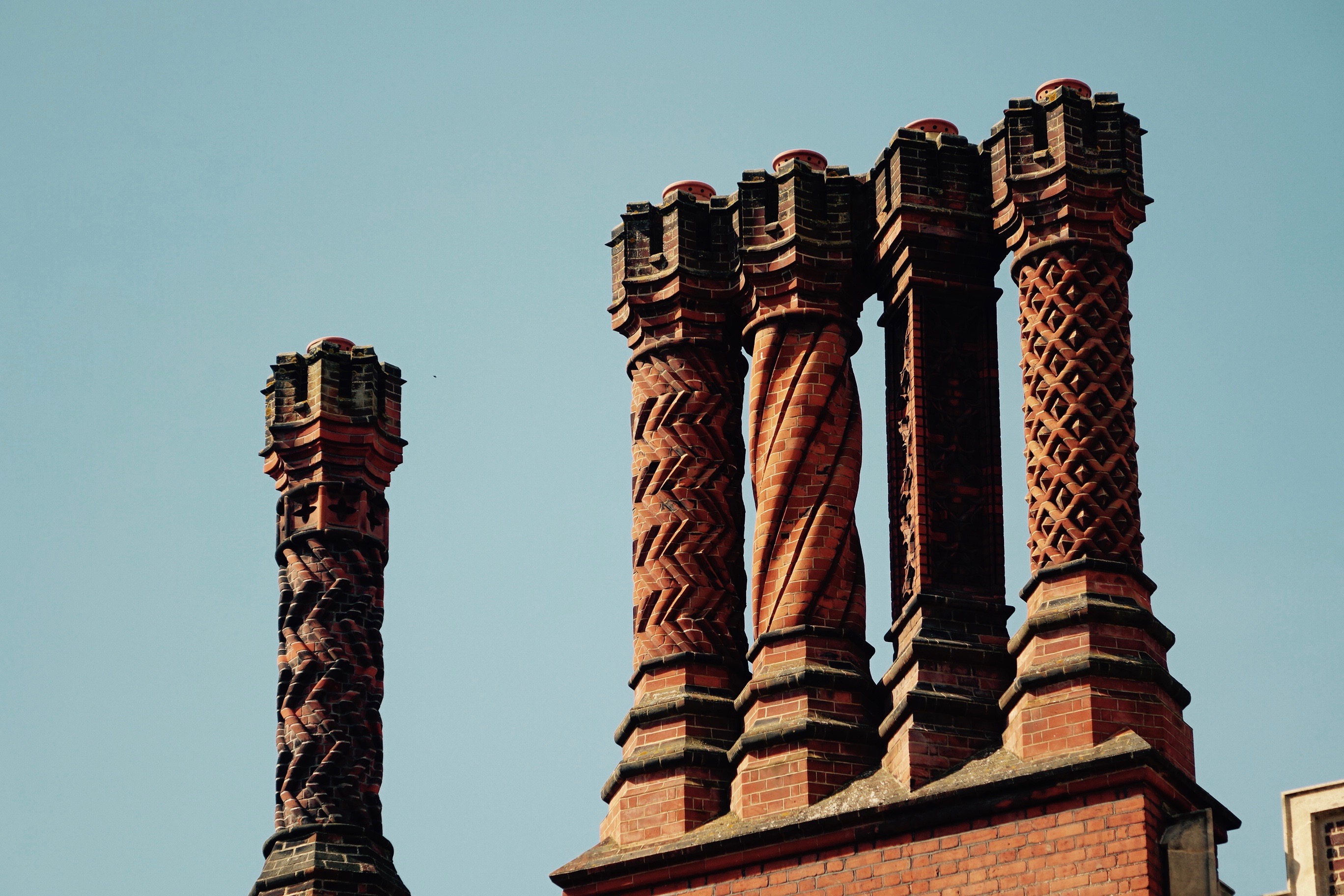
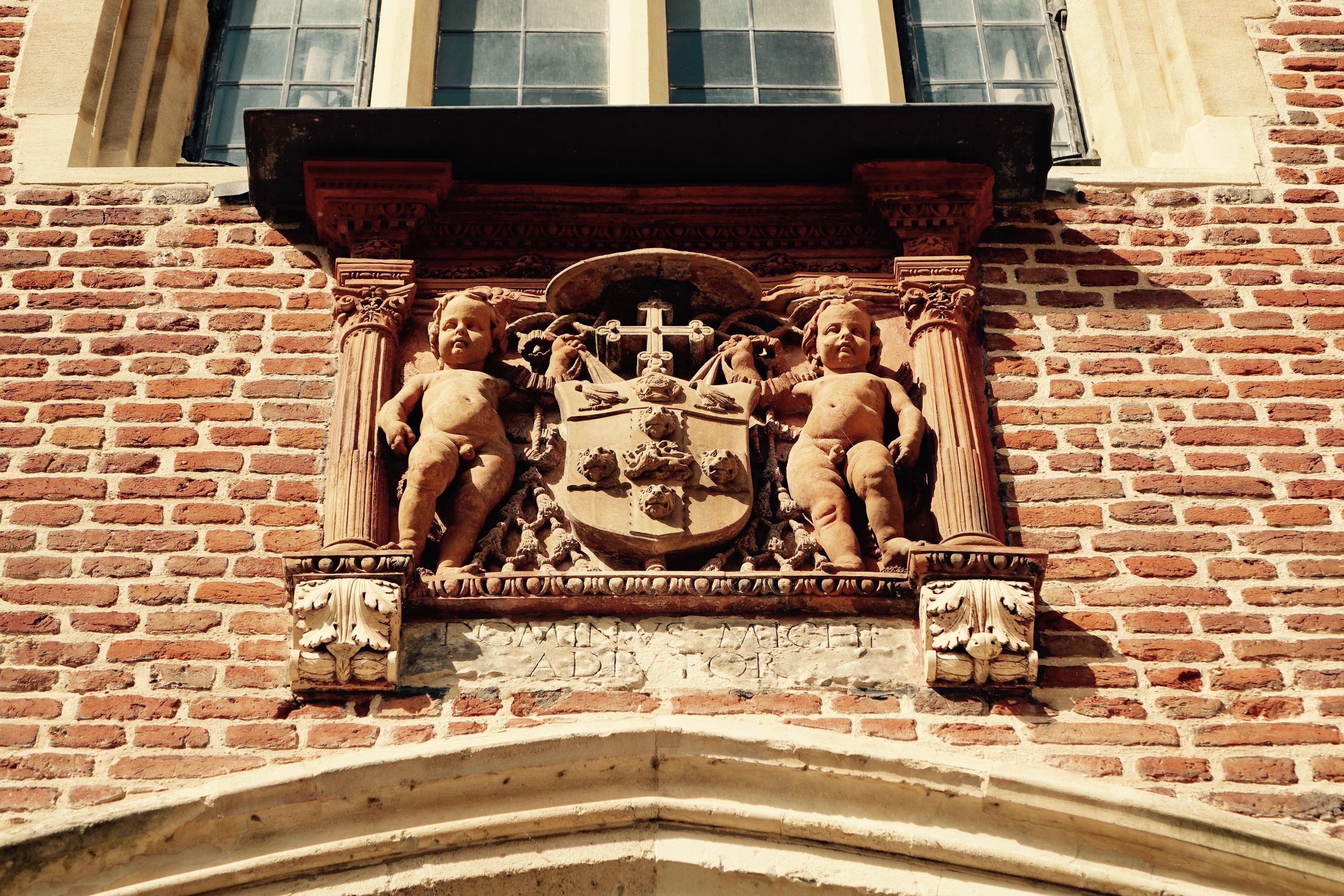
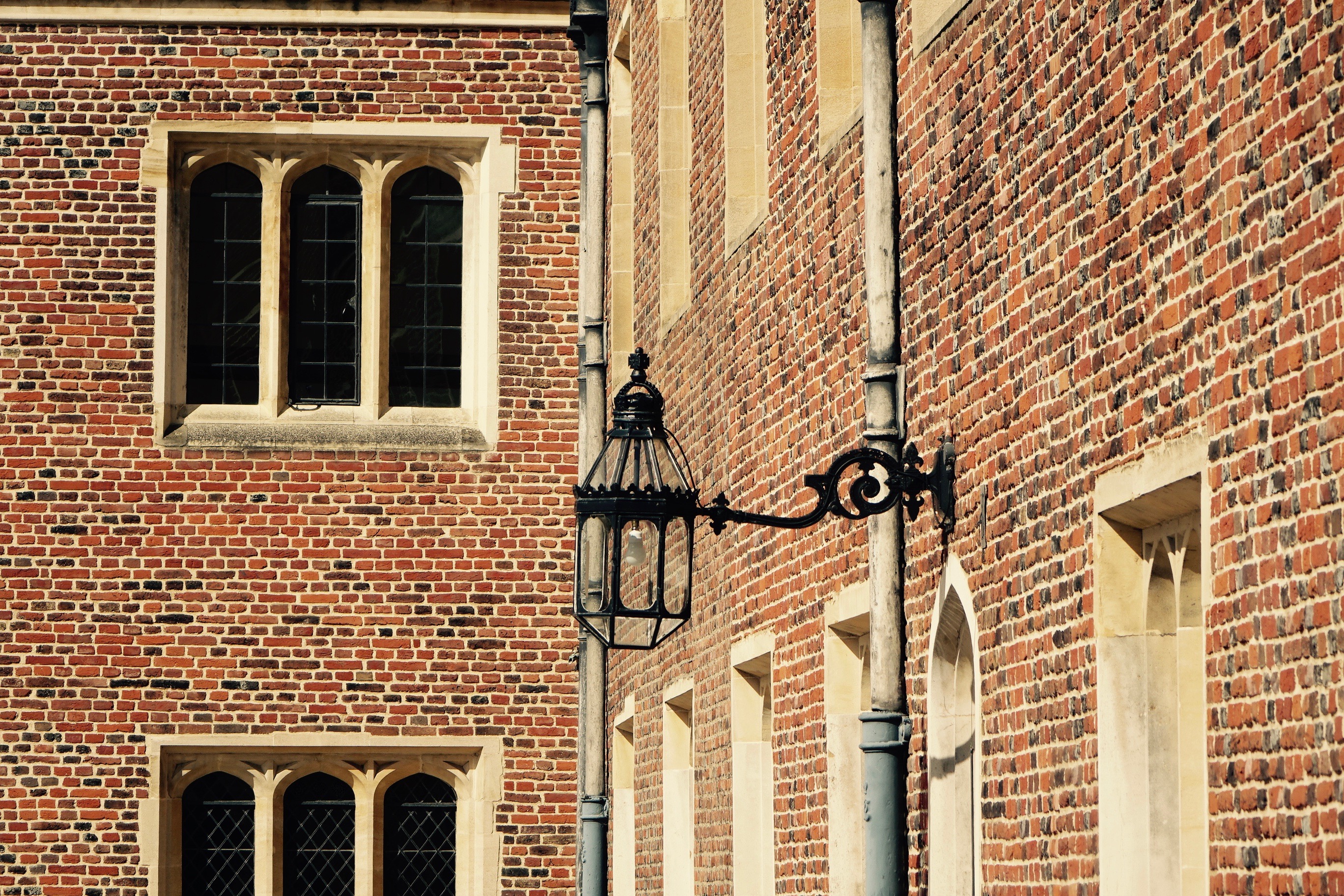
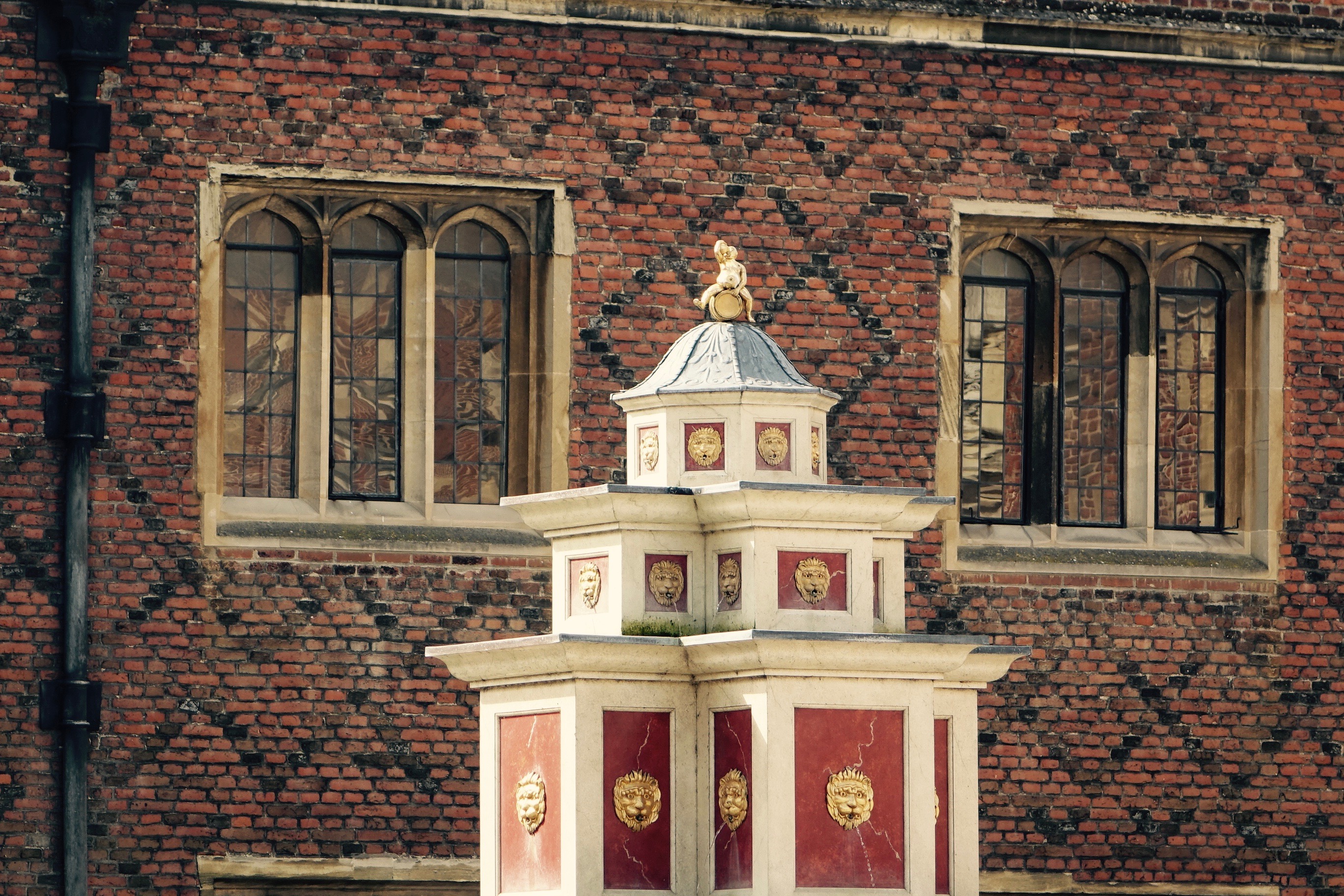
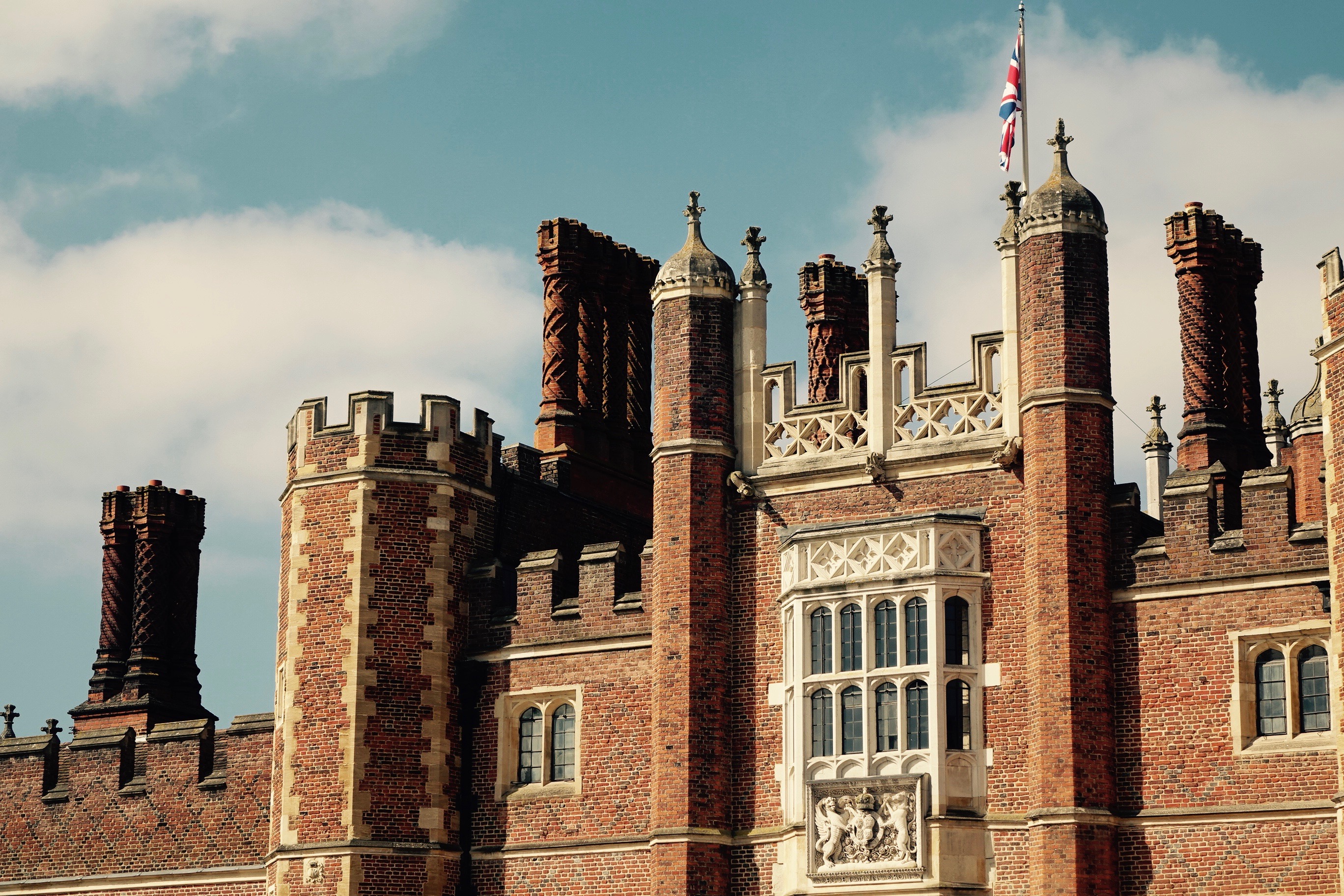
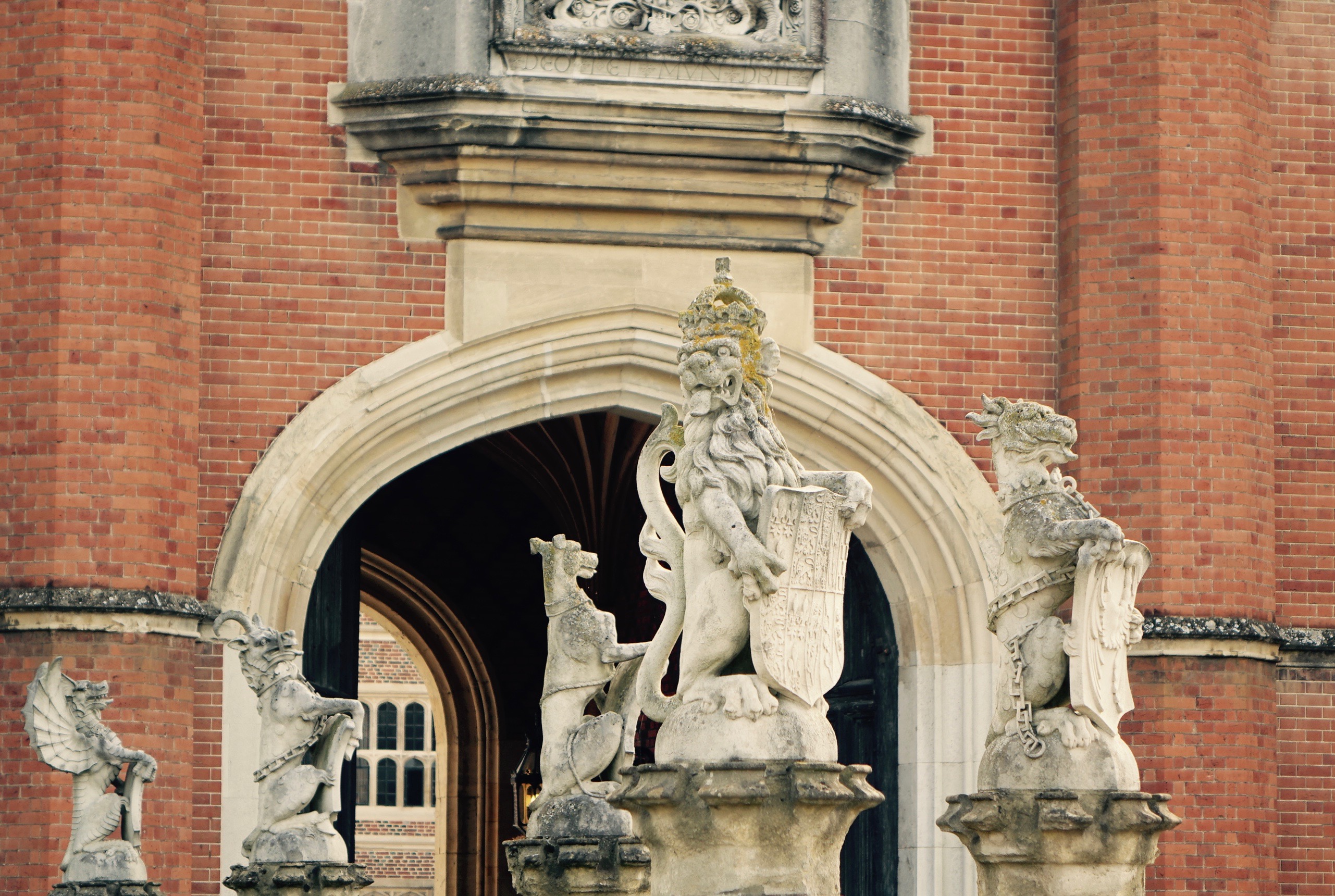
Tudor exteriors
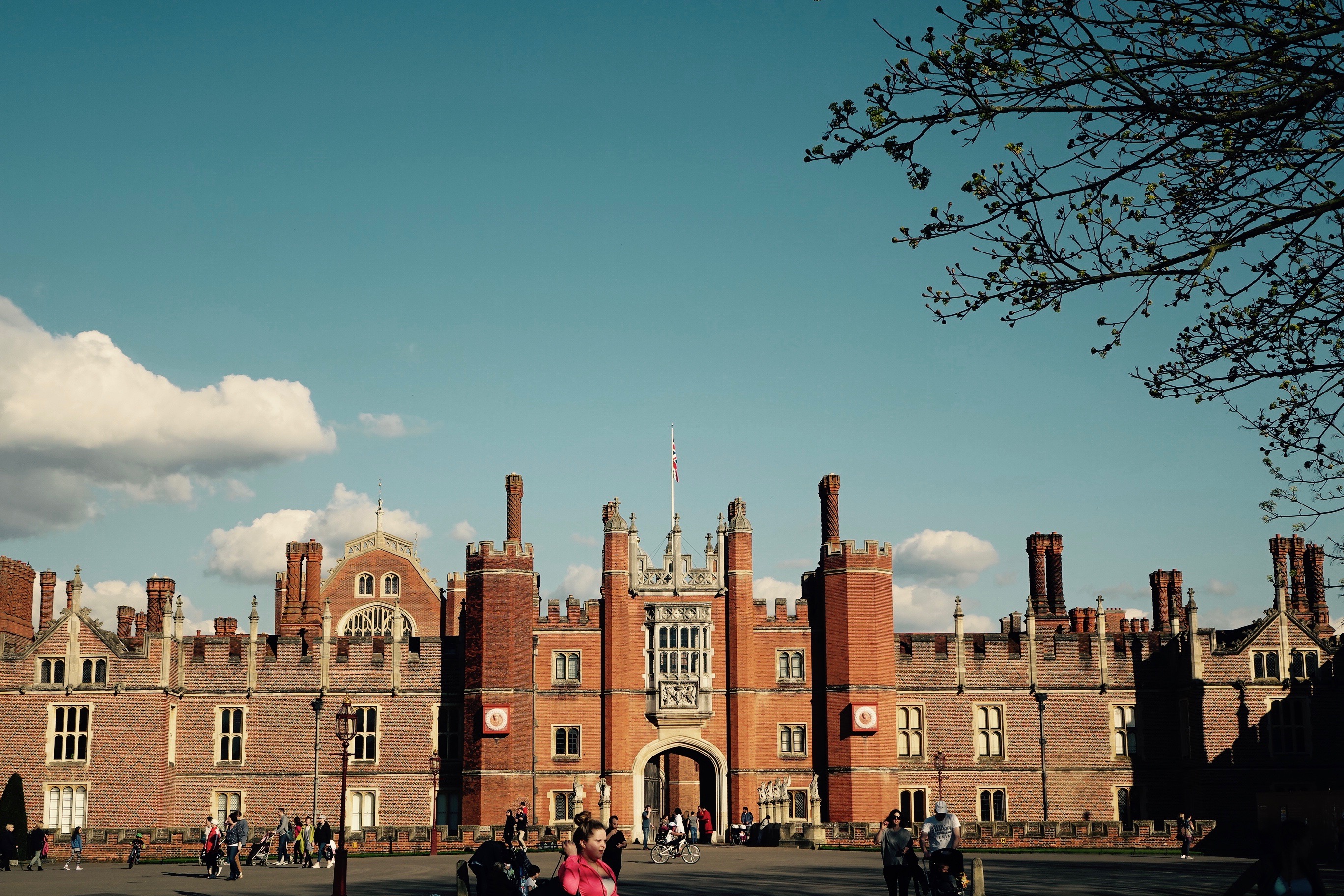
DSC08136DSC08090DSC07987DSC07832DSC07731DSC07736DSC07725DSC07732DSC07729DSC07727DSC07726DSC07709

First it is characterised by the glamorous myth which surrounds the British Tudor Dynasty. Whether it be the 6 wives of Henry VIII who were either divorced, beheaded, died (naturally) or survived, the great religious schism triggered by Henry’s thirst for a male heir, the very bloody Queen Mary, or the flame-haired majesty of England’s favourite Queen, Elizabeth I, the Tudors are the stuff of legends, not just in English classrooms, but around the world. Seen as the very archetype of Britain in the Middle Ages, Hampton Court Palace was, and remains, the backdrop of that tumultuous time, and today its walls literally echo with wealth of that history, ghosts and all.

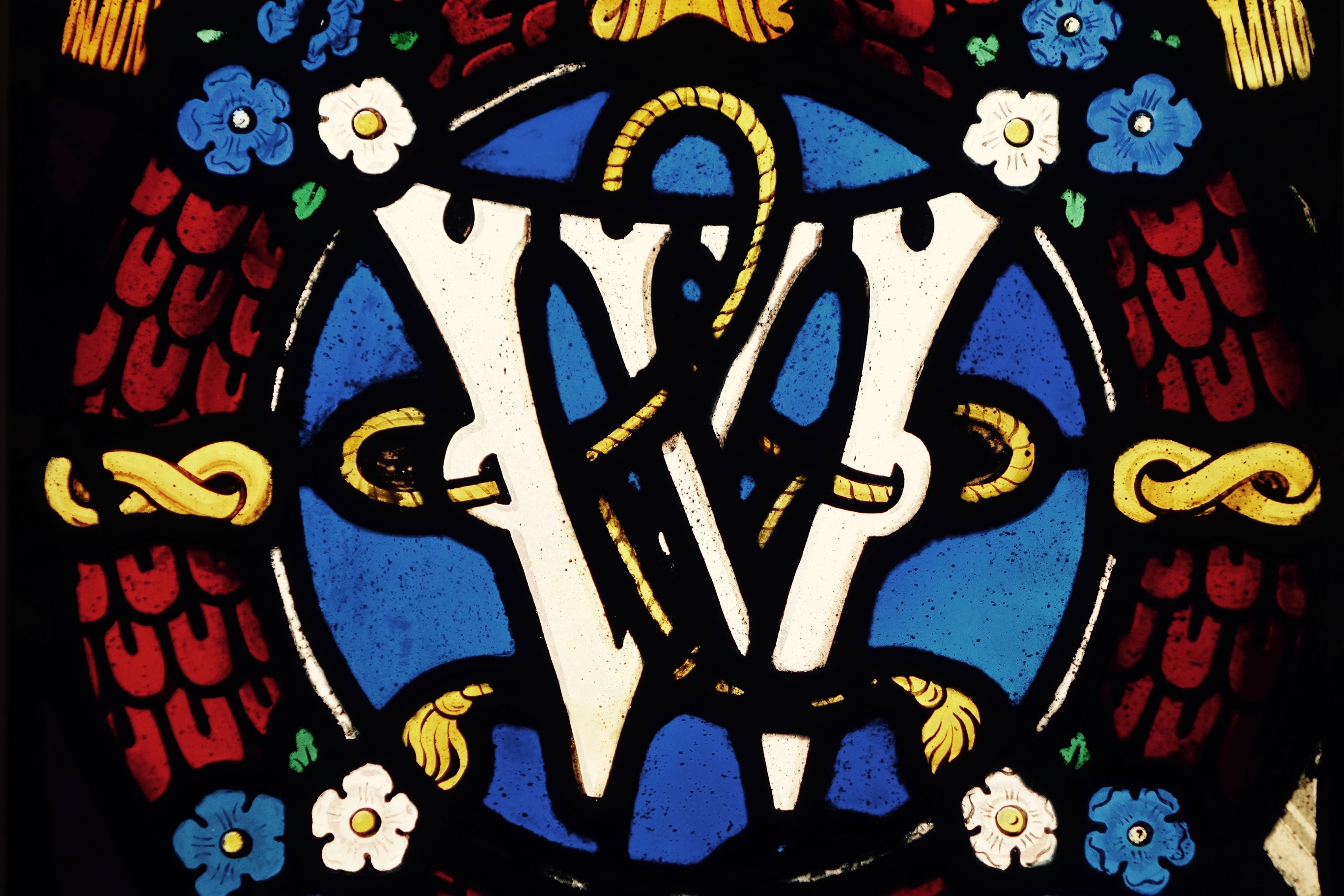
Tudor interiors

DSC07990DSC07769DSC07777DSC07775DSC07772DSC07767DSC07766DSC07760DSC07756DSC07752DSC07741DSC07765

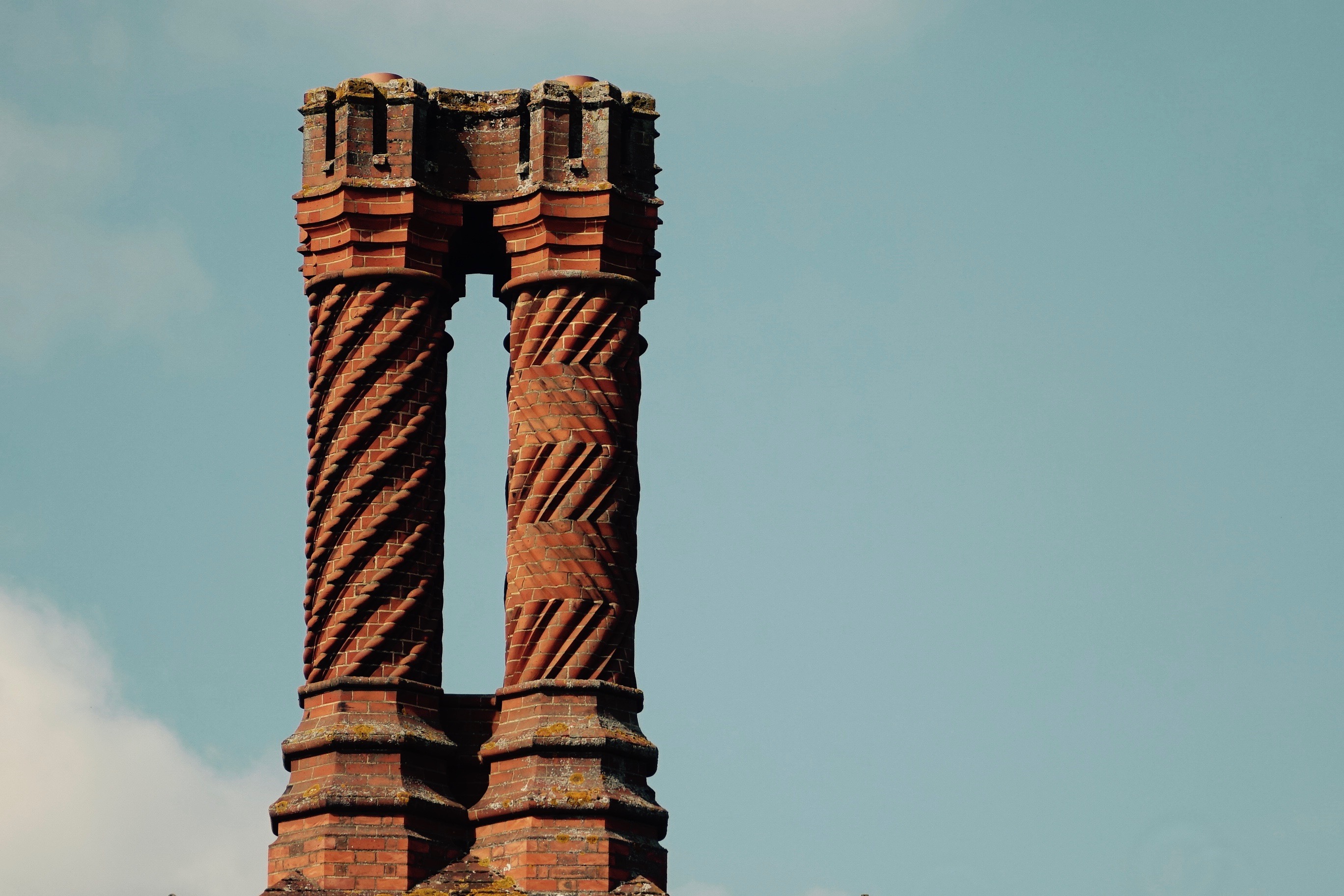
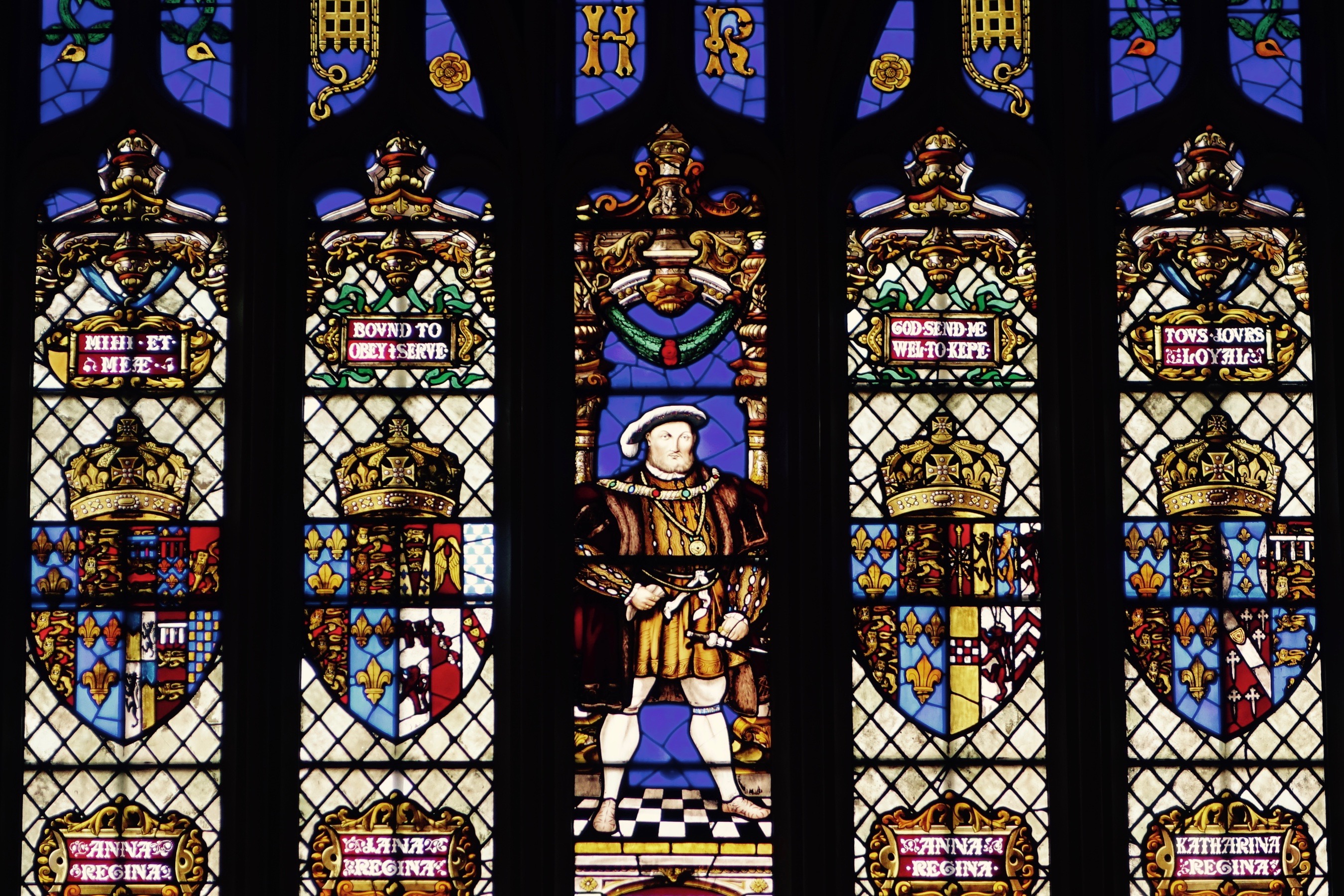
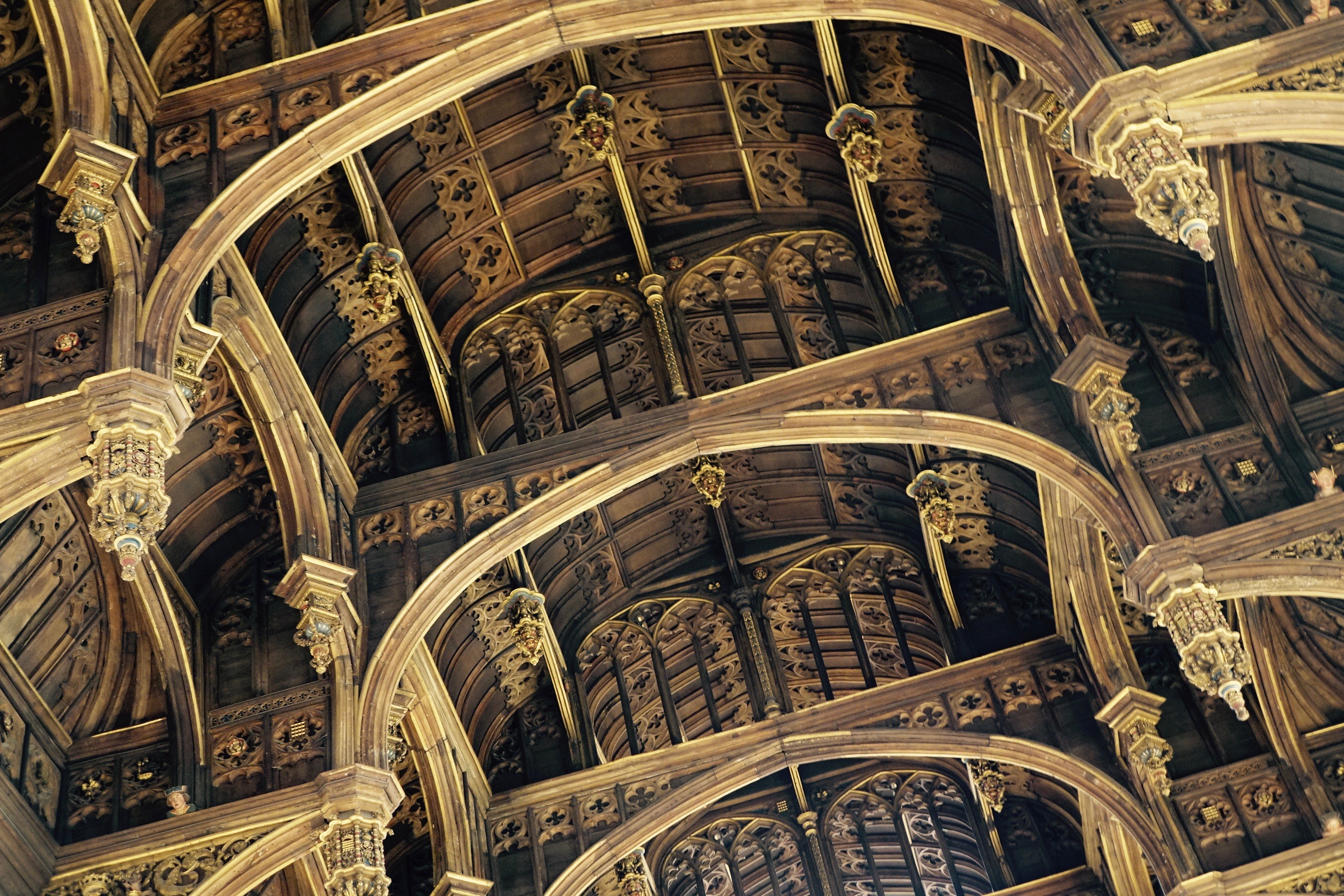
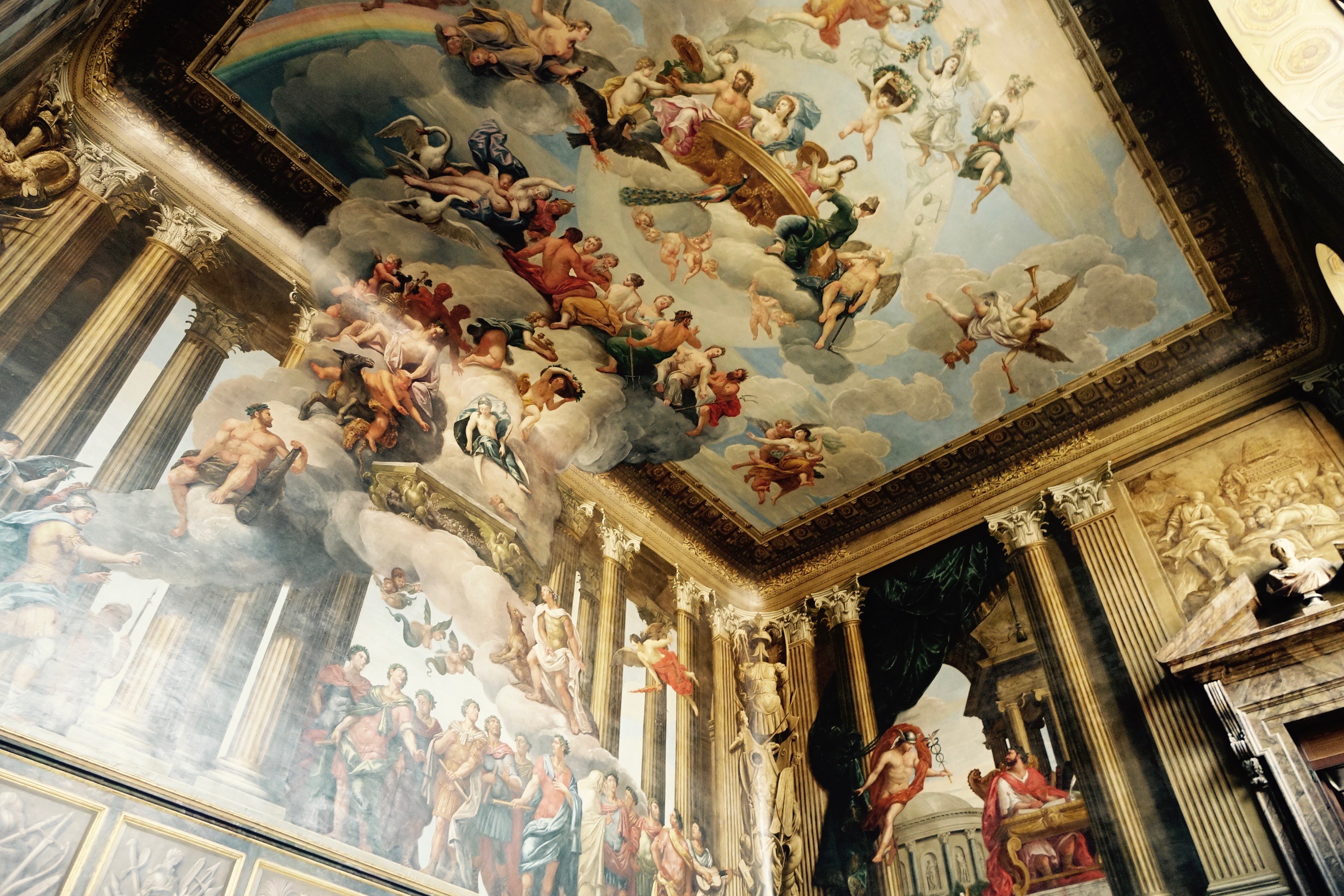
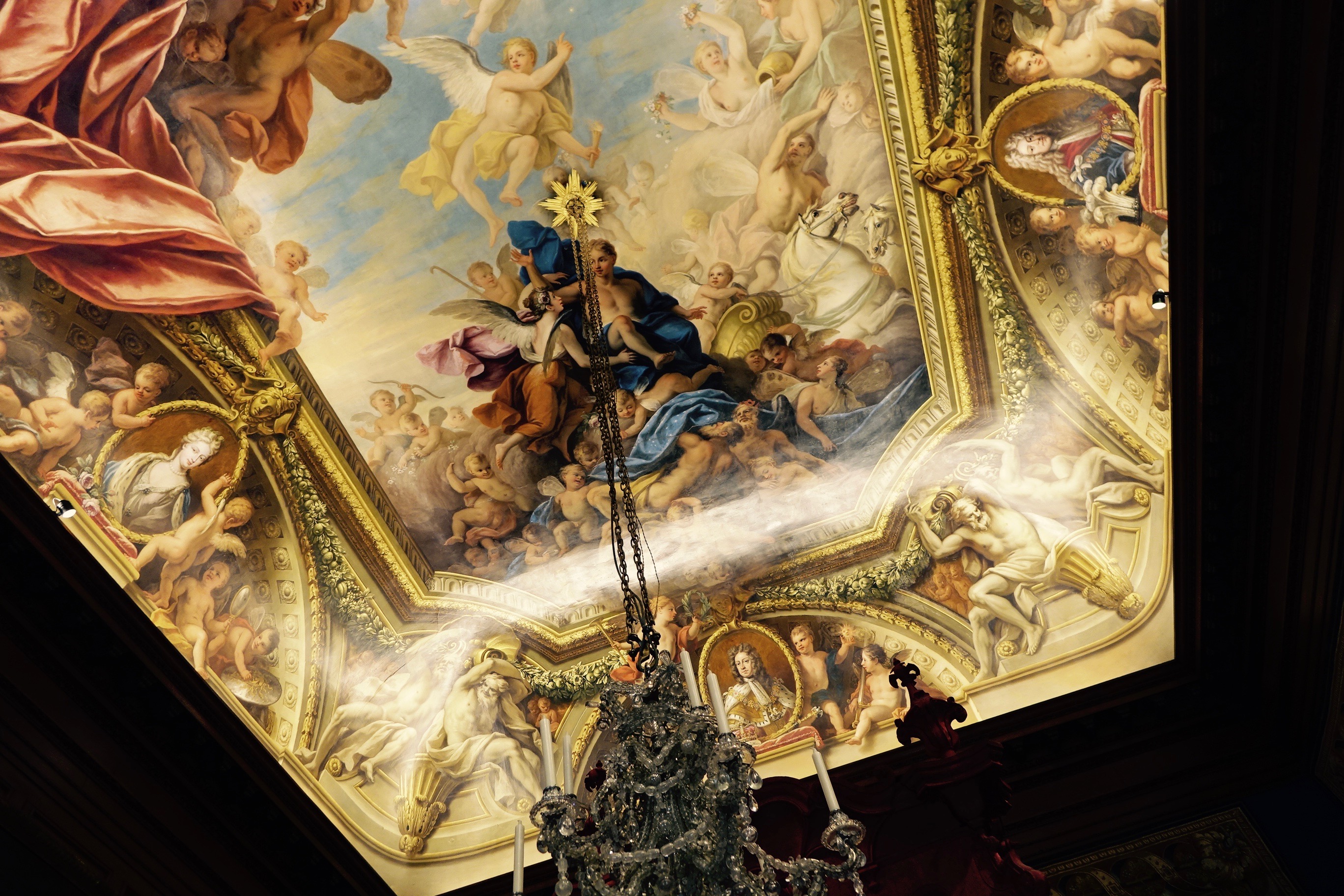
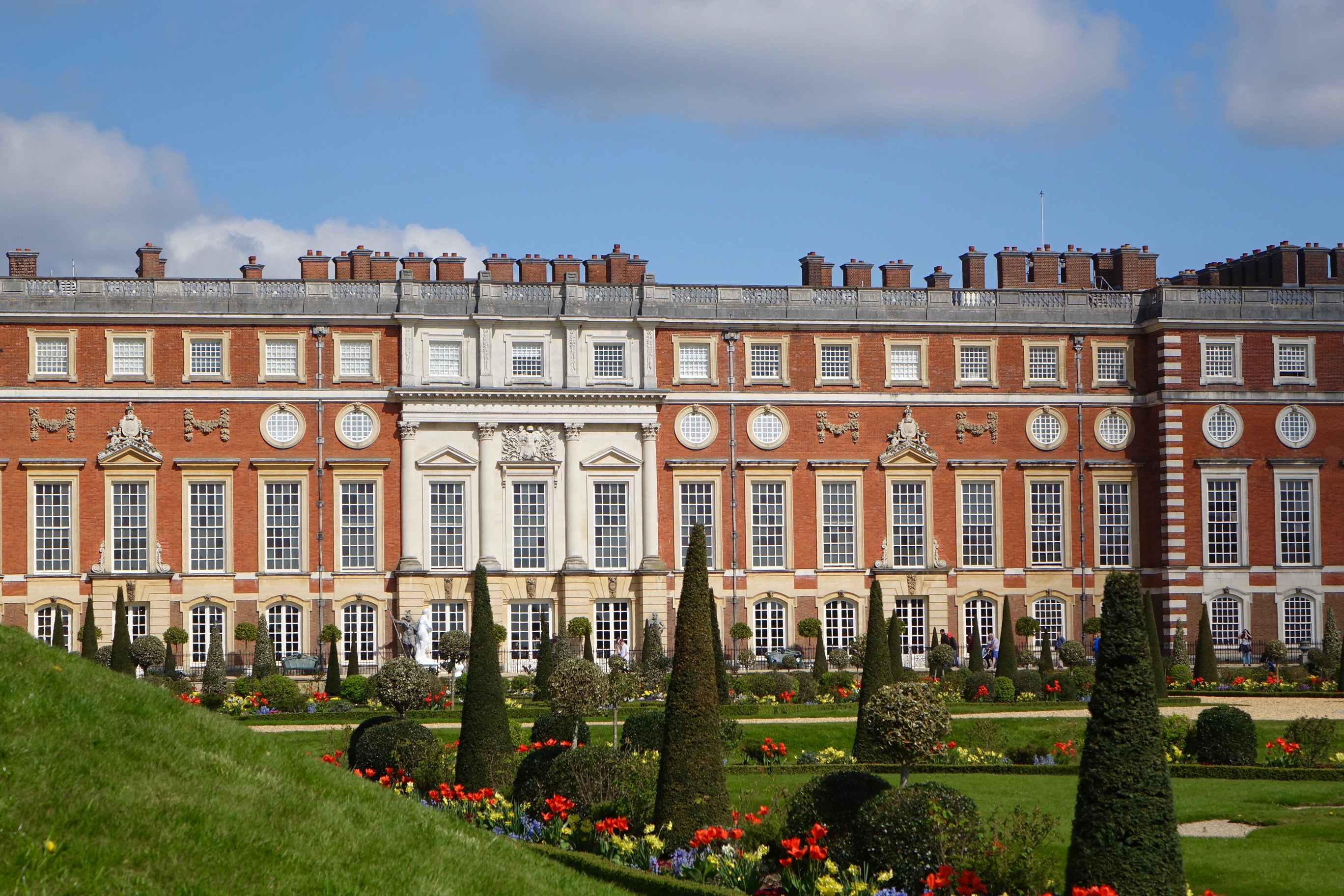
Secondly, the Palace is enticing because of its dual personality. A very Tudor entrance, a grand hall and a suite of wood panelled, stained glass rooms lead swiftly on to a complete architectural about-turn, as the gothic metamorphoses into the palatial Baroque, and a construct more akin to Versailles emerges from behind the forest of Tudor chimneys. This great change was the result of a complete renovation project began by King William and Queen Mary of Orange when they moved into the palace in the late 1600s and who felt the need to modernise, largely to compete with the Sun King in France. Sweeping aside whole swathes of Henry VIII’s palace, they replaced it with a grand symmetrical construct based around quadrangles of triple rowed grandiose windows, elaborately frescoed interiors, and a new landscape of neatly geometric flowerbeds and fountains. However they ran out of money before the restauration was complete, and it is for this reason that today’s Palace is the hybrid of Tudor and Baroque, something for which we must be grateful – how else could we explore a slice of the grandeur at the heart of the Tudor Dynasty which today remains so remarkably intact.

The Baroque alter ego  
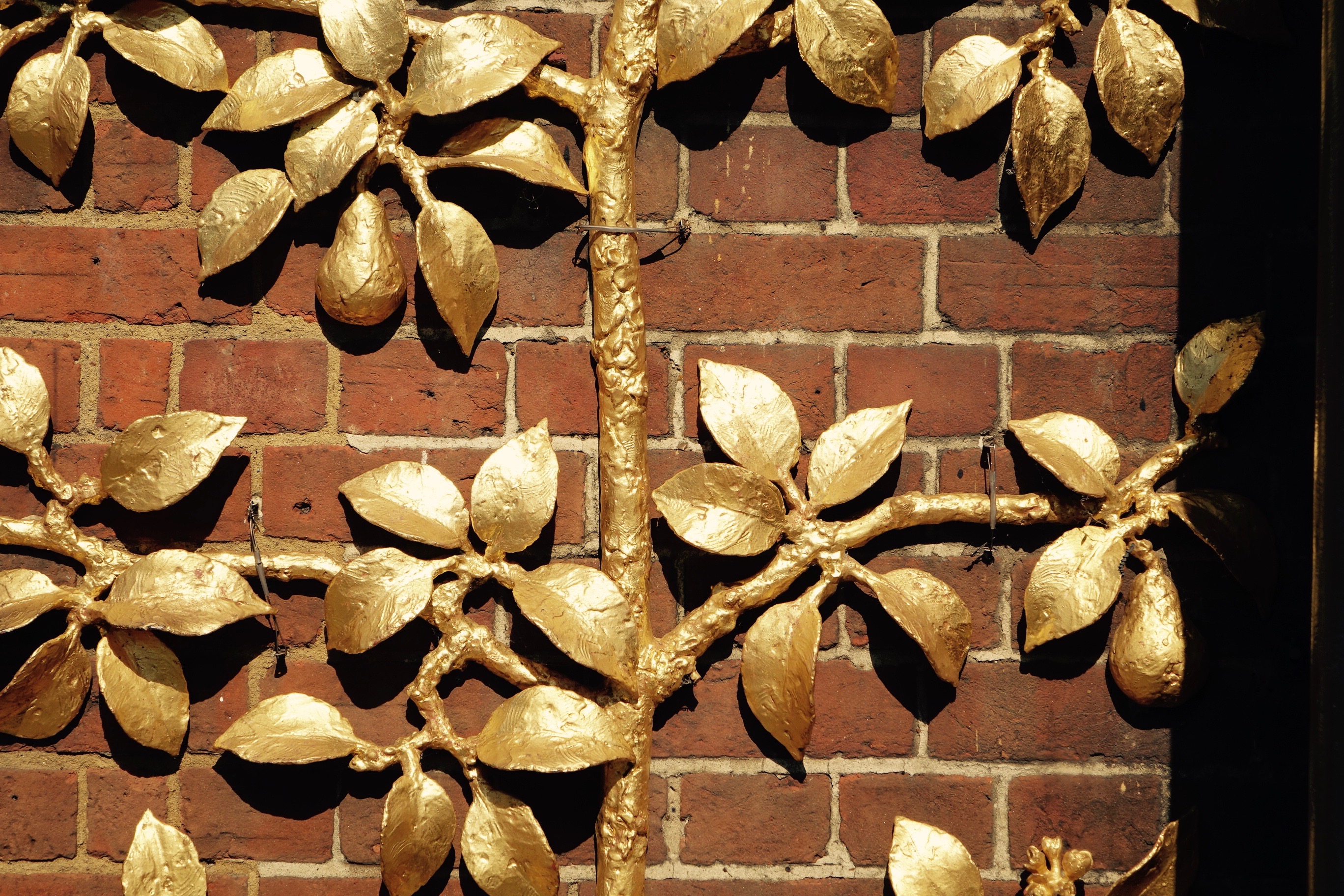
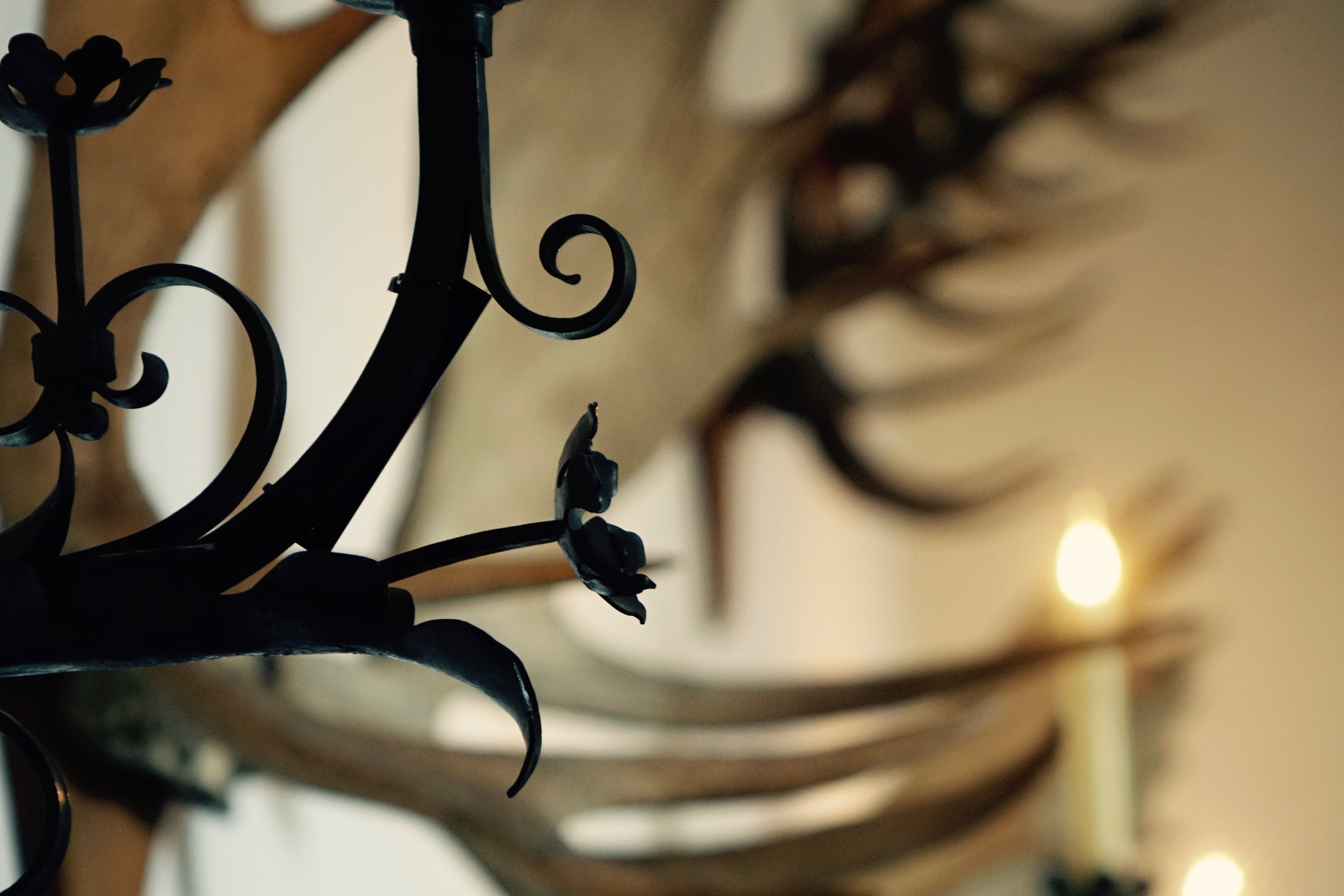
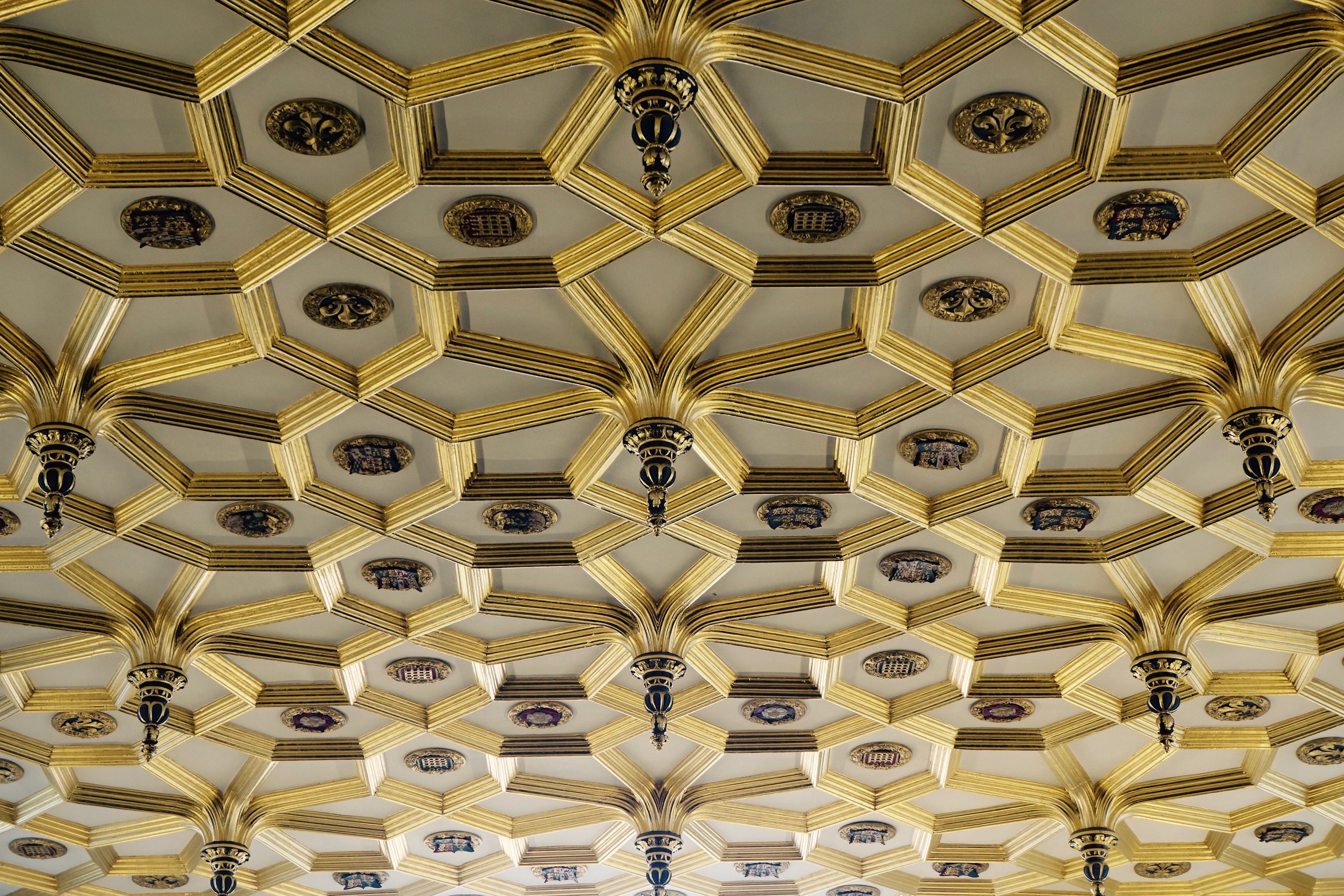
DSC07981DSC07847DSC07841DSC07834DSC07829DSC07827DSC07796DSC07792DSC07785DSC07782DSC07779DSC07821

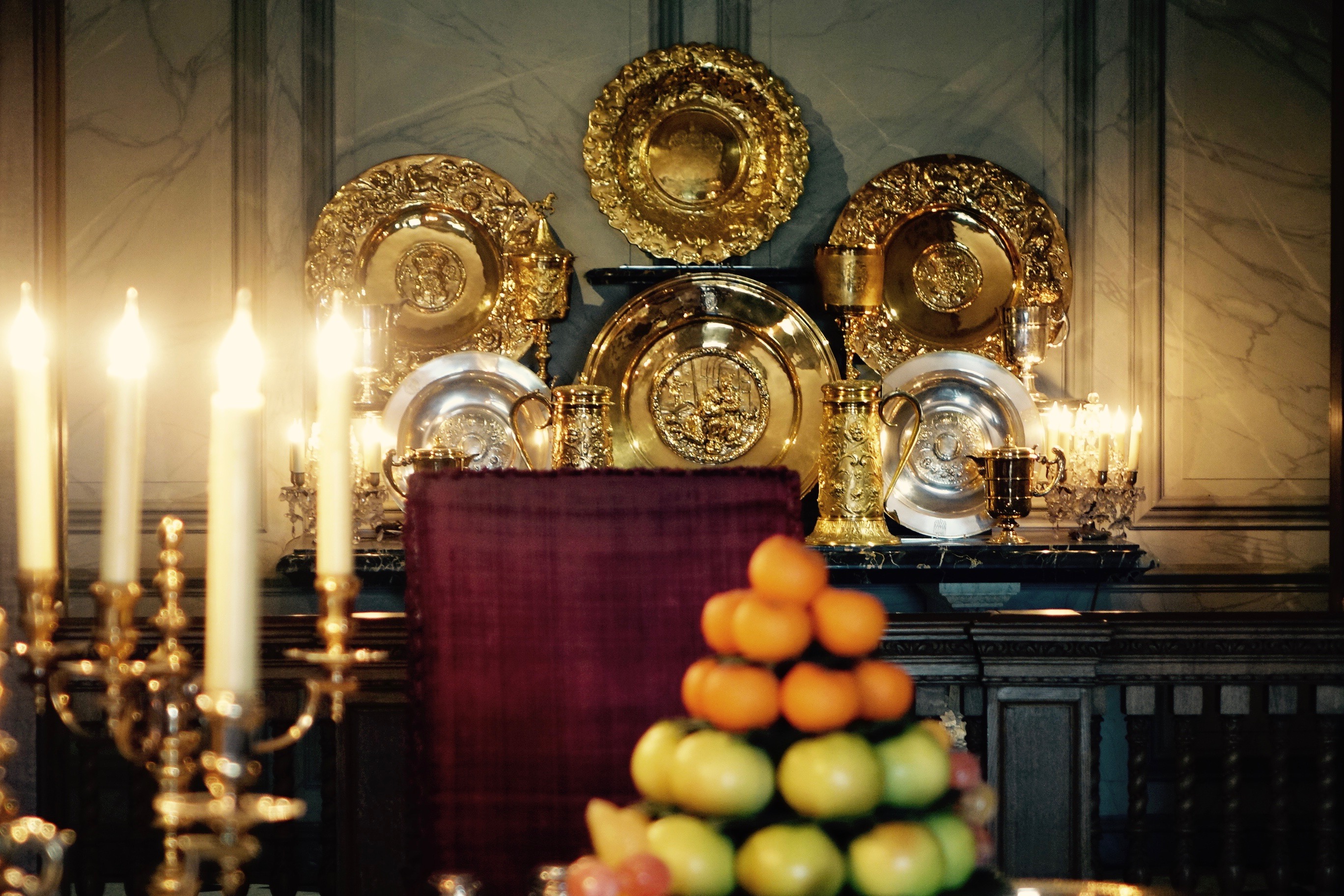
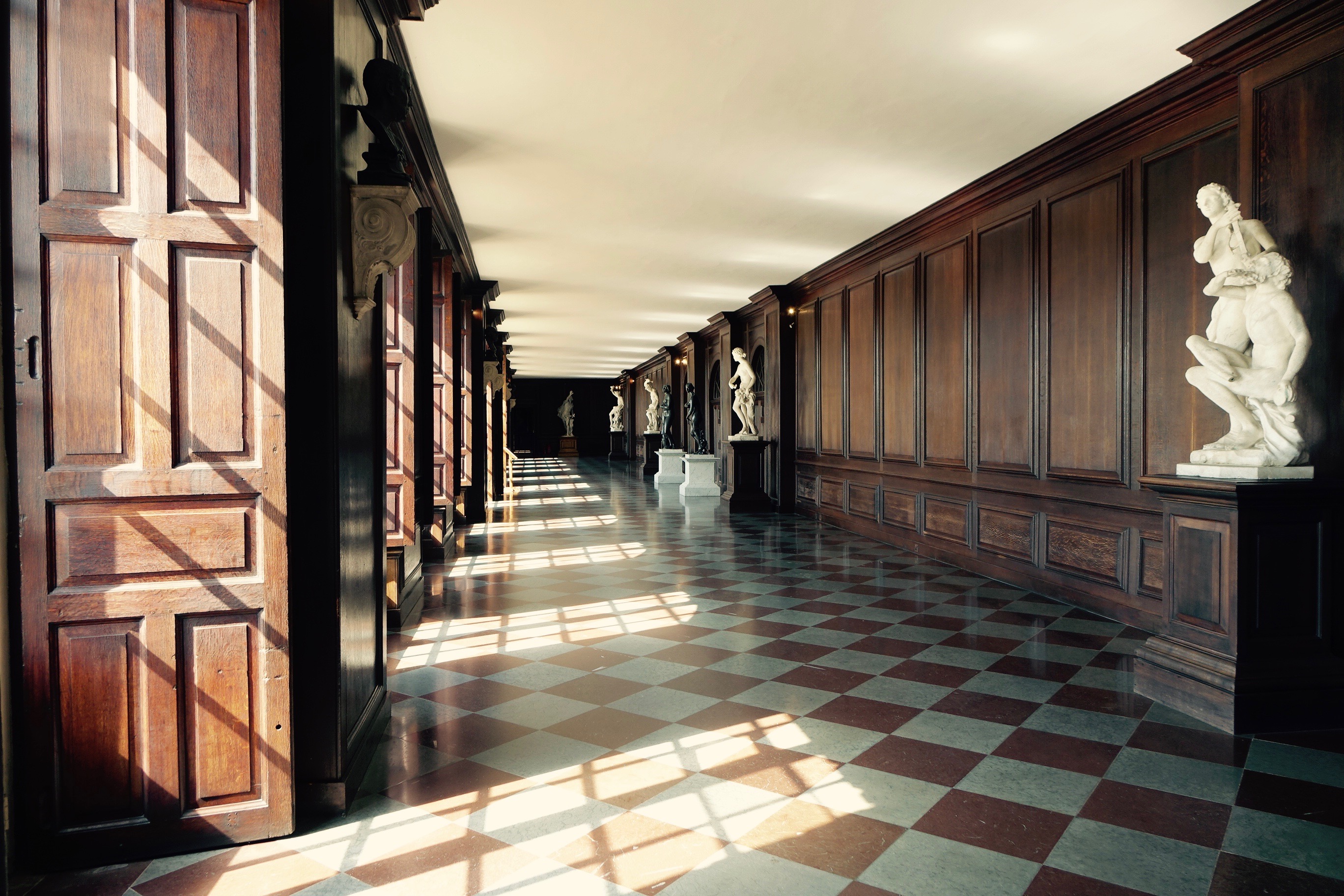
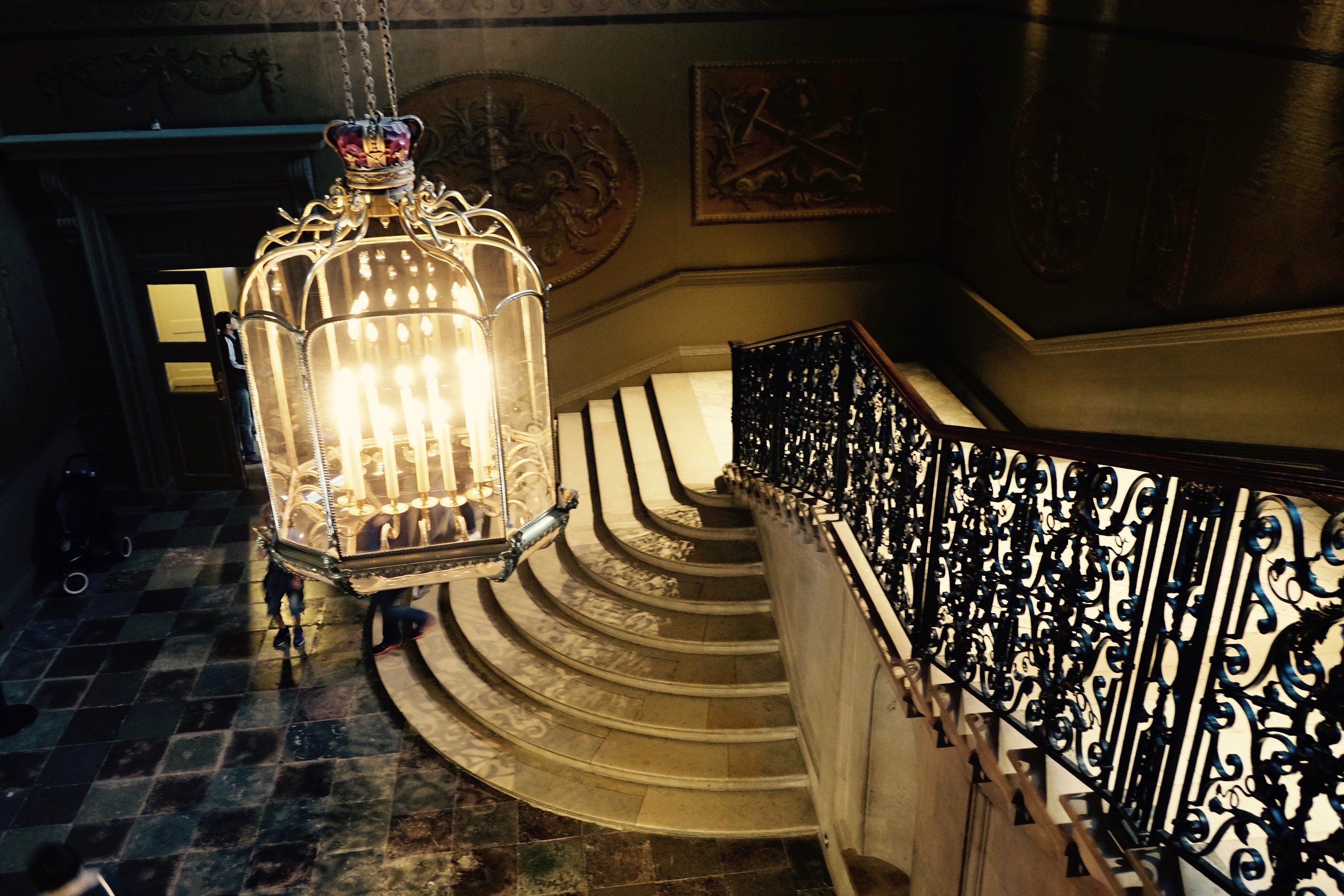
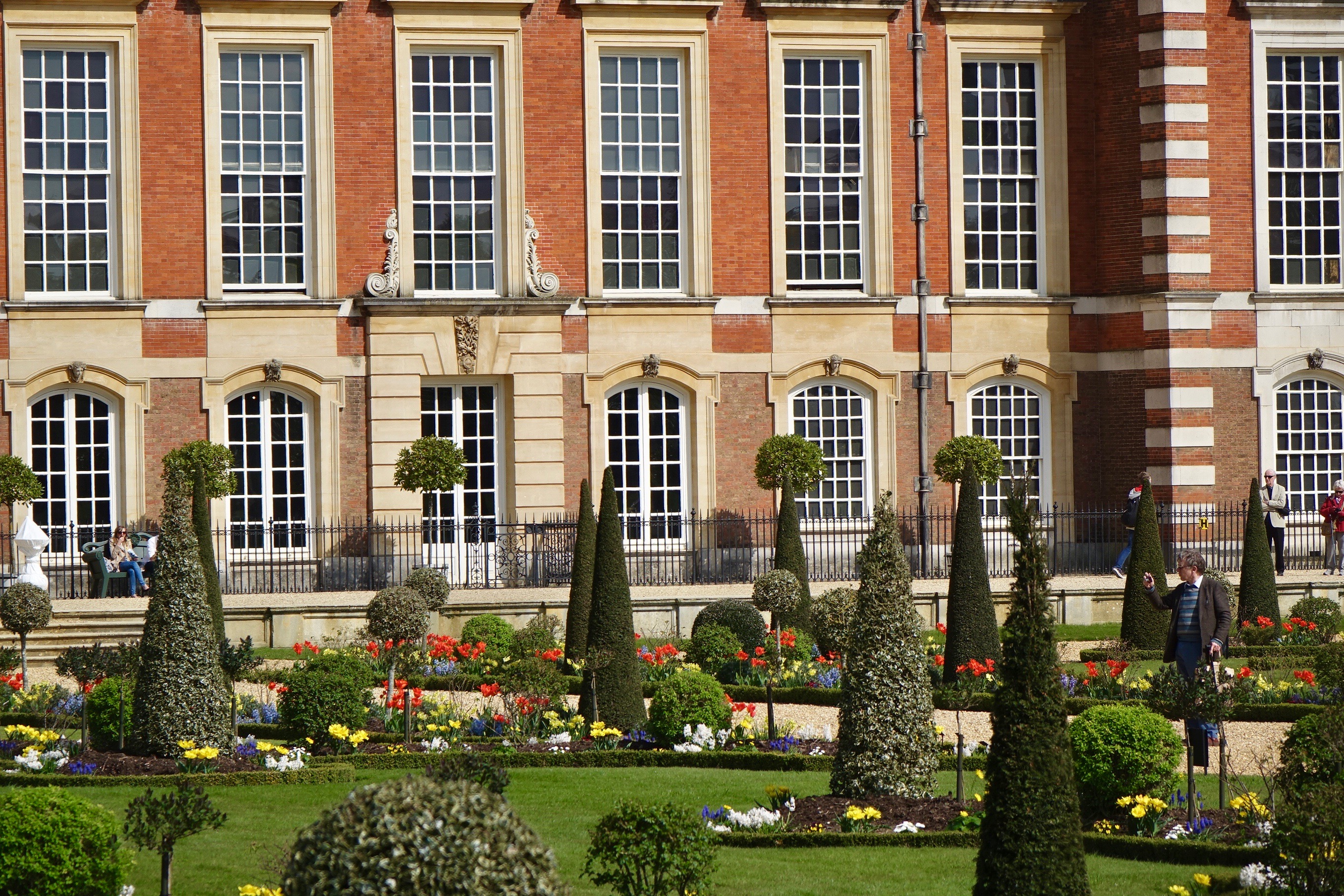
The photos which are shared in the post give a flavour of the great contrast between the Tudor and the Baroque aspects of Hampton Court. What perhaps the Tudor side lacks in elaborately frescoed ceilings it makes up for in colourful stained glass and the stunning gothic ceiling of the Royal Chapel. And what the Baroque side lacks in stag heads and grand vaulted ceilings it instead replaces with wide sweeping staircases and rooms flooded with light from the masterfully manicured garden beyond. All in all, this is a tale of two Palaces, offered, very conveniently, to be enjoyed all at one time.

© Nicholas de Lacy-Brown and The Daily Norm, 2001-2017. Unauthorized use and/or duplication of the material, whether written work, photography or artwork, included within The Daily Norm without express and written permission from The Daily Norm’s author and/or owner is strictly prohibited. 

Hampton Court Palace, Part 1: Manicured Gardens

It’s always a wonderful thing to discover that an incredible attraction can be found on your doorstep. And somewhere which is literally 30 minutes by train from your nearest station is not so far from doorstep status, especially when you consider the extent to which those short 30 minutes have the power to transform you from inner city jungle to utter bucolic majesty. Such was my discovery last weekend upon visiting the former home of Henry VIII and his 6 variously fated wives, Hampton Court Palace, which can be found nestling alongside the banks of the Thames a few meandering loops down the river. Our trip to this vast palatial complex was so astounding, so plenteous in its beauty that I have decided to split my experience in three for the sake of The Daily Norm, so that a focus can be had on the various facets that make Hampton Court so incredible.

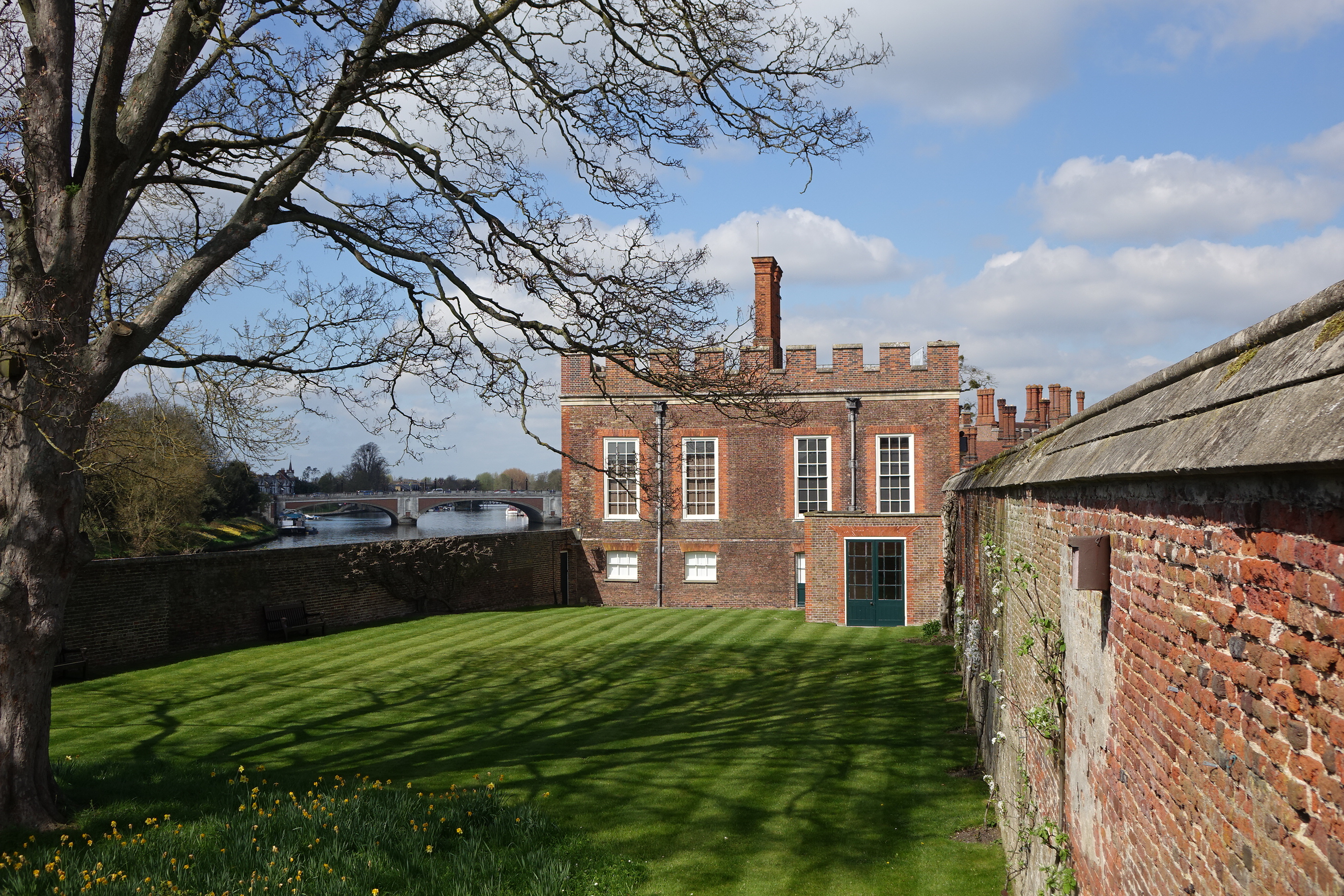
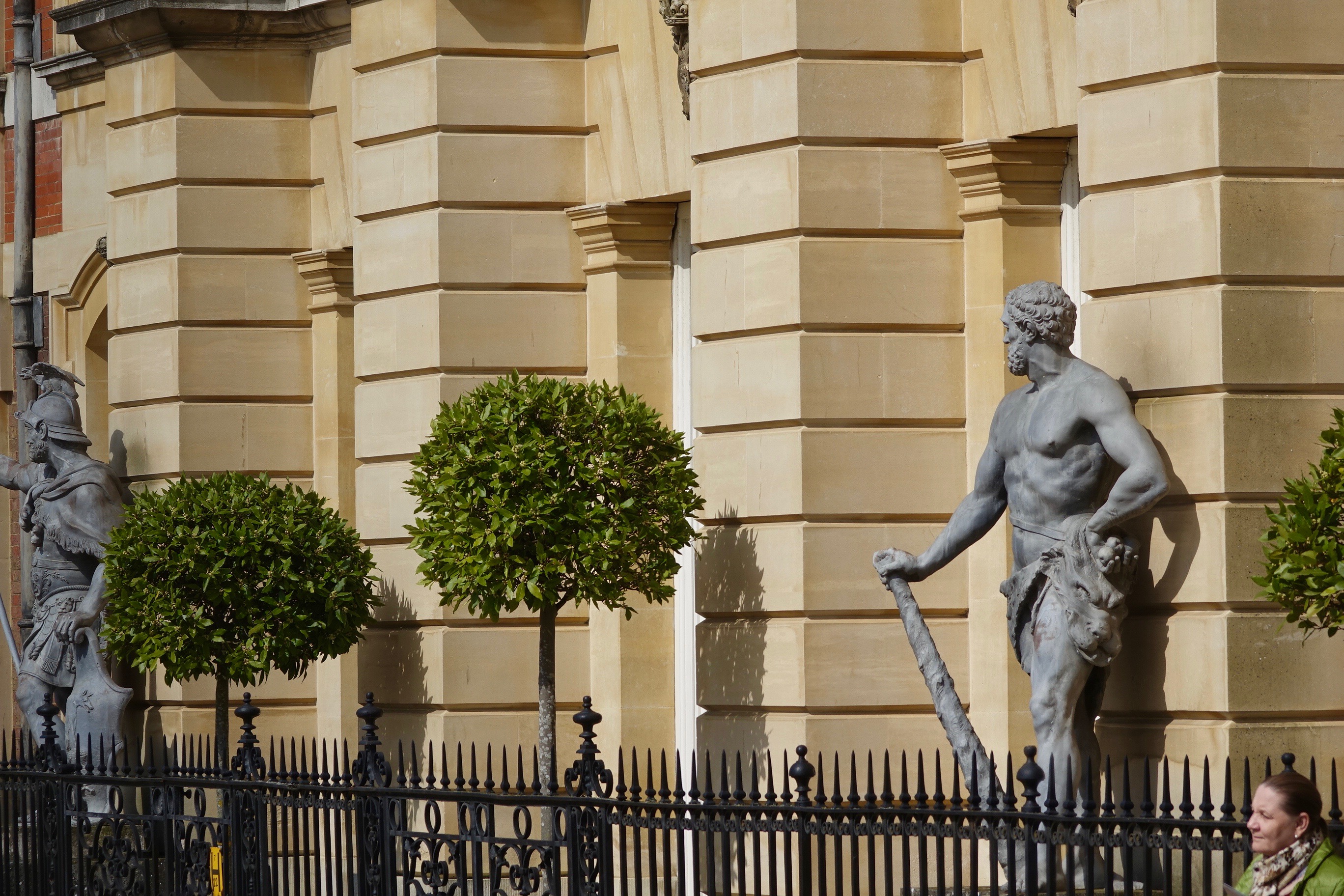
I must admit that it’s the gardens which really thrill me at Hampton Court. The inside has its merits, naturally. The Chapel Royal is pretty much one of the most stunning historic spaces in the United Kingdom. But the interiors also have the potential to disconcert, as one is led from the Tudor quarters, steeped in the gothic gloom of the age, to the more luminescent baroque rebuild instituted by William and Mary of Orange in the late 17th Century. The result is fragmentary and disorientating. It is like visiting two very distinct palaces, albeit that from the outside, there is a certain level of unity achieved by the uniform use of a rich pink stone. And it is outside where this little photographic tour begins.

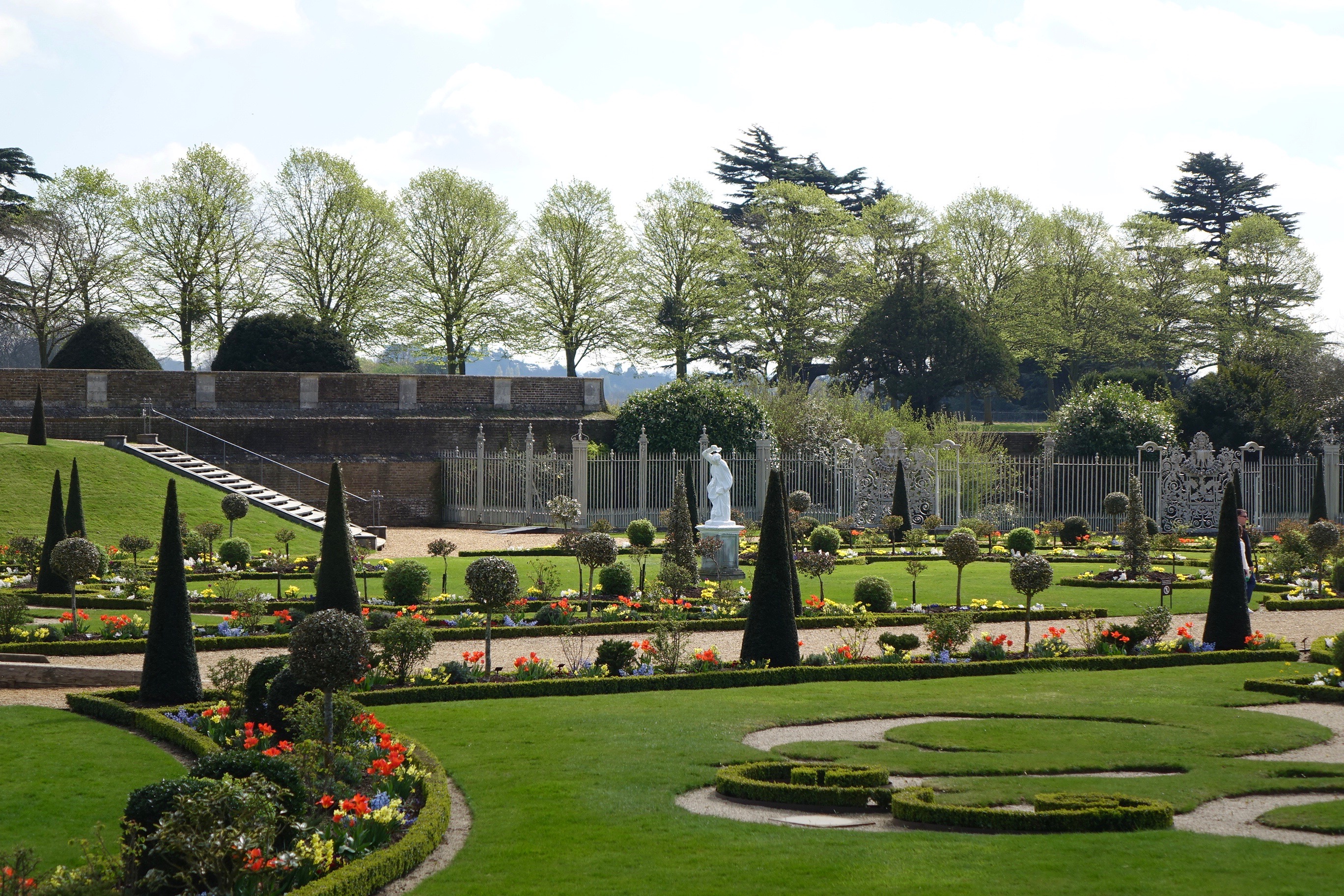
The Privy Garden and the Banqueting House

DSC07894DSC07872DSC07887DSC07890DSC07922DSC07892DSC07928DSC07911DSC07905DSC07900DSC07899DSC07909DSC07860DSC07857DSC07863

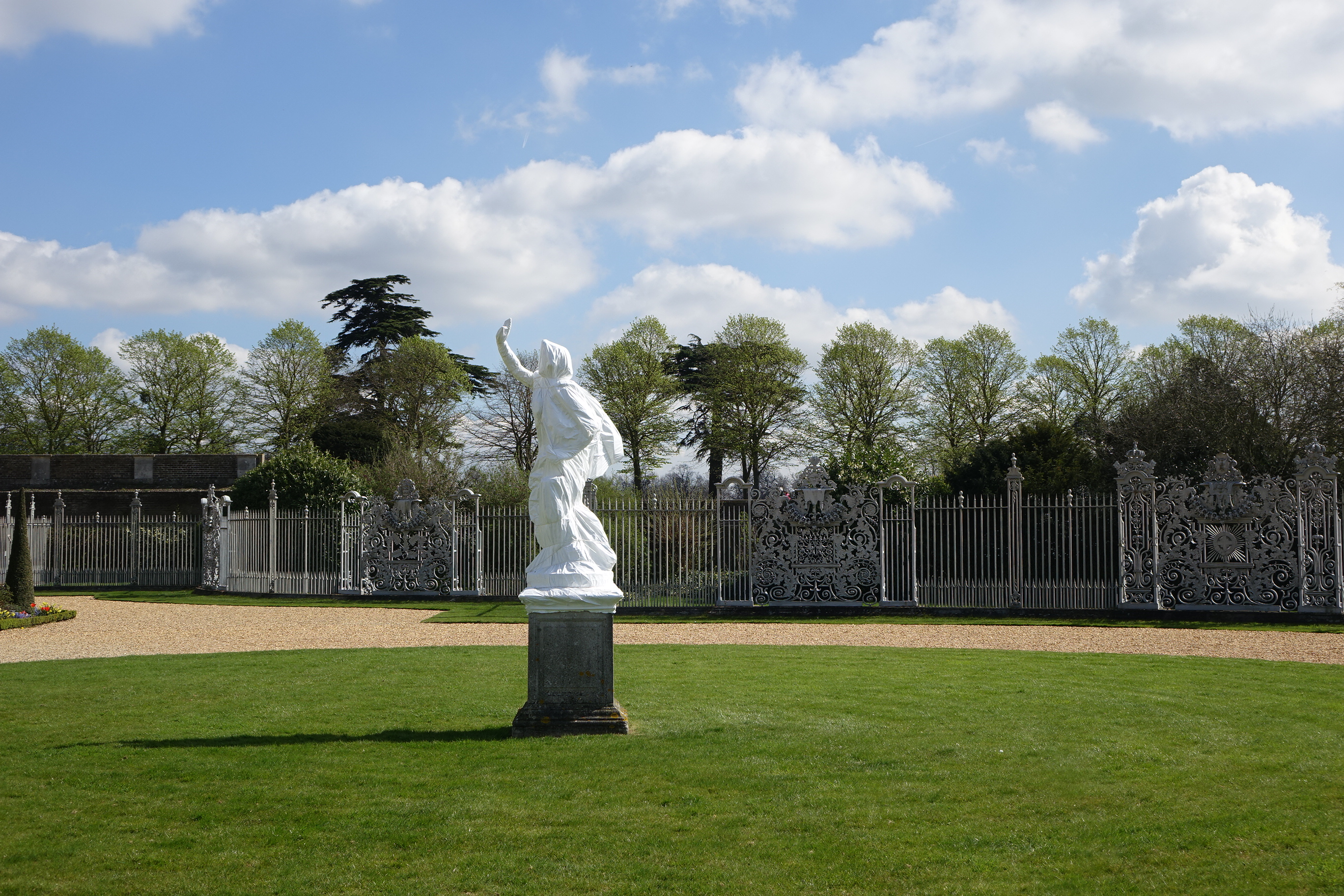
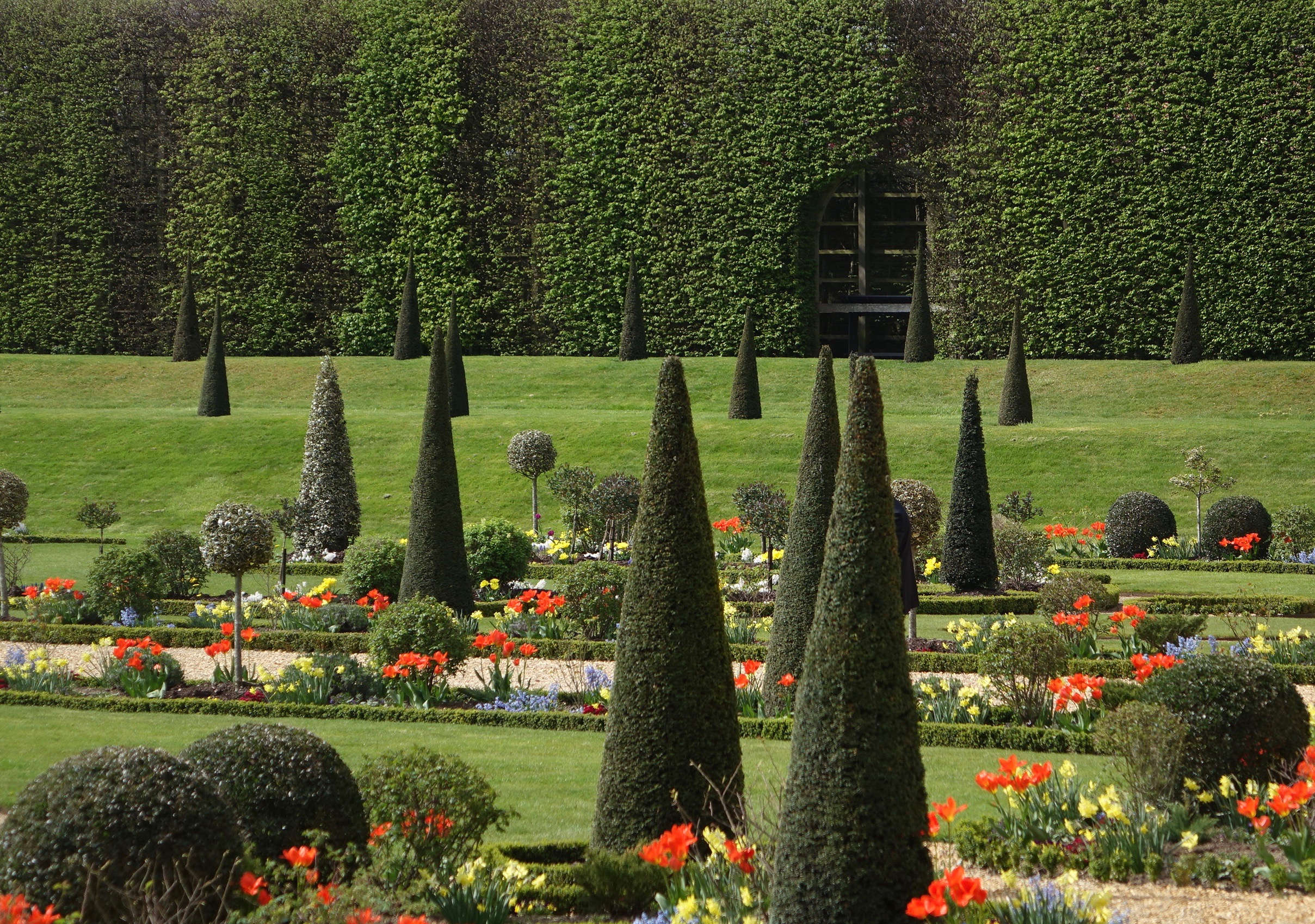
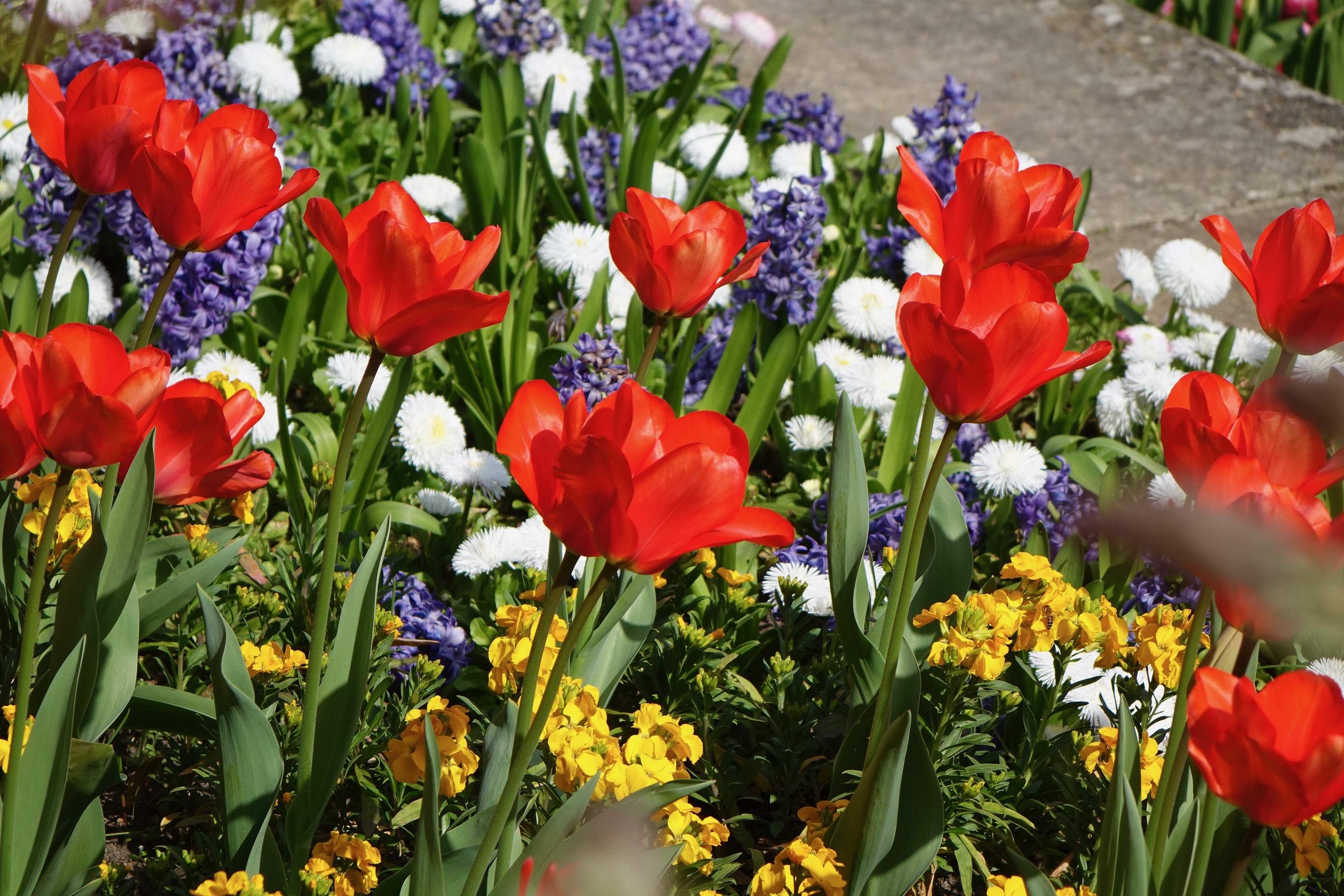
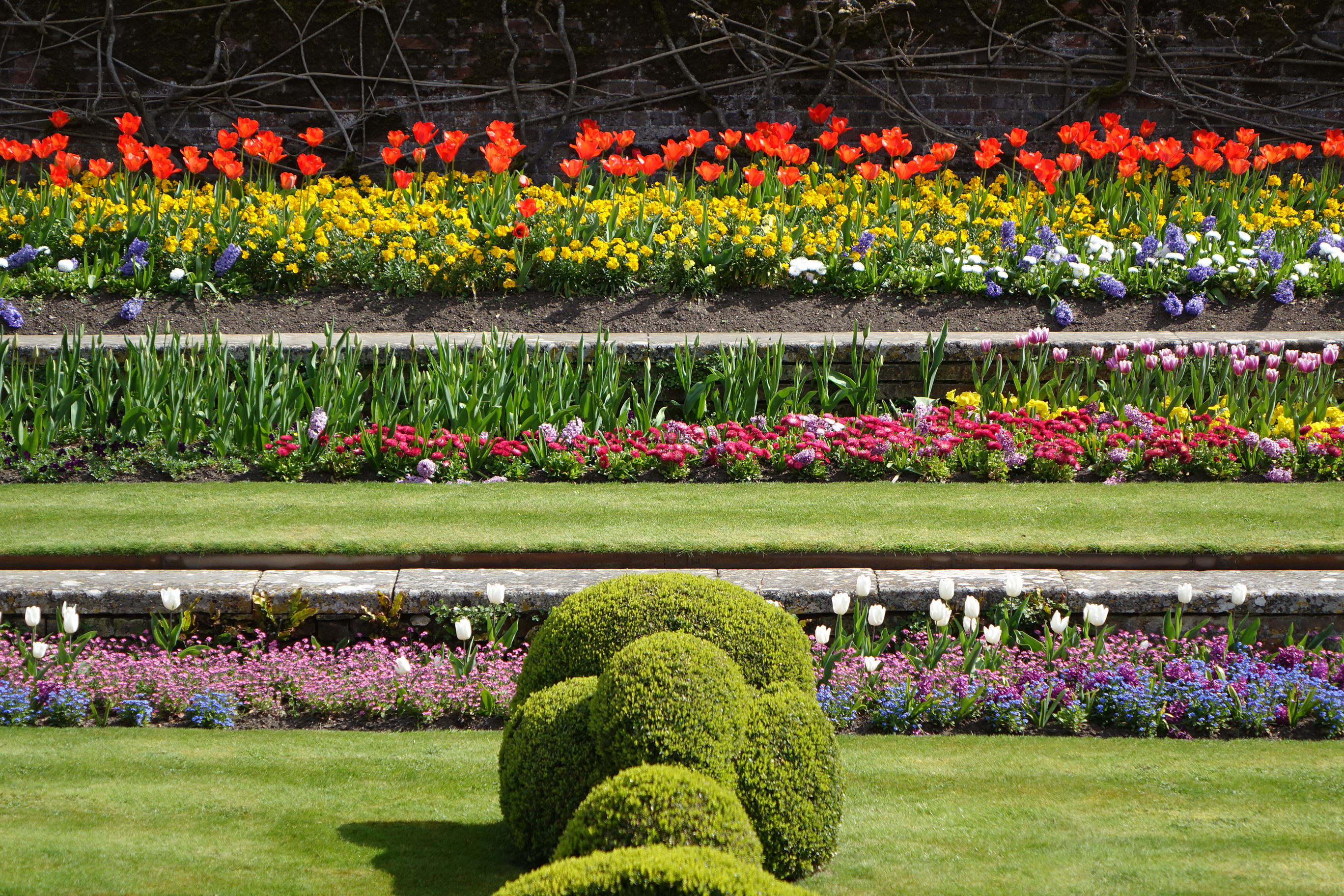
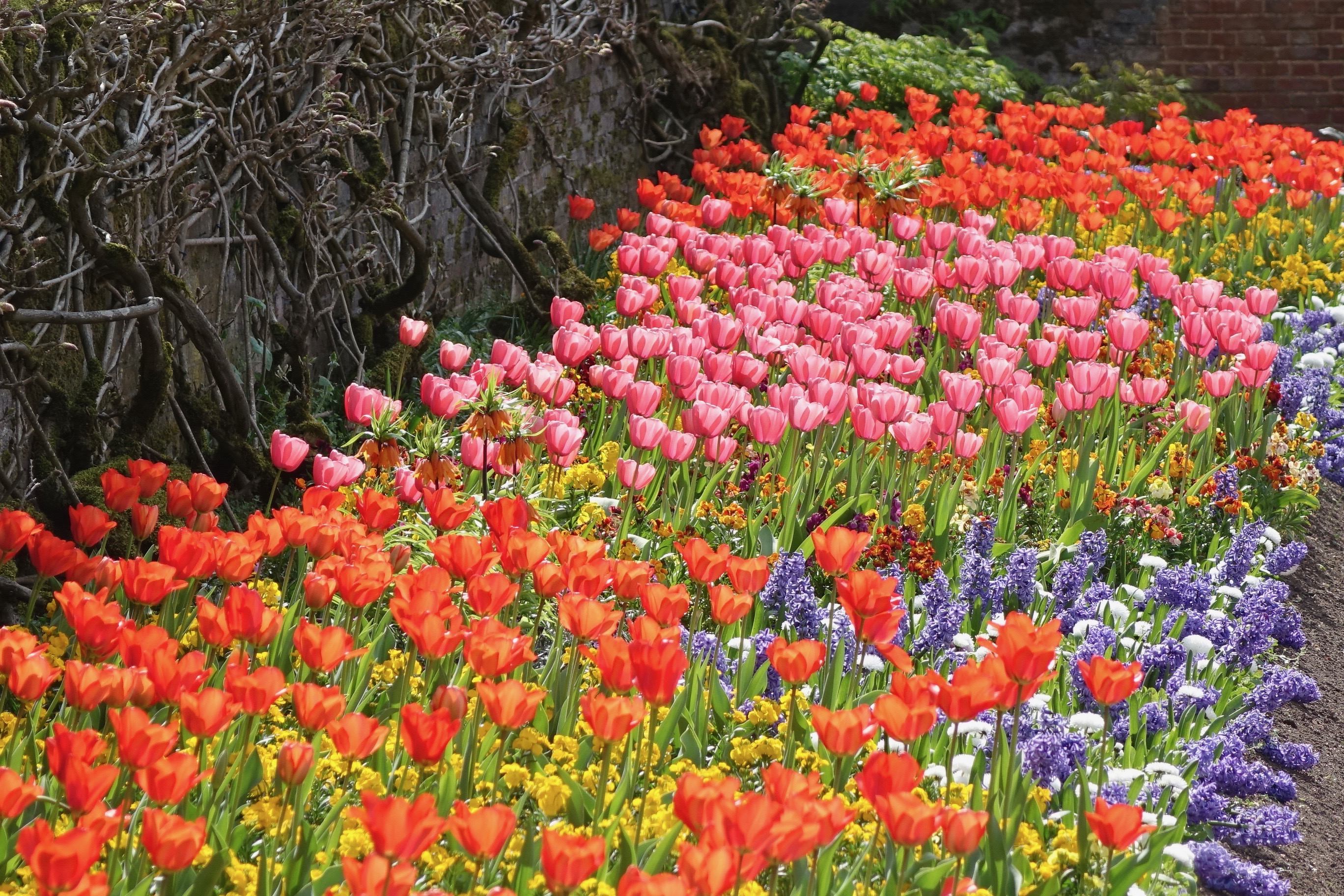
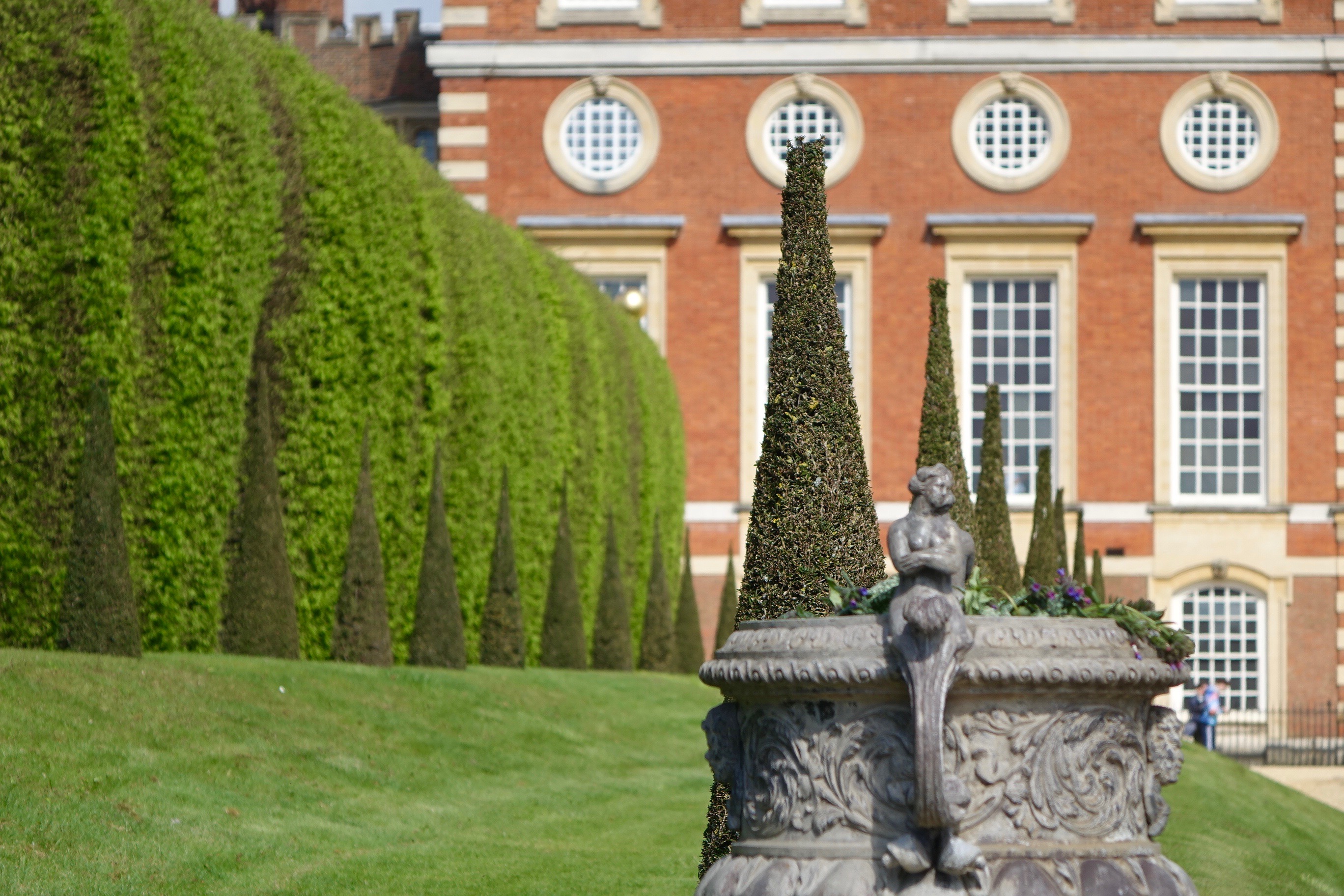
In my naivety, I thought that a visit during April may be too early to enjoy the gardens. How wrong I was, for the timing enabled us to enjoy the most spectacular array of Spring flowers I have ever seen. In the Privy Garden, the elegant South-facing walled garden extending towards the River’s edge and containing rows of manicured conical hollies and yews lining a perfectly geometric system of paths, tulips in vibrant shades of red and yellow danced in the sunlight and contrasted brilliantly against sky blue hyacinths which filled the air with their fragrance. In the cosy walled Pond Gardens just beyond, the abundance of flowers increased as floral collections were displayed in rich strata of contrasting height and colour to create a ravishing spectacle of nature’s brilliance. I don’t think I ever saw such a variety of tulips, nor so well choreographed an exhibition of this glorious Spring flower.

The Pond Gardens, the Knot Garden and the Orangery 

DSC07978DSC07971DSC07967DSC07962DSC07956DSC07958DSC07952DSC07951DSC07947DSC07946DSC07929DSC07940DSC07948DSC07932DSC07939

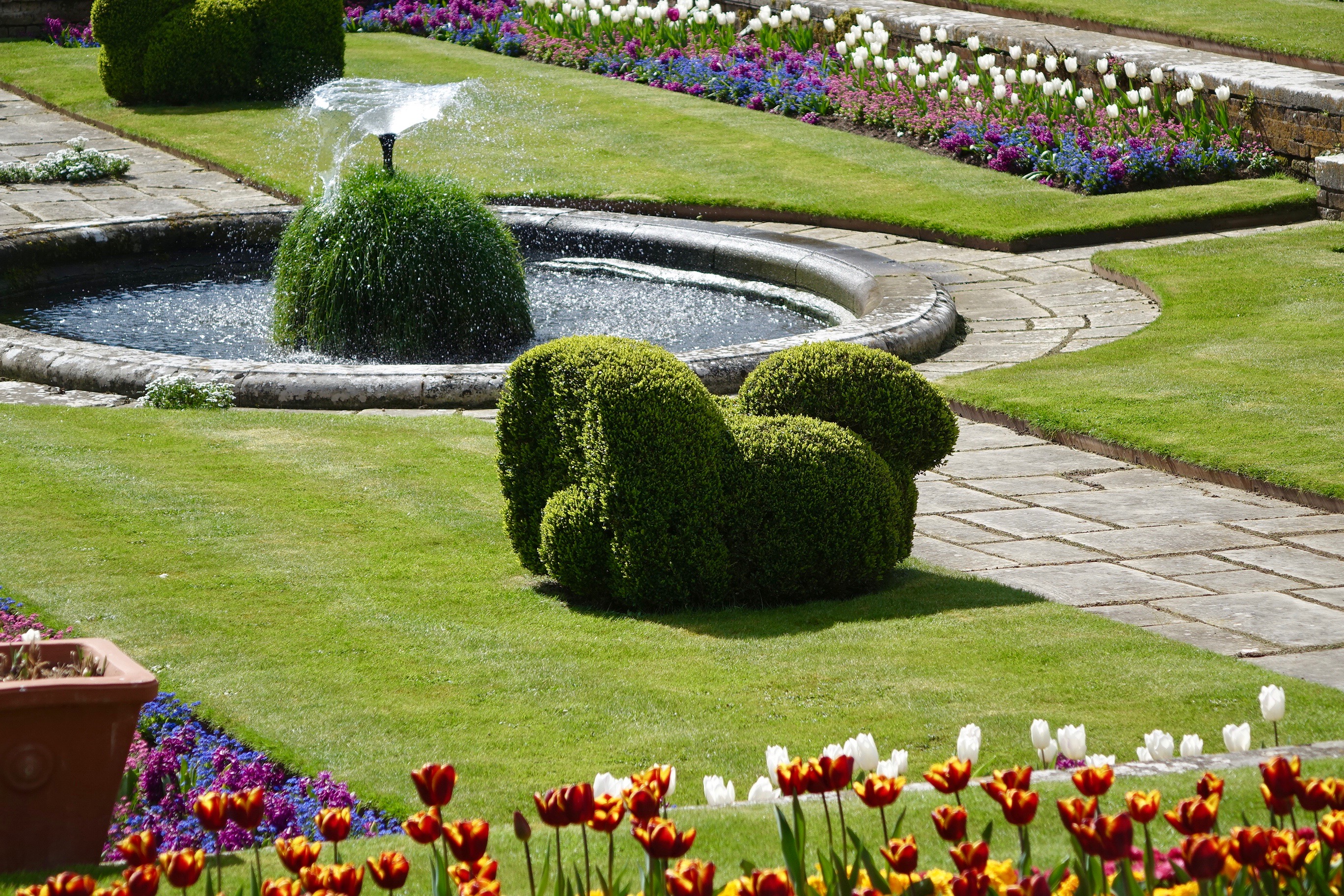
This gardening brilliance continued into a small knot garden, laid out in 1924 to recreate the gardens as they would have been during the Tudor dynasty, and in the Lower Orangery Garden, which flowed from Queen Mary’s passion for collecting exotic plants. Of course the gardens of Hampton Court extend much further than those on this Southern expanse – The Great Fountain Garden is so grand as to be worthy of a post all of its own – and will surely get one in a few days time… But for now, I wanted to share photos of these more manicured gardens. Spaces so vividly enriched by their floral abundance, and so satisfyingly regimental in their layout and design that I could have remained there admiring them forever, especially during these happy days of Spring.

© Nicholas de Lacy-Brown and The Daily Norm, 2001-2017. Unauthorized use and/or duplication of the material, whether written work, photography or artwork, included within The Daily Norm without express and written permission from The Daily Norm’s author and/or owner is strictly prohibited. 
London, Rediscovering My City: Richmond Park

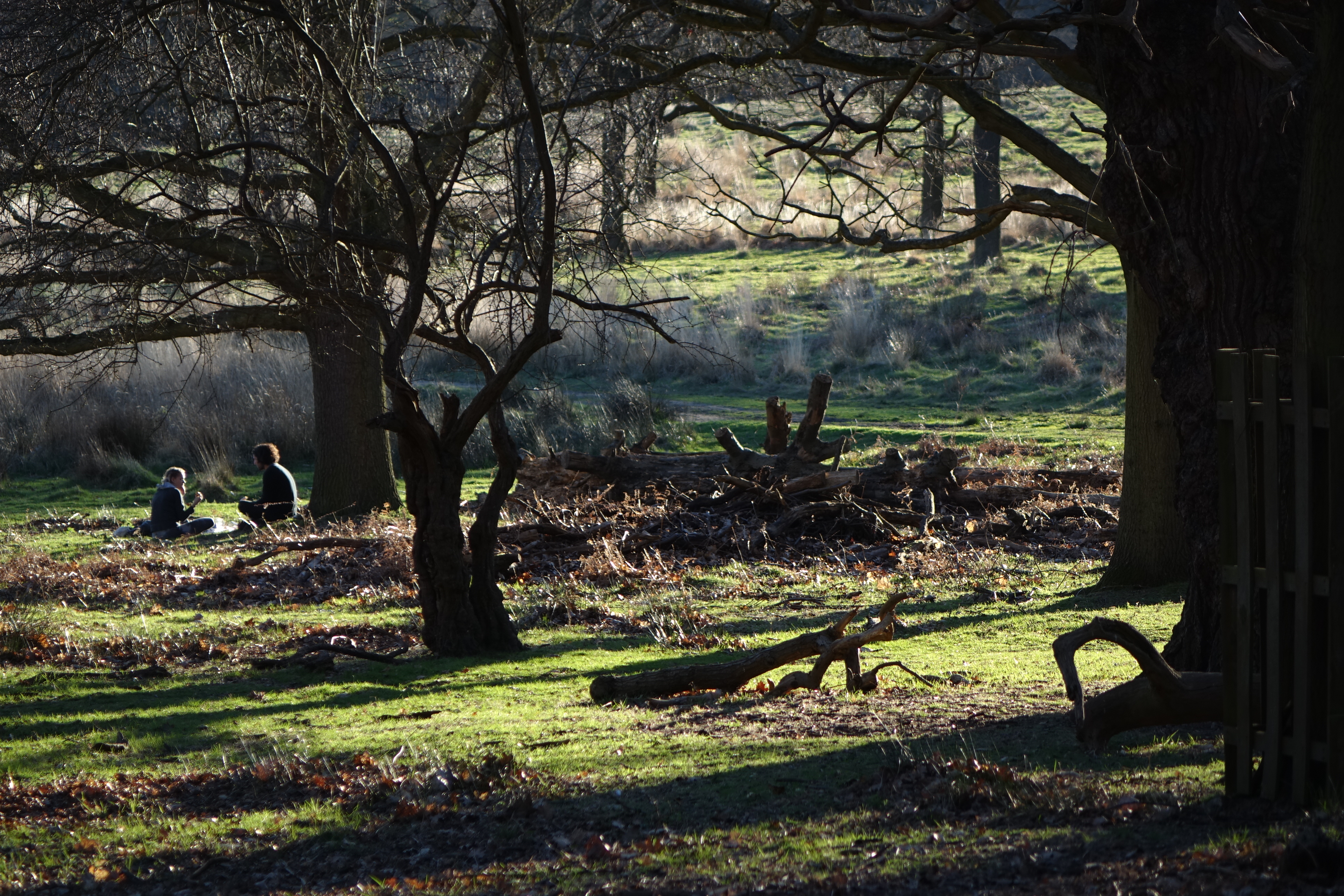
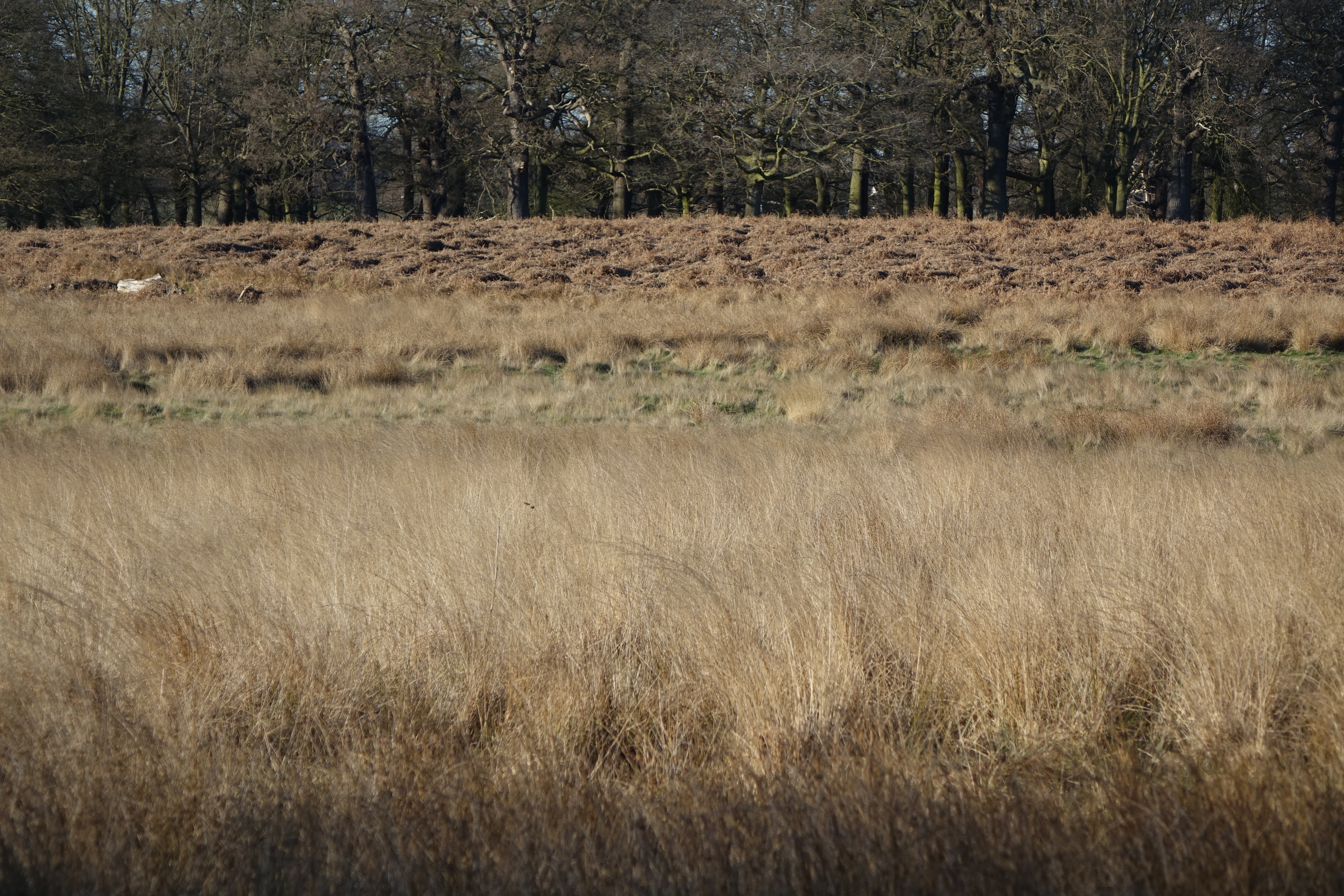
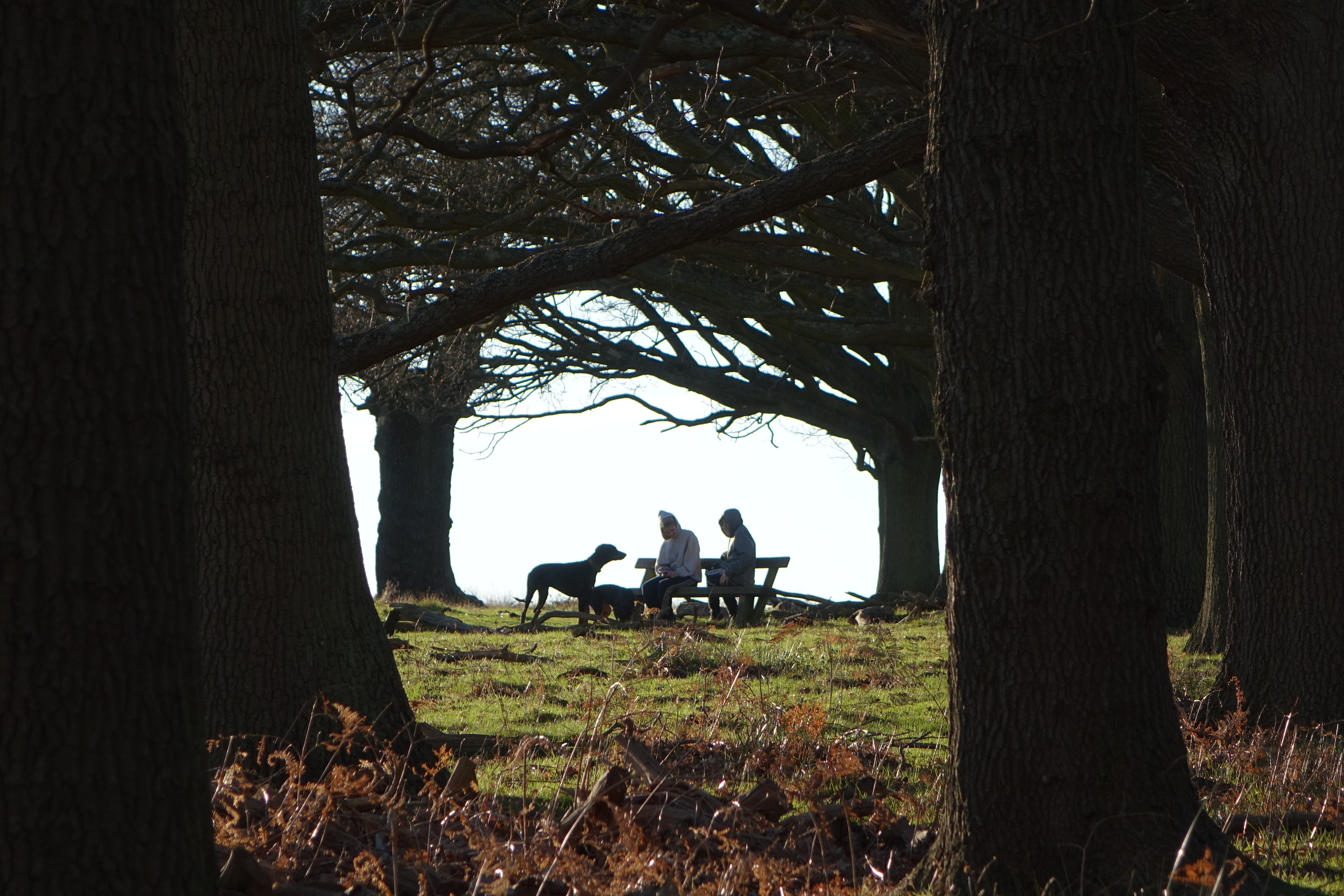
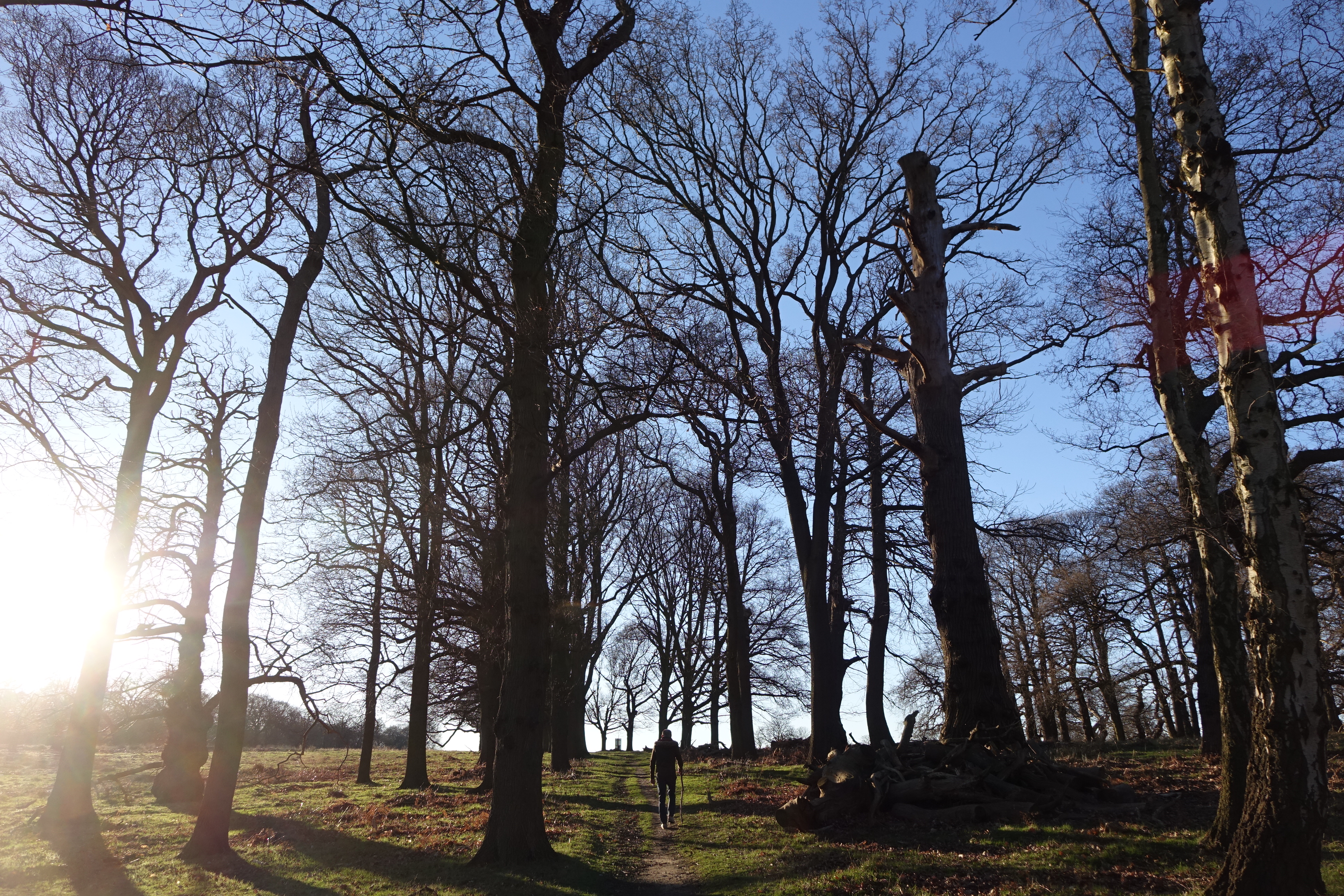
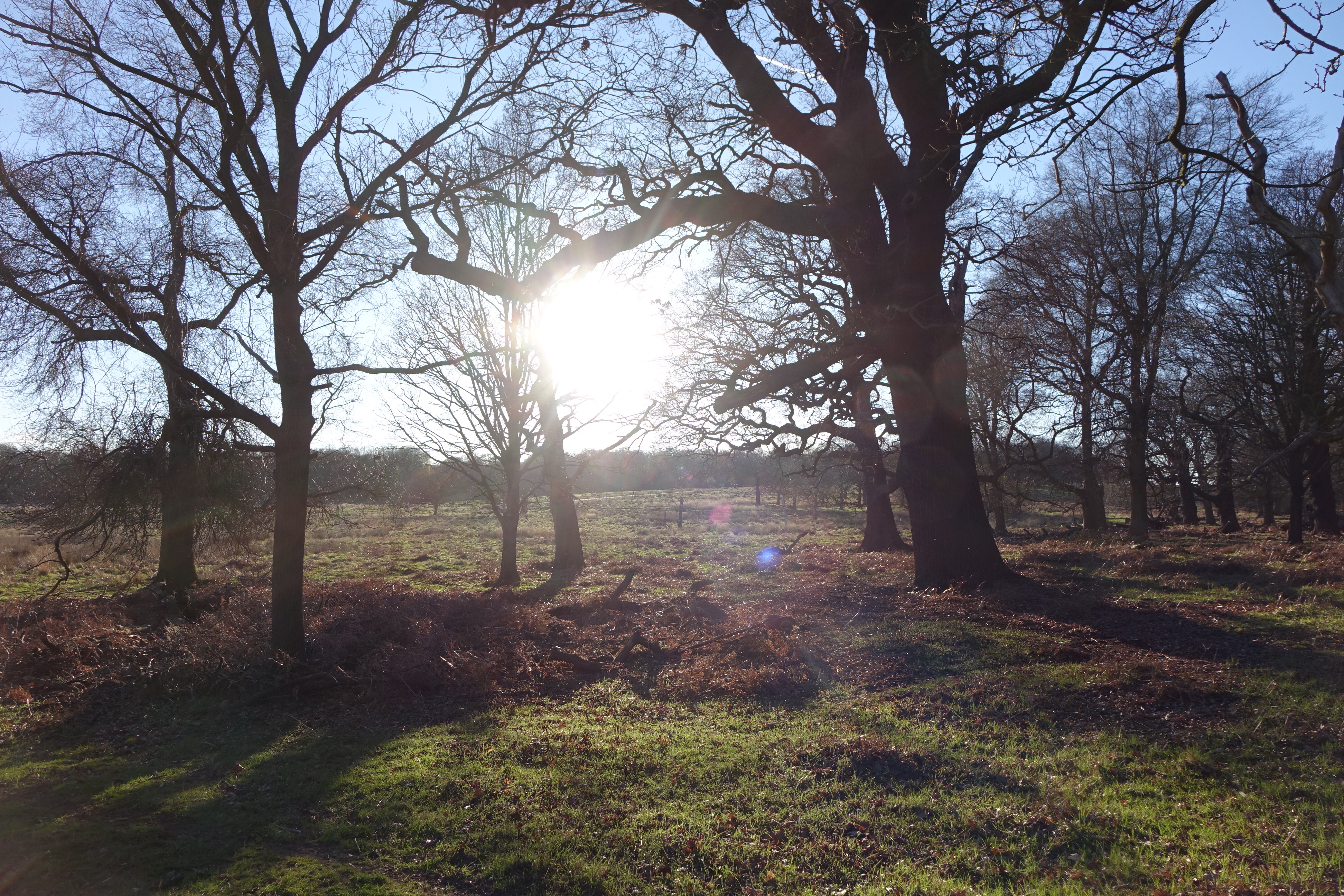
What Wimbledon Common offered in richly verdant, tightly packed woodland, Richmond boasted in wildly windswept, delightfully untended moorland, where great swathes of sweeping grasslands were punctuated by biblically ancient twisting oak trees, and occasional rugged rockfalls like something more characteristic of Northeast Scotland than Southwest London. But London is indeed the host to an astonishing array of green spaces, and it never fails to surprise me how bucolic an atmosphere can be found so close to the city.

DSC07603DSC07593DSC07605DSC07533DSC07492DSC07572DSC07576DSC07586DSC07611

Last week’s Wimbledon adventure was followed swiftly by a tromp across the harsher, wilder lands of Richmond Park (indeed, we stumbled upon said park when an end to Wimbledon Common brought us to the somewhat harsh reality of the A3, which we rapidly crossed, eyes blinkered, before escaping back into the rural idyll of Richmond). Through one of the grand gold-gilded gateways which mark the entrance to this ancient recreational space, the magnitude of Richmond Park was immediately tangible. To call it a park is to suggest a mild-mannered patch of urban greenery, but this mighty swathe of natural ruggedness is true testament to nature winning out over the city sprawl. Even the occasional car crossing its vast geographical spread cannot compete with the true king of this space – the mighty stag, one of whom we came into satisfyingly close contact with, so much so that at one point we thought an attack was imminent.

DSC07609DSC07602DSC07600DSC07598DSC07564DSC07596DSC07585DSC07591DSC07560

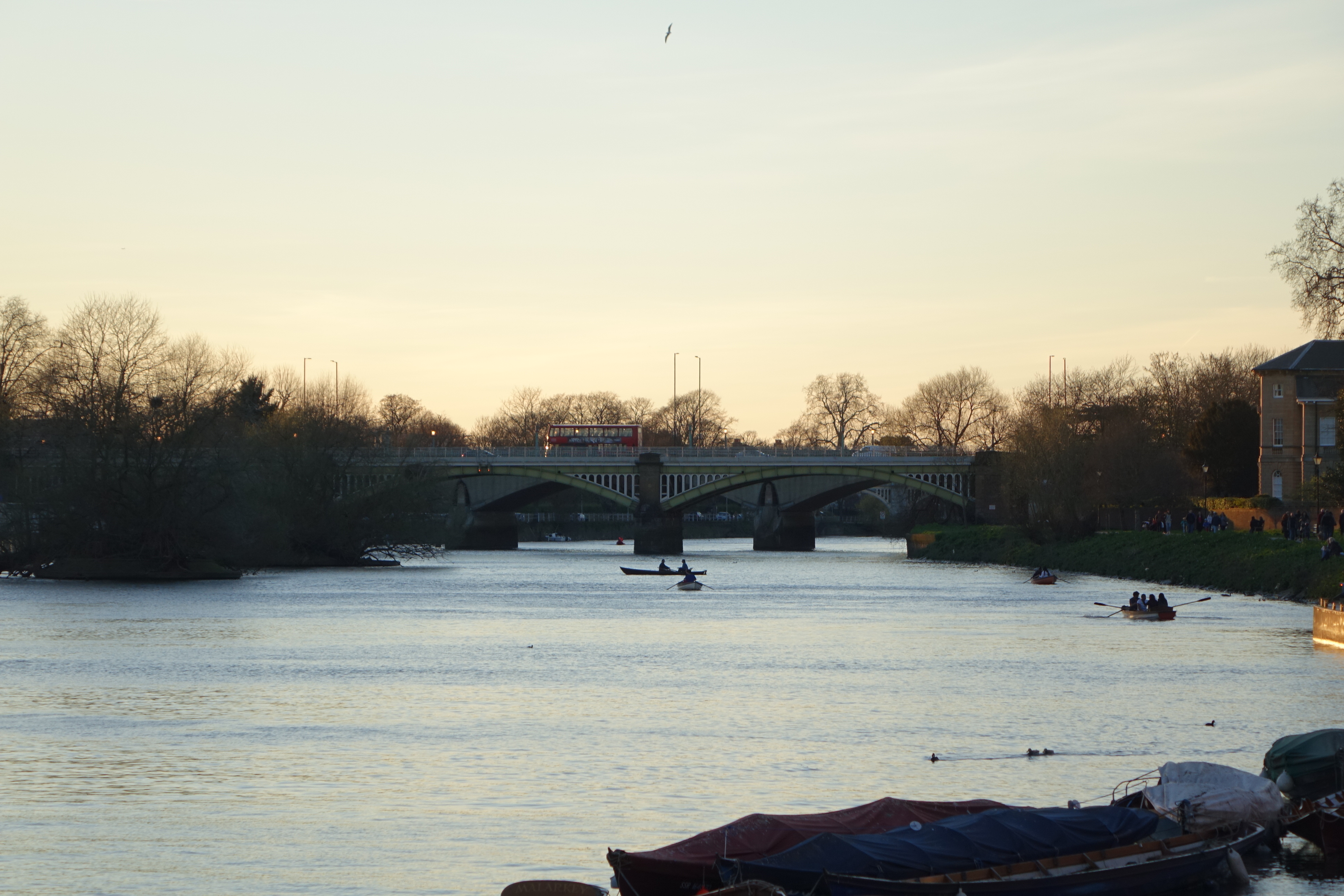
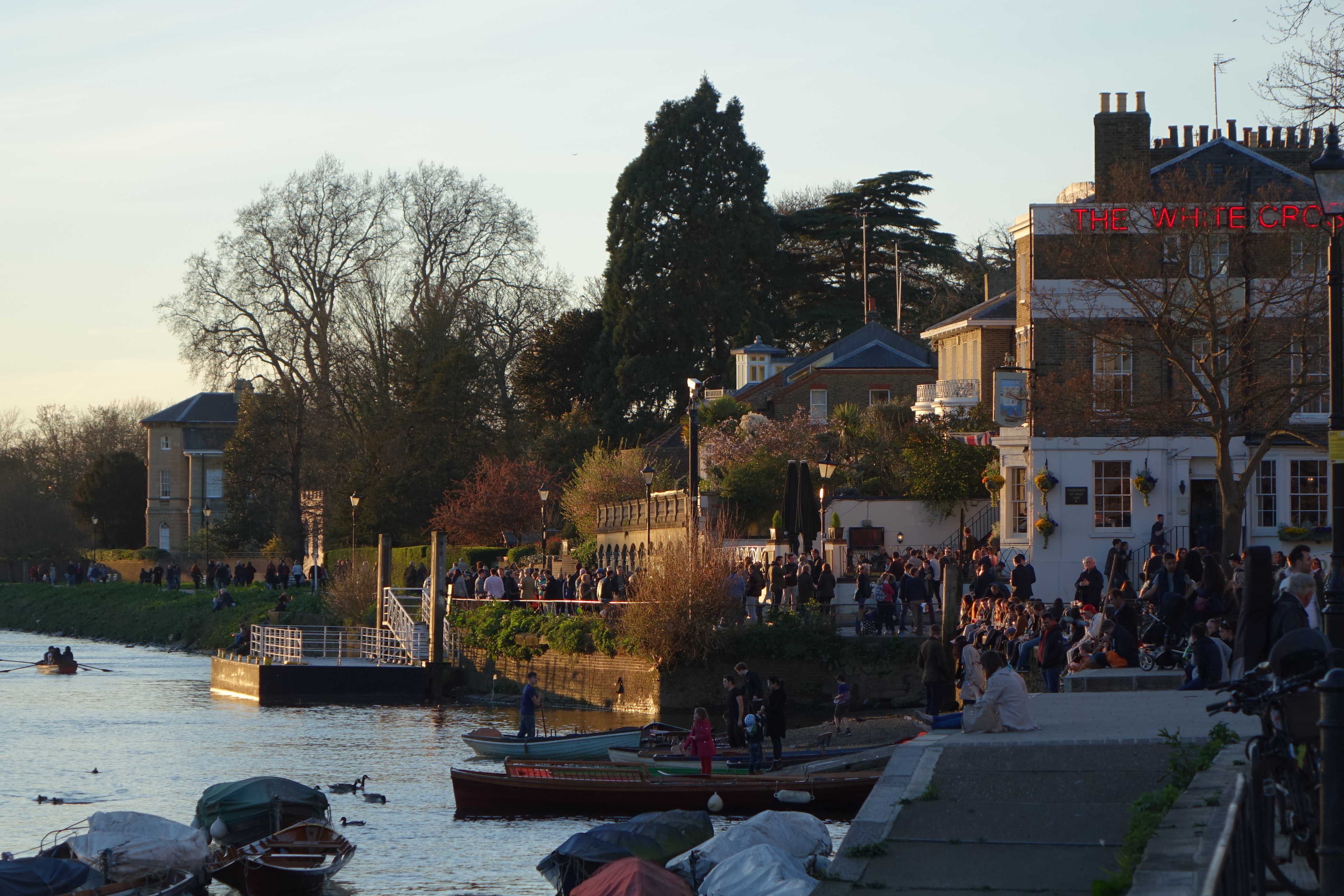
A few hours crossing Richmond Park was enough time to convince us that in London, this great metropolis, an embrace with the great outdoors need never be too far away. Yet just beyond the perimeter of this rurality, a welcome return to civilisation was manifested in the form of the elegant Richmond Hill, whose Georgian houses and small little pubs were glowing a richly golden yellow as all concerned basked in the setting sun, and visitors sipped on bubbles while overlooking one of the most stunning views of the Thames as it snakes alongs its course towards Kingston and beyond. In this way, green turned to gold as our rediscovery of this truly idyllic suburb of London drew to a satisfying close.

DSC07657DSC07624DSC07650DSC07649DSC07637DSC07635DSC07630DSC07621

© Nicholas de Lacy-Brown and The Daily Norm, 2001-2017. Unauthorized use and/or duplication of the material, whether written work, photography or artwork, included within The Daily Norm without express and written permission from The Daily Norm’s author and/or owner is strictly prohibited. 

London, Rediscovering My City: Wimbledon Common

Knowing that the first weekend of Spring was going to be gloriously sunny, we had one objective in mind: to get outside. After living two years in Mallorca, London can feel claustrophobic by comparison. Life here is more geared up to the inside – cosy corners, candlelight, cushions – and yet ironically it’s one of the world’s greenest cities, so much so that a map of the city remains recognisable, even when the roads are taken away. This past weekend, we were determined to enjoy some of those green swards, and enjoy them we did. After agonising over Wimbledon or Richmond as potential locations, we actually ended up doing both in one. But the photos which resulted from that extensive walk are so ravishing that frankly I’ve felt compelled to split this post in two. Both green gems need their place in the sun!

DSC07469DSC07466DSC07473DSC07485DSC07458DSC07414DSC07467DSC07419DSC07432DSC07420

A renewed enthusiasm for the great British outdoors definitely comes of my Mallorcan experience. I spent so much time taking inspiration from the island’s impressive landscape that I realised how little I had devoted myself to the equally beautiful countryside back at home. And the English landscape really is beautiful, a point made no better than by artist David Hockney, whose vast multi-coloured canvases pay homage to the Yorkshire countryside in all its wild beauty, a selection of which can currently be enjoyed in a show of his work at London’s Tate Britain.

DSC07461DSC07439DSC07451DSC07445DSC07406DSC07436DSC07465DSC07415DSC07459DSC07450

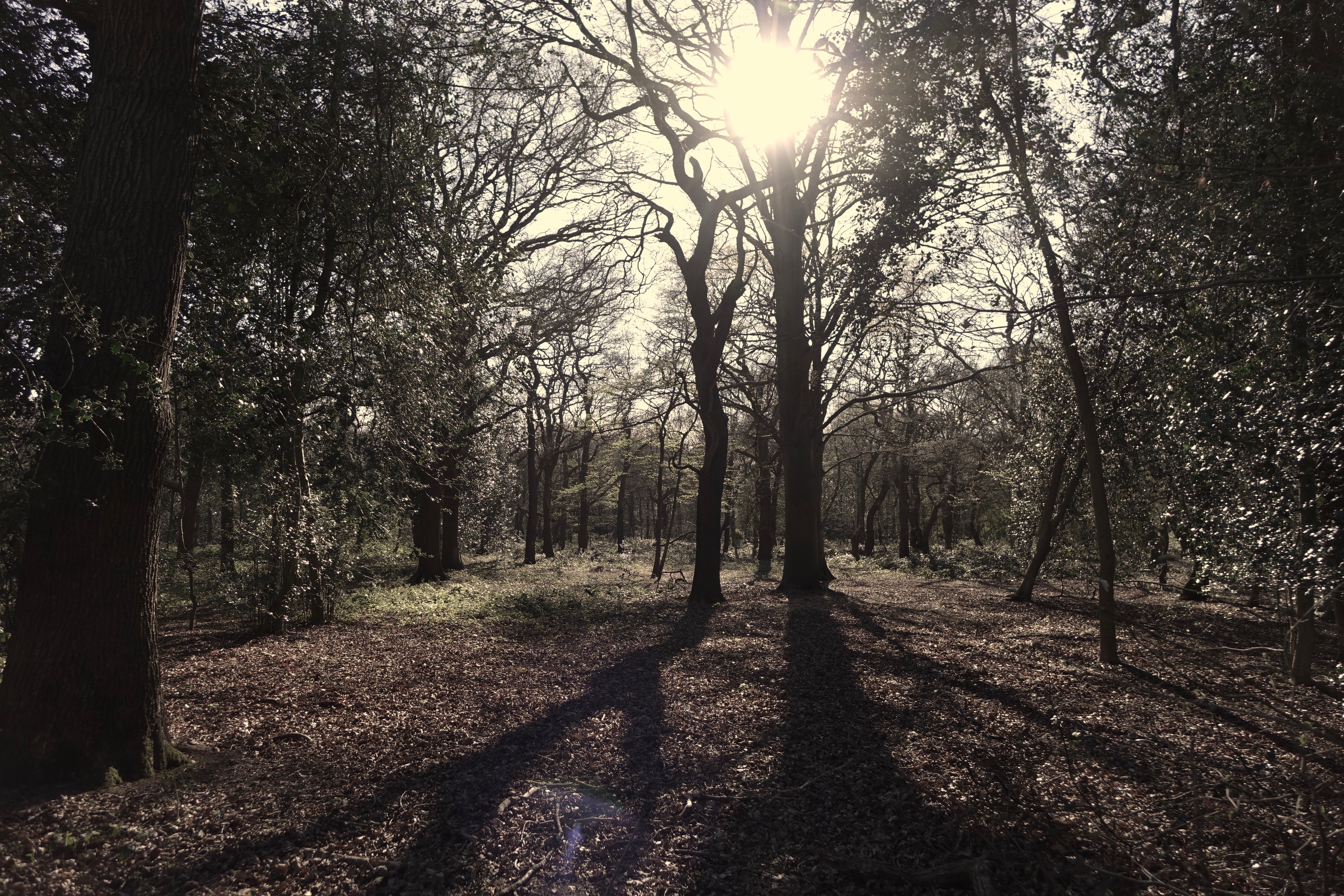
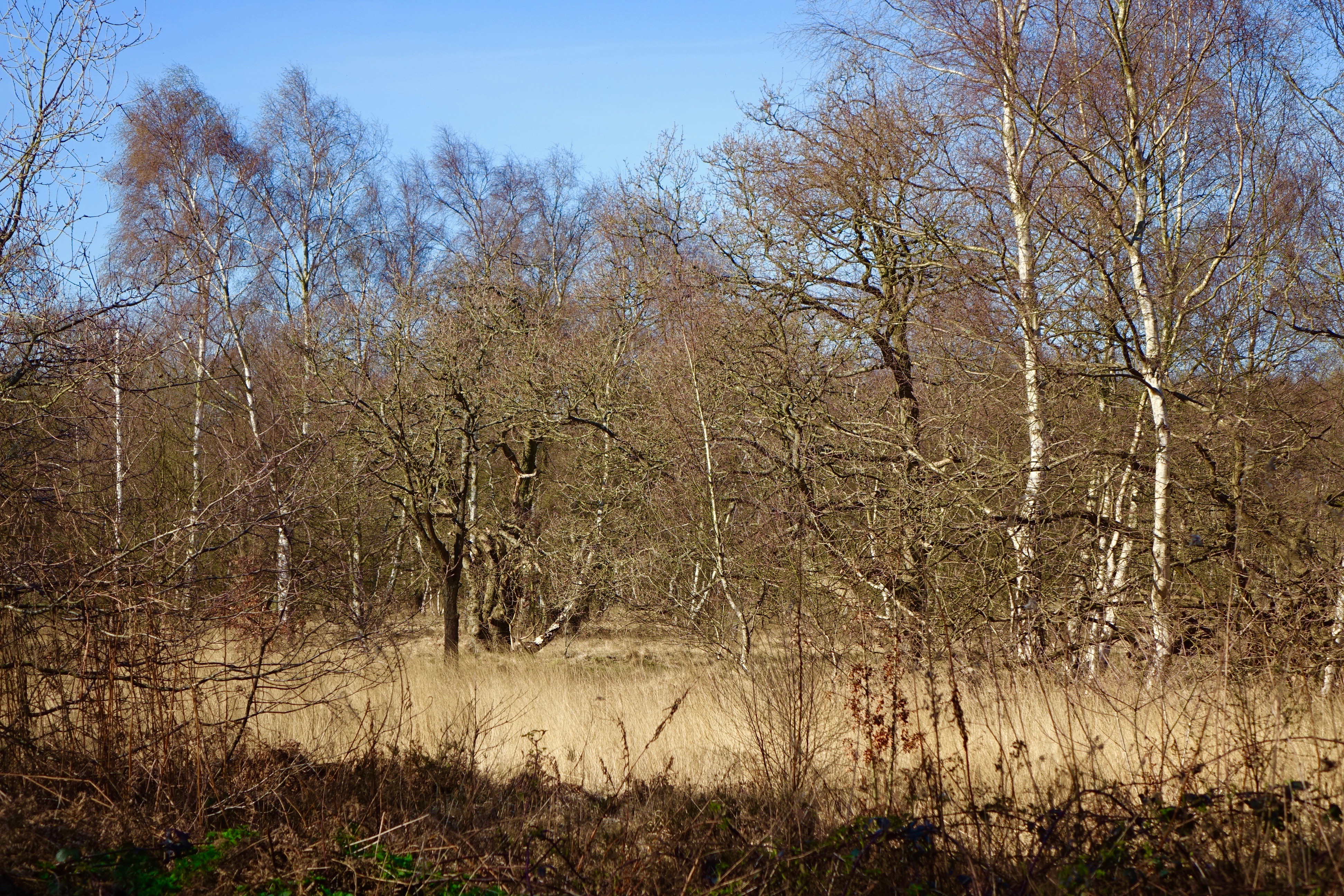
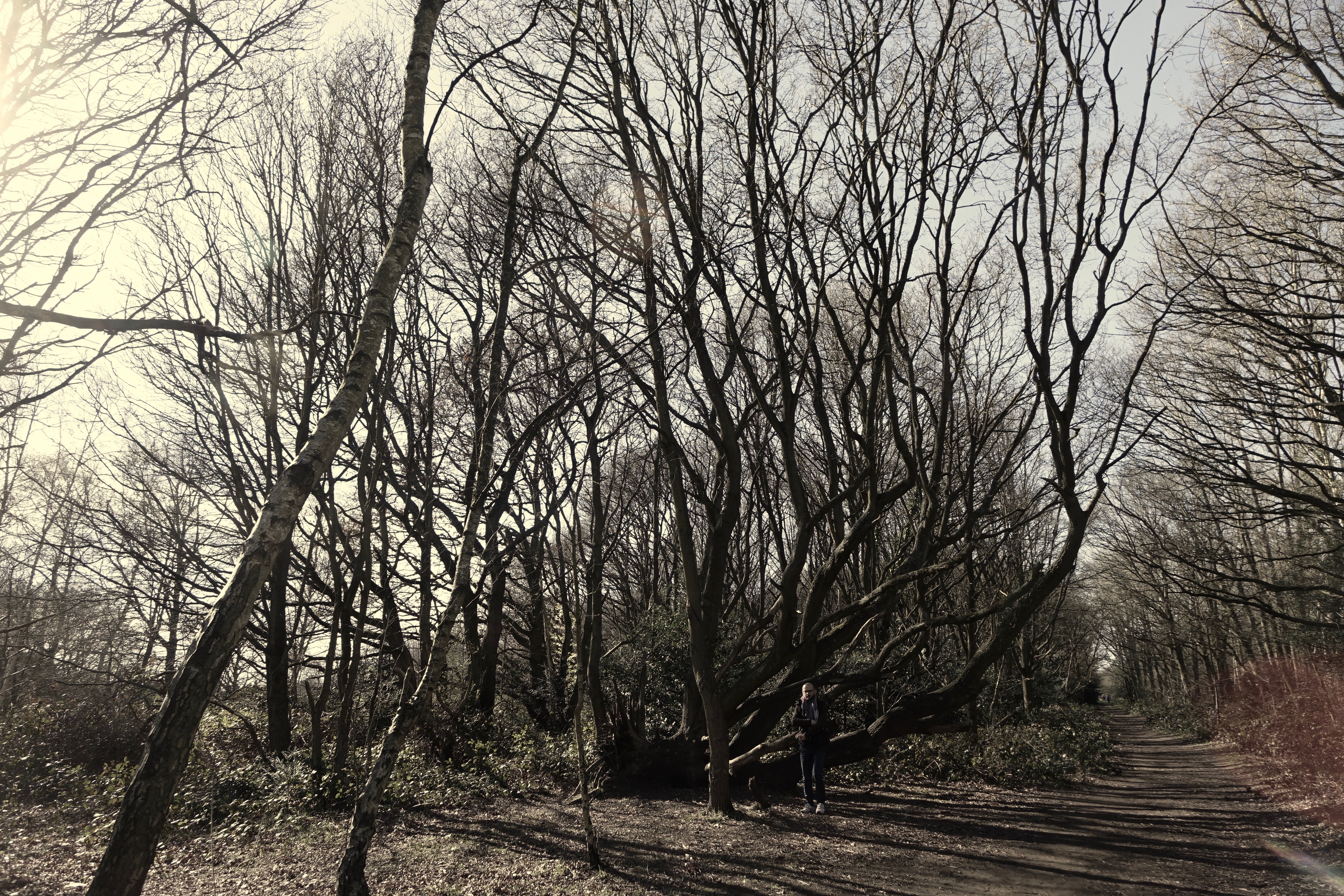
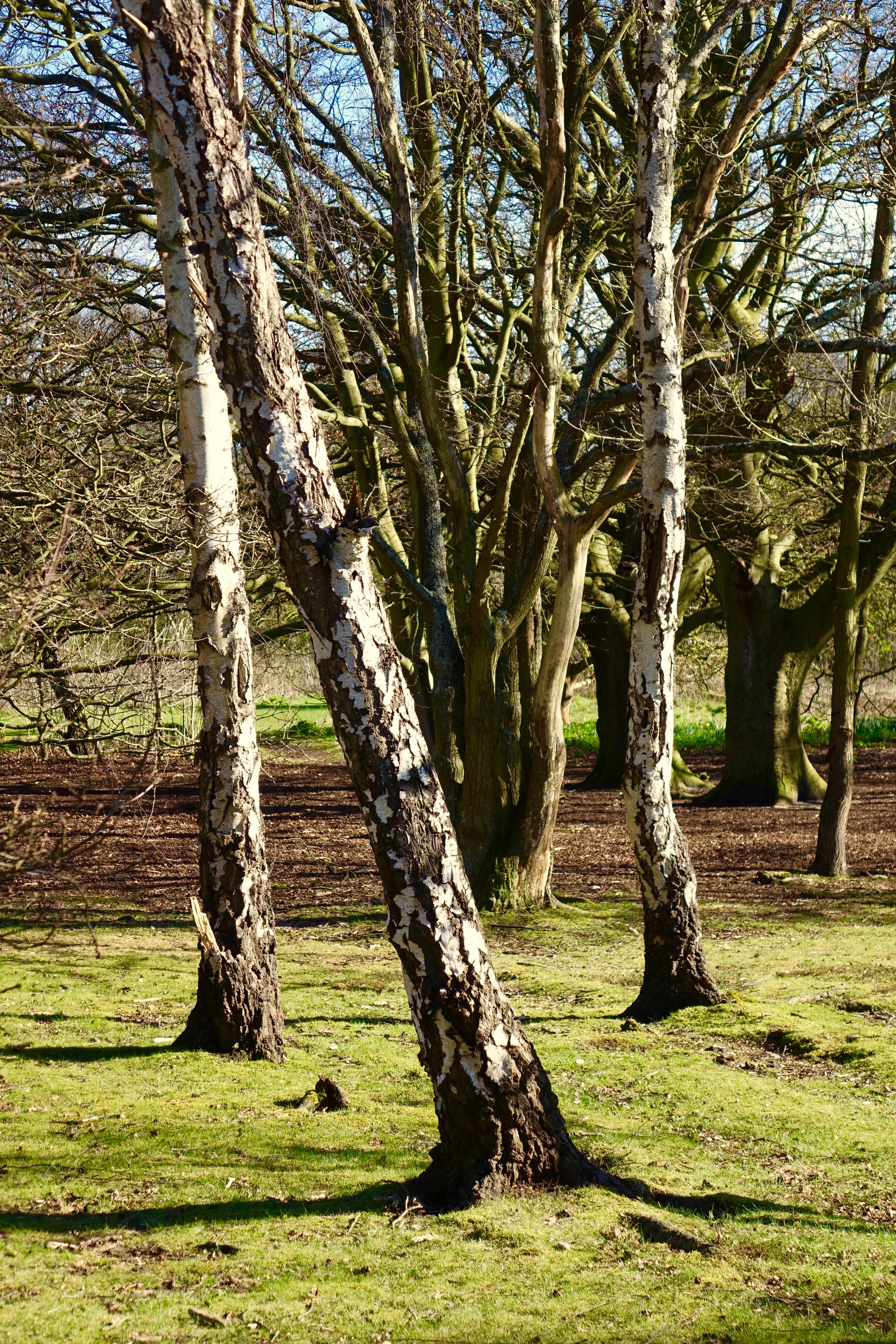
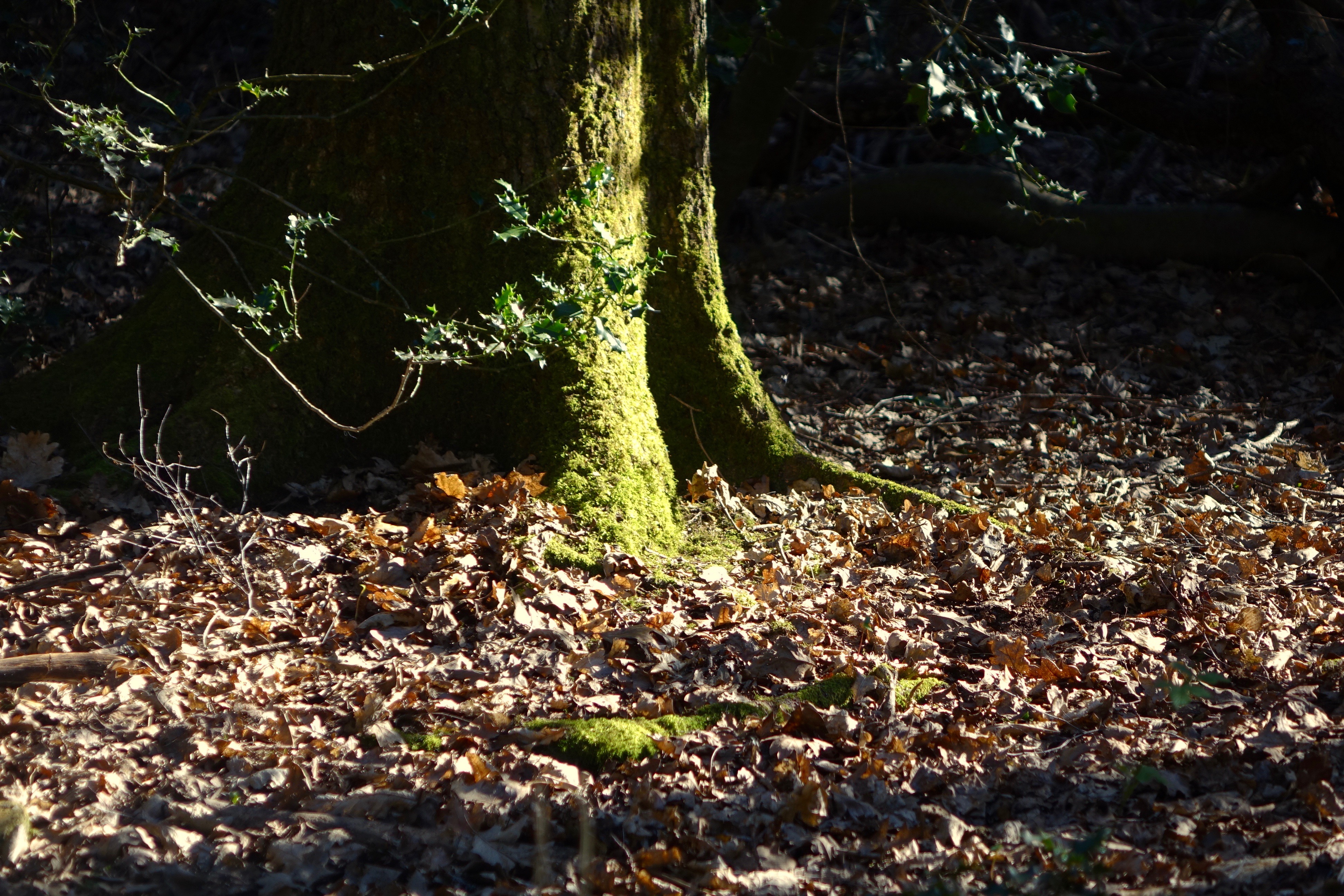
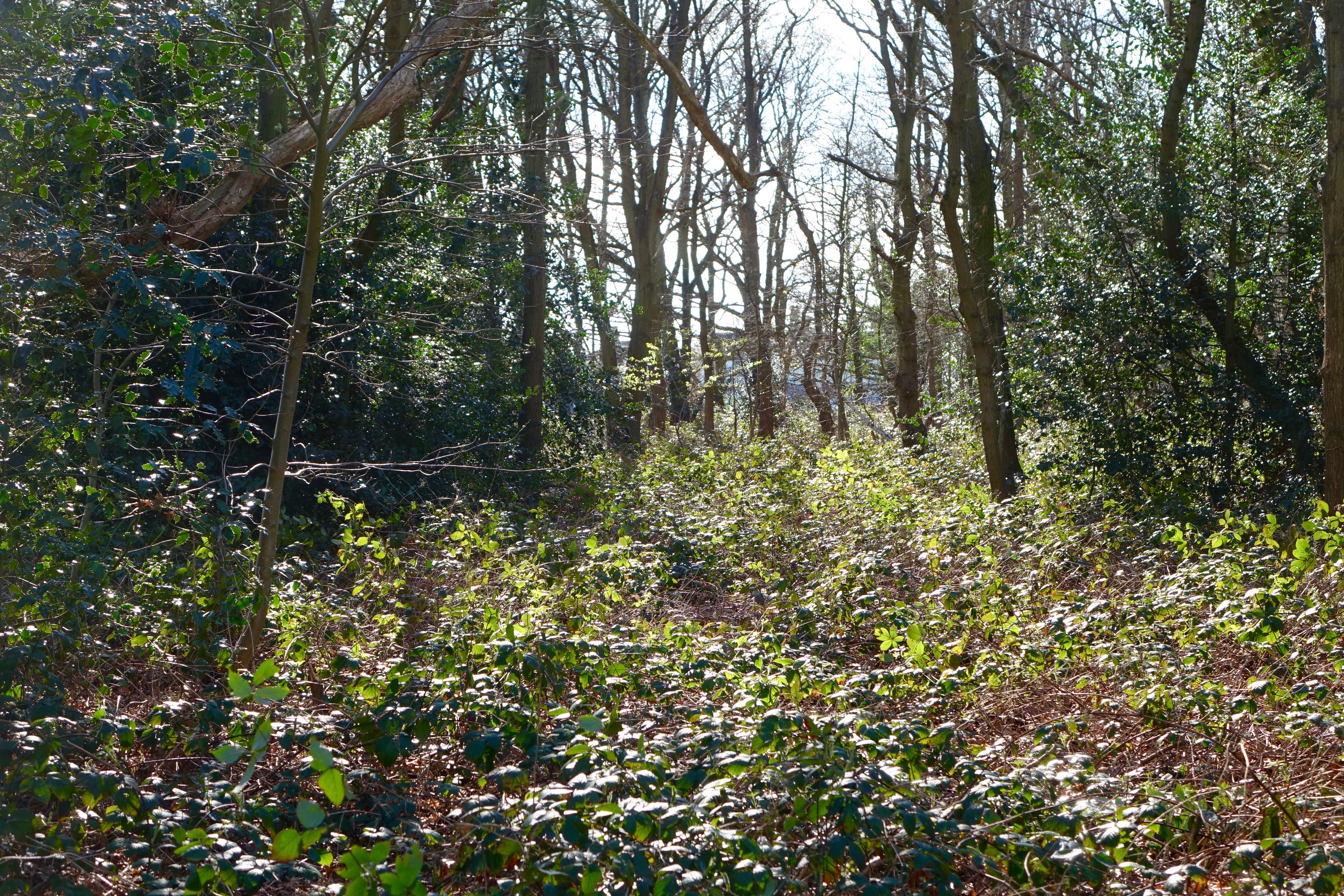
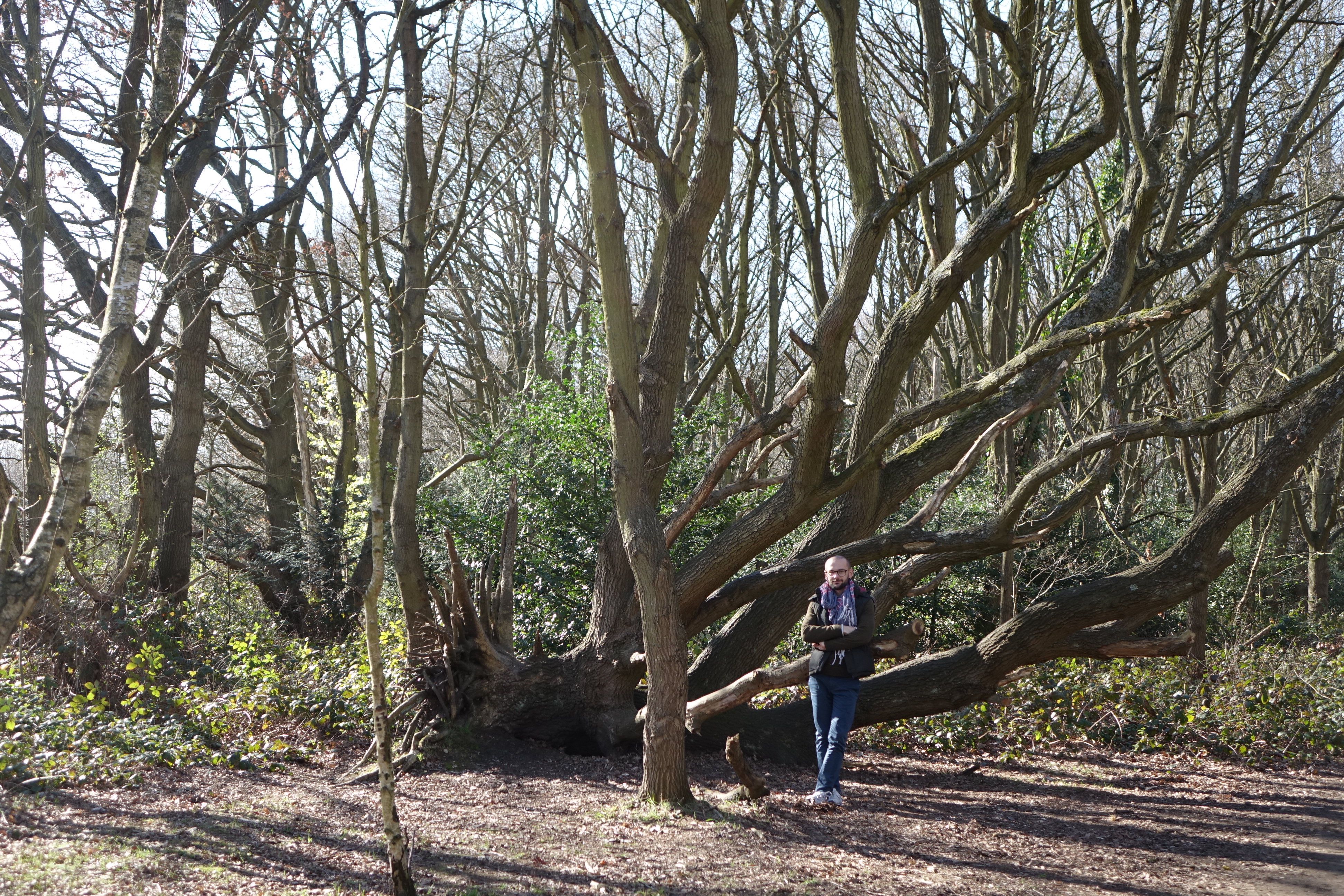
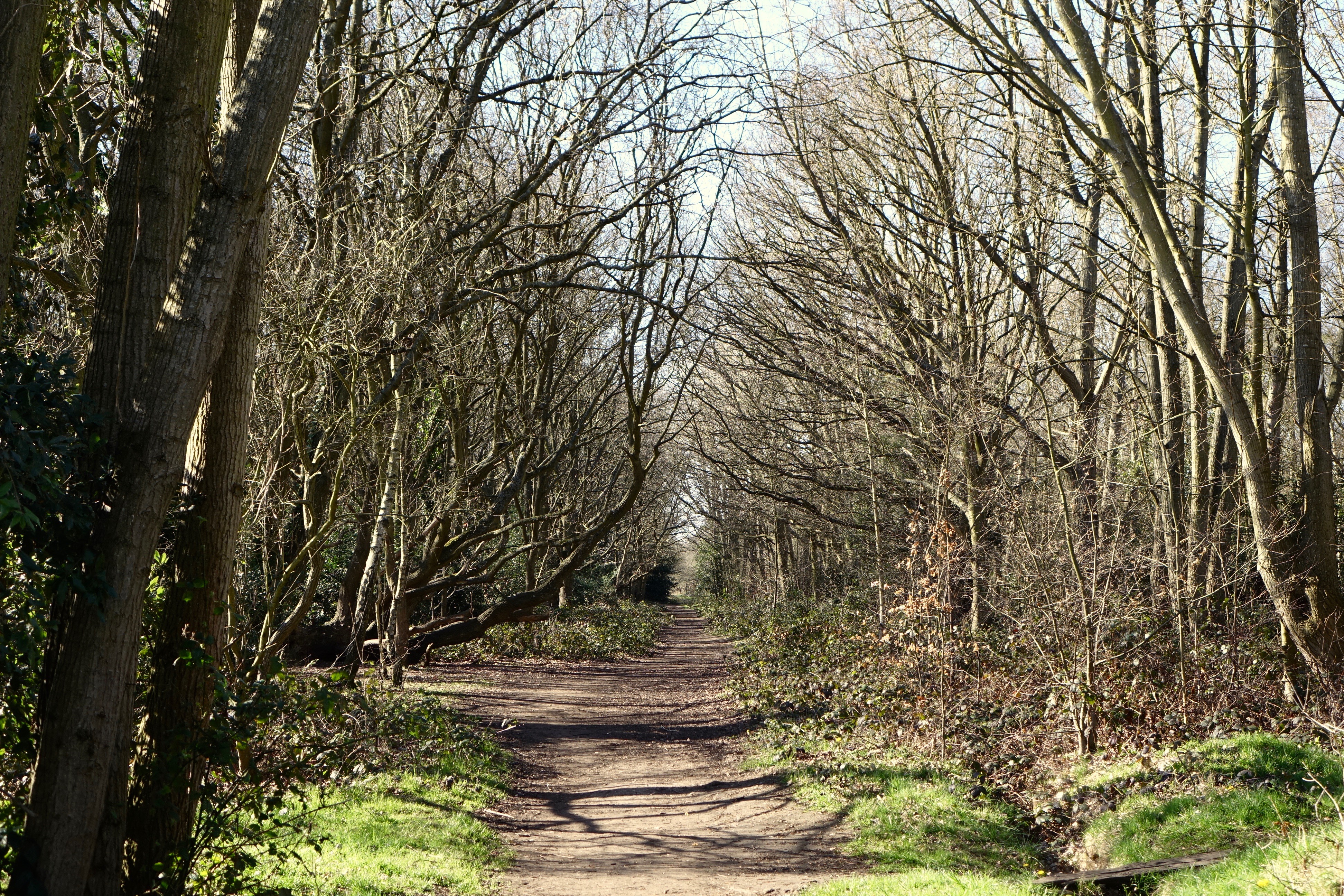
It was to Hockney’s ravishing landscapes that my mind turned this weekend as we set out on our outdoors trek across Wimbledon Common. Within metres of entering the Common from the bustle of Wimbledon Village, we felt as though we had been plunged into the middle of the countryside. Here there were no cars, no litter, few people… you could barely even hear planes. But what could be heard was a relentless chorus of chirping birds awoken by the promise of Spring. The further we walked, the deeper the wooded landscape became, and as the trees leaned inwards over a path made from the footsteps of many, the tunnel effect brought to my mind the works of Hockney, as did the twisting complex maze of branches over head, which looked all the more beautiful for the lack of leaves, which, in mere weeks time, will be covered.

DSC07453DSC07456DSC07413DSC07409DSC07424DSC07442DSC07412DSC07402

These photos capture, I think, the very elegant beauty which can be found in the simplest patch of the British outdoors. Here there is no topiary, no control. The flowers are far and few between. Instead the trees, wild and tall had been allowed to dominate, and in the twisting unplanned trajectory of their growth, they had created an architectural marvel which is every inch as impressive as the sea of glittering glass skyscrapers comprising the centre of London, mere miles away.

© Nicholas de Lacy-Brown and The Daily Norm, 2001-2017. Unauthorized use and/or duplication of the material, whether written work, photography or artwork, included within The Daily Norm without express and written permission from The Daily Norm’s author and/or owner is strictly prohibited. 

Solidarity for London

22.3.17 – just another number to add to a growing series of dates which mark terrorist atrocities. The trend begun with 9.11, and those images so ghastly that none of us could believe our eyes. The dates which have followed each add a further horror to this incredible trend of evil, senseless murder in countries known for their civility. Today, London was hit again, and we must once again reflect how unsafe we really are; how, owing to the despicable ignorance of an unconscionable few, we must live life on a knife edge, gambling with our existence when we simply walk over a bridge, or take the tube in the mornings.

Yet we British are famous for our resolve. The show will go on – how could it be otherwise. But that does not mean that we should indulge too far in the English “stiff upper lip”. This is a time to reflect and show emotion. To be shocked and to react. To fight against terror and stand up for our free-thinking democratic society. There is always a bastard in every group of innocents.We must just do everything we can to stop them in their tracks.

So doing my bit for London solidarity, I´m posting a few of my recent shots of London, taken on the go. Their desaturated, grey tonality is beautiful, but also rather appropriate for this sombre day. But while London is today shrouded in the black of mourning, its soul is deeply, strongly, diversely coloured. Centre of the world, standing stronger whatever the adversity.

© Nicholas de Lacy-Brown and The Daily Norm, 2001-2017. Unauthorized use and/or duplication of the material, whether written work, photography or artwork, included within The Daily Norm without express and written permission from The Daily Norm’s author and/or owner is strictly prohibited. For more information on the work of Nicholas de Lacy-Brown, head to his art website at www.delacybrown.com
London welcomes in the Springtime

Outside living was an inescapable characteristic of our daily Mallorca existence. Apart from maybe the odd week around January time, there were very few days when one could not go for a stroll to breathe deep of the Mediterranean air. In returning to London, we did so in the knowledge that our relocation would mean an accompanying retreat to the indoors, to cosy wine bars, chic restaurants, bustling galleries, but far fewer midnight strolls…And I would be lying if I said this were not true, as we allowed ourselves to become quickly ensnared and enveloped in the comforting charm of dimmed lights and candle-flickering interiors while outside the crispness of late winter lingered.

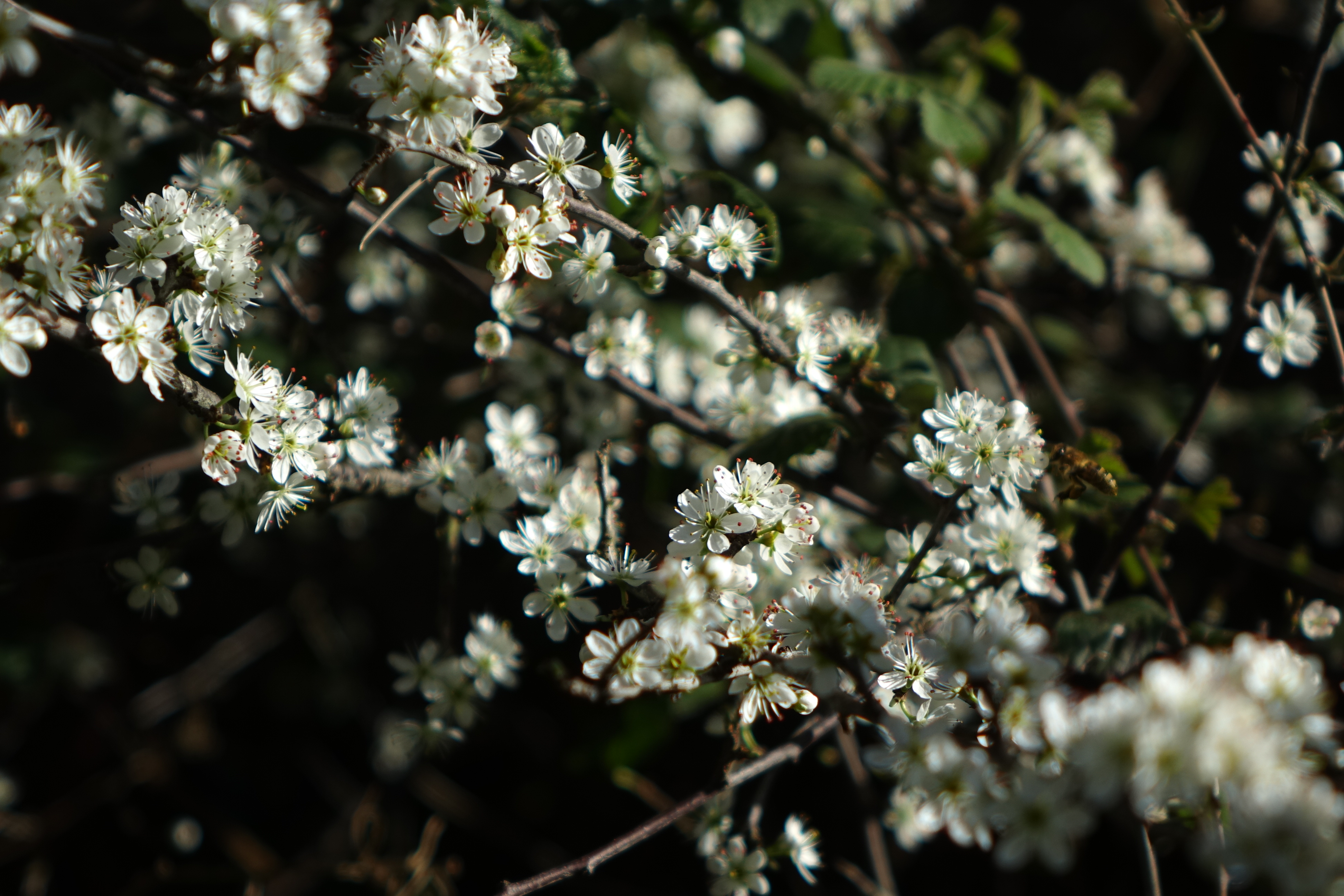
But as though Mother Nature wished to sooth an internal longing for the great outdoors, our return to London was marked with a surprisingly clement burst of Spring. Such were the favourable conditions that we had little time to bemoan our loss of Mallorca, for here in London, our world-famous expanses of green parkland glimmered as lush green grasses and newly sprouting flowers bended towards the sunlight. Spring had arrived early!

And today, as we mark the Spring equinox and more or less the true beginning of British summertime, it seemed the most appropriate time to share a collection of photos collated during these weeks as I enjoyed these first glimpses of better times. They are all quick snapshots, taken on my trusty iPhone while life (and my home renovation) made time fly fleetingly by. They are shots which do not pretend to be photographically refined, but which offer a flash of hope for happier, warmer, sunnier times to come, even here in Blighty.

© Nicholas de Lacy-Brown and The Daily Norm, 2001-2017. Unauthorized use and/or duplication of the material, whether written work, photography or artwork, included within The Daily Norm without express and written permission from The Daily Norm’s author and/or owner is strictly prohibited. For more information on the work of Nicholas de Lacy-Brown, head to his art website at www.delacybrown.com

My Mallorca Gouache goes Bankside

I look at the date I last posted on this blog and blush with shame. But to be fair, my excuses are good. Very good. For I have just made an international move from Mallorca, back to London, and for almost 3 weeks I didn’t have a computer to write with, and for a further week beyond that, I had no office nor desk to place it on. However things are slowly getting there, and with only some 7 boxes out of around 107 left to unpack, and an entire home redecoration project more or less at its end, life is finally starting to settle, and my characteristic devotion to The Daily Norm will now, I hope, do likewise.

One of the escapes I was able to make during the course of this hectic  time was a series of visits to the Bankside Gallery on London’s South Bank (to be found directly next door to Tate Modern). For in a moment of perfect poetry, in my last days of Mallorca residence, I discovered that one of my paintings of Palma had been accepted by the jury of the Royal Watercolour Society Contemporary Watercolour Competition, and would be soon thereafter exhibited in London. So a painting of one home is exhibited at the very heart of another, and as I re-embrace London as my new home city, I was delighted and indeed honoured to be able to visit the Competition exhibition, both to see my own work displayed, and to admire the work of all the other successful competitors.

Galera 2

My winning submission: Ocho Balcones No. 2: Old Town Cables, Palma (2015 © Nicholas de Lacy-Brown, gouache on paper)

IMG_8456

All of the works currently on show in the exhibition can be seen here on the RWS website. What struck me from the show was just how versatile water-based mediums are in the creation of contemporary art. Often seen as a traditional method of painting, watercolour and other water-based mediums such as gouache can be used to create vivid, modern depictions of the world around us, or simply abstract or surreal images straight from the artist’s head. They are also great for really precise work on paper, as my winning work, Ocho Balcones No.2: Old Town Cables, demonstrates.

IMG_8455

Enjoying the packed private view …

My tardy publication of this article does not give you much time to enjoy these fine works in reality, for the exhibition will come to a close this Wednesday. But if you get a chance, go along…not just for my sunny glimpse of Mallorca, but for the wonderfully diverse work of the other participants whose art really proves that water-based mediums are as popular today as they ever were.

Bacchus & Ariadne

The year toils on, March is upon us, and in line with my new year’s resolution, I have made painting the very heart of my year’s endeavours. In that vein, I am progressing well with a new collection of abstract interpretations, not only of my own experiences, but also of well known masterpieces. Following hot on the heels of my interpretations of Velazquez’s Las MeninasI have now painted what must be my favourite of my entire new collection, an interpretation of Titian’s masterpiece, Bacchus and Ariadne.

With its stunning sky of ultramarine and the sheer energy of the central character, Bacchus, jumping into the air, the painting has always been one of my absolute favourites in the collection of The National Gallery in London. Painted as part of a cycle of paintings on mythological subjects produced for Alfonso I d’Este, the Duke of Ferrara, the painting is based on a tale told by Roman poets Catullus and Ovid. It depicts Ariadne, daughter of Minos, being deserted by her lover Theseus on the island of Naxos. She is rescued by Bacchus, god of wine who, in a chariot drawn by two cheetahs, sweeps into the scene with his retinue of drunken followers in a campaign to seduce Ariadne. In so doing, he promises her the sky, where, he declares, she will become a constellation of stars, like the Northern Crown which can be seen glimmering in the sky.

Bacchus Ariadne FINAL

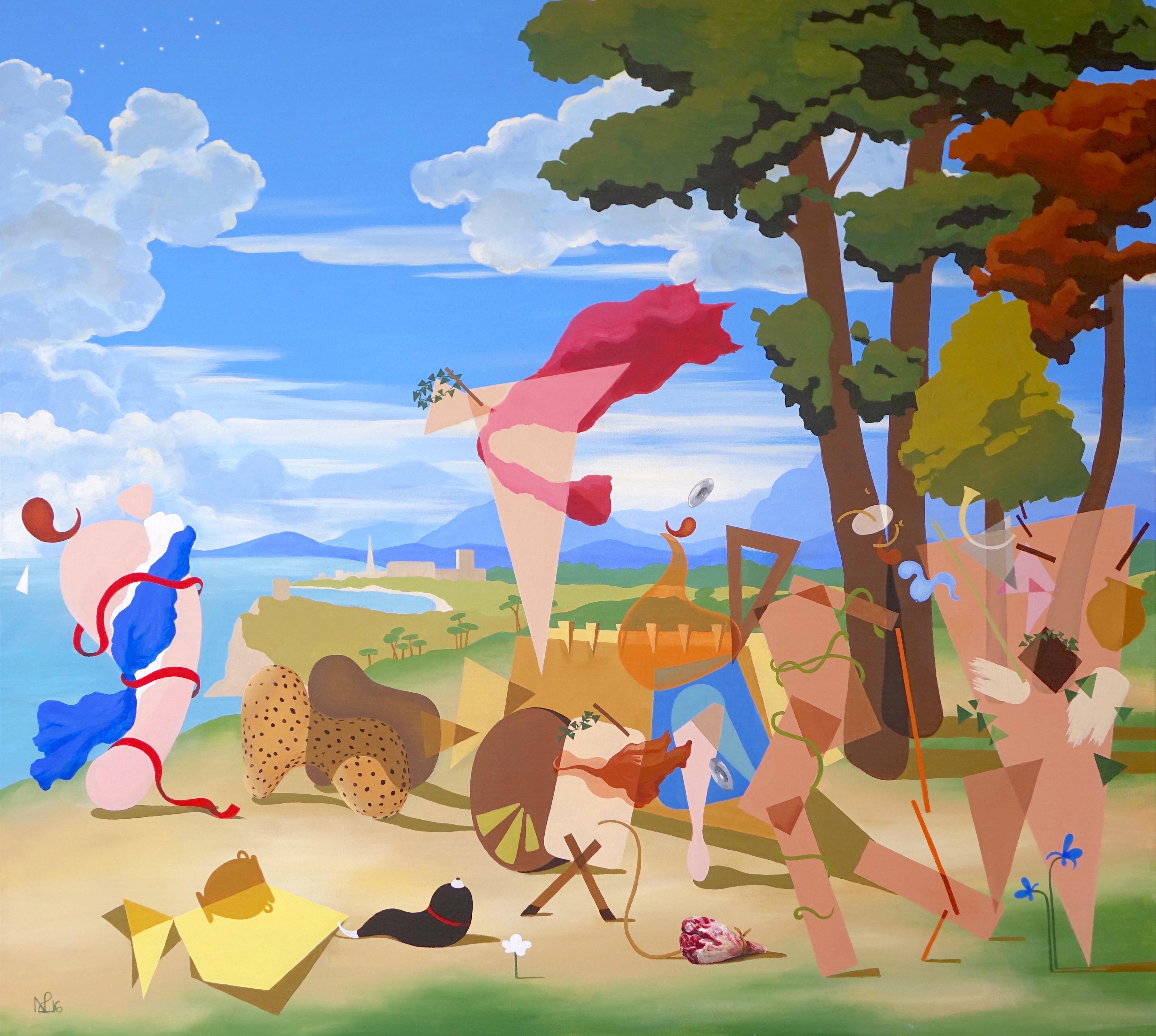
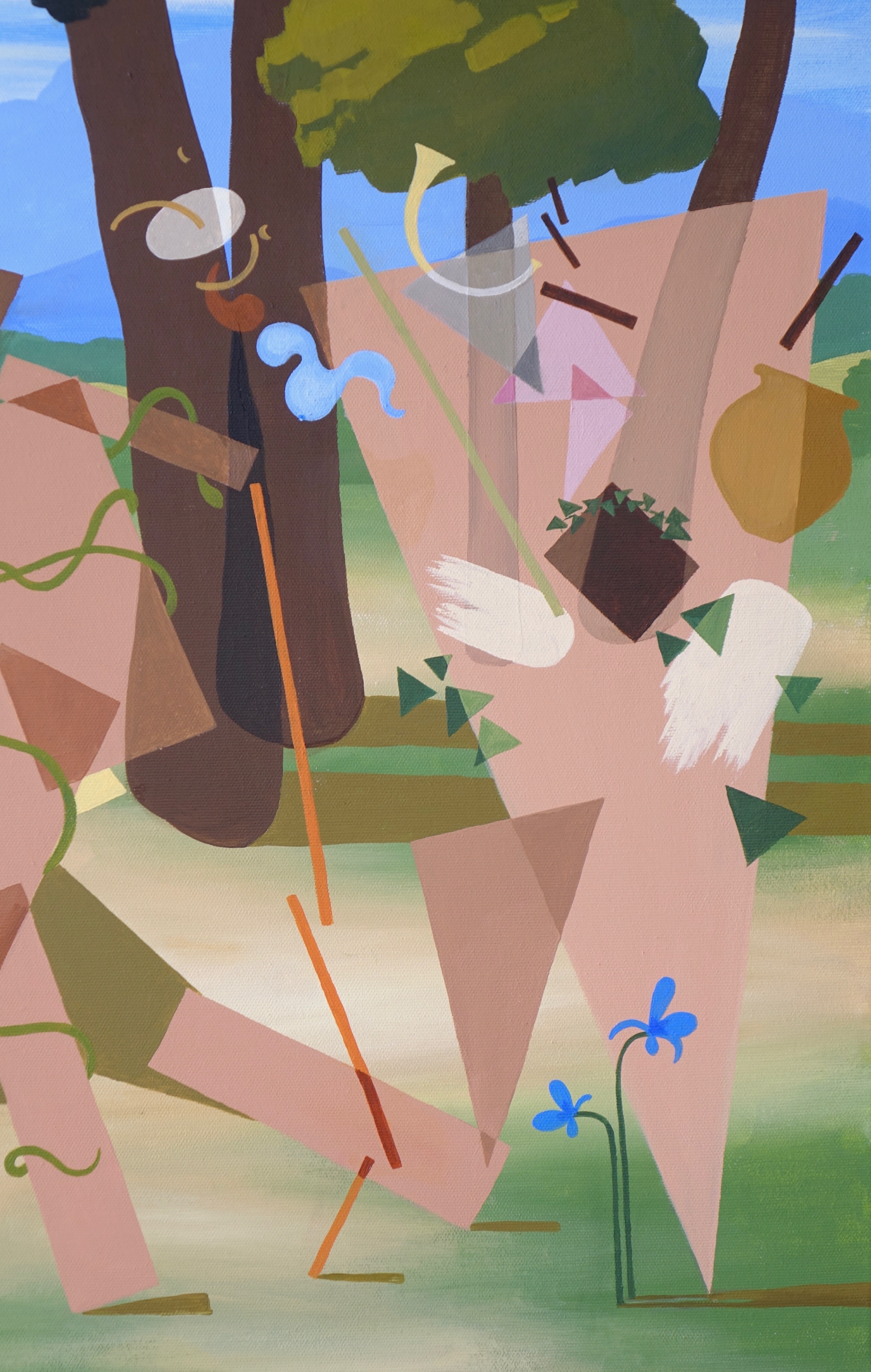
Bacchus & Ariadne (2016 ©Nicholas de Lacy-Brown, acrylic on canvas)

995px-Titian_Bacchus_and_Ariadne

Bacchus and Ariadne by Titian, 1522-23 (National Gallery, London)

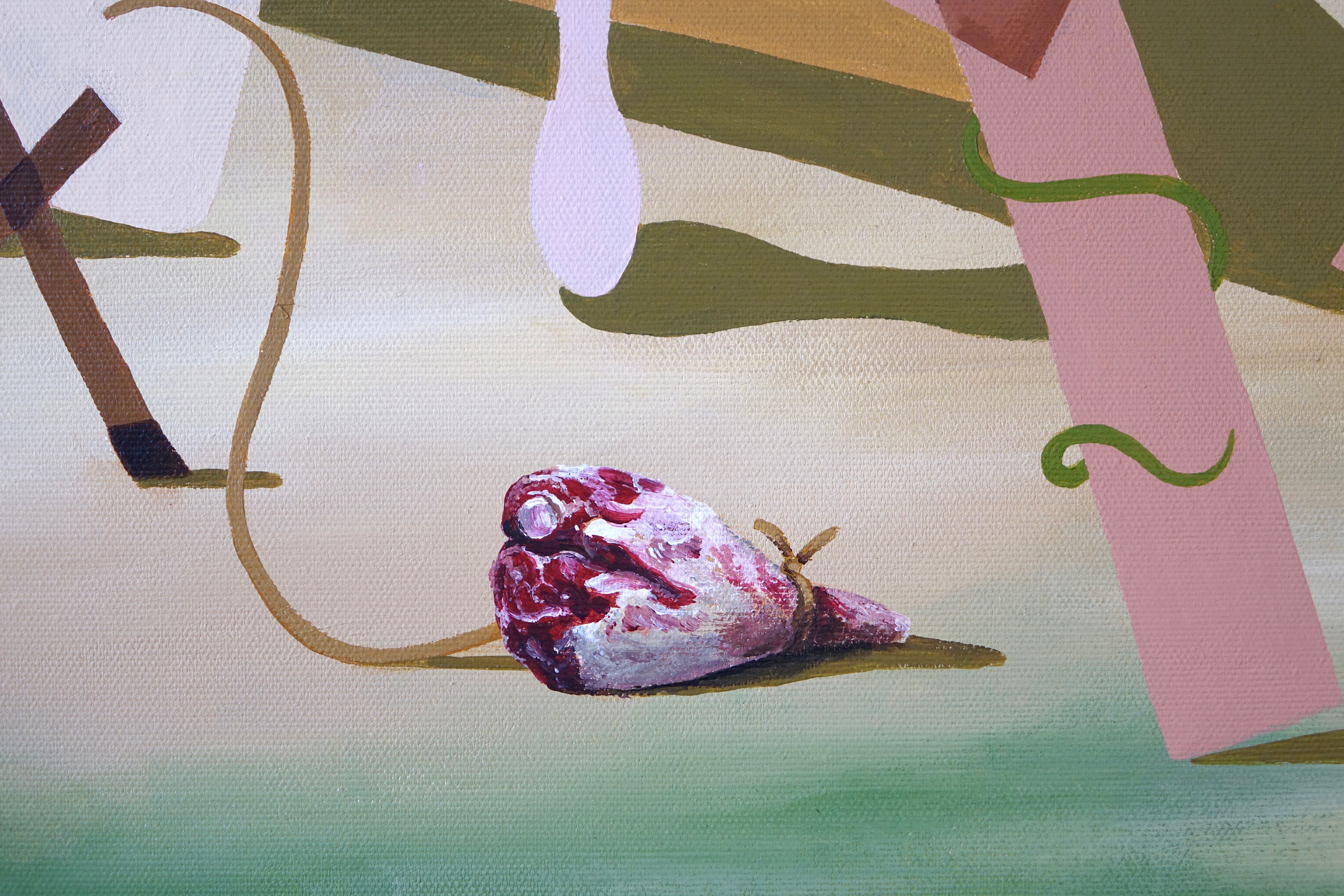
The composition and the colours are so striking that in painting my own version, I wanted to change neither, instead choosing to retain the stunning blue sky with its rolling fair-weather clouds, while in front simplifying the forms of the characters, the trees and the landscape. In finding ways to “abstract” the figures, I discovered various triangles across the composition, and used this shape, in particular, in depicting the masculine figures in the scene, while for the feminine figures, I used curving forms.

DSC09206DSC09209DSC09205

Nothing can repeat the true genius of the Venetian master, Titian, but my version of this painting, created in perfect ratio to the original, is certainly something of a high point in my new collection of a freshly revolutionised style.

© Nicholas de Lacy-Brown and The Daily Norm, 2001-2016. Unauthorized use and/or duplication of the material, whether written work, photography or artwork, included within The Daily Norm without express and written permission from The Daily Norm’s author and/or owner is strictly prohibited. For more information on the work of Nicholas de Lacy-Brown, head to his art website at www.delacybrown.com
Art in London (Part 3): Giacometti Pure Presence

Say Alberto Giacometti to most art enthusiasts, and for the majority, an image of his long, spindly totem-pole like human sculptures will come to mind. For it is these famous works which made Giacometti’s name, and which today reach eye-wateringly high prices at auction. But for me, the true genius of this artist was not in his sculptures at all, but in his frenetic, impulsive two-dimensional works.

I first discovered the drawings of Giacometti when I attended a short course in life drawing at the Chelsea College of Art. The teacher was trying to ally the many frustrations spreading amongst the students in the room by the changing positions of the models both during the life drawing session, and after breaks. Yet as he attempted to show us through Giacometti’s work, a portrait does not have to comprise a single well-defined line, but can emerge from a series of lines and positions.

GIACOMETTIGiaco6Giaco10Giaco9

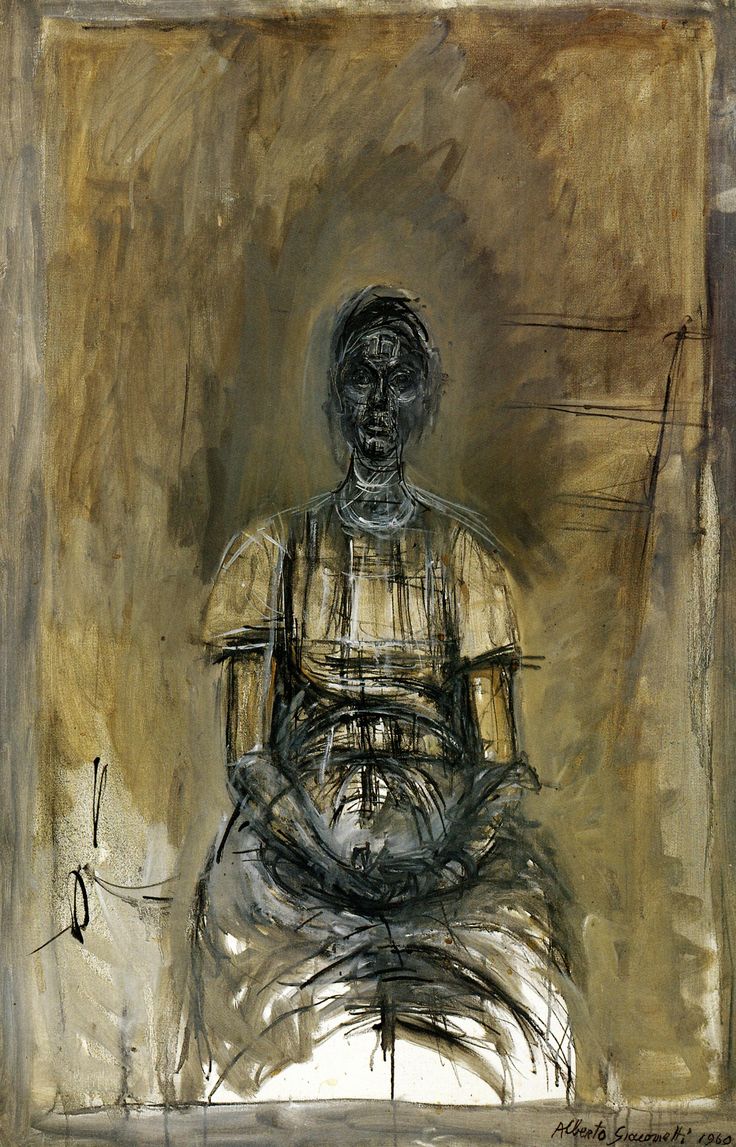
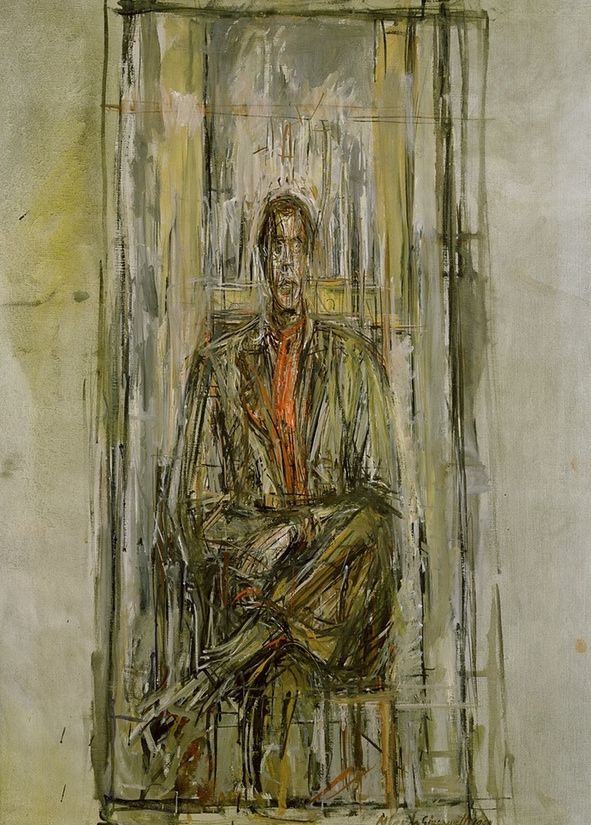
The portraits he showed us by way of example were by Giacometti, and in drawing his sitters, he did not concern himself with the perfect line of the face or body, but instead through a series of energetic lines, he would draw a fragmented impression of the sitter, building up the lines more and more until he got to the face, where the real details were introduced. The result was a drawing which focused so intently on the face that it appeared to be emerging from the paper.

So I was filled with excitement to discover that this autumn, the National Portrait Gallery in London are exhibiting a retrospective focusing on Giacometti’s many portraits. And while the show does this through some of the sculptures which made him famous, it is Giacometti’s two dimensional works on paper and on canvas which turned out to be as thrilling as I had anticipated.

Giaco8Giaco7Giaco5Giaco4

Like drawings and paintings created from wire, or built up through a passionate and continued interaction between pencil (or paintbrush) and paper, Giacometti’s portraits are utterly unique, and, after what appears to be a process of interrogation and exploration of the flesh, result in vivid portraiture full of emotional depth. But while the Goya exhibition at the National Gallery next door tended to bring to life the story of each of Goya’s sitters, in Giacometti’s works, I could sense the passion and intention of the artist himself.

Giacometti: Pure Presence runs at The National Portrait Gallery until 10 January 2016.

Interpretation No. 18: London

I suppose it shouldn’t come as much of a surprise. It took my departure from London after 12 years of living there to recognise that the city, while not consistently beautiful, still has a certain amount of inspirational magic to it. When I lived there I would always profess the need to travel to the Mediterranean and beyond in order to find artistic inspiration. When asked whether I ever painted London, I looked at people as though they were mad: paint this city? But it’s just a pool of grey, I would say.

Yet when I visited the city afresh at the beginning of last week, and sat in the glass fronted restaurant on the 6th floor of Tate Modern on Bankside, I could not help but stare in wonderment at the beauty of the cityscape before me, as I realised that London is much more than 50 shades of grey. Indeed, with the greeny shades of the River Thames, the plethora of glass skyscrapers and old baroque and gothic churches and the terracotta hues of many of the brick buildings, London is a metropolis full of contrasting colours.

Interpretation No.18: London (2015, Nicholas de Lacy-Brown, gouache on paper)

Interpretation No.18: London (2015, © Nicholas de Lacy-Brown, gouache on paper)

Absence makes the heart grow fonder. It’s a cliché but it’s true. And as soon as I returned from the city, I started work on this latest of my Interpretations series. A simplified but devoted landscape of a city which is beautiful after all.

© Nicholas de Lacy-Brown and The Daily Norm, 2001-2015. Unauthorized use and/or duplication of the material, whether written work, photography or artwork, included within The Daily Norm without express and written permission from The Daily Norm’s author and/or owner is strictly prohibited. For more information on the work of Nicholas de Lacy-Brown, head to his art website at www.delacybrown.com