Skip to content

Posts tagged ‘Norms’

Cappuccino: No longer just froth and espresso

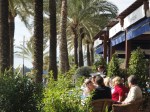
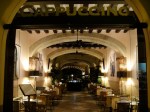
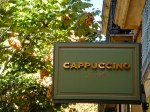
Cappuccino is no longer just a coffee. The café chain which brands itself after the popular italian coffee has rewritten the meaning of this favoured frothy drink. For in Cappuccino Grand Café, the cappuccinos are just the tip of the iceberg. The café group, which is now a predominant restaurant brand across the island of Mallorca, with branches also in Marbella and Valencia, as well as a handful in Jeddah and Beirut, is the ultimate in café chic. It’s exudes sophistication from every bubble of its creamy coffee froth. Its waiters are dressed to impress – with bow ties and black armbands, they are like butlers from a bygone era. Everyone is beautiful, from the staff to the customers who almost become more glamorous upon entering as they allow a wash of Cappuccino couture to penetrate and tantalise all over, as almond latte replaces a standard coffee, and cocktails and wine bubbles aplenty become the new still or sparkling. In the background, a carefully selected soundtrack resonates, wafting the space with Buddah-barish chill and soulfulness, while earlier coffee stops are accompanied by the timeless polyphony of jazz. And to top it off, Cappuccino has managed, almost across the board, to secure itself the very best of restaurant locations, so that in Marbella and Mallorca, you can savour a tranquil seaside view, while in Palma de Mallorca, locations in luxurious former palaces have been made the norm (as opposed to the Norm – let us not confuse the two).
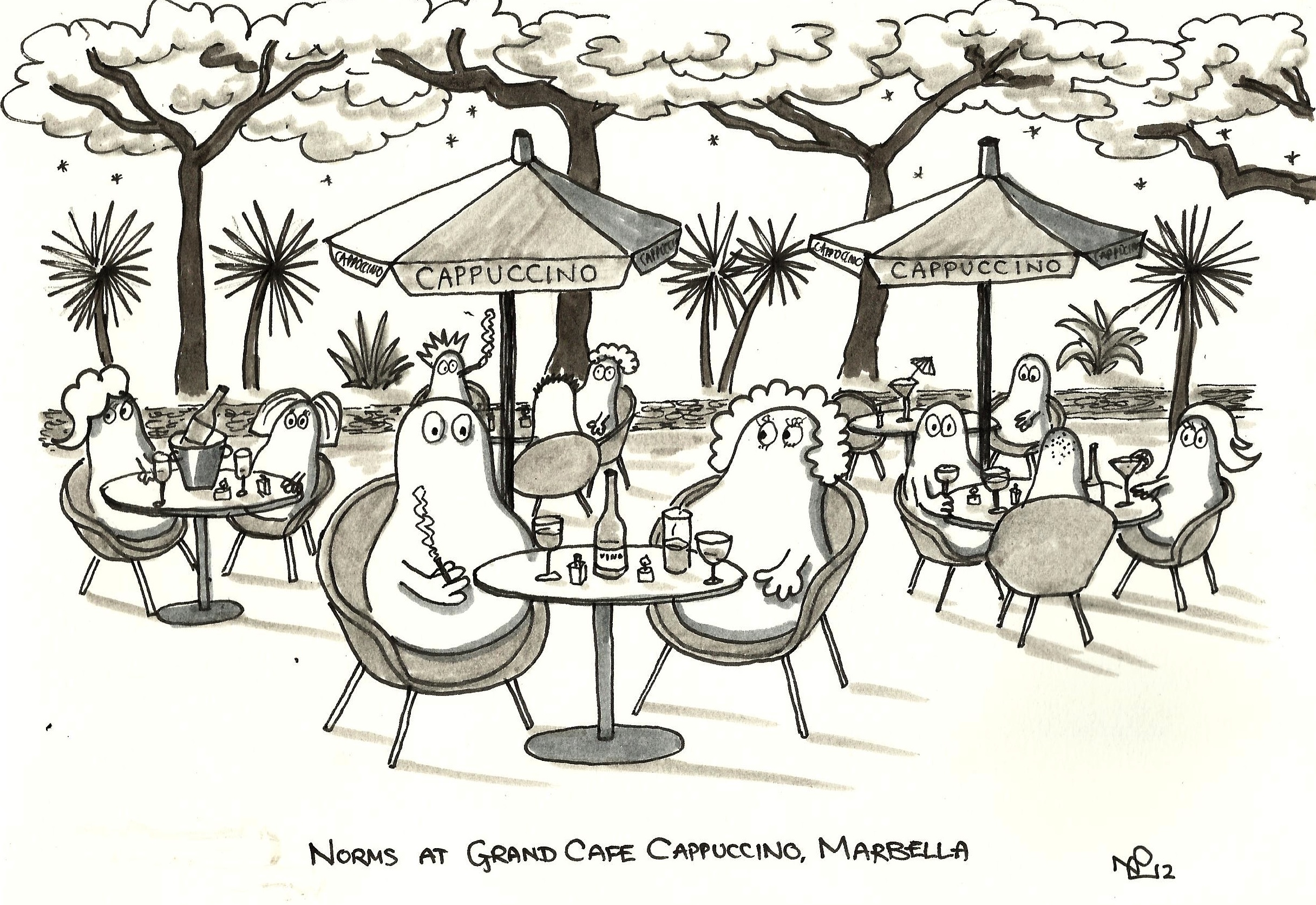
Norms at the Cappuccino Grand Cafe in Marbella (pen on paper 2012 © Nicholas de Lacy-Brown)

So why am I going on an all out campaign to promote this amazing café chain? Well it’s certainly not because they are paying me in free almond lattes (if only – although if the CEO of el Grupo Cappuccino happens to be reading this, please feel free to oblige). Rather, Cappuccino fully deserves its place in my search of all things indulgent and beautiful, because as a place to go for lunch, coffee, drinks or dinner, it is sophisticated, beautiful and ultimately satisfying.

Cappuccino first came to my attention last summer when a new branch opened in Marbella. Situated bang on the paseo maritimo next to the Mediterranean, in a quiet and very exclusive spot (Lord Sugar lives close by, as do those lucky few frequenting the opulent Marbella Club Hotel and other establishments on the Golden Mile), it benefits from superb views and is sheltered from any adverse weather conditions by a canopy of mushroomed pine trees and lush garden surrounds which lead up to the nearest luxury hotel stood behind it. When I went there for the first time, having stumbled upon it during a long walk out of Marbella’s centre, I fell in love. The music, the sunset, the staff and the food which, compared to many Marbella restaurants is very reasonably priced, were spellbinding. There I felt like a pop star, indulged, relaxed, contented.

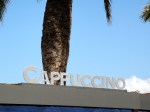
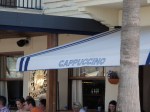
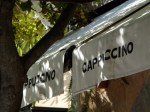
Cappuccino, Marbella

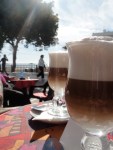
Cappuccino's smooth almond latte

By coincidence, I had a trip booked to Mallorca a few weeks later and there, since it is the island from where the chain originally springs, Cappuccino has marked its claim to various scenic spots all over the island. Such was the beauty of their location that we spent nearly every day indulging in at least one meal in a Cappuccino – for example on the port front of the stunning natural harbour of Port d’Andratx, or in a central square in the charming medieval town of Valldemossa, just round the corner from the Monastery which laid host to one Chopin and his lover. In Palma de Mallorca, there are four Cappuccinos and a number of take away branches and, mercifully, barely a Starbucks in sight (I say barely as there blatantly is a Starbucks somewhere but I have become conversant in the habit of shunning them in cultural locations). These are perhaps some of the most opulent Cappuccinos, set in former palaces with quaint patio gardens and candlelit tables set amongst vast baroque colonnades. On Palma’s vast paseo maritimo, you can sup on the luxurious almond latte in full view of the gothic cathedral, while on Palma’s answer to Bond Street – the Passeig Borne – you can people watch to your heart’s content.
CD Volume 5 of Cappuccino's own sensational soundtrack

And what to do to savour Cappuccino’s magic once you get home? Well the atmospheric soundtrack playing in every café is happily available to purchase – I have all five volumes of the Cappuccino CDs and play them on an almost continuous repeat. The first four make for marvellous coffee music – tinkling jazz and re-imaginings of popular melodies – while the fifth volume is the ultimate in Mediterranean chill.

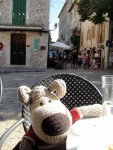
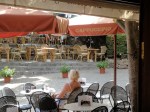
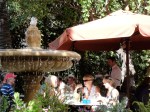
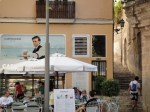
I shall rapture no further, but leave you instead with a selection of snaps I have taken at the various Cappuccinos in Marbella and Mallorca. In the meantime, Cappuccinos website can be found here, including details of all the CDs.

Vive le Cappuccino!

© Nicholas de Lacy-Brown and The Daily Norm, 2005-2012. Unauthorized use and/or duplication of the material, whether written work or artwork, included within The Daily Norm without express and written permission from The Daily Norm’s author and/or owner is strictly prohibited. Excerpts and links may be used, provided that full and clear credit is given to Nicholas de Lacy-Brown and The Daily Norm with appropriate and specific direction to the original content.

Spanish Season 2012: Out of the frost, into the fire.

As the great winter freeze finally began to set in, we at The Daily Norm swiftly decided that the time had come to withdraw from our London offices, and to retreat instead to our little Spanish outpost. And so it was that with a little luck and a lot of expense (Easyjet – once termed a “low cost airline” has almost bankrupted me with its “low cost” flight to Malaga) we have arrived on the Costa del Sol, travelling almost as far south as one can go, while remaining in the confines of our dear, albeit economically shaken, Europe.

Yesterday it was around 2 degrees and lightly snowing when I heaved my suitcase (full of Norms…who tend to be heavy) off the Gatwick Express and boarded a flight due south. When I alighted the flight the other end, things weren’t much better. There was a decided chill to the air in the deserted, white-washed streets of Andalucía, and as a result my winter overcoat remained firmly wrapped about my person. And inside it was even worse – My family and I have found ourselves needing to gather desperately around little electric heaters wrapped in the contents of our suitcases – we look like those motley crowds who gather round vertical heaters on the windy platforms in large echoey French train stations with the result that you feel like a piece of bread toasted on one side – warm and cold all at once. The problem with these old Spanish houses (our home is in Marbella’s casco antiguo – postcard perfect, but otherwise falling apart, damp and consistently calling out for repair and a lot of TLC) is that they are built for the summer. Tiled or stone floors repel the heat while small windows keep the interiors cool. It’s as though their makers presupposed that the Costa del Sol would always be sunny. But it often isn’t, and in the winter, a few hours of daily sun do not compensate for a long night of sleeping inside a refrigerator.

Between seasons: Norm on a Spanish beach in the winter (pen on paper, 2012 © Nicholas de Lacy-Brown)

What a wonderful surprise then when this morning we awoke to beautiful sunshine while not only lifted our spirits but the surrounding temperatures too. As a result we found our bodies quickly warmed from 2 degrees London, through to 10 degrees Spanish night-time to a positively summery 24 degrees basking in the sunshine this lunchtime. Like all things which are scarce in life, the sunshine is never more glorious, never greater appreciated than when, back at home, you know that your friends and compatriots are suffering in the cold. It’s as though you’ve made a lucky escape and are somehow cheating your pre-destined position in life. From London to Spain this has been like leaping from the freeze straight into the fire.

Needless to say, it’s now evening in Spain, and the cold has once again descended as the electric heaters have been boosted onto full power. The problem with these temperature extremes is that you really don’t know whether it’s winter or summer, because you fully experience both seasons in a single day. The key appears to be plenty of layers and a willingness to dress and undress depending on where the sun is, where the clouds are, and how much you can cheat the winter and steal the sun. Of course it also depends on plenty of heating during the evening, and as our electricity system is about as antiquated as our house, the whole lot will probably fuse any minute. With this in mind, I shall finish this post, leaving you with a selection of my photos from the day. Hasta mañana.

Elegance overflowing: Ladurée Covent Garden

For those of you who have been reading my blog since its inception, you’ll know that I am unashamedly obsessed with all things Ladurée. Not only is the café/salon/patisserie emblematic of all things Parisienne, it is also the height of elegance wherever it is situated (apart from the rather aberrant gold cave-like cacophony that is the Mayfair branch). There I was in December freezing my you-know-whats off in a huge queue for the Champs-Elysees branch in the heart of Paris, when all the time I had no idea that a spectacular new branch of the macaroon masters had opened up almost on my doorstep in London’s Covent Garden. And what a branch it is – large outdoor terrace on the cobbles made famous by My Fair Lady, a retail shop which glistens like the Hall of Mirrors at Versailles, and an upstairs salon of which Marie Antoinette herself would have been proud. To top it off, there’s even a small roof terrace overlooking Covent Garden’s market and plaza – the perfect view of street entertainers and the continental café culture underneath. All hail Covent Garden’s Ladurée!! It is a joyous thing for all us Londoners, and finally, a well needed injection of elegance has come to CG. And Ladurée is not alone. Joining it are new branches of Ralph Lauren, Burberry and the huge new glitsy Apple store which is for Guggenheim architectural contemporary glitz what Ladurée is for Louis XV glamour.

Ladurée's Covent Garden branch: the elegant retail counter

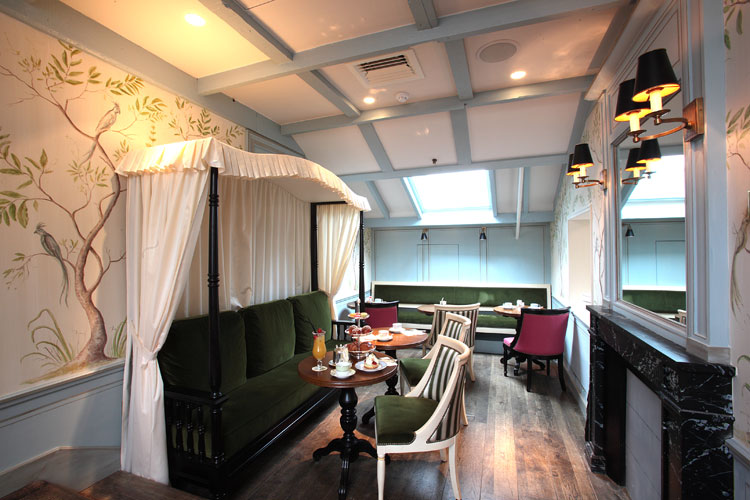
Ladurée's Covent Garden branch: upstairs salon

Ladurée Covent Garden - roof terrace

I visited this luscious Ladurée a few days ago. I had seen the shop and the outside terrace, but I had no idea what gems lay in store upstairs. There in the little salon, small Parisian-pavement style tables are matched with elegant velvet armchairs, small sofas, and even a chaise longue  topped by a four-postered curtained canopy. Meanwhile on the walls, elegant swept frames surround antique portraits of landed gentry, reminding those supping upon coffee and macaroons that they are in the company of the upper echelons.

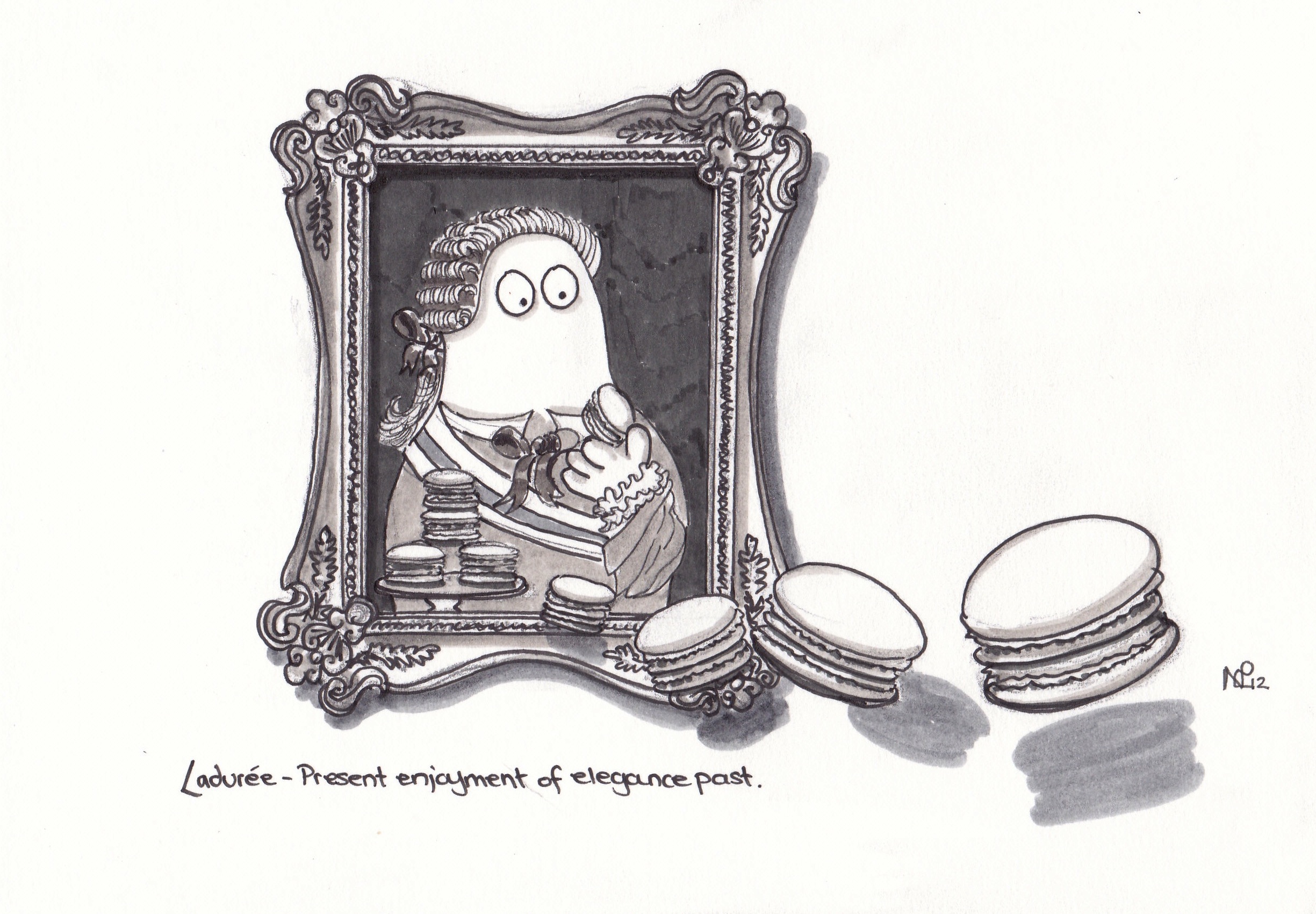
Ladurée: Present indulgence in Past elegance (pen on paper, 2012 © Nicholas de Lacy-Brown)

Saint Honoré

So what did I partake of on this auspicious occasion? Well, it was a Saint Honoré pastry for me, although the choice was overwhelming and all-tempting, a rather shoddy iphone picture of which I enclose. This was theatre on a plate. One choux pastry dome surrounded by several miniature renderings, all filled with and surrounded by a delicate cream imbued with the subtle elegant perfume of rose, balanced with deliciously sweet sharp raspberries and an indulgent raspberry icing. It was phenomenally delicious, and while it doesn’t come cheap (£6 for the cake alone), it’s an incentive for any eater to sit up straight, mind their Ps and Qs, and hark back to the sophisticated society of a more dignified past.

Talking of dignified, the staff were fastidious in their approach, refined in their perfect appearance, and charming in their manner. And when they speak French to one another, I could so easily be back in the 1eme Arrondissement in Paris that I would consider moving into the café full time, except it would probably bankrupt me in about a week.

This Ladurée, in fact any Ladurée, is a must for all champions of tasteful pursuits. All that remains now is to recreate the patisseries themselves at home… I have the book, I have the ground almonds, the eggs, and I have the icing bags… I think, with some trepidation, I’m going to try my first macaroons this weekend. I’ll let you know how that goes…

À bientôt!

Norms do… Robert Doisneau

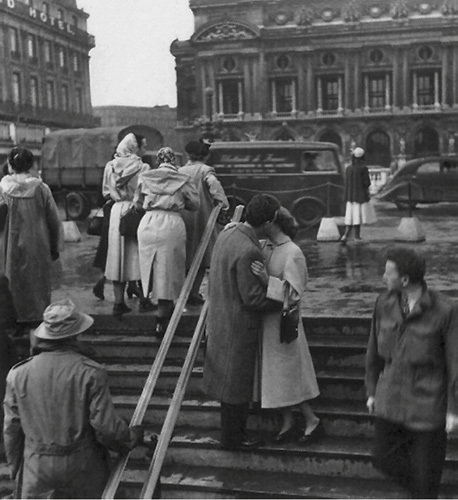
It’s mid January, and with the Christmas stocks cleared away and the January sales dwindling fast, the shops are filling with all things red – roses, truffles, cards adorned with hearts and pink champagne, all in the name of Valentine’s Day. I must confess, while I do find it slightly demeaning to be told I am loved just because a saint’s day says it should be so – and only once a year at that – I am a romantic at heart and do turn into a little softy around mid-February time. In anticipation of this great time of romance, the Daily Norm has looked to the one and only true source of all things amour… the city of Paris. And not only is Paris the undoubted City of Love, in the superbly nostalgic black and white moments captured by the world-renowned photographer, Robert Doisneau (1912-1994), it provides the backcloth to some of the most iconic romantic images ever captured on film. When I think of the ultimate image of love, I think of Robert Doisneau’s most celebrated photograph, Le basier de l’Opera (1950) (The Opera Kiss). Perhaps not quite as famous as his Hotel de Ville kiss, it is nonetheless postcard perfect: 1950s Paris, going about its way, people rushing up and down the stairs at Opera, traffic passing by the grand Opera Garnier, and all the while, the world seems to stop as a couple meet, and kiss, in the middle of the staircase. In fact, here at The Daily Norm, we love this image so much that the Norms have decided to reenact it. And so, voila, for your viewing pleasure, here is the latest Norm creation as the Norms do Doisneau…

Norms Kiss at the Opera (after Doisneau) (acrylic on canvas, 2012 © Nicholas de Lacy-Brown)

And here is Doisneau’s photographic original:

Le baiser de l'Opera (Robert Doisneau, 1950)

“There are days when the technique of an aimless stroll – without timetable or destination – works like a charm, flushing out pictures from the non-stop urban spectacle”

Robert Doisneau

“The “Hôtel de Ville lovers” were part of a series, on which I had already worked for a week and which I had to complete with two or three photos of that kind. But the fact that they were set up never bothered me. After all, nothing is more subjective than l’objectif (the French word for “lens”), we never show things as they “really”are. The world I was trying to present was one where I would feel good, where people would be friendly, where I could find the tenderness I longed for. My photos were like a proof that such a world could exist.”

Robert Doisneau

As you can see, I made a bit more of the Opera House, since it is so beautiful and its details undoubtedly stunning. The fact that my Opera House leans the other way wasn’t exactly intended, but once it started heading that way, there was no stopping it. Painting straight lines is already difficult enough with a hand balancing in mid air, but apparently my steady hand has a tendency to lean to the right.

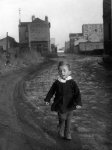
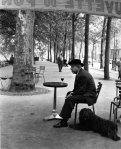
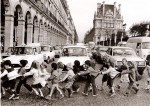
Le bazier de l’Opera is by no means the only shot taken by Doisneau which is deserving of recgonition. Flicking through any collection of Robert Doisneau photographs is like being transported back down memory lane to a time of idyllic laissez faire. Of course, German-occupied Paris and the post-war city were far from easy times for the Parisians, but there is something about the goodness of human nature which Doisneau manages to capture in his iconic scenes of ordinary life. Plus of course the black and white pallet instantly transforms the image to one having great atmospheric nostalgic effect. In this way, the work of Doisneau has immortalised the magic of Paris, capturing poetry in the commonplace lives of its inhabitants and emphasising the artistic beauty which ripens at every corner of the city. I urge those of you who are not familiar with his work to buy a volume to look through on a sunday afternoon, some Billie Holiday playing in the background, a coffee or glass of wine on standby. You should however be warned that in following my advice, you will probably start hating the modern, inelegant world around you. But like Doisneau, pick up a camera or a paintbrush, and you’ll be surprised what magic you can find in everyday life. In the meantime I leave you with a small gallery of Doisneau shots to muse over. Until next time…

All the photographs are the copyright of Robert Doisneau

Norms do…Goya – The Third of May 1808

When people think about paintings of conflict, the first name to pop into their head is generally Guernica. The painting, by Picasso, has become a worldwide antiwar symbol, and as if proving the fact, a large tapestry of the painting hangs outside the UN’s Security Council HQ in  New York (you know, the same one that they covered up with curtains when making the decision to go to war against Iraq). But in actual fact, there was painted, some 120 years earlier, an equally striking image of conflict, sacrifice and war, an image so resonant, in fact, that Picasso  cited it as an inspiration to his Guernica. The painting is The Third of May 1808, by Francisco Goya.

As my regular readers will have twigged, I’m a big fan of Spanish art, and therefore it is no surprise that somewhere in the dark depths of my imagination, a Norm version of Goya’s magnum opus would take its form, emerging as a brief watercolour sketch the other night. Here it is, with Goya’s original masterpiece.

Norms on 3rd May 1808 (after Goya) (Watercolour, 2012 © Nicholas de Lacy-Brown)

The Third of May 1808 by Francisco Goya (1814), courtesy of the Prado, Madrid

To give a brief background, Goya’s work represents an uprising of Madrid residents in response to the French invasion of Spain under Napoleon I. Having tricked the Spanish into an alliance with the French armies with a view to conquering Portugal and splitting it between then, Napoleon entered Spain with his armies in November 1807 under the guise of strengthening Spanish troops. However, having entered Spain, Napoleon’s true intentions were unveiled, and the French troops moved in to take control of the country, facing very little resistance. It was only on 2 May 1808, when the people of Madrid learnt that the Spanish royals were to be exiled to France, that many of them rose up in rebellion against the French troops. The French army ultimately prevailed, but not without great bloodshed, and Marshal Murat, head of the French army in Spain declared: “The population of Madrid, led astray, has given itself to revolt and murder. French blood has flowed. It demands vengeance. All those arrested in the uprising, arms in hand, will be shot.”. Goya’s painting depicts the moment, early the next morning, when hundreds of Spaniards were led from the monastery where they had been imprisoned overnight (probably the buildings shown in the background) to the surrounding barren lands where they faced point-blank execution before a firing-squad.

The Second of May 1808 by Francisco Goya (1814), courtesy of the Prado, Madrid - partner of the Third of May, this painting depicts the uprising itself.

Goya’s painting is a stunning symbol of slaughter and sacrifice. It works so well on so many levels. There is, for example, the haphazard grouping of sacrificial victims on the left, a monk-like figure shown bending to meet his fate, others turning away in despair, the blood of innocents all over the floor, bloody corpses foreshortened as though falling into the space of the audience. The group of victims shows a human, unorganised element which compares effectively with the group of gunmen on the right who are rigid, dark, sinister, grouped together like a killing machine showing no remorse or sway in their murderous resolve. This contrast of dark and light creates a wonderful tension – good versus evil. Of course the most striking character is the central victim, dressed in a glowing white, his colours matching those of the lantern which casts light upon the scene. Shown with his arms outstretched, he is a christ like figure – he even appears to have the marks of stigmata upon his hands – all suggesting that he represents those Spaniards who stood up to the French invaders, sacrificing their lives for the sake of ultimate Spanish victory. It’s a work which portrays bloody human waste – a waste of life, the destruction of the innocents – and this is why it still stands today as such a powerful anti-war symbol.

Unsurprisingly the painting has inspired countless artists since it went on display in a rather pokey corner of the Prado (after it lay in storage for 40 years – the King of the time, Ferdinand VII, didn’t like it as it glorified people rather than him). One of the first interpretations of the image was this one, by Édouard Manet, which depicts the execution of Emperor Maximilian of Mexico.

Édouard Manet's Execution of the Emperor Maximilian (1868-1869)

Maximilian, a member of the Hapsburg family of Austria, had been installed in power in Mexico by Napoleon III of France in an attempt to recover unpaid debts and establish a European presence there. This endeavor failed, ending with the execution of Maximilian and two of his generals by firing squad on 19th June 1867. Here, the emphasis is reversed, as Manet, ever anti-Napoleon, makes the executors the heroes of the piece, dressed in their smart livery, whereas Maximilian and his generals are, by contrast, depicted with dark, undefined, sinister brushstrokes.

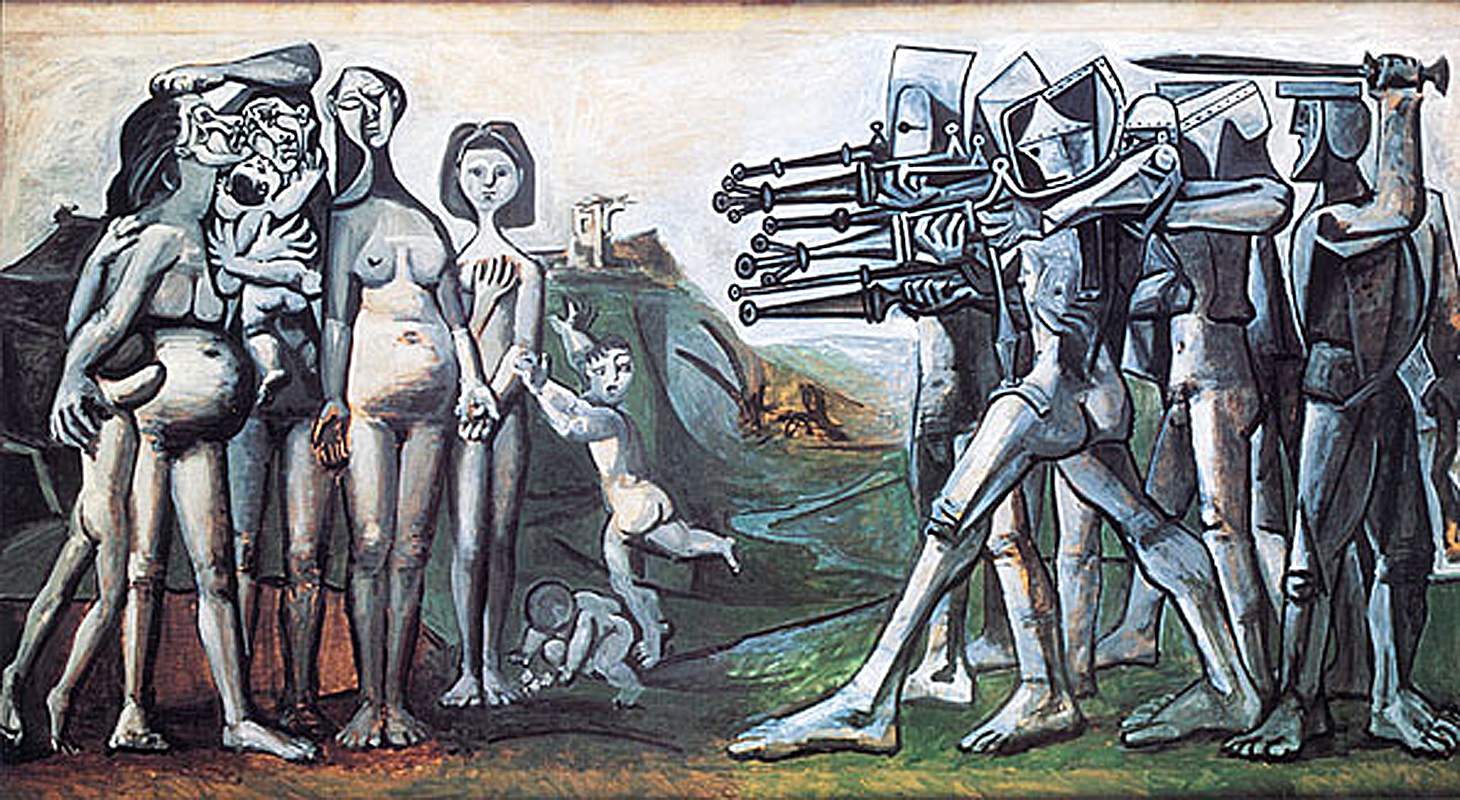
The second most significant use of Goya’s composition is Massacre in Korea by Picasso which depicts the Sinchon Massacre, an act of mass killing carried out by the South Korean and/or American forces in 1950.

Pablo Picasso, Massacre in Korea (1951)

Here the firing squad are once again the aggressors, and Picasso has taken the idea of the killing machine to a new level, depicting the squad as a fantastical group of sinister, mechanical automatons, killing without emotion of any kind. By contrast, the victims are as emotive as could be depicted – women and children, one seemingly pregnant, another’s face crippled with despair.

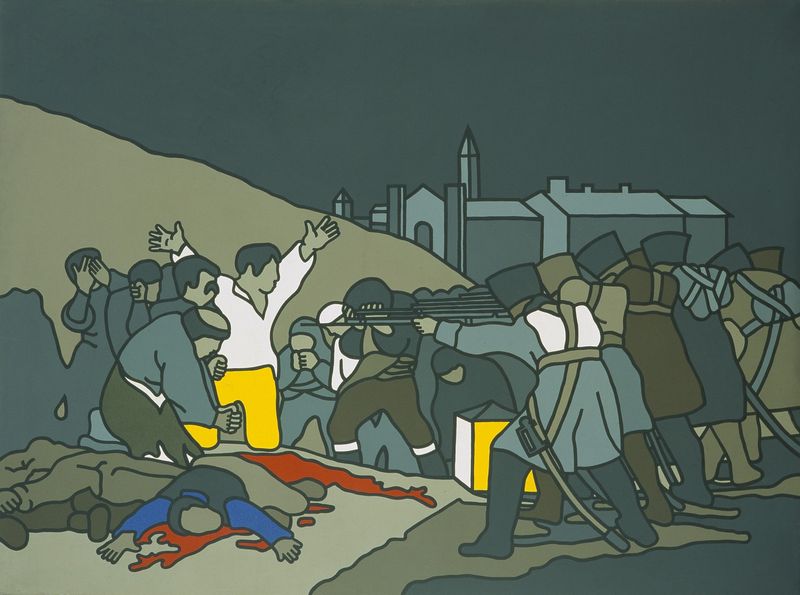
A final, lesser-known depiction, is the pop art homage painted by Irish artist, Robert Ballagh.

The Third of May - After Goya, 1970, by Robert Ballagh

Entitled The Third of May 1970, the painting makes a direct reference to Goya’s work, making no changes to the composition whatsoever, but converting the work into a pop-art creation using black outlines and block colours. The 1970 title of the work is intended to reflect another time of great conflict – this time in Northern Ireland – when British troops entered to enforce some semblance of control.

All three depictions serve demonstrate the continuing relevance of The Third of May 1808 in times of conflict. Like Picasso with his Guernica, Goya created a work for all times, a stark reminder of the brutality and savagery which comes so easily in times of conflict, a brutality which has continued to erupt intermittently around the world, and which, only 120 years after the Third of May, savaged Goya’s homeland, once again.

© Nicholas de Lacy-Brown and The Daily Norm, 2005-2012. Unauthorized use and/or duplication of the material, whether written work or artwork, included within The Daily Norm without express and written permission from The Daily Norm’s author and/or owner is strictly prohibited. Excerpts and links may be used, provided that full and clear credit is given to Nicholas de Lacy-Brown and The Daily Norm with appropriate and specific direction to the original content.

Norms do…A Christmas Carol (Part 2)

It’s incredibly close… only one full day to go until all the presents must be finished, the table primed, Nigella Lawson’s guidelines fully digested and memorised, and a tad of Delia Smith guidance absorbed to boot. And, as my preparations also get underway, this post will be my last before the great Christmas festival gets underway. Thereafter, posts may be a bit intermittent until New Year whereupon The Daily Norm will be back for 2012 with gusto!

In the meantime, and by way of a Merry Christmas gift to all of my followers, here as promised is the second part of my Christmas Carol feature, focusing on the seminal sections from Dickens’ great Christmas tale as illustrated by the Norms themselves. Merry Christmas!

The Cratchit family feast upon a pudding

The Cratchit family celebrate the great Christmas Pudding (2011, pen on paper, © Nicholas de Lacy-Brown)

Read more

Da Vinci Season – Part 1: Norms do… The Lady with an Ermine

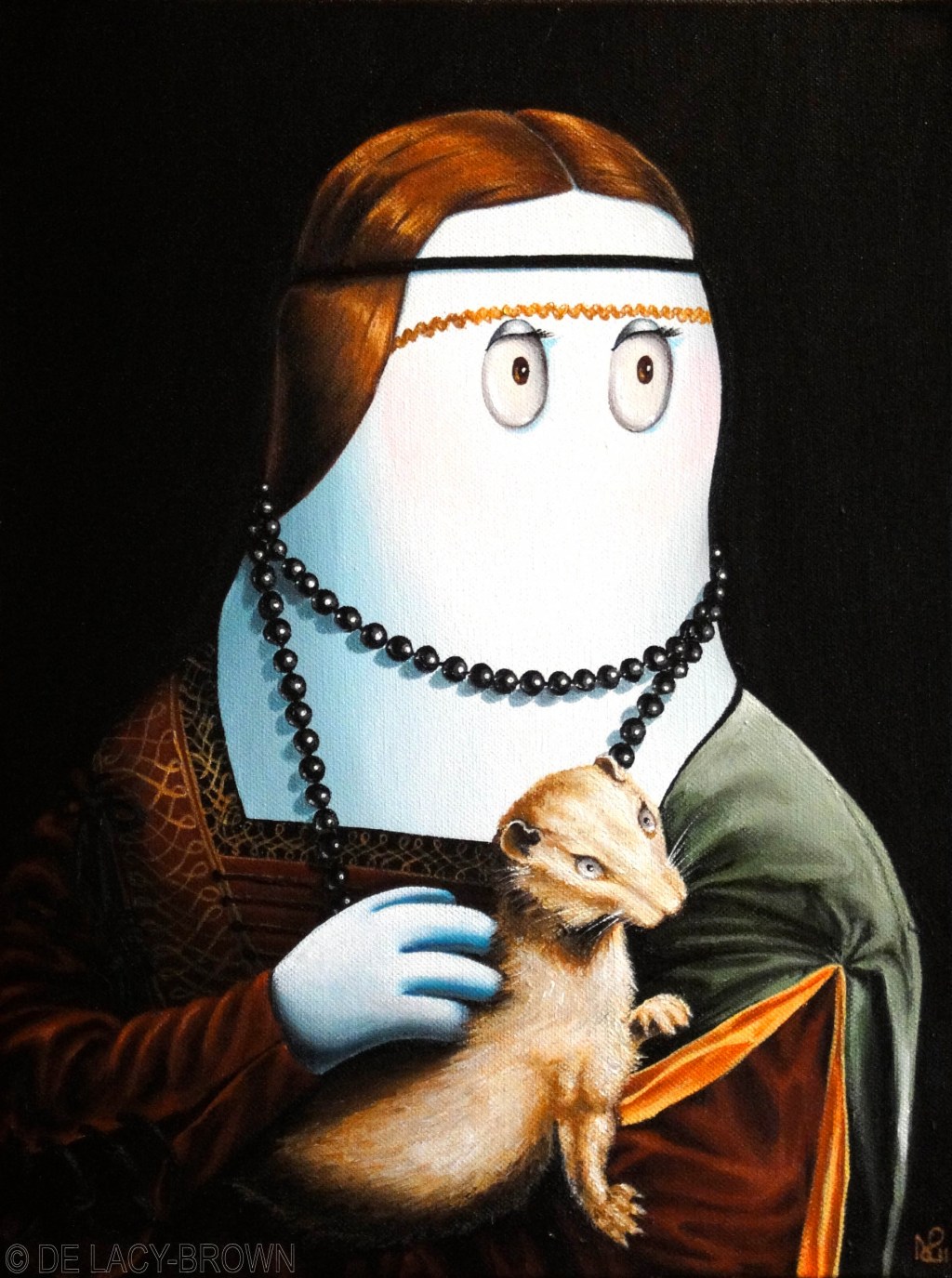
Da Vinci is back in vogue in London. The exhibition Leonardo da Vinci: Painter at the Court of Milan which is currently running at London’s National Gallery has received unprecedented high praise across the board. Critics are calling it a once-in-a-lifetime opportunity to see so comprehensive a collection of Da Vinci’s remaining masterpieces in one show. One art critic’s review was so expressive with superlatives and emotional exasperation that it read as though she had been party to some kind of religious transmogrification. The paintings, she said, were so stunning that one could barely take them in through eyes which were uncontrollably veiled with tears of unrepressed joy. Or something like that. High praise indeed, and with 5 stars across the board, what better way to grasp at some last minute Christmas sparkle than by attending the exhibition itself, a visit upon which I shall embark tomorrow. While you will of course be the first to receive my review of the show for which tickets are allegedly selling for £400 each online (yes, the temptation to sell is there – for these two tickets I could get a 5 star weekend in Milan, let alone see a show about nine paintings and a load of sketches… but naturally I am opting, in good conscience, for the  cultural extravaganza of the year), in the meantime, Part 1 of my seasonal homage to Da Vinci is in the form of the good old Norm parodies which you now know and love. Yes, today, the Norms bring you: Norm Lady with an Ermine.

Norm Lady with an Ermine (after Da Vinci) (acrylic on canvas, 2011 © Nicholas de Lacy-Brown)

And by way of comparison, here is Da Vinci’s stunning original masterpiece…

The Lady with an Ermine (Leonardo Da Vinci)

Da Vinci’s masterpiece was painted in around 1489-1490 and is usually to be found housed in the Czartoryski Museum, Kraków, Poland. It is in fact the central masterpiece of the Museum’s collection, and it’s inclusion in the London show is said to be the greatest coup for London curators of all their achievements in putting the show together. However, her inclusion was not without difficulty, and the Lady with an Ermine’s visit to London  comes only as a result of huge democratic efforts, not just on the part of the National Gallery, but on behalf of the UK Government’s diplomats and foreign office officials.

Read more

Norms do… A Christmas Carol (Part 1)

There is nothing on this earth more archetypical of Christmas than Charles Dickens’ A Christmas Carol. With its moral narrative of bad turned good, a sprinkling of ghoulish magic, pantomime extremes of the baddy Scrooge and audience favourite, wretched but ever optimistic Tiny Tim, and its grim but terribly romantic portrayal of quaint, dirty Victorian London, all covered in snow, it is a story which has been the indubitable partner of the Christmas season since the time of its first publication. Subsequently, it has been adapted on countless occasions, from Alastair Sim’s chilling black and white 1951 portrayal, and the classic 1970 musical version starring Albert Finney in the title role, to the very unique treatment given to the story by the Muppets in 1992 and the new Disney 3D spectacular in 2009 to name but a few. It has also been on the stage, appeared on the national school curriculum, and is now considered such a staple of classic British literature that you can download it for free through an iPad (and they don’t give much away for free…). So, in the ever growing spirit of Christmas, and on the eve of 2012’s Dickens bicentenary celebrations, the Daily Norm thought it only appropriate to bring you some of the seminal moments from A Christmas Carol as portrayed by the Norms. This sketches take a while however, so check back for Part 2 at the end of the week. Enjoy!

Scrooge is haunted by Marley’s Ghost

Scrooge haunted by Marley's ghost (pen on paper, 2011 © Nicholas de Lacy-Brown)

Read more

All the joys of the Nursery School Nativity

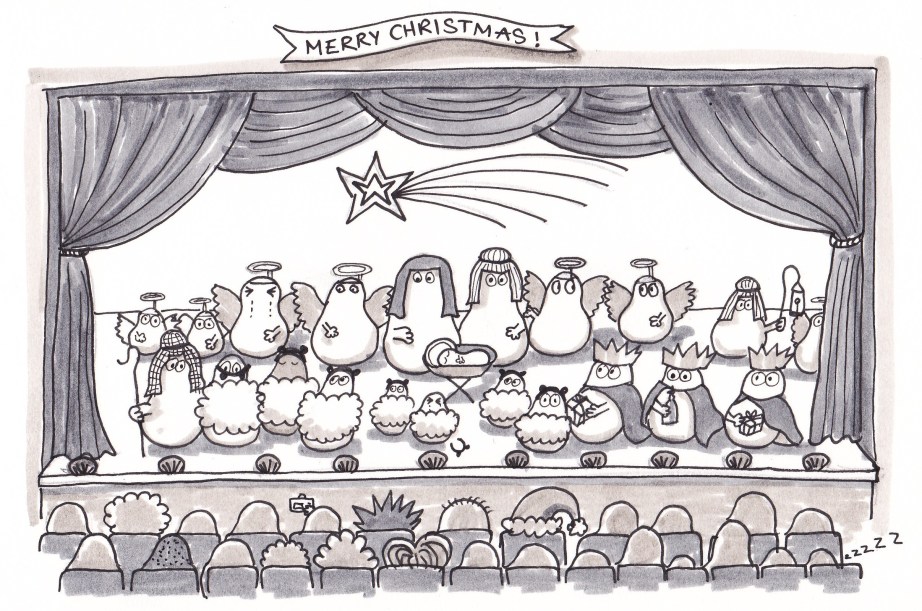
The photo says it all doesn’t it. Deserted old baby doll, an MDF crib and a hastily assembled sheep made from silver foil rolls, cotton wool and PVC glue. Add to this several pairs of gold cardboard wings, some tinsel halos, 3 paper crowns (sharp-edge free), plenty of stripy sheets and even more recycled curtains and what do you have? The show any perfect Christmas wouldn’t be without: the School Nativity. It’s the pride and joy of every parent, but also the source of their greatest anxiety: Will they remember their words? Will they cry or have a tantrum mid-way through? Or will they, like the nightmare of one parent at a nativity my sister attended last year, projectile vomit all over the front row of the audience? For the teachers, even the smallest nativity is a mass production of prodigious strategic complexity… reminding the children to smile, to sing, to stop picking their noses, steering the little angels in the right direction, and pulling them away from where they’re not meant to be, remembering the words to the carols on their behalf and of course watching out for that same nativity-shattering tantrum.

Nativity Norms (Pen on paper, 2011 © Nicholas de Lacy-Brown)

Read more

Norms do… Degas’ L’Absinthe

I’ve always been a bit obsessed with the la fée verte . That is to say, I’ve always been fascinated by the debauched charm of that wonderful peppermint green drink which was and still is (in its full potent form) an illegal alcoholic substance: Absinthe. For absinthe has long been the chaperone of artistic legend, as all the most romantic illusions of the impoverished, desperate, inebriated artist are indubitably accompanied by a bottle of the green stuff, or a glass of its milky diluted counterpart. Baz Luhrmann’s Moulin Rouge, the green faced cancan dancers of Toulouse Lautrec’s underworld masterpieces, and the dissolute tale of a spiral into poverty and lascivious living on the hillsides of Montmartre in Zola’s L’Assomoir all centre around the mirky hallucinogenic potency of this green-eyed alcoholic monster. It is the very essence of bohemian artistic Paris, and it’s association has pervaded art and its cultural progeniture for decades. One of the most prominent sources of the liquor’s legendary quality is the sensational painting L’Absinthe by Edgar Degas. I first saw the painting in London, when it was exhibited at Tate Britain’s superb exhibition Degas, Sickert and Toulouse Lautrec in 2005-6. I was instantly struck by the simple solitude of the female figure, caught in a moment of absentmindedness and melancholia, appearing quite isolated despite the figure sat to her left, he looking away in his own depressive daydream. I’ve remembered the painting ever since and therefore I was so excited to make its acquaintance once again upon visiting the Musée d’Orsay the other week that I decided I had to turn it into a Norm painting. And so, when the Norms do Degas, it looks something like this…

L'Absinthe Norm (after Degas) (Acrylic on canvas, 2011 © Nicholas de Lacy-Brown)
Degas’ original painting, on the other hand, looks like this…

L'Absinthe (Edgar Degas, 1876)

Read more