Skip to content

Posts tagged ‘Spain’

Two Weekends: Thinking about Cappuccino

It only takes a mere moment for your life to change forever. December 2012 taught me that much – a life obliterated – or May 2008 – when another’s mistake had irreversible consequences for the rest of my days. Yet if those moments of change taught me anything, it was that life is too short to stay where you are comfortable but unhappy, where monotony sets in and where you feel as though your train is trundling steadily up the wrong path. 

Earlier this autumn the chance to change paths and find happiness in change occurred to me very suddenly. It only took an email to set the new track in motion, and only two weekends for a decision to be made. For it was in those two weekends that I both attended an interview that would take me on a new path, and in which I made the ultimate decision, standing at the crossroads, that this new path was right for me. 

Two weekends: Thinking of Cappuccino is my newest oil painting, and it tells the story of how my life is all about to change: how I have accepted the offer to become Artistic Director of a global company bearing the name of Cappuccino and stationed within the sunny shores of Mallorca in Spain, and how in taking that offer it will mean moving from London, to Palma. 

Two Weekends: Thinking about Cappuccino (2014 © Nicholas de Lacy-Brown, oil on canvas)

Two Weekends: Thinking about Cappuccino (2014 © Nicholas de Lacy-Brown, oil on canvas)

But the painting came to me in Italy, sitting by the seaside in Donoratico in Tuscany, home of my partner’s family. Sitting at a cafe by a sea so still it might have been a photo, with our own breakfast of cappuccino and crostata (jam tart) on the table, all we could think about was a move to Mallorca, despite breathing the pine tree perfumed air of Tuscany, and drinking in the beauty of that Tuscan beach before us. 

The obvious symbols came to mind: the lifeguard’s hut was the new sanctuary that a home within the medieval streets of Palma de Mallorca would offer us; through the window we looked onto the famous skyline of Palma seen behind the green shutters that are famous in both Tuscany and Mallorca. The lifeguard’s ring has given salvation to the artist within me, represented by the manakin sitting on the sand: it is not so comfortable a position as the crostata tart sitting securely on a blanket, but this tart is the law, and within the confines of its pastry lattice, the blood of my life and career development is congealed and imprisoned, like a soul left out of the fridge too long. 

And of course at the heart of it all is the Cappuccino. No longer just froth and espresso

I think it was in that moment, and in that second weekend of two, that we finally made up our minds to go, to take the leap of faith, to have an adventure and to change our lives. Now the move is in full swing, and by the end of this month we should be reinstalled in Mallorca. Which just goes to show that life can change in a moment. 

© Nicholas de Lacy-Brown and The Daily Norm, 2001-2014. Unauthorized use and/or duplication of the material, whether written work, photography or artwork, included within The Daily Norm without express and written permission from The Daily Norm’s author and/or owner is strictly prohibited. Excerpts and links may be used, provided that full and clear credit is given to Nicholas de Lacy-Brown and The Daily Norm with appropriate and specific direction to the original content. For more information on the work of Nicholas de Lacy-Brown, head to his art website at www.delacy-brown.com

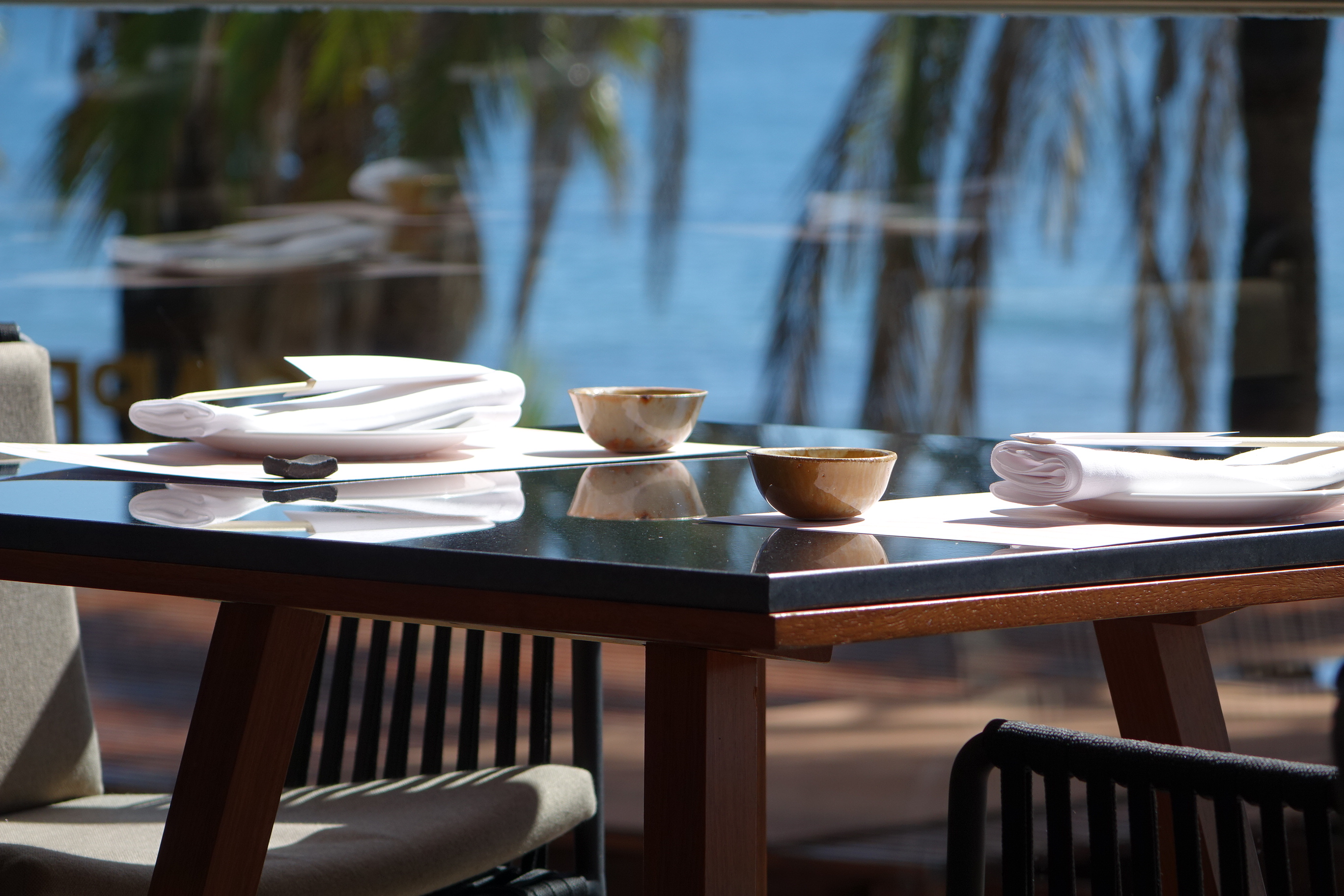
Tahini Marbella: Dedication to the Sea

As the name of the town suggests, the sea is the heart and soul around which the whole of Marbella is Southern Spain revolves. Its calm cerulean waters sensuously stroke and steadily sculpt the length of long sandy beaches which attract thousands of visitors to the town every year; its sparkling steady waves reflect lovingly on the gleaming white sides of the super-chic yachts which habitually pack Marbella’s various marinas; and it provides the wealth of super-fresh, mouth wateringly delicious seafood which is at the apex of Marbella’s breadth of superb gastronomic offerings.

And of course few would disagree that the best way to sample that seafood is barely cooked and fresh out of the waters, served simply and elegantly so that its full flavours and textures can shine through. Consequently, it would be hard to find a cuisine better able to capitalise upon this fresh Mediterranean cuisine than sushi, but until now, few restaurants in Marbella have managed to create sushi which offers a fitting tribute to the wealth and quality of Marbella’s seafood offerings. Until now.

Marbella Tahini

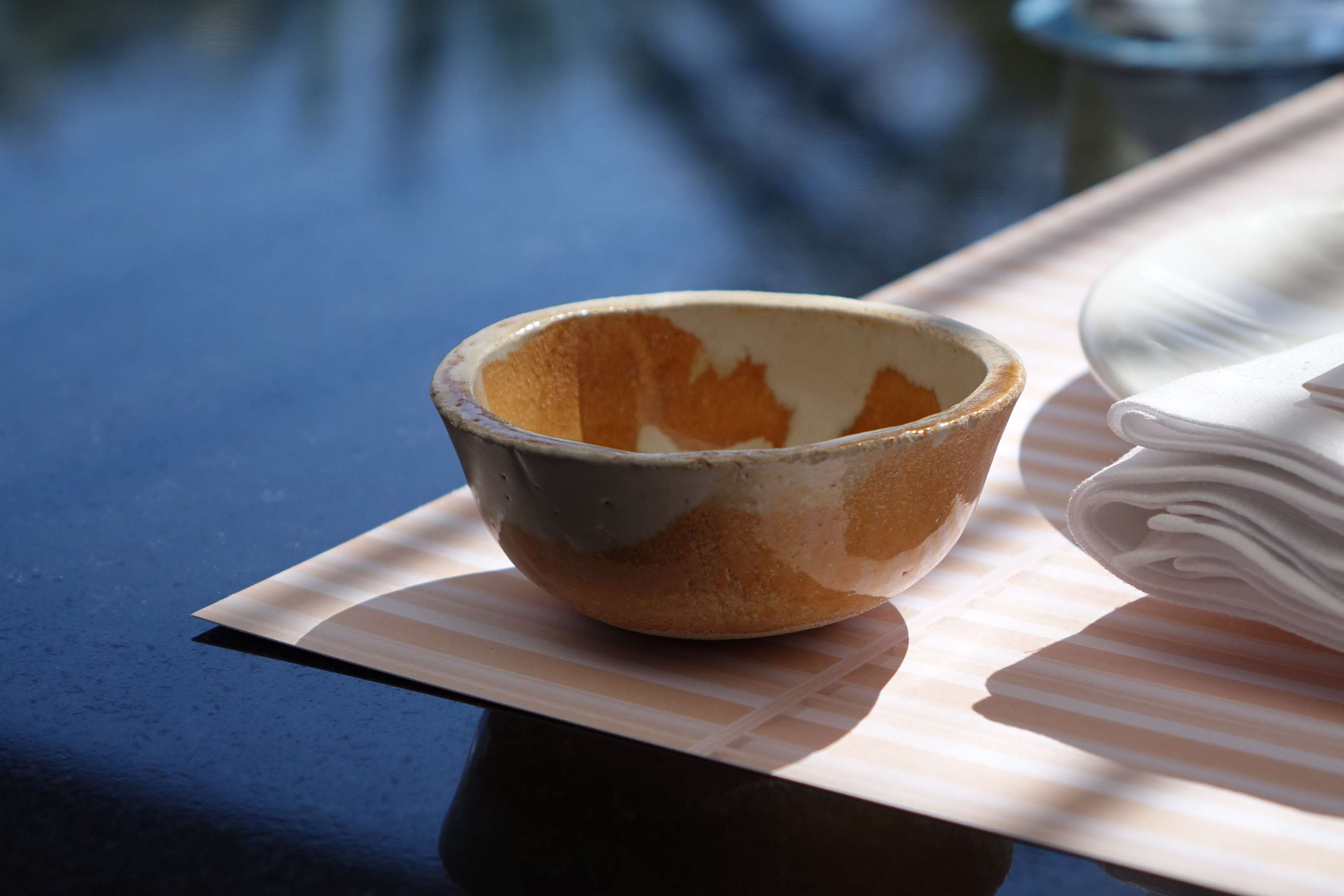
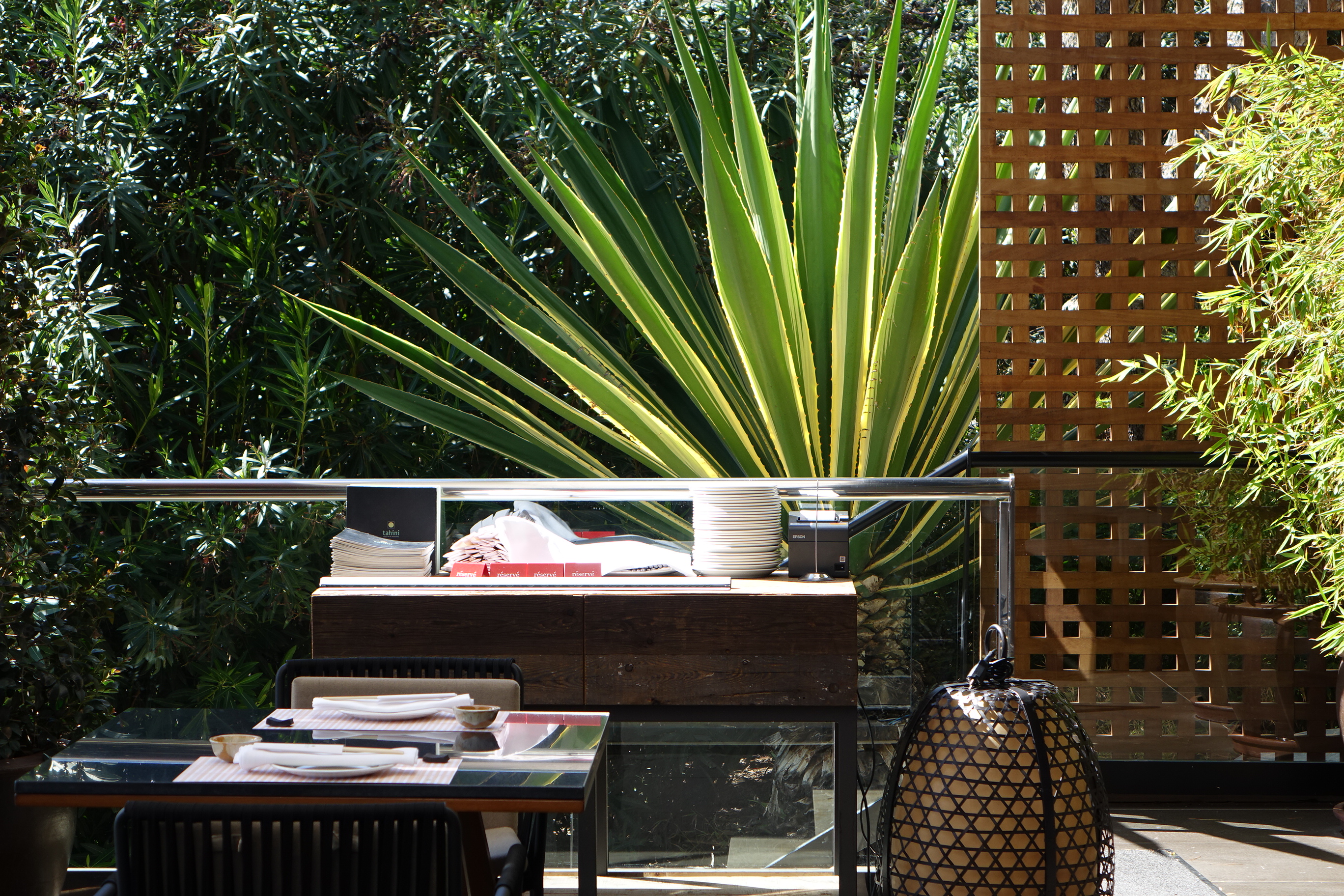
DSC09743 DSC09734 DSC09738 DSC09834 DSC09741 DSC09835

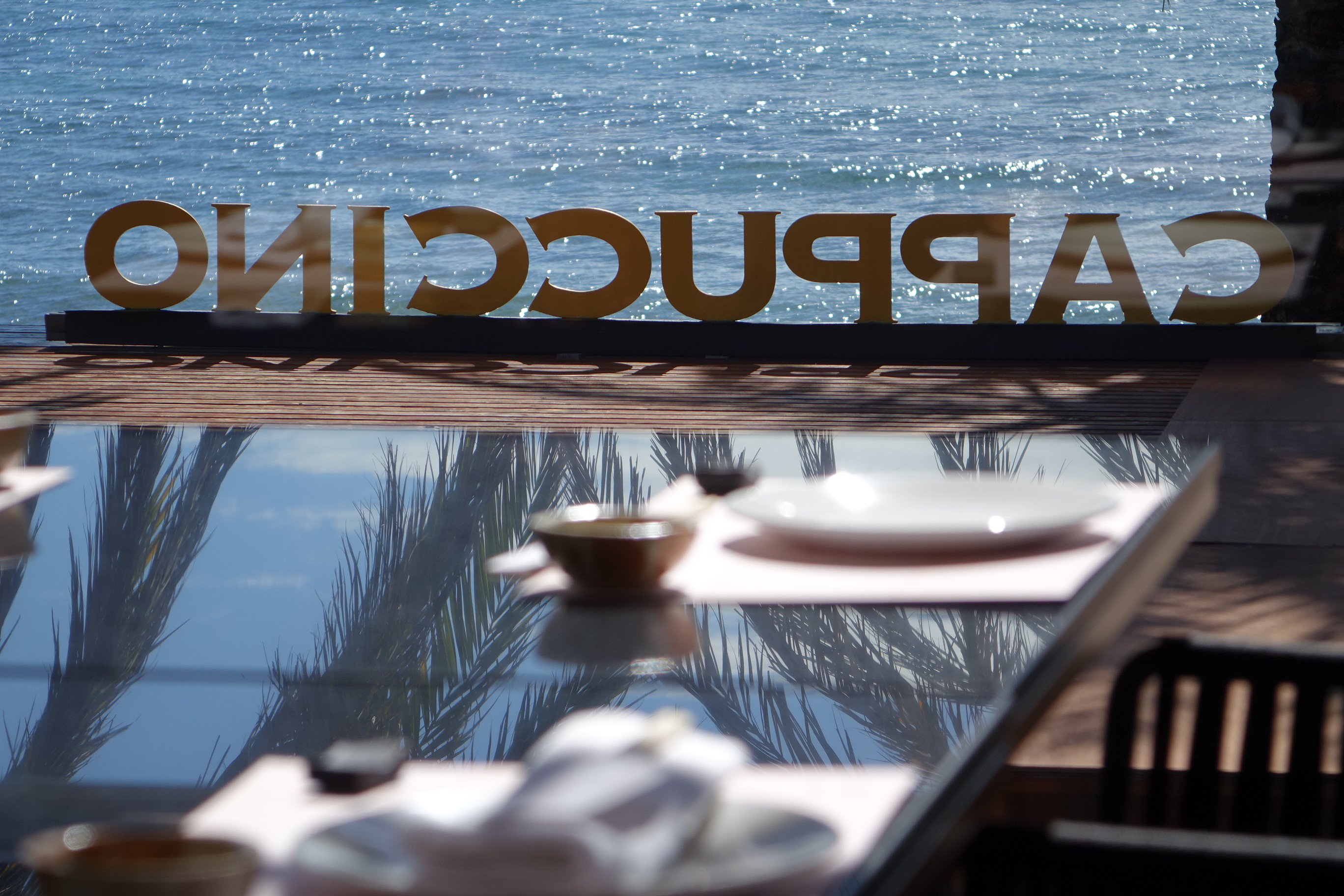
Following hot on the heals of the unrivalled success of Grupo Cappuccino’s first Marbella Cappuccino Grand Cafe in 2011, set within the lush surroundings of pine tree covered gardens at the foot of the Gran Melia Don Pepe hotel, the group have now opened their first Tahini restaurant, a mere stone’s throw from Cappuccino, in the same Eden of pine trees, palms and unbeatable Mediterranean views. Situated just above Cappuccino, Tahini is the younger sister of the sensational Mallorca restaurant of the same name. Nestled just off the harbour side of the fashionable Puerto Portals, the Mallorca Tahini is like a secret garden paradise. My first visit there in May 2013 opened my eyes so wide as I took in the magical wonder of its low lit restaurant and picture-perfect candlelit garden, and tantalised my mouth so thoroughly with the exquisite freshness of its cuisine, that it has remained utterly unrivalled by all subsequent sushi experiences both in Spain and around the world.

The interior

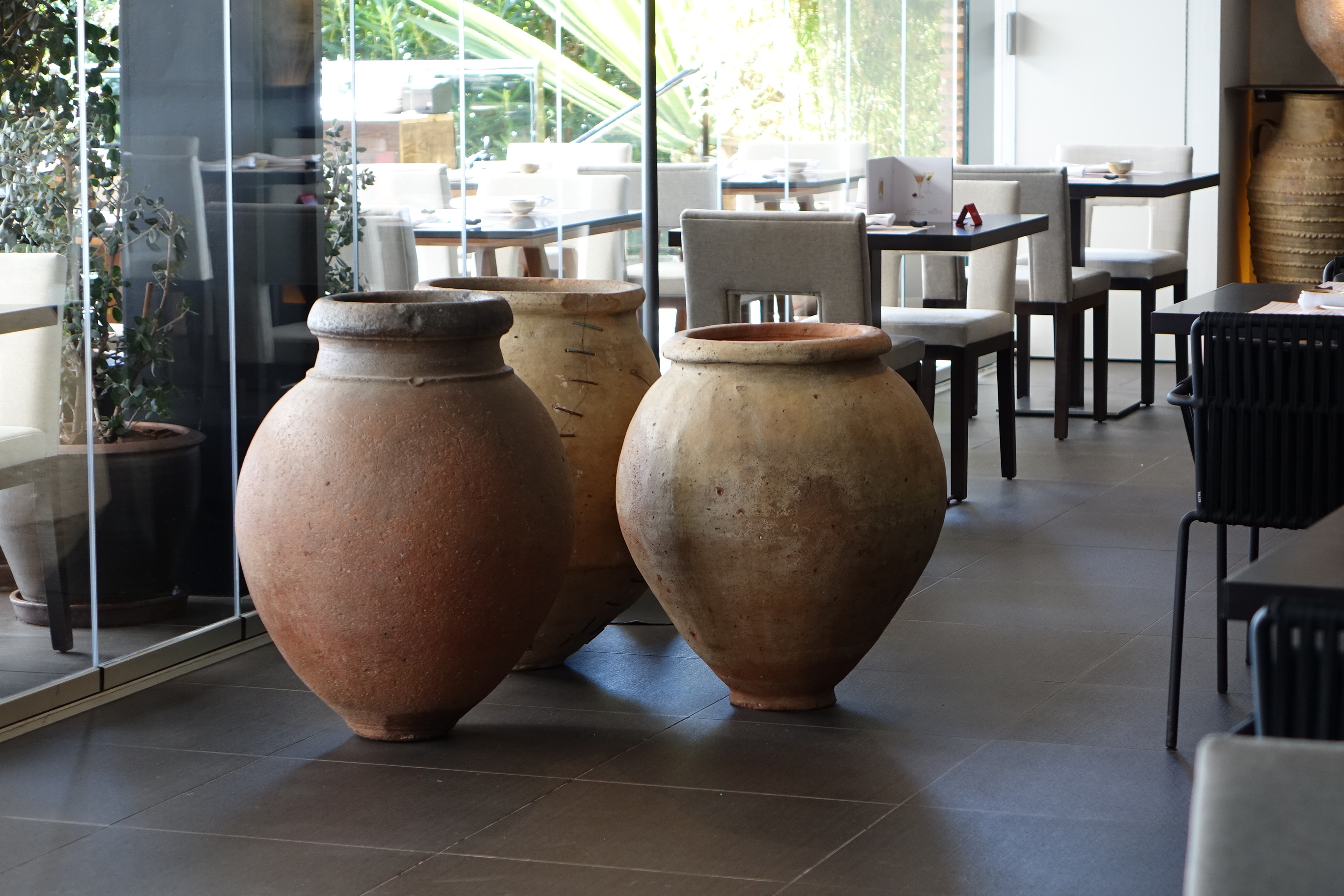
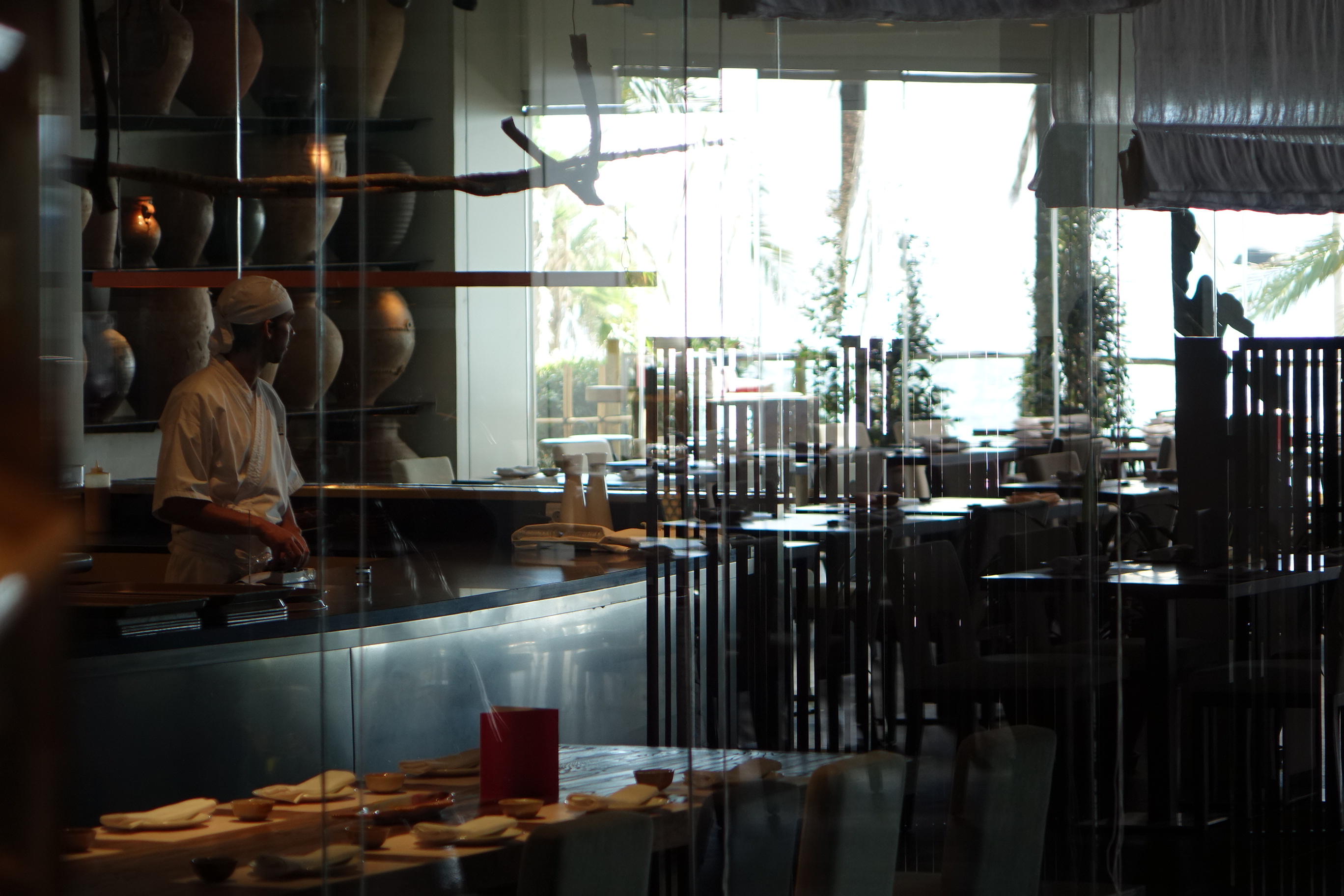
DSC09804 DSC09822 DSC09818 DSC09797 DSC09786 DSC09813

But happily, Tahini’s success is now being replicated a second time, with the same stunning quality of sushi being offered to diners in Marbella in so spectacular a setting that each of their senses will be tickled and enticed with equal measure. Outside on the terrace, polished minimalist tables reflect the abundance of palm trees which hang proudly over the marble-lined paseo maritimo just outside the restaurant, while every seat provides that perfect sea view overlooking the Straights of Gibraltar to Africa. Inside the restaurant, a cosy elegance suffuses the atmosphere, as diners eat alongside walls loaded with Mediterranean pottery of every shape and size, while a glass cube at the heart of the restaurant offers an unrivalled view of the Tahini chefs, plying their trade and ensuring that every detail of this note-perfect menu is taken care of. And don’t miss the corridor out to the toilets at the back of the restaurant: lined with crates and boxes filled with what looks like ice and every variety of fresh fish, it is in fact a clever recreation of a market scene, with glass ice and ceramic fish, emphasising that only the best and freshest of ingredients will be used by the chefs at Tahini. And was it my imagination or could I hear the bustle of a market subtly sounding in the background as I walked through this make-believe fish market?

The Tahini “market”

DSC09770 DSC09776 DSC09781 DSC09777

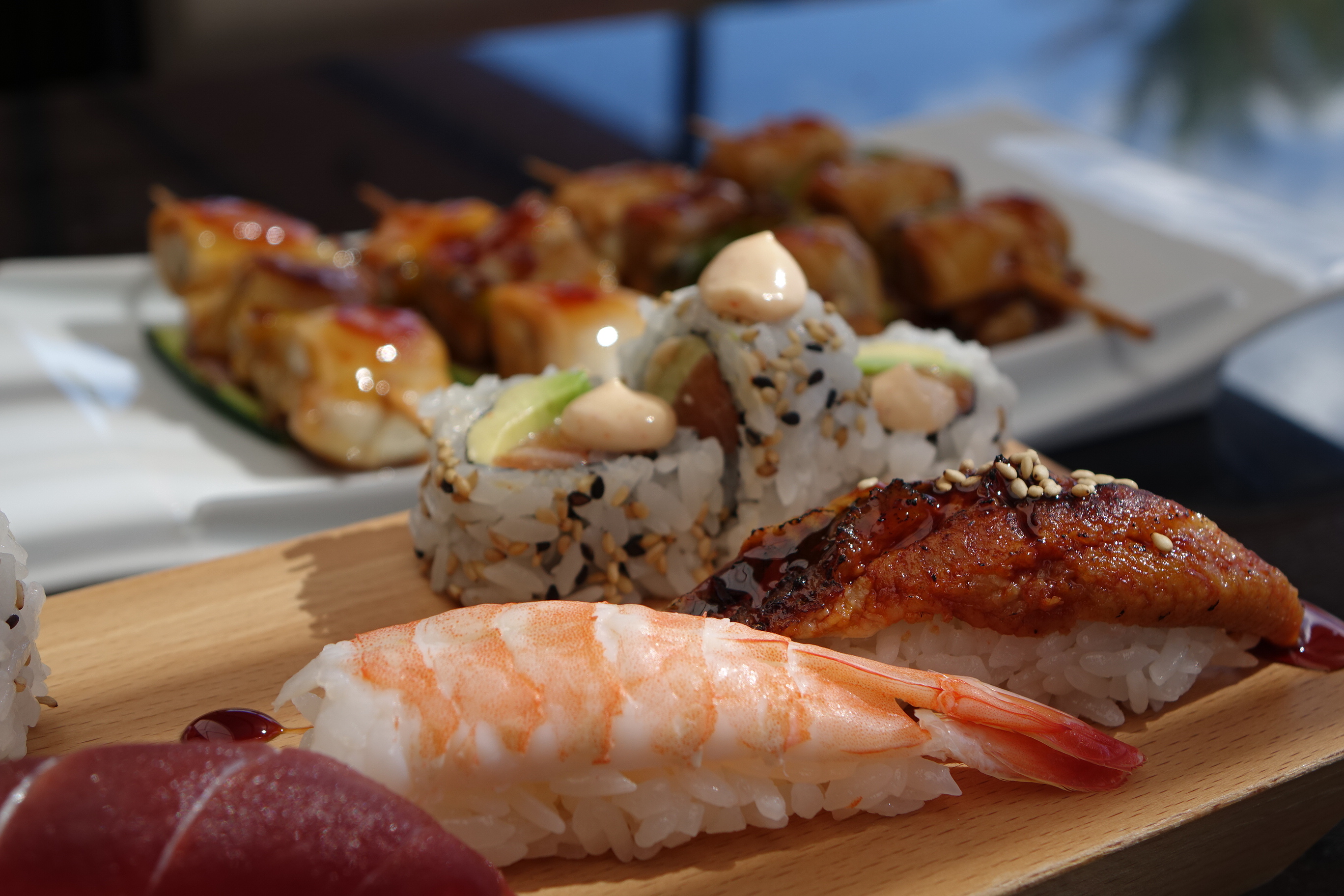
But beyond this incredible setting, Tahini’s success comes down to that food – cuisine which is not only apt dedication to the sea from where it came, but a brilliantly sophisticated take on the sushi concept, with fish so fresh that it melts on the tongue, and food so beautifully presented that, like me, you will probably spend more time taking photographs than enjoying the flavours as they dissolve so lovingly into every corner of your mouth.

A true dedication to the sea

DSC09750 DSC09759 DSC09758 DSC09760

Tahini’s new family member more than lives up to the standards set down by its Mallorca sister, and is a glittering new jewel standing proudly in Marbella’s ample gastronomic crown. For more information, see the Tahini website.

All photos and written content are strictly the copyright of Nicholas de Lacy-Brown © 2014 and The Daily Norm. All rights are reserved. Unauthorized use and/or duplication of the material, whether written work, photography or artwork, included within The Daily Norm without express and written permission from The Daily Norm’s author and/or owner is strictly prohibited.

Marbella: After the Rain

Come October, Marbella, Spanish seaside destination of the rich, famous and unfortunately also the cast of TOWIE, takes on a different air. Gone is the exasperating closeness of balmy sunny days (my absolute favourite) when the heat envelopes like an all encompassing electric blanket. In its place, a slightly fresher air, with shorter but still sunnier days that remind of the summer just past, often with temperatures getting almost as close, but with that total immersive heat now absent. In a way, for someone as obsessed with the summer as me, an October late summer has something of a melancholic air about it, although it remains entirely welcome for an English visitor who, back at home, is already well used to the onset of cold winds, dark mornings, yet darker evenings and a pavement littered with half decomposing leaves. 

After my busy weekend braving the crowds and pandaemonium of the Fiesta del Pilar in Zaragoza, we took the fast train all the way down the Iberian peninsula to Malaga in an impressive four hours. From there it was a short bus journey to Marbella where we were joined by my father in mass celebration of my mother’s “big-0”. 

DSC09665DSC09679 DSC09690 DSC09678 DSC09691

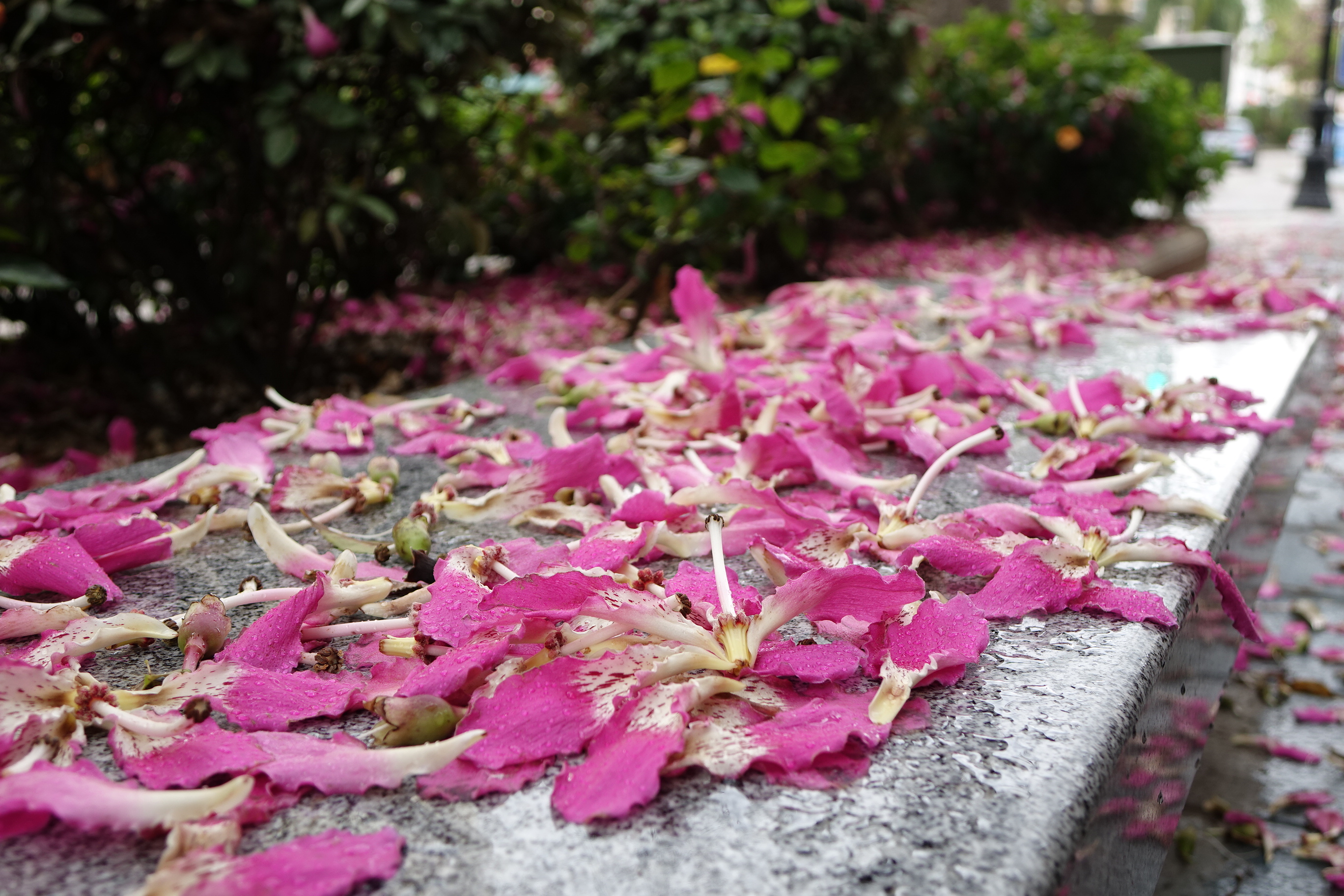
There followed a weekend of wining, dining, dodging the rain and basking in the sun. And as the title of this post suggests, these photos were taken just after the rain, a feature of a typical Spanish October, when wall to wall sunshine is no longer guaranteed, and it pays to have a brolly about one’s person. But as these photos show, the rain did nothing to dissipate the inherent beautiful of this most aesthetic of Andalusian towns, bringing a new freshness and vitality to the plants, places and people already tired after the demise of the long hot summer. 

All photos and written content are strictly the copyright of Nicholas de Lacy-Brown © 2014 and The Daily Norm. All rights are reserved. Unauthorized use and/or duplication of the material, whether written work, photography or artwork, included within The Daily Norm without express and written permission from The Daily Norm’s author and/or owner is strictly prohibited.

The Zaragoza files: Photos that didn’t fit anywhere else

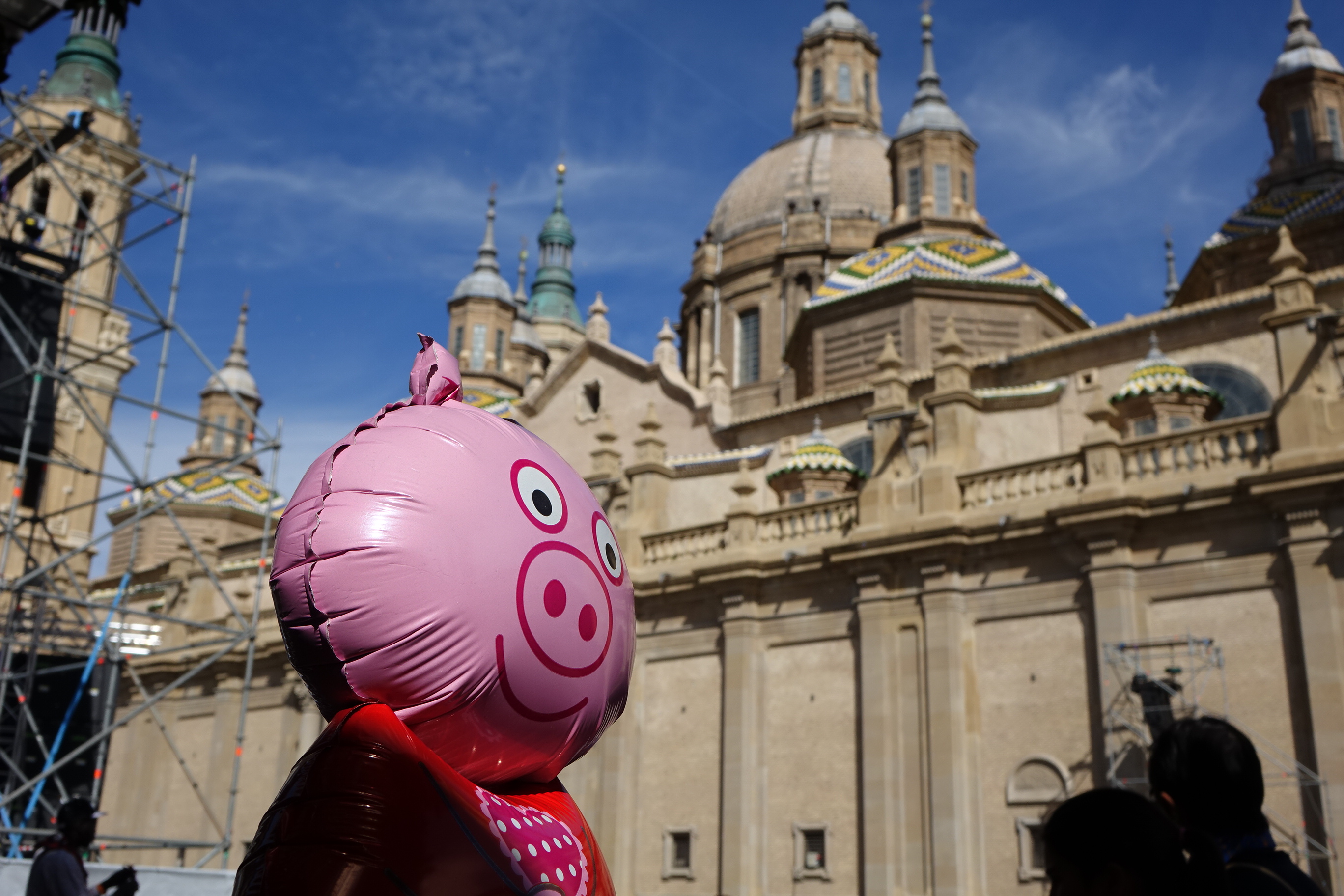
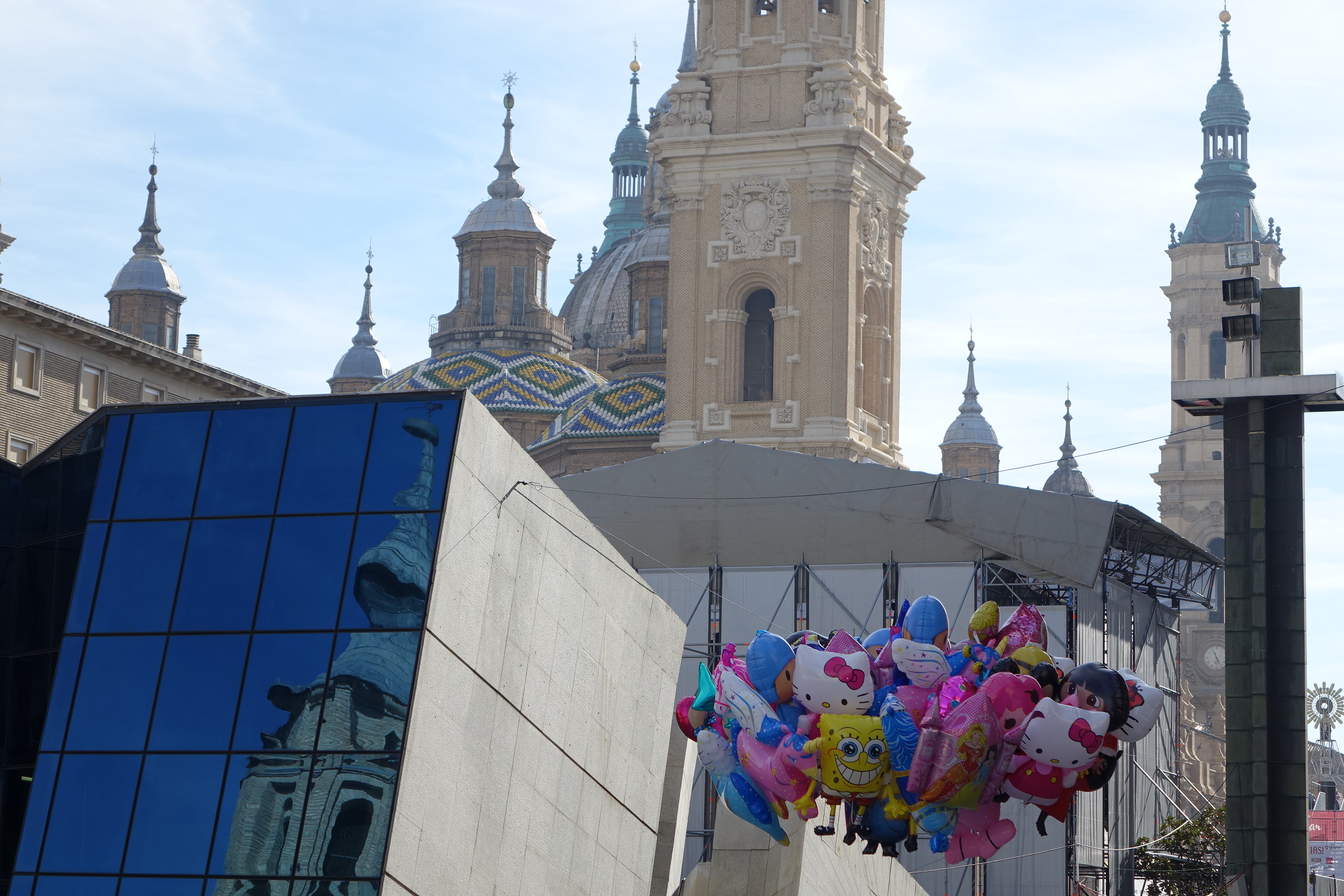
Sunny mornings reflecting on glistening damp cobbles and fountains playfully dancing in the soaring glint of the light; a modern bridge’s reflection making a perfect ‘X’ in the River Ebro, and an old tower’s noticeable lean giving rise to the question why Pisa is so famously unique across the world; bonze statues and balloon sellers, curly pillars and chocolate coloured leaves, and the charismatic lottery seller who plies his trade on wheels – these are the photographs of Zaragoza which didn’t quite fit into my other posts of the city; a miscellaneous study of the spirited old town in the early mornings and late at night, when the roaring Fiesta del Pilar was not otherwise shaking the city with its party beat.

DSC09437 DSC09337 DSC09171 DSC09101 DSC09343

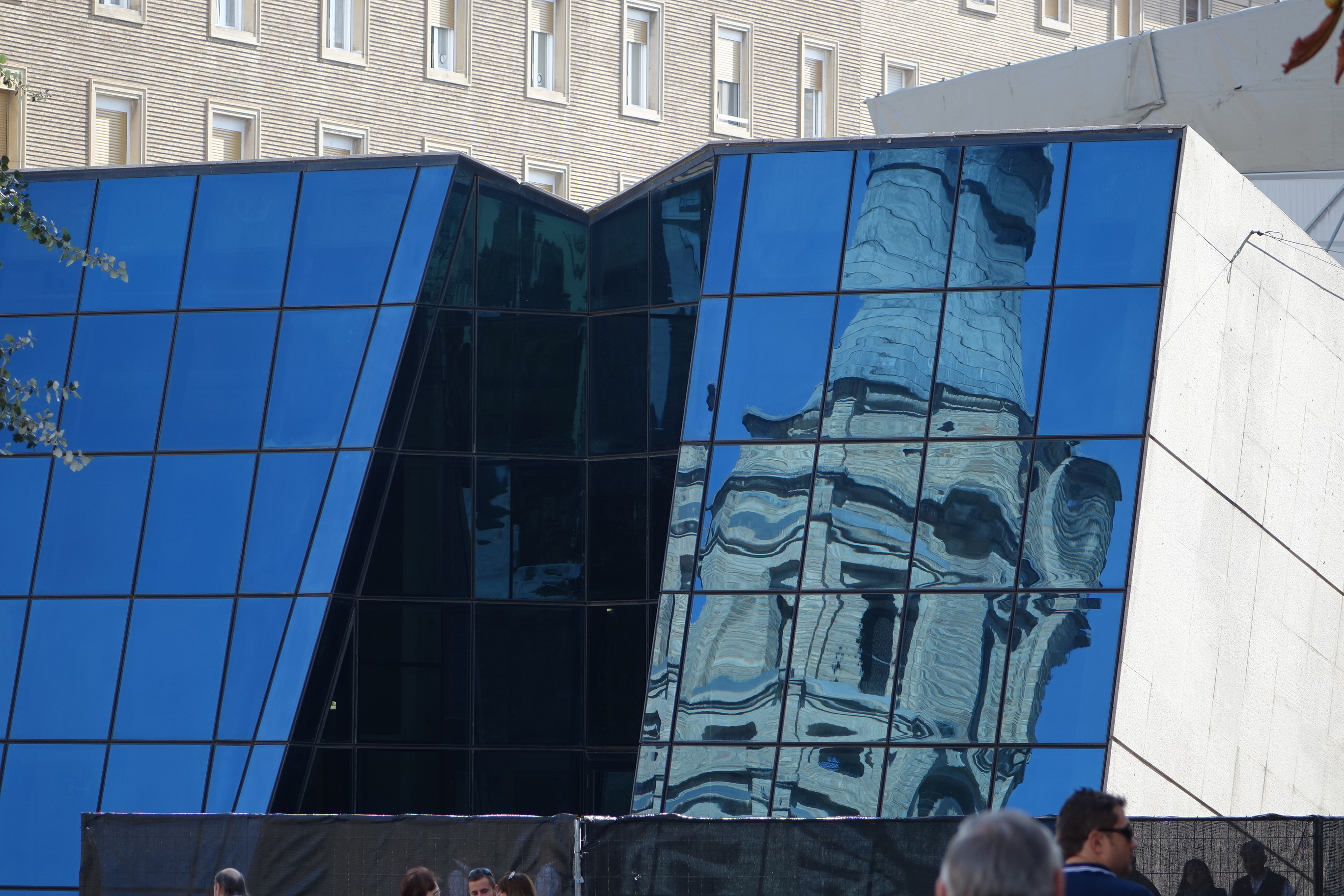
These photos are about reflection: from the ancient church tower reflected in a modern mirrored glass window to the Basilica del Pilar so perfectly captured in my mother’s sunglasses. They are also about the buildings which may go overlooked besides the vast four towered-spectacle of Zaragoza’s main Basilica, and about the Basilica itself, its four towers soaring skywards in the twilight. They are about the overlapping layers of history portrayed in a photographic composition – with ancient Visigoth walls in the foreground and a modernist market behind; and they are about the sheer beauty of the colours of the streets and the trees stood alongside them which looked so stunning in the sunny autumn light.

I give you: Zaragoza.

© Nicholas de Lacy-Brown and The Daily Norm, 2001-2014. Unauthorized use and/or duplication of the material, whether written work, photography or artwork, included within The Daily Norm without express and written permission from The Daily Norm’s author and/or owner is strictly prohibited. Excerpts and links may be used, provided that full and clear credit is given to Nicholas de Lacy-Brown and The Daily Norm with appropriate and specific direction to the original content. For more information on the work of Nicholas de Lacy-Brown, head to his art website at www.delacy-brown.com

Zaragoza – Day 2: La Ofrenda de Flores

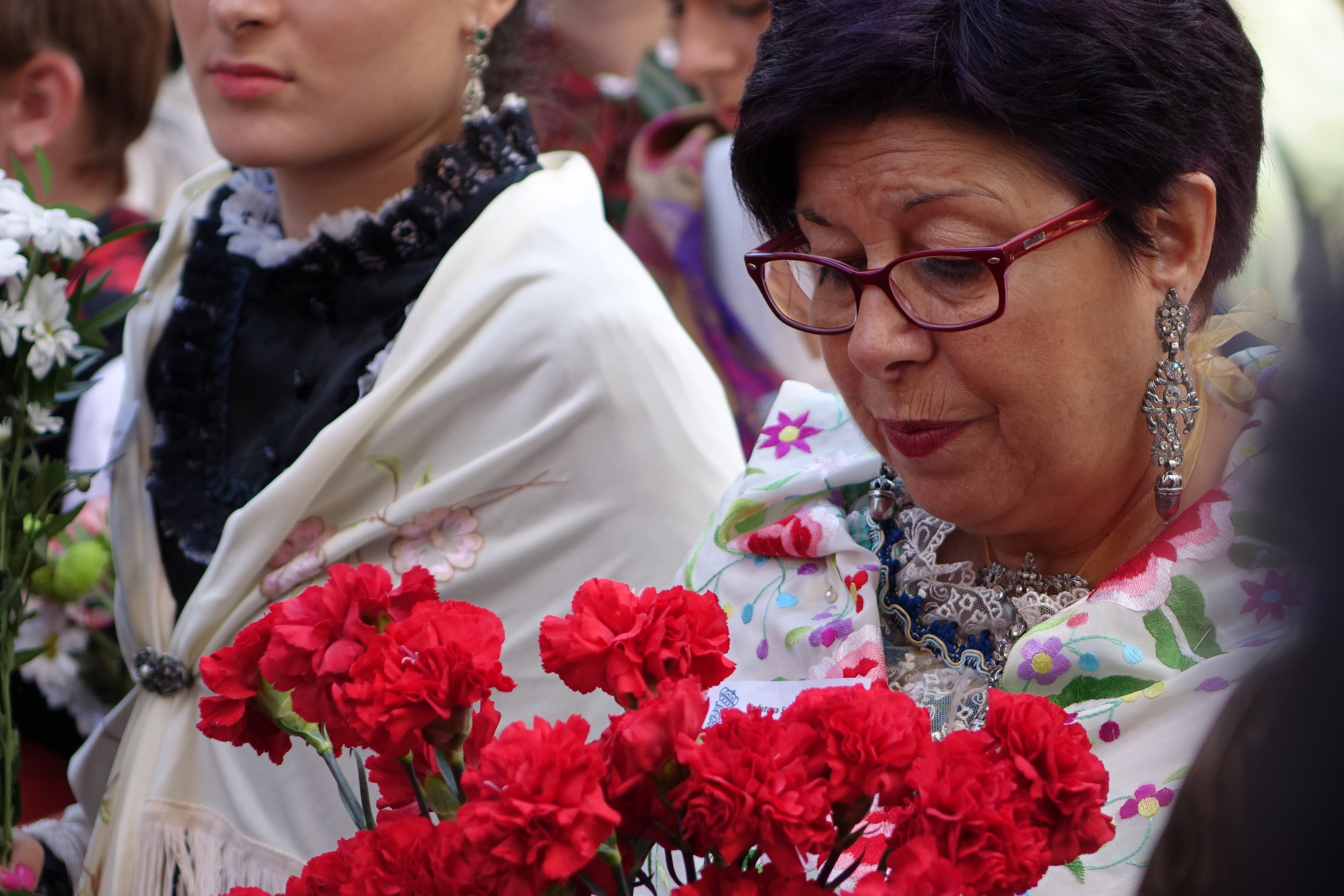
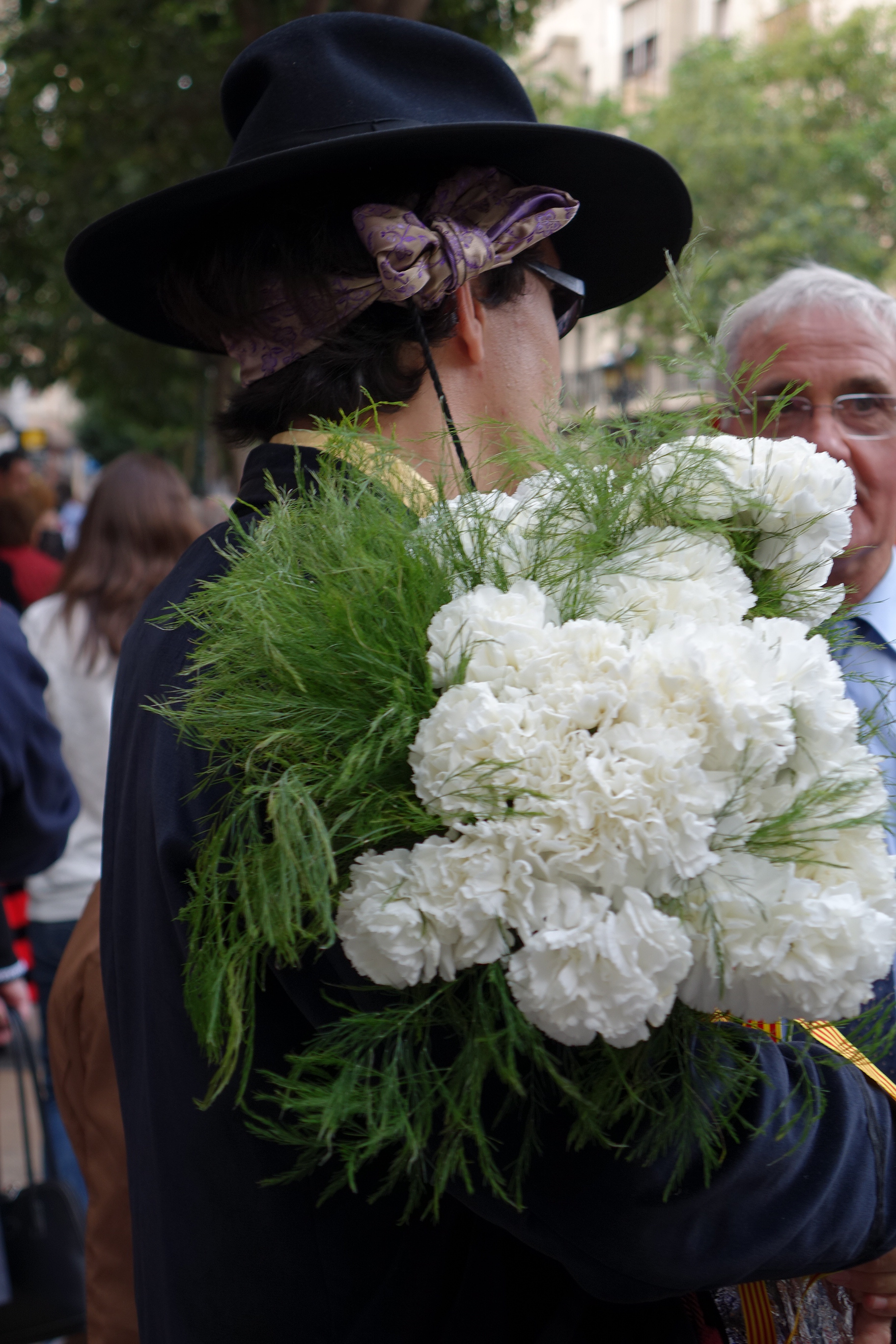
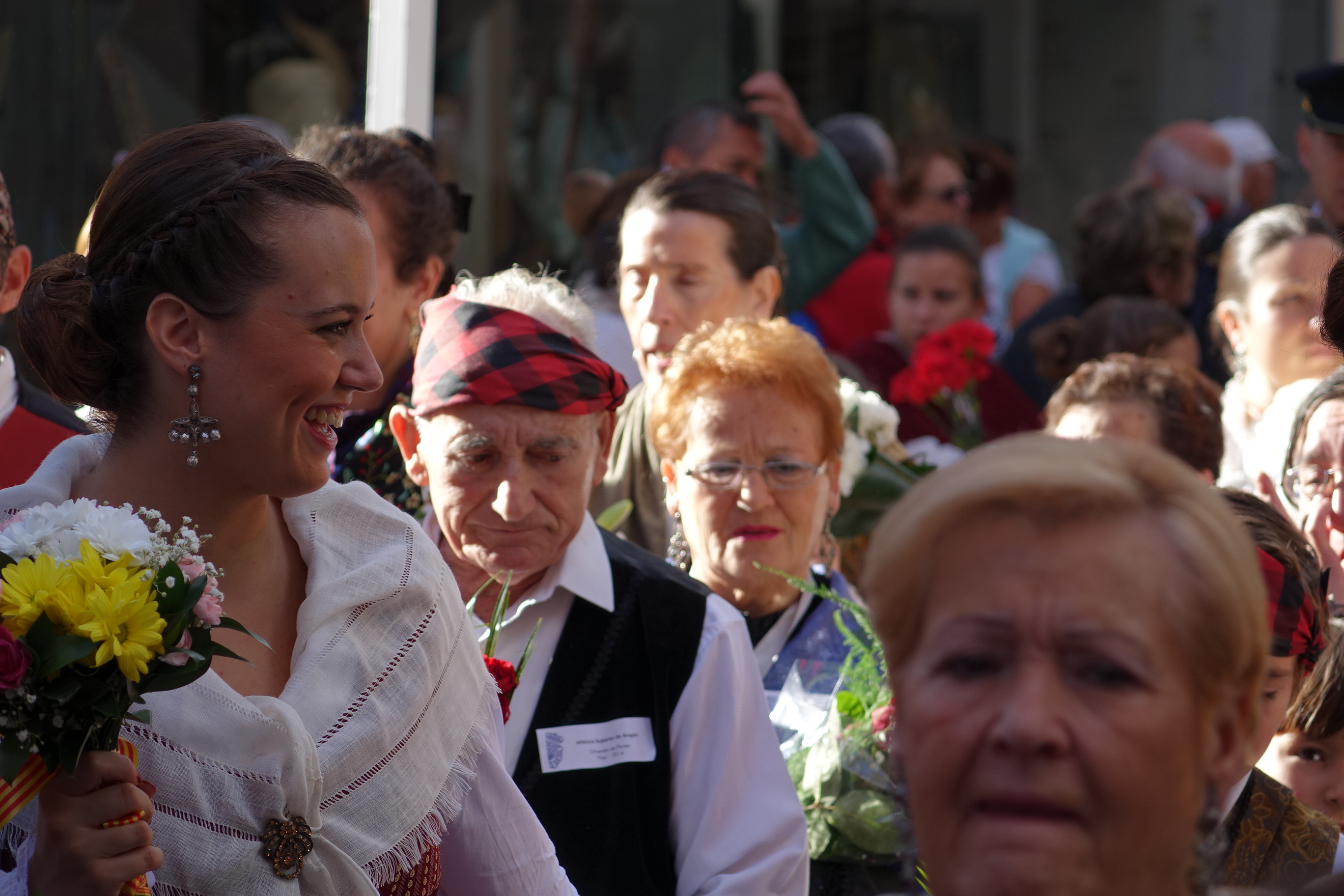
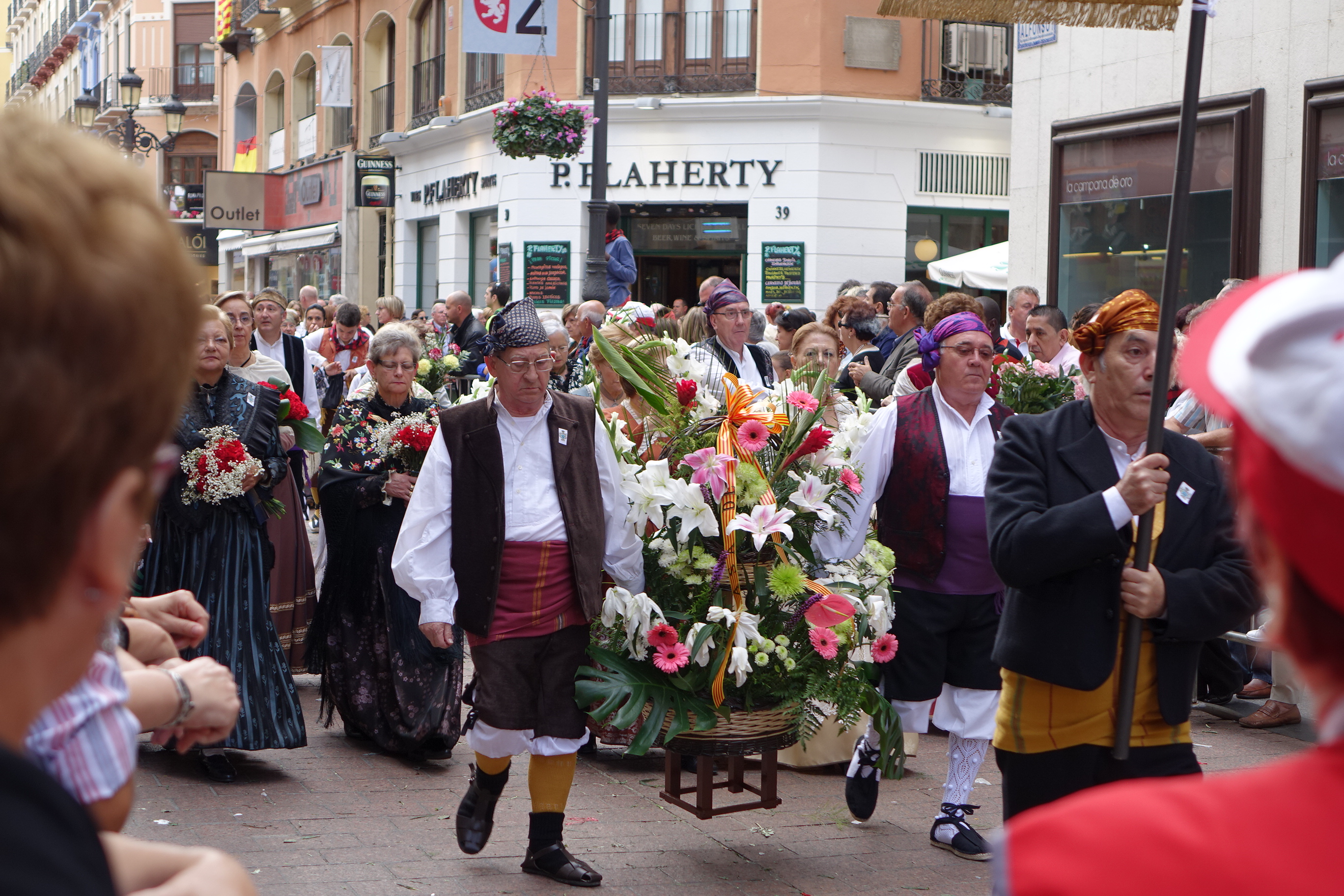
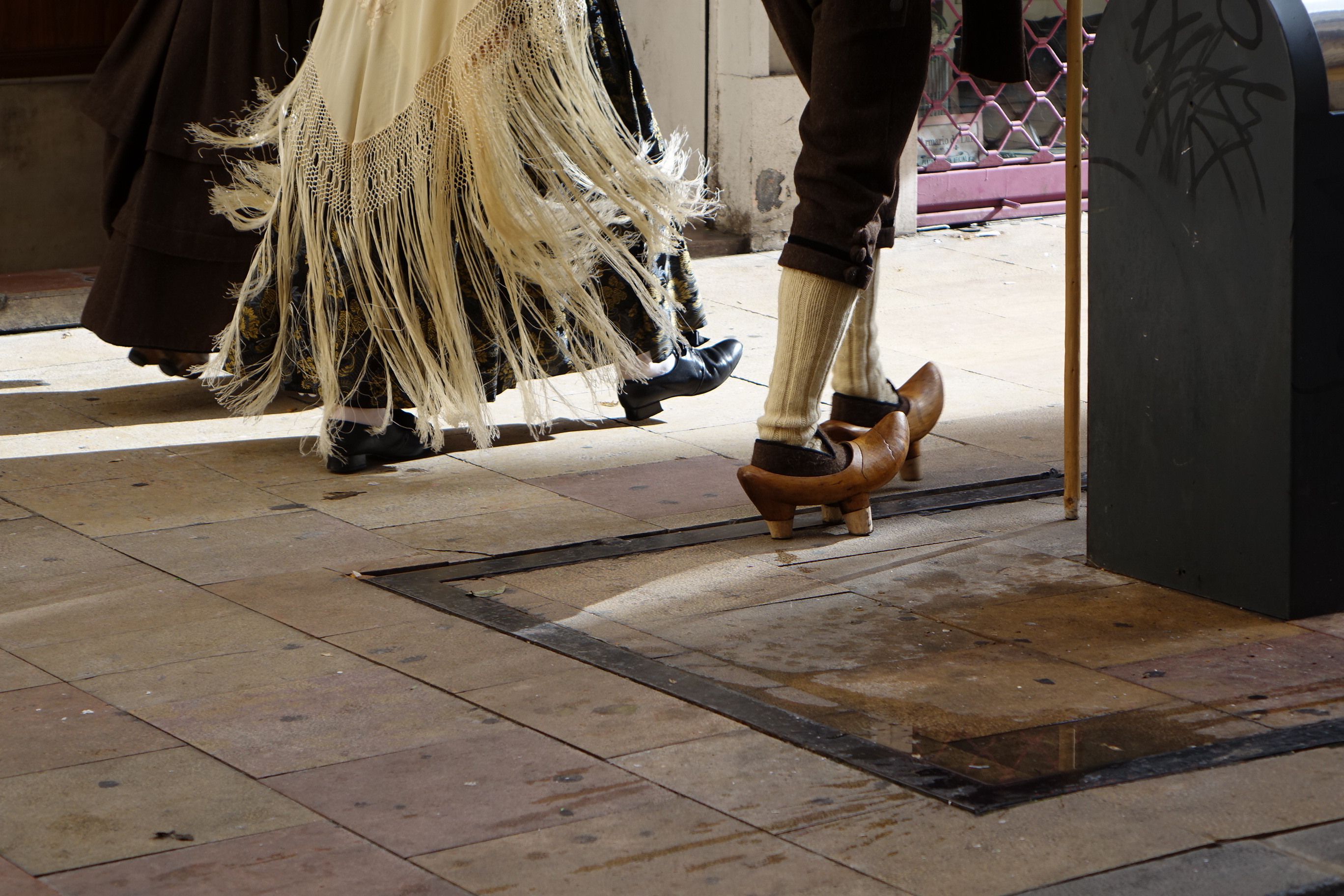
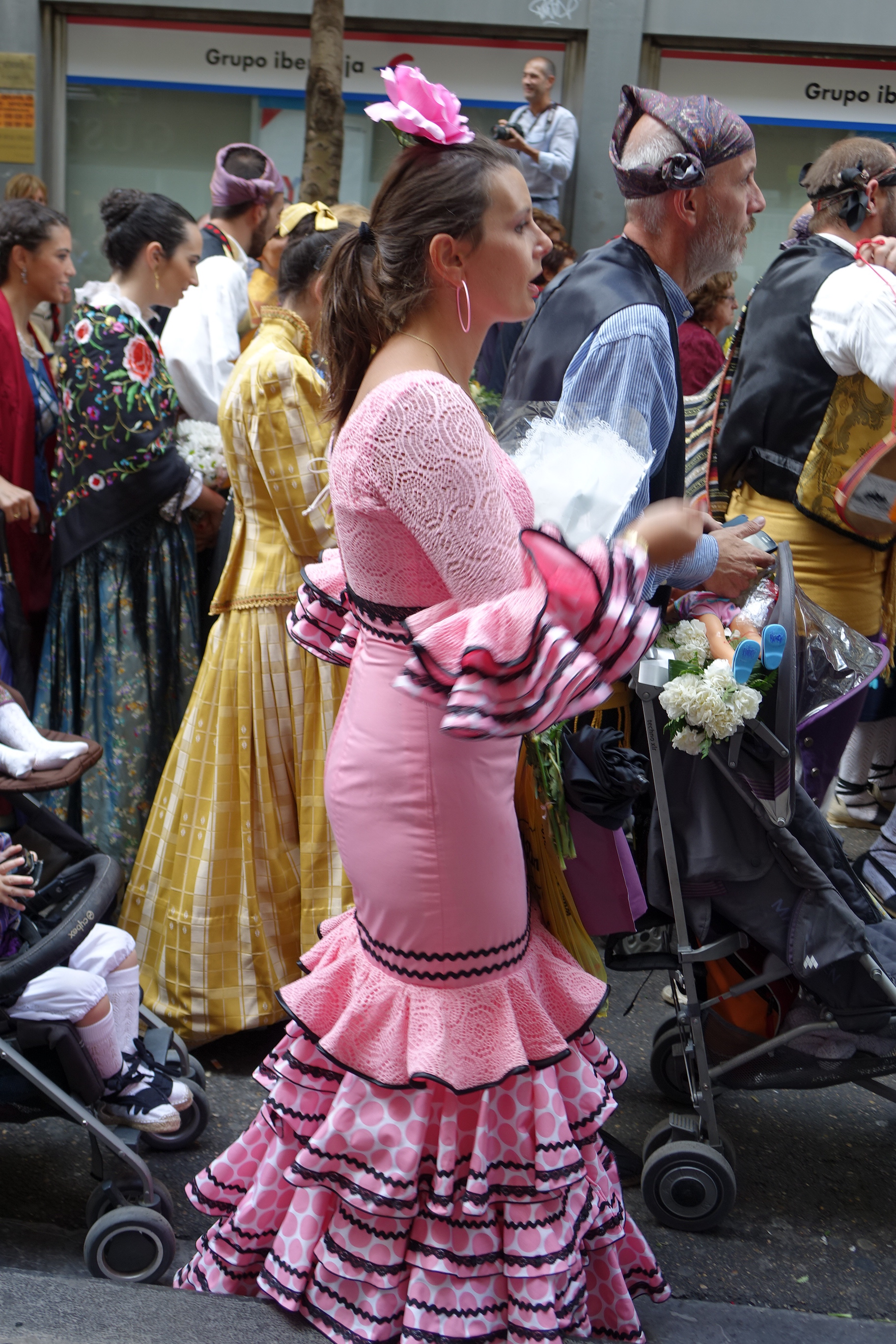
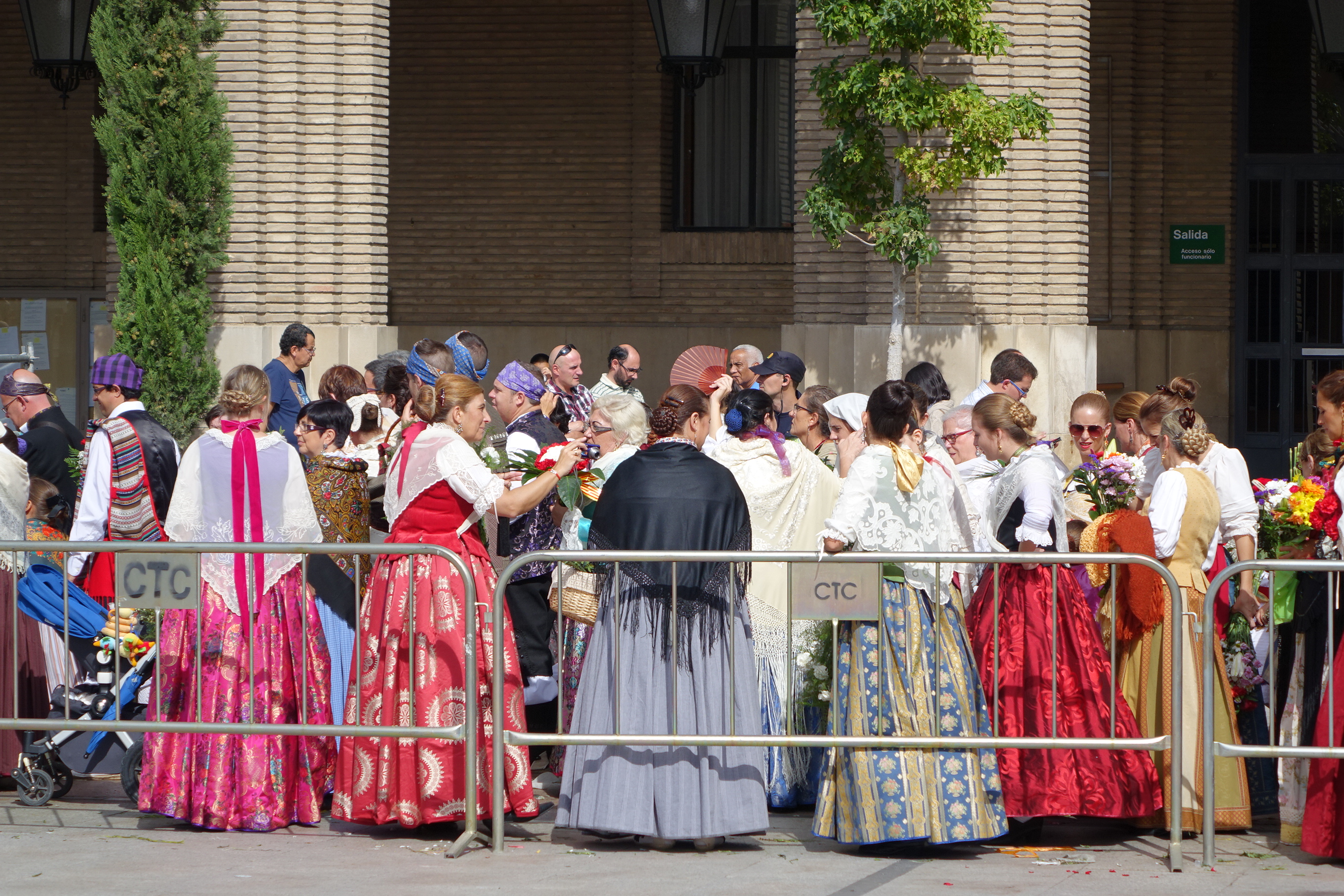
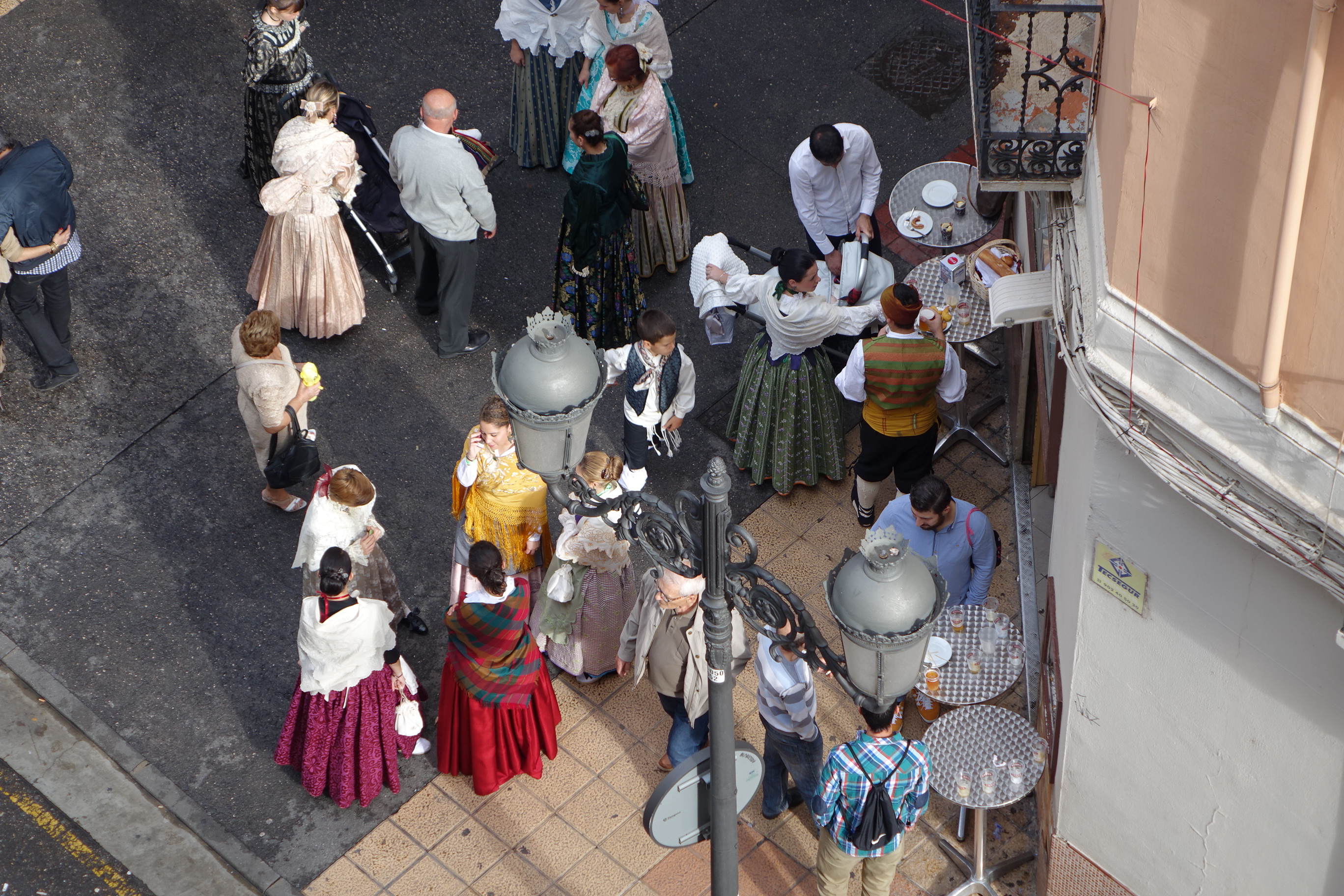
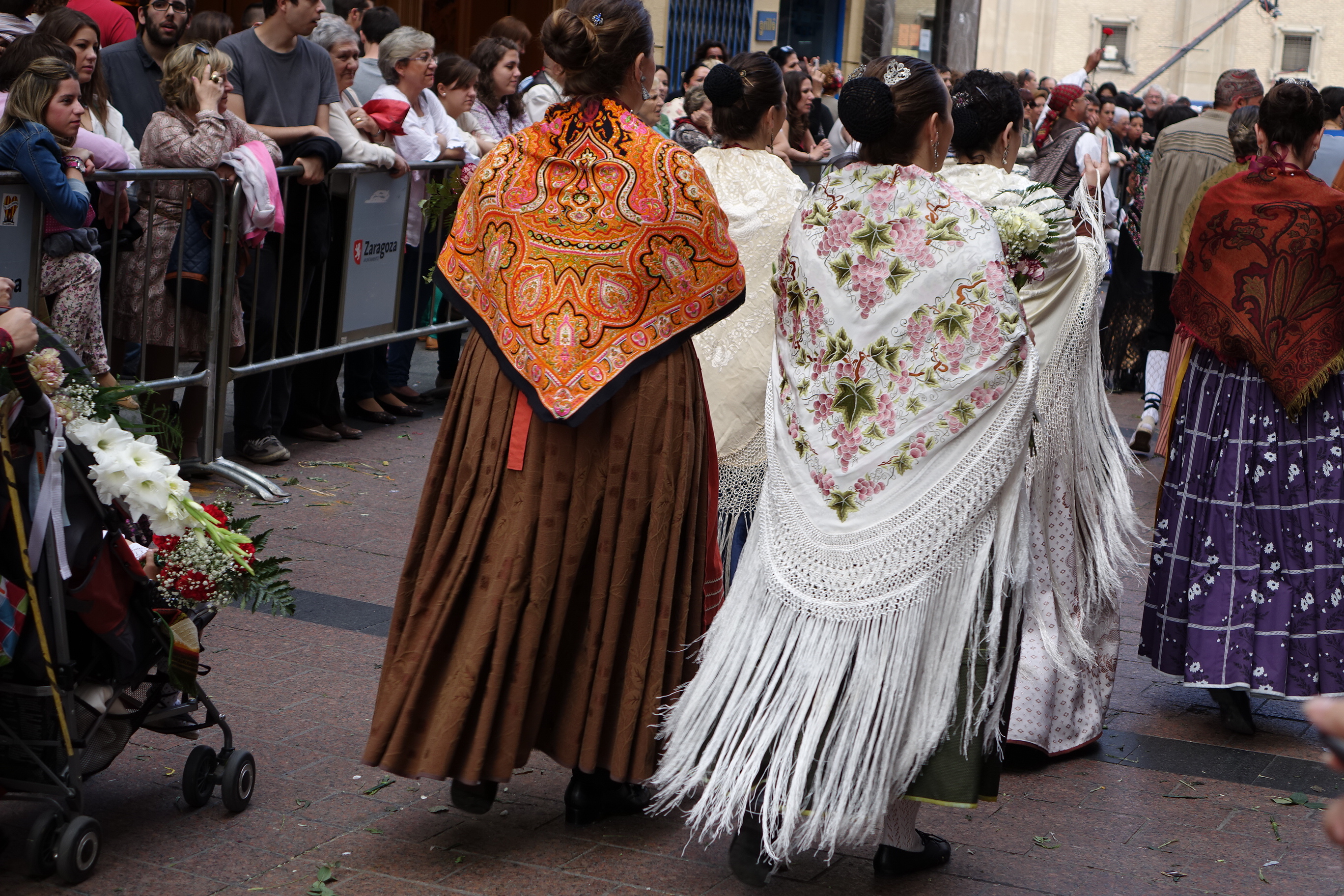
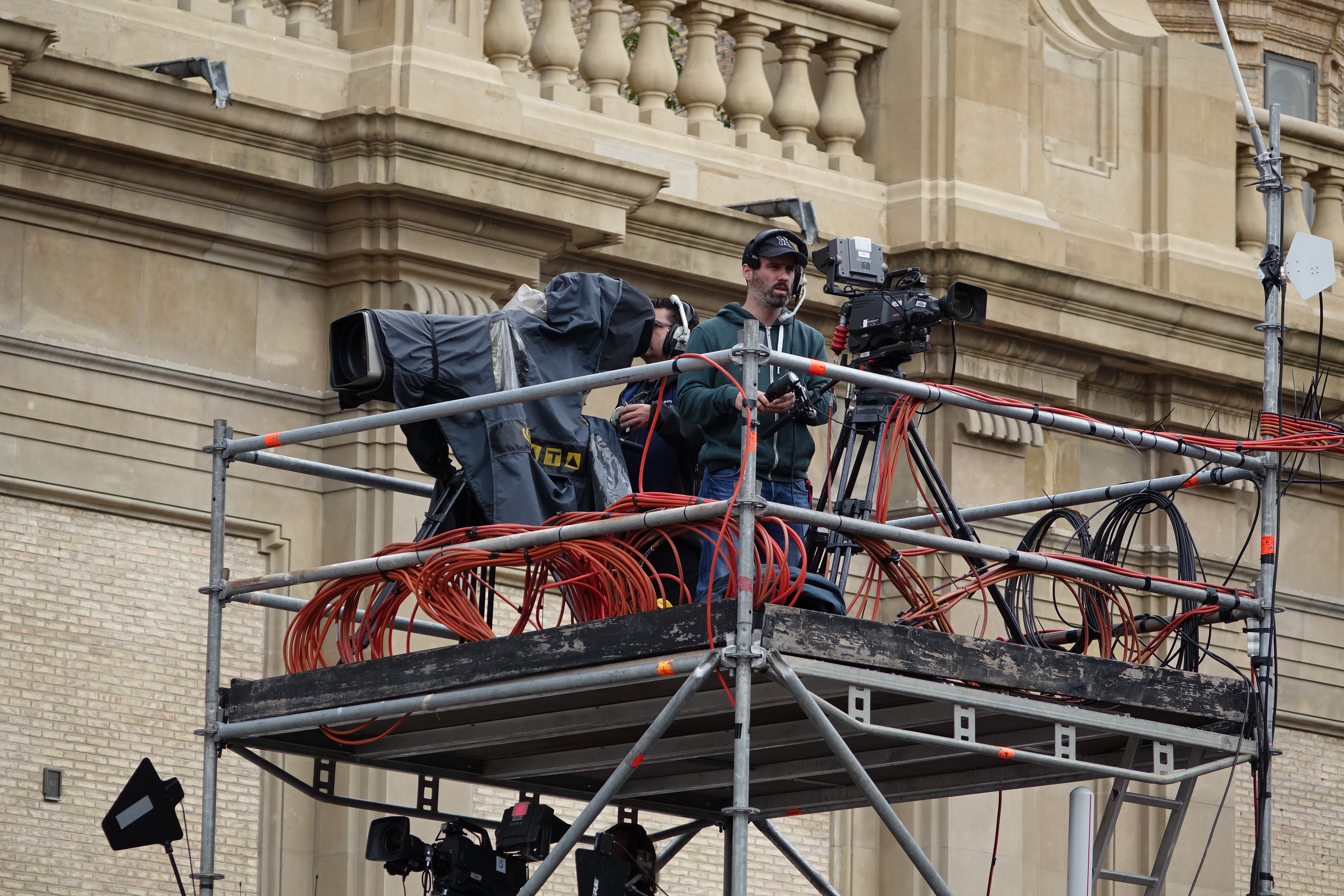
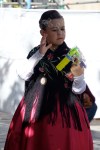
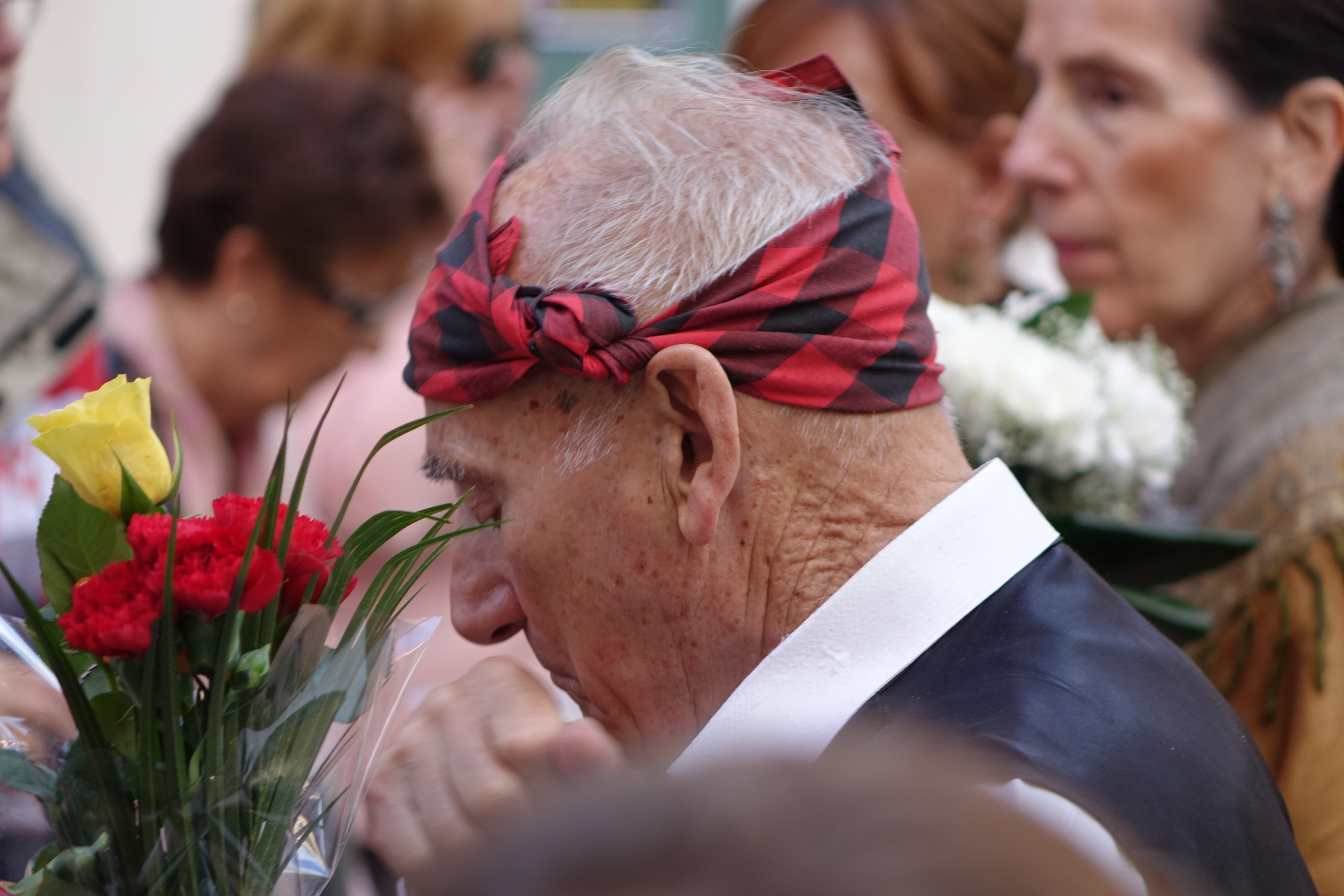
Looking out of the window in the city of Zaragoza on Sunday the 12th October was a bizarre experience. On the streets there was not a single car or vehicle which resembled modern times, but instead, passers by and groups of people walked along and gathered in the otherwise empty streets wearing incredible period costume. Decked out in heavy silken dresses, embroidered cloaks, wooden clogs, extravagantly frayed shawls and floral headdresses, the inhabitants of Zaragoza looked either like they had gone back in time, or were appearing as extras in a Hollywood blockbuster. But before I could conclude that I had somehow awoken in a dream, scenes from local television flashing up on the television screen at the end of my bed betrayed the truth: that this was no Hollywood blockbuster, but an event surely worthy of the live film reel remitting images of the event onto TV screens all over Spain. Showing extraordinary images of the streets of Zaragoza packed to the rafters with locals wearing traditional costume and carrying bouquets of flowers, the cameras had captured the very centre point of the Fiestas del Pilar – the Offering of the Flowers.

Floral dedications being carried by traditionally dressed locals towards the Plaza del Pilar

DSC09557 DSC09461 DSC09502 DSC09465 DSC09506 DSC09459 DSC09561 DSC09501 DSC09462 DSC09510 DSC09504 DSC09487 DSC09468 DSC09457 DSC09498

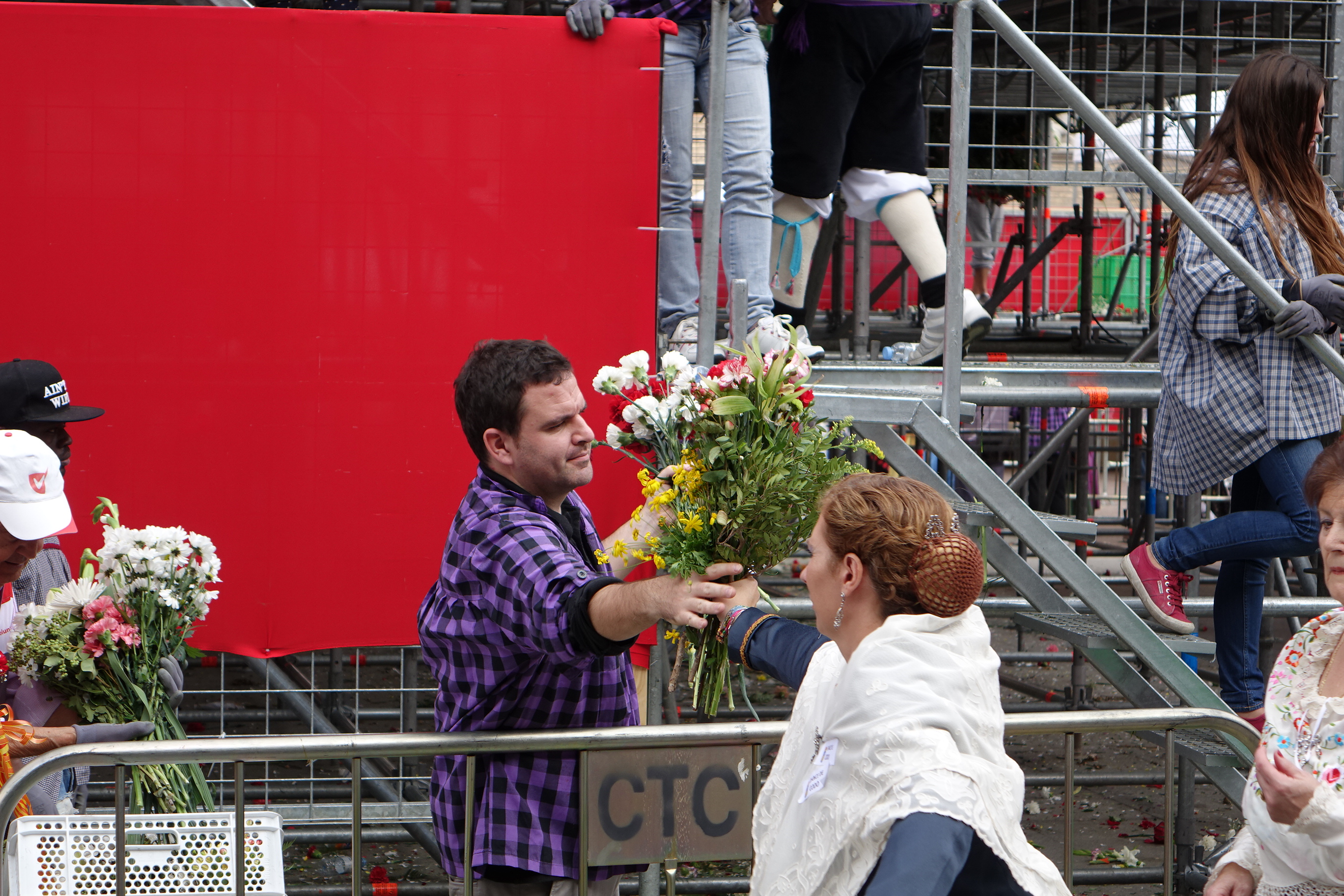
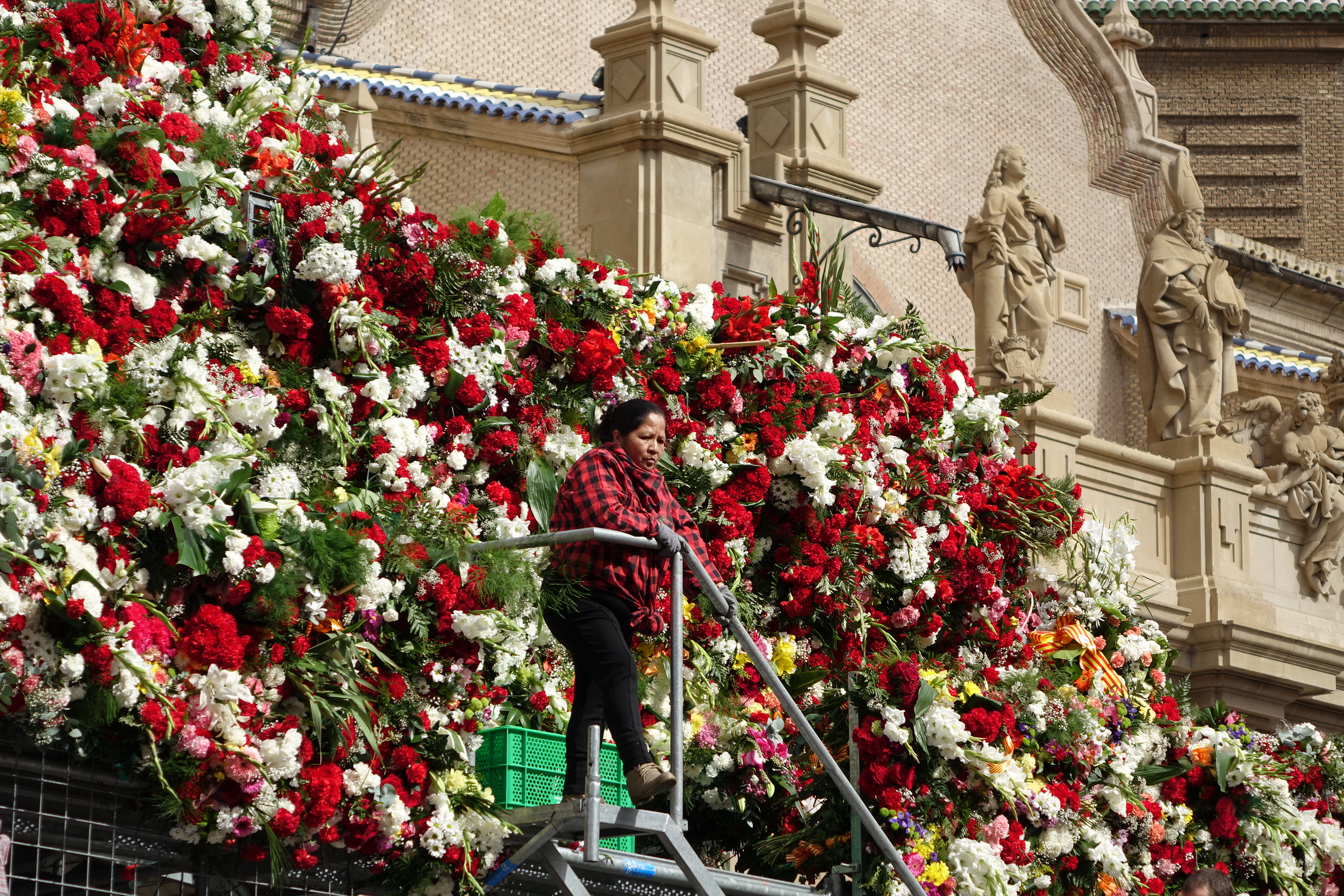
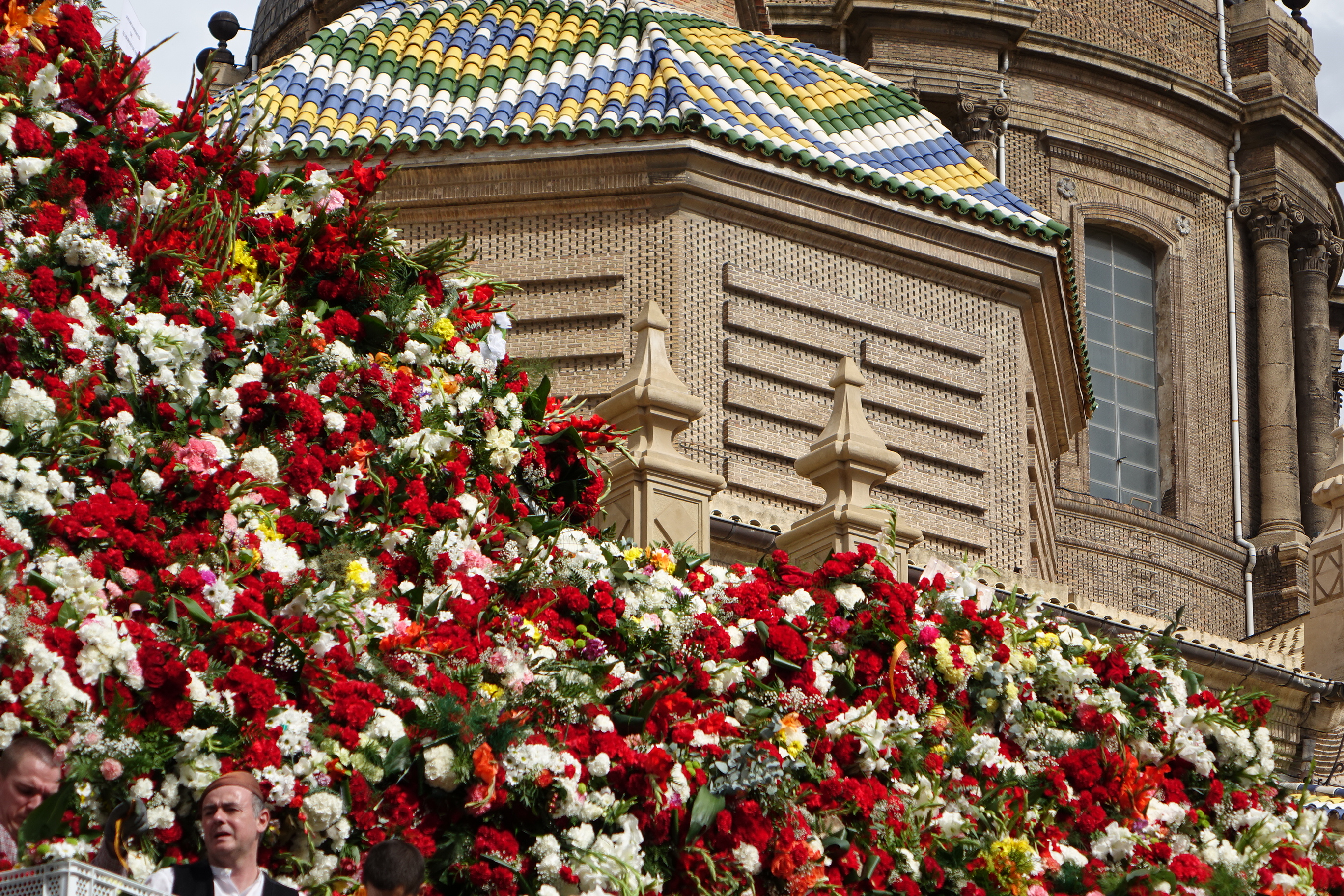
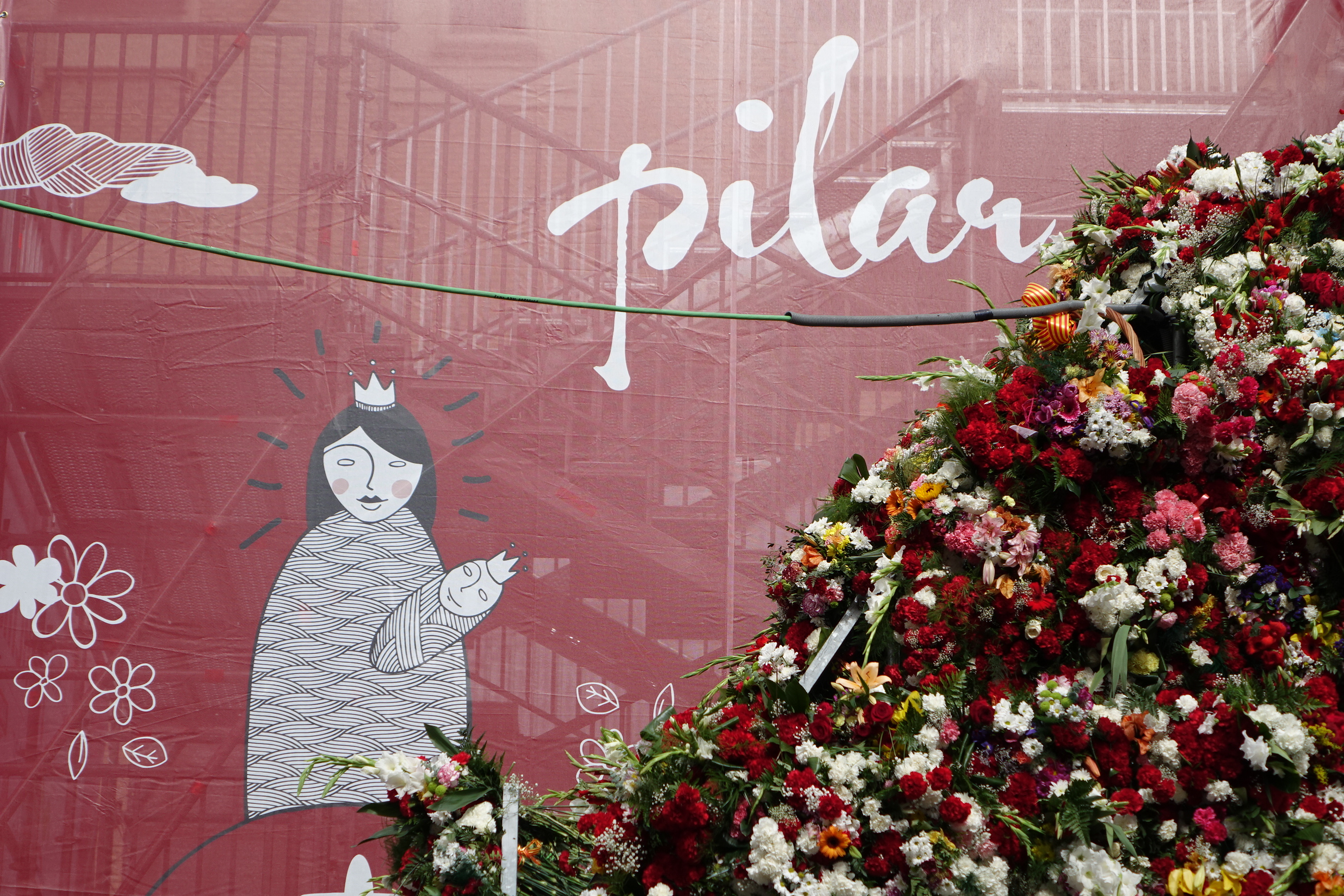
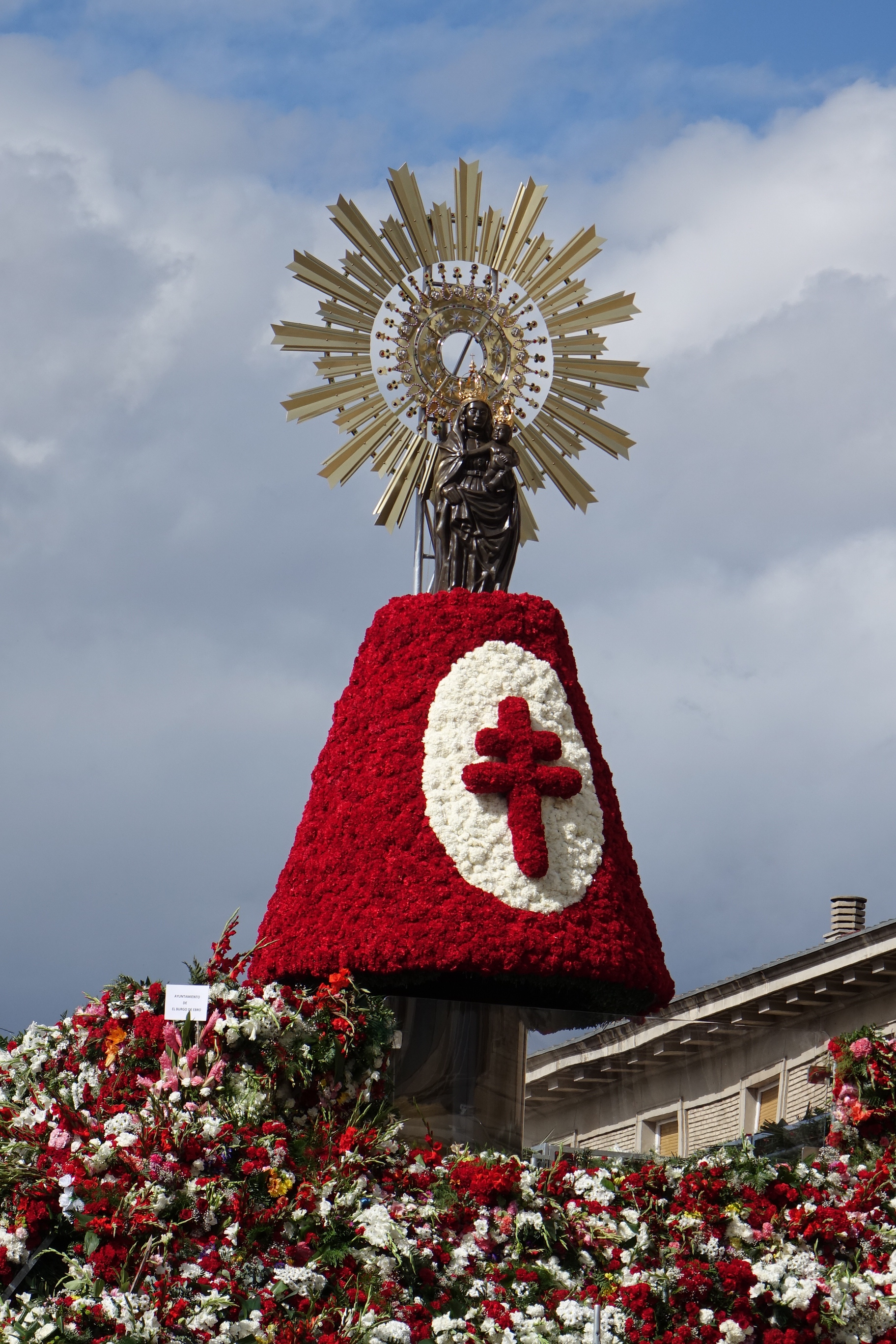
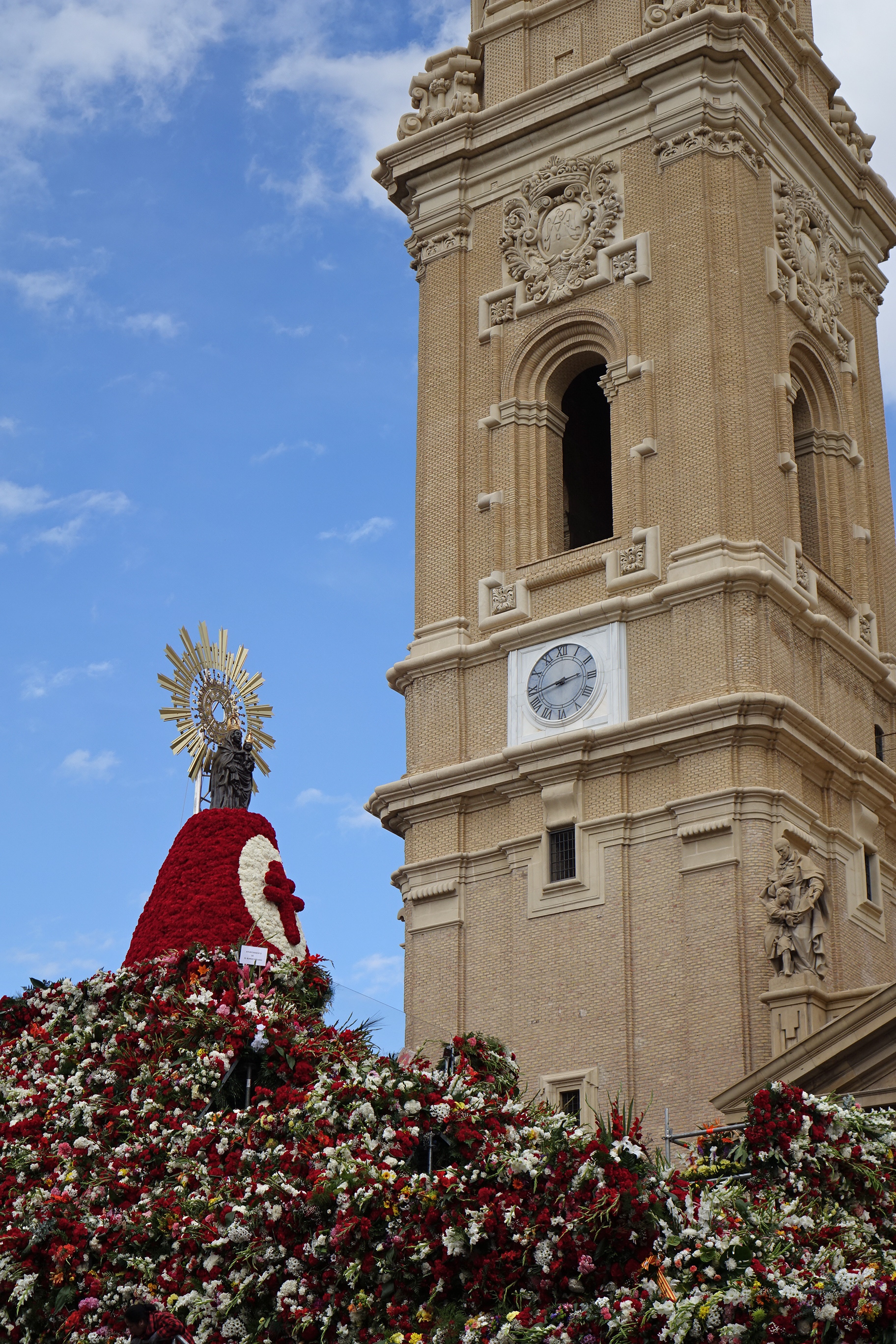
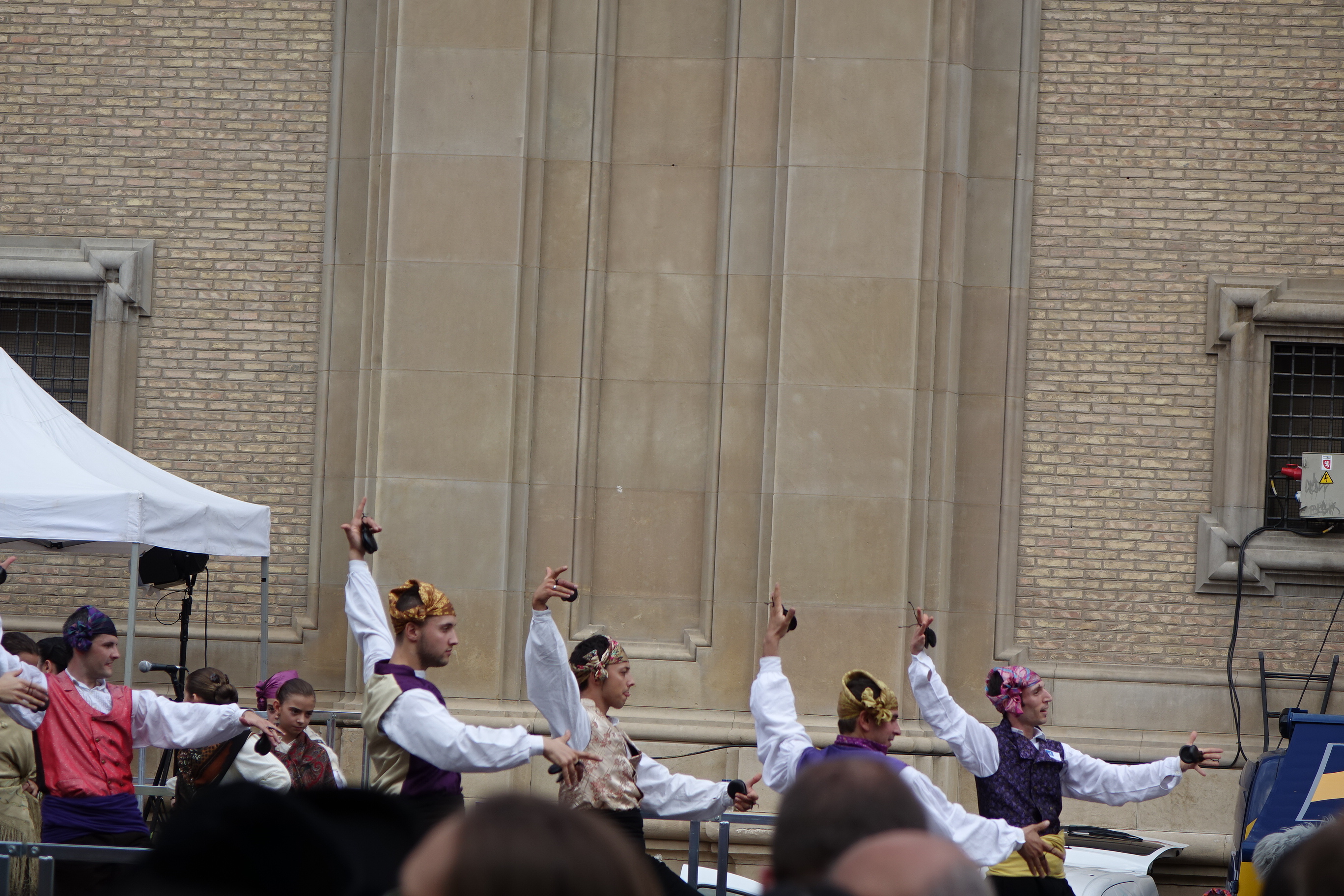
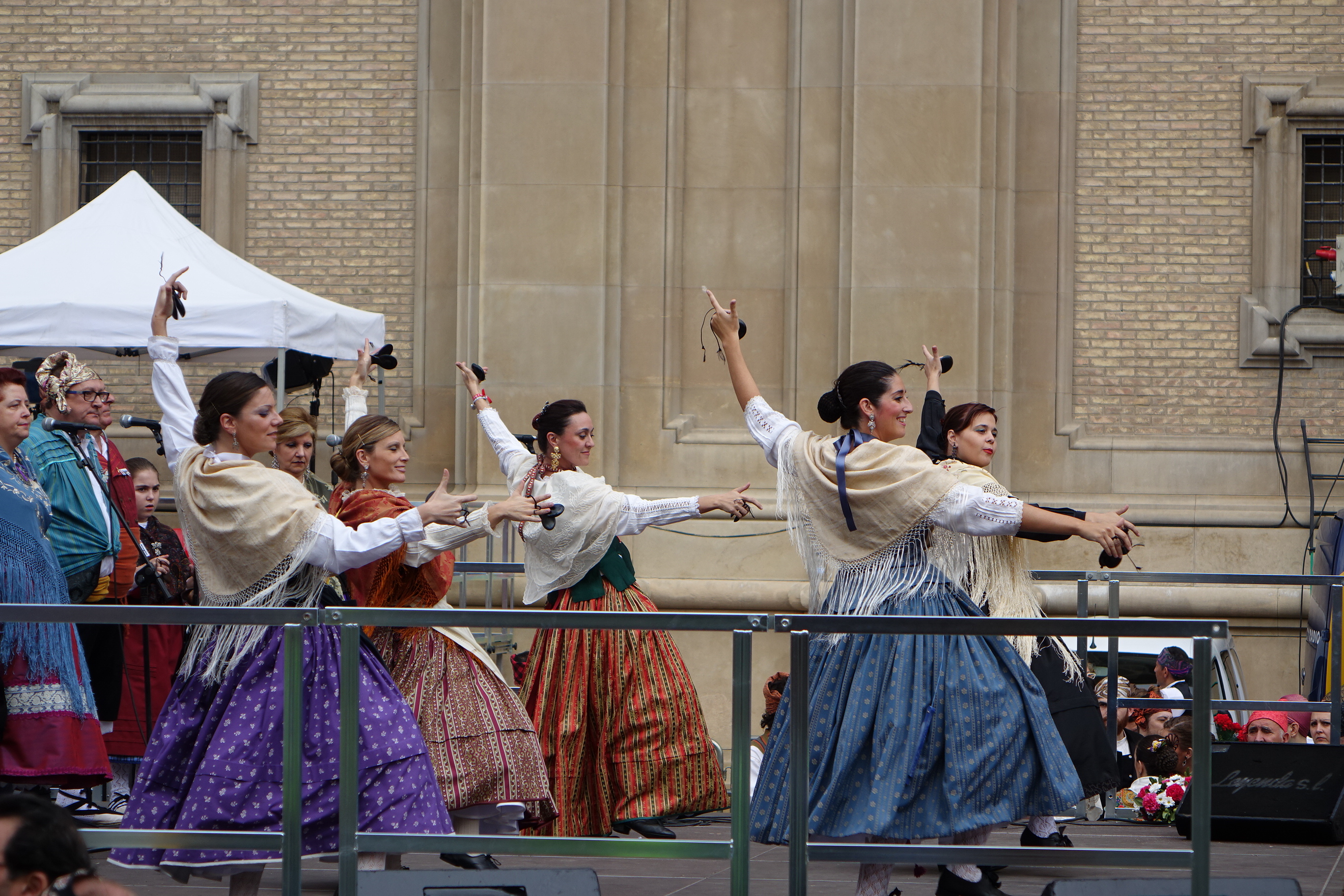
La Ofrenda des Flores (the offering of flowers) is a great demonstration of the people’s devotion to the patron saint of the city, the Virgen del Pillar, during which hundreds of thousands of people, dressed in the traditional costume of Aragon or of any other region in Spain, bring flowers to the Virgin, a statue of whom is placed in the centre of the Plaza del Pilar. Around the statue stood on high, an army of volunteers slot the flowers offered into a vast pyramidal structure, tiling a huge sloping flower mantle around the Virgin, which remains in the square for the rest of the festival so that all the people in the city can see it. From an early beginning, when the first bouquets filled the area of the mantel immediately below the glinting gilded statue, we were lucky enough to see this vast floral cape as it gradually filled with floral tributes, while thousands more offers flooded into the square, brought by locals queuing patiently in their lavish local costumes and entertained by a wide variety of superb traditional dancing and music shows.

Handing over the flowers and the vast floral mantel built around the Virgen del Pilar

DSC09595 DSC09602 DSC09619 DSC09598 DSC09613 DSC09616 DSC09608 DSC09527 DSC09614 DSC09611 DSC09522

It was an incredible event to watch and be part of, from regarding the vast human river of flower-carrying locals slowly winding its passage all the way down from the main thoroughfares North of the city to the vast Plaza del Pilar, to seeing the great floral mantel slowly develop flower by flower. The air was filled with human spirit, with shared happiness and with a tangible expression of positivity and celebration, and was certainly an unmissable event in all of my adventures in Spain.

DSC09539 DSC09626DSC09479 DSC09576 DSC09588 DSC09585 DSC09540 DSC09560 DSC09566 DSC09575 DSC09581 DSC09620

All photos and written content are strictly the copyright of Nicholas de Lacy-Brown © 2014 and The Daily Norm. All rights are reserved. Unauthorized use and/or duplication of the material, whether written work, photography or artwork, included within The Daily Norm without express and written permission from The Daily Norm’s author and/or owner is strictly prohibited.

Zaragoza Focus – All the fun of the fiesta

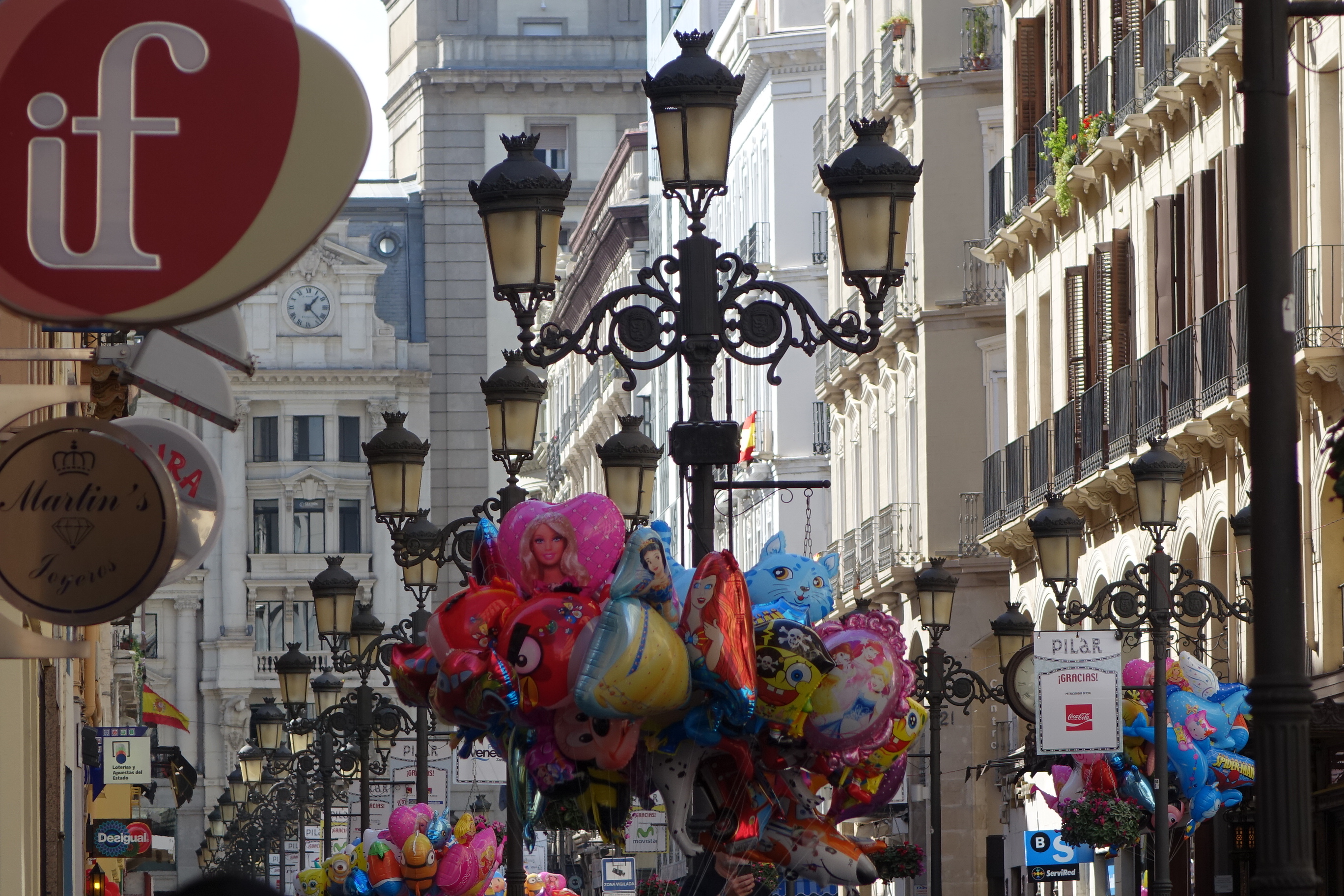
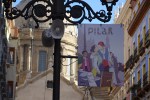
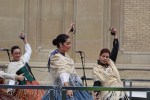
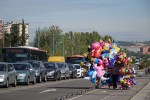
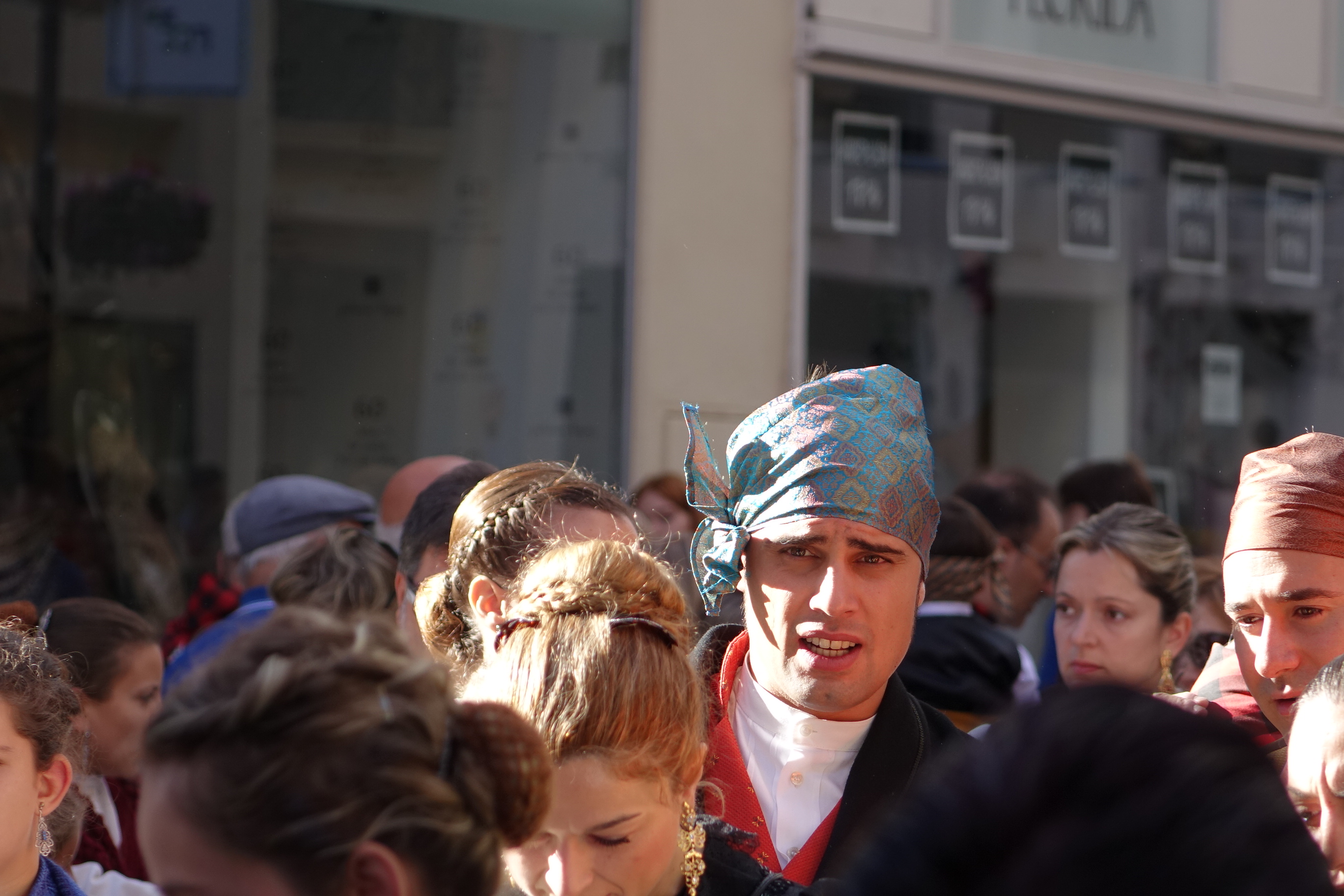
From the moment we arrived in Zaragoza in North Eastern Spain, continuing right up to (and no doubt beyond) the time we left, the city was tangibly pumping with the rhythm of fiesta. The leafy squares and vast piazzas standing amidst Zaragoza’s world-famous cathedrals were alive with open air concerts playing throughout the day and evening; the streets were packed so full of people that it took 10 minutes to make one’s way even down the shortest; the skies periodically erupted with the pop and crackle of a distant firework display; tapas bars and restaurants were full to over brimming; and the air was filled with helium balloons of every shape and size and bubbles blown by children. And despite all of the inconvenience and noise that this festival inevitably created, there is no denying the magical atmosphere that filled the air, as the whole city seemed bound by an intangible electricity of celebration, and almost the entirety of its population came out to enjoy the party, to stroll in the crowds, to listen to the live music, to dance in the streets.

DSC09323DSC09579 DSC09472 DSC09315 DSC09113

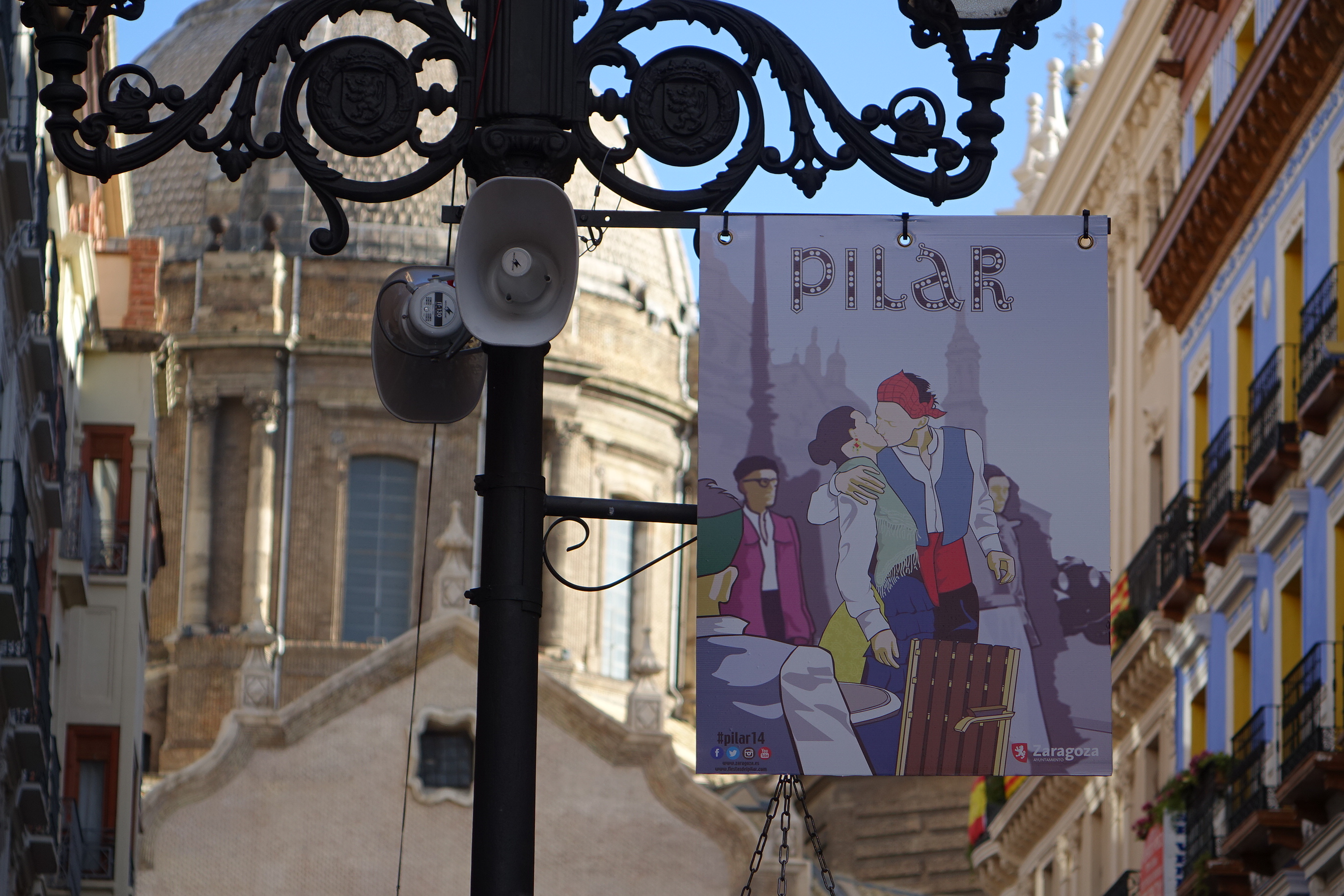
This selection of photographs attempts to convey something of the atmosphere which filled every inch of Zaragoza when we made a visit the weekend before last. The reason for the festival was the Fiestas del Pilar, an annual ten day celebration, centred around a religious festival when huge crowds pay homage to the patron saint of the city: the Virgen del Pillar, but actually incorporating a packed programme of traditional music, modern pop, excuses to dance, and occasions to get out, eat and meet with loved ones and friends. And no wonder it was so crowded: for this annual festival is not only the biggest in Zaragoza, but one of the largest in all of Spain attracting thousands from outside of the city, and indeed the country: like us. It certainly was something unique, and made our visit to Zaragoza a hundred times more memorable.

All photos and written content are strictly the copyright of Nicholas de Lacy-Brown © 2014 and The Daily Norm. All rights are reserved. Unauthorized use and/or duplication of the material, whether written work, photography or artwork, included within The Daily Norm without express and written permission from The Daily Norm’s author and/or owner is strictly prohibited.

Zaragoza – Day 1: Cultural Calm before the Fiesta

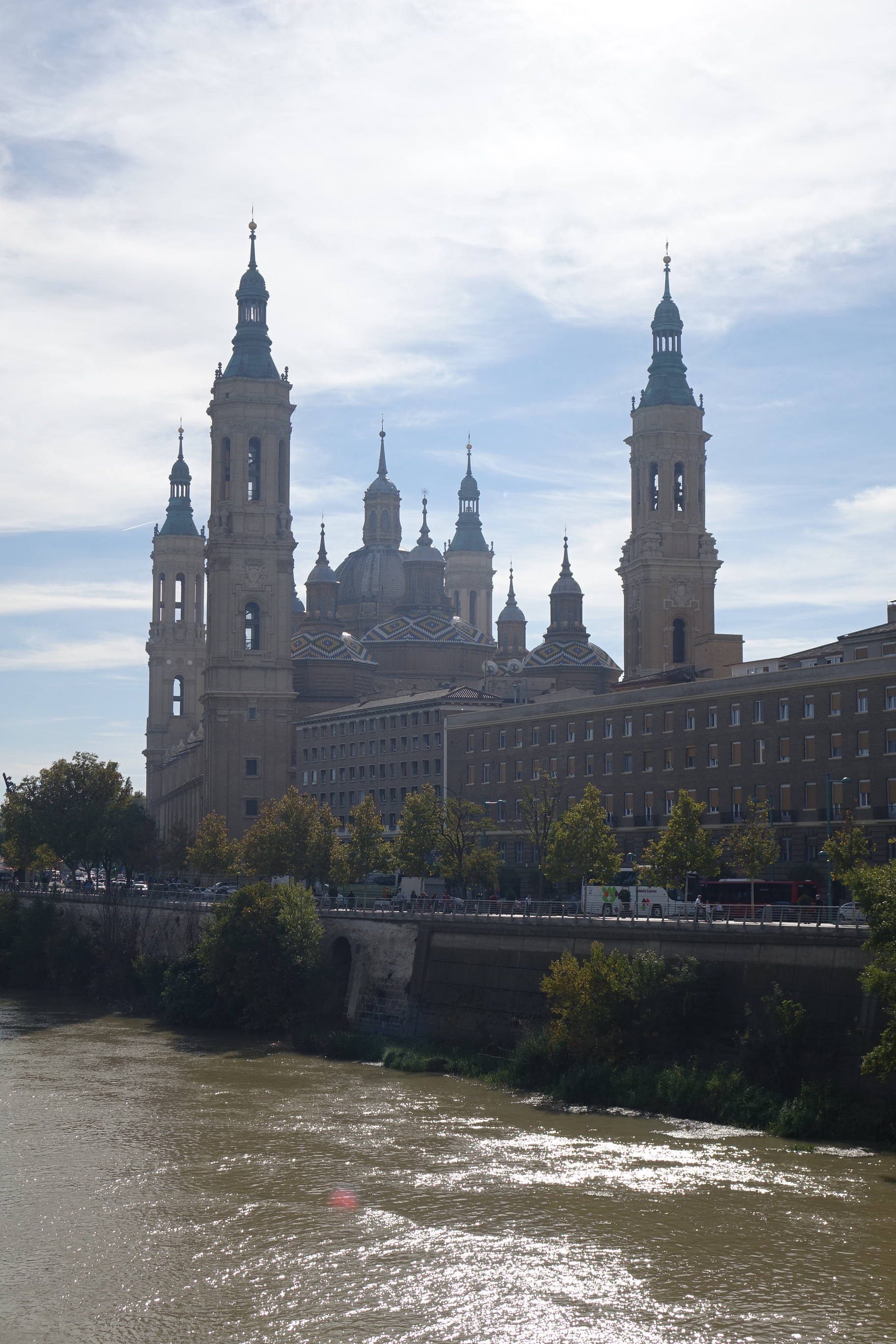
The city of Zaragoza, the 6th largest in Spain and the capital of the landlocked region of Aragon to the West of Catalonia and Northeast of Madrid, has always drawn me with promises of its majestic river setting along the banks of the Ebro (the longest river in Spain don’t you know) and it’s vast Basilica del Pilar, a church so grand they had to give it four bell towers. But because direct flights from the UK are not all that common, and largely involve braving the distinct downgrade to comfort-stripped Ryanair, I had never made it there despite visiting Spain with the same frequency as the changing seasons. But this year, what with it’s being my Mother’s big birthday (don’t worry I won’t betray which one) I considered that it was time to give Zaragoza a go, even if it meant suffering Ryanair’s cushionless cramped flight to get there. 

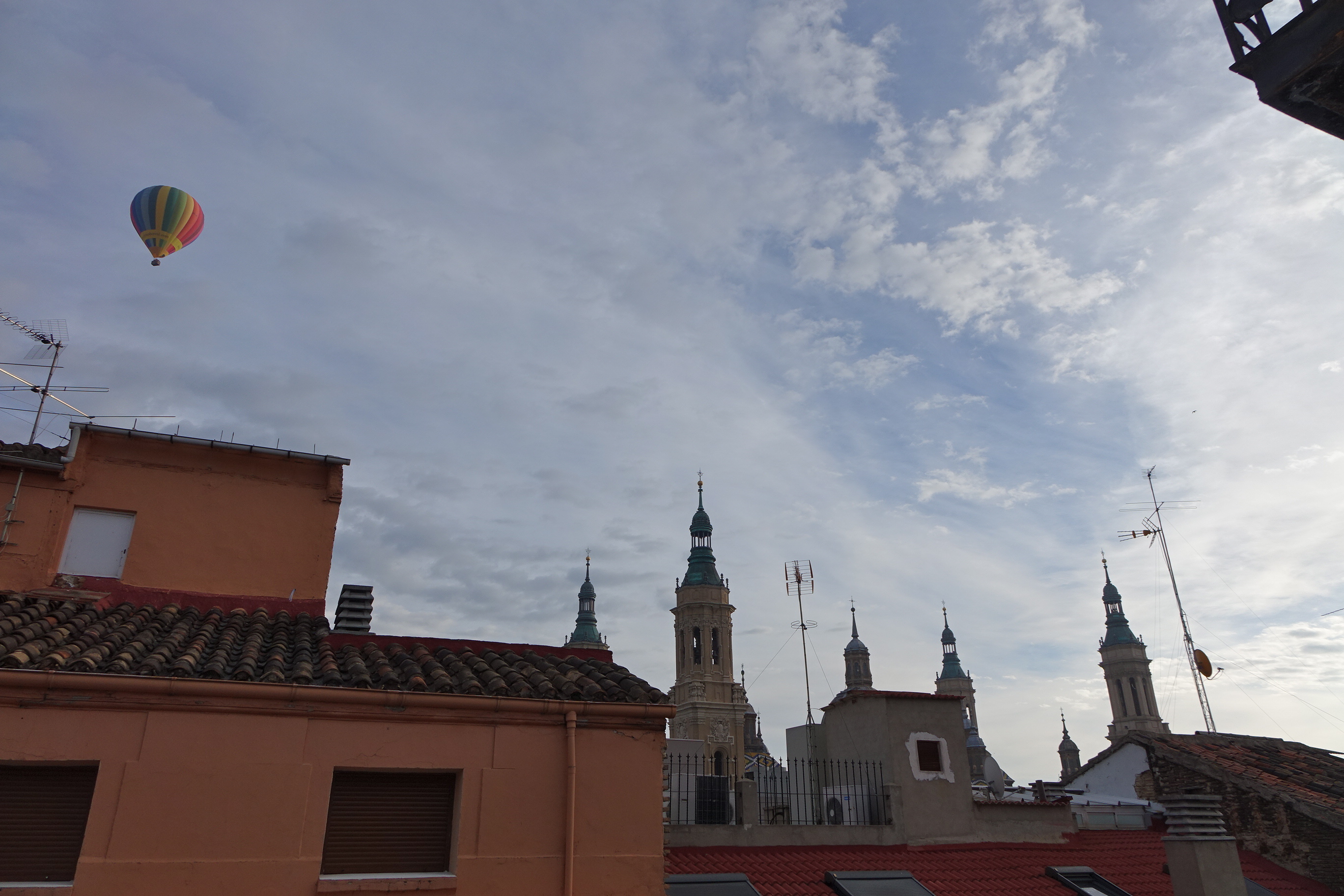
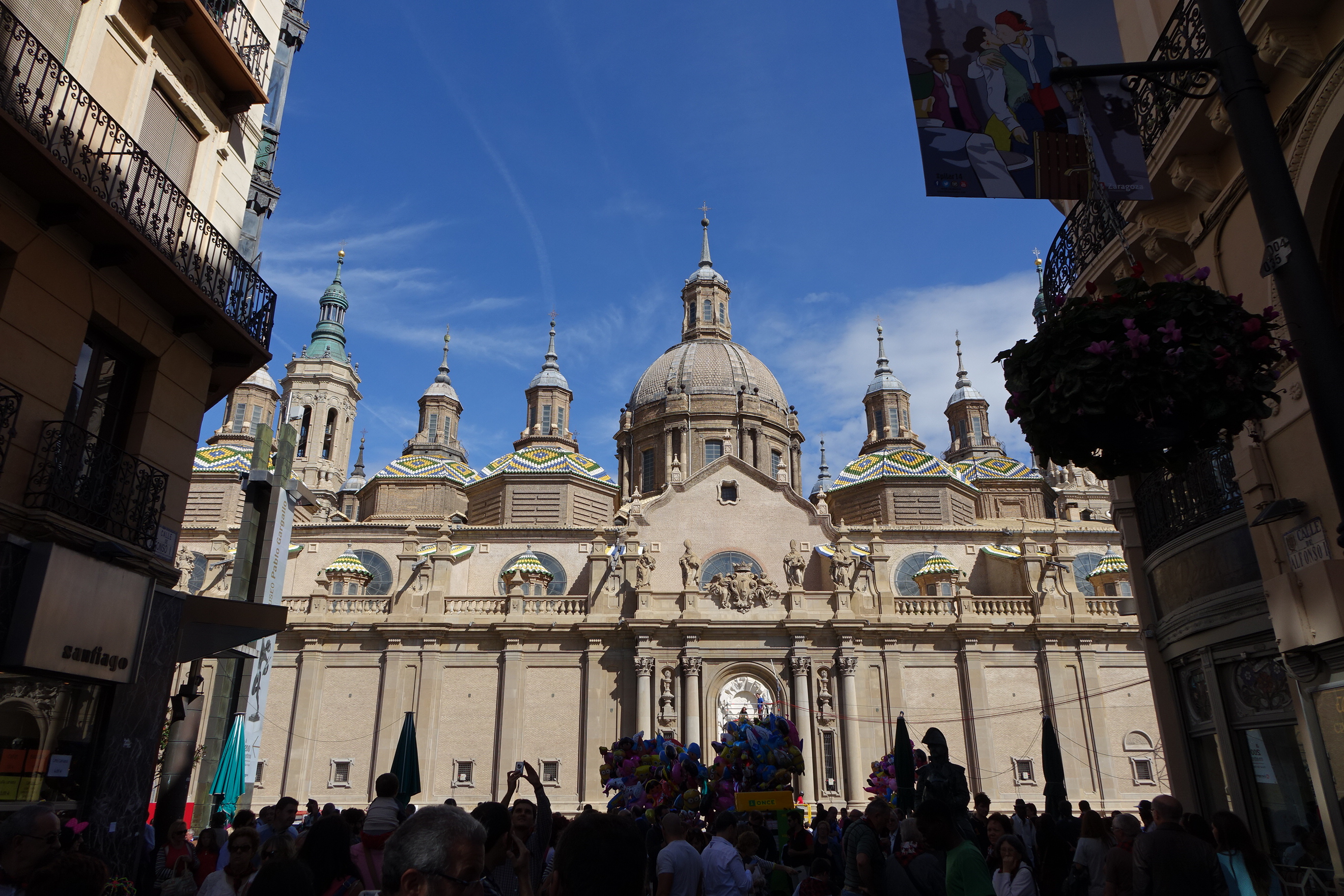
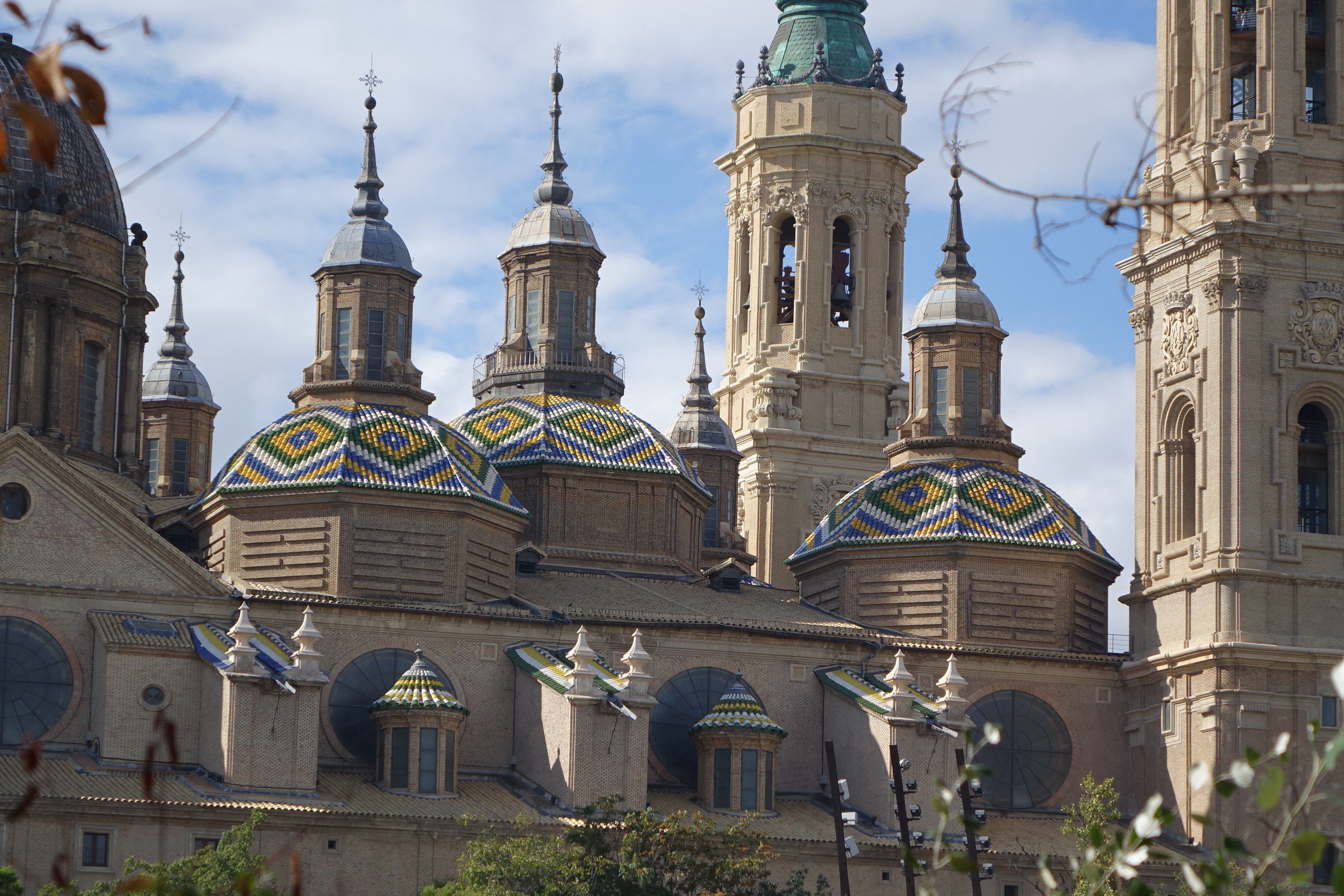
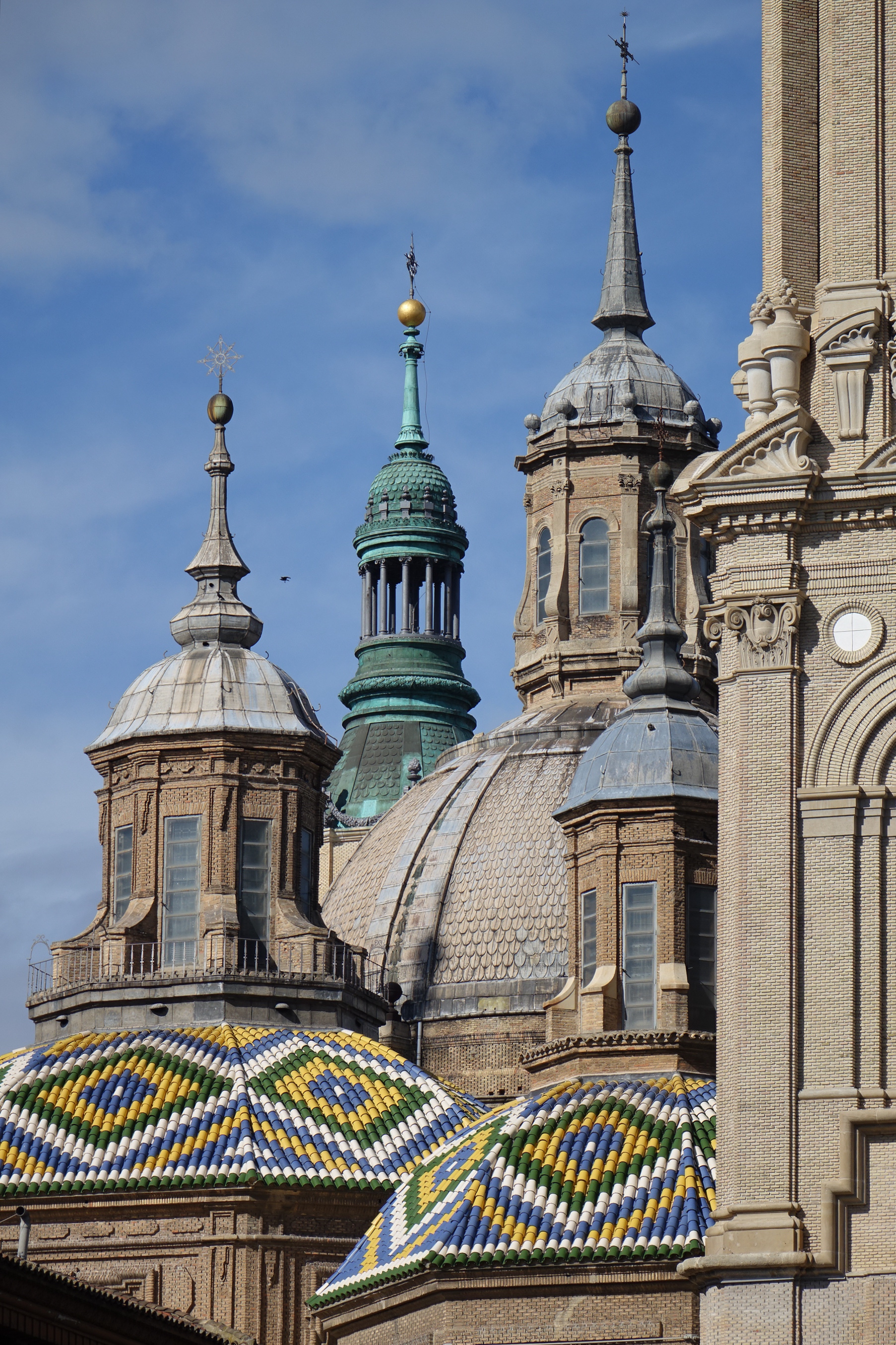
And to be fair to Ryanair, they got us there with the full efficiency of carefully oiled machine, all the earlier then to gain our first views of the much promised Basilica del Pillar which was every bit as stunning as its reputation suggested, as well as enabling us to get a feel for the buzzing electric spirit filling the city. For by sheer coincidence, we happened to be visiting the city during the high point of its annual calendar: the Fiestas del Pilar – 10 days of unrivalled partying, street concerts, traditional costumes and religious devotion. Despite the excitement on the streets, we were keen to sleep after our night time arrival, and all the sooner to wake up to our unbeatable hotel room view: not one, not two but all four of the stunning bell towers of the Basilica del Pilar creeping up from behind the residential street opposite. And as if this scenic view needed to get any more picture perfect, there was even a hot air balloon rising high into the sky besides the great church. What a start to our Zaragoza story!

DSC09425 DSC09139 DSC08996

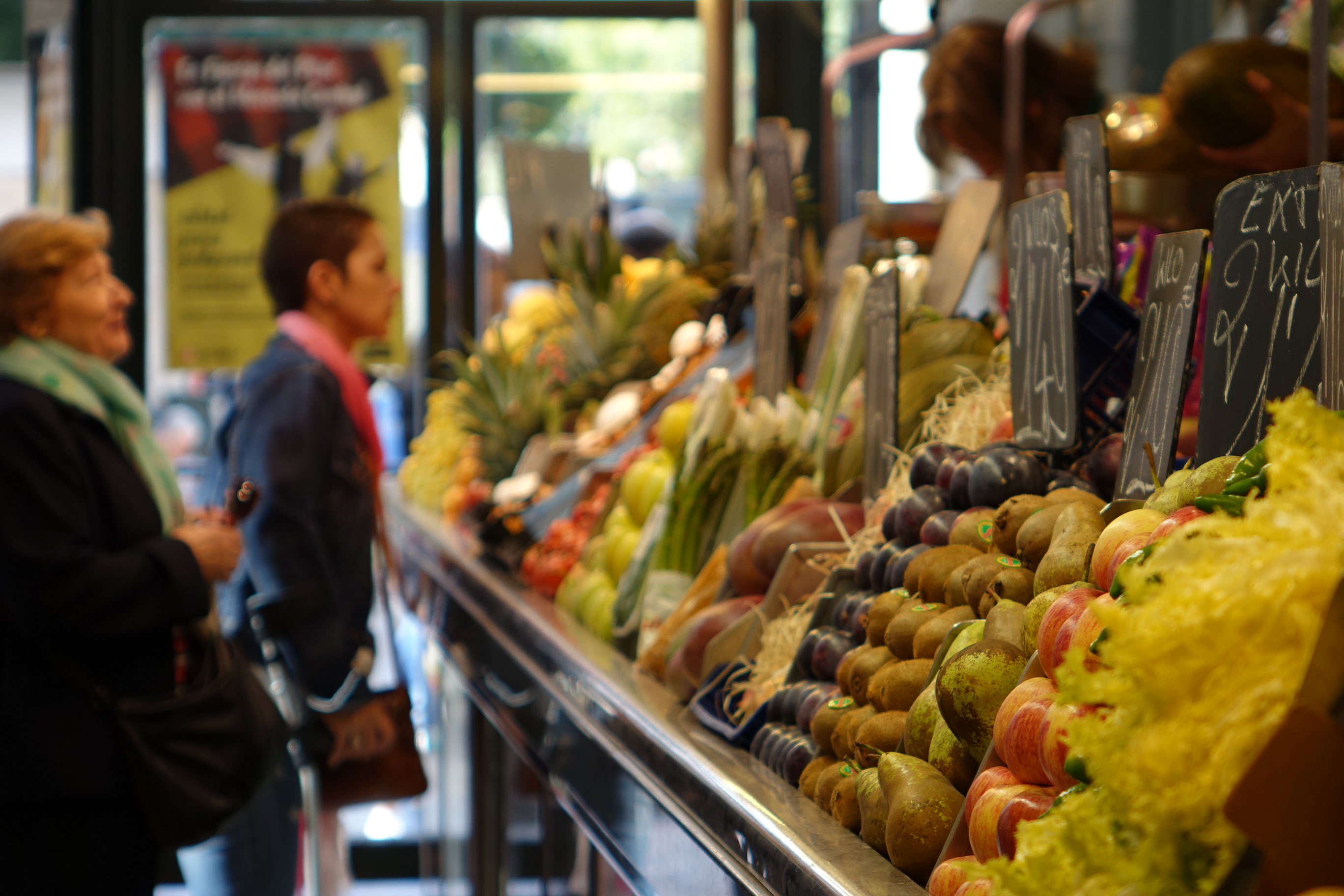
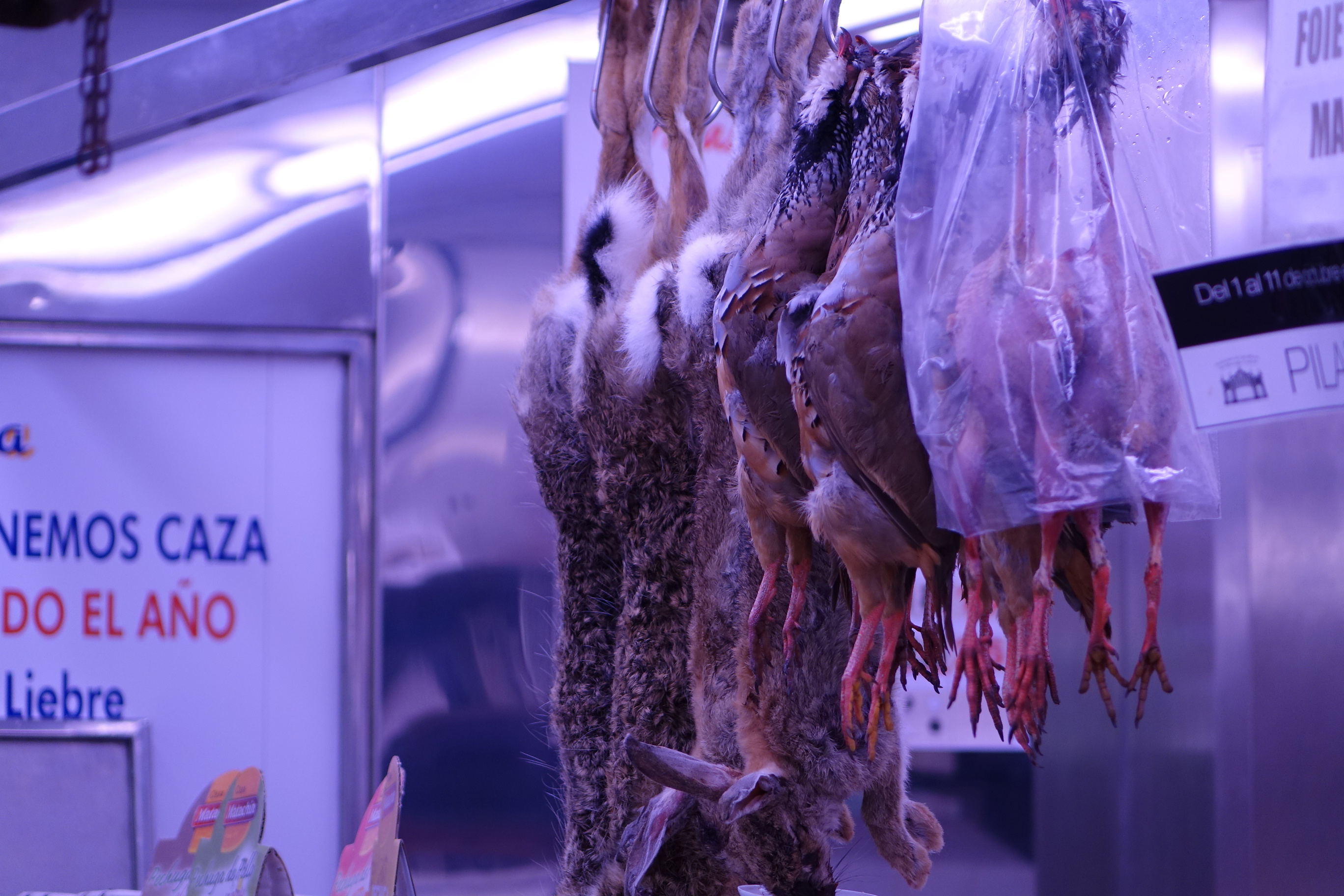
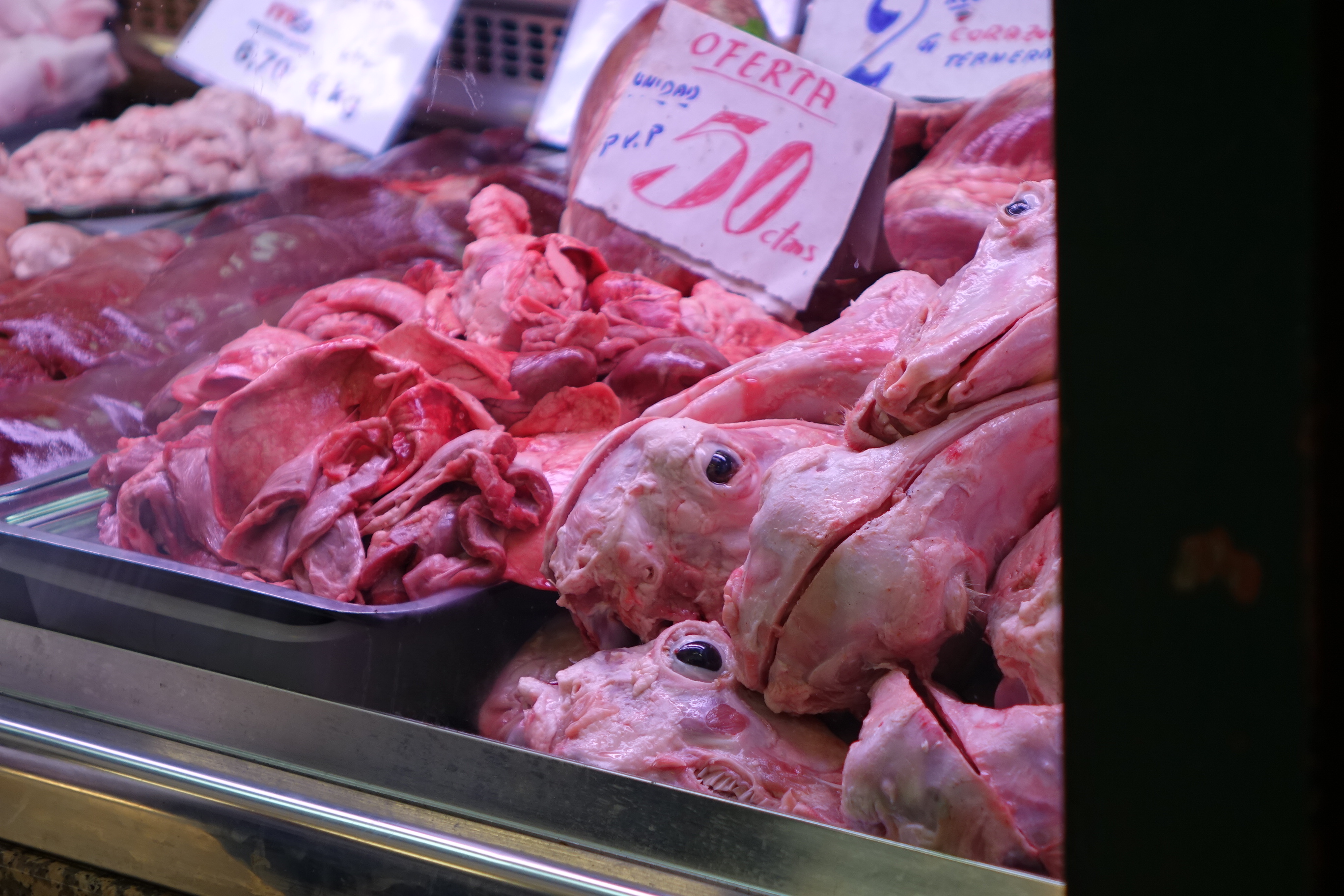
Breakfast did not keep us from seeing the city for long, and walking out into the warm autumn sunshine, we made our way to the Basilica, stopping en route to delight our senses in the local market, where every kind of fruit, vegetable, sweet and savoury treat were on view to delight and entice, although some products were perhaps more enticing than others – I should warn you that those sensitive to gruesome sights may want to look away now!

DSC09023 DSC09068 DSC09032 DSC09051 DSC09052 DSC09030

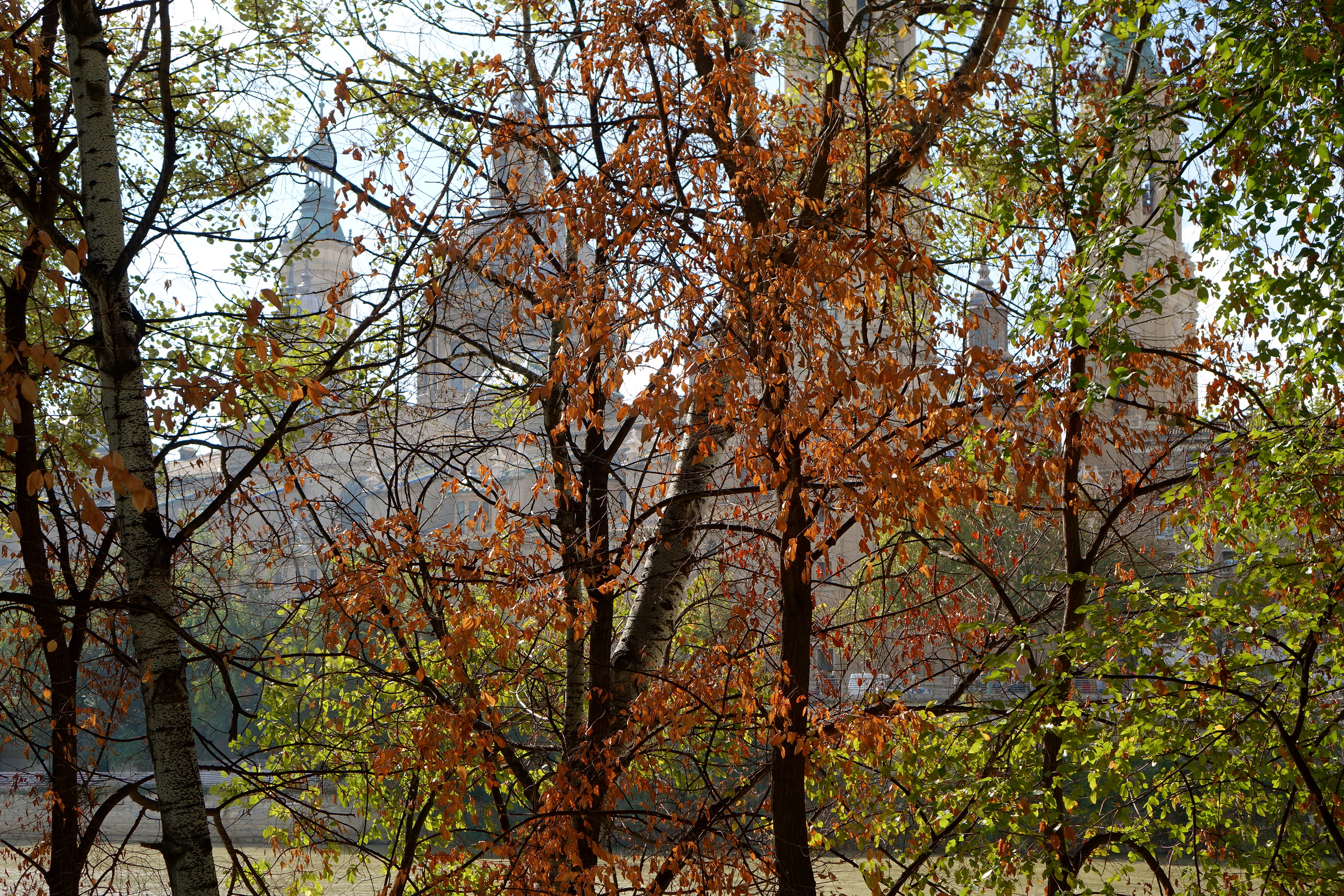
After the market and an amble through Zaragoza’s old town streets, we were able to get a fuller view of the majestic Basilica from the very best viewpoint – across the River Ebro to the gardens which line the riverbank opposite the old town; gardens whose sun-bleached auburn leaves provided the perfect frame for this most wonderful of city views.

DSC09298 DSC09321 DSC09155 DSC09196 DSC09242

Having satisfied ourselves with the ultimate view of the city, and having enjoyed the basilica from all angles, we soon discovered that the city of Zaragoza, asides from being a city bustling with festivals and containing one of the most architecturally magnificent of all Spanish churches, is also a city of considerable cultural offerings. As we traversed the characterful streets of its old town, we literally stumbled upon museums without having to so much as open our guide book.

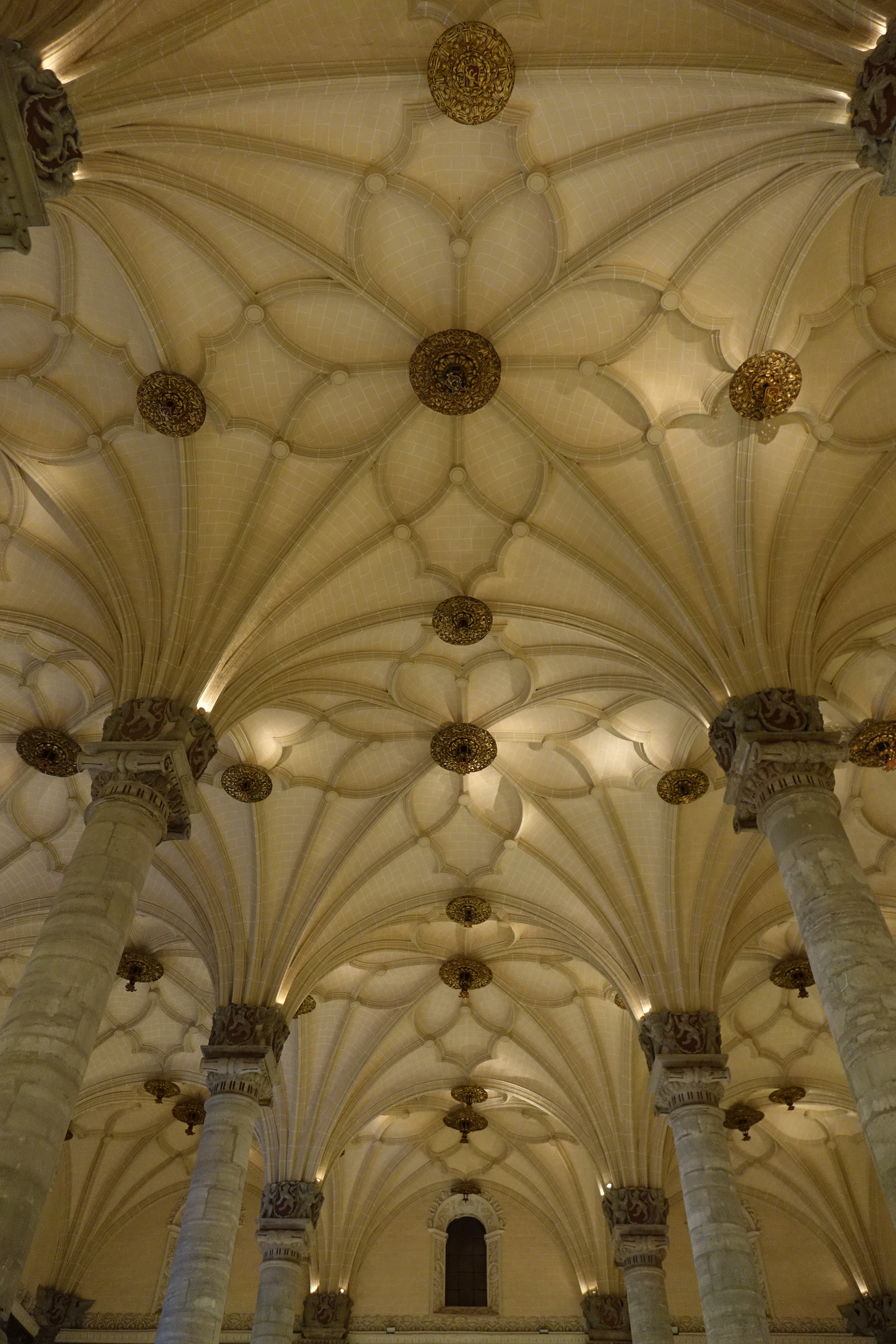
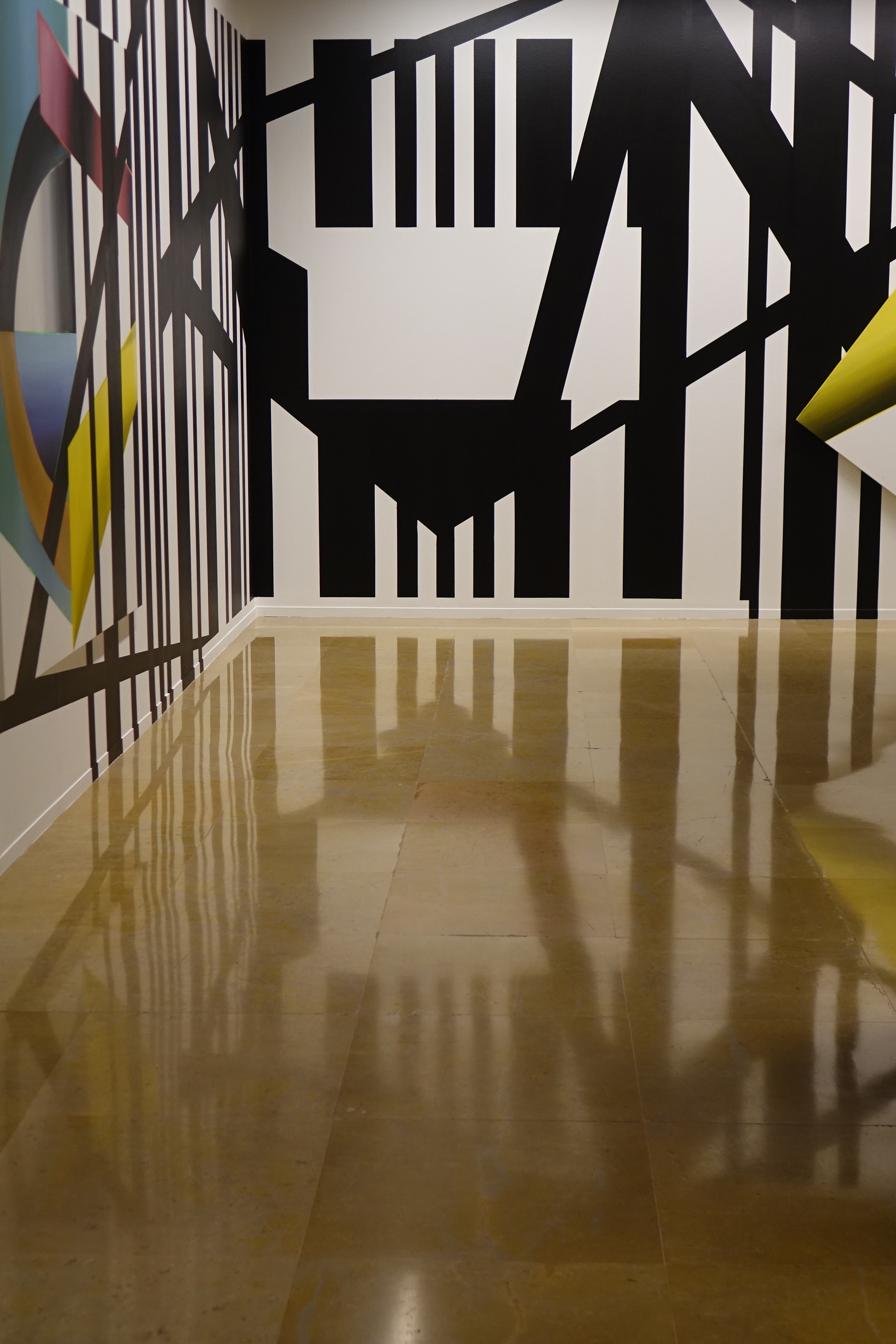
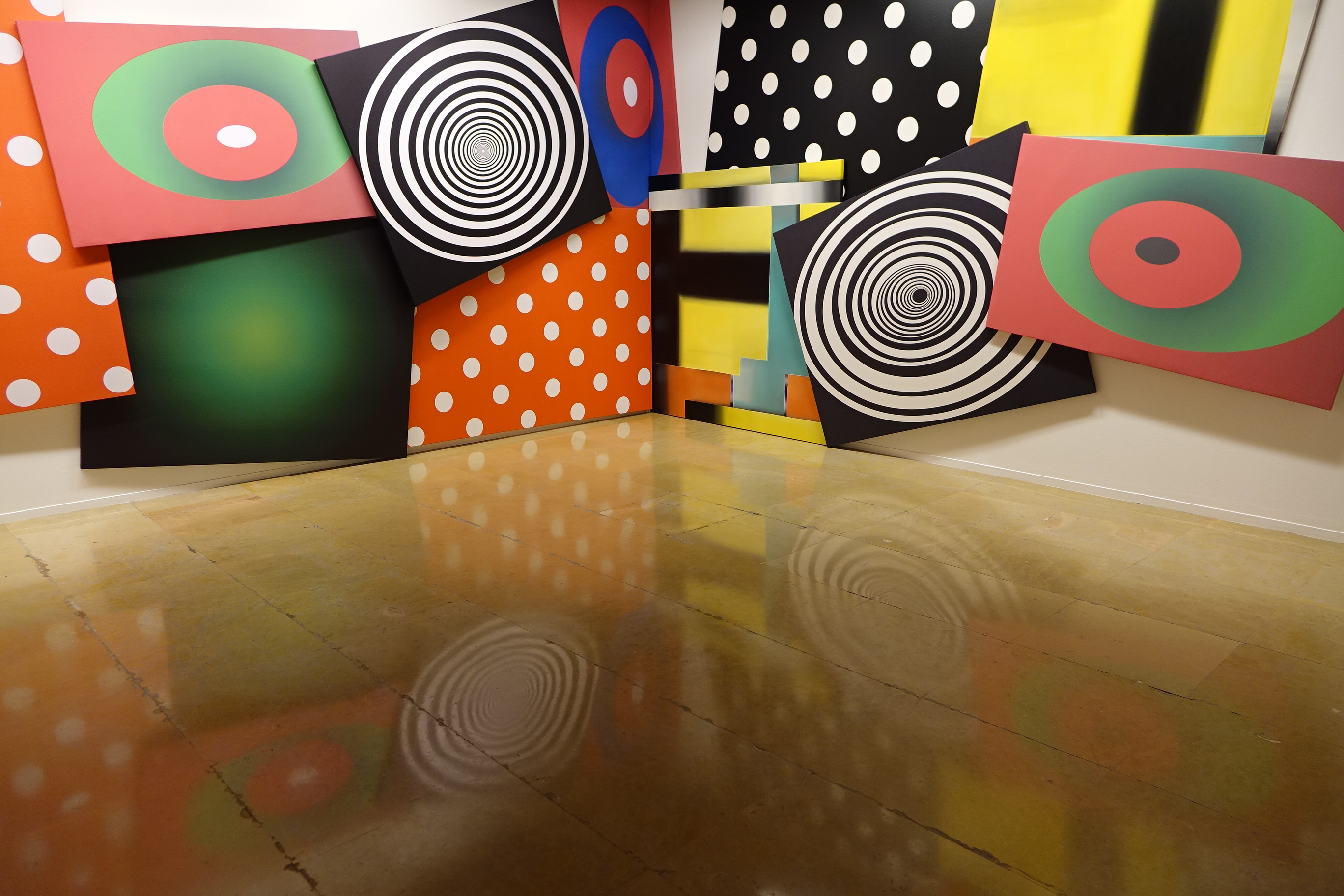
The first cultural event we found ourselves wandering into was the exhibition of Enrqiue Larroy – Chapa y Pintura – held in La Lonja. Like many such “Lonjas” in other Spanish cities, La Lonja of Zaragoza is a former merchants hall constructed in a palacial gothic style with soaring ceilings and pillars reaching darlingly up to the vertiginous height of its lofty stone latticed ceiling. But this beautiful architectural site was perfectly set off by the contrasting bright colours of Larroy’s acrylic works, which not only presented wonderfully dynamic, zinging paintings in their own right, but as an artistic installation worked fantastically as they were reflected into the shiny stone floors of this important historical space.

DSC09265 DSC09280 DSC09289 DSC09279 DSC09266 DSC09276

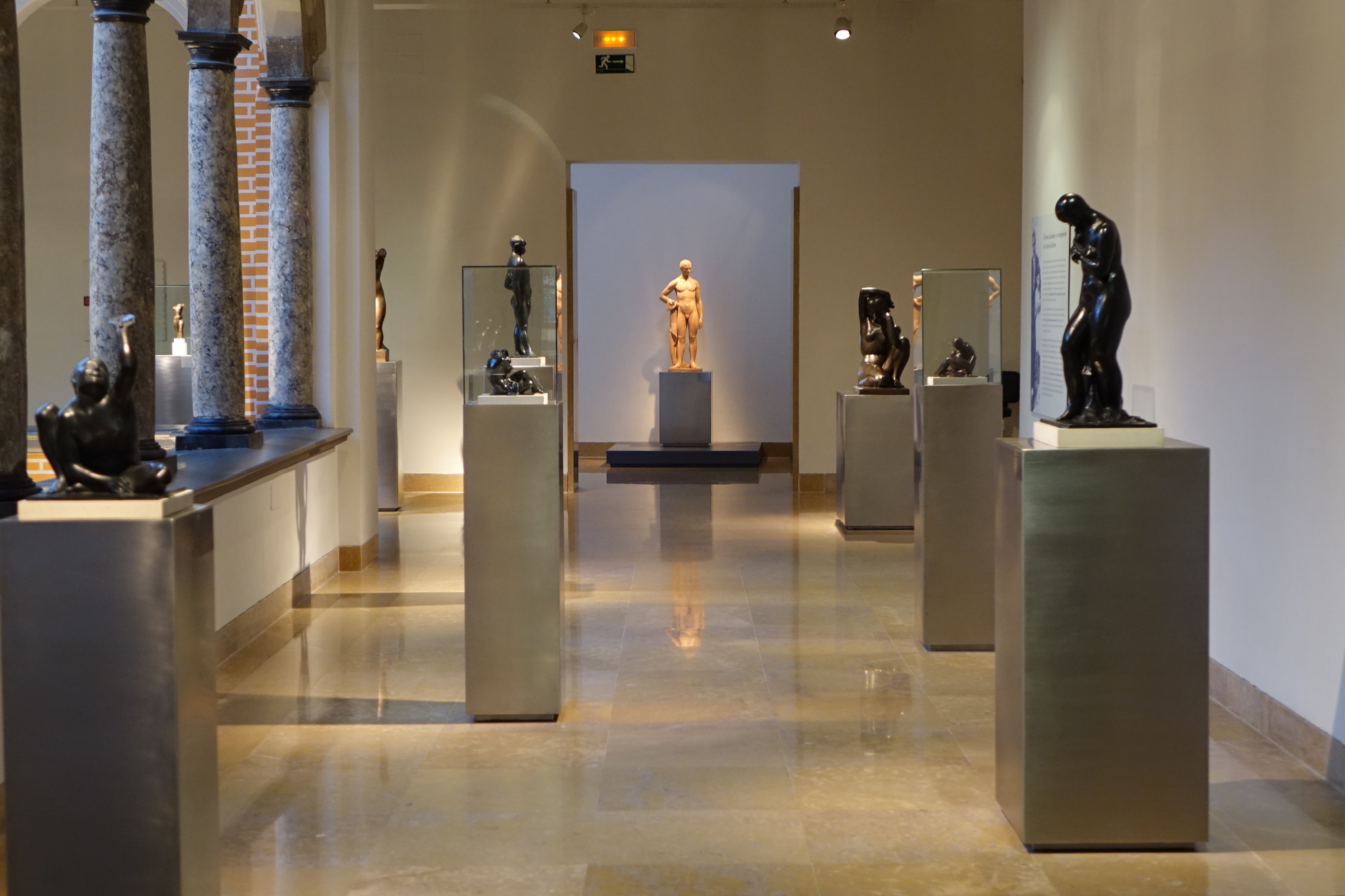
Just up the road from La Lonja is the Museum of local sculptor Pablo Gargallo. Sculpting in the height of the roaring 20s, Gargallo’s work is a wonderful mixture of avant garde figuration and cubism, as the sculptor managed to create three dimensional portraits with only a few hard cast features, allowing the interplay of light and shadow to fill in all of the missing details.As with so many of the art museums I have visited in Spain over the last decade, the Gargallo museum is yet another which is set amidst a stylishly renovated palace, meticulously conceived creating a seamless and highly polished exhibition space.

DSC09407 DSC09405 DSC09409DSC09415 DSC09416

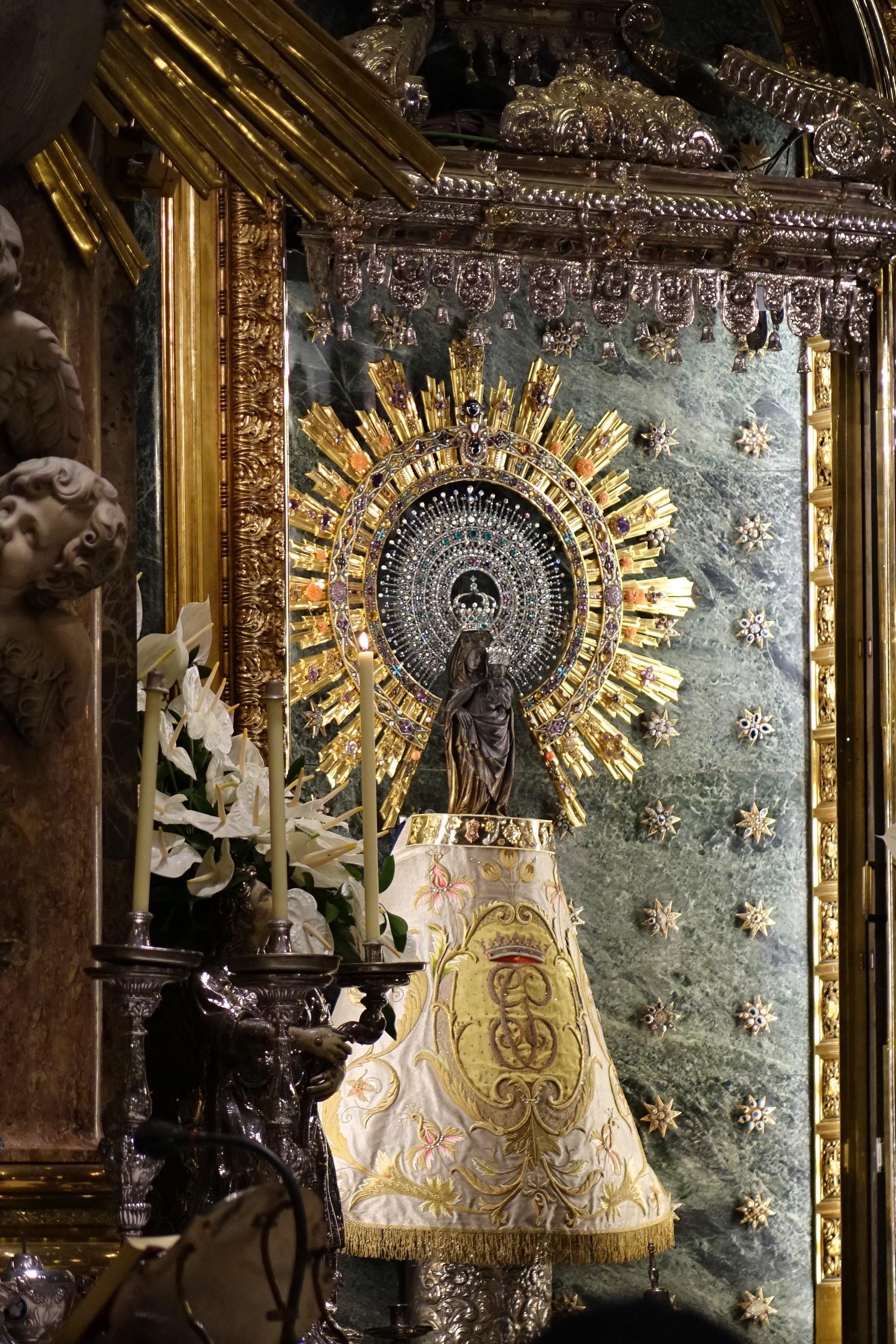
But having had our fill of art for one day, we found ourselves ending this first day in Zaragoza back where we started – at the magnetic nuclei of the city: the Basilica del Pilar, where excitement for the oncoming festival was tangibly building. Inside the great Basilica, large queues were forming of pilgrims wishing to catch a closer sight or even kiss the pillar on which Mary was supposedly once sighted and around which the entire church was built. Meanwhile outside, huge stages were being constructed in the main squares, people were out dancing in the streets, and more and more visitors seemed to be pouring into the city.

DSC09382 DSC09373 DSC09389Amongst all this excitement, we took refuge in the charmingly old fashioned Grand Café Zaragoza. Reminding me of Florians in Venice, it provided the perfect sanctuary from the madness on the city’s streets, as well as a throwback to the past which seems to be so prevalent in this city where tradition and folk law is enthusiastically  celebrated. As for us, we ended our day contenting ourselves with our own tradition – a welocme cup of earl grey tea and a chocolate covered palmera pastry: the perfect way to look back and reflect on this first exciting day in Zaragoza.

DSC09404

All photos and written content are strictly the copyright of Nicholas de Lacy-Brown © 2014 and The Daily Norm. All rights are reserved. Unauthorized use and/or duplication of the material, whether written work, photography or artwork, included within The Daily Norm without express and written permission from The Daily Norm’s author and/or owner is strictly prohibited.

Transforming the Gothic – colour sensation in the Cathedral of Palma de Mallorca

Some of architecture’s most stunning successes can be found in religious buildings. The eternal repetition of the forest of pink and white marble pillars in Cordoba’s La Mesquita is one of the most enthralling sights of the ancient Islamic world, while at the centre of the Catholic world, the sheer scale and magnificence of St Peter’s Basilica in the Vatican makes it clear to all who come close that this place is the all powerful centre of Christianity. In Roman times, religion was the instigator of some of the most brilliant of all architectural creations, such as the ground-breaking single expanse dome of the ancient Pantheon temple in Rome, while in more modern times, it has inspired some of the most jaw-dropping creations ever made by man, such as the stunning realisation of a creative genius: Gaudi’s Sagrada Familia in Barcelona.

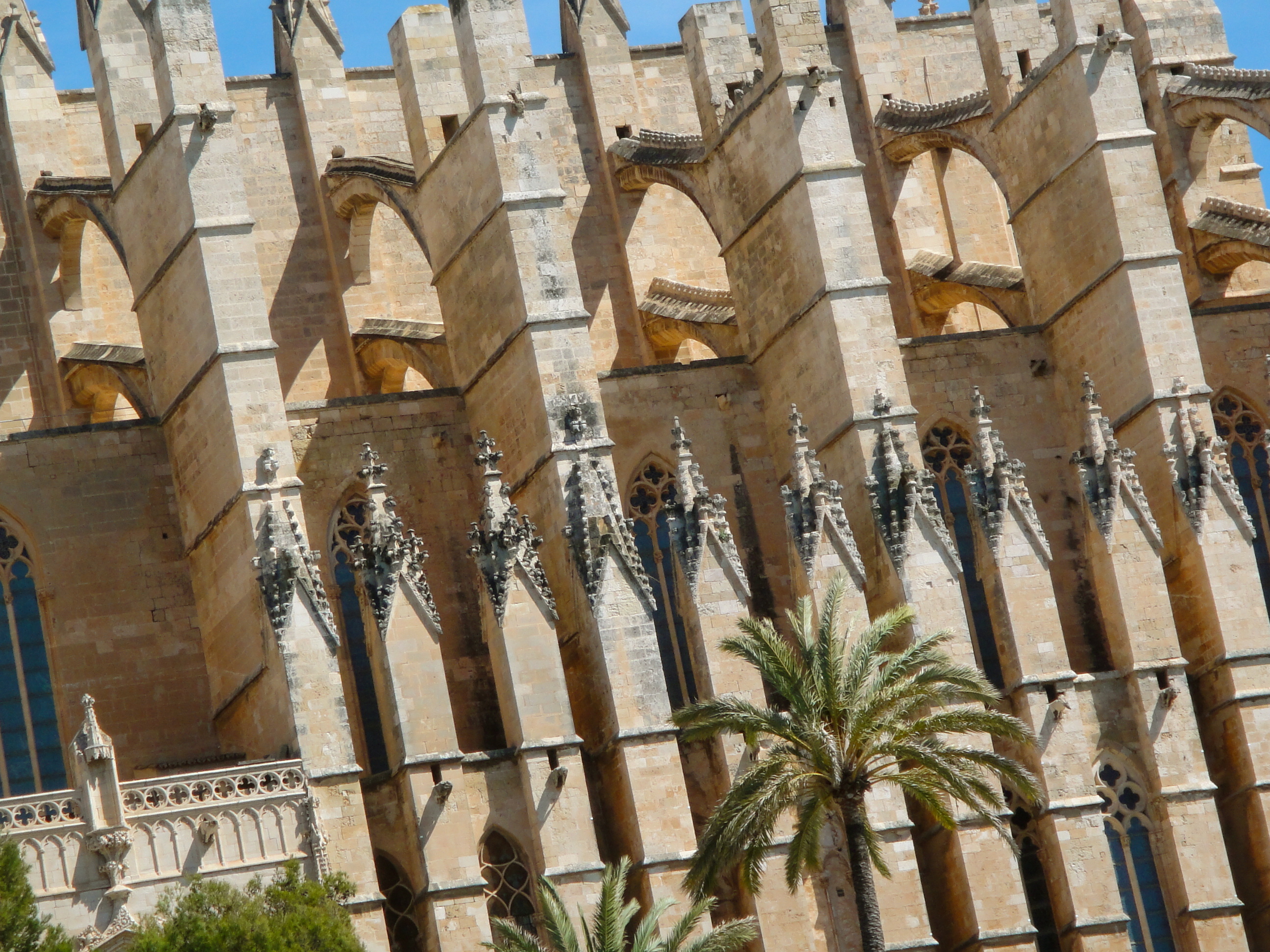
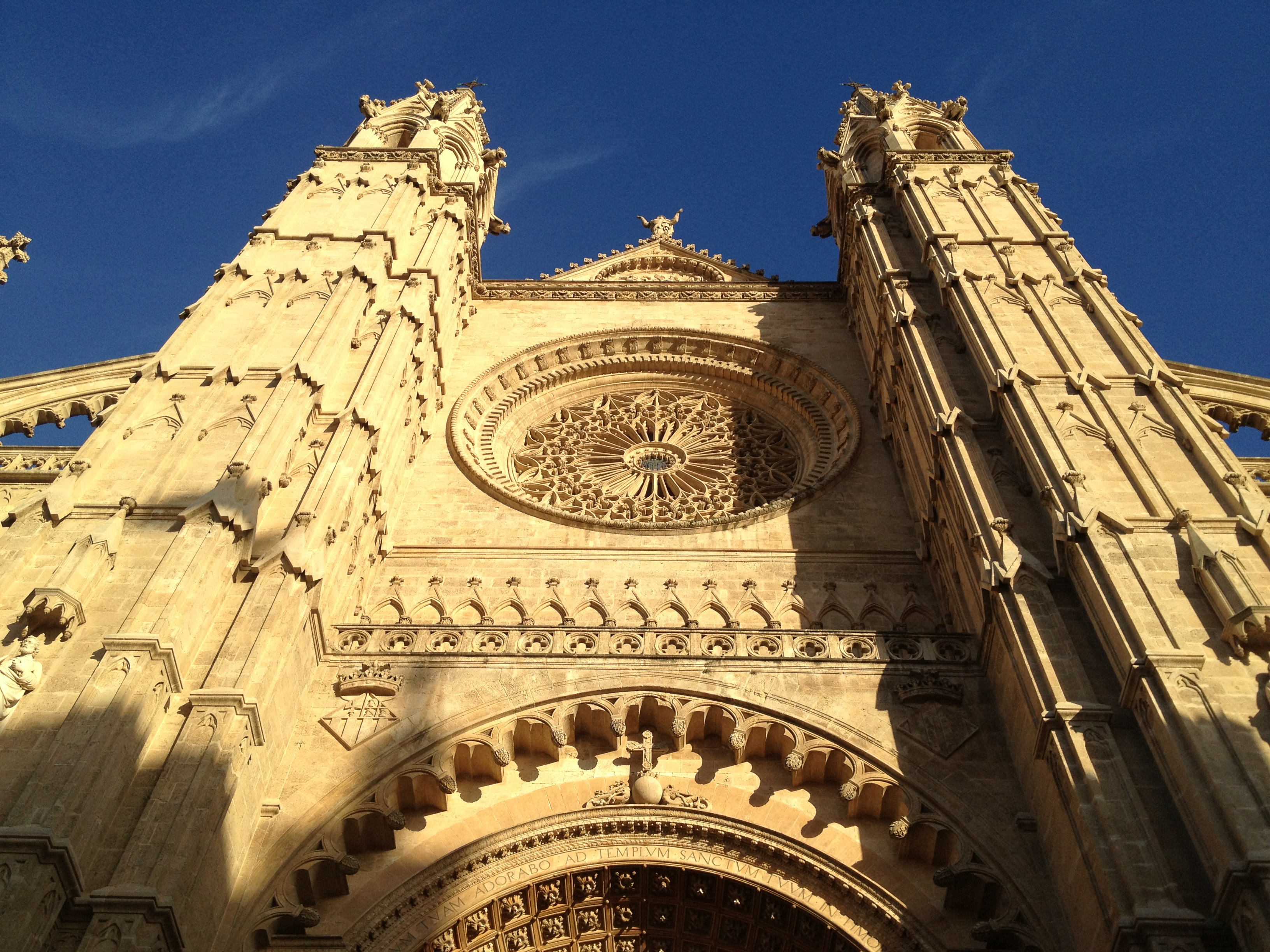
Nevertheless, when you think about the religious treasures of the world, you will find that proportionately few of them are gothic. The reason for this is  clear:  the gothic style is largely synonymous with austerity, with its soaring naves and high-winged buttresses leading to vast expanses of cold space; gothic churches are more often places of fear, with their grim faced gargoyles and sinister dark angels, and even Paris’s Notre Dame, surely one of the most famous examples of gothic architecture, is better associated with the haunting tale of a hunchback living within the cathedral’s inhospitable bell towers than with any illusion that the church is in any aesthetic sense a thing of beauty. Yet while this idea of the gothic has long lingered in my mind, all of my pre-held conceptions about gothic architecture were challenged last weekend when in Palma de Mallorca, capital of Spain’s Balearic Islands, I realised just how stunning the gothic can be.

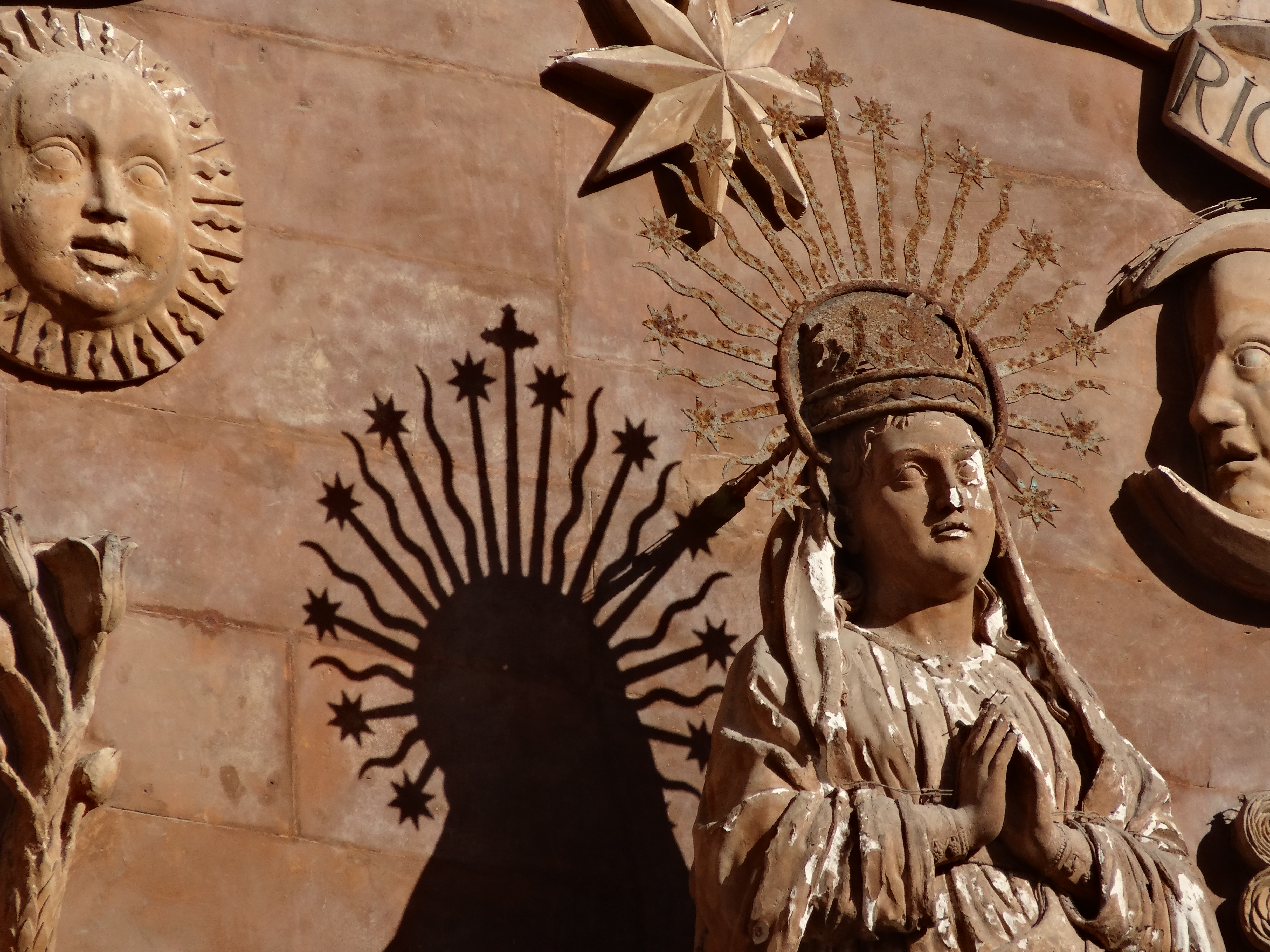
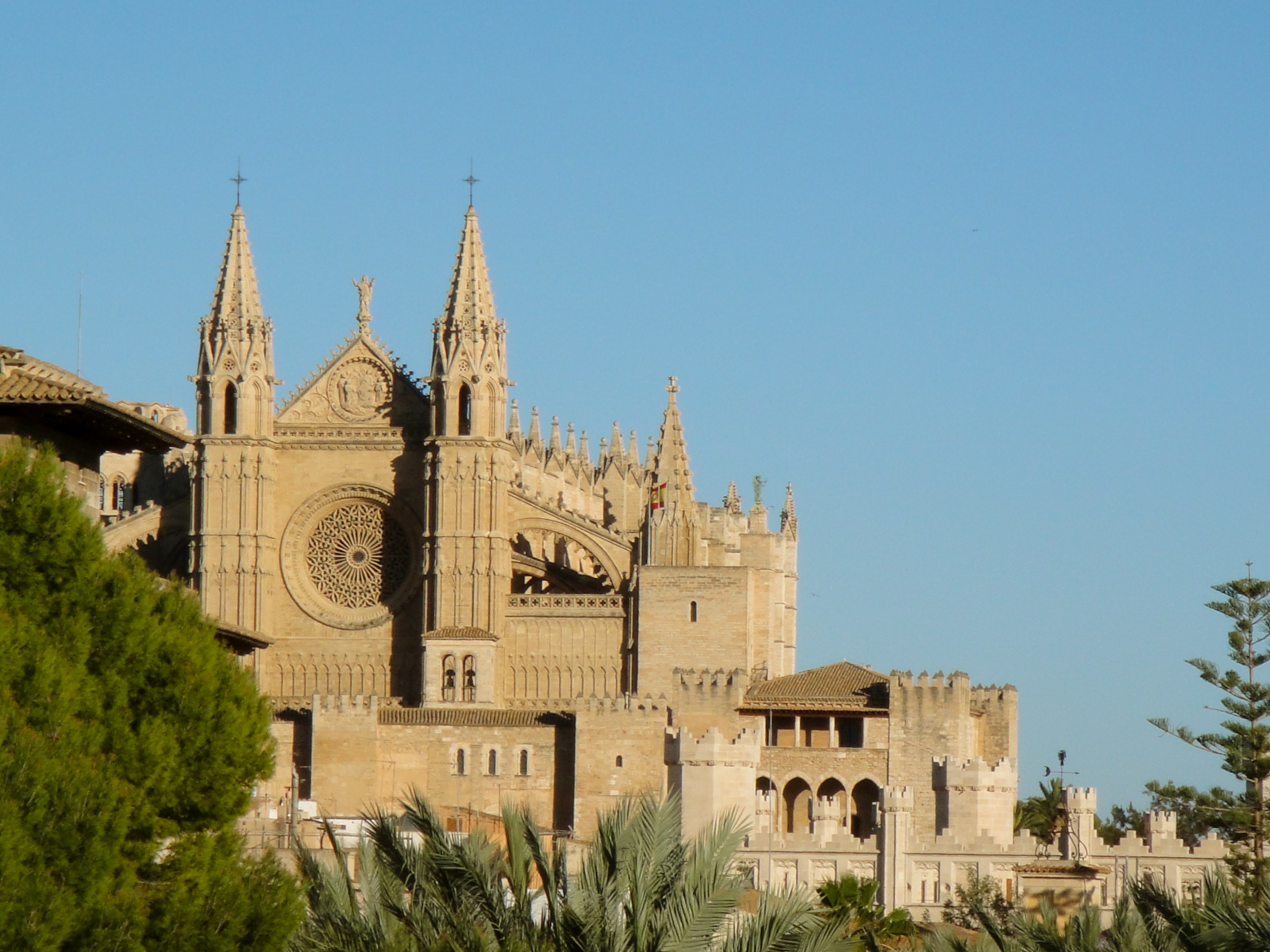
La Seu’s imposing gothic exterior

DSC06034 DSC05749 IMG_3708 DSC01109 DSC06190

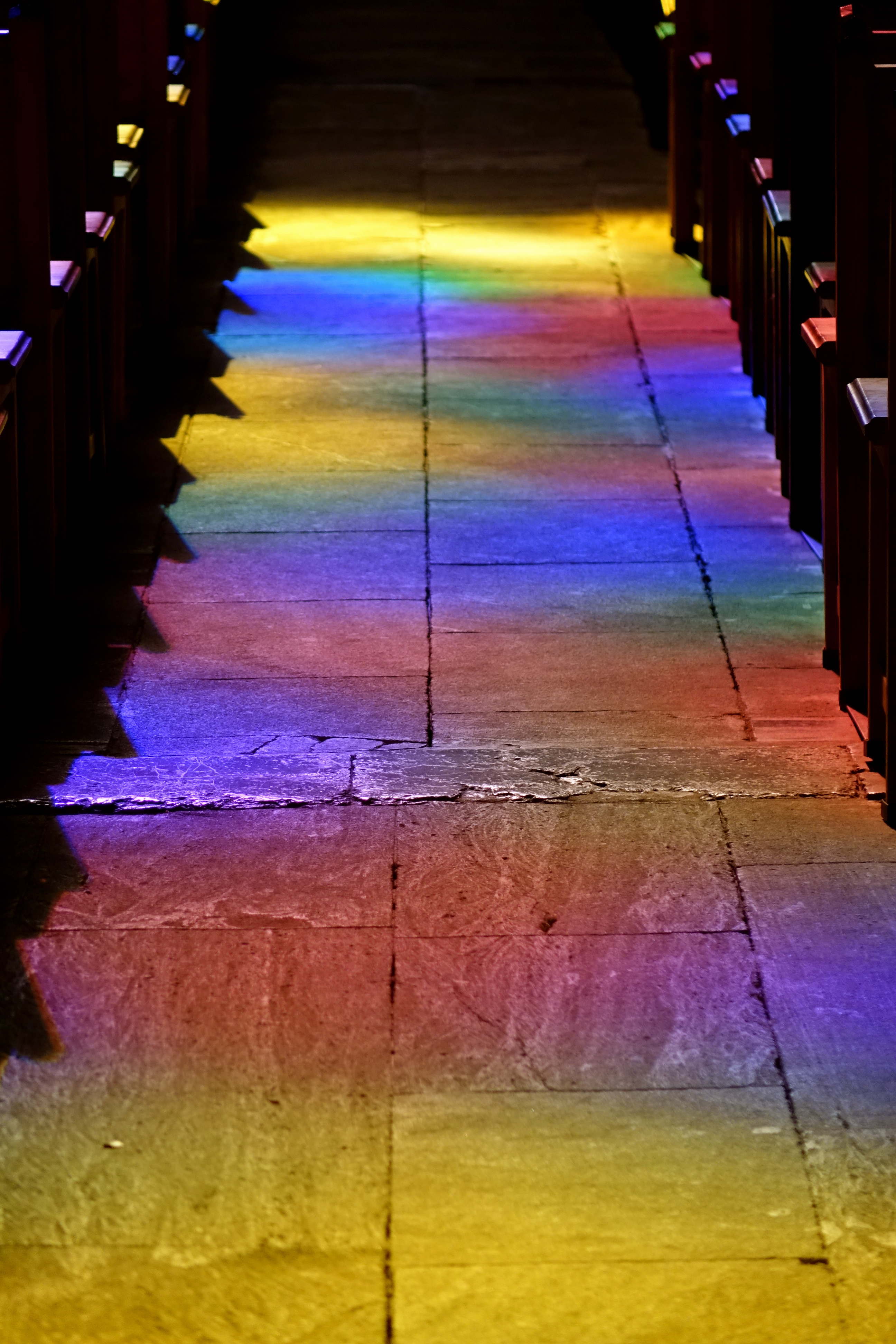
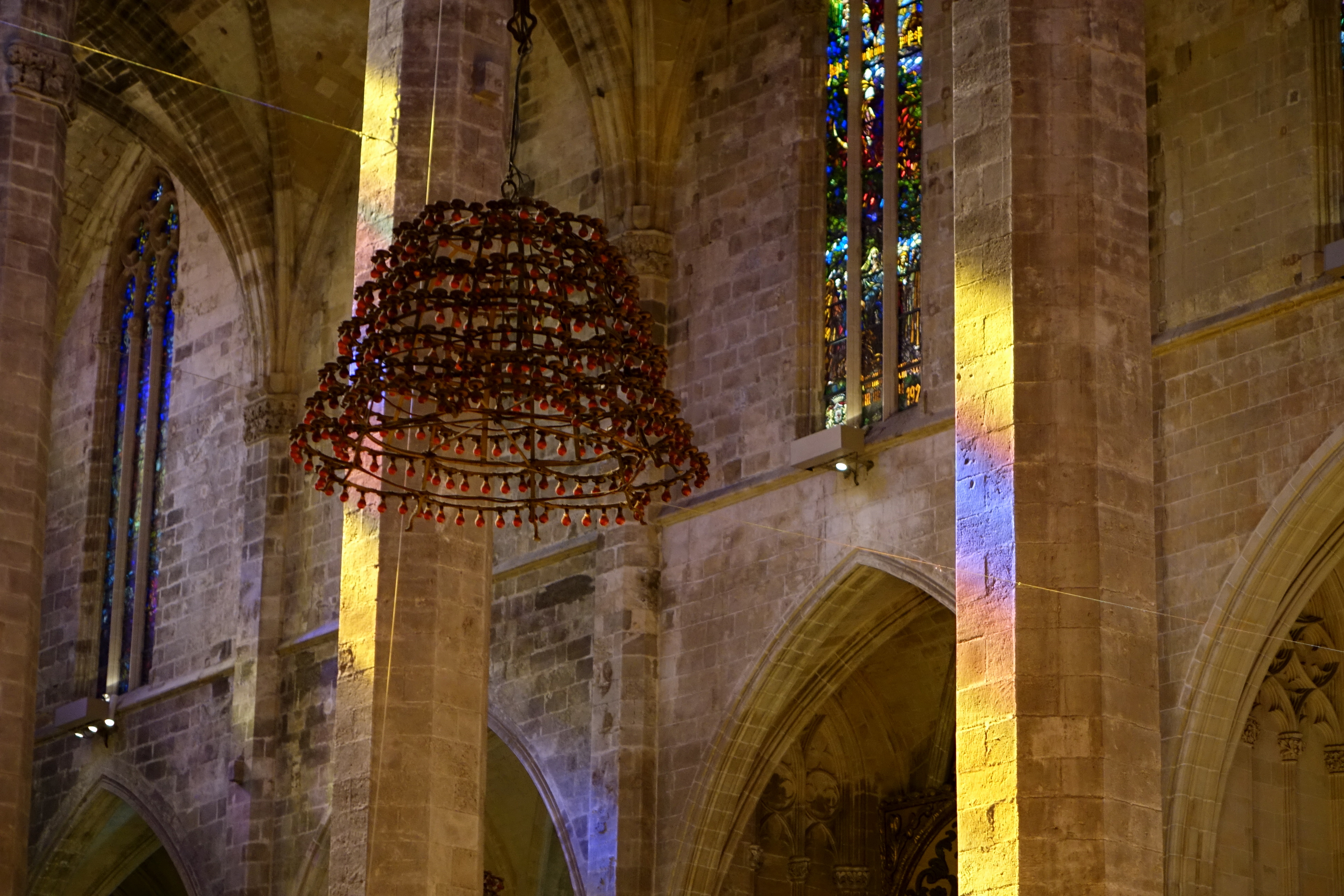
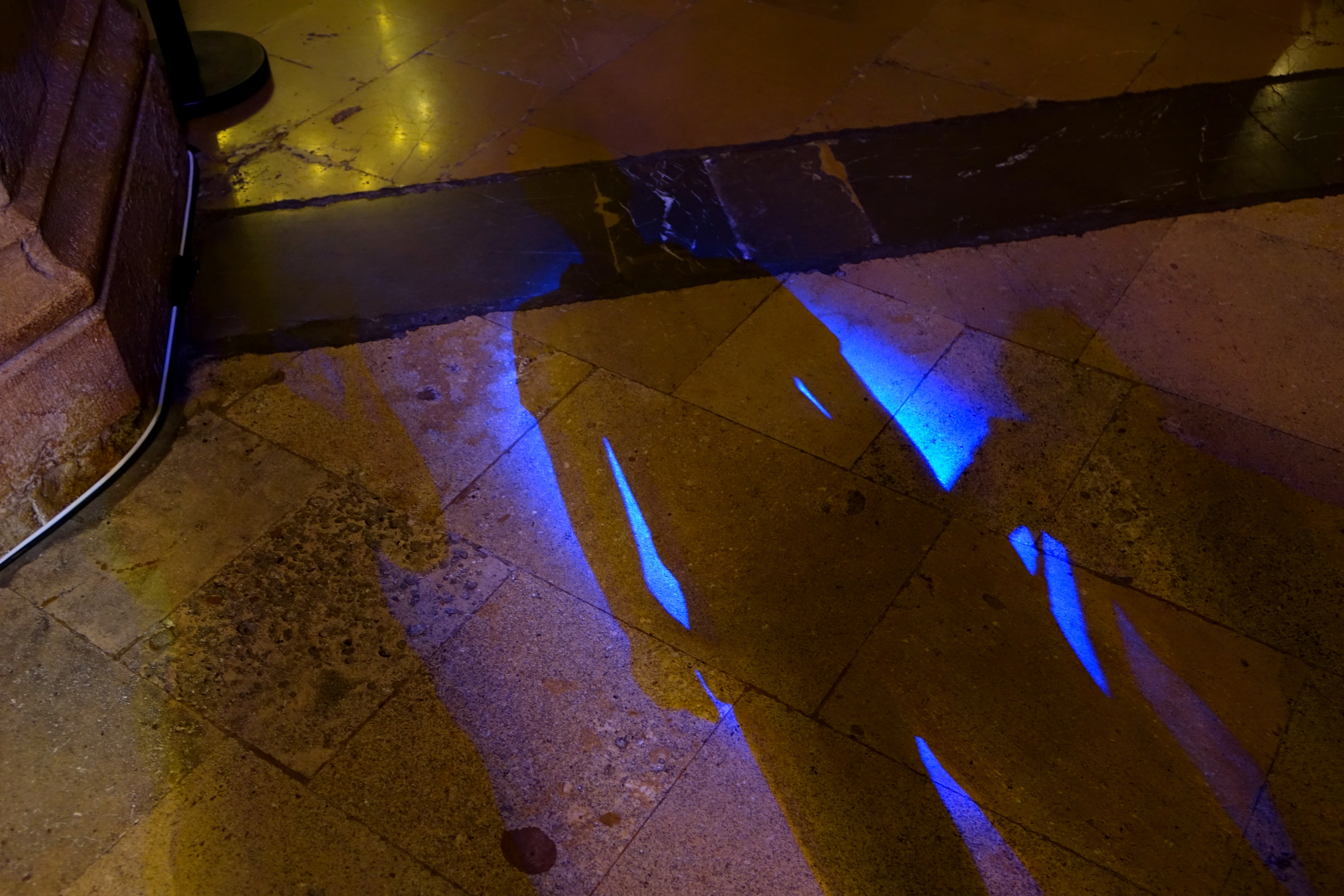
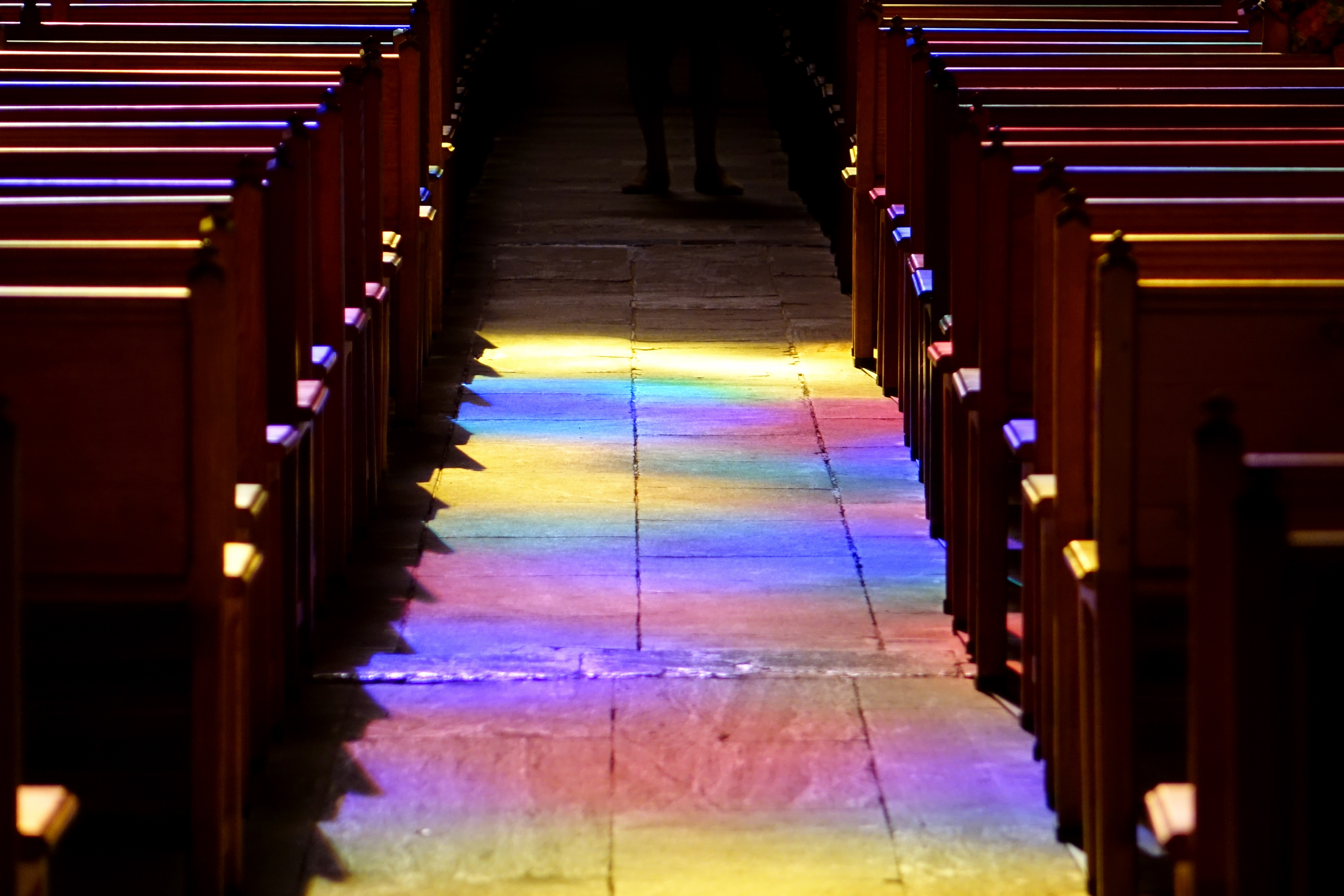
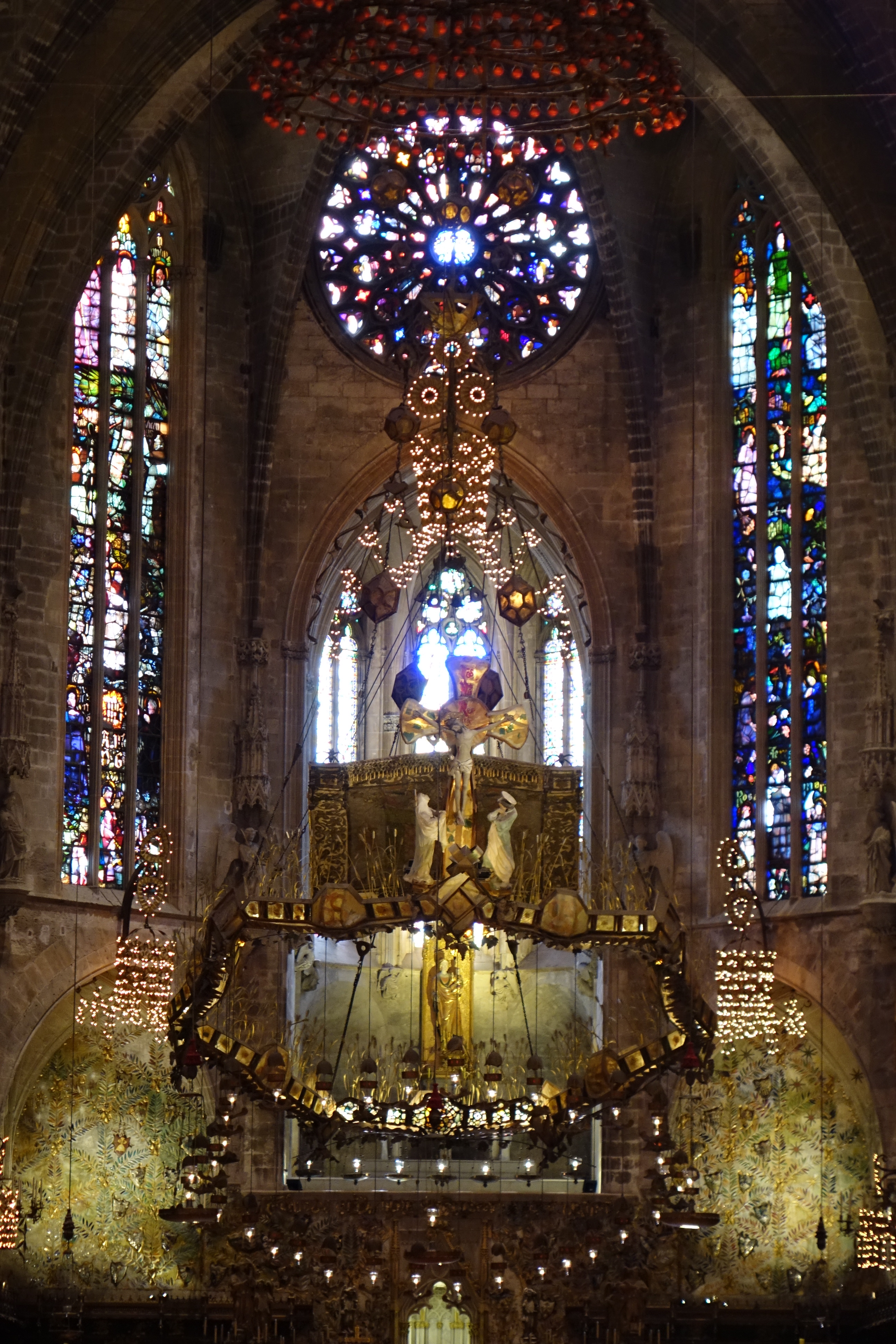
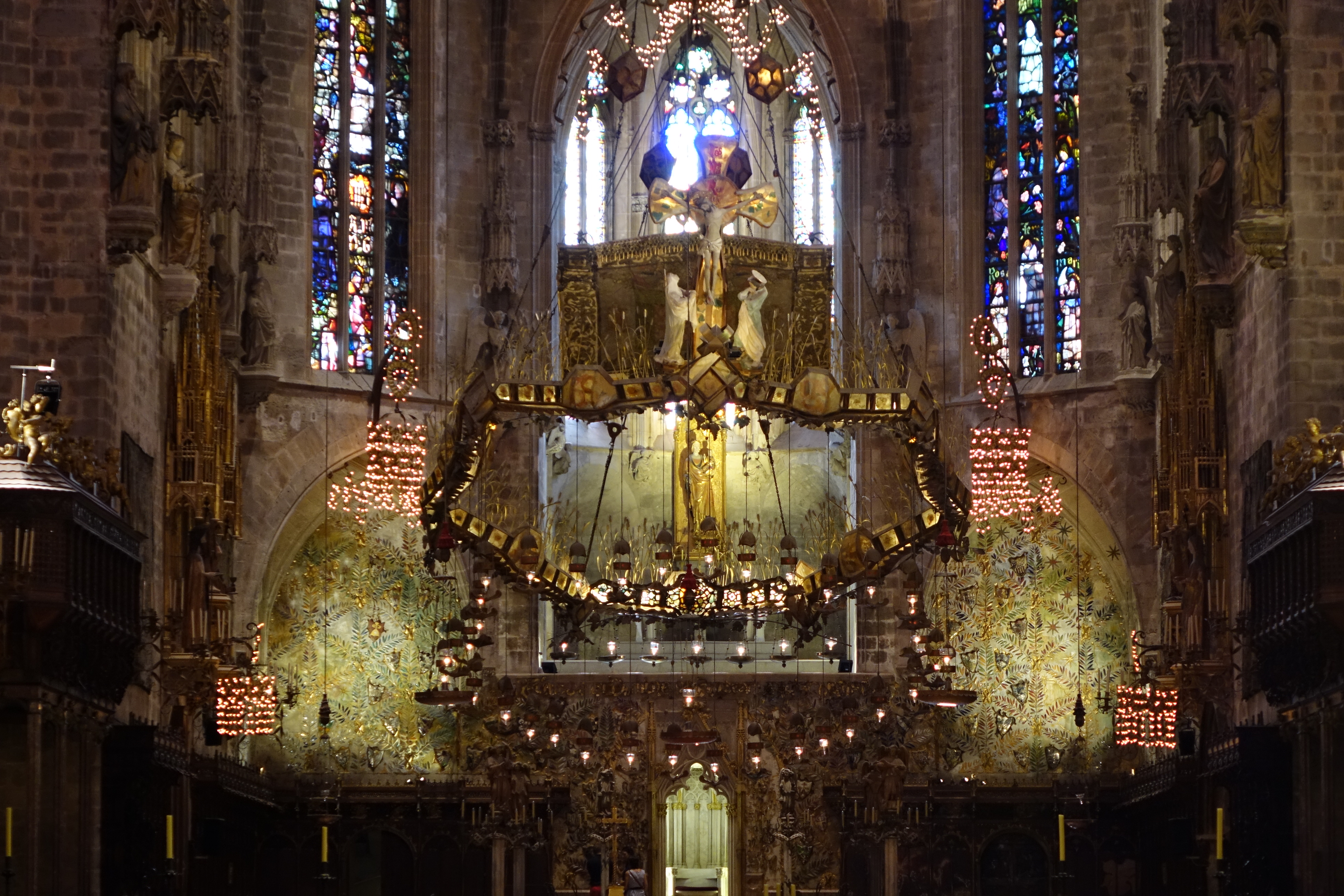
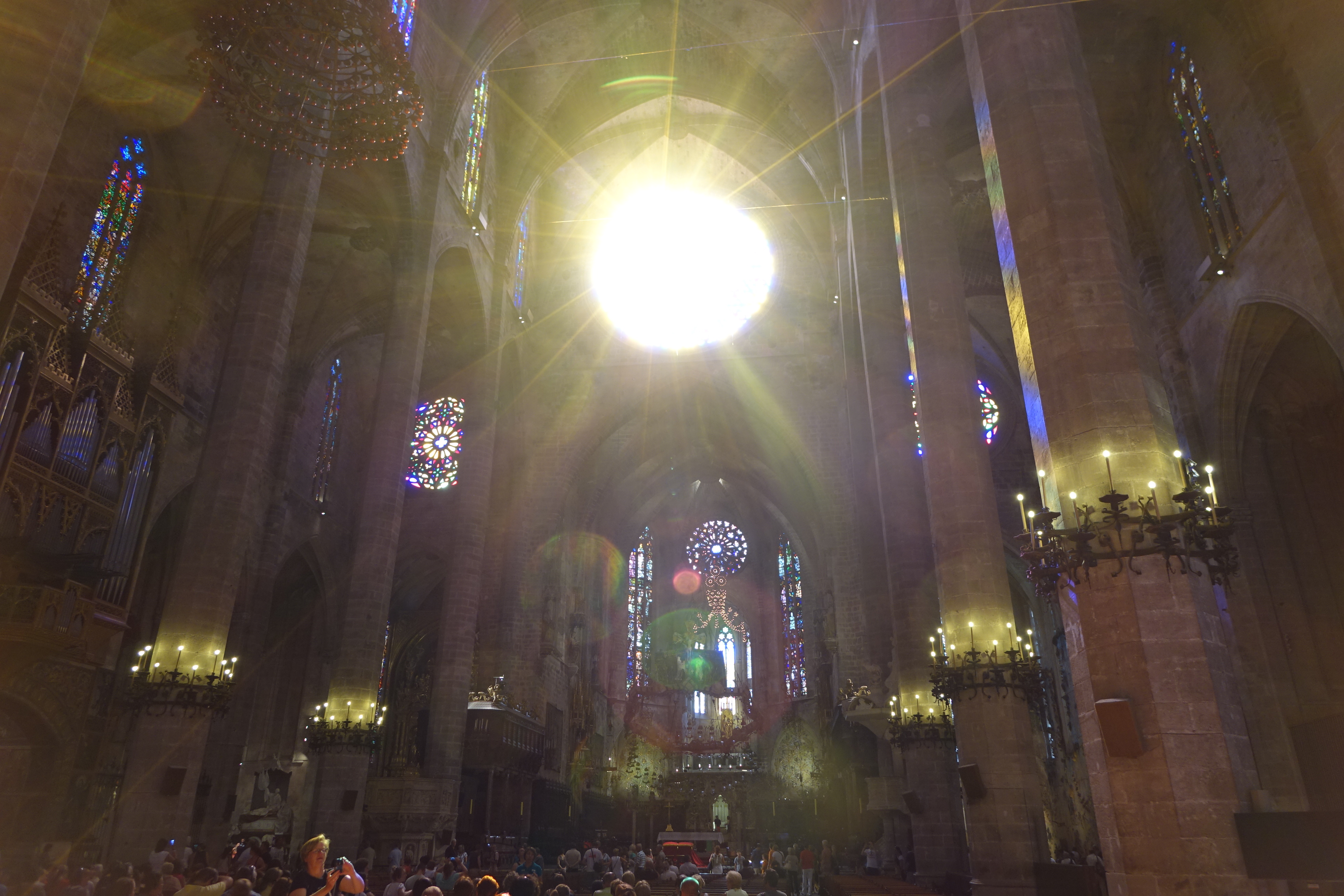
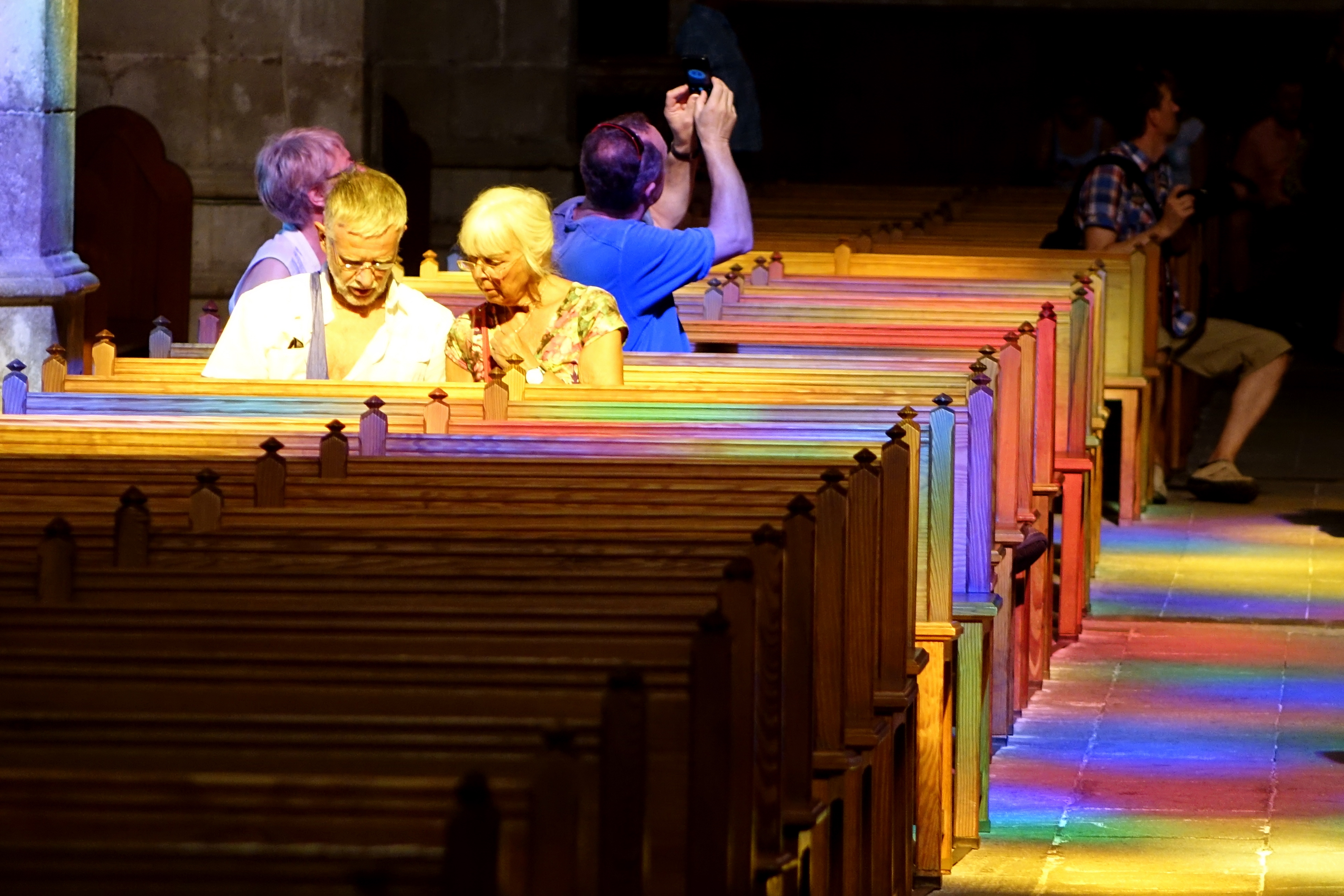
Palma’s Cathedral, known locally as La Seu, is indeed a masterpiece of the catholic gothic style. Completed in 1601, it is a soaring vast temple to christianity, with a dominant position over the waterfront of Palma, and comprising the 7th highest nave in the world. But what makes this palace of gothic architecture different from all of the other churches of the genre, enabling it to dispel the associations of dark, dank solemnity which is inherent in the gothic style, is colour. Pure, dazzling, multi-coloured samplings from every stretch of the rainbow. For in Palma’s Cathedral, there is not a single clear pane of glass. Rather, its many windows are fitted with coloured stained glass so rich in its vivacity and complexity, that when the sun shines on the outside of the cathedral (which it invariably does in Mallorca), the result on the inside is to fill every gothic stone and structure, ever eave and buttress, every flag stone and pew with the most dazzling multi-coloured light.

DSC07721 DSC07686 DSC07683 DSC07681 DSC07688 DSC07715 DSC07692 DSC07718 DSC07694 DSC07708 DSC07726 DSC07700 DSC07680 DSC07675 DSC07732

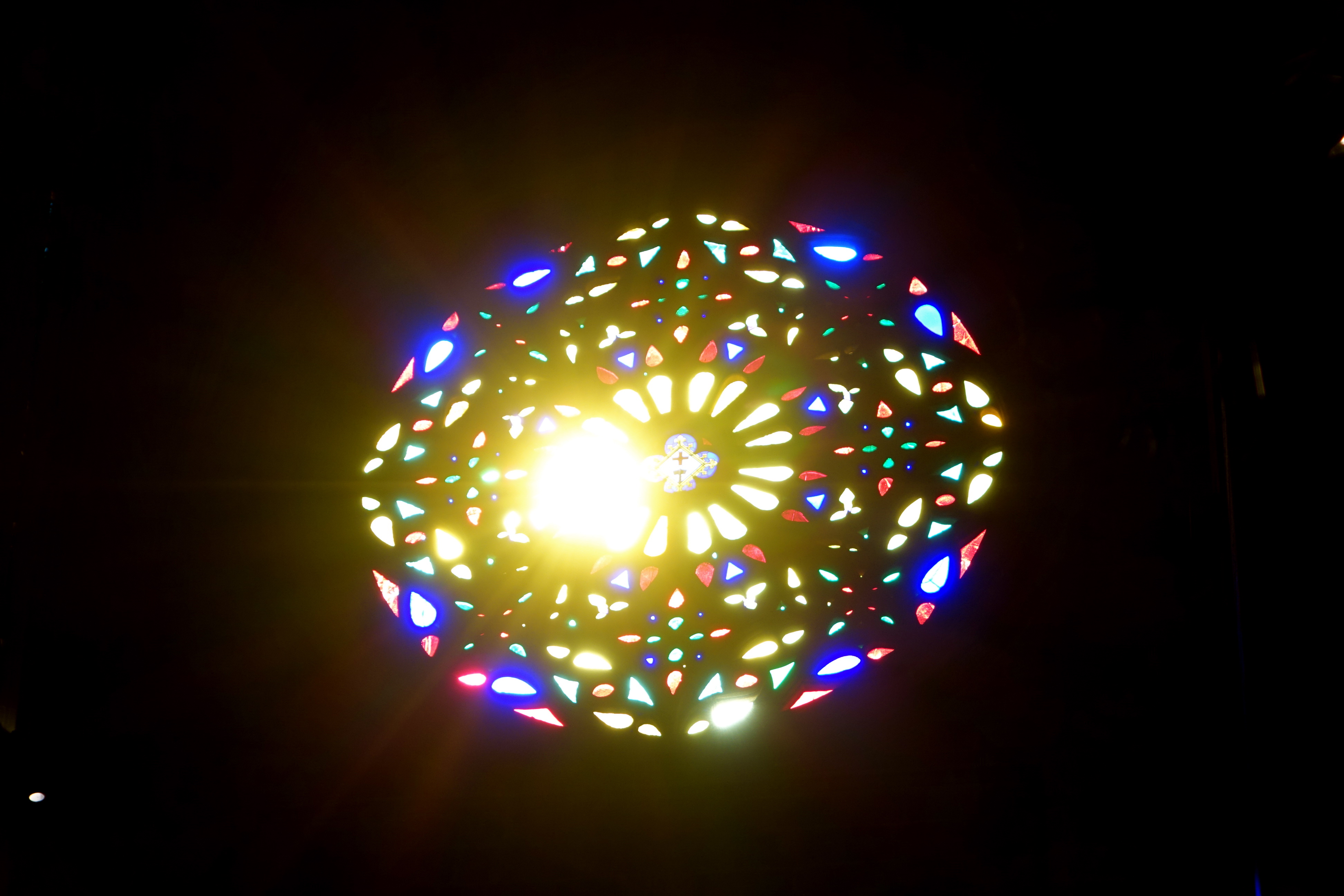
The effect is astounding, and dispels every known stereotype about gothic architecture, which is utterly transformed under the warming dazzle of a hundred shades of multi-coloured light. At times, when you are looking directly into the light as it shines through one of the cathedral’s impressive stained glass windows, a moment of epiphany overcomes you, as everywhere you look you see shards of colour bouncing across the vast space. If that was the intention of the architects, it is an objective universally achieved, so that you leave the cathedral if not religiously converted then certainly spiritually touched.

All photos and written content are strictly the copyright of Nicholas de Lacy-Brown © 2014 and The Daily Norm. All rights are reserved. Unauthorized use and/or duplication of the material, whether written work, photography or artwork, included within The Daily Norm without express and written permission from The Daily Norm’s author and/or owner is strictly prohibited.

Interpretation No.10: Vintage Ronda

As England soaked in an August when early autumn usurped the rightful place of summer, I spent the last two weeks with my head still firmly in the sun-baked sands of Ronda in Southern Spain. Never has a homecoming from Spain proved so hard as the unapologetic plunge by 20 degrees from 35 to 15. And never have the grey dirty streets of London or the impossibly cramped antisocial conditions of the tube proved so unattractive when compared alongside the almost-tangible memories of Andalucia’s rolling golden hills and cerulean blue skies, memories that remain so vividly present behind my minds eye, almost taunting me as I stagnate in my unenviable choice of permanent home.

As always, I have sought to address this mental imbalance by reacquainting myself with the place where I was at my happiest, taking up my paints and paintbrushes and capturing a few spare moments in a weekday evening, to sit down and paint my memories. In so doing, I have completed my third painting of Ronda; another in the “Interpretations” series which sees me reinterpreting the landscape through simplified forms and a refocus on the shapes made by civilisation rather than the detail.

Interpretation No. 10 - Vintage Ronda (2014 © Nicholas de Lacy-Brown, gouache on paper)

Interpretation No. 10 – Vintage Ronda (2014 © Nicholas de Lacy-Brown, gouache on paper)

This 10th interpretation concentrates on two aspects of “Vintage” Ronda: first the ancient arabic walls which can still be seen on one side of the El Tajo gorge close to the old arab baths; and second a newer but still historic car, the likes of which we happened to find parked in this exact spot when taking photos of the arab ruins. When I saw it there, I could not help but recall my interpretation of the landscape in Italy’s Positano, painted with a yellow vespa in the foreground, and I knew that with this red vintage car, the perfect partner work had been born.

© Nicholas de Lacy-Brown and The Daily Norm, 2001-2014. Unauthorized use and/or duplication of the material, whether written work, photography or artwork, included within The Daily Norm without express and written permission from The Daily Norm’s author and/or owner is strictly prohibited. Excerpts and links may be used, provided that full and clear credit is given to Nicholas de Lacy-Brown and The Daily Norm with appropriate and specific direction to the original content. For more information on the work of Nicholas de Lacy-Brown, head to his art website at www.delacy-brown.com
Finding inspiration from Marbella’s final resting place
There’s something inherently beautiful about a cemetery. It’s not just the peace and quiet, which is of course an inevitable feature of every cemetery or graveyard, but the tangible demonstration of human emotion shown by the care taken by those living for the memories of their beloved dead. This can be seen through the wording of a grave, through the flowers carefully laid alongside it, and through the regular cleaning of the stone with as much care as would be taken for a feature of a living household. There is also something innately civilised about caring for the dead and paying homage to the past, not least because it can make us more appreciative of our life and the lives of others still around us.

While I do like an English graveyard, headstones tilting in all directions and covered in moss and decay, my favourite type of cemetery is a Spanish cemetery, whose tranquil atmosphere is more than embellished by the regular presence of sunshine filtering through the large dark cypress trees which are a regular inhabitant of such places. But I also love how seriously Spanish society takes its dead, and whenever I take a stroll in Marbella’s cemetery in Southern Spain, I am always touched by the number of locals visiting their family graves, with rubber gloves and cleaning products to hand, ensuring that all looks clean and well maintained. It’s a bit like the beginning scene from Pedro Almodovar’s brilliant film, Volver, when a visit to the family grave is both a family tradition and a time to gather and reminisce.
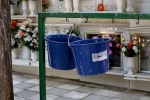
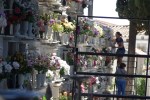
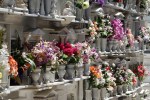
DSC05934 DSC05910 DSC05928 DSC05935 DSC05939

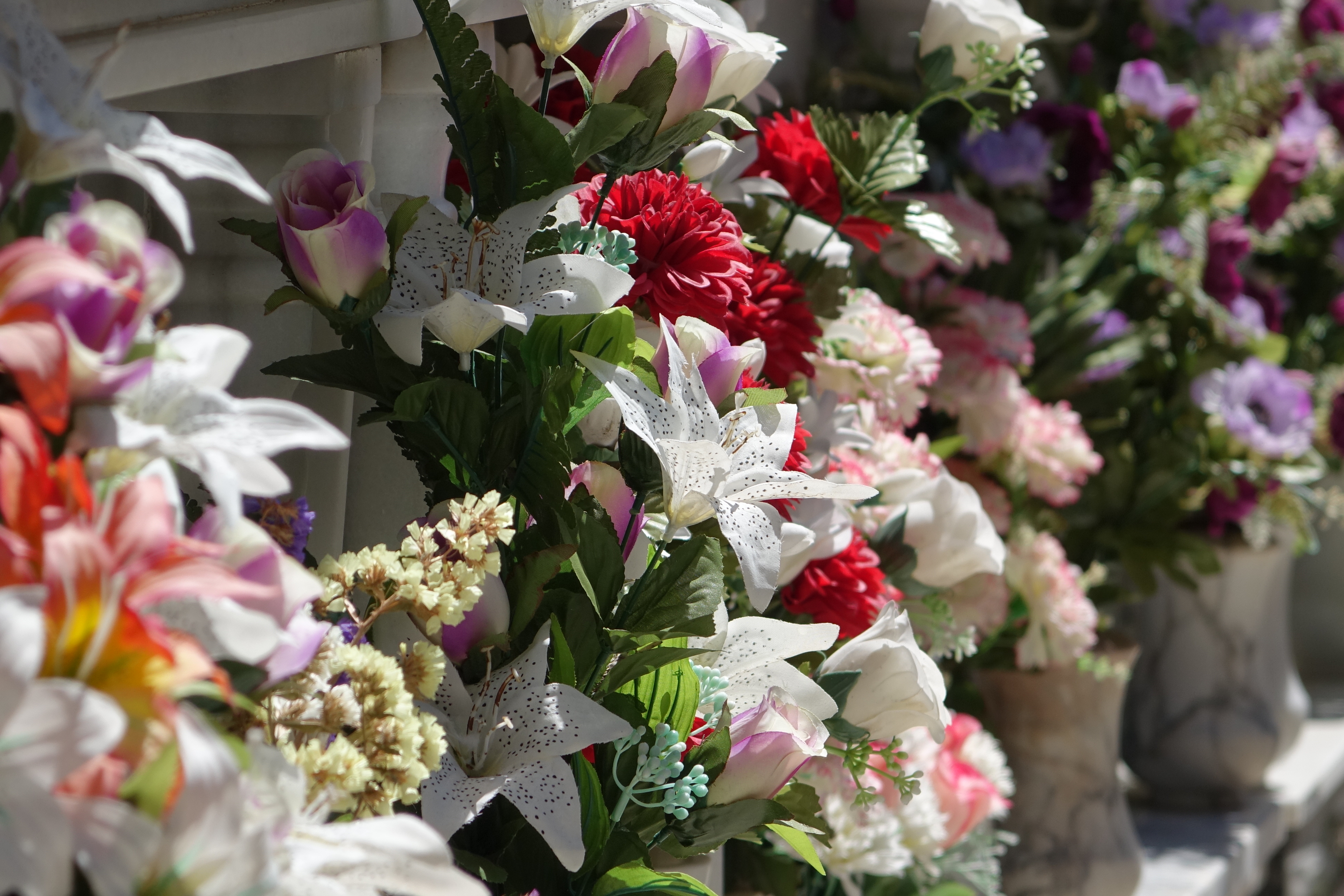
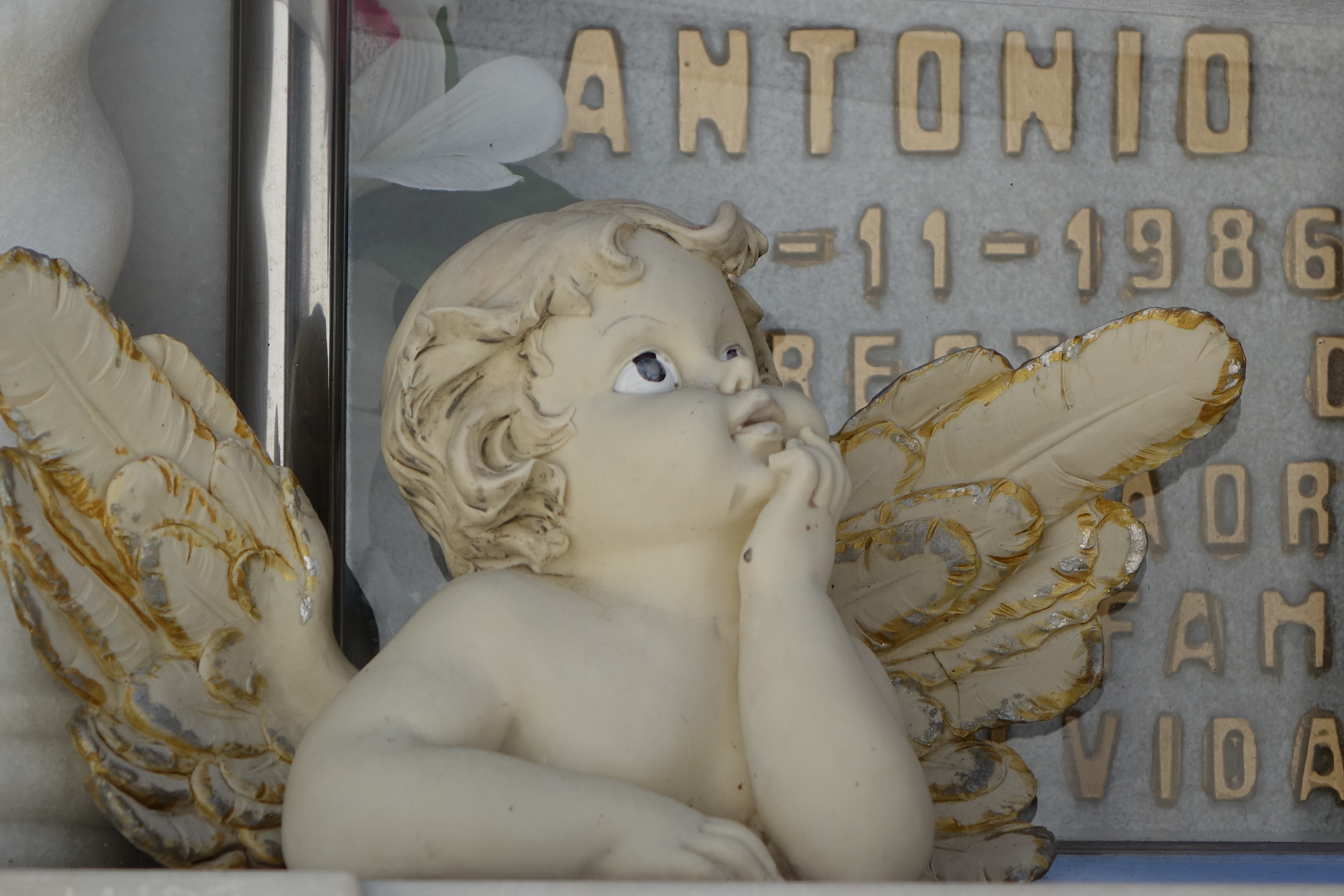
Of course it will come as no surprise to regular readers of this blog that my overriding reasons for visiting a Spanish cemetery are artistic ones, and Marbella’s has more than once inspired me to take many a photograph of the scene. For in the sheer volume of marble fronted graves, both within private family mausoleums and piled up on top of one another like bookshelves in neat rows, these graves make for an excellent photographic subject, not least because of the variety and dedications, flowers, family memorabilia and photos. And on top of all of that, the sunshine is always on hand to provide warmth to the photographs and plenty of contrast between light and shade.

So here are the photos I took on my recent stroll around Marbella’s cemetery. Hopefully like me you will see the inherent beauty of the place, which far from being morbid, is a place of tranquillity, devotion and hope.
All photos and written content are strictly the copyright of Nicholas de Lacy-Brown © 2014 and The Daily Norm. All rights are reserved. Unauthorized use and/or duplication of the material, whether written work, photography or artwork, included within The Daily Norm without express and written permission from The Daily Norm’s author and/or owner is strictly prohibited.